Warner Bros. Discovery said Wednesday that its board determined Paramount’s offer is not in the best interests of the company or its shareholders. It again recommended shareholders support the Netflix deal.
“Paramount’s offer continues to provide insufficient value, including terms such as an extraordinary amount of debt financing that create risks to close and lack of protections for our shareholders if a transaction is not completed,” Warner Bros. Discovery Chair Samuel Di Piazza Jr. said in a statement. In contrast, he added, the company’s agreement with Netflix “will offer superior value at greater levels of certainty.”
Paramount did not immediately respond to a request for comment. The company’s hostile bid is still on the table. Warner shareholders currently have until Jan. 21 to “tender” their shares.
Late last month, Paramount announced an “irrevocable personal guarantee” from Oracle founder Larry Ellison — who is the father of Paramount CEO David Ellison — to back $40.4 billion in equity financing for the company’s offer. Paramount also increased its promised payout to shareholders to $5.8 billion if the deal is blocked by regulators, matching Netflix’s breakup fee.
In its Wednesday letter to shareholders, Warner expressed concerns about a potential deal with Paramount. Warner said it essentially considers the offer a leveraged buyout, which includes a lot of debt, and also pointed to operating restrictions that it said were imposed by Paramount’s offer and could “hamper WBD’s ability to perform” throughout a transaction.
The battle for Warner and the value of each offer grows complicated because Netflix and Paramount want different things. Netflix’s proposed acquisition includes only Warner’s studio and streaming business, including its legacy TV and movie production arms and platforms like HBO Max. But Paramount wants the entire company — which, beyond studio and streaming, includes networks like CNN and Discovery.
If Netflix is successful, Warner’s news and cable operations would be spun off into their own company, under a previously-announced separation.
A merger with either company could take over a year to close — and will attract tremendous antitrust scrutiny along the way. Due to its size and potential impact, it will almost certainly trigger a review by the U.S. Justice Department, which could sue to block the transaction or request changes. Other countries and regulators overseas may also challenge the merger. And politics are expected to come into play under President Donald Trump, who has made unprecedented suggestions about his personal involvement on whether a deal will go through.
Trade groups across the entertainment industry have continued to sound the alarm about both deals.
In a statement addressed to a Congressional antitrust subcommittee on Wednesday, Cinema United — which represents more than 60,000 movie screens worldwide — reiterated it was “deeply concerned” that Netflix’s acquisition could harm both moviegoers and people who work in theaters, pointing to the streaming giant’s past reliance on its online platform. The group said its concerns were “no less serious” for Paramount’s bid — warning of consequences of further consolidation overall, which it said could result in job losses and less diversity in filmmaking.
WASHINGTON — President Donald Trump abruptly changed his tone Wednesday about his Colombian counterpart, Gustavo Petro, saying they had exchanged a friendly phone call and he’d even invited the leader of the South American country to the White House.
“It was a Great Honor to speak with the President of Colombia, Gustavo Petro, who called to explain the situation of drugs and other disagreements that we have had,” Trump posted on his social media site. “I appreciated his call and tone, and look forward to meeting him in the near future.”
He wrote that the upcoming meeting would take place at the White House.
That came mere days after Trump said in the wake of the U.S. operation to oust Venezuelan President Nicolás Maduro over the weekend that “Colombia is very sick too” and accused Petro of “making cocaine and selling it to the United States.”
In comments to reporters aboard Air Force One on Sunday, Trump added of Petro, “He’s not going to be doing it very long, let me tell you.” Asked whether U.S. intervention was possible, Trump responded, ”Sounds good to me.”
Trump now suddenly warming to Petro is especially surprising since Colombia’s president called the U.S. operation in Venezuela an “abhorrent” violation of Latin American sovereignty. He also suggested it was committed by “enslavers” and constituted a “spectacle of death” comparable to Nazi Germany’s 1937 carpet bombing of Guernica, Spain.
Still, before Trump’s conciliatory post, tensions had been rising between the U.S. and Colombia for months.
The Trump administration imposed sanctions in October on Petro, his family and a member of his government over accusations of involvement in the global drug trade. Colombia is considered the epicenter of the world’s cocaine trade.
Trump began his monthslong pressure campaign on Maduro by ordering dozens of lethal strikes on alleged drug smuggling boats launched from Venezuela in the Caribbean. He eventually expanded the operations to also target suspected vessels in the eastern Pacific that came from Colombia.
The U.S. in September added Colombia, the top recipient of American assistance in the region, to a list of nations failing to cooperate in the drug war for the first time in almost 30 years. The designation led to a slashing of U.S. assistance to the country.
“He has cocaine mills and cocaine factories,” Trump said of Petro on Sunday. ”He’s not going to be doing it.”
LOS ANGELES — On the first anniversary of the most destructive wildfires in the LA area, the scant home construction projects stand out among the still mostly flattened landscapes.
Fewer than a dozen homes have been rebuilt in Los Angeles County since the Jan. 7, 2025, Palisades and Eaton fires erupted, killing 31 people and destroying about 13,000 homes and other residential properties. The fires burned for more than three weeks and clean-up efforts took about seven months.
For those who had insurance, it’s often not enough to cover the costs of construction. Relief organizations are stepping in to help, but progress is slow.
Among the exceptions is Ted Koerner, whose Altadena home was reduced to ash and two chimneys. With his insurance payout tied up, the 67-year-old liquidated about 80% of his retirement holdings, secured contractors quickly, and moved decisively through the rebuilding process.
Shortly before Thanksgiving, Koerner was among the first to finish a rebuild in the aftermath of the fires, which were fueled by drought and hurricane-force winds.
But most do not have options like Koerner.
The streets of the coastal community of Pacific Palisades and Altadena, a community in the foothills of the San Gabriel Mountains, remain lined with dirt lots. In the seaside city of Malibu, foundations and concrete piles rising out of the sand are all that’s left of beachfront homes that once butted against crashing ocean waves.
Neighborhoods are pitch black at night, with few streetlamps replaced. Even many homes that survived are not inhabited as families struggle to clear them of the fire’s toxic contaminants.
Koerner was driven in part by fear that his beloved golden retriever, Daisy Mae, now 13 years old, might not live long enough to move into a new home, given the many months it can take to build even under the best circumstances.
He also did not have to wait for his insurance payout to start construction.
“That’s the only way we were going to get it done before all of a sudden my dog starts having labored breathing or something else happens,” Koerner said.
Once construction began, his home was completed in just over four months.
Daisy Mae is back lying in her favorite spot in the yard under a 175-year-old Heritage Oak. Koerner said he enjoys his morning coffee while watching her and it brings tears to his eyes.
“We made it,” he said.
Many fear they can’t afford to rebuild
About 900 homes are under construction, potentially on pace to be completed later this year.
Still, many homeowners are stuck as they figure out whether they can pay for the rebuilding process.
Scores of residents have left their communities for good. More than 600 properties where a single-family home was destroyed in the wildfires have been sold, according to real estate data tracker Cotality.
“We’re seeing huge gaps between the money insurance is paying out, to the extent we have insurance, and what it will actually cost to rebuild and/or remediate our homes,” said Joy Chen, executive director of the Eaton Fire Survivors Network, a group of 10,000 fire survivors mostly from Altadena.
By December, less than 20% of people who experienced total home loss had closed out their insurance claims, according to a survey by the Department of Angels, a nonprofit that formed after the disaster to advocate for recovery efforts.
About one-third of insured respondents had policies with State Farm, the state’s largest private insurer, or the California FAIR plan, the insurer of last resort. They reported high rates of dissatisfaction with both, citing burdensome requirements, lowball estimates, and dealing with multiple adjusters.
In November, Los Angeles County opened a civil investigation into State Farm’s practices and potential violations of the state’s Unfair Competition law. Chen said the group has seen a flurry of substantial payouts since then.
State Farm spokesperson Tom Hartman said in an email to the Associated Press on Wednesday that the company has addressed more than 13,500 claims and issued more than $5 billion in payments. He called the investigation a “distraction” and said the company is committed to helping.
Without answers from insurance, households can’t commit to rebuilding projects that can easily exceed $1 million.
“They’re worried about getting started and running out of money,” Chen said.
An uncertain future
Jessica Rogers discovered only after the Palisades fire destroyed her home that her coverage had been canceled.
The mother of two’s fallback was a low-interest loan from the Small Business Administration, but the application process was grueling. After losing her job because of the fire and then having her identity stolen, her approval for $550,000 came through last month.
She is still weighing how she’ll cover the remaining costs and says she wonders: “Do I empty out my 401(k) and start counting every penny in a penny jar around the apartment?”
Rogers — now executive director of the Pacific Palisades Long Term Recovery Group — estimates there are hundreds like her in Pacific Palisades who are “stuck dealing with FEMA and SBA and figuring out if we could piecemeal something together to build our homes.”
Also struggling to return home are the community’s renters, condo owners, and mobile homeowners. Meanwhile, many are also dealing with their trauma.
“It’s not what people talk about, but it is incredibly apparent and very real,” said Rogers, who still finds herself crying at unexpected moments.
A slow start
That so few homes have been rebuilt a year after the wildfires echoes the recovery pattern of a December 2021 blaze that erupted south of Boulder, Colo., destroying more than 1,000 homes.
“At the one-year mark, many lots had been cleared of debris and many residents had applied for building permits, said Andrew Rumbach, co-lead of the Climate and Communities Program at Urban Institute. “Around the 18-month mark is when you start to see really significant progress in terms of going from handfuls to hundreds” of homes rebuilt.
Time will bring the scope of problems into focus.
“You’re going to start to see some real inequality start to emerge where certain neighborhoods, certain types of people, certain types of properties are just lagging way far behind, and that becomes the really important question in the second year of a recovery: Who’s doing well and who is really struggling and why?” Rumbach said.
That’s a key concern in Altadena, which for decades drew aspiring Black homeowners who otherwise faced redlining and other forms of racial discrimination when they sought to buy a home in other LA-area communities. In 2024, 81% of Black households in Altadena owned their homes, nearly twice the national Black homeownership rate.
But recent research by UCLA’s Latino Policy & Politics Institute found that, as of August, 7 in 10 Altadena homeowners whose property was severely damaged in last year’s wildfire had not begun taking steps to rebuild or sell their home. Among these, Black homeowners were 73% more likely than others to have taken no action.
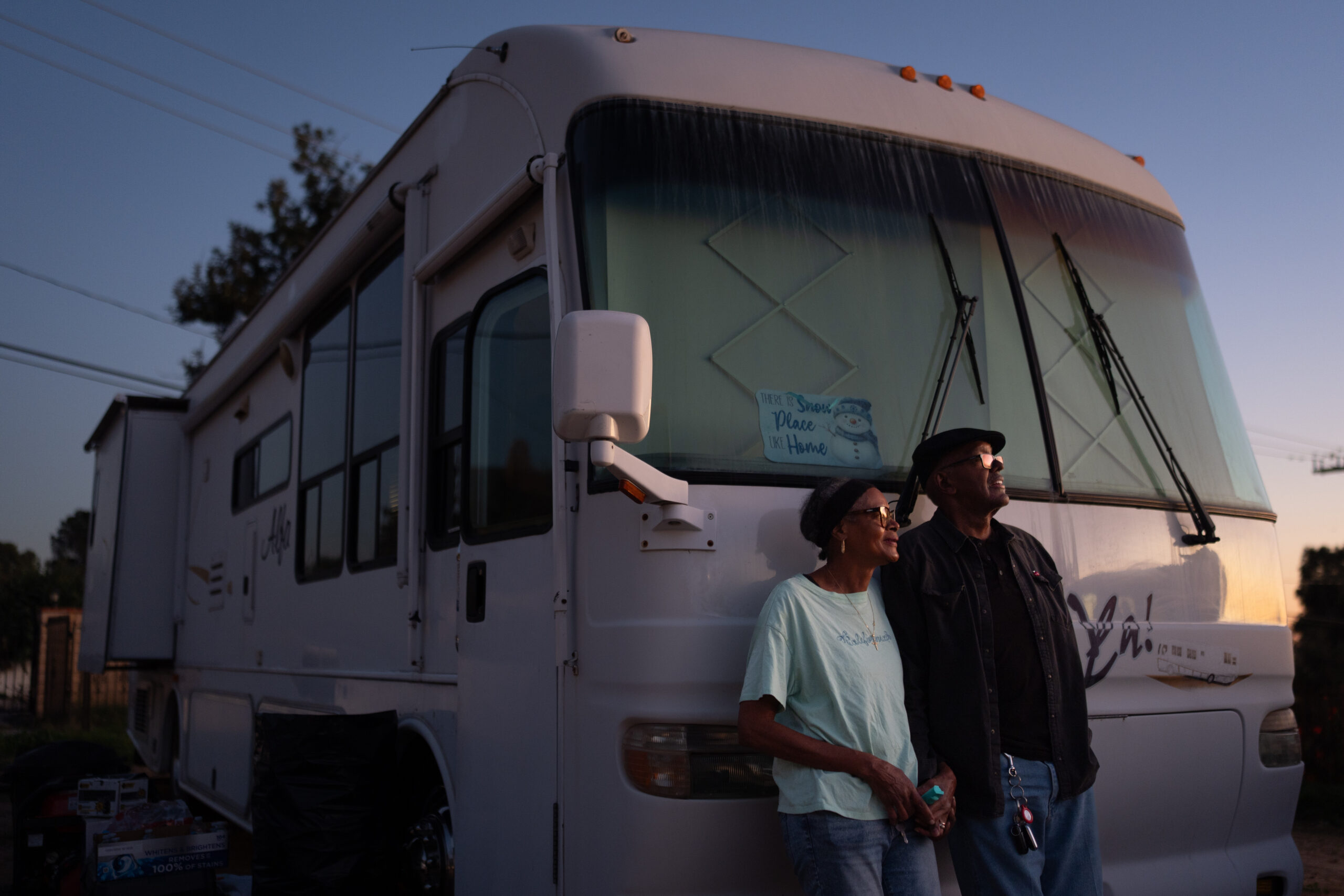
Al and Charlotte Bailey, who lost their home in the Eaton Fire, have been living in an RV parked on the property where their house once stood in Altadena, Calif.
Determined to rebuild
Al and Charlotte Bailey have been living in an RV parked on the empty lot where their home once stood.
The Baileys are paying for their rebuild with funds from their insurance payout and a loan. They’re also hoping to receive money from Southern California Edison. Several lawsuits claim its equipmentsparked the wildfire in Altadena.
“We had been here for 41 years and raised our family here, and in one night it was all gone,” said Al Bailey, 77. “We decided that, whatever it’s going to cost, this is our community.”
WASHINGTON — Overpowering Speaker Mike Johnson, a bipartisan coalition in the House voted Wednesday to push forward a measure that would revive an enhanced pandemic-era subsidy that lowered health insurance costs for roughly 22 million people, but that had expired last month.
The tally of 221-205 was a key test before passage of the bill, which is expected Thursday. And it came about because four GOP centrist lawmakers joined with Democrats in signing a so-called discharge petition to force the vote. After last year’s government shutdown failed to resolve the issue, they said doing nothing was not an option as many of their constituents faced soaring health insurance premiums beginning this month.
Rep. Mike Lawler (R., N.Y.), one of the Republicans who crossed party lines to back the Democratic proposal, portrayed it as a vehicle senators could use to reach a compromise.
“No matter the issue, if the House puts forward relatively strong, bipartisan support, it makes it easier for the senators to get there,” Lawler said.
Republicans go around their leaders
If ultimately successful in the House this week, the voting would show there is bipartisan support for a proposed three-year extension of the tax credits that are available for those who buy insurance through the Affordable Care Act, also known as Obamacare. The action forcing a vote has been an affront to Johnson and GOP leaders who essentially lost control of their House majority as the renegade lawmakers joined Democrats for the workaround.
But the Senate is under no requirement to take up the bill.
Instead, a small group of members from both parties are working on an alternative plan that could find support in both chambers and become law. One proposal would be to shorten the extension of the subsidy to two years and make changes to the program.
Senate Majority Leader John Thune (R., S.D.) said any plan passing muster in the Senate will need to have income limits to ensure that it’s focused on those who most need the help and that beneficiaries would have to at least pay a nominal amount for their coverage.
That way, he said, “insurance companies can’t game the system and auto-enroll people.” Finally, Thune said there would need to be some expansion of health savings accounts, which allow people to save money and withdraw it tax-free as long as the money is spent on qualified medical expenses.
Democrats are pressing the issue
It’s unclear the negotiations will yield a bill that the Senate will take up. Democrats are making clear that the higher health insurance costs many Americans are facing will be a political centerpiece of their efforts to retake the majority in the House and Senate in the fall elections.
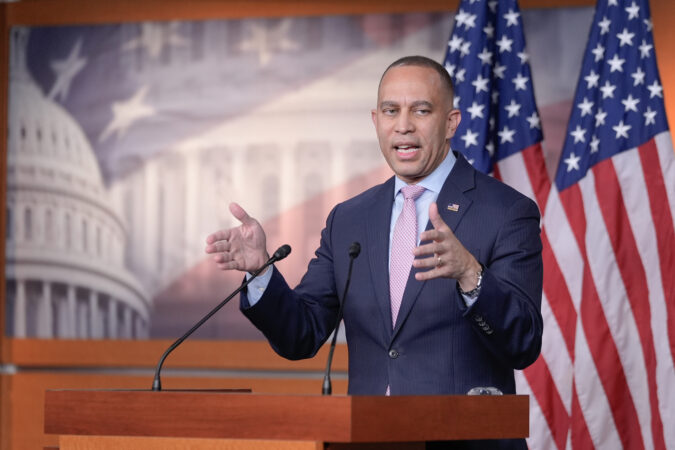
Democratic Leader Hakeem Jeffries, who led his party’s effort to push the healthcare issue forward, particularly challenged Republicans in competitive congressional districts to join if they really wanted to prevent steep premium increases for their constituents. Before Wednesday’s vote, he called on colleagues to “address the healthcare crisis in this country and make sure that tens of millions of people have the ability to go see a doctor when they need one.”
Republican Reps. Brian Fitzpatrick, Robert Bresnahan, and Ryan Mackenzie, all from Pennsylvania, and Lawler signed the Democrats’ petition, pushing it to the magic number of 218 needed to force a House vote. All four represent key swing districts whose races will help determine which party takes charge of the House next year.
Johnson (R., La.) had discussed allowing more politically vulnerable GOP lawmakers a chance to vote on bills that would temporarily extend the subsidies while also adding changes such as income caps for beneficiaries. But after days of discussions, the leadership sided with the more conservative wing of the party’s conference, which has assailed the subsidies as propping up a failed program.
Lawmakers turn to discharge petitions to show support for an action and potentially force a vote on the House floor, but they are rarely successful. This session of Congress has proven an exception.
A vote requiring the Department of Justice to release the Jeffrey Epstein files, for instance, occurred after Reps. Ro Khanna (D., Calif.) and Thomas Massie (R. Ky.) introduced a petition on the Epstein Files Transparency Act. The signature effort was backed by all House Democrats and four Republicans.
The fatal shooting Wednesday of a woman by an immigration officer in Minneapolis was at least the fifth death to result from the aggressive U.S. immigration crackdown the Trump administration launched last year.
The Department of Homeland Security said the officer fired in self-defense as the woman tried to run down officers with her vehicle. Minneapolis Mayor Jacob Frey said video of the incident showed it was reckless and unnecessary. It occurred as the federal agency escalates immigration enforcement operations in Minnesota by deploying an anticipated 2,000 agents and officers.
Last September, Immigration and Customs Enforcement shot and killed another person outside Chicago. Two people have died after being struck by vehicles while fleeing immigration authorities. And a California farmworker fell from a greenhouse and broke his neck during an ICE raid last July.
No officers or agents have been charged in the deaths.
Cook from Mexico shot during a traffic stop
ICE agents fatally shot Silverio Villegas González during a traffic stop Sept. 12 in suburban Chicago. Relatives said the 38-year-old line cook from Mexico had dropped off one of his children at day care that morning.
At the time, the Department of Homeland Security said federal agents were pursuing a man with a history of reckless driving who entered the country illegally. They alleged Villegas González evaded arrest and dragged an officer with his vehicle.
Homeland Security said the officer opened fire fearing for his life and was hospitalized for “serious injuries.” However, local police body camera videos showed the agent who shot Villegas González walking around afterward and dismissing his own injuries as “nothing major.”
Homeland Security has said the death remains under investigation.
Another shooting, this one nonfatal, occurred in Chicago last fall. Marimar Martinez survived being shot five times by a Border Patrol agent but was charged with a felony after Homeland Security officials accused her of trying to ram agents with her vehicle. The case was dismissed after videos emerged that Martinez’s attorneys said showed an agent steering his vehicle into Martinez’s truck.
Farmworker fell from greenhouse roof during ICE raid
Immigration authorities were rounding up dozens of farmworkers July 10 at Glass House Farms in southern California when Jaime Alanis fell from the roof of a greenhouse and broke his neck. The 57-year-old laborer from Mexico died at a hospital two days later.
Relatives said Alanis had spent a decade working at the farm, a licensed cannabis grower that also produces tomatoes and cucumbers, located in Camarillo about an hour east of Los Angeles. They said he would send his earnings to his wife and daughter in Mexico.
During the raid, Alanis called family to say he was hiding. Officials said he fell about 30 feet from the greenhouse roof.
The Department of Homeland Security said Alanis was never in custody and was not being chased by immigration authorities when he climbed onto the greenhouse.
Man struck on California freeway after running from Home Depot
A man running away from immigration authorities outside a Home Depot store in southern California died after being hit by an SUV while he tried to cross a nearby freeway on Aug. 14.
Police in Monrovia northeast of Los Angeles said ICE agents were conducting enforcement operations when the man fled on foot to Interstate 210. He was running across the freeway’s eastbound lanes when an SUV hit him while traveling 50 or 60 mph. He died at a hospital.
The man killed was later identified by the National Day Laborer Organizing Network as 52-year-old Roberto Carlos Montoya Valdez of Guatemala.
The Department of Homeland Security said Montoya Valdez wasn’t being pursued by immigration authorities when he ran.
Gardener from Honduras killed on Virginia interstate
A pickup truck fatally struck Josué Castro Rivera on a highway in Norfolk, Virginia, as he tried to escape immigration authorities during a traffic stop Oct. 23.
Castro Rivera, 24, of Honduras, was heading to a gardening job with three passengers when ICE officers pulled over his vehicle, according to his brother, Henry Castro.
State and federal authorities said Castro Rivera ran away on foot and was hit by a pickup truck on Interstate 264.
The Department of Homeland Security said Castro Rivera’s vehicle was stopped as part of a “targeted, intelligence-based” operation and that Castro Rivera had “resisted heavily and fled.”
His brother said Castro Rivera came to the U.S. four years earlier and worked to send money to family in Honduras.
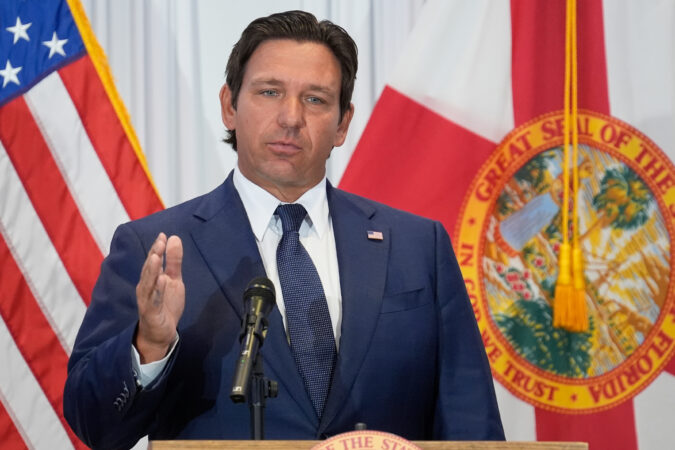
ORLANDO, Fla. — Florida Gov. Ron DeSantis said Wednesday he plans to call a special session in April for the Republican-dominated legislature to draw new congressional districts, joining a redistricting arms race among states that have redrawn districts mid-decade.
Even though Florida’s 2026 legislative session starts next week, DeSantis said he wanted to wait for a possible ruling from the U.S. Supreme Court on a key provision of the Voting Rights Act. The ruling in Louisiana v. Callaiscould determine whether Section 2, a part of the Voting Rights Act that bars discrimination in voting systems, is constitutional. The governor said “at least one or two” districts in Florida could be affected by the high court’s ruling.
“I don’t think it’s a question of if they’re going to rule. It’s a question of what the scope is going to be,” DeSantis said at a news conference in Steinhatchee, Fla. “So, we’re getting out ahead of that.”
Currently, 20 of Florida’s 28 congressional seats are held by Republicans.
Congressional districts in Florida that are redrawn to favor Republicans could carry big consequences for President Donald Trump’s plan to reshape congressional districts in GOP-led states, which could give Republicans a shot at winning additional seats in the midterm elections and retaining control of the closely divided U.S. House.
Nationwide, the unusual mid-decade redistricting battle has so far resulted in a total of nine more seats Republicans believe they can win in Texas, Missouri, North Carolina, and Ohio — and a total of six more seats Democrats expect to win in California and Utah, putting Republicans up by three. But the redrawn districts are being litigated in some states, and if the maps hold for 2026, there is no guarantee the parties will win the seats.
In 2010, more than 60% of Florida voters approved a constitutional amendment prohibiting the drawing of district boundaries to unfairly favor one political party in a process known as gerrymandering. The Florida Supreme Court, however, last July upheld a congressional map pushed by DeSantis that critics said violated the “Fair Districts” amendment.
After that decision, Florida House Speaker Daniel Perez last August announced the creation of a select committee to examine the state’s congressional map.
Florida Senate Democratic Leader Lori Berman said in a statement that what DeSantis wants the Legislature to do is clearly illegal.
“Florida’s Fair Districts Amendment strictly prohibits any maps from being drawn for partisan reasons, and regardless of any bluster from the governor’s office, the only reason we’re having this unprecedented conversation about drawing new maps is because Donald Trump demanded it,” Berman said. “An overwhelming majority of Floridians voted in favor of the Fair Districts Amendment and their voices must be respected. The redistricting process is meant to serve the people, not the politicians.”
In a statement, the Florida Democratic Party called the move by DeSantis “reckless, partisan and opportunistic.”
“This is nothing more than a desperate attempt to rig the system and silence voters before the 2026 election,” the statement said. “Now, after gutting representation for Black Floridians just three years ago, Ron is hoping the decimation of the Voting Rights Act by Trump’s Supreme Court will allow him to further gerrymander and suppress the vote of millions of Floridians.”
Michael McDonald, a political science professor at the University of Florida, said the state already has a fairly strong Republican gerrymander, so it would be difficult for Republicans to pick up additional seats, unless they’re planning to draw “noncompact districts that squiggle all over the place” and then hold the election before a judge can throw out the map. McDonald said DeSantis also could be trying to shore up Republican strongholds to mitigate the losses generally experienced by the party in power during midterm elections.
“Trump’s approval ratings are pretty low,” McDonald said. “And so looking at what we would expect to happen in November, unless something fundamentally changes in the country between now and then, we expect the Democrats to have a very good year.”
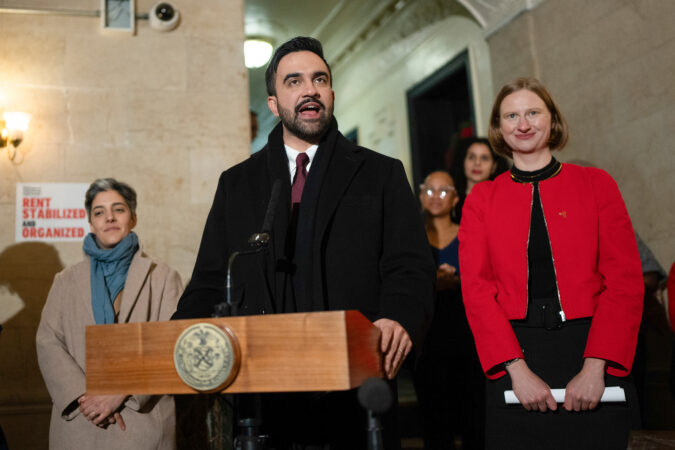
NEW YORK — New York City Mayor Zohran Mamdani is standing behind a newly appointed housing official as she faces backlash for years-old social media posts, including messages that called for the seizure of private property and linked homeownership to white supremacy.
Cea Weaver, a longtime tenant activist, was tapped by the Democrat last week to serve as executive director of the Mayor’s Office to Protect Tenants. The mayor has vowed to expand and empower the office to take “unprecedented” steps against negligent landlords.
The posts, which were circulated on social media in recent days by critics of Mamdani, included calls to treat private property as a “collective good” and to “impoverish the *white* middle class.” A tweet sent in 2017 described homeownership as “a weapon of white supremacy masquerading as ‘wealth building public policy.’”
Eric Adams, the city’s former mayor and a fellow Democrat, said the remarks showed “extreme privilege and total detachment from reality.”
Asked about the controversy on Wednesday, Mamdani did not address the substance of Weaver’s posts but defended her record of “standing up for tenants across the city and state.”
Weaver said in an interview with a local TV station that some of the messages were “regretful” and “not something I would say today.”
“I want to make sure that everybody has a safe and affordable place to live, whether they rent or own, and that is something I’m laser-focused on in this new role,” she added.
The discussion comes after Mamdani last month accepted the resignation of another official, Catherine Almonte Da Costa, after the Anti-Defamation League shared social media posts she made over a decade ago that featured antisemitic tropes.
While Mamdani had said he was unaware of Da Costa’s messages, Weaver’s past social media posts were known to the administration, according to a mayoral spokesperson, Dora Pekec.
Weaver previously led the Housing Justice for All coalition, which was widely credited with helping to convince state lawmakers to pass a sweeping package of tenant protections in 2019.
As leader of the city’s tenant protection office, she would play a key role in achieving one of Mamdani’s most polarizing campaign pledges: identifying negligent landlords and forcing them to negotiate the sale of their properties to the city if they are unable to pay fines for violations.
The “public stewardship” proposal has drawn consternation from landlord groups and skepticism from others in city government.
But the early days of his administration have brought signs that the new mayor is not backing off on the idea.
In a press conference immediately following his inauguration last week, Mamdani said the city would take “precedent-setting” action against the owner of a Brooklyn apartment building that owed the city money and was currently in bankruptcy proceedings.
He then announced Weaver’s appointment, drawing loud cheers from the members of a tenants union gathered in the building’s lobby.
“It is going to be challenging,” Weaver acknowledged. “New York is home to some of the most valuable real estate in the world. Everything about New York politics is about that fact.”
RIO DE JANEIRO — Former President Jair Bolsonaro was granted a brief leave Wednesday from his 27-year prison sentence for a coup attempt so that he could undergo medical tests at a hospital in the capital after he fell from his bed.
Police escorted Bolsonaro, 70, from the federal police’s headquarters in Brasilia to the nearby DF Star hospital where he arrived at around midday for three brain tests.
At about 4:30 p.m. local time, Bolsonaro’s wife, Michelle, said on Instagram that the exams had been carried out and that they were awaiting results. Her husband went back to prison, she said.
Later, DF Star hospital said in a brief statement that the tests showed “mild soft-tissue thickening in the frontal and right temporal regions” due to the trauma, but that no additional treatment was needed.
Bolsonaro fell in his cell overnight from Monday to Tuesday while sleeping. His wife, and Bolsonaro’s son Carlos, said on social media Tuesday that the far-right politician needed medical attention and expressed frustration that Bolsonaro hadn’t been sent to the hospital on Tuesday.
In his decision authorizing the trip to the hospital Wednesday, Supreme Court Justice Alexandre de Moraes cited a health report conducted by the federal police on Tuesday. Bolsonaro reported mild head trauma, according to the report. Upon examination, the former Brazilian leader was found to be conscious and lucid, with a superficial cut to his face.
De Moraes authorized a tomography, brain scan and a brain wave test requested by Bolsonaro’s lawyers. The Supreme Court justice said that his transfer to the hospital should be conducted in a “discreet manner,” and that federal police were responsible for Bolsonaro’s security and his return to prison.
Bolsonaro had previously left the hospital and returned to prison last Thursday, a week after undergoing double hernia surgery.
Bolsonaro has been hospitalized multiple times since being stabbed at a campaign event before the 2018 presidential election.
Bolsonaro and several of his allies were convicted in September by a panel of Supreme Court justices of attempting to overthrow Brazil’s democratic system following his 2022 election defeat.
The plot included plans to kill Lula, Vice President Geraldo Alckmin and de Moraes. There was also a plan to encourage an insurrection in early 2023.
Bolsonaro was also convicted on charges that include leading an armed criminal organization and attempting the violent abolition of the democratic rule of law. He has denied any wrongdoing.
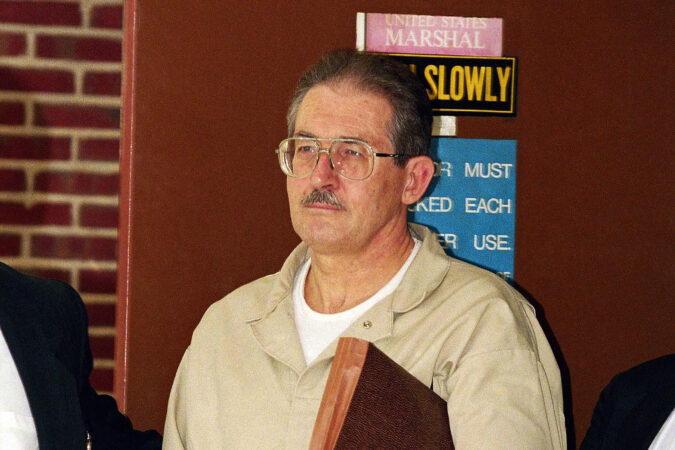
WASHINGTON — CIA turncoat Aldrich Mr. Ames, who betrayed Western intelligence assets to the Soviet Union and Russia in one of the most damaging intelligence breaches in U.S. history, has died in a Maryland prison. He was 84.
A spokesperson for the Bureau of Prisons confirmed Mr. Ames died Monday.
Mr. Ames, a 31-year CIA veteran, admitted being paid $2.5 million by Moscow for U.S. secrets from 1985 until his arrest in 1994. His disclosures included the identities of 10 Russian officials and one Eastern European who were spying for the United States or Great Britain, along with spy satellite operations, eavesdropping and general spy procedures. His betrayals are blamed for the executions of Western agents working behind the Iron Curtain and were a major setback to the CIA during the Cold War.
He pleaded guilty without a trial to espionage and tax evasion and was sentenced to life in prison without parole. Prosecutors said he deprived the United States of valuable intelligence material for years.
He professed “profound shame and guilt” for “this betrayal of trust, done for the basest motives,” money to pay debts. But he downplayed the damage he caused, telling the court he did not believe he had “noticeably damaged” the United States or “noticeably aided” Moscow.
“These spy wars are a sideshow which have had no real impact on our significant security interests over the years,” he told the court, questioning the value that leaders of any country derived from vast networks of human spies around the globe.
In a jailhouse interview with The Washington Post the day before he was sentenced, Mr. Ames said he was motivated to spy by “financial troubles, immediate and continuing.”
Mr. Ames was working in the Soviet/Eastern European division at the CIA’s headquarters in Langley, Va., when he first approached the KGB, according to an FBI history of the case. He continued passing secrets to the Soviets while stationed in Rome for the CIA and after returning to Washington. Meanwhile, the U.S. intelligence community was frantically trying to figure out why so many agents were getting discovered by Moscow.
Mr. Ames’ spying coincided with that of FBI agent Robert Hanssen, who was caught in 2001 and charged with taking $1.4 million in cash and diamonds to sell secrets to Moscow. He died in prison in 2023.
Mr. Ames’ wife, Rosario, pleaded guilty to lesser espionage charges of assisting his spying and was sentenced to 63 months in prison.
Michael Reagan, a longtime political commentator for radio, TV and print media, and the eldest son of President Ronald Reagan, died Jan. 4 from cancer, a conservative group affiliated with the former president said Tuesday. He was 80.
A longtime Republican like his father, Mr. Reagan espoused conservative opinions, advocating antiabortion views, stressing adherence to Christianity and expressing skepticism about green policies. Like many in his party, he was initially a critic of President Donald Trump, describing him as an “egomaniacal billionaire” and a “political train wreck” who had little chance of winning in 2016. When Trump defied the odds and won, Mr. Reagan embraced him, decrying the “liberal media” that he said hated Trump.
But Mr. Reagan’s political outspokenness and his famous father appeared to overshadow his lifelong struggle with scars suffered during a tumultuous childhood. He first heard at the age of 4 that he had been adopted, and he was sexually molested at the age of 7 by a camp counselor – experiences that molded his political views and prompted him to turn to religion for solace.
Mr. Reagan kept the molestation a secret for decades, partly out offear that revealing it could ruin his dad’s political career. Mr. Reagan finally told his father in 1987, as the president was nearing the end of his second term and when Mr. Reagan was writing a memoir. The book was going to contain the story, so Mr. Reagan felt compelled to tell his father beforehand.
“Now here I am at the ranch. Dad’s standing in front of me with his belt buckle on, and it looks like a brand new pair of cowboy boots. Nancy’s on my left side. Nancy and Dad say, ‘So what’s in the book we don’t know about?’ I had to tell Dad, and I couldn’t look at him,” he recalled in a later interview.
“The hardest thing was telling him the act. It was not enough to tell him, ‘Geez, Dad, I was molested,’ but the act … that was the toughest thing. I got all done. My dad looked at me and said, ‘Where’s this guy? I’ll kick his butt.’ My dad didn’t walk away, didn’t say he hated me. I thought to myself, Why didn’t I do this years ago? But I couldn’t have years ago. God brought me to the right moment in 1987.”
Michael Edward Reagan was born on March 18, 1945, in Los Angeles. Born to unmarried parents John Bourgholtzer, an Army soldier, and Essie Irene Flaugher, his birth name was John Charles Flaugher. The Reagans changed his name after adopting him. Mr. Reagan often joked that he was born German but became Irish at 3 days old, referring to the Reagans’ Irish roots.
Mr. Reagan first learned he was adopted from his 8-year-old sister Maureen. When Mr. Reagan asked their mother, actress Jane Wyman, what the word “adopted” meant, she first gave a stern look to Maureen before telling her son that he had been chosen so he was special. “Let’s not ever talk about it again,” Wyman told her children.
But when Mr. Reagan went to boarding school a few years later and told a classmate that he was special, he was bullied.
“He comes back to me, ‘You were not chosen; you’re illegitimate,’” Mr. Reagan said in a 2008 interview. “So the kids started teasing me in school that I wasn’t a real Reagan. I was the ‘Bastard Reagan,’ the illegitimate Reagan.”
Mr. Reagan didn’t understand what “illegitimate” meant. So he consulted the Bible, and found a verse that said “all the illegitimate children and their children until the 10th generation will never enter the kingdom of Heaven.”
“I closed the Bible. This is like 1951. [I] didn’t reopen the Bible until 1978.”
The pain pushed him toward self-hate and anger. His parents’ subsequent divorce and the crime he suffered at the hands of a child molester exacerbated the negative emotions. As a high school student, he told himself he was condemned and blamed himself for his molestation.
“I thought I was living a lie because no one knew what I had done. I questioned my sexuality, I stole money from my parents to buy prostitutes trying to convince myself I was straight,” he said in 2012. “I just didn’t know … I thought my birth parents gave me away because they knew I would be evil and I thought the Reagans would give me back if they found out.”
He briefly attended Arizona State University and Los Angeles Valley College, and attempted to follow his parents into acting, but ultimately became better known for the radio shows he hosted, starting in the late 1980s in Los Angeles, where he briefly rubbed elbows with conservative talk show star Rush Limbaugh. Mr. Reagan attributed Trump’s rise to his ability to cater to the millions who tuned into conservative radio talk shows.
Mr. Reagan became a frequent presence on television, radio and print as a political commentator, working as an analyst for the right-wing news outlet Newsmax during his final days.
Although Mr. Reagan repeatedly expressed dismay over Trump’s haphazard style of politics earlier in Trump’s political career, Mr. Reagan’s opinions appeared to veer increasingly closer to those of Trump.
Mr. Reagan initially denounced the events at the Capitol on Jan. 6, 2021, calling them “wrong” and saying that they had “soiled [Trump’s] legacy forever.” But a year later, he was describing those arrested for allegedly participating in the events that day as “political prisoners.”
In 2024, he wrote a column titled “Democrats: The Enemy of Democracy.”
“While our streets and campuses are crawling with [left-wing protesters] and pro-Palestine vandals, Democrats are still yammering about the ‘insurrection’ of Jan. 6 and worrying about the existential threat Donald Trump supposedly poses to our democracy,” he said.
That year, Mr. Reagan welcomed Trump’s reelection, praising the president for building a broad coalition that included “blue-collar workers, blacks and Latinos” – those who have not traditionally voted Republican.
“With his historic political comeback and his MAGA movement, Trump has created the Republican Party of the future,” Mr. Reagan wrote in November 2024.
In his private life, Mr. Reagan cherished his relationship with his wife, Colleen, whom he married in 1975 after a short marriage to Pamela Putnam that ended in 1972. Mr. Reagan has publicly thanked his wife for persuading him to turn to religion. Survivors include his wife and two children.