Tag: no-latest

  • U.S. employers added a surprisingly solid 119,000 jobs in September, the government said in a delayed report

    U.S. employers added a surprisingly solid 119,000 jobs in September, the government said in a delayed report

    WASHINGTON — U.S. employers added a surprisingly solid 119,000 jobs in September, the government said, issuing a key economic report that had been delayed for seven weeks by the federal government shutdown.

    The increase in payrolls was more than double the 50,000 economists had forecast.

    Yet there were some troubling details in the delayed report.

    Labor Department revisions showed that the economy lost 4,000 jobs in August instead of gaining 22,000 as originally reported. Altogether, revisions shaved 33,000 jobs off July and August payrolls. The economy had also shed jobs in June, the first time since the 2020 pandemic that the monthly jobs report has gone negative twice in one year.

    And more than 87% of the September job gains were concentrated in two industries: healthcare and social assistance and leisure and hospitality.

    “We’ve got these strong headline numbers, but when you look underneath that you’ll see that a lot of that is driven by healthcare,’’ said Cory Stahle, senior economist at the Indeed Hiring Lab. ”At the end of the day, the question is: Can you support an economic expansion on the back of one industry? Anybody would have a hard time arguing everybody should become a nurse.”

    The unemployment rate rose to 4.4% in September, highest since October 2021 and up from 4.3% in August, the Labor Department said Thursday. The jobless rate rose partly because 470,000 people entered the labor market — either working or looking for work — in September and not all of them found jobs right away.

    The data, though late, was welcomed by businesses, investors, policymakers and the Federal Reserve. During the 43-day shutdown, they’d been groping in the dark for clues about the health of the American job market because federal workers had been furloughed and couldn’t collect the data.

    The report comes at a time of considerable uncertainty about the economy. The job market has been strained by the lingering effects of high interest rates and uncertainty around Trump’s erratic campaign to slap taxes on imports from almost every country on earth. But economic growth at midyear was resilient.

    Healthcare and social assistance firms added more than 57,000 jobs in September, restaurants and bars 37,000, construction companies 19,000 and retailers almost 14,000. But factories shed 6,000 jobs — the fifth straight monthly drop. The federal government, targeted by Trump and billionaire Elon Musk’s DOGE cost cutters, lost 3,000 jobs, the eighth straight monthly decline..

    Average hourly wages rose just 0.2% from August and 3.8% from a year earlier, edging closer to the 3.5% year-over-year increase that the Federal Reserve’s inflation fighters like to see.

    The latest reading on jobs Thursday makes a rate cut by the Fed officials at their next meeting in December less likely. Many were already leaning against a cut next month, according to minutes of their October meeting released Wednesday. Steady hiring suggests the economy doesn’t need lower interest rates to expand.

    The September jobs report will be the last one the Fed will see before its Dec. 9-10 meeting. Officials are split between those who see stubbornly high inflation as the main challenge they need to address by keeping rates elevated, and those who are more concerned that hiring is sluggish and needs to be supported by rate reductions.

    Hiring has been strained this year by the lingering effects of high interest rates engineered to fight a 2021-2022 spike in inflation and uncertainty around Trump’s campaign to slap taxes on imports from almost every country on earth and on specific products — from copper to foreign films.

    Labor Department revisions in September showed that the economy created 911,000 fewer jobs than originally reported in the year that ended in March. That meant that employers added an average of just 71,000 new jobs a month over that period, not the 147,000 first reported. Since March, job creation has fallen farther — to an average 59,000 a month.

    With September numbers out, businesses, investors, policymakers and the Fed will have to wait awhile to get another good look at the numbers behind the American labor market.

    The Labor Department said Wednesday that it won’t release a full jobs report for October because it couldn’t calculate the unemployment rate during the government shutdown.

    Instead, it will release some of the October jobs data — including the number of jobs that employers created last month — along with the full November jobs report on Dec. 16, a couple of weeks late.

    The 2025 job market has been marked by an awkward pairing: relatively weak hiring but few layoffs, meaning that Americans who have work mostly enjoy job security – but those who don’t often struggle to find employment.

    Megan Fridenmaker, 28, lost her job last month as a writer for a podcast network in Indianapolis. She’s applied for at least 200 jobs and landed just one interview. “I am far from the only unemployed person in my friend group,’’ she said. “Where the job market’s at right now – people will apply for hundreds and hundreds (of jobs) before getting one interview.’’

    “Out of everything I’ve applied for, I get a response from maybe a quarter of them,’’ she said. “And the vast majority of the responses are the automated – ‘Thank you so much, but we’ve gone with another candidate.’ ‘Thank you so much, but we’ve already filled the position.’

    “The whole job-hunting experience has felt so cold and so distant and so removed from who we are as humans.”
  • Is my husband a narcissist? He’s self-centered and lacks empathy. | Expert Opinion

    Is my husband a narcissist? He’s self-centered and lacks empathy. | Expert Opinion

    Q: I’ve been married for only two years, and I’m already wondering if I made a bad decision. When we were dating, my husband was incredibly charming and thoughtful, and in many ways, much more sensitive and dialed in than most of the men I had dated. And since my track record hasn’t been great, I dated him for at least a year before getting engaged so I had time to really get to know him. Or so I thought, because the warm and charming man he once was started going away almost as soon as our wedding was over. And far from being the considerate person who charmed me, he’s incredibly self-centered, moody and angry most of the time. When the topic is on him, it’s all good; but as soon as I want to talk about what’s going on in my life, he gets bored, annoyed, or downright mean. Did I marry a narcissist?

    A: It’s not uncommon for people to wonder whether a partner’s self-centeredness, emotional volatility, or lack of empathy points to narcissism. The term gets thrown around so often that it can lose meaning — but for those who live with a truly narcissistic partner, the experience is anything but trivial.

    Recent research shows that while full narcissistic personality disorder (NPD) is relatively rare, its impact on intimate relationships can be profound. People with NPD share a cluster of traits centered on grandiosity (believing they’re superior or above the rules), entitlement, and impaired empathy, expressed through an exaggerated need for admiration, a fragile and easily threatened sense of self, and a tendency to exploit or dismiss others’ needs. They often oscillate between inflated self-importance and deep insecurity, react poorly to criticism, and rely on defenses such as blame-shifting, minimization, or rage to protect a vulnerable self-image.

    Studies of couples in which one partner has elevated narcissistic traits or NPD have found patterns of low empathy, high conflict, and poor responsiveness to a partner’s needs, often driven by the narcissistic partner’s fragile self-esteem and heightened sensitivity to criticism.

    This means that the distress you feel is not imagined — NPD reliably predicts greater marital dissatisfaction, more emotional volatility, and higher rates of separation.

    Researchers today also distinguish between grandiose and vulnerable narcissism. Grandiose narcissists tend to be dominant, entitled, and attention seeking. They’re also more likely to be difficult in romantic relationships, less empathic, and more prone to infidelity.

    Vulnerable narcissists, on the other hand, tend more toward hypersensitivity and fears of being shamed. Like grandiose narcissists, vulnerable narcissists crave validation, but withdraw or attack when criticized. Both forms undermine romantic relationships, but in different ways: one through arrogance, the other through insecurity.

    However, whether he is narcissistic doesn’t necessarily mean that you should leave him. Research suggests that narcissistic traits can soften over time, particularly when life experiences challenge the person’s grandiosity.

    Therapy can also help partners by getting them to focus less on “fixing” the narcissist and more on clarifying boundaries, recognizing manipulation, and reclaiming one’s own sense of reality.

    Psychotherapy can also help if he is motivated, but genuine change requires confronting shame, entitlement, and fear of dependency — tasks many with NPD tend to resist.

    It may not be just narcissism

    In addition to narcissism, there are other potential diagnoses and dynamics that could be operating. Perhaps your husband is depressed. Research shows that men often externalize depression through irritability, defensiveness, or emotional shutdown rather than sadness. This occurs in part because of cultural expectations that discourage vulnerability in men. What can look like indifference or hostility may, in some cases, be a form of masked distress — an effort to manage feelings that are too threatening to acknowledge directly.

    On the other hand, he may have issues with drugs or alcohol, which can also lead to moodiness, self-centered behavior and, in the case of stimulants, grandiosity.

    Perhaps he has intense fears of losing you and that causes him to defend against how weak or vulnerable it makes him feel. Instead, he diminishes your value so you’re not as important in his heart or mind.

    None of these make him easy to live with, but they all suggest a different response from you or a different treatment strategy if he or you were to enter therapy.

    The pull of the familiar

    Since you said that your track record with choosing men isn’t great, it may be useful to do some reflection or therapy around why you’re drawn to certain types. Sometimes we have blind spots in who we’re attracted to because they have much in common with parental figures who made us feel unloved or unseen. Familiarity can be a serious attractor because of the kind of predictability it seems to offer.

    In addition, someone who appears to “have it all” may promise to heal all the broken or wounded places inside us and blind us to the reality that they’re a little too good to be true.

    We don’t fall for people at random — we choose those who make us feel like ourselves. The trouble is, if our self-view isn’t great, we’re vulnerable to choosing partners, even friends, who bruise us in familiar ways. Psychologists call this self-verification: the drive to confirm what we already believe about ourselves, however irrational or negative that self-image.

    Whatever the diagnosis, you’ll need additional support to navigate what you’re facing. A good couples therapist can be particularly helpful because they can assess what’s driving his behavior and identify whether referrals to other therapists or agencies are warranted.

    Meanwhile, regardless of the diagnosis, your needs for empathy, care, and reflection are just as important as his. If he does carry the diagnosis of NPD, the following principles can help:

    1. Stop arguing with reality. People with NPD often distort facts to preserve their self-image. Trying to prove your version of events can leave you frustrated and drained. Instead of debating every detail, focus on what’s true for you: your boundaries, feelings, and choices.

    2. Set limits early and consistently. Boundaries aren’t punishments; they’re forms of self-respect. If he’s responding to you with hostility, try saying the following: “I won’t be talked to in that way. If you have something you’d like to tell me, I’m happy to listen, but I won’t tolerate being criticized or demeaned by you or anyone else.” If you find yourself close to the edge of divorce, tell him before it’s too late. His self-centeredness may blind him to the possibility of losing you. You can say, “If this doesn’t change, I’m not sure I can stay married to you.” Narcissistic partners may test limits repeatedly, so consistency matters more than explanation. Calm, brief, and predictable responses are more effective than emotional appeals.

    3. Don’t take the bait. Narcissistic partners often escalate conflict to reassert dominance or control. When you stay centered and refuse to match their reactivity, you deprive the dynamic of its usual fuel. This isn’t submission — it’s strategy. Use the technique of “gray rocking.” If he begins provoking you with criticism or baiting you into an argument, try responding in a neutral, minimally reactive way, such as: “I understand that you’re upset.” No counteraccusations, defending, or emotional escalation. You keep your tone flat and your answers brief, and you avoid being pulled into the cycle. The goal isn’t to be cold; it’s to not reward the behavior with the intensity or engagement it’s designed to elicit, which often helps de-escalate the interaction.

    4. Protect your self-esteem. Over time, living with a narcissistic partner can make you question your value. Remind yourself that their inability to empathize isn’t proof that you’re unworthy — it’s evidence of their disorder. Surround yourself with people who mirror your strengths and kindness, not your partner’s distortions.

    5. Plan for safety — emotional and physical. If manipulation turns to threats, intimidation, or physical aggression, take it seriously. Reach out to trusted friends, a therapist, or a domestic violence hotline. Protecting yourself isn’t betrayal; it’s survival.

    You didn’t cause your husband’s behavior, nor can you cure it — but you can respond with clarity and care. Whether the problem is narcissism, depression, or something else, healthy relationships require mutual accountability, empathy, and respect. If he’s willing to work on those qualities, change is possible. If not, your task isn’t to fix him — it’s to protect your own stability and make choices that restore safety and dignity. Sometimes the healthiest outcome is renewed and deepened understanding; other times, it’s learning to let go without bitterness. Either way, your safety and sanity are nonnegotiable.

    Joshua Coleman, PhD, is a clinical psychologist in the Bay Area, keynote speaker and senior fellow with the Council on Contemporary Families. His newest book is “Rules of Estrangement: Why Adult Children Cut Ties and How to Heal the Conflict.” His Substack is Family Troubles.

  • ‘They don’t return home’: Cities across U.S. fail to curb traffic deaths

    ‘They don’t return home’: Cities across U.S. fail to curb traffic deaths

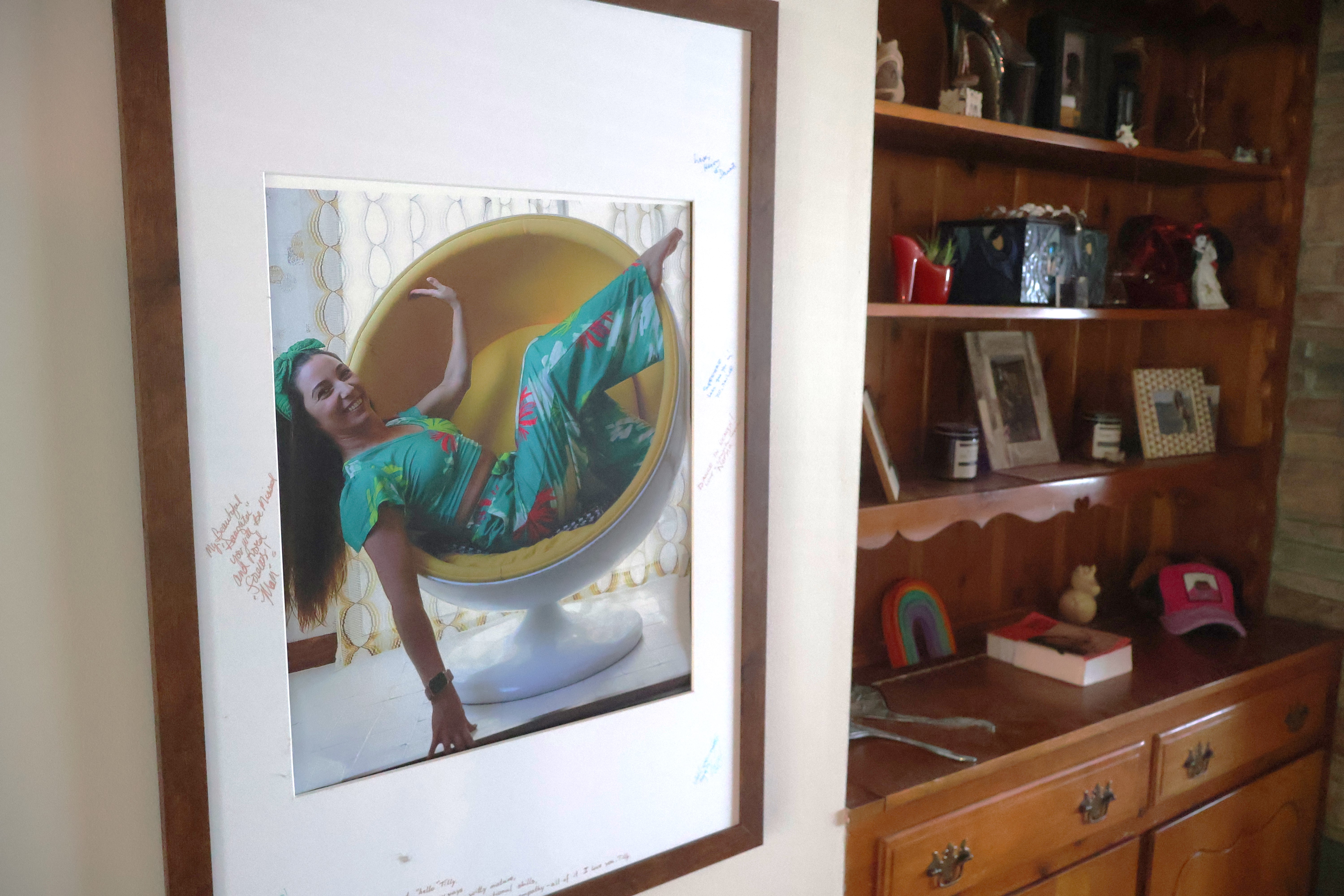
    Kris Edwards waited at home with friends for his wife, Erika “Tilly” Edwards, to go out to dinner, but she never made it back to the house they had purchased only four days earlier. Around 9 p.m. on June 29, a hit-and-run driver killed Tilly as she walked to her car after a fundraiser performance in Hollywood.

    “I’ve just got to figure out how to keep living. And the hard part with that is not knowing why,” Edwards said of his wife’s death.

    Despite local, state, and federal safety campaigns, such as the global Vision Zero initiative to eliminate traffic fatalities, such deaths are up 20% in the U.S. from a decade ago, from 32,744 in 2014 to an estimated 39,345 in 2024, according to data from the Department of Transportation’s National Highway Traffic Safety Administration. Although traffic deaths have declined since peaking at 43,230 in 2021, the number of deaths remains higher than a decade ago.

    Since the COVID-19 pandemic, the Pew Research Center found, Americans’ driving habits have worsened across multiple measures, from reckless driving to drunken driving, which road safety advocates call a public health failure. They say technology could dramatically reduce traffic deaths, but proposals often run up against industry resistance, and the Trump administration is focusing on driverless cars to both innovate and improve public safety.

    “Every day, 20 people go out for a walk, and they don’t return home,” said Adam Snider, a spokesperson for the Governors Highway Safety Association, which represents state road safety offices.

    American roads have become more dangerous than violent crimes in some cities: Los Angeles, San Francisco, and Houston are among the major cities that now report more traffic fatalities than homicides. In 2024, the Los Angeles Police Department reported an estimated 268 homicides and 302 traffic deaths, the second consecutive year that the number of people killed in collisions exceeded the number of homicide victims, according to Crosstown LA, a nonprofit community news outlet.

    San Francisco reported more than 40 traffic deaths and 35 homicides in 2024. In Houston, approximately 345 people died in crashes and 322 from homicide.

    Philadelphia had 134 traffic deaths last year, 59 of which involved pedestrians hit by vehicles.

    “Simply put, the United States is in the middle of a road safety emergency,” David Harkey, president of the Insurance Institute for Highway Safety, testified during a House Energy and Commerce subcommittee hearing this summer. Out of 29 high-income countries, America ranks at the bottom in road safety, Harkey said. “This spike is not — I repeat, is not — a global trend. The U.S. is an outlier.”

    In January 2017, then-Mayor Eric Garcetti joined 13 other L.A. city leaders in pledging to implement the Vision Zero action plan and eliminate traffic deaths in the city by 2025.

    Instead, deaths have increased.

    An audit released in April that was commissioned by the city’s administrative officer found that the level of enthusiasm for the program at City Hall has diminished and that it suffered because of “the pandemic, conflicts of personality, lack of total buy-in for implementation, disagreements over how the program should be administered, and scaling issues.” The report also cited competing interests among city departments and inconsistent investment in the city’s most dangerous traffic corridors.

    Mayor Karen Bass’ office did not immediately respond to requests for comment.

    A hit-and-run driver killed Erika “Tilly” Edwards as she walked to her car after a fundraiser performance in Los Angeles’ Hollywood neighborhood in June 2025. Despite safety campaigns, U.S. traffic deaths are up 20% from a decade ago, according to the Department of Transportation. (Chaseedaw Giles/KFF Health News)

    Last year, California state Sen. Scott Wiener proposed a bill that would have required new cars sold in the state to include “intelligent speed assistance,” software that could prevent vehicles from exceeding the speed limit by more than 10 mph. But the bill was watered down following pushback from the auto industry and opposition from some legislators who called it government overreach. It was ultimately vetoed by Democratic Gov. Gavin Newsom, who said a state mandate would disrupt ongoing federal safety assessments.

    Meanwhile, the Alliance for Automotive Innovation, an influential automotive lobby, this year sued the federal government over an automatic emergency braking rule adopted during the Biden administration. The lawsuit is pending in federal court while the Department of Transportation completes a review. Even before Donald Trump was sworn in for his second term, the alliance appealed to the president-elect in a letter to support consumer choice.

    Under Trump, Transportation Secretary Sean Duffy is prioritizing the development of autonomous vehicles by proposing sweeping regulatory changes to test and deploy driverless cars. “Federal Motor Vehicle Safety Standards were written for vehicles with human drivers and need to be updated for autonomous vehicles,” NHTSA Chief Counsel Peter Simshauser said in September in announcing the modernization effort, which includes repealing some safety rules. “Removing these requirements will reduce costs and enhance safety.”

    Some Democratic lawmakers, however, have criticized the administration’s repeal of safety rules as misguided since new rules can be implemented without undoing existing safeguards. NHTSA officials did not respond to requests for comment about Democrats’ concerns.

    Advocates worry that without continued adoption of road safety regulations for conventional vehicles, factors such as excessive speed and human error will continue to drive fatalities despite the push for driverless cars.

    “We need to continue to have strong collaboration from the federal, state, local sectors, public sector, private sector, the everyday public,” Snider, of the Governors Highway Safety Association, said. “We need everyday drivers to get involved.”

    It took nearly a month for police to track down the driver of a Mercedes-Benz G-Wagen allegedly involved in Tilly’s death. Authorities have charged Davontay Robins with vehicular manslaughter with gross negligence, felony hit-and-run driving, and driving with a suspended license due to a previous DUI. He has pleaded not guilty to all charges and is out on bail.

    Kris Edwards now tends to the couple’s backyard garden by himself. Since his wife’s death, he has experienced sleep deprivation, fatigue, and trouble eating, and he relies on a cane to walk. His doctors attribute his ailments to the brain’s response to grief.

    “I’m not alone,” he said. “But I am lonely, in this big, empty house without my partner.”

    Edwards hopes for justice for his wife, though he said he’s unsure if prosecutors will get a conviction. He wants her death to mean something: safer streets, slower driving, and for pedestrians to be cautious when getting in and out of cars parked on busy streets.

    “I want my wife’s death to be a warning to others who get too comfortable and let their guard down even for a moment,” he said. “That moment is all it takes.”

  • Letters to the Editor | Nov. 20, 2025

    Letters to the Editor | Nov. 20, 2025

    The Pardoner’s Tale

    It seems the idea of a con man selling false pardons to fearful sinners was the subject of satire as far back as Geoffrey Chaucer’s The Canterbury Tales. Whereas Chaucer’s barbs were directed at a corrupt medieval church hierarchy, we now almost daily witness a corrupt president handing out pardons like candy to his friends and co-indictees/conspirators, while at the same time prosecuting his perceived enemies. Chaucer was well aware of the irony of his tale’s narrator capitalizing on the very sin of avarice that he condemned. This rogue president continues to flout the spirit of clemency and the rule of law, brazenly lining his own pockets and those of his cronies. Meanwhile, an ineffectual Congress and a compromised U.S. Supreme Court allow this mockery of justice to go on unchecked. Who will finally call out the hypocrisy and end this criminal enterprise? We the people grow impatient.

    Charles Derr, Philadelphia

    Glaring omission

    A recent Associated Press article on the global conference on climate change in Brazil left out one crucial fact.

    While most of the world’s nations sent delegations to the annual gathering, the United States did not send any official emissary. Not only is the current administration ignoring the perils of climate change, but by being absent, we are missing an opportunity to promote American technology to the rest of the world.

    While we ignore the problem and prioritize the use of fossil fuels, the Trump administration is endangering Americans’ health and our economy. We need a government in Washington that takes climate change more seriously, rather than one that keeps its head in the sand and enriches its fossil fuel donors.

    Steve Stern, Mount Laurel

    Cassandras for our time

    As an emeritus professor at Drexel University, I would like to express my appreciation of professor Lisa Tucker of Drexel’s School of Law for her coauthorship with Dean Erwin Chemerinsky of their op-ed in praise of Justices Sonia Sotomayor and Ketanji Brown Jackson’s principled dissents from the U.S. Supreme Court’s repeated failures to uphold the rule of law against President Donald Trump’s serial breaches of it. Drexel itself faced its own crisis when, at a time when Mr. Trump refused to accept his defeat in the 2020 presidential election, faculty realized that its School of Law had previously conferred an honorary doctorate on his chief defender, Rudolph Giuliani. Together with action by Drexel’s Faculty Senate and petitioners from each of its schools, both the faculty and student body of the law school called unanimously for Giuliani to be stripped of his degree, and the board of trustees revoked it. The nation’s law schools would, I think, do well to apply this precedent to Mr. Trump’s conduct in office, and to the Supreme Court majority that has been his chief enabler.

    Robert Zaller, Drexel University, Distinguished University Professor of History, emeritus

    Join the conversation: Send letters to letters@inquirer.com. Limit length to 150 words and include home address and day and evening phone number. Letters run in The Inquirer six days a week on the editorial pages and online.

  • Horoscopes: Thursday, Nov. 20, 2025

    ARIES (March 21-April 19). Someone wants to hear about you. There was a time you didn’t know how to tell your story, and maybe you even minimized, hid or simply avoided talking about yourself much. Now you’re finding a way to share with confidence.

    TAURUS (April 20-May 20). Chasing the “hot” opportunity means facing lots of competition and gatekeeping. The more people want something, the harder it is to get. It’s all the more reason to follow your own curiosity instead. The more original your aim, the smoother your path.

    GEMINI (May 21-June 21). You’ll know the power of visualization, and you’ll merge practical goal-setting with mystical creativity. Picture your ideal outcome vividly so your subconscious understands what to build toward. Then trust your inner dream-weaver as an ally.

    CANCER (June 22-July 22). Experienced people have advice. Some want to help; others are in it to feel powerful or maybe to show off. Stay gracious but cautious; listen, learn and show respect, but don’t rush to take sides, make promises or adopt anyone’s approach.

    LEO (July 23-Aug. 22). Your drive to accomplishment is always present. Sometimes it’s steady and manageable, like a kitten’s purr. Today it’s intense and impactful as a lion’s roar. Ambition will take over your decisions and push you to act.

    VIRGO (Aug. 23-Sept. 22). In a moment of stark lucidity, you will clearly see and fully understand the most difficult thing of all to comprehend: the environment you live in every day. This rare glimpse into the familiar illuminates a way forward.

    LIBRA (Sept. 23-Oct. 23). Awareness and action go together. Our minds often protect us from information, storing it in the subconscious until we’re ready for it. Realizations come when you’re capable of doing something about the circumstance.

    SCORPIO (Oct. 24-Nov. 21). You’re headed into an adventure. Maybe you feel ill-equipped. Maybe you’re starting early, or late. Whatever makes you different, lean into that. You’ve undergone so many incarnations in your lifetime already, and you’re about to add another to the story.

    SAGITTARIUS (Nov. 22-Dec. 21). Kindness may not be as flashy as other qualities like daring, or power, but having the courage to be kind when others aren’t is powerful, thus allowing you to claim all qualities and inspiring others in the act.

    CAPRICORN (Dec. 22-Jan. 19). It takes a lot of energy to think. So when a person overthinks, energy gets wasted. Avoid circling the drain of thought. Move your body, change your focus and use that same energy to create instead of worry.

    AQUARIUS (Jan. 20-Feb. 18). You know that success doesn’t have to come at someone else’s expense. In the spirit of collaboration, you’ll come up with an arrangement that benefits everyone. Fire signs (Aries, Leo, Sagittarius) will inspire, energize or help make the deal happen.

    PISCES (Feb. 19-March 20). We don’t always know what we’re getting into. And sometimes participation is not our choice in the first place. Nonetheless, you’ll make quick work of the job and learn something in the process. Not fair, but you’ll benefit, so all is well that ends well.

    TODAY’S BIRTHDAY (Nov. 20). Welcome to your Year of Creative Triumphs. You’re the star of your own story, though you’ll share the stage generously, lifting others while shining yourself. Someone fascinating joins your orbit, and they are equally fascinated by you. More highlights: collaborations that stick, an investment that pays for years to come and family-centered fun. Virgo and Scorpio adore you. Your lucky numbers are: 15, 9, 27, 40 and 32

  • Dear Abby | Rambunctious children causing a ruckus for neighbor

    DEAR ABBY: I recently bought a first-floor condo because I am an older woman with a knee disability. Otherwise, I would have purchased a unit on the second floor of this two-story condo complex. I am only here part time because my husband is not ready for retirement.

    The owner above me has two children who jump off the kitchen counter onto the floor multiple times a night as late as 10 p.m. It causes everything in my kitchen cabinets to rattle. I have spoken with the property manager. He’s willing to send them violation notices which would eventually include fines. I haven’t taken him up on it because, since I am a part-time resident, I’m concerned about retaliation such as broken windows or vandalism to my car in the parking lot. Of course, that neighbor would be the prime suspect, but I would have no proof.

    I can’t afford a more expensive community. My husband and I did knock on her door in a congenial manner one day to introduce ourselves as new neighbors. She did not give us the time of day. What would you do if you were me?

    — FEELS THE NOISE DOWN SOUTH

    DEAR FEELS THE NOISE: I would knock on the woman’s door, explain the problem and politely ask her to instruct her children not to jump off the kitchen counter after 6 p.m. because the crashing noise prevents me from enjoying my apartment. If she didn’t cooperate, I’d have another talk with the manager. If the warnings and fines didn’t work, I’d contact Child Protective Services, because what those kids are doing is dangerous and their parent is unwilling to supervise them.

    ** ** **

    DEAR ABBY: I have been happily married to my husband for 35 years. My mother-in-law just drafted her will and is passing her entire estate to him, with it being split equally among our three adult kids if he were to pass away before her. She was asked to name a beneficiary if all four of them predecease her. (I know it would be extremely unlikely.) My MIL has no other living relatives — no parents, siblings, husband, cousins, etc.

    She named a friend and neighbor rather than me as the beneficiary of her estate in this event. This neighbor lives next door to her and drives her to the grocery store, bank and doctor appointments, since my MIL does not drive and we live 3 1/2 hours away.

    I thought she and I have always had a good relationship. My husband and I send flowers and cards on her birthday and Mother’s Day. I select thoughtful gifts for her at Christmas. I have always treated her with kindness, respect and gentleness. I am helpful when she has health issues. I assist her in the kitchen with dishes, etc. I have always treated her son well. Am I petty, unreasonable or immature for having negative feelings about not being mentioned in her will?

    — HURT IN COLORADO

    DEAR HURT: Not at all. You’re human. It does appear to be a glaring omission, and under these circumstances, your reaction is understandable. What does your husband feel about what his mother did? Perhaps he should speak to her and ask if she forgot she has a daughter-in-law when she made her will.

  • Sixers can’t overcome Raptors’ third quarter surge in 121-112 loss

    Sixers can’t overcome Raptors’ third quarter surge in 121-112 loss

    Brandon Ingram and RJ Barrett each scored 22 points and the Toronto Raptors won their fifth straight game, surging in the third quarter to beat the 76ers 121-112 on Wednesday night.

    Jakob Poeltl scored 19 points, and Immanuel Quickley had 18 — hitting two three-pointers in the final two minutes — to help the Raptors (10-5) win for the ninth time in 10 games. Scottie Barnes added 16 points, nine rebounds, and five assists.

    Tyrese Maxey led the Sixers (8-6) with 24 points. VJ Edgecombe and Quentin Grimes had 21 points each.

    The 76ers led 56-53 at halftime behind 15 points from Maxey. Toronto took the lead with an 18-7 run to start the third quarter, powered by seven points from Ingram. The Raptors outscored the Sixers 44-28 in the period.

    Toronto shot 2-for-15 from three-point range in the first half, then went 5 for 6 from deep in the third quarter. Toronto is 7-3 on the road and 9-2 against Eastern Conference teams.

    Sixers center Joel Embiid (right knee injury management) missed a fourth straight game and his ninth out of 14 this season. Paul George, who made his season debut Monday, was held out as part of management of his left knee injury. The Sixers announced before the game that Kelly Oubre Jr. will miss at least two weeks with a sprained LCL in his left knee.

    Sixers’ Dominick Barlow (left) is defended by Toronto Raptors’ Scottie Barnes during the first half of Wednesday’s game.

    Raptors rookie forward Collin Murray-Boyles missed the game because of right knee soreness.

    Up next

    The Sixers will make the trip to Milwaukee to face the Bucks on the second night of a back-to-back on Thursday (8 p.m., NBCSP).

  • Larry Summers takes leave from teaching at Harvard after release of Epstein emails

    Larry Summers takes leave from teaching at Harvard after release of Epstein emails

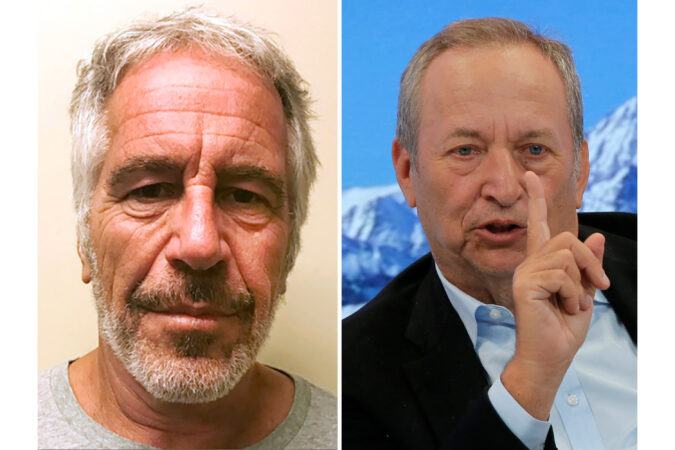
    Former U.S. Treasury Secretary Larry Summers abruptly went on leave Wednesday from teaching at Harvard University, where he once served as president, over recently released emails showing he maintained a friendly relationship with Jeffrey Epstein, Summers’ spokesperson said.

    Summers had canceled his public commitments amid the fallout of the emails being made public and earlier Wednesday severed ties with OpenAI, the maker of ChatGPT. Harvard had reopened an investigation into connections between him and Epstein, but Summers had said he would continue teaching economics classes at the school.

    That changed Wednesday evening with the news that he will step away from teaching classes as well as his position as director of the Mossavar-Rahmani Center for Business and Government with the Harvard Kennedy School.

    “Mr. Summers has decided it’s in the best interest of the Center for him to go on leave from his role as Director as Harvard undertakes its review,” Summers spokesperson Steven Goldberg said, adding that his co-teachers would finish the classes.

    Summers has not been scheduled to teach next semester, according to Goldberg.

    A Harvard spokesperson confirmed to The Associated Press that Summers had let the university know about his decision. Summers decision to go on leave was first reported by The Harvard Crimson.

    Harvard did not mention Summers by name in its decision to restart an investigation, but the move follows the release of emails showing that he was friendly with Epstein long after the financier pleaded guilty to soliciting prostitution from an underage girl in 2008.

    By Wednesday, the once highly regarded economics expert had been facing increased scrutiny over choosing to stay in the teaching role. Some students even filmed his appearance in shock as he appeared before a class of undergraduates on Tuesday while stressing he thought it was important to continue teaching.

    Massachusetts Sen. Elizabeth Warren, a Democrat, said in a social media post on Wednesday night that Summers “cozied up to the rich and powerful — including a convicted sex offender. He cannot be trusted in positions of influence.”

    Messages appear to seek advice about romantic relationship

    The emails include messages in which Summers appeared to be getting advice from Epstein about pursuing a romantic relationship with someone who viewed him as an “economic mentor.”

    “im a pretty good wing man , no?” Epstein wrote on Nov. 30, 2018.

    The next day, Summers told Epstein he had texted the woman, telling her he “had something brief to say to her.”

    “Am I thanking her or being sorry re my being married. I think the former,” he wrote.

    Summers’ wife, Elisa New, also emailed Epstein multiple times, including a 2015 message in which she thanked him for arranging financial support for a poetry project she directs. The gift he arranged “changed everything for me,” she wrote.

    “It really means a lot to me, all financial help aside, Jeffrey, that you are rooting for me and thinking about me,” she wrote.

    New, an English professor emerita at Harvard, did not respond to an email seeking comment Wednesday.

    An earlier review completed in 2020 found that Epstein visited Harvard’s campus more than 40 times after his 2008 sex-crimes conviction and was given his own office and unfettered access to a research center he helped establish. The professor who provided the office was later barred from starting new research or advising students for at least two years.

    Summers appears before Harvard class

    On Tuesday, Summers appeared before his class at Harvard, where he teaches “The Political Economy of Globalization” to undergraduates with Robert Lawrence, a professor with the Harvard Kennedy School.

    “Some of you will have seen my statement of regret expressing my shame with respect to what I did in communication with Mr. Epstein and that I’ve said that I’m going to step back from public activities for a while. But I think it’s very important to fulfill my teaching obligations,” he said.

    Summers’ remarks were captured on video by several students, but no one appeared to publicly respond to his comments.

    Epstein, who authorities said died by suicide in 2019, was a convicted sex offender infamous for his connections to wealthy and powerful people, making him a fixture of outrage and conspiracy theories about wrongdoing among American elites.

    Summers served as treasury secretary from 1999 to 2001 under President Bill Clinton. He was Harvard’s president for five years from 2001 to 2006. When asked about the emails last week, Summers issued a statement saying he has “great regrets in my life” and that his association with Epstein was a “major error in judgement.”

    Other organizations that confirmed the end of their affiliations with Summers included the Center for American Progress, the Center for Global Development and the Budget Lab at Yale University. Bloomberg TV said Summers’ withdrawal from public commitments included his role as a paid contributor, and the New York Times said it will not renew his contract as a contributing opinion writer.

  • An Infrastructure for Empowerment

    An Infrastructure for Empowerment

    A 2019 recipient of the Philadelphia Award, the Rev. Luis Cortés Jr., 67, has come a long way from working after school at his father’s grocery store, known as a “bodega” in East Harlem. The bodega is where he learned the impact of social connection. “I’ve never seen sociology papers written from the bodega perspective, but there can be,” Cortés said.

    Those early observations informed Cortés’ belief that perseverance and financial literacy can help close the gap for Latino communities. In 1986, Cortés founded the nonprofit Esperanza, which means “hope” in Spanish. The faith-based organization is guided by Jesus’ mandate in Matthew 25:40 to serve and advocate for “the least of these” around us.

    Known simply as “Rev” by members of the wider Philadelphia community, Cortés is proud of the breadth of services Esperanza offers. The organization improves the lives of those in North Philadelphia through education, housing stability, work training, civic empowerment, and the arts. Over the last 40 years, Esperanza has grown to serve more than 30,000 families annually. Cortés aspires to do more, still.

    How did your upbringing in New York City influence you?

    The first 10 years of my life were in Spanish Harlem, then we moved to Black Harlem and I attended New York City public schools. My father ran a grocery store, a bodega in the neighborhood, and I worked at the store. Working at the store teaches you a lot about life. You get to know the customers. You get to know their families. You get to know their hopes, aspirations, fears, and you begin to become part of the fabric of their lives. You learn about things that are happening in people’s lives that are very real and painful.

    It’s always the same things: the desire to have safety, and also long-term aspirations, [like to] be able to provide for their family.

    What experiences in your life or background led you to dedicate your career to social services and community support?

    I decided to go into the ministry because I could work on behalf of communities. I went from “I’m going to be a lawyer to help people,” to being a minister to help people. I became immersed in civil rights, both in my theological training as well as [in] my ministerial pursuit.

    I worked for a group called IFCO [Interreligious Foundation for Community Organization], based out of the Abyssinian Church under Rev. Lucius Walker. We [supported] self-determination for Puerto Rico. We [supported] civil rights in the U.S., [and] the National Anti-Klan Network. I’m willing to persevere for the greater good of the community. I realized I’m better at civil rights work and community development work.


    If someone were to ask you about entering the clergy today, what would you advise?

    I think that entering the clergy allows you to get into the most theoretical, philosophical, theological thoughts in the history of humankind. All areas of inquiry are open to you.

    Esperanza is a faith-based organization. How is faith woven into all that Esperanza does?

    The fact is, all human beings are equal and all human beings need to be loved and respected.

    That’s our theological and our epistemological premise. Every individual has something to share, both for the growth of their family and for the whole. If you start there, everything [is] about opportunity. Money should not inhibit your growth and your ability to serve others. At Esperanza the religious aspects will always be present as long as we maintain the theoretical framework that all human beings are created by God. And all human beings are equal, regardless of who they are in the present day, because that will not define who you will be tomorrow.

    Economics is a touchstone for you and for Esparanza. What’s behind your focus on financial literacy?

    I learned early that money is a tool. And no matter how much money you have, it is still a tool, and an important one. How do we learn to use and apply that tool?

    The example I use is this: When I worked at my family’s store, I would always take a Snickers bar and a Pepsi. The fact that I wasn’t thinking about it irritated my father. So one day he asks me four basic questions: How many are in a box? How many do I have to sell to break even? How long is the box there? And why is the box there?

    He wasn’t upset that I was eating a Snickers bar. He was upset that I didn’t know what [it] meant to the overall economics of the store, and that I was taking that tool [of money and economics] for granted. Money is a tool no matter how little you have. And you need to understand the tool and how you apply the tool.

    We need to find ways to educate people about money, about status, immediate gratification versus long-term gratification. You cannot just live for tomorrow, but you should not just live for today. That’s my philosophy.

    Is there a division of Esperanza that you hold a soft spot for?

    In our art gallery, Galéria Esperanza, we highlight Latino artists from Philadelphia who don’t get a shot anywhere else. There are great composers, [musicians, dancers, and other Latino artists] in history. And so Esperanza Art Center melds [the performing arts, including theater, film, music, and dance, to feature those artists]. And then [another] important [piece] is access: [kids] 18 and under and college students [can attend for] free, and senior citizens are free.

    We need to thank the philanthropic community because they made that access possible. We built and paid for our theater, the Teatro Esperanza. I convinced the performing groups, including Philadelphia Ballet, Philadanco and Opera Philadelphia, to come, but I still needed a way to help finance those groups.

    We have a library, which is now a community library. The businesses use it in the evenings. It’s reserved for our high school juniors, seniors, and college students during the day. It’s wonderful. We don’t get any government funding for that, but we need it. We hold community school meetings here at Esperanza as well.

    Can you share a recent success story?

    It is the opening of Esperanza Academy Charter School‘s elementary building in September. It took us almost 12 years to gain permission, raise the money to build, and open our elementary school. Once we finally got permission we had to raise money. It took five years to raise $40 million for the construction. We have a state-of-the-art facility. It is a physically beautiful space for our children. The parents see it and cry.

    There have been a lot of recent changes politically on the local, state, and national levels. How has Esperanza had to shift its focus?

    Civic rights, civic engagement have become a larger focus in the more recent months. We have an immigration division, so we put out training sessions to know your rights.

    We also have explained to staff what their rights are. We’ve explained to business owners [and] clergy. A lot of clergy thought that ICE cannot come into their church. The law is clear. ICE can walk into your church on a Sunday morning while you’re preaching. They cannot go into any space that’s private. So put “private” on every door.

    Learning the rules of engagement is important, even though the rules of engagement are not always followed by the government these days. But knowing them is important because they will affect your case as you move forward.

    We’re proceeding with our work. People need housing. People need food. People need education. Nothing changes. We have to continue to let people know that this political climate is abnormal. But you need to understand that while it’s abnormal, it may be legal. And if it is legal, you need to understand what your rights are. You need to understand where you must comply.

    What is the biggest challenge for Esperanza in the coming year?

    The biggest challenges include programming for senior citizens around heat mitigation, cuts to our college (a Hispanic-serving institution), and reductions in community development funding. We had to make tough decisions. The loss of funding meant we couldn’t hire a group of people, and hard-working people had to be let go.

    These are fundamental issues about being humane and they’re very important. I see a lot of inhumaneness by governmental structures these days.

    Esperanza turns 40 years old in 2026. Are there any special events in the works?

    We will be celebrating our 40th anniversary in April with a sponsored event. And then, we also are celebrating the 25th anniversary of [Esperanza Academy Charter School] and the 25th anniversary of [Esperanza College of Eastern University].

    We’ll be holding an event the day before our 40th anniversary event [that is] a musical celebration with a jazz orchestra band for the community [celebrating] 250 years of Latin music. We’ll have big-band-style performers with Pablo Batista heading it up. Pablo was this year’s Grand Marshal for the Puerto Rican parade. He’s one of the top percussionists and a global icon who’s been living in [Philadelphia] for his whole life.

    What do you want your legacy to be?

    That’s easy: to build Esperanza College into one of our major universities in Philly. And the institution will compete and become the mechanism by which people can become empowered.


    PHILLY QUICK ROUND

    What’s your favorite Philly food splurge? I have two: the Tres Leches cake from Vickie’s Sweets and the homemade ice cream from Helados Chupi Chupi.

    Favorite Philly restaurant? Tierra Colombiana. You can get the best Latin food in the city.

    Favorite Philly small business? Cafe Tinto and Amy’s Pastelillos, both in North Philly.

    Which sports teams do you root for? I was a Sixers fan before I came to Philadelphia. All the other teams I became a fan of after I moved to Philadelphia. They grow on you. The Flyers, Phillies, the Eagles are in a renaissance period right now.

    Favorite Philly artist, performer, musician and/or band? Percussionist Pablo Batista and the band Low Cut Connie.

    What elements of Philly remind you of your childhood neighborhood of East Harlem in NYC? Any time I walk into a bodega and I can talk in Spanish, it’s like a time warp.

    What’s one place in or around Philadelphia everyone should visit at least once? Teatro Esperanza.

    What do you wish people knew about the people who call Philly home? We always get up. We get knocked down, but we always get up. It’s part of that Rocky theme. There’s a lot of persistence in Philadelphia. It makes our city more dynamic.

  • What draws the 55+ population to Cherry Hill? | Inquirer Cherry Hill

    What draws the 55+ population to Cherry Hill? | Inquirer Cherry Hill

    Hello, Cherry Hill! 👋

    First up this week, a $70,000 grant from the state will help the township explore a key question: What makes Cherry Hill such a desirable place to live for people 55 and older? Also this week, a Say Yes to the Dress star is coming to town, and we explain why the library is experiencing disruptions.

    If someone forwarded you this email, sign up for free here.

    A new assessment will explore what draws older residents to Cherry Hill

    Cherry Hill will be doing a needs assessment to determine what makes older residents want to stay.

    One-third of Cherry Hill’s residents are 55 or older. As the township’s population continues to grow, local leaders want to understand what makes its older residents stick around.

    “For those that have the means, it’s a conscious decision to stay,” said Mayor Dave Fleisher. “They want to stay close to their kids, close to their grandkids.”

    Cherry Hill will be using a $70,000 grant from the New Jersey Department of Human Services to do a needs assessment, including focus groups, listening sessions, and a survey. The goal of the grant, given to 17 communities in total, is to “make communities more welcoming and livable for people of all ages.”

    Read more about what Cherry Hill leaders hope to learn.

    💡 Community News

    🏫 Schools Briefing

    • In case you missed it, last week, Cherry Hill Public Schools Superintendent Kwame Morton assured parents that the district will not ban or censor library books. The clarification came after an internal memo suggested that students would need parental permission to check out “sensitive” books.
    • Morton also last week released a report on the first quarter of the school year. It outlined key actions, currents challenges, and next steps across five areas, including academic achievement, the school’s climate, and staffing.
    • The district will hold its final meeting about elementary school enrollment “balancing” tomorrow at 7 p.m. over Zoom.
    • Reminder to families: There will be an early dismissal next Wednesday to kick off Thanksgiving break. See the district’s full calendar here.
    • Inspire A Learner, a new Islamic youth education and daycare center, has received zoning approval to operate in a converted office building on Marlkress Road. (70 and 73)

    🍽️ On our Plate

    • The owners of Cherry Hill’s Old World-style Italian restaurant Il Villaggio have an agreement to buy popular Haddon Township pub Keg & Kitchen. It will remain a pub, but undergo a few changes, including to its name, menu, and decor.
    • Bombay Express, an Indian restaurant that recently closed its Marlton location, is heading to Cherry Hill. The eatery, which offers chicken, lamb, and vegetable dishes, in addition to biryanis and tandoori, will open in the Centrum Shoppes on Haddonfield-Berlin Road, though an exact timeline has not yet been shared.
    • Umai Ramen is one of the 20 best ramen shops in the Garden State, according to BestofNJ.com. The food outlet noted the Brace Road restaurant “brings a taste of authentic Japanese street food to Cherry Hill,” suggesting diners try the classic miso, tonkotsu, or the black garlic ramen.

    🎳 Things to Do

    🎅🏻 Coca‑Cola Holiday Caravan: The bright red touring truck is making a stop in Cherry Hill tonight, where you can take photos with Santa, enjoy seasonal activities, and purchase Coca-Cola-themed gifts. ⏰ Wednesday, Nov. 19, 5:30-7:30 p.m. 💵 Pay as you go 📍 Roy Rogers

    🛍️ Eyez on U Pop-Up Market: Beat the Black Friday rush and shop local businesses at the mall’s Grand Court. ⏰ Friday, Nov. 21-Sunday, Nov. 23, times vary 💵 Pay as you go 📍 Cherry Hill Mall

    🎄 Holiday House: See Barclay Farmstead decked out for the holidays. ⏰ Friday, Nov. 21-Sunday, Nov. 23, times vary 💵 $5.49 for adults, $3.49 for children 10 and under📍 Barclay Farmstead

    🤖 Philcon 2025: Science fiction, fantasy, and horror buffs will gather to celebrate the genres in books, film, television, and more. This year’s principal speaker is writer Charles Gannon, who is known for his Caine Riordan series. ⏰ Friday, Nov. 21-Sunday, Nov. 23, times vary 💵 $35-$75 📍 DoubleTree by Hilton

    🎧 R&B Night: Drinksgiving: Three DJs will play tunes during this R&B-themed event. ⏰ Friday, Nov. 21, 9 p.m.-2 a.m. 💵 $13.34 📍 Vera

    💎 Holiday Gift Bazaar: Over 40 vendors will be selling everything from accessories and beauty products to home goods at this event. ⏰ Sunday, Nov. 23, 9 a.m.-2 p.m. 💵 Pay as you go 📍 Congregation Kol Ami

    🎁 Holiday Craft Fair: Browse an array of vendors selling items like jewelry, scrapbooking supplies, and pottery. ⏰ Sunday, Nov. 23, 1-4 p.m. 💵 Pay as you go 📍 Cherry Hill Public Library

    🏡 On the Market

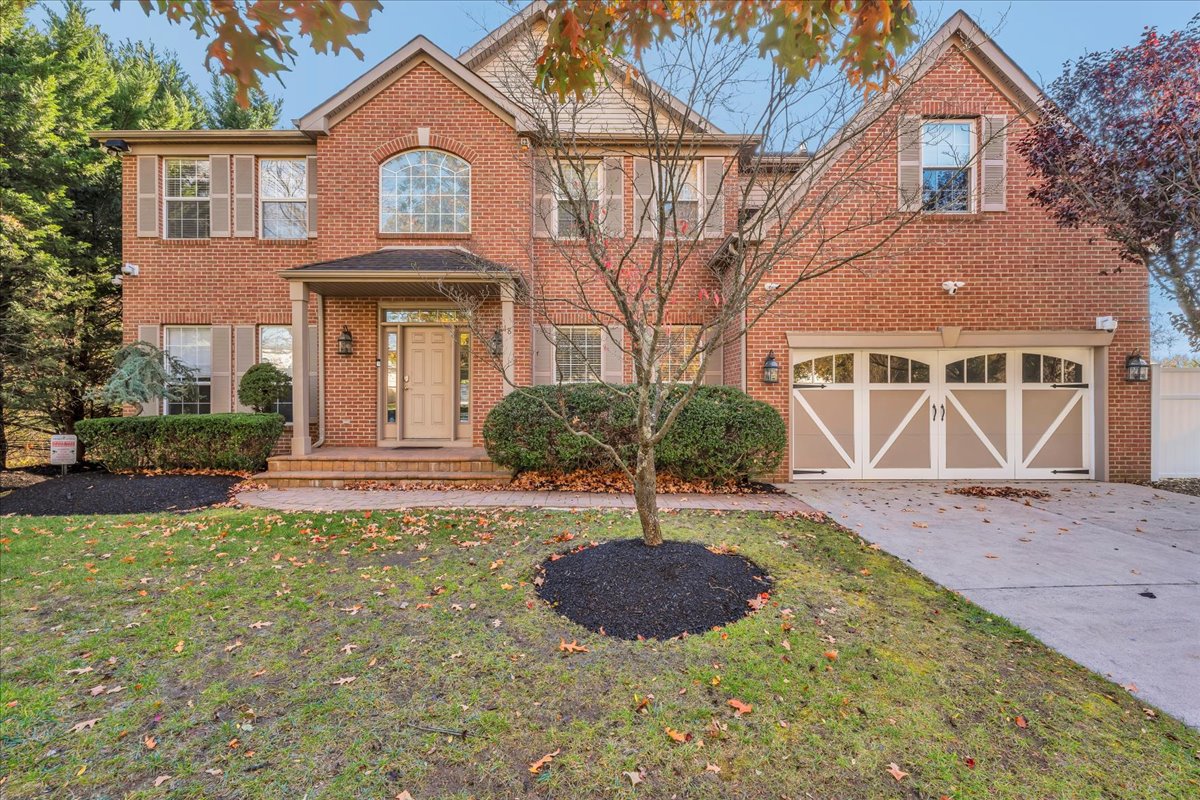
    This four-bedroom Short Hills home has a heated covered patio

    The four-bedroom home spans more than 5,100 square feet.

    Built in 1999, this spacious brick-fronted Short Hills home has a variety of unique features. Its first floor features a two-story foyer; a living room; an office; a family room with a fireplace set into a stone accent wall and vaulted ceilings; a dining room with a quartz waterfall island in lieu of a table; and a kitchen with granite countertops and high-end appliances. It has four bedrooms, including a primary suite, with a massive walk-in closet, a fireplace, a spa-like bathroom, and a balcony. The finished basement has a full bathroom and a home gym. Outside, there’s a heated covered patio and a saltwater fiberglass pool with a rock waterfall.

    See more photos of the property here.

    Price: $1.165M | Size: 5,100 SF | Acreage: 0.38

    🗞️ What other Cherry Hill residents are reading this week:

    By submitting your written, visual, and/or audio contributions, you agree to The Inquirer’s Terms of Use, including the grant of rights in Section 10.

    This suburban content is produced with support from the Leslie Miller and Richard Worley Foundation and The Lenfest Institute for Journalism. Editorial content is created independently of the project donors. Gifts to support The Inquirer’s high-impact journalism can be made at inquirer.com/donate. A list of Lenfest Institute donors can be found at lenfestinstitute.org/supporters.