Tag: no-latest

  • Letters to the Editor | Nov. 19, 2025

    Letters to the Editor | Nov. 19, 2025

    Journey with Alzheimer’s

    Thank you to Wendy Ruderman for your moving story about Mike West. I had the privilege of knowing both Mike and Lynn — Mike, who left a lasting impact, and Lynn, who continues to honor his legacy with grace and heart. Your piece truly captured their spirit.

    Mike was always approachable — no matter how challenging the business discussion, his smile always led the way into the room. He was a consummate professional who brought people together and made things happen, always with kindness and respect.

    Reading about his journey with Alzheimer’s was difficult. It’s hard to imagine the weight of the decisions he faced. I salute Lynn for her courage in sharing resources and their family’s experience, so others might find help and understanding on their own Alzheimer’s journeys.

    Your story is a reminder that it’s easy to get caught up in the day-to-day and forget what matters most in support of friends and family. Mike’s legacy isn’t just in Rothman’s growth, but in how he treated people — with genuine care. Sharing his story will help more families find the support they need.

    Thank you for telling it with such compassion.

    Richard L. Snyder, chief operating officer, Independence Blue Cross

    Ridding sewage pollution

    I’m writing in response to the recent article about sewage pollution in the Philly-Camden region. As a coxswain on the St. Joseph’s women’s rowing team, I spend hours training on the Schuylkill. Lately, it’s hard not to think about what’s flowing below us — billions of gallons of sewage-tainted water.

    Combined sewer systems — where sewage and stormwater share the same pipes to a treatment plant — serve about 60% of Philadelphia. These systems can’t handle heavy rainfall, causing overflows that contaminate our rivers. Between 2016 and 2024, an average of 12.7 billion gallons of untreated sewage and stormwater entered local waterways each year. This goes against the Clean Water Act’s goal of protecting U.S. waters and threatens wildlife, communities, and athletes like myself.

    Philadelphia must invest in stronger infrastructure that can handle heavy rainfall. While green stormwater projects are an important start, they aren’t enough to protect the Schuylkill and Delaware Rivers. Ongoing sewage overflows make training and recreation unsafe for up to 195 days a year. It’s time for the Water Department to act and keep our rivers clean and safe.

    Cecilia Sarnowski, Philadelphia

    Insult to veterans

    I read with astonishment and anger the article about the disappearance of exhibits about Black American soldiers in a World War II cemetery in the Netherlands.

    Does this administration know no shame?

    These soldiers died fighting for freedom and against the Nazis. They must be remembered.

    How must their descendants feel?

    Judy Hartl, Philadelphia

    Join the conversation: Send letters to letters@inquirer.com. Limit length to 150 words and include home address and day and evening phone number. Letters run in The Inquirer six days a week on the editorial pages and online.

  • Horoscopes: Wednesday, Nov. 19, 2025

    ARIES (March 21-April 19). Even if you’re capable of doing something on your own, accepting help is still valuable, just not for the obvious reason. The “help” isn’t really the point; what matters is what you learn through the exchange.

    TAURUS (April 20-May 20). Sometimes the fastest way forward is to pause, check your bearings, and confirm your orientation, because you don’t want to go fast in the wrong direction. A brief moment of awareness now will save hours later.

    GEMINI (May 21-June 21). People ask of you what they will. But you can’t oblige every ask. People who respect you will stay in dialogue even when they don’t get what they want. People who only want the “yes” will fade away when they hear “no.”

    CANCER (June 22-July 22). Love can witness without fixing. Kindness can be warm and steady without falling into the gravity of another person’s need. Take care of yourself first. It’s not selfish; it’s the correct order.

    LEO (July 23-Aug. 22). You may have wonky tools or a clumsy setup today, and that’s actually perfect. When things are tricky, it wakes up your inventiveness, forcing you to move differently, think sharper and invent. And you’re so brilliant when you improvise!

    VIRGO (Aug. 23-Sept. 22). Kindness isn’t a contract. Your generosity doesn’t obligate you to the comfort of others. Protect your energy. Give because it delights you, not because it’s expected. And if you’re just not sure, hold off until you have a stronger feeling about what to do next.

    LIBRA (Sept. 23-Oct. 23). You sense the ache of the world even on bright days. Still, it’s not betrayal to feel good. When joy visits, take it in. And someone must remember what hope feels like. Why shouldn’t that someone be you?

    SCORPIO (Oct. 24-Nov. 21). It’s not too much to ask life to impress you, especially if you ask it to yourself, or send it to the heavens, or write it in your journal. After all, you regularly give more than what’s expected of you. And others might, too, if they sense the challenge.

    SAGITTARIUS (Nov. 22-Dec. 21). You’re awakening to how uneven emotional labor can be. Don’t confuse serving with loving. True partnership is mutual tending. Step back from one-way giving; step toward those who offer warmth back. Balance restores dignity and real joy.

    CAPRICORN (Dec. 22-Jan. 19). You’ve been accused of stubbornness, but there’s an upside to it — and in your case it’s an up and up and up side. Tenacity got you here and tenacity will get you to the next place, too. Keep it pushing, eyes ahead, never stop.

    AQUARIUS (Jan. 20-Feb. 18). To want more from someone is to overlook who they already are. Love’s rare grace is to stop improving, fixing or expecting, and simply witness. Let them be, and they’ll rise naturally into the truest version of themselves.

    PISCES (Feb. 19-March 20). When you chase a floating ball in water, your own motion pushes it away. The same goes for goals and people. Consider approaching indirectly, from the side or under the surface. Don’t make waves. Let it drift closer to you.

    TODAY’S BIRTHDAY (Nov. 19). Welcome to your Year of Wonder Work. You’ll create something that makes you proud to wake up early. The mix of joy and diligence turns ordinary efforts into legacy-making magic. More highlights: Romance finds you in motion — on a journey, in a workshop, mid-song. You’ll refine your tastes, elevate your surroundings, and collect experiences that feel cinematic. Cancer and Leo adore you. Your lucky numbers are: 10, 39, 26, 14 and 13.

  • Dear Abby | Husband repeatedly mentions his late ex in his sleep

    DEAR ABBY: My husband of 4 1/2 years had an old girlfriend he was on and off with for 15 years. She passed away while he was in prison. We got married three months after he was released. The thing is, when he sleeps, almost every night, he says her name and how much he loves her. He says because he’s doing it in his sleep, he doesn’t know he’s doing it. It seems to upset him that I’m upset. He doesn’t want to hurt me. What can I do to deal with it or get him to stop doing it?

    — DREADS THE BED IN COLORADO

    DEAR DREADS: Your husband was on and off with his late girlfriend much longer than he has been married to you. Old habits die hard. If he wakes you when this happens, don’t hesitate to gently wake him. If he asks why you did it, explain that he was talking in his sleep. (Do not be specific about what.) Then try to remember that she is history, and you are right next to him.

    ** ** **

    DEAR ABBY: I’m a senior widow who has been dating an older man for a year now. He’s caring and thoughtful and has many good qualities, but one thing he does is creating difficulty for me. He constantly stares at other women. I’ve talked with him about a “five-second rule,” but he doesn’t hear me. He told me he was raised by his mother and grandmother and that’s why he’s attracted to women in general. He says it doesn’t mean anything.

    I have never been with a man who constantly looks at other women. He also prefers to have women friends rather than men friends. I don’t want to be jealous, but sometimes it’s hard keeping those feelings down. I’m trying to decide whether I should end this relationship or stay in it and try to overcome my feelings of jealousy.

    — RED FLAG IN CALIFORNIA

    DEAR RED FLAG: If this person makes you feel less good about yourself, recognize it IS a red flag. His behavior is insensitive and rude. Because you have asked him to stop staring at women when he is with you and he makes excuses to continue, my advice is to find a companion who is more considerate of your feelings.

    ** ** **

    DEAR ABBY: My wife of 31 years and I have been fighting over politics and cultural changes in our country. The arguments have cooled down by mutual agreement, but so has our sexual desire for each other. Our marriage consultant has always taken my wife’s position; I am left on my own. I have no support from the rest of my family (three lovely daughters), but I still love and respect my wife. She told me that I must switch my politics to hers or she will leave me. What do I do?

    — THREATENED IN WISCONSIN

    DEAR THREATENED: Tell your wife and her marriage consultant that as your political arguments have dwindled, so has your sex life. It may be time to seek professional counseling with someone else on your own. Your wife’s ultimatum is unrealistic. Unless the two of you can agree to disagree, take her up on her offer.

  • Trump dismisses U.S. intelligence that Saudi prince was likely aware of 2018 killing of journalist Jamal Khashoggi

    Trump dismisses U.S. intelligence that Saudi prince was likely aware of 2018 killing of journalist Jamal Khashoggi

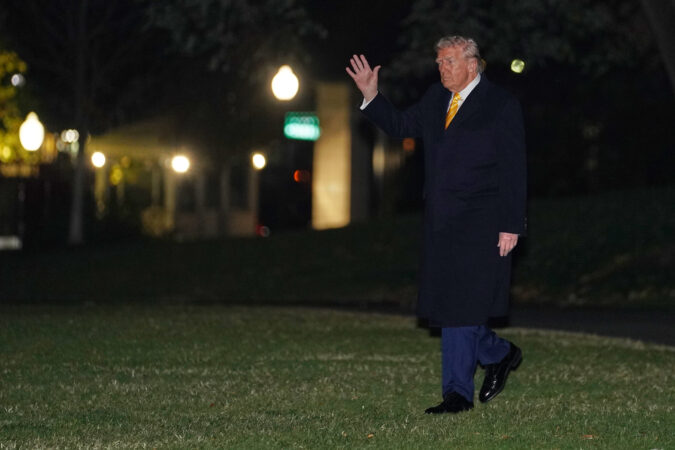
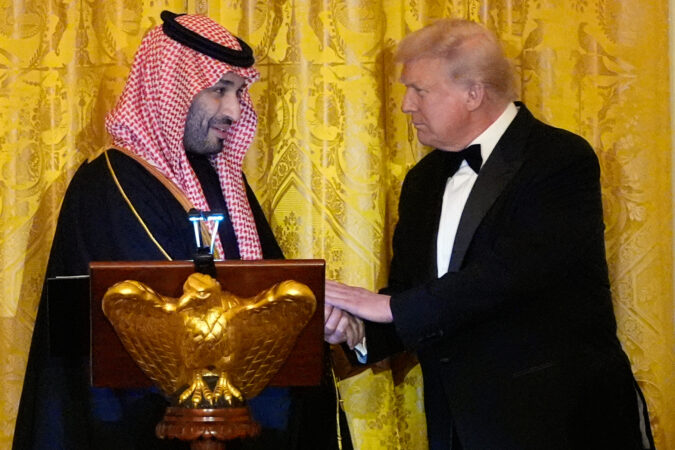
    WASHINGTON — President Donald Trump on Tuesday dismissed U.S. intelligence findings that Crown Prince Mohammed bin Salman likely had some culpability in the 2018 killing of Washington Post journalist Jamal Khashoggi as Trump warmly welcomed the de facto ruler of Saudi Arabia on his first White House visit in seven years.

    The U.S.-Saudi relationship had, for a time, been sent into a tailspin by the operation targeting Khashoggi, a fierce critic of the kingdom.

    But seven years later, the dark clouds over the relationship have been cleared away. And Trump is tightening his embrace of the 40-year-old crown prince, who he said is an indispensable player in shaping the Middle East in the decades to come.

    Trump in his defense of the crown prince derided Khashoggi as “extremely controversial” and said “a lot of people didn’t like that gentleman.” Prince Mohammed denies involvement in the killing of Khashoggi, who was a Saudi citizen and Virginia resident.

    “Whether you like him or didn’t like him, things happen,” Trump said when asked about the killing by a reporter during an Oval Office appearance with Prince Mohammed. “But (Prince Mohammed) knew nothing about it. And we can leave it at that. You don’t have to embarrass our guest by asking a question like that.”

    But U.S. intelligence officials determined that the Saudi crown prince likely approved the killing by Saudi agents of U.S.-based journalist inside the Saudi consulate in Istanbul, according to U.S. findings declassified in 2021 at the start of the Biden administration. Trump officials, during his first administration, refused to release the report.

    Prince Mohammed said Saudi Arabia “did all the right steps” to investigate Khashoggi’s death.

    “It’s painful and it’s a huge mistake,” he said.

    Trump, who said the two leaders have become “good friends,” even commended the Saudi leader for strides made by the kingdom on human rights without providing any specific detail.

    New investment from Saudis

    The crown prince for his part announced Saudi Arabia was increasing its planned investments in the U.S. to $1 trillion, up from $600 billion that the Saudis announced they would pour into the United States when Trump visited the kingdom in May.

    Echoing rhetoric that Trump likes to use, the crown prince called the U.S. the “hottest country on the planet” for foreign investment.

    “What you’re creating is not about an opportunity today. It’s also about long-term opportunity,” Prince Mohammed said.

    Trump’s family has a strong personal interest in the kingdom. In September, London real estate developer Dar Global announced that it plans to launch Trump Plaza in the Red Sea city of Jeddah.

    It’s Dar Global’s second collaboration with the Trump Organization, the collection of companies controlled by the U.S. president’s children, in Saudi Arabia.

    Trump pushed back on suggestions that there could be a conflict of interest in his family’s dealings with the Saudis.

    “I have nothing to do with the family business,” Trump said.

    Trump’s comments about Khashoggi’s killing and defense of his family’s business in Saudi Arabia were blasted by human rights and government oversight activists.

    Human rights groups say Saudi authorities continue to harshly repress dissent, including by arresting human rights defenders, journalists and political dissidents for criticism against the kingdom. They also note a surge in executions in Saudi Arabia that they connect to an effort to suppress internal dissent.

    “President Trump has Jamal Khashoggi’s blood on his hands,” said Raed Jarrar, advocacy director for DAWN, a U.S.-based group advocating for democracy and human rights in the Arab world that was founded by Khashoggi.

    Rolling out the red carpet

    Trump warmly received Prince Mohammed when he arrived at the White House Tuesday morning for a pomp-filled arrival ceremony that included a military flyover and a thundering greeting from the U.S. Marine band.

    Technically, it wasn’t a state visit, because the crown prince is not the head of state. But Prince Mohammed has taken charge of the day-to-day governing for his father, King Salman, 89, who has endured health problems in recent years.

    Later, Trump and first lady Melania Trump welcomed the crown prince for a black-tie dinner in the White House East Room. The boldface names who attended included Nvidia CEO Jensen Huang, tech entrepreneur Elon Musk and soccer star Cristiano Ronaldo.

    Trump at the dinner announced he was designating Saudi Arabia as a major non-NATO ally. The designation, while largely symbolic, provides foreign partners with certain benefits in the areas of defense, trade and security cooperation.

    The president also announced that the two leaders had signed a new defense agreement, but the White House did not immediately release details of the pact. Ahead of the visit, the Saudis had signaled they were looking for formal assurances from Trump defining the scope of the U.S. military protection for the kingdom.

    “A stronger and more capable alliance will advance the interests of both countries,” Trump said. “And it will serve the highest interest of peace.”

    Fighter jets and business deals

    On the eve of Prince Mohammed’s arrival, Trump announced he had agreed to sell the Saudis F-35 fighter jets despite some concerns within the administration that the sale could lead to China gaining access to the U.S. technology behind the advanced weapon system. The White House announced the two leaders formalized the F-35 agreement Tuesday as well as a deal for the Saudis to purchase nearly 300 tanks from the U.S.

    They also signed agreements signifying closer cooperation on capital markets and critical minerals markets, as well as efforts against money laundering and terrorist financing.

    Trump’s announcement on the fighter jets was surprising because some in the Republican administration have been wary about upsetting Israel’s qualitative military edge over its neighbors, especially at a time when Trump is depending on Israeli support for the success of his Gaza peace plan.

    Abraham Accord talks

    The visit comes at a moment when Trump is trying to nudge the Saudis toward normalizing relations with Israel.

    The president in his first term had helped forge commercial and diplomatic ties between Israel and Bahrain, Morocco and the United Arab Emirates through an effort dubbed the Abraham Accords.

    Trump sees expansion of the accords as essential to his broader efforts to build stability in the Middle East after the two-year Israel-Hamas war in Gaza. Getting Saudi Arabia — the largest Arab economy and the birthplace of Islam — to sign on would spur a domino effect, he argues.

    But the Saudis have maintained that a path toward Palestinian statehood must first be established before normalizing relations with Israel can be considered. The Israelis remain steadfastly opposed to the creation of a Palestinian state.

    “We want to be part of the Abraham Accords, but we want also to be sure that we secure a clear path of a two-state solution,” Prince Mohammed said.

  • Court settlement calls for NPR to get $36 million in government funds to operate U.S. public radio system

    Court settlement calls for NPR to get $36 million in government funds to operate U.S. public radio system

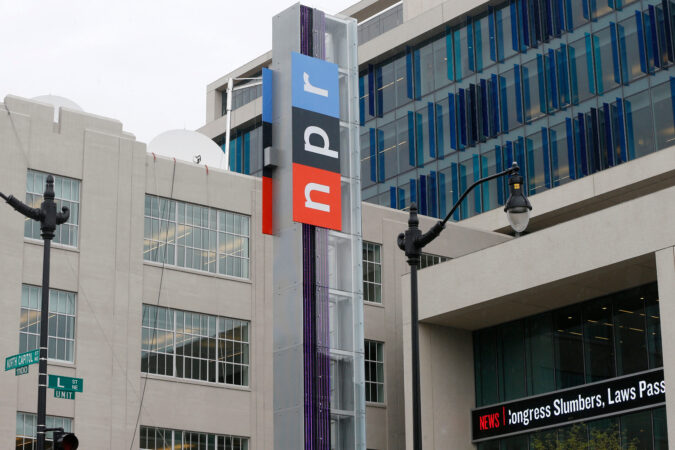
    WASHINGTON — National Public Radio will receive approximately $36 million in grant money to operate the nation’s public radio interconnection system under the terms of a court settlement with the federal government’s steward of funding for public broadcasting stations.

    The settlement, announced late Monday, partially resolves a legal dispute in which NPR accused the Corporation for Public Broadcasting of bowing to pressure from President Donald Trump to cut off its funding.

    On March 25, Trump said at a news conference that he would “love to” defund NPR and PBS because he believes they are biased in favor of Democrats.

    NPR accused the CPB of violating its First Amendment free speech rights when it moved to cut off its access to grant money appropriated by Congress. NPR also claims Trump, a Republican, wants to punish it for the content of its journalism.

    On April 2, the CPB’s board initially approved a three-year, roughly $36 million extension of a grant for NPR to operate the “interconnection” satellite system for public radio. NPR has been operating and managing the Public Radio Satellite System since 1985.

    But corporation officials reversed course and announced that the federal funds would go to a entity called Public Media Infrastructure. NPR claimed the CPB was under mounting pressure from the Trump administration when the agency redirected the money to PMI, a media coalition that didn’t exist and wasn’t statutorily authorized to receive the funds.

    CPB attorneys denied that the agency retaliated against NPR to appease Trump. They had argued that NPR’s claims are factually and legally meritless.

    On May 1, Trump issued an executive order that called for federal agencies to stop funding for NPR and PBS. The settlement doesn’t end a lawsuit in which NPR seeks to block any implementation or enforcement of Trump’s executive order. U.S. District Judge Randolph Moss is scheduled to preside over another hearing for the case on Dec. 4.

    The settlement says NPR and CPB agree that the executive order is unconstitutional and that CPB won’t enforce it unless a court orders it to do so.

    NPR, meanwhile, agreed to drop its request for a court order blocking CPB from disbursing funds to PMI under a separate grant agreement.

    Katherine Maher, NPR’s president and CEO, said the settlement is “a victory for editorial independence and a step toward upholding the First Amendment rights of NPR and the public media system.”

    Patricia Harrison, the corporation’s CEO, said CPB is pleased that the litigation is over “and that our investment in the future through PMI marks an exciting new era for public media.”

    On Aug. 1, CPB announced it would take steps toward closing itself down after being defunded by Congress.

  • Medicare costs will eat a big chunk of older Americans’ Social Security cost-of-living increase next year

    Medicare costs will eat a big chunk of older Americans’ Social Security cost-of-living increase next year

    It’s official. Medicare costs will eat up much of older Americans’ Social Security cost-of-living increase next year.

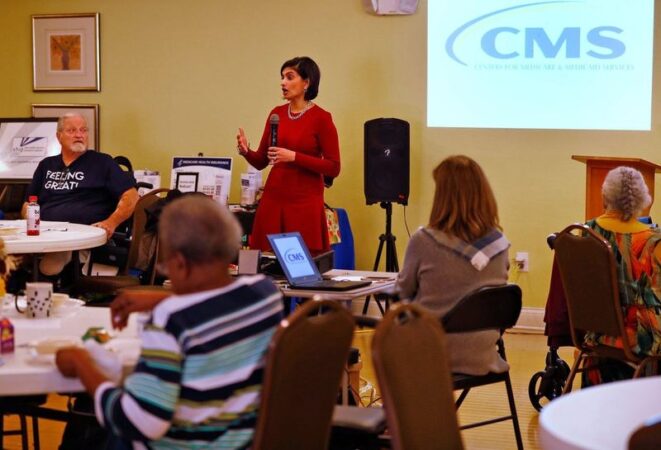
    The standard monthly premium for Medicare Part B, which covers outpatient care, doctors’ services, durable medical equipment and preventive service, will be $202.90 in 2026, the Centers for Medicare and Medicaid Services said on Nov. 14. That’s up $17.90, or nearly 9.7%, from $185.00 in 2025.

    It’s smaller than the $21.50 increase the Medicare Trustees had forecast earlier but still the second largest dollar jump in program history behind 2022’s $21.60 gain and almost 3.5 times the 2.8% Social Security raise for next year. That means seniors will probably see a drop, again, in their standard of living, experts said.

    Seniors were the only ones who saw an increase in poverty in 2024. All other age groups saw a decrease or stayed the same.

    “The public is likely to perceive this Part B increase as taking a significant chunk of or even most of their COLA,” said Mary Johnson, independent Social Security and Medicare policy analyst. “In other words, another continuation in relentless cost increases battering consumer finances.”

    Monthly Social Security checks will rise $56, on average, starting in January because of the 2.8% COLA, the Social Security Administration said. After the $17.90 increase in Medicare Part B, the average monthly COLA increase is cut to $38.10.

    Hold-harmless provision

    Such a large increase in Medicare Part B will likely trigger the hold-harmless provision for Social Security recipients with a Social Security benefit of $640 or less, Johnson said.

    The Medicare hold-harmless provision prevents the Part B premium increase from being larger than the Social Security COLA. If a premium increase is higher than the COLA, the rule prevents the beneficiary from paying the full increase. The portion of the increase those beneficiaries don’t pay is spread out among others who aren’t protected by the rule.

    For those people with a Social Security benefit of $640 or less, the 2.8% COLA next year would mean just less than an $18 per month increase in their Social Security checks. Without the hold-harmless rule, the Part B premium increase would swallow the entire COLA.

    In 2022, only about 1.5% of Medicare beneficiaries had their Part B premiums limited by the hold-harmless provision, government data showed. Part B rose $21.60 to $170.10 in 2022 while the average monthly COLA increase boosted Social Security checks by $92.

    In 2017, when Medicare premiums jumped 10%, or $12.20, to $134.00 and far outpaced the 0.3%, or $5 average, monthly COLA increase, 70% of Medicare Part B enrollees paid a lower-than-standard Part B premium due to the hold-harmless provision.

    Hold-harmless rule isn’t panacea for all costs

    The hold-harmless provision can protect seniors from Part B premium surges, but other costs may bite, Johnson said.

    “If individuals have other automatic deductions such as for Medicare Advantage or Part D premiums, increases in those premiums could reduce Social Security benefits,” Johnson said. The optional Part D covers prescription drugs.

    Some Part D plans are increasing premiums by as much as $50 in 2026, the maximum allowed under a Part D Premium Stabilization Demonstration Program, according to the nonprofit, nonpartisan research organization KFF.

    “To complicate things, there are fewer stand-alone Part D plans to choose from,” Johnson said. The total number of prescription drug plans has dropped by half since 2024, KFF said.

    Is everyone eligible for hold harmless?

    Those who aren’t eligible for the hold-harmless provision include:

    • New Medicare enrollees
    • People who aren’t receiving Social Security benefits
    • High-income earners

    What about deductibles?

    In addition to higher premiums, higher annual deductibles next year will make health insurance even more expensive for Medicare enrollees.

    The annual deductible for all Medicare Part B beneficiaries before insurance covers costs will be $283 in 2026, up $26 from $257 in 2025, CMS said.

    Could it have been worse?

    The Part B premium could have been higher, CMS said.

    “If the Trump Administration had not taken action to address unprecedented spending on skin substitutes, the Part B premium increase would have been about $11 more a month,” CMS said. “However, due to changes finalized in the 2026 Physician Fee Schedule Final Rule, spending on skin substitutes is expected to drop by 90% without affecting patient care.”

    Skin substitutes are materials like biologic, synthetic or biosynthetic products that mimic human skin and are used to cover and treat chronic wounds, such as diabetic foot ulcers. The Trump administration reclassified these bandages so they aren’t billed separately. CMS estimates the change would reduce Medicare spending on these products by nearly 90% in calendar year 2026.

    Medicare Trustees also estimated earlier this year the standard monthly Part B premium would rise $21.50 to $206.50 in 2026 from $185 in 2025. That would have been more than the $17.90 increase to $202.90 in 2026.

  • At 89, she’s a top nutrition expert. Here’s what she eats in a day.

    At 89, she’s a top nutrition expert. Here’s what she eats in a day.

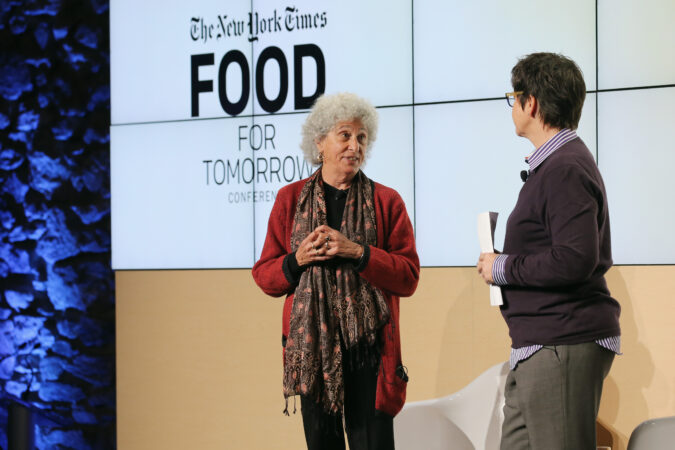
    For more than three decades, Marion Nestle has been telling people what to eat.

    In the late 1980s, she edited the first Surgeon General’s Report on Nutrition and Health, then went on to cowrite the federal government’s Dietary Guidelines for Americans and cofound New York University’s influential food studies program.

    Nestle, now an emerita professor at NYU, says her time in government opened her eyes to the multi-billion-dollar food industry’s enormous influence over Congress. By the early 2000s, she became a critic of the food industry and an advocate for major food reforms, which she made the case for in best-selling books.

    In 2002, Nestle published Food Politics, an exposé that argued that the food industry is at the root of many of the country’s nutritional problems. The industry rakes in ever-growing profits by churning out highly processed foods laden with additives, Nestle wrote, and then aggressively markets those foods to children and adults while lobbying against regulations and trying to co-opt nutrition experts.

    Over the years, Nestle’s blunt nutrition advice, sharp criticism of food companies, and frequent media appearances made her one of the most recognizable names in nutrition. In 2006, she published one of her most popular books, What to Eat, which showed consumers how to navigate supermarkets and improve their health by deciphering food labels.

    At age 89, Nestle, who lives in New York City and Ithaca, is still going strong. In November, she published her latest book: What to Eat Now: The Indispensable Guide to Good Food, How to Find It, and Why It Matters.

    We wanted to know how Nestle’s knowledge of nutrition and the food industry affects her daily food decisions. So we caught up with her to find out what she eats in a typical day, which foods she loves and avoids, which “junk foods” she can’t resist, and whether she takes supplements or has advice on how to navigate grocery stores. This interview has been edited for length and clarity.

    Q: What’s your general approach to food?

    A: I follow Michael Pollan’s famous mantra: Eat food, not too much, mostly plants. And I define food as being unprocessed or as minimally processed as possible. Not ultra-processed. I really think that takes care of it. That doesn’t mean I’m perfect. I’m an omnivore. I eat everything. I just don’t eat very much in part because metabolism drops with age, and I don’t have much metabolism left.

    I eat pretty healthy, but I don’t obsess about it. If I have a bad day of eating, I don’t worry about it. By this time, it’s pretty clear I’m not going to die prematurely. Obviously, what I’m eating is working for me because I’m 89 and I’m still here.

    Q: What do you eat for breakfast?

    A: I start with coffee between 8 and 9 a.m. I’ll have a couple cups of weak coffee with milk, no sugar. And then I’m at work. That’s when I do my writing. I don’t get hungry until about 10:30 or 11 a.m. That’s when I’ll usually have oatmeal or unsweetened Post Shredded Wheat cereal. It basically has one ingredient: wheat. I like the texture of Shredded Wheat and the way that it tastes. I add a little brown sugar, not much. I use a lot less sugar than what’s in presweetened cereals. And then I’ll add blueberries or whatever fruit is in season. That combination to me is really appealing.

    I’ve never believed any of the research on breakfast being the most important meal of the day. Most of that was sponsored by cereal companies.

    Q: What about lunch?

    A: My lunches are totally irregular. Sometimes I’ll have a salad for lunch. Or if I’m having lunch with someone then I’ll eat whatever is in the restaurant. If I’m at home in New York City, I’ll harvest whatever is growing on my terrace. The peaches, cherries, raspberries, and blueberries that I was growing are long gone. But I’ve still got some lettuce and tomatoes, so I’m going to go out and pick those. I might cut up some cheese or have it with peanuts. And I might have some bread with that.

    Q: What about dinner?

    A: It depends. I just don’t eat that much. But I do really like salads. I can have salads twice a day. If I’m at home, I might have an egg. I might have crackers and cheese with that. I kind of like making meals based on what I have available. So, it depends on what I bought, what’s in the house, or what’s on the terrace. That’s my favorite way of cooking. We have a garden in Ithaca, there’s a garden on my terrace, and there’s a farmers market not very far from here.

    I also go to a lot of neighborhood restaurants. I’m going to Mark Bittman’s restaurant this week — the kitchen that he started in the East Village where people pay according to their income. I’ll eat whatever they’re serving. One restaurant that I like a lot is il Buco Alimentari & Vineria. I love going there. They have a particular salad that I adore. It’s always so crisp, and they have wonderful pasta dishes.

    Q: What are some foods that you love?

    A: Fortunately, I like a lot of very simple foods. I like vegetables. I like eggs. I like cheese. I do eat some ultra-processed foods. But not a lot of them. I don’t like ultra-processed foods that have a long list of ingredients. Most of those don’t taste good to me. I do really like vegetables. I like the crunch, the flavors, and the colors. That makes it easy to eat healthy.

    But I recognize that I’m privileged. I weigh basically what I weighed when I was in high school. I don’t have a weight problem. And I have an enormous amount of sympathy for people who do. I consider myself extremely fortunate. Is it genetics? I have no idea. My father died of a heart attack at the age of 47. He was an obese three-pack-a-day smoker. It’s hard to know where genetics fits into this.

    Q: Do you have any favorite treats or desserts?

    A: Ice cream. When I’m at home in New York City, I try to find ginger ice cream, which I like very much. It’s hard to find. But when I find it, I buy it. And then my partner and I make homemade vanilla ice cream in Ithaca. It’s only three or four ingredients. It’s ruined other ice creams for me because a lot of commercial ice creams have all these emulsifiers in them that keep the ice cream sticking together. Real ice cream completely falls apart if it’s left at room temperature and not eaten right away. It separates and liquefies. But I like that. I think it tastes better and has a better texture than the commercial ice creams that have emulsifiers. I like ice cream without the emulsifiers.

    Q: What about snacks?

    A: I like corn chips. Not too salty. Some corn chips are ultra-processed, although most are not. The ones I like are Wegmans. They only have a few ingredients — just corn, oil, and salt basically. I also like candy, particularly See’s Candies. The one See’s candy store in New York is just a couple blocks away from me. I normally get the peanut brittle. Sometimes the lollipops. I can have these things in the house and not feel like I have to eat all of them all at once. Not everyone can do that.

    Q: Can you tell us about your new book?

    A: It’s called What to Eat Now. It’s the updated edition of What to Eat, which was published 20 years ago. It’s a completely rewritten book. I thought it was going to be a six-month project, and it ended up taking me four years because so much has changed in grocery stores. There’s been a huge turnover in products. For example, “functional waters” that contain vitamins, minerals, cannabis, supplements, and other things have replaced Coca-Cola and plain water. Plant milks are new. The only plant milk that existed 20 years ago was soy milk. Now there are tons of others. Plant-based meats did not exist 20 years ago — at least not in the way that they do now.

    Q: What is one takeaway from the book?

    A: It’s not a book about personal diets. It’s a book about how to think about food issues. I think what to eat now boils down to eat food, not too much, mostly plants.

    Q: Do you take any supplements?

    A: I don’t take supplements because I eat a healthy diet. I don’t think I need them. But two out of three Americans take supplements. They make people feel better — and it’s hard to argue with that. Life is tough. If all it takes is a supplement to make you feel better, then I’m not going to argue with that. I used to be much more upset about supplements. But now it’s clear to me that they make people feel better. Whether that’s because they’re doing something or because they’re a placebo, it’s hard to know.

    But I don’t trust what’s in them. There’s so much evidence that what the label says isn’t what’s actually in them. Many studies have found that a remarkable percentage of supplements do not actually contain what’s listed on their labels. I don’t want to put something in my body if I don’t know what’s in it. And there are things in supplements that are not supposed to be there — that’s what so many studies have found. It’s not true of all supplements. But it’s very hard to know which ones are OK and which ones are not. So I don’t take any of them.

    Q: Do you have any advice for our readers?

    A: Eating healthfully in today’s society is very difficult because you’re fighting an entire food industry on your own— and that industry is trying to sell you the most profitable, least healthy foods available. But one thing you can do is read food labels. There’s a lot of information on them. If you’re looking at a packaged food and you can’t recognize the ingredients, or if you can’t purchase the ingredients at a supermarket, then it’s ultra-processed. There are certain ingredients that are indicators of ultra-processed foods. That would be color additives, flavor additives, and emulsifiers such as mono and diglycerides, polysorbates and carrageenan, and texturizers such as agar. I always read food labels. If something has a lot of artificial additives and ingredients that I don’t recognize, then I’m not going to eat it.

  • New analysis shows more U.S. consumers are falling behind on their utility bills

    New analysis shows more U.S. consumers are falling behind on their utility bills

    WASHINGTON — More people are falling behind on paying their bills to keep on the lights and heat their homes, according to a new analysis of consumer data — a warning sign for the U.S. economy and another political headache for President Donald Trump.

    Past-due balances to utility companies jumped 9.7% annually to $789 between the April-June periods of 2024 and 2025, said the Century Foundation, a liberal think tank, and the advocacy group Protect Borrowers. The increase has overlapped with a 12% jump in monthly energy bills during the same period.

    Consumers usually prioritize their utility bills along with their mortgages and auto debt, said Julie Margetta Morgan, the foundation’s president. The increase in both energy costs and delinquencies may suggest that consumers are falling behind on other bills, too.

    “There’s a lot of information out there about rising utility costs, but here we can actually look at what that impact has been on families in terms of how they’re falling behind,” Margetta Morgan said.

    Troubles paying electricity and natural gas bills reflect something of an economic quandary for Trump, who is promoting the build-out of the artificial intelligence industry as a key part of an economic boom he has promised for America. But AI data centers are known for their massive use of electricity, and threaten to further increase utility bills for everyday Americans.

    These troubles also come as Trump faces political pressure from voters fed up with the high cost of living. The president spoke about the economy and affordability issues Monday at an event hosted by the McDonald’s fast food company.

    “We have it almost at the sweet spot and prices are coming down on different things,” Trump said at the event, adding that inflation has been “normalized” at a “low level.”

    Ever since Republicans saw their fortunes sag in off-year elections this month and affordability was identified as the top issue, Trump has been trying to convince the public that prices are falling. Fast-rising electricity bills could be an issue in some congressional battlegrounds in next year’s midterm elections.

    Trump has put a particular emphasis on prices at the pump. Gasoline accounts for about 3% of the Consumer Price Index, slightly less than the share belonging to electricity and natural gas bills — meaning that possible savings on gasoline could be more than offset by higher utility bills.

    The president maintains that any troubling data on inflation is false and that Democrats are simply trying to hurt his administration’s reputation.

    “In fact, costs under the TRUMP ADMINISTRATION are tumbling down, helped greatly by gasoline and ENERGY,” Trump posted on social media Friday. ”Affordability is a lie when used by the Dems,”

    Nearly 6 million households have utility debt “so severe” that it will soon be reported to collection agencies, according to the foundation’s analysis, drawn from the University of California Consumer Credit Panel.

    During Trump’s first six months in office, there was a 3.8% increase in households with severely overdue utility bills.

    “Voters are frustrated and families are hurting because these tech giants are cutting backroom deals with politicians, and it’s causing their power bills to go up,” said Mike Pierce, executive director of Protect Borrowers. “If the Trump administration doesn’t want to do its job and protect families and make life more affordable, I guess that’s its choice.”

    Both Margetta Morgan and Pierce previously worked at the Consumer Financial Protection Bureau, a government agency formed in part to track trends in household borrowing to prevent potential abuses. The Trump administration has essentially shut down the bureau.

    The administration has so far said it has no responsibility for any increases in electricity prices, since those are often regulated by state utility boards. The White House maintains that utility costs are higher in Democratic states that rely on renewable forms of energy.

    “Electricity prices are a state problem,” Treasury Secretary Scott Bessent told ABC News this month. “There are things that the federal government can control. Local electricity prices are not one of them.”

    The new analysis of utility bills by the groups counters that the Trump administration is contributing to higher utility costs “by impeding renewable energy generation” including solar and wind power.

    While that analysis is a warning sign, other economic analyses on consumers suggest their finances are stable despite some emerging pressures.

    The New York Federal Reserve has said delinquency rates of 90 days or more for mortgages, auto loans, and student debt have each increased over the past 12 months, though it said mortgage delinquencies are “relatively low.” An analysis of debit and credit card spending by the Bank of America Institute showed that consumers’ “overall financial health looks sound.”

  • Letters to the Editor | Nov. 18, 2025

    Letters to the Editor | Nov. 18, 2025

    Get in the game

    I was saddened to read the article about the possibility of Lower Merion High School and Harriton High School merging their football programs because of declining enrollment. I remember when Lower Merion was the “powerhouse” when it came to football. My late sister, my brother, and I all attended Lower Merion (Classes of ’56, ’59, and ’61, respectively), and the greatest football rivalry on the Main Line was the last game of the season between Lower Merion and Radnor High School. The local newspapers covered it extensively. Our school had all kinds of placards and decorations up in the school, with the slogan “Beat Radnor,” during the week leading up to the big game. The night before the game, all the students and the coaches had a pre-victory celebration around a bonfire on the football field. The legendary John “Fritz” Brennan was the coach of Lower Merion, and what a successful career he had. His football team went undefeated for 32 straight games, between the years 1952 and 1957, and had only a few losses in the following years when I graduated. A statue of Brennan was placed near the entrance to Arnold Field, which, by the way, was named after Gen. Henry “Hap” Arnold, a graduate of Lower Merion and the only officer to hold the rank of a five-star general in both the Army and Air Force. Today, very few students even attend the games.

    Paul Benedict, Broomall

    Insurance is a blessing

    No one is happy to see another person hurt. But if they have to deal with an injury, it is truly a blessing to have health insurance.

    So while I was sorry to hear Sen. John Fetterman was hospitalized after his recent fall, I thought it was great he had insurance that allowed him to stay in the hospital a few extra days while doctors adjusted his medication regimen. I also couldn’t shake the sense of irony here: It seems grossly unfair that this man, one of eight senators who caved on the Democrats’ demand to save healthcare subsidies in the budget resolution, is able to receive the best of hospital care through his own elite insurance — even after he surrendered in the fight for affordable healthcare for his fellow Americans.

    Mardys Leeper, Bryn Mawr

    Keep the same energy

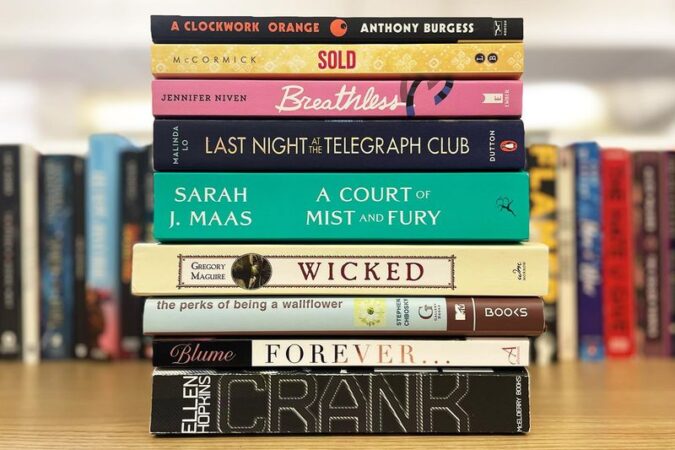
    Recent reporting on the Cherry Hill School District’s internal memo about potential limits on student library books fit a pattern we’ve seen across the country. Few issues galvanize public outrage today like the prospect of “banned books,” and for good reason. Access to a wide, diverse range of literature is essential for a healthy democracy and for our children’s moral and intellectual development.

    But there is a quieter crisis hiding behind the headlines.

    While communities pack meetings and flood social media over which books might be restricted, there is comparatively little uproar over how few of our children can read fluently and confidently at all. Proficiency scores in reading are abysmal in many districts nationwide. That reality should trouble us at least as much as any debate over a handful of contested titles.

    Our students deserve both: school libraries that offer rich, inclusive collections and sustained investment in high-quality reading instruction, tutoring, and early intervention. If we’re going to show up in force over schoolbooks, we should also be showing up over reading outcomes.

    By all means, let’s protect our students’ right to read widely. But we should be just as passionate about ensuring they are able to read anything on the shelf in the first place.

    Brandon McNeice, head of school and CEO, Cornerstone Christian Academy, Philadelphia

    Join the conversation: Send letters to letters@inquirer.com. Limit length to 150 words and include home address and day and evening phone number. Letters run in The Inquirer six days a week on the editorial pages and online.

  • Horoscopes: Tuesday, Nov. 18, 2025

    ARIES (March 21-April 19). Some state their rules like stop signs: “I won’t do X, I don’t want Y.” You take a more creative approach, offering ideas about what you want — scenarios filled with promise. You’re trying to create an experience for others.

    TAURUS (April 20-May 20). You have deep empathy and a compassionate perspective. You realize that when people overreact, it’s usually because they’ve been hurt before. This awareness is what keeps you kind, even when others are prickly.

    GEMINI (May 21-June 21). Efficiency can be overrated. People also need fluff, entertainment, breaks, silliness. Go in for a bit of inefficient fun today and it raises morale and speaks to sustainability. You’re a human doing human work.

    CANCER (June 22-July 22). Your idea is strong and beneficial in principle. But for it to succeed, you also need resources, support and implementation. Keep working on it, talking about it, researching, experimenting — you’re on to something, but these are still early days.

    LEO (July 23-Aug. 22). You’re no evangelist for your viewpoint — you simply live it. Persuasion bores you; conviction moves you. Keep following that inner compass and expressing yourself through action, not argument.

    VIRGO (Aug. 23-Sept. 22). It would be unfair to demand more discipline of yourself than you have. Maybe it’s not about trying harder, but about setting yourself up better. Environmental design matters. Structure and setup are the most reliable allies of willpower.

    LIBRA (Sept. 23-Oct. 23). People who make themselves useful can vanish beneath their own usefulness. You see what labor is happening everywhere around you, even the labor that’s invisible. Your awareness restores those invisible laborers by valuing being over doing.

    SCORPIO (Oct. 24-Nov. 21). Sometimes the socializing isn’t optional and you just have to show up where you’re expected. The mix of people may be strange today, too, but it can still be harmonious. It may help to invite more people. Groups will create their own order.

    SAGITTARIUS (Nov. 22-Dec. 21). Too little stress causes boredom and low motivation. Too much stress causes overwhelm and paralysis. Just enough stress gives you that focused, energized feeling from which your best work can arise. That’s what you’ll have today.

    CAPRICORN (Dec. 22-Jan. 19). Your imagination is vast, but not every vision needs to be polished. Let rough edges speak their own truth — that’s high art. Create freely, finish fast, and let the imperfect masterpiece breathe its magic into the world.

    AQUARIUS (Jan. 20-Feb. 18). Frustration has shaped more of your brilliance than ease ever did. If you hadn’t been dissatisfied, you wouldn’t have reached higher, sought help, or developed your signature style. Today’s frustration is merely a sign of your continued evolution.

    PISCES (Feb. 19-March 20). If you get it right the first time, go again. The second and third tries prove it wasn’t luck. By the fourth and fifth, skill deepens and insight dawns. Repetition will teach you lessons no single success ever could.

    TODAY’S BIRTHDAY (Nov. 18). Welcome to your Year of Graceful Command. You may be a reluctant leader, but people need your steady presence, your ability to see their strengths and needs, and your plans for the progress and well-being of the group. More highlights: You’ll be recognized and awarded for many talents, including diplomacy. You’ll have profitable collaborations, and a wardrobe that feels like armor and art. Cancer and Libra adore you. Your lucky numbers are: 1, 10, 4, 39 and 20.