Tag: no-latest

  • Judge blocks White House’s attempt to defund the CFPB, ensuring employees get paid

    Judge blocks White House’s attempt to defund the CFPB, ensuring employees get paid

    NEW YORK — The White House cannot lapse in its funding of the Consumer Financial Protection Bureau, a federal district court judge ruled on Tuesday, only days before funds at the bureau would have likely run out and the consumer finance agency would have no money to pay its employees.

    Judge Amy Berman ruled that the CFPB should continue to get its funds from the Federal Reserve, despite the Fed operating at a loss, and that the White House’s new legal argument about how the CFPB gets its funds is not valid.

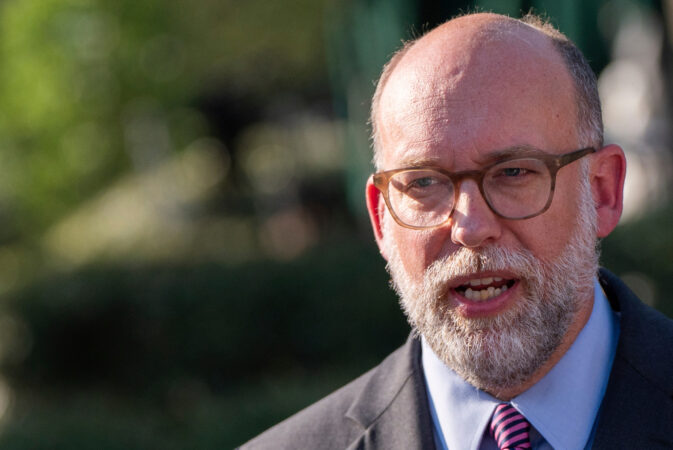
    At the heart of this case is whether Russell Vought, President Donald Trump’s budget director and the acting director of the CFPB, can effectively shut down the agency and lay off all of the bureau’s employees. The CFPB has largely been inoperable since Trump has sworn into office nearly a year ago. Its employees are mostly forbidden from doing any work, and most of the bureau’s operations this year have been to unwind the work it did under President Joe Biden and even under Trump’s first term.

    Vought himself has made comments where he has made it clear that his intention is to effectively shut down the CFPB. The White House earlier this year issued a “reduction in force” for the CFPB, which would have furloughed or laid off much of the bureau.

    The National Treasury Employees Union, which represents the workers at the CFPB, has been mostly successful in court to stop the mass layoffs and furloughs. The union sued Vought earlier this year and won a preliminary injunction stopping the layoffs while the union’s case continues through the legal process.

    In recent weeks, the White House has used a new line of argument to potentially get around the court’s injunction. The argument is that the Federal Reserve has no “combined earnings” at the moment to fund the CFPB’s operations. The CFPB gets its funding from the Fed through expected quarterly payments.

    The Federal Reserve has been operating at a paper loss since 2022 as a result of the central bank trying to combat inflation, the first time in the Fed’s entire history it has been operating at a loss. The Fed holds bonds on its balance sheet from a period of low interest rates during the COVID-19 pandemic, but currently has to pay out higher interest rates to banks who hold their deposits at the central bank. The Fed has been recording a “deferred asset” on its balance sheet, which it expects will be paid down in the next few years as the low-interest bonds mature.

    Because of this loss on paper, the White House has argued there are no “combined earnings” for the CFPB to draw on. The CFPB has operated since 2011, including under Trump’s first term, drawing on the Fed’s operating budget.

    White House lawyers sent a notice to the court in early November in which they argued, using the “combined earnings” argument, that the CFPB would run out of appropriations in early 2026 and does not expect to get any additional appropriations from Congress.

    This combined earnings legal argument is not entirely new. It has floated in conservative legal circles going back to when the Federal Reserve started operating at a loss. The Office of Legal Counsel, which acts as the government’s legal advisers, adopted this legal theory in a memo on November 7. However, this idea has never been tested in court.

    In her opinion, Berman said the OLC and Vought were using this legal theory to get around the court’s injunction instead of allowing the case to be decided on merits. A trial on whether the CFPB employees’ union can sue Vought over the layoffs is scheduled for February.

    “It appears that defendants’ new understanding of ‘combined earnings’ is an unsupported and transparent attempt to starve the CPFB of funding and yet another attempt to achieve the very end the Court’s injunction was put in place to prevent,” Berman wrote in an opinion.

    “We’re very pleased that the court made clear what should have been obvious: Vought can’t justify abandoning the agency’s obligations or violating a court order by manufacturing a lack of funding,” said Jennifer Bennett of Gupta Wessler LLP, who is representing the CFPB employees in the case.

    A White House spokesperson did not immediately respond to a request for comment on Berman’s opinion.


  • Khaleda Zia, former Bangladeshi prime minister and archrival of a previous premier, dies at 80

    Khaleda Zia, former Bangladeshi prime minister and archrival of a previous premier, dies at 80

    DHAKA, Bangladesh — Former Bangladeshi Prime Minister Khaleda Zia, 80, whose archrivalry with another former premier defined the country’s politics for a generation, has died, her Bangladesh Nationalist Party said in a statement Tuesday.

    Ms. Zia was the first woman elected prime minister of Bangladesh.

    Bangladesh’s interim government announced a three-day mourning period. A general holiday also was announced for Wednesday, when Ms. Zia’s funeral prayers are scheduled be held in front of the country’s national Parliament building in Dhaka.

    Bangladesh’s interim leader, Muhammad Yunus, issued a statement Tuesday citing Ms. Zia’s contributions to the country.

    “Her role in the struggle to establish democracy, a multi-party political culture, and the rights of the people in Bangladesh will be remembered forever,” Yunus said.

    Indian Prime Minister Narendra Modi offered condolences in a statement Tuesday, noting that “as the first woman Prime Minister of Bangladesh, her important contributions toward the development of Bangladesh, as well as India-Bangladesh relations, will always be remembered.”

    Sajeeb Wazed, son of former Bangladesh Prime Minister Sheikh Hasina, said in a statement Tuesday that Ms. Zia’s demise “will leave a deep impact on the country’s [democratic] transition.”

    “She will be remembered for her contributions in nation building but her death is a blow to stabilize Bangladesh,” said Wazed, whose mother was Ms. Zia’s greatest political rival.

    Hasina issued a statement from exile in India saying Ms. Zia’s death was “an irreparable loss” for politics in Bangladesh and recalling her contributions in establishing the nation’s democracy.

    Ms. Zia had faced corruption cases she said were politically motivated, but in January 2025 the Supreme Court acquitted Ms. Zia in the last corruption case against her, which would have let her run in February’s general election.

    The BNP said that after she was released from prison due to illness in 2020, her family sought permission for treatment abroad at least 18 times from Hasina’s administration, but the requests were rejected.

    Following Hasina’s ouster in 2024, the Yunus-led interim government finally allowed her to go. She went to London in January and returned to Bangladesh in May.

    Fighting military dictatorship

    Bangladesh’s early years of independence, gained in a bloody 1971 war against Pakistan, were marked by assassinations, coups, and countercoups as military figures and secular and Islamic leaders jockeyed for power.

    Ms. Zia’s husband, President Ziaur Rahman, had grabbed power as a military chief in 1977 and a year later formed the Bangladesh Nationalist Party. He was credited with opening democracy in the country but was killed in a 1981 military coup. Ms. Zia’s uncompromising stance against the military dictatorship helped build a mass movement against it, culminating with the ousting of dictator and former army chief H.M. Ershad in 1990.

    Ms. Zia’s opponent when she won her first term in 1991 and in several elections after that was Hasina, the daughter of independence leader Sheikh Mujibur Rahman, who was assassinated in a 1975 coup.

    Ms. Zia was criticized over an early 1996 election in which her party won 278 of the 300 parliamentary seats during a wide boycott by other leading parties, including Hasina’s Awami League, which demanded an election-time caretaker government. Ms. Zia’s government lasted only 12 days before a nonpartisan caretaker government was installed, and the new election was held that June.

    Ms. Zia returned to power in 2001 in a government shared with the country’s main Islamist party, Jamaat-e-Islami, which had a dark past involving Bangladesh’s independence war.

    Ms. Zia’s Bangladesh Nationalist Party was previously closely allied with the party and her government maintained the confidence of the business community by following pro-investment, open-market policies. Ms. Zia was known to have a soft spot for Pakistan and used to deliver anti-Indian political speeches. India alleged insurgents were allowed to use Bangladesh’s soil to destabilize India’s northeastern states under Ms. Zia, especially during her term from 2001 to 2006.

    During that term, Ms. Zia also was tainted by allegations that her elder son, Tarique Rahman, was running a parallel government and was involved in widespread corruption.

    A rivalry with Hasina

    In 2004, Hasina blamed Ms. Zia’s government and Rahman for grenade attacks in Dhaka that killed 24 members of her Awami League party and wounded hundreds of people. Hasina narrowly escaped the attack, which she characterized as an assassination attempt, and subsequently won the 2008 general election.

    Ms. Zia’s party and its partners boycotted the 2014 election in a dispute over a caretaker government, giving a one-sided victory to the increasingly authoritarian regime of Hasina. Her party joined the national elections in 2018 but boycotted again in 2024, allowing Hasina to return to power for a fourth consecutive time through controversial elections.

    Ms. Zia was sentenced to 17 years in jail in two separate corruption cases for misuse of power in embezzling funds meant for a charity named after her late husband. Her party said the charges were politically motivated to weaken the opposition, but the Hasina government said it did not interfere and the case was a matter for the courts.

    Hasina was bitterly criticized by both her opponents and independent critics for sending Ms. Zia to jail.

    Health concerns placed over politics

    Ms. Zia was released from jail by Hasina’s government in 2020 and was moved to a rented home, from which she regularly visited a private hospital. Her family repeatedly requested that Hasina’s administration allow Ms. Zia to travel abroad for medical treatment, but was refused.

    After 15 years in power, Hasina was ousted in a mass uprising in August 2024 and fled the country. Ms. Zia was given permission to travel abroad by an interim government led by Yunus, a Nobel Peace Prize laureate.

    Ms. Zia was silent about politics for years and did not attend political rallies, but she remained the BNP chairperson until her death. Rahman has been the party’s acting chair since 2018.

    She was last seen at an annual function of the Bangladesh military in Dhaka Cantonment on Nov. 21, when Yunus and other political leaders met her. She was in a wheelchair and appeared pale and tired.

    She is survived by Rahman, her elder son and heir apparent in the political dynasty. Her younger son, Arafat, died in 2015.

  • Letters to the Editor | Dec. 30, 2025

    Letters to the Editor | Dec. 30, 2025

    Resign to run

    Paul Davies is right to worry that campaigning can distract officials, invite misuse of public resources, and deepen voter cynicism. Those risks are real. But Philadelphia’s resign-to-run rule addresses them by turning a run for higher office into a luxury purchase.

    If candidates must quit a six-figure job for a year to campaign, the field skews toward the independently wealthy, the well-connected, and those backed by private money. That is not a theoretical concern. It is part of what is broken in American government today: representation filtered through privilege and increasingly detached from the daily realities of most voters. It also discourages experienced public servants from stepping up, even when they know the work and the neighborhoods best.

    Councilmember Isaiah Thomas is right to push for change. The better approach is to strengthen guardrails and enforce them. Require clear firewalls around staff and city resources. Publish transparent schedules, travel, and spending during campaign season. Investigate violations quickly. If an officeholder neglects constituents while campaigning, voters can punish that. If they misuse taxpayer-funded resources, prosecute them.

    Good government should prevent corruption without shrinking democracy to only those who can afford to buy their way into candidacy.

    Brandon McNeice, head of school and CEO, Cornerstone Christian Academy, Philadelphia

    What a mess

    My husband and I are senior citizens living in West Philadelphia near not one but two SEPTA trolley lines, which have allowed us to fully enjoy the riches of our city. Thanks to SEPTA, we can make a trip to the library, the bank, the grocery store, or wherever — and be back home in minutes. The trolley also makes it easy for us to grab lunch from our favorite vendors at Reading Terminal Market, slip into our seats for concerts at the Kimmel Center, make it on time to doctor appointments, patronize stores along Chestnut Street, explore culture and history sites with out-of-town visitors, and, even with the trolley-to-subway transfer, speedily made it to Citizens Bank Park in ample time to catch the first pitch.

    Now, though, that’s all changed, thanks to the ongoing ineptitude of SEPTA. The route diversions make trips much longer. Contending with crowds of frustrated, tense riders waiting to make the trolley-to-El transfer at 40th and Market. The physical demands that the transfer places on us older folks. All this has pushed us increasingly into our car for suburban shopping, since parking downtown is hard to find, or relying on ride-share options that tax our budget and do nothing to help the environment. And news reports these days say there’s no end in sight. So everyone loses — retailers, restaurateurs, cultural institutions, and especially those of us who’ve relied on SEPTA as a vital resource. It defies understanding how the public transit operator of a major city has been so utterly unable to fix something that its incompetence caused in the first place — and, by the way, nothing but resounding silence from City Hall and City Council.

    Beth Palubinsky, Philadelphia

    Oil, not drugs

    Donald Trump has all but conceded that his focus on toppling Nicolás Maduro in Venezuela is about the oil and not the drugs. He’s demanded that Venezuela return the assets it seized from U.S. oil companies, and uses Venezuela’s reluctance to comply as justification for his blockade of oil tankers. This raises questions about who the men killed in “drug boats” were. And if he really wanted to interdict drugs coming into the country, he would be working with Mexico.

    Trump has always put the needs of the rich and powerful ahead of the average American. It is all about oil and helping the Big Oil companies. It is American imperialism dressed up as concerns about people dying from fentanyl. Amazingly, Sen. John Fetterman has bought the baloney about the “drug boats.”

    Another lie that Trump has told is that he inherited an economic mess, but contradicted himself by saying the economy is great and America is the hottest country right now. That last claim sounded like a Realtor selling a property, and not a president. And, ignoring his “Day One” promises, he pledged that the economy would be great in 2026. And then when that doesn’t happen? 2027? 2028? His third term?

    It should be very clear from his speech that he has no clue about what he is doing regarding the economy, and Treasury Secretary Scott Bessent is too much of a sycophant to tell him the truth. In politics, when you go on the defensive, it means you’re losing with the voters. Trump is certainly doing that, and he can’t make the higher prices disappear.

    George Magakis Jr., Norristown

    Join the conversation: Send letters to letters@inquirer.com. Limit length to 150 words and include home address and day and evening phone number. Letters run in The Inquirer six days a week on the editorial pages and online.

  • Horoscopes: Tuesday, Dec. 30, 2025

    ARIES (March 21-April 19). You’ll find yourself saying yes automatically, if not accidentally, and it’s OK. Think of this as an experiment. And if the process makes your pulse quicken, all the better. Courage kicks in the moment you need it.

    TAURUS (April 20-May 20). Today gives you options. Choose what future-you will thank you for. Also, it’s OK to let yourself want more. When you honor your longings, life responds. Each clear decision snaps a new timeline into place.

    GEMINI (May 21-June 21). There is much to take in today, but the closer you look, the less you see. And though a wide angle will show you more, it also removes you from the action. Stay open to intuition, and it will guide you to your ideal lens.

    CANCER (June 22-July 22). Discipline can be self-love instead of punishment. Think of it as the structure that supports your dreams. Your routines are scaffolding. It’s a good time to involve others. Work in groups. It will energize you.

    LEO (July 23-Aug. 22). Share your ideas to the audience you have, even if it’s the wrong crowd. The bad match will still inform you. Someday soon you will have an ideal audience: attentive, smart, engaged, curious and ready for a lively exchange.

    VIRGO (Aug. 23-Sept. 22). Make others feel comfortable and good about themselves, and suddenly you have more clout than the most confident person in the room. Today, you have the charm that makes impenetrable doors swing open for you.

    LIBRA (Sept. 23-Oct. 23). Good things to borrow: library book, pen, tools. Bad things to borrow: money, time, trouble. Today, you’ll field a few requests and offers, and by picking the right ones, you set yourself up for victory.

    SCORPIO (Oct. 24-Nov. 21). Skepticism is an increasingly valuable life skill in the age of fakery. You’ll be presented with convincing information, but is it true? Today, it’s worth pondering the question: “Who benefits if I believe this?”

    SAGITTARIUS (Nov. 22-Dec. 21). Today represents a climb of sorts, and you’ll need all your faculties to balance. After all, it’s difficult to carry items up a ladder. How can you unburden yourself? Can you temporarily lock up your “valuables” and keep only the key?

    CAPRICORN (Dec. 22-Jan. 19). No more talking about the dream, mulling ideas or refining the plan. You simply have too much energy buzzing through you for all that. Time to act. Dive in. This story is about to write itself.

    AQUARIUS (Jan. 20-Feb. 18). Your momentum is like a train leaving the station — slow to get going, then unstoppable. Bring what you need for the whole day, because once you’re moving, you’ll be inclined to keep going until you get to the destination.

    PISCES (Feb. 19-March 20). You’re on an adventure. How do you know? You feel ill-equipped. The very essence of an adventure is that you don’t know what’s going to happen, so how could you gear up for that? Accept that improvisation is part of the deal.

    TODAY’S BIRTHDAY (Dec. 30). Welcome to your Year of the Genius Pivot that even you didn’t see coming. A small decision changes your entire trajectory — in work, in love, in how you introduce yourself. More highlights: a surge in confidence around money, social invitations that nudge you outside your comfort zone (in the best way) and tremendous wells of self-discipline leading to health, fitness and aesthetic improvements you’ve long wanted. Gemini and Libra adore you. Your lucky numbers are: 10, 25, 12, 38 and 47.

  • Dear Abby | Friend’s comments have fallen short of friendly

    DEAR ABBY: I am a very overweight woman, but down 50 pounds from my top weight and continuing at a consistent, but slow, rate to lose. My A1C is now down to prediabetic, so I know my efforts are making a difference. I recently had a terrible bout of sciatica and pain in an arthritic knee, which kept me from some anticipated travel.

    A good (so I thought) friend who was affected by my cancellation suggested that perhaps my weight was causing the sciatica and arthritis, and if I lost more weight things would go better. (DUH!!) Lots of thin people suffer from sciatica and arthritis, and it felt to me that her comment was condescending, hurtful and disrespectful. I don’t know what I feel, other than like throwing a canned ham at her. She has done this before.

    When another dear friend died, and I expressed my grief and teared up, this same “friend” suggested I would do better if I got out more and socialized. This was during COVID.

    Is there anything I can say to her? Should I ignore her comments and press on with the “friendship,” or is it time to move on? I’d like to tell her off, but I see no value in countering her more subtle form with overt aggression. Is there a single, good, deadly one-liner I could have used?

    — SLOW LOSER IN NEW YORK

    DEAR SLOW LOSER: As I see it, you have two ways to play this hand. The next time this woman says something grossly insensitive, tell her it’s her third strike and repeat what you have written to me about what comes out of her mouth. Or simply do yourself a favor and from now on ice her out. (She may have been trying to help you — in some weird way — or she’s clueless.)

    ** ** **

    DEAR ABBY: My daughter and son-in-law have decided to move his mom from California to our home state of Tennessee. The kids have a lovely home about an hour from my husband and me. Both are professionals. They have been married 10 years and have no children.

    The mom, “Anita,” has an unmarried daughter with two kids living with her now and using her money. Anita wants to escape and be left alone. I’m afraid this could spell disaster for my daughter’s marriage. Their plan is to remodel their attic so they have the upstairs and Anita has the downstairs.

    Should I express my concerns to my daughter or both of them, or keep my mouth shut? We have a great relationship, and I never insert my opinion into their business.

    — PROTECTOR IN THE SOUTH

    DEAR PROTECTOR: If this is still in the planning stage and the project has not yet begun, mention your concerns to your daughter and son-in-law together. One problem that occurs to me might be if your son-in-law’s sister plans to bring the kids and live with her mother in the future. However, once you have brought this up, do not insert yourself any further.

  • Trump says he might sue Fed Chair Jerome Powell for ‘gross incompetence’

    Trump says he might sue Fed Chair Jerome Powell for ‘gross incompetence’

    President Donald Trump on Monday said he might sue Federal Reserve Chair Jerome H. Powell for what the president called “gross incompetence,” injecting new tension into the already strained relationship between the White House and the independent central bank.

    Speaking at a news conference beside Israeli Prime Minister Benjamin Netanyahu at Mar-a-Lago in Florida, Trump said, “The guy is just incompetent.” Trump first brought up the Fed’s multibillion-dollar renovation project, which at times has become a stand-in for Trump’s ongoing attacks on the Fed system.

    “It’s gross incompetence against Powell,” Trump said, adding: “We’re going to probably bring a lawsuit against him.”

    Trump threatened a “major lawsuit” against Powell over the summer, but he never followed through. It wasn’t clear what specific claims Trump was referring to Monday, or how or when a suit could be brought. The White House did not respond to a request for more information.

    The Fed declined to comment.

    The Fed’s renovation project isn’t the only way Trump has put pressure on the bank. White House officials and their allies routinely call for lower interest rates, even though monetary policy is supposed to be siloed off from politics. Trump has threatened to oust Powell and has tried to fire Federal Reserve governor Lisa Cook, setting up an ongoing legal battle over a president’s ability to remove central bankers.

    Trump administration officials have alleged Powell either lied to Congress about the renovation or grossly mismanaged the project. Over the summer, when Trump’s criticism was most acute, the price tag for the project had swelled to nearly $2.5 billion, up from an estimate of $1.9 billion before the pandemic. The health crisis and ensuing economic upheaval caused materials such as steel and cement to go up in price, the Fed has said.

    Trump toured the renovations over the summer. But the visit proved surprisingly cordial, with Trump saying he wouldn’t fire Powell and wanted the project to continue. At one point, Powell held his ground and fact-checked Trump’s comments that the renovation had cost more than $3 billion.

  • Homeland Security says fraud investigation is underway in Minneapolis

    Homeland Security says fraud investigation is underway in Minneapolis

    MINNEAPOLIS — Federal Homeland Security officials were conducting a fraud investigation on Monday in Minneapolis, Department of Homeland Security Secretary Kristi Noem said.

    The action comes after years of investigation that began with the $300 million scheme at the nonprofit Feeding Our Future, for which 57 defendants in Minnesota have been convicted. Prosecutors said the organization was at the center of the country’s largest COVID-19-related fraud scam, when defendants exploited a state-run, federally funded program intended to provide food for children.

    A federal prosecutor alleged earlier in December that half or more of the roughly $18 billion in federal funds that supported 14 programs in Minnesota since 2018 may have been stolen.

    Minnesota Gov. Tim Walz said then that fraud will not be tolerated and that his administration “will continue to work with federal partners to ensure fraud is stopped and fraudsters are caught.”

    Noem on Monday posted a video on the social platform X showing DHS officers going into an unidentified business and questioning the person working behind the counter. Noem said that officers were “conducting a massive investigation on childcare and other rampant fraud.”

    “The American people deserve answers on how their taxpayer money is being used and ARRESTS when abuse is found,” U.S. Immigration and Custom Enforcement posted.

    The action comes a day after FBI Director Kash Patel said on X that the agency had “surged personnel and investigative resources to Minnesota to dismantle large-scale fraud schemes exploiting federal programs.”

    Patel said that previous fraud arrests in Minnesota were “just the tip of a very large iceberg.”

    President Donald Trump has criticized Walz’s administration over the fraud cases to date.

    In recent weeks, tensions have been high between state and federal enforcement in the area as the Trump administration’s immigration crackdown focused on the Somali community in the Minneapolis-St. Paul area, which is the largest in the country.

    Among those running schemes to get funds for child nutrition, housing services, and autism programs, 82 of the 92 defendants are Somali Americans, according to the U.S. Attorney’s Office for Minnesota.

    Walz spokesperson Claire Lancaster said that the governor has worked for years to “crack down on fraud” and was seeking more authority from the Legislature to take aggressive action. Walz has supported criminal prosecutions and taken a number of other steps, including strengthening oversight and hiring an outside firm to audit payments to high-risk programs, Lancaster said.

  • Trump administration rolls out rural health funding, with strings attached

    Trump administration rolls out rural health funding, with strings attached

    States will share $10 billion for rural healthcare next year in a program that aims to offset the Trump administration’s massive budget cuts to rural hospitals, federal officials announced Monday.

    But while every state applied for money from the Rural Health Transformation Program, it won’t be distributed equally. And critics worry that the funding might be pulled back if a state’s policies don’t match up with the administration’s.

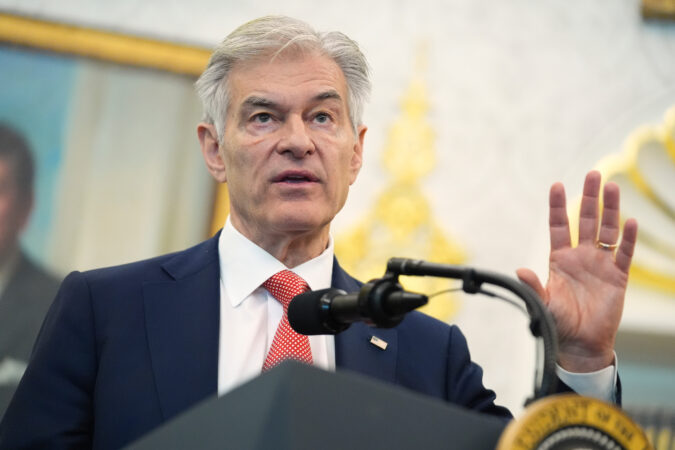
    Officials said the average award for 2026 is $200 million, and the fund puts a total of $50 billion into rural health programs over five years. States propose how to spend their awards, and the Centers for Medicare and Medicaid Services assigns project officers to support each state, said agency administrator Mehmet Oz.

    “This fund was crafted as part of the One Big Beautiful Bill, signed only six months ago now into law, in order to push states to be creative,” Oz said in a call with reporters Monday.

    Under the program, half of the money is equally distributed to each state. The other half is allocated based on a formula developed by CMS that considered rural population size, the financial health of a state’s medical facilities, and health outcomes for a state’s population.

    The formula also ties $12 billion of the five-year funding to whether states are implementing health policies prioritized by the Trump administration’s Make America Healthy Again initiative. Examples include requiring nutrition education for healthcare providers, having schools participate in the Presidential Fitness Test, or banning the use of SNAP benefits for so-called junk foods, Oz said.

    Several Republican-led states — including Arkansas, Iowa, Louisiana, Nebraska, Oklahoma, and Texas — have already adopted rules banning the purchase of foods like candy and soda with SNAP benefits.

    The money that the states get will be recalculated annually, Oz said, allowing the administration to claw back funds if, for example, state leaders don’t pass promised policies. Oz said the clawbacks are not punishments, but leverage governors can use to push policies by pointing to the potential loss of millions.

    “I’ve already heard governors express that sentiment that this is not a threat, that this is actually an empowering element of the One Big Beautiful Bill,” he said.

    Carrie Cochran-McClain, chief policy officer with the National Rural Health Association, said she’s heard from a number of Democratic-led states that refused to include such restrictions on SNAP benefits even though it could hurt their chance to get more money from the fund.

    “It’s not where their state leadership is,” she said.

    Experts say fund is inadequate in face of other cuts

    Oz and other federal officials have touted the program as a 50% increase in Medicaid investments in rural healthcare. Rep. Don Bacon, a Republican from Nebraska who has been critical of many of the administration’s policies but voted for the budget bill that slashed Medicaid, pointed to the fund when recently questioned about how the cuts would hurt rural hospitals.

    “That’s why we added a $50 billion rural hospital fund, to help any hospital that’s struggling,” Bacon said. “This money is meant to keep hospitals afloat.”

    But experts say it won’t nearly offset the losses that struggling rural hospitals will face from the federal spending law’s $1.2 trillion cut from the federal budget over the next decade, primarily from Medicaid. Millions of people are also expected to lose Medicaid benefits.

    Estimates suggest rural hospitals could lose around $137 billion over the next decade because of the budget measure. As many as 300 rural hospitals were at risk for closure because of the GOP’s spending package, according to an analysis by the Cecil G. Sheps Center for Health Services Research at the University of North Carolina at Chapel Hill.

    “When you put that up against the $50 billion for the Rural Health Transformation Fund, you know — that math does not add up,” Cochran-McClain said.

    She also said there’s no guarantee that the funding will go to rural hospitals in need. For example, she noted, one state’s application included a proposal for healthier, locally sourced school lunch options in rural areas.

    And even though innovation is a goal of the program, Cochran-McClain said it’s tough for rural hospitals to innovate when they were struggling to break even before Congress’ Medicaid cuts.

    “We talk to rural providers every day that say, ‘I would really love to do x, y, z, but I’m concerned about, you know, meeting payroll at the end of the month,’” she said. “So when you’re in that kind of crisis mode, it is, I would argue, almost impossible to do true innovation.”

  • During Netanyahu visit, Trump warns Iran of further U.S. strikes if it reconstitutes nuclear program

    During Netanyahu visit, Trump warns Iran of further U.S. strikes if it reconstitutes nuclear program

    PALM BEACH, Fla. — President Donald Trump warned Iran on Monday that the U.S. could carry out further military strikes if the country attempts to reconstitute its nuclear program as he held wide-ranging talks with Israeli Prime Minister Benjamin Netanyahu at his home in Florida.

    Trump had previously insisted that Tehran’s nuclear capabilities were “completely and fully obliterated” by U.S. strikes on key nuclear enrichment sites in June. But with Netanyahu by his side, Trump raised the possibility that suspected activity could be taking place outside those sites. Israeli officials, meanwhile, have been quoted in local media expressing concern about Iran rebuilding its supply of long-range missiles capable of striking Israel.

    “Now I hear that Iran is trying to build up again,” Trump told reporters gathered at his Mar-a-Lago estate. “And if they are, we’re going to have to knock them down. We’ll knock them down. We’ll knock the hell out of them. But hopefully that’s not happening.”

    Trump’s warning to Iran comes as his administration has committed significant resources to targeting drug trafficking in South America and the president looks to create fresh momentum for the U.S.-brokered Israel-Hamas ceasefire. The Gaza deal is in danger of stalling before reaching its complicated second phase that would involve naming an international governing body and rebuilding the devastated Palestinian territory.

    At a news conference with Netanyahu after their meeting, Trump suggested that he could order another U.S. strike.

    “If it’s confirmed, they know the consequences, and the consequences will be very powerful, maybe more powerful than the last time,” Trump said.

    Iran has insisted that it is no longer enriching uranium at any site in the country, trying to signal to the West that it remains open to potential negotiations over its atomic program. The two leaders discussed the possibility of taking new military action against Tehran just months after June’s 12-day war.

    The Iranian mission to the United Nations did not immediately respond to a request for comment on Trump’s warning.

    Gaza ceasefire progress has slowed

    Trump, with Netanyahu by his side, said he wants to get to the second phase of the Gaza deal “as quickly as we can.”

    “But there has to be a disarming of Hamas,” Trump added.

    The ceasefire between Israel and Hamas that Trump championed has mostly held, but progress has slowed recently. Both sides accuse each other of violations, and divisions have emerged among the U.S., Israel, and Arab countries about the path forward.

    The truce’s first phase began in October, days after the two-year anniversary of the initial Hamas-led attack on Israel that killed about 1,200 people. All but one of the 251 hostages taken then have been released, alive or dead.

    The Israeli leader, who also met separately with Secretary of State Marco Rubio and Defense Secretary Pete Hegseth, has signaled he is in no rush to move forward with the next phase as long as the remains of Ran Gvili are still in Gaza.

    Gvili’s parents met with Netanyahu as well as Rubio, U.S. envoy Steve Witkoff, and the president’s son-in-law, Jared Kushner, in Florida on Monday.

    “They’re waiting for their son to come home,” Trump said of the family of the young police officer known affectionately as “Rani.”

    Next phase is complex

    The path to implementing Trump’s peace plan is certainly complicated.

    If successful, the second phase would see the rebuilding of a demilitarized Gaza under international supervision by a group chaired by Trump and known as the Board of Peace. The Palestinians would form a “technocratic, apolitical” committee to run daily affairs in Gaza, under Board of Peace supervision.

    It further calls for normalized relations between Israel and the Arab world and a possible pathway to Palestinian independence. Then there are thorny logistical and humanitarian questions, including rebuilding war-ravaged Gaza, disarming Hamas, and creating a security apparatus called the International Stabilization Force.

    Much remains unsettled

    Two main challenges have complicated moving to the second phase, according to an official who was briefed on those meetings. Israeli officials have been taking a lot of time to vet and approve members of the Palestinian technocratic committee from a list given to them by the mediators, and Israel continues its military strikes.

    Trump’s plan also calls for the stabilization force, proposed as a multinational body, to maintain security. But it, too, has yet to be formed. Whether details will be forthcoming after Monday’s meeting is unclear.

    A Western diplomat said there is a “huge gulf” between the U.S.-Israeli understanding of the force’s mandate and that of other major countries in the region, as well as European governments.

    All spoke on the condition of anonymity to provide details that haven’t been made public.

    The U.S. and Israel want the force to have a “commanding role” in security duties, including disarming Hamas and other militant groups. But countries being courted to contribute troops fear that mandate will make it an “occupation force,” the diplomat said.

    Hamas has said it is ready to discuss “freezing or storing” its arsenal of weapons but insists it has a right to armed resistance as long as Israel occupies Palestinian territory. One U.S. official said a potential plan might be to offer cash incentives in exchange for weapons, echoing a “buyback” program Witkoff has previously floated.

    Trump makes case once again for Netanyahu pardon

    The two leaders, who have a long and close relationship, heaped praise on each other. Trump also tweaked the Israeli leader, who at moments during the war has raised Trump’s ire, for being “very difficult on occasion.”

    Netanyahu said Trump during the lunch was formally told that his country’s education ministry will award him the Israel Prize, breaking the long-held convention of bestowing the honor on an Israeli citizen or resident.

    “President Trump has broken so many conventions to the surprise of people,” Netanyahu said. He added, “So we decided to break a convention, too, or create a new one.”

    Trump also renewed his call on Israeli President Isaac Herzog to grant Netanyahu, who is in the midst of a corruption trial, a pardon.

    Netanyahu is the only sitting prime minister in Israeli history to stand trial, after being charged with fraud, breach of trust, and accepting bribes in three separate cases accusing him of exchanging favors with wealthy political supporters.

    Trump has previously written to Herzog to urge a pardon and advocated for one during his October speech before the Knesset. He said Monday that Herzog has told him “it’s on its way” without offering further details.

    “He’s a wartime prime minister who’s a hero. How do you not give a pardon?” Trump said.

    Herzog’s office said in a statement that the Israeli president and Trump have not spoken since the pardon request was submitted, but that Herzog has spoken with a Trump representative about the U.S. president’s letter advocating for Netanyahu’s pardon.

    “During that conversation, an explanation was provided regarding the stage of the process in which the request currently stands, and that any decision on the matter will be made in accordance with the established procedures,” the Israeli president’s office said.

  • Zohran Mamdani has bold promises. Can he make them come true as New York City mayor?

    Zohran Mamdani has bold promises. Can he make them come true as New York City mayor?

    Zohran Mamdani has promised to transform New York City government when he becomes mayor. Can he do it?

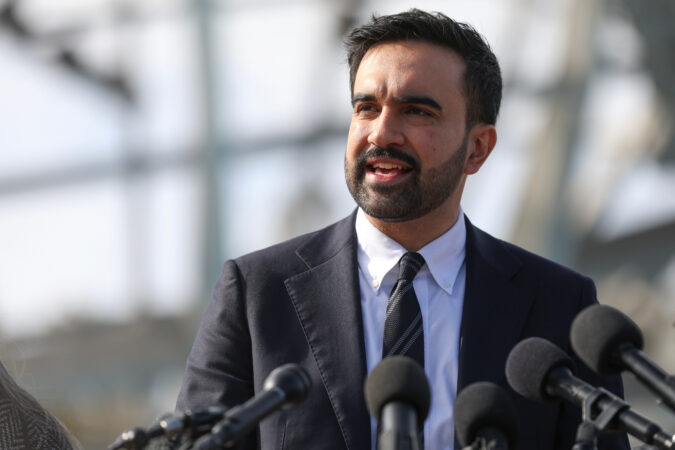
    Mamdani, a 34-year-old democratic socialist, already faces intense scrutiny, even before taking office in one of the country’s most scrutinized political jobs. Republicans have cast him as a liberal boogeyman. Some of his fellow Democrats have deemed him too far left. Progressives are closely watching for any signs of him shifting toward the center.

    On Jan. 1, he will assume control of America’s biggest city under that harsh spotlight, with the country watching to see if he can pull off the big promises that vaulted him to office and handle the everyday duties of the job. All while skeptics call out his every stumble.

    For Mamdani, starting off strong is key, said George Arzt, a veteran Democratic political consultant in New York who worked for former Mayor Ed Koch.

    “He’s got to use the first 100 days of the administration to show people he can govern,” he said. “You’ve got to set a mindset for people that’s like, ‘Hey, this guy’s serious.’”

    That push should begin with Mamdani’s first speech as mayor, where Arzt said it will be important for the city’s new leader to establish a clear blueprint of his agenda and tell New Yorkers what he plans to do and how he plans to do it.

    Mamdani will be sworn in around midnight during a private ceremony at a historic, out-of-use City Hall subway station. Then in the afternoon, he will be sworn in a second time on the steps of City Hall, while his supporters are expected to crowd surrounding streets for an accompanying block party.

    From there, Arzt said, Mamdani will have to count on the seasoned hands he’s hired to help him handle the concrete responsibilities of the job, while he and his team also pursue his ambitious affordability agenda.

    Managing expectations as a movement candidate

    Mamdani campaigned on a big idea: shifting the power of government toward helping working class New Yorkers, rather than the wealthy.

    His platform — which includes free childcare, free city bus service, and a rent freeze for people living in rent stabilized apartments — excited voters in one of America’s most expensive cities and made him a leading face of a Democratic Party searching for bright, new leaders during President Donald Trump’s second term.

    But Mamdani may find himself contending with the relentless responsibilities of running New York City. That includes making sure the trash is getting picked up, potholes are filled, and snow plows go out on time. When there’s a subway delay or flooding, or a high-profile crime or a police officer parked in a bicycle lane, it’s not unusual for the city’s mayor to catch some heat.

    “He had a movement candidacy and that immediately raises expectations locally and nationally,” said Basil Smikle, a Democratic political strategist and Columbia University professor, who added that it might be good for Mamdani to “Just focus on managing expectations and get a couple of good wins under your belt early on.”

    “There’s a lot to keep you busy here,” he said.

    A large part of Mamdani’s job will also be to sell his politics to the New Yorkers who remain skeptical of him, with Smikle saying “the biggest hurdle” is getting people comfortable with his policies and explaining how what he’s pushing could help the city.

    “It’s difficult to have this all happen on day one,” he said, “or even day 30 or even day 100.”

    Challenges and opportunities

    Mamdani’s universal freechild care proposal — perhaps one of his more expensive plans — is also one that has attracted some of the strongest support from New York Gov. Kathy Hochul, a moderate from Buffalo who endorsed the mayor-elect.

    Hochul is eager to work with Mamdani on the policy and both leaders consider the program a top priority, although it’s not yet clear how exactly the plan could come to fruition. The governor, who is up for reelection next year, has repeatedly said she does not want to raise income taxes — something Mamdani supports for wealthy New Yorkers — but she has appeared open to raising corporate taxes.

    “I think he has allies and supporters for his agenda, but the question is how far will the governor go,” said state Senate Deputy Leader Michael Gianaris, a Mamdani ally.

    “There’s an acknowledgment that the voters have spoken, and there’s very clear policies that were associated with his successful campaign,” he said, “so to not make progress on them would be us thumbing our noses at the voters.”

    Mamdani’s pledge to freeze the rent for roughly 1 million rent-stabilized apartments in the city would not require state cooperation.

    But that proposal — perhaps the best known of his campaign — is already facing headwinds, after the city’s departing mayor, Eric Adams, made a series of appointments in recent weeks to a local board that determines annual rent increases for the city’s rent stabilized units.

    The move could potentially complicate the mayor-elect’s ability to follow through on the plan, at least in his first year, although Mamdani has said he remains confident in his ability to enact the freeze.

    Other challenges await

    His relationship with some of the city’s Jewish community remains in tatters over his criticisms of Israel’s government and support for Palestinian human rights.

    The Anti-Defamation League, a prominent Jewish advocacy organization, plans to track Mamdani’s policies and hires as it pledged to “protect Jewish residents across the five boroughs during a period of unprecedented antisemitism in New York City.”

    Earlier this month, a Mamdani appointee resigned over social media posts she made more than a decade ago that featured antisemitic tropes, after the Anti-Defamation League shared the posts online.

    The group has since put out additional findings on others who are serving in committees that Mamdani set up as he transitions into his mayoral role. In response, Mamdani said the ADL often “ignores the distinction” between antisemitism and criticism of the Israeli government.

    The mayor-elect’s past calls to defund the city’s police department continue to be a vulnerability. His decision to retain Jessica Tisch, the city’s current police commissioner, has eased some concerns about a radical shake-up at the top of the nation’s largest police force.

    And then there’s Trump.

    Tensions between Trump and Mamdani have appeared to cool — for now — after months of rancor led into a surprisingly friendly Oval Office meeting. Future clashes may emerge given the sharp political differences between them, particularly on immigration enforcement, along with anything else that could set off the mercurial president.