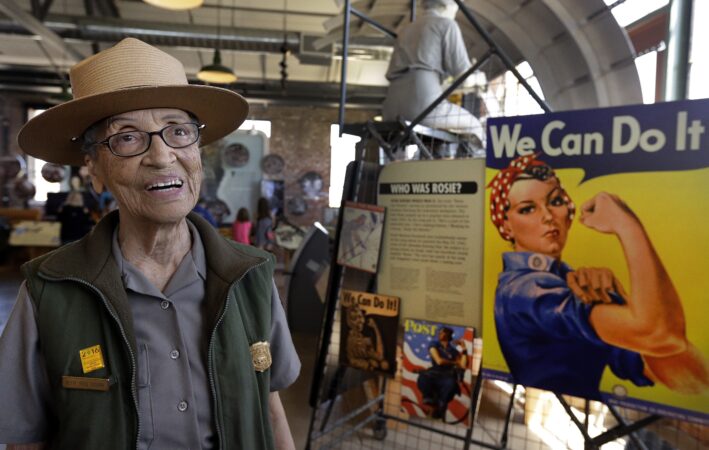
Betty Reid Soskin, who served as the nation’s oldest park ranger and relayed firsthand accounts of segregation as a Black woman on the World War II home front, died Sunday at her home in Richmond, Calif. She was 104.
Her death was confirmed by her son Bob Reid, who did not know the exact cause but said she had been in declining health.
“She led a fully packed life and was ready to leave,” her family said in a statement on social media.
Ms. Soskin, who joined the National Park Service at 85 and retired when she turned 100, used her role as the nation’s oldest park ranger to share the untold stories of Black women, including herself, who served on the home front during World War II.
At that time, she worked as a file clerk at Boilermakers Local Auxiliary 36, a segregated union for Black workers. According to the union, Ms. Soskin worked at the sprawling Kaiser Shipyards, where thousands of women helped construct some 700 Liberty and Victory ships.
While many were familiar with tales of the women who worked in factories as men went off to fight — known as “Rosie the Riveters” — a key detail was often omitted from those histories.
“That was always a white women’s story,” Ms. Soskin said in an interview with the Washington Post in 2015. For most of the war, she said, Black women were not permitted to be “Rosies” until 1944, when some began to be trained as welders.
In 2016, the union apologized to Ms. Soskin for the way she and other Black workers were relegated by the union to an auxiliary segregated lodge during the war. “On behalf of my organization, I offer Betty and all former Boilermakers who at one time belonged to an auxiliary local, an apology for what must have been a demeaning life experience,” said union leader IP Jones.
“I’m not trained as a historian. My presentations are based on my oral history,” Ms. Soskin said. “A bottomless well of memories come up depending on questions the public asks. [The memories] are always on tap for me,” she added.
The ranger spent her days sharing her experiences with visitors to the Rosie the Riveter WWII Home Front National Historical Park in Richmond. “Black women were not freed or emancipated in the workforce,” she told the Post. “Unions were not racially integrated and wouldn’t be for a decade. They created auxiliaries that all Blacks were dumped into. We paid dues, but didn’t have power or votes.”
Ms. Soskin was born Betty Charbonnet in Detroit on Sept. 22, 1921, and grew up in a Cajun-Creole, African American family in New Orleans. In 1927, after a devastating flood hit the city, her family relocated to Oakland, Calif., according to a Park Service biography.
In 1945, Ms. Soskin and her husband at the time, Mel Reid, opened one of the country’s first Black-owned music stores, Reid’s Records, which operated until 2019. In 1972, Ms. Soskin and Reid divorced, and four years later, she married William Soskin, to whom she remained married until his death in 1988.
According to her former employer, she later went into local and state politics, working as an aide to a Berkeley City Council member and for State Assembly members.
Ms. Soskin was working in Richmond as a field representative for a California assemblyman when she met with Park Service planners to discuss the development of an urban park paying tribute to World War II home front workers. In 2003, she left her state job to become a consultant to the Rosie the Riveter WWII Home Front National Historical Park and four years later, at the age of 85, became a park ranger.
In a statement on social media, the park paid tribute to Ms. Soskin’s time as a ranger: “She was a powerful voice for sharing her personal experiences, highlighting untold stories, and honoring the contributions of women from diverse backgrounds who worked on the World War II Home Front.”
In addition to her son, Bob, survivors include two daughters, Diara and Dorian; five grandchildren; and a great-grandchild.
WASHINGTON — The Trump administration said Monday it is pausing leases for five large-scale offshore wind projects under construction in the East Coast due to unspecified national security risks identified by the Pentagon.
The pause is effective immediately and will give the Interior Department, which oversees offshore wind, time to work with the Defense Department and other agencies to assess the possible ways to mitigate any security risks posed by the projects, the administration said.
“The prime duty of the United States government is to protect the American people,” Interior Secretary Doug Burgum said in a statement. “Today’s action addresses emerging national security risks, including the rapid evolution of the relevant adversary technologies, and the vulnerabilities created by large-scale offshore wind projects with proximity near our east coast population centers.”
The administration said leases are paused for the Vineyard Wind project under construction in Massachusetts, Revolution Wind in Rhode Island and Connecticut, Coastal Virginia Offshore Wind, and two projects in New York: Sunrise Wind and Empire Wind.
The Interior Department said unclassified reports from the U.S. government have long found that the movement of massive turbine blades and the highly reflective towers create radar interference called “clutter.” The clutter caused by offshore wind projects obscures legitimate moving targets and generates false targets in the vicinity of wind projects, the Interior Department said.
The action comes two weeks after a federal judge struck down President Donald Trump’s executive order blocking wind energy projects, saying the effort to halt virtually all leasing of wind farms on federal lands and waters was “arbitrary and capricious” and violates U.S. law.
Judge Patti Saris of the U.S. District Court for the District of Massachusetts vacated Trump’s Jan. 20 executive order blocking wind energy projects and declared it unlawful.
Saris ruled in favor of a coalition of state attorneys general from 17 states and Washington, D.C., led by New York Attorney General Letitia James, that challenged Trump’s Day One order that paused leasing and permitting for wind energy projects.
An internal CBS News battle over a “60 Minutes” story critical of the Trump administration has exploded publicly, with a correspondent charging it was kept off the air for political reasons and news chief Bari Weiss saying Monday the story did not “advance the ball.”
Two hours before airtime Sunday, CBS announced that the story where correspondent Sharyn Alfonsi spoke to deportees who had been sent to El Salvador’s notorious CECOT prison, would not be a part of the show. Weiss, the Free Press founder named CBS News editor-in-chief in October, said it was her decision.
The dispute puts one of journalism’s most respected brands — and a frequent target of President Donald Trump — back in the spotlight and amplifies questions about whether Weiss’ appointment was a signal that CBS News was headed in a more Trump-friendly direction.
Alfonsi, in an email sent to fellow “60 Minutes” correspondents said the story was factually correct and had been cleared by CBS lawyers and its standards division. But the Trump administration had refused to comment for the story, and Weiss wanted a greater effort made to get their point of view.
“In my view, pulling it now after every rigorous internal check has been met is not an editorial decision, it is a political one,” Alfonsi wrote in the email. She did not immediately respond to requests for comment from The Associated Press.
Alfonsi said in the email that interviews were sought with or questions directed to — sometimes both — the White House, State Department and Department of Homeland Security.
“Government silence is a statement, not a VETO,” Alfonsi wrote. “Their refusal to be interviewed is a tactical maneuver designed to kill the story. If the administration’s refusal to participate becomes a valid reason to spike a story, we have effectively handed them a ‘kill switch’ for any reporting they find inconvenient.”
“Spike” is a journalist’s term for killing a story. But Weiss, in a statement, said that she looked forward to airing Alfonsi’s piece “when it’s ready.”
Speaking Monday at the daily CBS News internal editorial call, Weiss was clearly angered by Alfonsi’s memo. A transcript of Weiss’ message was provided by CBS News.
“The only newsroom I’m interested in running is one in which we are able to have contentious disagreements about the thorniest editorial matters with respect and, crucially, where we assume the best intent of our colleagues,” Weiss said. “Anything else is completely unacceptable.”
She said that while Alfonsi’s story presented powerful testimony about torture at the CECOT prison, The New York Times and other outlets had already done similar work. “To run a story on this subject two months later, we need to do more,” she said. “And this is ‘60 Minutes.’ We need to be able to get the principals on the record and on camera.”
It wasn’t clear whether Weiss’ involvement in seeking administration comment was sought. She reportedly helped the newscast arrange interviews with Jared Kushner and Steve Witkoff this past fall to discuss Trump’s Middle East peace efforts. Trump himself was interviewed by Norah O’Donnell on a “60 Minutes” telecast that aired on Nov. 2.
Trump has been sharply critical of “60 Minutes.” He refused to grant the show an interview prior to last fall’s election, then sued the network over how it handled an interview with election opponent Kamala Harris. CBS’ parent Paramount Global agreed to settle the lawsuit by paying Trump $16 million this past summer. More recently, Trump angrily reacted to correspondent Lesley Stahl’s interview with Trump former ally turned critic Marjorie Taylor Greene.
“60 Minutes” was notably tough on Trump during the first months of his second term, particularly in stories done by correspondent Scott Pelley. In accepting an award from USC Annenberg earlier this month for his journalism, Pelley noted that the stories were aired last spring “with an absolute minimum of interference.”
Pelley said that people at “60 Minutes” were concerned about what new ownership installed at Paramount this summer would mean for the broadcast. “It’s early yet, but what I can tell you is we are doing the same kinds of stories with the same kind of rigor, and we have experienced no corporate interference of any kind,” Pelley said then, according to deadline.com.
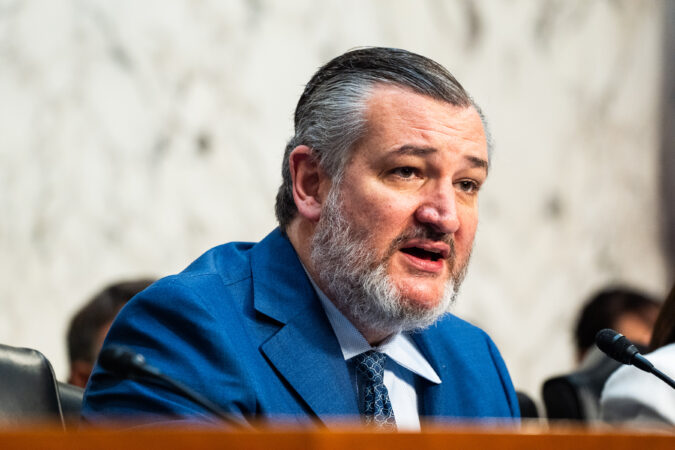
Sen. Ted Cruz sat down with a longtime ally in November at an office near D.C.’s Union Station to discuss the future of the Republican Party. Before long, the discussion touched on his own future.
His friend Morton Klein, president of the Zionist Organization for America, told Cruz he believed that “Jew hatred and Israel bashing” was on the rise on the right — and that something had to be done about it. Cruz, who had begun a series of speeches decrying antisemitism in the GOP, told Klein he had been fielding requests from people urging him to run for president in 2028.
Cruz came across as someone “seriously” considering such a run, Klein recalled.
With the future of the party up for grabs in a Donald Trump-less 2028 primary, Cruz has in recent months positioned himself as a loud voice for a more traditional, hawkish Republican foreign policy. He’s also urging the GOP to rid itself of popular MAGA pundit Tucker Carlson, whom he argues is injecting the “poison” of antisemitism into the movement with his broadsides against Israel. Carlson has rejected that characterization.
As he feuds with Carlson, Cruz is weighing a second presidential bid, according to a person close to the senator and another briefed on his thinking, who spoke like others on the condition of anonymity to disclose internal conversations. A White House run would be politically risky for Cruz, 55, putting him on course to collide with Vice President JD Vance, who many Republicans expect to enter the 2028 race.
Friction is already evident behind the scenes: Cruz has criticized Vance, a close ally of Carlson, to Republican donors, according to two people familiar with the comments. The senator has warned that Vance’s foreign policy views are dangerously isolationist, the people said.(Vance has been one of the GOP’s most prominent skeptics of U.S. intervention abroad.)
The emerging rivalry shows how much the party has changed under Trump’s leadership since Cruz arrived in the Senate in 2013. After rising to prominence as a rebel against the establishment, Cruz is now a vocal champion of some longtime orthodox GOP positions, as a new generation of conservatives is ascending with a different vision.
Some political observers are skeptical that another Cruz run would gain much traction. He can no longer run as an outsider and alienated some conservatives with his fight against Trump in the 2016 campaign. Still, Cruz has built name recognition and relationships with plenty of activists and donors across the country in recent years, and it’s far from clear what will animate the base in the next GOP primary.
“Can Ted help craft or meld together the traditional Republican approach with the new reality of what the Republican Party is now?” asked Daron Shaw, a political science professor at the University of Texas who overlapped with Cruz as a staffer on George W. Bush’s presidentialcampaign. “It’s a heavy lift.”
The day after his chat with Klein, Cruz called Carlson “a coward” during a speech before a group supporting Jewish conservatives in Las Vegas, again denouncing the “poisonous lies” of antisemitism. He said they were “blessed” to have Trump, who “loves the Jewish people,” in the White House right now.
“When Trump is not in the White House, what then?” he asked in his booming voice.
“Ted Cruz!” an audience member shouted.
The senator just smiled, then continued his speech.
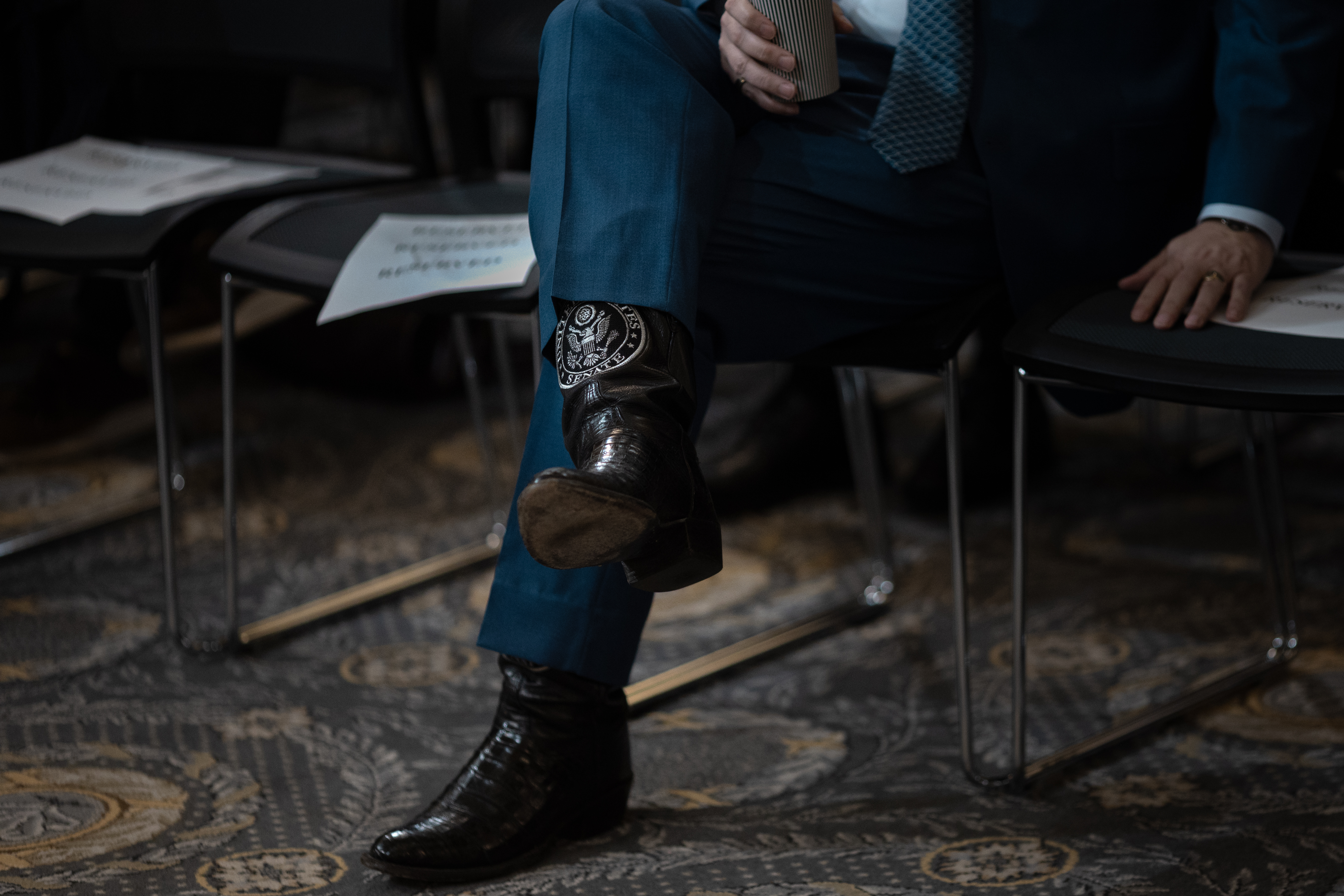
Sen. Ted Cruz (Texas) wears Senate-themed boots in May at the Capitol.
‘All of us hate Ted Cruz’
Anyone considering a run for the GOP nomination in 2028 faces a big obstacle: Vance.
The 41-year-old vice president leads early polls and is seen as a loyal lieutenant to Trump, who maintains high support from the party base even as the president’s approval ratings have plummeted.
But Trump has been noncommittal about endorsing his running mate as heir to his Make America Great Again movement, leaving an opening for an ambitious conservative with a different vision for the party.
“The Republicans will be fighting for their identity,” Rep. Marjorie Taylor Greene (R-Georgia) said of the 2028 primary. Greene, a close ally of Carlson who represents the populist and isolationist wing of the party, added: “There’ll be Ted Cruz, I’m sure, running against JD Vance. All of us hate Ted Cruz.”
Cruz has adapted to changes in his party over several decades in politics. Following a stretch in the establishment during Bush’s 2000 campaign, he became solicitor general of Texas in 2003 and launched a Senate campaign in 2011 as a tea-party-infused change agent, defeating the lieutenant governor in the GOP primary.
“The best thing to happen to the Republican Party was to get its teeth kicked in in 2008,” Cruz said during a 2012 campaign event with the libertarian Ron Paul.
When he arrived in Washington, Cruz picked fights over spending and President Barack Obama’s health care law, sparking a government shutdown in 2013. Not everyone in his party liked his style. “If you killed Ted Cruz on the floor of the Senate, and the trial was in the Senate, nobody could convict you,” Sen. Lindsey Graham (R-South Carolina) joked at a 2016 press dinner.
Cruz brought his insurgent pitch into the 2016 presidential race, but Trump caught fire with an antiestablishment campaign that dramatically eclipsed the senator’s. After bowing out of the GOP race as the last major Trump opponent standing, Cruz told delegates at the Republican National Convention that year to “vote your conscience,” instead of throwing his support behind Trump, who had branded him as “Lyin’ Ted.” He returned to the Senate, where he is now chair of the Commerce Committee and has refashioned himself into a bipartisan dealmaker on aviation safety and other issues.
The Texas senator, who has called himself a “noninterventionist hawk” and has long been a vocal ally of Israel, argues that an anti-Israel foreign policy could embolden terrorists. And he is a defender of the benefits of traditional capitalism at a time when some in the “New Right” are calling for a more populist turn.
“Those who are anti-Israel quickly become anti-capitalist and anti-American,” Cruz said in a brief interview about his decision to speak out against Carlson. “Tucker’s obsession is unhealthy and dangerous.”
By targeting Carlson and growing anti-Israel sentiment within the party, Cruz has hit upon a division within the GOP base that some believe could animate the 2028 primaries. Carlson is closely allied with Vance, a onetime Trump critic who is now an “America First” populist, embracing skepticism of some big-business interests and rejecting the U.S. foreign policy status quo.
Cruz is staking out positions against isolationism and antisemitism at a time when explicitly antisemitic figures such as white supremacist commentator Nick Fuentes are gaining an audience on the right.
Vance, by contrast,has rejected the suggestion that the right has a problem with antisemitism afterCarlson hosted Fuentes for a friendly interview. (The vice president disavowed Fuentes months before the interview and has not explicitly weighed in on Carlson hosting him.)
It’s “kind of slanderous to say that the Republican Party, the conservative movement, is extremely antisemitic,”Vancesaid in a recent interview with NBC News. In a social media postlast week, Vance criticized a news article claiming antisemitism was rising among young people.
“I would say there’s a difference between not liking Israel (or disagreeing with a given Israeli policy) and antisemitism,” he replied to one user.
Asked to respond to Vance’s comment, Cruz said he is not in agreement with “people who are anti-Israel or people who are antisemitic.”
“Every Hamas or Hezbollah or IRGC terrorist that Israel took out makes Americans safer,” Cruzsaid, referencing militants in Gaza, Lebanon and Iran that the United States designates as terrorist groups. “And those who don’t see that are not acting in accordance with American national security interests.”
The feud
In early July, Cruz sat down in Washington with Israel’s prime minister and delivered a dire warning. Over cigars at Blair House, Cruz told Benjamin Netanyahu that antisemitism on the right was rising to a level he had never seen before.
“No, Ted,” Netanyahu responded, according to Cruz, who recounted the conversation in a speech. “That’s Qatar, that’s Iran, that’s astroturf, that’s paid for.”
But Cruz said he was not placated. Replies to his social media posts were flooded with anti-Jewish bigotry from what looked to him like ordinary, real people. He began to fear that what he saw as antisemitism on the left was beginning to infect the right, he said.
In June, Cruz sat for an interview with Carlson that grew heated over the topic of Israel. Cruz suggested that Carlson criticizes Israel more than other countries because of bigotry toward Jews. Carlson said he has many Jewish friends who have the same questions as him and grilled Cruz with factual questions on the Middle East. In an uncharacteristic lapse, Cruz failed to identify the population of Iran. “You don’t know the population of the country you seek to topple?” Carlson asked.
Since then, the two have savaged each other in increasingly personal terms. Carlson has called Cruz “vulgar and dumb and reckless” for connecting U.S. military support for Israel to a biblical responsibility to defend the Holy Land and God’s chosen people. After Carlson hosted Fuentes on his podcast this fall, Cruz called on Republicans to repudiate the pundit.
Carlson “decided Jews are the source of all evil in the world,” Cruz said in a recent podcast. The senator also posted a digitally altered sexually suggestive photo of Carlson to critique his friendly stance toward Qatar, a U.S. ally with which Israel has clashed.
Since the killing of conservative influencer Charlie Kirk, internal battles about the future of the GOP have spilled into the open, many centering on the true meaning of “America First” as Trump spends time and political capital on Ukraine, Israel and Venezuela. Carlson criticized Trump’s decision to strike Iran’s nuclear sites in June and has warned the president against pursuing regime change in Venezuela, a goal Cruz shares.
“What Ted is trying to do is say, this is where our voters are,” said one person close to the senator. “Trump and Ted are much more aligned on foreign policy than Trump and Tucker are.”
Few Republicans have publicly rallied to Cruz’s side.
“I can tell you, my colleagues, almost to a person, think what is happening is horrifying,” Cruz said in one speech on Carlson. “But a great many of them are frightened because he has one hell of a big megaphone.”
Rep. Dan Crenshaw (R-Texas) said he “applauds” Cruz for speaking out against Carlson. But others declined to weigh in.
Sen. Tommy Tuberville (R-Alabama), a close Trump ally, said he believes the back-and-forth is personal. “Sometimes when you get embarrassed, you get mad, get your feelings hurt,” he said.
Sen. Richard Blumenthal (D-Connecticut) said he is surprised but happy that Cruz has the “courage” to challenge such a powerful figure on the right. “To give Senator Cruz due credit, it requires some guts and gumption to stand up against Tucker Carlson,” he said.
As Carlson and Cruz have attacked each other, Trump has declined to take sides, calling Carlson a “nice guy” and Cruz a “good friend” in recent months.
Carlson has said he thinks “antisemitism is immoral, and I am against it.” He argues the feud is just politics. “All [Cruz] wants is to be president. That’s all he’s ever wanted,” Carlson said in an interview. “As a political matter, he somehow thinks that calling me a Nazi is going to get him the nomination because it’s going to hurt JD Vance.” (Cruz has not publicly used that word to described Carlson.)
Rep. Ryan Zinke (R-Montana), who argued that Cruz damaged his credibility with conservatives after spurning Trump in 2016 but later recovered his standing, said Cruz “always has an eye on running.”
“Ted stakes out his position pretty well, and so were he to run, we know where he is,” Zinke said.
So far, there are few signs that Cruz is gaining an advantage. Hal Lambert, a major GOP donor who helped organize a super PAC to support Cruz when he ran for president in 2016, said he thinks a 2028 bid would be tricky for the senator.
“If JD Vance is running, I’m going to be supporting JD Vance,” Lambert said.
“I just don’t understand what the platform would be,” he said of Cruz’s potential run. “The platform would be, I’m Ted, and that’s JD?”
Kadia Goba and Sarah Ellison contributed to this report.
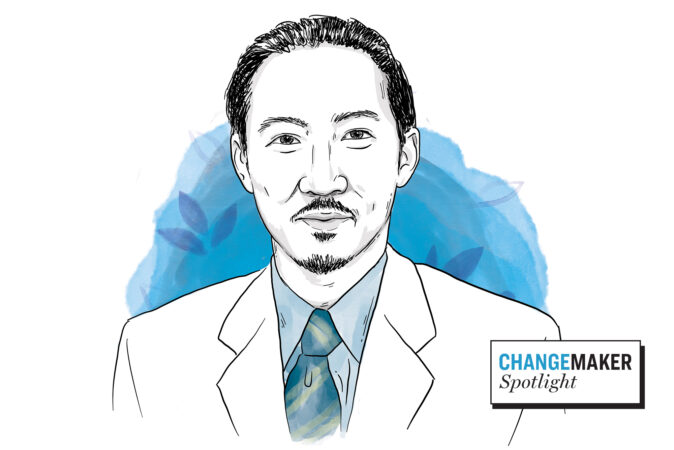
“My path from being a 9-year-old boy, a refugee from Vietnam in a family resettled in South Philadelphia, to becoming CEO of SEAMAAC [Southeast Asian Mutual Assistance Association Coalition], just seems perfectly fitting for a story of America,” Thoai Nguyen said. “But when I think more deeply upon my life and other people who faced very similar challenges, it could have gone in many different ways.” Nguyen’s sensitivity to the potential outcomes of immigrants is informed both by his personal experiences as well as his leadership of SEAMAAC. The organization’s services, which include education, health care, and community development, are crucial in this moment: In 2023, immigrants comprised 14.3% of U.S. residents, up from 11.19% in 2000. In 2024, Philadelphia’s immigrant population reached an 80-year high. And while poverty in the city is at a 25-year low, housing remains unaffordable and more people are experiencing homelessness than ever before.
The nonprofit is also invested in changing the cultural discourse around immigration. On Jan. 22, 2026, the organization will launch “Indivisible,” a video storytelling project in collaboration with the American Swedish Historical Museum and funded by the William Penn Foundation. “Indivisible” invites Philadelphians to share their family’s immigration experience, connecting their roots to today’s political discourse. “I want people to discover themselves as they’re telling their story,” Nguyen said. “And then in doing so, inspire others to look at their own roots.”
Here, Nguyen shares his roots as a Vietnamese refugee in Philadelphia in the 1970s, and his unique perspective on community outreach, organizing, and where SEAMAAC is headed.
Tell me about your family’s experience coming to the United States. How does that shape the work you do now?
My family was resettled to South Philadelphia in 1975 after uprooting everything we’d known for generations. It really shaped my very early understanding of the world around me.
Because my father worked for the U.S. government for many years while he was in Vietnam, we were prioritized to be airlifted out. We were the first family to land in South Philly in the Seventh Street business corridor, which, at that time, was still a thriving, vibrant business district, primarily for Jewish businesses owned by Jewish families who had survived the Holocaust and I believe that experience made them more compassionate to my family’s plight. At first we were the only Asian family in the midst of working-class Irish, Polish, and Italian immigrants. So for the first four to five years, that was what I knew.
From the late ’70s up until 1985, more Vietnamese refugees began to be resettled there, and then Cambodian, Laotian, ethnic Hmong, ethnic Chinese followed. That caused a lot of racial tension. Being one family, we may not have been a threat, but when you have hundreds of different families speaking six or seven different languages, wearing different clothing, eating different food, practicing different customs, you’re going to push up against the nativist sense of entitlement and turf.
It impacted my understanding of who I am in the context of everything. For the first five years as a refugee, I had a very diverse friend group. I remember playing hockey, soccer, and American football, and our team was really representative of the neighborhood. My older brother and I were the only Asian guys on the team, but we were kind of embraced by the neighborhood. I should say that (and this is not a pat on the back or anything) my dad’s family was fairly wealthy and he was very well-educated and very sophisticated. He spoke four languages — Vietnamese, English, Japanese, and French — fluently. As a result, our upbringing in Vietnam was very urbane.
But the new refugees coming in were not coming from that same sort of social environment. A lot of them came from more agrarian areas, and they had a more difficult time adjusting to the urban neighborhood in South Philly. And while I was accepted into a group of Italian- and Irish-American kids, the reality of identity really hit me. They may not have seen me as different, but I was very much an immigrant. I felt this deep sense of connection with the new refugees, and about the same time, my dad started working for one of the refugee resettlement agencies to help the new refugees entering the neighborhood. When I was 15 or 16 years old, I would start advocating for some of the new refugees when my father was busy at work. They would knock on the door, and I would go out and help them facilitate a discussion with the landlord or the neighbor to get around some sort of cultural misunderstanding.
How would you describe what SEAMAAC does and why it matters?
We describe the people that we serve as economically, socially, and politically vulnerable communities. The name singles out the Southeast Asian immigrants and refugees because they were part of our original mission. And while we still serve Asian communities, today, our mission statement is really an economic, social, and political-class statement. Depending on the year, 50% of the communities we serve are Black families or families with African ancestry. There have also been a lot of Ukrainians entering Philadelphia in the past five years. So we serve economically- and historically-disenfranchised or vulnerable families of all races and ethnicities. It doesn’t matter who they are, if we have programs or services they need, then they are welcomed.
We also do advocacy, education and organizing work, which is something that was not there before I came to SEAMAAC. I would argue that the quality of our services today is a hundred times better than 20 years ago because our work today is deeply informed by a radical analysis of poverty.
Can you tell me more about that? How do you define radical?
When we say “radical,” we don’t mean people running around arguing to defund the police. We mean “radical” in the sense of its Latin origin, which means “root.” To me, if you boil down the problems faced by the family or community today, the cause of the problems is usually poverty. Debilitating generational poverty. Some of our services are just a band-aid on certain issues. We’re plugging leaks here and there. But to get to the root cause of these issues, we need to get people to think and act strategically, to really think more about who they’re voting for.
How does SEAMAAC engage in community empowerment?
I would say that we don’t do any “empowerment” work because that creates a presumption that we have power to give to people. We really try, instead, to build an environment in which people can find their own voice and agency, then have self-determination in their future. To me that is less about traditional social services than it is about movement building and community organizing. And we’re trying to build really slowly, but steadily.
I’ll give you an example: I sometimes guest lecture at Penn, Jefferson, or Temple. And students are generally really interested in my organizing background and what I did prior to SEAMAAC. And on the surface, that’s the sexy stuff. I was organizing against the police brutality, getting arrested for civil disobedience, and taking over buildings, taking over bridges and tunnels in New York City. But a lot of students will say, “Oh, Mr. Thoai, tell us the most radical thing that you’ve ever done.” And they think that I’m going to talk about the time that I scaled this building to drop a protest banner.
But in reality, the most radical thing that I’ve ever done is finding livable wage jobs for 20 families at one time, where mom and dad got jobs at a hospital system in Philadelphia. And they are now getting paid better than minimum wage and receiving health care coverage for their family from a 40-hour work week. What more radical way can you change a person’s life than doing that? Mom and dad now don’t have to work two jobs, 12 hours a day. They have Saturdays and Sundays free to spend with their family. What is fundamentally better than that?
What gives you hope about the work? What keeps you up at night?
What keeps me up at night is the crisis that’s been building in our democracy over the last 10 months and the fact that working-class Americans are being disenfranchised through the defunding of our public benefits. I’m concerned specifically with how defunding impacts the families SEAMAAC serves. We’ve already taken an $800,000 loss over the previous nine to 12 months. And that affects the lives of the people whom we serve but also the livelihood of our team. In that period, we also lost 15 staff members. So we went from a team of 50 to now 35. Clearly we need more people because requests for service have increased, not decreased.
Our ability to meet the demand is stable for now, but that requires the remaining 35 staffers to work extra hard. And as the CEO, I have to be really careful about them burning out, or worse, for them to say, “I’m done. I can’t do this anymore.” So it’s a real fine line for the nonprofit sector. That’s what keeps me up at night, thinking about the 12 people that I had to lay off over the last six months, I feel terrible. But you can’t sustain this work without hope. I’m sure you’re familiar with Mariame Kaba’s concept that hope is a discipline?
Actually, I’m not.
Her concept is that hope has to be an active verb. When you only hope for something, it does not mean that it will automatically happen, you have to take action day by day to make that hope into a reality.
After more than 20 years leading this organization, what are you most proud of?
I’ve been here long enough, 21 years now, that people are asking me about my legacy. Is my legacy going to be the Wyss Wellness Center that we opened up in collaboration with Jefferson Health? Or is it going to be the South Philly East Community Center that’s scheduled to open in December of 2026? I would say that it’s nothing structural like that, even though I love talking about tangibility.
I think the legacy that I leave for SEAMAAC is the dozens of young activists and organizers that I have the honor of mentoring right now and the dozens that I’ve mentored in the past. If I can instill a sense of compassion and integrity in a quarter of the people who we’ve developed at SEAMAAC, the things that I’ve done in life will have been worth it. Over the past 40 years, I’ve mentored a lot of great people and some have started their own organizations. Some are still doing anti-prison work, anti-death penalty work. I was mentored by some great community organizers, so I am just passing on their knowledge to the next generation of organizers.
PHILLY QUICK ROUND
What’s your favorite Philly food splurge? The pizza steak at Lazaro’s Pizza.
Favorite Philly small business? I always have to say Stina Pizzeria. It is not just the pizza — it’s the owner and their mission. And he named the restaurant after his wife, Christina. I mean, that’s just lovely.
What do you wish people knew about the people who call Philly home? We are rough around the edges, but we’re for real.
Who’s the greatest Philadelphian of all time? John Coltrane, a genius musician, an amazing civil rights leader. A jazz icon.
Why is the federal government involved in healthcare at all? Private industry does most of the medical research, invents new drugs, and develops medical procedures. Private industry can deny coverage to anyone they choose; deny payment of any and all medical claims they choose; charge whatever they want for drugs, hospital stays, and treatment; withhold reimbursements to doctors; and lobby politicians to keep their hold on a healthcare industry that earns them millions of dollars every year.
Following World War II, President Harry S. Truman tried to pass universal healthcare legislation. During the war, companies began offering healthcare benefits to workers as an incentive. Guess what the pharmaceutical, hospital associations, doctors’ associations, and healthcare insurance companies did? Big money to politicians’ campaigns guaranteed that no government plan would be adopted.
Almost every president since has tried some form of legislation to help the American people, with the same results. President Barack Obama’s Affordable Care Act began as a dream of universal healthcare, but big money to politicians and negative advertising forced the final version to be a weak version of the original proposal.
Tell your members of Congress and senators that Health Saving Accounts (HSAs) are not healthcare — they are your money being saved for specific medical events. Associations of small companies, trying to obtain better insurance premiums for their members, are at the mercy of the healthcare insurance companies.
Why do the politicians not put pressure on the pharmaceutical companies, pharmacy benefit managers (middlemen who take a cut of every drug purchased), hospital associations, especially privately owned hospitals, doctors’ associations, and healthcare insurance companies? You guessed it. Political contributions and lobbying.
Dave Savage, (ret.) Lieutenant Junior Grade, U.S. Navy, Collingswood
Trump’s lies are a “weapon of mass delusion” that will only be defused when responsible news media and brave Democratic politicians fact-check him with evidence — immediately — after every lie he spews.
Reggie Regrut, Phillipsburg
Objective criticism
I appreciate and respect the passionate letters to the editor from Inquirer readers, including a recent submission calling out Republican lawmakers for seeking to corrupt the electoral process through manipulative gerrymandering. The criticism of Republicans is certainly warranted, but unless we can objectively call out equally damaging manipulation by Democratic lawmakers, including efforts in Illinois, New York, California. and other blue states, we will continue to dig our partisan holes deeper. Politicians respond to voter voices and behaviors. As long as they think a voting bloc is OK with gerrymandering that helps their party gain or stay in power while opposing the same actions by the other party, we will continue to get more of the same from Republicans and Democrats. Behavior like that should be an embarrassment to all American citizens.
Larry Senour, Doylestown
Join the conversation: Send letters to letters@inquirer.com. Limit length to 150 words and include home address and day and evening phone number. Letters run in The Inquirer six days a week on the editorial pages and online.
ARIES (March 21-April 19). You can say no warmly, strangely, lightly, whimsically and without anyone feeling hurt: “I don’t think my spirit wants to go.” “My energy’s being weird today.” It’s really acceptable for you to do — or not do — what you want.
TAURUS (April 20-May 20). There’s intelligence in what your attention gravitates toward, especially when you’re not stressed. So take care of your nervous system first. Then, from the calm place, let intuition choose the order of activities, and you’ll be golden.
GEMINI (May 21-June 21). There are changes that occur without awareness or effort, but those aren’t the sort you’re interested in now. You want to steer your life. That’s why you’re educating yourself about all options, and as you do this, more options open up.
CANCER (June 22-July 22). You’re in that awkward phase where it feels like your past efforts didn’t matter because you can’t yet see results. But the seeds you’ve planted are maturing underground. You can relax today in the knowledge that your day is approaching.
LEO (July 23-Aug. 22). Thinking about something in the abstract creates internal conflict. You can imagine so many possibilities, risks, meanings, interpretations — it all gets quite dizzying. This doesn’t have to be complicated. Just act. When you actually do the thing, the ambiguity dissolves.
VIRGO (Aug. 23-Sept. 22). This new habit you’re building is still a struggle, but it will get easier. Soon you’ll notice this is no longer any effort at all for you, and after that, you’ll be the proud owner of a new identity. It’s not even a habit. It’s just who you are.
LIBRA (Sept. 23-Oct. 23). You’re caught between two things, and neither option feels quite right. It’s OK to let it be uncomfortable for a minute. Because that’s better than letting fear push you into a choice you’re not ready to make.
SCORPIO (Oct. 24-Nov. 21). Your presence is a gift, not a guarantee. People need to learn not to assume access to you. You’re not being aloof; you’re just asserting your right to your own time and experience. Follow your own rules today.
SAGITTARIUS (Nov. 22-Dec. 21). Your confidence grows because of the action you take. Even when it is not immediately rewarded or even noticed, you witness yourself. Your body knows the truth, and the mind stretches its idea of what you’re capable of.
CAPRICORN (Dec. 22-Jan. 19). You have values you don’t think about until they surface, as they will spontaneously today. You’re not afraid to notice and wonder at your own behavior, some of which will surprise you in the best way.
AQUARIUS (Jan. 20-Feb. 18). You don’t have to worry about what people think — their opinions are already shifting. If you tried to manage them now, you’d have the influence of a sandcastle builder 10 minutes before high tide.
PISCES (Feb. 19-March 20). Energetic mismatches are just a dud. Avoid! Work alongside people who match your intensity, and together you’ll find ideas you couldn’t reach alone. Shared effort makes progress easier, victories sweeter and the whole journey far more fun.
TODAY’S BIRTHDAY (Dec. 22). Welcome to your Year of Graceful Mastery. You’ll refine what you already do well into something extraordinary. People notice; opportunities follow. Money flows more steadily, and you spend it on things that genuinely bring joy. More highlights: tickets to sold-out shows, professional accolades and a deepening relationship that makes you believe in partnership again. Capricorn and Cancer adore you. Your lucky numbers are: 4, 39, 1, 11 and 17.
DEAR ABBY: My son has completely given up on dating. Whether it’s blind dates, casual meetings with members from our church or dating events I pay for and make him go to, he still hasn’t found a wife. At 36, he should already have children and a partner, but despite the best efforts of my wife and me, he remains unmarried.
Our son is 6 feet tall, athletic and godly, and he has his own apartment and clears $100k a year. Despite all this, he still doesn’t have a wife. It’s even reached the point that he gets angry at my wife and me for pressuring him. During a few of the blind dates we set up for him, I watched from afar, and each time he was stood up! How can I ensure my son gets a wife before I grow too old?
— DAD LOSING HOPE IN NEW YORK
DEAR DAD: If you are sincere about this question, STOP EVERYTHING YOU HAVE BEEN DOING. Your son’s chances of finding a wife will increase the further you step back. Has your tall, athletic, successful and godly son told you he even WANTS to be married? As many of the women whose letters I publish express, not all men do.
** ** **
DEAR ABBY: I’m hoping you can provide some advice on a sensitive subject. Our family of four adult siblings was once very close but, since our parents passed away, has fractured. A brother has moved to another state, and we rarely see him. A sister has a partner nobody can stand whom she talks about incessantly. She took advantage of our parents by taking money and items from their house before and after they passed that were intended for their long-term care.
My younger brother and I, despite all this, miss our family. My sister has not been invited to the out-of-state brother’s daughter’s wedding, and, I admit, I feel bad. Am I being silly, or is there something I should say about this action that might further fracture our family?
— DISTANCED IN NORTH CAROLINA
DEAR DISTANCED: You are not being silly. What you are missing is the fantasy of what your family “should” be like. However, the wedding is not something you should chime in on. This is your niece’s big day, and if you make waves, you will only further alienate yourself from that branch of the family.
** ** **
DEAR ABBY: I have a male friend who texts me every morning (“Good morning, beautiful lady”) and sends flower emojis (“Beautiful flowers for a beautiful lady”). Do you think he has feelings for me? I’m a widow, and he was a good friend of my husband’s. He was the best man at our wedding.
It has been so long since I dated that I am out of touch. He asked me to go to a nude campground overnight. I don’t know what to think. Help!
— A LITTLE LOST IN KENTUCKY
DEAR LOST: Oh, he’s definitely interested. But if the first time he has invited you out is to a nude event, be sure to ascertain exactly WHAT he’s interested in before accepting the invitation.
PHOENIX — Vice President JD Vance said Sunday the conservative movement should be open to everyone as long as they “love America,” declining to condemn a streak of antisemitism that has divided the Republican Party and roiled the opening days of Turning Point USA’s annual convention.
After a long weekend of debates about whether the movement should exclude figures such as bigoted podcaster Nick Fuentes, Vance came down firmly against “purity tests.”
“I didn’t bring a list of conservatives to denounce or to deplatform,” Vance said during the convention’s closing speech.
Turning Point leader Erika Kirk, who took the helm after the assassination of her husband, Charlie Kirk, has endorsed Vance as a potential successor to President Donald Trump, a helpful nod from an influential group with an army of volunteers.
But the tension on display at the four-day gathering foreshadowed the treacherous political waters that Vance, or anyone else who seeks the next Republican presidential nomination, will need to navigate in the coming years. Top voices in the “Make America Great Again” movement are jockeying for influence as Republicans begin considering a future without Trump, and there is no clear path to holding his coalition together.
Defining a post-Trump GOP
The Republican Party’s identity has been intertwined with Trump’s for a decade, but he’s constitutionally ineligible to run for reelection despite his musings about serving a third term. Tucker Carlson said people are wondering, “Who gets the machinery when the president exits the scene?”
So far, it looks like settling that question will come with a lot of fighting among conservatives. The Turning Point conference featured arguments about antisemitism, Israel, and environmental regulations, not to mention rivalries between leading commentators.
Ben Shapiro, co-founder of the conservative media outlet Daily Wire, used his speech on the conference’s opening night to denounce “charlatans who claim to speak in the name of principle but actually traffic in conspiracism and dishonesty.”
“These people are frauds and they are grifters and they do not deserve your time,” Shapiro said. He specifically called out Carlson for hosting Fuentes for a friendly interview on his podcast.
Carlson brushed off the criticism when he took the stage barely an hour later, and he said the idea of a Republican “civil war” was “totally fake.”
“There are people who are mad at JD Vance, and they’re stirring up a lot of this in order to make sure he doesn’t get the nomination,” he said. Carlson described Vance as “the one person” who subscribes to the “core idea of the Trump coalition,” which Carlson said was “America first.”
Turning Point spokesperson Andrew Kolvet framed the discord as a healthy debate about the future of the movement, an uncomfortable but necessary process of finding consensus.
“We’re not hive-minded commies,” he wrote on social media. “Let it play out.”
If you love America, you’re welcome, Vance says
Vance acknowledged the controversies that dominated the Turning Point conference, but he did not define any boundaries for the conservative movement besides patriotism.
“We don’t care if you’re white or black, rich or poor, young or old, rural or urban, controversial or a little bit boring, or somewhere in between,” he said.
Vance didn’t name anyone, but his comments came in the midst of an increasingly contentious debate over whether the right should give a platform to commentators espousing antisemitic views, particularly Fuentes, whose followers see themselves as working to preserve America’s white, Christian identity. Fuentes has a growing audience, as does top-rated podcaster Candace Owens, who routinely shares antisemitic conspiracy theories.
“We have far more important work to do than canceling each other,” he said.
Vance ticked off what he said were the accomplishments of the administration as it approaches the one-year mark, noting its efforts at the border and on the economy. He emphasized efforts to end diversity, equity, and inclusion policies, drawing applause by saying they had been relegated to the “dustbin of history.”
“In the United States of America, you don’t have to apologize for being white anymore,” he said.
Vance also said the U.S. “always will be a Christian nation,” adding that “Christianity is America’s creed, the shared moral language from the Revolution to the Civil War and beyond.”
Those comments resonated with Isaiah White-Diller, an 18 year-old from Yuma, Ariz., who said he would support Vance if he runs for president.
“I have my right to be Christian here, I have my right to say whatever I want,” White-Diller said.
Turning Point backs Vance for president
Vance hasn’t disclosed his future plans, but Erika Kirk said Thursday that Turning Point wanted Vance “elected for 48 in the most resounding way possible.” The next president will be the 48th in U.S. history.
Turning Point is a major force on the right, with a nationwide volunteer network that can be especially helpful in early primary states, when candidates rely on grassroots energy to build momentum. In a surprise appearance, rapper Nicki Minaj spoke effusively about Trump and Vance.
Vance was close to Charlie Kirk, and they supported each other over the years. After Kirk’s assassination on a college campus in Utah, the vice president flew out on Air Force Two to collect Kirk’s remains and bring them home to Arizona. The vice president helped uniformed service members carry the casket to the plane.
Emily Meck, 18, from Pine City, N.Y., said she appreciated Vance making space for a wide variety of views.
“We are freethinkers, we’re going to have these disagreements, we’re going to have our own thoughts,” Meck said.
Trump has spoken highly of both Vance and Secretary of State Marco Rubio as potential successors, even suggesting they could form a future Republican ticket. Rubio has said he would support Vance.
Asked in August whether Vance was the “heir apparent,” Trump said “most likely.”
“It’s too early, obviously, to talk about it, but certainly he’s doing a great job, and he would be probably favorite at this point,” he said.
The United States Coast Guard is pursuing a tanker off the coast of Venezuela, a U.S. official said Sunday, in what would mark the third interception of a tanker in the waters off that country this month.
The official described that tanker as “a sanctioned dark fleet vessel that is part of Venezuela’s illegal sanctions evasion. It is flying a false flag and under a judicial seizure order.” The official shared the statement on the condition of anonymity under ground rules set by the administration.
President Donald Trump on Tuesday ordered a “total and complete blockade” on all oil tankers under sanctions entering or leaving Venezuela. He called the Venezuelan regime a foreign terrorist organization and said it was using oil to finance “drug terrorism.”
If intercepted, this would be the second tanker the U.S. stopped this weekend after seizing the oil tanker Skipper off Venezuela’s coast on Dec. 10. The U.S. attorney’s office for the District of Columbia issued the seizure warrant for the Skipper, alleging it was used in an “oil shipping network” supporting the Lebanese militant group Hezbollah and Iran’s Islamic Revolutionary Guard Corps-Qods Force.
Venezuela’s government has called the actions “theft” and “hijacking.”
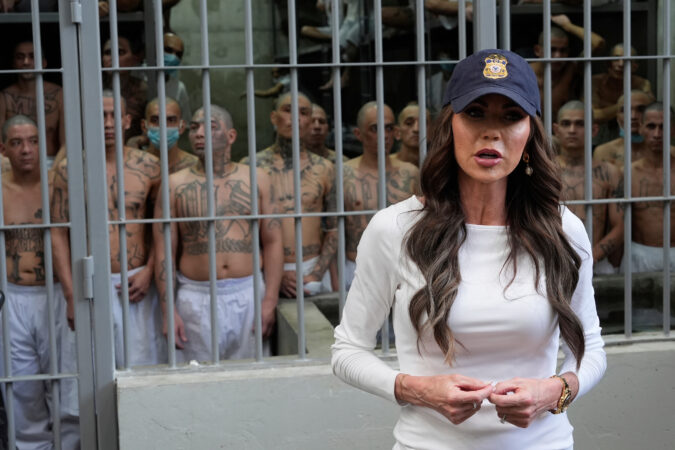
Early Saturday, U.S. forces boarded a different commercial vessel, the Panamanian-flagged Centuries owned by Centuries Shipping in Hong Kong, off Venezuela. Homeland Security Secretary Kristi L. Noem posted a video on X showing service members rappelling down from military helicopters onto the vessel, which her department said was suspected of carrying oil subject to U.S. sanctions.
The U.S. has not imposed sanctions on Venezuelan oil. And neither the Centuries nor its company is under any sanctions, according to the International Maritime Organization, a U.N. agency.
These actions come as part of the United States’ monthslong pressure campaign against the government of President Nicolás Maduro, whom the administration wants to force from office. The tanker blockade could impact Venezuela’s already struggling economy, which heavily depends on overseas oil sales.
The U.S. has launched more than two dozen military strikes on boats it claimed had crews who were smuggling drugs into the United States. Officials have said that more than 100 people connected to drug cartels have been killed.
Sen. Rand Paul (R., Ky.) said on ABC’s This Week that he considers the seizing of the second oil tanker a “provocation” and “prelude to war.”
“Look, at any point in time, there are 20, 30 governments around the world that we don’t like, that are either socialist or communist, or have human rights violations … but it isn’t the job of the American soldier to be the policeman of the world,” Paul said.
By contrast, Sen. Lindsey Graham (R., S.C.) said on Meet the Press on Sunday, “I am all in the camp for regime change. … Maduro’s days are numbered.”
Jim Foggo, a retired U.S. Navy admiral, said the administration’s plan for Venezuela appears to constitute a “targeted blockade” or “embargo” operation, in which certain ships are stopped and others are allowed through.
“If you want to pick something to go after — an Achilles’ heel — of the Venezuelan regime, it’s oil exports,” Foggo said.
Venezuela has the world’s largest proven oil reserves. Output has plummeted amid sanctions, poor infrastructure, and mismanagement, but oil still represents the vast majority of the country’s exports. “So this is really going to hurt, and Maduro is going to have to do some serious thinking,” Foggo said.
Foggo, dean of the Center for Maritime Strategy outside Washington, said boarding operations can be unpredictable and dangerous for U.S. troops involved, citing a boarding operation in the Arabian Sea in January 2024 in which two Navy SEALs drowned.
“This is serious business,” Foggo said, noting that Maduro has said that Venezuelan naval forces will accompany vessels. “The danger is that it could go kinetic and someone could get hurt, but we seem to be willing to take that risk.”