Tag: no-latest

  • Trump fired this regulator. She’s fighting him to the Supreme Court.

    Trump fired this regulator. She’s fighting him to the Supreme Court.

    Rebecca Kelly Slaughter was a powerful — but low-profile — bureaucrat when a New York Times news alert popped up on her phone blasting to the world her firing by President Donald Trump. The Democratic member of the Federal Trade Commission had found out only minutes earlier.

    Her phone began blowing up as she stood outside her daughter’s school during a rehearsal of Beauty and the Beast Jr. Slaughter, who mostly avoided the media, was soon participating in an impromptu news conference on her phone as the musical carried on inside.

    When her daughter stepped offstage, Slaughter pushed through a crowd so she could be the first to spill the news to the girl. The fifth grader burst into tears before asking, “Are you going to fight back?”

    “Probably,” Slaughter replied.

    Thrust into the spotlight in March, a regulator more comfortable with the minutiae of antitrust issues than the dynamics of a political fight, has emerged as one of the primary opponents of Trump’s war on the federal workforce he disparages as the “deep state.”

    Slaughter has not only fought her own dismissal in court, she has defended the work of civil servants before Congress, on podcasts and on TV, speaking out when many others are demoralized from losing jobs and absorbing the president’s repeated attacks.

    Rebecca Slaughter chats with her children as she makes dinner.

    On Monday, the Supreme Court will hear arguments in her case — which probably will be the first in which the justices render a final decision on the legality of Trump’s moves to fire agency heads and gut agencies.

    Many legal experts expect the court to rule against Slaughter — a majority of the justices have signaled support for much of Trump’s argument. The stakes are high: The case could upend how the federal government has been run for nearly a century. A ruling against her could give the president greater control over some two-dozen independent agencies, a major goal in his quest to enlarge his power.

    The administration says presidential control will make agencies such as the Federal Trade Commission, Federal Election Commission and Federal Communications Commission more accountable to voters who elect presidents. Slaughter fears political influence will replace the expertise that has guided decisions on issues such as product safety, banking, and media mergers.

    In other words, the very work she and some of the roughly 300,000 other civil servants who have been laid off in recent months have unobtrusively carried out for decades. Trump’s purge of the federal workforce is the largest in a single year since World War II.

    “The alternative to allowing these agencies to operate as Congress designed is … accruing power to the president,” Slaughter said. “That is something that would be concerning at any time, but really concerning when you have a president who is interested in wielding power for the benefit of himself, his friends and allies — and at the expense of everyday Americans.”

    Dismissed

    Independent agencies were some of the first targets of Trump’s second-term buzz saw as he slashed government jobs and put the executive branch under a tighter grip.

    “My administration will reclaim power from this unaccountable bureaucracy, and we will restore true democracy to America again,” Trump said in his first speech to Congress of his current term.

    Slaughter watched with trepidation as Trump fired a Democratic member of the National Labor Relations Board in January and the Democratic chair of the Merit Systems Protection Board in February.

    She guessed she might be a target but was still shocked when the email landed in her inbox March 18. Slaughter had spent nearly seven years on the commission and loved the work. Trump had originally appointed her in his first term, and she was reappointed by President Joe Biden.

    “Your continued service on the FTC is inconsistent with my Administration’s priorities,” stated the message sent on behalf of the president.

    It was the first time in 91 years a president had tried to fire a member of the FTC, which focuses on consumer protection and increasing business competition. Trump also dismissed the other Democrat on the five-member commission, Alvaro Bedoya, leaving only Republicans.

    What struck Slaughter was that Trump had given no reason for her dismissal. Congress insulated the FTC from the president through a law allowing the executive to remove commissioners only for “inefficiency, neglect of duty, or malfeasance in office.” Slaughter said firing her without citing any such reason was a blatant and illegal power grab. Almost immediately, she resolved to sue.

    The stakes of her public stand quickly became apparent.

    After juggling press calls and her daughter’s performance the night of her firing, Slaughter returned home. She received a knock on her door around 11:30 p.m. as her four children slept. It was a pizza delivery she had not ordered. Bedoya got one, too, the same night.

    They concluded the pizzas were probably part of a wave sent to the homes of judges and other officials, most of whom had ruled against or opposed Trump’s policies — a reminder that potential assailants knew where they lived. They alerted police and scrubbed personal information from the internet.
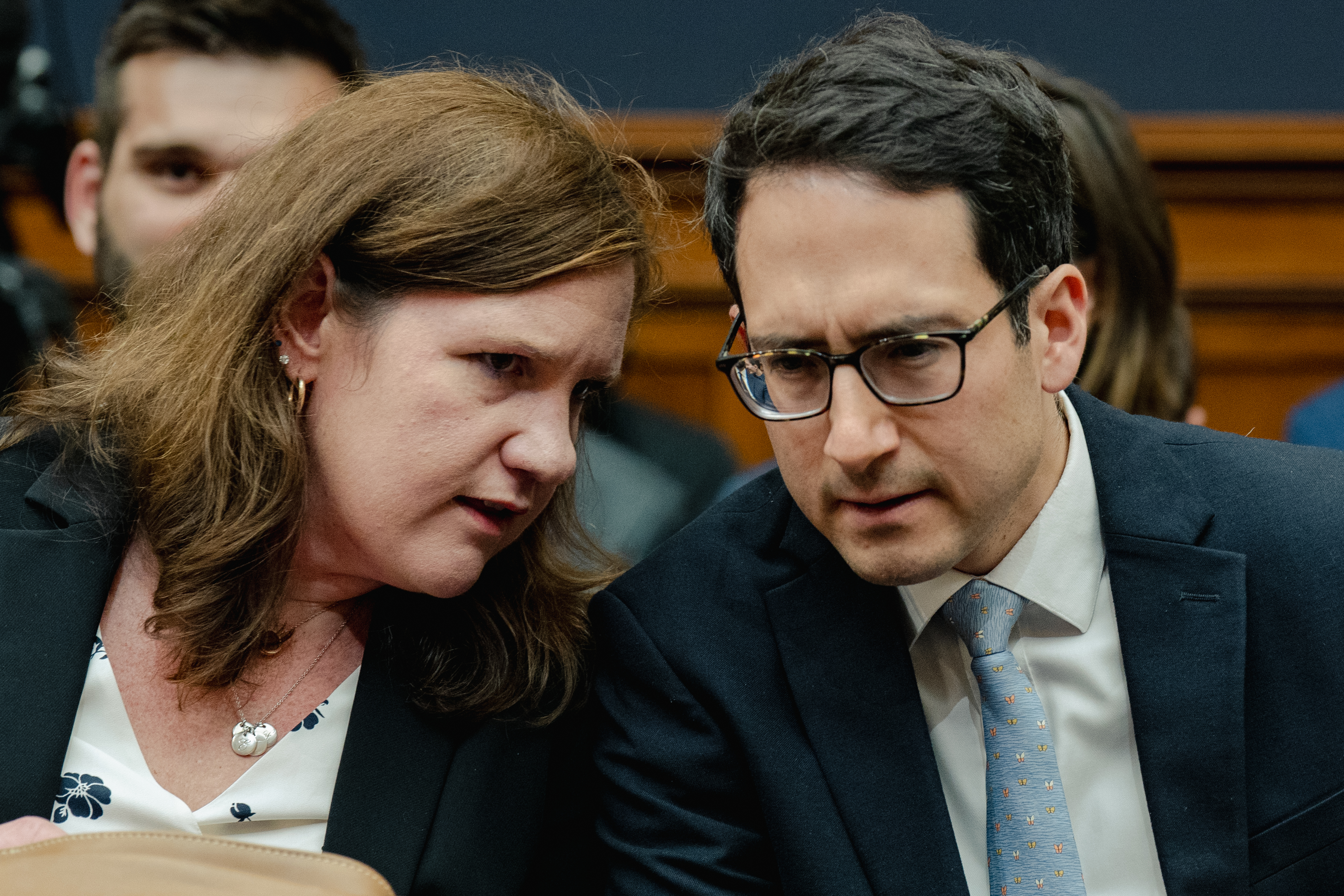
    Rebecca Slaughter chats with fellow FTC member Alvaro Bedoya on Capitol Hill in 2023.

    But she and Bedoya resolved to stay in the public eye despite the risks. Days later, Slaughter appeared before a House committee to testify about her firing.

    “I will not be the first to go down without a fight, and neither will Commissioner Bedoya,” Slaughter told the legislators. “We swore an oath to serve the American people and our Constitution, and I believe that the law will vindicate our right to finish the job.”

    The legal fight

    That was not so easily accomplished.

    The path to the Supreme Court has been winding and full of setbacks. Bedoya had to drop out along the way. His family was struggling financially with one paycheck. The problems were compounded when someone tried to take out a $500,000 line of credit in his name, an act he suspects was tied to his speaking out about his firing.

    “It is not fun to take on the president of the United States, particularly in this environment,” Bedoya said. “It’s not fun to not know where your next paycheck will come from or if you will get a paycheck, period.”

    Slaughter carried on, with her husband, who works for an investment firm, shouldering the financial load for the family and with help from pro bono attorneys. She has continued to publicly weigh in on matters before the FTC as if she were still on the job, while speaking and making media appearances to draw attention to her case.

    Rebecca Slaughter kisses one of her daughters as she prepares a meal in November.

    “Mommy, I thought that being fired would make you less busy,” Slaughter recalled her 6-year-old daughter telling her.

    In July, a federal judge ruled she could return to her job while her case played out in the courts. When Slaughter arrived back to work on a Friday, about two-dozen FTC staffers stood outside and clapped as she entered the building.

    The return was exhilarating — but short-lived. By the following Monday, an appeals court had paused her reinstatement. In September, the appeals court ruled she could return to work again, but the Supreme Court soon stayed that order until it makes a final ruling on her dismissal.

    Slaughter joked she is the first person in history fired from the FTC three times but said “the whiplash was really disheartening.” Even more disturbing were the glimpses she got inside the FTC during her second stint back.

    It was an agency transformed.

    “There were a lot of questions about political interference,” Slaughter said of two staff meetings she held. “People seem demoralized. People felt beaten down.”

    A case with major ramifications

    Slaughter’s case is in many ways a redo of another that changed the course of the federal government nine decades ago.

    Through the late 1800s, presidents regularly rewarded political supporters with federal jobs. But the spoils system, as it was called then, was phased out after a backer of President James Garfield who had been denied a position assassinated him. Congress passed new laws for a nonpartisan civil service and prevented some officials from being removed for political reasons.

    A major test of those standards came in 1933, when President Franklin D. Roosevelt fired an FTC commissioner over policy disagreements related to economic regulation and the New Deal. William E. Humphrey sued, saying he could be removed only for cause under the law that created the FTC.

    The Supreme Court sided with Humphrey, upholding Congress’s ability to limit the president’s firing of the heads of independent agencies. The case, known as Humphrey’s Executor, is little known to the general public, but it has outsize legal importance.

    University of Michigan law professor Daniel A. Crane credited it with “paving the way for the modern administrative state” — the alphabet soup of agencies that rely on technical expertise to regulate interest rates, bank deposits, labor disputes, and more.

    The agencies are often run by bipartisan commissions, whose members are appointed to staggered terms and can be removed only for cause. The idea was to mitigate political pressure on the agencies, so they could make decisions based on expertise and technical knowledge, rather than political considerations.

    Backers of the idea of independent agencies worry the demise of Humphrey’s Executor will mean presidents could politicize regulation of baby food, credit card fees, and a host of other things to please cronies, big donors, and ideological allies.

    “The last thing we want is for industry to be able to come in and insert their favorite folks on commissions,” said Erin Witte, director of consumer protection at the Consumer Federation of America. “Congress designed these agencies to be independent for a reason. There’s a lot at stake.”

    The Trump administration counters by arguing the contemporary FTC is far different from the one that existed when Humphrey’s Executor was decided. The agency now wields significant executive power, so the president — as head of the executive branch — has the constitutional authority to remove its commissioners.

    “In this case, the lower courts have once again ordered the reinstatement of a high-level officer wielding substantial executive authority whom the President has determined should not exercise any executive power,” Solicitor General D. John Sauer wrote in a court filing.

    The position is in keeping with a muscular vision of the presidency embraced by Trump and some conservatives, known as the unitary executive theory, that holds the president should have unfettered control over hiring and firing in the executive branch.

    So far, the court has appeared to endorse that idea in temporary orders allowing Trump to remove Democrats from the National Labor Relations Board, Consumer Product Safety Commission and Merit Systems Protection Board. Those orders aren’t final decisions on the merits of the cases but give a strong suggestion of where the court’s majority is headed, legal experts say.

    “The Supreme Court has given every indication it will overrule Humphrey’s Executor,” Crane said.

    Despite the seemingly long odds, Slaughter remains hopeful she will prevail. On a recent morning, she was once again making her case in public before a conference of women who work on antitrust issues.

    “Why are you staying in the fight?” the host asked.

    Slaughter said that independent agencies are crucial for protecting Americans and that she was taking a stand against Trump’s lawlessness. Trump should have sought a change in the law if he wanted to dismiss her, she said.

    “As a person who took an oath to the Constitution, I feel very strongly that when that process for changing the law isn’t followed, then I need to stand up and push back,” Slaughter said. “I really recognize deeply how many people in this country are not in a position to do that. I am, so I have the obligation to do it.”

  • U.S. vaccine advisers say not all babies need a hepatitis B shot at birth

    U.S. vaccine advisers say not all babies need a hepatitis B shot at birth

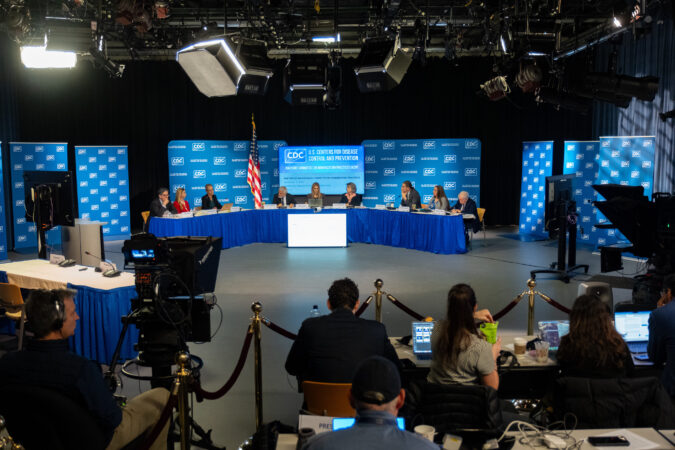
    NEW YORK — A federal vaccine advisory committee voted on Friday to end the longstanding recommendation that all U.S. babies get the hepatitis B vaccine on the day they’re born.

    A loud chorus of medical and public health leaders decried the actions of the panel, whose current members were all appointed by U.S. Health Secretary Robert F. Kennedy Jr. — a leading anti-vaccine activist before this year becoming the nation’s top health official.

    “This is the group that can’t shoot straight,” said William Schaffner, a Vanderbilt University vaccine expert who for decades has been involved with ACIP and its work groups.

    Several medical societies and state health departments said they would continue to recommend them. While people may have to check their policies, the trade group AHIP, formerly known as America’s Health Insurance Plans, said its members still will cover the birth dose of the hepatitis B vaccine.

    For decades, the government has advised that all babies be vaccinated against the liver infection right after birth. The shots are widely considered to be a public health success for preventing thousands of illnesses.

    But Kennedy’s Advisory Committee on Immunization Practices decided to recommend the birth dose only for babies whose mothers test positive, and in cases where the mom wasn’t tested.

    For other babies, it will be up to the parents and their doctors to decide if a birth dose is appropriate. The committee voted 8-3 to suggest that when a family elects to wait, then the vaccination series should begin when the child is 2 months old.

    The acting director of the Centers for Disease Control and Prevention, Jim O’Neill, is expected to decide later whether to accept the committee’s recommendation.

    The decision marks a return to a health strategy abandoned more than three decades ago

    Asked why the newly appointed committee moved quickly to reexamine the recommendation, committee member Vicky Pebsworth on Thursday cited “pressure from stakeholder groups,” without naming them.

    Committee members said the risk of infection for most babies is very low and that earlier research that found the shots were safe for infants was inadequate.

    They also worried that in many cases, doctors and nurses don’t have full conversations with parents about the pros and cons of the birth-dose vaccination.

    The committee members voiced interest in hearing the input from public health and medical professionals, but chose to ignore the experts’ repeated pleas to leave the recommendations alone.

    The committee gives advice to the director of the Centers for Disease Control and Prevention on how approved vaccines should be used. CDC directors almost always adopted the committee’s recommendations, which were widely heeded by doctors and guide vaccination programs. But the agency currently has no director, leaving acting director O’Neill to decide.

    In June, Kennedy fired the entire 17-member panel earlier this year and replaced it with a group that includes several anti-vaccine voices.

    Hepatitis B and delaying birth doses

    Hepatitis B is a serious liver infection that, for most people, lasts less than six months. But for some, especially infants and children, it can become a long-lasting problem that can lead to liver failure, liver cancer and scarring called cirrhosis.

    In adults, the virus is spread through sex or through sharing needles during injection drug use. But it can also be passed from an infected mother to a baby.

    In 1991, the committee recommended an initial dose of hepatitis B vaccine at birth. Experts say quick immunization is crucial to prevent infection from taking root. And, indeed, cases in children have plummeted.

    Still, several members of Kennedy’s committee voiced discomfort with vaccinating all newborns. They argued that past safety studies of the vaccine in newborns were limited and it’s possible that larger, long-term studies could uncover a problem with the birth dose.

    But two members said they saw no documented evidence of harm from the birth doses and suggested concern was based on speculation.

    Three panel members asked about the scientific basis for saying that the first dose could be delayed for two months for many babies.

    “This is unconscionable,” said committee member Joseph Hibbeln, who repeatedly voiced opposition to the proposal during the sometimes-heated two-day meeting.

    The committee’s chair, Kirk Milhoan, said two months was chosen as a point where infants had matured beyond the neonatal stage. Hibbeln countered that there was no data presented that two months is an appropriate cut-off.

    Cody Meissner, a professor of pediatrics at the Geisel School of Medicine at Dartmouth, also questioned a second proposal — which passed 6-4 — that said parents consider talking to pediatricians about blood tests meant to measure whether hep B shots have created protective antibodies.

    Such testing is not standard pediatric practice after vaccination. Proponents said it could be a new way to see if fewer shots are adequate.

    A CDC hepatitis expert, Adam Langer, said results could vary from child to child and would be an erratic way to assess if fewer doses work. He also noted there’s no good evidence that three shots pose harm to kids.

    Meissner attacked the proposal, saying the language “is kind of making things up.”

    Health experts say this could ‘make America sicker’

    Health experts have noted Kennedy’s hand-picked committee is focused on the pros and cons of shots for the individual getting vaccinated, and has turned away from seeing vaccinations as a way to stop the spread of preventable diseases among the public.

    The second proposal “is right at the center of this paradox,” said committee member Robert Malone.

    Some observers criticized the meeting, noting recent changes in how they are conducted. CDC scientists no longer present vaccine safety and effectiveness data to the committee. Instead, people who have been prominent voices in anti-vaccine circles were given those slots.

    The committee “is no longer a legitimate scientific body,” said Elizabeth Jacobs, a member of Defend Public Health, an advocacy group of researchers and others that has opposed Trump administration health policies. She described the meeting this week as “an epidemiological crime scene.”

    Republican Sen. Bill Cassidy, a liver doctor who chairs the Senate health committee, called the committee’s vote on the hepatitis B vaccine “a mistake.”

    “This makes America sicker,” he said, in a post on social media.

    The committee heard a 90-minute presentation from Aaron Siri, a lawyer who has worked with Kennedy on vaccine litigation. He ended by saying that he believes there should no ACIP vaccine recommendations at all.

    In a lengthy response, Meissner said, “What you have said is a terrible, terrible distortion of all the facts.” He ended by saying Siri should not have been invited.

    The meeting’s organizers said they invited Siri as well a few vaccine researchers — who have been vocal defenders of immunizations — to discuss the vaccine schedule. They named two: Peter Hotez, who said he declined, and Paul Offit, who said he didn’t remember being asked but would have declined anyway. Offit is a nationally renowned vaccine expert and physician who leads Children’s Hospital of Philadelphia’s Vaccine Education Center.

    Hotez, of the Texas Children’s Hospital in Houston, declined to present before the group “because ACIP appears to have shifted its mission away from science and evidence-based medicine,” he said in an email to the Associated Press.

  • Lincoln Financial’s 20+ Year Investment in Philadelphia

    Lincoln Financial’s 20+ Year Investment in Philadelphia

    When Lincoln Financial moved its headquarters from Fort Wayne, Indiana, to Philadelphia in 1999, the financial services company immediately set out to become part of its new community. And nothing captures the city quite like its most beloved institution: the Eagles. Just three years after its move to 1500 Market St., Lincoln Financial inked a 20-year deal that gave the company the naming rights to the Eagles’ new stadium, a partnership that’s since been extended through the 2032 season. Lincoln Financial Field was quickly woven into the city’s fabric, amplifying the company’s brand in Philadelphia and to national audiences.

    “Everyone is happier when the Eagles are playing … the Eagles, they are Philadelphia,” John Kennedy, Lincoln Financial’s executive vice president and chief distribution and brand officer, said. “It gave us wide-spread, lasting brand recognition.” Today, with its headquarters now in Radnor, Lincoln’s partnership with the Eagles extends well beyond the stadium, and so does its investment in the greater Philadelphia region.

    Beyond the Field: Turning Partnership into Progress

    Over the past two decades, Lincoln Financial’s partnership with the Eagles has continued to deepen. The company has joined the football organization in philanthropic efforts that give back to the region that both organizations proudly call home.

    In 2018, Lincoln Financial became the founding sponsor of the Eagles Autism Challenge, the Eagles’ signature bike ride and 5K run/walk dedicated to raising funds for innovative autism research and care programs. Championed by Eagles chairman and CEO Jeffrey Lurie, this destination event welcomes thousands of participants from around the world, with 100% of the funds raised making a transformational impact on our Eagles autism community. This past May, the Eagles Autism Challenge celebrated a record-breaking year with more than $10 million raised, bringing the total to $40 million raised since inception.


    Hundreds of Lincoln Financial employees and their families join in the Eagles Autism Challenge event each year.

    “One hundred percent of the proceeds are going into bringing greater autism awareness, and we’re all in on that effort,” Kennedy said when asked about Lincoln’s sponsorship of the event. He noted employees come from across the country to participate. “It’s become a big part of Lincoln culture. Employees from across the company are involved and willing to give back to raise money for this challenge.” Since 2018, Lincoln employees alone have raised more than $625,000 for the Eagles Autism Challenge, with hundreds of workers coming out to volunteer or participate in the event every year.

    In the past, Lincoln Financial has partnered with the Philadelphia Eagles on philanthropic initiatives like the Eagles Eye Mobile, a mobile unit that provides free vision screenings, eye exams, and prescription glasses to more than 25,000 Philadelphia students annually. And just last year, the company announced a partnership with the Jalen Hurts Foundation, which works to strengthen communities by serving, mentoring, and advancing youth.

    Lincoln Financial’s partnership with the Jalen Hurts Foundation focuses on promoting financial wellness through community engagement. Together, the two organizations helped to support a mentorship camp for 60 young men ages 11 to 13 years old, which included financial education sessions led by Lincoln team members and career development workshops.

    “It’s not just about business; it’s about community,” Kennedy said.

    A Commitment to Financial Literacy, Education, and Human Services

    Lincoln’s growing partnership with the Eagles aligns closely with the company’s core philanthropic areas of financial literacy, education, and human services. The company’s commitment to these causes extends well beyond its partnership with the football team.


    Lincoln Financial Field’s new signage reflects the brand’s most recent refresh.

    Established in 1962, the company’s philanthropic arm, the Lincoln Financial Foundation, provides grants to hundreds of nonprofit organizations each year. According to Lincoln, the foundation’s mission is to help individuals and communities achieve financial security through impactful grantmaking and partnerships with nonprofit organizations. In 2024 alone, the foundation contributed more than $9.2 million to support more than 250 nonprofits.

    “We focus on education, human services, and financial wellness because each is essential to building long-term financial success,” Allison Green Johnson said. Johnson is the senior vice president of belonging and community impact, and the president of the Lincoln Financial Foundation. “These areas are deeply interconnected, from preparing students for academic, career, and post-secondary achievement, to ensuring access to stable housing and nutritious food, to equipping individuals with the skills needed for financial resilience,” Johnson said.

    Annually, the Lincoln Financial Foundation awards grants to more than 200 grantees across the country, including more than 50 within Philadelphia and the surrounding region. Local partners include organizations such as Hopeworks, which provides technical and workforce training programs for young adults; and the Boys & Girls Club of Philadelphia, which supports youth through programs that build literacy, leadership, and career readiness.


    “Children and teens who learn about saving, budgeting, and responsible spending are more likely to carry those habits into adulthood,” Johnson said. “Early exposure helps normalize financial planning and decision-making.”

    Other partner organizations of the Lincoln Financial Foundation include Heights Philadelphia, which helps break the cycle of generational poverty by guiding students toward college and career success with individualized advising, campus visits, and stipends. The foundation has also backed nonprofits that tackle basic needs across the region, from the Red Cross House, which offers temporary housing and recovery services for families displaced by disaster, to MANNA, which provides medically tailored meals to improve health outcomes for people with serious illnesses.

    A Sense of Pride for Employees

    While Lincoln’s board of directors and local charitable contributions committees typically recommend grantees based on mission alignment, employees also help guide how the company invests in its communities. Lincoln matches employee donations to qualified nonprofits dollar-for-dollar and fuels hands-on service with paid volunteer time.

    “Serving others is at the heart of our business purpose and core values, and our nearly 10,000 employees proudly extend that spirit into the communities where we live and work,” Ellen Cooper, the chairman, president, and CEO of Lincoln Financial, said. “Our employees rally together to create lasting change, and in the process, create a culture of integrity and care that we are very proud of.”

    In 2024, the foundation matched nearly $1 million in contributions to more than 1,000 nonprofit organizations in 47 states and in Washington, D.C. Kennedy notes that both Lincoln’s volunteer culture and the Eagles partnership elicit strong enthusiasm from employees. Both also help to foster a sense of community.

    “It’s a sense of pride for our employees that they can be part of something that’s so much bigger,” Kennedy said.

    Cobbs Creek: Lincoln’s Biggest New Initiative

    This spring, Lincoln deepened its commitment to Philadelphia with one of its most ambitious philanthropic efforts yet: becoming a founding partner of the Cobbs Creek Foundation. The investment supports the reinvention of the 350-acre Cobbs Creek Golf Course, which served the community from 1916 until 2020. The West Philadelphia green was the city’s first public course and one of the earliest in the country to welcome men and women of all races. Years of flooding and erosion combined with a 2016 fire that destroyed its clubhouse forced its closure. In 2022, the Cobbs Creek Foundation committed at least $65 million to revive the historic site, restoring the course and reimagining it as a dynamic hub for education, community, and opportunity, as well as golf.


    Lincoln Financial CEO Ellen Cooper, CFO Chris Neczypor, and Cobbs Creek Foundation COO Enrique Hervada visit the Cobbs Creek Golf and Education Campus, which will continue to expand its offerings over the next two years.

    “Cobbs was a melting pot for anyone that wanted to play golf,” Kennedy said. “Now, it will go so much more beyond golf, and 20, 30, 40 years from now, I truly think this will be such a big part of the Philadelphia community.”

    The Cobbs Creek Golf and Education Campus will continue to expand its offerings over the next two years, including the 9-hole TGR Design short course. Led by golf architects Gil Hanse and Jim Wagner, a restored championship course and new nine-hole course will follow, opening in 2026 and 2027.

    “Lincoln Financial’s commitment to Cobbs Creek reflects their continued dedication to the city and people of Philadelphia. Together we are amplifying the power of true community partnership,” Jeff Shanahan, president of the Cobbs Creek Foundation, said. “For decades, Lincoln Financial has been a pillar of Philadelphia’s civic life, and together we’re building a space that honors history while creating pathways to education, recreation, and opportunity for generations to come.”

    At the center of the project’s educational initiative is the TGR Learning Lab, created through a partnership with Tiger Woods’ nonprofit TGR Foundation. The new 30,000-square-foot facility opened in September with nine classrooms and a mission to empower youth through education. It features a full-time instructional staff and offers free, year-round Science, Technology, Engineering, and Math (STEM) education as well as college-access and career-readiness programs for students in grades 1-12. The after-school, weekend, and summer programs are expected to reach more than 4,500 local children and families each year.

    Lincoln is bringing its financial expertise into that work. In collaboration with the TGR Foundation, the company is developing a hands-on financial education curriculum for use at the learning lab and across the campus. The lessons are designed to help young people build financial resilience and prepare for the future workforce. Adding further leadership support, Lincoln Financial chief financial officer Chris Neczypor has joined the Cobbs Creek Foundation’s executive committee and board of advisors to help guide strategy and ensure long-term economic stability.

    Johnson sees Lincoln’s evolving philanthropy as a continuation of the company’s foundational values.

    “Our ultimate goal is to help individuals confidently succeed by supporting strong, thriving communities,” Johnson said. “Since our founding in 1905, giving back has been core to Lincoln’s culture, in alignment with the values of our namesake, Abraham Lincoln: integrity, teamwork and responsibility.”

  • Letters to the Editor | Dec. 5, 2025

    Letters to the Editor | Dec. 5, 2025

    Boat strikes

    The U.S. War Crimes Act of 1996 is explicit about what is believed to have occurred on the high seas on Sept. 2.

    Murder. —

    The act of a person who intentionally kills, or conspires or attempts to kill, or kills whether intentionally or unintentionally in the course of committing any other offense under this subsection, one or more persons taking no active part in the hostilities, including those placed out of combat by sickness, wounds, detention, or any other cause.

    I believe a shipwrecked individual hanging on for dear life to the detritus of an attack fits this explicit description. In fact, I would suggest the original attack order fits this description, as well, as I have yet to see evidence that these individuals were involved in hostilities or combat of any kind.

    Bill Maginnis, North Wales

    . . .

    The majority of the letters from readers printed on Wednesday were deploring the second strike on a cartel drug boat. It appears the basis for their perceived outrage was a report from the Washington Post.

    The facts are that the Post relied on a single anonymous source who presented no evidence that such an order was given. In fact, the New York Times reported that there was no direct evidence to make that determination. Yet, many people ran with another anonymous source to launch a broadside against the administration, claiming war crimes had been committed. We are entitled to our own opinion, but not our own facts.

    Interestingly, a group of Democratic representatives recently made a video about the importance of service members ignoring illegal orders. Then — lo and behold — an anonymous source claims such an order was given, again with no evidence. Then, the Democrats demand hearings. The sequence is interesting. There is an old saying that you can tell the people who are actually doing something about our problems by the arrows in their backs.

    MG Del Rossi, Blue Bell

    . . .

    It is almost unbelievable that while Pete Hegseth is ordering the killing of suspected drug dealers in boats off the coast of Venezuela, Donald Trump is pardoning a convicted drug lord who brought hundreds of tons of cocaine into the United States.

    It is almost unbelievable that the Trump administration is seeking to court-martial Mark Kelly for making a video with fellow members of Congress, reminding members of the military that they swear an oath to the Constitution and are not required to follow illegal orders.

    It is almost unbelievable that Hegseth orders a bomb strike on suspected drug dealers, and then the killing of two survivors of the attack. That the Trump administration is incompetent, corrupt, and full of hate — now that is believable.

    Mary Ann Furin, Philadelphia

    . . .

    While there has been debate over the legality of recent attacks in the Caribbean and the Pacific, the illegality of the attack on survivors of a first strike, reportedly ordered by Defense Secretary Pete Hegseth, is crystal clear. Whether it was a war crime or simply murder committed in our name, there is no question that Hegseth has broken the law. This murderous act falls squarely within the “high crimes and misdemeanors” referenced in Article II, Section 4 of the Constitution — the impeachment clause. If murder is not worthy of impeachment, then that section is a dead letter. Every member of the House of Representatives should be asked when we can expect articles of impeachment to be filed. If they refuse to impeach Hegseth, then they should be voted out in 2026.

    Jared Cram, Philadelphia

    Join the conversation: Send letters to letters@inquirer.com. Limit length to 150 words and include home address and day and evening phone number. Letters run in The Inquirer six days a week on the editorial pages and online.

  • Horoscopes: Friday, Dec. 5, 2025

    ARIES (March 21-April 19). Don’t get so concerned with doing the right thing that it blocks you from doing the interesting thing, the thing you want to do or the thing you’ve never done. You’ll never be in quite this situation again. You may as well play it like only you can.

    TAURUS (April 20-May 20). Here comes a challenge that seems custom-made for you. You’ll be so into it, you may even raise the stakes to make things more interesting. It’s not about who wins the game when it’s your favorite game to play.

    GEMINI (May 21-June 21). Real trust is as attractive as disloyalty is unattractive. It can take a lot of effort to be true to your word. You’ll go to great lengths to deliver as promised. Expect the same standard from others.

    CANCER (June 22-July 22). Your contributions to a project will be considerable, though it’s nothing flashy in the delivery. Simple acts of cooperation are what keep production flowing. You influence by just showing up ready to work.

    LEO (July 23-Aug. 22). To feel life’s poetry, you need a big heart and a wide range of experience. Thinking and feeling deeply is a gift, even when it hurts. The same depth that aches also lets you love and create fully.

    VIRGO (Aug. 23-Sept. 22). You’ve been an emotional barista lately, serving comfort, pep and reassurance on demand. Slip yourself a refill. A single kind thought toward yourself changes the flavor of your whole day.

    LIBRA (Sept. 23-Oct. 23). Tension can be a source of beauty. For instance, the tension of a guitar string is necessary for melodious expression. The strain you feel now may be tuning you — aligning effort and purpose so something harmonious can emerge.

    SCORPIO (Oct. 24-Nov. 21). Cut the static out of a relationship. Speak from the heart. You shouldn’t have to explain too much, just tell the truth. You’ll be understood, if not now, then in time. The important thing is to clear the air.

    SAGITTARIUS (Nov. 22-Dec. 21). You’ve had help with a project along the way, but today it’s all you. Your effort, your instincts, your follow-through — these are what’s bringing it home. Let the satisfaction sink in. You deserve to feel good about this.

    CAPRICORN (Dec. 22-Jan. 19). People will work out their differences in their own way. It’s very likely that your interference isn’t necessary, so you can relax. Sometimes getting involved only makes things more dramatic than they need to be.

    AQUARIUS (Jan. 20-Feb. 18). You’re feeling emotionally full. The love, friendship and connection flow easily. You’re around good people, and your natural warmth multiplies in their company. It’s a day to enjoy togetherness and affection without effort.

    PISCES (Feb. 19-March 20). You’re gathering new information and asking great questions, and you’ll be around people who really do know what they are talking about. You absorb all you can, and whatever doesn’t apply now could be helpful to you later.

    TODAY’S BIRTHDAY (Dec. 5). Welcome to your Year of Infinite Curiosity. Following your fascinations leads to an unexpected career pivot and thrilling collaborations. Beginner’s luck strikes twice, and the rewards for trying something new will come in many forms including social, romantic and financial. More highlights: winning over a mentor, building a creative empire and love that grows through shared adventure. Aquarius and Libra adore you. Your lucky numbers are: 3, 24, 18, 40 and 14.

  • Dear Abby | Wife carries on communicating with former best friend

    DEAR ABBY: My best friend of more than 10 years, “Ian,” ghosted me! We used to talk about everything — wives, children, jobs. We spent hours together and helped each other sort out our problems. He knew more about me than my wife. With no explanation, he stopped responding to texts and messages and is ignoring my calls. I have come to terms with this and deleted him from my social media and social circles. It’s been two years now.

    The problem is my wife. Everyone else in my family has removed him from their social circles. However, my wife maintains contact with him. As far as I knew, they were only acquaintances. Yet now they comment on each other’s posts and play online games together. When Ian ghosted me, my wife asked if she should stop playing online with him. I replied, “You’re a big girl. I can’t tell you what to do. But I hope you’ll make the smart choice.” Well, she DIDN’T make the smart choice, or the loyal one.

    Recently, one of Ian’s daughters got married, and that’s when I found out Ian and my wife were doing more than just gaming — they were still communicating online. My wife didn’t respond when I asked her why she was still in touch with him. I’m not sure what my next steps should be. I can’t believe my partner would choose to remain in contact with someone who hurt me so badly. I’m also concerned about what Ian might say to my wife, because we used to talk about marital issues we had with our wives. Help!

    — UNEASY IN CANADA

    DEAR UNEASY: When you expressed to your wife that she was a big girl and you didn’t care if she maintained a relationship with Ian, she regarded it as permission. Did you TELL her how deeply you were hurt when Ian ghosted you? If you haven’t, it’s time you did. I can’t predict how she will react, but if she cares about your feelings, she may stop playing games with your former friend. (I can’t help wondering if she knows why Ian cut ties with you so abruptly. Have you asked her?)

    ** ** **

    DEAR ABBY: A year ago, I became seriously ill. I spent a long time in the hospital and 20 days in rehab learning how to walk again. My daughter told me I should stay in a nursing home and give up on walking. When I refused, she stormed out and hasn’t spoken to me since. I’m back on my feet now, back at work full-time, walking with a cane. I can’t quite bring myself to forgive her for that, because I needed her so badly. How do I resolve this?

    — DISAPPOINTED MOM IN TENNESSEE

    DEAR MOM: Why do I have the feeling that there are facts you may have omitted from your letter? Surely, this didn’t happen out of the blue. Your daughter’s reaction to the fact that you want to live independently is bizarre, unless she was afraid she might have to take care of you. It appears you raised a daughter who is lacking in character and compassion. Resolve this by walking your own path (literally) and deriving support from people who are capable of caring about you.

  • V.J. Edgecombe’s game-winning shot, Tyrese Maxey’s game-saving block helps Sixers beat Warriors, 99-98

    V.J. Edgecombe’s game-winning shot, Tyrese Maxey’s game-saving block helps Sixers beat Warriors, 99-98

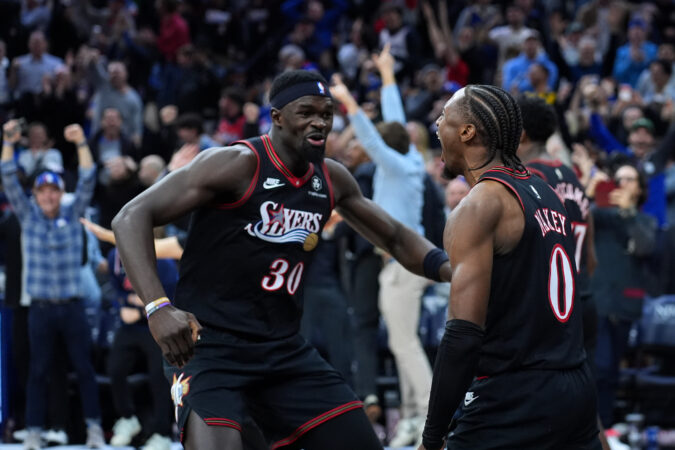
    Rookie VJ Edgecombe made the go-ahead follow shot with 0.9 seconds left, Tyrese Maxey raced back for a game-saving blocked shot and the 76ers beat the short-handed Golden State Warriors 99-98 on Thursday night.

    Maxey scored 35 points but missed a jumper with the Sixers trailing by one. Edgecombe tipped it in, but the Warriors quickly fired an inbounds pass to De’Anthony Melton, who had broke downcourt. Maxey got back to block the shot off the backboard just before time expired.

    Joel Embiid had 12 points in his return to the 76ers lineup.

    Pat Spencer scored 16 points for the Warriors, who erased a 24-point deficit despite playing with their two leading scorers, Stephen Curry (left quad contusion) and Jimmy Butler (left knee soreness), then losing Draymond Green to an injured right foot late in the second quarter.

    Sixers’ Joel Embiid (left), Tyrese Maxey and Adem Bona celebrate after they beat the Warriors by one.

    Maxey’s three-pointer made it 67-43 with 8 minutes, 6 seconds left in the third quarter. But the Warriors used a 15-0 run early in the fourth quarter to get back in the contest, then had a late lead before Edgecome stole an inbounds pass with 8.2 seconds to play.

    Paul George (left knee injury recovery) was out for the Sixers, who play the second game of a back-to-back on Friday night in Milwaukee (8 p.m., NBCSP).

    Curry didn’t even make the trip to Philadelphia, missing his third in a row and seventh game this season. Butler couldn’t play after getting injured in the Warriors’ 124-112 home loss to Oklahoma City on Tuesday. Golden State did get some good news on the injury front with the return of Melton, who had 14 points in his season debut while coming back from a torn ACL.

  • Zohran Mamdani and the Louvre make the list of most mispronounced words of 2025

    Zohran Mamdani and the Louvre make the list of most mispronounced words of 2025

    DALLAS — From the election of Zohran Mamdani to the intrigue surrounding the jewel heist at the Louvre, keeping up with this year’s news also left some Americans struggling with pronunciations. That’s put both the name of New York City’s incoming mayor and the famed Paris museum on a list of the most mispronounced words in 2025.

    The language-learning company Babbel and closed-captioning company The Captioning Group on Thursday released a list of the words that news anchors, politicians, and other public figures in the U.S. struggled with the most this year, giving an overview of the people and topics that had Americans talking.

    As Mamdani made his political rise, the democratic socialist’s name often was mangled. When he takes office in January, the 34-year-old will become the city’s first Muslim mayor, first born in Africa, and first of South Asian heritage. Babbel said his name — which should be pronounced zoh-RAHN mam-DAH-nee — was most commonly mispronounced when people swapped the “M” and “N” in his last name.

    Mamdani has said he doesn’t mind if someone tries to pronounce his name correctly and misses but that some mispronounce it intentionally. During one mayoral race debate, he chided former New York Gov. Andrew Cuomo’s pronunciation of his name, telling his opponent: “The name is Mamdani. M-A-M-D-A-N-I.”

    The theft of France’s crown jewels from the Louvre in October had many people mispronouncing the name of the world’s most-visited museum. Babbel says the correct pronunciation is LOOV-ruh, with a very soft pronunciation on the “ruh,” which can be a challenge for English speakers.

    “A lot of these words come from different languages and so we have to adapt to a sound that we’ve never made before,” said Esteban Touma, a linguistic and cultural expert at Babbel.

    Other words and names on the list include:

    • Acetaminophen, the active ingredient in the Tylenol, is pronounced uh-SEE-tuh-MIH-nuh-fen. President Donald Trump gave comedians plenty of material when he stumbled over the word as he implored pregnant women to avoid taking the painkiller despite inconclusive evidence about whether too much could be linked to autism.
    • Alex Murdaugh, the prominent South Carolina attorney who was sentenced to life in prison for the 2021 fatal shootings of his wife and son, is pronounced AL-ick MUR-dock. This year the case was dramatized in a series on Hulu.
    • Mounjaro, pronounced mown-JAHR-OH, is part of a wave of diabetes and obesity medications that soared in popularity because of the weight people have lost while taking the injections.

    Several words on the U.S. list, including Louvre and Mounjaro, also made the list for the U.K., which was compiled by Babbel and the British Institute of Verbatim Reporters, an organization for subtitling professionals. Storm Éowyn, which battered Ireland, Northern Ireland and Scotland in January, put that name on the U.K. list. Babbel says the correct pronunciation is ay-OH-win, said with a three-beat pattern.

    Throughout the year, captioners note words that come up over and over as difficult to pronounce, spell or are newly emerging. Linguists at Babbel also track new pronunciation challenges they see.

    In a pronunciation surprise of the year, actor Denzel Washington told late-night talk show host Jimmy Kimmel that he was named after his father and their first names are actually pronounced DEN-zul. But, he said, that became confusing so his mother decided to pronounce her son’s name Den-ZELLE.

  • Could RoboCop be to Detroit what Rocky is to Philly?

    Could RoboCop be to Detroit what Rocky is to Philly?

    DETROIT — RoboCop has finally found a permanent home in Detroit.

    A statue looming 11 feet tall and weighing 3,500 pounds has been drawing fans since it began standing guard over the Motor City on Wednesday afternoon, after about 15 years in the making. Even in a snowstorm in the dark, people were driving by to see it, said Jim Toscano, co-owner of the FREE AGE film production company where the bronze-cast statue now stands bolted near the sidewalk.

    RoboCop hit theaters in 1987, portraying a near-future Detroit as crime-ridden and poorly protected by a beleaguered and outgunned police force, until actor Peter Weller appeared as a nearly invincible cyborg, created by a nefarious corporation bent on privatizing policing.

    There was a time when Detroit pushed back on anything pointing to its past reputation as an unsafe city, and the movie, which developed a cult following, spawning two sequels and a reboot, didn’t help its image.

    But things have changed. Violent crime has been trending down for years. Homicide numbers have dropped below mid-1960s levels. And city officials offered no objections to the statue’s installation, Toscano said.

    “I think there will be a lot more acceptance,” Toscano said. “Detroit has come a long way. You put in a little nostalgia and that helps.”

    The statue campaign appears to have started around 2010 when Detroit Mayor Dave Bing was tagged in a tweet that noted Philadelphia’s statue of boxer Rocky Balboa and said RoboCop would be a “GREAT ambassador for Detroit.”

    Bing tweeted back, saying there were no such plans. But some Detroiters ran with the idea, crowdfunding it through a 2012 Kickstarter campaign that raised more than $67,000 from more than 2,700 backers worldwide, and Detroit sculptor Giorgio Gikas finished the statue in 2017.

    Then, it got stuck, stored away from public view.

    The Michigan Science Center in Detroit ultimately nixed plans to host the sculpture in 2021, citing pressures from the coronavirus pandemic and the need to focus museum resources. Officials in Stevens Point, Wis., raised their hands, hoping to honor Weller, a native son of that city, by erecting it outside the police station or in a park.

    The search for a suitable home for RoboCop remained in limbo until about three years ago when Toscano’s company bought a building in Eastern Market, an open-air produce market, shopping and entertainment district just northeast of downtown. Toscano says he thought they were “kidding” when he was contacted by the creator of the statue idea and Eastern Market officials. But he and his business partner gladly came on board: “It’s too unusual, too unique, too cool not to do,” Toscano said.

    Toscano, 48, says he’s only viewed the first RoboCop movie.

    “It wasn’t a big film in our house,” he admitted. But if there is one iconic line uttered by RoboCop that fits this moment, Toscano said it would be “Thank you for your cooperation.”

    On Thursday, James Campbell approached the statue and told three picture-takers: “I own this. Do you guys know that?”

    Campbell said he donated $100 to the original Kickstarter campaign over a decade ago, which makes him a “.038% owner of this statue.”

    “I’m here to see this big, beautiful, bronze piece of art,” he said. “What a piece of cinematic history to represent the city of Detroit.”

    Asked why RoboCop is an appropriate symbol for the city, Campbell said: “He’s a cyborg crime fighter! In the movie, in the futuristic Detroit, he’s there to save the city. He’s a symbol of hope.”

  • Grand jury rejects new mortgage fraud indictment against New York Attorney General Letitia James

    Grand jury rejects new mortgage fraud indictment against New York Attorney General Letitia James

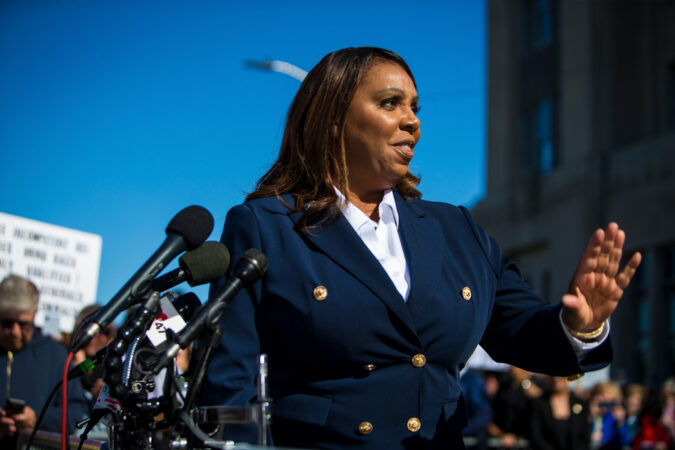
    NORFOLK, Va. — The Justice Department failed Thursday to secure a new indictment against New York Attorney General Letitia James after a judge dismissed the previous mortgage fraud prosecution encouraged by President Donald Trump, according to people familiar with the matter.

    Prosecutors went back to a grand jury in Virginia after a judge’s ruling halting the prosecution of James and another longtime Trump foe, former FBI Director James Comey, on the grounds that the U.S. attorney who presented the cases was illegally appointed. But grand jurors rejected prosecutors’ request to bring charges.

    It’s the latest setback for the Justice Department in its bid to prosecute the frequent political target of the Republican president.

    Prosecutors are expected to try again for an indictment, according to one person familiar with the matter who spoke on the condition of anonymity because they were not authorized to publicly discuss the case.

    James was initially charged with bank fraud and making false statements to a financial institution in connection with a home purchase in Norfolk, Va., in 2020. Lindsey Halligan, a former White House aide and Trump lawyer, personally presented the case to the grand jury in October after being installed as U.S. attorney for the Eastern District of Virginia amid pressure from Trump to charge Comey and James.

    James has denied any wrongdoing and accused the administration of using the justice system to seek revenge against Trump’s political opponents. In a statement Thursday, James said: “It is time for this unchecked weaponization of our justice system to stop.”

    “This should be the end of this case,” her attorney, Abbe Lowell, said in a statement. “If they continue, undeterred by a court ruling and a grand jury’s rejection of the charges, it will be a shocking assault on the rule of law and a devastating blow to the integrity of our justice system.”

    The allegations related to James’ purchase of a modest house in Norfolk, where she has family. During the sale, she signed a standard document called a “second home rider” in which she agreed to keep the property primarily for her “personal use and enjoyment for at least one year,” unless the lender agreed otherwise.

    Rather than using the home as a second residence, James rented it out to a family of three, allowing her to obtain favorable loan terms not available for investment properties, prosecutors alleged.

    It’s the latest example of pushback by grand jurors since the beginning of the second Trump administration. It’s so unusual for grand jurors to refuse to return an indictment that it was once said that prosecutors could persuade a grand jury to “indict a ham sandwich.” But the Justice Department has faced setbacks in front of grand juries in several recent cases.

    Even if the charges against James are resurrected, the Justice Department could face obstacles in securing a conviction against James.

    James’ lawyers separately argued the case was a vindictive prosecution brought to punish the Trump critic who spent years investigating and suing the Republican president and won a staggering judgment in a lawsuit alleging he defrauded banks by overstating the value of his real estate holdings on financial statements. The fine was later tossed out by a higher court, but both sides are appealing.

    The defense had also alleged “outrageous government conduct” preceding her indictment, which the defense argued warrants the case’s dismissal. The judge hadn’t ruled on the defense’s arguments on those matters before dismissing the case last month over the appointment of Lindsey Halligan as U.S. attorney.

    U.S. District Judge Cameron McGowan Currie took issue with the mechanism the Trump administration employed to appoint Halligan to lead one of the Justice Department’s most elite and important offices.

    Halligan was named as a replacement for Erik Siebert, a veteran prosecutor in the office and interim U.S. attorney who resigned in September amid Trump administration pressure to file charges against both Comey and James.

    The following night, Trump said he would be nominating Halligan to the role of interim U.S. attorney and publicly implored Attorney General Pam Bondi to take action against his political opponents, saying in a Truth Social post that, “We can’t delay any longer, it’s killing our reputation and credibility” and “JUSTICE MUST BE SERVED, NOW!!!”

    Comey was indicted three days after Halligan was sworn in by Bondi, and James was charged two weeks after that.

    The Justice Department had defended Halligan’s appointment but has also revealed that Bondi had given Halligan a separate position of “Special Attorney,” presumably as a way to protect the indictments from the possibility of collapse. But Currie said such a retroactive designation could not save the cases.