In the late 1970s, comic artist Art Spiegelman and his wife, the editor Françoise Mouly, began dreaming up a new magazine, one they hoped would elevate cartooning into the realm of high art.
A colleague suggested that they talk to Jerry Moriarty, a painter who lived in Manhattan, a little uptown from their SoHo loft.
Arriving at Mr. Moriarty’s studio, Spiegelman was stunned by what he encountered: comics that were painted.
“It was totally mind-blowing,” Spiegelman, whose graphic memoir Maus won a Pulitzer Prize in 1992, said in an interview. “It was exactly what we were groping for, which was a place that wasn’t underground comics anymore, nor was it art underground.”
Raw, their magazine, debuted in 1980 with Jack Survives, the first in a series of painted comics by Mr. Moriarty about a stoic Everyman who muddles through the indignities of life in a hat and tie, refusing to capitulate.
“It’s as if Edward Hopper had taken up songwriting,” comic artist Chris Ware wrote in the Believer magazine in 2009. “For lack of a better word, it’s poetry — I believe the first that comics has ever seen — and poetry as fresh and affecting now as when first drawn.”
Mr. Moriarty died on March 25 at his home in Binghamton, N.Y., where his nephew Kevin Moriarty had been caring for him in his final years. He was 88. His death, which was not widely reported, was confirmed by his brother Fred Moriarty, who survives him.
A self-described loner, Mr. Moriarty refused to sell his paintings, and supported himself by teaching at the School of Visual Arts in Manhattan. In many ways, he had the sort of average life embodied by his Everyman character, Jack, who resembled Mr. Moriarty’s father in appearance (and only in appearance).
“Jack is an average man wanting to be average,” he wrote in The Complete Jack Survives, a 2009 collection of his Jack comics. “I am an average man who doesn’t want to be average, and art allows me to express that frustration.”
Jack’s spare dialogue — often spoken aloud to himself — reminded Mr. Moriarty’s admirers of Samuel Beckett’s minimalist, existentialist plays.
In another panel, Jack is in his office. He opens his lunch and discovers that his wife has packed him a cat-shaped cookie.
“I can’t eat a cat cookie,” he says out loud, seemingly to nobody, before taking a bite. “You have to start with the head or it looks at you to the end.”
To describe his craft, Mr. Moriarty created a portmanteau: paintoonist, a fusion of painter and cartoonist. The word hasn’t yet appeared in the Oxford English Dictionary, but it certainly defined him.
“There’s a kind of stillness in his work,” Hillary Chute, a professor at Northeastern University and a scholar of graphic narratives, said in an interview. “So you enter it as a story, and it has psychological depth, but also the kinds of composition that you would see in paintings.”
Jerome Brien Moriarty was born on Jan. 15, 1938, in Binghamton, the third of four children. His father, John Moriarty, was an expert in Morse code who telegraphed play-by-play accounts of sporting events for the Associated Press. His mother, Esther (Turner) Moriarty, sold magazine subscriptions and worked as a sales clerk at a department store.
Growing up, Jerry loved cowboy movies and radio shows. He also read and collected comics.
“At age 8, I crossed the ‘fantasy barrier’ and became an ‘art kid’ because I could copy Superman or Bugs Bunny better than my classmates,” he wrote in the catalog for “Uninked: Paintings, Sculpture and Graphic Works by Five Cartoonists,” a 2007 exhibition at the Phoenix Art Museum.
His father bought him a drafting table and encouraged him to pursue a career in art, setting up a studio in the cellar.
“It was dank, low and funky, but I loved the cellar because no one came down there unless they had to,” Mr. Moriarty said in the Believer. “Sometimes my dad came down after supper and watched me paint, still in his shirt and tie from work.”
After graduating from high school, he moved to Brooklyn to study at the Pratt Institute, earning a bachelor of fine arts degree in 1960.
He remained in New York City, working as a freelance illustrator and contributing drawings to Esquire, GQ, Seventeen, the New Yorker, and pinup magazines. In 1963, he began teaching at the School of Visual Arts, painting in his studio at night.
Jack came along in the late 1970s after a student gave Moriarty a copy of the war comic Frontline Combat, which he had read as a teenager.
“I took it home and I fell on the floor,” he said in a 2009 interview with the Daily Cross Hatch, an online comics journal. “Not only was it better than I remembered, it was inspiring. I thought, ‘How many other things since that period have I not seen?’ So I started going to comic cons, and that’s where the collector in me started to awaken.”
To Moriarty, Jack wasn’t just a character on canvas; he was a way to reconnect with his father, who had died when he was 14.
“Jack Survives is a whimsical, one-sided conversation with my father where I am 99% of it,” he told the Believer. “Dad is in Jack as a quiet presence who survives Jack’s frustrations far better than I do.”
Mr. Moriarty moved on from Jack in the late 1980s and continued to paint, though in an entirely new way — in panel form, much like a comic book artist. In one painting, Moriarty peers down from the ceiling at his father, who is reading the newspaper. In another, he is an old man painting in his cellar.
“There was no conscious attempt to be poetic or subtle,” he said. “I am not a fan of bigness or theatricality. I prefer string quartets to symphonies, jazz trios to big bands.”
He also savored solitude.
“Loner and loneliness are not the same,” he said. “Everybody has been lonely, but not everybody is a loner. Jack is alone, but he is not a loner. I am a loner, and I fully understand why that makes me strange to society. I am not lonely. Being alone is total freedom for me.”
He usually started painting after midnight, finished by 3 a.m., ate dinner, watched movies, went to bed at 7 a.m., woke up at 2 p.m., had breakfast and watched Jeopardy! He had no use for the hoity-toity art world.
“It was about as pure an experience of being an artist as I’ve ever witnessed,” Spiegelman said. “It was, in some ways, without ambition and without a thought about posterity.”
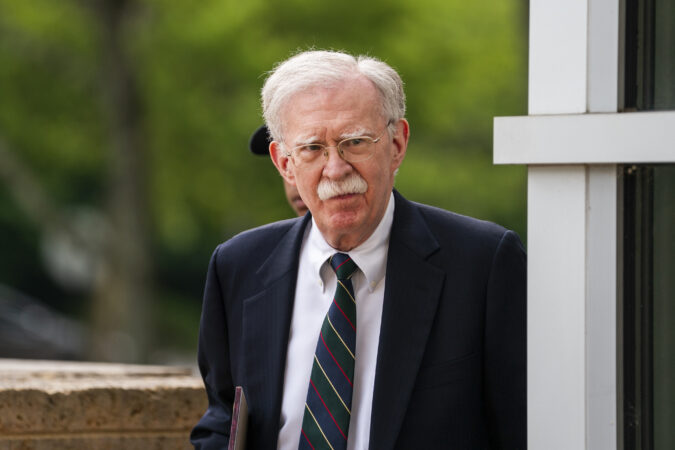
WASHINGTON — John Bolton, a former top adviser to President Donald Trump who became one of his most outspoken critics, pleaded guilty Friday morning to mishandling classified information in a case that could send him to prison.
Bolton appeared in U.S. District Court in Greenbelt, Md., and admitted to a single charge of illegal retention of classified information over notes he compiled for a book that excoriated Trump.
“I’m sorry for it,” he told Judge Theodore Chuang, who said he would sentence Bolton in October.
Under the plea deal, Bolton could be incarcerated for up to five years, according to the terms of the plea deal described in court. The deal also includes a fine of $2.25 million. If Bolton had gone to trial and lost, he could have faced decades in prison.
When he was first indicted, Bolton sought to frame the case against him as part of a push by the president to misuse the Justice Department to punish his perceived political enemies. The case against Bolton, however, began in the first Trump administration and gained momentum during the Biden administration, as investigators gathered additional evidence.
The original 18-count indictment against Bolton accused him of using personal email and a messaging app to share more than 1,000 pages of notes, which included national defense information, with two family members who did not have security clearances.
The accusations against Bolton center on his notes for The Room Where It Happened, his 2020 memoir about his time as Trump’s national security adviser. Those relatives were Bolton’s wife and daughter, according to people with knowledge of the matter, who spoke on the condition of anonymity to describe details of the case that were not in court filings.
According to the indictment, Bolton’s notes revealed that he understood that he was documenting intelligence secrets. One entry began, “The intel briefer said,” while another read, “While in the Situation Room, I learned.”
The first Trump administration fought unsuccessfully to prevent the publication of Bolton’s book, but the criminal investigation ultimately focused not on what was in the published manuscript, but instead on what Bolton wrote in private notes and correspondence.
Unlike some other investigations involving classified information, including charges filed in 2023 against Trump, Bolton was not accused of retaining the secret documents themselves, but rather of keeping diaries and sending emails that mentioned details of his daily work in national security.
Bolton’s emails, however, were later hacked by someone associated with the government of Iran, the indictment said.
“A representative for Bolton notified the U.S. government of the hack in or about July 2021,” according to the filing, “but did not tell the U.S. government that the account contained national defense information, including classified information, that Bolton had placed in the account from his time as national security adviser.”
One section of the indictment described Bolton apparently being taunted by his hacker. A message on July 25, 2021, warned, “I do not think you would be interested in the FBI being aware of the leaked content of John’s email (some of which have been attached).”
The email went on to declare: “This could be the biggest scandal since Hillary’s emails were leaked, but this time on the GOP side! Contact me before it’s too late.”
A representative for Bolton forwarded the email to the FBI.
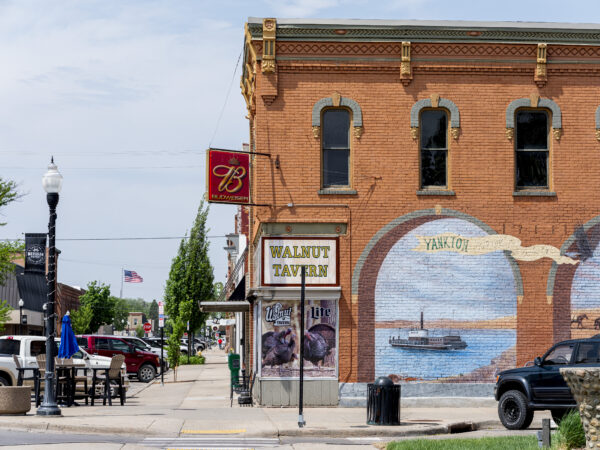
YANKTON, S.D. — Charl Kleinhaus did not like the direction his country was taking.
A white South African, Kleinhaus said the laws meant to empower Black people after the demise of the racist apartheid system had hurt his mining business. Violence in the country — a scourge affecting everyone, regardless of race — had become too much.
So Kleinhaus considered his options.
Some of his fellow Afrikaners, the ethnic minority that ruled during apartheid, had moved to Germany, but the language barrier was not ideal. He thought about Australia, but decided that moving his family thousands of miles from home would be too hard.
Then, in February of last year, Kleinhaus received what he described as “a message from above.” President Donald Trump had suspended refugee admissions to the United States, but he made an exception for people like Kleinhaus: white Afrikaners who claim they are victims of racial persecution in South Africa.
“It’s now a reverse apartheid,” Kleinhaus said, summing up his grievances about his homeland. “That’s what we are fighting about now.”
In a matter of months, Kleinhaus secured refugee status and moved with his family to the United States, completing a process that can take years under normal circumstances. Now, after a year in the country, he has settled in South Dakota, where he has found part-time work at a car dealership, a farm, and a brickyard while planning his next business.
Kleinhaus is among more than 6,000 South Africans — the vast majority of them white — who have benefited from Trump’s decision to upend America’s refugee program, which for decades had made the United States a sanctuary for people fleeing disaster and persecution.
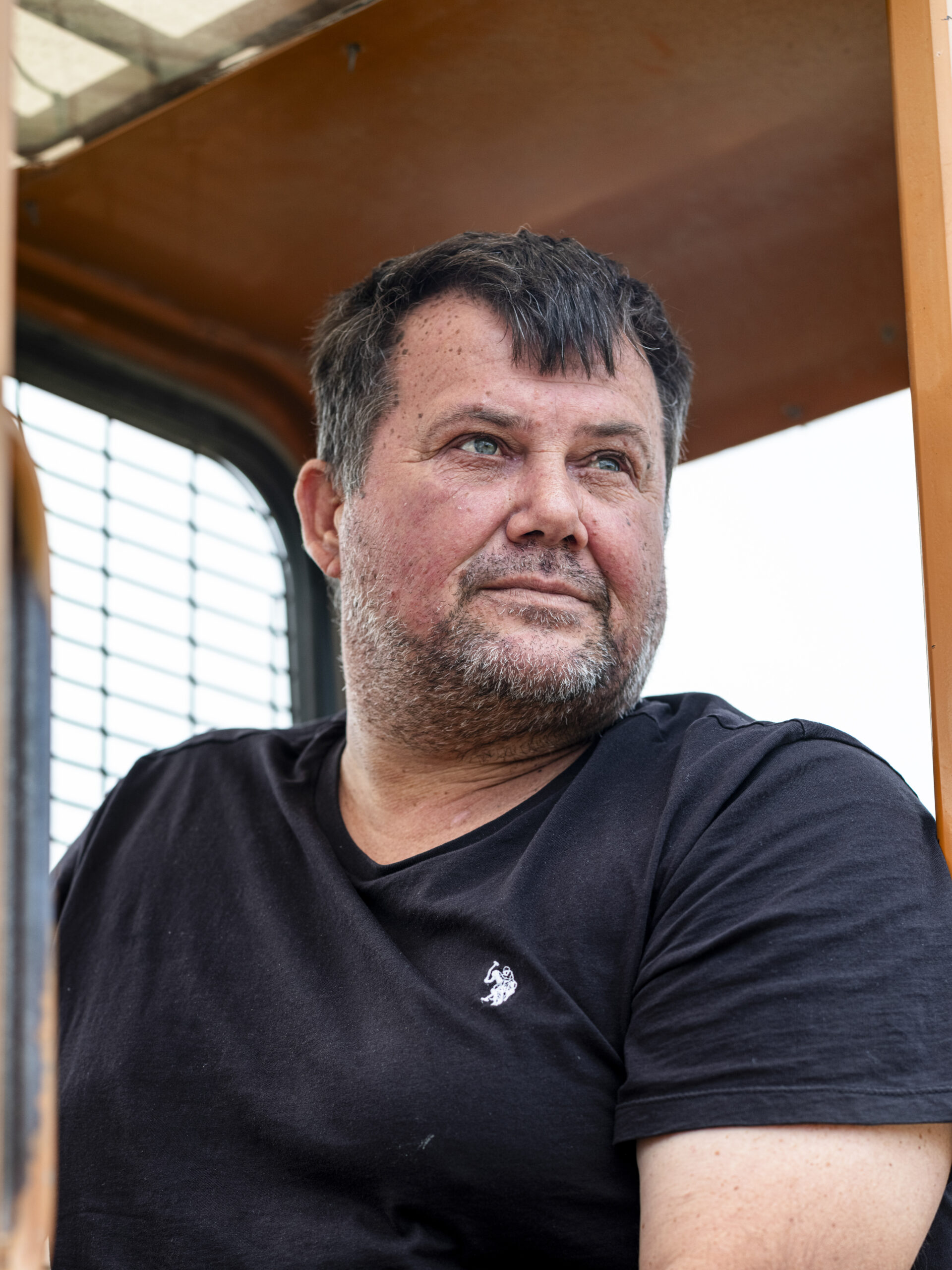
Charl Kleinhaus secured refugee status and moved with his family to the United States in a matter of months.
Under Trump, the program has effectively become a whites-only path to life in the United States, a culmination of the president’s long-standing antipathy toward immigrants and his embrace of the concept of “reverse racism” as a guiding principle in his administration.
The president has fought to limit immigration for more than a decade, imposing travel bans on mostly African and Muslim-majority nations and making it much more difficult for people from those nations to obtain green cards. He has railed against affirmative action, and in an interview with the New York Times earlier this year said he believed civil rights-era protections had resulted in white people being “very badly treated.”
But few of Trump’s efforts are as striking as his efforts to turn the refugee program on its head, leaving thousands of people across the world sitting in refugee camps with no chance of entry into the United States, even as he created a workaround for Afrikaners.
The Trump administration has argued that the overhaul of its refugee program is necessary to prioritize refugees who can better assimilate into the United States.
“President Trump has provided a lifeline for Afrikaners, who are being raped, maimed, killed, and driven off their property across South Africa,” Anna Kelly, a White House spokesperson, said in a statement. “While the South African government and many in the media have brushed off the horrific lived experiences of this community, the Trump administration continues to process applications for refugee status because the president has a humanitarian heart.”
But critics of the policy who are involved in refugee resettlement say the Trump administration’s priorities have made it impossible to help people who have nowhere else to turn.
“It’s the moral and legal inversion of what this work is about,” said Jason Marks, a senior refugee officer who resigned from the Department of Homeland Security last year when Trump announced the effort to fast-track Afrikaners to the United States. “They are rolling out the red carpet for this group with a clear racial and political agenda at the expense of everyone else.”
‘Too many people’
Kleinhaus acknowledges that moving to the United States from South Africa’s Mpumalanga province was not his “last option.” He left behind resources: a Jaguar sports car, a Range Rover, and what he estimates is property worth at least $300,000. He plans to sell them all to bring in extra money.
But he also says many of his white relatives and friends were no longer safe in South Africa.
White farmers — a population that Trump has spotlighted in public remarks — have indeed been killed in vicious acts of violence in a country that suffers from a high murder rate. But so have Black South Africans and others, and police data does not support the idea that white South Africans are more likely to be targeted than any other group.
Kleinhaus also said his profits were suffering because of racial equity laws.
“You’re not going to get a big contract from a mining company if you’re not Black,” he said. “There’s too many people. How do you divide a small cake between such a big population? Yeah, you cannot.”
He said he felt no guilt about bringing his children and grandson to America to pursue a new life, even as families fleeing conflict in Afghanistan, Sudan, and Ukraine remained walled off.
“You can’t take in those hard-core war people,” said Kleinhaus, whose news feed is full of social media videos and memes promoting the idea that white people are targeted in South Africa. “You can’t put them in a first-world country, you’ll be mad.”
After allowing refugees from around the globe to enter the country for decades, the United States was now trying to “have some type of balance,” he said.
Secretary of State Marco Rubio said this month that U.S. refugee policy must benefit Americans.
“Everything we do has to be geared by the national interest,” Rubio told lawmakers. He said, “It is in our national interest” to allow in people who can “quickly assimilate into society and be successful.”
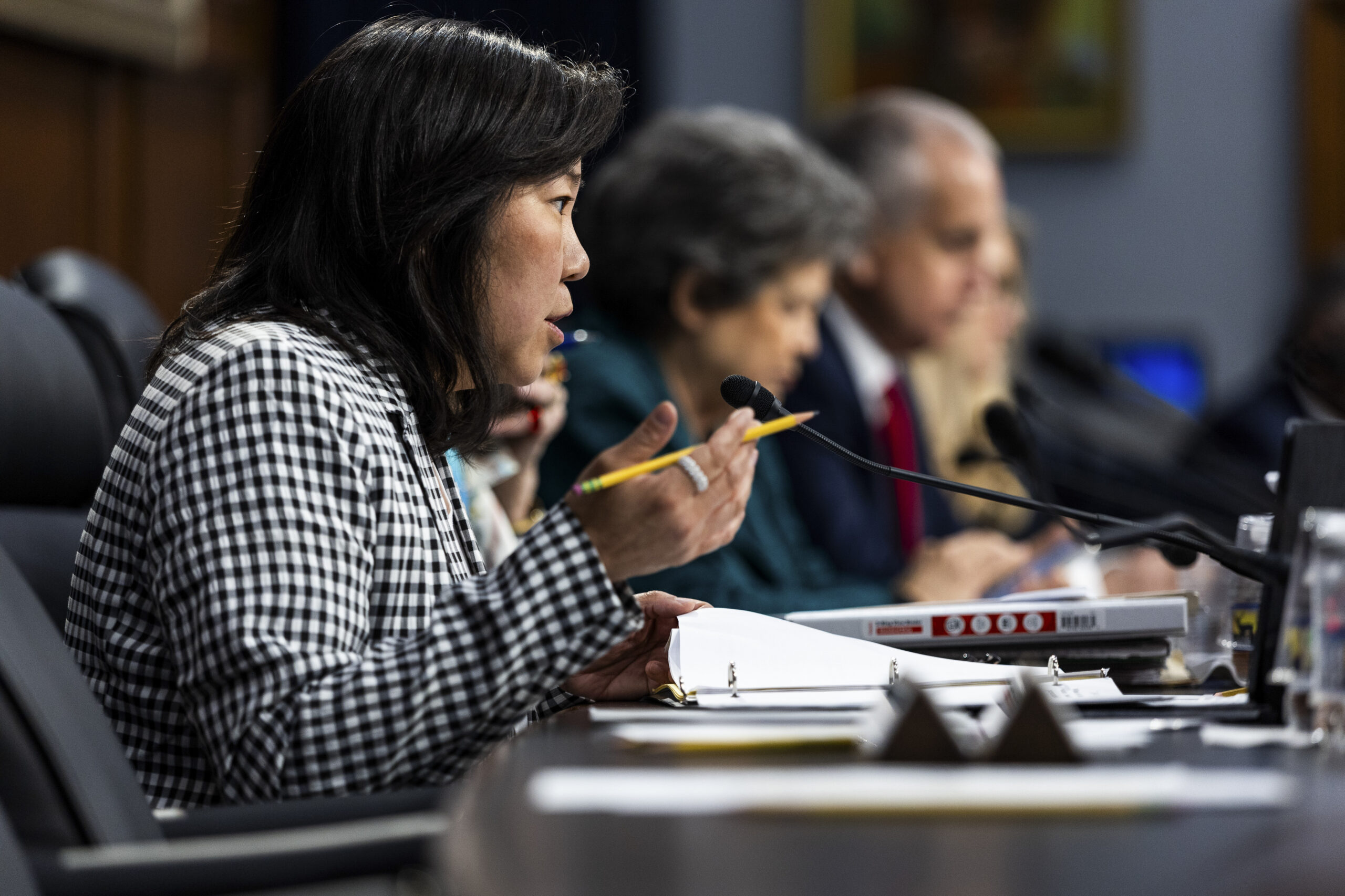
Rep. Grace Meng (D., N.Y.) questions Secretary of State Marco Rubio during a House Appropriations subcommittee hearing this month.
Rep. Grace Meng (D., N.Y.) asked why the administration thought other refugees could not assimilate, including Afghans who had helped U.S. soldiers during the war, cleared vetting, and were now stuck in limbo.
“They have assimilated and contribute and pay taxes,” Meng said of Afghan refugees who had moved to her district in Queens, New York. “I think it’s important for America to keep our promise as well,” she added.
Some of the Afrikaners, who are the descendants of Dutch and other European settlers, have not acclimated as smoothly as the administration expected.
During their initial months in the United States, refugees typically can receive some money for housing and food from resettlement organizations who receive federal funding. Those organizations can also help them find work.
But refugees are expected to eventually be self-sufficient. The process is often a difficult one.
Multiple Afrikaners reported delays in receiving financial support from their local resettlement agency, according to complaints obtained by the New York Times. (The names of many of the refugees were omitted from the documents.) One of the families complained about needing to complete Medicaid and Social Security applications on their own. That same family griped about needing to use public transportation, according to the documents.
Another South African relocated to Texas said he felt staffers from the local resettlement agency, which has a Muslim affiliation, had “discriminated” against him as a Christian. The staff members who picked up his parents from the airport were candid about their views of Trump’s changes to the refugee program.
“They told my mother they cannot wait for next election when Trump can leave office as they had a problem with his decision to give South Africans refugee status and how angry they are that only South African refugees are now allowed,” according to the correspondence.
The newly arrived South African also said his family was placed in an apartment that was “dirty, contained mold, and is located in an unsafe area in Fort Worth.”
The complaints by the Afrikaners about their level of assistance also came after the Trump administration made cuts to funding for resettlement agencies and benefits that in the past were made available to new refugees, including food stamps.
At least three Afrikaners made the return after being settled in states including Minnesota, Idaho, and Illinois, according to government documents. Some had sick relatives back home. One Afrikaner said the process had “occurred quickly” and “she had not thoroughly thought through the process.”
“I think some of them are finding that actually it’s not an easy life to be a refugee,” said Bryony Fox, a lecturer at South Africa’s Stellenbosch University, who researches forced displacement.
Claims of genocide
South African officials strongly dispute claims by Trump that Afrikaners are being targeted in a “genocide.”
During apartheid, which ended in 1994, the government denied Black South Africans the right to own prime agricultural land. That meant that almost all of the country’s large-scale commercial farmers were white, and that remains so to this day.
South Africa’s Commission for Employment Equity found that white people made up 61% of top management posts in 2024, while they are only 7.5% of the population. Black South Africans are also unemployed at far higher rates than their white peers, a disparity that has not improved over time.
To address the disparities, the African National Congress government has instituted racial equity laws that incentivize companies to have Black ownership and leadership. That Black Economic Empowerment initiative has prompted intense scrutiny from the Trump administration, as well as from Afrikaners fleeing to the United States who say it has harmed their businesses.
Kleinhaus said such policies make him as a white man feel targeted by the South African government. He said that he had struggled to keep thieves off his property and that his relatives had been the victims of violence, although he said getting into the specifics made him too emotional.
In his experience, white people are portrayed as “the problems in the economy” and “the privileged ones.”
“There’s no such thing as that,” Kleinhaus said. “Most whites have lost a lot.”
Fox said there was no denying the violence in South Africa.
“That is our biggest problem,” she said. “But it is not targeted. It is not systematic targeting.”
She said criminals had attacked farms because they “have resources that communities are seeking.”
Trump has echoed fringe claims about a white genocide in South Africa for years, going back to his first term. Last year, in a stunning confrontation in the Oval Office, Trump lectured the South African president, Cyril Ramaphosa, about his own country. Ramaphosa implored Trump to listen to “the voices of South Africans.”
The State Department does not break down its refugee data by race, but it has allowed in more than 6,600 refugees this fiscal year. All but three were from South Africa.
Trump’s aides have defended the program by saying that other racial minorities in majority-Black South Africa are welcome to apply for the refugee program.
South Africa also has minority populations of people of Indian descent, white people of British heritage, and mixed-race people — and a few individuals from those communities have been processed through Trump’s refugee program. But refugee resettlement officials say nearly all of those who have been accepted are white, and government documents confirm that the administration has prioritized resettling white Afrikaners.
Why white South Africans?
Long before Trump created the refugee program, many white South Africans traveled to the United States — from the Midwest to the Mississippi Delta — on temporary visas to work as seasonal farmers.
Since 2019, Kobus Van Den Berg has been traveling to and from the United States to plant soybeans and fertilize fields in North Dakota to save money for his family back home in South Africa. He agrees that crime is an issue in South Africa, but he pushed back on the notion that white South Africans are being singled out.
“They’ll attack anybody,” he said. “It doesn’t matter what color or race you are.”
He has watched as Afrikaners have come into the United States in recent months with refugee status and a pathway to citizenship, even as he has spent years navigating a complicated immigration system with the hopes of obtaining a green card.
“Why is it so easy for this other Afrikaner from South Africa to come over here?” Van Den Berg said. “The thing that blows everyone’s mind today is, why is it specifically white South Africans?”
Critics of the Trump administration say the answer lies not just in Trump’s long-standing embrace of the Afrikaners’ cause, or the administration’s desire for “assimilation,” but in his stance toward refugees more broadly.
Sharif Aly, the president of the International Refugee Assistance Project, said the policy shows an “indifference to the plight of nonwhite refugees.”
It is difficult to ascertain how rigorously the administration is vetting the South Africans. In the past, the process has been time-consuming, with agents demanding criminal records, medical records, and even social media posts.
The Trump administration has said it would deny immigration requests for those with antisemitic or “anti-American” posts on their social media accounts, but Kleinhaus was welcomed even though he had made antisemitic comments on social media. In April 2023, the X user @charlkleinhaus wrote in a now-deleted post that Jews were “untrustworthy” and “a dangerous group” and that “they are not Gods chosen.”
Kleinhaus said his grandmother was Jewish, he was not an antisemitic person and he had written the post in error while he was taking medication for a kidney stone. He also shared other posts that had been written by others.
During his processing, he said, he signed off on administration vetting of his social media accounts and no one brought up any problems.
‘Leaving everything behind’
Over breakfast at a local diner, the Fryn’ Pan Family Restaurant, Kleinhaus said he missed some aspects of his life in South Africa, including “the people, my workers, my friends, and family.”
But he also appreciates “these advantages that I’ve got here to do things I can do just as a white person” and not needing to worry about laws requiring him to sell a percentage of equity of his mining company to Black shareholders in South Africa “because they were here first or whatever the story can be.”
He said he was focused on working and contributing to the United States.
He said he did not complain when he, his son, daughter, and grandson were initially placed in one hotel room in Buffalo, N.Y. He soon identified a farmer in Yankton, S.D., who had hired seasonal workers from South Africa for years and was looking for more help.
Now, his daughter works at a flower shop in the small town of Yankton. His son works at another farm and his grandson has learned English quickly after knowing only Afrikaans.
And he has found part-time work at a car dealership and at a brickyard while he plans how to start his next business. He occasionally takes his grandson fishing in this area known for the Lewis and Clark trail on the weekends.
“I just want my kids to be successful,” he said.
Kleinhaus hopes he can convince other relatives to join him soon in America. He said he knows he cannot simply go back and visit, because that would undermine his claims of persecution.
“I’m leaving everything behind,” he said. “When you accept the refugee thing, it’s not a thing like, ‘I’ll be back in two weeks; I’m going on holiday.’ It’s nothing like that. You’re saying, ‘It’s done. I’m not going back.’”
Russian air defenses intercepted 660 Ukrainian drones in a major nighttime attack on 12 Russian regions as well as the Russia-held Crimean peninsula, the Black Sea and the Azov Sea, Russia’s Defense Ministry said Friday.
It appeared to be one of the biggest drone attacks on Russia and the illegally annexed Crimea since Russia’s full-scale invasion of Ukraine more than four years ago. The previous biggest Ukrainian attack over the past year was 556 drones on May 17.
In an effort to turn the tables on Russia’s grinding war of attrition, Ukrainian long-range drones have for months been battering targets, including oil production and energy facilities, behind the front line and deep inside Russia. The campaign has choked Russian fuel supplies and military deliveries, stalling Moscow’s efforts on the battlefield, Western officials and analysts say, and heaped pressure on Russian President Vladimir Putin.
Initial damage reports from Russia after the overnight attack provided scant information. Russia’s Defense Ministry usually doesn’t say what was targeted in Ukraine’s drone attacks, nor does it detail any damage.
Ukraine’s Security Service said it used drones to strike Russian navy ships and air defense radars in Kerch, an important port city in Crimea.
The targets were two reconnaissance and mine-laying ships, the Volga and the Vyatka, and the cargo-passenger ferry Petropavlovsk, the agency said, claiming that the strikes started a large fire. The claim could not be independently verified.
Successful drone attacks hearten Ukraine
The major attack came hours after Ukrainian President Volodymyr Zelenskyy said on X that he had ordered “a 40-day influence operation,” believed to mean an escalation of attacks, aimed at “compelling (Russia) to end the war” after U.S. peace efforts over the past year yielded no breakthrough.
The successful strikes, including hitting targets in Moscow and St. Petersburg, have buoyed Ukraine.
Zelenskyy said he got further promises of foreign support when he attended a recent summit of G7 leaders, including from U.S. President Donald Trump, and that the promised aid will help Ukraine step up its effort to force Putin to the negotiating table.
A NATO summit next month could be another key moment in beefing up Ukraine’s military.
A Russian chemical plant is reportedly hit
In the Tula region just south of Moscow, a private house was damaged by the attack and a woman was wounded, Tula Gov. Dmitry Milyaev said in an online statement, as reports of damage caused by the attack began to emerge.
He also said a power line was damaged and an unspecified industrial facility in the city of Novomoskovsk.
Russian independent online outlet Astra reported that a chemical plant and a hydroelectric plant in Novomoskovsk were attacked and caught fire. The Associated Press couldn’t independently verify the report, and there was no official confirmation.
Moscow Mayor Sergei Sobyanin also reported that 47 Ukrainian drones were downed as they flew toward the Russian capital. He did not report any casualties or damage.
Ukraine says 2 civilians were killed in Russian attacks
Two people were killed and seven others injured in Russian attacks on the northeastern Kharkiv region over the previous 24 hours, regional head Oleh Syniehubov said Friday.
Russian forces struck the city of Kharkiv and 16 other settlements across the region using guided aerial bombs and drones of various types, Syniehubov said.
Ukraine’s defenses overnight stopped 174 of 189 Russian drones, the Ukrainian air force said. However, four of seven Iskander-M ballistic missiles that were fired got through air defenses and struck various locations, it said.
Ukrainian officials reported damage to energy facilities, homes and other civilian infrastructure in the capital, Kyiv, the southern Odesa and Zaporizhzhia regions, and Sumy in the northeast. At least six people were wounded, according to authorities.
No Russian military buildup seen on border with Belarus, Ukraine says
Russia is expanding several of its military sites deep inside Belarus, but there is no buildup of forces near the Ukrainian border, a State Border Guard Service spokesman said Friday.
Russia launched its 2022 invasion of Ukraine from Belarus, which borders both countries, and Kyiv has kept a close watch on developments there during the war.
Ukrainian intelligence units have detected no grouping or reinforcement of Russian units, equipment or personnel close to the border, spokesman Andrii Demchenko said in remarks to Ukrainian television.
However, Russia has a growing number of training grounds, bases and other sites deeper inside the country, according to intelligence units.
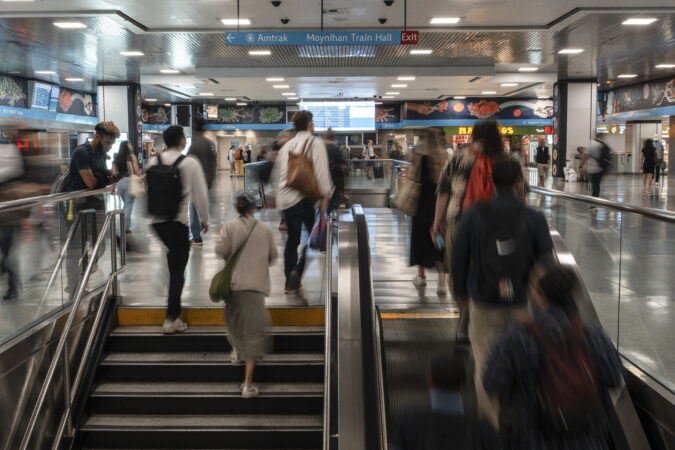
President Donald Trump shocked transit officials last year when he said that he would seize control of the long-delayed renovation of Penn Station, one of the busiest and most maligned transit hubs in the world.
The Metropolitan Transportation Authority, the New York state agency that had been in charge of the project and frequently found itself at odds with Washington, offered a surprising response: It’s all yours.
Now, federal officials may need the cooperation of that same agency, which controls a large portion of the space, if it intends to keep its promise to break ground on the Penn Station revamp by the end of next year. And the partnership is not off to a good start.
On Monday, Janno Lieber, the MTA’s chief executive, wrote a scathing letter to Amtrak, the national rail company that owns Penn Station, and the U.S. Department of Transportation, whose overtures he described as a lot of “blah-blah” and “gamesmanship.”
“When the Trump administration announced it was taking over the reconstruction project, we were cautiously optimistic, despite the typically gratuitous (and fact-free) snipes USDOT and Amtrak took at the MTA,” he said. “But the process since then has been simply bizarre.”
At the center of the dispute is a web of tangled stakeholders. While Amtrak owns Penn Station, the MTA is its busiest tenant, accounting for two-thirds of the riders who pass through each day. They use it to board the subway system and the Long Island Rail Road, both of which are operated by the MTA New Jersey’s rail network, NJ Transit, also runs service there. The labyrinthine station sits beneath Madison Square Garden, the arena controlled by James Dolan, a close friend of Trump’s.
Amtrak announced in April 2025 that it would proceed with a plan to make room for a new, classically inspired train hall, but has yet to disclose the cost. Sean Duffy, the U.S. transportation secretary, has said that the federal government could spend $8 billion on the project.
Lieber said that the renovation plan had the “appearance of impropriety” because the process to select a developer was opaque. The winning proposal involves a plan to buy and demolish a portion of the arena called the Infosys Theater, and replace it with a grand entrance on Eighth Avenue. Amtrak has yet to disclose what it might pay Dolan for the privilege.
In October, Amtrak sent the MTA a “collaboration agreement” that it said would help expedite renovation decisions by granting the federal government more oversight. But the MTA has not signed on to the arrangement, arguing that the deal could compromise an existing and much stronger contract — a prepaid lease that gives the agency more latitude in station design decisions. That pact doesn’t expire for 160 years.
Lieber said that the agreement offered last year by Amtrak would limit the MTA’s ability to influence design decisions, constrain the ways it communicates changes to riders and cede other rights.
“Not interested,” he wrote.
Lieber’s letter this week was a response to a missive from Andy Byford, a former head of the MTA’s transit division. He had been nicknamed “train daddy” by his supporters because of popular changes he put in place. Byford left the transit agency after a public dispute with Andrew Cuomo, who was governor at the time.
But Byford, who has occasionally had a tense relationship with Lieber, is now in charge of Trump’s federal takeover of the Penn Station redesign.
“It is disingenuous for some to continue to assert that MTA has been ‘frozen out,’ ‘sidelined,’ or ‘excluded’ by Amtrak. Rather, it has been MTA’s repeated choice over the past year to opt out of participating in the project,” he wrote in a letter sent to reporters Sunday — a day before the MTA received it.
Like most landlord-tenant relationships, this one is fraught. The MTA in October blamed Amtrak for delaying by three years an expansion of railroad service in the Bronx, because it did not grant enough access to their shared infrastructure. In April, Amtrak sued the MTA for refusing to let some of its new trains ride on the transit agency’s tracks. (A judge sided with the MTA.) And for months, the two groups have clashed over the repair schedule for tunnels under the East River that provide service to Penn Station.
Wednesday, after an MTA board meeting, Lieber said that he was willing to work with Amtrak, but not at the expense of protections guaranteed in their lease, such as the right to challenge construction decisions that could affect LIRR service.
“The idea that we should give away rock-solid rights in favor of a lick and a promise, a hope and a prayer that they might agree to do what we think are the important things to do, is not realistic,” he said.
Byford said in a statement that Amtrak had already made amendments to the agreement, and insisted that the contract would not “water down” the MTA’s lease. NJ Transit has already signed a version of the pact.
MTA officials have raised concerns that the Penn Station redevelopment plan, led by the companies Halmar and Skanska and designed by the architecture firm PAU, could generate costs that might be borne by New York transit riders.
In an interview Wednesday, Byford insisted that the plan would not require ticket surcharges or fare increases for passengers who use Penn Station.
“That’s not how budgets work,” he said, calling that fear unfounded. But he left open possibly finding other ways to fully pay for the project.
The MTA’s reluctance to sign the agreement may cause friction with Gov. Kathy Hochul, who effectively controls the agency. She has said that she supports Trump’s takeover of Penn Station, provided that the cost is not passed on to New Yorkers.
Hochul received a presentation last week from Penn Transformation Partners, the private consortium of developers and architects that the federal government selected to lead the redesign, according to three people familiar with the meeting.
Sean Butler, a spokesperson for Hochul, said the governor believed that delivering a better Penn Station “is too important to not work collaboratively and constructively with all partners.”
When asked about the MTA’s response, Byford said that he liked Lieber, and that the two of them had a good working relationship when they led different divisions of the agency.
“This is just a professional disagreement,” he said.
But Wednesday, in a statement attributed to Byford, Amtrak said that the redesign of Penn Station will continue, with or without the MTA’s help.
“We don’t need them to sign; we will proceed regardless,” Amtrak said. “Gov. Hochul gets that, the MTA does not, it would appear.”
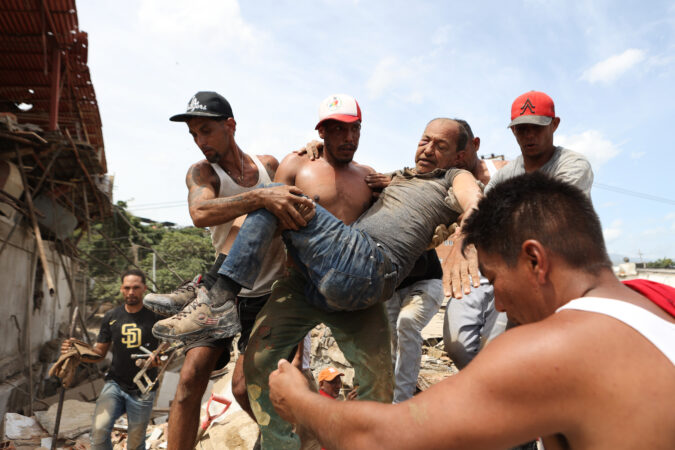
LA GUAIRA, Venezuela — In cities across northern Venezuela, neighbors helped each other dig through rubble to search for loved ones, after back-to-back earthquakes killed at least 589 people and left thousands injured.
Acting President Delcy Rodríguez announced the new toll early Friday, surrounded by government and military officials as she welcomed the arrival of rescue crews from all over the world.
“We are going to rescue the people who are trapped,” she said. “We are working tirelessly on this task.”
The number of casualties is expected to climb with thousands reported missing and frantic rescue efforts continuing.
The International Organization for Migration said that up to 6.76 million people in Venezuela could be affected by the quakes, some 2 million of them in Caracas alone. Loyce Pace, the International Red Cross’ regional director for the Americas, said ” people are still terrified to reenter what were their homes.”
The injured were pulled out covered in dust and blood, among them children. Venezuelan state TV showed dramatic images of rescues, including a woman who was trapped under a cement slab with only a bare foot poking out before rescuers slid her out alive. But few government search teams were initially seen outside Caracas.
Venezuelans reeling from quakes
Many were stunned Thursday morning as they saw buildings reduced to skeletons, furniture hanging out of windows and helicopters circling overhead. Buildings were flattened and streets cracked open.
Families posted missing-person flyers with photos of loved ones while others shared handwritten lists of names as they searched. Venezuelans abroad struggled to make contact with relatives due to interrupted phone service in the country.
In downtown Caracas, hundreds spent the night huddled in parks, parking lots and other open spaces.
Mother of three Dayana Delgado asked where the heavy machinery was that government officials had promised and said residents were the ones digging through crumpled buildings.
“I want to know where my child is, if he’s trapped or in a shelter,” she said of her missing 8-year-old son.
One mother sobbed and collapsed in grief as the bodies of her 3- and 10-year-old children were wrapped in blankets and carried away. Others screamed the names of the missing. Some stood in silent shock.
Venezuelan authorities said they were diverting rescue teams from other parts of the country to La Guaira, which is no stranger to natural disasters: A 1999 mudslide killed thousands and is considered one of the country’s worst natural disasters.
In La Guaira, Cristian Carreño stared at his charred apartment building tilting precariously to one side.
“I lost everything,” he said. “There are people still inside, I imagine, that couldn’t get out. It’s incredibly devastating.”
Retired schoolteacher Juan Alberto Mendaño climbed through wreckage in La Guaira and past a dead body when he spotted a woman who was trapped and signaling with her hand for help.
“May God rescue her as quickly as possible,” Mendaño said. “When we heard the scream, there was nothing we could do.”
Media reports have shared notable moments of hope among the destruction, including a young man brought out on a stretcher in the San Bernardino district of Caracas to the applause of onlookers as his tearful mother said, “Leandro, I love you.”
Venezuelan public television broadcast video of a girl covered in dust and wrapping herself in a dark sweatshirt as she emerged from rubble with the help of rescuers. Caracas metropolitan rescue team head José Luis Núñez said she was found in a 10-story building in La Guaira that collapsed and flattened “like a pancake.”
“We want to highlight this girl’s strength, determination and will to live,” Núñez said.
Government and rescuers face huge challenges
The natural disaster is the latest challenge for acting President Delcy Rodríguez, the former vice president who took office in January after the capture and removal from power of then-President Nicolás Maduro by the United States. Venezuela has been facing economic disarray for more than a decade and many people reject the legitimacy of the political movement Rodríguez represents.
Rodríguez declared a state of emergency in an address to the nation late Wednesday. She said the government was creating a $200 million reconstruction fund for damaged hospitals and homes.
She appealed to businesses Thursday to make heavy construction equipment available for rescue operations.
“We hope to rescue as many living people as possible,” Rodríguez said.
While Venezuela sits near multiple fault lines, its position straddling the South American and Caribbean plates makes strong earthquakes much less common than in other parts of Latin America.
The U.S. Geological Survey said both earthquakes were centered near Moron on the Caribbean coast, about 170 kilometers (105 miles) west of Caracas.
The one-two punch of the quakes, combined with the shallow seismic movements, amplified the destruction, said Marcos Ferreira, a geophysicist and researcher at the Geological Survey of Brazil.
“It is as if I am screaming and then someone starts screaming, too. That amplifies the vibration and adds to the potential hazard,” Ferreira said.
Shortly after United Nations officials in Venezuela called on the government to lift social media restrictions so people can get potentially life-saving information, Venezuelans in the country were able to access X. The site had been blocked by Maduro since August 2024 in an attempt to suppress the exchange of information among those who rejected his claim of victory in the July presidential election.
Foreign governments offer assistance
Some 1,000 emergency responders in 25 search-and-rescue teams from across the globe are deploying to Venezuela, said Jens Laerke, a spokesperson for the U.N. Office for the Coordination of Humanitarian Affairs.
U.S. Secretary of State Marco Rubio, who spoke to Rodríguez following the quake, said the United States was immediately deploying assistance.
“We have a whole-of-government response. It’ll be big; it’ll be fast; and it’ll be effective,” Rubio said, while acknowledging the closure of Venezuela’s main airport near Caracas created logistical challenges.
Venezuelan public television on Friday showed the arrival of rescuers with dogs and equipment, including cameras and ground-penetrating radar, from Spain. Teams from Germany, Chile and Switzerland also landed. Turkey announced two flights will leave Istanbul on Friday with rescuers and a pair of search dogs. China also said it will provide assistance. Leaders from Qatar, Brazil, Portugal and Canada vowed to send help.
Rescue teams from El Salvador and the Dominican Republic arrived in Venezuela on Thursday, along with rescuers and material aid from Mexico.
“No country is prepared to provide the response that’s needed. That’s what neighboring countries are there for,” Dominican air force Maj. Carlos Olivares said.
The Democratic National Committee should require each presidential candidate — as a condition of receiving campaign financing support — to issue at least one press release a week on affordability. There is no issue that is going to be more important to voters in the midterms or in 2028 than their ability to afford food, housing, and healthcare. Not abortion, not LGBTQ issues — nothing takes precedence over being able to afford your own food, housing, and healthcare. The president dangles so many alluring targets for commentary — the failed war in Iran, the grift, and of course, the algae and peeling paint in the Reflecting Pool. But don’t be sidetracked, Democrats: What people care about is their money. Get on it. At least one piece a week solely on affordability. You can thank me later.
Linda Falcao,Baltimore
Personal option needed
The Editorial Board is right: Washington is failing patients. But a public option would only make things worse.
The Inquirer’s editorial claims five insurers have “earned” $9 trillion since the Affordable Care Act passed in 2010. But that’s a misleading figure because it represents revenue, not profit.
Those companies made a combined $371 billion in net income over that period — a 4.1% margin (low compared with other industries), or roughly $25 billion a year. Against the nearly $5 trillion Americans spend on healthcare annually, that’s about one-half of one percent. Insurer profit isn’t driving the affordability crisis.
The ACA has already pushed America toward government-managed healthcare, consolidated insurers, and increased premiums. A public option would deepen that path.
Canada’s median wait for specialist care now runs nearly 29 weeks, and the U.K. has more than 7 million patients on its waiting list. This rationing isn’t incidental; it’s how governments control costs when a fixed budget meets unlimited demand.
The real fix is to empower patients. This means enacting price transparency, expanding telemedicine, and allowing nurse practitioners and pharmacists to practice the full extent of their training. But that’s just the beginning of getting government out of the way of affordable care.
Andrew Lewis, president and CEO, Commonwealth Foundation
Join the conversation: Send letters to letters@inquirer.com. Limit length to 150 words and include home address and day and evening phone number. Letters run in The Inquirer six days a week on the editorial pages and online.
DEAR ABBY: I’ve been a widow for nine years and just got engaged. When I asked my fiance if I could put a picture of my late husband in our new home, he became upset. He said he shouldn’t have to walk into his own home and look at pictures of a man who once “had” me.
I have three kids with my late husband. We were high school sweethearts, and I took his death extremely hard. I can’t help but think that my fiance is overreacting. I feel he wants me to just erase everything I had with my husband.
My kids will be living with us, too. Should I respect his wishes, or should I stand my ground and make sure my late husband’s memory is alive for the sake of my children?
— REMEMBERING IN AMERICAN SAMOA
DEAR REMEMBERING: I hope you recognize that this is a huge red flag. Your fiance is jealous and insecure. If he would be upset seeing a photograph of your late husband, how is he going to feel when he interacts with your children, who are living symbols of the love you shared with another man?
You are entitled to display a picture of their father if you wish. It needn’t be as large as a political poster nor hung in the front hall. It is important that you have further discussions about this with your fiance and, if you are wise, premarital counseling until this issue is resolved.
** ** **
DEAR ABBY: My husband (a college-educated native English speaker) mispronounces a LOT of words, specifically common names, the name of our children’s school and some other frequently used words. How do I politely correct him? I feel this is because he doesn’t pay attention, and I’m sure others notice it as well.
— ANNOYED IN CALIFORNIA
DEAR ANNOYED: Make a list of your husband’s “trouble words.” Then, when the two of you are relaxed and well-fed, start a conversation with him and ask if he realizes he does this. When he asks you what you mean by that, pull out the list and go over it with him, pronouncing the words correctly. Explain that you are raising the subject because you love him, and you won’t bring it up again, but you think he should be aware.
** ** **
DEAR ABBY: We love going to my aunt’s house for dinner, but she uses plug-in home fragrances that give all of us headaches. We have to come home and shower and wash our clothes to get the scent off us. She is an amazing baker, and the fragrance compromises the taste of the baked goods! How do we politely tell her this?
— HESITANT NIECE IN NEVADA
DEAR NIECE: Tell your aunt you love coming over to her house, but that you have developed an allergy to scents that causes you to get headaches. Then ask her to please unplug the scent dispensers and to air the place out for an hour or so before she has you over. It is a legitimate reason, and you are not the only person who can be affected by artificial scents.
ARIES (March 21-April 19). Don’t let one bad moment make you forget the good you’ve done and who you’re becoming. Wrong turns can be righted — that’s what U-turns are for. So what if the journey takes longer? What matters is that you’re on the path.
TAURUS (April 20-May 20). You sense what people want, and you could easily provide it, but the question is: Should you? Pleasing people isn’t always the same as helping them. You’ll go beyond what people want to give them what they need.
GEMINI (May 21-June 21). There’s someone who occupies more mental real estate than they probably realize. Tiny interactions feel loaded with meaning and possibility. This can be distracting, but it is also creatively energizing. Channel some of that voltage into your own ambitions.
CANCER (June 22-July 22). Lots of people become jaded by hard challenges. Not you. You’re resilient. You face the challenge with the spirit of improvisation and charm. You move through the puzzles with style and the perfect balance of courage and flexibility.
LEO (July 23-Aug. 22). You’re trying to lead with your better instincts. But the inner child wants a popsicle and a playground, the critic wants to file a complaint, and the dreamer wants to go back to sleep. Choose humor and patience over force.
VIRGO (Aug. 23-Sept. 22). Upon reflection, the past situation that was such a disappointment at the time turned out to be the plot twist that kept things interesting — maybe even the one that made you heroic. The current detour has equal promise.
LIBRA (Sept. 23-Oct. 23). Laughter has a way of becoming uncontrollable at exactly the wrong moment — a very relatable tension. Those things that break unexpectedly reveal something liberating underneath. You’ll experience the sublime relief of humor, spontaneity and shared humanity.
SCORPIO (Oct. 24-Nov. 21). A simple acknowledgment has restorative power. For instance, hearing your own name spoken kindly can be a healing in and of itself. Reminded of the importance of making people feel welcome, you’ll fill someone’s deep need for recognition.
SAGITTARIUS (Nov. 22-Dec. 21). After the hard work, you’ll have a sense of accomplishment that makes it all worthwhile. The feeling is such a high, and the product and rewards of your work are so magnificent, you could become happily and helpfully addicted to this.
CAPRICORN (Dec. 22-Jan. 19). In the same way your pet senses your mood, you have an animallike instinct toward emotional resonance with you care about, and you communicate beyond what language can convey. You’ll use it to make an accurate and fortuitous move.
AQUARIUS (Jan. 20-Feb. 18). Some parts of collaboration will work out and others not so much. When money, relationships and stress get knotted together in a ball, don’t try to untangle it. Toss it instead. As soon as you let it go, life gets fun again.
PISCES (Feb. 19-March 20). You’ll speak carefully not to avoid conflict, stick to the script or please anyone, but because you know that words matter. Today you’ll think what you say, say what you think and wield your influence well.
TODAY’S BIRTHDAY (June 26). It’s your year of Visionary Passion. Free from the confines of the visible world, everything is enhanced by your private vision. Your conviction draws in the tools, funding and team you need to build what you imagine. More highlights: You form tight bonds with unlikely partners in both your professional and personal life. Good systems make you stronger in the ways you most want to be. Virgo and Pisces adore you. Your lucky numbers are: 8, 28, 6, 17 and 25.
DUBAI, United Arab Emirates — A United Nations agency paused the evacuation of ships through the Strait of Hormuz on Thursday after the British military said a vessel was hit by a projectile off the coast of Oman following the passage of several tankers that used a route backed by the U.N.
The head of the International Maritime Organization said the plan to move stranded ships out of the Persian Gulf through the strait will be on hold until the agency can confirm safety guarantees for the ships on the evacuation list and in the region.
The report of a strike came hours after Iran threatened vessels to stop using the route through the strait without Tehran’s permission. The vessel that was attacked was not part of the evacuation effort, said Arsenio Dominguez, the U.N. agency’s secretary-general.
A U.S. official told the Associated Press that the vessel was hit by an Iranian drone.
The official, who spoke on condition of anonymity to discuss a sensitive situation, said the merchant vessel Ever Lovely was attacked by a drone being flown by the Iran’s paramilitary Revolutionary Guard.
Following reports of the attack, Iran’s Persian Gulf Strait Authority — a new government agency established to control shipping in the strait — wrote on X that transit outside its own designated routes “will not be covered by the guarantee of safe passage.”
The United Kingdom Maritime Trade Operations center said the vessel sustained damage, but it reported no injuries or environmental effects from the attack off the coast of Oman.
An alternative passage would relieve pressure on economy
The opening of an alternative passage through the vital waterway would relieve pressure on the world economy and remove Iran’s main source of leverage in ongoing peace talks with the United States. U.S. Secretary of State Marco Rubio, on a visit to the Gulf to reassure American allies, said Washington was committed to the new route and ensuring that ships are able to transit the strait.
“If that stops, then we’re going to have a problem,” Rubio said Thursday before the report of the strike on the ship.
Traffic through the strait increased in recent days but was still well below prewar levels. Oil on Thursday briefly dipped below its last prewar price of just under $73 per barrel, a sign that the market believes the situation is improving.
The U.S. and Iran are still debating terms of an interim peace deal, including issues such as getting ships through the narrow mouth of the Persian Gulf and addressing the future of Iran’s stockpile of highly enriched uranium.
Under the memorandum of understanding signed last week, the U.S. and Iran have 60 days to iron out the details. As talks are held behind closed doors, President Donald Trump and Iranian leaders have seemed to negotiate in public, trading threats and claiming concessions the other side denies.
Meanwhile, a flare-up of fighting in Lebanon between Israel and Iranian-backed Hezbollah militants threatened the wider truce. Lebanon says five people have been killed by Israeli strikes over the past two days. Iran says the tentative deal to end the war would require Israel to withdraw from Lebanon — a condition Israel has rejected.
More ships pass through the strait, but far fewer than before the war
Oil tankers, led by the Stoic Warrior vessel, sailed along the United Arab Emirates and then Oman early Thursday, passing by Oman’s Musandam Peninsula fairly close to the shore. The route was laid out by Oman and the International Maritime Organization.
North of the route is a corridor in the center of the strait where ships moved freely before the war, transporting about a fifth of all the world’s oil and natural gas.
Iran said it mined that passage after the U.S. and Israel attacked it on Feb. 28. At least one mine has been sighted there.
Though some ships had been getting out of the strait, with U.S. military support, the U.N. agency’s effort was the latest to free trapped vessels. The shipping company Maersk said its container ship, the Maersk Baltimore, and another chartered vessel made it out on Thursday.
Last week, 125 vessels crossed the strait, up from 33 the week before, according to marine data and analysis firm Lloyd’s List Intelligence.
According to S&P Global, Wednesday saw 78 transits, the most since the war began, but still below the daily prewar average of 130 or more.
Iran says the new shipping route is ‘unacceptable’
The naval arm of the Revolutionary Guard issued a warning Thursday against using the new route.
In a statement carried by Iran’s state-run IRNA news agency, naval officials said the route was established without notice or coordination with Iran, calling it “unacceptable and completely dangerous.”
“The only authorized route for passing through the Strait of Hormuz is the one declared by the Islamic Republic of Iran,” the Iranian force said. “Vessel traffic outside these routes is extremely dangerous and prohibited.”
“Violators will be dealt with,” it added, without elaborating.
On Wednesday, the Guard threatened one tanker over the radio, with a soldier warning, “You are in range of my missiles and maybe [I] fire on you,” according to the private security firm Ambrey.
Rubio says the U.S. will ensure there are no tolls on ships
Rubio met with foreign ministers from the six-nation Gulf Cooperation Council to assure them that their interests would be protected in any agreement with Iran.
Those countries, including major energy producers reliant on the strait for exports, came under attack by Iran after the start of the war.
“There is no part in this deal that’s undertaken that in any way undermines the security, the stability or the prosperity of any of our partners in the Gulf region,” Rubio said at the meeting in Bahrain.
Bahrain’s foreign minister, Abdullatif bin Rashid al-Zayani, said the agreement brought a glimmer of hope but stressed that it was “critically important that Iran adheres to its obligations.”
Lebanon remains a flashpoint
A lull in fire between Israeli forces and Hezbollah that started Sunday began to show cracks after Israel said it targeted Hezbollah militants.
Lebanon’s health ministry said Thursday that three people were killed by an Israeli strike on a car in southern Lebanon.
Hezbollah has called the recent strikes a ceasefire violation but has not retaliated. The Israeli military said Thursday that it fired on two separate groups it suspected of being Hezbollah members. The strikes came as Lebanese and Israeli officials were in Washington discussing a proposed phased withdrawal of Israeli troops from southern Lebanon.
Israel’s military also said Thursday that a reservist soldier was killed in southern Lebanon.