Tag: no-latest

  • Supreme Court says Rastafarian can’t sue prison officials over shorn dreadlocks

    Supreme Court says Rastafarian can’t sue prison officials over shorn dreadlocks

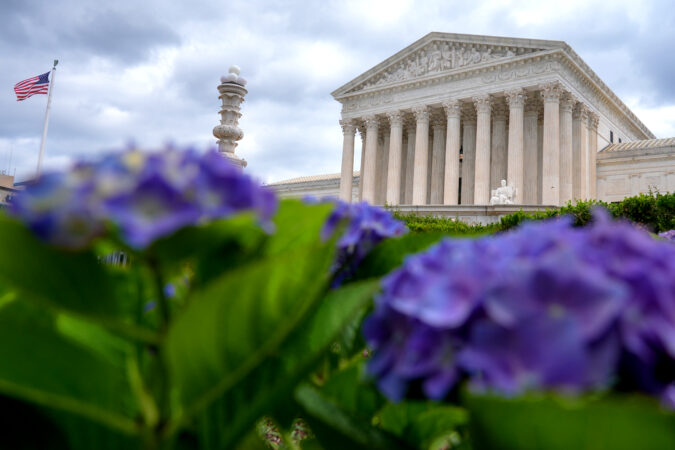
    The Supreme Court on Tuesday ruled a Rastafarian can’t pursue a lawsuit against prison officials who forcibly sheared his dreadlocks in violation of a court order while he was incarcerated at a facility in Louisiana.

    In a 6-3 ruling along ideological lines, the justices found Damon Landor could not sue prison officials as individuals under a 2000 federal law that requires states to protect the religious rights of prisoners in state institutions.

    Justice Neil M. Gorsuch, who wrote the majority opinion, found prison officials could not be held personally liable in most instances for violations of religious rights under the Religious Land Use and Institutionalized Persons Act (RLUIPA). The ruling centered on the technicalities of the law.

    “Under the Spending Clause, Congress lacks regulatory authority to impose liability on them directly and must depend instead on consent,” Gorsuch wrote of the prison officials. “And because they never agreed to answer suits like this one, Mr. Landor’s case cannot proceed against them any more than a breach of contract action might proceed against a defendant who never formed a contract.”

    The ruling came over the objections of the court’s liberals, who said barring a remedy for a violation would render the law toothless.

    “Prisoners like Landor who suffer violations of their religious freedom in state prisons — no matter how blatant — will often be left remediless,” Justice Ketanji Brown Jackson wrote for the liberals. “And encroachments on prisoners’ statutory rights are likely to happen with fair frequency, as state-empowered prison officials will have little incentive to abide by federal law, even if it is handed to them on a piece of paper.”

    She added: “We took this case to address whether Landor can seek money damages from the officials who ignored the law, held him down, and ‘uncrowned him before God.’”

    The ruling dealt with the question of who can be held liable under the RLUIPA but departed from a series of decisions by the Supreme Court expanding religious freedoms in recent terms, including allowing religious parents to opt their children out of lessons featuring LGBTQ+ books, permitting a football coach to pray on a field at a public high school, and protecting a Christian web designer who did not want to serve same-sex couples.

    That trend has pushed up against another set of court decisions limiting the ability of prisoners to obtain compensation for ill treatment in custody.

    Landor’s case began in 2020, when he arrived at the Raymond Laborde Correctional Center to serve out a term for drug possession. The two previous facilities in which Landor was incarcerated allowed him to keep his dreadlocks, a symbol of his religious devotion that he had grown for roughly 20 years and that reached nearly to his knees.

    At Laborde, Landor told a prison guard about his faith and presented him a copy of a court decision that found RLUIPA prevented Louisiana prisons from forcing Rastafarians to cut their hair.

    The guard threw the ruling in the trash.

    Despite pleading with the warden, Landor was handcuffed to a chair and held down by two correctional officers, who trimmed his dreadlocks. Landor was devastated, because lengthy dreadlocks are seen as a physical embodiment of Rastafarians’ religious commitment to God.

    After Landor finished his term, he sued under RLUIPA. He also filed claims in state court for negligence, infliction of emotional distress, and violation of the Louisiana Constitution.

    Congress enacted RLUIPA under the Constitution’s spending clause, requiring state corrections departments to comply with the law’s provisions in order to receive federal money. The law includes a provision that allows individuals to sue to enforce the law’s requirements.

    Landor’s case raised the issue of whether the law also allows people to sue prison officials for damages in their personal capacity. In 2011, the Supreme Court ruled it did not authorize claims against state prison officials in their official capacities, so the one remaining avenue for Landor to collect damages in federal court for his treatment was to sue officials personally.

    Zack Tripp, an attorney for Landor, told the justices during arguments in November that allowing suits such as Landor’s would be an effective deterrent to prevent the abuse of prisoners’ rights. If defendants cannot collect damages, he said, prison officials “can treat the law like garbage.”

    “It is the poster child for RLUIPA violation,” Tripp said of Landor’s case.

    In filings, Landor’s lawyers also pointed out that the Supreme Court held in 2020 that a “sister statute” of RLUIPA, employing the same language, does allow a plaintiff to sue a government official in his or her individual capacity for damages for religious discrimination.

    The Louisiana attorney general and Department of Public Safety and Corrections wrote in briefs that the state “condemns” in “the strongest possible terms” what happened to Landor. They said they have changed grooming policy in response to the incident.

    The state argued that allowing suits for damages, however, could open the door to lawsuits being filed against individual government officials in other areas of federal law, such as Title IX, the landmark statute that prohibits sex discrimination in education.

    A federal judge and an appeals court ruled against Landor, finding the law did not allow him to sue officials for damages in their individual capacities. All other federal courts that have examined the issue have come to the same conclusion.

    Landor is still able to pursue his claims in state court.

  • Federal citizenship data tool cannot be used to screen voters, judge rules

    Federal citizenship data tool cannot be used to screen voters, judge rules

    WASHINGTON — A federal judge on Monday barred the Trump administration from letting states query a centralized national database of citizens built for checking immigration status to screen their voter rolls, finding that the repurposing of the federal data to monitor voting violated at least three laws.

    In a sharply worded ruling, Judge Sparkle L. Sooknanan ordered the Department of Homeland Security to stop permitting states to search the data, which also incorporates Social Security records.

    President Donald Trump had ordered several agencies last year to pool data that states could use to verify citizenship. The combined data set allows state and local election officials to search immigration records stored by Homeland Security about migrants, as well as a much larger database of information maintained by the Social Security Administration.

    Sooknanan, who was appointed by former President Joe Biden, wrote that the executive order had resulted in a rush by agencies to “haphazardly” adopt a system that they knew was flawed and that would flag eligible voters along with those who might have registered illegally. She warned that states were already “actively” using it to potentially purge eligible voters before an election.

    “All in all, the federal government has knowingly trampled on the privacy rights of American citizens in a manner that threatens the sacred right to vote,” she wrote. “This court cannot stand idly by while that happens.”

    Repurposing the immigration database — known as the Systematic Alien Verification for Entitlements, or SAVE, system — into a tool to check voter eligibility unlawfully abused sensitive data stored by the government for other purposes, Sooknanan wrote. She added that federal agencies were joining to together over the last year to “create a centralized federal database that contains the private information of United States citizens, including Social Security numbers, citizenship status and other sensitive data” that violated protections Congress had intended to guard personal data.

    Sooknanan wrote that evidence presented in the case showed Homeland Security officials acknowledged in internal communications that the infrastructure it had built violated federal privacy law and could incorrectly flag eligible voters as noncitizens. She wrote, for instance, that the database included outdated information that could result in naturalized citizens who had been assigned Social Security numbers long ago incorrectly appearing as ineligible to vote.

    James Percival, the department’s general counsel, responded to the ruling on social media, calling it the “latest example” of “how hard the Left will fight to stop us from solving problems they insist do not exist.”

    At Trump’s direction, the federal government has intensified efforts this year to intervene in state administration of elections, as he pushes discredited theories about voter fraud and claims that immigrants in the U.S. illegally and others who are ineligible to vote can be found on state rolls.

    The Justice Department has also contributed to efforts to build a national voter database, suing a number of Democratic-led states that resisted the push to obtain their records.

    Earlier on Monday, a federal judge in Maryland dismissed a lawsuit by the department seeking the state’s voter records, the latest of more than half a dozen decisions that have gone against the Trump administration.

    The lawsuit before Sooknanan dates to an executive order Trump signed in March 2025 requiring more aggressive federal oversight of elections, inserting the federal government into roles historically reserved for states. Among other things, the order required Homeland Security and Social Security to collaborate to verify the immigration status of registered voters or new voters signing up.

    The lawsuit was brought by the League of Women Voters, the Electronic Privacy Information Center and several members of those organizations who argued the Trump administration had unlawfully pooled their sensitive personal data into a tool that could be abused for voter suppression.

    “As the Trump-Vance administration continues its attack on the right to vote, this is an important victory for the American people and our democracy,” said Skye Perryman, president of Democracy Forward, which helped represent the coalition.

    In November, Sooknanan initially denied a request by the groups to halt the overhaul of the SAVE system, writing that while she “doubts the lawfulness of the government’s actions,” it was unclear that the Trump administration had actually misused the data. But on Monday, she wrote that states, including Texas and Louisiana, had now started using the system to check voter registrations and had flagged eligible voters for removal.

    Separately, at Trump’s direction, the U.S. Postal Service submitted a plan this month under which it could refuse to deliver mail ballots in states that decline to share their voter rolls with the federal government. The Postal Service is also facing pressure to assist with the creation of state-by-state voter lists that it could consult and use to justify refusing mail-in ballots of people left off the lists.

    In May, Judge Carl J. Nichols declined to immediately block Homeland Security from compiling and distributing those lists to state election workers.

    This article originally appeared in The New York Times.

  • With win in Washington, socialists have momentum in urban America

    With win in Washington, socialists have momentum in urban America

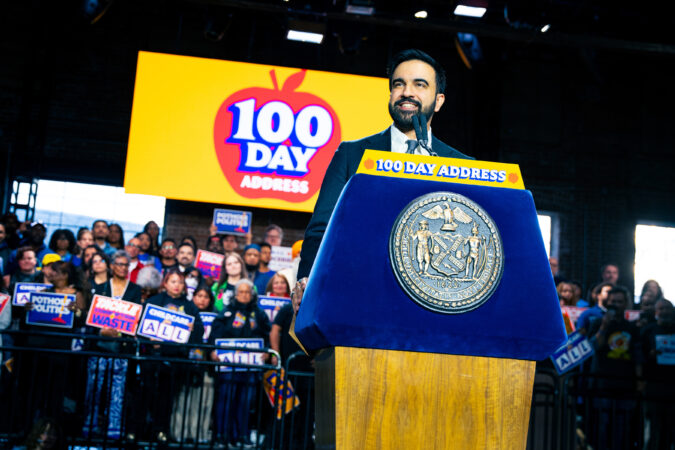
    The biggest city in the country is led by a democratic socialist, and another is in the running to lead the second biggest. Seattle has a socialist mayor. And in 2027, a democratic socialist will almost certainly be taking the reins of the nation’s capital.

    With her convincing victory in the Democratic primary in Washington last week, Janeese Lewis George, 38, became the latest candidate to claim victory with the once-forbidden “S word” in her biography and an ambitious left-wing agenda, promising to harness the power of municipal government to tackle the costs and challenges of urban living.

    Tapping into frustrations about housing and the cost of raising children, Lewis George pledged to greatly expand childcare assistance, build tens of thousands more homes and expand rent stabilization. Her critics derided those promises as unrealistic; voters ate them up.

    “I think people were like, ‘I don’t buy that the status quo is all we can do,’” Lewis George said in an interview. Instead, she said, they thought, “‘I want to see leaders do something more than tell people what they can’t do.’”

    Lewis George, who in a city as blue as Washington is close to a lock in the general election, joins a vanguard of young democratic socialists, including the new mayors of New York City and Seattle. Some are formal members of the organized Democratic Socialists of America, some not, but all have won on platforms of robust government action, arguing that the older Democratic establishment has failed.

    Democratic socialists say that solutions to challenges like the rising costs of childcare and housing lie in community organizing and direct government action, not the free market or timeworn tax incentives. While they cast themselves more in the mold of a mayor from Stockholm than Leningrad, they do not shy from confrontation with business interests, whether that means private utilities or landlords, oligarchs or plutocrats.

    Not everyone running from the left in big blue cities has won, as losers of the most recent mayoral races in San Francisco and Philadelphia can attest.

    But socialist success indicates an ascendant left — a generational movement as much as a political one — might have considerably more room to run.

    “We’re seeing real opportunities open up here,” said Kurtis Hagans, chair of the DSA chapter in the Washington metro area. “It’ll be interesting to see how the Democratic establishment wants to move forward into the midterms.”

    Zohran Mamdani, 34, who twice beat Andrew Cuomo, the former New York governor, in his unlikely rise to the New York City mayor’s office, is in many ways the lodestar for the rising brigade of democratic socialist candidates. He unapologetically pledged in his inauguration speech to “replace the frigidity of rugged individualism with the warmth of collectivism.”

    He has since moderated positions in deference to the political realities of governing a city of 8 million. He retained Jessica Tisch, a relatively moderate billionaire heiress, as police commissioner and ceded significant policy control to her. He has backed away from his vow to give up unilateral control of the school system, and from his pledge to expand an expensive housing subsidy program.

    He has developed a strong working partnership with New York Gov. Kathy Hochul, a relative moderate in the Democratic Party, and he has struck up a surprisingly amiable relationship with President Donald Trump, despite once characterizing him as a despot. “Sewer socialism,” with images of an army of volunteers shoveling snow or squads of pothole fillers, has become as much a Mamdani calling card as his campaign promise of free buses.

    The act of governing is the big test for a movement propelled by idealism and bold promises, along with a disenchantment with the compromises that its followers believe are too often made by those in power.

    But fiscal constraints on municipal government can be strict, particularly in Washington, a federal enclave subject to extensive congressional oversight. And at a time when Washington’s finances are suffering from the impacts of federal job cuts as well as a lingering pandemic downturn, the city has had a hard enough time paying for the social programs already in place.

    “Especially at the local level, governing is a practical affair,” said Mary Cheh, a former council member who endorsed Lewis George’s main rival in the primary but acknowledged the appeal of her message.

    “There will be some change, I’m sure,” she said. “But it’s not going to be all that they hoped for.”

    The limits of idealism have inevitably led to compromise and, at times, friction.

    In Los Angeles, Nithya Raman, 44, a City Council member and a democratic socialist, is in a runoff against Karen Bass, the Democratic mayor who is running for reelection. Raman’s ascent in 2020 coincided with the Black Lives Matter protests that rippled through big cities across the country.

    Support for Raman in her first race that year, against an incumbent on the City Council, became a kind of social shorthand for progressive politics at a moment when flying a Black Lives Matter flag outside of a home was de rigueur among Los Angeles’ wealthy liberals.

    But in recent years, Raman, as a council member, has broken with the DSA on some issues, including how to alleviate Los Angeles’ crushing housing crisis. While she and her DSA-aligned colleagues have both sought protections for poor tenants, Raman has also backed more development-friendly housing policies.

    Up the coast in Seattle, Katie Wilson, a self-identified socialist but not a DSA member, has largely avoided the ideological battles many had expected after her upset victory in November.

    Tension between Wilson and a Seattle City Council that is more moderate has so far led to negotiations rather than conflict, as when she agreed to turn on newly installed security cameras in the city’s stadium district during the World Cup, despite her initial opposition.

    Like many of her fellow politicians of the left, Wilson has made housing a priority. She promised to open 500 new shelter beds or emergency housing units by the start of the World Cup but appears to have fallen short by more than 400. She has pledged to build 1,000 new units by the end of her first year and 4,000 by the end of her four-year term, a tall order.

    “I certainly have a learning curve, but I don’t want to portray myself as coming in with some kind of unrealistic idea that this would be easy,” she said in an interview last month. “There’s the way things have been done for a very long time, and it takes a very long time to change that. I’m not surprised at where we’re at.”

    But at a time when voters across the political spectrum feel like government has stopped working for them, the promises of a robust and responsive public sector have clearly resonated among voters, regardless of the fiscal or partisan realities.

    “When people see you deliver on the small things,” Lewis George said, “they trust that you can also deliver on the big things.”

    This article originally appeared in The New York Times.

  • Iranian president lands in Pakistan as US-Iran teams work to finalize a war-ending deal

    Iranian president lands in Pakistan as US-Iran teams work to finalize a war-ending deal

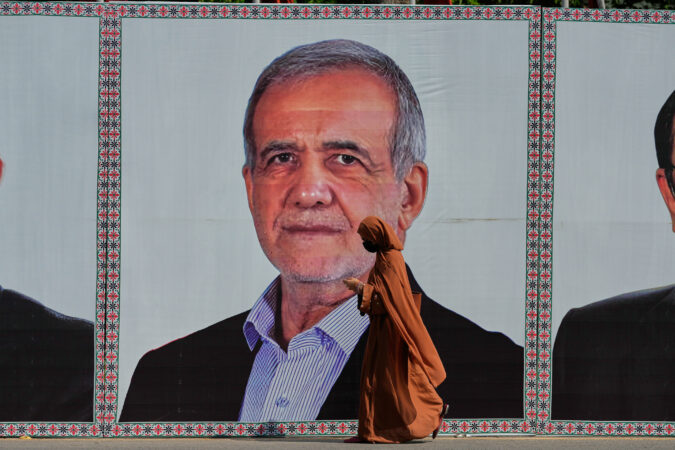
    ISLAMABAD — Iran’s president arrived in Pakistan for talks Tuesday with officials who have been mediating negotiations between Tehran and Washington on a permanent end to the war in the Middle East, even as discrepancies emerged on what had been agreed so far and violence broke out again in Lebanon.

    President Masoud Pezeshkian’s visit to Islamabad comes as technical teams were working on details of the deal following high-level negotiations in Switzerland on Monday led by U.S. Vice President JD Vance and Iran’s parliamentary speaker, Mohammad Bagher Qalibaf.

    In Tehran, Iran’s capital, Foreign Ministry spokesperson Esmail Baghaei told reporters that no visits have been scheduled for the U.N. watchdog — the International Atomic Energy Agency — to examine Iranian nuclear sites bombed by the United States last year. Vance previously said the negotiations in Switzerland won an agreement for the IAEA to inspect the sites.

    The IAEA has been in and out of Iran since Israel’s 12-day war in 2025, but has not been granted access to the bombed enrichment sites targeted by the U.S. at the time.

    Meanwhile, violence flared again in southern Lebanon as Israeli soldiers opened fire, killing two people. The reports of violence came after two days of calm following a ceasefire brokered on Saturday. Any renewal of heavy fighting could threaten the broader diplomatic talks, since Iran has demanded that a full truce in Lebanon be part of any comprehensive deal.

    Iran’s president makes his first visit to Islamabad since the war started

    President Asif Ali Zardari, Prime Minister Shehbaz Sharif and other senior officials received Pezeshkian upon his arrival in Islamabad amid tight security, according to Pakistani state media. Television footage showed Pezeshkian embracing Zardari and Sharif as they welcomed him.

    This is the Iranian president’s first visit since the conflict started with the U.S. and Israeli attack on Iran on Feb. 28.

    Pezeshkian and Sharif were to hold a joint news conference after their discussions.

    In the initial talks, marking the start of a 60-day diplomatic process that seeks to reach a permanent deal to end the Iran war, Iran and the U.S. agreed to create a “de-confliction cell” to address the fighting in Lebanon between Israel and the Iranian-backed Hezbollah militant group. The U.S. said negotiators also discussed “mechanisms” to ensure that the Strait of Hormuz, a key waterway for oil transit that Iran had effectively blocked during the war, remains open.

    Ahead of his meetings in Pakistan, Pezeshkian cautioned that “the effectiveness of the talks depends on full commitment to the agreed obligations and their precise implementation.”

    “Progress on this path will be measured by practical adherence to accepted responsibilities,” he wrote on X. “Statements outside the agreed text do not help advance the negotiations.”

    Iran says negotiation groups focused on sanctions relief, nuclear issues and more

    Iran suggested that the ongoing technical talks in Switzerland have led to the creation of specific negotiation groups, including those focused on sanctions relief, nuclear issues, reconstruction, and monitoring, according to the state-run IRNA news agency.

    The report quoted Kazem Gharibabadi, a deputy foreign minister leading the technical talks, saying that the countries involved also formed a contact mechanism over ships moving through the Strait of Hormuz and over the fighting in Lebanon between Israel and Hezbollah.

    It remains unclear whether the deconfliction cell being created will be enough to stop fighting between the Lebanese militant group Hezbollah and Israel, which occupies part of Lebanon and insists it must maintain a free hand to attack militants launching attacks into northern Israel.

    Israeli forces opened fire and killed two men in the southern Lebanese town of Nabatiyeh al-Fawqa on Tuesday, Lebanon’s state-run National News Agency reported, adding the pair were next to a bulldozer that was clearing the road at the time.

    Separately, the agency said Israeli troops fired on residents on the outskirts of the town of Hadatha as they were heading to carry out a burial in the town’s ceremony with a Lebanese army escort.

    There was no immediate comment from Israel.

    Discrepancy on Iran’s use of unfrozen funds

    Following the high-level talks in Switzerland, Vance had said if Iranian financial assets were unfrozen, they would be used to buy American-grown food.

    Vance said that the U.S. and Qatar would have approval over the process, but if Iranian money becomes accessible as sanctions are lifted, it “would actually go to buy American soy, American corn and American wheat for the benefit of the Iranian people.”

    However, Iran has no current demand for U.S. crops and Baghaei said on Tuesday that Tehran’s decisions on what to import would be based on “prices and quality.”

    “It is interesting that the philosophy and goal of the war, which was the destruction of the Iranian civilization and the collapse of Iran, has become enriching American farmers,” Baghaei said at the news conference in Tehran.

    Iran’s ambassador in Geneva, Ali Bahreini, also questioned Vance’s contention that the U.S. and Qatar would have to approve how Iran uses unfrozen funds.

    “Iran is the only country who decides what to do with those assets,” he told reporters.

    Netanyahu raises new questions over fragile Lebanon ceasefire

    Mediators Pakistan and Qatar said the cell would include the Lebanese government and would “ensure the adherence of the termination of military operations in Lebanon,” but Israeli Prime Minister Benjamin Netanyahu raised new questions late on Monday, saying his military still has “full freedom of action to thwart any direct or emerging threat to them or to the residents of the north.”

    Neither Israel nor Hezbollah is a signatory to the U.S.-Iran deal, and Netanyahu has vowed to keep his forces in southern Lebanon until any threat to Israel is eliminated. Hezbollah has refused to halt attacks unless Israel commits to withdrawing.

    When asked about Netanyahu’s comments, U.S. President Donald Trump later said “we’re going to take a look at it,” adding that he wouldn’t say what action he would take but that the situation would “get solved.”

    “I’m a problem solver, I get problems solved real fast, including with Bibi,” he said, using a nickname for Netanyahu.

    No Israeli airstrikes or shelling have been reported since Sunday, a day after a ceasefire was reached, and Hezbollah also has not claimed any attacks in what has been the longest halt in the fighting since the latest Israel-Hezbollah war erupted on March 2.

    Lebanon and Israel planned another round of direct talks in Washington on Tuesday, which are expected to focus on developing a plan for an Israeli withdrawal.

  • Judge blocks bans on using food stamps for sugary drinks and candy

    Judge blocks bans on using food stamps for sugary drinks and candy

    WASHINGTON — A federal judge on Monday blocked the Trump administration from barring the use of food stamps to buy sugary drinks and candy.

    Since last year, the Agriculture Department has approved waivers in more than 20 states that allow them to bar participants in the federal Supplemental Nutrition Assistance Program from using their benefits to buy soda, energy drinks, candy or other prepared desserts. In March, recipients in five states sued the agency over the waivers, arguing that the limits were unlawful and confusing and made it difficult to manage health conditions such as diabetes.

    Judge Amy Berman Jackson of the U.S. District Court in Washington, in a 68-page decision, agreed with the recipients that the Agriculture Department did not have the authority to approve the waivers and also failed to abide by a notice period. Monday’s decision was a rollback of restrictions that officials have characterized as a major achievement of the Make America Healthy Again movement.

    Jackson wrote that while the law allows for the department to approve projects related to the administrative and logistical efficiency of the SNAP program, the agency essentially “purports to waive not just a mere administrative or technical obstacle, but the very definition of ‘food’ as it was laid down by Congress.”

    “The federal defendants and the states may have a genuine desire to improve the health of SNAP households by encouraging healthy choices at the store, and they can take lawful steps to meet those goals,” she wrote. “But what they cannot do is violate the law and their own regulations along the way.”

    The case was brought by the National Center for Law and Economic Justice, a nonprofit that advocates on behalf of low-income people, and Shinder Cantor Lerner, an antitrust law firm.

    Katharine Deabler-Meadows, a senior attorney at the National Center for Law and Economic Justice, said in a statement that the decision was “a major step in restoring essential food assistance to the millions of families that rely on SNAP nationwide.”

    The Agriculture Department did not immediately respond to a request for comment about the ruling. A spokesperson for the agency had earlier told The Associated Press that it “will not be backing down from the fight to Make America Healthy Again.”

    This article originally appeared in The New York Times.

  • Letters to the Editor | June 23, 2026

    Letters to the Editor | June 23, 2026

    No auto bailouts

    No one is talking about bailing out Ford or General Motors today. But the conditions that led to the 2009 taxpayer rescue are quietly reassembling themselves — and Americans deserve to have this conversation before we are once again handed the bill.

    Both companies are struggling to keep pace with Tesla domestically and increasingly competitive Chinese automakers globally. Meanwhile, the federal government is rolling back electric vehicle mandates and weakening fuel economy standards at the urging of oil and gas lobbyists — policy shifts that artificially extend the relevance of internal combustion vehicles rather than forcing the adaptation these companies urgently need. This is not a free market. It is a system rigged to protect companies that have repeatedly failed to innovate, sustained by politicians whose campaigns are funded by the very industries they regulate.

    The jobs argument for protecting these companies is not without merit — but it cannot serve as a permanent shield against accountability. Bailouts do not save jobs forever. They delay the reckoning while burning public funds and rewarding poor decision-making. Companies like Tesla built a competitive EV business without that safety net. Penalizing them by rescuing their less disciplined competitors is neither fair nor good policy.

    The time to draw this line is now — before the lobbying intensifies, before the headlines turn dire, and before Congress is once again asked to choose between a bailout and a collapse. If Ford and General Motors cannot compete in a market they had every warning and resource to prepare for, the answer is accountability — not another taxpayer rescue.

    Kevin Ahern, Chalfont

    Cinder ball field

    Kudos to Matt Breen for his article on Fishtown’s “cinder soccer field.” It is a site that has legendary status in the history of local athletics — and not just in soccer. Lord knows where a softball would go when a line drive skidded on those loose cinders. And base runners would never slide into second base.

    The cinder field ranks right up there in Kensington lore with the softball fundraiser at Scanlon Recreation Center on Venango Street, where a New York Yankees outfielder named Babe Ruth once played for the Ascension Parish Catholic Youth Organization team. Keep the great stories coming, Matt.

    Gerard J. St. John, Drexel Hill

    Join the conversation: Send letters to letters@inquirer.com. Limit length to 150 words and include home address and day and evening phone number. Letters run in The Inquirer six days a week on the editorial pages and online.

  • Dear Abby | Worker feels targeted by colleague’s change in behavior

    DEAR ABBY: I’ve been employed at the same company for 17 years. I’m the youngest person in the department, and I love my job and the people I work with. One co-worker I used to be close to has a son the same age as mine, and they did sports together and went to each other’s birthday parties. I would invite her over to relax by the pool while our kids played.

    In recent years, that has changed. Her attitude toward me is different, and I don’t know why. Every chance she gets, she undermines me at work. She doesn’t communicate but rather makes assumptions and tattles to our supervisor and boss. She has purposely left me out in emails when we would chip in for a card and money for our supervisor’s gift for Christmas. Any mistake I make, she emails our boss and supervisor about it instead of coming to me.

    I’ve had a meeting with her and my supervisor and boss, but she used it to undermine me on other job duties she had no experience in. She has also said nasty things about me to her son, who repeated them to my son at school. I’m at my wits’ end here. Please tell me how to handle this.

    — DEFEATED CO-WORKER

    DEAR DEFEATED: It is one thing when a relationship is based on having kids the same age with similar interests. As the children grow older, the ties that bind those friendships can loosen. But what you have written to me is different. Your former friend seems to have it in for you — and appears determined to get you fired. This is why you should document every single dirty deed she has pulled, present it to your boss and tell him (or her) that this has been creating a hostile work environment, and you hope it can be stopped. (If it can’t be stopped, talk about this to an attorney.)

    ** ** **

    DEAR ABBY: I’m 23 and have been with my boyfriend for six years. We currently live with his parents. A year ago, I cheated on him, but I told him about it a few months ago. We’ve been trying to rebuild our relationship, but it’s hard. I have spent more than $1,000 on therapy, and I don’t know what else to do. He says he needs time to heal, but it has been six months, and he no longer even calls me “Love.” We have been going to church together, and he says he has hope for us.

    I don’t have any family where I live, and it’s too expensive to move out on my own and start over. I’m finishing school here. My goal is to move to North Carolina, but I don’t see that happening anytime soon, because he’s committed to staying here for law school. I love him, but I feel so alone and don’t know what to do. I want to get married and have kids soon, but I don’t want to start over or cause more hurt. What would you do?

    — CHEATER IN FLORIDA

    DEAR CHEATER: It’s time for you to move out so you can separate your feelings of dependence and affection. You wounded your boyfriend deeply, and that wound is not going to heal if you continue to pressure him. It’s up to him now to decide whether to forgive you, but you need to give him the space to make that decision. Because you want to have children “soon,” the reality is that you will have to “start over” either way, whether with him or someone else.

  • Horoscopes: Tuesday, June 23, 2026

    ARIES (March 21-April 19). Comfort can be indulgent, as in too much macaroni and cheese, or it can be productive, as in the way your favorite hoodie makes you feel calm and capable as you take on the day.

    TAURUS (April 20-May 20). When the director has a vision that the actor doesn’t share, there’s conflict on the set. Expect some version of this in a clash between two people, or an internal clash between two sides of yourself. Both sides have merit.

    GEMINI (May 21-June 21). Funny how one unanswered text can affect the mood of an entire afternoon. This semiotic experience will carry more emotional meaning than logic alone can explain. But you can’t assume a whole story from one tiny signal. There are still missing pieces.

    CANCER (June 22-July 22). Before you make things better, you’ll define what “better” looks and feels like for everyone involved. It will be much easier to create the result if you agree on what it is. Once you have a consensus, everything snaps together.

    LEO (July 23-Aug. 22). A circumstance used to frustrate you, and you reacted accordingly. Now you see the same scenario as a puzzle you can calmly solve, or even a game you can play for fun — a credit to your capacity for growth.

    VIRGO (Aug. 23-Sept. 22). No matter how certain a person may be, opinions are often shaped by emotion, bias and selective experience rather than solid evidence. Today’s best decision-making comes from observation, direct experience and verifiable facts. What can actually be confirmed?

    LIBRA (Sept. 23-Oct. 23). You’ll get a glimpse of who you are becoming over this blossoming season. The next iteration of yourself involves meeting new people, trying activities for the first time and participating in a different community.

    SCORPIO (Oct. 24-Nov. 21). Attraction thrives in mystery. Your imagination fills in the blanks. The collaboration with reality creates a compelling story. Enjoy the electricity without rushing to conclusions. Time will tell what’s real and what stays in the realm of fantasy.

    SAGITTARIUS (Nov. 22-Dec. 21). You are studying someone like an astronomer tracking a newly discovered star. Curiosity becomes its own form of pleasure. Let the experience expand your understanding of desire rather than narrow your world around one person alone.

    CAPRICORN (Dec. 22-Jan. 19). The heart will rehearse a relationship before it fully exists. You’ll imagine love’s future possibilities with stunning accuracy. Maybe it’s a case of self-fulfilling prophesy, so think the best! Your intuition is fully engaged.

    AQUARIUS (Jan. 20-Feb. 18). There will be a lack of consensus among your group. This is an opportunity for you to delight in using your executive functioning to find points of agreement and figure out the best next steps forward.

    PISCES (Feb. 19-March 20). A five-minute carnival ride can be a rush, but you’d rather have a whole day at the fair. So you pace your experiences, lending a slow and deliberate attention wherever possible. Sensory delights are to be savored.

    TODAY’S BIRTHDAY (June 23). You finally understand just how singular you are in this Year of Radiant Originality. You think deeply, ask different questions, have novel interactions and become known for the fun and interest you bring to groups. More highlights: Much teamwork and games, a substantial sale, and using your money so well that others will model and follow you. You’ll find closeness with sweet, complex and honest people. Leo and Capricorn adore you. Your lucky numbers are: 13, 2, 29, 5 and 18.

  • Giannis Antetokounmpo getting traded to Heat in blockbuster, AP source says

    Giannis Antetokounmpo getting traded to Heat in blockbuster, AP source says

    MIAMI — Giannis Antetokounmpo wants more championships. So do the Miami Heat.

    And the Heat finally have another superstar.

    Ending a marathon watch for the next great Miami get, the Heat landed Antetokounmpo — a two-time NBA MVP and 10-time All-Star — from the Milwaukee Bucks on Monday night in exchange for a massive haul of players and draft picks.

    The terms, according to a person who spoke to The Associated Press on condition of anonymity because the move has yet to receive the required league approval: Antetokounmpo and Bobby Portis are heading to Miami for Wisconsin native Tyler Herro, Jaime Jaquez Jr., Kel’el Ware and Kasparas Jakucionis. Milwaukee also gets at least four picks, including the No. 13 selection that will be made in Tuesday night’s NBA draft.

    Giannis Antetokounmpo was a two-time NBA MVP and 10-time All-Star with the Milwaukee Bucks.

    It ends a wild back-and-forth in the final days of the saga, with the Bucks considering offers from both Miami and Boston for Antetokounmpo — who led Milwaukee to the 2021 NBA title, was on the NBA’s 75th anniversary list of its greatest players ever, is a nine-time All-NBA selection and is coming off an injury-shortened season where he averaged 27.6 points per game.

    There has been no secret that this is what Miami has sought, because this is what Miami usually seeks. The Heat pulled off similar moves by landing Shaquille O’Neal in 2004 (helping lead to the 2006 NBA title) and by getting LeBron James and Chris Bosh to play alongside Dwyane Wade in 2010 (leading to four NBA Finals runs in four seasons together, along with the 2012 and 2013 NBA titles).

    Now, it’s Antetokounmpo’s turn. At 31, the Heat clearly believe he still has many good years left — and it’s generally presumed that by making this deal they’ll give the Greek superstar a massive extension later this year.

  • Clive Davis, recording executive and star-maker, dies at 94

    Clive Davis, recording executive and star-maker, dies at 94

    When Clive Davis showed up at the Monterey Pop Festival in 1967, he was a 35-year-old New York corporate lawyer and the newly appointed head of Columbia Records. Knowing “nothing about music,” he said, had not disqualified him from running the staid record company best known for classical recordings, Mitch Miller sing-along pop novelties, and Broadway cast albums.

    Grainy film footage from the festival shows him in the crowd, with his black glasses, receding hairline, and a white V-neck tennis sweater. Amid the long-haired, tie-dyed “Summer of Love” hippies, “I was the one who looked weird,” Mr. Davis said in a 2017 Netflix documentary about his life. “I was blown away.”

    The second act on the stage that day was Big Brother and the Holding Company, a San Francisco rock band fronted by Janis Joplin. “She was hypnotic,” Mr. Davis recalled of the then little-known singer. “I felt my spine tingle, my arms vibrate. I was overcome with emotion. This wasn’t just a social revolution, this was a musical revolution.”

    Mr. Davis persuaded Joplin to sign a contract with Columbia, then politely declined her offer for a celebratory sexual encounter, he wrote in an autobiography. She became the first of a legion of artists he would launch or rejuvenate into superstardom over a five-decade career in entertainment. The roster included Barry Manilow, Simon & Garfunkel, Bob Dylan, Johnny Cash, Aretha Franklin, Bruce Springsteen, Billy Joel, Aerosmith, Barbra Streisand, Miles Davis, the Grateful Dead, Patti Smith, Whitney Houston, Alicia Keys, and Carlos Santana.

    Mr. Davis, 94, an unlikely tastemaker who stoked the star-making machinery longer and more successfully than most of his rivals and became one of the most powerful executives in the recording industry, died June 22, his family posted on social media.

    “To the world, our father was the iconic music legend whose vision, instincts, and relentless pursuit of excellence shaped the soundtrack of countless lives,” Mr. Davis’ family wrote on Facebook. “He discovered, mentored, and championed the greatest artists in modern music history, leaving an indelible mark on culture that will endure for generations.”

    A winner of multiple Grammy Awards and inductee of the Rock and Roll Hall of Fame, Mr. Davis ran Columbia Records and later Arista Records, the latter a small label he built into an industry powerhouse. During his 25 years at Arista, he guided 200 singles to No. 1 on the Billboard charts. In 2000, his final year at Arista before being pushed aside, the company had more than $1 billion in revenue.

    Eye for musical talent

    Mr. Davis had an uncanny knack for spotting and adopting musical trends and embracing emerging young talent. “He has the mind of a banker and the ears of a teenager,” Manilow once said.

    Jann Wenner, founder of Rolling Stone magazine, said in an interview for this obituary that Mr. Davis “was instrumental in bringing modern white rock of my generation to the forefront” and developed a remarkable ear for music.

    “Clive once told me that he would take all the records in the top 100 home every weekend, and he listened to every single one of them,” Wenner said. “I never heard of anybody doing that so methodically. He kept abreast of everything commercial that was going on. He just loved it.”

    Music was decidedly not in his blood, Mr. Davis readily admitted in his 2013 autobiography, The Soundtrack of My Life, co-authored with Anthony DeCurtis. His taste in high school ran toward Bing Crosby and Frank Sinatra, and rock and roll had no appeal at all. He credited his visit to the Monterey Pop Festival as a turning point. Going there, he wrote, “I didn’t realize at all that I possessed skills that might ultimately distinguish me: the ability to recognize and nurture new artists; to help those artists create their best work; to bring that work to the marketplace and have it make a powerful impact.”

    He was instrumental in turning 19-year-old Houston into an international star after signing her in 1983, and he shepherded her career until her accidental drowning in a hotel bathtub, in 2012, on the day of Mr. Davis’ annual pre-Grammy party in Los Angeles. She had been a close friend — and was his most successful protégé, even though drug addiction and the pressures of fame undermined her career — and her death affected Mr. Davis deeply.

    Mr. Davis’ detractors criticized his obsession with hits and chart-topping singles, which they said he sometimes pursued at the cost of artistic considerations.

    “His energy, his testosterone, all his hormones were ignited by having the biggest No. 1 records,” singer-songwriter Carly Simon, an Arista artist who generally lauded Mr. Davis’s talents, told the New York Times in 2017. “He is on the side of the winner at all costs, and the cost can be very high.”

    At Columbia, Mr. Davis turned the company into a premier rock label and brought millions of dollars in revenue to CBS, the parent company. He was stunned when, in 1973, he was called into the office of Arthur R. Taylor, then CBS president, and fired for allegedly using $94,000 in corporate money to renovate his Central Park West apartment and for his son’s bar mitzvah.

    Mr. Davis denied the allegations. He accused a personal assistant of forging signatures, falsifying invoices, and committing other misdeeds involving his corporate account without his knowledge. His ouster coincided with housecleaning at CBS amid a larger grand-jury probe of payola and drugs — “drugola” — in the record business.

    In 1976, Mr. Davis pleaded guilty in U.S. District Court in Manhattan to one count of tax evasion for having failed to report $8,800 that the record company had paid for non-business-related trips. Other charges were dismissed, and he received a suspended sentence and paid a $10,000 fine. He later called the experience “the most humiliating moment of my life.”

    Mr. Davis staged a comeback by writing (with journalist James Willwerth) Clive: Inside the Record Business (1974), a best-selling account of his time in the music industry. That same year, he was lured to the failing Bell Records division of Columbia Pictures (no relation to Columbia Records).

    He rechristened the company Arista, the name of his Brooklyn high school honor society, and set out to build a top-notch team of industry veterans to grow the label. He signed artists such as Gil Scott-Heron, Lou Rawls, and Melanie, holding on to only two entertainers in Bell’s lineup — Melissa Manchester and the talented but still largely undiscovered Manilow.

    Mr. Davis embarked on an ultimately successful effort to remake Manilow into a defining pop star of the 1970s. This undertaking involved persuading Manilow to record songs that he hadn’t written but that could be propelled into hit singles. Among them was “Brandy” — soon renamed “Mandy” — that charted in 1975.

    In a key moment in their sometimes contentious relationship, Mr. Davis handed Manilow a number called “I Write the Songs.” Manilow, who considered it ludicrous to record a song with such a title when he had not written it, initially refused. His resentment festered and eventually led to an argument that ended with Mr. Davis declaring, “Well, if you were Irving Berlin, we would know it by now!”

    Even Manilow conceded Mr. Davis’s inerrant judgment when it came to matching a voice to music. “Clive believed it would be a number one record for me, that it would be a signature song,” he told Newsday in 1990. “And he was right.”

    Profound loss

    Clive Jay Davis was born in Brooklyn on April 4, 1932. His father was an electrician and, later, a traveling tie salesperson. His mother, with whom Mr. Davis was extremely close, died of a cerebral hemorrhage at 47 when Mr. Davis was 18 and a scholarship student at New York University.

    “It was the most profound loss of my life,” he wrote in his memoir. Eleven months later, his father died at 56 after a heart attack. Mr. Davis later said that losing both parents at such a young age left him with the sense that anything he loved and embraced in life could be taken away in an instant. But those losses also served to propel Mr. Davis’s career, leaving him with a resilient survivor’s instinct to push forward.

    After graduating from NYU in 1953, Mr. Davis received a scholarship that enabled him to attend Harvard Law School. He completed his law degree in 1956 and briefly worked at a New York law firm whose clients included CBS and its then-chairperson, William S. Paley. Mr. Davis joined Columbia Records in 1960 as an in-house counsel.

    In his autobiography, Mr. Davis revealed that he was bisexual and, later in life, had been in a long monogamous relationships with male partners.

    In an industry replete with ego and massive financial rewards, Mr. Davis’ longevity was remarkable. At Arista, he reinvigorated R&B singer Franklin’s stalled career, branched into rap and hip-hop, and launched Patti Smith when she was a young poet. He also survived the uproar that ensued when it was discovered that the German R&B duo Milli Vanilli hadn’t done the singing on its debut album and had lip-synced songs during TV and concert appearances.

    “Clive just seems to be ever-growing,” said Franklin in a 1996 Los Angeles Times interview. “He loves the music and appreciates his artists. He’s not just kicking back somewhere counting his money. He is a consummate record man who is constantly involved.”

    But in 2000, Mr. Davis was unexpectedly replaced by the head of BMG Music, Arista’s parent company, to make room for a younger leader. Mr. Davis refused to take a secondary role and threatened to leave. Startled at the thought of losing him, the head of BMG’s North American operations immediately offered to let Mr. Davis launch his own label with an initial investment from BMG of $150 million.

    Mr. Davis would get 50% of the profits, and he could take five major Arista artists with him. He founded J Records (after his middle name). In 2008, Mr. Davis became chief creative officer for Sony Music Entertainment.

    He liked to point out that he hadn’t dreamed of a career in music, especially one with such an extraordinary outcome. A 2001 Washington Post profile noted that he never stopped feeling “ravenous” for winning singles. “It’s always like the first day,” he said, “and it’s always like the first year. It’s not a chore, it’s just a particular mental attitude. I take none of this for granted.”