Tag: no-latest

  • A diocese tries to protect its 29-foot Jesus from Trump’s border wall

    A diocese tries to protect its 29-foot Jesus from Trump’s border wall

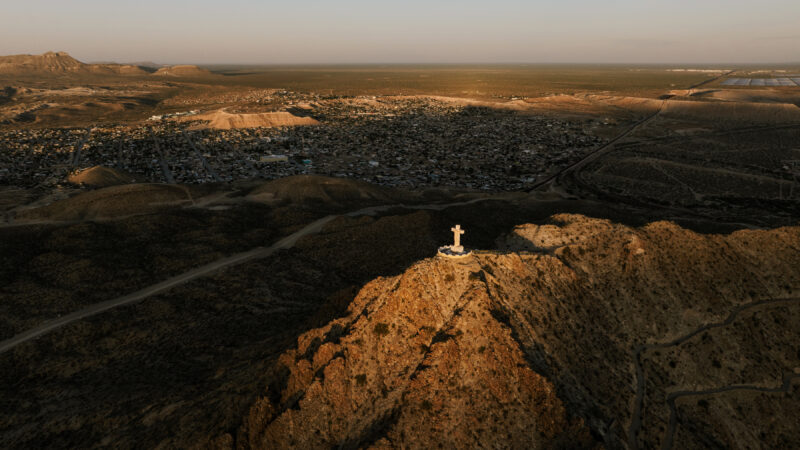
    LAS CRUCES, N.M. — At sunrise, when the day’s first golden glow washes over the 29-foot-tall limestone Jesus atop Mount Cristo Rey, Lourdes Castañon feels the presence of the divine. “The rays catch it,” he said, “and, oh man, I think I’m touching the face of God.”

    Countless pilgrims from around the world journey to the sacred site just on New Mexico’s side of the southwestern border, but Castañon fears for its future. At the mountain’s base, President Donald Trump wants to build his border wall, and the small Catholic diocese that owns the land is trying to stop it.

    The Department of Homeland Security is attempting to use eminent domain to seize 14 acres of desert from the diocese, based in Las Cruces, N.M., so it can raise about 1.5 miles of new wall. The church claims a towering steel barrier would desecrate a holy landmark and violate the religious liberties of those who wish to worship there.

    “It will look like a scar on Mother Earth,” said Castañon, 74, a volunteer with the Mount Cristo Rey Restoration Committee, an independent group that works to keep the site clean and accessible.

    Homeland Security sued to wrest control of the land from the diocese last month, offering about $180,000 as compensation. The diocese, which had pleaded with the Trump administration to consider alternatives to a wall, countered in court, arguing that the lawsuit flouted the First Amendment and laws to further protect religious freedom.

    “The wall is a physical manifestation of this government’s attitude toward migrants,” the diocese said Friday in a legal brief that detailed its arguments and included testimony from local bishops and others. “Nothing could be less Catholic.”

    The ongoing federal case is the latest example of opposition to a border wall Trump wants to extend across the entire southern frontier. Since Trump’s first term, aggrieved landowners, environmentalists, and Native American tribes have fought the president’s barrier-building, tying up government lawyers in court.

    The Trump administration has claimed broad authority over wall construction, but opponents have secured a few tentative wins, including this year in Texas’ Big Bend National Park, where U.S. Customs and Border Protection had to change plans after a bipartisan outcry.

    Now, an administration that holds itself up as a defender of the devout is facing off with Catholics asserting their freedom of religion.

    “This is not a battle between the church and the government; it’s a battle between symbols,” said Deacon Jim Winder, the chancellor of the diocese. “One is a 29-foot statue of Christ the King, which is meant to symbolize unity and hope, and the other is a 30-foot iron monstrosity that symbolizes exclusion and division. Our symbol was there first. The wall is an in-your-face insult.”

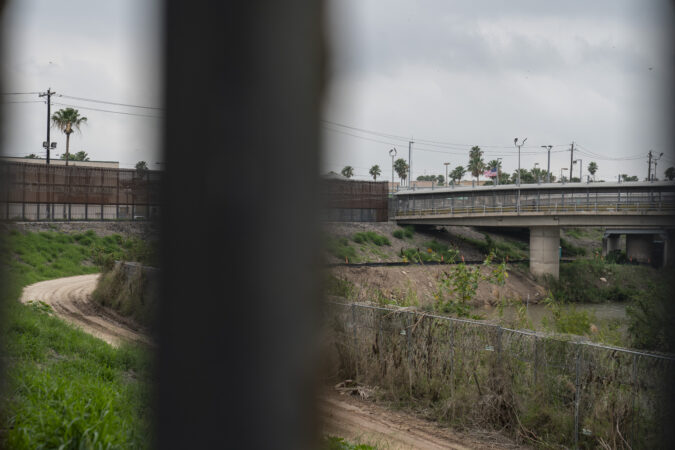
    Customs and Border Protection has acknowledged Mount Cristo Rey’s significance, but the agency has argued that the site is also popular for drug smugglers and human traffickers. The mountain is the only stretch of land in the area not fortified with tall fencing — Cristo Rey was long considered a natural barrier — and the federal government now sees the gap as a security problem.

    Part of the new segment will be built on federal land and the rest “will have no adverse impact” on Mount Cristo Rey, the government has said, because it won’t block the trail leading up to the Christ sculpture. Construction will occur several hundred feet below the statue.

    “Anyone who spent 30 seconds examining a map of Mount Cristo Rey and the southern border would realize how ludicrous these claims are,” John B. Mennell, an agency spokesperson, said in a statement, referring to the church’s arguments.

    Mount Cristo Rey, known also as Sierra de Cristo Rey, near El Paso, Texas, and the suburbs of Mexico’s Ciudad Juárez, saw its first pilgrim in the early 1930s, after a local priest, Father Lourdes Costa, gazed out his window at the distant peak and envisioned a soaring crucifix at its summit.

    Costa made the challenging trek and shared his premonition with the Diocese of El Paso, which purchased the land from the state of New Mexico. In the nearly 90 years since the sculpture was completed, hundreds of thousands of faithful have traveled to the top, some on their knees and others barefoot, over rough ground studded with yucca and creosote.

    It also attracted those looking to cross into the United States illegally. As migrant apprehensions soared, members of the restoration committee, among the mountain’s most frequent visitors, noticed an uptick in vandalism and crime at the site.

    Not all of Mount Cristo Rey’s devotees oppose the wall. Ruben Escandon, whose parents and grandparents preceded him as Cristo Rey caretakers, worried that border-related safety concerns have held the site back from being considered one of the world’s premier Catholic attractions, like the statue of Christ the Redeemer in Rio de Janeiro.

    He is opposed to Trump’s immigration agenda, he said, but the surrounding segments of the border wall are funneling migrants onto his cherished mountain. The barrier needs to be completed, he said.

    “It has nothing to do with immigration policies; it has to do with keeping Mount Cristo Rey safe,” said Escandon, a former police officer who specializes in performing cross-border marriages. “Hopefully it will allow the traditional visitor to come without fear.”

    But environmental and migrant rights groups say the new wall would disrupt a fragile desert ecosystem and make an already dangerous journey over the border more deadly.

    The diocese said it respects the Trump administration’s authority to secure the area. When Border Patrol officials asked in recent years to carve a roadway through Cristo Rey property, the diocese agreed and charged the government nothing. The church has not objected to the agency’s use of sensors and cameras around the mountain.

    But a wall is too far, Winder said.

    Barrier construction elsewhere has threatened or destroyed other cultural sites, including a 1,000-year-old Native American etching that federal contractors mistakenly bulldozed in Arizona this year. And the blasting involved in building near Cristo Rey could damage the statue, he said.

    Lawyers for the Justice Department have been pushing to accelerate the case, filing motions to condemn the property and take possession of it in quick succession. “Time is of the essence,” they argued, because the government has already contracted with construction companies and could be fined if the project is delayed.

    “We’re just getting run over,” Winder said.

    A Justice Department spokesperson, Natalie Baldassarre, said “the taking is authorized by law” and that it “will not impact activity or use of the shrine.”

    Kathryn Brack Morrow, an attorney for the diocese, said the government’s urgency was not justified.

    “This is a self-inflicted emergency,” Morrow said. “The diocese has raised weighty religious liberty concerns that warrant deliberate consideration.”

    Contractors have already begun working at the base of Cristo Rey. On a recent morning, 15-year-old Fernanda Vazquez hiked up the winding trail with her family and looked down at the ribbon of dirt where the wall may soon be built.

    “It just breaks my heart,” she said. “It just doesn’t seem right.”

    This article originally appeared in the New York Times.
  • Ukrainian attacks prompt Russian-held Crimea to halt civilian gasoline sales

    Ukrainian attacks prompt Russian-held Crimea to halt civilian gasoline sales

    Officials in Russia-occupied Crimea suspended civilian gasoline sales Sunday as Ukraine ramped up attacks on fuel supplies on the Black Sea peninsula.

    Gov. Sergey Aksyonov, the Kremlin-appointed head of Crimea, said that overnight Ukrainian strikes killed four people and wounded 28 others. He did not specify the target of the attack.

    He later wrote on social media that local gas stations would halt all sales to nonstate companies and individuals for an undefined period.

    “Fuel will be sold only to government agencies that ensure the functioning and security of the Republic of Crimea,” Aksyonov said. “I ask everyone to remain calm and to only trust official sources of information.”

    Ukrainian forces have repeatedly targeted fuel supplies to Crimea in recent weeks, triggering the worst energy crisis in the region since it was illegally annexed by Russia in 2014.

    Ukrainian President Volodymyr Zelensky said in a statement Sunday that a Crimean oil depot as well as an oil transport facility in Russia’s southern Krasnodar region were among the targets. He described the attacks as part of Ukraine’s “long-range sanctions” against Russia’s energy infrastructure.

    “Russia understands only strength, and our long-range strength is certainly working for peace,” he wrote.

    Russian officials in Krasnodar reported earlier Sunday that a drone strike sparked a fire at a Black Sea oil terminal in the village of Chushka. They said that Ukrainian attacks struck a ferry, killing one person.

    Motorists struggle to find fuel

    The Crimean peninsula has had periodic fuel shortages from Ukrainian strikes before, but the current crisis is the worst since its 2014 annexation.

    At the end of May, authorities restricted the sale of gas to 20 liters (5⅓ gallons) per vehicle owner per week, using prepaid coupons. Those were snapped up immediately following their release on an official messaging app channel, and motorists lined up for hours, waiting to refuel.

    Social networks have been abuzz with requests and advice on where to find fuel, and authorities launched a hotline for tourists in the area who have found themselves trapped.

    Some motorists bring their own gas from Krasnodar and elsewhere via the Kerch bridge, but they are restricted to carrying 100 liters (about 26½ gallons) per vehicle. Some speculators are selling gas at double the market price.

    In a rare public acknowledgment, the Kremlin has recognized the scope of the problem and promised to address the issue quickly.

    However, Ukraine’s successes have highlighted its ability to inflict painful damage on Russia and change the course of the conflict while Moscow’s advances recently have ground to a near halt. On June 11, Russia’s full-scale invasion of Ukraine reached its 1,569th day, surpassing the duration of World War I.

  • For cash-strapped farmers, deal to end Iran fighting comes too late

    For cash-strapped farmers, deal to end Iran fighting comes too late

    NASHVILLE, N.C. – The possible end of the Iran war will not cure the drought that has stunted the wheat crop. It won’t secure soybean export orders caught in the U.S.-China trade war. And it will do nothing to promote competition in agriculture, which would help farmers like Jeff Tyson earn a living.

    Like other growers, Tyson, 55, has seen costs outrun sales this year as the rain grew scarce and government policies added to his burdens.

    Now, the U.S.-Iran agreement to reopen the vital Strait of Hormuz and pursue a lasting peace offers some relief to farmers who have seen their fuel and fertilizer bills soar because of combat in the Persian Gulf. Diesel has not been cheaper since mid-March. Urea fertilizer in recent days sold for less than it did before the fighting began.

    But the financial damage has been done.

    President Donald Trump’s February decision to join Israel in attacking Iran aggravated the farm economy’s struggles. Soybean growers, who were already suffering from the president’s tariffs, are expected to lose money in 2026 for the fourth straight year.

    “There’s no joy left in this farm. When you work 16-hour days and get to the end of the year, and you have to borrow money to pay your taxes, there’s no fun in it. It’s just not worth it anymore,” said Tyson, a fourth-generation farmer, who long ago advised his daughters to look elsewhere for a good life.

    Tough times on the farm are souring some of the president’s most loyal supporters little more than four months before November’s congressional elections. Rural voters backed Trump’s economic policies by a 45% to 43% margin early last year but now disapprove of them 61% to 31%, according to a Reuters-Ipsos poll released this month.

    A separate Purdue University-CME Group survey this month showed that agricultural producers in particular have grown more downbeat. From a high of 75% in December, the percentage of those surveyed saying the country is headed in the right direction fell to 52% in May.

    Farmers represent a key constituency in states that could decide control of the U.S. Senate, including Iowa, Texas, Ohio, and Michigan, as well as North Carolina.

    The president’s signing Wednesday of an agreement that extends the ceasefire with Iran for 60 days follows a lengthy interruption to shipping through the Strait of Hormuz, which curtailed exports from three of the world’s top 10 producers of urea and anhydrous ammonia fertilizer: Saudi Arabia, Qatar, and Iran.

    “We’re not going to solve that just because we open the strait. There is still a very big wound there that is going to take time to heal,” said Josh Linville, vice president of financial services firm StoneX, who expects prices to remain higher than usual through next spring.

    On Saturday, conditions in the strait remained fluid. Iranian authorities declared the channel once again closed in response to Israeli attacks in Lebanon — underscoring the fragility of the agreement signed last week. U.S. Central Command denied there was a closure, and said that shipping had increased, with 55 merchant ships and 17 million gallons of oil reaching global markets. U.S.-Iran peace talks were planned for Sunday in Switzerland.

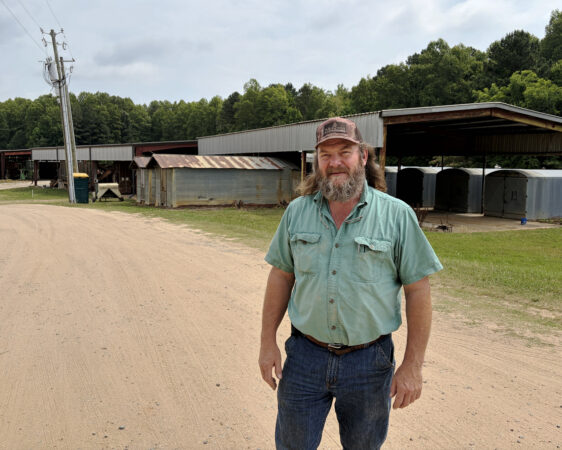
    About an hour’s drive east of Raleigh, Tyson raises soybeans, cotton, sweet potatoes, tobacco, corn, and sunflowers. He runs the operation from a small white house adjacent to a two-lane road. Several buildings and grain silos dot the property.

    With shoulder-length brown hair and a full beard, Tyson is profoundly disillusioned by Washington. Well-funded business lobbyists and entrenched government bureaucrats thwart the will of the people, necessitating a disruptive figure like Trump, he said.

    “I was involved with the [American] Soybean Association for 16 years. I thought I could make a difference,” he said. “I spent a lot of time in Washington and realized that it doesn’t matter. It doesn’t matter what you say out here or what you do out here.”

    Tyson remains supportive of Trump’s drain-the-swamp brio, though he objects to the double whammy of import tariffs and income taxes.

    Farmers have been among the biggest losers of the president’s trade wars. After China responded to Trump’s first-term tariffs by purchasing soybeans from Brazil rather than the U.S., he gave farmers $23 billion to offset lost export sales.

    Last year, his April decision to raise U.S. tariffs to their highest mark since the 1930s caused China to again retaliate by halting purchases of American soybeans. Annual sales slumped to just $3 billion from a 2022 peak of nearly $18 billion. Trump’s tariffs on steel and aluminum also translated into higher prices for tractors, combines, and harvesters as well as replacement parts. Separate levies first imposed in 2020 on phosphate fertilizer from Morocco were another irritant.

    Under pressure from larger harvests in South America, soybean prices are down by roughly one-third from their 2022 levels. The combination of higher input costs and lower sales prices leave many soybean farmers needing to borrow money.

    For loans in excess of $100,000, farmers face interest rates of nearly 7%, more than twice the figure from four years ago, according to data from the Federal Reserve Bank of Kansas City.

    “The returns for farmers have been really tough on the soybean side the past few years. They just generally haven’t been making much money,” said Scott Gerlt, chief economist for the American Soybean Association.

    Earlier this month, the administration reduced tariffs on agricultural equipment made of steel or aluminum, such as harvesters and combines, to 15% from 25%.

    The president also sought to reassure farmers by staging a White House event in March, where he promised easier environmental regulations and small-business loan guarantees. By then, $12 billion in farm aid designed to counter what the administration called “four years of disastrous Biden Administration policies” and other nations’ “unfair trade practices” was landing in farmers’ bank accounts.

    “We’re going to prove that the golden age of American agriculture is right here and right now,” Trump said.

    But the most consequential move came last fall when Trump and Chinese President Xi Jinping reached a truce in their trade war. In return for lower U.S. tariffs, Xi agreed to resume purchases of American soybeans.

    Almost 100 miles west of Tyson’s farm, Michael McPherson stood in a wheat field where his son-in-law and grandson baled straw. This plot sits among 1,000 acres of soybeans, corn, cattle, and hay that he and his family cultivate.

    McPherson, 57, was another financial casualty of the Iran war. The price of diesel, which powers tractors, jumped by nearly 50% in the weeks before his scheduled April 1 corn planting. Fertilizer costs rose as well. He waited a few days, hoping the market would reset. But crops are not patient. Eventually he had to swallow the extra expense.

    “It’s been a tough year, a tough season so far. Among everything else that’s going on, we’re in the worst drought we’ve ever had this time of year. That’s really putting us in a bind right now. None of our crops are where they’re supposed to be this time of year,” said McPherson, who expects to realize about half his usual harvest from this field.

    Though reluctant to talk politics, he applauds the Trump administration’s efforts to secure better trade terms for U.S. farmers even as he voices frustration with the Iran war.

    Before attacking, he said, the administration should have stockpiled fertilizer to spare farmers crippling price increases. Instead, the war’s costs have eroded profits and forced him to tap his financial reserves.

    “I don’t want to say we’re at crisis levels yet. But something’s got to change,” he said.

    Gary Hendrix, working with his wife and two sons, tills 7,000 acres of corn, cotton, soybeans, peanuts, and wheat in Raeford, about 100 miles east of Charlotte. He failed to turn a profit last year and continues to operate in the red.

    Production costs, including seed and fertilizer, are up about 20% or $100 per acre compared with last year. His last tank of diesel cost $32,000, versus roughly $19,000 in December.

    The Iran war’s end should mean less-expensive fertilizer. But Hendrix worries that the small number of suppliers will use their market power to keep prices high. One of his biggest complaints is the agribusiness consolidation of recent years.

    “It doesn’t really matter whether I’m buying or selling. If I’m trying to buy a tractor or if I’m trying to sell a load of soybeans. You know, I don’t have many places to go,” he said. “They can reserve a four-seat table at any restaurant and decide what my [profit] margin’s going to be.”

    Two companies — Nutrien and Mosaic — account for at least 86% of the phosphate and potash fertilizer market. In March, Bloomberg News reported that the Justice Department was investigating Nutrien, Mosaic, and three other producers for potential antitrust violations. The Federal Trade Commission last month said it had launched a related probe.

    In a statement, Mosaic said fertilizer prices are determined by “a wide range of well‑documented market factors,” not individual companies. Nutrien did not respond to a request for comment.

    Hendrix, a registered independent, said he voted for Trump in 2024. He is undecided about which party he will back in November’s congressional elections. But as the midterms draw near, he sounds lukewarm on the president.

    “He’s done some things that have really been a benefit to ag,” Hendrix said. “And he’s tried some other things that haven’t quite worked.”

  • Trump post seems to push Starmer to resign

    Trump post seems to push Starmer to resign

    LONDON — President Donald Trump appeared to scoop Downing Street on Sunday, announcing that Prime Minister Keir Starmer would resign before any public statement from Starmer himself.

    “Keir Starmer will resign as Prime Minister of The United Kingdom,” proclaimed in a social media post, in which he also asserted that Starmer had “failed badly” on immigration and energy policy.

    Then, Trump added: “I wish him well!”

    Doubts about Starmer’s political future have swirled for weeks since his Labour Party suffered staggering losses in local elections in May, and prospects of a leadership challenge increased markedly on Friday after his most formidable rival, Greater Manchester Mayor Andy Burnham, won a special election for an open seat in parliament.

    Earlier on Sunday, British media had reported that Starmer was considering resigning. Still, Trump’s intervention represented an extraordinary foray into British domestic politics that left some veteran political observers stunned.

    “There is literally no boundary this American president will not bulldoze through,” ITV’s Robert Peston wrote on X.

    Peston also cited a cabinet minister who said that, despite Trump’s “scoop,” Starmer had “genuinely not made a decision to quit.”

    Broadcaster Piers Morgan called it “the final humiliation.”

    Downing Street told the Washington Post on Sunday evening that Starmer and Trump had not spoken over the weekend, raising questions about how the U.S. president came to make such a definitive prediction.

    But it also didn’t mean Trump was wrong about Starmer’s plans. A senior Labour Party MP told the Post on Sunday evening that some Labour Party lawmakers were “being briefed that he will step down tomorrow and that he realizes his position is untenable.”

    Speaking on the condition of anonymity because she wasn’t authorized to discuss the matter publicly, she added that Starmer “no longer has the confidence” of his peers and that it was “only right that he now steps aside.”

    However Trump reached his conclusion, the president’s ties with close European allies are increasingly strained. In recent days, Italian Prime Minister Giorgia Meloni accused Trump of lying after he claimed she had “begged” to have her photograph taken with him.

    Relations between Starmer and Trump have been rocky for months.

    Earlier this year, Trump branded Starmer “no Winston Churchill” during a dispute over Britain’s support for U.S. strikes on Iran, and the two leaders did not hold a bilateral meeting at the Group of Seven summit in France last week.

    Starmer led the Labour Party to a landslide election victory just two years ago, but has faced increasing pressure from within his own party and growing calls for him to step aside since the local elections in which Labour and the Conservatives lost badly to Reform UK, the populist party led by Nigel Farage, one of the key architects of Brexit, the U.K.’s departure from the European Union.

    Starmer on Friday vowed to fight any leadership challenge. He has not commented publicly on the matter since then, but briefings from senior lawmakers have suggested that he spent the weekend weighing his position.

    Some commentators have suggested that the question is no longer if Starmer will leave, but how, and when.

    The focus, they say, has shifted to choreography — whether Labour will stage a full leadership contest, with figures such as Wes Streeting, the former health secretary, also entering the race — or rally around a single successor.

    British politics have been remarkably unstable since the 2016 Brexit referendum. If Starmer does announce his resignation, it would usher in Britain’s seventh prime minister in a decade.

    In the special election last week, Burnham won a decisive victory against a Reform UK opponent — a win that for many Labour lawmakers provided a test case of whether Burnham could help reverse Labour’s dire poll ratings of late.

    Starmer, for his part, took to social media on Sunday only to comment on Father’s Day. “Being a dad is my great joy,” he wrote.

  • Can Trump sway another Latin American election? Here’s what to know.

    Can Trump sway another Latin American election? Here’s what to know.

    BOGOTÁ, Colombia — Colombians headed to the polls Sunday in the most polarized election in years, with voters choosing between the country’s governing leftist political movement and a President Donald Trump-endorsed right-wing outsider.

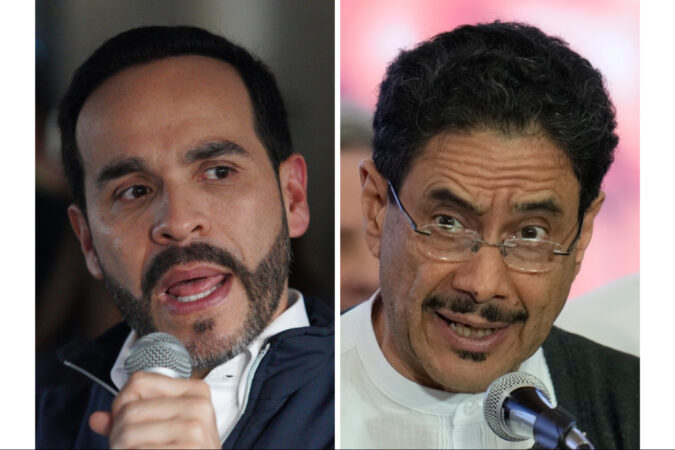
    The vote pits Sen. Iván Cepeda, a longtime human rights activist and ally of President Gustavo Petro, the country’s first leftist president, against Abelardo De La Espriella, a former criminal defense lawyer who vows a sweeping crackdown on guerrilla groups and drug-trafficking gangs.

    The high-stakes contest has drawn international attention following De La Espriella’s endorsement by Trump, who called Cepeda a “Radical Left Marxist.”

    The move marks the latest instance of Trump endorsing right-wing candidates in Latin American elections as the region increasingly shifts toward the right, driven in part by concerns over rising insecurity.

    Who are the candidates?

    Cepeda, 63, is a senator and well-known advocate for victims of Colombia’s decades-long armed conflict. He was also part of the negotiations that led to Colombia’s landmark 2016 peace deal with the Revolutionary Armed Forces of Colombia that was meant to help end that conflict.

    Running as the candidate of Petro’s party, he has pledged to preserve many of his policies, including anti-poverty programs, land redistribution efforts, and negotiations with armed groups.

    De La Espriella, 47, is a former high-profile criminal defense lawyer and businessperson with no previous political experience and who spent years living in Florida.

    Nicknamed “El Tigre,” or “the tiger,” he has campaigned as an antiestablishment outsider, though he has long been close to Colombia’s right-wing political power elites as a lawyer.

    Why has the vote spurred controversy in the U. S.?

    Some of De La Espriella’s campaign promises echo policies pursued by other Latin American right-wing leaders, such as Nayib Bukele of El Salvador and Javier Milei of Argentina. His platform includes building 10 megaprisons, shrinking the state, and collaborating with the United States to combat drug trafficking.

    He has also been known to legally pursue his opponents — including journalists. After he received Trump’s endorsement and the support of some Republican lawmakers, De La Espriella, a naturalized U.S. citizen, began warning that he would go after anyone who challenged him, with the assistance of the United States.

    Last week, Secretary of State Marco Rubio issued a memo saying that the presence of a progressive activist living in Arizona, Beto Coral, interfered with U.S. foreign policy after the activist criticized De La Espriella. Coral, 40, was detained by U.S. immigration authorities Tuesday, a move decried by Democrats in Congress and by rights groups.

    What are voters focused on?

    Along with complaints about Petro’s rocky four-year-term, voters cite concerns over crime and extortion and the growing power of armed groups in rural areas.

    Violence surged even during the campaign, which saw a presidential hopeful assassinated, two De La Espriella campaign workers killed, and Cepeda’s running mate briefly kidnapped.

    Critics say Petro’s flagship “Total Peace” strategy, which sought negotiated settlements with multiple armed groups, allowed those groups to grow stronger during ceasefires.

    Humanitarian organizations say violence has reached its highest level since the 2016 peace accord, but Colombia remains far safer than it was during the height of the conflict in the 1980s and 1990s.

    While De La Espriella says he will completely abandon peace talks and crush narcotrafficking groups within 90 days, Cepeda has said he will continue his own version of peace negotiations.

    The election is also seen as a referendum on Petro’s presidency. Supporters credit his government with expanding social programs, and increasing the political visibility of historically marginalized groups.

    But critics say his tenure has been marked not only by deteriorating security, but by a troubled state takeover of the health system and runaway spending that has left Colombia with a public debt that is at pandemic levels.

    Why the first round of voting was a surprise

    De La Espriella finished first in the opening round with 43.7% of the vote, compared with 40.9% for Cepeda.

    The result surprised many analysts. Despite complaints, Petro has maintained approval ratings above 50% and has created a broad coalition of movements that support the left. Cepeda enjoyed a comfortable lead in the polls into last month.

    Yet many voters instead turned to De La Espriella, a political newcomer who promised a clean break not only with the left, but with traditional parties and the “same ones as always.”

    Since the first round, most polls have shown De La Espriella holding the lead. However, analysts note that the right-wing candidate’s increasingly strident language has worried more middle-of-the-road Colombians, making it harder to predict whom undecided voters will support.

    After May’s first round, Petro claimed electoral fraud without evidence, raising concerns that he could refuse to accept the results of Sunday’s election or call for protests.

    When are results expected?

    Polls were open from 8 a.m. to 4 p.m. local time. Preliminary results were expected within hours of the polls closing.

    This article originally appeared in The New York Times.

  • France restricts public drinking and outdoor sports as heat wave bakes parts of Europe

    France restricts public drinking and outdoor sports as heat wave bakes parts of Europe

    PARIS — France sizzled Sunday, canceling trains, concerts, and sports events and cracking down on public drinking as an exceptional heat wave unfurled across parts of Europe. Multiple drownings were reported as people sought relief in whatever water they could find.

    About a third of France is under ‘’red alert″ heat and temperatures reached 104 degrees Fahrenheit in some areas, in a country where air-conditioning isn’t widespread. The forecast for Monday is even hotter.

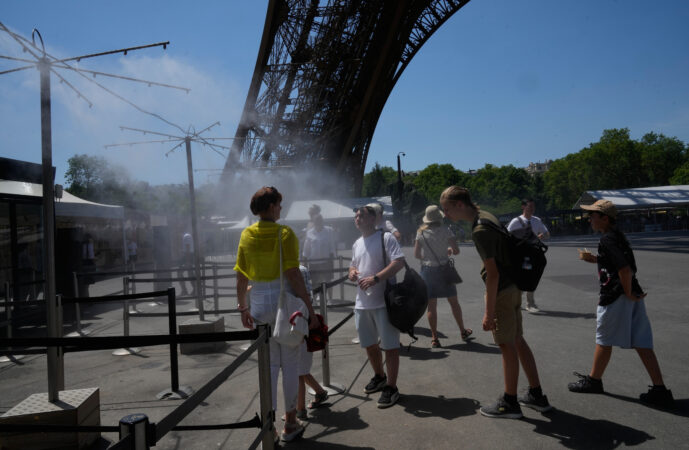
    The Eiffel Tower and other Paris venues set up misting stations to cool crowds, among a raft of measures introduced by authorities to minimize risks. Tourists in Rome dunked in fountains. Spain’s Basque Country canceled some sports and cultural events.

    More than 200,000 people across Europe died from heat-related causes over the last four years, and most of the fatalities were preventable, the World Health Organization’s Europe office said this month. More above-average temperatures are expected this summer, which can cause heat exhaustion and life-threatening heat stroke.

    Human-caused climate change is tied to increasing extreme weather events and U.N. climate agency projections say the next five years should shatter more heat records. A rapid study found that human-caused climate change was responsible for killing about 1,500 people in an unusually early European heat wave in May.

    In this latest European hot spell, French media reported that four children drowned Saturday. Summer drownings are an annual problem that health authorities say worsens during hot spells.

    Solstice parties draw large crowds in extreme heat

    France’s annual Music Day on Sunday was of particular concern. The nationwide summer solstice celebration involves thousands of concerts in village squares, rave venues, and Paris clubs, bringing communities together and increasingly drawing British and other international visitors. Some of the concerts outside Paris were canceled.

    The French government banned public drinking in ’’red alert″ zones, and ordered organizers of music day events to limit alcohol consumption to “preserve emergency services and allow medics to concentrate on taking care of the most vulnerable.”

    Scores of French trains were canceled, and the national rail authority dispatched thousands of extra staff to deal with potential problems as the heat threatened rails and electrical cables.

    Authorities are notably worried about people living in the baking streets, and elderly people in nursing homes or isolated in their homes. About 15,000 older people died in France in a 2003 heat wave that became a national reckoning.

    The government mobilized emergency services and military forces for reinforced wildfire readiness, imposed tightened surveillance of water supplies to France’s many nuclear reactors, and ordered 845 schools to close Monday.

    Spain, Italy, Germany swelter as tourists seek relief

    Spain kicked off the summer with large parts of the country on alert due to temperatures expected to hover around 104 F — even in the interior of Basque Country, a northern region that typically experiences cooler temperatures.

    Authorities have suspended outdoor sports and cultural activities in the region. The heat wave is expected to scorch Spain at least through Wednesday.

    In Italy, authorities expanded heat warnings — referred to locally as “red flags” — to eight cities Sunday in northern and central parts of the country. Temperatures there are mostly in the high 90s to low 100s F.

    At one farm outside Milan, owners set up fans and sprinklers to keep cows cool, while visitors to Milan Fashion Week huddled under parasols and clutched fans. In Rome, tourists dunked their arms and occasionally their faces into the city’s famed fountain pools.

    The German Weather Service is forecasting temperatures of up to 98 F for Monday and Tuesday, and up to 102 F Wednesday.

    A 23-year-old man drowned Saturday in a lake near Rheinstetten in the southwestern region of Baden-Württemberg, the German news agency dpa reported. Three other people are missing after swimming in the Rhine River, a police spokesperson told dpa.

    Britain’s weather office has issued an “extreme heat” warning for much of southern England and parts of Wales from Monday until Thursday, saying temperatures could reach 100 F. The current record for a June day is 96 F, reached in 1976.

    Thunderstorms also threatened regions in Germany and Poland.

    French Prime Minister Sebastien Lecornu convened a new government heat crisis meeting Sunday, and ordered government ministers to plan for better adapting France to heat waves in the future — including “via air-conditioning, if necessary.”

  • Letters to the Editor | June 21, 2026

    Letters to the Editor | June 21, 2026

    Mixed on strategy

    Solomon Jones’ most recent column regarding his lack of concern about Graham Platner’s ethics was dead on. We need a new generation — warts and all — to fight for us and rebuild the Democratic Party. Just look at some of the wins in New York City, New Jersey, Virginia, etc. Just look at Andy Kim’s challenge to the “County Line” on ballots and his win. I’m only 73, for God’s sake, and I want to see younger, more progressive candidates get in the trenches and fight for us. I want this country to move forward again, not backward. It’s time to remove the bigots, racists, and sexists who are ruining our country and elect some candidates who can truly make us great.

    Vince McGinley, Haddon Heights

    In his recent column, Solomon Jones states that to fight Donald Trump’s presidency we should look past character and apply the same principles the Trump team has. When did character no longer matter? You never fix a wrong with another wrong; it simply doesn’t work. If character no longer matters, have we hit rock bottom?

    Robert Galasso, Cherry Hill

    End Gaza’s suffering

    I appreciated the recent Associated Press story about the continuing crises in Gaza, even though the content is grim and distressing to read. We needed to be reminded that the suffering is not over. We have been distracted by the crazy, dangerous, and damaging actions by a failed presidency that has allowed Israel to continue its devastation of the people of Gaza. Without international pressure to stop, Israel has continued to kill Palestinian civilians, squeeze them into less and less territory, and resist all but token attempts at providing necessary food, shelter, and medical care to the beleaguered populace.

    Since the U.S. was complicit in prosecuting this tragedy, that gives us considerable leverage to end it. We need to stop being war enablers to become war resisters. If the president is incapable of understanding the urgency, we need to tell Congress to take control and to establish a clear policy that calls for an end to bloodshed, and the initiation of a massive, international effort to relieve and rebuild Gaza.

    We are a great country, we’ve done this before, and we can do it again.

    Norman K. Janes, Haverford

    Join the conversation: Send letters to letters@inquirer.com. Limit length to 150 words and include home address and day and evening phone number. Letters run in The Inquirer six days a week on the editorial pages and online.

  • Horoscopes: Sunday, June 21, 2026

    ARIES (March 21-April 19). Your summer superpower is assertiveness. You’ll see the opportunity in each scenario, ask for what you want and seize the moment. Keep the manners, lose the apologies and remember the overall good of the group.

    TAURUS (April 20-May 20). Your summer superpower is timeliness. You’ll plan when it’s necessary, act when you feel it and relax when it’s time to take it all in. Keep the high standards for yourself, lose the expectations of others and remember patience.

    GEMINI (May 21-June 21). Your summer superpower is confidence. You’ll light up rooms, inspire loyalty and attract exactly the attention needed to move your plans forward. Keep the generosity, lose the pride and remember that admiration feels best when it’s shared.

    CANCER (June 22-July 22). Your summer superpower is discernment. You’ll know what’s worth your time, what needs fixing and what should simply be left alone. Keep the devotion, lose the perfectionism and remember that joy is productive, too.

    LEO (July 23-Aug. 22). Your summer superpower is connection. You’ll bring the right people together, smooth over tension and create beauty wherever you go. Keep the charm, lose the indecision and remember that harmony sometimes requires honesty first.

    VIRGO (Aug. 23-Sept. 22). Your summer superpower is magnetism. You’ll draw people, opportunities and revelations toward you without forcing a thing. Keep the passion, lose the suspicion and remember that vulnerability creates stronger bonds than control ever could.

    LIBRA (Sept. 23-Oct. 23). Your summer superpower is optimism. You’ll expand your world through travel, risk-taking and saying yes to experiences that wake you up again. Keep the enthusiasm, lose the restlessness and remember that freedom means choosing what matters most.

    SCORPIO (Oct. 24-Nov. 21). Your summer superpower is focus. You’ll make steady progress while everyone else gets distracted by heatwaves and chaos. Keep the ambition, lose the rigidity and remember that pleasure can fuel success instead of interrupting it.

    SAGITTARIUS (Nov. 22-Dec. 21). Your summer superpower is intuition. You’ll sense what people need before they say a word and create moments that bring everyone closer together. Keep the tenderness, lose the self-protection and remember that not everyone earns access to your inner world.

    CAPRICORN (Dec. 22-Jan. 19). Your summer superpower is originality. You’ll spot trends before they arrive and imagine possibilities other people completely miss. Keep the independence, lose the detachment and remember that community strengthens your vision.

    AQUARIUS (Jan. 20-Feb. 18). Your summer superpower is imagination. You’ll dream vividly, create beautifully and pick up on emotional undercurrents other people overlook. Keep the compassion, lose the escapism and remember that boundaries protect your peace, not diminish it.

    PISCES (Feb. 19-March 20). Your summer superpower is curiosity. You’ll stumble into the right conversations, collect surprising opportunities and charm your way through changing circumstances. Keep the openness, lose the overthinking and remember the value of listening as closely as you speak.

    TODAY’S BIRTHDAY (June 21). It’s a Mystery School Year in the Ancient Greek sense, in which you’re challenged before receiving sacred knowledge. You emerge with sharper intuition, deeper self-trust and the powerful ability to recognize illusion versus truth. More highlights: You’ll connect often with friends for games and laughs. A project gets you seen by people who will pay you well and elevate your work. Pisces and Taurus adore you. Your lucky numbers are: 15, 3, 20, 16 and 7.

  • Dear Abby | Widower boyfriend still acknowledges wedding anniversary

    DEAR ABBY: I have been dating a wonderful man for 10 months. He was married for 45 years until his wife died after a five-year illness. He is kind, thoughtful, smart, generous and romantic. Our relationship is exclusive, and things could hardly be better.

    Recently, he and one of his grown daughters and her family gathered for dinner to commemorate his wedding anniversary. I thought it was a little strange. She has been gone for two years, and I found myself feeling somewhat hurt. I wasn’t invited to the dinner, which doesn’t bother me, but I can’t escape the feeling that, on some level, he still feels married. Accordingly, I feel as though I’m dating a married man, which I would never do.

    As we are not able to easily work through this, he suggested I write you and get your take. Am I being unreasonable and reading too much into this? Is it possible that he is not yet ready for a new relationship? Should I request (or insist) that he refrain from such “celebrations” in the future?

    — NOT A CHEATER IN INDIANA

    DEAR NOT A CHEATER: Your gentleman friend had nearly 50 years of history with his late wife. If he and their adult children chose to celebrate the anniversary of their marriage, it was no skin off your nose and you shouldn’t have taken it so personally.

    If the two of you were to marry, one would hope he and his family would celebrate the present and the future. Even if they didn’t, if you love this man and want to be accepted by his family, you would be foolish to insist he stop something they find comforting. It wouldn’t go down well. Trust me on that.

    ** ** **

    DEAR ABBY: I am in a relationship with a much younger man. We are both adults and love each other. There’s no doubt that we want to be together and enjoy our lives together. But his family keeps trying to get him to leave me, despite his explaining to them that he’s happy and this works for us.

    All of this makes me uncomfortable when the family gets together, but I go to support him, and he wants me there. They love him but they don’t give him support when he needs it. I have been there for him through his toughest times. How do I get them to understand?

    — OLDER WOMAN IN THE MIDWEST

    DEAR OLDER: It is not your responsibility to convince your boyfriend’s family of anything. He should tell his family that he doesn’t want to discuss the subject when they bring it up. He should also refrain from sharing it with you.

    With time, his relatives will realize that your relationship is a lasting one. If, however, they deliberately make you uncomfortable when you have to see them, limit the amount of time you spend in their presence.

    ** ** **

    DEAR READERS: Happy Father’s Day to fathers everywhere — birth fathers, stepfathers, adoptive and foster fathers, grandfathers, and all of you caring men who mentor children and fill the role of absent dads. P.S. Also, a big shoutout to dual-role moms. I applaud you all — today and every day.

    — LOVE, ABBY

  • No end in sight for U.S. military mission along border with Mexico

    No end in sight for U.S. military mission along border with Mexico

    WASHINGTON — For more than a year, the Pentagon has deployed about 9,000 active-duty troops along nearly 2,000 miles of the southwest border to confront migrants, smugglers, and drug cartels.

    The troops are still there — at a cost of tens of millions of dollars each week — even though the Trump administration months ago largely achieved its goal of slashing illegal crossings.

    The military patrols, working closely with Customs and Border Protection as well as the Mexican military, have pushed Mexican cartels and smugglers into more remote mountainous areas to evade detection.

    But threats to U.S. troops are on the rise, U.S. officials say.

    Some members of Congress have questioned whether the patrols are the best use of active-duty troops who would otherwise be training for deployments to Eastern Europe, the Middle East, or the Indo-Pacific. Lawmakers and independent analysts have voiced concerns that the border missions will distract from training, drain resources, and undermine readiness.

    The mission marked a milestone late last month when its third commander, Maj. Gen. Curtis D. Taylor of the Army’s 1st Armored Division, took control of one of the centerpieces of the Trump administration’s Western Hemisphere security policy.

    Challenges abound for the troops involved in the mission, which the military calls Ardent Vanguard.

    Cartel activity increased along the border in February after Mexican forces, aided by the CIA, killed a notorious Mexican cartel leader known as El Mencho. Soon after, U.S. service members discovered that their phones had been hacked, and they began receiving threatening messages, congressional officials said.

    “I’m very concerned about this operation and the safety of our Marines,” Rep. Sara Jacobs (D., Calif.), who sits on the Armed Services Committee, said at a hearing in March. “Our service members did not sign up for immigration enforcement, and this political stunt is putting their lives at risk.”

    While U.S. forces deployed to the southern border use several counterdrone systems, the general in charge of helping defend U.S. territory said that many troops lacked adequate technology for patrols.

    “It presents us a different challenge,” Gen. Gregory M. Guillot, head of the military’s Northern Command, said at a security conference in Tampa, Fla., last month. He noted the overall increase in anti-drone technology.

    Unlike the drone wars on the battlefields of Ukraine or Iran, there have been no drone attacks on either side of this border conflict and no U.S. casualties, military officials say.

    The mission to detect and interdict illegal activity across hundreds of miles of desert and mountainous frontier has also become a high-stakes proving ground for emerging technology, including counter-drone devices, remotely guided sea vessels, and advanced sensors.

    Guillot said at a change-of-command ceremony in Arizona last month that the military had for the first time conducted joint patrols with Mexican soldiers using encrypted radios and high-energy lasers to knock down potentially hostile cartel-operated drones.

    “My mission is to control the border,” Maj. Gen. David W. Gardner, commander of the 101st Airborne Division, said in a phone interview from Fort Huachuca, Ariz., before handing off the operation to Taylor. “We remain focused on the mission of sealing the border.”

    Asked about confronting the drones and other security threats posed by Mexican cartels, Gardner said that U.S. forces had disabled or knocked down drones that the cartels use to find new smuggling routes around the U.S. patrols.

    “The illicit actors are finding it more and more difficult to accomplish their objectives,” Gardner said.

    Sen. Jack Reed (D., R.I.), the top Democrat on the Armed Services Committee, expressed concern at a hearing last month that the border mission was siphoning money from important training missions. He said the Army faced a nearly $2 billion budget shortfall largely because the Department of Homeland Security had not reimbursed it for border-support missions.

    “I have received concerning reports about the potential for canceling training rotations, grounded flight hours, and reduced Guard and Reserve training resources,” Reed said, referring to the National Guard and Army Reserve. “These are real costs for real units.”

    But several commanders and some troops stationed along the border said in interviews — some of them recent — that serving in one of Trump’s highest-priority missions gave them purpose. They are using many of their skills — route planning, mission rehearsals, patrols, and surveillance flights — in the real world against criminal smuggling gangs and Mexican drug cartels, instead of just practicing at their home bases or in exercises, they said.

    There is no end in sight for the military mission on the border. The Pentagon said last May that the first four months of the operation cost $525 million. But the department declined to say what the total cost was now.