Tag: no-latest

  • Immigration enforcement arrives in Maine as a court freezes restrictions on tactics in Minnesota

    Immigration enforcement arrives in Maine as a court freezes restrictions on tactics in Minnesota

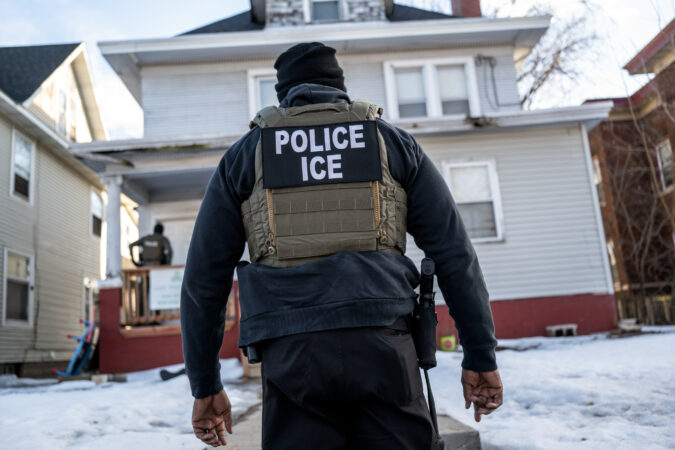
    MINNEAPOLIS — Maine became the latest target of the Trump administration’s immigration enforcement crackdown, while a federal appeals court on Wednesday suspended a decision that prohibited federal officers from using tear gas or pepper spray against peaceful protesters in Minnesota.

    The 8th U.S. Circuit Court of Appeals was persuaded to freeze a judge’s ruling that bars retaliation against the public in Minnesota, including detaining people who follow agents in cars, while the government pursues an appeal. Operation Metro Surge, an immigration enforcement operation in Minnesota’s Twin Cities, has been underway for weeks.

    Attorney General Pam Bondi praised the appeals court on X, saying the Justice Department “will protect federal law enforcement agents from criminals in the streets AND activist judges in the courtroom.”

    Minnesota is a major focus of immigration sweeps by agencies under the Department of Homeland Security. State and local officials who oppose the effort were served with federal grand jury subpoenas Tuesday for records that might suggest they were trying to stifle enforcement.

    A political action committee founded by former Vice President Kamala Harris is urging donors to contribute to a defense fund in aid of Gov. Tim Walz, her 2024 running mate.

    “The Justice Department is going after Trump’s enemies,” Harris’ email said, referring to President Donald Trump.

    Feds turn to Maine as next target

    In Maine, the Department of Homeland Security named the enforcement operation Catch of the Day in an apparent play on the state’s seafood industry. Maine has relatively few residents who are in the United States illegally but has a notable presence of refugees in its largest cities, particularly from Africa.

    Secretary of State Shenna Bellows, a Democrat, said she won’t grant a request for confidential license plates sought by Customs and Border Protection, a decision that reflects her disgust over “abuses of power” by immigration enforcers. Renee Good was fatally shot by an ICE officer in Minneapolis on Jan. 7.

    “We have not revoked existing plates but have paused issuance of new plates. We want to be assured that Maine plates will not be used for lawless purposes,” Bellows said.

    A message seeking comment from CBP was not immediately returned.

    Portland City Council member Pious Ali, a native of Ghana, said there’s much anxiety about ICE’s presence in Maine’s largest city.

    “There are immigrants who live here who work in our hospitals, they work in our schools, they work in our hotels, they are part of the economic engine of our community,” Ali said.

    Conflicts emerge in shooting incident

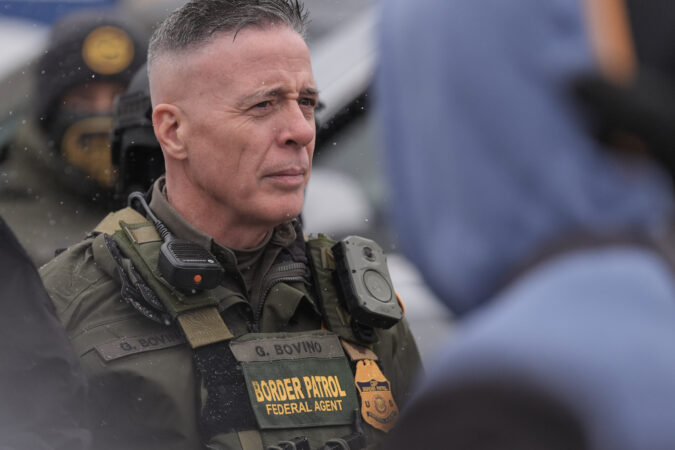
    Greg Bovino of U.S. Border Patrol, who has commanded the Trump administration’s big-city immigration crackdown, said more than 10,000 people in the U.S. illegally have been arrested in Minnesota in the past year, including 3,000 “of some of the most dangerous offenders” in the last six weeks during Operation Metro Surge.

    Bovino defended his “troops” and said their actions are “legal, ethical and moral.”

    Julia Decker, policy director at the Immigrant Law Center of Minnesota, said advocates have no way of knowing whether the government’s arrest numbers and descriptions of the people in custody are accurate.

    Separately, a federal judge said he’s prepared to grant bond and release two men after hearing conflicting testimony about an alleged assault on an immigration officer. Prosecutors are appealing. One of the men was shot in the thigh by the officer during the encounter last week.

    The officer said he was repeatedly struck with a broom and with snow shovels while trying to subdue and arrest Alfredo Alejandro Aljorna following a car crash and foot chase.

    Aljorna and Julio Cesar Sosa-Celis denied assaulting the officer. Neither video evidence nor three eyewitnesses supported the officer’s account about the broom and shovels or that there had been a third person involved.

    Aljorna and Sosa-Celis do not have violent criminal records, their attorneys said, and both had been working as DoorDash drivers at night to avoid encounters with federal agents.

    U.S. Magistrate Judge Douglas Micko said they still could be detained by ICE even if released from custody in the assault case.
  • Trump’s Board of Peace is dividing countries in Europe and the Middle East

    Trump’s Board of Peace is dividing countries in Europe and the Middle East

    JERUSALEM — Divisions emerged Wednesday over President Donald Trump’s Board of Peace as its ambitions have grown beyond Gaza, with some Western European countries declining to join, others remaining noncommittal and a group of Muslim countries agreeing to sign on.

    The developments underscored European concerns over the expanded and divisive scope of the project — which some say may seek to rival the U.N. Security Council’s role in mediating global conflicts. Trump is looking to form the board officially this week on the sidelines of the World Economic Forum meeting in Davos, Switzerland.

    Norway and Sweden said they won’t accept their invitations, after France also said no, while a bloc of Muslim-majority nations — Egypt, Indonesia, Jordan, Pakistan, Qatar, Saudi Arabia and the United Arab Emirates — said in a joint statement that their leaders would join.

    It was not immediately clear how many countries would accept. A White House official said about 30 countries were expected to join, and about 50 had been invited. Two other U.S. officials, who similiarly spoke on condition of anonymity to describe internal plans not yet made public, said roughly 60 countries had been invited but only 18 had so far confirmed their participation.

    Trump was sunny about the prospects ahead of an event Thursday tied to the board, saying of the countries that were invited that “some need parliamentary approval but for the most part, everybody wants to be on.”

    Chaired by Trump, the board was originally conceived as a small group of world leaders overseeing the Gaza ceasefire plan. But the Trump administration’s ambitions have since expanded into a more sprawling concept, with Trump hinting at the board’s role as mediator for other global conflicts.

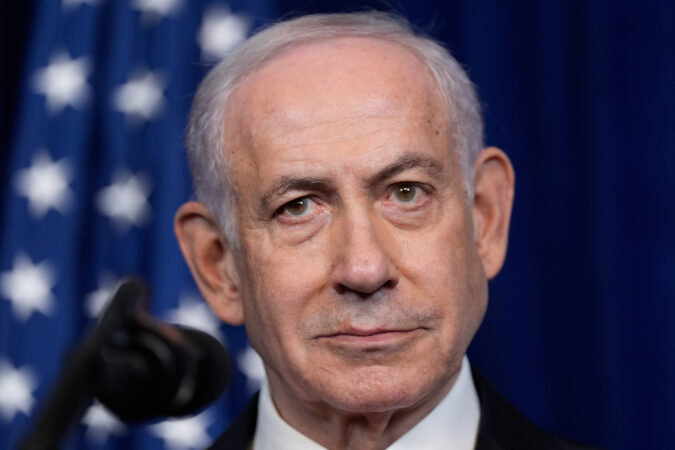
    Israel’s Prime Minister Benjamin Netanyahu said he’s agreed to join the board — a departure from an earlier stance when his office criticized the makeup of another committee tasked with overseeing Gaza.

    Norway and Sweden say no, following in France’s footsteps

    Norway’s state secretary, Kristoffer Thoner, said the Scandinavian country would not join the board because it “raises a number of questions that requires further dialogue with the United States.”

    Swedish Prime Minister Ulf Kristersson said on the sidelines of Davos that his country wouldn’t sign up for the board as the text currently stands, Swedish news agency TT reported, though the country hasn’t formally responded.

    Slovenian Prime Minister Robert Golob said “the time has not yet come to accept the invitation,” according to the STA news agency. The main concern is the board’s mandate is too broad and could seriously undermine international order based on the U.N. Charter, Golob said.

    France declined the invitation earlier in the week. French Foreign Minister Jean-Noel Barrot said, “Yes to implementing the peace plan presented by the president of the United States, which we wholeheartedly support, but no to creating an organization as it has been presented, which would replace the United Nations.”

    The United Kingdom, the European Union’s executive arm, Canada, Russia, Ukraine and China also have not yet indicated their response to Trump’s invitations.

    Several in the Middle East and beyond say they will join

    Parties key to the Gaza ceasefire — Egypt and Israel — have said they would join the board, as have Argentina, Armenia, Azerbaijan, Bahrain, Belarus, Hungary, Kazakhstan, Kosovo, Morocco, Uzbekistan and Vietnam.

    Netanyahu’s decision was significant because his office had previously said the composition of a Gaza executive committee — which includes Turkey, Israel’s key regional rival, and will work with those governing the territory day to day — was not coordinated with the Israeli government and ran “contrary to its policy,” without clarifying its objections.

    The move could now put Netanyahu in conflict with some of the far-right allies in his coalition, such as Israel’s Finance Minister Bezalel Smotrich, who has criticized the board and called for Israel to take unilateral responsibility for Gaza’s future.

    Many questions remain about the board. When asked by a reporter on Tuesday if the board would replace the U.N., Trump said: “It might.”

    White House names some officials to oversight boards

    The White House said an executive board will work to carry out the vision of the Board of Peace.

    The executive board’s members include U.S. Secretary of State Marco Rubio, Trump envoy Steve Witkoff, Trump’s son-in-law Jared Kushner, former British Prime Minister Tony Blair, Apollo Global Management CEO Marc Rowan, World Bank President Ajay Banga, and Trump’s deputy national security adviser Robert Gabriel.

    Rowan is a co-founder Apollo Global Management, a U.S. asset-management firm. The billionaire businessman is also a philanthropist who has supported projects in Israel, the U.S. Jewish community, and the University of Pennsylvania, where he and Trump both studied.

    Nickolay Mladenov, a former Bulgarian politician and U.N. Mideast envoy, is to serve as the executive board’s representative overseeing day-to-day matters.

  • Iranian state TV issues first official death toll from recent protests, saying 3,117 were killed

    Iranian state TV issues first official death toll from recent protests, saying 3,117 were killed

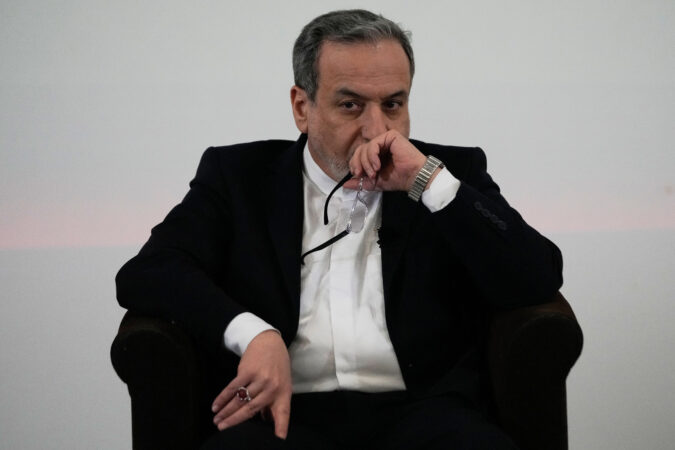
    DUBAI, United Arab Emirates — Iranian state TV on Wednesday issued the first official death toll from recent protests, saying 3,117 people were killed, while the foreign minister issued the most direct threat yet against the United States after Tehran’s bloody crackdown, warning the Islamic Republic will be “firing back with everything we have if we come under renewed attack.”

    State television carried statements by the Interior Ministry and the Martyrs Foundation, an official body providing services to families of those killed in wars, stating the toll and saying 2,427 of the dead in the demonstrations that began Dec. 28 were civilians and security forces. It did not elaborate on the rest.

    The U.S.-based Human Rights Activists News Agency said the death toll was at least 4,560. The agency has been accurate throughout the years on demonstrations and unrest in Iran, relying on a network of activists inside the country that confirms all reported fatalities. The Associated Press has been unable to independently assess the death toll.

    The comments by Foreign Minister Abbas Araghchi, who saw his invitation to the World Economic Forum in Davos rescinded over the killings, came as a U.S. aircraft carrier group moved west toward the Middle East from Asia. U.S. fighter jets and other equipment appeared to be moving in the Mideast after a major U.S. military deployment in the Caribbean saw troops seize Venezuela’s Nicolás Maduro.

    Araghchi makes threat in column

    Araghchi made the threat in an opinion article published by The Wall Street Journal. The foreign minister contended “the violent phase of the unrest lasted less than 72 hours” and sought again to blame armed demonstrators for the violence. Videos that made it out of Iran despite an internet shutdown appear to show security forces repeatedly using live fire to target apparently unarmed protesters, something unaddressed by Araghchi.

    “Unlike the restraint Iran showed in June 2025, our powerful armed forces have no qualms about firing back with everything we have if we come under renewed attack,” Araghchi wrote, referring to the 12-day war launched by Israel on Iran in June. “This isn’t a threat, but a reality I feel I need to convey explicitly, because as a diplomat and a veteran, I abhor war.”

    He added: “An all-out confrontation will certainly be ferocious and drag on far, far longer than the fantasy timelines that Israel and its proxies are trying to peddle to the White House. It will certainly engulf the wider region and have an impact on ordinary people around the globe.”

    Araghchi’s comments likely refer to Iran’s short- and medium-range missiles. The Islamic Republic relied on ballistic missiles to target Israel in the war and left its stockpile of the shorter-range missiles unused, something that could be fired to target U.S. bases and interests in the Persian Gulf. Already, there have been some restrictions on U.S. diplomats traveling to bases in Kuwait and Qatar.

    Mideast nations, particularly diplomats from Gulf Arab countries, had lobbied U.S. President Donald Trump not to attack Iran after he threatened to act in response to the killing of demonstrators. Last week, Iran shut its airspace, likely in anticipation of a strike.

    The USS Abraham Lincoln, which had been in the South China Sea in recent days, had passed through the Strait of Malacca, a key waterway connecting the sea and Indian Ocean, by Tuesday, ship-tracking data showed.

    A U.S. Navy official, speaking on condition of anonymity, said the aircraft carrier and three accompanying destroyers were heading west.

    While naval and other defense officials stopped short of saying the carrier strike group was headed to the Middle East, its current heading and location in the Indian Ocean means it is only days away from moving into the region. Meanwhile, U.S. military images released in recent days showed F-15E Strike Eagles arriving in the Mideast and forces in the region moving a HIMARS missile system, the type used with great success by Ukraine after Russia’s full-scale invasion in the country in 2022.

    Protest death toll rises

    The death toll exceeds that of any other round of protest or unrest in Iran in decades, and recalls the chaos surrounding the 1979 revolution that brought the Islamic Republic into being. Although there have been no protests for days, there are fears the toll could increase significantly as information gradually emerges from a country still under a government-imposed shutdown of the internet since Jan. 8.

    The first indication from authorities of the extent of casualties came Saturday from Iran’s Supreme Leader Ayatollah Ali Khamenei, who said the protests had left “several thousand” people dead and blamed the United States. The protests began over economic pressures but quickly broadened to take on the theocracy.

    The Interior Ministry statement Wednesday asserted that “terrorists used live ammunition that led to the deaths of 2,427 people and security forces.”

    The Martyrs Foundation said Iran would pursue what it called “terrorists” who it claimed were tied to Israel and “supported, equipped and armed” by the U.S.

    Nearly 26,500 people have been arrested, according to the Human Rights Activists News Agency. Comments from officials have led to fears of some of those detained being put to death in Iran, one of the world’s top executioners.

    That and the killing of peaceful protesters have been two red lines laid down by Trump in the tensions.

    Kurdish exiles claim Iranian attack in Iraq

    The National Army of Kurdistan, the armed wing of the Kurdistan Freedom Party, or PAK, claimed Iran launched an attack against one of its bases near Irbil, some 200 miles north of Baghdad. It said one fighter had been killed, and released mobile phone footage of a fire in the predawn darkness.

    Iran did not immediately acknowledge the attack, which would be the first foreign operation Tehran has launched since the protests started.

    A handful of Iranian Kurdish dissident or separatist groups — some with armed wings — have long found a safe haven in northern Iraq’s semiautonomous Kurdish region, where their presence has been a point of friction between the central government in Baghdad and Tehran. The PAK has claimed it launched attacks in Iran as a crackdown on the demonstrations took place, something reported by semiofficial Iranian news agencies as well.

  • Democrats seek to block Homeland Security funding over ICE concerns

    Democrats seek to block Homeland Security funding over ICE concerns

    House Democrats plan to vote against a negotiated funding bill for the Department of Homeland Security on Thursday to protest Immigrations and Customs Enforcement’s aggressive actions against U.S. citizens in Minneapolis and other cities.

    Thousands of ICE agents have been sent to Minnesota since December as part of a crackdown that DHS has described as the largest immigration enforcement effort in the agency’s history. An ICE agent shot and killed 37-year-old Renee Good this month, prompting mass demonstrations in the Twin Cities. A week later, another ICE officer shot an undocumented Venezuelan man in the leg during an arrest. ICE also began an operation in Maine on Wednesday.

    ICE agents have increased their presence across the country over the past year, which President Donald Trump and Homeland Security Secretary Kristi Noem have said is necessary to deport undocumented immigrants with criminal records. But agents have been taped on camera aggressively detaining individuals, including many U.S. citizens or undocumented immigrants without violent criminal records.

    House Democrats were initially poised to support the DHS funding bill because congressional appropriators worked in a bipartisan manner to cobble together the dozen individual pieces of spending legislation necessary to pass before the Jan. 30 deadline to fund the government and prevent another shutdown. But Good’s death incensed many Democrats and became a red line for the caucus, forcing Republican leaders to delay the measure’s consideration and put the bill on the floor for a stand-alone vote.

    Officials from the White House and Homeland Security did not immediately return a request for comment on the Democrats’ decision.

    Bipartisan members of the House and Senate appropriations committees negotiated the bill as part of a broader package of spending legislation before Democratic opposition became apparent. The bill would allocate $64.4 billion to Homeland Security, including $10 billion for ICE — on par with existing funding levels — and fund the Federal Emergency Management Agency, the Transportation Security Administration, the Coast Guard, and Customs and Border Protection.

    It would reduce funding for ICE’s enforcement and removal operations by $115 million, reduce the number of detention beds by 5,500, fund body cameras for agents, and reduce funding for Border Patrol. It does not include other changes Democrats pushed for, including prohibitions on ICE agents shooting at moving vehicles or detaining U.S. citizens.

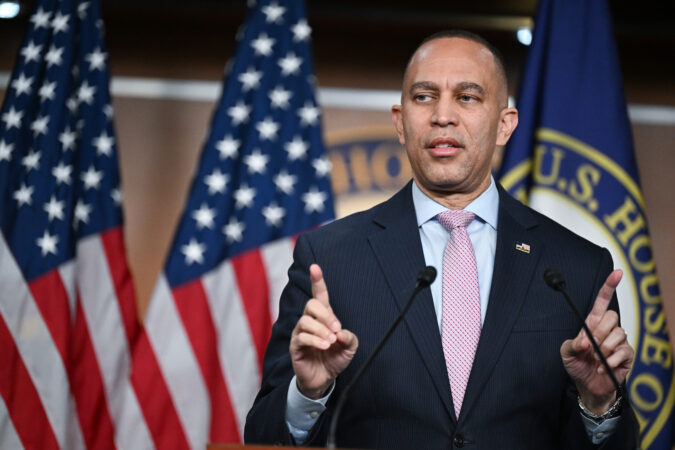
    During a Democratic caucus meeting Wednesday morning, House Minority Leader Hakeem Jeffries (D., N.Y.) and his lieutenants announced they would vote against the bill because, they said, ICE is running rampant across the country and the proposal does not include any significant steps to rein in agents.

    “These reforms aren’t enough. [ICE’s] lawlessness has to stop. And they’re only doing this because they can. They’re only doing this because the president of the United States wants to use them to terrorize communities,” Democratic Caucus Chair Pete Aguilar (Calif.) told reporters Wednesday.

    Democrats will introduce several amendments to the bill during a GOP-led House Rules Committee meeting Wednesday, their final hope to change the measure enough to back it. The amendments would block ICE agents from detaining and deporting U.S. citizens and bar agents from covering their faces during enforcement operations. It isn’t clear whether Republicans will vote against those proposals in the committee.

    “This is a time when so many people across the country, in every district, are saying, ‘What the hell is going on here?’” said Rep. Pramila Jayapal (D., Wash.), who introduced an amendment in the Rules Committee to bar ICE from using federal money to detain and deport U.S. citizens. “We’re just at this place where it is so serious. Where the First Amendment rights, Fourth Amendment rights, and Fifth Amendment rights are being so clearly violated every day — and that’s for U.S. citizens. Imagine what’s happening to people who are not U.S. citizens.”

    Republicans are aware they cannot rely on Democratic support to pass the legislation, and leaders have implored that all GOP lawmakers be present for Thursday’s vote to ensure its passage. If every member of the House is present and voting, Republicans can only afford to lose two votes to send the last of 12 appropriation bills to the Senate if all Democrats oppose it.

    The House is expected to hold separate votes on the DHS funding bill and a three-bill package of the other remaining appropriations bills on Thursday. Government funding expires on Jan. 30, and without an appropriations bill or a funding extension known as a continuing resolution, any agency that hasn’t had a spending bill enacted into law would shut down.

    Besides the outrage from Good’s death, Democrats are also feeling pressure from their electoral base to fight back against the Trump administration more broadly on immigration. Some lawmakers have begun to resurrect a demand leaders in the party have tried to tamp down for years: “Abolish ICE.” The slogan became a rallying cry during Trump’s first term, and many strategists say it ultimately cost the Democratic Party in subsequent elections as voters considered Republicans tougher on crime and border security.

    “Hey Democrats, if you have a problem with ICE — which many of them do, irrationally — you should not take down the appropriations bill because there are all these other areas of Homeland Security that are essential,” said Speaker Mike Johnson (R., La.), who noted that not funding DHS would impact preparations for America’s 250th celebration and the World Cup. “This is not a game.”

    Notably, House Democratic leaders are not whipping lawmakers to vote against the legislation, though most are expected to join them in opposing it. Several moderate Democrats who represent swing districts are weighing whether to support to bill rather than be targeted for voting against the border security agency.

    Others, including Rep. Henry Cuellar (D., Texas), who crafted the bill, argue that Republicans already locked in the bulk of DHS funding for ICE through their massive tax and immigration law, known as the “One Big Beautiful Bill.” That measure sent $75 billion for immigration enforcement to ICE, money which would continue uninterrupted even if the annual spending bill doesn’t pass.

    The top Democrats on the House and Senate appropriations committees, Rep. Rosa DeLauro (Conn.) and Sen. Patty Murray (Wash.) have also argued that denying funding for the agency would impact other key government services, such as TSA and FEMA, and that a short-term funding law would give the Trump administration wider latitude to make spending decisions at DHS.

    Aguilar said that the caucus is aware of those risks, but they will be voting against the package without “substantive” changes.

    “It’s unfortunate that the behavior of ICE is jeopardizing the Homeland Security bill,” he said.

  • House Republicans take first step to hold the Clintons in contempt of Congress in Epstein probe

    House Republicans take first step to hold the Clintons in contempt of Congress in Epstein probe

    WASHINGTON — House Republicans advanced a resolution Wednesday to hold former President Bill Clinton and former Secretary of State Hillary Clinton in contempt of Congress over the Jeffrey Epstein investigation, opening the prospect of the House using one of its most powerful punishments against a former president for the first time.

    The Republican-controlled House Oversight Committee approved the contempt of Congress charges, setting up a potential vote in the House. It was an initial step toward a criminal prosecution by the Department of Justice that, if successful, could send the Clintons to prison in a dispute over compelling them to testify before the House Oversight Committee.

    Rep. James Comer, the chairman, said at the start of the committee’s hearing that Clintons had responded not with “cooperation but defiance.”

    “Subpoenas are not mere suggestions, they carry the force of law and require compliance,” said Comer (R., Ky.).

    The Clintons argue that the subpoenas are invalid. Bill Clinton, President Donald Trump and many others connected to Epstein have not been accused of wrongdoing. Yet lawmakers are wrestling over who receives the most scrutiny.

    Nonetheless, there were signs of a potential thaw as the Clintons, both Democrats, appeared to be searching for an off-ramp to testify. In addition, passage of contempt charges through the full House was far from guaranteed, requiring a majority vote — something Republicans increasingly struggle to achieve.

    The repercussions of contempt charges loomed large, given the possibility of a substantial fine and even incarceration.

    While the charges have historically been used only as a last resort, lawmakers in recent years have been more willing to reach for the option. Comer initiated the contempt proceedings after the Clintons refused for months to fulfill a committee subpoena for their testimony in its Epstein investigation.

    The clash was the latest turn in the Epstein saga as Congress investigates how he was able to sexually abuse dozens of teenage girls for years. Epstein killed himself in 2019 in a New York jail cell while awaiting trial. The public release of case files has shown details of the connections between Epstein and both Bill Clinton and Trump, among many other high-powered men.

    Comer rejected an offer Tuesday from a lawyer for the Clintons to have Comer and the top Democrat on the committee, Rep. Robert Garcia of California, interview Bill Clinton in New York, along with staff.

    How the Clintons have responded

    The Clintons released a letter last week criticizing Comer for seeking their testimony at a time when the Justice Department is running a month behind a congressionally mandated deadline to release its complete case files on Epstein.

    Behind the scenes, however, longtime Clinton lawyer David Kendall has tried to negotiate an agreement. Kendall raised the prospect of having the Clintons testify on Christmas and Christmas Eve, according to the committee’s account of the negotiations.

    The Clintons, who contend the subpoenas are invalid because they do not serve any legislative purpose, also say they did not know about Epstein’s abuse. They have offered the committee written declarations about their interactions with Epstein.

    “We have tried to give you the little information we have. We’ve done so because Mr. Epstein’s crimes were horrific,” the Clintons wrote Comer last week.

    How contempt proceedings have been used

    Contempt of Congress proceedings are rare, used when lawmakers are trying to force testimony for high-profile investigations, such as the infamous inquiry during the 1940s into alleged Communist sympathizers in Hollywood or the impeachment proceedings of President Richard Nixon.

    Most recently, Trump’s advisers Peter Navarro and Steve Bannon were convicted of contempt charges for defying subpoenas from a House panel investigating the Jan. 6, 2021, riot by a mob of the Republican president’s supporters at the Capitol. Both Navarro and Bannon spent months in prison.

    The Jan. 6 committee also subpoenaed Trump in its inquiry. Trump’s lawyers resisted the subpoena, citing decades of legal precedent they said shielded ex-presidents from being ordered to appear before Congress. The committee ultimately withdrew its subpoena.

    No former president has ever been successfully forced to appear before Congress, although some have voluntarily appeared.

    The Democrats’ response

    Democrats have largely been focused on advancing the investigation into Epstein rather than mounting an all-out defense of the Clintons, who led their party for decades. They have said Bill Clinton should inform the committee if he has any pertinent information about Epstein’s abuses.

    A wealthy financier, Epstein donated to Bill Clinton’s 1992 presidential campaign and Hillary Clinton’s joint fundraising committee ahead of her 2000 Senate campaign in New York.

    “No president or former president is above the law,” Garcia said at the committee hearing.

    Democrats spent the hearing criticizing Comer for focusing on the Clintons when the Justice Department is behind schedule on releasing the Epstein files. Comer has also allowed several former attorneys general to provide the committee with written statements attesting to their limited knowledge of the case.

    The committee had also subpoenaed Ghislaine Maxwell, Epstein’s longtime confidant who is serving a lengthy prison sentence for a conviction on sex trafficking charges.

    “It’s interesting that it’s this subpoena only that Republicans and the chairman have been obsessed about putting all their energy behind,” Garcia said.

    Comer said the committee will interview Maxwell next month. Attorney General Pam Bondi will also appear before the House Judiciary Committee in February.

    Democrats embraced the call for full transparency on Epstein after Trump’s return to the White House, particularly after Bondi stumbled on her promise to release the entirety of the unredacted Epstein files to the public. The backlash scrambled traditional ideological lines, leading Republicans to side with Democrats demanding further investigation.

    The pressure eventually resulted in a bipartisan subpoena from the committee that ordered the Justice Department and Epstein estate to release files related to Epstein. Republicans quickly moved to include the Clintons in the subpoena.

    Comer has indicated that he will insist that the subpoena be fulfilled by nothing less than a transcribed deposition of Bill Clinton.

    “You have to have a transcript in an investigation,” he said. “So no transcript, no deal.”

  • ICE targeted off-duty police officers in Twin Cities, local police say

    ICE targeted off-duty police officers in Twin Cities, local police say

    Local law enforcement leaders in Minneapolis and St. Paul are raising concerns about Immigration and Customs Enforcement agents violating U.S. citizens’ civil rights, including those of off-duty police officers, as ICE has surged into Minnesota in recent weeks.

    Mark Bruley, police chief of the Minneapolis suburb Brooklyn Park, said at a Tuesday news conference that an off-duty police officer had been “boxed … in” by vehicles driven by ICE agents, who demanded with guns drawn to see paperwork proving the officer had a right to be in the United States. “She’s a U.S. citizen, and clearly would not have any paperwork,” he said.

    The officer attempted to begin filming the interaction and her phone was knocked out of her hand, Bruley said. When she identified herself as a police officer, the federal agents “immediately left,” he said.

    All of the off-duty police officers who had been targeted by ICE in his city were people of color, Bruley said.

    Asked about the police chief’s comments, the Department of Homeland Security said Wednesday morning that it had no record of ICE or Border Patrol stopping and questioning a police officer and could not verify the information without a name. The agency added that it would continue to look into the claims.

    DHS officials have repeatedly said agents are not racially profiling residents but only asking people in the vicinity of enforcement operations for identification.

    “I wish I could tell you that this was an isolated incident,” Bruley said, adding, “if it is happening to our officers, it pains me to think how many of our community members are falling victim to this every day.”

    At a news conference in Minneapolis on Tuesday, Border Patrol official Greg Bovino, called the immigration operation “a very professional, prudent and thoughtful law enforcement action.” Bovino is overseeing the federal enforcement effort.

    Asked about Bruley’s remarks, Bovino blamed local Democratic leaders, including Minneapolis Mayor Jacob Frey and Minnesota Gov. Tim Walz, for obstructing federal officers by urging the public to report them through emergency calls.

    “You have a mayor and a police chief [Brian] O’Hara say, ‘Call 911 when ICE or Border Patrol are in the neighborhood,’ and then you wonder why the 911 system is overwhelmed with superfluous calls for assistance when that is not true,” Bovino said. “We’re going to continue to be out in the community, and we’re going to continue to conduct that mission.”

    Dawanna Witt, sheriff of Hennepin County, which includes Minneapolis, said that people were being “stopped, questioned and harassed solely because of the color of their skin” and that the behavior of federal agents was eroding trust in law enforcement.

    “We demand lawful policing that respects human dignity,” she said, adding that the surge of ICE agents in Minneapolis was impacting local officers as well as the community. “We will all continue to show up, even though times are hard, even though our law enforcement is exhausted.”

    St. Paul Police Chief Axel Henry said that city employees had been subject to “traffic stops that were clearly outside the bounds of what federal agents are allowed to do.”

    “We watch the news and we see very, very angry groups of people out protesting, but the people that we’re dealing with as police chiefs are the people that are scared to death, that are afraid to go outside,” he said. Not because their status is in question, but because people “are getting stopped by the way that they look, and they don’t want to take that risk.”

    Bruley said the news conference was held to draw attention to the conduct of a “small group” of agents who had been deployed over the past two weeks.

    “What you won’t hear from any of us today is rhetoric of ‘abolish ICE’ or that there shouldn’t be immigration enforcement,” Bruley said. “The truth is, immigration enforcement is necessary for national security and for local security, but how it’s done is extremely important.”

    Thousands of ICE agents and officers have been deployed to Minnesota as part of Operation Metro Surge, which began in December as what DHS earlier this month said would be the agency’s largest immigration enforcement operation ever.

    Minnesota officials filed suit last week challenging the operation’s legality, alleging that “armed and masked DHS agents have stormed the Twin Cities to conduct militarized raids” at sites including schools and hospitals. Earlier this month, Renée Good, a 37-year-old mother of three, was fatally shot in her car by an ICE agent in Minneapolis. A week later, an ICE officer shot an undocumented Venezuelan man in the leg during an arrest.

  • Former NFL sidelines reporter Michele Tafoya runs for Senate in Minnesota

    Former NFL sidelines reporter Michele Tafoya runs for Senate in Minnesota

    Former Sunday Night Football sidelines reporter Michele Tafoya announced a Republican bid for Senate on Wednesday to replace retiring Sen. Tina Smith (D., Minn.) with the backing of the Senate Republicans’ campaign arm.

    “For too long, hardworking people have been ripped off by criminals, corporations and career politicians,” Tafoya said in a video announcing her candidacy. “And the people doing everything right are the ones paying the biggest price. Well I’m not going to stay on the sidelines any longer.”

    Tafoya cited her work as a television reporter in her campaign announcement, saying the job “taught me about how leadership really works. When leaders are prepared and accountable, teams succeed. When they aren’t, people pay the price.”

    Besides her time with NBC’s Sunday Night Football, Tafoya also had stints with CBS and ESPN. Since leaving network television, she has been a conservative commentator with her own podcast and appearances on other right-wing media.

    Tafoya enters a crowded primary but is backed by the National Republican Senatorial Committee and its chairman, Sen. Tim Scott (R., S.C.).

    “From allowing billions of dollars in fraud to vilifying law enforcement, the Walz-Flanagan administration has failed Minnesotans,” Scott posted on social media, referencing the state’s current governor and lieutenant governor. “But change is coming, and Michele Tafoya will lead the way.”

    Royce White, a former professional basketball player who challenged Sen. Amy Klobuchar (D., Minn.) in 2024, is also running as a Republican, as are former Minnesota Republican Party Chair David Hann, former Navy SEAL Adam Schwarze, former House candidate Tom Weiler and others.

    Tafoya’s announcement made passing reference to the unrest that has gripped the Twin Cities over federal immigration enforcement, noting the “pressure is mounting again” while showing a clip of protesters clashing with law enforcement. She said she would stand with police to combat crime and deport undocumented immigrants, but did not reference the growing tensions between local law enforcement and federal immigration agents.

    Tafoya did not name Renée Good, the 37-year-old woman who was shot and killed by an ICE officer earlier this month. Good’s killing sparked further demonstrations and calls from elected officials for federal immigration efforts to end in the city. The Trump administration defended the ICE officer as acting in self defense. Roughly 3,000 people have been arrested as part of the immigration enforcement operation — the largest in the country.

    In the video, Tafoya also took jabs at the state’s Democratic leaders, including Gov. Tim Walz over the state’s multiyear welfare fraud that has become a national scandal. Scammers stole at least hundreds of millions of dollars in government funding for social safety net programs under Walz’s governorship, according to prosecutors. The scandal has damaged Walz’s image in the state, just over a year after he was vaulted into the national spotlight as then-Vice President Kamala Harris’s running mate. Republicans assert their downballot candidates will also be able to capitalize on the fraud scandal.

    Tafoya also cited keeping trans athletes out of women’s sports and lowering costs for middle-class families as her policy priorities. Her affordability message focused on reducing taxes and bolstering manufacturing.

    In what is expected to be a contentious Democratic Senate primary, Rep. Angie Craig is facing off against Lt. Gov. Peggy Flanagan.

    Klobuchar, who holds Minnesota’s other Senate seat, is considering running for governor in the wake of Walz’s retirement announcement this month. That would leave both of the state’s Senate seats up for grabs.

    Minnesota’s Democratic Farmer Labor Party has historically had a solid hold on the state. Minnesota has not elected a Republican to the Senate since 2002 or a Republican to the White House since 1976.

    But in 2024 President Donald Trump outperformed every GOP presidential candidate since George W. Bush in 2004 and came within five percentage points of Harris, the Democratic nominee.

    Republicans also have a narrow majority in the state House and are one seat away from a majority in the state Senate. Half of the state’s delegation to the U.S. House is Republican, including House Majority Whip Tom Emmer.

  • Israeli fire kills 11 Palestinians in Gaza, including 2 children, local hospital officials say

    Israeli fire kills 11 Palestinians in Gaza, including 2 children, local hospital officials say

    CAIRO — Israeli forces on Wednesday killed at least 11 Palestinians in Gaza, including two 13-year-old boys, three journalists and a woman, hospitals in the war-battered enclave said.

    It was one of the deadliest days in Gaza since the ceasefire between Hamas and Israel took effect in October and comes at a time when the U.S. is trying to push the deal forward and implement its challenging second phase.

    Among the dead were three Palestinian journalists who were killed while filming near a displacement camp in central Gaza, a camp official said. The Israeli military said the strike came after it spotted suspects who were operating a drone that posed a threat to its troops.

    The two boys were killed in separate incidents. In one strike, a 13-year-old, his father, and a 22-year old man were hit by Israeli drones on the eastern side of the central Bureij refugee camp, according to officials from Al-Aqsa Martyrs Hospital in the central town of Deir al-Balah, which received the bodies.

    It wasn’t immediately clear whether the three had crossed into Israeli-controlled areas.

    A mounting death toll

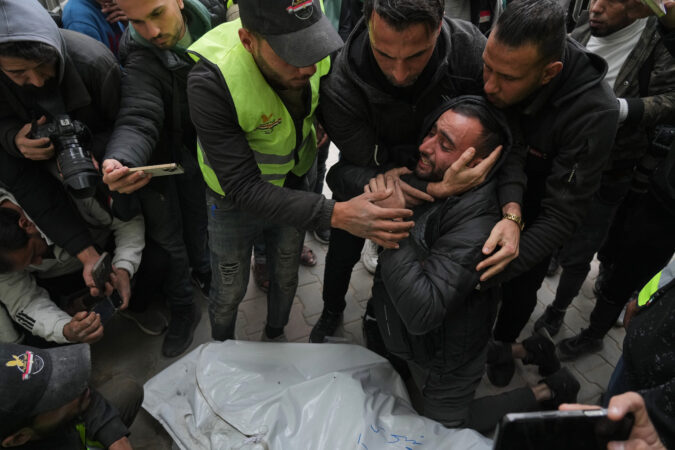
    The other 13-year-old who died was shot by troops in the eastern town of Bani Suheila, the Nasser hospital said after receiving the body. In a video circulated online, the father of Moatsem al-Sharafy is seen weeping over his body on a hospital bed.

    The boy’s mother, Safaa al-Sharafy, told The Associated Press that he left to gather firewood so she could cook.

    “He went out in the morning, hungry,” she said, tears running down her cheeks. “He told me he’d go quickly and come back.”

    Later Wednesday, an Israeli strike hit a vehicle carrying the three Palestinian journalists who were filming a newly established displacement camp managed by an Egyptian government committee, said Mohammed Mansour, the committee’s spokesperson.

    Mansour said the journalists were documenting the committee’s work at the camp in the Netzarim area in central Gaza. He said the strike occurred about 3 miles from the Israeli-controlled area.

    He said the vehicle was known to the Israeli military as belonging to the Egyptian committee. Video footage showed the charred, bombed-out vehicle by the roadside, smoke still rising from the wreckage.

    One of the journalists killed, Abdul Raouf Shaat, was a regular contributor to Agence France-Presse, but he was not on assignment for the news agency at the time of the strike, it said.

    “Abdul was much loved by the AFP team covering Gaza. They remember him as a kind-hearted colleague,” the news agency said in a statement that called him a “deeply committed journalist” and demanded a full investigation into his death.

    According to the Committee to Protect Journalists, more than 200 Palestinian journalists and media workers have been killed in Gaza since the war began in 2023, including visual journalist Mariam Dagga, who worked for the AP and other news organizations.

    Nearly five months after the strikes on a hospital that killed Dagga and four other journalists, the Israeli military says it is continuing to investigate.

    Aside from rare guided tours, Israel has barred international journalists from covering the war. News organizations rely largely on Palestinian journalists in Gaza — as well as residents — to show what is happening.

    Nasser Hospital officials also said Wednesday they received the body of a Palestinian woman shot by Israeli troops in the Muwasi area of the southern city of Khan Younis, which is not controlled by the military.

    In a separate attack, three brothers were killed in a tank shelling in the Bureij camp, according to Al-Aqsa Martyrs hospital, where the bodies were taken.

    More than 470 Palestinians have been killed by Israeli fire, according to the strip’s health ministry. At least 77 have been killed by Israeli gunfire near a ceasefire line that splits the territory between Israeli-held areas and most of Gaza’s Palestinian population, the ministry says.

    The ministry, which is part of the Hamas-led government, maintains detailed casualty records that are seen as generally reliable by U.N. agencies and independent experts.

    A mother’s plea

    The first phase of the October ceasefire that paused two years of war between Israel and Hamas militants focused on the return of all remaining hostages in exchange for the release of hundreds of Palestinian detainees and a partial withdrawal of Israeli forces in Gaza.

    The bodies of all but one hostage have been returned to Israel. Ran Gvili, a 24-year-old police officer known as Rani, was killed while fighting Hamas militants during the Oct. 7, 2023, attack that started the war. His relatives on Wednesday called again on the government and U.S. President Donald Trump to ensure the release of his remains.

    “We need to continue to amplify Rani’s voice, explain about him, talk about him, and explain to the world that we, the people of Israel, will not give up on anyone,” his mother, Talik Gvili, said. She told the AP the family still doesn’t “really know where he is.”

    Hamas said Wednesday it has provided “all information” it has on Gvili’s body to the ceasefire mediators, and accused Israel of obstructing search efforts in areas it controls in the Gaza Strip.

    The ceasefire also allowed a surge in humanitarian aid into Gaza, mainly food. But residents say shortages of blankets and warm clothes remain, and there is little wood for fires. There’s been no central electricity in Gaza since the first few days of the war.

    More than 100 children have died since the start of the ceasefire — including two infants who died from hypothermia in recent days.

    Israel targets more sites in Lebanon

    Israel’s air force carried out strikes Wednesday on sites in three villages in southern Lebanon that it said were part of the militant Hezbollah group’s infrastructure, including weapons storage facilities.

    The strikes came after the Israeli military issued warnings to evacuate the areas, including in the southern village of Qennarit, just south of the port city of Sidon.

    Drone strikes also hit cars in the villages of Bazouriyeh and Zahrani, killing two people, according to state-run National News Agency.

    The strikes were the latest in near-daily Israeli military action since a ceasefire more than a year ago ended the 14-month Israel-Hezbollah war. The agreement included a Lebanese pledge to disarm militant groups, which Israel says has not been fulfilled.

  • Trump in Davos says NATO should allow the U.S. to take Greenland but he won’t use force

    Trump in Davos says NATO should allow the U.S. to take Greenland but he won’t use force

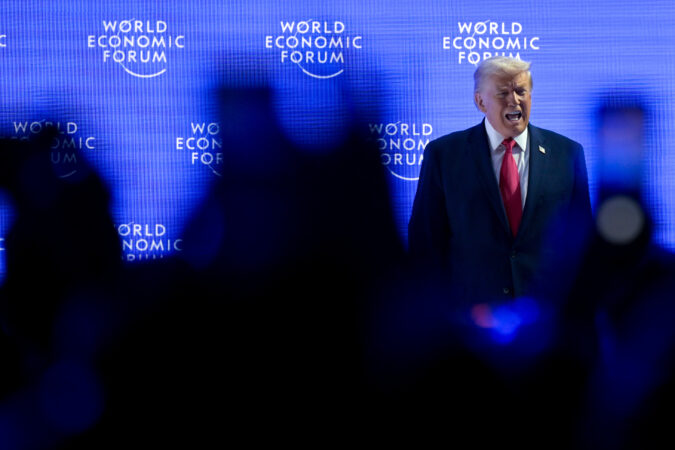
    DAVOS, Switzerland — President Donald Trump insisted Wednesday that he wants to “get Greenland, including right, title and ownership,” but said he would not use force to do so while repeatedly deriding European allies and vowing that NATO should not try to block U.S. expansionism.

    In an extraordinary speech at the World Economic Forum, the president said he was asking for territory that was “cold and poorly located.” He said the U.S. had effectively saved Europe during World War II and even declared of NATO: “It’s a very small ask compared to what we have given them for many, many decades.”

    The implications of his remarks were nonetheless enormous, potentially rupturing an alliance that has held firm since the dawn of the Cold War and seemed among the globe’s most unshakable pacts.

    NATO was founded by leading European nations, the U.S. and Canada. Its other members have been steadfast in saying Greenland is not for sale and cannot be wrested from Denmark. That means the Davos meeting could be just the beginning of a larger standoff that may eventually reshape geopolitics worldwide.

    A Danish government official told The Associated Press after Trump’s speech that Copenhagen is ready to discuss U.S. security concerns in the Arctic. But the official, who was not authorized to comment publicly and spoke on condition of anonymity, underscored the government’s position that “red lines”— namely Denmark’s sovereignty — must be respected.

    Trump urged Denmark and the rest of NATO to stand aside, adding an ominous warning.

    “We want a piece of ice for world protection, and they won’t give it,” Trump said. “You can say yes, and we will be very appreciative. Or you can say no, and we will remember.”

    Despite that, he also acknowledged: “We probably won’t get anything unless I decide to use excessive strength and force where we would be frankly unstoppable. But I won’t do that, OK?”

    “I don’t have to use force,” he said. “I don’t want to use force. I won’t use force.”

    Instead, he called for opening “immediate negotiations” for the U.S. to acquire Greenland.

    “This enormous unsecured island is actually part of North America,” Trump said. “That’s our territory.”

    Trump suggests Europe is fizzling while U.S. booms

    The president has spent weeks saying that the U.S. will get control of Greenland no matter what it takes, arguing that Washington should be in charge there to counter threats in the surrounding Arctic sea by Russia and China. His Davos remarks articulated what that push for control might entail more clearly than before, however.

    Danish Foreign Minister Lars Løkke Rasmussen said he was encouraged by Trump’s comment about not using U.S. military force but called other parts of the speech “a way of thinking about territorial integrity that does not match the institutions we have.”

    “Greenland is part of NATO. Denmark is part of NATO, and we can exercise our sovereignty in Greenland,” Løkke Rasmussen said.

    In his remarks, Trump also argued that the U.S. is booming and its economy is strong, in sharp contrast to Europe.

    “I want to see Europe go good, but it’s not heading in the right direction,” said Trump, who also noted, “We want strong allies, not seriously weakened ones.” He said of European economies, “You all follow us down, and you follow us up.”

    Trump turned the Davos gathering upside-down even before he got there.

    His arrival was delayed after a minor electrical problem on Air Force One forced a return to Washington to switch aircraft. As Trump’s motorcade headed down a narrow road to the speech site, onlookers — including some skiers — lined the route. Some made obscene gestures, and one held up a paper cursing the president.

    Billionaires and top executives nonetheless sought seats inside the forum’s Congress Hall, which had a capacity of around 1,000, for Trump’s keynote address. When he began, it was standing room only. Attendees used headsets to listen in six languages besides English, and the reaction was mostly polite applause.

    More than 60 other heads of state are attending the forum. After the speech, Trump met with the leaders of Poland, Belgium and Egypt and again repeated that the U.S. would not be invading Greenland.

    “Military is not on the table. I don’t think it will be necessary,” Trump said, suggesting that the parties involved would use better judgment.

    Tariff threat looms large

    Potentially deepening the crisis are Trump’s threats to impose steep U.S. import taxes on Denmark and seven other allies unless they negotiate a transfer of the semi-autonomous territory — some European say they won’t do.

    Trump said the tariffs would start at 10% next month and climb to 25% in June.

    The president in a text message that circulated among European officials this week linked his aggressive stance on Greenland to last year’s decision not to award him the Nobel Peace Prize. In the message, he told Norway’s prime minister, Jonas Gahr Støre, that he no longer felt “an obligation to think purely of Peace.”

    Even before his speech, Trump’s Greenland ambitions were rankling Europe.

    British Prime Minister Keir Starmer vowed during his weekly questioning in the House of Commons, “Britain will not yield on our principles and values about the future of Greenland under threats of tariffs, and that is my clear position.”

    French President Emmanuel Macron, in his address to the forum, urged rejecting acceptance of “the law of the strongest.” European Commission President Ursula von der Leyen warned that should Trump move forward with the tariffs, the bloc’s response “will be unflinching, united and proportional.”

    The U.S. stock market, meanwhile, recovered on Wednesday from its worst day since October, as Trump’s talk of Greenland-related tariffs spooked investors.

    Trump’s housing plan overshadowed

    The White House had insisted Trump would focus his Davos address on how to lower housing prices in the U.S. That was part of a larger effort to bring down the cost of living, which continues to rise and threatens to become a major liability for the White House and Republicans ahead of November’s midterm elections.

    Greenland instead carried the day, with Trump lashing at Denmark for being “ungrateful” for the U.S. protection of the Arctic island during the World War II. He also mistakenly referred to Iceland, mixing up that country with Greenland four times during his speech and for the fifth time since Tuesday.

    When he finally did mention housing in his speech, Trump suggested he did not support a measure to encourage affordability. He said bringing down rising home prices hurts property values and makes homeowners who once felt wealthy because of the equity in their houses feel poorer.

    Meanwhile, experts and economists are warning that Trump’s Greenland tariff threat could disrupt the U.S. economy if it blows up the trade truce reached last summer between the U.S. and the EU.

    Promoting the ‘Board of Peace’

    On Thursday, Trump plans to attend an event focused on the “Board of Peace,” meant to oversee a U.S.-brokered ceasefire in the Israel-Hamas war in Gaza. It could possibly take on a broader mandate, potentially rivaling the United Nations. Some European nations have so far been non-committal about participating.

    “You know, the United Nations should be doing this,” Trump said Wednesday of his efforts to halt the fighting in Gaza and other conflicts around the world.

  • Why sinkholes keep opening up in Philly

    In early January, a giant sinkhole formed at an intersection in the West Oak Lane neighborhood of North Philadelphia after a water main break. Just two weeks earlier, the city reopened a section of the Schuylkill River Trail in Center City that had been shut down for two months due to a sinkhole. Last summer, some residents of Point Breeze in South Philly also waited two months for a sinkhole on their block to be repaired.

    Laura Toran is a hydrogeologist and professor emeritus of environmental geology at Temple University. The Conversation U.S. asked her what causes sinkholes, whether Philly is particularly prone to them, and why repairs can take so long.

    What are sinkholes and how do they happen?

    A sinkhole is a hole that opens up in the ground due to some change in the subsurface.

    There are two categories of change that create sinkholes. One type is associated with carbonate rock. This is a type of rock that can develop caves because the rock dissolves when underground water is even slightly acidic. When the bridge over one of these caves collapses, a sinkhole occurs.

    The second type is associated with water supply or sewage pipes buried underground. The sediment next to the pipes can erode or wash away when there is a leak in the pipes. That leaves a gap, and if the collapse at the surface becomes big enough, it becomes a sinkhole.

    What do we know about the sinkholes in West Oak Lane and on the Schuylkill River Trail?

    West Oak Lane experienced two recent water main breaks. Debris from the flowing water made it hard to get to the leak.

    Fixing a big leak is a complex job. You have to stop the leak, clear out the debris, get the parts for repair, do the pipe repair, then repair the road. This example also shows that repair teams need to look around to see whether other sections of pipe might be aging and repair them while they have a hole opened up, so you don’t want to rush the job.

    The sinkhole on the Schuylkill River Trail late last year, which took two months to fix, was also the result of a pipe leak. The water department had to get involved in the repair, alongside the parks and recreation department. I should point out that the city has a limited budget for pipe repair. As one of the oldest cities in the country, Philadelphia has a lot of work to keep up with.

    That said, I would rather try to fix a pipe leak than a carbonate rock sinkhole. With the cavities in carbonate rock, you don’t really know how big they are, and a typical solution is to fill them with concrete. Sometimes you have a much bigger cavity than your supply of concrete.

    Is Philly prone to sinkholes?

    The Philadelphia region has both types of sinkholes. Within the city, there isn’t carbonate rock present, but just outside the city, such as the King of Prussia area, we see carbonate rock that is subject to sinkholes.

    The sinkholes that occur in Philly are where pipes leak and the surrounding soil gets washed away. Because we have the right geology for sinkholes in our region and we have an extensive water network that is aging, sinkholes are somewhat common.

    Some regions have even more sinkholes than we see here, however. Florida is entirely underlain by carbonate rock, and sinkholes are quite common.

    Can nearby residents know when a sinkhole is forming?

    We have a map of carbonate rock in the state, but not all carbonate rock develops sinkholes. Where and when in the carbonate rock a sinkhole is likely to develop is unpredictable.

    Sinkholes in Philadelphia tend to also be unpredictable because the driving factor is happening underground and out of sight. We don’t know when a pipe leak is going to occur. Sometimes there is a sagging at the surface before a bigger hole opens up. Sometimes we see the leak before the sinkhole occurs. But not all leaks or sagging ground will lead to a sinkhole, and there won’t necessarily be any warning.

    That said, it is important to report leaks and sagging ground so that they can be investigated before getting worse. Report leaks to the Philadelphia Water Department by calling their emergency hotline at 215-685-6300.

    If we could replace all the aging infrastructure in the city, we would have fewer sinkholes. However, that would be costly and disruptive, so it really isn’t practical. In the meantime, the city just has to fix new sinkholes as they occur.

    Laura Toran is a hydrogeologist and professor emeritus of environmental geology at Temple University.

    This article is republished from The Conversation. Read the original article here.

    The Conversation