Tag: no-latest

  • Dear Abby | Unexpected guest in restroom leads to unfortunate incident

    DEAR ABBY: At a recent family gathering, my sister-in-law “Paula” asked my husband if she could use our bathroom. We have three in our home — one off the kitchen, one upstairs and one in our upstairs bedroom suite. Despite the fact that she and my husband both know of my incontinence problem, she asked him to use our bathroom “for privacy.”

    I had to run upstairs to use my bathroom. It was urgent. To my surprise, there she was using my bathroom. (We don’t even allow our children to use this bathroom.) Because I couldn’t make it to the toilet, I had a wetting accident. While I could have used any of the other bathrooms, I chose to use my own, expecting that it was vacant, knowing the other bathrooms were free for our guests.

    I was extremely upset with Paula. I yelled at her, and when she saw what had happened, she was extremely apologetic. Abby, Paula knows I have bladder control issues, yet she ignored it. My husband heard the commotion and hollered at me for yelling at his sister. Did I do wrong here? He has a hard time saying no to family, but jeepers, I needed a toilet! What should I have done?

    — GOTTA GO IN NEW JERSEY

    DEAR GOTTA GO: Incontinence can happen to anyone at any age. It isn’t just little old ladies. Between 24% and 45% of women have reported urinary incontinence, “the problem no one wants to discuss.” According to statistics from the National Institutes of Health approximately 13 million individuals were affected by urinary incontinence in 2024.

    You were wrong to yell at your sister-in-law, who had been granted permission to use that bathroom, but it’s understandable given your distress and embarrassment. If you haven’t apologized to her, you should. Frankly, the person who deserved yelling at is your husband, who may never understand the “urgency” until he experiences it himself. (Many men do!)

    ** ** **

    DEAR ABBY: Three years ago, you printed a letter from a grandmother who was upset about having to raise her grandson because his parents lacked the desire to do so. I never forgot that letter. Long before it was published, my husband and I gained custody of our 7-year-old grandson, “Keith.” My husband and I were both retired and had been spending our winters in Florida. We gave up the Florida trips (willingly) to stay home and take care of our grandson.

    Keith had always spent a lot of time with us, but he was still upset that his parents had “given him away.” So, to keep busy, we joined karate, Boy Scouts, 4-H and school sports. It was one of the best times of my life. I learned new things and made new friends with grandmothers who were also raising grandchildren. Keith graduated from high school, found a good job, bought a house and recently married. We did OK! I hope “Like a Mom in South Carolina” (Nov. 3, 2022) is doing well, too.

    — GRATEFUL GRANDMA IN NEW YORK

    DEAR GRANDMA: Many grandparents today are raising their grandchildren, and many of them have success stories similar to your own. Congratulations on yours, and thank you for sharing.

  • Horoscopes: Sunday, Feb. 22, 2026

    ARIES (March 21-April 19). There are those who minimize the drama and those who revel in it. Neither is more correct. Much depends on what you’re in the mood for, though some of the happenings of the day seem to be getting more coverage than they deserve.

    TAURUS (April 20-May 20). Today you’ll embody the high-level social skill of showing your interest in others without a worry as to whether they are interested in you. It’s attractive and effective, and it’s the reason your network is growing.

    GEMINI (May 21-June 21). Order and chaos both have value, and neither is superior in all contexts. Right now, though, the conditions of your day call for structure. Taking the time to organize will multiply your available energy and time, allowing the rest of the day to unfold with far less resistance.

    CANCER (June 22-July 22). Go easy on yourself. You’re in the midst of the challenge. Stay on your own side. Simply daring to do something unfamiliar is a success in itself. You’re doing what most people don’t even try, so you’re already winning.

    LEO (July 23-Aug. 22). Throughout the day, you’re constantly choosing how to meet the world, who to respond to and what to skip. You’ll be attracted to both virtue and vice. Virtue is the soup. Vice is the spice. A little of the spice goes a long way.

    VIRGO (Aug. 23-Sept. 22). The way you’re feeling is so nuanced, there’s no emoticon for it. And you don’t owe yourself immediate clarity, tidy labels or a polished takeaway. Not knowing how you feel is part of feeling.

    LIBRA (Sept. 23-Oct. 23). If relationships were like a streaming series that releases all at once, you could go at your own pace — binge or drip, pause or fast forward. But, alas, love’s rollout schedule is for love to know and us to find out.

    SCORPIO (Oct. 24-Nov. 21). You’ll go out of your way to make sure that no one feels ignored and everyone feels heard and respected. Wherever possible, you’ll include others in the conversation, the work and the decision-making. Your spirit of inclusivity is a force of love and healing.

    SAGITTARIUS (Nov. 22-Dec. 21). Relationships can be an embodied form of negotiation. As in any negotiation, if you maintain the freedom to walk away, you are more likely to get what you want. Think of the relationship as a bonus, not a necessity.

    CAPRICORN (Dec. 22-Jan. 19). The endeavor to change another person is laughably futile and not worth pursuing. Even if it worked, the change wouldn’t hold. But you already know this. It’s why you are so focused today on something that is only for you.

    AQUARIUS (Jan. 20-Feb. 18). People with similar kinds of intelligence can recognize it in each other even when the talent is hiding. This is why today you’ll have an instant connection with someone who hears the advanced logic in your casual phrasing. They’ll notice your astute question. You’re kindred spirits.

    PISCES (Feb. 19-March 20). When you’re in the light, you can’t see the stars, and you won’t need to because there’s plenty else to orient and delight you. Enjoy yourself without worry because when darkness comes, so will the sparkles.

    TODAY’S BIRTHDAY (Feb. 22). It’s your Year of the Noble Quest. Young dreams of fame and fortune notwithstanding, there are now far more important reasons to succeed. You’ll still enjoy superficial gains, but your deepest fulfillment comes from knowing you made a difference and turned events toward ideals of truth, love and humanity. More highlights: Rare connections of heart and intellect, a new stream of income and the gift of security. Gemini and Cancer adore you. Your lucky numbers are: 5, 29, 1, 24 and 15.

  • Trump aides struggle with how to spend $500 billion more on military

    Trump aides struggle with how to spend $500 billion more on military

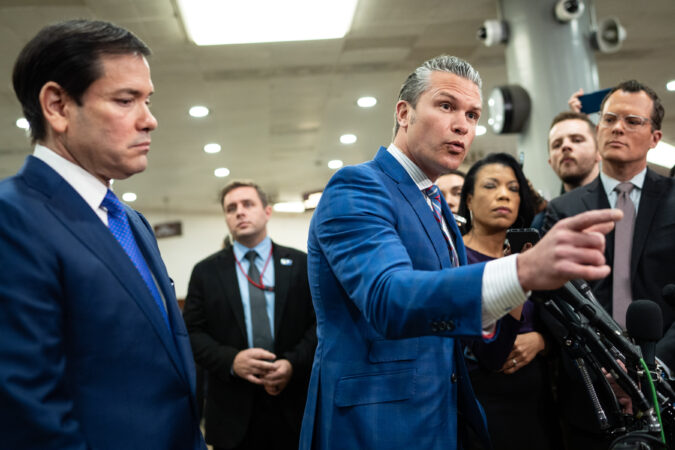
    Trump administration officials have struggled to figure out how to increase U.S. military spending by a whopping $500 billion in their forthcoming budget, slowing the overall White House spending plan, four people familiar with the matter said.

    President Donald Trump last month agreed to a roughly 50% funding boost sought by Pete Hegseth, the defense secretary, in the White House’s annual budget proposal. The idea ran into internal criticism from several other officials, including White House budget chief Russell Vought, who warned about its potential impact on the widening federal deficit, said the people, who spoke on the condition of anonymity to reflect internal deliberations.

    Since Trump agreed to the higher number, White House aides and defense officials have run into logistical challenges surrounding where to put the money, because the amount is so large, the people said. The White House is more than two weeks behind its statutory deadline to send its budget proposal to Congress, in part because it is unclear how precisely to spend the additional $500 billion, according to the people familiar with the matter.

    Senior Pentagon officials have consulted with former senior defense officials as they grapple with the challenge, said one person familiar with the matter. Part of the discussion centers on how much emphasis should go into buying weapons the military already uses versus investing in high-end technologies, such as artificial intelligence, that the Pentagon envisions as part of its future.

    The roughly $900 billion defense budget approved last year was the largest in U.S. history. While other nations have also increased their military spending, the United States already spends more on defense than the next nine countries combined, according to 2023 data from the Peter G. Peterson Foundation, a nonpartisan think tank.

    “I’m not surprised they’re having difficulty doing that,” said G. William Hoagland, senior vice president at the Bipartisan Policy Center, a nonpartisan think tank. “That’s an awful lot of money in one year.”

    Spokespeople for the White House and the Defense Department declined to comment.

    Trump, Hegseth, and many congressional Republicans have defended the proposed increase in the military budget as necessary to pay for an array of new priorities and confront foreign adversaries. Hegseth has said that the money would be spent “wisely” and that the larger budget would send “a message to the world.”

    The forthcoming White House budget for fiscal 2027 will spell out the administration’s proposed spending levels across the government. It requires congressional approval to be enacted and faces long odds.

    “This will allow us to build the ‘Dream Military’ that we have long been entitled to and, more importantly, that will keep us SAFE and SECURE, regardless of foe,” Trump said in a Truth Social post this month confirming his support for the $1.5 trillion budget number.

    The Pentagon has been grappling with how to rapidly replenish expensive munitions that it has relied on heavily, including Tomahawk cruise missiles, Patriot missile-defense interceptors, and ship-launched munitions known as Standard Missile-6s, or SM-6s.

    It also is wrestling with how to upgrade its Cold War-era nuclear weapons program with expensive next-generation systems like the B-21 bomber and the Columbia-class submarine. The aircraft, with an estimated cost of about $700 million each, is expected to replace the Air Force’s fleet of B-1 and B-2 bombers. The Columbia-class submarines are expected to cost at least $9 billion each.

    Hegseth, upon taking office, directed each military service to look for budget reductions of 8%; the money could then be invested in other Pentagon priorities better aligned with Trump’s agenda. Hegseth bristled at the suggestion that such reprogramming should be considered cuts, saying he would be “reorienting” about $50 billion in defense spending that the Biden administration had planned.

    More recently, Hegseth has called for “supercharging” the U.S. industrial base, seeking to speed up how quickly the military can field new weapons and other capabilities, in part by not relying as heavily on traditional defense contractors.

    With such a significant jump in spending planned, it now appears that the Pentagon budget is detached from a new national defense strategy that Hegseth’s team released in January, said Mark Cancian, a retired Marine Corps colonel and senior adviser with the Center for Strategic and International Studies. That strategy calls for the Pentagon to focus first on defense in the Western Hemisphere, with less emphasis on Europe, Africa, and the Middle East.

    It’s a “head-scratcher” that the Pentagon wants to spend so much money while also cutting back in those areas, Cancian said.

    “If you’ve got a 50% budget increase, you don’t have to do any of that,” he said. “You’d be talking about all the new places you’d be making investments.”

    The federal deficit, or the gap between what the government spent and what it collected in tax revenue, was $1.8 trillion last year. That number was down from the surges of red ink during the COVID years but up significantly from the standard deficit before the pandemic.

    Vought, a deficit hawk, has long called for reducing federal spending while also supporting Trump’s general goal of rebuilding the American military. He was instrumental in securing additional funding for the military last year in the GOP’s tax bill, which bypassed the typical bipartisan process for setting military spending.

    The increase in military spending alone would amount to one of the biggest federal programs. One Democratic plan to expand Medicare to cover dental, vision, and hearing benefits would cost $350 billion over the next decade, by comparison. If Congress were to spend an additional $500 billion every year on the military, the cost would be $5 trillion over the next decade. It is unclear if the Trump administration’s proposal is for an additional $500 billion just for next year, or $500 billion each year for a decade.

    “I’m sure there are very difficult conversations happening right now. Obviously, it would have a huge impact,” said Charles Kieffer, who spent several decades across administrations in the White House Office of Management and Budget and working for Democrats on the Senate Appropriations Committee. “A 50% increase requires a completely different formulation for your priorities.”

    Some experts in military spending panned the proposed increase as likely to increase fraud and waste. Julia Gledhill, a research analyst for the national security reform program at the nonpartisan Stimson Center, pointed to failed audits at the Pentagon and a lack of clear guardrails on much of the new military spending approved last year in the GOP’s One Big Beautiful Bill, which she said has been used like a “slush fund.”

    “We don’t know what we’re already spending money on. We don’t have details on how the Pentagon is using its trillion-dollar budget,” Gledhill said. “How are you supposed to make educated, informed decisions about the military budget if you don’t know where it’s already going?”

  • ICE’s purchases for big detention centers are marked by secrecy, frustrating towns

    ICE’s purchases for big detention centers are marked by secrecy, frustrating towns

    SOCORRO, Texas — In a Texas town at the edge of the Rio Grande and a tall metal border wall, rumors swirled that federal immigration officials wanted to purchase three hulking warehouses to transform into a detention center.

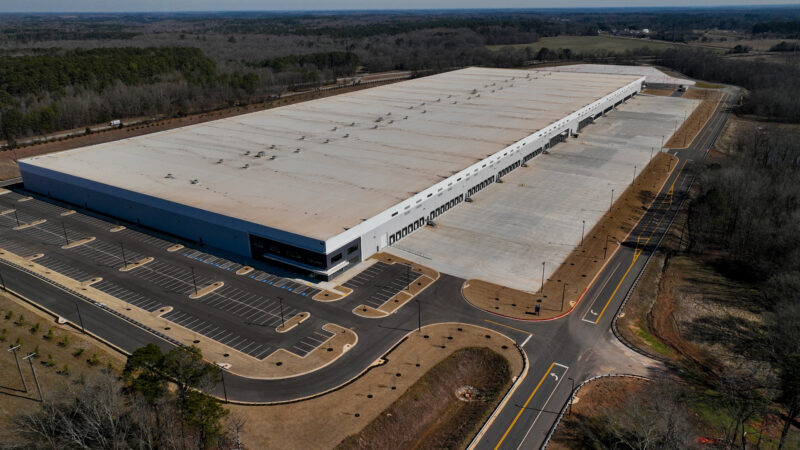
    As local officials scrambled to find out what was happening, a deed was filed showing the Department of Homeland Security had already inked a $122.8 million deal for the 826,000-square-foot warehouses in Socorro, a bedroom community of 40,000 people outside El Paso.

    “Nobody from the federal government bothered to pick up the phone or even send us any type of correspondence letting us know what’s about to take place,” said Rudy Cruz Jr., the mayor of the predominantly Hispanic town of low-slung ranch homes and trailer parks, where orchards and irrigation ditches share the landscape with strip malls, truck stops, recycling plants, and distribution warehouses.

    Socorro is among at least 20 communities with large warehouses across the U.S. that have become stealth targets for Immigration and Customs Enforcement’s $45-billion expansion of detention centers.

    As public support for the agency and President Donald Trump’s immigration crackdown sags, communities are objecting to mass detentions and raising concerns that the facilities could strain water supplies and other services while reducing local tax revenue. In many cases, mayors, county commissioners, governors, and members of Congress learned about ICE’s ambitions only after the agency bought or leased space for detainees, leading to shock and frustration even in areas that have backed Trump.

    “I just feel,” said Cruz, whose wife was born in Mexico, “that they do these things in silence so that they don’t get opposition.”

    Communities scramble for information

    ICE, which is part of DHS, has purchased at least seven warehouses in Arizona, Georgia, Maryland, Pennsylvania, and Texas, signed deeds show. Other deals have been announced but not yet finalized, though buyers scuttled sales in eight locations.

    DHS objected to calling the sites warehouses, stressing in a statement that they would be “very well structured detention facilities meeting our regular detention standards.”

    The process has been chaotic at times. ICE this past week acknowledged it made a “mistake” when it announced warehouse purchases in Chester, N.Y., and Roxbury, N.J. Roxbury then announced Friday that the sale there had closed.

    DHS has confirmed it is looking for more detention space but hasn’t disclosed individual sites ahead of acquisitions. Some cities learned that ICE was scouting warehouses through reporters. Others were tipped off by a spreadsheet circulating online among activists whose source is unclear.

    It wasn’t until Feb. 13 that the scope of the warehouse project was confirmed, when the governor’s office in New Hampshire, where there is backlash to a planned 500-bed processing center, released a document from ICE showing the agency plans to spend $38.3 billion to boost detention capacity to 92,000 beds.

    Since Trump took office, the number of people detained by ICE has increased to 75,000 from 40,000, spread across more than 225 sites.

    ICE could use the warehouses to consolidate and to increase capacity. The document describes a project that includes eight large-scale detention centers, capable of housing 7,000 to 10,000 detainees each, and 16 smaller regional processing centers. The document also refers to the acquisition of 10 existing “turnkey” facilities.

    The project is funded through the big tax and spending cuts bill passed by Congress last year that nearly doubled DHS’ budget. To build the detention centers, the Trump administration is using military contracts.

    Those contracts allow a lot of secrecy and for DHS to move quickly without following the usual processes and safeguards, said Charles Tiefer, a professor emeritus of law at the University of Baltimore Law School.

    Socorro facility could be among the largest

    In Socorro, the ICE-owned warehouses are so large that 4½ Walmart Supercenters could fit inside, standing in contrast to the remnants of the austere Spanish colonial and mission architecture that defines the town.

    At a recent city council meeting, public comments stretched for hours. “I think a lot of innocent people are getting caught up in their dragnet,” said Jorge Mendoza, an El Paso County retiree whose grandparents immigrated from Mexico.

    Many speakers invoked concerns about three recent deaths at an ICE detention facility at the nearby Fort Bliss Army base.

    Communities fear a financial hit

    Even communities that backed Trump in 2024 have been caught off guard by ICE’s plans and have raised concerns.

    In rural Pennsylvania’s Berks County, commissioner Christian Leinbach called the district attorney, the sheriff, the jail warden, and the county’s head of emergency services when he first heard ICE might buy a warehouse in Upper Bern Township, 3 miles from his home.

    No one knew anything.

    A few days later, a local official in charge of land records informed him that ICE had bought the building — promoted by developers as a “state-of-the art logistics center” — for $87.4 million.

    “There was absolutely no warning,” Leinbach said during a meeting in which he raised concerns that turning the warehouse into a federal facility means a loss of more than $800,000 in local tax dollars.

    ICE has touted the income taxes its workers would pay, though the facilities themselves will be exempt from property taxes.

    Georgia center could house twice the population of town

    In Social Circle, Ga., which also strongly supported Trump in 2024, officials were stunned by ICE’s plans for a facility that could hold 7,500 to 10,000 people after first learning about it through a reporter.

    The city, which has a population of just 5,000 and worries about the infrastructure needs for such a detention center, only heard from DHS after the $128.6 million sale of a 1-million-square-foot warehouse was completed. Like Socorro and Berks County, Social Circle questioned whether the water and sewage system could keep up.

    ICE has said it did due diligence to ensure the sites don’t overwhelm city utilities. But Social Circle said the agency’s analysis relied on a yet-to-be built sewer treatment plant.

    “To be clear, the City has repeatedly communicated that it does not have the capacity or resources to accommodate this demand, and no proposal presented to date has demonstrated otherwise,” the city said in a statement.

    And in the Phoenix suburb of Surprise, Ariz., officials sent a scathing letter to Homeland Security Secretary Kristi Noem after ICE without warning bought a massive warehouse in a residential area about a mile from a high school. Arizona Attorney General Kris Mayes, a Democrat, raised the prospect of going to court to have the site declared a public nuisance.

    Crowds wait to speak in Socorro

    Back in Socorro, people waiting to speak against the ICE facility spilled out of the city council chambers, some standing beside murals paying tribute to the World War II-era Braceros Program that allowed Mexican farmworkers to be guest workers in the U.S. The program stoked Socorro’s economy and population before President Dwight D. Eisenhower’s administration in the 1950s began mass deportations aimed at people who had crossed the border illegally.

    Eduardo Castillo, formerly an attorney for the U.S. Department of Justice, told city officials it is intimidating but “not impossible” to challenge the federal government.

    “If you don’t at least try,” he said, “you will end up with another inhumane detention facility built in your jurisdiction and under your watch.”
  • U.S. ambassador causes uproar by claiming Israel has a right to much of the Middle East

    U.S. ambassador causes uproar by claiming Israel has a right to much of the Middle East

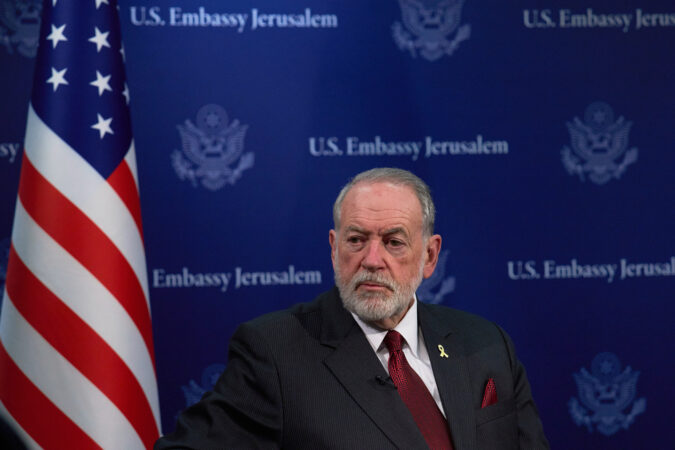
    TEL AVIV, Israel — Arab and Muslim nations on Saturday sharply condemned comments by the U.S. ambassador to Israel, Mike Huckabee, who said Israel has a right to much of the Middle East.

    Huckabee made the comments in an interview with conservative commentator Tucker Carlson that aired Friday. Carlson said that according to the Bible, the descendants of Abraham would receive land that today would include essentially the entire Middle East, and asked Huckabee if Israel had a right to that land.

    Huckabee responded: “It would be fine if they took it all.” Huckabee added, however, that Israel was not looking to expand its territory and has a right to security in the land it legitimately holds.

    His comments sparked immediate backlash from neighboring Egypt and Jordan, the Organization of Islamic Cooperation, and the League of Arab States, which in separate statements called them extremist, provocative, and not in line with the U.S. position.

    Egypt’s foreign ministry called Huckabee’s comments a “blatant violation” of international law, adding that “Israel has no sovereignty over the occupied Palestinian territory or other Arab lands.”

    “Statements of this nature — extremist and lacking any sound basis — serve only to inflame sentiments and stir religious and national emotions,” the League of Arab States said.

    There was no immediate comment from Israel or the United States.

    Since its establishment in 1948, Israel has not had fully recognized borders. Its frontiers with Arab neighbors have shifted as a result of wars, annexations, ceasefires, and peace agreements.

    During the six-day 1967 Mideast war, Israel captured the West Bank and east Jerusalem from Jordan, Gaza and the Sinai Peninsula from Egypt, and the Golan Heights from Syria. Israel withdrew from the Sinai Peninsula as part of a peace deal with Egypt following the 1973 Mideast war. It also unilaterally withdrew from Gaza in 2005.

    Israel has attempted to deepen control of the occupied West Bank in recent months. It has greatly expanded construction in Jewish settlements, legalized outposts, and made significant bureaucratic changes to its policies in the territory. U.S. President Donald Trump has said he will not allow Israel to annex the West Bank and has offered strong assurances that he’d block any move to do so.

    Palestinians have for decades called for an independent state in the West Bank and Gaza with east Jerusalem its capital, a claim backed by much of the international community.

    Huckabee has long opposed the idea of a two-state solution for Israel and the Palestinian people. In an interview last year, he said he does not believe in referring to the Arab descendants of people who had lived in British-controlled Palestine as “Palestinians.”

    In the latest interview, Carlson pressed Huckabee about his interpretation of Bible verses from the book of Genesis, where he said God promised Abraham and his descendants land from the Nile to the Euphrates.

    “That would be the Levant, so that would be Israel, Jordan, Syria, Lebanon. It would also be big parts of Saudi Arabia and Iraq,” Carlson said.

    Huckabee replied: “Not sure we’d go that far. I mean, it would be a big piece of land.”

    Israel has encroached on more land since the start of its war with Hamas in Gaza.

    Under the current ceasefire, Israel withdrew its troops to a buffer zone but still controls more than half the territory. Israeli forces are supposed to withdraw further, though the ceasefire deal doesn’t give a timeline.

    After Syrian President Bashar Assad was ousted at the end of 2024, Israel’s military seized control of a demilitarized buffer zone in Syria created as part of a 1974 ceasefire between the countries. Israel said the move was temporary and meant to secure its border.

    And Israel still occupies five hilltop posts on Lebanese territory following its brief war with Hezbollah in 2024.

  • Trump wants to impose 15% tariff, up from 10% he announced after Supreme Court decision

    Trump wants to impose 15% tariff, up from 10% he announced after Supreme Court decision

    WASHINGTON — President Donald Trump said Saturday that he was raising the global tariff he wants to impose to 15%, up from 10% he had announced a day earlier.

    Trump said in a social media post on that he was making the decision “Based on a thorough, detailed, and complete review of the ridiculous, poorly written, and extraordinarily anti-American decision on Tariffs issued yesterday,” by the U.S. Supreme Court.

    After the court ruled he didn’t have the emergency power to impose many sweeping tariffs, Trump signed an executive order on Friday night that enabled him to bypass Congress and impose a 10% tax on imports from around the world. The catch is that those tariffs would be limited to just 150 days, unless they are extended legislatively.

    Trump’s post significantly ratcheting up a global tax on imports to the U.S. yet again was the latest sign that despite the court’s check, the Republican president was intent on continuing to wield in an unpredictable manner his favorite tool to for the economy and to apply global pressure. Trump’s shifting announcements over the last year that he was raising and sometimes lowering tariffs with little notice jolted markets and rattled nations.

    Saturday’s announcement seemed to a be a sign that Trump intends to use the temporary global tariffs to continue to flex.

    “During the next short number of months, the Trump Administration will determine and issue the new and legally permissible Tariffs, which will continue our extraordinarily successful process of Making America Great Again,” Trump wrote on his Truth Social media network.

    Under the order Trump signed Friday night, the 10% tariff was scheduled to take effect starting Feb. 24. The White House did not immediately respond to a message inquiring when the president would sign an updated order.

    In addition to the temporary tariffs that Trump wants to set at 15%, the president said Friday that he was also pursuing tariffs through other sections of federal law which require an investigation by the Commerce Department.

    Trump made an unusually personal attack on the Supreme Court judges who ruled against him in a 6-3 vote, including two of those he appointed during his first term, Justices Neil Gorsuch and Amy Coney Barrett. Trump, at a news conference on Friday, said of the two justices: “I think it’s an embarrassment to their families.”

    He was still seething Friday night, posting on social media complaining about Gorsuch, Coney Barrett, and Chief Justice John Roberts, who ruled with the majority and wrote the majority opinion. On Saturday morning, Trump issued another post declaring that his “new hero” was Justice Brett Kavanaugh, who wrote a 63-page dissent. He also praised Justices Clarence Thomas and Samuel Alito, who were in the minority, and said of the three dissenting justices: “There is no doubt in anyone’s mind that they want to, MAKE AMERICA GREAT AGAIN!”

  • Dear Abby | Widow discovers late husband’s life was full of secrets

    DEAR ABBY: My late husband was ill for six years. He experienced some dementia. He wasn’t able to work, and our life together changed a lot. I focused on supporting him through his decline until he eventually ended his own life.

    After his death, I discovered several secrets. He hadn’t been honest about his medical condition, possibly out of shame or because he wanted to protect us from the seriousness. There were also secrets about his family he may have been ashamed about. He also changed his estate plan without telling me. These secrets and betrayals show he wasn’t thinking about the impact of his death upon me, and they have made me question my beliefs about our marriage.

    I know his decisions weren’t about my worth — they were about his fear, shame, illness and preoccupation with other family issues. But I can’t tell any of this to people because I want to preserve our adult children’s love and respect for their father. Also, I don’t want to deal with other people trying to understand this crazy situation. This feels so unfair, and I may never be able to trust again. Do you have any advice?

    — KEEPING SECRETS IN NEW ENGLAND

    DEAR KEEPING: Please accept my sympathy for the loss of your husband. From what you have written, it seems the problems in your marriage started with the family secrets in addition to your husband’s increasing dementia. My advice is to put an end to all of those secrets now. Telling your children the truth should not make them lose respect for their late father. Whether the people in whom you choose to confide will understand is beside the point.

    What’s most important is that you free yourself from the prison of lies in which you find yourself and talk with a mental health professional if it will help you better understand how to move forward.

    ** ** **

    DEAR ABBY: My family is American, through and through. We had some European ancestors back in the Ellis Island days, but we’ve been here for generations and identify only loosely with our European heritage. That being said, my husband and I were discussing names for our future children, and I mentioned that I would love to have a son named after my great-grandfather. His name was Jacques, but it was always pronounced like “Jack.”

    If I used the name, I would want to spell it the same way to honor him, but I’d feel weird pronouncing it with a French accent when I don’t identify as French, nor do I have an accent. Is it OK to use the French spelling of a name and then pronounce it in an Americanized way?

    — PLANNING AHEAD IN SOUTH CAROLINA

    DEAR PLANNING: You are the parent, and you can call your son whatever you wish. Jacques will be his formal name if you choose to use it on his birth certificate, but he can use “Jack” if he wishes. When he starts school, don’t forget to communicate to his teachers and the administrators how his name is pronounced.

  • Horoscopes: Saturday, Feb. 21, 2026

    ARIES (March 21-April 19). If what they’re doing doesn’t sound fun to you, you don’t have to force it. Being intentional about your free time might mean trying something new or meeting different people. What were you doing the last time you had a blast?

    TAURUS (April 20-May 20). An interesting question: Who am I around this person? Let the answer factor into your decisions about where to take this relationship, if you should take it anywhere at all. Liking a person is far less important than liking yourself when you’re around them.

    GEMINI (May 21-June 21). Sometimes you wonder if you’re getting enough joy in life, and if you have to wonder, the answer is no. No, you’re not. Pleasure, relaxation, attention, novelty and the like are not luxurious or optional; they are essential to your health and vitality.

    CANCER (June 22-July 22). You’re not always the exquisitely protected crab. Today you’re the snail, only half-protected by shell, at home while exploring, touching and touched, feeling and felt, sticky, not stuck. Steady, even while falling in love.

    LEO (July 23-Aug. 22). Though you’re as empathetic as they come, today you won’t be able to judge others’ emotional experience by their immediate reaction. People won’t express their feelings in typical ways. Being aware of that allows you to respond with understanding instead of frustration.

    VIRGO (Aug. 23-Sept. 22). New locations open to you and you aim to go as a traveler and not a tourist, experiencing what is, not the front that’s presented to newcomers in exchange for top dollar. Take the same approach to new relationships, and you’re golden.

    LIBRA (Sept. 23-Oct. 23). Today’s work is very important. There are rewards for doing it and consequences for not doing it. But you still always put people first and you’ll never be sorry for that order of prioritization.

    SCORPIO (Oct. 24-Nov. 21). What seems convenient could be a trap instead of a solution. Poke around. What other options are there? The well-known route might be the slowest way to get there, as too many travelers created traffic jams.

    SAGITTARIUS (Nov. 22-Dec. 21). Your body moves in rhythm with your moods and mirrors your personality. Today, it speaks louder than words, revealing what you wish to express — or hide. What surprising self-knowledge!

    CAPRICORN (Dec. 22-Jan. 19). You and the stranger next to you have something in common. Say hello, and you’ll discover it fast. Don’t? You’ll still feel that mysterious, unspoken connection, like you’re part of the same secret club.

    AQUARIUS (Jan. 20-Feb. 18). You’re popular today, but you’re made well aware that you can’t always choose who wants your attention. You can, however, choose who gets it. Go where it’s peaceful and people aren’t trying to demand, steal or hoard your focus.

    PISCES (Feb. 19-March 20). You’re not just going to succeed. You’re going to succeed like YOU. You’ll make it look so good and fun that others will imitate, trying to capture your style, which of course is impossible and flattering, too. Expect and enjoy your copycats.

    TODAY’S BIRTHDAY (Feb. 21). Step into your Year of Feathered Friends, when connections and companionship send your spirit flying, flocked by kindred, and headed toward shared good fortune. Relationships, ideas, and collaborations soar to heights previously unimaginable. More highlights: You celebrate and bank on a personal achievement, family thrives in your support, and there are spontaneous entertainments and luxuries. Capricorn and Gemini adore you. Your lucky numbers are: 13, 5, 20, 12 and 33.

  • U.S. economic growth weaker than thought in fourth quarter with government shutdown, consumer pullback

    U.S. economic growth weaker than thought in fourth quarter with government shutdown, consumer pullback

    WASHINGTON — U.S. economic growth slowed in the final three months of last year, dragged down by the six-week shutdown of the federal government and a pullback in consumer spending.

    The nation’s gross domestic product — the total output of goods and services — increased at a 1.4% annual rate in the fourth quarter, the Commerce Department reported Friday, down from 4.4% in the July-September quarter and 3.8% in the quarter before that.

    The figures point to what could be a more modest pace of growth in the coming quarters, as consumers have taken on more debt and saved less to maintain their spending, a process that may be difficult to sustain. Business investment, other than data centers and equipment dedicated to artificial intelligence, grew at only a moderate pace.

    Still, a measure of underlying growth that focuses on consumer and business spending was mostly healthy at 2.4%, economists said. The sharp slowdown in government outlays because of the shutdown shaved a full percentage point from growth.

    Consumers and companies spent at a “reasonably solid” pace, said Martha Gimbel, executive director of the Budget Lab at Yale and former economist in the Biden White House. “This is not a disastrous report.”

    Also Friday, the Supreme Court struck down many of President Donald Trump’s tariffs, which have lifted inflation slightly and likely discouraged many companies from hiring by raising their costs. At a news conference, Trump quickly promised to reimpose the tariffs under different laws than the one the court invalidated.

    Consumer spending also rose 2.4% in the fourth quarter, a solid increase but notably below the third quarter’s healthy 3.5% gain. Federal government outlays plunged nearly 17% amid the shutdown. That decline should mostly reverse in the coming quarters, however.

    The outsize growth last summer and fall — when the economy expanded at about a 4% annual pace — partly reflected sharply lower imports. Companies ramped up imports in the first quarter of last year to get ahead of President Donald Trump’s tariffs. After boosting growth in the second and third quarters, trade had little impact at the end of last year.

    Diane Swonk, chief economist at KPMG, said the report reflected a “one-legged” economy boosted mostly by artificial intelligence, which is fueling business spending and has also lifted wealth for those households that own stocks and have benefited from rising share prices.

    Many households, however, have had to take on more debt to fuel their spending. The saving rate dropped to just 3.6% in the fourth quarter, the second-lowest figure since August 2008, when the economy was mired in the Great Recession.

    “The economy looks golden on paper, but beneath the surface is lead,” Swonk said.

    Early Friday, before the figures were released, Trump attacked congressional Democrats for shutting down the government last fall. He also reiterated his criticism of Federal Reserve Chair Jerome Powell for not cutting interest rates more quickly.

    “The Democrat Shutdown cost the U.S.A. at least two points in GDP,” Trump posted on his social media site. “That’s why they are doing it, in mini form, again. No Shutdowns! Also, LOWER INTEREST RATES. “Two Late” Powell is the WORST!!!”

    A separate report Friday showed that inflation, according to the Fed’s preferred measure, accelerated in December, as the cost of goods such as furniture, clothes, and groceries picked up. That makes it less likely the Fed will reduce its key interest rate in the coming months.

    Earlier this month, Trump predicted a blowout gain in GDP of more than 5% even if the government shutdown was factored into the figures. Trump has been trying to claim that the economy is at its strongest point in history, even though the new data shows that growth slowed, compared with 2024, following his return to the White House.

    The data arrives before Trump delivers the State of the Union address on Tuesday, where he is expected to say that the economy is booming.

    The report also underscores an odd aspect of the U.S. economy: It is growing steadily, but without creating many jobs. Growth was a solid 2.2% in 2025, yet a government report last week showed that employers added less than 200,000 jobs last year — the fewest since COVID struck in 2020.

    Economists point to several possible reasons for the gap: The Trump administration’s crackdown on immigration has sharply slowed population growth, reducing the number of people available to take jobs. It’s one reason that the unemployment rate rose only slightly — to 4.3% from 4% — last year, even with the nearly non-existent hiring.

    Some businesses may also be holding back on adding jobs out of uncertainty about whether artificial intelligence will enable them to produce more without finding new employees. And the cost of tariffs has reduced many companies’ profits, possibly leading them to cut back on hiring.

    The economy is also unusual right now because growth is solid, inflation has slowed a bit, and unemployment is low, but surveys show that Americans are generally gloomy about the economy. In January, a measure of consumer confidence fell to its lowest level since 2014, yet consumers have kept spending, propelling growth.

    Some of that spending may be disproportionately driven by upper-income consumers, in a phenomenon known as the “K-shaped” economy. Yet data from many large banks suggests lower-income consumers are still raising their spending, even if by not as much.

  • A World Cup FanFest that had been planned near the Statue of Liberty is canceled

    A World Cup FanFest that had been planned near the Statue of Liberty is canceled

    NEW YORK — The New York and New Jersey World Cup host committee has canceled its fan festival that had been planned to be held at Liberty State Park in Jersey City.

    The committee scrapped plans for the weekslong festival that would have been held about 15 miles (24 kilometers) from MetLife Stadium in East Rutherford, where the final will be played on July 19.

    The FanFest was announced in February 2025 by Tammy Murphy, wife of then-New Jersey Gov. Phil Murphy and chair of the New York/New Jersey host committee’s directors, who said it would be open for all 104 matches of the tournament, which starts June 11.

    The committee said in a statement Friday an “expanded network of fan zones and community celebrations across 21 counties in New Jersey will serve as a cornerstone of the region’s official fan engagement program.”

    Mikie Sherrill, Murphy’s successor as governor, announced a $5 million initiative Thursday to fund community World Cup initiatives.

    Tickets for the FanFest had been put on sale in December.

    Plans for a FanFest in New York City’s Corona Park in Queens did not move forward. One is now planed for the U.S. Tennis Association’s Billie Jean King National Tennis Center in Queens from June 17-28 and a fan village is scheduled for Manhattan’s Rockefeller Center from July 4-19.

    Fan fests with large video screens have been a part of each World Cup’s organization since 2006.

    FIFA is running the World Cup itself unlike in the past, when a local organizing committee was in charge of logistics. The host committees are limited to sponsorship agreements in categories not reserved by FIFA.