Tag: no-latest

  • Horoscopes: Saturday, Jan. 17, 2026

    ARIES (March 21-April 19). Your need for validation comes under scrutiny. It is a human social instinct that falls under the category “unavoidable.” It will benefit you to get curious. So, whose approval do you seek and why?

    TAURUS (April 20-May 20). The most intoxicating relationships are the ones that contain an element of uncertainty. If you always know what you’re going to get, what you really get is bored. Surprises can be an act of love. Unpredictability will work in your favor.

    GEMINI (May 21-June 21). Brevity will be lucky. Put time constraints on the meeting. Put a word limit on the email. Short messages will get right to the point. The more direct you can be, the better the results. You simply won’t leave any room for confusion.

    CANCER (June 22-July 22). There are many different interpretations of loyalty. For some it’s a “ride or die” quality, and for others it’s more like, “I’ll choose you if that’s what makes sense to me in the moment.” It’s just something to be aware of today.

    LEO (July 23-Aug. 22). The lucky move: Get dressed up, all confidence and openness, and meet fresh faces in unfamiliar territory. People will be drawn to you. Savor the attention. You only get to be the new person once!

    VIRGO (Aug. 23-Sept. 22). Let “no answer” be the answer today. Thinking of today’s problem as unanswerable will cause worry, expectation or desperation surrounding an issue to drop away. All that is left is a whole entire world of other things to think about.

    LIBRA (Sept. 23-Oct. 23). However much help you thought you would need at this point, today proves your estimation was a bit off. Your new assessment will be realistic. You’ll put the word out and find just the assistance you need for moving forward.

    SCORPIO (Oct. 24-Nov. 21). Someone is attracted to the way you kick back and have fun, but you won’t find out who it is until you actually kick back and have fun. Does the mystery inspire you to let up on the work? You deserve a break.

    SAGITTARIUS (Nov. 22-Dec. 21). Adventure calls, but today the thrill comes in small doses. A spontaneous detour, curious question or mini exploration will give you more than a grand plan ever could.

    CAPRICORN (Dec. 22-Jan. 19). You’re no stranger to how consistent moves can add up to a rather big deal. You just didn’t expect it to happen so quickly! Still, you won’t be swept up. Continue to trust steady effort over spectacle.

    AQUARIUS (Jan. 20-Feb. 18). Ideas are flowing, but only some are worth following today. Trust your instincts and discard the ones that feel heavy or forced. Sharing a fresh thought with the right person could spark a chain reaction. Don’t hold back, but be selective with your energy.

    PISCES (Feb. 19-March 20). To speak on matters you know very little about is colloquially referred to as “talking out of school,” but what do you call it when the “school” itself is woefully misinformed? It’s a day to examine even reputable sources, with an ear for bias.

    TODAY’S BIRTHDAY (Jan. 17). In this Year of Creative Mastery, you’ll be lauded for resourceful wins where you make the most of what’s already in reach. You discover that ingenuity outperforms excess. With clever adjustments and timely decisions, you turn modest inputs into meaningful returns. Collaboration fuels momentum. More highlights: inspired travel, healing and closeness in the family tree and sweet, funny companionship. Gemini and Aquarius adore you. Your lucky numbers are: 14, 24, 1, 19 and 38.

  • Evan Mobley hits game-winner to lift the Cavaliers to a two-game sweep of the Sixers, 117-115

    Evan Mobley hits game-winner to lift the Cavaliers to a two-game sweep of the Sixers, 117-115

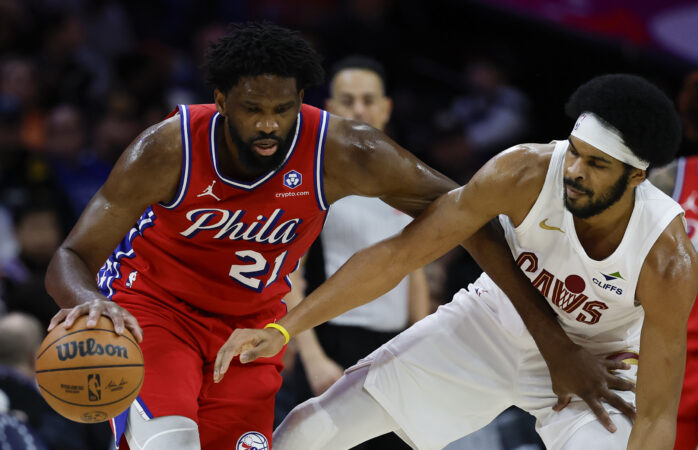
    Jaylon Tyson scored a career-high 39 points, Evan Mobley’s dunk with 4.8 seconds left was the winner and the short-handed Cleveland Cavaliers completed a two-game sweep of the 76ers in Philadelphia with a 117-115 victory on Friday night.

    Donovan Mitchell added 13 points, 12 assists, and nine rebounds for Cleveland, which rallied from an 11-point deficit in the fourth quarter. The Cavaliers defeated the Sixers 133-107 on Wednesday.

    Joel Embiid scored 33 points and Tyrese Maxey had 22 points, nine assists and five steals for the 76ers.

    Cleveland was without Darius Garland (right big toe soreness) and Sam Merrill (right hand sprain), who were both injured on Wednesday. Coach Kenny Atkinson said both will be reevaluated when the team returns to Cleveland this weekend.

    The Sixers looked in control when Paul George hit a jumper with 8 minutes, 47 seconds remaining for an 11-point lead. But the Cavaliers used a 13-2 run, capped by De’Andre Hunter’s three-pointer with 5:53 left to tie it at 102. Philadelphia moved ahead by seven points after turnovers by the Cavs on three straight possessions, but Cleveland hung around.

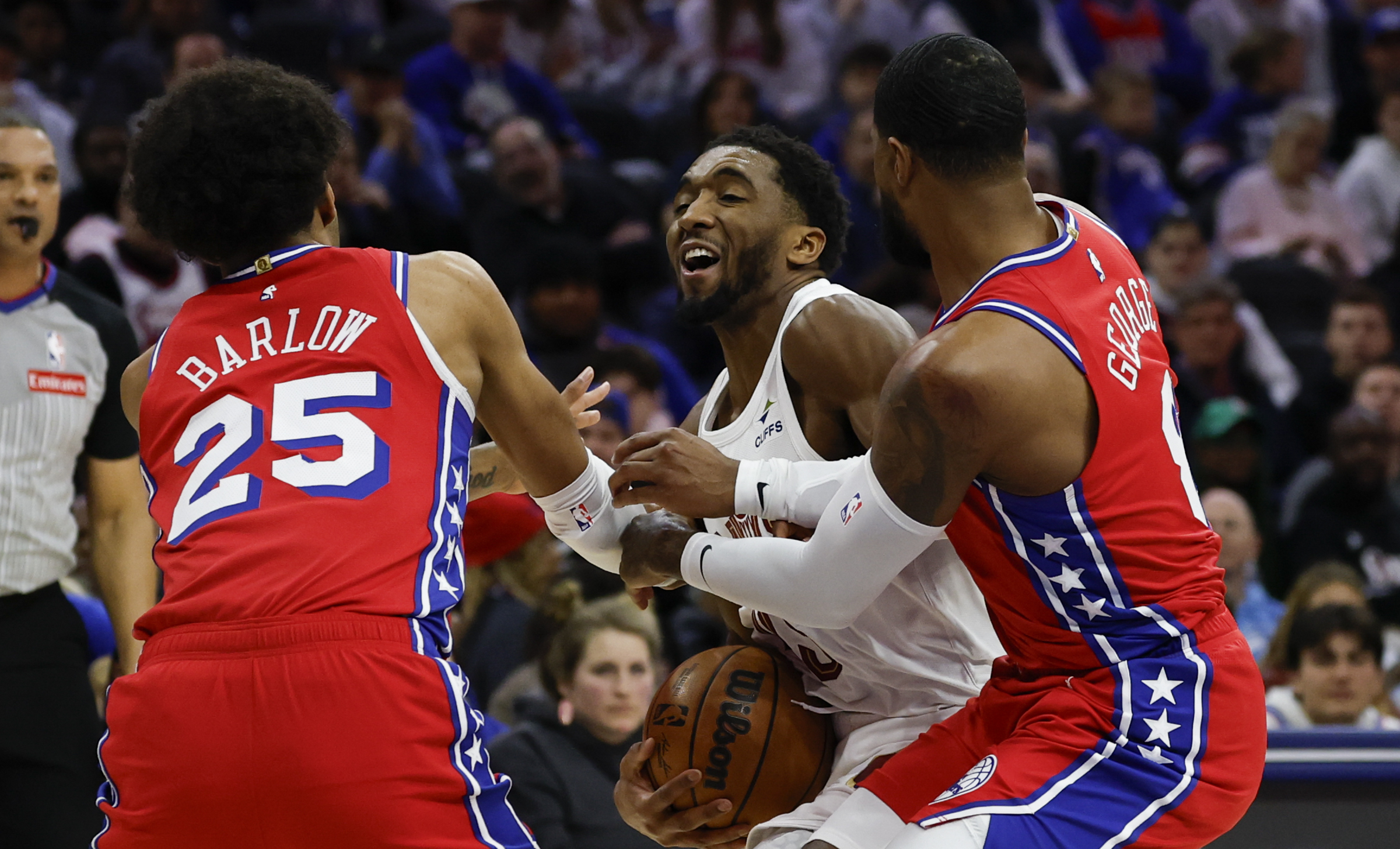
    Sixers’ Dominick Barlow (left) and Paul George (right) defend Cleveland’s Donovan Mitchell during the first quarter of Friday’s game.

    Hunter’s layup with just over a minute left put the Cavs up a point. After Mobley made one of two free throws with 22.7 seconds remaining, Maxey tied it at 115 on a runner with 8.1 seconds left. After a timeout, Tyson set up Mobley near the basket for an easy dunk to put Cleveland in front by two. Maxey’s shot from just beyond half court that could have won the game went long.

    Dominick Barlow was back in the lineup for Philadelphia after leaving Wednesday’s game early due to a back contusion. He was questionable entering the contest and finished with two points.

    The Sixers will host the Indiana Pacers (10-32) on Monday (7 p.m., NBCSP).

  • Justice Department investigating whether Minnesota’s Walz and Frey impeded immigration enforcement

    Justice Department investigating whether Minnesota’s Walz and Frey impeded immigration enforcement

    WASHINGTON — The Justice Department is investigating whether Minnesota Gov. Tim Walz and Minneapolis Mayor Jacob Frey have impeded federal immigration enforcement through public statements they have made, according to two people familiar with the matter.

    The investigation focused on potential violation of a conspiracy statute, the people said.

    The people spoke to the Associated Press on condition of anonymity because they were not authorized to discuss a pending investigation by name.

    CBS News first reported the investigation.

    In response to reports of the investigation, Walz said in a statement: “Two days ago it was Elissa Slotkin. Last week it was Jerome Powell. Before that, Mark Kelly. Weaponizing the justice system and threatening political opponents is a dangerous, authoritarian tactic.”

    Walz’s office said it has not received any notice of an investigation.

    Minneapolis Mayor Jacob Frey’s office did not immediately respond to an email and voicemail requesting comment.

    The investigation comes during a weekslong immigration crackdown in Minneapolis and St. Paul that the Department of Homeland Security has called its largest enforcement operation, resulting in more than 2,500 arrests.

    The operation has become more confrontational since the fatal shooting of Renee Good on Jan. 7. State and local officials have repeatedly told protesters to remain peaceful.

  • Justice Department says members of Congress can’t intervene in release of Epstein files

    Justice Department says members of Congress can’t intervene in release of Epstein files

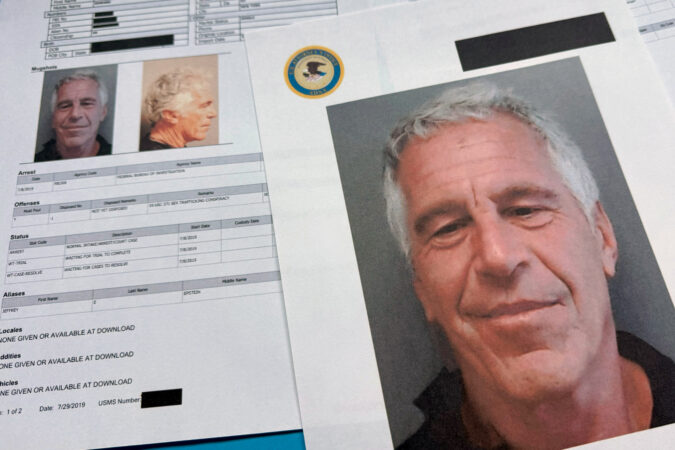
    NEW YORK — Manhattan’s top federal prosecutor said Friday that a judge lacks the authority to appoint a neutral expert to oversee the public release of documents in the sex trafficking probe of financier Jeffrey Epstein and British socialite Ghislaine Maxwell.

    Judge Paul A. Engelmayer was told in a letter signed by U.S. Attorney Jay Clayton that he must reject a request made earlier this week by the congressional cosponsors of the Epstein Files Transparency Act to appoint a neutral expert.

    U.S. Rep. Ro Khanna, a California Democrat, and Rep. Thomas Massie, a Kentucky Republican, say they have “urgent and grave concerns” about the slow release of only a small number of millions of documents that began last month.

    In a filing to the judge they said they believed “criminal violations have taken place” in the release process.

    Clayton, though, said Khanna and Massie do not have standing with the court that would allow them to seek the “extraordinary” relief of the appointment of a special master and independent monitor.

    Engelmayer “lacks the authority” to grant such a request, he said, particularly because the congressional representatives who made the request are not parties to the criminal case that led to Maxwell’s December 2021 sex trafficking conviction and subsequent 20-year prison sentence for recruiting girls and women for Epstein to abuse and aiding the abuse.

    Epstein died in a federal jail in New York City in August 2019 as he awaited trial on sex trafficking charges. The death was ruled a suicide.

    The Justice Department expects to update the court “again shortly” regarding its progress in turning over documents from the Epstein and Maxwell investigative files, Clayton said in the letter.

    The Justice Department has said the files’ release was slowed by redactions required to protect the identities of abuse victims.

    In their letter, Khanna and Massie wrote that the Department of Justice’s release of only 12,000 documents out of more than 2 million documents being reviewed was a “flagrant violation” of the law’s release requirements and had caused “serious trauma to survivors.”

    “Put simply, the DOJ cannot be trusted with making mandatory disclosures under the Act,” the representatives said as they asked for the appointment of an independent monitor to ensure all documents and electronically stored information are immediately made public.

    They also recommended that a court-appointed monitor be given authority to prepare reports about the true nature and extent of the document production and whether improper redactions or conduct have taken place.

  • National Guard troops to stay on Washington, D.C., streets through 2026

    National Guard troops to stay on Washington, D.C., streets through 2026

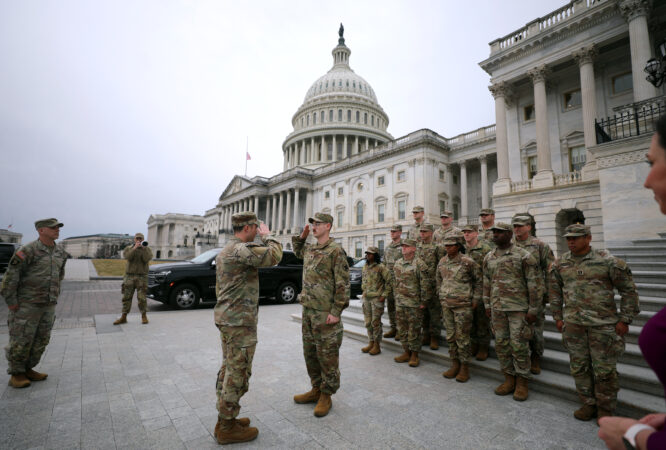
    WASHINGTON — National Guard troops will be on the streets of Washington, D.C., until the end of the year, according to a memo reviewed by the Associated Press.

    The memo, signed by Army Secretary Dan Driscoll and dated Wednesday, said “the conditions of the mission” warranted an extension past the end of next month to continue supporting President Donald Trump’s “ongoing efforts to restore law and order.”

    Meanwhile, Trump said this month that for now he was dropping his push to deploy National Guard troops in Chicago, Los Angeles, and Portland, Ore., which had provoked legal challenges. He also backed off a bit Friday from his threat a day earlier to invoke the Insurrection Act to deploy troops to quell protests in Minnesota.

    In Washington, troops have been charged with patrolling the streets and picking up trash. Trump has asserted repeatedly that crime has vanished in the city.

    Two National Guard troops from West Virginia that were part of the mission in D.C. were shot the day before Thanksgiving. Specialist Sarah Beckstrom, 20, died from her injuries.

    The National Guard has about 2,400 troops in Washington, with about 700 from D.C. and the rest from 11 states with Republican governors, including Indiana, South Carolina, Alabama, and Oklahoma.

  • Family of man shot by ICE in Minneapolis disputes key aspects of DHS account

    Family of man shot by ICE in Minneapolis disputes key aspects of DHS account

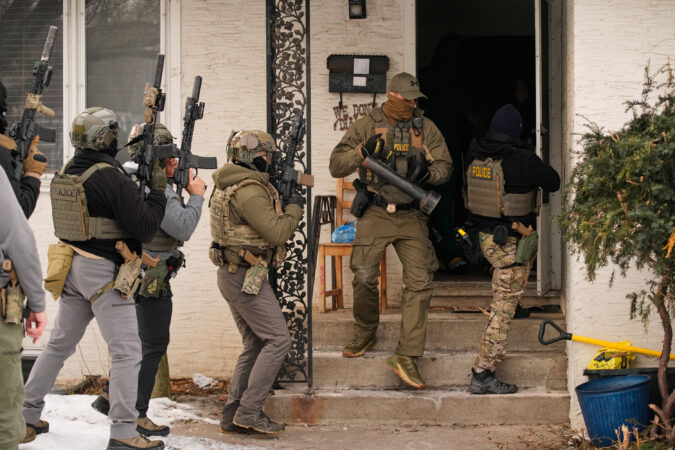
    The family of a man shot in the leg by an ICE officer in Minneapolis on Wednesday has disputed key elements of the Department of Homeland Security’s version of the incident, saying the shooting happened at the door of the man’s house as he let his housemate inside, rather than out in the street during a scuffle.

    The Department of Homeland Security has said an ICE officer shot Julio Cesar Sosa-Celis as he was assaulting the officer “with a shovel or broom stick.” The agency said the incident began when the officer attempted to stop Sosa-Celis in his car, and that Sosa-Celis tried to flee and then got into an altercation with the officer outside, joined by two housemates.

    But Sosa-Celis’ mother, citing an account from her son, said DHS had actually been pursuing one of his housemates, who Sosa-Celis let into their house just before the shooting. Alicia Celis said her son made no mention of anyone running from the house to attack ICE officers.

    A Facebook Live video reviewed by the Washington Post includes people at the house telling 911 dispatchers that the shooting happened as the men closed the door at the residence. Another video includes Sosa-Celis mentioning some sort of scuffle before any gunshots were fired, but he does not specify whether that struggle happened at the door or in the street.

    Celis, who lives in Venezuela, told the Post that her son called her from the hospital after he was taken into custody by ICE. He told her he had received a panicked call Wednesday evening from Alfredo Alejandro Ajorna, who is one of his housemates and a fellow DoorDash driver, Celis said. Ajorna said he was being pursued by ICE and that he needed Sosa-Celis to let him in the front door of the house, where they and their partners and children and others live.

    Sosa-Celis opened the door to let Ajorna inside, Celis said her son told her. Ajorna ran indoors. As Sosa-Celis went to close the door an ICE officer shot him in the leg, his mother said. The men retreated into the house, and people inside called emergency dispatchers, Celis said.

    A short time later, ICE officers broke down the front door and went inside the building, Celis said. They arrested Ajorna, Sosa-Celis, and Gabriel Alejandro Hernandez-Ledezma, who Celis said was not involved in the incident and was in the basement of the house, where he lives. All three men are undocumented immigrants from Venezuela, according to DHS; Sosa-Celis’ family said his temporary protected status to live legally in the United States lapsed last year. DHS had not announced charges against the men as of Friday afternoon.

    In its account of Wednesday night’s shooting, DHS alleged that Sosa-Celis fled in his car during an attempted traffic stop, crashed into a parked car, and then ran away. An officer chased him and attempted to arrest him, the agency said, adding that Sosa-Celis resisted and began to “violently assault the officer.” DHS alleged that Sosa-Celis and the officer were struggling when Ajorna and Hernandez-Ledezma came out of a nearby residence and hit the officer with a snow shovel and broom handle.

    DHS also said Sosa-Celis freed himself of the struggle and hit the officer “with a shovel or broom stick,” at which point the officer fired his gun. The agency called the shot “defensive” and said the officer feared for his life. DHS said the men ran into the residence and ICE officers then arrested them.

    When asked to provide additional evidence or body-camera footage of the alleged attack and to address the claims presented by Sosa-Celis’s family, DHS referred the Post to remarks Homeland Security Secretary Kristi L. Noem made Thursday morning.

    “I would say that our agent is beat up,” Noem told reporters. “He’s bruised, he’s injured, he’s getting treatment. And we’re thankful that he made it out alive.”

    The agency also did not respond to questions Thursday evening about the medical conditions of the officer and Sosa-Celis.

    The shooting of Sosa-Celis — and the angry and sometimes violent protests from residents that followed later — came one week after an ICE officer shot and killed Renée Good as she and other residents monitored and protested ICE activity on a residential street.

    The federal government over the past week has increased the number of officers in the city to 3,000, a massive deployment, with vows to send more personnel to quell what one administration official called an “insurrection.” Residents have objected to agents detaining people and said they feel like their city is under attack.

    Some of the family’s account of Wednesday night’s shooting appeared to align with what was said in a Facebook Live video from inside the home that evening. A chaotic scene appears to unfold as children cry and multiple people speak over each other. The people in the livestream report to 911 dispatchers that one of their family members was shot in the leg as they closed the door of the residence, with ICE officers outside. The Post confirmed the video was filmed from the same address on Minneapolis’s north side.

    Sosa-Celis also joined a different Facebook Live video broadcast the same night by a person who Sosa-Celis’ relatives described as a friend of his. That livestream shows Sosa-Celis describing the incident from what appears to be a hospital bed. Speaking Spanish and using a phrase that can be interpreted several ways, he indicates there was some kind of interaction with ICE personnel before the shooting, though it’s unclear whether he’s describing it happening outside the building or as he moved to close the door on the ICE officer.

    Sosa-Celis also joined that livestream from his home in the moments after the shooting. He can be heard telling the host of the video that he needs assistance. “We need help, friend. We have ICE here,” said Sosa-Celis, providing his address to viewers. “They shot us, they shot us. They shot us, and hit me in the leg.”

    When asked by the host if ICE had been following him, Sosa-Celis, who has his camera pointed toward a window outside, replies that ICE had been following Ajorna.

    Neighbors who live behind the house where the shooting happened also confirmed some elements of the family’s version.

    Brieella Johnson, 35, said she was home preparing dinner for her children at about 6:30 p.m. — her husband had just left with one of their sons for Bible study — when she heard two men arguing outside the house on North 24th Avenue, which she can see from her back deck.

    “We heard two men arguing, then we heard a screech of the vehicle trying to go, and then we heard two to three gunshots,” Johnson said, holding her baby and surrounded by her six older children in her living room on Thursday morning.

    She said she saw uniformed ICE officers with guns drawn “swarm” the house. She heard some of the officers shout, “Come out now!” and “Come out now, or we’re going to shoot!” and other things in Spanish.

    Johnson said she saw ICE officers shoot at one of the windows of the house, then, “They threw one smoke bomb, then yelled ‘Fire’ … Then afterwards we could see smoke in the second floor window.” One of the building’s front windows appeared to have been shattered, she said.

    Johnson heard the DHS account of the shooting and said, “It doesn’t make sense. It doesn’t add up.” She questioned why the ICE officer ended up grappling with and chasing someone he was trying to detain, why he didn’t call for backup sooner, and why he fired in a residential area so close to families with children.

    “Even if you’re going after someone you know is illegal, have back up,” she said.

    Tommy Ross, 72, stood outside his rental house around the block from the shooting location and said he heard three shots late Wednesday and saw the gray Ford sedan mired in the snow and uniformed ICE officers “all around it.”

    Ross, who has lived in the neighborhood for 40 years, said he recognized the car: He had met the owner, a young man with a Spanish accent, after he struck Ross’ Nissan sedan about a month ago, and they exchanged insurance information. He said he did not recall the man’s name.

    Ross and his family heard a car wreck about 7 p.m. “ICE was chasing them people. They ran into the house. There was a fight inside the house,” said Tommy Ross Jr., 40, who was visiting his father at the time of the shooting.

    He said he heard a woman shout: “Get out of my house!,” then heard ICE officers shout, “Freeze!” and “Get on the floor!”

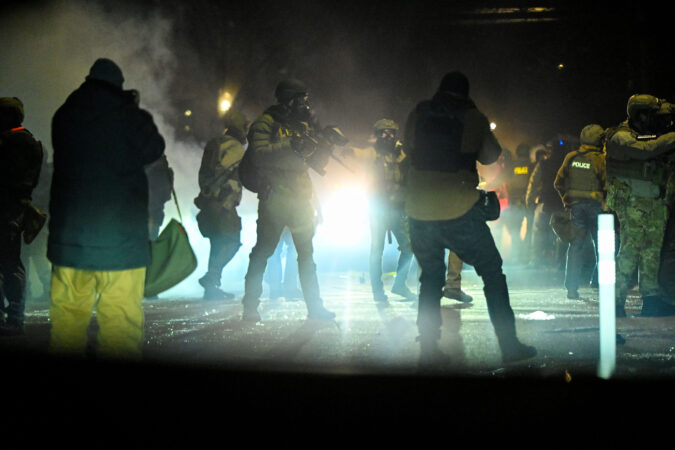
    Following ICE officers’ detention of the three men Wednesday night, tensions flared as neighbors and protesters arrived at the scene. Some protesters heckled, filmed with cellphones, and threw fireworks and a water bottle at officers. Officers fired tear gas and flash bangs at the crowd. Conservative influencer Nick Sortor posted video footage on social media that showed protesters attacking empty ICE vehicles. On Thursday, a damaged ICE laptop and a torn FBI property receipt could be seen on the street.

    “They were combative all night,” the younger Ross said. “They were shooting tear gas, it was all in the air, you couldn’t stand outside without coughing.” The activity was still going on when he headed to bed at 2:30 a.m., he said. “I went to sleep to ‘boom, boom, boom.’ Sounded like a war zone.”

    Local and state officials have called on ICE to leave Minnesota, while the Trump administration has condemned residents who are tracking, protesting, and trying to disrupt ICE activity.

    On Thursday morning, President Donald Trump threatened to invoke the Insurrection Act in Minnesota, raising the possibility of taking the highly unusual step of sending U.S. troops into a domestic city. Minnesota Gov. Tim Walz and Minneapolis Mayor Jacob Frey, both Democrats, urged the federal government not to escalate the tension.

    “They’re trying to make a riot out of it,” the elder Ross said of Trump administration officials, choking up as he spoke. “Governor Walz is doing a good thing, trying to keep them together.”

    Trump on Friday addressed his comments on the Insurrection Act, telling reporters outside the White House: “If I needed it, I’d use it. I don’t think I need it right now.”

    Johnson, the neighbor, said she does not support Trump invoking the Insurrection Act. “I don’t think they need U.S. troops or the National Guard. They need a safe and secure plan,” she said of ICE officers. “If the federal government is going to continue to use ICE, they need to treat these people like humans … You can’t just go in guns blazing. You disrupt communities. You make people scared.”

    But her husband Bryant Johnson, 35, who runs a painting business, blamed local and state officials for not preventing or doing more to address welfare fraud claims that intensified Trump’s attention on Minnesota. Like Trump, he blamed the fraud on Minneapolis’s large Somali community, because many of the dozens of people implicated in the scandal are Somali American. Most Somalis in the Twin Cities, a population of more than 83,000, are U.S. citizens.

    “I feel like a lot of this was brought on by our mayor and our government officials that were very well aware of the fraud,” Bryant Johnson said. “And if they didn’t let that kind of stuff continue and go on, we might not have this much of a presence of ICE.”

    “When you come here from another country to defraud our country of hundreds of millions of dollars,” he added, “you’ve got to go.”

    His wife shook her head. “There has to be a different way of getting them out,” she said. “There’s plenty of Americans that committed fraud. They go to jails, they don’t get killed.”

    Sosa-Celis’ father-in-law, who lives in Saint Paul and spoke on the condition of anonymity because he is undocumented, described Sosa-Celis as a hardworking man who provides for his family in the United States and Venezuela.

    Sosa-Celis’ mother said Thursday evening that she had not heard from her son since Wednesday night and does not know where he is or the status of his injury.

    “I haven’t been able to sleep,” she said. “He never has a ‘no’ for me … He says, ‘Here, Mom. Take as much as you want.’”
  • Cuba launches mass demonstration to decry U.S. attack on Venezuela and demand Maduro’s release

    Cuba launches mass demonstration to decry U.S. attack on Venezuela and demand Maduro’s release

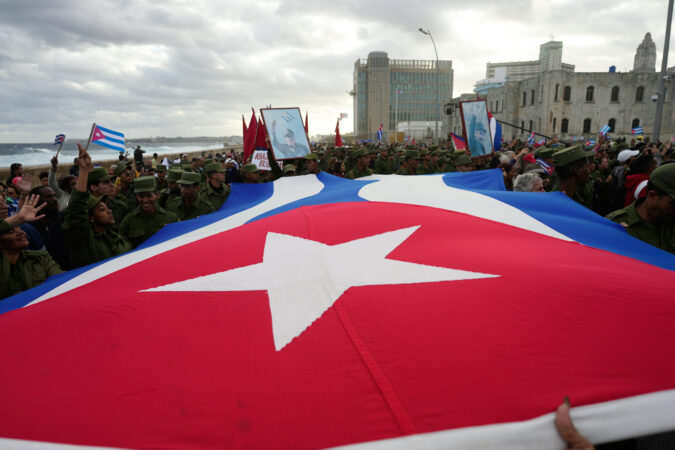
    HAVANA — Tens of thousands of Cubans demonstrated Friday outside the U.S. Embassy in Havana to decry the killing of 32 Cuban officers in Venezuela and demand that the U.S. government release former Venezuelan President Nicolás Maduro.

    They crowded into the open-air José Martí Anti-Imperialist plaza across from the embassy in a rally organized by the Cuban government as tensions between Cuba and the U.S. spike following the U.S. attack Jan. 3 on Venezuela.

    The 32 Cuban officers were part of Maduro’s security detail killed during the raid on his residence in Caracas to seize the former leader and bring him to the U.S. to face drug trafficking charges.

    “Humanity is experiencing something very complex, and (the U.S.) is governed by a president who considers himself an emperor,” said René González, 64, one of the protesters.

    “We must show him that ideas are worth more than weapons,” he said. ”This march is a message of our unity. Independence is sacred, and we will defend it tooth and nail if necessary.”

    Cuba’s national anthem rang out at Friday’s demonstration as large Cuban flags waved in the chilly wind and big waves broke nearby along Havana’s famed sea wall. Cuban President Miguel Díaz-Canel shook hands with members of the crowd clad in jackets and scarves before speaking to them.

    “The current U.S. administration has opened the door to an era of barbarism, plunder, and neo-fascism,” he said.

    The demonstration was a show of popular strength after U.S. President Donald Trump recently demanded that Cuba make a deal with him before it is “too late.” He did not explain what kind of deal.

    Trump also has said that Cuba will no longer live off Venezuela’s oil and money. Experts say the move could have catastrophic consequences since Cuba is already struggling with severe blackouts.

    “No one here surrenders,” Díaz-Canel said. “The current emperor of the White House and his infamous secretary of state haven’t stopped threatening me.”

    Washington has maintained a policy of sanctions against Cuba since the 1960s to pressure the island’s government to improve its human rights record, end its one-party communist system, and allow democracy. The sanctions have been further tightened during Trump’s presidency, suffocating the island’s economy.

    “Cuba does not have to make any political concessions, and that will never be on the table for negotiations aimed at reaching an understanding between Cuba and the United States,” Díaz-Canel said. “It is important that they understand this. We will always be open to dialogue and improving relations between our two countries, but only on equal terms and based on mutual respect.”

    After the president’s speech, the demonstration transitioned into a parade that Cubans call a “combatant march,” a custom that originated during the time of the late leader Fidel Castro. The crowd was led by a line of people holding pictures of the 32 officers killed.

    “Down with imperialism!” the crowd yelled. “Cuba will prevail!”

    The demonstration was organized a day after tens of thousands of Cubans gathered at the headquarters of the Ministry of the Revolutionary Armed Forces to pay their respects to the 32 officers slain.

    Their remains arrived home on Thursday morning, and they were scheduled to be laid to rest on Friday afternoon in various cemeteries following memorial ceremonies in all of Cuba’s provincial capitals.

  • In the face of Trump’s tariffs, Canada and China grow closer

    In the face of Trump’s tariffs, Canada and China grow closer

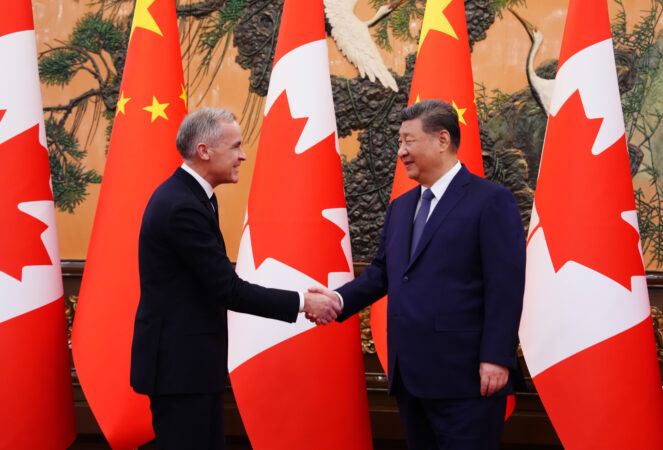
    Canadian Prime Minister Mark Carney hailed a “new strategic partnership” and tariff deals with China on Friday after a four-day visit that analysts said was an effort reset a deeply troubled relationship amid Canada’s efforts to diversify trade away from the United States.

    Carney announced the easing of some of the tariffs the two countries had imposed on each other, with Canada agreeing to allow in 49,000 Chinese electric vehicles at a much-reduced tariff of 6.1%, while China will cut canola seed tariffs to about 15%.

    The moves were a sign of how President Donald Trump’s levies on allies and adversaries alike are reordering global economic relationships, pushing two of the United States’ largest trading partners closer together after years of strained ties to offset the costs.

    Earlier in the day, Carney met with Chinese President Xi Jinping, who described the visit as part of a “turnaround” in Sino-Canadian ties.

    China, Canada’s second-largest trading partner after the United States, imposed steep tariffs on Canadian agricultural goods, including rapeseed and beef, last year. Those duties were retaliation for Canada’s levies on Chinese-made electric vehicles, steel, and aluminum. Ottawa announced those tariffs in 2024, as part of an effort to align itself with U.S. policy on China.

    Despite the easing of some tariffs and the optimistic words from both leaders, the visit was largely an opening “icebreaker,” said Zhao Minghao, deputy director of the Fudan University Center for American Studies. Sino-Canadian ties, he added, still face “many difficulties, especially in areas like ideology and national security. It’s an exploratory process, and they are focusing on the so-called low-hanging fruit first.”

    Reflecting the assessments of many other analysts, Zhao also said the most striking part of the visit was the way Canada was “using the restoration of ties with China as a way to de-risk its relationship with the U.S.”

    Carney’s visit was the first by a Canadian prime minister in nearly a decade, and Sino-Canadian ties have been in a deep freeze for nearly as long. But Canada has been seeking a thaw as part of an effort to diversify trade away amid Trump’s tariffs and threats to use “economic force” to make it the 51st state.

    For Canada, a country caught in the middle between China and the United States — its two largest trading partners — the trade diversification strategy has meant knotty choices. For Carney, a political rookie who won a federal election last year by casting himself as the best person to manage the break in U.S.-Canada ties, the China visit has required walking a tightrope.

    Carney’s predecessor and fellow Liberal, Justin Trudeau, was the last Canadian prime minister to travel to China. He, too, sought closer economic relations with Beijing, but his 2017 visit ended with the two sides deeply divided on several issues and without an expected announcement on the start of formal free trade talks.

    That chasm only widened the next year, after China detained two Canadians — former diplomat Michael Kovrig and businessperson Michael Spavor — in what was widely viewed as retaliation for Canada’s arrest of Meng Wanzhou, a Huawei executive wanted in the U.S. on bank and wire fraud charges.

    The “two Michaels,” as they were known in Canada, were held in secret prisons on vague charges of espionage and stealing state secrets, allegations for which China never provided evidence. They were tried in secret proceedings from which Canadian diplomats were barred, in violation of a consular agreement between the two countries.

    The Canadians were released in 2021, after Meng reached a deal with the U.S. Justice Department that allowed her to return to China in exchange for acknowledging some wrongdoing in the criminal case. A Pew Research Center poll that year found a record of more than 70% of Canadians had an “unfavorable” view of China — up from 45% in 2018.

    Canadian intelligence officials have accused China of “clandestinely and deceptively” seeking to interfere in Canada’s federal elections with the goal of supporting candidates favorable to its strategic interests. They have also alleged that the country conducts transnational repression in Canada, targeting dissidents and lawmakers who are vocal opponents of Beijing.

    Critics of Carney’s rapprochement of China have argued that closer ties could spell trouble, given Beijing’s history of weaponizing access to its markets. Not long after the two Michaels were detained, China imposed tariffs on Canadian canola in what was widely viewed here as further retaliation for Meng’s arrest.

    Opponents of the recalibration in the relationship have also warned that it could draw the ire of the Trump administration, which has been seeking to curtail China’s influence, ahead of a planned review this year of the U.S.-Mexico-Canada Agreement (USMCA). Chris LaCivita, a former Trump campaign manager, said on X that drawing closer to China “won’t end well for Carney.”

    Canadian officials and businesses view the continued existence of the North American free-trade pact as critical for the country’s economic prosperity. More than 70% of Canadian exports have typically gone to the United States. But Trump, who brokered the USMCA and called it “the best agreement we’ve ever made,” said this week that he doesn’t “really care about it.”

    “There’s no real advantage to us,” Trump told reporters in Dearborn, Mich., renewing fears in Canada that he could rip the deal up. “It’s irrelevant to me. … Canada wants it. They need it. We don’t.”

    Carney has been unable to reach a deal to ease the tariffs that the U.S. has imposed on Canadian goods. In October, Trump terminated all trade talks with Canada over a television advertisement critical of tariffs that was broadcast on U.S. networks and paid for by the government of Ontario. Canadian officials said they were close to a deal before Trump suspended negotiations.

    At home, the China reset has also proved tricky.

    Provincial leaders and farmers in the prairie provinces of Saskatchewan and Manitoba, which have been hardest hit by the Chinese tariffs, have long pressed Carney to ease the levies on China. But the move is poised to anger officials in the province of Ontario, the heart of Canada’s auto industry.

    Officials there have supported the tariffs on China, viewing them as necessary for protecting Canadian auto jobs and citing national security concerns. Canada’s auto sector is facing an existential crisis, analysts say, because of Trump’s tariffs on autos, steel, and aluminum. Trump administration officials have repeatedly asserted they do not want to make cars with Canada.

    Trump’s tariffs and threats against Canadian sovereignty have infuriated Canadians. A Pew Research Center poll in July found that 59% of Canadians view the United States as their country’s top threat, while just 17% see China that way.

  • Defendant in Charlie Kirk’s killing asks judge to disqualify prosecutors

    Defendant in Charlie Kirk’s killing asks judge to disqualify prosecutors

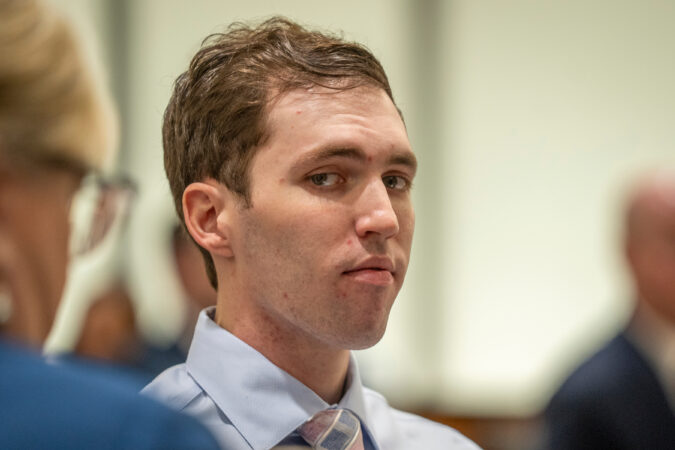
    PROVO, Utah — The Utah man charged with killing conservative activist Charlie Kirk returned to court Friday as his attorneys seek to disqualify prosecutors because an adult child of a deputy county attorney involved in the case attended the rally where Kirk was shot.

    Defense attorneys say the relationship represents a conflict of interest after prosecutors said they intend to seek the death penalty against Tyler Robinson for aggravated murder.

    Robinson, 22, has pleaded not guilty in the Sept. 10 shooting of Kirk on the Utah Valley University campus in Orem, just a few miles north of the Provo courthouse.

    The 18-year-old child who attended the event — and whose name was redacted from court filings — later texted with their father in the Utah County Attorney’s Office to describe the chaotic events around the shooting, the filings from prosecutors and defense lawyers state.

    Robinson’s attorneys say that personal relationship is a conflict of interest that “raises serious concerns about past and future prosecutorial decision-making in this case,” according to court documents. They also argue that the “rush” to seek the death penalty against Robinson is evidence of “strong emotional reactions” by the prosecution and merits the disqualification of the entire team.

    Defense attorney Richard Novak urged Judge Tony Graf on Friday to bring in the state attorney general’s office in place of Utah County prosecutors to address the conflict of interest. Novak said it was problematic for county prosecutors to litigate on behalf of the state while defending their aptness to remain on the case.

    Utah County Attorney Richard Gray replied that Novak’s last-minute request was aimed at delaying the case against Robinson.

    “This is ambush and another stalling tactic to delay these proceedings,” Gray said.

    The director of a state council that trains prosecutors said he was not aware of any other major case where attorneys had been disqualified for bias.

    “I would bet against the defense winning this motion,” Utah Prosecution Council Director Robert Church said. “They’ve got to a show a substantial amount of prejudice and bias.”

    Several thousand people attended the outdoor rally where Kirk, a co-founder of Turning Point USA who helped mobilize young people to vote for President Donald Trump, was shot as he took questions from the audience. The adult child of the deputy county attorney did not see the shooting, according to an affidavit submitted by prosecutors.

    “While the second person in line was speaking with Charlie, I was looking around the crowd when I heard a loud sound, like a pop. Someone yelled, ‘he’s been shot,’” the child stated in the affidavit.

    The child later texted a family group chat to say “CHARLIE GOT SHOT.” In the aftermath of the shooting, the child did not miss classes or other activities, and reported no lasting trauma “aside from being scared at the time,” the affidavit said.

    Prosecutors have asked Judge Graf to deny the disqualification request.

    “Under these circumstances, there is virtually no risk, let alone a significant risk, that it would arouse such emotions in any father-prosecutor as to render him unable to fairly prosecute the case,” county attorney Gray said in a filing.

    Gray also said the child was “neither a material witness nor a victim in the case” and that “nearly everything” the person knows about the actual homicide is mere hearsay.

    If the Utah county prosecutors were disqualified, the case would likely be picked up by prosecutors in a county with enough resources to handle a big case. That could be Salt Lake City, or possibly even the state attorney general’s office, said prosecution council director Church. The judge would have the final say, he said.

    Prosecutors have said text messages and DNA evidence connect Robinson to the killing. Robinson reportedly texted his romantic partner that he targeted Kirk because he “had enough of his hatred.”

    At the school where the shooting took place, university president Astrid Tuminez announced Wednesday that she will be stepping down from her role after the semester ends in May.

    The state university has been working to expand its police force and add security managers after it was criticized for a lack of key safety measures on the day of the shooting.

    Prosecutors are expected to lay out their case against Robinson at a preliminary hearing scheduled to begin May 18.

  • ICE says a Cuban immigrant died in a suicide attempt. A witness says guards pinned and choked him

    ICE says a Cuban immigrant died in a suicide attempt. A witness says guards pinned and choked him

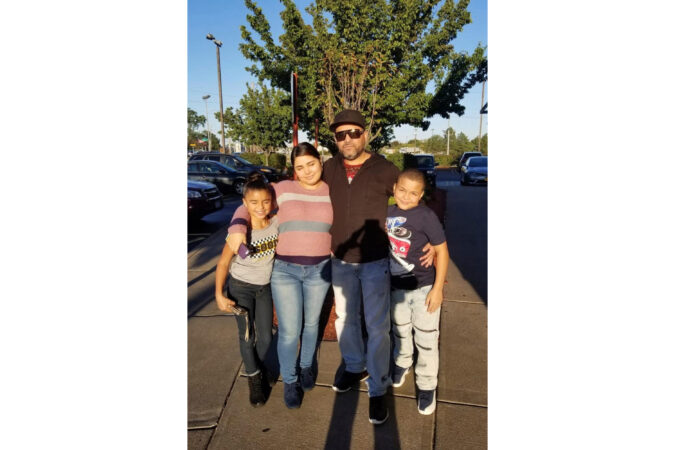
    WASHINGTON — A Cuban immigrant died in a Texas immigration detention facility earlier this month during an altercation with guards, and the local medical examiner has indicated that his death will likely be classified as a homicide.

    The federal government has provided a differing account surrounding the Jan. 3 death of Geraldo Lunas Campos, saying the detainee was attempting suicide and staff tried to save him.

    A witness told the Associated Press that Lunas Campos died after he was handcuffed, tackled by guards, and placed in a chokehold until he lost consciousness. The immigrant’s family was told by the El Paso County Medical Examiner’s Office on Wednesday that a preliminary autopsy report said the death was a homicide resulting from asphyxia from chest and neck compression, according to a recording of the call reviewed by the AP.

    The death and conflicting accounts have intensified scrutiny into the conditions of immigration jails at a time when the government has been rounding up immigrants in large numbers around the country and detaining them at facilities like the one in El Paso where Lunas Campos died.

    U.S. Immigration and Customs Enforcement is legally required to issue public notification of detainee deaths. Last week, it said Lunas Campos, a 55-year-old father of four and registered sex offender, had died at Camp East Montana, but made no mention of him being involved in an altercation with staff immediately before his death.

    In response to questions from the AP, the Department of Homeland Security, which includes ICE, on Thursday amended its account of Lunas Campos’ death, saying he tried to kill himself.

    “Campos violently resisted the security staff and continued to attempt to take his life,” DHS spokesperson Tricia McLaughlin said. “During the ensuing struggle, Campos stopped breathing and lost consciousness.”

    In an interview before DHS updated its account, detainee Santos Jesús Flores, 47, from El Salvador, said he witnessed the incident through the window of his cell in the special housing unit, where detainees are held in isolation for disciplinary infractions.

    “He didn’t want to enter the cell where they were going to put him,” Flores told the AP on Thursday, speaking in Spanish from a phone in the facility. “The last thing he said was that he couldn’t breathe.”

    Among the first sent to Camp Montana East

    Camp Montana East is a sprawling tent facility hastily constructed in the desert on the grounds of Fort Bliss, an Army base. The AP reported in August that the $1.2 billion facility, expected to become the largest detention facility in the United States, was being built and operated by a private contractor headquartered in a single-family home in Richmond, Va. The company, Acquisition Logistics LLC, had no prior experience running a corrections facility.

    It was not immediately clear whether the guards present when Lunas Campos died were government employees or those of the private contractor. Emails seeking comment on Thursday from Acquisition Logistics executives received no response.

    Lunas Campos was among the first detainees sent to Camp Montana East, arriving in September after ICE arrested him in Rochester, N.Y., where he lived for more than two decades. He was legally admitted to the U.S. in 1996, part of a wave of Cuban immigrants seeking to reach Florida by boat.

    ICE said he was picked up in July as part of a planned immigration enforcement operation due to criminal convictions that made him eligible for removal.

    New York court records show Lunas Campos was convicted in 2003 of sexual contact with an individual under 11, a felony for which he was sentenced to one year in jail and placed on the state’s sex offender registry.

    Lunas Campos was also sentenced to five years in prison and three years of supervision in 2009 after being convicted of attempting to sell a controlled substance, according to the New York corrections records. He completed the sentence in January 2017.

    Lunas Campos’ adult daughter said the child sexual abuse accusation was false, made as part of a contentious custody battle.

    “My father was not a child molester,” said Kary Lunas, 25. “He was a good dad. He was a human being.”

    Conflicting accounts

    On the day he died, according to ICE, Lunas Campos became disruptive while in line for medication and refused to return to his assigned dorm. He was then taken to the segregation block.

    “While in segregation, staff observed him in distress and contacted on-site medical personnel for assistance,” the agency said in its Jan. 9 release. “Medical staff responded, initiated lifesaving measures, and requested emergency medical services.”

    Lunas Campos was pronounced dead after paramedics arrived.

    Flores said that account omitted key details — Lunas Campos was already handcuffed when at least five guards pinned him to the floor, and at least one squeezed his arm around the detainee’s neck.

    Within about five minutes, Flores said, Lunas Campos was no longer moving.

    “After he stopped breathing, they removed the handcuffs,” Flores said.

    Flores is not represented by a lawyer and said he has already consented to deportation to his home country. Though he acknowledged he was taking a risk by speaking to the AP, Flores said he wanted to highlight that “in this place, guards abuse people a lot.”

    He said multiple detainees in the unit witnessed the altercation, and security cameras there should have captured the events. Flores also said investigators had not interviewed him.

    DHS did not respond to questions about whether Lunas Campos was handcuffed when they say he attempted suicide, or exactly how he had tried to kill himself.

    “ICE takes seriously the health and safety of all those detained in our custody,” McLaughlin said. “This is still an active investigation, and more details are forthcoming.”

    DHS wouldn’t say whether other agencies were investigating. The El Paso medical examiner’s office confirmed Thursday that it conducted an autopsy, but declined further comment.

    A final determination of homicide by the medical examiner would typically be critical in determining whether any guards are held criminally or civilly liable. When such deaths are ruled accidental or something other than homicide, they are less likely to trigger criminal investigations, while civil wrongful death lawsuits become harder to prove.

    The fact that Lunas Campos died on an Army base could also limit state and local officials’ legal jurisdiction to investigate. An El Paso County District Attorney’s Office spokesperson declined to comment Thursday on whether it was involved in an investigation.

    The deaths of inmates and other detainees after officers hold them face down and put pressure on their backs and necks to restrain them have been a problem in law enforcement for decades. A 2024 AP investigation documented hundreds of deaths during police encounters in which people were restrained in a prone position. Many uttered “I can’t breathe” before suffocating, according to scores of body camera and bystander videos. Authorities often attempt to shift the blame for such deaths to preexisting medical conditions or drug use.

    Victor Weedn, a forensic pathologist who has studied prone restraint deaths, said the preliminary autopsy ruling of homicide indicates guards’ actions caused Lunas Campos’ death, but does not mean they intended to kill. He said the medical examiner’s office could come under pressure to stop short of calling it a homicide, but will probably “stick to its guns.”

    “This probably passes the ‘but for’ test. ‘But for’ the actions of the officers, he would not have died. For us, that’s generally a homicide,” he said.

    ‘I just want justice, and his body here’

    Jeanette Pagan-Lopez, the mother of Lunas Campos’ two youngest children, said the day after he died the medical examiner’s office called to inform her that his body was at the county morgue. She immediately called ICE to find out what happened.

    Pagan-Lopez, who lives in Rochester, said the assistant director of the El Paso ICE field office eventually called her back. She said the official told her the cause of death was still pending and that they were awaiting toxicology report results. He also told her the only way Lunas Campos’ body could be returned to Rochester free of charge was if she consented to his being cremated, she said.

    Pagan-Lopez declined and is now seeking help from family and friends to raise the money needed to ship his body home and pay for a funeral.

    After failing to get details about the circumstances surrounding his death from ICE, Pagan-Lopez said she got a call from a detainee at Camp Montana East who then put her in touch with Flores, who first told her about the altercation with guards.

    Since then, she said she has repeatedly called ICE, but is no longer getting a response. Pagan-Lopez, who is a U.S. citizen, said she also twice called the FBI, where an agent took her information and then hung up.

    Pagan-Lopez said she and Lunas Campos were together about 15 years before breaking up eight years ago. She described him as an attentive father who, until his detention, had worked in a minimum-wage job at a furniture store, the only employment she said he could find due to his criminal record.

    She said that in the family’s last phone call the week after Christmas, Lunas Campos talked to his kids about his expected deportation back to Cuba. He said he wanted them to visit the island, so that he could stay in their lives.

    “He wasn’t a bad guy,” Pagan-Lopez said. “I just want justice, and his body here. That’s all I want.”