Tag: no-latest

  • Defendant in Charlie Kirk’s killing asks judge to disqualify prosecutors

    Defendant in Charlie Kirk’s killing asks judge to disqualify prosecutors

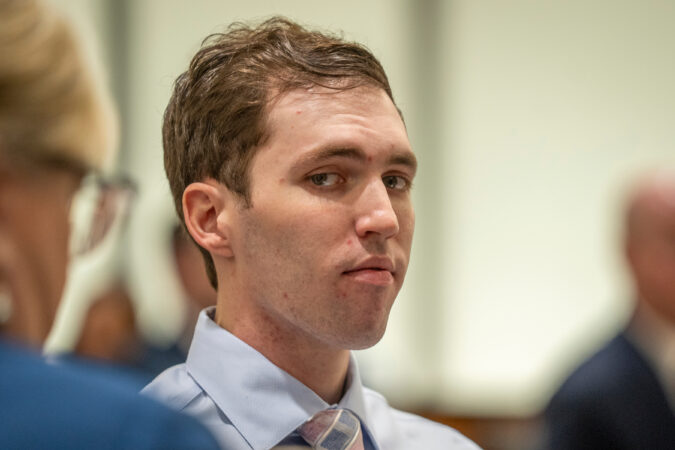
    PROVO, Utah — The Utah man charged with killing conservative activist Charlie Kirk returned to court Friday as his attorneys seek to disqualify prosecutors because an adult child of a deputy county attorney involved in the case attended the rally where Kirk was shot.

    Defense attorneys say the relationship represents a conflict of interest after prosecutors said they intend to seek the death penalty against Tyler Robinson for aggravated murder.

    Robinson, 22, has pleaded not guilty in the Sept. 10 shooting of Kirk on the Utah Valley University campus in Orem, just a few miles north of the Provo courthouse.

    The 18-year-old child who attended the event — and whose name was redacted from court filings — later texted with their father in the Utah County Attorney’s Office to describe the chaotic events around the shooting, the filings from prosecutors and defense lawyers state.

    Robinson’s attorneys say that personal relationship is a conflict of interest that “raises serious concerns about past and future prosecutorial decision-making in this case,” according to court documents. They also argue that the “rush” to seek the death penalty against Robinson is evidence of “strong emotional reactions” by the prosecution and merits the disqualification of the entire team.

    Defense attorney Richard Novak urged Judge Tony Graf on Friday to bring in the state attorney general’s office in place of Utah County prosecutors to address the conflict of interest. Novak said it was problematic for county prosecutors to litigate on behalf of the state while defending their aptness to remain on the case.

    Utah County Attorney Richard Gray replied that Novak’s last-minute request was aimed at delaying the case against Robinson.

    “This is ambush and another stalling tactic to delay these proceedings,” Gray said.

    The director of a state council that trains prosecutors said he was not aware of any other major case where attorneys had been disqualified for bias.

    “I would bet against the defense winning this motion,” Utah Prosecution Council Director Robert Church said. “They’ve got to a show a substantial amount of prejudice and bias.”

    Several thousand people attended the outdoor rally where Kirk, a co-founder of Turning Point USA who helped mobilize young people to vote for President Donald Trump, was shot as he took questions from the audience. The adult child of the deputy county attorney did not see the shooting, according to an affidavit submitted by prosecutors.

    “While the second person in line was speaking with Charlie, I was looking around the crowd when I heard a loud sound, like a pop. Someone yelled, ‘he’s been shot,’” the child stated in the affidavit.

    The child later texted a family group chat to say “CHARLIE GOT SHOT.” In the aftermath of the shooting, the child did not miss classes or other activities, and reported no lasting trauma “aside from being scared at the time,” the affidavit said.

    Prosecutors have asked Judge Graf to deny the disqualification request.

    “Under these circumstances, there is virtually no risk, let alone a significant risk, that it would arouse such emotions in any father-prosecutor as to render him unable to fairly prosecute the case,” county attorney Gray said in a filing.

    Gray also said the child was “neither a material witness nor a victim in the case” and that “nearly everything” the person knows about the actual homicide is mere hearsay.

    If the Utah county prosecutors were disqualified, the case would likely be picked up by prosecutors in a county with enough resources to handle a big case. That could be Salt Lake City, or possibly even the state attorney general’s office, said prosecution council director Church. The judge would have the final say, he said.

    Prosecutors have said text messages and DNA evidence connect Robinson to the killing. Robinson reportedly texted his romantic partner that he targeted Kirk because he “had enough of his hatred.”

    At the school where the shooting took place, university president Astrid Tuminez announced Wednesday that she will be stepping down from her role after the semester ends in May.

    The state university has been working to expand its police force and add security managers after it was criticized for a lack of key safety measures on the day of the shooting.

    Prosecutors are expected to lay out their case against Robinson at a preliminary hearing scheduled to begin May 18.

  • ICE says a Cuban immigrant died in a suicide attempt. A witness says guards pinned and choked him

    ICE says a Cuban immigrant died in a suicide attempt. A witness says guards pinned and choked him

    WASHINGTON — A Cuban immigrant died in a Texas immigration detention facility earlier this month during an altercation with guards, and the local medical examiner has indicated that his death will likely be classified as a homicide.

    The federal government has provided a differing account surrounding the Jan. 3 death of Geraldo Lunas Campos, saying the detainee was attempting suicide and staff tried to save him.

    A witness told the Associated Press that Lunas Campos died after he was handcuffed, tackled by guards, and placed in a chokehold until he lost consciousness. The immigrant’s family was told by the El Paso County Medical Examiner’s Office on Wednesday that a preliminary autopsy report said the death was a homicide resulting from asphyxia from chest and neck compression, according to a recording of the call reviewed by the AP.

    The death and conflicting accounts have intensified scrutiny into the conditions of immigration jails at a time when the government has been rounding up immigrants in large numbers around the country and detaining them at facilities like the one in El Paso where Lunas Campos died.

    U.S. Immigration and Customs Enforcement is legally required to issue public notification of detainee deaths. Last week, it said Lunas Campos, a 55-year-old father of four and registered sex offender, had died at Camp East Montana, but made no mention of him being involved in an altercation with staff immediately before his death.

    In response to questions from the AP, the Department of Homeland Security, which includes ICE, on Thursday amended its account of Lunas Campos’ death, saying he tried to kill himself.

    “Campos violently resisted the security staff and continued to attempt to take his life,” DHS spokesperson Tricia McLaughlin said. “During the ensuing struggle, Campos stopped breathing and lost consciousness.”

    In an interview before DHS updated its account, detainee Santos Jesús Flores, 47, from El Salvador, said he witnessed the incident through the window of his cell in the special housing unit, where detainees are held in isolation for disciplinary infractions.

    “He didn’t want to enter the cell where they were going to put him,” Flores told the AP on Thursday, speaking in Spanish from a phone in the facility. “The last thing he said was that he couldn’t breathe.”

    Among the first sent to Camp Montana East

    Camp Montana East is a sprawling tent facility hastily constructed in the desert on the grounds of Fort Bliss, an Army base. The AP reported in August that the $1.2 billion facility, expected to become the largest detention facility in the United States, was being built and operated by a private contractor headquartered in a single-family home in Richmond, Va. The company, Acquisition Logistics LLC, had no prior experience running a corrections facility.

    It was not immediately clear whether the guards present when Lunas Campos died were government employees or those of the private contractor. Emails seeking comment on Thursday from Acquisition Logistics executives received no response.

    Lunas Campos was among the first detainees sent to Camp Montana East, arriving in September after ICE arrested him in Rochester, N.Y., where he lived for more than two decades. He was legally admitted to the U.S. in 1996, part of a wave of Cuban immigrants seeking to reach Florida by boat.

    ICE said he was picked up in July as part of a planned immigration enforcement operation due to criminal convictions that made him eligible for removal.

    New York court records show Lunas Campos was convicted in 2003 of sexual contact with an individual under 11, a felony for which he was sentenced to one year in jail and placed on the state’s sex offender registry.

    Lunas Campos was also sentenced to five years in prison and three years of supervision in 2009 after being convicted of attempting to sell a controlled substance, according to the New York corrections records. He completed the sentence in January 2017.

    Lunas Campos’ adult daughter said the child sexual abuse accusation was false, made as part of a contentious custody battle.

    “My father was not a child molester,” said Kary Lunas, 25. “He was a good dad. He was a human being.”

    Conflicting accounts

    On the day he died, according to ICE, Lunas Campos became disruptive while in line for medication and refused to return to his assigned dorm. He was then taken to the segregation block.

    “While in segregation, staff observed him in distress and contacted on-site medical personnel for assistance,” the agency said in its Jan. 9 release. “Medical staff responded, initiated lifesaving measures, and requested emergency medical services.”

    Lunas Campos was pronounced dead after paramedics arrived.

    Flores said that account omitted key details — Lunas Campos was already handcuffed when at least five guards pinned him to the floor, and at least one squeezed his arm around the detainee’s neck.

    Within about five minutes, Flores said, Lunas Campos was no longer moving.

    “After he stopped breathing, they removed the handcuffs,” Flores said.

    Flores is not represented by a lawyer and said he has already consented to deportation to his home country. Though he acknowledged he was taking a risk by speaking to the AP, Flores said he wanted to highlight that “in this place, guards abuse people a lot.”

    He said multiple detainees in the unit witnessed the altercation, and security cameras there should have captured the events. Flores also said investigators had not interviewed him.

    DHS did not respond to questions about whether Lunas Campos was handcuffed when they say he attempted suicide, or exactly how he had tried to kill himself.

    “ICE takes seriously the health and safety of all those detained in our custody,” McLaughlin said. “This is still an active investigation, and more details are forthcoming.”

    DHS wouldn’t say whether other agencies were investigating. The El Paso medical examiner’s office confirmed Thursday that it conducted an autopsy, but declined further comment.

    A final determination of homicide by the medical examiner would typically be critical in determining whether any guards are held criminally or civilly liable. When such deaths are ruled accidental or something other than homicide, they are less likely to trigger criminal investigations, while civil wrongful death lawsuits become harder to prove.

    The fact that Lunas Campos died on an Army base could also limit state and local officials’ legal jurisdiction to investigate. An El Paso County District Attorney’s Office spokesperson declined to comment Thursday on whether it was involved in an investigation.

    The deaths of inmates and other detainees after officers hold them face down and put pressure on their backs and necks to restrain them have been a problem in law enforcement for decades. A 2024 AP investigation documented hundreds of deaths during police encounters in which people were restrained in a prone position. Many uttered “I can’t breathe” before suffocating, according to scores of body camera and bystander videos. Authorities often attempt to shift the blame for such deaths to preexisting medical conditions or drug use.

    Victor Weedn, a forensic pathologist who has studied prone restraint deaths, said the preliminary autopsy ruling of homicide indicates guards’ actions caused Lunas Campos’ death, but does not mean they intended to kill. He said the medical examiner’s office could come under pressure to stop short of calling it a homicide, but will probably “stick to its guns.”

    “This probably passes the ‘but for’ test. ‘But for’ the actions of the officers, he would not have died. For us, that’s generally a homicide,” he said.

    ‘I just want justice, and his body here’

    Jeanette Pagan-Lopez, the mother of Lunas Campos’ two youngest children, said the day after he died the medical examiner’s office called to inform her that his body was at the county morgue. She immediately called ICE to find out what happened.

    Pagan-Lopez, who lives in Rochester, said the assistant director of the El Paso ICE field office eventually called her back. She said the official told her the cause of death was still pending and that they were awaiting toxicology report results. He also told her the only way Lunas Campos’ body could be returned to Rochester free of charge was if she consented to his being cremated, she said.

    Pagan-Lopez declined and is now seeking help from family and friends to raise the money needed to ship his body home and pay for a funeral.

    After failing to get details about the circumstances surrounding his death from ICE, Pagan-Lopez said she got a call from a detainee at Camp Montana East who then put her in touch with Flores, who first told her about the altercation with guards.

    Since then, she said she has repeatedly called ICE, but is no longer getting a response. Pagan-Lopez, who is a U.S. citizen, said she also twice called the FBI, where an agent took her information and then hung up.

    Pagan-Lopez said she and Lunas Campos were together about 15 years before breaking up eight years ago. She described him as an attentive father who, until his detention, had worked in a minimum-wage job at a furniture store, the only employment she said he could find due to his criminal record.

    She said that in the family’s last phone call the week after Christmas, Lunas Campos talked to his kids about his expected deportation back to Cuba. He said he wanted them to visit the island, so that he could stay in their lives.

    “He wasn’t a bad guy,” Pagan-Lopez said. “I just want justice, and his body here. That’s all I want.”

  • Trump signals Hassett may stay at White House, reshaping Fed chair race

    Trump signals Hassett may stay at White House, reshaping Fed chair race

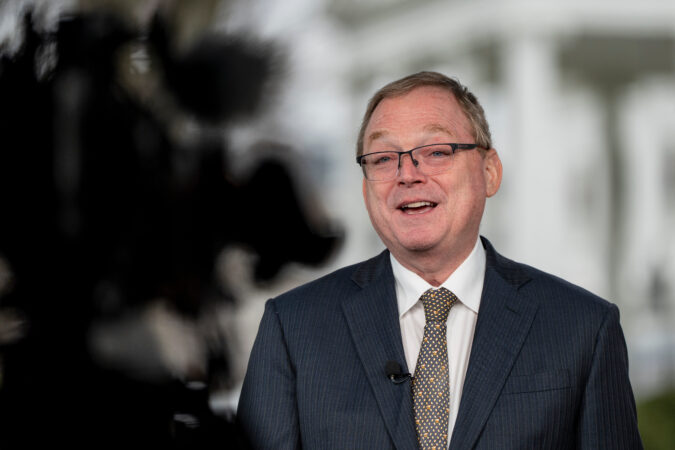
    President Donald Trump on Friday suggested that Kevin Hassett, a top contender to run the Federal Reserve, could remain in his current job as head of the National Economic Council, casting new uncertainty over the race to succeed Fed Chair Jerome H. Powell.

    Speaking at a healthcare event at the White House, Trump said Hassett performed well as a surrogate for the president on television and the potential for him to vacate his current role was a “serious concern.”

    “I actually want to keep you where you are if you want to know the truth. We don’t want to lose him, Susie,” Trump said, addressing White House Chief of Staff Susie Wiles. “We’ll see how it all works out.”

    Analysts and officials close to the White House have said the sweepstakes to succeed Powell may have been scrambled this week when Powell publicly disclosed that the Justice Department had launched a criminal investigation tied to a massive office renovation project for the central bank’s headquarters overlooking the National Mall.

    Powell and supporters characterized the move as an attempt to undercut the Fed’s independence on monetary policy. At least two Republican senators said they won’t vote for any nominee to replace Powell until the legal matter is resolved. And some Fed watchers have said the Senate might be less inclined to approve someone so close to the White House.

    Former Trump strategist Stephen K. Bannon cast that pushback against Hassett in far more combative terms. “The Globalist circle-the-wagons with all the living former Fed Chairs immediately defending Powell sealed Hassett’s fate,” he wrote in a text message. “The anti-Trump Senate cabal signaled they would never confirm someone professionally close to the President.”

    Trump first nominated Powell to the top Fed role in 2017 but quickly soured on him over interest-rate policy. At a January 2020 signing ceremony, Trump suggested that he wished he had instead tapped former Fed governor Kevin Warsh, who was a runner-up for the job.

    “I would have been very happy with you,” Trump said, singling out Warsh. “I could have used you a little bit here. Why weren’t you more forceful when you wanted that job?”

    Analysts said the remarks could place Warsh in a stronger position to become the next chair of the Fed when Powell’s tenure in the role ends in May. Trump had signaled this week that he was choosing between one of “the two Kevins.” He was expected to announce his choice as early as this month.

    In one sign of Warsh’s improved odds, investors in betting markets early Friday afternoon assessed the former Fed governor had a roughly 60% change of replacing Powell, up from around 40% earlier in the day.

    Other candidates in the mix for the role include sitting Fed governor Christopher Waller and Rick Rieder, an executive at BlackRock. Treasury Secretary Scott Bessent has helped spearhead the process for selecting Powell’s replacement but has said he isn’t interested in the role.

    Hassett has acknowledged that the race remains unsettled. Speaking at a Wall Street Journal conference in December, he cautioned against assuming a final decision had been made. “He makes his choice, and then he changes his mind, too,” Hassett said, referring to the president.

  • Trump to pardon ex-Puerto Rico governor Vázquez in campaign finance case, official says

    Trump to pardon ex-Puerto Rico governor Vázquez in campaign finance case, official says

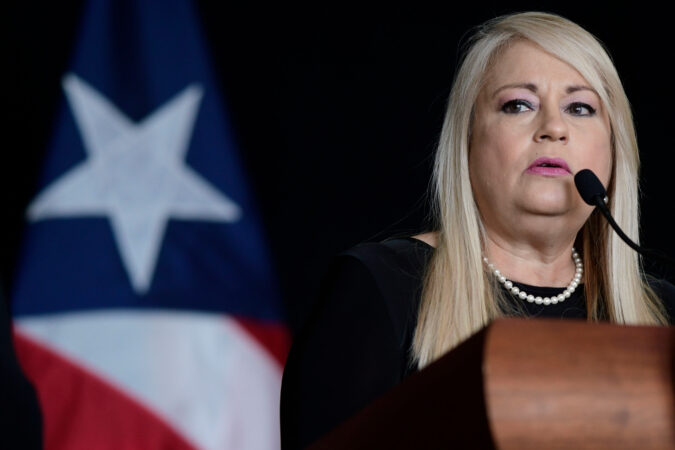
    WASHINGTON — President Donald Trump plans to pardon former Puerto Rico Gov. Wanda Vázquez, a White House official said Friday.

    Vázquez pleaded guilty last August to a campaign finance violation in a federal case that authorities say also involved a former FBI agent and a Venezuelan banker. Her sentencing was set for later this month.

    Federal prosecutors had been seeking one year behind bars, something that Vázquez’s attorneys opposed as they accused prosecutors of violating a guilty plea deal reached last year that saw previous charges including bribery and fraud dropped.

    They noted that Vázquez had agreed to plead guilty to accepting a promise of a campaign contribution that was never received.

    Attorneys for Vázquez did not immediately respond to requests for comment.

    The official who confirmed the planned pardon indicated Trump saw the case as political prosecution and said the investigation into Vázquez, a Republican aligned with the pro-statehood New Progressive Party, had begun 10 days after she endorsed Trump in 2020. The official wasn’t authorized to reveal the news by name and spoke on the condition of anonymity.

    CBS News was the first to report the plan to pardon Vázquez.

    Pablo José Hernández, Puerto Rico’s representative in Congress and a member of the island’s main opposition party, condemned a pardon for Vázquez.

    “Impunity protects and fosters corruption. The pardon … undermines public integrity, shatters faith in justice, and offends those of us who believe in honest governance,” said Hernández, a Democrat with Puerto Rico’s Popular Democratic Party.

    Vázquez, an attorney, was the U.S. territory’s first former governor to plead guilty to a crime, specifically accepting a donation from a foreigner for her 2020 political campaign.

    She was arrested in August 2022 and accused of engaging in a bribery scheme from December 2019 through June 2020 while governor. At the time, she told reporters that she was innocent.

    Authorities said that Puerto Rico’s Office of the Commissioner of Financial Institutions was investigating an international bank owned by Venezuelan Julio Martín Herrera Velutini because of alleged suspicious transactions that had not been reported by the bank.

    Authorities said Herrera and Mark Rossini, a former FBI agent who provided consulting services to Herrera, allegedly promised to support Vázquez’s campaign if she dismissed the commissioner and appointed a new one of Herrera’s choosing.

    Authorities said Vázquez demanded the commissioner’s resignation in February 2020 after allegedly accepting the bribery offer. She also was accused of appointing a new commissioner in May 2020: a former consultant for Herrera’s bank.

    Vázquez was the second woman to serve as Puerto Rico’s governor and the first former governor to face federal charges.

    She was sworn in as governor in August 2019 after former Gov. Ricardo Rosselló resigned following massive protests. Vázquez served until 2021, after losing the primaries of the pro-statehood New Progressive Party to former Gov. Pedro Pierluisi.

  • How the Trump administration erased centuries of Justice Department experience

    How the Trump administration erased centuries of Justice Department experience

    WASHINGTON — Michael Ben’Ary was driving one of his children to soccer practice on an October evening last year when he paused at a red light to check his work phone. He was in the middle of a counterterrorism prosecution so important that President Donald Trump highlighted it in his address to Congress.

    Ben’Ary said he was shocked to see his phone had been disabled. He found the explanation later in his personal email account, a letter informing him he had been fired.

    A veteran prosecutor, Ben’Ary handled high-profile cases over two decades at the Justice Department, including the murder of a Drug Enforcement Administration agent and a suicide bomb plot targeting the U.S. Capitol. Most recently he was leading the case arising from a deadly attack on American service members in Afghanistan.

    Yet the same credentials that enhanced Ben’Ary’s resumé spelled the undoing of his government career.

    His termination without explanation came hours after right-wing commentator Julie Kelly told hundreds of thousands of online followers that Ben’Ary had previously served as a senior counsel to Lisa Monaco, the No. 2 Justice Department official in Democratic President Joe Biden’s administration. Kelly also suggested Ben’Ary was part of the “internal resistance” to prosecuting former FBI Director James Comey, even though Ben’Ary was never involved in the case.

    As Trump’s attorney general, Pam Bondi, approaches her first year on the job, the firings of lawyers such as Ben’Ary have defined her turbulent tenure. The terminations and a larger voluntary exodus of lawyers have erased centuries of combined experience and left the department with fewer career employees to act as a bulwark for the rule of law at a time when Trump, a Republican, is testing the limits of executive power by demanding prosecutions of his political enemies.

    Interviews by the Associated Press of more than a half-dozen fired employees offer a snapshot of the toll throughout the department. The departures include lawyers who prosecuted violent attacks on police at the Capitol on Jan. 6, 2021; environmental, civil rights, and ethics enforcers; counterterrorism prosecutors; immigration judges; and attorneys who defend administration policies. This week, several prosecutors in Minnesota moved to resign amid turmoil over an investigation into the shooting of a woman in Minneapolis by an Immigration and Customs Enforcement officer.

    “To lose people at that career level, people who otherwise intended to stay and now are either being discharged or themselves are walking away, is immensely damaging to the public interest,” said Stuart Gerson, a senior official in the George H.W. Bush administration and acting attorney general early in Bill Clinton’s administration. “We’re losing really capable people, people who have never viewed themselves as political and attempted to do the right thing.”

    Justice Connection, a network of department alums, estimates that more than 230 lawyers, agents, and other employees from across the department were fired last year, apparently because of their work on cases they were assigned or past criticism of Trump, or seemingly for no reason. More than 6,400 employees are estimated to have left a department that at the end of 2025 had roughly 108,000, the group says.

    The Justice Department says it has hired thousands of career attorneys over the past year. The Trump administration has characterized some of the fired and departed workers as out of step with its agenda.

    Ben’Ary left with unfinished business, including the prosecution stemming from the airport bombing in Kabul, the Afghan capital, and the national security unit he led at the U.S. attorney’s office for the Eastern District of Virginia.

    Left to pack his belongings, he posted a typed note near his door that functioned as a distress call, reminding colleagues they had sworn an oath to follow the facts “without fear or favor” and “unhindered by political interference.”

    But, he warned, “In recent months, the political leadership of the Department have violated these principles, jeopardizing our national security and making American citizens less safe.”

    Unparalleled in scale, scope, and motivation

    Since its founding in 1870, the Justice Department has occupied elevated status in American democracy, sustained through transitions of power by reliance on facts, evidence, and law.

    To be sure, there has always been a political component to the department, with lawyers appointed by the president.

    But even during turbulent times, when attorneys general have been pushed out by presidents or resigned rather than accede to White House demands — as in the Watergate-era “Saturday Night Massacre” — the department’s rank and file have generally been insulated thanks to long-recognized civil service protections.

    “This is completely unprecedented in both its scale and scope and underlying motivation,” said Peter Keisler, a senior official in the George W. Bush Justice Department.

    In his first term, Trump pushed out one attorney general and accepted another’s resignation, but the workforce remained largely intact. He returned to office in January 2025 seething over Biden-era prosecutions of him and vowing retribution.

    The firings began even before Bondi arrived in February. Prosecutors on special counsel Jack Smith’s team that investigated Trump were terminated days after the inauguration, followed by prosecutors hired on temporary assignments for cases resulting from the Capitol insurrection in 2021.

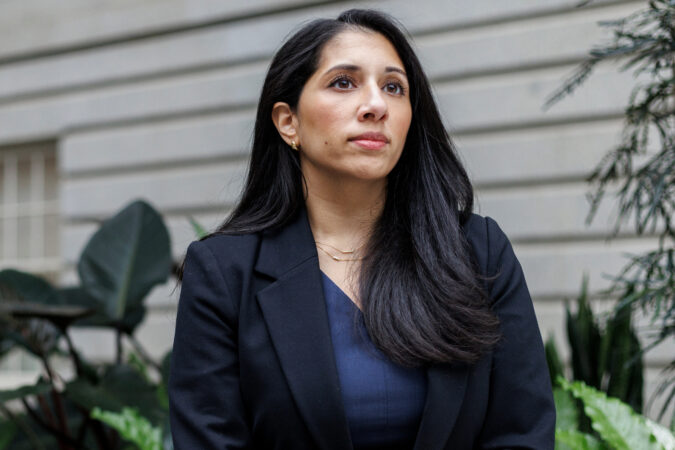
    “The people working on these cases were not political agents of any kind,” said Aliya Khalidi, a Jan. 6 prosecutor who was fired. “It’s all people who just care about the rule of law.”

    The firings have continued, at times surgical, at times random and almost always without explanation.

    Adam Schleifer, a Los Angeles prosecutor targeted in a social media post by far-right activist Laura Loomer over past critical comments about Trump, was fired in March. The Justice Department the following month fired attorney Erez Reuveni, who conceded in court that Salvadoran national Kilmar Abrego Garcia was mistakenly deported. Reuveni later accused the department of trying to mislead judges to execute deportations. Department officials deny the assertion.

    Two weeks after Maurene Comey completed a sex trafficking trial against Sean “Diddy” Combs, the New York prosecutor was fired, also without explanation. Like Ben’Ary, she wrote a pointed farewell, telling colleagues that “fear is the tool of a tyrant.” Her father, the former FBI director who was a frequent Trump target, said those same words after being indicted in September in a case that has been dismissed.

    Among the most affected sections is the storied Civil Rights Division. A recent open letter of protest was signed by more than 200 employees who left in 2025, with several supervisors recently giving notice of plans to depart. The Public Integrity Section, which prosecutes sensitive public corruption cases, has also been hollowed out by resignations.

    The Justice Department has disputed the accounts of some of those who have been fired or quit and has defended the termination of those who investigated Trump as “consistent with the mission of ending the weaponization of government.”

    “This is the most efficient Department of Justice in American history, and our attorneys will continue to deliver measurable results for the American people,” the department said in a statement. More than 3,400 career attorneys have been hired since Trump took office, the department says.

    The departures have caused backlogs and staff shortages, with senior leaders soliciting job applications. It has affected the department’s daily business as well as efforts to fulfill Trump’s desires to prosecute political opponents.

    Desperate for lawyers willing to file criminal cases against Comey and New York Attorney General Letitia James, the administration in September forced out the veteran U.S. attorney for the Eastern District of Virginia, replacing him with Lindsey Halligan, a White House aide with no experience as a federal prosecutor.

    Halligan secured the indictments but the win was short-lived.

    One judge later identified grave missteps in how Halligan presented the Comey case to a grand jury. Another dismissed both prosecutions outright, calling Halligan’s appointment unlawful.

    Smith, the special counsel who investigated Trump but left before he could be fired, has himself lamented the losses. “These are not partisans,” he recently told lawmakers.

    “They just want to do good work,” he added, “and I think when you lose that culture, you lose a lot.”

    ‘Our dream was to be federal prosecutors’

    Khalidi joined the department in 2023 in a group of new prosecutors hired to help with the hundreds of cases stemming from the Capitol riot.

    Upon Trump’s return to the White House, she watched cases she prosecuted get dismantled by Trump’s sweeping clemency for all 1,500 defendants charged in the riot, including those who attacked police.

    Less than two weeks later, a Justice Department demand for the names of FBI agents involved in Jan. 6 investigations triggered rumors of potential mass firings. Worried about the agents she worked with, Khalidi spent the day checking in on them. But as she started preparing dinner one Friday evening, she received an email suggesting she had lost her own job.

    Attached was a memo from then-acting Deputy Attorney General Emil Bove ordering the firings of prosecutors such as Khalidi who had been hired for temporary assignments but were moved into permanent roles after Trump’s win, a maneuver Bove called “subversive personnel actions by the previous administration.” Neither the email nor memo identified the fired prosecutors, leaving them to guess.

    Khalidi grabbed a suitcase to collect family photos and other personal items she kept at work and rushed to the office, retreating with fellow shocked prosecutors to a bar where they received termination emails.

    The group of 15 fired attorneys later assembled to surrender their computers and phones, entering the same room where they gathered on their first day in 2023.

    “For a lot of us, our dream was to be federal prosecutors,” Khalidi said. “And so we had happy memories of that room, of being excited on our first day. So it was just kind of surreal to be back there turning in our stuff.”

    The news came for Anam Petit, an immigration judge, during a break between hearings.

    Hired during the Biden administration, she said she felt a little uneasy when Trump won the election but also figured her position would probably be safe because immigration judges generally have job stability and because they bear responsibility for issuing removal orders for those who are in the United States illegally, a core presidential priority.

    Petit arrived on Sept. 5 bracing for bad news because it was the Friday of the pay period before her two-year work anniversary, when her probationary appointment was poised to become permanent. Though she said she had received strong performance reviews and had already exceeded her case completion goal for the year, she had become anxious as colleagues were fired amid an administration push to accelerate deportations.

    She was in the courtroom between hearings when she learned via email that she had been fired. She left to text her husband, then returned to the courtroom to render a decision in the case before her.

    “I just put my phone back in my pocket and went into the courtroom and delivered my decision, with a very shaky voice and shaky hands, trying to center myself back to that decision just so that I could relay it,” Petit said.

    Joseph Tirrell was mindful of his job security from the very start of the Trump administration. As the department’s chief ethics officer, he had affirmed that Smith, the special counsel, was entitled to a law firm’s free legal services, a decision he sensed had the potential to rile incoming leadership.

    But he remained in the position and over the ensuing months counseled Bondi’s staff on the propriety of accepting various gifts, including a cigar box from mixed martial arts fighter Conor McGregor.

    He was fired in July, just before a FIFA Club World Cup final in New Jersey that Tirrell had said Bondi could not ethically accept a free invitation to. He was not terribly surprised, he says, when it was later reported that Bondi attended in Trump’s box. The Justice Department said in a statement that none of Tirrell’s advice “was ever overruled” and that “the Attorney General obtained ethics approval to attend this event in her official capacity as a member of the FIFA Task Force.”

    “There’s a great deal of fear there just because I was fired and just because so many others were summarily fired,” Tirrell said. “Are you going to get fired because you provided ethics advice? Are you going to get fired because you have a pride flag on your desk?”

    ‘Our country depends on you’

    Trump was promoting his administration’s commitment to counterterrorism during his address to Congress in March when he announced a success: the capture of a militant from the Islamic State group’s Afghanistan affiliate who was charged in the Kabul airport bombing that killed 13 American service members during the 2021 withdrawal from the country.

    Mohammad Sharifullah arrived the following day in the United States, encountering Ben’Ary in an Alexandria, Va., courtroom.

    Ben’Ary spent the next several months working on the case, but on Oct. 1, he was fired. It was the apparent result, he told colleagues, of a social media post he said contained “false information” — a reference to the one from Kelly, the commentator.

    The termination was so abrupt that Ben’Ary could not tell his colleagues where he had saved important filings and notes. Another prosecutor listed on the case, James Comey’s son-in-law, Troy Edwards, had resigned days earlier upon Comey’s indictment. Once set for trial last month, the case has been postponed.

    In his farewell note, Ben’Ary observed that he was not alone, that in “just a few short months” career employees like himself had been removed from U.S. attorneys offices, the FBI “and other critical parts of DOJ.”

    “While I am no longer your colleague, I ask that each of you continue to do the right thing, in the right way, for the right reasons,” Ben’Ary wrote. “Follow the facts and the law. Stand up for what we all believe in — our Constitution and the rule of law. Our country depends on you.”
  • Mixed signals and suspicions fueled clash between Fed and prosecutors

    Mixed signals and suspicions fueled clash between Fed and prosecutors

    The battle between the Federal Reserve and Trump administration prosecutors accelerated over the past few weeks amid mixed signals and mutual suspicion, according to interviews with a half-dozen figures with knowledge of both sides of the dispute.

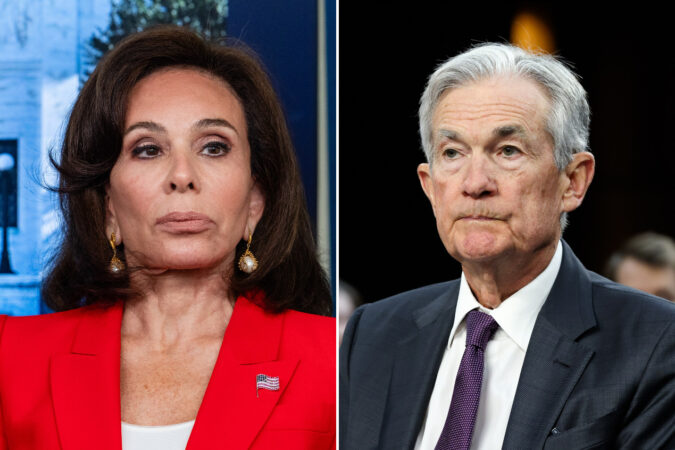
    Late last month, Fed officials grew concerned that the Justice Department was preparing a criminal case against them when they received two casually worded emails from a prosecutor working for Jeanine Pirro, the U.S. attorney for Washington, D.C. The messages sought a meeting or phone call to discuss renovations at the central bank’s headquarters, according to three people familiar with the matter, who like most others interviewed spoke on the condition of anonymity to discuss an open investigation.

    The emails, sent Dec. 19 and Dec. 29, came from Assistant U.S. Attorney Carlton Davis, a political appointee in Pirro’s office whose background includes work for House Oversight Committee Chairman James Comer (R., Ky.), the people said.

    The messages struck Fed officials as breezy in tone.

    “Happy to hop on a call,” one of the missives read in part.

    The casual approach generated suspicions at the Fed. Chair Jerome H. Powell, who by that point had sustained months of criticism from President Donald Trump and his allies over the central bank’s handling of interest rates, retained outside counsel at the law firm Williams & Connolly. Fed officials opted not to respond to Davis, choosing to avoid informal engagement on a matter that could carry criminal implications, according to a person familiar with the decision.

    That led Pirro, a former Fox News host and longtime personal friend of Trump’s, to conclude that the Fed was stonewalling and had something to hide, according to a Justice Department official familiar with the matter.

    “The claim that, ‘Oh, they didn’t think it was a big deal’ is naive and almost malpractice,” the official said. “We gave them a deadline. We said the first week of January.”

    The investigation centers on the Fed’s first large-scale renovation of its headquarters on the National Mall since it was built in the 1930s and whether proper cost controls are in place. Powell testified to Congress in June about the scope of a project that had ballooned to $2.5 billion in costs, up from about $1.9 billion before the coronavirus pandemic.

    Trump, his aides, and some congressional Republicans have sought to cast the renovation as overly luxurious and wildly over budget, claims that Powell has strenuously disputed. Fed officials have said that the economic disruptions following the pandemic triggered a jump in the price of steel, cement, and other building materials.

    Powell and the Fed’s defenders say the renovation claims are being used to pressure the independent central bank to lower interest rates, as Trump has called for, and potentially to bully Powell into resigning.

    The emails from Davis to a Federal Reserve lawyer did not indicate the existence of a criminal investigation because prosecutors had not yet opened one, according to two people with knowledge of the matter. There was no FBI involvement when Pirro’s office opened a fact-gathering inquiry in November, and the bureau remains uninvolved, according to two other people familiar with the matter.

    In the emails, Davis asked “to discuss Powell’s testimony in June, the building renovation, and the timing of some of his decisions,” a Justice Department official said. “The letter couldn’t have been nicer,” that official said. “About 10 days after that, we sent another, saying, ‘We just want to have a discussion with you.’ No response through January 8.”

    “We low-keyed it,” the official added. “We didn’t publicize it. We did it quietly.”

    The subpoenas were served the next day. They seek records or live testimony before a grand jury at the end of the month.

    Powell publicly disclosed the probe Sunday evening in a video statement, saying the Fed had received subpoenas “threatening a criminal indictment.”

    “The threat of criminal charges is a consequence of the Federal Reserve setting interest rates based on our best assessment of what will serve the public, rather than following the preferences of the president,” he said.

    In a post on X, Pirro said the outreach had been benign, writing: “The word ‘indictment’ has come out of Mr. Powell’s mouth, no one else’s. None of this would have happened if they had just responded to our outreach.”

    Conducting an investigation without using the FBI is an approach Pirro’s office has used on at least one previous occasion. In August, one of the prosecutors now assigned to the Fed inquiry, Steven Vandervelden, was tasked with reviewing numerous complaints that the D.C. police, under then-Police Chief Pamela A. Smith, had been incorrectly categorizing some crimes to paint a rosier picture than the reality on the ground.

    That inquiry relied on voluntary interviews with more than 50 police officers and other witnesses, as well as cooperation from the mayor’s office and the police department’s internal affairs unit, according to a seven-page report Pirro and Vandervelden issued at its conclusion. The report recommended changes to police practices while saying the classification issues did not rise to the level of criminality. No subpoenas were issued in that probe, according to a person familiar with the matter, and the report does not mention any.

    But Smith announced her resignation shortly before the report was released.

  • Trump says he may punish countries with tariffs if they don’t back the US controlling Greenland

    Trump says he may punish countries with tariffs if they don’t back the US controlling Greenland

    COPENHAGEN, Denmark — U.S. President Donald Trump suggested Friday that he may punish countries with tariffs if they don’t back the U.S. controlling Greenland, a message that came as a bipartisan Congressional delegation sought to lower tensions in the Danish capital.

    Trump for months has insisted that the U.S. should control Greenland, a semiautonomous territory of NATO ally Denmark, and said earlier this week that anything less than the Arctic island being in U.S. hands would be “unacceptable.”

    During an unrelated event at the White House about rural healthcare, he recounted Friday how he had threatened European allies with tariffs on pharmaceuticals.

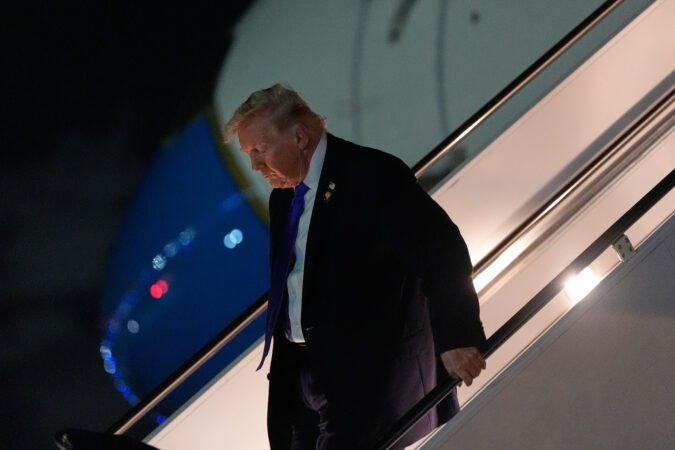
    “I may do that for Greenland too,” Trump said. “I may put a tariff on countries if they don’t go along with Greenland, because we need Greenland for national security. So I may do that,” he said.

    He had not previously mentioned using tariffs to try to force the issue.

    Earlier this week, the foreign ministers of Denmark and Greenland met in Washington with U.S. Vice President JD Vance and Secretary of State Marco Rubio.

    That encounter didn’t resolve the deep differences, but did produce an agreement to set up a working group — on whose purpose Denmark and the White House then offered sharply diverging public views.

    European leaders have insisted that it is only for Denmark and Greenland to decide on matters concerning the territory, and Denmark said this week that it was increasing its military presence in Greenland in cooperation with allies.

    A relationship ‘we need to nurture’

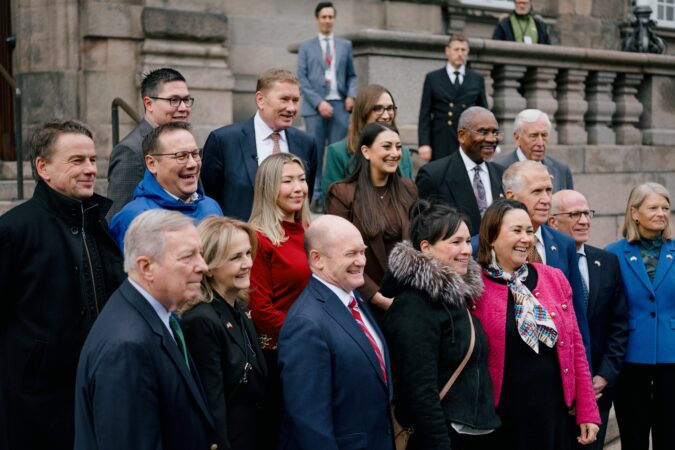
    In Copenhagen, a group of senators and members of the House of Representatives met Friday with Danish and Greenlandic lawmakers, and with leaders including Danish Prime Minister Mette Frederiksen.

    Delegation leader Sen. Chris Coons, a Delaware Democrat, thanked the group’s hosts for “225 years of being a good and trusted ally and partner” and said that “we had a strong and robust dialogue about how we extend that into the future.”

    Sen. Lisa Murkowski, an Alaska Republican, said after meeting lawmakers that the visit reflected a strong relationship over decades and “it is one that we need to nurture.” She told reporters that “Greenland needs to be viewed as our ally, not as an asset, and I think that’s what you’re hearing with this delegation.”

    The tone contrasted with that emanating from the White House. Trump has sought to justify his calls for a U.S. takeover by repeatedly claiming that China and Russia have their own designs on Greenland, which holds vast untapped reserves of critical minerals. The White House hasn’t ruled out taking the territory by force.

    “We have heard so many lies, to be honest, and so much exaggeration on the threats towards Greenland,” said Aaja Chemnitz, a Greenlandic politician and member of the Danish parliament who took part in Friday’s meetings. “And mostly, I would say the threats that we’re seeing right now is from the U.S. side.”

    Murkowski emphasized the role of Congress in spending and in conveying messages from constituents.

    “I think it is important to underscore that when you ask the American people whether or not they think it is a good idea for the United States to acquire Greenland, the vast majority, some 75%, will say, we do not think that that is a good idea,” she said.

    Along with Sen. Jeanne Shaheen, a New Hampshire Democrat, Murkowski has introduced bipartisan legislation that would prohibit the use of U.S. Defense or State department funds to annex or take control of Greenland or the sovereign territory of any NATO member state without that ally’s consent or authorization from the North Atlantic Council.

    Inuit council criticizes White House statements

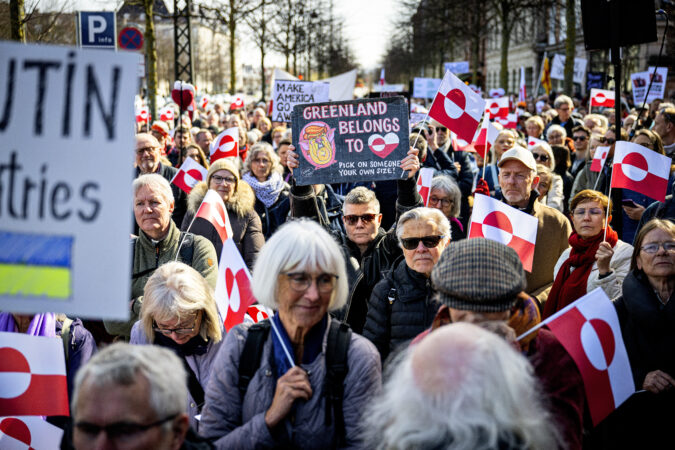
    The dispute is looming large in the lives of Greenlanders. Greenland’s prime minister, Jens-Frederik Nielsen, said on Tuesday that “if we have to choose between the United States and Denmark here and now, we choose Denmark. We choose NATO. We choose the Kingdom of Denmark. We choose the EU.”

    In Nuuk, the chairperson of the Greenland-based Inuit Circumpolar Council, which represents around 180,000 Inuit from Alaska, Canada, Greenland, and Russia’s Chukotka region on international issues, said persistent statements from the White House that the U.S. must own Greenland offer “a clear picture of how the U.S. administration views the people of Greenland, how the U.S. administration views Indigenous peoples, and peoples that are few in numbers.”

    Sara Olsvig told the Associated Press in Nuuk that the issue is “how one of the biggest powers in the world views other peoples that are less powerful than them. And that really is concerning.”

    Indigenous Inuit in Greenland do not want to be colonized again, she said.

  • Trump thanks Iran for canceling executions as senior cleric issues threats

    Trump thanks Iran for canceling executions as senior cleric issues threats

    WASHINGTON — President Donald Trump took the unusual step on Friday of thanking the Iranian government for not following through on executions of what he said was meant to be hundreds of political prisoners.

    “Iran canceled the hanging of over 800 people,” Trump told reporters while leaving the White House to spend the weekend at his Mar-a-Lago estate in Palm Beach, Fla. He added, “and I greatly respect the fact that they canceled.”

    The Republican president also suggested on his social media site that more than 800 people had been set to be executed, but he said they now won’t be.

    “Thank you!” he posted.

    Those sentiments come after Trump spent days suggesting that the U.S. might strike Iran militarily if its government triggered mass killings during widespread protests that have swept that country.

    The death toll from those protests continues to rise, activists say. Still, Trump seemed to hint that the prospects for U.S. military action were fading since Iran had held off on the executions.

    The president’s rosy assessment did not match the more complicated situation on the ground in Iran but appeared to be Trump backing away from his early pronouncements that suggested a U.S. attack on that country might be imminent.

    Trump had previously posted of Iran and the protesters there, “Help is on the way.” But asked if that was still the case on Friday, he replied: “Well, we’re going to see.”

    Questioned about who convinced him to back down on seeming suggestions that he would strike Iran, Trump said, “Nobody convinced me. I convinced myself.”

    “You had yesterday scheduled over 800 hangings. They didn’t hang anyone,” Trump said. “They canceled the hangings. That had a big impact.”

    Cleric warns of ‘hard revenge’ on Trump, Netanyahu

    As Iran returned to uneasy calm, a senior hard-line cleric called Friday for the death penalty for detained demonstrators and directly threatened Trump — evidence of the rage gripping authorities in the Islamic Republic.

    Harsh repression that has left several thousand people dead appears to have succeeded in stifling demonstrations that began Dec. 28 over Iran’s ailing economy and morphed into protests directly challenging the country’s theocracy.

    There have been no signs of protests for days in Tehran, where shopping and street life have returned to outward normality, though a week-old internet blackout continued. Authorities have not reported any unrest elsewhere in the country.

    The U.S.-based Human Rights Activists News Agency on Friday put the death toll, at 2,797. The number continues to rise.

    Iran’s exiled Crown Prince Reza Pahlavi urged the U.S. to make good on its pledge to intervene, calling Trump “a man of his word.”

    Ayatollah Ahmad Khatami’s sermon, carried by Iranian state radio, sparked chants from those gathered for prayers, including: “Armed hypocrites should be put to death!” Executions, as well as the killing of peaceful protesters, are two of the red lines laid down by Trump for possible military action against Iran.

    Khatami, a member of Iran’s Assembly of Experts and Guardian Council long known for his hard-line views, described the protesters as the “butlers” of Israeli Prime Minister Benjamin Netanyahu and “Trump’s soldiers.” He insisted their plans “imagined disintegrating the country.”

    “They should wait for hard revenge from the system,” Khatami said of Netanyahu and Trump. “Americans and Zionists should not expect peace.”

    His fiery speech came as allies of Iran and the United States alike sought to defuse tensions. Russian President Vladimir Putin spoke Friday to both Iranian President Masoud Pezeshkian and Israel’s Netanyahu, Kremlin spokesperson Dmitry Peskov said.

    Peskov said “the situation in the region is quite tense, and the president is continuing his efforts to help de-escalate it.”

    Russia had previously kept largely quiet about the protests. Moscow has watched several key allies suffer blows as its resources and focus are consumed by its 4-year-old war against Ukraine, including the downfall of Syria’s former President Bashar Assad in 2024, last year’s U.S. and Israeli attacks on Iran, and the U.S. seizure of Venezuelan leader Nicolas Maduro this month.

    Exiled Iranian royal calls for fight to continue

    Days after Trump pledged “help is on its way” for the protesters, both the demonstrations and the prospect of imminent U.S. retaliation appeared to have receded. One diplomat told the Associated Press that top officials from Egypt, Oman, Saudi Arabia, and Qatar had raised concerns with Trump that a U.S. military intervention would shake the global economy and destabilize an already volatile region.

    Yet the Trump administration has warned it will act if Iran executes detained protesters. Pahlavi, whose father was overthrown by Iran’s 1979 Islamic Revolution, said he still believes the president’s promise of assistance.

    “I believe the president is a man of his word,” Pahlavi told reporters in Washington. He added that ”regardless of whether action is taken or not, we as Iranians have no choice to carry on the fight.“

    Despite support by diehard monarchists in the diaspora, Pahlavi has struggled to gain wider appeal within Iran. But that has not stopped him from presenting himself as the transitional leader of Iran if the regime were to fall.

    Iran and the U.S. traded angry accusations Thursday at a session of the United Nations Security Council, with U.S. ambassador Mike Waltz saying that Trump “has made it clear that all options are on the table to stop the slaughter.”

    Gholam Hossein Darzi, the deputy Iranian ambassador to the U.N., blasted the U.S. for what he said was American “direct involvement in steering unrest in Iran to violence.”

    Iran authorities list protest damage

    Khatami, the hard-line cleric, also provided the first overall statistics on damage from the protests, claiming 350 mosques, 126 prayer halls, and 20 other holy places had sustained damage. Another 80 homes of Friday prayer leaders — an important position within Iran’s theocracy — were also damaged, likely underlining the anger demonstrators felt toward symbols of the government.

    He said 400 hospitals, 106 ambulance, 71 fire department vehicles, and another 50 emergency vehicles also sustained damage.

    Even as protests appeared to have been smothered inside Iran, thousands of exiled Iranians and their supporters have taken to the streets in cities across Europe to shout out their rage at the government of the Islamic Republic.

    Amid the continuing internet shutdown, some Iranians crossed borders to communicate with the outside world. At a border crossing in Turkey’s eastern province of Van, a trickle of Iranians crossing Friday said they were traveling to get around the communications blackout.

    “I will go back to Iran after they open the internet,” said a traveler who gave only his first name, Mehdi, out of security concerns.

    Also crossing the border were some Turkish citizens escaping the unrest in Iran.

    Mehmet Önder, 47, was in Tehran for his textiles business when the protests erupted. He said laid low in his hotel until it was shut for security reasons, then stayed with one of his customers until he was able to return to Turkey.

    Although he did not venture into the streets, Önder said he heard heavy gunfire.

    “I understand guns, because I served in the military in the southeast of Turkey,” he said. “The guns they were firing were not simple weapons. They were machine guns.”

    In a sign of the conflict’s potential to spill over borders, a Kurdish separatist group in Iraq said it has launched attacks on Iran’s paramilitary Revolutionary Guard in recent days in retaliation for Tehran’s crackdown on protests.

    A representative of the Kurdistan Freedom Party, or PAK, said its members have “played a role in the protests through both financial support and armed operations to defend protesters when needed.” The group said the attacks were launched by members of its military wing based inside Iran.

    The death toll of at least 2,797, provided by the Human Rights Activists News Agency, exceeds that of any other round of protest or unrest in Iran in decades and recalls the chaos surrounding the 1979 revolution.

    The agency has been accurate throughout years of demonstrations, relying on a network of activists inside Iran that confirms all reported fatalities. The AP has been unable to independently confirm the toll. Iran’s government has not provided casualty figures.

  • Mixed signals and mutual suspicions fueled the clash between the Federal Reserve and Trump administration prosecutors

    Mixed signals and mutual suspicions fueled the clash between the Federal Reserve and Trump administration prosecutors

    The battle between the Federal Reserve and Trump administration prosecutors accelerated over the past few weeks amid mixed signals and mutual suspicion, according to interviews with a half-dozen figures with knowledge of both sides of the dispute.

    Late last month, Fed officials grew concerned that the Justice Department was preparing a criminal case against them when they received two casually worded emails from a prosecutor working for Jeanine Pirro, the U.S. attorney for Washington, D.C. The messages sought a meeting or phone call to discuss renovations at the central bank’s headquarters, according to three people familiar with the matter, who like most others interviewed spoke on the condition of anonymity to discuss an open investigation.

    The emails, sent Dec. 19 and Dec. 29, came from Assistant U.S. Attorney Carlton Davis, a political appointee in Pirro’s office whose background includes work for House Oversight Committee Chairman James Comer (R-Kentucky), the people said.

    The messages struck Fed officials as breezy in tone.

    “Happy to hop on a call,” one of the missives read in part.

    The casual approach generated suspicions at the Fed. Chair Jerome H. Powell, who by that point had sustained months of criticism from President Donald Trump and his allies over the central bank’s handling of interest rates, retained outside counsel at the law firm Williams & Connolly. Fed officials opted not to respond to Davis, choosing to avoid informal engagement on a matter that could carry criminal implications, according to a person familiar with the decision.

    That led Pirro, a former Fox News host and longtime personal friend of Trump’s, to conclude that the Fed was stonewalling and had something to hide, according to a Justice Department official familiar with the matter.

    “The claim that, ‘Oh, they didn’t think it was a big deal’ is naive and almost malpractice,” the official said. “We gave them a deadline. We said the first week of January.”

    The investigation centers on the Fed’s first large-scale renovation of its headquarters on the National Mall since it was built in the 1930s and whether proper cost controls are in place. Powell testified to Congress in June about the scope of a project that had ballooned to $2.5 billion in costs, up from about $1.9 billion before the coronavirus pandemic.

    Trump, his aides and some congressional Republicans have sought to cast the renovation as overly luxurious and wildly over budget, claims that Powell has strenuously disputed. Fed officials have said that the economic disruptions following the pandemic triggered a jump in the price of steel, cement and other building materials.

    Powell and the Fed’s defenders say the renovation claims are being used to pressure the independent central bank to lower interest rates, as Trump has called for, and potentially to bully Powell into resigning.

    The emails from Davis to a Federal Reserve lawyer did not indicate the existence of a criminal investigation because prosecutors had not yet opened one, according to two people with knowledge of the matter. There was no FBI involvement when Pirro’s office opened a fact-gathering inquiry in November, and the bureau remains uninvolved, according to two other people familiar with the matter.

    In the emails, Davis asked “to discuss Powell’s testimony in June, the building renovation, and the timing of some of his decisions,” a Justice Department official said. “The letter couldn’t have been nicer,” that official said. “About 10 days after that, we sent another, saying, ‘We just want to have a discussion with you.’ No response through January 8.”

    “We low-keyed it,” the official added. “We didn’t publicize it. We did it quietly.”

    The subpoenas were served the next day. They seek records or live testimony before a grand jury at the end of the month.

    Powell publicly disclosed the probe Sunday evening in a video statement, saying the Fed had received subpoenas “threatening a criminal indictment.”

    “The threat of criminal charges is a consequence of the Federal Reserve setting interest rates based on our best assessment of what will serve the public, rather than following the preferences of the president,” he said.

    In a post on X, Pirro said the outreach had been benign, writing: “The word ‘indictment’ has come out of Mr. Powell’s mouth, no one else’s. None of this would have happened if they had just responded to our outreach.”

    Conducting an investigation without using the FBI is an approach Pirro’s office has used on at least one previous occasion. In August, one of the prosecutors now assigned to the Fed inquiry, Steven Vandervelden, was tasked with reviewing numerous complaints that the D.C. police, under then-Police Chief Pamela A. Smith, had been incorrectly categorizing some crimes to paint a rosier picture than the reality on the ground.

    That inquiry relied on voluntary interviews with more than 50 police officers and other witnesses, as well as cooperation from the mayor’s office and the police department’s internal affairs unit, according to a seven-page report Pirro and Vandervelden issued at its conclusion. The report recommended changes to police practices while saying the classification issues did not rise to the level of criminality. No subpoenas were issued in that probe, according to a person familiar with the matter, and the report does not mention any.

    But Smith announced her resignation shortly before the report was released.

  • Letters to the Editor | Jan. 16, 2026

    Letters to the Editor | Jan. 16, 2026

    Taking over

    Vladimir Putin’s excuse for invading Ukraine was that it belongs to Russia because it used to be part of the Soviet Union. I don’t think any American bought that idea. Now, Donald Trump wants to take over Greenland for our national security before Russia or China takes it over. Does anyone buy that argument now? Why was it wrong for Russia to invade Ukraine, but it is OK for the U.S. to take over Greenland? Since when is it OK for the U.S. to take over another country? How about an autonomous territory of a NATO ally? How can any American (Republican, Democrat, independent, MAGA, progressive) think this is all right? Trump says he’s doing what his voters want. Did anyone who voted for Trump want him to take over Greenland?

    June Siegel, Elkins Park

    Fear or anger

    After reviewing the multiple videos of the horrific shooting of Renee Good in Minneapolis, we are asked to believe the U.S. Immigration and Customs Enforcement agent was motivated by fear for his life as he got out of the way of Good’s SUV. I would suggest another emotion that motivated him: anger. In other videos, an expletive directed toward Good can be heard. After the ICE agent shoots through the front windshield and the SUV passes him by, he continues to shoot through the open driver’s side window when he is no longer allegedly in danger. If one wanted to explain the term gaslighting, there are few better examples than the interpretation of this video we are hearing from ICE and Homeland Security chief Kristi Noem. In other words, “Don’t believe what you see.”

    Pasquale Procacci, West Palm Beach, Fla.

    Circle of violence

    The story of Nyshyia Thomas is gut-wrenching. While her one son was killed as an innocent victim of a random shooting, her other son and her partner devastated their family through pure recklessness. Despite the second son owning his gun legally, he and his formerly incarcerated father prioritized violence over their family by arming themselves and running toward gunfire rather than retreating. Thomas blames “the system” for swallowing the two men — but the reality is that the system has no hunger for people who don’t marinate in guns and violence.

    Rosamond Kay, Philadelphia

    It’s time

    On Sept. 11, 1976, 1,500 people gathered at the Lewis Quadrangle at Independence Hall. They were there to launch a time capsule created by the Women For Greater Philadelphia (the nonprofit stewards of historic Laurel Hill Mansion in East Fairmount Park). Children 10 years old or younger were asked to include their names in the capsule. The 816 children whose names were included received a certificate. It charged each one to open and reseal the time capsule in 2026, and tell their children to open it again in 2076. A letter from then-Mayor Frank Rizzo, written to the current mayor, and from Gov. Milton Shapp to the people of Pennsylvania, is also in the capsule.

    The capsule will be opened sometime this fall during a ceremony with representatives from the state as well as other dignitaries. If you were present at the filling of the time capsule in 1976 and received a certificate charging you with the privilege and responsibility to carry the “Spirit of 76” forward to future generations, we’d like to hear from you at womenforgreaterphiladelphia.org/time_capsule.html.

    Barbara Frankl, chairperson of the board, Laurel Hill Mansion, Blue Bell

    Flu surges

    Americans are terribly exhausted and stressed. Chronic anxiety over the affordability of basic needs like food, housing, and healthcare wears people down. Rapid technological changes like artificial intelligence and robotics are threatening U.S. employment. The climate change crisis continues, and people fear violence. No wonder there is a flu surge this season — our immune systems are shot, rendering us vulnerable to not only influenza but also other infectious and noninfectious diseases.

    Richard A. Lippin, Southampton

    Legal shield

    The recent arson at the Beth Israel Congregation synagogue in Jackson, Miss., is the consummate example of antisemitism. What is not antisemitism is criticizing the state of Israel for the genocide it is implementing, the famine it is enforcing, and the ceasefire it is violating under the guise of national defense. House Bill 6090, which allows for the criticism of the government of Israel to be considered as antisemitism, passed the U.S. House, with Pennsylvania Reps. Brian Fitzpatrick, Madeleine Dean, Brendan Boyle, and New Jersey Reps. Jeff Van Drew and Donald Norcross are all voting to squash your right to free speech in order to protect the state of Israel from criticism. This is anti-American.

    Roy Lehman, Woolwich Township

    Two questions

    Growing antisemitic violence worldwide — with hate sanctioned through sentiments like those expressed by Vice President JD Vance at the recent Turning Point USA conference — compels me to share a personal story. The Baltimore of my youth was a time marred by disgraceful, degrading Jim Crow laws. Large signs were posted throughout neighborhoods and establishments reading, “No Jews, Negroes, or Dogs.” With regularity, our school classes traveled to Philadelphia to visit the Liberty Bell, which is inscribed with words from Leviticus 25:10: “Proclaim liberty throughout the land unto all inhabitants thereof.” No teacher ever referenced the disparity between these words and life as endured in Baltimore.

    Following the April 4, 1968, assassination of the Rev. Dr. Martin Luther King Jr., parts of inner-city Baltimore erupted in flames. My father’s business, a fuel oil company started by his father, was destroyed, including the trucks that serviced families with necessary heating oil and the accounts receivable. Although most of his customers lived far from the business location, my father cared about those living near his business, providing heat for countless families, never expecting payment, contributing to all charities he knew about, and, when invited, attending church services with our family. On April 10, eight months pregnant with my first child, I stood in front of my father’s former business, scorched and burned, the smell of destruction ever-present. I heard a man my dad recognized taunt us with a slur. My anguished mother quietly responded, not to the man but to me, “Why are we so hated?”

    Our beloved rabbi, Uri Miller, urged my father to declare bankruptcy, but he refused. My parents sold their comfortable home, most furnishings, and cashed in savings. As soon as his debts were paid, he and my mother moved to a small apartment in Florida. My father believed he had dishonored his father’s name, failed his wife, and disgraced his family. Eventually, my father kept his promise to my mother, bringing her home to be buried in the same Baltimore cemetery as her parents. Several years later, he was buried beside her. More than 30 years after her death, my mother’s haunting question remains: Why are Jewish people so hated? Or to draw on the prescient, thought-provoking insights of Holocaust survivor and activist on behalf of the protection and well-being of all people, Elie Wiesel: Are Jews only spoken up for once we are dead?

    SaraKay Smullens, Philadelphia

    Join the conversation: Send letters to letters@inquirer.com. Limit length to 150 words and include home address and day and evening phone number. Letters run in The Inquirer six days a week on the editorial pages and online.