Tag: no-latest

  • Horoscopes: Friday, Jan. 16, 2026

    ARIES (March 21-April 19). You’ll consider the time someone has spent to create or maintain the things that keep your world spinning, and you’ll be humbled by their efforts. There’s nothing you need to pay back, and plenty to pay forward.

    TAURUS (April 20-May 20). Difficult people will test your patience, and offering it will be worth your while. The steadier you are now, the richer you’ll be later — in dollars and in what matters even more.

    GEMINI (May 21-June 21). You might be amazed at how few people listen as well as you. Today your listening will carry more weight than speaking. Tune in, notice subtleties and respond only when it feels essential. You’ll discover something in your quiet observation that will help you in the weeks to come.

    CANCER (June 22-July 22). Paradoxically, when you go at the problem as though help will never arrive, you realize you might not even need help because you are more amazing at this than you think — and of course, that’s when help will find you.

    LEO (July 23-Aug. 22). Your magnetic presence is further amplified when you step into a role of generosity. As you offer attention, encouragement and kindness, people will respond in ways you can’t predict, and your energy will multiply.

    VIRGO (Aug. 23-Sept. 22). The details you usually scrutinize so carefully can take a back seat today. Focus instead on the bigger picture, the patterns and the possibilities. Precision is valuable, but insight lives in the spaces between the lines.

    LIBRA (Sept. 23-Oct. 23). Collaboration will shine if you release the idea of perfect balance. Give more than you take, speak honestly and trust that harmony is a dynamic, living thing, and not a fixed equation. Mutual growth will surprise you.

    SCORPIO (Oct. 24-Nov. 21). What draws your eye? What makes you hungry for more? What makes you want to reach out? Follow inspiration today because even the slightest movement toward your attractions will reward you.

    SAGITTARIUS (Nov. 22-Dec. 21). Curiosity is your favorite fuel — better than protein shakes or coffee, better than romance, anger or competition. Curiosity opens new topics and bonds you with new people, and today has you finally and happily trying a path you’ve been hesitant about.

    CAPRICORN (Dec. 22-Jan. 19). Discipline is your signature, but today flexibility is your ally. As you loosen the grip on how things “should” unfold, opportunities just appear. Success sneaks in through doors you didn’t plan to open.

    AQUARIUS (Jan. 20-Feb. 18). Today, your originality will be most effective because you pair it with practical action. Ideas are abundant, but of course execution is everything. Don’t wait for perfection, because progress is the real magic.

    PISCES (Feb. 19-March 20). There will be no shortage of ideas for you today. It’s like the world is your think tank. Pick one and pursue it to the first milestone. Beginnings are a bit rocky no matter which choice you make, and that just goes with the territory.

    TODAY’S BIRTHDAY (Jan. 16). This is your Year of Spacious Living, marked by room to think, rest and recalibrate. Your calendar breathes. Your mind stretches. With fewer constraints, you hear yourself more clearly and make choices that feel intentional and clean. More highlights: What begins as a small opportunity expands wildly. You’ll broaden your world with new work, new social circles, a new sense of belonging. Taurus and Sagittarius adore you. Your lucky numbers are: 9, 17, 8, 31 and 7.

  • Dear Abby | Couple’s relationship has withered on the vine

    DEAR ABBY: I am a senior woman in great shape. I am active, and I have never had a problem attracting men. Five years ago, I married a man I had known for many years. We used to have a pretty active sex life, but it has been four years since he has touched me in an intimate way. He says he doesn’t know why, and that it is due to lack of confidence.

    I’m afraid that if I don’t leave, I’ll never know the loving arms of a man around me again. In other ways, we get along fine, but as time has progressed, I no longer find him attractive. If he did make a move today, I think I would reject it because too much hurt has happened.

    Financially, leaving would be a disaster. Our friends and family think we are a great couple, but no one knows the truth. I feel like I am sinking into a morass with each long, lonely day. Please advise.

    — UNTOUCHED IN COSTA RICA

    DEAR UNTOUCHED: Before you sink further into depression, I urge you to discuss this with your doctor and get a referral to a licensed psychotherapist. Make no hard-and-fast decisions about your marriage until you are feeling better. I don’t know what caused your husband’s problem. Neither do you, and it’s possible that neither does he.

    Is your husband aware of how strongly you feel about this and that you are seriously considering leaving? If he isn’t, would he be willing to explore possible solutions and perhaps heal your relationship? And, finally, if he is, would YOU be willing to try again? I know I am giving you more questions than answers, but they are worth considering.

    ** ** **

    DEAR ABBY: As the compliance officer at a university, it’s my job to run mandatory training for faculty and staff. They know the dates, times and schedules for the meetings weeks in advance. I try hard to keep these training sessions as short and as few in number as possible, which means we need to use all the time available.

    My issue is that whenever we call a short break, some subset of people will wander away to unknown destinations. Are they looking for coffee? A bandage? A reevaluation of their life goals? We never know.

    I am left with two choices: Hold everyone up and wait for them to return, which is polite but ensures we will all end the day late, or start without them. The ruder option means I must deny their certification until they meet with me to catch up on what they missed. Both options are frustrating.

    I’ve learned that the longer the break, the more people who will go missing. No number of warnings or amount of cajoling will bring everyone back on time. So which option is better: starting, or waiting?

    — RUNNING THE SHOW IN MASSACHUSETTS

    DEAR RUNNING: Stop being such a pushover. At the beginning of each meeting, explain to the attendees that everyone must be present for the entire presentation OR YOU CANNOT CERTIFY THEM. Then follow through. Do not continue to make yourself available for those who skip out, because it is disrespectful of the folks who stayed.

  • Federal immigration agents filmed dragging a woman from her car in Minneapolis

    Federal immigration agents filmed dragging a woman from her car in Minneapolis

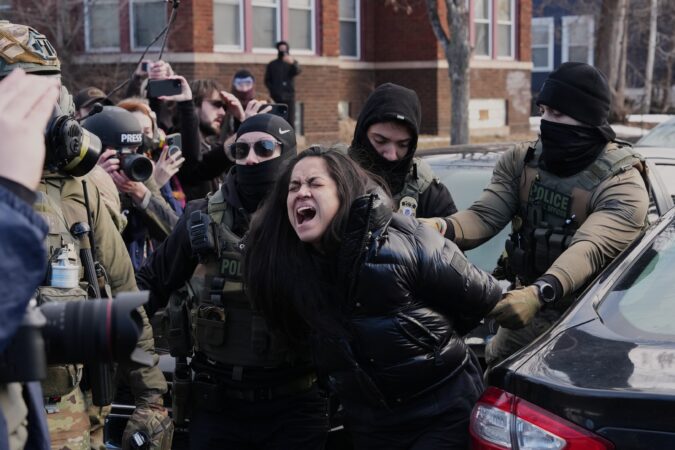
    A U.S. citizen on her way to a medical appointment in Minneapolis was dragged out of her car and detained by immigration officers, according to a statement released by the woman on Thursday, after a video of her arrest drew millions of views on social media.

    Aliya Rahman said she was brought to a detention center where she was denied medical care and lost consciousness. The Department of Homeland Security said she was an agitator who was obstructing ICE agents conducting arrests in the area.

    That video is the latest in a deluge of online content that documents an intensifying immigration crackdown across the midwestern city, as thousands of federal agents execute arrests amid protests in what local officials have likened to a “federal invasion.”

    Dragged from her car

    Rahman said that she was on her way to a routine appointment at the Traumatic Brain Injury Center when she encountered federal immigration agents at an intersection. Video appears to show federal immigration agents shouting commands over a cacophony of whistles, car horns and screams from protesters.

    In the video, one masked agent smashes Rahman’s passenger side window while others cut her seatbelt and drag her out of the car through the driver’s side door. Numerous guards then carried her by her arms and legs towards an ICE vehicle.

    “I’m disabled trying to go to the doctor up there, that’s why I didn’t move,” Rahman said, gesturing down the street as officers pulled her arms behind her back.

    A spokesperson for the Department of Homeland Security disputed that account in an emailed statement on Thursday, saying that Rahman was an agitator who “ignored multiple commands by an officer to move her vehicle away from the scene.” She was arrested along with six other people the department called agitators, one of whom was accused of jumping on an officer’s back.

    The department did not specify if Rahman was charged or respond to questions about her assertion that she was denied medical treatment.

    Barrage of viral videos draw scrutiny

    The video of Rahman’s arrest is one of many that have garnered millions of views in recent days — and been scrutinized amid conflicting accounts from federal officials and civilian eyewitnesses.

    Often, what’s in dispute pertains to what happened just before or just after a given recording. But many contain common themes: Protesters blowing whistles, yelling or honking horns. Immigration officers breaking vehicle windows, using pepper spray on protesters and warning observers not to follow them through public spaces. Immigrants and citizens alike forcibly pulled from cars, stores or homes and detained for hours, days or longer.

    In one video, heavily armed immigration agents used a battering ram to break through the front door of Garrison Gibson’s Minneapolis home, where his wife and 9-year-old child also were inside. The video shot inside the home captures a woman’s voice asking, “Where is the warrant?” and, “Can you put the guns down? There is kids in this house.”

    Another video shows ICE agents, including Border Patrol Cmdr. Gregory Bovino, detain two employees at a Target store in Richfield, Minnesota. Both are U.S. citizens who were later released, according to social media posts from family members.

    Monica Bicking, 40, was leaving the homeless shelter where she works as a nurse when she took a video that appears to show a federal agent kneeing a man at least five times in the face while several other agents pin him facedown on the pavement in south Minneapolis.

    Bicking works full time, so she says she doesn’t intentionally attend organized protests or confrontations with ICE. But she has started to carry a whistle in case she encounters ICE agents on her way to work or while running errands, which she says has become commonplace in recent weeks.

    “We’re hypervigilant every time we leave our houses, looking for ICE, trying to protect our neighbors, trying to support our neighbors, who are now just on lockdown,” Bicking said.

    ‘I thought I was going to die’

    Rahman said in her statement that after her detainment, she felt lucky to be alive.

    “Masked agents dragged me from my car and bound me like an animal, even after I told them that I was disabled,” Rahman said.

    While in custody, Rahman said she repeatedly asked for a doctor, but was instead taken to the detention center.

    “It was not until I lost consciousness in my cell that I was finally taken to a hospital,” Rahman said.

    Rahman was treated for injuries consistent with assault, according to her counsel, and has been released from the hospital.

    She thanked the emergency department staff for their care.

    “They gave me hope when I thought I was going to die.”

  • Senate passes more spending bills, but Homeland Security dispute looms

    Senate passes more spending bills, but Homeland Security dispute looms

    WASHINGTON — Congress is halfway home in approving government funding for the current budget year that began Oct. 1 after the Senate on Thursday overwhelmingly passed a three-bill package.

    Now comes the hard part. Lawmakers still must negotiate a spending bill for the Department of Homeland Security amid soaring tensions on Capitol Hill after the shooting of a Minnesota woman by an Immigration and Customs Enforcement agent.

    Lawmakers are working to complete passage of all 12 annual spending bills before Jan. 30, the deadline set in a funding patch that ended a 43-day government shutdown in November. With the Senate’s action on Thursday, six of those bills have now passed through both chambers of Congress. The measure before the Senate passed by a broadly bipartisan vote of 82-15. It now goes to President Donald Trump to be signed into law.

    That recent success would greatly reduce the impact of a shutdown, in the unlikely event that there is one at the end of January, since lawmakers have now provided full-year funding for such agencies as the Departments of Agriculture, Commerce, Energy, Interior and Justice.

    Lawmakers from both parties are determined to prevent another lapse in funding for the remaining agencies. The House’s approval of a separate two-bill package this week nudges them closer to getting all 12 done in the next two weeks.

    “Our goal, Mr. President is to get all of these bills signed into law. No continuing resolutions that lock in previous priorities and don’t reflect today’s realities,” said Sen. Susan Collins, the Republican chair of the Senate Appropriations Committee. “No more disastrous government shutdowns that are totally unnecessary and so harmful.”

    ICE shooting inflames debate on funding

    The biggest hurdle ahead is the funding bill for the Department of Homeland Security. The plan was to bring that bill before the House this week, but Rep. Tom Cole, the chairman of the House Appropriations Committee, said the decision was made to pull the bill and “buy some time” as lawmakers respond to the Minneapolis shooting.

    Democrats are seeking what Rep. Rosa DeLauro called “guardrails” that would come with funding for ICE.

    “We can’t deal with the lawlessness and terrorizing of communities,” said DeLauro (D., Conn.), the top Democrat on the House Appropriations Committee. “We’re going back and forth with offers, and that’s where we are.”

    Trump’s deportation crackdown, focused on cities in Democratic-leaning states, has incensed many House Democrats who demand a strong legislative response. Last week, an Immigration and Customs Enforcement officer shot and killed Renee Good in a shooting that federal officials said was an act of self-defense but that the mayor described as reckless and unnecessary.

    Some 70 Democrats have signed onto an effort to impeach Homeland Security Secretary Kristi Noem. Others are seeking specific changes to how the agency operates, such as requiring ICE agents to wear body cameras.

    “There are a variety of different things that can be done that we have put on the table and will continue to put on the table to get ICE under control so that they are actually conducting themselves like every other law enforcement agency in the country, as opposed to operating as if they’re above the law, somehow thinking they’ve got absolute immunity,” said Democratic leader Hakeem Jeffries.

    The Congressional Progressive Caucus, which includes nearly 100 Democratic members, formally announced opposition to any funding to immigration enforcement agencies within the Department of Homeland Security “unless there are meaningful and significant reforms to immigration enforcement practices.”

    Looking for a solution

    Cole said any changes to the Homeland Security funding bill would need sign-on from the White House. He said one possible answer would be to let Democrats have a separate vote on the Homeland Security bill. If passed, it would then be combined with some other spending bills for transmittal to the Senate. Republicans used a similar procedural tactic to get a previous spending package over the finish line in the House.

    The options for Democrats on Homeland Security are all rather bleak. If Congress passes a continuing resolution to fund the agency at current levels, that gives the Trump administration more discretion to spend the money as it wants.

    Meanwhile, any vote to eliminate funding for ICE won’t stop massive sums from flowing to the agency because Trump’s tax cut and border security bill, passed last summer, injects roughly $170 billion into immigration enforcement over the next four years.

    Also, any vote to eliminate funding could put some Democrats in tough reelection battles in a difficult position this fall as Republicans accuse them of insufficiently supporting law enforcement.

  • U.S. warns Iran that ‘all options are on the table’ in emergency U.N. meeting

    U.S. warns Iran that ‘all options are on the table’ in emergency U.N. meeting

    UNITED NATIONS — After weeks of escalating tension, U.S. and Iranian officials faced one another Thursday at the U.N. Security Council, where America’s envoy renewed threats against the Islamic Republic despite President Donald Trump’s efforts to lower the temperature between the two adversaries.

    The U.S. was joined by Iranian dissidents in rebuking the government’s bloody crackdown on nationwide protests that activists say have killed at least 2,677 people.

    “Colleagues, let me be clear: President Trump is a man of action, not endless talk like we see at the United Nations,” Mike Waltz, U.S. ambassador to the U.N., told the council. “He has made it clear that all options are on the table to stop the slaughter. And no one should know that better than the leadership of the Iranian regime.”

    Waltz’s remarks came as the prospect of U.S. retaliation for the protesters’ deaths still hung over the region, although Trump signaled a possible de-escalation, saying the killing appeared to be ending. By Thursday, the protests challenging Iran’s theocracy appeared increasingly smothered, but the state-ordered internet and communication blackout remained.

    One diplomat told the Associated Press that top officials from Egypt, Oman, Saudi Arabia, and Qatar spent the last 48 hours raising concerns with Trump that a U.S. military intervention would shake the global economy and destabilize an already volatile region.

    During the meeting, Hossein Darzi, the deputy Iranian ambassador to the U.N., blasted the U.S. for what he claimed was America’s “direct involvement in steering unrest in Iran to violence.”

    “Under the hollow pretext of concern for the Iranian people and claims of support for human rights, the United States is attempting to portray itself as a friend of the Iranian people, while simultaneously laying the groundwork for political destabilization and military intervention under a so-called ′humanitarian′ narrative,” Darzi said.

    The U.S. requested the emergency Security Council meeting and invited two Iranian dissidents, Masih Alinejad and Ahmad Batebi, to describe their experience as targets of the Islamic Republic.

    In a stunning moment, Alinejad addressed the Iranian representative directly.

    “You have tried to kill me three times. I have seen my would-be assassin with my own eyes in front of my garden, in my home in Brooklyn,” she said while the Iranian official looked directly ahead, without acknowledging her.

    In October, two purported Russian mobsters were each sentenced to 25 years behind bars for hiring a hit man to kill Alinejad at her New York home three years ago on behalf of the Iranian government.

    Batebi described the deep cuts the prison guards in Iran would inflict on him before pouring salt on his wounds. “If you do not believe me, I can show you my body right now,” he told the council.

    Both dissidents called on the world body and the council to do more to hold Iran accountable for its human rights abuses. Batebi pleaded with Trump not to “leave” the Iranian people alone.

    “You encouraged people to go into the streets. That was a good thing. But don’t leave them alone,” he said.

    Russia was the only member of the council that defended Iran’s actions while calling for the U.S. to stop intervening.

    Protests appear smothered as death toll rises

    Videos of demonstrations have stopped coming out of Iran, likely signaling the slowdown of their pace under the heavy security force presence in major cities.

    In Iran’s capital, Tehran, witnesses said recent mornings showed no new signs of bonfires lit the night before or debris in the streets. The sound of gunfire, which had been intense for several nights, has also faded.

    The clampdown on the demonstrations has killed at least 2,677 people, according to the U.S.-based Human Rights Activists News Agency. The figure reported Thursday is an increase of 106 from a day earlier, and the organization says the number will likely continue to climb. The death toll exceeds that of any other round of protest or unrest in Iran in decades and recalls the chaos surrounding the country’s 1979 Islamic Revolution.

    The U.S.-based agency, founded 20 years ago, has been accurate throughout multiple years of demonstrations, relying on a network of activists inside Iran that confirms all reported fatalities.

    With communications greatly limited in Iran, the AP has been unable to independently confirm the group’s toll. The Iranian government has not provided casualty figures.

    New sanctions on senior Iranians

    In other developments Thursday, the U.S. announced new sanctions on Iranian officials accused of suppressing the protests, which began late last month over the country’s faltering economy and the collapse of its currency. The Group of Seven industrialized democracies and the European Union also said they too were looking at new sanctions to ratchet up the pressure on Iran’s theocratic government.

    Among those hit with U.S. sanctions was the secretary of Iran’s Supreme Council for National Security, whom the Treasury Department accuses of being one of the first officials to call for violence against protesters. The Group of Seven, of which the U.S. is a member, also warned they could impose more sanctions if Iran’s crackdown continues.

    European Union chief Ursula von der Leyen said the 27-nation bloc was looking at strengthening sanctions “to push forward that this regime comes to an end and that there is change.

  • European troops arrive in Greenland as talks with U.S. highlight ‘disagreement’ over island’s future

    European troops arrive in Greenland as talks with U.S. highlight ‘disagreement’ over island’s future

    NUUK, Greenland — Troops from several European countries continued to arrive in Greenland on Thursday in a show of support for Denmark as talks among representatives of Denmark, Greenland and the U.S. highlighted “fundamental disagreement” over the future of the Arctic island.

    The disagreement came into starker focus Thursday, with the White House describing plans for more talks with officials from Denmark and Greenland as “technical talks on the acquisition agreement” for the U.S. to acquire Greenland.

    That was a far cry from the way Danish Foreign Minister Lars Løkke Rasmussen described it as a working group that would discuss ways to work through differences between the nations.

    “The group, in our view, should focus on how to address the American security concerns, while at the same time respecting the red lines of the Kingdom of Denmark,” he said Wednesday after the meeting.

    Before the talks began Wednesday, Denmark announced it would increase its military presence in Greenland. Several European partners — including France, Germany, the U.K., Norway, Sweden, and the Netherlands — started to send symbolic numbers of troops or promised to do so in the following days.

    The troop movements were intended to portray unity among Europeans and send a signal to President Donald Trump that an American takeover of Greenland is not necessary as NATO together can safeguard the security of the Arctic region amid rising Russian and Chinese interest.

    The European troops did little to dissuade Trump.

    White House press secretary Karoline Leavitt said Thursday that it had no impact on the president’s decision-making or goal of acquiring Greenland.

    “The president has made his priority quite clear, that he wants the United States to acquire Greenland. He thinks it’s in our best national security to do that,” she said.

    Rasmussen, flanked by his Greenlandic counterpart Vivian Motzfeldt, said Wednesday that a “fundamental disagreement” over Greenland remained after they met at the White House with Vice President JD Vance and Secretary of State Marco Rubio.

    Rasmussen said it remains “clear that the president has this wish of conquering over Greenland” but dialogue with the U.S. would continue at a high level over the following weeks.

    Meanwhile, French President Emmanuel Macron announced Wednesday that “the first French military elements are already en route” and “others will follow,” as French authorities said about 15 soldiers from the mountain infantry unit were already in Nuuk for a military exercise.

    Germany will deploy a reconnaissance team of 13 personnel to Greenland on Thursday, the Defense Ministry said.

    On Thursday, Danish Defense Minister Troels Lund Poulsen said the intention was “to establish a more permanent military presence with a larger Danish contribution,” according to Danish broadcaster DR. He said soldiers from several NATO countries will be in Greenland on a rotation system.

    ‘Greenland does not want to be part of the United States’

    Inhabitants of Greenland and Denmark reacted with anxiety but also some relief that negotiations with the U.S. would go on and European support was becoming visible.

    Greenland’s Prime Minister Jens-Frederik Nielsen welcomed the continuation of “dialogue and diplomacy.”

    “Greenland is not for sale,” he said Thursday. “Greenland does not want to be owned by the United States. Greenland does not want to be governed from the United States. Greenland does not want to be part of the United States.”

    In Greenland’s capital, Nuuk, local residents told The Associated Press they were glad the first meeting between Greenlandic, Danish, and American officials had taken place but suggested it left more questions than answers.

    Several people said they viewed Denmark’s decision to send more troops, and promises of support from other NATO allies, as protection against possible U.S. military action. But European military officials have not suggested the goal is to deter a U.S. move against the island.

    Maya Martinsen, 21, said it was “comforting to know that the Nordic countries are sending reinforcements” because Greenland is a part of Denmark and NATO.

    The dispute, she said, is not about “national security” but rather about “the oils and minerals that we have that are untouched.”

    More troops, more talks

    On Wednesday, Poulsen announced a stepped-up military presence in the Arctic “in close cooperation with our allies,” calling it a necessity in a security environment in which “no one can predict what will happen tomorrow.”

    “This means that from today and in the coming time there will be an increased military presence in and around Greenland of aircraft, ships and soldiers, including from other NATO allies,” Poulsen said.

    Denmark informed NATO that it will be conducting exercises in Greenland, and the alliance’s Supreme Allied Commander Alexus Grynkewich spoke Thursday with Denmark’s chief of defense, Col. Martin O’Donnell, a spokesperson for Grynkewich told the AP.

    He said such dialogue is typical and added that “we all agree the Arctic – including Greenland – is important for transatlantic security.”

    The Danish exercises and deployment of additional troops “bolster our collective defenses there,” O’Donnell said.

    The Russian embassy in Brussels on Thursday lambasted what it called the West’s “bellicose plans” in response to “phantom threats that they generate themselves”. It said the planned military actions were part of an “anti-Russian and anti-Chinese agenda” by NATO.

    “Russia has consistently maintained that the Arctic should remain a territory of peace, dialogue and equal cooperation,” the embassy said.

    Some diplomatic progress

    Commenting on the outcome of the Washington meeting on Thursday, Poulsen said the working group was “better than no working group” and “a step in the right direction.” He added nevertheless that the dialogue with the U.S. did not mean “the danger has passed.”

    The most important thing for Greenlanders is that they were directly represented at the meeting in the White House and that “the diplomatic dialogue has begun now,” Juno Berthelsen, a lawmaker for the pro-independence Naleraq opposition party, told AP.

    A relationship with the U.S. is beneficial for Greenlanders and Americans and is “vital to the security and stability of the Arctic and the Western Alliance,” Berthelsen said. He suggested the U.S. could be involved in the creation of a coast guard for Greenland, providing funding and creating jobs for local people who can help to patrol the Arctic.

    In Washington, Rasmussen and Motzfeldt also met with a bipartisan group of senators at the U.S. Capitol.

    “We really appreciate that we have close friends in the Senate and the House as well,” Rasmussen told reporters, adding that Denmark would work to “accommodate any reasonable American requests” with Greenland.

    There has been significant concern among lawmakers of both political parties that Trump could upend the NATO alliance by insisting on using military force to possess Greenland. Key Republicans lawmakers have pushed back on those plans and suggested that the Trump administration should work with Denmark to enhance mutual security in the Arctic.

    Line McGee, 38, from Copenhagen, told AP that she was glad to see some diplomatic progress. “I don’t think the threat has gone away,” she said. “But I feel slightly better than I did yesterday.”

    Trump, in his Oval Office meeting with reporters, said: “We’ll see how it all works out. I think something will work out.”

  • Prosecutor urges manslaughter verdict for guard who ‘did nothing’ as fellow officers killed inmate

    Prosecutor urges manslaughter verdict for guard who ‘did nothing’ as fellow officers killed inmate

    UTICA, N.Y. — A New York prison guard who failed to intervene as he watched an inmate being beaten to death should be convicted of manslaughter, a prosecutor told a jury Thursday in the final trial of correctional officers whose pummeling, recorded by body-cameras, provoked outrage.

    “For seven minutes — seven gut-churning, nauseating, disgusting minutes — he stood in that room close enough to touch him and he did nothing,” special prosecutor William Fitzpatrick told jurors during closing arguments. The jury began deliberating Thursday afternoon.

    Former corrections officer Michael Fisher, 55, is charged with second-degree manslaughter in the death of Robert Brooks, who was beaten by guards upon his arrival at Marcy Correctional Facility on the night of Dec. 9, 2024, his agony recorded silently on the guards’ body cameras.

    Fisher’s attorney, Scott Iseman, said his client entered the infirmary after the beating began and could not have known the extent of his injuries.

    Fisher was among 10 guards indicted in February. Three more agreed to plead guilty to reduced charges in return for cooperating with prosecutors. Of the 10 officers indicted in February, six pleaded guilty to manslaughter or lesser charges. Four rejected plea deals. One was convicted of murder, and two were acquitted in the first trial last fall.

    Fisher, standing alone, is the last of the guards to face a jury.

    The trial closes a chapter in a high-profile case led to reforms in New York’s prisons. But advocates say the prisons remain plagued by understaffing and other problems, especially since a wildcat strike by guards last year.

    Officials took action amid outrage over the images of the guards beating the 43-year-old Black man in the prison’s infirmary. Officers could be seen striking Brooks in the chest with a shoe, lifting him by the neck and dropping him.

    Video shown to the jury during closing arguments Thursday indicates Fisher stood by the doorway and didn’t intervene.

    “Did Michael Fisher recklessly cause the death of Robert Brooks? Of course he did. Not by himself. He had plenty of other helpers,” said Fitzpatrick, the Onondaga County district attorney.

    Iseman asked jurors looking at the footage to consider what Fisher could have known at the time “without the benefit of 2020 hindsight.”

    “Michael Fisher did not have a rewind button. He did not have the ability to enhance. He did not have the ability to pause. He did not have the ability to get a different perspective of what was happening in the room,” Iseman said.

    Even before Brooks’ death, critics claimed the prison system was beset by problems that included brutality, overworked staff and inconsistent services. By the time criminal indictments were unsealed in February, the system was reeling from an illegal three-week wildcat strike by corrections officers who were upset over working conditions. Gov. Kathy Hochul deployed National Guard troops to maintain operations. More than 2,000 guards were fired.

    Prison deaths during the strike included Messiah Nantwi on March 1 at Mid-State Correctional Facility, which is across the road from the Marcy prison. 10 other guards were indicted in Nantwi’s death in April, including two charged with murder.

    There are still about 3,000 National Guard members serving the state prison system, according to state officials.

    “The absence of staff in critical positions is affecting literally every aspect of prison operations. And I think the experience for incarcerated people is neglect,” Jennifer Scaife, executive director of the Correctional Association of New York, an independent monitoring group, said on the eve of Fisher’s trial.

    Hochul last month announced a broad reform agreement with lawmakers that includes a requirement that cameras be installed in all facilities and that video recordings related to deaths behind bars be promptly released to state investigators.

    The state also lowered the hiring age for correction officers from 21 to 18 years of age.

  • Venezuela’s Machado says she presented her Nobel Peace Prize to Trump during their meeting

    Venezuela’s Machado says she presented her Nobel Peace Prize to Trump during their meeting

    WASHINGTON — Venezuelan opposition leader María Corina Machado said she presented her Nobel Peace Prize medal to President Donald Trump on Thursday, “as a recognition for his unique commitment with our freedom.”

    Machado detailed having given her prize to Trump in comments to a group of reporters after the meeting, but did not provide further details. The White House did not immediately say if Trump accepted the medal.

    That followed her having met with Trump to discuss her country’s future, even though he has dismissed her credibility to take over after an audacious U.S. military raid that captured then-President Nicolás Maduro.

    Visiting Trump presented something of a physical risk for Machado, whose whereabouts have been largely unknown since she left her country last year after being briefly detained in Caracas. Nevertheless, after a closed-door discussion with Trump, she greeted dozens of cheering supporters waiting for her near the gates —stopping to hug many.

    “We can count on President Trump,” she told them, prompting some to briefly chant “Thank you, Trump,” but she didn’t elaborate.

    The jubilant scene stood in contrast to Trump having repeatedly raised doubts about Machado and his stated commitment to backing democratic rule in Venezuela. He has signaled his willingness to work with acting President Delcy Rodríguez, who was Maduro’s No. 2.

    Along with others in the deposed leader’s inner circle, Rodríguez remains in charge of day-to-day government operations and was delivering her first state of the union speech during Machado’s Washington trip.

    In endorsing Rodríguez so far, Trump sidelined Machado, who has long been a face of resistance in Venezuela. That’s despite Machado seeking to cultivate relationships with the president and key administration voices like Secretary of State Marco Rubio, in a gamble to ally herself with the U.S. government and some of its top conservatives.

    White House press secretary Karoline Leavitt called Machado “a remarkable and brave voice” for the people of Venezuela, but also said that the meeting didn’t mean Trump’s opinion of her changed, calling it “a realistic assessment.”

    Trump has said it would be difficult for Machado to lead because she “doesn’t have the support within or the respect within the country.” Her party is widely believed to have won 2024 elections rejected by Maduro.

    Leavitt went on to say that Trump supported new Venezuelan elections “when the time is right” but did not say when he thought that might be.

    Trump administration plays down meeting expectations

    Leavitt said Machado sought the face-to-face meeting without setting expectations for what would occur. Machado previously offered to share with Trump the Nobel Peace Prize she won last year, an honor he has coveted.

    “I don’t think he needs to hear anything from Ms. Machado,” the press secretary said, other than to have a ”frank and positive discussion about what’s taking place in Venezuela.”

    All told, Machado spent about two and a half hours at the White House but left without answering questions on whether she’d offered to give her Nobel prize to Trump, saying only “gracias.” It wasn’t clear she’d heard the question as she hugged and her waiting supporters.

    Machado also visited Capitol Hill for a meeting in the Senate. She said she gave Trump the medal in comments after her time with the senators.

    Her Washington stop began after U.S. forces in the Caribbean Sea seized another sanctioned oil tanker that the Trump administration says had ties to Venezuela.

    It is part of a broader U.S. effort to take control of the South American country’s oil after U.S. forces seized Maduro and his wife at a heavily guarded compound in the Venezuelan capital of Caracas and brought them to New York to stand trial on drug trafficking charges.

    Leavitt said Venezuela’s interim authorities have been fully cooperating with the Trump administration and that Rodríguez’s government said it planned to release more prisoners detained under Maduro. Among those released were five Americans this week.

    Rodríguez has adopted a less strident position toward Trump then she did immediately after Maduro’s ouster, suggesting that she can make the Republican administration’s “America First” policies toward the Western Hemisphere, work for Venezuela — at least for now.

    Trump said Wednesday that he had a “great conversation” with Rodríguez, their first since Maduro was ousted.

    “We had a call, a long call. We discussed a lot of things,” Trump said during an Oval Office bill signing. “And I think we’re getting along very well with Venezuela.”

    Machado doesn’t get the nod from Trump

    Even before indicating the willingness to work with Venezuela’s interim government, Trump was quick to snub Machado. Just hours after Maduro’s capture, Trump said of Machado that “it would be very tough for her to be the leader.”

    Machado has steered a careful course to avoid offending Trump, notably after winning the peace prize. She has since thanked Trump, though her offer to share the honor with him was rejected by the Nobel Institute.

    Machado remained in hiding even after winning the Nobel Peace Prize. She missed the ceremony but briefly reappeared in Oslo, Norway, in December after her daughter received the award on her behalf.

    The industrial engineer and daughter of a steel magnate, Machado began challenging the ruling party in 2004, when the nongovernmental organization she co-founded, Súmate, promoted a referendum to recall then-President Hugo Chávez. The initiative failed, and Machado and other Súmate executives were charged with conspiracy.

    A year later, she drew the anger of Chávez and his allies again for traveling to Washington to meet President George W. Bush. A photo showing her shaking hands with Bush in the Oval Office lives in the collective memory. Chávez considered Bush an adversary.

    Almost two decades later, she marshaled millions of Venezuelans to reject Chávez’s successor, Maduro, for another term in the 2024 election. But ruling party-loyal electoral authorities declared him the winner despite ample credible evidence to the contrary. Ensuing anti-government protests ended in a brutal crackdown by state security forces.

  • Netanyahu says the announced start of Gaza ceasefire’s next phase is a ‘declarative move’

    Netanyahu says the announced start of Gaza ceasefire’s next phase is a ‘declarative move’

    DEIR AL-BALAH, Gaza Strip — Israeli strikes in central Gaza on Thursday killed eight people, including three women, a day after the U.S. announced that the fragile ceasefire would advance to its second phase.

    Israeli Prime Minister Benjamin Netanyahu called the ceasefire announcement largely symbolic, raising questions about how its more challenging elements will be carried out.

    Speaking with the parents of the last Israeli hostage whose remains are still in Gaza, Netanyahu late Wednesday said the governing committee of Palestinians announced as part of the second phase was merely a “declarative move,” rather than the sign of progress described by U.S. envoy Steve Witkoff.

    Israeli police officer Ran Gvili’s parents had earlier pressed Netanyahu not to advance the ceasefire until their son’s remains were returned, Israel’s Hostage and Missing Families Forum said Wednesday.

    Netanyahu told Gvili’s parents that his return remained a top priority.

    The announcement of the ceasefire’s second phase marked a significant step forward but left many questions unanswered.

    Those include the makeup of a proposed, apolitical governing committee of Palestinian experts and an international “Board of Peace.”

    The committee’s composition was coordinated with Israel, said an Israeli official speaking on the condition of anonymity.

    Questions also include the timing of deployment of international forces and the reopening of Gaza’s southern Rafah border crossing, as well as concrete details about disarming Hamas and rebuilding Gaza.

    In an interview on Wednesday with the West Bank-based Radio Basma, Ali Shaath, the engineer and former Palestinian Authority official slated to head the committee, said he anticipated reconstruction and recovery to take roughly three years. He said it would start with immediate needs like shelter.

    “If I bring bulldozers, and push the rubble into the sea, and make new islands (in the sea), new land, it is a win for Gaza and (we) get rid of the rubble,” Shaath, a Gaza native, said.

    Progress announced but hardship endures

    Palestinians in Gaza who spoke to The Associated Press questioned what moving into phase two would actually change on the ground, pointing to ongoing bloodshed and challenges securing basic necessities.

    More than 450 people have been killed since Israel and Hamas agreed to halt fighting in October, Gaza’s Health Ministry said Thursday.

    Six people were killed Thursday in two strikes, according to Al-Aqsa Martyrs Hospital. The first strike killed two men, while three women and a man were killed in the second strike. Israeli military officials did not immediately respond to a message seeking comment on the strikes.

    Separately, the military said that it had killed someone Thursday who had approached troops near the so-called Yellow Line — which divides the Israeli-held part of Gaza from the rest — and posed an imminent threat.

    “We see on the ground that the war has not stopped, the bloodshed has not stopped, and our suffering in the tents has not ended,” said Samed Abu Rawagh, a man displaced to southern Gaza from Jabaliya.

    The casualties since the October ceasefire, which UNICEF said include more than 100 children, are among the 71,441 Palestinians killed since the start of Israel’s offensive, according to the ministry, which does not say how many were fighters or civilians.

    The ministry is part of the Hamas-run government and staffed by medical professionals. The U.N. and independent experts consider it the most reliable source on war casualties. Israel disputes its figures but has not provided its own.

    Hamza Abu Shahab, a man from eastern Khan Younis in southern Gaza, said he was waiting for tangible changes, such as easier access to food, fuel and medical care, rather than promises.

    “We were happy with this news, but we ask God that it is not just empty words,” he told the AP in Khan Younis. “We need this news to be real, because in the second phase we will be able to return to our homes and our areas … God willing, it won’t just be empty promises.”

    Gaza’s population of more than 2 million people has struggled to keep cold weather and storms at bay while facing shortages of humanitarian aid and a lack of more substantial temporary housing, which is badly needed during the winter months.

    This is the third winter since the war between Israel and Hamas started on Oct. 7, 2023, when militants stormed into southern Israel and killed around 1,200 people and abducted 251 others.

    Challenges lie ahead

    The second phase of the ceasefire will confront thornier issues than the first, including disarming Hamas and transitioning to a new governance structure after nearly two decades of the group’s rule in the strip.

    The U.N. has estimated reconstruction will cost over $50 billion. This process is expected to take years and little money has been pledged so far.

    Hamas has said it will dissolve its existing government to make way for the committee announced as part of the ceasefire’s second phase. But it has not made clear what will happen to its military arm or the scores of Hamas-affiliated civil servants and the civilian police.

    Bassem Naim, a member of the group’s political bureau, said Thursday that Hamas welcomed the announcement of the committee as a step toward establishing an independent Palestinian state, but did not elaborate on the issues in question. He said on X that “the ball is now in the court” of the United States and international mediators to allow it to operate.

    Israel has insisted Hamas must lay down its weapons, while the groups’ leaders have rejected calls to surrender despite two years of war, saying Palestinians have “the right to resist.”

  • Press freedom advocates worry that raid on Washington Post journalist’s home will chill reporting

    Press freedom advocates worry that raid on Washington Post journalist’s home will chill reporting

    If the byproduct of a raid on a Washington Post journalist’s home is to deter probing reporting of government action, the Trump administration could hardly have chosen a more compelling target.

    Hannah Natanson, nicknamed the “federal government whisperer” at the Post for her reporting on President Donald Trump’s changes to the federal workforce, had a phone, two laptops, and a Garmin watch seized in the Wednesday search of her Virginia home, the newspaper said.

    A warrant for the raid said it was connected to an investigation into a government contractor accused of illegally retaining classified government materials, said Matt Murray, the Post’s executive editor, in an email to his staff. The Post was told that Natanson and the newspaper are not targets of the investigation, he said.

    In a meeting Thursday, Murray told staff members that “the best thing to do when people are trying to intimidate you is not be intimidated — and that’s what we did yesterday.”

    The Reporters Committee for Freedom of the Press said Thursday it has asked the U.S. District Court in Virginia to unseal the affidavit justifying the search of Natanson’s home.

    Attorney General Pam Bondi said that the search was done at the request of the Defense Department and that the journalist was “obtaining and reporting classified and illegally leaked information from a Pentagon contractor.”

    “If the attorney general can describe the justification for searching a reporter’s home on social media, it is difficult to see what harm could result from unsealing the justification that the Justice Department offered to this court,” the Reporters Committee said in its application.

    Government raids to homes of journalists highly unusual

    Jameel Jaffer, executive director of the Knight First Amendment Institute at Columbia University, has been working on press freedom issues for a decade and said a government raid on a journalist’s home is so unusual he couldn’t remember the last time it happened. He said it can’t help but have a chilling effect on journalism.

    “I strongly suspect that the search is meant to deter not just that reporter but other reporters from pursuing stories that are reliant on government whistleblowers,” Jaffer said. “And it’s also meant to deter whistleblowers.”

    In a first-person piece published by the Post on Christmas Eve, Natanson wrote about how she was inundated with tips when she posted her contact information last February on a forum where government employees were discussing the impact of Trump administration changes to the federal workforce.

    She was contacted by 1,169 people on Signal, she wrote. The Post was notably aggressive last year in covering what was going on in federal agencies, and many came as a result of tips she received — and was still getting. “The stories came fast, the tips even faster,” she wrote.

    Natanson acknowledged the work took a heavy toll, noting one disturbing note she received from a woman she was unable to contact. “One day, a woman wrote to me on Signal, asking me not to respond,” she wrote. “She lived alone, she messaged, and planned to die that weekend. Before she did, she wanted at least one person to understand: Trump had unraveled the government, and with it, her life.”

    Natanson did not return messages from the Associated Press. Murray said that “this extraordinary, aggressive action is deeply concerning and raises profound questions and concern around the constitutional protections for our work.”

    The action “signals a growing assault on independent reporting and undermines the First Amendment,” said Tim Richardson, journalism and disinformation program director at the advocacy group PEN America. Like Jaffer, he believes it is intended to intimidate.

    Sean Spicer, Trump’s press secretary at the beginning of his first term, said the concerns are premature. If it turns out that Natanson did nothing wrong, then questions about whether the raid was an overreach are legitimate, said Spicer, host of the political news show The Huddle on streaming services.

    “If Hannah did something wrong, then it should have a chilling effect,” he said.

    A law passed in 1917 makes it illegal for journalists to possess classified information, Jaffer said. But there are still questions about whether that law conflicts with First Amendment protections for journalists. It was not enforced, for example, when The New York Times published a secret government report on U.S. involvement in Vietnam in 1971.

    “It’s the government’s prerogative to pursue leakers of classified material,” the Post said in an editorial. “Yet journalists have First Amendment rights to gather and publish such secrets, and the Post also has a history of fighting for those freedoms.”

    Not the first action taken against the press

    The raid was made in context of a series of actions taken against the media during the Trump administration, including lawsuits against The New York Times and the BBC. Most legacy news organizations no longer report from stations at the Pentagon after they refused to sign on new rules restricting their reporting set by Defense Secretary Pete Hegseth. Funding for public broadcasting has been choked off due to Trump’s belief that its news coverage leaned left.

    Some news outlets have also taken steps to be more aligned with the administration, Jaffer said, citing CBS News since its corporate ownership changed last summer. The Washington Post has shifted its historically liberal opinion pages to the right under owner Jeff Bezos.

    The Justice Department over the years has developed, and revised, internal guidelines governing how it will respond to news media leaks. In April, Bondi issued new guidelines saying prosecutors would again have the authority to use subpoenas, court orders and search warrants to hunt for government officials who make “unauthorized disclosures” to journalists.

    The moves rescinded a policy from President Joe Biden’s Democratic administration that protected journalists from having their phone records secretly seized during leak investigations.

    “Leaking classified information puts America’s national security and the safety of our military heroes in serious jeopardy,” White House press secretary Karoline Leavitt said in a post on X. “President Trump has zero tolerance for it and will continue to aggressively crack down on these illegal acts moving forward.”

    The warrant says the search was related to an investigation into a system engineer and information technology specialist for a government contractor in Maryland who authorities allege took home classified materials, the Post reported.

    The worker, Aurelio Perez-Lugones, is accused of printing classified and sensitive reports at work, and some were found at his Maryland home, according to court papers. He was arrested last week on a charge of unauthorized removal and retention of classified documents.

    Perez-Lugones made a brief appearance in a Baltimore courtroom on Thursday. His attorney said they weren’t prepared to proceed with a hearing to determine whether he should remain jailed until a trial.