Tag: no-latest

  • Horoscopes: Thursday, Jan. 15, 2026

    ARIES (March 21-April 19). You keep wondering if there’s a talent inside you waiting to show itself. The wondering is truth trying to get your attention. Follow the instinct to experiment. Believe the inner voice that says, “This seems like something I should be doing more of.”

    TAURUS (April 20-May 20). It’s a day to shore up discrepancies, pay debts, collect on favors and generally find ways to restore the balance inside of relationships. The dynamics that are well balanced today will be fruitful tomorrow.

    GEMINI (May 21-June 21). Relationships are shoes. A lot of them don’t fit right away, but the quality shoes will form to your feet over time, and you can walk many miles in them. The cheap ones cut and chafe and don’t change much until they break.

    CANCER (June 22-July 22). You’re so aware of the rules today, and even more than that, the restrictions of your role. It may feel like too much is keeping you in place, limiting your options, preventing you from the destiny you have dreamed for yourself. But no. There are still dozens of paths to try. You got this.

    LEO (July 23-Aug. 22). Approach interactions with trust and curiosity. Not every action hides an agenda. Most people are just moving according to their nature. Trust first, analyze later. Give yourself the gift of openness.

    VIRGO (Aug. 23-Sept. 22). Like refined sugar, some people are so sweet that when they leave, they take your blood sugar down with them, causing an inevitable crash. You are not deterred, though you may pace yourself. Intermittency is what makes it a treat.

    LIBRA (Sept. 23-Oct. 23). People respond best to leaders who are humble and diligent. Today, you’re in charge in a low-key way. Working alongside your team creates mutual respect and encourages collaboration. This is also how you learn what’s really going on in the group culture.

    SCORPIO (Oct. 24-Nov. 21). You’ll navigate nuance very well, deciding what to wear, say and do to blend into a particular environment. This isn’t about people-pleasing or being a chameleon; it’s about reducing friction and getting rid of anything that might keep you from connecting.

    SAGITTARIUS (Nov. 22-Dec. 21). You’re so encouraging to others that sometimes people forget that you, too, need encouragement. Then again, it might be time to seek more supportive energy. Take a moment to notice who helps you and who doesn’t. Once you focus on your allies, momentum returns naturally.

    CAPRICORN (Dec. 22-Jan. 19). So many things that happened in the past were beyond your control. Now you have the wisdom and maturity to realize there’s no blame to be taken or given for it, just respect for what you’ve made of it.

    AQUARIUS (Jan. 20-Feb. 18). You are simply excellent at reading certain social cues, especially the ones that indicate discomfort or disapproval. You are less adept at recognizing when someone is crazy about you, but if you tune in, you’ll see it very clearly today.

    PISCES (Feb. 19-March 20). It’s easy to push, but it takes wisdom to let the natural current pull you. Like water, you’ll find the path of least resistance. Your gentle ways will open the opportunities that were once beyond reach.

    TODAY’S BIRTHDAY (Jan. 15). This is your Year of Exceptional Attunement in which you master details, seize opportunities, sense feelings and generally sync up to the world around you. Awareness is not always easy, but it’s always worth it. More highlights: You’ll be appointed to a position and entrusted with treasures. You’ll get the wonderful news you’ve waited for. And you’ll find a lucrative outlet that brings abundance in more ways than one. Virgo and Taurus adore you. Your lucky numbers are: 4, 2, 19, 30 and 28.
  • A part that broke on a UPS plane that crashed in Kentucky failed 4 times on other planes years ago

    A part that broke on a UPS plane that crashed in Kentucky failed 4 times on other planes years ago

    Boeing warned plane owners in 2011 about a broken part that contributed to a UPS plane crash that killed 15 last year but at that point the plane manufacturer didn’t believe it threatened safety, the National Transportation Safety Board said Wednesday.

    The UPS plane crashed in November 2025 shortly after taking off in Louisville, Kentucky, when the left engine flew off the wing as the plane rolled down the runway. Three pilots on the plane that was headed for Hawaii were killed along with 12 more people on the ground near Louisville’s Muhammad Ali International Airport.

    The NTSB said Wednesday that Boeing had documented in 2011 there were four previous failures of a part that helps secure the MD-11’s engines to the wings on three different planes, but at that point the plane manufacturer “determined it would not result in a safety of flight condition.” These planes were actually built by McDonnell Douglas, which was later bought by Boeing.

    The NTSB previously said investigators found cracks in some of the parts that held the engine to the wing. Those cracks hadn’t been caught in regular maintenance done on the plane, which raised questions about the adequacy of the maintenance schedule. The last time those key engine mount parts were examined closely was in October 2021, and the plane wasn’t due for another detailed inspection for roughly 7,000 more takeoffs and landings.

    2015 crash brings up issues from 1979 crash

    It’s not clear when the cracks started to develop in the parts that helped hold the engine on the wing, but this crash is reminiscent of a 1979 crash in Chicago when the left engine flew off an American Airlines DC-10 during takeoff, killing 273 people. The DC-10 was the predecessor of the MD-11.

    That previous crash led to the worldwide grounding of 274 DC-10s. The airline workhorse was allowed to return to the skies because the NTSB determined that maintenance workers damaged the plane that crashed while improperly using a forklift to reattach the engine. That meant the crash wasn’t caused by a fatal design flaw even though there had already been a number of accidents involving DC-10s.

    But former FAA and NTSB crash investigator Jeff Guzzetti said that a service bulletin McDonnell Douglas issued in 1980 did identify failures of the spherical bearing race as a “safety of flight condition” so it’s surprising that Boeing didn’t call it that in 2011. He said that American had removed the engine of that plane so it could inspect that bearing.

    “I just think it raises questions regarding the adequacy of the severity of the 2011 service letter, and it also raises questions about how UPS incorporated that information and acted upon it,” Guzzetti said.

    Repairs weren’t required by FAA

    The service bulletin that Boeing issued didn’t require plane owners to make repairs like an FAA airworthiness directive would, and the agency didn’t issue such a directive.

    Former federal crash investigator Alan Diehl said the notice from Boeing recommended replacing the bearings with a redesigned part that was less likely to fail, but it still allowed operators to replace defective bearings with another older bearing that had demonstrated it was prone to failing.

    “As the investigation continues, the NTSB will have to address whether this service bulletin was an adequate solution to a known problem which could have had catastrophic results,” Diehl said. “The UPS crash highlights the need for increased maintenance measures on older airframes.”

    NTSB didn’t say whether there had been additional documented failures of the spherical bearing race since 2011. Investigators found that part broken into two pieces after the UPS crash, and the lugs that held that part were cracked.

    Photos released by the NTSB of the Nov. 4 crash show flames erupting as the rear of the engine starting to detach before it flew up and over the wing. Then the wing was engulfed by fire as the burning engine flew above it.

    Investigators search for reason why engine flew off

    The factual report released Wednesday doesn’t state what caused the engine to fly off, but it’s clear that investigators are focused on the failure of this bearing. The ultimate conclusion won’t come though until the NTSB’s final report, which usually doesn’t come until more than a year after a crash.

    But the report will undoubtedly be cited in the first lawsuit over the crash, filed last month, and subsequent ones. They will be investigating what Boeing knew at the time and what UPS did in response to this 2011 bulletin.

    “I think that this even further demonstrates that there was warning signs that predated the crash that any reasonable organization should have utilized to make sure that the Louisville crash didn’t happen,” said attorney Brad Cosgrove of the Clifford Law firm, which filed the first lawsuit.

    The report does make clear that neither of the plane’s two other engines were on fire before the crash. Some experts had previously speculated that debris from the left engine might have damaged the engine on the tail.

    Boeing, UPS and the Federal Aviation Administration are limited on what they can say while the NTSB investigation is ongoing, so they all declined to comment on Wednesday’s report. Boeing and UPS both expressed condolences to the families that lost loved ones in the crash.

    “We remain profoundly saddened by the Flight 2976 accident,” UPS spokesperson Jim Mayer said. “Our thoughts continue to be with the families and Louisville community who are grieving, and we remain focused on the recovery effort,” Mayer said.

    Plane involved in the crash was an older model

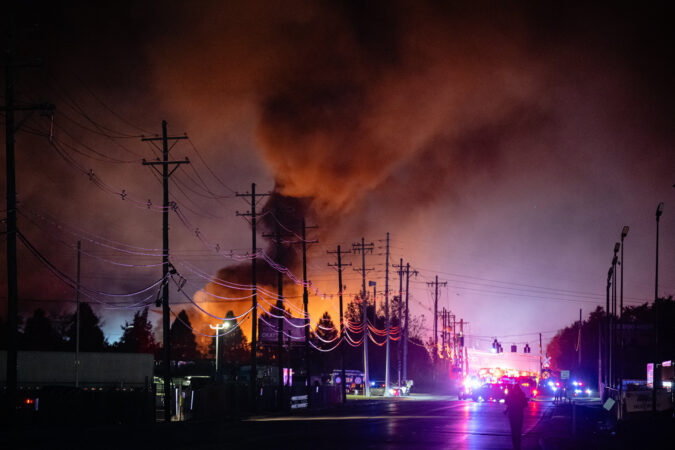
    The 34-year-old MD-11 plane only got 30 feet (9.1 meters) off the ground before crashing into several industrial buildings just past the runway and generating a massive fireball that could be seen for miles. Dramatic videos of the crash showed the plane on fire as it plowed into buildings and released a massive plume of smoke.

    Airlines quit flying this type of plane commercially years ago because it isn’t as efficient as newer models, but they had continued to fly for cargo carriers like UPS and FedEx and a few of these planes were also modified for use in firefighting. All the MD-11s that had been in use and 10 related DC-10s have been grounded since the crash.

    Cosgrove said he thinks it will eventually become clear that these MD-11s “probably should have been retired and that they had exceeded their shelf life.”

  • Federal officer shoots person in leg after being attacked during Minneapolis arrest, officials say

    Federal officer shoots person in leg after being attacked during Minneapolis arrest, officials say

    A federal officer shot a person in the leg in Minneapolis after being attacked with a shovel and broom handle while trying to make an arrest Wednesday, federal officials said.

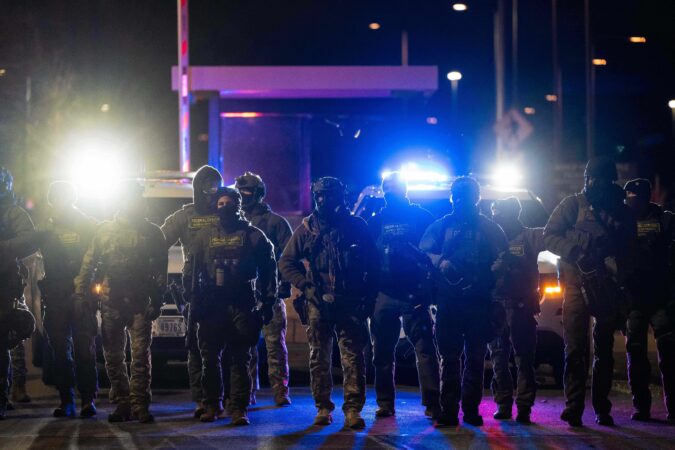
    Smoke filled the street near the site of the shooting as federal officers and protesters squared off. A group of officers wearing gas masks and helmets fired tear gas and grenades into a small crowd while protesters threw snowballs and chanted, “Our streets.”

    Such scenes have become common on the streets of Minneapolis since an immigration agent fatally shot Renee Good on Jan. 7. Agents have yanked people from cars and homes and been confronted by angry bystanders who bare demanding that officers pack up and leave.

    The Department of Homeland Security said in a statement on the social media platform X that federal law enforcement officers stopped a person from Venezuela who was in the U.S. illegally. The person drove away and crashed into a parked car before taking off on foot, DHS said.

    After officers reached the person, two other people arrived from a nearby apartment and all three started attacking the officer, according to DHS.

    “Fearing for his life and safety as he was being ambushed by three individuals, the officer fired a defensive shot to defend his life,” DHS said.

    The two people who came out of the apartment are in custody, it said.

    The shooting took place about 4.5 miles (7.2 kilometers) north of where Good was killed.

    Clashes in court as well

    Earlier Wednesday, a judge gave the Trump administration time to respond to a request to suspend its immigration crackdown in Minnesota, while the Pentagon looked for military lawyers to join what has become a chaotic law enforcement effort in the state.

    “What we need most of all right now is a pause. The temperature needs to be lowered,” state Assistant Attorney General Brian Carter said during the first hearing in a lawsuit filed by Minnesota and the cities of Minneapolis and St. Paul.

    Local leaders say the government is violating free speech and other constitutional rights with the surge of law enforcement. U.S. District Judge Katherine Menendez promised to keep the case “on the front burner” and gave the U.S. Justice Department until Monday to file a response to a request for a restraining order.

    The judge said these are “grave and important matters,” and that there are few legal precedents to apply to some of the key points in the case.

    Justice Department attorney Andrew Warden suggested the approach set by Menendez was appropriate.

    The judge is also handling a separate lawsuit challenging the tactics used by Immigration and Customs Enforcement and other federal officers when they encounter protesters and observers. A decision could be released this week.

    During a televised speech Wednesday evening, Gov. Tim Walz described Minnesota as being in chaos, saying what’s happening in the state “defies belief.”

    “Let’s be very, very clear, this long ago stopped being a matter of immigration enforcement,” he said. ”Instead, it’s a campaign of organized brutality against the people of Minnesota by our own federal government.”

    Walz added that “accountability” will be coming through the courts.

    Military lawyers may join the surge

    The Department of Homeland Security says it has made more than 2,000 arrests in the state since early December and is vowing to not back down. The Pentagon is preparing to send military lawyers to Minneapolis to assist.

    CNN, citing an email circulating in the military, says Defense Secretary Pete Hegseth is asking the branches to identify 40 lawyers known as judge advocate general officers or JAGs, and 25 of them will serve as special assistant U.S. attorneys in Minneapolis.

    Pentagon spokesperson Kingsley Wilson appeared to confirm the CNN report by posting it on X with a comment that the military “is proud to support” the Justice Department.

    The Pentagon did not immediately respond to emails from The Associated Press seeking more details.

    It’s the latest step by the Trump administration to dispatch military and civilian attorneys to areas where federal immigration operations are taking place. The Pentagon last week sent 20 lawyers to Memphis, U.S. Attorney D. Michael Dunavant said.

    Mark Nevitt, an associate professor at Emory University School of Law and a former Navy JAG, said there’s concern that the assignments are taking lawyers away from the military justice system.

    “There are not many JAGs but there are over one million members of the military, and they all need legal support,” he said.

    An official says the agent who killed Good was injured

    Jonathan Ross, the Immigration and Customs Enforcement officer who killed Good, suffered internal bleeding to his torso during the encounter, a Homeland Security official told The Associated Press.

    The official spoke to AP on condition of anonymity in order to discuss Ross’ medical condition. The official did not provide details about the severity of the injuries, and the agency did not respond to questions about the extent of the bleeding, exactly how he suffered the injury, when it was diagnosed or his medical treatment.

    There are many causes of internal bleeding, and they vary in severity from bruising to significant blood loss. Video from the scene showed Ross and other officers walking without obvious difficulty after Good was shot and her Honda Pilot crashed into other vehicles.

    She was killed after three ICE officers surrounded her SUV on a snowy street a few blocks from her home.

    Bystander video shows one officer ordering Good to open the door and grabbing the handle. As the vehicle begins to move forward, Ross, standing in front, raises his weapon and fires at least three shots at close range. He steps back as the SUV advances and turns.

    Homeland Security Secretary Kristi Noem has said Ross was struck by the vehicle and that Good was using her SUV as a weapon — a self-defense claim that has been deeply criticized by Minnesota officials.

    Chris Madel, an attorney for Ross, declined to comment on any injuries.

    ‘An agent of peace’

    Good’s family, meanwhile, has hired a law firm, Romanucci & Blandin, that represented George Floyd’s family in a $27 million settlement with Minneapolis. Floyd, who was Black, died after a white police officer pinned his neck to the ground in the street in May 2020.

    The firm said Good was following orders to move her car when she was shot. It said it would conduct its own investigation and publicly share what it learns.

    “They do not want her used as a political pawn,” the firm said, referring to Good and her family, “but rather as an agent of peace for all.”

    Students march against ICE

    Waving signs reading “Love Melts ICE” and “DE-ICE MN,” hundreds of teenagers left school in St. Paul and marched in freezing temperatures to the state Capitol for a protest and rally.

    The University of Minnesota, meanwhile, informed its 50,000-plus students that there could be online options for some classes when the new term starts next week. President Rebecca Cunningham noted that “violence and protests have come to our doorstep.” The campus sits next to the main Somali neighborhood in Minneapolis.

  • U.S. will suspend immigrant visa processing from 75 countries over public assistance concerns

    U.S. will suspend immigrant visa processing from 75 countries over public assistance concerns

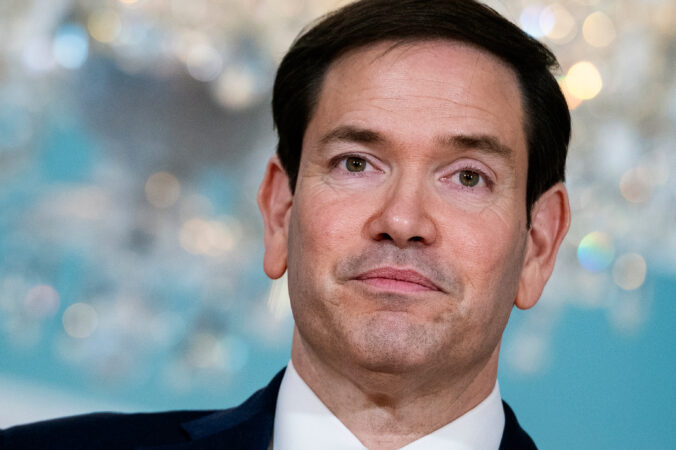
    WASHINGTON — The State Department said Wednesday it will suspend the processing of immigrant visas for citizens of 75 countries, including Afghanistan, Iran, Russia and Somalia, whose nationals the Trump administration has deemed likely to require public assistance while living in the United States.

    The State Department, led by Secretary of State Marco Rubio, said it had instructed consular officers to halt immigrant visa applications from the countries affected in accordance with a broader order issued in November that tightened rules around potential immigrants who might become “public charges” in the U.S.

    The step builds on earlier immigration and travel bans by the administration on nearly 40 countries and is part of President Donald Trump’s ongoing efforts to tighten U.S. entry standards for foreigners.

    “The Trump administration is bringing an end to the abuse of America’s immigration system by those who would extract wealth from the American people,” the department said in a statement. “Immigrant visa processing from these 75 countries will be paused while the State Department reassess immigration processing procedures to prevent the entry of foreign nationals who would take welfare and public benefits.”

    The suspension, which will begin Jan. 21, will not apply to applicants seeking non-immigrant visas, or temporary tourist or business visas, who make up the vast majority of visa seekers. Demand for non-immigrant visas is expected to rise dramatically in the coming months and years due to the upcoming 2026 World Cup and 2028 Olympics both of which the U.S. will host or co-host.

    Cable calls for screening of non-immigrant visa applicants

    A separate notice sent to all U.S. embassies and consulates said that non-immigrant visa applicants should be screened for the possibility that they might seek public benefits in the United States.

    “With the uncovering of massive public benefits fraud across the United States, the Trump administration is laser-focused on eliminating and preventing fraud in public benefits programs,” said the cable that referred specifically to most non-immigrant visa applications and was sent on Monday.

    The cable, a copy of which was obtained by The Associated Press, urged consular officers to ensure that foreigners wanting to travel to the U.S. “have been fully vetted and screened” for whether they may rely on public services before they are issued a visa.

    The cable noted several times that it is up to the applicant to prove that they would not apply for public benefits while in the U.S. and said consular officers who suspect the applicant might apply should require them to fill out a form proving their financial bona fides.

    President Donald Trump’s administration has already severely restricted immigrant and non-immigrant visa processing for citizens of dozens of countries, many of them in Africa, Asia and Latin America.

    Consular officials must consider a range of personal details

    The November guidance on which Wednesday’s decision is based directed U.S. Embassy and consulate officials to comprehensively and thoroughly vet visa applicants to demonstrate that they will not need to rely on public benefits from the government any time after their admission in the U.S.

    While federal law already required those seeking permanent residency or legal status to prove they wouldn’t be a public charge, Trump in his first term widened the range of benefit programs that could disqualify applicants, and the guidelines in the cable appear to go further in scope.

    Immigrants seeking entry into the U.S. already undergo a medical exam by a physician who’s been approved by a U.S. Embassy. They are screened for communicable diseases, like tuberculosis, and asked to disclose any history of drug or alcohol use, mental health conditions or violence. They’re also required to have a number of vaccinations.

    The new directive expanded those with more specific requirements. It said consular officials must consider a range of specific details about people seeking visas, including their age, health, family status, finances, education, skills and any past use of public assistance regardless of the country. It also said they should assess applicants’ English proficiency and can do so by conducting interviews in English.

    Experts said at the time it could further limit who gets to enter the country at a time when the Republican administration is already tightening those rules.

    The countries affected by the suspension announced on Wednesday are:

    Afghanistan, Albania, Algeria, Antigua and Barbuda, Armenia, Azerbaijan, Bahamas, Bangladesh, Barbados, Belarus, Belize, Bhutan, Bosnia, Brazil, Burma, Cambodia, Cameroon, Cape Verde, Colombia, Congo, Cuba, Dominica, Egypt, Eritrea, Ethiopia, Fiji, Gambia, Georgia, Ghana, Grenada, Guatemala, Guinea, Haiti, Iran, Iraq, Ivory Coast, Jamaica, Jordan, Kazakhstan, Kosovo, Kuwait, Kyrgyzstan, Laos, Lebanon, Liberia, Libya, Macedonia, Moldova, Mongolia, Montenegro, Morocco, Nepal, Nicaragua, Nigeria, Pakistan, Republic of the Congo, Russia, Rwanda, Saint Kitts and Nevis, Saint Lucia, Saint Vincent and the Grenadines, Senegal, Sierra Leone, Somalia, South Sudan, Sudan, Syria, Tanzania, Thailand, Togo, Tunisia, Uganda, Uruguay, Uzbekistan and Yemen.

  • Venezuela war powers resolution fails in Senate as two Republicans bow to Trump pressure

    Venezuela war powers resolution fails in Senate as two Republicans bow to Trump pressure

    WASHINGTON — Senate Republicans voted to dismiss a war powers resolution Wednesday that would have limited President Donald Trump’s ability to conduct further attacks on Venezuela after two GOP senators reversed course on supporting the legislation.

    Trump put intense pressure on five Republican senators who joined with Democrats to advance the resolution last week and ultimately prevailed in heading off passage of the legislation. Two of the Republicans — Sens. Josh Hawley of Missouri and Todd Young of Indiana — flipped under the pressure.

    Vice President JD Vance had to break the 50-50 deadlock in the Senate on a Republican motion to dismiss the bill.

    The outcome of the high-profile vote demonstrated how Trump still has command over much of the Republican conference, yet the razor-thin vote tally also showed the growing concern on Capitol Hill over the president’s aggressive foreign policy ambitions.

    Democrats forced the debate after U.S. troops captured Venezuelan leader Nicolás Maduro in a surprise nighttime raid earlier this month

    “Here we have one of the most successful attacks ever and they find a way to be against it. It’s pretty amazing. And it’s a shame,” Trump said at a speech in Michigan Tuesday. He also hurled insults at several of the Republicans who advanced the legislation, calling Sen. Rand Paul of Kentucky a “stone cold loser” and Sens. Lisa Murkowski of Alaska and Susan Collins of Maine “disasters.” Those three Republicans stuck to their support for the legislation.

    Trump’s latest comments followed earlier phone calls with the senators, which they described as terse. The president’s fury underscored how the war powers vote had taken on new political significance as Trump also threatens military action to accomplish his goal of possessing Greenland.

    The legislation, even if it had cleared the Senate, had virtually no chance of becoming law because it would eventually need to be signed by Trump himself. But it represented both a test of GOP loyalty to the president and a marker for how much leeway the Republican-controlled Senate is willing to give Trump to use the military abroad. Republican angst over his recent foreign policy moves — especially threats of using military force to seize Greenland from a NATO ally — is still running high in Congress.

    Two Republicans reconsider

    Hawley, who helped advance the war powers resolution last week, said Trump’s message during a phone call was that the legislation “really ties my hands.” The senator said he had a follow-up phone call with Secretary of State Marco Rubio Monday and was told “point blank, we’re not going to do ground troops.”

    The senator added that he also received assurances that the Trump administration will follow constitutional requirements if it becomes necessary to deploy troops again to the South American country.

    “We’re getting along very well with Venezuela,” Trump told reporters at a ceremony for the signing of an unrelated bill Wednesday.

    As senators went to the floor for the vote Wednesday evening, Young also told reporters he was no longer in support. He said that he had extensive conversations with Rubio and received assurances that the secretary of state will appear at a public hearing before the Senate Foreign Relations Committee.

    Young also shared a letter from Rubio that stated the president will “seek congressional authorization in advance (circumstances permitting)” if he engaged in “major military operations” in Venezuela.

    The senators also said his efforts were also instrumental in pushing the administration to release Wednesday a 22-page Justice Department memo laying out the legal justification for the snatch-and-grab operation against Maduro.

    That memo, which was heavily redacted, indicates that the administration, for now, has no plans to ramp up military operations in Venezuela.

    “We were assured that there is no contingency plan to engage in any substantial and sustained operation that would amount to a constitutional war,” according to the memo signed by Assistant Attorney General Elliot Gaiser.

    Trump’s shifting rationale for military intervention

    Trump has used a series of legal arguments for his campaign against Maduro.

    As he built up a naval force in the Caribbean and destroyed vessels that were allegedly carrying drugs from Venezuela, the Trump administration tapped wartime powers under the global war on terror by designating drug cartels as terrorist organizations.

    The administration has claimed the capture of Maduro himself was actually a law enforcement operation, essentially to extradite the Venezuelan president to stand trial for charges in the U.S. that were filed in 2020.

    Paul criticized the administration for first describing its military build-up in Caribbean as a counternarcotics operation but now floating Venezuela’s vast oil reserves as a reason for maintaining pressure.

    “The bait and switch has already happened,” he said.

    Trump’s foreign policy worries Congress

    Lawmakers, including a significant number of Republicans, have been alarmed by Trump’s recent foreign policy talk. In recent weeks, he has pledged that the U.S. will “run” Venezuela for years to come, threatened military action to take possession of Greenland and told Iranians protesting their government that ” help is on its way.”

    Senior Republicans have tried to massage the relationship between Trump and Denmark, a NATO ally that holds Greenland as a semi-autonomous territory. But Danish officials emerged from a meeting with Vance and Rubio Wednesday saying a “fundamental disagreement” over Greenland remains.

    “What happened tonight is a roadmap to another endless war,” Senate Democratic leader Chuck Schumer said at a news conference following the vote.

    More than half of U.S. adults believe President Donald Trump has “gone too far” in using the U.S. military to intervene in other countries, according to a new AP-NORC poll.

    How Republican leaders dismissed the bill

    Last week’s procedural vote on the war powers resolution was supposed to set up hours of debate and a vote on final passage. But Republican leaders began searching for a way to defuse the conflict between their members and Trump as well as move on quickly to other business.

    Once Hawley and Young changed their support for the bill, Republicans were able to successfully challenge whether it was appropriate when the Trump administration has said U.S. troops are not currently deployed in Venezuela.

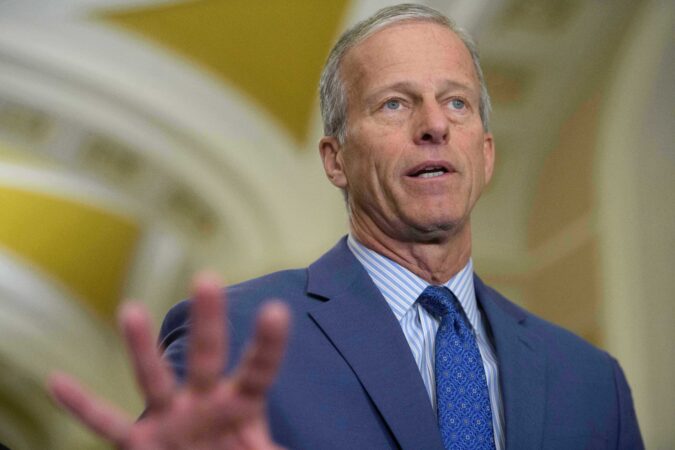
    “We’re not currently conducting military operations there,” said Senate Majority Leader John Thune in a floor speech. “But Democrats are taking up this bill because their anti-Trump hysteria knows no bounds.”

    Democratic Sen. Tim Kaine, who has brought a series of war powers resolutions this year, accused Republicans of burying a debate about the merits of an ongoing campaign of attacks and threats against Venezuela.

    “If this cause and if this legal basis were so righteous, the administration and its supporters would not be afraid to have this debate before the public and the United States Senate,” he said in a floor speech.

    Kaine vowed to force votes on war powers resolutions that would apply to a number of potential military conflicts, including Greenland. House Democrats have also filed a similar war powers resolution and can force a vote on it as soon as next week.

  • Some personnel at key U.S. base in Qatar advised to evacuate as Iran official brings up earlier attack

    Some personnel at key U.S. base in Qatar advised to evacuate as Iran official brings up earlier attack

    WASHINGTON — Some personnel at a key U.S. military base in Qatar were advised to evacuate by Wednesday evening, according to a U.S. official and the Gulf country, as President Donald Trump has warned of possible action after a deadly crackdown on protesters in Iran.

    The decision came as a senior official in Tehran brought up the country’s retaliatory attack in June at Al Udeid Air Base outside Doha, Qatar.

    The U.S. official, who spoke on the condition of anonymity to discuss sensitive plans, described the move at the base as precautionary and said such measures also were being taken across the region. The official, citing the need for operational security, would not go into further detail, including whether the evacuation was optional or mandatory, whether it affected troops or civilian personnel, or how many people were advised to leave.

    The U.S. Embassy in Qatar issued a notice early Thursday saying it had “advised its personnel to exercise increased caution and limit non-essential travel” to Al Udeid Air Base. “We recommend U.S. citizens in Qatar do the same,” it added. In Kuwait, the U.S. embassy ordered a “temporary halt” to its personnel going to multiple military bases in the small Gulf Arab country amid heightened tensions. Kuwait is home to U.S. Army Central, the service’s Mideast command.

    The anti-government demonstrations in nearby Iran began in late December, and Trump has said he is willing to conduct military operations against Iran if the Tehran government continues to kill and arrest protesters.

    A day after Trump said that he believes the killing is “significant ” and that his administration would “act accordingly,” the president told reporters that he had been told that targeting protesters and plans for executions in Iran have stopped, without providing many details.

    The vague statements made it unclear as of Wednesday night what U.S. action, if any, would take place against Iran.

    Qatar notes ‘regional tensions’

    Qatar said the measures at Al Udeid were being “undertaken in response to the current regional tensions.”

    “The State of Qatar continues to implement all necessary measures to safeguard the security and safety of its citizens and residents as a top priority, including actions related to the protection of critical infrastructure and military facilities,” Qatar’s international media office said on the social platform X.

    The base, which hosts thousands of American service members, was targeted by Iran in June in retaliation for U.S. strikes on its nuclear facilities.

    Ali Shamkhani, an adviser to Supreme Leader Ayatollah Ali Khamenei, wrote on X that “the #US President, who repeatedly talks about the futile aggression against #Iran’s nuclear facilities, would do well to also mention the destruction of the US base in #Al-Udeid by Iranian missiles.”

    “It would certainly help create a real understanding of Iran’s will and ability to respond to any aggression,” he added.

    The U.S. military maintains a variety of troops in the region, including at Al Udeid, but the Trump administration shifted some resources from the Middle East to the Caribbean Sea as part of a pressure campaign on former Venezuelan President Nicolás Maduro.

    The world’s largest aircraft carrier, the USS Gerald R. Ford, was ordered in October to sail from the Mediterranean Sea to the Caribbean along with several destroyers. The carrier USS Nimitz, which helped conduct the June strikes on Iran’s nuclear program, also departed the region in October.

    The Navy had five small ships — two destroyers and three littoral combat ships — in the waters off Iran as of Tuesday.

    Iranian and Qatari officials stay in touch

    Ali Larijani, secretary of Iran’s Supreme National Security Council, had a phone call Tuesday with Sheikh Mohammed bin Abdulrahman Al Thani, Qatar’s prime minister.

    In a statement on X, Al Thani said he “reaffirmed the State of Qatar’s backing of all de-escalation efforts, as well as peaceful solutions to enhance security and stability in the region.”

    Iran’s decision in June to retaliate against U.S. strikes by targeting the sprawling desert base created a rare tension between the two maritime neighbors, with Qatari officials saying it caught them by surprise.

    No American or Qatari personnel was harmed, the U.S. military’s Central Command said at the time, noting that they worked together to defend the base. A Qatari military officer said one of 19 missiles fired by Iran was not intercepted and hit the base, but Trump said in a social media post at the time that “hardly any damage was done.”

    The Gulf state has been caught in the crossfire of other regional tensions, including an Israeli strike in September on the headquarters of Hamas’ political leadership in Doha while the group’s top figures had been gathered to consider a U.S. proposal for a ceasefire in the Gaza Strip.

    The Pentagon declined to comment on questions about the changes at Al Udeid. The State Department had no immediate comment on the potential for any security alerts to be issued for American diplomats or other civilians in Qatar.

    In June, the embassy had issued a brief shelter-in-place advisory to U.S. citizens in Doha but stopped short of evacuating diplomats or advising Americans to leave the country.

  • FBI searches a Washington Post reporter’s home as part of a classified documents investigation

    FBI searches a Washington Post reporter’s home as part of a classified documents investigation

    FBI agents searched a Washington Post reporter’s home on Wednesday as part of a leak investigation into a Pentagon contractor accused of taking home classified information, the Justice Department said.

    Hannah Natanson, who has been covering President Donald Trump’s transformation of the federal government, had a phone, two laptops and a Garmin watch seized in the search of her Virginia home, the Post reported. Natanson has reported extensively on the federal workforce and recently published a piece describing how she gained hundreds of new sources — leading one colleague to call her “the federal government whisperer.”

    While classified documents investigations aren’t unusual, the search of a reporter’s home marks an escalation in the government’s efforts to crack down on leaks. The Post was told that Natanson and the newspaper are not targets of the probe, executive editor Matt Murray said in an email to colleagues.

    “Nonetheless, this extraordinary, aggressive action is deeply concerning and raises profound questions and concern around the constitutional protections for our work,” Murray wrote. “The Washington Post has a long history of zealous support for robust press freedoms. The entire institution stands by those freedoms and our work.”

    Attorney General Pam Bondi said that the search was done at the request of the Defense Department and that the journalist was “obtaining and reporting classified and illegally leaked information from a Pentagon contractor.”

    “Leaking classified information puts America’s national security and the safety of our military heroes in serious jeopardy,” White House press secretary Karoline Leavitt said in a post on X. “President Trump has zero tolerance for it and will continue to aggressively crack down on these illegal acts moving forward.”

    The warrant says the search was related to an investigation into a system engineer and information technology specialist for a government contractor in Maryland who authorities allege took home classified materials, the Post reported. The worker, Aurelio Perez-Lugones, was charged earlier this month with unlawful retention of national defense information, according to court papers. He has not been charged with sharing classified information, and he has not been accused in court papers with leaking.

    Perez-Lugones, who held a top secret security clearance, is accused of printing classified and sensitive reports at work. In a search of his Maryland home and car this month, authorities found documents marked “SECRET,” including one in a lunchbox, according to court papers.

    An FBI spokesperson declined to comment on Wednesday. The Washington Post said Wednesday that it was monitoring and reviewing the situation. An email seeking comment was sent to lawyers for Perez-Lugones, who is expected to appear in court on Thursday for a detention hearing.

    First Amendment groups expressed alarm at the search, saying it could chill investigative journalism that holds government officials to account.

    “Physical searches of reporters’ devices, homes, and belongings are some of the most invasive investigative steps law enforcement can take,” Reporters Committee for Freedom of the Press president Bruce Brown said. “While we won’t know the government’s arguments about overcoming these very steep hurdles until the affidavit is made public, this is a tremendous escalation in the administration’s intrusions into the independence of the press.”

    The Justice Department over the years has developed, and revised, internal policies governing how it will respond to news media leaks.

    In April, Bondi rescinded a policy from President Joe Biden’s Democratic administration that protected journalists from having their phone records secretly seized during leak investigations — a practice long decried by news organizations and press freedom groups.

    The moves again gave prosecutors the authority to use subpoenas, court orders and search warrants to hunt for government officials who make “unauthorized disclosures” to journalists. A memo she issued said members of the press are “presumptively entitled to advance notice of such investigative activities,” and subpoenas are to be “narrowly drawn.” Warrants must also include “protocols designed to limit the scope of intrusion into potentially protected materials or newsgathering activities,” the memo states.

    The aggressive posture with regard to The Washington Post stands in contrast to the Justice Department’s approach to the disclosure of sensitive military information via a Signal chat last spring involving senior Trump administration officials. A reporter was mistakenly added to that chat. Bondi indicated publicly at the time that she was disinclined to open an investigation, saying she was confident that the episode had been a mistake.

    Bondi also repeated Trump administration talking points that the highly sensitive information in the chat was not classified, though current and former U.S. officials have said the posting of the launch times of aircraft and the times that bombs would be released before those pilots were even in the air would have been classified.

  • Danish official says there’s a ‘fundamental disagreement’ with Trump over Greenland

    Danish official says there’s a ‘fundamental disagreement’ with Trump over Greenland

    WASHINGTON — Disagreement” over Greenland remains with President Donald Trump after holding highly anticipated White House talks with Vice President JD Vance and Secretary of State Marco Rubio.

    The two sides, however, agreed to create a working group to discuss ways to work through differences as Trump continues to call for a U.S. takeover of the semiautonomous territory of NATO ally Denmark.

    “The group, in our view, should focus on how to address the American security concerns, while at the same time respecting the red lines of the Kingdom of Denmark,” Danish Foreign Minister Lars Løkke Rasmussen told reporters after joining Greenland’s foreign minister, Vivian Motzfeldt, for the talks. He added that it remains “clear that the president has this wish of conquering over Greenland.”

    Trump is trying to make the case that NATO should help the U.S. acquire the world’s largest island and says anything less than it being under American control is unacceptable.

    Denmark, meanwhile, announced plans to boost the country’s military presence in the Arctic and North Atlantic as Trump tries to justify his calls for a U.S. takeover of the vast territory by repeatedly claiming that China and Russia have their designs on Greenland, which holds vast untapped reserves of critical minerals.

    The president, who did not take part in Wednesday’s meeting, told reporters he remained committed to acquiring the territory.

    “We need Greenland for national security,” Trump said. “We’ll see how it all works out. I think something will work out.”

    Trump named Louisiana Gov. Jeff Landry as a special envoy to Greenland last month. Landry did not attend Wednesday’s meeting, but was scheduled to travel to Washington on Thursday and Friday for meetings that include the topic of Greenland, his spokesperson said.

    Landry, following Trump’s latest comments, posted on X that Trump was “absolutely right” about acquiring Greenland and the territory “is a critical component of our nation’s national security portfolio.”

    Before the meeting, Trump took to social media to make the case that “NATO should be leading the way” for the U.S. to acquire the territory. NATO Secretary General Mark Rutte has sought to keep an arms-length away from the dispute between the most important power and the other members of the 32-country alliance unnerved by the aggressive tack Trump has taken toward Denmark.

    Both Løkke Rasmussen and Motzfeldt offered measured hope that the talks were beginning a conversation that would lead to Trump dropping his demand and create a path for tighter cooperation with the U.S.

    “We have shown where our limits are and from there, I think that it will be very good to look forward,” Motzfeldt said.

    Denmark bolstering presence in Arctic

    In Copenhagen, Danish Defense Minister Troels Lund Poulsen announced a stepped-up military presence in the Arctic “in close cooperation with our allies,” a necessity in a security environment in which “no one can predict what will happen tomorrow.”

    Several of the country’s allies, including Germany, France, Norway and Sweden, announced they were arriving in Greenland along with Danish personnel to take part in joint exercises or map out further military cooperation in the Arctic.

    NATO is also looking at how members can collectively bolster the alliance’s presence in the Arctic, said a NATO official who was not authorized to comment publicly and spoke on condition of anonymity.

    Greenlanders want the US to back off

    Greenland is strategically important because, as climate change causes the ice to melt, it opens up the possibility of shorter trade routes to Asia. That also could make it easier to extract and transport untapped deposits of critical minerals which are needed for computers and phones.

    Trump says Greenland is also “vital” to the United States’ Golden Dome missile defense program. He also has said Russia and China pose a threat in the region.

    But experts and Greenlanders question that claim, and it has become a hot topic on the snow-covered main street in Greenland’s capital, where international journalists and camera crews have descended as Trump continues his takeover talk.

    In interviews, Greenlanders said the outcome of the Washington talks didn’t exactly evince confidence that Trump can be persuaded.

    “Trump is unpredictable,” said Geng Lastein, who immigrated to Greenland 18 years ago from the Philippines.

    Maya Martinsen, 21, said she doesn’t buy Trump’s arguments that Greenland needs to be controlled by the U.S. for the sake maintaining a security edge in Arctic over China and Russia. Instead, Martinsen said, Trump is after the plentiful “oils and minerals that we have that are untouched.”

    Greenland “has beautiful nature and lovely people,” Martinsen added. ”It’s just home to me. I think the Americans just see some kind of business trade.”

    Denmark has said the U.S., which already has a military presence, can boost its bases on Greenland. The U.S. is party to a 1951 treaty that gives it broad rights to set up military bases there with the consent of Denmark and Greenland.

    Bipartisan concern from U.S. senators

    Løkke Rasmussen and Motzfeldt also met with a bipartisan group senators from the Arctic Caucus. The senators said they were concerned Trump’s push to acquire Greenland could upend NATO and play into the hands of Russian President Vladimir Putin.

    Republican Sen. Lisa Murkowski of Alaska, who has introduced legislation to try to block any U.S. action in Greenland, said it was “stunning” to her that they were even discussing the matter. “We are operating in times where we are having conversations about things that we never even thought possible,” Murkowski said.

    Sen. Angus King, I-Maine, said it is “nonsense” to say that the U.S. needs to control Greenland to protect national security. The officials were “very open to additional national security assets in Greenland in order to meet whatever risks there are.”

    A bipartisan delegation of U.S. lawmakers plans to show their solidarity by traveling to Copenhagen this week.

  • Donovan Mitchell scores 35 as Cavs blow out the Sixers, 133-107

    Donovan Mitchell scores 35 as Cavs blow out the Sixers, 133-107

    Donovan Mitchell had 35 points and nine assists, Darius Garland scored 20 points before leaving with an injured foot and the Cleveland Cavaliers beat the 76ers 133-107 on Wednesday night.

    Garland was ruled out for the game late in the third quarter when he hurt his right foot diving for a loose ball. Garland already had surgery in June on the injured left big toe that hampered him during Cleveland’s exit from the playoffs last season.

    The All-Star guard averaged 17.9 points after a slow start this season as he recovered from surgery. Garland continued his recent hot streak and shot 8-for-13 against the Sixers.

    Joel Embiid scored 20 points and hit a three-pointer that helped him reach 13,000 career points, the seventh player in team history to hit that mark.

    Paul George had 17 points for the Sixers in the opener of a two-game series.

    Sixers fans booed the team off the court in the third quarter headed into a timeout and trailing 75-53.

    Sixers center Joel Embiid (center) scored his 13,000th point against the Cavaliers on Wednesday night.

    Tyrese Maxey and Quintin Grimes hit a pair of threes during a 10-0 run and Embiid — who just earlier landed his 7-foot-2 frame on two rows of unsuspecting fans when he dove for a loose ball — buried a three of his own that made it 79-66.

    The good times were short-lived, and fans headed for the exits as the Cavs stretched the lead to 22 midway through the fourth.

    Sixers forward Dominick Barlow needed help up from the court and into the locker room after his legs gave out on him and he landed hard on his back and head on a driving layup attempt. He suffered a back contusion.

    De’Andre Hunter hit early threes that stretched Cleveland’s lead to 30-14 and 60-47 headed into halftime. Hunter and Evan Mobley both scored 17 points. Mobley grabbed 13 rebounds.

    The teams play again Friday at Xfinity Mobile Arena (7 p.m., ESPN).

  • Democratic lawmakers say they’re under investigation for military orders video

    Democratic lawmakers say they’re under investigation for military orders video

    Several Democratic lawmakers said Wednesday that they are under federal investigation over a video they released on social media in November in which they reminded U.S. troops they can disobey illegal orders, a message that angered President Donald Trump.

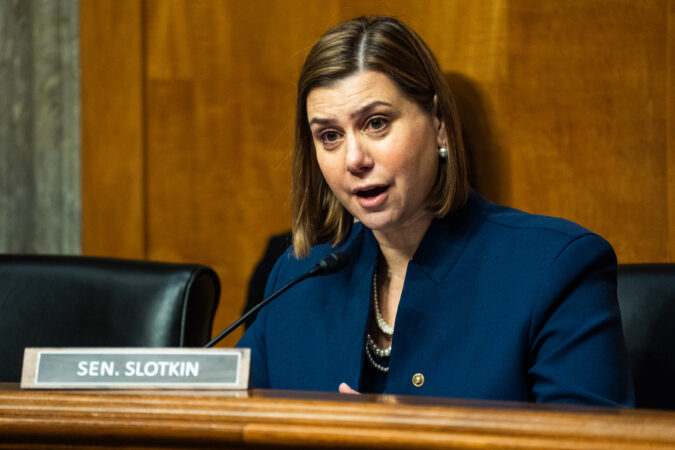
    In a video message Wednesday, Sen. Elissa Slotkin (D., Mich.) said that Jeanine Pirro, the U.S. attorney for D.C., last week asked to interview her about the video. Slotkin added that she also received an inquiry from the FBI’s counterterrorism division late last year and that she believed both were examples of Trump using his political appointees to pressure opponents into silence.

    “It’s legal intimidation and physical intimidation meant to get you to shut up,” Slotkin said in her message, which she posted on social media. “He’s used it with our universities, our corporations, our legal community, and with politicians who falsely believe that doing his bidding and staying quiet will keep them safe. No. I’m not going to do that.”

    Three of the other five Democrats who participated in the video — Reps. Jason Crow (Colo.), Maggie Goodlander (N.H.) and Chrissy Houlahan (Pa.) — also received inquiries from Pirro’s office, according to representatives for the lawmakers.

    “Donald Trump called for my arrest, prosecution, and execution — all because I said something he didn’t like. Now he’s pressuring his political appointees to harass me for daring to speak up and hold him accountable,” Crow said in a statement. “I won’t be intimidated and will keep fighting to uphold my oath to the Constitution and defend our country.”

    Representatives for Pirro’s office declined to confirm or deny the existence of either investigation Wednesday.

    Slotkin, a former CIA analyst, organized the video in question late last year, in which six Democrats with military or civil service backgrounds warned that threats to the country were coming not just from abroad but also domestically. They did not name Trump but, citing the Uniform Code of Military Justice, said that members of the U.S. military and the intelligence community have a responsibility to refuse illegal orders.

    In addition to Slotkin, the video included messages from Reps. Chris Deluzio (Pa.), a former Navy officer; Crow, a former Army Ranger; Goodlander, a Navy veteran; Houlahan, a former Air Force officer; and Sen. Mark Kelly (Ariz.), a former Navy captain and astronaut. Representatives for Kelly and Deluzio did not immediately respond to requests for comment.

    Trump responded by calling the lawmakers “traitors” and claiming on social media that they should be “ARRESTED AND PUT ON TRIAL.” He added that their behavior was “punishable by DEATH!” White House press secretary Karoline Leavitt later clarified that Trump did not want to execute them but accused them of “essentially encouraging” chaos.

    “It is sad and telling that simply stating a bedrock principle of American law caused the President of the United States to threaten violence against me, and it is downright dangerous that the Justice Department is targeting me for doing my job,” Goodlander said in a statement Wednesday.

    Houlahan called the investigation “ridiculous” in a statement.

    “We will not be silenced,” she added.

    The White House didn’t immediately respond to requests for comment.

    In her video message Wednesday, Slotkin said threats against her “went through the roof” following Trump’s social media posts about the lawmakers’ video, prompting her to add round-the-clock security. She received a bomb threat at her home, her parents were “swatted” in the middle of the night, and her siblings needed police cars in their driveways, she added.

    Slotkin said the inquiry from Pirro, a longtime Trump ally, was another way Trump was trying to threaten her.

    “To be clear, this is the president’s playbook. Truth doesn’t matter, facts don’t matter, and anyone who disagrees with him becomes an enemy and he then weaponizes the federal government against them,” she said.

    The reported inquiries from Pirro’s office are not the only examples of repercussions from Trump allies stemming from the video. Last week, Defense Secretary Pete Hegseth said he had formally censured Kelly and would seek to reduce his Navy rank in retirement, accusing the senator of making “seditious statements.”

    In response, Kelly filed a lawsuit against Hegseth, arguing that he was being unlawfully punished and emphasizing that he had earned his military rank.

    “Pete Hegseth wants our longest-serving military veterans to live with the constant threat that they could be deprived of their rank and pay years or even decades after they leave the military, just because he or another secretary of defense doesn’t like what they’ve said,” Kelly said Monday. “That’s not the way things work in the United States of America, and I’m not going to stand for it.”