Tag: no-latest

  • Kennedy Center head warns staff of cuts and ‘skeletal’ staffing during renovation closure

    Kennedy Center head warns staff of cuts and ‘skeletal’ staffing during renovation closure

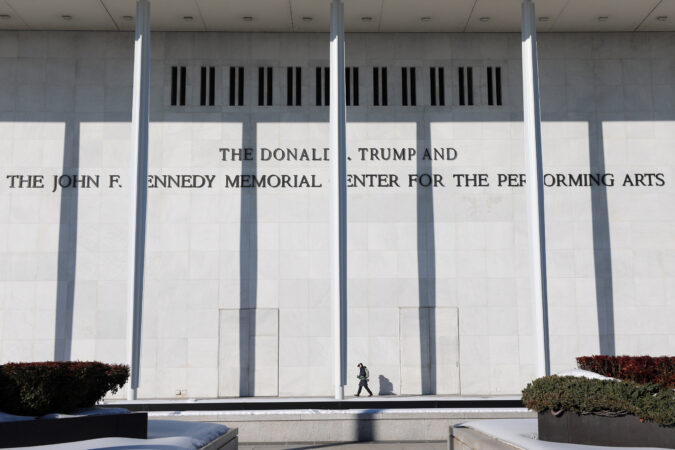
    As the Trump administration prepares to close the Kennedy Center for a two-year renovation, the head of Washington’s performing arts center has warned its staff about impending cuts that will leave “skeletal teams.”

    In a Tuesday memo obtained by The Associated Press, Kennedy Center president Richard Grenell told staff that “departments will obviously function on a much smaller scale with some units totally reduced or on hold until we begin preparations to reopen in 2028,” promising “permanent or temporary adjustments for most everyone.”

    A Kennedy Center spokesperson declined comment Wednesday.

    Over the next few months, he wrote, department heads would be “evaluating the needs and making the decisions as to what these skeletal teams left in place during the facility and closure and construction phase will look like.” Grenell said leadership would “provide as much clarity and advance notice as possible.”

    The Kennedy Center is slated to close in early July. Few details about what the renovations will look like have been released since President Donald Trump announced his plan at the beginning of February. Neither Trump nor Grenell have provided evidence to support claims about the building being in disrepair, and last October, Trump had pledged it would remain open during renovations.

    It’s unclear exactly how many employees the center currently has, but a 2025 tax filing said nearly 2,500 people were employed during the 2023 calendar year. A request for comment sent to Kennedy Center Arts Workers United, which represents artists and arts professionals affiliated with the center — wasn’t immediately returned.

    Leading performers and groups have left or canceled appearances since Trump ousted the center’s leadership a year ago and added his own name to the building in December. The Washington Post, which first reported about Grenell’s memo, has also cited significant drops in ticket revenue that — along with private philanthropy — comprises the center’s operating budget. Officials have yet to say whether such long-running traditions as the Mark Twain Award for comedy or the honors ceremony for lifetime contributions to the arts will continue while the center is closed.

    The Kennedy Center was first conceived as a national cultural facility during the Eisenhower administration, in the 1950s. President John F. Kennedy led a fundraising initiative, and the yet-to-be-built center was named in his honor following his assassination. It opened in 1971 and has become a preeminent showcase for theater, music and dramatic performances, enjoying bipartisan backing until Trump’s return to office last year.

    “This renovation represents a generational investment in our future,” Grenell wrote. “When we reopen, we will do so as a stronger organization — one that honors our legacy while expanding our impact.”

  • She bounced a $25 check in 2014. ICE tried to deport her.

    She bounced a $25 check in 2014. ICE tried to deport her.

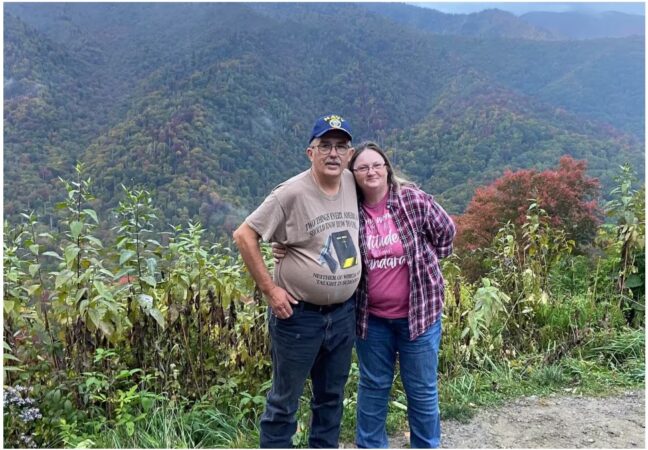
    One evening last summer, Donna Hughes-Brown was handcuffed and led into a filthy holding cell somewhere in Kentucky, where insects crawled out of a drain and feces streaked the walls.

    The Missouri grandmother’s life had taken an unrecognizable turn days earlier, when federal agents pulled her off an arriving flight at Chicago’s O’Hare International Airport, arrested her and told her she would be deported.

    Her crime? Writing two bad checks, for a combined total of less than $75, more than a decade earlier.

    Hughes-Brown, a lawful permanent resident of the United States since she was a child, would go on to spend 143 days — nearly five months — in detention. She was only released at the end of last year after an immigration judge granted an application to stop her removal. Her story underscores just how far the Trump administration is willing to go in its quest to boost deportations, extending its dragnet to people who are legally present in the country with minor offenses from years earlier.

    For those swept up in the expanding deportation drive, it is also increasingly difficult to win release, resulting in lengthy detentions such as the one Hughes-Brown experienced. In November, the number of people released from Immigration and Customs Enforcement detention into the U.S. fell about 70 percent from a year earlier, according to a recent report from the American Immigration Council.

    When asked about Hughes-Brown, Tricia McLaughlin, assistant secretary at the Department of Homeland Security, defended her agency’s handling of the case. A conviction for passing bad checks does “not make for an upstanding lawful permanent resident,” McLaughlin said in an email. A spokesperson for ICE did not respond to a request for comment.

    Hughes-Brown, 59, is an Irish citizen and green-card holder who immigrated to the U.S. with her parents in 1978. Before last year, she never imagined she would become a target of the administration’s clampdown on immigration, she said, and she believed that everyone should come to the country legally, like she did.

    Now back home in small-town Missouri, Hughes-Brown said she thinks constantly of the women she left behind in detention: Jeimy, a 25-year-old from Guatemala who is married to an American citizen; Grace, a woman from Venezuela with a congenital heart condition; Beata, a Polish green-card holder with two convictions for minor retail theft more than a decade ago, her story an echo of Hughes-Brown’s.

    “It was the intent for this to happen to so many people,” Hughes-Brown said. “It doesn’t really matter how you got here, the end result is the same.”

    A $25 mistake

    Hughes-Brown’s ordeal began last July, when she made her first overseas trip in almost a decade. Her aunt had died, so Donna and her husband, Jim Brown, traveled to Ireland, gathering with family at a lighthouse overlooking an estuary as they spread her aunt’s ashes.

    At the airport in Dublin, Donna and Jim precleared U.S. Customs and Immigration. Officers pulled Donna aside and asked questions about her travel history. Then they let her proceed to her flight, she said.

    As the plane was approaching Chicago’s O’Hare airport, the flight attendant announced that all passengers would be required to show their passports as they exited. That’s odd, Donna thought. Exiting the plane, she saw armed officers waiting on the jet bridge. They were there for her.

    After a night in a cell at O’Hare, Donna received paperwork explaining why she had been apprehended. She was flummoxed. Back in 2015, she pleaded guilty to passing a bad check the previous year, a misdemeanor. The check was for $25, court records show, and made out to Krazy Korner, a gas station, and convenience store.

    She was living paycheck to paycheck and didn’t realize the check would bounce, Donna says. After it did, court records show, she paid restitution of $80 plus court fees of $117 and served a year of probation. She stabilized her finances, building a career as a home health care aide. She was certain that chapter was closed.

    The government also cited a separate 2012 misdemeanor conviction for passing a bad check. Records from that case are not available to the public because the case was either dismissed or expunged, a county official in Missouri said. Donna barely remembered it; she believes it was for less than $50 at a grocery store.

    While lawful permanent residents have considerably more protection from deportation than visa holders, the government can seek to deport green-card holders for certain nonviolent offenses. One such situation: crimes of “moral turpitude,” which include offenses with an intent to steal or defraud.

    But the government has an “immense amount of discretion” in deciding whether to exercise such powers and whether to detain someone, said César Cuauhtémoc García Hernández, a law professor and immigration expert at Ohio State University. In the past, he said, he would have expected DHS to exercise its discretion favorably in Donna’s case, given her “half a century in the United States with only one or two extremely minor hiccups.”

    To assert that passing a bad check more than a decade ago “makes you unworthy of living in the U.S. — that’s a policy decision,” García Hernández said. What’s more, detaining someone for months is “neither easy nor cheap.”

    The average cost to house an ICE detainee per day was $187, according to the most recent figures available. At that rate, detaining Hughes-Brown cost taxpayers about $27,000.

    ‘Hell from both sides’

    In early August, Donna and several other detainees were handcuffed and loaded into a van for the six-hour drive from Illinois to Campbell County Detention Center, a local jail in Kentucky that also houses ICE detainees. Four hundred miles from home, she lived in a pod with dozens of other women, she says, sleeping on metal bunks with only a thin mat and toilets that were clogged for days.

    One of the women was Beata Siemionkowicz, a lawful permanent resident from outside of Chicago who has lived in the U.S. since 1995. Federal agents arrested her at her daughter’s house in August, her lawyer, George Gomez, said, and told her they were launching deportation proceedings. The reason: two misdemeanor cases for retail theft in 2005 and 2011.

    Meanwhile, Donna’s husband, Jim, was doing everything he could think of to get her released. They’d met online and married seven years before, building a life in Cyrene, a tiny town south of Bowling Green, where they keep three horses and are active in their church. After Hurricane Helene, they twice filled a 30-foot horse trailer with supplies and drove it to North Carolina to help disaster victims.

    A combat veteran turned CT technologist, Jim describes himself as a conservative Christian and voted for Trump in 2024. He’s not against immigration: He grew up around migrant workers in Texas, hard-working people who paid taxes into the system.

    When Donna was detained, Jim wrote to every member of Missouri’s congressional delegation. He struck out, but then help came from an unexpected place: Rep. Seth Magaziner, a Democrat who represents Rhode Island. Magaziner brought Jim to Washington to speak at a panel on Trump’s immigration crackdown. At the event, Jim was asked why he had voted for Trump. He paused. “Because I was an idiot,” he answered.

    The partisan backlash has been swift, he said. Longtime friends in the ruby-red county where the couple lives have turned their back on him because he criticized Trump. Meanwhile, more liberal neighbors have said his wife’s ordeal is a fitting consequence of his vote.

    “My family and I have got hell from both sides,” Jim said.

    In December, Magaziner also asked Homeland Security Secretary Kristi L. Noem about Donna’s case during a hearing on Capitol Hill. “The Trump Administration claimed it would target the ‘worst of the worst,’ but no one understands how false that promise was more than Jim and Donna Brown,” Magaziner said in a statement.

    As the months rolled by, Donna spent two stints in an isolation cell, where the only book allowed was the Bible and she was permitted an hour outside every other day. Her requests to be released on bond were rejected by an immigration judge. But on Dec. 18, after a hearing during which family members talked about how devastating her deportation would be, the judge granted her application to cancel removal proceedings. DHS declined to appeal the decision.

    Still, Donna doesn’t intend to take chances. Her passport and green card were finally returned to her last week after the Irish consulate intervened. “I’m not even getting close to the border,” she said.

    These days, she senses an awkwardness with some friends. They’re sorry for what happened to her but still support the administration’s efforts. That’s their right, she says, and she’s not interested in cutting people off because they disagree with her.

    But she does want to talk to them. About how helpless she felt in her darkest moments in detention – labeled a criminal, locked away and unsure if she would ever return to her life in Missouri. She’s determined to fight for the women she met there.

    “I’m going to keep on keepin’ on,” Donna said. “Because it is not right. It is not right.”
  • IRS improperly disclosed confidential immigrant tax data to DHS

    IRS improperly disclosed confidential immigrant tax data to DHS

    The Internal Revenue Service improperly shared confidential tax information of thousands of individuals with immigration enforcement officials, according to three people familiar with the situation, appearing to breach a legal firewall intended to protect taxpayer data.

    The erroneous disclosure was only recently discovered, the people said. The IRS is working with officials from the Treasury Department, Justice Department, and Department of Homeland Security on the administration’s response.

    The IRS confirmed the Washington Post’s reporting in a court filing Wednesday afternoon. Dottie Romo, the tax agency’s chief risk and control officer, wrote in a sworn declaration that the IRS provided confidential taxpayer information even when DHS officials could not provide sufficient data to positively identify a specific individual.

    But in a controversial decision, Treasury, which oversees the IRS, in April agreed to provide DHS with the names and addresses of individuals the Trump administration believed to be in the country illegally, pursuant to DHS requests.

    Federal courts have since blocked the data-sharing arrangement, holding that it violates taxpayers’ rights, though the government appealed those rulings.

    Before the agreement was struck down, DHS requested the addresses of 1.2 million individuals from the IRS. The tax agency responded with data on 47,000 individuals, according to court records.

    When the IRS shared the addresses with DHS, it also inadvertently disclosed private information for thousands of taxpayers erroneously, a mistake only recently discovered, said the people familiar, who spoke on the condition of anonymity for fear of retribution.

    Romo, in her declaration, did not state when the IRS learned of its error. She said the agency notified DHS on Jan. 23, to begin taking steps to “prevent the disclosure or dissemination, and to ensure appropriate disposal, of any data provided to ICE by IRS based on incomplete or insufficient address information.”

    She declined to state if the IRS would inform people whose data was illegally disclosed to immigration officials, and said DHS and ICE had agreed to “not inspect, view, use, copy, distribute, rely on, or otherwise act on any return information that has been obtained from or disclosed by IRS” because of the pending litigation.

    The affected individuals could be entitled to financial compensation for each time their information was improperly shared. And government officials can personally face stiff civil and criminal penalties for sharing confidential tax information.

    Charles Littlejohn, an IRS contractor, pleaded guilty in 2023 to leaking the tax returns of President Donald Trump and other wealthy individuals.

    Littlejohn was sentenced to five years in prison. Trump in January sued the IRS for $10 billion in damages related to the Littlejohn leak.

    In a statement, a DHS spokesperson said that under the data-sharing agreement, “the government is finally doing what it should have all along.”

    “Information sharing across agencies is essential to identify who is in our country, including violent criminals, determine what public safety and terror threats may exist so we can neutralize them, scrub these individuals from voter rolls, and identify what public benefits these aliens are using at taxpayer expense,” the spokesperson said.

    There is little evidence that undocumented immigrants have attempted to participate in U.S. elections, nor is there a link between undocumented immigrants and higher levels of crime.

    “With the IRS information specifically, DHS plans to focus on enforcing long-neglected criminal laws that apply to illegal aliens,” the DHS spokesperson said.

    Treasury and Justice Department spokespeople declined to comment, citing agency policies not to comment on active litigation. The Office of the Deputy Attorney General is monitoring the ongoing litigation, but the office is not making any decisions on the matter, according to a person familiar with the matter who was not authorized to comment publicly.

    When the IRS began conversations with DHS over data sharing shortly after Trump returned to the White House, senior IRS employees warned administration officials that the program was likely illegal and could sweep up misidentified people, the Post has reported.

    During early meetings on the project, one agency staffer asked immigration authorities how many people with the same name may live in the same state, according to one of the people, illustrating how easy it would be for the Trump administration to inadvertently breach taxpayers’ privacy, including those who are not targets of immigration investigations.

    The IRS’s privacy department was largely sidelined from the talks, two of the people said, and its IT department took over implementing the data sharing. That team had largely been taken over by officials from Trump’s U.S. DOGE Service, the White House’s “efficiency” office charged with shrinking the federal government.

    Treasury officials justified the data-sharing agreement by arguing immigration enforcement was pursuing individuals who had violated criminal statutes, though immigration violations are generally civil, not criminal.

    Under the arrangement, DHS would provide the IRS with the name and address of a taxpayer. The IRS would then cross-reference that information with its confidential databases and confirm the taxpayers’ last known address.

    Immigration officials said the procedure was necessary because DHS lacked reliable information to locate individuals the Trump administration wanted to detain and deport, according to numerous IRS and DHS officials, who spoke on the condition of anonymity because they were not authorized to publicly discuss the matter.

    “This allegedly unauthorized viewing involves personal information that taxpayers provided to the IRS pursuant to a promise that the IRS would prioritize keeping the information confidential,” Judge Colleen Kollar-Kotelly of the U.S. District Court for the District of Columbia wrote in a November order. “A reasonable taxpayer would likely find it highly offensive to discover that the IRS now intends to share that information permissively because it has replaced its promise of confidentiality with a policy of disclosure.”

  • When the doctor needs a checkup

    When the doctor needs a checkup

    He was a surgical oncologist at a hospital in a Southern city, a 78-year-old whose colleagues had begun noticing troubling behavior in the operating room.

    During procedures, he seemed “hesitant, not sure of how to go on to the next step without being prompted” by assistants, said Mark Katlic, director of the Aging Surgeon Program at Sinai Hospital in Baltimore.

    The chief of surgery, concerned about the doctor’s cognition, “would not sign off on his credentials to practice surgery unless he went through an evaluation,” Katlic said.

    Since 2015, when Sinai inaugurated a screening program for surgeons 75 and older, about 30 from around the country have undergone its comprehensive two-day physical and cognitive assessment. This surgeon “did not come of his own accord,” Katlic recalled.

    But he came. The tests revealed mild cognitive impairment, often but not necessarily a precursor to dementia. The neuropsychologist’s report advised that the surgeon’s difficulties were “likely to impact his ability to practice medicine as he is doing presently, e.g. conducting complex surgical procedures.”

    That didn’t mean the surgeon had to retire; a variety of accommodations would allow him to continue in other roles. “He retained a lifetime of knowledge that had not been impacted by cognitive changes,” Katlic said. The hospital “took him out of the OR, but he continued to see patients in the clinic.”

    Such incidents are likely to become more common as America’s physician workforce ages rapidly. In 2005, more than 11% of doctors who were seeing patients were 65 or older, the American Medical Association said. Last year, the proportion reached 22.4%, with nearly 203,000 older practitioners.

    Given physician shortages, especially in rural areas and key specialties like primary care, nobody wants to drive out veteran doctors with skills and experience.

    Yet researchers have documented “a gradual decline in physicians’ cognitive abilities starting in their mid-60s,” said Thomas Gallagher, an internist and bioethicist at the University of Washington who has studied late-career trajectories.

    At older ages, reaction times slow; knowledge can become outdated. Cognitive scores vary greatly, however. “Some practitioners continue to do as well as they did in their 40s and 50s, and others really start to struggle,” Gallagher said.

    A few health organizations have responded by establishing late-career practitioner programs mandating that older doctors be screened for cognitive and physical deficits.

    UVA Health at the University of Virginia began its program in 2011 and has screened about 200 older practitioners. Only in four cases did the results significantly change a doctor’s practice or privileges.

    Stanford Health Care launched its late-career program the following year. Penn Medicine at the University of Pennsylvania also put in place a testing program.

    Nobody has tracked how many exist; Gallagher guesstimated as many as 200. But given that the United States has more than 6,000 hospitals, those with late-career programs constitute “a vast minority,” he said.

    The number may actually have shrunk. A federal lawsuit, along with the profession’s lingering reluctance, appears to have put the effort to regularly assess older doctors’ abilities in limbo.

    Late-career programs typically require those 70 and older to be evaluated before their privileges and credentials are renewed, with confirmatory testing for those whose initial results indicate problems. Thereafter, older doctors undergo regular rescreening, usually every year or two.

    It’s fair to say such efforts proved unpopular among their intended targets. Doctors frequently insist that “‘I’ll know when it’s time to stand down,’” said Rocco Orlando, senior strategic adviser to Hartford HealthCare, which operates eight Connecticut hospitals and began its late-career practitioner program in 2018. “It turns out not to be true.”

    When Hartford HealthCare published data from the first two years of its late-career program, it reported that of the 160 practitioners 70 and older who were screened, 14.4% showed some degree of cognitive impairment.

    That mirrored results from Yale New Haven Hospital, which instituted mandatory cognitive screening for medical staff members starting at age 70. Among the first 141 Yale clinicians who underwent testing, 12.7% “demonstrated cognitive deficits that were likely to impair their ability to practice medicine independently,” a study reported.

    Proponents of late-career screening argued that such programs could prevent harm to patients while steering impaired doctors to less demanding assignments or, in some cases, toward retirement.

    “I thought as we got the word out nationally, this would be something we could encourage across the country,” Orlando said, noting that Hartford’s program cost only $50,000 to $60,000 a year.

    Instead, he has seen “zero progress” in recent years. “Probably we’ve gone backward,” he said.

    A key reason: In 2020, the federal Equal Employment Opportunity Commission sued Yale New Haven over its testing efforts, charging age and disability discrimination. The legal action continues (the EEOC declined to comment on its status), as does the hospital’s late-career program.

    But the suit led several other organizations to pause or shut down their programs, including those at Hartford HealthCare and at Driscoll Children’s Hospital in Corpus Christi, Texas, while few new ones have emerged.

    “It made lots of organizations uncomfortable about sticking their necks out,” Gallagher said.

    Instituting later-career programs has always been an uphill effort. “Doctors don’t like to be regulated,” Katlic acknowledged. Late-career programs have “in some cases been very controversial, and they’ve been blocked by influential physicians,” he said.

    As health systems wait to see what happens in federal court, most national medical organizations have recommended only voluntary screening and peer reporting.

    “Neither works very well at all,” Gallagher said. “Physicians are hesitant to share their concerns about their colleagues,” which can involve “challenging power dynamics.”

    As for voluntary evaluation, since cognitive decline can affect doctors’ (or anyone’s) self-awareness, “they’re the last to know that they’re not themselves,” he added.

    In a recent commentary in The New England Journal of Medicine, Gallagher and his co-authors recommended procedural policies to promote fairness in late-career screening, based on an analysis of such programs and interviews with their leaders.

    “How can we design these programs in a way that’s fair and that therefore physicians are more apt to participate in?” he said. The authors emphasized the need for confidentiality and safeguards, such as an appeals process.

    “There are all sorts of accommodations” for doctors whose assessments indicate the need for different roles, Gallagher noted. They could adopt less onerous schedules or handle routine procedures while leaving complex six-hour surgeries to their colleagues. They might transition to teaching, mentoring, and consulting.

    Yet a substantial number of older doctors head for the exits and retire rather than face a mandated evaluation, he said.

    The future, therefore, might involve programs that regularly screen every practitioner. That would be inefficient (few doctors in their 40s will flunk a cognitive test) and, with current tests, time-consuming and consequently expensive. But it would avoid charges of age discrimination.

    Faster reliable cognitive tests, reportedly in the research pipeline, may be one way to proceed. In the meantime, Orlando said, changing the culture of healthcare organizations requires encouraging peer reporting and commending “the people who have the courage to speak up.”

    “If you see something, say something,” he continued, referring to healthcare professionals who witness doctors (of any age) faltering. “We are overly protective of our own. We need to step back and say, ‘No, we’re about protecting our patients.’”

    The New Old Age is produced through a partnership with The New York Times.

    KFF Health News is a national newsroom that produces in-depth journalism about health issues and is one of the core operating programs at KFF — the independent source for health policy research, polling, and journalism.

  • Grand jury refuses to indict Democratic lawmakers in connection with illegal military orders video

    Grand jury refuses to indict Democratic lawmakers in connection with illegal military orders video

    WASHINGTON — A grand jury in Washington refused Tuesday to indict Democratic lawmakers in connection with a video in which they urged U.S. military members to resist “illegal orders,” according to a person familiar with the matter.

    The Justice Department opened an investigation into the video featuring Democratic Sens. Mark Kelly and Elissa Slotkin and four other Democratic lawmakers urging U.S. service members to follow established military protocols and reject orders they believe to be unlawful. All the lawmakers previously served in the military or at intelligence agencies.

    Grand jurors in Washington declined to sign off on charges in the latest of a series of rebukes of prosecutors by citizens in the nation’s capital, according to the person, who spoke on the condition of anonymity because they were not authorized to publicly discuss the matter. It wasn’t immediately clear whether prosecutors had sought indictments against all six lawmakers or what charge or charges prosecutors attempted to bring.

    Grand jury rejections are extraordinarily unusual, but have happened repeatedly in recent months in Washington as citizens who have heard the government’s evidence have come away underwhelmed in a number of cases. Prosecutors could try again to secure an indictment.

    Spokespeople for the U.S. attorney’s office and the Justice Department didn’t immediately respond to requests for comment Tuesday.

    The FBI in November began contacting the lawmakers to schedule interviews, outreach that came against the backdrop of broader Justice Department efforts to punish political opponents of the president. President Donald Trump and his aides labeled the lawmakers’ video as “seditious” — and Trump said on his social media account that the offense was “punishable by death.”

    Besides Slotkin and Kelly, the other Democrats who appeared in the video include Reps. Jason Crow of Colorado, Chrissy Houlahan of Pennsylvania, Maggie Goodlander of New Hampshire and Chris Deluzio of Pennsylvania.

    Slotkin, a former CIA analyst who represents Michigan, said late Tuesday that she hopes this ends the Justice Department’s probe.

    “Tonight we can score one for the Constitution, our freedom of speech, and the rule of law,” Slotkin said in a statement. “But today wasn’t just an embarrassing day for the Administration. It was another sad day for our country,” she said.

    Kelly, a former Navy pilot who represents Arizona, called the attempt to bring charges an “outrageous abuse of power by Donald Trump and his lackies.”

    “Donald Trump wants every American to be too scared to speak out against him,” Kelly said in a post on X. “The most patriotic thing any of us can do is not back down.”

    In November, the Pentagon opened an investigation into Kelly, citing a federal law that allows retired service members to be recalled to active duty on orders of the defense secretary for possible court-martial or other punishment. Defense Secretary Pete Hegseth has censured Kelly for participating in the video and is trying to retroactively demote Kelly from his retired rank of captain.

    The senator is suing Hegseth to block those proceedings, calling them an unconstitutional act of retribution. During a hearing last week, the judge appeared to be skeptical of key arguments that a government attorney made in defense of Kelly’s Jan. 5 censure by Hegseth.

  • Letters to the Editor | Feb. 11, 2026

    Letters to the Editor | Feb. 11, 2026

    Cold to be expected

    At 73, I’ve lived through winters in nearly every corner of Pennsylvania — growing up in Erie, studying in State College, spending years in Western Pennsylvania, and now living in Philadelphia. Those regions routinely delivered winters far harsher than what we’re experiencing today: weeks of subzero wind chills, heavy lake‑effect snow, and ice storms that shut down entire towns. Yet, those events came and went with far less fanfare than the coverage we see now.

    What concerns me is not the weather, but the framing. Routine cold snaps are now described as “extreme” or “historic,” often without any historical context. When every dip in temperature becomes a headline, the public loses perspective. Discomfort is being redefined, and it’s hard to see who benefits from that beyond media outlets competing for attention.

    Weather deserves accurate reporting, but it also deserves proportion. A little historical grounding would help readers understand what is truly unusual — and what is simply winter behaving the way winter always has across Pennsylvania.

    James Simon, Philadelphia

    Precursor

    Regarding the recent reports that the White House has not ruled out sending U.S. Immigration and Customs Enforcement agents to polling places this year: When a hurricane approaches the U.S. mainland, weather forecasters issue warnings and provide guidance for preparedness. Unfortunately, not everyone heeds these advisories, exposing themselves to irreparable harm and potentially fatal outcomes.

    Today, a complacent majority of Americans is ignoring a different kind of storm on the horizon — the germinating threat by the Trump administration to interfere in the 2026 midterms. The warning signals for this brewing electoral disaster are as clear as any satellite image and must not be dismissed.

    All Americans should embrace the words spoken during Richard Nixon’s impeachment proceedings by the late U.S. Rep. Barbara Jordan (D., Texas): “My faith in the Constitution is whole; it is complete; it is total. And I am not going to sit here and be an idle spectator to the diminution, the subversion, the destruction of the Constitution.” — and honor her legacy by acting to stop this march toward autocracy in its tracks.

    Jim Paladino, Tampa, Fla.

    Blocking power

    Families across the country are shouldering the strain of unaffordable energy bills. The growing hunger for power from data centers being built in or planned for Pennsylvania is only going to drive costs higher. But data centers are coming. We are going to need more power.

    What is the president doing about this problem? What is the president doing to help lower our electric bills?

    In December, his Interior Department issued stop-work orders for five offshore wind farms along the Atlantic coast, putting thousands of workers out of a job just days before Christmas. Those five projects, which were already under construction or about to begin, were creating thousands of local jobs, and, when completed, would have provided enough power for 2.5 million homes and businesses — or data centers.

    Offshore wind is a reliable and inexpensive energy source that helps communities save money and keep the lights on. In fact, offshore wind is strongest in the winter and at night — right when we need it most. Thankfully, after less than two months, federal judges have ordered all the projects to move forward, putting workers back on the job.

    I am calling on the president to stop his senseless attacks on offshore wind. Do something positive to lower our energy costs. Let the workers finish the job.

    Peter Furcht, Philadelphia

    Join the conversation: Send letters to letters@inquirer.com. Limit length to 150 words and include home address and day and evening phone number. Letters run in The Inquirer six days a week on the editorial pages and online.

  • Horoscopes: Wednesday, Feb. 11, 2026

    ARIES (March 21-April 19). Short-term pleasures such as sugar, doomscrolling, novelty, shopping and validation hits and the like are designed to spike your delight and then leave you restless. Seek the slower burn you get from learning something new, using your creativity or physicality.

    TAURUS (April 20-May 20). Each small success builds confidence and reduces fear of failure. See each attempt as feedback, not a final verdict. That mindset makes action less intimidating. Remind yourself why you care about solving the problem. The “why” often outweighs fear.

    GEMINI (May 21-June 21). What are you dreading? Handle that first. Today, diving right into the dreaded order of business will turn out to be laughably easy, and it’s all good moods and vibes from there.

    CANCER (June 22-July 22). Adventure isn’t only spectacle; it’s a shift in perspective. Something routine can still open up a world to you because recent intellectual leaps have stirred your curiosity to new levels. Now there is something remarkable here to discover.

    LEO (July 23-Aug. 22). There’s a decision to be made. Before you make the call, do some brainstorming. Throw out the weird, the wild, the half-baked — the more you come up with, the sharper your ideas get, and suddenly, problems start looking like playgrounds.

    VIRGO (Aug. 23-Sept. 22). Everything good around you was, at an earlier juncture, a complete problem for someone. Fate is the culmination of one solution after another. So don’t worry about the difficulties of the day. Every last one is an opportunity.

    LIBRA (Sept. 23-Oct. 23). Don’t forget that senses come alive in your mind. It’s a helpful idea when your environment gets too monotonous or downright oppressive. How you meet the environment is just as important as what’s there to meet. Use humor and take poetic license.

    SCORPIO (Oct. 24-Nov. 21). You feel certain that what you’re seeing on the surface of life contradicts what lies beneath. You’re right about it. Depth is your natural terrain, and it calls you. A subtle question, silent observation or pause in judgment will uncover truth.

    SAGITTARIUS (Nov. 22-Dec. 21). Teaching someone younger or older helps you understand how your generation fits — a vital link, bringing together the whole. You’re not behind or ahead; you’re in the middle, translating. What you give comes back to you in a sense of belonging.

    CAPRICORN (Dec. 22-Jan. 19). Being organized puts you in control and ready for anything. Life moves quickly these days and surprises abound. It’s good when your keys, glasses and wallet are easy to find. You move with life instead of chasing it.

    AQUARIUS (Jan. 20-Feb. 18). Every relationship has unique needs for closeness and space. You read the room so well and find just the distance the moment calls for. Your inspired approach will win you friends and fans.

    PISCES (Feb. 19-March 20). Wishing someone would behave differently? Futile. Accepting the other person’s behavior and building on it? Productive. Boss moves like this will be your norm on this productive day. Your star is on the rise.

    TODAY’S BIRTHDAY (Feb. 11). Welcome to your Year of Expertise, featuring deep learning, exciting sharing and better positioning to shine your light in the way that matters most to you. The accolades matter less than your ability to help others, but you’ll be rewarded nonetheless. More highlights: a profitable decision, emotional intimacy that grows through trust, and home becoming a gathering place that reflects your style. Virgo and Capricorn adore you. Your lucky numbers are: 19, 6, 4, 38 and 47.

  • Dear Abby | Man’s youthful appearance doesn’t sit well at home

    DEAR ABBY: My husband is 76 but doesn’t look a day over 60. He has a full head of hair with little graying, no facial wrinkles, and he’s fairly fit. I’m 71 and look every day my age, probably older. I have graying hair — lots of it — but I like the color and will never dye it. I am fit, but the deep facial wrinkles and turkey neck emphasize my age. I “thank” my husband, a man I’ve lived with for 40 years, for this. He has given me years of stress and disappointment.

    My issue: When we are out together, strangers inevitably tell him how shocked or surprised they are at how he “doesn’t look how old he is.” I’m left sitting right there feeling as if they think I’m his mother. Every time this happens, for days and sometimes weeks, he will spend time staring at himself in the mirror and reminding me how lucky I am to have such a handsome husband. He has always had an ego problem, but it is getting worse. Is there a response to get him to get over himself?

    — MR. HANDSOME’S WIFE

    DEAR WIFE: It is my observation that people who compulsively stare into mirrors do it not out of ego but because of insecurity. When your husband does this, does he actually TELL you how lucky you are to have such a handsome husband, or is that something you think he is thinking? He is the way his genetics have made him, and the same is true of you.

    If you feel bad about yourself because you think people are making unflattering comparisons between the two of you, consider discussing it with your dermatologist to see if there are some simple procedures that might make you feel better about yourself.

    ** ** **

    DEAR ABBY: My husband is in his 60s. His brother, “Al,” (two years younger) has been living in their mother’s house for the last 35 years. Before she died seven years ago, she put her house in my husband’s name. For all those seven years, Al has been lying to him, promising he’s going to move out “any day now.” If I try to tell my husband Al may have squatter’s rights and is never going to move, my husband becomes verbally abusive and threatens me.

    Now that my husband is starting to face the fact that his brother will never move, he has become even more abusive toward me and is trying to drive me out of my own home. He knows I will get half of everything in a divorce because we have been married 31 years. When I suggested mediation, he kicked our dog. We also have loaded weapons in the house. He says he wants a divorce but can’t afford one.

    — UNEASY IN THE EAST

    DEAR UNEASY: You need more help than anyone can give you in a letter. Because your husband’s behavior is escalating, you need to get out of there. The next time he becomes violent, instead of kicking the dog, he may hurt you.

    Contact the National Domestic Violence Hotline (1-800-799-7233) and talk with an advocate who can help you escape safely. You should also consult an attorney about how to protect yourself and file a police report about your husband’s threatening behavior. He may not be able to afford a divorce, but you can’t afford not to get one.

  • A person has been detained for questioning in the disappearance of Nancy Guthrie, AP sources say

    A person has been detained for questioning in the disappearance of Nancy Guthrie, AP sources say

    TUCSON, Ariz. — A person has been detained for questioning in the disappearance of Nancy Guthrie, according to two people familiar with the matter.

    The people said the person was detained in an area south of Tucson on Tuesday. They did not immediately provide additional details, and it wasn’t clear if the person being questioned is the person captured on surveillance video from outside Guthrie’s house released earlier Tuesday.

    The people were not authorized to discuss details of an ongoing investigation and spoke to The Associated Press on condition of anonymity.

    The FBI released surveillance images of a masked person with a handgun holster outside Guthrie’s front door the night she vanished, offering the first major break in a case that has gripped the nation for more than a week.

    The person wearing a backpack and a ski mask can be seen in one of the videos tilting their head down and away from a doorbell camera while nearing an archway at the home of the mother of “Today” show host Savannah Guthrie.

    The footage shows the person holding a flashlight in their mouth and trying to cover the camera with a gloved hand and part of a plant ripped from Nancy Guthrie’s yard.

    The videos — less than a combined minute in length — gave investigators and the public their first glimpse of who was outside Nancy Guthrie’s home just outside Tucson, but the images did not show what happened to her or help determine whether the 84-year-old is still alive.

    FBI Director Kash Patel said the “armed individual” appeared to “have tampered with the camera.” It was not entirely clear whether there was a gun in the holster.

    The videos were pulled from data on “back-end systems” after investigators spent days trying to find lost, corrupted or inaccessible images, Patel said.

    “This will get the phone ringing for lots of potential leads,” said former FBI agent Katherine Schweit. “Even when you have a person who appears to be completely covered, they’re really not. You can see their girth, the shape of their face, potentially their eyes or mouth.”

    By Tuesday afternoon, authorities were back near Nancy Guthrie’s neighborhood, using vehicles to block her driveway. A few miles away, law enforcement was going door-to-door in the area where daughter Annie Guthrie lives, talking with neighbors as well as walking through a drainage area and examining the inside of a culvert with a flashlight.

    Investigators have said for more than a week that they believe Nancy Guthrie was taken against her will. She was last seen at home Jan. 31 and reported missing the next day. DNA tests showed blood on her porch was hers, authorities said.

    She has high blood pressure and issues with mobility and her heart, and she needs daily medication, officials have said.

    This image provided by the FBI shows surveillance images at the home of Nancy Guthrie the night she went missing in Tucson, Ariz. (FBI via AP)

    Authorities initially could not pull images from camera

    Until now, authorities have released few details, leaving it unclear if ransom notes demanding money with deadlines already passed were authentic, and whether the Guthrie family has had any contact with whoever took Nancy Guthrie.

    Savannah Guthrie posted the new surveillance images on social media Tuesday, saying the family believes Nancy Guthrie is still alive and offering phone numbers for the FBI and county sheriff. Within minutes, the post had thousands of comments.

    Investigators had hoped cameras would turn up evidence right away about how Nancy Guthrie disappeared from her home in an secluded neighborhood.

    But the doorbell camera was disconnected early on Feb. 1. While software recorded movement at the home minutes later, Nancy Guthrie did not have an active subscription, so Pima County Sheriff Chris Nanos had initially said none of the footage could be recovered. Officials continued working to get the footage.

    Savannah Guthrie expressed desperation a day ago

    Heartbreaking messages by Savannah Guthrie and her family shifted from hopeful to bleak as they made pleas for whoever took Nancy Guthrie. In a video just ahead of a purported ransom deadline Monday, Savannah Guthrie appeared alone and spoke directly to the public.

    “We are at an hour of desperation,” she said. “We need your help.”

    Much of the nation is closely following the case involving the longtime anchor of NBC’s morning show.

    White House press secretary Karoline Leavitt said President Donald Trump watched the new surveillance footage and was in “pure disgust,” encouraging anyone with information to call the FBI.

    The FBI this week began posting digital billboards about the case in major cities from Texas to California.

    Connor Hagan, a spokesperson for the FBI, said Monday that the agency was not aware of ongoing communication between Guthrie’s family and any suspected kidnappers. Authorities also had not identified any suspects, he said.

    Videos from Guthrie siblings appealed directly to whoever took their mom

    Three days after the search began, Savannah Guthrie and her two siblings sent their first public appeal to whoever took their mother, saying, “We want to hear from you, and we are ready to listen.”

    In the recorded video, Guthrie said her family was aware of media reports about a ransom letter, but they first wanted proof their mother was alive. “Please reach out to us,” they said.

    The next day, Savannah Guthrie’s brother again made a plea, saying, “Whoever is out there holding our mother, we want to hear from you. We haven’t heard anything directly.”

    Then over the past weekend, the family posted another video — one that was more cryptic and generated even more speculation about Nancy Guthrie’s fate.

    “We received your message, and we understand. We beg you now to return our mother to us so that we can celebrate with her,” said Savannah Guthrie, flanked by her siblings. “This is the only way we will have peace. This is very valuable to us, and we will pay.”

  • FBI cited debunked claims to obtain warrant for Fulton County vote records, documents show

    FBI cited debunked claims to obtain warrant for Fulton County vote records, documents show

    The FBI relied heavily on previously debunked claims of widespread election irregularities in Georgia as it persuaded a federal judge last month to sign off on plans to seize scores of 2020 voting records from the state’s most populous county, court documents unsealed Tuesday show.

    In a pair of Jan. 28 search warrant affidavits, authorities said they were seeking evidence that would determine whether “deficiencies” in the vote tabulation in Fulton County, home to Atlanta, were the result of intentional wrongdoing that could constitute a crime.

    But many of the irregularities they raised — including claims of duplicate ballots and missing ballot images — have been previously explained by county officials as the types of routine errors that frequently occur, are typically corrected in the moment, and are not significant enough to sway the outcome of an election. Independent reviews have backed up that conclusion.

    The affidavits cited previously aired theories from several prominent election deniers whose names were redacted in the documents unsealed Tuesday but whose descriptions align with publicly known details about those who advanced conspiracy theories about the election.

    The documents also revealed that the FBI’s investigation was prompted by a referral from former Trump campaign lawyer and prominent election denier Kurt Olsen, who was recently appointed to a White House position tasked with monitoring election integrity.

    “Some of those allegations have been disproven while some of those allegations have been substantiated, including through admissions by Fulton County,” FBI Special Agent Hugh Raymond Evans wrote in the affidavits, which sought court authorization to search the county’s primary election warehouse and the office of the county’s clerk of courts.

    He added, “If these deficiencies were the result of intentional action, it would be a violation of federal law,” whether or not any of them were significant enough to affect the outcome of the race.

    Evans’s affidavits were made public Tuesday after Fulton County officials and a coalition of news outlets, including The Washington Post, urged a federal judge to release the typically sealed court filing. The Justice Department did not oppose the request.

    The assertions laid out in the 23-page documents are likely to stoke alarm among county officials and democracy advocates who have condemned the investigation as an attempt by the Justice Department to substantiate Trump’s long-held grievances about his 2020 election loss to Joe Biden.

    Multiple audits, nearly a dozen court rulings and former Trump attorney general William P. Barr have found no evidence of widespread fraud sufficient enough to affect the outcome of the race in Georgia.

    More broadly, Trump’s critics have raised concerns that the criminal probe of Fulton County officials could pose a threat to state-level control of voting and the future of independent elections.

    Dozens of agents descended on Fulton County’s election warehouse last month and spent several hours combing through the county’s records under supervision from FBI Deputy Director Andrew Bailey. They left with more than 700 boxes of material, including all physical ballots from the 2020 race.

    A copy of the search warrant, previously obtained by The Post, revealed that the search was part of a criminal inquiry into possible violations of two federal laws: one requiring officials to retain voting records and the other criminalizing efforts to defraud voters through denying them an impartially conducted election.

    But until the public release Tuesday of the affidavit underlying the warrant, the exact focus of the investigation — and the evidence agents cited to persuade a judge to sign off on the search — was unknown.

    Federal authorities did not have to prove any claims laid out as the basis for the warrant. They were required only to demonstrate a substantial likelihood that a crime occurred and that evidence of that crime could be found at the two locations they sought to search.

    U.S. Magistrate Judge Catherine M. Salinas in Atlanta found the Justice Department had met that threshold and signed off on the warrant Jan. 28 — just hours before agents arrived at the warehouse.

    Since the search, FBI Director Kash Patel has waved off concern expressed by Trump’s critics over the bureau’s investigation, describing the search as “just like one we would do anywhere else.”

    “We did the same thing there we do in any criminal case or investigation,” Patel told Fox News in an interview last week. “We collected evidence, we presented that evidence to a federal magistrate judge, who made a finding of probable cause.”

    Fulton County officials have urged a different federal judge — Trump appointee J.P. Boulee — to order the return of all material seized by the FBI.

    “Claims that the 2020 election results were fraudulent or otherwise invalid have been exhaustively reviewed and, without exception, refuted,” Fulton County Attorney Y. Soo Jo wrote in a recent filing. “Eleven different post-election lawsuits, challenging various aspects of Georgia’s election process, failed to demonstrate fraud.”

    Boulee has yet to rule on that request.

    — — –

    Aaron Schaffer and Mark Berman contributed to this report.