Tag: no-latest

  • Supporters press for a D.C. memorial to Thomas Paine, whose writings helped fuel the Revolutionary War

    Supporters press for a D.C. memorial to Thomas Paine, whose writings helped fuel the Revolutionary War

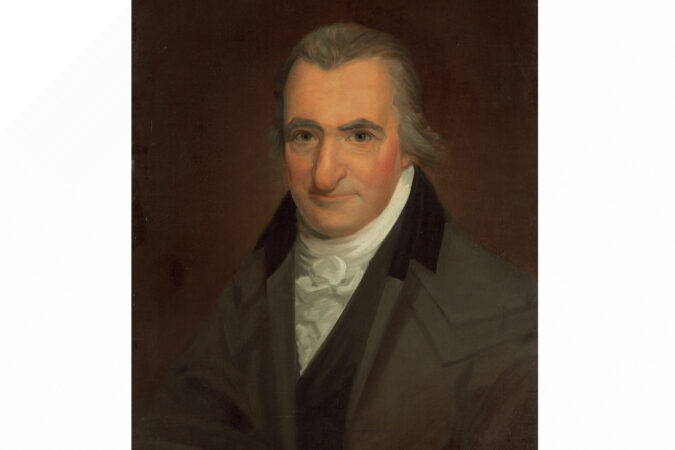
    NEW YORK — Some 250 years after Common Sense helped inspire the 13 colonies to declare independence, Thomas Paine might receive a long-anticipated tribute from his adopted country.

    A Paine memorial in Washington, D.C., authorized by a 2022 law, awaits approval from the U.S. Department of Interior. It would be the first landmark in the nation’s capital to be dedicated to one of the American Revolution’s most stirring, popular, and quotable advocates — who also was one of the most intensely debated men of his time.

    “He was a critical and singular voice,” said U.S. Rep. Jamie Raskin (D., Md.), a sponsor of the bill that backed the memorial. He said Paine has long been “underrecognized and overlooked.”

    Saturday marked the 250th anniversary of the publication of Paine’s Common Sense, among the first major milestones of a yearlong commemoration of the country’s founding and the signing of the Declaration of Independence in 1776.

    Paine supporters have waited decades for a memorial in the District of Columbia, and success is still not ensured: Federal memorials are initiated by Congress but usually built through private donations. In 1992, President George H.W. Bush signed bipartisan legislation for such a memorial, but the project was delayed, failed to attract adequate funding, and was essentially forgotten by the mid-2000s.

    The fate of the current legislation depends not just on financial support, but on President Donald Trump’s interior secretary, Doug Burgum.

    In September 2024, the memorial was recommended by the National Capital Memorial Advisory Commission for placement on the National Mall. Burgum needs to endorse the plan, which would be sent back to Congress for final enactment. If approved, the memorial would have a 2030 deadline for completion.

    A spokesperson for the department declined to comment when asked about the timing for a decision.

    “We are staying optimistic because we feel that Thomas Paine is such an important figure in the founding of the United States of America,” said Margaret Downey, president of the Thomas Paine Memorial Association, which has a mission to establish a memorial in Washington.

    A contentious legacy

    Scholars note that well into the 20th century, federal honors for Paine would have been nearly impossible. While Paine first made his name through Common Sense, the latter part of his life was defined by another pamphlet, The Age of Reason.

    Published in installments starting in 1794, it was a fierce attack against organized religion. Paine believed in God and a divinely created universe but accepted no single faith. He scorned what he described as the Bible’s “paltry stories” and said Christianity was “too absurd for belief, too impossible to convince, and too inconsistent for practice.”

    By the time of his death, in New York in 1809, he was estranged from friends and many of the surviving founders; only a handful of mourners attended his funeral. He has since been championed by everyone from labor leaders and communists to Thomas Edison, but presidents before Franklin Roosevelt in the 1930s rarely quoted him. Theodore Roosevelt referred to him as a “filthy little atheist.”

    There are Paine landmarks around the country, including a monument and museum in New Rochelle, N.Y., and a statue in Morristown, N.J. But other communities have resisted. In 1955, Mayor Walter H. Reynolds of Providence, R.I., rejected a proposed Paine statue, saying “he was and remains so controversial a character.”

    Harvey J. Kaye, author of Thomas Paine and the Promise of America, cites the election of Ronald Reagan as president in 1980 as a surprising turning point. Reagan’s victory was widely seen as a triumph for the modern conservative movement, but Reagan alarmed some Republicans and pleased Paine admirers during his acceptance speech at the Republican National Convention when he quoted Paine’s famous call to action: “We have it in our power to begin the world over again.”

    Reagan helped make Paine palatable to both parties, Kaye said. When Congress approved a memorial in 1992, supporters ranged from a liberal giant, Democratic Sen. Ted Kennedy of Massachusetts, to a right-wing hero, Republican Sen. Jesse Helms of North Carolina.

    “Reagan opened the door,” Kaye said.

    An immigrant who stoked the fire of revolution

    Paine’s story is very much American. He was a self-educated immigrant from Britain who departed for the colonies with little money but with hopes for a better life.

    He was born Thomas Pain in Thetford in 1737, some 90 miles outside of London. (He added the “e” to his last name after arriving in America.) Paine was on the move for much of his early life. He spent just a few years in school before leaving at age 13 to work as an apprentice for his father, a corset maker. He would change jobs often, from teaching at a private academy to working as a government excise officer to running a tobacco shop.

    By the time he sailed to the New World in 1774, he was struggling with debt, had been married twice and had failed or made himself unwelcome in virtually every profession he entered. But Paine also had absorbed enough of London’s intellectual life to form radical ideas about government and religion and to meet Benjamin Franklin, who provided him a letter of introduction that helped him find work in Philadelphia as a contributor to the Pennsylvania Magazine.

    The Revolutionary War began in April 1775 and pamphlets helped frame the arguments, much as social media posts do today. The Philadelphia-based statesman and physician Benjamin Rush was impressed enough with Paine to suggest that he put forth his own thoughts. Paine had wanted to call his pamphlet Plain Truth, but agreed to Rush’s idea: Common Sense.

    Paine’s brief tract was credited to “an Englishman” and released on Jan. 10, 1776. Later expanded to 47 pages, it was a popular sensation. Historians differ over how many copies were sold, but Common Sense was widely shared, talked about, and read aloud.

    Paine’s urgent, accessible prose was credited for helping to shift public opinion from simply opposing British aggression to calling for a full break. His vision was radical, even compared to some of his fellow revolutionaries. In taking on the British and King George III, he did not just attack the actions of an individual king, but the very idea of hereditary rule and monarchy. He denounced both as “evil” and “exceedingly ridiculous.”

    “Of more worth is one honest man to society and in the sight of God, than all the crowned ruffians that ever lived,” he stated.

    A message that continues to resonate

    Historian Eric Foner would write that Paine’s appeal lasted through “his impatience with the past, his critical stance toward existing institutions, his belief that men can shape their own destiny.” But Common Sense was despised by British loyalists and challenged by some American leaders.

    John Adams would refer to Paine as a “star of disaster,” while Franklin worried about his “rude way of writing.” Meanwhile, George Washington valued Common Sense for its “sound doctrine” and ”unanswerable reasoning,” and Thomas Jefferson, soon to be the principal author of the Declaration of Independence, befriended Paine and later invited him to the White House when he was president.

    Paine’s message continues to be invoked by those on both sides of the political divide.

    In his 2025 year-end report on the federal judiciary, Supreme Court Chief Justice John Roberts began by citing the anniversary of Common Sense and praising Paine for “shunning legalese” as he articulated that “government’s purpose is to serve the people.” Last year, passages from Common Sense appeared often during the nationwide “No Kings” rallies against Trump’s policies.

    One demonstrator’s sign in Boston said, “No King! No Tyranny! It’s Common Sense.”
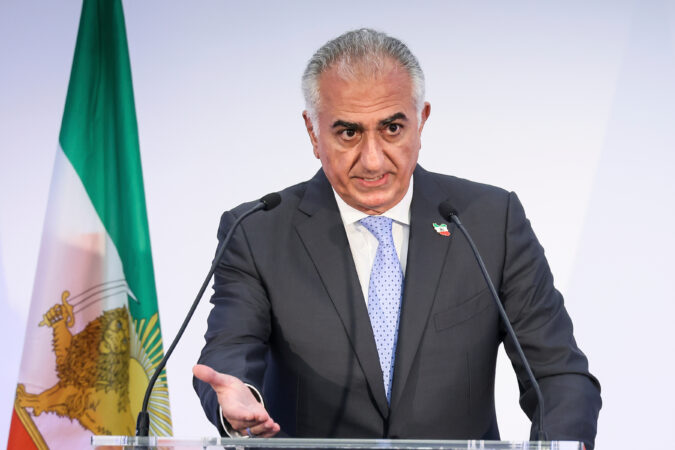
  • Iran’s exiled crown prince rises as a figure in protests, decades after leaving his homeland

    Iran’s exiled crown prince rises as a figure in protests, decades after leaving his homeland

    DUBAI, United Arab Emirates — He has been in exile for nearly 50 years. His father, Iran’s shah, was so widely hated that millions took to the streets in 1979, forcing him from power. Nevertheless, Iran’s Crown Prince Reza Pahlavi is trying to position himself as a player in his country’s future.

    Pahlavi successfully spurred protesters onto the streets Thursday night in a massive escalation of the protests sweeping Iran. Initially sparked by the Islamic Republic’s ailing economy, the demonstrations have become a serious challenge to its theocracy, battered by years of nationwide protests and a 12-day war in June launched by Israel that saw the U.S. bomb nuclear enrichment sites.

    What is unknown is how much real support the 65-year-old Pahlavi, who is in exile in the U.S., has in his homeland. Do protesters want a return of the Peacock Throne, as his father’s reign was known? Or are the protesters just looking for anything that is not Iran’s Shiite theocracy?

    Pahlavi issued calls, rebroadcast by Farsi-language satellite news channels and websites abroad, for Iranians to return to the streets Friday night, which they did. He has called for further demonstrations this weekend.

    “Over the past decade, Iran’s protest movement and dissident community have been increasingly nationalist in tone and tenor,” said Behnam Ben Taleblu, an Iran expert with the Washington-based Foundation for Defense of Democracies, which faces sanctions from Tehran.

    “The more the Islamic Republic has failed, the more it has emboldened its antithesis,” Taleblu said. ”The success of the crown prince and his team has been in drawing a sharp contrast between the normalcy of what was and the promise of what could be, versus the nightmare and present predicament that is the reality for so many Iranians.”

    Pahlavi’s profile rose again during U.S. President Donald Trump’s first term. Still, Trump and other world leaders have been hesitant to embrace him, given the many cautionary tales in the Middle East and elsewhere of Western governments putting their faith in exiles long estranged from their homelands.

    Iranian state media, which for years mocked Pahlavi as being out of touch and corrupt, blamed “monarchist terrorist elements” for the demonstrations Thursday night during which vehicles were burned and police kiosks attacked.

    Born into luxury

    Born Oct. 31, 1960, Pahlavi lived in a gilded world of luxury as the crown prince to Shah Mohammad Reza Pahlavi.

    Mohammed Reza had inherited the throne from his own father, an army officer who seized power with support from the British. Mohammed Reza’s rule was cemented by a 1953 CIA-backed coup, and he cooperated closely with the Americans, who sold the autocratic ruler billions of dollars worth of weapons and spied on the Soviet Union from Iran.

    The young Pahlavi was schooled at the eponymous Reza Pahlavi School, set up within the walls of Niavaran Palace in northern Tehran. A biographer of his father noted the crown prince once played rock music in the palace during a New Year’s Eve visit to Tehran by then-U.S. President Jimmy Carter.

    But the fall of the Peacock Throne loomed.

    While successfully riding rising oil prices in the 1970s, deep economic inequality set in during the shah’s rule and his feared SAVAK intelligence agency became notorious for the torture of dissidents.

    Millions across the country participated in protests against the shah, uniting secular leftists, labor unions, professionals, students, and Muslim clergy. As the crisis reached a fever pitch, the shah was doomed by his inability to act and poor decisions while secretly fighting terminal cancer.

    In 1978, Crown Prince Reza left his homeland for flight school at a U.S. air base in Texas. A year later, his father fled Iran during the onset of what became known as the Islamic Revolution. Shiite clerics squeezed out other anti-shah factions, establishing a new theocratic government that executed thousands after the revolution and to this day remains one of the world’s top executioners.

    After his father’s death, a royal court in exile announced that Reza Pahlavi assumed the role of the shah on Oct. 31, 1980, his 20th birthday.

    “I can understand and sympathize with your sufferings and your inner torment,” Pahlavi said, addressing Iranians in a speech at the time. “I shed the tears which you must hide. Yet there is, I am sure, light beyond the darkness. Deep in your hearts, you may be confident that this nightmare, like others in our history, will pass.”

    Years in exile

    But what followed has been nearly five decades in exile.

    Pahlavi attempted to gain influence abroad. In 1986, the Washington Post reported that the CIA supplied the prince’s allies “a miniaturized television transmitter for an 11-minute clandestine broadcast” to Iran by Pahlavi that pirated the signal of two stations in the Islamic Republic.

    “I will return and together we will pave the way for the nation’s happiness and prosperity through freedom,” Pahlavi reportedly said in the broadcast.

    That did not happen. Pahlavi largely lived abroad in the United States in Los Angeles and Washington, D.C., while his mother, the Shahbanu Farah Pahlavi, lived in Paris.

    Circles of diehard Iranian monarchists in exile have long touted dreams of the Pahlavi dynasty returning to power. But Pahlavi has been hampered in gaining wider appeal by a number of factors: bitter memories of his father’s rule; the perception that he and his family are out of touch with their homeland; and repression inside Iran that aims to silence any opposition sentiment.

    At the same time, younger generations in Iran born decades after the shah’s rule ended have grown up under a different experience: social restrictions and brutal suppression by the Islamic Republic and economic turmoil under international sanctions, corruption, and mismanagement.

    Pahlavi has sought to have a voice through social media videos, and Farsi-language news channels such as Iran International have highlighted his calls for protests. The channel also aired QR codes that led to information for security force members within Iran who want to cooperate with him.

    Mahmood Enayat, the general manager of Iran International’s owner Volant Media, said the channel ran Pahlavi’s ad and others “on a pro bono basis” as “part of our mission to support Iran’s civil society.”

    In interviews in recent years, Pahlavi has raised the idea of a constitutional monarchy, perhaps with an elected rather than a hereditary ruler. But he has also said it is up to Iranians to choose.

    “This regime is simply irreformable because the nature of it, its DNA, is such that it cannot,” Pahlavi told the Associated Press in 2017. “People have given up with the idea of reform and they think there has to be fundamental change. Now, how this change can occur is the big question.”

    He has also faced criticism for his support of and from Israel, particularly after the June war. Pahlavi traveled to Israel in 2023 and met Prime Minister Benjamin Netanyahu, a longtime hawk on Iran whose criticism of the 2015 Iran nuclear deal fueled Trump’s decision to withdraw America from the accord. Netanyahu also oversaw the 12-day war with Iran.

    “My focus right now is on liberating Iran, and I will find any means that I can, without compromising the national interests and independence, with anyone who is willing to give us a hand, whether it is the U.S. or the Saudis or the Israelis or whomever it is,” Pahlavi said in 2017.

  • Congress is debating possible consequences for ICE and Noem after Renee Good’s killing

    Congress is debating possible consequences for ICE and Noem after Renee Good’s killing

    WASHINGTON — The killing of a Minnesota woman by an Immigration and Customs Enforcement officer is reverberating across Capitol Hill where Democrats, and certain Republicans, are vowing an assertive response as President Donald Trump’s aggressive deportation operations spark protests nationwide.

    Lawmakers are demanding a range of actions, from a full investigation into Renee Good’s shooting death and policy changes over law enforcement raids to the defunding of ICE operations and the impeachment of Homeland Security Secretary Kristi Noem, in what is fast becoming an inflection point.

    “The situation that took place in Minnesota is a complete and total disgrace,” House Democratic leader Hakeem Jeffries of New York said as details emerged. “And in the next few days, we will be having conversations about a strong and forceful and appropriate response by House Democrats.”

    Yet there is almost no consensus among the political parties in the aftermath of the death of Good, who was behind the wheel of an SUV after dropping off her 6-year-old at school when she was shot and killed by an ICE officer.

    The killing immediately drew dueling narratives. Trump and Noem said the ICE officer acted in self-defense, while Democratic officials said the Trump administration was lying, and they urged the public to see the viral videos of the shooting for themselves.

    Vice President JD Vance blamed Good, calling it “a tragedy of her own making,” and said the ICE officer may have been “sensitive” from having been injured during an unrelated altercation last year.

    But Good’s killing, at least the fifth known death since the administration launched its mass deportation campaign, could change the political dynamic.

    “The videos I’ve seen from Minneapolis yesterday are deeply disturbing,” said Sen. Lisa Murkowski (R., Alaska) in a statement.

    “As we mourn this loss of life, we need a thorough and objective investigation into how and why this happened,” she said. As part of the investigation, she said she is calling for policy changes, saying the situation “was devastating, and cannot happen again.”

    Homeland Security funding is up for debate

    The push in Congress for more oversight and accountability of the administration’s immigration operations comes as lawmakers are in the midst of the annual appropriations process to fund agencies, including the Department of Homeland Security, to prevent another federal government shutdown when money expires at the end of January.

    As anti-ICE demonstrations erupt in cities in the aftermath of Good’s death, Democrats have pledged to use any available legislative lever to apply pressure on the administration to change the conduct of ICE officers.

    “We’ve been warning about this for an entire year,” said Rep. Maxwell Frost (D., Fla.).

    The ICE officer “needs to be held accountable,” Frost said, “but not just them, but ICE as a whole, the president and this entire administration.”

    Congressional Democrats saw Good’s killing as a sign of the need for aggressive action to restrain the administration’s tactics.

    Several Democrats joined calls to impeach Noem, who has been under fire from both parties for her lack of transparency at the department, though that step is highly unlikely with Republicans in control of Congress.

    Other Democrats want to restrict the funding for her department, whose budget was vastly increased as part of Republicans’ sweeping tax and spending bill passed last summer.

    Connecticut Sen. Chris Murphy, the top Democrat on the subcommittee that handles Homeland Security funding, plans to introduce legislation to rein in the agency with constraints on federal agents’ authority, including a requirement that the Border Patrol stick to the border and that DHS enforcement officers be unmasked.

    “More Democrats are saying today the thing that a number of us have been saying since April and May: Kristi Noem is dangerous. She should not be in office, and she should be impeached,” said Democratic Rep. Delia Ramirez, who represents parts of Chicago where ICE launched an enhanced immigration enforcement action last year that resulted in two deaths.

    Immigration debates have long divided Congress and the parties. Democrats splinter between more liberal and stricter attitudes toward newcomers to the United States. Republicans have embraced Trump’s hard-line approach to portray Democrats as radicals.

    The Republican administration had launched the enforcement operation in Minnesota in response to an investigation of the nonprofit Feeding Our Future. Prosecutors said the organization was at the center of the country’s largest COVID-19-related fraud scams, when defendants exploited a state-run, federally funded program intended to provide food for children.

    Heading into the November midterm election, which Democrats believe will hinge on issues such as affordability and healthcare, national outcry over ICE’s conduct has pressured lawmakers to speak out.

    “I’m not completely against deportations, but the way they’re handling it is a real disgrace,” said Rep. Vicente Gonzalez (D., Texas), who represents a district along the U.S.-Mexico border

    “Right now, you’re seeing humans treated like animals,” he said.

    Other ICE shootings have rattled lawmakers

    In September, a federal immigration enforcement agent in Chicago fatally shot Silverio Villegas Gonzalez during a brief altercation after Gonzalez had dropped off his children at school.

    In October, a Customs and Border Protection agent also in Chicago shot Marimar Martinez, a teacher and U.S. citizen, five times during a dispute with officers. The charges against Martinez brought by the administration were dismissed by a federal judge.

    To Rep. Chuy Garcia (D., Ill.), Good’s death “brought back heart-wrenching memories of those two shootings in my district.”

    “It looks like the fact that a US citizen, who is a white woman, may be opening the eyes of the American public, certainly of members of Congress, that what’s going on is out of control,” he said, “that this isn’t about apprehending or pursuing the most dangerous immigrants.”

    Republicans expressed some concern at the shooting but stood by the administration’s policy, defended the officer’s actions, and largely blamed Good for the standoff.

    “Nobody wants to see people get shot,” said Rep. Rich McCormick (R., Ga.).

    “Let’s do the right thing and just be reasonable. And the reasonable thing is not to obstruct ICE officers and then accelerate while they’re standing in front of your car,” he said. “She made a mistake. I’m sure she didn’t mean for that to happen, nor did he mean for that to happen.”

  • How the U.S. could take over Greenland and the potential challenges

    How the U.S. could take over Greenland and the potential challenges

    U.S. President Donald Trump wants to own Greenland. He has repeatedly said the United States must take control of the strategically located and mineral-rich island, which is a semiautonomous region that’s part of NATO ally Denmark.

    Officials from Denmark, Greenland, and the United States met Thursday in Washington and will meet again this week to discuss a renewed push by the White House, which is considering a range of options, including using military force, to acquire the island.

    Trump said Friday he is going to do “something on Greenland, whether they like it or not.”

    If it’s not done “the easy way, we’re going to do it the hard way,” he said without elaborating what that could entail. In an interview Thursday, he told the New York Times that he wants to own Greenland because “ownership gives you things and elements that you can’t get from just signing a document.”

    Greenland’s party leaders have rejected Trump’s repeated calls for the U.S. to take control of the island, saying that Greenland’s future must be decided by its people.

    “We don’t want to be Americans, we don’t want to be Danes, we want to be Greenlanders,” Greenland Prime Minister Jens-Frederik Nielsen and four party leaders said in a statement Friday night.

    “As Greenlandic party leaders, we would like to emphasize once again our wish that the United States’ contempt for our country ends,” the statement said.

    Danish Prime Minister Mette Frederiksen has warned that an American takeover of Greenland would mark the end of NATO.

    While Greenland is the largest island in the world, it has a population of around 57,000 and doesn’t have its own military. Defense is provided by Denmark, whose military is dwarfed by that of the U.S.

    It’s unclear how the remaining NATO members would respond if the U.S. decided to forcibly take control of the island or if they would come to Denmark’s aid.

    This is a look at some of the ways the U.S. could take control of Greenland and the potential challenges.

    Military action could alter global relations

    Trump and his officials have indicated they want to control Greenland to enhance American security and explore business and mining deals. But Imran Bayoumi, an associate director at the Atlantic Council’s Scowcroft Center for Strategy and Security, said the sudden focus on Greenland is also the result of decades of neglect by several U.S. presidents towards Washington’s position in the Arctic.

    The current fixation is partly down to “the realization we need to increase our presence in the Arctic, and we don’t yet have the right strategy or vision to do so,” he said.

    If the U.S. took control of Greenland by force, it would plunge NATO into a crisis, possibly an existential one.

    “If the United States chooses to attack another NATO country militarily, then everything stops,” Frederiksen has said.

    Trump said he needs control of the island to guarantee American security, citing the threat from Russian and Chinese ships in the region, but “it’s not true” said Lin Mortensgaard, an expert on the international politics of the Arctic at the Danish Institute for International Studies, or DIIS.

    While there are probably Russian submarines — as there are across the Arctic region — there are no surface vessels, Mortensgaard said. China has research vessels in the Central Arctic Ocean, and while the Chinese and Russian militaries have done joint military exercises in the Arctic, they have taken place closer to Alaska, she said.

    Bayoumi, of the Atlantic Council, said he doubted Trump would take control of Greenland by force because it’s unpopular with both Democratic and Republican lawmakers, and would likely “fundamentally alter” U.S. relationships with allies worldwide.

    The U.S. already has access to Greenland under a 1951 defense agreement, and Denmark and Greenland would be “quite happy” to accommodate a beefed-up American military presence, Mortensgaard said.

    For that reason, “blowing up the NATO alliance” for something Trump has already, doesn’t make sense, said Ulrik Pram Gad, an expert on Greenland at DIIS.

    Bilateral agreements may assist effort

    U.S. Secretary of State Marco Rubio told a select group of U.S. lawmakers this week that it was the Republican administration’s intention to eventually purchase Greenland, as opposed to using military force. Danish and Greenlandic officials have previously said the island isn’t for sale.

    It’s not clear how much buying the island could cost, or if the U.S. would be buying it from Denmark or Greenland.

    Washington also could boost its military presence in Greenland “through cooperation and diplomacy,” without taking it over, Bayoumi said.

    One option could be for the U.S. to get a veto over security decisions made by the Greenlandic government, as it has in islands in the Pacific Ocean, Gad said.

    Palau, Micronesia, and the Marshall Islands have a Compact of Free Association, or COFA, with the U.S.

    That would give Washington the right to operate military bases and make decisions about the islands’ security in exchange for U.S. security guarantees and around $7 billion of yearly economic assistance, according to the Congressional Research Service.

    It’s not clear how much that would improve upon Washington’s current security strategy. The U.S. already operates the remote Pituffik Space Base in northwestern Greenland, and can bring in as many troops as it wants under existing agreements.

    Influence operations expected to fail

    Greenlandic politician Aaja Chemnitz told the Associated Press that Greenlanders want more rights, including independence, but don’t want to become part of the U.S.

    Gad suggested influence operations to persuade Greenlanders to join the U.S. would likely fail. He said that is because the community on the island is small and the language is “inaccessible.”

    Danish Foreign Minister Lars Løkke Rasmussen summoned the top U.S. official in Denmark in August to complain that “foreign actors” were seeking to influence the country’s future. Danish media reported that at least three people with connections to Trump carried out covert influence operations in Greenland.

    Even if the U.S. managed to take control of Greenland, it would likely come with a large bill, Gad said. That’s because Greenlanders currently have Danish citizenship and access to the Danish welfare system, including free healthcare and schooling.

    To match that, “Trump would have to build a welfare state for Greenlanders that he doesn’t want for his own citizens,” Gad said.

    Disagreement unlikely to be resolved

    Since 1945, the American military presence in Greenland has decreased from thousands of soldiers over 17 bases and installations to 200 troops at the remote Pituffik Space Base in the northwest of the island, Rasmussen said last year. The base supports missile warning, missile defense, and space surveillance operations for the U.S. and NATO.

    U.S. Vice President JD Vance told Fox News on Thursday that Denmark has neglected its missile defense obligations in Greenland, but Mortensgaard said that it makes “little sense to criticize Denmark,” because the main reason the U.S. operates the Pituffik base in the north of the island is to provide early detection of missiles.

    The best outcome for Denmark would be to update the defense agreement, which allows the U.S. to have a military presence on the island, and have Trump sign it with a “gold-plated signature,” Gad said.

    But he suggested that’s unlikely because Greenland is “handy” to the U.S president.

    When Trump wants to change the news agenda — including distracting from domestic political problems — “he can just say the word ‘Greenland’ and this starts all over again,” Gad said.

  • Washington National Opera is moving out of the Kennedy Center

    Washington National Opera is moving out of the Kennedy Center

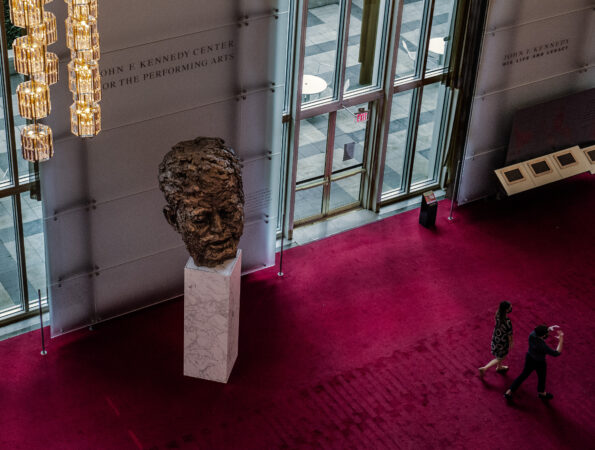
    The Washington National Opera announced Friday that it plans to leave the John F. Kennedy Center for the Performing Arts, its longtime home, a stunning move that follows reports of declining ticket sales for the 70-year-old organization amid upheaval at the center since President Donald Trump’s takeover.

    The opera said in a statement that it would “seek an amicable early termination of its affiliation agreement with the Kennedy Center” and “resume operations as a fully independent nonprofit entity.”

    After the opera’s announcement, the Kennedy Center claimed it had ended the relationship.

    “After careful consideration, we have made the difficult decision to part ways with the WNO due to a financially challenging relationship,” a spokesperson wrote in a statement. “We believe this represents the best path forward for both organizations and enables us to make responsible choices that support the financial stability and long-term future of the Trump Kennedy Center.”

    But a person familiar with the situation, who spoke on the condition of anonymity because they were not authorized to represent either party, told the Washington Post that the choice was “definitely a WNO decision” and that there was consensus to leave, “but it’s with great regret.”

    There had been concerns since Kennedy Center board chairperson David M. Rubenstein was removed in February and Trump became chairperson, the person said, but the board’s vote to change the name to the Trump Kennedy Center last month spurred the WNO’s decision to leave.

    The opera said in its statement that the decision was driven by the elimination or reduction of support previously provided by the Kennedy Center, as well as changes to the center’s business model, which now require productions to be fully funded in advance — a shift the WNO called incompatible with how opera companies operate.

    “Opera companies typically cover only 30-60% of costs through ticket sales, with the remainder from grants and donations that cannot be secured years ahead when productions must be planned,” the statement read.

    It also added that the new model conflicts with the opera’s artistic mission of balancing popular titles with lesser-known works to serve diverse audiences.

    Francesca Zambello, the opera’s artistic director for 14 seasons, told the Post she was “deeply saddened” to leave the Kennedy Center.

    “I have been proud to be affiliated with a national monument to the human spirit, a place that has long served as an inviting home for our ever-growing family of artists and opera lovers,” she wrote in an email. “In the coming years, as we explore new venues and new ways of performing, WNO remains committed to its mission and artistic vision.”

    To stay on solid financial footing, the opera said, it planned to cut back its spring season and relocate performances to new venues, which will be announced in the coming weeks.

    News of the departure was first reported by the New York Times.

    The person familiar with the situation stressed that the center is the “vision and dream of those who brought themselves out of the darkness of the assassination of a young president.”

    “There are an awful lot of people that are offended that the official memorial to President John F. Kennedy is being manipulated,” they added. “It is not personal to any one president. You just can’t do that.”

    They also said that the move came partly in response to criticism by the new Kennedy Center leadership of the previous management’s financial stewardship. “Frankly, to say that the Kennedy Center was in financial ruin under the predecessor to the current regime is fake,” the person said.

    Describing the opera’s circumstances since Trump’s takeover, the person said the company has seen dropping attendance, a decline in donor contributions, and, especially after the name change, increasing numbers of opera singers and artists who are refusing to perform at the Kennedy Center. “A lot of it really is: You can’t get the artists, you can’t get the ticket sales, you’re not going to be able to get the support under this.”

    Declines in ticket sales became apparent in the first few months after Trump’s takeover, the Post reported in June. Revenue generated from Washington National Opera subscriptions had fallen 15%, year over year, through the first 10 weeks of its campaign.

    A Post analysis in October showed that ticket sales had declined across several genres at the Kennedy Center’s major theaters, a drop that current and former staffers attributed to audiences feeling repelled by Trump’s takeover.

    Zambello had told the Guardian in November that the turmoil was leading the opera to consider moving out of the building. (At the time, the opera’s board chairperson denied plans to leave.) Budget constraints had delayed the opera’s 2026-2027 season planning, a person familiar with the organization told the Post last month.

    Another round of artists and performers has canceled shows at the Kennedy Center since its board, installed by Trump early last year, voted in December to add his name to the center. It was on the building’s exterior signage the following day.

  • Protests in Iran near 2-week mark as authorities intensify crackdown on demonstrators

    Protests in Iran near 2-week mark as authorities intensify crackdown on demonstrators

    DUBAI, United Arab Emirates — Protests sweeping across Iran neared the two-week mark Saturday, with the country’s government acknowledging the ongoing demonstrations despite an intensifying crackdown and as the Islamic Republic remains cut off from the rest of the world.

    With the internet down in Iran and phone lines cut off, gauging the demonstrations from abroad has grown more difficult. But the death toll in the protests has grown to at least 72 people killed and over 2,300 others detained, according to the U.S.-based Human Rights Activists News Agency. Iranian state TV is reporting on security force casualties while portraying control over the nation.

    Supreme Leader Ayatollah Ali Khamenei has signaled a coming clampdown, despite U.S. warnings. Tehran escalated its threats Saturday, with Iran’s attorney general, Mohammad Movahedi Azad, warning that anyone taking part in protests will be considered an “enemy of God,” a death-penalty charge. The statement carried by Iranian state television said even those who “helped rioters” would face the charge.

    “Prosecutors must carefully and without delay, by issuing indictments, prepare the grounds for the trial and decisive confrontation with those who, by betraying the nation and creating insecurity, seek foreign domination over the country,” the statement read. “Proceedings must be conducted without leniency, compassion or indulgence.”

    U.S. Secretary of State Marco Rubio offered support for the protesters.

    “The United States supports the brave people of Iran,” Rubio wrote Saturday on the social platform X. The State Department separately warned: “Do not play games with President Trump. When he says he’ll do something, he means it.”

    State TV split-screen highlights challenge

    Saturday marks the start of the work week in Iran, but many schools and universities reportedly held online classes, Iranian state TV reported. Internal Iranian government websites are believed to be functioning.

    State TV repeatedly played a driving, martial orchestral arrangement from the Epic of Khorramshahr by Iranian composer Majid Entezami, while showing pro-government demonstrations. The song, aired repeatedly during the 12-day war launched by Israel, honors Iran’s 1982 liberation of the city of Khorramshahr during the Iran-Iraq war. It has been used in videos of protesting women cutting away their hair to protest the 2022 death of Mahsa Amini as well.

    It also repeatedly aired video of purported protesters shooting at security forces with firearms.

    “Field reports indicate that peace prevailed in most cities of the country at night,” a state TV anchor reported Saturday morning. “After a number of armed terrorists attacked public places and set fire to people’s private property last night, there was no news of any gathering or chaos in Tehran and most provinces last night.”

    That was directly contradicted by an online video verified by the Associated Press that showed demonstrations in northern Tehran’s Saadat Abad area, with what appeared to be thousands on the street.

    “Death to Khamenei!” a man chanted.

    The semiofficial Fars news agency, believed to be close to Iran’s paramilitary Revolutionary Guard and one of the few media outlets able to publish to the outside world, released surveillance camera footage that it said came from demonstrations in Isfahan. In it, a protester appeared to fire a long gun, while others set fires and threw gasoline bombs at what appeared to be a government compound.

    The Young Journalists’ Club, associated with state TV, reported that protesters killed three members of the Guard’s all-volunteer Basij force in the city of Gachsaran. It also reported a security official was stabbed to death in Hamadan province, a police officer killed in the port city of Bandar Abbas, and another in Gilan, as well as one person slain in Mashhad.

    The semiofficial Tasnim news agency, also close to the Guard, claimed authorities detained nearly 200 people belonging to what it described as “operational terrorist teams.” It alleged those arrested had weapons including firearms, grenades, and gasoline bombs.

    State television also aired footage of a funeral service attended by hundreds in Qom, a Shiite seminary city just south of Tehran.

    More weekend demonstrations planned

    Iran’s theocracy cut off the nation from the internet and international telephone calls on Thursday, though it allowed some state-owned and semiofficial media to publish. Qatar’s state-funded Al Jazeera news network reported live from Iran, but they appeared to be the only major foreign outlet able to work.

    Iran’s exiled Crown Prince Reza Pahlavi, who called for protests Thursday and Friday, asked in his latest message for demonstrators to take to the streets Saturday and Sunday. He urged protesters to carry Iran’s old lion-and-sun flag and other national symbols used during the time of the shah to “claim public spaces as your own.”

    Pahlavi’s support of and from Israel has drawn criticism in the past — particularly after the 12-day war. Demonstrators have shouted in support of the shah in some protests, but it isn’t clear whether that’s support for Pahlavi himself or a desire to return to a time before the 1979 Islamic Revolution.

    Online video purported to show protests ongoing Saturday night as well.

    The demonstrations began Dec. 28 over the collapse of the Iranian rial currency, which trades at over 1.4 million to $1, as the country’s economy is squeezed by international sanctions in part levied over its nuclear program. The protests intensified and grew into calls directly challenging Iran’s theocracy.

    Airlines have canceled some flights into Iran over the demonstrations. Austrian Airlines said Saturday it had decided to suspend its flights to Iran “as a precautionary measure” through Monday. Turkish Airlines earlier announced the cancellation of 17 flights to three cities in Iran.

    Meanwhile, concern is growing that the internet shutdown will allow Iran’s security forces to go on a bloody crackdown, as they have in other rounds of demonstrations. Ali Rahmani, the son of Nobel Peace Prize laureate Narges Mohammadi, who is imprisoned in Iran, noted that security forces killed hundreds in a 2019 protest “so we can only fear the worst.”

    “They are fighting, and losing their lives, against a dictatorial regime,” Rahmani said.

  • Trump pushes a 1-year, 10% cap on credit card interest rates and banks balk

    Trump pushes a 1-year, 10% cap on credit card interest rates and banks balk

    NEW YORK — Reviving a campaign pledge, President Donald Trump wants a one-year, 10% cap on credit card interest rates, a move that could save Americans tens of billions of dollars but drew immediate opposition from an industry that has been in his corner.

    Trump was not clear in his social media post Friday night whether a cap might take effect through executive action or legislation, though one Republican senator said he had spoken with the president and would work on a bill with his “full support.” Trump said he hoped it would be in place by Jan. 20, one year after he took office.

    Strong opposition is certain from Wall Street and the credit card companies, which donated heavily to his 2024 campaign and to support his second-term agenda.

    “We will no longer let the American Public be ripped off by Credit Card Companies that are charging Interest Rates of 20 to 30%,” Trump wrote on his Truth Social platform.

    Researchers who studied Trump’s campaign pledge after it was first announced found that Americans would save roughly $100 billion in interest a year if credit card rates were capped at 10%. The same researchers found that while the credit card industry would take a major hit, it would still be profitable, although credit card rewards and other perks might be scaled back.

    Americans are paying, on average, between 19.65% and 21.5% in interest on credit cards according to the Federal Reserve and other industry tracking sources. That has come down in the past year as the central bank lowered benchmark rates, but is near the highs since federal regulators started tracking credit card rates in the mid-1990s.

    The Republican administration has proved particularly friendly until now to the credit card industry.

    Capital One got little resistance from the White House when it finalized its purchase and merger with Discover Financial in early 2025, a deal that created the nation’s largest credit card company. The Consumer Financial Protection Bureau, which is largely tasked with going after credit card companies for alleged wrongdoing, has been largely nonfunctional since Trump took office.

    In a joint statement, the banking industry was opposed to Trump’s proposal.

    “If enacted, this cap would only drive consumers toward less regulated, more costly alternatives,” the American Bankers Association and allied groups said.

    The White House did not respond to questions about how the president seeks to cap the rate or whether he has spoken with credit card companies about the idea.

    Sen. Roger Marshall (R., Kan.), who said he talked with Trump on Friday night, said the effort is meant to “lower costs for American families and to rein in greedy credit card companies who have been ripping off hardworking Americans for too long.”

    Legislation in both the House and the Senate would do what Trump is seeking.

    Sens. Bernie Sanders (I., Vt.) and Josh Hawley (R., Mo.) released a plan in February that would immediately cap interest rates at 10% for five years, hoping to use Trump’s campaign promise to build momentum for their measure.

    Hours before Trump’s post, Sanders said that the president, rather than working to cap interest rates, had taken steps to deregulate big banks that allowed them to charge much higher credit card fees.

    Reps. Alexandria Ocasio-Cortez (D., N.Y.) and Anna Paulina Luna (R., Fla.) have proposed similar legislation. Ocasio-Cortez is a frequent political target of Trump, while Luna is a close ally of the president.

  • Venezuelan politics are a ‘blood sport.’ The U.S. is entering the ring.

    Venezuelan politics are a ‘blood sport.’ The U.S. is entering the ring.

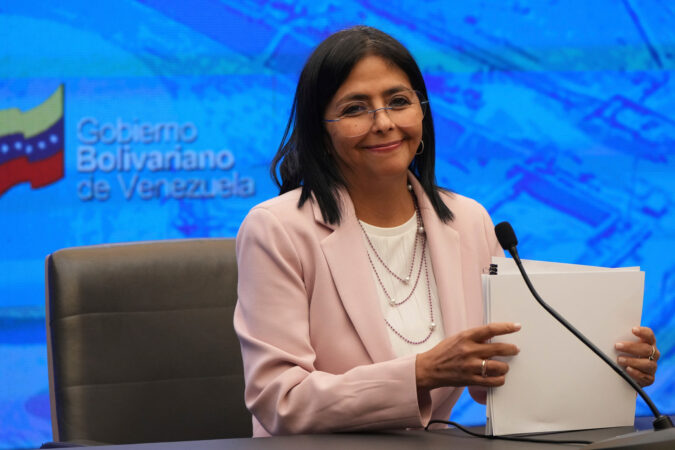
    The day after U.S. special operations forces swept into Caracas, the new Venezuelan president assembled her cabinet members around a large wooden table at the Miraflores Palace. Behind Delcy Rodríguez were large pictures of the country’s fallen leaders: Hugo Chávez, dead of cancer in 2013, and Nicolás Maduro and his wife, Cilia Flores, now jailed in New York on drug-trafficking charges.

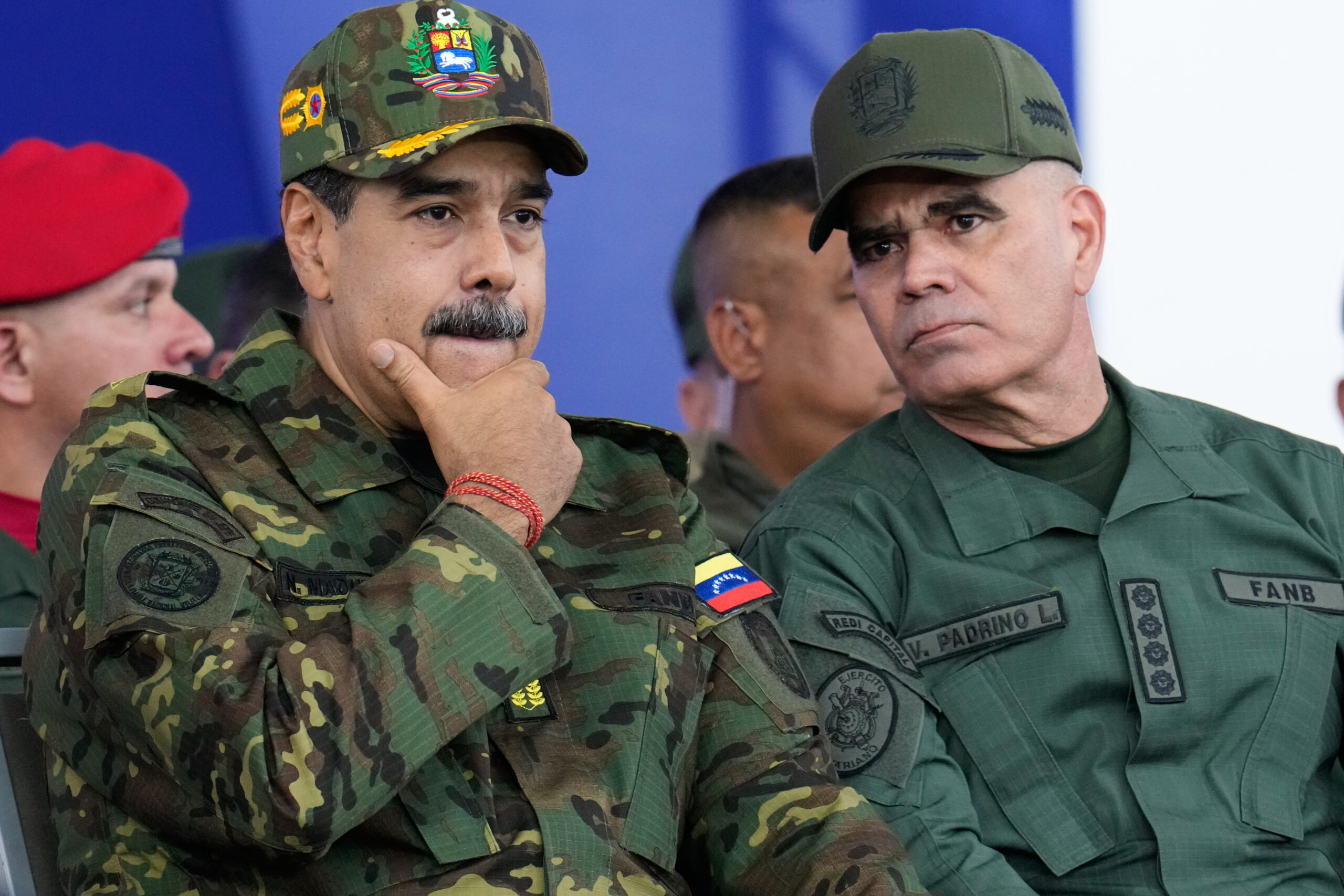
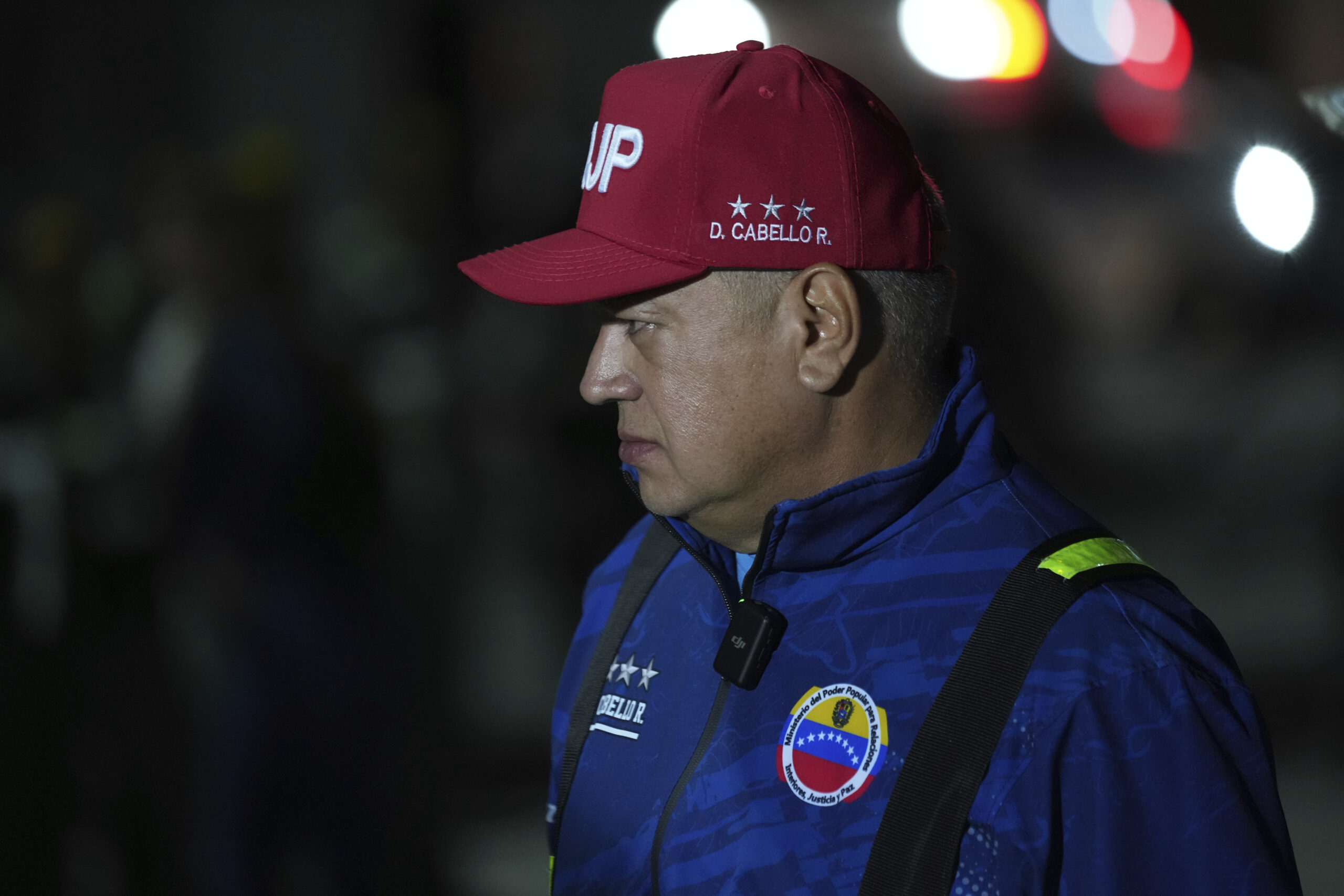
    Seated on either side of Rodríguez, at the head of the table, were the powers that remained. One was Vladimir Padrino López, the defense minister, dressed in military camouflage. The other was Diosdado Cabello, the interior minister. He wore a scowl and a hat that said, “To doubt is treason.”

    Both men hold far more power than their titles suggest, analysts say. Stalwarts of the Maduro regime — one U.S. investigators say is built on patronage and fueled by criminal proceeds — they control Venezuela’s expansive security state and much of its commercial activity.

    Since Maduro’s capture and arrest Saturday, public attention has focused on Rodríguez and whether she will accede to White House demands to open up Venezuela’s vast natural resources to American industry. But the newly installed president — alongside her brother Jorge, president of the Venezuelan National Assembly — represents only the political sphere.

    The country’s other power centers, according to scholars, Venezuelan researchers, and current and former U.S. officials, are commanded by Padrino López and Cabello — hard-line, old-school Chavistas who came of ideological age in the socialist movement and accrued significant power and wealth through continued loyalty to the cause.

    Using connections and intimidation, researchers say, the men have repeatedly helped Maduro survive periods of crisis and tighten his authoritarian grip. First in 2019, when much of the world united behind opposition leader Juan Guaidó’s bid to supplant Maduro. And then again in summer 2024, when electoral tallies made clear that Maduro had lost the presidential election.

    Now Padrino López and Cabello, both of whom are wanted by U.S. authorities on drug-trafficking allegations, will help to decide the future of Chavismo — and the nation. Their continued presence magnifies the complexity of the challenge faced by American negotiators as they seek to bypass war and regime change and find common ground with members of a besieged government riven by internal divisions.

    Venezuelan President Nicolás Maduro (left) listens to Defense Minister Vladimir Padrino López during a government-organized civic-military march on Nov. 25, 2025, in Caracas.

    “There are three centers of power,” said a former senior official with the U.S. State Department, who like others in this story spoke on the condition of anonymity to discuss sensitive matters. “And Delcy is going to find out pretty quickly that she can’t provide everything that the Americans want.”

    The Washington Post was unable to reach Padrino López and Cabello for comment. The communications office of the Venezuelan government did not respond to a request for comment.

    President Donald Trump has said the United States is “in charge” of Venezuela, while Secretary of State Marco Rubio has suggested a less direct role, saying the U.S. will use its ongoing oil blockade and other economic measures to make Caracas do its bidding.

    Venezuelan Interior Minister Diosdado Cabello attends the arrival of migrants deported from the United States at Simon Bolivar International Airport in Maiquetia, Venezuela, on Feb. 10, 2025.

    Analysts expressed concern that Washington doesn’t fully understand the factional, internecine political system it now seeks to control — a maze of overlapping loyalties, family ties and competing interests. Several pointed to Cabello — a feared figure who hosts a weekly talk show called Bringing the Hammer — as the wild card.

    One Venezuelan adviser close to Rodríguez’s government said he was central to maintaining unity. “In times of crisis, his role is not conciliatory, but rather one of maintaining order,” the adviser said. “Delcy governs; Diosdado ensures that power does not slip away.”

    But others worry about what he was capable of. At his disposal, according to researchers and U.S. officials, were not only the police and intelligence services, but also the “colectivos,” a pro-government militia embedded throughout society, whose members speed around the streets on motorcycles, armed and masked.

    “Cabello is a brutal, repressive figure in the regime, but he’s not stupid,” said Geoff Ramsey of the Atlantic Council. “He knows his survival depends on threatening to burn down the country, unless his interests are taken care of.”

    “Politics in Venezuela,” he added, “is a ruthless blood sport.”

    Power at all costs

    How the state built by Chávez went from a hierarchal system built around a single charismatic leader to a hotbed of competing factions is, to some degree, a story of Maduro’s own political failings.

    “Chávez was a leftist military man and very charismatic and happened to rule Venezuela during an oil boom, so he had a lot of resources to do a lot of things,” said David Smilde, a sociologist at Tulane University who researches Chavismo. “And with the exception of being a leftist, Maduro is none of those things — not charismatic, not a military man, and he has no oil boom.”

    After narrowly winning the presidential election to succeed Chávez in 2013, Maduro appeared to recognize what he lacked and set out to defend his hold on power not through political persuasion, but by restricting freedoms and empowering — and enriching — the armed forces.

    In February 2016, he put the mining sector in the hands of the military. A few months later, he gave it control over the distribution of basic goods. Another decree shortly afterward put the nation’s ports under its purview. Padrino López, who rose to defense minister in October 2014, became more powerful with each move, researchers said, pioneering new kickback schemes that kept the military loyal to him and indebted to the regime.

    “The military became its own branch of power,” said Carolina Jiménez Sandoval, the Venezuelan president of the Washington Office on Latin America. “I don’t think the United States understands the extent to which the military is ingrained into the politics and economy, both formally and informally.”

    The military also began to profit from illicit revenue streams, American authorities contend. In March 2020, federal prosecutors in the U.S. District Court of the Southern District of Florida filed charges against Padrino López and Cabello for using their roles to facilitate and abet Venezuelan drug trafficking and “flood” the United States with cocaine.

    The U.S. government announced significant bounties for both men — $15 million for Padrino López and $25 million for Cabello.

    Over time, Maduro came to be seen less as the ultimate authority in the country and more as an arbiter between competing powers that had little in common, said Roberto Deniz, a Venezuelan investigative journalist.

    “It’s not just an authoritarian regime,” he said. “It’s an authoritarian regime with a kleptocratic structure in which there are numerous heads, and each one acts as its own fiefdom.”

    “It doesn’t matter if the economy is good or bad, if human rights are respected or not,” he added. “The goal is to preserve power.”

    ‘The black sheep’

    Cabello, who describes himself online as a “revolutionary” and “radical Chavista,” is seen by observers as a particularly unpredictable figure. He participated in Chávez’s failed coup attempt in 1992 and spent the next two years in prison. After Chávez won the presidency through the ballot box, Cabello served as vice president, helping him stave off an attempted coup in 2002, and then as interior minister, a role where he developed deeper ties with the internal security and intelligence forces.

    At the time of Chávez’s cancer diagnosis, he was seen as the second most important revolutionary and a direct rival to Maduro, then the vice president, in the line of succession. After Chávez selected Maduro as his heir, he moved to sideline Cabello, only bringing him back into his cabinet shortly after his apparent electoral loss in 2024.

    “Cabello has been the black sheep in the ruling party,” Ramsey said. “But Maduro found it impossible to rule without his knack for repression and his proximity to the intelligence apparatus.”

    His family’s influence spans the nation. Alexis Rodríguez Cabello, a first cousin, is in charge of the Venezuelan intelligence service and posts frequent homages to Cabello on social media. His brother, José David Cabello, is in charge of the powerful customs and taxation ministry, granting him control over duties at borders and ports. His wife Marleny Contreras, a current member of the national assembly, has been the minister of both tourism and public works.

    The Post was unable to reach Cabello’s family members for comment.

    “Diosdado never stopped being a powerful actor, even when he seemed demoted,” Deniz said.

    And he has “ascended rapidly” since his formal return to government, added Rafael Uzcátegui, the former director of Provea, a prominent Caracas nongovernmental organization — “at the cost of Rodríguez.”

    Uzcátegui saw a narrow path forward for brokering an agreement between Venezuela’s rival power centers that would enable cooperation with U.S. officials and avert a wider conflict.

    “It’s much easier to negotiate with a malandro than a religious fanatic,” he said, using a word that most closely translates to “hustler.” “And the Diosdado Cabello and Padrino López factions are most motivated by material incentive.”

    But there have been worrying early signs, most notably from the informal militias that answer to Cabello.

    The colectivos have fanned out across Caracas. Ordinarily, they carry small arms to intimidate dissenters, but they have been seen with larger weapons in recent days, including assault rifles. They have set up checkpoints, forcing residents to turn over their phones and searching them for messages that could be seen as supportive of the U.S.

    Security forces also have arrested civilians and detained members of the media.

    “Diosdado Cabello could be the spoiler,” said the former senior U.S. diplomat. “It’s a pretty rough start for what is the same regime, but a different management.”

  • The data center rebellion is here, and it’s reshaping the political landscape

    The data center rebellion is here, and it’s reshaping the political landscape

    SAND SPRINGS, Okla. — One float stood out among the tinsel and holiday cheer at the annual Christmas parade here: an unsightly data center with blinding industrial lights and smoke pouring out of its roof, towering menacingly over a helpless gingerbread house.

    This city bordering Tulsa is a battleground, one of many across the country where companies seeking to build massive data centers to win the AI race with China are coming up against the reality of local politics.

    Sand Springs leaders were besieged with community anger after annexing an 827-acre agricultural property miles outside of town and launching into secret talks with a tech giant looking to use it for a sprawling data center. Hundreds of aggrieved voters showed up at community meetings. Swarms of protest signs are taking root along the rural roads.

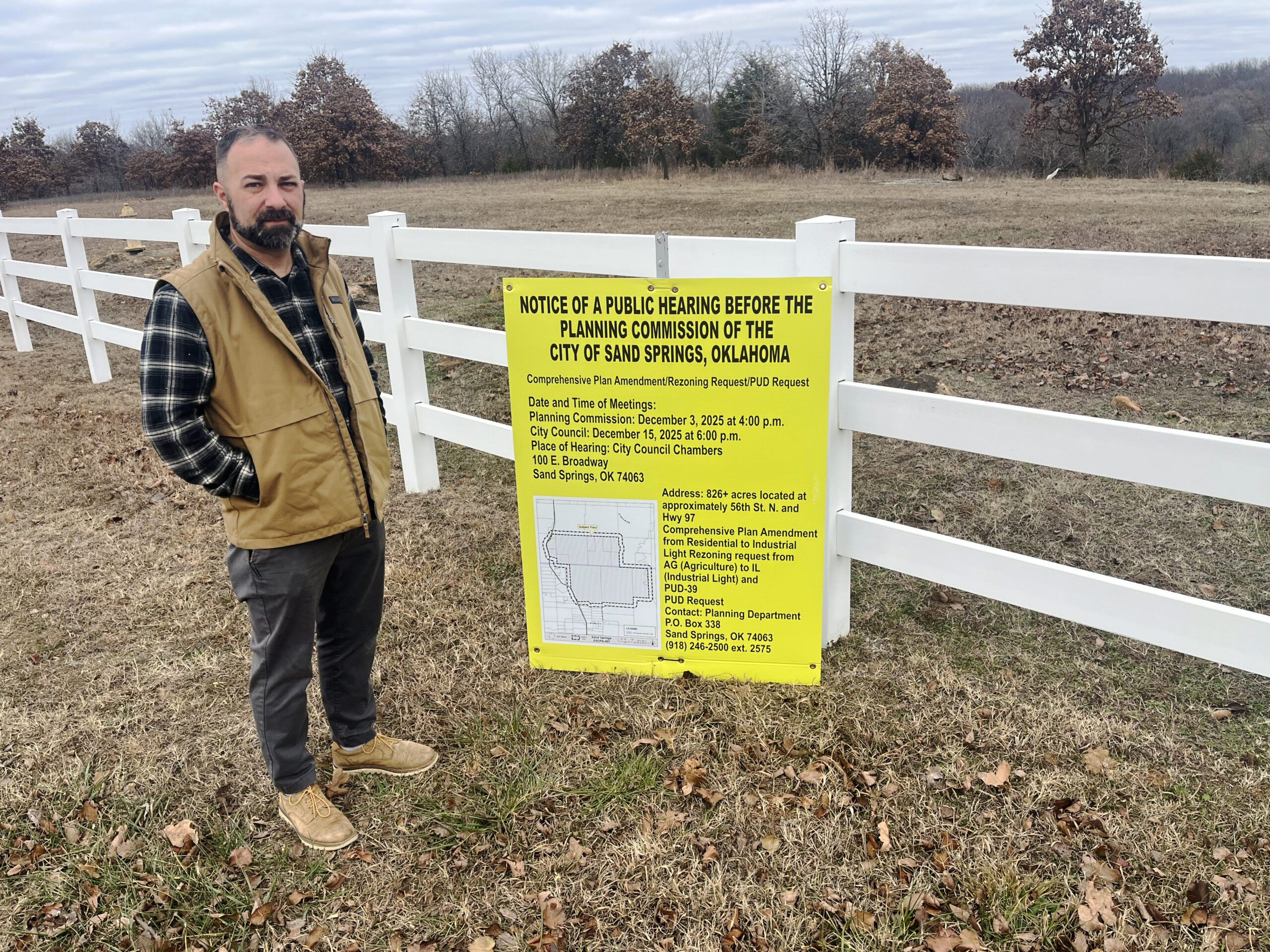
    “It feels like these data center companies have just put a big target on our backs,” said Kyle Schmidt, leader of the newly formed Protect Sand Springs Alliance. “We are all asking: Where are the people we elected who promised to protect us from these big corporations trying to steamroll us? The people who are supposed to be standing up and protecting us are standing down and caving.”

    Kyle Schmidt, president of the advocacy group Protect Sand Springs, at the property city officials have annexed near his home.

    From Archbald, Pa., to Page, Ariz., tech firms are seeking to plunk down data centers in locations that sometimes are not zoned for such heavy industrial uses, within communities that had not planned for them. These supersize data centers can use more energy than entire cities and drain local water supplies.

    Anger over the perceived trampling of communities by Silicon Valley has entered the national political conversation and could affect voters of all political persuasions in this year’s midterm elections.

    Many of the residents fighting the project in Sand Springs voted for Trump three times and also backed Gov. J. Kevin Stitt, a Republican who implores tech firms to build in his state.

    “We know Trump wants data centers and Kevin Stitt wants data centers, but these things don’t affect these people,” said Brian Ingram, a Trump voter living in the shadow of the planned project. “You know, this affects us.”

    Ingram was standing before a homemade sign he planted on his front lawn that said, “Jesus Was Born on Ag Land.”

    The grassroots blowback comes from deep red states as much as from left-wing groups such as the Democratic Socialists of America, which have helped draw hundreds of residents to hearings in Arizona, Indiana, and Maryland.

    Even Energy Secretary Chris Wright warned data center developers that they are losing control of the narrative. “In rural America right now, where data centers are being built, everyone’s already angry because their electricity prices have risen a lot,” he told energy executives assembled in Washington for the North American Gas Forum last month. “‘I don’t want them in my state’ is a common viewpoint.”

    Some industry groups argue that residents’ concerns are misplaced.

    “Fueled by misinformation, driven by radical environmental policies, communities are missing out on the jobs, security, and opportunities this technology is delivering,” said an email from Brian O. Walsh, executive director of the AI Infrastructure Coalition. The group says the projects lower electricity prices, a claim that is hotly disputed.

    The White House frames the data center boom as beneficial, saying in a statement that it will lead to big investments in infrastructure and boost manufacturing. But the administration is also aware some communities oppose them.

    “Communities know what’s best for them, and the Administration is clear that local infrastructure decisions remain with states and localities,” the statement said.

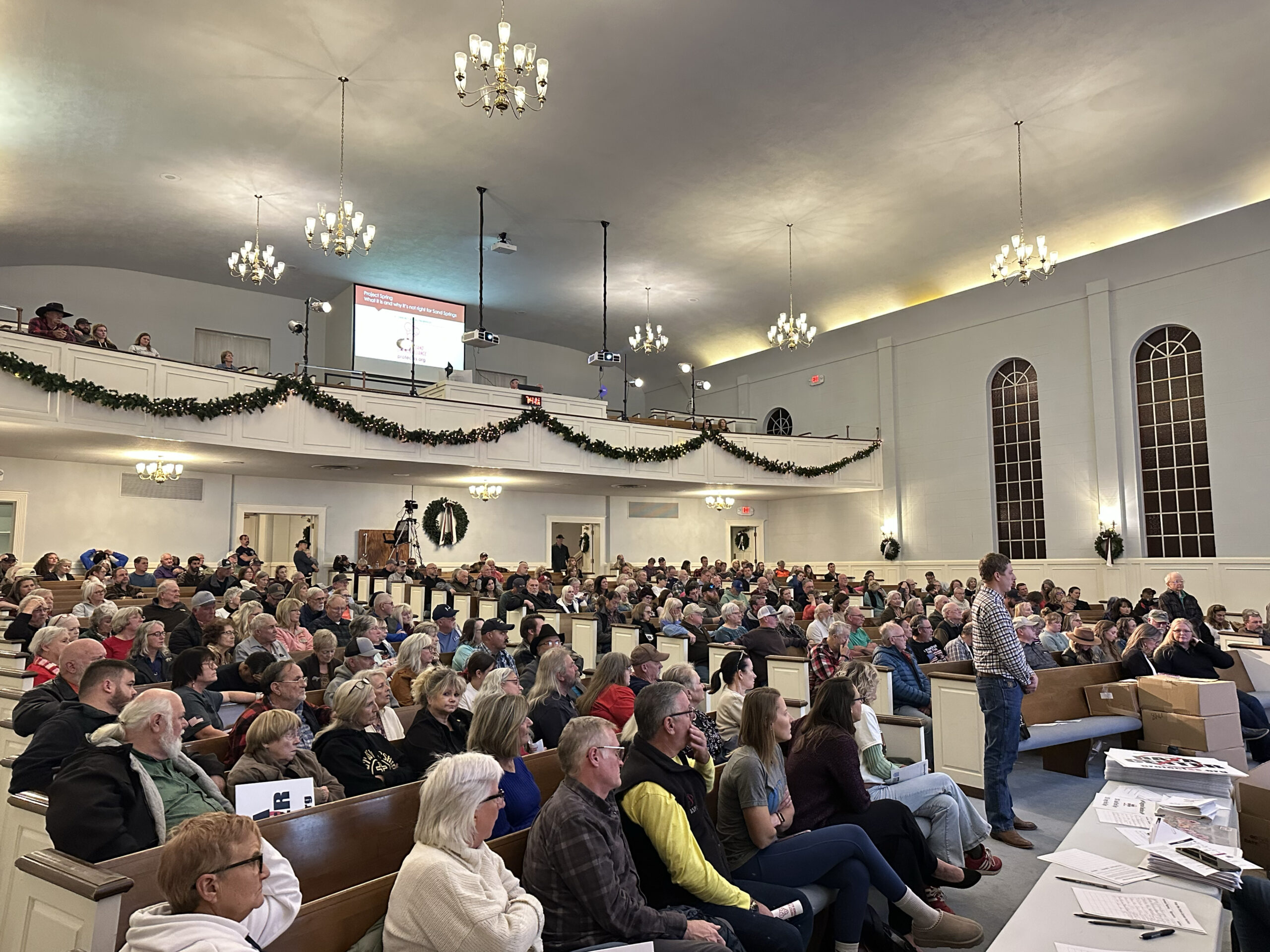
    Residents who attended a community meeting held near the land Sand Springs annexed were overwhelmingly against the proposed data center project.

    Many local politicians are yielding to community pressure and rejecting data centers. Between April and June, more projects were blocked or delayed than during the previous two years combined, according to Data Center Watch, a tracking project by the nonpartisan research firm 10a Labs. Some $98 billion in planned development was derailed in a single quarter.

    Last month, a group of Senate Democrats launched an investigation into the role data centers play in increasing electricity prices.

    Sen. Bernie Sanders (Ind., Vt.) last month called for a moratorium on data center construction, warning that the tech firms are draining scarce energy and water reserves and pushing the cost onto everyday Americans in pursuit of AI technologies that threaten to displace millions from the workforce.

    White House AI czar David Sacks replied on X: “He would block new data centers even if states want them & they generate their own power.”

    But advocates say residents’ concerns are legitimate.

    “This data center expansion affects so many issues,” said Mitch Jones, managing director of policy and litigation at Food and Water Watch. The group last month organized a letter signed by several national advocacy groups demanding a moratorium.

    “It takes up farmland in rural communities. It takes up dwindling water sources in communities that need cleaner drinking water. And it is driving up electricity prices for everyone,” he said. “It is drawing together people from disparate backgrounds who might not agree on other political issues. They are saying this is taking place without any forethought to communities and we must stop it.”

    The NAACP this month convened a two-day “Stop Dirty Data” conference in Washington that focused on the impacts of the AI build-out on minority and low-income communities. It included a bus tour of “Data Center Alley” in Northern Virginia, the world’s largest collection of data centers.

    Even Florida Gov. Ron DeSantis is championing an AI “bill of rights” to enshrine local governments’ power to stop data center construction and prohibit utilities from pushing AI infrastructure costs onto residents. The break between Rep. Marjorie Taylor Greene (R., Ga.) and President Donald Trump was driven in part by her vocal criticism of his AI build-out push.

    The industry has struggled to quell the concerns. In Chandler, Ariz., former Sen. Kyrsten Sinema, co-founder of the AI Infrastructure Coalition, implored city officials to get on board with a large proposed project or risk the federal government pushing it through without city input.

    The city council rejected the project unanimously.

    The vote followed the Tucson City Council’s unanimous rejection of a plan that would have required annexing land in the Sonoran Desert that until June had been zoned “rural homestead.” Some voters were outraged that local officials had signed a five-year nondisclosure agreement with Amazon, which did not come to light for two years. Frustration with the power company that would have provided the power has fueled a movement to drive it out in favor of a community-led nonprofit.

    Amazon did not respond to questions about the controversy, saying only, “We do not have any commitments or agreements in place to develop this project.” Amazon founder Jeff Bezos owns the Washington Post.

    “People are understandably asking how they will benefit,” said Chris Lehane, chief global affairs officer at OpenAI, which has won initial local approval for some of the country’s largest data center projects. He said companies need to listen to communities and make sure they are sharing in the economic gains. “You need to be on the ground, having these conversations. It is a journey.”

    In some places, large tech companies have signed contracts committing to pay for new power grid infrastructure required to bring a data center online, even when the companies are not the only ones that would benefit from it.

    It’s a journey that some local officials are willing to go on because the projects generate construction jobs and boost revenue for schools.

    “We’re trying to work through this,” said Mike Carter, the city manager in Sand Springs. “This would probably be one of our major employers. It would almost certainly become the dominant part of our tax base. … When you can surpass Walmart, which is right now the biggest taxpayer in our community, there is a big incentive to look at this.”

    He has tried to assure residents that they will have all their questions answered — including the name of the tech firm — before the city hearing this month, where officials will consider rezoning the sprawling property from agricultural to industrial. He said the city has signed other nondisclosure agreements during negotiations with large corporations, such as Olive Garden.

    The project developer, White Rose Partners, said none of the costs involved with providing electricity to the Sand Springs data center would fall on residential ratepayers. The firm says the data center would generate millions of dollars in revenue for local schools and services.

    It is cold comfort to many residents of the rural community, where the data center would industrialize a landscape now defined by the ranches that drew them there.

    “I don’t care how much chocolate icing you put on a dog turd, it don’t make it chocolate cake,” said Rick Plummer, who raises elite team-roping horses next to the proposed data center. “They are trying to fluff this data center thing up and say, ‘Man, eat this birthday cake.’ But it isn’t birthday cake.”

    On the other side of Tulsa, a steady stream of pickups pulled off the busy local road to sign petitions fighting a different data center proposed for the rural community of Coweta. One sign takes aim at the nondisclosure agreements, stating “NDAs BETRAY.” The petitions demand the firing of a city official who signed one.

    “We want to see this damn data center go away and go someplace else,” said Allen Prather, who was leading the petition drive dressed as Santa. “This town deserves a better centerpiece than a data center. They keep coming to smaller and smaller towns. Leave mine alone.”

    Sherri Crumpacker, a retired law enforcement officer who pulled over to sign, concurred. “I moved here from California to get away from BS like this,” she said.

  • Dear Abby | Man blames his mother for robbing him of his inheritance

    DEAR ABBY: My mother passed away six years ago. She was a manipulative woman who had alienated all family members except my adult son. She promised him a sizable amount of money when she passed but didn’t follow through. As the fiduciary of my parents’ estate, I followed their trust directives as written, with no exceptions.

    My son received a nice check, but not as large as he had expected. He was upset and blamed me for “taking” his money. Then he declared that we would never see our grandsons again unless he received what his grandmother had promised. He refused to understand the concept of a trustee’s fiduciary duty and has ghosted us, even though I have tried reaching out to him several times.

    Thanks to the generosity of our former daughter-in-law, we do have access to our grandsons. I have finally come to terms with my son’s decision to remove himself from the family, which includes his brother and sister. He’s an adult and can make that decision for himself.

    It was always my intention to one day pass what I inherited on to my three children. What I am struggling with is that I’m feeling a considerable amount of guilt because my husband and I have excluded this son from any monetary distributions from our own trust because of how he has behaved and his attempt at blackmail. Am I justified in excluding him? I want to forgive and forget, but I can’t get past his actions.

    — CONFLICTED IN IDAHO

    DEAR CONFLICTED: That your son misdirected his anger from his grandmother, where it belonged, onto you is very sad. Forgive him in your heart, but do not reward him by changing your estate plans. If you haven’t already done so, discuss with your lawyer leaving your son’s share of your estate in trust for your grandsons instead.

    ** ** **

    DEAR ABBY: I am married to a verbally and economically abusive alcoholic. His drinking has grown much worse during this last year to the point that he can no longer hold a job longer than two months. We have three children, and I know our constant fighting is bad for the kids.

    Because I haven’t worked in eight years, it has been extremely hard for me to find a job. I have applied for many. I want to leave this toxic marriage, but I’m scared. I don’t know how. I have nowhere to go, no money, no car, no job. What can I do, Abby? I am so miserable that I can’t stand it.

    — BREAKING POINT IN THE WEST

    DEAR BREAKING POINT: It’s time to contact the National Domestic Violence Hotline, which can be accessed at thehotline.org or by calling toll-free 800-799-7233. Your husband may not be beating you, but that does not mean you aren’t being abused. The atmosphere you describe isn’t healthy for you or your children. You cannot save your husband from his addiction. Only he can do that when he finally hits rock bottom and decides to seek help for his drinking.