Tag: no-latest

  • A funeral home stashed 189 decaying bodies and handed out fake ashes. His mother was among them

    A funeral home stashed 189 decaying bodies and handed out fake ashes. His mother was among them

    COLORADO SPRINGS, Colo. — Derrick Johnson buried his mother’s ashes beneath a golden dewdrop tree with purple blossoms at his home on Maui’s Haleakalā Volcano, fulfilling her wish of a final resting place looking over her grandchildren.

    Then the FBI called.

    It was Feb. 4, 2024, and Johnson was teaching an eighth-grade gym class.

    “‘Are you the son of Ellen Lopes?’” a woman asked, Johnson recalled in an interview with the Associated Press.

    There had been an incident, and an FBI agent would fly out to explain, the caller said. Then she asked: “’Did you use Return to Nature for a funeral home?’”

    “‘You should probably google them,’” she added.

    In the clatter of the weight room, Johnson typed “Return to Nature” into his cell phone. Dozens of news reports appeared, details popping out in a blur.

    Hundreds of bodies stacked on top of each other. Inches of body decomposition fluid. Swarms of bugs. Investigators traumatized. Governor declares state of emergency.

    Johnson felt nauseated and his chest constricted, forcing the breath from his lungs. He pushed himself out of the building as another teacher heard his cries and came running.

    Two FBI agents visited Johnson the following week, confirming his mother’s body was among 189 that Return to Nature’s owners, Jon and Carie Hallford, had stashed in a Colorado building between 2019 and Oct. 4, 2023, when the bodies were found.

    It was one of the largest discoveries of decaying bodies at a funeral home in the U.S. Lawmakers overhauled the state’s lax funeral home regulations. And besides handing over fake ashes to grieving families, the Hallfords also admitted to defrauding the federal government out of nearly $900,000 in pandemic-era aid for small businesses.

    Even as the Hallfords’ bills went unpaid, authorities said they bought Tiffany jewelry, luxury cars, and laser-body sculpting, pocketing about $130,000 clients paid for cremations.

    They were arrested in Oklahoma in November 2023 and charged with abusing nearly 200 corpses.

    Hundreds of families learned from officials that the ashes they ceremonially spread or kept close weren’t actually their loved ones’ remains. The bodies of their mothers, fathers, grandparents, children, and babies had moldered in a room-temperature building in Colorado.

    Jon Hallford was sentenced Friday to 40 years in prison. His now ex-wife, Carie Hallford, was to be sentenced in April. Both had pleaded guilty in December. Attorneys for Jon and Carie Hallford did not respond to an AP request for comment.

    Johnson, 45, who’s suffered panic attacks since the FBI called, promised himself that he would speak at Hallford’s sentencing and ask for the maximum penalty.

    “When the judge passes out how long you’re going to jail, and you walk away in cuffs,” he said, “you’re gonna hear me.”

    ‘She lied’

    Jon and Carie Hallford were a husband-and-wife team who advertised “green burials” without embalming as well as cremation at their Return to Nature funeral home in Colorado Springs.

    She would greet grieving families, guiding them through their loved ones’ final journey. He was less seen.

    Johnson called the funeral home in early February 2023, the week his mother died. Carie Hallford assured him she would take good care of his mother, Johnson said.

    Days later, she handed Johnson a blue box containing a zip-tied plastic bag with gray powder, saying those were his mother’s ashes.

    “She lied to me over the phone. She lied to me through email. She lied to me in person,” Johnson told the AP.

    The following day, the box lay surrounded by flowers and photos of Ellen Marie Shriver-Lopes at a memorial service at a Holiday Inn in Colorado Springs.

    Johnson sprinkled rose petals over it as a preacher said: “Ashes to ashes, dust to dust.”

    Caught on video

    On Sept. 9, 2023, surveillance footage showed a man appearing to be Jon Hallford walk inside a building owned by Return to Nature in the town of Penrose, outside Colorado Springs, according to an arrest affidavit.

    Camera footage inside showed a body laying on a gurney wearing a diaper and hospital socks. The man flipped it onto the floor.

    Then he “appeared to wipe the remaining decomposition from the gurney onto other bodies in the room,” before wheeling what appeared to be two more bodies into the building, the affidavit said.

    In a text to his wife, Hallford said, “while I was making the transfer, I got people juice on me,” according to court testimony.

    The neighborhood mom

    Johnson grew up with his mother in an affordable-housing complex in Colorado Springs, where she knew everyone.

    Johnson’s father wasn’t around much; at 5 years old, Johnson remembers seeing him punch his mom, sending her careening into a table, then onto a guitar, breaking it.

    It was Lopes who taught Johnson to shave and hollered from the bleachers at his football games.

    Neighborhood kids called her “mom,” some sleeping on the couch when they needed a place to stay and a warm meal. She would chat with Jehovah’s Witnesses because she didn’t want to be rude. With a life spent in social work, Lopes would say: “If you have the ability and you have the voice to help … help.”

    Johnson spoke with his mother nearly everyday. After diabetes left her blind and bedridden at age 65, she’d ask Johnson to describe what her grandchildren looked like over the phone.

    It was Super Bowl Sunday in 2023 when her heart stopped.

    Johnson, who had flown in from Hawaii to be at her bedside, clutched her warm hand and held it until it was cold.

    A gruesome discovery

    Detective Sgt. Michael Jolliffe and Laura Allen, the county’s deputy coroner, stood outside the Penrose building on Oct. 3, 2023, according to the 50-page arrest affidavit.

    A sign on the door read “Return to Nature Funeral Home” and listed a phone number. When Joliffe called it, it was disconnected. Cracked concrete and yellow stalks of grass encircled the building. At back was a shabby hearse with expired registration. A window air-conditioner hummed.

    Someone had told Jolliffe of a rank smell coming from the building the day before, the affidavit said.

    One neighbor told an AP reporter they thought it came from a septic tank; another said her daughter’s dog always headed to the building whenever he got off-leash.

    It was reminiscent of rancid manure or rotting fish, and struck anyone downwind of the building.

    Joliffe and Allen spotted a dark stain under the door and on the building’s stucco exterior. They thought it looked like fluids they had seen during investigations with decaying bodies, the affidavit said.

    But the building’s windows were covered and they couldn’t see inside.

    Allen contacted the Colorado Department of Regulatory Agency, which oversees funeral homes, which got in touch with Jon Hallford. Hallford agreed to show an inspector inside the next afternoon.

    Inspector Joseph Berry arrived, but Hallford didn’t show.

    Berry found a small opening in one of the window coverings, the affidavit said. Peering through, he saw white plastic bags that looked like body bags on the floor.

    A judge issued a search warrant that week.

    Bodies stacked high

    Donning protective suits, gloves, boots, and respirators, investigators entered the 2,500-square-foot building on Oct. 5, 2023, according to the affidavit.

    Inside, they found a large bone grinder and next to it a bag of Quikcrete that investigators suspected was used to mimic ashes. Bodies were stacked in nearly a dozen rooms, including the bathroom, sometimes so high they blocked doorways, the affidavit said.

    There were 189.

    Some had decayed for years, others several months, according to the affidavit. Many were in body bags, some wrapped in sheets and duct tape. Others were half-exposed, on gurneys or in plastic totes, or lay with no covering, it said.

    Investigators believed the Hallfords were experimenting with water cremation, which can dissolve a body in several hours, the document said. There were swarms of bugs and maggots.

    Body bags were filled with fluid, according to the affidavit. Some had ripped. Five-gallon buckets had been placed to catch the leaks. Removal teams “trudged through layers of human decomposition on the floor,” it said.

    Investigators identified bodies using fingerprints, hospital bracelets and medical implants, the affidavit said. It said one body was supposed to be buried in Pikes Peak National Cemetery.

    Investigators exhumed the wooden casket at the burial site of the U.S. Army veteran, who served in Vietnam and the Persian Gulf. Inside was a woman’s deteriorated body, wrapped in duct tape and plastic sheets.

    The veteran’s body was discovered in the Penrose building, covered in maggots.

    ‘Ashes to ashes’

    Following the call from the FBI, Johnson promised himself he would speak at the Hallfords’ sentencing. But he struggled to talk about what had happened even with close friends, let alone in front of a judge and the Hallfords.

    For months, Johnson obsessed over the case, reading dozens of news reports, often glued to his phone until one of his children would interrupt him to play.

    When he shut his eyes, he said he imagined trudging through the building with “maggots, flies, centipedes. There’s rats, they’re feasting.” He asked a preacher if his mother’s soul had been trapped there. She reassured him it hadn’t. When an episode of the zombie show The Walking Dead came on, he broke down.

    Johnson started seeing a therapist and was diagnosed with post-traumatic stress disorder. He joined Zoom meetings with other victims’ relatives as the number grew from dozens to hundreds.

    After Lopes’ body was identified, Johnson flew in March 2024 to Colorado, where his mother’s remains lay in a brown box in a crematorium.

    “I don’t think you blame me, but I still want to tell you I’m sorry,” he recalled saying, placing his hand on the box.

    Then Lopes’ body was loaded into the cremator and Johnson pushed the button.

    Justice

    Johnson has slowly improved with therapy, engaging more with his students and children. He began practicing speaking at the Hallfords’ sentencings in therapy. Closing his eyes, he envisioned standing in front of the judge — and the Hallfords.

    “Justice is, it’s the part that is missing from this whole equation,” he said. “Maybe somehow this justice frees me.

    “And then there’s part of me that’s scared it won’t, because it probably won’t.”
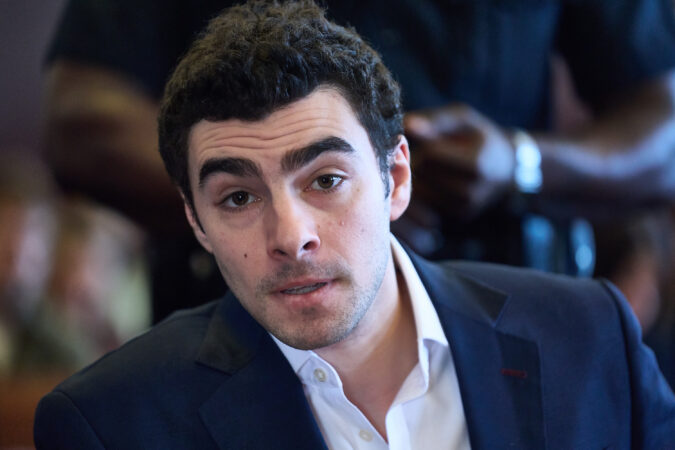
  • Luigi Mangione speaks out in protest as judge sets state murder trial for June 8

    Luigi Mangione speaks out in protest as judge sets state murder trial for June 8

    NEW YORK — Luigi Mangione spoke out in court Friday against the prospect of back-to-back trials over the killing of UnitedHealthcare CEO Brian Thompson, telling a judge: “It’s the same trial twice. One plus one is two. Double jeopardy by any commonsense definition.”

    Mangione, 27, made the remarks as court officers escorted him out of the courtroom after a judge scheduled his state murder trial to begin June 8, three months before jury selection in his federal case.

    Judge Gregory Carro, matter-of-fact in his decision after a lengthy discussion with prosecutors and defense lawyers at the bench, said the state trial could be delayed until Sept. 8 if an appeal delays the federal trial.

    Mangione’s lawyers objected to the June trial date, telling Carro that at that time, they’ll be consumed with preparing for the federal trial, which involves allegations that Mangione stalked Thompson before killing him.

    “Mr. Mangione is being put in an untenable situation,” defense lawyer Karen Friedman Agnifilo said. ”This is a tug-of-war between two different prosecution offices.”

    “The defense will not be ready on June 8,” she added.

    “Be ready,” Carro replied.

    Mangione has pleaded not guilty to state and federal charges, both of which carry the possibility of life in prison. Last week, the judge in the federal case ruled that prosecutors can’t seek the death penalty.

    Jury selection in the federal case is set for Sept. 8, followed by opening statements and testimony on Oct. 13.

    Wearing a tan jail suit, Mangione sat quietly at the defense table until his outburst at the end of the hearing.

    As the trial calendar began to take shape, Assistant District Attorney Joel Seidemann sent a letter to Carro asking him to begin the New York trial on July 1.

    The prosecutor argued that the state’s interests “would be unfairly prejudiced by an unnecessary delay” until after the federal trial. Under the law, he said, the state has “priority of jurisdiction for purposes of trial, sentencing and incarceration” because Mangione was arrested by New York City police, not federal authorities.

    When Mangione was arrested, federal prosecutors said anticipated that the state trial would go first. Seidemann told Carro on Friday that Thompson’s family has also expressed a desire to see the state trial happen first.

    “It appears the federal government has reneged on its agreement to let the state, which has done most of the work in this case, go first,” Carro said Friday.

    Scheduling the state trial first could help Manhattan prosecutors avoid double jeopardy issues. Under New York law, the district attorney’s office could be barred from trying Mangione if his federal trial happens first.

    The state’s double jeopardy protections kick in if a jury has been sworn in a prior prosecution, such as a federal case, or if that prosecution ends in a guilty plea. The cases involve different charges but the same alleged course of conduct.

    Mangione isn’t due in court again in the state case until May, when Carro is expected to rule on a defense request to exclude certain evidence that prosecutors say connects Mangione to the killing.

    Those items include a 9mm handgun that prosecutors say matches the one used to kill Thompson and a notebook in which they say he described his intent to “wack” a health insurance executive.

    Last week, Garnett ruled that prosecutors can use those items at that trial.

    In September, Carro threw out state terrorism charges but kept the rest of the case, including an intentional murder charge.

    Thompson, 50, was killed on Dec. 4, 2024, as he walked to a midtown Manhattan hotel for UnitedHealth Group’s annual investor conference.

    Surveillance video showed a masked gunman shooting him from behind. Police say “delay,” “deny” and “depose” were written on the ammunition, mimicking a phrase used to describe how insurers avoid paying claims.

    Mangione, a University of Pennsylvania graduate from a wealthy Maryland family, was arrested five days later at a McDonald’s in Altoona, Pa., about 230 miles west of Manhattan.

  • The Milan Cortina Olympics officially open with a multisite ceremony for a spread-out Winter Games

    The Milan Cortina Olympics officially open with a multisite ceremony for a spread-out Winter Games

    MILAN, Italy — Featuring tributes to da Vinci and Dante, Puccini and Pausini, Armani and Fellini, pasta and vino, and other iconic tastes of Italian culture — plus Mariah Carey hitting all the high notes in “Nel Blu Dipinto Di Blu” aka “Volare” — an unprecedented four-site, dual-cauldron opening ceremony got the Milan Cortina Olympics officially started Friday.

    Allowing athletes to participate in the Parade of Nations at the mountain locales for the most spread-out Winter Games in history created what perhaps was an unintended consequence: Zero competitors from any of the first five countries announced actually showed up at the main hub, Milan’s San Siro soccer stadium.

    While signs bearing the names of Greece — which always leads the procession as the birthplace of the Olympics — Albania, Andorra, Saudi Arabia, and Argentina were carried into the home of Serie A soccer titans AC Milan and Inter Milan, there were no athletes from those places around. Instead, they were participating at simultaneous festivities held at Cortina d’Ampezzo in the heart of the Dolomites, Livigno in the Alps, and Predazzo in the autonomous province of Trento.

    The first country with athletes at San Siro was Armenia — and their entrance drew raucous cheers from a crowd filled with 61,000 ticket-holders plus others.

    Later, a smattering of boos met Israel’s four representatives at the Milan ceremony. There have been some calls for Israel to be banned from the Olympics over the war in Gaza, which began with Hamas’ deadly attack in October 2023.

    And while athletes from the U.S. were cheered when they appeared, Vice President JD Vance was jeered when he was shown briefly on the arena’s video boards from his spot in the tribune. Support for the United States among its allies has been eroding as the Trump administration has taken an aggressive posture on foreign policy, including punishing tariffs, military action in Venezuela and threats to invade Greenland.

    The contingent from Venezuela got a big backing when entering. So did that from Ukraine, where a war continues four years after Russia invaded.

    The ceremony’s organizers have said they sought to convey themes of harmony and peace, seeking to represent the city-mountain dichotomy of the particularly unusual setup for these Olympics while also trying to appeal to a sense of unity at a time of global tensions. South African actor Charlize Theron and Italian rapper Ghali delivered messages of peace toward the end of the night.

    “I hope the opening ceremony is seen by everyone as an opportunity to be respectful,” new International Olympic Committee President Kirsty Coventry said when asked this week about possible crowd reactions.

    The loudest greeting was reserved, naturally, for host Italy, which walked in last, to an electronic version of The Barber of Seville.

    The ceremony was already nearly three hours old — and not yet done — by the time Italian President Sergio Mattarella officially declared the Milan Cortina Games open following a speech by Coventry, the first woman to lead the IOC.

    “Thank you for believing in the magic of the Olympic Games,” she said, then several minutes later made sure to make mention of the “media rights holders” who pay to broadcast the event.

    Soon, tenor Andrea Bocelli’s voice was belting out Puccini’s “Nessun Dorma” and its closing refrain of “Vincerò,” Italian for “I will win!” As he concluded, torch bearers headed out of the arena to light a cauldron at the Arch of Peace, 2½ miles from San Siro.

    One symbol of how far-flung things are at these Olympics: Instead of the usual one cauldron that is lit and burns throughout the Games, there were going to be two, both intended as an homage to Leonardo da Vinci’s geometric studies. The other is 250 miles away in Cortina.

    All three flame-lighters — Alberto Tomba and Deborah Compagnoni in Milan, and Sofia Goggia in Cortina — are Olympic champion Alpine ski racers from Italy. Tomba and Compagnoni are retired; Goggia is entered in the 2026 Games.

    The full collection of competition venues for the next two-plus weeks dot an area of about 8,500 square miles, roughly the size of the entire state of New Jersey. The multicity ceremony format Friday allowed up-in-the-mountains sports such as Alpine skiing, bobsled, curling, and snowboarding to be represented without requiring folks to make the several-hours-long trek to Milan.

    It didn’t exactly feel like a Winter Games in the country’s financial capital, where the temperature was a tad below 50 degrees Fahrenheit, and the sky was a crisp, clear azure all afternoon Friday. Not a trace of clouds, let alone snow.

    As Italy welcomed the world by displaying symbols of its heritage, the show produced by Olympic ceremony veteran Marco Balich began with dancers from the academy of the famed Milan opera house Teatro alla Scala reimagining 18th-century sculptor Antonio Canova’s marble works.

    Singer Mariah Carey performs during the Olympic opening ceremony at the 2026 Winter Olympics, in Milan, Italy, Friday, Feb. 6, 2026.

    People wearing oversized, mascot-style heads representing opera composers Giacomo Puccini, Gioachino Rossini, and Giuseppe Verdi appeared on the central stage, before giant paint tubes floated above and dropped silk of red, blue, and yellow — the primary colors — before an early parade of various-color-wearing characters arrived in the stadium. They represented music and art, literature, and architecture, appreciations for beauty and history and, above all, La Dolce Vita (loosely, Italian for “The Good Life” and the name of a 1960 film by Federico Fellini).

    There were references to ancient Rome, the Renaissance, the Venice Carnival, and the country’s noted traditions in various areas such as cuisine and literature, such as Pinocchio and Dante’s Inferno.

    A runway walk showcased outfits — created by the late fashion designer Giorgio Armani, who died last year at 91 — in the colors of Italy’s flag: red, green, and white. And balladeer Laura Pausini sang Italy’s national anthem.

    Carey got loud cheers in Milan as she sang in Italian. In Cortina, hundreds of fans sang along with her, and a roar emerged when they realized she was performing the song with the “Volare” refrain.

    Another local touch: Italian actor Sabrina Impacciatore, of White Lotus fame, led a segment that took viewers through a century of past Olympics, with examples of evolving equipment, sportswear, and music. And actor and comedian Brenda Lodigiani demonstrated the popular Italian hand gestures often used to communicate in place of words.

    Team United States enters the stadium during Friday’s opening ceremony at the 2026 Winter Olympics in Milan, Italy.
  • New York City police officer convicted of manslaughter in cooler throwing death

    New York City police officer convicted of manslaughter in cooler throwing death

    NEW YORK — A New York City police officer was convicted Friday of second-degree manslaughter after he tossed a picnic cooler filled with drinks at a fleeing suspect, causing the man to fatally crash his motorized scooter.

    Judge Guy Mitchell handed down the guilty verdict Friday in Bronx criminal court in the case against Sgt. Erik Duran in the 2023 death of Eric Duprey.

    “The fact that the defendant is a police officer has no bearing,” the judge said before reading out his verdict in a brief hearing. ”He’s a person and will be treated as any other defendant.”

    Members of Duprey’s family sobbed as the decision was read out. Orlyanis Velez, Duprey’s wife, said after that she was happy but also surprised.

    “I was waiting for justice just like everybody, but when the moment happens, you can’t believe it’s happening,” she said outside of the courthouse. “It’s been a lot of time. These people been killing citizens, been killing everybody. They don’t give no reason.”

    Duran didn’t appear to react when the decision was handed down, and his lawyer and spokespersons for his police union didn’t immediately respond to emails seeking comment.

    Duran had been suspended with pay pending the trial, but the department confirmed Friday he was dismissed following his conviction, as state law mandates. Duran now faces up to 15 years in prison when he is sentenced March 19.

    State Attorney General Letitia James, whose office prosecuted the case, offered her condolences to Duprey’s family.

    “Though it cannot return Eric to his loved ones, today’s decision gives justice to his memory,” she said in a statement.

    The 38-year-old Duran, who was the first New York Police Department officer in years to be tried for killing someone while on duty, also faced charges of criminally negligent homicide and assault.

    But Mitchell dismissed the assault count earlier, saying prosecutors failed to show he intended to hurt Duprey. He also didn’t deliver a verdict on the criminally negligent homicide charge as he’d already found Duran guilty of the more serious manslaughter charge.

    Duran had pleaded not guilty and opted for a bench trial, meaning the judge, not a jury, would render the verdict.

    Authorities say that on Aug. 23, 2023, Duprey sold drugs to an undercover officer in the Bronx and then fled.

    Duran, who had been part of a narcotics unit conducting the operation, is seen in security footage grabbing a nearby red cooler and quickly hurling it at Duprey in an attempt to stop him.

    The container full of ice, water and sodas struck Duprey, who lost control of the scooter, slammed into a tree and crashed onto the pavement before landing under a parked car.

    Prosecutors said the 30-year-old, who was not wearing a helmet, sustained fatal head injuries and died almost instantaneously.

    Duran, testifying in his own defense this week, said he only had seconds to react and was trying to protect other officers from Duprey as he sped toward them. He told the court he immediately tried to render aid after seeing the extent of Duprey’s injuries.

    “He was gonna crash into us,” Duran said in court. “I didn’t have time. All I had time for was to try again to stop or to try to get him to change directions. That’s all I had the time to think of.”

    But prosecutors maintained Duprey didn’t pose a threat and that his death wasn’t accidental but the result of Duran’s reckless, negligent and intentional actions.

    They suggested the officer had enough time to warn others to move, but instead tossed the cooler in anger and frustration.

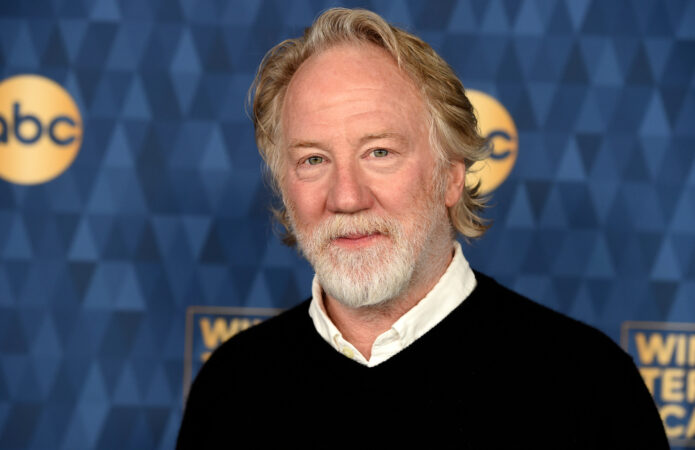
  • Actor Timothy Busfield indicted on 4 counts of sexual contact with a child

    Actor Timothy Busfield indicted on 4 counts of sexual contact with a child

    SANTA FE, N.M. — West Wing and Field of Dreams actor Timothy Busfield has been indicted by a grand jury on four counts of criminal sexual contact with a child under age 13, a New Mexico prosecutor announced Friday.

    The allegations are tied to Busfield’s work as a director on the set of the TV series The Cleaning Lady from 2022 to 2024.

    Busfield has denied the allegations, initially filed in court by police, and a defense attorney on Friday said he would “fight these charges at every stage.”

    Bernalillo County District Attorney Sam Bregman announced the indictment in a social media post.

    Busfield had turned himself in to authorities in January on related charges by police and was released from jail by a judge who found no pattern of criminal conduct or similar allegations involving children in Busfield’s past. The grand jury indictment allows the case against Busfield to proceed toward possible trial without a preliminary courtroom hearing on evidence.

    Larry Stein, an attorney for Busfield, did not comment directly on the sexual contact charge in the indictment but said the grand jury declined to endorse grooming charges sought by prosecutors. Prosecutors declined to comment on what accusations it brought before the grand jury.

    Stein said in a statement that a detention hearing already “exposed fatal weaknesses in the state’s evidence — gaps that no amount of charging decisions can cure.”

    “Mr. Busfield will fight these charges at every stage and looks forward to testing the State’s case in open court,” the statement said.

    An investigator with the Albuquerque Police Department said a boy reported that Busfield touched his private areas over his clothing when he was 7 years old and again when he was 8, according to the initial criminal complaint from police. The boy’s twin told authorities he was also touched by Busfield, but he didn’t say anything right away because he didn’t want to get in trouble, the complaint said.

    The indictment — filed Friday in state District Court — reiterates allegations that Busfield “touched or applied force to the intimate parts” of one of the boys on several occasions.

    At a detention hearing last month, Busfield’s attorneys pointed out that the children initially said during interviews with police that Busfield didn’t touch them inappropriately. Busfield’s attorneys then accused the boys’ parents of coaching their children toward incriminating statements after the boys lost lucrative roles on the show.

    But Assistant District Attorney Savannah Brandenburg-Koch has called evidence of abuse against Busfield strong and specific, with support from medical findings and the boys’ therapist. She also said witnesses expressed fear about potential retaliation and professional harm.

    Prosecutors have outlined what they said was grooming behavior and abuse of power by Busfield over three decades.

    Each count in the indictment against Busfied carries a possible penalty of six years in prison that can be enhanced if it involves a sexual offense, according to prosecutors.

    In freeing Busfield on Jan. 20, state District Court Judge David Murphy said that while the crimes Busfield is accused of inherently are dangerous and involve children, prosecutors didn’t prove the public wouldn’t be safe if he’s released.

    Busfield is best known for appearances on The West Wing, Field of Dreams, and Thirtysomething.

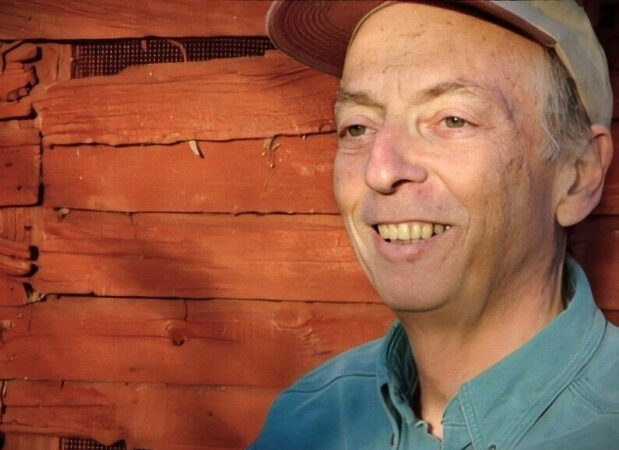
  • Civil War scholar and retired Gettysburg College professor Gabor Boritt has died at 86

    Civil War scholar and retired Gettysburg College professor Gabor Boritt has died at 86

    GETTYSBURG — History professor Gabor S. Boritt, a Hungarian immigrant to the United States who wrote widely about the Civil War and President Abraham Lincoln, has died. He was 86.

    Mr. Boritt had been a professor at Gettysburg College in Pennsylvania for many years, founding the Civil War Institute and helping establish the $50,000 Lincoln Prize for scholarship related to the Civil War.

    He died Monday in Chambersburg, according to his son.

    Mr. Boritt was born in Budapest in 1940 and survived World War II, although relatives were killed in the Auschwitz Nazi death camp. He was sent to an orphanage after the war and in 1956 joined the Hungarian Revolution as a 16-year-old, his family recalled.

    After the uprising was crushed, he made it to the United States, where he worked in a New York hat factory before furthering his education in South Dakota and earning a history doctorate from Boston University.

    He taught at several universities before joining the faculty at Gettysburg in 1981. Mr. Boritt served on the board of the Gettysburg Foundation and was involved in the construction of a new visitor’s center at Gettysburg National Military Park.

    He was awarded a National Humanities Medal by President George W. Bush in 2008.

    A screening of Budapest to Gettysburg, a documentary about his life created by his son, Jake Boritt, will be held on Lincoln’s Birthday, Feb. 12, in Gettysburg.

  • Justice Dept. announces arrest of ‘key participant’ in 2012 Benghazi attack

    Justice Dept. announces arrest of ‘key participant’ in 2012 Benghazi attack

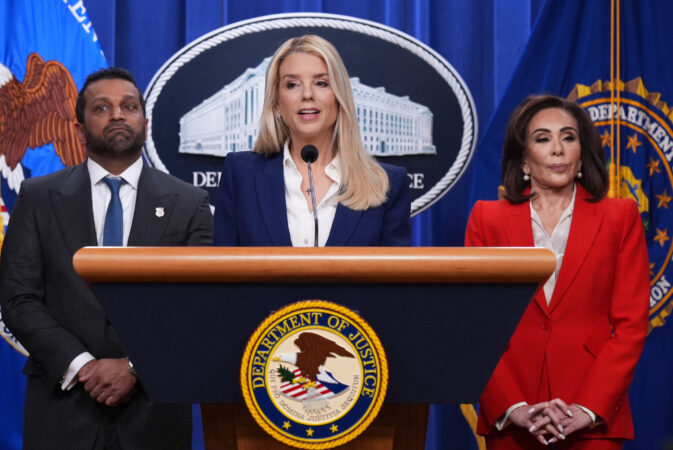
    WASHINGTON — A man Justice Department officials described as a key participant in the 2012 attack that killed a U.S. ambassador and three other Americans in Benghazi, Libya, was taken into U.S. custody Friday and will face prosecution.

    Zubayar al-Bakoush was arrested in an undisclosed country and flown to an airfield near Washington, where he arrived just after 3 a.m. Friday, Attorney General Pam Bondi said. He faces an eight-count indictment on charges including murder, terrorism and arson.

    Bondi and FBI Director Kash Patel declined at a news conference to answer questions about where al-Bakoush was arrested and whether the operation that brought him into custody involved the assistance of foreign nations.

    “We have never stopped seeking justice for that crime against our nation,” Bondi said.

    In the Sept. 11, 2012, attack, at least 20 militants, armed with AK-47s and grenade launchers, stormed the U.S. mission in Benghazi, breaching its gates, forcing their way into offices and setting buildings ablaze. Ambassador J. Christopher Stevens, State Department employee Sean Smith and CIA contractors Tyrone S. Woods and Glen Doherty were killed. Stevens was the first U.S. ambassador slain while performing his duties abroad in nearly four decades

    Almost immediately, the incident became a subject for partisan finger-pointing, with Republican lawmakers faulting the Obama administration and especially then-Secretary of State Hillary Clinton for alleged security failures at the facility and what they described as a slow response to the violence. References to Benghazi — nearly 14 years later — remain a potent point of political division.

    Even as they announced al-Bakoush’s arrest Friday, Justice Department officials seized the opportunity to swipe at frequent Republican targets, renew old lines of attack, and credit President Donald Trump.

    “Hillary Clinton famously once said about Benghazi, ‘What difference, at this point, does it make?’” Bondi said, referring to an irritated response Clinton gave during a 2013 Senate hearing at which she was repeatedly pressed about the motive for the attack.

    “Well, it makes a difference to Donald Trump,” Bondi continued. “It makes a difference to those families and 14 years later, it makes a difference to law enforcement who made the difference in this case.”

    A Republican-led congressional investigation into the incident later found no evidence of wrongdoing by Clinton, though it faulted the Obama administration more broadly for being slow to respond after the militants breached the gates.

    Jeanine Pirro, the Trump-appointed U.S. attorney in Washington whose office is overseeing the prosecution, made reference to that frequent Republican criticism in her remarks Friday about al-Bakoush’s arrest.

    In her prior role as a Fox News host, Pirro frequently waded into the debate over Benghazi, at one point accusing then-FBI Director Robert S. Mueller III of orchestrating a cover-up to protect administration officials.

    “For 13 hours, the American cavalry never came,” she said Friday. “For 13, hours [the victims] waited for that help that never came.

    Democrats have defended their efforts to prosecute individuals tied to the deaths of Stevens and the others, noting that the Justice Department had by late 2013 filed sealed complaints against roughly a dozen overseas militants accused of playing a role in the attack.

    Pirro acknowledged Friday that the complaint that led to al-Bakoush’s arrest was first filed in 2015, during the final year of the Obama administration.

    Court filings unsealed Friday described al-Bakoush as a member of an extremist Libyan militia who was identified by a cooperating FBI witness as one of the attackers caught on surveillance footage from the compound. Agents described footage showing al-Bakoush, with a firearm slung over his shoulder, attempting to break into cars of U.S. service members and following the crowd into buildings where Stephens and others were killed.

    Al-Bakoush is the third man law enforcement officials have brought to the U.S. to face charges.

    A federal jury in Washington in 2017 convicted Ahmed Abu Khattala, a Libyan militia leader and the accused mastermind behind the attack, on conspiracy and terrorism charges tied to the incident. A second militant, Mustafa al-Imam, was found guilty on similar charges in 2019. Both men were sentenced to prison terms of more than a decade.

    “Time will not stop us from going after these predators, no matter how long it takes, to fulfill our obligation to those families who suffered horrific pain at the hands of these violent terrorists,” Pirro said.

  • Norwegian crown princess apologizes to royals and all ‘disappointed’ by her Epstein contacts

    Norwegian crown princess apologizes to royals and all ‘disappointed’ by her Epstein contacts

    OSLO, Norway — Norway’s crown princess apologized on Friday for the situation she has put the royal family in as she faces scrutiny over her contacts with the late sex offender Jeffrey Epstein, part of a broader apology for all those she has “disappointed.”

    Crown Princess Mette-Marit’s communications and contacts with Epstein have put her in the spotlight over the past week, adding to the embarrassment to the royals just as her son went on trial in Oslo for multiple offenses, including charges of rape.

    The Epstein files contained several hundred mentions of the crown princess, who said in 2019 that she regretted having had contact with Epstein, Norwegian media reported.

    The documents, which include email exchanges, showed that Mette-Marit borrowed an Epstein-owned property in Palm Beach, Fla., for several days in 2013. Broadcaster NRK reported that the stay was arranged through a mutual friend, which was later confirmed by the royal household.

    The royal palace said Friday that Mette-Marit wants to talk about what happened and explain herself in more detail, but is unable to at present. It added that she is in a very difficult situation and “hopes for understanding that she needs time to gather her thoughts.”

    It also issued a statement from the crown princess — her second in a week — in which she reiterated her deep regret for her past friendship with Epstein.

    “It is important for me to apologize to all of you whom I have disappointed,” she said. “Some of the content of the messages between Epstein and me does not represent the person I want to be. I also apologize for the situation I have put the Royal Family in, especially the King and Queen.”

    King Harald, 88, and the royals are generally popular in Norway, but the case against Mette-Marit’s son, Marius Borg Høiby, has been a problem for the family’s image since 2024 and the latest Epstein files have compounded that. Mette-Marit is married to Crown Prince Haakon, the heir to the throne.

    The release of documents included an email from Mette-Marit to Epstein in November 2012 asking: “Is it inappropriate for a mother to suggest two naked women carrying a surfboard for my 15-year-old son’s wallpaper?”

    He replied, “Let them decide,” and advised that the mother should, “Stay out of it.”

    Mette-Marit, 52, said in a statement issued shortly after the files were released that she “must take responsibility for not having investigated Epstein’s background more thoroughly, and for not realizing sooner what kind of person he was.” She added: “I showed poor judgment and regret having had any contact with Epstein at all. It is simply embarrassing.”

    The crown princess isn’t the only high-profile Norwegian who faces unflattering attention stemming from the documents on millionaire financier and sex offender Epstein released by the U.S. Department of Justice.

    The Norwegian Economic Crime Investigation Service, a mixed unit of police and prosecutors, said Thursday that it would look into whether gifts, travel or loans were received by former Prime Minister Thorbjørn Jagland in connection with his positions.

    Jagland was Norway’s prime minister between 1996 and 1997. He also has chaired the Norwegian Nobel Committee and was secretary general of the Council of Europe.

    The files revealed years of contact between the politician and Epstein. Emails indicate that he made plans to visit Epstein’s island with his family in 2014, when he was chairman of the Nobel committee, with an Epstein assistant organizing the flights.

    Norwegian authorities are also looking to lift Jagland’s immunity, which he enjoys because of his past as a diplomat. His legal representative told Norwegian broadcaster NRK that Jagland is cooperating with the investigation.

    The World Economic Forum also announced on Thursday that it was opening an internal review into its CEO Børge Brende to determine his relationship with Epstein, after the files indicated the two had dined together several times and exchanged messages. Brende was Norway’s foreign minister from 2013-2017.

    He told NRK that he is cooperating with the investigation, that he only met Epstein in business settings and that he had been unaware of Epstein’s criminal background.

    Epstein killed himself in 2019 while awaiting trial on charges that he sexually abused underage girls at his homes in the U.S.

  • A deputy chief of Russia’s military intelligence service is shot and wounded in Moscow

    A deputy chief of Russia’s military intelligence service is shot and wounded in Moscow

    MOSCOW — A deputy chief of Russia’s military intelligence agency was shot and wounded in Moscow on Friday in an attack that follows a series of assassinations of senior military officers that Russia has blamed on Ukraine.

    Lt. Gen. Vladimir Alekseyev was hospitalized after being shot several times by an unidentified assailant at an apartment building in northwestern Moscow, Investigative Committee spokesperson Svetlana Petrenko said in a statement.

    She didn’t say who could be behind the attack on the 64-year-old who has served as the first deputy head of Russia’s military intelligence agency, known as the GRU, since 2011.

    He was decorated with the Hero of Russia medal for his role in Moscow’s military campaign in Syria and in June 2023 was shown on state TV speaking to mercenary chief Yevgeny Prigozhin when his Wagner Group seized the military headquarters in the southern city of Rostov-on-Don during his short-lived mutiny.

    The shooting came a day after Russian, Ukrainian, and U.S. negotiators wrapped up two days of talks in Abu Dhabi, United Arab Emirates, aimed at ending the nearly 4-year-old war in Ukraine. The Russian delegation was led by Alekseyev’s boss, military intelligence chief Adm. Igor Kostyukov.

    President Vladimir Putin was informed about the attack, said Kremlin spokesman Dmitry Peskov, who added that law enforcement agencies need to step up protection of senior military officers during the conflict in Ukraine.

    Ukrainian authorities haven’t commented on the attack.

    Asked about the shooting, Russian Foreign Minister Sergey Lavrov said it would be up to law enforcement agencies to pursue the investigation but described it as an apparent “terrorist act” by Ukraine intended to derail peace talks.

    The business daily Kommersant said the attacker, posing as a delivery person, shot the general twice in the stairway of his apartment building, wounding him in the foot and the arm. Alekseyev tried to wrest away the gun and was shot again in the chest before the attacker fled, the report said.

    Alekseyev, who was born in Ukraine when it was part of the Soviet Union, rose steadily through the ranks to lead operations of Russian military intelligence in Syria, Ukraine, and elsewhere.

    He was sanctioned by Washington for meddling in the 2016 U.S. election and also faced sanctions in the U.K. and the European Union over his alleged role in the 2018 poisoning of former Russian intelligence officer Sergei Skripal and his daughter with the nerve agent Novichok in Salisbury, England.

    Since Moscow sent troops into Ukraine in 2022, Russian authorities have blamed Kyiv for several assassinations of military officers and public figures in Russia. Ukraine has claimed responsibility for some of them.

    In December, a car bomb killed Lt. Gen. Fanil Sarvarov, head of the Operational Training Directorate of the Russian Armed Forces’ General Staff.

    In April, another senior Russian military officer, Lt. Gen. Yaroslav Moskalik, a deputy head of the main operational department in the General Staff, was killed by a bomb placed in his car parked near his apartment building just outside Moscow.

    A Russian man who previously lived in Ukraine pleaded guilty to carrying out the attack and said he had been paid by Ukraine’s security services.

    Days after Moskalik’s killing, Ukrainian President Volodymyr Zelensky said he received a report from the head of Ukraine’s foreign intelligence agency on the “liquidation” of top Russian military figures, adding that “justice inevitably comes” although he didn’t mention Moskalik’s name.

    In December 2024, Lt. Gen. Igor Kirillov, the chief of the military’s nuclear, biological and chemical protection forces, was killed by a bomb hidden on an electric scooter outside his apartment building. Kirillov’s assistant also died. Ukraine’s security service claimed responsibility for the attack.

  • Those seeking to sue ICE for injuries or damage face an uphill battle

    Those seeking to sue ICE for injuries or damage face an uphill battle

    An undocumented immigrant is seeking $1 million in damages after he says he was riding his bike in Melrose Park, Ill., when a U.S. Border Patrol agent suddenly tackled him, placed him in a chokehold and punched his head.

    A Chicago resident says that federal agents caused $30,000 worth of property damage when they broke a lock on his wrought-iron gate and scaled a wooden fence to chase after construction workers repairing his Victorian-era home.

    A Columbia University student and activist who spent 104 days in a U.S. Immigration and Customs Enforcement detention center is demanding $20 million over what he says was a false arrest.

    All three should expect a long and difficult fight under the current legal landscape, lawyers warn.

    These and scores of other claims expected to arise out of the Trump administration’s crackdown on illegal immigration are winding through a bureaucratic process mandated under the Federal Tort Claims Act. It is the primary legal recourse for people seeking compensation for property damage, injuries and even deaths allegedly caused by federal agencies and their employees.

    First, individuals must fill out a form and submit it for review by the agency that they say caused the harm. Agencies such as ICE and Customs and Border Protection have six months to deny a claim, offer a settlement, or not respond at all. Only then can people sue in court under the Federal Tort Claims Act.

    But these cases are different from civil rights lawsuits. Judges, not juries, decide the outcome. Awarded damages are likely to be much lower. And individual officers can’t be named as defendants.

    “It’s absolutely bonkers,” said Brian Orozco, a Chicago attorney for Ricardo Aguayo Rodriguez, the bike-riding immigrant who was hospitalized and is now detained, awaiting deportation to Mexico. “If a Chicago police officer abuses my civil rights, I can file a claim immediately. I don’t have to wait six months [to file a lawsuit]. I have a right to a jury trial. I don’t have that when I’m up against the federal government. It’s scary to me how protected these federal agents are.”

    After the Civil War, Congress passed a law that established the right to sue local and state officials for the violation of constitutional rights. Federal officials weren’t included in the law, though a 1971 Supreme Court ruling established precedence for such lawsuits. But legal experts said that the court’s decisions within the past decade have narrowed that path and made it nearly impossible to successfully sue federal agents for civil rights violations.

    “It is arguably harder today in 2026 than at any other time in American history to sue federal officials for money damages if they violate your constitutional rights,” said Harrison Stark, senior counsel at the State Democracy Research Initiative at the University of Wisconsin Law School.

    Relatives of both Renée Good and Alex Pretti, Minneapolis residents who were fatally shot in separate encounters by federal immigration officers in January, have hired attorneys. In a statement, Romanucci & Blandin, the law firm retained by Good’s family, said it is pursuing a tort claim and would not be deterred by “the byzantine, time-consuming processes mandated by the Federal Tort Claims Act.” The attorney hired by Pretti’s parents did not respond to a request for comment.

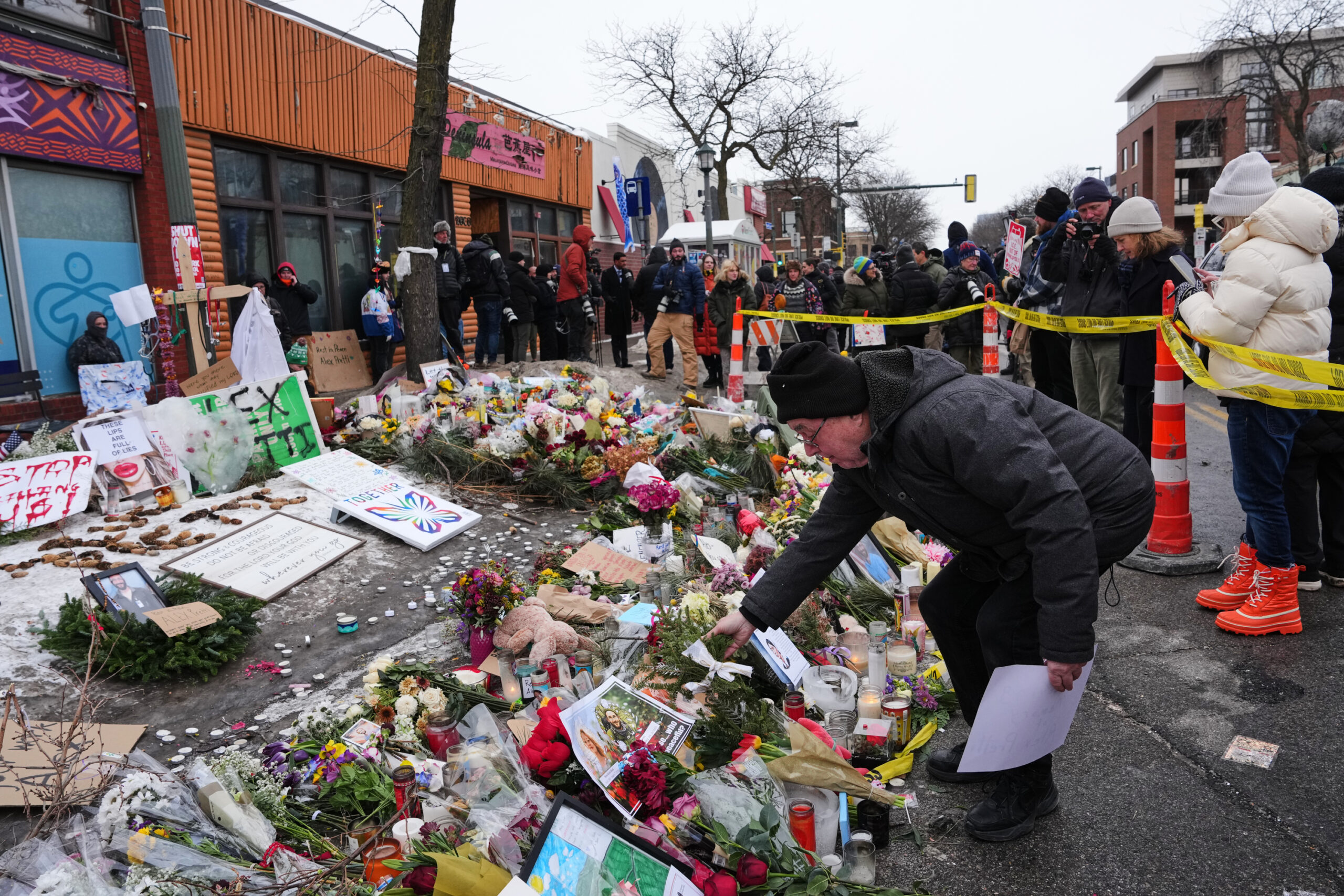
    People visit a makeshift memorial on Jan. 26 in Minneapolis for 37-year-old Alex Pretti, who was fatally shot by immigration officers.

    An ICE spokesperson said the agency received about 400 tort claims in fiscal 2025, which ended Sept. 30, but did not provide a breakdown of how many resulted in settlements or denials.

    “Despite facing a more than 1,300% increase in assaults against them, 8,000% increase in death threats, and a 3,200% increase in vehicle rammings, the men and women of ICE continue working around the clock” to arrest and remove “the worst of the worst criminal aliens from the United States,” ICE said in an emailed statement. The Washington Post could not independently verify these numbers.

    A U.S. Customs and Border Protection spokesperson declined to provide data about the number of tort claims the agency received last year.

    “Rioters and agitators have created an extraordinary amount of damage to public and private property, not to mention the harm they have put our officers and the public in,” a CBP spokesperson said in a statement. “We expect these agitators will be held responsible for their actions.”

    Spokespeople for ICE and CBP declined to comment on individual claims described in this story. They broadly said their agencies adhere to the Federal Tort Claims Act.

    A significant settlement is not impossible. The estate of Ashli Babbitt, the woman who was shot and killed on Jan. 6, 2021, during the U.S. Capitol riot, filed a tort lawsuit and reached a nearly $5 million settlement with the government.

    But the challenges of navigating the Federal Tort Claims Act — coupled with an anticipated rise in claims as violent encounters continue in cities across the United States — have put pressure on Congress to pass legislation to allow civil rights lawsuits against federal officers and agents.

    Such an effort would probably face pushback, experts said. Several years ago, the National Border Patrol Council, a union that represents Border Patrol agents, warned the Supreme Court of the “potentially massive financial impact” that would occur if thousands of its agents were exposed to “liability for personal damages.”

    ‘Not very hopeful’

    Leo Feler said he ran into challenges as soon as he decided to pursue a tort claim. For one thing, he wasn’t sure where to send it: Feler didn’t know which federal agency employed the masked men who came to his Chicago home on Oct. 24.

    Feler, a 46-year-old economist, said he wasn’t there at the time. But he received a notification from his Ring security camera: Someone was on his property.

    A construction crew had been repairing the windows and siding of his home in the affluent Lakeview neighborhood. As the workers ate lunch outside, armed men in green uniforms jumped from two vehicles and tried to break the locks on the gates of a nearly 6-foot-high wrought-iron fence, according to Feler, who reviewed security camera footage of the incident and a video taken by a neighbor.

    The agents, Feler said, had scaled a wooden fence along the side of his house and hopped onto his balcony in pursuit of the fleeing workers.

    One worker was injured as he scrambled through a construction site littered with wood and nails, Feler said, leaving a trail of blood in the home. Another worker was detained, he said.

    Feler said a tenant who rented a unit on his property asked the officers to provide a warrant that authorized the raid, but they refused to do so. Through his Ring camera’s intercom system, Feler told the agents that they were trespassing and needed to leave. But they ignored him, he said.

    Feler later sought legal advice. Attorneys told him he could file a tort claim for damages.

    Unsure which agencies had come to his house, Feler sent the paperwork for his tort claim in December to ICE, Customs and Border Protection and the Department of Homeland Security.

    He described the damage to his property — including to his locks and fence — and also wrote that the agents “robbed me and my family of the feeling of security we once enjoyed in my home.” His tenant was afraid and asked to break her lease early, which Feler said he agreed to do.

    Overall, Feler estimated $30,000 in damage to his property.

    He said he is “not very hopeful” that he will receive payment. If his claim is denied, he said he and his attorneys will pursue a lawsuit under the Federal Tort Claims Act.

    Others caught up in Operation Midway Blitz, the administration’s immigration enforcement actions in the Chicago area last fall, also said they expect it will be difficult to recover alleged damages.

    Leigh Kunkel, a 39-year-old freelance journalist, said she was documenting federal agents shooting pepper balls at protesters in late September outside an ICE facility in Broadview, Ill. An agent then aimed the weapon at her and fired pepper balls, she said, striking her in the back of the head and the nose and leaving her bloodied.

    A week later, her fiancé, Kyle Frankovich, also was protesting in Broadview within an area that he said state police monitoring the scene had designated a “free speech zone.” Federal officials, including Border Patrol commander Gregory Bovino, emerged from the ICE facility and began arresting protesters, according to video footage.

    Frankovich, 41, said he showed no aggression toward agents; nevertheless, he said, they took him to the ground and put him in handcuffs. They later lined him up with other detainees along a guardrail near the facility. The scene served as a backdrop to a Department of Homeland Security promotional video featuring Secretary Kristi L. Noem.

    He said he was detained for eight hours before a federal agent dropped him off at a nearby gas station. Frankovich has not been charged with a crime.

    Antonio Romanucci, a civil rights lawyer and founding partner at the Chicago-based firm representing Renée Good’s family, said his office plans to file federal tort claims for Kunkel and Frankovich. The couple said they understand the path may be long and their case could be unsuccessful, while also exposing them to public scrutiny.

    “Ultimately, we landed on the feeling that we are privileged enough to have the opportunity to fight back against this as citizens,” Kunkel said, “and that if we can do that, if this is one little way that we can push back, that we should.”

    Pushing for change

    Previous efforts to change the federal law have failed to gain traction.

    A law signed by President Ulysses S. Grant in 1871 established the statutory right to sue local or state officials for constitutional violations. Nearly two years ago, a group of U.S. lawmakers introduced draft legislation that would have amended that law by inserting just four words — “or the United States” — and established the right to sue federal officials as well. But the effort stalled.

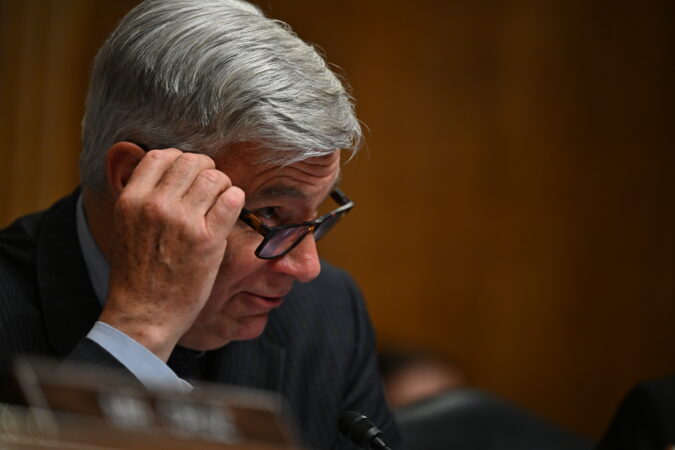
    “It’s a somewhat complicated area of law across different jurisdictions,” Sen. Sheldon Whitehouse (D., R.I.) said of the challenges in garnering support for the bill, which he sponsored. “But I didn’t see any huge partisan issues.”

    Whitehouse said there was a lack of urgency at the time, even though the Supreme Court had “more or less strangled” the legal pathway that had been used since the 1970s to sue federal officials for civil rights violations.

    Last fall, Whitehouse and Rep. Hank Johnson (D., Ga.) reintroduced the measure. Legal experts told the Post they think it is unlikely to pass, citing anticipated concerns about exposing federal law enforcement officers to personal liability.

    A handful of states already have laws that authorize claims against federal officials for the violation of constitutional rights, including New Jersey and Massachusetts, according to research compiled by Stark of the University of Wisconsin Law School. Lawmakers in other states are scrambling to draft similar bills.

    Last week, the California Senate passed the “No Kings Act” to allow civil rights lawsuits against federal officers. The measure will head to the State Assembly next.

    In Colorado, Mike Weissman, a Democratic state senator, recently introduced a similar bill. He described talking with state legislators in Washington, New Mexico, and Virginia, to exchange ideas.

    And in Minnesota, State Rep. Jamie Long, a Democrat whose district includes part of Minneapolis, has drafted such a bill for the legislative session that begins later this month.

    “We know that there is evidence of these severe constitutional violations happening, and that’s why we think it’s appropriate to create this state remedy,” Long said.

    Such measures are likely to be challenged. The U.S. Justice Department has already sued Illinois, alleging that its new law authorizing civil rights claims against federal officers is an “unconstitutional attempt to regulate federal law enforcement officers.”

    In the meantime, those who say they have sustained property damage or injuries during immigration enforcement efforts and their attorneys are continuing to press lawmakers to enable them to sue federal officers.

    Christopher Parente, a Chicago-based lawyer, is representing Marimar Martinez, a 30-year-old teacher’s assistant who was shot five times by a Border Patrol agent in October and survived. In an interview with the Post, her attorney said he thinks that Congress should change the law.

    Parente, a former federal prosecutor who plans to file a tort claim on Martinez’s behalf, said, “There is no deterrence — in fact, these agents are embraced and celebrated by this administration and their colleagues.”

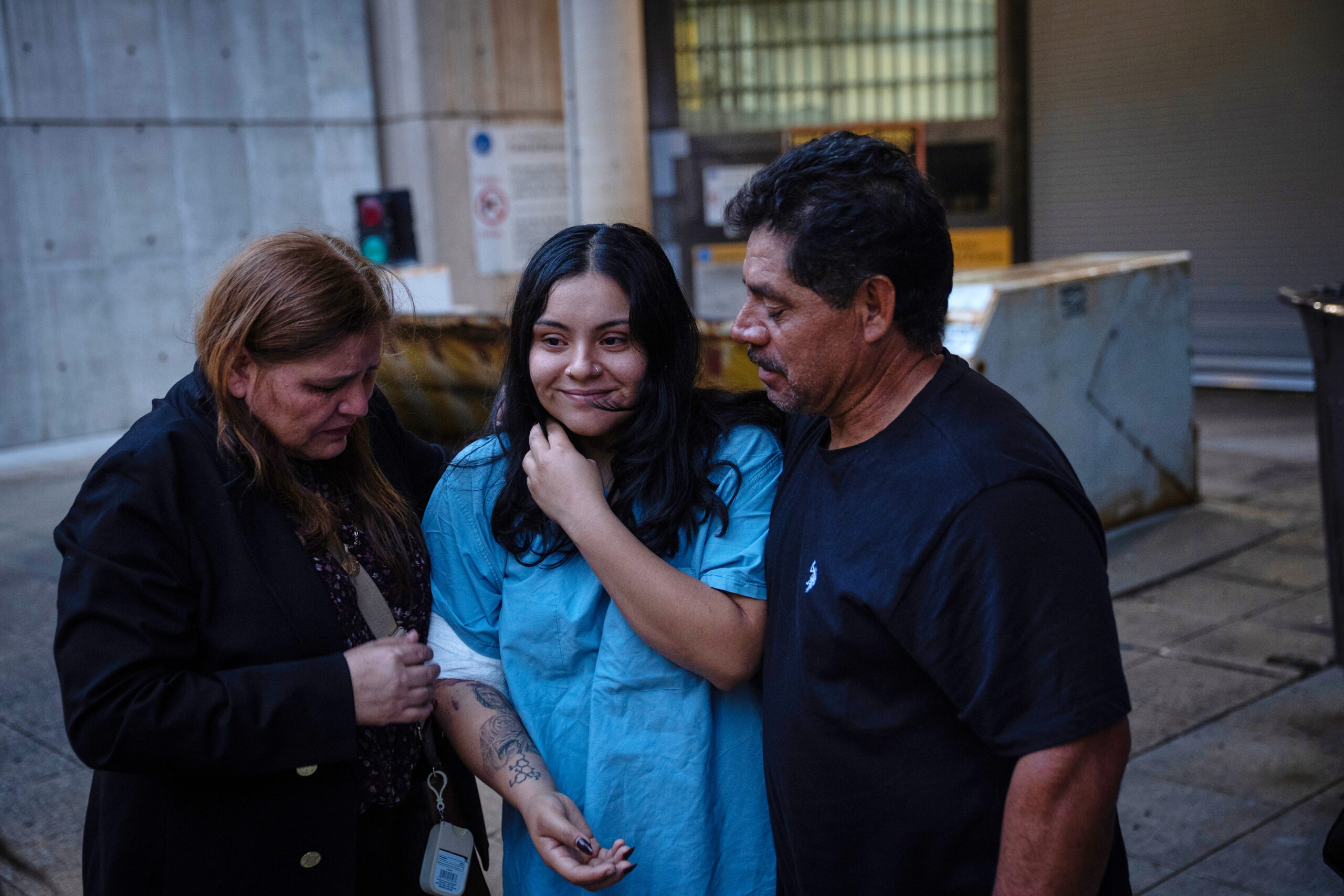
    Marimar Martinez (center) is greeted by her family after being released from the Metropolitan Correctional Center on Oct. 6, 2025, after being shot by immigration agents and charged with assaulting federal officers in an incident in Chicago’s Brighton Park.

    A chilling effect

    People seeking compensation from the federal government may face another roadblock: finding an attorney to take their case.

    “I’ve met people who spent the entire statute of limitations period, which is generally two years, looking for attorneys to represent them in cases against the federal government or federal officials and not being able to find them,” said Anya Bidwell, senior attorney for the Institute for Justice, a nonprofit law firm based in the D.C. area.

    Bidwell said many attorneys are deterred from taking Federal Tort Claims Act cases because the government often invokes “a very broad immunity that courts traditionally interpret to pretty much swallow any of the claims that involve any kind of a judgment or choice on behalf of an officer.”

    In other words, many cases are dismissed. Bidwell said “even getting to trial is extremely difficult.”

    Some people who consider filing claims ultimately decide not to, discouraged by the long and difficult process.

    In Minneapolis, Gina Christ, a 55-year-old business manager, contacted a lawyer to challenge what she described as an unlawful detention. But the attorney she met with told her suing the government would be “very, very difficult,” Christ recalled.

    Christ had driven to a protest that began after Border Patrol agents allegedly tried to arrest a pair of Latino teens. She said she parked along the side of the street to observe the agents, not to obstruct them.

    Christ said she was soon surrounded by agents and protesters. Agents yelled at her to move before smashing the window of her Ford Escape. They opened the door, pulled her out of the car, and held her facedown on the pavement, she said.

    Agents restrained her wrists with plastic zip ties, Christ said, while her eyes and throat burned from tear gas fired into the nearby crowd.

    Authorities took her to a federal building for processing, she said, and placed her in metal arm and leg shackles. She said they walked her to a folding table, where there was a makeshift sign with the criminal code for assaulting an officer. They told her she would face charges and took her fingerprints and a DNA swab.

    Christ said she spent nearly four hours in custody before she was released. She hasn’t been charged with a crime.

    A Customs and Border Protection spokesperson did not answer questions about the agency’s interaction with Christ.

    After weighing the difficulty of pursuing a tort claim, Christ said she plans to pay to fix her window herself. Given what others have lost, she said, it seems too small to pursue.