Tag: no-latest

  • Islandwide blackout hits Cuba as its fuel reserve dwindles and aging grid crumbles

    Islandwide blackout hits Cuba as its fuel reserve dwindles and aging grid crumbles

    HAVANA, Cuba — An islandwide blackout hit Cuba on Monday as fuel reserves dwindle and its electric grid continues to crumble.

    The blackout in the country of 10 million people was reported by the state-run Electric Union, which said on X that the cause is under investigation. The Ministry of Energy and Mines wrote on X that it has activated protocols to restore electricity.

    Fuel has been running out across Cuba since January, when U.S. President Donald Trump threatened tariffs on any country that sells or provides oil to the island, deepening the island’s ongoing economic and financial crisis. Public transportation has largely been halted, and officials have canceled tens of thousands of surgeries.

    Cuba produces only 40% of the fuel it needs, while the 730,000 barrels of oil delivered by a Russian tanker in late March ran out by the end of April.

    The government also has been rationing power with intentional outages that can stretch to more than 24 consecutive hours.

    A blackout in mid-May affected the island’s eastern provinces, while a blackout in mid-March struck the entire island.

  • After America’s 250th, Trump will test how far he can push NATO allies

    After America’s 250th, Trump will test how far he can push NATO allies

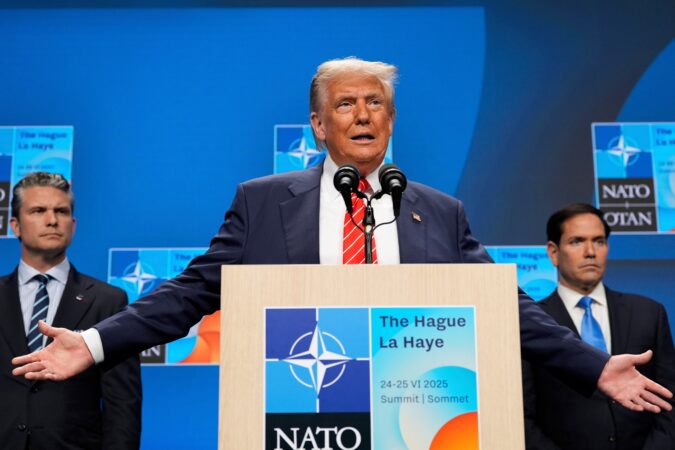
    Fresh off a week of star-spangled celebrations of America’s 250th, President Donald Trump departs for Turkey on Monday to meet with fellow leaders of NATO. They hope he wouldn’t declare independence from them.

    Trump has long been skeptical about NATO and European allies, asserting that the alliance the United States forged after World War II to fend off the Soviet Union has been taking advantage of Washington’s largesse. Deep into his second term, the president is now well acquainted with the theatrics of NATO gatherings, reveling, according to his associates, in the drama of threatening fellow leaders and watching them scramble to keep him happy.

    The strains increase every year, with Trump’s popularity sinking in Europe after he threatened to seize Greenland in January and sent energy prices spiking with his attack on Iran. The president has fumed that European allies didn’t do enough to help Washington in its war. And in recent days, he has renewed complaints about their defense spending, though he has successfully driven big increases.

    Now, the alliance will again attempt to weather Trumpian pressure, by flattering him where possible and avoiding unnecessary confrontations.

    Trump is scheduled to arrive in the Turkish capital of Ankara on Tuesday and will meet Turkish President Recep Tayyip Erdogan before having dinner with fellow NATO leaders that evening.

    The substantive meeting will be Wednesday morning, which diplomats have kept short to minimize potential disruptions. Afterward, Trump plans to meet with Ukrainian President Volodymyr Zelensky and Syrian President Ahmed al-Sharaa before holding a news conference and returning to Washington, according to White House spokesperson Anna Kelly.

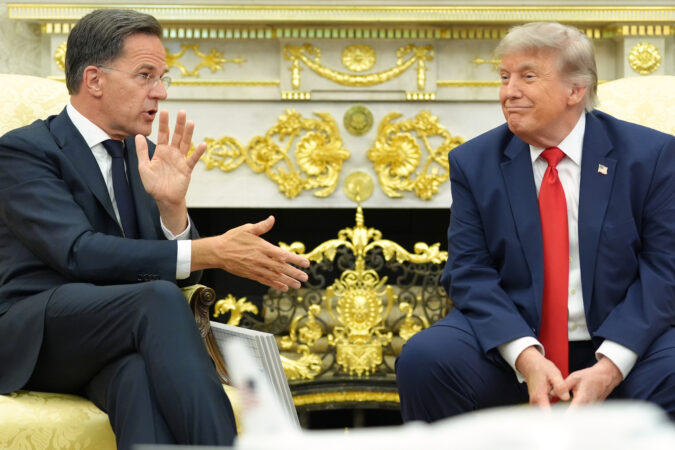
    The president’s grievances have already subsumed much of NATO’s business. NATO Secretary General Mark Rutte laid the foundation last month, praising the president’s stewardship and delivering a presentation in the Oval Office of what he called the “Trump trillion,” with poster boards in golden, “Art of the Deal”-style lettering boasting increases in Europe’s defense spending over the last decade.

    Trump told Rutte that he would skip the gathering altogether were it not being hosted by Erdogan, who for 23 years has ruled his nation with an increasingly tight grip.

    Asked what he wanted from allies, Trump said alongside Rutte that “I just want their loyalty.”

    He has rewarded allied leaders in recent months whom he perceives as friends, including Polish President Karol Nawrocki, whose country has been promised 5,000 more U.S. troops. And he has moved to punish those he views as insufficiently deferential, including German Chancellor Friedrich Merz, who faced weeks of open criticism from Trump after questioning the president’s Iran strategy during a public conversation with schoolchildren.

    Trump began and ended one day last week with angry posts about NATO on his social media account, declaring that “the United States spends more money on NATO than any other country, by far, to protect them, without getting any benefit from so doing.” But behind the public criticism, a senior White House official said, the president views the summits as an opportunity to impose pressure, leaning into his tough-guy role and seeing how leaders respond.

    The last summit, held in June 2025 in the Netherlands, “was great fun,” the official said, referring to an event in which Rutte called Trump “daddy,” comparing him to a father who needs to use authority to stop kids from fighting on a schoolyard. The comment went viral online and was boosted by the White House’s edit of the video clip with the Usher song “Hey Daddy (Daddy’s Home).”

    “The president always has fun at NATO, contrary to what people think,” the White House official said, speaking on condition of anonymity to speak candidly about the sensitive politics of these encounters.

    NATO officials and diplomats from NATO countries don’t expect Trump to threaten to pull from the alliance this year, as he did in 2018. But they know the president likes to surprise, and they say much will depend on his mood when he lands in Turkey. It is expected to be the first international trip on the refurbished, luxury Boeing 747 that he pushed Qatar to give him for use as Air Force One.

    One senior European diplomat fretted that Trump would arrive in Turkey exhausted and angry after a week of tiring travel, including a 3:30 a.m. Saturday return from an event at Mount Rushmore and a rally on the National Mall later that day in the sweltering Washington heat.

    Europeans are “nervous that the way [Trump] feels about NATO is that this is not fundamentally in U.S. interests and so [they] are nervous that the summit could be more calamitous,” said Max Bergmann, an expert on U.S.-Europe relations at the Center for Strategic and International Studies, a think tank. “Especially now as there’s more domestic political pressure on European leaders to be seen as standing up to Trump.”

    NATO officials are coming to the summit armed with big numbers that play to Trump’s wishes. They will trumpet an extra $139 billion spent on defense by European allies and Canada last year. They will make a show of signing billions of dollars of weapons deals and letters of intent, according to senior NATO diplomats speaking on condition of anonymity to discuss the sensitive planning around the meeting.

    And they hope to promise as much as they can to help ensure security in the Strait of Hormuz, although many countries say they need Tehran’s assent if they are to deploy naval missions there to remove the Iranian mines that are hampering shipping traffic.

    But many of NATO’s core security issues have been overshadowed by Trump’s dispute with the alliance. Ukraine and Russia have stepped up attacks on each other in recent weeks, but U.S. efforts to mediate a peace deal have all but halted. Trump’s peace envoys, Steve Witkoff and Jared Kushner, have been focused on Iran, and the White House hasn’t empowered other officials to engage, despite the deep ranks of policymakers who might do so.

    NATO diplomats are negotiating a pledge for Ukraine of about $70 billion in military aid for this year and the next, to be announced at the summit. Washington would not take part, but it has not opposed language supportive of Ukraine, as it sometimes did last year, two diplomats said, speaking on the condition of anonymity to share internal deliberations.

    The alliance has shelved work on a strategy for responding to threats from Russia, a consequence, European diplomats say, of White House caution about doing anything that would portray Moscow as an adversary.

    Some U.S. officials have downplayed the tensions. The U.S. ambassador to NATO, Matthew G. Whitaker, said last week that the summit “really is going to be a measurement of the progress,” since allies pledged last year to each spend 5% of their annual economic output on defense by 2035.

    Whitaker offered assurances that “the U.S. isn’t going away” but said the administration would try to reward the countries that are spending the most. He said the Pentagon and State Department have discussed possible benefits such as “more time with leaders” and “priority in acquisition and procurement.”

    Asked if the U.S. was considering measures targeting nations that are lagging behind, he said yes, but did not elaborate.

    The Trump administration has made disjointed troop announcements in recent months, with the Pentagon at times out of step with the White House. After the Pentagon surprised Poland by canceling a planned troop rotation, for instance, Trump scrapped it and promised an increase. In other cases, the president has suggested some cuts were punishment for European criticism of the war on Iran.

    European leaders plan to declare their commitment to assume increased responsibility of the continent’s defenses — a message many of them have converged on with the Trump administration, which is intent on pulling U.S. resources.

    European policymakers describe their vow to rearm as a response to an increasingly tense confrontation with Russia and shifting U.S. priorities, rather than just a bid to placate Trump. But policymakers including in France and Germany have pressed their U.S. counterparts to coordinate any military drawdown.

    Some Europeans, especially those in Western Europe, have started to work with Pentagon planners on an orderly handover. French Deputy Defense Minister Alice Rufo said Paris has long led calls for greater European autonomy, and “today it is the Americans saying it” too.

    “What we need to achieve at this summit is for this shift to happen in a coherent manner for collective defense, which also concerns the Americans,” Rufo said. “It’s in our best interest to ensure that this shift takes place in an orderly, efficient manner to deter our adversaries, and not to create frictions among us.”

    But the effort is creating strains in the alliance. Rutte is still trying to preserve a robust U.S. presence in Europe. And many policymakers in countries that border Russia still trust Washington more than France and Germany to defend them in a war with Moscow. They believe that old American instincts to defend democracies would kick in, along with pressure from hawkish Republican lawmakers.

    A senior NATO diplomat said there was a sense of optimism ahead of the summit but also a recognition that “things can derail.”

    The diplomat mentioned Italian Prime Minister Giorgia Meloni, a far-right leader who shares much of Trump’s skepticism about migration and is sympathetic with many of his issues. But the two leaders traded barbs in recent weeks in a dispute that originated with Trump’s anger at Italy’s caution about allowing its bases to be used to attack Iran.

    “Can I totally exclude that something like that will happen? No. I’m optimistic because I think the leaders know what is at stake,” the NATO diplomat said. “And if something does occur, then we always have the ultimate marriage counselor, Mark Rutte, to smooth things over.”

    The Trump-Meloni kerfuffle took on a new dimension after Trump claimed she had “begged” for a photo with him at a recent Group of Seven meeting in France.

    It escalated further over the weekend as the president posted a meme to Truth Social of Meloni looking at him during the G7, under the headline “Restraining Order Needed.” The post sparked a fresh wave of coverage in the Italian press and thinly veiled distaste within the ranks of Meloni’s coalition.

  • Efforts to help smokers quit stall under Trump

    Efforts to help smokers quit stall under Trump

    WASHINGTON — The ads were jarring: a man with a hole in his throat where his larynx, or voice box, had once been. A woman whose teeth and jaw had been removed after oral cancer. Another woman speaking in a robotic voice, which was altered when her larynx was removed: “I wish I’d never seen a cigarette in my entire life.” A black screen followed, saying she died two days later.

    The Centers for Disease Control and Prevention’s 14-year ad campaign, called Tips From Former Smokers, was highly memorable and, research shows, highly effective in motivating people to quit. Last year, though, as tobacco companies gave millions to political organizations related to the Trump administration, the campaign went dark.

    There is no definitive evidence linking the donations to the lapse of the ad campaign. But the decision to terminate it was one of several steps the administration has taken to unravel federal government antismoking initiatives that had long had bipartisan support during a time when the administration has delivered significant policy wins to tobacco companies.

    The CDC’s Office on Smoking and Health, which managed the campaign and worked with states on smoking cessation measures, has been shut down for more than a year, after its staff was laid off as part of the administration’s government downsizing efforts. While hundreds of other federal health employees were eventually rehired, the smoking office staff members have not been.

    Even after Congress restored the office’s funding late last summer, its employees have remained on paid leave as litigation challenging the firings plays out.

    In recent weeks, under pressure from Congress, the CDC has given states diminished funding to air ads from the campaign’s archive, but the federal government will not produce new ads or negotiate contracts for them to air nationwide. The ads had prompted millions of smokers to dial state quit lines for help on how to stop smoking. In interviews, people who ran quit lines in several states said that since the ads went off the air, calls have plummeted along with enrollment in programs that offered counseling and nicotine gum and patches.

    The abandonment of an effort that was widely regarded as a public health triumph has puzzled antismoking activists who point out that Health Secretary Robert F. Kennedy Jr.’s platform was based on ending chronic diseases, which are a well-known consequence of smoking.

    “We find it very ironic in an administration that wants to make America healthy again that we’re cutting all of these resources related to smoking and vaping,” said Nancy Brown, CEO of the American Heart Association.

    Helping adults stop smoking is one of the most evidence-backed ways to improve the public’s health. Smoking rates in the United States have fallen significantly, to less than 10% of adults, compared with 42% of adults in the early 1960s. Still, smoking remains the leading cause of preventable death and disease in the country, causing about 490,000 premature deaths each year.

    A national survey of adults who smoked from 2012 through 2018 found that the Tips from Former Smokers campaign was associated with more than 16 million people attempting to quit smoking and 1 million succeeding. During those years alone, the campaign was associated with saving an estimated $7.3 billion in healthcare costs.

    “It’s crazy that they have cut this funding if they really want to save lives and save money,” said Sally Herndon, who ran North Carolina’s tobacco control program until her retirement last year.

    Emily Hilliard, a spokesperson for the Department of Health and Human Services, said in a statement that the CDC “remains committed to tobacco prevention and control and continues to support this priority through outreach, education, and surveillance.”

    The cuts have come as tobacco companies have aggressively lobbied the administration for policy changes that would likely increase their market share of vaping and other nicotine products.

    The New York Times recently reported that Reynolds American, which makes Newport and Camel cigarettes, saw a coveted new federal policy take shape that would allow an entire new class of flavored e-cigarettes onto the market. The initiative was announced just days after a $5 million donation and lunch with President Donald Trump at his golf course in Florida. Executives from Altria, which makes Marlboro cigarettes, were also present.

    The new policy was crafted over the objections of Marty Makary, then the FDA commissioner, who cited it as the reason for his resignation in May. It stunned some public health experts, who say the FDA set aside one of its central authorities: to approve or reject individual products based on their merits.

    “It’s very clear this guidance is a gift to the tobacco industry on a silver platter with a side of public health malpractice,” said Brian King, a former leader of the FDA’s tobacco division and executive vice president for U.S. programs of the Campaign for Tobacco-Free Kids.

    Opponents of the policy say flavored vapes will introduce young people who have never smoked to nicotine products.

    But Hilliard, the health department spokesperson, said the FDA was focused on protecting youth and a “science-based review process for tobacco products.”

    She added: “Cigarette smoking remains the leading cause of preventable disease and death in the United States. And the agency supports the development of products that may provide less harmful alternatives for adults who smoke.”

    The federal cuts to antismoking programs and what some view as lenient new policies represent a reversal of decades of setbacks for tobacco companies under both Democratic and Republican administrations.

    The CDC’s shuttered Office on Smoking and Health employed experts on effective tobacco interventions who worked with state health officials to advance antismoking policies such as bans on indoor smoking, higher tobacco taxes, and education for parents about e-cigarettes.

    The office sent most of its $240 million budget to states each year, but shortly after laying off the staff, in April 2025, the CDC notified states that their annual funding for tobacco control would not be coming.

    Many state tobacco control offices cut their own staff as a result, including in New York, Texas, and North Carolina. Late last year, Congress reinstated some funding to states that had relied on the CDC office for expertise.

    “We know that we really save lives and save money with tobacco prevention and control,” said Herndon, who until recently led North Carolina’s tobacco control efforts. “But without the training and technical assistance and support from the Office on Smoking and Health, a lot of the newer staff coming along are struggling to know what to do.”

    The Tips From Former Smokers campaign went off the air around September of last year, though some larger states such as New York and California continued to run some antismoking ads.

    Since then, calls to 1-800-QUIT-NOW lines — which traditionally experience a 30% spike in the weeks after an ad campaign — have fallen off significantly.

    National data on the quit line call volume was not compiled for the last year after the federal employee in charge was let go, said Thomas Ylioja, president of the North American Quitline Consortium.

    But at Quit for Life, an organization that operates quit lines in 19 states, Guam, and Washington, D.C., calls fell by 25% in the first half of 2026 compared with the first half of 2025 when the ads were on the air, according to Nick Fradkin, the group’s director of public health strategy.

    Officials in other states said calls had fallen off too — by about 45% in Texas, 25% in California, and 18% in New York. In Virginia, enrollment in the quit line counseling services fell by half from October 2025 through February 2026, said Logan Anderson, a spokesperson for the Virginia Department of Health.

    In recent weeks, the CDC offered $40 million, down from the usual $65 million, for states to air archived antismoking ads. It is unclear whether new ads will be created.

    In North Carolina, at least, “we don’t have the media machine that produced those fabulous ads,” Herndon said.

    This article originally appeared in the New York Times.

  • Yosemite offers many wonders. Crushing crowds are now among them.

    Yosemite offers many wonders. Crushing crowds are now among them.

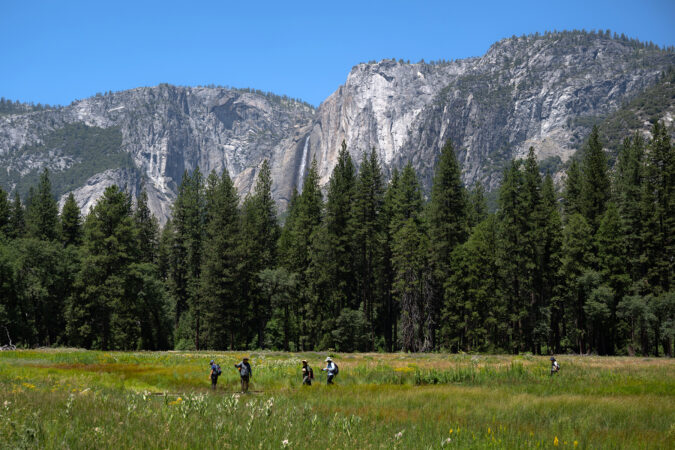
    YOSEMITE NATIONAL PARK, Calif. — At the base of Yosemite Falls, where white waters roared down a granite cliff, a couple jockeyed through dense crowds to try to take the perfect waterfall selfie. A family of five traded off resting in the single available seat on a wooden bench. A tourist tripped over a toddler, who fell and began wailing.

    There was one spectacle at Yosemite National Park last weekend not in the glossy brochures: the visitors themselves.

    The crown jewel of the nation’s park system, Yosemite is even more crowded than usual this year, after a decision by the Trump administration to do away with summer reservations here and at other popular parks.

    In the first half of 2026, visitors to and employees of California’s regal wilderness park reported hourslong traffic jams, waits at entrance stations, and long lines just to purchase a bite to eat.

    Employees of Yosemite and organizations that support it say that the hordes of visitors are demoralizing staff and damaging the park, as well as its reputation. Many visitors are determined to make the most of their visit, even with long waits. But some travelers have abandoned their plans altogether and driven out of the park’s gates after being turned away from every at-capacity major attraction.

    ”This is a far cry from the awe-inspiring sights Yosemite is known for,” the state’s two U.S. senators, Democrats Adam Schiff and Alex Padilla, wrote in a letter last week to the administration criticizing the cancellation of Yosemite’s reservation system.

    July is already the busiest month across national parks. And at Yosemite, it’s shaping up to be chaotic.

    On the morning of July 3, so many people had already arrived at Yosemite Valley, known for its sprawling meadows and towering palace of granite rock faces, that by 7 a.m. drivers were circling lot after lot as they tried to find a spot.

    “The traffic is terrible in the park,” said Lakshmi Duddukuru, 41, who spent 45 minutes of her first trip to Yosemite searching for a parking space. She spoke as she scaled the steep Mist Trail, where throngs of hikers were ascending in a slowly snaking line.

    Yosemite offers free shuttles to transport visitors between popular destinations, but many were too full to pick up any of the dozens of people waiting at the stops. On one bus, a frustrated driver trying to squeeze in more sightseers shouted, “If you’re not touching somebody, you’re not close enough.”

    Yosemite Valley helped inspire the creation of the national park system, as it was the first federally protected land to be designated for public use, under an act signed in 1864 by President Abraham Lincoln. Its waterfalls and glacier-carved monoliths, such as Half Dome and El Capitan, have made it one of the country’s most beloved national parks — and most visited.

    In 2020, Yosemite began experimenting with a summer reservation system to manage its ever-growing summer crowds. But Yosemite, as well as Arches National Park and Glacier National Park, did away with reservations this year, after President Donald Trump signed an executive order urging parks to rescind restrictions to improve access and help local economies.

    Ray McPadden, Yosemite’s superintendent, said that a reservation system should be a last resort. In previous years the park had to turn families away because they hadn’t booked a visit in advance, he said, which was unfair to them and meant a loss of fees that could have gone toward fixing up trails, campgrounds, and bathrooms.

    McPadden thinks the park is not overly crowded, except on holidays and Saturdays, he said. He expects a 12% increase in visits compared with last year, which would be about 4.7 million visitors, and the second-busiest year in the park’s history.

    “No secret: Yosemite is really popular,” he said. “We are having a great summer.”

    Some park employees disagree. The union local representing Yosemite staff, NFFE Local 465, said in a statement that the decision to end the reservation system had undermined staff and was “disheartening and disappointing,” particularly when the park was short-staffed after federal cuts. Gridlock traffic inside lengthens staff members’ commutes and makes it difficult, if not impossible, for them to perform their duties, the local said.

    Advocacy organizations point out that Yosemite did not benefit much from fee revenue over the holiday weekend. As part of his overhaul of the National Park Service, Trump ended free park entry on some days, such as Martin Luther King’s Birthday, while granting free park admission to U.S. residents on Trump’s birthday, which coincides with Flag Day, as well as July 3, 4, and 5.

    They worry that overcrowding encourages people to go off trail, and that guests aren’t as supervised as they once were. The bumper-to-bumper traffic also means that ambulances and other emergency vehicles can be delayed.

    The overcrowding “is an environmental disaster for the park, and it’s a safety issue for visitors,” said Mark Rose, the Sierra Nevada program manager for the nonprofit National Parks Conservation Association.

    For the most part, however, visitors seemed unfazed by the crowds. The magnificence of Yosemite’s glassy rivers and giant sequoias is difficult to diminish, and tourists said they expected summer crowds when they traveled.

    Duddukuru, who was visiting from Chicago, said that despite the delays the park was “wonderful.” She and her family had to wait 45 minutes to board a shuttle, but then spotted a bear, so the delay felt worth it, she said.

    Sasha Rubeiz, 23, said one particularly narrow trail felt a little dicey with so many other hikers, but they were mostly not a bother on her first, “unreal” visit here. She tilted her head up toward soaring pine trees and blue skies.

    “I’m looking up more than down,” said Rubeiz, who lives in Sacramento, Calif.

    McPadden said he was working on solutions to some of the crowding issues, including new fencing and boulders to stop people from parking illegally. He said he hoped to install digital signs showing guests which parking lots are already full so they don’t waste time circling.

    He would not say whether a reservation system would return next year. “I try to follow the facts, which generally are very, very positive here in the park,” he said.

    Brett Birkbeck, a police officer who lives in Huntington Beach, Calif., ate a hot dog and drank red wine out of a plastic cup as he set up camp at dusk under pine trees.

    Birkbeck, 49, said the crowds could not put a damper on his annual summer trip to Yosemite, during which he and his friends hike and grill ribs for a week in one of the most spectacular places on Earth.

    “I call it pressing the reset button on the year,” he said.

    This article originally appeared in the New York Times.

  • After America’s 250th, Trump will test how far he can push NATO allies

    After America’s 250th, Trump will test how far he can push NATO allies

    Fresh off a week of star-spangled celebrations of America’s 250th, President Donald Trump departs for Turkey on Monday to meet with fellow leaders of NATO. They hope he wouldn’t declare independence from them.

    Trump has long been skeptical about NATO and European allies, asserting that the alliance the United States forged after World War II to fend off the Soviet Union has been taking advantage of Washington’s largesse. Deep into his second term, the president by now is now well acquainted with the theatrics of NATO gatherings, reveling, according to his associates, in the drama of threatening fellow leaders and watching them scramble to keep him happy.

    The strains increase every year, with Trump’s popularity sinking in Europe after he threatened to seize Greenland in January and sent energy prices spiking with his attack on Iran. The president has fumed that European allies didn’t do enough to help Washington in its war. And in recent days, he has renewed complaints about their defense spending, though he has successfully driven big increases.

    Now, the alliance will again attempt to weather Trumpian pressure, by flattering him where possible and avoiding unnecessary confrontations.

    Trump is scheduled to arrive in the Turkish capital of Ankara on Tuesday and will meet Turkish President Recep Tayyip Erdogan before having dinner with fellow NATO leaders that evening.

    The substantive meeting will be Wednesday morning, which diplomats have kept short to minimize potential disruptions. Afterward, Trump plans to meet with Ukrainian President Volodymyr Zelensky and Syrian President Ahmed al-Sharaa before holding a news conference and returning to Washington, according to White House spokeswoman Anna Kelly.

    The president’s grievances have already subsumed much of NATO’s business. NATO Secretary General Mark Rutte laid the foundation last month, praising the president’s stewardship and delivering a presentation in the Oval Office of what he called the “Trump trillion,” with poster boards in golden, “Art of the Deal”-style lettering boasting increases in Europe’s defense spending over the last decade.

    Trump told Rutte that he would skip the gathering altogether were it not being hosted by Erdogan, who for 23 years has ruled his nation with an increasingly tight grip.

    Asked what he wanted from allies, Trump said alongside Rutte that “I just want their loyalty.”

    He has rewarded allied leaders in recent months whom he perceives as friends, including Polish President Karol Nawrocki, whose country has been promised 5,000 more U.S. troops. And he has moved to punish those he views as insufficiently deferential, including German Chancellor Friedrich Merz, who faced weeks of open criticism from Trump after questioning the president’s Iran strategy during a public conversation with schoolchildren.

    Trump began and ended one day last week with angry posts about NATO on his social media account, declaring that “the United States spends more money on NATO than any other country, by far, to protect them, without getting any benefit from so doing.” But behind the public criticism, a senior White House official said, the president views the summits as an opportunity to impose pressure, leaning into his tough-guy role and seeing how leaders respond.

    The last summit, held in June 2025 in the Netherlands, “was great fun,” the official said, referring to an event in which Rutte called Trump “daddy,” comparing him to a father who needs to use authority to stop kids from fighting on a schoolyard. The comment went viral online and was boosted by the White House’s edit of the video clip with the Usher song “Hey Daddy (Daddy’s Home).”

    “The president always has fun at NATO, contrary to what people think,” the White House official said, speaking on condition of anonymity to speak candidly about the sensitive politics of these encounters.

    NATO officials and diplomats from NATO countries don’t expect Trump to threaten to pull from the alliance this year, as he did in 2018. But they know the president likes to surprise, and they say much will depend on his mood when he lands in Turkey. It is expected to be the first international trip on the refurbished, luxury Boeing 747 that he pushed Qatar to give him for use as Air Force One.

    One senior European diplomat fretted that Trump would arrive in Turkey exhausted and angry after a week of tiring travel, including a 3:30 a.m. Saturday return from an event at Mount Rushmore and a rally on the National Mall later that day in the sweltering Washington heat.

    Europeans are “nervous that the way [Trump] feels about NATO is that this is not fundamentally in U.S. interests and so [they] are nervous that the summit could be more calamitous,” said Max Bergmann, an expert on U.S.-Europe relations at the Center for Strategic and International Studies, a think tank. “Especially now as there’s more domestic political pressure on European leaders to be seen as standing up to Trump.”

    NATO officials are coming to the summit armed with big numbers that play to Trump’s wishes. They will trumpet an extra $139 billion spent on defense by European allies and Canada last year. They will make a show of signing billions of dollars of weapons deals and letters of intent, according to senior NATO diplomats speaking on condition of anonymity to discuss the sensitive planning around the meeting.

    And they hope to promise as much as they can to help ensure security in the Strait of Hormuz, although many countries say they need Tehran’s assent if they are to deploy naval missions there to remove the Iranian mines that are hampering shipping traffic.

    But many of NATO’s core security issues have been overshadowed by Trump’s dispute with the alliance. Ukraine and Russia have stepped up attacks on each other in recent weeks, but U.S. efforts to mediate a peace deal have all but halted. Trump’s peace envoys, Steve Witkoff and Jared Kushner, have been focused on Iran, and the White House hasn’t empowered other officials to engage, despite the deep ranks of policymakers who might do so.

    NATO diplomats are negotiating a pledge for Ukraine of about $70 billion in military aid for this year and the next, to be announced at the summit. Washington would not take part, but it has not opposed language supportive of Ukraine, as it sometimes did last year, two diplomats said, speaking on the condition of anonymity to share internal deliberations.

    The alliance has shelved work on a strategy for responding to threats from Russia, a consequence, European diplomats say, of White House caution about doing anything that would portray Moscow as an adversary.

    Some U.S. officials have downplayed the tensions. The U.S. ambassador to NATO, Matthew G. Whitaker, said last week that the summit “really is going to be a measurement of the progress,” since allies pledged last year to each spend 5 percent of their annual economic output on defense by 2035.

    Whitaker offered assurances that “the U.S. isn’t going away” but said the administration would try to reward the countries that are spending the most. He said the Pentagon and State Department have discussed possible benefits such as “more time with leaders” and “priority in acquisition and procurement.”

    Asked if the U.S. was considering measures targeting nations that are lagging behind, he said yes, but did not elaborate.

    The Trump administration has made disjointed troop announcements in recent months, with the Pentagon at times out of step with the White House. After the Pentagon surprised Poland by canceling a planned troop rotation, for instance, Trump scrapped it and promised an increase. In other cases, the president has suggested some cuts were punishment for European criticism of the war on Iran.

    European leaders plan to declare their commitment to assume increased responsibility of the continent’s defenses — a message many of them have converged on with the Trump administration, which is intent on pulling U.S. resources.

    European policymakers describe their vow to rearm as a response to an increasingly tense confrontation with Russia and shifting U.S. priorities, rather than just a bid to placate Trump. But policymakers including in France and Germany have pressed their U.S. counterparts to coordinate any military drawdown.

    Some Europeans, especially those in Western Europe, have started to work with Pentagon planners on an orderly handover. French Deputy Defense Minister Alice Rufo said Paris has long led calls for greater European autonomy, and “today it is the Americans saying it” too.

    “What we need to achieve at this summit is for this shift to happen in a coherent manner for collective defense, which also concerns the Americans,” Rufo said. “It’s in our best interest to ensure that this shift takes place in an orderly, efficient manner to deter our adversaries, and not to create frictions among us.”

    But the effort is creating strains in the alliance. Rutte is still trying to preserve a robust U.S. presence in Europe. And many policymakers in countries that border Russia still trust Washington more than France and Germany to defend them in a war with Moscow. They believe that old American instincts to defend democracies would kick in, along with pressure from hawkish Republican lawmakers.

    A senior NATO diplomat said there was a sense of optimism ahead of the summit but also a recognition that “things can derail.”

    The diplomat mentioned Italian Prime Minister Giorgia Meloni, a far-right leader who shares much of Trump’s skepticism about migration and is sympathetic with many of his issues. But the two leaders traded barbs in recent weeks in a dispute that originated with Trump’s anger at Italy’s initial caution about allowing its bases to be used to attack Iran.

    “Can I totally exclude that something like that will happen? No. I’m optimistic because I think the leaders know what is at stake,” he said. “And if something does occur, then we always have the ultimate marriage counselor, Mark Rutte, to smooth things over.”

  • China test-launches a ballistic missile in the South Pacific and raises regional concerns

    China test-launches a ballistic missile in the South Pacific and raises regional concerns

    BANGKOK — China’s navy test-launched a long-range ballistic missile Monday from one of its nuclear-powered submarines in the South Pacific, a rare act that drew protests and concern from countries in the region.

    The missile carried a dummy warhead, according to the official Xinhua News Agency. China last conducted a missile test in the Pacific two years ago, firing an intercontinental ballistic missile with a dummy warhead, the first since 1980.

    The 2024 launch mirrored the testing the United States conducts for its own ballistic missile fleet, which experts viewed as an assertion of China’s growing superpower status.

    Monday’s launch, at 12:01 p.m. local time, was part of routine annual training, complied with international law and practice, and was not directed against any country or target, according to a short statement from Xinhua, which was reposted by the Ministry of Defense.

    Australia, Japan, and New Zealand express criticism

    Beijing’s militarization has drawn concerns, and Australia, Japan, and New Zealand criticized the launch.

    The New Zealand government said it was informed hours beforehand and noted that the missile was fired into the South Pacific Nuclear Free Zone.

    The zone was established by the 1986 Treaty of Rarotonga, which prohibits nuclear weapons throughout the region. China ratified the protocols in 1987, pledging not to test nuclear weapons within the zone or threaten to use them against signatories with territory in the region.

    “It appears that despite our long-standing concerns about this type of activity, China carried out the test within hours of informing us,” Foreign Minister Winston Peters told the Associated Press in a statement.

    The launch took place the same day Australia and Fiji signed a new mutual defense treaty meant to counter Chinese influence in the Pacific.

    “Australia has been clear with China that we regard this as destabilizing to the region,” Australia’s Foreign Minister Penny Wong told reporters in Fiji in response to the test.

    Japan’s Defense Ministry in a statement expressed concern about China’s increasing military activity and urged Beijing to “rethink” its missile testing so that the projectiles would not fly over Japan or pose other security risks.

    “China’s military activities, combined with its lack of transparency, have become a grave concern for Japan and the international society,” Chief Cabinet Secretary Minoru Kihara said in Japan, citing Beijing’s military activities around Japan and its increased military spending.

    Beijing brushed off the criticism.

    “We hope that the relevant countries will avoid overinterpretation,” a Ministry of Foreign Affairs spokesperson said.

    Expert says it’s a signal to the United States

    The concern is a result of a lack of clear information, said Drew Thompson, senior fellow at the S. Rajaratnam School of International Studies at Nanyang Technological University in Singapore: “China’s military modernization and buildup have occurred without concurrent increases in openness and transparency, resulting in uncertainty about China’s intentions.”

    Lyle Morris, a senior fellow at Asia Society Policy Institute’s Center for China Analysis, said the launch was the first publicly acknowledged test with a dummy warhead from a nuclear-powered ballistic missile submarine of the Chinese navy to travel this far into the Pacific.

    Morris said it is noteworthy that the information available shows Japan, New Zealand, and Australia received notifications in advance, but not the U.S.

    The test was a signal to the U.S., he said: “The announcement demonstrates that China’s nuclear deterrent is no longer centered solely on land-based missiles.”

    China maintains a “no first use” of nuclear weapons policy, but is also actively pursuing nuclear technology and weaponry as part of its long-term strategy to modernize the People’s Liberation Army.

    China has a fleet of six ballistic-missile submarines and 59 nuclear-powered attack submarines, according to the Nuclear Threat Initiative, a Washington-based think tank.

    In its latest report to Congress on China’s military capabilities, released in late 2025, the Pentagon said China had an estimated stockpile of around 600 nuclear warheads in 2024, adding that the PLA remains on track to field more than 1,000 nuclear warheads by 2030.

  • 3 firefighters killed in Colorado remembered for their bravery as wildfires churn in the West

    3 firefighters killed in Colorado remembered for their bravery as wildfires churn in the West

    With wildfires burning across many Western states, wildland firefighters gathered Sunday to pay tribute to three of their own who died after they were trapped by flames a week ago.

    Emily Barker, Nick Hutcherson and Sydney Watson were remembered as courageous public servants who left a lasting impact on the communities where they worked.

    “They showed up to make order out of chaos day after day with purpose, dedication and heart,” U.S. Wildland Fire Service Chief Brian Fennessy said during a memorial service in Grand Junction, Colorado, near where the firefighters died while battling flames on the Colorado-Utah border.

    While that fire is now almost entirely contained, nearly 40 large fires are still going strong across the West. Most of the current fires are scattered around Colorado, Utah and New Mexico while there are wildfires in eight other states — from Alaska to Arizona.

    Over the holiday weekend, more evacuations in Colorado were ordered across four counties where the Aspen Acres fire had burned about 136 square miles south of Colorado Springs.

    The fire had damaged or destroyed more than 200 structures as of Sunday, authorities said. National Guard soldiers were sent in Friday to help with staffing checkpoints on roads near the fire zone.

    Months of dry weather and a record lack of snow this past winter in some places along with erratic winds have been fueling the fires.

    The three firefighters killed on June 27 in western Colorado were members of a Helitack crew that sometimes drops into remote areas by helicopters.

    Barker, Hutcherson and Watson and two others who sustained burn injuries were overcome by flames from fast-moving fires in Mesa County. They had deployed emergency protective shelters, which are considered a “last resort” for firefighters when there is no other way out.

    Fennessy, the Wildland Fire Service chief, said Sunday that “the weight of this tragedy is felt way beyond our wildland fire community.”

    Photos of the firefighters were set up on the stage at the memorial service alongside flowers and flags.

    They worked jobs that require courage, selflessness, strength and heart, said Sarah Fisher, the U.S. Forest Service’s deputy chief for fire and aviation management.

    “The work demands long days, heavy burdens and quiet acts of bravery,” she said. “We will remember them, we will honor their legacy and we will carry their light forward.”

    Emily Barker

    Barker, 38, had so much spirit, and the people around her always strived to be a better person by her presence, said Sarah Brubeck Schnurbusch, a friend and former roommate.

    Barker was from Clinton Township, Michigan, and liked hiking, skiing, dirt biking and playing hockey. She loved firefighting.

    “I’ve never seen someone so excited to go to work,” Brubeck Schnurbusch said. She added that her friend helped pave the way for many women in the industry.

    Barker was a trailblazer, first working as a teacher “shaping young lives,” Fennessy said.

    “She didn’t just live in wild places, she helped to shape them, care for them and make them better,” he said.

    Nick Hutcherson

    Hutcherson, 27, served in the U.S. Navy and had plans to become a physical therapy doctor, according to the Kaibab National Forest in northern Arizona where he was assigned. He was also an active member of the Northern Arizona Deaf and American Sign Language community.

    Hutcherson, who was from Glendale, Arizona, “embodied the spirit of public service” Fennessy said.

    He was a dedicated practitioner of Muay Thai martial arts who trained in Flagstaff.

    His favorite saying was “easy day,” Fennessy said, “because Nick had an uncommon ability to face hard things with optimism, humility and a smile.”

    Sydney Watson

    Watson, 27, was from Warrior, Alabama, and a graduate of the University of Tennessee Southern, where she was a pitcher on the softball team, the university said.

    In 2023, she participated in a program in North Carolina organized by the Women-in-Fire Prescribed Fire Training Exchanges, the group said. In her application, she said she wanted to see more women on the fire line and to learn from other women in the field, the university said.

    “From the time she was very young, she knew she wanted to be a firefighter someday,” Fennessy said.

    “I have no doubt she inspired many young women to become a firefighter,” he said.

  • Mourners throng funeral procession in Tehran for Iran’s Supreme Leader Ayatollah Ali Khamenei

    Mourners throng funeral procession in Tehran for Iran’s Supreme Leader Ayatollah Ali Khamenei

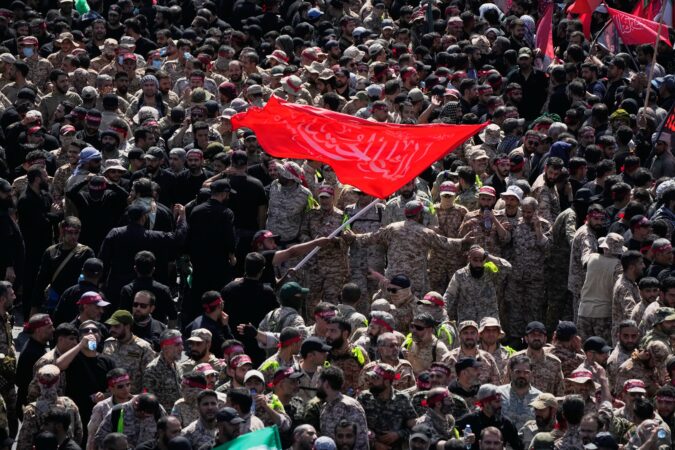
    TEHRAN, Iran — Mourners dressed in black flooded into Iran’s capital Monday for a procession as part of the funeral of the late Supreme Leader Ayatollah Ali Khamenei, with throngs of people calling for the death of U.S. President Donald Trump.

    Khamenei’s flag-draped coffin, and those of members of his family killed Feb. 28 in an airstrike at the start of the war launched by Israel and the United States, sat on board a truck decorated to resemble the ornamental grating that surrounds the shrine of an imam. The massive turnout, encouraged by Iran’s theocracy as a sign of strength, came as it negotiates with the U.S. over a permanent end to the war that killed the 86-year-old cleric.

    Helicopter images aired on Iranian state television showed a massive crowd stretching from Tehran’s Azadi, or Freedom, Square for kilometers (miles) down a multilane street of the same name. The crowd appeared to be larger than the one that turned out for the 2020 procession for the late Revolutionary Guard Gen. Qassem Solemani, which drew over 1 million people.

    Authorities offered no immediate crowd count as the truck crept down the street. But people alongside the truck and elsewhere on the route carried placards, signs and banners calling for Trump’s death.

    “Today that we are here for the funeral for our leader, it’s a very tough day,” mourner Fatima Hassan said. “We are not here to say goodbye to him, we are here for revenge. And we will take revenge.”

    Sea of mourners greets Khamenei

    Mourners reached out to touch the truck, and some threw scarves and other items for attendants to brush against the coffin, a common practice in Iran seen as a blessing. Attendants, some on the ladders of firetrucks, sprayed misted water across the crowds to cool them in the heat.

    Authorities appeared concerned about the dangers of having a large crowd alongside the procession, with officials on loudspeakers urging the public to walk slowly, not to push and to stay to the edges of the street.

    The coffins will be taken through the streets of Tehran on a 12-hour journey to Mehrabad International Airport, said Revolutionary Guard Gen. Hasan Hasanzadeh, who is overseeing the procession.

    Authorities have shut down streets, airspace and daily life for the mourning, which began Saturday and will end Thursday as Khamenei is buried at the Imam Reza shrine in Mashhad, his birthplace.

    “This is the last time I am seeing him,” said a weeping Maryam Alizadeh. “Our generation lived with him for decades.”

    Calls for Trump’s death grow as funeral goes on

    As the funeral has gone on, however, there have increasingly been calls from mourners to avenge Khamenei’s death. Mourners and the signs they carry have called for the killing of both Trump and Israeli Prime Minister Benjamin Netanyahu. Such signs were seen again Monday along the procession’s route, with one effigy of Trump being hanged.

    “We are here to show that his path will continue, and every single one of these people will continue down his path with clenched fists and soon we will certainly avenge his death against the U.S and Israel,” said mourner Sahar Zaraatgar

    U.S. federal authorities have been tracking Iranian threats against Trump and other administration officials for years, stemming from Trump’s ordering the 2020 killing of Soleimani, who led the elite Quds Force. Iran has repeatedly denied plotting to kill Trump, though hard-line propaganda footage long has suggested Trump was in Tehran’s crosshairs.

    Trump meanwhile promised to destroy Iran’s civilization during the war, among other threats.

    Negotiations over war remain on hold

    The U.S. is meanwhile eager to press ahead with negotiations with Iran aimed at fully reopening the Strait of Hormuz, rolling back its disputed nuclear program and reaching a permanent end to the war. Talks appear to be on hold until after the burial.

    The funeral was in part a show of unity as Iran demands a measure of control over the strait, a vital waterway for global energy that it shut down during the war. The U.S. has rejected those demands, and the sides are divided on other key issues, including Iran’s nuclear program and the conflict between Israel and the Iran-backed militant group Hezbollah in Lebanon.

    Iran’s new supreme leader, Ayatollah Mojtaba Khamenei, meanwhile has yet to make an appearance in the funeral ceremonies, which are unfolding over several days. He is believed to be in hiding after reportedly being wounded in the airstrike that killed his father.

    At the height of the war before an April ceasefire, Israel targeted top leaders, in at least one case likely using their public appearance to fix their position. It has also threatened to kill the younger Khamenei.

  • Letters to the Editor | July 6, 2026

    Letters to the Editor | July 6, 2026

    Stoking fear

    Your reporting on the Bicentennial in Philadelphia reminds readers that then-Mayor Frank Rizzo stoked fears of July Fourth counterprotests, and thereby scared away tens of thousands of visitors. In his efforts to thwart protest, his unsuccessful demand for 15,000 federal troops predicted “disruption and violence by a substantial coalition of leftist radicals.” It was red-baiting rhetoric that sounds eerily like what we hear today.

    There were actually a few different protest actions on July Fourth. We were participants in the largest one, a national demonstration held in North Philadelphia and led by Puerto Rican and Native American activists, calling for “a Bicentennial without colonies,” as well as “jobs and a decent standard of living” and “full democracy and equality.” Hundreds of organizations mobilized for the protest. News accounts estimated as many as 40,000 people marched and rallied peacefully in Fairmount Park.

    While the protest’s goals are yet to be achieved, this massive coalition effort in the face of repression by Mayor Rizzo was a boost to independent progressive politics in Philadelphia and beyond. This year, we are commemorating that protest and noting that milestones like America 250 are opportunities — not only to celebrate America’s birthday, but also to point out the unfulfilled promises of the Declaration of Independence, and to advance truthful, inclusive narratives about U.S. history.

    Paul Socolar, Pedro A. Rodriguez, and Tony Heriza, July 4 Sin Colonias Coalition, Philadelphia

    Fiscal irresponsibility

    I appreciated the recent article illuminating Mayor Cherelle L. Parker’s decision to spend $15.5 million in taxpayer money on what is now called the “One Philly: A Unity Concert for America.” The price tag for the event seems to be in direct contradiction to what Parker said to striking municipal workers last summer — that meeting their demands for a new contract would put the “fiscal stability” of the city at risk. Moreover, given the fact that the Philadelphia School District is facing a $300 million deficit and narrowly avoided making significant staff cuts, spending $15.5 million on a concert sounds, to be frank, fiscally irresponsible. Simply put, Parker is prioritizing a concert that now bears her slogan over the stability of the city’s budget, which serves Philadelphians — proving, once again, that under the Parker administration, it’s not “One Philly,” it’s “Her Philly” — and we just pay for it.

    Jeff Wasch, Philadelphia

    Speak up

    I studied political science in college and constitutional law in law school. In 50 years of law practice, I dealt with the occasional constitutional issue. None of my training or experience has prepared me for what the Trump administration is doing to the delicate balance we have called democracy. Hard to imagine that four justices of the U.S. Supreme Court had doubts about birthright citizenship, impossible to think that massive, unauthorized, and garish changes to the White House could be done by incompetent contractors whose meager qualifications include paying vast sums to the president while the Republican-led Congress does nothing to prevent it. A president who ignores the Constitution, statutory law, and judicial rulings while continuing to line his pockets — and those of his children — with billions of dollars of ill-gotten gain? It’s all happening every minute. The midterms and the November election are our best and last chance to throw these criminals out of office and take back America. In the meantime, speak up, attend rallies, and by all means try to persuade anyone who is on the fence to come over and help repair the harm.

    Marc P. Weingarten, Palm Beach Gardens, Fla.

    . . .

    The elephant in the nine individual judicial chambers of the U.S. Supreme Court for the past three months was Donald Trump’s bogus executive order intended to end the absolute right to U.S. citizenship for every child born within the borders of the United States and its territories (with the ridiculous exception of American Samoa), as mandated by the Constitution and a prior court ruling. Trump has proved to be the most racist president since Theodore Roosevelt (look it up). He claimed, without evidence, that Barack Obama, son of a citizen and born in Hawaii, was an “illegal.” For years, with coaching and encouragement from the odious Steven Miller, he has been on a mission to cleanse America of nonwhite residents and darker-skinned immigrant citizens. Haitians fleeing for their lives from mercenary gangs, poverty, hurricanes, and earthquakes? Trump’s message is get the hell out. Lily-white Afrikaners from South Africa are welcomed with open arms. Need a visa? No problem. Unless Trump is removed from office by impeachment, we will have the cruelest and stupidest chief executive occupying the presidency for an implausible 31 more months — and at least four of nine Supreme Court justices and dozens of Republicans in Congress still ready and willing to defy the Constitution for him. They are a true enemy of America’s constitutional democracy and its creed — “out of many, one.”

    David Kahn, Boca Raton, Fla.

    Public philosophy

    I write regarding a recent article about the draft report issued by President Donald Trump’s Religious Liberty Commission. To solve the problem of a secular public square, the report calls for the elimination of the principle of separation of church and state and the elevation of Christianity. However, the problem of the public square being empty of moral meaning is not a result of the separation of the state from the church. Rather, it is due to the separation of the state from a public philosophy through which moral order can be arrived at through evidence and reason, rather than revelation. Such a public philosophy provided the foundation of our democracy from the Age of Enlightenment of our founders until the latter half of the 20th century, when morality became privatized. The case for revival of this philosophical tradition was first made in 1955 by the political philosopher and journalist Walter Lippmann in his classic book, The Public Philosophy, and more recently by commentators such as David Brooks. A philosophical moral order that underlies our government, social relations, and marketplace — arrived at through reason — avoids the potential oppression of a state-established religion that our founders sought to preclude.

    Donald Kelly, Havertown

    Art of the Donald

    In his book The Art of the Deal, Donald Trump bragged about his negotiating skills. So let’s see how they are faring during his presidency. He awarded a no-bid $14 million contract to his favorite pool maintenance company to correct alleged flaws in the Lincoln Memorial Reflecting Pool after claiming the job would cost less than $2 million. How’s that working out so far? And it was recently revealed that he awarded a no-bid $500 million contract to the company building his wonderful ballroom after claiming the project would cost far less and be covered by donations from his cronies. Way to go, Don. And let’s not overlook his “agreements” with Iran to end his flawed (failed?) war that he promised would replace its authoritarian regime, remove its potential nuclear weapon capabilities, and reopen the Strait of Hormuz, which had never been closed to international shipping until his war began. So far, his war seems to have failed in achieving many of his goals. And the Strait of Hormuz? Its shipping lanes are only partly open and are now subject to fees never before charged by Iran. His next book should rightly be titled The Art of the Fail.

    Ben Zuckerman, Philadelphia

    Join the conversation: Send letters to letters@inquirer.com. Limit length to 150 words and include home address and day and evening phone number. Letters run in The Inquirer six days a week on the editorial pages and online.

  • Horoscopes: Monday, July 6, 2026

    ARIES (March 21-April 19). The situation that comes up today is not exactly like the last time, but how hard could it be? Experience doesn’t provide all the answers, but it does offer confidence that you’ll figure things out.

    TAURUS (April 20-May 20). It’s wonderful how friendship can survive distance, timing and the complications of adult life. You don’t have to talk every day to matter deeply to one another. When you reconnect, you pick up right where you left off.

    GEMINI (May 21-June 21). Flirting won’t look like flirting. It may look like common courtesy, professional diligence or mild annoyance. Then you notice that one person keeps showing up, asking questions and extending the conversation. The plot thickens.

    CANCER (June 22-July 22). Your wisdom nets you good fortune on several fronts. You can feel a feeling without becoming the feeling. Instead of, “I’m worried, therefore I must act,” you say, “I’m worried. Let me figure out what that’s about.”

    LEO (July 23-Aug. 22). You don’t have to wait for everyone else to decide what they’re doing before making your own move. You’re more adaptable than you realize. Whether plans change, people shift or circumstances evolve, you’ll find a place that works.

    VIRGO (Aug. 23-Sept. 22). You’ll soon be hashing out the details of a deal. If you do your homework, you’ll be impressively articulate and persuasive. Take the time to get clear in your own mind about what you want and what you’re willing to trade for it.

    LIBRA (Sept. 23-Oct. 23). You’re really coming up with good ones today. Sometimes thinking is your favorite activity. It feels nice when those synapses connect. And you don’t need anyone else to understand the enthusiasm, but they’ll feel it and lean in.

    SCORPIO (Oct. 24-Nov. 21). You’re smart, and you’re strong. But those aren’t the qualities that bring home today’s prize. It’s your adaptability that matters. Charles Darwin observed that it’s not the strongest that survives, nor the most intelligent, but the most responsive to change.

    SAGITTARIUS (Nov. 22-Dec. 21). Saying the right thing to the wrong audience can make you feel like it’s you, like you’re wrong. But being outnumbered isn’t the same thing as being wrong. Stand your ground. In a different room, the same words play like beautiful music.

    CAPRICORN (Dec. 22-Jan. 19). Something you’ve been doing for weeks, months or even years starts producing visible results. The improvement may seem sudden to others, though you know exactly how much effort went into it. Persistence finally has something to show for itself.

    AQUARIUS (Jan. 20-Feb. 18). The very thing you once considered too strange to mention is the exact thing that endears and connects you to a kindred soul, proving that it’s not always easy to tell a person’s sensibility. We are often more alike than we think.

    PISCES (Feb. 19-March 20). Wanting comfort and stability is understandable, especially for those with firsthand knowledge of how chaotic life can get. And yet, protection from uncertainty can also mean protection from what makes life vivid. The story doesn’t start until you want something badly enough to be inconvenienced by it.

    TODAY’S BIRTHDAY (July 6). Sankofa is an Akan symbol from Ghana, often depicted as a bird looking back while moving forward. In your Year of Sankofa, a past relationship, skill or dream proves valuable in your new chapter. More highlights: Your instincts prove remarkably reliable, earning you an important position. Love sprinkles your days with small surprises and thoughtful gestures. A financial burden falls away. Aries and Aquarius adore you. Your lucky numbers are: 9, 19, 4, 48 and 1.