Tag: no-latest

  • NRA sues its own charity in growing schism over trademarks, fundraising

    NRA sues its own charity in growing schism over trademarks, fundraising

    The National Rifle Association is suing its own charitable wing in federal court, alleging that the nonprofit NRA Foundation, which it founded in 1990, is unfairly using the NRA logo to attract a rival donor base and undercut it.

    The lawsuit, filed Monday in federal court, marks the latest strife for the gun rights group, which has been trying to balance its books and rebuild its reputation after years of misspending, allegations of corruption, and internal conflict.

    The suit alleges that the NRA’s official charity was “seized by a disgruntled faction of former NRA directors who lost control of the NRA’s Board.”

    The filing accuses the foundation’s leadership of misleading donors by suggesting that they were supporting the NRA, when in fact the funds were going to a charity that the NRA alleges had been transformed into “a vehicle for personal reprisal.” It also says the NRA Foundation was using the NRA’s trademark without permission.

    The NRA Foundation did not respond to a request for comment about the lawsuit early Tuesday.

    “This is a disappointing day, and it should not have come to this,” NRA CEO Doug Hamlin said in an emailed statement. “A foundation established to support the National Rifle Association of America has taken actions that are adversarial at a time when the NRA is rebuilding and focused on its long-term mission,” he said, describing the lawsuit as a “last resort.”

    In the lawsuit, attorneys for the NRA ask a judge to prevent the foundation from unfairly competing with the NRA, as well as order the foundation to stop using the NRA’s trademarks and pay an unspecified sum in damages.

    Monday’s court filings marked the latest explosion of internal warfare at the group, whose finances have been ravaged in recent years. According to campaign data tracker OpenSecrets, the NRA spent $11 million in the 2024 elections, one-third of its 2020 spending and less than one-fifth of its 2016 spending.

    In February 2024, a jury in New York found that Wayne LaPierre, the NRA’s longtime leader who resigned on the eve of the trial, had squandered funds on vacations, private jets, and designer clothes and was liable to pay $5.4 million in damages. Former CFO Wilson “Woody” Phillips was ordered to pay $2 million in damages.

    Some weeks later, the NRA avoided a second trial by reaching a settlement with the D.C. district attorney, agreeing to reform how the NRA Foundation distributed money. That lawsuit had accused the charity of funneling millions of dollars without proper oversight back to the NRA. The NRA did not acknowledge any wrongdoing in the settlement and had denied the lawsuit’s claims in court filings.

    According to the lawsuit, the foundation’s chairman and the majority of its trustees are former NRA board members who were allied with LaPierre. It accused the charity of being “stacked with trustees associated with the Old Guard faction that had lost control of the NRA, including Foundation Chairman Tom King, whom NRA members had voted off of the NRA Board in 2024.”

    King declined to provide an immediate comment on the suit Tuesday morning.

    The NRA has been trying to turn a new leaf on a painful chapter in its 155-year-old history. In recent years, many of the group’s former critics have joined the NRA’s 76-member board, which likes to call itself “NRA 2.0.” In November, it announced plans to furlough more than 30 staff members in a bid to save about $16 million.

    It was not immediately clear how Monday’s lawsuit would affect the link between the NRA and the NRA Foundation. The NRA’s website continued on Tuesday to prominently promote a link to “Friends of NRA,” the foundation’s main fundraising program.

    The NRA Foundation’s annual report for the 2024 calendar year, its most recent, listed net assets exceeding $200 million and annual revenue of $41 million.


  • Corporation for Public Broadcasting, gutted of federal funds, votes to dissolve

    Corporation for Public Broadcasting, gutted of federal funds, votes to dissolve

    The Corporation for Public Broadcasting’s board of directors voted to dissolve the organization, officials announced Monday, ending the 58-year-old agency that distributed federal funds to NPR, PBS and more than 1,500 local public radio and television stations.,

    The move formalizes the shutdown that began this summer after Republicans in Congress rescinded $1.1 billion in funding at President Donald Trump’s behest. At the heart of the campaign was a long-standing conservative critique that public media outfits produce news that is liberal, biased, and should not be funded by taxpayer dollars.

    CPB leaders said they chose dissolution over maintaining a dormant organization that could become manipulated by new stewards acting without public media’s best interest at heart.

    “CPB’s final act would be to protect the integrity of the public media system and the democratic values by dissolving, rather than allowing the organization to remain defunded and vulnerable to additional attacks,” said Patricia Harrison, CPB’s president and chief executive.

    Ruby Calvert, chair of CPB’s board, called the defunding “devastating” but expressed hope that “a new Congress will address public media’s role in our country because it is critical to our children’s education, our history, culture, and democracy to do so.”

    Created by Congress through the Public Broadcasting Act of 1967, CPB served as a middleman between taxpayers and public media, distributing most of its appropriations directly to local stations. The funding was particularly crucial for small and rural stations, which relied on federal dollars for a significant share of their budgets. The organization also negotiated music rights and procured technical infrastructure on behalf of stations — functions that now have no clear successor.

    CPB said it would complete distribution of its remaining funds and support the American Archive of Public Broadcasting in digitizing and preserving historical content. The organization’s own archives, dating to its 1967 founding, will be maintained in partnership with the University of Maryland.

    The organization’s closure caps months of turmoil for the public media system. In April, CPB sued the Trump administration after the president attempted to fire three of its board members, arguing it was not a government agency subject to presidential authority. In May, Trump signed an executive order instructing CPB to halt all funding to NPR and PBS, calling them “biased media.” NPR and PBS sued, arguing the order amounted to unconstitutional viewpoint discrimination.

    In September, after Congress passed its rescission bill, CPB announced it would redirect $57.9 million in satellite funding away from NPR to Public Media Infrastructure, a newly formed nonprofit backed by other public radio organizations, including PRX and American Public Media.

    In response, NPR sued its longtime ally CPB, arguing the move improperly allocated funds meant for NPR and violated the Public Broadcasting Act and was made under pressure from the Trump White House — a claim CPB disputed. The parties settled in November, with NPR receiving nearly $36 million for its satellite system. NPR also said it would waive fees derived from public radio stations for accessing its satellite services for the next two years.

    PBS has had staff cuts and NPR has reportedly made budget cuts. But for local stations that relied on CPB for a large share of their budgets, the federal funding cuts have been devastating.

    Major foundations, including Knight, MacArthur and Ford, have pledged tens of millions of dollars in emergency funding to keep the most vulnerable stations afloat, but some are already considering dropping national programming or shutting down entirely.

    NJ PBS, New Jersey’s public television network, announced in September that it may close next year, while Arkansas Public Television dropped its PBS affiliation — just as several public radio stations have dropped their NPR affiliation — showing that federal defunding has destabilized a system scrambling for answers.

    NPR, PBS, and the White House did not respond to requests for comment.

  • Israel clears final hurdle to start settlement construction that would cut the West Bank in two

    Israel clears final hurdle to start settlement construction that would cut the West Bank in two

    JERUSALEM — Israel has cleared the final hurdle before starting construction on a contentious settlement project near Jerusalem that would effectively cut the West Bank in two, according to a government tender.

    The tender, which seeks bids from developers, would clear the way to begin construction of the E1 project.

    The anti-settlement monitoring group Peace Now first reported the tender. Yoni Mizrahi, who runs the group’s settlement watch division, said initial work could begin within the month.

    Settlement development in E1, an open tract of land east of Jerusalem, has been under consideration for more than two decades, but was frozen due to U.S. pressure during previous administrations.

    The international community overwhelmingly considers Israeli settlement construction in the West Bank to be illegal and an obstacle to peace.

    A controversial project

    The E1 project is especially contentious because it runs from the outskirts of Jerusalem deep into the occupied West Bank. Critics say it would prevent the establishment of a contiguous Palestinian state in the territory.

    Israeli Finance Minister Bezalel Smotrich, a far-right politician who oversees settlement policy, has long pushed for the plan to become a reality.

    “The Palestinian state is being erased from the table not with slogans but with actions,” he said in August, when Israel gave final approval to the plan. “Every settlement, every neighborhood, every housing unit is another nail in the coffin of this dangerous idea.”

    The tender, publicly accessible on the website for Israel’s Land Authority, calls for proposals to develop 3,401 housing units. Peace Now says the publication of the tender “reflects an accelerated effort to advance construction in E1.

    Israel and Syria resume U.S.-brokered talks in Paris

    Syrian and Israeli officials met Tuesday in Paris for U.S.-mediated talks intended to broker a security agreement to defuse tensions between the two countries. A joint statement issued after the meeting said it “centered on respect for Syria’s sovereignty and stability, Israel’s security, and prosperity for both countries.”

    It said the two sides have agreed to establish a joint communication cell “to facilitate immediate and ongoing coordination on their intelligence sharing, military de-escalation, diplomatic engagement, and commercial opportunities under the supervision of the United States.” The cell would serve as a platform to address disputes and “prevent misunderstandings,” it said.

    In December 2024, insurgents led by Syria’s now interim President Ahmad al-Sharaa ousted the country’s longtime autocratic leader, Bashar Assad, in a lightning offensive.

    Al-Sharaa said that he has no desire for a conflict with Israel. But Israel was suspicious of the new Islamist-led leadership and quickly moved to seize control of a formerly U.N.-patrolled buffer zone in southern Syria set up under a 1974 disengagement agreement. Israel has also launched hundreds of airstrikes on Syrian military facilities and periodic incursions into villages outside the buffer zone, which have sometimes led to violent confrontations with residents.

    Syrian officials have said their priority in the talks is the withdrawal of Israeli forces and a return to the 1974 agreement. Israeli Prime Minister Benjamin Netanyahu’s office said in a statement Tuesday that Israel “stressed the importance of ensuring security for its citizens and preventing threats on its border” and of protecting the Druze minority in Syria, which also comprises a substantial minority in Israel.

    U.N. says aid groups have enough food for Gazans

    The United Nations said that aid groups have enough food on hand to sustain people in Gaza for the first time since the war began more than two years ago.

    “The January round is the first since October 2023 in which partners had sufficient stock to meet 100% of the minimum caloric standard,” U.N. spokesperson Stéphane Dujarric said Monday.

    More aid has been reaching Gaza since the ceasefire between Israel and Hamas took effect on Oct. 10.

    However, the flow of humanitarian aid remains challenging amid Israel’s recent decision to revoke the licenses of more than three dozen organizations, including such prominent groups as Doctors Without Borders, the Norwegian Refugee Council, and Oxfam.

    The European Union’s foreign policy chief on Tuesday called on Israel to lift the restrictions to avert deaths from exposure, hunger, and a lack of medicines, as thousands of displaced Palestinians return to what is left of their homes.

    “To deliver aid rapidly, safely, and at the scale required, international NGOs must be able to operate in a sustained and predictable way,” Kaja Kallas, the EU’s top diplomat, said in a statement from the 27-nation bloc, referring to non-governmental organizations.

    Israeli troops fire at university protesters in West Bank

    The Palestinian Red Crescent said Tuesday that 11 people were injured during an Israeli raid at a university in the West Bank.

    The president of Birzeit University, speaking at a news conference, said a group of about 20 Israeli military vehicles had stormed the gate and entered the campus. Video obtained by The Associated Press confirmed their presence on campus.

    “Unfortunately, targeting the university is a recurring event,” said Talal Shahwan, the school’s president, who said the forces displayed “clear brutality.”

    Israeli officials said military and border troops were sent to break up an anticipated gathering and soon found themselves facing a crowd of hundreds of people, some allegedly throwing rocks at them from rooftops.

    They said they used targeted fire toward the “main violent individuals.”

    Foreign journalists press Israel for entry into Gaza

    A group representing major international media organizations on Tuesday criticized the Israeli government’s latest refusal to allow foreign journalists into Gaza, despite a three-month ceasefire.

    Israel has barred the foreign media from entering Gaza since the war erupted on Oct. 7, 2023.

    The Foreign Press Association has asked Israel’s Supreme Court to end the ban. After months of delays, the Israeli government this week told the court that it remains opposed to allowing international journalists into Gaza, citing security reasons.

    The FPA, which represents dozens of major media organizations, including The Associated Press, expressed “its profound disappointment” with the government’s position and said it hoped judges would soon end the ban.

  • U.S. to promise Ukraine support to counter new Russian attacks

    U.S. to promise Ukraine support to counter new Russian attacks

    PARIS — Ukraine’s allies said Tuesday they had agreed to provide the country with multilayered international defense guarantees as part of a proposal to end Russia’s nearly 4-year-old invasion of its neighbor.

    At a key meeting in Paris, leaders from European countries and Canada, as well as U.S. representatives and top officials from the European Union and NATO, said they would provide Kyiv’s front-line forces with equipment and training and back them up with air, land and sea support to deter any future Russian attack.

    The size of the supporting forces was not made public, and many of the plan’s details remain unclear.

    U.K. Prime Minister Keir Starmer said the meeting made “excellent progress” but cautioned that “the hardest yards are still ahead,” noting that Russian attacks on Ukraine continue.

    He said allies will participate in U.S.-led monitoring and verification of any ceasefire, support the long-term provision of armaments for Ukraine’s defense, and work toward binding commitments to support Ukraine in the case of any future attack by Russia.

    There was no immediate comment from officials in Russia on Tuesday, which was the eve of Orthodox Christmas.

    Moscow has revealed few details of its stance in the U.S.-led peace negotiations. Officials have reaffirmed Russia’s demands and have insisted there can be no ceasefire until a comprehensive settlement is agreed. Russian President Vladimir Putin has ruled out any deployment of troops from NATO countries on Ukrainian soil.

    Starmer added that there can only be peace if Russia compromises, and “Putin is not showing that he is ready for peace.”

    In the event of a ceasefire, he said the U.K. and France “will establish military hubs across Ukraine and build protected facilities for weapons and military equipment to support Ukraine’s defensive needs.”

    Ukrainian President Volodymyr Zelensky said progress was made in the talks, although commitments need to be ratified by each country so that they can be put in place after any settlement.

    “We determined what countries are ready to take leadership in the elements of security guarantees on the ground, in the air, and at sea, and in restoration,” Zelensky told a news conference in Paris. “We determined what forces are needed. We determined, how these forces will be operated and at what levels of command.”

    He said details of how monitoring will work remain to be determined, as do the size and financing of the Ukrainian army.

    U.S. envoy Steve Witkoff said U.S. “strongly stands behind” security guarantees

    French President Emmanuel Macron said the security statement endorsed by Ukraine’s allies is a “significant step” toward ending Russia’s invasion.

    A joint statement said the allies also agreed to continue long-term military assistance and armament to Ukraine’s armed forces, which “will remain the first line of defense and deterrence” after any peace deal is signed.

    The allies still must finalize “binding commitments” setting out what they will do to support Ukraine.

    Prospects for progress at the meeting had been uncertain as the Trump administration’s focus is shifting to Venezuela, while U.S. suggestions of a Greenland takeover caused tension with Europe, and Moscow shows no signs of compromise.

    The countries dubbed the “coalition of the willing have been exploring for months how to deter any future Russian aggression should it agree to stop fighting Ukraine.

    Macron’s office said an unprecedented number of officials attended in person, with 35 participants including 27 heads of state and government. Witkoff and Trump’s son-in-law Jared Kushner, met with Macron at the Elysee presidential palace for preparatory talks ahead of the gathering.

    A series of meetings on the summit’s sidelines illustrated the intensity of the diplomatic effort and the complexity of its moving parts.

    Zelensky met with Macron ahead of the summit. French, British, and Ukrainian military chiefs also met, with NATO’s top commander, U.S. Gen. Alexus G. Grynkewich, participating in talks that France’s army chief said focused on implementing security guarantees. Army chiefs from other coalition nations joined by video.

    Macron’s office said the U.S. delegation was initially set to be led by Secretary of State Marco Rubio, but he changed his plans after the U.S. military intervention in Venezuela.

    Tension rises over Greenland comments

    Trump on Sunday renewed his call for the U.S. to take control of Greenland, a strategic, mineral-rich Arctic island.

    The leaders of France, Germany, Italy, Poland, Spain, and the U.K. on Tuesday joined Danish Prime Minister Mette Frederiksen in defending Greenland’s sovereignty in the wake of Trump’s comments about the self-governing territory of the kingdom of Denmark.

    But the continent also needs U.S. military might to back up Ukrainian security guarantees and ward off Russia’s territorial ambitions. That could require a delicate diplomatic balancing act in Paris.

    Participants are seeking concrete outcomes on five key priorities once fighting ends: ways to monitor a ceasefire; support for Ukraine’s armed forces; deployment of a multinational force on land, at sea and in the air; commitments in case of more Russian aggression; and long-term defense cooperation with Ukraine.

    But whether that’s still achievable Tuesday isn’t so clear now, after the U.S. military operation targeting Maduro in Venezuela.

    Ukraine seeks firm guarantees from Washington of military and other support seen as crucial to securing similar commitments from other allies. Kyiv has been wary of any ceasefire that it fears could provide time for Russia to regroup and attack again.

    Important details unfinalized

    Zelensky said during the weekend that potential European troop deployments still face hurdles, important details have not been finalized, and “not everyone is ready” to commit forces.

    He noted that many countries would need approval from lawmakers even if leaders agreed on military support for Ukraine. But he recognized that support could come in forms other than troops, such as “through weapons, technologies, and intelligence.”

    Zelensky said deployments in Ukraine by Britain and France, Western Europe’s only nuclear-armed nations, would be “essential.”

    “Speaking frankly as president, even the very existence of the coalition depends on whether certain countries are ready to step up their presence,” he said. “If they are not ready at all, then it is not really a ‘coalition of the willing.’”

    In fighting Tuesday, Ukraine’s Security Service (SBU) carried out drone strikes on a military arsenal and an oil depot deep inside Russia, according to a security official who was not authorized to comment publicly and thus spoke on condition of anonymity.

    The long-range drones hit the arsenal in Russia’s Kostroma region, triggering explosions that lasted for hours and forced the evacuation of nearby settlements, the official said. The site was described as a key logistics hub supplying ammunition in western and central Russia.

    In a separate strike, SBU drones hit an oil depot in Russia’s Lipetsk region, causing a huge fire, the official said.

  • Trump warns of third impeachment if House Republicans lose midterms

    Trump warns of third impeachment if House Republicans lose midterms

    WASHINGTON — President Donald Trump on Tuesday warned that Democrats would “find a reason to impeach me” if the GOP lost control of Congress — using the prediction to pressure lawmakers to unify behind a narrow set of electoral priorities to win the 2026 midterm elections.

    “You got to win the midterms, because if we don’t win the midterms, they’ll find a reason to impeach me,” Trump said. “I’ll get impeached.”

    The remark was a rare acknowledgment of Trump’s political vulnerability as Republicans prepare to face a Democratic Party buoyed by a string of off-year election victories, favorable polling, and voter anxiety over an economy now fully under Trump’s stewardship. The warning framed the midterms not only as a referendum on his agenda, but as a test of his legacy.

    Trump addressed the representatives at the start of an all-day policy forum for House Republicans inside the Kennedy Center, a performing arts building recently renamed in his honor. The setting in the heart of Washington underscored how far Trump has come since Jan. 6, 2021, exactly five years ago, when rioters stormed the Capitol and set off years of criminal prosecution and political isolation.

    In an address meant to energize his party, Trump conceded that his agenda has struggled to break through with voters. He complained that Americans had quickly moved past his record on illegal immigration and that the press had paid little attention to his push to pressure drug companies to cut prices, which has yielded wins, albeit limited, for some consumers.

    He urged House Republicans to focus their messaging on drug prices, transgender athletes in women’s sports and cracking down on violent crime — issues he argued could sharpen contrasts with Democrats and mobilize voters ahead of 2026. And he instructed Republicans to set internal disputes aside and focus on a disciplined message he believes can carry them in November.

    He also used the moment to defend Speaker Mike Johnson (R., La.), who has struggled to manage an ideologically divided conference with a razor-thin majority without Trump’s interference.

    “He’s as tough as anybody in the room actually,” the president said. “But you can’t be tough when you have a majority of three.”

    “You can’t be Trump,” he said, appearing to mock his own confrontational style. “You make 10 enemies, 20 enemies and that’s the end of that.”

    The endorsement came at a critical moment for Johnson, who is trying to unify his unruly conference behind a second legislative package after passing a sweeping tax and immigration effort — dubbed by Trump the One Big Beautiful Bill.

    Trump also urged House Republicans to reclaim healthcare from the Democrats as a political issue and to pass a voting ID law, while urging conservatives to remain “flexible on Hyde” a signal to lawmakers who have stalled negotiations over abortion language.

    “You got to be a little flexible. You got to work something,” Trump said. “We’re all big fans of everything but you got to have flexibility.”

    Since returning to the presidency, Trump has continued to minimize the violence of the riot, calling the insurrection “a day of love” and ultimately fulfilling his promise to pardon participants charged with misdemeanors and felonies. On Tuesday, he again downplayed his role.

    Across town, House Democrats marked the anniversary with a hearing featuring lawmakers, Capitol Police officers and Pamela Hemphill, a rioter who entered the Capitol and later rejected a pardon from Trump.

    “Once I got away from the MAGA cult and started educating myself about January the 6th, I knew what I did was wrong,” she said. “When Donald Trump pardoned us I rejected the pardon. Accepting that pardon would be lying about what happened on January 6. I am guilty.”

    Republicans meanwhile refocused on their agenda Tuesday, which the party is seeking to anchor on Trump’s economic agenda. That effort has been complicated by his decision to deploy U.S. forces to Venezuela and seize control of the country’s oil assets, a move that has resonated with some hawkish Republicans and members of both parties critical of Nicolás Maduro, but concerned others who fear the president’s “America First” base will lose patience with his interventionism.

    Trump argued the action would lower energy costs.

    “Got a lot of oil to drill,” he said.

    Trump’s address lasted for more than an hour and included everything from jokes about FDR’s disability to an aside about first lady Melania Trump’s distaste for his dance moves.

    “I think I gave you something,” he concluded. “It’s just a road map. It’s a road map to victory.”

  • Musk’s AI chatbot faces global backlash over sexualized images of women and children

    Musk’s AI chatbot faces global backlash over sexualized images of women and children

    LONDON — Elon Musk’s AI chatbot Grok is facing a backlash from governments around the world after a recent surge in sexualized images of women and children generated without consent by the artificial intelligence-powered tool.

    On Tuesday, Britain’s top technology official demanded that Musk’s social media platform X take urgent action while a Polish lawmaker cited it as a reason to enact digital safety laws.

    The European Union’s executive arm has denounced Grok while officials and regulators in France, India, Malaysia, and Brazil have condemned the platform and called for investigations.

    Rising alarm from disparate nations points to the nightmarish potential of nudification apps that use artificial intelligence to generate sexually explicit deepfake images.

    Here’s a closer look:

    Image generation

    The problem emerged after the launch last year of Grok Imagine, an AI image generator that allows users to create videos and pictures by typing in text prompts. It includes a so-called “spicy mode” that can generate adult content.

    It snowballed late last month when Grok, which is hosted on X, apparently began granting a large number of user requests to modify images posted by others. As of Tuesday, Grok users could still generate images of women using requests such as, “put her in a transparent bikini.”

    The problem is amplified both because Musk pitches his chatbot as an edgier alternative to rivals with more safeguards, and because Grok’s images are publicly visible, and can therefore be easily spread.

    Nonprofit group AI Forensics said in a report that it analyzed 20,000 images generated by Grok between Dec. 25 and Jan. 1 and found that 2% depicted a person who appeared to be 18 or younger, including 30 of young or very young women or girls, in bikinis or transparent clothes.

    Musk response

    Musk’s artificial intelligence company, xAI, responded to a request for comment with the automated response, “Legacy Media Lies.”

    However, X did not deny that the troublesome content generated through Grok exists. Yet it still claimed in a post on its Safety account, that it takes action against illegal content, including child sexual abuse material, “by removing it, permanently suspending accounts, and working with local governments and law enforcement as necessary.”

    The platform also repeated a comment from Musk, who said, “Anyone using Grok to make illegal content will suffer the same consequences as if they upload illegal content.”

    A growing list of countries are demanding that Musk does more to rein in explicit or abusive content.

    Britain

    X must “urgently” deal with the problem, Technology Secretary Liz Kendall said Tuesday, adding that she supported additional scrutiny from the U.K.’s communications regulator, Ofcom.

    Kendall said the content is “absolutely appalling, and unacceptable in decent society.”

    “We cannot and will not allow the proliferation of these demeaning and degrading images, which are disproportionately aimed at women and girls.”

    Ofcom said Monday it has made “urgent contact” with X.

    “We are aware of serious concerns raised about a feature on Grok on X that produces undressed images of people and sexualised images of children,” the watchdog said.

    The watchdog said it contacted both X and xAI to understand what steps it has taken to comply with British regulations.

    Under the U.K.’s Online Safety Act, social media platforms must prevent and remove child sexual abuse material when they become aware of it.

    Poland

    A Polish lawmaker used Grok on Tuesday as a reason for national digital safety legislation that would beef up protections for minors and make it easier for authorities to remove content.

    In an online video, Wlodzimierz Czarzasty, speaker of the parliament, said he wanted to make himself a target of Grok to highlight the problem, as well as appeal to Poland’s president for support of the legislation.

    “Grok lately is stripping people. It is undressing women, men, and children. We feel bad about it. I would, honestly, almost want this Grok to also undress me,” he said.

    European Union

    The bloc’s executive arm is “well aware” that Grok is being used to for “explicit sexual content with some output generated with childlike images,” European Commission spokesman Thomas Regnier said

    “This is not spicy. This is illegal. This is appalling. This is disgusting. This is how we see it, and this has no place in Europe. This is not the first time that Grok is generating such output,” he told reporters Monday.

    After Grok spread Holocaust-denial content last year, according to Regnier, the Commission sought more information from Musk’s social media platform X. The response from X is currently being analyzed, he said.

    France

    The Paris prosecutor’s office said it’s widening an ongoing investigation of X to include sexually explicit deepfakes after officials receiving complaints from lawmakers.

    Three government ministers alerted prosecutors to “manifestly illegal content” generated by Grok and posted on X, according to a government statement last week.

    The government also flagged problems with the country’s communications regulator over possible breaches of the EU’s Digital Services Act.

    “The internet is neither a lawless zone nor a zone of impunity: sexual offenses committed online constitute criminal offenses in their own right and fall fully under the law, just as those committed offline,” the government said.

    India

    The Indian government on Friday issued an ultimatum to X, demanding that it take down all “unlawful content” and take action against offending users. The country’s Ministry of Electronics and Information Technology also ordered the company to review Grok’s “technical and governance framework” and file a report on actions taken.

    The ministry accused Grok of “gross misuse” of AI and serious failures of its safeguards and enforcement by allowing the generation and sharing of ”obscene images or videos of women in derogatory or vulgar manner in order to indecently denigrate them.”

    The ministry warned failure to comply by the 72-hour deadline would expose the company to bigger legal problems, but the deadline passed with no public update from India.

    Malaysia

    The Malaysian communications watchdog said Saturday it was investigating X users who violated laws prohibiting spreading “grossly offensive, obscene, or indecent content.”

    The Malaysian Communications and Multimedia Commission said it’s also investigating online harms on X, and would summon a company representative.

    The watchdog said it took note of public complaints about X’s AI tools being used to digitally manipulate “images of women and minors to produce indecent, grossly offensive, or otherwise harmful content.”

    Brazil

    Lawmaker Erika Hilton said she reported Grok and X to the Brazilian federal public prosecutor’s office and the country’s data protection watchdog.

    In a social media post, she accused both of generating, then publishing sexualized images of women and children without consent.

    She said X’s AI functions should be disabled until an investigation has been carried out.

    Hilton, one of Brazil’s first transgender lawmakers, decried how users could get Grok to digitally alter any published photo, including “swapping the clothes of women and girls for bikinis or making them suggestive and erotic.”

    “The right to one’s image is individual; it cannot be transferred through the ‘terms of use’ of a social network, and the mass distribution of child pornography by an artificial intelligence integrated into a social network crosses all boundaries,” she said.

  • Abortion stays legal in Wyoming as its top court strikes down laws, including first US pill ban

    FORT COLLINS, Colo. — Abortion will remain legal in Wyoming after the state Supreme Court ruled Tuesday that two laws barring the procedure, including the country’s first explicit ban on abortion pills, violate the state constitution.

    The justices sided with the state’s only abortion clinic and others who had sued over the abortion bans passed since 2022, when the U.S. Supreme Court overturned the landmark Roe v. Wade decision.

    Wyoming is one of the most conservative states, but the 4-1 ruling from justices all appointed by Republican governors was unsurprising in that it upheld every previous lower court ruling that the abortion bans violated the state constitution.

    Wellspring Health Access in Casper, the abortion access advocacy group Chelsea’s Fund and four women, including two obstetricians, argued that the laws violated a state constitutional amendment ensuring competent adults have the right to make their own healthcare decisions.

    Voters approved the constitutional amendment in 2012 in response to the federal Affordable Care Act. The justices recognized that the amendment wasn’t written to apply to abortion but said it’s not their job to “add words” to the state constitution.

    “But lawmakers could ask Wyoming voters to consider a constitutional amendment that would more clearly address this issue,” the justices wrote.

    The ruling upholds abortion as “essential healthcare” that shouldn’t be subject to government interference, Wellspring Health Access President Julie Burkhart said in a statement.

    “Our clinic will remain open and ready to provide compassionate reproductive healthcare, including abortions, and our patients in Wyoming will be able to obtain this care without having to travel out of state,” Burkhart said.

    The clinic opened in 2023 as the only facility of its kind in the state, almost a year later than planned after an arson attack. A woman who admitted breaking in and causing heavy damage by lighting gasoline that she poured over the clinic floors pleaded guilty and has been serving a five-year prison sentence.

    Attorneys for the state had argued before the state Supreme Court that abortion can’t violate the Wyoming constitution because it is not healthcare.

    Gov. Mark Gordon, a Republican, said in a statement that the court ruling disappointed him. He called on state lawmakers meeting later this winter to pass a constitutional amendment banning abortion that would go before voters this fall.

    “This ruling may settle, for now, a legal question, but it does not settle the moral one, nor does it reflect where many Wyoming citizens stand, including myself. It is time for this issue to go before the people for a vote,” Gordon said.

    Such an amendment would require a two-thirds vote to be introduced as a nonbudget matter in the monthlong legislative session that will be devoted primarily to the state budget. But it would have wide support in the Republican-dominated statehouse.

    One of the laws overturned Tuesday sought to ban abortion except to protect a pregnant woman’s life or in cases involving rape or incest. The other law would have made Wyoming the only state to explicitly ban abortion pills, though other states have instituted de facto bans on abortion medication by broadly prohibiting abortion.

    Abortion has remained legal in the state since Teton County District Judge Melissa Owens in Jackson blocked the bans while the lawsuit challenging them went ahead. Owens struck down the laws as unconstitutional in 2024.

    Last year, Wyoming passed additional laws requiring abortion clinics to be licensed surgical centers and women to get ultrasounds before having medication abortions. A judge in a separate lawsuit has blocked those laws from taking effect while that case proceeds.

    Thirteen states currently ban abortion completely after the North Dakota Supreme Court overturned an earlier ruling and upheld that state’s abortion ban in November.

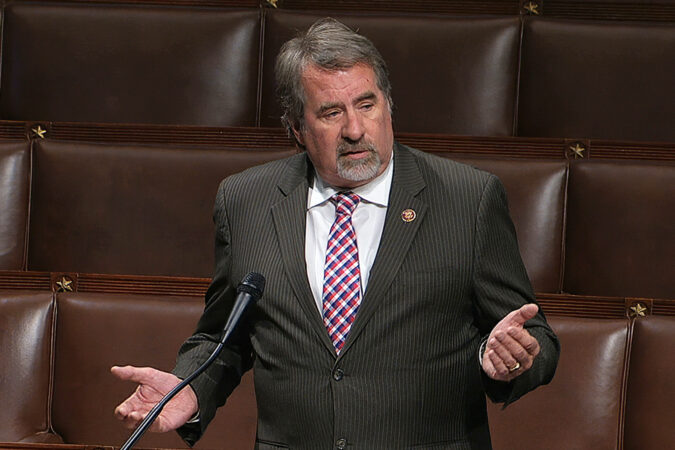
  • Rep. Doug LaMalfa of California dies, reducing GOP’s narrow control of the House to 218-213

    Rep. Doug LaMalfa of California dies, reducing GOP’s narrow control of the House to 218-213

    WASHINGTON — Republican Doug LaMalfa, a seven-term U.S. representative from California and a reliable vote on President Donald Trump’s agenda, has died, reducing the GOP’s narrow control of the House. He was 65.

    A former state lawmaker and rice farmer, LaMalfa had more than a dozen years in Congress, where he regularly helped GOP leaders open the House floor and frequently gave speeches. His death, confirmed by Majority Whip Tom Emmer and National Republican Congressional Committee Chairman Richard Hudson, trims the Republicans’ margin of control of the House to 218 seats to Democrats’ 213.

    “I was really saddened by his passing,” Trump said.

    The president said he considered not giving the speech to honor LaMalfa but decided to go ahead with it “because he would have wanted it that way.”

    Trump said the late congressman “wasn’t a 3 o’clock in the morning person” like other lawmakers he would call in the wee hours to lobby for their votes.

    “He voted with me 100% of the time,” Trump said. “With Doug, I never had to call.”

    Details surrounding LaMalfa’s death were unclear.

    David Reade, a former chief of staff of LaMalfa’s from the state legislature, became emotional remembering LaMalfa, who he said was committed to his district and proud of his family and Christian faith.

    “One of my great memories of Doug is that, you know, he would show up at the smallest events that were important in people’s lives in this district,” Reade said in a phone interview. “Whether it was a birthday, it was, you, know, a family gathering, it was the smallest organization in his district, and he would drive literally hundreds and hundreds of miles to be there.”

    California Gov. Gavin Newsom, a Democrat, must call a special election to replace LaMalfa, his office said. The election could happen as late as June, when California will hold its primary for the 2026 midterm.

    Hudson, the NRCC chairman, called LaMalfa “a principled conservative and a tireless advocate for the people of Northern California.”

    “He was never afraid to fight for rural communities, farmers, and working families,” Hudson said. “Doug brought grit, authenticity, and conviction to everything he did in public service.”

    First elected to Congress in 2012, he was a regular presence on the House floor, helping GOP leadership open the chamber and offer his view local and national affairs.

    C-SPAN in a recent compilation said he gave at least one set of remarks for the record on 81 days in 2025. Only two other lawmakers spoke on the House floor more frequently.

  • FAA picks 2 firms to replace 612 outdated radar systems that air traffic controllers rely on

    FAA picks 2 firms to replace 612 outdated radar systems that air traffic controllers rely on

    The federal government has picked two companies to replace 612 radar systems nationwide that date back to the 1980s as part of a multibillion-dollar overhaul of the nation’s air traffic control system.

    Transportation Secretary Sean Duffy and the Federal Aviation Administration said Monday that contractors RTX and Spanish firm Indra will replace the radar systems by the summer of 2028. The administration set an ambitious goal of completing the overhaul by the end of 2028 near the conclusion of President Donald Trump’s current term in office.

    “Our radar network is outdated and long overdue for replacement. Many of the units have exceeded their intended service life, making them increasingly expensive to maintain and difficult to support,” FAA Administrator Bryan Bedford said.

    The FAA has been spending most of its $3 billion equipment budget just maintaining the fragile old system that still relies on floppy discs in places. Some of the equipment is old and isn’t manufactured anymore, so the FAA sometimes has to search for spare parts on eBay.

    Technical failures twice knocked out the radar for air traffic controllers managing planes around Newark Liberty International Airport last spring, and those problems led to thousands of cancellations and delays at the major hub airport.

    Redundancy in the system helps keep flights safe, but there have been a number of occasions when both the primary and backup systems failed, as happened in the Philadelphia facility directing planes into and out of the Newark airport.

    The FAA didn’t immediately provide an estimate of the cost of the new radar systems that will replace 14 different existing radar systems in use across the country and will simplify maintenance and repairs.

    The FAA has already committed more than $6 billion of the $12.5 billion that Congress approved to pay for the overhaul, but Duffy has said that another $20 billion will be needed to complete the project. The agency has already replaced more than one-third of the outdated copper wires the system was relying on with modern connections like fiber optic lines, and it hired a national security contractor named Peraton to oversee the work.

  • Letters to the Editor | Jan. 6, 2026

    Letters to the Editor | Jan. 6, 2026

    Attacking Venezuela

    What possible reason could justify the attack on Venezuela and the kidnapping of its president? Does Venezuela represent any threat to the United States? No. Is Venezuela under Nicolás Maduro an oppressive regime? Yes. But then why revoke asylum status for fleeing Venezuelans? Is the Maduro regime not bad enough to provide asylum, but bad enough to invade and oust the government? Is Maduro a bad man? Many would say yes — but many also would say the same about Donald Trump. Should a foreign country kidnap him? What is it that makes Honduran drug dealers eligible for a presidential pardon, but not Venezuelan drug dealers? Adolf Hitler and Benito Mussolini invaded Czechoslovakia and Ethiopia, respectively, for colonial expansion — a flimsy reason, but at least a reason. Perhaps our wannabe dictator wants to convict Maduro and then pardon him upon payment of a large bribe. That would at least make some sense.

    Barry Lurie, Philadelphia

    Wrong message

    With regard to the Trump administration’s invasion of Venezuela, what message does that send to China and its desire to control Taiwan? Also, it goes far to legitimize Vladimir Putin’s rationale for invading Ukraine. Once again, an impulsive, poorly thought-out action by this incompetent administration.

    Michael Walsh, Elkins Park

    Right message

    The pearl-clutching and bedwetting the Democratic Party devolves into when President Donald Trump says or does anything is predictably laughable. Venezuelan dictator Nicolás Maduro is arguably responsible for magnitudes more American deaths than Osama bin Laden, yet when he was tracked down and killed under the Obama regime, it was roundly celebrated and applauded. Spare us your pious and self-righteous moral indignation and get with the program.

    Daniel J. Gribben, retired, Steamfitters Local 420, Philadelphia

    Remembering Jan. 6

    Today marks the fifth anniversary of that fateful day, Jan. 6, 2021, when there was an attack on the U.S. Capitol, a day when our democracy might have fallen. To use Franklin Delano Roosevelt’s words about Dec. 7, 1941, the attack on Pearl Harbor, Jan. 6, 2021, is a date that will — or at least should — “live in infamy.” It’s a day when our democratic republic buckled but did not break. It’s also a day President Donald Trump has tried to, if not erase from our history, at least whitewash into being viewed as something it demonstrably does not represent. Mr. Trump views it as “a day of love” when his supporters rose in glorious defiance of authority to pay homage to him. One concrete indicator of how Mr. Trump feels about that day, and those who perpetrated the attack, is that he granted clemency to virtually everyone who participated in that act of insurrection.

    How Mr. Trump interprets Jan. 6 further demonstrates that he views adhering to the rule of law and the spirit of our Constitution as merely inconvenient obstacles for him to circumvent when it furthers his personal or political agenda. So, today, Tuesday, Jan. 6, is a day we, the American people, must never forget. It should serve as a vivid reminder that the preservation of our democratic republic is not ordained by God to continue forever. Rather, it’s the responsibility of the citizenry — that’s you and me — to feed it, nourish it, and actively seek to keep it alive.

    Ken Derow, Swarthmore

    Join the conversation: Send letters to letters@inquirer.com. Limit length to 150 words and include home address and day and evening phone number. Letters run in The Inquirer six days a week on the editorial pages and online.