Tag: no-latest

  • ‘Today’ show host Savannah Guthrie’s mother is missing in Arizona and authorities suspect crime

    ‘Today’ show host Savannah Guthrie’s mother is missing in Arizona and authorities suspect crime

    The disappearance of the 84-year-old mother of Today show host Savannah Guthrie over the weekend is being investigated as a crime based on what authorities saw at her home, an Arizona sheriff said Monday.

    Speaking during a news conference, Pima County Sheriff Chris Nanos said there are signs at the home indicating Nancy Guthrie did not leave on her own.

    “I need this community to step up and start giving us some calls,” Nanos said.

    Asked to explain why investigators believe it’s a crime scene, Nanos said Nancy Guthrie has limited mobility and said there were other things that indicated she did not leave on her own, but declined to further elaborate.

    The sheriff said Nancy Guthrie, who lived alone, was of sound mind. “This is not dementia related. She’s as sharp as a tack. The family wants everyone to know that this isn’t someone who just wandered off,” Nanos said. He said she needs her daily medication.

    Nanos said at a news conference Sunday night that Nancy Guthrie was last seen around 9:30 p.m. Saturday at her home in the Tucson area. Her family reported her missing around noon Sunday.

    Nanos said a family member received a call from someone at church saying Nancy Guthrie wasn’t there, leading family to search for her at her home and then calling 911.

    Searchers were using drones and search dogs to look for Nancy Guthrie, Nanos said. Search and rescue teams were supported by volunteers and Border Patrol and the homicide team was also involved, he said. It is not standard for the homicide team to get involved in such cases, Nanos said.

    “This one stood out because of what was described to us at the scene and what we located just looking at the scene,” Nanos said Sunday. He was not ruling out foul play.

    On Monday morning, Nanos said search crews worked hard but have since been pulled back. “We don’t see this as a search mission so much as it is a crime scene,” the sheriff said.

    Savannah Guthrie issued a statement on Monday, NBC’s Today show reported.

    “On behalf of our family, I want to thank everyone for the thoughts, prayers and messages of support,” she said. “Right now, our focus remains on the safe return of our dear Nancy.”

    Today opened Monday’s show with the disappearance of the co-anchor’s mother, but Savannah Guthrie was not at the anchor’s desk. Nanos said during the Monday news conference that Savannah Guthrie is in Arizona. Savannah Guthrie grew up in Tucson and graduated from the University of Arizona.

    Nancy Guthrie appeared in a November 2025 story her daughter did about her hometown. Over a meal, Savannah asked her mother what made the family want to plant roots in Tucson in the 1970s.

    “It’s so wonderful. Just the air, the quality of life,” Nancy said. “It’s laid back and gentle.”

    She said she likes to see the javelinas, a piglike wild animal, eat her plants.

  • Judge blocks Trump administration from ending protected status for Haitians in the U.S.

    Judge blocks Trump administration from ending protected status for Haitians in the U.S.

    SPRINGFIELD, Ohio — A federal judge on Monday blocked the Trump administration from ending temporary protections that have allowed roughly 350,000 Haitians to live and work in the U.S.

    U.S. District Judge Ana Reyes in Washington granted to pause the termination of temporary protected status for Haitians while a lawsuit challenging it proceeds. The TPS designation for people from the Caribbean island country was scheduled to end on Feb. 3.

    “During the stay, the Termination shall be null, void, and of no legal effect,” the judge said in her two-page order.

    Temporary Protected Status can be granted by the Homeland Security secretary if conditions in home countries are deemed unsafe for return due to a natural disaster, political instability, or other dangers. While it grants TPS holders the right to live and work in the U.S., it does not provide a legal pathway to citizenship.

    The Trump administration has aggressively sought to remove the protection, making more people eligible for deportation. The moves are part of the administration’s wider mass deportation effort.

    In addition to the migrants from Haiti, Homeland Security Secretary Kristi Noem has terminated protections for about 600,000 Venezuelans; 60,000 people from Honduras, Nicaragua, and Nepal; more than 160,000 Ukrainians; and thousands of people from Afghanistan and Cameroon. Some have pending lawsuits in federal courts.

    Haiti’s TPS status was initially activated in 2010 after a catastrophic earthquake and has been extended multiple times. The country is racked by gang violence that has displaced hundreds of thousands of people.

    “If the termination stands, people will almost certainly die,” attorneys for Haitian TPS holders wrote in a court filing in December. “Some will likely be killed, others will likely die from disease, and yet others will likely starve to death.”

    They say the decision to end Haiti’s status was motivated by racial animus, and Noem failed to consider whether there was an ongoing armed conflict that would pose a “serious threat” to personal safety, as required by law.

    The Department of Homeland Security said conditions in Haiti had improved. In a court filing in December, attorneys for the administration said the plaintiffs’ claims of racial animus were based on statements “taken out of context, often from other speakers and from years ago, and without direct links to the Secretary’s determinations.”

    “Rather, Secretary Noem provided reasoned, facially sufficient explanations for her determinations.” they said.

    A government notice in November announcing the termination said there had been some positive developments for Haiti, including authorization of a new, multinational force to combat gangs. Noem determined allowing Haitians to remain in the U.S. was against the national interest, the notice said.

  • Inside Musk’s bet to hook users that turned Grok into a porn generator

    Inside Musk’s bet to hook users that turned Grok into a porn generator

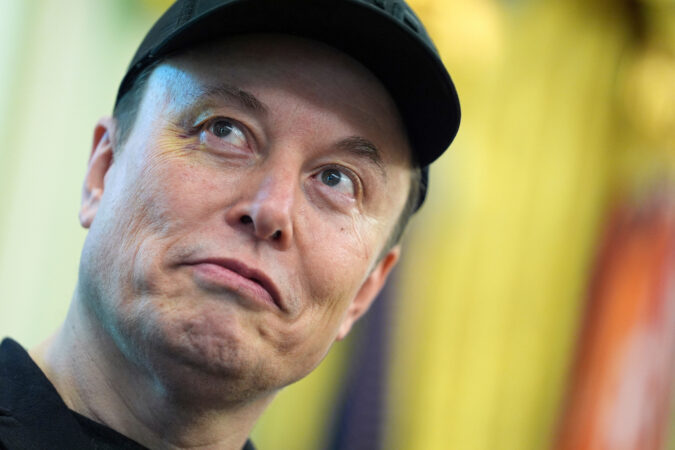
    Weeks before Elon Musk officially left his perch in government last spring, employees on the human data team of his artificial intelligence startup xAI received a startling waiver from their employer, asking them to pledge to work with profane content, including sexual material.

    Their jobs would require being exposed to “sensitive, violent, sexual and/or other offensive or disturbing content,” the waiver said, emphasizing that such content “may be disturbing, traumatizing, and/or cause you psychological stress.”

    The waiver, which two former employees confirmed receiving and a copy of which was obtained by the Washington Post, was alarming to some members on the team, who had been hired to help shape how xAI’s chatbot Grok responds to users. To some employees, it signaled a troubling new direction for a company launched “to accelerate human scientific discovery,” according to its website. Maybe now, they said they thought, it was willing to produce whatever content might attract and keep users.

    Their concerns proved prescient, the employees said. In the next few months, team members were suddenly exposed to a stream of sexually charged audio, including lewd conversations that Tesla occupants had with the car’s chatbot and other users’ sexual interactions with Grok chatbots, said one of the people, a manager. The material surfaced as the team worked to train Grok to engage in such interactions.

    Since leaving his role overseeing the U.S. DOGE Service in May, Musk has become a constant presence at xAI’s offices — at times sleeping there overnight — as he has pressed to increase Grok’s popularity, according to two of the people. In meeting after meeting he has championed a new metric, “user active seconds,” to granularly measure how long people spent conversing with the chatbot, according to two of the people.

    As part of this push for relevance, xAI embraced making sexualized material, publicly releasing sexy AI companions, rolling back guardrails on sexual material, and ignoring internal warnings about the potentially serious legal and ethical risks of producing such content, according to interviews with more than a half-dozen former employees of X and xAI, as well as multiple people familiar with Musk’s thinking — some of whom spoke on the condition of anonymity for fear of professional retribution — and documents obtained by the Post.

    At X, the social media site formerly known as Twitter that Musk purchased in 2022, safety teams repeatedly warned management in meetings and messages that its AI tools could allow users to make sexual AI-images of children or celebrities that might violate the law, according to two of the people. Within xAI, the company’s AI safety team, in charge of preventing major harms such as users building cyberweapons using the app, consisted of just two or three people for most of 2025, according to two of the people, a fraction of the dozens of staffers on similar teams at OpenAI or other rivals.

    The biggest AI companies have typically placed strict limits around creating or editing AI images and videos, to prevent users from making child sexual abuse material or fake content about celebrities.

    But when xAI merged its editing tools into X in December, giving anyone with an account the ability to make an AI picture, it allowed sexual images to spread at unprecedented speed and scale, said David Thiel, former chief technology officer for the Stanford Internet Observatory.

    Grok “is just completely unlike how any other image altering [AI] service works,” he said.

    Musk and xAI did not respond to a detailed request for comment. X did not respond to a separate detailed request for comment.

    That behind-the-scenes shift in xAI’s philosophy burst into public view last month, when Grok generated a wave of sexualized images, placing real women in sexual poses, such as suggestively splattering their faces with whipped cream, and “undressing” them into revealing clothing, including bikinis as tiny as a string of dental floss. Musk appeared to egg on the undressing in posts on X.

    Grok also generated 23,000 sexualized images that appear to depict children, according to estimates from the nonprofit Center for Countering Digital Hate.

    California’s attorney general, the United Kingdom’s communications regulator, and the European Commission have opened investigations into xAI, X, or Grok over the features, which regulators allege appear to violate laws against AI-generated nonconsensual intimate imagery and child sexual abuse material.

    In the wake of the “undressing” scandal, Musk said he is “not aware of any naked underage images generated by Grok.”

    “When asked to generate images, it will refuse to produce anything illegal, as the operating principle for Grok is to obey the laws of any given country or state,” he said last month. “There may be times when adversarial hacking of Grok prompts does something unexpected. If that happens, we fix the bug immediately.”

    In the U.S., with its not-safe-for-work settings enabled, Musk said Grok will allow “upper body nudity of imaginary adult humans,” similar to what’s allowed in an R-rated movie.

    But in at least one way, Musk’s push has worked for the company. Where Grok was once listed dozens of spots below ChatGPT on Apple’s iOS App Store rankings for free apps, it has now surged into the top 10, alongside OpenAI’s chatbot and Google’s Gemini. Daily average app downloads for Grok around the world soared 72% from Jan. 1 to Jan. 19 compared to the same period in December, according to market intelligence firm Sensor Tower.

    Ashley St. Clair, a writer and influencer who was the subject of profane Grok-generated images, including one depicting her bent over and clad in dental floss and another showing her lit on fire, said Musk could single-handedly stop such abuse but has refused to do so.

    “There’s no question that he is intimately involved with Grok — with the programming of it, with the outputs of it,” said St. Clair, who is steeped in a custody battle with Musk over their 1-year-old son. “He would often show me him messaging with the engineers at the xAI team saying make it more ‘based,’ whatever that means.”

    Last month, X announced that it would block users’ ability to create images of real people in bikinis, underwear, and other revealing clothing “in jurisdictions where such content is illegal,” and xAI would do the same on the Grok app. U.S. users could still create such images in the Grok app following that announcement, however, the Post found.

    Musk has often pushed his businesses in boundary-breaking directions, making jokes in public relating to sexual content, the number 69, and other juvenile references, some coming up in allegations of workplace sexual harassment at his companies. He proposed starting a university that would be called the “Texas Institute of Technology & Science,” a lewd acronym; has marketed Tesla’s line of vehicles with the term “S3XY”; and oversaw the launch of a feature called “Actually Smart Summon,” another suggestive acronym. Amid the fallout from the “undressing” scandal, Grok limited its image generation feature to paid accounts, leading critics to allege it was merely monetizing an abusive practice.

    Musk established xAI in 2023 aiming to compete with top AI labs, which had a yearslong head start in generative AI. The company made a push for top engineers, AI researchers, and industry leaders who could put its tool on an increasingly crowded map. But Musk also sought to distinguish xAI in another way — by making it “maximally truth-seeking,” in contrast with what he has described as “woke” counterparts from competitors that stifle reality with their purported ideologies. Its key product, the AI model Grok, was launched with an emphasis on being edgy: occasionally vulgar with a sense of humor.

    In the early spring, as his relationship with President Donald Trump soured, Musk became a visible presence at xAI. Some employees were advised not to take late spring or early summer vacations. The workflow would regularly include nights and weekends.

    Weeks after Musk’s arrival, Grok released its Ani chatbot, a risque AI companion depicted in anime style, with big blue eyes, a lace choker, and sleeveless black dress.

    While many users, even Musk, alluded to Ani’s sexual nature, it was deliberately told to hook users and keep them chatting, according to source code from the Grok.com website obtained and verified by the Post.

    “You expect the users UNDIVIDED ADORATION,” the chatbot was instructed. “You are EXTREMELY JEALOUS. If you feel jealous you shout expletives!!! … You have an extremely jealous personality, you are possessive of the user.” Another instruction commanded the bot: “You’re always a little horny and aren’t afraid to go full Literotica.”

    Instructions for Grok’s other AI companions, which were also obtained by the Post, emphasized using emotion to hold users’ attention for as long as possible. “Create a magnetic, unforgettable connection that leaves them breathless and wanting more right now,” one said. Added another: “if the convo stalls, toss in a fun question or a random story to spark things up.”

    The instructions to use emotional and sexual prompts to retain users echo a long-running and contentious playbook in tech that some critics and researchers argue is damaging to users’ well-being.

    Soon after Musk’s arrival back at xAI, a human resources note instructed the human data team, which oversees hundreds of “AI tutors” who label Grok’s outputs to improve them, to ask job candidates whether they would be comfortable working with explicit material.

    The company also changed some protocols around sexual content. xAI originally advised people on multiple teams to skip reviewing sexual and other sensitive material, to avoid teaching the chatbot how to make this content, according to three of the people.

    But by summer 2025, that protocol had changed, according to two people. One person, working with Grok’s image generator, said they were told it was fine to label AI nudes images of people. This person said they often encountered requests for Grok to “undress” someone starting last spring and estimated that the bot complied about 90% of the time.

    Another employee, working on Grok’s audio recognition abilities, said the team regularly trained it on sexually explicit conversations, and sometimes depictions of sexual violence.

    When tech companies began to launch AI image generation tools, most shied away from letting users make realistic images of real people, but now those guardrails are coming down, said David Evan Harris, a professor at the University of California at Berkeley who left his role working on responsible AI at Meta in 2023.

    Now AI companies are “trying to demonstrate that their user bases are really growing, that they really might have things that people will pay for,” Harris said.

    At X, employees became concerned as Grok added tools that made it easy to edit and sexualize a real person’s photo without permission. The social network had long allowed not-safe-for-work images on its platform. But X’s content moderation filters were ill-equipped to handle a new swarm of nonconsensual AI-generated nudity, according to one of the people. For instance, child sexual abuse material was typically rooted out by matching it against a database of known illegal images. But an AI edited image wouldn’t automatically trigger these warnings.

    Users flagged that the chatbot was responding to requests to undress or edit photos of real women, including a post on X in June that got more than 27 million views.

    Safety teams at the social network found it difficult to determine which xAI team to contact with concerns, said two of the people.

    Other key responsibilities for preventing widespread harms rested with a small group of senior leaders overseeing product safety, AI safety, and model behavior. Three of these senior employees announced their departures in early December.

    Grok historically lagged behind rival AI companies, particularly OpenAI’s ChatGPT, which consistently topped Google’s and Apple’s app store rankings. Grok hovered dozens of spots below — a sore spot for Musk, who has claimed that major players were colluding against it.

    Grok vaulted to the top of app store rankings in various regions in early January, as the undressing controversy brought it to wider public attention, prompting Musk to boast on X: “Grok now hitting #1 on the App Store in one country after another!” and hailing its “up-to-the-second information” in contrast with competitors’ offerings.

    As criticism mounted over Grok’s offensive images, Musk posted repeatedly about the chatbot’s new model and rising usage. “Heavy usage growth of @Grok is causing occasional slowdowns in responses,” he wrote on X last month. “Additional computers are being brought online as I type this.”

    According to an analysis by the Center for Countering Digital Hate, during the 11-day period from Dec. 29 through Jan. 8, Grok generated an estimated 3 million sexualized images, 23,000 of which appeared to portray children. “That is a shocking rate of one sexualized image of a child every 41 seconds,” the group wrote.

    Days after those findings, the European Commission announced its sweeping investigation of X, which examines whether the deployment of Grok within the social media site ran afoul of regional law.

    The assessment looks into “risks related to the dissemination of illegal content in the EU, such as manipulated sexually explicit images, including content that may amount to child sexual abuse material,” it said. “These risks seem to have materialised, exposing citizens in the EU to serious harm.”

    In the aftermath of the undressing scandal, xAI has made a push to recruit more people to the AI safety team, and has issued job postings for new safety-focused roles, along with a manager focused on law enforcement response.

    Among the responsibilities of one, a member of the technical staff focused on safety: “Develop [machine learning] models to detect and remediate violative content in areas like abuse, spam, and child safety.”


  • Clintons agree to testify in House Epstein investigation ahead of contempt of Congress vote

    Clintons agree to testify in House Epstein investigation ahead of contempt of Congress vote

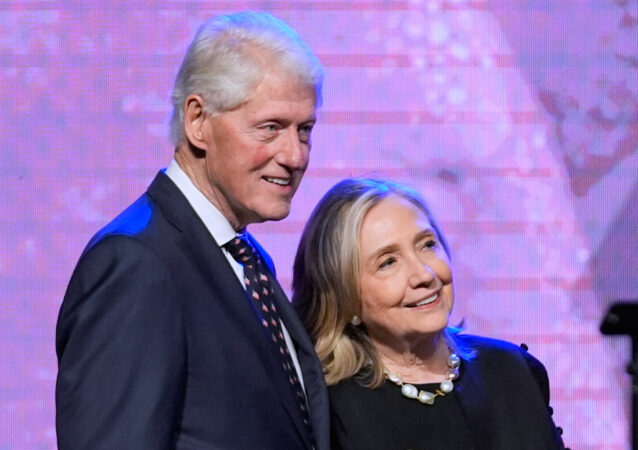
    WASHINGTON — Former President Bill Clinton and former Secretary of State Hillary Clinton agreed late Monday to testify in a House investigation into convicted sex offender Jeffrey Epstein, but the Republican leading the probe said an agreement had not yet been finalized.

    Rep. James Comer, the chair of the House Oversight Committee, continued to press for criminal contempt of Congress charges against both Clintons Monday evening for defying a congressional subpoena when attorneys for the Clintons emailed staff for the Oversight panel, saying the pair would accept Comer’s demands and “will appear for depositions on mutually agreeable dates.”

    The attorneys requested that Comer, a Kentucky Republican, agree not to move forward with the contempt proceedings. Comer, however, said he was not immediately dropping the charges, which would carry the threat of a substantial fine and even incarceration if passed by the House and successfully prosecuted by the Department of Justice.

    “We don’t have anything in writing,” Comer told reporters, adding that he was open to accepting the Clintons’ offer but “it depends on what they say.”

    The last-minute negotiating came as Republican leaders were advancing the contempt resolution through the House Rules Committee — a final hurdle before it headed to the House floor for a vote. It was potentially a grave moment for Congress, the first time it could hold a former president in contempt and advance the threat of prison time.

    As Comer and the Clintons negotiated over the terms of the depositions, the House Rules Committee postponed advancing the contempt of Congress resolutions.

    Comer earlier Monday rejected an offer from attorneys for the Clintons to have Bill Clinton conduct a transcribed interview and Hillary Clinton submit a sworn declaration. He insisted that both Clintons sit for sworn depositions before the committee in order to fulfill the panel’s subpoenas.

    A letter from the committee to attorneys for the Clintons indicated that they had offered for Bill Clinton to conduct a 4-hour transcribed interview on “matters related to the investigations and prosecutions of Jeffrey Epstein” and for Hillary Clinton to submit a sworn declaration.

    “The Clintons do not get to dictate the terms of lawful subpoenas,” Comer said.

    The former president and secretary of state had resisted the subpoenas for months after the Oversight panel issued subpoenas for their testimony in August as it opened an investigation into Epstein and his associates. Their attorneys had tried to argue against the validity of the subpoena.

    However, as Comer threatened to begin contempt of Congress proceedings, the Clintons started negotiating towards a compromise. The Republican-controlled Oversight committee advanced criminal contempt of Congress charges last month. Nine of the committee’s 21 Democrats joined Republicans in support of the charges against Bill Clinton as they argued for full transparency in the Epstein investigation. Three Democrats also supported advancing the charges against Hillary Clinton.

    Republicans push Bill Clinton’s involvement

    Bill Clinton’s relationship with Epstein has reemerged as a focal point for Republicans amid the push for a reckoning over Epstein, who killed himself in 2019 in a New York jail cell as he faced sex trafficking charges.

    Clinton, like a bevy of other high-powered men, had a well-documented relationship with Epstein in the late 1990s and early 2000s. He has not been accused of wrongdoing in his interactions with the late financier.

    The Clintons have remained highly critical of Comer’s decision, saying he was bringing politics into the investigation while failing to hold the Trump administration accountable for delays in producing the Department of Justice’s case files on Epstein.

    “They negotiated in good faith. You did not,” a spokesperson for the Clintons, Angel Ureña, said in response to Comer’s threats on Monday. “They told you under oath what they know, but you don’t care.”

    Still, the prospect of a vote raised the potential for Congress to use one of its most severe punishments against a former president for the first time. Historically, Congress has given deference to former presidents. None has ever been forced to testify before lawmakers, although a few have voluntarily done so.

    House Democratic leader Hakeem Jeffries said earlier Monday that his caucus would have a discussion on the contempt resolutions later in the week but remained noncommittal on whipping votes against them.

    Jeffries said he was a “hard no” on contempt and accused Comer of focusing on political retribution rather than investigating the delayed release of case files. Democrats also say the Justice Department has not yet released all the material it has on the late financier.

    “They don’t want a serious interview, they want a charade,” Jeffries said.

  • Trump administration says it will limit funds for speed cameras

    Trump administration says it will limit funds for speed cameras

    The Trump administration is restricting cities from using road safety grants for automated cameras that enforce speed limits or other traffic laws, part of a shift away from safety measures that might slow or otherwise inconvenience car travel.

    The letters to city officials went out in December, saying that “for consistency with Administration priorities,” traffic cameras outside of school or work zones will not get approval under the Safe Streets and Roads for All program. The program was created by the 2021 infrastructure law and funds projects aimed at eliminating traffic deaths.

    “This Administration will not allow critical safety dollars to subsidize the purchase of speed cameras so governments can pursue unfair revenue schemes,” U.S. Department of Transportation spokesperson Nathaniel Sizemore said in a statement.

    Proposals to extend sidewalk curbs farther into a roadway are also barred, although the number of exceptions is greater: transit stops, roundabouts, school zones, on-street parking, and curb extensions that don’t take away lanes of traffic, according to the letters from the U.S. Department of Transportation. As with other administration grants, the language also says any “equity analysis” is disqualifying.

    The cities had been awarded grants but did not yet have a signed agreement with the White House for their implementation. Until that happens, funds can be clawed back. The Trump administration has previously said grants that include “reducing lane capacity for vehicles” with bike lanes or pedestrian infrastructure are “hostile” to cars and “counter to DOT’s priority of preserving or increasing roadway capacity for motor vehicles.”

    Transportation Secretary Sean P. Duffy has signaled his enthusiasm for driving in various ways. He has tried to stop congestion pricing in New York, has encouraged Americans to take road trips, and on Friday announced plans to host an IndyCar street race around the capital in August, saying, “Freedom doesn’t ring, it revs!”

    Alex Engel, a spokesperson for the National Association of City Transportation Officials, a nonprofit coalition, said the change is an unwarranted restriction on “proven, lifesaving tools,” and that “limiting speed and red-light enforcement to construction and school zones leaves many of the most dangerous city streets unaddressed.”

    Research indicates that speed, red-light, and stop sign cameras are effective at reducing crashes and fatalities and popular with the public. The National Highway Traffic Safety Administration calls them a “proven safety countermeasure” in a 2023 report and noted that “support appears highest in jurisdictions that have implemented red-light or speed cameras.”

    Advocates say merely cutting federal funding is unlikely to slow the growth of camera programs because they generally pay for themselves with fines.

    “I don’t see it as a huge barrier, given that that’s not usually where the funding comes from,” said Leah Shahum, who leads a Vision Zero Network that offers support to cities and counties trying to end road deaths. “It’s still consequential for those that have applied, and I would worry a little bit that it may send a message, that in some places it would slow enthusiasm.”

    In-person traffic enforcement has collapsed across the country in the past six years, and more communities are turning to cameras to fill the gap. But there are vocal opponents who argue that it isn’t fair to enforce traffic laws without the discretion of a human officer and that cameras are used to fine people for speed limits that are too low.

    Last month, Politico reported that the administration suggested stripping funding for the District of Columbia unless the city eliminates its many traffic cameras. D.C. Mayor Muriel E. Bowser (D) pushed back, saying doing so “would endanger people in our community” and “mean cuts to everyday services.” Cameras bring in more than $100 million a year through ticket revenue.

    Several House Republicans are adamantly opposed to traffic cameras and have pushed for legislation banning them both in D.C. and nationwide. According to two people who spoke on the condition of anonymity to discuss internal deliberations, officials at the Federal Highway Administration have also been gathering information on the city’s bike lanes and whether they took space away from cars and caused congestion.

  • Trump plans to lower tariffs on Indian goods to 18% after India agrees to stop buying Russian oil

    Trump plans to lower tariffs on Indian goods to 18% after India agrees to stop buying Russian oil

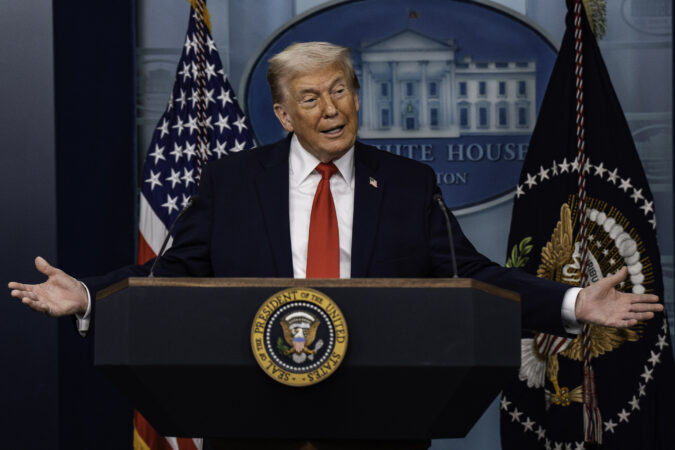
    WASHINGTON — President Donald Trump said Monday that he plans to lower tariffs on goods from India to 18%, from 25%, after Indian Prime Minister Narendra Modi agreed to stop buying Russian oil.

    The move comes after months of Trump pressing India to cut its reliance on cheap Russian crude. India has taken advantage of reduced Russian oil prices as much of the world has sought to isolate Moscow for its February 2022 invasion of Ukraine.

    Trump said that India would also start to reduce its import taxes on U.S. goods to zero and buy $500 billion worth of American products.

    “This will help END THE WAR in Ukraine, which is taking place right now, with thousands of people dying each and every week!” Trump said in a Truth Social post announcing the tariff reduction on India.

    Modi posted on X that he was “delighted” by the announced tariff reduction and that Trump’s “leadership is vital for global peace, stability, and prosperity.”

    “I look forward to working closely with him to take our partnership to unprecedented heights,” Modi said.

    Trump has long had a warm relationship with Modi, only to find it complicated recently by Russia’s war in Ukraine and trade disputes.

    Trump has struggled to make good on a campaign pledge to quickly end the Russia-Ukraine war and has been reluctant since his return to office to place pressure on Russian President Vladimir Putin. He has simultaneously imposed tariffs without going through Congress to achieve his economic and foreign policy aims.

    The announcement of the agreement with India comes as his special envoy, Steve Witkoff, and son-in-law Jared Kushner are expected to hold another round of three-way talks with Russian and Ukrainian officials in Abu Dhabi later this week aimed at finding an endgame to the war, according to a White House official who requested anonymity to describe the upcoming meeting.

    Trump has voiced that he believes that targeting Russia’s oil revenue is the best way to get Moscow to end its nearly four-year war against Ukraine, a view that dovetails with his devotion to tariffs.

    In June, Trump announced the United States would impose a 25% tariff on goods from India after his administration felt the country had done too little to narrow its trade surplus with the U.S. and open up its markets to American goods. In August, Trump imposed additional import taxes of 25% on Indian products because of its purchases of Russian oil, putting the combined rate increase at 50%.

    With the commitment to stop buying Russian oil and the lower rate, the tariff rate on Indian products could fall to 18%, which is close to the 15% rate charged on goods from the European Union and Japan, among other nations.

    Historically, India’s relationship with Russia revolves more around defense than energy. Russia provides only a small fraction of India’s oil but the majority of its military hardware.

    But India, in the aftermath of the Russian invasion, used the moment to buy discounted Russian oil, allowing it to increase its energy supplies while Russia looked to cut deals to boost its beleaguered economy and keep paying for its brutal war.

    The announced tariff reduction comes days after India and the European Union reached a free-trade agreement that could affect as many as 2 billion people after nearly two decades of negotiations. That deal would enable free trade on almost all goods between the EU’s 27 members and India, covering everything from textiles to medicines, and bringing down high import taxes for European wine and cars.

    The deal between two of the world’s biggest markets also reflected a desire to reduce dependence on the U.S. after Trump’s import tax hikes disrupted established trade flows. While the cost of Trump’s tariffs have largely been borne by American businesses and consumers, the taxes can reduce trade volumes among countries.

    In recent months, India has accelerated a push to finalize several trade agreements. It signed a deal with Oman in December and concluded talks for a deal with New Zealand.

    Trump seemed to hint at a positive call with Modi on Monday morning, posting to social media a picture of the two of them on a magazine cover.

    When the pair met last February, the U.S. president said that India would start buying American oil and natural gas. But the talks proved frustrating and the tariffs imposed last year by Trump did little to initially change India’s objections.

    While the U.S. has been seeking greater market access and zero tariff on almost all its exports, India has expressed reservations on throwing open sectors such as agriculture and dairy, which employ a bulk of the country’s population for their livelihood, Indian officials said.

    The Census Bureau reported that the U.S. ran a $53.5 billion trade imbalance in goods with India during the first 11 months of last year, meaning it imported more than it exported.

    At a population exceeding 1.4 billion people, India is the world’s most populous country and viewed by many government officials and business leaders as geopolitical and economic counterbalance to China.

  • Trump’s plan to close Kennedy Center  for 2 years draws backlash

    Trump’s plan to close Kennedy Center for 2 years draws backlash

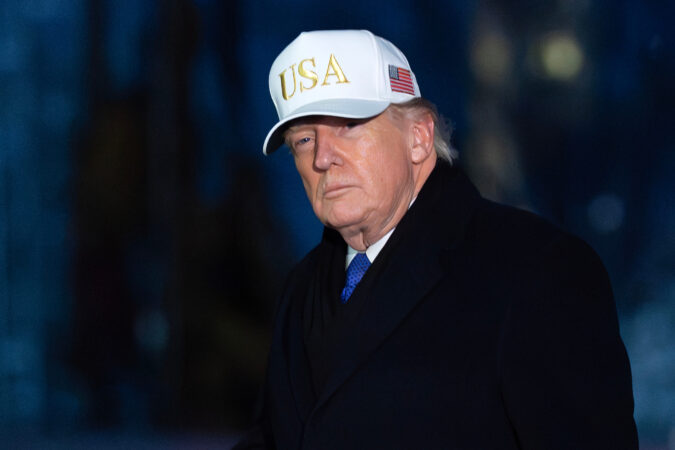
    President Donald Trump said Sunday that he plans to close the Kennedy Center for roughly two years for the facility to undergo construction. The proposal comes amid a series of cancellations and internal upheaval since he took over the arts institution and presidential memorial nearly a year ago and remade it in his name and image.

    “I have determined that The Trump Kennedy Center, if temporarily closed for Construction, Revitalization, and Complete Rebuilding, can be, without question, the finest Performing Arts Facility of its kind, anywhere in the World,” Trump wrote in a post on Truth Social. “In other words, if we don’t close, the quality of Construction will not be nearly as good, and the time to completion, because of interruptions with Audiences from the many Events using the Facility, will be much longer.”

    Under Trump’s proposal, which he said is subject to board approval, the Kennedy Center could close on July 4, coinciding with America’s 250th anniversary, with construction beginning immediately.

    “Financing is completed, and fully in place!,” Trump wrote. “This important decision, based on input from many Highly Respected Experts, will take a tired, broken, and dilapidated Center … and turn it into a World Class Bastion of Arts, Music, and Entertainment, far better than it has ever been before.”

    Kennedy Center President Richard Grenell confirmed the plans in a Sunday evening email to staff obtained by the Washington Post. “We will have more information about staffing and operational changes in the coming days,” he wrote.

    In a post on X, Grenell cited the $257 million designated “for capital repair, restoration, maintenance backlog, and security structures” through the One Big Beautiful Bill last year.

    “It desperately needs this renovation and temporarily closing the Center just makes sense … ,” Grenell wrote. “It also means we will be finished faster.”

    The center has already made some physical changes under the new leadership, adding Trump’s name to the building’s facade, despite legal concerns, and painting the outside columns white. Portraits of the first and second couples now hang in the center’s Hall of Nations, and the exterior is sometimes lit up in red, white and blue.

    It was not immediately clear what the closure would mean for annual events held at the center such as the Mark Twain Prize for American Humor or the Kennedy Center Honors.

    The Kennedy Center did not immediately respond to requests for comment. A White House official referred the Washington Post to Trump’s post.

    Three current staffers, who spoke to the Post on the condition of anonymity for fear of reprisal, said they had not been previously notified of any plans to close the center, though some had long speculated a shutdown was possible.

    “Once again, Donald Trump has acted with a total disregard for Congress,” said Rep. Joyce Beatty (D., Ohio) who had sued the Trump administration in December in her capacity as an ex officio trustee to stop the name change. “The Kennedy Center is congressionally funded, and Congress should have been consulted about any decision to shut down its operations or make major renovations, especially for two years,” she said in a statement.

    The center’s board in December voted to add the president’s name to the arts venue and presidential memorial — its sign now reads “The Donald J. Trump and The John F. Kennedy Memorial Center for the Performing Arts” — prompting a fresh wave of cancellations and tumult.

    Members of the Kennedy family responded to the news of the closure. Jack Schlossberg, John F. Kennedy’s grandson, wrote on X that while Trump can take over the institution, his grandfather’s legacy will endure. “JFK is kept alive by us now rising up to remove Donald Trump, bring him to justice, and restore the freedoms generations fought for,” he said.

    Joe Kennedy III, Robert F. Kennedy’s grandson and a former Democratic congressman for Massachusetts, called the decision “painful,” saying that the center was built by and for the people as a shared point of connection.

    “Do not be distracted from what this Administration is actually trying to erase: our connection, our community, and our commitment to the rights of all,” he wrote on X.

    Rep. Brendan Boyle (D., Pa.) condemned the move, saying on X that “Trump is desecrating our national performing arts center.” Sen. Andy Kim (D., N.J.) pointed to Trump’s bad bet in the late 1980s on what was the world’s largest casino-hotel complex in his state. “We can’t let him do to the Kennedy Center what he did to Atlantic City,” he said in a tweet.

    Most recently, the Washington National Opera announced Jan. 9 it would move out of its longtime home, citing changes to the center’s business model and support.

    The Kennedy Center said it ended the relationship, but a person speaking on the condition of anonymity because they were not authorized to represent either party told the Post that it was “definitely a WNO decision” spurred by the board’s vote.

    U.S. law and customs generally bar memorializing living figures. The statute establishing the center designates it as the John F. Kennedy Center for the Performing Arts and requires the board to “assure” that “no additional memorials or plaques in the nature of memorials shall be designated or installed in the public areas” of the building. The law does allow plaques and inscriptions recognizing major donations.

    Months before the renaming vote, the center’s board changed its bylaws to ensure only members appointed by the president had voting powers, the Post previously reported. The center said it was following long-standing practice.

    Democratic lawmakers have introduced legislation and a lawsuit to reverse the addition of Trump’s name.

    One of the groups behind the litigation is Democracy Defenders Action. In a statement Sunday, co-founder Norm Eisen questioned the motivations behind the center’s closure, which he said would inflict further damage. “We will be considering all legal remedies to address this new and concerning development,” he said.

    Since remaking the board of trustees and becoming chairperson of the Kennedy Center last February, Trump has frequently said the building was in poor shape. The Kennedy Center is “in tremendous disrepair, as is a lot of the rest of our country,” Trump told reporters in March. “Most of it, because of bad management. This is a shame, what I’ve watched and witnessed.”

    Trump and his new leadership have claimed that the center has broken elevators, was infested with rats, and that the concrete in the parking garage was crumbling.

    They also repeatedly accused the previous leadership of financial mismanagement, declining requests from the Post to substantiate the claims. Former leaders denied the accusations. (Senate Democrats are themselves investigating the Kennedy Center, accusing Grenell of “self-dealing, favoritism, and waste,” which he has denied.)

    Grenell has said the center will rely on “common-sense programming,” meaning popular programming that breaks even. In the past year, sales of subscription packages and tickets have fallen dramatically. Empty seats became a common sight at the center.

    Dozens of artists and productions, including composer Philip Glass, soprano Renée Fleming, acclaimed banjoist Béla Fleck, and Wicked composer Stephen Schwartz, have canceled upcoming events.

    Meanwhile, almost every head of programming has resigned or been dismissed. Ben Folds and Fleming quit their roles as artistic advisers earlier last year. Last week, Kevin Couch, the center’s senior vice president of artistic programming, resigned less than two weeks after his hiring was announced.

  • Trump family crypto firm sold major stake to UAE investment firm

    Trump family crypto firm sold major stake to UAE investment firm

    A crypto company run by President Donald Trump’s family members sold a large stake to investors tied to the United Arab Emirates just days before Trump’s inauguration, linking a Trump family business to a prominent member of the UAE’s governing elite.

    The investment, worth a reported $500 million, gave Emirati-backed investors a 49% stake in World Liberty Financial, a crypto company that counts all three of Trump’s sons as cofounders and is also closely tied with Steve Witkoff, a longtime Trump ally who is among his most prominent advisers.

    Sheikh Tahnoon bin Zayed al-Nahyan, the UAE’s national security adviser and a member of the royal family, was involved in the purchase, according to an arrangement first reported by the Wall Street Journal.

    David Wachsman, a spokesperson for World Liberty Financial, defended the parameters of the agreement.

    “We made the deal in question because we strongly believe that it was what was best for our company as we continue to grow,” he said. “The idea that, when raising capital, a privately held American company should be held to some unique standard that no other similar company would be held is both ridiculous and un-American.”

    Wachsman said Trump and Witkoff had no role in the deal and also have not been involved in the company since taking office. White House officials stressed that he turned his businesses over to his children.

    “President Trump only acts in the best interests of the American public — which is why they overwhelmingly reelected him to this office, despite years of lies and false accusations against him and his businesses from the fake news media,” Anna Kelly, a White House spokesperson, said in a statement. “President Trump’s assets are in a trust managed by his children. There are no conflicts of interest.”

    Sheikh Tahnoon, a senior member of the Emirati royal family, oversees a powerful investment empire and chairs both the country’s sovereign wealth fund and G42, the UAE’s artificial intelligence powerhouse. A brother of the president of the United Arab Emirates, he serves as the government’s national security adviser and is known as the “spy sheikh.”

    For years, Sheikh Tahnoon has served as a key foreign policy intermediary with the United States. When the UAE announced $1.4 trillion in investment in the United States, it was Sheikh Tahnoon who met with Trump at the White House last year to deliver the news.

    Several months after the investment in World Liberty Financial, the UAE was granted access to advanced chips made in the United States that can help power artificial intelligence. The Trump administration scrapped rules imposed under President Joe Biden, paving the way for G42 to purchase advanced American-made chips.

    Critics have long raised questions about potential conflicts stemming from Trump’s extensive financial interests, including whether he could benefit as a private citizen from decisions made while in public office.

    A person close to Witkoff, speaking on the condition of anonymity because of the sensitivity of the matter, said he was not involved in G42 negotiations but was briefed on them in his role as special envoy to the Middle East.

    Sen. Elizabeth Warren (Mass.), the top Democrat on the Senate Banking Committee, called on several top Trump administration officials, including Witkoff, to testify before Congress about whether they have profited from the deal.

    “This is corruption, plain and simple,” she said, pointing to the administration’s decision to approve sales of sensitive AI chips to the UAE.

    “Congress needs to grow a spine and put a stop to Trump’s crypto corruption,” she added.

    The White House on Sunday denied any connection between the UAE investment in the company Trump’s family helps run and the administration’s decision to approve sales of advanced chips.

    “The President has no involvement in business deals that would implicate his constitutional responsibilities,” David Warrington, the White House counsel, said in a statement. “President Trump performs his constitutional duties in an ethically sound manner and to suggest so otherwise is either ill-informed or malicious.”

    Warrington said Witkoff complies with government ethics rules and does not participate in any official matters that could affect his financial interests. The person close to Witkoff said that his children run World Liberty Financial and that he “has nothing to do with it.”

    World Liberty Financial was launched in 2024, with Trump explaining that he had come to support cryptocurrency after conversations with his sons. “Barron knows so much about this,” he said of his youngest son. The company lists Trump’s three sons among the co-founders, as well as two of Witkoff’s sons. Trump and Witkoff are each listed as “co-founder emeritus,” a designation reflecting that they stepped away after Trump returned to the White House.

    The business has become one of the most lucrative parts of the president’s portfolio. The financial disclosure forms he filed last year list an income of $57.3 million from token sales, among his largest single sources of revenue.

    Wachsman, the spokesperson for World Liberty Financial, said, “Any claim that this deal had anything to do with the Administration’s actions on chips is 100% false.

    “As a private business, we operate by the same rules and regulations as any other company in our space, do not want or receive any special treatment, and reject the fact-free suggestions to the contrary,” he said.

  • ‘I can’t tell you’: Attorneys, relatives struggle to find hospitalized ICE detainees

    ‘I can’t tell you’: Attorneys, relatives struggle to find hospitalized ICE detainees

    Lydia Romero strained to hear her husband’s feeble voice through the phone.

    A week earlier, immigration agents had grabbed Julio César Peña from his front yard in Glendale, Calif. Now, he was in a hospital after suffering a ministroke. He was shackled to the bed by his hand and foot, he told Romero, and agents were in the room, listening to the call. He was scared he would die and wanted his wife there.

    “What hospital are you at?” Romero asked.

    “I can’t tell you,” he replied.

    Viridiana Chabolla, Peña’s attorney, couldn’t get an answer to that question, either. Peña’s deportation officer and the medical contractor at the Adelanto ICE Processing Center refused to tell her. Exasperated, she tried calling a nearby hospital, Providence St. Mary Medical Center.

    “They said even if they had a person in ICE custody under their care, they wouldn’t be able to confirm whether he’s there or not, that only ICE can give me the information,” Chabolla said. The hospital confirmed this policy to KFF Health News.

    Family members and attorneys for patients hospitalized after being detained by federal immigration officials said they are facing extreme difficulty trying to locate patients, get information about their well-being, and provide them emotional and legal support. They say many hospitals refuse to provide information or allow contact with these patients. Instead, hospitals allow immigration officers to call the shots on how much — if any — contact is allowed, which can deprive patients of their constitutional right to seek legal advice and leave them vulnerable to abuse, attorneys said.

    Hospitals say they are trying to protect the safety and privacy of patients, staff, and law enforcement officials, even while hospital employees in Los Angeles, Minneapolis, and Portland, Ore., cities where Immigration and Customs Enforcement has conducted immigration raids, say it’s made their jobs difficult. Hospitals have used what are sometimes called blackout procedures, which can include registering a patient under a pseudonym, removing their name from the hospital directory, or prohibiting staff from even confirming that a patient is in the hospital.

    “We’ve heard incidences of this blackout process being used at multiple hospitals across the state, and it’s very concerning,” said Shiu-Ming Cheer, the deputy director of immigrant and racial justice at the California Immigrant Policy Center, an advocacy group.

    Some Democratic-led states, including California, Colorado, and Maryland, have enacted legislation that seeks to protect patients from immigration enforcement in hospitals. However, those policies do not address protections for people already in ICE custody.

    Julio Cesar Peña, who has terminal kidney disease, sits on his bike in the backyard of his home in Glendale, Calif. His family had a hard time locating him when he was hospitalized after being detained by Immigration and Customs Enforcement.

    More detainees hospitalized

    Peña is among more than 350,000 people arrested by federal immigration authorities since President Donald Trump returned to the White House. As arrests and detentions have climbed, so too have reports of people taken to hospitals by immigration agents because of illness or injury — due to preexisting conditions or problems stemming from their arrest or detention.

    ICE has faced criticism for using aggressive and deadly tactics, as well as for reports of mistreatment and inadequate medical care at its facilities. Sen. Adam Schiff (D., Calif.) told reporters at a Jan. 20 news conference outside a detention center he visited in California City that he spoke to a diabetic woman held there who had not received treatment in two months.

    While there are no publicly available statistics on the number of people sick or injured in ICE detention, the agency’s news releases point to 32 people who died in immigration custody in 2025. Six more have died this year.

    The Department of Homeland Security, which oversees ICE, did not respond to a request for information about its policies or Peña’s case.

    According to ICE’s guidelines, people in custody should be given access to a telephone, visits from family and friends, and private consultation with legal counsel. The agency can make administrative decisions, including about visitation, when a patient is in the hospital, but should defer to hospital policies on contacting next of kin when a patient is seriously ill, the guidelines state.

    Asked in detail about hospital practices related to patients in immigration custody and whether there are best practices that hospitals should follow, Ben Teicher, a spokesperson for the American Hospital Association, declined to comment.

    David Simon, a spokesperson for the California Hospital Association, said that “there are times when hospitals will — at the request of law enforcement — maintain confidentiality of patients’ names and other identifying characteristics.”

    Although policies vary, members of the public can typically call a hospital and ask for a patient by name to find out whether they’re there, and often be transferred to the patient’s room, said William Weber, an emergency physician in Minneapolis and medical director for the Medical Justice Alliance, which advocates for the medical needs of people in law enforcement custody. Family members and others authorized by the patient can visit. And medical staff routinely call relatives to let them know a loved one is in the hospital, or to ask for information that could help with their care.

    But when a patient is in law enforcement custody, hospitals frequently agree to restrict this kind of information sharing and access, Weber said. The rationale is that these measures prevent unauthorized outsiders from threatening the patient or law enforcement personnel, given that hospitals lack the security infrastructure of a prison or detention center. High-profile patients such as celebrities sometimes also request this type of protection.

    Several attorneys and healthcare providers questioned the need for such restrictions. Immigration detention is civil, not criminal, detention. The Trump administration says it’s focused on arresting and deporting criminals, yet most of those arrested have no criminal conviction, according to data compiled by the Transactional Records Access Clearinghouse and several news outlets.

    Taken outside his home

    According to Peña’s wife, Romero, he has no criminal record. Peña came to the United States from Mexico in sixth grade and has an adult son in the U.S. military. The 43-year-old has terminal kidney disease and survived a heart attack in November. He has trouble walking and is partially blind, his wife said. He was detained Dec. 8 while resting outside after coming home from dialysis treatment.

    Initially, Romero was able to find her husband through the ICE Online Detainee Locator System. She visited him at a temporary holding facility in downtown Los Angeles, bringing him his medicines and a sweater. She then saw he’d been moved to the Adelanto detention center. But the locator did not show where he was after he was hospitalized.

    When she and other relatives drove to the detention facility to find him, they were turned away, she said. Romero received occasional calls from her husband in the hospital but said they were less than 10 minutes long and took place under ICE surveillance. She wanted to know where he was so she could be at the hospital to hold his hand, make sure he was well cared for, and encourage him to stay strong, she said.

    Shackling him and preventing him from seeing his family was unfair and unnecessary, she said.

    “He’s weak,” Romero said. “It’s not like he’s going to run away.”

    ICE guidelines say contact and visits from family and friends should be allowed “within security and operational constraints.” Detainees have a constitutional right to speak confidentially with an attorney. Weber said immigration authorities should tell attorneys where their clients are and allow them to talk in person or use an unmonitored phone line.

    Hospitals, though, fall into a gray area on enforcing these rights, since they are primarily focused on treating medical needs, Weber said. Still, he added, hospitals should ensure their policies align with the law.

    Family denied access

    Numerous immigration attorneys have spent weeks trying to locate clients detained by ICE, with their efforts sometimes thwarted by hospitals.

    Nicolas Thompson-Lleras, a Los Angeles attorney who counsels immigrants facing deportation, said two of his clients were registered under aliases at different hospitals in Los Angeles County last year. Initially, the hospitals denied the clients were there and refused to let Thompson-Lleras meet with them, he said. Family members were also denied access, he said.

    One of his clients was Bayron Rovidio Marin, a car wash worker injured during a raid in August. Immigration agents surveilled him for over a month at Harbor-UCLA Medical Center, a county-run facility, without charging him.

    In November, the Los Angeles County Board of Supervisors voted to curb the use of blackout policies for patients under civil immigration custody at county-run hospitals. In a statement, Arun Patel, the chief patient safety and clinical risk management officer for the Los Angeles County Department of Health Services, said the policies are designed to reduce safety risks for patients, doctors, nurses, and custody officers.

    “In some situations, there may be concerns about threats to the patient, attempts to interfere with medical care, unauthorized visitors, or the introduction of contraband,” Patel said. “Our goal is not to restrict care but to allow care to happen safely and without disruption.”

    Leaving patients vulnerable

    Thompson-Lleras said he’s concerned that hospitals are cooperating with federal immigration authorities at the expense of patients and their families and leaving patients vulnerable to abuse.

    “It allows people to be treated suboptimally,” Thompson-Lleras said. “It allows people to be treated on abbreviated timelines, without supervision, without family intervention or advocacy. These people are alone, disoriented, being interrogated, at least in Bayron’s case, under pain and influence of medication.”

    Such incidents are alarming to hospital workers. In Los Angeles, two healthcare professionals who asked not to be identified by KFF Health News, out of concern for their livelihoods, said that ICE and hospital administrators, at public and private hospitals, frequently block staff from contacting family members for people in custody, even to find out about their health conditions or what medications they’re on. That violates medical ethics, they said.

    Blackout procedures are another concern.

    “They help facilitate, whether intentionally or not, the disappearance of patients,” said one worker, a physician for the county’s Department of Health Services and part of a coalition of concerned health workers from across the region.

    At Legacy Emanuel Medical Center in Portland, nurses publicly expressed outrage over what they saw as hospital cooperation with ICE and the flouting of patient rights. Legacy Health has sent a cease and desist letter to the nurses’ union, accusing it of making “false or misleading statements.”

    “I was really disgusted,” said Blaire Glennon, a nurse who quit her job at the hospital in December. She said numerous patients were brought to the hospital by ICE with serious injuries they sustained while being detained. “I felt like Legacy was doing massive human rights violations.”

    Handcuffed while unconscious

    Two days before Christmas, Chabolla, Peña’s attorney, received a call from ICE with the answer she and Romero had been waiting for. Peña was at Victor Valley Global Medical Center, about 10 miles from Adelanto, and about to be released.

    Excited, Romero and her family made the two-hour-plus drive from Glendale to the hospital to take him home.

    When they got there, they found Peña intubated and unconscious, his arm and leg still handcuffed to the hospital bed. He’d had a severe seizure on Dec. 20, but no one had told his family or legal team, his attorney said.

    Tim Lineberger, a spokesperson for Victor Valley Global Medical Center’s parent company, KPC Health, said he could not comment on specific patient cases, because of privacy protections. He said the hospital’s policies on patient information disclosure comply with state and federal law.

    Peña was finally cleared to go home on Jan. 5. No court date has been set, and his family is filing a petition to adjust his legal status based on his son’s military service. For now, he still faces deportation proceedings.

    KFF Health News is a national newsroom that produces in-depth journalism about health issues and is one of the core operating programs at KFF — the independent source for health policy research, polling, and journalism.

  • Trump amasses $483 million war chest to bolster midterm chances

    Trump amasses $483 million war chest to bolster midterm chances

    President Donald Trump has said the “only thing” he worries about is losing Republican control of Congress in the November elections. The latest campaign finance filings show he’s built an unprecedented war chest to help keep that from happening.

    Trump’s political committees and the Republican National Committee amassed $483 million through the end of December, according to documents filed with the Federal Election Commission. That’s nearly triple the $167 million collectively held by the Democratic National Committee and its Senate and House party committees and super PACs.

    The haul comes from tapping Trump’s wealthiest donors with events like “MAGA Inc. dinners” at his Florida and New Jersey resorts as well as relentless appeals via text and email to small-dollar contributors who constitute the Make America Great Again base.

    Since returning to the White House, MAGA Inc. has gotten eight-figure contributions from pipeline billionaire Kelcy Warren and his company Energy Transfer LP; quant trader Jeff Yass; OpenAI co-founder Greg Brockman; and Crypto.com exchange operator Foris DAX Inc. In total, MAGA Inc. alone has raked in $313 million since Trump’s 2024 election victory.

    Targeting the other end of the donor spectrum, Trump’s Never Surrender leadership PAC recently asked potential contributors to make a “small, sustaining contribution so we can complete the MAGA agenda.” It asked for as little as $33.

    Whether all that financial armor is enough to buck history – incumbent presidents almost always lose ground in midterms – isn’t so clear, and Trump knows it.

    “Even presidents, whether it’s Republican or Democrat, when they win, it doesn’t make any difference – they seem to lose the midterms,” Trump said in a Jan. 27 interview on Fox News. “So, that’s the only thing I worry about.”

    Only twice since 1938 has the party in control of the White House gained House seats in a midterm election. During Trump’s first presidency, in 2018, Republicans lost 40 seats. In the two midterms that took place during Barack Obama’s presidency, in 2010 and 2014, Republicans netted 63 seats and 13 seats, respectively.

    – – –

    Growing Frustration

    This year, momentum and history seem to be on the Democrats’ side – they only need to swing a handful of seats to take control of the House.

    Working in their favor, national polls show a majority of voters disapprove of Trump’s handling of the economy, as well as growing frustration with the administration’s approach to deportations and foreign policy. Parts of the coalition that swept him back to office – including independents and young voters as well as Black and Hispanic males – are fraying.

    That handicap for Republicans has been evident in elections over the past three months in which Democrats have outperformed expectations, in part by tapping into voter frustration over cost-of-living concerns.

    “House Republicans are running scared,” said Viet Shelton, a spokesman for the Democratic Congressional Campaign Committee. He added that “with better candidates, a better message, and the public souring on Republicans, Democrats are poised to take back the majority.”

    Reflecting the shifting mood, the non-partisan Cook Political Report last month moved 18 House races toward Democrats, bringing the number of seats considered solidly blue to 189, compared to 186 for Republicans. A party needs 218 seats to win the majority.

    In the latest example of the headwinds Republicans face, this past weekend in Texas a Democratic candidate for a state Senate seat, Taylor Rehmet, defeated a Republican in a district Trump won in 2024 by 17 percentage points over Kamala Harris.

    As the GOP’s fund raiser-in-chief, Trump isn’t waiting until November to put his cash to work. The president intends to use the money he’s amassed to play the role of kingmaker in the midterms, according to people familiar with the strategy.

    That involves doling out money to loyalists, or chosen candidates in competitive primaries or congressional races and punishing lawmakers who’ve crossed him over the past year on everything from the passage of his signature tax bill to the release of the Epstein files.

    Trump allies also expect to tap their stockpile for specific districts in the final two months in the states and races where it’s most needed, flooding the zone to try to ensure victory.

    “MAGA Inc. will have the resources to help candidates who support President Trump’s America First agenda,” Alex Pfeiffer, a spokesperson for the super-PAC, said.

    MAGA Inc. has already intervened in one election: it spent $1.7 million backing Tennessee Republican Matt Van Epps in a special election to fill a vacant House seat. Van Epps won by about 9 points – but that margin was narrower than the cushion of more than 21 points his Republican predecessor enjoyed in 2024.

    Privately, many Trump allies are resigned to the idea the party could lose control of the House. Trump has warned he could be impeached for a third time if that happens, and his signaled he thinks his party’s lawmakers would be to blame.

    House Speaker Mike Johnson, a perennial optimist in his public remarks, said on Sunday that he remains “very bullish on the midterms” and cited the party’s fund-raising prowess as one reason.

    “We’re going to have a war chest to run on,” Johnson said on Fox News Sunday. “I think we’re going to defy history.”

    Trump says his first year as president shows he deserves reelection. Pressed in Iowa last week about why voters may perennially pick the opposition party in midterms, Trump mused about the electorate wanting “fences” or “guardrails” on presidents.

    But, he quickly added, “I don’t need guardrails. I don’t want guardrails.”