MAX Surgical Specialty Management, a private-equity backed company consolidating oral and maxillofacial surgery groups in the Northeastern U.S., has acquired two more practices in the Philadelphia area.
The latest deal, announced Friday, gives the Hackensack, N.J., firm 12 surgeons at 12 locations in Pennsylvania. Surgeon Jason M. Auerbach founded MAX in 2022 with private-equity backing and entered Pennsylvania two years later.
The two newly acquired practices have six offices in Bucks and Chester Counties.
Oral and Maxillofacial Surgeons P.C. has three surgeons, and offices in Doylestown, Quakertown, Warminster, and Chalfont. Oral Associates of the Main Line has two surgeons and offices in Exton and Paoli.
MAX did not disclose financial terms of the transactions.
In addition to New Jersey and Pennsylvania, MAX has practices in Connecticut, New York, and Vermont. The company — a management services organization — is majority-owned by its physicians, Auerbach said.
Oral and maxillofacial surgeons work at the crossroads of dentistry and medicine. Most have dental degrees, but some also have medical degrees. They remove wisdom teeth, install dental implants, repair facial traumas, and treat jaw injuries, among other services.
North Jersey origins
Auerbach founded Riverside Oral Surgery in Bergen County in 2007 and grew it to 12 locations before founding MAX with private equity partners. Part of his motivation was to create a home for independent physicians, Auerbach said in a May interview.
The Philadelphia region still has a high concentration of independents, with strong patient demand. “It’s hard nowadays to be an independent oral-maxillofacial surgeon, in terms of the complexities in running a healthcare business,” Auerbach said.
Robert Mogyoros, whose Greater Philadelphia Oral Surgery is in Elkins Park, said he valued his independence above all, but decided to look for a group to joinafter the business side had gotten too challenging.
Physician groups get better prices from vendors, better deals with insurers, and have an upper hand in physician and employee recruitment, said Mogyoros, who became part of MAX last July.
“What attracted me to MAX was that it’s doctor-driven and doctor-run,” he said in a May interview.
Rothman and Kim Oral & Maxillofacial Surgery, with offices in Northeast Philadelphia and Cinnaminson, was MAX’s first acquisition in Southeastern Pennsylvania. That deal also happened last year when MAX announced that it had borrowed $77 million to support growth.
When doctors sell their practices to MAX, they typically invest about 30% of the value into MAX, Auerbach said. MAX’s outside investors are MedEquity Capital near Boston, RF Investment Partners in New York, and Kian Capital in Charlotte, N.C.
Editor’s note: This article was update to correct the year when MAX made its first Pennsylvania acquisition.
Daniel Martino didn’t set out to build an empire of pie shops. He just wanted somewhere to get coffee without leaving the neighborhood.
When he bought his home in Port Richmond in 2013, the closest coffee shop was an hour round trip, he said. “Selfishly, I thought, I can put a little coffee shop here.”
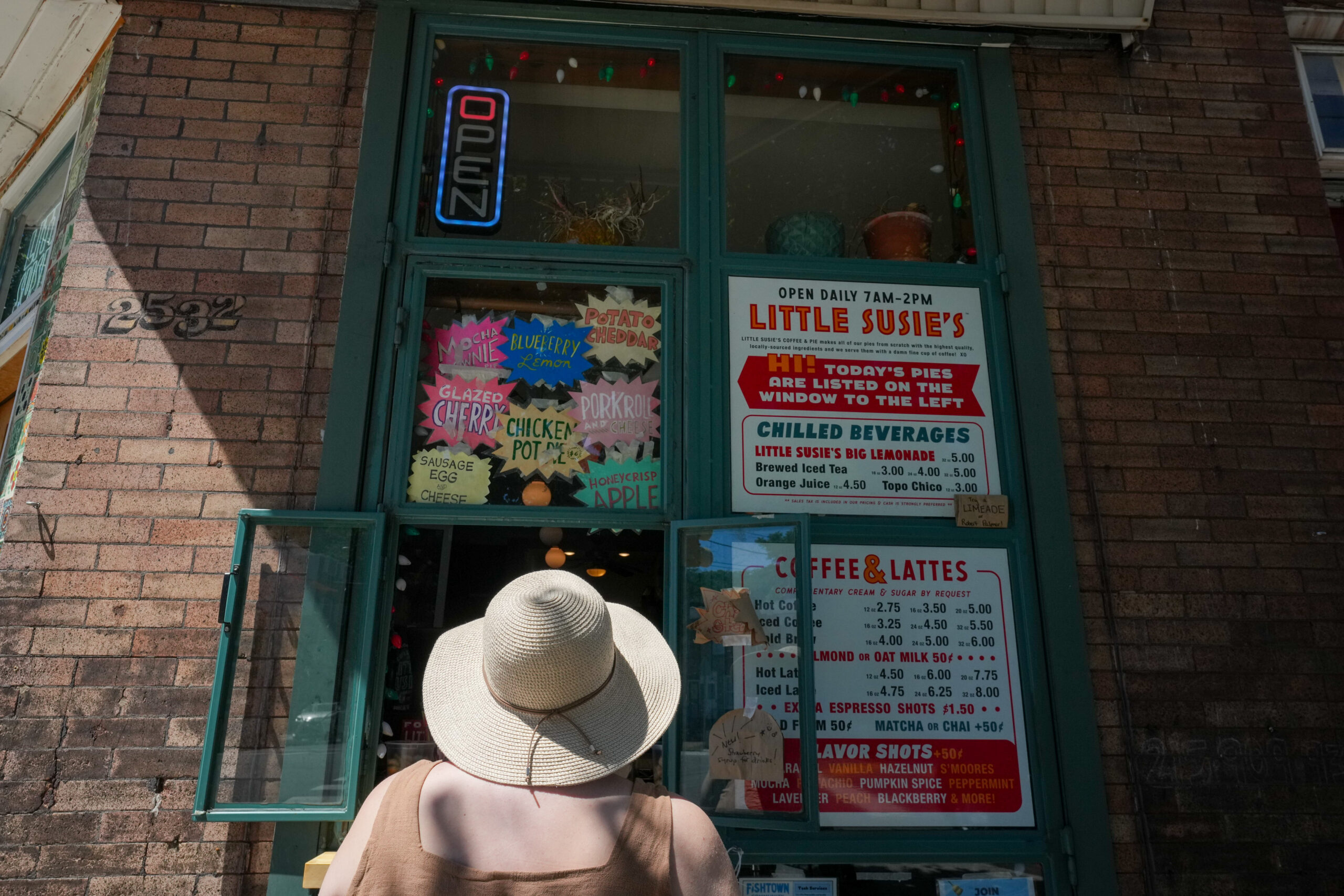
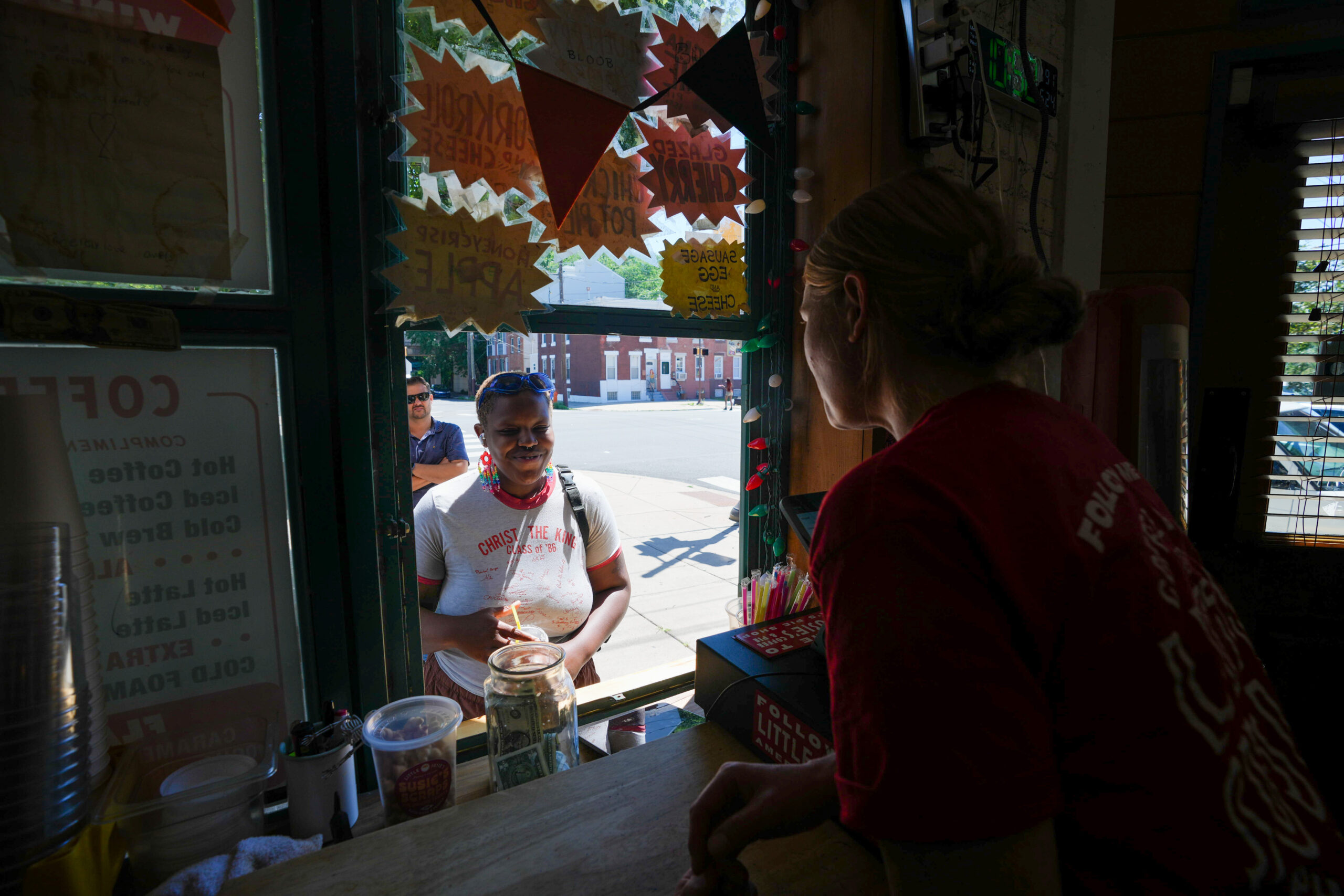
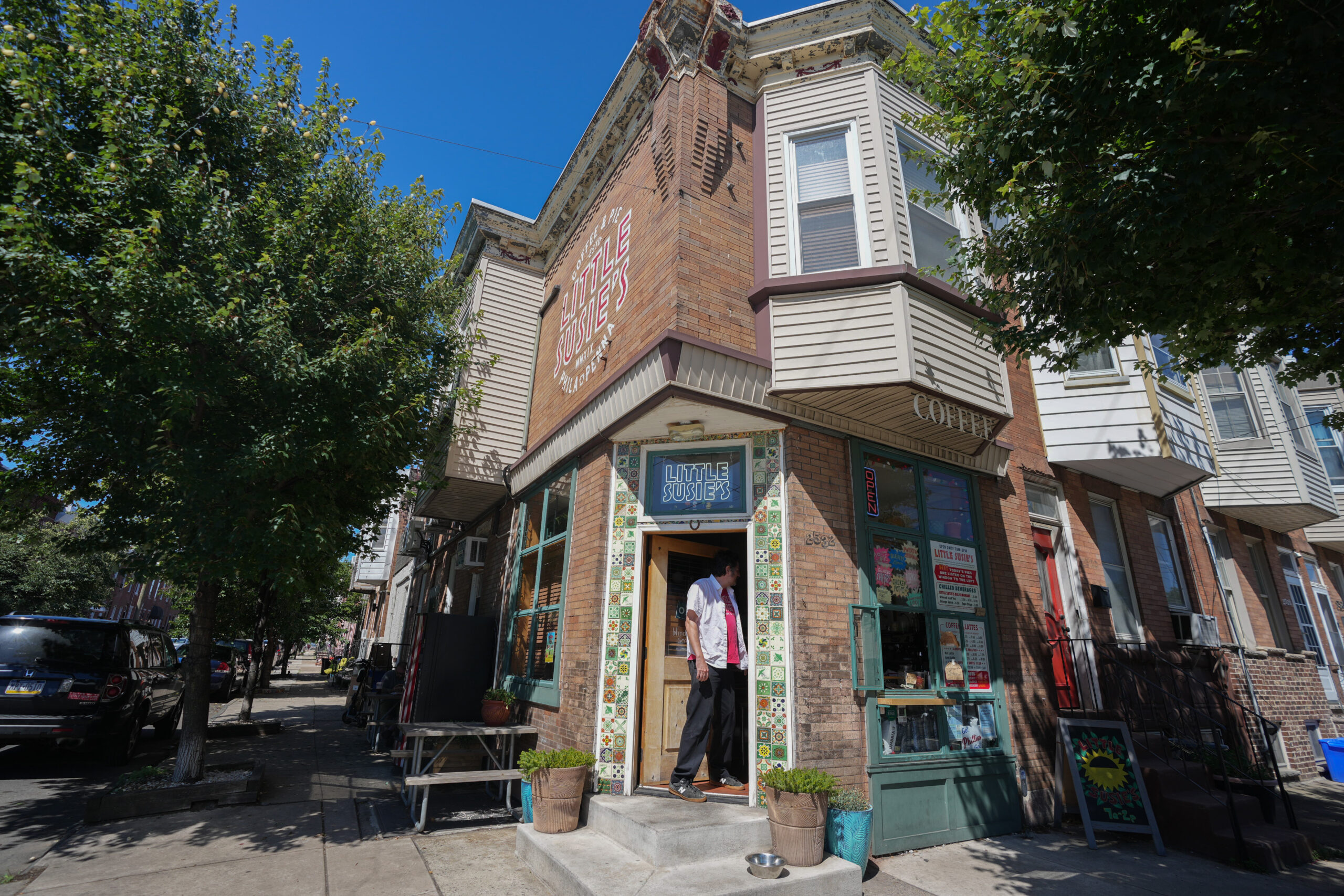
The takeout window at Little Susie’s flagship location at 2532 E. Lehigh Ave.
And what goes better with a cup of coffee than pie? He had a recipe he’d been baking for family get-togethers.
Seven years after Martino opened Little Susie’s Coffee & Pie in the building next door to his house, his modest idea has grown into four Philadelphia locations, with a fifth expected to open Friday at the former Pop’s Bun Shop in Bella Vista, a franchise headed to Milwaukee, and plans for additional shops in Fairmount and Northern Liberties. All his stores run from takeout windows, requiring little more than coffee stations and electric ovens.
Today, the company employs 28 people and turns out about 1,200 pies a day from a bakery occupying two cramped rooms in the corner rowhouse on Lehigh Avenue.
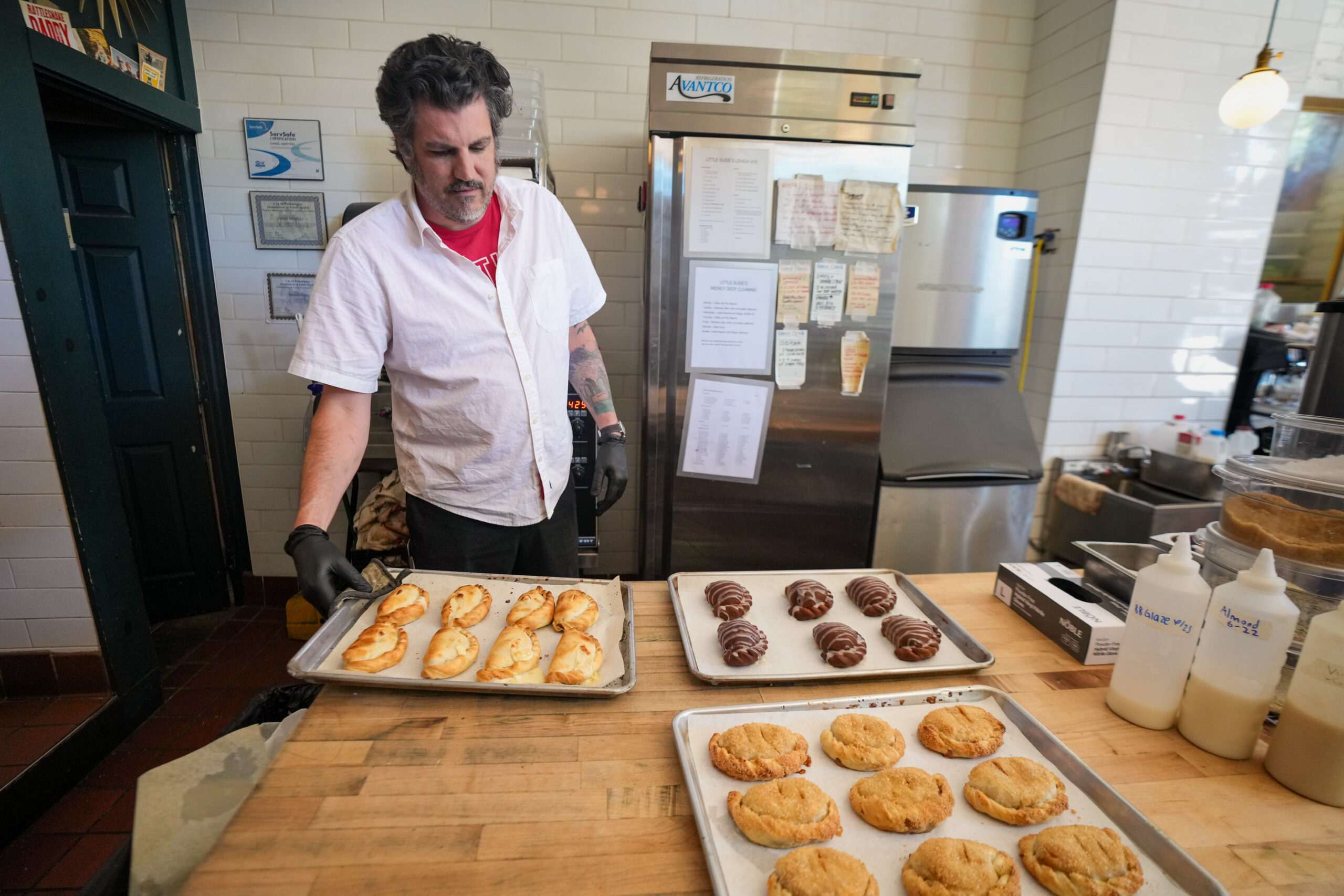
Owner Daniel Martino with trays of pies at Little Susie’s.
Martino, 46, who grew up in Northeast Philadelphia, has spent much of his working life around food. As a teenager, he worked at a swim club snack bar before taking a kitchen job at what is now Jefferson Torresdale Hospital.
After studying film at Temple University, he joined Public House Investments, which ran City Tap House, as a DJ before becoming the hospitality company’s creative director, designing menus, logos, ads, and marketing material.
When the property next door to his house became available, Martino said he used a home-equity line of credit to buy it before securing a Small Business Administration loan to renovate it.
The takeout window at Little Susie’s. Hand-lettered signs advertise the specials.
By the time Little Susie’s opened in December 2019, he said, “I had maxed out every credit card I had. I even had to go to the bank, hat in hand, and sign a signature loan for the last $10,000 just to get it open.”
His shop offered a simple menu, little more than coffees and lattes and four kinds of pies. There was a counter for seating. The first day brought in about $180, and “it was the greatest day of my life,” Martino said.
Then the pandemic arrived. When COVID-19 restrictions shut down indoor dining, Little Susie’s shifted to window service. Customers called in orders, paid over the phone, and picked up coffee and pies outside. Even after restrictions were lifted, the shop never reopened indoors.
It wasn’t what Martino had imagined. His idea was ”Cheers with coffee — the neighbors and the mailman talking about the weather,” he said.
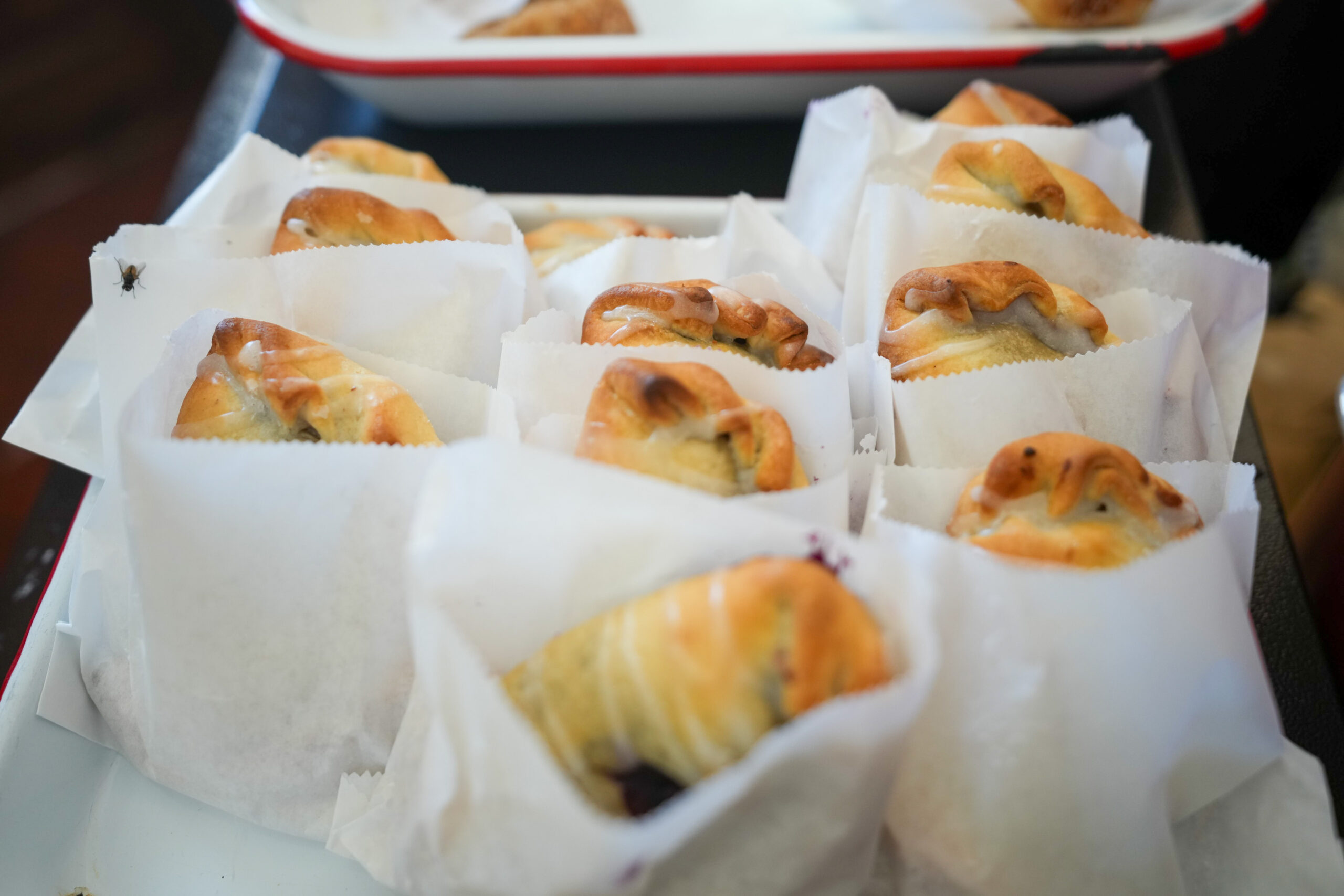
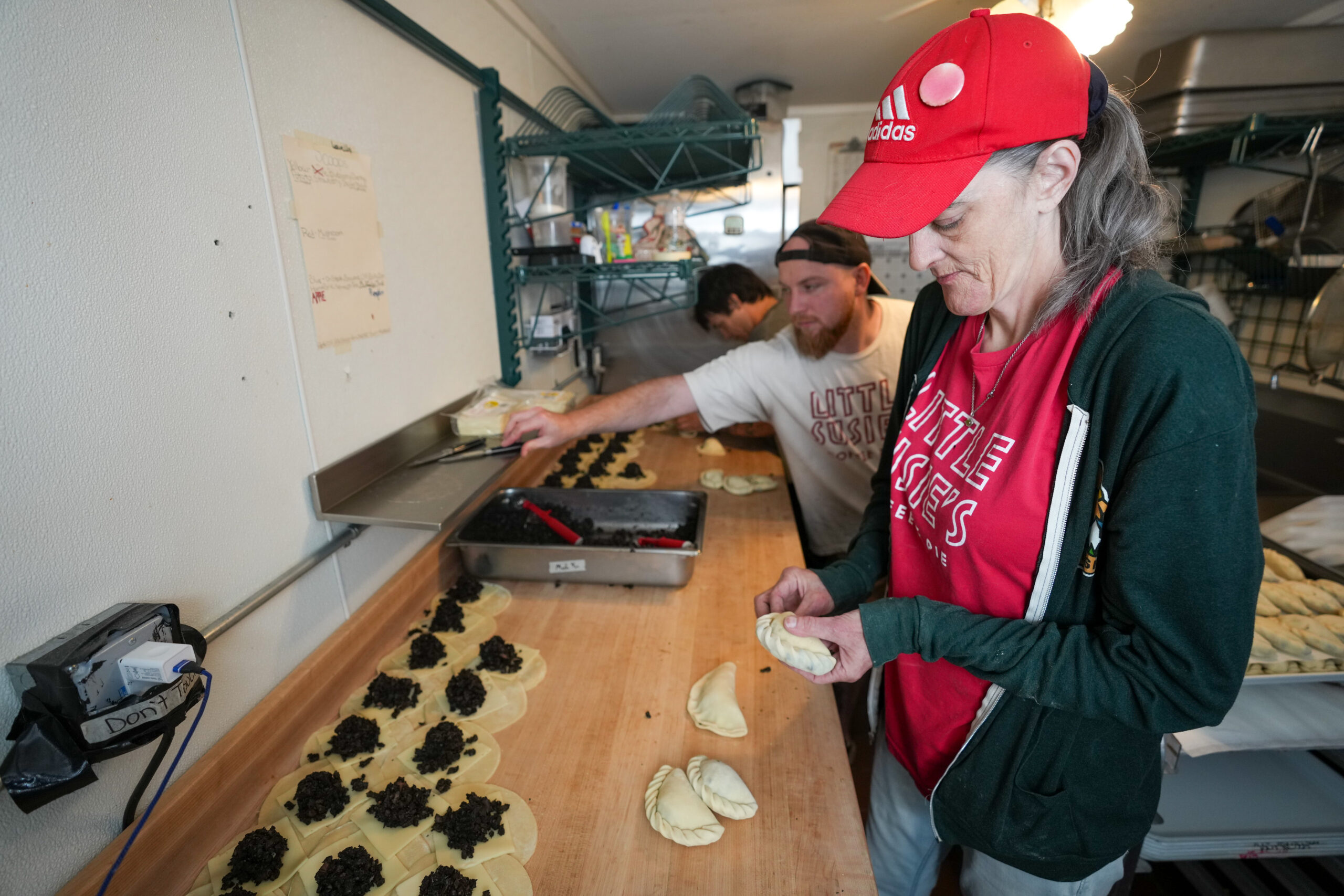
Instead, customers embraced the walk-up model and the seating at a picnic table beneath a maple tree. The pies especially quickly caught on. The signature is the crust. Rather than trimming away the excess dough, workers twist it around each pie by hand, creating what Martino calls “a fluffiness that the fork doesn’t provide — that flaky tenderness you want in a pie crust. The twist is its own special treat in and of itself.”
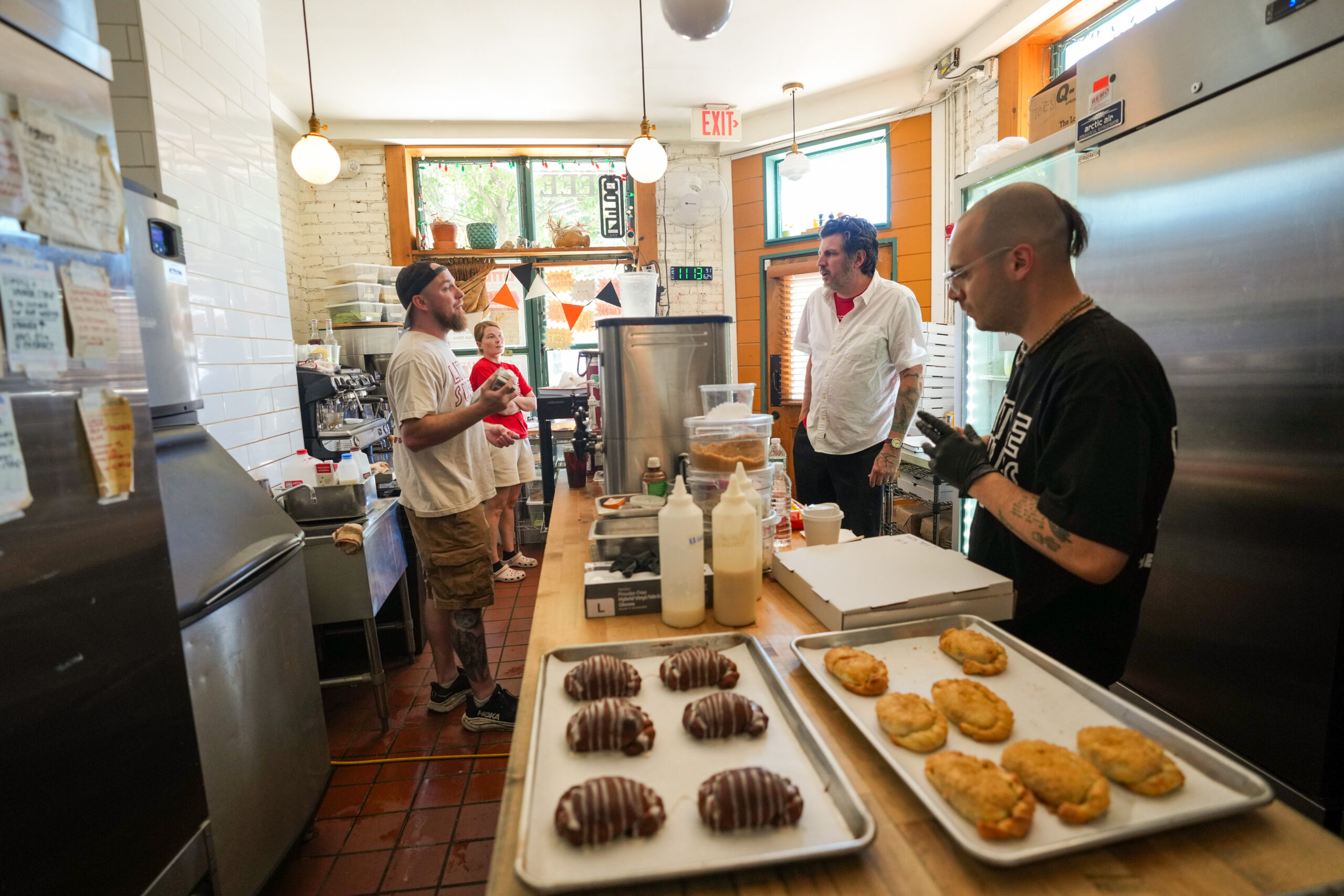
Owner Daniel Martino (rear, right) with staff and pies at Little Susie’s, set up in a rowhouse.
The pies, which are baked and not fried, are made with a simple crust of flour, butter, sugar, and salt. It’s a 48-hour process. Dough is mixed at the company’s Kensington location, where a 20-quart mixer runs nearly all day. The dough rests for 24 hours before it is brought to Port Richmond, where it is sheeted, filled, twisted, frozen, and delivered to the other stores to be baked to order.
Little Susie’s first menu included only blueberry, pork roll, apple, and mushroom Swiss fillings. Today, it offers about a dozen varieties, with eight available year-round and others rotating seasonally. “You can practically throw anything in this pie crust,” Martino said. “I haven’t been disappointed yet.”
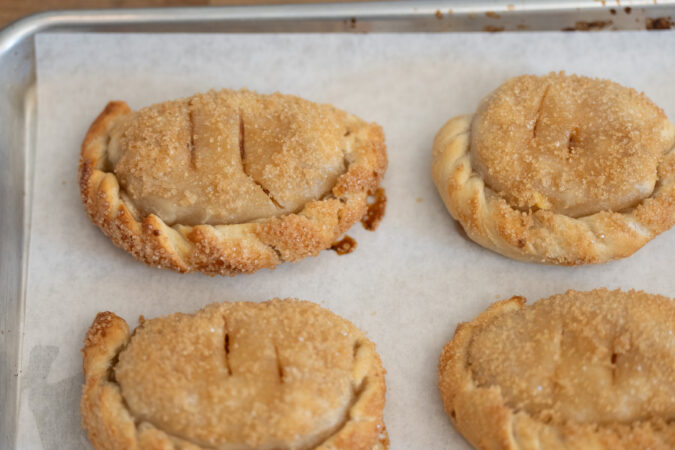
Pies at Little Susie’s.
Pork roll remains the top seller, followed by apple, and a sausage, egg, and cheese breakfast pie encrusted with everything bagel seasoning. Seasonal flavors have included ham and Brie, chocolate-covered strawberry, and Cajun crab and corn. None are gluten-free because of the shop’s limitations, he said.
Not every idea works. “We tried to make a cannoli pie, but the cream just melted right out,” he said.
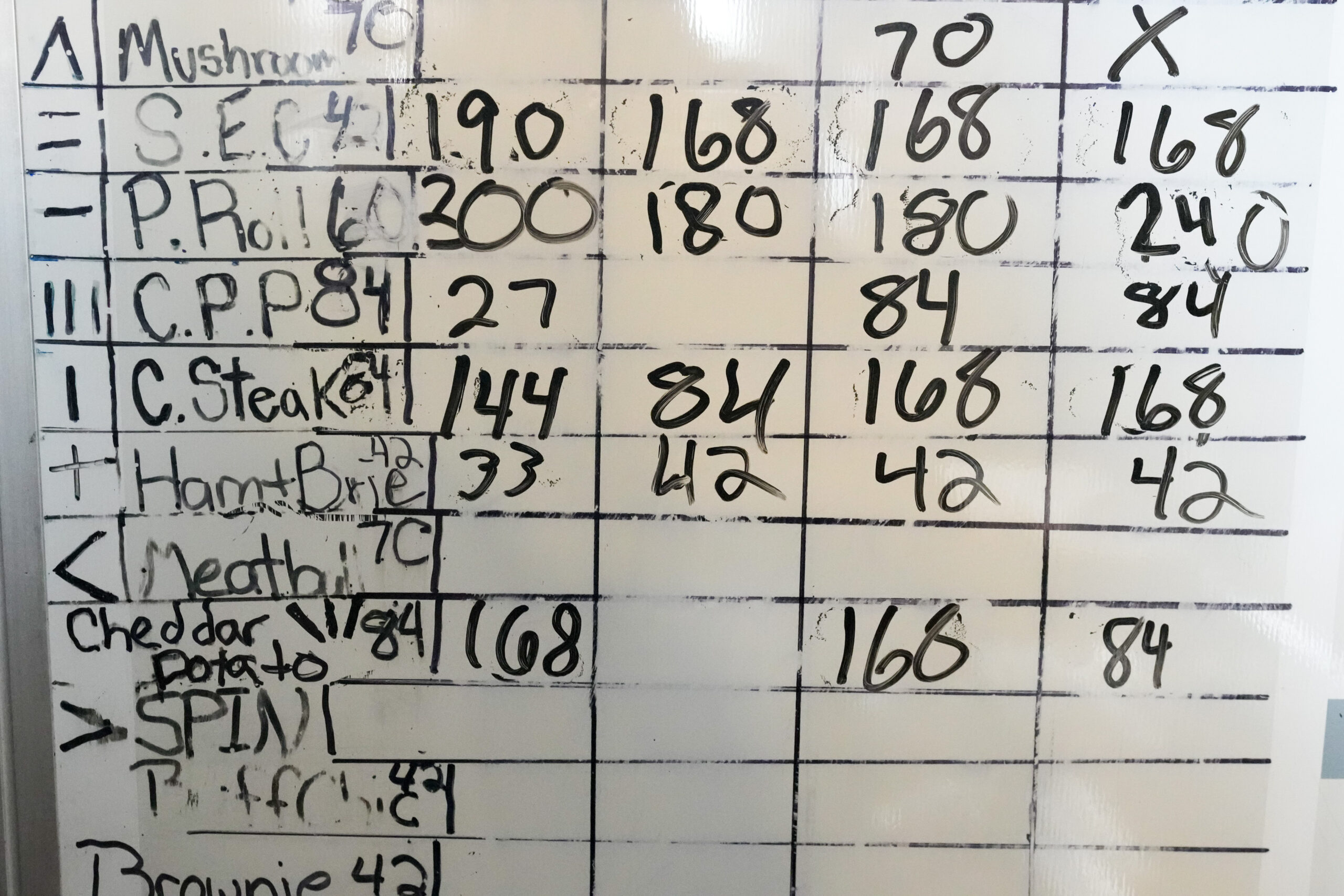
Each shop sells 200 to 300 pies a day. The production kitchen now employs 11 bakers, who track production on a whiteboard nicknamed “the Pieble.” Each variety get its own knife mark on top; an inverted V, for example, denotes mushroom Swiss.
The “Pieble” at Little Susie’s, the flagship pie takeout place located at 2532 E. Lehigh Ave., in Philadelphia, June 24, 2026.
Lena Hurchick, who has worked at Little Susie’s for three years, said she enjoys “the competition of filling all the shops” and watching customers eat pies she helped make.
“Susie” was the name of the dog that belonged to the former owner of the building. “When we had the community meeting here, I said, ‘I’m thinking Little Susie’s,’ and people started crying,” he said.
Lena Hurchick crimps mushroom pies at Little Susie’s.
Expansion has brought complications. A planned Fairmount location was nearly ready to open before the city determined that the property required zoning approval for food sales. “The city does not make it easy,” he said, adding that it will take months to get onto the zoning board’s calendar.
Even so, he expects the company to keep growing. He has a handshake deal for a spot in Northern Liberties. Milwaukee is planned as the first franchise — operated by a friend — while Martino has begun thinking about a larger bakery in Philadelphia.
“We’re basically bursting at the seams,” he said. “We’re probably going to need a 10,000-square-foot facility.”
Owner Daniel Martino at Little Susie’s.
He wants that growth to remain slow enough that the pies are still made fresh every day. “I don’t want to get too far away from making them every day, because then it just becomes some frozen-food empire,” he said.
Little Susie’s Coffee & Pies’ locations are at 2532 E. Lehigh Ave. in Port Richmond, Second and Chestnut Streets in Old City, 1772 N. Front St. in Kensington, and 1754 S. Chadwick St. in Point Breeze. A fifth, at 800 S. Ninth St. in Bella Vista, is due to open Friday. Hours are 7 a.m. to 2 p.m. daily.
Not to be left behind, Walmart has touted a “store of the future” concept for years as it opens and remodels hundreds of locations, including 32 in Pennsylvania this year, to have better layouts and services that aim to make the shopping experience seamless.
“By modernizing our stores, we’re making shopping faster, easier, and more convenient, all while empowering our teams to serve customers better and creating local opportunity,” said Annie Walker, senior vice president of the East Business Unit at Walmart, in a statement announcing the Pennsylvania investments this year.
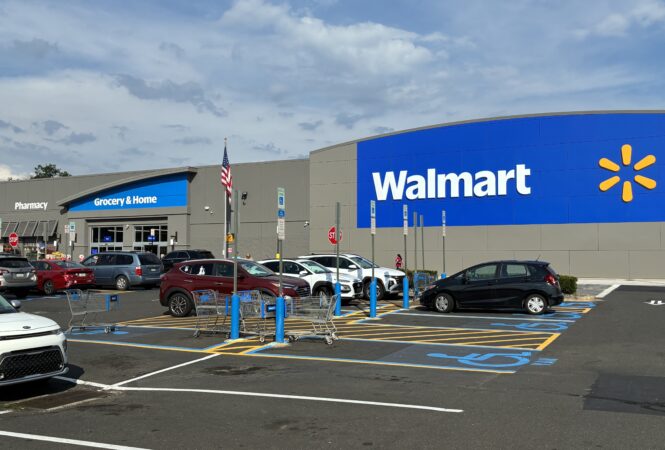
The Walmart Supercenter in Warminster is the latest “store of the future,” unveiling its remodel this month.
I tried it out to see what the future holds for shoppers. Spoiler alert: It’s nothing out of The Jetsons, but a handful of customers told me they liked the improvements nonetheless.
“A lot of stuff is different, but it’s easier to find things,” said Cuong Kim, 41, of the new layout, walking out with a bag of toiletries.
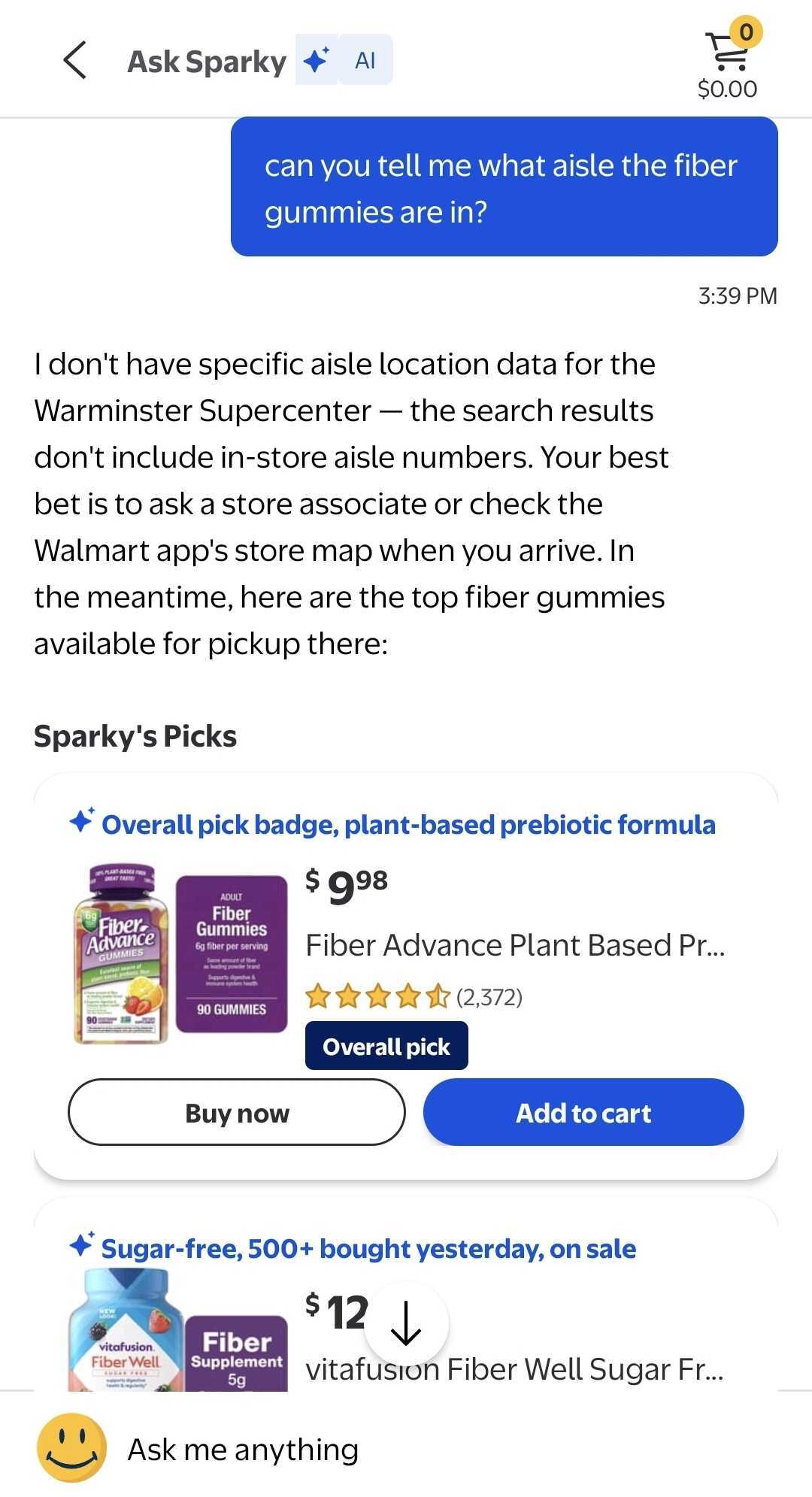
Sparky, where are the fiber gummies?
Walking in, the store doesn’t feel that different from counterparts in South Jersey or Philadelphia. The polished concrete floors remain the same and there are an Auntie Anne’s and a Subway near the entrance.
Still, I could see the company followed through on its “elevated assortment of healthy foods” promise. There were meat and cheese snack packs galore, along with a wide range of ready-to-eat salads and sandwiches in the grab-and-go section.
Because better online/in-store integration is part of the company’s “store of the future” pitch, I brought an admittedly specific grocery list with me to test out Sparky, the company’s generative AI shopping assistant launched last year, another trend major retailers are adopting.
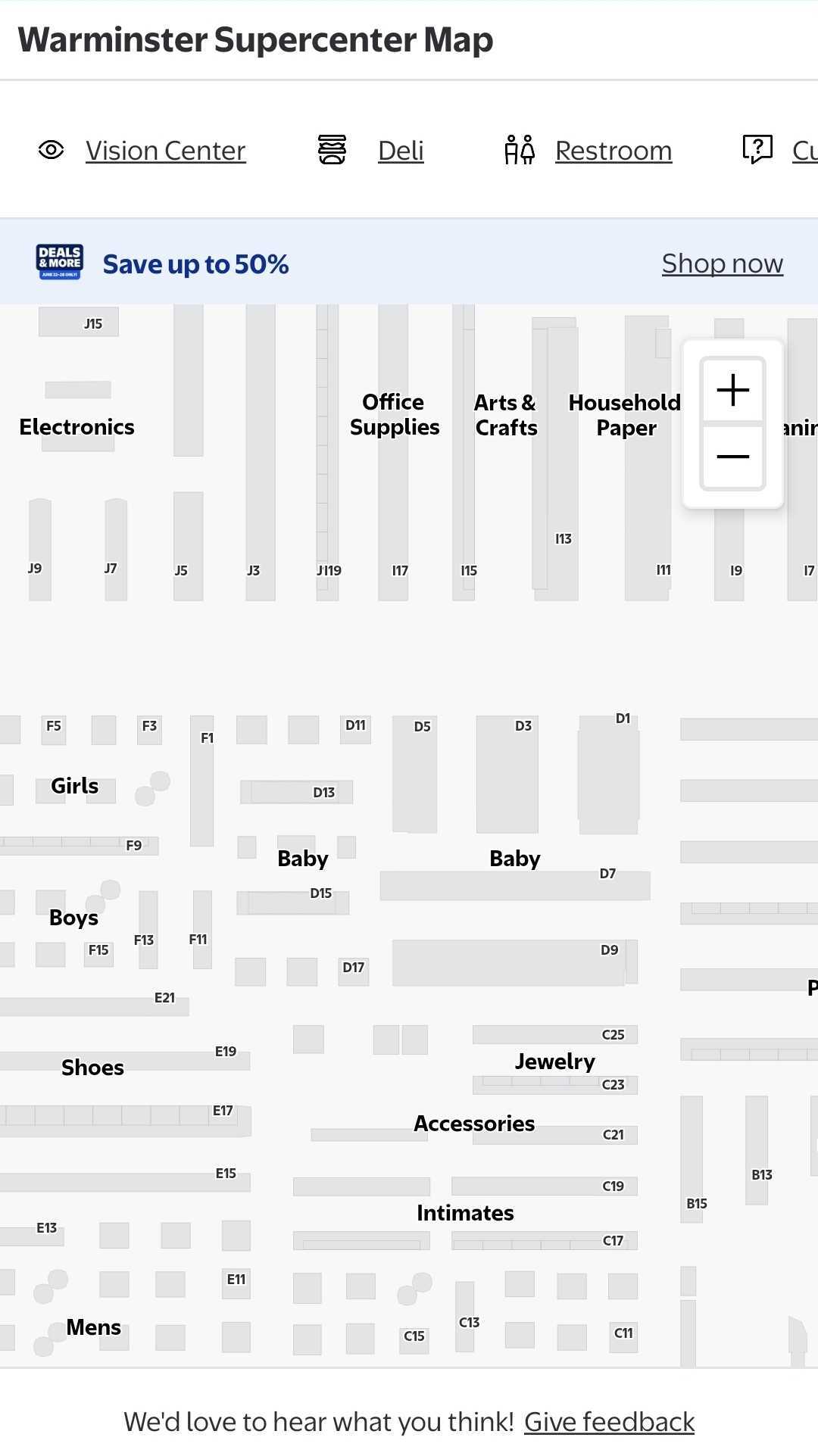
Though the Walmart app provided a handy static map of the store, Sparky was not helpful in helping me find mango pulp for a cheesecake I’m making or my fiber gummies, which I will need if my rich dessert plans move forward.
A static map of the Warminster Walmart in the app.
While Sparky pointed me to several fiber gummy brands, it was less helpful in telling me what aisle they were in.
“Your best bet is to ask a store associate or check the Walmart app’s store map when you arrive,” Sparky said.
Sparky, Walmart’s AI shopping assistant, doesn’t know what aisle the fiber gummies are in.
On the mango pulp front, Sparky showed me several options, which got my hopes up because I’d never used this item and was worried it might be hard to find.
Alas, none of Sparky’s suggestions were in the store, but could be shipped by the next day — helpful information if I weren’t already on site.
To be fair, one shopper told me that while Sparky doesn’t have a 100% hit rate, it is not a total dud.
He was right. Seltzer, another item on the list, was in aisle A22.
As I walked around the store, I noticed some aisles, like the beverage sections, could fit three shopping cartsacross. That’s some Costco-level width and another “store of the future” feature.
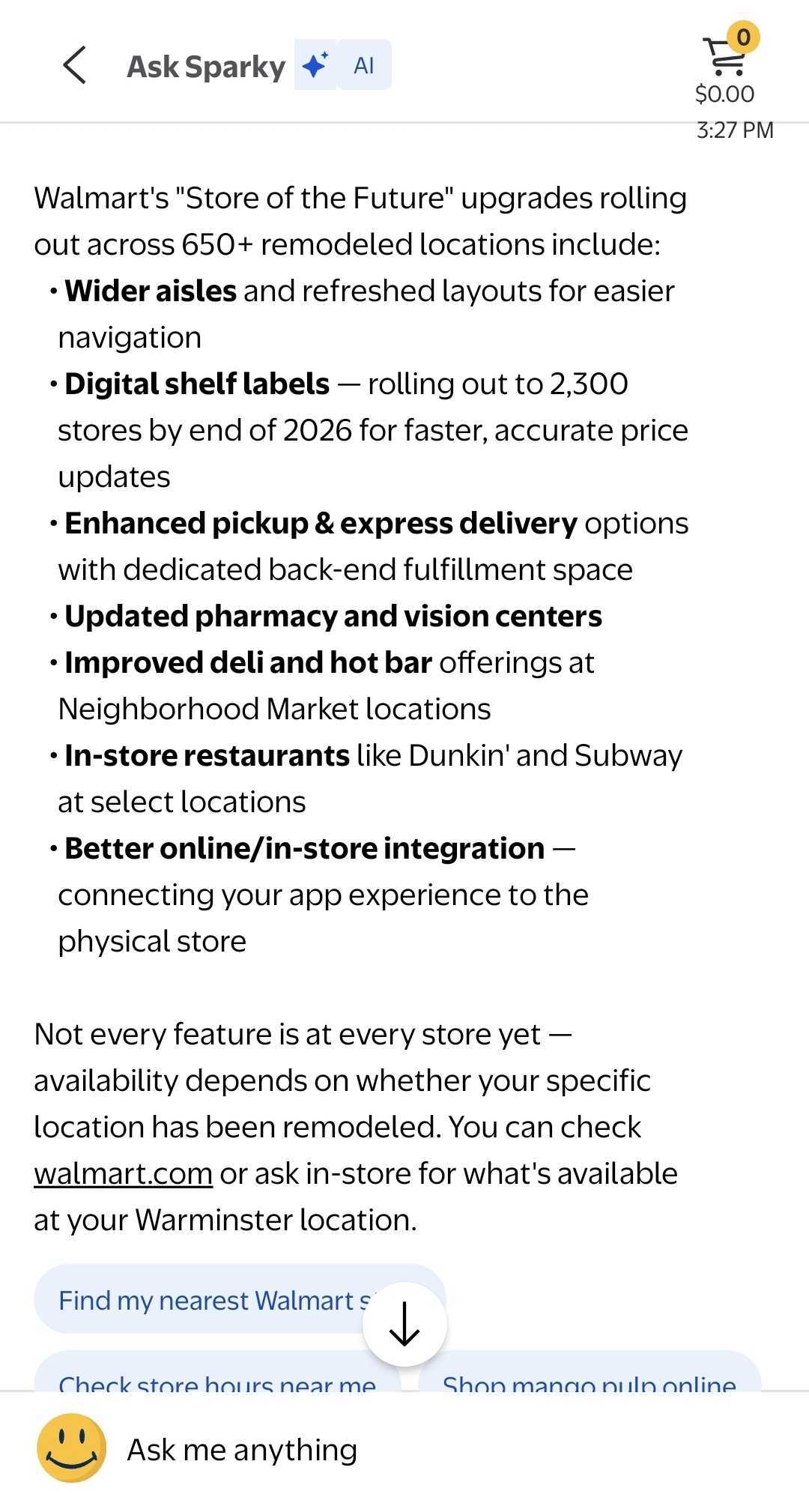
Even so, wider lanes, a semi-useful shopping assistant, and more snack packs didn’t make my shopping experience feel that futuristic, so I asked Sparky: “What’s new about my Walmart? I heard it’s the store of the future but not sure what’s changed.”
It reiterated some of what I’d already seen and highlighted the enhanced pickup and express delivery services. I recently had a laptop charger delivered from a different Walmart location and I can confirm it arrived in less than an hour.
Sparky lays out the store of the future upgrades.
Ol’ Sparky, however, warned me “not every feature is at every store yet.” For example, Walmart plans to roll out digital shelf labels that allow rollbacks and price changes to appear in real time, but were nowhere to be found in Warminster.
I also asked an employee what was new with the store to fact-check Sparky.
“It’s little things,” said the cheerful associate. “There’s more [grab and go] coolers, more cash registers, and a bigger electronics section.”
A reminder that no one knows a store better than the people who work there.
What we learned
It seems the people who would get the most use out of Sparky are those ordering online for delivery or planning their haul ahead of time, checking to see if their desired items are in store. These features, however, are not exclusive to the 32 Walmarts up for a makeover.
Yet while not exactly futuristic, shoppers in Warminster certainly appreciated the less tech-centered changes, such as the added breathing room as they shopped in clearly labeled sections.
Kim, the shopperwho traveled from Northeast Philadelphia for his haul, also reminded me that sometimes the most seamless shopping experience is pretty simple. He’s not an app user like some of the other customers I talked to. But he travels to Warminster because very few items require waiting for an associate to unlock them from glass cases.
“It’s easier to shop here,” he said. “In Philly, they lock everything up.”
Starting Friday, drivers traveling 36 mph or faster on Frankford Avenue in Northeast Philadelphia will face a minimum $100 fine.
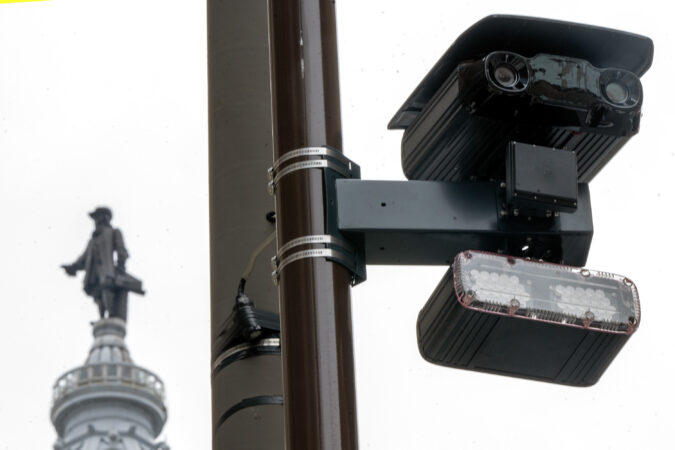
Tennew speed-enforcement cameras were activated on April 13, initiating a 60-day warning period which brought mailed warnings to violators of the road’s 25 mph speed limit.
“Speed cameras are a tremendous tool that helps save lives,” said Gabe Roberts, acting executive director of the Philadelphia Parking Authority, in an emailed statement.
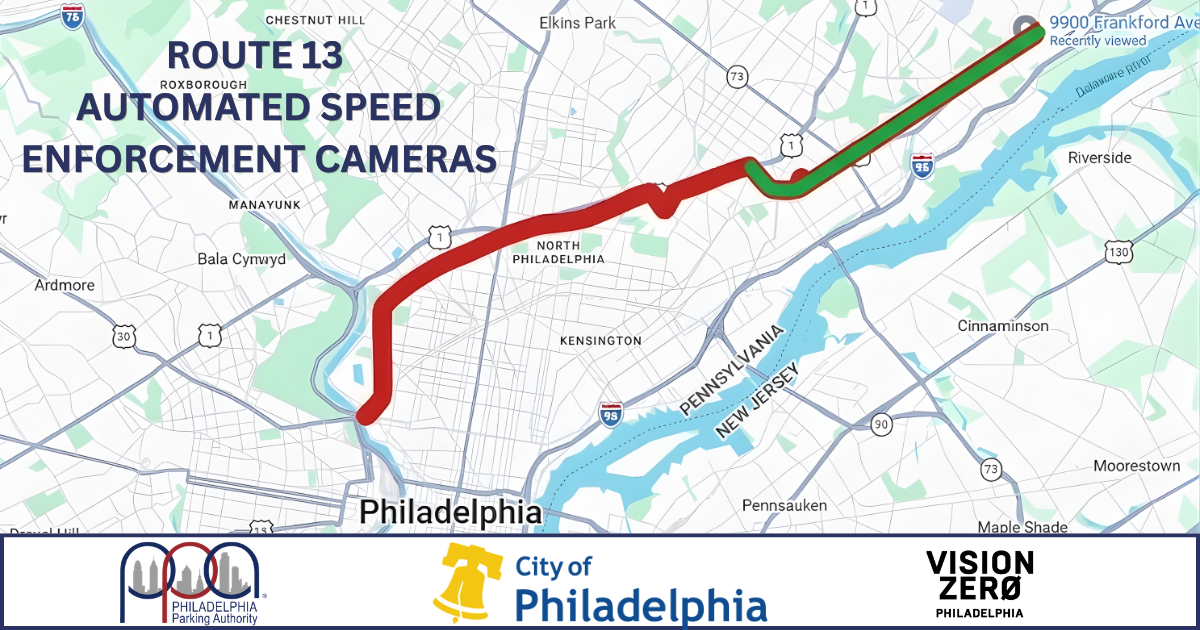
There are three tiers of penalties for speeding on the 4.5-mile stretch of U.S. Route 13 that are now going into effect.
Fines are $100 for traveling 11-19 mph over the speed limit; $125 for going 20-29 mph over; and $150 for speeding by 30 or more mph.
Tickets are mailed to the registered owner of the vehicle speeding. No points — PennDOT’s method of recording driving violations — are added to the motorist’s driver’s license.
The cameras are placed at 9900 Frankford Ave.; 8300 Frankford Ave.; 7000 Frankford Ave.; 6400 Frankford Ave.; 3100 Levick St.; and 2100 Robbins St.
Automated speed enforcement cameras went live Monday April 13 on the portion of U.S. Route 13 shown in green. Philadelphia Parking Authority will install cameras on the rest of the corridor in July 2026.
Speed-enforcement cameras were first piloted in Philadelphia on Roosevelt Boulevard in June 2020, with 32 automated cameras placed along the highway previously considered the most dangerous road in the city.
According to the Philadelphia Parking Authority, speed violations have since decreased on the boulevard by more than 90%, and there has been a 50% reduction in pedestrian-involved crashes.
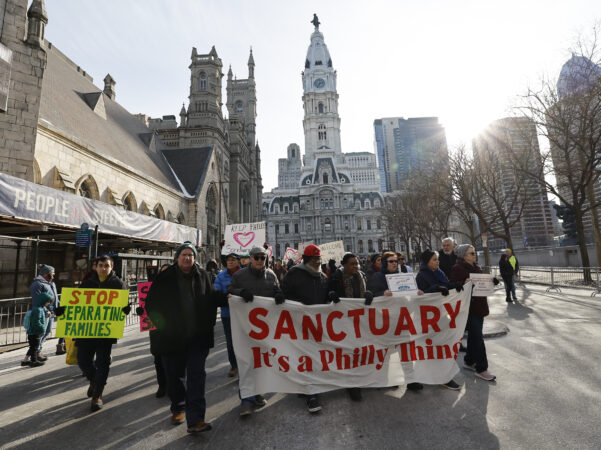
A significant majority of residents want Philadelphia to remain a sanctuary for immigrants, according to a new poll that shows the overwhelmingly Democratic city is undeterred by President Donald Trump’s threats to defund so-called sanctuary cities.
A recent Suffolk University/Philadelphia Inquirer poll that surveyed 500 city residents asked respondents if Philadelphia should remain a sanctuary city, “even if it means losing federal funding.” A commanding 59% answered “yes,” with only 28% saying “no” and the remainder undecided or unwilling to say.
The support for Philadelphia’s sanctuary status was consistent across age and racial groups. The only geographic region where a plurality of respondents answered “no” was far Northeast Philadelphia, which is among the most politically conservative areas of the city.
The survey question did not elaborate on what a loss of federal funding could mean for the city in terms of the impact on residents. Philadelphia received $2.2 billion from the federal government in fiscal year 2024 to pay for a wide range of critical services, including infrastructure needs, as well as healthcare, food, and housing assistance for low-income people.
(function(){function e(){window.addEventListener(`message`,function(e){if(e.data[`datawrapper-height`]!==void 0){var t=document.querySelectorAll(`iframe`);for(var n in e.data[`datawrapper-height`])for(var r=0,i;i=t[r];r++)if(i.contentWindow===e.source){var a=e.data[`datawrapper-height`][n]+`px`;i.style.height=a}}})}e()})();
Still, the results of the poll show relatively widespread support in Philadelphia for the city’s sanctuary policies, which include its practice of not complying with detainers issued by U.S. Immigration and Customs Enforcement without a court order. Those detainers are effectively requests submitted by federal agents to local law enforcement agencies that ask to hold undocumented immigrants in custody.
Mayor Cherelle L. Parker’s administration does not refer to Philadelphia as a “sanctuary city” — she and her top aides instead call it a “welcoming city,” language that has been increasingly adopted nationwide as Trump and his allies in the Republican Party have sought to crack down on sanctuary cities.
President Donald Trump travels to the Lehigh Valley to visit Mack Trucks in Macungie on Tuesday, June 23, 2026.
The sanctuary policies predate Parker’s tenure and were in place under an executive order signed by former Mayor Jim Kenney. They were codified into law earlier this year after City Council passed a package of legislation aimed at limiting ICE’s operations in the city and instituting some of the nation’s toughest restrictions on ICE.
In May, Parker signed six of the seven bills in the package, but took no action on one that bars law enforcement officers from concealing their identities, including by wearing masks. City Solicitor Renee Garcia wrote in a letter to Parker that the legislation may not be legally enforceable, but the mayor did not veto the bill, allowing it to become law.
Last week, the Trump administration sued Philadelphia and some of its top officials, including Parker, over the mask-ban ordinance. The Trump administration contended that the law is “blatantly unconstitutional” and undermines federal law enforcement’s ability to do its job.
The lawsuit is one of several filed across the nation by the Trump administration challenging local laws related to immigration as federal authorities carry out the massive deportation campaign promised by the president.
That effort is also tied up in litigation. Last year, a federal judge issued an injunction blocking the Trump administration from denying funding to jurisdictions that limit cooperation with ICE, saying the White House could not impose funding conditions without authorization from Congress.
Staff writer Sean Collins Walsh contributed to this article.
Philadelphia’s ports ranked as the fastest in North America for the third year in a row, according to the latest annual Container Port Performance Index, sponsored by the World Bank and Standard & Poor’s as a way to encourage improvements to terminals that handle global trade and pack goods moving from the ocean to road and rail for delivery.
The survey gave Philadelphia the highest ranking of more than 50 ports in the United States, Canada, and Central America.
Boston and Jacksonville, Fla., ranked second and third. Philadelphia’s nearest neighbors — the New York area and Baltimore ports — ranked far behind. The list measures the time ships spend at port berths, the time from a ship docks until it is unloaded, crane availability, ship size, and other measures.
No North America port ranked among the 20 fastest of more than 200 surveyed worldwide. That list was dominated by ports in China and other parts of East Asia, in Arab and North African countries, plus Algeciras, Spain, and Posorja, Ecuador.
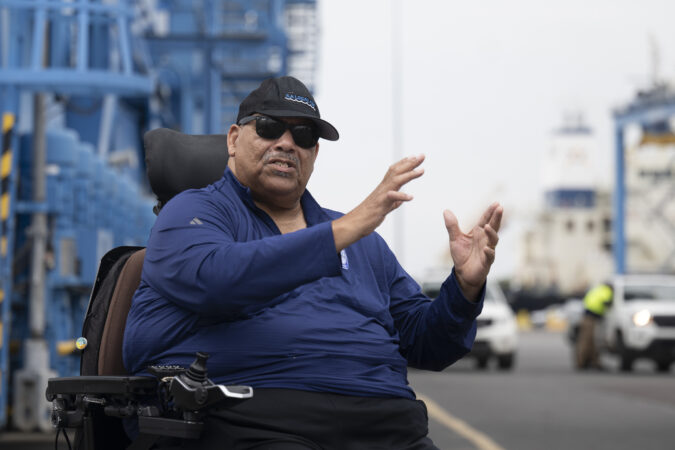
“This sometimes looks like chaos, but it’s organized chaos. It’s about teamwork,” said Boise Butler, president of Local 1291 of the International Longshoreman’s Association.
ILA is the main East Coast port labor union group, claiming more than 1,400 members on the Philadelphia docks, plus more in New Jersey and Delaware.
Butler said Philadelphia had long ago expanded its hours to attract shippers who were concerned that the terminals far up the Delaware estuary were more vulnerable to any delays.
Lazer credited “our very skilled labor” for handling large loads efficiently with minimum damage reports, according to commodity and container shippers.
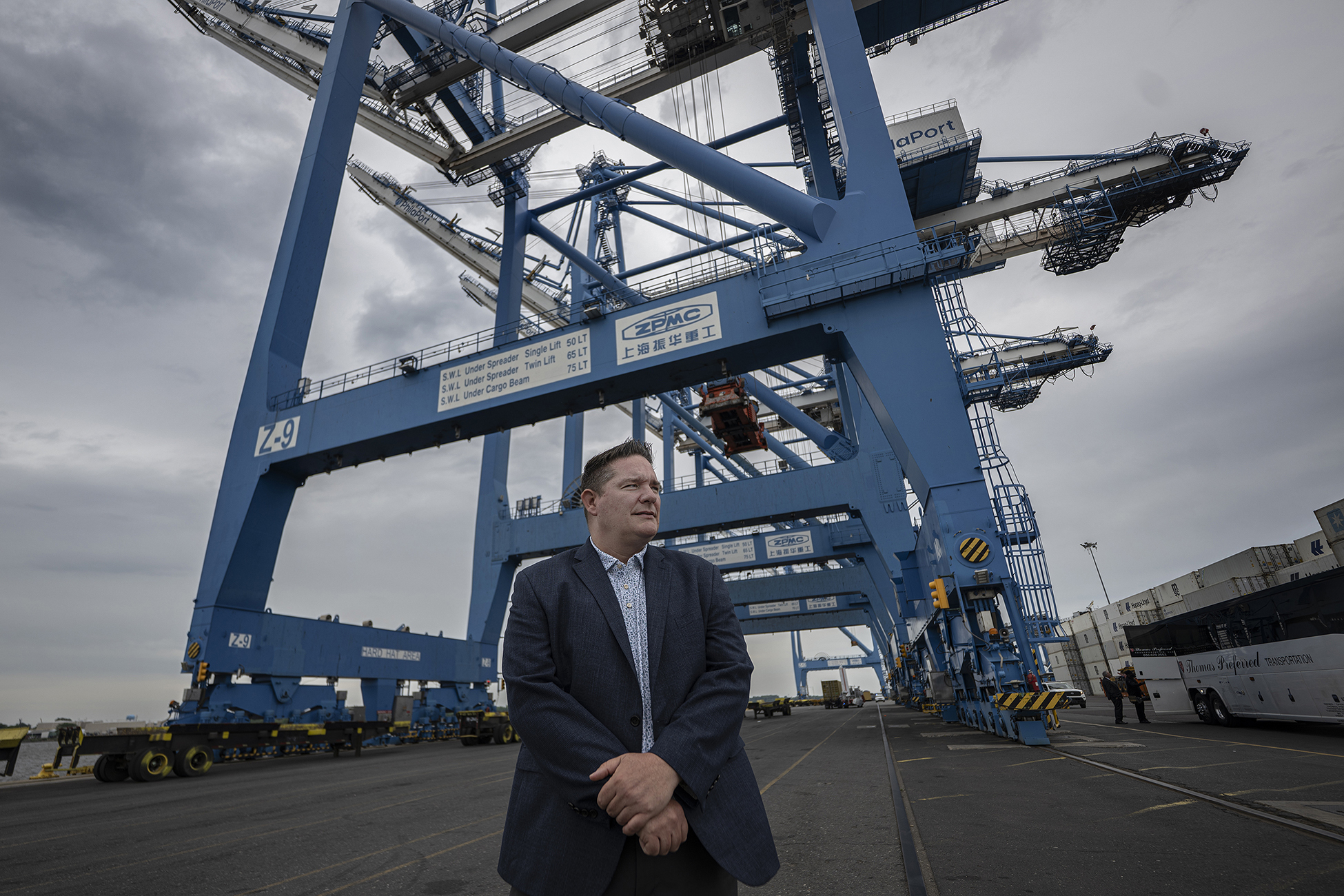
Richard Lazer, CEO of PhilaPort, near cargo cranes at the PhilaPort terminals. Lazer credits “our very skilled labor” for handling large loads efficiently with minimum damage reports.
It is premium work. The Longshoremen’s contract currently pays experienced workers $50 an hour, rising to $54 in October, with overtime pay after five hours, Butler said. “If they’re not making $200,000 after five or six years, something’s wrong.”
But the ranking is “not just about labor,” Butler said. “It starts with the Commonwealth of Pennsylvania, what they have built, and their vision for this port.”
Leo Holt, whose family-owned shipping company operates on the Packer Avenue docks and at its own Gloucester City port terminals, said the latest high score is “credit to all parties.”
“It’s a partnership between labor and management that has taken a long time to refine,” Holt said, referring to last year’s report, which also put Philly at the top of North American ports. “We work hard at it.”
Butler said the port needs to expand beyond the recent record hauls of nearly 1 million containers a year if it is to challenge ports like Savannah, Ga., which he said shipped five times as many containers.
“We need more warehouses,” Butler said.
The state built or helped finance many of the port’s improvements and has pledged to lead expansion into part of the former Philadelphia Naval Base and the Norfolk Southern freight yard in South Philadelphia. Four cranes larger than any currently on the area dock and two new 1,000-foot berths are planned, Lazer said.
Philadelphia cargoes through the Tioga Marine Terminal near the Betsy Ross Bridge include wood pulp and cocoa beans moved and, recently, ship propellers and sheet and structural steel imported by Korean industrial giant Hanwha for transfer by barge back down the Delaware to Hanwha Philly Shipyard.
Besides containers, the South Philadelphia port that once handled iron and coal now ships fertilizer and cement. Korean cars from Hyundai and Kia also land in the port.
South American fruit, which once formed a significant part of the Philadelphia and Wilmington port totals, now goes mostly to ports in New Jersey, Butler said.
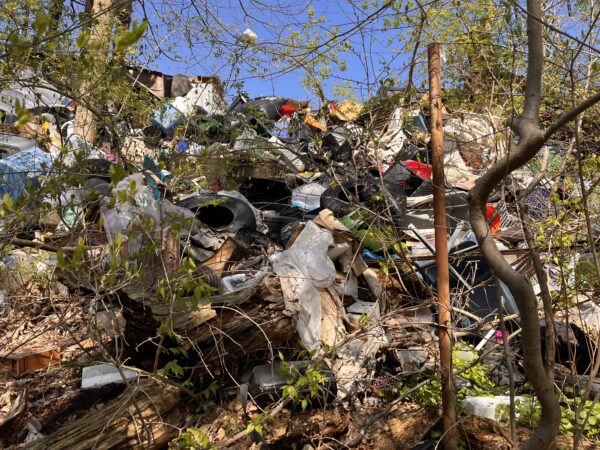
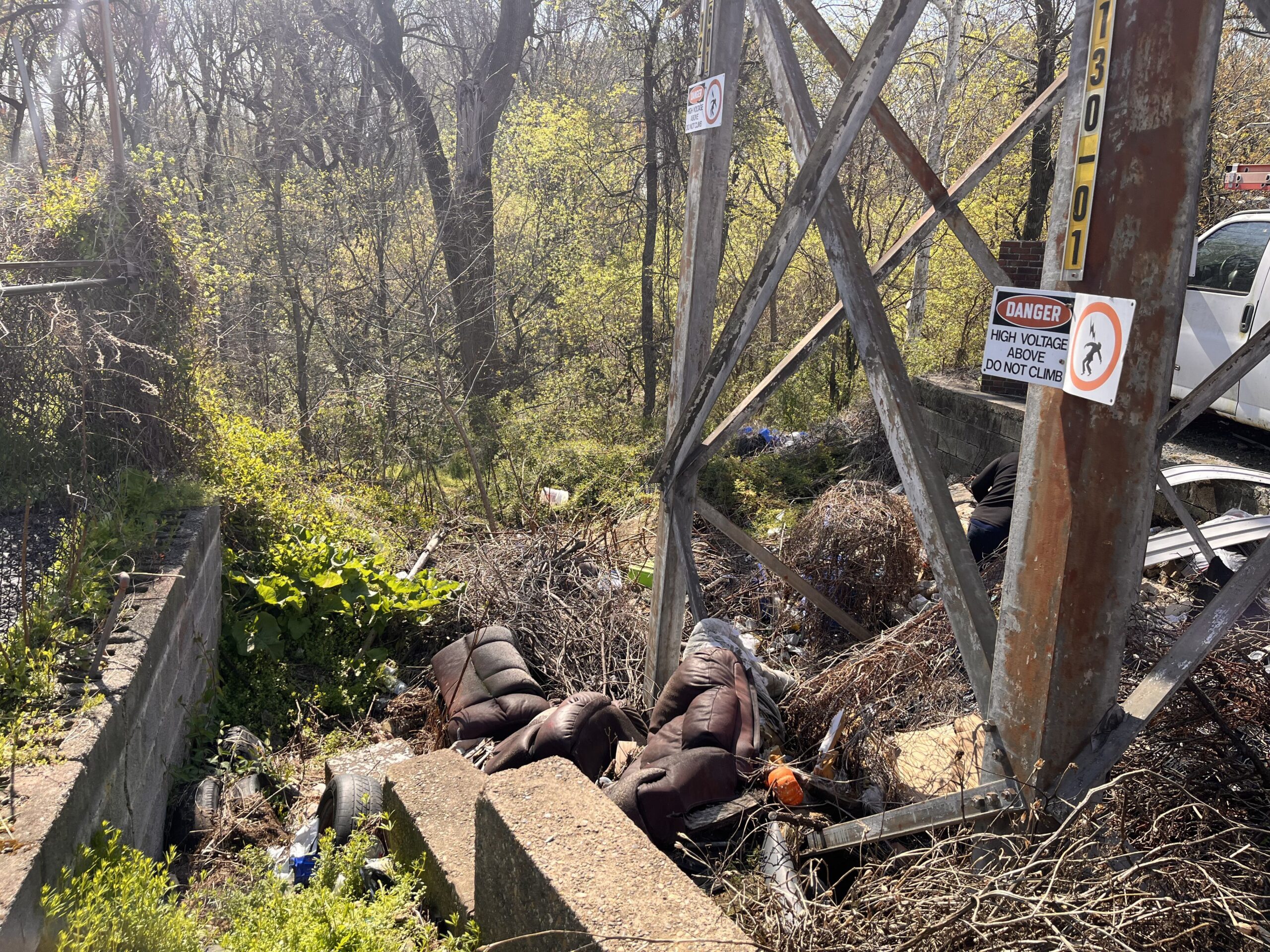
Viewed from below, the scale ofthe illegal dump is daunting, spanning the length and depth of a steep ravine for at least one block, spilling along before coming to a dirty halt near a clear stream.
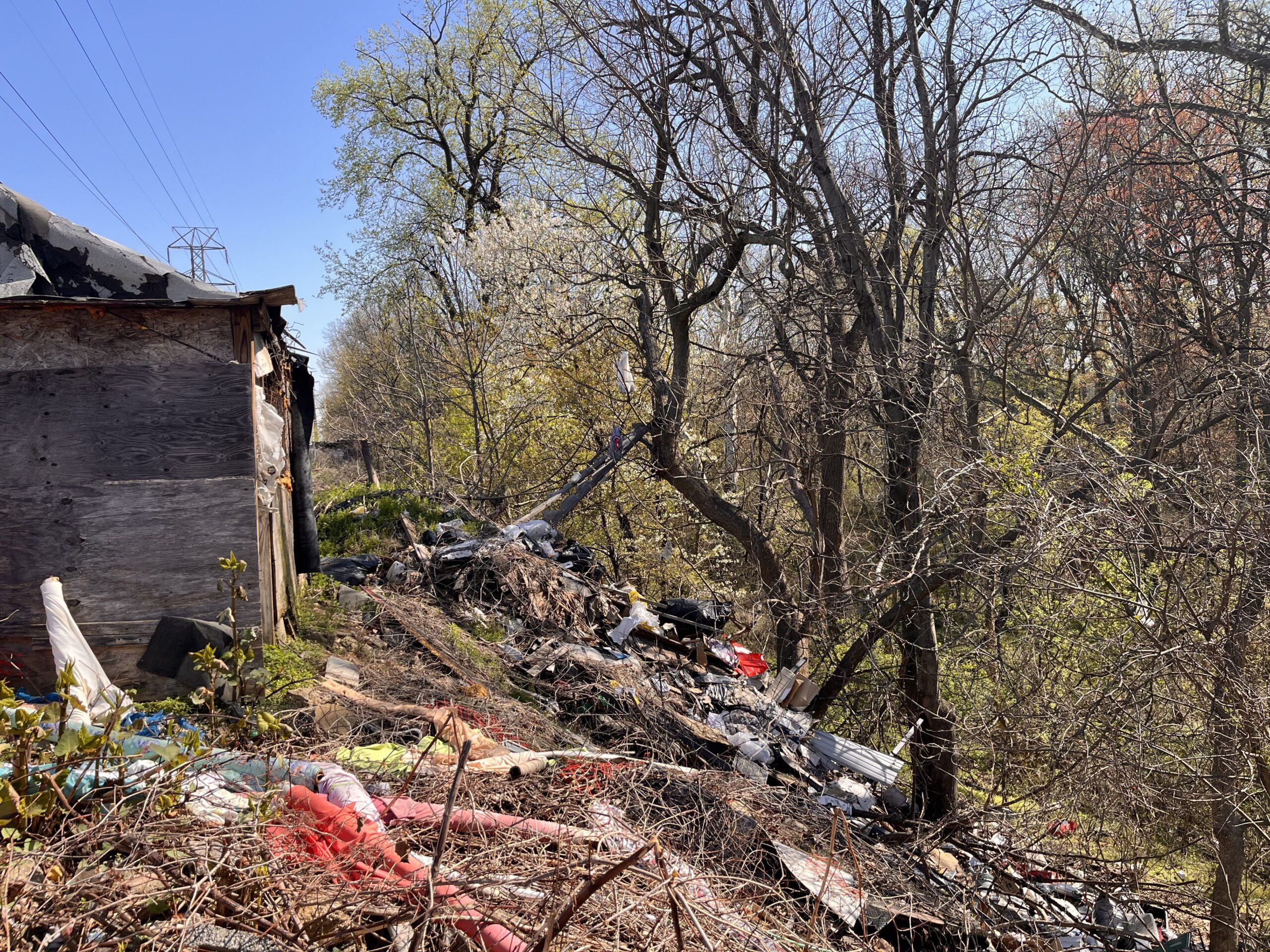
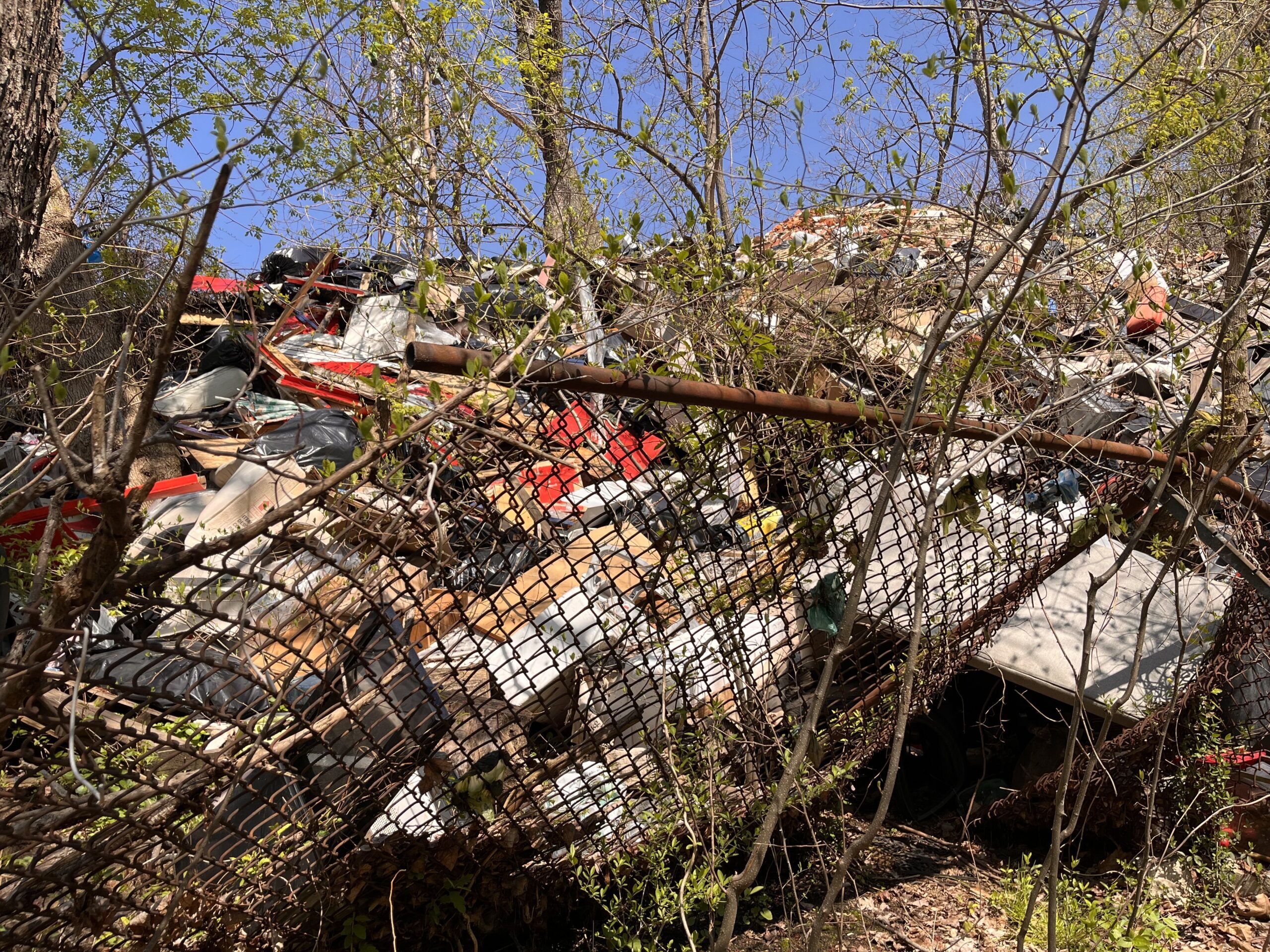
Viewed from above, it’s a vertiginous array of broken appliances, ratty furniture, dirty toys, old tires, used mattresses, and other detritus. The rear hatch of a white Toyota RAV4 pokes throughweeds. A boat is still hitched to a trailer loaded with rusting liquid propane tanks.
City officials don’t know how long the slope off Pennway Street in Northeast Philadelphia has been the site of illegal dumping. But they know it presents a big logistical task to clean it out.
“It’s certainly one of the larger dumps we’ve had to deal with,” said Carlton Williams, director of the city’s Clean and Green Initiatives Office.
“We’ll probably have to get cranes. And it’s going to be challenging to get equipment back there,” Williams noted. “This has been a hidden place for people to illegally dump for some time.”
window.addEventListener(“message”,function(a){if(void 0!==a.data[“datawrapper-height”]){var e=document.querySelectorAll(“iframe”);for(var t in a.data[“datawrapper-height”])for(var r,i=0;r=e[i];i++)if(r.contentWindow===a.source){var d=a.data[“datawrapper-height”][t]+”px”;r.style.height=d}}});
A treacherous location
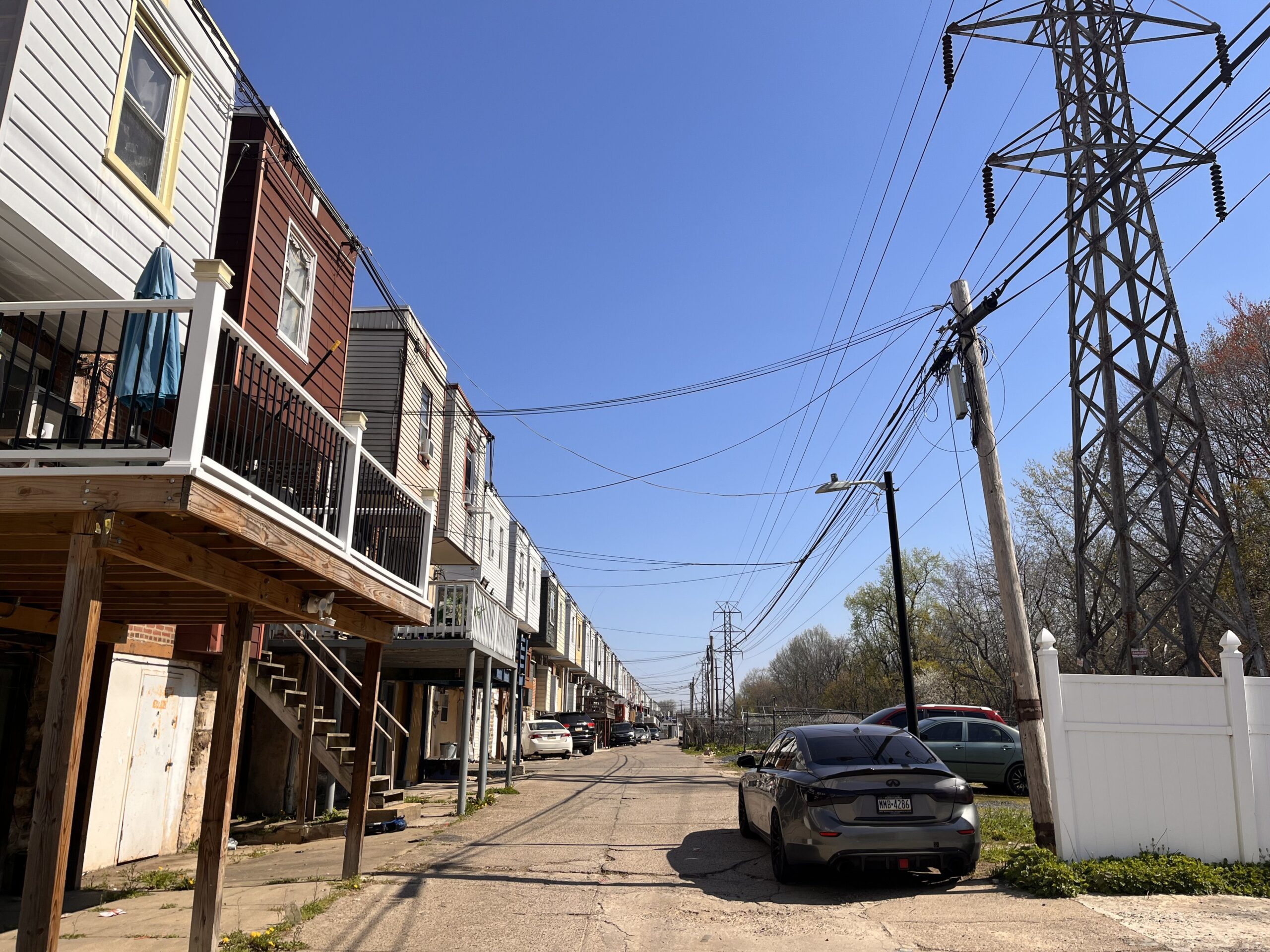
The first obstacle to cleaning out the dump is its location. It begins at the edge of an alley under high-voltage wires. Area residents park their carsin the alley and some have erected sheds.
The top of the slope is treacherous, filled with trash, chunks of concrete, and thickets of bramble that areeasy to snag or trip on.
A view of the top of the illegal dump under power lines off Pennway Street in Philadelphia.
Using volunteers to haul things out is probably not practical given the potential danger, Williams said.
From below, the dump is hidden by woods that adjoin the grounds of Friends Hospital. To view it, you have to leave a small trail, walk down a vegetation-chokedembankment, ford a spring-fed tributary of Tacony Creek, and trudge through wetlands.
There is no direct access road from the bottom.
On a recent day, a man was picking through the rubble.
“Looking for metal,” he mumbled.
The top of a ravine that serves as an illegal dump off Pennway Street in Northeast Philadelphia as viewed April 10, 2026.
Who owns the land?
The second major obstacle will be untangling ownership of the property, sorting out responsibility, and paying for it.
Williams said the city is currently tracking down ownership of whatever parcels might be involved.
Peco did not respond to an Inquirer email by deadline about whether any of the dump falls on its property or easements.
It’s not clear who is doing the dumping — construction crews, residents, or both.
“We’re still trying to figure out a plan,” Williams said. “We need to identify the property owner. Then we have to gain access.”
Williams also said it will be a challenge to prevent dumping in the future.
Philadelphia already has 400 surveillance cameras used to monitor known dump sites and can tap a broader network operated by the police department and other agencies. It anticipates purchasing an additional 100 cameras.
It has also installed bollards and gates that prevent vehicles from entering dump locations and is more aggressively pursuing and fining violators.
The rear of Pennway Street in Northeast Philadelphia as viewed April 10, 2026.
‘A huge psychological impact’
The dump was firstreported to the city by the nonprofit Tookany/Tacony Frankford Watershed Partnership (TTF), which helps manage the city-owned Tacony Creek Park.
A portion of the dump is behind a broken fence at the edge of the grounds.
The dump off Pennway Street spills to the edge of a broken fence.
“This is one of the harder ones to tackle,” said Justin DiBerardinis, executive director of TTF. “We’re at the beginning of a journey to take care of one of the biggest dumps that a lot of us have seen.”
DiBerardinis suspects contractors are dumping there, but also residents.
Cleaning it up, he says, will be “extremely complex.”
He’s also heartened by what he sees as the city’s willingness to address the logistical challenges presented by illegal landfills.
DiBerardinis said the dump mars thelandscape, and rests only yards from a tributary of Tacony Creek that serves as the edge of the 50-acre preserve.
A spring-fed tributary of Tacony Creek flows between the illegal dump off Pennway Street in Northeast Philadelphia and the grounds of Friends Hospital as viewed April 10, 2026.
“That stream is really clear, like spring-fed water coming from the earth,“ DiBerardinis said. ”To have that in our city is such a rare and special thing.“
He senses growing community support for tackling litter and a backlash against dumping. Last Saturday, about 100 volunteers came to the preserve to help clean it, though the dump remained inaccessible.
He thinks the community can play a role in the cleanup, if even for moral support and watchful eyes in the future.
“I’m seeing people getting inspired at the possibility of the restoration and the protection of those places, and to have access for them and their children,” DiBerardinis said. “Dumping like that has a huge psychological impact on a community.”
For a little over a year, Adam Richardson was known among local car thieves as “the title guy,” state investigators said Monday. They could steal a car, visit Richardson’s title shop and resell it, either to a coconspirator or a unwitting bystander.
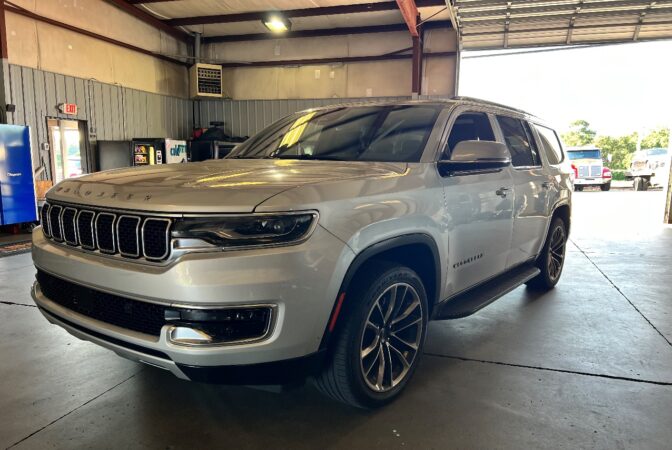
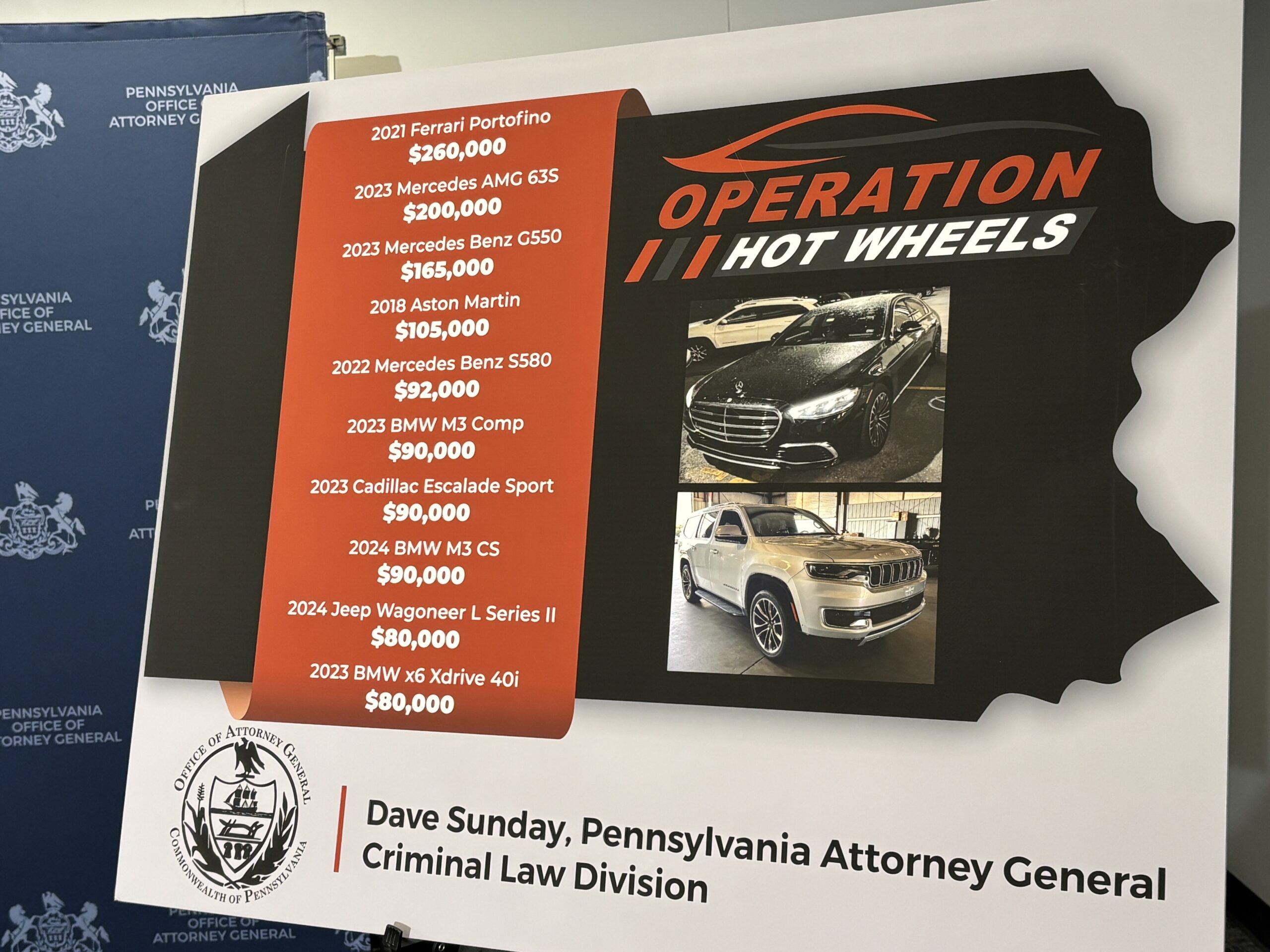
From his office on Golf Road in Wynnefield, Richardson, 40, created false title, registration, and insurance documents for luxury vehicles stolen from New Jersey, Philadelphia, and its suburbs, including a Ferrari Portofino worth $260,000 and a bevy of Mercedes, BMWs, and similar vehicles.
All told, Richardson facilitated the illegal transfer of 65 vehicles, the street value of which is nearly $4 million, according to state Attorney General Dave Sunday.
Richardson was arrested Friday and charged with racketeering, forgery, tampering with public records, and related crimes.
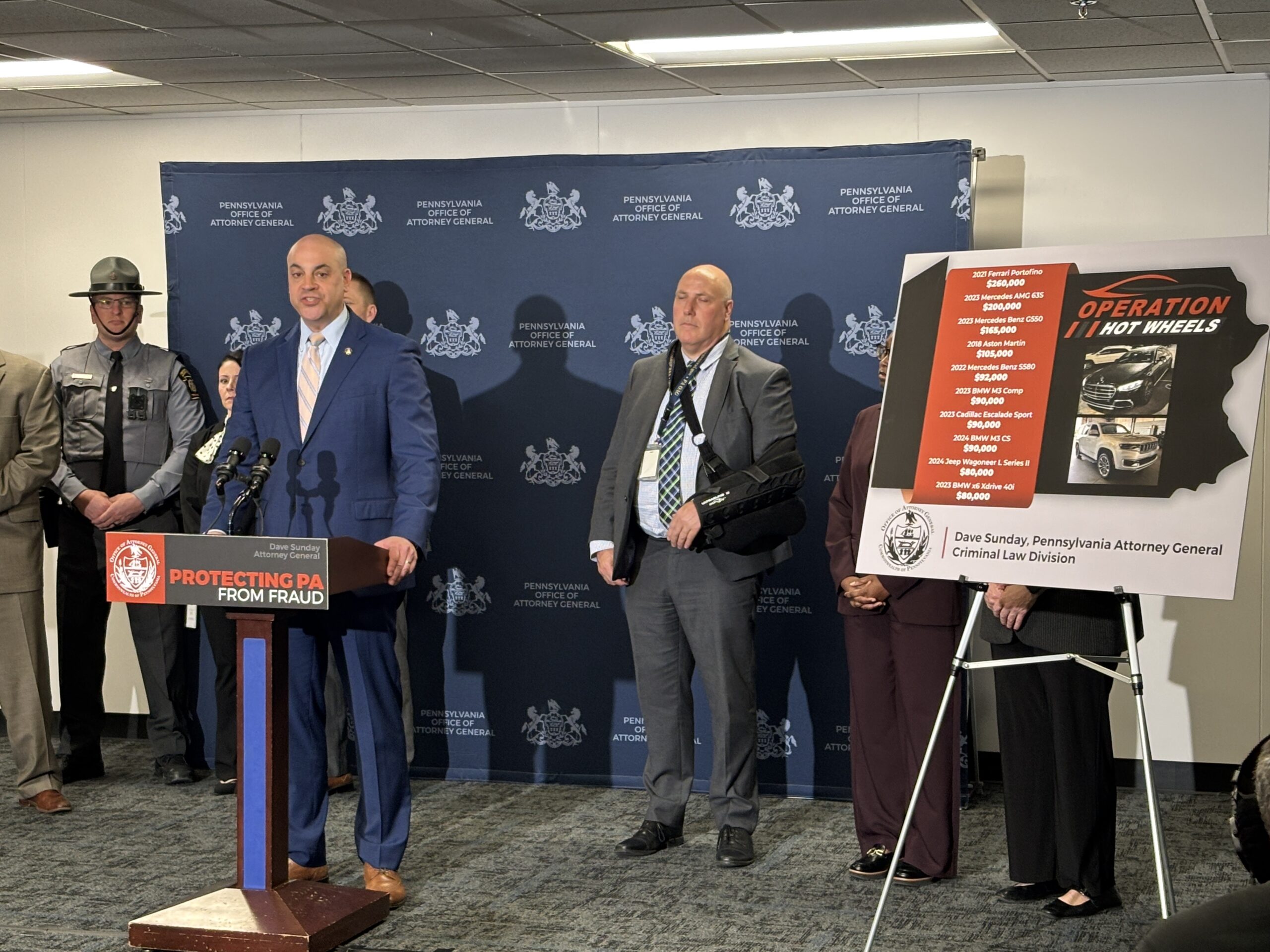
Sunday, speaking at a news conference in Northeast Philadelphia, said Richardson’s actions — referred to as “title washing” — created “a veil” behind which criminals were able to operate.
Pennsylvania Attorney General Dave Sunday said Monday that the title washing of stolen vehicles allows criminals to operate undetected throughout the state.
“What should be most concerning about this conduct to individuals and families in our communities is that title washing enables criminals to move in and out of communities without being detected by law enforcement,” he said.
Sunday declined to disclose whether the 37 vehicles recovered by Pennsylvania State Police were involved in other crimes, but he said that title washing is often linked to drug trafficking and other violent crimes.
The state’s investigation into Richardson is ongoing, he said.
Richardson remained in custody Monday in Dauphin County, denied bail due to the extent of his alleged crimes. There was no indication he had hired an attorney.
He will be prosecuted in Central Pennsylvania, investigators said, given his abuse of his power as a third-party contractor eligible to do business with the Pennsylvania Department of Transportation.
State Police investigators began investigating Richardson in May 2024, when a trooper at the Trevose Station and Barracks impounded a BMW X7 that he suspected held a fraudulent title, according to the affidavit of probable cause for Richardson’s arrest.
The vehicle had been registered in South Carolina, using a VIN that did not conform with the standard for that state and possessed a fake insurance policy, the affidavit said.
The true VIN, investigators said, matched a car reported stolen a month earlier in Montville Township in western New Jersey.
Investigators later interviewed a confidential informant who had facilitated the resale of the car. The informant had gotten the car, knowing it was stolen, from a man who told him to see Richardson, identifying him as “the 24-hour title guy” who had a reputation to meet sellers “anywhere and anytime,” the affidavit said.
The informant told troopers that Richardson helped him put the car in another person’s name, using a photo of their driver’s license.
The investigation into Adam Richardson, codenamed “Operation Hot Wheels,” found that he helped facilitate the sale of luxury cars, including multiple Mercedes sedans.
Using the unique identification number issued to Richardson’s business by PennDOT, investigators were able to identify the 65 cars involved in the title-washing scheme.
During the investigation, investigators spoke with multiple vehicle owners who said they had been paid money in exchange to have the stolen vehicles registered in their names, despite never meeting Richardson, visiting his business or driving the vehicles, according to the affidavit.
Previous audits by PennDOT in 2022 and 2023 found that his title business was violating multiple laws, including issuing plates to salvage vehicles and selling cars without a license.
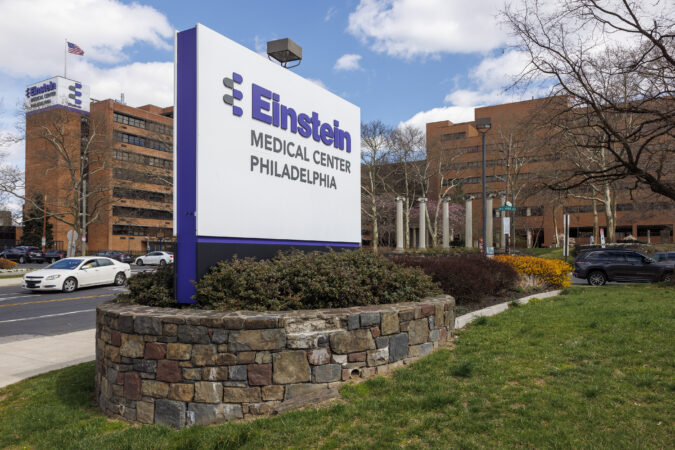
Jefferson Health is closing four legacy Einstein pediatric practices, including one at Jefferson Einstein Hospital Philadelphia in a low-income area of the city, and moving three others to True North Pediatrics, a private group with a dozen mostly suburban locations.
The nonprofit health system did notrespond to questions Thursday about how many children the practices serve, how many jobs will be cut, or why it was making the change, which is expected to significantly reduce the amount of pediatric care in North and Northeast Philadelphia.
This week’s pediatric cutbacks are a significant move affecting patient care amid a yearslong effort to make the system with more than $15 billion in annual revenue financially sustainable. From 2015 through 2024, Jefferson grew from three hospitals to more than 30 and now stretches from South Jersey to near Scranton.
The locations scheduled to close June 30 are the Pediatric & Adolescent Ambulatory Center at Einstein Philadelphia and three Holland Pediatrics locations (Center One/Bustleton in Northeast Philadelphia, Buck Road in Southampton, and Frankford in Torresdale), Jefferson said in a statement.
The three clinics going to True North are Trappe Pediatric Care at Iron Bridge, Pennypack Pediatrics, and Einstein Pediatrics Elkins Park. Jefferson did not provide details on transaction terms.
A practice manager at True North, which is based in suburban Philadelphia, did not respond to a request for more information. True North’s website said the practice is independent, “not managed by any big business or larger institution.”
Jefferson said in a statement that it will continue offering pediatric services through its primary care network, urgent care centers, emergency departments, and Lehigh Valley Health Network’s Reilly Children’s Hospital.
“With three excellent inpatient pediatric hospitals right here in our region, partnering with True North Pediatrics — an organization whose singular focus is pediatric care — allows us to ensure that families across our region continue to receive the specialized, dedicated attention they deserve,” Jefferson said in an internal communication Monday.
It’s possible that St. Christopher’s Hospital for Children, which is about 3½ miles by car from Einstein Philadelphia, will pick up many of the thousands of dislocated patients.
St. Chris already serves almost exclusively patients with Medicaid insurance for low-income families and struggles to make ends meet because of the low rates it receives.
“We are committed to delivering trusted, compassionate care for every patient who walks through our doors,” St. Chris said in a statement. “Families can access care at our nearby locations, including our Center for the Urban Children and Northeast Pediatrics office.”
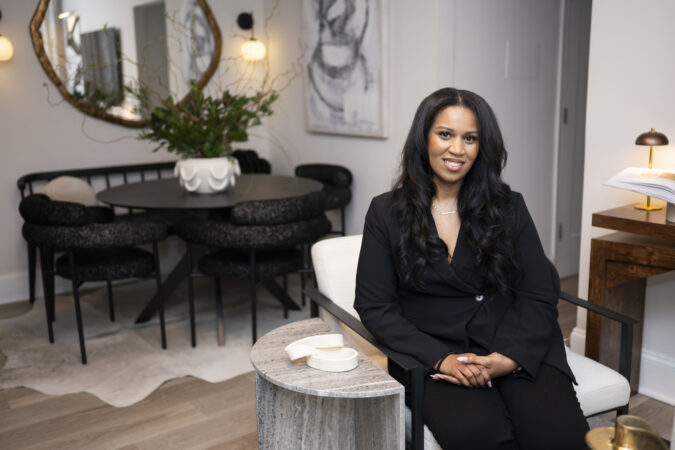
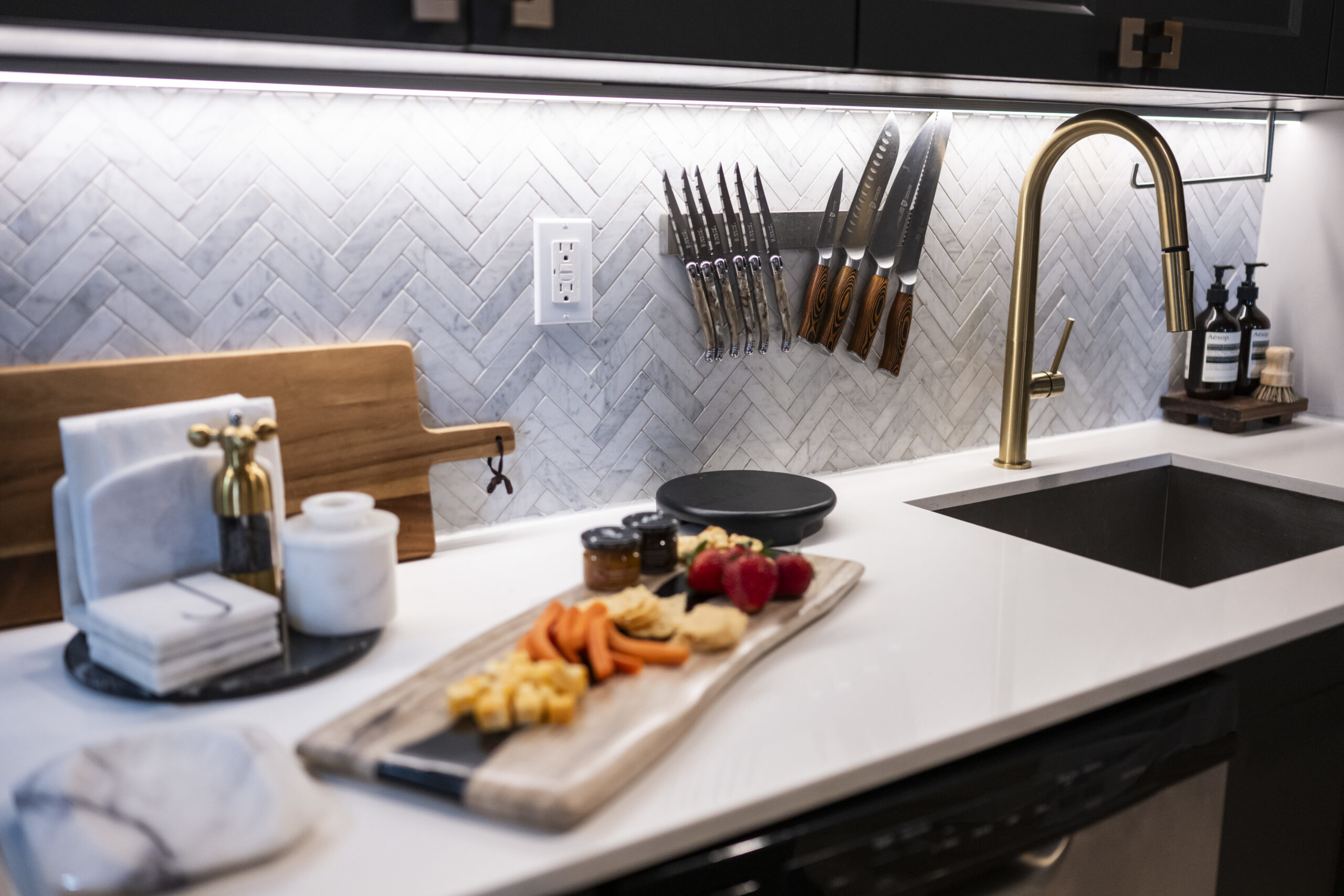
Bright red strawberries and orange carrot sticks on the kitchen cutting board and greenery in white sculptural vases on the white counter and black dining table add rare splashes of color to Jasmine Williams’ one-bedroom apartment.
Williams has lived in her mostly two-toned residence in Garden Court Towers, in the Garden Court neighborhood in West Philadelphia, for four years. She loves the “clean and classic” white of the apartment’s walls, chairs, rugs, ottomans, throw pillows, and other accessories.
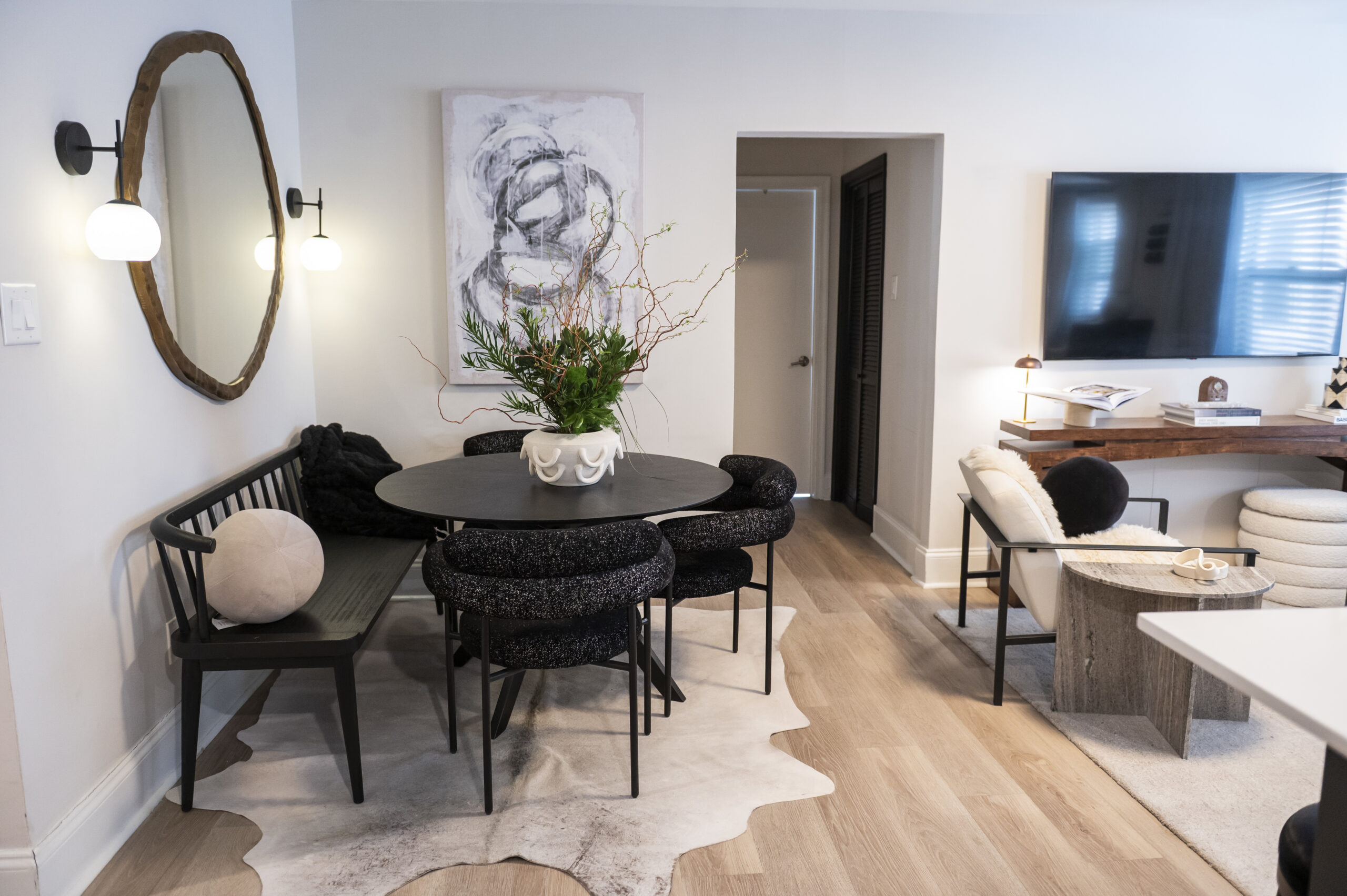
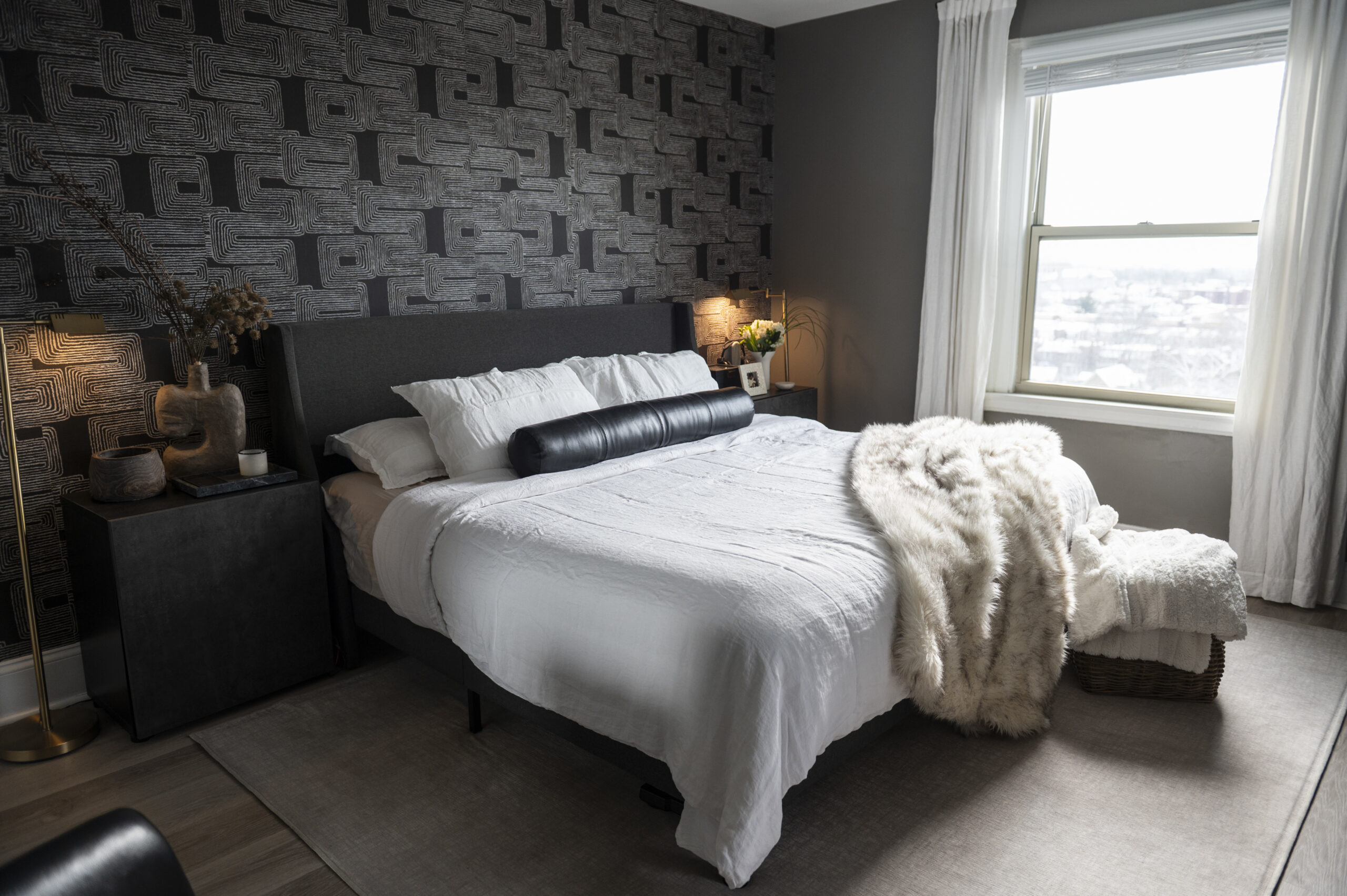
Contrasting black furnishings include leather chairs in the entry hall, a round table, the bench and chairs in the dining area, and black cabinets in the bedroom, which flank a radiator whose cover she painted black. She also painted the wall dividing the entry hall and the living area black.
Recently, Williams’ niece, Aubrey Harris, painted the folding doors to the laundry black. The rest of the doors in the apartment are white.
Williams already had the essentials when she chose her dramatic decor. Her 1,000-square-foot apartment’s renovated kitchen had black cabinets with white countertops. There were white fixtures in the bathroom and powder room. The laminate floors resembled white oak.
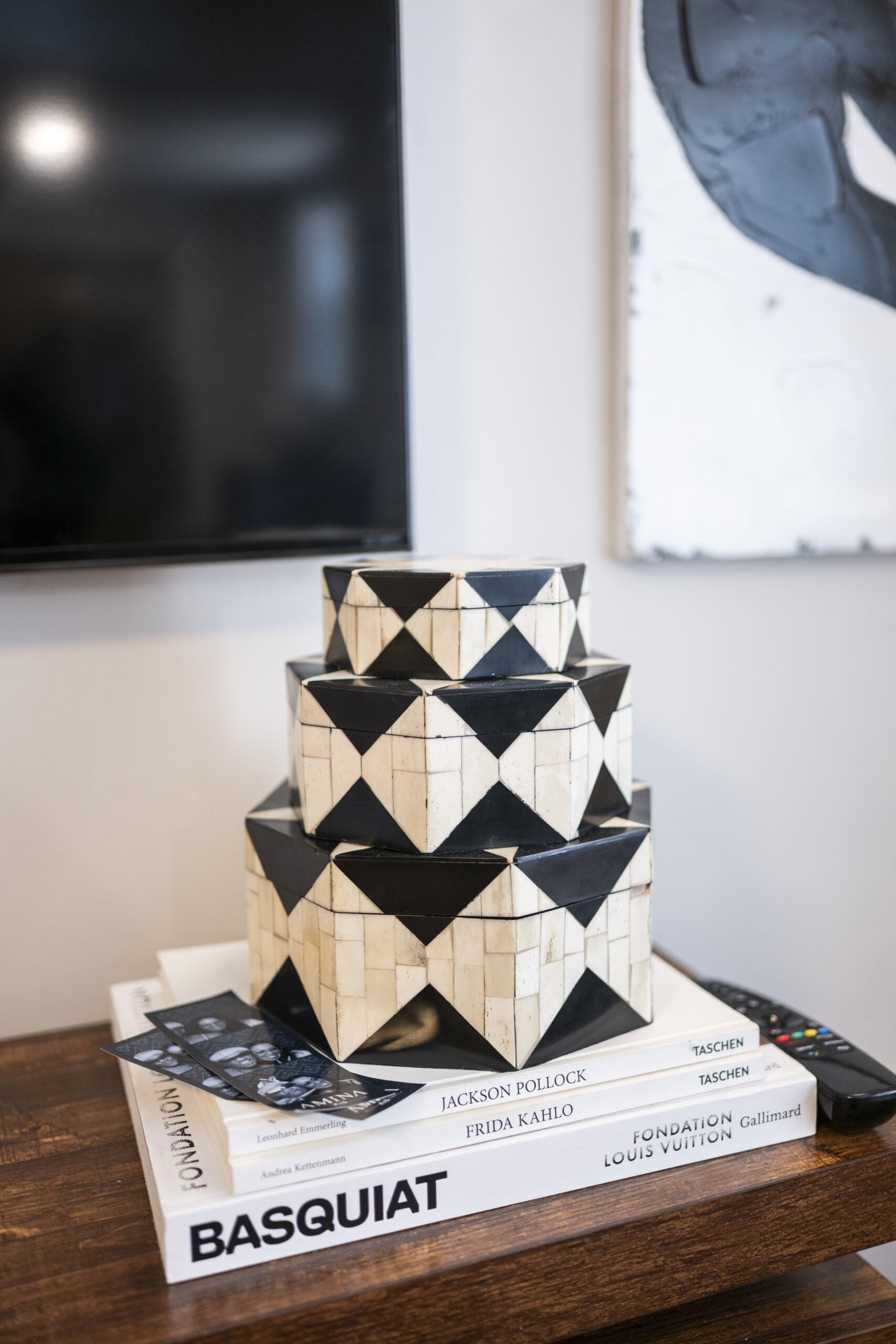
Decorative boxes and books are stacked on a media console in the living room.Decor on the nightstand next to Williams’ bed.
Williams, 36, spent the first decade of her life in a home on Larchwood Avenue, just blocks from Garden Court Towers. Her family then moved to Berlin, N.J. She graduated from Eastern Regional High School in Voorhees.
During the early days of the COVID-19 pandemic, she lived with her grandmother, Dolores Cook, in Northeast Philadelphia and redecorated Cook’s home.
“From the time she was a little girl Jasmine always liked art and design,” her mother, Yvette Baker, boasted during a visit with her daughter.
Williams was a project manager for nonprofits before becoming an interior design consultant. She is also a disaster relief volunteer for the American Red Cross in Philadelphia.
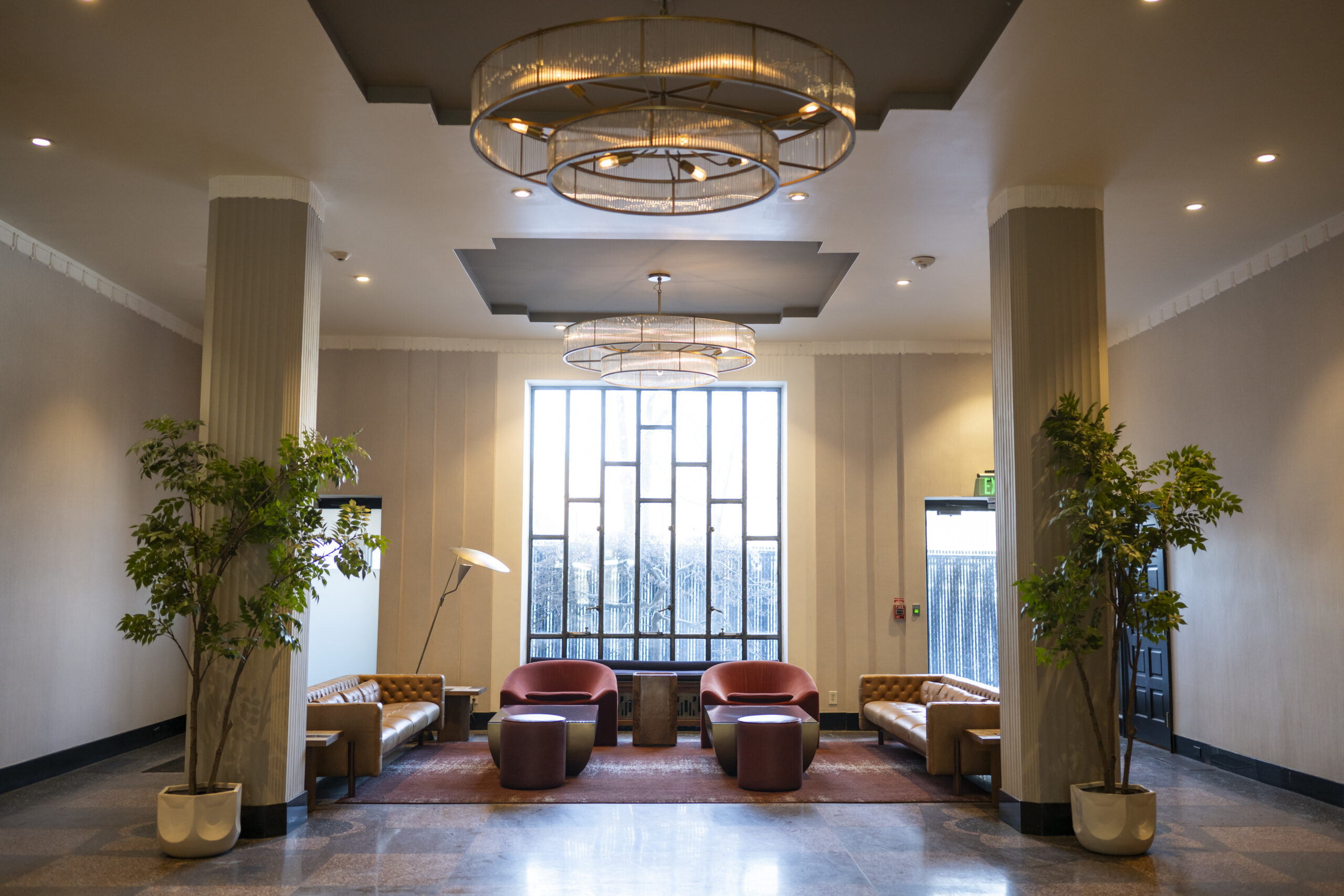
After her grandmother’s death in December 2020, “the housing market was awful,” Williams said, so she looked for a place to rent. She visited Garden Court Towers and admired the 1929 Art Deco lobby with its canopied entrance, carved wood paneled foyer, tile walls and floor, and original brass U.S. Mail box.
The lobby of the Garden Towers apartment building in West Philadelphia.
The Art Deco geometric design of the hallway carpeting is similar to the gray-and-white pattern of the wallpaper Jasmine chose to hang behind her bed, which has a gray headboard. She hung gray wallpaper as an accent on two other walls.
The living room couch is gray, as is the herringbone-patterned kitchen backsplash.
Gray softens the bold black-and-white surroundings, as does the wood-toned Parsons table under the TV in the living room. Brass lamps in the bedroom and a gilt mirror in the dining area add sparkle.
The dining area, with a variety of monochrome shapes and textures, connects to the living area.
The miniature antique radio on the Parsons table is actually a holder for wood coasters. Williams inherited the radio from her grandmother.
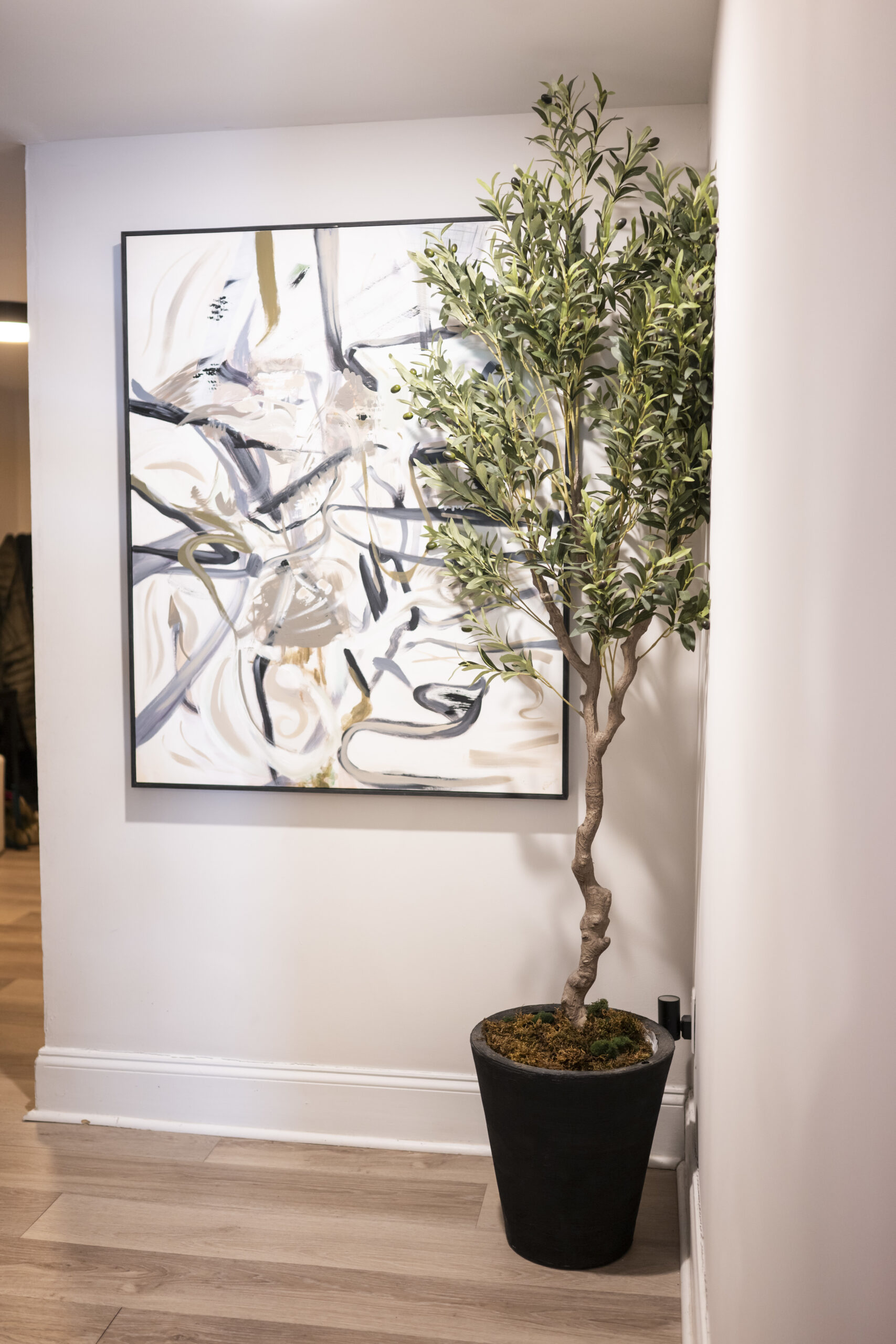
Abstract art in the apartment include two striking oil paintings from Amazon in the entry hall, depicting black figures on a white background.
Nearby hangs a painting of gray, beige, and black stripes and swirls on a white background. The work was more colorful when Williams purchased it from CB2, but she and her sister Melyssa Pollard brushed over the vibrant shades to produce a more muted palette.
Williams’ brother in law, Jay Pollard, and her father, Edward Williams, installed light fixtures and hung paintings in the apartment.
Her favorite shopping destinations are CB2 and Crate & Barrel, but she has also purchased items from Amazon, Pottery Barn, Wayfair, and other vendors. The cowhide rug under the dining table came from Burke Decor.
Patterned wallpaper and simple white bedding contrast in the bedroom, where brass lamps add some shine.In the kitchen, an arrangement of brightly colored produce stands out from the black, white, and gray.
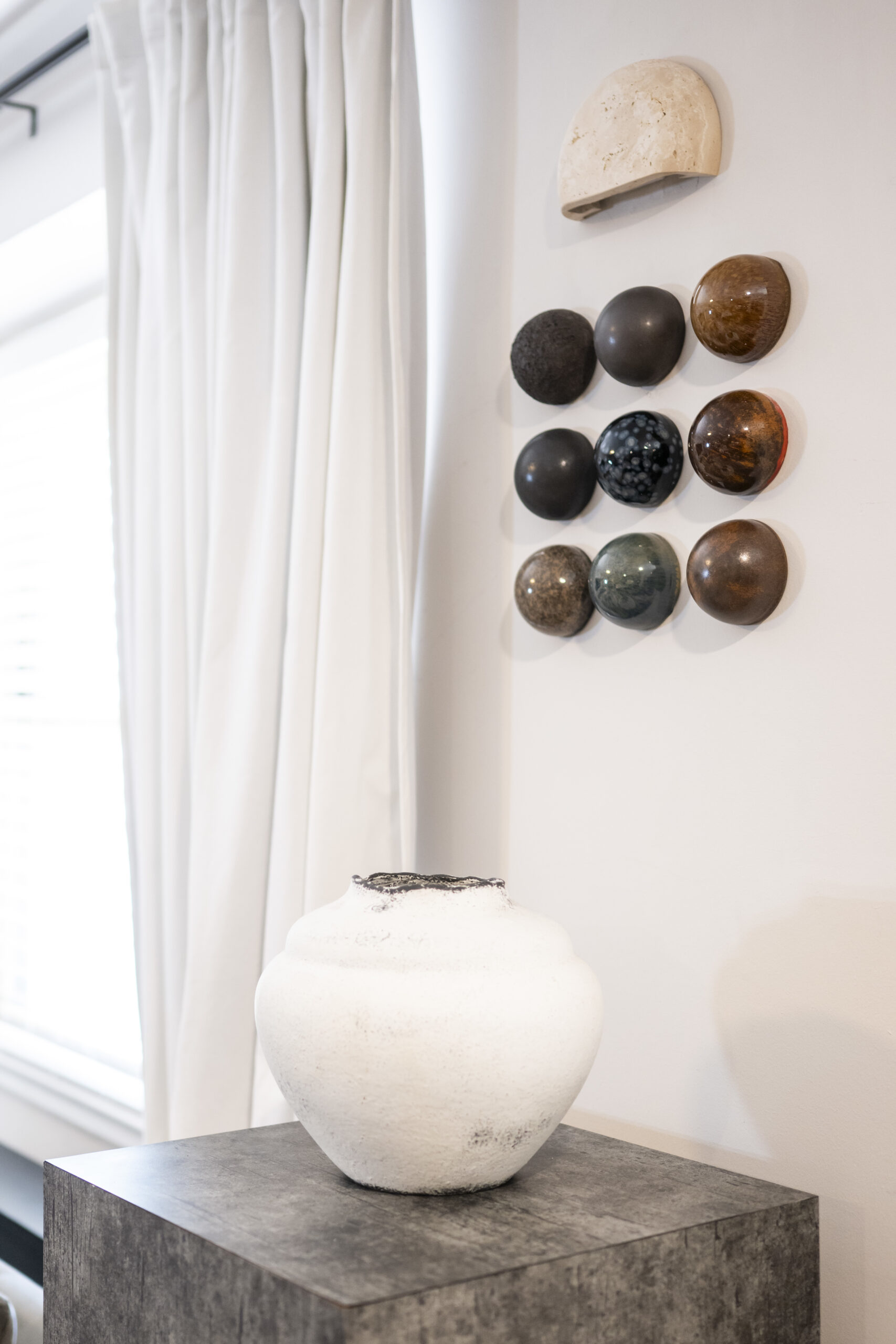
In the living room, a unique art installation of nine small domes in shades of black, brown, and gray are arranged on the white wall above a white clay bowl on a black pedestal. The glazed clay domes are the work of New Zealand ceramicist Sam Mayell.
Large windows fill the tenth-floor apartment with light.
An abstract painting and large olive plant decorate the hallway.Ceramics and wall art bring texture to the apartment’s interior design.
In the bedroom, with its white and black furnishings, a window frames a view of Garden Court homes below with their snow-covered lawns and rooftops.
The winter-white scene was “keeping my theme going,” quipped Williams.
Is your house a Haven? Nominate your home by email (and send some digital photographs) at properties@inquirer.com.