Tag: Olney

  • Police searched Olney home last summer, but drugs — not missing women — were the focus

    Police searched Olney home last summer, but drugs — not missing women — were the focus

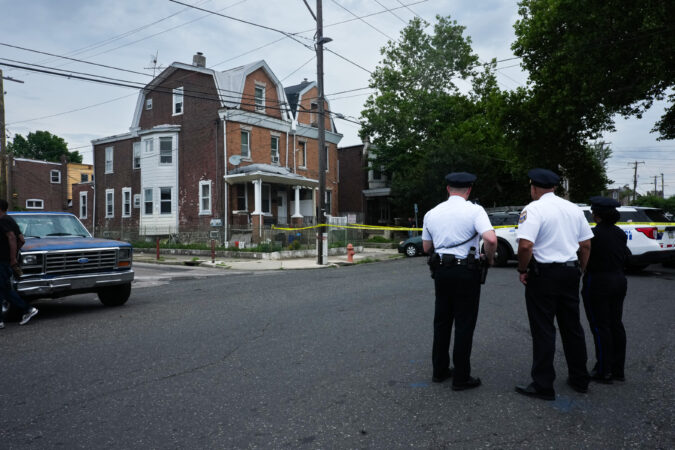
    About a year before police raided a crumbling Olney twin in connection to a missing woman last month, Philadelphia narcotics officers scoured Eugene Horsch’s basement and found telltale signs of a drug dealer.

    Firefighters had responded to a small blaze on the second floor of the property on May 18, 2025, alerting police to what they said was a sprawling marijuana grow operation. And when narcotics cops searched the home later that morning, court records show they recovered a modified fully automatic assault rifle with an obliterated serial number, a sawed-off shotgun, a pistol, and ammunition.

    The top floor was filled with cannabis plants, tents, and UV lights, with exposed wires running between the floors and into the basement, where vats of chemicals were stored, apparently to “cultivate marijuana,” the records said.

    The police report detailing the drug bust at the Olney house made no mention of missing women, despite the fact that concerned relatives and friends had told police years earlier that at least two women who stayed at the house had vanished.

    Now, the disappearance of one of those women, Blair Tonzelli, is central to an ongoing search at the property, where police found fake IDs and bank cards in her name, among other disturbing evidence.

    That law enforcement did not appear to connect the missing women to the search for drugs at the same address raises questions about whether the officers who searched the property last summer were aware of the two missing persons cases. The Philadelphia Police Department declined to comment, citing the ongoing investigation.

    Police began reexamining Tonzelli’s disappearance on June 19 after arresting Horsch, whose companion had a fake ID in her name. Investigators reinterviewed witnesses and viewed footage of a statement given in February 2023 by Tonzelli’s friend, who told officers Tonzelli was last seen at 417 W. Chew Ave. Police have also revisited the 2016 disappearance of Amy McHale — the ex-wife of Horsch’s father, erotic filmmaker Raymond C. Horsch — whose mother said she vanished from the Olney home.

    Gloria McHale, Amy’s mother, said she was surprised to learn that police had searched the property for drugs in 2025.

    “I wish they would have looked deeper,” she said.

    Police have not charged Horsch with any crimes linked to missing women. He has been jailed since his arrest last month on $500,000 bail for gun and drug charges, as federal and local police prepare to excavate the property in search of more evidence.

    His attorney, Jerome Brown, declined comment. Brown has previously said police had interviewed Raymond Horsch several times over the years about McHale’s disappearance.

    When local and federal law enforcement officers searched Horsch’s home last month in connection to the missing women, police said they again found guns, ammo, and drugs. More troubling, according to police records, is that they also found a “significant amount” of blood, a handwritten letter referencing serial killer Ted Bundy, and fake IDs and bank cards in Tonzelli’s name.

    The latest search began after police arrested Horsch in his black BMW with an array of weapons, drugs, and a woman donning a fake ID in Tonzelli’s name. A sworn affidavit to initiate the search includes witness testimony that suggested Horsch was a “sociopath” who knew how to dispose of human remains.

    But it was a fire that brought police to Horsch’s property one morning in May 2025.

    Eugene had been living in the twin with two other women, including his father’s longtime companion, Krista M. Killen. City firefighters said the small blaze was started by “careless smoking” on the second floor, according to Horsch’s arrest report. While extinguishing the fire, a fire marshal and police patrolman on the scene discovered a “marijuana grow operation” on the home’s third floor and basement.

    Officers with the PPD Narcotics Strike Force later searched the home and seized 26 pounds of marijuana, 131 grams of dried mushrooms, $1,200 worth of methamphetamine, $800 cash, and “numerous gold colored and silver” coins in a safe, records show.

    Police also recovered a BCI Defense AR-15 style rifle modified to be fully automatic, a 12-gauge Stevens Model 67 pump-action shotgun with a sawed-off barrel, a 9mm Girsan MC28 pistol and more than a hundred rounds of ammunition. The serial numbers had been destroyed on all three firearms, according to records.

    Horsch had previous felony convictions for drug manufacturing charges and was not legally allowed to own firearms. He was arrested and held on $750,000 bail for manufacturing drugs, illegal gun possession, and related crimes.

    Brown, the family attorney, told a judge that the weapons belonged to Horsch’s father, who had died just three days before the drug raid. Brown said Eugene Horsch was planning to properly dispose of the firearms, according to a spokesperson for District Attorney Larry Krasner.

    His health became a factor in determining an appropriate resolution to the case. Sources familiar with the case, who were granted anonymity because they are not authorized to discuss the details publicly, said Horsch appeared frail at the time of his 2025 arrest and could barely walk into court.

    Horsch pled guilty to manufacturing drugs, and prosecutors withdrew the additional gun charges. He received three years probation.

    Within months of his release from jail, Horsch would be locked up again.

    In March, police arrested Horsch and charged him with stabbing a man at Eighth and Market Streets. Prosecutors dropped the charges after a witness failed to appear in court, records show, and he was released from lockup in May.

    Three weeks later, U.S. Park Police stopped him in his car near Independence Mall, where they recovered a fake ID in Tonzelli’s name.

    The search of the Olney property continued Wednesday.
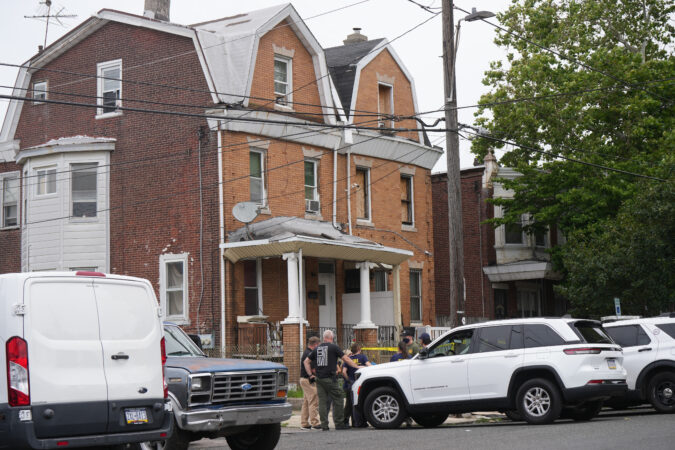
  • The Olney man being investigated for his connections to missing women will be held in federal custody

    The Olney man being investigated for his connections to missing women will be held in federal custody

    The Olney man at the center of a sprawling investigation into the disappearance of at least two women in recent years was taken into federal custody Tuesday and will be detained until trial.

    Eugene Albert Horsch, 44, was arraigned Tuesday on a federal firearms charge — a case that relates to his alleged actions on June 19, when a U.S. Park Police officer near Independence Hall reported seeing a black BMW parked in a restricted zone and next to a fire hydrant.

    The officer reported hearing a woman in the vehicle express fear of being injured and then seeing pairs of scissors in the front seat area. A search of the vehicle, in part based on Horsch’s actions, led to the discovery of a switchblade and a glass pipe in Horsch’s pants and two firearms under the car’s front seat.

    Horsch — who was not allowed to possess guns because of felony convictions — had been charged for that same conduct last week by the Philadelphia District Attorney’s Office and he was being held in a city jail on $500,000 bail. City prosecutors also charged him with having cocaine, heroin, and marijuana in his car.

    But the federal gun charge — and the decision by U.S. Magistrate Judge Pamela A. Carlos to detain him until trial — effectively ensures that Horsch will not be able to post bail or secure his release as his case proceeds. And that will give authorities time to continue investigating him in connection with questions potentially far more serious than illegally possessing guns.

    In the days after Horsch was arrested with the firearms in Center City, investigators who searched his decrepit rowhouse in Olney found another gun and materials to grow marijuana.

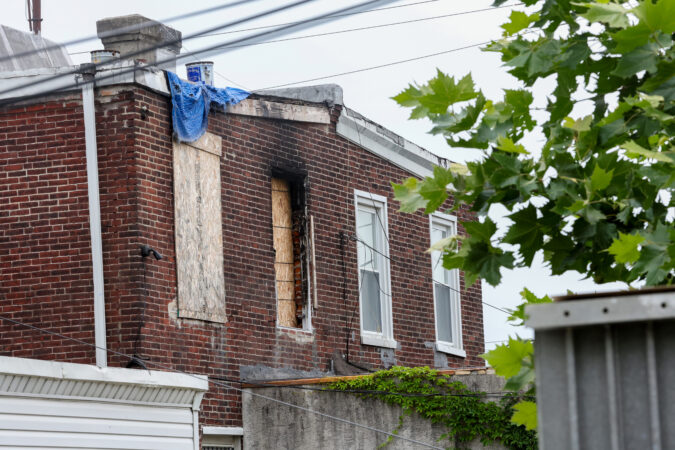
    But more concerning, they also discovered a variety of more unusual materials — including barrels of chemicals in the basement, urns holding the cremated remains of at least one of his relatives, documents tied to at least two women who have been missing for years, and a handwritten letter that described hurting people and mentioned the serial killer Ted Bundy.

    Officials have said police have not discovered any human remains in the house. But investigators did find a significant amount of blood inside, sources told The Inquirer this week, although it was not clear whether it was human blood. And authorities have been testing a variety of materials they’ve recovered from the house, such as the chemicals in vats stored in his basement.

    The probe is also seeking to learn more about potential connections between Horsch and at least two missing women with ties to his home.

    One is Blair Tonzelli, who might have worked there as a home health aide and who was reported missing in Kensington in 2023. Some of Tonzelli’s friends told police after she disappeared that they worried that something bad had happened to her and that they had told police that Horsch was a “sociopath,” according to police documents obtained by The Inquirer.

    In addition, when Horsch was arrested in Center City earlier this month, a woman who was with him falsely identified herself as Tonzelli and later told police that she did so because Horsch had given her a fake identification with Tonzelli’s name.

    The other missing woman is Amy McHale, the ex-wife of Horsch’s father, who was last heard from at the Olney property in 2016. Horsch’s father, Raymond “R.C.” Horsch — now deceased — was an erotic photographer and drug manufacturer who had published several works of fiction, including one described as an “autobiographical memoir of a caring, empathetic serial killer.”

    Eugene Horsch, during his brief appearance in federal court Tuesday, said little beyond responding to routine legal questions. He will likely be held at Philadelphia’s Federal Detention Center as his case proceeds toward trial.

    His attorney, Jerome Brown, said afterward that he didn’t believe Horsch had harmed any of the women at the center of the investigation.

    “As far as I know, I’d be shocked if [police] found any harm related to those missing persons at that location,” Brown said.

  • Police find ‘significant amount’ of blood inside Olney house linked to investigation of missing women, sources say

    Police find ‘significant amount’ of blood inside Olney house linked to investigation of missing women, sources say

    Philadelphia police found a “significant amount” of blood inside the decrepit Olney house linked to the investigation of at least two missing women, multiple law enforcement sources said.

    The sources, who spoke on the condition of anonymity to discuss an ongoing investigation, said forensic testing has not yet determined whose blood it is or whether it’s even human — a process that could take several weeks to complete. But, the sources said, police are prepared to excavate the front and backyards of the West Chew Avenue home in the coming weeks in search of potential human remains.

    Deputy Police Commissioner Frank Vanore declined to confirm or comment on the discovery Monday afternoon, citing the ongoing investigation. Vanore said Friday that police had not recovered any human remains from the home and were awaiting testing of the tubs of chemicals and other materials found in the basement.

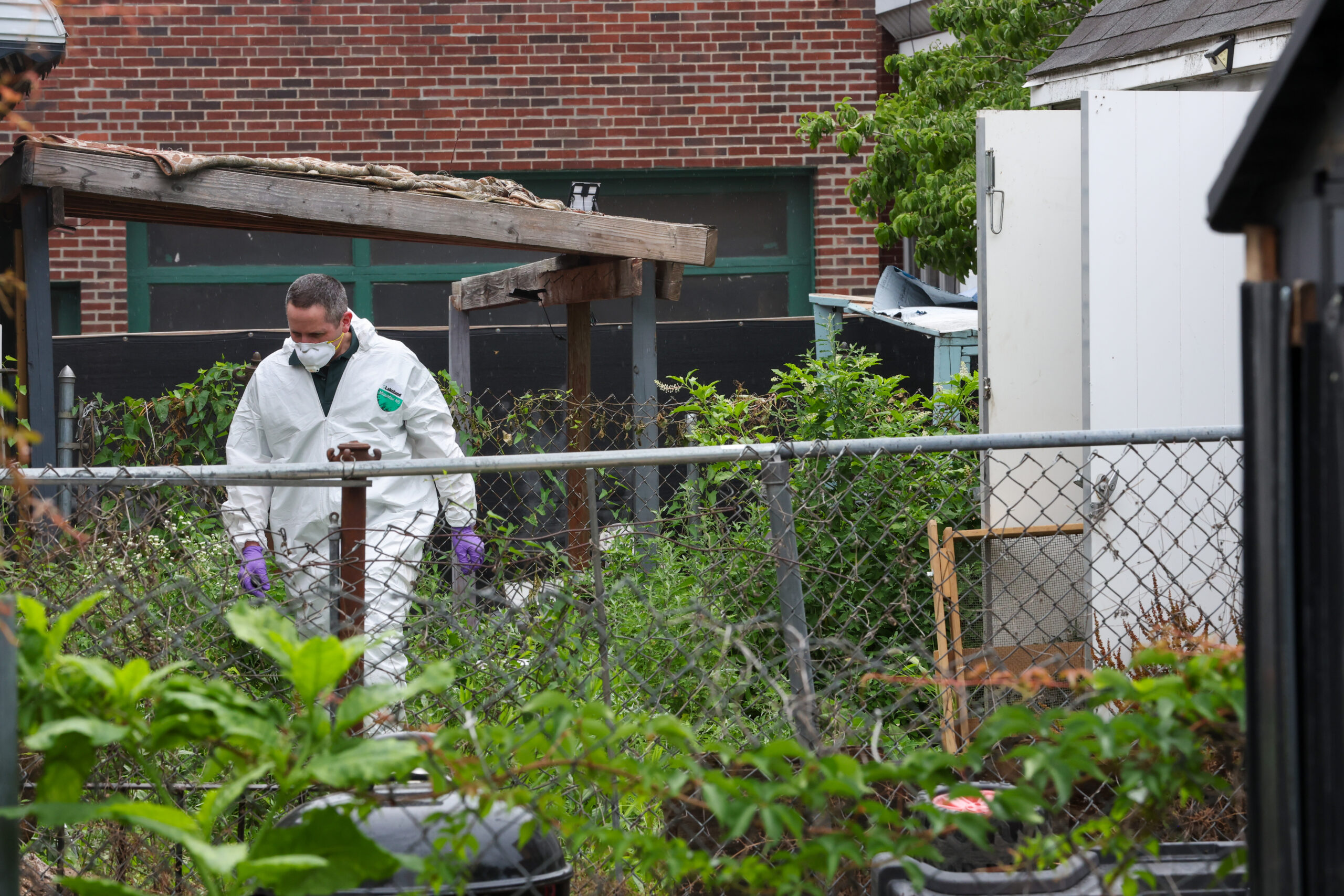
    Forensic investigators search the backyard of 417 W. Chew Ave. on June 27.

    The finding marks the latest development in an unusual saga that began after the arrest of Eugene Albert Horsch, 44, the owner of the Olney home now being searched by law enforcement for a second week in connection with the disappearance of at least two women who have been missing for years.

    Horsch was arrested June 19 after U.S. Park Police saw him parked in his black BMW near Sixth and Market Streets, acting suspiciously. When a ranger approached the car, police said, he heard a woman in the back seat say, “You’re going to hurt me” and saw drug paraphernalia.

    Police searched the car and reported recovering two guns with obliterated serial numbers, as well as cocaine, fentanyl, and marijuana, a cattle prod, switchblade knives, handcuffs, and a fake U.S. Drug Enforcement badge featuring Horsch’s photo.

    The woman with Horsch falsely identified herself to the officers as Blair Tonzelli, a 38-year-old woman who had been reported missing in Kensington in 2023, police said.

    The woman, 39, later told investigators that she gave Tonzelli’s name because she had open warrants for her arrest in ongoing drug cases and that Horsch had made her fake identification cards in that name and said she could use it if she was ever stopped and questioned by police, sources said.

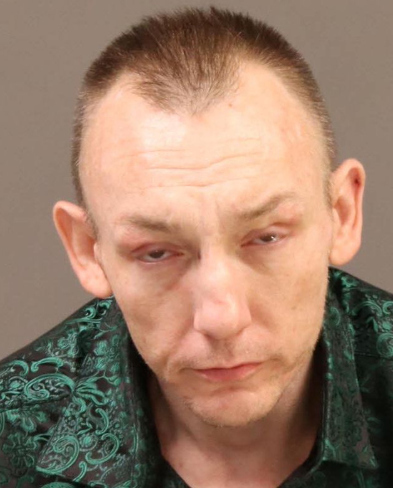
    Eugene Albert Horsch, 44, was arrested June 19 for illegal gun possession and drug crimes.

    The woman said she did not know Tonzelli or even that she was missing — but the way Horsch spoke about her and other women made her feel like something bad had happened to her, the sources said.

    Philadelphia homicide detectives then began reviewing that missing woman’s case, and, alongside federal law enforcement, searched Horsch’s home at 417 W. Chew Ave. last week.

    That search produced a trove of bizarre discoveries: a basement with drums filled with chemicals, bottles of unknown substances, Tonzelli’s bank card, the death certificate of another woman, and what appeared to be urns holding at least one of Horsch’s relatives’ cremated remains.

    Investigators also found another handgun, materials used to grow marijuana, and a 55-gallon drum with connections to waterlines leading into a hole in the ground.

    Federal investigators also discovered a multipage, unsigned, handwritten letter that appeared to describe hurting people and referenced the serial killer Ted Bundy, according to the affidavit of probable cause to search the home that was obtained by The Inquirer.

    Eugene Horsch lived at 417 W. Chew Ave. with his father until he died last year.

    Law enforcement sources said police were working to determine whether the writings were part of a novel or screenplay. Horsch’s late father, Raymond “R.C.” Horsch was a known drug manufacturer and erotic filmmaker who had published several works of fiction with violent, masochistic themes, including one described as an “autobiographical memoir of a caring, empathetic serial killer.”

    The probe into the younger Horsch took another twist when investigators learned that Raymond Horsch’s ex-wife Amy McHale was last seen at the Olney property in 2016 and has not since be located. A lawyer for Eugene Horsch and his father said the two men had nothing to do with McHale’s disappearance and said she struggled with substance abuse and mental illness.

    Horsch has been charged with illegal gun possession and drug crimes by Philadelphia authorities.

    He is also facing a federal gun possession charge, court records show. The U.S. Attorney’s Office filed a complaint against Horsch on Friday, charging him with possession of a firearm by a felon and centering their allegations on the guns that park rangers found in his car during an encounter in Center City earlier this month.

    Horsch has not yet been arraigned in that matter, and he remained in a city jail, held on $500,000 bail as of Monday afternoon. But the case could give federal prosecutors an opportunity to argue to a judge that he remain in federal custody until trial.

    This is a developing story and will be updated.

    Staff writers Jesse Bunch, Max Marin, Barbara Laker, and Chris Palmer contributed to this article.

  • She disappeared from Kensington three years ago. A fake ID in her name led police to a disturbing Olney house.

    She disappeared from Kensington three years ago. A fake ID in her name led police to a disturbing Olney house.

    Blair Tonzelli had been missing from Kensington for more than three years when her name turned up somewhere unexpected: on the fake ID of a woman in the backseat of a car parked near Independence Hall.

    The woman showed the ID to U.S. Park Police on June 19 after they found her and Eugene Albert Horsch, 44, seated in his black BMW, with drug paraphernalia, guns, and knives stashed in the car, according to police records. The woman later told officers that Horsch made her the fake ID in Tonzelli’s name and urged her to use it if she ever got into trouble.

    That encounter sparked a sprawling investigation into Horsch and an ongoing search of his Olney home for connections to Tonzelli and at least one other missing woman. Amy McHale — ex-wife of Raymond Horsch, Eugene’s father — was last seen at the Horsch property on West Chew Avenue in 2016.

    Tonzelli was 35 when a friend reported her missing in early 2023. Police records now link her to Horsch following his arrest during the car stop. Philadelphia homicide detectives began probing Tonzelli’s disappearance last week and interviewed at least two women who said they believed something bad may have happened to her, according to police documents.

    One reported that Horsch was “a sociopath,” and that while he had never been violent toward her, he said things that suggested he was to others. According to the police documents, the woman told detectives that Horsch said that he knew of three chemicals needed to melt human remains and that he could make a body “so small it could be flushed down a toilet.”

    The woman told police that Tonzelli was a home healthcare aide who had worked in Horsch’s Olney house, according to the records. She believed Tonzelli and Horsch had a disagreement over money at one point, the records say, and that he still had access to a CashApp account under Tonzelli’s name.

    Horsch remains in a Philadelphia jail after officers searched his car and found two firearms with obliterated serial numbers, as well as cocaine, fentanyl, and marijuana, a cattle prod, switchblade knives, handcuffs, and a fake U.S. Drug Enforcement badge featuring Horsch’s photo. He is being held on $500,000 bail for illegal gun and drug charges.

    Jerome Brown, an attorney for Horsch, declined to comment on Monday.

    Horsch has not been charged with any crimes linked to Tonzelli’s disappearance. But the statements in law enforcement records raise concerns about her well-being and have provided local and federal investigators probable cause to search the Olney property for more than a week.

    Inside the boarded-up twin, officers recovered several fake IDs in Tonzelli’s name and her bank card, according to police records. Investigators also found drugs, guns, vats of unknown chemicals, a 55-gallon drum, and an unsigned, handwritten letter that graphically described hurting people.

    Police said they have not recovered any human remains at the house, but law enforcement sources on Monday said there was a “significant amount” of blood inside. Investigators are awaiting forensic testing to determine whose blood it is or if it’s even human, a process that could take weeks to complete.

    Police are preparing to excavate the front and backyards of the home, the sources said.

    Local and federal investigators continued to scour Horsch’s home Monday for additional evidence.

    In the years before her disappearance, Tonzelli struggled with an opioid addiction and floated through the streets of Kensington, spending time in and out of jail on drug and prostitution charges. David McCarty, 72, said that he lived with her for a time in a house on Wensley Street and that their friends would try to look out for one another.

    Even in the throes of her addiction, Tonzelli was fiercely loyal, McCarty recalled. She once threw herself in front of a tow truck to prevent the operator from illegally taking McCarty’s car, yelling “You’re not gonna do this to my friend!”

    But Tonzelli, he said, would disappear for stretches, often with a man from Olney who sold marijuana. She told McCarty she was visiting with a man named Raymond, he said.

    At the time, Eugene Horsch lived with his father, Raymond “R.C.” Horsch, a convicted drug dealer and a producer of erotic films and novels. His work often focused on serial killers and the sexual exploitation of women with substance-abuse problems. The elder Horsch, who died in the Olney house in 2025, often featured women who frequented Kensington in his films.

    Tonzelli typically returned from her trips to see Horsch, McCarty said, but then he didn’t hear from her after August 2022.

    Joseph Gunkel said in an interview that he and a friend called police to report Tonzelli missing in February 2023 after months had passed without hearing from her.

    The friend told police that Tonzelli was last seen at the Olney home of a “sketchy” man who scared her, according to police records. Tonzelli was meant to meet someone one afternoon and never showed up, and none of her acquaintances — from Philly to Florida — had heard from her since, the friend said.

    McCarty grew worried as days became weeks. He knew she needed regular medical attention because of a drug-related wound that ran from her armpit down to her knee. McCarty said he replaced the gauze and applied ointment to the open gash twice a day, and Tonzelli needed daily medication to fight off the infection.

    “I can’t tell you how many times I spent visiting her and putting her in the hospital,” McCarty said. ”People make choices. She’s an adult, and it didn’t matter what I’d say or what I’d do to help her.”

    Gunkel said he didn’t hear from police again about Tonzelli until last week, when homicide detectives asked him to come in for an interview about her disappearance. He said he was relieved someone was finally looking into her whereabouts, even if it was three years later.

    “At least reporting her missing helped out some,” he said.

    Tonzelli’s Facebook page says she attended Archbishop Ryan High School. Her mother, who grew up in Fishtown, died when Tonzelli was 18, according to an online obituary.

    Tonzelli’s family declined to speak this week. McCarty said that Tonzelli was estranged from her relatives but that she had a son who she talked about often.

    After she went missing, McCarty urged a mutual friend to file a police report, because he worried no one else would.

    “My soul just believes something was going on,” he said.

  • A woman missing since 2016 had close ties to the Olney house that’s now the target of a massive investigation

    A woman missing since 2016 had close ties to the Olney house that’s now the target of a massive investigation

    Amy McHale and Raymond “R.C.” Horsch met on the streets when she was battling pneumonia and needed medical care.

    She had long struggled with mental health issues and drug and alcohol addiction. She saw Horsch, an erotic photographer and filmmaker 30 years her senior, as her rock, said her mother, Gloria McHale.

    “He was like her savior.”

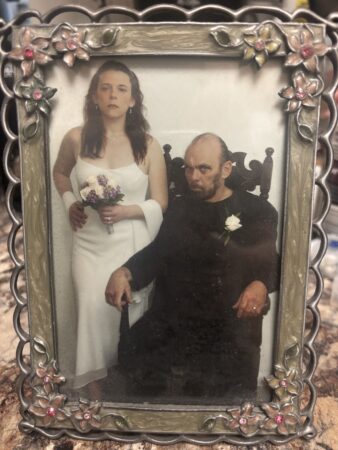
    They held their wedding reception beside a greenhouse in the sprawling, serene backyard of his Chalfont home in September 2004. The marriage lasted only a few years, but Amy McHale kept going back to Horsch after he moved to a house on West Chew Avenue in the Olney section of Philadelphia with his son, Eugene Albert Horsch.

    She was staying there on June 14, 2016, when she left a voicemail message for her daughter, Amanda Stofer, saying all was OK. At the time, Amy McHale was a 44-year-old mom and grandmother of three.

    She has been missing ever since.

    “She would never leave her daughter and grandchildren,” Gloria McHale, 79, said by phone after news broke this week that authorities had been combing through that house for days. “She loved them, adored them.”

    For more than a week, Philadelphia police and federal authorities have been searching the crumbling Horsch twin home to determine if there is any connection to the disappearance of Amy McHale and one other woman.

    R.C. Horsch was a controversial figure who had been convicted of forgery and drug manufacturing when he died in May 2025 of chronic obstructive pulmonary disease at age 82. Police have not named him as a person of interest in a missing-person investigation.

    His son, Eugene Albert Horsch, is being held on $500,000 bail at Curran-Fromhold Correctional Facility on charges of illegal gun possession and drug crimes. He had a criminal history that included at least 10 other arrests for drug possession, dealing, assault, and drunken driving when he was arrested earlier this month near Independence Hall after his actions drew the attention of U.S. Park Police.

    “This is much ado about nothing,” said Eugene Horsch’s attorney, Jerome Brown, of his client’s connection to any missing-person investigation. “They’re barking up the wrong tree.”

    When the news broke, McHale’s mother and daughter thought they might finally discover what happened.

    “But I don’t feel much closure, and today is an emotional low,” McHale’s daughter, Amanda Stofer, said Saturday. “I was hoping for some answers about my mother from the home, but I’m doubtful that will happen.

    “It just feels heavy and sad.”

    The case came to light under bizarre circumstances. U.S. Park Police stopped Horsch, 44, near Sixth and Market streets on June 19. In his black BMW, officers recovered two firearms with obliterated serial numbers and a phony drug enforcement badge with Horsch’s photograph under the name “Eugene Frederick Steiner.” He also had large amounts of cocaine, fentanyl, and marijuana, according to an affidavit of probable cause for his arrest.

    A woman with Horsch gave officers a false name, one that belonged to a 38-year-old woman who had been reported missing in Kensington in February 2023. Horsch’s passenger told investigators that he had made her fake ID cards with that name before and advised that if she was ever stopped by police, she could use them.

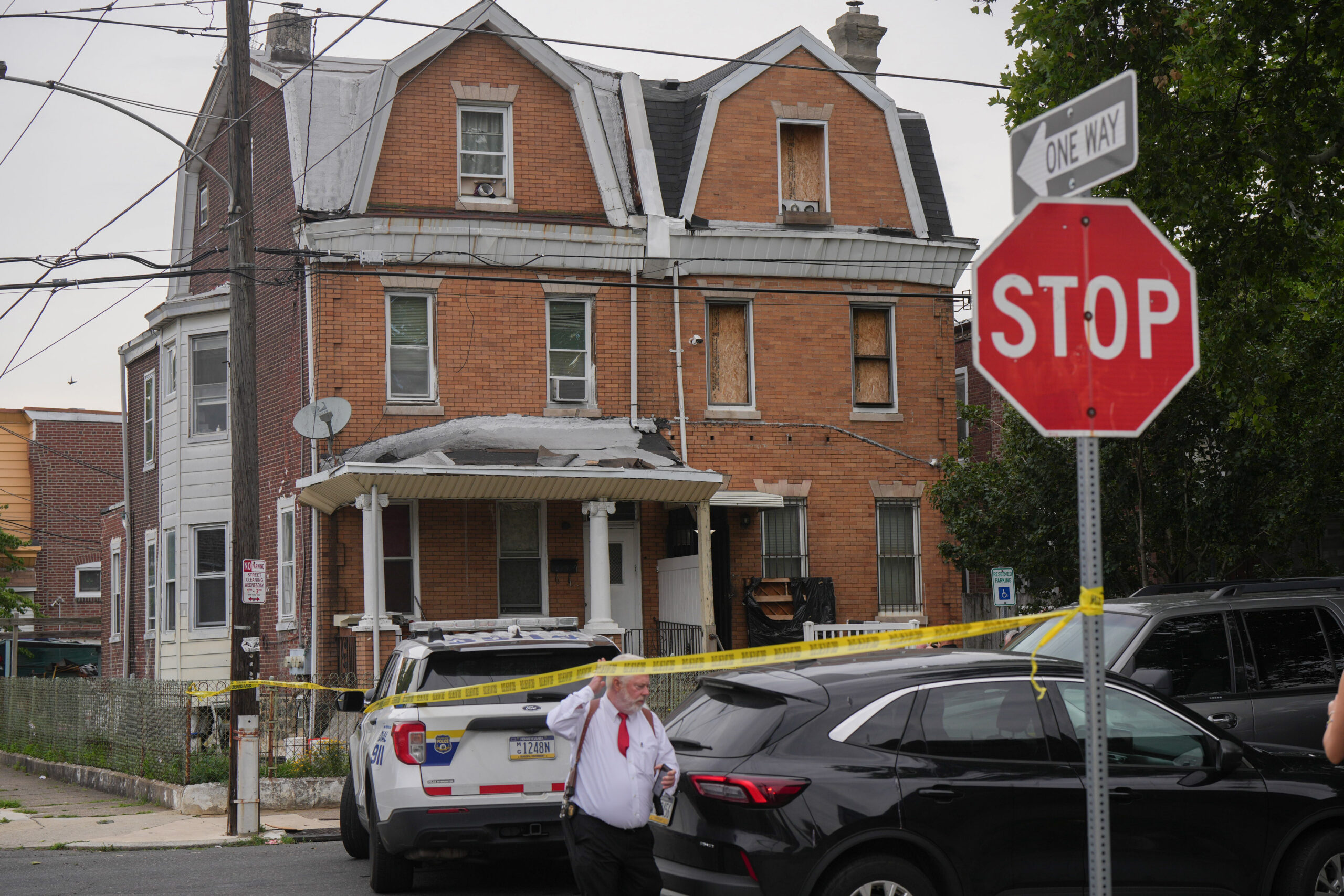
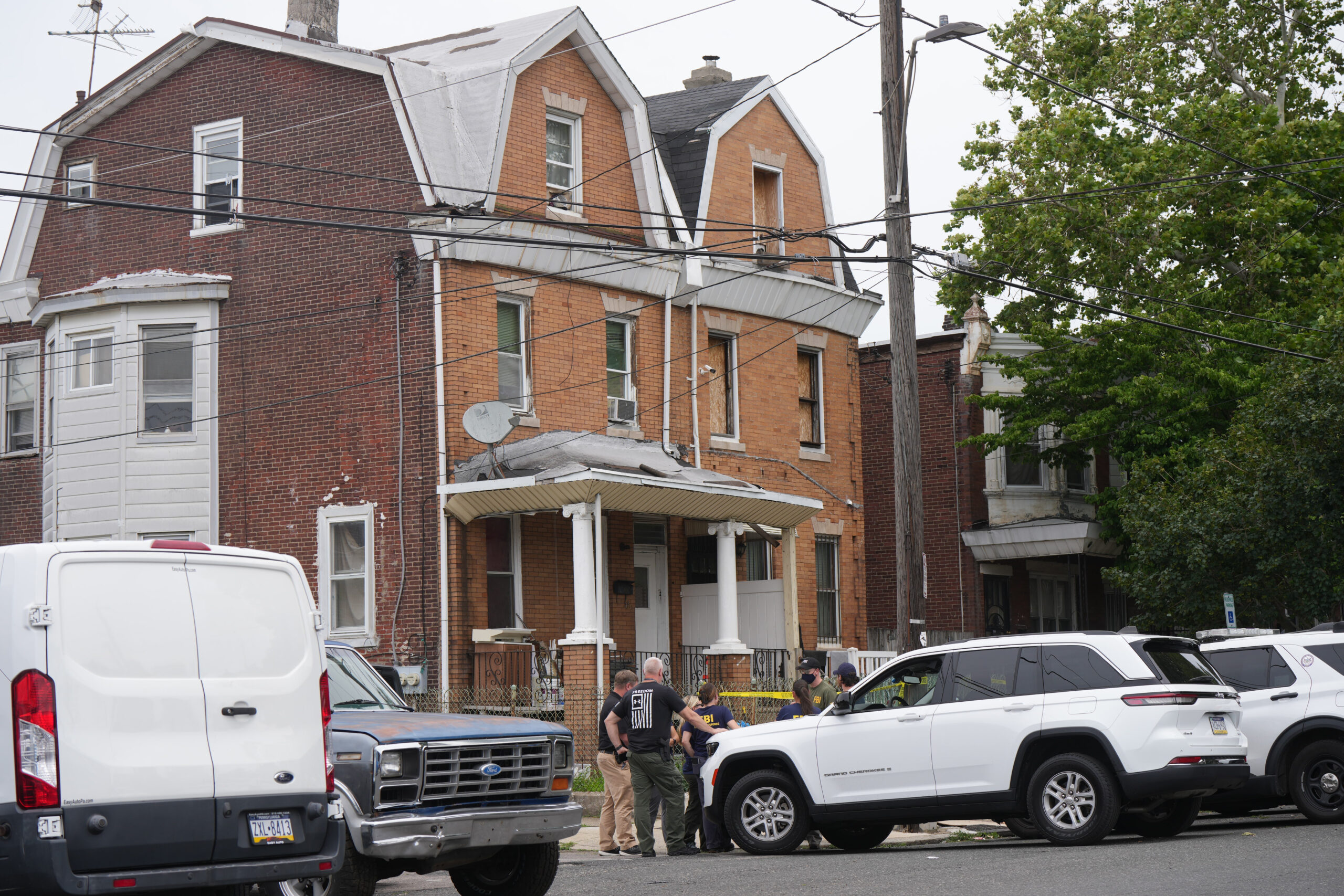
    Law enforcement wearing FBI clothing at the scene of an ongoing investigation in the 400 block of West Chew Avenue, searching a home in Olney.

    In Horsch’s dilapidated home, investigators found another handgun, hidden compartments, a 55-gallon drum with connections to water lines leading to a hole in the ground, and chemicals and bottles of liquid that forensics investigators are working to identify. There were also what appeared to be urns holding remains, one set of which was apparently his father’s. The basement resembled some sort of chemical lab.

    Federal investigators also found a unsigned and handwritten letter that referenced hurting unspecified people and the serial killer Ted Bundy, according to an affidavit of probable cause obtained by The Inquirer.

    Investigators are working to verify the authenticity of the letter, and whether it was meant to serve as a portion of a novel or screenplay.

    Under a gloomy sky Saturday, about 15 FBI agents, some wearing hazmat suits, streamed in and out of the boarded-up twin home. “They’ve begun processing the scene,” Philadelphia Deputy Police Commissioner Frank Vanore said. Forensic experts were determining what evidence had to be sent away for scientific analysis, he said. “It’s going to take some time.”

    Art and weed

    R.C. Horsch, who was born in East Stroudsburg, Monroe County, in 1943, is described in an author’s biography as “an artist, filmmaker, composer, writer, porn performer, drug smuggler, sometime political activist, art forger, counterfeiter, pot grower, air show pilot, army deserter, fugitive, sociopath, ex-convict and all-out villain.”

    Throughout his life, R.C. Horsch worked on avant-garde artwork and erotica, often focused on scantily clad women in sadomasochistic settings, including a book described as an “autobiographical memoir of a caring, empathetic serial killer.” He directed his first film, The Erotic Memoirs of a Male Chauvinist Pig, in 1973.

    A 1968 news report identified Horsch, then in his mid-20s, as the operator of a theater on the 2000 block of Sansom Street known as “Underground Cinema 16” — later the Roxy — which screened avant-garde films, including his own, but was shut down for operating without a license.

    Horsch was married at least three times. He married Anna Ferkuniak, a native of Nant-y-moel, Wales, who was Eugene Horsch’s mother. She died in 1989 at age 39 after a lengthy illness, according to her obituary.

    R.C. Horsch also had an extensive criminal history.

    He pleaded guilty to passing bad checks in North Carolina in 1973, and the following year the Secret Service charged him and another man in Doylestown with passing nearly $180,000 in fake 10-dollar bills and possessing phony driver’s licenses.

    In 1977, federal authorities raided what was described as his home laboratory, seizing equipment they alleged was meant to make methamphetamine. But Horsch left for New Zealand, later returning to California, according to court records, and operating under the alias “Richard Harris.”

    Eugene Horsch was born in 1981, while his father was still a fugitive.

    Authorities captured R.C. Horsch in Florida in 1985. A psychologist hired by his defense attorney claimed Horsch had a 140 IQ, according to court records, but had “deep rooted emotional problems.”

    He was sentenced to three years’ imprisonment, plus probation. He later settled in Chalfont but acquired the Chew Avenue house after his aunt died in 2004. In 2007, he used power of attorney to legally transfer ownership to his son for $1.

    In 2009, R.C. Horsch was indicted in Chalfont for growing “455 marijuana plants.” Investigators also confiscated two shotguns. The feds seized his suburban home and he was sentenced to 54 months in prison.

    Federal inmate records show he was released from prison in 2013, and later moved into the Chew Avenue property, where he would reside until his death. He authored several erotic novels in the 2010s, often focused on women battling substance abuse or mental health issues.

    Krista Marie Killen is credited as appearing in multiple erotic films that he directed, including one released as recently as 2021, and at times listed the Chew Avenue house as her residence.

    In 2025, a motorist sued R.C. Horsch, Killen, and an unidentified man, claiming the trio crashed their Chrysler 300 into her SUV near Adams Avenue and Montour Street in 2023. Court papers list Killen’s occupation as “caregiver” and the “adult in charge of residence.”

    She died the next month, according to an obituary, three months after Horsch.

    In searching the home recently, investigators found a death certificate for Killen. According to the affidavit of probable cause, the cause of death was drug intoxication.

    ‘People don’t vanish’

    R.C. Horsch and Amy McHale had become a couple in the 1990s.

    “I was a young kid when they started dating, and I want to say he had been around for at least 10 years by the time they got married,” Stofer recalled.

    They divorced after a few years and McHale moved in with her mother on South Hutchinson Street in Philadelphia. She went to Peirce College, became a paralegal, and was trying to get her life back on track, said Gloria McHale, 79.

    But she could not kick her drug and alcohol addiction, she said. She would periodically return to Horsch’s home on Chew Avenue.

    “They stayed friendly with each other,” Stofer said. “I’m sure it had something to do with the drugs and alcohol. I think he enabled her with things that weren’t really permitted in my grandmother’s house.”

    On June 13, 2016, she went to Horsch’s. She called her mom that night to tell her she was on her way home. “She was obviously very drunk and I told her to stay where she was, because to get home she would have to take the subway, and she was in no shape to take the subway.”

    The next day, she called Stofer and left a message. “She told me she was at Ray’s house and she was OK.”

    That’s the last they heard from her.

    Amy McHale would sometimes be gone for a couple of days, but never for much longer, they said. Stofer had three children, and her mother doted on them. Stofer was planning her September wedding.

    “My mom had her struggles with addiction,” said Stofer, 38. “But my mom would not want to disappear in my life. She would never do that. She always came back around. She never missed big things like my kid’s kindergarten graduation.”

    Gloria McHale searched all over for her daughter. “I put signs up all over Kensington,” she said.

    Detectives interviewed Horsch. He told police and the McHale family that she was drinking vodka and he went to bed. “He said when he woke up, she was gone,” McHale said.

    And Horsch stopped reaching out to her family.

    “When she would disappear before, Raymond would always keep calling me. ‘Did you hear from her?’ And after this I never heard from him.”

    McHale is hoping someone will come forward now with new information.

    “Somebody has to know something,” she said.

    “People don’t vanish into thin air.”

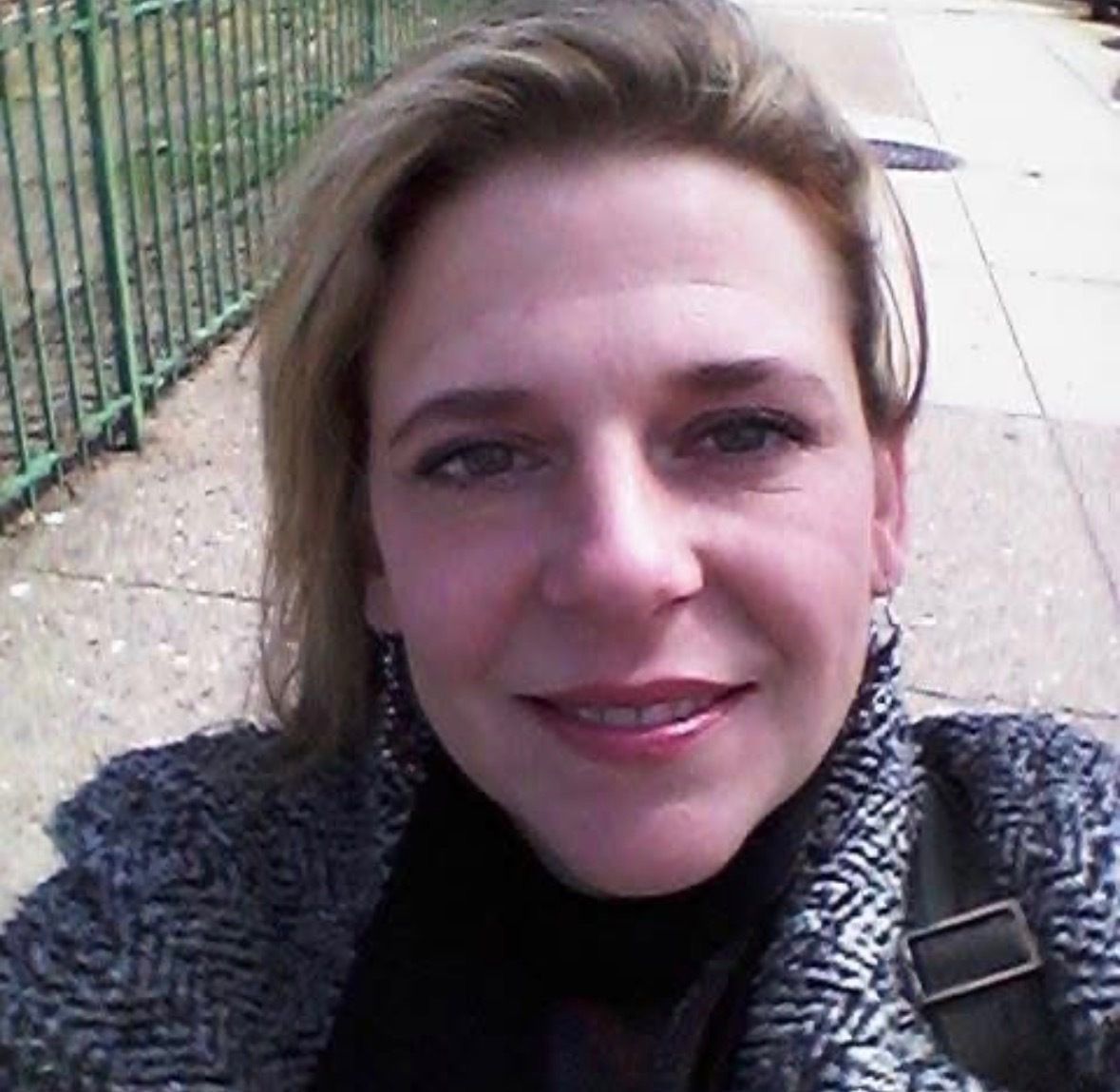
    Amy McHale.

    Staff writers Brett Sholtis, Michelle Myers, and Isabel Maney contributed to this article.

  • How Brendan Boyle became Democrats’ healthcare messenger-in-chief

    How Brendan Boyle became Democrats’ healthcare messenger-in-chief

    WASHINGTON — Ahead of a morning Budget Committee meeting, U.S. Rep. Brendan Boyle gathered his senior advisers in a brightly lit conference room just off the Capitol to settle on a simple strategy.

    “Let’s keep the main thing the main thing,” he said. “Fifteen million Americans are gonna lose their healthcare because Republicans care more about tax breaks for billionaires. It’s accurate. You can describe it in a sentence.”

    Boyle, a six-term lawmaker, is the most veteran of Pennsylvania’s eight Democrats in Washington. He has been the ranking member of the House Budget Committee since 2023, meaning he is the top Democrat playing defense as the Republican-controlled Congress ushers through GOP spending priorities. It can be a futile exercise in shouting into a void — until the yelling starts to echo outside.

    Increasingly, Boyle, known as the Democrats’ “budget guy,” has been the man behind the messaging against President Donald Trump’s reconciliation bill and the shutdown fight over healthcare.

    “He’s one of our best messengers who appropriately comes across as both strong and authentic at the same period of time,” House Minority Leader Hakeem Jeffries (D., N.Y.) said in an interview late last month.

    Jeffries credited Boyle with homing in on a key statistic: Taken together, Trump’s reconciliation bill and the expiration of Affordable Care Act tax credits represent the largest cut to Medicaid in American history.

    “That one observation became core to our arguments in pushing back against that toxic piece of legislation, and it’s also one of the reasons I believe that the law is so deeply unpopular amongst the American people,” Jeffries said.

    Democrats have been recently on a roller coaster — securing big wins in the November election and then splitting over how long to withstand the government shutdown, with eight senators ultimately crossing the aisle to end the impasse. But Boyle’s messaging war is ongoing, and he thinks it is his party’s best bet for winning key midterm races in his home state, where Democrats are targeting four Republican-held seats in swing areas.

    If Democrats reclaim Congress in next year’s election, Boyle would shift from ranking member to chair of the powerful Budget Committee — becoming the first Pennsylvanian to lead it since Philadelphian Bill Gray, a Democrat who chaired it from 1985 to 1989. It would be another resumé builder for the 48-year-old lawmaker whose role in Washington keeps growing and who has not ruled out a potential Senate run in 2028, when Democratic Sen. John Fetterman’s seat would be up.

    “I get asked a lot: How do you keep this message going for the next year?” Boyle said in an interview in his Washington office. “Well, we started this five months ago, and actually more people know about it today than over the summer. Every single day, continuing to talk about healthcare, continuing a broader conversation about affordability, is absolutely what we have to do.”

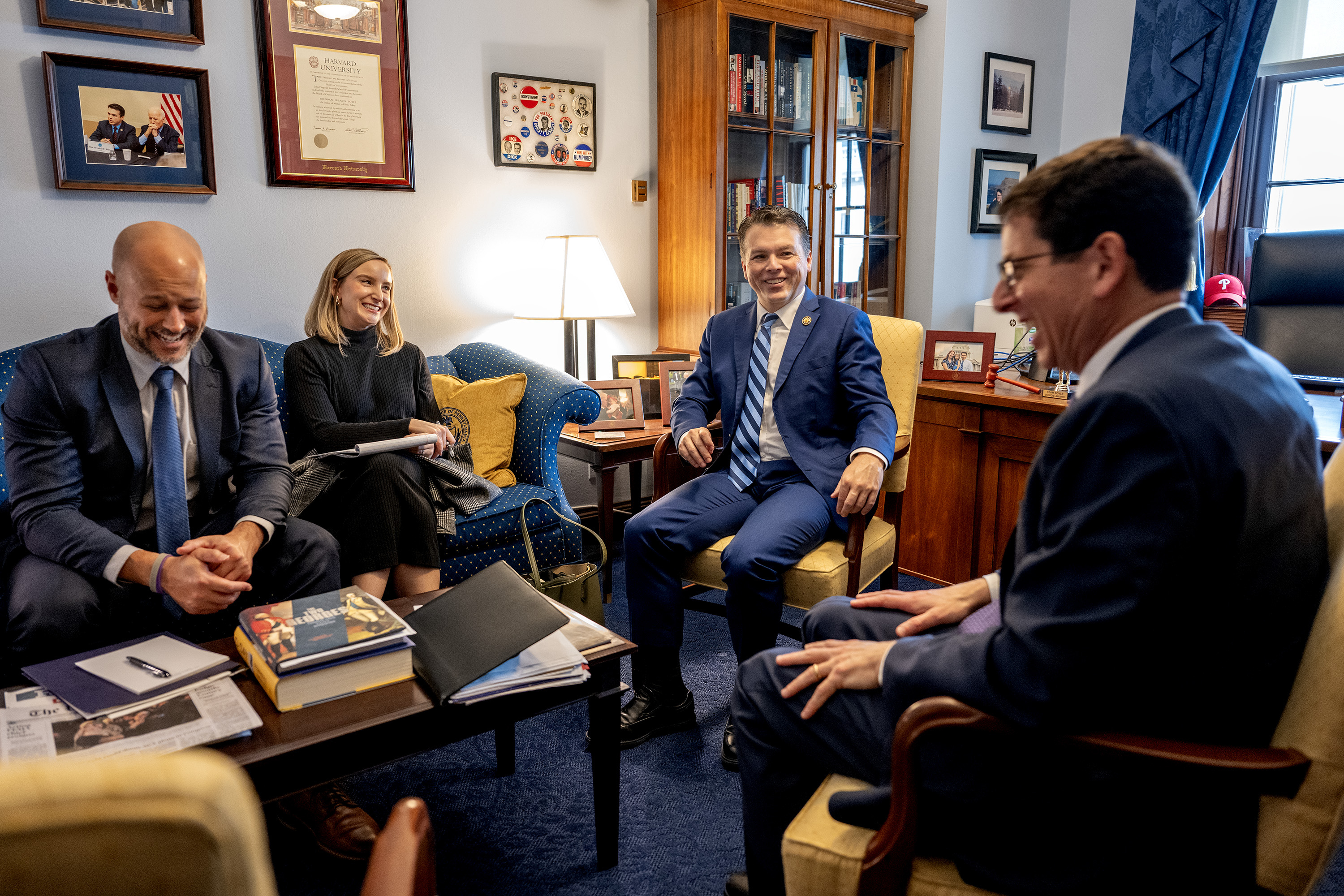
    U.S. Rep. Brendan Boyle (center) meets in his Capitol Hill office with Phillip Swagel (right), director of the Congressional Budget Office, following Swagel’s testimony before House Committee on the Budget last month. As Budget’s ranking member, Boyle has been central in shaping Democratic messaging around Republican policies.

    ‘Scrappy Irish Catholic boys from Olney’

    Boyle, who lives in Somerton with his wife and 11-year-old daughter, is an affable, earnest lawmaker in a role that is unapologetically wonky — and high-profile, especially lately.

    From Oct. 1 through the end of November — a period including the shutdown — Boyle popped up on TV news more than two dozen times, by his office’s count.

    His political beginnings were far less polished. In 2014, Boyle shocked Philadelphia’s political establishment by winning the Democratic primary over a field that included former U.S. Rep. Marjorie Margolies, scion of a powerful political family. Then a 37-year-old state representative, Boyle ran as a blue-collar, antiestablishment pragmatist from Northeast Philly. His ads cast his opponents as out of touch, and he leaned hard on his family’s story: his father, an Irish immigrant, worked at an Acme warehouse and later as a SEPTA janitor; his mother was a school crossing guard. Boyle still keeps his dad’s SEPTA cap on a bookshelf in his Washington office.

    That same year, his brother Kevin won a seat in the state House, prompting Philadelphia Magazine to profile the “scrappy Irish Catholic boys from Olney” who were reshaping the party.

    A decade later, Democrats are still striving to win back blue-collar voters. Boyle, meanwhile, has traded some of his insurgent edge for the stature of a Hill veteran. As Philadelphia elects a replacement for retiring U.S. Rep. Dwight Evans next year, Boyle will be a key ally for the new lawmaker, and a coveted endorsement during the election, though he has said he does not plan to weigh in. He has been in the thick of some of the year’s biggest fights — leading Democrats through a 12-hour reconciliation markup, testifying at a 1 a.m. Rules Committee hearing, and grinding through an overnight Ways and Means marathon.

    His younger brother has had a far more tumultuous path. Kevin lost his state House seat last year amid long-running mental health struggles.

    Boyle declined to discuss the situation beyond saying: “The last five years — almost exactly five years — have been very challenging. And I’ll just leave it at that.”

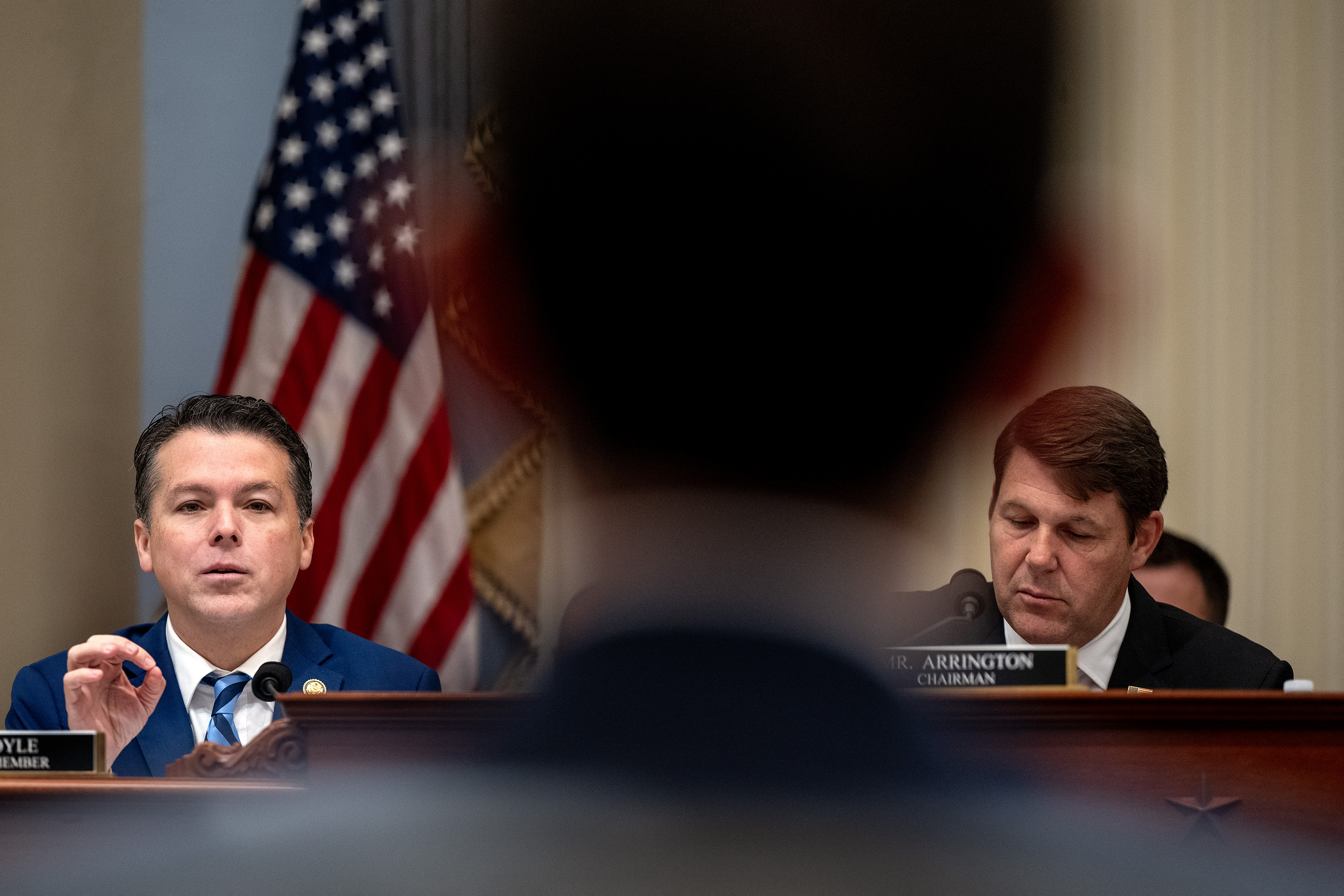
    U.S. Reps. Brendan Boyle (left) (D., Philadelphia) and Jodey Arrington (right) (R., Texas) question Phillip Swagel (back to camera), director of the nonpartisan Congressional Budget Office, during a hearing on Capitol Hill in Washington, D.C. Tuesday, Nov. 18, 2025. Arrington chairs the House Budget Committee, while Boyle is the panel’s top Democrat.

    In line for the gavel

    Before that late November hearing, Boyle had already reached out to fellow Democrats on the committee: Talk about healthcare, he urged them. Talk about affordability. Talk about it ad nauseam.

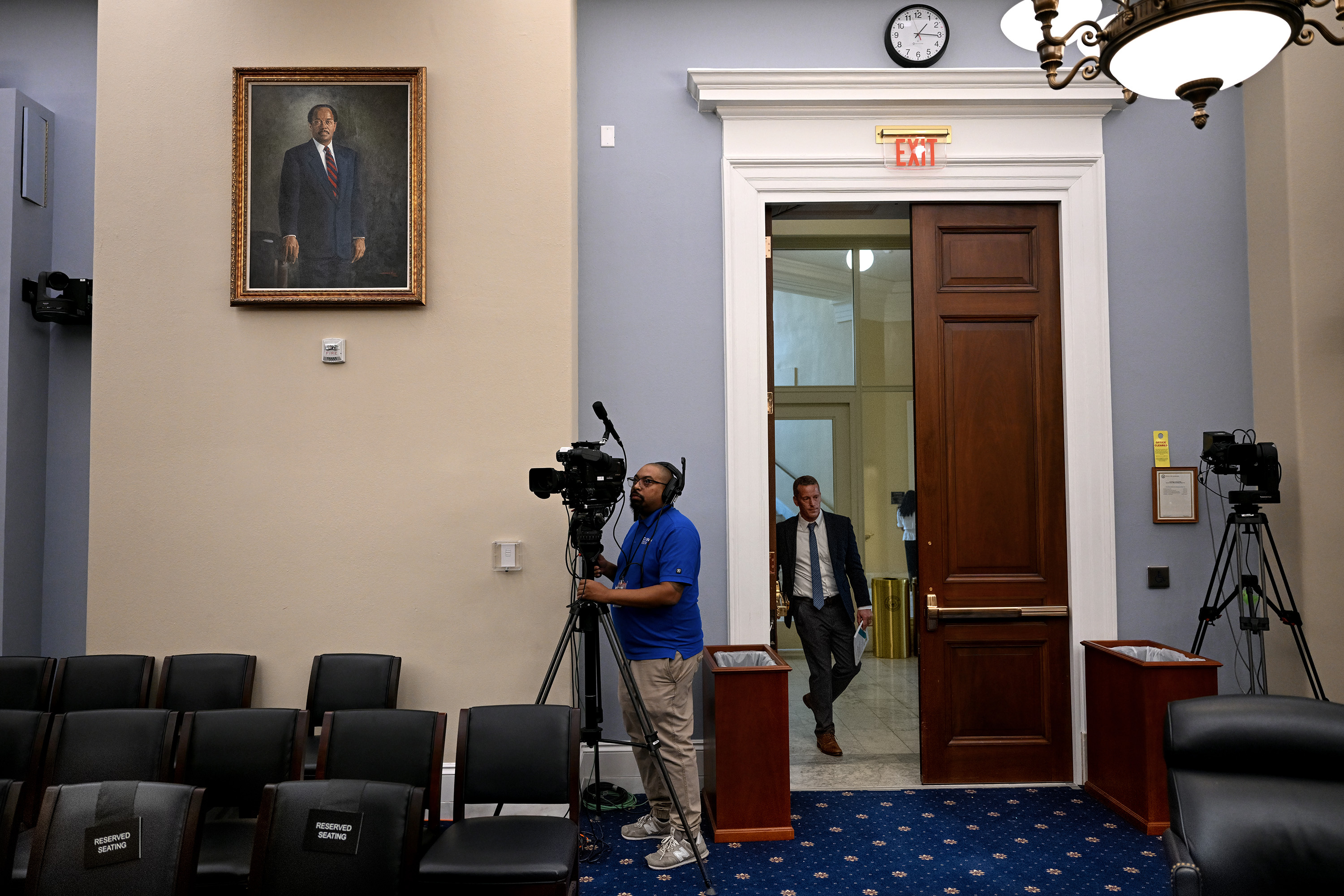
    He sat at the dais across from a portrait of Gray in an ornate hearing room, surrounded by paintings of former budget chairs, and delivered his opening remarks.

    “The president has stopped calling it the ‘Big, Beautiful Bill.’ He’s stopped talking about the bill altogether,” Boyle said. “… Because it’s not just that healthcare’s become unaffordable in America. It is beef, it is coffee, it’s electricity, almost every staple in the average consumer basket.”

    The director of the Congressional Budget Office, Phillip Swagel, was called before the committee that day and fielded questions from both sides. Democrats wanted to know Swagel’s projections on how Trump’s policies would affect everything from the national debt to the price of Thanksgiving dinners, eager for sound bites to send to constituents back home and to pressure Republicans on the healthcare debate.

    Republicans were pushing Swagel for an audit, seeking more transparency on how the nonpartisan agency comes to its projections.

    “We need to be able to cut through the politics and the partisanship and figure out where you and your team can do a better job,” said U.S. Rep. Jodey Arrington, the Texas Republican who chairs the committee.

    Boyle, whose office uses CBO projections to compile and distribute national and district-level data to Democrats, said he is open to an audit, if performed responsibly and not as a means to “discredit” the agency over numbers Republicans don’t like.

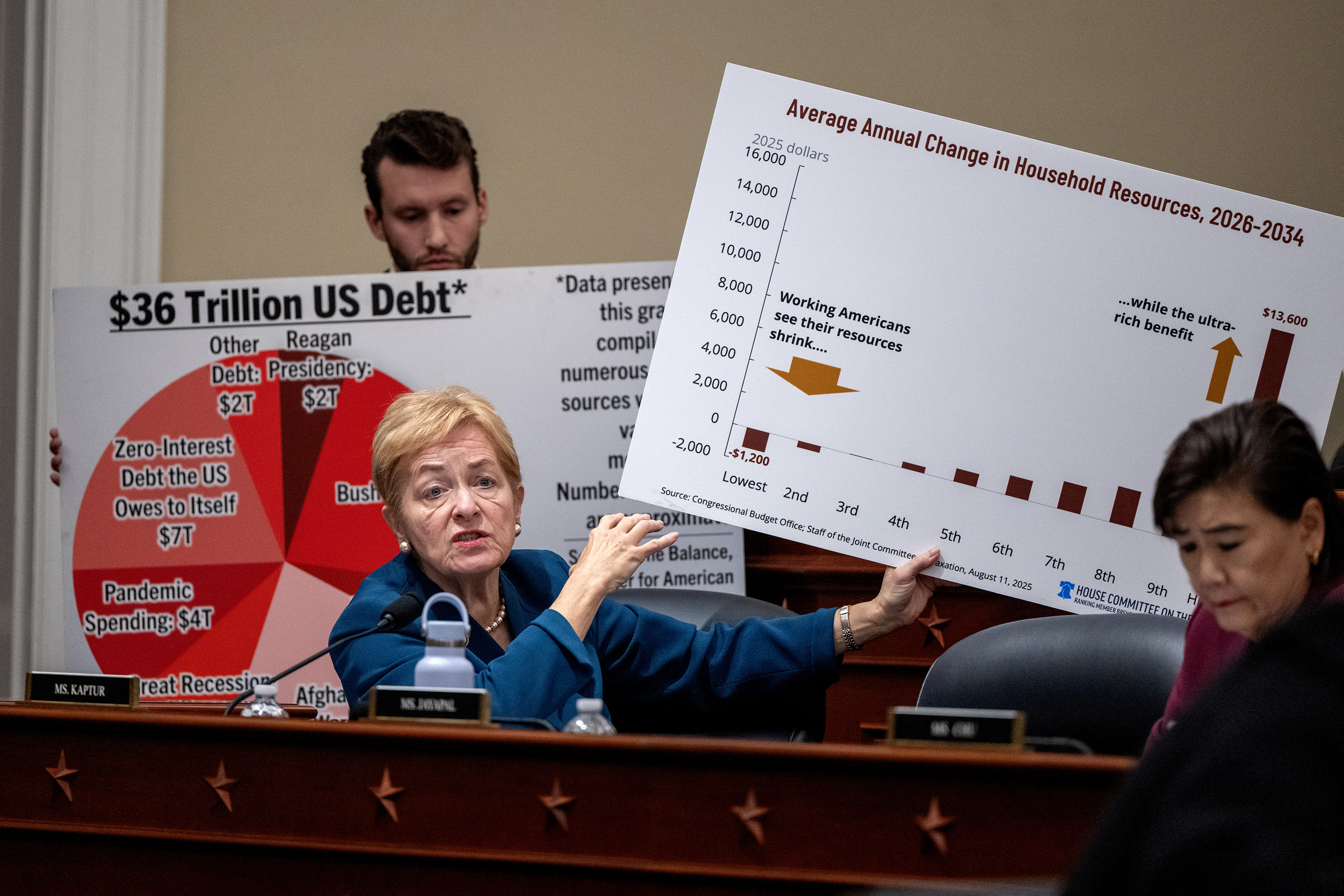
    U.S. Rep. Marcy Kaptur, a Democrat from Ohio, brings visual aids to a hearing of the House Committee on the Budget on Capitol Hill in Washington, D.C. Tuesday, Nov. 18, 2025.

    Throughout the three-hour hearing, Boyle would sidebar with Arrington, who is retiring next year. The Philly Democrat and the West Texas conservative make an unlikely pair, but the two have bonded across many late-night sessions over having younger children and their college football fanaticism — Boyle for his alma mater, Notre Dame, Arrington for Texas Tech.

    “He’s a very good communicator because he’s a really smart and thoughtful guy,” Arrington said. “I always can appreciate, whether I agree or not, with a good communicator. He’s authentic in what he believes and he’ll even say, ‘I grant you it’s not perfect,’ or ‘You make a good point.’”

    The midterms will dictate not just the party that controls Congress but also which ideological track the Budget Committee takes. If Democrats win, and Boyle takes the gavel, he plans to put more scrutiny on the administration and aim to regain some of Congress’ control over purse strings that Republicans have ceded to Trump.

    Another Pennsylvanian, U.S. Rep. Lloyd Smucker, a Republican who represents Lancaster, has announced he is running to be the top Republican on the committee following Arrington’s retirement. That means regardless of party control, two Pennsylvanians will likely be at the helm of one of the most powerful committees in Congress. Smucker, a fiscal conservative running with Arrington’s backing, said in an interview he would focus on rising national debt and getting a budget resolution adopted. He was a key negotiator for Republicans during reconciliation, helping to get conservative House Freedom Caucus members on board.

    Smucker called Boyle someone who is “serious about the budget process, and wants to make sure that it functions.”

    “He genuinely cares about strengthening Congress as an institution,” Smucker added.

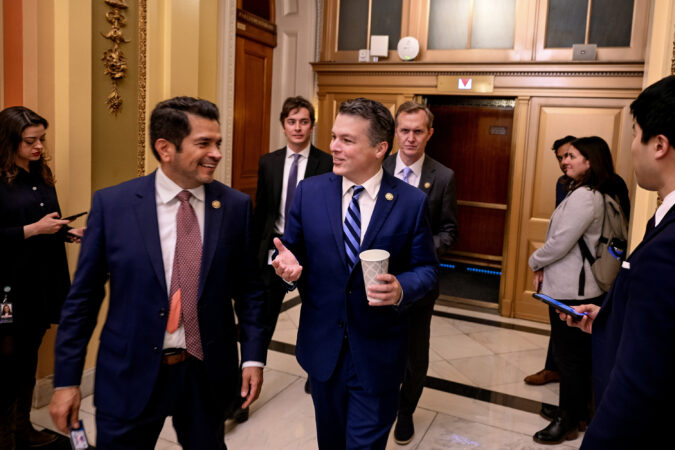
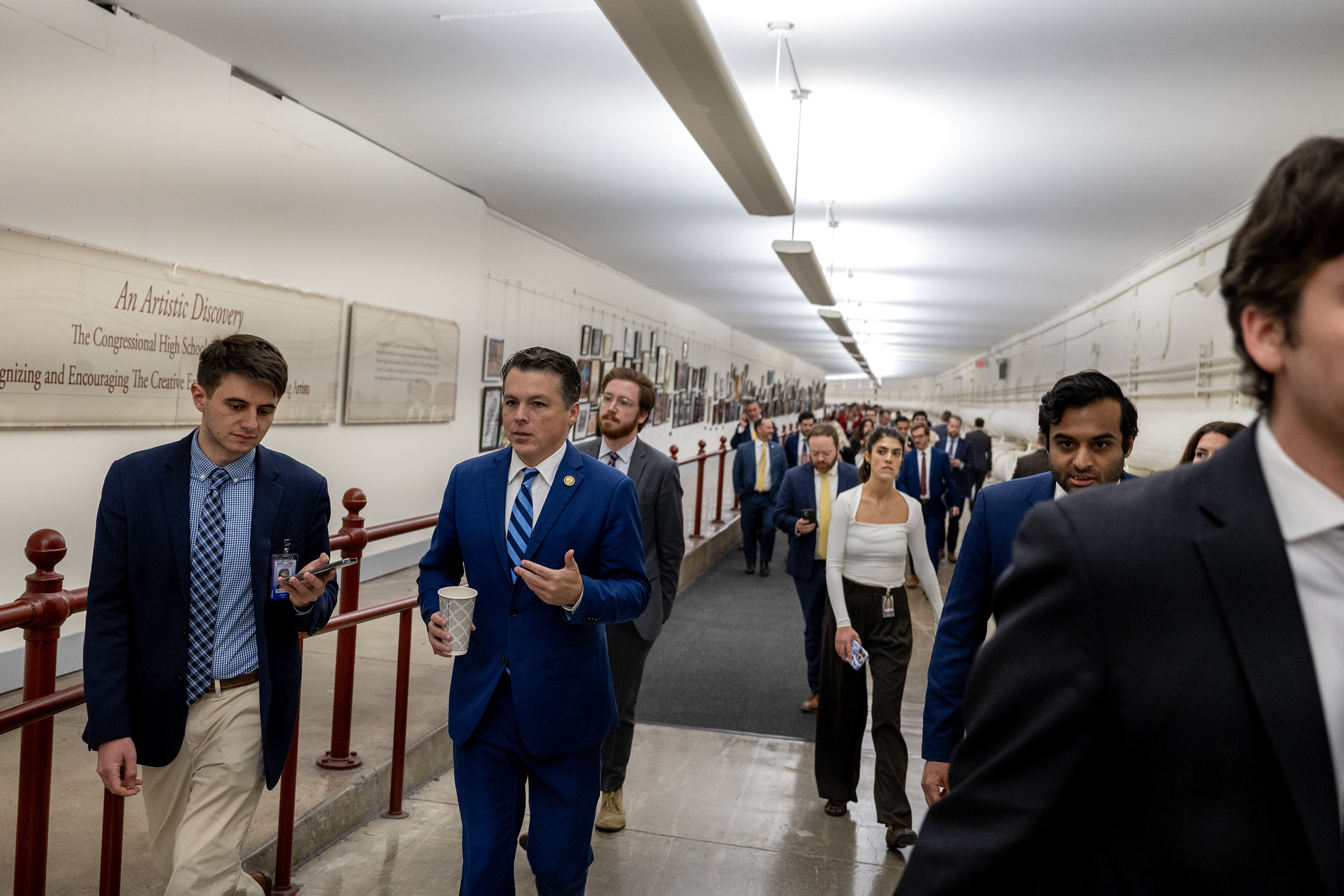
    U.S. Rep. Brendan Boyle is interviewed by Charles Hilu (left), a reporter with the Dispatch, as he moves between office buildings on Capitol Hill in Washington, D.C. Tuesday, Nov. 18, 2025.

    The road ahead

    The longer Boyle stays in the House, in a safe Democratic seat, the harder it is to think about walking away.

    In September, Jeffries appointed him the lead Democrat for the congressional delegation to the NATO Parliamentary Assembly. For Boyle, a history lover who has biographies of George Washington on his office coffee table, it’s an exciting opportunity to represent the country internationally as Trump continues to criticize the historic alliance. Boyle would become the leader of the parliamentary assembly delegation if Democrats take control of the House, just as he would take the gavel in the Budget Committee. Past committee chairs include former House Speaker Paul Ryan (R., Wis.), former Defense Secretary Leon Panetta, and former Ohio Gov. John Kasich.

    “Some really high-quality, high-caliber people have done that over the last 40 years. So that’s what I’m looking forward to in the near term,” Boyle said. “After that, come 2028, and beyond, we’ll deal with that then. But it is interesting, like the longer you’re here, and if you move up the ranks, then actually it does make it more difficult to leave.”

    A painting of former U.S. Rep. William H. Gray III hangs in the hearing room of the House Committee on the Budget on Capitol Hill. It’s been 40 years since a Philadelphia lawmaker led a House committee.
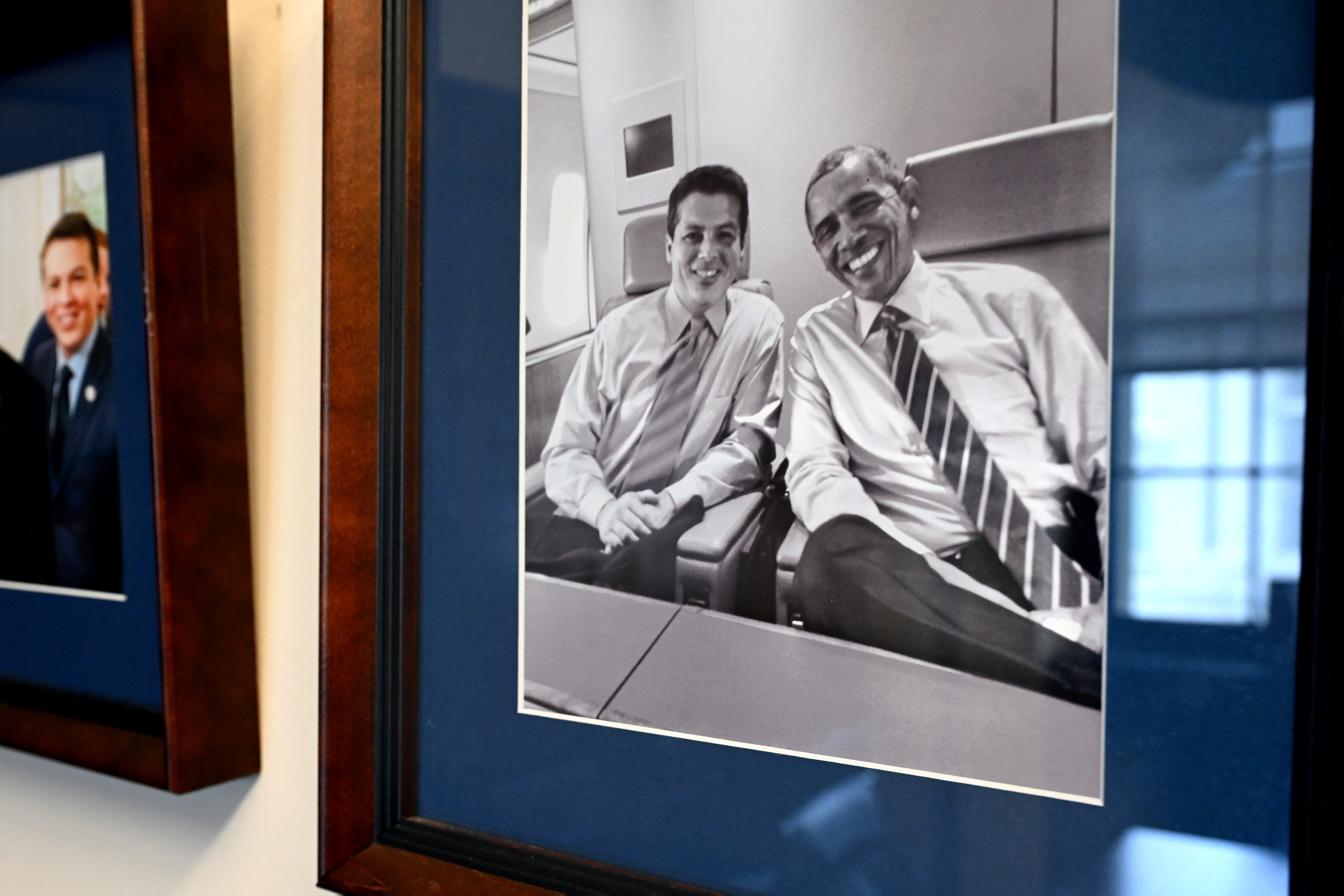
    A photo of U.S. Rep. Brendan Boyle with former President Barack Obama on Air Force One hangs in his office on Capitol Hill in Washington, D.C.

    But Boyle has not been shy about airing frustrations with Fetterman, whose term is up in 2028, sparking speculation Boyle could have an interest in a run against him.

    Boyle said he avoided criticizing Fetterman until this spring, when the senator’s positions started to directly conflict with the party messaging he was pushing out.

    “As I was doing TV opportunity after TV opportunity, what I increasingly found was that the clip they would show before I would be asked the question wouldn’t be a clip of what Donald Trump had said; it would be a clip of what my state’s Democratic senator had said,” Boyle said. “And I obviously would have to combat it.”

    Fetterman has embraced an independent streak as a purple-state senator, often willing to work with the GOP. While pleasing to voters eager to see compromise and bipartisanship in a tenuous moment in Washington, it has also alienated some progressives.

    Boyle said when it comes to the Senate, “I don’t rule anything in and I don’t rule anything out.”

    If he were to run, a challenge could be building his statewide profile. He is still relatively unknown outside Philadelphia, though he has proven to be a prolific fundraiser. Today’s politics also tend to elevate showmen and outsiders, while Boyle has the more traditional cadence of an establishment politician — disciplined, polished, and most compelling when he speaks off-script.

    Some local Philadelphia Democrats have criticized Boyle’s voting record on immigration, arguing it has not reflected the interests of the Latino community he represents in his majority-minority district. Boyle voted for the bipartisan Laken Riley Act, which requires the Department of Homeland Security to detain noncitizens who are arrested or charged with certain crimes, often forgoing due process. He was one of 46 Democrats in the House along with 12 in the Senate, including Fetterman, to support the GOP-led bill.

    “I have the same criticism as I do of Josh Shapiro: I wish he would take a stronger stance on immigration,” said State Rep. Danilo Burgos, who represents North Philadelphia. At the same time, Burgos credited Boyle as being a “good partner in our community” who always returns phone calls and texts.

    For now, Boyle keeps an extremely busy schedule. The day of the budget hearing, his schedule stretched over 15 hours. He hustled from a meeting with Social Security and Medicaid experts to a floor vote to release the Jeffrey Epstein files.

    Back in his office, where Eagles throw blankets, Phillies pennants, and a painting of Donegal, Ireland, his father’s home county, decorate the space, he sat down for his final meeting of the day.

    Gwen Mills, the international president of UNITE HERE, a labor union that represents hospitality workers, wanted advice on how to translate Democrats’ work in Washington to members frustrated with both parties.

    “Talk about affordability and how Republicans are making it worse — with the so-called beautiful bill,” Boyle suggested, running through some numbers and data before offering up a simpler sound bite:

    “It boils down to life in America is just too damn expensive right now.”

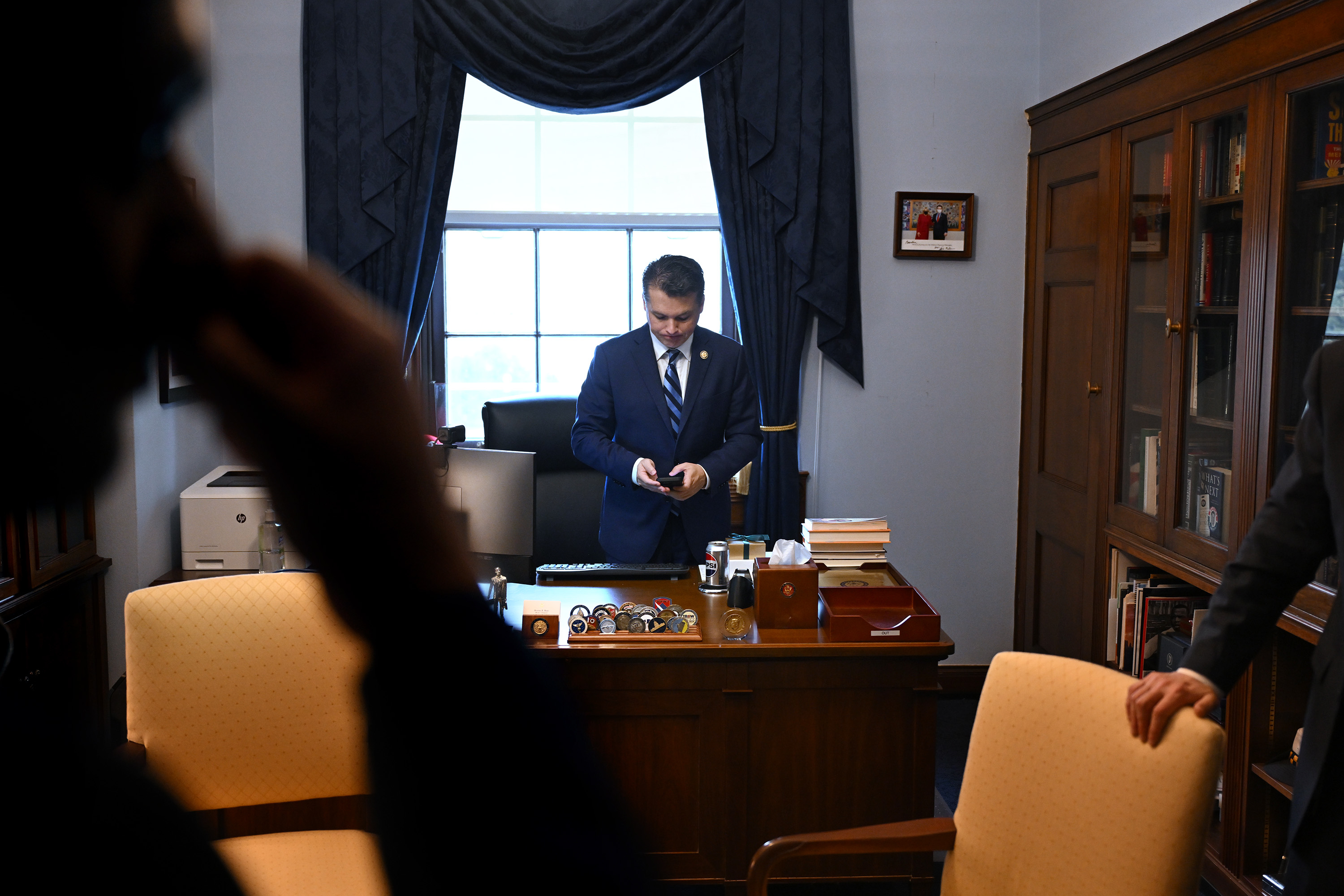
    U.S. Rep. Brendan Boyle checks his phone before leaving his office on Capitol Hill in Washington, D.C. Tuesday, Nov. 18, 2025.