A Norristown police sergeant who struck a naked, unarmed man with his patrol SUV last week has been charged with assault, official oppression, and related crimes, prosecutors said Tuesday.
Sgt. Daniel DeOrzio, 52, used unnecessary force in the Feb. 4 incident, Montgomery County District Attorney Kevin Steele said. He was placed on administrative leave after the encounter.
Prosecutors said officers had been dispatched to the intersection of West Airy and Stanbridge Streets after reports that the naked man was yelling and damaging cars in the intersection. DeOrzio was among several officers who responded and, according to investigators, he positioned his police SUV behind a gray pickup truck blocking the roadway.
After ordering the truck removed, authorities said, DeOrzio accelerated and struck the man, who was standing in the intersection with his hands on his hips.
The impact sent the man airborne before he slammed onto the pavement, prosecutors said. He was taken to Main Line Health Paoli Hospital and released two days later.
Investigators concluded that DeOrzio, the highest-ranking officer at the scene, used unnecessary force and failed to attempt basic de-escalation tactics, including verbal commands, before resorting to violence, the district attorney said.
“This was not a necessary use of deadly force in this response incident,” Steele said in a statement.
The incident drew criticism at a public meeting last week, where Norristown Police Chief Mike Trail fielded questions from residents upset over the officer’s actions. Trail said he would like to form a mental health co-responder program that would pair officers with mental health experts to de-escalate future situations.
“People experiencing mental health behavioral episodes are more likely to … be subject to use of force by responding law enforcement officers because they lack the tools and the sophisticated training necessary to de-escalate,” he said.
DeOrzio turned himself in Tuesday morning and was arraigned. District Judge Cathleen Kelly Rebar set his bail at $100,000. DeOrzio could not be immediately reached for comment.
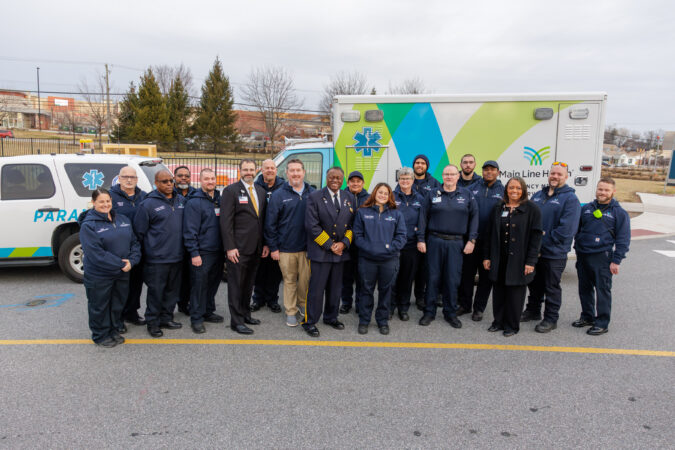
Main Line Health on Wednesday announced that emergency medical services at Riddle Hospital in Media would be rebranded as Main Line Health EMS.
The seven-ambulance fleet has been known as Riddle EMS for the past 40 years. It employs 77 paramedics and EMTs and provides emergency response services for Main Line’s four-hospital system.
In addition to Riddle Hospital, Main Line Health includes Paoli Hospital, Lankenau Medical Center, and Bryn Mawr Hospital.
The rebranding gives Main Line’s emergency services team a name that matches its system-wide mission, and “strengthens the team’s ability to meet the expanding needs of the community, while preserving the trusted service delivered for decades,” according to a statement from Main Line.
Riddle and Mercy Fitzgerald Hospital, in Darby, are the next closest hospitals for people who would previously have turned to Crozer for emergency care.
Faridah Ismaila launched nonprofit A Paint-full of Promise to connect younger students with free monthly art classes.
A Great Valley High School sophomore will soon be bringing her passion for art to young students in the district.
Inspired by the phrase “Do what makes you happy,” Faridah Ismaila recently launched nonprofit A Paint-full of Promise to provide free monthly art classes for kindergarteners through sixth graders, The Inquirer’s Brooke Schultz reports.
The program is slated to kick off this month with a winter wonderland-themed class. Ismaila is working with district educators to offer the workshops where students can learn new skills and express themselves.
A person on a trail on Warwick Furnace Road in Warwick Township was recently injured by a coyote, prompting the Chester County Health Department to look for the animal. It’s unknown if the coyote is rabid.
The community is mourning the death of photographer, filmmaker, and Kennett Square resident Robert Caputo, who died Dec. 18 at a voluntary assisted dying center in Switzerland. Throughout his career, Mr. Caputo traveled the world, producing stories, films, and photographs for National Geographic magazine, Time, PBS, and TNT. The 76-year-old was diagnosed with Alzheimer’s disease last year.
A Malvern office building at 52 Swedesford Rd. is poised for demolition to make way for a mixed-use development with 250 apartments and retail space, including a market and cafe. (Philadelphia Business Journal)
The 33,000-square-foot Acme-anchored shopping center at 785 Starr St. in Phoenixville recently sold for nearly $7.4 million. The sale didn’t include Acme’s space.
The state’s Department of Environmental Protection is expected to evaluate surface and well water at the Bishop Tube HSCA Site in East Whiteland Township this month for contaminants such as PFAS, volatile organic compounds, and inorganics, as well as fluoride.
The Paoli Memorial Association in Malvern has been awarded a $325,000 grant, which will help fund construction of the Paoli-Malvern Heritage Center. The center, which will be adjacent to the Paoli Battlefield, will preserve an 1817 obelisk and offer interpretive exhibits.
Several Chester County communities have received funding from the state’s Green Light-Go Program aimed at improving traffic safety and mobility. Upper Uwchlan Township has been awarded over $920,000 to upgrade detection and controller equipment at Route 100 and Graphite Mine Road. West Whiteland Township is getting nearly $390,000 to upgrade multiple intersections along Route 100 and Commerce Drive. And East Whiteland Township will get almost $192,000 to modernize Lancaster Avenue and Conestoga Road.
Heads up for drivers: Asplundh will be pruning trees along Goshen Road between Pottstown Pike and Hillside Drive in West Chester throughout the first quarter of 2026.
Paoli Hospital is among Forbes Top Hospitals for 2026 and is the sole Chester County institution on the list.
Looking to dispose of your Christmas tree? Upper Uwchlan will collect trees curbside on Jan. 15; Spring City residents can place trees curbside daily through Jan. 30 for pickup; East Pikeland residents can place trees curbside on Wednesdays in January or drop them off at the township yard waste recycling facility; West Vincent residents can drop them off at the township building through Jan. 23; and Phoenixville residents can place them curbside with trash through Feb. 28. Trees can also be dropped off at the compost site at 18 S. 2nd Ave.
It’s the last chance for residents in Easttown (through Jan. 12) and Upper Uwchlan (through Jan. 15) to recycle old holiday lights.
🏫 Schools Briefing
Tredyffrin/Easttown School District is hosting its elementary new student registration window for next school year from Jan. 20-26. Learn more here.
West Chester Area School District has an opening on its school board following Alex Christy’s resignation ahead of his term’s expiration next December. Applications to fill the vacancy are open until noon on Jan. 21.
The search is on for someone to take over the former Iron Hill Brewery in West Chester. Over the holidays, building owner John Barry acquired the liquor license and all assets inside the space, which he said will help him “to get a better tenant in there.”
In case you missed it, The Inquirer’s Michael Klein reflected on the most notable restaurant openings of 2025. They include Bao Nine in Malvern, The Borough in Downingtown, Jolene’s in West Chester, L’Olivo Trattoria in Exton, The Local in Phoenixville,and Stubborn Goat Brewing in West Grove. See the full list here. The Borough also made Klein’s roundup of the best new pizza restaurants to open in the region last year.
As for the best things Inquirer food writers ate last year, the Caramelia at Longwood Gardens’ 1906 restaurant was up there. Paying homage to Kennett Square’s mushroom industry, the red-topped mushroom-shaped dessert features chocolate mousse with espresso and caramel flavors.
🎳 Things to Do
🎨 An Ancestral Journey: Moore College of Art grad Roe Murray’s works will be on display for the next few weeks. She will also participate in an artist talk on Jan. 28. ⏰ Thursday, Jan. 8-Thursday, Jan. 29, times vary 💵 Free 📍 Chester County Art Association West Chester Galleries
🎶 A Grand Night For Singing: This rendition will celebrate the wide-ranging works of Rodgers & Hammerstein with singing, dancing, and a live orchestra. ⏰ Friday, Jan. 9-Sunday, Jan. 18, select days and times 💵 $31.60-$36.70 📍 SALT Performing Arts, Chester Springs
🧁 Pinkalicious the Musical: The musical adaptation of the book follows a pink-loving heroine who inadvertently turns herself into her favorite color by eating too many cupcakes. ⏰ Friday, Jan. 9-Sunday, Jan. 18, select days and times 💵 $21-$30 📍 Uptown! Knauer Performing Arts Center, West Chester
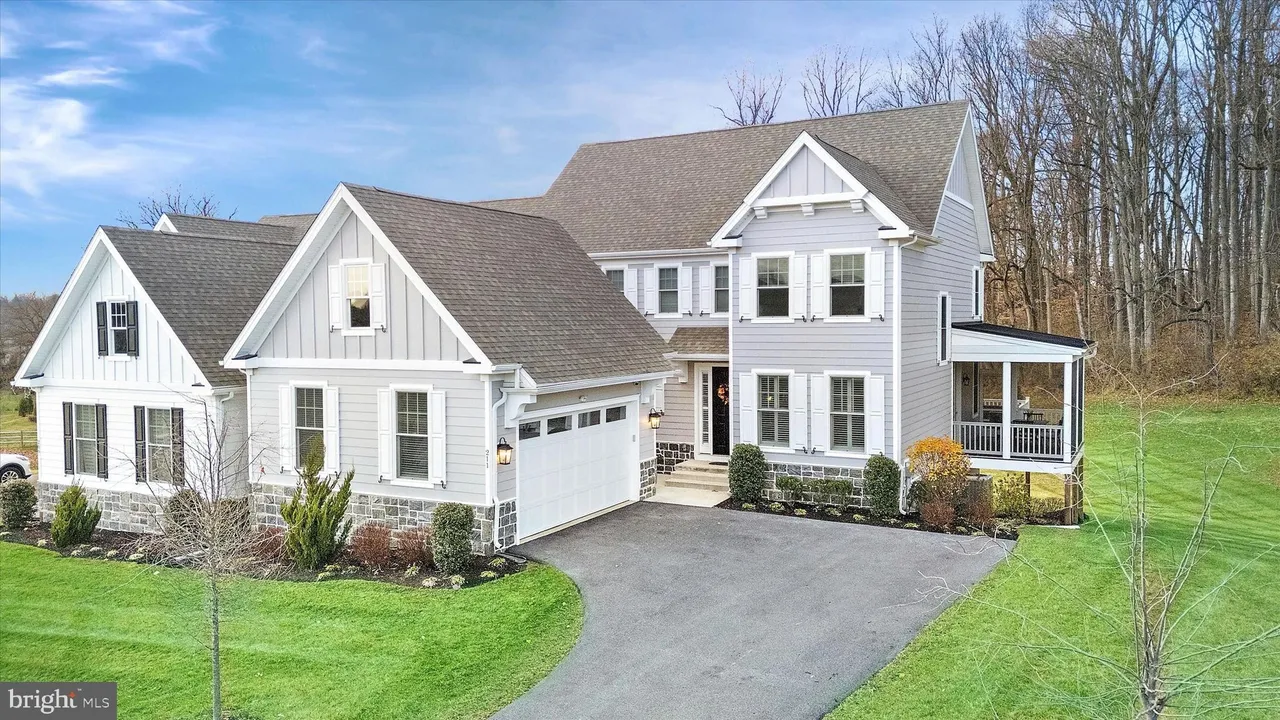
The carriage home has a two-car garage and a screened-in porch that leads to a deck.
Located in the Villages at Northridge, this Kennett Square carriage home is just a few years old. The great room, which has a fireplace, opens to the kitchen, where there’s two-toned cabinetry, an island with a farmhouse sink, a pantry, and a dining area with a built-in beverage station complete with a bar refrigerator and ice maker. The great room also has access to the screened-in porch, which leads to the deck. There are three bedrooms upstairs, including a primary suite with a walk-in closet and a bathroom with a double sink vanity. The finished lower level walk-out has another bedroom, a full bathroom, and a living room.
By submitting your written, visual, and/or audio contributions, you agree to The Inquirer’s Terms of Use, including the grant of rights in Section 10.
This suburban content is produced with support from the Leslie Miller and Richard Worley Foundation and The Lenfest Institute for Journalism. Editorial content is created independently of the project donors. Gifts to support The Inquirer’s high-impact journalism can be made at inquirer.com/donate. A list of Lenfest Institute donors can be found at lenfestinstitute.org/supporters.
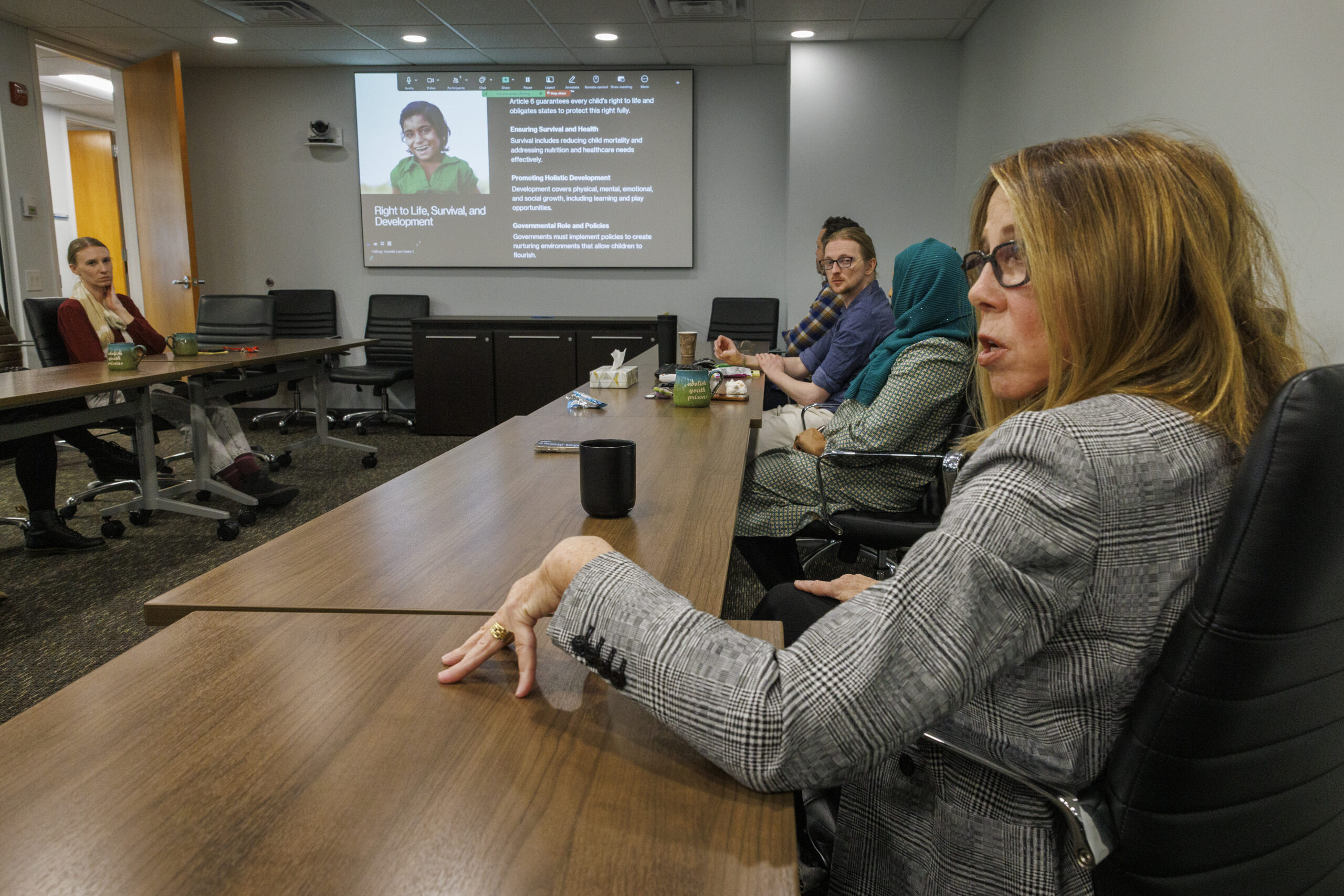
Marsha Levick took her seat at a conference table at the Juvenile Law Center on a recent Wednesday for what would be one of her last meetings. She walked colleagues through the basic principles of the United Nations Convention on the Rights of the Child, the 1989 treaty that laid out, in clear terms, what the world said it owed young people.
At the heart of the treaty is a simple idea: A child’s best interests come first — even when that child enters the justice system. It has been ratified by all but one of the U.N.’s member nations: the U.S. And in many of those 196other countries,Levick said, children younger than 14 cannot be prosecuted at all.
“Wait,” a staffer interjected. “Kids younger than 14 aren’t in the justice system?”
“I know,” Levick said. “It’s very different.”
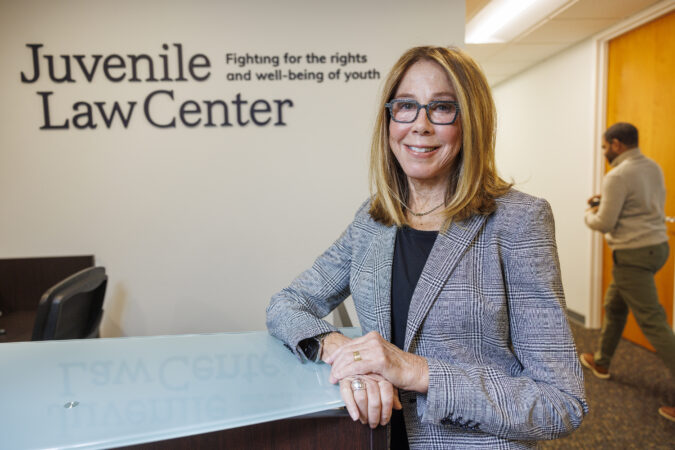
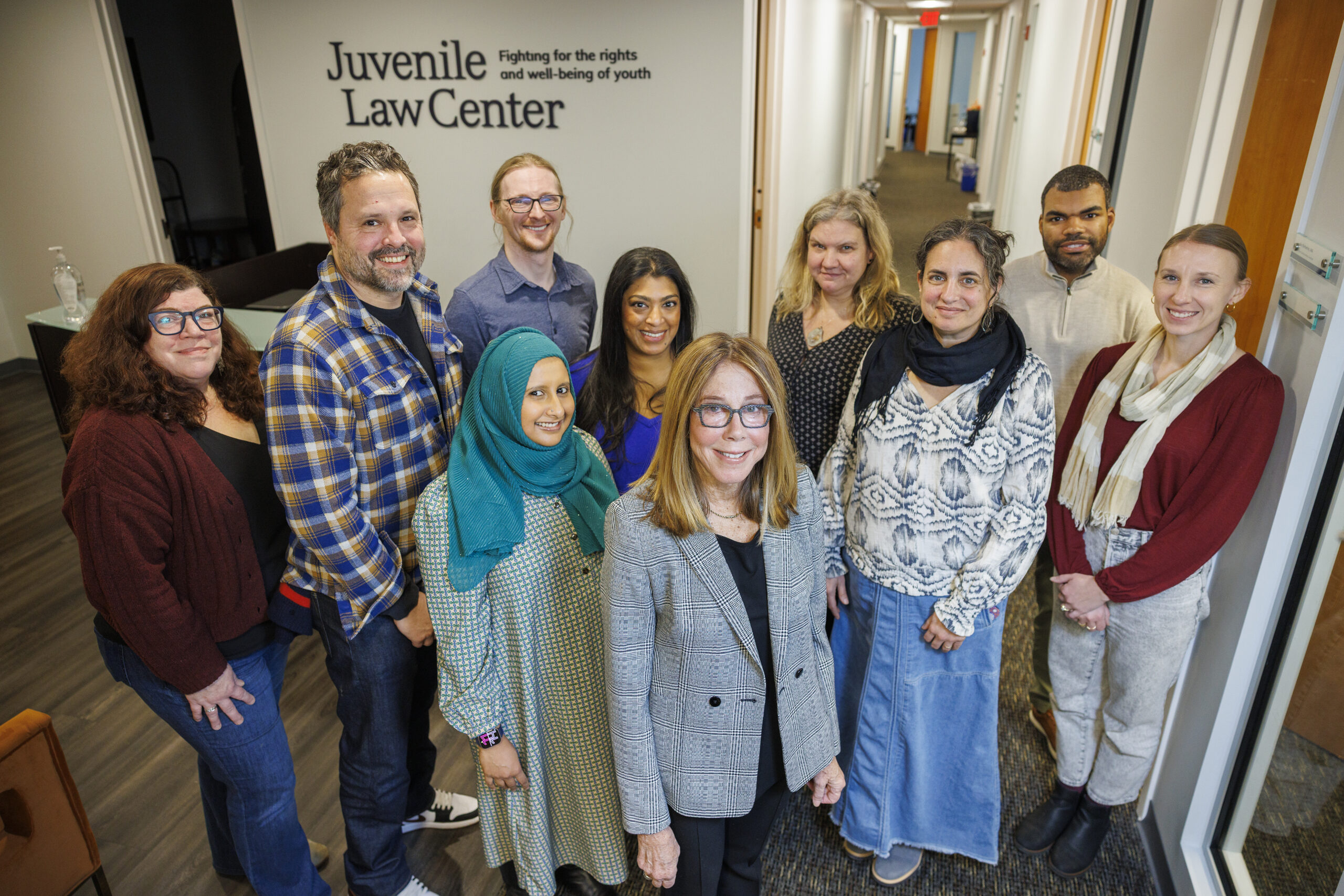
Marsha Levick, chief legal officer and cofounder of the Juvenile Law Center, speaks with staff on Dec. 17.
For 50 years, Levick, 74, has been one of the most persistent and influential voices in the American juvenile justice system, a driving force in turning what was once a niche legal specialty into a national civil rights movement. Colleagues credit her with helping to rewrite how courts view children — persuading judges, including those on the U.S. Supreme Court, to treat youth not as miniature adults but as citizens with distinct constitutional protections and needs.
Levick will step down Wednesday from her position as chief legal officer of the Juvenile Law Center, the Philadelphia-based organization she helped build from a walk-in legal clinic in 1975 into a national leader in children’s rights.
Her departure coincides with the center’s 50th anniversary. At a celebration gala in May, the nonprofit honored Levick with a leadership award that recognized her body of work.
Levick’s career ranged from representing individual teenagers to steering landmark litigation that forced states to overhaul abusive practices. She helped lead the Juvenile Law Center’s response to the “kids for cash” scandal in Luzerne County. She coauthored briefs in a series of U.S. Supreme Court victories that throttled the harshest punishments for kids, including life in prison.
But Levick is also stepping down at what she calls a “dark moment” forcivil liberties in America — a time when rights once thought settled are being rolled back.
Levick was in law school in 1973 when the U.S. Supreme Court handed down Roe v. Wade, the landmark decision that recognized a constitutional right to abortion. In the years that followed, a constellation of rights — from marriage equality to access to contraception — also expanded.
Roe was overturned, however, in 2022. Since then, other decisions have also chipped away at affirmative action in colleges and LGBTQ+ protections.
“It’s hard to convey the shock that it imposes,” Levick said in a recent interview. “Now, 50 years later, you’re pushing the rock back up the hill.”
She made clear she was unsparing with herself, quick to point out what she perceived as shortcomings. “There were high moments for sure,” she said. “But I am not foolishly happy about that. I’m shocked that that’s all we could do. That’s as far as we got.”
Yet even as fresh battles loom, colleagues say the groundwork Levick has laid will guide the Juvenile Law Center’s mission and the broader fight for children’s rights for years to come.
Jessica Feierman, the center’s senior managing director, will step into Levick’s role. “It is a huge privilege and also an immense responsibility,” she said. “In this moment of attacks on civil rights and children’s rights, it’s even more vital that we build on the victories of the last 50 years.”
From Philadelphia to the U.S. Supreme Court
Raised in Philadelphia’s Fairmount neighborhood, Levick discovered early the charge of using her voice, first as a girl who demanded a recount in an elementary school election and won the presidency, and later as a teenager who inhaled The Feminine Mystique and the feminist writers who followed. She earned an undergraduate degree from the University of Pennsylvania and a law degree from what is now Temple University Beasley School of Law.
She cofounded the Juvenile Law Center in 1975 with three law school classmates: Bob Schwartz, a classical music aficionado and part-time semi-pro baseball umpire; Phil Margolis, a vegetarian and free spirit; and Judy Chomsky, a mother of two and passionate Vietnam War resister.
Seven years earlier, the U.S. Supreme Court had ruled that juveniles were entitled to due process. That decision cracked open an untapped field, Levick said, to buildwith her classmates a new kind of civil rights practice focused on children.
For the first year, they worked out of the Chestnut Street office of Chomsky’s husband, a cardiologist, carving out space in his waiting room and sidestepping an exam room on the days he saw patients.
In its earliest years, the center took on individual cases for children. One of Levick’s first clients was in Montgomery County, a teen girl who had participated in a protest at a nuclear plant and who was arrested and charged with trespassing, she said.
But the center struggled financially. The founding partners laid themselves off at one point, Levick said, so they could keep paying the few employees they had hired: a divorced mother who worked as a receptionist; their first lawyer, Anita DeFrantz, who was an Olympic rower; and a social worker.
In 1982, Levick quit the center to become the legal director of the national NOW Legal Defense and Education Fund, now Legal Momentum. By the time she left there six years later, she had become its executive director.
At the NOW Legal Defense and Education Fund, Levick said, she learned how to build national cases — coordinating multistate litigation and filing amicus briefs in federal courts. By the time she returned to the Juvenile Law Center in 1995, after a stint at a small Paoli firm, she had come to believe that individual wins, while necessary, would not be enough to create lasting change.
The center’s mission became more focused on appellate litigation and national advocacy, setting the stage for children’s rights to reach state supreme courts and, eventually, the U.S. Supreme Court.
Hundreds of juveniles resentenced, released
In 2005, in Roper v. Simmons, Levick cowrote in a brief that social science research on youth development should inform constitutional law. Children, she also wrote, have a greater capacity to change.
“We just pushed ourselves into the center of it,” Levick said. “We were like, ‘We’re here. We’re writing the amicus brief.’”
The high court overturned decades of precedent when it ruled in Roper that the Eighth Amendment forbids the death penalty for juveniles. Five years later, in Graham v. Florida, it barred life-without-parole sentences for juveniles in non-homicide cases, after reading another brief Levick coauthored.
In 2012, Levick helped persuade the court to end mandatory life-without-parole sentences for youths convicted of homicide in Miller v. Alabama. And in 2016, she served as cocounsel in Montgomery v. Louisiana, the case that made the Miller decision retroactive across the country.
Since then, hundreds of juveniles — including nearly 500 in Pennsylvania — have been resentenced or released from prison. One of them: Donnell Drinks, freed in 2018 after 27 years.
The first time Drinks met Levick, he hugged her. “I couldn’t believe how small she was, because of her presence, her legal prowess, has all been so enormous,” recalled Drinks, who works as a leadership and engagement coordinator at the Campaign for the Fair Sentencing of Youth.Levick is 5-foot-3.
Those cases brought Levick into courtrooms across the state, often alongside public defenders. One of them, Bradley S. Bridge, a retired Philadelphia public defender who worked with her on dozens of resentencings, called Levick a “zealous advocate” who “always saw the big picture.”
Her ability, he said, “to think toward the future, I think, was most glorious.”
Levick agreed that looking ahead had always been part of her work. “We always tried to look around the corner,” she said.
One of those moments came in 2008, when she and her colleagues began fielding troubling calls from Luzerne County — the first hints of what would become the “kids-for-cash” scandal.
Seeing more in the ‘kids-for-cash’ scandal
In 2007, Laurene Transue called the Juvenile Law Center. Her daughter, 14-year-old Hillary Transue, had been ordered to serve three months in a detention facility after she created a Myspace page mocking her school principal, she said at the time.
“We saw in that one phone call something that was clearly much bigger,” Levick said.
In fact, it was one of the most egregious judicial corruption cases in modern American history: Two Luzerne County judges had accepted kickbacks in exchange for sentencing thousands of juveniles — many for minor misbehavior — to extended stays in private detention centers.
“It was kind of like, if I may, what the f— in my mind,” Levick recalled.
Levick and the center petitioned the Pennsylvania Supreme Court, which ultimately threw out and expunged thousands of adjudications. They later helped families pursue civil damages, with the help of other firms. The judges, Mark Ciavarella and Michael Conahan, were convicted of federal crimes and sentenced to long prison terms; President Joe Biden commuted Conahan’s sentence in 2024.
Hillary Transue now serves on the Juvenile Law Center’s board.
Transue told The Inquirer that as a teenager she believed that “highly educated” adults in “positions of authority” were “mean, nasty people who were out to hurt you.” But Levick, she said, “brushed up against my perception of adults” and proved her wrong.
“I think she’s a goddamn superhero,” Transue said recently.
Marsha Levick (center) stands with staffers at the Juvenile Law Center earlier this month.
Among the successes, Levick still sees failures
Despite the victories, Levick is quick to cite the cases she lost. “I’ve had successes. I’ve also failed many times,” she said.
She still thinks about clients like Jamie Silvonek, sentenced to 35 years to life in prison after killing her mother, whose early release Levick has fought for but has not yet won, or a recent bid to expand parole access for people convicted as juveniles that fell flat in Florida.
Those losses have hardened her view of how deeply punishment is embedded in American law. “I feel like punishment is in our bones,” she said. “The way that we think about crime is that it is always followed by punishment.”
That instinct, she said, has left behind people who could have thrived outside prison — including juvenile lifers who will never be released. One of them is Silvonek, whom Levick described as brilliant and warm. “I want her to be able to share that warmth and joy with her family and with her community, who are all behind her,” Levick said.
“We lost what they had to give,” she added.
Levick isn’t done yet
Levick, who is married with two adult daughters, is not leaving the field. She will become the Phyllis Beck chair at Temple’s Beasley School of Law, a post once held by her cofounder Bob Schwartz, and will teach constitutional law to first-year students.
She feels newly urgent about the course. “I am outraged at the degree to which the law has been perverted by the current moment, and I think I still can say and do something about that,” she said. “I think that the things that motivate me include outrage.”
She expects much of the future progress in youth justice to come from state supreme courts rather than the U.S. Supreme Court — a shift she sees as pragmatic, not pessimistic. Washington State Supreme Court Justice Mary Yu, who has heard Levick argue successfully before her, called her a fearless litigator. “She’s an extraordinary appellate lawyer,” Yu, who is also retiring Wednesday, said in an interview.“It’s almost instinctual to her.”
And even now, Levick said, she has hope.
“We’re not going to abolish the juvenile justice system in America, but we could transform it radically,” Levick said. “I believe that. But it takes more than just lawyers to care. It takes more than the community to care. It takes people in positions of power to care. And that’s the hard part.”
Correction: An earlier version of this article misstated the name of a legal advocacy group at which Levick worked. She worked at NOW Legal Defense and Education Fund. The story also misstated the year Laurene Transue called the Juvenile Law Center; she called the law center in 2007.
Since taking office for his second term, President Donald Trump has moved to cancel tax incentives and spending for clean-energy technology and prioritized expanded production of oil and natural gas.
But the federal government apparently is not 100% out of the green fuels business.
Last week, SEPTA won a $43 million grant from the Federal Transit Administration to replace 35 diesel-powered 30-foot buses with an equal number of cleaner diesel-electric hybrid buses that are 32 feet long.
When the new buses are delivered, expected to be in 2028, SEPTA no longer will have diesel-only buses in its fleet.
Most SEPTA buses are 40 feet long or 60-foot articulated models (the ones with the accordion in the middle). The shorter hybrids will be used on the LUCY Loop in University City and Routes 310, 311, 312, and Route 204, which runs from Eagleville to Paoli Station.
“These new hybrid buses will increase operational efficiency and help ensure that SEPTA can continue to provide reliable service for customers,” general manager Scott Sauer said.
SEPTA applied for the grant in July, a spokesperson said.
“This is a major win for Philadelphia,” U.S. Rep. Brendan Boyle of Philadelphia said. “These new hybrid buses will mean more reliable service, a stronger transit system, and cleaner air for the hundreds of thousands of riders who depend on SEPTA every day.”
Boyle, a Democrat, said the money came from President Joe Biden’s bipartisan infrastructure law, which Boyle helped champion. The grants were given from the fiscal year 2025 federal budget.
“Delivering new-and-improved bus infrastructure is yet another example of how America is building again under President Trump,” U.S. Transportation Secretary Sean P. Duffy said in a statement. “More people travel by bus than any other form of public transportation.”
SEPTA’s grant was part of $1.1 billion distributed from the fiscal year 2025 federal budget. The U.S. Department of Transportation said in the announcement that $518 million would be added to the low- and no-emission bus grant program from the fiscal 2026 budget.
Talk to most nonprofit chief executives, and they’ll be able, on cue, to recite a heartwarming story about someone their organizations helped.
And the Rev. Luis Cortés Jr., Esperanza’s founder and chief executive, can do it, too.
But he’d rather talk about a sin he committed as a little boy — a sin that impacted his thinking for a lifetime and allowed him to understand how to build a $111.6 million organization with 800 employees that educates, develops, uplifts, and houses 35,000 people a year in the heart of North Philadelphia’s predominantly Hispanic Hunting Park neighborhood.
When Cortés was 12, he stole a Snickers candy bar from the bodega his father owned in New York City’s Spanish Harlem.
Oh, his father figured it out, and quickly, too, because he began to ask little Luis some important questions:
Did the 12-year-old know how many Snickers bars the bodega would have to sell to break even — not only on the box of Snickers, but on the taxes and utilities for the entire store? More importantly, how many Snickers bars would be required to turn a profit — a profit that could be reinvested?
“You need to understand finance, whether it’s a box of Snickers or a multimillion-dollar bond to build a school. Where is the money coming from, and what’s the repayment structure?” Cortés said.
Outside, as he spoke, a crane moved materials in what will soon become a new culinary school.
“Understanding finance is important, and understanding culture is important, and you have to understand the relationship between the two.”
So, yes, Cortés can and did tell the story about the mother who came to Esperanza to learn English skills, who got help to get a job and a house, who sent her daughter to Esperanza’s charter school and to Esperanza’s college, and now that same daughter is getting a house thanks to Esperanza’s mortgage counseling help.
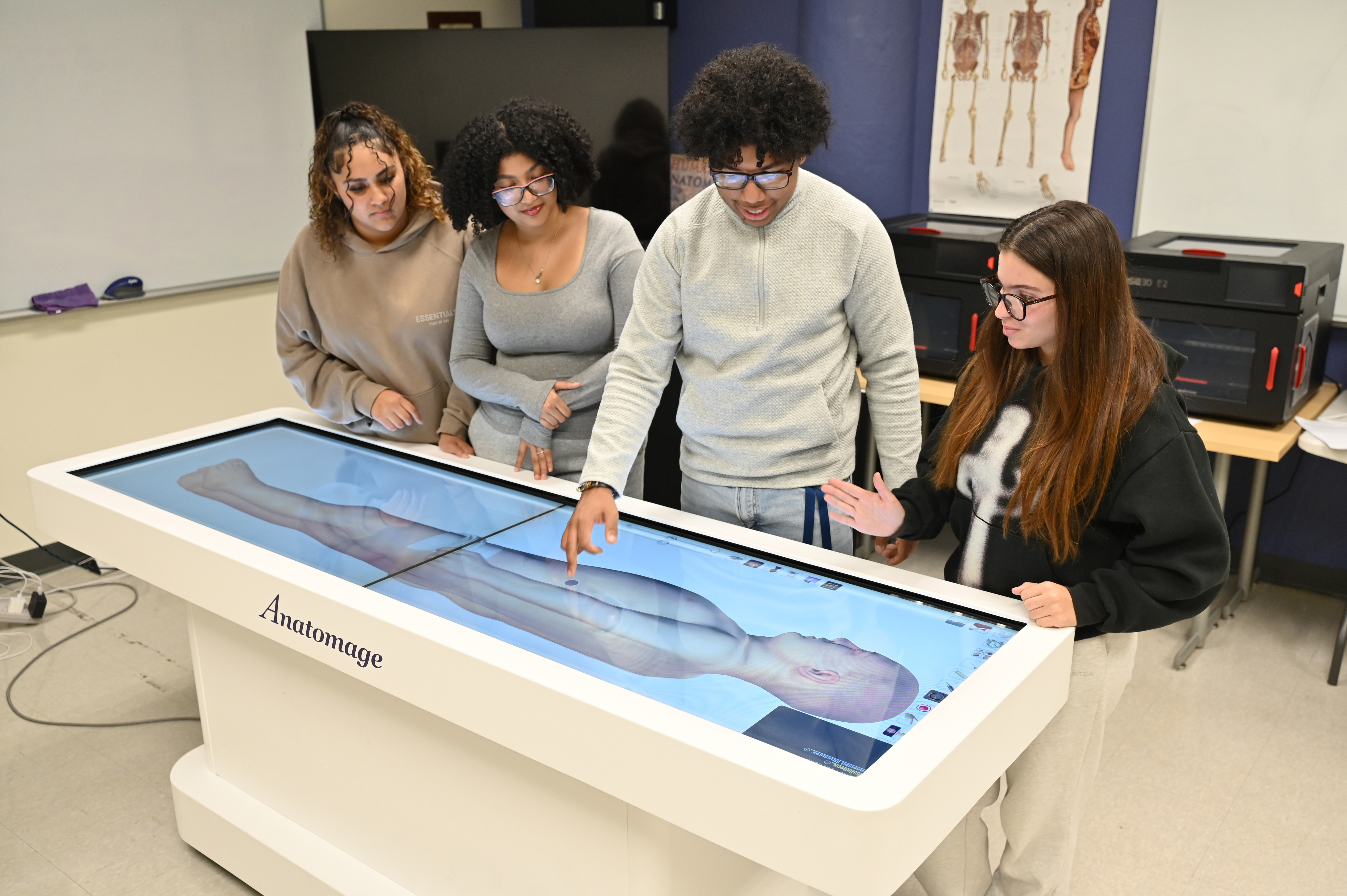
Students Jayliani Casioano, Oryulie Andujar, Derek Medina, and Natalia Kukulski use an interactve anatomy table. The students are members of is the Health Occupations Students of America (HOSA).
All good. But this is what Cortés really wants people to know:
“If people trust us with their funds,” he said, “we’re putting the money into institutions, and institutions build culture.”
That’s why Esperanza has a K-12 charter school, a cyber school, a two-year college that’s a branch campus of Eastern University, a 320-seat theater, an art gallery, computer labs, an immigration law practice, a neighborhood revitalization office, a CareerLink office for workforce development and job placement, a music program, a youth leadership institute, housing and benefit assistance, and a state-of-the-art broadcasting facility.
Cortés even likes to brag about the basketball court. “Three inches of concrete, maple wood flooring, fiberglass backboards — NBA standards.”
“Think about Paoli. It has a hospital, a public school, a theater. Paoli has all of that, and it’s understood that that’s the quality of life. We have to have access to those same things at a different price point,” he said. “Notice I didn’t say different quality. I said different price point.
“We want to create an opportunity community, where people can have a good life — with arts, housing, healthcare, financial literacy, education, all those pieces — regardless of your family income,” he said.
“What’s important here and what’s different is that in all our places, all our facilities are first class,” Cortés said.
“I grew up in a low-income community where people were always telling you to step up, but step up to what?” he asked. “Where is the vision? What is possible to even have? How can anyone know unless they can see it?”
So, when people from the community visit Esperanza, “you can see that you can have the best facilities with state-of-the-art equipment. As a provider of services, we have to step up,” he said, in turn always giving people the tools and resources they need to step up.
For example, on Citizenship Day, Sept. 20, Anu Thomas, an attorney and executive director of Esperanza’s Immigration Legal Services, trained a dozen volunteer lawyers and law students on the fine points and recent pitfalls in the process of applying for citizenship.
Soon, the room was crowded with people coming for help.
Watching from the sidelines was Charlie Ellison, executive director of the city’s Office of Immigrant Affairs, who noted that an estimated 60,000 legal residents of Philadelphia are eligible to apply for citizenship.
“Clinics like these are critically important to helping people who might be facing barriers,” including the cost of getting legal help. “This bridges a lot of gaps. It’s a vital mission, now more than ever,” he said.
For Neury “Tito” Caba, a men’s fashion designer, tailor, and director of green space at Historic Fair Hill, citizenship help from Esperanza was a family affair. Through Esperanza, he, his grandmother, and his mother all became citizens.
“Now I can vote, and that’s the most positive thing I can do,” he said. “And also, things being the way they are, it gives me some sort of protection.”
Fashion designer Neury “Tito” Caba talks about his citizenship experience at Esperanza.
Earlier this fall at Esperanza’s CareerLink branch, counselor Sylvia Carabillo helped Luis Rubio on the computer. He was trying to extend his unemployment benefits and looking for a job as a security guard. Agueda Mojica was being tutored in Esperanza’s most popular workforce class: Introduction to Computers.
“I want to become more independent to be able to do anything on a computer,” she said in Spanish, speaking through a translator. “I was always working and never had time to learn.”
Much of Esperanza’s staff is bilingual in Spanish, but to help people from the neighborhood, Esperanza also hired counselors who speak Ukrainian and Kreyòl for Haitians who live nearby.
In Esperanza College classrooms a few weeks ago, Esperanza Academy high schoolers enrolled as college students had just finished a chemistry exam. When they graduate from high school, they’ll already have associate degrees on their résumés.
For them, Esperanza represents a future.
There’s Oryulie Andujar, 18, who wants to study sonography because an ultrasound technician found a cyst in her mother’s uterus. “We could have lost her. That was very impactful for me.”
Jayliani Casiano, 17, wants to go into anesthesiology. The oldest of seven, she witnessed her mother giving birth to several younger siblings. “She was in a lot of pain. It was interesting. I want to do everything after seeing her through that process.”
Derek Medina, 18, said the opportunity to go to college “made me rethink my whole life.” He had been getting into trouble in school, but now wants to combine a love of mathematics and a desire to help people by going into the field of biomedical engineering.
Recently, on Nov. 14, Esperanza College hosted its Ninth Annual Minorities in Health Sciences Symposium, designed to acquaint high schoolers with medical careers.
Construction will soon begin to convert a former warehouse space into a center to teach welding and HVAC in an apprenticeship program.
Next month, it’ll be time for “Christmas En El Barrio” with music, food, and community in Teatro Esperanza — admission is free. In January, the Philadelphia Ballet will perform there. Tickets are $15 and free for senior citizens and students.
“My worst seat — in Row 13 — would be $250 at the Academy of Music,” Cortés said. He wants to offer the arts at a price and a time available to a mother of three, who may not be able to afford even the cheapest seats in downtown venues, plus bus fare, “and heaven forbid the child wants a soda,” Cortés said.
All this adds up to culture, which brings him back to the Snickers bar, and not just breaking even, but investing.
Other groups, Cortés said, had to build their own institutions when mainstream organizations put up barriers. Howard University helped Black people, Brandeis served Jewish people, and Notre Dame provided education to the Irish.
Building an institution is his investment goal with Esperanza, and he takes as his mentors famous Philadelphia pastors such as the Rev. Leon Sullivan, who founded Progress Plaza in North Philadelphia, and the Rev. Russell Conwell, the Baptist minister who founded Temple University.
“Philadelphia has a tradition that its clergy don’t just do clergy things,” he said, admitting that he doesn’t have the patience for a more traditional pastor’s role. “As clergy here, it’s understood that we snoop around everything.”
Cities sometimes brag that their poverty rates have declined, he said, when in reality, rates have declined because people with low incomes were forced to move away.
Philadelphia, he said, has a chance to be different — to lower the poverty level both by raising people’s incomes and improving their standards of living. “There should be Esperanzas in every neighborhood,” he said.
“How can we focus on helping the people who just need a break?” Cortés said, referencing Jesus’ admonishment to “help the least of these.”
“This city has the opportunity to make this a win-win,” he said, “to show the rest of the country and Washington, D.C. — especially Washington, D.C. — that people who are different, and people who are `the other’ can be supported, so that they are not only part of the fabric of the city, but economic drivers of the city.”
This article is part of a series about Philly Gives — a community fund to support nonprofits through end-of-year giving. To learn more about Philly Gives, including how to donate, visit phillygives.org.
For more information about Philly Gives, including how to donate, visit phillygives.org.
AboutEsperanza
People Served: 35,000
Annual Spending: $111.6 million across all divisions
Point of Pride: Esperanza empowers clients to transform their lives and their community through a diverse array of programs, including K-14 education, job training and placement, neighborhood revitalization and greening, housing and financial counseling, immigration legal services, arts programming, and more.
You Can Help: Esperanza welcomes volunteers for community cleanups, plantings, and other neighborhood events. Some programs also need volunteers with specific skills (lawyers, translators, etc.).
$25 covers the cost of one private music lesson for a young student through our Artístas y Músicos Latinoamericanos program.
$50 provides printing and distribution of 30 “Know Your Rights” brochures to immigrant families.
$100 pays for five hours of training for a new mentor fellow at the Esperanza Arts Center, preparing a young person for a career in arts production through hands-on learning.
$275 funds the planting of one street tree in a neighborhood that desperately needs additional tree cover to address extreme heat.
$350 covers tuition and books for one English as a second language student at the Esperanza English Institute.
$550 supports the cost of the initial work authorization for an asylum-seeker.
Pennsylvania’s new budget has $5 million in supplemental payments for the two Delaware County Hospitals that have seen significant increases in patient volumes since Crozer-Chester Medical Center and Taylor Hospital closed in the spring.
Main Line Health’s Riddle Hospital, near Media, is getting $3 million. The amount for Trinity Health Mid-Atlantic’s Mercy Fitzgerald Hospital, in Darby, is $2 million, according to budget documents.
The $5 million will be doubled by a federal match, said Democratic State Sen. Tim Kearney, who represents part of Delaware County. The $5 million is from a fund used to help hospitals the serve a large number of patients with Medicaid and used to go to Crozer Health, Kearney said Friday.
“Since Crozer’s shutdown in April, Riddle’s Emergency Department has experienced an unprecedented surge — 46% more patients than the same period last year, an increase of nearly 4,000 overall,“ the nonprofit said.
Main Line, which also owns Lankenau Medical Center, Bryn Mawr Hospital, and Paoli Hospital, said it has seen 55,000 patients from the Crozer market — a 15% increase over the same time period last year. That figure includes 8,000 patients who went to a Main Line facility for the first time, the health system said.
Trinity Health did not respond to a request for comment.
Shuttered hospitals in limbo
While Riddle and Mercy Fitzgerald have scrambled to accommodate patients who used to rely on Crozer Health, efforts are underway to bring healthcare services back to at least Taylor Hospital in Ridley.
A group from New Jersey called Chariot Allaire Partners LLC has agreed to pay $10 million for the former Crozer-Chester Medical Center in Upland but has not disclosed its plans. That facility served as a key safety provider for a low-income area of Delaware County.
A partnership of Restorative Health Foundation and Syan Investments won an auction for Springfield Hospital for $3 million, but it does not have support from township officials.
Delaware County legislators also obtained $1 million from the state to buy emergency department equipment if one of the closed hospitals, such as Taylor, reopens, Kearney said.
Editor’s note: This story has been updated with additional detail on the funding.
This suburban content is produced with support from the Leslie Miller and Richard Worley Foundation and The Lenfest Institute for Journalism. Editorial content is created independently of the project donors. Gifts to support The Inquirer’s high-impact journalism can be made at inquirer.com/donate. A list of Lenfest Institute donors can be found at lenfestinstitute.org/supporters.