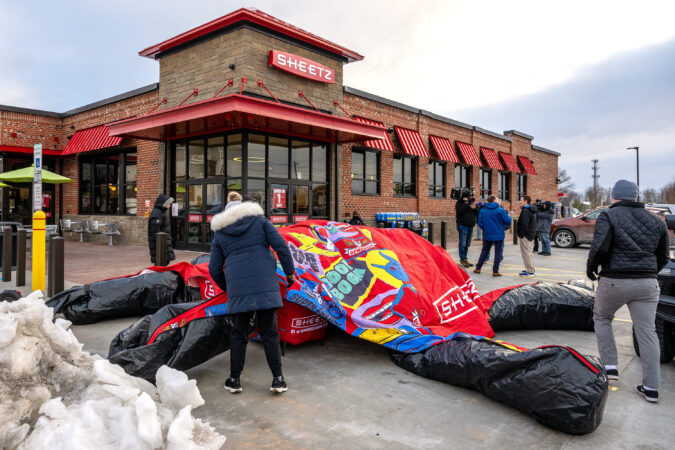
Sometimes Sheetz happens, and at 8:02 a.m. on Thursday it happened in Montgomery County, when the chain opened its first convenience store in what’s long been undisputed Wawa territory.
The store — which is directly across from a Wawa on West Ridge Pike near Lewis Road in Limerick Township — opened not with a Boom Boom, but with a whisper.
Unlike a Wawa grand opening — where fans often queue up well before the doors open and the line to get in wraps around the building — there was just David Swartz waiting outside for the opening, bundled up in his folding rocker chair.
Swartz, 36, of Collegeville, who arrived an hour before the opening, was surprised to find himself the only one in line, as were the gaggle of Philadelphia reporters who far outnumbered him and peppered him for interviews.
A self-identified “diehard Wawa fan,” Swartz said he came to Sheetz’s opening for the food.
“There’s nothing you can get here that isn’t delicious,” he said. “I love Wawa but they need different stuff and that’s what Sheetz is here to do, they’re here to deliver that.”
Slushies, plushies, and more
Once the doors opened, folks who’d been waiting in their cars started to file in, forming a line for the coffee, which was free all day (the Wawa across the street offered free coffee on Thursday, too). Other customers explored the touch-screen menus, checked out the prepared food offerings, and browsed the aisles.
Inside, Swartz poured himself a slushie and ordered a hot dog, nachos, and fish tacos with fries — at 8:15 a.m. He also picked up three Hello Kitty plushies for his girlfriend. Wawa, he pointed out, does not sell plushies.
“My girlfriend is going to be very happy when I come home with these,” he said.
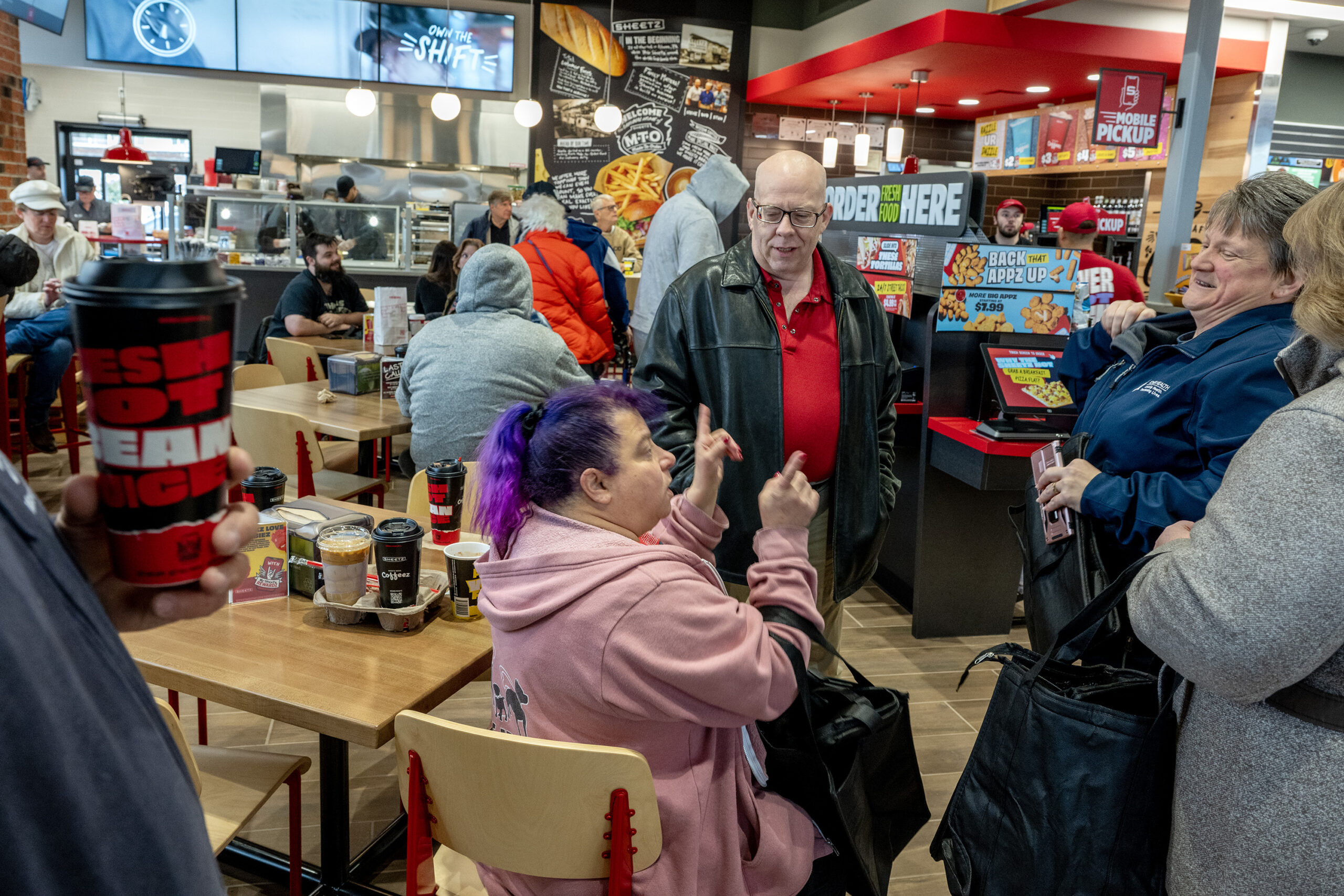
Inside the store after being the first to enter, Dave Swartz of Collegeville organizes his plushie toys and frozen drink as the first Sheetz store opens in the Wawa territory Thursday in Limerick Township.
Elsa Ortiz, 54, drove an hour from Philadelphia to pick up a hoagie (or “Subz” as they call them at Sheetz) for her boyfriend.
“Sheetz is definitely better than Wawa for him,” she said. “Right now I’m neutral, but today I am a Sheetz girl.”
Ortiz said the store being across from a Wawa is very on brand for the Philadelphia region.
“The rivalry is just like Philly, with its rivalries and everything else,” she said. “Still, go Eagles! I’m still Eagles!”
There are some rivalries you can play both sides of, and some you can’t.
Shortly after 9 a.m., when giveaways for gift cards and Sheetz schwag began, the store became so packed with people it became a real Sheetz show and the line outside for freebies stretched down the building. The residents of the Delaware Valley may rep hard and local, but they also won’t say no to a free T-shirt.
The expansions
While opening a Sheetz across from an existing Wawa may seem like the new guy in town is throwing down the gauntlet, it’s actually a move taken out of Wawa’s own playbook. In 2024, when the Delaware County-based chain opened up its first store in central Pennsylvania — what was traditionally Sheetz country — it did so within eyeshot of an existing Sheetz.
For decades, the urban lore in Pennsylvania was that there was a gentleman’s agreement regarding unspoken boundaries between Delco-based Wawa in the southeastern corner of the state and Blair County-based Sheetz, in south-central Pennsylvania.
Amy Rudolph (seated) of Collegeville holds court with fellow grand opening patrons as she recounts her story of being #2 in line as the first Sheetz store opens in the Wawa territory Philadelphia suburbs Thursday, Feb. 12, 2026 in Limerick Township.
But that’s all it was — lore (New Jersey has its own devil, we had to come up with something) — and as both chains began rapid expansions in the 2010s, it seemed inevitable they’d cross over to each other’s markets at some point. In fact, Wawa and Sheetz have coexisted in several markets already for some time, including right here in Pennsylvania, in Berks and Lehigh Counties, according to Wawa spokesperson Lori Bruce.
Today, Wawa has 1,193 stores in 13 states and Washington, D.C., and more than 95 store openings planned for this year. Ten stores have gone up in central Pennsylvania in the last two years, with 40 more planned over the next five, Bruce said.
Sheetz, meanwhile, has more than 800 stores in seven states. Previously, its closest store to Philadelphia was in Berks County, but now that it has officially moved into the Philly suburbs, it doesn’t appear it plans to slow down. Sheetz stores have been proposed in Chester County and even in Delco, at Painters Crossing shopping center in Chadds Ford, just five miles down the road from Wawa’s headquarters.
Now that could get Sizzli.
A rivalry?
Representatives of both chains deny they are rivals and point out that they have worked together to support various nonprofits.
Adam Sheetz, executive vice president of Sheetz, said it has been a friendly competition for decades.
“They’re one of the best retailers in the country, certainly one of the best in our industry, and we have great respect for them and competing with them has just made us better over the years,” he said.
Bruce agreed.
“We’re fortunate to have always had a respectful and friendly relationship with the folks at Sheetz,” she said. “And, while we have always embraced healthy competition at Wawa, when we think about competitors, we tend to think about challenging ourselves to make sure we are meeting the needs of our customers and communities.”
Folks may eat on trash cans at Wawa, but you’ll never hear Wawa officials talking trash on Sheetz. Wawa fans, on the hand, are a whole other hoagie roll.
Craig Scott (left) of Wayne and Dave Swartz (right) of Collegeville have breakfast as the first Sheetz store opens in the Wawa territory in Limerick Township.
The low-stakes rivalry between the stores’ fans has resulted in memes, debates, op-eds, and even a forthcoming documentary, Sheetz Vs. Wawa: The Movie.
When news of the impending Sheetz opening spread last month, cheeky comments by Wawa fans on social media included “We are all protesting this,” “sheetz is temu wawa,” “Sheetz is fire, but Wawa is for life,” and “this is my heated rivarly [sic].””
But local officials said they didn’t hear of any pushback on the Sheetz.
Patrick Morroney, a Limerick Township supervisor, has never been to a Sheetz but said he’s pro-business and welcomed Sheetz opening a store in the community.
“I think that people are going to find their niche between Wawa and Sheetz,” he said.
Jamila Winder, chair of the Montgomery County commissioners, said she frequented Sheetz while going to Pennsylvania State University and having the company open a store in Montco is “nostalgic” for her.
“Even though Wawa has dominance here in Montgomery County and the region, we always welcome new businesses because that creates economic drivers, job opportunities for both, and it just gives people options to choose from,” she said.
The opening
During his remarks at the opening ceremony, Neil Makhija, vice chair of the county commissioners, took a different approach and leaned into the playful rivalry by putting on a Wawa hat while speaking to the crowd.
He called the opening a “complicated day” for him and many people in Southeastern Pennsylvania.
“I thought, ‘What is happening to our community? Do we need a stronger border security policy in Montgomery County? Should we build a wall and make Delco pay for it?’” he said to laughter from the crowd. “[But] here in Montgomery County we’re welcoming, we’re inclusive, and we’re hungry and I think we’re OK with a little competition.”
One of the lasting images of President Donald Trump’s mass deportation campaign will be the masks worn by federal immigration agents.
The widespread use of facial coverings by U.S. Immigration and Customs Enforcement officers is among the suite of tactics — agents dressed in plainclothes, wearing little identification, jumping out of unmarked cars to grab people off the street — that have fueled immigration advocates’ use of terms like “kidnappings” and “abductions.”
Now Philadelphia lawmakers appear poised to pass legislation that would ban all officers operating in the city — including local police — from concealing their identitiesby wearing masks or conducting enforcement from unmarked cars.
The question is whether the city can make that rule stick.
Legal hurdles loom for municipalities and states attempting to regulate federal law enforcement. Local jurisdictions are generally prohibited from interfering with basic federal functions, and Trump administration officials say state- and city-level bans violate the constitutional provision that says federal law reigns supreme.
There are also practical concerns about enforcement. Violating the mask ban would be a civil infraction, meaning local police would be tasked with citing other law enforcement officers for covering their faces.
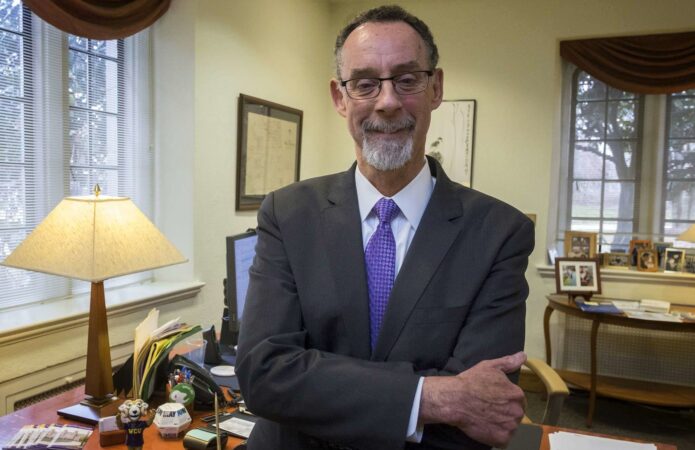
“No doubt this will be challenged,” said Stanley Brand, a distinguished fellow at Penn State Dickinson Law. “This ordinance will be a protracted and complicated legal slog.”
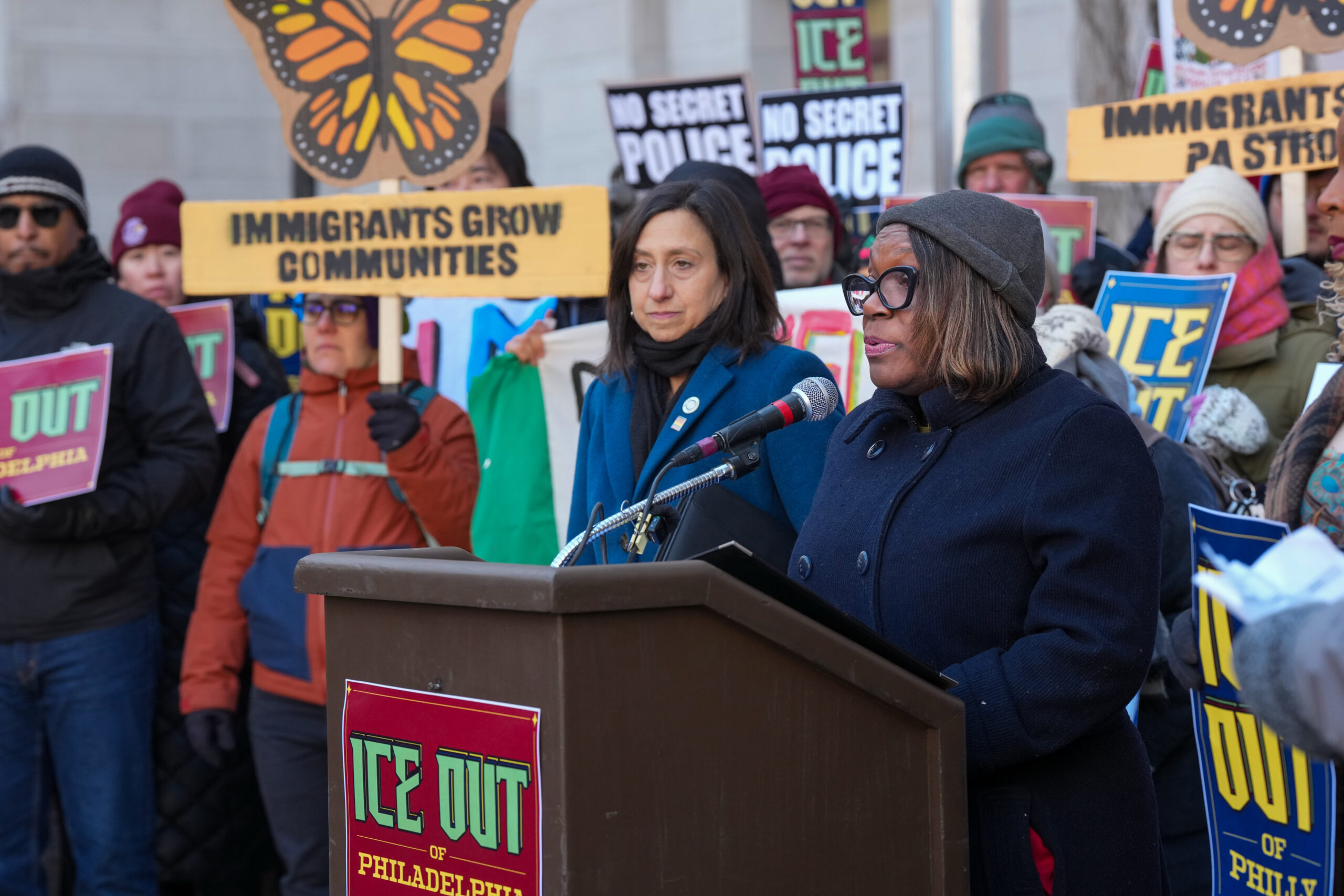
Councilmember Kendra Brooks speaks during a news conference at City Hall to announce a package of bills aimed at pushing back against ICE enforcement on Jan. 27.
Advocates for immigrants say that unmasking ICE agents is a safety issue, and that officers rarely identify themselves when asked, despite being required to carry badges.
Mask use can also spur impersonators, they say. At least four people in Philadelphia have been arrested for impersonating ICE officers in the last year.
“You see these people in your community with guns and vests and masks,” said Desi Bernette, a leader of MILPA, the Movement of Immigrant Leaders in Pennsylvania. “It’s very scary, and it’s not normal.”
Democrats in jurisdictions across America, including Congress and the Pennsylvania General Assembly, have introduced legislation to ban ICE agents from concealing their faces. California is the furthest along in implementing a mask prohibition, and a judge is currently weighing a challenge filed by the Trump administration.
Senate Democrats negotiating a budget deal in Washington have asked for a nationwide ban on ICE agents wearing masks in exchange for their votes to fund the Department of Homeland Security.
And polling shows getting rid of masks is popular. A recent Pew Research Center survey found that 61% of Americans believe federal agents should not wear face coverings to conceal their identities while on duty.
ICE officials say agents should have the freedom to conceal their faces while operating in a hyperpartisan political environment.
Last year, ICE head Todd Lyons told CBS News that he was not a proponent of agents wearing masks, though he would allow it. Some officers, he said, have had private information published online, leading to death threats against them and their families.
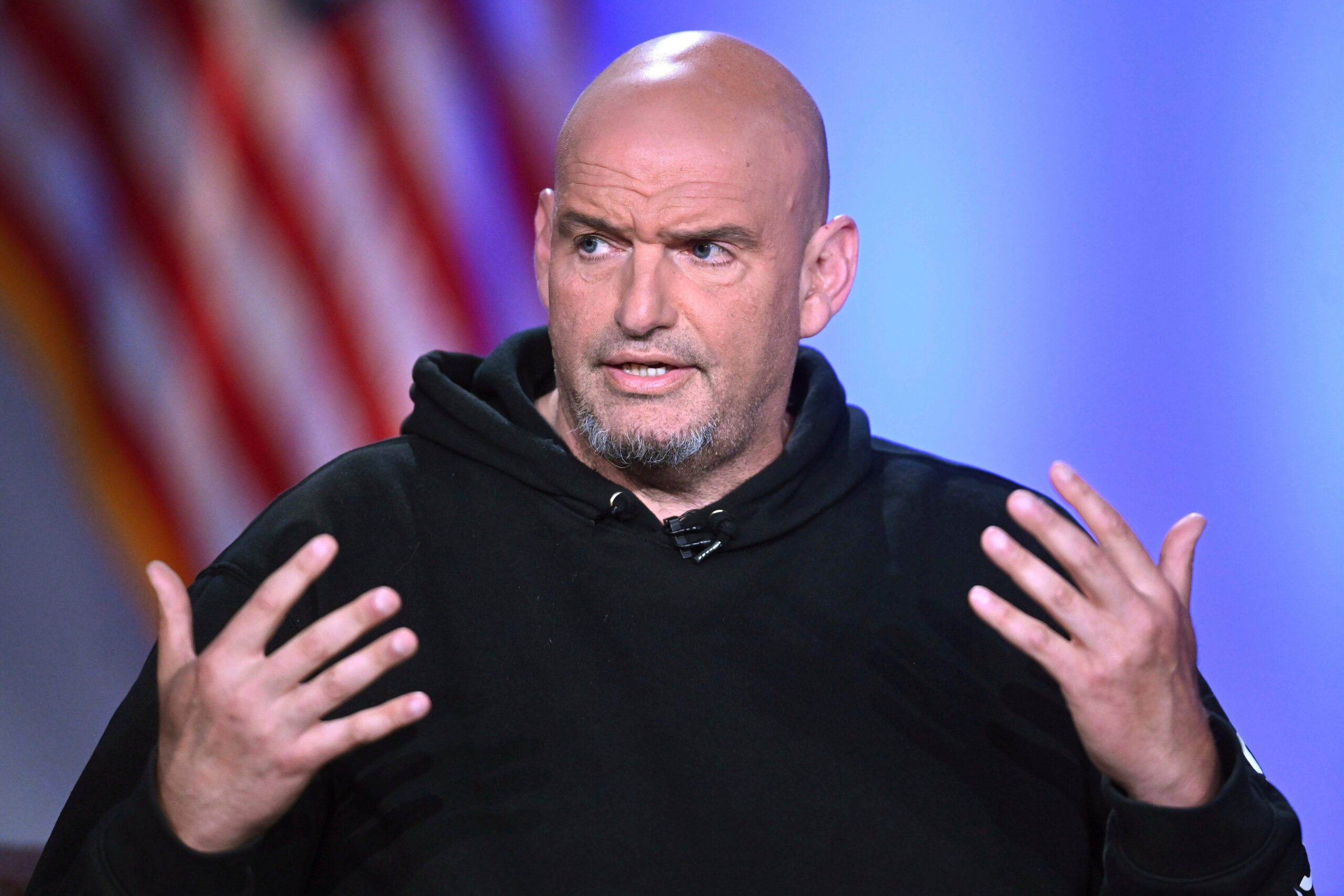
“They could target [agents’] families,” Fetterman said in an interview on Fox News, “and they are organizing these people to put their names out there.”
Sen. John Fetterman, D-Pa., participates in a debate on June 2, 2025, in Boston.
The Council authors of the Philadelphia bills say they are responding to constituents who are intimidated by ICE’s tactics, and they believe their legislation can withstand a legal challenge.
“Our goal is to make sure that our folks feel safe here in the city,” said City Councilmember Kendra Brooks. “We are here to protect Philadelphians, and if that means we eventually need to go to court, that’s what would need to happen.”
The constitutional limits on unmasking ICE
The bill introduced last week by Brooks and Councilmember Rue Landau is part of a package of seven pieces of legislation aimed at limiting how ICE operates in Philadelphia. The proposals would bar Philadelphia employees from sharing information with ICE and ban the agency from using city property to stage raids.
Fifteen of Council’s 17 members signed on to the package of legislation, meaning a version of it is likely to become law. Passing a bill in City Council requires nine votes, and overriding a mayoral veto takes 12. Mayor Cherelle L. Parker has said her team is reviewing the legislation, which can still be amended before it becomes law.
Anti-ICE activists demonstrate outside U.S. Sen. John Fetterman’s Philadelphia office, Jan. 27, calling for an end to federal immigration enforcement policies.
One of the two members who did not cosponsor the package was Councilmember Mike Driscoll, a Democrat who represents parts of Lower Northeast Philadelphia. He indicated that he had concerns about whether the “ICE Out” legislation would hold up in court.
Brooks said Council members worked with attorneys to ensure the legislation is “within our scope as legislators for this city to make sure that we protect our folks against these federal attacks.”
Brand, of Dickinson Law, said the legislation is a classic example of a conflict between two constitutional pillars: the clause that says federal law is supreme, and the 10th Amendment, which gives states powers that are not delegated to the federal government.
He said there is precedent that the states — or, in this case, cities — cannot interfere with laws enacted by Congress, such as immigration matters.
“If I were betting, I would bet on the federal government,” Brand said.
But there is a gray area, he said, and that includes the fact that no law — or even regulation — says federal law enforcement agents must wear masks.
Kermit Roosevelt, a law professor at the University of Pennsylvania who is an expert on the Constitution and conflict of laws, said if there is no agency policy, that is “free space” for states and cities to regulate.
Roosevelt said Brooks’ legislation steers clear of other constitutional concerns because it applies to all police officers, not just federal agents.
“If they were trying to regulate only federal agents, the question would be, ‘Why aren’t you doing that to your own police officers?’” he said. “If you single out the federal government, it looks more like you’re trying to interfere with what the federal government is doing.”
Applying the law to local police
Experts say part of the backlash to ICE agents covering their faces is because Americans are not used to it. Local police, sheriff’s deputies, and state troopers all work largely without hiding their faces.
“Seeing law enforcement actions happening with federal agents in masks, that’s extremely jarring,” said Cris Ramon, an immigration consultant based in Washington. “Why are you operating outside of the boundaries of what every other law enforcement agency is doing?”
Protesters march up Eighth Street, toward the immigration offices, during the Philly stands with Minneapolis Ice Out For Good protest at Philadelphia City Hall on Jan. 23.
The Council legislation includes exceptions for officers wearing medical-grade masks, using protective equipment, or working undercover. It also allows facial coverings for religious purposes.
However, the federal government could still raise First Amendment concerns, said Shaakirrah R. Sanders, an associate dean at Penn State Dickinson Law.
The administration, she said, could argue that the city is only trying to regulate law enforcement officers and claim that would be discriminatory.
Sanders said defending the legislation could be “very costly” and the city should consider alternatives that fall more squarely within its authority. She pointed to efforts like New Jersey Gov. Mikie Sherrill’s announcement that the state would create a database for residents to upload videos of ICE interacting with the public.
“It looks like the city wants to wield big legislative power,” Sanders said. “My alternative is more in the grassroots work, where you are the first ear for your citizens, not the regulator of the federal government.”
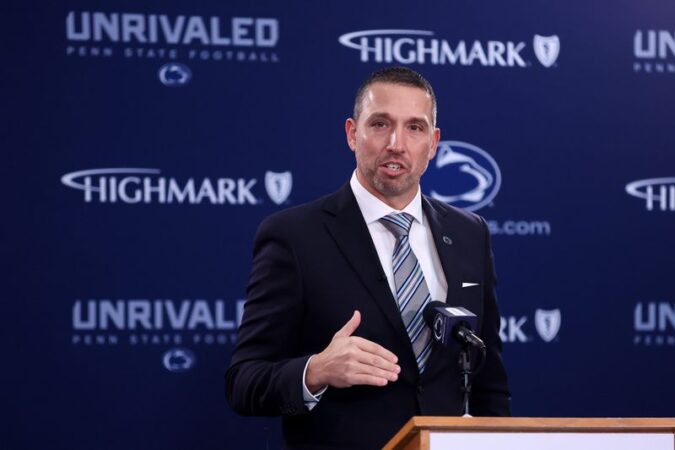
Matt Campbell completed his first recruiting class as the head football coach at Penn State, and the team welcomed 55 newcomers, including 15 recruits in the class of 2026, four of whom put pen to paper on national signing day.
Penn State’s class is ranked No. 41 nationally and No. 10 in the Big Ten, according to 247Sports. Many of the players in Campbell’s class were signed before Wednesday’s national signing day. He landed 40 players from the transfer portal, 24 of whom came from Iowa State.
“I feel like we went with a mentality of not wavering from who we want this football team to be,” Campbell said at a news conference. “Young men that love the sport of football, young men that love Penn State, and I would say, most importantly, young men also that know, they understand the value of an education from this institution. Those core values were really critical for us to kind of build this football team forward.”
2026 class
Penn State’s class took a hit during the early signing period while the program continued its search for a head coach. Eleven pledges flipped to Virginia Tech to join James Franklin. Malvern Prep edge rusher Jackson Ford and Nazareth’s Peyton Falzone, a three-star quarterback, were the only two to sign early with the Nittany Lions.
Since then, Penn State had an additional nine recruits sign, and each of Wednesday’s signees, which included Elijah Reeder, Keian Kaiser, Pete Eglitis, and Lucas Tenbrock, were originally committed to play for Campbell at Iowa State.
Reeder, a Bayville, N.J., native, is a four-star edge rusher and the fourth-best prospect in New Jersey, according to 247Sports. In his senior season at Central Regional High School, Reeder recorded 50 tackles and eight sacks. Reeder is listed at 6-foot-6 and 210 pounds.
The defensive lineman’s other FBS offers came from Iowa State and Missouri.
Eglitis, an offensive lineman, is from Columbus, Ohio. The three-star 6-7 prospect earned all-Ohio honors in 2024 and 2025, as he helped lead Bishop Watterson High School to back-to-back state championships. In addition to flipping from Iowa State, Eglitis also chose Penn State over Louisville, Georgia Tech, Kentucky, and Missouri, among others.
Kaiser is a linebacker from Sidney, Neb. The three-star recruit was a multisport athlete at Sidney High School, participating in the high jump and the discus. In his junior year, the 6-4 Kaiser recorded 127 tackles and two interceptions.
A native of St. Charles, Ill., Tenbrock is the sixth-best punter in this year’s recruiting class, according to the composite rankings of ESPN, Rivals.com, and 247Sports. Tenbrock’s only offer came from Campbell at Iowa State.
While most of the four- and five-star recruits are already committed to schools by national signing day, Penn State was on the losing end of one recruiting battle on Wednesday. The Nittany Lions made a late push to persuade Samson Gash to come to Happy Valley instead of Michigan State, but the four-star wideout and Michigan native chose to stay closer to home.
Ford is the only Philadelphia-area talent in the class of 2026.
The majority of Penn State’s roster in 2026 will be transfers.
Campbell signed 40 players from the portal. The Nittany Lions likely will need the veteran presence, as they lost 47 members of last year’s team to the portal after finishing 7-6 and firing Franklin in the middle of the season.
Ethan Grunkemeyer perhaps was the most impactful of the outgoing transfers. Grunkemeyer took over after starting quarterback after Drew Allar suffered a season-ending ankle injury in October. Grunkemeyer, who passed for 1,339 yards and eight touchdowns in 2025, followed Franklin to Virginia Tech.
Campbell turned to a familiar player to fill the hole at quarterback in Rocco Becht.
Becht spent three seasons as the starter under Campbell at Iowa State. He logged two 3,000 passing-yard seasons and chose to follow his old coach for his final year of eligibility.
“What I believe Penn State football is — integrity, character, class, excellence, grit — [Becht] embodies every one of those traits,” Campbell said. “And so to me, I just felt like that was such a critical opportunity for him to finish his career with us.”
Becht is not the only former Cyclone expected to have a major impact.
Benjamin Brahmer, a 6-7 tight end who led the Cyclones with 37 catches and six touchdowns last season, will spend his senior season at Penn State. The Nittany Lions also will get Brett Eskildsen and Chase Sowell, last year’s leading receivers at Iowa State. They finished with 526 and 500 yards, respectively. Campbell added the Cyclones’ leading rusher, Carson Hansen (952 yards on 188 carries), to the roster as well.
The Nittany Lions hope the veteran Cyclones can replace the offensive production they lost after running backs Kaytron Allen and Nick Singleton declared for the NFL draft.
Former Iowa State quarterback Rocco Becht hands off to running back Carson Hansen, who led the team in rushing yards last season. Both will play at Penn State in 2026.
“[Hansen is] durable, he’s tough, he’s physical,” Campbell said. “He’s got great vision. He’s got the ability that if you need him to carry the ball 40 times in a game, he can do it. … And so I think what you’ll get from Carson is a guy that’s about as trusted as you’re going to find.”
Former Cyclones will also impact the defensive side. Campbell landed Iowa State’s leading tacklers in Marcus Neal, a junior defensive back, and Kooper Ebel, a senior linebacker. Both finished last season with 77 tackles, with Neal adding a team-high 11 tackles for loss and two interceptions.
Caleb Bacon, a redshirt senior linebacker who led Iowa State with three sacks last season, also will join Penn State.
While the number of transfers who followed Campbell to Penn State from Iowa State should provide Campbell some proven talent, the first-year coach noted that players will still have to navigate change to be successful in Happy Valley.
“I think there’s competition and there’s the ability to grow, but we’ve got to go grow,” Campbell said. “Every coach in America is going to tell you how great their team is. I’m saying the opposite. We’ve got really great talent, but we’ve got to grow forward. We’re all going through change. We have to figure out who can do it the most consistently.”
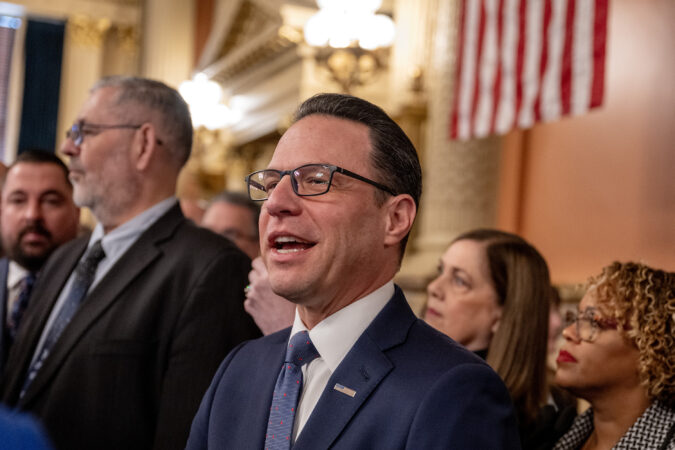
HARRISBURG — Gov. Josh Shapiro on Tuesday unveiled a $53.2 billion state budget that focuses on making Pennsylvania a more affordable place to live — while proposing a 6.2% spending increase over last year and renewing his pitches to create new revenue streams to fill a significant budget deficit as he runs for reelection.
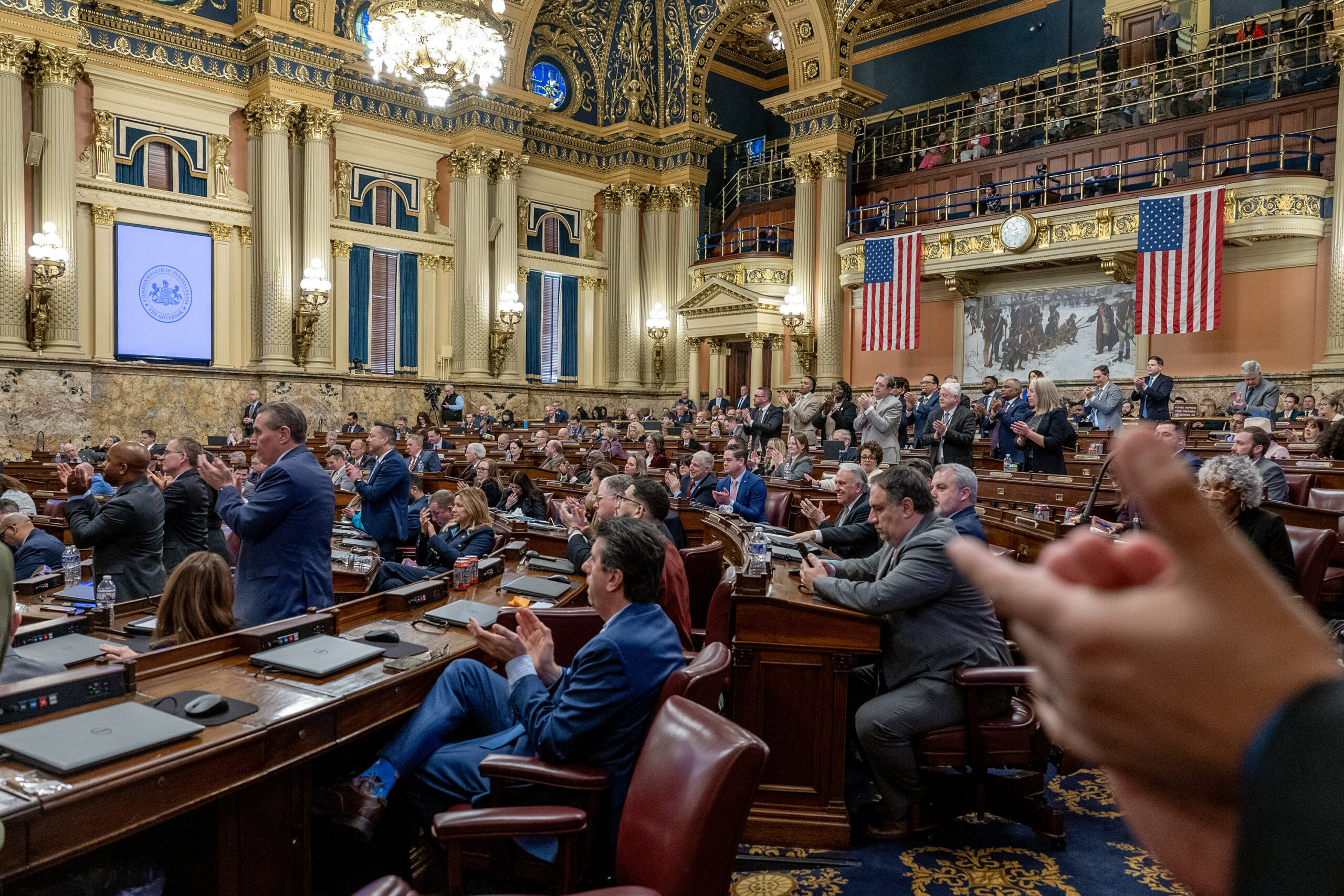
Shapiro’s fourth budget address attracted several standing ovations from Democrats as he stood before a joint session of the state House and Senate to pitch some of Democrats’ shared priorities, such as increasing the minimum wage to $15 an hour.
Afterward, Republicans decried the budget proposal as unaffordable, arguing such a steep increase in spending is unrealistic when the state is already poised to spend more than it brings in during the current fiscal year and in the future. Shapiro’s proposal would spend $4.6 billion more than the state is projected to bring in in the 2026-27 fiscal year, requiring officials to pull most new spending from Pennsylvania’s $7.7 billion Rainy Day Fund, or find funding from new revenue streams like the taxation of recreational marijuana that do not yet exist.
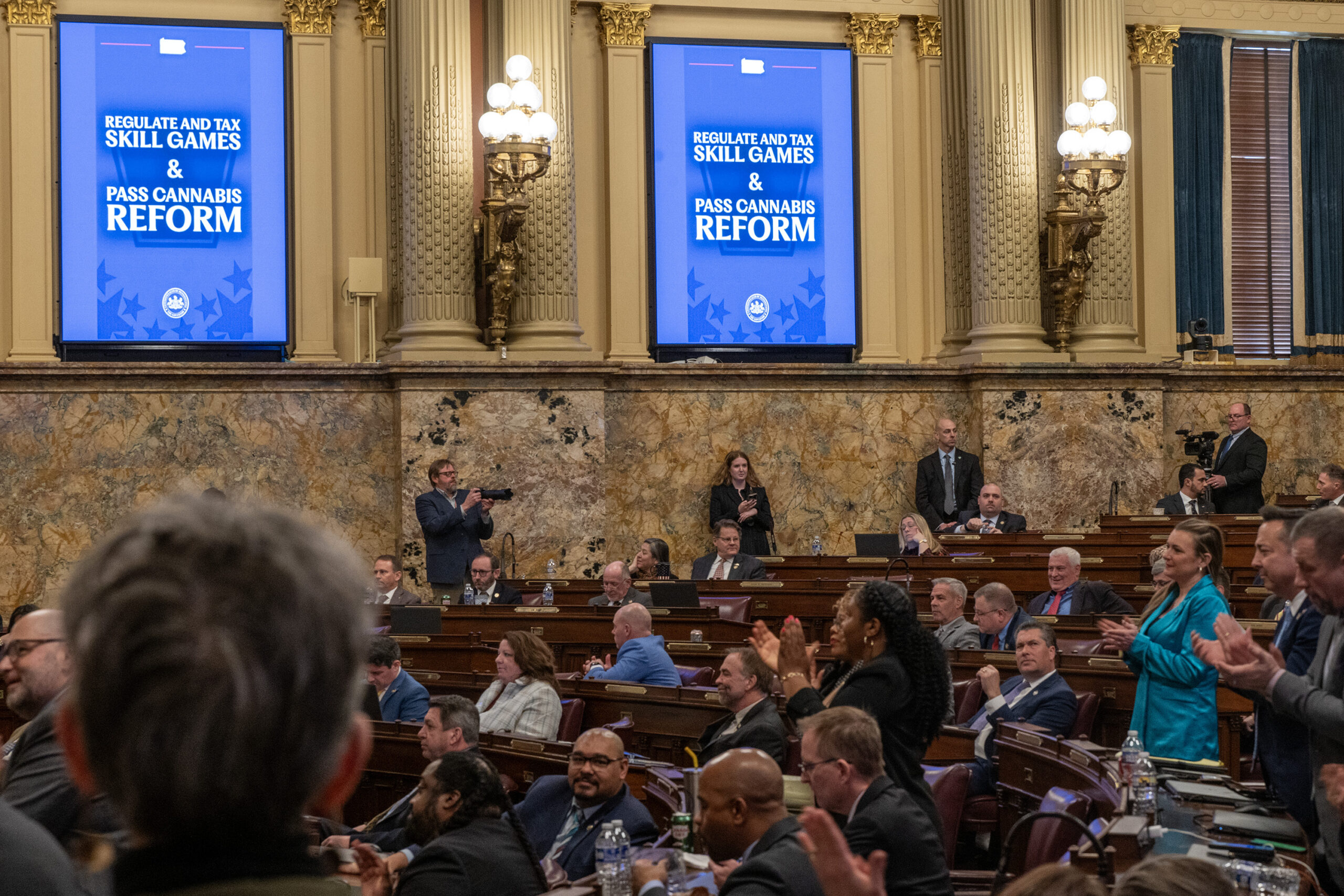
Screen shows skill games and cannabis regulation and reform as Gov. Josh Shapiro makes his annual budget proposal in the state House chamber in Harrisburg Tuesday, Feb. 3, 2026.
Shapiro’s proposed spending hike equates to a $2.7 billion total increase over the 2025-26 budget. Approximately $1 billion of that would fulfill increased federal Medicaid obligations, another $1 billion would be for new initiatives proposed by the governor, and $700 million would go to other funding increases, according to a Shapiro administration official.
The proposal does not include any broad tax increase on state residents. Instead, Shapiro’s budget pitch includes proposals to generate nearly $2 billion in new revenue, largely from the taxation and legalization of recreational marijuana and regulation of so-called skill games — suggestions that he put forward last year but that failed to gain traction within the legislature. He proposed taxing adult-use cannabis at 20% to generate $729.4 million. He is also seeking a 52% tax on skill games, the unregulated and untaxed slot-machine look-alikes that have proliferated around the state in corner stores, bars, and fraternal organizations, to generate an estimated $765.9 million in its first year.
“Everyone knows we need to get this done. So let’s come together and finally get it over the finish line,” he added.
Shapiro proposed the legalization and taxation of recreational marijuana in each of his prior three budget proposals. Last year, he pitched a 20% tax on the sale of legal marijuana that he estimated would bring in $535.6 million in its first year. This year’s projection of $729.4 million in that time frame would be a 36% increase without changing the proposed tax rate. A Shapiro administration official said Tuesday that the projected increase is due to more interest from marijuana companies that want to do business in Pennsylvania.
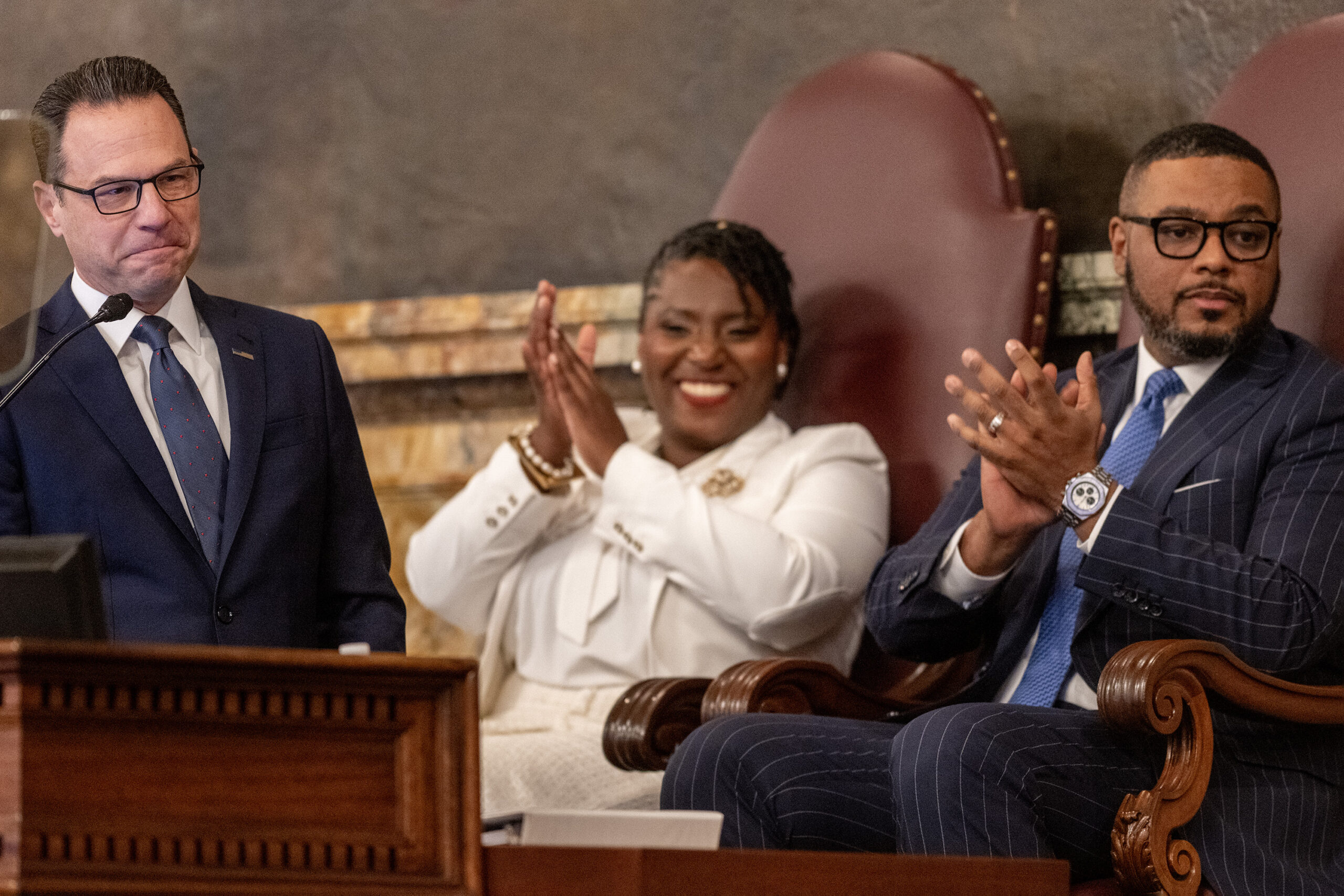
Gov. Josh Shapiro make his annual budget proposal in the state House chamber in Harrisburg Tuesday, Feb. 3, 2026. Pa. House Speaker Joanna McClinton (left) and Lt. Gov. Austin Davis (right) are seated behind him.
Shapiro’s budget also called for an additional $565 million for public schools toward the state’s new adequacy funding and tax equity formulas, in the latest installment of a nine-year plan to ensure students get an equitable education no matter their zip code. He requested $30 million in additional funding toward three of Pennsylvania’s state-related universities — the University of Pittsburgh, Pennsylvania State University, and Temple University — to be awarded based on a new performance-based funding mechanism.
The governor also pitched creating a “Federal Response Fund” in Pennsylvania, seeking to set aside a $100 million reserve to offset any impact from President Donald Trump’s administration, in the event the federal government moves to cut funding to social services programs and grants to state and local governments, as it has done several times over the last year.
A focus on affordability
As his reelection campaign ramps up ahead of November, Shapiro made a broad pitch for policies aimed at making Pennsylvania more affordable.
Shapiro said he was working with utility companies to rein in energy costs and called for the construction of new homes and a bevy of renter protections in a plan to expand the availability and affordability of housing across the state.
He proposed a $1 billion fund, supported by the issuing of bonds, to pay for a range of infrastructure projects relating to energy, housing, local governments, and schools. But he billed it largely as “a major investment in building new housing.”
“We need hundreds of thousands of new homes,” Shapiro said. “This is how we build them.”
Shapiro also called for the state to create a catalog of local zoning rules and to help local governments revamp ordinances to allow for more housing.
The governor again proposed raising Pennsylvania’s minimum wage to $15 an hour, billing it as a cost savings of $300 million to the state on entitlement programs such as Medicaid.
In a news conference hosted by Senate and House Republicans following Shapiro’s budget address, top legislative leaders contended that Shapiro’s affordability vision for the state is unnecessary.
“What we need to do is stand back and watch the private sector work, and watch the private sector grow the jobs that will support this economy,” said House Minority Leader Jesse Topper (R., Bedford). “What we need to do as a government is far less. We need to get our footprint down. That is what we believe will make things more affordable for Pennsylvanians.”
He announced a new plan he said would protect consumers against rising energy costs associated with data centers, while also easing a path for tech companies to build the centers.
The Governor’s Responsible Infrastructure Development (GRID) plan would make data center developers either bring their own power generation or pay for any new generation they will need, he said, “not saddling homeowners with added costs because of their development.”
Shapiro said that too many data center proposals have been “shrouded in secrecy” but that they are crucial for the country.
“The United States is locked in a battle for AI supremacy against China,” Shapiro said. “Look, I don’t know about you, but I’d much rather the future be controlled by the United States of America and not Communist China.”
Shapiro said Tuesday he wants to avoid another lengthy stalled budget, which forced schools, counties, and nonprofits to take out billions in loans to stay afloat during the four-month impasse.
He invited leaders of all four caucuses — Senate Democrats, Senate Republicans, House Democrats, and House Republicans — to meet on Wednesday to start budget talks much sooner than in past years. They all agreed to attend, he added.
“We all recognize it took too long last year and that had real impacts on Pennsylvanians, but we learned some valuable lessons through that process,” Shapiro said in his address, which lasted an hour and 24 minutes. “We learned that we all need to be at the table, and that we all need to be at the table sooner.”
The state House chamber as Gov. Josh Shapiro makes his annual budget proposal in Harrisburg Tuesday, Feb. 3, 2026.
Budget negotiations will begin Wednesday, Shapiro said, before legislative committees begin meeting about the proposal later this month. The budget will be negotiated in closed-door meetings between top leaders and is due by the start of the new fiscal year, which begins July 1.
One contentious issue is off the negotiating table for the forthcoming fiscal year: funding mass transit. Shapiro again pitched the state to increase the share of the sales and use tax that goes to mass transit, including SEPTA, as the transit agencies desperately need a new recurring revenue source. Shapiro does not want that to begin until July 1, 2027, when his latest short-term transit funding fix is scheduled to run out.
Shapiro and most lawmakers in the General Assembly are up for reelection this year. In previous midterm election years, the electoral pressure has sped up negotiations, as legislators want to bring home results to their constituents before they return to the campaign trail in a year when the governor’s mansion and control of the state House and Senate are on the line. (Shapiro’s likely opponent, Republican State Treasurer Stacy Garrity, immediately criticized his budget proposal, saying the pitch “didn’t come nearly close enough” to bridging the state’s spending deficit.)
But even if lawmakers move with haste, this year’s budget negotiations may be tense as leaders try to reset spending to better align with how much the state generates in revenue.
“We’re going to do everything we can to protect the taxpayer and make sure that the dollars that are allocated are wisely used,” Senate Majority Leader Joe Pittman (R., Indiana) said. “We have to make sure we’re, again, stretching every taxpayer dollar we can and bringing the cost of government down as much as possible.”
But with the high-stakes election just months away, House Majority Leader Matt Bradford (D., Montgomery) cautioned Republicans against coming down hard on Shapiro, who has boasted consistently high approval ratings.
“I would argue the polls indicate that we have a very popular governor. They tried to obstruct him and his numbers only got more popular,” Bradford said. “My suggestion is it would be the political imperative, regardless of the policy implications, that they start working with this governor to pass things.”
Staff writers Thomas Fitzgerald, Maddie Hanna, Ariana Perez-Castells, and Susan Snyder contributed to this article.
PASSHE includes the 10 state-owned public universities. (State-related universities, including Pennsylvania State and Temple, are funded separately.)
Cheyney University, which is part of the system, got a special $5 million earmark “to develop and implement an enhanced transfer and workforce development initiative in partnership with a community college.” Cheyney, a historically Black college in Delaware and Chester Counties, and Community College of Philadelphia recently announced a partnership that will allow students to transfer seamlessly from CCP to Cheyney and earn bachelor’s degrees while remaining on CCP’s Philadelphia campus.
The state system had asked the state for a 6.5% increase in its general appropriation, which currently stands at $625 million. That would have brought in an additional $40 million for the 10-university system, said Christopher Fiorentino, chancellor of the system.
But he said the system has been preparing for the possibility of a funding freeze and had increased tuition this year for the first time in seven years, raising an additional $25 million.
“We knew it was going to be difficult, given the revenue situation in the commonwealth,” he said. “We weren’t blindsided by this.”
He said he was grateful for the system’s appropriation.
“That’s a huge amount of money,” he said. “… It is a significant commitment to public higher education, and we really appreciate that support.”
The system has requested a 5% state funding increase for 2026-27, which would allow universities to freeze tuition again, Fiorentino said.
But Kenneth M. Mash, president of the Association of Pennsylvania State College and University Faculties, the faculty union, said that would not be enough if tuition is to be frozen. And he has concerns about the freeze in state funding this year.
“Too often, we go in there and act as if this is what we need to maintain the status quo, but the status quo is not good,” he said, citing technology and program needs. “We don’t have the support for students that we should have. We need to start paying attention to the quality of education and make sure it doesn’t suffer.”
The system has been in a state of readjustment as it has lost about a third of its enrollment since 2010, including merging six of its universities into two entities. The system’s universities are: Cheyney, Commonwealth, East Stroudsburg, Indiana, Kutztown, Millersville, Penn West, Shippensburg, Slippery Rock, and West Chester.
Planning for a drop in enrollment
Another enrollment cliff is expected to begin this year as the population of high school graduates begins to drop.
“The demographics right now going forward are unfavorable, so we have to continue to be prepared for the fact that even if we maintain our market share, we’re going to see declines in enrollment,” Fiorentino said.
The system is attempting to recruit in new markets and bring back to college those who have some credits but no degree, he said. Older students may want more weekend, night, and online courses, and that is something the system is reviewing, too, he said.
The system also is contemplating partnering with area doctoral institutions, such as Temple, to bring in doctoral students to teach at the system’s universities. That would save money on faculty hiring, while cultivating new potential talent for the system, he said.
And the system is reevaluating its programs, he said. Ninety-five percent of students are graduating from half the programs the system offers, he said. Some of the larger enrollments are in business, education, health, and engineering, he said.
But only 5% of students are enrolled in the other half of the system’s programs.
“We have to take a look at that,” he said. “How do we redeploy the money that we currently are receiving to make sure that we’re supporting the programs that are critical to the success of the commonwealth?”
Mash, the union president, said that bringing in doctoral students would createa viable stream of quality candidates, and that, under the contract, the system is permitted to employ a certain number of adjuncts. But he is concerned about eliminating programs with lower enrollments.
“We should be providing as broad of a spectrum of opportunity for students as we can,” he said.
Fiorentino said he was pleased to see Cheyney get the additional funding. The school, which has struggled with enrollment, saw an increase of 234 students — nearly 38% — this year, the highest percentage increase of any school in the system. Cheyney enrolls 851 students this year, its highest enrollment since 2014.
The new effort will allow Philadelphia students to get a Cheyney degree without having to travel to the rural campus, he said.
“A lot of their market is Philadelphia,” Fiorentino said of Cheyney, “and for a lot of the Philadelphia students, transportation has become more and more difficult.”
Temple and Penn State were flat-funded again this year. Temple said in a statement that it was grateful to see the budget pass.
“We also continue to be deeply grateful for the ongoing financial support that the university receives to reduce tuition costs for Pennsylvania residents,” the school said.
At local colleges with major sports programs, some student athletes are now getting paychecks — from their athletic departments.
Pennsylvania State University, Temple, Villanova, St. Joseph’s, Drexel, and La Salle are among the Pennsylvania schools that have begun to directly pay athletes following a settlement last year in federal class-action lawsuits over student athlete compensation.
The move arguably ends college athletes’ status as amateurs and begins to address long-standing concerns that players haven’t fairly profited from the lucrative business of some college sports.
It also raises questions about how schools will fund the athletes’ pay and whether equity complaints will arise if all athletes are not comparably awarded. Some also question how it will impact sports that are not big revenue makers.
Locally, most colleges have been mum on how much they are paying athletes, and some have also declined to say which teams’ athletes are getting money through revenue sharing, citing competitive and student privacy concerns. Villanova, a basketball powerhouse that has 623 athletes across 24 sports, said it will provide money primarily to its men’s and women’s basketball teams.
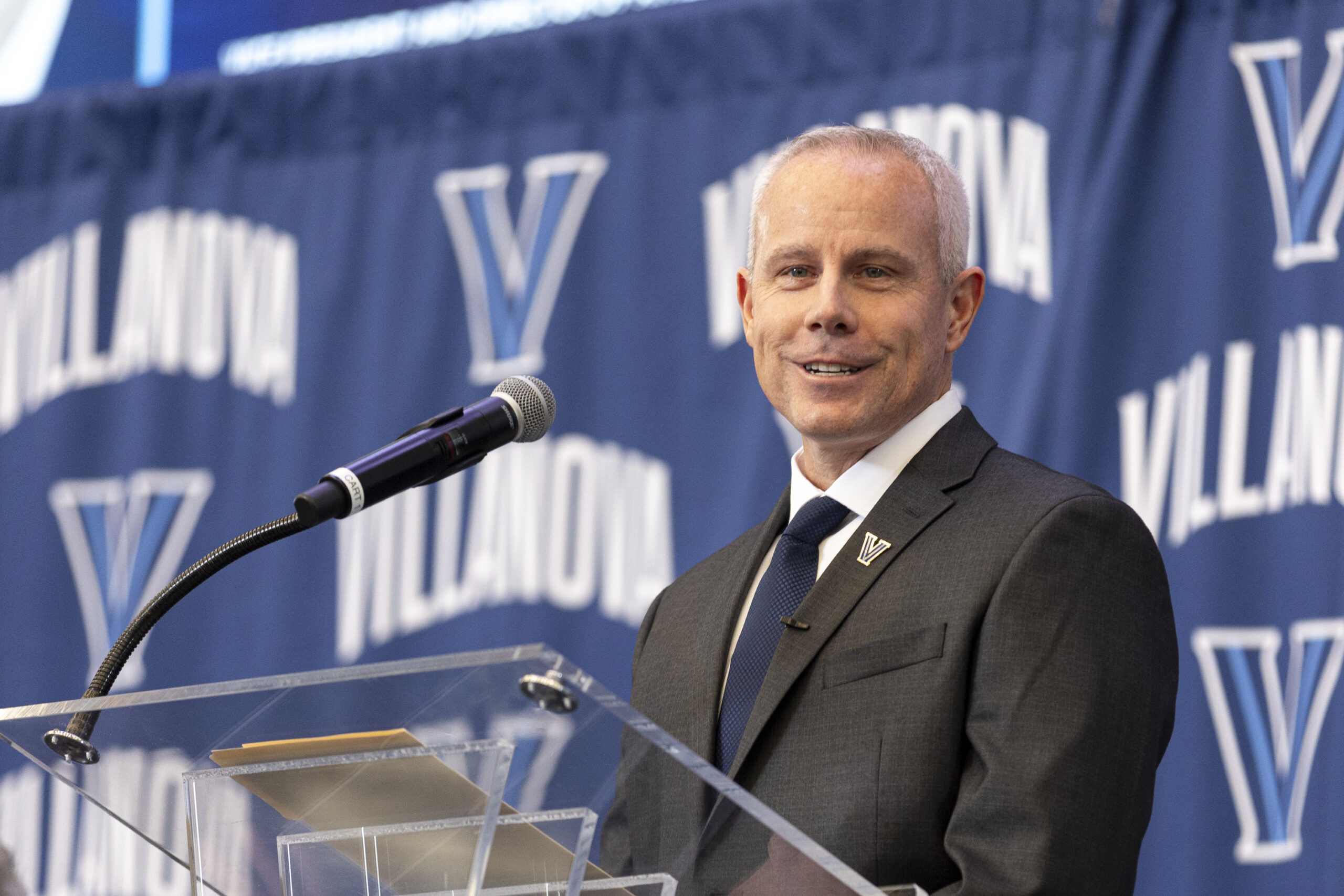
Erica Roedl, Villanova’s vice president and athletic director, speaks during a news conference at the school’s Finneran Pavilion in 2024.
“Our objective is to share revenue at levels which will keep our basketball rosters funded among the top schools in the Big East [Conference] and nationally,” Eric Roedl, Villanova’s vice president and director of athletics, said in a June message after the court settlement.
St. Joe’s, another basketball standout, said its arrangement is also with men’s and women’s basketball athletes, like its peers in the Atlantic 10 Conference.
Temple University established Competitive Excellence Funds that allow all of its 19 teams to raise money for revenue sharing, but declined to say which teams are currently distributing money to athletes.
“Donors could, if they wanted to, make sure their money went to a certain sport,” said Arthur Johnson, Temple’s vice president and director of athletics. “They have that ability.”
Other local colleges, including St. Joseph’s and Villanova, also launched funds to help raise money for revenue sharing. And all three schools also plan to use athletic revenue.
Under the revenue-sharing framework established by the court settlement, each college can pay its athletes up to a total of $20.5 million this academic year. Football powerhouse Penn State, which has about 800 athletes, has said it intends to reach the cap, according to a June 7 statement from athletic director Pat Kraft.
“This is a rapidly evolving environment that we are monitoring closely to ensure our approach remains consistent with applicable rules, while supporting the well-being and academic success of our student-athletes,” said Leah Beasley, Penn State’s deputy athletic director for strategic engagement and brand advancement.
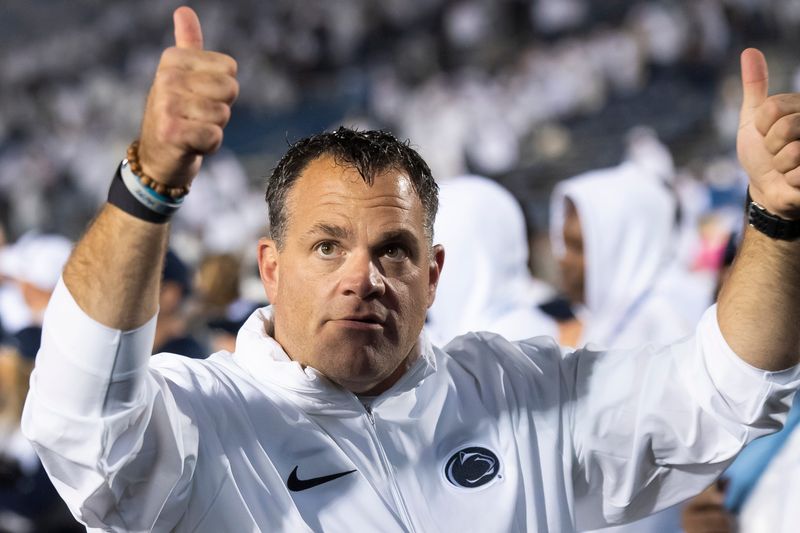
Penn State athletic director Pat Kraft gives two thumbs up to the student section following a 31-0 win in a football game against Iowa in 2023.
‘It’s a job’
To athletes, revenue sharing seems only fair, given many are so busy practicing and playing through summers and other breaks that they don’t have time to work.
“It is a job at the end of the day,” said former Villanova University basketball player Eric Dixon, who holds the Wildcats’ record as all-time leading scorer. “You put a lot of time into it every single day, every single week.”
Players get hurt and can see their sports careers harmed or halted, said Dixon, who grew up in Abington and played at Villanova from 2020 to 2025. College may be their only time to earn money for their sports prowess.
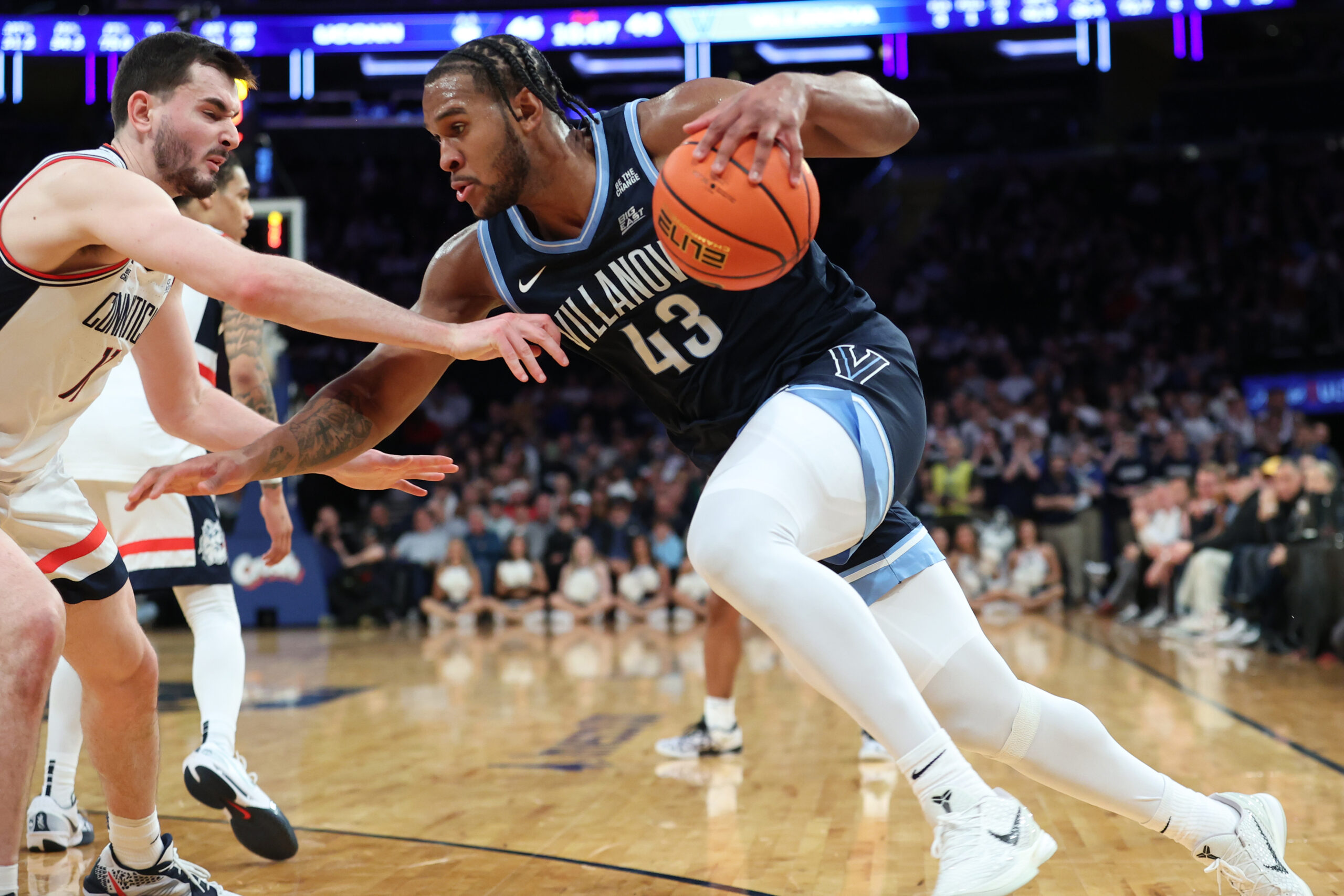
Villanova’s Eric Dixon drives against Alex Karaban of UConn during the 2025 Big East Tournament at Madison Square Garden in New York.
Dixon didn’tbenefit from revenue sharing. But he got money through external name, image, and likeness (NIL) endorsements and sponsorships that the NCAA began allowing in 2021. Dixon declined to specify how much he received, but said it was “seven figures” over four years and allowed him to help his family.
Like some other schools, Villanova, he said, provided players with financial guidance so they could make wise decisions on how to use their money.
External NIL arrangements, though, he said, were a little “like the Wild West.”(NIL compensation is allowed to continue under the lawsuit settlement, but deals of more than $600 have to be reported.) Revenue sharing from colleges will offer athletes more predictable income, said Dixon, who now plays for the Charlotte Hornets’ affiliated team in the G League.
Tyler Perkins, a Villanova junior from Virginia, currently plays for the Wildcats, who won national championships in 1985, 2016, and 2018. While he declined to say how much he is receiving, he said revenue sharing is helping him prepare for his future and “set up for the rest of my life.”
Maddy Siegrist, also a former Villanova basketball player who now plays for the Dallas Wings in the WNBA, is pleased universities are able to share revenue directly with athletes.
“It will be interesting to see how it all plays out,” said Siegrist, the Big East’s all-time leading scorer in women’s basketball and Villanova’s overall highest scorer, of men’s and women’s basketball.
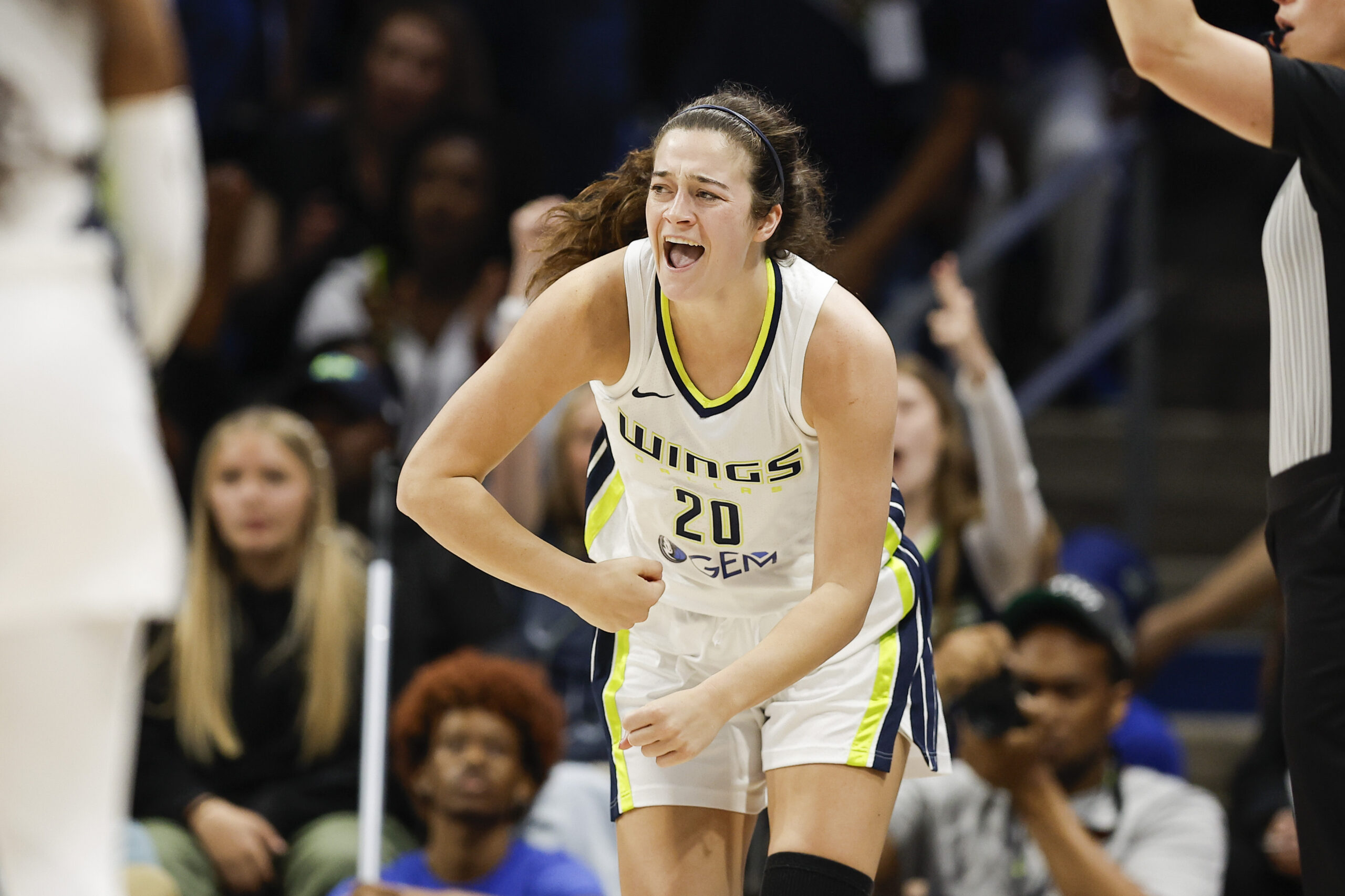
Dallas Wings forward Maddy Siegrist celebrates a three-point shot during a WNBA basketball game against the Chicago Sky in 2024 in Arlington, Texas.
While the big revenue sports are likely to see the money first, she said, “I would hope there will be a trickle-downeffect where almost every sport is able to benefit.“
A lawsuit spurs changes
For years, there have been growing concerns that athletes were not getting their fair share of the profits from college sports, which make money onbroadcast rights, ticket sales, and sponsorships. Meanwhile, coaches can be among the highest paid in a university’s budget.
In 2020, former Arizona State swimmer Grant House became the lead plaintiff in House vs. NCAA, a class-action antitrust lawsuit that argued athletes should be able to profit from the use of their name, likeness, and image and schools should not be barred from paying them directly.
The settlement approved in June of that suit and two others against the NCAA requires the NCAA and its major conferences to pay $2.8 billion in damages to current and former Division 1 athletes. Another provision gave rise to the revenue sharing.
It initially applied to the major sports conferences: the Big Ten, Atlantic Coast Conference, Southeastern Conference, and the Big 12. Penn State belongs to the Big Ten and the University of Pittsburgh to the Atlantic Coast.
But other athletic conferences, along with many of their members, decided to opt in to the agreement to remain competitive in select sports. St. Joseph’s, La Salle, Villanova, Drexel, and Temple all are part of conferences participating in revenue sharing with athletes this year.
“We support student-athletes’ ability to pursue value among their peers and to leverage commercial opportunities that may benefit them or the institution,” said Maisha Kelly, Drexel’s vice president and director of athletics and recreation.
Temple belongs to the American Athletic Conference, which said its members must agree to pay at least $10 million over three years to its athletes. Johnson, Temple’s athletic director, noted that total also includes new scholarships, not just pay.
No tuition, state dollars to be used
Pitt alumnus J. Byron Fleck has called on the Pennsylvania State Board of Higher Education to advise three state-related colleges — Penn State, Temple, and Pitt — not to use tuition dollars, student fees, or state appropriations to fund athlete payments.He also asked lawmakers to take action.
“It doesn’t relate to any educational or academic purpose,” said Fleck, a 1976 Pitt alumnus and lawyer in California.
Karen Weaver, an expert on college athletics, higher education leadership, and public policy, said the same concerns about public funds being used to pay athletes have risen in other states, including Michigan and Washington.
But Penn State, Temple, and Pitt all said in statements that they would not use tuition, student fees, or state appropriations to fund revenue sharing with athletes.
“Penn State Intercollegiate Athletics is a self-sustaining unit of the university,” said Beasley, Penn State’s deputy athletic director.
Pitt said it would use athletic revenues.
In addition to donations, Temple, too, is using athletic department revenues, such as ticket sales, but it is also looking at other “nontraditional ways” to raise money, Johnson said.
“We’re turning over every stone,” he said.
Weaver, an adjunct professor at the University of Pennsylvania, said she worries that as the caps on revenue sharing get higher and costs grow, schools, especially those tight for cash, may start raising recreation and other student fees. The University of Tennessee added a 10% student talent fee for season ticket renewals, according to the Associated Press, while Clemson is charging a $150 per semester student athletic fee, according to ESPN.
Roedl, the Villanova athletic director, said in a statement that it had launched the Villanova Athletics Strategic Excellence (VASE) Fund to raise money for the payments.
“Additionally, we are looking for other ways to maximize revenue through ticketing, sponsorships, and events, and identifying cost efficiencies throughout our department,” he said.
St. Joe’s, which has about 450 student athletes, said that it started a Basketball Excellence Fund to raise revenue and that payments also are funded by the basketball program. Athletes that receive funds “serve as brand ambassadors for the university,” the school said in a statement. “… These efforts have included community engagement — particularly with youth in the community — and marketing initiatives that directly support the Saint Joseph’s University brand.”
La Salle declined to say how much student athletes receive or in what proportion.
“We can share that any funds provided to students come from external sources and not tuition dollars,” said Greg Nayor, vice president for enrollment management and marketing.
Weaver, author of a forthcoming book, Understanding College Athletics: What Campus Leaders Need to Know About College Sports, said plans that call for the bulk of revenue sharing to go to football and basketball players would lead to legal action, charging that female athletes are not being treated equally.
“Any day now I expect we’ll see a huge Title IX lawsuit,” she said.
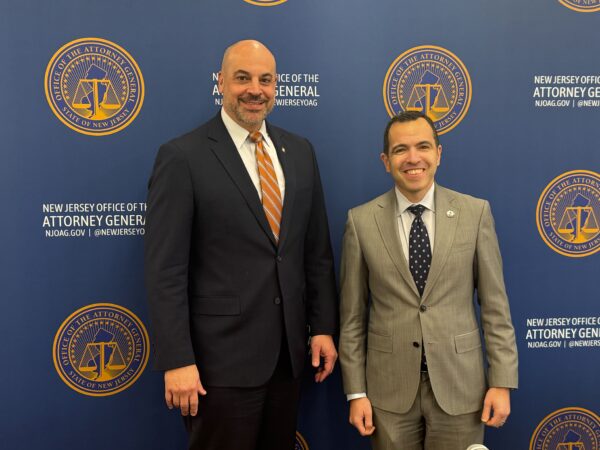
Right after Pennsylvania Attorney General Dave Sunday was sworn into office in January, he received a lunch invitation from across the Delaware River.
It didn’t matter that they came from different political parties, said New Jersey Attorney General Matthew Platkin, a Democrat appointed to his post by outgoing Gov. Phil Murphy.
Platkin wanted to get to know his neighbor, and invited Sunday out to lunch in Philadelphia.
The two men could not have more different approaches to their jobs. In a hyperpolarized political era, where attorneys general play an increasingly important role in national politics, Platkin has become a face of Democratic opposition to President Donald Trump’s administration. He has led or joined dozens of lawsuits by blue-state attorneys general and governors in arguing that the executive branch is acting unconstitutionally on issues like birthright citizenship, withholding congressionally approved funds, and more.
In contrast, Sunday, a Republican elected last year, has largely avoided suing Trump and has said he strives to be “boring,” focusing his efforts on oversight of his own office.
Even their jobs are different, despite sharing a title. New Jersey’s attorney general is in charge of the state’s 21 county prosecutors, oversight of state police, and protecting consumers, among other duties; Pennsylvania’s attorney general has wide-ranging powers to investigate corruption, enforce the state’s laws, represent the state’s agencies and interests in lawsuits, and more.
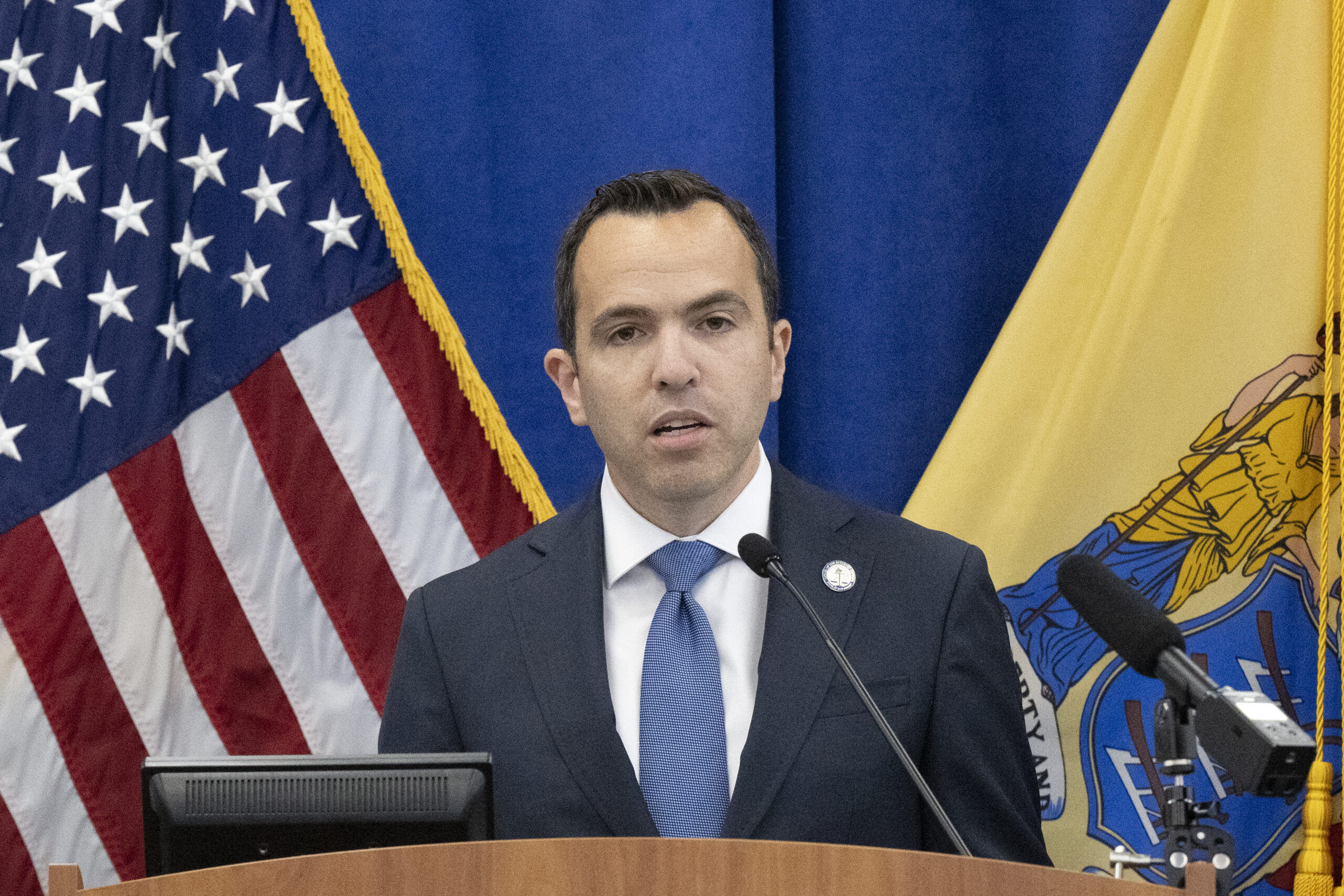
New Jersey Attorney General Matthew Platkin on Monday, June 17, 2024, at the Richard J. Hughes Justice Complex in Trenton, N.J.
Platkin, 39, is an ambitious lawyer who grew up in northern New Jersey and attended one of the best high schools in the state before attending Stanford University and Stanford Law School. He went on to work in private practice in New York and New Jersey before being appointed as chief general counsel to Murphy at 35 — the youngest person to ever hold the office.
Sunday, 50, grew up in a suburb of Harrisburg and has described his high school years as lacking direction. He joined the U.S. Navy after high school before attending Pennsylvania State University for undergraduate and Widener University Law School for his law degree, working at UPS to help put himself through school. He returned to south-central Pennsylvania for his clerkship, and was a career prosecutor in York County until his election to attorney general.
Pennsylvania Attorney General Dave Sunday stands to be recognized by Council President Kenyatta Johnson before Philadelphia Mayor Cherelle Parker gives her budget address to City Council, City Hall, Thursday, March 13, 2025.
But over salads at the Mulberry, Platkin and Sunday found common ground. And ever since, the two said in a joint interview this month, they have worked closely on issues affecting residents in their neighboring states.
“Just because you may not see eye-to-eye on [Trump] doesn’t mean you can’t see or don’t see eye-to-eye on many, many other issues,” Sunday said.
“When we have an auto theft problem, [residents] don’t care if there’s a ‘D’ or an ‘R’ after your name,” Platkin added. “They just want to see us working to solve it.”
The two have since worked together on issues that stretch from criminal investigations and human trafficking cases to challenging Big Tech companies as artificial intelligence rapidly advances, Sunday said.
Earlier this month, Sunday and Platkin led national efforts of coalescing approximately 40 attorneys general across party lines on the issues they say are most pressing for residents. The group wrote a letter to Big Tech companies in mid-December, detailing concerns about the lack of guardrails for AI chatbots like those available from ChatGPT or Meta’s Instagram AI chats, and the potential harm they could cause people in crisis or children who use them.
In two more letters sent this month, the attorneys general also voiced support for a workforce reentry bill before a U.S. House committee and requested that Congress approve additional funding for courtroom and judicialsecurity to protect the nation’s judges from safety threats. Platkin and Sunday said they were some of the first attorneys general to sign on to the letters.
“While the undersigned hold differing views on many legal issues, we all agree that the legal system cannot function if judges are unsafe in their homes and courthouses,” the group of 47 attorneys general wrote in a Dec. 9 letter to top leaders of Congress.
When it comes to lawsuits against the Trump administration and other litigation authored by partisan attorneys general associations, Sunday has largely avoided the fray. Earlier this month, he was elected Eastern Region chair of the National Association of Attorneys General, a nonpartisan group composed of the 56 state and territory attorneys general.
Platkin, on the other hand, has led the charge in pushing back against the administration’s policies in New Jersey, signing onto dozens of lawsuits such as ones challenging Trump’s efforts to end birthright citizenship and to withhold SNAP funding if a state does not turn over personal information about its residents.
Still, Pennsylvania has joined many lawsuits, including several challenging the federal government for withholding congressionally approved funds for electric vehicles and more, as Democratic Gov. Josh Shapiro, formerly the state’s attorney general, has signed on in his capacity as governor.
Platkin, who has served as New Jersey’s attorney general since 2022, will leave office when Murphy’s term ends next month, and Gov.-elect Mikie Sherrill will appoint someone new to the post. Sherrill, a Democrat, earlier this month nominated Jen Davenport, a former prosecutor and current attorney at PSE&G, New Jersey’s largest electric and gas company, to be Platkin’s successor.
Sunday’s team has already been in touch with Davenport to forge a similar cross-state working relationship.
What’s next for Platkin? He said he’s a “Jersey boy” and will remain in the state but declined to say what his next move might entail.
And both Platkin and Sunday say they will maintain their bipartisan friendship going forward.
“It’s OK to say we don’t agree on everything. We shouldn’t hate each other,” Platkin said. “We should be open about the fact that we like each other. … I don’t think there’s anything wrong with that.”
President Donald Trump’s administration proposed a sweeping set of rules Thursday designed to prevent hospitals from providing gender-affirming care to minors, a move that could have consequential implications for Children’s Hospital of Philadelphia.
CHOP runs one of the nation’s largest clinics providing medical care and mental health support for transgender and gender-nonbinary children and teens and their families. Each year, hundreds of new families seek care at CHOP’s Gender and Sexuality Development Program, created in 2014. The information of CHOP patients who have sought gender-affirming care had been the target of a recent unsuccessful lawsuit from the Trump administration.
The proposals constitute the most significant moves the administration has taken to restrict the use of puberty blockers, hormone therapy, and surgical interventions for transgender people under the age of 18 — including cutting off federal Medicaid and Medicare funding from hospitals that provide gender-affirming care to children and prohibiting federal Medicaid dollars from being used to fund such procedures.
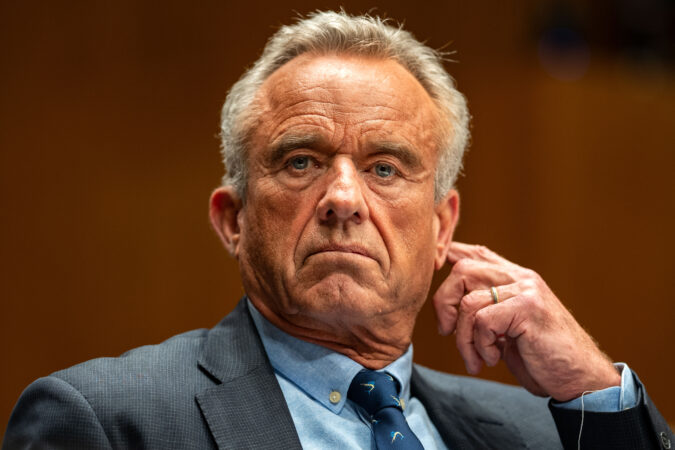
“This is not medicine, it is malpractice,” Health Secretary Robert F. Kennedy Jr. said, referring to gender-affirming procedures, at a news conference Thursday. “Sex-rejecting procedures rob children of their futures.”
CHOP, like most other hospitals in the country, participates in both Medicare and Medicaid.
CHOP declined to comment Thursday.
The renowned pediatric hospital treats children and teens with gender dysphoria — a medical condition in which a person’s body does not match their gender identity. Its doctors prescribe hormone therapy and puberty blockers.
CHOP has said its doctors do not prescribe any medication before its patients undergo extensive medical and psychological evaluations.
Gender-affirming care is legal in Pennsylvania, and states, not the federal government, regulate medicine and doctors.
But Trump has sought to criminalize this care for minors, saying doctors are engaged in “chemical mutilation,” akin to child abuse, and he has called the research “junk science.”
Just days into his second term in office, the president issued an executive order titled “Protecting Children from Chemical and Surgical Mutilation,” which contains inflammatory and misleading descriptions of largely medically approved transgender care. Kennedy has followed the president’s lead, signing a declaration Thursday rejecting these procedures.
Other actions proposed Thursday include the U.S. Food and Drug Administration issuing warning letters to 12 manufacturers and retailers for what an HHS news release claims to be “illegal marketing of breast binders to children for the purposes of treating gender dysphoria.”
The court battle over gender care for minors
In June, the U.S. Department of Justice issued subpoenas to CHOP and at least 19 other hospitals that treat transgender youth as part of an investigation into possible healthcare fraud. The federal subpoenas demanded patient medical records, including their dates of birth, Social Security numbers, and addresses, as well as every communication by doctors — emails, voicemails, and encrypted text messages — dating back to January 2020.
The subpoenas touched off a wave of legal battles that continue to play out. Several hospitals around the country, including CHOP, filed motions asking federal judges to block the release of private patient information.
So far, federal judges in Philadelphia, Boston, and Washington state have sided with the hospitals, ruling the subpoenas were politically motivated.
In Philadelphia, U.S. District Judge Mark A. Kearney last month determined that the “privacy interests of children and their families substantially outweighs the department’s need to know” such confidential and sensitive information. The federal government has 60 days to appeal the Nov. 21 ruling.
In September, patients and their parents joined the legal fight to limit the scope of the subpoenas issued to CHOP and UPMC Children’s Hospital of Pittsburgh. The Philadelphia-based Public Interest Law Center (PILC) filed separate but similar legal relief on behalf of families with children and teens who have received gender-affirming care at CHOP and in Pittsburgh.
The federal judge presiding over the Pittsburgh hospital’s case has yet to issue a ruling. Earlier this week, however, DOJ lawyers said they are willing to accept redacted medical records. They argued that would solve the dispute over patient privacy rights.
On Thursday, Mimi McKenzie, PILC’s legal director, said the center “strongly disagrees” and would fight the release of redacted medical records.
“These records are so deeply personal and contain such highly sensitive information about these young patients,” McKenzie said. “There is no anonymization or redaction that can protect their privacy interests.”
McKenzie said the proposed federal rule to ban all federal funding to hospitals that treat transgender youth would “face a myriad of legal challenges.” She described gender-affirming care as “lifesaving” for many children.
“The notion that our federal government would tell hospitals to pick which children you want to save — the children who need gender-affirming care or all the other children — is despicable. The cruelty of this administration knows no bounds.”
Other institutions have recoiled in the face of the Trump administration’s threats.
Earlier this year, Penn Medicine and Penn State Health cut back gender-affirming care for youth. Nemours Children’s Hospital in Delaware and UPMC Children’s Hospital of Pittsburgh announced they will no longer provide gender-affirming care beyond behavioral health services to new patients.
Zillow’s list of the most popular real estate markets of 2025 is dominated by midsize cities in the Midwest. But one large city ranked in the top 20: Philadelphia.
The main driver of popularity is housing affordability, which helped push Philadelphia up the list.
The city also remains popular because of its central location on the East Coast between major job hubs such as New York and Washington. And Philadelphia is a place people want to be for its culture, restaurants, and music and arts scenes, said Orphe Divounguy, senior economist at Zillow.
But “that affordability can’t be overstated,” he said.
“Relatively more affordable markets are really seeing more rapid home value appreciation and more traffic on Zillow,” he said. The company considered these factors, as well as the number of days properties took to sell this year, to rank the popularity of cities.
In many of the top 10 most popular markets, the median home value in November was less than $350,000. These markets are near growing job markets or sit along key commuter routes and are small enough to offer a sense of community, according to Zillow.
Homes in the most popular markets tend to go under contract in days instead of weeks. And they’re growing in value.
Most of the cities on the top 20 most popular list — with the exception of No. 19 Philadelphia — range in population from about 100,000 to 300,000 people.
In Philadelphia, the median home value in November — about $230,000 — was up almost 3% from last year, and homes for sale took a median of 20 days to go under contract this year. And more searches for Philadelphia listings on Zillow are coming from outside the region, which shows broad interest.
Allentown was the only city in Pennsylvania to make Zillow’s top-10 list of popular markets this year.
window.addEventListener(“message”,function(a){if(void 0!==a.data[“datawrapper-height”]){var e=document.querySelectorAll(“iframe”);for(var t in a.data[“datawrapper-height”])for(var r,i=0;r=e[i];i++)if(r.contentWindow===a.source){var d=a.data[“datawrapper-height”][t]+”px”;r.style.height=d}}});
Lessons from the list
A lot of the smaller cities on Zillow’s most popular list arenear big, more expensive cities.
For example, the most popular market this year — and the second most popular last year — is Rockford, Ill., which is 90 miles outside Chicago. Residents can access a large job center without paying big-city home prices.
Rockford is popular with out-of-town home shoppers, and homes went under contract within just five days this year. It was one of the fastest-moving markets on Zillow’s list.
Divounguy expects buyers will continue to be attracted to more affordable markets that have homes available to buy and will move away from expensive marketswhere fewer homes are built.
“Philadelphia, because it’s so attractive, needs to continue to build housing,” he said. “It needs to keep up with the interest people have to live in the area.”
Albany, N.Y., is the third most popular city on Zillow’s 2025 list and the most popular in the Northeast.
The most popular small town on the list — defined as a place with no more than 20,000 people — is Lake Forest, Ill., which is 30 minutes outside Chicago. Zillow said the town’s proximity to a big city, historic charm, and position along Lake Michigan make this market attractive for homebuyers.
Among cities with more than 250,000 residents, Toledo, Ohio, is most popular. The median home value is an affordable $126,000, and it’s on the tip of Lake Erie.
For the second year in a row, Portland, Maine, is Zillow’s most popular vacation town. The company said Portland’s historic architecture, food, and arts scene attract homebuyers.
Bullhead City, Ariz., is the most popular retirement town and draws residents with warm temperatures and outdoor recreation along the Colorado River, Zillow said.
And Normal, Ill., the site of Illinois State University, is the most popular college town. Zillow cited its revitalized shopping and dining district. State College, home to Penn State, is a runner-up.
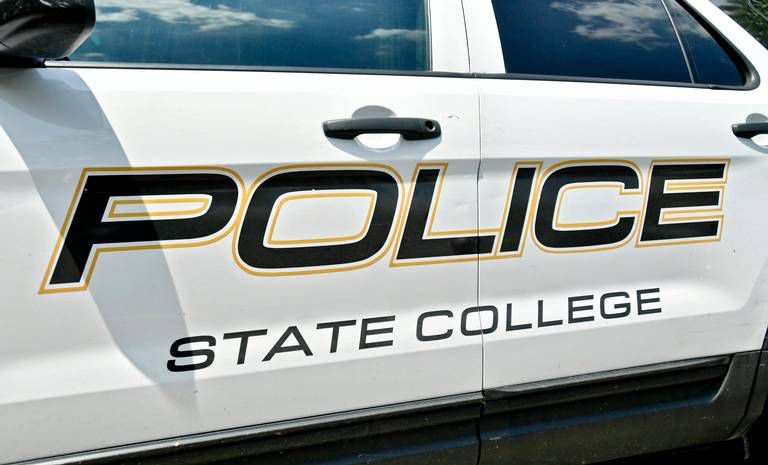
Over the span of nearly a decade, the State College Police Department underreported hundreds of rapes in the central Pennsylvania community, leading to highly inaccurate publicly reported crime statistics, Spotlight PA has learned.
From 2013 to 2021, State College police reported a total of 67 rapes in crime submissions to Pennsylvania State Police, when in fact there had been 321 — a 254-case difference — according to a 10-month Spotlight PA investigation.
Those missing cases were instead classified as sex offenses, a category with lower penalties and one that is treated with less urgency by law enforcement. In response to Spotlight PA, the department conceded it had been using an outdated definition of rape until late 2022 — despite the federal government announcing a change to it in 2012, and that update being subsequently implemented by thousands of police agencies across the U.S. in 2013.
Under the old definition, “a vast array of violent, degrading, abusive sexual assaults were excluded from the data that are used to inform the public about the prevalence of rape,” said Lila Slovak, director of the Women’s Law Project’s Philadelphia office.
Crime statistics in a place like State College, nicknamed “Happy Valley,” are particularly important because it is a college town. Most Pennsylvania State University students live off campus, and federal law requires the school to report only crimes that occur on its premises, on its property, and in public places right next to it.
State College Police Chief John Gardner told Spotlight PA that he was not aware until 2022 that the FBI had updated its definition of rape. He learned when a department records supervisor that year completed a training and implemented the change. Gardner’s predecessor, Tom King, who retired from the department in 2016, said he learned about the incorrect reporting only when contacted by Spotlight PA this summer.
But the department had never acknowledged the longstanding error or disclosed it to the public until approached by Spotlight PA about potential data discrepancies. The department calculated the number of affected cases after Spotlight PA requested a review.
“The inaccurate reporting was not done intentionally,” said Gardner, who is retiring at the end of this year. “The minute we found out about it, we made the correction, and we’re open to sitting down and talking to you about it. We owned it.”
“We want to make this community safe and want people who live here to feel safe,” he said.
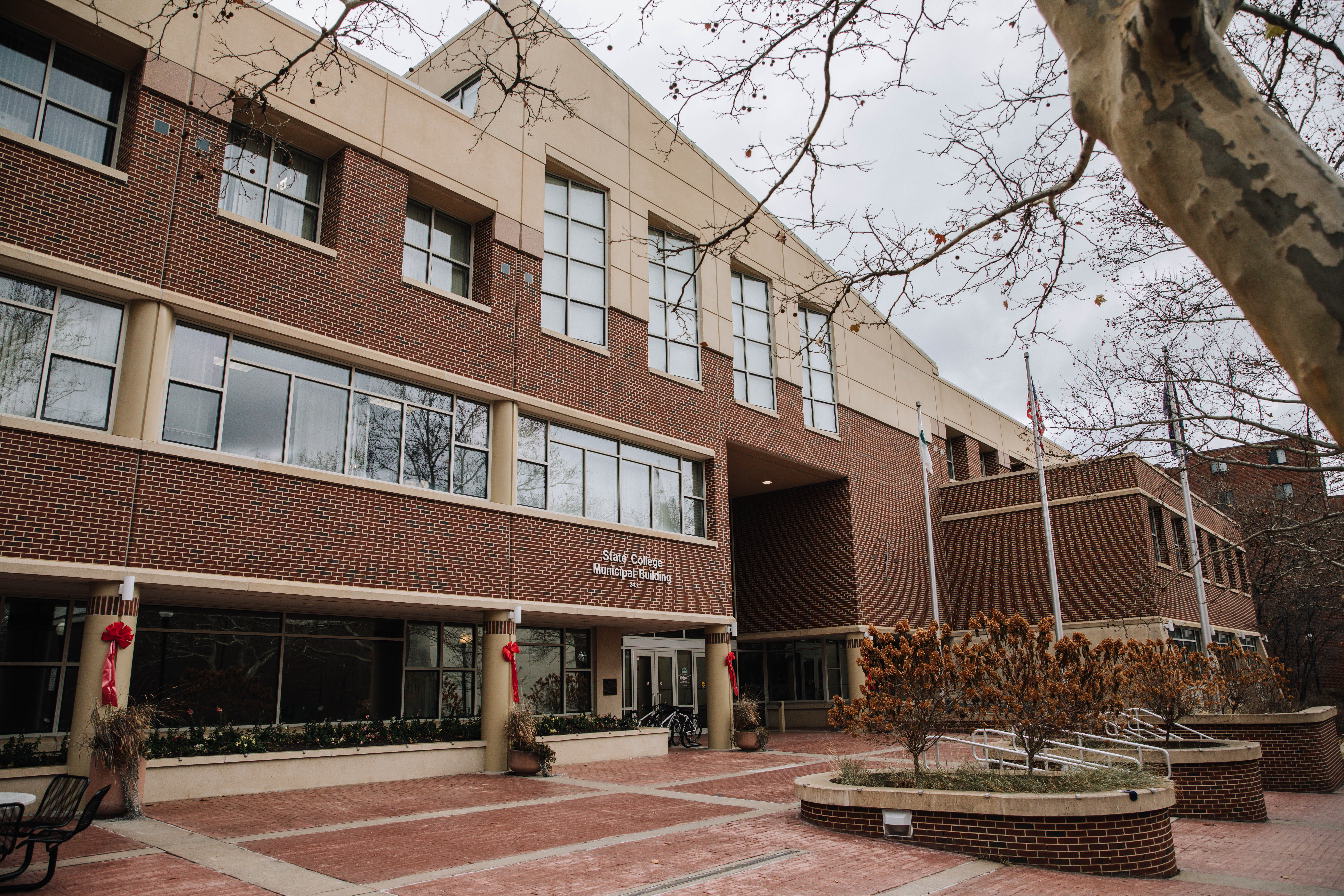
The police department is located on the first floor of the borough building in downtown State College.
Pennsylvania State Police share crime statistics from local departments, including State College, with the FBI’s Uniform Crime Reporting Program, known as UCR. Those figures influence numerous aspects of life in a community and help governments decide where to deploy resources and direct public funds.
Criminologist Eli B. Silverman, professor emeritus at John Jay College of Criminal Justice, said accurate data are also key to good policing and maintaining trust with the community.
“When crime statistics lose their credibility, the public loses confidence in the police and is less inclined to report crime,” Silverman said. “This, in turn, further diminishes the effectiveness of [a] police organization.”
Over the course of Spotlight PA’s investigation, the newsroom found other potential issues with the department’s handling of reported rapes.
For years, rape cases were habitually described as “assaults” in internal police records, Spotlight PA found. The newsroom also questioned whether factors other than the new definition made previous rape numbers appear low, especially as top officials in the department did not seem clear on how crime reporting works, and at times offered confusing or incorrect information.
Additionally, Spotlight PA identified a case in which two victims reported rapes and the police recorded only one. One police official told reporters that rapes are counted by incident, not by victim — going against well-established FBI rules and indicating a violation separate from underreporting.
Police appear to be “trying to minimize the extent of sexual assault in State College,” Cassia Spohn, a criminologist and professor at Arizona State University, told Spotlight PA. “Doing so can produce a false sense of security among potential victims, leading eventually to an increase in victimization and a decline in public safety.”
Before this investigation was published, Spotlight PA sent a detailed list of findings to police officials and State College borough.
In response, the department offered a joint statement from Gardner, King, longtime State College Borough Manager Tom Fountaine, and State College assistant police chief Matthew Wilson, expressing “a great level of dissatisfaction.”
“The information presented appears to be more representative of an op-ed article than an objective reporting piece. The information you provided for our review is largely misleading and omits perspectives from community stakeholders,” the statement said in part. Read the full response here.
‘I don’t recall’
For more than 80 years, the FBI defined rape as “the carnal knowledge of a female, forcibly and against her will.” That meant only forced attacks involving penetration of the vagina by a penis were considered rape.
This left out things like forced oral or anal sex, and sex acts that were committed against someone’s will but without force. Attacks on men or boys were also not counted.
That longstanding definition was “narrow, outmoded and steeped in gender-based stereotypes,” the Women’s Law Project wrote in a 2001 letter to then-FBI Director Robert Mueller.
In 2012, the FBI announced it would broaden its definition of rape to “ensure justice for those whose lives have been devastated by sexual violence,” then-U.S. Attorney General Eric Holder said at the time.
“This new, more inclusive definition will provide us with a more accurate understanding of the scope and volume of these crimes,” Holder added.
Leading national organizations for police and sheriffs backed the change, as did women’s organizations and anti-rape groups.
Under the new definition, rape is: “Penetration, no matter how slight, of the vagina or anus with any body part or object, or oral penetration by a sex organ of another person, without the consent of the victim.”
John Derbas, a former deputy assistant director of the FBI, told Spotlight PA that by 2015, 15,000 law enforcement agencies across the nation had adopted the reform.
David Hendler, who oversees records at the Abington Township Police Department in Montgomery County, said both he and his predecessor knew about the change when he started working in the department in 2013. Officers talked about it among themselves, he told Spotlight PA.
“Every cop I knew knew about it,” Hendler said.
Yet King, who led State College police from 1993 to 2016, said word never reached him. He was not aware that State College police were incorrectly reporting rapes until Spotlight PA contacted him this summer, he said.
“I don’t recall it. In 2025, as we sit here talking about it today, I don’t recall,” King said in an August interview. He questioned who within the department might have been contacted by Pennsylvania State Police, which ensures that law enforcement agencies across the state submit crime data that go to the FBI.
“Whoever they addressed it to, I don’t recall ever seeing any direction from the State Police to make a change, or being aware that it was changed,” said King, who became the interim police chief in neighboring Ferguson Township in October. “That doesn’t mean they didn’t. We’re talking about 12 years ago.”
A spokesperson for Pennsylvania State Police told Spotlight PA the agency alerted local police departments about the change. A December 2012 notification “outlined the new definition and instructed agencies to report offenses accordingly, starting in January 2013,” Myles Snyder wrote in an email. After that, “the responsibility for ensuring correct and timely reporting lies solely with contributing agencies,” he added.
A five-paragraph notice was sent via the Commonwealth Law Enforcement Assistance Network, or CLEAN, a platform police departments use to communicate with other agencies, on Dec. 27, 2012 — less than a week before the new requirement took effect, according to a document obtained through a public records request.
State police have “the highest level of confidence in this communication system,” Snyder said when asked if the notice reliably reached all of the roughly 2,000 local law enforcement agencies in Pennsylvania.
Agencies like the State College Police Department have to acknowledge receipt of every message sent over CLEAN, he said. It is not optional, and “lives depend on it.” The messages are kept for 10 years, Snyder told Spotlight PA, so Pennsylvania State Police cannot verify who, if anyone, confirmed receipt of the notice.
In 2014, statewide data showed a 12% increase in rapes for the 2013 annual report, Snyder said. That indicated that submitting agencies were recognizing and using the new offense classification rule.
No one from Pennsylvania State Police or the FBI told the department it had missed the memo and was reporting erroneously, Gardner said in a joint interview with King and Fountaine.
State police are legally bound to collect data from local departments, and those agencies must use the FBI’s definitions for crimes. The agency checks on two things for UCR compliance: that a police department submits data, and that the numbers add up, Snyder said.
Between 2016 and 2023, Pennsylvania State Police logged 65 instances of local departments being out of compliance. The agency did not provide information on why, but two chiefs told Spotlight PA it was because their departments did not submit any numbers. The violations, which came with the threat of losing some state grant funding, were deemed fixed by state police as long as the departments began filing monthly.
“Submitting agencies are solely responsible for the accuracy of their information,” Snyder told Spotlight PA.
Both State College police chiefs told Spotlight PA that they did not intentionally disregard the FBI mandate to report rapes accurately. “I know with absolute confidence that had I received that notification … we would have made the change,” King said.
“When crime statistics lose their credibility, the public loses confidence in the police and is less inclined to report crime,” Criminologist Eli B. Silverman told Spotlight PA. “This, in turn, further diminishes the effectiveness of police organization.”
A late revelation
The department, with 53 sworn officers today, serves over 57,000 residents in State College and neighboring College and Harris Townships. Its jurisdiction borders Penn State’s University Park campus, which has its own police force. However, many of the university’s nearly 49,000 undergraduate students live, work, and recreate off campus — so State College police regularly interact with students.
During a typical academic year, 75% of rape victims are Penn State students, Lt. Chad Hamilton, State College police detective supervisor, said.
For years, rape numbers reported by State College police were consistently low, hovering in single digits for the most part. When the department reported its 2021 crime statistics to UCR, police claimed that there was not a single rape that year.
It turns out that there were at least 30.
But instead of rapes, those cases were submitted to the Uniform Crime Reporting system as sex offenses. These are considered a “part two” crime, a category that the FBI collects less information about and rarely mentions in its regular announcements about crime in America.
In police speak, part one crimes are the most severe offenses: homicide, rape, robbery, aggravated assault, human trafficking. They are high priorities for law enforcement, often bringing with them pressure to make arrests and clear cases. These are considered indicators of the level of crime occurring in the country, according to the FBI Uniform Crime Reporting Handbook.
Rape cases should never go into part two crime counts, Spohn, the criminologist, told Spotlight PA. Sex crimes under the part two category include acts like fondling or indecent exposure, she said. The category does not include sex crimes involving penetration. “The UCR handbook is pretty specific,” she said.
But by its own admission, the State College Police Department did exactly that — incorrectly reporting at least 254 part one crimes as part two ones.
“It’s not like we weren’t reporting,” Wilson told Spotlight PA in a February interview. He said the police department was not calling these incidents rapes, but it was calling them sexual offenses. “I don’t see it as a huge deal,” he said.
Three years ago, a longtime staffer, Alecia Schaeffer, took over as records supervisor. That is the position ultimately responsible for reviewing each incident, ensuring the coding follows the rules, and submitting monthly reports to the state.
Schaeffer — who was trained and certified on Uniform Crime Reporting in 2002 — got a refresher course in December 2022, bringing back with her an urgency to update the police department’s practice.
Spotlight PA repeatedly requested to interview Schaeffer. The borough and department refused, saying they generally do not make staff available to the media.
Gardner said he was in the conversation following Schaeffer’s training but remembered “very, very little” about it — “other than the fact that she learned through training that … all these offenses were to be coded as rapes,” he said.
Fountaine, who oversees State College police in his role as borough manager, said he became aware of this change when the department was first contacted by Spotlight PA.
Experts told Spotlight PA that the way rapes are labeled matters for victims and communities.
“It’s not just about how it shows up in statistics, it’s about how people think about what’s happened to them, how other people think about what’s happened to them, how the community thinks about what’s happened to them,” said Anne Ard, former executive director of Centre Safe, a State College-based organization that supports survivors of sexual violence.
Department officials say the way the cases were coded had no impact on how police handled them.
However, between 2013 and 2023, State College police’s rate of arrests for rape was double that for sex offenses, according to a Spotlight PA analysis of data submitted to UCR.
State College police said that driving any investigation is the strength of evidence, the victim’s wishes, and input from the district attorney’s office.
“It doesn’t matter to us what is coded. It’s going to be thoroughly investigated to the best of our abilities,” Wilson told Spotlight PA.
Other potential issues
King, the department’s former police chief, told Spotlight PA that incidents of sexual violence were “very, very, very high priorities for the department.”
King said that the department applied for grant funding to address sexual violence, and that it created specialized investigative units and response teams as far back as 2006. Officials communicated with the public “over and over again” on the significance placed on these crimes, King said.
The department, with 53 sworn officers today, serves over 57,000 residents in State College and neighboring College and Harris Townships.
But throughout its investigation, Spotlight PA identified other potential issues with the way State College police handled rape cases.
One issue is the accuracy of State College’s rape numbers unrelated to the definition change.
Because the new rape definition was broader, the FBI anticipated a rise in reported rape figures nationwide — as much as 41.7% in 2013, it said. In State College, however, it saw a 222% increase for 2013. Between the years 2013 and 2020, the revised definition produced an average annual increase of 384%.
Spotlight PA asked the department about the discrepancy, whether factors other than the new definition affected the low 2013 rape count, and if the inconsistency raised concerns about previous UCR reporting.
Both chiefs emphatically defended those figures.
Spotlight PA asked the department to review cases between 2005 and 2012 to ensure compliance with the FBI’s legacy rape definition; to allow the newsroom to do so; or to make the records supervisor available for either an interview or written responses to questions. Officials declined.
Without an independent review of investigative files and records, questions about the department’s crime reporting accuracy could not be fully answered.
But one case sheds light on the long-term consequences of the department’s errors.
‘I was raped’
Standing in a parking lot by her dorm building on a summer night in 2019, Lexi Tingley, barely a freshman at Penn State, texted her mother. It was 2:44 a.m., and the worst had happened.
“Mommy.”
“I think I need to go to the ER.”
“I was raped.”
“I’m scared.”
Tingley’s mother knew the lot; she had dropped her daughter off there recently for summer sessions. Frantically, she drove Tingley and her friend, who had also been raped that night, to Mount Nittany Medical Center. Tingley was examined, was tested for sexually transmitted diseases, and met with a State College police officer at the hospital.
Tingley’s statements became the experiences of “victim 1” in the police report. Her friend, Hanna Friedenberger, was victim 3 in the report. Another friend, victim 2, witnessed the crimes and had a panic attack, but was not assaulted. (Both Tingley and Friedenberger spoke to Spotlight PA and agreed to be named.)
Both Tingley and Friedenberger said they were raped at the Legend, a student rental complex three blocks from campus. Police took both their statements.
But State College police records show that one of the rapes was not accounted for.
Lexi Tingley, left, and Hanna Friedenberger, right
The department keeps an internal crime log, a set of records detailing every call it responded to in the last 20 years. It’s the first draft of crime statistics that would be reviewed, cataloged, and corrected if needed before submitting to the Uniform Crime Reporting system. The log contained one rape for the day that Tingley and Friedenberger were attacked.
Wilson, the assistant police chief, said in an August email that rape cases are counted per incident, not per victim — although FBI rules say cases should be counted by the number of victims. Wilson, whose responsibilities include overseeing the department’s records operations, did not respond when Spotlight PA sought additional clarity. Wilson will become the police chief for State College’s neighboring Ferguson Township in 2026.
UCR data for that month, August 2019, show three rapes reported by State College police.
However, Gardner said in an email that there were two other rapes that month that were not related to Tingley and Friedenberger. That means the department should have reported four rapes to UCR.
In an interview, Gardner told Spotlight PA that the UCR data for August 2019 included both Tingley and Friedenberger. “You report victims to UCR, OK, we don’t do it by incident. Do you understand?”
Gardner insisted the department handled the case properly, and said he did not know the source of the discrepancy.
There is another notable problem.
The internal crime log reviewed by Spotlight PA contained four pieces of information for this incident. The time the call was received was 3:49:44 a.m. on Aug. 1, 2019. The outcome of the incident, called disposition, was “ECA” or exceptional clearance of an adult — commonly used for when prosecutors declined to file charges, as happened in the women’s case.
Additionally, there was a description and a code.
When State College police officers file incident reports, they describe the calls they respond to — for example, “burglary” or “traffic stop.” The actual criminal violation that resulted would be recorded as a four-digit code. In State College’s system, for example, 0210 is code for forcible rape. Coders in the records department — not officers — are responsible for doing that.
In Tingley and Friedenberger’s case, the report was coded 0210, referring to rape. But the description — crucial for any layperson not familiar with State College police coding to understand the nature of a case — said “assault earlier.”
For at least a quarter-century, State College police have held daily media briefings where reporters were handed daily law incident summaries, or what the department calls a press log. These documents include the description, but not the case code, of each incident.
Between 2005 and 2021, State College police in these logs described 110 cases that were ultimately classified as rapes as “assault” or “assault earlier.” That is four out of every five rapes recorded by the department during that period.
window.addEventListener(“message”,function(a){if(void 0!==a.data[“datawrapper-height”]){var e=document.querySelectorAll(“iframe”);for(var t in a.data[“datawrapper-height”])for(var r,i=0;r=e[i];i++)if(r.contentWindow===a.source){var d=a.data[“datawrapper-height”][t]+”px”;r.style.height=d}}});
Asked how residents or reporters who attended these briefings would be able to distinguish rape cases from physical fights because they were lumped together under the title of “assault,” Gardner said the officers in charge would note if any case was sexual in nature.
“It’s serious,” he said an officer in that situation would say, arguing the vagueness protected victims’ privacy.
That approach leaves the quality of State College crime data to chance.
This happened when the department provided its 2009 crime log to an open-records requester this February, which was later posted online. The requester asked for the type of crime for each incident and received the crime log with the incident description listed but not the numeric case code.
No rapes were listed in the 161 pages that State College turned over. If incident codes had been included, the log would show two cases of rape that year.
Gardner serves as the police department’s Right-to-Know officer. He told Spotlight PA that the code was not given to the requester because the person did not specifically ask for it.
Spotlight PA submitted a Right-to-Know request asking for the same information as the original requester, and did not ask for the 4-digit code. But police provided both the data and the code to the newsroom.
An open records request for 2009 State College police data posted online (top), and an open records request made by Spotlight PA for the same information (bottom).
It is impossible to determine if Tingley and Friedenberger’s case was unique. The newsroom cannot determine if undercounting rape victims by using the incident count was an isolated incident or a more prevalent problem. State law does not allow public access to police investigative files, and State College police refused Spotlight PA’s request to review them.
Tingley and Friedenberger, already heartbroken over the outcome of their case, would not find out until contacted by Spotlight PA that State College police had undercounted their rapes in public crime data.
Tingley, now 24, said it is hard to separate the rape and what followed. The treatment she received from law enforcement — a “false promising,” as she called it — was “equally painful” as the worst thing that has happened to her.
SUPPORT THIS JOURNALISM and help us reinvigorate local news in north-central Pennsylvania at spotlightpa.org/donate. Spotlight PA is funded by foundations and readers like you who are committed to accountability and public-service journalism that gets results.