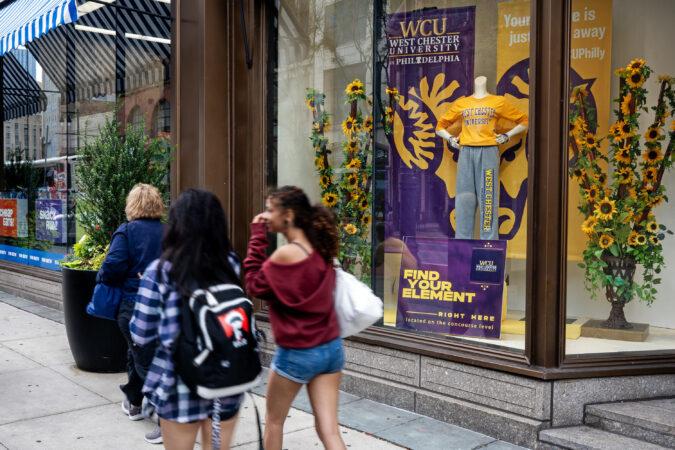
Students in the Pennsylvania State System of Higher Education will face a 4.3% tuition hike — the largest percentage increase in a decade — if the system does not get a boost in state funding.
PASSHE’s board of governors voted unanimously Thursday on the plan, which would enact the tuition increase if the system does not receive a 5%, or $31 million, increase in its state appropriation, which currently stands at $625 million. Gov. Shapiro has proposed flat funding for the system, and budget negotiations are continuing.
Tuition would rise to $8,338 annually, up $344 from $7,994.
“We’re all disappointed to … have to make this motion,” board chair Cynthia Shapira said. “We hope we do get the increase.”
The 10 universities in the system are Cheyney, West Chester, Commonwealth, East Stroudsburg, Indiana, Kutztown, Lock Haven, Millersville, Penn West, and Shippensburg. Collectively, they enrolled 83,005 students last academic year, when the system experienced its first enrollment increase in 15 years. About 90% of students are Pennsylvania residents.
The vote to increase tuition came one day after Temple University approved a budget thatincreased tuition an average of 3.4% for next year.
Rutgers University also on Thursday voted to increase tuition 3% for in-state and out-of-state students, which the school touted as its lowest increase in four years. Tuition for a typical in-state, full-time arts and sciences undergraduate will increase on average $448 for the year, rising from $14,933 to $15,381, the school said. Meals and housing on average will rise 4%, from $15,332 to $15,945.
Earlier this year, the University of Pennsylvaniaincreased its total costs by 3.8% for 2026-27. Pennsylvania State University, which approves tuition increases a year in advance, hiked tuition 2% for in-state students at University Park for 2026-27 and froze it for those attending Commonwealth campuses.
The resolution approved by the PASSHE board calls for the increase to be rolled back “if sufficient funding in state appropriation is received.”
System chancellor Christopher Fiorentino said the tuition increase would cover the $31 million gap if the system does not get the increase. The board of governors took the same action last year and did not roll back a 3.6% tuition hike because the state held its funding flat.
“We’re still really the most affordable four-year option that’s out there,” Fiorentino said in an interview before the meeting, comparing PASSHE schools to state-related universities like Temple and Penn State where tuition is more than twice that amount.
Until 2025, the system had kept tuition at the same rate for seven years; if it had enacted inflationary increases, tuition would be $1,800 higher now, Fiorentino said. Preceding the freeze, tuition hikes were 2.5% in 2016-17, 3.5% in 2017-18, and 3% in 2018-19.
Fiorentino said he continues to make the system’s case to legislators for more funding.
“Our graduates earn 65% more over their careers than people without college degrees, which is about a million dollars in lifetime earnings,” he said. “Ninety percent of our students are from Pennsylvania, and 80% of them take their first job in Pennsylvania after they graduate. Investing in the PASSHE system … is truly an investment in the workforce of the Commonwealth of Pennsylvania.”
System to launch new ‘last dollar’ scholarships
The system also announced that beginning in fall 2027, it would provide “last dollar” scholarships to all Pennsylvania students who receive federal Pell and state Pennsylvania Higher Education Assistance Agency grants. For many students from the lowest-income families, the grants cover full tuition, but some families in the middle range who receive smaller amounts of aid are still on the hook for part of the cost, the chancellor said.
“They’re the ones that tend to get caught in a bind, and they’re the ones that we’ve been worried about,” he said. “We’re going to cover the balance of their tuition” and make sure they are not affected by future tuition increases.
Fiorentino said he hopes that donors will want to contribute to the effort so the level of aid can be expanded.
The new scholarship program, called the PASSHE Pledge, will not cover room and board or fees.
He did not have an estimate of how many students would qualify, but said system officials have been worried about losing them. And that would add to the enrollment decline at a time when the system, like other colleges, already is challenged by a shrinking pool of available high school students.
“We’re hoping this is going to increase our enrollment numbers,” Fiorentino said.
It is too early to predict fall enrollment, he said, but some of the system’s 10 universities are doing better with deposits than last year, some the same, and some a little worse.
“We’re cautiously optimistic that we’re going to be stable,” he said.
The system is partnering with community colleges to streamline the transfer process and concentrating on bringing students with some college credits and no degree back into the system, he said.
“We will continue to work hard to maintain and grow our enrollments,” he said.
On a small Lancaster County farm last month, five of the eight King siblings sprawled on the living room floor, sucking on ice pops and listening to calming music, trying not to scratch their itchy skin.
The next county over, in Hershey, children were lying in hospital beds as their immune systems battled an infection damaging their organs.
Pennsylvania is now seeing its worst measles outbreak in 30 years, centered around rural counties just west of the Philadelphia metro area. Lancaster County has emerged as a particular hot spot, with 51 of the 89 total measles cases reported this year in the state.
Anti-vaccination sentiment is prevalent in Lancaster County, where vaccination rates among kindergarteners are some of the lowest in the state. Known for its agricultural bounty and the Amish and Mennonite communities that dot its rural landscapes, Lancaster is also home to the state’s eighth-largest city with an economy heavily supported by tourism and entertainment.
In Lancaster, doctors say many are flocking to local clinics and pop-up vaccination events as cases rise. But others, like the King family, remain resolute in their decision not to vaccinate, instead preparing to ride out what they hope will be an inconvenient summer interruption that builds character and family bonding.
The family isolated in their home for weeks in June while all eight unvaccinated children, who range in age from a 1 to 15, recovered from measles. Their 14-year-old son experienced the most severe symptoms, and went to the emergency department when coughing and nausea rendered him unable to keep down water or medicine.
“Measles isn’t fun, seeing your kids sick isn’t fun,” said Gina King, 41, who lives outside New Holland. But, she added, “I know this is going to be added to the King family core memories.”
The 89 cases Pennsylvania has recorded so far this year exceed by more than five times the cases recorded in 2025. Doctors say the official tally may be an undercount, with many cases going unreported.
An Inquirer analysis found both the metropolis and state increasingly have become vulnerable to a major outbreak.In the 2024-2025 school year, kindergarten vaccination rates in 50 of Pennsylvania’s 67 counties were below the 95% vaccination rate scientists consider necessary to keep the virus from spreading. And even in counties with vaccination rates near so-called “herd immunity,” school-level vaccine data show that susceptible communities pockmark the region.
The majority of measles cases resolve in weeks with mild-to-moderate flulike symptoms, but the disease can take life-altering and even deadly turns, especially for young children.
Doctors and nurses who spoke to The Inquirer could not comment on the King family’s experience because they did not treat them.
But they cautioned that they have seen the harm measles can do to a child’s body: neurological damage, respiratory infections, and pneumonia, which can lead to death.
“Each one of those cases where a child suffers something really devastating — it only takes seeing one for it to really be something that hits home very hard,” said Evan Shirey, a pediatric infectious disease physician who has treated several children with measles at Penn State Health Golisano Children’s Hospital this year.
On the front lines of measles
As a medical student, Shirey never expected he would treat a measles case himself. By 2000, vaccination rates across the United States were so high that the disease was declared eliminated.
“I read the textbooks like they were history books,” Shirey said.
But as vaccination rates decreased, he and other providers began preparing in the last couple of years. He feared inevitably seeing cases like the several adults and children treated at Penn State hospitals this year.
He declined to share details on the cases, saying hospitalization numbers are low enough that doing so would risk compromising patients’ privacy.
Shirey said he’s also fielding “constant” phone calls from pediatricians all over the state as they prepare for — or deal with — emerging measles cases.
Intensive protection measures implemented at Penn State hospitals in Dauphin County, for example, include testing patients with respiratory symptoms, or who were potentially exposed to measles, and isolating them while they wait for test results.
The virus is so contagious, it can infect nine in 10 people who haven’t been vaccinated.
“Airborne diseases are a whole other world,” said Nancy Himmelberger, a critical care registered nurse at Golisano Children’s Hospital and the vice president of its nurses’ union, which is affiliated with SEIU.
Shirey tries to explain to parents why vaccination is the best defense against measles. “I do encounter a lot of parents who truly want the best for their child, and they’re afraid because of what they see on TV or social media.”
The Centers for Disease Control and Prevention recommends children receive two doses of the measles, mumps, rubella (MMR) vaccine at 1 year of age and before starting kindergarten, typically around age 5.
The vaccine is among those required for students to attend school, though Pennsylvania’s lax rules allow families to opt out for medical, religious, or philosophical reasons.
In response to rising cases, Pennsylvania earlier this year updated its guidelines to recommend babies be given their first dose as early as 6 months.
Once someone is infected with measles, Shirey stresses, no treatments are available that specifically target the virus.
Vitamin A may be given to children who have been hospitalized with severe measles symptoms, but it is not a cure and cannot prevent the disease. Excessive amounts of vitamin A can be dangerous.
“For measles, it is supportive care and trying to manage the complications that occur,” Shirey said.
Gina King and her daughters pick strawberries at their home in Lancaster County.
Trying to change vaccine perspectives
When King and her husband, Shawn, began their family 15 years ago, they thought carefully about each vaccine recommended for their babies. They read package labels and looked up ingredients. For each shot, they considered whether they were more comfortable with the risk of side effects from the vaccine, or the risk of illness from skipping it.
When their pediatrician recommended a hepatitis shot before traveling to India, the Kings decided the risk of the disease was greater than any potential side effects.
But when it came to the measles, mumps, rubella (MMR) vaccine, they were uncomfortable that the rubella portion of the vaccine was developed using cells of an aborted fetus.
Vaccines themselves do not contain fetal material. And most major religions promote vaccination, even if they oppose abortion, reasoning that parents have a moral duty to protect their children and the health of the public.
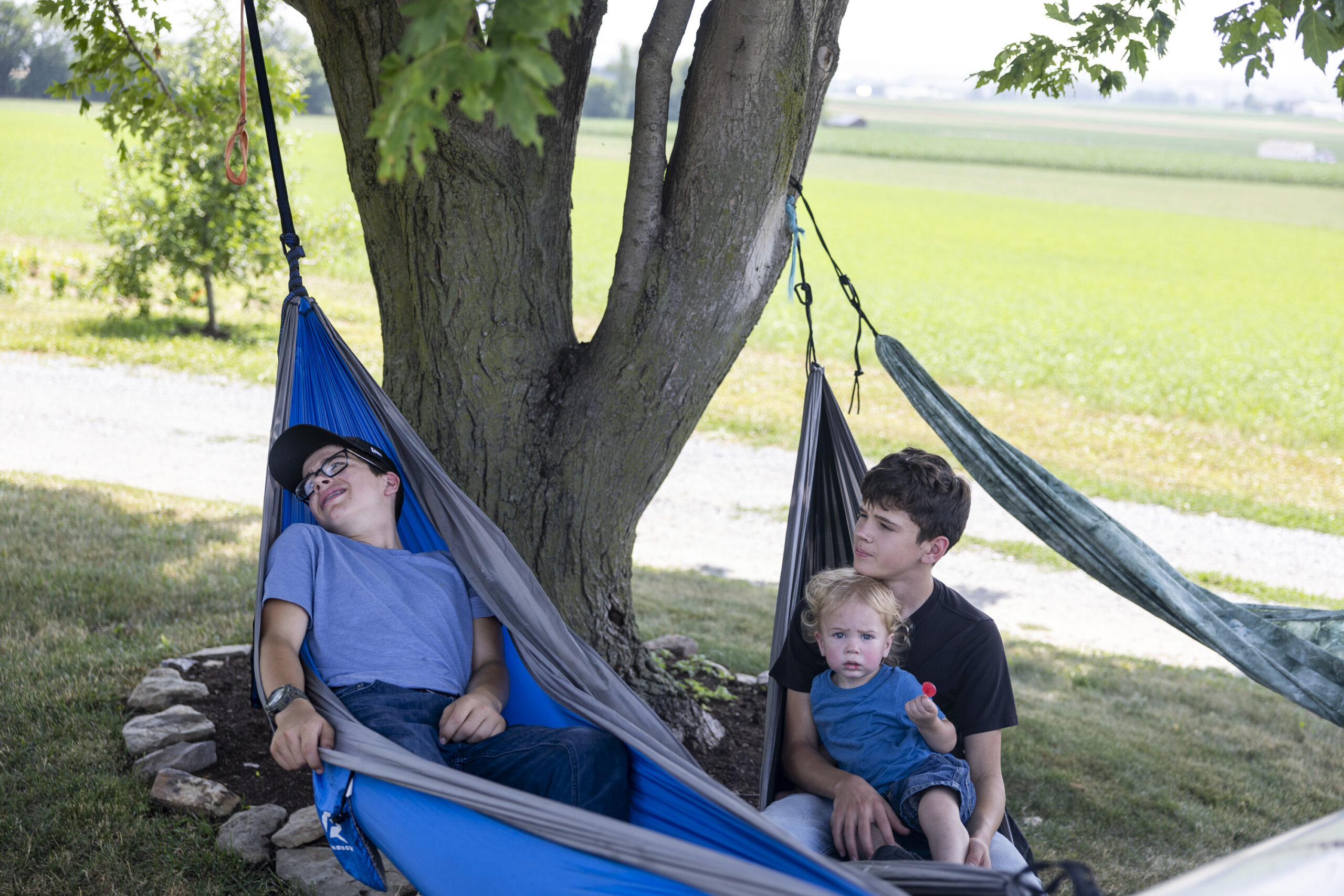
Gina and Shawn King’s sons relax in hammocks after being cooped up inside with measles for several days.
Measles at home
The Kings weren’t aware their children had been exposed to measles, but knew cases were spreading locally. When their two oldest sons, aged 14 and 15, began showing symptoms, they locked down their home.
They appreciated how people can be contagious before and after they experience symptoms. They have relatives with cancer and Down syndrome, conditions that could put them at risk of severe illness if they contracted measles.
“If you made the choice to not vaccinate, you knew there was a risk of getting sick,” King wrote in a tip sheet she created to share with other families. “We should care about others enough to be willing to make some sacrifices to protect vulnerable people.”
Grandparents offered to help care for the children, but the Kings declined for fear of getting anyone else sick.
Instead, friends and family left treats for the kids on the front porch, picked up grocery orders, and checked in through video chat.
Days four, five, and six, were the thorniest, King said. She draped chilled washcloths over the foreheads of her usually independent teens, brought them tea, and read books to them.
She spent at least one night sitting beside the bed of her 14-year-old son, whose coughing and nausea were so bad he couldn’t eat or drink, and she worried he’d become dehydrated.
“I just wanted to be there and keep an eye on him,” she said.
A few days after the boys started feeling well enough to go outside, the five girls, who range in age from 4 to 12, were sick. The baby experiencedthe most mild symptoms among the siblings.
King, who is vaccinated, also got sick, though her husband, who is not vaccinated, has yet to develop symptoms. Vaccinated people, in rare instances, can contract measles, and infection is more likely in an outbreak.
After being inside all day, it became part of the family’s routine to tuck the kids into the back of their family ATV with blankets and more ice pops, and ride around their property to say goodnight to the sheep, cows, horses, and fruit trees.
(function() {
var l2 = function() {
new pym.Parent(‘HE_MEASLES6.html’,
‘https://media.inquirer.com/storage/inquirer/projects/innovation/arcgis_iframe/HE_MEASLES6.html’);
};
if (typeof(pym) === ‘undefined’) {
var h = document.getElementsByTagName(‘head’)[0],
s = document.createElement(‘script’);
s.type = ‘text/javascript’;
s.src = ‘https://pym.nprapps.org/pym.v1.min.js’;
s.onload = l2;
h.appendChild(s);
} else {
l2();
}
})();
Community support
Elsewhere in Lancaster, church communities and friend groups are encouraging people who are sick to stay home, as well asthose who are unvaccinated with a higher risk of severe illness.
Claudia Beiler, a Lancaster mother of five and a Christian wellness influencer,said she has dropped off vitamins, coffee, and dinner for friends and others in her community who were quarantining at home.
Beiler has posted frequently to her more than 110,000 Instagram followers about her decision not to vaccinate her children. She has also offered tips about how to weather measles cases at home.
Like the Kings, she says families who don’t vaccinate must avoid spreading the virus to vulnerable people.
“There’s a seriousness I’m proud of,” she said. “It feels like a lot of care and kindness.”
At Penn Medicine Lancaster General Hospital, physician JeffreyMartin is heartened when he hears that residents have decided to isolate themselves when diagnosed with the virus. He sees it as a measure of the community spirit inherent to Lancaster County.
But isolating once symptoms emerge isn’t enough to protect the community, since the virus can spread days before the first sneeze or cough. The disease’s signature rash typically does not appear for several days.
“‘I can accept the risk’ doesn’t play well with infectious disease,” he said. “Creating space for people to think about that on another level is really important.”
Amid the latest outbreak, Martin said, clinics run by the state health department and Penn Medicine have seen high attendance, with unvaccinated patients choosing to get the shot.
Martin and his colleagues don’t ask many questions about why: “We’re just thankful that people are showing up,” he said.
A teenager who authorities say killed a Penn State student surrendered to Philadelphia police on Thursday, one day after U.S. marshals captured a second teen wanted in the slaying more than 1,700 miles from the South Philadelphia street where the crime occurred.
Smith and Azzubair Outen-Fleming, 16, are expected to face charges of murder, robbery, criminal conspiracy, illegal possession of a firearm, and related crimes in the June 6 death of William “Billy” Schmidt.
Both teens had been on the run until Wednesday night, authorities said, when members of the U.S. Marshals Service arrested Outen-Fleming at a house in Colorado Springs, Colo.
Smith remained at large until Thursday.
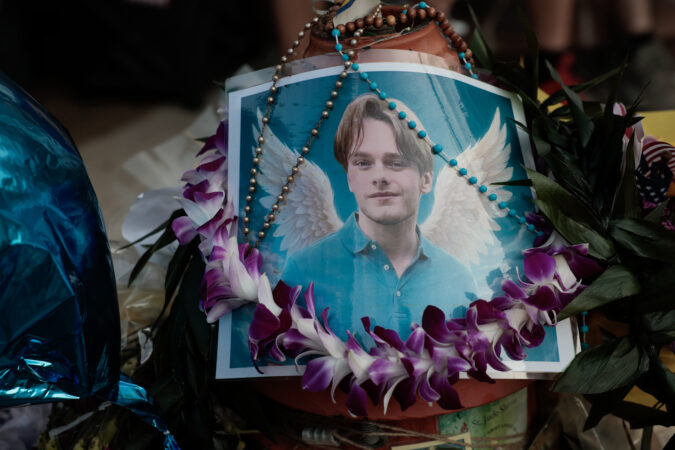
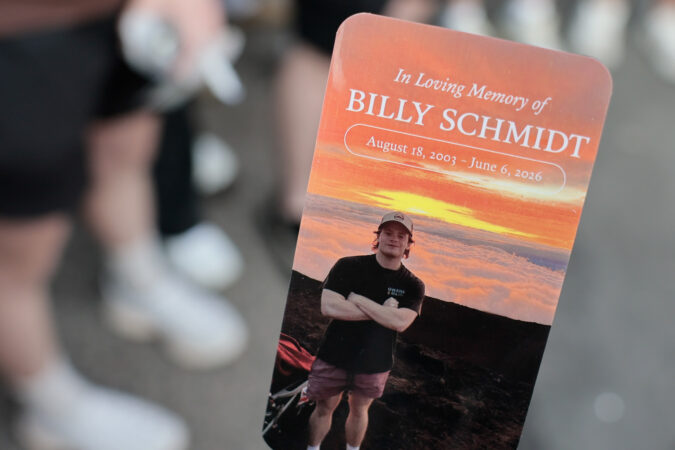
Police have said Outen-Fleming and Smith killed Schmidt, 22, shortly after 1 a.m. as he walked toward his South Philadelphia home.
According to prosecutors, surveillance video captured two masked people — identified by investigators as Outen-Fleming and Smith — robbing Schmidt of his cell phone, searching his pockets, and then, moments later, shooting him.
Smith, they said, is accused of firing the fatal shot.
The teenagers fled after the shooting, police said.
On Wednesday, prosecutors also announced charges against Outen-Fleming’s stepfather, Donte Abdulmalik, who they said helped him evade authorities after the killing.
Abdulmalik was charged with hindering apprehension, obstruction of justice, tampering with evidence, and related crimes.
Deputies with the U.S. Marshals Service’s Violent Offender Task Force tracked Outen-Fleming this week to a house in southern Colorado Springs with “ties to his family in Philadelphia,” Supervisory Deputy U.S. Marshal Robert Clark said. After conducting surveillance, deputies arrested him there late Wednesday.
Schmidt’s father, William, did not return a phone call Thursday afternoon, and attempts to reach other family members were unsuccessful.
Philadelphia police spokesperson Sgt. Eric Gripp said it was not clear when Outen-Fleming would be returned to Philadelphia.
A teen wanted in the shooting death of Penn State student William “Billy” Schmidt in South Philadelphia last month was apprehended in Colorado, the U.S. Marshals Service said Wednesday night.
Azzubair Outen-Fleming, 16, was taken into custody in Colorado Springs at the home of a distant relative, the U.S. Marshals Service said. The teen was being housed at the Zebulon Pike Youth Center awaiting extradition to Philadelphia.
Earlier on Wednesday, District Attorney Larry Krasner announced the arrest of Outen-Fleming’s stepfather for allegedly hindering the police investigation into the slaying of Schmidt.
Donte Abdulmalik, 35, was charged with hindering apprehension, obstruction of justice, tampering with evidence, and related crimes, Krasner said Wednesday.
Prosecutors said Abulmalik helped his stepson leave the city. He is not accused of participating in the homicide.
The teens will face charges of murder, robbery, criminal conspiracy, illegal possession of a firearm, and related offenses, Krasner said.
He suggested that the investigation could involve others, describing the charges against the two teenagers and Abdulmalik as “a smaller part of a bigger picture.”
“I am not telling you that these are the only people involved,” Krasner said during a news conference Wednesday. “I’m not telling you that this investigation is over or that we have all the answers yet.”
Philadelphia police have said Schmidt was walking home when two masked people approached him. During what investigators say was an attempted robbery, one of the suspects — whom Krasner identified as Smith — shot Schmidt.
Surveillance camera footage shows that one suspect took Schmidt’s phone, prosecutors said Wednesday, then rifled through his pockets before knocking him to the ground.
Additional footage later shows Schmidt walking behind the suspects, before one throws a phone down the block and the other fires a bullet into Schmidt’s chest.
Krasner declined to say whether the gun used to kill Schmidt had been recovered.
Investigators say surveillance cameras captured the suspects before and after the shooting. One was wearing a gray hooded sweatshirt with a hand-drawn “KONFUSED” logo and a skull-and-crossbones sketched in black marker on the front, according to the footage. After the shooting, police said, both suspects fled wearing white T-shirts.
Philadelphia police and the U.S. Marshals Service Fugitive Task Force are searching for the remaining teenager. Both agencies have offered rewards for information leading to the arrests of both teens. Krasner said Smith has ties to Philadelphia’s Point Breeze neighborhood and Delaware.
Anyone with information may contact the U.S. Marshals Service at 1-866-865-8477 or submit a tip online through its website: usmarshals.gov. Tips can also be provided to Philadelphia police at 215-686-3334 or 215-686-8477.
Universities should not need permission from sports conference administrators to engage with Congress on legislation that will shape their future. That statement should be obvious.
As what had been a slow-brewing crisis in college athletics comes to a boil, Washington is finally paying attention.
For years, universities have struggled to manage a system increasingly shaped by sweeping court rulings, a patchwork of often-contradictory state laws, and endlessly competing commercial interests rather than any coherent national policy. Athletes navigate a tangle of name, image, and likeness rules, which govern the compensation they can receive and whichvary widely by state. Administrators make decisions without knowing what the rules will look like six months from now. And fans watch their favorite players transfer from campus to campus with few reliable guardrails in place.
Yet as Congress considers the Protect College Sports Act, the most significant attempt in years to establish a national framework for college athletics — many universities appear reluctant to engage publicly while conference administrators increasingly position themselves as the primary voice speaking on behalf of their members.
That should concern every university trustee, president, donor, alumnus, college athlete, and policymaker.
This is not a debate about whether the Protect College Sports Act is perfect. It isn’t. Nor is it a debate about whether conference commissioners are talented leaders. Many are.
This is a debate about who should speak for universities when the future of higher education and intercollegiate athletics is being decided.
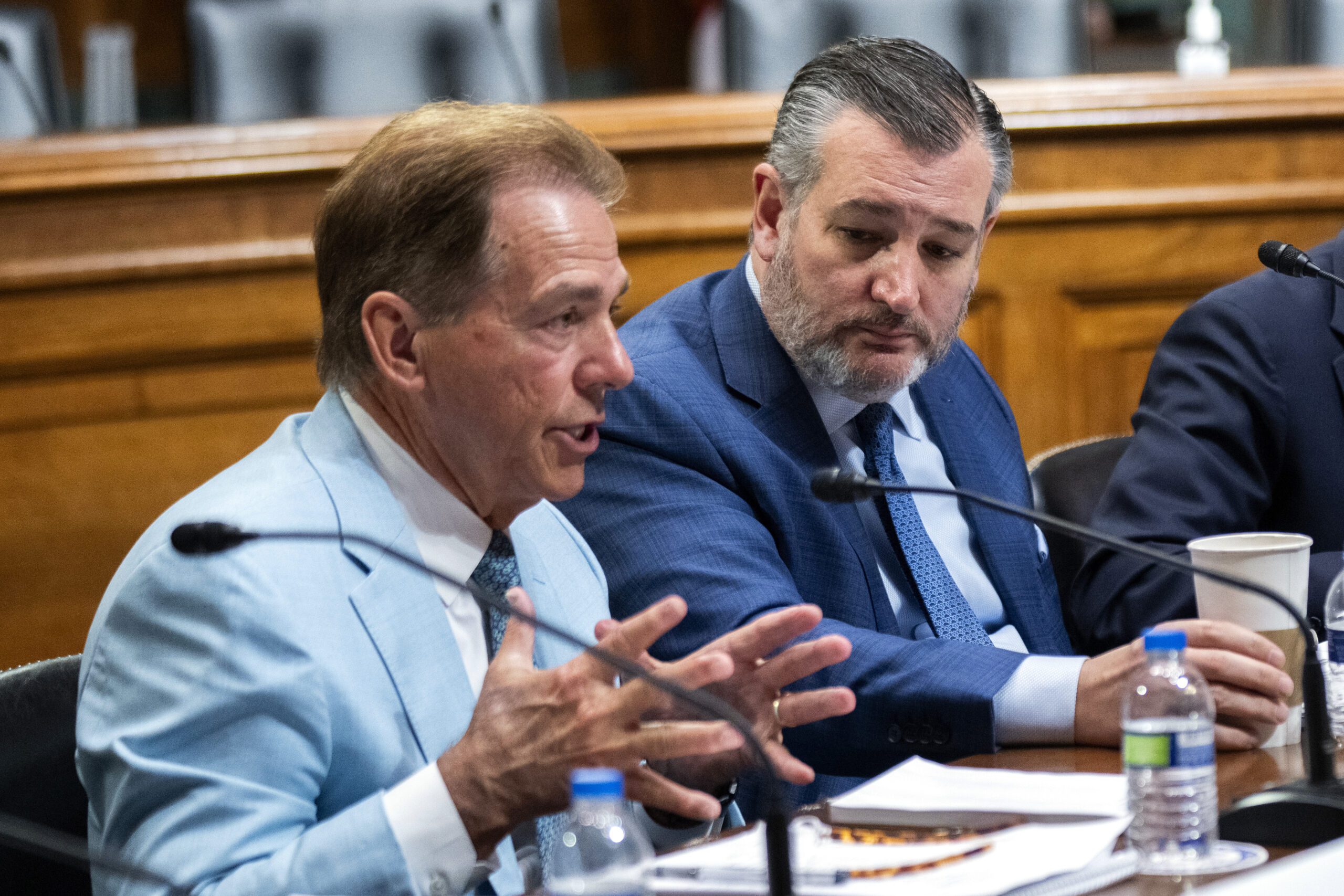
Nick Saban (left), the former University of Alabama football coach, speaks as Sen. Ted Cruz (R., Texas) listens during a roundtable on the future of college athletics on Capitol Hill in March 2024.
The current system is broken — and there are only two realistic options for what comes next: a federal framework that restores stability and national standards, or the continuation of today’s chaos. There is no option three.
What troubles me most is not opposition to the Protect College Sports Act. Reasonable people can disagree. What troubles me is the notion that universities should remain silent while others speak for them.
As a Penn State graduate, two-time NCAA All-American wrestler, donor, parent of a future Penn State athlete, and someone who has spent four decades building businesses and advising organizations throughout college athletics, I have watched this moment unfold from nearly every angle.
My perspective comes from life as an athlete, entrepreneur, executive, adviser, and parent. From the wrestling mat to the boardroom, I have never seen college athletics facing greater uncertainty than it does today.
Congress is not asking the Big Ten what is best for Penn State. Congress is asking stakeholders what is best for college athletics.
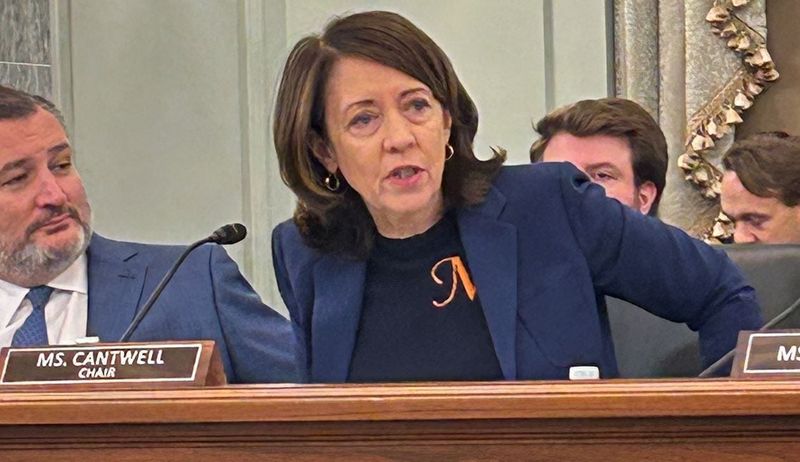
Sen. Maria Cantwell (D., Wash.) recently challenged the growing influence of conference administrators in the debate over the Protect College Sports Act.
Lawmakers are finally engaging. They are asking questions. They are seeking input from universities, athletic leaders, and stakeholders across the country. Penn State should be part of that conversation.
If conference administrators are prohibiting university leaders, trustees, athletic directors, donors, and other stakeholders from engaging directly with lawmakers or expressing support for legislation, then conference employees are attempting to silence the voices of the institutions that created them. That is not their role.
Universities created the conferences. Conferences exist to serve universities — not to control them.
If institutions with Penn State’s stature are unwilling to engage directly with lawmakers, then the future of college athletics will increasingly be shaped by others.
The stakes extend far beyond football. As a former student-athlete, I know firsthand that the value of college athletics goes well beyond the sports that generate the largest television audiences. Wrestling, volleyball, gymnastics, swimming, track and field, soccer, softball, lacrosse, and dozens of other sports depend on a healthy and sustainable collegiate model.
The opportunities those programs create changed my life, as they have changed the lives of countless others. They deserve to exist for future generations as well. That is what is at stake.
The decisions being made in Washington will affect every university in the nation. They will shape opportunities for college athletes for decades to come.
Pennsylvania’s universities deserve a voice in that discussion. Penn State certainly does — and it should take its seat at the table and speak with its own voice, as should other institutions that have recently voiced independent concerns, including Michigan, Ohio State, and USC.
Not because the legislation is perfect. Not because every stakeholder agrees. But because leadership requires engagement.
Penn State has never been a follower. It shouldn’t start now.
Chris Bevilacqua is a veteran of four decades in sports, media, and technology as an entrepreneur, operator, investor, and adviser, including founding the nation’s first 24-hour college sports television network. He is a 1986 graduate of Penn State where he was a two-time NCAA All-American on the wrestling team and also competed internationally for USA Wrestling.
Pennsylvania health officials and doctors on Friday said several people have been hospitalized amid a growing measles outbreak that has spread to six counties in the southeastern and central parts of the state.
At a news conference in Lancaster on the outbreak, which has sickened 72 people in the area since April, health officials stressed that vaccination was the best defense against the highly contagious disease.
Secretary of Health Debra Bogen said she could not comment on the exact number of people hospitalized to protect their privacy, as the number was still relatively small.
About one in 10 people who contract measles will require hospitalization, and three people were treated at hospitals in Lebanon County at the onset of the outbreak in late April.
Fahmida McGann, an infectious disease doctor at Penn State Health, said the health system’s Lancaster Medical Center has treated patients who needed to be hospitalized for several days with symptoms including serious electrolyte abnormalities and liver and kidney dysfunction.
Measles can infect up to 90% of unvaccinated people who come into contact with the disease, which can linger in the air for up to two hours.
Newborns and young children are at higher risk for serious complications, but adults can also experience them, especially if their immune systems are weakened. Doctors at Friday’s news conference said they had treated both adults and children in hospitals.
The state response
In the current outbreak, state officials have recorded 41 cases in Lancaster County, 20 in Lebanon County, six in Northumberland County, two each in Berks and Dauphin Counties, and one in York County.
Overall, the state has seen 84 measles cases this year, more than five times the cases recorded in all of 2025.
The outbreak is spreading largely among people who are unvaccinated, Bogen said.
“These are not numbers,” Bogen said. “They are children, parents, neighbors and friends.”
The health department is conducting contact tracing to detect cases, and working with local healthcare providers and community organizations to ensure residents have access to vaccines and accurate information on their efficacy and side effects.
(function() {
var l2 = function() {
new pym.Parent(‘HE_MEASLES2.html’,
‘https://media.inquirer.com/storage/inquirer/projects/innovation/arcgis_iframe/HE_MEASLES2.html’);
};
if (typeof(pym) === ‘undefined’) {
var h = document.getElementsByTagName(‘head’)[0],
s = document.createElement(‘script’);
s.type = ‘text/javascript’;
s.src = ‘https://pym.nprapps.org/pym.v1.min.js’;
s.onload = l2;
h.appendChild(s);
} else {
l2();
}
})();
Health providers in Lancaster have said they believe there were more cases in the area than officials were aware of. Bogen said the department was working with community members to build trust and ensure that cases get reported.
“People who are part of the community are really the key to the response, because we want people to know that if they call the department, we are here to help them,” she said.
The department has vaccinated more than 430 people at pop-up clinics in the region in the last two months, she said, and state-run health centers around Pennsylvania have administered more than 1,300 measles, mumps, and rubella vaccine doses this year.
“We’re not sitting back and just watching the virus spread,” Bogen said. “We will not slow down until this outbreak is over.”
It’s crucial that residents get vaccinated, she said, to protect people who cannot safely get the vaccine, like newborns and pregnant women, and people whose immune systems are weakened, like organ transplant recipients and cancer patients.
On Wednesday, the department recommended that physicians vaccinate infants and young children against measles early, beginning at 6 months, in affected areas. The same precautions should be taken by families with infants traveling to these areas.
The department has also hosted webinars for hundreds of healthcare providers across the state. Measles was considered eradicated decades ago, and many doctors practicing today have never seen a case, Bogen said.
Jeffrey Martin, a physician at Penn Medicine’s Lancaster General Hospital, said he last encountered a measles case 30 years ago, as a medical student in Colorado.
“I still remember that patient, a child with a high fever, red eyes, and the classic rash we learned about in textbooks. At the time it was an illness we were trained to recognize,” he said. “None of us imagined that one day measles would become so rare that most physicians would go their entire careers without ever seeing a case.”
Now, he said, physicians in Lancaster must keep measles in mind when they’re treating patients with respiratory symptoms. The virus’s early symptoms include a fever, a cough, and a runny nose — similar to other respiratory diseases — before patients develop a telltale rash.
“It underscores the importance of being especially thoughtful about how we identify and respond to possible cases,” he said.
It’s also key for families to call ahead to doctors’ offices if they’re experiencing measles symptoms, so physicians can prepare to treat them without exposing other patients, Martin said.
Lower vaccination rates
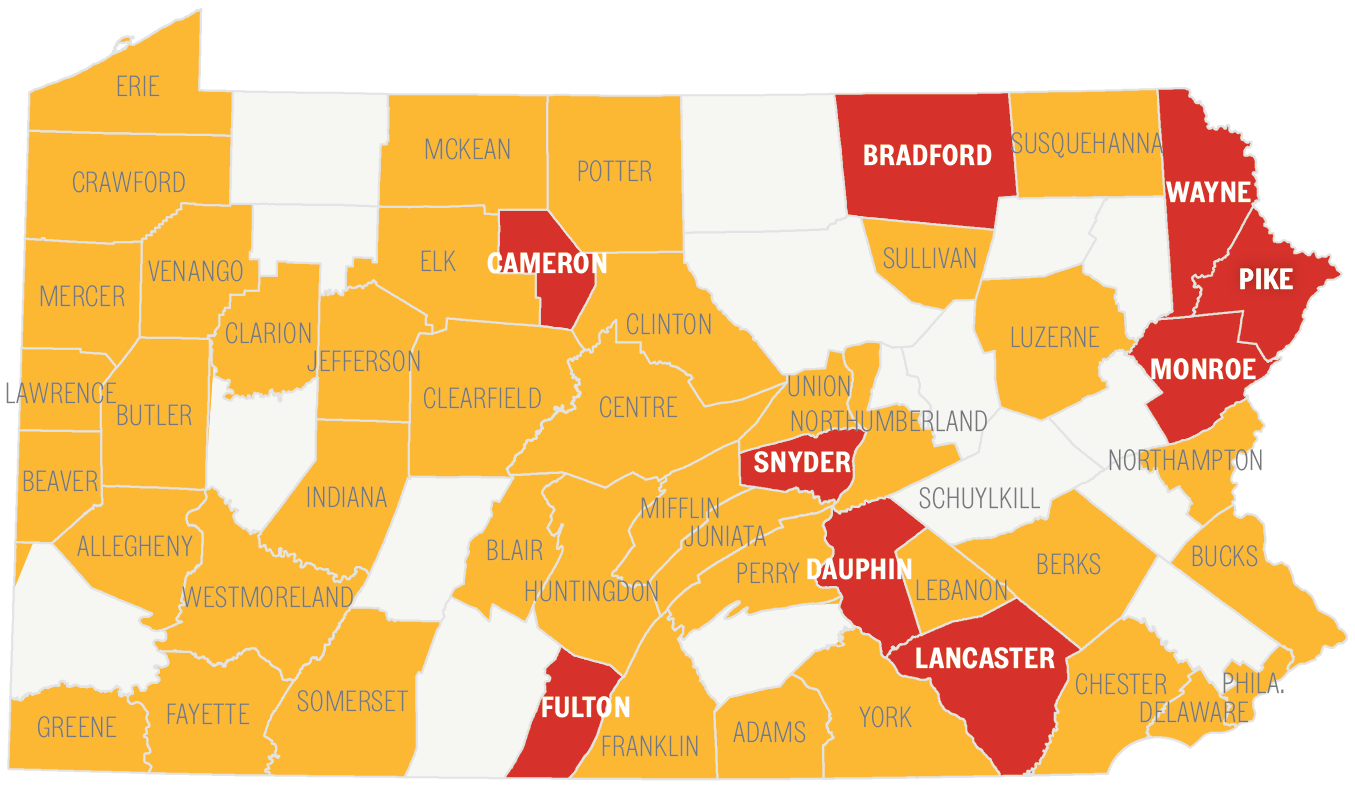
Vaccination rates among kindergarteners have decreased across Pennsylvania in recent years, and some counties affected in the current outbreak have particularly low rates, including Lancaster, where about 88.5% of kindergarten students are vaccinated.
Health experts say 95% of a community must be vaccinated to prevent the spread of the disease.
A map showing vaccination rates in kindergarteners for the 2024-2025 school year. Counties in yellow have vaccination rates between 95% and 90%. Counties in red have vaccination rates below 90%. To halt the spread of measles, at least 95% of a community must be vaccinated against the disease.
The state is working with schools to increase vaccination rates, Bogen said Friday.
Bogen said she hoped the new database would encourage schools with lower vaccination rates to reach out to healthcare providers to ensure students have access to vaccines.
“We want to make sure as a public health department that we’re ensuring that anybody who wants access to a vaccine has that,” she said.
“It is a defining characteristic of our community to help others, especially the most vulnerable, during times of crisis,” he said.
Residents now have an opportunity to help protect vulnerable people from measles by getting vaccinated, raising awareness about the disease, and helping doctors decrease exposures in care settings, he said.
“When vaccination rates are high, the virus has very little opportunity to spread. When gaps emerge, even small ones, measles can find a way back in because it is so contagious,” Martin said. “Ultimately what keeps measles rare is not luck. It’s the choices we make together to protect those who cannot protect themselves.”
Joseph E. McGettigan III, 76, of Media, longtime trial lawyer and legal consultant, former Philadelphia assistant district attorney, former Pennsylvania chief deputy attorney general, former Delaware County first assistant district attorney, former assistant U.S. attorney in Philadelphia, former Philadelphia first assistant district attorney, and former Pennsylvania senior deputy attorney general, died Thursday, Dec. 31, of lung inflammation at Lankenau Medical Center.
Born in West Philadelphia and a graduate of Temple University, Mr. McGettigan was a legal expert in sexual assault and murder cases. He litigated in hundreds of trials over more than three decades as a prosecutor for city, county, state, and federal governments, and won notable convictions in the murder case against multimillionaire philanthropist John E. du Pont in 1997 and the child sexual abuse case against then-Pennsylvania State University assistant football coach Jerry Sandusky in 2012.
He was, then-Delaware County District Attorney Patrick L. Meehan said in 1998, like “a fascinating character in a crime novel.”
He worked for four Philadelphia district attorneys over two stints in City Hall and spent a year in Iraq in 2008 and 2009 as a U.S. government resident legal adviser working to reestablish a criminal justice system after the fall of Saddam Hussein. For most of the last decade, he worked for the Philadelphia law firm of McAndrews Mehalick Connolly Hulse & Ryan P. C. “He was a wonderful guy, a faithful citizen, and an incredible lawyer,” Dennis McAndrews, founder of the firm, said in an online tribute.
The grandson of a Philadelphia police officer and son of a lawyer, Mr. McGettigan prosecuted one of the first sex-abuse cases involving a priest from the Archdiocese of Philadelphia in 1985 and oversaw a state Senate absentee-ballot scam case in 1993. “I’m not shocked by much of human depravity,” he said in a 2018 video interview with lifelong friend Dom Irrera. “I’ve seen a fair amount of it.”
In an online tribute, Judge Jack Stollsteimer of Delaware County Court called Mr. McGettigan a “legendary prosecutor, a larger-than-life personality, and an avenging hero to crime victims across our Commonwealth.” He was a favorite of the City Hall crowd, and colleagues called him “a true public servant,” “a great guy with a wonderful heart,” and “an extraordinary presence in the courtroom.”
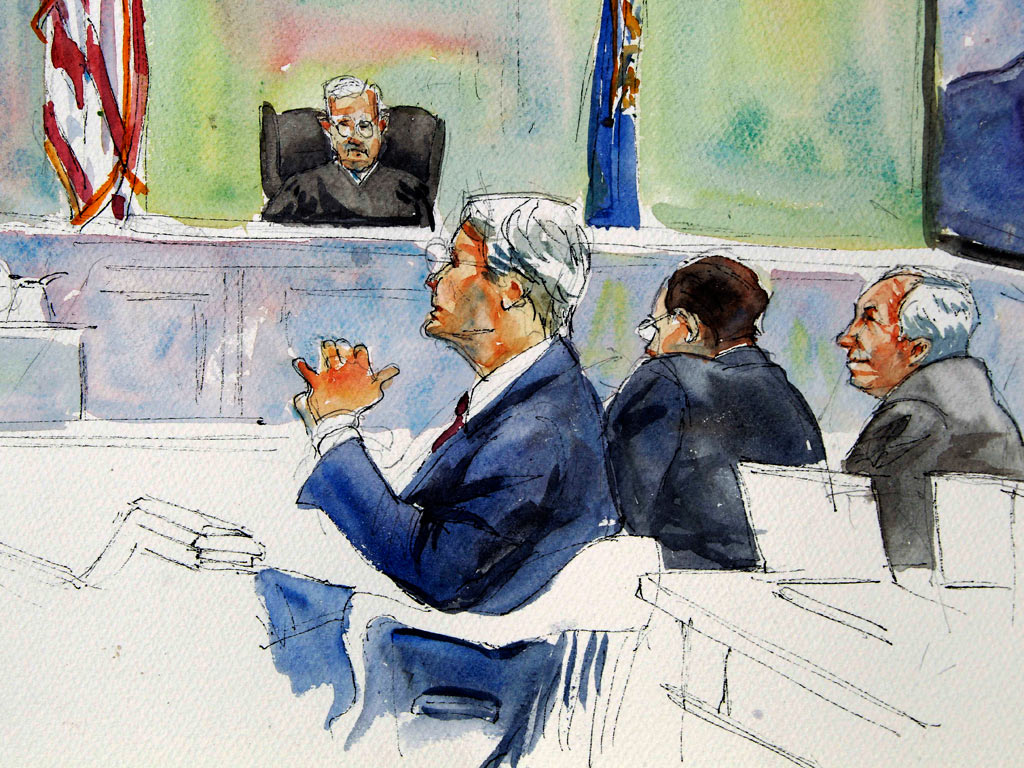
Mr. McGettigan (foreground) is shown in this courtroom sketch during the Jerry Sandusky trial in 2012.
Even those with whom he clashed praised Mr. McGettigan. Thomas A. Bergstrom, the Philadelphia lawyer who represented du Pont, said in 2011: “He’s a formidable adversary … very principled. If Joe doesn’t agree with you, he’ll let you know. If he’s going to hit you, it will be a punch in the nose, not a stab in the back.”
Witty and naturally engaging, Mr. McGettigan interrupted his legal career after the du Pont case to work briefly in Hollywood as a legal content adviser for the short-lived TV series Philly.The show starredKim Delaney as a tough defense attorney in Philadelphia, and Mr. McGettigan played a police detective, not a prosecutor, in a courtroom scene in one episode in 2002.
He also worked briefly as a consultant and manager for a private security company in Virginia, was a legal analyst for TV talk shows, and mentored other lawyers. He graduated summa cum laude with a bachelor’s degree in English literature from Temple and earned his law degree at the University of San Diego School of Law in 1982.
Mr. McGettigan played basketball in high school, on Philly playgrounds, and later whenever he could. Longtime college basketball coach and lifelong friend Fran O’Hanlon called him “a great friend who would do anything for you.”
His sister Mary said: “He was complex. He appeared often to be a hard-nose tough guy. But there was a soft side to him. He wanted to help people who were vulnerable.” His sister Patty said: “He left the world a better place.”
Joseph Edward McGettigan III was born March 5, 1949. An altar boy at church, he grew up with six sisters and a brother, and he instigated many dinner-table debates with his siblings and parents about all kinds of subjects.
“He kept us on our toes,” his sister Mary said. “He had a strong sense of justice, of doing the right thing.”
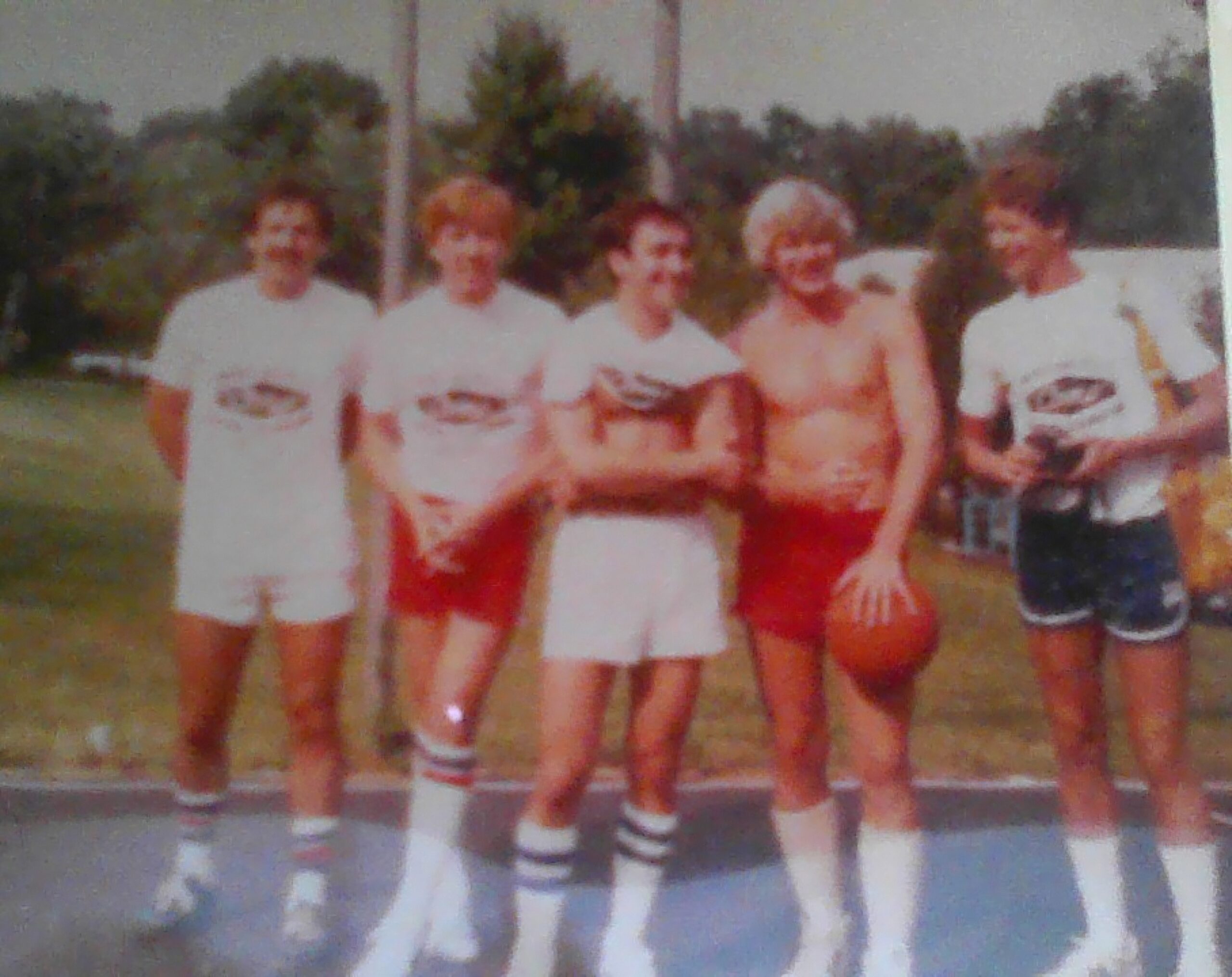
Mr. McGettigan (second from right) liked nothing better than playing hoops with friends.
He married Gay Warren, and they lived in Media and Naples, Fla. “Gay was Joe’s rock,” his sister Mary said. “He was devoted to her, and she to him.”
Mr. McGettigan loved music, reading, and writing, and told Irrera in 2018 that his favorite authors were William Shakespeare and Joseph Conrad. He was fun and funny, his siblings said, a raconteur with a large personality.
“Joe was an outlier in a family of bookish nerds,” his sister Jeanne said. “We followed his youthful adventures with great amusement and his later accomplishments with pride and respect. His generosity changed lives for the better.”
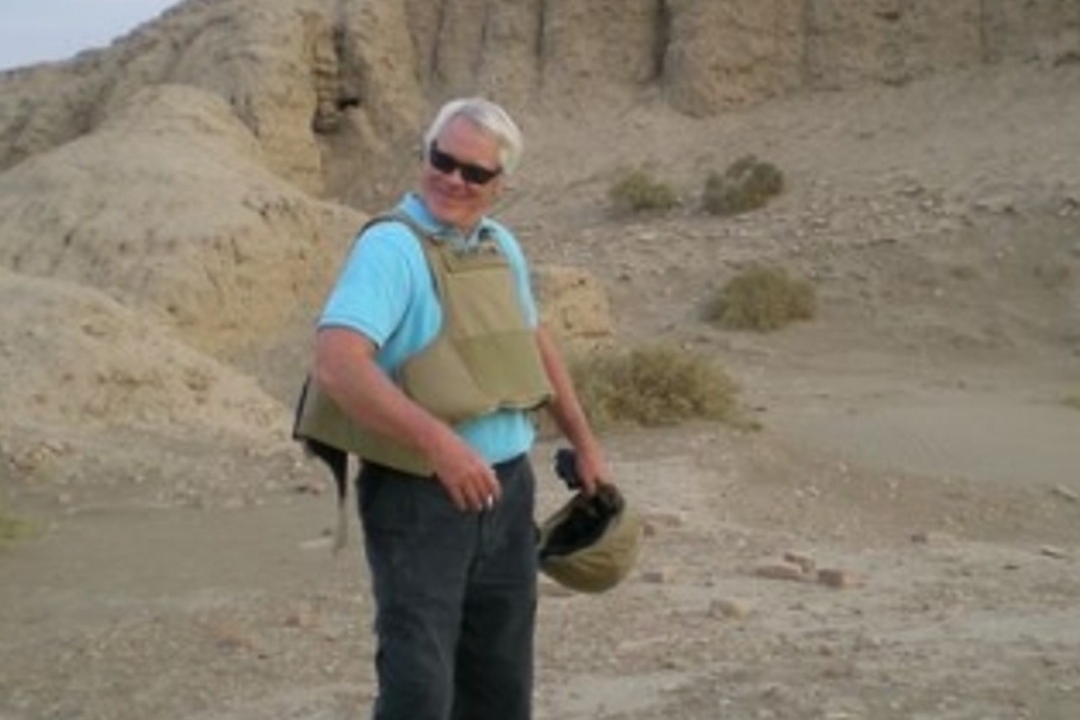
Mr. McGettigan spent a year in Iraq helping local officials revive their justice system.
One time, when they were young, his brother Michael tried to lie about losing Mr. McGettigan’s football. So Mr. McGettigan grilled him about the details and eventually extracted a confession.
“I gave it all up,” Michael McGettigan said, “the first of many malefactors to find relief in telling the whole truth and nothing but to Joseph E. McGettigan III.”
In addition to his wife and siblings, Mr. McGettigan is survived by his mother, Ruth, and other relatives. A sister died earlier.
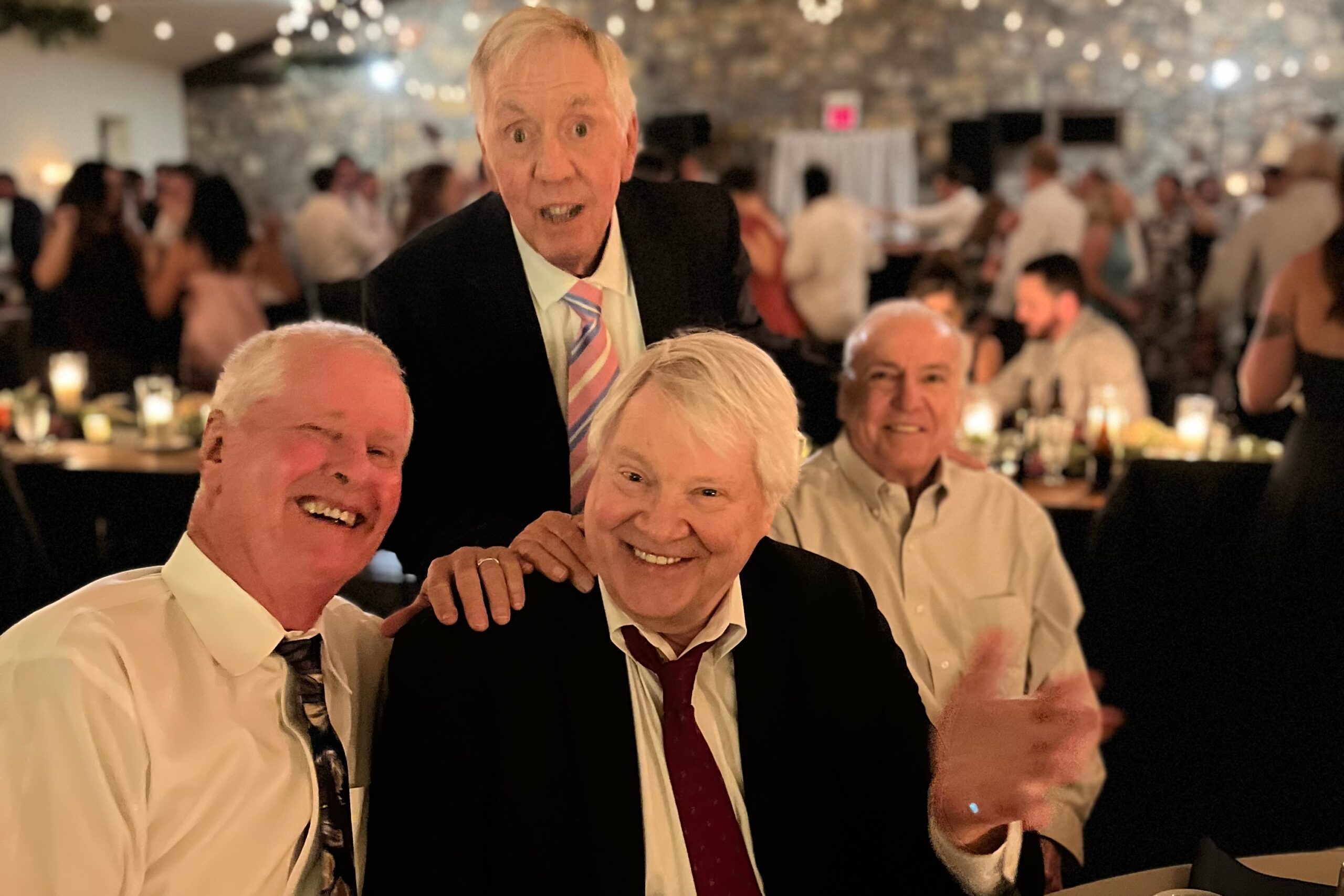
Mr. McGettigan (front right) always seemed to be surrounded by friends.
Visitation with the family is to be from 10 to 10:45 a.m. Saturday, March 7, at St. Francis de Sales Church, 4625 Springfield Ave., Philadelphia, Pa. 19143. A Funeral Mass is to follow at 11 a.m.
Donations in his name may be made to the Tunnel to Towers Foundation, 2361 Hylan Blvd., Staten Island, N.Y. 10306.
“Everyone wanted to be Joe’s friend,” a colleague said in a tribute.
When a messy land dispute between Gov. Josh Shapiro and his backyard neighbor poured into public view via federal court filings earlier this month, it jolted his sleepy Montgomery County neighborhood.
The picturesque suburban community tucked behind Penn State Abington is usually quiet and boring, current and former neighbors said, just the way they like it. It’s a great place to raise their kids, and where Shapiro’s four children have grown up. Among the biggest points of contention is when one neighbor fails to say hello to another. Many houses in the neighborhood sit a quarter-mile away from the main road, behind winding, tree-lined driveways. Some of the homes have been purchased in recent years for upward of $1 million. In many ways, the neighbors said, it’s the perfect picture of the suburban American dream.
But this month, the neighborhood also became the battleground for dueling lawsuits between Shapiro and his neighbors, Jeremy and SimoneMock, bringing tension to atranquil community.
What’s more: Shapiro’s office alleges the lawsuit against him is a political hit job to hurt him as he runs for reelection, citing the Mock family’s communications with the top Republican in the state Senate and his frequent sparring partner, President Pro Tempore Kim Ward. The family’s attorney in the lawsuit is also a local lawyer known to represent Republican causes, and whose former clients include the political campaigns of President Donald Trump and U.S. Sen. Dave McCormick.
The Mocks, meanwhile, argue in their lawsuit — filed in the U.S. District Court for the Eastern District of Pennsylvania — that Shapiro has used his powerful position as governor to infringe on their constitutional rights and take their land.
The disputed land — a 2,900-square-foot strip between Shapiro and his neighbor’s lawn — had not been an issue between them until security updates were proposed to Shapiro’s home after a Harrisburg man firebombed the state-owned governor’s residence last April while Shapiro and his family slept inside, both the Shapiros and Mocks said in court filings. The man, Cody Balmer, later pleaded guilty to attempted murder and related crimes for the attack, and was sentenced to 25 to 50 years in prison.
Afterward, state police proposed security upgrades to Shapiro’s personal residence and the state-owned governor’s mansion in Harrisburg, suggesting the installation of an eight-foot fence along the perimeter of Shapiro’s personal property, along with tree trimming, a new security system, and other landscaping efforts expected to cost more than $1 million, Spotlight PA reported. The proposed taxpayer-funded improvements to the Montgomery County home — criticized by the Republican-controlled state Senate — came in addition to the more than $32 million in repairs and security upgrades made to the governor’s mansion in Harrisburg, which included the replacement of an existing security fence there.
(function() { var l = function() { new pym.Parent( ‘shapiroyard__graphic’, ‘https://media.inquirer.com/storage/inquirer/ai2html/shapiroyard/index.html’); }; if(typeof(pym) === ‘undefined’) { var h = document.getElementsByTagName(‘head’)[0], s = document.createElement(‘script’); s.type = ‘text/javascript’; s.src = ‘https://pym.nprapps.org/pym.v1.min.js’; s.onload = l; h.appendChild(s); } else { l(); } })();
The Shapiros allege in a countersuit that they believed the disputed piece of lawn was theirs, and that they had maintained it for 22 years. When a land surveyor hired by the state to help with the security upgrade projects found that the Shapiros did not own the disputed part of the land, the Shapiros approached the Mocks in July to purchase or lease it.
Ultimately, the talks fell apart, as the neighbors blamed one another for being unwilling to make a deal.
Any resolution is now likely to be decided in court.
The Mocks in their lawsuit — represented by Delaware County attorney Wally Zimolong, who describes himself on his website as the “‘go-to’ lawyer in Pennsylvania for conservative causes and candidates” — accused Shapiro in his official capacity as governor of an “outrageous abuse of power” by illegally occupying a part of their yard that they pay taxes on. The Shapiro family quickly filed a countersuit in the Montgomery County Court of Common Pleas, arguing they have control of the land through adverse possession, a legal mechanism through which a person can gain ownership of a property they’ve actively used for at least 21 years.
The Mocks have asked a federal judge to find that Shapiro, as governor, violated their constitutional rights; as well as prohibit state officials from trespassing on their property moving forward; and to award them damages. Private attorneys representing Shapiro have asked the Common Pleas Court to find they are the owners of the disputed part of the yard and refund attorney fees.
‘Everybody got along’
Shapiro and his wife, Lori, have lived in the same home in the neighborhood for 22 years, purchasing the four bed, three-and-a-half bath property in June 2003 for $465,000 as the young couple wanted to move back to the Philadelphia suburbs after spending several years working as staffers on Capitol Hill. Shapiro ran for state House the following year and represented the area until 2011, in what was the beginning of his decades-long political career that has helped flip Montgomery County, the state’s third-most populous county, from red to blue.
Several current and former neighbors in the Philadelphia suburb raced to defend the Shapiros as great neighbors, adding they don’t mind the additional state police presence as his star rises as a top Democrat and after the governor and his family were victims of political violence. Others said they’ve had a good relationship with the Mocks so far.
“We had nothing but pleasant experiences with Josh. I have nothing that I can say negative in any way, shape, or form,” said Eileen Simon, who used to live next door to Shapiro until 2020. Simon lived in the neighborhood for 48 years. She hasn’t spoken to the Shapiro family in a few years, but recalled that her grandchildren would often play on the Shapiro’s backyard swing set.
“We were all neighbors together, and everybody got along,” Simon added. “I’m devastated that this has happened.”
Cathy Keim, who moved out of the neighborhood seven years ago and shared a boundary line with the Shapiros for some of the nearly 40 years she lived there, also recalled a neighborhood where everyone got along. Keim said she believes the current dispute is petty, and added thatwhen Shapiro first built his swing set behind her pool fence, he mistakenly put it on her property. When the Keims alerted him to it, Shapiro quickly moved it back onto his own backyard, she said.
“That area, it looked like it should be theirs because of the pool fence,” she said. “I had to tell them, ‘that’s our property,’ and they very quickly moved it.”
Stephanie Berrong, whose backyard also abuts the Shapiro’s property, said in a text message that after the arson attack, the Shapiros asked if they could remove a tree on her property to build the security fence. Berrong and her husband agreed, and said the Shapiros were “respectful of our time and our property” throughout the tree-removal process. She did not comment on the Mocks.
“We just felt it was the right thing to do, considering someone tried to burn down the governor’s mansion with them, and their kids, inside,” Berrong added.
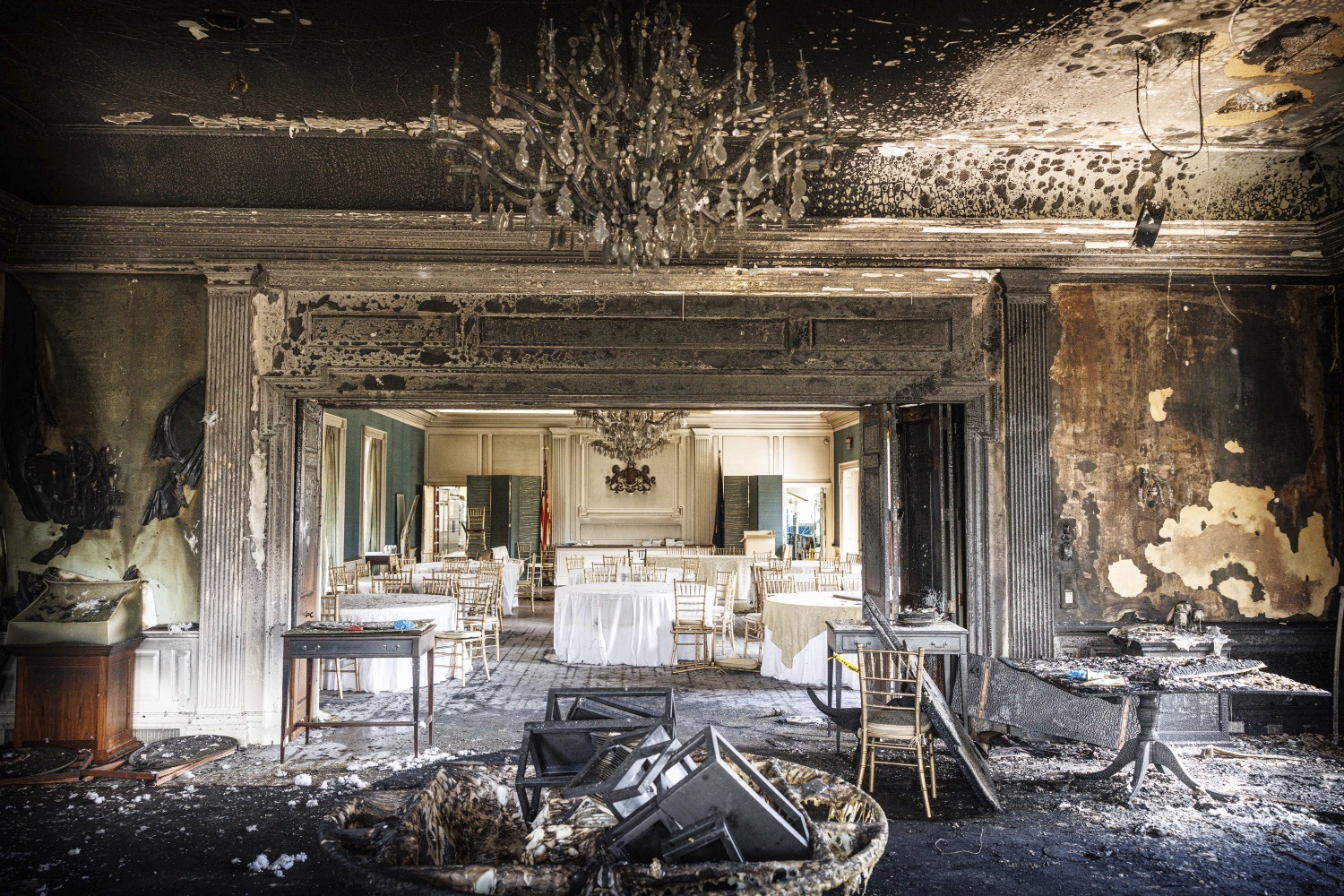
This image provided by Commonwealth Media Services shows damage after a fire at the Pennsylvania governor’s mansion while Democratic Gov. Josh Shapiro and his family slept inside on April 13, 2025, in Harrisburg.
State police never built the security fence that started the land feud, instead opting to surround Shapiro’s home with updated landscaping. That escalated the conflict with the Mocks. In their lawsuit, the Mocks allege that despite ongoing negotiations over the strip of land, the Shapiros began planting arborvitae-type trees and other plants on the Mocks’ property, flying drones over it, and threatening to remove healthy trees. The lawsuit also accuses state police of “chasing away” contractors who came to work in the Mocks’ yard.
The Shapiros, meanwhile, argue in court filings that the Mocks’ alleged harassment is causing them irreparable harm and further threatening their safety. According to a source briefed on the conflict, the Mocks at one point posted a series of signs on the land and a tree that read “Hippity hoppity, stay off my property,” and “This is my property,” among other efforts to antagonize the Shapiros.
John Ginsberg grew up in the home now owned by the Mocks during the 1970s and ‘80s, and said he never thought of their property as stretching into the land now owned by the Shapiro family.
“It just wasn’t an area that was used,” said Ginsberg, who now works as an attorney in Washington. “It wasn’t maintained, and it was brambly.”
Another man, who requested anonymity to speak freely about his neighbors, said he lived next to the Shapiros for more than 21 years, and has for decades shared the upkeep on a portion of the property highlighted in the lawsuit with Shapiro, taking turns clearing and replanting the area.
“I don’t think either of us thought twice about that little strip of land,” he said.
The Shapiros have been great neighbors, he said, and the Mocks have been “good neighbors to us,” describing them as a “nice young family.”
Political allegations
Shapiro has faced ongoing scrutiny from the state Senate for implementing the $1 million in security upgrades to his personal home, in addition to $32 million in repairs and security upgrades to the governor’s mansion following the arson attack. All of the upgrades were implemented without legislative approval due to their urgent nature.
A Senate committee in December took the unprecedented step to subpoena Shapiro over the security upgrades to his personal home, arguing that his administration had not been transparent in previous inquiries about how state taxpayer dollars were being used to upgrade security at Shapiro’s personal home.
Ward, the top official in the state Senate, has been critical of the state spending on security upgrades, saying that taxpayer dollars should not be funding security upgrades to Shapiro’s private residence.
Shapiro’s office is quick to note that Ward has been in contact with the neighbors taking the governor to court — saying that helps show the land dispute lawsuit is politically motivated.
Ward, of Westmoreland County, told ABC27 earlier this month that she had had contact with the Mock family on two occasions. A person close to Ward said that the senator is an acquaintance of the Mocks, but that the family had already obtained legal counsel by the time Ward reached out to them, and that the lawmaker did not encourage Shapiro’s neighbors to take any legal action against him.
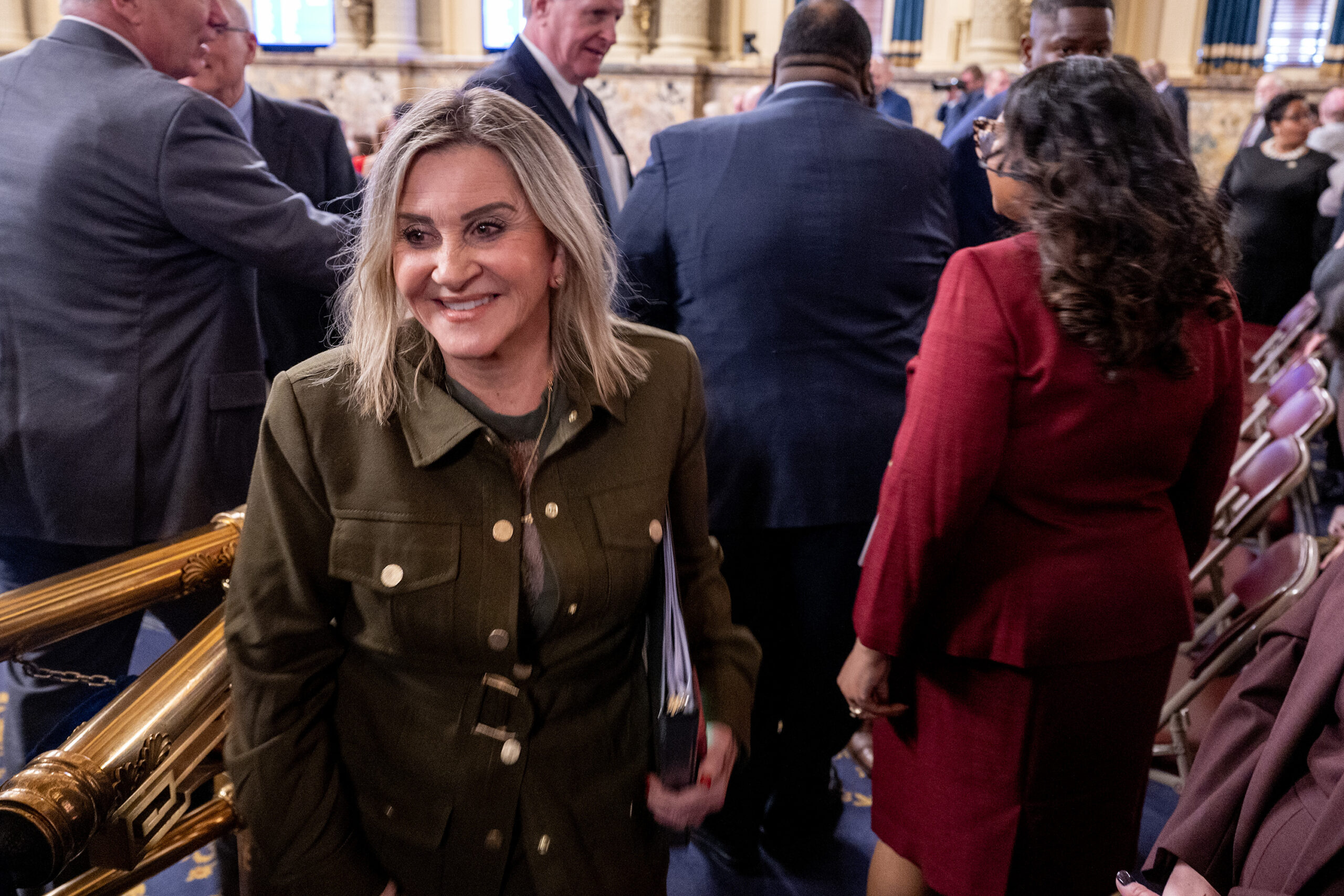
Senate President Pro Tempore Kim Ward leaves the House chamber Feb. 3 following Gov. Josh Shapiro annual budget proposal in Harrisburg.
Jeremy Mock has owned a small coffee business in Ward’s legislative district in western Pennsylvania since 2022, according to public business filings. He and his wife moved to the Abington Township neighborhood in 2017, and have had no issues with the Shapiros until the fence feud, according to both parties’ lawsuits.
“This dispute over a small piece of the Shapiros’ backyard has been turned into a shameless political stunt by their neighbors and members of the Republican State Senate, who are now harassing and exploiting the Shapiros,” said Rosie Lapowsky, a spokesperson for Shapiro, without directly naming Ward.
Zimolong, the Mocks’ attorney, said the fact that the couple was willing to work with the Shapiros to find a solution dispels any claim that their suit is politically motivated. The Mocks could have said “no” from the outset when the Shapiros approached them, he argued, but instead participated in negotiations.
“At base, this is a straightforward defense of the property rights of two innocent owners, who were living peacefully next to the Shapiros for over nine years,” Zimolong added in a statement.
“Even today, the Mocks remain open to resolving the dispute,” Zimolong said.
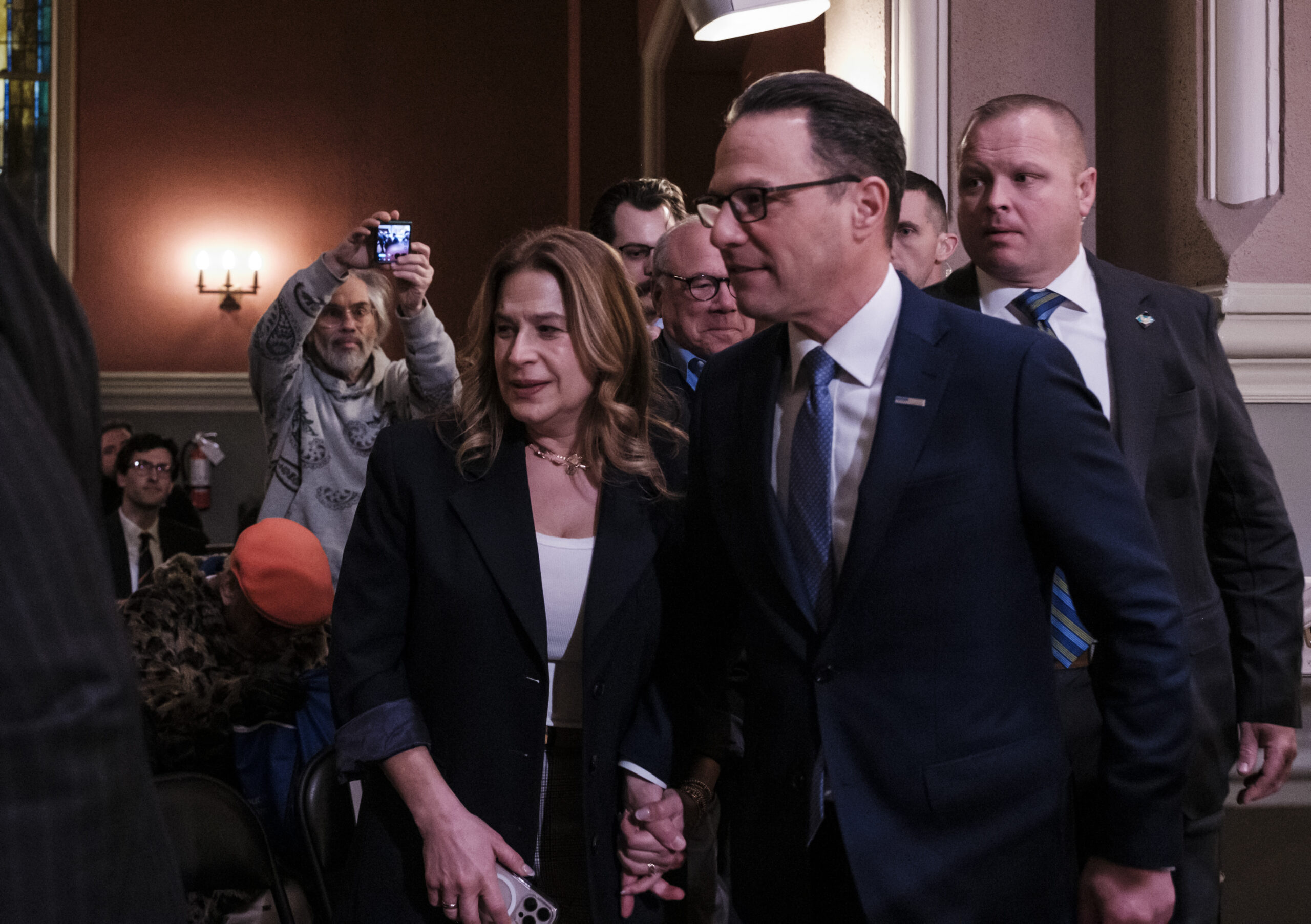
Gov. Josh Shapiro and his wife, Lori Shapiro, depart a talk for his new memoir “Where We Keep the Light” on Jan. 29 in Washington, D.C
Zimolong says he has never discussed the lawsuit with Ward or coordinated with her staff over the issue, “and I have no intention of doing so.”
He saidhe is one of few attorneys in southeastern Pennsylvania who is “not afraid to hold a powerful governor accountable” and does not have work before the state that would present an ethical conflict.
Erica Clayton Wright, a spokesperson for Ward, noted that taxpayer funds have now been used to pay for security upgrades to Shapiro’s personal residence and the property of his neighbors, and argued that it’s “not the first time Gov. Shapiro’s team has been put in the awkward position of pointing fingers to distract from Gov. Shapiro’s questionable methods of operation.”
“It is important not to lose sight of the need to ensure the governor and his family are safe while also safeguarding the processes in place to manage taxpayer funds,” Clayton Wright said.
“Absolutely no one but Gov. Shapiro himself is responsible for trying to take his neighbor’s property via squatter rights, which has resulted in federal and state lawsuits,” she said.
Staff writer Abraham Gutman contributed to this article.
Pennsylvania State University’s THON dance marathon raised a record $18.8 million to fight pediatric cancer, organizers announced Sunday at the conclusion of the annual event.
The 46-hour dance marathon, which has been going on for more than 50 years at the state’s flagship university, began 6 p.m. Friday inside Penn State’s Bryce Jordan Center on the main University Park campus and finished 4 p.m. Sunday. More than 700 dancers competed.
The money raised goes toward Four Diamonds charity, which supports research for a cure and families whose children get treatment at Penn State Health Children’s Hospital.
“While we are incredibly proud of this record-breaking total, the true success of THON is found in the thousands of Penn State students who came together with a singular purpose,” Benjamin Roitman, THON executive director, said in a statement “This milestone is a direct reflection of the tireless effort and collective spirit of our community who, embodied the ‘Love Leads Forward’ theme, proved that there is no limit to what we can achieve when we stand together for the common cause of conquering childhood cancer.”
More than 16,500 student volunteers participated in THON, which along with Four Diamonds has helped more than 4,800 children through the years, the organization said.
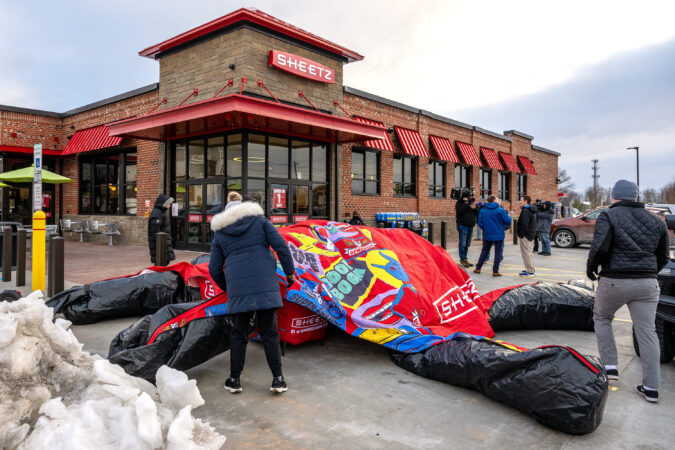
Sometimes Sheetz happens, and at 8:02 a.m. on Thursday it happened in Montgomery County, when the chain opened its first convenience store in what’s long been undisputed Wawa territory.
The store — which is directly across from a Wawa on West Ridge Pike near Lewis Road in Limerick Township — opened not with a Boom Boom, but with a whisper.
Unlike a Wawa grand opening — where fans often queue up well before the doors open and the line to get in wraps around the building — there was just David Swartz waiting outside for the opening, bundled up in his folding rocker chair.
Swartz, 36, of Collegeville, who arrived an hour before the opening, was surprised to find himself the only one in line, as were the gaggle of Philadelphia reporters who far outnumbered him and peppered him for interviews.
A self-identified “diehard Wawa fan,” Swartz said he came to Sheetz’s opening for the food.
“There’s nothing you can get here that isn’t delicious,” he said. “I love Wawa but they need different stuff and that’s what Sheetz is here to do, they’re here to deliver that.”
Slushies, plushies, and more
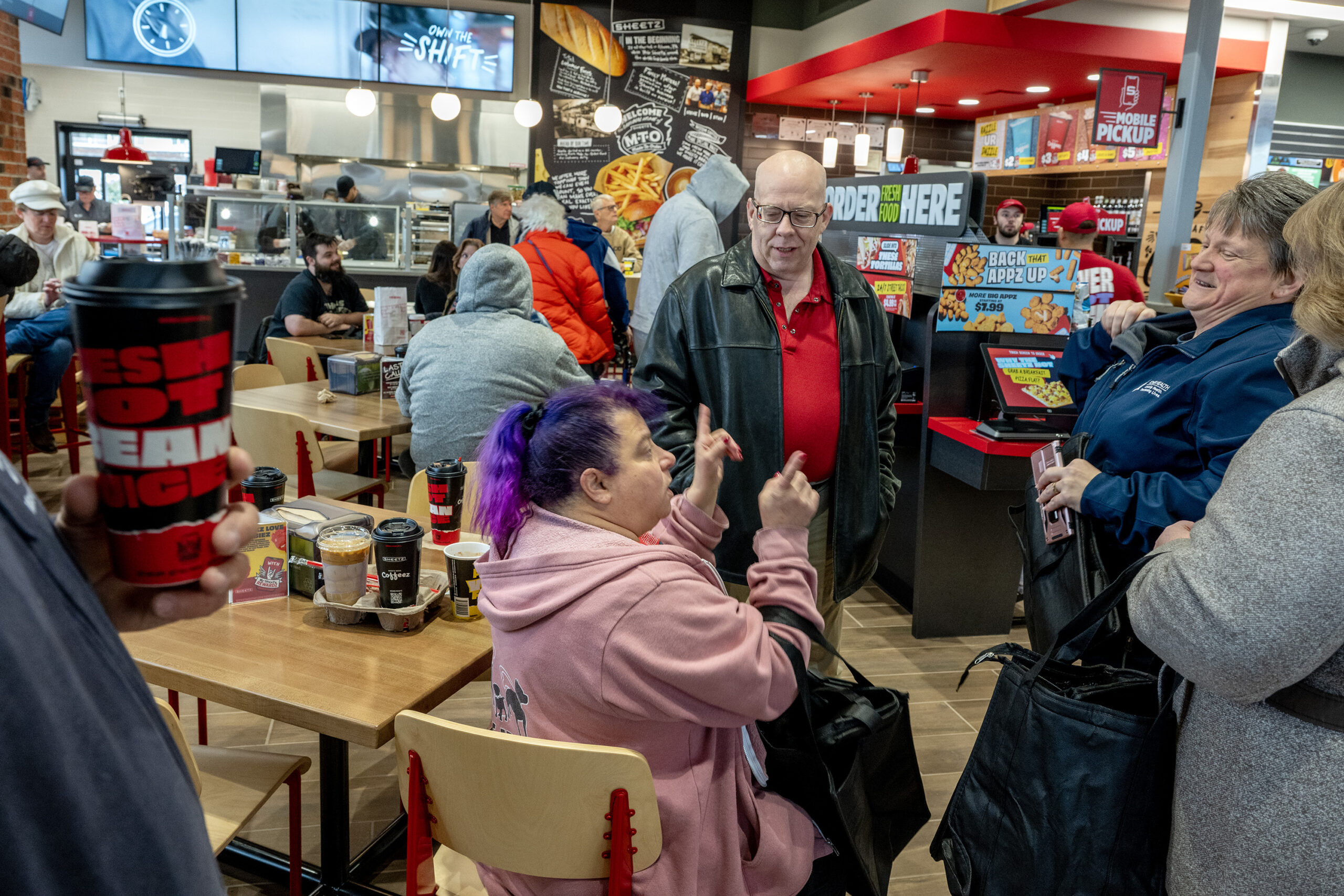
Once the doors opened, folks who’d been waiting in their cars started to file in, forming a line for the coffee, which was free all day (the Wawa across the street offered free coffee on Thursday, too). Other customers explored the touch-screen menus, checked out the prepared food offerings, and browsed the aisles.
Inside, Swartz poured himself a slushie and ordered a hot dog, nachos, and fish tacos with fries — at 8:15 a.m. He also picked up three Hello Kitty plushies for his girlfriend. Wawa, he pointed out, does not sell plushies.
“My girlfriend is going to be very happy when I come home with these,” he said.
Inside the store after being the first to enter, Dave Swartz of Collegeville organizes his plushie toys and frozen drink as the first Sheetz store opens in the Wawa territory Thursday in Limerick Township.
Elsa Ortiz, 54, drove an hour from Philadelphia to pick up a hoagie (or “Subz” as they call them at Sheetz) for her boyfriend.
“Sheetz is definitely better than Wawa for him,” she said. “Right now I’m neutral, but today I am a Sheetz girl.”
Ortiz said the store being across from a Wawa is very on brand for the Philadelphia region.
“The rivalry is just like Philly, with its rivalries and everything else,” she said. “Still, go Eagles! I’m still Eagles!”
There are some rivalries you can play both sides of, and some you can’t.
Shortly after 9 a.m., when giveaways for gift cards and Sheetz schwag began, the store became so packed with people it became a real Sheetz show and the line outside for freebies stretched down the building. The residents of the Delaware Valley may rep hard and local, but they also won’t say no to a free T-shirt.
The expansions
While opening a Sheetz across from an existing Wawa may seem like the new guy in town is throwing down the gauntlet, it’s actually a move taken out of Wawa’s own playbook. In 2024, when the Delaware County-based chain opened up its first store in central Pennsylvania — what was traditionally Sheetz country — it did so within eyeshot of an existing Sheetz.
For decades, the urban lore in Pennsylvania was that there was a gentleman’s agreement regarding unspoken boundaries between Delco-based Wawa in the southeastern corner of the state and Blair County-based Sheetz, in south-central Pennsylvania.
Amy Rudolph (seated) of Collegeville holds court with fellow grand opening patrons as she recounts her story of being #2 in line as the first Sheetz store opens in the Wawa territory Philadelphia suburbs Thursday, Feb. 12, 2026 in Limerick Township.
But that’s all it was — lore (New Jersey has its own devil, we had to come up with something) — and as both chains began rapid expansions in the 2010s, it seemed inevitable they’d cross over to each other’s markets at some point. In fact, Wawa and Sheetz have coexisted in several markets already for some time, including right here in Pennsylvania, in Berks and Lehigh Counties, according to Wawa spokesperson Lori Bruce.
Today, Wawa has 1,193 stores in 13 states and Washington, D.C., and more than 95 store openings planned for this year. Ten stores have gone up in central Pennsylvania in the last two years, with 40 more planned over the next five, Bruce said.
Sheetz, meanwhile, has more than 800 stores in seven states. Previously, its closest store to Philadelphia was in Berks County, but now that it has officially moved into the Philly suburbs, it doesn’t appear it plans to slow down. Sheetz stores have been proposed in Chester County and even in Delco, at Painters Crossing shopping center in Chadds Ford, just five miles down the road from Wawa’s headquarters.
Now that could get Sizzli.
A rivalry?
Representatives of both chains deny they are rivals and point out that they have worked together to support various nonprofits.
Adam Sheetz, executive vice president of Sheetz, said it has been a friendly competition for decades.
“They’re one of the best retailers in the country, certainly one of the best in our industry, and we have great respect for them and competing with them has just made us better over the years,” he said.
Bruce agreed.
“We’re fortunate to have always had a respectful and friendly relationship with the folks at Sheetz,” she said. “And, while we have always embraced healthy competition at Wawa, when we think about competitors, we tend to think about challenging ourselves to make sure we are meeting the needs of our customers and communities.”
Folks may eat on trash cans at Wawa, but you’ll never hear Wawa officials talking trash on Sheetz. Wawa fans, on the hand, are a whole other hoagie roll.
Craig Scott (left) of Wayne and Dave Swartz (right) of Collegeville have breakfast as the first Sheetz store opens in the Wawa territory in Limerick Township.
The low-stakes rivalry between the stores’ fans has resulted in memes, debates, op-eds, and even a forthcoming documentary, Sheetz Vs. Wawa: The Movie.
When news of the impending Sheetz opening spread last month, cheeky comments by Wawa fans on social media included “We are all protesting this,” “sheetz is temu wawa,” “Sheetz is fire, but Wawa is for life,” and “this is my heated rivarly [sic].””
But local officials said they didn’t hear of any pushback on the Sheetz.
Patrick Morroney, a Limerick Township supervisor, has never been to a Sheetz but said he’s pro-business and welcomed Sheetz opening a store in the community.
“I think that people are going to find their niche between Wawa and Sheetz,” he said.
Jamila Winder, chair of the Montgomery County commissioners, said she frequented Sheetz while going to Pennsylvania State University and having the company open a store in Montco is “nostalgic” for her.
“Even though Wawa has dominance here in Montgomery County and the region, we always welcome new businesses because that creates economic drivers, job opportunities for both, and it just gives people options to choose from,” she said.
The opening
During his remarks at the opening ceremony, Neil Makhija, vice chair of the county commissioners, took a different approach and leaned into the playful rivalry by putting on a Wawa hat while speaking to the crowd.
He called the opening a “complicated day” for him and many people in Southeastern Pennsylvania.
“I thought, ‘What is happening to our community? Do we need a stronger border security policy in Montgomery County? Should we build a wall and make Delco pay for it?’” he said to laughter from the crowd. “[But] here in Montgomery County we’re welcoming, we’re inclusive, and we’re hungry and I think we’re OK with a little competition.”