About the new name for that big museum at the end of the Parkway: Never mind.
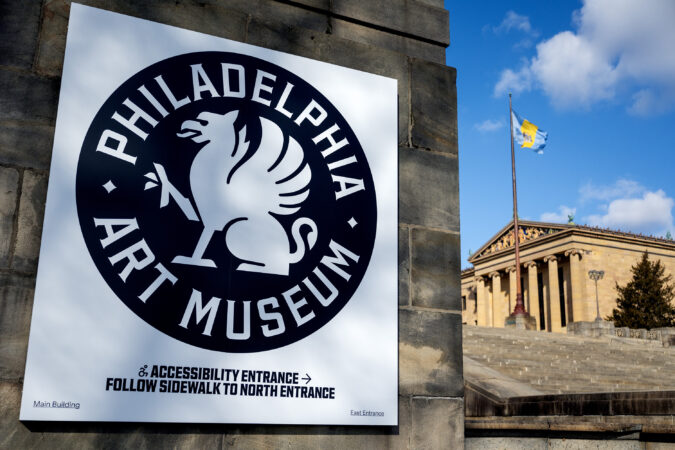
Four months after rolling out a new name with great fanfare, the Philadelphia Museum of Art is once again calling itself the Philadelphia Museum of Art. The museum’s board Wednesday afternoon voted unanimously at a special meeting to scrap the name Philadelphia Art Museum, which had been announced Oct. 8 as part of a larger rebranding.
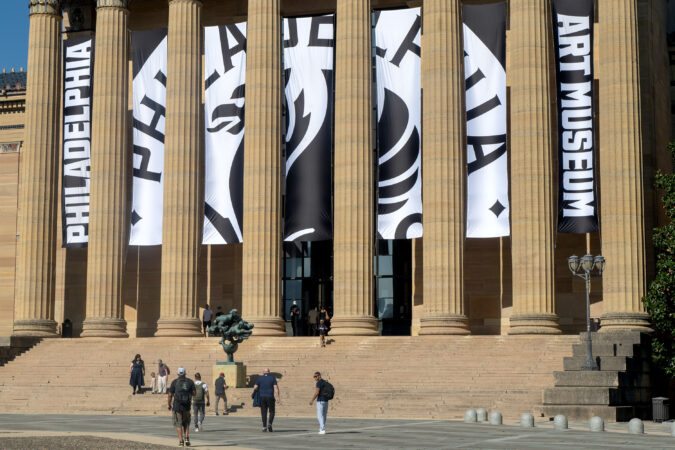
Some signs and materials are being quickly changed over with the old-new name, while others will be reprinted or revamped in coming weeks. The new PhAM acronym used in marketing materials will be dropped, and the museum will once again refer to itself in shorthand as the PMA, as many Philadelphians long have.
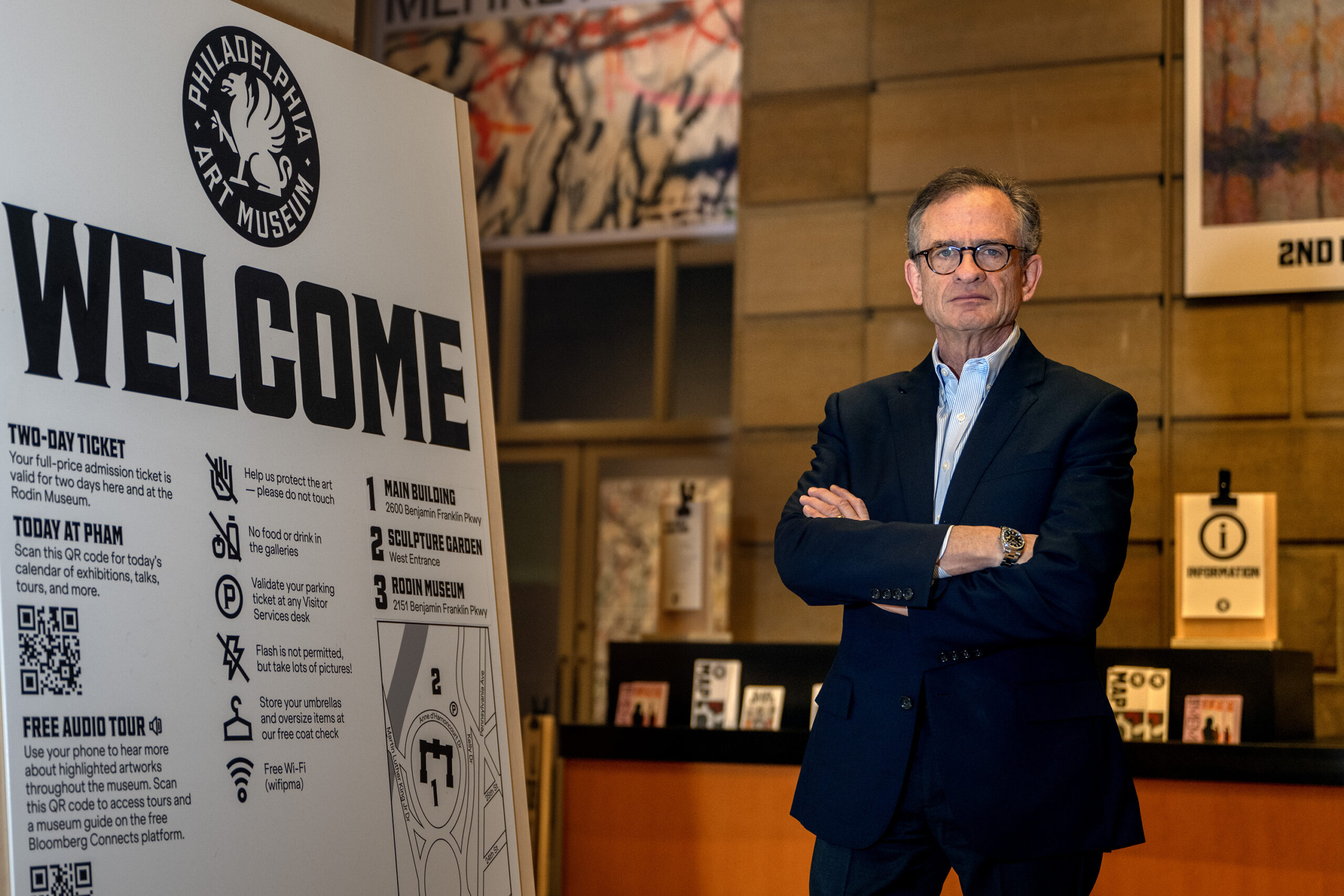
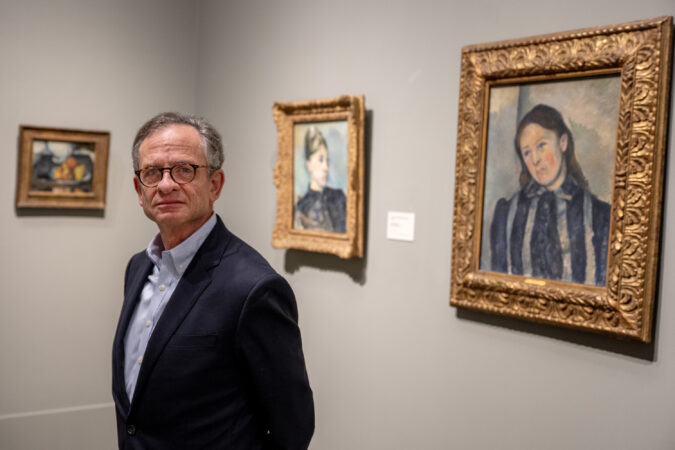
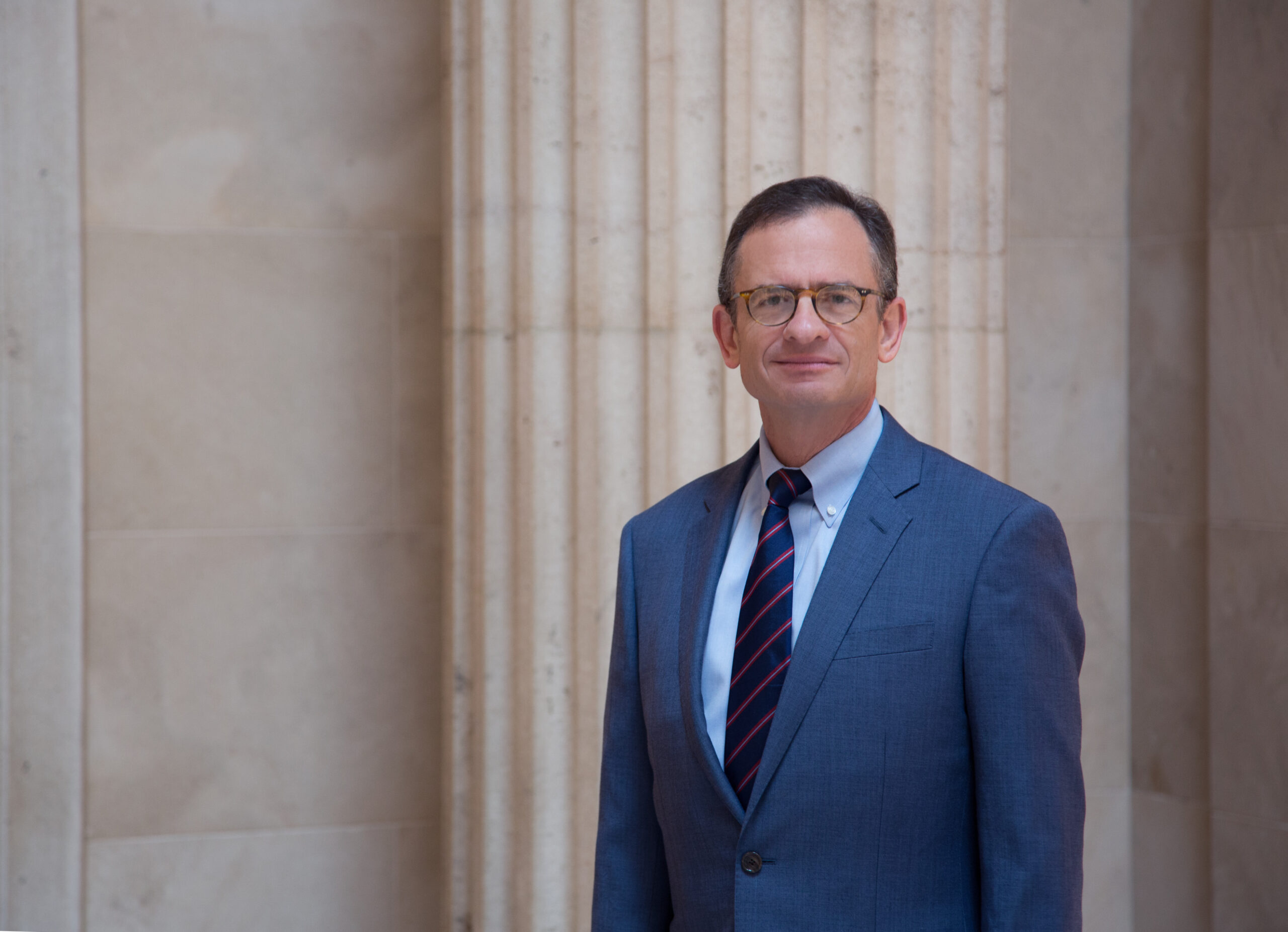
Daniel H. Weiss, director and CEO of the Philadelphia Museum of Art, in the museum lobby, Jan. 7, 2026.
The museum spent the past several weeks surveying opinions, said director and CEO Daniel H. Weiss, and “I think what we learned from our survey, and it’s not surprising, is that people who have any knowledge of the institution — donors, staff, trustees, members — they know the name and it resonates with them. It’s something distinctive, it’s who we are. And changing the name for no obvious reason created a sense of alienation and didn’t make sense to a lot of people.”
Philadelphia Museum of Art had been the name of the nearly 150-year-old institution for 87 years until the change this fall.
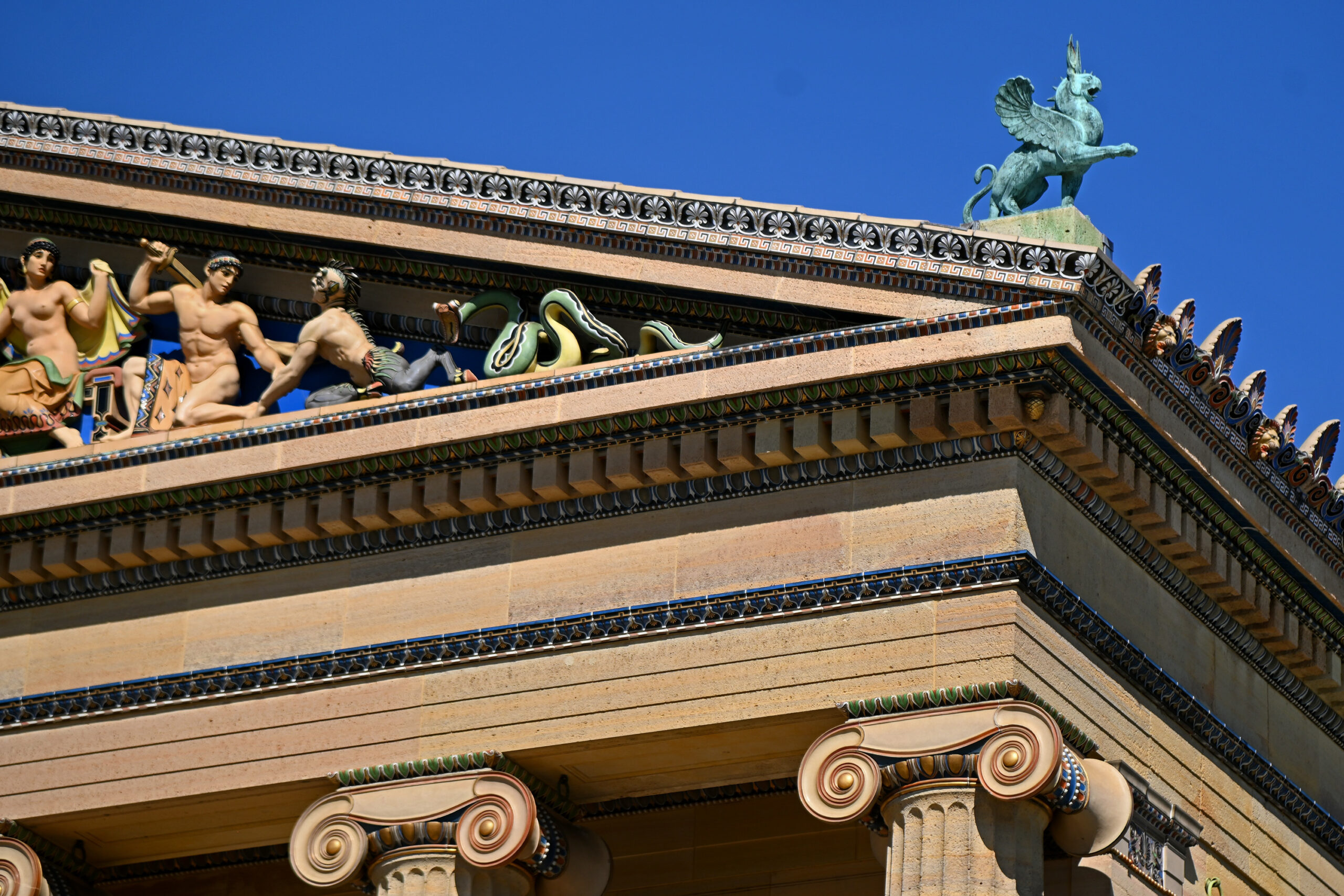
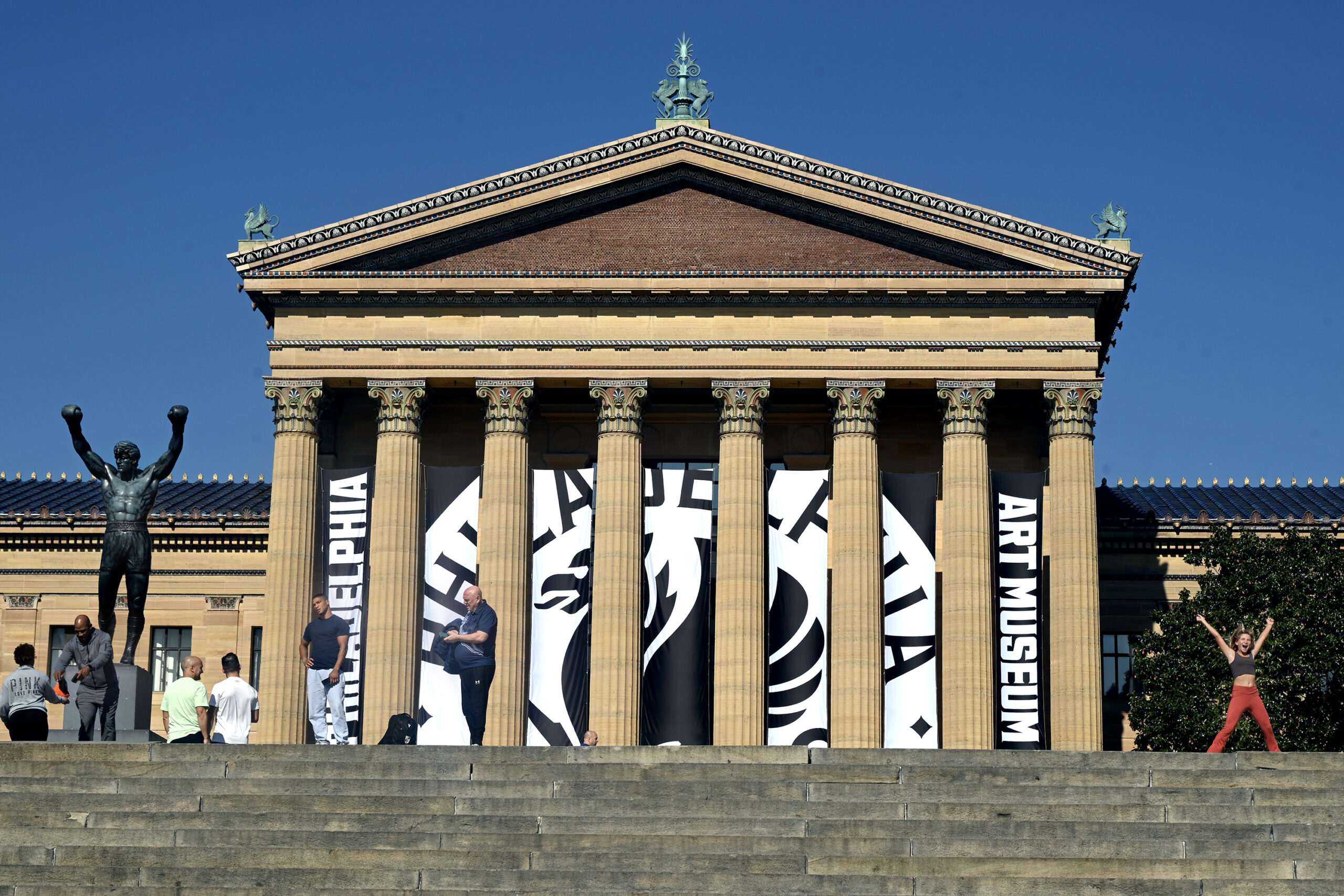
The museum will, however, keep visual elements of the larger rebranding — the logo that echoes one of the griffin figures along the roofline of the museum’s main building, and bold fonts in signage and promotional materials.
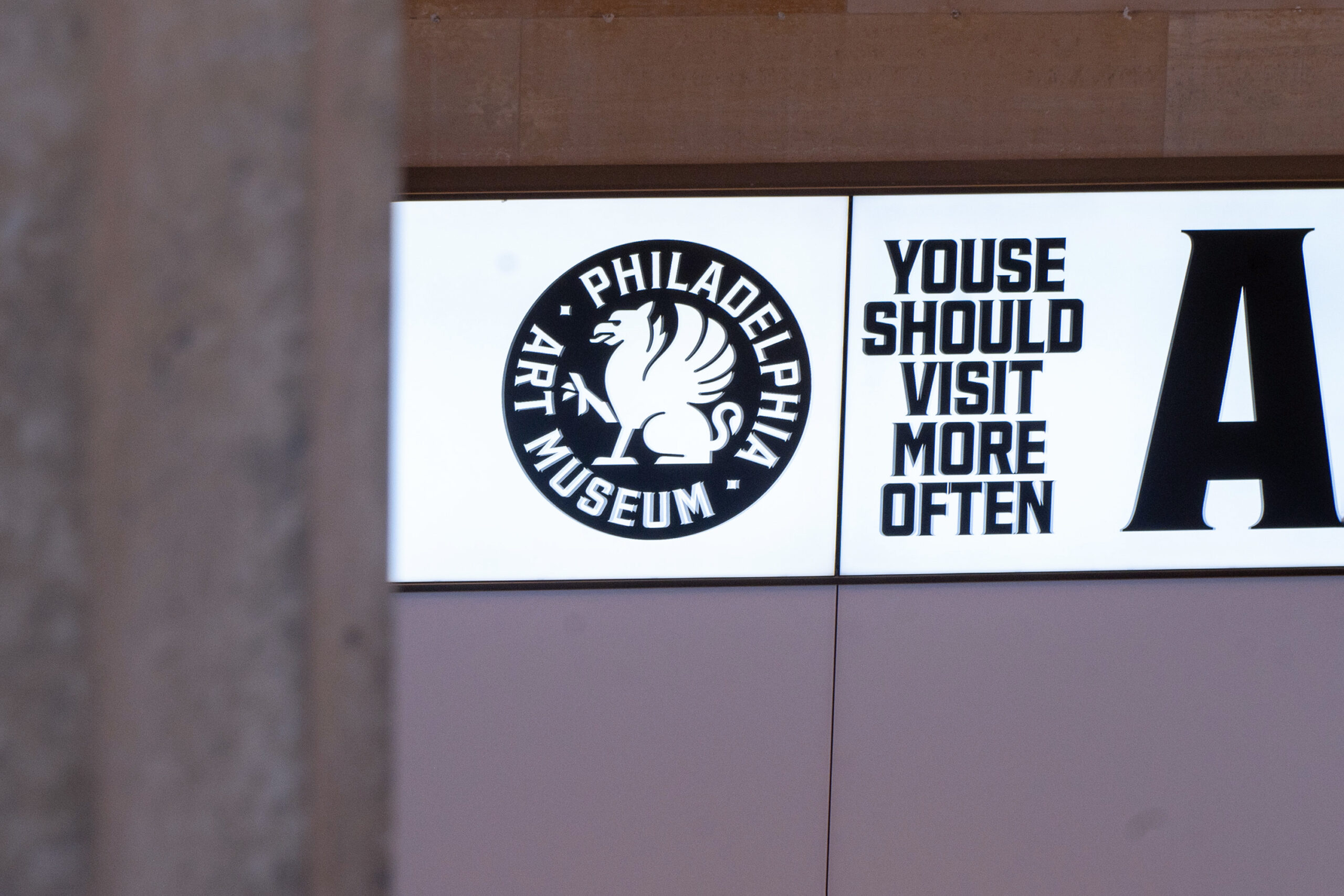
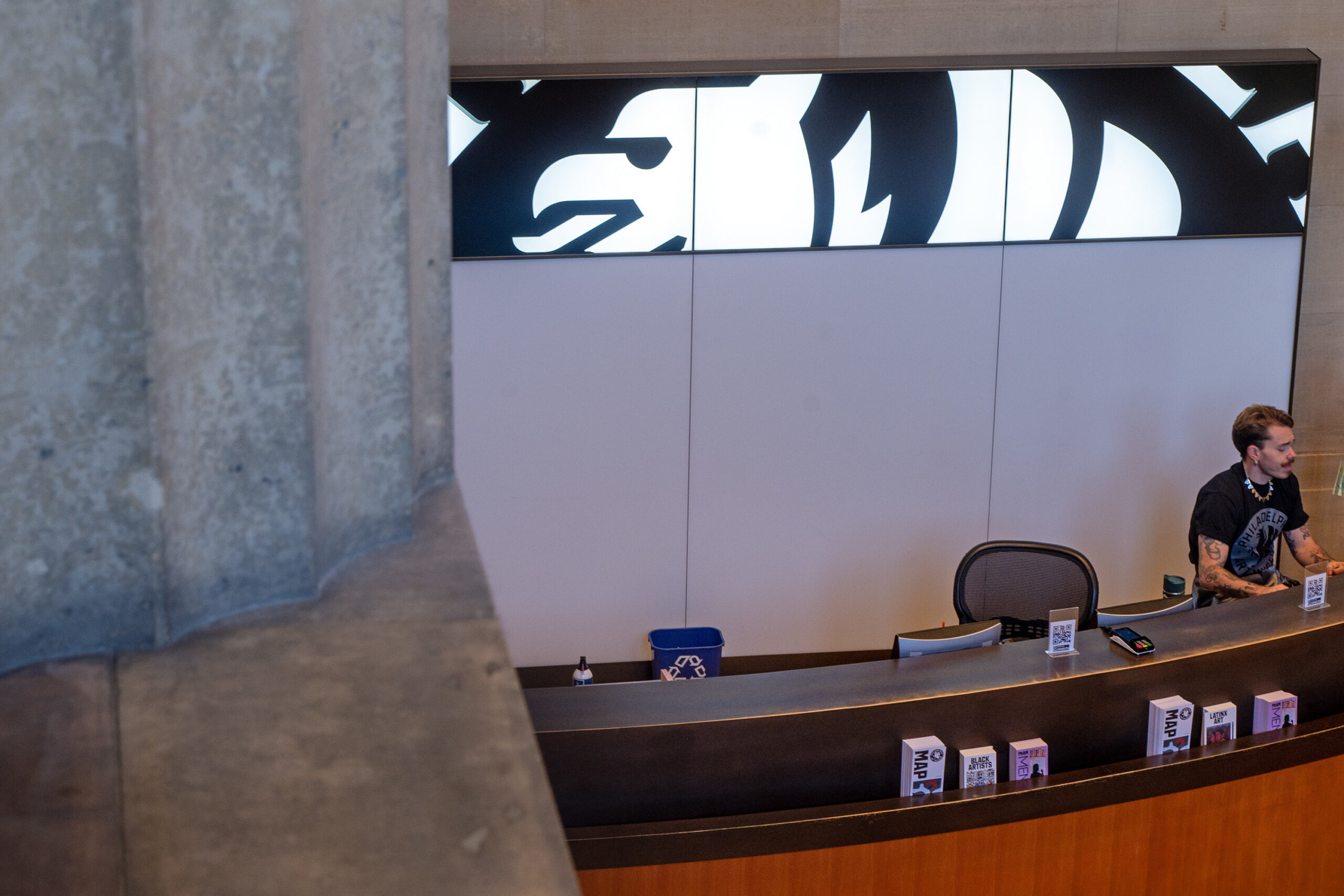
A rolling video screen above the admissions counter at the West Entrance at the Philadelphia Museum of Art Oct. 6, 2025.
As for the continued use of slightly irreverent tag lines that came with the rebrand — phrases like “Youse should visit more often,” — “Probably not so much,” said Weiss. “We will modify those a little downstream, but the idea is to return to a slightly more aligned presentation more closely tied to our mission.”
The rebranding — which was widely, though not universally, criticized upon its rollout — was a major initiative of former director and CEO Sasha Suda and marketing chief Paul Dien.
When the museum announced the name change, Suda explained it by saying that it was “truly a reflection of what the community has called it for a long time,” and that it was “also a sort of significant way of starting a new chapter and saying, ‘Look, we’re definitely starting a new chapter here.’”
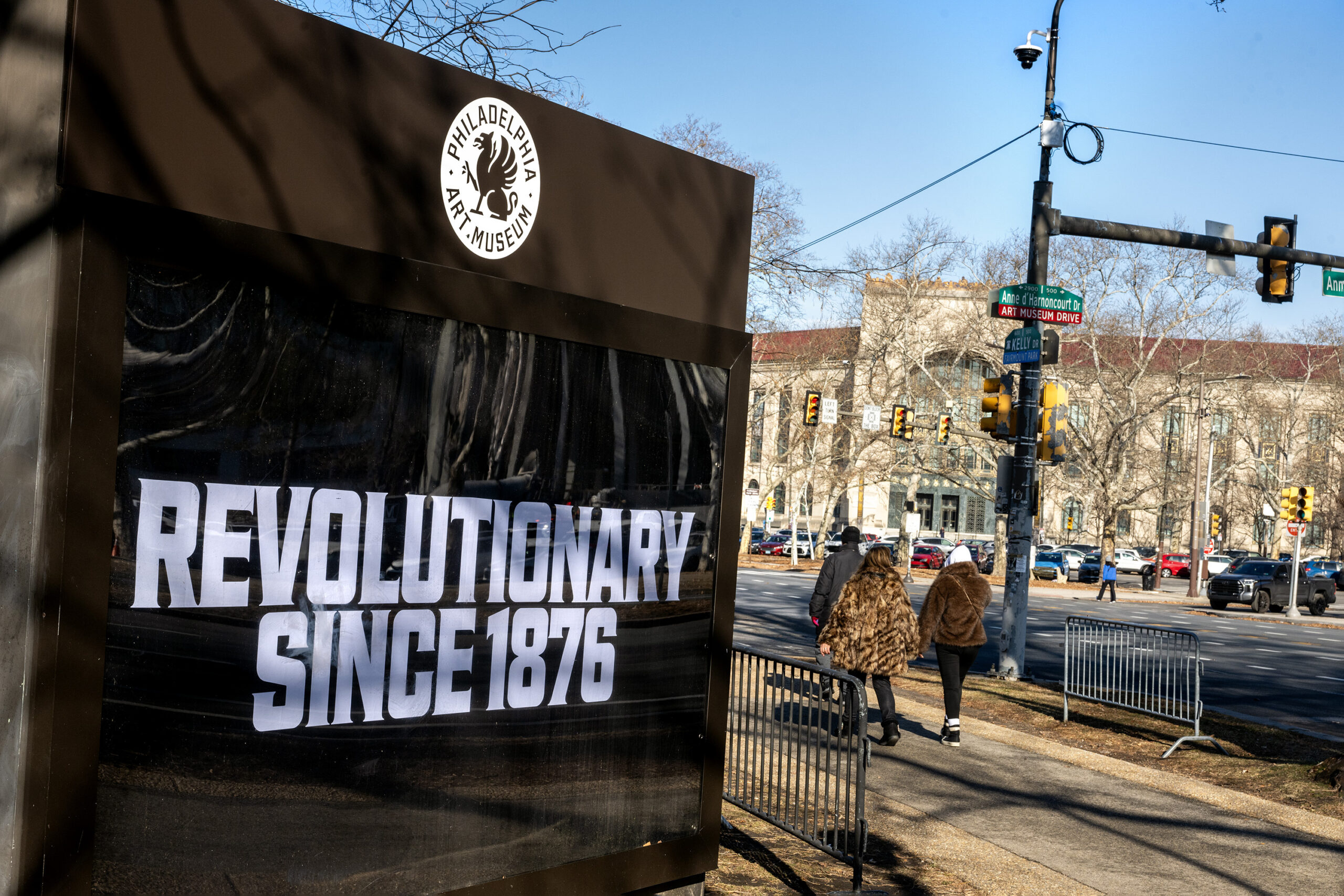
The north side of the Philadelphia Museum of Art, along Kelly Drive at 25th Street and Art Museum Drive, Jan. 7, 2026.
The decision around the controversial rebranding is the first visible test of Weiss’s leadership, and he chose the route of inquiry and shared responsibility, directing a nine-member task force to assess its reception. The original rebrand was launched after multiple internal meetings, but without final notification to the board, according to one trustee.
In a 3½-page note to staff Wednesday afternoon announcing the decision to keep the logo and reverse the name change, Weiss noted the “siloed process” in which the original rebrand was developed, and took pains to emphasize how the reconsideration of it has been, and will be, different.
“The work of the design team over the past two years was exhaustive, incorporating decades of museum history into their thinking and interviews with dozens of staff and trustees. Yet, the team did not have the benefit of a broad, interdisciplinary group to inform the work along the way, so when the final product was rolled out, many felt surprised or not sufficiently invested in the outcome,” the note reads.
A series of internal meetings with staff will explain the task force’s findings, Weiss wrote in his note.
“The task force did consider reverting completely to the prior brand, but ultimately felt strongly that the original reasons for the rebrand are compelling. It was time for the museum to update its look, and the griffin logo is a strong statement that can successfully strengthen and widen our audience.”
The museum’s new logo keeps the stylized griffin that was part of the rebrand unveiled in October 2025, but shows the return of the museum’s name to the ‘Philadelphia Museum of Art.’ The October rebrand included a renaming to ‘Philadelphia Art Museum,’ a change that has now been scrapped.
Surveys conducted in recent weeks revealed findings that “went in two very different directions,” Weiss wrote. “Staff, trustees, and members were opposed to the name change, the URL, and the look of the new brand, yet the public reacted positively to the new logo and overall look and feel.”
Art Museum fan Brian Forsyth, of Exton, said he felt “blindsided by the sudden and uncalled for rebrand,” and when it happened, he asked for (and received) a membership refund.
He disliked the rebrand in general and said that, while he sometimes called it “the art museum,” he mostly referred to it as “the PMA.”
“When they took that phrasing away from me, it hurt,” he said.
Now that the museum is changing its name back, he says he intends to restore his membership.
“I will not, however, purchase any of the new merch. I still have my classic PMA baseball cap, which I will wear into the ground, literally,” he said.
Inspiring the museum’s logo: a bronze griffin on the roof of the northern wing of the Philadelphia Museum of Art, Oct. 6, 2025.
Weiss said that the museum will not be disposing of current materials printed with the Philadelphia Art Museum name, such as brochures or maps. Rather, the change will be cycled through as items need to be replaced.
Gretel, the Brooklyn firm that designed the rebrand, is working with the museum on the current modifications.
The rebrand cost the museum about $1 million, Weiss said, and the total cost of the change-back may not exceed $50,000.
“The idea is to do this as cost-effectively as we can.”
Weiss called the entire rebrand episode “an unnecessary distraction for us. We want to move on and focus on things that matter most to our mission.”
In December, former Philadelphia Art Museum director and CEO Sasha Suda had pushed for a trial with jury to settle her wrongful-termination lawsuit against her former employer. The Art Museum argued for arbitration.
On Friday, Common Pleas Court Judge Michael E. Erdos settled the question with a ruling — in favor of arbitration. Erdos directed Suda to submit her claim against the museum in arbitration, per the terms of her employment contract.
The museum in a statement Saturday said that it was pleased with Erdos’ ruling “reaffirming the requirement to arbitrate as previously agreed to in the employment agreement, which is the best use of the resources of all — including the court’s.” The statement added that the museum “will now return to our focus on the museum’s mission of bringing art and inspiration to the people of Philadelphia.”
Suda’s lawyer, Luke Nikas of Quinn Emanuel Urquhart & Sullivan, said Saturday that “the court’s procedural, one-sentence decision requiring arbitration has no relevance to the outcome of this case.”
“We are not surprised that the museum wants to hide its illegal conduct in a confidential arbitration,” he said, “but we will hold the museum accountable wherever the case is heard.“
Sasha Suda, with the Art Museum’s Williams Forum in the background, Jan. 30, 2024.
Suda filed her lawsuit Nov. 10, less than a week after being fired by the museum, arguing that the dismissal was “without a valid basis.” The museum responded by calling the suit “without merit.”
Tensions between Suda and the board over authority in running museum matters were cited in court filings. The former director said she was hired in 2022 to “transform a struggling museum, but was later terminated when her efforts to modernize the museum clashed with a small, corrupt, and unethical faction of the board intent on preserving the status quo.”
In a court filing, the museum responded by saying Suda was dismissed after an investigation determined that she “misappropriated funds from the museum and lied to cover up her theft.”
Suda was let go Nov. 4, three years into a five-year contract. With her lawsuit, she sought two years’ pay, as well as “significant damages for the museum’s repeated and malicious violations of the non-disparagement and confidentiality clauses in her employment agreement, and an injunction enforcing the confidentiality and non-disparagement terms of her agreement,” Nikas said.
Less than three weeks after Suda’s dismissal, the museum named Daniel H. Weiss — who formerly led the Metropolitan Museum of Art — its new director.
If the question of who gets to call the shots at the Philadelphia Art Museum was a major source of friction between its former chief and board and staff, the museum’s new director and CEO arrives as something of a salve.
Eight weeks on the job, Daniel H. Weiss is signaling a philosophy that is anything but authoritarian.
“I believe very strongly in the idea of shared governance,” Weiss said in a recent interview that represents his most extended public comments since taking over the troubled museum. “Any mission-driven institution is almost axiomatically in service to all of the people who have an interest in what it does. So I don’t really have a lot of executive authority as the director of this institution.”
And yet, Weiss obviously understands that he is the one being tasked with the turnaround of one of the city’s flagship cultural groups. He also knows he must take action quickly.
“I don’t have the luxury of saying, ‘I’m going to spend the next 12 to 18 months meeting with people and then we’ll figure out what needs to happen.’ We need to get after it.”
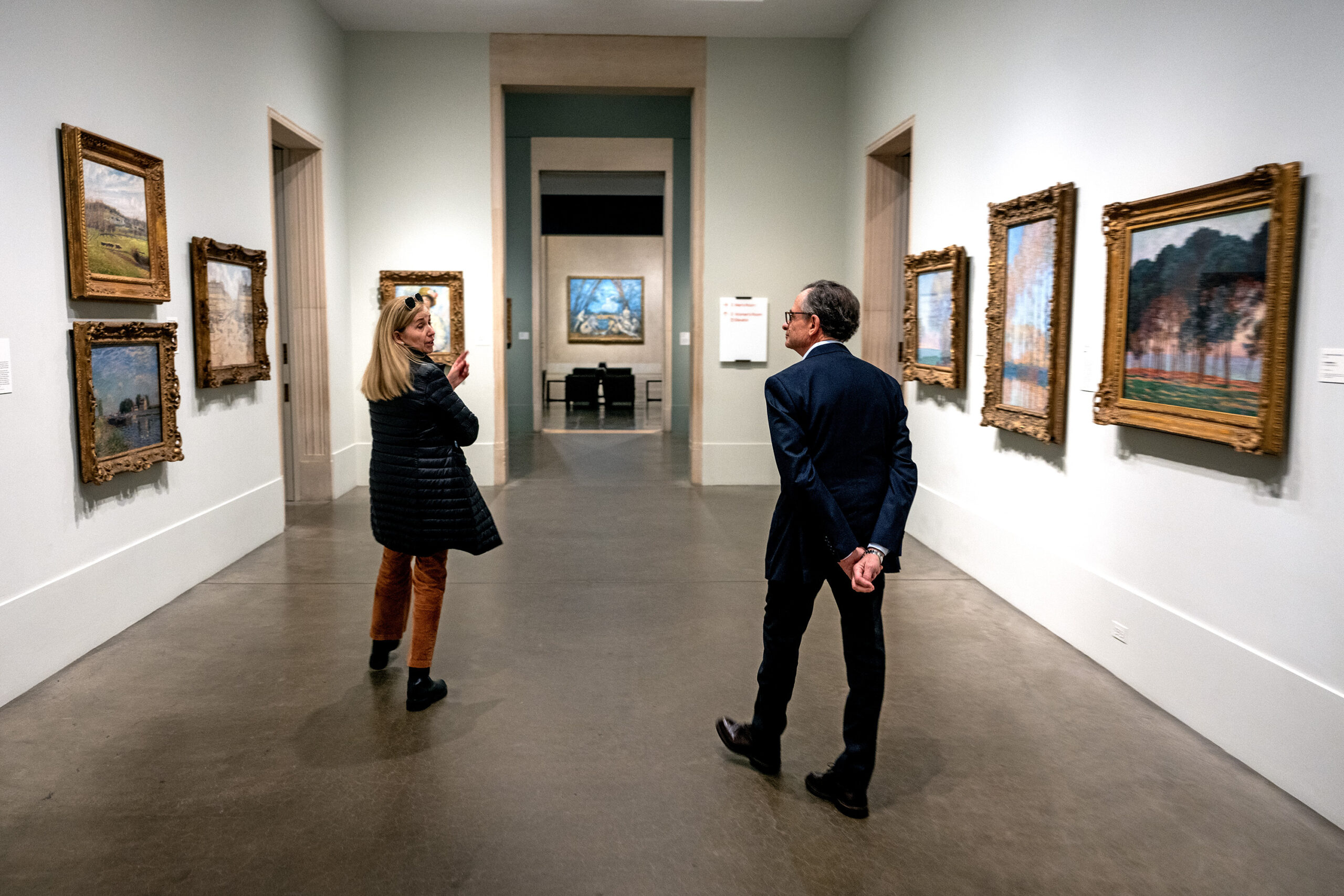
Daniel H. Weiss, director and CEO of the Philadelphia Art Museum, walks through galleries with museum staffer Laura Coogan on Jan. 7.
The listening tour
Weiss, 68, the former leader of the Metropolitan Museum of Art, is well into his listening tour, talking to staff, board members, and others about the museum’s last three years with Sasha Suda at the helm and the messy split with her still playing out in courts both legal and of public opinion.
He says the next few months are about him getting a sense for “the most present problems that need to be addressed.”
“We need to sort out the rebrand and determine whether we change it or stay with it. And we’re looking at that,” said Weiss, who has put together a task force of staff and board to consider the question.
Earlier this week, the museum confirmed that it was parting ways with the marketing chief who oversaw the rebrand.
The financial picture remains challenging.
“We have a deficit. It is not sustainable and we need to fix it. In order to do that, we need to take a larger look at the organization and build a healthy model.”
There are facilities needs that are complex and very much rooted in the reality of how to pay for them. Like, what form a proposed new education center should take; what to do about the Perelman annex, the former office building across the street that opened in 2007 after a $90 million renovation and has been closed to the public since the pandemic; and where and how to address deferred maintenance to the main building.
“We need to prioritize our list so that we can begin a thoughtful plan of following up on all the work that was done before on the core project to figure out the next chapter.”
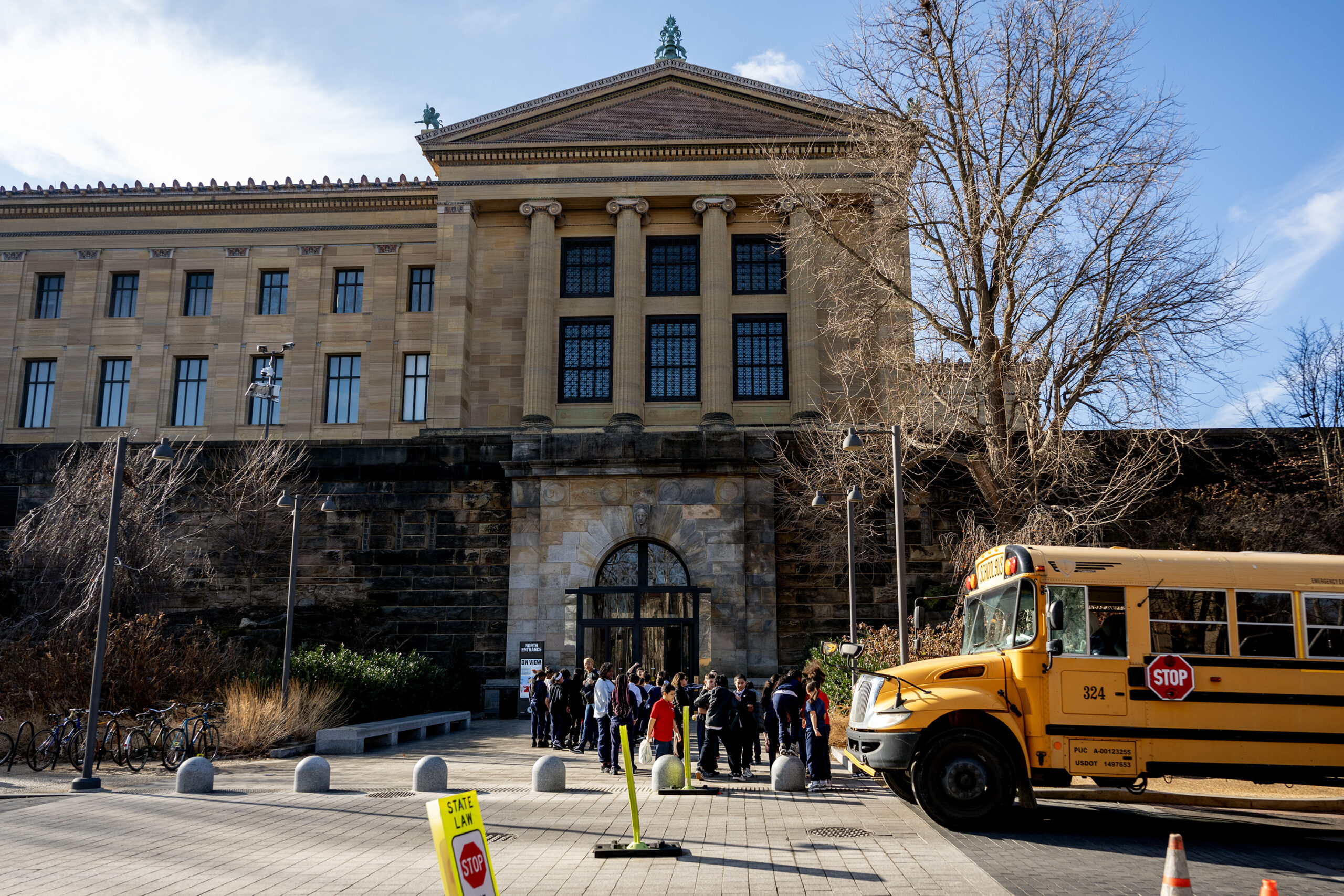
School groups at the North Entrance to the Philadelphia Art Museum on Jan. 7.
A strategic plan
The “next chapter” will eventually take shape in a new strategic plan.
In the spring and summer, Weiss hopes, conversations with board and staff will give the museum a “better sense of what our resources could be as we work our way to balance and health. And then next year, maybe early next year, we begin the process of putting together a plan.”
Weiss’ credentials in both business and art seem suited to the moment. He holds an MBA from Yale School of Management and has worked for Booz Allen Hamilton. His master’s degree in medieval and modern art and Ph.D. in Western medieval and Byzantine art were earned at Johns Hopkins University, where he is finishing up his teaching at the end of the semester.
Weiss, who has moved to Philadelphia with his wife, Sandra, sees his immediate job as reminding everyone what Philadelphia has in its museum.
The events of the last few months — the widely ridiculed rebrand, Suda’s mid-contract ouster, and the dramatic language used in her subsequent wrongful-dismissal lawsuit against the museum — have often eclipsed the art and made the main message coming out of the museum one of acrimony.
The new director is eager to change the message.
“What I’d like to do over the next six months to one year is to get everybody excited about what’s possible, what we already have. How, by supporting each other and investing excitedly in our mission, we can do something really important.”
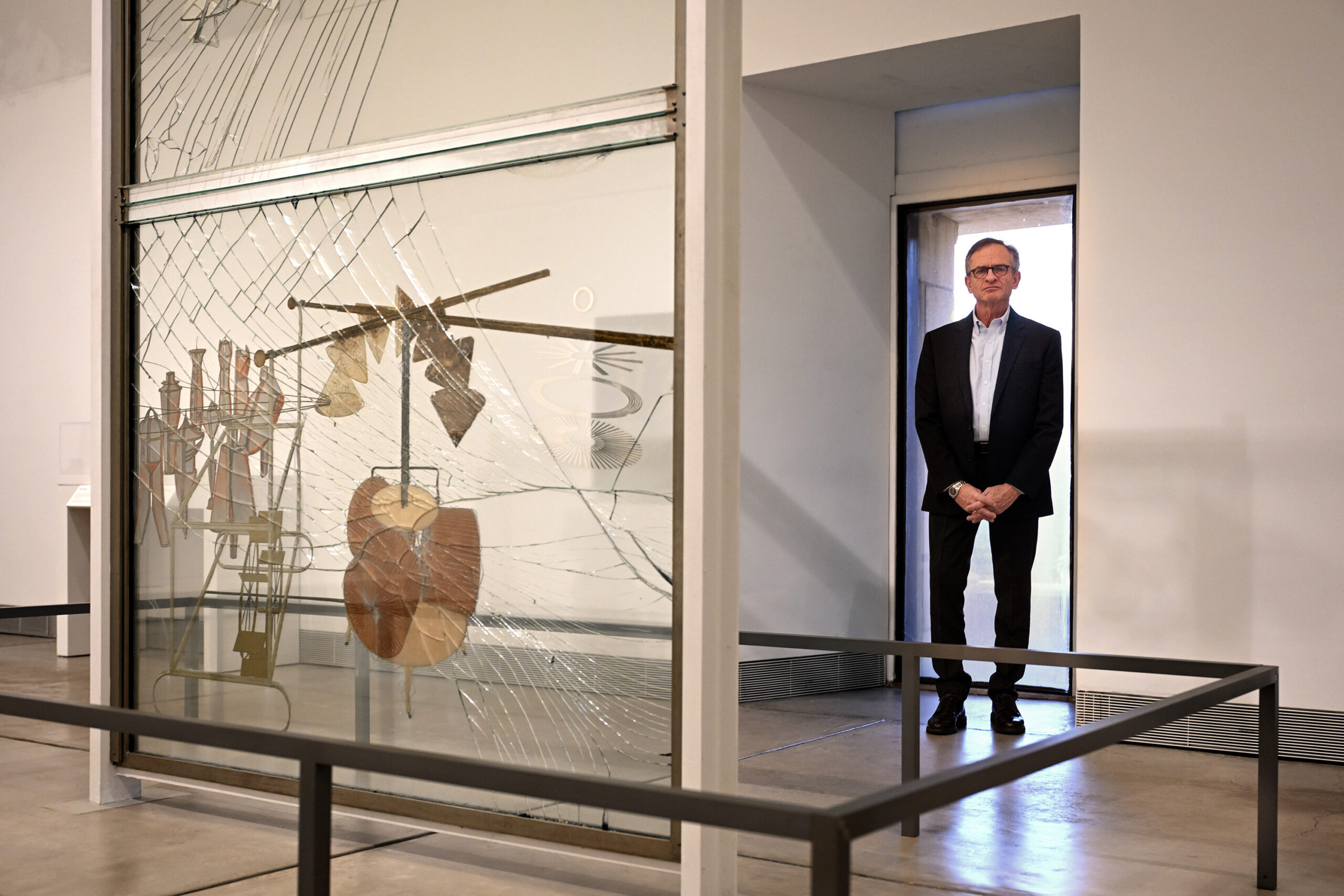
Daniel H. Weiss, director and CEO of the Philadelphia Art Museum, with “The Bride Stripped Bare by Her Bachelors, Even” (1915–1923, also called “The Large Glass”) by Marcel Duchamp.
The role of the board
Weiss also needs to consider the role of the Art Museum board, which, on the one hand, was not informed that the rebrand was final, according to some board members. On the other hand, it has been accused in Suda’s initial court filings of being overinvolved in museum matters.
“I don’t think our board needs radical restructuring … and this may seem counterintuitive in light of what you’ve been reading about in the newspapers, I think our board needs to be embraced as a real partner,” Weiss said. “And I do believe deeply in shared governance and that means the director and the senior administration have a job to do and the board has a job to do.”
“They’re different jobs but when they’re working in concert, you get much more for the institution than you do if they’re at odds with each other.”
How much of board-CEO relations is about structure, and how much is it the function of the personality of the person whose job it is to be the connective tissue? “Almost always it is more a function of the personalities than it is the structure,” he said.
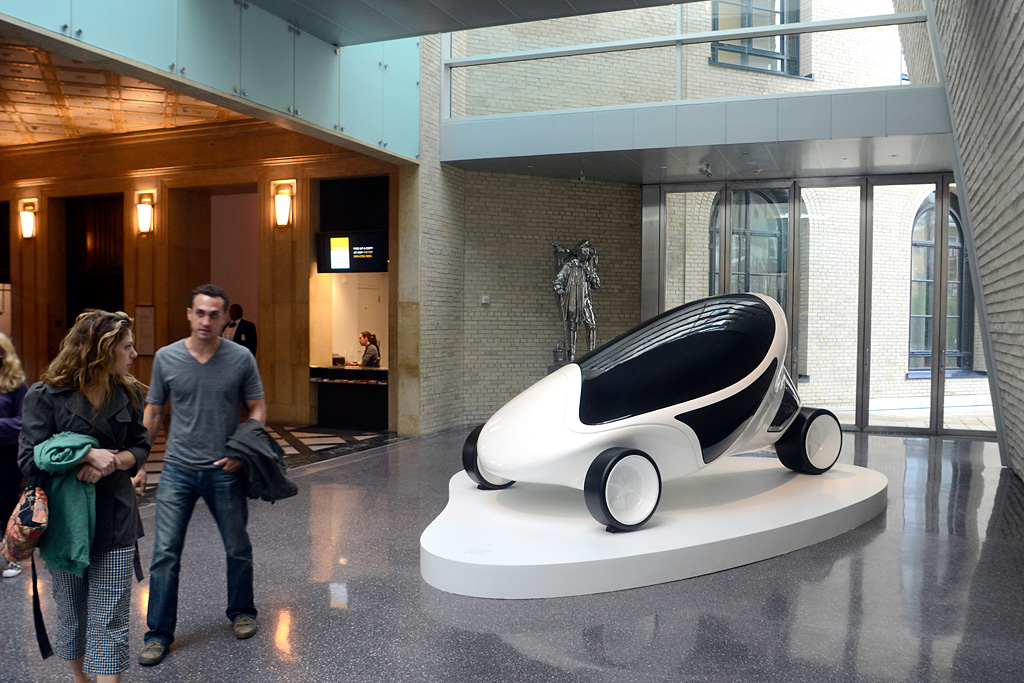
In 2011, when the museum’s Perelman building was still open to the public, visitors view a three-wheel car.
As for the involvement of one emeritus board member, Julian A. Brodsky, Weiss has to determine the future of an unannounced, but reported by Philadelphia Magazine, $20 million pledge from the Comcast cofounder toward a dreamed-of education center.
“It’s an incredible gift and we’re enormously grateful for that. I’m in the process of talking about the timing of that and all of that,” he said.
The art itself
Weiss does not dispute that the museum needs changing. But a host of questions beckon.
What about the art itself? Is the museum’s pipeline of shows — some of which are years in the planning — the right mix for the audience the museum wants to attract? Why are doors open only five days and past 5 o’clock one day a week? Is a general admission ticket of $30 too high for this city?
Daniel H. Weiss, director and CEO of the Philadelphia Art Museum, is well into his listening tour.
“Every great art museum faces the same challenge, which is that these are intimidating places by design. So how do you, on the one hand, celebrate this great magnificent institution sometimes called a castle on the hill? And at the same time [be] welcoming to schoolchildren who have never been here before? That’s not easy. We faced the same issue at the Met.”
He sees the shifting societal context in which the museum finds itself as an opportunity.
“The world is a mess,” he said. He would like the museum to be an answer to that turmoil — though clearly, given the last few months, Philadelphia’s major art museum is not cloistered from conflict.
“There are very few places in the world that are entirely to the good, and art museums are among them. We are here to enrich, to enlighten, to inspire, to build community, to invite difference to come together, to have shared learning experiences for everyone,” Weiss said.
“The world is a lot bigger, more complicated, richer, and inspiring than just the world you live in on a day-to-day basis. If everybody can have that experience, we are incrementally a more civil society than we were before people came into the institution. Those are all great things.”
Dien has accepted a consulting opportunity and was not available for an interview on Tuesday. The museum had no further details to share, a spokesperson said.
The change is the first in the senior executive team since veteran museum and nonprofit leader Daniel H. Weiss was brought in as director and CEO about eight weeks ago.
The museum is currently mulling whether to keep or alter the rebrand, Weiss said in a recent interview.
Dien, who was previously vice president of advancement and partnerships at the Grammy Museum in Los Angeles, oversaw the Art Museum’s name change and new visual identity. He and Suda had hoped the museum’s rebrand would revive sagging attendance after its unveiling in early October.
“It’s going to bring people in and help put us more clearly on the map,” Suda said at the time.
“We have so much research that shows there is this brand perception that we’re the castle on the hill,” Dien said last November, during the rebrand’s rollout. “And so my job right now is [to ask], ‘How do we come down the steps and meet people where they’re at?’”
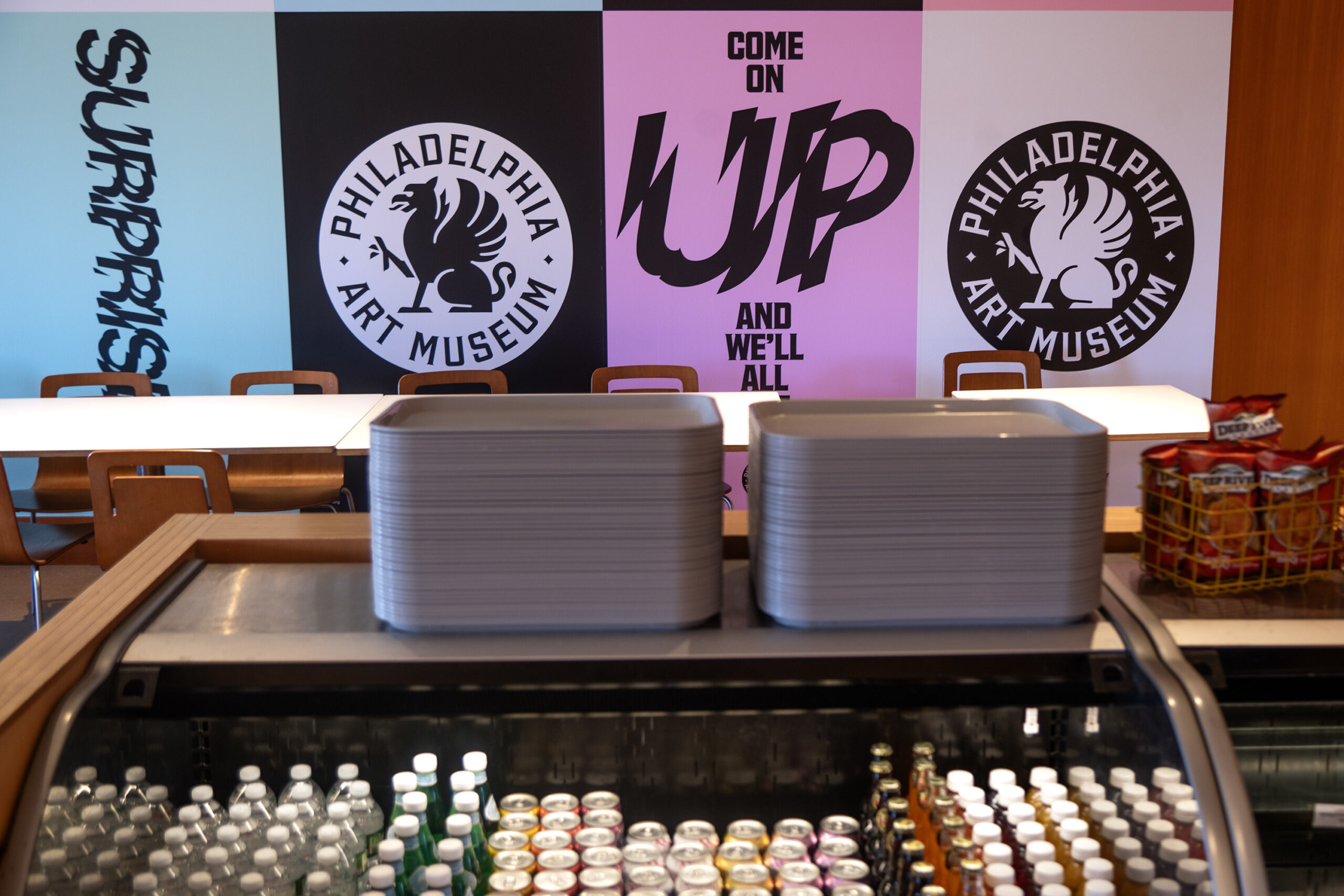
New signage in the Art Museum’s cafe, Oct. 6, 2025.
But the campaign was widely — though not universally — mocked.
A Hyperallergic story carried the headline: “People Really Hate the Philadelphia Art Museum Rebrand.”
A review in trade blog Brand New praised the rebrand, saying that it infused the museum with a “much needed, new, distinct, and energetic identity that was sorely missing.”
The rebrand, designed by Brooklyn-based branding and design firm Gretel, came with a name change for the institution, from Philadelphia Museum of Art to Philadelphia Art Museum, as well as a shorthand moniker — PhAM, which the museum has used for its new web address, visitpham.org, and in some marketing materials.
That drew an unfortunate joke moniker from wags — PhArt.
“We are an amazing museum with an amazing collection, amazing curators, and an amazing experience, and it’s really a shame, the jokes and negative reaction to the rebranding,” said museum trustee Yoram (Jerry) Wind a few weeks after the rebrand was introduced.
Another board member, Jennifer Rice, expressed support for it shortly after its launch.
“I do like it. I love the tagline ‘Wall to Wall Art for All.’ I like that it feels fresh and feels new and feels like it would connect with the audience we’ve had trouble connecting with,” Rice said
Some critics complained that a new logo inspired by the griffin figures adorning the building’s roofline looked less like that of an art museum and more reminiscent of a beer label or soccer team emblem.
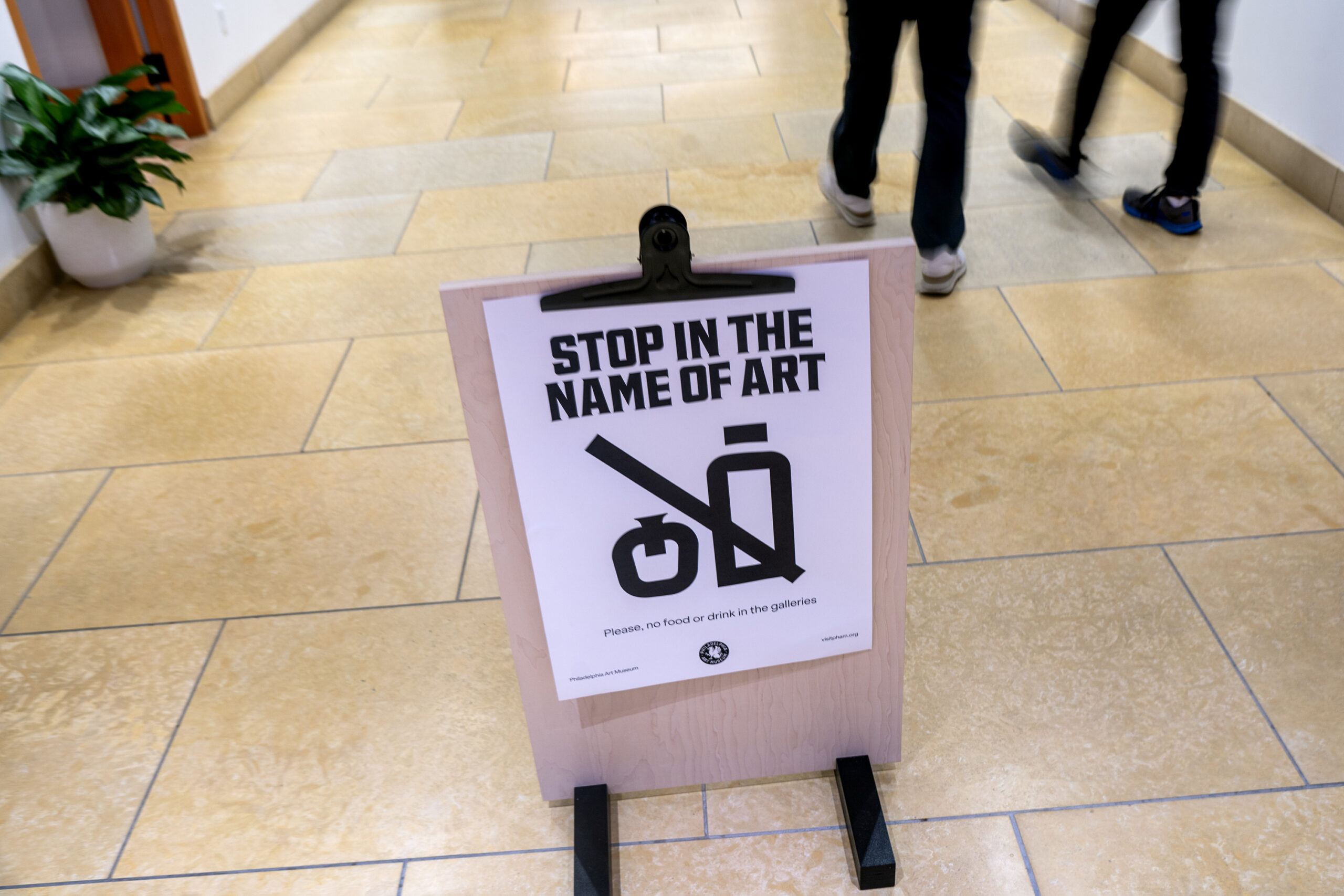
“Please no food or drink in the galleries” sign outside the cafe at the Philadelphia Art Museum, Oct. 6, 2025, showing the museum’s rebrand graphics.
The rebrand, including the name change, new logo, and bolder graphics, also comprises a series of punchy taglines, like “Made You Look” and “Revolutionary Since 1876.”
Weiss has set up a task force of board and staff to evaluate the rebranding to “take a look at how it’s playing, what works, what doesn’t work, to do some analytical work around that and get a sense of how our various constituencies are perceiving it, recognizing that almost any rebrand is controversial at first,” he said. “The question is whether we’re in the territory of a rebrand that is counterproductive to our ambition or not.”
Their findings will be presented to the board for discussion on whether “we stay as it is now or make changes.”
Suda was ousted as director and CEO in November, three years into her five-year contract. She filed a wrongful-dismissal lawsuit against the museum about a week later.
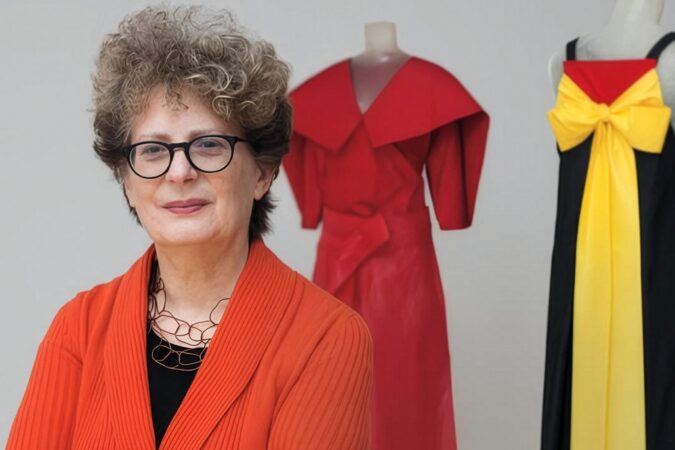
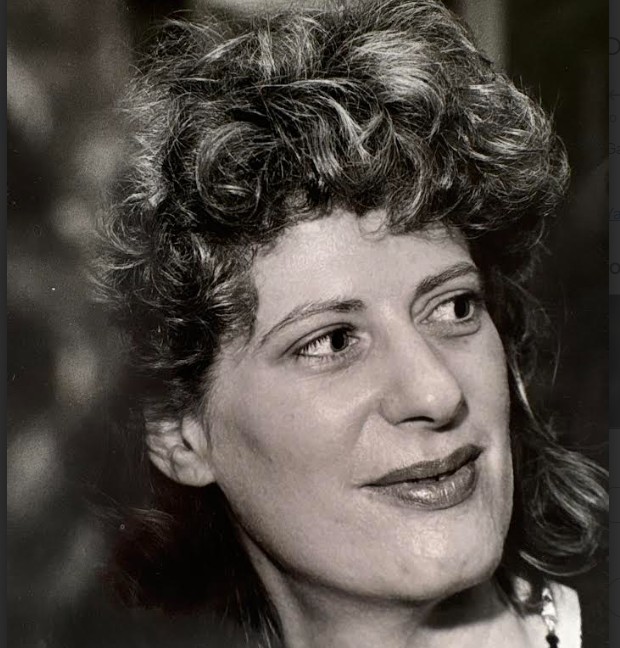
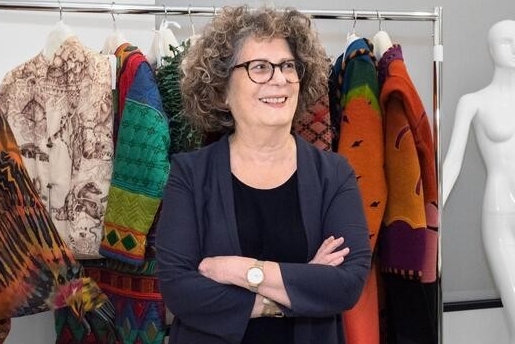
Dilys E. Blum, 78, of Philadelphia, senior curator emeritus of costume and textiles at the Philadelphia Art Museum, author, lecturer, mentor, and world traveler, died Saturday, Dec. 27, of complications from cancer at Thomas Jefferson University Hospital.
For 38 years, from 1987 to her retirement in 2025, Ms. Blum served as the museum’s curator of costume and textiles. In that role, she organized the museum’s vast treasure trove of textile artifacts, traveled the world to research noted fashion designers and eclectic collections, and created more than 40 memorable exhibitions about Renaissance velvets, contemporary fashion, Asian textiles, carpets, African American quilts, and dozens of other curios.
She was cited as the world’s foremost authority on avant-garde Italian fashion designer Elsa Schiaparelli, and her 2003 exhibition “Shocking! The Art and Fashion of Elsa Schiaparelli” drew 83,000 visitors. Francesco Pastore, the heritage and cultural projects manager at the House of Schiaparelli in Paris, said: “Her remarkable research, her generosity in sharing knowledge, and her contribution to fashion studies have deeply enriched our field.”
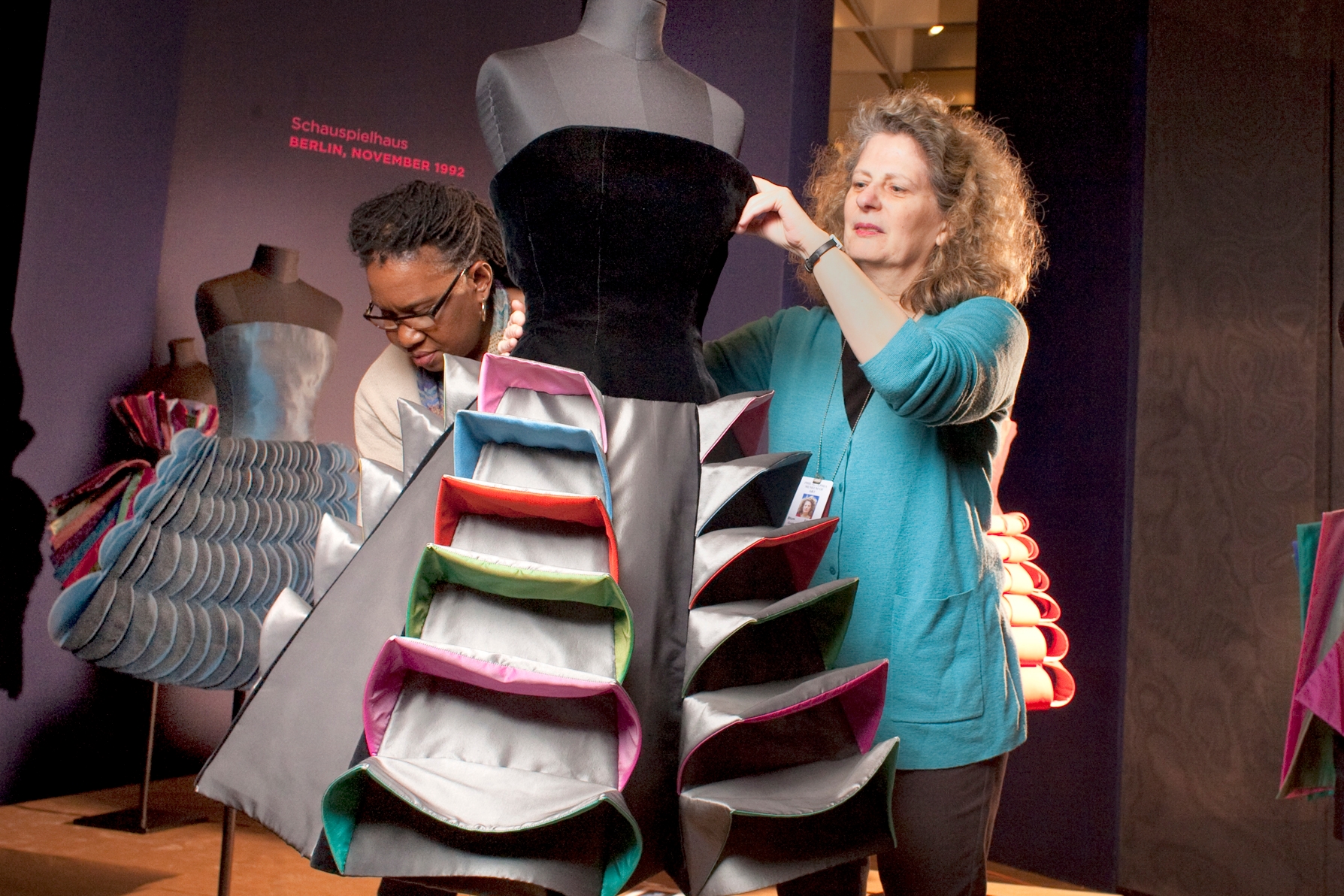
Ms. Blum (right) and colleague Monica Brown tend to a museum exhibit in 2011.
In a recent tribute, former museum colleagues marveled at her “technical expertise and cultural insight,” and credited her for reinvigorating the once-neglected textiles collection. Daniel Weiss, director and chief executive officer of the museum, said: “She transformed this museum’s costume and textiles department into a program respected around the world.”
She told The Inquirer in 1990: “We wanted to remind them that we were here.”
Before Philadelphia, Ms. Blum was a textile conservator at the Chicago Conservation Center and the Brooklyn Museum, and senior assistant keeper of the costume and textile department at the Museum of London. She earned a bachelor’s degree in art history at Connecticut College and studied afterward at the University of Manchester in England and the Courtauld Institute of Art at the University of London.
“She was fearless in her pursuit of perfection in her work,” said her sister Galen. Her sister Sydney said: “She was dedicated to her craft and scholarship.”
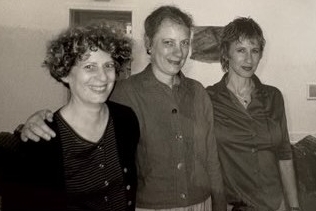
Ms. Blum (left) was close to her sisters Sydney (center) and Galen.
An avid reader and writer, Ms. Blum wrote and cowrote several books about textiles and designers, and 2021’s Patrick Kelly: Runway of Love, coauthored with former colleague Laura L. Camerlengo, earned a 2023 honorable mention publication award from the Costume Society of America. She also wrote essays for exhibition catalogs, served on editorial boards for journals, lectured around the world, and was active with the International Council of Museums, the Association of Art Museum Curators, and other groups.
In 2025, to celebrate Ms. Blum’s retirement, Camerlengo praised her “deep knowledge, creative vision, and contagious passion for the field.” She said: “Dilys is one of the most influential figures in the world of fashion and textile arts.”
Ms. Blum’s work and fashion viewpoints were featured often in The Inquirer. In 1997, she said: “People don’t dress up anymore.” In 1999, she said: “I think we’ve lost the joy in dressing. There’s this trend away from clutter in dress and decorating. It’s pared down to the point of visual boredom.”
In 2001, she said it was easy to differentiate between New Yorkers and Philadelphians. “New Yorkers,” she said, “will invariably be wearing the accessory of the moment, a pashmina shawl, a Kate Spade bag, a Prada loafer.”
Ms. Blum left “an enduring legacy woven through the art museum and the generations of scholars and visitors who now see costumes and textiles as central to the story of art,” former museum colleagues said.
Dilys Ellen Blum was born July 11, 1947, in Ames, Iowa. She and her parents moved to Hamilton, N.Y., when she was 1, and the family traveled with her father, an economics professor at Colgate University, on teaching sabbaticals abroad. When she was 12, Ms. Blum spent a year with her parents and sisters living in Norway and touring Europe in a Volkswagen Beetle.
Her mother was an artist and seamstress, and she and Ms. Blum spent many nights poring over clothes patterns on their dining room table. She enjoyed reading murder mysteries and traveling the world in search of new museum-worthy artifacts.
She lived in South Philadelphia, was diagnosed with cancer three years ago, and talked often with her sisters on the telephone. “I admired her seriousness and humility,” Sydney said. Galen said: “From my perspective, I was in awe of her.”
In addition to her sisters, Ms. Blum is survived by a niece, Juniper, and other relatives.
A memorial service is to be held later.
Former museum colleagues said Ms. Blum’s writing “consistently amplified the makers and wearers of extraordinary objects, and their intertwined relationships.”
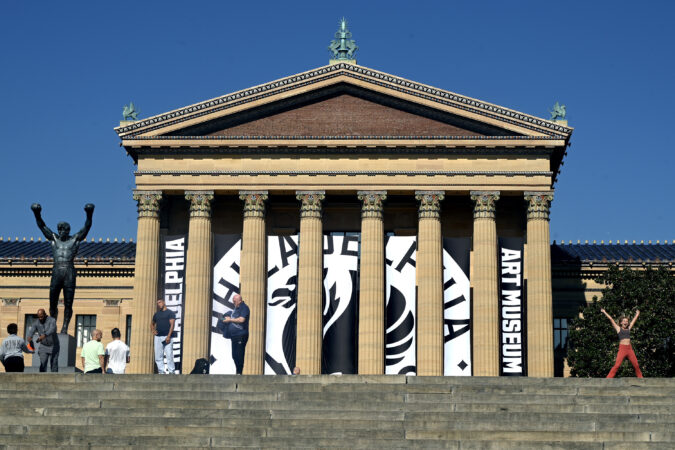
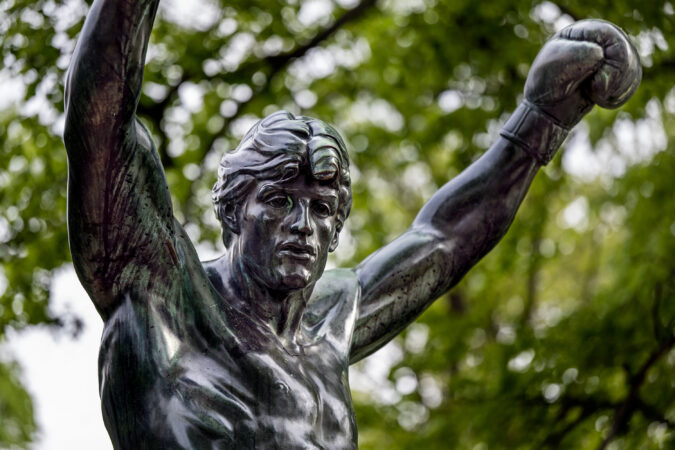
The city’s famed Rocky statue has been cleared for installation atop the Philadelphia Art Museum’s iconic steps later this year following an Art Commission vote Wednesday. Four commissioners voted to approve the move, while one disapproved and one abstained.
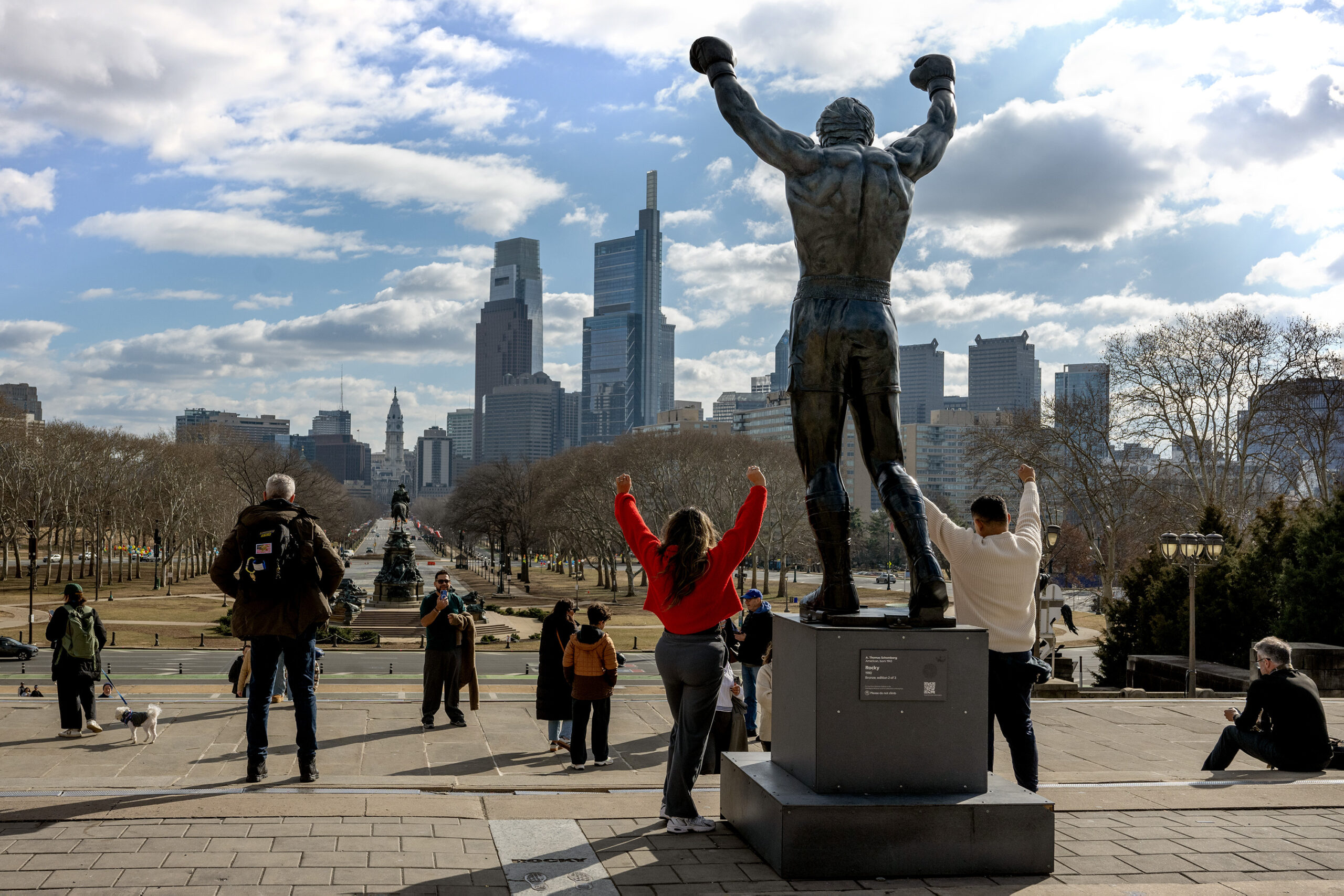
With final approval granted, Creative Philadelphia, the city’s office for the creative sector, can move forward with its recently proposed plan to once again place the statue in one of the city’s most prominent locations. Since 2006, the statue has sat at the base of the museum’s steps, attracting an estimated 4 million visitors per year, agency officials have said.
“I think people come not because they’re told to — they come because it already belongs to them, and that kind of cultural legitimacy cannot be manufactured,” said commissioner Rebecca Segall at Wednesday’s meeting. “And by that measure, I believe it’s one of Philadelphia’s most meaningful monuments, and I believe we should just get him out of the bushes and put him up top.”
Now, Philly’s original Rocky statue — commissioned by Sylvester Stallone for 1982’s Rocky III and used in the film — will do just that sometime in the fall, per Creative Philadelphia’s plan. Its move to the top of the steps will come following its exhibition in “Rising Up: Rocky and the Making of Monuments,” an Art Museum program slated to run from April to August that will see the statue displayed inside the museum building for the first time.
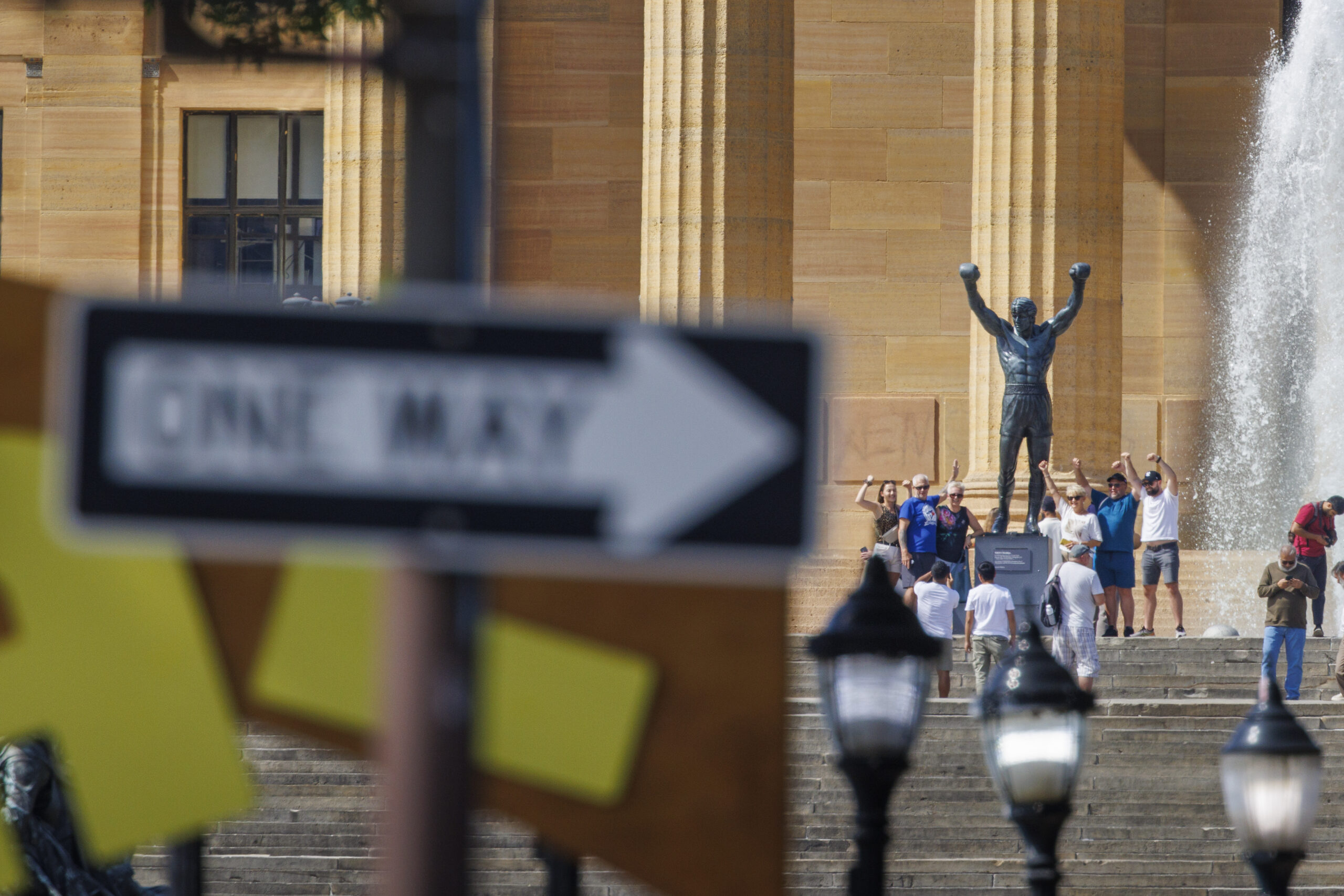
Sylvester Stallone’s “second casting” of the Rocky statue version atop the museum steps Jan. 7, 2026. It will return to the actor’s collection once the original statue is relocated.
Another statue will be installed at the bottom of the Art Museum’s steps, though what statue that will be has not yet been determined. Last month, chief cultural officer Valerie V. Gay said the spot would not be filled with another Rocky statue, leaving Philadelphia with sculptures of the Italian Stallion at both the top of the Art Museum steps, and in Terminal A-West of Philadelphia International Airport.
As part of the original statue’s installation in the fall, Creative Philadelphia plans to develop a shuttle service for visitors with mobility limitations that will take passengers from the bottom of the steps to the top. The service, referred to as the “Rocky Shuttle,” will be run by the Philadelphia Visitor Center, and will operate similarly to the Philly Phlash bus service, which arrives at 15-minute intervals, Creative Philadelphia officials said.
Additionally, the statue will be placed on a pedestal roughly 14 feet back from the edge of the top step, next to where a small installation depicting Rocky’s shoe prints is currently embedded in the museum’s stone walkway, Marguerite Anglin, the city’s public art director, said Wednesday. The project has a budget of $150,000 to $250,000, though final costs were not available, she added. In its proposal last month, Creative Philadelphia indicated the project would cost about $150,000.
Wednesday’s vote came following about an hour of discussion, during which some Art Commission members raised concerns over whether moving the statue would strengthen the relationship Philadelphians have with art or increase attendance at the museum. Commissioner Pepón Osorio said many visitors have indicated they were coming to see the statue because it represents Rocky, and not because it is a work of art.
“I don’t think that people see it as a work of art,” he said. “People see it as an iconic structure.”
Debate over the statue’s merits has been going on since before it first arrived in town for the filming of Rocky III in 1981. In 1980, local artist and then-Art Commission member Joseph Brown referred to the statue as “unnecessarily strident,” and indicated the Rocky franchise didn’t lend any particular cachet to Philadelphia’s cultural standing. Inquirer columnist Tom Fox, meanwhile, in 1982 called the statue a “monument to schlock, chutzpah, and mediocrity.”
Public opinion has also been divided. In a September Inquirer poll, 46% of respondents said no Rocky statue belongs at the top of the steps, but the one at the bottom should stay. Roughly 20% said the city should not have a Rocky statue at all.
Now, however, with the installation plan approved, it appears the debate can continue with Rocky once again atop the Art Museum’s steps. As part of approval, Creative Philadelphia agreed to undertake community engagement efforts examining the public’s interpretation of the statue.
“This really isn’t, for us, about getting the statue up there and then we move on,” Gay said. “This really opens the door to how public art can be used in civic discourse, in the ethos of our city right now, to think about both contemporary [times] and the past, as well as how we think about the future.”
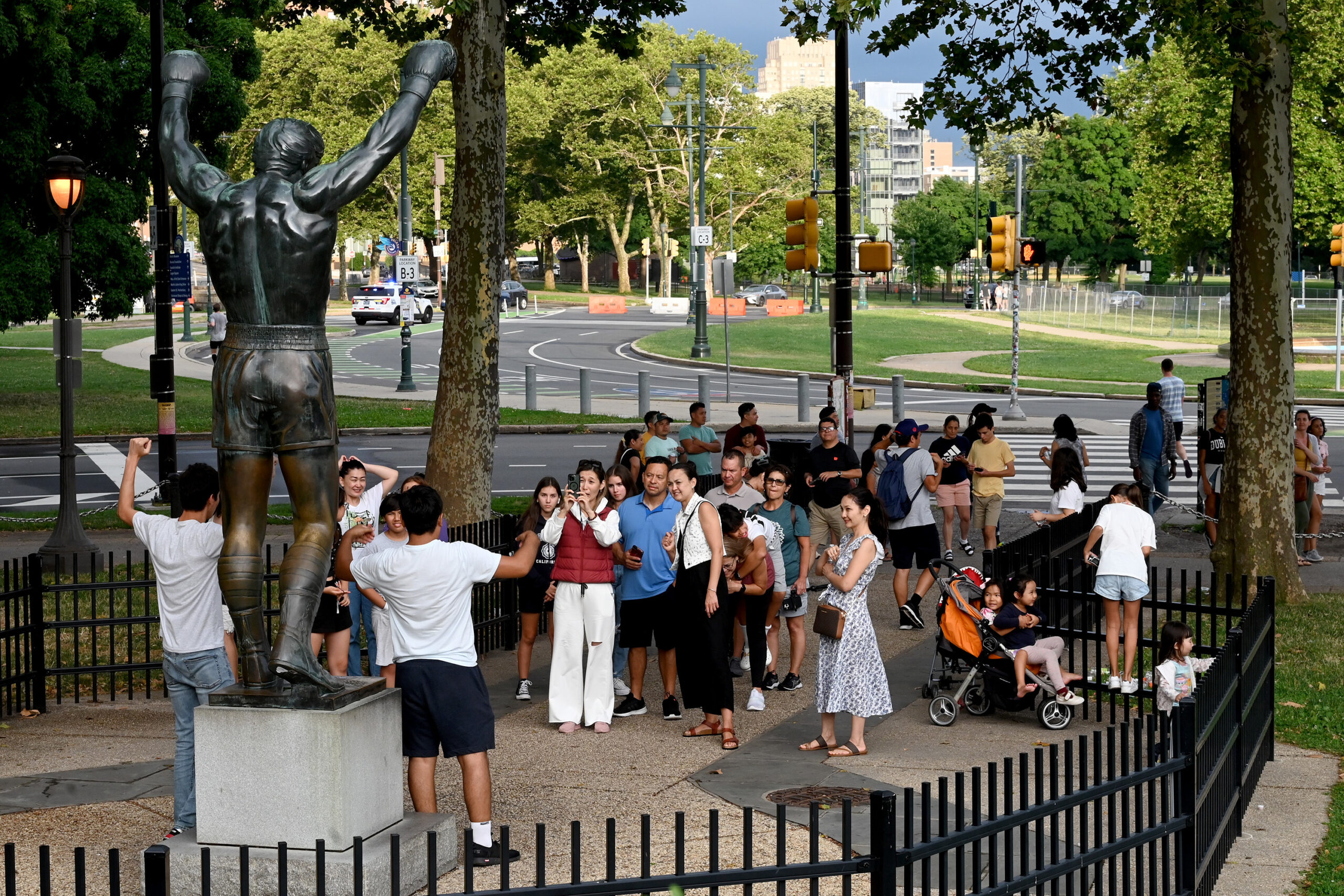
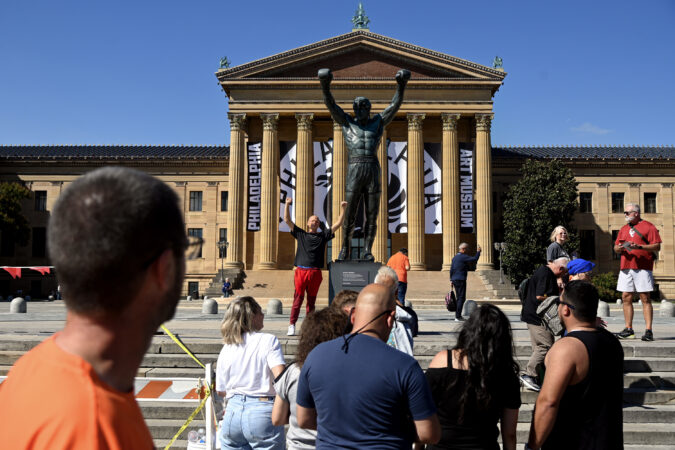
Tourists pose with the original Rocky statue in July 2022. The statue will move to the top of the steps in the fall.
The Barnes Foundation removed a precious Pierre-Auguste Renoir painting from view last year for some much-needed rehabilitation.
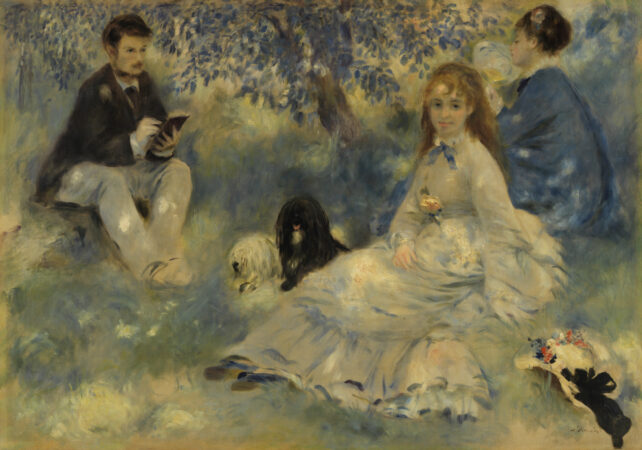
The Henriot Family (La Famille Henriot), an oil painting completed around 1875, is an impressionist work depicting three people and two long-haired dogs relaxing in a forest. A young woman in a white dress gazes directly at the viewer while a man to her right appears to be drawing her. The central figure is Henriette Henriot, one of Renoir’s frequent models, and her admirer is the painter’s brother, Edmond Renoir.
It’s one of 181 Renoir paintings that Albert C. Barnes amassed during his lifetime, leading the Barnes Foundation to hold the largest collection of Renoir artworks in the world. He purchased the piece from art dealer Etienne Bignou in 1935 for $50,000, which amounts to about $1.17 million today.
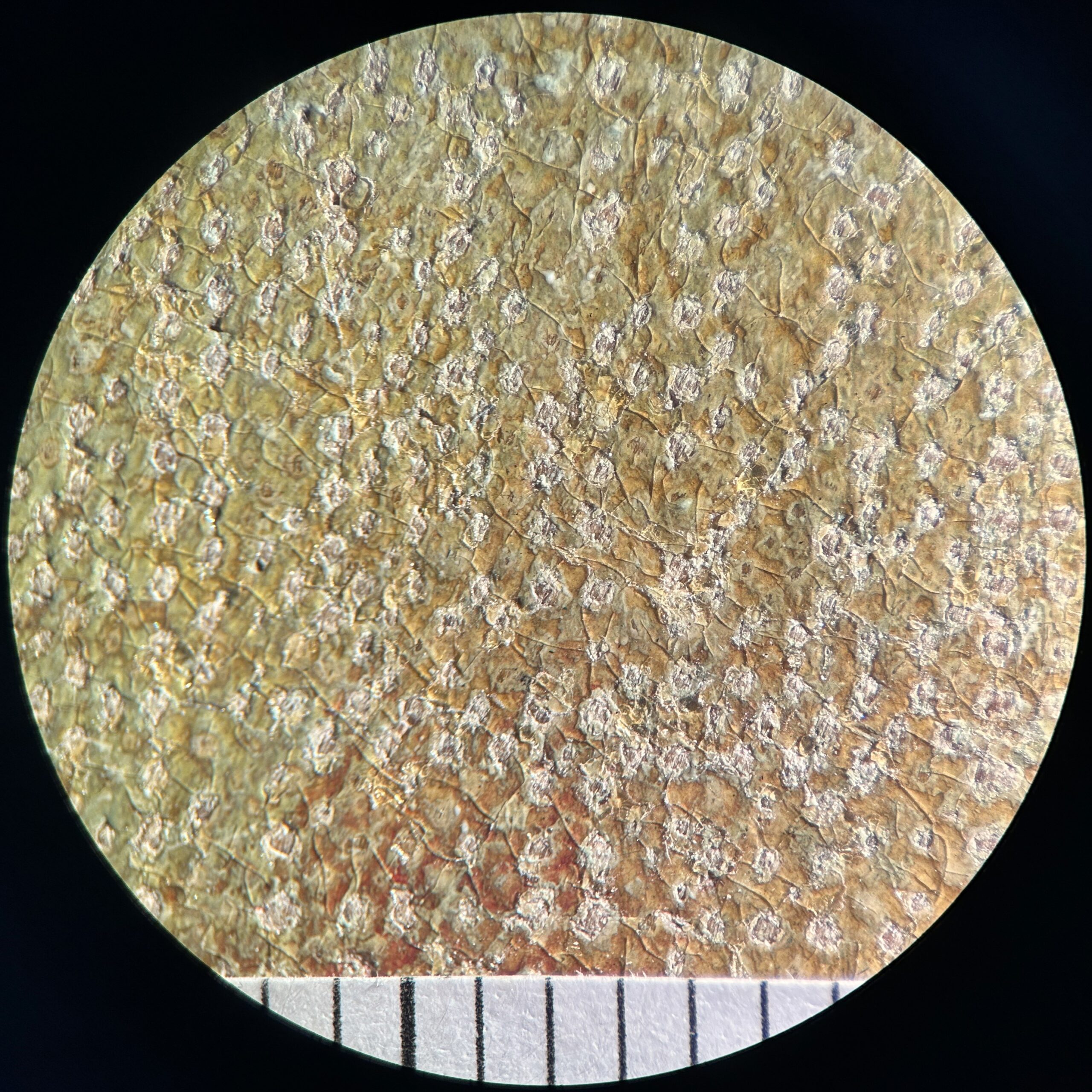
A close-up of “The Henriot Family” demonstrates the old layer of varnish that has yellowed the painting over time.
Sitting above a doorway in the museum’s main room, The Henriot Family has long been eyed for restoration, according to WHYY. The staff brought the painting into the conservation lab in February 2025.
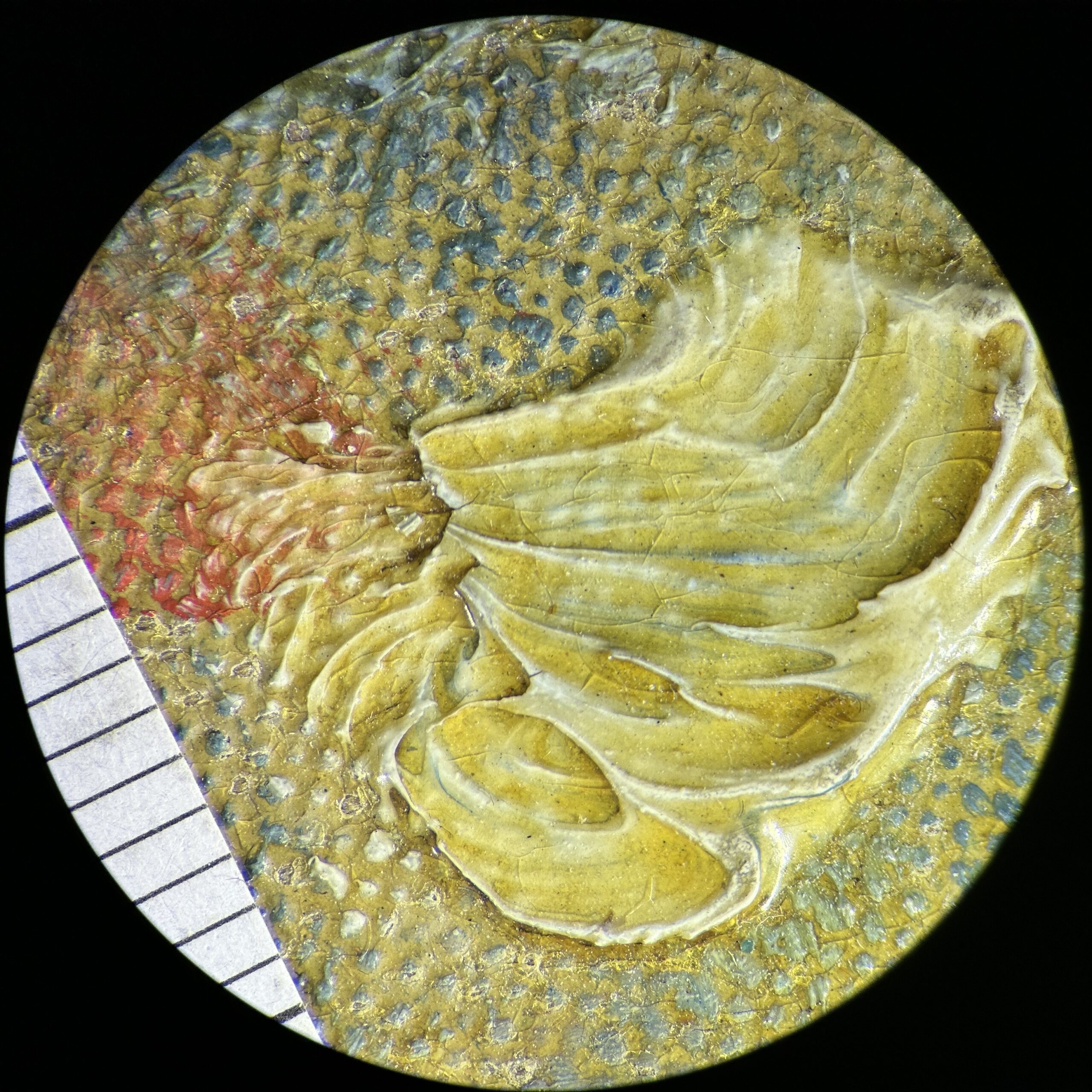
An old layer of resin varnish on the paint has altered the colors over time, turning them from blue and gray to yellow and green. On a microscopic level, the paint has also begun separating from the canvas and the base layer in a process called “micro-flaking.”
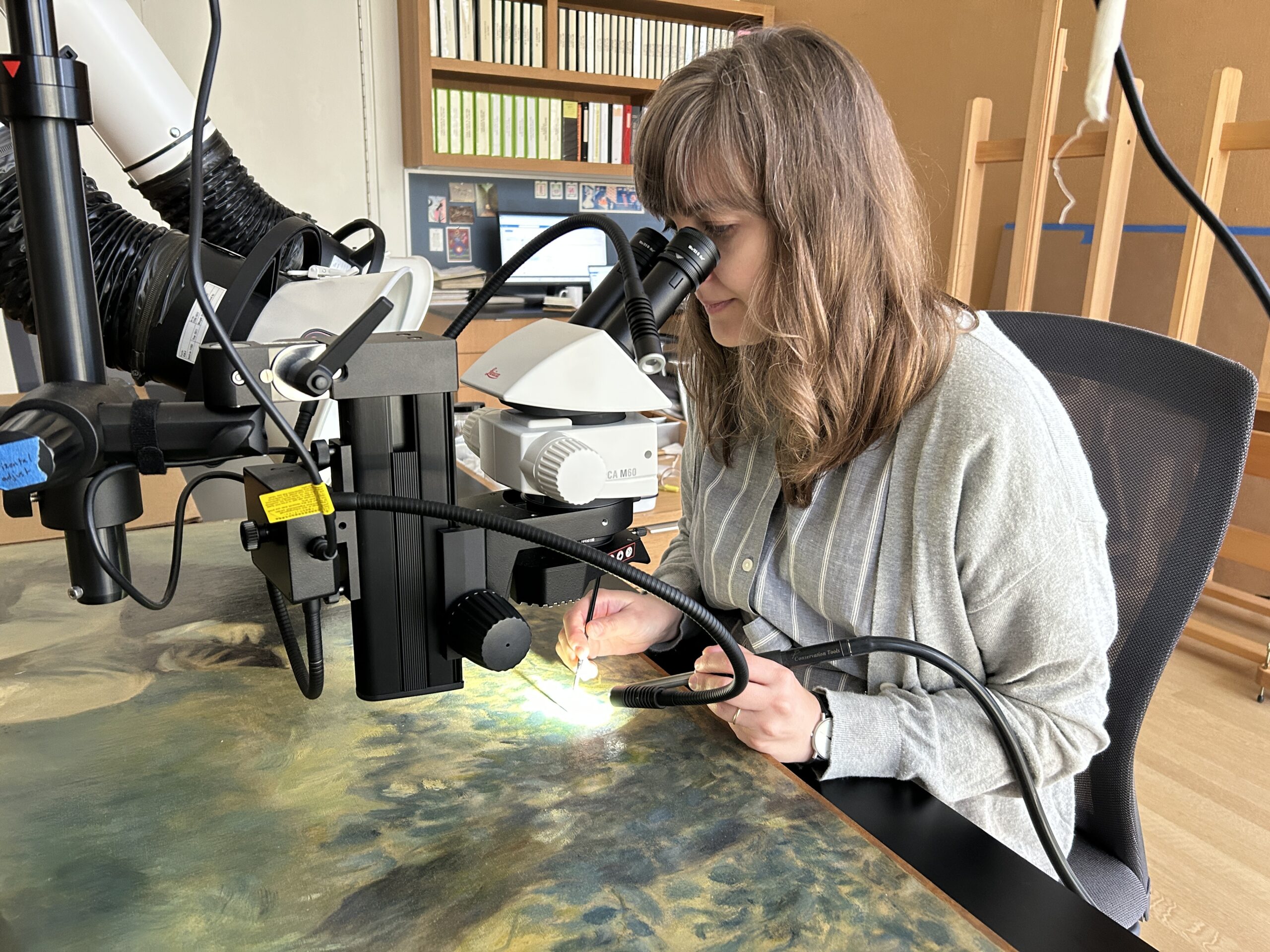
The Barnes Foundation’s associate conservator of paintings Christie Romano studies “The Henriot Family” under a microscope.
So far, Barnes’ associate conservator of paintings Christie Romano has reportedly put in some 200 hours studying the painting under a microscope to identify problematic areas.
The conservation efforts will remove the yellowing layer of resin to restore the original colors underneath and fix the areas most affected by micro-flaking using calcium carbonate. The project is funded by a grant of an undisclosed amount from Bank of America as part of its Art Conservation Project; the Barnes is one of 16 recipients worldwide.
A microscopic close-up of “The Henriot Family” painting demonstrates “micro-flaking” damage.
Cultural institutions in Philadelphia have benefited from the bank’s conservation grants in previous years. In 2019, the bank funded the restoration of The Large Bathers by Paul Cézanne at the Barnes and The Great Bathers by Renoir at the Philadelphia Art Museum. Over the past 16 years, the Art Conservation Project has issued grants for some 275 conservation projects across 40 countries.
The Henriot Family will be back on view at the Barnes sometime in February, with its gray and blue looking brand new.
Way back in 2022, when Philadelphians gathered on an abandoned pier to watch a man eat a rotisserie chicken, folks on social media began to wonder: “Is Philadelphia a real place?”
Sure, that perception has a lot to do with an unbelievable event that actually happened in the suburbs (Delco never fails to carry its weight), but Philly also saw its fair share of the bizarre this year, too.
As we prepare for what may be one of the most important (and hopefully weirdest!) years in modern Philadelphia history, let’s take some time to look back on the peculiar stories from across the region that punctuated 2025.
Five uh-oh
Kevon Darden was sworn in as a part-time police officer for Collingdale Borough on Jan. 12 and hit the ground running, landing his first arrest just four days later.
The only problem? It was his own.
Pennsylvania State Police charged Darden with terroristic threats and related offenses for an alleged road rage incident in 2023 in which he’s accused of pointing a gun at a driver on the Blue Route in Ridley Township. At the time of the alleged incident Darden was employed as an officer at Cheyney University.
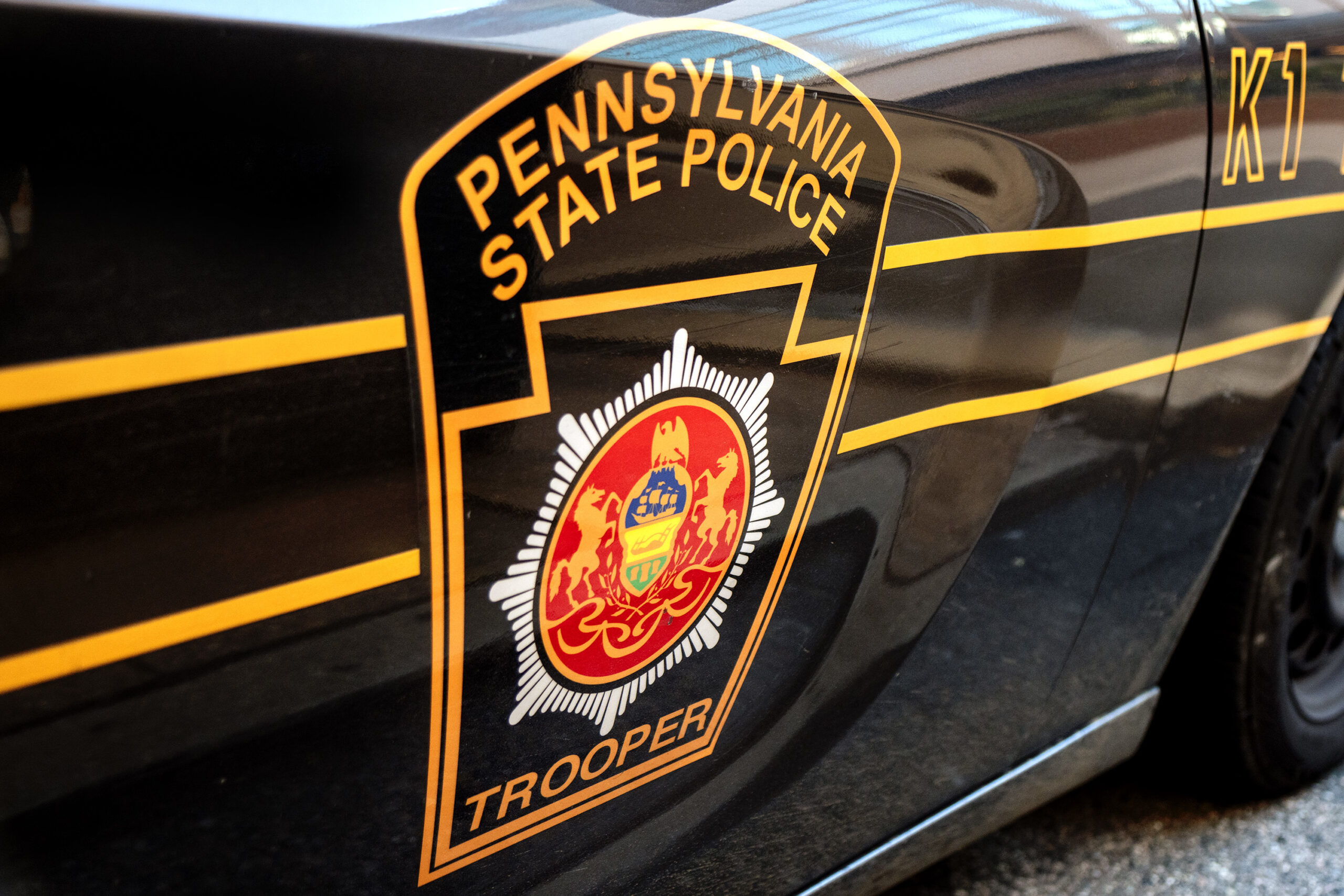
A Pennsylvania State Police vehicle. The agency provided two clean background checks for a Collingdale police officer this year, only to arrest him four days after he started the job.
Here’s the thing — it was state police who provided not one but two clean background checks on Darden to Collingdale officials before he was hired. An agency spokesperson told The Inquirer troopers had to wait on forensic evidence tests and approval from the District Attorney’s Office before filing charges.
Darden subsequently resigned and is scheduled for trial next year in Delaware County Court.
For the Birds
The Eagles’ second Super Bowl win provided a wellspring of wacky — and sometimes dicey — moments on and off the field early this year.
Mayor Cherelle L. Parker started the championship run off strong by going viral for misspelling the most popular chant in the city as “E-L-G-S-E-S” during a news conference. Her mistake made the rounds on late night talk shows and was plastered onto T-shirts, beer coozies, and even a license plate. If you think the National Spelling Bee is brutal, you’ve never met Eagles fans.
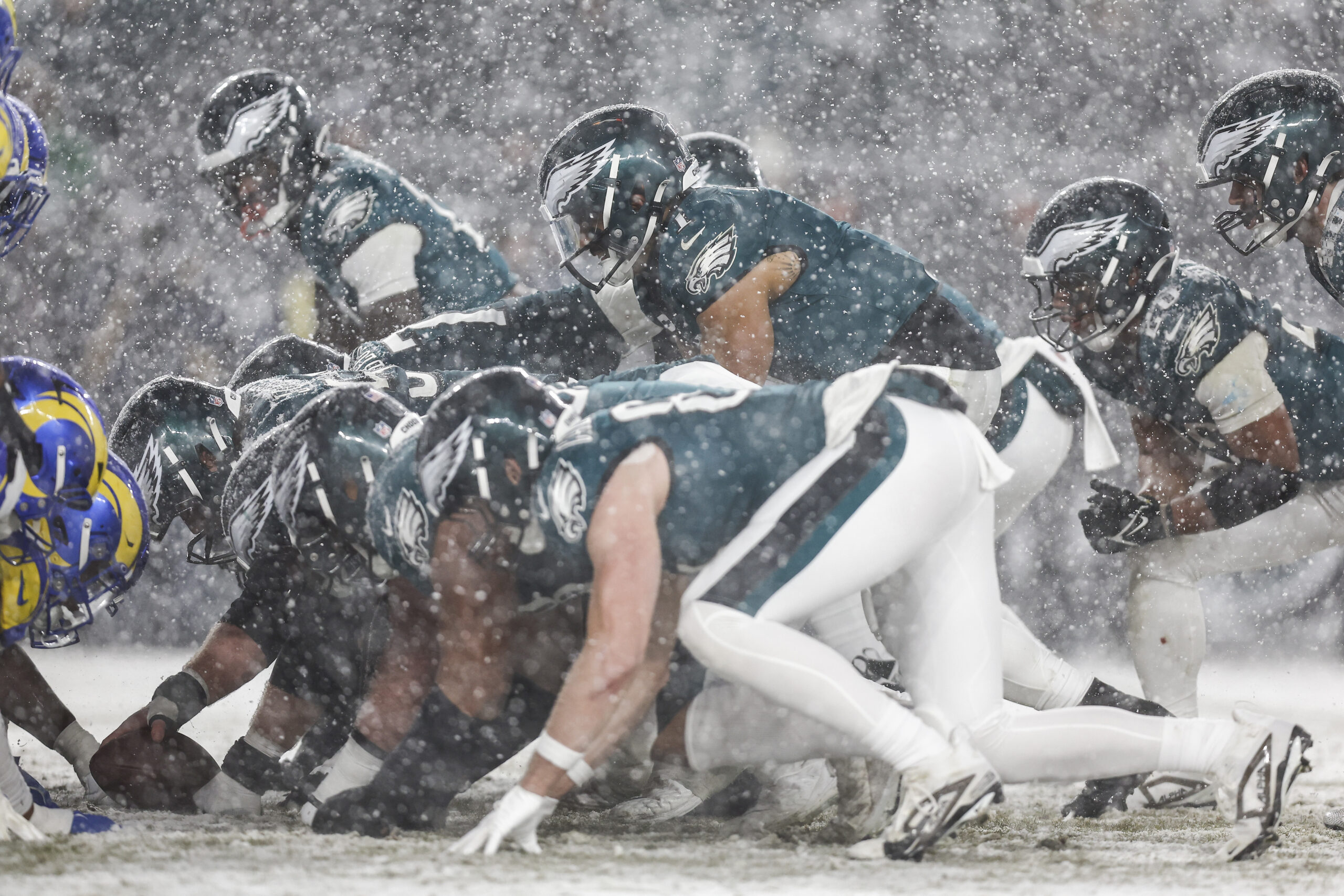
Philadelphia Eagles quarterback Jalen Hurts at the line of scrimmage during the fourth quarter of the NFC divisional playoff at Lincoln Financial Field on Jan. 19. The Philadelphia Eagles defeated the Los Angeles Rams 28 to 22.
Then there was the snowy NFC divisional playoff game against the Los Angeles Rams at Lincoln Financial Field; continued drama around the Tush Push (which resulted in Dude Wipes becoming an official sponsor of the team); and Cooper DeJean’s pick-six, a gift to himself and us on his 22nd birthday that helped the Birds trounce the Kansas City Chiefs 40-22 in Super Bowl LIX.
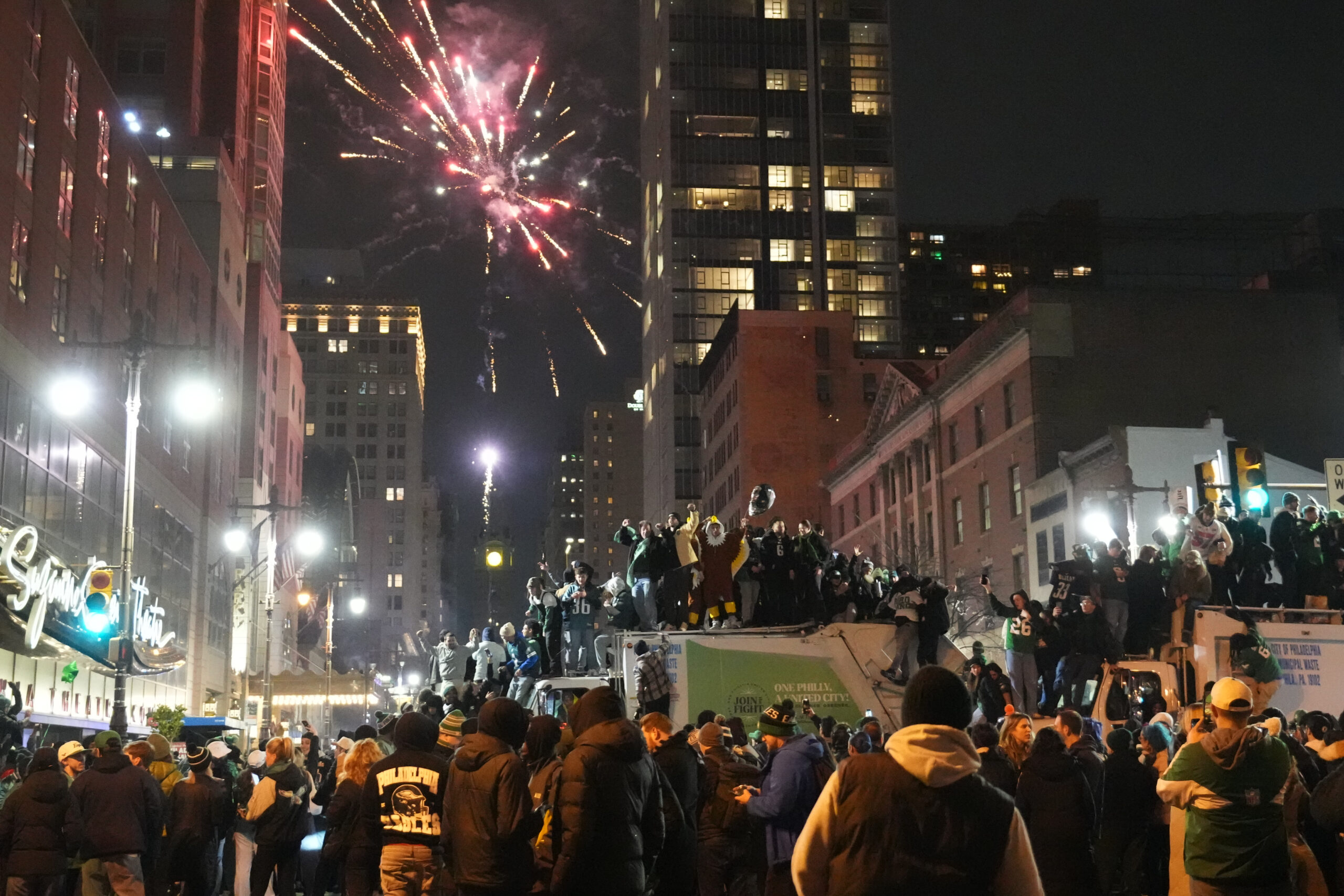
As soon as the Eagles won with Jalen Hurts as MVP, Philadelphians let loose, flooding the streets like a drunken green tsunami. Fans scaled poles and tore them down; danced on bus shelters, medic units, and trash trucks; partied with Big Foot, Ben Franklin, and Philly Elmo; and set a bonfire in the middle of Market Street.
Eagles fans party on trash trucks in the streets of Center City after the Birds win in Super Bowl LIX against the Chiefs on Feb. 9.
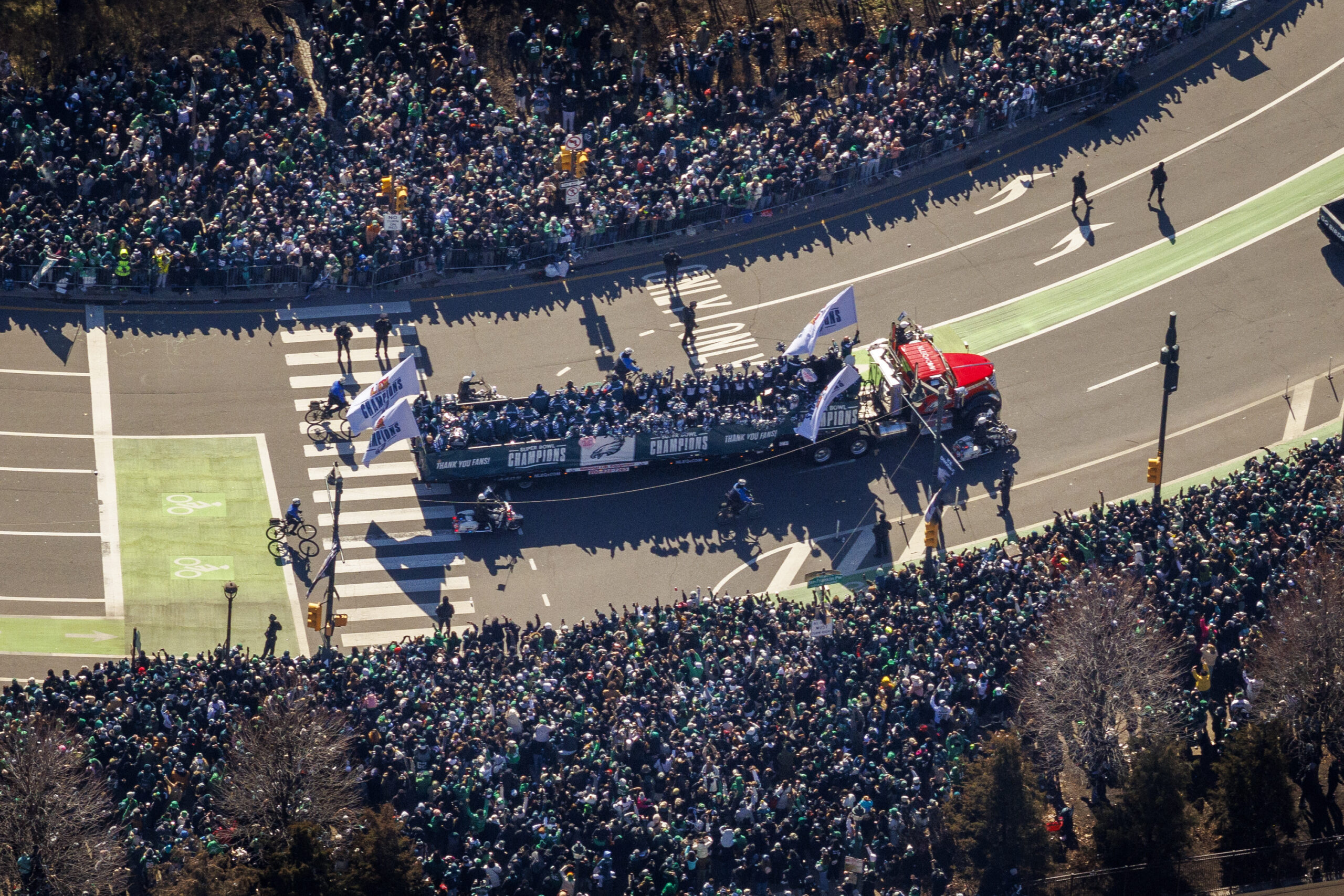
Finally, there was the parade, a Valentine’s Day love letter to the Eagles from Philadelphia. Among the more memorable moments was when Birds general manager Howie Roseman was hit in the head with a can of beer thrown from the crowd. He took his battle scar in pride, proclaiming from the steps of the Philadelphia Art Museum: “I bleed for this city.”
As we say around here, love Hurts.
Throngs of Birds fans lined the Benjamin Franklin Parkway for the Eagles Super Bowl Parade on Feb. 14.
A $40 million goodbye
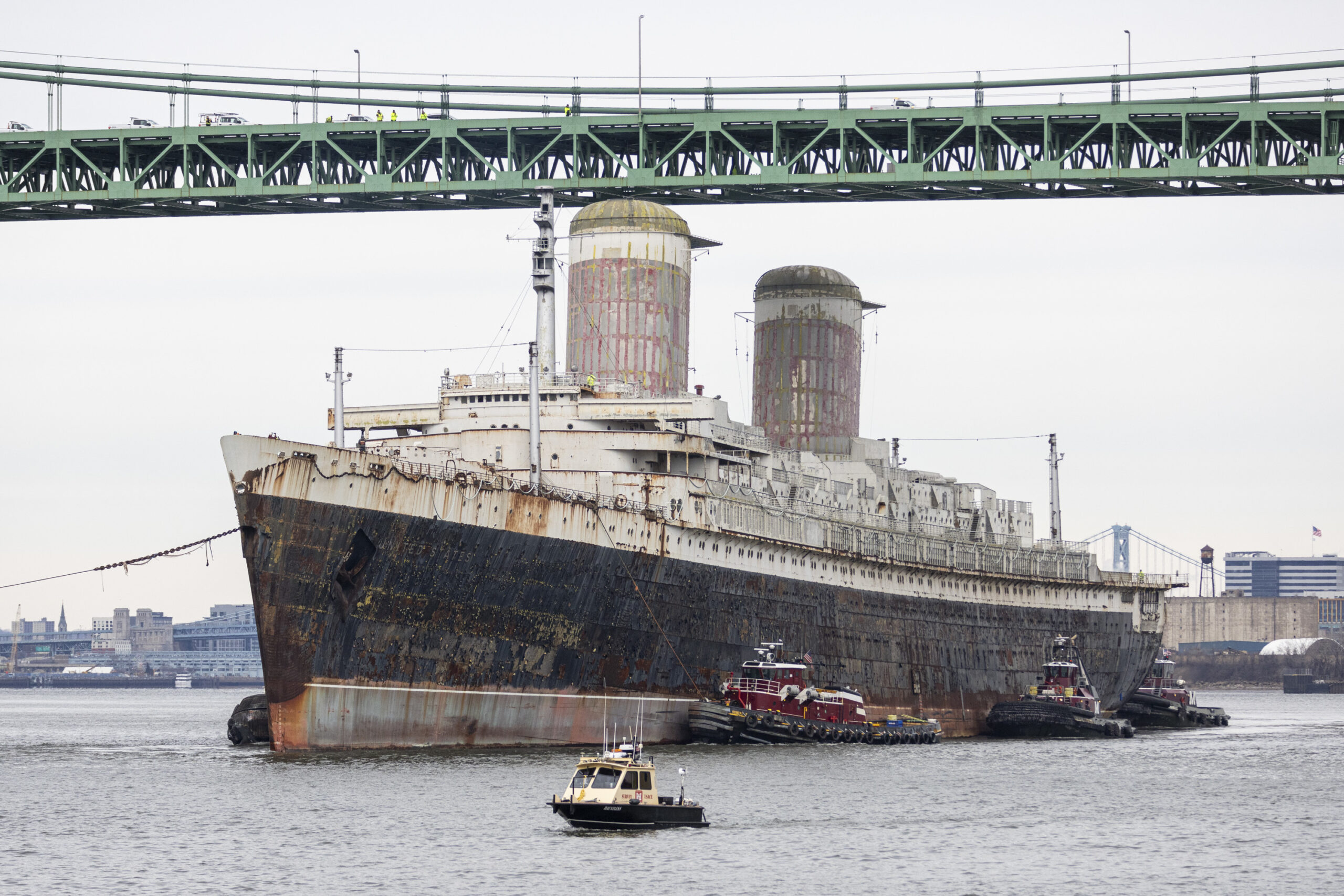
As far as inanimate objects go, few have experienced more drama in recent Philly history than the SS United States, the 73-year-old, 990-foot luxury liner that was docked for nearly three decades on the Delaware River waterfront.
Supporters spent more than $40 million on rent, insurance, and other measures to keep the ship in Philly with the hopes of returning it to service or at least turning it into a venue. But a rent dispute with the owners of the pier finally led a judge to order the SS United States Conservancy, which owned the vessel, to seek an alternate solution.
Workers on the Walt Whitman Bridge watch from above as the SS United States is pulled by tug boats on the Delaware River.
And so in February, with the help of five tugboats, the ship was hauled out of Philly to prepare it to become the world’s largest artificial reef off the coast of Okaloosa County, Fla.
If the United States has to end somewhere, Florida feels like an apt place.
The ‘Delco Pooper’
While the Eagles’ Tush Push was deemed legal by NFL owners this year, a Delaware County motorist found that another kind of tush push most definitely is not after she was arrested for rage pooping on the hood of a car during a roadway dispute in April.
Captured on video by a teen who witnessed the rear-ending, the incident quickly went viral and put a stain on Delco that won’t be wiped away anytime soon.
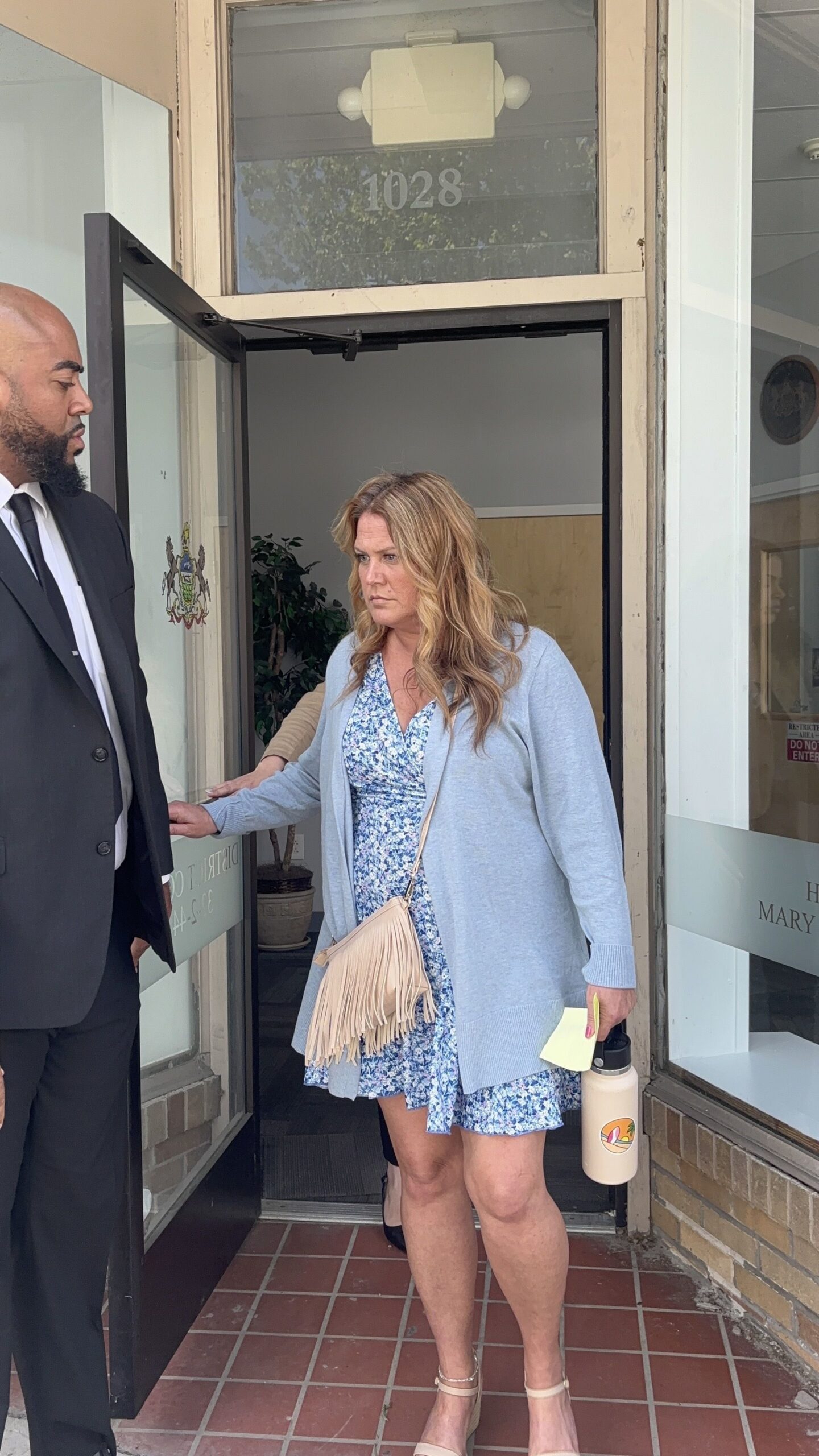
Christina Solometo, who was dubbed the “Delco Pooper” on social media, told Prospect Park Police she got into a dispute with another driver, whom she believed began following her. Solometo claimed when she got out of her car the other driver insulted her and so she decided to dump her frustrations on their hood.
A private security guard holds the door open for alleged “Delco Pooper” Christina Solometo following her preliminary hearing Monday at Prospect Park District Court.
“Solometo said, ‘I wanted to punch her in the face, but I pooped on her car instead and went home,’” according to the affidavit.
I’ve written a lot of stories about Delco in my time, but this may be the most absurd.
Hopefully, she won’t be clogging up the court system anymore.
The Delco pope
Delco is large, it contains multitudes, and never was that more clear than when two weeks after the Delco Pooper case broke, a Delco pope was elected.
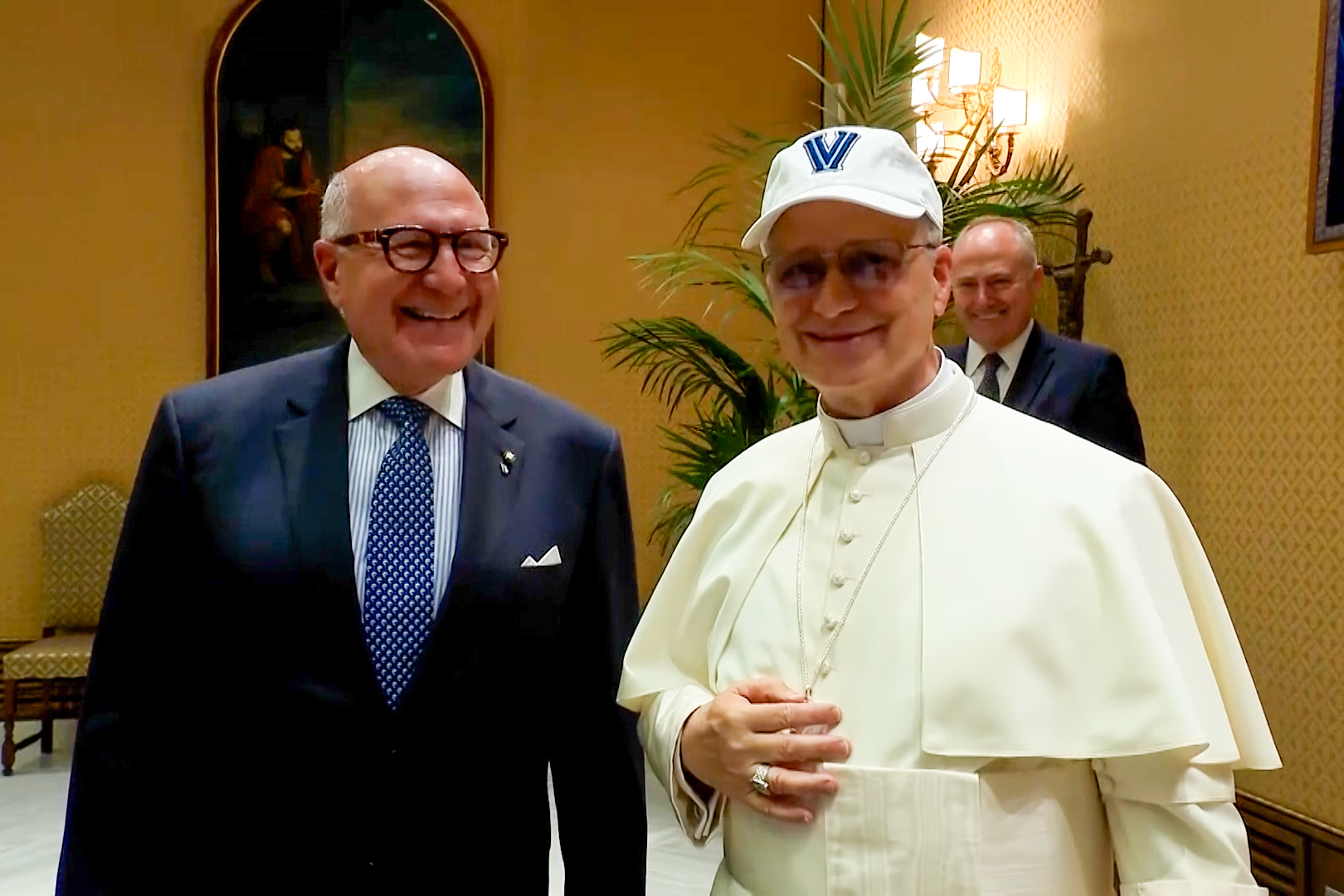
OK, so Pope Leo XIV is technically a native of Chicago, but he attended undergrad at Villanova University — which, yes, technically straddles Delco and Montgomery County — but Delco’s had a tough year so I’m gonna give it this one.
This video screen grab shows Pope Leo XIV wearing a Villanova University hat gifted to him during a meeting with an Italian heritage group.
Born Robert Prevost, Pope Leo is the first U.S. pope in history and also a citizen of Peru. He earned his bachelor’s degree in mathematics from Villanova in 1977 and an honorary doctor of humanities from the university in 2014.
Center City Sips, the Wednesday Center City happy hour program, long ago earned a reputation as a rite of passage for 20-somethings who are still figuring out how to limit their intake and want to do so in business casual attire.
Things seemed to calm down after the pandemic, but then Philadelphians took Sips to another level and a whole new place this year — the streets.
Videos showed hundreds of people partying in the streets of Midtown Village on Wednesday nights this summer. Granted, the parties look far more calm than when sports fans take over Philly after a big win, but the nearby bar owners who participate in the Sips program said their places sat empty as people brought their own alcohol to drink.
Jason Evenchik, who owns Time, Vintage, Garage, and other bars, told The Inquirer that “No one is inside, and it’s mayhem outside.”
“Instead, he claimed, people are selling alcohol out of their cars and bringing coolers to make their own cocktails. At one point on June 11,Evenchik said, a Tesla blocked a crosswalk while a man made piña coladas with a pair of blenders hooked up to the car,” my colleague Beatrice Forman wrote.
In no way am I condoning this behavior, but those two sentences above may be my among favorite this year. Who thinks to bring a blender — with a car hookup — to make piña coladas at an unauthorized Center City street party on a Wednesday night?
Philly.
Getting trashed
Philadelphians experienced a major city workers strike this summer when Mayor Cherelle L. Parker and AFSCME District Council 33 couldn’t agree on a new contract for the union’s nearly 9,000 members.
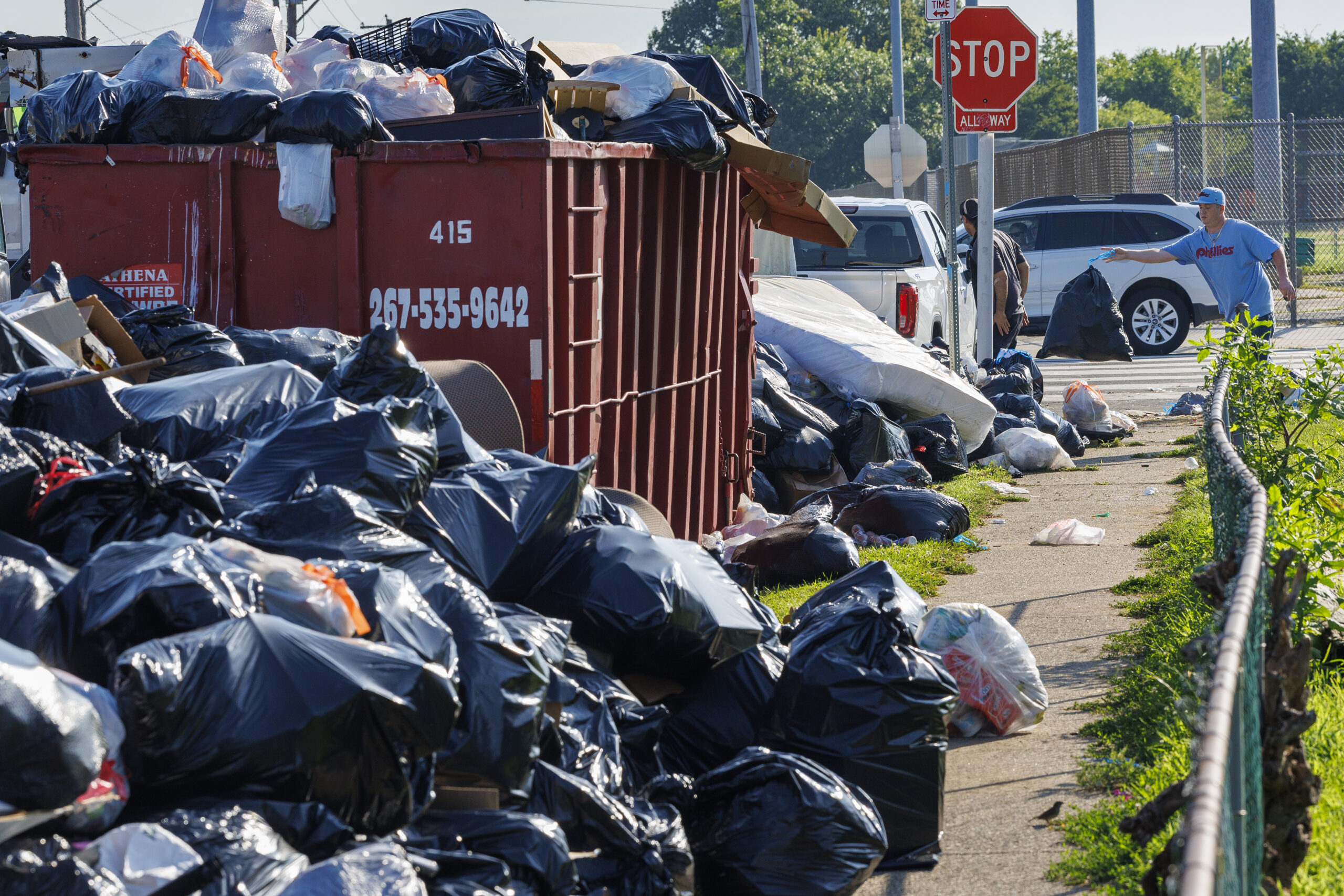
Residents with trash arrive at garbage dump site at Caldera Road and Red Lion Road in northeast Philadelphia during the AFSCME District Council 33 workers strike in July.
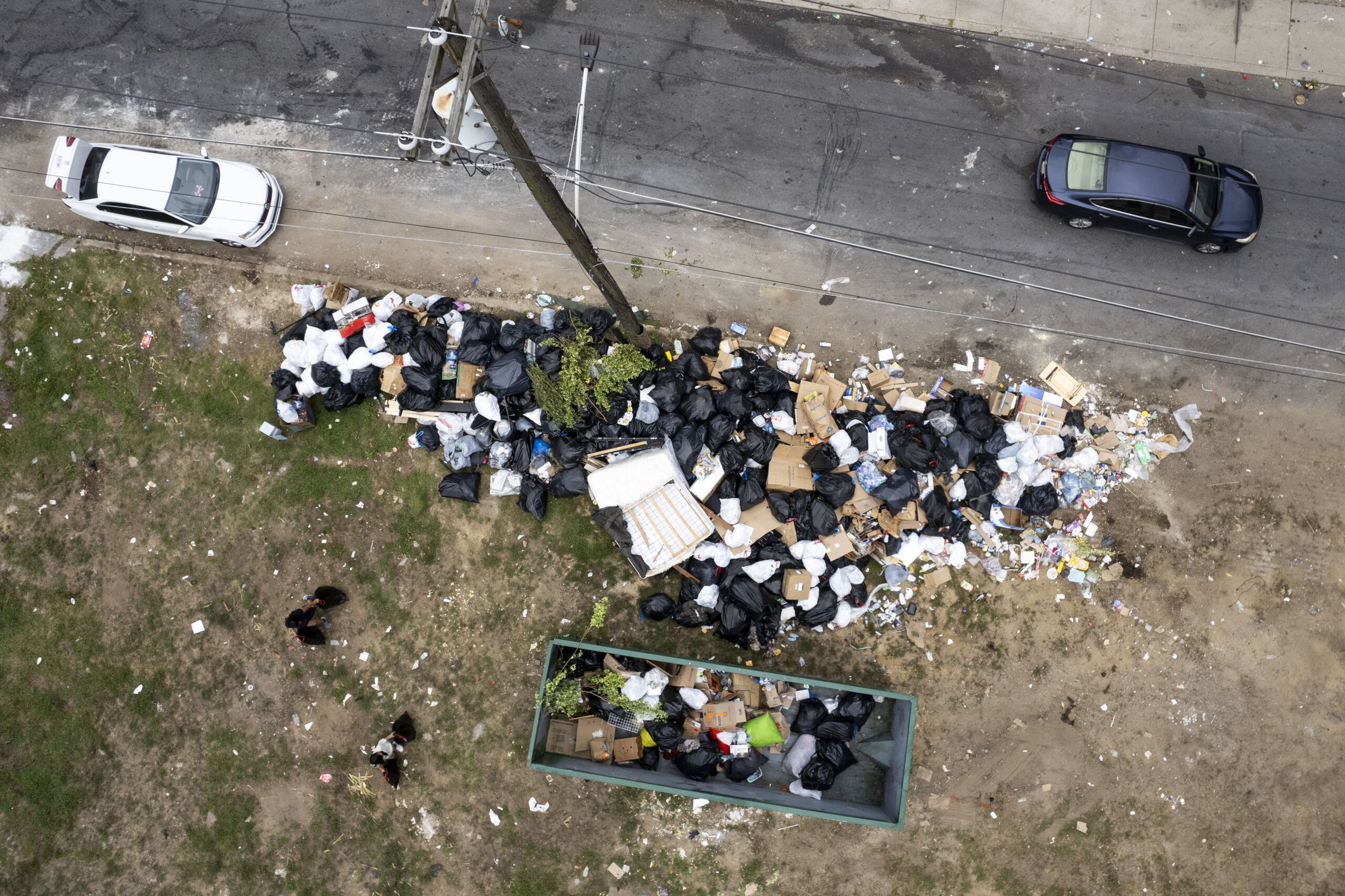
As a result, things got weird. Dead bodies piled up at the Medical Examiner’s Office; a striking union member was arrested for allegedly slashing the tires of a PGW vehicle; and for eight days in the July heat, garbage heaped up all across Philadelphia. The city set up temporary trash drop-off sites, which often overflowed into what were nicknamed “Parker piles,” but that also set off a firestorm about whether using the sites constituted crossing a picket line.
Wawa Welcome America July Fourth concert headliners LL Cool J and Jazmine Sullivan even pulled out of the show in support of striking workers, resulting in a fantastic “Labor Loves Cool J” meme.
It was all like something out of It’s Always Sunny in Philadelphia. In fact, the gang predicted a trash strike in the 2012 episode “The Gang Recycles Their Trash.”
The real strike lasted eight days before a contract was reached. In true Philly form, AFSCME District Council 33 president Greg Boulware told The Inquirer “nobody’s happy.”
A large pile of trash collects at a city drop-off site during the AFSCME workers strike this summer.
97-year-old gives birth to 16 kids
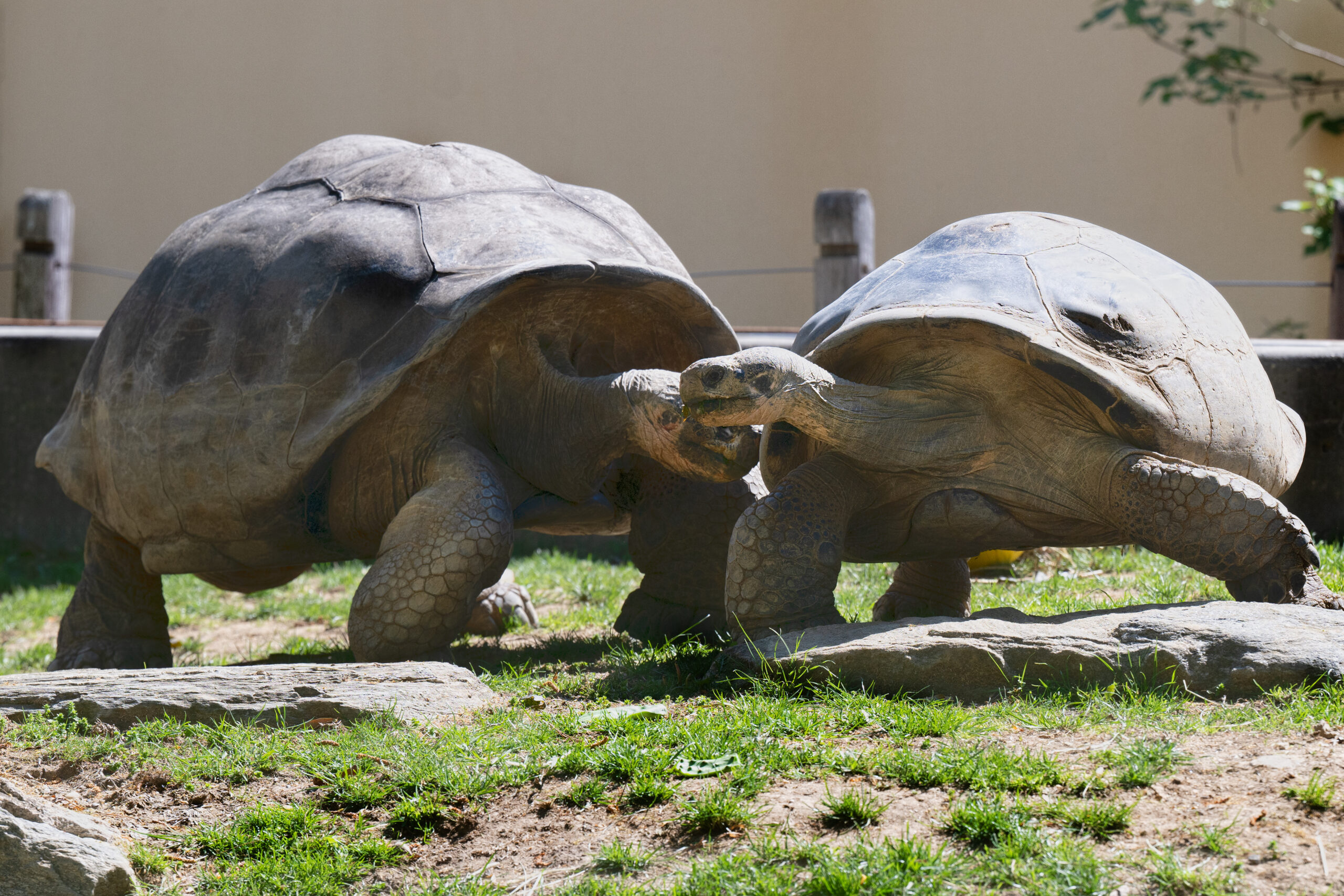
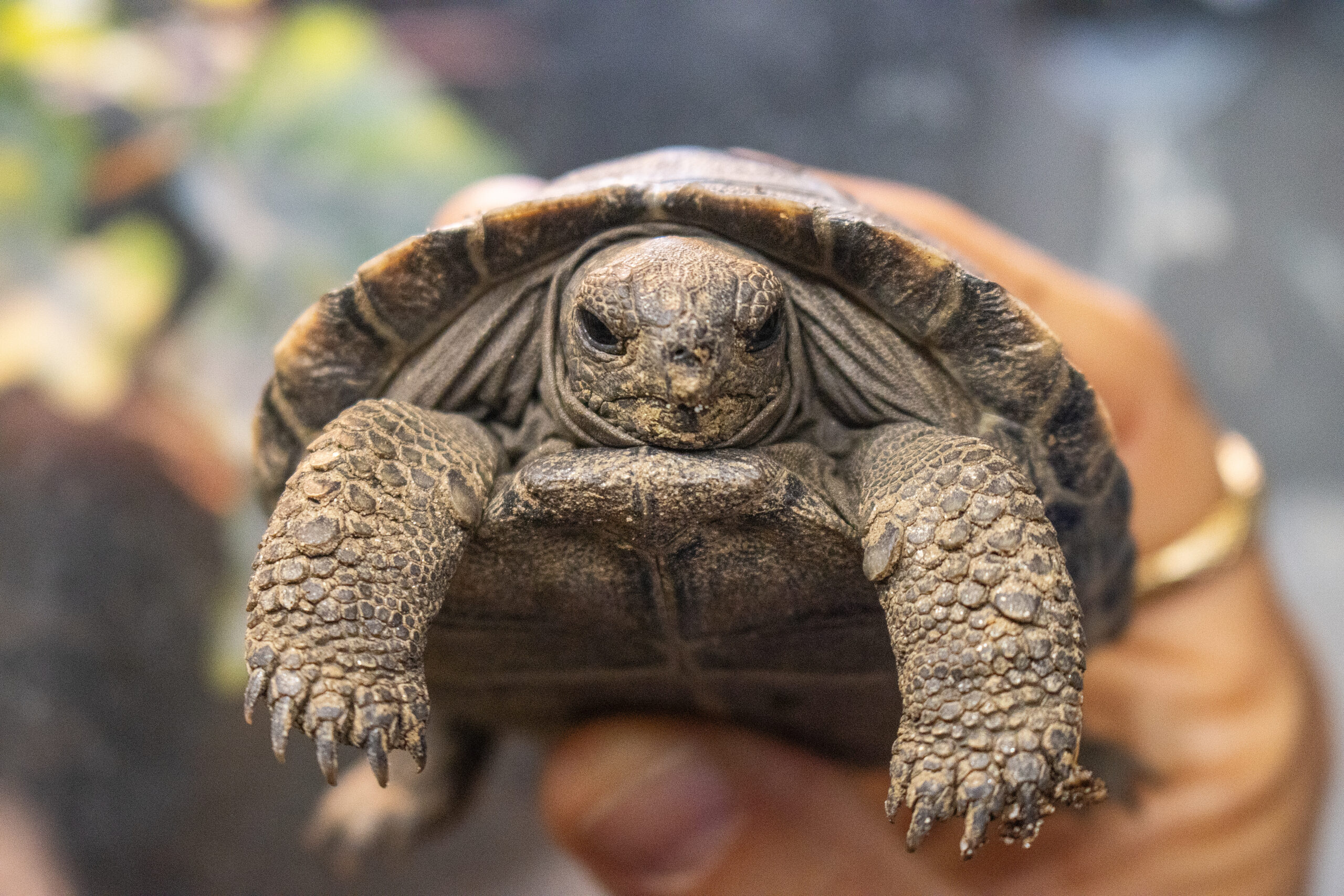
A local nonagenarian couple became national shellebrities this year for welcoming seven babies in April and nine more in August, proving that age ain’t nothing but a number, as long as you’re a tortoise.
Western Santa Cruz Galapagos tortoise Mommy, and male Abrazzo, left, are shown on Wednesday, April 23, 2025, at the Philadelphia Zoo in Philadelphia, Pa. The hatchlings’ parents, female Mommy and male Abrazzo, are the Zoo’s two oldest animals, each estimated to be around 100 years old.
Mommy and Abrazzo, Western Santa Cruz Galapagos tortoises who reside at the Philadelphia Zoo, made history with their two clutches, becoming the first pair of the critically endangered species in the zoo’s 150-year history to hatch eggs and the first to do so in any accredited zoo since 2019.
Mommy is also the oldest known first-time Galapagos tortoise mom in the world, so it’s safe to say she doesn’t have any time or patience for shenanigans. She’s got 16 heroes in a half shell to raise.
Western Santa Cruz Galapagos tortoise egg hatchling.
Phillies Karen
Taking candy from a baby is one thing — babies don’t need candy anyway — but taking a baseball from a kid at a Phillies game is a deed so foul and off base it’s almost unimaginable.
And yet, that’s exactly what happened at a Phillies-Marlins game in September, when a home run from Harrison Bader landed in the stands and a dad ran from his seat to grab it and give it to his son. A woman who was sitting near where the ball landed marched over to the dad, berated him, and demanded the ball be given her. Taken aback, the father reached into his son’s baseball glove and turned the ball over.
The entire scene was caught on camera and the woman, with her Kate Gosselin-esque hairdo, was immediately dubbed “Phillies Karen” by flabbergasted fans.
While the act technically happened at the Marlins stadium in Miami, Fla., it captured the minds and memes of Philadelphians so much that it deserves inclusion on this list. Phillies Karen has made her way onto T-shirts and coffee mugs, inspired skits at a Savannah Bananas game and the MLB Awards, and she even became a popular Halloween costume.
To this day, “Phillies Karen” remains unidentified, so it’s a safe bet she lives in Florida, where she’ll have better luck with alligators than with people here.
Institutional intrigue
Drama at area institutions this year had Philadelphians sipping tea like we were moms on Christmas morning, and sometimes, left us shaking our fists in the air like we were dads putting up tangled lights.
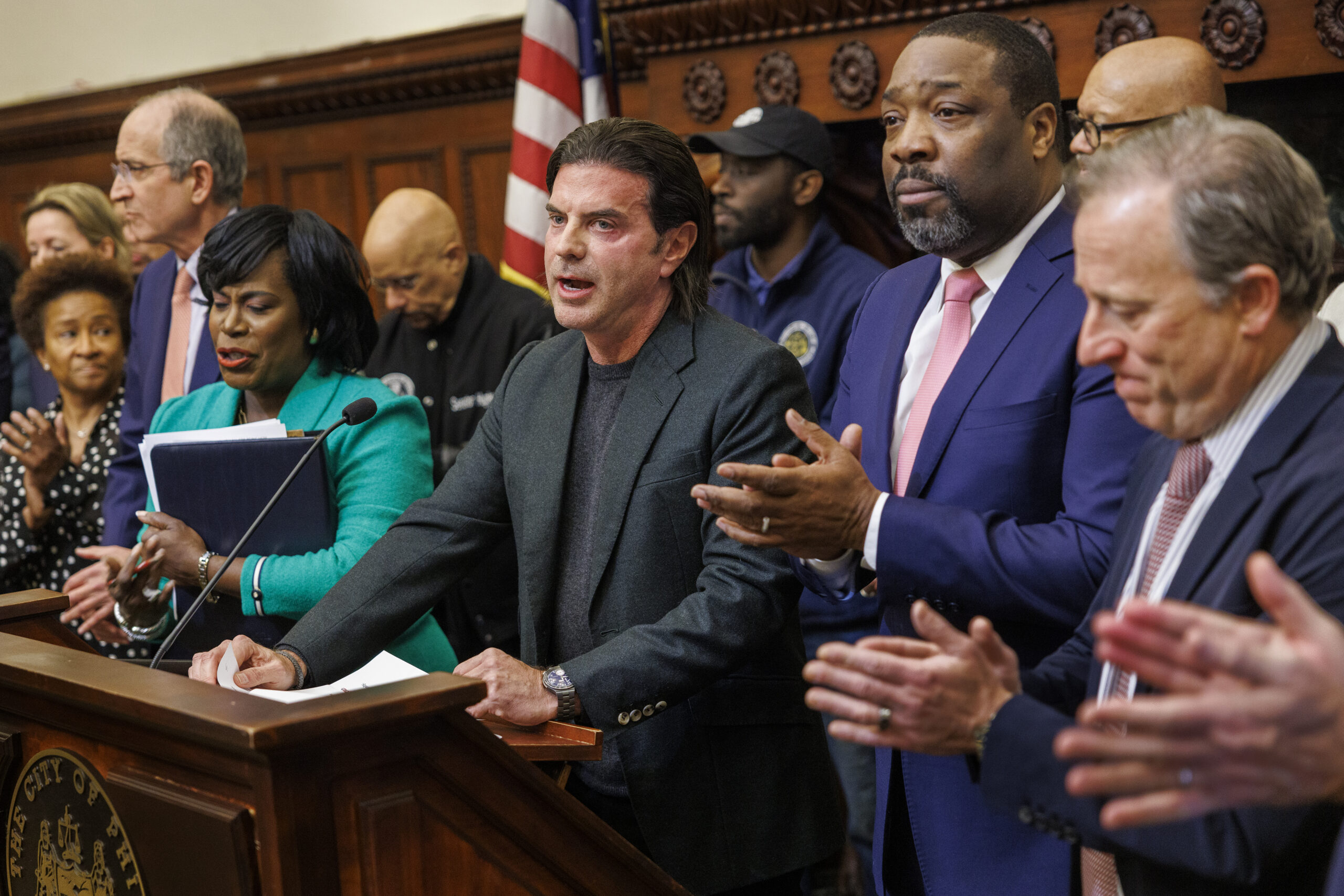
David Adelman with the Philadelphia 76ers makes a statement at a press conference in the Mayor’s Reception Room in January regarding the Sixers changing directions on the controversial Center City arena. At left is mayor Parker, at right City Council President Kenyatta Johnson and Josh Harris, Sixers owner.
It started early in January, when the billionaire owners of the Sixers surprised the entire city by announcing the team would stay at the South Philly sports complex instead of building their own arena on Market East. The decision came after two years of seemingly using the city, its politicians, and its people as pawns in their game.
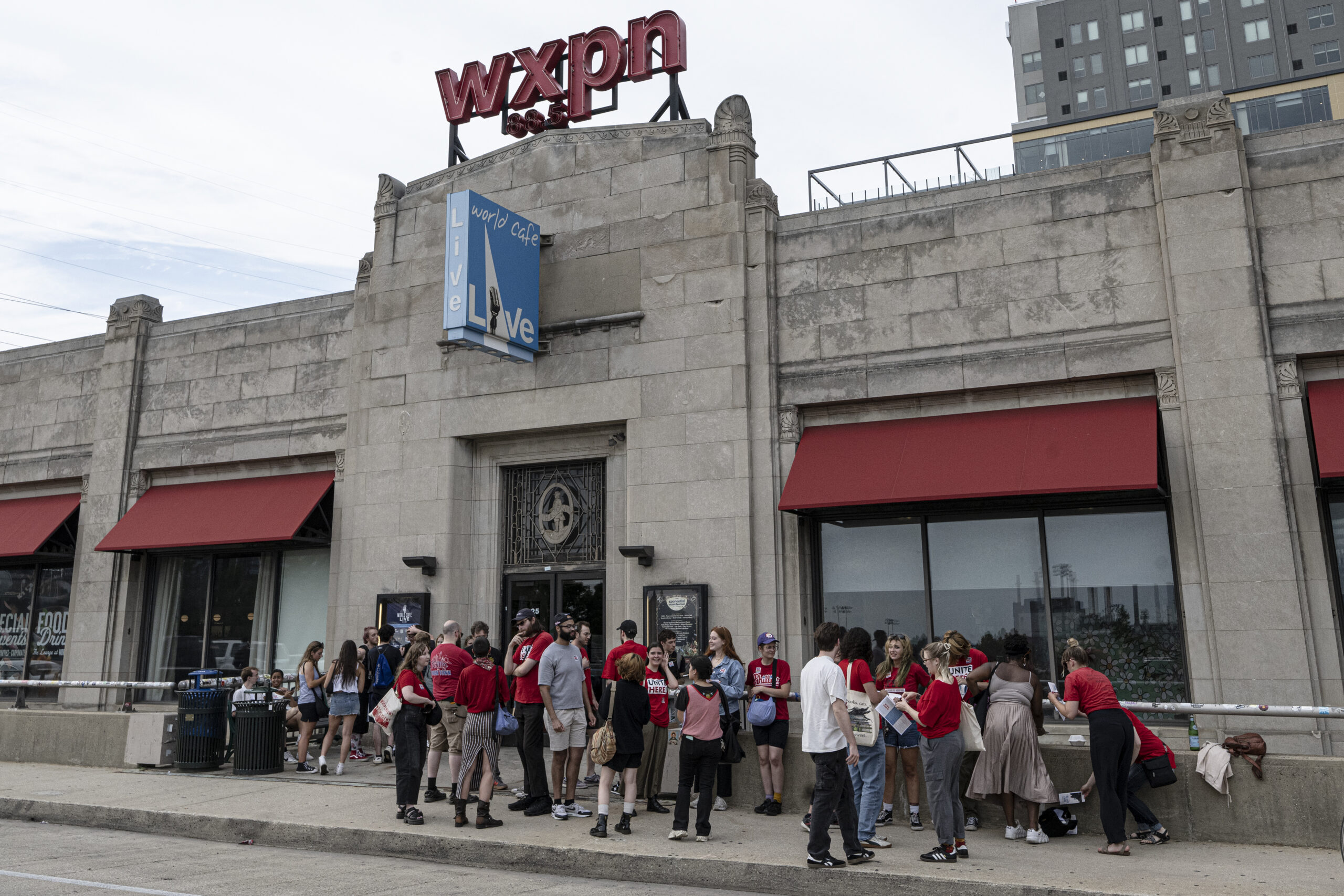
Workers gathered outside World Cafe Live before a Town Hall meeting with management in July.
In June, workers staged a walkout at World Cafe Live due to what they claimed was “an unacceptable level of hostility and mismanagement” from its new owners, including its then-CEO, Joseph Callahan. Callahan — who said the owners inherited $6 million in debt and that he wanted to use virtual reality to bolster its revenue — responded by firing some of the workers and threatening legal action. Today, the future of World Cafe Live remains unclear. Callahan stepped down as CEO in September (but remains chairman of the board), the venue’s liquor license expired, and its landlord, the University of Pennsylvania, wants to evict its tenant, with a trial scheduled for January.
Signage at the east entrance to the Philadelphia Art Museum reflects the rebrand of the institution, which was formerly known as the Philadelphia Museum of Art.
Finally, late this year at the Philadelphia Art Museum, things got more surreal than a Salvador Dalí painting, starting with an institutional rebrand that surprised some board members, didn’t land well with the public, and resulted in a lot of PhART jokes. In November, museum CEO Sasha Suda was fired following an investigation by an outside law firm that focused, in part, on increases to her salary, a source told The Inquirer. Suda’s lawyer called it a “a sham investigation” and Suda quickly sued her former employer, claiming that “her efforts to modernize the museum clashed with a small, corrupt, and unethical faction of the board intent on preserving the status quo.”
Nobody knows where all of this will go, but it’s likely to have more drama than a Caravaggio.
The Philadelphia Art Museum has reiterated its position in court that a dispute with ousted director and CEO Sasha Suda should be resolved through arbitration.
Later that month, museum trustees fired back at her lawsuit and said she was dismissed after the investigation determined that she “misappropriated funds from the museum and lied to cover up her theft.”
Her contract with the museum stated that “any and all claims or controversies” against the museum should be pursued in “private, confidential arbitration.” But in a filing this month Suda argued that her contract contained “an explicit exception” to the arbitration provision.
But “Suda has no credible response to the museum’s commonsense reading” of her employment contract, the museum said in a Dec. 19 Philadelphia Court of Common Pleas filing by the museum. The nearly 150-year-old organization is represented by lawyers from Philadelphia’s Cozen O’Connor and Washington, D.C. firm Kellogg, Hansen, Todd, Figel & Frederick.
“Arbitration clauses are interpreted literally, but not foolishly,” the new filing argues.
It asks the court to enter an order compelling Suda to submit to arbitration, and to stay legal proceedings until the matter is resolved in arbitration.
On Nov. 21, the museum named former Haverford College president and Metropolitan Museum of Art leader Daniel H. Weiss as new director and CEO.
As Philadelphia’s largest visual arts institution heads into the new year, it does so shaken by disorder and strife — reeling under a drama as extraordinary in substance as the public nature with which it is playing out.
In a recent court filing from Suda’s legal team, the ousted director was described as a “visionary leader” recruited to “save a struggling museum.” Her efforts, the filing reads, “collided with a small, corrupt Board faction determined to preserve the status quo.”
Daniel H. Weiss, director and CEO of the Philadelphia Art Museum
All this comes after three years of organizational turbulence that has left staff angry and bewildered.
“There’s a lot of nervousness about what’s to come now,” said one longtime staffer. “It’s been so chaotic for so long. Nobody feels steady. We’re supposed to be just chugging along like business as usual, but nothing feels stable.”
Though Weiss started at the museum this month, he will also maintain his position as an art history professor at Johns Hopkins University though May 2026.
Among the challenges facing Weiss: depressed attendance, an operating deficit, low staff morale, deferred maintenance on existing buildings, and questions about how to prioritize stalled expansion plans.
This account is based on interviews with former and current staffers, both union and nonunion, ranging from curatorial affairs to finance and operations. All of them spoke on condition they not be named.
Visitors services staff member Tiago Segundo works the admissions counter at the west entrance of the Philadelphia Art Museum, Oct. 6, 2025.
Staff shortage
Weiss will have to contend with a shortage of staff — which has dropped from 500 in 2019 to 375 today — following years of significant employee turnover.
During Suda’s tenure, at least 60 employees — many from the senior executive team — were fired, laid off, or pressured to leave across departments. These include human resources, curatorial, digital content, communications, facilities, conservation, the library, visitor services, and more, according to museum insiders.
Suddenly gone in the fall of 2024 without explanation to the staff was Carlos Basualdo, earlier promoted by Suda to deputy director and the museum’s first-ever chief curator; he was highly respected and held several important relationships with collectors and top international artists like Jasper Johns and Bruce Nauman.
Basualdo was named director of the Nasher Sculpture Center in Dallas in April.
Curator Kathryn B. Hiesinger, who had been with the museum for 53 years, had talked to Suda in the summer of 2023 about her desire to retire at some point, and discussed ideas about winding down her tenure.
“She said it all sounded very reasonable,” said Hiesinger, 82, in a recent interview.
Several months later, Hiesinger said her computer stopped working and she was called into Suda’s office. A woman Hiesinger didn’t know — who turned out to be from human resources — and Suda handed her a sheath of papers, which she was asked to sign.
“I didn’t realize I was being fired,” Hiesinger said. “I was actually quite shocked by the whole way it was handled. It was so unnecessary. All she needed to do was say, ‘I think it’s time for you to retire; let’s see how we can make it work.’ But it was just like that — shut down the computer, call me into the office, and sign the papers, and that was it.”
A few weeks later, Suda called Hiesinger to apologize after museum leaders intervened. She was given the title of senior curator emeritus of European decorative arts and was told she would be allowed to complete her pending projects for the museum.
Hiesinger has had no official contact with the museum since.
Among others whostopped working at the museum during Suda’s tenure, several were made to sign nondisclosure agreements and could not speak to the media.
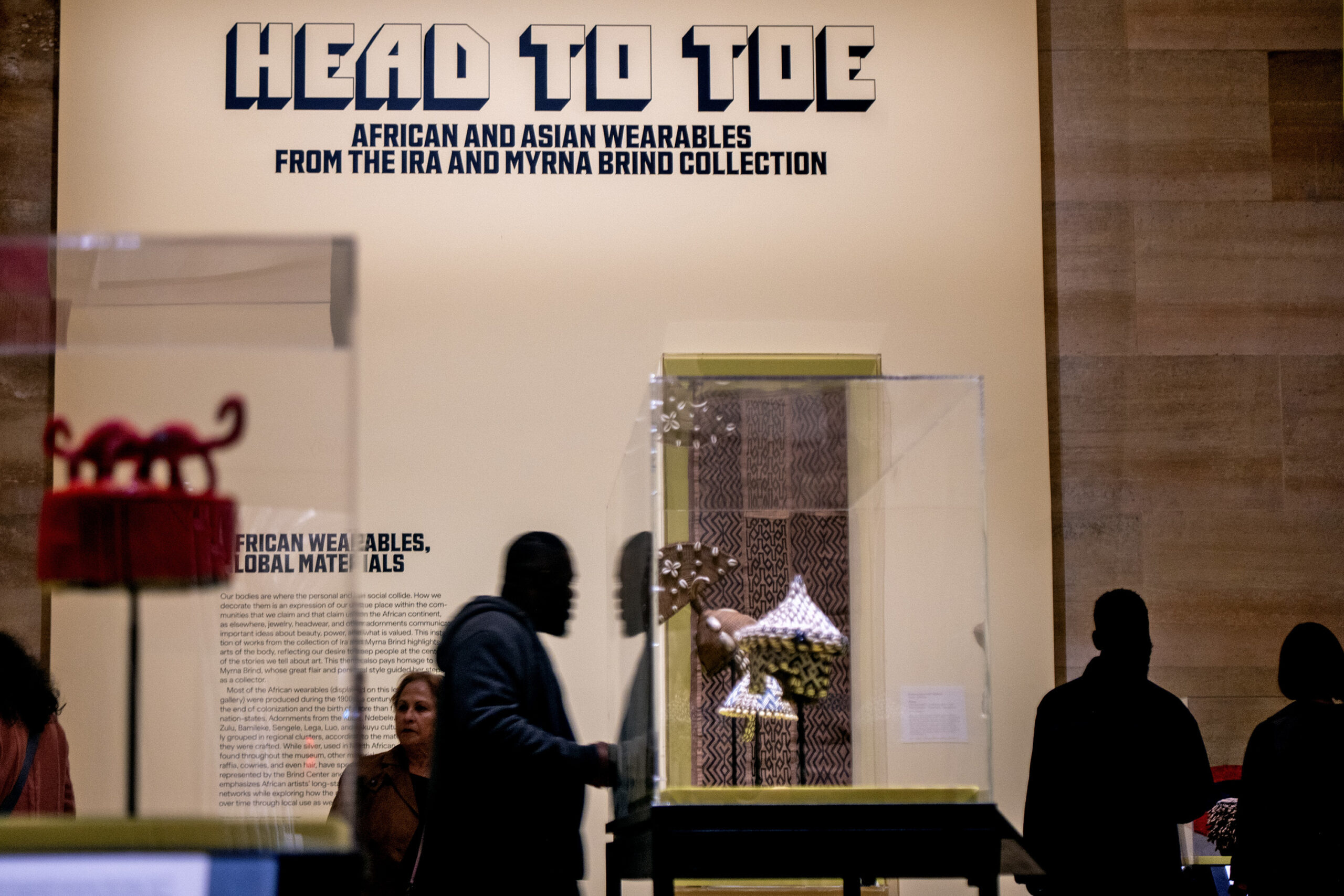
At the museum’s “Head to Toe: African and Asian Wearables” display, Oct. 6, 2025
A declining reputation
For staffers who have remained, there is a sense of internal disorganization.
“We’ve had three reorganizations within three years, and we were only given an org chart [and] an understanding of it in the last couple months,” said a longtime staffer.
Ultimately, the staffers The Inquirer interviewed believe the reputation of the museum has diminished over the years. Colleagues in the larger museum world, another staffer said, “look at me sideways, because this place has gotten such a bad rap … we’ve become a joke.”
Low morale has been a longstanding issue.
In her lawsuit, Suda detailed two instances of board members allegedly “yelling and berating staff.”
At one event, an unnamed board member “verbally assaulted a Museum employee,” the suit said, leading to a formal complaint. The board member later apologized to the staffer.
The second incident reportedly happened in the winter of 2024 when the museum hosted two simultaneous events for major donor Bank of America and a group invited by Philadelphia City Council President Kenyatta Johnson.
According to the lawsuit, board member Melissa Heller was allegedly “berating staff, cursing, and shouting that the team was unprepared.” Suda alleged that a Bank of America representative “witnessed this awful altercation” and called her to discuss it. Board chair Ellen T. Caplan spoke to Heller about it and “declared the matter closed.”
Suda’s lawsuit also recounted an incident when former board chair Leslie Anne Miller allegedly screamed and cursed at Suda.
Miller declined to comment and Heller did not respond to The Inquirer’s request for comment.
Several employees said Suda regularly engaged in similar behavior herself.
Sasha Suda, former director of the Philadelphia Art Museum, at the museum on Jan. 30, 2024.
“Sasha has done the same thing, [being] verbally abusive to staff, yelling at them, telling them that nobody likes them and people don’t want to work with them,” said the longtime staffer who spoke to the museum’s recent reorganizations.
The staffer worried about the museum’s diminishing reputation also claimed that the programming team became less autonomous and more risk-averse under Suda.
Managers, the staffer said, use threats of dismissal and public humiliation, leading curators and others to feel that their jobs depend solely on the success or failure of an exhibit. Staff members are wary of Suda’s executives continuing this culture of insecurity.
“People are afraid to do their work. Curators are afraid to put on exhibitions. They’re afraid to spend money,” the staffer said. “I feel like my work has ground to a near halt. I do a fraction of what I used to do, just in a very dysfunctional way now.”
The museum now puts on fewer of its own shows,a departure from previous administrations. Some of the biggest exhibits in recent years, like “The Time Is Always Now” and “Dreamworld: Surrealism at 100,” have been touring shows organized elsewhere and adapted for the museum.
A forthcoming programmatic highlight is the show “A Nation of Artists.” Featuring art from the family collection of Phillies managing partner John Middleton, the show is scheduled to run at the museum April 12, 2026, to July 5, 2027. It was conceived before Suda’s time at the museum.
Tourists pose with “Rocky” statue on the steps of the Philadelphia Art Museum, Thursday, September 11, 2025.
Ongoing financial struggles
Over the last several years, the nearly 150-year-old museum has operated with a persistent deficit.
In 2025, that number was forecast as around $2 million on a budget of $62 million. The fiscal year ending June 30, 2023, was the museum’s last period with no deficit. Suda began her tenure as director and CEO in September 2022.
Attendance has not rebounded to pre-pandemic levels. As of Nov. 30, the museum was still falling short of its goal for the fiscal year, clocking 266,282 visitors against a to-date goal of 306,750. Its total goal for the fiscal year — which goes through June 30 — is 731,000. (All of these numbers include not just visitors, but also school groups and people attending special events.)
And even that goal is a considerable downgrade from previous ambitions. A decade ago, the museum in its strategic plan stated the goal of increasing attendance to a million visitors per year within five years.
The museum’s widely panned rebrand and name change in October has proven divisive externally and internally. The campaign unveiled a new logo and changed the name of the institution from Philadelphia Museum of Art to Philadelphia Art Museum. Its cost totaled more than $1 million, according to two sources familiar with the details who spoke on the condition of not being named. Leaders hoped the rebrand would drive up attendance and cut down current operating deficits; the impact remains to be seen.
Suda’s lawsuit, staff worry, could worsen the financial outlook.
“We’re already broke as an institution. We could have a messy lawsuit that really takes a lot of funding away,” said the longtime staffer.
Adam Rizzo, former president of the Art Museum union, an affiliate of AFSCME DC47, waving to a honking supporter on the morning museum employees returned to work after a strike in 2022.
A new contract ratified in July 2025 ensured 3% annual pay raises and increased parental leave from four weeks to eight. But a number of grievances remain unresolved. The PMA Union, part of AFSCME Local 397, which represents Philadelphia culture workers, did not comment for this story.
After their boss was fired earlier this year, a staffer said, they were expected to take on extra responsibilities, with the promise of an hourly wage increase. Eight months later, the employee has not received that compensation and has been working with the union to address the problem.
“What they would rather do is have me go to the union, grieve it, and get the lawyers involved, and that way they can drag it out for another like six to eight months and not have to pay me,” the staffer said. “But they would still have to pay me all the back pay. It’s just them dragging their feet and penalizing people. To be honest, if they get me the higher end of [the raise], it’s only 90 cents extra.”
A museum spokesperson could not respond to this claim, deeming it “a personnel matter.”
Several other staffers have had similar experiences. Under the new leadership, they hope to have these disputes resolved amicably without the need of a grievance process.
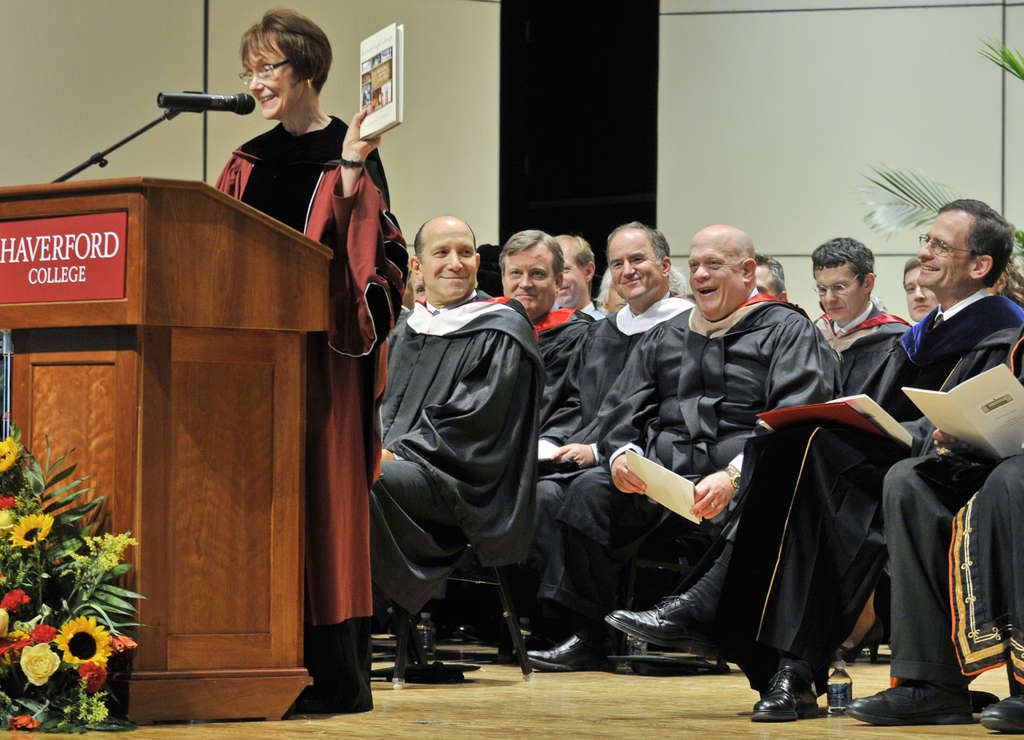
A 2013 photo of then-Swarthmore College president Rebecca Chopp showing off a copy of “Remaking College” at the inauguration of president Daniel H. Weiss at Haverford College, who is now director and CEO of the Philadelphia Art Museum.
What comes next
Weiss declined to be interviewed about specifics of his tasks and priorities, but the museum released a general statement:
“Daniel Weiss was appointed for his extensive leadership experience at major educational and cultural institutions. He began his tenure only weeks ago, and he is focused on learning the nuances of the museum’s ongoing operations regarding its programming, education initiatives, fundraising, and strategic planning. Mr. Weiss is currently working with senior staff to review key priorities and will address updates in the new year.”
Amid the leadership crisis and transition, staff has been kept mostly in the dark with little communication. The staffer seeking a raise shared that during the interim they received invitations for hot chocolate and parfait socials from human resources.
“It’s what the senior management do. That’s their usual MO, like, ‘Oh, well, have a cupcake,’” they said. “They treat us all like children, or like we’re all dumb. It’s pretty insulting.”
Weiss officially began his tenure on Dec. 1 but held an all-staff meeting before Thanksgiving. One staffer who attended said Weiss “said all the right things” so they are feeling “cautiously optimistic.”
“Everything he’s doing, he’s doing with such integrity. It’s heartwarming,” said a member of the curatorial affairs division.
But, they cautioned, “he’s going to lose people’s optimism if he doesn’t make any moves soon.”