Tag: Philadelphia Flower Show

  • After a visit to the Philadelphia Flower Show, Nick Elizalde’s mom issues a plea to the school district: ‘Don’t close Lankenau’

    After a visit to the Philadelphia Flower Show, Nick Elizalde’s mom issues a plea to the school district: ‘Don’t close Lankenau’

    For the last three years, my life has been defined by the tragedy of my son’s murder and the management of the indescribable pain I feel every moment. For everyone else, time continues normally. For me, time simultaneously stands still, moves like molasses, or flies by in a blur.

    I’ve been dreading 2026 for a while — it would have been Nick’s senior year at W.B. Saul High School. He’d have turned 18 last October. He’d have a driver’s license. He’d be looking forward to senior prom and graduation. But instead, this June, we’ll attend the trial for his murder, nearly four years later, and after constant delays.
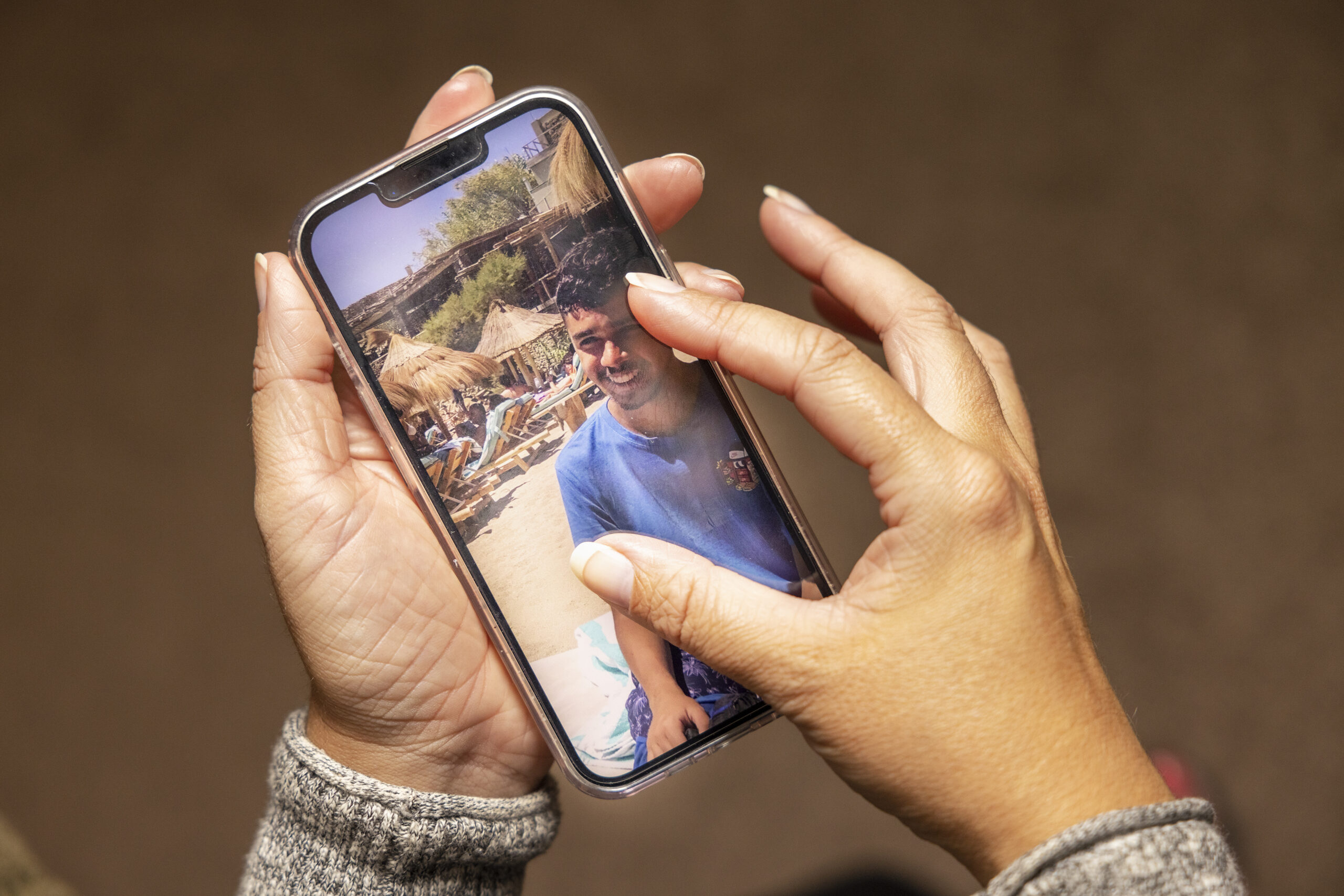
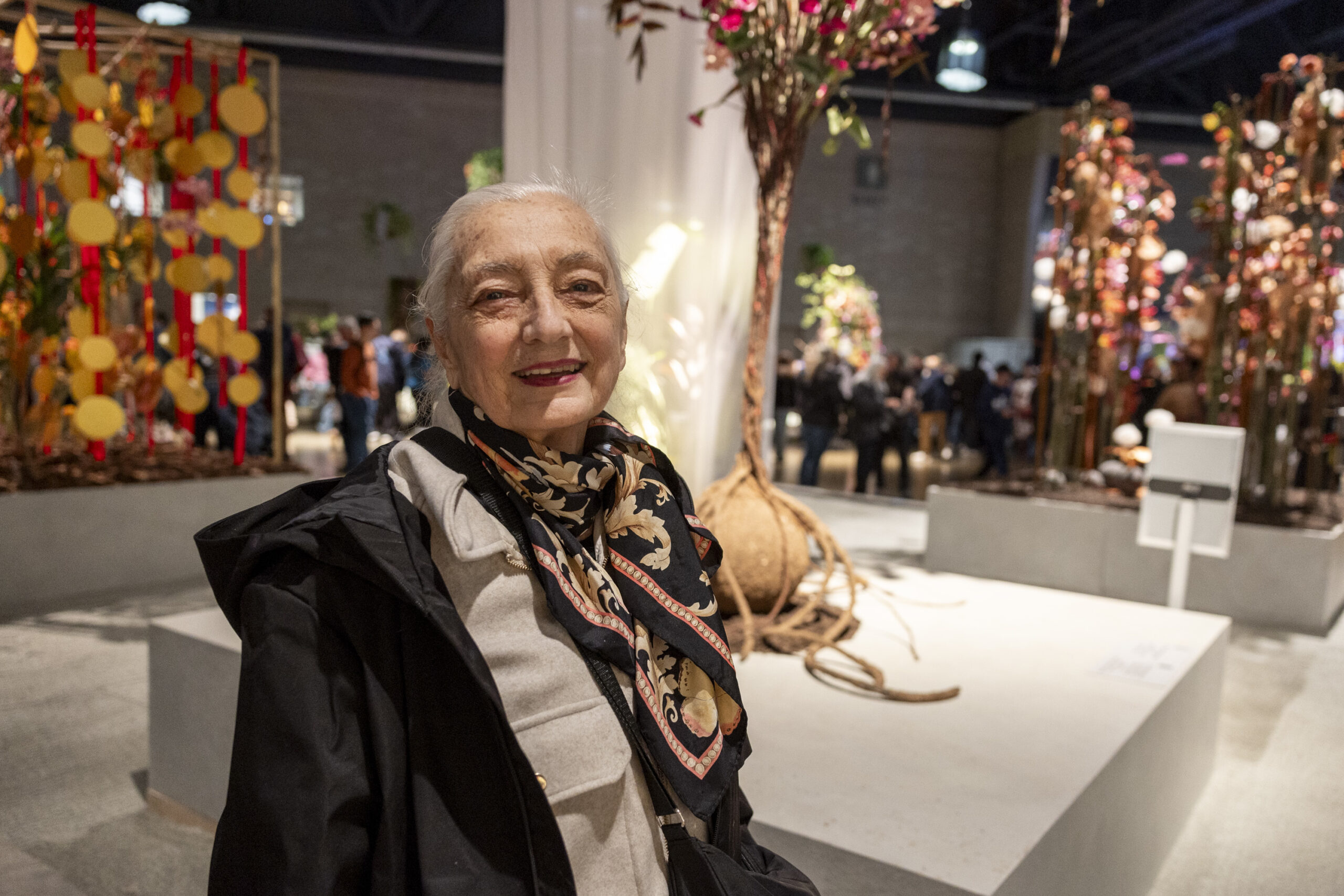
    Meredith Elizalde holds a photograph of her son, Nicolas, who was fatally shot after his football scrimmage in 2022 outside of Roxborough High School.

    For all this time, I’ve been able to picture Nick with his classmates at Saul, having the time of his life. But once June comes, where will I picture him? His life, as it was when he was killed, will be over. I cannot explain the level of distress this causes me. Who and where would my son be?

    In an effort to manage this pain, I made the decision to attend the Philadelphia Flower Show this year, so that I could see what Nick’s classmates had on display before they graduate. It’s hard for me to watch the Saul kids continue on without Nick, but it also provides me a brief, albeit painful, respite and sense of pride to watch them shine — and to imagine him with them.
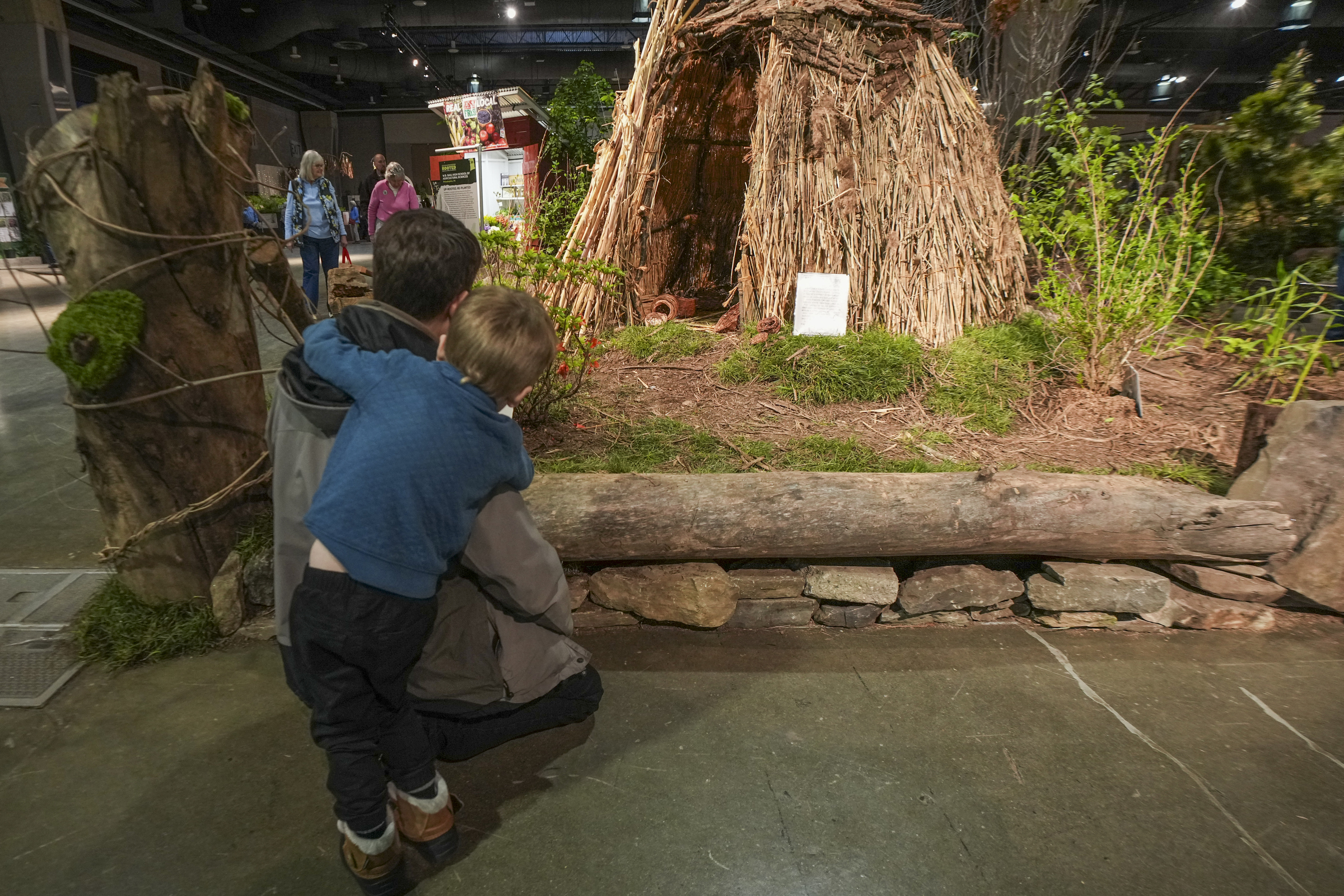
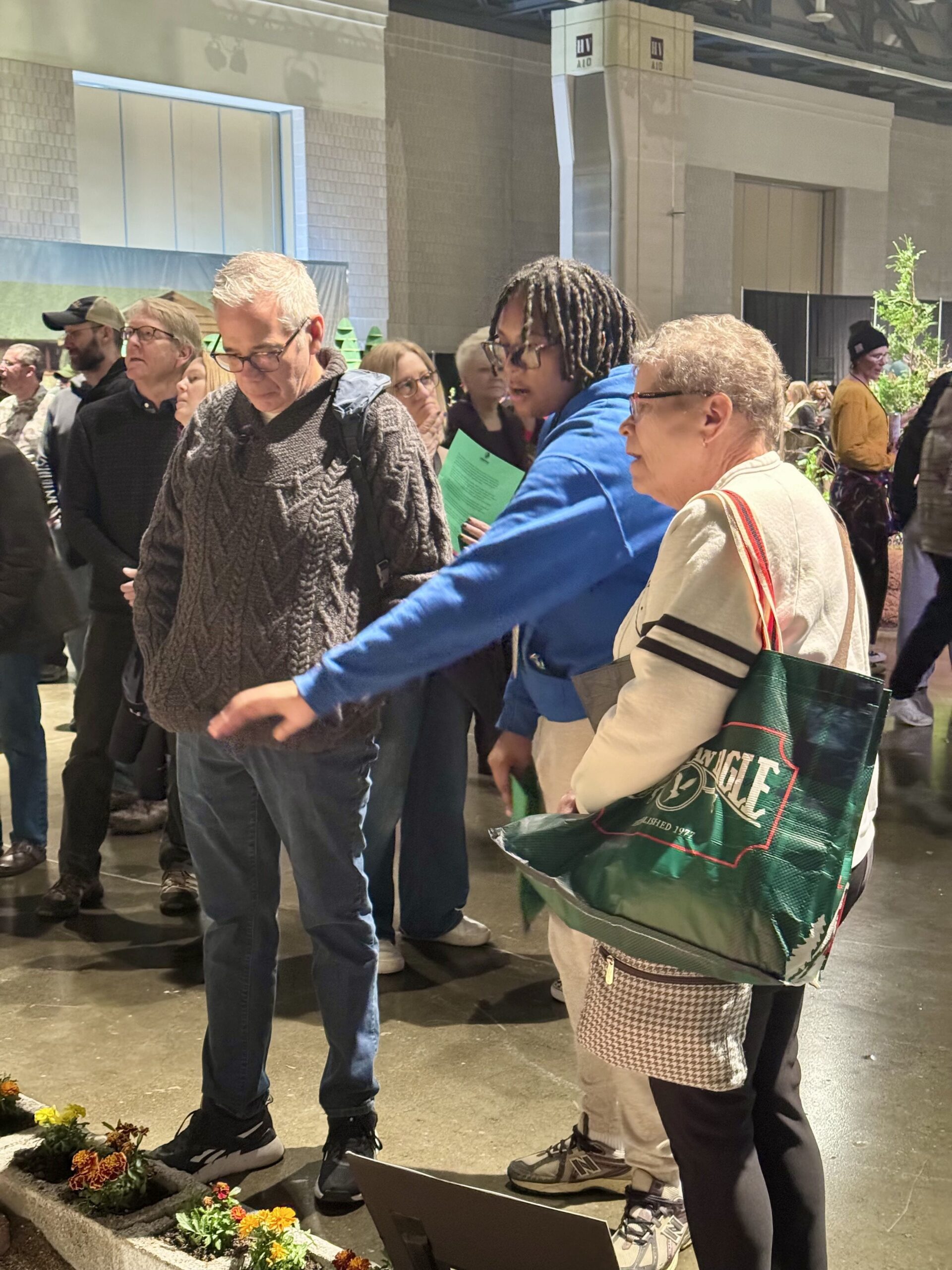
    Visitors look at W.B Saul High School of Agricultural Sciences’ “Up-Rooted, Re-Planted” display at the Philadelphia Flower Showon Feb. 27.

    I was impressed and deeply moved by the homage to the Lenni Lenape. I could feel Nick’s Indigenous pride as I marveled at what his classmates had created.

    A man and woman were next to me, very engaged in the Saul exhibit, reading all of the signs. The man said, “The two high school exhibits”— Saul and Lankenau — “are the best ones here.” As a Saul mother and a former Philadelphia high school teacher, I felt a surge of maternal pride upon hearing that.

    I had just walked over from the Lankenau Environmental Science Magnet High School display, which was phenomenal. It was colorful and intimate. I especially loved the border of flowers in cinderblocks. It reminded me of how beauty pushes through hardness and barriers that are meant to suppress.
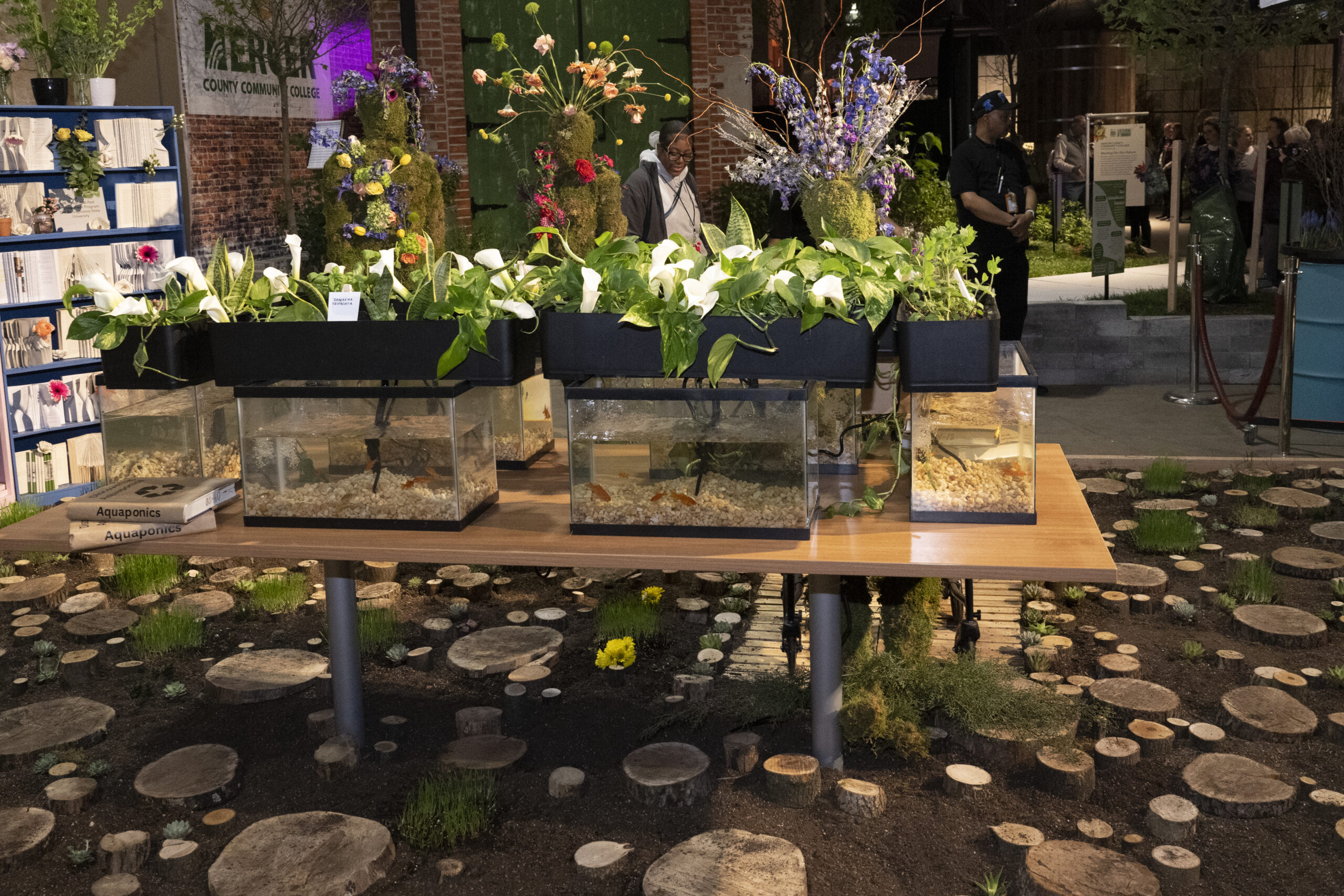
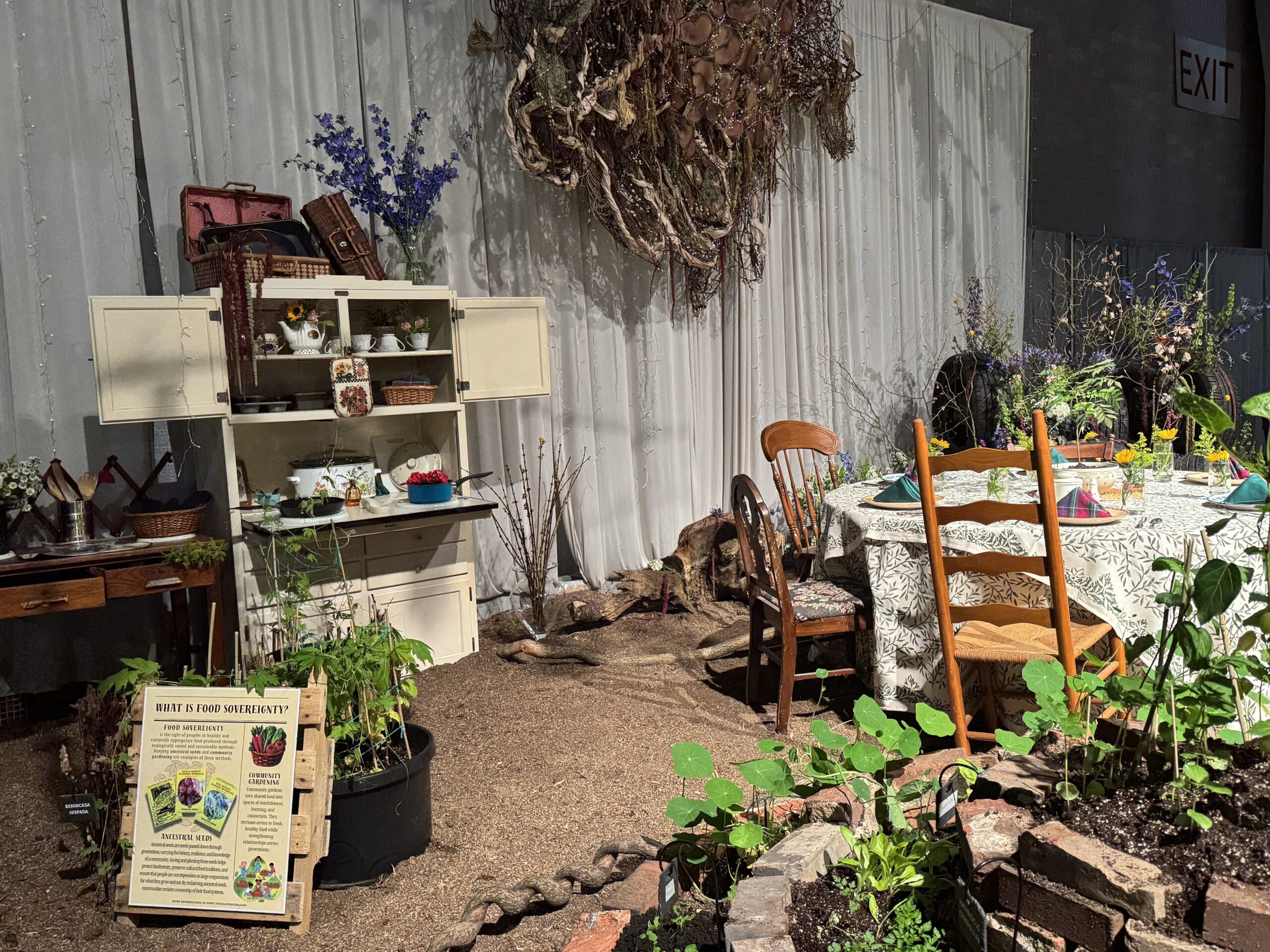
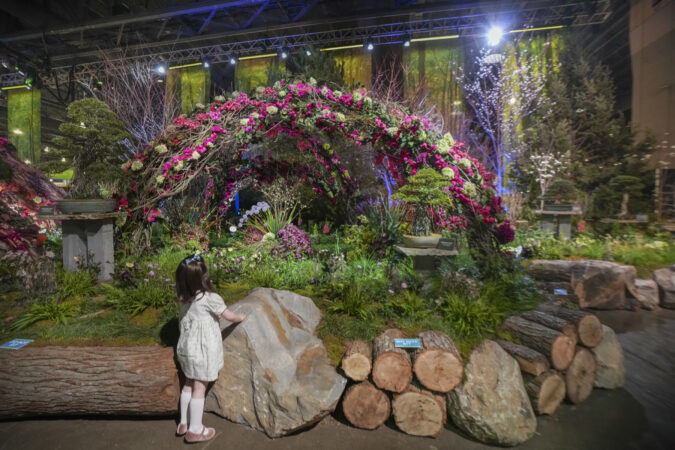
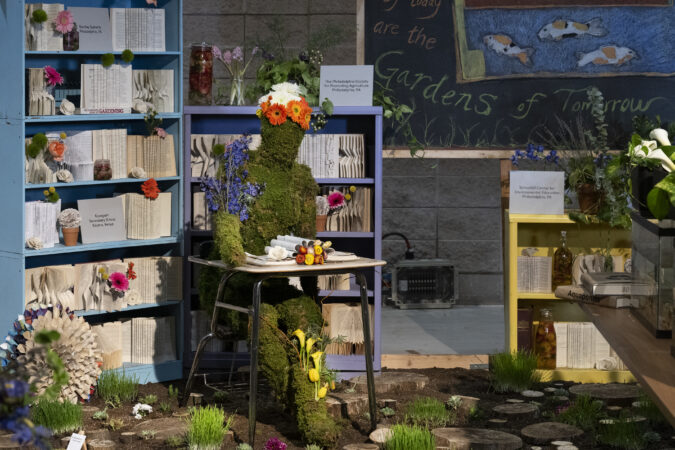
    A display by students from Lankenau Environmental Science Magnet High School, “Bloom Where You Are Planted,” is shown Feb. 28 at the Philadelphia Flower Show.

    Standing in front of the display, I saw three Lankenau students handing out fliers, which broke my heart. What a surreal feeling it was to stand in front of such a marvelous, artistic display of the natural world, next to some of its creators, as they asked people for help to save their school from closure. What a shortsighted decision to close Lankenau — a treasure in the “green lung” of the city.

    I am now an environmental graduate student at the University of Montana. My research was born from Nick’s deep love of Mother Earth, his exemplary stewardship of nature, his murder, and my experience of teaching high school in Philadelphia. Why would we close a school in one of what feels like extremely limited green spaces in a densely populated, urban area?
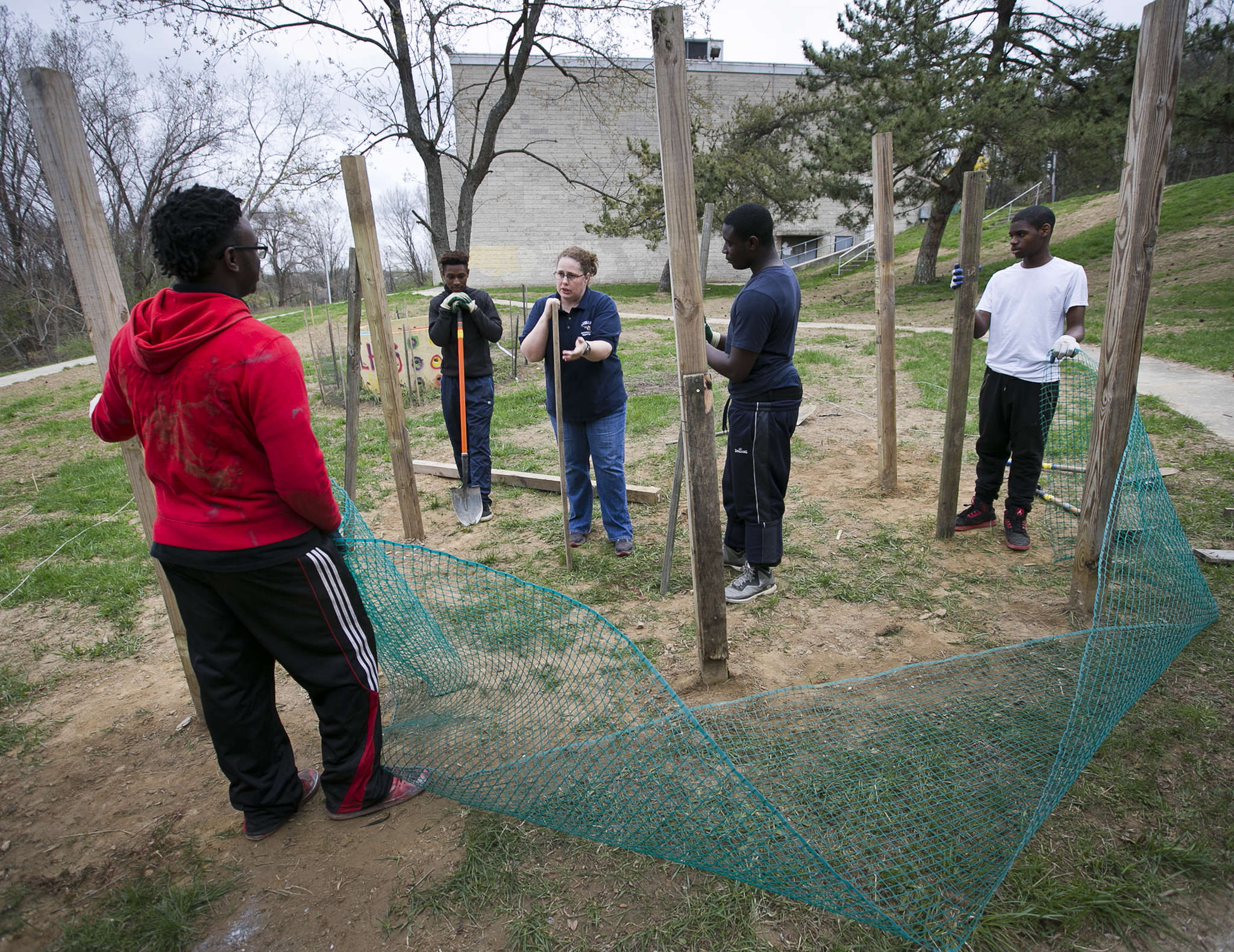
    Students in the botany club ant their teacher at Lankenau Environmental Science Magnet High School build a compost pile in this file photo from 2018.

    Scientific literature is saturated with the physical and mental health benefits of green and blue space exposure. The literature also details the correlation between tree canopy and lower crime rates. Nature deficit is real, and it has detrimental consequences, especially for our youth. The built environment and the omnipresence of screens have affected our youth in ways most people who do not interact with kids in an educational setting cannot understand.

    It therefore baffles me that a school in such an idyllic setting for place-based learning — where socioemotional learning can have greater impact because of the healing effect of natural settings on our nervous systems — is considered expendable.

    Last year, I taught undergraduate classes in Montana. We took a field trip to Yellowstone National Park for three days, and I was amazed at the level of comfort the students had with wilderness, teamwork, wayfinding, and so much more.

    Overall, they had knowledge about so many things that completely bewilder me — it was simultaneously embarrassing and inspirational. I wondered what our Philadelphia youth might feel like if more of them had greater access to the natural world, and, in turn, what would our society look like when they come of age and contribute to the community.
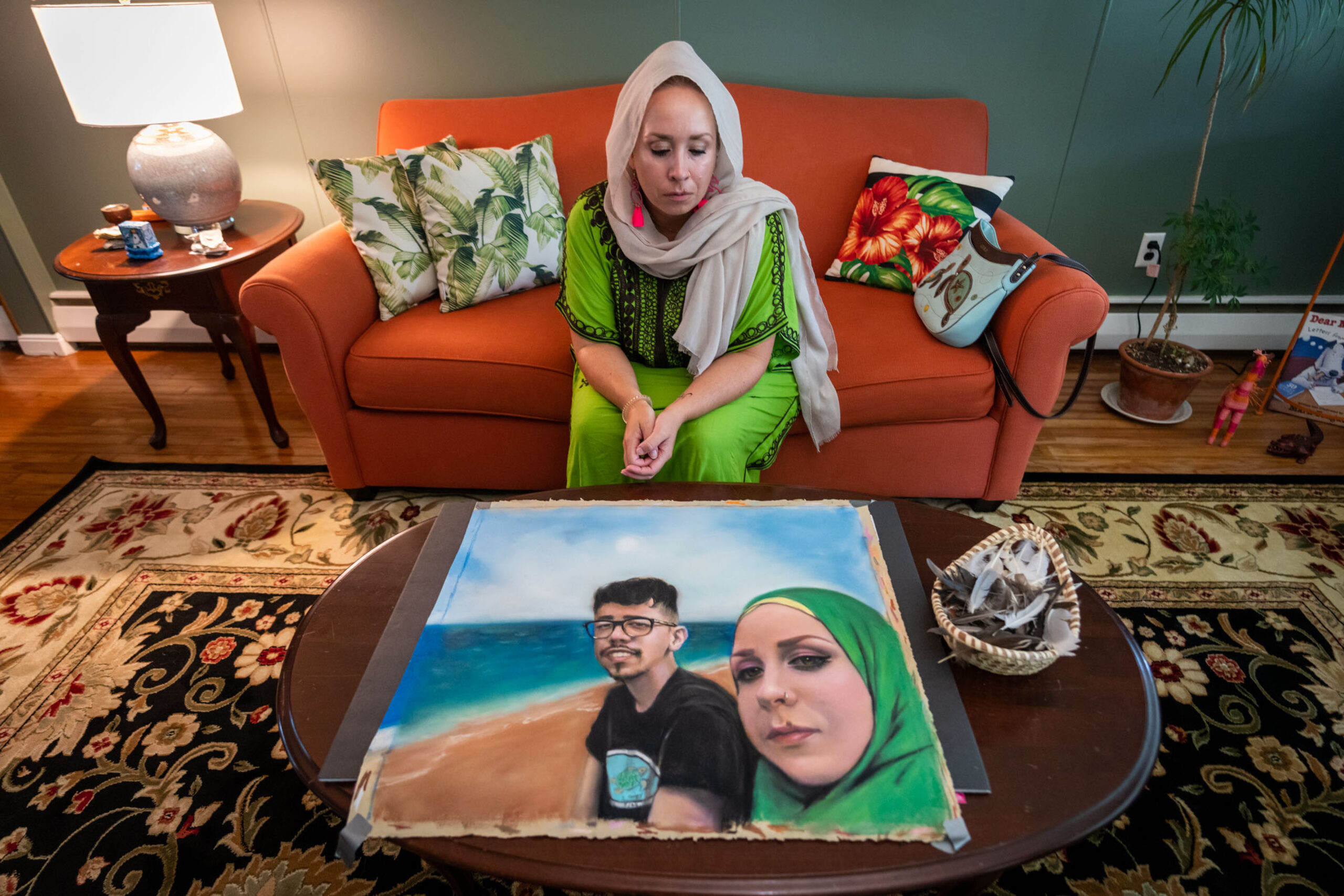
    Meredith Elizalde with a painting of her and her son, Nicolas, in Aston in July 2024.

    There are so few places like Lankenau; it is a travesty that we are even thinking about closing such a distinctive institution.

    We have lost so many young lives to gun violence. And those left behind are in a state of collective yet disenfranchised grief that permeates daily life in unseen but troubling ways. After Nick was killed, students posted wishes for themselves, each other, and society on the wall of Roxborough High School. So many wished for an end to gun violence and living in fear. One wished he would live to see age 25.

    When we lost Nick, our city lost a true conservationist and a pure soul. Lankenau graduates students who can help to fill that gap, left by all of our murdered loved ones and their stolen potential.

    I urge everyone, Philadelphia resident or not, to join the fight for Lankenau and all the schools slated to close. If you believe that every child deserves a chance, now is the time to act on that belief.

    One of the Lankenau students at the Flower Show told me they are “trying to make noise.” Let’s not put that burden on our youth, or solely on the shoulders of those most affected. Whoever you are — show up, make noise.
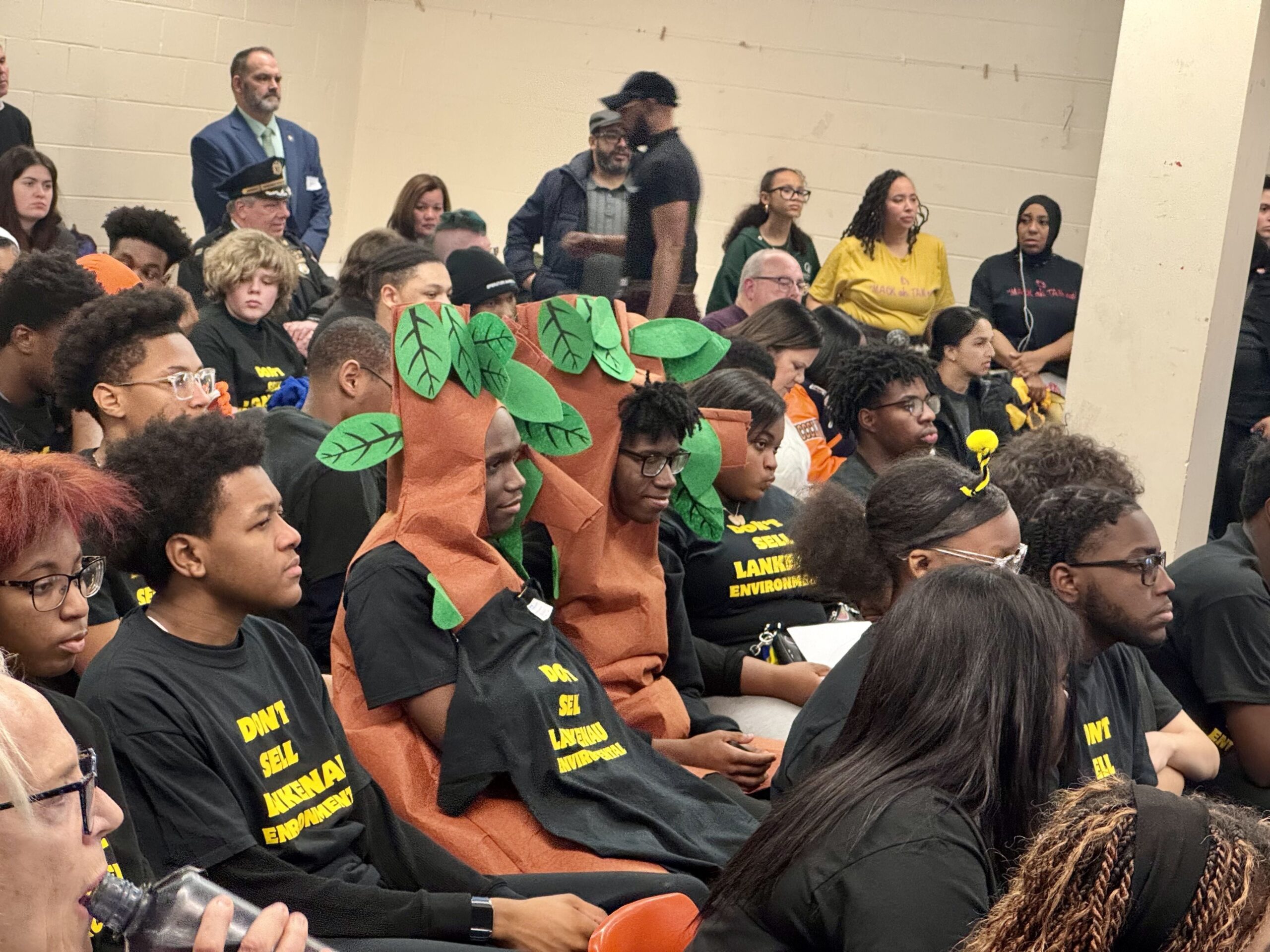
    Students, staff, and community members who support Lankenau High School — including some dressed as trees — packed a community meeting at the school Feb. 4. The Philadelphia School District proposes closing the city’s only environmental sciences magnet, citing issues including low enrollment. But the school system had a hand in limiting enrollment.

    A magnet school in a beautiful, natural setting is violence prevention, a soothing balm, and a safe haven from the chaos of life. The imam at Nick’s janaza read an African proverb: “The child who is not embraced by the village will burn it down to feel its warmth.”

    We are the village, and we must embrace our children.

    Meredith Elizalde is Nick’s mom. A former Philadelphia high school teacher, she is currently a graduate student at the University of Montana.
  • Two Philly high schools are still fighting their proposed closures, even after officials tweaked plans to appease them

    Two Philly high schools are still fighting their proposed closures, even after officials tweaked plans to appease them

    Superintendent Tony B. Watlington Sr. said he heard the public outcry over his recommendations to close 20 schools.

    The Philadelphia School District leader fine-tuned his facilities plan last week, dropping the closure list down to 18 schools — and changing recommendations for Paul Robeson High School and Lankenau High School.

    Both schools would still close under the plan, which is now in the school board’s hands. Instead of merging into large neighborhood high schools, however, the small, selective-admission schools would be absorbed by magnets.

    Watlington said the tweaks would still allow the district to bring more high-quality academic and extracurricular opportunities into neighborhood schools while acknowledging the need to manage limited resources.

    But students, staff, parents — and some powerful allies at both schools — say Watlington’s counter-proposal isn’t enough. Both communities are still fighting.

    Under the revised plan, Lankenau would merge with Saul, not Roxborough, and Robeson would merge into Motivation, not Sayre.

    State Rep. Morgan Cephas (D., Phila.) recently visited the Philadelphia Flower Show, where she and other officials marveled at Lankenau students’ exhibit, which examines abundance, roots, and connections through culturally important plants. The display won a gold medal and the prestigious Alfred M. Campbell Memorial Trophy.

    The dichotomy struck Cephas, she said. Lankenau students “are at the Flower Show, and [the district] is trying to close the school?”

    On Wednesday, students, parents, lawmakers, and Philadelphia Federation of Teachers officials gathered at Lankenau to drum up support for Gov. Josh Shapiro’s budget proposal. But really, it was another save-our-school rally.

    A ‘prime example of a successful school’

    Lankenau “is a prime example of a successful school,” said Messiah Stokes, an 11th grader at the Upper Roxborough school. The school has a 100% graduation rate, and is Pennsylvania’s only three-year agriculture, food, and natural resources career and technical education program.

    The school itself sits on 17 acres, which district officials have proposed giving to the city — though a 1970s legal agreement could foil that plan. Lankenau is also adjacent to 400 more wooded acres via the Schuylkill Center for Environmental Education. The environmental center shares its land and its opportunities with students, who hold bird-watching clubs on breaks and hold classes outside when weather permits, and have abundant internship opportunities.

    “My school is a prime example of a successful school,” said Stokes.

    Watlington has said that Saul — the city’s agricultural magnet on a working farm on Henry Avenue — has a mission that’s closely aligned with Lankenau’s, but supporters say Lankenau’s success is closely tied with its wooded campus, its streams, and its ecosystems.

    Councilmember Isaiah Thomas speaks at Lankenau High School during a gathering to support the efforts to fight closing recommendations on Wednesday.

    Councilmember Isaiah Thomas, chair of City Council’s education committee, is incredulous that the district is attempting to close the school, which educates mostly Black students.

    “I wonder if Lankenau did everything that it currently does: graduation rate … community involvement, the educators’ participation — I wonder if Lankenau was 98% white, will we be closing Lankenau?” Thomas said.

    Lankenau enrolls 228 students; its enrollment took a hit when the district changed its special-admissions policy. District officials have said that the school system lacks the long-term funding to drive academic improvement while continuing to operate 216 schools that have 70,000 empty seats.

    Still, “small schools are worth the investment,” said Amy Szymanski, a special-education teacher at the school. “Shutting down a school doesn’t just impact one community, it shakes other schools that have to absorb the impact as well.”

    Szymanski urged district officials and decision makers to come up with different plans.

    ‘Culture is not transferable’

    Robeson did everything the district asked it to do and then some, said Elana Evans, a longtime educator at the West Philadelphia school.

    The school was heralded as a model for other Pennsylvania public schools by former Gov. Tom Wolf. It won citywide prizes and sent a student to Harvard University. Its students successfully petitioned district leaders for air-conditioning in their building. And its staff secured donations to have a major cafeteria renovation, though its building is still judged in “poor” condition by district standards.

    “Why can’t Paul Robeson have a new school?” said Evans, who previously taught at University City High, closed by the district in 2013. “Haven’t we proved ourselves, haven’t the kids sacrificed enough? Haven’t they shown what they can do and what they’re willing to do?”

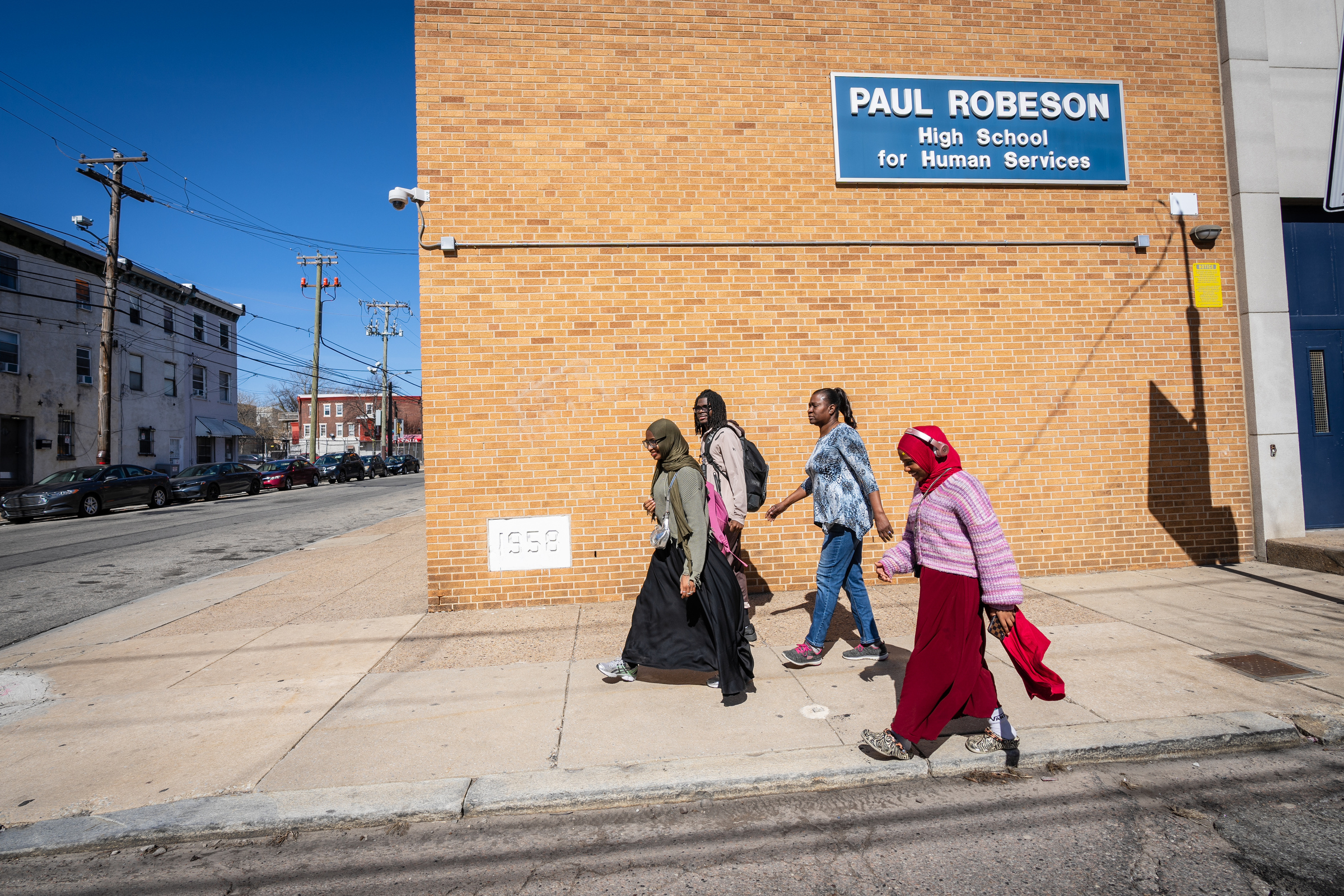
    Students walk outside Paul Robseon High School with Elana Evans, a Robeson teacher (in blue) in this 2025 file photo.

    And though moving to Motivation, in Southwest Philadelphia, may be slightly more palatable for some Robeson parents, for most, it won’t, said Evans.

    “Students would still have to go to 60th Street, traveling a distance,” said Evans. “If those parents wanted them to go to Motivation, they would have picked Motivation.”

    Motivation had initially been on the chopping block as well, but Watlington removed it from the list last week.

    The district has said it wants to preserve the successful Robeson culture, just elsewhere, but Kyana Hopkins, said that won’t work.

    “Culture is not transferable,” Hopkins said. “Make it make sense.”

    Samantha Bromfield, president of Robeson’s Home and School Association, said the district will lose families if Robeson goes away.

    “Understand that a parent like me will send my child back to being homeschooled” if Robeson closes, Bromfield said. “Your choice doesn’t fit my criteria of what I’m looking for my children.”

    Inheritance, and questions

    The Flower Show was abuzz Wednesday, with a crowd hovering around the Lankenau exhibit. “Inheritance” — a verdant wonderland showcasing plants grown from local seeds, set around a weathered wooden table — asked viewers to think of the question, “What tastes like home to you?”

    Lankenau High senior Sasha John (blue hoodie) explains her prize-winning school’s Philadelphia Flower Show exhibit to visitors on Wednesday.

    Several Lankenau students staffed the exhibit, answering questions — and showing visitors green “Keep LANK Open” fliers, encouraging passersby to share words of support for the school with the school board and City Council.

    “It doesn’t make sense to me,” said Amelia Pennycooke, a Lankenau senior, of the proposed closing. “We have so many opportunities at Lank.”

    Lankenau High School’s exhibit, which the school’s eco art class worked on all school year, won a gold medal and the Alfred M. Campbell Memorial Trophy at the Philadelphia Flower Show. “Inheritance” examines the question “what plants taste like home to you?” It was designed and built by Lankenau students.

    Noel Alford, a Lankenau parent, said the school needs to remain open, its land not used for any other purpose. The amendment to Watlington’s plan falls short, she said.

    “Saul is a mistake,” said Alford. “Saul is an agricultural school. They are two different magnet schools.”

    While elected officials have no say in which schools close, Thomas said it’s up to them to keep pressuring the board to rethink some closures, including Lankenau’s.

    “This is a legacy moment for us as elected officials,” said Thomas. No one “wants to add that black mark on their career that says you were the person that was in charge when this injustice took place.”

  • Do you buy a poinsettia to celebrate the holiday season? There is a very Philly history to that.

    Do you buy a poinsettia to celebrate the holiday season? There is a very Philly history to that.

    On Nov. 24, 1827, a group of gentleman who wanted to carry on the tradition of 18th-century area botanists John Bartram and James Logan held the first meeting of the Pennsylvania Horticultural Society.

    Like Bartram and Logan, these men were eager to showcase Philadelphia’s fertile ground for native plants and exotic imports. So, they would often bring along plants to their meetings.

    And it wasn’t just the men at these meetings. According to a history of the Pennsylvania Horticultural Society, published in 1927, members brought “more than 40 specimens of plants and flowers, 15 varieties of pears and apples, American grape wine, cauliflower, and broccoli,” to a Nov. 3, 1828, meeting.

    Less than a year later, the inaugural Horticultural Society members decided to take their admiration of plants and flowers to the city at large.

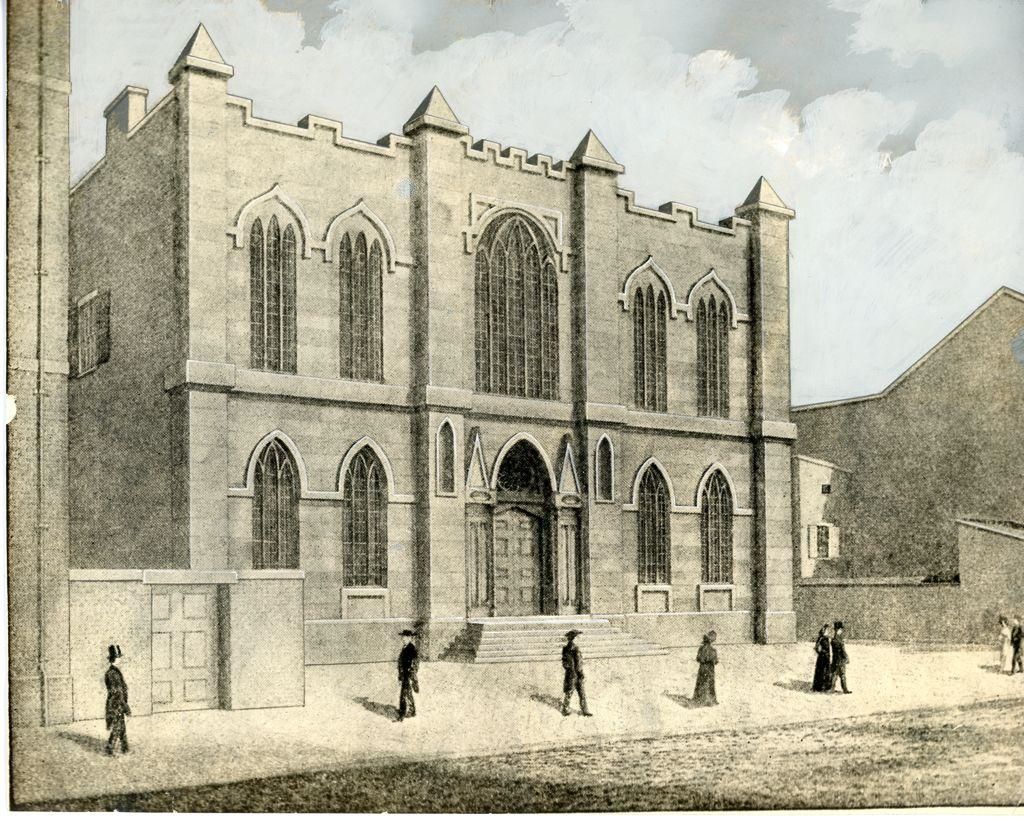
    The first Philadelphia Flower Show was held on June 6, 1829, at the Masonic Hall on Chestnut Street between Seventh and Eighth Streets.

    On June 6, 1829, the Horticultural Society held its first semiannual exhibition of fruits, flowers, and plants at the Masonic Hall on the 700 block of Chestnut Street. That was America’s first public flower show.

    The first flower show will be marked Saturday at the Philadelphia Downtown Marriott, just steps from the Pennsylvania Convention Center where the 197th Philadelphia Flower Show’s final weekend will be underway.

    The celebration is one of this year’s weekly Firstivals. Each Saturday in 2026, the Philadelphia Historic District is throwing a day party marking events that happened in Philadelphia before anywhere else in America and often the world as part of America’s 250th birthday.

    Philadelphia’s first Flower Show, said Janet Evans, librarian for the Pennsylvania Horticultural Society, was a one-day affair.

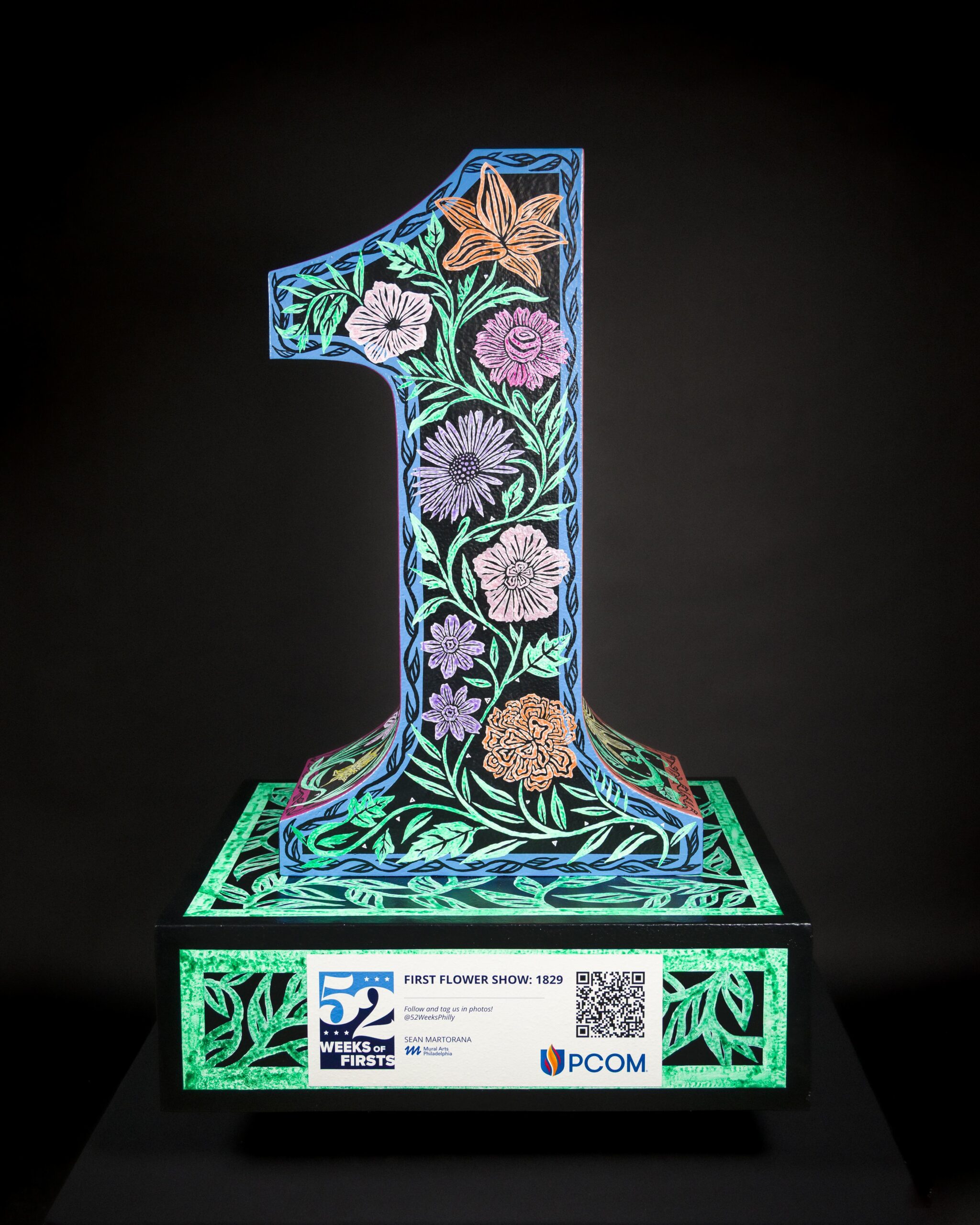
    Sean Martorana’s No. 1 honors the role of art and nature in bringing communities together.

    On display were the bigleaf Magnolia, geraniums, carnations, lilies, and pomegranate, Evans said. It was also the first time the poinsettia — now a symbol of the holiday season — was exhibited in North America.

    “So many plants we take for granted in our gardens today were introduced to the Philadelphia public at the Flower Show,” she said, adding that at later exhibitions, more exotic plants from birds of paradise to dahlias made appearances.

    The show was held in June until the 1830s when it was moved to September to mark the fall harvest. The present-day multiday spring flower shows started in the mid-1920s, to debut Easter blooms.

    The Flower Show was held in venues in West Philly before making the Convention Center its permanent home in 1996. (Although it was held in FDR Park in 2021 and 2022 during the pandemic.)

    There were no shows during World War I (1917-1918) and World War II (1943-1946) because resources were being diverted to war efforts. During those years, Evans said, the Horticultural Society organized Victory Garden Harvest Shows, set up to encourage people to grow vegetable gardens at home and their communities to compensate for wartime shortages.

    There were similar shows during the Great Depression, Evans said. “People flocked to those shows,” she added.

    Laura Blanchard, member and volunteer with the Philadelphia Flower Show, poses for a photo by a flower display at a news conference for a first-look unveiling of the 2026 Philadelphia Flower Show, “Rooted: Origins of American Gardening,” at Union Trust on Wednesday, Jan. 14, 2026.

    Today the Philadelphia Flower Show is a major city attraction. Last year, more than 235,000 people attended, said Lauren Scully, public relations and communications manager for the Pennsylvania Horticultural Society.

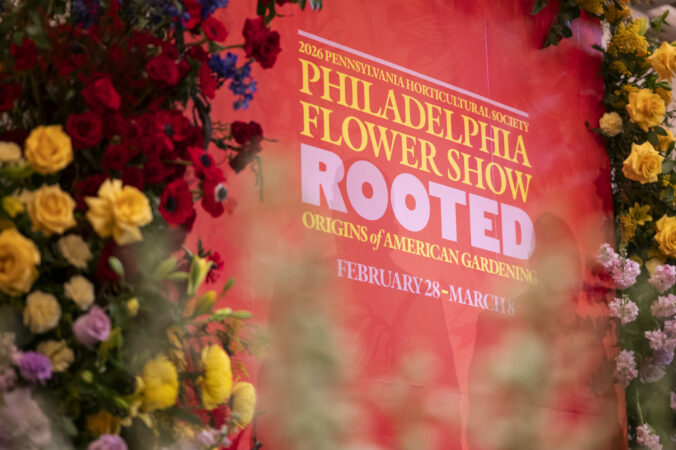
    This year’s Flower Show, “Rooted: Origins of American Gardening‚” celebrates America’s 250th birthday, honoring the people, places, and traditions that have shaped gardening.

    “It all started from men whose whole idea was to get together, admire, and share their love of plants,” Evans said.

    This week’s Firstival is Saturday, March 7, 11 a.m.-1 p.m., Philadelphia Marriott Downtown, 1201 Market St. The Inquirer will highlight a “first” from the Philadelphia Historic District’s 52 Weeks of Firsts program every week. A “52 Weeks of Firsts” podcast, produced by All That’s Good Productions, drops every Tuesday.

  • Gardening roots bring Philadelphians to the Flower Show

    Gardening roots bring Philadelphians to the Flower Show

    The Pennsylvania Horticultural Society Philadelphia Flower Show is back at the Convention Center, full of colors, scented exhibits, flowery crowns, and roots.

    Through March 8, visitors can celebrate the 197th edition of the region’s premier botanical show. This year’s installment commemorates the nation’s 250th anniversary under the theme “Rooted: Origins of American Gardening.”

    The displays honor the people, places, and traditions that shaped gardening in the United States. So, we asked attendees on Saturday, the show’s opening day:

    “What roots you into gardening?”

    Learning to let go

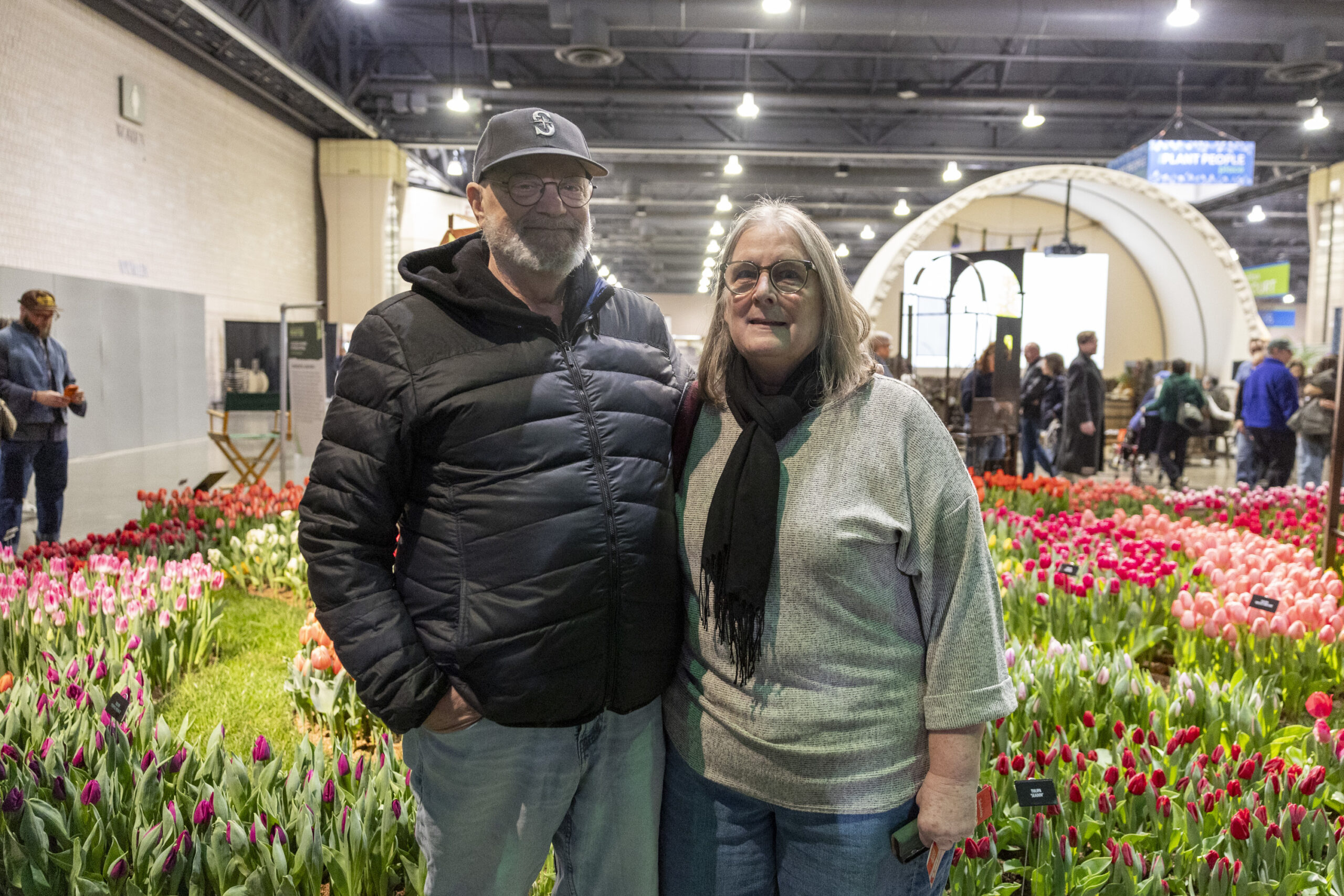
    Judy Baskin, 70, and her husband, Richard Tassano, 77, have been gardening together for over 30 years.

    Between raised beds, produce, and a mutual hatred of mowing, the Bala Cynwyd couple found in gardening a way to maintain and strengthen their connection with each other and their community.

    “It’s really nice to do it together,” Baskin said. “But if you were to listen to us, there is a lot of ‘I don’t want that there,’ or ‘Move that there.’”

    Richard Tassano, 77, and Judy Baskin, 70, of Bala Cynwyd, Pa., pose for a portrait at the Flower Show in Philadelphia, Pa., on Saturday, Feb. 28, 2026. The two have been gardening together growing mainly vegetables and few flowers to help pollination for their plants. “Every year we learn something new,” Richard said.

    Those green debates have prompted better communication, and an easier time choosing their battles.

    “You learn something new every year,” Tassano said. “You have to learn to let go and go figure out what you are going to sacrifice to the squirrels and raccoons.”

    But the couple don’t just garden for themselves. Their tomatoes, lettuce, pesto, garlic, brussels sprouts, and peppers (hot and sweet) have also prompted better relationships with their neighbors.

    “We have Cambodian neighbors we can’t talk to,” Baskin said, referencing a language barrier. “But we exchange vegetables that go from our gardens to our tables.”

    Memories from a distant past

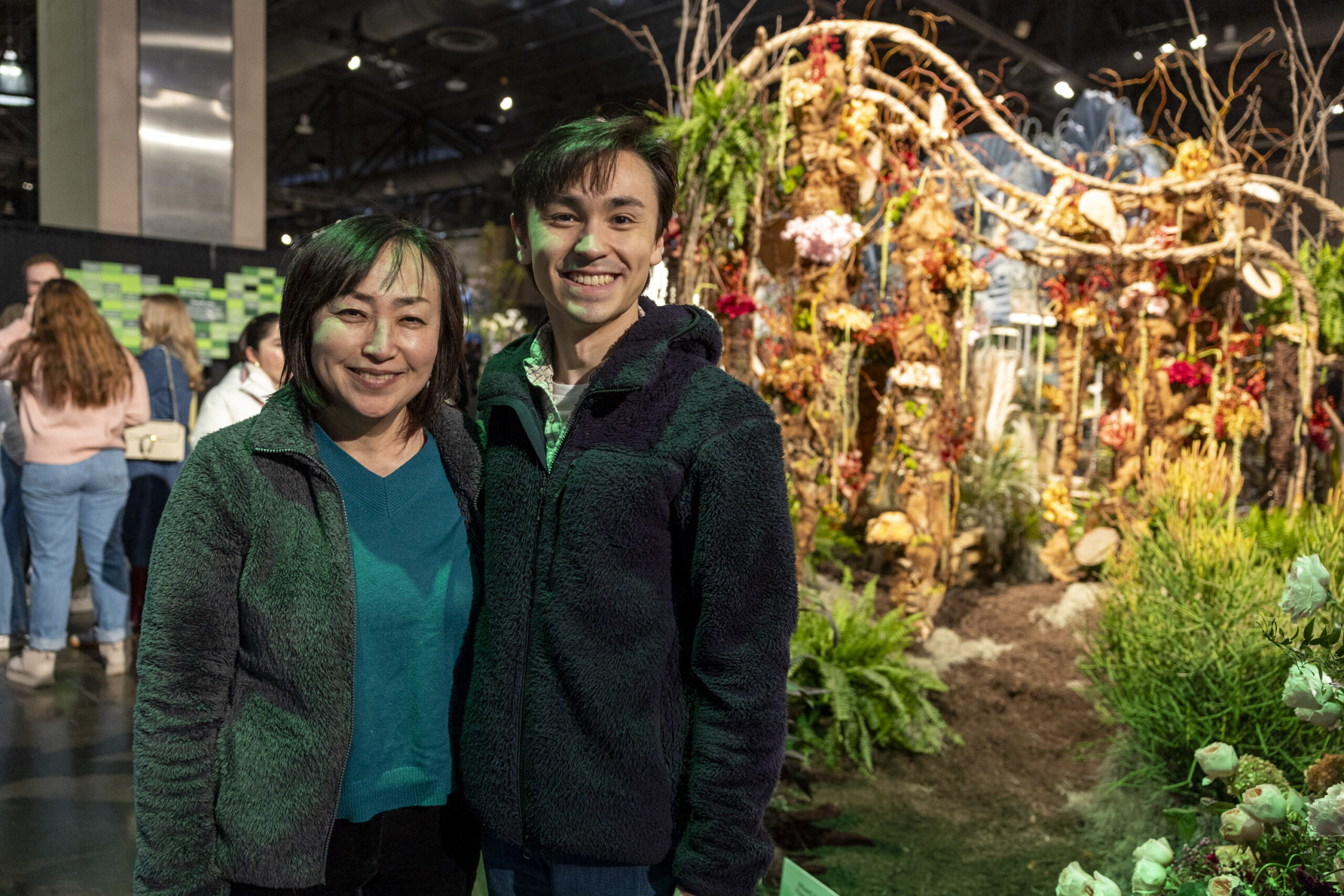
    For Mayumi Welman, 61, gardening brings back memories of loved ones and places she can now access only in her mind.

    She drove three hours from Virginia to experience the Flower Show for the first time with her son, New Jersey resident Millan Welman.

    As she and her son walked around, tiny flowers reminded Mayumi of her mother and her love for dianthus.

    Mayumi Welman, 61, of Fairfax, Va., poses for a portrait with her son Millan Welman, 25, of Princeton, N.J., at the Flower Show in Philadelphia, Pa., on Saturday, Feb. 28, 2026. Mayumi has been gardening for about 40 plus years. Her favorite flowers are Tulips and Roses.

    The poppies brought back memories of her kindergarten teacher, back in her native Japan, whose kindness with plants inspired a green thumb for a then-6-year-old Welman.

    “Different plants bring back different memories of different people,” Welman said. “Tulips and roses are my favorites, but it’s too hard to pick because they are like choosing my favorite child.”

    Despite not being a gardener himself, Welman’s only child, Millan, has learned a lot about life through seeing his mom care for plants.

    “She gave me an appreciation and respect for the natural world,” Millan Welman said. “I look at her and I feel respect for that level of commitment and a certain nostalgia because it’s a sight I grew up with.”

    More oxygen, less seasonal depression

    Megan Robbins and her husband, Hunter, have over 50 plants at home, including a three-foot-high baby monstera.

    The Bellmawr couple got into gardening in 2024, looking to improve air quality in their home, and found an unexpected love that brought them closer.

    “It’s an intentional time spent together; you have to be locked in and there is always something you can do,” Hunter Robbins, 34, said. “It’s like having a kid.”

    For Megan Robbins, also 34, gardening has helped with her seasonal depression just by touching her plants when she is feeling down.

    “It’s really calming,” she said. “There is a sense of accomplishment that you are growing something that you created, an ecosystem. It feels like we are giving back.”

    The greenery has also turned their living room and other corners of their home into a concert venue.

    Megan Robbins plays classical music for the plants and her husband tunes them in to hip-hop to help them grow.

    “The world is crazy enough, so it’s nice to have this space to set up long term and look forward to seeing grow in the future,” Hunter Robbins said.

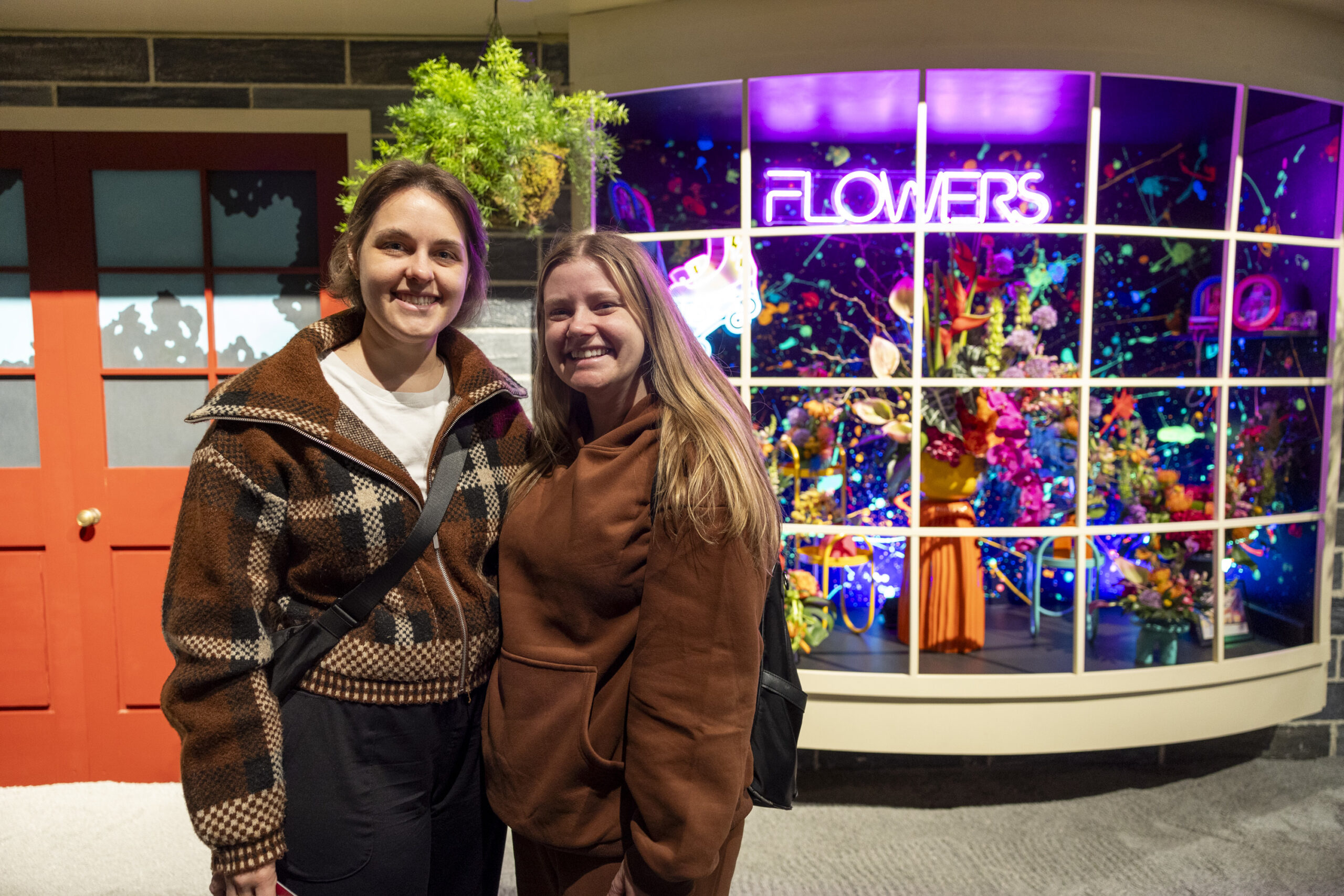
    Robin Posner, 37, of West Philadelphia, Pa., (left), and Megan Robbins, 34, of Bellmawr, N.J., (right), pose for a photo together at the Flower Show in Philadelphia, Pa., on Saturday, Feb. 28, 2026.

    Named for a sunflower

    Lorann Powell inherited her love for gardening from her parents, who gave her Sunflower as a middle name.

    “I followed my mom around as she was a landscaper,” Powell said. “She grew everything, so I grew up learning to cultivate and feeding the neighborhood with our vegetables.”

    Lorann Sunflower Powell, 65, of Graduate Hospital, poses for a portrait at the Flower Show in Philadelphia, Pa., on Saturday, Feb. 28, 2026. Lorann has been gardening all her life, beginning with learning from her mother, who was a landscaper.

    The Graduate Hospital area still carries that love language. Powell, 65, spends the summers planting seasonal flowers for her neighbors to “make the block beautiful,” she said.

    Sunflowers are her favorite things to plant, and she has already passed on the tradition of cultivating them to her children.

    “It’s rooted in my system; it is my history and story,” Powell said. “I’m rooted to plant things and let it grow.”

    Gardening in the heart of the city

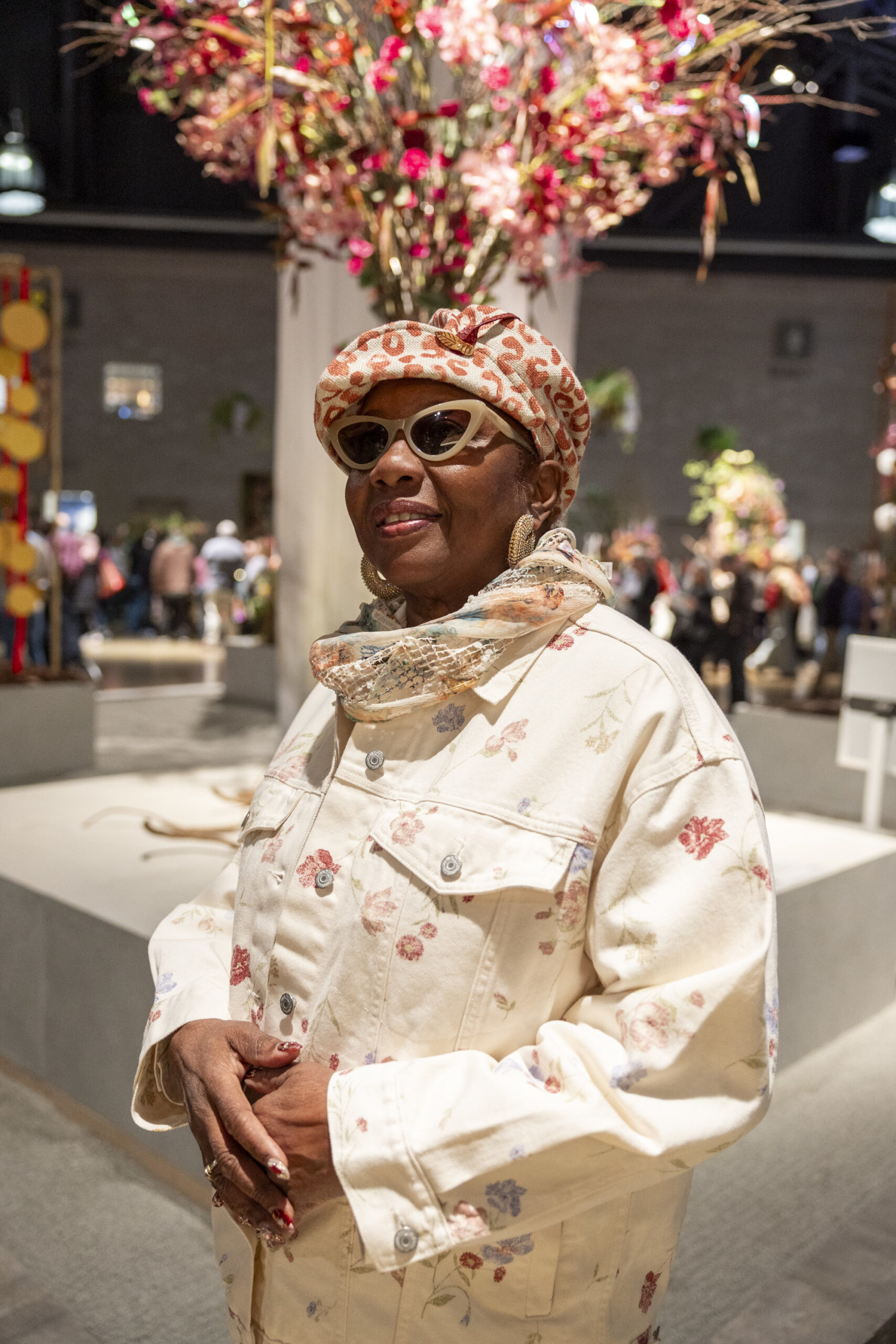
    Dana Napier, of Grays Ferry, Pa., 79, poses for a portrait at the Flower Show in Philadelphia, Pa., on Saturday, Feb. 28, 2026. Dana has been gardening all her life and has been going to the show for over 40 years now.

    For Dana Napier, 79, gardening means life — and resilience, particularly when practiced within the city limits.

    “It’s important to have a garden when you live in the city,” Napier said. “It gets you off the grid and a lot of wonderful Philadelphia birds come through.”

    To her, gardening has become a way of connection, not only with her Grays Ferry neighbors but also with the animal life of Philly. Groundhogs and raccoons have become regular visitors in her backyard.

    “It makes me feel like I’m still self-sufficient,” she said. “It gives me peace and my thoughts can go someplace else.”

  • Five things not to miss at the Philadelphia Flower Show this year

    Five things not to miss at the Philadelphia Flower Show this year

    Root systems are literal and figurative in our language — there are those you can see and touch and eat, and those invisible to the eye that connect us to the people and places that have brought us to this moment.

    Both type of roots are important to our past and future and both are explored at the Philadelphia Flower Show this year by gardeners and artists whose exhibits bring to life the show’s theme, “Rooted: Origins of American Gardening.”

    As the nation marks its 250th anniversary, the Flower Show celebrates its 197th year by looking back at the history of gardening in the United States. This is the “final chapter in a three-year trilogy” of themes that began in 2024 with “United by Flowers,” which explored current gardening connections, and continued last year with “Gardens of Tomorrow.”

    The most notable difference at this year’s Flower Show, which runs through March 8 at the Pennsylvania Convention Center, is that the marketplace has been moved out of the main exhibition halls on the upper floor to a separate space below. It’s a welcome change that provides more space for exhibits and visitors and makes the overall experience feel less crowded and commercial.

    I went rooting around the Flower Show during a media and members event on Friday. As always, the entrance garden — this year’s is “The Forest Floor” — is a can’t-miss, mainly because you have to walk through it to get in. But after that, here are five other interesting things I suggest making sure to see if you visit this year’s Flower Show.

    All the world’s a stage

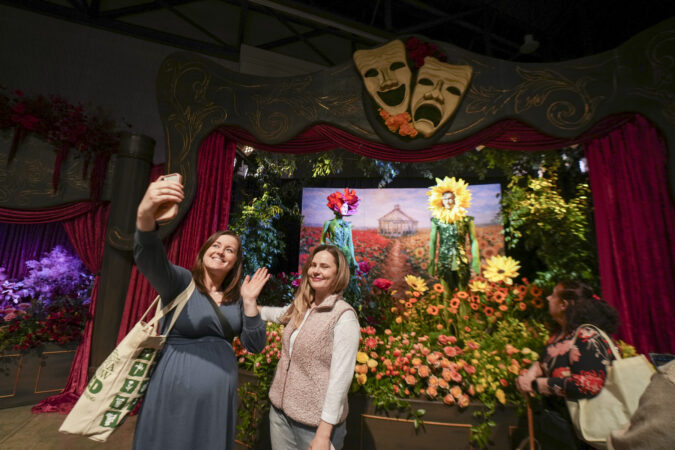
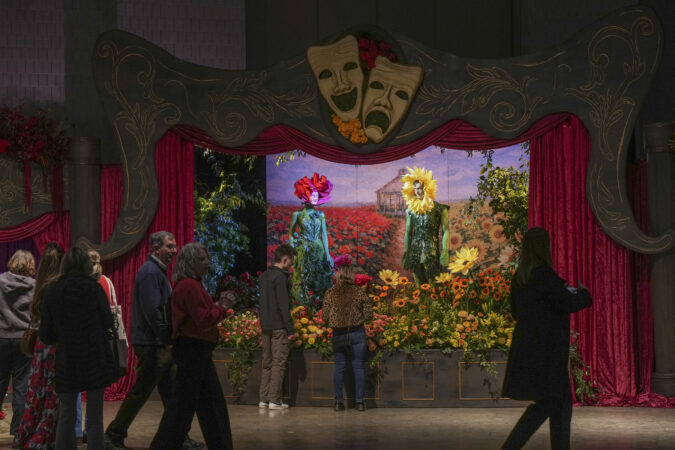
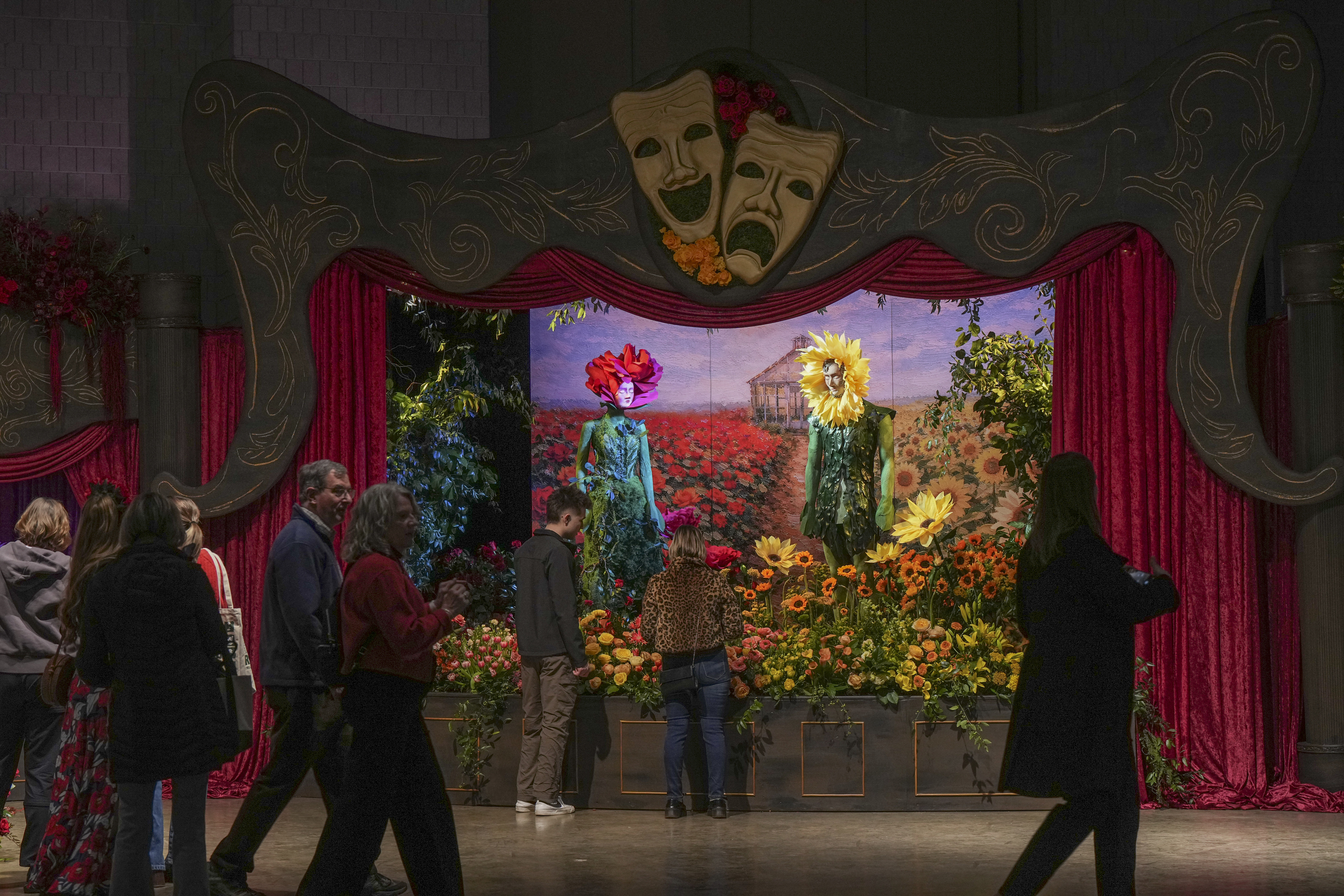
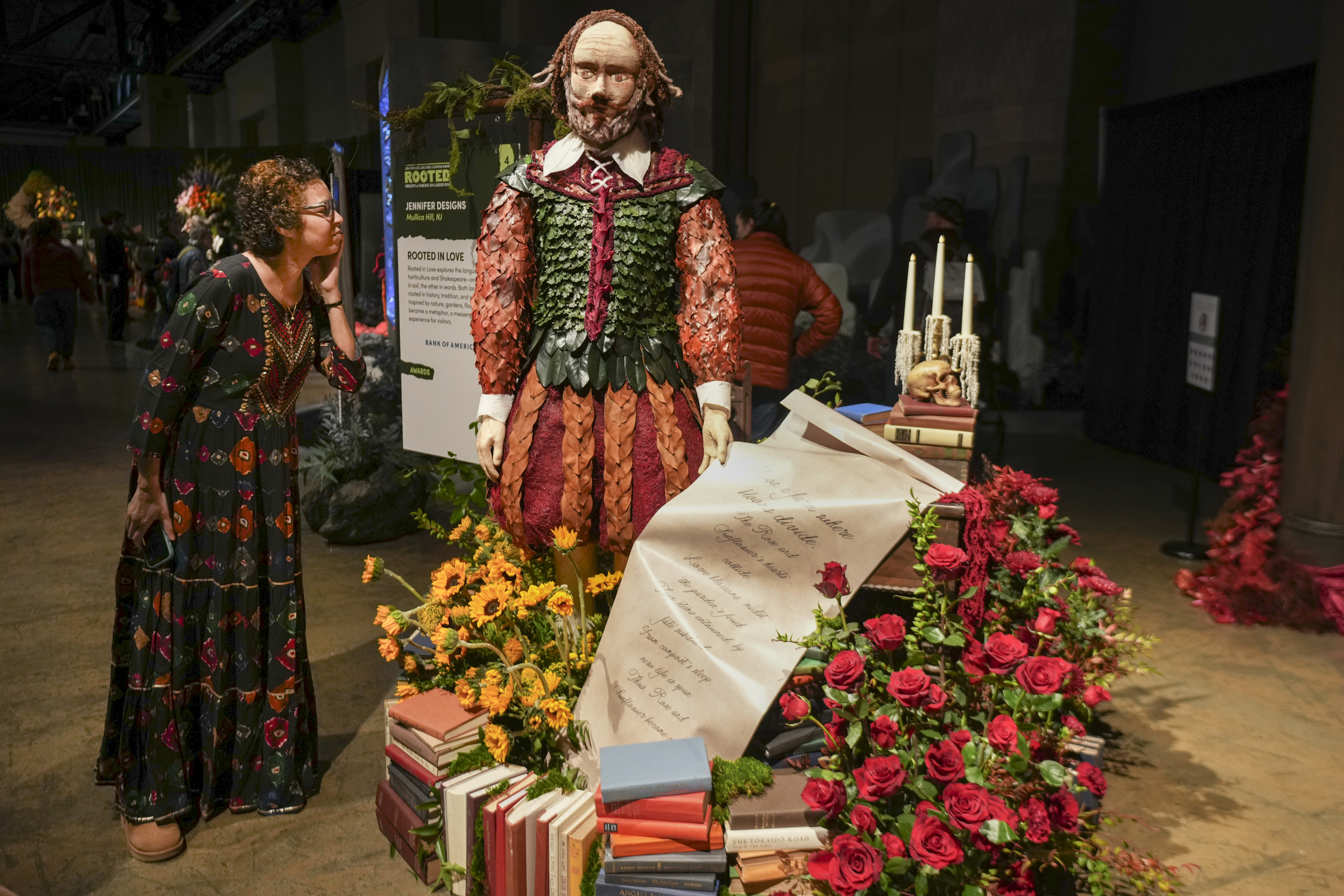
    “Rooted in Love” is a theatrical floral exhibit by Jennifer Designs of Mullica Hill that brings together horticulture and Shakespeare.

    That which we call a rose by any other word would smell as sweet, but what if a rose was chosen by central casting to play Juliet? How sweet would that be?

    Jennifer Designs of Mullica Hill shows us in its exhibit, “Rooted in Love,” in which an anthropomorphized rose and sunflower play the star-crossed lovers in William Shakespeare’s Romeo and Juliet on a stage overflowing with flowers.

    While the connection to this year’s theme is a bit tenuous — the exhibit “explores the language of horticulture and Shakespeare” — I’m giving it a pass, mostly because I love Shakespeare but also because this display is absolutely stunning.

    A Flower Show guest looks at William Shakespeare in the “Rooted in Love” exhibit by Jennifer Designs of Mullica Hill.

    Beyond the main scene, there’s a life-size recreation of the Bard made of flowers, a “Bloombill” complete with a cast and crew list, and flower box seats on either side of the stage.

    The shop around the corner

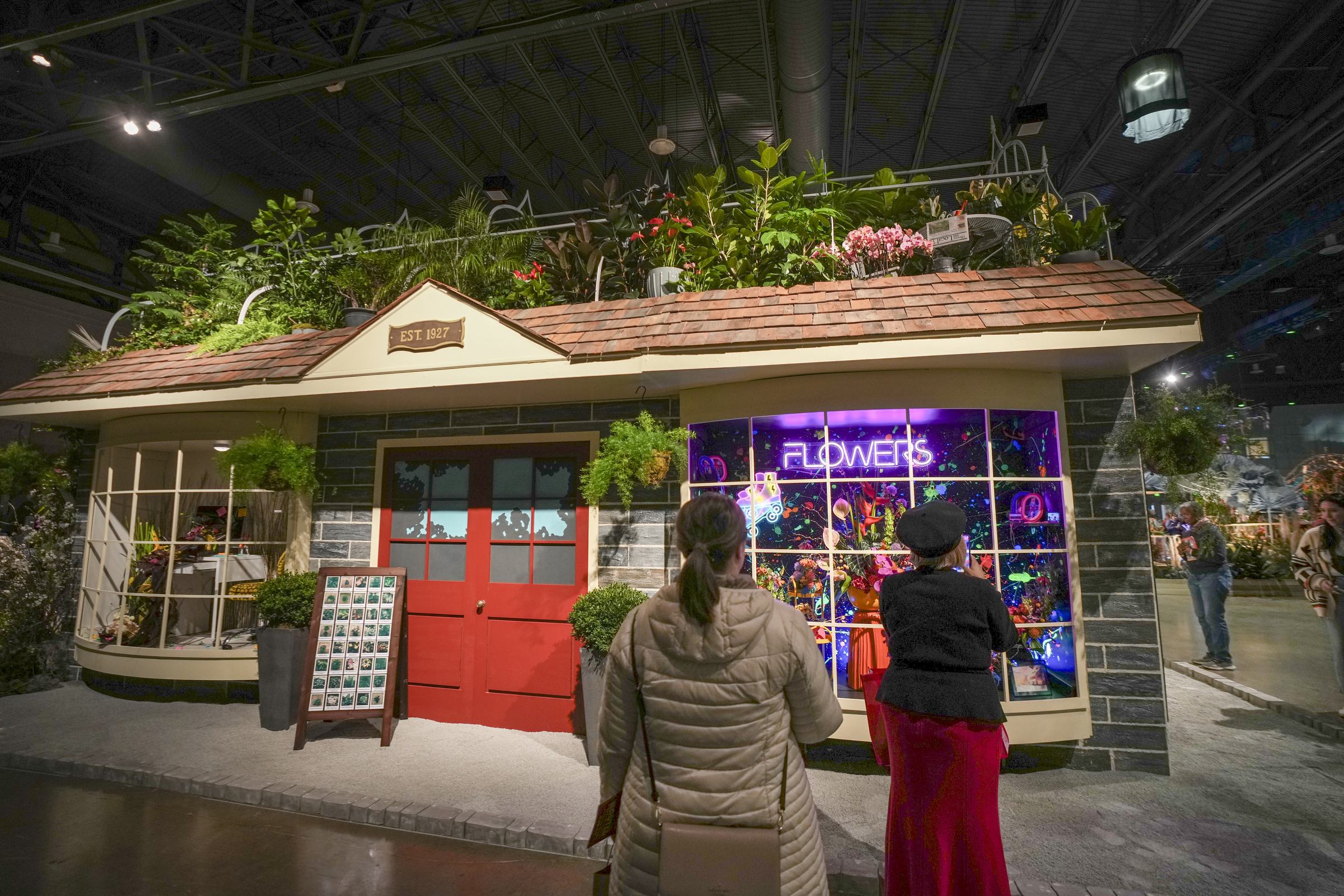
    Robertson’s Flowers & Events of Wyndmoor digs into its own roots — dating back 99 years — with a charming life-size recreation of its Chestnut Hill corner store.

    Each of the four window displays of the 360-degree exhibit celebrate a different era of floristry, from the formal and feather-accented styles of the early 20th century to the neon-lit early ’90s.

    Visitors look at Robertson’s Flowers & Events’ “Windows into the Past,” at the Philadelphia Flower Show.

    Just as impressive as the structure and display itself is the lush rooftop garden atop the entire building, which teems with orchids and greenery and metaphorically “extends its roots downward,” connecting the shop with the community.

    It’s so tiny!

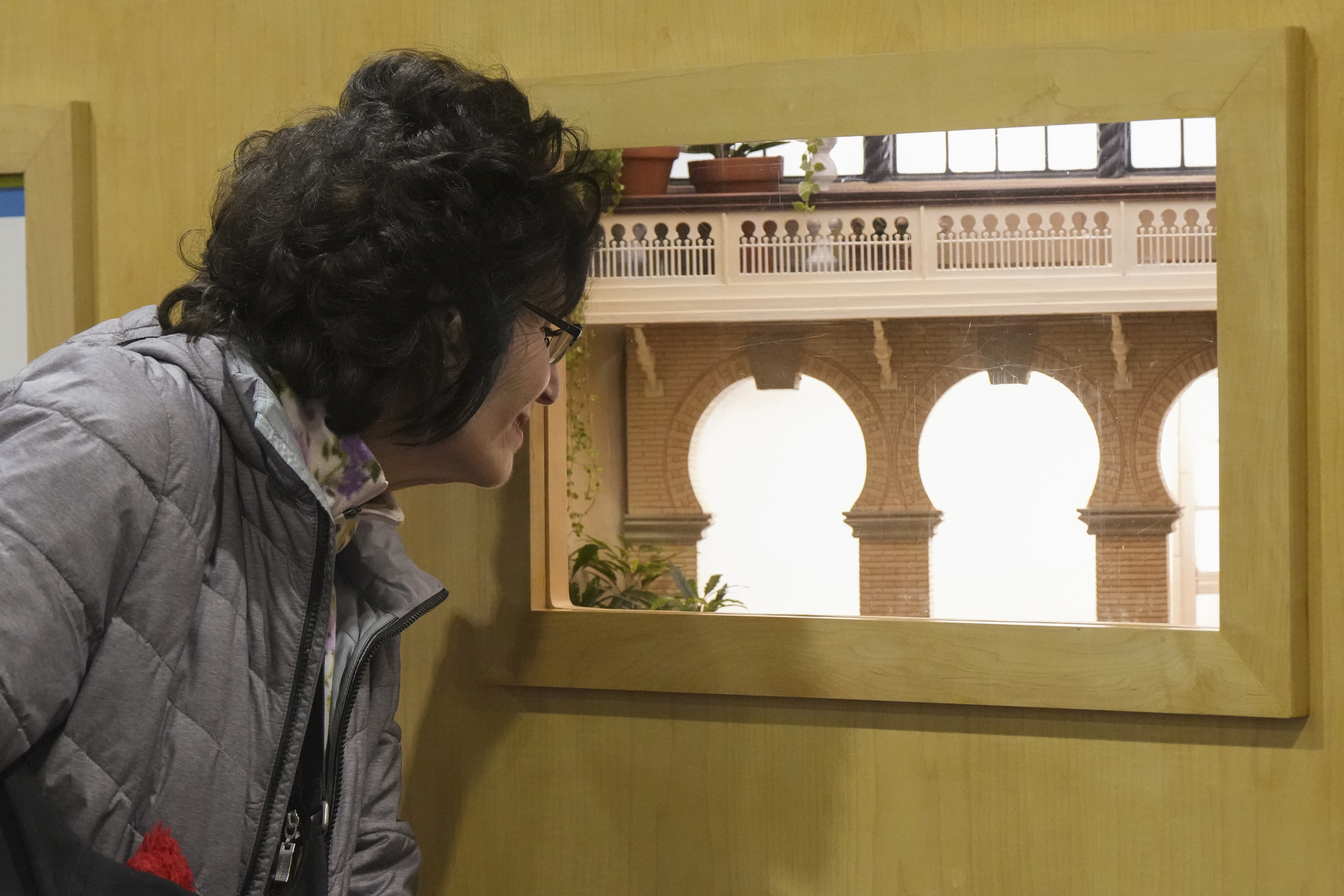
    It is here I must make a confession: My favorite part of the Flower Show every year, without fail, is the “Miniature Settings” category, which I call “the dioramas.” This is because I love tiny things and because my dream when I retire is to search for seashells and make dioramas.

    I’ve hesitated putting it on my must-see list in previous years because I am 110% biased and because the line to see these mini scenes is always long (I waited about 15 minutes on Friday). But this year’s — which challenged participants to create a setting for an event that happened between the prehistoric era and 1900 — truly is a must-see for Philly lovers.

    A visitor to the Flower Show looks at the “Philadelphia’s Centennial Exhibition: Opening Day, 1875,” one of the exhibits in Miniature Settings category.

    While some folks made scenes of the last night in Pompeii or the Roswell UFO crash site, it’s the three Philly-themed dioramas that stood out to me. There’s Benjamin Franklin’s garden, with a floating kite and key and inventive lighting effects; the interior of Independence Hall; and Horticulture Hall at Philadelphia’s Centennial exhibition.

    Understood the assignment

    With it’s late fall setting and its stark use of flowers and color, the exhibit from W.B. Saul High School of Agricultural Sciences in Roxborough isn’t as eye-catching as many others, initially, but if you take the time to study it and read the placards, it’s by far the most moving, emotionally.

    “Up-Rooted, Re-Planted,” explores the roots of our region through the Lenape people, the original Indigenous inhabitants who lived here before being uprooted by European settlers.

    A babbling brook runs through a wooded autumn setting that seems just on the brink of winter. A placard in a dugout canoe tells the story of how the Lenape were forced to move westward. And a sturdy wigwam built by hand keeps the food and firewood within it dry.

    Andrew Luedders and Lukas Luedders look at W.B Saul High School of Agricultural Sciences’ exhibit “Up-Rooted, Re-Planted.”

    Out of all of the exhibits, this was the most on-point when it came to theme and the most profound when I spent some time with it. It’s also a really good learning moment for kids, which is particularly wonderful because it was built by students. I saw several adults kneeling down to read the placards to children and share the story of the people who first planted roots in what is now Philadelphia.

    The fun is in details

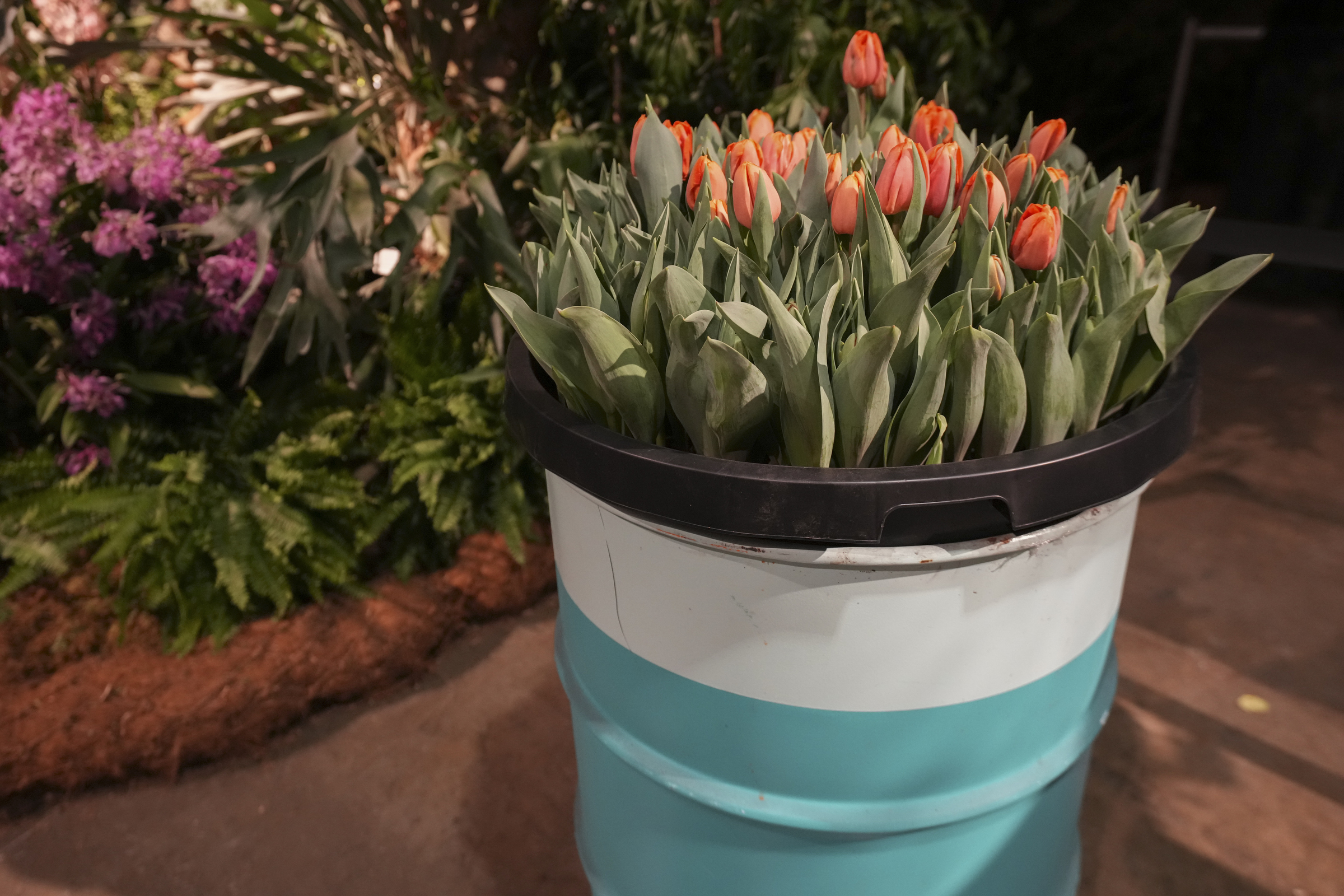
    Some of my favorite moments at the Flower Show this year were small ones I didn’t expect. Throughout the event hall, there are trash cans filled not with garbage, but with daffodils, tulips, and lilacs. It’s a small but sweet touch that adds a bit of whimsy.

    In the “Garden Design” section, there’s an exhibit which repurposes stone blocks as books with punny titles written on them like Where the Wild Plants Are, War and Peas, and A Kale of Two Cities.

    Tulips in a trash can at the Philadelphia Flower Show.

    At the American Landscape Showcase exhibit, there’s a display called “American Anemoia” featuring an overgrown ornamental garden at a vacant house. Nailed to the fading white picket fence of the house is a citation from the city of Philadelphia for weeds and mowing.

    If that isn’t rooted in truth, I don’t know what is.

    The Philadelphia Flower Show continues through March 8 at the Pennsylvania Convention Center, 11th and Arch Streets. Hours: 10 a.m. to 8 p.m., except until 6 p.m. on March 8. Ticket prices vary depending on person’s age and day and time of entrance. Information: phsonline.org or 215-988-8800.

  • The Flower Show must go on: Crews start setting up for Philly Flower Show despite snow and years of weather curses

    The Flower Show must go on: Crews start setting up for Philly Flower Show despite snow and years of weather curses

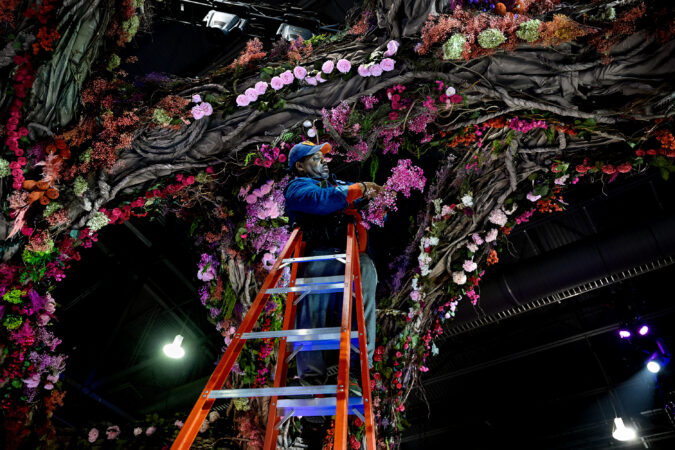
    Inside a large exhibition room at the Pennsylvania Convention Center on Monday morning, where workers are setting up next week’s Philadelphia Flower Show, one could be fooled into believing that spring has somehow arrived early in Philly.

    The scent of mulch permeates every corner, tendrils of pink and red flowers are delicately laid over massive tree trunks, a mobile hanging from the ceiling dangles dozens of iridescent butterfly cutouts over the floor, and bright green shrubbery dots the halls.

    It seems as if Punxsutawney Phil maybe got it wrong this time.

    But one thing gives it away: the gaping open loading dock door ushering in a channel of 35-degree air that slices through the center of the exhibition hall. Clusters of snowflakes billow in toward a mint-colored wooden fence and a tree house.

    For the organizers of the Philadelphia Flower Show, an annual week and a half-long event that features dozens of horticultural exhibits, the 14-inch snow dump over the weekend was less than ideal, said Seth Pearsoll, the show’s creative director and vice president with the Pennsylvania Horticultural Society. But it wasn’t a surprise.

    “We have been watching the weather for weeks on end,” Pearsoll said. “You just got to stay on top of it.”

    The show, which opens to the general public on Saturday —the Horticultural Society members preview is Friday — and ends March 8, is typically held in the late winter/early spring. That’s led to some historically dicey weather.

    A 1993 blizzard forced the show to close early. Meteorologists predicted huge snowfalls in 2001 and 2013 as well. And, in 2018, a nor’easter hit the city on the opening night of the show. When the show was held outside during the years of the COVID-19 pandemic, it was shuttered or postponed for short stretches because of inclement weather.

    Despite the weather challenges the show, which has been running for nearly 200 years, is typically held at this time of year partly due to tradition. The show dates to an era long before the internet when the event was designed to present the season’s products to florists, landscapers, farmers, and others in the horticultural industry so they could place their orders in time for spring planting.

    “After that it was just part of the DNA of the show,” Pearsoll said.

    The show brings in a quarter million visitors each year, he said, and requires meticulous planning and constant pivoting.

    The original schedule for Monday included a 7 a.m. load-in time, he said, but his team later pushed that to noon to ensure that all the trucks could get to the facility safely. Many of the plant deliveries for Monday were moved to Tuesday or Wednesday, by which time the team hopes roads will be clearer.

    Trucks won’t just be contending with the weather in Philly but across the country as the event is getting shipments in from Minnesota, Florida, and New York, among other states.

    Most of the plants themselves are protected in climate-controlled trucks.

    “I think, for me, having been a part of outdoor shows, having worked a million flower shows, weather is always a thing,” Pearsoll said. “So I’ve really come to see it as just another one of those planning variables in the event industry.”

    The way he views it, the snowy, slushy, frigid weather outside enhances the magic of walking through rows of plants that have, through “sorcery,” as he calls it, been manipulated into blooming out of season.

    “It’s this crazy thing, right?” he said. “It mean it’s science. It’s art.”

    The Philadelphia Flower show is scheduled for Saturday through March 8 (with a Horticultural Society members preview on Friday) at the Pennsylvania Convention Center, 11th and Arch Streets. Hours: 10 a.m. to 8 p.m., except until 6 p.m. on March 8. Admission varies depending on person’s age and day and time of entrance. Information: phsonline.org or 215-988-8800.

  • Everything you need to know about the 2026 PHS Philadelphia Flower Show

    Everything you need to know about the 2026 PHS Philadelphia Flower Show

    The iconic Philadelphia Flower Show returns Feb. 28-March 8, bringing a massive, immersive garden world blooming to life within the Convention Center. And more than ever, it promises to be historic.

    Pennsylvania Horticultural officials have billed the 2026 Flower Show as Philly’s first major event of its yearlong festivities planned for the 250th anniversary of America — as a celebration of the history of American gardening.

    The show’s theme, “Rooted: Origins of American Gardening,” honors the people, places, and traditions that have shaped gardening — and invites visitors to consider where their own gardening stories began. The 2026 show will debut a reimagined Marketplace shopping destination and expanded Artisan Row.

    America’s oldest flower show, which began in 1829, the internationally renowned event draws thousands to Center City each year, and represents the Horticultural Society’s biggest fundraiser, supporting its greening efforts across the city.

    Here’s what you need to know if you’re planning to attend.

    Location and schedule

    📍 Pennsylvania Convention Center: 1101 Arch St., Philadelphia, PA 19107

    📅 Feb. 28 to March 8

    ⏰ Hours:

    • Feb. 27: Noon — 4 p.m. Members only Preview
    • Feb. 28 — March 8, 2026
    • Open daily 10 a.m. — 8 p.m., until 6 p.m. on March 8
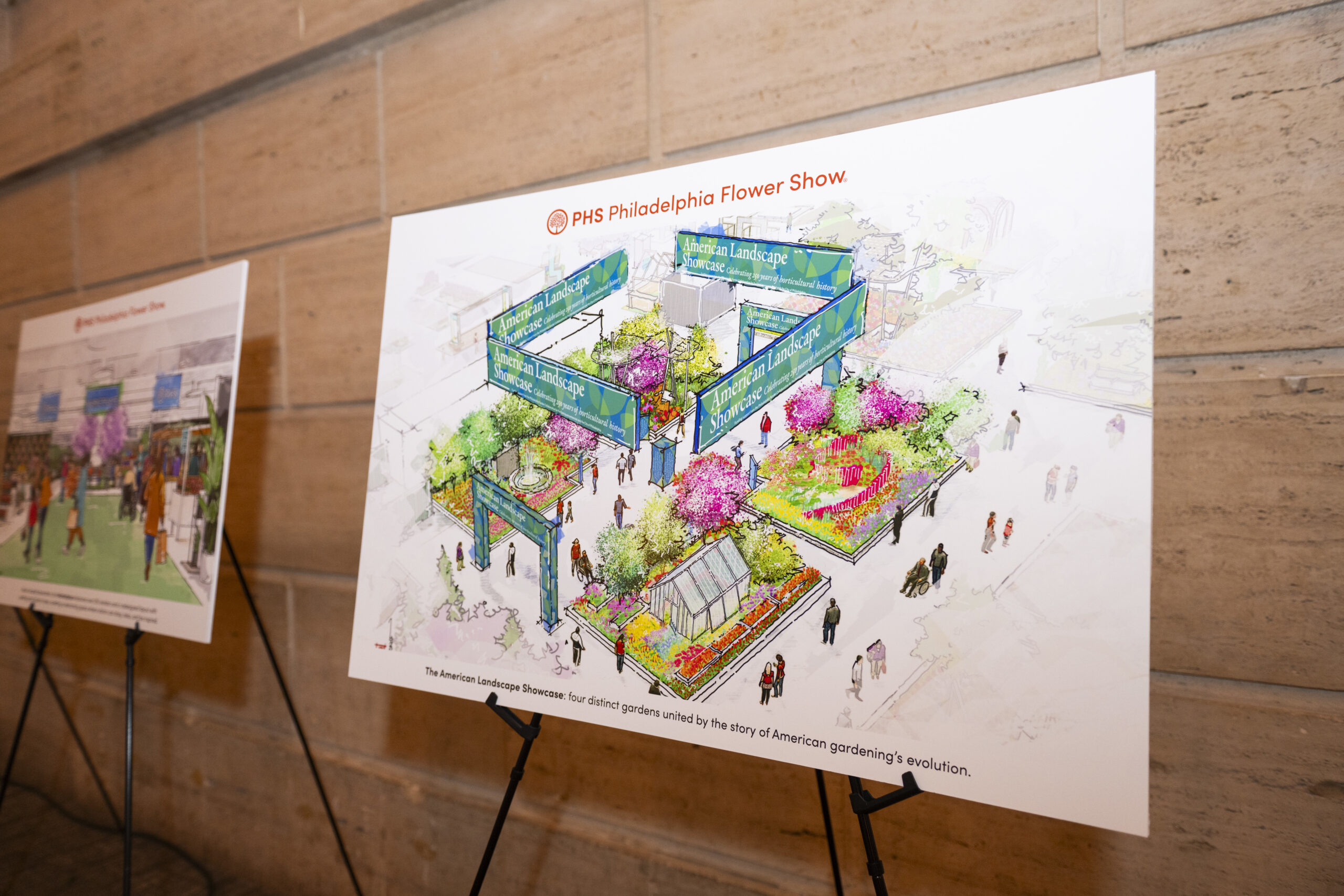
    A rendering of the 2026 Philadelphia Flower show is on display during a Jan. 14 news conference at Union Trust. The theme of this year’s flower show is called “Rooted: Origins of American Gardening.”

    Tickets and pricing

    Tickets are available online at tickets.phsonline.org and at the Convention Center. Online tickets are cheaper than those purchased at the door, and weekday tickets cost less than weekend tickets. Group discounts are offered to groups of 25 adults or more.

    Online pricing:

    • Adult:
    • Student (18-24 with valid student ID):
    • Children (5-17):
    • Twilight (after 4 p.m.):
    • Any-Day Flex Pass — $60, one-time, any day admission
    • Floral Fanatic Pass — $100 unlimited daily entry for entire run

    In-person pricing:

    • Adult:
    • Student (18-24 with valid student ID):
    • Children (5-17):
    • Twilight (after 4 p.m.):
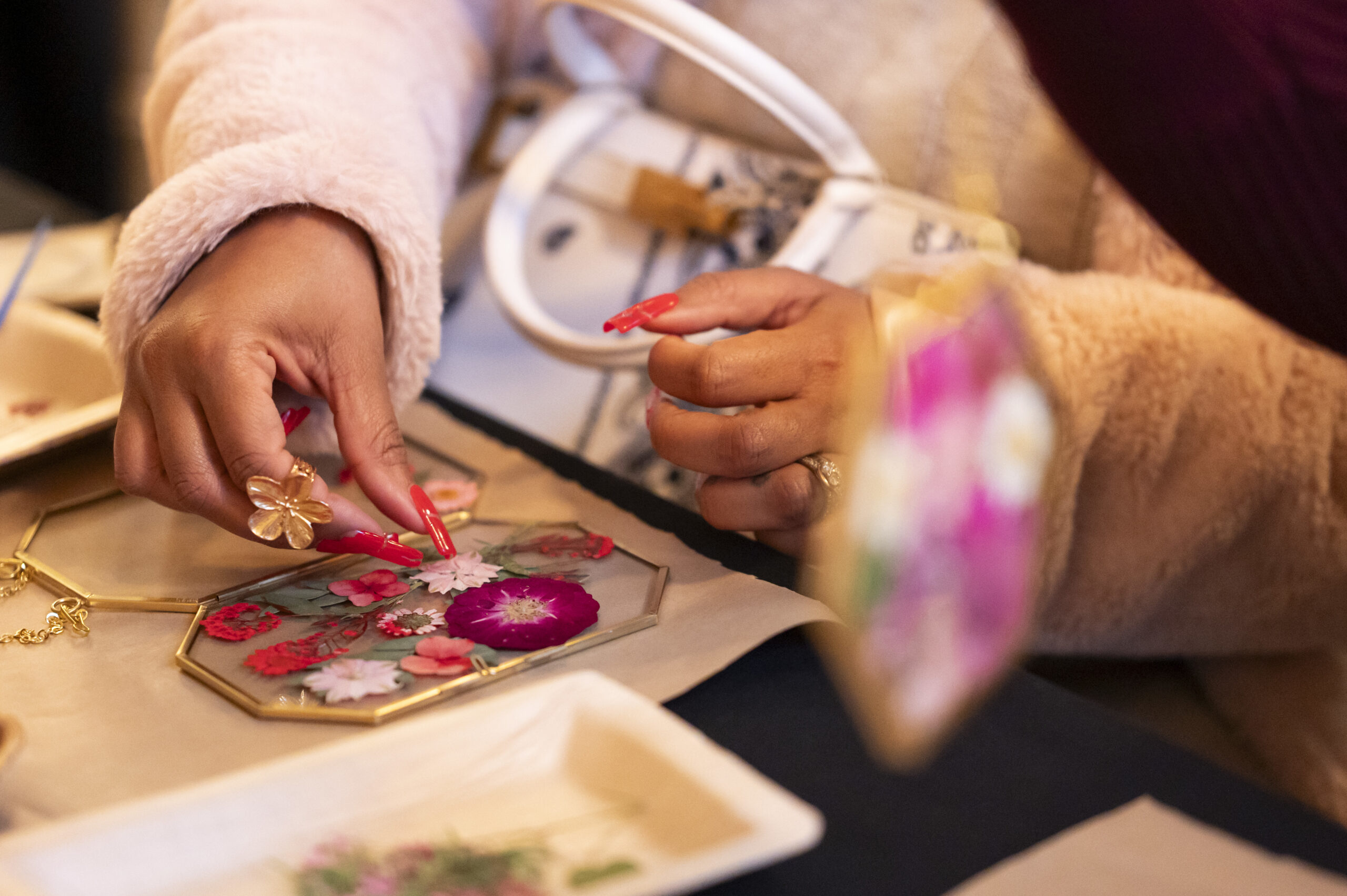
    A participant creates pressed flower art following a Jan. 14 news conference at Union Trust for the unveiling of a first look at the 2026 Philadelphia Flower Show, “Rooted: Origins of American Gardening.”

    Top exhibits and attractions

    For a full list of exhibitors at this year’s Show, please visit phsonline.org.

    The Forest Floor: Flower Show Entrance Garden

    A sprawling, misty forest floor creation drawing on the diverse inspirations of American gardens, and featuring mossy stonework, Zen-like sculptural plantings, water displays, and crowned with a towering, twisting root structure.

    The American Landscape Showcase: Special exhibition celebrating America’s 250th anniversary.

    This year’s special exhibition celebrates the national milestone, also known as the Semiquincentennial, with four gardens highlighting how gardening has shaped communities and evolved over 250 years.

    First Bloom — Rooted in Memory

    Four acclaimed international florists — Gábor Nagy, Alex Segura, Chantal Post, and Conny van der Westerlaken — showcase the origin moments that sparked their passion for flowers.

    Design Gallery

    Presents floral arrangements crafted for themed challenges, highlighting skill, creativity, and artistic power.

    Hamilton Horticourt

    Each year, thousands of exhibitors compete in more than 900 classes or categories, ranging from horticulture and arrangement to design and photography. With no age limits, winners receive a “Blue Ribbon.” Competitive Class categories are on the show floor, including miniatures, pressed flowers, and specialty plants.

    Artisan Row

    The 2026 show features an expanded Artisan Row, where guests can work alongside nearly 40 vendors and craftspeople to create everything from fresh floral crowns to dried bouquets and terrariums and candles and jewelry and more.

    Marketplace

    A new highly visible, street-level Marketplace below the main exhibit halls, with more than 200 vendors offering a curated selection of live plants, florals, garden tools, decorative wares, and more.

    Potting Parties

    Create your own flower arrangements under the guidance of Tu Bloom, the official botanical artist for the Grammys. $20 per person (reserve at tickets.phsonline.org/events).

    Bloom Bar

    Visit the Bloom Bar or keep an eye out for the cart wandering the show floor to buy gorgeous premade floral crowns.

    Kids Cocoon

    Sponsored by Netflix House Philadelphia, a family-friendly space with reading nooks, craft and digging stations.

    Butterflies Live!

    Hundreds of native and exotic butterflies, including zebra longwings, morning cloaks, and bright blue morphos dance and paint the air with color in the iconic butterfly tent exhibit. Many are happy to land on visitors’ feeding sticks for nectar and sugar water.

    Know to Grow

    Speaker series featuring horticultural experts exploring topics including heirloom and early American gardens, native bees and pollinator habits, resilient ecological design, and the cultural histories that have shaped American gardening traditions.

    Plant People Place

    Interactive area where guests can connect with expert gardeners and industry specialists for advice and insight.

    Early Morning Tours

    Daily early-hour tours offer behind-the-scenes peeks and insights from exhibitors. Early morning photography sessions are also available.

    Family Frolic

    • March 1:10 a.m. — 3 p.m.

    Buy tickets for the March 1 show for a day designed for young families, with educational experiences, playful floral design, coloring, and more. Free with admission, recommended for all ages.

    Blossom & Breathe

    • March 4: 4 — 8 p.m.

    A celebration of beauty, well, and natural healing, including yoga classes, opportunities to work with wellness experts, and mediation. Purchase required for yoga class, all other activities are free with admission. Recommended for all ages.

    Fido Friday

    • March 6: 5 — 8 p.m.

    Bring your best four-legged friend to explore the florals. Proof of current rabies vaccination required.

    Flowers After Hours

    Folklore of the Forest

    • March 7: 8:30 — 11:30 p.m.

    The Flowers After Hours dance party transforms the show into an enchanted, fairytale forest setting with themed cocktails and dancing. Guests are encouraged to wear “fantasy-inspired attire,” planners said. Purchase required. Must be 21.

    A young woman falls asleep during the lunch rush at Reading Terminal Market on June 11, 2025, in Philadelphia.

    Food & drinks

    In addition to the convention center’s Saxby’s Coffee and the Overlook Cafe, there are concession areas managed by Aramark serving light bites, snacks, and drinks on the show floor.

    Guests are encouraged to get their hand stamped before exiting the building, if they decide to take a short walk to some of Philadelphia’s famous food destinations.

    How to get to the Flower Show

    • 🚴 Bike: 19 minutes from South Philly, about 30 minutes from North or West Philadelphia.
    • 🚌 Bus: Take lines 4, 10, 11, 13, 16, 17, 21, 23, 27, 33, 34, 36, 38, 42, 44, 45, 47, 48, 61, 78, 124, and 125.
    • 🚇 Subway:
    • 🚉 Regional Rail:
    • SEPTA is running extra trains on these Regional Rail lines on Saturdays and Sundays during the show — March 1-2 and March 8-9:

    Where to park for the Philadelphia Flower Show

    The Convention Center recommends parking at one of the lots closest to the show that are run by ABM Parking, E-Z Park, iParkit Philadelphia, Park America, Parking Facility, Parkway Corp., or SP+ Parking.

    You can also park at a Philadelphia Parking Authority garage:

    • The Autopark at the Fashion District: 📍45 N. Ninth St., 💰 $35 for 24 hours, ⌚ 6 a.m. to midnight, 🚶‍♀️ three minutes.
    • The Autopark at Jefferson: 📍10th and Ludlow Streets, 💰 $36 for 24 hours, ⌚ 5 a.m. to 11 p.m., 🚶‍♀️ 10 minutes.
    • Parkade on Eighth: 📍801 Filbert St., 💰$32 for 24 hours, ⌚ 24/7, 🚶‍♀️ six minutes.
    • Gateway Parking Garage: 📍1540 Vine St., 💰 $16 for 1 hour, $30 for 24 hours, ⌚ 24/7, 🚶‍♀️ five minutes

    Where does the money for the PHS Flower Show go?

    Proceeds from the Flower Show go directly to the Pennsylvania Horticultural Society to disburse among its regional programming. This includes neighborhood programs, city tree-tending, low-cost gardening programs, water conservation, designing and maintaining public gardens, and more.

    For more information, visit phsonline.org/the-flower-show.

  • Virginia A. Smith, retired award-winning Inquirer reporter and editor, has died at 75

    Virginia A. Smith, retired award-winning Inquirer reporter and editor, has died at 75

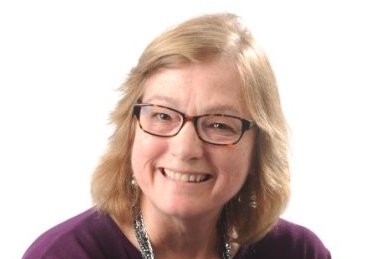
    Virginia A. Smith, 75, of Philadelphia, longtime reporter and editor for The Inquirer, the Philadelphia Bulletin, the Akron Beacon Journal, and other newspapers, mentor and working-mother role model to many, and avid gardener, died Friday, Nov. 14, of interstitial lung disease at Roxborough Memorial Hospital.

    Born in Philadelphia, Ms. Smith joined her hometown Inquirer in 1985 after three years at the Beacon Journal in Ohio, six months at the Bulletin in Philadelphia, and earlier stints at other papers in New York and Connecticut. Until her retirement in 2015, she covered news, health, and gardens as a reporter for The Inquirer, and served as city and Pennsylvania editor.

    In her official Inquirer profile, she described her final assignment as “happily writing — and learning — about gardening full time since 2006.” Her son, Josh Wiegand, said: “She was a curious person and interested in so many different things.”

    Former colleagues praised the depth and variety of her reporting, especially the detailed long-form stories she wrote about Sister Mary Scullion in 1992, the Iraq War in 2004, her own extensive garden in 2006, and the other interesting people and significant events she encountered. “She was open to reporting a story until she was confident she had all of its shadings,” Inquirer investigations editor Daniel Rubin said. “She had a gift for the stories people would talk about.”

    For Ms. Smith, there was no better place than her own garden.

    Ms. Smith was named The Inquirer’s garden writer in 2006, and, of course, wrote detailed previews and reviews of the annual Philadelphia Flower Show. But her favorite stories, she told colleagues, were the hundreds of others about climate change, garden gnomes, community gardens, butterflies, pruning techniques, seed banks, edible weeds, how blind people enjoy gardens, and other topics.

    Her winter holiday story in 2006 was not about poinsettias or Christmas tree farms. Instead, she profiled an author who discovered a treasure trove of old black-and-white photos of gardeners tending plots in prisons, war zones, and concentration camps.

    “It was her idea,” said Joanne McLaughlin, her editor then. “She wanted to write about gardens nurturing the soul under the worst of circumstances, giving hope under the worst of circumstances.”

    She wrote often about her own garden in East Falls and ended one story in 2006 with: “When winter arrives, maybe I’ll settle down. Oh, what are the chances? New years are for confessions, so here’s mine: Come first snow, I’ll be out there shoveling the garden pathways, hoping to sneak another peek.”

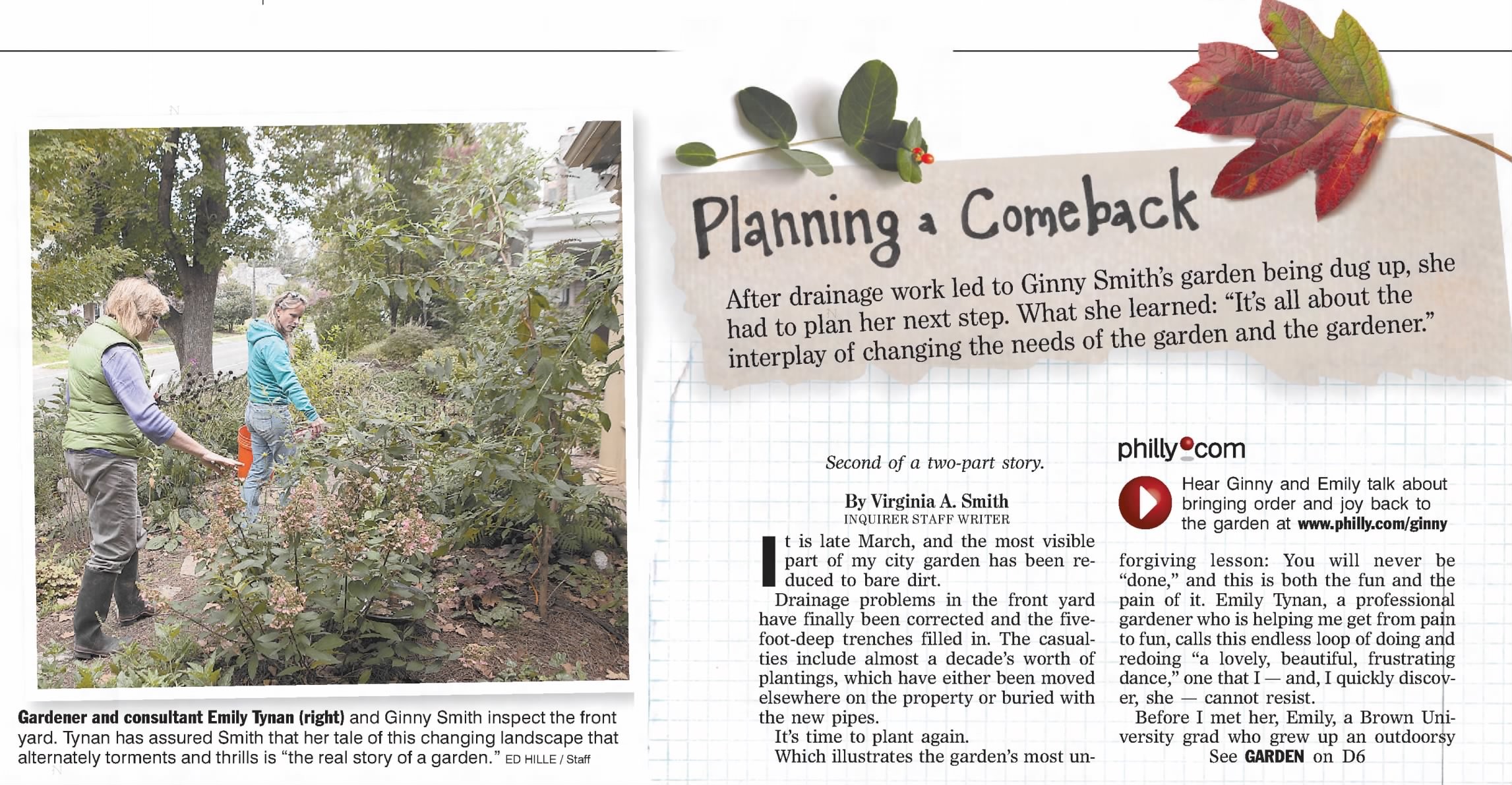
    Ms. Smith wrote this two-part series in 2012.

    Her column was called “Garden Scoop,” and she blogged at “Kiss the Earth” on Inquirer.com. She won two achievement awards from what used to be called the National Garden Writers Association and the 2011 Green Exemplar Award from Bartram’s Garden.

    “She understood how important the topic was to this area,” said Reid Tuvim, a longtime editor at The Inquirer.

    As a health reporter in the early 2000s, Ms. Smith wrote about bottled water, flu medicine, Lyme disease, organ donation, mental illness, children’s healthcare, and other issues. In 2004, she wrote a story about the Medical Mission Sisters, a progressive religious order that offered healthcare advice and full-body massages as well as spiritual guidance. In the third paragraph, she said: “But this is no spa. And that woman doing the hands-on — are you kidding me? — is a nun!”

    She covered Scullion’s acceptance speech of the 1992 Philadelphia Award for community service and described it as “fiery and heartfelt, troubling and joyful.” Inquirer staff writer Amy Rosenberg said Ms. Smith “always drilled down to such emotional depths with her subjects. She defined so much of what The Inquirer meant back then.”

    Ms. Smith doted on her granddaughters.

    She mentored colleagues as she had been mentored and was a role model for fellow working mothers. “I watched her over and over again get up at 5 p.m. and walk out of the newsroom to get her son when he was young,” Rosenberg said. “Never mind what any of the boys in the room thought.”

    Virginia Ann Smith was born Oct. 26, 1950. She graduated from the old Eden Hall high school in Philadelphia and earned a bachelor’s degree in English at Manhattanville University in New York in 1972. In 1981, she earned a master of legal studies degree at Yale University Law School through a Ford Foundation fellowship for journalists.

    She married Alan Wiegand, and they had a son, Josh, and lived in East Falls. After a divorce, she married Randy Smith in 1985. He died in 2020, and she moved to Cathedral Village Retirement Community a few years ago.

    Ms. Smith was a great cook, friends said. They said she was funny, stubborn, and opinionated. She was so into gardens, her son said, that she visited him in Colorado specifically to renovate his garden.

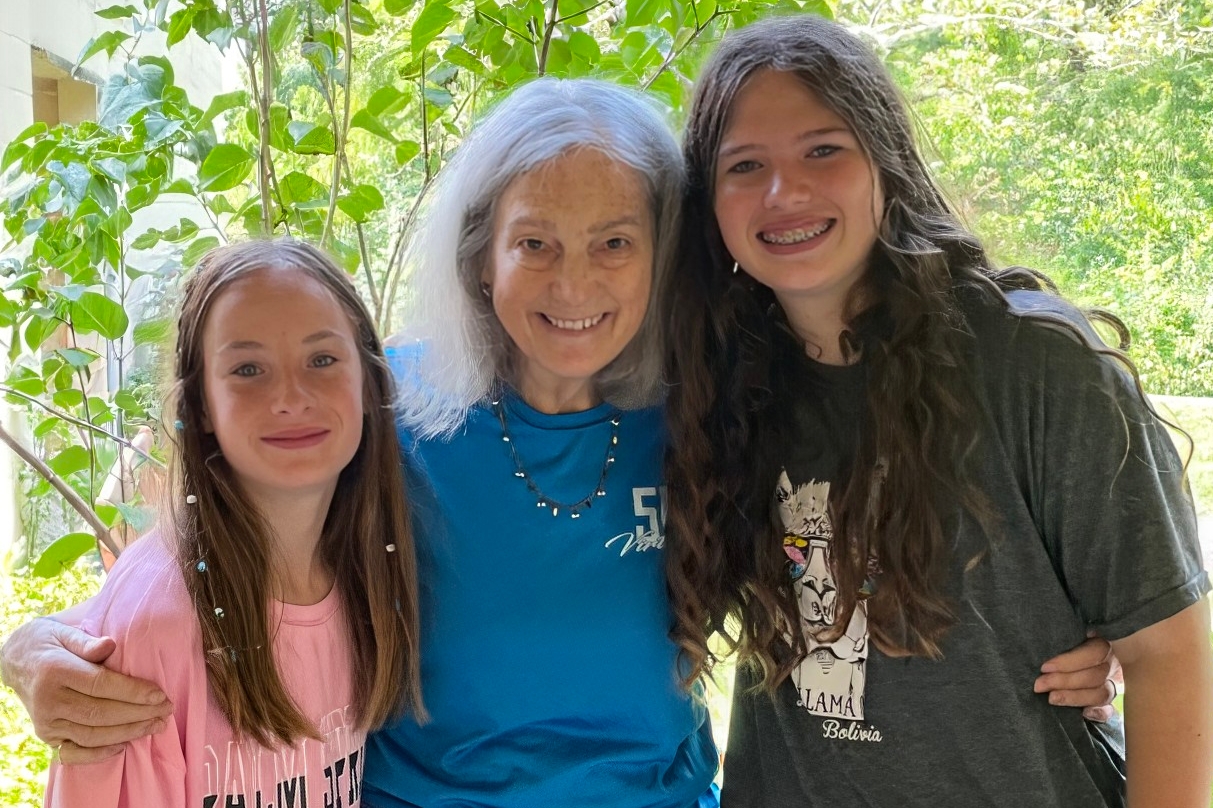
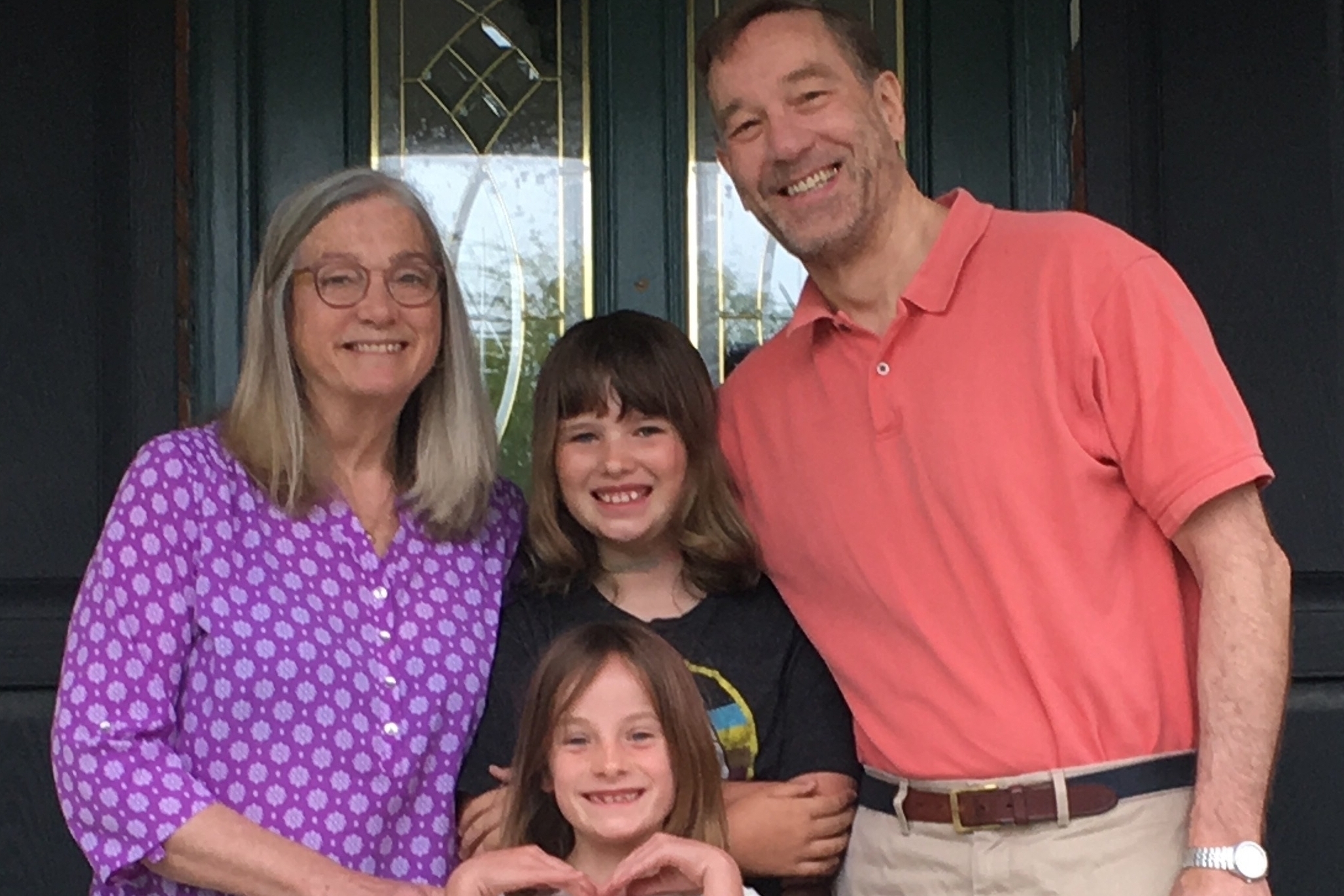
    Ms. Smith poses with her husband, Randy, and her two granddaughters.

    She listened to classical music and danced at blues festivals. Everyone said she made them feel as if she was their best friend.

    “She was one of the most genuine people I’ve ever known,” said friend and former colleague Mari Schaefer. Friend and former colleague Mary Flannery said: “She was so creative and so brave.”

    Her son said: “She was the best. I don’t know how she did it. She wanted to do it all, and she did.”

    In addition to her son and her former husband, Ms. Smith is survived by two granddaughters, two brothers, and other relatives.

    A celebration of her life is to be held later.

    Donations in her name may be made to the Schuylkill Center, 8480 Hagys Mill Rd., Philadelphia, Pa. 19128.

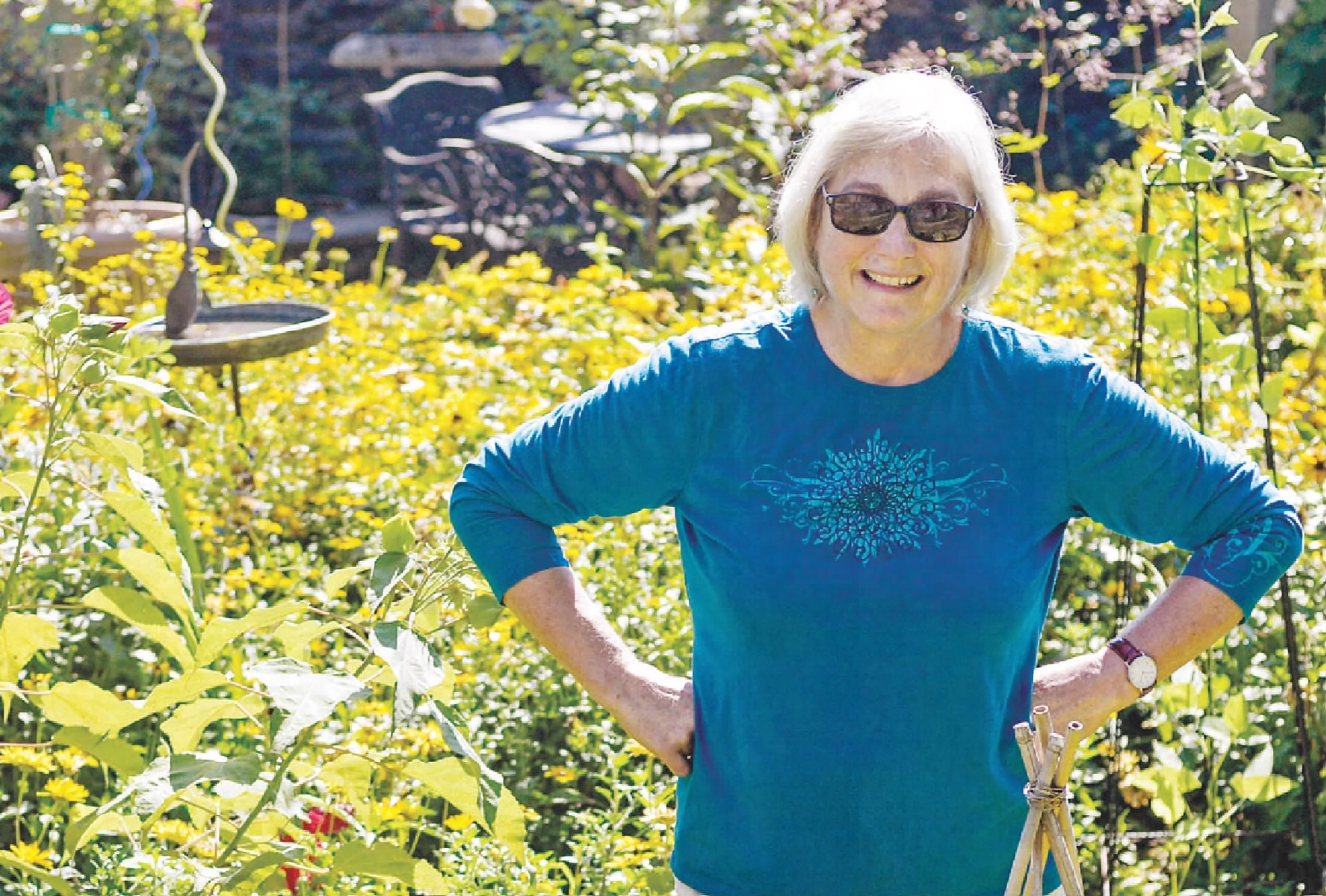
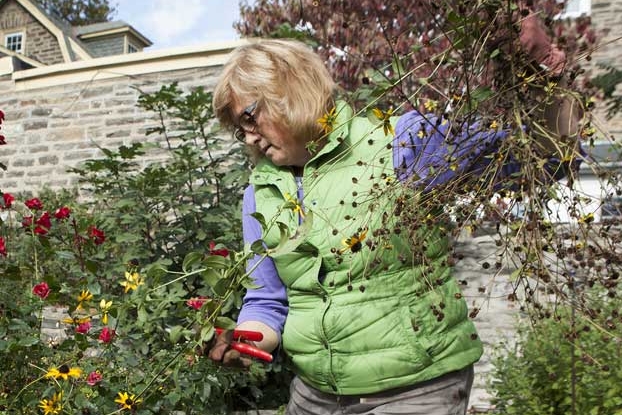
    Ms. Smith tends to her garden’s black-eyed Susans in this photo.