Tag: Phoenixville

  • ‘Courage is contagious.’ How Philadelphia churches and neighborhood groups are preparing to confront ICE.

    ‘Courage is contagious.’ How Philadelphia churches and neighborhood groups are preparing to confront ICE.

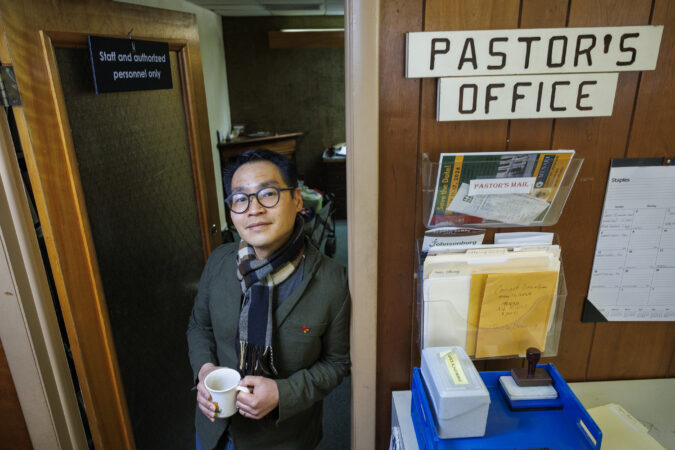
    Within the serpentine halls and stairways of Olivet Covenant Presbyterian Church, congregants have established several private, off-limits rooms ― each a potential last-stand space where members would try to shield immigrants from ICE, should agents breach the sanctuary.

    Church leaders call them Fourth Amendment areas, named for the constitutional protection against unreasonable search and seizure. The plan would be to stop ICE officers at the thresholds and demand proof that they carry legal authority to make an arrest, such as a signed judicial warrant.

    “It’s a protective space,” said the Rev. Peter Ahn, pastor of the Spring Garden church. “While you’re here, you’re safe, is what we want to assert.”

    Could it come to that? A pastor confronting armed Immigration and Customs Enforcement agents in the hallway of a church?

    It’s impossible to know. But across Philadelphia, churches, community groups, immigration advocates, and block leaders are actively preparing for the time ― maybe soon, maybe later, maybe never ― that the Trump administration deploys thousands of federal agents. People say they must be ready if the president tries to turn Philadelphia into Minneapolis ― or Los Angeles, Chicago, or Washington, D.C.

    People participate in an anti-ICE protest outside of the Governors Residence on Feb. 6, in St. Paul, Minn.

    Know-your-rights trainings are popping up everywhere, often to standing-room-only attendance, and ICE-watch groups are abuzz on social media.

    The First United Methodist Church of Germantown held a seminar last week to learn about nonviolent resistance, “so that we will be ready for whatever comes,” said senior pastor Alisa Lasater Wailoo.

    “That may mean putting our bodies in the path to protect other vulnerable bodies,” she said. “We’re seeing that in Minnesota.”

    In Center City, Temple Beth Zion-Beth Israel has ordered 300 whistles ― portable and efficient tools to immediately alert neighbors to ICE presence and warn immigrants to seek safety.

    “There was a sense of needing to support our neighbors if it comes down to it,” said Rabbi Abi Weber. “God forbid, should there start to be ICE raids in our neighborhood, people will be prepared.”

    In other places around the country, immigrant allies have similarly readied themselves for ICE’s arrival, and organized to react in concert when agents show up.

    In Washington state, the group WA Whistles has distributed more than 100,000 free whistles to create what it calls “an immediate first line of community defense.” Chicago residents set up volunteer street patrols to warn immigrants of ICE and to contact family members of those detained. In Los Angeles, people raised money to support food-cart vendors, and organized an “adopt a corner” program to protect day laborers who seek work outside Home Depot stores.
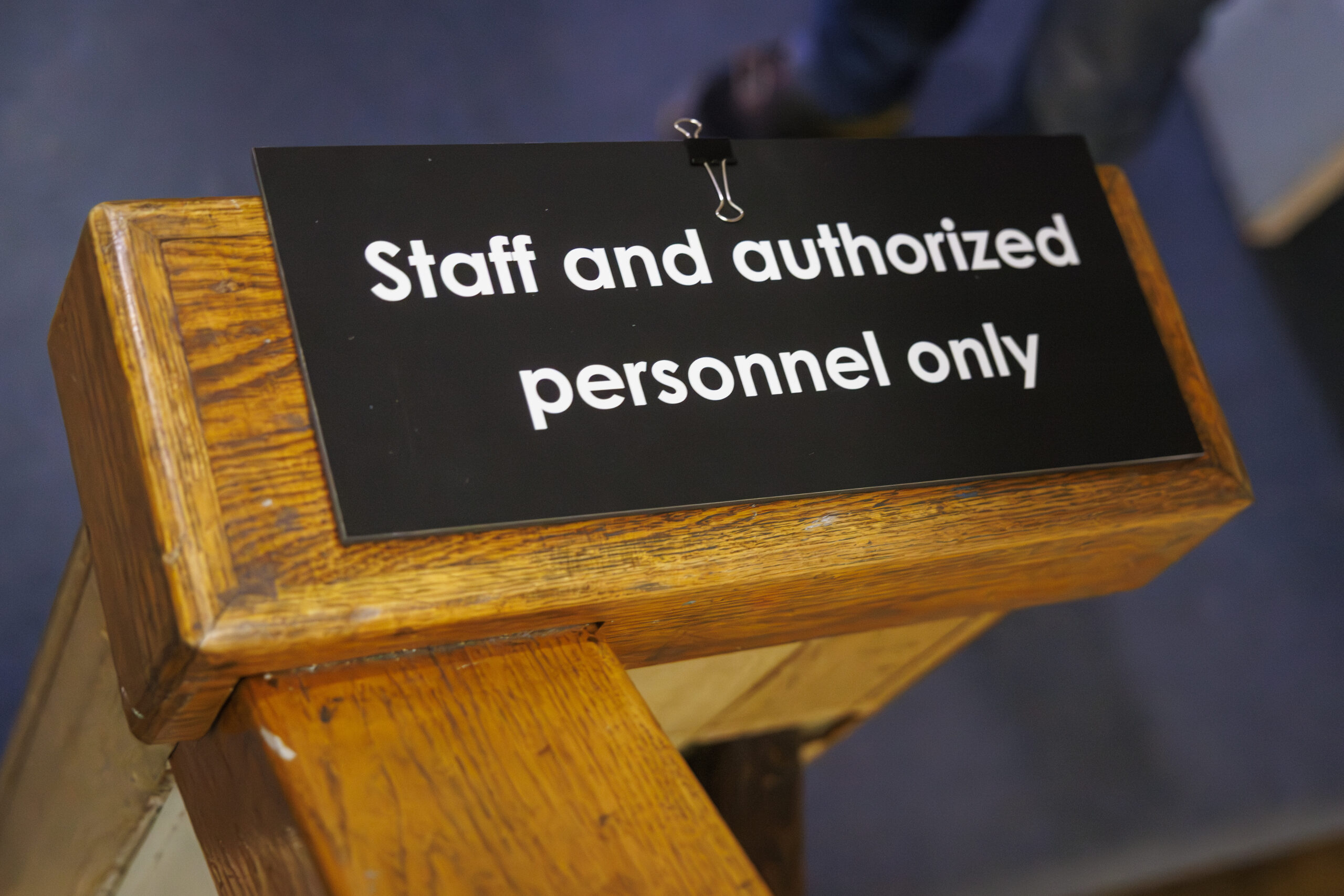
    A small sign at the Olivet Covenant Presbyterian Church, where the Rev. Peter Ahn is creating space to shield immigrants if necessary.

    Ask Philadelphia groups that advocate for immigrants — 15% of the population, including about 76,000 who are undocumented — and they say ICE isn’t about to land in the city. It’s been here.

    The agency’s Philadelphia office serves as headquarters not just for the city but for all of Pennsylvania and for Delaware and West Virginia as well. Arrests take place every day in the Philadelphia region.

    “You all seem to be ‘preparing’ for something that’s already happened,” veteran activist Miguel Andrade wrote on Facebook.

    What has changed, however, is the dramatic escalation in ICE enforcement, particularly visible in Democratic-run cities like Minneapolis, where agents fatally shot two U.S. citizens in January.

    ICE detained 307,713 people across the country in 2025, a 230% increase over the 93,342 in 2024. What federal immigration agencies record as detentions closely mirror arrests.

    Today residents in communities like Norristown and Upper Darby see ICE agents on the streets all the time. Cell phone videos have captured violent footage, including the smashed front door of a Lower Providence home after agents made an arrest on Feb. 9, and two people roughly pulled from a car in Phoenixville earlier this month.

    For immigrants who have no legal permission to be in the U.S. ― an estimated 14 million people ― the rising ICE presence steals sleep and peace of mind. They know not just that they could be arrested and deported at any moment, which has always been true, but also that the U.S. government is expending vast resources to try to make that happen.

    A woman who came to Philadelphia from Jamaica last year, and who asked not to be identified because she is undocumented, said she rarely leaves her home. She said she steps outside only to go to the grocery store, a doctor, or an attorney.

    She recently asked her daughter to check something on the computer, and the girl balked ― afraid to even touch the machine, worried that ICE could track her keystrokes and identify their location, the woman said.

    “How can I tell her it’s going to be OK when I don’t know it’s going to be OK?” asked the woman, who came to the U.S. to escape potential violence in Jamaica. “You come here expecting freedom, but here it’s like you’re in jail except for the [physical] barriers of the four walls.”

    Even as arrests have soared, Philadelphia has been spared the federal intrusions visited on other American cities.

    Why?

    Some say President Donald Trump doesn’t want to ruin the summer celebration of the nation’s 250th birthday, or spoil the grandeur of the World Cup or Major League Baseball’s All-Star Game. Others suggest that he might be timing an ICE deployment to do exactly that.

    City Council President Kenyatta Johnson speaking at the City Council’s first session of the year Jan. 22. He said this month that it’s time to stand up for immigrants in Philadelphia. “It’s my responsibility to step up in this space and be more vocal,” he said.

    That as Philadelphia City Council prepares to consider “ICE Out” legislation that would make it more difficult and complicated for the agency to operate in the city.

    Trump told NBC News this month that he is “very strongly” looking at five new cities.

    Some people are not waiting to see if Philadelphia is on the list.

    The monthly Zoom meeting of the Cresheim Village Neighbors usually draws about 20 people. But a hundred logged on in January to hear a presentation: What to do if/when ICE comes to our neighborhood.

    The short advice: If it happens, get out your phone and hit “record.”

    “If I see ICE agents, I will film,” said neighbors group coordinator Steve Stroiman, a retired teacher and rabbi. “I have a constitutional right to do that.”

    Federal immigration enforcement agents shatter a truck window and detain two men outside a Home Depot in Evanston, Ill., on Dec. 17, 2025.

    In a sliver of University City, Miriam Oppenheimer has helped lead three block meetings where neighbors gathered to discuss how they would respond.

    They set up a Signal channel so people can communicate. And they formulated a loose plan of action: People will come outside their homes and take video recordings ― and try to get the names and birth dates of anyone taken into custody, so they can be located later.

    “Courage is contagious,” Oppenheimer said. “Everybody is waiting for somebody else to do something, but we have to be the ones.”

    Inside Olivet Covenant Presbyterian Church, doorways to some rooms now bear black-and-white signs that say, “Staff and authorized personnel only.”

    Issues around ICE access to churches have become more urgent since Trump rescinded the agency policy on “sensitive locations,” which had generally barred enforcement at schools, hospitals, and houses of worship.

    Legal advocates such as the ACLU say ICE agents can lawfully enter the public areas of churches, including the sanctuaries where people gather to worship. But to go into private spaces they must present a warrant signed by a judge.

    “There are many front lines right now,” said Ahn, the Olivet pastor. “We’re not trying to be simply anti-ICE, or anti-anybody. We’re just trying to be for the rights of the Fourth Amendment.”

    Staff writer Joe Yerardi contributed to this article.
  • Nordic-style sauna with cold plunge debuts at Schuylkill Center

    Nordic-style sauna with cold plunge debuts at Schuylkill Center

    Erin Mooney, executive director of the Schuylkill Center for Environmental Education, slipped out of a sweltering sauna last weekend wearing only a bathing suit and strode barefoot straight into the coldest day of the winter.

    “I never thought that I would find myself in a bathing suit laying down in the snow on a 15-degree day, and I found myself doing that at the Schuylkill Center,” Mooney said.

    It marked the opening weekend of a new experience that the Schuylkill Center, on Hagy’s Mill Road in Philadelphia, is offering along with a local sauna company, Fiorst — one that already has had solid booking off social media views, despite having just opened Saturday.

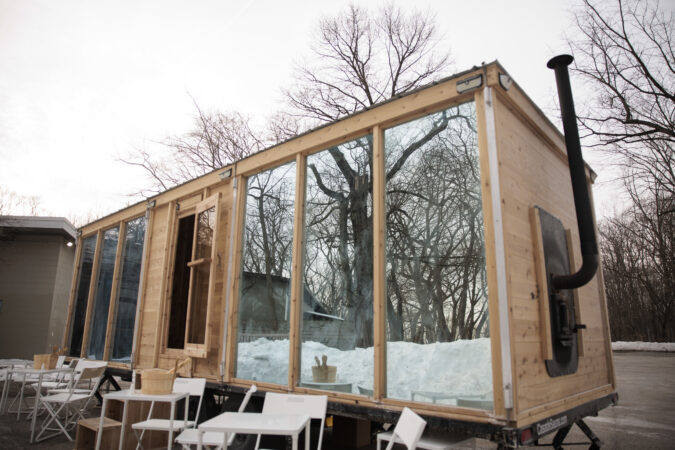
    Visitors will have the chance to relax in a glass-walled, wood-fired sauna overlooking a snowy field and woods in Northwest Philly, paired with a cold plunge.

    Mooney said the idea to host a mobile sauna on the preserve’s grounds grew from a desire to keep the center lively through winter and draw in new visitors. She was inspired by a sauna exhibit by the American Swedish Historical Museum in FDR Park and began looking for a way to bring that Nordic tradition of “hot and cold” to her own facility.

    She spotted Fiorst, a mobile sauna venture run by Jose Ugas, on social media, reached out, and the two forged a near-instant partnership. They spoke on Jan. 30, a Friday; by the next Friday, a custom sauna unit from Toronto rolled onto the grounds.

    By last Saturday, the fire was lit, and guests arrived.

    “It was, you know, kind of kismet, in a way, we were able to have this shared vision,” Mooney said. “And with him doing this servicing of the saunas on site, it makes it so much easier for us.”

    The interior of the Nordic-style sauna at the Schuylkill Center for Environmental Education.

    How does the sauna work?

    Nordic-style wood saunas are notable for their minimalist design and high heat, which participants couple with either a plunge into a cold shower, tub, or lake or a step outdoors.

    Fiorst’s installation overlooks the center’s main wooded area, framing the winter landscape through a glass wall as guests sweat it out inside the sauna’s 170- to 190-degree temperatures. Each 90-minute session allows participants to cycle at their own pace through intense heat and biting cold, a contrast Mooney found invigorating.

    The sauna is modeled on a concept popular across Nordic countries, including Norway, Finland, Denmark, and Sweden.

    Mooney said the project has already pulled in new visitors from neighborhoods like Fishtown or outside Philadelphia who might not typically visit for hiking or birdwatching.

    She believes the sauna fills a niche for “clean, wholesome, healthy fun” that is alcohol-free.

    However, unlike the typical Nordic experience of being nude during the sauna, the Schuylkill Center experience is strictly “bathing-suit friendly,” a choice tailored to American comfort levels.

    The collaboration operates on a revenue split, with a charitable twist. During February, the center’s share of the proceeds goes to its Winterfest for Wildlife campaign to support the on-site wildlife clinic.

    For now, the sauna remains a seasonal experiment, but it will stay in place as long as demand — and winter weather — holds up.

    “I think it will stay seasonal,” Mooney said. “We live in a sauna already in the summer in Philadelphia.”

    The sauna is open on weekends at the Schuylkill Center from 9 a.m. to 5 p.m. and is booked through the Fiorst website. The cost for a 90-minute session is $75. You can add a friend for $25. Private sessions of up to 16 cost $600. For now, bookings can be made only one week in advance.

    The Schuylkill Center is expecting Valentine’s Day weekend to book quickly.

    Jose Ugas (left), founder of Fiorst, and Erin Mooney, executive director of the Schuylkill Center for Environmental Education, at the sauna.

    ‘A moment of clarity’

    Ugas, a bioengineer at Johnson & Johnson who lives in Whitemarsh Township, felt compelled to bring a Nordic-style sauna experience to the region after a trip he took to Sweden following the loss of his mother to brain cancer in 2023. There, friends introduced him to a traditional Scandinavian ritual: enduring searing dry heat inside a wooden sauna, followed by a plunge into icy water or a cold shower.

    What began as a distraction soon crystallized into a moment of clarity, Ugas said.

    “Just that time together and kind of going between the hot and the cold just was like a mental reset for me,” Ugas said.

    Ugas, who will graduate with an MBA from Villanova University this spring, wanted to replicate the nature-immersive element that had grounded him overseas.

    He found a Toronto company that builds portable glass-fronted wooden saunas and ordered a custom unit equipped with a wood-fired stove, hot stones, steam, aromatherapy, and a cold-plunge tub. Ugas launched Fiorst in 2024, describing it as “nomadic” at first.

    The venture first hosted sessions overlooking Valley Forge and at Fitzwater Station in Phoenixville. Ugas then established a more permanent site, which he calls Riverside, on River Road in Conshohocken where he still books sessions.

    Ugas calls the partnership with the Schuylkill Center a natural fit given its location amid nature, merging his wellness goals with the venue’s environmental focus.

    “At the core of our mission and their mission is to get people out in nature,” Ugas said.

    So far, he has relied on social media to market the sauna, which has drawn hundreds of visitors to its locations.

    The Nordic-style sauna at the Schuylkill Center for Environmental Education in Philadelphia.

    ‘Social sauna’

    Serena Franchini, a nurse and founder of Healing Fawn Inner Child Work & Somatic Therapy, has taken sauna sessions at Ugas’ other locations. She sees it as a tool to help with nervous system regulation while offering an immersion in nature.

    “I loved the idea that it was outside,” Franchini said.

    She likes the relaxed atmosphere compared with some traditional saunas that often enforce strict time limits on heating and cooling cycles. Instead, she cycles between the sauna and cold-plunge tub at her own pace.

    Franchini highlighted the mental wellness aspect of Ugas’ “social sauna” sessions, noting Friday night events as “skip the bar” alternatives that allow strangers to gather for a healthy, communal experience.

    “It’s a great way for community to connect with people that are interested in the same things that you are,” Franchini said.

  • Shareholders approve merger of American Water and Essential Utilities, which serve Pa. and N.J.

    Shareholders approve merger of American Water and Essential Utilities, which serve Pa. and N.J.

    Shareholders of Camden-based American Water Works and Bryn Mawr-based Essential Utilities, which owns the Aqua water and sewer companies, voted overwhelmingly Tuesday to merge and create a combined company with nearly $30 billion in yearly water and sewer sales.

    More than 99% of the 161 million American Water shares that were voted were cast in favor of the deal, the company told the Securities & Exchange Commission. Essential’s online proposal to merge was approved by around 95% of voting shareholders.

    The planned combination of these rivals, which have competed for more than 100 years to manage water and sewer for the small number of U.S. communities that allow for-profit operators, still needs approval from state public utility commissions.

    The combined companies’ sales are concentrated in Pennsylvania and New Jersey. In suburban Philadelphia, Aqua serves West Chester, northern Delaware County, parts of Lower Bucks, and Main Line communities. American Water serves Abington, King of Prussia, Norristown, Phoenixville, and nearby towns.

    New Jersey American Water serves towns along the PATCO rail line in Camden County, in northern and central Burlington County, and in Shore communities such as Absecon and Ocean City. Aqua New Jersey has customers in the three suburban South Jersey counties and at the Shore.

    American Water’s 14 million U.S. customers include systems in 12 other states, and on 18 U.S. military bases. Essential has around 3 million customers, including systems in six other states, and Pittsburgh-based Peoples Gas, which serves 750,000 in western Pennsylvania and Kentucky.

    American Water is already the nation’s largest private operator of water and sewer systems, and the deal will make it a larger player in competition with Florida-based NextEra Water Group and France-based Veolia’s U.S. operations, among other private systems that have been seeking to expand.

    A separate vote on an Essential executive pay package drew some opposition, with 85%approving.

    That package included more than $17 million in severance compensation and stock grants for departing Essential CEO Christopher H. Franklin, plus medical benefits and up to three years’ professional assistance helping him land another job, plus millions more for his four top deputies.

    The merged company’s larger size, as big as many of the leading natural-gas companies that dominate utility stock-index funds, will boost its visibility to investors, John C. Griffith, the American Water chief executive who will run the combined companies, said in announcing the deal last fall.

    The companies disclosed the approvals Tuesday afternoon and said more details on the vote and their plans would come later this week.

    Deal backers say the combination should enable Griffith to cut management costs, boost profits, drive up the share price, and could ease pressure to keep raising water rates.

    Regulators in New Jersey and Pennsylvania are weighing the company’s latest rate increase requests. American Water’s New Jersey affiliate is asking the state Board of Public Utilities for an average 10% water and 8% sewer rate hike on Jan. 16 for 2.9 million customers, which it said would fund improvements to aging water and sewer systems. Customers would pay an average of $18 more a month.

    Pennsylvania’s Public Utility Commission said last month that it would consider the company’s request to boost water and sewer rates on 2.4 million customers by an average 15%, or $20 a month.

    Critics had urged Essential to seek rival buyers to drive up the share price and shareholder profits from the sale, noting that both stocks had dropped after the merger was proposed last year.

    Tim Quast, founder of Colorado-based ModernIR, a consultant the companies hired to help explain the merger, said share price declines are now typical, even for merger-target companies like Essential whose shares command a premium from buyers like American Water because index-fund investors such as Vanguard and BlackRock tend not to buy more shares of merging companies until a deal is completed.

    Even after long competition from U.S. and foreign utility owners, private water companies serve only about one in six Americans. In recent years, customers of public utilities serving parts of Chester, Delaware, and Bucks Counties have defeated privatization campaigns, though some towns in Pennsylvania and New Jersey have signed on. Pennsylvania also has asked private operators to take over small, troubled public systems.

  • How Malvern’s Pa. Turnpike ramp sparked billions in economic development

    How Malvern’s Pa. Turnpike ramp sparked billions in economic development

    Michael Chain Jr. once had to exit the Pennsylvania Turnpike at Downingtown and drive a zigzag pattern on State Routes 100, 113, 401, and 29 to reach his hotel.

    So did his customers.

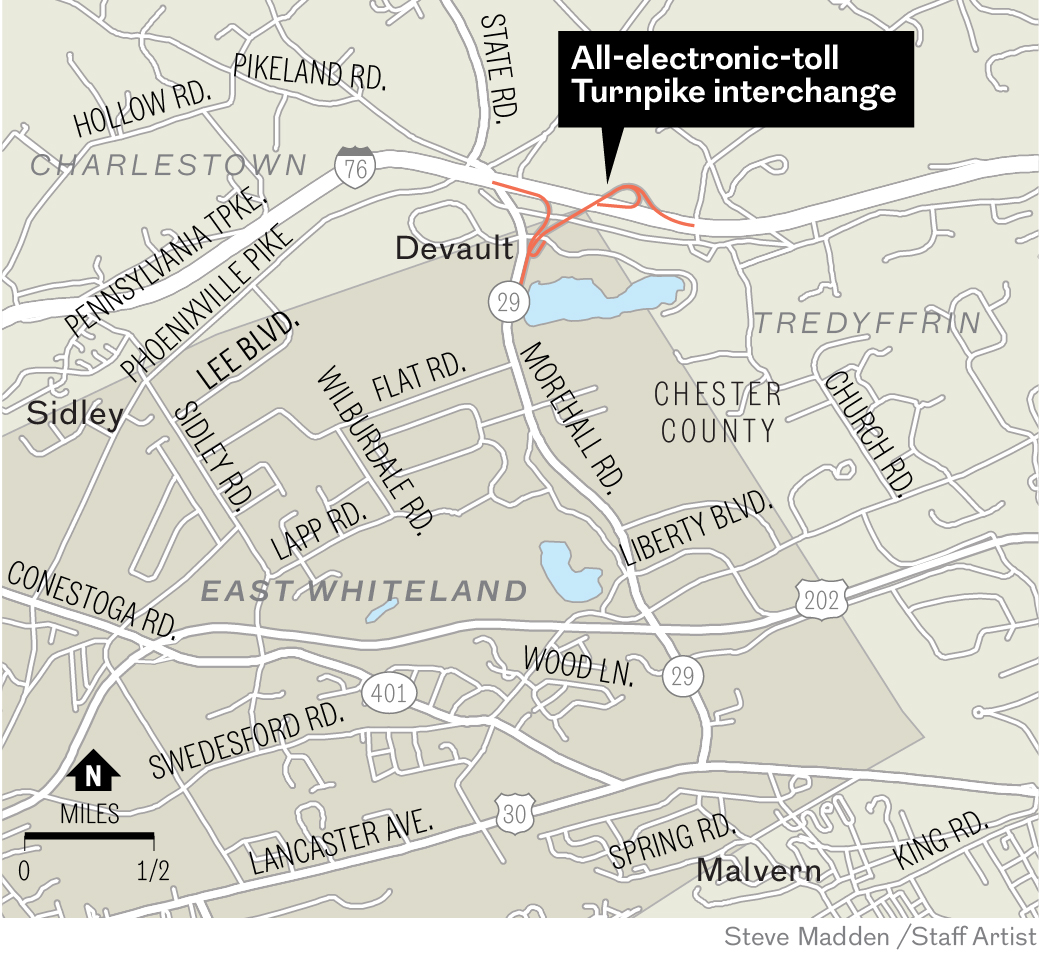
    But then the turnpike built Exit 320, an all E-ZPass interchange that connects to Route 29 and brings traffic right to the family-owned Hotel Desmond Malvern, a DoubleTree by Hilton.

    “It would easily take 20 minutes,” said Chain, general manager of the property. “Now you cut that in half, if not more.”

    When it opened in December 2012, the interchange helped spur billions in new commercial and residential development in Chester County’s Great Valley.

    Michael Chain, general manager at a hotel in Great Valley, says the Route 29 ramp has transformed his business.

    Corporate office parks expanded and new ones sprouted. Vanguard relentlessly expanded its campus for its 12,000 workers. Pharmaceutical and biotech companies moved there. Pfizer, Johnson & Johnson, Teva, and other pharmaceutical companies planted offices and research laboratories there.

    Thousands of people moved in to take advantage of the new jobs or a suddenly more convenient commute to Philadelphia and its inner-ring suburbs, Berks County, Lancaster, or even Harrisburg.

    More than 10 years later, the effects of the turnpike’s project are evident, but the real estate market is evolving to meet a lower post-pandemic demand for traditional office space and a higher demand for more housing.

    Through American history, transportation and development have been yoked. Towns and cities have grown around navigable rivers, post roads, national highways, railroads, interstates, turnpikes, and public transit.

    “This new interchange was explosive in terms of the economic impact in that particular region in a way I’m not even sure we had anticipated,” said Craig R. Shuey, chief operating officer of the Pennsylvania Turnpike.

    The key to success

    Experts caution it would be a mistake to attribute too much of the growth in the Great Valley solely to the turnpike exit.

    The area’s transition from agricultural and industrial to commercial mixed-use was already well underway when it opened. Real estate developers Rouse & Associates acquired land in 1974 and began building the Great Valley Corporate Center, a 700-acre business park.

    As the Pennsylvania 29 interchange was under construction, the U.S. 202 widening project occurred, helping ease the flow of traffic, although it still gets congested at peak hours.

    The Route 29 electronic toll interchange.

    The exit “plays well with an improved Route 202,” said Tim Phelps, executive director of the Transportation Management Association of Chester County.

    It’s also served by SEPTA Regional Rail Service and Amtrak, and there’s a connection to the 18.6-mile Chester Valley trail for biking, running, and walking.

    “The key is all the multimodal access to the area from different points,” Phelps said. “You move goods and freight along corridors and people to jobs; transportation is economic development.”

    New rise in residences

    Growth hasn’t been linear.

    ”Since COVID the office market has been struggling everywhere, and a couple of years ago the funding for biotech became harder to get,“ said John McGee, a commercial real estate broker and developer. ”Both of these events had a negative impact on demand for [office] space in Great Valley.”

    He and partners have turned an empty Exton office building into the Flats on 100, 24 studio and eight one-bedroom apartments, marketed to consultants and visitors who need to stay awhile while working with local companies.

    Other signs of a softer market in commercial space:

    • Malvern Green, a 111-acre office park owned by Oracle, is up for sale, marketed as a redevelopment opportunity. It has 759,000 square feet in four buildings on Valley Stream Parkway, off Route 29.
    • A 10.3-acre office property on Swedesford Road is slated to be demolished and turned into a mixed-use campus, with 250 apartments and about 6,700 square feet of retail and dining.

    With the pandemic rewriting the rules of work beginning five years ago, residential development has picked up, driven by housing scarcity and lack of affordability.

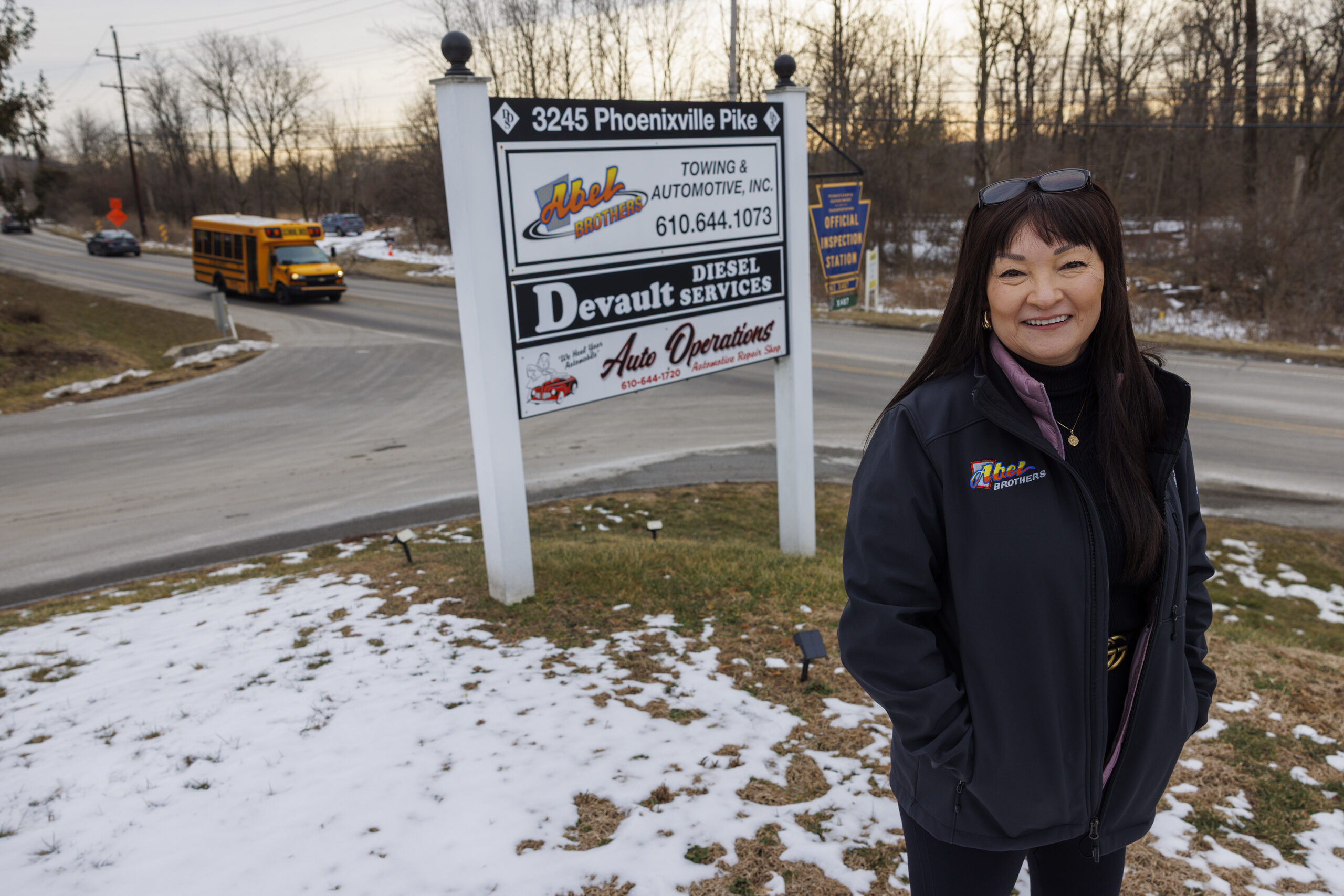
    Deb Abel, president of Abel Brothers Towing & Automotive, has seen the area evolve from her position as chair of the East Whiteland Planning Commission and as a member of the Chamber of Business & Industry.

    Deb Abel, chair of the East Whitefield Planning Commission, says workforce development is key to the area’s growth.

    “We talk all the time about workforce development,” Abel said. “People don’t want to come to work where they can’t afford to live.”

    More — and more affordable — housing is key both for current and future staffing needs. Workers shouldn’t have to commute from other areas with more housing options, Abel said.

    ‘A tangible asset’

    To Chain, the hotelier, travel time saved by the interchange is a tangible asset.

    “It improves the quality of life on a personal level, and [in business] I’m a beneficiary of people staying on the turnpike,” he said.

    As corporate travel budgets waxed and waned in the Great Recession and pandemic years, the Hotel Desmond beefed up other lines of business. An events space at the resort-like hotel now provides about half the revenues, Chain said.

    The interchange has helped him draw conference business from statewide associations, most of them in Harrisburg.

    And in recent years, youth sports travel teams from New York and New Jersey attending weekend tournaments in the region have filled rooms while using the interchange for easy access. Hockey teams are big.

    ‘A natural progression’

    A new multifamily project for Greystar Real Estate Partners is rising next to Route 29 on undeveloped land.

    IMC Construction is building a five-story, 267-unit apartment building featuring a rooftop lounge, fitness center, coworking space, pool courtyard, grilling stations, and more.

    IMC Construction signs and traffic markers along North Morehall Road in Malvern.

    A 133-unit “active adult” apartment building for people who are 55 and older is also under construction.

    Project manager Bob Liberato grew up in the area when Route 29 was a country road with one traffic light between Phoenixville and Route 30.

    It seems ironic now, but he remembers a petition circulating among fellow students at Great Valley High School to oppose the turnpike’s interchange proposal. Pretty much everybody signed.

    “We wanted to stop the turnpike because we liked our life,” Liberato said. “It was open, mostly fields and trees. Being able to go outside, have parties in the woods — all of that was great.”

    So what he’s doing now is, in a way, part of the circle of life.

    “We’re seeing a shift toward more residential projects, and there is a runway for more in the Great Valley,” said Liberato. With a scarcity of new development, ”it’s a natural progression in a lot of Philly suburbs.”

  • Grammar nerds and language lovers gather for a sold-out documentary at the Bryn Mawr Film Institute

    Grammar nerds and language lovers gather for a sold-out documentary at the Bryn Mawr Film Institute

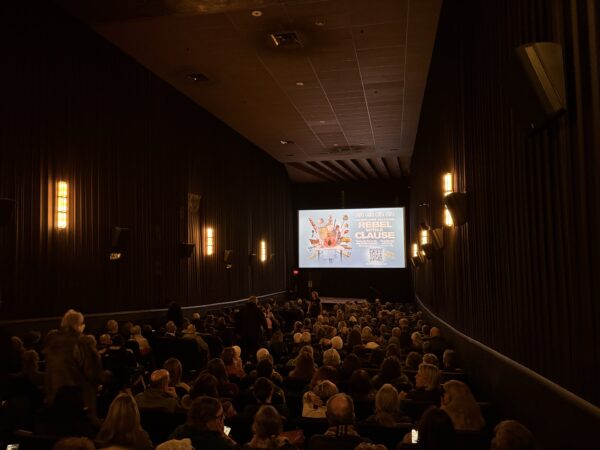
    Despite frigid temperatures and the specter of the Philly area’s largest snowstorm in years, hundreds of language lovers and grammar nerds gathered in Bryn Mawr on Saturday for a screening of Rebel with a Clause, the hottest “road trip, grammar docu-comedy” on the indie movie circuit.

    Rebel with a Clause follows language expert Ellen Jovin as she takes her makeshift “Grammar Table” on a journey across the United States, from Bozeman, Mont., to New York City (and everywhere in between). From behind the table, Jovin asks strangers to divulge their questions, comments, and concerns about the English language, from when it’s best to use a semicolon to how to properly punctuate “y’all.” What starts as an amusing grammar refresher turns into a moving text on Americans’ shared humanity, even in polarizing times.

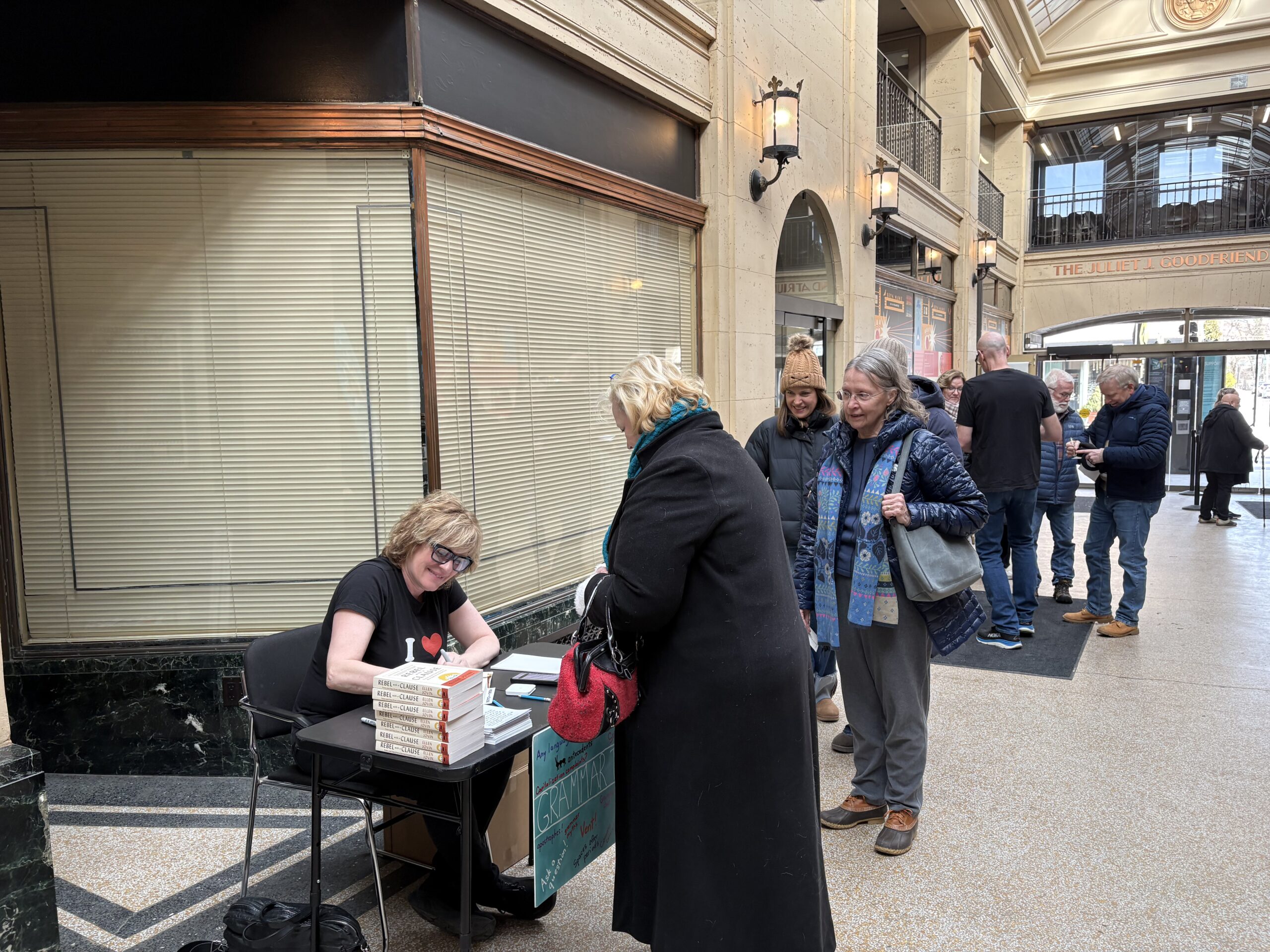
    Ellen Jovin, subject of “Rebel with a Clause,” signs books at a screening at the Bryn Mawr Film Institute on Jan. 24, 2026.

    Jovin, the movie’s star, has written four books on writing and grammar, including Rebel with a Clause: Tales and Tips from a Roving Grammarian, a reflection on her cross-country tour. The movie was directed and produced by Brandt Johnson, a writer and filmmaker who also happens to be Jovin’s husband.

    Jovin and Johnson, who are based in New York, are on a second cross-country tour as the Rebel with a Clause movie graces audiences. The Bryn Mawr screening marked the film’s first public showing in the Philly area.

    As he handed out optional grammar quizzes and grammar-themed chocolates in the Bryn Mawr Film Institute’s foyer, Johnson said the response to the movie has been “extraordinary.”

    “Ellen’s Grammar Table that she started in 2018 was about grammar, for sure, but it turned out to be as much about human connection,” Johnson said.

    “Just as a life experience, oh my gosh,” he added. “It’s been something that I certainly didn’t anticipate.”

    “Rebel with a Clause” producer Brandt Johnson hands out grammar-themed chocolates to moviegoers at the Bryn Mawr Film Institute on Jan. 24, 2026.

    Before the screening, attendees waited for their turn at the table, where Jovin was signing books and answering pressing questions about commas and ellipses.

    Mary Alice Cullinan, 76, said she and her friends are fascinated by grammar and how it seems to be losing ground among younger generations.

    Cullinan, who lives in Blue Bell, spent her career working in the restaurant industry but always read and wrote on the side.

    “I read to live,” she added.

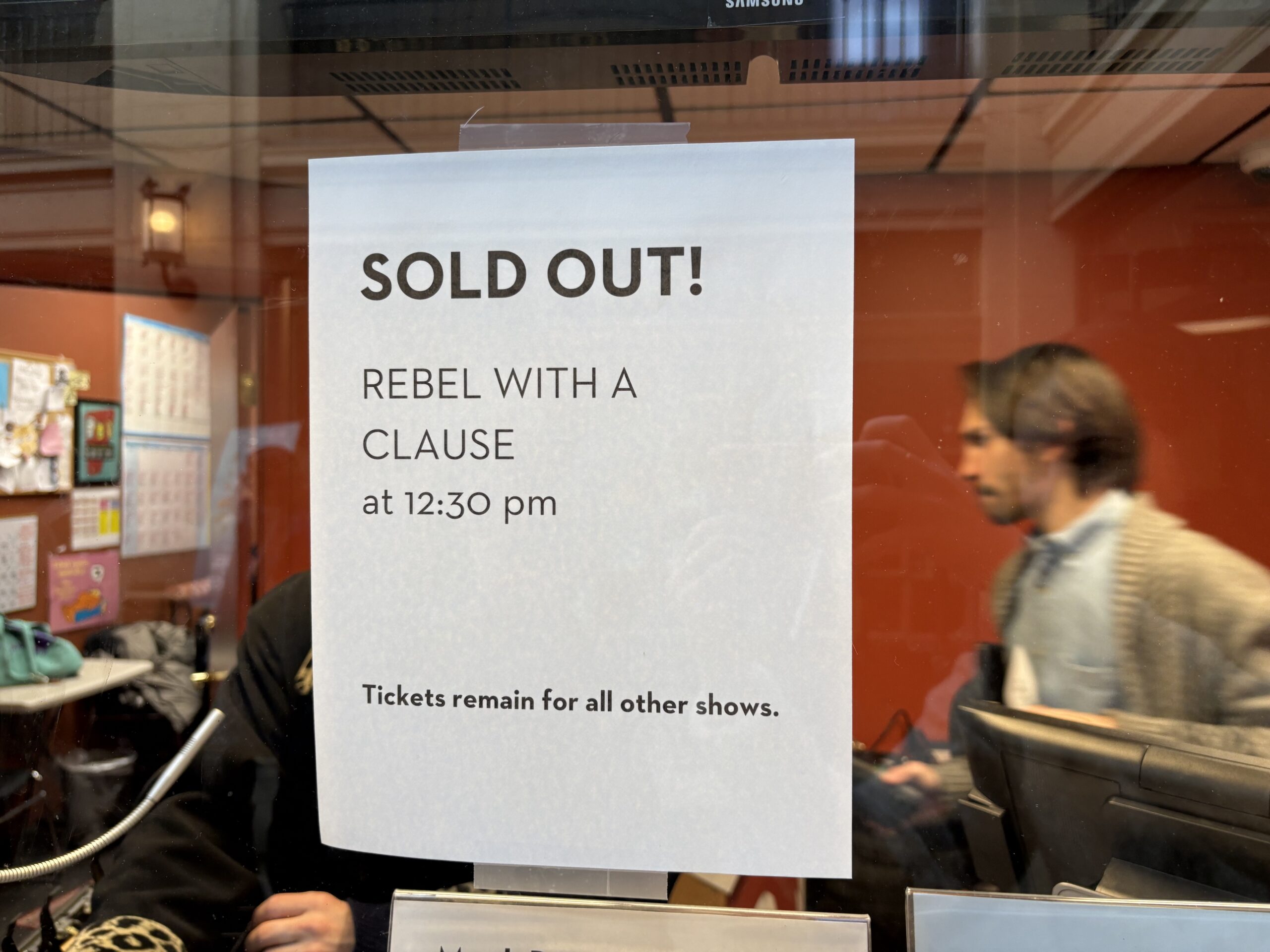
    The Bryn Mawr Film Institute was packed with retired teachers, avid writers, and grammar aficionados who came armed with gripes about commas, parentheses, and quotation marks. At five minutes to showtime, an employee plastered a “SOLD OUT!” sign on the box office window.

    A sign announcing that the Bryn Mawr Film Institute’s screening of “Rebel with a Clause” was sold out. The grammar-themed documentary played at the Main Line movie theater on Jan. 24, 2026.

    Jen Tolnay, 63, a copy editor from Phoenixville, heard about the movie at an editors’ conference. She was so excited that she moved a haircut appointment to be there.

    The 86-minute film provoked regular laughter in the audience (and a line about Philadelphians’ pronunciation of the wet substance that comes out of the sink got a particularly hearty laugh).

    During a post-screening question-and-answer session, moviegoers complained about the poor grammar of sportscasters, praised Jovin and Johnson, and inquired about the colorful interactions Jovin had at the Grammar Table.

    For Katie McGlade, 69, grammar is an art form.

    The retired communications professional from Ardmore described herself as a habitual grammar corrector who would often fight with her editors about proper language usage. Now, as an artist, she makes colorful prints that center the adverb.

    “I love that’s she’s bringing joy to the word,” McGlade said of Jovin. ”We need joy and laughter, and we need to communicate with each other.”

    This suburban content is produced with support from the Leslie Miller and Richard Worley Foundation and The Lenfest Institute for Journalism. Editorial content is created independently of the project donors. Gifts to support The Inquirer’s high-impact journalism can be made at inquirer.com/donate. A list of Lenfest Institute donors can be found at lenfestinstitute.org/supporters.

  • New grocery stores are coming to Chester County. Here’s what and where.

    New grocery stores are coming to Chester County. Here’s what and where.

    From national chains to homegrown operations, as Chester County continues to grow, so too do the grocery store offerings.

    Here’s a look at some of the stores opening around the county.

    Kimberton Whole Foods expanding

    This spring, locally owned Kimberton Whole Foods will open its largest location in the county in Eagleview Town Center. Construction began in 2024, roughly 20 years after the location in Kimberton Village opened at a former hardware store.

    “We look forward to serving Eagleview and the surrounding communities with healthy, locally sourced grocery options in a customer-focused environment,” Ezra Brett, chief operations officer for Kimberton Whole Foods, said in a statement.

    The new 14,000-square-foot facility will continue the store’s offerings of organic produce, grass-fed meats, specialty cheese, grab-and-go meals, and more.

    The store will join the growing Eagleview Town Center, which offers restaurants, salons and spas, professional offices, daycares, and more.

    West Chester Cooperative slated for opening

    West Chester is slated to get a brick-and-mortar member-owned grocery this year, with West Chester Cooperative at 204 W. Market St.

    Permits were submitted to the borough in December, according to the grocery’s website.

    The cooperative kicked off more than a decade ago, formed by a group of borough residents who wanted sustainable, local alternatives to chain grocery stores.

    Over the next 10 years, the group launched outreach efforts, opened a pop-up market, and did curbside pickup and limited in-store shopping hours. In 2022, it reached 500 member-owners.

    The grocery will be open to all shoppers, but member-owners will receive select benefits.

    Kennett Square is also getting its own cooperative grocery store

    West Chester isn’t the only municipality in Chesco getting a different model of grocery store. Also nearly a decade in the works, Kennett Square’s Kennett Community Grocer is expected to open this spring at 625 E. Cypress St.

    Renovations began in 2025, and the store will offer locally grown produce; dairy, eggs, and meat from county farms; local baked goods and prepared foods; pantry staples from local producers; and a cafe for community members. It will also hold educational and other events led by healthcare professionals and farmers.

    “It felt like doing this was to highlight for everyone that we have this precious land that’s quite beautiful, that is very bountiful with products, not just mushrooms, but meat, dairy, produce, fruit, vegetables,” said Edie Burkey, president of the nonprofit board leading the grocer. “We felt that bringing people together for the common cause of supporting the land that we’re very, very proud to be part of was a good thing.”

    Farmers will get a free cup of coffee at the cafe, which will sell locally roasted coffee, and local teas and honey. The store hopes to partner with the high school’s culinary students for an internship program. Products that don’t sell will be donated to organizations like Philabundance’s Mighty Writers, Children’s Advocacy Centers of Pennsylvania, and others, Burkey said.

    “We all eat, and to create a community around eating — things that are grown around here — and protecting the land so that maybe farmers don’t sell their land to developers, you’re just creating a sense of community in and around an activity that is so vital to every part of your day, every day of the year,” Burkey said.

    Other national chains coming to the county

    Meanwhile, bigger chains are also looking to call the county home. Phoenixville could see two national stores coming in the coming months.

    Construction for an Aldi, an international discount supermarket, began over the summer at 297 Schuylkill Road.

    Meanwhile, Sprouts Farmers Market, the Arizona-based organic and natural grocery store, is also eyeing a location in Phoenixville. Most of the grocer’s local footprint is within Philadelphia, but a Phoenixville location would broaden the store’s reach further west.

    The Phoenixville location is proposed at 808 Valley Forge Road, where the former Royal Bank used to sit. It would operate 7 a.m. to 10 p.m. daily, next to an indoor self-storage facility.

  • A Philly-area university prof is competing in the Jeopardy! tournament of champions

    A Philly-area university prof is competing in the Jeopardy! tournament of champions

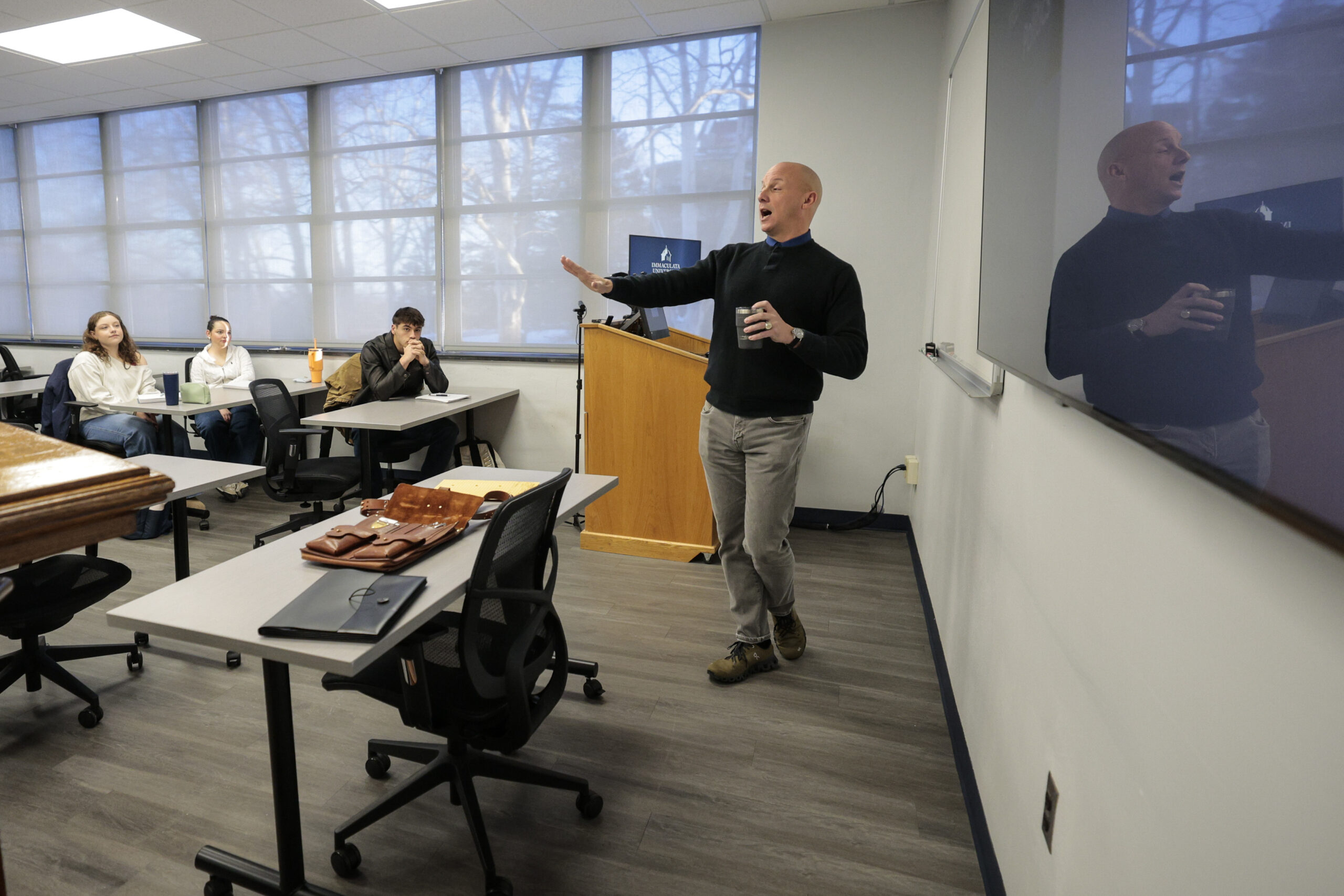
    As Joshua Weikert shared ground rules for quizzes in his early morning international relations class, he sought to put his students at ease.

    “I don’t want you stressing out about these,” he said Tuesday, as the new semester got underway at Immaculata University in Chester County. “I myself was a terrible student.”

    Weikert, 47, of Collegeville, may not have been a star student, but he sure knows a lot.

    The politics and public policy professor will compete on Jeopardy! 2026 Tournament of Champions at 7 p.m. Friday on ABC, having won six games when he was on the show in March.

    Joshua Weikert teaches a class in international relations at Immaculata University.

    Over a couple weeks, Jeopardy! shows will feature him vying against 20 other champions, including Allegra Kuney, a doctoral student at Rutgers University’s New Brunswick campus, and Matt Massie, a Philadelphia lawyer who moved to the area in 2024, who also will appear on Friday’s show.

    Friday’s match is a quarter-final, and if Weikert wins, he’ll advance to the semifinals. (Kuney won her quarter-final Tuesday.)

    Weikert won about $103,000 when he competed last year, 10% of which he donated to a memorial scholarship fund named for his late friend, Jarrad Weikel, a Phoenixville man who died unexpectedly at age 40 in 2022. The winner of the champions tournament —which will conclude sometime in early February — will take home a grand prize of a quarter million.

    Weikert will watch the show Friday among family and friends — including his fellow contestant Massie — at Troubles End Brewing in Collegeville, which named one of its beers after him. It’s an English Bitter, one of Weikert’s favorites, called “Who is Josh?”

    At Immaculata, a Catholic college where Weikert has taught since 2016, students and staff are stoked. A campus watch party is planned, President Barbara Lettiere said.

    His appearance last year, she said, has put a welcome spotlight on the school and brought an outpouring of enthusiasm from alumni. On tours, some prospective students and their parents who spot Weikert have recognized him, she said.

    “I never knew that this show was as watched as it appears to be,” she said. “Win or lose, Immaculata wins.”

    Student Ben Divens talks about his Jeopardy-star professor Joshua Weikert.

    Ben Divens, 19, said it’s “jaw-dropping” and “surreal” to know his teacher will compete in the Jeopardy! champion tournament.

    “I knew from the first time I met him he was a super, super smart person,” said Divens, a prelaw major from Souderton.

    “He’s guided us so much in our major already,” added Bailey Kassis, 18, a political science major from Fort Washington.

    “He’s guided us so much in our major already,” student Bailey Kassis said about her professor Joshua Weikert.

    An early gamer

    Weikert said he has watched Jeopardy! ever since he can remember, probably since 1984 when he was 6, and it came back on the air with Alex Trebek as host. He grew up just outside of Gettysburg in a family that loved to play games, he said.

    “We took them very seriously, which is to say that they didn’t just let the kids win,” he said of his parents, both of whom had accounting degrees. “We were destroyed routinely in the games we played.”

    About his performance as a student, he said he often skipped his homework.

    “Just give me an exam,” he said, describing his attitude at the time. “I’ll pass it.”

    He got his bachelor’s degree in international relations from West Chester University, master’s degrees from Villanova and Immaculata, and his doctorate from Temple. He also attended the Defense Language Institute Foreign Language Center, where he studied modern standard Arabic while serving in the U.S. Army.

    Joshua Weikert sets expectations for students as a new semester gets underway at Immaculata University.

    In addition to teaching, he also works as a policy adviser to the Pennsylvania House of Representatives under state Rep. Joe Webster, a Democrat serving part of Montgomery County. He vets legislators’ ideas and offers ideas of his own.

    “The only thing they’ve ever told me no on was [when] I tried to abolish the Pennsylvania Senate,” he said.

    So many bills pass one body, then die in the other, he explained. If there were one legislative body where all House and Senate members served, that might be different, he said.

    Weikert’s office walls are lined with framed newspaper front pages highlighting major events: “Nixon Resigns,” “Nazis Surrender,” “Man Walks on Moon,” “Kennedy Shot to Death.”

    “Every once in a while, I just get up and read one of the stories,” he said.

    He got them from his mother-in-law’s basement and put them up after his wife told him his office needed some decor.

    Weikert’s status as a Jeopardy! champion makes clear he’s a fast thinker. He’s also a fast talker.

    “I don’t really drink caffeine. I just talk this fast,” he told his students.

    His wife, he told the class, tells him to slow down.

    “Keep up,” he tells her, he said.

    The road to Jeopardy

    Since his mid-20s, Weikert has been trying to get on Jeopardy!. Years ago, he got a call from the game show, but he put the caller on hold to get to a quiet place. They hung up.

    “I was like, well, I guess I missed that opportunity,” he said.

    But he kept trying and started taking the online tests, which typically draw 200,000 participants annually. In 2024, he got an email, inviting him to take the test again — and then again under Zoom surveillance.

    Next came a virtual audition and practice game in August 2024. That earned him a place in a pool of about 3,000 people, of whom a few hundred eventually became contestants.

    Weikert got the call last January and was invited to fly to California the next month to compete.

    In reality, his varied interests and life path had already prepared him for the show. He reads a lot. He’s a fan of historical fiction, pop culture, and movies. His work as a public policy scholar helps, too.

    But to try and up his game, he read plots of Shakespeare plays and a book on great operas. He flipped through lists of presidents and vice presidents. His wife, Barbara, a Norristown School District middle school music teacher, read questions to him from old Jeopardy! shows. He knew about 80% of the answers, he said.

    That, however, didn’t stop him from having panic dreams of being on stage and knowing nothing.

    The toughest category for him, he said, is popular music. Movies, history, and politics are his strongest.

    But the hardest questions, he said, are the ones with four or five strong possible answers.

    “Getting a Jeopardy! answer right is more about knowing what it’s not than what it is,” he said.

    Ultimately, he said, it’s impossible to really study for the game show.

    “The odds that something you study would come up is almost zero,” he said.

    It was an intense experience on stage last March, but the staff put contestants at ease, he said. Host Ken Jennings, formerly one of the show’s most successful contestants, told them, according to Weikert: “I promise you something today is going to be a win for you, so just relax and have fun.”

    He has a hard time remembering his winning answers. He readily recalls his dumbest, he said.

    The answer was “sacred cow.” He uttered “holy cow.”

    “Even as it was coming out of my mouth, I knew it was wrong,” he said.

    He’s proud that he only froze on one answer involving lyrics from the B-52’s “Love Shack,” he said.

    There was less pressure competing in the championship match last month, given he was already a winner, he said. But it was harder in that the contestants were the best of the best.

    “During the regular season, it’s a little under a quarter of a second between when you can start to buzz in and when the buzz actually comes,” he said. “In the tournament of champions, that drops to 0.08 seconds.”

    This time, he also prepped by reading children’s books on topics such as basic cell biology, a tip he got from another contestant.

    “It’s the simplest language they can use to convey the information,” he said.

    He also read the book, Timelines of Everything: From Woolly Mammoths to World Wars.

    He most enjoyed the camaraderie among contestants, he said. When filming was over, they hung out in a bar and — watched Jeopardy!.

    “We were yelling out the answers,” he said.

  • Get ready for an artsy new restaurant and cocktail bar | Inquirer Chester County

    Get ready for an artsy new restaurant and cocktail bar | Inquirer Chester County

    Hi, Chester County! 👋

    The group helping to revitalize Kennett Square’s Birch Street has two new projects in the works, including a restaurant and cocktail lounge. Also this week, a vacant office building in Exton has been converted to a new use, a Coatesville native is appearing on the new season of a reality TV show alongside Donna Kelce, plus why The Inquirer’s Craig LaBan says this West Chester restaurant is one to watch.

    If someone forwarded you this email, sign up for free here.

    A new restaurant and cocktail lounge is opening in Kennett Square

    A rendering depicts the proposed exterior of Opus, a new restaurant and cocktail lounge slated to open in the summer.

    A new restaurant and cocktail lounge is coming to Kennett Square this summer. Opus will take over the two-story space at 201 Birch St., which is adjoined to 14-room boutique hotel Artelo. The restaurant space was most recently occupied by Hank’s Place while the Chadds Ford institution rebuilt its longtime home, which was flooded by Hurricane Ida in 2021.

    The 6,000-square-foot building will have a two-story terrace with outdoor dining and serve New American cuisine.

    Opus is the latest development from Square Roots Collective, which has been helping to revitalize Birch Street for the past decade, including through projects like The Creamery, the former dairy turned family-friendly beer garden. Another of its nearby projects, The Francis, is set to open this year. The boutique hotel at 205 S. Union St., also in Kennett Square, will have eight rooms in a reimagined 18th-century home.

    Read more about Opus and The Francis.

    📍 Countywide News

    • Scores of demonstrators protesting the killing of Renee Good by an ICE officer gathered across the region over the weekend, including a rally in West Chester on Sunday that drew about 1,000 attendees. (Daily Local News)
    • County officials are reviewing findings from an investigation into an error that excluded independent voters from poll books during the November election. Officials said they will develop a plan following their review so that similar errors don’t happen again. The county will present findings and its response at the Board of Elections meeting on Jan. 27 at 7 p.m.
    • PennDot is hosting two public meetings in the next week regarding plans for what it’s dubbed the U.S. 30 Eastern Project Area, which includes alternative routes for the Route 30 mainline and the Reeceville Road, Route 340, and Route 322 interchanges, as well as revised alternatives for the Norwood Road and Route 113 interchanges. The construction is part of a larger project to upgrade 14.5 miles of the Coatesville-Downingtown Bypass to reduce traffic congestion, improve safety, and accommodate future development. The first meeting will be held virtually tomorrow at 6 p.m. There’s a second in-person meeting on Tuesday from 6:30 to 8:30 p.m. at Pope John Paul II Regional Catholic Elementary School in West Brandywine Township.
    • Good news for Regional Rail riders: SEPTA last week restored 24 express trips, including on the Paoli/Thorndale line, which had previously been operating as local services.

    💡 Community News

    • Four police officers were injured last week when responding to a call on the 400 block of Main Street in Atglen Borough. The officers detained Jon Marcos Muniz, who allegedly fired a handgun into two occupied apartments and barricaded his front door. No other injuries were reported. Muniz is facing a number of felony and misdemeanor charges.
    • M. Patricia Muller was selected as chair of Kennett Township’s Board of Supervisors last week, making her the first woman in the township’s history to hold the role.
    • West Vincent Township’s Board of Supervisors voted last week to pass an ordinance increasing membership on its Open Space Review Board from five to seven members. It also added a trails subcommittee.
    • Heads up for drivers: Newark Road in West Marlborough Township will be closed Monday through Friday next week from 9 a.m. to 3 p.m. for tree removal. Norwood Road in East Caln Township will be operating as a single lane with flaggers next Monday through Friday for sewer line work. Peco will be doing electrical work along Happy Creek Lane and Copeland School Road in West Bradford Township as part of a $450,000 infrastructure project to improve reliability and reduce outages, including from storms. Work is scheduled to take place January through April and will impact both roads and some residential yards.
    • A vacant office building at 319 N. Pottstown Pike in Exton has been transformed into “hotel-apartments” with 24 studio and eight one-bedroom units. The group behind it plans to market The Flats On 100 to consultants and visitors of nearby employers, such as Vanguard and QVC, and sees it as a potential model for the region’s empty office buildings.
    • Also in Exton, retailer Nordstrom Rack plans to open a 30,000-square-foot shop at Main Street at Exton this fall.
    • Could popular HBO series Mare of Easttown return for a second season? Kate Winslet seems to be ready for the Delaware County-set show, created by Berwyn native Brad Ingelsby, to return, and recently indicated filming could start as early as 2027. While the award-winning actor is on board, nothing official has been announced yet.
    • Coatesville native and figure skating icon Johnny Weir made his debut on the fourth season of Peacock reality TV show The Traitors last week. Weir is joined on this season of challenge-meets-eliminations-style show — hosted by Alan Cumming at his castle in Scotland — by Donna Kelce, Tara Lipinski, and a slew of reality TV personalities. The first three episodes dropped last week. Catch up on what happened here. (Warning: Spoilers!)
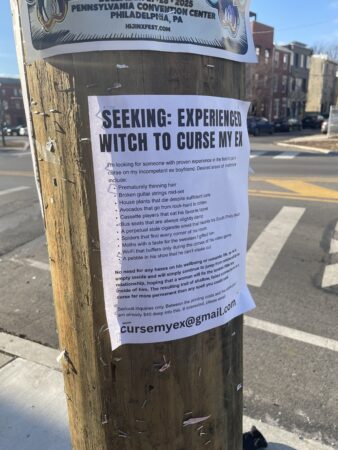
    • Phoenixville residents may have recently spotted an unusual sight on phone poles: Fliers that read “Seeking: Experienced Witch to Curse My Ex.” The Inquirer’s Brooke Schultz delves into how they came to be.
    • The GameStop at 1115 West Chester Pike in West Chester shuttered last week as part of a mass closure by the gaming retailer.

    🏫 Schools Briefing

    • Reminder for families: There are no classes Monday for Martin Luther King Jr. Day.
    • Avon Grove School District is considering adopting a new textbook, myPerspectives, from Savvas Learning Company for sixth through eighth grade English Language Arts students next school year. The public can review the textbook, which was put to the school’s education committee for consideration earlier this month, and provide feedback during a 30-day period through early February. The proposed change comes as part of the district’s regular curriculum review cycle, said Jason Kotch, assistant superintendent for teaching and learning.
    • Tredyffrin/Easttown School District has released its 2026-27 preliminary budget proposal, which includes a $14.9 million operational deficit. The district’s board and administration say they plan to close the gap through “a combination of increases in the property tax rate, expenditure reductions, or the use of existing reserves.” It will host budget workshops on March 9 and April 13, with plans to adopt the budget in June. The board will not vote on a tax rate before June 8. See the preliminary budget here. The district is also hosting a special school board meeting tomorrow at 6:30 p.m. at Conestoga High School to discuss the school board director vacancy. And from Jan. 20 to 26, there will be an open registration period for all new kindergarten and first grade students planning to start school in September.
    • Octorara Area School District is hosting a “kindergarten readiness” event tomorrow from 6:30 to 7:30 p.m. at the Octorara Primary Learning Center in Atglen for families with children eligible for kindergarten next school year.
    • West Chester Area School District student registration for the 2026-27 school year is open.

    🍽️ On our Plate

    🎳 Things to Do

    👭 Steel Magnolias: Tickets are going fast for this adaptation of the popular 1989 film taking center stage for its monthlong run at People’s Light. ⏰ Wednesday, Jan. 14-Sunday, Feb. 15, days and times vary 💵 Prices vary 📍 People’s Light, Malvern

    🍔 Taste of Phoenixville: Now in its 24th year, the annual fundraiser will bring together over 20 food and drink vendors. There will also be live music and a silent auction. ⏰ Thursday, Jan. 15, 6 p.m. 💵 $150 📍 Franklin Commons, Phoenixville

    🌿 Winter Wonder: While Christmas may get most of the attention, Longwood Gardens’ conservatories will be filled with colorful plants throughout the remainder of winter. The gardens are open daily except Tuesdays. ⏰ Friday, Jan. 16-Sunday, March 22 💵 $17-$32 for non-members, free to members 📍 Longwood Gardens, Kennett Square

    🎭 Broadway at the Colonial Theatre: Several Broadway stars, including area native Amanda Jane Cooper, who played Glinda in the North American tour of Wicked, will perform. ⏰ Sunday, Jan. 18, 7 p.m. 💵 $30-$65 📍 The Colonial Theatre, Phoenixville

    🏡 On the Market

    A West Chester Colonial accessed via a covered bridge

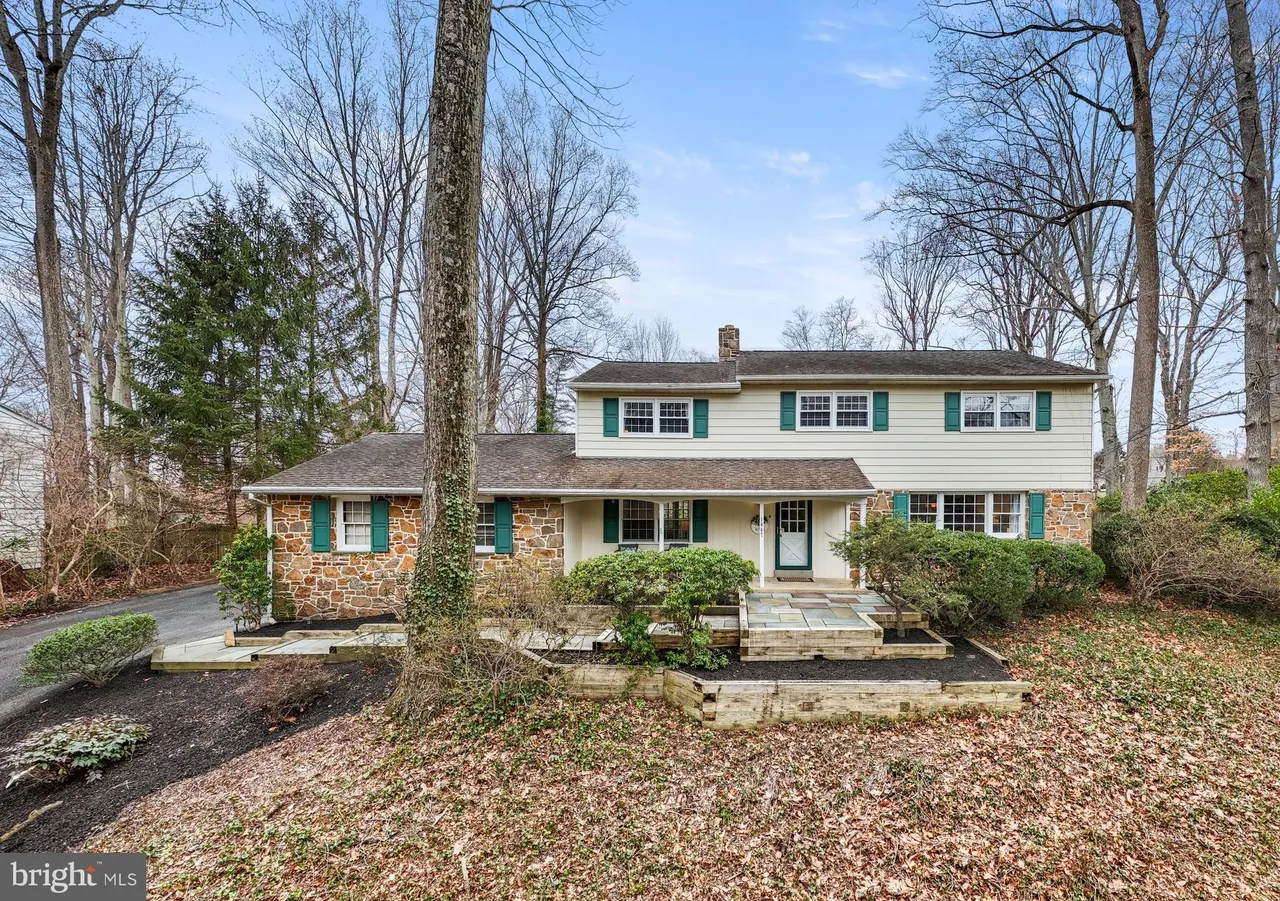
    The front of the home has a covered porch.

    Situated in a wooded stretch of East Goshen, this Colonial, along with several others in its cul-de-sac, has a unique access point: Locksley Covered Bridge, which was erected in the 1960s. The four-bedroom, two-and-half-bath home features a family room, living room, dining room, and eat-in kitchen, which has granite countertops and a wood-burning fireplace. There’s a screened-in porch off the dining room, with skylights and brick flooring, which leads to the backyard, where there’s a patio and play set.

    See more photos of the property here.

    Price: $764,000 | Size: 3,137 SF | Acreage: 1

    🗞️ What other Chester County residents are reading this week:

    By submitting your written, visual, and/or audio contributions, you agree to The Inquirer’s Terms of Use, including the grant of rights in Section 10.

    This suburban content is produced with support from the Leslie Miller and Richard Worley Foundation and The Lenfest Institute for Journalism. Editorial content is created independently of the project donors. Gifts to support The Inquirer’s high-impact journalism can be made at inquirer.com/donate. A list of Lenfest Institute donors can be found at lenfestinstitute.org/supporters.

  • ‘Seeking Experienced Witch’: A woman asked for help hexing her ex. She’s part of a long cathartic tradition.

    ‘Seeking Experienced Witch’: A woman asked for help hexing her ex. She’s part of a long cathartic tradition.

    Driving to visit a friend, a Philadelphia woman had time to mull her recent breakup. She thought about all the things her ex hated: spiders, moth-bitten sweaters, overly soft avocados. She typed them on her phone, as curses.

    It became a flier: “Seeking: Experienced Witch to Curse My Ex.” She set up an email — for serious inquiries only.

    You may have seen her handiwork. The fliers dot telephone poles, originating in downtown Phoenixville, around where our witch-seeker was visiting family for the holidays. They now paper neighborhoods across Philadelphia — hung with a staple gun on New Year’s Eve while barhopping. (The 29-year-old asked to remain nameless for this story, so as to not affect future job prospects. It also, in a way, protects her ex.)

    And though it might seem a bit out of the ordinary, it’s part of a great tradition of cursing your ex that goes back to antiquity. Plus, it’s a way to regain a sense of power, experts say.

    So, it’s no surprise that the fliers have seeped online, circulating neighborhood groups and on socials, striking a chord. When the fliers appeared in Chester County, a Phoenixville community group sounded off: “I hope she gets him. Good for her,” one commenter wrote under a Facebook post about it. “I think I know the ex,” said another. “It’s a great idea,” writes another. (The witch-seeker also has her detractors: “That man dodged a bullet!” one commenter wrote.)

    The flier lays out her desired curses: his hair thinning, house plants withering, his bus seats feeling damp, his Wi-Fi buffering during video games, shoe pebbles remaining unshakeable — and the aforementioned too-ripe avocados, copious spiders, and hole-y sweaters (among other ill wishes).

    But, the flier requests no hexes on his well-being or romantic life.

    Across relationship research, one of the most consistent findings is that breakups produce a “profound sense of powerlessness,” said Jenn Pollitt, a professor of gender, sexuality, and women’s studies at Temple University.

    But how do you get from a list on your phone to asking witches to please curse your ex-boyfriend?

    It’s not that far a leap.

    “Witchcraft has become a more socially legible way to express rage,” Pollitt said. “If you’ve got someone who wants to curse their ex, really what they want to be able to say is, ‘I was harmed. I’m allowed to be angry about this, and my anger deserves to be acknowledged.’ The public posting of this is really like a deep desire and craving to have that person’s hurt and heartbreak be born witness to.”

    The witch-seeker said she needed a place to put her pent-up anger and frustration.

    It’s not all maliciousness to her ex, she said. It’s mostly catharsis: She thinks of her ex as a lovely person in a lot of ways. But she said when she expressed her emotional needs, he’d withhold affection, he’d disappear for a few days or block her number. Then he would return, with words of affirmation and promises of marriage. It became cyclical over the two-year relationship. She swallowed up her frustrations. But several months ago, they parted ways. And despite the turbulence, it was pretty amicable, she recalls.

    She grieved. She went to therapy. She journaled. She meditated.

    And then she logged on to social media, and saw he was in a new serious relationship that had started within weeks of them breaking up.

    “It felt like a slap in the face, and that was my impetus for doing this,” she said. “I couldn’t yell at him, and I didn’t want to yell at him, but I had to yell at someone.”

    She’s not alone. For millennia, people have pursued love magic, said Kristine Rabberman, a professor at the University of Pennsylvania who teaches about witchcraft and sexuality. Roughly 600 Latin curse tablets have survived from the Roman empire, with both men and women calling on various deities to curse their close relations, she said.

    These mystical beliefs served social functions, too, she said, addressing people’s lack of agency and control. They channel deep wells of emotion: anger, longing, frustration, hatred.

    “Having recourse to love magic could be one approach somebody could take to try to both find expression for those feelings and to also have a sense of agency and being able to act on them,” she said.

    Dating culture has changed rapidly, Pollitt added. There’s now a digital component: blocked numbers, social media handles unfollowed. A breakup by a thousand cuts, she noted.

    “Breakups often can be intensely private and deeply isolating. Any public display, even this — which is a little bit out of the ordinary — function as a way to reinsert personal pain into a shared social space,” Pollitt said.

    The community came fast. As the witch-seeker hung the fliers in Phoenixville, several people high-fived her, she said. Then the emails rolled in: A Caribbean witch who offered a hex. A bruja. A kitchen witch who practices herbalism and herbal manifestations. A helper who sent along a few shops and books, so she could do the curse herself (so it carries the appropriate “oomph”).

    But to her surprise, beyond the witches, there were others: People who wanted to know how the story would end. Someone boldly asking her out on a date. And the women who simply could relate.

    They wished her a happy new year, they told her they’d also had messy breakups, they told her they supported her.

    She did not expect the outpouring of support, or the attention. As a writer and a creative person, it was mostly a way to tap into that, in a way that felt a little more empowering.

    “It has made me feel so much better,” she said.

    She is thankful for the witches who offered their services, though she feels conflicted about going through with a hex. She won’t be papering the city with more witch requests, either, she said.

    The process has let her accept some of her bad, not totally socially acceptable feelings — and create something positive with it, by connecting with others, she said — as people reeling from heartbreak have done for centuries before her.

  • How to have a Perfect Philly Day, according to novelist Adam Cesare

    How to have a Perfect Philly Day, according to novelist Adam Cesare

    Adam Cesare knew by the third date that if he and his future wife were going to end up together, he was going to have to start calling sub sandwiches hoagies. “She’s a Philly lifer,” the New York-born, USA Today best-selling author said. Sure enough, after graduating from college in Boston, the couple relocated to Philadelphia, where Cesare threw himself into the city’s film and literary scenes. “I took to Philly like a fish to water,” Cesare said. That was 15 years ago.

    Fast forward to today, and the former high school English teacher is an acclaimed local author with more than a dozen horror novels under his belt, including the popular Clown in a Cornfield series, the first of which was adapted for the big screen and released in theaters this past summer. Now, Cesare is gearing up to release Clown in a Cornfield 4: Lights! Camera! Frendo!

    When he’s not busy editing his manuscript, Cesare still loves to explore Philly’s extensive film and lit scenes, roaming through used bookstores or catching a flick at PhilaMOCA.

    Here’s how Adam Cesare would spend a perfect day in Philadelphia.

    9 a.m.

    First, I would make sure it’s not a Sunday because I want to go to Beiler’s Doughnuts in Reading Terminal, and it’s closed on Sundays.

    11 a.m.

    After Beiler’s, I’d pop over to Old City to go to The Book Trader. I could name-drop all the current new bookstores, but there’s something about used bookstores that I really like. I’d swing by the comics shop, Brave New Worlds, because it’s right next door, then I’d head to Mostly Books on Bainbridge. I love that place. It’s great because they have a pretty decent VHS, DVD, and Blu-ray selection too, so I’ll get a few movies.

    I might also pop into the Philly AIDS Thrift. It’s fun to walk around. They have a good book section. It’s mostly general fiction. I like their physical media section too. You can get the DVD or VHS of every television series that’s been kicked off Netflix.

    1 p.m.

    For lunch, I’m definitely going to Monster Vegan. It is what it sounds like. It is a really good vegan restaurant themed on monsters. They play clips from Count Yorga and stuff on the walls. They do events, too. I once saw Lloyd Kaufman present Class of Nuke ‘Em High.

    3 p.m.

    After lunch, I might drive over to Manayunk to check out Thrillerdelphia. It’s a new bookstore that exclusively sells horror and thrillers. They just opened two months ago, and I did one of their first events. They’re really nice people, and they have a great selection.

    5 p.m.

    It’s time to beam back down to South Street for dinner and a movie. On a perfect day, I’m going to Royal Izakaya, a Japanese restaurant I like to go to on my birthday. Since money is no object on my perfect day, I’ll order the omakase. Let the chef decide.

    7 p.m.

    There are so many good places to see a movie in Philly. There’s the Philadelphia Film Society. There’s also PhilaMOCA. It’s probably my favorite place to go. They work closely with Exhumed Films, which is a group of film fans who screen 35mm and 16mm films from their private collection in local theaters. They do a lot of work with The Colonial in Phoenixville as well.

    The last time I went to PhilaMOCA, I saw Hedwig and the Angry Inch, and John Cameron Mitchell was there doing a live commentary, which was sick. They do really cool stuff like that all the time.

    9 p.m.

    That was a full day. I’m good for bed now.