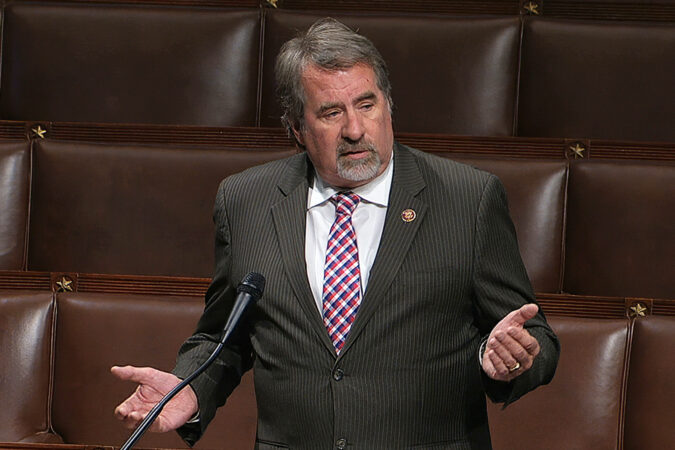
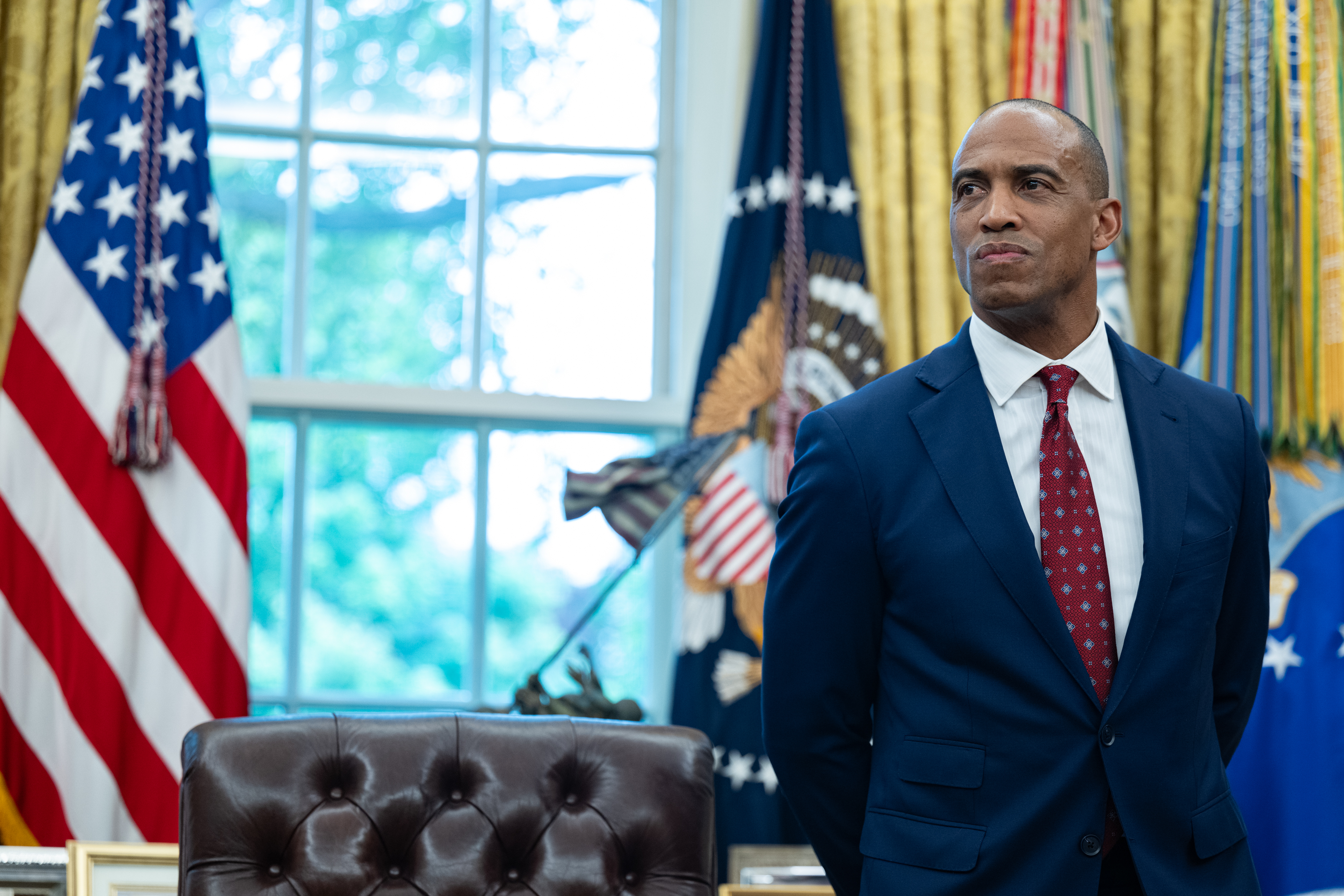
WASHINGTON — Republican Doug LaMalfa, a seven-term U.S. representative from California and a reliable vote on President Donald Trump’s agenda, has died, reducing the GOP’s narrow control of the House. He was 65.
A former state lawmaker and rice farmer, LaMalfa had more than a dozen years in Congress, where he regularly helped GOP leaders open the House floor and frequently gave speeches. His death, confirmed by Majority Whip Tom Emmer and National Republican Congressional Committee Chairman Richard Hudson, trims the Republicans’ margin of control of the House to 218 seats to Democrats’ 213.
“I was really saddened by his passing,” Trump said.
The president said he considered not giving the speech to honor LaMalfa but decided to go ahead with it “because he would have wanted it that way.”
Trump said the late congressman “wasn’t a 3 o’clock in the morning person” like other lawmakers he would call in the wee hours to lobby for their votes.
“He voted with me 100% of the time,” Trump said. “With Doug, I never had to call.”
Details surrounding LaMalfa’s death were unclear.
David Reade, a former chief of staff of LaMalfa’s from the state legislature, became emotional remembering LaMalfa, who he said was committed to his district and proud of his family and Christian faith.
“One of my great memories of Doug is that, you know, he would show up at the smallest events that were important in people’s lives in this district,” Reade said in a phone interview. “Whether it was a birthday, it was, you, know, a family gathering, it was the smallest organization in his district, and he would drive literally hundreds and hundreds of miles to be there.”
California Gov. Gavin Newsom, a Democrat, must call a special election to replace LaMalfa, his office said. The election could happen as late as June, when California will hold its primary for the 2026 midterm.
Hudson, the NRCC chairman, called LaMalfa “a principled conservative and a tireless advocate for the people of Northern California.”
“He was never afraid to fight for rural communities, farmers, and working families,” Hudson said. “Doug brought grit, authenticity, and conviction to everything he did in public service.”
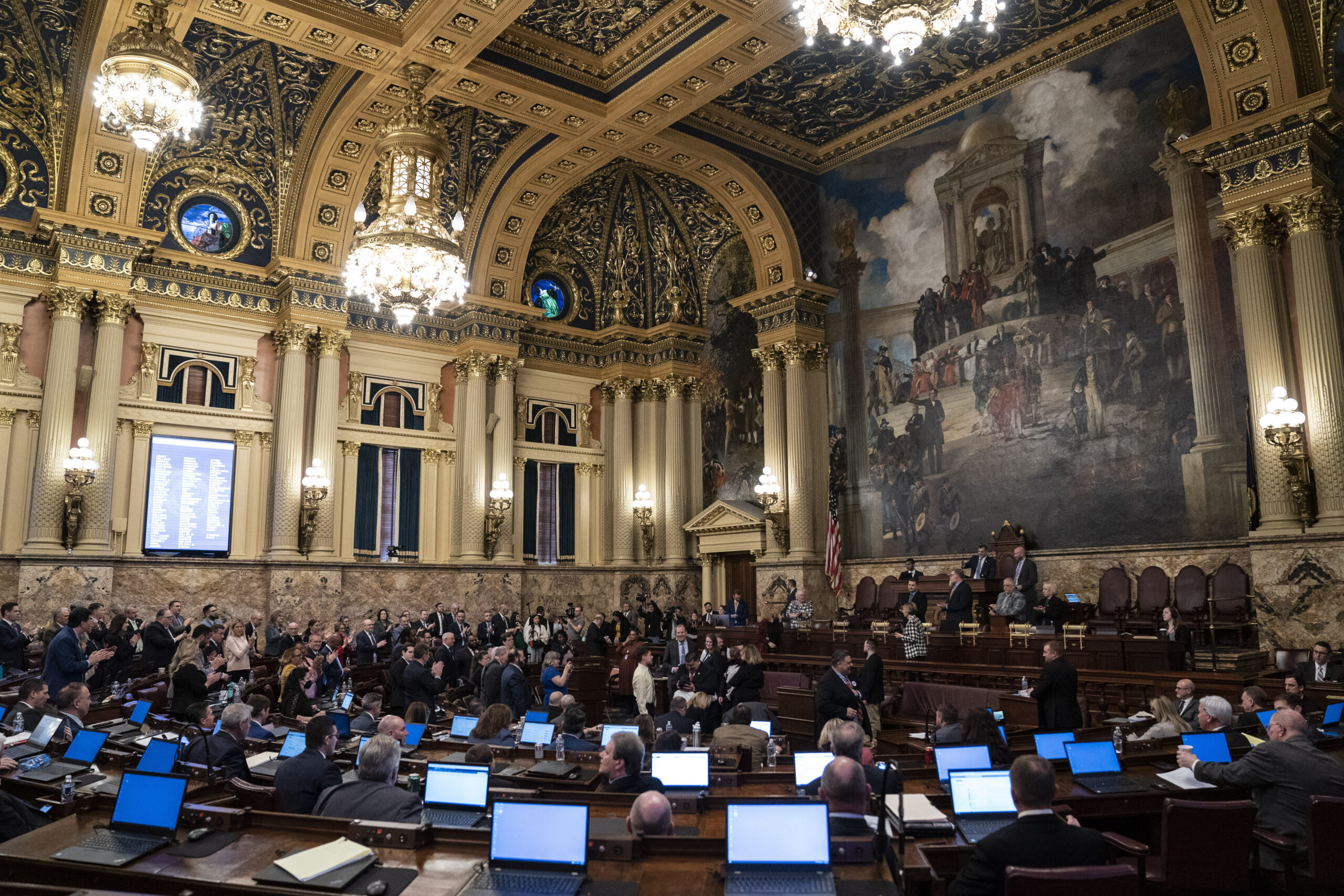
First elected to Congress in 2012, he was a regular presence on the House floor, helping GOP leadership open the chamber and offer his view local and national affairs.
C-SPAN in a recent compilation said he gave at least one set of remarks for the record on 81 days in 2025. Only two other lawmakers spoke on the House floor more frequently.
WASHINGTON — Five years ago outside the White House, outgoing President Donald Trump told a crowd of supporters to head to the Capitol — “and I’ll be there with you” — in protest as Congress was affirming the 2020 election victory for Democrat Joe Biden.
A short time later, the world watched as the seat of U.S. power descended into chaos, and democracy hung in the balance.
On the fifth anniversary of Jan. 6, 2021, there is no official event to memorialize what happened that day, when the mob made its way down Pennsylvania Avenue, battled police at the Capitol barricades and stormed inside, as lawmakers fled. The political parties refuse to agree to a shared history of the events, which were broadcast around the globe. And the official plaque honoring the police who defended the Capitol has never been hung.
Instead, the day displayed the divisions that still define Washington, and the country, and the White House itself issued a glossy new report with its own revised history of what happened.
Trump, during a lengthy morning speech to House Republicans convening away from the Capitol at the rebranded Kennedy Center now carrying his own name, shifted blame for Jan. 6 onto the rioters themselves.
The president said he had intended only for his supporters to go “peacefully and patriotically” to confront Congress as it certified Biden’s win. He blamed the media for focusing on other parts of his speech that day.
At the same time, Democrats held their own morning meeting at the Capitol, reconvening members of the House committee that investigated the Jan. 6, 2021, attack for a panel discussion. Recalling the history of the day is important, they said, in order to prevent what Rep. Jamie Raskin (D., Md.) warned was the GOP’s “Orwellian project of forgetting.”
And the former leader of the militant Proud Boys, Enrique Tarrio, summoned people for a midday march retracing the rioters’ steps from the White House to the Capitol, this time to honor Trump supporter Ashli Babbitt and others who died in the Jan. 6 siege and its aftermath. More than 100 people gathered, including Babbitt’s mother.
Tarrio and others are putting pressure on the Trump administration to punish officials who investigated and prosecuted the Jan. 6 rioters. He was sentenced to 22 years in prison for seditious conspiracy for orchestrating the Jan. 6 attack, and he is among more than 1,500 defendants who saw their charges dropped when Trump issued a sweeping pardon on his return to the White House last year.
“They should be fired and prosecuted,” Tarrio told the crowd before they arrived at the Capitol, confronted along the way by counterprotesters, and sang the national anthem.
The White House in its new report highlighted the work the president has already done to free those charged and turned the blame on Democrats for certifying Biden’s election victory.
Echoes of 5 years ago
This milestone anniversary carried echoes of the differences that erupted that day.
But it unfolds while attention is focused elsewhere, particularly after the U.S. military’s stunning capture of Venezuela’s president, Nicolás Maduro, and Trump’s plans to take over the country and prop up its vast oil industry, a striking new era of American expansionism.
“These people in the administration, they want to lecture the world about democracy when they’re undermining the rule of law at home, as we all will be powerfully reminded,” House Democratic leader Hakeem Jeffries of New York said on the eve of the anniversary.
House Speaker Mike Johnson of Louisiana, responding to requests for comment about the delay in hanging the plaque honoring the police at the Capitol, as required by law, said in a statement on the eve of the anniversary that the statute “is not implementable,” and proposed alternatives “also do not comply with the statute.”
Democrats revive an old committee, Republicans lead a new one
At the morning hearing at the Capitol, lawmakers heard from a range of witnesses and others — including former U.S. Capitol Police officer Winston Pingeon, who said as a kid he always dreamed of being a cop. But on that day, he thought he was going to die in the mayhem on the steps of the Capitol.
“I implore America to not forget what happened,” he said, “I believe the vast majority of Americans have so much more in common than what separates us.”
Also testifying was Pamela Hemphill, a rioter who refused Trump’s pardon, blamed the president for the violence and silenced the room as she apologized to the officer sitting alongside her at the witness table, stifling tears.
“I can’t allow them not be recognized, to be lied about,” Hemphill said about the police who she said also saved her life as she fell and was trampled on by the mob. “Until I can see that plaque get up there, I’m not done.”
Among those testifying were former Rep. Adam Kinzinger of Illinois, who along with former Rep. Liz Cheney of Wyoming were the two Republicans on the panel that investigated Trump’s efforts to overturn Biden’s win. Cheney, who lost her own reelection bid to a Trump-backed challenger, did not appear. Speaker Emerita Nancy Pelosi urged the country to turn away from a culture of lies and violence that she said sends the wrong message about democracy.
Republican Rep. Barry Loudermilk of Georgia, who has been tapped by Johnson to lead a new committee to probe other theories about what happened on Jan. 6, rejected Tuesday’s session as a “partisan exercise” designed to hurt Trump and his allies.
Many Republicans reject the narrative that Trump sparked the Jan. 6 attack, and Johnson, before he became the House speaker, had led challenges to the 2020 election. He was among some 130 GOP lawmakers voting that day to reject the presidential results from some states.
Instead, they have focused on security lapses at the Capitol — from the time it took for the National Guard to arrive on the scene to the failure of the police canine units to discover the pipe bombs found that day outside Republican and Democratic party headquarters. The FBI arrested a Virginia man suspected of placing the pipe bombs, and he told investigators last month he believed someone needed to speak up for those who believed the 2020 election was stolen, authorities say.
“The Capitol Complex is no more secure today than it was on Jan. 6,” Loudermilk said in a social media post. “My Select Subcommittee remains committed to transparency and accountability and ensuring the security failures that occurred on Jan. 6 and the partisan investigation that followed never happens again.”
The aftermath of Jan. 6
At least five people died in the Capitol siege and its aftermath, including Babbitt, who was shot and killed by police while trying to climb through the window of a door near the House chamber, and Capitol Police Officer Brian Sicknick died later after battling the mob. Several law enforcement personnel died later, some by suicide.
The Justice Department indicted Trump on four counts in a conspiracy to defraud voters with his claims of a rigged election in the run-up to the Jan. 6 attack.
Former Justice Department special counsel Jack Smith told lawmakers last month that the riot at the Capitol “does not happen” without Trump. He ended up abandoning the case once Trump was reelected president, adhering to department guidelines against prosecuting a sitting president.
Trump, who never made it to the Capitol that day as he hunkered down at the White House, was impeached by the House on the sole charge of having incited the insurrection. The Senate acquitted him after top GOP senators said they believed the matter was best left to the courts.
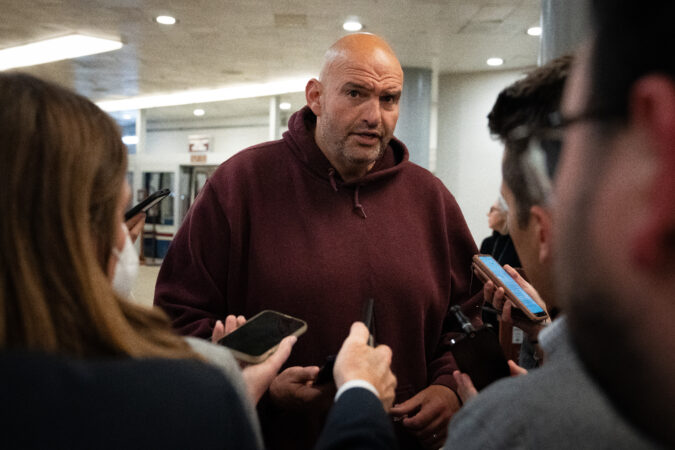
Sen. John Fetterman (D., Pa.) on Monday praised President Donald Trump’s order to capture Venezuelan President Nicolás Maduro and his wife, breaking with most Democrats’ messaging on the military operation that took place early Saturday without congressional authorization.
“I don’t know why we can’t just acknowledge that it’s been a good thing what’s happened. … We all wanted this man gone, and now he is gone,” Fetterman said during an interview on Fox & Friends on Monday morning.
Fetterman’s comments come days after the Trumpadministration orchestrated a strike on Caracas, resulting in the capture of Maduro, Venezuela’s president since 2013, and his wife, Cilia Flores, early Saturday.
The event followed months of escalation by the U.S. military and claims from the Trump administration that Maduro is responsible for large-scale drug trafficking operations. The future of the Venezuelan government is unclear, but Trump has suggested that U.S. involvement will continue.
“I think [the military operation] was appropriate and surgical,” Fetterman said during the interview. “This wasn’t a war, this wasn’t boots on the grounds, and in that kind of way, this was surgical and very efficient, and I want to celebrate our military.”
The military operation provoked mixed reactions from members of the Philadelphia region’s Venezuelan community, some of whom are thankful for Maduro’s ouster but were concerned by Trump’s comments over the weekend that the U.S. would “run” Venezuela.
The incident also garnered sharp disapproval from many Democratic lawmakers.
Sen. Cory Booker (D., N.J.) said in a post on X on Saturday that Maduro is a “brutal dictator who has committed grave abuses” and that the U.S. military carries out their orders with “professionalism and excellence,” but stressed that Trump’s military operation defies the Constitution and isa culmination of a repeated failure by Congress to exercise its check on presidential power.
“We face an authoritarian-minded president who acts with dangerous growing impunity. He has shown a willingness to defy court orders, violate the law, ignore congressional intent, and shred basic norms of decency and democracy,” Booker said.
“This pattern will continue unless the Article I branch of government, especially Republican congressional leadership, finds the courage to act,” Booker said.
Other Democrats and opponents to the military operation havealsoquestioned its legality.
This is not the first time that Fetterman has differed with fellow Democrats on key issues. Recently, the Pennsylvania senator wasone of only a handful of Senate Democrats who supported the Republican-led plan to reopen the federal government without addressing the expiration of healthcare subsidies.
During his interview Monday, Fetterman noted that Democrats, including former President Joe Biden, have called for the ouster of Maduro.
“Why have a bounty of $25 million if we didn’t want him gone? Why would you do these things if you weren’t willing to actually do something other than harsh language,” Fetterman said.
By the end of thisyear, Montgomery County will have three emergency short-term shelters with beds for 190 people in Pottstown, Lansdale, and Norristown.
In late 2024, it had zero full-time shelters, even as homelessness soared to new heightsin the county — Pennsylvania’ssecond wealthiest.
The three-member board of commissioners is currently composed of two Democrats and one Republican, but in the past year they have operated with an unusual degree of cohesion on both the challenge of homelessness and on a county budget that included a small property tax increase.
“We came in with similar goals around addressing the homeless problem throughout the county,” said Tom DiBello, the Republican commissioner. “We all heard it when we were campaigning [in 2023] and when we got elected, we felt that we needed to do something. We can’t continue doing it the way it’s always been done in the past, where people just kept talking about it.”
Although the Montgomery County commissioners have formed a united front on many issues last year, housing policy issues are more likely to divide them in 2026.
But the Democrat commissioners, Neil Makhija and Jamila Winder, have ideas about how to get around those limitations to directly fund more affordable housing and encourage local governments to allow more building.
DiBello is not excited about many of the proposals being considered by the two Democrats. He opposes creating new county-level taxes and says zoning powers should be left to localities.
Still, DiBello has further housing policy goals he would like to pursue — such asdeveloping more affordable homes for senior citizens.
As the county releases its 2026 housing blueprint, expected early this year, the first round of these debates will begin in earnest. This planning document, created by county government staff with commissioner feedback, lays out goals for the county based on a comprehensive housing policy — the first its seen in recent memory, Makhija says.
“It’s going to be the first time that the entire board has had a voice and a view on what our role is to address a crisis in the cost of housing,” said Makhija. “There are things we can do to help people.”
How the shelters got built
Making policy to address homelessness is difficult because many municipalities and community groups fight against having shelters placed in their neighborhoods.
The number of people in Montgomery County experiencing homelessnesshas grown with the cost of housing. In 2024, there were 435 people living without a roof over their heads. In 2025, the number grew to 534.
Meanwhile, Montgomery County’s last full-service homeless shelter closed in 2022.
Opposition to new shelters or affordable housing bloomed in Norristown, where officials said the rowhouse-dominated municipality was already asked to shoulder too many social services, and in Lower Providence where the local government denied a shelter application (the legal fallout is ongoing).
The county commissioners decided to get involved by courting local governments and personally attending zoning hearings about potential placements. DiBello attended meetings in Pottstown, near where he lives. Winder went to hearings in Norristown, including one that stretched past midnight, then stuck around to discuss neighbors’ concerns.
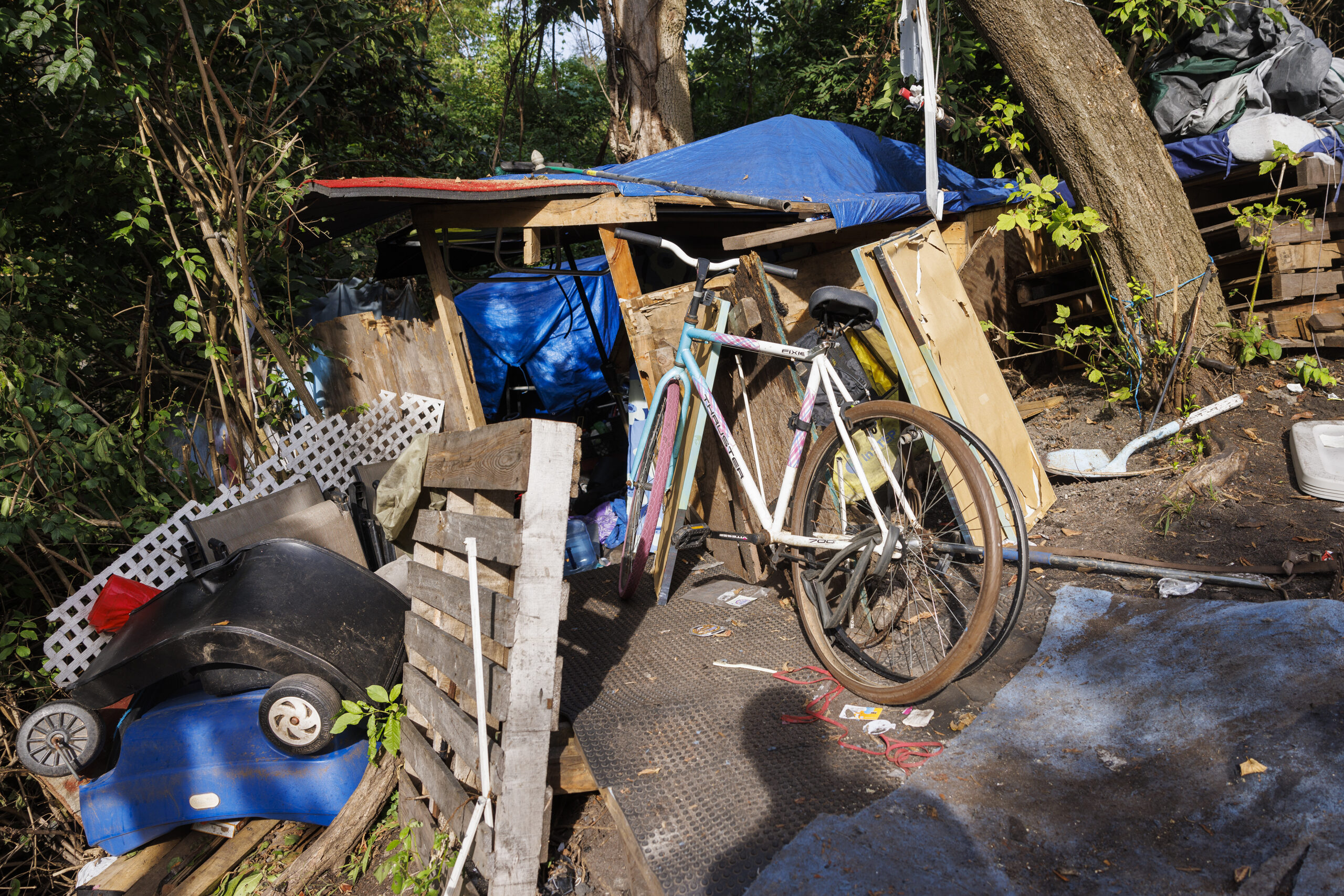
A homeless encampment near the Schuylkill River Trail and Norristown in Montgomery County.
In some parts of the county, efforts to address the issue overcame opposition.
Communities like East Norriton have established more code blue shelters, which only operate during freezing weather, and inwealthy Lower Merion, a new affordable housing complex for seniors and people with disabilities, called Ardmore House II, is under construction.
“It takes political courage in these moments,” Winder said,referring to local officials who have embraced shelters and affordable housing. “Sometimes you have loud voices in the room and just have to say, well, this is the right thing to do.”
The commissioners provided $5.3 million in county funding for the shelters. The county also provided a quarter of Ardmore House II’s $20 million budget. And as federal funding cuts loom under President Donald Trump’s administration, the commissioners have also been engaging with philanthropists and foundations.
Earlier this month, Nand Todi, president of Montgomery County-based Penn Manufacturing Industries, announced a $1 million donation to the Lansdale shelter.
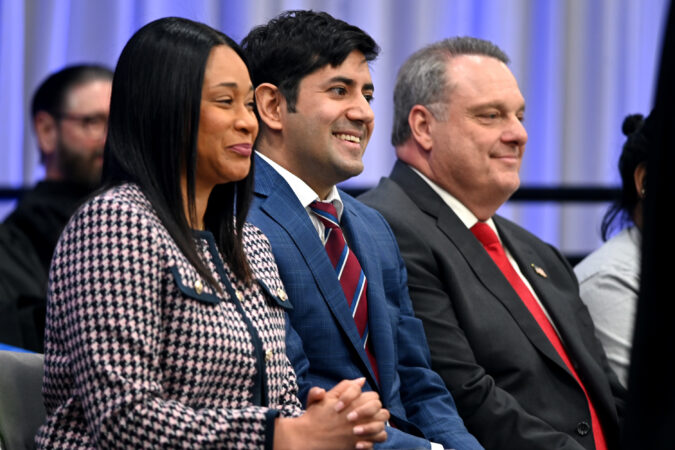
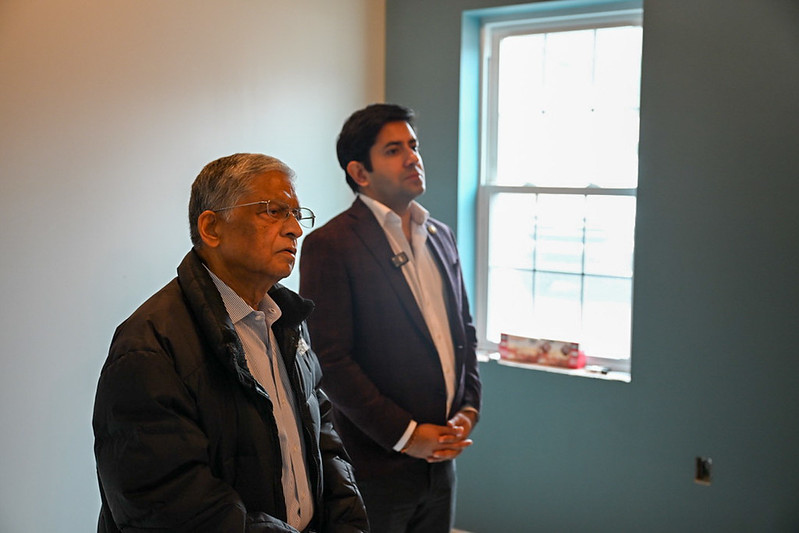
Nand Todi, president of Montgomery County-based Penn Manufacturing Industries, and County Commissioner Neil Makhija at a walk-through of the completed Lansdale shelter.
Winder hopes this example of generosity is just the beginning.
“I come from the private sector, so I believe in public-private partnerships,” said Winder. “We’re home to some of the largest corporations in the southeast area. We know that companies have social responsibility goals. So how do we partner with corporations?”
What can a county government do?
Thisyear, the commissioners want to continue to tackle housing issues.
But county-level politicians do not have large budgets at their command, and unlike their municipal-level counterparts, they do not set zoning policy.
Makhija and Winder wantto push those limits.
For example, the county dispenses infrastructure grants, and Makhija says the rules around that funding could be rewritten to incentivize municipalities to reform their zoning codes, perhaps using model ordinances established by the county.
Such ordinances could, for example, allow more transit-oriented development. Or they could legalize accessory dwelling units — small living spaces such as a garage apartment or in-law suite that can be rented out.
“If you have a grant program and it says these are the requirements, then people are going to prioritize getting those things done,” said Makhija, though, he said, he still has to make the case to his colleagues.
He also noted that county planning staff can help implement new municipality policies.
DiBello is skeptical of the county getting involved in local zoning policy.
“The governing structure in Pennsylvania is that municipalities are autonomous to county and state when it comes to zoning,” said DiBello. “It’s up to the communities.”
The Democrats would also like to find revenue sources to pay for more housing projects without increasing the property tax, which would cut against their goal of affordability.
“There are opportunities for us to advocate to the state legislature, to give counties like ours other means to generate revenue,” said Winder. “It’s not sustainable to continue to burden taxpayers by increasing property taxes, and we can’t fund these programs unless we have the money to do so.”
DiBello is also opposed to creating new taxes (if Harrisburg allows it), and doesn’t want to see more property tax increases either. But he still wants to see proactive housing investments by county government.
These debates will unfold next year as the housing blueprint dominates the commissioners’ agenda.
“We’re the second wealthiest county in Pennsylvania, and people struggling to find housing can be quite invisible in these communities,” said Winder. “We’ve got an embarrassment of riches, but there are people that are struggling and so we’re trying to be on the ground helping to solve these issues.”
Scott Sauer would like nothing better than to make SEPTA an afterthought.
He doesn’t mean that the Philadelphia region’s mass transit agency should be neglected, but rather that it will come to do its job so seamlessly that its nearly 800,000 daily customers can rely on the service without worrying about breakdowns, delays and disruptions.
Given the cascading crises that hit SEPTA in 2025, many people wondered if the place was hexed.
“I hope not, because I don’t know how to get the curse off me,” Sauer said in a recent interview. “But listen, truth be told, there were days when I scratched my head and thought, ‘Oh, my goodness, what is going on?’”
“We just couldn’t seem to get more than a day or two of relief before something else was causing a headache,” said Sauer.
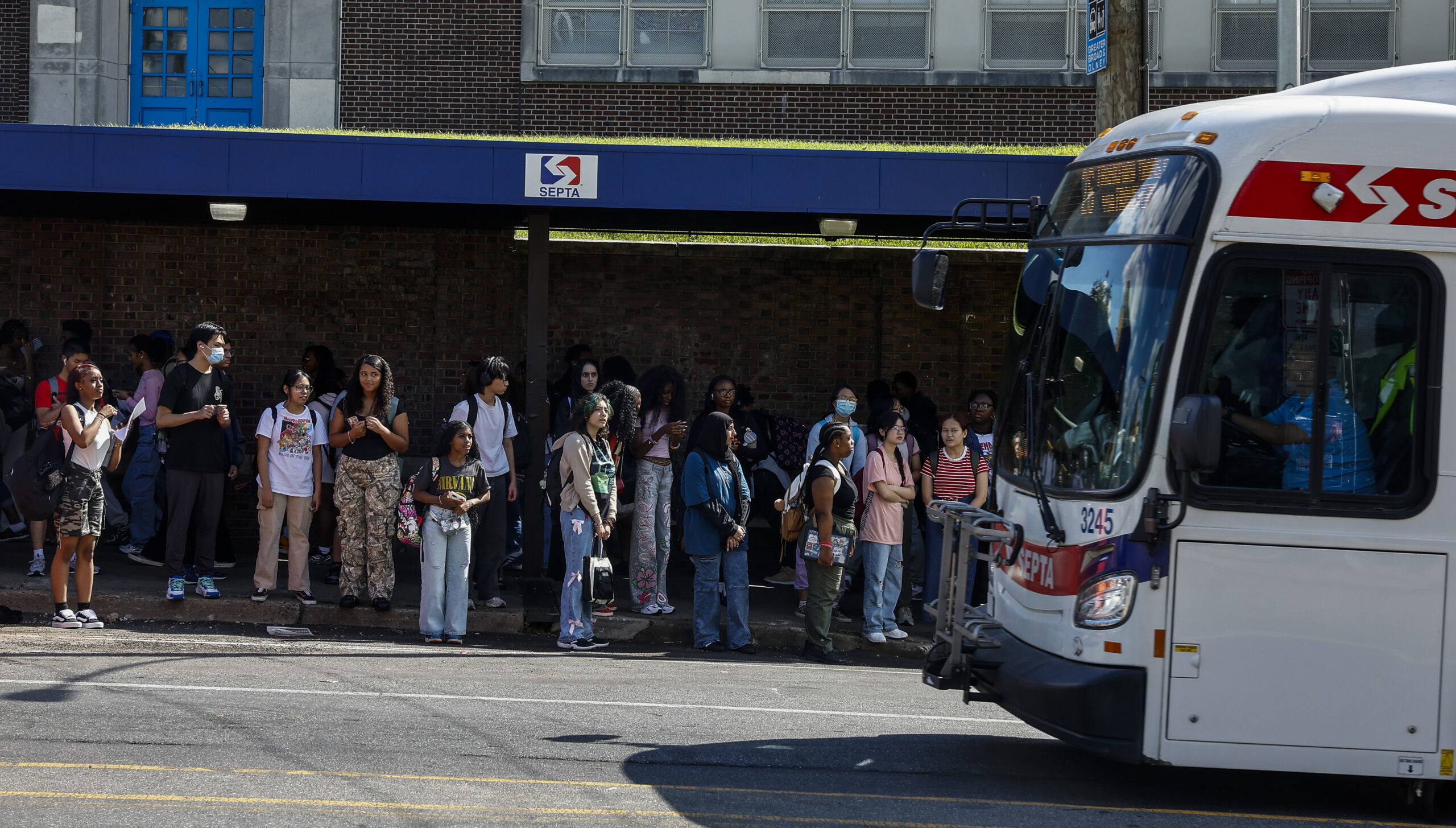
A bus passes the stop near Girls High at Broad and Olney Streets on Monday, Aug. 25, 2025. Thirty two SEPTA bus routes were cut and 16 were shortened, forced by massive budget deficits.
Back to basics in 2026
In the end, help from above and a new labor contract bought SEPTA at least two years to recover from its annus horribilis and stabilize operations.
When the Pennsylvania legislature couldn’t get a transit funding deal done, Gov. Josh Shapiro shifted $394 million in state-allocated funds for infrastructure projects to use for operations — the third temporary solution in as many years. The administration also later sent $220 million in emergency money in November for the Regional Rail fleet and the trolley tunnel.
And, early in December, SEPTA reached agreement on a new, two-year contract with its largest bargaining unit, Transport Workers Union Local 234.
Scott Sauer, general manager of SEPTA, admits that 2025 was an extremely challenging year.
Sauer compared SEPTA’s position to football refs. When they are doing their jobs right, fans don’t have to think about them when watching the game. And when things are going well on the transit system, it becomes part of the background.
“Let’s make sure we do the basics, and we do them really well, because at the end of the day, people want SEPTA to move them from one place to the other, right?” he said.
The test of the focus on fundamentals comes soon, with millions of visitors expected in the region for the 250th anniversary of the Declaration of Independence, World Cup soccer, and other big events.
Sauer, 54, began his career as a trolley operator more than 30 years ago. He had no political experience, though, and would quickly be thrown headfirst into those murky waters to swim with sharks.
Storm clouds were already rolling in. Weeks before Sauer took the reins, Shapiro had flexed $153 million in state highway funds for SEPTA operations after a broader deal failed amid Senate GOP opposition.
It’s a legal move, but often controversial, and Shapiro’s opponents were furious.
Richards and her leadership team had been warning of a looming fiscal “doomsday scenario” for months. Officials were drafting a budget with service cuts and fare increases.
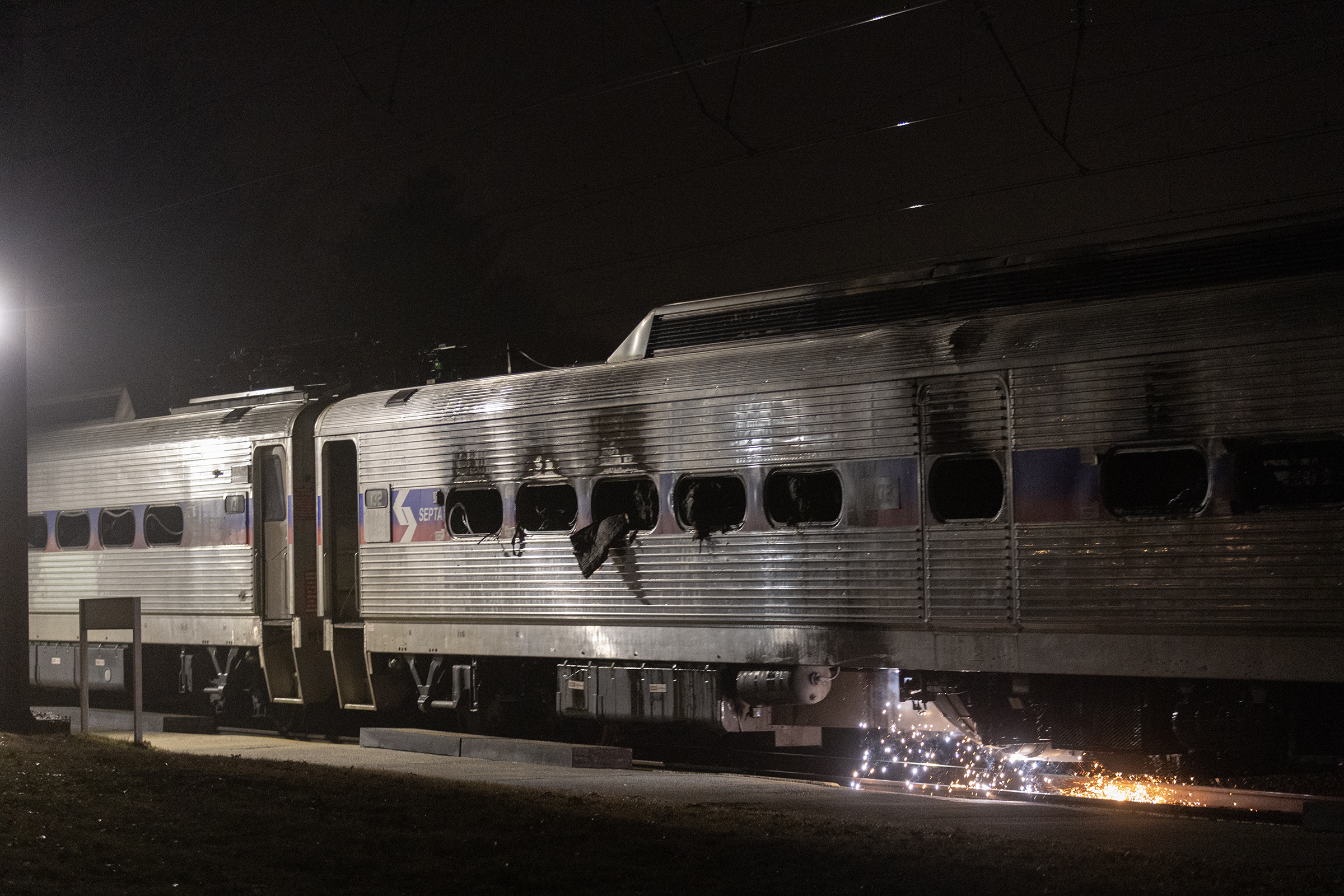
On Feb. 6, a Wilmington-bound Regional Rail train caught fire as it was leaving Crum Lynne Station in Delaware County. It was worrisome, but at the time, nobody knew it would get worse.
More than 300 passengers were safely evacuated after a SEPTA Regional Rail train caught fire near Crum Lynne Station in February.
Familiar battle lines were drawn. Senate Republicans, in the majority in the chamber, opposed Shapiro’s proposal to generate $1.5 billion for transit operations over five years by increasing its share of state sales tax income.
They preferred a new source of income for the state’s transit aid and said SEPTA was mismanaged, citing high-profile crimes, rampant fare evasion, and lax enforcement.
On a mid-August night, the Senate GOP came up with a proposal that would take money from the Public Transportation Trust Fund, a source for transit capital projects, and split it evenly between transit operations subsidies and rural state highway repairs.
Senate Majority Leader Joe Pittman, a Republican from Indiana County, was a key player in budget negotiations, which ultimately did not yield additional funding for mass transit.
“It was kind of quiet … and then we got alerted that a proposal was coming within minutes. And so everybody was scrambling to try to read through it,” Sauer said.
In a quick news conference with Shapiro, Sauer opposed the idea of taking capital dollars for transit operations, as did the governor. Then he spoke with Senate Republicans and told reporters it could be worth considering, but he had questions. And by the end of the night, he walked that back and opposed the measure.
“I guess if there was a lesson to be learned for me in August, it was I should have taken some [more] time reading through that proposal,” he said.
There was not much time to reflect on what happened, though, because the hits kept on comingas the federal government ordered SEPTA to inspect all 223 Regional Rail cars.
SEPTA’s Regional Rail fleet is the oldest operating commuter fleet in the country, and the fires highlighted the difficulty of keeping them maintained while needing to stretch limited capital funds to address multiple problems.
The Market-Frankford El cars, though younger than the Silverliner IVs, have been beat up and unreliable. SEPTA is moving forward with replacing them, as well as the Kawasaki trolleys that are more than 40 years old.
SEPTA had ordered new Regional Rail coaches from a Chinese-government-related manufacturer, but canceled the contract after the first few models, built during the pandemic, showed flaws. Now the agency is advertising for bids on a new fleet of Regional Rail workhorses — but it has to make them sturdier to last for at least seven more years before new cars would be on the way.
Officials plan to use $220 million received from the state on that effort.
Some of the money, about $48 million, is slated to help fix the trolley-tunnel issue. SEPTA is contending with glitches in the connection between the overhead catenary wires and the pole that conducts electricity to the vehicle.
What SEPTA got done
SEPTA has made some progress on some of its persistent issues, officials say, though the accomplishments understandably have been largely overlooked amid the urgent, existential crises of 2025.
For instance, serious crimes on the SEPTA system dropped 10% through Sept. 30 compared to the same period in 2024, according to Transit Police metrics.
And there had already been a sharp improvement. Serious crimes in 2024 dropped 33% compared to 2023 — from 1,063 to 711, year over year.
SEPTA transit police police patrol officers Brendan Dougherty (left) and Nicholas Epps (right) with the Fare Evasion Unit ride the 21 bus.
“If you think back to where we were in 2021 and 2022, the perception was bad things were happening on SEPTA, and you should steer clear of them,” Sauer said.
The Transit Police have been hiring new officers, including a recently graduated academy class of nine, and has about 250 officers.
SEPTA also installed 42 full-length gates designed to thwart fare evasion on seven platforms in five stations during 2025, spokesperson Andrew Busch said.Another 48 gates are coming in the first quarter of the year.
Police are also issuing citations with an enhanced penalty of up to $300 for fare evasion.
Prepare for déjà vu
Andyet, in 2027, it will be time to start the old SEPTA-funding dance once again, as transit agency advocates and supportive lawmakers work at getting a stable state funding stream for transit operations.
State Democrats have said the transit issue could help them take control of the Senate from Republicans — a longtime goal but one that is difficult to achieve. One wild card is whether President Donald Trump’s slumping popularity will cause GOP congressional candidates to get swamped in the 2026 midterms, and whether that will translate into voters’ local senators.
It likely would have to be a huge wave, and it’s a closely divided state.
By 2027, Shapiro is expected to be running for president (if he is reelected next year), and it’s anyone’s guess how that could affect budget politics.
“Not everybody wants to see us. I didn’t make a lot of friends,” Sauer joked after the TWU settlement.
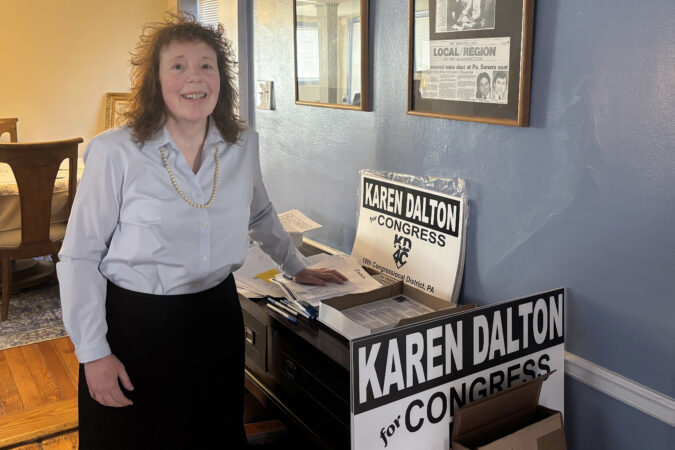
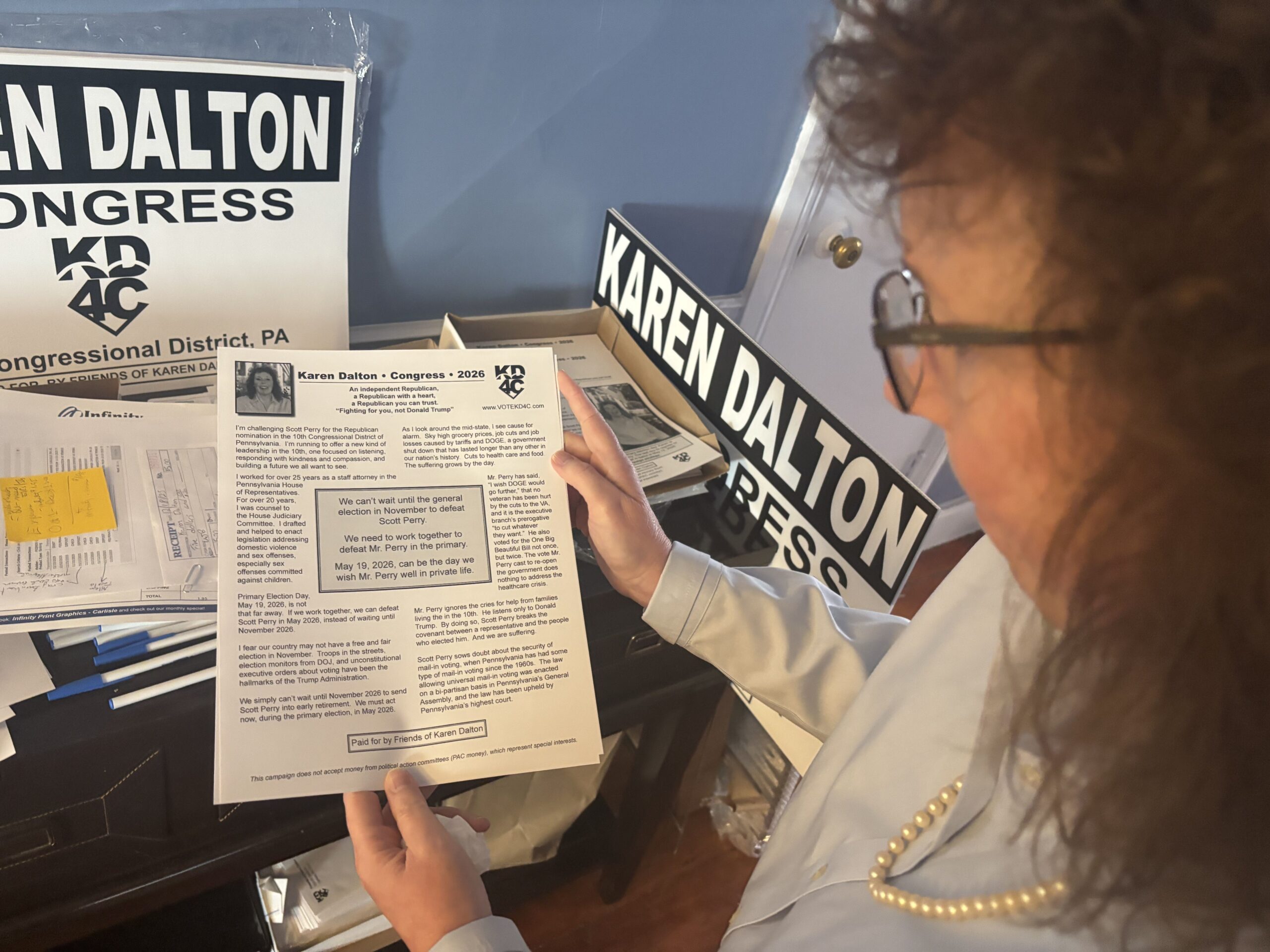
If she makes it on the ballot, Karen Dalton will be U.S. Rep. Scott Perry’s first primary opponent since 2012 – the year he first won the seat.
Dalton, a retired staff attorney for the Pennsylvania House Republicans, knows the odds are against her as she runs a solo campaign operation out of her living room. But she thinks she has a shot.
The 65-year-old Carlisle resident is irked byPresident Donald Trump’s policies both from a faith-based standpoint and a legal one.
She holds many views that align with Democrats, which may draw accusations that she’s a “RINO,” or Republican in name only. But she argues she’s a Republican at heart.
“I was talking to a senior citizen the other day, and the first thing he said to me was, ‘So you’re a RINO,” said Dalton, 65. “And my response to that was, well, if you mean ‘Respect for Individuals and Not Oligarchs,’ I’ll go along with that. He goes, ‘No, no, no, I’m a RINO too. I’m that old school Republican that believes in helping people.’ I’m like, ‘Yes, thank you. That’s what I’m talking about getting back to.’”
Perry, a longtime ally of President Donald Trump whosupported his unsuccessfulattempts to overturn the 2020 election, represents Dauphin County and parts of Cumberland and York Counties in Central Pennsylvania. He appears to be particularly vulnerable this yearas the district has shifted toward Democrats and Republican-turned-Democrat Janelle Stelson, a former local news anchor, had a razor-thin loss against him in the general election last year. She plans to run again in the Democratic primary.
Dalton, in a long-ranging interview with The Inquirer in her living room, called Donald Trump’s One Big Beautiful Bill Act the “Big, Brutal Betrayal of the American Dream Act,” because of its cuts to Medicaid and SNAP.
She believes formerVice President Kamala Harris should have pushed back more on Trump’s claims about transgender people in the 2024 election, argued that the term “illegal alien” is factually incorrect, and says on her website that climate change is a real threat.
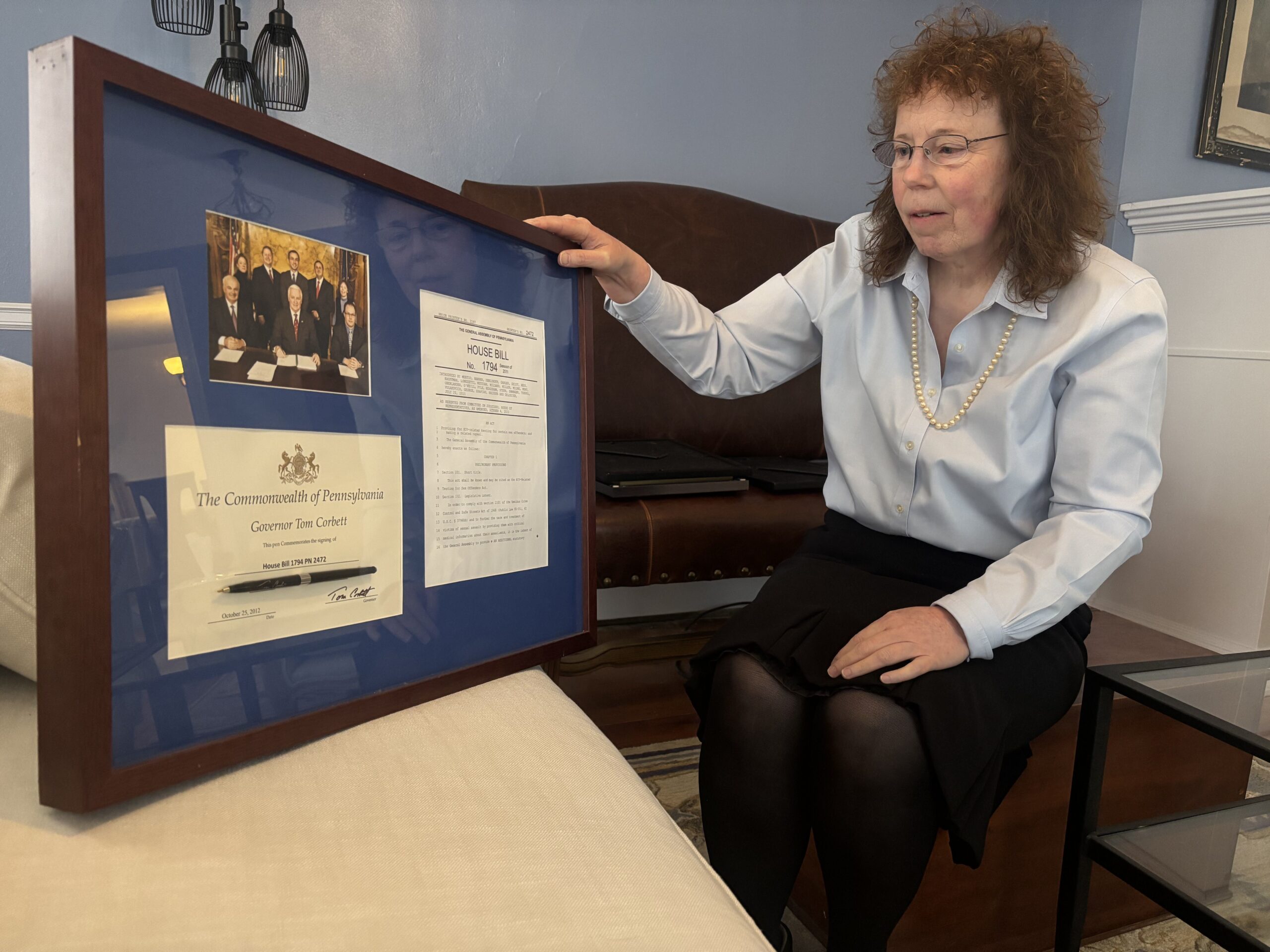
Karen Dalton, who plans to challenge Scott Perry in the Republican primary, holds materials from a bill she worked on in Harrisburg in her Carlisle home on Monday.
She supports a $15 federal minimum wage anda millionaire’s tax, and wants to raise the corporate tax rate. She supports abortion rightsand believes health care is a human right, though she’s fearful of what she views as over-regulation from Democrats.
Her walls are covered with Republican political memorabilia and a poster of the late Sen. Robert F. Kennedy, a Democrat who was assassinated during his 1968 presidential campaign.
She noted that she was a Republican when Donald Trump was a Democrat.
Her path to victory, she believes, is convincing enough independents and Democrats – particularly former Republicans – to change their registration to support her in the MayGOPprimary.
“You know, independents have been upset many years because Pennsylvania has a closed primary system … if they register as Republicans, they get to vote in a primary against Scott Perry and not wait until November,” she said.
Primary challengers are rarely successful. Dalton reported under $3,000 in contributions – and an approximately $6,000 loan from herself — through September, which is pennies compared to themore than $1 million Perry reported.
But she only needs to gather 1,000 signatures and pay a $150 filing fee to appear alongside him on the primary ballot.
Perry’s campaign did not respond to a request for comment about Dalton as of Wednesday.
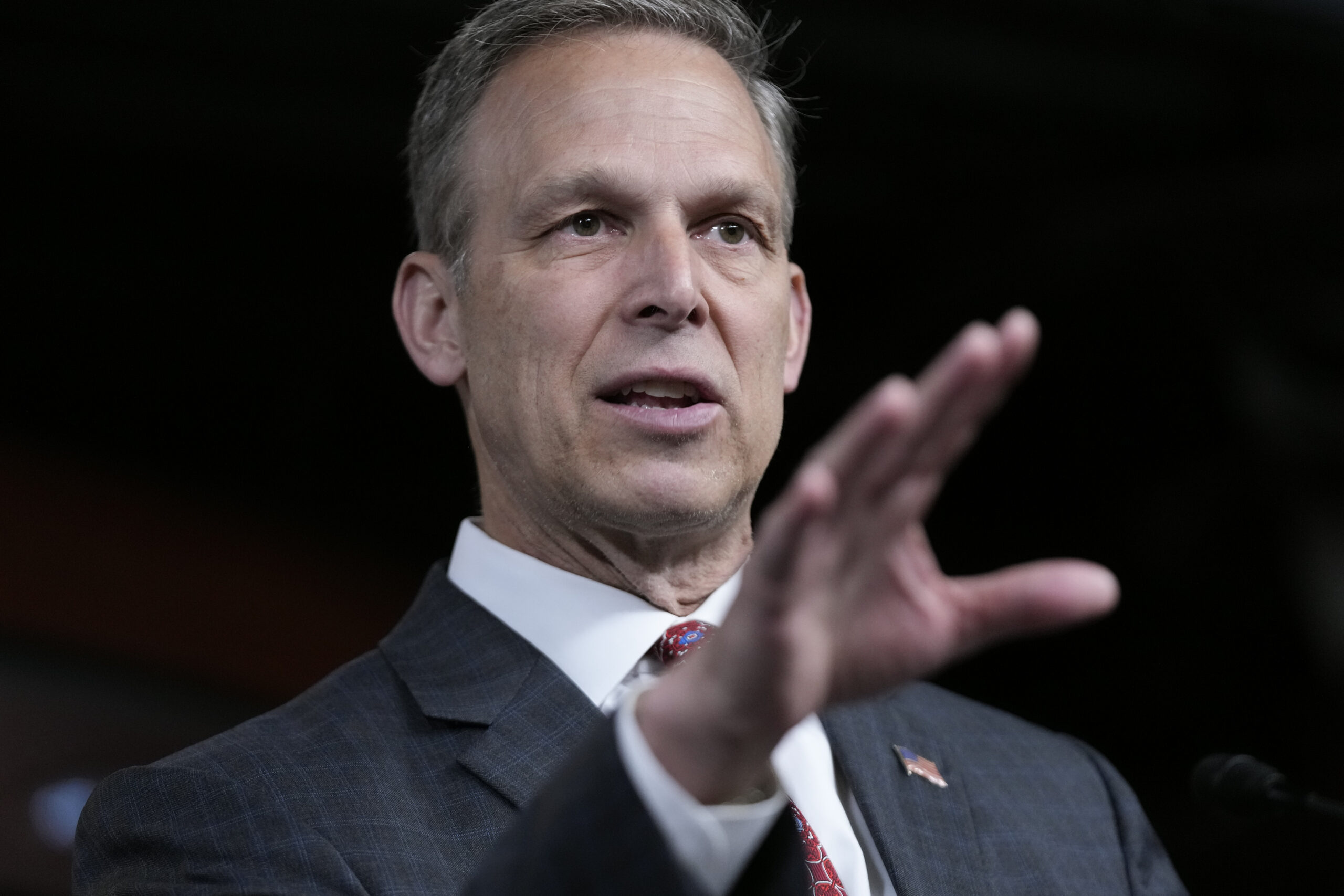
U.S. Scott Perry speaks during a news conference on Capitol Hill in Washington in July 2023.
Rosy eyed about the old Republicans
Dalton grew up in New Jersey and was the first in her immediate family to go to college, attending Montclair State University before getting her politics graduate degree at New York University and later attending law school.
She lives in Carlisle near Dickinson Law — her “beloved alma mater” — in a home she bought just four years ago at age 61. With student loans hanging over her head for the vast majority of her career, she couldn’t afford a down payment until her state retirement payday.
She has no kids and she’s never been married — “I spent a lot of time reading and studying and going to school,” she said. These days, she takes piano lessons and plays pickleball, and does pro bono legal work when she’s not knocking on doors for her one-woman campaign.
Dalton is rosy-eyed about moderates of the Republican Party’s past. She managed former U.S. Rep. Jim Greenwood’s (R., Bucks) successful state Senate campaign in 1986 and worked for New JerseyRepublicanGov. Tom Kean,who wrote The Politics of Inclusion. She later worked as a staff attorney for Pennsylvania House Republicans for 25 years, where she focused on domestic violence and child sexual abuse legislation.
“I’m convinced that if the Republican Party wants to survive and thrive, we need to give up what Donald Trump believes in, and return to our roots,” she said.
Dalton, whose parents were both Democrats, changed her registration from independent to Republican in 1984 at the age of 24 after her first job working for Ralph J. Salerno’s unsuccessful state Senate campaign in New Jersey. When he lost, “amazingly, nobody took up arms,” she said.
“I mean, I cried in his lapel, but you know, it’s just like he conceded, and everybody moved on,” she said. “There was no insurrection, there was no battle, there was no violence, there was no ‘Oh, there was voter fraud.’ None of that stuff happened, because that’s the way things used to be before Donald Trump was president.”
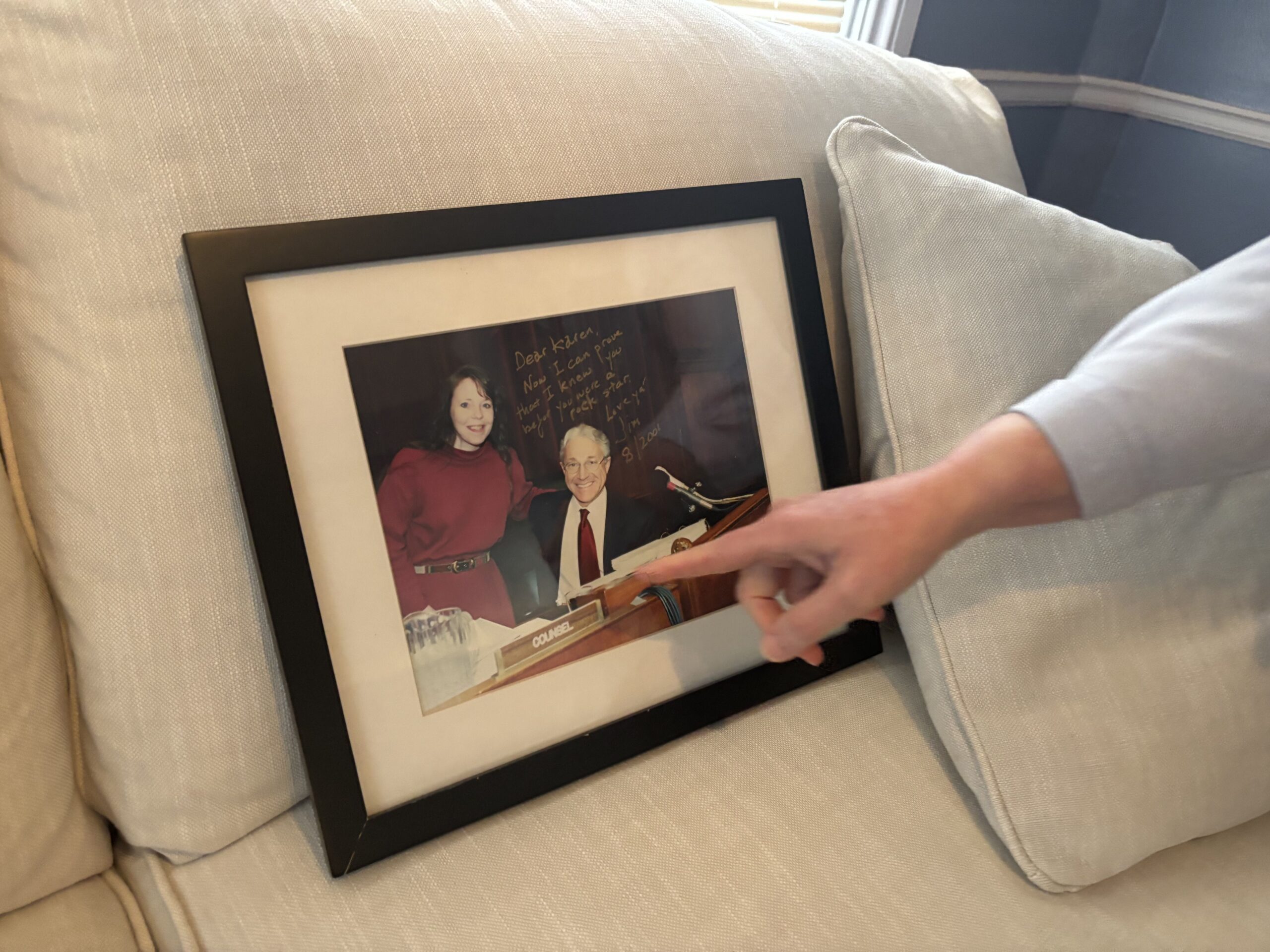
Karen Dalton points to a photo of herself and her old boss Jim Greenwood in her Carlisle home on Monday. A message from Greenwood says: “Now I can prove that I knew you before you were a rock star.”
Tired of yelling at the television
Dalton said she didn’t think she’d become a candidate herself during her years working for politicians. But she said “steam started to come out of my ears” when Trump tried to end birthright citizenship, and again when House Speaker MikeJohnson mused about defunding the federal judiciary.
“I just couldn’t sit back anymore … I got tired of yelling at the television,” she said.
While Dalton argued that Trump’s rise in 2015 has soured the Republican Party, much of her criticism concentrated on the Jan. 6, 2021 riot and what followed.
Dalton worked with Perry in Harrisburg when he was a state representative, and she described him as “an incredibly nice man” despite her misgivings about his efforts to overturn the 2020 election and continued alignment with Trump. (She calls him “morally blind” on her website.)
When asked if she ever supported Perry, Dalton said she wasn’t comfortable talking about who she voted for in the past because “ballots are private.” She did say that she didn’t vote for Trump in 2024, and shevotedfor Stelson, Perry’s Democratic challenger.
“I can tell you that I don’t vote for insurrectionists,” she said.
Karen Dalton, who plans to challenge Scott Perry in the Republican primary, calls a table in her living room her “campaign headquarters.”
Policy informed by faith
Dalton was raised Catholic, confirmed Episcopalian, and has attended the Unitarian Universalist Church. Though she hasn’t converted, she now identifies as Jewish, and was moved to tears while talking about a late mentor who introduced her to the religion – noting that speaking about the subject made her“verklempt,” a Yiddish term for emotional.
“One of the things I love so much about Judaism, in addition to its focus on social justice, is the idea that you get to disagree,” she said, a handful of crumpled tissues in her lap.
Her faith informs her approach to public policy, from opposing cuts to healthcare subsidies to appreciating ideas across the political spectrum.
One of her flagship policy proposals is creating a way for people to borrow up to two years worth of their own Social Security benefits before they reach retirement age to help with things like a down payment, tuition, or medical expenses – one that would have helped her buy a home earlier.
Another is a scholarship program that would allow students in any field to borrow the full amount of their education from the federal government through loans that would be forgiven if they serve “the public good,” a rebuke of Trump’s One Big Beautiful Bill’s borrowing limit on federal student loans.
She also wants to create a program to pay for the education of students who want to pursue careers in science and guarantee employment at national health or science institutions, including a new foundation for scientific discovery.
Dalton has brought her neighbors into her home to discuss her ideas, and plans to do it again.
She also held a town hall at Central Penn College in Enola that she said drew 15 people.
“That’s 15 more people than Scott Perry looked in the eye and talked to over the past five years at his town halls that didn’t exist,” she said.
For decades, Congress has been the land of the permanent incumbent. Nearly nine in 10 Americans support congressional term limits, yet every attempt to impose them has failed because Washington won’t limit itself. But Pennsylvania has the power to change that.
As I previously argued in the Hill, there’s a path forward that doesn’t require Congress to vote against its own interests, or the near-impossible task of a constitutional amendment. The answer lies in coordinated state action that could force the U.S. Supreme Court to reconsider its 1995 decision in U.S. Term Limits v. Thornton.
In Thornton, the Supreme Court ruled that states cannot add qualifications for federal office beyond those in the Constitution. That decision effectively shut down state-led reform, even though the people overwhelmingly support it.
But landmark Supreme Court reversals often emerge when multiple states pass laws that force the court to reexamine old precedents. From Brown v. Board of Education to Dobbs v. Jackson Women’s Health Organization, coordinated state action has repeatedly succeeded in prompting judicial reconsideration.
The strategy is straightforward: Pennsylvania, along with states like Texas, Florida, and Tennessee, would pass identical laws establishing term limits for their members of Congress. Each law would face legal challenges and be struck down under Thornton, as expected. But with multiple states acting simultaneously, the issue would surface across several federal circuits, creating pressure for the Supreme Court to revisit the question.
Under the Articles of Confederation, delegates were not permitted to serve more than three of any six years, a clear endorsement of rotation in office. The founders never intended public service to become a lifelong career.
If term limits are enacted, they should apply prospectively, with current members grandfathered in and everyone’s “term clock” beginning at zero. This avoids endless lawsuits while setting a new standard for the future.
Pennsylvania is uniquely positioned to lead this effort. While the commonwealth has a divided legislature, with Republicans controlling the Senate and Democrats holding a narrow House majority, term limits have historically drawn bipartisan support. This is precisely the kind of reform that could bridge partisan divides and demonstrate that Pennsylvania can lead on issues that matter to voters across the political spectrum.
Schmidt emphasized that, in America, states run elections, not the federal government. This bipartisan defense of state sovereignty, supported by officials across party lines, demonstrates Pennsylvania’s willingness to assert its constitutional authority when necessary.
Pennsylvania voters overwhelmingly support this reform. A January poll found that 78% of Pennsylvania voters support term limits on Congress, including 79% of Republicans, 78% of Democrats, and 80% of independents. This rare consensus across party lines makes term limits legislation an opportunity for Pennsylvania’s divided government to demonstrate it can work together on reforms that voters clearly want.
Working to pass term limits legislation would be consistent with the Pennsylvania General Assembly’s history of defending state authority against federal intrusion, writes Tanner Willis.
The Pennsylvania legislature has shown it can take principled stands on constitutional questions when there’s sufficient public support. Passing term limits legislation, knowing it will be challenged under Thornton, would be consistent with Pennsylvania’s history of defending state authority against federal intrusion. If Pennsylvania acts alongside states like Utah, Arizona, and Kentucky, the combined pressure could succeed where individual efforts have failed.
If Congress won’t act, and the people can’t amend the Constitution directly, Pennsylvania still has one powerful tool: coordinated challenge.
The path forward is simple. Pass the law, invite the challenge, and let the Supreme Court decide. The only question is whether Pennsylvania has the courage to lead.
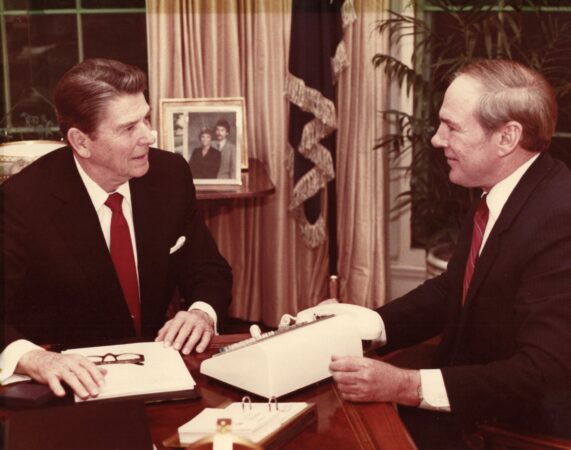
Former U.S. Rep. Richard “Dick” Schulze, a Republican who represented the Philadelphia suburbs from 1975 until 1993, died last week at the age of 96.
Mr. Schulze, who served in the Pennsylvania General Assembly before running for Congress, died of heart failure in his home in the Washington, D.C., area on Dec. 23, according to a news release from his wife, Nancy Shulze, and former chief of staff Rob Hartwell.
During his first term in the U.S. House, Mr. Schulze led the charge to make Valley Forge, seven miles from his home at the time, a national historical park. President Gerald Ford signed the legislation Mr. Shulze authored into law on July 4, 1976, the nation’s bicentennial.
By the time he retired from the House in 1993, Mr. Schulze was a member of the powerfulHouse Ways and Means Committee. He spent his whole congressional career in the political minority, retiring shortly before Republicans retook the chamber in 1994 for the first time since the mid-50s.
“He knew what he believed and he stood for what he believed but he was not, he was not partisan,” Nancy Schulze said in an interview withTheInquirer Tuesday.
Mr. Schulze’s former employees described him as tough but fair, demanding a lot of his staff but offering them the space to achieve it.
“You really had to be at the top of your game,” said Tim Haake, a former attorney in Mr. Schulze’s congressional office who had reconnected with him in recent years. “Overall he was a very nice man, very polite, very cordial.”
Mr. Schulze,Hartwell said, “probably taught me more in my life than anybody.”
Hartwell remembered his former boss as a man willing to work across the aisle in a way that is less common in today’s politics. Mr. Schulze founded the Congressional Sportsman Caucus and served on the National Fish and Wildlife Board among other posts focused on wildlife.
Serving in the minority throughout his career, Hartwell said,Mr.Schulze was willing to make deals and work for the benefit of his district, which included portions of Montgomery, Delaware, and Chester Counties.
“He was a man of his word and he was a man who wanted to accomplish things for his district and his constituents,” Hartwell said. “Unlike today he would reach across the aisle to get those things done.”
Mr. Schulze unsuccessfully proposed a constitutional amendment imposing term limits of 18 years for members of the House of Representatives. Although the proposal did not advance, Mr. Schulze himself chose not to seek reelection in 1992 after serving 18 years in office. He went on to work as a lobbyist for a conservative firm.
“He did not cling to his role as a congressman and he did not go to occupy a seat,” Nancy Schulze said.
Nancy Schulze and Dick Schulze were married following the 1990 death of his first wife, Nancy Lockwood Schulze, after a battle with cancer, and the death of her first husband, Montana Secretary of State Jim Waltermire.
In addition to his wife, Mr. Schulze is survived by four children, seven grandchildren, and five great-grandchildren.
Nancy Schulze remembered her husband as a gentleman, an Eagle Scout who lived by the scouting oath and was dedicated to loving and serving his country, state, district and family.
“He was a man of dignity,” she said.
Services to honor Mr. Schulze are scheduled for Saturday Jan. 10 at 2 p.m. at the Great Valley Presbyterian Church in Malvern.
When U.S. Steel opted to build a new mill in Arkansas that had originally been planned for Allegheny County, then-Arkansas Gov. Asa Hutchinson jokedin 2022 that his state could have the mill built faster than Pennsylvania could have it permitted.
Three years later, Pennsylvania politicians and business leaders are hopeful that a series of permitting reforms — the latest of which were approved as part of the state’s $50.1 billion budget — have finally flippedthatdynamic.
The reforms, which are designed to expedite Pennsylvania’s Department of Environmental Protection’s permitting process to allow for quicker development, mark a major step forward in a project that has long been a goal for Democratic Gov. Josh Shapiro and Republican leaders in the General Assembly.
Pennsylvania’s Department of Environmental Protection is responsible for issuing a variety of permits for building plans to ensure they comply with state law and are environmentally safe. The latest reforms will force the agency to automatically approve certain permits relating to stormwater and groundwater within 60 days if it has not completed its review in that time period or sought an extension. For certain permits related to air quality, the changes allow for the permits to be automatically approved 30 days after submission if the DEP has not acted.
The budget, which Shapiro signed into law last month, also expanded an existing program, called SPEED, that allows companies to hire third-party inspectors for certain permits to expedite the process. And lawmakers required the state to create and maintain a database where companies can easily track the progress of their permit applications.
For Senate Majority Leader Joe Pittman (R., Indiana), the change represents a paradigm shift in the state. He recalled the 2022 loss of the U.S. Steel mill at a news conference last month.
“You cannot have economic development without shovels in the ground, and you can’t put shovels in the ground without permits,” Pittman said.
The reforms, he said, will “provide certainty,” which he called, “critical to economic development.”
A longtime goal
Amy Brinton, director of government affairs at the Pennsylvania Chamber of Business and Industry, said it has long been common for businesses to choose other states because of Pennsylvania’s arduous permitting process, and at times begin the process of building in Pennsylvania only to move out of state when permitting becomes a hurdle.
“We lose a lot of projects to Texas and Ohio because of our complicated permitting process,” Brinton said.
Remedying this through permitting reforms, as well as expedited certifications, have been among Shapiro’s top priorities as governor.
“When he took office in January 2023, Governor Shapiro promised to make state government work more efficiently and effectively for Pennsylvanians. Since then, the Shapiro Administration has delivered on that promise to get stuff done — streamlining permitting processes, reducing wait times for licenses, and cutting red tape to attract more businesses to the Commonwealth,“ Kayla Anderson, a spokesperson for Shapiro, said in a statement. ”This budget builds on the Governor’s success.”
Shapiro signed several executive orders aimed at that goal including developing a “Fast Track” program for high-priority projects. DEP has eliminated the 2,400 permit backlog that existed when Shapiro took officein 2023. Additionally, Shapiro’s office said, the average processing time for all permits dropped to 38 days in 2025 from 53 days in 2022.
Lawmakers first approved the SPEED program allowing for third-party inspectors in the 2024 budget. Shapiro’s office said the program has alreadyproduced results, cutting permit wait times in half in some cases.
These projects are a key part of Shapiro’s business-friendly approach, which he’s promoted as he bolsters his resume and bipartisan appeal ahead of a 2026 reelection campaign and a potential future presidential run.
“The permitting was awful,” Ward said in an interview last month. “Permitting now, instead of 300 days, we’re at 30 days. It’s amazing that we were able to come together and get that done.”
Brinton said she is hopeful that the combination of reforms will make it easier for businesses to choose to build in Pennsylvania because the timeline will be more predictable.
“Improved accountability, greater predictability, faster timelines — those are the key kind of drivers that we’re hoping this will continue to provide to our businesses in the hopes that when they look at Pennsylvania they won’t wince at the fact that this is going to take forever,” Brinton said.
Millions of dollars in federal funding for homeless services are at risk after the Trump administration on Friday moved forward with a plan to cut support for most long-term housing programs that serve people otherwise without stable shelter, according to officials in Bucks and Montgomery Counties.
The plan, which is still being fought in court after the Department of Housing and Urban Development released an earlier iteration of the policy shift in November, seeks to upend the way communities across the nation, including Philadelphia, treat people experiencing homelessness and would reroute the spending of $3.9 billion in grants for a program called Continuum of Care that localities rely on to fund housing programs.
The latestdevelopment came Friday night, when HUD appeared to respond to a judge’s ruling in the legal battle by issuing a new set of rules to apply for the federal awards. The new HUD document reduced the amount of funding available for permanent housing by two-thirds, a drastic decrease, said Kayleigh Silver, administrator of the Montgomery County Office of Housing and Community Development.
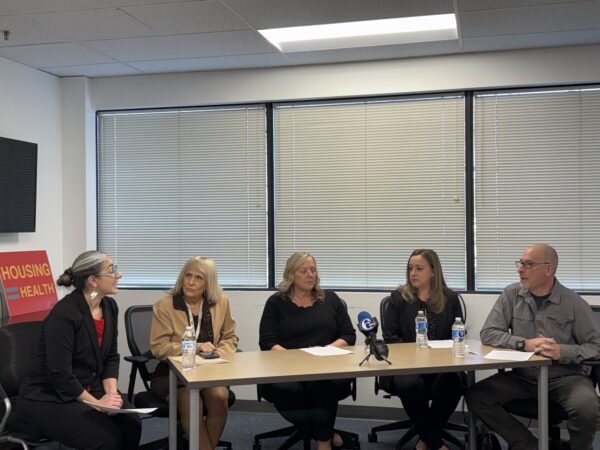
The new plan “we believe will worsen homelessness and destabilize communities, not improve them,” said Kristyn DiDominick, executive director of the Bucks-Mont Collaborative, at a news conference Monday in Warminster. The nonprofit fosters resource sharing between the two counties.
Officials said hundreds of people in the counties, including families, veterans, and people with disabilities, could lose access to housing as a result of the funding shift. Nationwide, the HUD plan could displace 170,000 people by cutting two-thirds of the aid designated for permanent housing, advocates say. In Philadelphia, tens of millions of dollars used to fund the city’s 2,330 units of permanent supportive housing are at risk, city officials said in November
Bucks County Commissioner Diane Ellis-Marseglia, a social worker by trade, said HUD broke its “promise” to continue providing support to programs.
“If we can’t trust HUD, how are we supposed to get the people we work with to trust us?” said Ellis-Marseglia, a Democrat.
Secretary of Housing and Urban Development Scott Turner in the Oval Office on May 5.
The HUD announcement followed two lawsuits, including one from Pennsylvania Gov. Josh Shapiro and 20 other states’ attorneys general and governors, against President Donald Trump’s administration over the cuts included in the November draft of the plan.
The earlier plan gave HUD the authority to restrict funding for groups that recognize the existence of transgender and nonbinary people, populations that face greater risks for homelessness. County officials are still seeking clarification on whether that provision remains in the new plan.
HUD temporarily rescinded the controversial plan on Dec. 8, just hours before a hearing on the lawsuits, citing an intent to revise it. On Friday, U.S. District Judge Mary S. McElroy, who presided over the hearing, issued a preliminary injunction blocking HUD’s efforts until a new funding notice is issued. It remained unclear to local advocates and service providers the differences between the new plan posted later that night and the original.
“HUD will continue working to provide homelessness assistance funding to grantees nationwide. The Department remains committed to program reforms intended to assist our nation’s most vulnerable citizens and will continue to do so in accordance with court orders,” a spokesperson for the department said in a statement to The Inquirer.
The confusing standoff marks the latest obstacle that nonprofits have had to endure after a lengthy federal government shutdown and Pennsylvania’s state budget impasse, both of which contributed to funding delays and instability.
Bucks and Montgomery County service providers and advocates at Monday’s news conference handed out literature that said“Chaos isn’t a strategy” and called on Congress to step in, noting that the funding process is months behind.
The impacts “land on real people,” DiDominick said.
Housing is also an important resource for survivors of domestic violence, said Stacy Dougherty, executive director of Laurel House, a domestic violence organization in Montgomery County.
“For victims of domestic violence, access to safe housing can be the difference between staying in an abusive relationship and being able to leave, and sometimes even the difference between life and death,” Dougherty said.
Erin Lukoss, CEO of the Bucks County Opportunity Council, added that “housing is the foundation,” a backbone for the entire system that tries to address poverty and food insecurity. A lack of clarity on this funding is another stressor for service providers and those who benefit from the resources
“What makes this moment especially concerning is not just the potential reduction in funding, it’s the instability of the rules themselves,” Lukoss said.