Tag: Republicans

  • Congressional leaders say ICE deal is still possible despite divisions

    Congressional leaders say ICE deal is still possible despite divisions

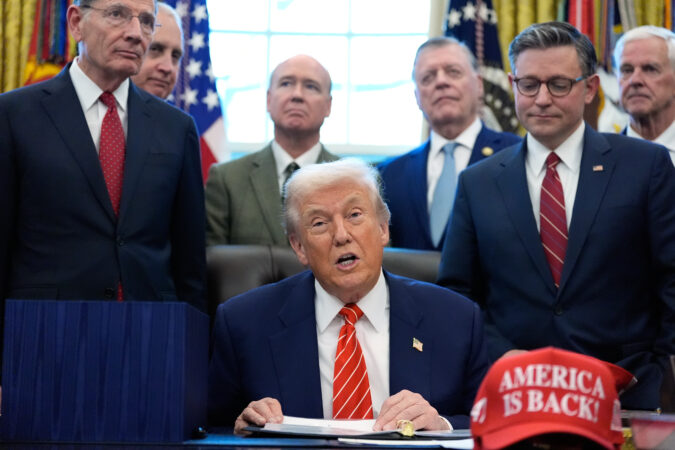
    WASHINGTON — Congressional leaders said Tuesday that a deal was still possible with the White House on Homeland Security Department funding before it expires this weekend. But the two sides were still far apart as Democrats demanded new restrictions on President Donald Trump’s immigration crackdown.

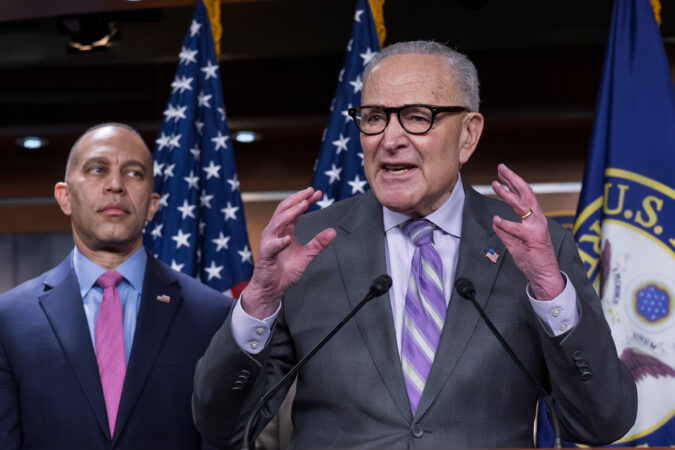
    After federal agents fatally shot two protesters in Minneapolis last month, Democrats say U.S. Immigration and Customs Enforcement needs to be “dramatically” reined in and are prepared to let Homeland Security shut down if their demands aren’t met. On Tuesday, Senate Democratic Leader Chuck Schumer and House Democratic Leader Hakeem Jeffries said they had rejected a White House counteroffer that “included neither details nor legislative text” and does not address “the concerns Americans have about ICE’s lawless conduct.”

    “We simply want ICE to follow the same standards that most law enforcement agencies across America already follow,” Schumer said Tuesday. “Democrats await the next answer from our Republican counterparts.”

    The Democrats’ rejection of the Republican counteroffer comes as time is running short, with a shutdown of the Homeland Security Department threatening to begin Saturday. Among the Democrats’ demands are a requirement for judicial warrants, better identification of DHS officers, new use-of-force standards and a stop to racial profiling.

    Finding agreement on the charged, partisan issue of immigration enforcement will be exceedingly difficult. But even as lawmakers in both parties were skeptical, a White House official said that the administration was having constructive talks with both Republicans and Democrats. The official, granted anonymity to speak about ongoing deliberations, stressed that Trump wanted the government to remain open and for Homeland Security services to be funded.

    Senate leaders also expressed some optimism.

    “There’s no reason we can’t do this” by the end of the week, Senate Democratic Leader Chuck Schumer said after meeting with his caucus on Tuesday.

    Senate Majority Leader John Thune, R-S.D., said there have been “some really productive conversations.”

    Democratic demands

    Schumer and Jeffries have said they want immigration officers to remove their masks, to show identification and to better coordinate with local authorities. They have also demanded a stricter use-of-force policy for the federal officers, legal safeguards at detention centers and a prohibition on tracking protesters with body-worn cameras.

    Among other asks, Democrats say Congress should end indiscriminate arrests, “improve warrant procedures and standards,” ensure the law is clear that officers cannot enter private property without a judicial warrant and require that before a person can be detained, it’s verified that the person is not a U.S. citizen.

    Democrats made the demands for new restrictions on ICE and other federal law enforcement after ICU nurse Alex Pretti was shot and killed by a U.S. Border Patrol officer in Minneapolis on Jan. 24, and some Republicans suggested that new restrictions were necessary. Renee Good was shot by ICE agents on Jan. 7.

    Many Democrats said they won’t vote for another penny of Homeland Security funding until enforcement is radically scaled back.

    “Dramatic changes are needed at the Department of Homeland Security before a DHS funding bill moves forward,” Jeffries said. “Period. Full stop.”

    Republican counterproposal

    Jeffries said Tuesday that the White House’s offer “walked away from” their proposals for better identification of ICE agents, for more judicial warrants and for a prohibition on excessive use of force. Republicans also rejected their demand for an end to racial or ethnic profiling, Jeffries said.

    “The White House is not serious at this moment in dramatically reforming ICE,” Jeffries said.

    Republican lawmakers have also pushed back on the requests. Oklahoma Sen. Markwayne Mullin, a close ally of Trump, said Tuesday that he’s willing to discuss more body cameras and better training — both of which are already in the Homeland spending bill — but that he would reject the Democrats’ most central demands.

    “They start talking about judicial warrants? No. They start talking about demasking them? No, not doing that. They want them to have a photo ID with their name on it? Absolutely not,” Mullin said.

    Republicans have said ICE agents should be allowed to wear masks because they are more frequently targeted than other law enforcement officials.

    “People are doxing them and targeting them,” said House Speaker Mike Johnson, R-La., on Monday. “We’ve got to talk about things that are reasonable and achievable.”

    Some Republicans also have demands of their own, including the addition of legislation that would require proof of citizenship before Americans register to vote and restrictions on cities that they say do not do enough to crack down on illegal immigration.

    At a House hearing on Tuesday, the acting director of ICE, Todd Lyons, said his agency is “only getting started” and would not be intimidated as his officers carry out Trump’s mass deportation agenda.

    Trump deals with Democrats

    Congress is trying to renegotiate the DHS spending bill after Trump agreed to a Democratic request that it be separated out from a larger spending measure that became law last week and congressional Republicans followed his lead. That package extended Homeland Security funding at current levels only through Feb. 13, creating a brief window for action as the two parties discuss new restrictions on ICE and other federal officers.

    But even as he agreed to separate the funding, Trump has not publicly responded to the Democrats’ specific asks or suggested any areas of potential compromise.

    White House press secretary Karoline Leavitt said late last week that the Trump administration is willing to discuss some items on the Democrats’ list, but “others don’t seem like they are grounded in any common sense, and they are nonstarters for this administration.”

    Thune said Tuesday that “there are certain red lines that I think both sides have, things they are not going to negotiate on, but there are some things they are going to negotiate on, and that’s where I think the potential deal space is here.”

    It was, so far, unclear what those issues were.

    “We are very committed to making sure that federal law enforcement officers are able to do their jobs and to be safe doing them,” Thune said of Republicans.

    Consequences of a shutdown

    In addition to ICE and U.S. Customs and Border Protection, the homeland security bill includes funding for the Federal Emergency Management Agency and the Transportation Security Administration, among other agencies. If DHS shuts down, Thune said last week, “there’s a very good chance we could see more travel problems” similar to the 43-day government closure last year.

    Thune has said Republicans will try to pass a two- to four-week extension of the Homeland Security funding while negotiations continue.

    Many Democrats are unlikely to vote for another extension. But Republicans could potentially win enough votes in both chambers from Democrats if they feel hopeful about negotiations.

    “The ball is in the Republicans’ court,” Jeffries said Monday.

  • 85,000 Pennie customers dropped health plans as tax credits shrank and costs spiked

    85,000 Pennie customers dropped health plans as tax credits shrank and costs spiked

    About 85,000 people who bought Pennie plans in 2025 did not renew for this year following the expiration of expanded tax credits that reduced what consumers had to pay, Pennsylvania’s Affordable Care Act marketplace announced Monday.

    That meant that 18% of previously enrolled Pennsylvania residents dropped their coverage as premiums doubled on average across the state, according to Pennie, the state’s Obamacare marketplace.

    Enrollment for 2026 totaled 486,000, down from 496,661 at the end of last year’s open enrollment period. For this year, roughly 79,500 newcomers to the exchange partially offset the people who dropped coverage.

    The agency warned, however, that the number of enrollees could continue declining for several months. There’s a three-month lag between when consumers stop paying premiums and coverage ends. Open enrollment ended Jan. 31.

    Pennsylvania already had more than 700,000 people without health insurance, according to the latest census data.

    The agency had predicted last summer that as many as 150,000 people would drop coverage if Congress did not renew the expanded tax credits that were adopted in 2021 during the coronavirus pandemic.

    New Jersey has not released final results for its ACA open enrollment period, which also ended Jan. 31.

    As of the start of January, 493,727 residents were signed up for 2026 health coverage with Get Covered New Jersey. That’s up slightly from the 481,151 people who were enrolled last year.

    Soaring costs for consumers

    Average out-of-pocket costs were expected to double on average for people who benefited from the enhanced tax credits, Pennie said last year.

    Under the ACA, people who earn less than 400% of the federal poverty level — about $64,000 for an individual and $132,000 for a family of four — are eligible for tax credits on a sliding scale, based on their income, to help offset the monthly cost of an insurance premium.

    That tax credit is part of the law, and therefore did not expire at the end of December. The change affects an expansion in 2021, when Congress increased financial assistance so that those buying coverage through an Obamacare marketplace do not pay more than 8.5% of their income.

    The expiration of the 8.5% cap means that a 60-year-old couple with household income of about $85,000 could see their premium triple to $22,600 this year from $7,225 last year, according to the nonprofit Bipartisan Policy Center in Washington.

    The tax credits were a key issue in the federal budget debate last year that ultimately led to the longest-ever government shutdown. Democrats wanted to permanently expand the enhanced subsidies, and Republicans refused.

    Weaker coverage

    About 33,000 more Pennie customers enrolled in plans that have lower monthly premiums, but typically come with high out-of-pocket costs in the form of deductibles and copays. That amounted to a 30% increase in the number of consumers choosing so-called Bronze plans, Pennie said.

    “As the costs of groceries, housing, utilities, and other necessities continue to rise, higher healthcare costs mean more people will delay care, skip treatments, or take on medical debt,” Antoinette Krause, executive director of the nonprofit advocacy group Pennsylvania Health Access Network, said in an email.

    Pennie noted that rural counties were particularly hard hit by coverage losses. Fifteen of the top 20 counties with the highest disenrollment on a percentage bases were rural, Pennie said.

    That could put more stress on rural hospitals if people have to resort more often to emergency departments for care and don’t have the means to pay.

    Inquirer staff writer Sarah Gantz contributed to this article.

  • Sen. John Fetterman said he ‘absolutely’ expects a DHS shutdown as ICE negotiations stall

    Sen. John Fetterman said he ‘absolutely’ expects a DHS shutdown as ICE negotiations stall

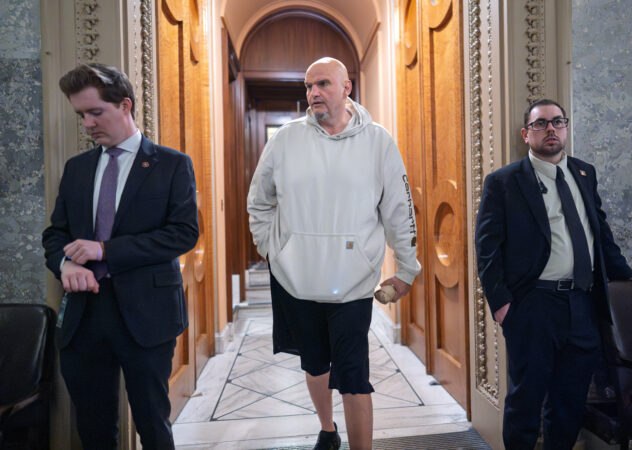
    U.S. Sen. John Fetterman said Sunday that he expects the Department of Homeland Security to shut down Friday as negotiations over immigration enforcement have stalled, an outcome that could impact air travel and emergency response across the nation.

    “I absolutely would expect that it’s going to shut down,” the Pennsylvania Democrat said during an interview on Fox News’ Sunday Morning Futures with Maria Bartiromo.

    Funding for DHS is scheduled to lapse Friday, a deadline that lawmakers set after separating the agency’s funding from other parts of the federal budget and approving a two-week extension to continue talks.

    At the center of the impasse is Democrats’ insistence on overhauling federal immigration enforcement. The party’s leaders drafted a list of 10 policies they want Republicans to agree to in exchange for their support in funding DHS, which includes U.S. Immigration and Customs Enforcement.

    Among Democrats’ demands are banning immigration enforcement agents from wearing masks and requiring DHS officers to obtain a warrant signed by a judge before entering a home.

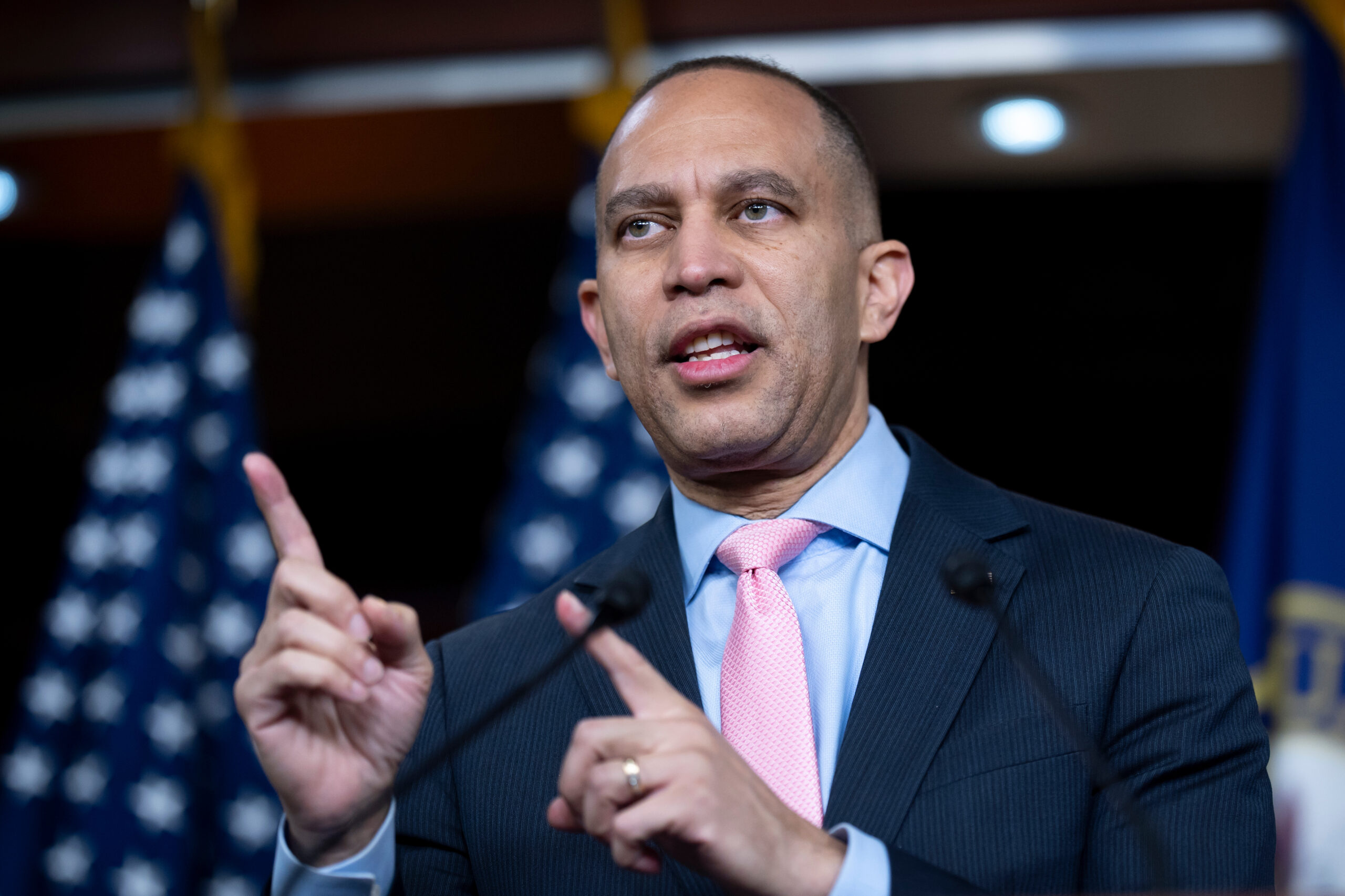
    House Minority Leader Hakeem Jeffries (D., N.Y.) said Sunday during an interview on CNN’s State of the Union that “at this point” he was not willing to accept a deal that didn’t include President Donald Trump’s administration implementing Democrats’ full list of ICE changes.

    “We know that ICE is completely and totally out of control,” Jeffries said. “They’ve gone way too far, and the American people want them reined in.”

    House Minority Leader Hakeem Jeffries (D., N.Y.) speaks to reporters about Venezuela, the ICE shooting in Minneapolis, and affordability ahead of a vote in the House to extend the Obamacare subsidies for three years at the Capitol on Jan. 8. (AP Photo/J. Scott Applewhite)

    Fetterman has called for significant changes at DHS, including the firing of Secretary Kristi Noem. But he said Sunday that Democrats shouldn’t expect to “get all 10″ demands.

    “We, the Democrats, we provided 10 kinds of basic things, and then the Republicans pushed back quickly saying, ‘That’s a Christmas wish list,’ and that they’re nonstarters,” Fetterman, a member of the Senate Homeland Security Committee, said. “I truly don’t know what specifically are the Democrats’ red lines that it has to be — certainly not going to get all 10.”

    Fetterman generally opposes any measure that would shut down the government and has been the only Senate Democrat to vote for some Republican budget proposals. He added that he is concerned about federal workers, including TSA agents, not being paid amid a funding lapse.

    “Every American deserves to be paid for the work that they’ve done,” he said. “That’s real lives, and they’re not wealthy if they’re TSA folks. They’re allowing us to fly safe here in America, and that’s part of that conversation now, too.”

  • Shapiro blasts Trump for racist video of the Obamas and ICE’s ‘secretive’ warehouse purchase in Berks County

    Shapiro blasts Trump for racist video of the Obamas and ICE’s ‘secretive’ warehouse purchase in Berks County

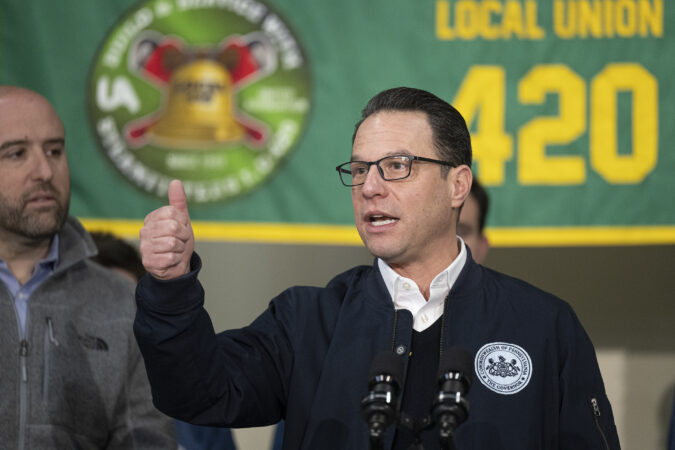
    Gov. Josh Shapiro blasted U.S. Immigration and Customs Enforcement (ICE) Friday for buying a Berks County warehouse that may be used to detain people.

    “I’m strongly opposed to the purchase,” Shapiro said after speaking at an event at the Steamfitters Local 420 in Northeast Philadelphia.

    Shapiro said the facility is “not what we need anywhere in Pennsylvania,” adding that he was not alerted ahead of time of ICE’s $87 million acquisition of the warehouse on 64 acres in Upper Bern Township.

    “The secretive way the federal government went about this undermines trust,” Shapiro said.

    Shapiro has grown increasingly vocal in his criticism of ICE and President Donald Trump in recent weeks as he’s toured the East Coast promoting his new memoir. In addition to voicing his opposition to the warehouse, Shapiro criticized Trump for sharing a racist video attacking former President Barack Obama and former first lady Michelle Obama.

    The Democratic governor, who is widely seen as a contender for the White House in 2028, is in the midst of a reelection campaign against Trump-endorsed Republican Stacy Garrity, who has urged cooperation with ICE.

    He said the commonwealth is exploring “what legal options we may have to stop” the ICE procurement, but he acknowledged “those options are very slim, given that the federal government is the purchaser.”

    Shapiro told this audience of union workers and apprentices that the Berks County building would be better used for economic development.

    At the same event, Shapiro announced a new $3 million Redevelopment Assistance Capital Program (RACP) grant to expand the Steamfitters Local Union 420 Training Center, which he said would help “train the next generation of workers.”

    Shapiro criticizes Trump over racist anti-Obama video

    During the union hall event, Shapiro also leveled criticism at the Trump administration for sharing on social media a racist video depicting Obama, the first Black president, and his wife, as apes.

    When asked for a reaction, Shapiro said, “I actually agree with [Republican] Sen. Tim Scott of South Carolina that it’s racist.”

    Scott, the only Black Republican in the Senate, called the video “the most racist thing I’ve seen out of this White House,” after Trump shared it to his Truth Social account Thursday evening.

    Shapiro said that Trump “seems to always find a lower and lower common denominator. We’re not going to get sucked down into the depths that this president seems to reach for each day.”

    Trump took down the video early Friday afternoon.

    The governor also strongly chided Trump for recently saying the federal government should be in charge of elections.

    Specifically, Trump named Philadelphia, along with Detroit and Atlanta, as cities where the federal government should step in to run elections. The predominantly Black cities are in swing states and have long been targeted with Trump’s false claims of voter fraud.

    “The president of the United States doesn’t run our elections,” said Shapiro. “County officials run our elections, Republican and Democrat alike.”

    “We’re not going to have interference from the White House,” added the governor, who served as attorney general when Trump tried to overturn Pennsylvania’s election results in 2020.

  • What to know about the too-close-to-call race to replace Mikie Sherrill in Congress

    What to know about the too-close-to-call race to replace Mikie Sherrill in Congress

    The Democratic primary to replace N.J. Gov. Mikie Sherrill in Congress remains too close to call as of Friday afternoon, but the early results already signal a major breakthrough for progressives in the state.

    Analilia Mejia, a progressive who’s worked for U.S. Sen. Bernie Sanders and the Working Families Party, led former U.S. Rep. Tom Malinowski by less than 1 percentage point, with more than 91% of votes tabulated in the crowded primary.

    Some outlets, including Decision Desk, called the race for Malinowski, who dominated mail ballots, Thursday night before issuing retractions as Mejia gained ground. The Democratic National Committee had even issued a premature congratulations to the former House member before Mejia took the lead.

    (function () {window.addEventListener(‘message’, function (e) { var message = e.data; var els = document.querySelectorAll(‘iframe[src*=”‘ + message.id + ‘”]’); els.forEach(function(el) { el.style.height = message.height + ‘px’; }); }, false); })();

    Sherrill represented North Jersey’s 11th Congressional District, which includes parts of Essex, Morris, and Passaic Counties, and stepped down after being elected governor. A field of 13 Democrats competed in the special election for the open seat from various factions of the Democratic Party.

    Only two broke through as serious contenders, and they represent two sides of the New Jersey Democratic Party: the establishment and progressives.

    Democrats were so invested in the race, turnout exceeded the 2024 primary for the seat, which signals the high level of motivation for Democratic voters going into this year’s midterms.

    Sherrill stayed neutral in the race

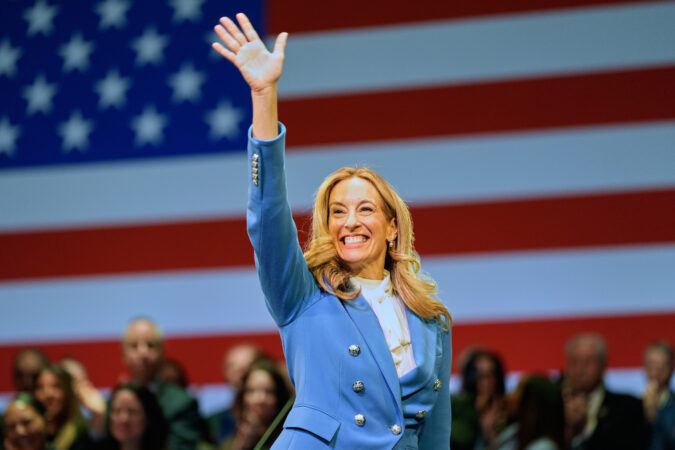
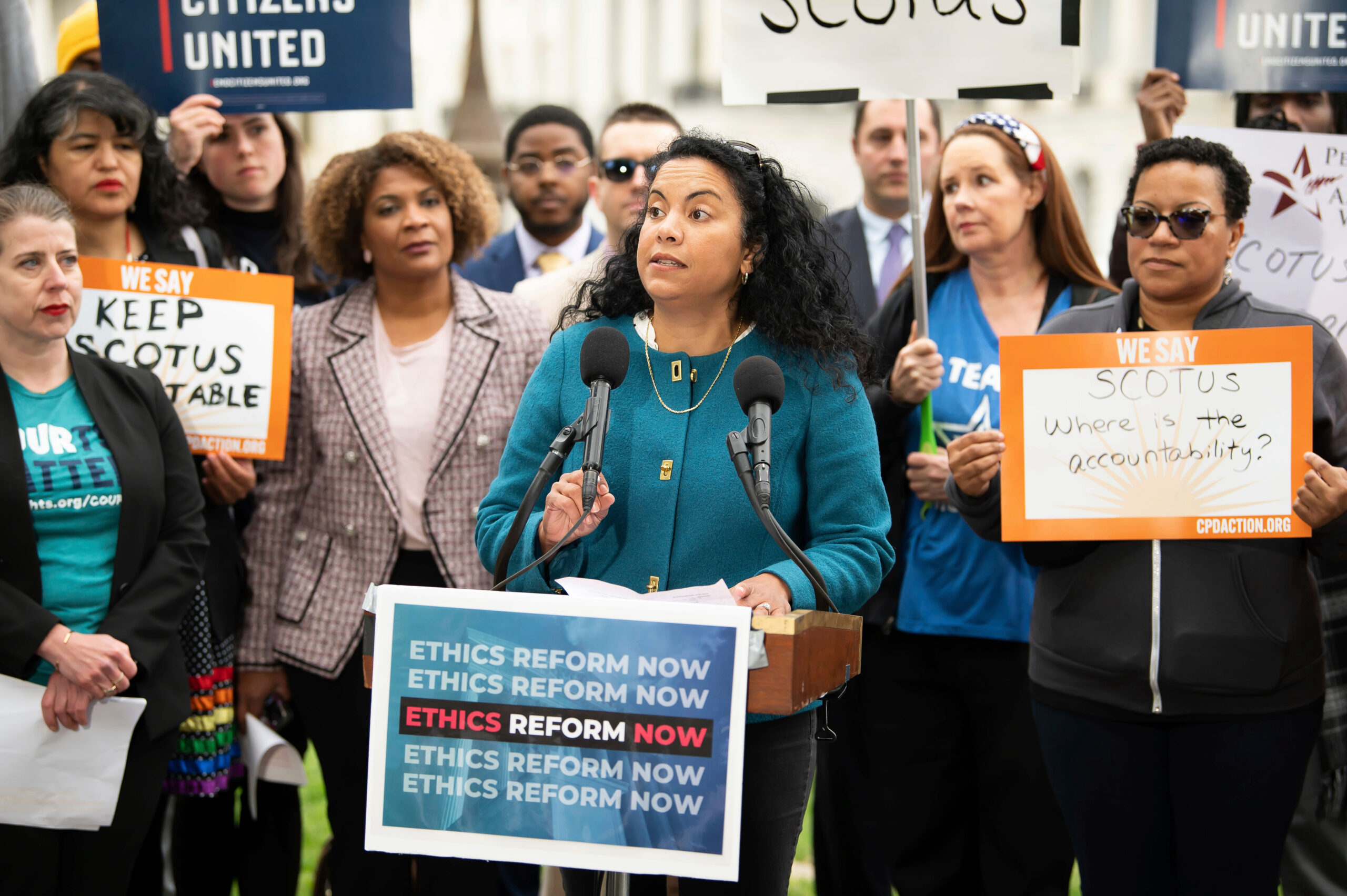
    Analilia Mejia, center, speaks during a rally calling for SCOTUS ethics reform, May 2, 2023, in Washington.

    Analilia Mejia is supported by national progressives like AOC

    Mejia, 48, is the daughter of Colombian and Dominican immigrants. She has called to “abolish ICE” and spoke in both English and Spanish at a news conference Friday.

    The progressive candidate has most recently worked as the co-executive director of Popular Democracy, a network of organizations across the country that call for “transformational change for Black, brown and low-income communities,” according to its website. She worked as the national political director for Sanders’ 2020 presidential campaign, the state director of the New Jersey Working Families Party, and as a union organizer before launching her bid for the seat.

    Mejia was endorsed by national progressives, including Sanders (I., Vt.), U.S. Rep. Alexandria Ocasio-Cortez (D., N.Y.) and U.S. Sen. Elizabeth Warren (D., Mass.). She also had the backing of Newark Mayor Ras Baraka, whose progressive campaign landed him in second place behind Sherrill in the six-way gubernatorial primary last year.

    Mejia leaned into her underdog status Thursday night when addressing supporters, noting the race had been called for her opponent before she took the lead.

    “Here’s the bottom line,” she said. “We know that our movement, this party, this moment, calls on every one of us to be big and bold and brave. And that is what we are about.”

    She later declared: “I think we’ll listen to some Bad Bunny!”

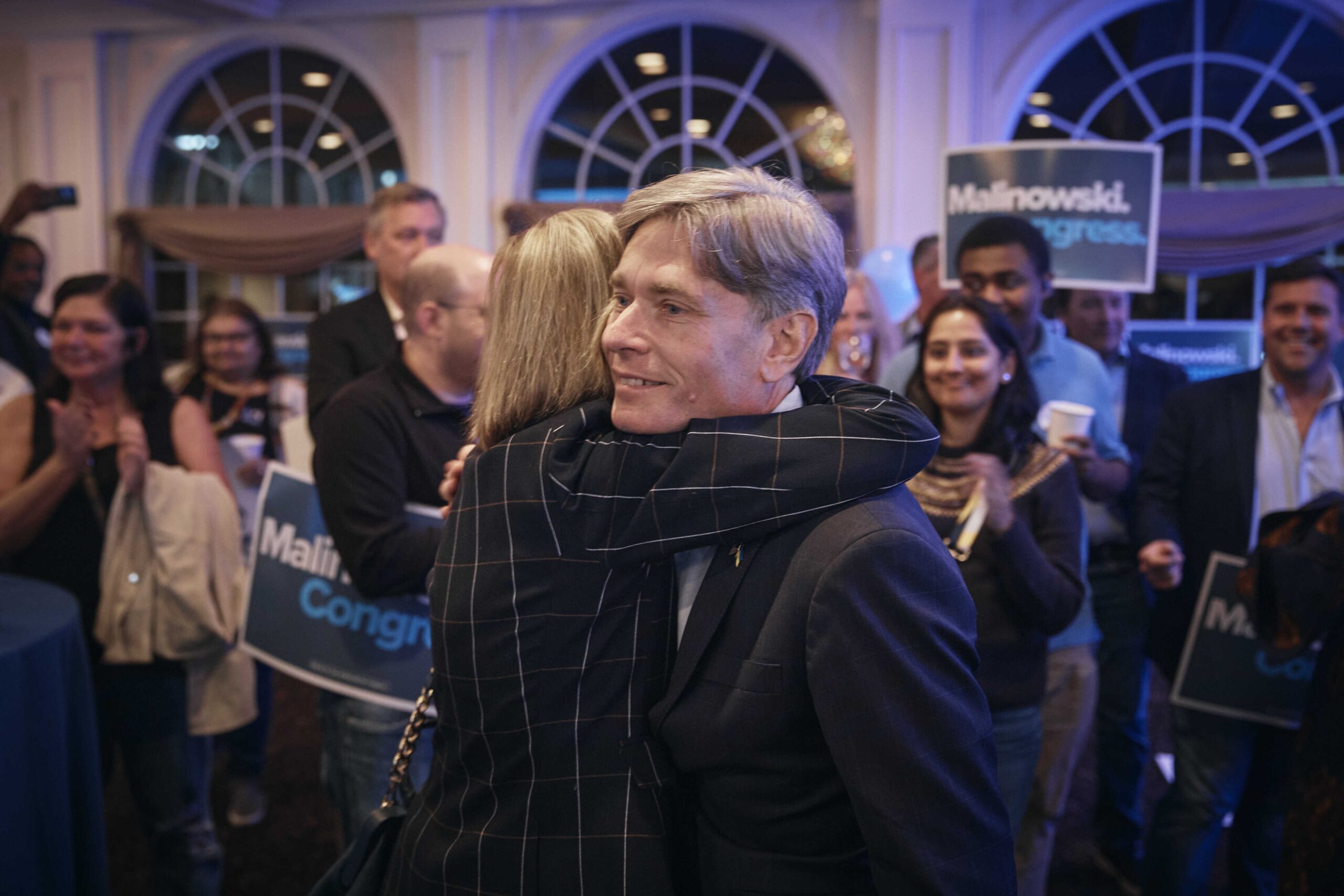
    Democratic Rep. Tom Malinowski, center right, arrives during his election night party in Garwood, N.J., Tuesday, Nov. 8, 2022.

    Tom Malinowski was backed by the local party apparatus

    Malinowski, 60, started as a freshman House Democrat alongside Sherrill in 2019 before losing his seat to Republican U.S. Rep. Thomas Kean Jr. in the 2022 election after he faced pushback for undisclosed stock trading and his area was redistricted to be less favorable to Democrats.

    His former district is right next to the 11th District and encompasses parts of Union, Somerset, Morris, and Sussex Counties, and all of Hunterdon and Warren Counties.

    He recently chaired the Hunterdon County Democratic Committee and previously worked as former President Barack Obama’s assistant secretary of state for democracy and human rights.

    He had the endorsement of the Morris County Democratic Committee, which would have had more sway before the state got rid of its county line ballot system last year.

    U.S. Sen. Andy Kim, the Burlington County Democrat who led the legal fight that led to the county line’s demise, endorsed Malinowski in this race, saying he trusts him.

    The Essex and Passaic County parties backed other candidates who were far behind Malinowski and Mejia.

    DNC Chair Ken Martin said in the premature Thursday night statement that Malinowski has “the experience to serve New Jersey once again.”

    AIPAC’s involvement in the race backfired

    Malinowski faced attacks from a super PAC funded by American Israel Public Affairs Committee (AIPAC), a pro-Israel national lobbying group, even though the group supported him in the past, The New York Times and other outlets reported.

    Those attacks likely pulled support away from Malinowski, who is far less critical of Israel than Mejia.

    Mejia called AIPAC’s tactics against Malinowski “disgusting” in a news conference on Friday and said it underscores her broader concerns about money in politics.

    “Big money can actually silence voters … In many ways, I’m glad that NJ-11 voters got to see the terrible tactics so that we could reject it in the future,” she said.

    The district, which used to be Republican, is now viewed as safely blue

    Sherrill flipped the 11th congressional district blue as a first-time candidate in 2018, defeating Republican Assemblymember Jay Webber after the GOP incumbent retired. The incumbent, former U.S. Rep. Rodney Frelinghuysen had held the seat since 1995. The district went from leaning Republican to leaning Democratic when its lines were redrawn in 2022.

    Sherrill won her last general election race for her House seat with 56.5% of the vote in 2024.

    The nonpartisan Cook Political Report rates the district as solidly Democratic. Former Vice President Kamala Harris won the district decisively by nearly 9 points in 2024, but it still swung to the right from Biden’s 2020 victory in the district by almost 17 points, according to Cook data.

    Joe Hathaway, the former mayor of Randolph in Morris County, was unopposed in the Republican primary.

    Hathaway, 38, said in a video on social media Thursday that the election brings an opportunity for “a new generation of leadership …one focused more on the hard work than the headlines.”

    He is a former aide to former Republican Gov. Christopher J. Christie and has worked in various roles in the private sector, and has branded himself as a “workhorse” throughout his campaign.

    Hathaway and the winner of the Democratic primary will face off on Thursday, April 16, less than two months before the regular primary election on June 2 for the midterms.

    When will the race be called, and will there be a recount?

    It’s unclear when the race will be called by The Associated Press (which The Inquirer relies on for election results), but it may not be this week.

    Mail ballots that were postmarked by Election Day on Thursday and received by the county Board of Election by next Wednesday can be counted in New Jersey.

    Provisional ballots in the state cannot be officially counted until after the eligible mail ballots are received to ensure the voter has not voted by mail. These ballots are used in specific situations, such as when a person registered to vote moves within the county without updating their address.

    Voters also have until the following Tuesday, Feb. 17, to cure a ballot flagged by election officials. This happens when there is a potential issue with a voter’s signature, which can happen when someone forgets to sign their ballot or whose signature has changed over time. The voter then has to verify their identity for their ballot to be counted.

    As for a recount, New Jersey doesn’t have an automatic recount system, so a candidate would have to request one and cover the expenses. The candidate would receive a refund if the result changed.

  • Brian Fitzpatrick has more cash on hand than any other swing district Republican incumbent in the country

    Brian Fitzpatrick has more cash on hand than any other swing district Republican incumbent in the country

    U.S. Rep. Brian Fitzpatrick has more cash on hand than any other GOP incumbent in a swing district nationwide as the party prepares for a tough election.

    The Bucks County lawmaker raised about $4.3 million in the most recent cycle, more than any other House candidate in the state and the 21st most of all the candidates running for the 435-member House in 2026. He ended 2024 with nearly $4.4 million when removing debt and had more than $7.3 million cash on hand as of Dec. 31. That haul makes him the best-funded of the 16 candidates on the National Republican Congressional Committee’s Patriots program, a group of vulnerable incumbents in key swing districts, according to Federal Election Commission data.

    “Brian Fitzpatrick has years of electoral success under his belt and will continue to be unbeatable in Bucks County because Pennsylvanians know he’ll always put them first in Washington … this race was over before it began,” NRCC spokesperson Reilly Richardson said in a statement.

    But Fitzpatrick’s district is one of four in Pennsylvania that could determine the control of the U.S. House and has long been coveted by Democrats because of its purple electorate. It is one of nine GOP-held districts in the country that former Vice President Kamala Harris won in 2024.

    Bob Harvie, a Democrat who chairs the Bucks County commissioners, has emerged as the front-runner to face Fitzpatrick in the 2026 election.

    Harvie, who would need to win the May primary to face Fitzpatrick, raised nearly $930,000 last year and has more than $400,000 cash on hand. He surpassed $1 million after getting $100,000 in the first few weeks of the year, according to his campaign.

    “Based on the outpouring of support we are receiving, it’s clear voters agree and are fired up to be a part of this campaign,” Harvie said Wednesday in a news release about his fundraising.

    Harvie made history flipping the Bucks County board six years ago, has strong name recognition in the district, and has the backing of national Democrats. But Fitzpatrick ended the year with nearly 20 times more cash on hand.

    Fitzpatrick received more money from each of New York and Florida than from in-state donors in 2025, according to FEC data. Harvie received the vast majority of his money from Pennsylvania.

    Fitzpatrick could be less vulnerable than other swing-state Republicans

    Fitzpatrick has set himself apart as willing to vote against President Donald Trump without blocking the president’s flagship bills. He was the only Pennsylvania Republican to vote against Trump’s One Big Beautiful Bill Act on final passage, and Trump called him disloyal in response. But Fitzpatrick had cast a key vote that propelled an earlier version of the legislation forward.

    He recently joined Democrats and two other swing-district Republicans in the state to vote to extend Affordable Care Act subsidies, which Republicans quashed. Fitzpatrick criticized House Speaker Mike Johnson (R., La.) and called some of his Republican colleagues “intellectually dishonest.” But Democrats have argued that Fitzpatrick has not been critical enough of the president, whom he often avoids naming when challenging his policies.

    Fitzpatrick has consistently outperformed Trump in the suburban district. He won his most recent election by nearly 13 percentage points.

    Jim Worthington, a GOP mega-donor in Pennsylvania and owner of the Newtown Athletic Club, said that Fitzpatrick’s approach makes him “the perfect representative for a purple county.”

    “Everybody that’s moderate and people that are independents, they love him because he votes to what best represents his constituents, and by the way, sometimes he takes some votes that make me cringe a little bit, but I understand why he does it,” Worthington said.

    Heather Roberts, a spokesperson for Fitzpatrick’s campaign, attributed the incumbent’s fundraising success to his ability to break the partisan mold.

    “Strong fundraising follows strong leadership — and Congressman Fitzpatrick has built a broad coalition of Republicans, Democrats, and Independents who are rejecting the extremes and backing two-party, patriotic, common-sense solutions,” Roberts said in a statement.

    But Democrats are still trying to tie Fitzpatrick to the president, whose popularity is falling, according to Pew Research Center and other pollsters.

    Fitzpatrick “is no maverick and no John McCain — he is a doormat for Trump’s worst instincts and a greenlight for D.C. Republicans’ dangerous agenda that is hurting our community,” Harvie said Wednesday in a statement to The Inquirer.

    “Pennsylvanians deserve a Congressman who will stand up to Trump and actually do something to lower prices — but Fitzpatrick is weak and caves to his own party when it matters most,” said Eli Cousin, a spokesperson for the Democratic Congressional Campaign Committee, in a statement.

    Democrats, including Harvie, will also be trying to build on their successes from the November 2025 elections, when Democrats flipped two key row offices in Bucks — district attorney and sheriff — and saw wins on local school boards.

    But the nonpartisan Cook Political Report expects Fitzpatrick to be in a safer position than his swing-district colleagues, rating his district as “likely” Republican, while U.S. Rep. Rob Bresnahan’s Northeastern Pennsylvania seat is rated “lean” Republican. Republican U.S. Reps Scott Perry of York County and Ryan Mackenzie of Lehigh County are each in districts rated as a “toss up.”

    Harvie has less cash on hand than the other Democratic front-runners in the state’s swing districts.

    Janelle Stelson, a second-time challenger to Perry, ended 2025 with about $1.5 million cash on hand. Scranton Mayor Paige Cognetti, who is challenging Bresnahan, ended the year with a little more than $800,000 cash on hand. Former federal prosecutor Ryan Croswell, Mackenzie’s Democratic challenger with the most cash, has $612,000 for the Lehigh Valley race.

    Does name recognition make Harvie a ‘formidable’ challenger?

    Harvie’s campaign is confident that he can cash in on name recognition, having won two countywide commissioner races in the last seven years that could help raise his profile among voters in the 1st Congressional District, which includes all of Bucks County and a sliver of Montgomery County.

    Provided he wins the primary, Harvie would be the first Democratic challenger to Fitzpatrick’s seat who has held countywide elected office.

    But will that help Harvie’s chances?

    “The starting point that Bob Harvie has with his name ID as a commissioner is just a much better starting point,” said Brittany Crampsie, a Democratic consultant in Pennsylvania, noting that he would not need to spend as much money introducing himself to voters in an expensive Philadelphia-area media market.

    “He has a lot of advantages going into this race, not the least of which is his name ID, but he would be probably the most formidable matchup we’ve seen against Fitzpatrick in his tenure,” she added.

    “Maybe,” GOP consultant Christopher Nicholas said as to whether Harvie has valuable name recognition, adding that “among hardcore Democrats his name ID is decent because they’re hardcore Democrats.”

    “But if you stood out on the streets of Tullytown or Riegelsville or Dublin and said, ‘Who are your county commissioners?’,” residents may be unfamiliar, Nicholas said.

    As of October 2025, 43% of respondents to an internal Harvie campaign survey conducted by Public Policy Polling could identify Harvie, with 26% giving him a favorable rating and 17% an unfavorable. That poll had the commissioner and Fitzpatrick tied at 41%.

    This article has been updated to include a comment from Fitzpatrick’s campaign received after publication.

  • ‘The first step’: Chester County commissioners present poll book investigation to voters

    ‘The first step’: Chester County commissioners present poll book investigation to voters

    Chester County residents called for accountability after a poll book error led to thousands of voters being left off the rolls in November’s election, and said the recent investigation solicited by the county fell short of addressing problems they fear could happen again.

    Tuesday’s public meeting was the first time community members — and the county commissioners themselves — were able to respond to an independent firm’s investigation and report, which found that insufficient training, poor oversight, and staffing challenges in the county’s elections office forced more than 12,000 voters to cast provisional ballots in the general election. The poll book error occurred as the 25-person department has faced unusually high turnover in recent years, and as the director faces allegations of fostering a toxic workplace.

    “This is the first step, this is not the last step … to rebuilding trust with the public and improving elections in a way that ensures this never happens again,” Josh Maxwell, chairman of the county commissioners, told the attendees.

    The 24-page report, prepared by West Chester law firm Fleck, Eckert, Klein & McGarry LLC and published last month, found that two employees mistakenly included only registered Democrats and Republicans when using the statewide voter roll to create the poll book, omitting more than 75,000 registered independent and unaffiliated voters from the rolls.

    The employees, inexperienced and never formally trained, lacked direct supervision, the report said. No one in the county’s department checked the books until a poll worker noticed the omissions before polls opened on Election Day.

    There was no evidence of malfeasance, the report said. County officials said previously that everyone who wanted to vote could cast a ballot, despite the issue.

    Still, the error rocked Election Day in the county, with officials scrambling to print supplemental poll books and poll workers staying late to address the challenges. Republican Commissioner Eric Roe broke with his Democratic peers by voting against the certification of the election results in December, saying his conscience would not allow it.

    Community members said Tuesday the error further eroded trust in voting security.

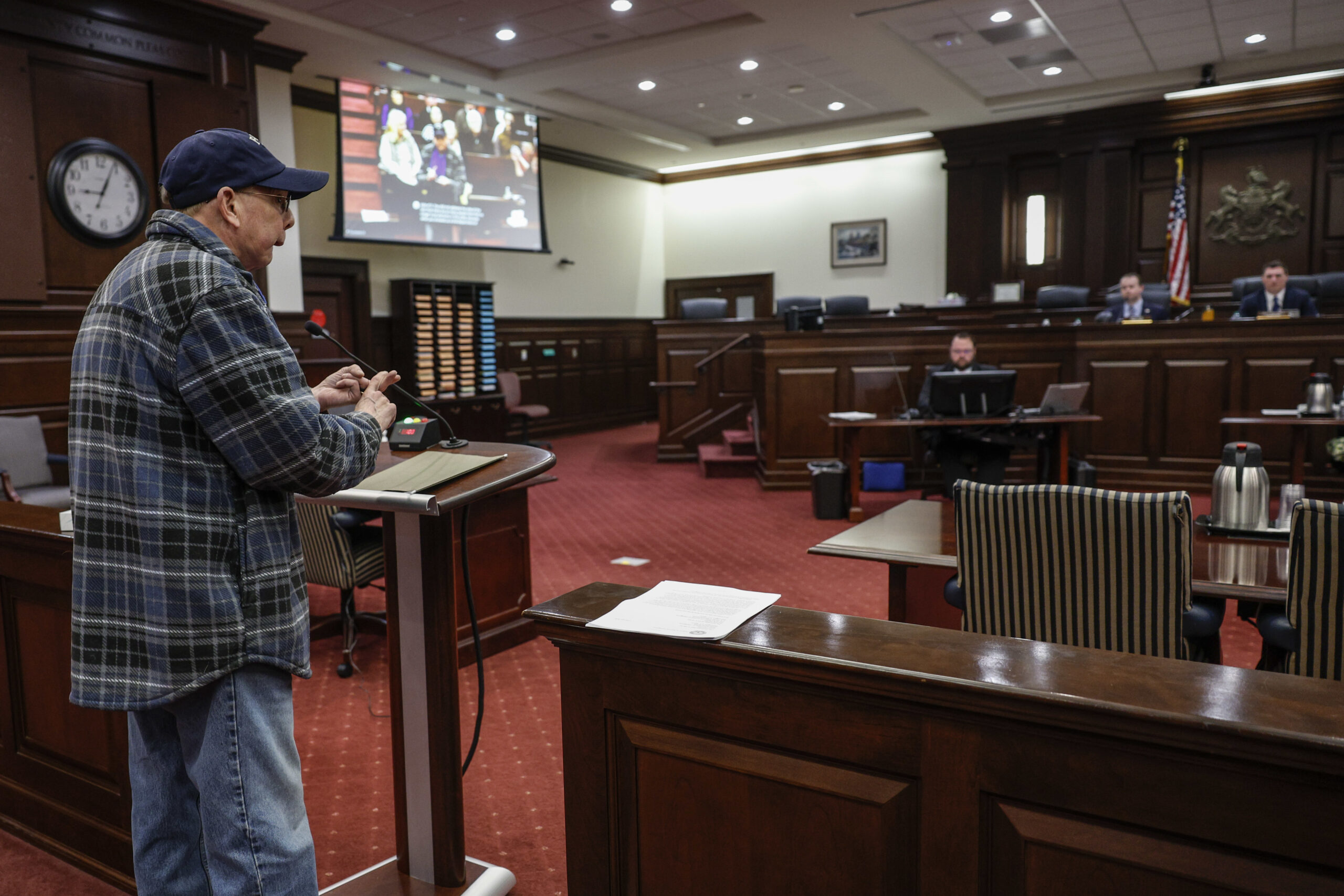
    John Luther addresses the Chester County Commissioners as they hold a public meeting to discuss the errors they had in the pole books during the November election. West Chester. Tuesday, February 3, 2026

    “How many voters were disenfranchised and did not vote?” resident John Luther asked the commissioners. “That is the most important thing. You guys can fix all the rest, but you can’t fix what you messed up in the front.”

    Kadida Kenner — who leads the New Pennsylvania Project, an organization dedicated to voter registration — said she rushed on Election Day to West Chester University, where the organization had helped students register to vote, to make sure they were not disenfranchised.

    “I see the impact of this mistake, this opportunity for change and growth,” she said. “The events of Election Day really did not help our efforts to be able to overcome feelings of individuals, as it relates to the electoral process, here in the commonwealth and across the country.”

    The report recommended more than a dozen changes for the county to prevent future errors, including improved training, reviewing processes and policies, and evaluating staff levels and pay. The county rolled out a plan to address the recommendations and intends to make monthly reports on its progress, saying some recommendations would be in place ahead of May’s primary.

    “Everyone in this room knows that a grievous error was made, and everyone is upset about it,” resident Marian Schneider said. “We can stop the browbeating and focus on the path forward.”

    The report stopped short of recommending personnel changes. Maxwell said the commissioners would not discuss personnel actions.

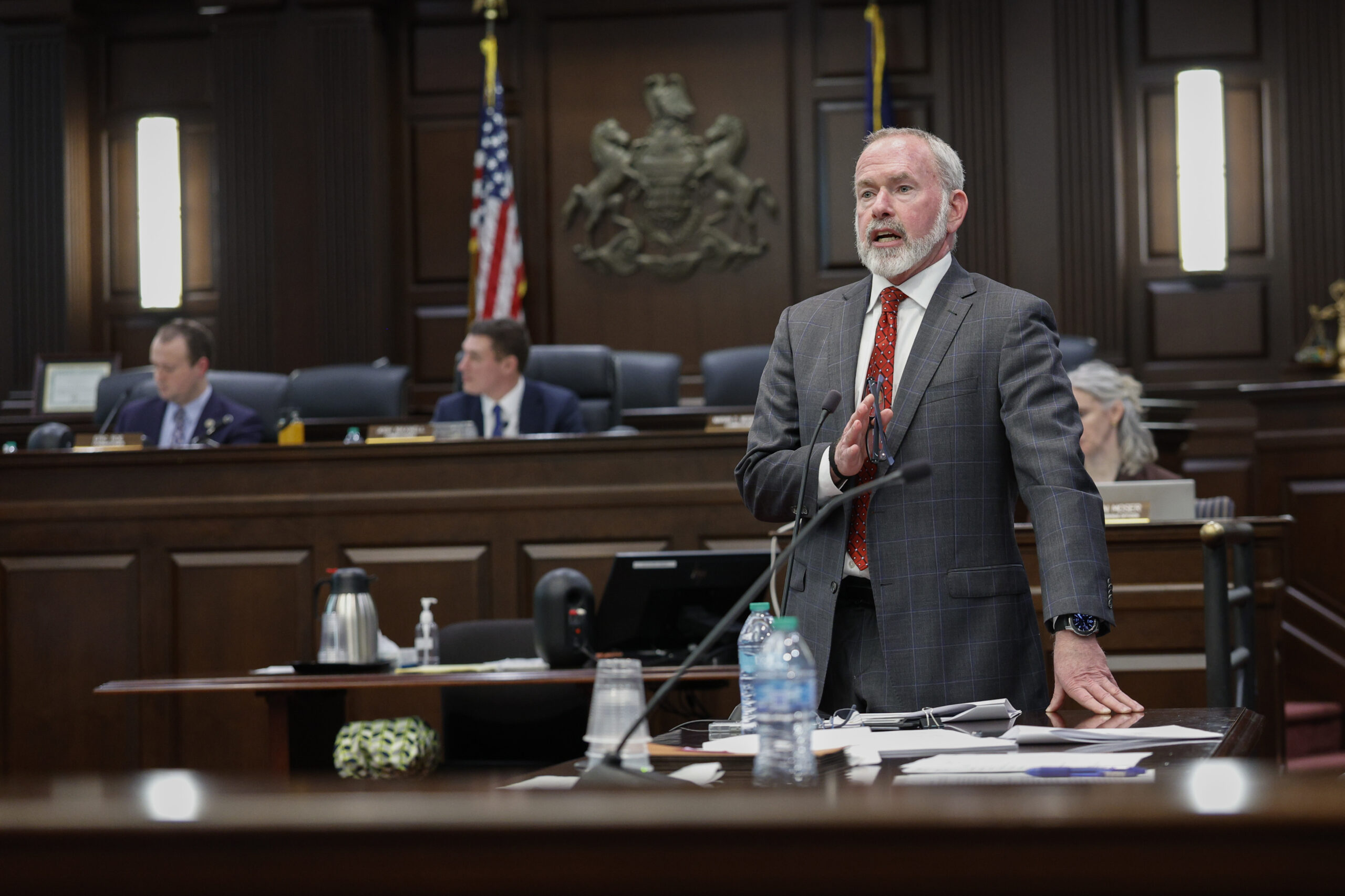
    Attorney Sigmund Fleck addresses the Chester County Commissioners as they hold a public meeting to discuss the errors they had in the pole books during the November election. West Chester. Tuesday, February 3, 2026

    “Bottom line, this appears to be a human error — clicking the wrong box,” said Sigmund Fleck, one of the attorneys who oversaw the report.

    Residents worried that those errors were symptoms of a deeper problem, and that the report’s scope did not fully address issues within voter services.

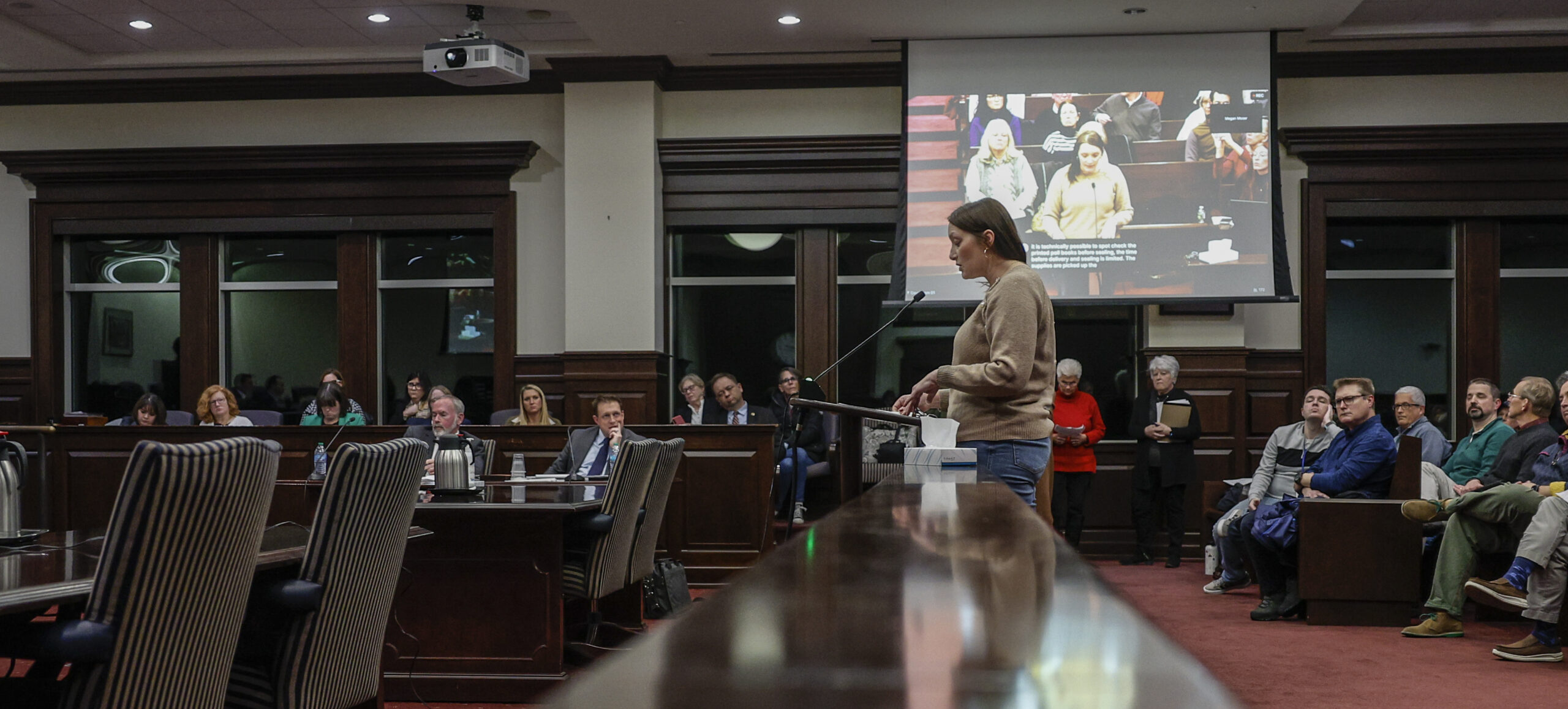
    “Yes, human error is a factor here,” Elizabeth Sieb told the commissioners. “This goes far beyond that. Mistakes of this magnitude require consequences.”

    Fleck pointed to larger issues with the state’s election system that culminated in the error, such as tight turnaround times for publishing the poll books, lack of statewide training, and a fairly old-school online voting roll system.

    Elizabeth Sieb addresses the Chester county commissioners as they hold a public meeting to discuss the errors they had in the pole books during the November election. West Chester. Tuesday, February 3, 2026

    But other counties deal with those same complications, some community members argued. November’s error came after the county omitted the office of the prothonotary on the ballot in May’s primary. The report found that error was due to the county solicitor’s office misinterpreting state law.

    “Sixty-seven counties face the same exact issues, except for one: management,” said Nathan Prospero Fox, a former voter services employee.

    Roe acknowledged the anger directed at county staff, but said: “The truth is, the buck doesn’t stop with staff. It stops with us.”

    “I am so sorry,” he continued. “This is not the end; there’s still time for accountability and improvement.”

    This suburban content is produced with support from the Leslie Miller and Richard Worley Foundation and The Lenfest Institute for Journalism. Editorial content is created independently of the project donors. Gifts to support The Inquirer’s high-impact journalism can be made at inquirer.com/donate. A list of Lenfest Institute donors can be found at lenfestinstitute.org/supporters.

  • Pa. officials push back as Trump targets Philly in call to nationalize elections ahead of 2026 midterms

    Pa. officials push back as Trump targets Philly in call to nationalize elections ahead of 2026 midterms

    Pennsylvania Secretary of State Al Schmidt on Wednesday rejected President Donald Trump’s false claims about voter fraud in the state as Trump targeted Philadelphia in his push to nationalize elections.

    The state’s top election official said Trump’s proposal would violate the Constitution, which he noted clearly gives states exclusive authority to administer elections.

    “Pennsylvania elections have never been more safe and secure,” said Schmidt, who served as Philadelphia’s Republican city commissioner in 2020, when the city was at the center of Trump’s conspiracy theories.

    “Thousands of election officials — Democrats, Republicans, and Independents alike — across the Commonwealth’s 67 counties will continue to ensure we have free, fair, safe, and secure elections for the people of Pennsylvania,” he said in a statement.

    Speaking to reporters Tuesday in the Oval Office, Trump cited Philadelphia, Detroit, and Atlanta as examples of where the federal government should run elections. He singled out three predominantly Black cities in swing states but offered no evidence of voter fraud or corruption to support his claims of a “rigged election.”

    “Take a look at Detroit. Take a look at Pennsylvania, take a look at Philadelphia. You go take a look at Atlanta,” Trump said. “The federal government should get involved.”

    Philadelphia has been a frequent target of Trump’s false claims of election fraud for several years, going back to his efforts to overturn his loss in the 2020 election. City and state officials have persistently pushed back on those claims, and there is no evidence that elections in the city have been anything but free and fair.

    Trump is advocating for taking control of elections in 15 states, though his administration has not named which ones.

    “The Republicans should say, ‘We want to take over,’” Trump said in December. “We should take over the voting, the voting in at least many — 15 places. The Republicans ought to nationalize the voting.”

    But, Pennsylvania officials and experts noted, he lacks the power to do so unilaterally.

    Congress has limited power to set rules for elections, but the U.S. Constitution grants control of elections to the states.

    “The president has zero authority to order anything about elections,” said Marian Schneider, an election attorney who was Pennsylvania’s deputy secretary of elections during the 2016 election.

    White House press secretary Karoline Leavitt claimed to reporters early Tuesday the president was referring to the SAVE Act, legislation proposed by House Republicans require citizens to show documents like a passport or driver’s license to register to vote.

    But Trump didn’t mention the legislation Tuesday.

    Trump will face an uphill battle in nationalizing elections as even some Republicans in Congress are already pushing back. Senate Majority Leader John Thune (R., S.D.) told reporters Tuesday he disagreed with Trump on any attempt to nationalize elections, calling it “a constitutional issue.”

    “I’m not in favor of federalizing elections,” Thune said.

    Still, Trump’s comments raised alarm as his administration continues to sow doubt in the nation’s elections.

    “This is clearly a case of Trump trying to push the boundaries of federal involvement in election administration because he has a problem with any checks on his power, democracy being one of them,” said Montgomery County Commissioner Neil Makhija, an attorney and a Democrat who chairs the Montgomery County Board of Elections.

    Trump’s comments came a week after the FBI seized ballots and voting records from the 2020 election from the Fulton County election hub in Georgia. In a statement, Fulton County Commissioner Marvin Arrington Jr. said the county will file a motion in the Northern District of Georgia challenging “the legality of the warrant and the seizure of sensitive election records, and force the government to return the ballots taken.”

    Lisa Deeley, a Democratic member of the Philadelphia city commissioners, who oversee elections, accused Trump of trying to distract from federal agents killing two civilians in Minnesota last month.

    “We all know the President’s playbook by now. His remarks on elections are an effort to change the conversation from the fact that the Federal Government is killing American citizens in Minneapolis,” Deeley said in a statement.

    Trump has been making similar claims since 2016, when he erroneously blamed fraud for costing him the popular vote.During a debate with his 2020 opponent, Joe Biden, Trump said, “Bad things happen in Philadelphia, bad things,” viewed at the time as an attempt to sow doubt about the election results and mail voting during the peak of the COVID-19 pandemic.

    Despite losing to Biden in Pennsylvania in 2020 by a little more than 80,000 votes, Trump has repeatedly claimed he actually won, lying about mail-in votes “created out of thin air” and falsely stating there were more votes than voters.

    “Every single review of every single county in the commonwealth has come back within a very small difference, if any, of the results reported back in 2020,” Kathy Boockvar, who served as Pennsylvania’s secretary of state during the 2020 election, told The Inquirer in 2024.

  • Cory Booker has raised more than nearly every candidate for Congress running in 2026

    Cory Booker has raised more than nearly every candidate for Congress running in 2026

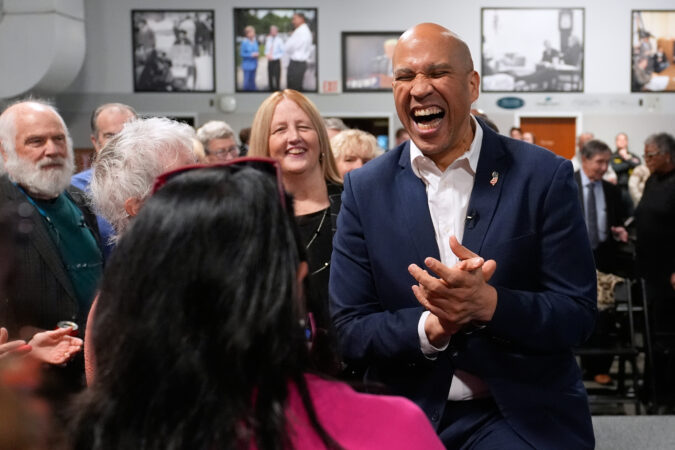
    U.S. Sen. Cory Booker has raised more than $30 million for his reelection campaign, outdoing the vast majority of candidates running for either chamber of Congress in 2026.

    The New Jersey Democrat has raised the second-largest amount of money for the 2026 elections for U.S. House and Senate as of the end of last year, behind only Sen. Jon Ossoff (D., Ga.), according to Federal Election Commission reports.

    Booker is widely considered a potential presidential contender for 2028, after unsuccessfully seeking the office in 2020.

    The lawmaker has no serious challengers at this point for his Senate seat, and he could leave this cycle with extra money he could use for a presidential run.

    His campaign has nearly $22 million cash on hand and no debt. He has been adding to his coffers since he began his most recent term in 2021.

    More than 200,000 people donated to Booker in 2025, and roughly 80% of the donations were $25 or less, according to Booker’s campaign.

    “Cory is backed by a grassroots movement that recognizes the importance of strong, principled leadership that stands up in this moment,“ his campaign manager, Adam Silverstein, said in a statement. ”We are grateful for this incredible outpouring of support and will keep building the infrastructure we need to win in 2026 and elect Democrats at every level.”

    The New Jersey Democrat saw a fundraising spike when he delivered a record-breaking 25-hour speech on the Senate floor last year. He raised nearly $9.7 million in the second quarter of 2025, the period that included his speech, far more than any other quarter last year.

    Booker criticized President Donald Trump on a host of issues in the speech and held up a pocket Constitution. He also acknowledged his own party’s failure to prevent Trump’s return to office.

    “I confess that the Democratic Party has made terrible mistakes that gave a lane to this demagogue,” he said in his speech. “I confess we all must look in the mirror and say, ‘We will do better.’”

    Laura Matos, a New Jersey Democratic operative, said Booker was already a “known entity,” and his speech came at a time when Democrats across the country were looking for someone to stand up to Trump.

    “For 25 hours, his people could constantly churn out, like every hour, ‘He’s still on the Senate floor, show him you support him,’” said Matos, a partner at lobbying and public affairs firm MAD Global Strategy Group. “The way that fundraising works, you can really build upon things like that. He was prolific before that, and then that just kind of skyrocketed it.”

    Ossoff, the 2026 federal candidate who reported more than Booker, has raised nearly $64 million and faces a more competitive race in a key swing state.

    Booker was viewed as a rising star in the party several years ago before dropping his primary bid for president in 2020 in part because he did not have enough money or support.

    He began serving as mayor of Newark in 2006 until he was elected to the U.S. Senate in a 2013 special election.

    Booker is also heading into a national tour to promote Stand, his new book, set to publish next month.

    The book combines Booker’s personal reflections with stories of American leaders from President George Washington to Supreme Court Justice Ketanji Brown Jackson, and “offers a hopeful and practical path forward,” according to his publisher, Macmillan.

    The tour will include a stop at the New Jersey Performing Arts Center in Newark, where Gov. Mikie Sherrill was inaugurated, as well as a book shop in D.C. and a church in St. Louis.

    Pennsylvania Gov. Josh Shapiro, another potential 2028 Democratic contender, recently embarked on a book tour of his own.

    Most of Booker’s money comes from outside New Jersey.

    According to FEC data, from January through September 2025, he received the most money from California, followed by New York.

    While Booker is raking in money, he’s also spending it. He spent the fourth most out of all 2026 Senate candidates, reporting $14 million in spending since 2021.

    One of his biggest expenses was in April, when his campaign spent $1.2 million on an email list acquisition.

    The only other candidate who has reporting fundraising for the New Jersey Senate race so far is Justin Murphy, a Republican from the Pinelands, who reported a little over $3,500.

    Several other Republicans have expressed interest in running in the primary, and county parties will hold conventions in the coming weeks to endorse candidates.

    Luke Ferrante, the executive director of New Jersey GOP, said the party is planning “a robust effort statewide” to unseat Booker.

    “New Jerseyans across the state are eager to elect a statewide representative that is focused on delivering for its residents, not their greater Washington ambitions,” Ferrante said.

  • Gov. Josh Shapiro proposes $53.2 billion state budget focusing on affordability, development, and raising Pennsylvania’s minimum wage

    Gov. Josh Shapiro proposes $53.2 billion state budget focusing on affordability, development, and raising Pennsylvania’s minimum wage

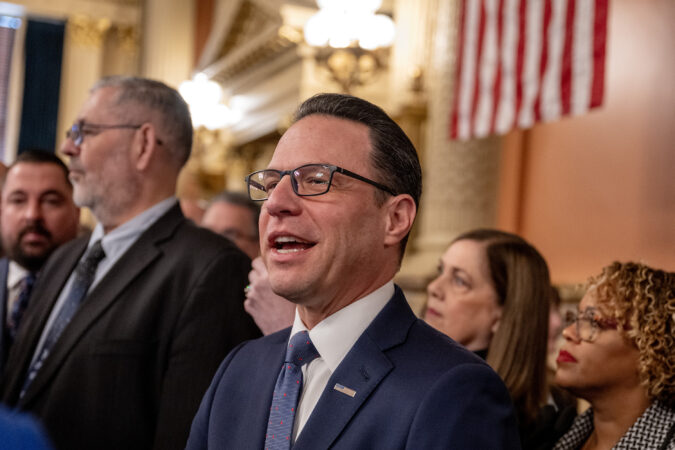
    HARRISBURG — Gov. Josh Shapiro on Tuesday unveiled a $53.2 billion state budget that focuses on making Pennsylvania a more affordable place to live — while proposing a 6.2% spending increase over last year and renewing his pitches to create new revenue streams to fill a significant budget deficit as he runs for reelection.

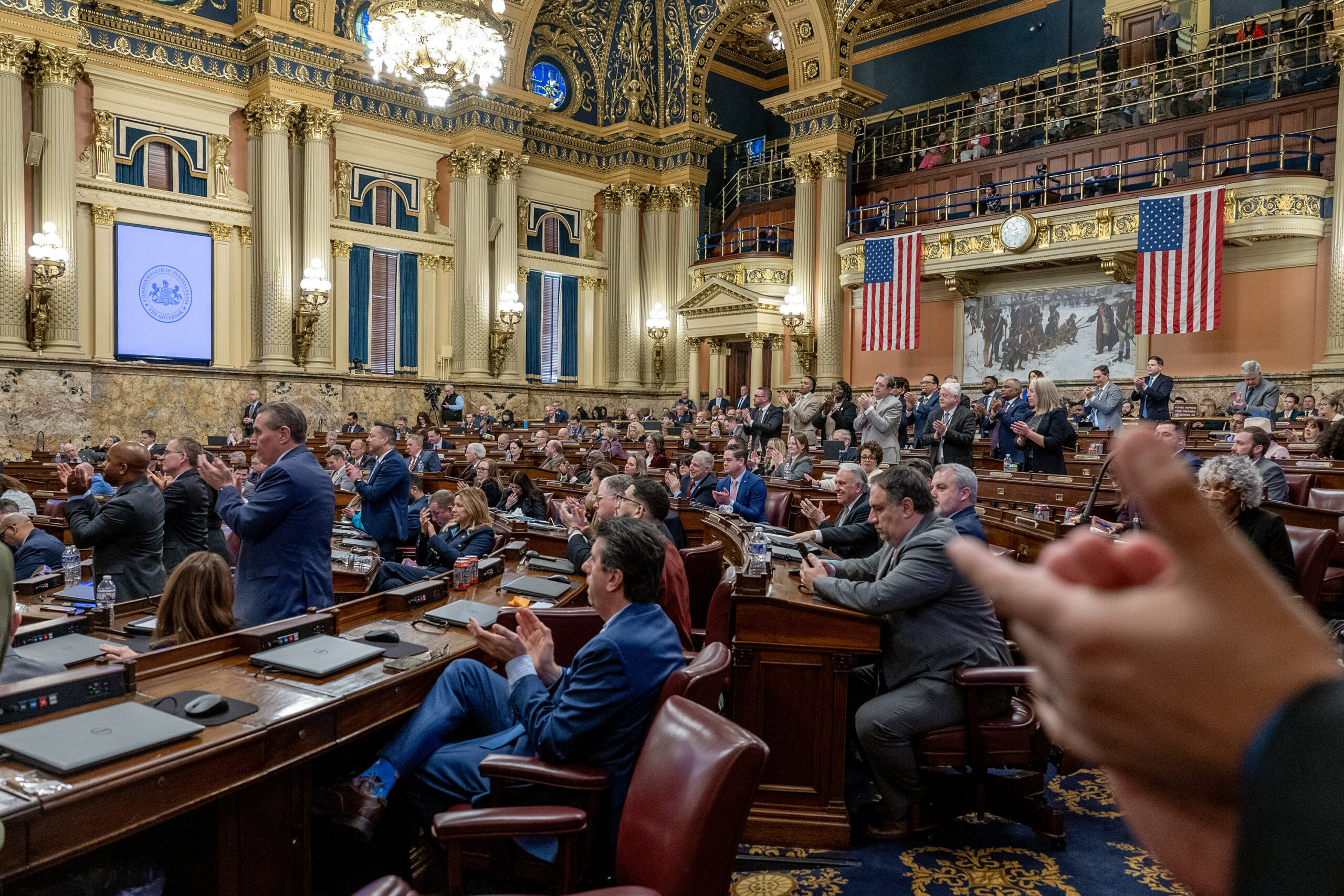
    Shapiro’s fourth budget address attracted several standing ovations from Democrats as he stood before a joint session of the state House and Senate to pitch some of Democrats’ shared priorities, such as increasing the minimum wage to $15 an hour.

    Afterward, Republicans decried the budget proposal as unaffordable, arguing such a steep increase in spending is unrealistic when the state is already poised to spend more than it brings in during the current fiscal year and in the future. Shapiro’s proposal would spend $4.6 billion more than the state is projected to bring in in the 2026-27 fiscal year, requiring officials to pull most new spending from Pennsylvania’s $7.7 billion Rainy Day Fund, or find funding from new revenue streams like the taxation of recreational marijuana that do not yet exist.

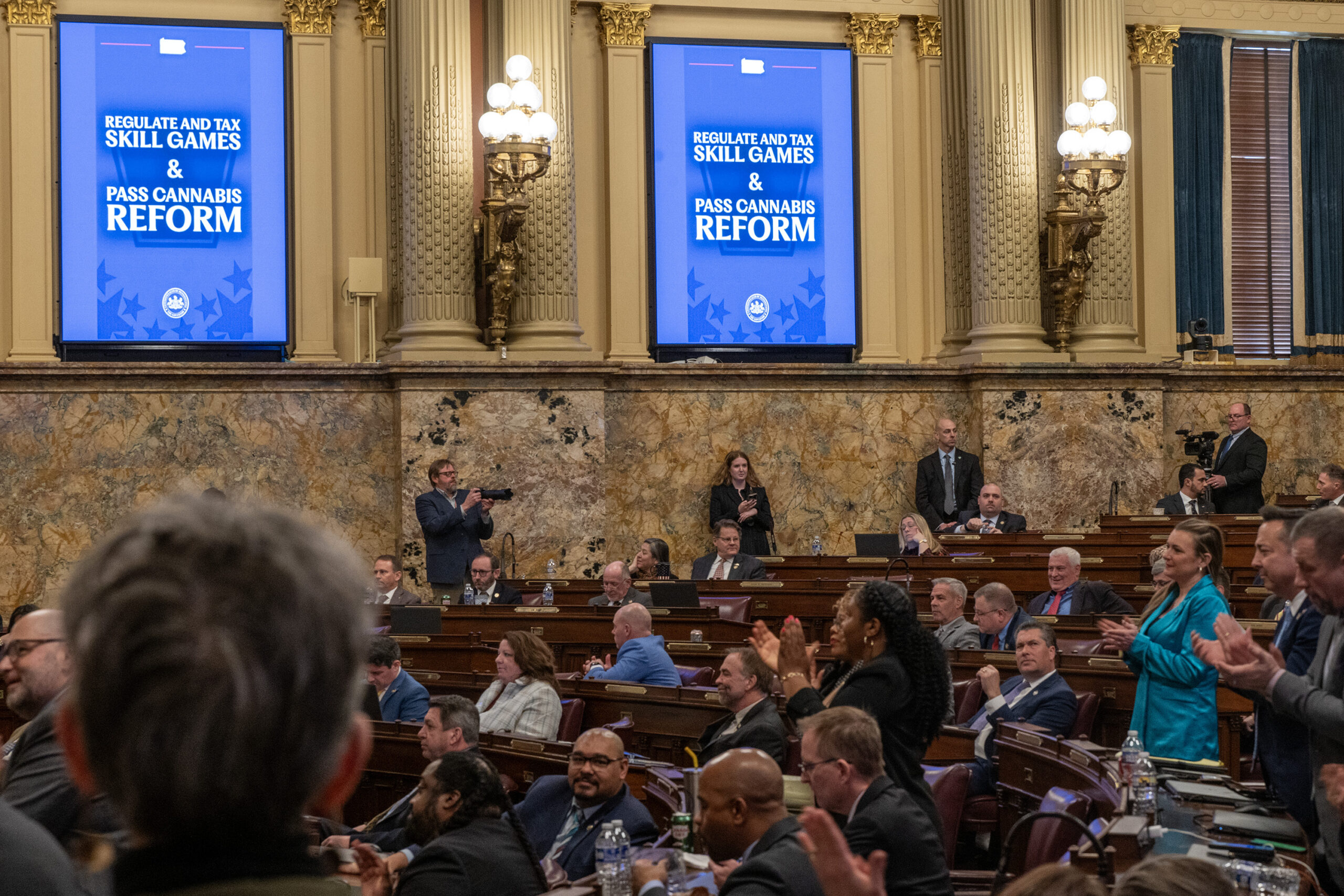
    Screen shows skill games and cannabis regulation and reform as Gov. Josh Shapiro makes his annual budget proposal in the state House chamber in Harrisburg Tuesday, Feb. 3, 2026.

    Shapiro’s proposed spending hike equates to a $2.7 billion total increase over the 2025-26 budget. Approximately $1 billion of that would fulfill increased federal Medicaid obligations, another $1 billion would be for new initiatives proposed by the governor, and $700 million would go to other funding increases, according to a Shapiro administration official.

    The proposal does not include any broad tax increase on state residents. Instead, Shapiro’s budget pitch includes proposals to generate nearly $2 billion in new revenue, largely from the taxation and legalization of recreational marijuana and regulation of so-called skill games — suggestions that he put forward last year but that failed to gain traction within the legislature. He proposed taxing adult-use cannabis at 20% to generate $729.4 million. He is also seeking a 52% tax on skill games, the unregulated and untaxed slot-machine look-alikes that have proliferated around the state in corner stores, bars, and fraternal organizations, to generate an estimated $765.9 million in its first year.

    “Everyone knows we need to get this done. So let’s come together and finally get it over the finish line,” he added.

    Shapiro proposed the legalization and taxation of recreational marijuana in each of his prior three budget proposals. Last year, he pitched a 20% tax on the sale of legal marijuana that he estimated would bring in $535.6 million in its first year. This year’s projection of $729.4 million in that time frame would be a 36% increase without changing the proposed tax rate. A Shapiro administration official said Tuesday that the projected increase is due to more interest from marijuana companies that want to do business in Pennsylvania.

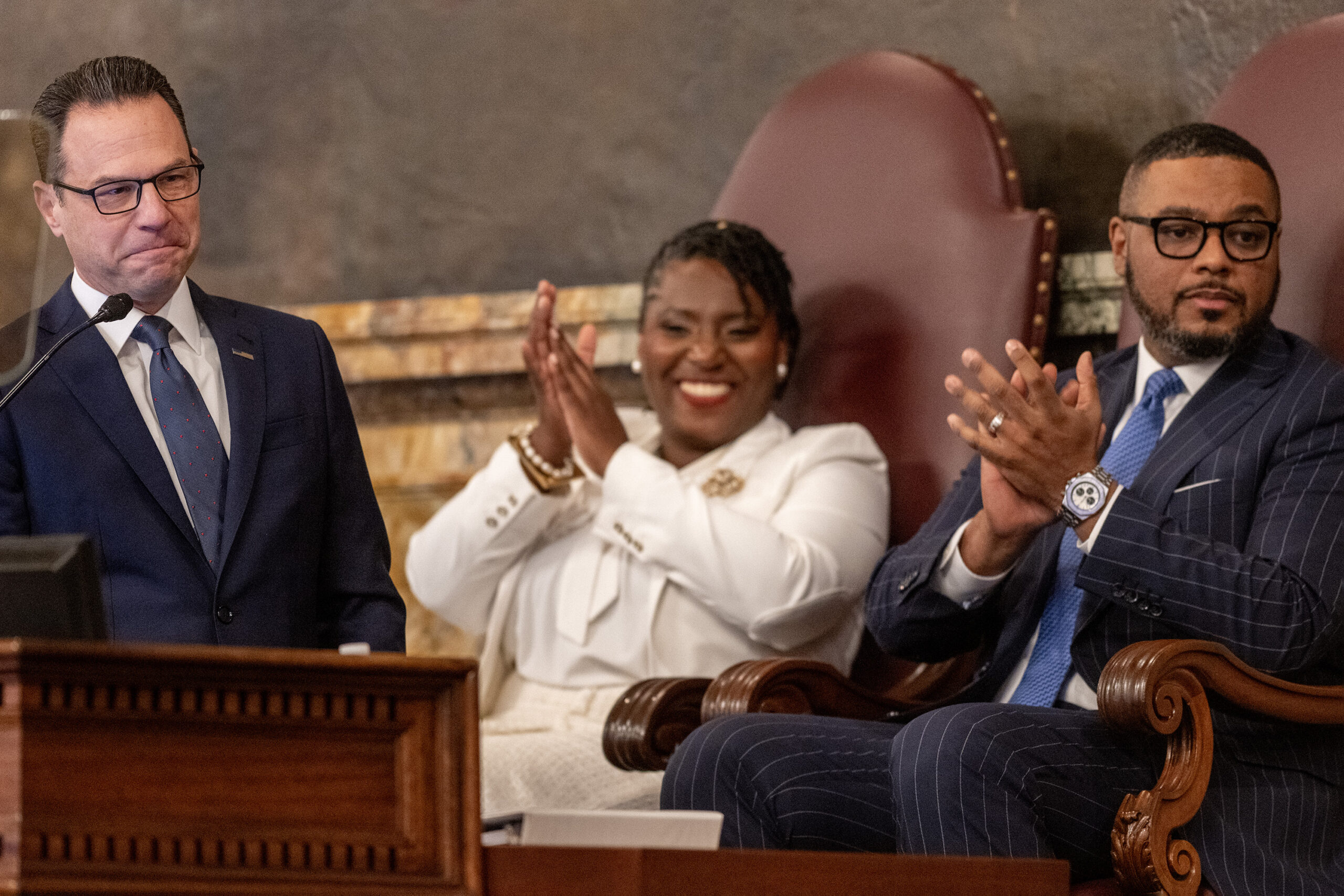
    Gov. Josh Shapiro make his annual budget proposal in the state House chamber in Harrisburg Tuesday, Feb. 3, 2026. Pa. House Speaker Joanna McClinton (left) and Lt. Gov. Austin Davis (right) are seated behind him.

    Shapiro’s budget also called for an additional $565 million for public schools toward the state’s new adequacy funding and tax equity formulas, in the latest installment of a nine-year plan to ensure students get an equitable education no matter their zip code. He requested $30 million in additional funding toward three of Pennsylvania’s state-related universities — the University of Pittsburgh, Pennsylvania State University, and Temple University — to be awarded based on a new performance-based funding mechanism.

    The governor also pitched creating a “Federal Response Fund” in Pennsylvania, seeking to set aside a $100 million reserve to offset any impact from President Donald Trump’s administration, in the event the federal government moves to cut funding to social services programs and grants to state and local governments, as it has done several times over the last year.

    A focus on affordability

    As his reelection campaign ramps up ahead of November, Shapiro made a broad pitch for policies aimed at making Pennsylvania more affordable.

    Shapiro said he was working with utility companies to rein in energy costs and called for the construction of new homes and a bevy of renter protections in a plan to expand the availability and affordability of housing across the state.

    He proposed a $1 billion fund, supported by the issuing of bonds, to pay for a range of infrastructure projects relating to energy, housing, local governments, and schools. But he billed it largely as “a major investment in building new housing.”

    “We need hundreds of thousands of new homes,” Shapiro said. “This is how we build them.”

    Shapiro also called for the state to create a catalog of local zoning rules and to help local governments revamp ordinances to allow for more housing.

    The governor again proposed raising Pennsylvania’s minimum wage to $15 an hour, billing it as a cost savings of $300 million to the state on entitlement programs such as Medicaid.

    In a news conference hosted by Senate and House Republicans following Shapiro’s budget address, top legislative leaders contended that Shapiro’s affordability vision for the state is unnecessary.

    “What we need to do is stand back and watch the private sector work, and watch the private sector grow the jobs that will support this economy,” said House Minority Leader Jesse Topper (R., Bedford). “What we need to do as a government is far less. We need to get our footprint down. That is what we believe will make things more affordable for Pennsylvanians.”

    Attracting AI developments — at a cost

    Shapiro made it clear he wants Pennsylvania to be a place that will draw business investment — particularly amid the expansion of artificial intelligence.

    He announced a new plan he said would protect consumers against rising energy costs associated with data centers, while also easing a path for tech companies to build the centers.

    The Governor’s Responsible Infrastructure Development (GRID) plan would make data center developers either bring their own power generation or pay for any new generation they will need, he said, “not saddling homeowners with added costs because of their development.”

    Shapiro said that too many data center proposals have been “shrouded in secrecy” but that they are crucial for the country.

    “The United States is locked in a battle for AI supremacy against China,” Shapiro said. “Look, I don’t know about you, but I’d much rather the future be controlled by the United States of America and not Communist China.”

    ‘We all recognize it took too long last year’

    Shapiro’s $53.2 billion pitch likely sets him up for another fight with Senate Republicans, who control the chamber. They have promised fiscal restraint as their top priority and are unlikely to approve a major spending increase.

    Last year, Shapiro and House Democrats took 135 days to reach an agreement with Senate Republicans, in what became an at-times ugly battle that underscored the state’s rural-urban divide.

    Shapiro said Tuesday he wants to avoid another lengthy stalled budget, which forced schools, counties, and nonprofits to take out billions in loans to stay afloat during the four-month impasse.

    He invited leaders of all four caucuses — Senate Democrats, Senate Republicans, House Democrats, and House Republicans — to meet on Wednesday to start budget talks much sooner than in past years. They all agreed to attend, he added.

    “We all recognize it took too long last year and that had real impacts on Pennsylvanians, but we learned some valuable lessons through that process,” Shapiro said in his address, which lasted an hour and 24 minutes. “We learned that we all need to be at the table, and that we all need to be at the table sooner.”

    The state House chamber as Gov. Josh Shapiro makes his annual budget proposal in Harrisburg Tuesday, Feb. 3, 2026.

    Budget negotiations will begin Wednesday, Shapiro said, before legislative committees begin meeting about the proposal later this month. The budget will be negotiated in closed-door meetings between top leaders and is due by the start of the new fiscal year, which begins July 1.

    One contentious issue is off the negotiating table for the forthcoming fiscal year: funding mass transit. Shapiro again pitched the state to increase the share of the sales and use tax that goes to mass transit, including SEPTA, as the transit agencies desperately need a new recurring revenue source. Shapiro does not want that to begin until July 1, 2027, when his latest short-term transit funding fix is scheduled to run out.

    Shapiro and most lawmakers in the General Assembly are up for reelection this year. In previous midterm election years, the electoral pressure has sped up negotiations, as legislators want to bring home results to their constituents before they return to the campaign trail in a year when the governor’s mansion and control of the state House and Senate are on the line. (Shapiro’s likely opponent, Republican State Treasurer Stacy Garrity, immediately criticized his budget proposal, saying the pitch “didn’t come nearly close enough” to bridging the state’s spending deficit.)

    But even if lawmakers move with haste, this year’s budget negotiations may be tense as leaders try to reset spending to better align with how much the state generates in revenue.

    “We’re going to do everything we can to protect the taxpayer and make sure that the dollars that are allocated are wisely used,” Senate Majority Leader Joe Pittman (R., Indiana) said. “We have to make sure we’re, again, stretching every taxpayer dollar we can and bringing the cost of government down as much as possible.”

    But with the high-stakes election just months away, House Majority Leader Matt Bradford (D., Montgomery) cautioned Republicans against coming down hard on Shapiro, who has boasted consistently high approval ratings.

    “I would argue the polls indicate that we have a very popular governor. They tried to obstruct him and his numbers only got more popular,” Bradford said. “My suggestion is it would be the political imperative, regardless of the policy implications, that they start working with this governor to pass things.”

    Staff writers Thomas Fitzgerald, Maddie Hanna, Ariana Perez-Castells, and Susan Snyder contributed to this article.