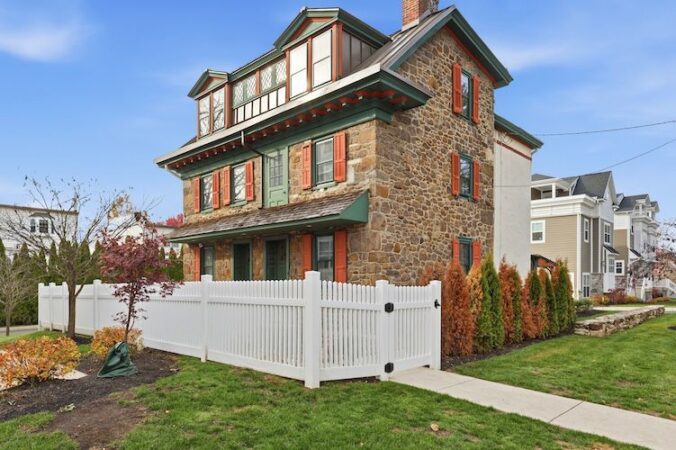
Kai Lu and Edward Mendez had expected to spend many years in the spacious Media home, enjoying the easy access to Center City by SEPTA Regional Rail, the good schools for their two-year-old son and the second on the way, and its aura of history.
But in the words of Lu, who is in data analytics for a major communications company, “life intervened.”
Mendez landed his dream job as a data analyst for the Miami Marlins baseball team, and the couple are headed to Florida after two years in the house.
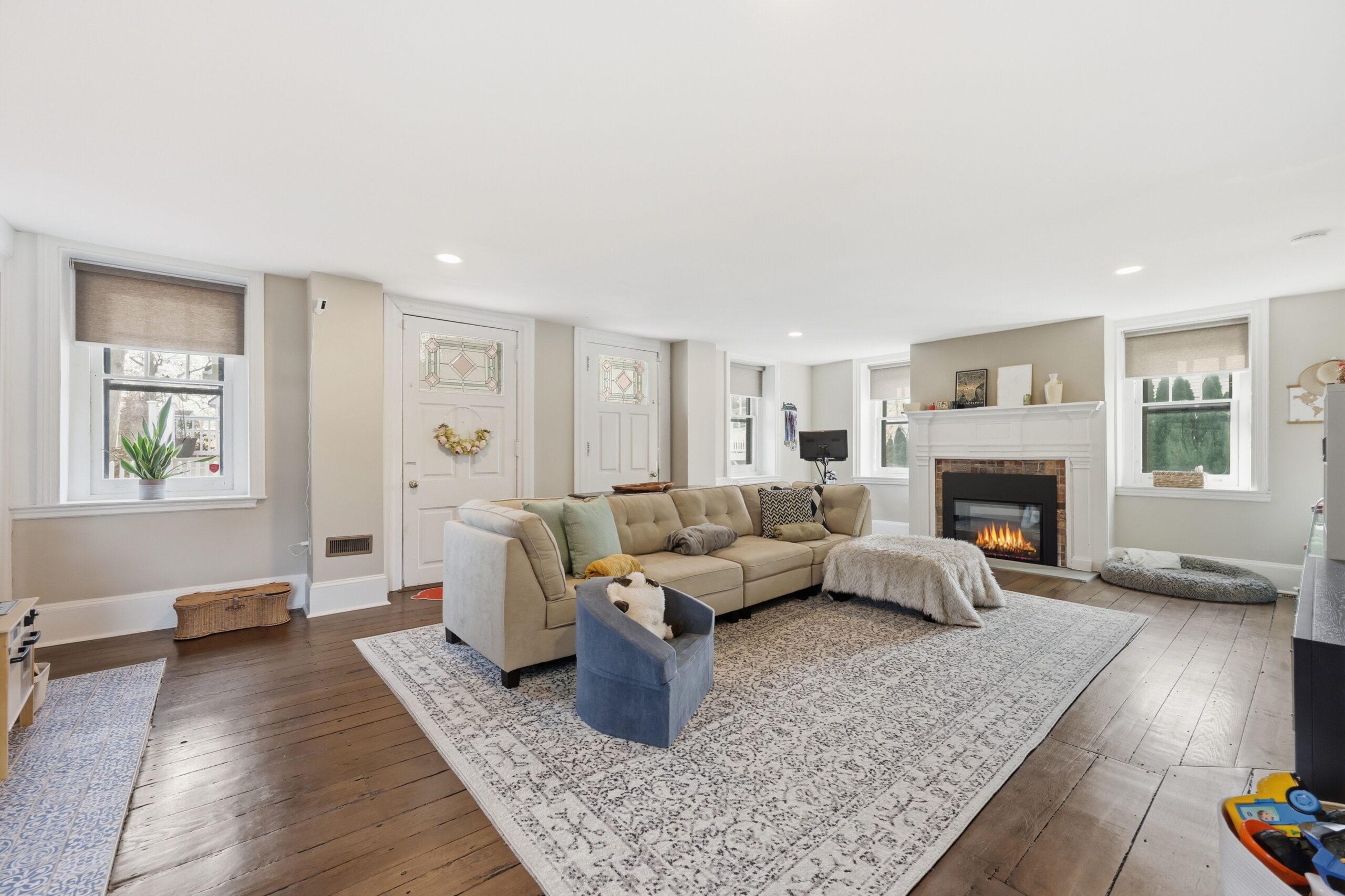
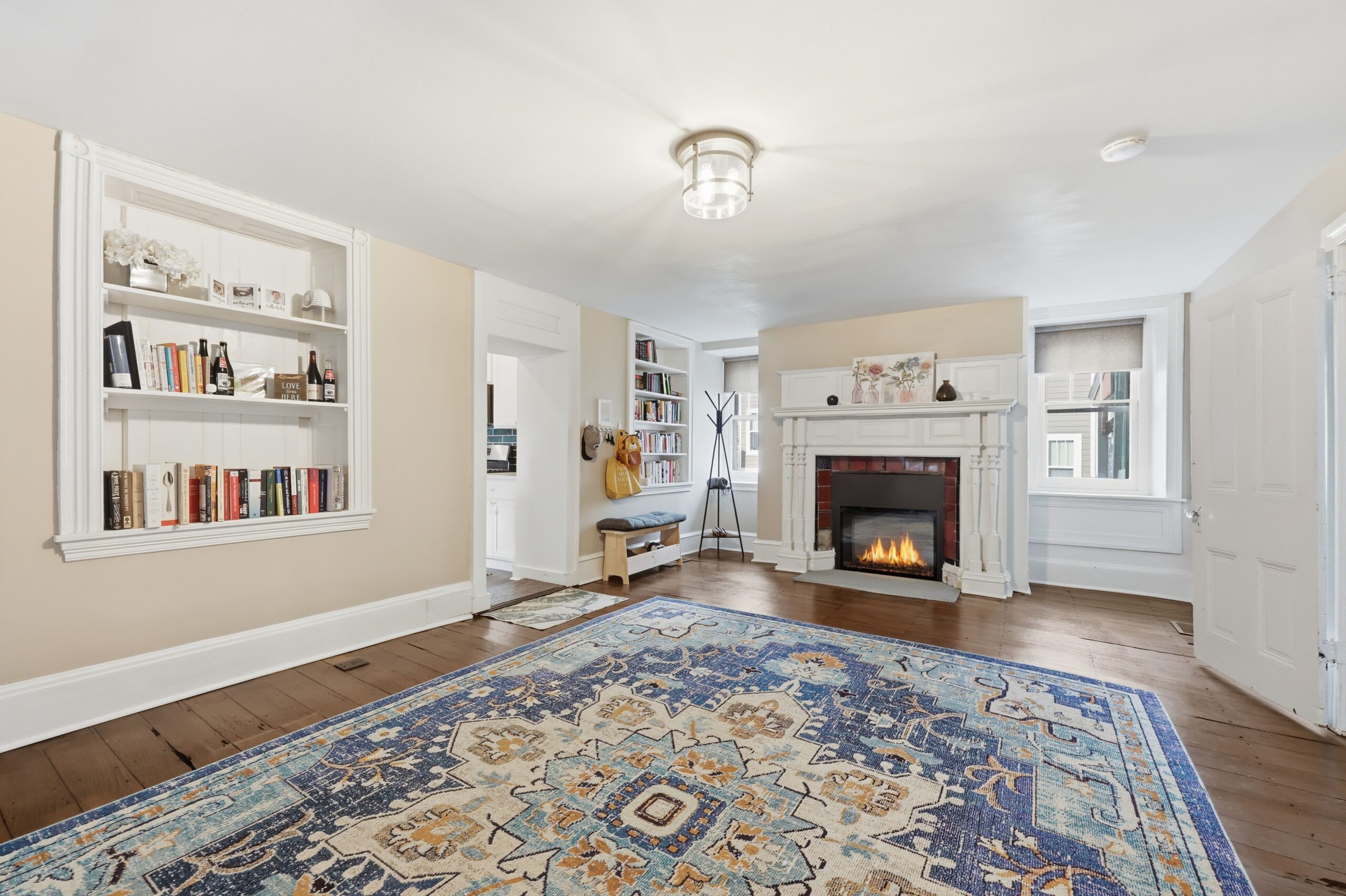
The living room. The home has four working fireplaces.
The five-bedroom, 4½-bathroom home was once the general store of Providence Village, and Lu says she doesn’t know when the changeover came.
The earliest part of the house dates to the 18th century, with some 19th-century additions.
The 4,334-square-foot house has three floors of living space plus an unfinished basement, and four working fireplaces powered by electric inserts.
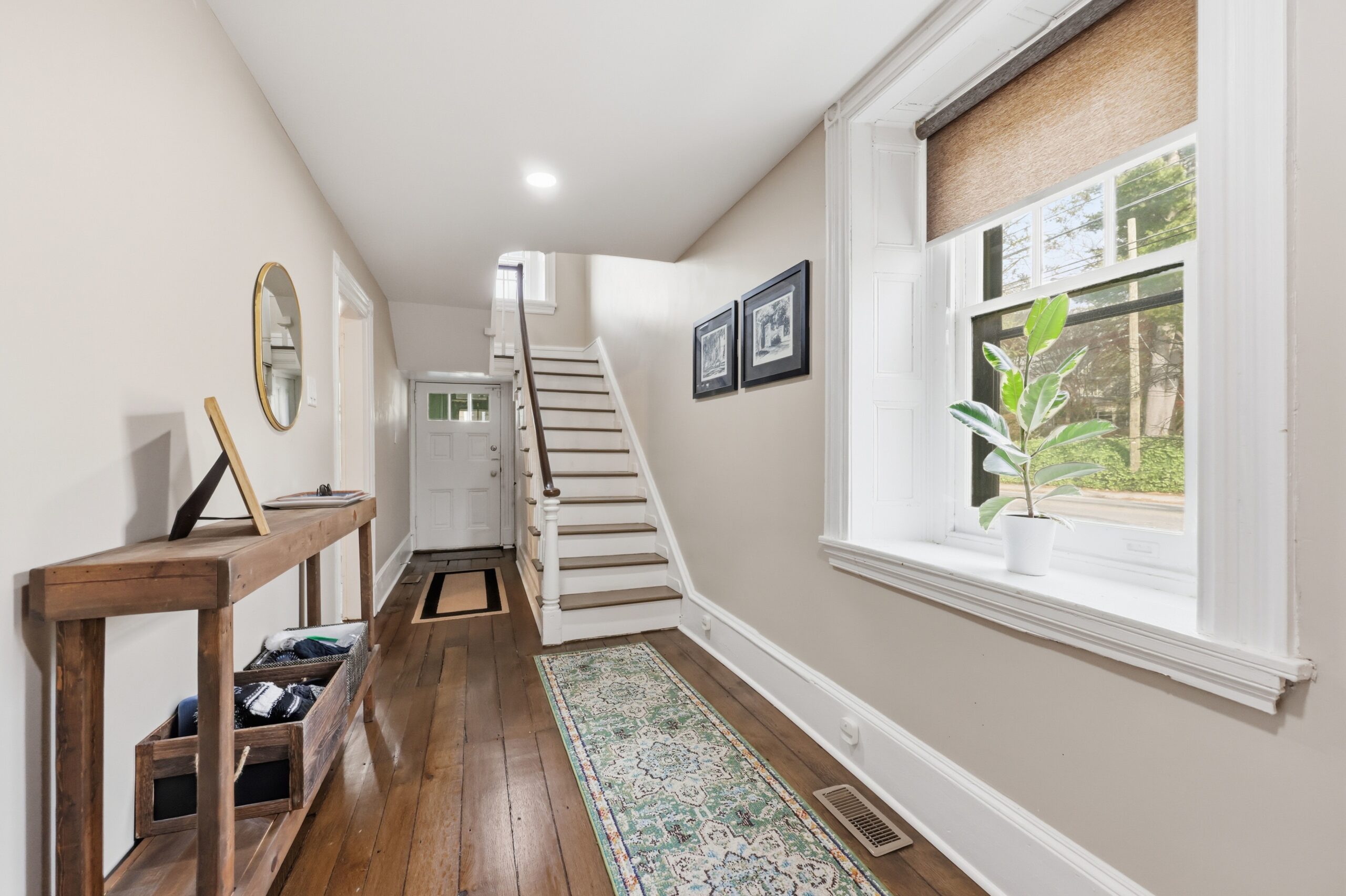
Front hall
The home has its original hardwood floors and a two-zone thermostat system with central air and forced heat.
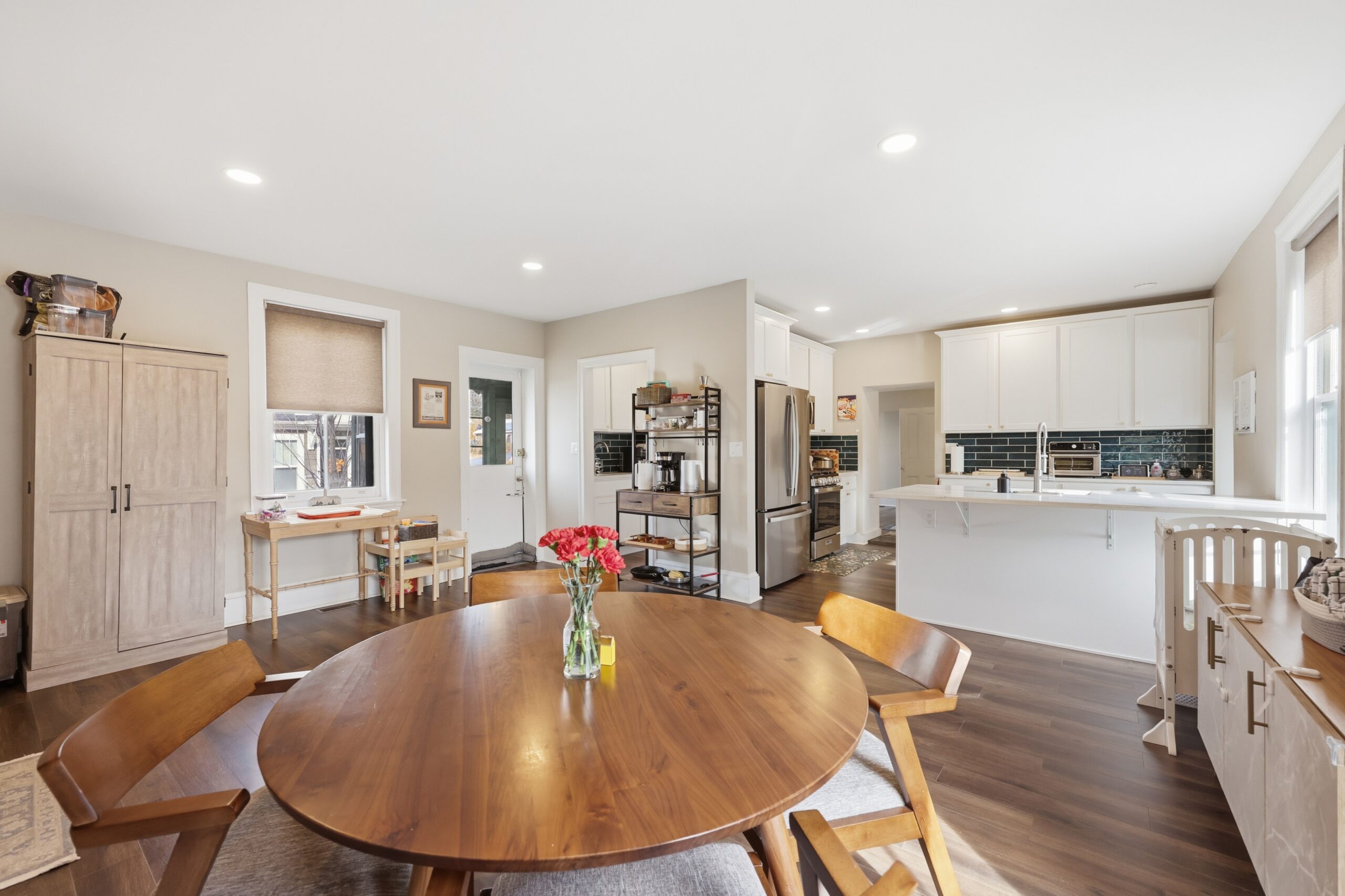
The newly renovated kitchen has quartz countertops, stainless steel appliances, gas cooking, a separate coffee bar and pantry area, and an adjacent sunroom.
The formal dining room has built-in shelves and a fireplace.
The kitchen, which includes a dining area.
The primary bedroom and another bedroom are on the second floor, along with a laundry room.
The third floor has three additional bedrooms — one of which serves as an office — two full bathrooms, and a full-sized cedar closet.
The formal dining room has built-in shelves.
Updates by the current owners include partial roof replacement, resurfacing and staining the hardwood floors, new flooring in the kitchen, exterior stone repointing, custom window treatments, and a new sewer line.
The house is in the Rose Tree Media School District.
It is listed by Amanda Terranova and Adam Baldwin of Compass Realty for $785,000.
There will be no trash or recycling pickup in Media on Monday. All borough offices are closed. Parking restrictions will be in place until 5 p.m. See the full list of restricted streets here. Media residents who live on a designated snow emergency route are encouraged to park in the Baltimore Avenue parking garage on the first or second level. Parking fees will not be enforced during the snow emergency declaration, which runs until 5 p.m. Monday.
There will be no trash collection in Swarthmore on Monday. All trash scheduled to be picked up Monday will be picked up on Tuesday. The Swarthmore library and borough offices are closed.
Middletown and Upper Providence townships’ offices are also closed Monday.
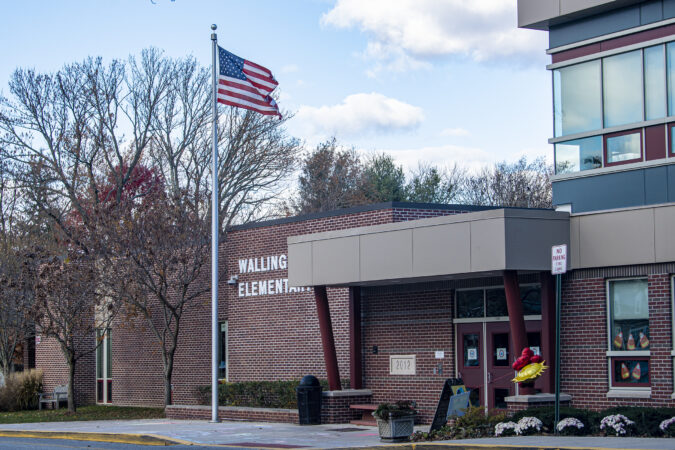
The Rose Tree Media School District is holding a flexible instruction day (a remote learning day with a combination of live instruction and office hours). The Wallingford-Swarthmore School District is closed.
The Walden School, Benchmark School, and The School in Rose Valley are also closed. Notre Dame de Lourdes School is having a remote learning day.
This suburban content is produced with support from the Leslie Miller and Richard Worley Foundation and The Lenfest Institute for Journalism. Editorial content is created independently of the project donors. Gifts to support The Inquirer’s high-impact journalism can be made at inquirer.com/donate. A list of Lenfest Institute donors can be found at lenfestinstitute.org/supporters.
Standing before a room full of parents, administrators, and taxpayers on Monday morning, Wallingford-Swarthmore School District Superintendent Russell Johnston opened the conversation: “None of us is as smart as all of us.”
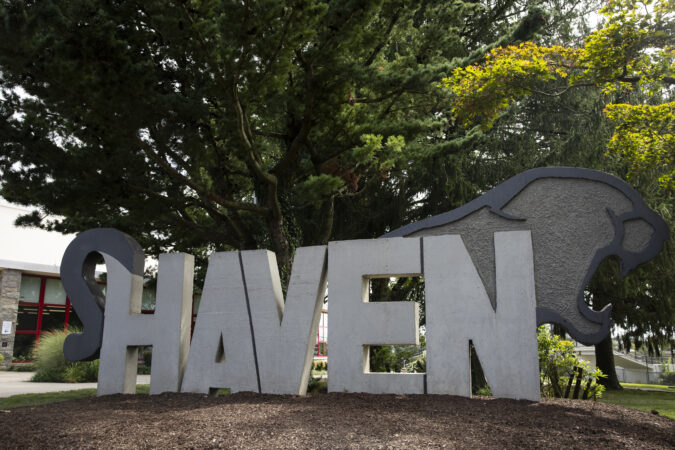
At the listening session at Strath Haven Middle School, Johnston and members of the Wallingford-Swarthmore administration took suggestions from the public and laid out the district’s dire budget issues, which came into the public eye at a board meeting last month.
The main message Johnston came to deliver: As Wallingford-Swarthmore works to cut its budget, everything is on the table, no idea is too big, and no cut is too small.
“None of this is easy and, like I said, everything is up for consideration right now,” Johnston said, emphasizing that the district is “turning over every stone” and is eager to hear good ideas.
The Wallingford-Swarthmore School District is facing a $2.6 million budget deficit for the 2027-28 school year. Administrators say the shortfall is due to a combination of factors, including runaway spending, rising staffing costs, a stagnant revenue base, and costly infrastructure repairs, which are needed due to years of deferred maintenance.
At the community meeting (which was the first of two sessions that took place on Monday), Johnston and colleagues broke down expenses related to staffing, transportation, special services, curriculum, and the district’s long-range capital plan, which was approved in June.
The conversation stretched across the big picture and the nitty-gritty.
How often should classrooms be deep-cleaned? How important is renovating the swimming pool? Should the district run late buses for students in after-school clubs? Could the number of district administrators be reduced?
Suzanne Herron, a parent of young children in the district, said the meeting felt “thoughtful and transparent.”
“I walked out of there feeling pretty confident that they were going to think about the right things,” Herron said.
Johnston took the helm of Wallingford-Swarthmore in May, closing an embattled chapter for the Delaware County school district. The district parted ways with its former superintendent, Marseille Wagner, with a $330,000 payout in August 2024. Wagner was accused of spending excessively on administrative initiatives and facilitating an unhealthy work environment for staff, including pitting staffers against one another and dismissing efforts for consensus building.
The district and Wagner said in a statement at the time that they had “mutually agreed to amicably end their contractual agreement.”
Wagner’s tenure hung over the conversation at Strath Haven Middle School. Attendees asked how many administrators had been added under the prior superintendent and how the administrator-to-student ratio compared with neighboring districts (administrators said they didn’t have exact numbers off the top of their heads). One parent said that while she was grateful for the open discussion, she struggled to understand how the district got to such a dire place.
Parents also raised concerns that a disconnect remains between school needs and what taxpayers, especially those without children in the district, see as wasteful spending
In contrast to neighboring districts like Rose Tree Media and Radnor, which are home to a mix of residential and commercial properties that feed their tax bases, Wallingford-Swarthmore is small and largely residential. This means its school district tax base is powered almost completely by homeowners, many of whom feel stretched thin by the growing tax burden. Swarthmore College, a major presence in the borough, pays limited taxes as a 501(c)3 nonprofit.
On top of local taxes, Delaware County is expected to increase residential property taxes by 19% for next year. That’s in addition to the 23% increase the county approved for 2025.
Joyce Federman, an attendee who recently moved to the area and does not have children in the school district, said she has been “staggered” by the amount of school taxes she pays.
“My tax burden is unbearable,” she added.
District officials emphasized that there will be continued opportunities for feedback as the budget process continues. The school board finance committee is set to present a potential budget reallocation strategy on Tuesday, and the board is set to vote on reallocation expectations on Dec. 22. A budget must be adopted by June.
This suburban content is produced with support from the Leslie Miller and Richard Worley Foundation and The Lenfest Institute for Journalism. Editorial content is created independently of the project donors. Gifts to support The Inquirer’s high-impact journalism can be made at inquirer.com/donate. A list of Lenfest Institute donors can be found at lenfestinstitute.org/supporters.
The Wallingford-Swarthmore School District is headed for a $2.6 million budget deficit, district officials said during a presentation on Tuesday night.
At a meeting of the district’s finance committee on Nov. 18, Superintendent Russell Johnston and business administrator DeJuana Mosley presented a dire picture of the school district’s finances. Increased staffing costs, subpar inventory management, and costly building repairs have coincided with a shrinking revenue base in the district, officials said. Without implementing a “cultural shift” around spending, Mosley said, the district is staring down major fiscal problems for the 2027-28 school year.
“Bottom line, the district has a spending problem,” Mosley said.
Why is Wallingford-Swarthmore facing a budget deficit?
District administrators say Wallingford-Swarthmore‘s fiscal issues are largely related to runaway spending and insufficient recordkeeping.
The school district’s budget has increased by 18%, or around $16 million, over the last five years. Administrators said the district has had to pour resources into its security, nursing staff, and costly building repairs that had been put off for years. On top of that, Mosey outlined a lack of inventory management, describing a culture across the district of “just ordering stuff.”
Johnston was hired earlier this year to replace former Superintendent Wagner Marseille. The school district parted ways with Marseilles in 2024 amid mounting criticism of his management style and spending decisions.
The district’s unsustainable spending has been set to the backdrop of a decreasing tax base, officials said. The 2025 taxable assessed value in the school district is $2.6 billion, a $5.8 million decrease from 2024. The decrease resulted in a $174,000 loss in revenue.
School districts in Pennsylvania are limited by the Act 1 Index, a formula used to determine the maximum tax increase a district can levy (without voter approval). The index is calculated using the statewide change in wages, the nationwide change in school employee compensation costs, and an individual district’s relative wealth. Wallingford-Swarthmore’s 2026-27 Act 1 Index is 3.5%.
Unlike neighboring school districts like Rose Tree Media, which has seen continued population increases and new construction, Wallingford-Swarthmore is small and almost entirely residential. Limited construction and growth leaves few opportunities to increase the district’s tax base.
Around 20% of the district’s revenue comes from state and federal subsidies. Mosey said poor recordkeeping had impacted state subsidy and grant revenue (the issue has since been cleaned up, she added).
How is the district planning to balance the budget?
If no changes are made, the school district is set to be short about $2.6 million for the 2027-28 school year. Mosley recommended the district cut the budget by double that amount ($5.2 million).
“I know it’s alarming and it’s aggressive and it’s a lot,” she said. “We’re trying to change the trajectory of what we’re doing.”
Johnstonsaid the district should look at cost savings that are “furthest away from the classroom,” citing examples like professional development and travel for staff, a reduction of the size of the district’s capital plan, and a review of “potential redundancies in services and staffing.” He also suggested evaluating which services the district is required to provide and which are optional.
“I almost have to take a deep breath when I say this out loud, but kindergarten transportation is not required,” he said, offering cutting buses for kindergartners as an example.
Johnston emphasized that he was not making a suggestion to cut kindergarten transportation from the get-go, but was offering it as an example of an optional service the district provides.
What happens next?
The district has to present a 2027-28 budget draft by June of next year. Johnston and Mosley said they were deliberately bringing the budget process to the public months in advance to allow for ample conversations with teachers, staff, parents, and the school board.
In early December, Johnston will host optional community forums with school faculty and the community. The school board’s finance committee will present a potential budget reallocation strategy at its Dec. 16 meeting. On Dec. 22, the board is set to vote on its reallocation expectations.
This suburban content is produced with support from the Leslie Miller and Richard Worley Foundation and The Lenfest Institute for Journalism. Editorial content is created independently of the project donors. Gifts to support The Inquirer’s high-impact journalism can be made at inquirer.com/donate. A list of Lenfest Institute donors can be found at lenfestinstitute.org/supporters.
The Rose Tree Media School District is moving forward with plans to build a kindergarten and first-grade school in Middletown Township, marking its second attempt in recent years to build a new school amid rising enrollment and shrinking classroom space.
The district says the school will be necessary to accommodate increasing student numbers and will finally allow the Delaware County community to offer full-day kindergarten. Yet an uphill battle remains before crews can break ground, as the district must receive approvals from Middletown Township’s council, which has signaled apprehension over traffic and development in the growing municipality.
Why is the district planning to build a new school?
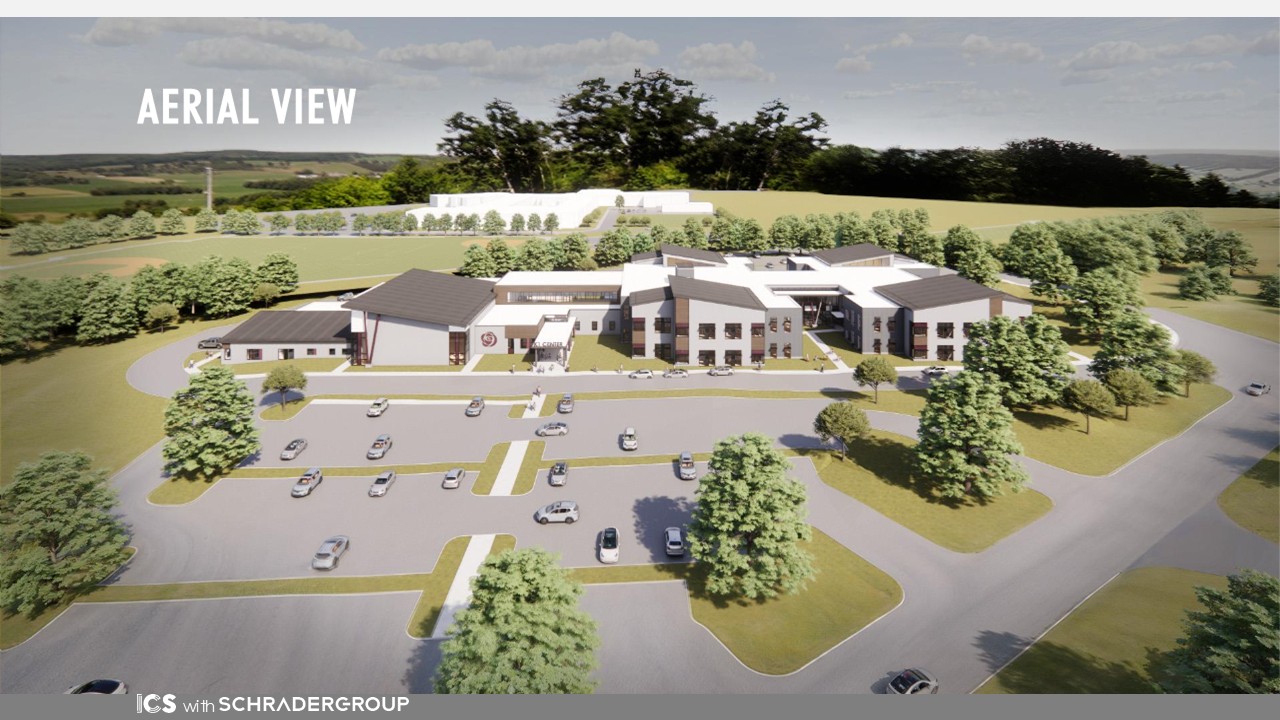
The Rose Tree Media School District plans to build a new elementary school for kindergarten and first-grade students, known as the K-1 Early Learning Center, on district-owned land behind Penncrest High School.
Put simply, “We are overcrowded at the elementary level,” said Rose Tree Media School District Superintendent Joe Meloche.
The school district estimates that more than 600 new homes have been built within its bounds in the last six years, including major developments like Pond’s Edge and the Franklin Mint site. The school district serves Media Borough and Edgmont, Middletown, and Upper Providence Townships. Between 2020 and 2024, Middletown saw a nearly 6% growth rate, due in large part to the new developments. The district projects it will grow by around 300 students in the next 10 years.
!function(){“use strict”;window.addEventListener(“message”,function(a){if(void 0!==a.data[“datawrapper-height”]){var e=document.querySelectorAll(“iframe”);for(var t in a.data[“datawrapper-height”])for(var r,i=0;r=e[i];i++)if(r.contentWindow===a.source){var d=a.data[“datawrapper-height”][t]+”px”;r.style.height=d}}})}();
This growth has forced the district to adopt space-saving measures. At Glenwood Elementary School, two modular classrooms were installed in 2023. The school got two more modular classrooms in 2024, then two more in 2025. There are now 10 modular classrooms being used across the district.
While Rose Tree Media can temporarily expand its classroom space, it can’t expand gyms, cafeterias, auditoriums, nurse’s offices, and other communal spaces. Beyond that, Meloche said, older school buildings aren’t designed to accommodate a modern school day, which includes far more individualized services, breakout groups, and collaborative work than it used to.
What will the new school look like?
Rose Tree Media is working with the Schrader Group, an architecture firm that has designed schools throughout the Philly region, including a K-1 school in Phoenixville.
Having Rose Tree Media’s youngest learners in one building will allow the district to add some “nuanced things” to the school’s design, Meloche said. Small water fountains, tiny sinks, and low-to-the-ground chairs come to mind. The K-1 Center will also place all of the district’s kindergarten and first-grade teachers in one place, making professional development and sharing of resources easier, Meloche said.
The project is currently estimated to cost $84 million. The district says it plans to sell bonds to build the school.
Though suggestions have floated around that Rose Tree Media remodel an old school, rather than build something new, district officials say it’s unrealistic. According to the district, purchasing and repurposing an old building “would be costly and would not meet the needs of young children” as it would lack accessibility features, safe play areas, and elements designed specifically for early learners.
What will this mean for full-day kindergarten?
Rose Tree Media is one of many districts in the Philadelphia region that have historically not offered full-day kindergarten.
Citing families’ needs for childcare and the developmental benefits of full-day schooling, many districts in the region have begun implementing full-day programs. The Penn-Delco School District implemented full-day kindergarten in 2023. Lower Merion switched from half-day to full-day last school year. New Jersey Gov. Phil Murphy signed a law ending half-day kindergarten across the state earlier this summer.
Meloche said bringing full-day kindergarten to Rose Tree Media has been on the table since he came to the district from Cherry Hill in 2023. Full-day kindergarten, Meloche said, will allow the district to “provide a much more substantial foundation for our children.” Under the half-day model, learning is crammed into a shorter period, he said, leaving little time for developmentally important activities like free play, outdoor activities, and specials like art, music, and physical education. Rose Tree Media’s existing elementary schools could not accommodate full-day kindergarten, according to the district.
What happened to the district’s previous proposal in Edgmont Township?
Rose Tree Media evaluated 23 potential sites for a new school before landing on a piece of land in Edgmont Township. That plan fell apart after the township denied the school district’s application in 2023, prompting the district to sue. The school district withdrew its legal challenge last spring and pivoted to the K-1 Center proposal.
Meloche said the district is in the process of selling the 37-acre Edgmont Township property on Route 352. The school district is finalizing the appraisal and has a buyer. They hope to finalize the process, including receiving court approval to sell, by the end of the year.
What will the approval process with Middletown Township look like?
Though the district already owns the property behind Penncrest High School, it is required to go through a planning and development process with local and state governing bodies, which can take several months.
The township has asked the district to undergo an expanded traffic study, which will include evaluations of the intersections of Middletown and Oriole Roads, Rose Tree Road and Hunting Hills Lane, and three access points to Penncrest High School on Barren Road. Once the district completes its expanded traffic study, it will submit a preliminary land development plan to the township. That will kick off a series of public hearings.
The district plans to hold an Act 34 hearing in January, a public meeting required by Pennsylvania law that gives residents and employees an opportunity to weigh in on the project.
During public meetings this fall, some residents urged the Middletown Township Council to deny the school district’s proposal, referencing traffic concerns and the desire to preserve green space. Others implored them to approve the school, citing a need to accommodate residents of new apartments and offer full-day kindergarten to working parents.
Council members noted that the school district will have the opportunity to address community concerns before an official plan is brought to the council.
Councilmember David Bialek said at a Sept. 17 meeting that the district has implied to the public that the K-1 Center is “a done deal” and “rubber-stamped,” when a preliminary plan has not yet been submitted.
In an emailed statement, Meloche said, “We have stated multiple times publicly that we have identified the K-1 Center’s location and purpose, and are now in the approval phase, which includes a rigorous process of approvals from Middletown Township, Delaware County, DEP and PennDot. We have been clear that the land development process must be completed prior to obtaining a building permit. The discussion at our Board meetings, the information on the Time to Bloom web page, and our monthly Time to Bloom email updates have laid out the land development process in detail.”
A rendering of the Rose Tree Media School District’s proposed K-1 center, which the district hopes to build behind Penncrest High School.
Township council chair Bibianna Dussling saidat an Oct. 1 meeting that the “details are going to be key” as the council considers the K-1 Center plans.
“It’s complicated because you can see the pros and cons,” Dussling said. “There’s a lot of concerns as far as the location, traffic, the neighbors, the neighborhood in very close proximity to it, the roadways there that are already busy.”
The district has said its professionals are working on creating an “optimal traffic flow,” which may include adding an additional parking lot for athletic fields and routing K-1 Center bus access around the back of Penncrest High School.
“We believe that we are all on the same side and on the same team,” Meloche said, adding that the goal is “to meet the needs of our community at-large, and to do so in a fiscally responsible but forward-thinking and future-looking way.”
The district says the new school will open in time for the 2028-29 school year. If the application is denied, a spokesperson from the district said they do not have an alternative plan for the K-1 Center.
This suburban content is produced with support from the Leslie Miller and Richard Worley Foundation and The Lenfest Institute for Journalism. Editorial content is created independently of the project donors. Gifts to support The Inquirer’s high-impact journalism can be made at inquirer.com/donate. A list of Lenfest Institute donors can be found at lenfestinstitute.org/supporters.