Like many, I’m big fan of Nicolas Cage’s work. How big? On my bachelorette party to New Orleans a few years ago I requested we tour St. Louis Cemetery No. 1 so I could get a pic of me and my girls with Cage’s nine-foot pyramid tomb.
Not only can the man seriously act, he can also seriously overact. As a writer who loves puns ( especially bad ones), I appreciate someone who has fun with their art form to the point it causes eye rolls.
And so, when I learned about Uncaged in Jenkintown: A Nic Cage cocktail crawl that happened on Sunday, I wanted to check it out. In some ways, it turned out to be like a lot of Cage movies — not a blockbuster, but still quirky and fun.
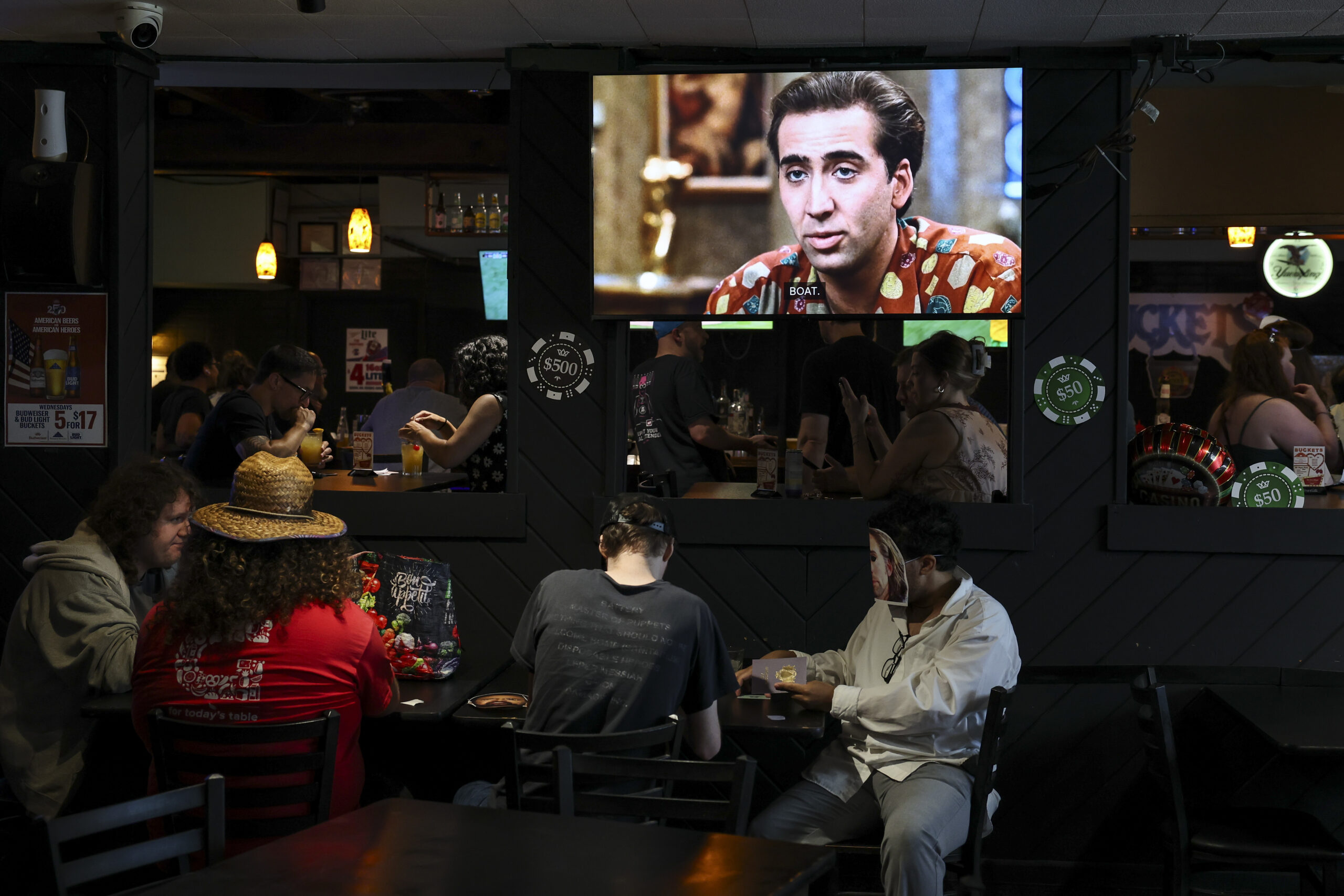
“Honeymoon in Vegas” plays at Buckets Bar during the Nic Cage cocktail crawl on Sunday in Jenkintown.
The crawl was spread across four Jenkintown bars — the Keep Easy, the Drake Tavern, Buckets Bar, and King’s Corner. Each one featured Cage-themed cocktails and hosted a “Cage match,” where participants went head-to-head in challenges based on Cage films.
Organizer Mel Hager, an owner of the Keep Easy, said she sold out of the 50 Uncaged kits she’d prepared for $15 a pop. While the crawl was free to attend, those who bought a kit — including yours truly — received a passport book, which got you a free Cage match at each establishment (otherwise they were $2 to play); a piece of Cage cash, which was good for one shot at any of the bars (it’s a tiny dollar bill with Nic Cage’s face on it, I’m never spending that); and one of a variety of Cage masks (I felt like I won the lottery when I got the Con-Air Cage).
While I didn’t drink, I hopped around to the bars, tried my hand at the Cage matches, and talked with fellow Cage fans about what brought them out to the event. Here are five of the wackiest things I saw at the Nic Cage bar crawl.
1. H.I. fashion
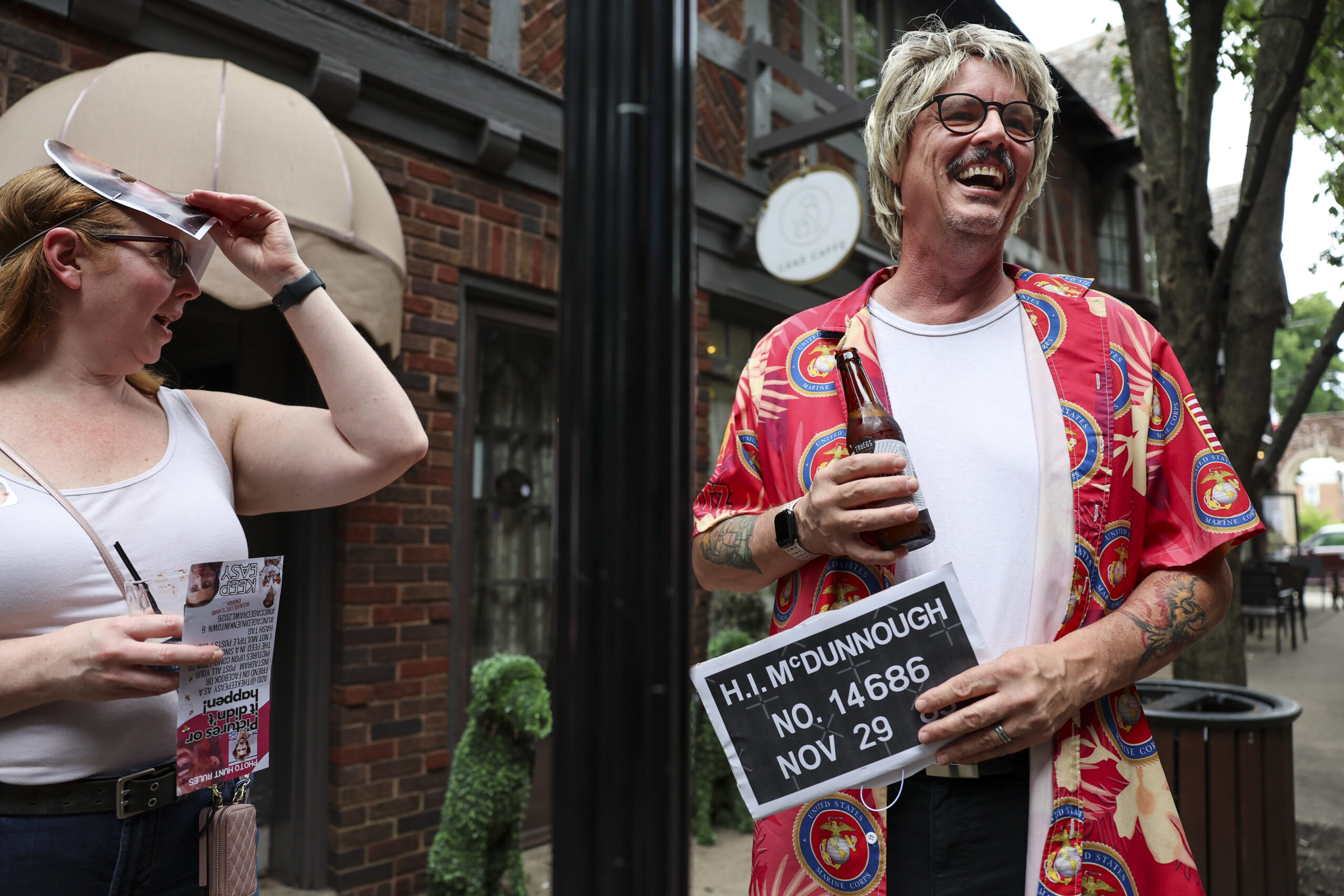
Vicky and Mike Hutz, of Huntington Valley, at the Keep Easy during the Nic Cage cocktail crawl on Sunday in Jenkintown. Mike Hutz is dressed as Cage’s character from “Raising Arizona,” H.I. McDunnough.
When H.I. McDunnough kidnaps one of the Arizona quintuplet babies in the 1987 Cohen Brothers classic, Raising Arizona, he proclaims to his wife: “I think I got the best one.”
Of the few Cage character costumes I saw Sunday — which included Ronny from Moonstruck, Cameron Poe from Con Air, and someone portraying Cage’s first role as an unnamed burger shop worker in Fast Times at Ridgemont High — Mike Hutz’s H.I. McDunnough costume was undoubtedly the best one. Hutz, of Huntingdon Valley, had the open Hawaiian shirt, a wig, and McDunnough’s mugshot board.
“What else are you going to do on a Sunday afternoon when you have a Nicolas Cage crawl option?” he said. “There’s nothing he can’t do and he does it with maximum cheesiness, which is just perfect for people who love cheesy.”
2. The faces
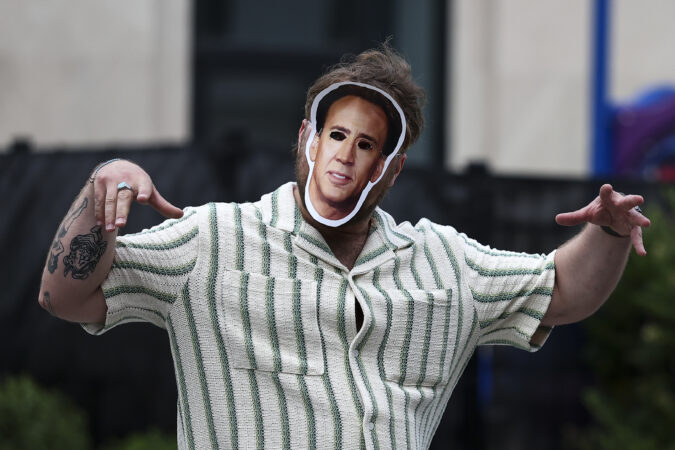
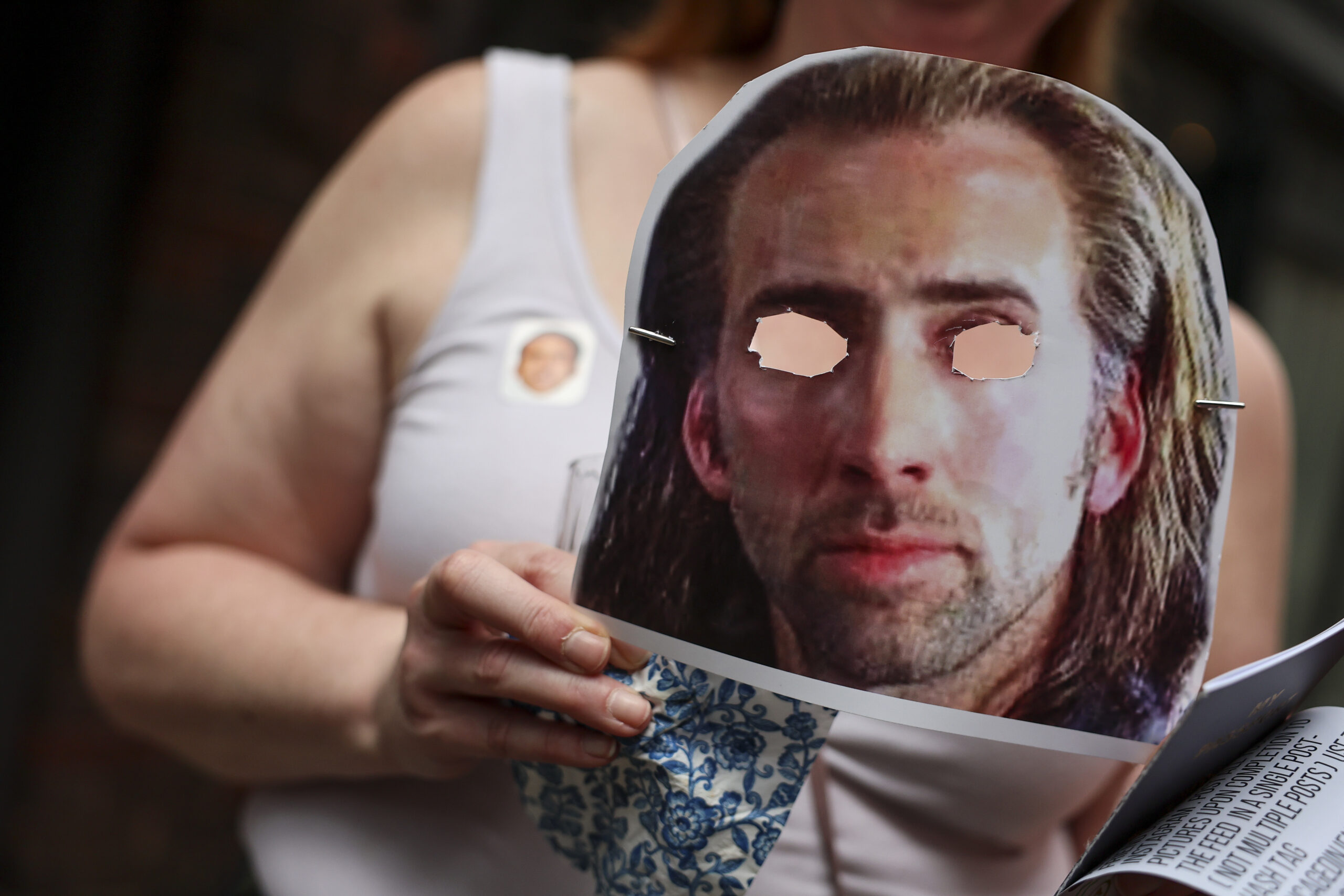
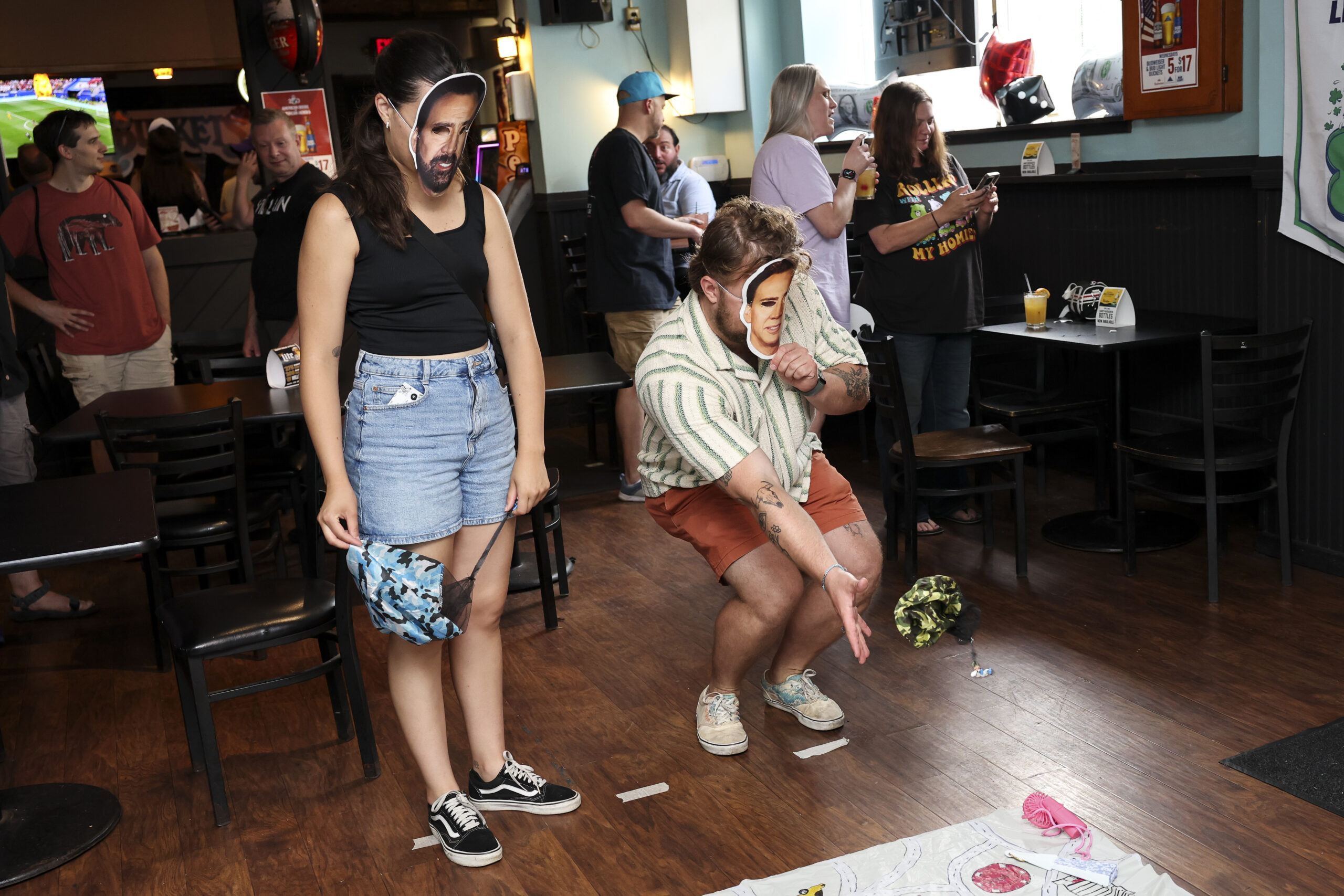
Seeing people at bars and walking the streets of Jenkintown wearing Cage face masks was both highly amusing and mildly unsettling, mainly because the eye holes were cut out wonkily, giving them a ragged, creepy edge.
Masks included Face/Off Cage, Con Air Cage, red carpet Cage, and Dracula Cage (from the movie Renfield).
Vicky Hutz, of Huntington Valley, holds a “Con-Air” Nic Cage mask at the Keep Easy during the Nic Cage cocktail crawl on Sunday.
Julia Sousa and Josh Douglas traveled to the crawl from Roxborough because they love Cage and Jenkintown. Douglas walked from bar to bar with his Cage face mask on, which seemed to startle some passing motorists.
“I’m pretty sure they thought I was Michael Myers,” he said.
3. The Cage matches
The games based on Cage films, while homespun, were clever and fun. At Buckets, the game was inspired by the scene in Honeymoon in Vegas where Cage skydives with a bunch of Elvis impersonators. Contestants had to throw toy parachute soldiers that were painted to look like Elvis onto particular spots of a mock-up of the Vegas strip for points.
Julia Sousa and Josh Douglas, both of Roxborough, compete in the “Flying Elvis Cage Match,” at Buckets Bar during the Nic Cage cocktail crawl on Sunday in Jenkintown.
At King’s Corner, where the challenge was based on the movie National Treasure, participants had to solve little metal mind-bender puzzles.
For the Spider-Noir Cage match at the Drake, you had to keep a balloon bouncing in the air while putting on a cape, mask, and fedora.
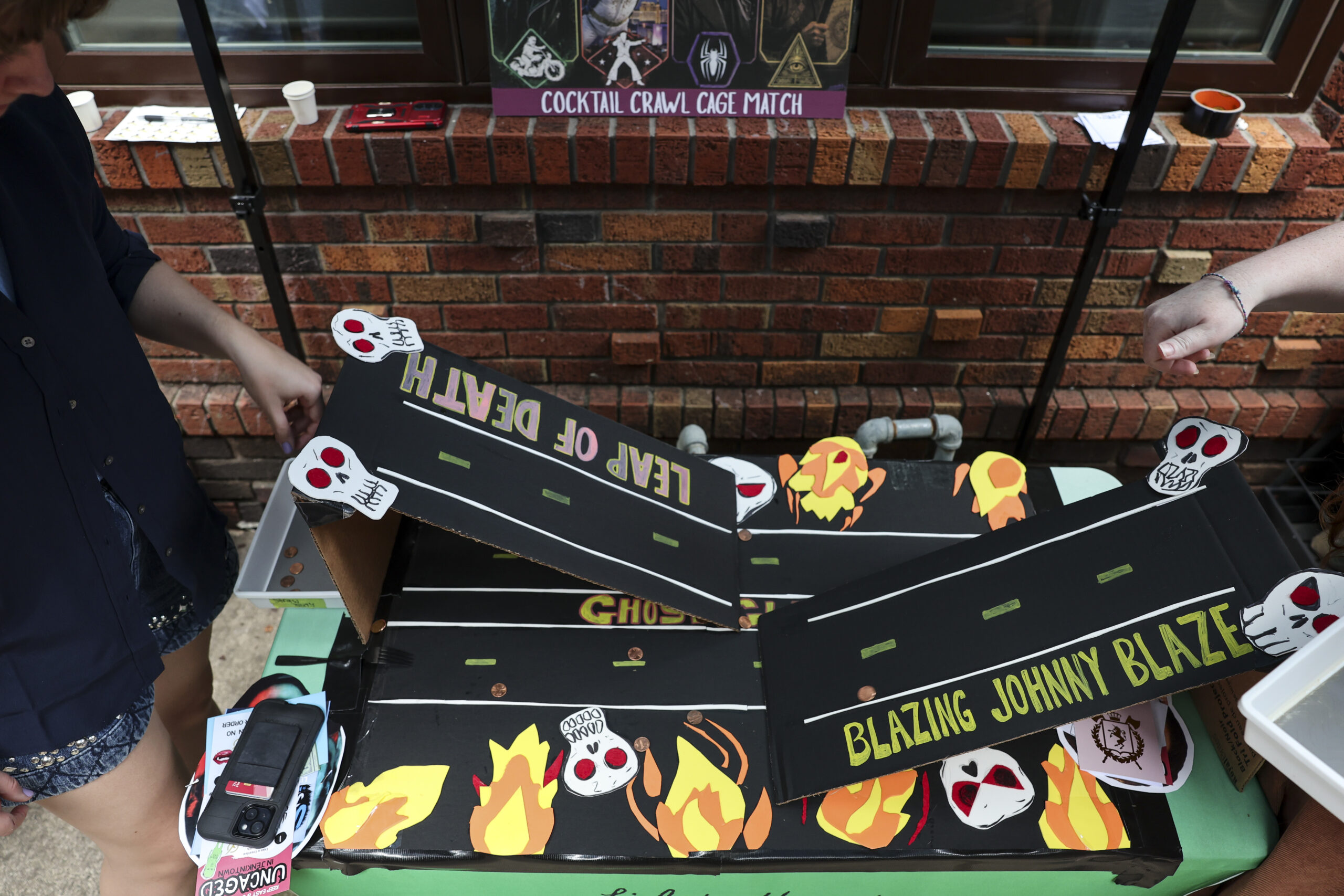
I failed spectacularly at all three of those challenges — and I was completely sober! The only one I did succeed at was called Ghost Glider. Based on the film Ghost Rider, the challenge was to to roll a penny down an inclined surface made to look like a road and into the tongs of a fork at the other end.
The “Ghost Glider” Cage match at the Keep Easy during the Nic Cage cocktail crawl on Sunday in Jenkintown.
4. Stickers and sage
For winning the Ghost Glider challenge, I received a bundle of sage and a sticker for my passport book of a shirtless, reclining Cage coming out of a banana.
Let’s address the sage first: Nobody could tell me why this was my prize for winning the challenge, which somehow makes it even better. I have two theories — it could be because sage rhymes with Cage, or maybe it’s because you light sage and in Ghost Rider, Cage lights on fire.
Whatever the reason, I’m gonna smudge some stuff up this weekend.
An a-peeling sticker columnist Stephanie Farr received for winning a Cage match challenge at the Keep Easy during the Nic Cage bar crawl in Jenkintown Sunday.
Now onto this banana sticker — I don’t know why it exists, but I am so happy it does. Each bar gave a different sticker if you won a challenge, but this banana-Cage split one was, by far, the most a-peeling.
Later at the Drake, I met Erica Adams of Bensalem and “her only friend of whimsy,” Amanda Knop, who’d driven from Baltimore to attend the Cage crawl with her. Adams had her own stickers of Cage’s head she was handing out like friendship bracelets at a Taylor Swift concert.
“I just love his movies and doing silly, fun things,” Adams said. “Nicolas Cage himself is very unserious. He’s lived a million different lives in a short span already.”
5. Picolas Cage
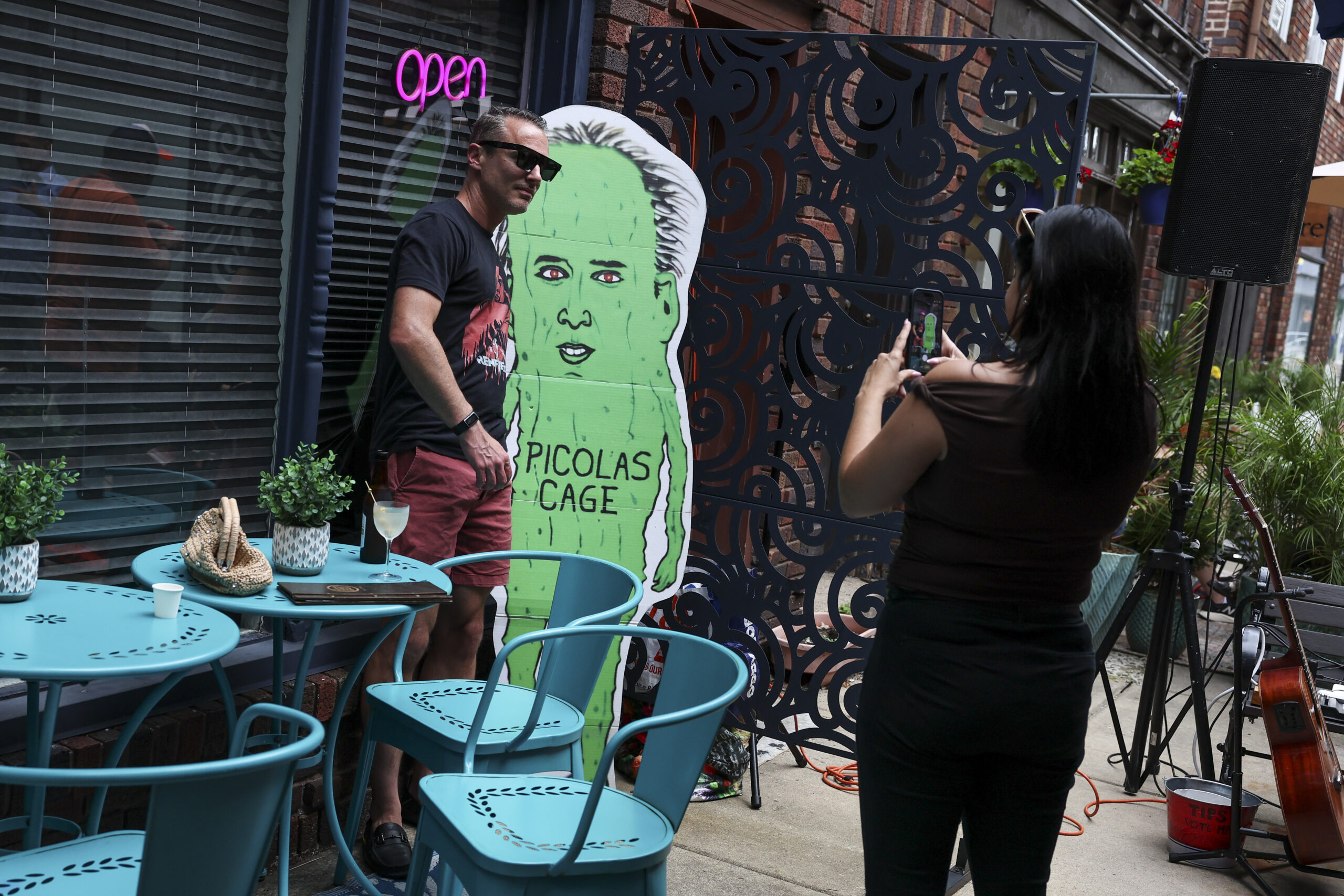
Justin Walsh poses for a photo with “Picolas Cage” as Jessica Lopez takes the photo at the Keep Easy during the Nic Cage cocktail crawl on Sunday in Jenkintown.
A giant cut-out of Cage as a pickle, aka Picolas Cage, was stationed outside of the Keep Easy during the crawl. As someone who likes Cage and cucumbers — but hates pickles — it was a jarring experience. But I saw others relishing the photo op so I didn’t make a big dill out of it.
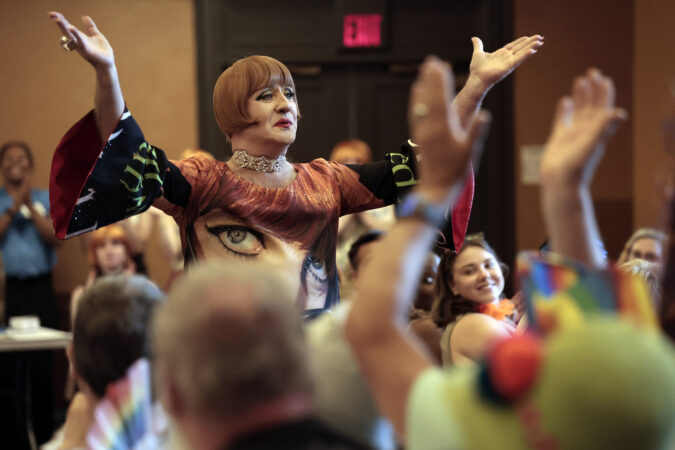
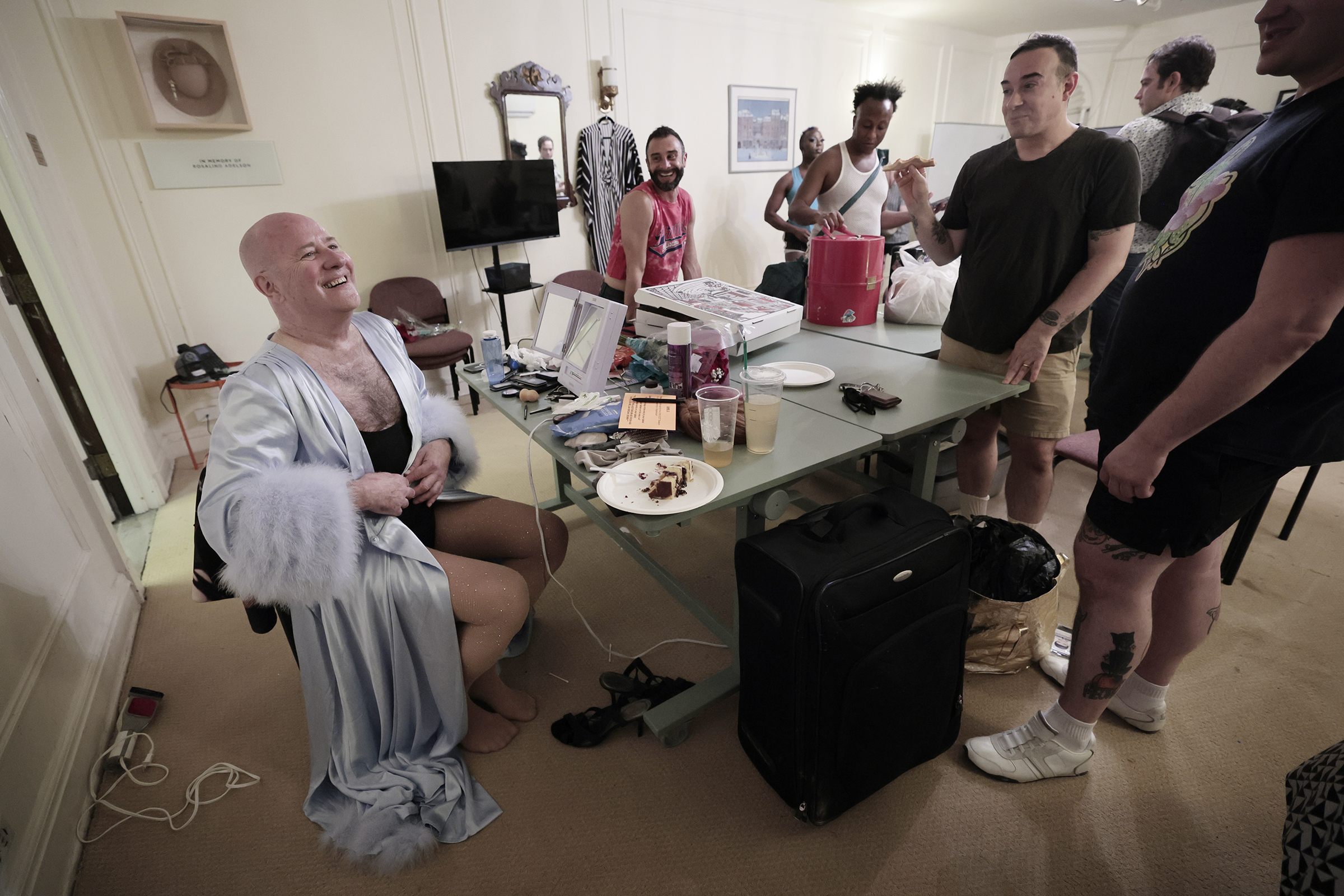
The legendary redheaded drag queen Carlota Ttendant donned a baby-blue Eva Gabor-inspired gown — its plunging neckline revealing tasteful chest hair — and sensible black heels.
At 65, arthritis stifles her strut in stilettos.
“Drag is a young girl’s game,” she said.
This was her swan song. At the close of its 30th season this Pride Month, the man behind the makeup, Michael Byrne, hung up his heels and bid adieu to his drag persona and his longtime gig hosting Gay Bingo, the camp, irreverent, slightly profane, and undoubtedly silly monthly HIV/AIDS fundraiser.
“I know it’s time,” Byrne said. And, “I’m excited to never wear Spanx ever again.”
Across three decades, Carlota Ttendant has called hundreds of games and elicited endless laughs, all while raising millions for people living with HIV/AIDS across the Delaware Valley. She helped steer a community through crisis, providing a respite to those experiencing immense loss and stigma. Even as medicine has advanced and HIV/AIDS has become manageable, she’s crafted a safe space for queer Philadelphians. For one night each month, she’s been an entertainer and an equalizer, responsible for uniting people — gay and straight, from Haddonfield to Phoenixville — around a common goal.
And since Carlota came into Byrne’s life, she’s taught him to lead with courage, practice gratitude, and be unabashedly unafraid. He’s gone from being the “worst waiter ever” and selling cosmetics, to being a performer, licensed clinical social worker counseling older LGBTQ+ folks through their own next phases of life, and president of Philly AIDS Thrift’s board.
“None of it would have been possible without all of you,” Carlota told the 400-person crowd — the biggest turnout in years — at her last Gay Bingo on June 13 in the basement ballroom at Congregation Rodeph Shalom. “In the ’90s there was horror happening, and today there is horror happening.
“But please, let’s do some laughing,” Carlota said.
“Let’s play bingo!”
Michael Byrne, as his drag persona Carlota Ttendant, during Gay Bingo on Saturday, May 9, 2026, at Congregation Rodeph Shalom in Philadelphia.
Act I
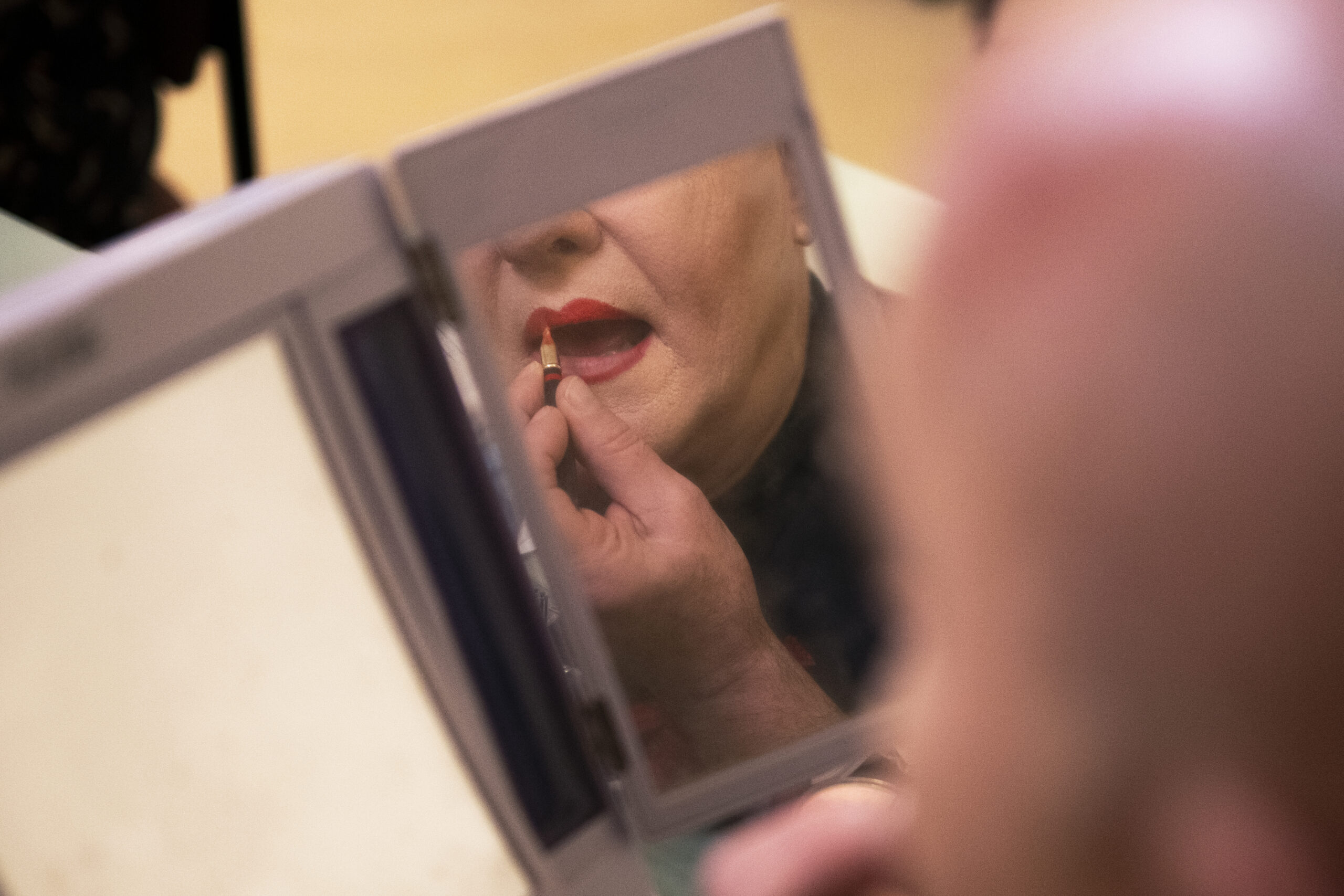
Like so many Saturdays before, Byrne, on June 13, slathered his face with foundation, carved out his cheeks, deepened his eyes, and painted on his red lip. There was haze — from the dusting of loose setting powder, bronzer, and blush — and musk — from sweat and heat and hairspray — in a Rodeph Shalom classroom, which moonlights as a bridal suite and a boudoir for the Bingo Verifying Divas or BVDs. At 10 minutes till curtain, he futzed with his press-on nails, shimmied into a mod swing dress, straightened the back seams of his tights, and dabbed on some glitter. With each gender-bending step, he transformed into his “twin sister,” Carlota.
Michael Byrne transforms into his drag persona Carlota Tendant ahead of Gay Bingo on May 9 at Congregation Rodeph Shalom in Philadelphia.
Like all classy ladies, Carlota’s exact age is lost to time. In the 1990s, Byrne was organizing a fundraiser for Big Mess Theatre, an avant-garde troupe that he helped establish as the spinning axis of Philadelphia’s alternative performance scene, complete with vaudeville acts, an oompah orchestra, and live auction with a striptease routine. Byrne was to host and make his drag debut, and Carlota Ttendant (read as car lot attendant) was conjured up over bourbon and blackjack. (He learned, years later, that there was a ’60s stripper at the famed Trocadero Theatre with the same name.)
Byrne never aimed to create a perfect, feminine illusion with Carlota. He left his chest unshaven and unstuffed, but short, thrifted dresses showed off his long and feminine legs. Carlota’s makeup was an extension of the exaggerated theater paint Byrne, who has been on stages since he was 10, knew; cheap wigs hid his sideburns. Nothing could mask his deep, raspy, anything-but-ladylike voice.
Carlota Ttendant (Michael Byrne) (at left) laughs with friends and fellow performers after Carlota’s final evening cohosting Gay Bingo at Congregation Rodeph Shalom in Philadelphia on June 13. Michael Byrne transforms into his drag persona Carlota Ttendant ahead of Gay Bingo on May 9 at Congregation Rodeph Shalom in Philadelphia.
Carlota could be bossy and profane but never vulgar; she could poke fun at audiences without being cruel. She became the “drag queen you could bring your grandma to,” Byrne said.
Around the time Carlota came to be, the number of new AIDS diagnoses and deaths peaked in Philadelphia. In 1992, new AIDS cases surpassed 1,500; in 1994, AIDS deaths topped 900, according to city data.
(function(){function e(){window.addEventListener(`message`,function(e){if(e.data[`datawrapper-height`]!==void 0){var t=document.querySelectorAll(`iframe`);for(var n in e.data[`datawrapper-height`])for(var r=0,i;i=t[r];r++)if(i.contentWindow===e.source){var a=e.data[`datawrapper-height`][n]+`px`;i.style.height=a}}})}e()})();
Misinformation about the disease, which strips the body of its natural defenses and leaves it vulnerable to life-threatening infections and ailments, was rampant. People alienated gay men, wrongly fearing HIV/AIDS could be transmitted through a handshake, a hug, or across a dinner table, The Inquirer and Philadelphia Daily News wrote. Diagnostic testing took weeks; what rudimentary treatments were available sometimes made people sicker; and HIV often progressed to AIDS within a few years.
“It was not unusual to have people dying every month,” said Kevin Burns, who as a case manager with the nonprofit ActionAIDS (now called Action Wellness) connected clients to hospice care. Burns later served as Action Wellness’ executive director.
The need for resources was rife, and in 1996, Philly’s nonprofit AIDS Fund set out to supplement the money it made from its annual AIDS Walk, according to Sandra Thompson, former chair of its board of directors. An article in City Paper about an irreverent bingo-drag night sweeping Seattle — which, by one report in the Seattle Times, raised $10,000 a night — caught the attention of Mark “Chumley” Singer, then a fledgling events producer, who pitched the idea to the AIDS Fund. (The fund folded in 2024 due to the decrease in new AIDS cases, and turned ownership of Gay Bingo over to Action Wellness.)
Singer recalled thinking at the time: “I’ve been doing sad, mopey, candlelight vigil fundraisers. … Why can’t we raise money and have fun?”
Singer and Byrne had never met before the latter was tapped to host Gay Bingo, but their chemistry was kismet.
“There was never a show where we weren’t having more fun than everybody,” said Singer, who cohosted until the early aughts. Byrne and Singer left Gay Bingo around that time, but Byrne later returned.
Byrne remembers the magic of those early years of Gay Bingo. He remembers when 600 seats would sell out in 10 minutes, and he remembers doing his glittered red lip from the floor of the Gershman Y’s mirrored dance studio. He remembers two-show Saturdays and how six hours in heels would make him catatonic on Sunday. He remembers riffing with and ribbing Singer and the laughs their off-color jokes and mild profanity elicited. He remembers the constant movement of the bold and bawdy BVDs, on Rollerblades, or the electricity when O-69 was called and hundreds stood up, shaking and shouting with the fervor of their libidos.
But Byrne also remembers the solemn moments: the steelworker who told a documentarian about watching his bodybuilder son become emaciated; the families who sponsored games on the anniversary of their loved one’s death; the pharmacist who learned all he could about HIV drugs; Byrne’s own friends who were infected.
“Our community was in crisis,” Byrne said, “while we focused on it, we also focused on being fun and laughing.
“And we all needed that at that point.”
Act II
The “Rainbow Bombshell” Gay Bingo on June 13 doubled as a Pride extravaganza and an homage to all things Carlota. Her first outfit of the night was crafted from a promotional banner from her years hosting the Philadelphia Orchestra’s Halloween Concert. Alongside her, the BVDs dressed as Big Mess-era Carlota, Norma Kamali-inspired Carlota, Phillies Carlota, and fuzzy caftan-wearing Carlota. Attendees, ushers, volunteers, and even the American Sign Language interpreter wore that signature red bob — wigs that Action Wellness bought in bulk. One wore a T-shirt that read, “Dibs on the ginger.”
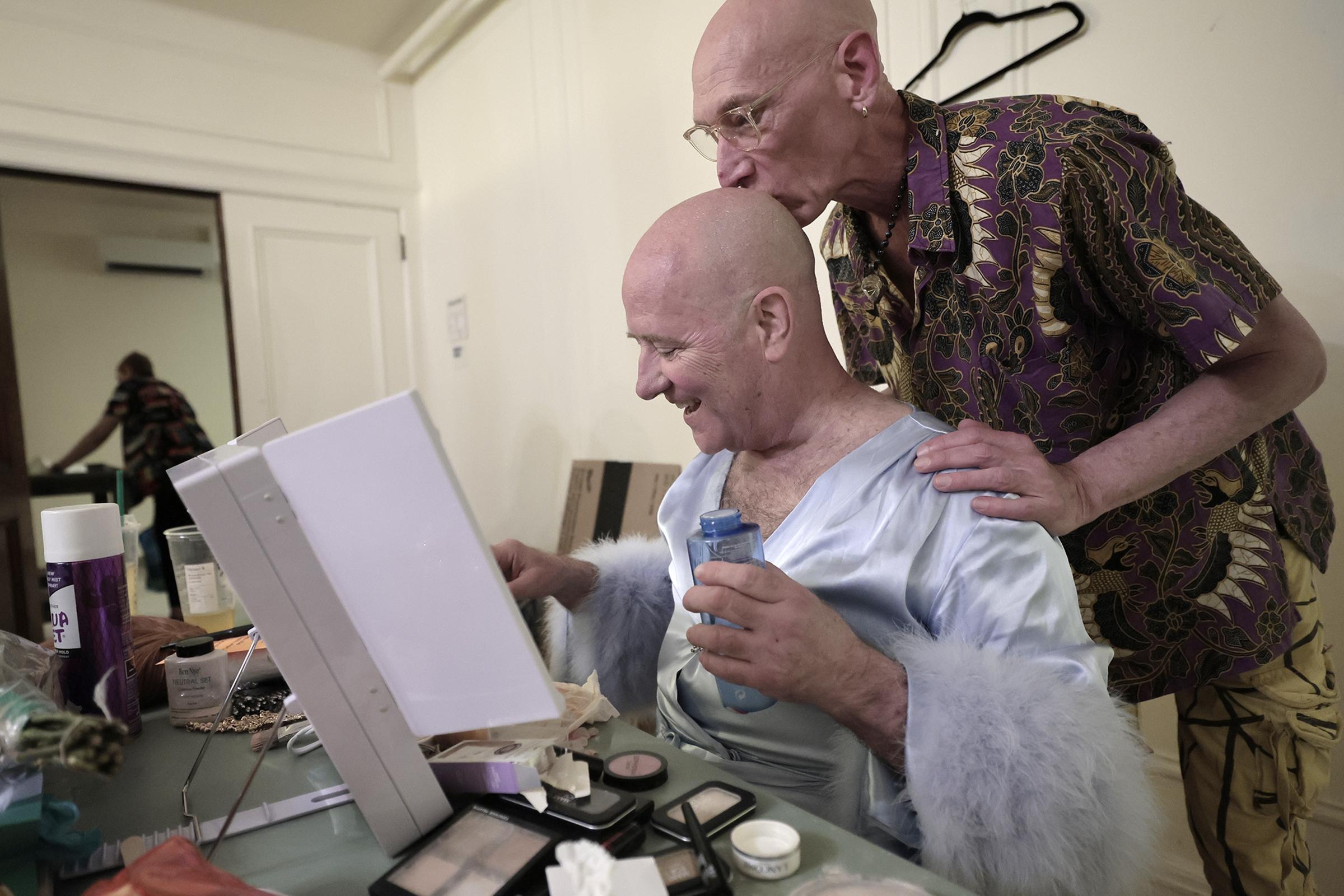
In the dressing room, Tess Tickle (Paul Struck) kisses Carlota Ttendant (Michael Byrne) on the head after Rainbow Bombshell Gay Bingo at Congregation Rodeph Shalom in Philadelphia on Saturday, June 13, 2026. “I love him” said Struck as he walked out of the dressing room.Carlota Ttendant (Michael Byrne) puts on a favorite crystal ring and fake nails before cohosting Rainbow Bombshell Gay Bingo on June 13.
“Are we ready to win some money?” Carlota said, hyping up the crowd before the first of 12 rounds of bingo. Councilmember Rue Landau, the Philadelphia City Council’s first openly LGBTQ+ member, called the first game:
I-28.
I-26.
G-52.
B-14.
O-63.
B-3.
“Bingo!” someone cried out, as the audience let out an audible wave of disappointment, exasperation, and defeat, and the BVDs rushed over to authenticate.
“Did you just get bingo, girl?” Carlota wisecracked.
For 30 years, these Gay Bingo players have pledged each month to “keep on playing Gay Bingo until this crisis is over.” And today, HIV/AIDS deaths and new diagnoses have stagnated, according to the most recently available health department data, and drug cocktails have made it so people with HIV can live long, healthy lives and may never pass the disease onto others or have their illness advance to AIDS. Preventative medications, like PrEP, can also dramatically decrease the risk of becoming infected.
Michael Byrne, as his drag persona Carlota Ttendant, on May 9 at Congregation Rodeph Shalom in Philadelphia.
But there are still obstacles to ending the epidemic. HIV/AIDS disproportionately affects Black and brown communities and low-income people who experience barriers to healthcare, according to Action Wellness executive director Mary Evelyn Torres. The geographic disparities are also stark: Current drug regimens may be readily available in well-resourced countries, like the United States, but access is scarce in the world’s vulnerable pockets. These problems have only been exacerbated by President Donald Trump’s proposed cuts to domestic and foreign HIV/AIDS programs. The withdrawal of American dollars overseas, United Nations officials warned, could lead to more than 4 million AIDS-related deaths and 6 million more HIV infections by 2029.
(function(){function e(){window.addEventListener(`message`,function(e){if(e.data[`datawrapper-height`]!==void 0){var t=document.querySelectorAll(`iframe`);for(var n in e.data[`datawrapper-height`])for(var r=0,i;i=t[r];r++)if(i.contentWindow===e.source){var a=e.data[`datawrapper-height`][n]+`px`;i.style.height=a}}})}e()})();
“We’ve come a long way, but there’s still work to be done,” Torres said, “and that work is being threatened by this administration.”
As the epidemic has changed, so has Gay Bingo: The money raised — more than $5 million since its inception — now goes toward Action Wellness’ social services and programming. The BVDs ditched their roller skates at the Gershman Y (because of the new, carpeted venue). Tickets cost $50-$60, compared to $10-$12 in May 1996, and these days, attendance averages between 150 and 200 a month.
Drag has evolved, too. Spending centuries on the periphery as proto-punk-beatniks and after-midnight acts, queens disrupted and challenged the mainstream with wit and wonder. Then, the exploding popularity of RuPaul’s Drag Race, a drag reality-TV competition, seismically changed the culture, snubbing scrappiness for silicon and kitsch for couture. The show ushered drag into the zeitgeist: Its lingo became commonplace and its contestants turned into social media stars, with businesses, makeup brands, books, and podcasts, as the art form continues to face political bans and threats nationwide.
The show “has taken everything to a whole other planet,” Byrne said, “and that’s amazing and that’s really great.
“That’s also not what I do.”
Carlota was never concerned with “affecting female mannerisms” or “trying to be this woman or this drag queen,” Singer said. To Byrne, she’s come to embody the fiercest, most unafraid, and righteous versions of himself. But “Michael was never far from Carlota,” Singer said.
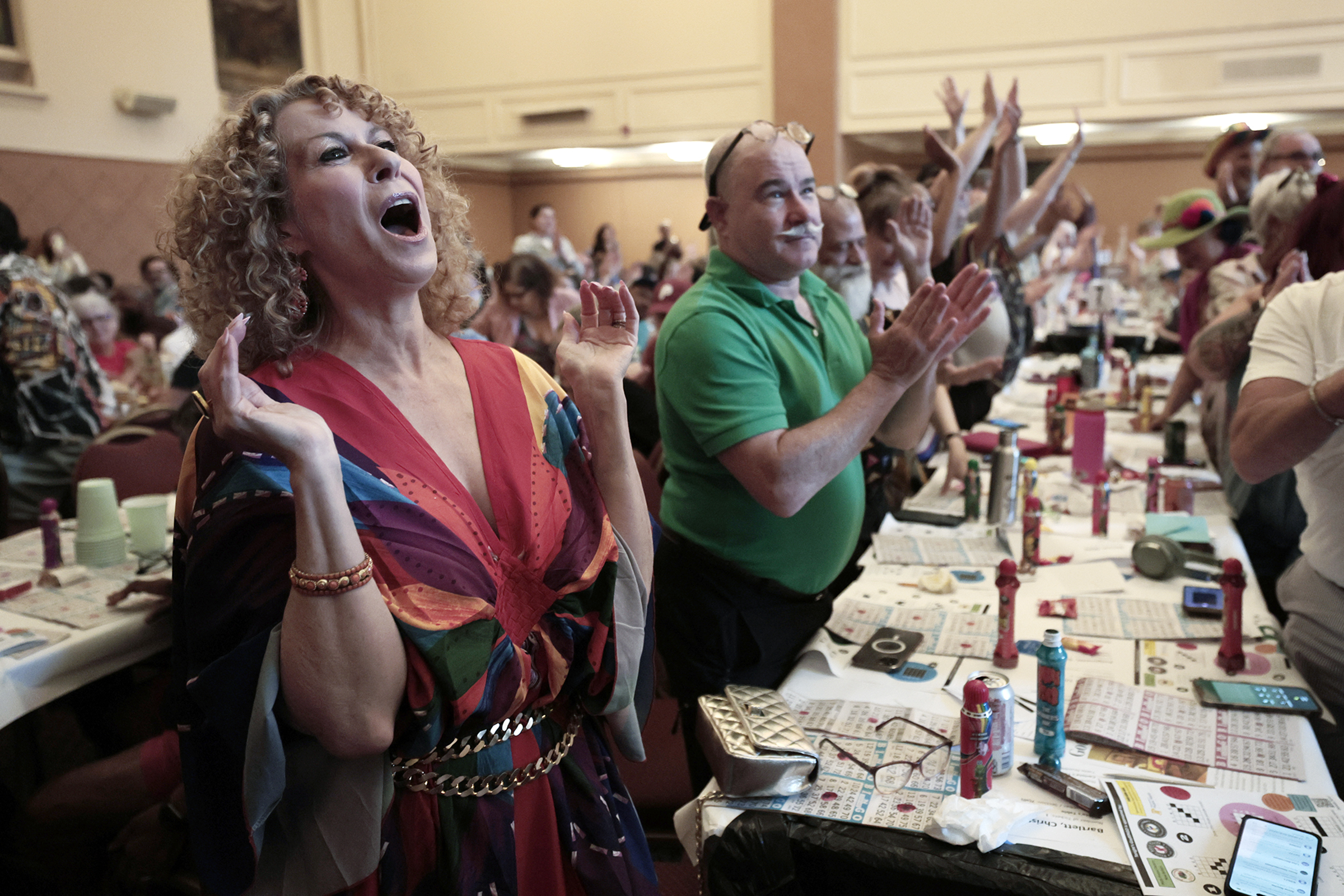
Janie Lopez of Philadelphia cheers for her friend Carlota Ttendant during Gay Bingo at Congregation Rodeph Shalom.
To those who know Byrne, Carlota’s come to represent someone purer and more singular, a testament to what joyful resistance and defiant resilience can achieve amid tragedy. Her ingenuity and authenticity have made her synonymous with Gay Bingo, according to Action Wellness event planner and cohost Tim Johnson (otherwise known as Stella D’Oro); her playfulness is what’s engaging, Burns said; the safe space she’s cultivated for the queer community is what keeps people coming back season after season, said regulars Cat Johnson, 47, and Katie Dickerson, 38, of Roxborough.
“It’s going to be really different without Carlota,” Johnson said. “No one’s going to fill her shoes, but I think that the vibe and the energy is going to live on.”
“It’s a lot easier to raise money when everyone is having fun,” said Amber Schlesman, 38, of Point Breeze, who’s been coming to Gay Bingo since its Gershman Y days. “And for the shoes, I’m guessing it’s a size 12.”
All those shoes will be donated to Philly AIDS Thrift soon enough, Byrne said.
Byrne’s voice cracked as he thought of the people who made Carlota’s run possible: the AIDS Fund organizers, Singer, the original cast of BVDs, the volunteers, those who came back monthly, the victims, their families. Many sent her off June 13 with a trove of well wishes, notes that read, “thanks for the memories,” and “so proud of all you’ve done.” They told her, “I love you,” and “hang up those high heels, baby.”
At the end of the night, Byrne’s best friend gifted him a throw pillow.
“Don’t be a lady,” it said. “Be a legend.”
Michael Byrne transforms into his drag persona Carlota Ttendant ahead of Gay Bingo on Saturday, May 9, 2026, at Congregation Rodeph Shalom in Philadelphia.
For the last three years, my life has been defined by the tragedy of my son’s murder and the management of the indescribable pain I feel every moment. For everyone else, time continues normally. For me, time simultaneously stands still, moves like molasses, or flies by in a blur.
I’ve been dreading 2026 for a while — it would have been Nick’s senior year at W.B. Saul High School. He’d have turned 18 last October. He’d have a driver’s license. He’d be looking forward to senior prom and graduation. But instead, this June, we’ll attend the trial for his murder, nearly four years later, and after constant delays.
Meredith Elizalde holds a photograph of her son, Nicolas, who was fatally shot after his football scrimmage in 2022 outside of Roxborough High School.
For all this time, I’ve been able to picture Nick with his classmates at Saul, having the time of his life. But once June comes, where will I picture him? His life, as it was when he was killed, will be over. I cannot explain the level of distress this causes me. Who and where would my son be?
In an effort to manage this pain, I made the decision to attend the Philadelphia Flower Show this year, so that I could see what Nick’s classmates had on display before they graduate. It’s hard for me to watch the Saul kids continue on without Nick, but it also provides me a brief, albeit painful, respite and sense of pride to watch them shine — and to imagine him with them.
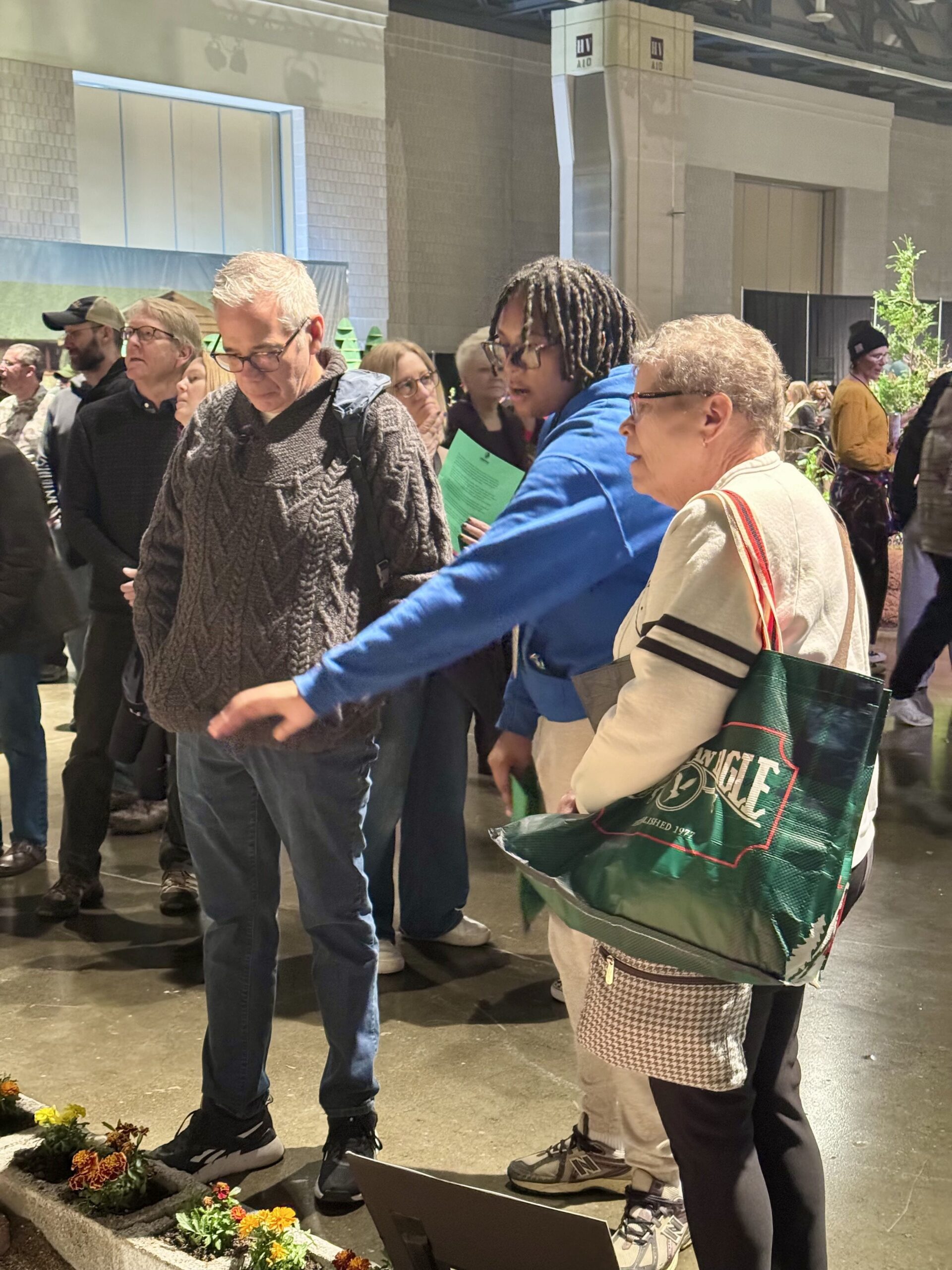
Visitors look at W.B Saul High School of Agricultural Sciences’ “Up-Rooted, Re-Planted” display at the Philadelphia Flower Showon Feb. 27.
I was impressed and deeply moved by the homage to the Lenni Lenape. I could feel Nick’s Indigenous pride as I marveled at what his classmates had created.
A man and woman were next to me, very engaged in the Saul exhibit, reading all of the signs. The man said, “The two high school exhibits”— Saul and Lankenau — “are the best ones here.” As a Saul mother and a former Philadelphia high school teacher, I felt a surge of maternal pride upon hearing that.
I had just walked over from the Lankenau Environmental Science Magnet High School display, which was phenomenal. It was colorful and intimate. I especially loved the border of flowers in cinderblocks. It reminded me of how beauty pushes through hardness and barriers that are meant to suppress.
A display by students from Lankenau Environmental Science Magnet High School, “Bloom Where You Are Planted,” is shown Feb. 28 at the Philadelphia Flower Show.
Standing in front of the display, I saw three Lankenau students handing out fliers, which broke my heart. What a surreal feeling it was to stand in front of such a marvelous, artistic display of the natural world, next to some of its creators, as they asked people for help to save their school from closure. What a shortsighted decision to close Lankenau — a treasure in the “green lung” of the city.
I am now an environmental graduate student at the University of Montana. My research was born from Nick’s deep love of Mother Earth, his exemplary stewardship of nature, his murder, and my experience of teaching high school in Philadelphia. Why would we close a school in one of what feels like extremely limited green spaces in a densely populated, urban area?
Students in the botany club ant their teacher at Lankenau Environmental Science Magnet High School build a compost pile in this file photo from 2018.
Scientific literature is saturated with the physical and mental health benefits of green and blue space exposure. The literature also details the correlation between tree canopy and lower crime rates. Nature deficit is real, and it has detrimental consequences, especially for our youth. The built environment and the omnipresence of screens have affected our youth in ways most people who do not interact with kids in an educational setting cannot understand.
It therefore baffles me that a school in such an idyllic setting for place-based learning — where socioemotional learning can have greater impact because of the healing effect of natural settings on our nervous systems — is considered expendable.
Last year, I taught undergraduate classes in Montana. We took a field trip to Yellowstone National Park for three days, and I was amazed at the level of comfort the students had with wilderness, teamwork, wayfinding, and so much more.
Overall, they had knowledge about so many things that completely bewilder me — it was simultaneously embarrassing and inspirational. I wondered what our Philadelphia youth might feel like if more of them had greater access to the natural world, and, in turn, what would our society look like when they come of age and contribute to the community.
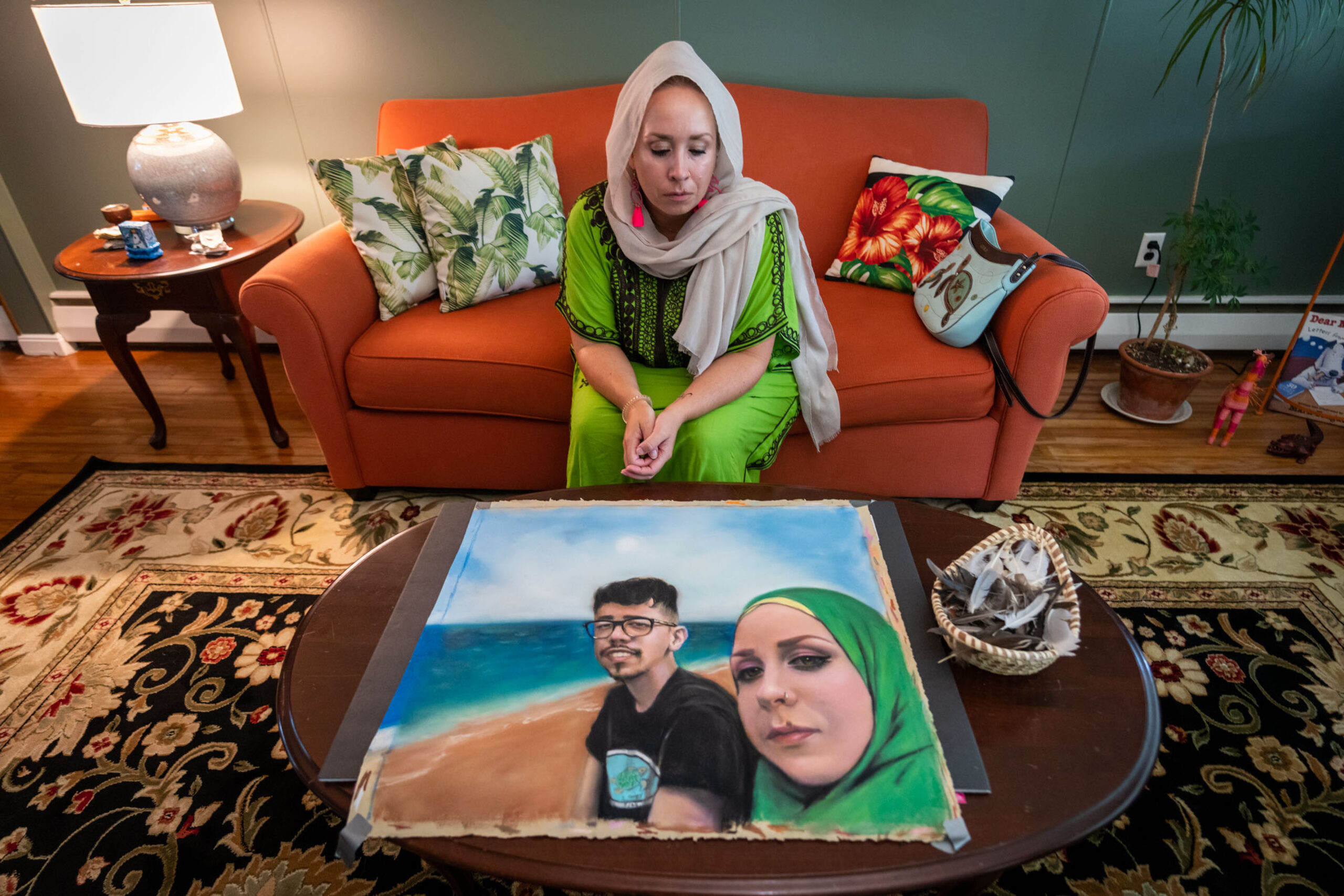
Meredith Elizalde with a painting of her and her son, Nicolas, in Aston in July 2024.
There are so few places like Lankenau; it is a travesty that we are even thinking about closing such a distinctive institution.
We have lost so many young lives to gun violence. And those left behind are in a state of collective yet disenfranchised grief that permeates daily life in unseen but troubling ways. After Nick was killed, students posted wishes for themselves, each other, and society on the wall of Roxborough High School. So many wished for an end to gun violence and living in fear. One wished he would live to see age 25.
When we lost Nick, our city lost a true conservationist and a pure soul. Lankenau graduates students who can help to fill that gap, left by all of our murdered loved ones and their stolen potential.
I urge everyone, Philadelphia resident or not, to join the fight for Lankenau and all the schools slated to close. If you believe that every child deserves a chance, now is the time to act on that belief.
One of the Lankenau students at the Flower Show told me they are “trying to make noise.” Let’s not put that burden on our youth, or solely on the shoulders of those most affected. Whoever you are — show up, make noise.
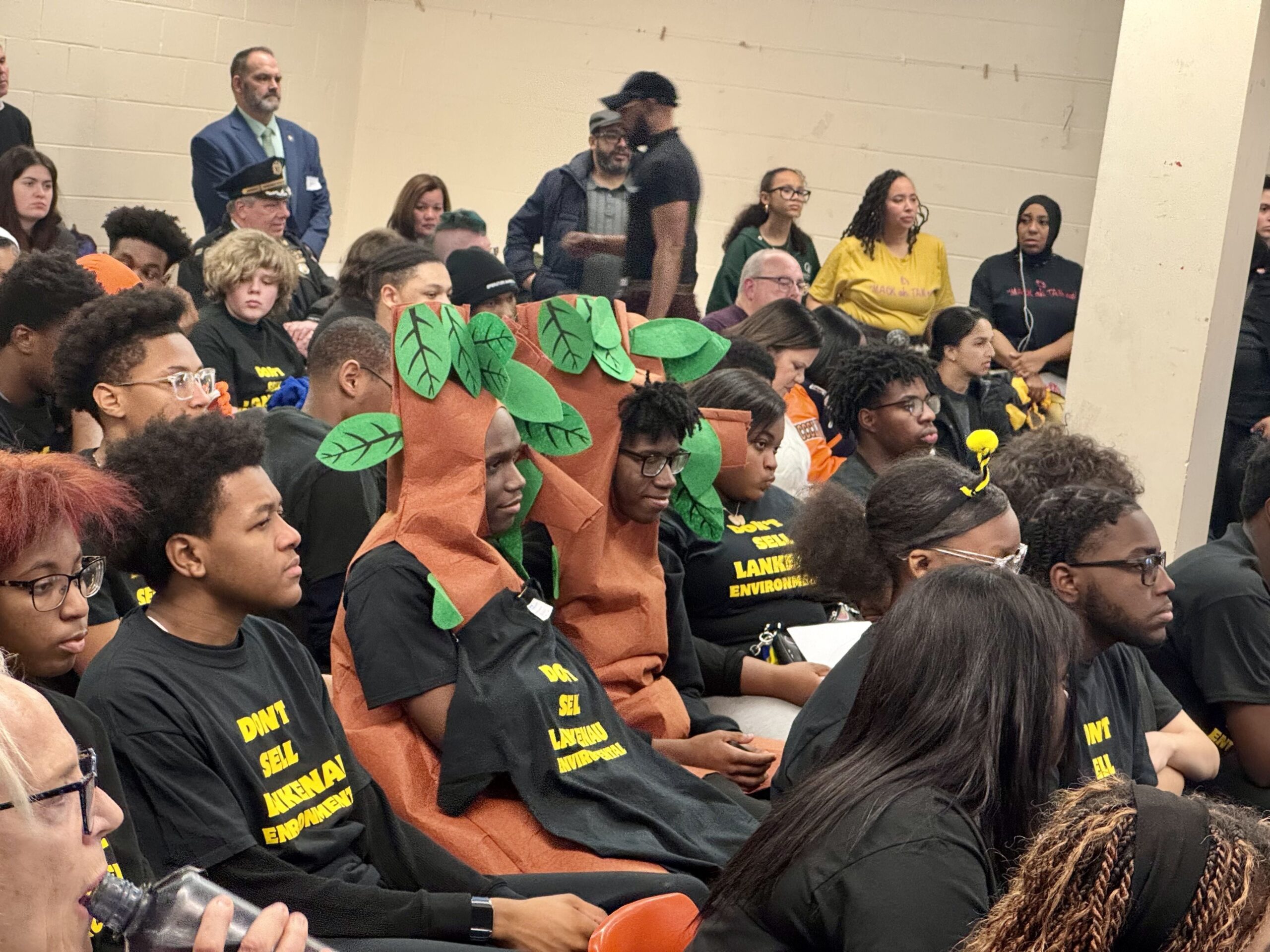
Students, staff, and community members who support Lankenau High School — including some dressed as trees — packed a community meeting at the school Feb. 4. The Philadelphia School District proposes closing the city’s only environmental sciences magnet, citing issues including low enrollment. But the school system had a hand in limiting enrollment.
A magnet school in a beautiful, natural setting is violence prevention, a soothing balm, and a safe haven from the chaos of life. The imam at Nick’s janaza read an African proverb: “The child who is not embraced by the village will burn it down to feel its warmth.”
We are the village, and we must embrace our children.
Meredith Elizalde is Nick’s mom. A former Philadelphia high school teacher, she is currently a graduate student at the University of Montana.
Both schools would still close under the plan, which is now in the school board’s hands. Instead of merging into large neighborhood high schools, however, the small, selective-admission schools would be absorbed by magnets.
Watlington said the tweaks would still allow the district to bring more high-quality academic and extracurricular opportunities into neighborhood schools while acknowledging the need to manage limited resources.
Butstudents, staff, parents — and some powerful allies at both schools — say Watlington’s counter-proposalisn’t enough. Both communities are still fighting.
Under the revised plan, Lankenau would merge with Saul, not Roxborough, and Robeson would merge into Motivation, not Sayre.
State Rep. Morgan Cephas (D., Phila.) recently visited the Philadelphia Flower Show, where she and other officials marveled at Lankenau students’ exhibit, which examines abundance, roots, and connections through culturally important plants. The display won a gold medal and the prestigious Alfred M. Campbell Memorial Trophy.
The dichotomy struck Cephas, she said. Lankenau students “are at the Flower Show, and [the district] is trying to close the school?”
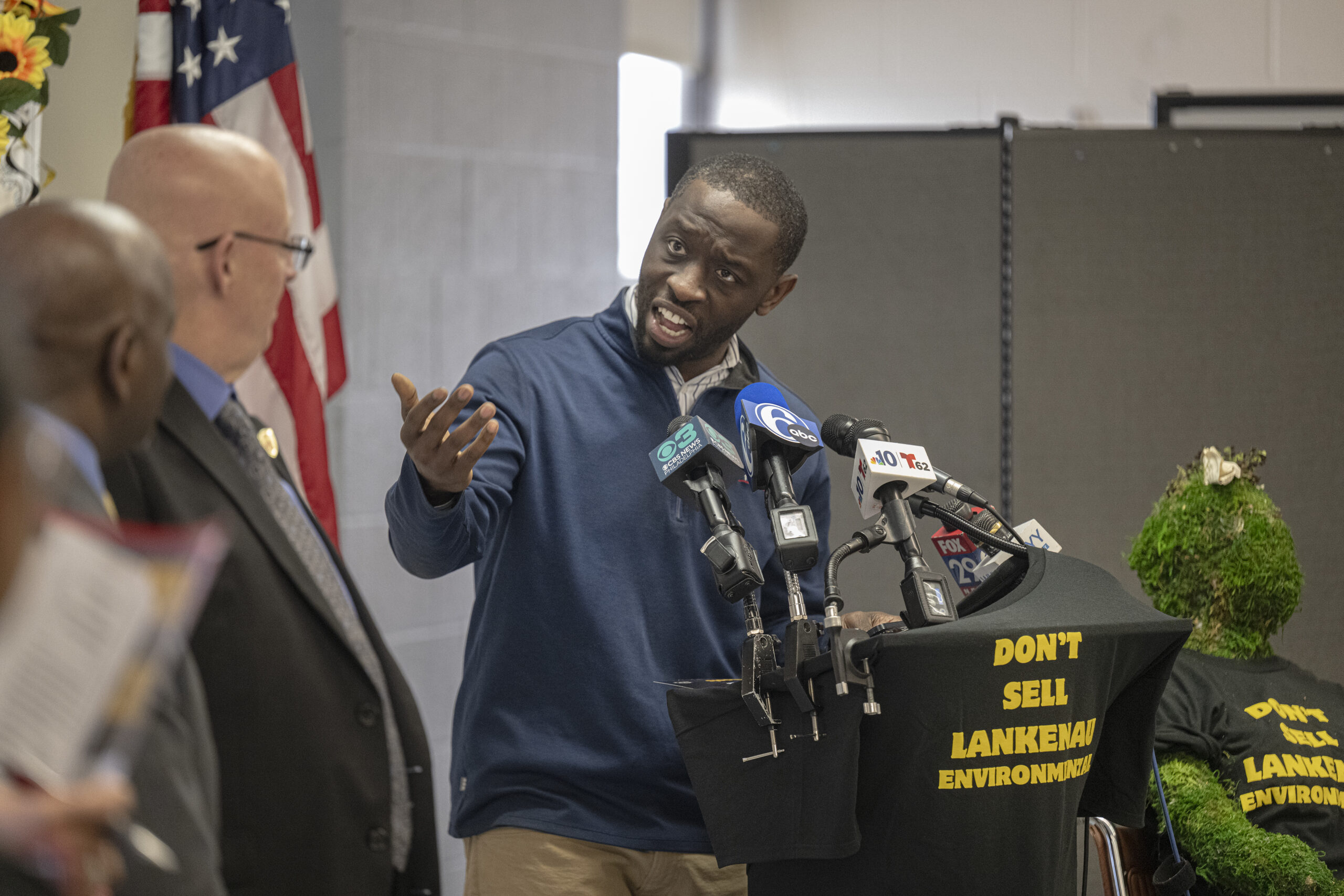
On Wednesday, students, parents, lawmakers, and Philadelphia Federation of Teachers officials gathered at Lankenau to drum up support for Gov. Josh Shapiro’s budget proposal. But really, it was another save-our-school rally.
A ‘prime example of a successful school’
Lankenau “is a prime example of a successful school,” said Messiah Stokes, an 11th grader at the Upper Roxborough school. The school has a 100% graduation rate, and is Pennsylvania’s only three-year agriculture, food, and natural resources career and technical education program.
The school itself sits on 17 acres,which district officials have proposed giving to the city — though a 1970s legal agreement could foil that plan. Lankenau is also adjacent to 400 more wooded acres via the Schuylkill Center for Environmental Education. The environmental center shares its land and its opportunities with students, who hold bird-watching clubs on breaks and hold classes outside when weather permits, and have abundant internship opportunities.
“My school is a prime example of a successful school,” said Stokes.
Watlington has said that Saul — the city’s agricultural magnet on a working farm on Henry Avenue — has a mission that’s closely aligned with Lankenau’s, but supporters say Lankenau’s success is closely tied with its wooded campus, its streams, and its ecosystems.
Councilmember Isaiah Thomas speaks at Lankenau High School during a gathering to support the efforts to fight closing recommendations on Wednesday.
Councilmember Isaiah Thomas, chair of City Council’s education committee, is incredulous that the district is attempting to close the school, which educates mostly Black students.
“I wonder if Lankenau did everything that it currently does: graduation rate … community involvement, the educators’ participation — I wonder if Lankenau was 98% white, will we be closing Lankenau?” Thomas said.
Still, “small schools are worth the investment,” said Amy Szymanski, a special-education teacher at the school. “Shutting down a school doesn’t just impact one community, it shakes other schools that have to absorb the impact as well.”
Szymanski urged district officials and decision makers to come up with different plans.
‘Culture is not transferable’
Robeson did everything the district asked it to do and then some, said Elana Evans, a longtime educator at the West Philadelphia school.
The school was heralded as a model for other Pennsylvania public schools by former Gov. Tom Wolf. It won citywide prizes and sent a student to Harvard University. Its students successfully petitioned district leaders for air-conditioning in their building. And its staff secured donations to have a major cafeteria renovation, though its building is still judged in “poor” condition by district standards.
“Why can’t Paul Robeson have a new school?” said Evans, who previously taught at University City High, closed by the district in 2013. “Haven’t we proved ourselves, haven’t the kids sacrificed enough? Haven’t they shown what they can do and what they’re willing to do?”
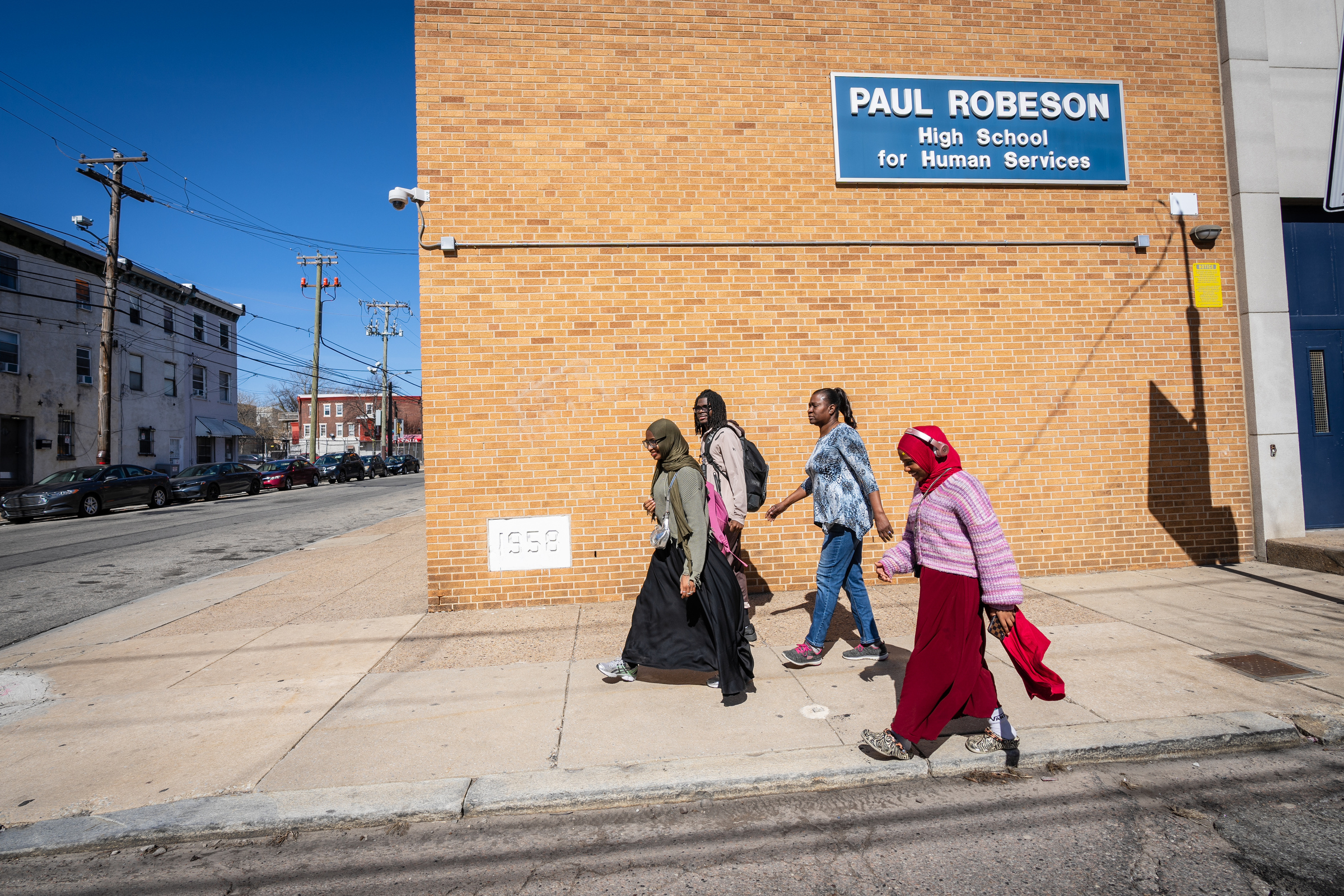
Students walk outside Paul Robseon High School with Elana Evans, a Robeson teacher (in blue) in this 2025 file photo.
And though moving to Motivation, in Southwest Philadelphia, may be slightly more palatable for some Robeson parents, for most, it won’t, said Evans.
“Students would still have to go to 60th Street, traveling a distance,” said Evans. “If those parents wanted them to go toMotivation, they would have picked Motivation.”
The district has said it wants to preserve the successful Robeson culture, just elsewhere, but Kyana Hopkins, said that won’t work.
“Culture is not transferable,” Hopkins said. “Make it make sense.”
Samantha Bromfield, president of Robeson’s Home and School Association, said the district will lose families if Robeson goes away.
“Understand that a parent like me will send my child back to being homeschooled” if Robeson closes, Bromfield said. “Your choice doesn’t fit my criteria of what I’m looking for my children.”
Inheritance, and questions
The Flower Show was abuzz Wednesday, with a crowd hovering around the Lankenau exhibit. “Inheritance” — a verdant wonderland showcasing plants grown from local seeds, set around a weathered wooden table — asked viewers to think of the question, “What tastes like home to you?”
Lankenau High senior Sasha John (blue hoodie) explains her prize-winning school’s Philadelphia Flower Show exhibit to visitors on Wednesday.
Several Lankenau students staffed the exhibit, answering questions — and showing visitors green “Keep LANK Open” fliers, encouraging passersby to share words of support for the school with the school board and City Council.
“It doesn’t make sense to me,” said Amelia Pennycooke, a Lankenau senior, of the proposed closing. “We have so many opportunities at Lank.”
Lankenau High School’s exhibit, which the school’s eco art class worked on all school year, won a gold medal and the Alfred M. Campbell Memorial Trophy at the Philadelphia Flower Show. “Inheritance” examines the question “what plants taste like home to you?” It was designed and built by Lankenau students.
Noel Alford, a Lankenau parent, said the school needs to remain open, its land not used for any other purpose. The amendment to Watlington’s plan falls short, she said.
“Saul is a mistake,” said Alford. “Saul is an agricultural school. They are two different magnet schools.”
While elected officials have no say in which schools close, Thomas said it’s up to them to keep pressuring the board to rethink some closures, including Lankenau’s.
“This is a legacy moment for us as elected officials,” said Thomas. No one “wants to add that black mark on their career that says you were the person that was in charge when this injustice took place.”
Two of the 20 Philadelphiaschools originally targeted for closure under Superintendent Tony B. Watlington Sr.’s facilities plan have been spared and will remain open.
Conwell Middle School in Kensington and Motivation High in Southwest Philadelphiawill not close after all, Watlington announced at acharged school board meeting Thursday.
Watlington said the change from 20 to 18 school closures was not because of politicians, though.
“We pored through thousands of feedback loops from a number of Philadelphians, to include parents, students, grassroots organizations, and certainly elected officials,” the superintendent told reporters during a briefing this week. “We took all of that feedback together and, in tandem, we landed on these recommended changes, not reflecting one voice or sector more than the others.”
Watlington’s $2.8 billion facilities plan, which now includes closing 18 schools, colocating six, and upgrading 159, is not yet final and continues to face strong opposition from affected school communities. He formally presented it to the school board Thursday, and the board is expected to vote in the coming weeks, though no date has been set. Schools would begin closing in 2027, and school building upgrades would take several years.
Under the revisions Watlington presented Thursday:
Conwell would remain open and continue to be a magnet, but would also add a neighborhood admissions component. Students from nearby Elkin Elementary, a K-4, would move to Conwell beginning in fifth grade, and the school would still accept students from around the city.
Motivation would absorb students from Paul Robeson High, which is on the closure list. Robeson and Motivation are both citywide admissions schools, and Motivation would remain so under the plan. Robeson had previously been scheduled to move into Sayre, another citywide admissions school.
Lankenau High, the city’s environmental science magnet, had been targeted for closure and would have moved into Roxborough High. It would still close under the revised plan, but would instead move into Saul High School, the city’s agricultural science magnet. Both are in Roxborough.
‘Accelerating Opportunity’
In his presentation to the board, Watlington called the 10-year plan “Accelerating Opportunity.”
The proposed changes were spurred not by finances — though the district has 70,000 empty seats and has indicated it needs to shrink its footprint — but by a desire to accelerate progress, Watlington said.
(function() {
var l2 = function() {
new pym.Parent(‘schools6’,
‘https://media.inquirer.com/storage/inquirer/projects/innovation/arcgis_iframe/schools6.html’);
};
if (typeof(pym) === ‘undefined’) {
var h = document.getElementsByTagName(‘head’)[0],
s = document.createElement(‘script’);
s.type = ‘text/javascript’;
s.src = ‘https://pym.nprapps.org/pym.v1.min.js’;
s.onload = l2;
h.appendChild(s);
} else {
l2();
}
})();
The district is making gains in academics, attendance, and dropouts, but still, the superintendent said, “the majority of our young people still don’t perform at grade level of reading and math.”
Philadelphia, Watlington told reporters, “must multiply that acceleration curve by five or 10. Because we can’t wait for generations to improve these outcomes and opportunities for all of our children. And we know that there’s a huge disparity based on where you live in Philadelphia.”
The 159 modernization projects to upgrade schools range from new roofs and fresh paint in some buildings to larger projects, including a $58 million refresh at South Philadelphia High. The district released the full list of proposed modernization project details this week. But funding for them is not yet certain; the district plans to pay $1 billion of the $2.8 billion cost and hopes state and philanthropic funding will cover the rest.
How did Conwell and Motivation get spared?
Students, parents, and staff at each of the 20 schools proposed for closure have made cases for why Watlington should change his mind since their schools landed on the closure list last month.
In Conwell’s case, Watlington told reporters the advocacy work of the “large, historic alumni base” of the magnet middle school helped move the needle.
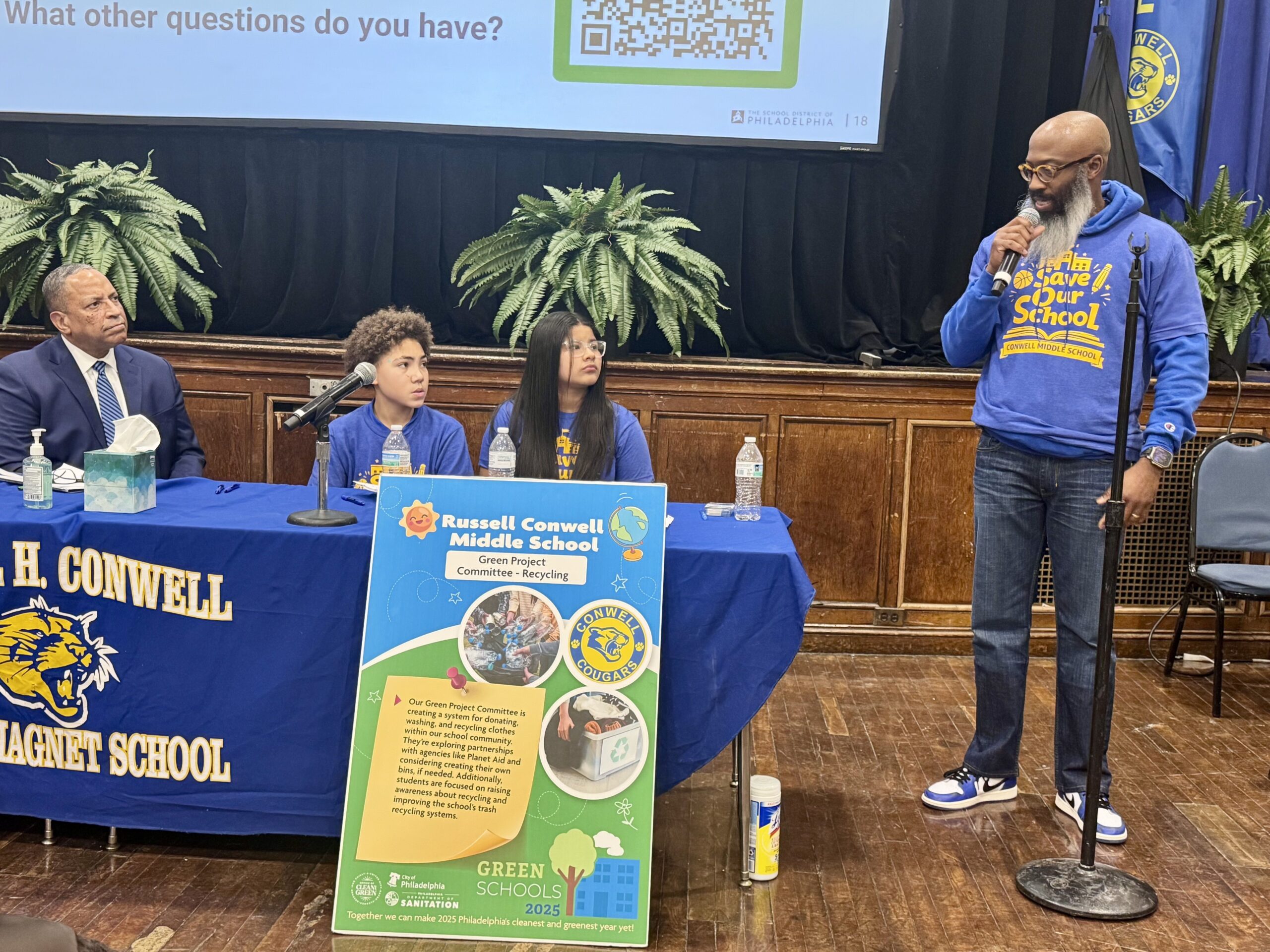
Philadelphia School District Deputy Superintendent Oz Hill and student moderators listen to Andre Sanford-Adams, the school’s health and physical education teacher, speak about why he thinks it’s a mistake to close Conwell at a meeting at the school.
So, too, did “significant feedback from individuals about a part of the city where individuals felt very strongly that we have to figure out how to invest more in.” Conwell supporters spoke out strongly against divesting from a school in Kensington, the center of the city’s opioid epidemic. Councilmember Quetcy Lozada, for example, said at a meeting at Conwell that “we are saying to these families, we are punishing them because as a city, we can’t respond to the public safety issues that we have on the outside, and that is just not fair.”
Also, Watlington said, the distance between Conwell and the school its students would have been sent to — AMY at James Martin, more than two miles awayin Fishtown — was significant.
Conwell would remain a magnet school, open to students citywide only through the school selection process. Elkin students would be in separate classes, and Conwell would continue to offer accelerated classes to its magnet students.
Closing Motivation would have leftSouthwest Philadelphia with no magnet school. Watlington said officials liked the idea of routing Robeson, a strong citywide school in West Philadelphia, to Motivation.
“The building itself at Motivation is not at the bottom of the heap in terms of programmatic ratings,” the superintendent said. “The problem with Motivation is that we’ve lost enrollment.”
Relocating Robeson inside Motivation solves “the number one problem we’re solving for, is how do we build our enrollments, address under- and overenrollment so we can push in more high-quality academic and extracurricular programs. Our community, quite frankly, made some suggestions that had merit.”
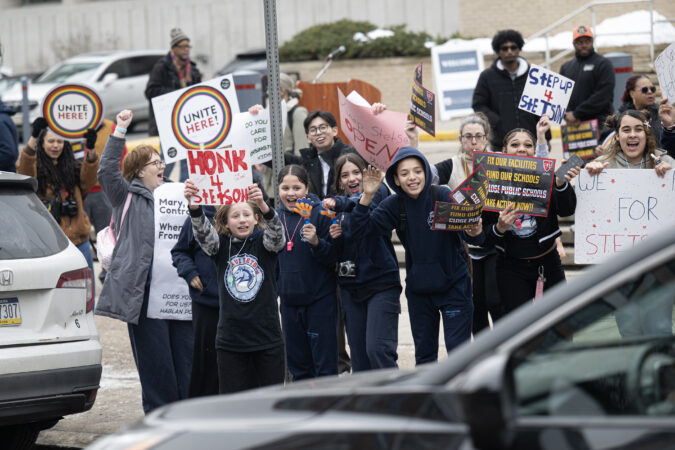
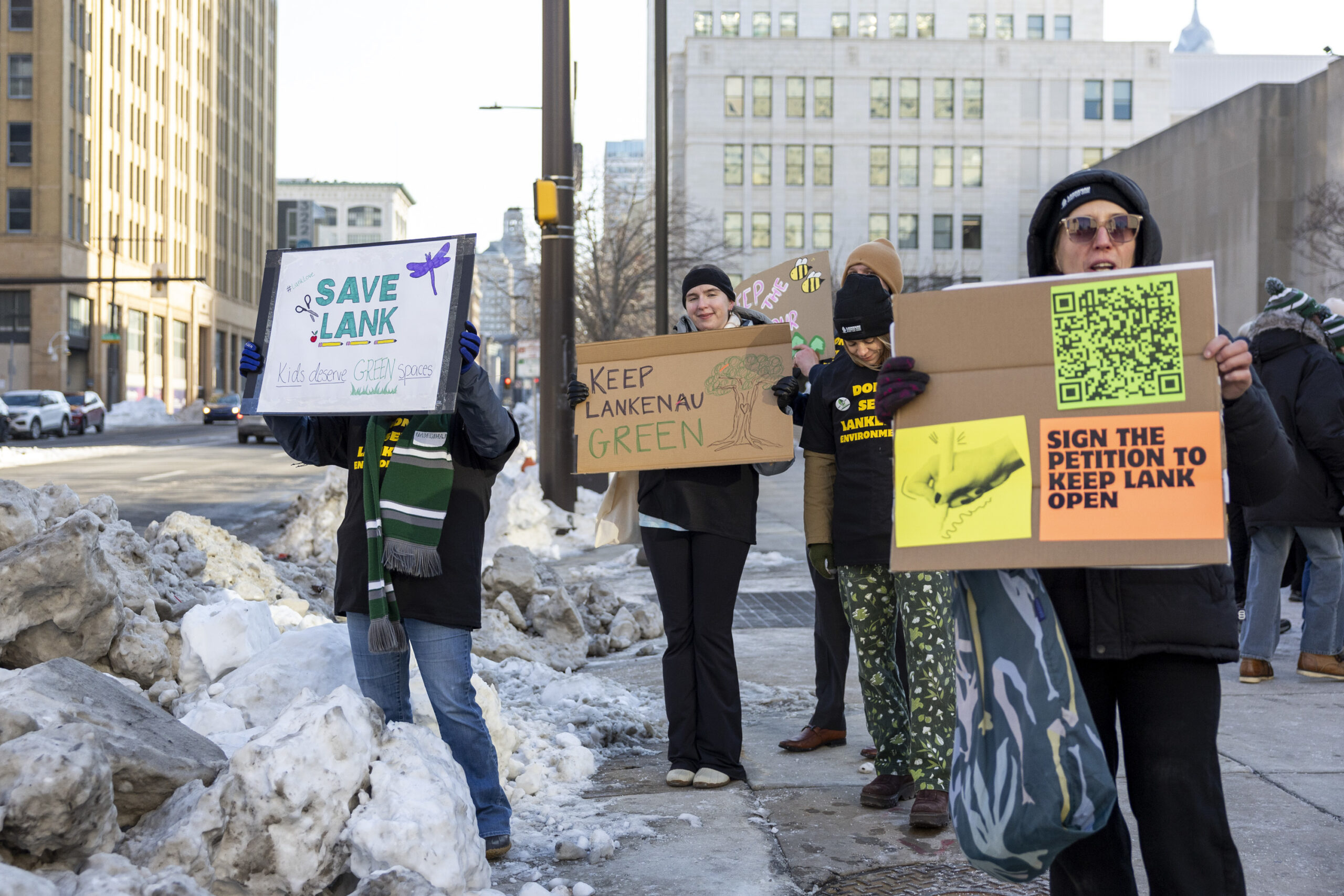
Teachers, students and community members rally against closing Lankenau High School on North Broad Street outside the school board meeting last month.
Disappointment for Lankenau and other schools
The outcry around closing Lankenau was also significant; Watlington’s team did not retreat from a closure recommendation, but now wants to locate the school at Saul, another magnet with a complementary mission.
“We have to do our due diligence, and those sometimes can be a bit complicated, but we’ll work through all of the details as appropriate,” he told reporters.
The ball is in the school board’s court now. It has not set a date for a vote on the plan or said whether it will consider further public engagement.
But, Watlington said, “we look forward to the board of education receiving these recommendations and doing some thoughtful digesting of these very well-thought-out recommendations that reflect our community at large’s feedback.”
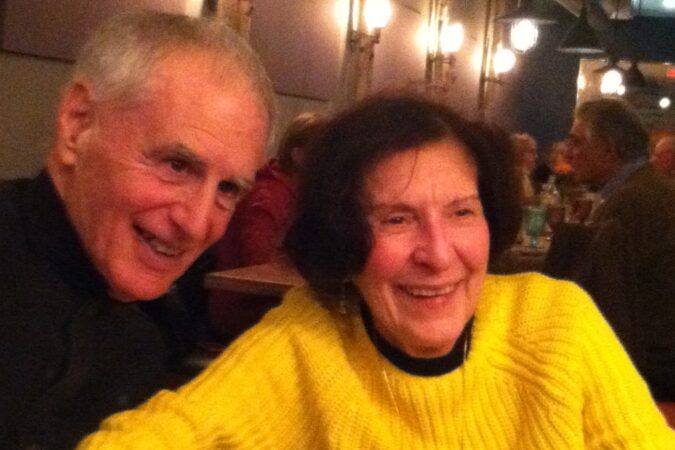
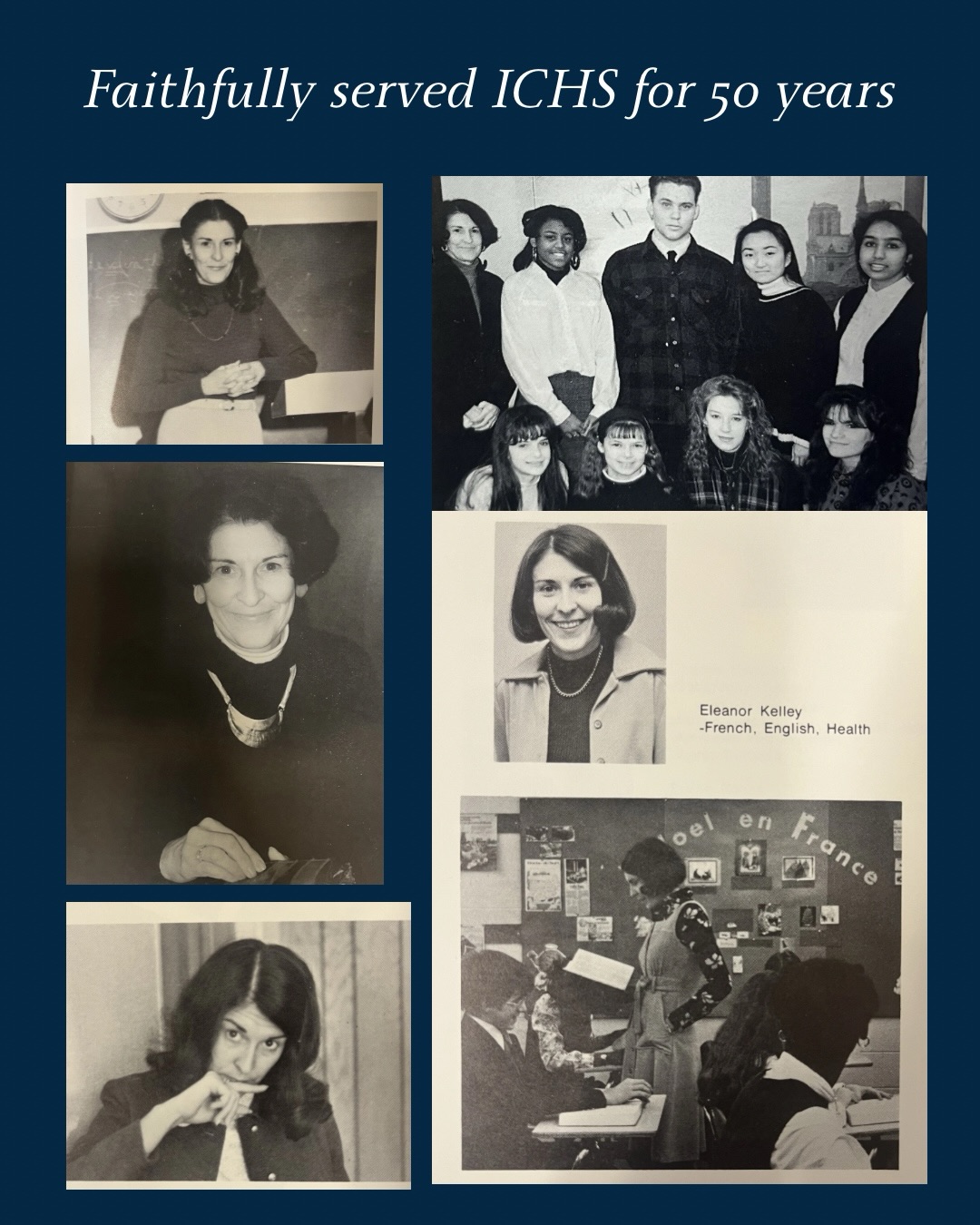
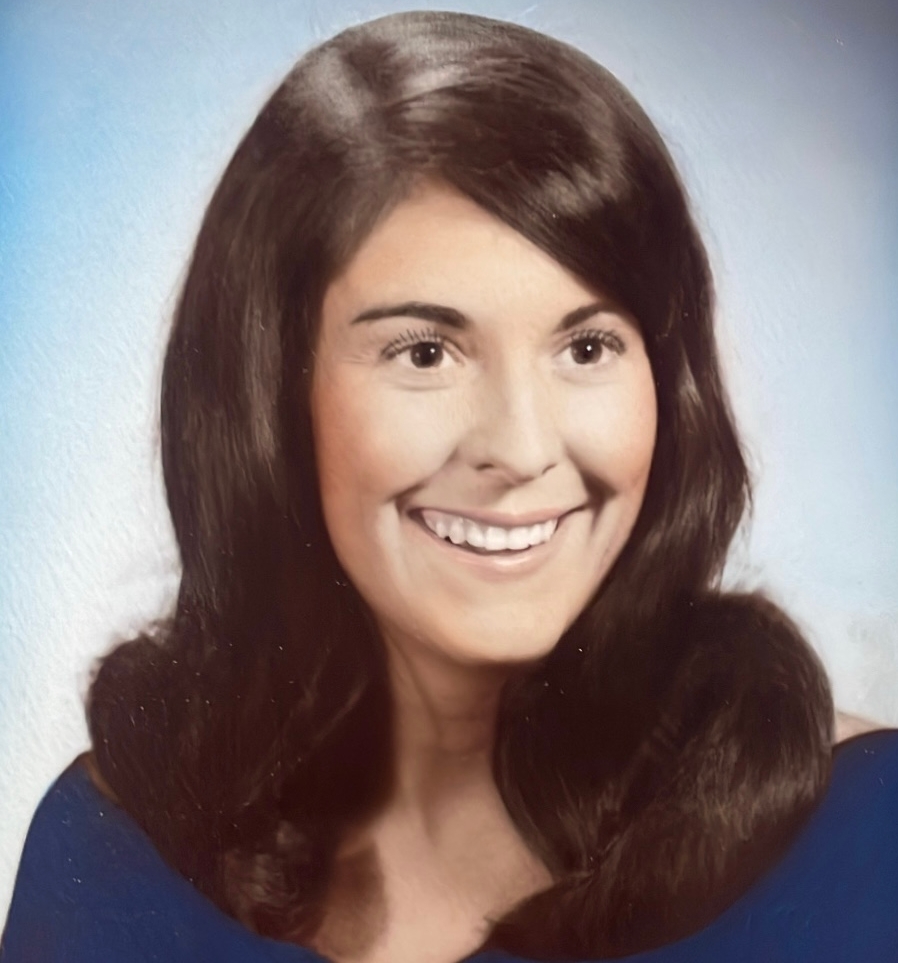
Eleanor M. Kelley, 79, of Philadelphia, longtime French teacher at International Christian High School, onetime adjunct professor at Temple University, role model, mentor to many, and lifelong athlete, died Friday, Feb. 20, of complications from Parkinson’s disease at Rydal Park & Waters retirement community in Jenkintown.
An honors graduate at Abraham Lincoln High School and twice at Temple, Mrs. Kelley was a compassionate, faith-driven intellectual who excelled at languages, teaching, and friendship. She taught French for two years as an adjunct professor at Temple and then for 48 years, from 1972 to 2020, at Cedar Grove Christian Academy and its successor, International Christian High School.
She worked with thousands of students from around the world at International Christian in Olney and chaperoned nine trips to Paris with her French classes. She connected with students, they said in online tributes, by smiling often and singing songs and quoting the Bible in French.
Former students called her “intellectually challenging” and “fiery when it came to teaching French.” They said: “You never gave up on us.”
Mrs. Kelley was honored online by colleagues at International Christian High School.
Her achievements were recognized by educational organizations, and she told her husband, Bill: “I need to find new ways to challenge the students. I must avoid getting caught up in the routine of teaching.”
Nearly everyone called her Madame Kelley, and they dedicated three school yearbooks to her. Several of her online tributes were written in French. “Au revoir, Madame,” they said. “Merci.”
On Facebook, Benjamin Brittin, head administrator at International Christian, said: “Mrs. Kelley was a devoted co-worker, wise, fair-minded, loving, and faithful in her support of both students and colleagues.”
She also taught English and health, and was the school’s discipline administrator and director of the Honors Society. She served on school and church committees, and helped her husband coach the International Christian boys’ basketball team.
Mrs. Kelley played basketball and volleyball at Abraham Lincoln High School.
“She was one in a million,” a former school colleague said in a Facebook tribute. Another said: “I will never stop striving for the perfection you maintained with incredible grace.”
Mrs. Kelley played basketball and volleyball in high school, and later earned 10 medals and trophies at local running events. One time, her husband said, she slowed near the end of a race so a friend could pass her and win a medal.
She earned three awards for coaching the boys’ basketball team at International Christian, and she and her husband ran often in Wissahickon Valley Park and along Kelly Drive.
“Teaching was her passion, indeed a promissory gift to so many of her students,” her husband said. “She was a fisher of minds and souls who made ideas matter.”
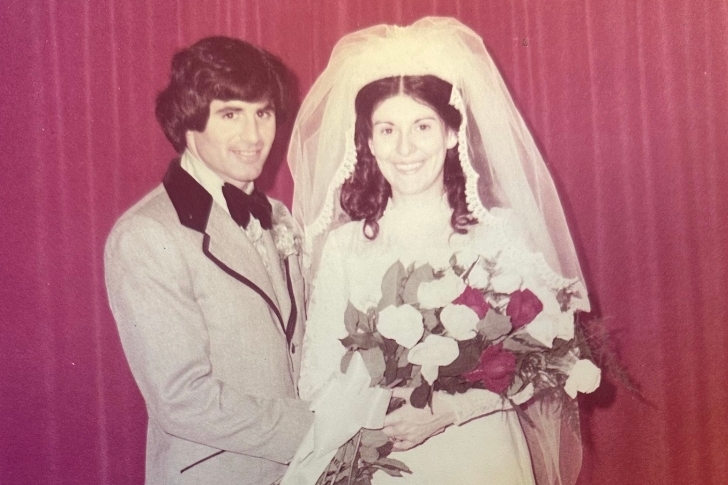
Mrs. Kelley and her husband, Bill, married in 1972.
Eleanor Mary Tolia was born Feb. 12, l947, in Philadelphia. She enjoyed family vacations in Atlantic City when she was young and graduated summa cum laude from Abraham Lincoln High.
She met Bill Kelley when both were students at Temple, and they married in 1972. He was on his way to basketball practice one afternoon when he saw her in her father’s diner, and he stopped in to meet her.
They lived in Roxborough, and he doted on her for more than five decades, including daily visits to her bedside over the last year. At Temple, she earned summa cum laude bachelor’s and master’s degrees in French.
Mrs. Kelley and her husband made memorable trips to Cape Cod Bay in Massachusetts and the Jersey Shore. She loved flowers and Italian food, adopted three stray cats, and framed and displayed all 54 of the poems her husband wrote for her every Christmas.
Mrs. Kelley “gifted me more of my humanity,” her husband said.
She usually mailed more than 125 Christmas cards and stayed in touch with former students who became old friends. She wrote letters to the editor of The Inquirer about local events, filled 30 albums with photos, and saved practically every note and letter she ever received.
Friends called her Ellie Kelley. “She showed more humanity than anyone I ever met,” her husband said. “She gifted me more of my humanity. She was my life. She was my hero.”
In addition to her husband, Mrs. Kelley is survived by a brother and other relatives.
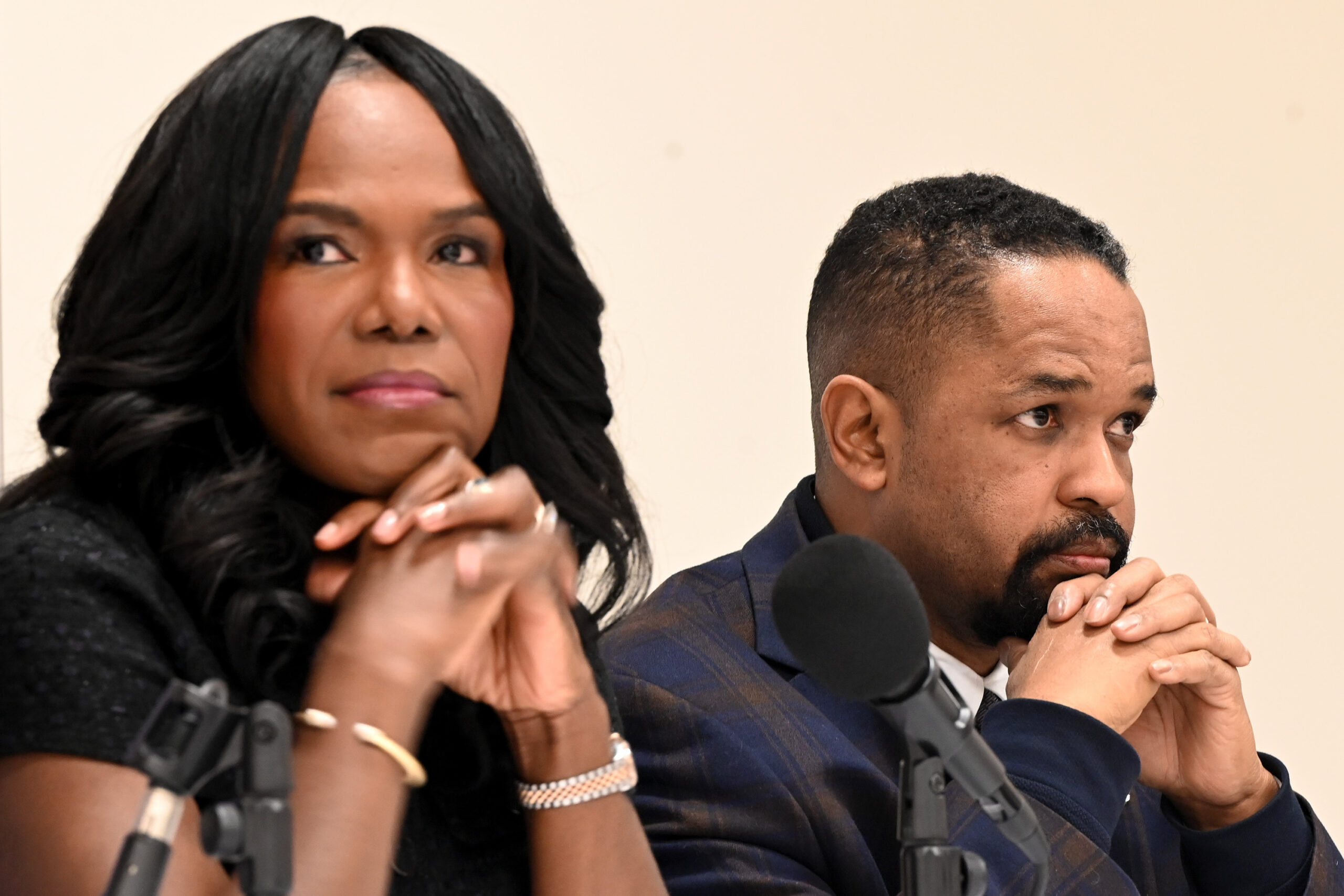
At the end of the event, the moderator, 21st Ward Leader Lou Agre, allowed the candidates to ask one another questions. Their choices offered hints as to which of their rivals the candidates view as most threatening.
Dr. Ala Stanford, who appears to be the strongest candidate among the non-elected officials in the race, questioned the accomplishments of State Sen. Sharif Street, who is seen by many as a frontrunner after being endorsed by the Democratic City Committee and building trades unions.
The 3rd District covers about half of Philadelphia and is, by some measures, the bluest seat in Congress. The Democratic primary is May 19.
The forum was initially scheduled to be held in-person at the Polish Legion of American Veterans’ Adam Kowalski post in Roxborough, but it was moved to Zoom due to the blizzard on Sunday and Monday.
Here are the issues the candidates debated Monday night.
She began the candidate-on-candidate questioning on Monday by asking Street for instances in which his work has helped constituents in tangible ways, setting up a juxtaposition with her record.
“In a time when the people are asking for new leadership, they’re asking for innovation, they’re asking for not the same politics as usual … can you tell the people a time when the seas were rough and you stepped up and delivered for them that they felt it?” Stanford asked, adding: “Can you share what you can do during the chaos that people can feel — and where was it during COVID?”
Physician Ala Stanford (left) and State Sen. Sharif Street at a December forum hosted by the 9th Ward Democratic Committee.
Street began by saying that, as the top Democrat on the Senate Banking & Insurance Committee in Harrisburg, he boosted Stanford’s work during the pandemic by pressuring insurance companies to reimburse her fledgling organization, which provided testing and vaccinations for thousands of Philadelphians in disadvantaged neighborhoods.
“Independence Blue Cross was not moving forward with the reimbursement rates for the Black COVID Doctors Consortium,” Street said. “I spoke with you, and I helped, and I reached out to them to make sure that [the Medicaid plan] Keystone First would begin to pay the reimbursement in an immediate way.”
He also said his office distributed food to constituents and helped process rent rebates during the pandemic.
In the run-up to the 2020 election, Street, as chair of the Pennsylvania Democratic Party at the time, repeatedly fought in court against President Donald Trump’s campaign over election administration issues. In her question, Stanford asked Street to focus on what he delivered for his constituents — “not that you sued Donald Trump 20 times and won every time, because how do the people feel that?”
“Donald Trump wanted to challenge people’s ability to vote in some of the most vulnerable communities,” he said. “I went to court, I stopped him, and I made sure that they had the right to vote, and that was why we were able to pass the vote to remove him from office.”
Street and Rabb clash over hate-crime legislation
When it was his turn to pose a question, Street pressed Rabb on why the progressive was opposed to hate-crime legislation, an issue the two had sparred over at a forum last week.
“You and I have worked to fight for regular folks, for disadvantaged people, for a long time. I was shocked that you … want to prevent hate-crimes legislation,” Street, a centrist Democrat, said to Rabb. “I’ve heard from so many trans women of color, who are most likely to be victims of hate crimes, and they don’t understand.”
Rabb responded by saying that Street’s line of attack was “shameful and unnecessary.”
“I know you want to win. I just thought you would do it with honor,” Rabb said. “I am an active member of the LGBTQ Equality Caucus. I am the father of a queer son. I represent an active queer community. … To use this as a political punching bag is just — man, it’s beneath you.”
At the end of the forum, Street clarified that he has no doubts about Rabb’s commitment to the LGBTQ community.
At a December candidates forum in Mount Airy, (from left) State Reps. Morgan Cephas and Chris Rabb and physician David Oxman.
“I had a policy dispute about hate crimes,” Street said. “I did not mean to question your commitment to the trans community or to your kid.”
The dust-up got in the way of a meaningful debate over hate-crime laws, which increase sentences for people convicted of crimes that prosecutors prove were motivated by prejudice against particular groups.
Such laws are common across the country, but they have long faced criticism from the libertarian right, which fears that such regulations could be used to target citizens for political views. The laws have also faced pushback from some on the progressive left, who contend that they contribute to mass incarceration.
“Politicians tout hate-crime laws as proof they care about the marginalized,” Rabb wrote in an op-ed for PennLive last fall. “In reality, the main outcome is more policing, more prosecution, and more incarceration.”
Street said last week that people who oppose hate-crime laws on the “far left … don’t want to address the antisemitism on the left or the right.”
The Pennsylvania House in 2023 approved a bill to expand the state’s law that criminalizes ethnic intimidation to include sexual orientation and disability status. Rabb voted for the bill, which ultimately died in the Senate amid GOP opposition, but said he had “considerable reservations.”
“We should collectively focus on structural violence and hatred that has been cultivated by the very institutions that have been asked to address this legislation,” Rabb said at the time.
Cephas presses Stanford about her government contracts
Cephas, who represents a West Philadelphia district and chairs the Philadelphia delegation to the state House, questioned how much money Stanford’s nonprofit organization has made from government contracting since the onset of the pandemic.
“You oftentimes quote that you, as a private citizen, came in and saved Philadelphia from COVID, and, you know, there are a number of people on this [Zoom] call that stepped up during COVID,” Cephas said, noting that she worked with Stanford to set up clinics in her district during the pandemic.
“We all did it in our own individual capacity, and we didn’t receive government contracts for it. … How much in government contracts did you receive during the COVID-19 period?”
Stanford noted that she initially launched the Black Doctors Consortium with her own financial resources to serve neighborhoods that were not being reached by existing healthcare and government institutions. She said her first $1 million city grant for testing came months after she began her work.
In 2020 and 2021, Stanford’s groups received $2.5 million in grants and contracts from the city, state, and federal governments, according to Stanford campaign manager Janée Taft-Mack. That money covered costs including supplies, staff, mobile medical units, personal protective equipment, and facility rentals, Taft-Mack said.
Since then, Stanford hascontinued partnering with government agencies to address healthcare inequality. She has opened the Dr. Ala Stanford Center for Health Equity in Swampoodle and secured a $5.38 millioncontract for the Black Doctors Consortium to work at Riverview Wellness Village, the city-owned drug recovery home.
The total amount Stanford and her organizations have received for work since 2021 was not immediately clear.
Philly’s most famous culinary offering has proven politically hazardous over the years, such as when John Kerry catastrophically asked for Swiss cheese while visiting Pat’s King of Steaks during the 2004 presidential election.
This year’s congressional hopefuls were better prepared than the Massachusetts senator.
Agre, the moderator whose ward includes much of Roxborough, interjected to insist that Dalessandro’s served up the best steak sandwiches in the city.
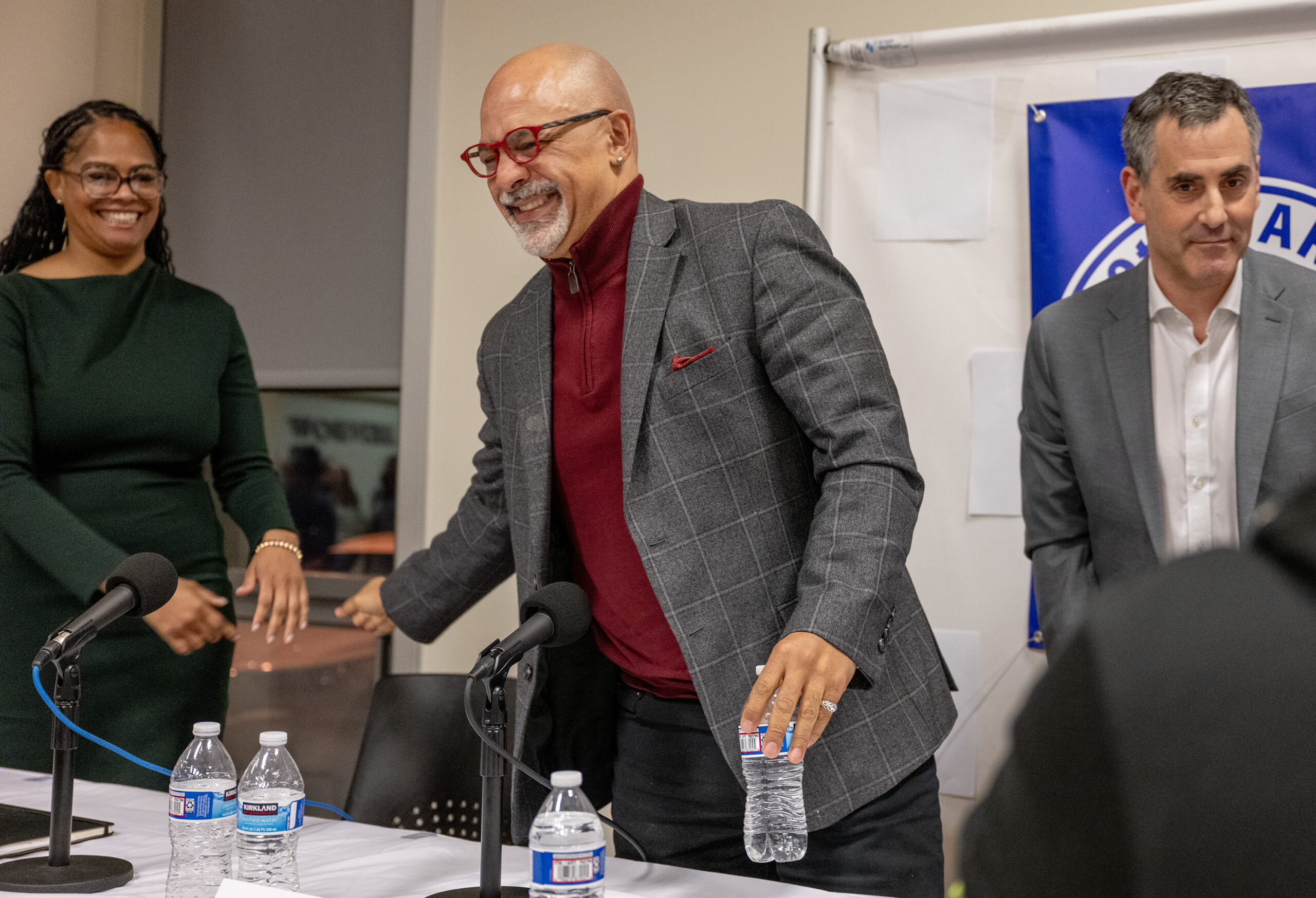
At a candidate’s forum on Feb. 9 at the Church of the Holy Trinity, (left to right) Alex Schnell, physician Dave Oxman, State Sen. Sharif Street, physician Ala Stanford, State Rep. Morgan Cephas, and Pablo McConnie-Saad.
Cephas said she orders Cooper Sharp at Angelo’s Pizzeria. Stanford’s go-to is American from Dalessandro’s. Street, a vegetarian, said he gets non-meat cheesesteaks from Hip City Veg and enjoys the cheese they use. (Mozzarella, per Hip City’s website.)
And Rabb shouted out the cheesesteak egg rolls from Black Dragon, a West Philadelphia establishment offering a “unique fusion of Black American cuisine presented with the familiar aesthetics of classic Chinese American takeout,” according to its website.
Still tense from the previous questions and perhaps a bit peckish, the candidates declined Agre’s offer to deliver closing remarks.
Staff writers Max Marin and Ryan W. Briggs contributed to this article.
Could a 1973 legal agreement help save Lankenau High?
The Schuylkill Center for Environmental Education hopes so.
The Philadelphia School District has proposed closing Lankenau, the city’s environmental science magnet school, and giving it to the city to help further Mayor Cherelle L. Parker’s affordable-housing goals, or for job creation.
But the Schuylkill Center, Lankenau’s neighbor, believes it’s prohibited from doing so, and just notified Superintendent Tony B. Watlington Sr.
The Schuylkill Center “holds a right to repurchase the property in the event that it is transferred or conveyed or used for any purpose other than school purposes, pursuant to a restriction in the October 4, 1973 deed by which [the Schuylkill Center] conveyed the property to the Lankenau School,” a lawyer for the environmental center wrote in a letter sent to the districtMonday.
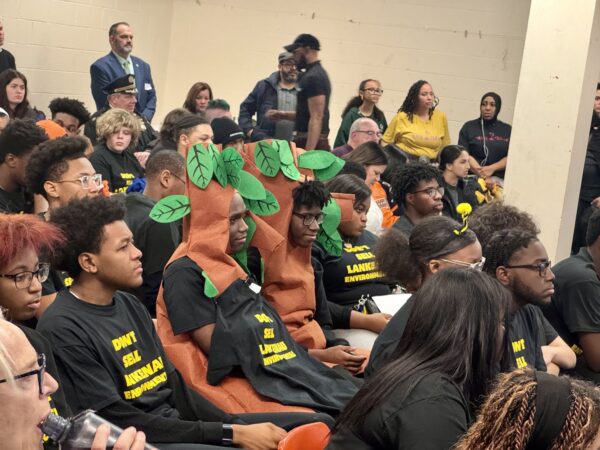
Students, staff, and community members who support Lankenau High School – including some dressed as trees – packed a recent community meeting at the school about its proposed closure.
If the district is “considering a sale of the property or using the property for any purposes other than continued use as a school, this letter serves as written notice of [the Schuylkill Center’s] right to repurchase,” lawyer Sean T. O’Neill wrote to Watlington, “The school district must provide [the Schuylkill Center] with reasonable advance notice of any potential conveyance or change in use and allow [the Schuylkill Center] the opportunity to exercise its right to repurchase.”
The center, which touts itself as “one of the first urban environmental education centers in the country,” was founded in 1965. It has trails and a visitors’ center and runs educational programs and a wildlife clinic.
District officials had no immediate comment.
Lankenau’s history
Lankenau sits amid 400 wooded acres adjacent to the Schuylkill Center. The 17-acre parcel Lankenau High now sits on was originally the site of the private Lankenau School for Girls; after that school closed, the Philadelphia School District purchased the land.
What is now Lankenau High was first a program of Saul High and then Germantown High, but in 2005, it became a standalone school as part of then-CEO Paul Vallas’ small schools initiative.
Since then, Lankenau has soared as a diverse, hands-on magnet with a 100% graduation rate in a location like no other.
News that Lankenau landed on the district’s closure list infuriated students, parents, community members, and elected officials, who have mounted a robust campaign to fight plans to shut the school and relocate it as an honors program inside Roxborough High.
Teachers, students, and community members from Lankenau High School rally outside a Philadelphia school board meeting in January.
The Schuylkill Center’s first priority is for Lankenau to remain as it is, said Erin Mooney, executive director of the 60-year-old organization, which now partners closely with Lankenau.
“We are in opposition to Lankenau’s closing,” said Mooney, “but should something change with Lankenau, we want to ensure that the site continues to be used to teach people about nature.”
Mooney, who has been public in the Schuylkill Center’s support for the school, discovered the language giving the Schuylkill Center right of first refusal if the property ever ceases being a school in the 1973 agreement.
Watlington is scheduled to present his sweeping facilities plan — which as of January included 20 closures, six co-locations and 159 modernizations — at a school board meeting Thursday.
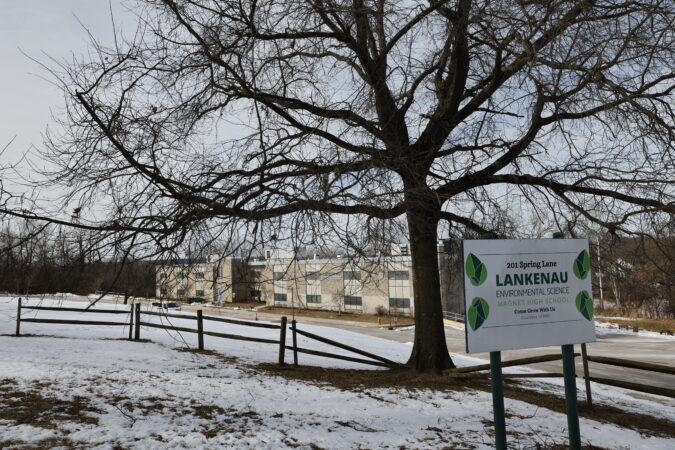
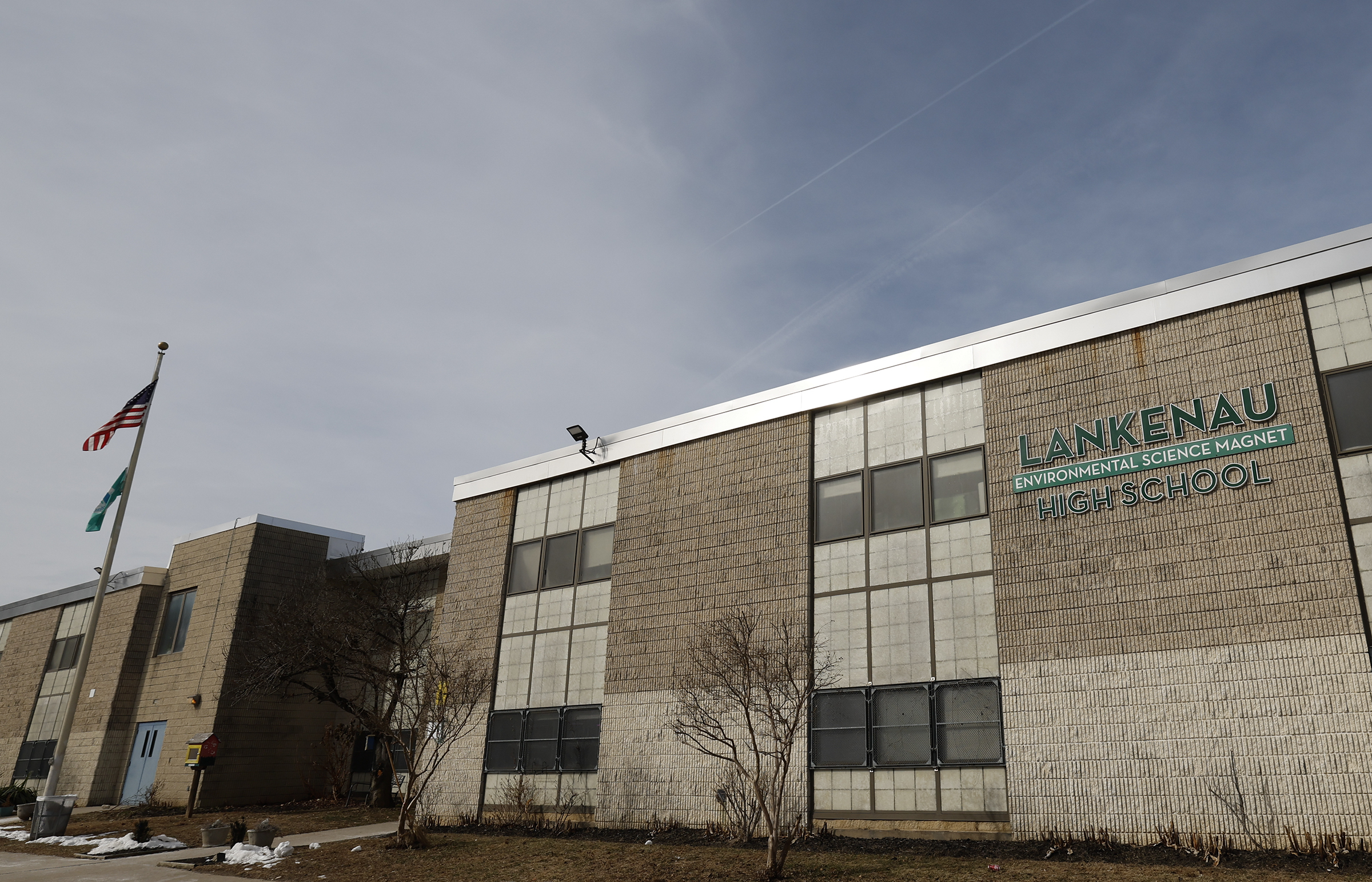
The Lankenau Environmental Science Magnet High School in Roxborough on Saturday, January 24, 2026.
But the superintendent has said what he presents to the board may include some tweaks to his initial recommendations.
Mooney hopes the information the Schuylkill’s lawyers sent Monday helps Lankenau come off the closing list.
“We want Lankenau to stay,” she said, “and I wanted the school board to have this information as part of its decision-making.”
Watlington’s recommendations are just that; the school board has ultimate say. It has not given a date for the final vote on school closings, but said no vote will happen Thursday.
Lankenau High’s 11th-grade class is tiny — just 25 students.
That’s one of the reasons why closing the school is for the best, Philadelphia School District Associate Superintendent Tomás Hanna said at a community meeting last week.
At small schools, Hanna said, programming options are limited and “what’s left behind is very difficult environment for young people.”
The district proposes merging Lankenau into Roxborough High as an honors program — a move that officials say will maximize opportunities for students at both schools. That proposal has been met with fierce opposition from the Lankenau community, whose members say stripping the school of its identity and removing it from its unique location on 400 wooded acres is unjustifiable.
When the school system dramatically revamped its special-admissions process in 2021, moving to a centralized lottery from a system where principals had discretion over who got into the district’s 37 criteria-based schools, enrollment dropped at some magnets.
For the 2022-23 school admissions cycle, Lankenau, Motivation, Parkway West, and Parkway Northwest — four of the 20 schools tagged to close — had dozens of unfilled seats in their ninth-grade classes.
window.addEventListener(“message”,function(a){if(void 0!==a.data[“datawrapper-height”]){var e=document.querySelectorAll(“iframe”);for(var t in a.data[“datawrapper-height”])for(var r,i=0;r=e[i];i++)if(r.contentWindow===a.source){var d=a.data[“datawrapper-height”][t]+”px”;r.style.height=d}}});
The district setacademic standards for admission to those schools, and stopped allowing schools to admit students who were close to meeting academic requirements and who demonstrated they would be a good fit for the individual schools, as had been done in the past. (Officials said they wanted to centralize admissions to avoid demographic imbalances at schools; those four magnets did not have a history of them.)
The district’s using Lankenau’s tiny now-junior class to justify closings infuriated many, including Matthew VanKouwenberg, a science teacher at the school.
Lankenau’s size “is a district-designed and district-created problem,” VanKouwenberg said. Though the lottery was begun for equity reasons, “the result is disastrous.”
But Tonya Wolford, the district’s chief of evaluation, research, and accountability, said Lankenau, Motivation, Parkway West, and Parkway Northwest had declining numbers of students applying prior to the lottery changes.
And for years, those schools accepted large numbers of students who didn’t meet the district’s criteria, Wolford said.
Dramatic enrollment drops after district orders
The data are clear: After the district pushed changes to the admissions process, the four schools all saw dramatic drops in enrollment — and some of them never recovered.
Motivation, in West Philadelphia, had a freshman class of 83 students and a total enrollment of 336 in 2022-23. It saw a 77% drop in its ninth- grade class — just 19 freshman in 2023-24. The school now has 151 students, and the district wants to close it and make it an honors program inside Sayre High School. It is operating at only 15% of its full capacity.
The Lankenau Environmental Science Magnet High School in Roxborough.
Lankenau, in Upper Roxborough, had 91 freshman in 2022-23, then 31 in 2023-24, a 66% decline. It now enrolls 225 students. The school is using 49% of its capacity.
Parkway Northwest had 77 ninth graders in 2022-23, then dropped to 30 in 2023-24, a 61% decrease, and is 60% full. It’s got 248 students this year, and the district wants to close it and make it an honors program of Martin Luther King High.
And Parkway West had 54 freshman in 2022-23, then 19 the following year, a 65% decrease. It now has just 140 students, and is using 40% of available seats. It’s proposed to close and become part of Science Leadership Academy at Beeber.
A staffer who worked at Parkway West as the special-admissions process changes rolled out said they were devastating to the school, which typically filled three-quarters of its slots for incoming ninth graders with students who qualified on every measure, and a quarter by feel.
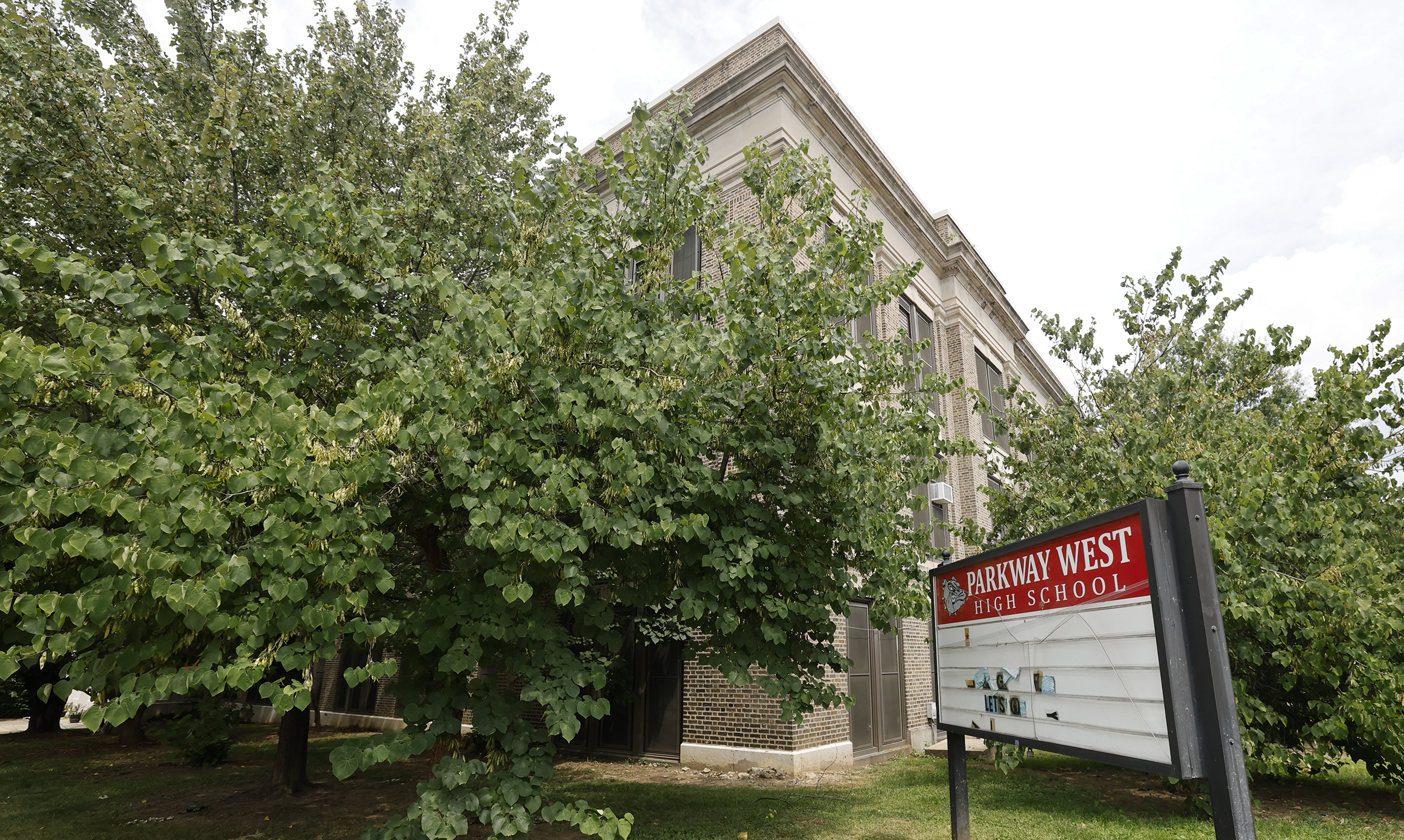
Parkway West High School, in West Philadelphia, is proposed to close under a Philadelphia School District facilities proposal.
“We found kids who maybe missed one criteria, but they were good kids, and had strong recommendations,” said the staffer, who asked not to be identified because they were not authorized to speak to a reporter.
When Parkway West lost that ability, its enrollment tumbled, and never recovered.
Lankenau community members say interest in their unique school has never waned, but the size of their incoming classes continues to be limited by the district — even beyond the admissions changes.
For the applicant class set to start high school in the fall, 107 students listed Lankenau as their first choice, staff said, and 95 have accepted Lankenau’s school board offer.
But since 2022-23, district officials have limited Lankenau to two sections of ninth graders, and with class sizes capped at 33. So despite having interest and students enough for 99 freshmen, it won’t have staff for more than 66.
In the last few years, staffers said, more than 66 students show up at the start of the school year. But with only enough teachers for 66, classes are overcrowded and some students end up transferring out.
“That is the only reason we lose enrollment,” said Erica Stefanovich, a Lankenau teacher. “We wouldn’t be in this situation if they hadn’t put us in it. This is an artificial problem.”
But, Wolford said the trend lines were clear for Lankenau and other schools.
In 2019-20, for instance, the prior to the district’s admissions changes just 34 students met Lankenau’s criteria, but 81 students accepted offers for the ninth-grade class, Wolford said. That same year, eight students qualified for Parkway Northwest on paper, but 34 were admitted, according to district data.
Schools like Lankenau and Parkway Northwest “were existing without following the criteria,” said Wolford.
Trees, bees, and a Lorax
Lankenau is putting up a spirited battle to stay open.
Last week, an overflow crowd — more than 100 students, staff, parents, representatives from Lankenau’s many partner organizations, and community members — packed the school for a student showcase and district-led meeting about the closure. Some students dressed as trees, bees, and a Lorax, the Dr. Seuss character who “speaks for trees” — to emphasize the importance of their school’s setting amid 400 acres of woods.
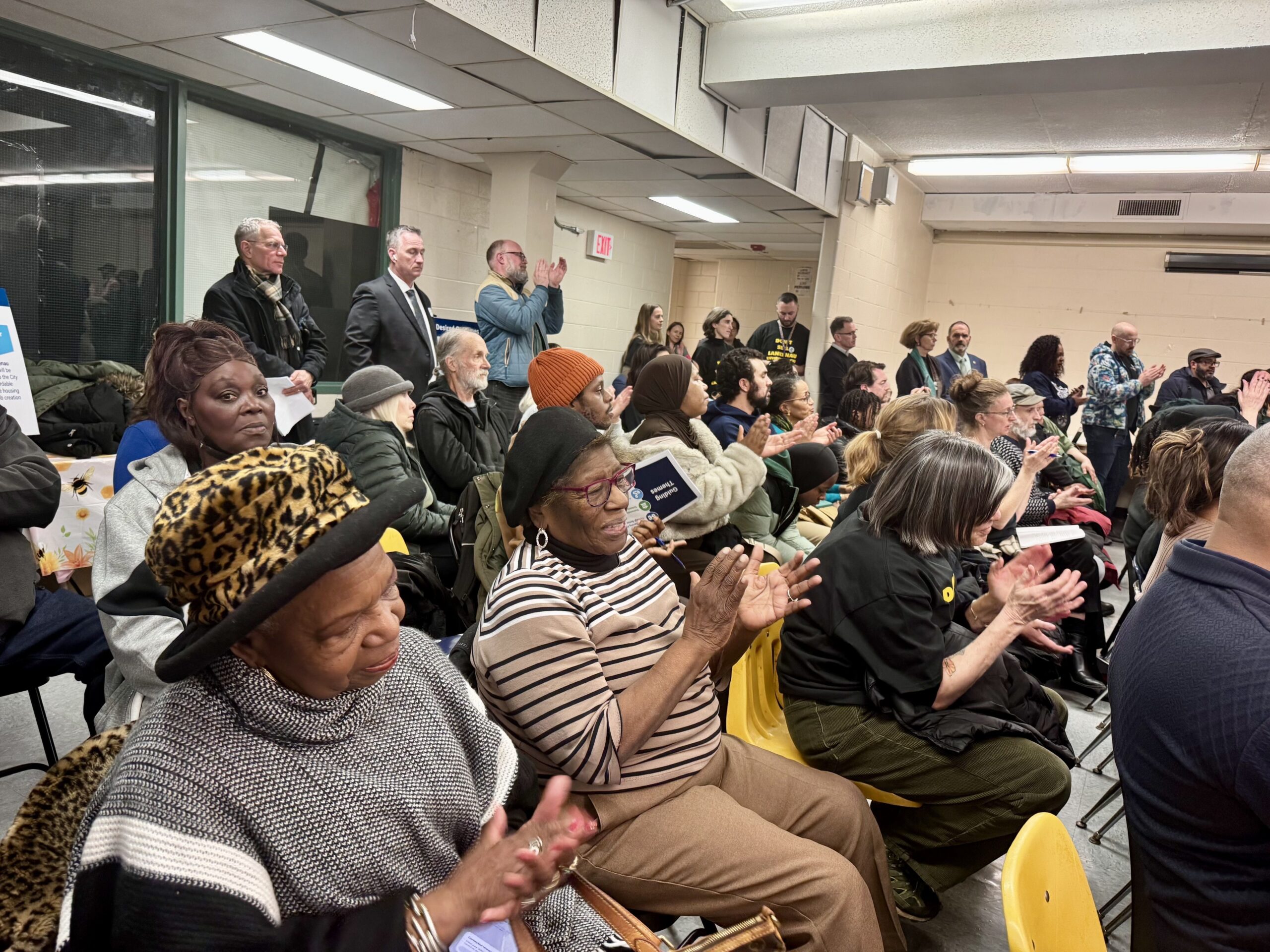
Community members at Lankenau High School applaud a student telling district officials why the school should not close. Lankenau is one of 20 Philadelphia School District schools proposed for closure.
First, Lankenau students wowed visitors with presentations — about their study of natural resources, about the experience of foraging for ingredients to brew their own artisan teas — and then, it was down to business. Lankenau is too small, officials said, and the district must find ways to offer a more equitable experience for all students.
“I don’t discount that there is magic inside of these walls,” Deputy Superintendent Oz Hill said. “What I’m sharing with you is if we can take that magic and enhance it with more extracurricular activities, more expanded academic programming, the sky’s the limit.”
The parents, students, and staff in the audience weren’t having it.
Lankenau was just certified to become the state’s only three-year agriculture, food, and natural resources career and technical education program — a designation that took years to achieve, and cannot transfer to a new building.
Officials are proposing closing Lankenau a year and a half from now; that’s not enough time for the district to reapply for the designation for a new Lankenau-inside-Roxborough CTE program.
District officials said at the meeting that they believe their “close relationship” with the state education department will give them enough time to get a new Roxborough program certified in time for the Lankenau closing.
Multiple parents told district leaders they would not send their children to Roxborough High.
And Akiraa Phillips, a Lankenau ninth grader, said she couldn’t imagine attending school in another setting.
In Lankenau’s current setting, “learning doesn’t stop at the desk. Our campus is the classroom,” Akiraa said. “We learn science by being in it. Here, we don’t just talk about ecosystems, climate, and sustainability, we walk through it. That kind of learning sticks with you. You can’t stick this into any random building and expect it to work.”
The community turned out in full force, but politicians and other decision-makers were in the room, too. Three school board members, including president Reginald Streater, attended the meeting.
State Sen. Sharif Street (D., Philadelphia), the front-runner to replace U.S. Rep. Dwight Evans in Congress, said he “was against closing the school,” but noted that the decision didn’t rest with him, and said the state needed to better fund schools “because we have not met our obligation to fully fund the program.”
And Councilmember Cindy Bass said she was particularly incredulous that the district was attempting to close a successful magnet — Lankenau has a 100% graduation rate.
“If it works, why are you breaking it?” Bass said. “I do not understand what the logic and the rationale is that we are making these kinds of decisions. We’re not just closing a school, we’re disrupting the lives of young people.”
At Roxborough Memorial Hospital in Philadelphia, surgeon Piotr Krecioch has his hands full launching a program offering surgical interventions to treat obesity.
One in three Philadelphians are living with obesity, putting them at higher risk of chronic conditions like diabetes and heart disease, but these days fewer are seeking the bariatric surgical procedures long considered a leading medical treatment for the condition.
“I’m trying to start a bariatric program at probably the worst possible time you can ever imagine because everybody’s losing patients, and I don’t even have a patient to begin with,” Krecioch said.
Tower Health’s Reading Hospital recently closed its bariatric surgery program, and other local health systems have seen declines in weight-loss operations approach 50%.
Independence Blue Cross, the Philadelphia region’s largest insurer, said the number of bariatric surgeries it paid for dropped by half in the five years ended June 30.
Those shifts in the bariatric surgery landscape have followed the meteoric national rise in the use of GLP-1s and related drugs for weight loss.
So far, the drugs havebenefited patients by allowing them to avoid an invasive surgery.With bariatric surgery, people lose weight because the procedures restrict the amount of food a person can eat. Drugs in a class known asGLP-1s make people feel full longer.
For hospitals, the upheaval in treatment options cuts into a profitable business line and adds to the financial pressure health systems have been experiencing since the pandemic.
Despite the ever-increasing popularity of GLP-1s for weight loss like Novo Nordisk’s Ozempic and Wegovy and Eli Lilly’s Mounjaro and Zepbound, it’s too soon to write off bariatric surgery as an option, some doctors say.
Insurers are imposing limits on coverage because of the long-term cost of the drugs compared to surgery, and doctors are watching for side effects that may emerge as more people take the drugs for longer periods of time.
It’s not the first time a new technology has reduced surgical volumes.
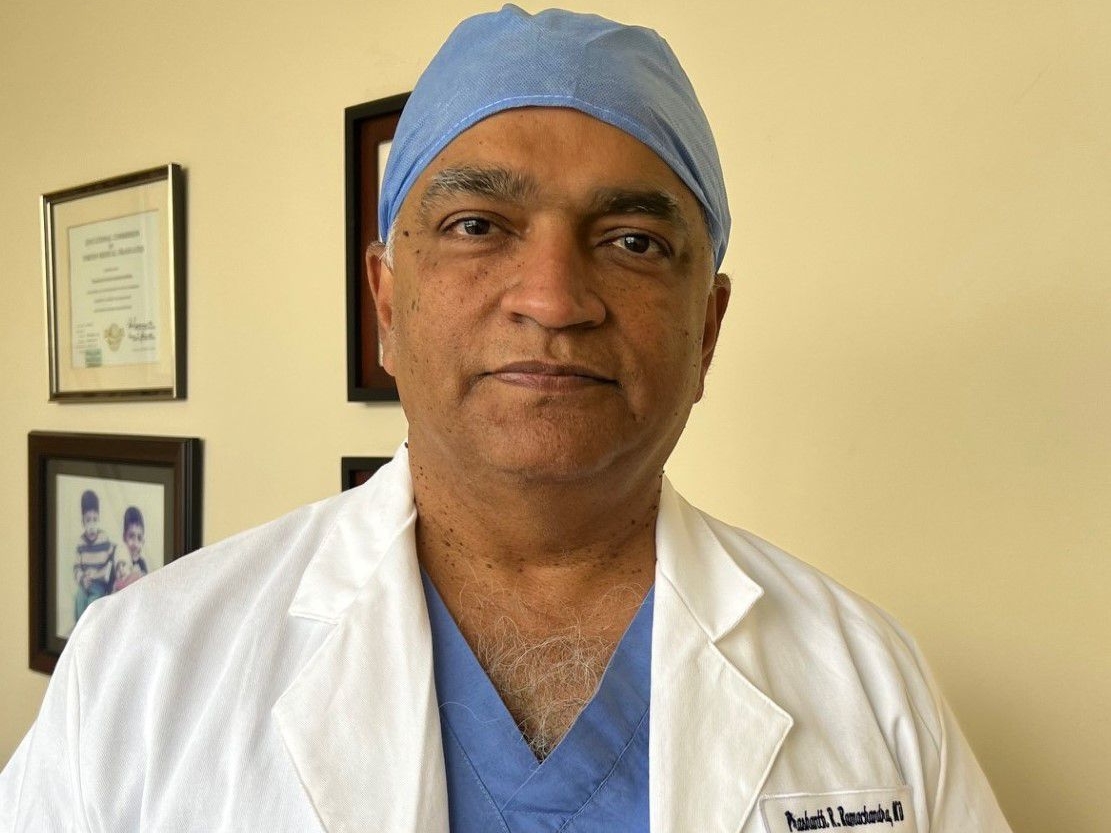
Whenever a less-invasive treatment has come along, “surgical volumes always have taken a beating,” said Prashanth R. Ramachandra, a bariatric and general surgeon at Trinity Health Mid-Atlantic’s Mercy Fitzgerald Hospital. Declines in peptic ulcer and open heart surgeries are past examples of the phenomenon, he said.
Such industrywide moves away from profitable procedures can create financial challenges for individual clinics or independent hospitals, said Daniel Steingart, who leads the nonprofit healthcare practice at Moody’s, a major credit ratings agency.
“But I also see it as an opportunity, because there’s other patients out there, there’s other services that can be provided. This is a matter of the management team being nimble,” he said.
Sharp decline in bariatric surgeries
National data show a 38% decline in bariatric surgeries from the beginning of 2024 through September, according to data firm Strata Decision Technology. Comparable local data were not available.
A substantial portion of the drop is from patients who previously had bariatric surgery but regained weight, physicians say. In the past, they would have had a type of surgery called a revision. Now, those patients are more likely to start taking GLP-1s, local doctors said.
Prashanth R. Ramachandra is a general and bariatric surgeon at Trinity Health Mid-Atlantic’s Mercy Fitzgerald Hospital in Darby.
Only two Philadelphia-area health systems provided details on changes in bariatric surgery volumes in recent years as GLP-1s for weight loss took off.
At the University of Pennsylvania Health System’s three Philadelphia hospitals, the annual number of bariatric surgeries has fallen by more than half, from a peak of 850 three or four years ago to around 400 in the year that ended June 30, said Noel Williams, a physician who leads Penn’s bariatric surgery program.
At Mercy Fitzgerald in Darby, the number fell from an annual peak in the 220-230 range to about 125 last year, Ramachandra said.
The volume at Mercy Fitzgerald was likely buoyed by the closure of the bariatric surgery program at nearby Crozer-Chester Medical Centerin Upland.
Tower did not provide details on the Reading closure, which was part of cutbacks Tower announced in early November. The program closed last month after a 60-day notice tothe state health department.
Main Line Health, which only offers bariatric surgery at Bryn Mawr Hospital, said surgeries have declined, but provided no details.
Virtua Health did not provide comparable data but said that its Virtua Complete Weight Management Program, which opened in spring 2024 to expand into medication treatments, experienced a 35% increase in visits last year.
The number of bariatric procedures is also down at Temple University Health System, but patients with complex conditions and more severe obesity are still coming to Temple for surgery, said David Stein, who is surgeon-in-chief at Temple University Hospital.
To adapt to this rapid change in medicine, Temple is adopting a multidisciplinary approach to the disease, building on what is done in cancer care, Stein said.
Jefferson Health did not respond to requests for information about its bariatric surgery program.
How health systems are responding
While full-scale closures like Reading’s are unusual, cutbacks are occurring broadly.
When the bariatric surgeon at Penn Presbyterian Medical Center retired amid declining numbers of surgeries across the entire system, Penn did not replace him, Williams said.
Penn does the procedures locally at the Hospital of the University of Pennsylvania and at Pennsylvania Hospital.
“If the numbers were to continue the way they are now,” Williams said, “we may want to consolidate into one of our hospitals in the city.”
Outside of Philadelphia, Penn has bariatrics programs at Lancaster General Hospital and Penn Princeton Medical Center.
After Jefferson Health acquired Einstein Healthcare Network in late 2021, it consolidated bariatric procedures at Jefferson Abington Hospital, according an Inquirer analysis of inpatient data through 2024 from the Pennsylvania Health Cost Containment Council.
Jefferson did not respond to a request for information about the changes.
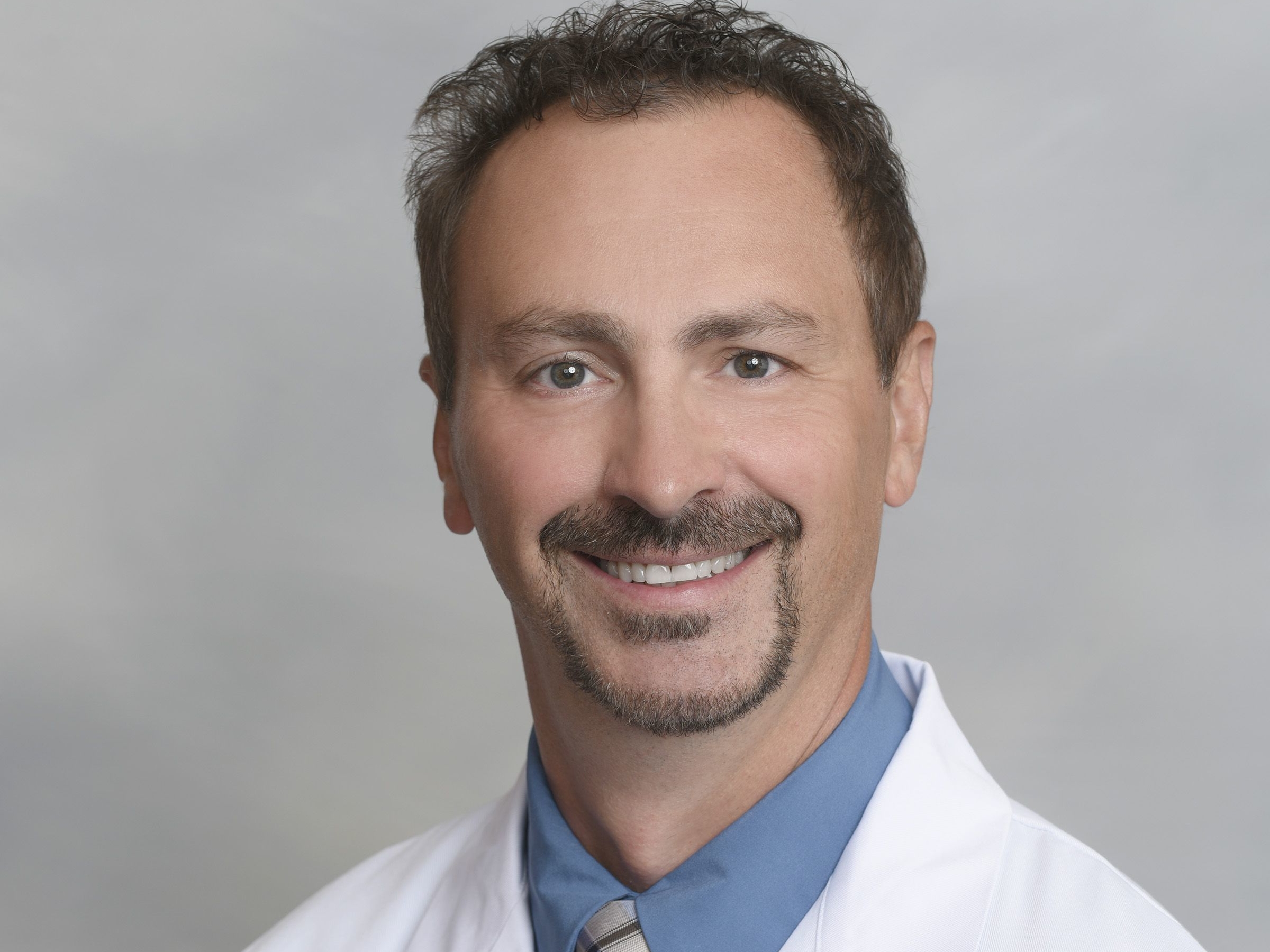
Piotr Krecioch is a bariatric and general surgeon at Roxborough Memorial Hospital in Philadelphia.
Not the end for bariatric surgery
GLP-1s don’t mean the end of bariatric surgery, even though the procedures are not likely to return to previous peaks, physicians said.
Some patients don’t respond to GLP-1s and others can’t tolerate them, which means they remain candidates for surgery, Williams said. Surgery is still recommended forpatients who are considered severely obese,with body-mass indexes over 50,he added.
Outcomes cannot yet be compared over the long-term. Ramachandra and other doctors are keeping their eye on the ratio of fat loss and muscle loss in patients taking GLP-1s compared to those who have bariatric surgery. Losing muscle can lead to falls and fractures.
A study published last month in the Journal of the American Medical Association found that bariatric surgery is associated with a favorable ratio of fat loss.
At Roxborough Memorial Hospital, Krecioch, who also works as a general surgeon, sounds optimisticas he works on his new program.He became a Roxborough employee in April 2024 after eight years at Mercy Fitzgerald, where he worked with Ramachandra.
Krecioch’s strategy for years has been to offer weight management services in addition to surgery. Patients come for a GLP-1, giving him a chance to build a long-term relationship.
“I have a feeling that these people are going to come back to my office,” he said. ”I’m gonna keep seeing them, and that they will actually convert to bariatric surgery at some point.”
Editor’s note: This article has been updated with information from Temple University Health System.