Tag: Rue Landau

  • What Mayor Cherelle Parker’s administration told the DOJ about Philly’s ‘sanctuary’ policies in a letter the city tried to keep secret

    What Mayor Cherelle Parker’s administration told the DOJ about Philly’s ‘sanctuary’ policies in a letter the city tried to keep secret

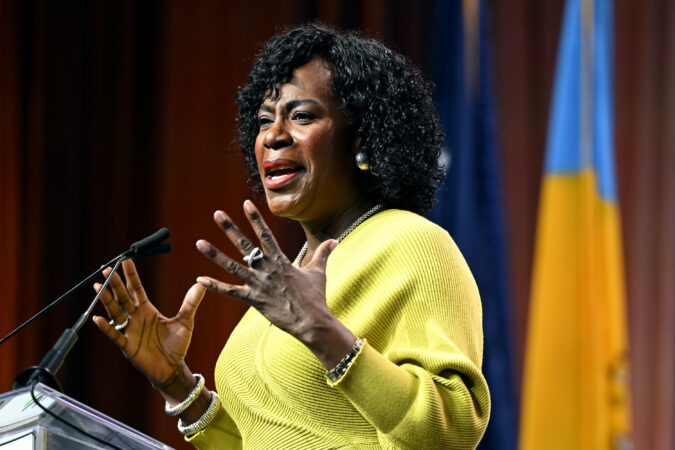
    Mayor Cherelle L. Parker’s administration last August told the U.S. Department of Justice that Philadelphia remains a “welcoming city” for immigrants and that it had no plans to change the policies the Trump administration has said make it a “sanctuary city,” according to a letter obtained by The Inquirer through an open-records request.

    “To be clear, the City of Philadelphia is firmly committed to supporting our immigrant communities and remaining a welcoming city,” City Solicitor Renee Garcia wrote in the Aug. 25, 2025, letter. “At the same time, the City does not maintain any policies or practices that violate federal immigration laws or obstruct federal immigration enforcement.”

    Garcia sent the letter last summer in response to a demand from U.S. Attorney General Pam Bondi that Philadelphia end its so-called sanctuary city policies, which prohibit the city from assisting some federal immigration tactics. Bondi sent similar requests to other jurisdictions that President Donald Trump’s administration contends illegally obstruct immigration enforcement, threatening to withhold federal funds and potentially charge local officials with crimes.

    Although some other cities quickly publicized their responses to Bondi, Parker’s administration fought to keep Garcia’s letter secret for months and initially denied a records request submitted by The Inquirer under Pennsylvania’s Right-To-Know Law.

    The city released the letter this week after The Inquirer appealed to the Pennsylvania Office of Open Records, which ruled that the Parker administration’s grounds for withholding it were invalid.

    The letter largely mirrors Parker’s public talking points about immigration policy, raising questions about why her administration sought to keep it confidential.

    But the administration’s opaque handling of the letter keeps with the approach Parker has taken to immigration issues since Trump returned to office 13 months ago. Parker has vowed not to change immigrant-friendly policies enacted by past mayors, while avoiding confrontation with the federal government in a strategy aimed at keeping Philadelphia out of the president’s crosshairs as he pursues a nationwide deportation campaign.

    Although U.S. Immigration and Customs Enforcement officers operate in the city, Philadelphia has not seen a surge in federal agents like the ones Trump sent to Minneapolis and other jurisdictions.

    A spokesperson for the Justice Department did not respond to a request for comment.

    Immigrant advocates have called on Parker to take a more aggressive stand against Trump, and City Council may soon force the conversation. Councilmembers Rue Landau and Kendra Brooks have proposed a package of bills aimed at further constricting ICE operations in the city, including a proposal to ban law enforcement officers from wearing masks. The bills will likely advance this spring.
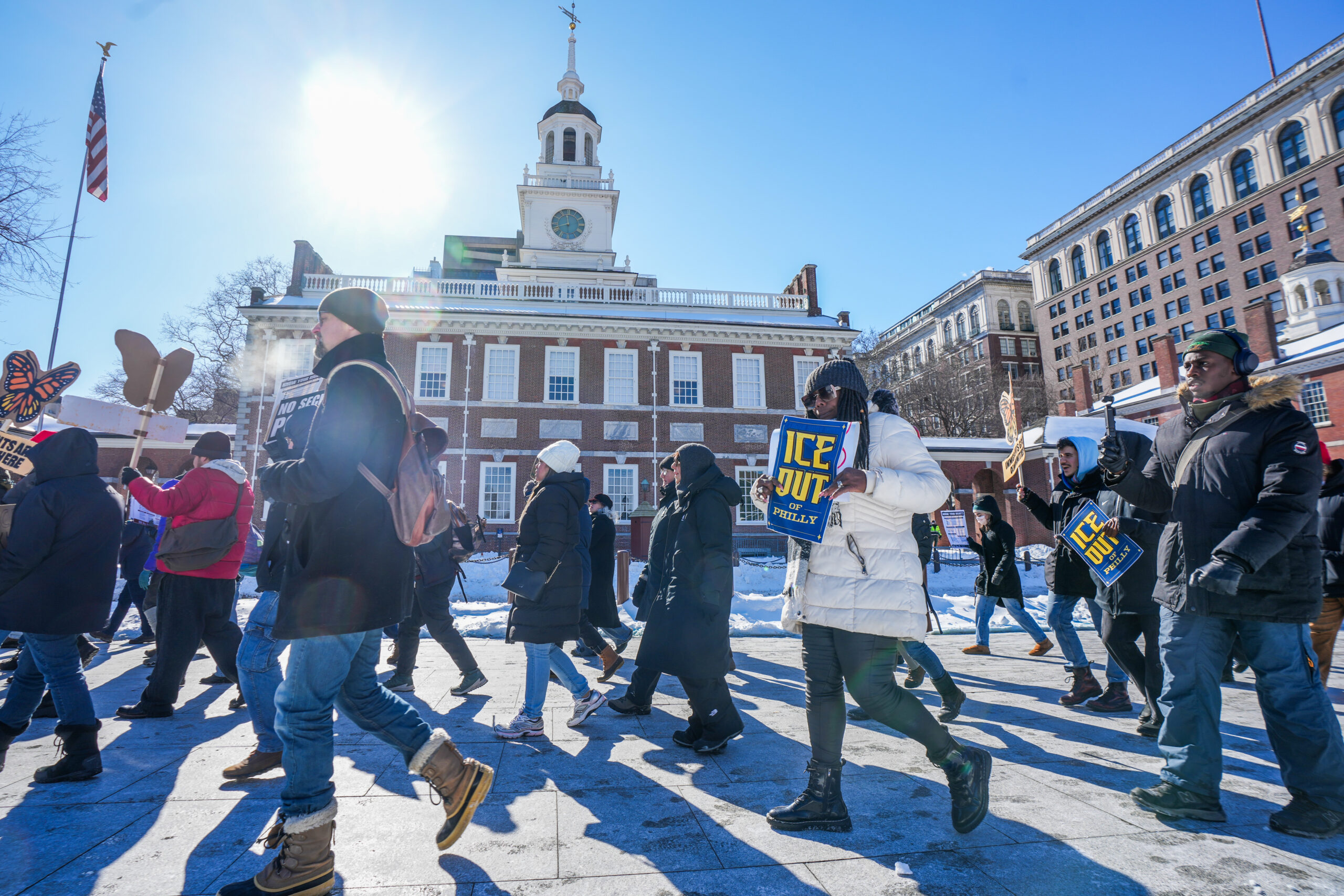
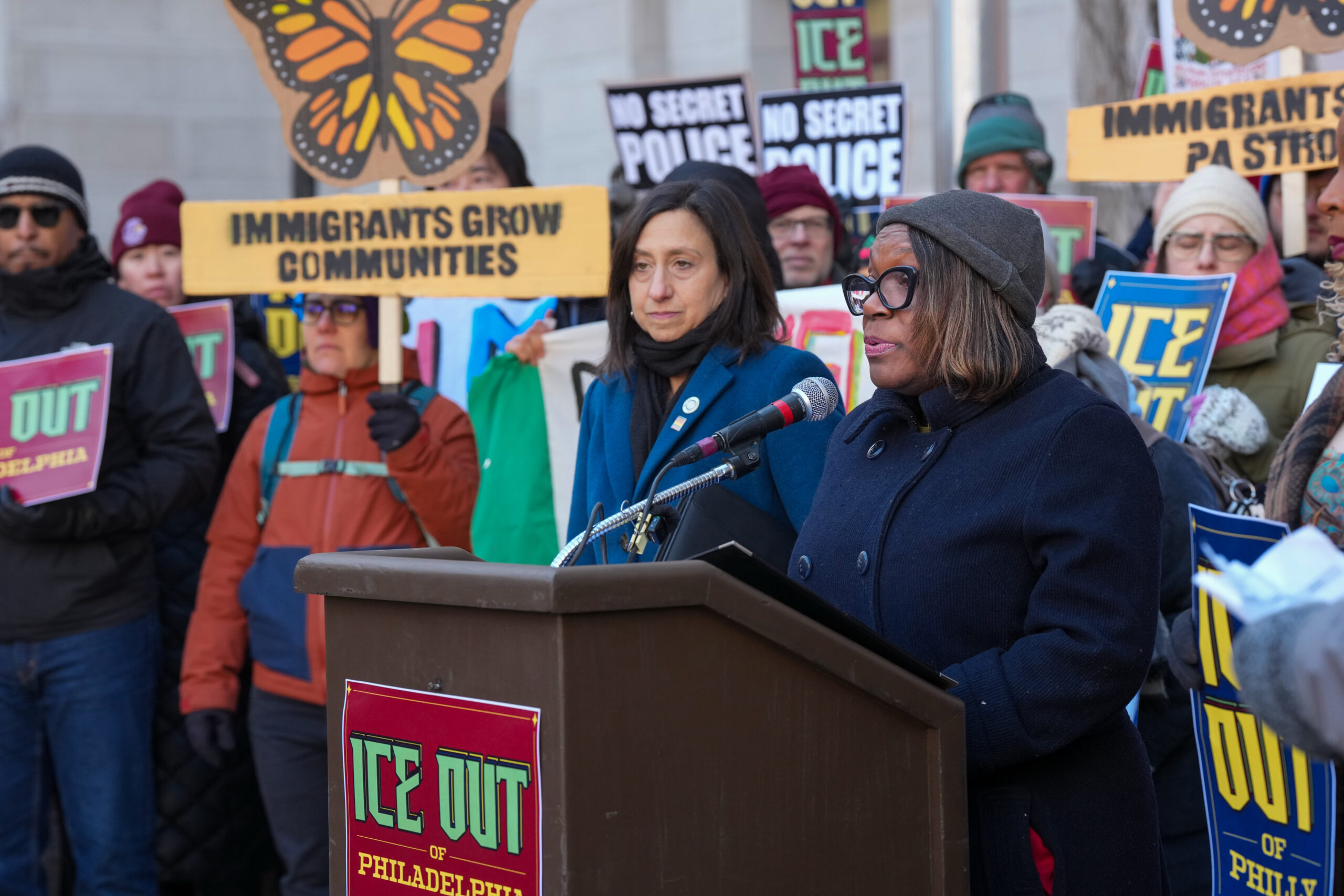
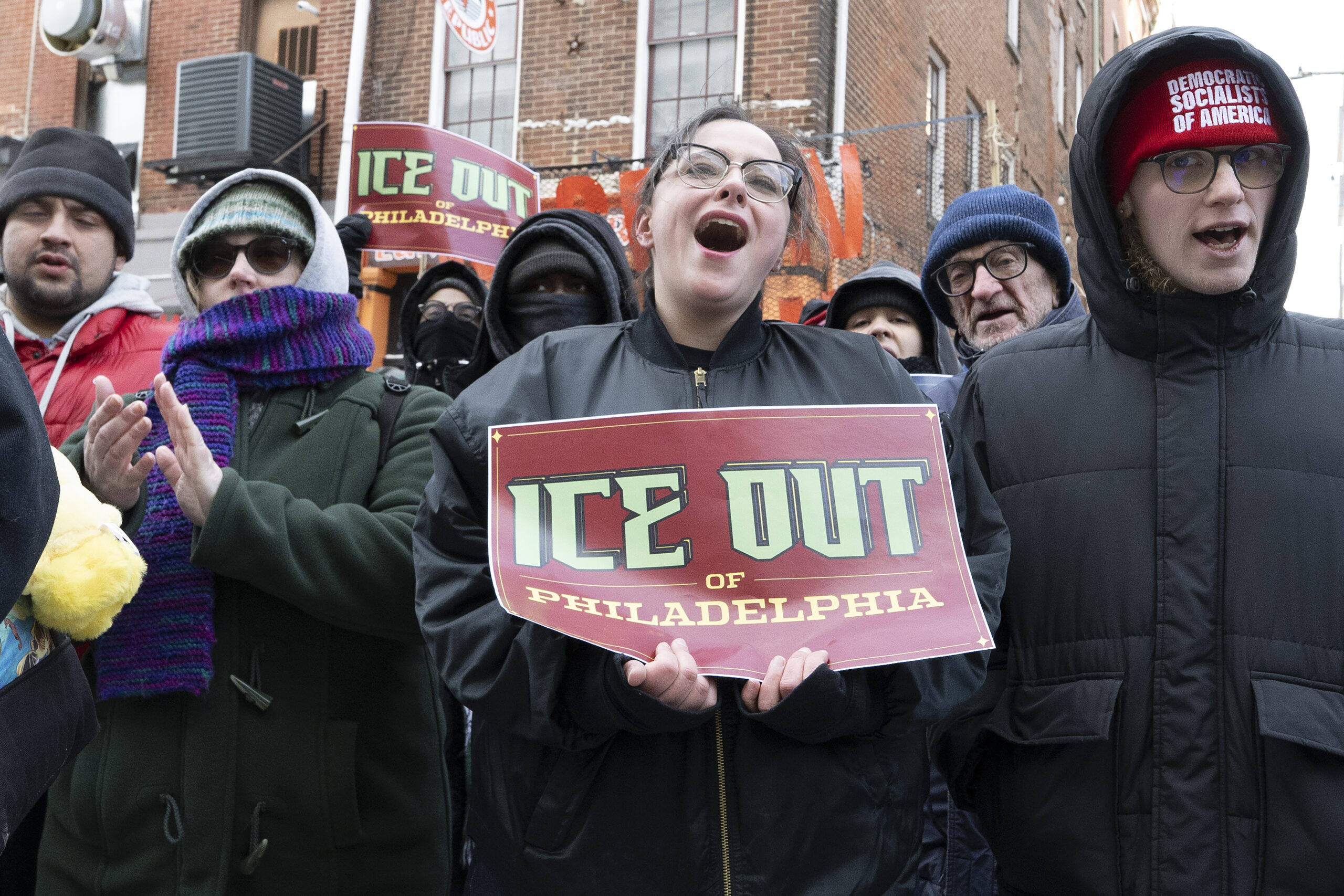
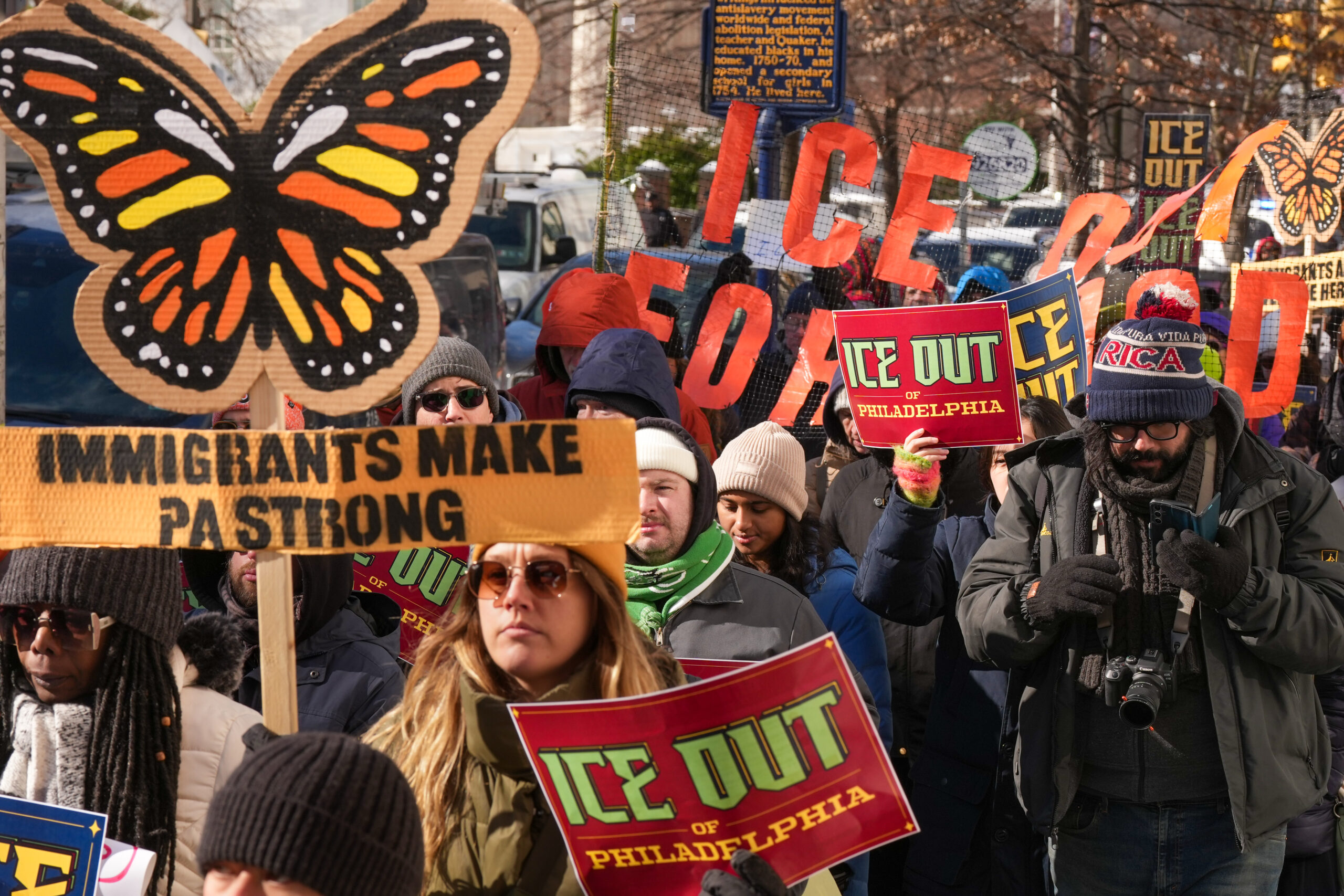
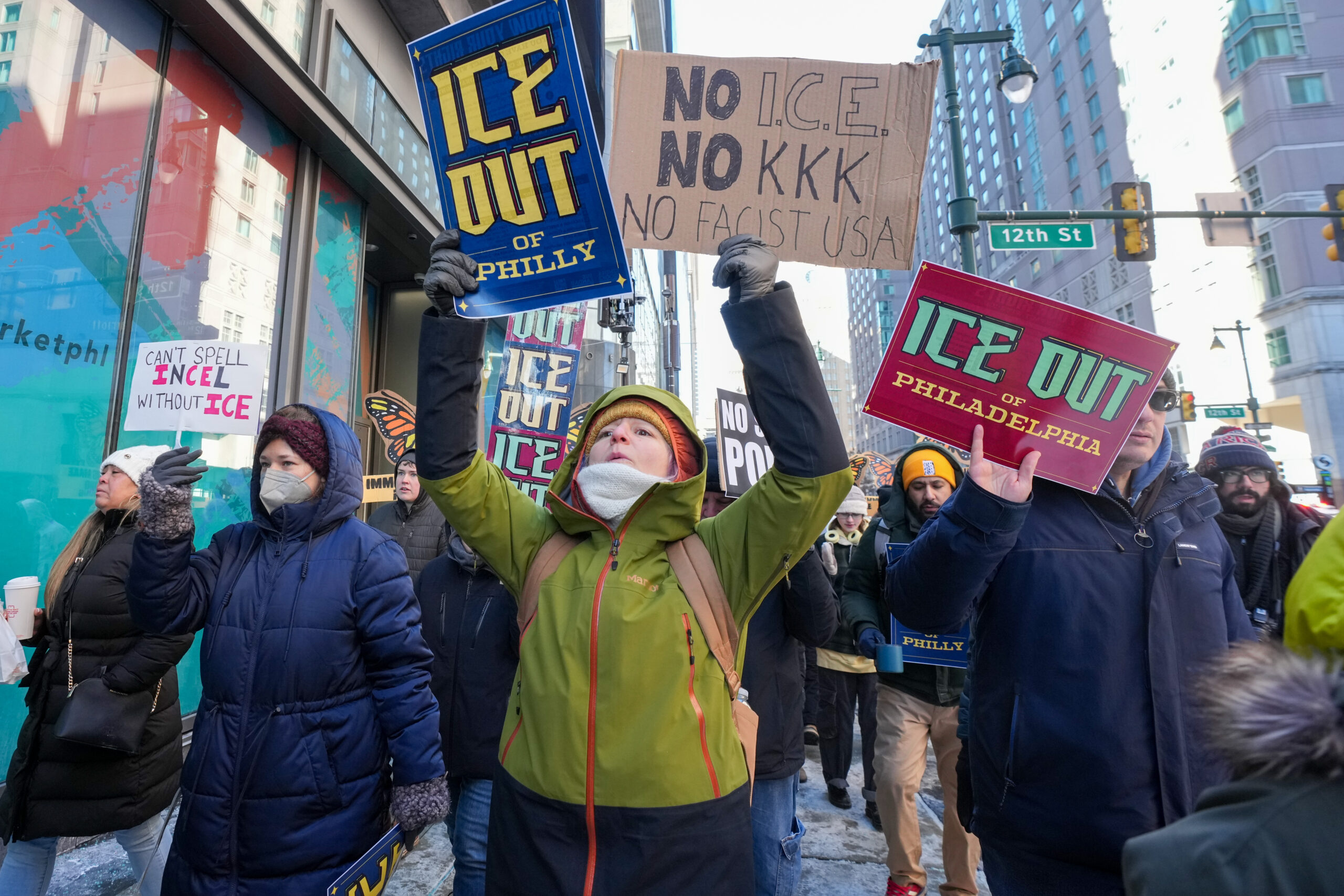
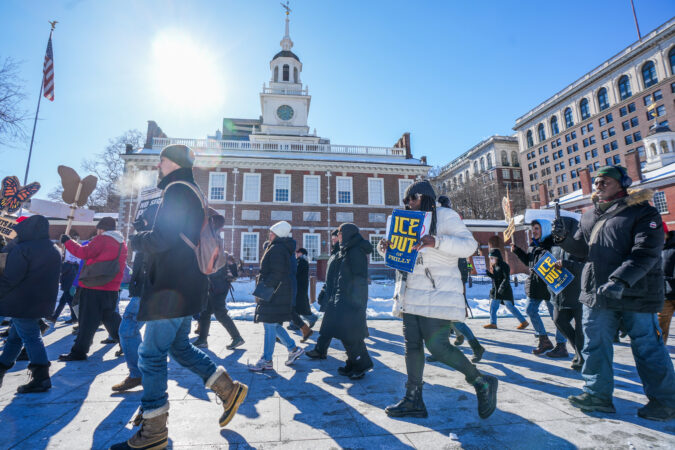
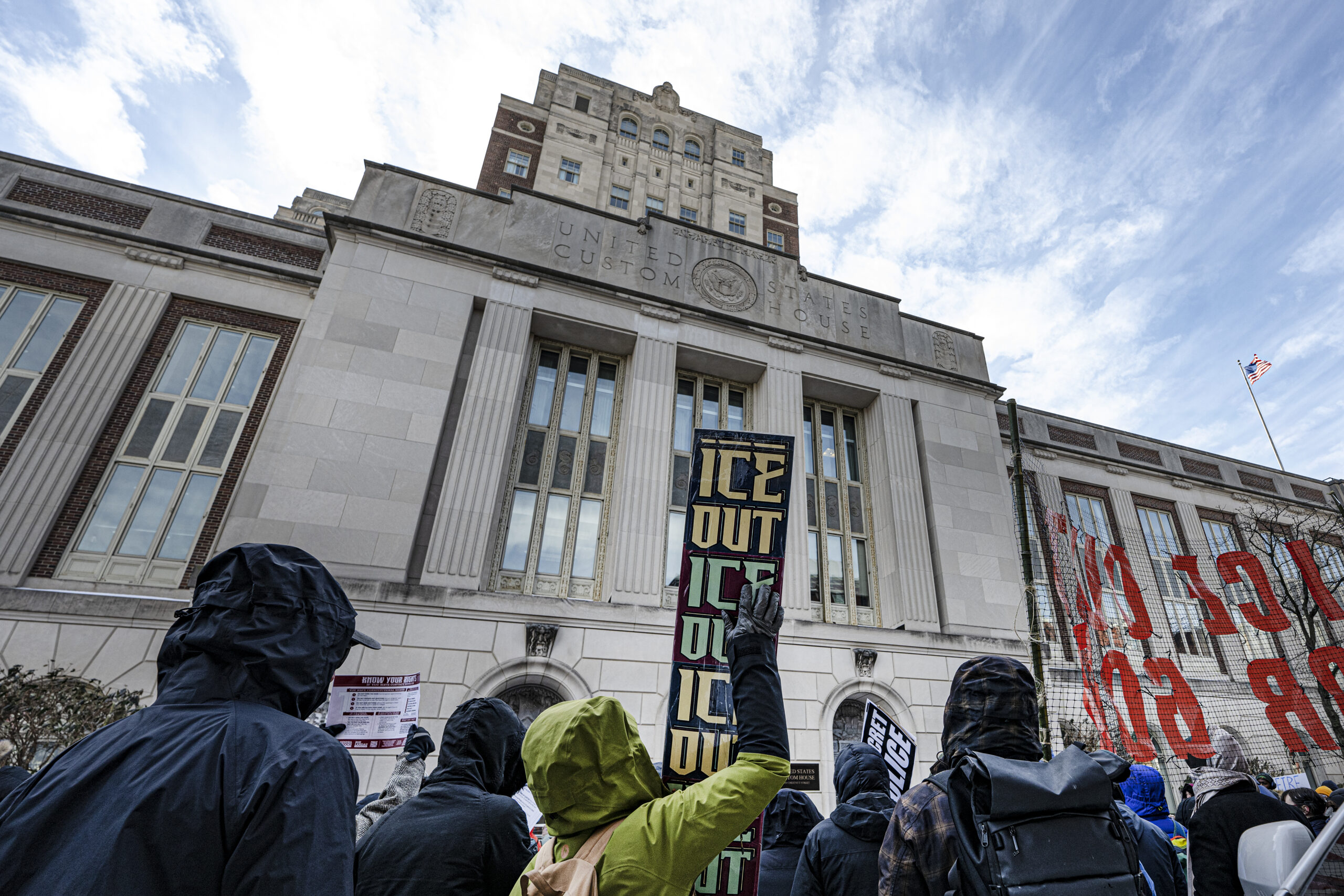
    Advocates and protesters call for ICE to get out of Philadelphia in Center City on January 27, 2026.

    Parker’s delicate handling of immigration issues stands in contrast to her aggressive response to the Trump administration’s removal last month of exhibits related to slavery at the President’s House Site on Independence Mall.

    The city sued to have the panels restored almost immediately after they were taken down. After a federal judge sided with the Parker administration, National Park Service employees on Thursday restored the panels to the exhibit in a notable win for the mayor.

    ‘Sanctuary’ vs. ‘welcoming’

    Bondi’s letter, which was addressed to Parker, demanded the city produce a plan to eliminate its “sanctuary” policies or face consequences, including the potential loss of federal funds.

    “Individuals operating under the color of law, using their official position to obstruct federal immigration enforcement efforts and facilitating or inducing illegal immigration may be subject to criminal charges,” Bondi wrote in the letter, which is dated Aug. 13. “You are hereby notified that your jurisdiction has been identified as one that engages in sanctuary policies and practices that thwart federal immigration enforcement to the detriment of the interests of the United States. This ends now.”

    “Sanctuary city” is not a legal term, but Philadelphia’s policies are in line with how the phrase is typically used to describe jurisdictions that decline to assist ICE.

    Immigrant advocates have in recent years shifted to using the label “welcoming city,” in part because calling any place a “sanctuary” is misleading when ICE can still operate throughout the country. The newer term is also useful for local officials hoping to evade Trump’s wrath, as it allows them to avoid the politically hazardous “sanctuary city” label.

    Philly’s most notable immigration policy is a 2016 executive order signed by then-Mayor Jim Kenney that prohibits city jails from honoring ICE detainer requests, in which ICE agents ask local prisons to extend inmates’ time behind bars to facilitate their transfer into federal custody. The city also prohibits its police officers from inquiring about immigration status when it is not necessary to enforce local law.
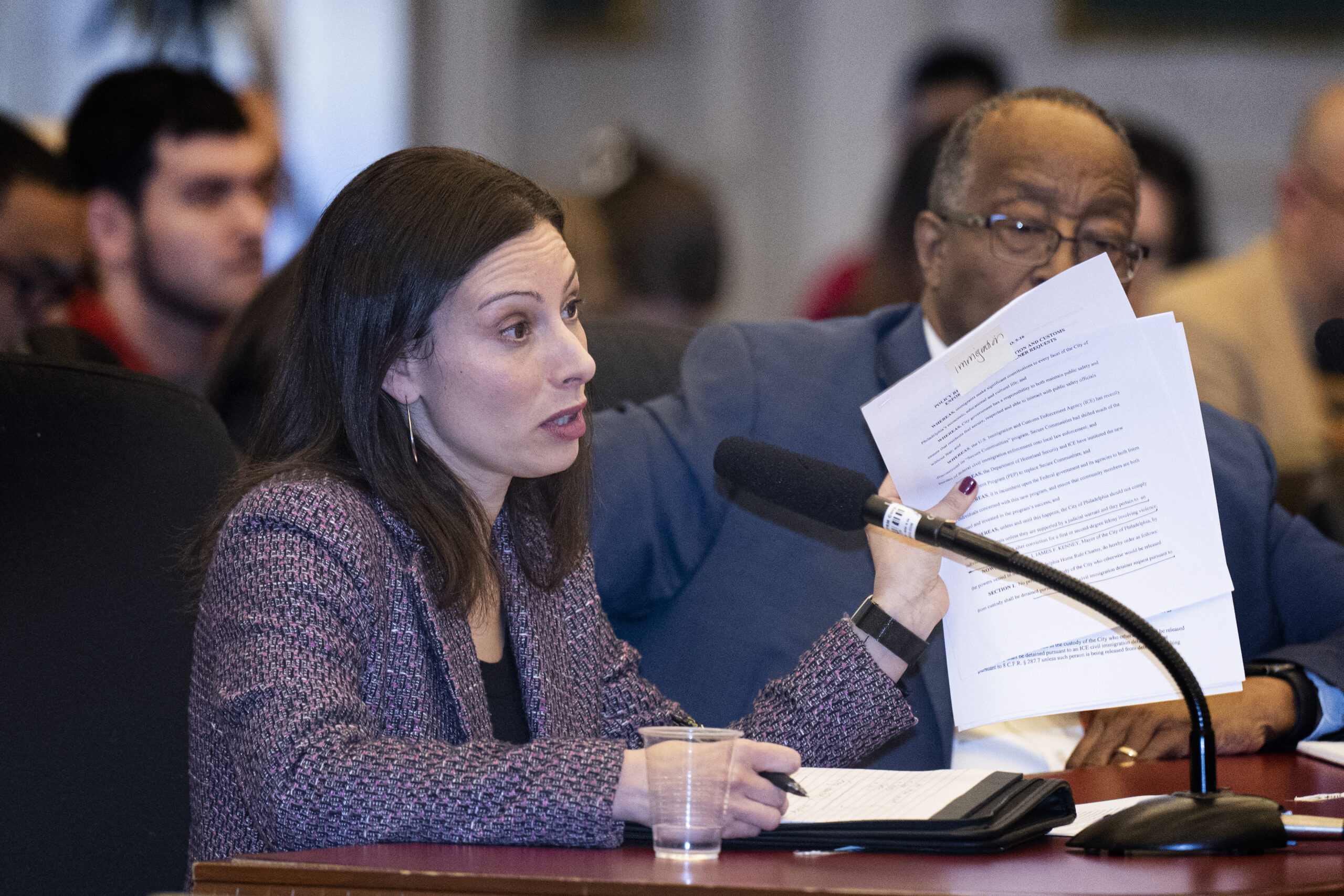
    Renee Garcia, Philadelphia City Solicitor speaks before City Council on Jan 22, 2025.

    Garcia wrote in the August letter that Kenney’s order “was not designed to obstruct federal immigration laws, but rather to clarify the respective roles of the Police Department and the Department of Prisons in their interactions with the Department of Homeland Security when immigrants are in City custody.” The city, she wrote, honors ICE requests when they are accompanied by judicial warrants.

    Immigration enforcement is a federal responsibility, and — in a case centered on Kenney’s order — the Philadelphia-based U.S. Court of Appeals for the Third Circuit ruled in 2019 that cities do not have to assist ICE.

    The court, Garcia wrote, “held that the federal government could not coerce Philadelphia into performing immigration tasks under threat of federal repercussions, including the loss of federal funds.”

    City loses fight over records

    In Pennsylvania, all government records are considered public unless they are specifically exempted from disclosure under the Right-To-Know Law. In justifying its attempt to prevent the city’s response to the Trump administration from becoming public, the Parker administration cited two exemptions that had little to do with the circumstances surrounding Garcia’s letter.

    First, the administration argued that the letter was protected by the work product doctrine, which prevents attorneys’ legal work and conclusions from being shared with opposing parties. Given that the letter had already been sent to the federal government — the city’s opponent in any potential litigation — the doctrine “has been effectively waived,” Magdalene C. Zeppos-Brown, deputy chief counsel in the Pennsylvania Office of Open Records, wrote in her decision in favor of The Inquirer.

    “Despite the [city’s] argument, the Bondi Letter clearly establishes that the Department of Justice is a potential adversary in anticipated litigation,” Zeppos-Brown wrote.

    Second, the city argued that the records were exempted from disclosure under the Right-To-Know Law because they were related to a noncriminal investigation. The law, however, prevents disclosure of records related to Pennsylvania government agencies’ own investigations — not of records related to a federal investigation that happen to be in the possession of a local agency.

    “Notably, the [city] acknowledges that the investigation at issue was conducted by the DOJ, a federal agency, rather than the [city] itself,” Zeppos-Brown wrote. “Since the DOJ is a federal agency, the noncriminal investigation exemption would not apply.”

    Garcia’s office declined to appeal the decision, which would have required the city to file a petition in Common Pleas Court.

    “As we stated, the City of Philadelphia is firmly committed to supporting our immigrant communities as a Welcoming City,” Garcia said in a statement Wednesday after the court instructed the city to release the letter. “At the same time, we have a long-standing collaborative relationship with federal, state, and local partners to protect the health and safety of Philadelphia, and we remain [in] compliance with federal immigration laws.”

    Staff writers Anna Orso and Jeff Gammage contributed to this article.
  • City Council members grill school district officials on plan to close 20 schools — and superintendent says he could have closed 40

    City Council members grill school district officials on plan to close 20 schools — and superintendent says he could have closed 40

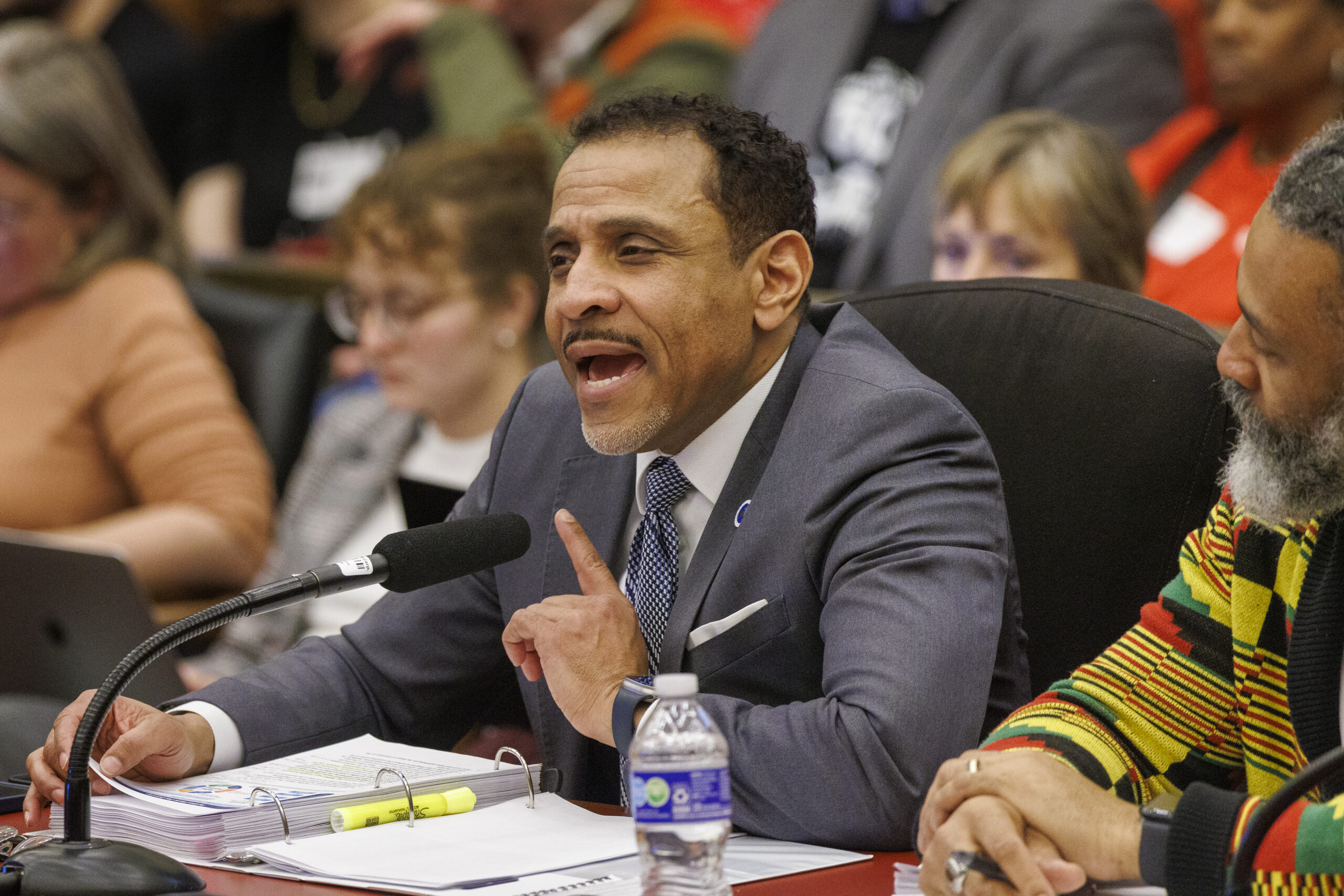
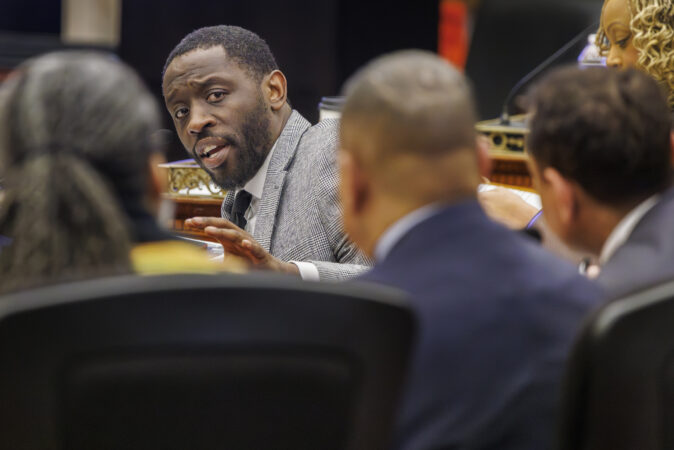
    Philadelphia City Council may not have a vote on Superintendent Tony B. Watlington Sr.’s sweeping facilities plan, but it indicated Tuesday that it will have a say in school closings.

    As a packed hearing began in Council’s chambers Tuesday morning, both Council President Kenyatta Johnson and Isaiah Thomas, chair of the Education Committee, said Council refused to be a “rubber stamp” to Watlington’s proposal to close 20 schools, colocate six, and modernize 159.

    Though only the school board gets to vote directly on the plan, Johnson has indicated he is willing to hold up city funding to the district over the school closure plan. And his colleagues echoed that sentiment Tuesday.

    “I’m infuriated that we don’t get a say,” Councilmember Jimmy Harrity said, warning the district officials who appeared before him. “But, Council president, you and I both know we do get a say, because budget’s coming. And we will be looking. Mindful is the word I would use for today — be mindful.”

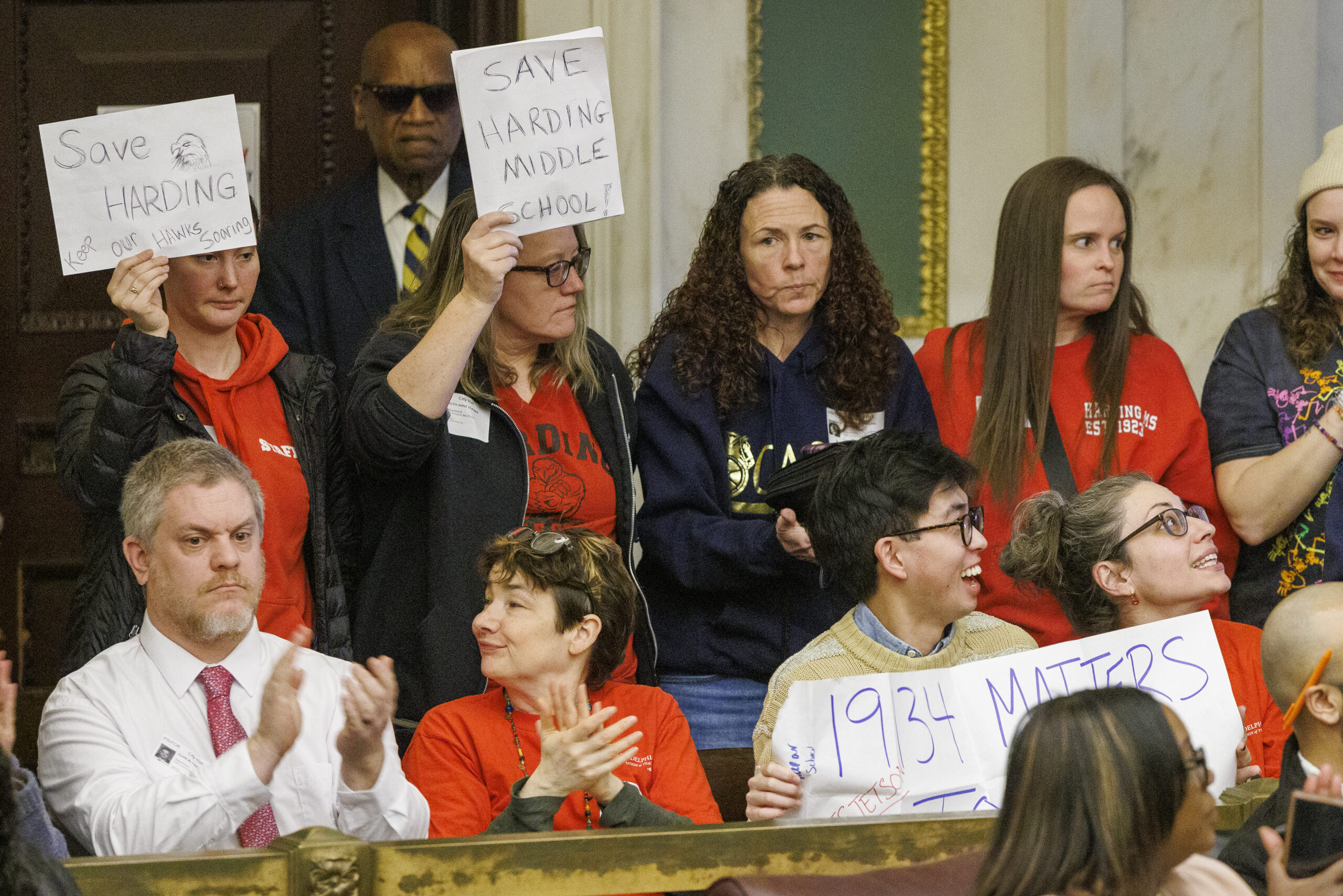
    Concerned citizens stand with signs in support of Harding Middle School before the start of a Philadelphia City Council hearing Tuesday at City Hall on the school district’s plan to close 20 schools.

    About 40% of the district’s nearly $5 billion budget comes from local revenue and city funding, which City Council and Mayor Cherelle L. Parker must approve in the annual city budget by the end of June.

    Harrity, an at-large Council member, said he was “tired that every time cuts come, they come from a certain neighborhood. You know, I live in Kensington, in the 7th District. I talk to these kids. They’re good kids. They deserve everything that other kids in other neighborhoods are getting. … You can see that this isn’t what our people want.” Watlington has proposed closing four schools in the 7th District.

    More than 100 community members holding babies and waving signs opposing the facilities plan filled Council chambers on the fourth floor of City Hall on Tuesday as Council members spent hours grilling Watlington and other district officials.

    Watlington, meanwhile, stood by his plan in testimony to Council on Tuesday, saying that 20 closings was a much smaller number than he could have settled on.

    “We could have come here and presented a plan that closed twice as many schools and been able to defend it,” Watlington said.

    A once-in-a-lifetime opportunity?

    District officials have said the facilities process is not about saving money, but about optimizing education and equity for the city’s 115,000 students.

    But it was clear Tuesday that finances played a part: The district has lost 15,000 students in the last 10 years, and over 80,000 since 1997, when charter schools were first authorized in Pennsylvania. It has 300 buildings, many of them 75 years and older and in poor repair, and some schools with more than 1,000 empty seats, while others are overcrowded.

    Tony B. Watlington Sr., superintendent of School District of Philadelphia, speaks at a City Council hearing Tuesday on his proposal to close 20 schools.

    “We’ve got to be very careful with our limited resources in a historically underfunded district,” Watlington told Council.

    Watlington and board president Reginald Streater, who also testified, pitched the plan as a way to add things the district cannot now offer — Advanced Placement courses in every high school, the opportunity for all eighth graders to take algebra, more prekindergarten, and career and technical education programs.

    “I do not believe we’ll get this opportunity again in our lifetime,” Watlington said.

    The superintendent dropped a few previously undisclosed facts about the facilities road map, indicating that his recommendations could shift slightly before he presents the plan to the school board on Feb. 26. No date has been set for the board’s final vote, which is expected later this winter.

    “It’s premature to say how the final recommendations will land,” Watlington said.

    But, the superintendent said, “if there are schools that Council wants me to take off the list, and add others on that list, we are open to you telling me what those are, but we cannot get to a place where we address our 35% non-utilization rate in buildings if no changes are made.”

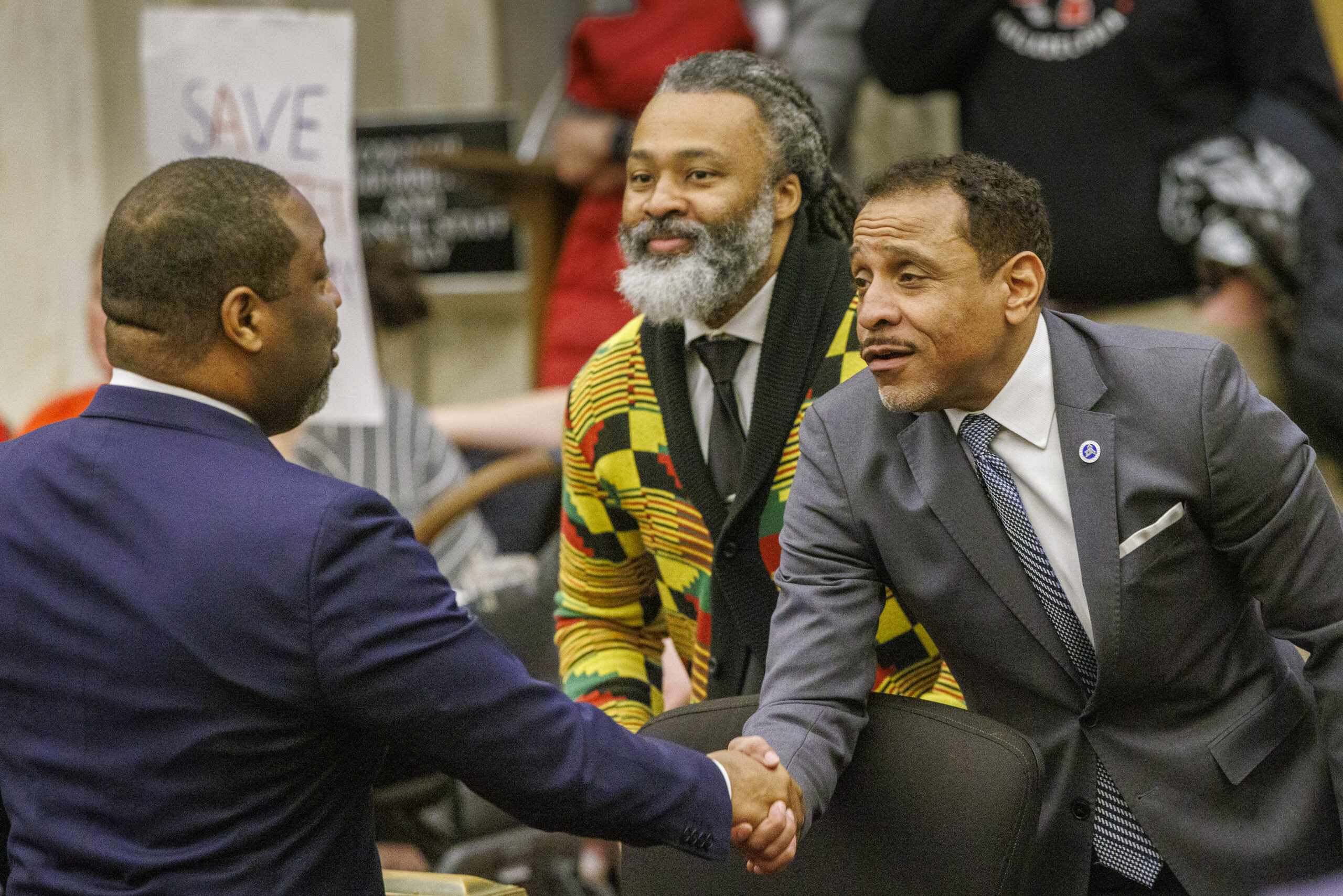
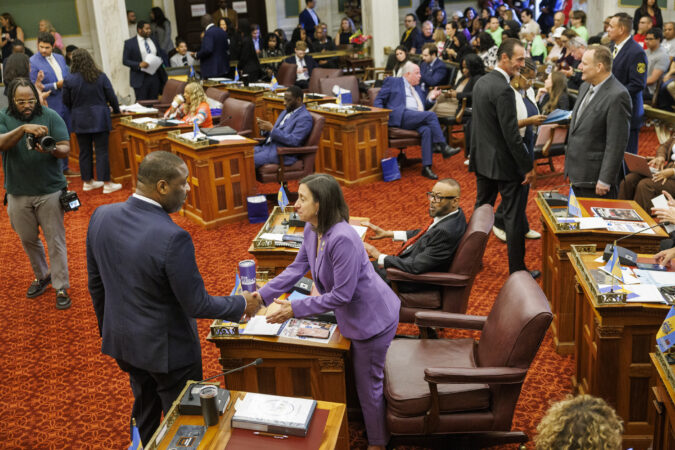
    Philadelphia City Council President Kenyatta Johnson (left) greets Dr. Tony Watlington, Superintendent of School District of Philadelphia Philadelphia City Council holds hearing with board members of School District of Philadelphia, Tuesday, Feb. 17, 2026. Reginald L. Streater, Esq., President Board of Education. (center)

    Debora Carrera, the city’s chief education officer, who spent three decades as a district teacher and administrator, told Council that Parker believes “the current district footprint is unsustainable.”

    Carrera said her own experience as principal of Kensington High School for Creative and Performing Arts shows that it is right for the district to focus resources on neighborhood high schools.

    “My high school was a small high school,” Carrera said. “I could only offer my children two AP courses, when other schools like Central — where my son went — could offer them over 20-plus AP courses.“

    ‘Breaking down of public education’

    The hearing got tense at times.

    “I feel like this is the breaking down of public education in Philadelphia,” said Councilmember Cindy Bass, who said some of the district’s own decisions had led to closures.

    Several members of Council raised questions about the plan’s price tag. Prior district and city estimates put the cost just under $8 billion, but members of Watlington’s team said they could they could actually do the work for $2.8 billion — $1 billion from district capital funds, and $1.8 from yet-unpromised state and philanthropic sources.

    In the past, the district had made public detailed facilities condition assessments for every school in the district, Councilmember Rue Landau noted.

    Residents could look up their school and see exactly what the condition of every system in the building was, and how much money would be required to fix those that needed repair.

    “We don’t have any of those details,” said Landau, who went so far as to say she believed the district should be spending more than $2.8 billion on the plan. “What is the increased investment, and why don’t we have any of those details? They are not out there in the public for us, so none of us have any understanding as to why this is happening, This should all be public so all of the public can see.”

    Jerry Roseman, the Philadelphia Federation of Teachers’ longtime environmental director, who has had a first-row seat to district facilities conditions for decades, said he believed the $2.8 billion figure was not realistic.

    “You need much more money than that,” Roseman told Council. “We need more money than this plan comes close to.”

    Some Council members pushed the district and the board on the plan’s timing.

    The city has been asking for a long-range facilities plan for years, Councilmember Quetcy Lozada pointed out.

    “It’s taken us all this time,” Lozada said. “Now, you guys have come up with a plan, and now we want to rush through it. Now all of a sudden there’s this urgency to get through this plan, which I don’t understand.”

    Streater said the board is moving forward with hearing Watlington’s plan on Feb. 26, but won’t vote until it hears more feedback.

    But ultimately, he said, the board will vote on “a plan that is dynamic, that can evolve over time. … I think that we all understand that things change, facts change, funding changes, enrollment trends change.”

    And, Streater said, there will also likely be policy changes based on redrawing some catchment areas, or boundaries that determine which neighborhood schools children attend.

    Streater, who introduced himself at the beginning of the hearing as “Reggie from Germantown,” underscoring his history as a graduate of two district schools that closed — Germantown High and Leeds Middle School — said that changes must be made.

    “I think if we continue doing the same thing, expecting a different result — which I would argue is chronic underachievement — we are doomed.”

  • Students protest U.S. Customs and Border Protection participation at campus career fairs

    Students protest U.S. Customs and Border Protection participation at campus career fairs

    Amid President Donald Trump’s crackdown on immigration and deployment of federal officers to cities across the country, students at Philadelphia-area colleges are protesting against the appearance of U.S. Customs and Border Protection at campus career fairs.

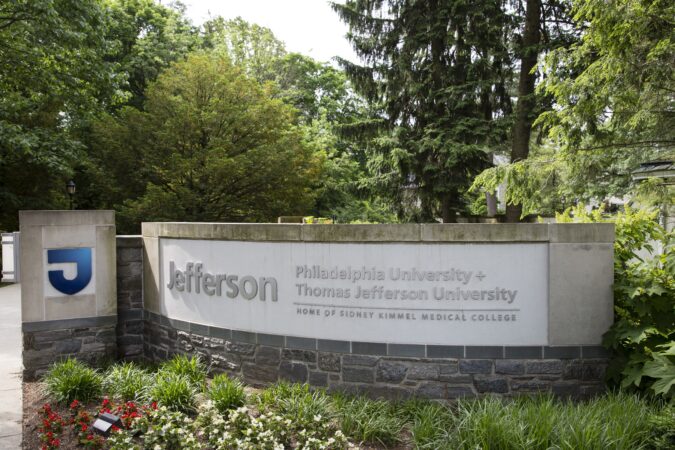
    At least four local universities — Thomas Jefferson, Villanova, Temple, and Rowan — have faced opposition to allowing recruitment in recent months.

    A petition circulated at Jefferson last week sought to keep CBP from appearing at a campus career event. CBP and ICE — both agencies that enforce immigration laws under the Department of Homeland Security — have been at the center of a national debate after two Minneapolis residents were killed by federal immigration enforcement agents in shootings now under investigation.

    “Due to the harm CBP has caused to communities across the nation, it is abhorrent for TJU to accept CBP at their institution,” said an occupational therapy student who signed the petition and asked that her name be withheld, fearing retribution. “I don’t think any institution should be encouraging students to get involved in these kinds of agencies, given the current climate.”

    But the petition has since come down, the student said, and CBP is not on the list of employers due to appear at the event, called the 2026 Career Day and Design Expo, on Thursday at the East Falls campus. Jefferson has not acknowledged that CBP was on the list initially or responded to questions on whether it was removed.

    CBP, which has offices in Philadelphia, has appeared at campus career events in the area in the past.

    An email seeking comment from CBP’s media office was not returned.

    At Rowan University in New Jersey earlier this month, the participation of CBP’s Trade Regulatory Audit Philadelphia Field Office in a career fair drew some student protest. Members of a student activist group distributed fliers speaking out against CBP during the fair, according to Rowan’s student newspaper, the Whit, and campus police and administration officials came to the scene.

    The agency also reserved a table and came to a fall event at Rowan to share information about accounting-related auditing internships, said Rowan spokesperson Joe Cardona, and has done so at the public university for the last decade.

    Rowan’s Rohrer College of Business Center for Professional Development hosts more than 200 employers each year, including local, state, and federal agencies as well as private-sector groups, he said.

    “The presence of any employer on campus does not constitute institutional endorsement of that organization’s policies or actions,” Cardona said. “Rather, it reflects our commitment to supporting student career exploration while upholding principles of open access and free expression.”

    At Villanova, CBP pulled out of a career fair it had planned to attend earlier this month, according to the Villanovan, the student newspaper. The withdrawal followed criticism on social media about the organization’s planned appearance.

    The organizer of an Instagram account that opposed the agency’s participation said they wished that Villanova had made the decision to disallow the group rather than the group withdrawing, according to the student newspaper.

    “I think a lot of students will feel a lot safer and more comfortable attending this Career Fair,” the organizer said. “But it doesn’t take away the anger that this was ever something that was gonna happen.”

    Villanova said in a statement that CBP‘s Office of Trade had participated in prior career events and that employers with prior participation were contacted “through standard outreach” about this year’s event.

    Temple’s law school last semester had planned to host a “Coffee and Careers” networking event with a DHS and Immigration and Customs Enforcement lawyer but later canceled it, according to the Temple News, the student newspaper. The event was replaced with a talk on public interest law by Philadelphia City Councilmember Rue Landau.

    DHS “chose to engage directly with students interested in DHS opportunities rather than participate in a scheduled career event,” Temple spokesperson Steve Orbanek said.

    He also noted that “career fairs are university-sponsored events, and actions that disrupt these events may violate university policy and established on-campus demonstration guidelines.”

  • Unmasking ICE in Philly could test the limits of local power over federal agents

    Unmasking ICE in Philly could test the limits of local power over federal agents

    One of the lasting images of President Donald Trump’s mass deportation campaign will be the masks worn by federal immigration agents.

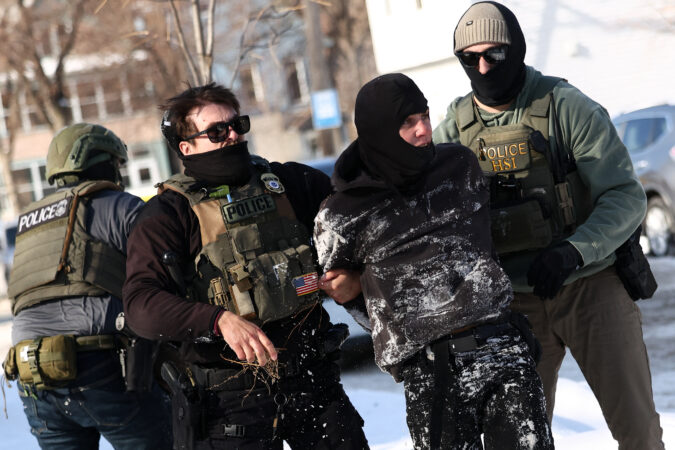
    The widespread use of facial coverings by U.S. Immigration and Customs Enforcement officers is among the suite of tactics — agents dressed in plainclothes, wearing little identification, jumping out of unmarked cars to grab people off the street — that have fueled immigration advocates’ use of terms like “kidnappings” and “abductions.”

    Now Philadelphia lawmakers appear poised to pass legislation that would ban all officers operating in the city — including local police — from concealing their identities by wearing masks or conducting enforcement from unmarked cars.

    The question is whether the city can make that rule stick.

    Legal hurdles loom for municipalities and states attempting to regulate federal law enforcement. Local jurisdictions are generally prohibited from interfering with basic federal functions, and Trump administration officials say state- and city-level bans violate the constitutional provision that says federal law reigns supreme.

    Experts are split on whether the bill proposed by Philadelphia City Council members last week would survive a lawsuit.

    There are also practical concerns about enforcement. Violating the mask ban would be a civil infraction, meaning local police would be tasked with citing other law enforcement officers for covering their faces.

    “No doubt this will be challenged,” said Stanley Brand, a distinguished fellow at Penn State Dickinson Law. “This ordinance will be a protracted and complicated legal slog.”

    Councilmember Kendra Brooks speaks during a news conference at City Hall to announce a package of bills aimed at pushing back against ICE enforcement on Jan. 27.

    Advocates for immigrants say that unmasking ICE agents is a safety issue, and that officers rarely identify themselves when asked, despite being required to carry badges.

    Mask use can also spur impersonators, they say. At least four people in Philadelphia have been arrested for impersonating ICE officers in the last year.

    “You see these people in your community with guns and vests and masks,” said Desi Bernette, a leader of MILPA, the Movement of Immigrant Leaders in Pennsylvania. “It’s very scary, and it’s not normal.”

    Democrats in jurisdictions across America, including Congress and the Pennsylvania General Assembly, have introduced legislation to ban ICE agents from concealing their faces. California is the furthest along in implementing a mask prohibition, and a judge is currently weighing a challenge filed by the Trump administration.

    Senate Democrats negotiating a budget deal in Washington have asked for a nationwide ban on ICE agents wearing masks in exchange for their votes to fund the Department of Homeland Security.

    And polling shows getting rid of masks is popular. A recent Pew Research Center survey found that 61% of Americans believe federal agents should not wear face coverings to conceal their identities while on duty.

    ICE officials say agents should have the freedom to conceal their faces while operating in a hyperpartisan political environment.

    Last year, ICE head Todd Lyons told CBS News that he was not a proponent of agents wearing masks, though he would allow it. Some officers, he said, have had private information published online, leading to death threats against them and their families.

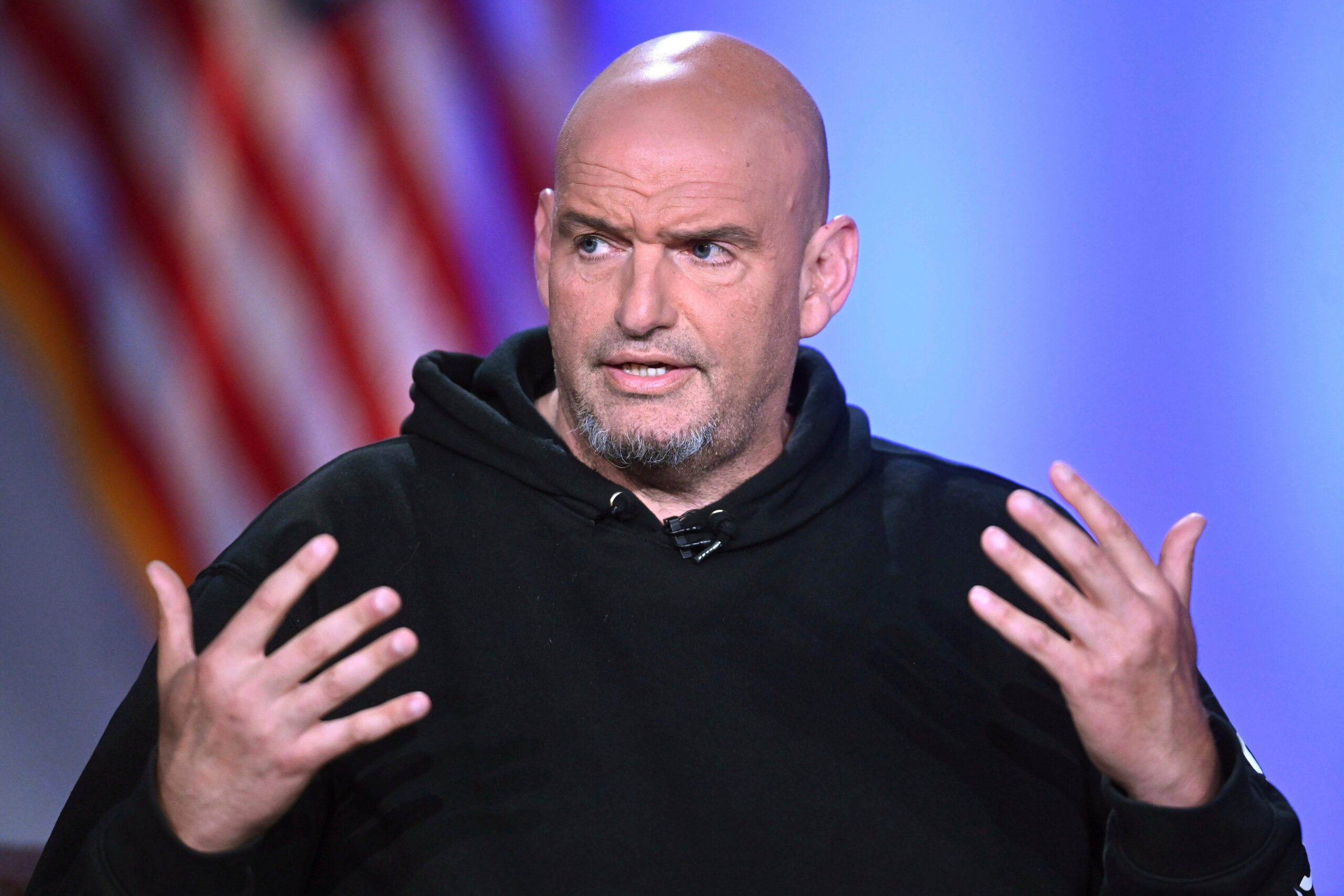
    On Sunday, U.S. Sen. John Fetterman, a Pennsylvania Democrat, defended ICE officers who wear masks and said doxing is a “serious concern.”

    “They could target [agents’] families,” Fetterman said in an interview on Fox News, “and they are organizing these people to put their names out there.”

    Sen. John Fetterman, D-Pa., participates in a debate on June 2, 2025, in Boston.

    The Council authors of the Philadelphia bills say they are responding to constituents who are intimidated by ICE’s tactics, and they believe their legislation can withstand a legal challenge.

    “Our goal is to make sure that our folks feel safe here in the city,” said City Councilmember Kendra Brooks. “We are here to protect Philadelphians, and if that means we eventually need to go to court, that’s what would need to happen.”

    The constitutional limits on unmasking ICE

    The bill introduced last week by Brooks and Councilmember Rue Landau is part of a package of seven pieces of legislation aimed at limiting how ICE operates in Philadelphia. The proposals would bar Philadelphia employees from sharing information with ICE and ban the agency from using city property to stage raids.

    Fifteen of Council’s 17 members signed on to the package of legislation, meaning a version of it is likely to become law. Passing a bill in City Council requires nine votes, and overriding a mayoral veto takes 12. Mayor Cherelle L. Parker has said her team is reviewing the legislation, which can still be amended before it becomes law.

    Anti-ICE activists demonstrate outside U.S. Sen. John Fetterman’s Philadelphia office, Jan. 27, calling for an end to federal immigration enforcement policies.

    One of the two members who did not cosponsor the package was Councilmember Mike Driscoll, a Democrat who represents parts of Lower Northeast Philadelphia. He indicated that he had concerns about whether the “ICE Out” legislation would hold up in court.

    Brooks said Council members worked with attorneys to ensure the legislation is “within our scope as legislators for this city to make sure that we protect our folks against these federal attacks.”

    Brand, of Dickinson Law, said the legislation is a classic example of a conflict between two constitutional pillars: the clause that says federal law is supreme, and the 10th Amendment, which gives states powers that are not delegated to the federal government.

    He said there is precedent that the states — or, in this case, cities — cannot interfere with laws enacted by Congress, such as immigration matters.

    “If I were betting, I would bet on the federal government,” Brand said.

    But there is a gray area, he said, and that includes the fact that no law — or even regulation — says federal law enforcement agents must wear masks.

    Kermit Roosevelt, a law professor at the University of Pennsylvania who is an expert on the Constitution and conflict of laws, said if there is no agency policy, that is “free space” for states and cities to regulate.

    Roosevelt said Brooks’ legislation steers clear of other constitutional concerns because it applies to all police officers, not just federal agents.

    “If they were trying to regulate only federal agents, the question would be, ‘Why aren’t you doing that to your own police officers?’” he said. “If you single out the federal government, it looks more like you’re trying to interfere with what the federal government is doing.”

    Applying the law to local police

    Experts say part of the backlash to ICE agents covering their faces is because Americans are not used to it. Local police, sheriff’s deputies, and state troopers all work largely without hiding their faces.

    “Seeing law enforcement actions happening with federal agents in masks, that’s extremely jarring,” said Cris Ramon, an immigration consultant based in Washington. “Why are you operating outside of the boundaries of what every other law enforcement agency is doing?”

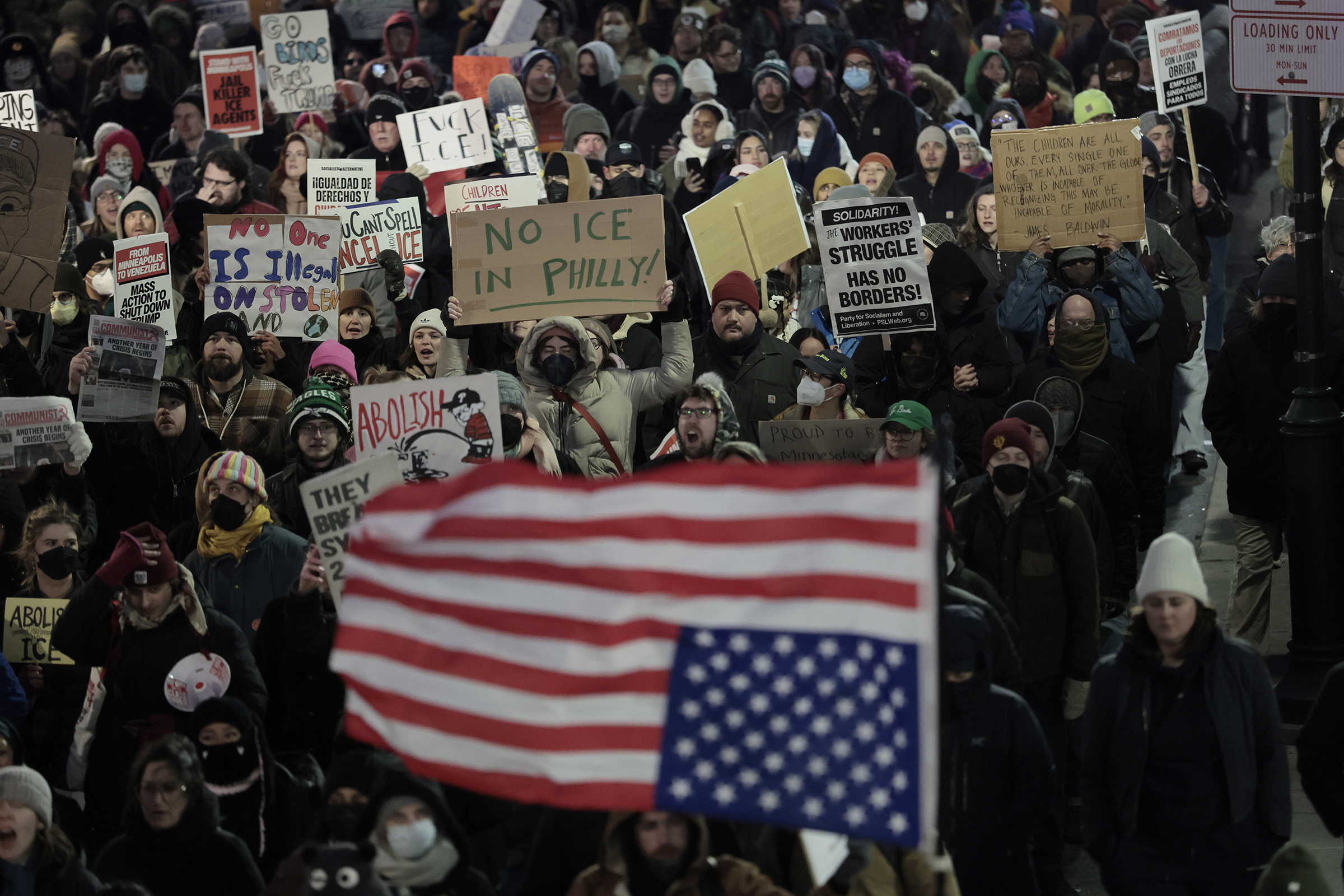
    Protesters march up Eighth Street, toward the immigration offices, during the Philly stands with Minneapolis Ice Out For Good protest at Philadelphia City Hall on Jan. 23.

    The Council legislation includes exceptions for officers wearing medical-grade masks, using protective equipment, or working undercover. It also allows facial coverings for religious purposes.

    However, the federal government could still raise First Amendment concerns, said Shaakirrah R. Sanders, an associate dean at Penn State Dickinson Law.

    The administration, she said, could argue that the city is only trying to regulate law enforcement officers and claim that would be discriminatory.

    Sanders said defending the legislation could be “very costly” and the city should consider alternatives that fall more squarely within its authority. She pointed to efforts like New Jersey Gov. Mikie Sherrill’s announcement that the state would create a database for residents to upload videos of ICE interacting with the public.

    “It looks like the city wants to wield big legislative power,” Sanders said. “My alternative is more in the grassroots work, where you are the first ear for your citizens, not the regulator of the federal government.”

  • A veto-proof majority of Philadelphia City Council members have signed onto the ‘ICE Out’ proposal

    A veto-proof majority of Philadelphia City Council members have signed onto the ‘ICE Out’ proposal

    All but two of Philadelphia’s 17 City Council members have sponsored a package of legislation aimed at limiting ICE operations in the city, a level of support that could ensure the measures become law even if they are opposed by the mayor.

    The 15 cosponsors, confirmed Thursday by a spokesperson for Councilmember Kendra Brooks, indicate a potentially veto-proof majority of lawmakers back the sweeping “ICE Out” effort.

    Brooks and Councilmember Rue Landau, the proposal’s authors, on Thursday formally introduced the seven bills in the package, which includes measures that would codify Philly’s “sanctuary city” status, ban U.S. Immigration and Customs Enforcement from operating on city-owned property, and prohibit employment discrimination on the basis of immigration status.

    Landau said that “reaching a majority sends a clear message.”

    “Philadelphia stands with our immigrant communities,” she said in a statement. “At a moment when the federal government is using fear and violence as governing strategies, this level of support shows that Council will do everything we can to protect our immigrant neighbors.”

    Advocates and protesters call for ICE to get out of Philadelphia, in Center City, January 27, 2026.

    The 15 lawmakers on board with Brooks and Landau’s proposal have each cosponsored all seven bills, Brooks’ spokesperson Eric Rosso said. Only Councilmembers Mike Driscoll, a Democrat, and Brian O’Neill, Council’s lone Republican, declined to cosponsor the legislation, he said.

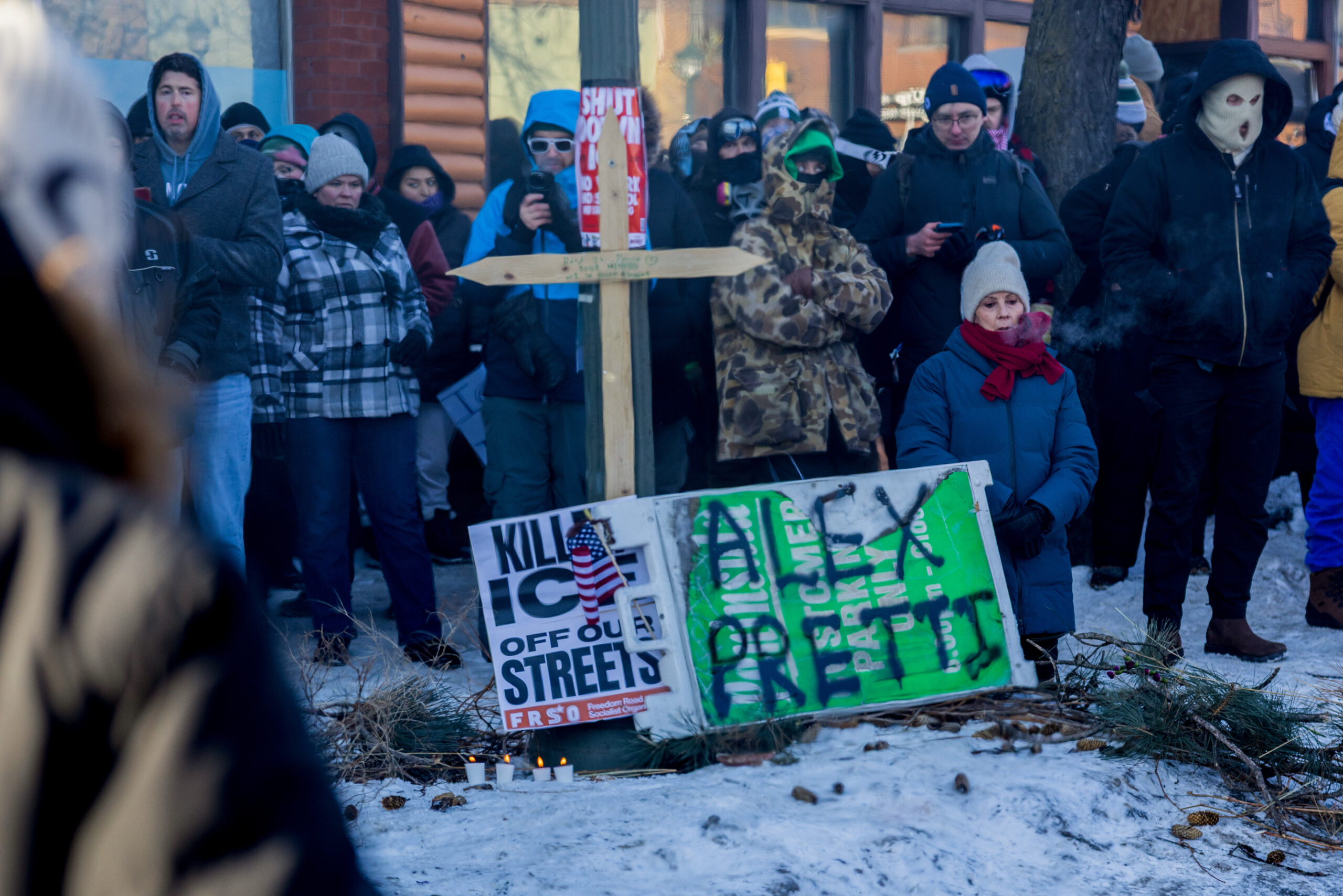
    Driscoll, who represents lower Northeast Philadelphia, said in a statement that the shootings of Renée Good and Alex Pretti by federal agents in Minneapolis this month “caused real pain and fear” and “deserve serious attention.”

    But he indicated that he had concerns about whether the “ICE Out” legislation would hold up in court. Similar legislation, including a California ban on law enforcement officers wearing masks, has faced legal challenges.

    “Locally, we should aim for immigration policies that are focused, proactive and aimed at practical, long-term solutions that ultimately hold up in court,” he said.

    Driscoll said he is open to amended versions of the legislation.

    O’Neill, whose district covers much of Northeast Philadelphia, could not immediately be reached for comment.

    The developments Thursday prompted Mayor Cherelle L. Parker to make one of her first public comments about President Donald Trump’s mass deportation campaign, saying in a statement that her administration “understand[s] the public’s fear of the unknown as it relates to federal policy associated with immigration.”

    “We have a comprehensive approach to public safety, and we will always be prepared for any emergency, as we have consistently demonstrated and will continue to demonstrate,” Parker said. “I have a great deal of faith in our public safety leaders — our subject matter experts — who I asked to be a part of this team and we’re going to do our best to work in an intergovernmental fashion, along with City Council, to keep every Philadelphian safe.”

    Parker said she and her team are reviewing the legislation.

    Advocates and protestors call for ICE to get out of Philadelphia, in Center City, January 27, 2026.

    The mayor has largely avoided confrontation with Trump’s administration over immigration policy, a strategy some have speculated has helped keep Philadelphia from the National Guard deployments or surges of ICE agents seen in Minneapolis, Chicago, Los Angeles, and elsewhere.

    But the popularity of the “ICE Out” package among Council members may force her to wade into the issue. Administration officials will testify when the bills are called up for committee hearings. If they are approved, Parker will have the choice of signing the bills into law, vetoing them, or letting them become law without her signature.

    Council bills require nine votes for passage, and 12 votes are needed to override mayoral vetoes. With 15 Council members already signaling their approval for the bills, chances appear strong that the city’s legislative branch has the numbers to override any opposition.

    Mayor Cherelle L. Parker has avoided confrontation with the White House on immigration issues.

    In a Council speech, Brooks addressed the debate over whether the legislation would draw Trump’s ire.

    “Staying silent is not an option when people are being publicly executed in the streets and the federal government is covering up their murders,” Brooks, of the progressive Working Families Party, said. “I want to be clear: ICE is already here. We don’t want a Minneapolis situation, but I reject the claim of those who are pretending we don’t already have a problem.”

    Council President Kenyatta Johnson, a centrist Democrat and an ally of Parker, shared a similar view.

    “From my perspective, the Trump administration has already been looking at the city,” Johnson told reporters. “Overall, the majority of members of City Council support the legislation, and so we see this legislation being successfully voted out of committee.”

    ICE agents have been arresting suspected undocumented immigrants in the city before and during Trump’s tenure, and his administration has canceled grants for the city and educational and medical institutions in Philadelphia. But the city has not seen a mass deployment of ICE agents or federalized troops.

    Councilmember Anthony Phillips, also a centrist and Parker ally, represents the 9th District, from which the mayor hails.

    “What the ’ICE Out’ legislation ultimately says to Donald Trump,” Phillips said, “is that no matter what you try to do to undermine the health and safety and well-being of Philadelphia citizens, we will stand up to you.”

    Johnson suggested potential legal issues could be ironed out through amendments if needed.

    “The reality is this: This is a moral issue, right?” he said. “And if there are any legality issues that has to be addressed as a body, we’ll work with our members to address it.”

    Next, Johnson will refer the legislation to committee, where members will hold one or more hearings featuring testimony from administration officials, experts, stakeholders, and the public. Council members can also amend the bills in committee.

    Kendra Brooks shown here during a press conference at City Hall to announce a package of bills aimed at pushing back against ICE enforcement in Philadelphia, January 27, 2026.

    Supporters of the legislation packed Council chambers Thursday morning, and many spoke during public comment, ranging from leaders of advocacy organizations to a former immigration judge to immigrants who tearfully pleaded for Council to pass the package swiftly.

    Several Spanish-speaking residents spoke through interpreters; other residents testified on behalf of friends or family members who are undocumented and were fearful to come to City Hall themselves. A school nurse told Council members that her students have asked her what tear gas feels like.

    “The traumatic effects of these [ICE] raids on our children and our families and our communities will last for years and generations to come,” said Jeannine Cicco Barker, a South Philadelphia psychologist who said she is the daughter of immigrants. “These times call for bold, brave new measures to protect our community, and you have a chance to do some of that here. Philly urgently needs these protections.”

    Ethan Tan, who said he is an immigrant and a father of two, said he is fearful for his family and community.

    “To this administration, fear is the point. Alienation is the point. Isolation is the point,” he said. “The ‘ICE Out’ package says to me and immigrants that we may be afraid, but we can show solidarity and resolve anyway.”

  • Philly City Council members will soon consider seven ‘ICE Out’ bills. Here’s what the proposals would do.

    Philly City Council members will soon consider seven ‘ICE Out’ bills. Here’s what the proposals would do.

    City Councilmembers Kendra Brooks and Rue Landau on Thursday plan to formally introduce their “ICE Out” legislative package, which aims to place restrictions on federal immigration enforcement operations in Philadelphia.

    The seven bills range from codifying into law Philadelphia’s existing “sanctuary city” policies to a controversial ban on law enforcement officers wearing masks. Almost all of the bills contain exceptions noting that they do not apply if Immigration and Customs Enforcement agents secure judicial warrants for their activities or are acting under superseding federal laws.

    If all of the legislation becomes law, Philadelphia would have some of the nation’s most stringent local restrictions on federal immigration-enforcement operations.

    It’s likely that several of the bills will face legal questions, such as whether the mask ban is constitutional and whether Council has the authority to enact some of the rules the proposals seek to establish.

    After the bills are introduced Thursday, Council President Kenyatta Johnson will refer them to committee. One or more hearings will likely be scheduled in the spring.

    At that point, officials from Mayor Cherelle L. Parker’s administration, stakeholders, and experts will testify. Lawmakers could then amend the bills and vote on them in committee. If they advance, they would head to the Council floor for a final vote.

    In a sign that the bills are likely to gain traction, Majority Leader Katherine Gilmore Richardson on Wednesday praised Brooks’ and Landau’s efforts.

    “My heart breaks for everyone who has been impacted by ICE’s violent and dangerous actions and for everyone who feels afraid and unsafe in their communities,” Gilmore Richardson said, adding that she will work with other Council members “to protect our residents.”

    If approved on final passage, the bills would head to Parker’s desk. The mayor can veto them, sign them into law, or allow them to become law without her signature.

    Parker so far has largely avoided confrontation with President Donald Trump’s administration over his aggressive deportation campaign. The “ICE Out” bills may force her to engage more directly.

    Here’s what you need to know about each of the bills.

    Banning ICE agents from wearing masks

    Author: Brooks.

    Key excerpt:A law enforcement officer is guilty of criminal concealment if the law enforcement officer, while performing official duties and interacting with the public …. wears a mask, facial covering, disguise or any other garment that obscures the identity of the law enforcement officer, or fails to identify themselves to a subject of arrest, holding or detention.”

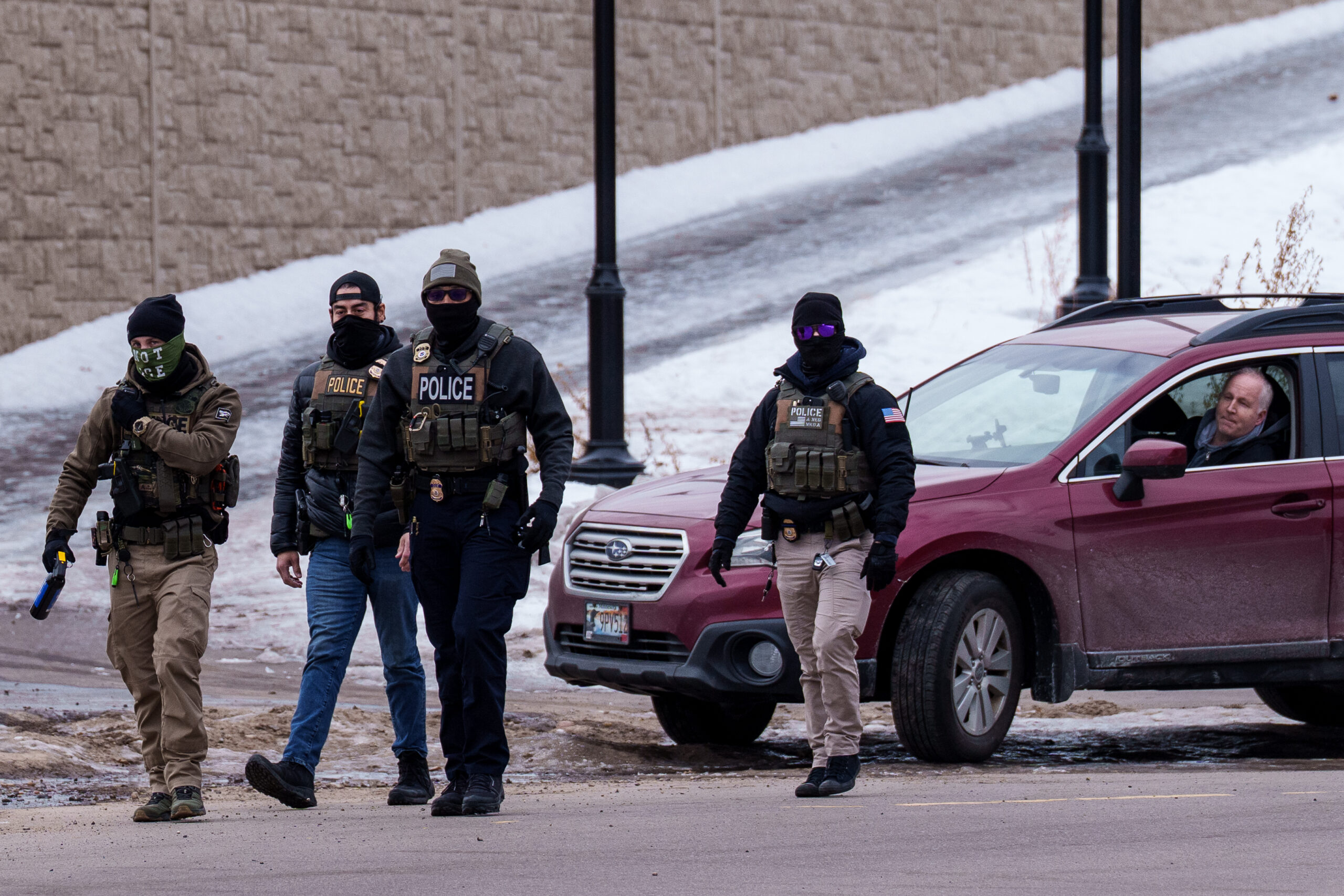
    A person looks out of their vehicle as Immigration and Customs Enforcement (ICE) agents walk away, Thursday, Jan. 15, 2026, in Richfield, Minn. (AP Photo/Adam Gray)

    What it does: The bill would ban law enforcement officers from obscuring their identities with masks. It also would require officers to wear badges, and would make it an offense to conceal badges or to decline to provide identifying information if requested by people they are arresting. Additionally, the bill would ban officers from using unmarked vehicles.

    Exceptions: The bill includes exceptions for undercover assignments, medical or religious masks, SWAT teams, and smoke-filtering masks worn during fires or similar emergencies.

    How it would be enforced: The district attorney would be able to charge an officer with a summary offense, the lowest level of crime in Pennsylvania. If found guilty, the officer would pay a fine of $300 for each day the law was violated or face up to 90 days in prison.

    Additionally, the bill would give any individual “aggrieved by a violation” the right to sue an agent for wearing a mask, with fines up to $2,000 per offense if a judge sides with the plaintiff.

    Twist: This bill applies to all law enforcement officers, not just ICE agents. That includes city police. It is likely that the Philadelphia Police Department, which sometimes uses unmarked cars, will have something to say about the proposed rules once the bill gets a committee hearing.

    Stopping Philly from coordinating with ICE

    Author: Brooks.

    Key excerpt:No City Agency or Employee shall enter into, renew, or participate in a 287(g) Agreement with the federal government.”

    What it does: The primary objective of this bill is to ensure the city never enters into a 287(g) agreement, in which local law enforcement officers are trained to perform immigration enforcement duties. (The agreement refers to a section of the U.S. Immigration and Nationality Act.) Philadelphia is not currently in a 287(g) agreement, so that provision would not have a significant impact in the near term.

    But the bill includes several other notable provisions, such as prohibiting city employees from assisting immigration enforcement in any way, and requiring them to report requests to assist ICE to their superiors.

    How it would be enforced: The city solicitor, Philadelphia’s top lawyer, would be responsible for suing city agencies or employees who violate the bill’s provisions. Potential consequences include a $2,000 fine and termination.

    Kendra Brooks shown here during a news conference at City Hall on Tuesday to announce a package of bills aimed at pushing back against ICE enforcement in Philadelphia.

    Prohibiting discrimination based on immigration status in city services

    Author: Landau.

    Key excerpt: “No City agency, official, employee, contractor or subcontractor shall …

    • “request information about a person’s citizenship or immigration status …
    • “condition the provision of City benefits, services, or opportunities on a person’s citizenship or immigration status or national origin …
    • “threaten, coerce, or intimidate a person based on their actual or perceived citizenship or immigration status [or] …
    • “initiate an investigation or take law enforcement action based on a person’s actual or perceived citizenship or immigration status.”

    What it does: This bill aims to protect individuals from being treated differently based on their immigration status when dealing with city government services.

    How it would be enforced: The city solicitor or anyone aggrieved by violations of the bill would be able to sue the offending city employee or agency.

    Banning employment discrimination based on immigration status

    Author: Landau.

    Key excerpt: “It shall be an unlawful employment practice to deny or interfere with the employment opportunities of an individual based upon … citizenship or immigration status.”

    What it does: The bill would add “citizenship or immigration status” to Philadelphia’s Fair Practices Ordinance, which prohibits employers from discriminating against workers based on characteristics including race, ethnicity, gender, and sexual orientation.

    How it would be enforced: If the bill is approved, Philadelphians who feel their employers have discriminated against them based on their immigration status will be able to file complaints to the Philadelphia Commission on Human Rights, which adjudicates alleged violations of the Fair Practices Ordinance.

    Rue Landau shown here at the Tuesday news conference.

    Withholding data on citizenship and immigration status

    Author: Landau.

    Key excerpt: “No City agency … shall enter into any contractual agreement or arrangement with a federal agency or federal contractor to provide access to any data, database, or dataset where the purpose of such access includes assisting or supporting immigration enforcement operations.”

    What it does: This bill aims to prevent the federal government from accessing city data that could help immigration agents determine individuals’ citizenship status.

    It also would require the city to produce an annual report tallying federal data requests related to immigration status and any violations of the bill.

    How it would be enforced: The city solicitor or any individual aggrieved by violations of the bill would be able to sue the offending city employee or agency.

    Prohibiting immigration enforcement on city-owned property

    Author: Brooks.

    Key excerpt:It is unlawful to use City-owned or controlled property for the purposes of staging, conducting or assisting federal immigration enforcement activities.”

    What it does: The bill prohibits immigration enforcement operations on city-owned land, such as federal agents making arrests in city parks or ICE staging raids on municipally owned parking lots.

    The bill also allows city agencies to post signs on municipal property stating: “This property is owned and controlled by the City of Philadelphia. It may not be used for immigration enforcement activities.”

    How it would be enforced: The city solicitor may file a lawsuit to ask a judge to order the federal government to cease and desist from using city property.

    Advocates and protesters on Tuesday in Center City call for ICE to get out of Philadelphia.

    Requiring warrants for nonpublic areas of ‘Safe Community Spaces’

    Author: Brooks.

    Key excerpt:No employee or agent engaged in official duties at a Safe Community Place shall have the authority to consent to permitting a law enforcement officer to enter a nonpublic area of the facility … to identify, arrest or otherwise impose a penalty upon a person for purposes of federal immigration enforcement.”

    What it does: The bill would effectively require immigration agents to secure judicial warrants to access nonpublic areas in “Safe Community Spaces,” including city-owned or -controlled hospitals, libraries, courthouses, recreation centers, and other city facilities. Currently, agents can access those areas if they get permission.

    The proposal also would also require judicial warrants for instances in which law enforcement seeks access to nonpublic areasto identify or impose civil or criminal liability upon a person” exercising protected rights such as the freedom of speech, assembly, and petitioning.

    Lastly, the bill would require city agencies to “identify property that has been, and is likely to be used by, immigration enforcementand mark it with signage stating: “In nonpublic areas of this property, a judicial warrant is required for law enforcement activities and no voluntary consent may be solicited from any employee.”

    How it would be enforced: Only the city solicitor can sue to enforce the bill’s provisions. Such a suit would not be filed against a federal agent. Instead, it would be filed against a staffer at a “Safe Community Space” who gave federal agents permission to access nonpublic areas at the facility.

    Staff writers Anna Orso and Jeff Gammage contributed to this article.
  • ICE tactics in Minneapolis set off political firestorm from Philadelphia City Hall to Washington

    ICE tactics in Minneapolis set off political firestorm from Philadelphia City Hall to Washington

    In Philadelphia, lawmakers on Tuesday unveiled legislation that would institute some of the nation’s toughest limits on federal immigration-enforcement operations.

    In Harrisburg, a top Democrat floated making Pennsylvania a so-called sanctuary state to protect undocumented immigrants.

    And in Washington, senators faced mounting pressure to hold up funding for the Department of Homeland Security, an effort that could result in a government shutdown by the end of the week.

    Across the nation, lawmakers are fielding calls to rein in U.S. Immigration and Customs Enforcement after President Donald Trump’s administration surged forces into Minneapolis as part of his aggressive nationwide deportation campaign. Frustration with the agency reached new heights Saturday after agents fatally shot protester Alex Pretti, the second killing of a U.S. citizen there this month.

    Democrats nationwide slammed ICE and called on Trump to pull the forces out of Minnesota. Sen. John Fetterman, the Pennsylvania Democrat who has at times sided with Trump on immigration matters, said DHS Secretary Kristi Noem should be fired.

    Anti-ICE activists demonstrate outside U.S. Sen. John Fetterman’s Philadelphia office on Monday, calling for an end to federal immigration enforcement policies.

    But Fetterman has also said he will not vote to shut down the government. That angered protesters, who rallied on Tuesday outside his Philadelphia office. Some of the senator’s fellow Democrats, including members of Pennsylvania’s U.S. House delegation, urged him to vote against a bill to fund DHS.

    A growing number of Republicans have also signaled their discomfort with the Minneapolis operation, including Trump allies who called on members of the administration to testify before Congress. Sen. Dave McCormick, a Pennsylvania Republican, has called for an independent investigation into Pretti’s killing.

    Trump, for his part, showed some willingness to change course, sending border czar Tom Homan to Minneapolis to meet with Democratic leaders there. The president on Tuesday called Pretti’s death a “very sad situation.”

    Rue Landau shown here during a press conference at City Hall to announce a package of bills aimed at pushing back against ICE enforcement in Philadelphia on Tuesday.

    However, a chorus of Democrats and activists said Tuesday that the agency needs to change its tactics and be held accountable for missteps. And local leaders said they are laying out plans in case a surge of immigration enforcement comes to Philadelphia, home to an estimated 76,000 undocumented immigrants.

    “We have spent hours and hours and hours doing tabletop exercises to prepare for it,” Gov. Josh Shapiro, a Democrat, said during a Monday night interview on The Late Show with Stephen Colbert.

    Shapiro, who is running for reelection and is a rumored presidential contender, added: “I want the good people of Pennsylvania to know — I want the American people to know — that we will do everything in our power to protect them from the federal overreach.”

    Codifying sanctuary policies

    Philadelphia officials said the best way they can prepare is by limiting the city’s cooperation with federal immigration enforcement.

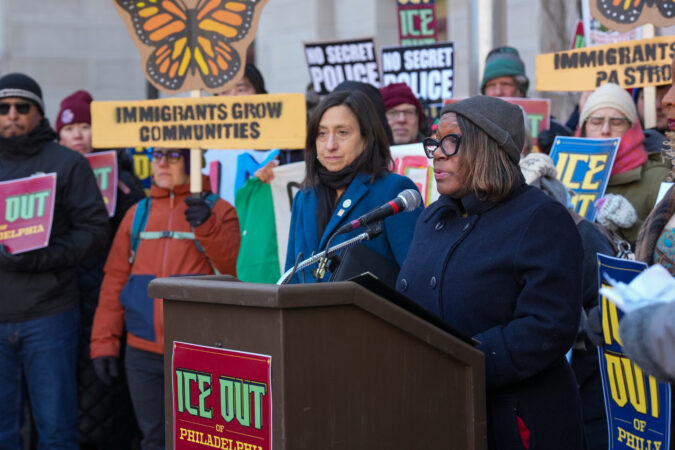
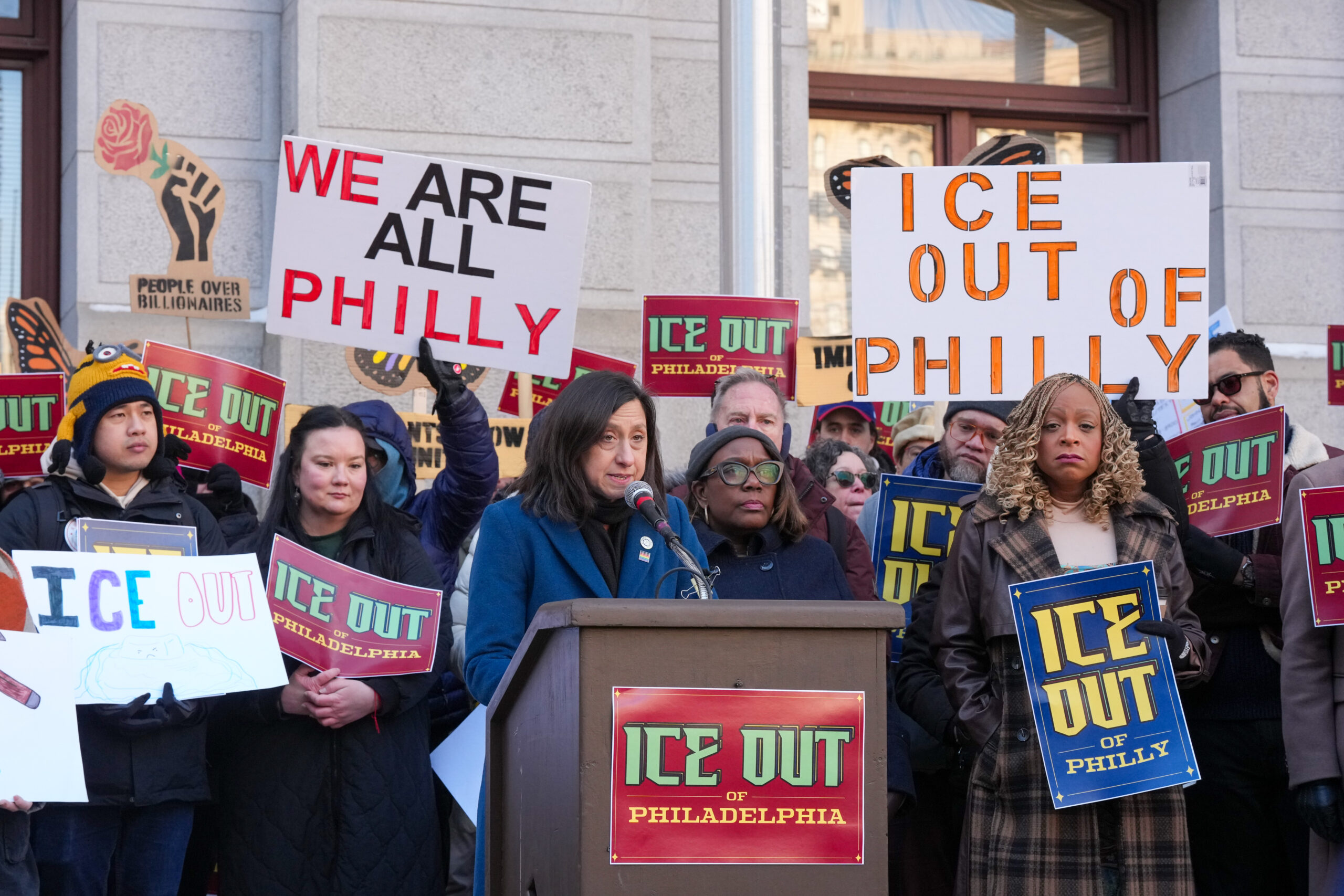
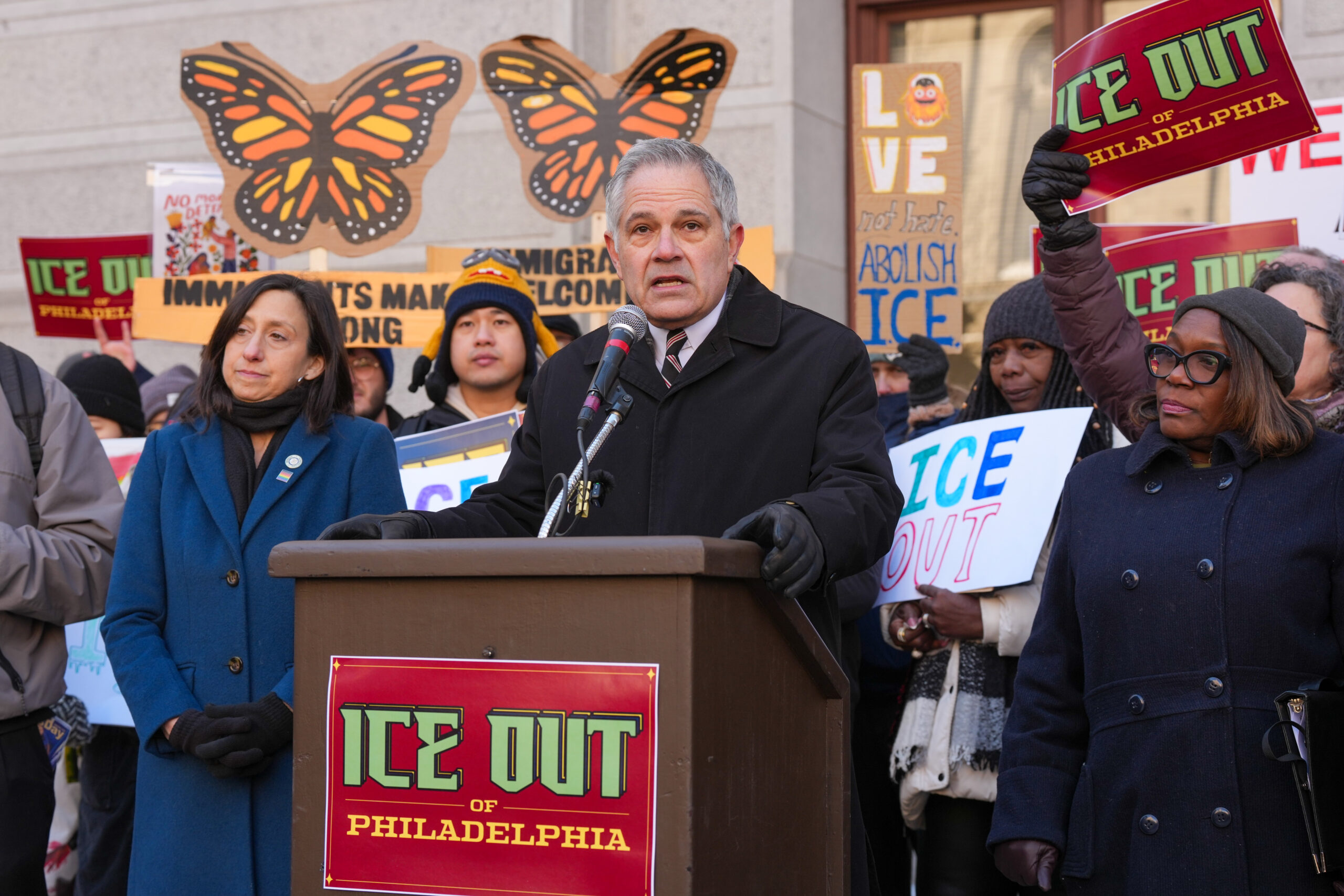
    City Councilmember Kendra Brooks, of the progressive Working Families Party, and Councilmember Rue Landau, a Democrat, were joined by dozens of activists and other elected officials during a news conference Tuesday to unveil a package of legislation aimed at codifying into law the city’s existing “sanctuary city” practices.

    Those policies, which are currently executive orders, bar city officials from holding undocumented immigrants in custody at ICE’s request without a judicial warrant.

    Landau and Brooks’ legislative package, expected to be introduced in Council on Thursday, goes further, preventing ICE agents from wearing masks, using city-owned property for staging raids, or accessing city databases.

    Erika Guadalupe Núñez, executive director of immigrant advocacy organization Juntos, said the legislation “goes beyond just ‘We don’t collaborate.’”

    Juntos gets regular calls about ICE staging operations at public locations in and around Philadelphia, and people have been worried, despite official assurances, whether personal information held by the city will be secure from government prying.

    “We deserve a city that has elected leadership that’s willing to step forward with clear and stronger protections,” Núñez said.

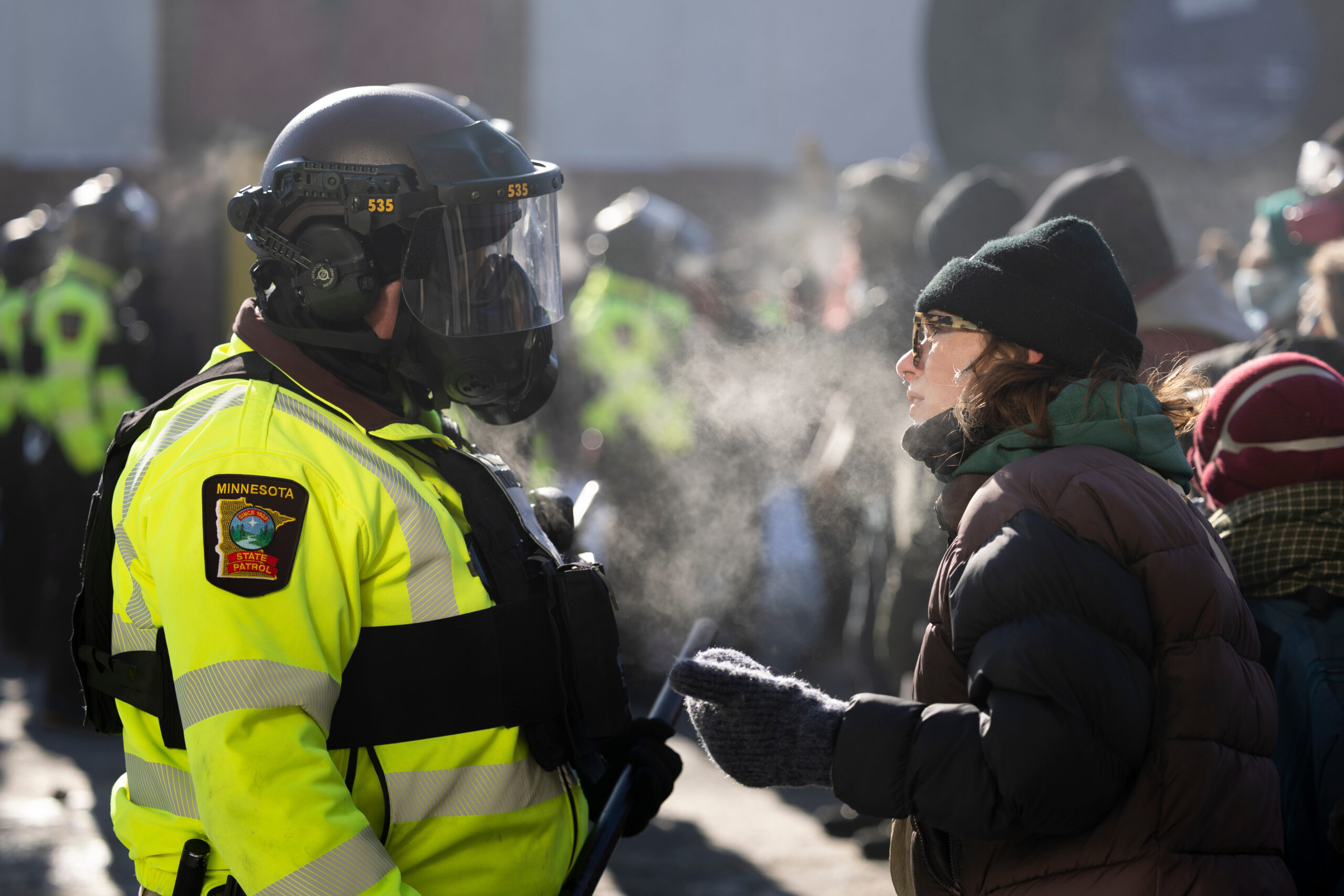
    A protester speaks to a Minnesota State Patrol officer near the site of the fatal shooting of 37-year-old Alex Pretti by federal agents in Minneapolis on Saturday.

    If the legislation is approved, Philadelphia would have some of the most stringent protections for immigrants in the country.

    Oregon has especially strong restrictions against cooperation with federal immigration authorities, including barring local law enforcement from detaining people or collecting information on a person’s immigration status without a judicial warrant.

    In Illinois, local officers “may not participate, support, or assist in any capacity with an immigration agent’s enforcement operations.” They are also barred from granting immigration agents access to electronic databases or to anyone in custody.

    California, New York, Colorado, Vermont — and individual jurisdictions in those states — also provide strong protections for immigrants.

    In New Jersey, Gov. Mikie Sherrill, a Democrat who was sworn in last week, has kept the state’s sanctuary directive in place as lawmakers seek to expand and codify the policy into law. Legislators came close in the final days of former Gov. Phil Murphy’s administration, but he killed a related bill that had won approval in Trenton, saying he worried that enacting a law that included changes to the state’s current policy would invite new lawsuits.

    Meanwhile, some conservatives say bolstering sanctuary policies risks community safety.

    “If an illegal immigrant breaks the law, they should be dealt with and handed over to federal law enforcement, not be released back into our neighborhoods to terrorize more victims and commit more crime,” said James Markley, a spokesperson for the Pennsylvania Republican Party.

    He added: “Sanctuary policies don’t protect communities, they endanger all of us by shielding criminals from accountability for their crimes.”

    Democrats are taking varying approaches

    The widespread outrage over ICE’s tactics in Minneapolis has exposed sharp divisions in elected Democrats’ responses.

    On one end of the party’s ideological spectrum is Fetterman, who has said often that he will not bow to activist demands and strongly opposes shutting down the federal government, even if it means funding DHS.

    On the other end is District Attorney Larry Krasner, Philadelphia’s most prominent progressive, who has on several occasions threatened to file criminal charges against ICE agents who commit crimes in the city.

    “There will be accountability now. There will be accountability in the future. There will be accountability after [Trump] is out of office,” Krasner said Tuesday. “If we have to hunt you down the way they hunted down Nazis for decades, we will find your identities.”

    District Attorney Larry Krasner speaks during a news conference at City Hall on Tuesday to announce a package of bills aimed at pushing back against ICE enforcement in Philadelphia.

    Somewhere in the middle is State Sen. Sharif Street, a Philadelphia Democrat and former head of the state party who is running for Congress.

    Street does not have Krasner’s bombast, but this week he announced plans to introduce legislation to prevent state dollars from funding federal immigration enforcement. The bill has less of a chance of becoming law in Pennsylvania’s divided state legislature than similar measures would in Philadelphia, where City Council is controlled by a supermajority of Democrats.

    “Who knows the amount of money that the state could incur because of Trump’s reckless immigration policies?” Street said in an interview Tuesday. “I don’t think state taxpayers should be paying for Donald Trump’s racist, reckless policies.”

    The city’s most prominent Democrat — Mayor Cherelle L. Parker — has perhaps said the least.

    The centrist Democrat has largely avoided outwardly criticizing Trump or his administration, saying often that she is focused on carrying out her own agenda.

    The mayor’s critics have said her approach is not responsive to the city’s overwhelmingly Democratic residents.

    “To the people of Philadelphia, I want to say: I hear you. You want ICE out of our city, and you want your local government to take action,” Brooks, the Council member, said Tuesday. “Some people believe that silence is the best policy when dealing with a bully, but that’s never been an option for me.”

    Kendra Brooks shown here during a news conference at City Hall on Tuesday to announce a package of bills aimed at pushing back against ICE enforcement in Philadelphia.

    Others say Parker’s conflict-averse strategy is appropriate.

    “All of us have different roles to play,” Street said. “The mayor has to manage the city. She’s got to command law enforcement forces. … As a state legislator, we make policy.”

    Rafael Mangual, a fellow who studies urban crime and justice at the right-leaning Manhattan Institute in New York City, said legislative efforts to erect barriers between federal and local law enforcement could backfire.

    “If you don’t engage at all, and you do something that seems to actively frustrate the federal government,” Mangual said, “that would seem to be an invitation for the federal government to prioritize a city like Philadelphia.”

    Staff writers Alfred Lubrano, Aliya Schneider, and Gillian McGoldrick contributed to this article.
  • Philly lawmakers want to restrict cooperation with ICE and ban agents from wearing masks

    Philly lawmakers want to restrict cooperation with ICE and ban agents from wearing masks

    Philadelphia lawmakers are set to consider legislation that would make it harder for ICE to operate in the city, including limiting information sharing, restricting activity on city-owned property, and prohibiting agents from concealing their identities.

    Among the package of bills set to be introduced Thursday is an ordinance that effectively makes permanent Philadelphia’s status as a so-called “sanctuary city” by barring city officials from holding undocumented immigrants at ICE’s request without a court order. Another bans discrimination based on immigration status.

    Two City Council members are expected to introduce the legislation as U.S. Immigration and Customs Enforcement is facing mounting national scrutiny over its tactics in Minneapolis, where federal agents fatally shot two U.S. citizens this month.

    Councilmembers Rue Landau, a Democrat, and Kendra Brooks, of the progressive Working Families Party, said in an interview that the violence in Minneapolis hardened their resolve to introduce legislation to protect a population that includes an estimated 76,000 undocumented immigrants in Philadelphia.

    “It’s been very disheartening and frightening to watch ICE act with such lawlessness,” Landau said. “When they rise to the level of killing innocent civilians, unprecedented murders … this is absolutely the time to stand up and act.”

    The package of a half-dozen bills is the most significant legislative effort that Council has undertaken to strengthen protections for immigrants since President Donald Trump took office last year on a promise to carry out a mass deportation campaign nationwide.

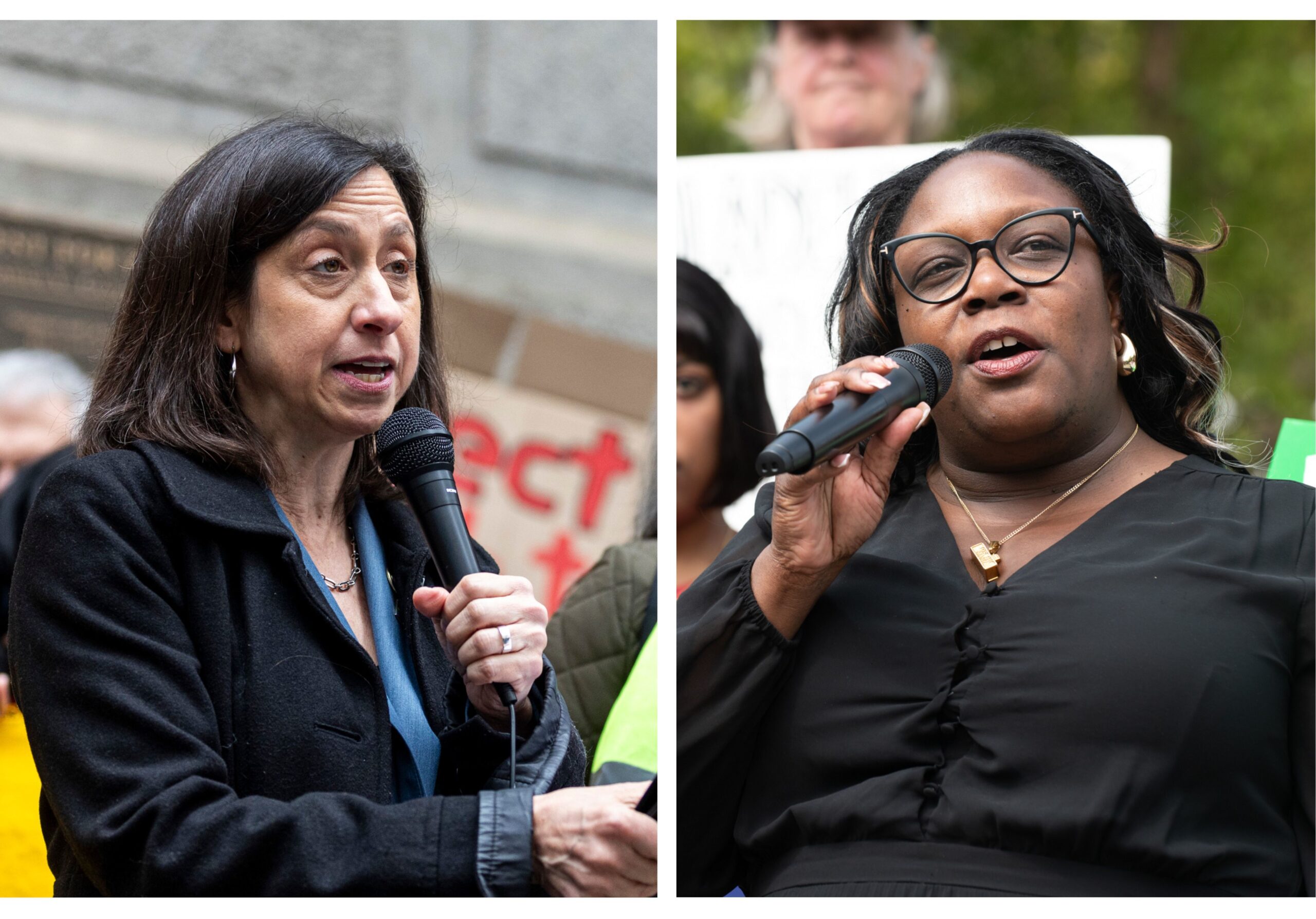
    Left: City Councilmember Rue Landau. Right: City Councilmember Kendra Brooks. Landau and Brooks are introducing legislation this week to make it harder for ICE to operate in Philadelphia, including by limiting city cooperation with the agency.

    ICE spokespeople did not immediately reply to a request for comment.

    Jasmine Rivera, executive director of the Pennsylvania Immigration Coalition, said it’s not the job nor the jurisdiction of the city to enforce federal law.

    The goal of the legislation, Rivera said, is ensuring that “not a single dime and single second of our local resources is being spent collaborating with agencies that are executing people.”

    Activists have for months urged Mayor Cherelle L. Parker to formally affirm her commitment to the city’s sanctuary status. Top city officials say an executive order signed by the former mayor to limit the city’s cooperation with ICE remains in place.

    But Parker, a centrist Democrat, has taken a quieter approach than her colleagues in Council, largely avoiding criticizing the Trump administration outwardly and saying often that she is focused on her own agenda.

    Now, the mayor could be forced to take a side. If City Council passes Landau and Brooks’ legislation this spring, Parker could either sign the bills into law, veto them, or take no action and allow them to lapse into law without her signature. She has never vetoed a bill.

    Joe Grace, a spokesperson for Parker, declined to comment on the legislation.

    Mayor Cherelle L. Parker speaks at a news conference earlier this month. It is unclear how she will act on upcoming legislation related to ICE operations in Philadelphia.

    It’s unclear what fate the ICE legislation could meet in Council. The 17-member body has just one Republican, but Parker holds influence with many of the Democrats in the chamber.

    City Council President Kenyatta Johnson, a Democrat who controls the flow of legislation, has not taken a position on the package proposed by Landau and Brooks.

    But he said in a statement that “Philadelphia has long positioned itself as a welcoming city that values the contributions of immigrants and strives to protect their rights and safety.”

    “I have deep concerns about federal ICE actions directed by President Donald Trump’s administration that sow fear and anxiety in immigrant communities,” Johnson said, “underscoring the belief that enforcement practices should be lawful, humane, and not undermine trust in public safety.”

    Making sanctuary status the law

    Border Patrol and ICE are both federal immigration agencies, which are legally allowed to operate in public places and subject to federal rules and regulations. Some cities and states — not including Pennsylvania and New Jersey — actively cooperate with ICE through written agreements.

    Since 2016, Philadelphia has operated under an executive order signed by former Mayor Jim Kenney, which prohibits city jails from honoring ICE “detainer requests,” in which federal agents ask the city to hold undocumented immigrants in jail for longer than they would have otherwise been in custody to facilitate their arrest by federal authorities.

    Undocumented immigrants are not shielded from federal immigration enforcement, nor from being arrested and charged by local police for local offenses.

    Some refer to the noncooperation arrangement as “sanctuary.” As the term “sanctuary cities” has become politically toxic, some local officials — including in Philadelphia — have backed away from it, instead declaring their jurisdictions to be “welcoming cities.”

    Parker administration officials have said several times over the last year that Philadelphia remains a “welcoming city.”

    Protesters march up Eighth Street, toward the immigration offices, during the Philly stands with Minneapolis Ice Out For Good protest at Philadelphia’s City Hall on Jan. 23.

    But advocates for immigrants have said they want an ironclad city policy that can’t be rescinded by a mayor.

    Landau and Brooks’ legislation would be that, codifying the executive order into law and adding new prohibitions on information sharing. The package includes legislation to:

    • Strengthen restrictions on city workers, including banning local police from carrying out federal immigration enforcement and prohibiting city workers from assisting in enforcement operations.
    • Prohibiting law enforcement officers from concealing their identities, including by wearing masks or covering up badges with identifying information.
    • Banning ICE from staging raids on city-owned property and designated community spaces such as schools, parks, libraries, and homeless shelters. (It would not apply to the Criminal Justice Center, where ICE has had a presence. The courthouse is overseen by both city and state agencies.)
    • Prohibiting city agencies and contractors from providing ICE access to data sets to assist in immigration enforcement.
    • Restricting city employees from inquiring about individuals’ immigration status unless required by a court order, or state or federal law.

    Peter Pedemonti, co-director of New Sanctuary Movement of Philadelphia, an advocacy organization that partnered with the Council members to craft the package of bills, compared ICE to an octopus that has multiple arms reaching into different facets of American life.

    The proposed legislation, he said, is a means to bind a few of those arms.

    “The whole world can see the violence and brutality,” Pedemonti said. “This is a moment where all of us need to stand up, and Philadelphia can stand up and speak out loud and clear that we don’t want ICE here to pull our families apart, the families that make Philadelphia Philadelphia.”

    An impending showdown that Parker hoped to avoid

    Homeland Security officials claim that sanctuary jurisdictions protect criminal, undocumented immigrants from facing consequences while putting U.S. citizens and law enforcement officers in peril.

    Last year, the Trump administration named Philadelphia as among the jurisdictions impeding federal immigration enforcement. The White House has said the federal government will cut off funding to sanctuary cities by Feb. 1.

    However, the president has made no explicit threat to ramp up ICE activities in Philadelphia.

    Some of Parker’s supporters say the mayor’s conflict-averse strategy has spared Philadelphia as other cities such as Washington, New York, Los Angeles, Chicago, and Minneapolis have seen National Guard troops or waves of ICE agents arrive in force.

    Residents near the scene of a shooting by a federal law enforcement agent in Minneapolis on Saturday.

    Critics, including the backers of the new legislation, have for months pressed Parker to take a stronger stand.

    Brooks said she “would love to have the support of the administration.”

    “This should be something that we should be working collaboratively on,” she said. “Philadelphia residents are demanding us do something as elected officials, and this is our time to lead.”

    But Parker has not been eager to speak about Philadelphia’s immigration policies.

    For example, the city is refusing to release a September letter it sent to the U.S. Department of Justice regarding its immigration-related policies, even after the Pennsylvania Office of Open Records ruled its reasoning for keeping the document secret was invalid. The Inquirer has requested a copy of the letter under the state Right-to-Know Law.

    The new Council legislation and the increasing tension over Trump’s deportation push may force Parker to take a clearer position.

    Notably, the city sued the federal government last week over its removal of exhibits related to slavery from the President’s House at Independence National Historical Park, potentially signaling a new willingness by Parker to push back against the White House.

    But even then, Parker declined to take a jab at Trump.

    “In moments like this,” she said last week, “it requires that I be the leader that I need to be for our city, and I can’t allow my pride, ego, or emotions to dictate what my actions will be.”