Tag: Rue Landau

  • Philly City Council members will soon consider seven ‘ICE Out’ bills. Here’s what the proposals would do.

    Philly City Council members will soon consider seven ‘ICE Out’ bills. Here’s what the proposals would do.

    City Councilmembers Kendra Brooks and Rue Landau on Thursday plan to formally introduce their “ICE Out” legislative package, which aims to place restrictions on federal immigration enforcement operations in Philadelphia.

    The seven bills range from codifying into law Philadelphia’s existing “sanctuary city” policies to a controversial ban on law enforcement officers wearing masks. Almost all of the bills contain exceptions noting that they do not apply if Immigration and Customs Enforcement agents secure judicial warrants for their activities or are acting under superseding federal laws.

    If all of the legislation becomes law, Philadelphia would have some of the nation’s most stringent local restrictions on federal immigration-enforcement operations.

    It’s likely that several of the bills will face legal questions, such as whether the mask ban is constitutional and whether Council has the authority to enact some of the rules the proposals seek to establish.

    After the bills are introduced Thursday, Council President Kenyatta Johnson will refer them to committee. One or more hearings will likely be scheduled in the spring.

    At that point, officials from Mayor Cherelle L. Parker’s administration, stakeholders, and experts will testify. Lawmakers could then amend the bills and vote on them in committee. If they advance, they would head to the Council floor for a final vote.

    In a sign that the bills are likely to gain traction, Majority Leader Katherine Gilmore Richardson on Wednesday praised Brooks’ and Landau’s efforts.

    “My heart breaks for everyone who has been impacted by ICE’s violent and dangerous actions and for everyone who feels afraid and unsafe in their communities,” Gilmore Richardson said, adding that she will work with other Council members “to protect our residents.”

    If approved on final passage, the bills would head to Parker’s desk. The mayor can veto them, sign them into law, or allow them to become law without her signature.

    Parker so far has largely avoided confrontation with President Donald Trump’s administration over his aggressive deportation campaign. The “ICE Out” bills may force her to engage more directly.

    Here’s what you need to know about each of the bills.

    Banning ICE agents from wearing masks

    Author: Brooks.

    Key excerpt:A law enforcement officer is guilty of criminal concealment if the law enforcement officer, while performing official duties and interacting with the public …. wears a mask, facial covering, disguise or any other garment that obscures the identity of the law enforcement officer, or fails to identify themselves to a subject of arrest, holding or detention.”
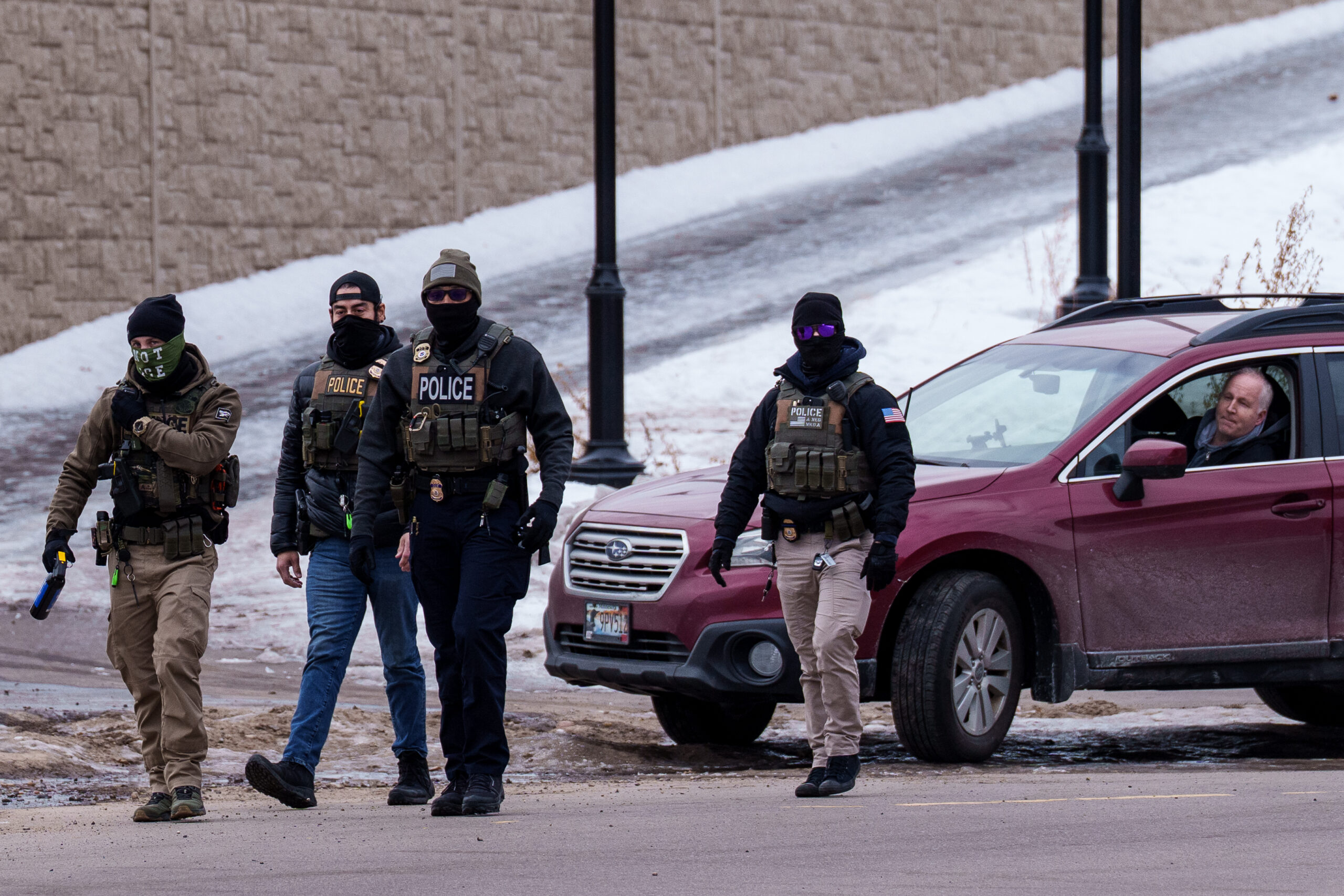
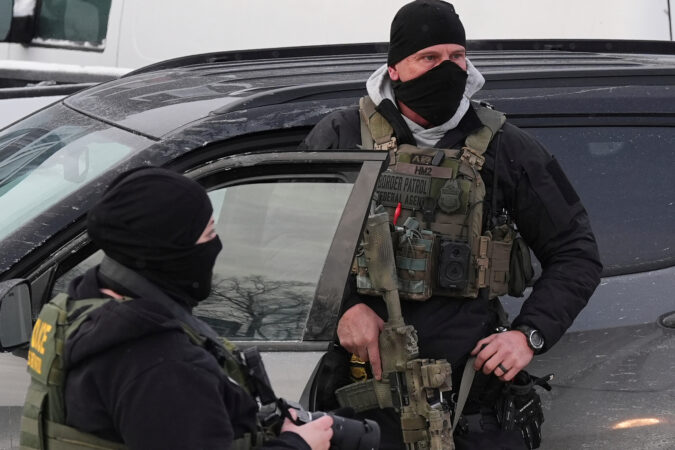
    A person looks out of their vehicle as Immigration and Customs Enforcement (ICE) agents walk away, Thursday, Jan. 15, 2026, in Richfield, Minn. (AP Photo/Adam Gray)

    What it does: The bill would ban law enforcement officers from obscuring their identities with masks. It also would require officers to wear badges, and would make it an offense to conceal badges or to decline to provide identifying information if requested by people they are arresting. Additionally, the bill would ban officers from using unmarked vehicles.

    Exceptions: The bill includes exceptions for undercover assignments, medical or religious masks, SWAT teams, and smoke-filtering masks worn during fires or similar emergencies.

    How it would be enforced: The district attorney would be able to charge an officer with a summary offense, the lowest level of crime in Pennsylvania. If found guilty, the officer would pay a fine of $300 for each day the law was violated or face up to 90 days in prison.

    Additionally, the bill would give any individual “aggrieved by a violation” the right to sue an agent for wearing a mask, with fines up to $2,000 per offense if a judge sides with the plaintiff.

    Twist: This bill applies to all law enforcement officers, not just ICE agents. That includes city police. It is likely that the Philadelphia Police Department, which sometimes uses unmarked cars, will have something to say about the proposed rules once the bill gets a committee hearing.

    Stopping Philly from coordinating with ICE

    Author: Brooks.

    Key excerpt:No City Agency or Employee shall enter into, renew, or participate in a 287(g) Agreement with the federal government.”

    What it does: The primary objective of this bill is to ensure the city never enters into a 287(g) agreement, in which local law enforcement officers are trained to perform immigration enforcement duties. (The agreement refers to a section of the U.S. Immigration and Nationality Act.) Philadelphia is not currently in a 287(g) agreement, so that provision would not have a significant impact in the near term.

    But the bill includes several other notable provisions, such as prohibiting city employees from assisting immigration enforcement in any way, and requiring them to report requests to assist ICE to their superiors.

    How it would be enforced: The city solicitor, Philadelphia’s top lawyer, would be responsible for suing city agencies or employees who violate the bill’s provisions. Potential consequences include a $2,000 fine and termination.
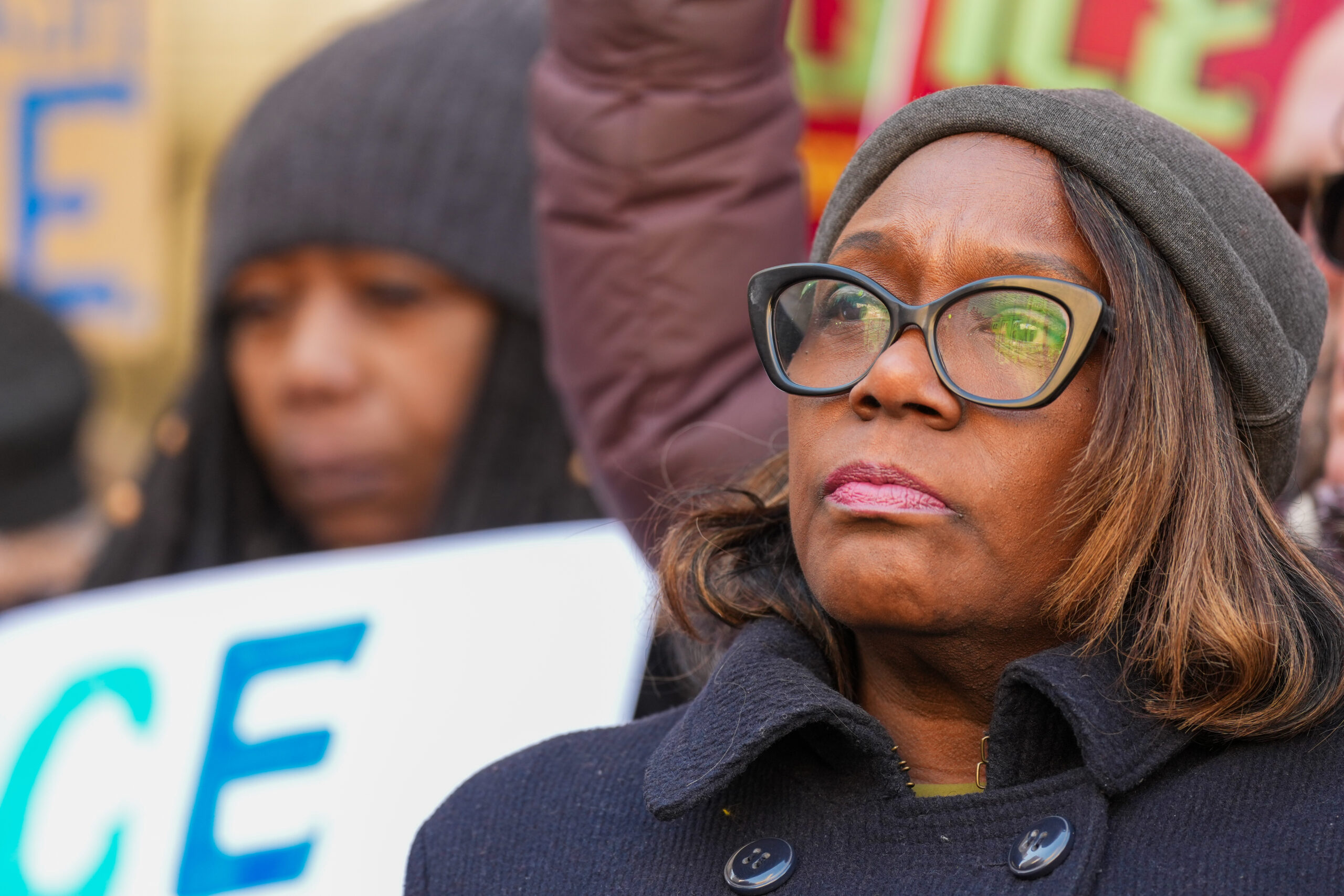
    Kendra Brooks shown here during a news conference at City Hall on Tuesday to announce a package of bills aimed at pushing back against ICE enforcement in Philadelphia.

    Prohibiting discrimination based on immigration status in city services

    Author: Landau.

    Key excerpt: “No City agency, official, employee, contractor or subcontractor shall …

    • “request information about a person’s citizenship or immigration status …
    • “condition the provision of City benefits, services, or opportunities on a person’s citizenship or immigration status or national origin …
    • “threaten, coerce, or intimidate a person based on their actual or perceived citizenship or immigration status [or] …
    • “initiate an investigation or take law enforcement action based on a person’s actual or perceived citizenship or immigration status.”

    What it does: This bill aims to protect individuals from being treated differently based on their immigration status when dealing with city government services.

    How it would be enforced: The city solicitor or anyone aggrieved by violations of the bill would be able to sue the offending city employee or agency.

    Banning employment discrimination based on immigration status

    Author: Landau.

    Key excerpt: “It shall be an unlawful employment practice to deny or interfere with the employment opportunities of an individual based upon … citizenship or immigration status.”

    What it does: The bill would add “citizenship or immigration status” to Philadelphia’s Fair Practices Ordinance, which prohibits employers from discriminating against workers based on characteristics including race, ethnicity, gender, and sexual orientation.

    How it would be enforced: If the bill is approved, Philadelphians who feel their employers have discriminated against them based on their immigration status will be able to file complaints to the Philadelphia Commission on Human Rights, which adjudicates alleged violations of the Fair Practices Ordinance.
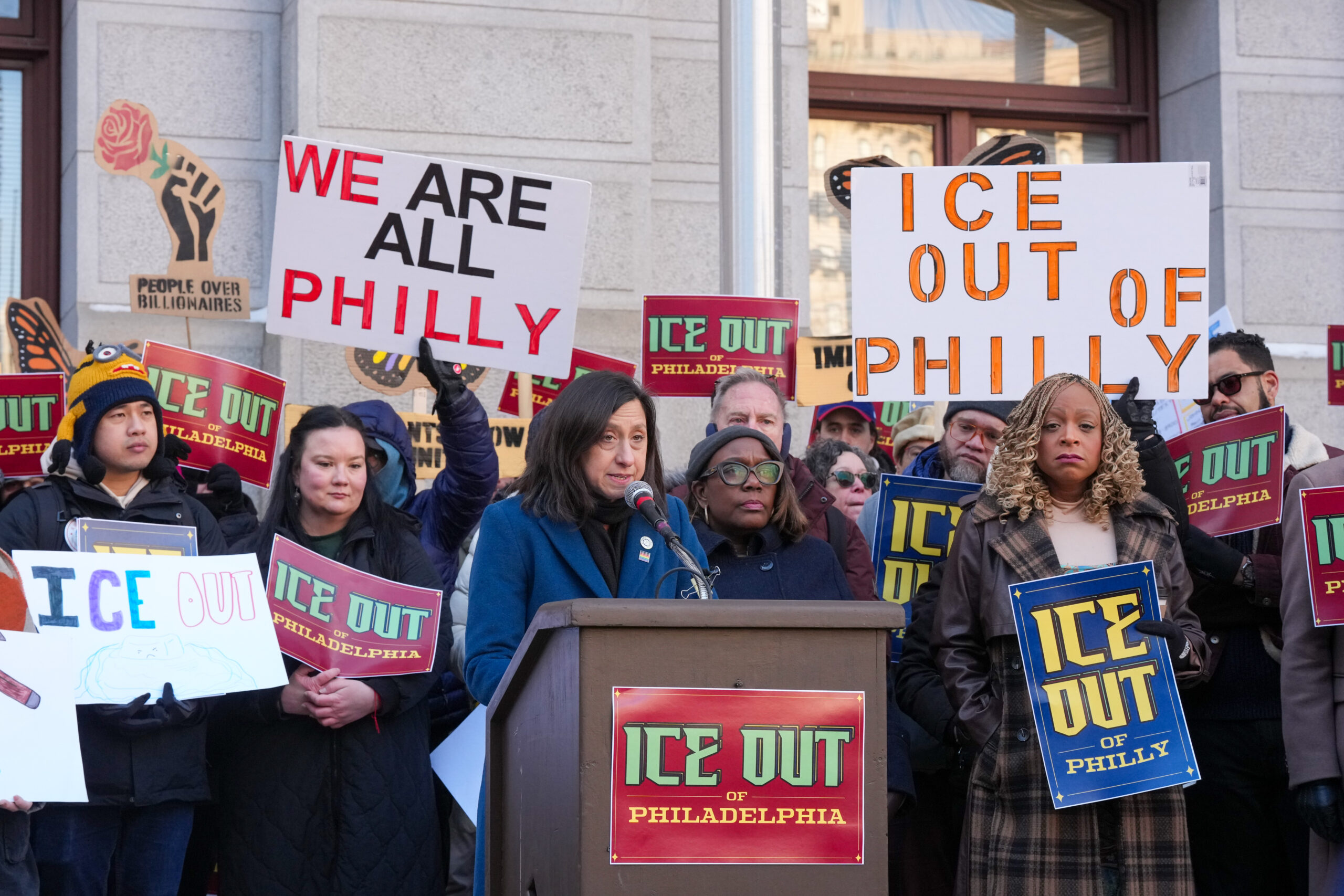
    Rue Landau shown here at the Tuesday news conference.

    Withholding data on citizenship and immigration status

    Author: Landau.

    Key excerpt: “No City agency … shall enter into any contractual agreement or arrangement with a federal agency or federal contractor to provide access to any data, database, or dataset where the purpose of such access includes assisting or supporting immigration enforcement operations.”

    What it does: This bill aims to prevent the federal government from accessing city data that could help immigration agents determine individuals’ citizenship status.

    It also would require the city to produce an annual report tallying federal data requests related to immigration status and any violations of the bill.

    How it would be enforced: The city solicitor or any individual aggrieved by violations of the bill would be able to sue the offending city employee or agency.

    Prohibiting immigration enforcement on city-owned property

    Author: Brooks.

    Key excerpt:It is unlawful to use City-owned or controlled property for the purposes of staging, conducting or assisting federal immigration enforcement activities.”

    What it does: The bill prohibits immigration enforcement operations on city-owned land, such as federal agents making arrests in city parks or ICE staging raids on municipally owned parking lots.

    The bill also allows city agencies to post signs on municipal property stating: “This property is owned and controlled by the City of Philadelphia. It may not be used for immigration enforcement activities.”

    How it would be enforced: The city solicitor may file a lawsuit to ask a judge to order the federal government to cease and desist from using city property.
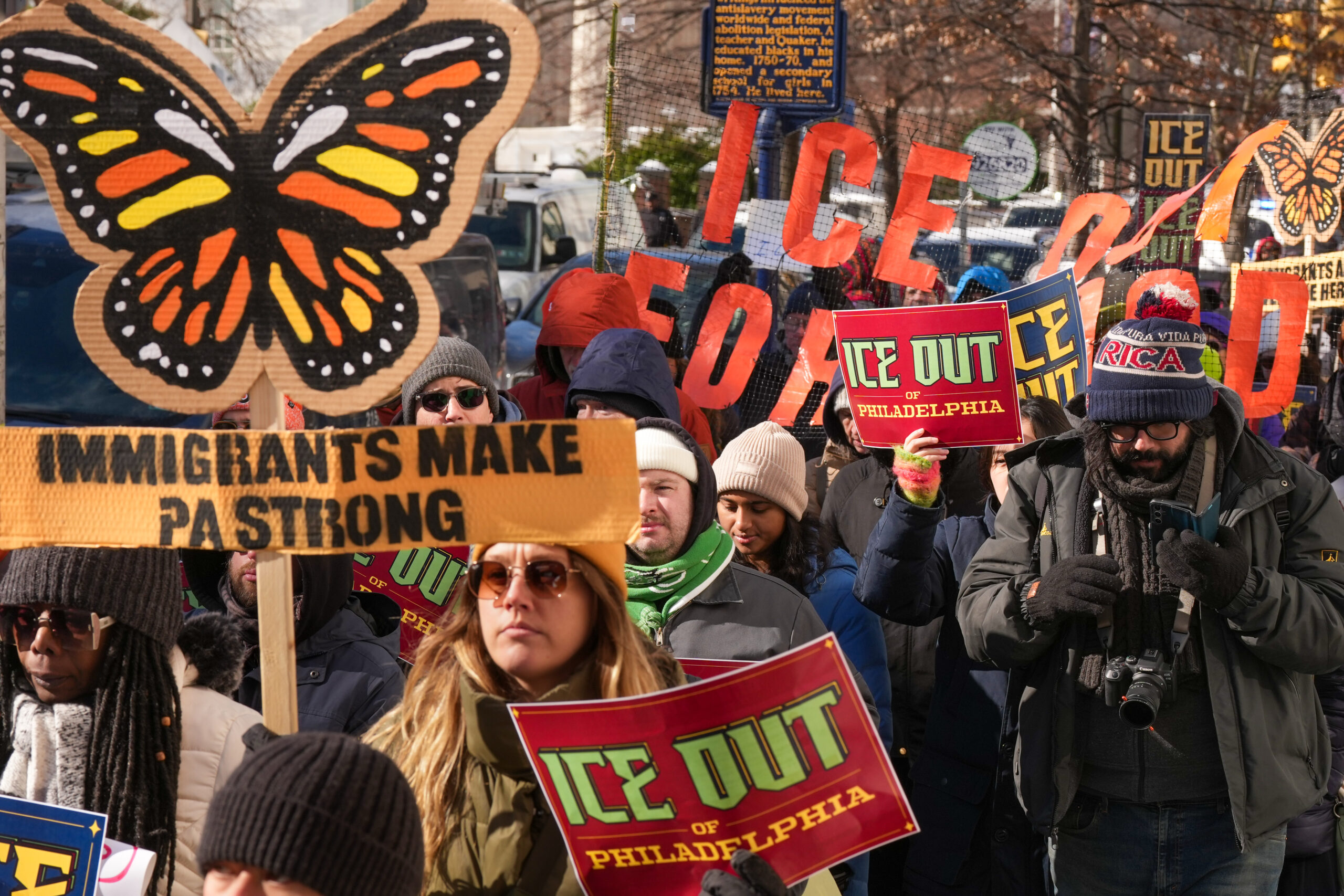
    Advocates and protesters on Tuesday in Center City call for ICE to get out of Philadelphia.

    Requiring warrants for nonpublic areas of ‘Safe Community Spaces’

    Author: Brooks.

    Key excerpt:No employee or agent engaged in official duties at a Safe Community Place shall have the authority to consent to permitting a law enforcement officer to enter a nonpublic area of the facility … to identify, arrest or otherwise impose a penalty upon a person for purposes of federal immigration enforcement.”

    What it does: The bill would effectively require immigration agents to secure judicial warrants to access nonpublic areas in “Safe Community Spaces,” including city-owned or -controlled hospitals, libraries, courthouses, recreation centers, and other city facilities. Currently, agents can access those areas if they get permission.

    The proposal also would also require judicial warrants for instances in which law enforcement seeks access to nonpublic areasto identify or impose civil or criminal liability upon a person” exercising protected rights such as the freedom of speech, assembly, and petitioning.

    Lastly, the bill would require city agencies to “identify property that has been, and is likely to be used by, immigration enforcementand mark it with signage stating: “In nonpublic areas of this property, a judicial warrant is required for law enforcement activities and no voluntary consent may be solicited from any employee.”

    How it would be enforced: Only the city solicitor can sue to enforce the bill’s provisions. Such a suit would not be filed against a federal agent. Instead, it would be filed against a staffer at a “Safe Community Space” who gave federal agents permission to access nonpublic areas at the facility.

    Staff writers Anna Orso and Jeff Gammage contributed to this article.
  • ICE tactics in Minneapolis set off political firestorm from Philadelphia City Hall to Washington

    ICE tactics in Minneapolis set off political firestorm from Philadelphia City Hall to Washington

    In Philadelphia, lawmakers on Tuesday unveiled legislation that would institute some of the nation’s toughest limits on federal immigration-enforcement operations.

    In Harrisburg, a top Democrat floated making Pennsylvania a so-called sanctuary state to protect undocumented immigrants.

    And in Washington, senators faced mounting pressure to hold up funding for the Department of Homeland Security, an effort that could result in a government shutdown by the end of the week.

    Across the nation, lawmakers are fielding calls to rein in U.S. Immigration and Customs Enforcement after President Donald Trump’s administration surged forces into Minneapolis as part of his aggressive nationwide deportation campaign. Frustration with the agency reached new heights Saturday after agents fatally shot protester Alex Pretti, the second killing of a U.S. citizen there this month.

    Democrats nationwide slammed ICE and called on Trump to pull the forces out of Minnesota. Sen. John Fetterman, the Pennsylvania Democrat who has at times sided with Trump on immigration matters, said DHS Secretary Kristi Noem should be fired.

    Anti-ICE activists demonstrate outside U.S. Sen. John Fetterman’s Philadelphia office on Monday, calling for an end to federal immigration enforcement policies.

    But Fetterman has also said he will not vote to shut down the government. That angered protesters, who rallied on Tuesday outside his Philadelphia office. Some of the senator’s fellow Democrats, including members of Pennsylvania’s U.S. House delegation, urged him to vote against a bill to fund DHS.

    A growing number of Republicans have also signaled their discomfort with the Minneapolis operation, including Trump allies who called on members of the administration to testify before Congress. Sen. Dave McCormick, a Pennsylvania Republican, has called for an independent investigation into Pretti’s killing.

    Trump, for his part, showed some willingness to change course, sending border czar Tom Homan to Minneapolis to meet with Democratic leaders there. The president on Tuesday called Pretti’s death a “very sad situation.”

    Rue Landau shown here during a press conference at City Hall to announce a package of bills aimed at pushing back against ICE enforcement in Philadelphia on Tuesday.

    However, a chorus of Democrats and activists said Tuesday that the agency needs to change its tactics and be held accountable for missteps. And local leaders said they are laying out plans in case a surge of immigration enforcement comes to Philadelphia, home to an estimated 76,000 undocumented immigrants.

    “We have spent hours and hours and hours doing tabletop exercises to prepare for it,” Gov. Josh Shapiro, a Democrat, said during a Monday night interview on The Late Show with Stephen Colbert.

    Shapiro, who is running for reelection and is a rumored presidential contender, added: “I want the good people of Pennsylvania to know — I want the American people to know — that we will do everything in our power to protect them from the federal overreach.”

    Codifying sanctuary policies

    Philadelphia officials said the best way they can prepare is by limiting the city’s cooperation with federal immigration enforcement.

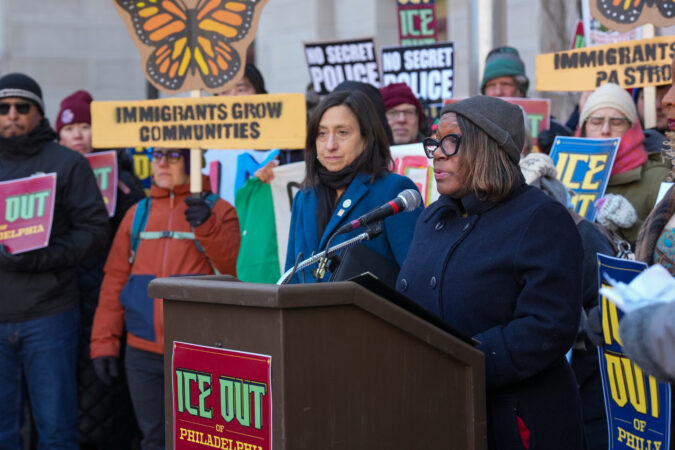
    City Councilmember Kendra Brooks, of the progressive Working Families Party, and Councilmember Rue Landau, a Democrat, were joined by dozens of activists and other elected officials during a news conference Tuesday to unveil a package of legislation aimed at codifying into law the city’s existing “sanctuary city” practices.

    Those policies, which are currently executive orders, bar city officials from holding undocumented immigrants in custody at ICE’s request without a judicial warrant.

    Landau and Brooks’ legislative package, expected to be introduced in Council on Thursday, goes further, preventing ICE agents from wearing masks, using city-owned property for staging raids, or accessing city databases.

    Erika Guadalupe Núñez, executive director of immigrant advocacy organization Juntos, said the legislation “goes beyond just ‘We don’t collaborate.’”

    Juntos gets regular calls about ICE staging operations at public locations in and around Philadelphia, and people have been worried, despite official assurances, whether personal information held by the city will be secure from government prying.

    “We deserve a city that has elected leadership that’s willing to step forward with clear and stronger protections,” Núñez said.

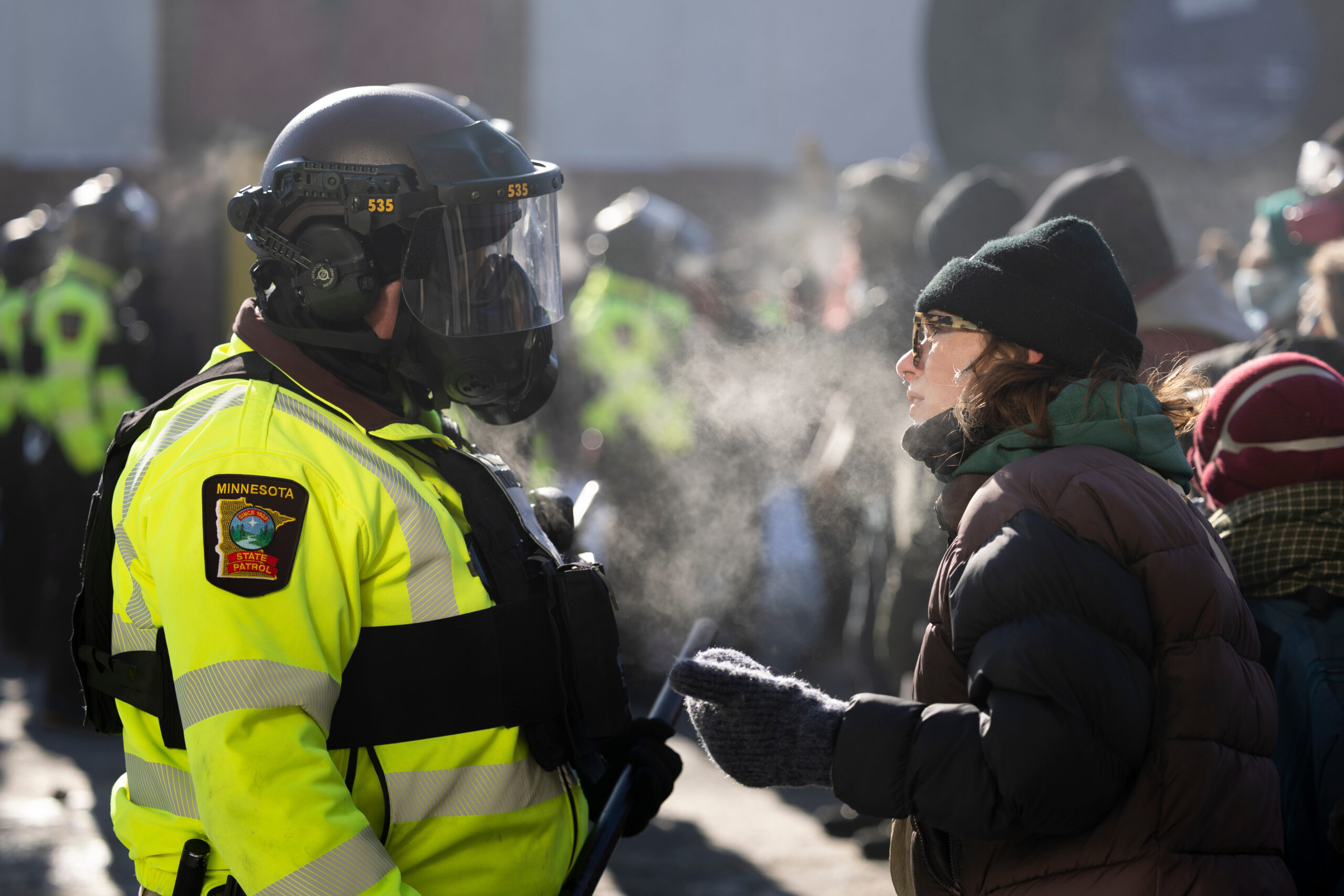
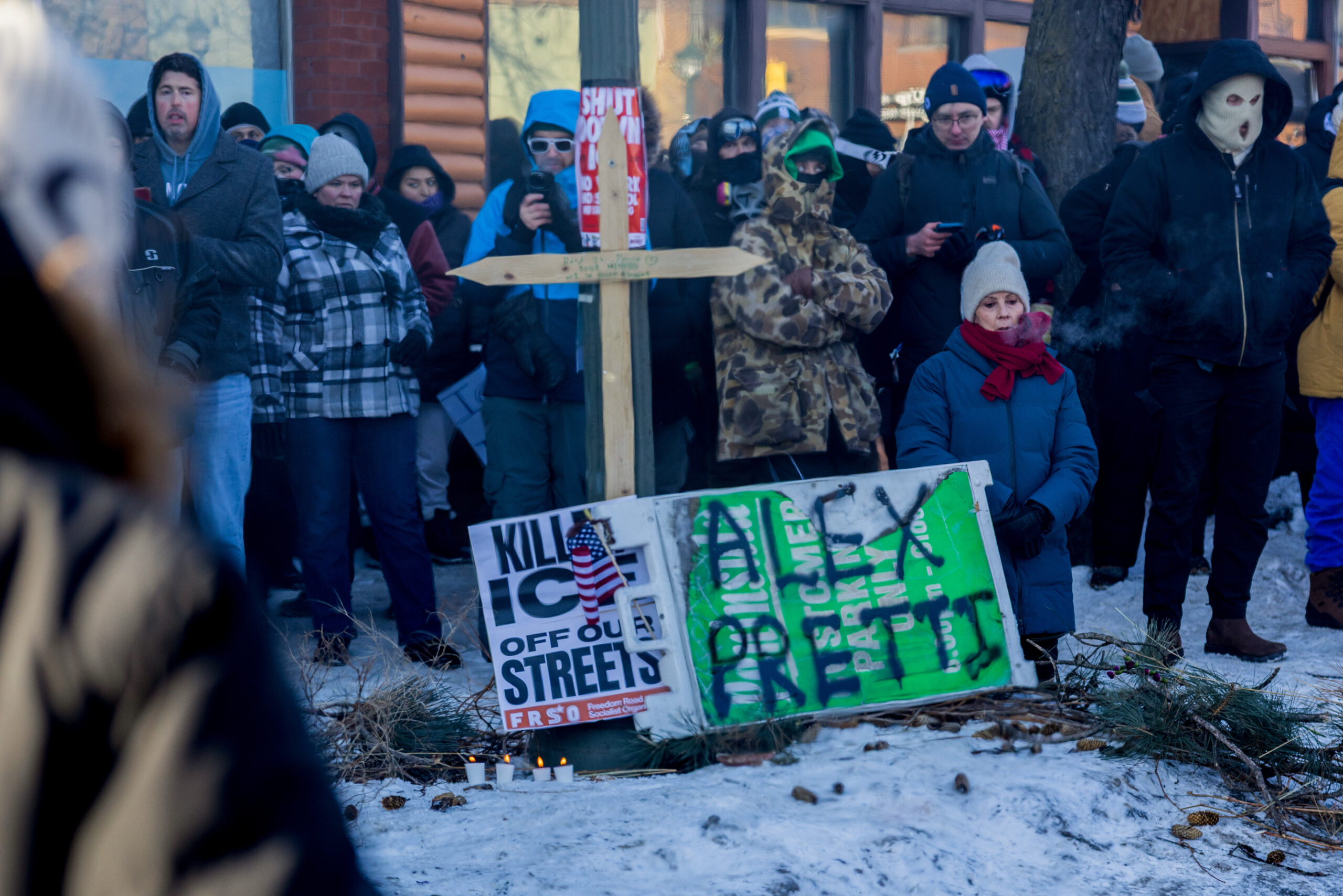
    A protester speaks to a Minnesota State Patrol officer near the site of the fatal shooting of 37-year-old Alex Pretti by federal agents in Minneapolis on Saturday.

    If the legislation is approved, Philadelphia would have some of the most stringent protections for immigrants in the country.

    Oregon has especially strong restrictions against cooperation with federal immigration authorities, including barring local law enforcement from detaining people or collecting information on a person’s immigration status without a judicial warrant.

    In Illinois, local officers “may not participate, support, or assist in any capacity with an immigration agent’s enforcement operations.” They are also barred from granting immigration agents access to electronic databases or to anyone in custody.

    California, New York, Colorado, Vermont — and individual jurisdictions in those states — also provide strong protections for immigrants.

    In New Jersey, Gov. Mikie Sherrill, a Democrat who was sworn in last week, has kept the state’s sanctuary directive in place as lawmakers seek to expand and codify the policy into law. Legislators came close in the final days of former Gov. Phil Murphy’s administration, but he killed a related bill that had won approval in Trenton, saying he worried that enacting a law that included changes to the state’s current policy would invite new lawsuits.

    Meanwhile, some conservatives say bolstering sanctuary policies risks community safety.

    “If an illegal immigrant breaks the law, they should be dealt with and handed over to federal law enforcement, not be released back into our neighborhoods to terrorize more victims and commit more crime,” said James Markley, a spokesperson for the Pennsylvania Republican Party.

    He added: “Sanctuary policies don’t protect communities, they endanger all of us by shielding criminals from accountability for their crimes.”

    Democrats are taking varying approaches

    The widespread outrage over ICE’s tactics in Minneapolis has exposed sharp divisions in elected Democrats’ responses.

    On one end of the party’s ideological spectrum is Fetterman, who has said often that he will not bow to activist demands and strongly opposes shutting down the federal government, even if it means funding DHS.

    On the other end is District Attorney Larry Krasner, Philadelphia’s most prominent progressive, who has on several occasions threatened to file criminal charges against ICE agents who commit crimes in the city.

    “There will be accountability now. There will be accountability in the future. There will be accountability after [Trump] is out of office,” Krasner said Tuesday. “If we have to hunt you down the way they hunted down Nazis for decades, we will find your identities.”

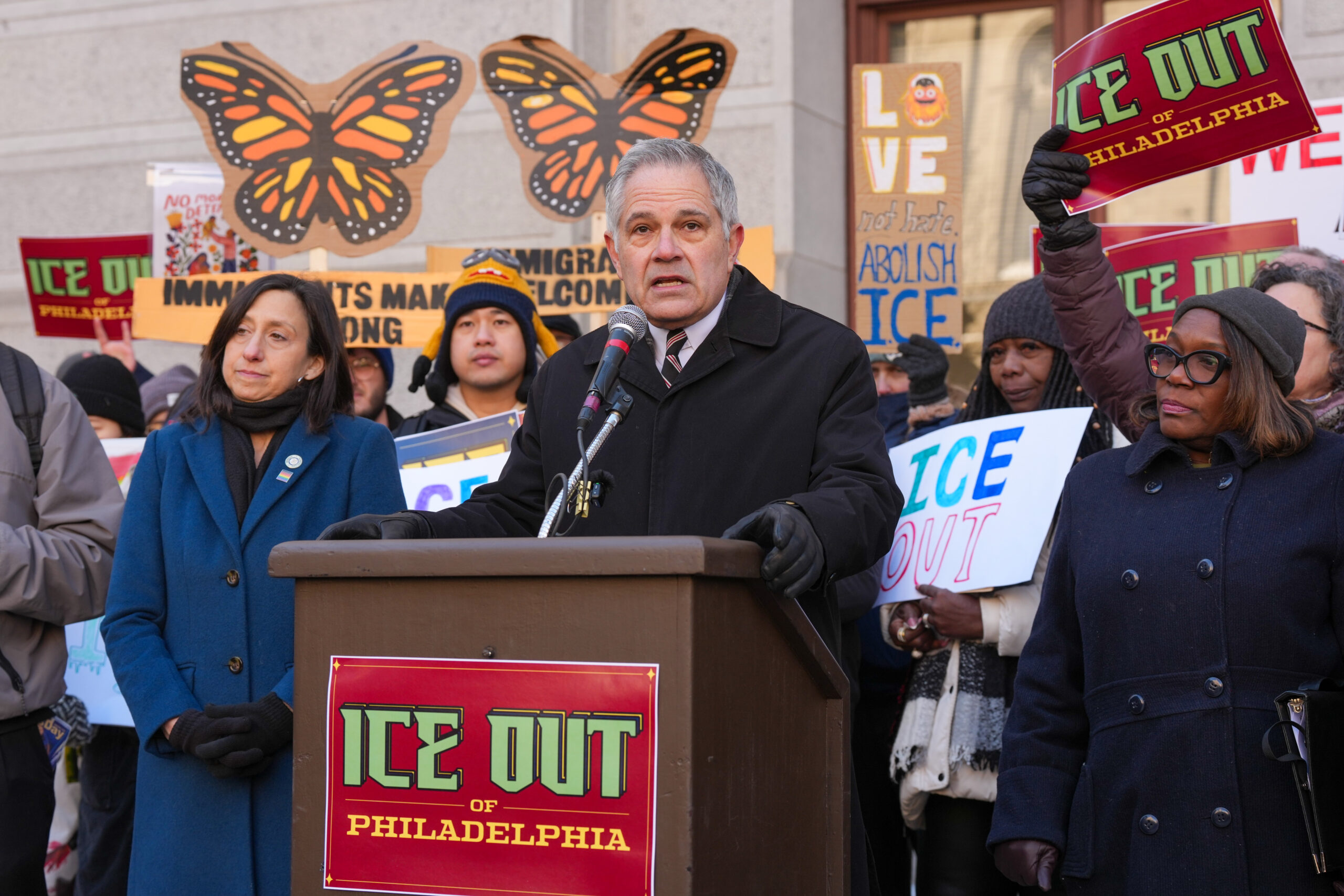
    District Attorney Larry Krasner speaks during a news conference at City Hall on Tuesday to announce a package of bills aimed at pushing back against ICE enforcement in Philadelphia.

    Somewhere in the middle is State Sen. Sharif Street, a Philadelphia Democrat and former head of the state party who is running for Congress.

    Street does not have Krasner’s bombast, but this week he announced plans to introduce legislation to prevent state dollars from funding federal immigration enforcement. The bill has less of a chance of becoming law in Pennsylvania’s divided state legislature than similar measures would in Philadelphia, where City Council is controlled by a supermajority of Democrats.

    “Who knows the amount of money that the state could incur because of Trump’s reckless immigration policies?” Street said in an interview Tuesday. “I don’t think state taxpayers should be paying for Donald Trump’s racist, reckless policies.”

    The city’s most prominent Democrat — Mayor Cherelle L. Parker — has perhaps said the least.

    The centrist Democrat has largely avoided outwardly criticizing Trump or his administration, saying often that she is focused on carrying out her own agenda.

    The mayor’s critics have said her approach is not responsive to the city’s overwhelmingly Democratic residents.

    “To the people of Philadelphia, I want to say: I hear you. You want ICE out of our city, and you want your local government to take action,” Brooks, the Council member, said Tuesday. “Some people believe that silence is the best policy when dealing with a bully, but that’s never been an option for me.”

    Kendra Brooks shown here during a news conference at City Hall on Tuesday to announce a package of bills aimed at pushing back against ICE enforcement in Philadelphia.

    Others say Parker’s conflict-averse strategy is appropriate.

    “All of us have different roles to play,” Street said. “The mayor has to manage the city. She’s got to command law enforcement forces. … As a state legislator, we make policy.”

    Rafael Mangual, a fellow who studies urban crime and justice at the right-leaning Manhattan Institute in New York City, said legislative efforts to erect barriers between federal and local law enforcement could backfire.

    “If you don’t engage at all, and you do something that seems to actively frustrate the federal government,” Mangual said, “that would seem to be an invitation for the federal government to prioritize a city like Philadelphia.”

    Staff writers Alfred Lubrano, Aliya Schneider, and Gillian McGoldrick contributed to this article.

  • Philly lawmakers want to restrict cooperation with ICE and ban agents from wearing masks

    Philly lawmakers want to restrict cooperation with ICE and ban agents from wearing masks

    Philadelphia lawmakers are set to consider legislation that would make it harder for ICE to operate in the city, including limiting information sharing, restricting activity on city-owned property, and prohibiting agents from concealing their identities.

    Among the package of bills set to be introduced Thursday is an ordinance that effectively makes permanent Philadelphia’s status as a so-called “sanctuary city” by barring city officials from holding undocumented immigrants at ICE’s request without a court order. Another bans discrimination based on immigration status.

    Two City Council members are expected to introduce the legislation as U.S. Immigration and Customs Enforcement is facing mounting national scrutiny over its tactics in Minneapolis, where federal agents fatally shot two U.S. citizens this month.

    Councilmembers Rue Landau, a Democrat, and Kendra Brooks, of the progressive Working Families Party, said in an interview that the violence in Minneapolis hardened their resolve to introduce legislation to protect a population that includes an estimated 76,000 undocumented immigrants in Philadelphia.

    “It’s been very disheartening and frightening to watch ICE act with such lawlessness,” Landau said. “When they rise to the level of killing innocent civilians, unprecedented murders … this is absolutely the time to stand up and act.”

    The package of a half-dozen bills is the most significant legislative effort that Council has undertaken to strengthen protections for immigrants since President Donald Trump took office last year on a promise to carry out a mass deportation campaign nationwide.

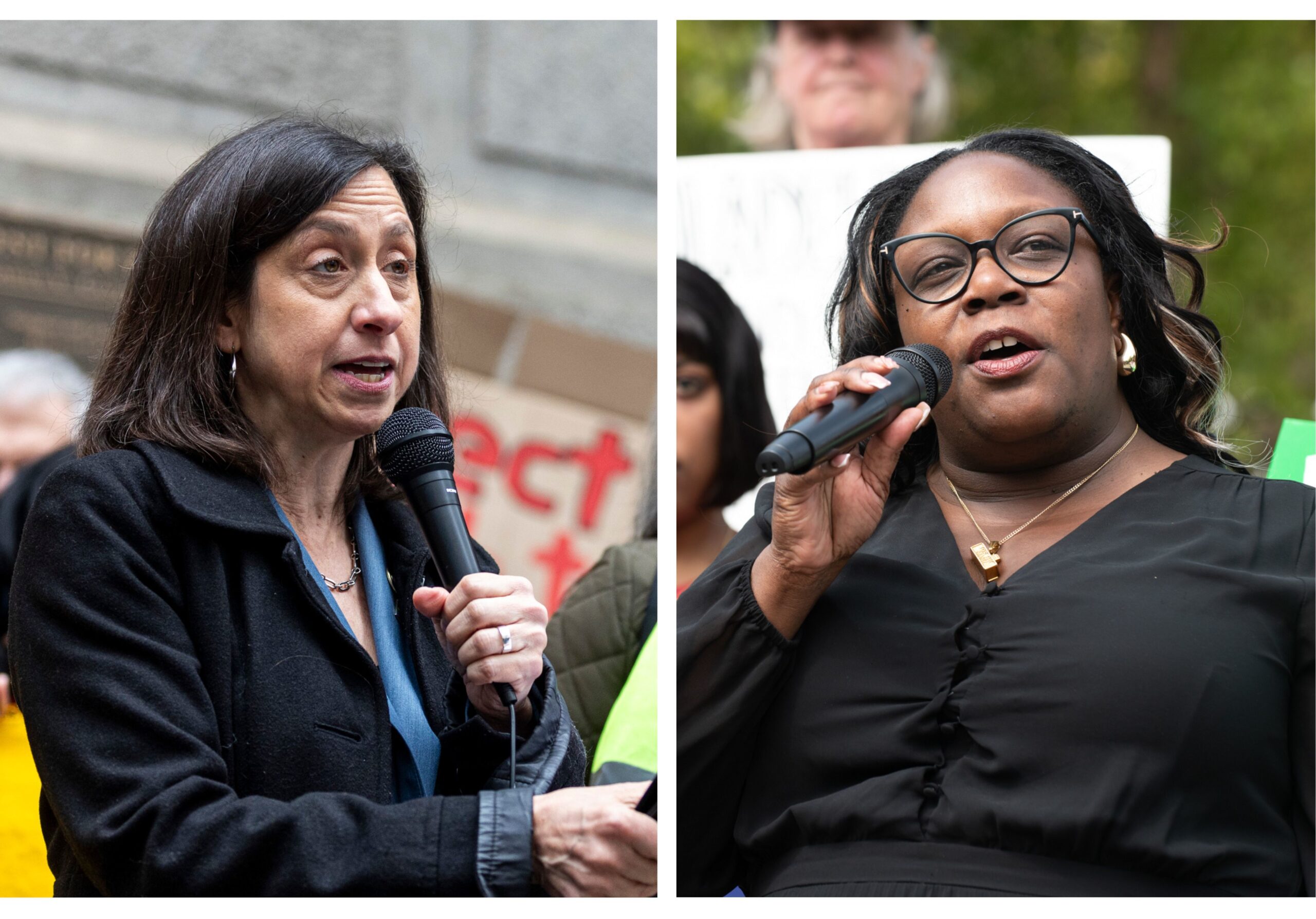
    Left: City Councilmember Rue Landau. Right: City Councilmember Kendra Brooks. Landau and Brooks are introducing legislation this week to make it harder for ICE to operate in Philadelphia, including by limiting city cooperation with the agency.

    ICE spokespeople did not immediately reply to a request for comment.

    Jasmine Rivera, executive director of the Pennsylvania Immigration Coalition, said it’s not the job nor the jurisdiction of the city to enforce federal law.

    The goal of the legislation, Rivera said, is ensuring that “not a single dime and single second of our local resources is being spent collaborating with agencies that are executing people.”

    Activists have for months urged Mayor Cherelle L. Parker to formally affirm her commitment to the city’s sanctuary status. Top city officials say an executive order signed by the former mayor to limit the city’s cooperation with ICE remains in place.

    But Parker, a centrist Democrat, has taken a quieter approach than her colleagues in Council, largely avoiding criticizing the Trump administration outwardly and saying often that she is focused on her own agenda.

    Now, the mayor could be forced to take a side. If City Council passes Landau and Brooks’ legislation this spring, Parker could either sign the bills into law, veto them, or take no action and allow them to lapse into law without her signature. She has never vetoed a bill.

    Joe Grace, a spokesperson for Parker, declined to comment on the legislation.

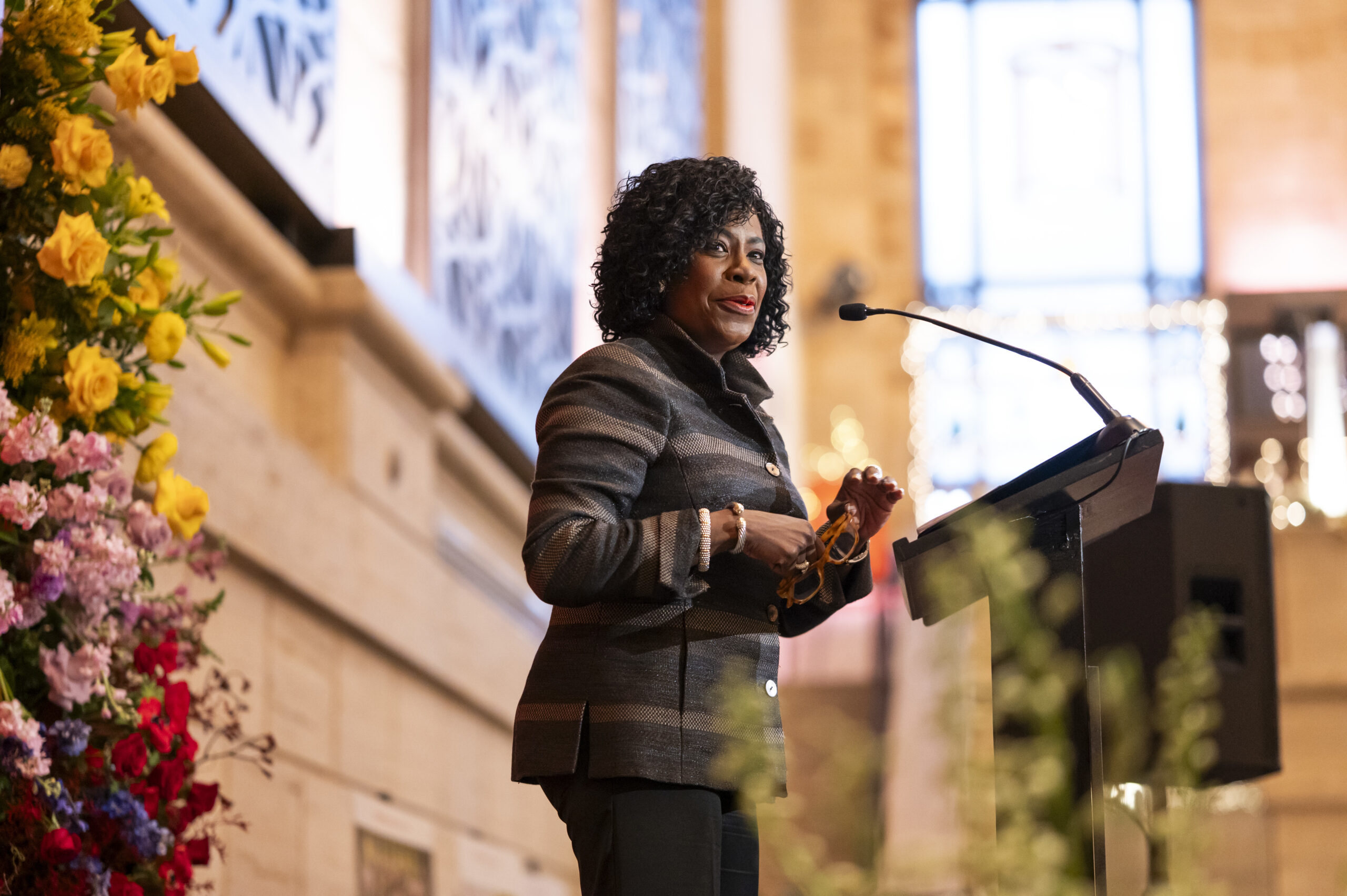
    Mayor Cherelle L. Parker speaks at a news conference earlier this month. It is unclear how she will act on upcoming legislation related to ICE operations in Philadelphia.

    It’s unclear what fate the ICE legislation could meet in Council. The 17-member body has just one Republican, but Parker holds influence with many of the Democrats in the chamber.

    City Council President Kenyatta Johnson, a Democrat who controls the flow of legislation, has not taken a position on the package proposed by Landau and Brooks.

    But he said in a statement that “Philadelphia has long positioned itself as a welcoming city that values the contributions of immigrants and strives to protect their rights and safety.”

    “I have deep concerns about federal ICE actions directed by President Donald Trump’s administration that sow fear and anxiety in immigrant communities,” Johnson said, “underscoring the belief that enforcement practices should be lawful, humane, and not undermine trust in public safety.”

    Making sanctuary status the law

    Border Patrol and ICE are both federal immigration agencies, which are legally allowed to operate in public places and subject to federal rules and regulations. Some cities and states — not including Pennsylvania and New Jersey — actively cooperate with ICE through written agreements.

    Since 2016, Philadelphia has operated under an executive order signed by former Mayor Jim Kenney, which prohibits city jails from honoring ICE “detainer requests,” in which federal agents ask the city to hold undocumented immigrants in jail for longer than they would have otherwise been in custody to facilitate their arrest by federal authorities.

    Undocumented immigrants are not shielded from federal immigration enforcement, nor from being arrested and charged by local police for local offenses.

    Some refer to the noncooperation arrangement as “sanctuary.” As the term “sanctuary cities” has become politically toxic, some local officials — including in Philadelphia — have backed away from it, instead declaring their jurisdictions to be “welcoming cities.”

    Parker administration officials have said several times over the last year that Philadelphia remains a “welcoming city.”

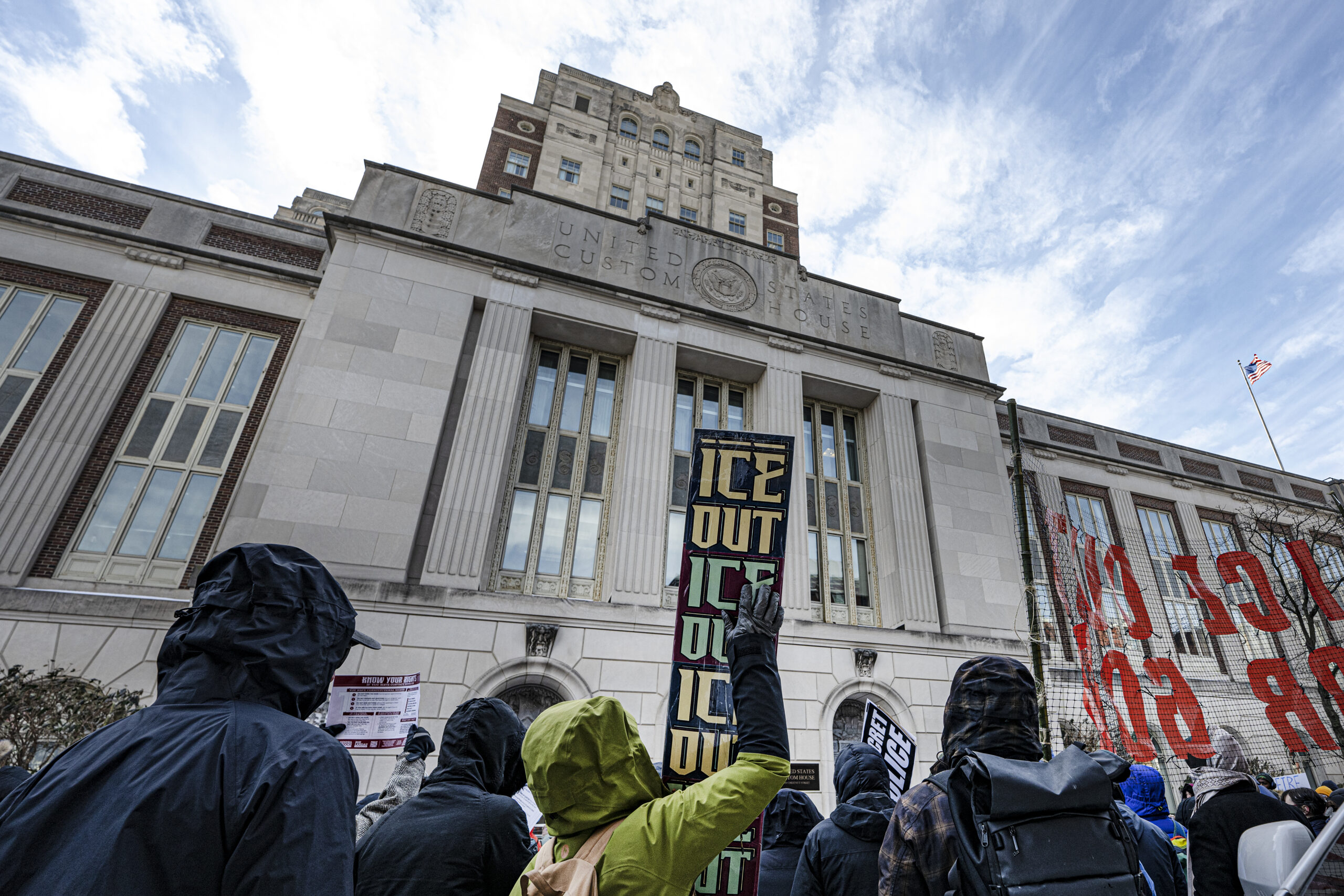
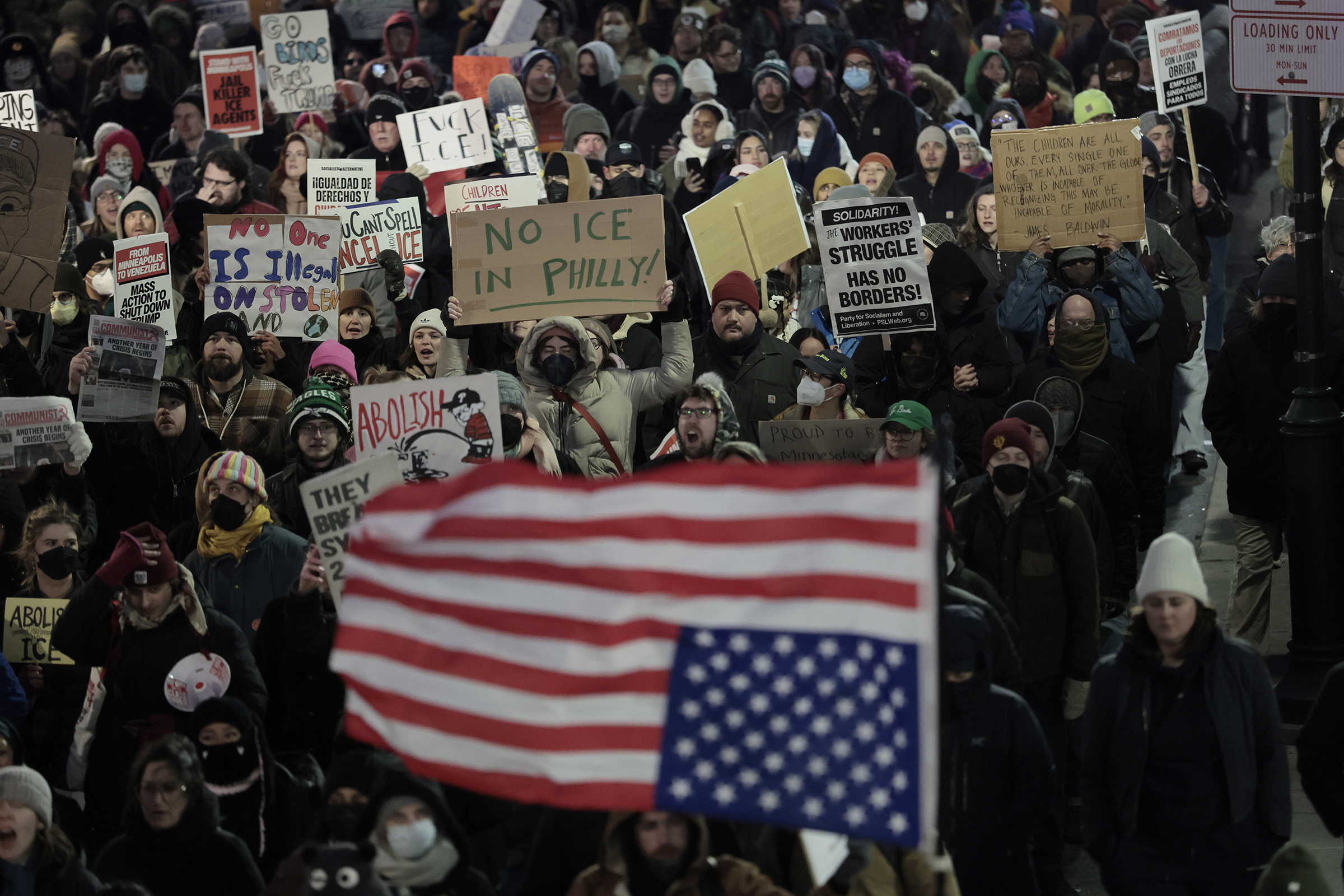
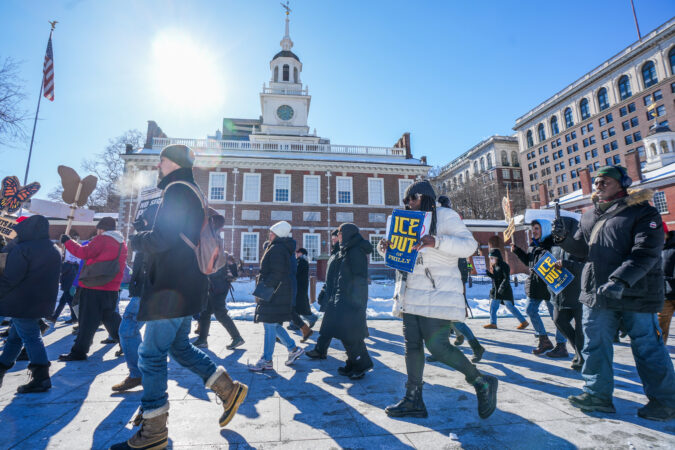
    Protesters march up Eighth Street, toward the immigration offices, during the Philly stands with Minneapolis Ice Out For Good protest at Philadelphia’s City Hall on Jan. 23.

    But advocates for immigrants have said they want an ironclad city policy that can’t be rescinded by a mayor.

    Landau and Brooks’ legislation would be that, codifying the executive order into law and adding new prohibitions on information sharing. The package includes legislation to:

    • Strengthen restrictions on city workers, including banning local police from carrying out federal immigration enforcement and prohibiting city workers from assisting in enforcement operations.
    • Prohibiting law enforcement officers from concealing their identities, including by wearing masks or covering up badges with identifying information.
    • Banning ICE from staging raids on city-owned property and designated community spaces such as schools, parks, libraries, and homeless shelters. (It would not apply to the Criminal Justice Center, where ICE has had a presence. The courthouse is overseen by both city and state agencies.)
    • Prohibiting city agencies and contractors from providing ICE access to data sets to assist in immigration enforcement.
    • Restricting city employees from inquiring about individuals’ immigration status unless required by a court order, or state or federal law.

    Peter Pedemonti, co-director of New Sanctuary Movement of Philadelphia, an advocacy organization that partnered with the Council members to craft the package of bills, compared ICE to an octopus that has multiple arms reaching into different facets of American life.

    The proposed legislation, he said, is a means to bind a few of those arms.

    “The whole world can see the violence and brutality,” Pedemonti said. “This is a moment where all of us need to stand up, and Philadelphia can stand up and speak out loud and clear that we don’t want ICE here to pull our families apart, the families that make Philadelphia Philadelphia.”

    An impending showdown that Parker hoped to avoid

    Homeland Security officials claim that sanctuary jurisdictions protect criminal, undocumented immigrants from facing consequences while putting U.S. citizens and law enforcement officers in peril.

    Last year, the Trump administration named Philadelphia as among the jurisdictions impeding federal immigration enforcement. The White House has said the federal government will cut off funding to sanctuary cities by Feb. 1.

    However, the president has made no explicit threat to ramp up ICE activities in Philadelphia.

    Some of Parker’s supporters say the mayor’s conflict-averse strategy has spared Philadelphia as other cities such as Washington, New York, Los Angeles, Chicago, and Minneapolis have seen National Guard troops or waves of ICE agents arrive in force.

    Residents near the scene of a shooting by a federal law enforcement agent in Minneapolis on Saturday.

    Critics, including the backers of the new legislation, have for months pressed Parker to take a stronger stand.

    Brooks said she “would love to have the support of the administration.”

    “This should be something that we should be working collaboratively on,” she said. “Philadelphia residents are demanding us do something as elected officials, and this is our time to lead.”

    But Parker has not been eager to speak about Philadelphia’s immigration policies.

    For example, the city is refusing to release a September letter it sent to the U.S. Department of Justice regarding its immigration-related policies, even after the Pennsylvania Office of Open Records ruled its reasoning for keeping the document secret was invalid. The Inquirer has requested a copy of the letter under the state Right-to-Know Law.

    The new Council legislation and the increasing tension over Trump’s deportation push may force Parker to take a clearer position.

    Notably, the city sued the federal government last week over its removal of exhibits related to slavery from the President’s House at Independence National Historical Park, potentially signaling a new willingness by Parker to push back against the White House.

    But even then, Parker declined to take a jab at Trump.

    “In moments like this,” she said last week, “it requires that I be the leader that I need to be for our city, and I can’t allow my pride, ego, or emotions to dictate what my actions will be.”