Tag: Salem County

  • Gov. Josh Shapiro says he’ll prevent data center developers from ‘saddling’ Pennsylvanians with higher energy costs

    Gov. Josh Shapiro says he’ll prevent data center developers from ‘saddling’ Pennsylvanians with higher energy costs

    Gov. Josh Shapiro had a message for data center developers on Tuesday: Come to Pennsylvania, but bring your own energy — or pay up.

    During his budget address, Shapiro said his proposal — the Governor’s Responsible Infrastructure Development (GRID) standards — will ensure center operators are “not saddling homeowners with added costs because of their development.”

    Data centers, which house the technology to power cloud storage and other computing, have been proliferating across the country and the region due to the increasing demands of generative artificial intelligence, or AI. State and local officials are trying to keep up with the rapid pace of development, proposing new legislation — and updating existing measures — in an attempt to regulate the facilities.

    Shapiro’s plan would require data centers to supply their own energy or pay for any new generation they need. It also calls on them to hire and train Pennsylvania workers and comply with “the highest standards of environmental protection,” including in water conservation, Shapiro said.

    In exchange, the governor added, data center developers will get “speed and certainty” in the permitting process, as well as applicable tax credits.

    The comments from Shapiro, a Democrat who has consistently encouraged data center development, come amid a flurry of legislative and executive action, as elected officials promise to keep Pennsylvania and New Jersey consumers from bearing the costs of these power-hungry facilities.

    Data centers, the electric grid, and governors’ proposals

    Locally, proposals for large AI data centers have faced opposition from East Vincent Township, Chester County to Vineland, Cumberland County.

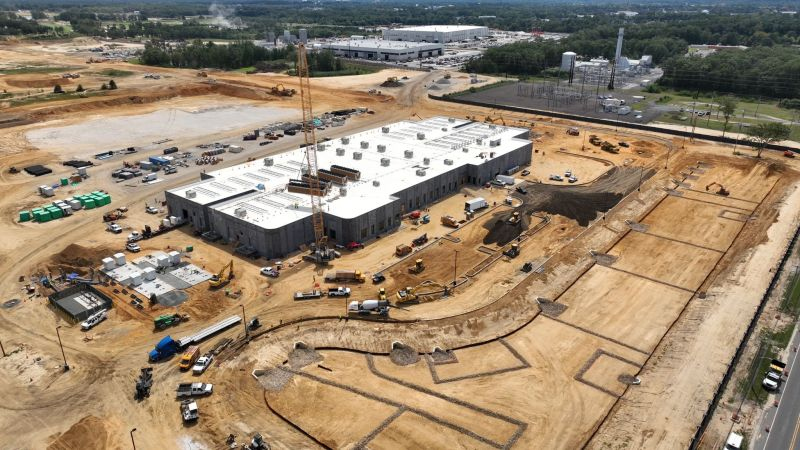
    A half-built data center in Vineland is expected to be completed later this year, with a capacity of 300 megawatts.

    Many experts have attempted to quantify the impact of these centers on Americans’ energy bills. In one analysis, Bloomberg News found that the monthly electric bills of customers who lived near significant data center activity had increased 267% in the past five years.

    At the same time, some governors, including Shapiro, have criticized and sued PJM, the Montgomery County-based electric grid operator, over its annual capacity auction, which influences how much customers pay.

    On Tuesday, Shapiro reiterated calls for PJM to speed up new power-generation projects and extend a price cap.

    Separate from GRID, Shapiro also said electric companies, including Peco, should increase transparency around pricing and “rein in costs” for consumers, including low-income and vulnerable Pennsylvanians.

    “These steps will save consumers money immediately,” Shapiro said. He announced an energy-affordability watchdog to monitor utility-rate requests and take legal action if necessary to prevent companies from “jacking up their rates and costing you more.”

    In New Jersey, new Gov. Mikie Sherrill made energy affordability a central tenet of her campaign. At her inauguration last month, she declared “a state of emergency on utility costs,” following through on a promise she had made in stump speeches and TV ads.

    Through several executive orders, she froze utility rates and expanded programs to spur new power generation in the state. She also ordered electric utilities to report energy requests from data centers.

    “This is just the beginning,” Sherrill said in her inaugural remarks. “We are going to take on the affordability crisis, and we are going to shake up the status quo.”

    In Pennsylvania, ‘Data Center Consumer Protection Bill’ advances

    An Amazon data center is shown last year while under construction in front of the Susquehanna nuclear power plant in Berwick, Pa.

    Meanwhile in Harrisburg and Trenton, some lawmakers have other ideas about how to keep residents from subsidizing data centers.

    As of Tuesday, nearly 30 bills in the Pennsylvania and New Jersey legislatures mentioned data centers, according to online records. Many of those bills aren’t directly related to residents’ electric bills, and instead address the facilities’ energy sources, water usage, environmental impacts, and general regulation.

    Others attempt to tackle rising consumer costs.

    On Monday, the Pennsylvania House Energy Committee advanced a measure referred to as the “Data Center Consumer Protection Bill.” Lawmakers say it would keep residents’ bills down by creating a regulatory framework for data centers and requiring their operators to contribute to utility assistance funds for low-income Pennsylvanians.

    “Today’s vote brings us one step closer to protecting ratepayers,” Robert Matzie, the Beaver County Democrat who introduced the bill, said in a statement. “Data centers can bring jobs and expand the local tax base, but if unchecked, they can drive up utility costs. Electric bills are already too high.”

    The state House Energy Committee also heard testimony Monday on a bill that would allow the state to create a “model ordinance” for local municipalities to regulate data centers, and another that would require centers to report their annual energy and water usage.

    The bills were introduced by State Reps. Kyle Donahue and Kyle Mullins, both Democrats from the Scranton area, which has become a hot spot for data center development.

    “There is a real concern and a sense of overwhelm among the people we represent,” Mullins said at the hearing. “The people of Pennsylvania have serious concerns about data center energy usage and water usage, especially as they see utility bills continue to rise rapidly.”

    Dan Diorio, vice president of state policy for the Data Center Coalition, said he worried the bills would discourage operators from building in Pennsylvania. He said they are already incentivized to reduce energy costs, which are estimated to make up anywhere from 40% to 80% of a data center’s total operating costs.

    “Data center companies strive to maximize energy efficiency to keep their costs low,” Diorio said.

    Rep. Elizabeth Fiedler, the Philadelphia Democrat who chairs the energy committee, closed Monday’s hearing by reminding members of one of its main objectives: to “keep down the energy bills that are skyrocketing for people back home.”

    A South Jersey lawmaker says his bill could help consumers
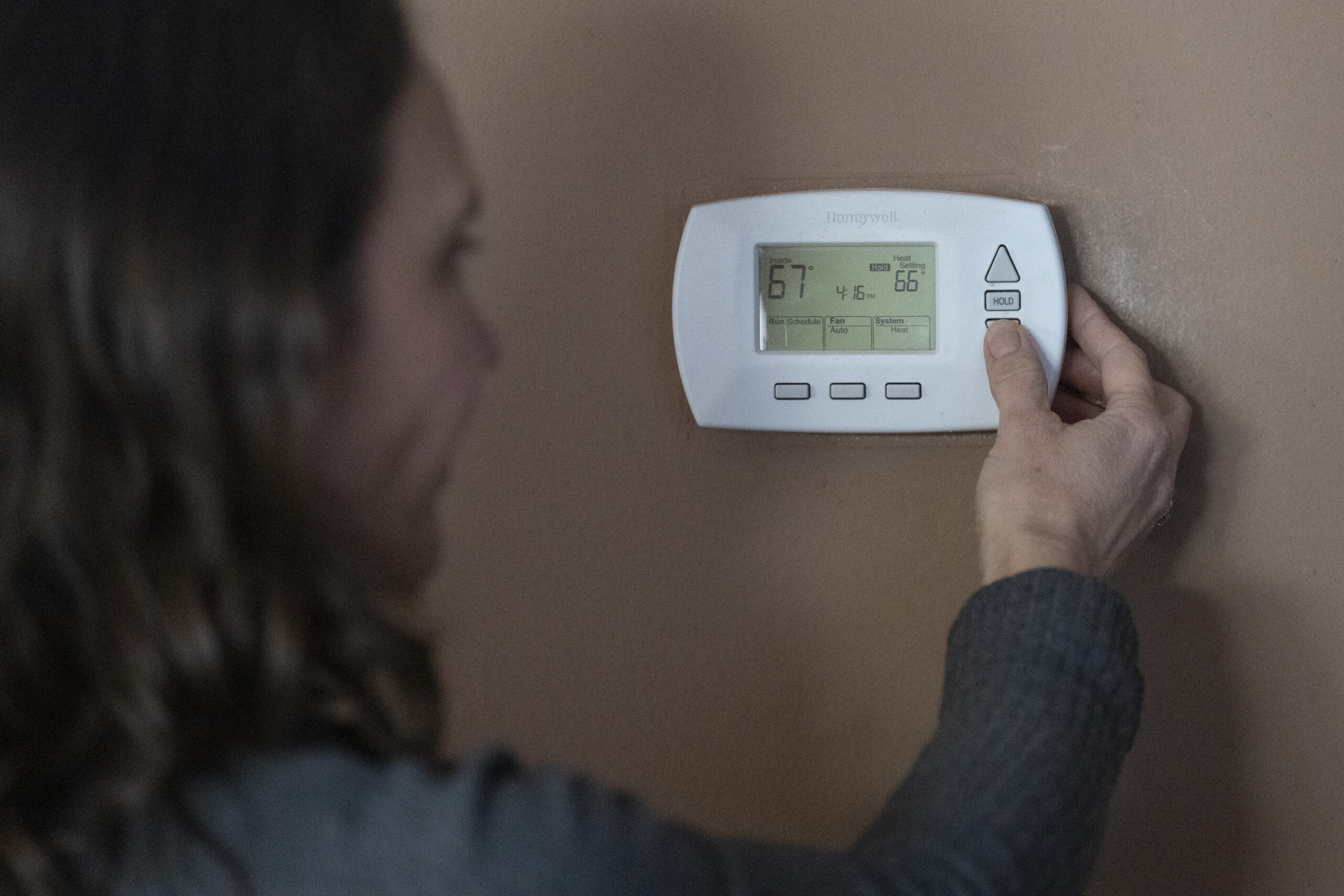
    A Philadelphia-area woman woman turns down her thermostat in attempt to save on electricity in this January 2023 file photo.

    The pain of skyrocketing utility bills has been felt acutely in New Jersey, which unlike Pennsylvania uses more energy than it produces.

    Between 2024 and 2025, New Jersey residents’ electric bills rose more than 13% on average, the fifth steepest increase in the U.S., according to federal data analyzed by the business magazine Kiplinger. Pennsylvanians saw a nearly 10% increase during the same period, according to the data.

    Prices are expected to keep rising in the coming years as more data centers are constructed.

    A bill sponsored by New Jersey State Assembly member David Bailey Jr., a Democrat from Salem County, attempts to prevent future price hikes.

    The legislation would require data center developers to have “skin in the game,” as Bailey described it in a recent interview, and sign a contract to purchase at least 85% of the electric service they request for 10 years. He said it would also provide incentives for data centers to supply their own energy generation.

    “I don’t want to come off as an anti-data center person,” said Bailey, who represents parts of Gloucester, Salem, and Cumberland Counties. “This is a very positive thing. We’re just saying we don’t want these big companies to come in and pass this [cost] on to our mom and pops, our neighbors, and our everyday ratepayers.”

    Bailey said he was disappointed that his bill was pocket-vetoed by former Gov. Phil Murphy last month. Now, it has to restart the legislative process. But Bailey said he expects it to eventually pass with bipartisan support.

    “No matter your party affiliation you understand the affordability issue,” Bailey said. “You understand your electric bill” — and how much it has risen recently.

  • They own their homes but not the land. In N.J., a new law could help change that.

    They own their homes but not the land. In N.J., a new law could help change that.

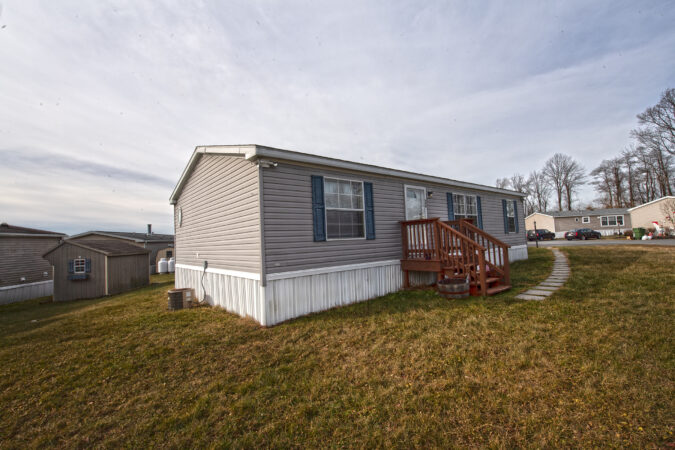
    Manufactured homes — single-family dwellings often built off-site and placed on a lot — are one of the most affordable forms of homeownership. But families who live in these homes are often left vulnerable, because companies that own the land can hike rents for their lots or sell communities for redevelopment.

    This type of unsubsidized affordable housing tends to be more accessible for low-income households than typically built homes.

    A bill that former N.J. Gov. Phil Murphy signed last week makes it easier for manufactured home and mobile home residents to buy their communities when a landowner decides to sell or change the use of the land.

    Landowners who want to sell or redevelop these communities must give notice to residents and local and state leaders. If 51% of residents agree to purchase the community, and they meet the price and conditions of the sale, they have 120 days to buy it. Previously, this action required two-thirds of residents, who had 45 days to sign a contract.

    Lawmakers found that the prior parameters were too high of a bar for residents to meet.

    New Jersey’s new law is based on model legislation from the National Consumer Law Center. There are more than 1,000 resident-owned mobile and manufactured home communities across the country. None are in New Jersey.

    Almost 100,000 New Jersey residents live in 250 manufactured or mobile home communities, many of which are in South Jersey, said State Assembly member David Bailey Jr., a Democrat who sponsored the legislation and represents residents in Gloucester, Salem, and Cumberland Counties.

    Imagine you’ve owned your home for 20 years and “somebody comes and says, ‘We’re selling this land and you either follow these new rules or you gotta move,’” Bailey said. “That would never happen in suburbia. But that’s what could happen to these people. Because they have no choice. They’re stuck.”

    He said that when he took office in 2024, he immediately started getting calls from constituents in Salem County who lived in manufactured home communities. They told him about rising costs to rent the land their homes were on and deteriorating property conditions and infrastructure in their communities.

    Many of the properties had been owned by local families who later sold the land to companies that hiked rents, Bailey said. In 2022, the CEO of the Lincoln Institute of Land Policy said that in the prior eight years, roughly 800,000 home sites in manufactured housing communities were bought by private equity companies and other institutional investors. Rent hikes tended to follow.

    Another recent New Jersey law addresses this reality.

    In July, the state enacted a law that caps annual rent increases at 3.5%. Landlords who want higher increases must ask the state’s Department of Community Affairs for permission.

    After an earlier version of the legislation passed the state Senate this spring, Sen. Paul Moriarty said in a statement that the usual renting setup of mobile and manufactured home communities “often leads to unfair price hikes by landlords, as they know that there is no other option besides moving the home to another site.”

    Moriarty, a Democrat who represents residents in Gloucester, Camden, and Atlantic Counties, noted that moving these homes to different sites can be “incredibly difficult” because of “potential difficulties in financing a move, exclusionary zoning practices, and restrictions on the age and condition of incoming homes.”

    A previous version of this story misstated the number of mobile homes purchased by private equity companies. It is roughly 800,000 manufactured home sites.

  • Some superintendents in South Jersey get tens of thousands of dollars in bonuses

    Some superintendents in South Jersey get tens of thousands of dollars in bonuses

    Washington Township’s embattled superintendent has been fighting for a more than $27,000 bonus.

    The school board has repeatedly voted to deny merit pay to Superintendent Eric Hibbs, making it the latest source of infighting and disagreement in the Gloucester County district.

    “You don’t have to like the fact that merit pay was in there,” Hibbs said of his contract at the board’s most recent meeting. But, he said, he is legally entitled to the payment on top of his $215,000 annual base salary because he met the goals listed in his contract.

    And he is not the only South Jersey superintendent who has negotiated merit pay or other bonuses as part of a contract. The measure is a little-known way for New Jersey superintendents to earn higher salaries.

    About 54 of the state’s 600 public school chiefs, or about 9%, had perks negotiated in their contracts in the 2023-24 school year, according to data from the New Jersey Department of Education.

    Here’s what to know about the practice of giving merit pay to New Jersey superintendents:

    How many superintendents get merit pay and how much is it?

    In South Jersey, at least eight of nearly 100 superintendents had merit or bonus pay provisions in their contracts in the 2023-24 school year, the most recent available state data obtained under the Open Public Records Act. The information may be incomplete because it is compiled from self-reporting by districts, and some superintendents have left their jobs since the data were compiled.

    Among the districts offering merit pay are: Barrington, Black Horse Pike Regional, Clayton, Salem County Vocational, Washington Township in Gloucester County, Woodlynne, and West Deptford. Merchantville had it also, but that superintendent has since left the position.

    window.addEventListener(“message”,function(a){if(void 0!==a.data[“datawrapper-height”]){var e=document.querySelectorAll(“iframe”);for(var t in a.data[“datawrapper-height”])for(var r,i=0;r=e[i];i++)if(r.contentWindow===a.source){var d=a.data[“datawrapper-height”][t]+”px”;r.style.height=d}}});

    How much money do superintendents make in bonus pay?

    An Inquirer analysis of state data found that bonus compensation packages ranged from $2,000 to $56,989 for the 2023-24 school year.

    They included additional pay granted for meeting performance goals or obtaining a doctorate, or longevity bonuses for years of service.

    The districts with the most lucrative merit packages were in North Jersey: $56,989 in Bergen County Vocational; $43,272 in Hudson, and $36,489 in Union.

    Clayton Superintendent Nikolaos Koutsogiannis, in his ninth year as schools chief, received $4,350 in longevity pay. He joined the district in 2008 as a principal and is one of the longest-serving superintendents in Gloucester County.

    “I enjoy my job here,” Koutsogiannis said. “They wanted to keep me here. I was more than willing to stay.”

    The Barrington, Black Horse Pike Regional, Salem County Vocational, and West Deptford superintendents did not respond to numerous email messages.

    Some South Jersey districts where superintendents are among the highest-paid in the region do not offer merit pay, including Winslow, Lenape Regional, Burlington City, Mount Laurel and Cherry Hill.

    Why is merit pay given?

    In 2010, then-Gov. Chris Christie imposed a cap on superintendent salaries in an effort to curb property taxes. Christie said superintendents’ base pay should not exceed the governor’s salary of $175,000.

    Because of the cap, dozens of superintendents left the state for higher salaries elsewhere and districts had difficulty recruiting educators. Others negotiated merit pay and bonuses to boost their earnings.

    Gov. Phil Murphy speaks with members of the media after meeting with Gov.-elect Mikie Sherrill at the governor’s office in Trenton last month.

    After Gov. Phil Murphy lifted the cap on superintendents’ annual salary in 2019, merit pay became less common, said Timothy Purnell, executive director of the New Jersey School Boards Association.

    But merit pay still exists in many districts.

    How are contracts and merit pay negotiated?

    Superintendent salaries can vary, as boards negotiate contracts based on experience, district size, and other factors.

    The New Jersey Department of Education must approve contracts, including merit pay provisions and goals. Executive county school superintendents review contracts for each district.

    Purnell said his association, which provides guidance to more than 600 New Jersey school boards, generally steers them away from considering merit pay. Longevity pay, however, is encouraged as an incentive to keep quality superintendents, he said.

    Many superintendents are less interested in pursuing additional goals because merit pay is not factored into pensions, Purnell said.

    When merit pay is in a contract, the board and the superintendent establish merit goals at the beginning of the school year. At the end of the year, the superintendent must submit evidence that the goals were met. The executive county superintendent must sign off on the request before any bonuses are paid.

    The state specifies quantitative and qualitative goals that may be included in merit pay. It also sets the value of each goal, a percentage of the superintendent’s base salary.

    Based on a district’s needs, merit pay may be given for meeting goals such as reducing chronic absenteeism, increasing student achievement, setting up learning academies, or establishing a foundation.

    Hibbs’ goals approved by the board include completing Google training presentations, taking online professional development courses, and beefing up security.

    In September, records show, the executive county superintendent approved $9,072 in merit pay for Barrington Superintendent Anthony Arcodia for meeting two goals — improved parent communication and overhauling the parent-student handbook.

    Barrington school board president Mark Correa said Arcodia waived his right to merit pay for the 2025-26 school year because of the district’s belt-tightening. He will be eligible for merit pay in future years, he said.

    The district “believes in rewarding our high-achieving, long-serving superintendent when possible,” Correa wrote in an email this week.

    Some school chiefs get a stipend for holding an additional administrative position, such as serving as superintendent and a school principal, typically in smaller districts.

    What are the drawbacks of merit pay?

    Purnell said merit goals can muddy the waters for districts because superintendents could become so focused on those goals that they lose sight of the overall strategic plan.

    “The question would be why do you need to receive merit pay when it’s your responsibility to provide a thorough and efficient education,” Purnell said. “You don’t want the goal to become more important than the best interest of all children.”

    In 2007, the Camden school board bought out the contract of then-Superintendent Annette Knox after learning that she had received $17,500 in bonuses without board approval or knowledge. A state criminal probe looked into the bonuses and allegations of grade-fixing and test score-rigging in the district. Other administrators ultimately faced charges for submitting fake pay vouchers, but Knox was not charged.

    A superintendent focused on achieving merit goals may neglect other priorities more difficult to assess, said Bruce Campbell, a senior fellow in the University of Pennsylvania’s Graduate School of Education. Gains are often the result of team effort, he said.

    “Student outcomes are the result of a whole system and are heavily influenced by factors outside one leader’s control,” Campbell said. “If a district uses merit pay at all, I recommend it be a small slice of compensation.”

    West Deptford Superintendent Brian Gismondi poses for a portrait outside the West Deptford Child Development Center in West Deptford earlier this year.

    How common is merit pay nationwide?

    Merit pay does exist in other states. Earlier this year, the state-appointed superintendent for the Houston Independent School District received a $173,660 bonus based on his annual performance evaluation, which credited him with boosting standardized test scores. His annual base salary is $462,000.

    Nationwide, the median salary for a school superintendent was $156,000 for the 2023-24 school year, according to the School Superintendents Association. The group does not track merit pay.

    The median superintendent salary among 91 South Jersey school districts was $176,088 for the 2024-25 school year, an Inquirer analysis found.

    In Philadelphia, Superintendent Tony B. Watlington Sr. recently received a contract extension that will keep him in the nation’s eighth-largest school district through 2030. He is paid $367,710. He does not get merit pay.

    Philadelphia School District Superintendent Tony B. Watlington, Sr.

    What’s happening with merit pay in Washington Township?

    In Washington Township, Hibbs has the most lucrative merit package in South Jersey. He received $25,000 in bonus pay for the 2023-24 school year, according to district records obtained by The Inquirer under the state’s Open Public Records Act.

    Hibbs has asked the board several times to approve $27,319 in merit pay for the 2024-25 school year, indicating he had met four of the five goals approved by the board. His contract allows an annual merit bonus of up to 14.99% of his salary, the maximum permitted by the state.

    The request has been rejected by the board, failing to get five votes needed. The dispute is expected to lead to another legal showdown between Hibbs and the board.

    During a heated exchange at a board meeting last month, Hibbs accused the board of retribution. He was suspended for five months earlier this year over an ethics complaint. A judge ordered his return and Hibbs was later cleared of any wrongdoing.

    “My merit pay that was 100% approved and achieved has been consistently voted down by certain members,” Hibbs said at a recent school board meeting.

    Hibbs was hired in 2023 with an annual base salary of $215,000, making him among the highest-paid superintendents in South Jersey. His contract runs through 2027.

    Staff writer Kristen A. Graham contributed to this article.