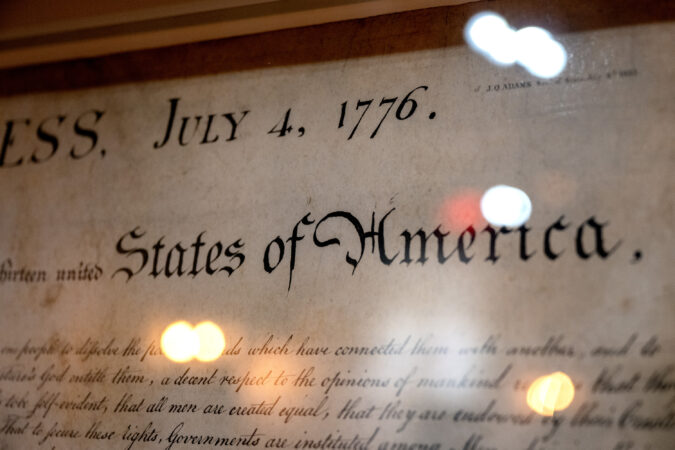
It’s a common sound in Philadelphia’s historic district during the summer. I was photographing tourists in front of Independence Hall on Wednesday when the beat of a single snare drum a block away achieved its intended purpose.
Just like when the fife and drum corps would relay tactical commands over the noise of the battlefield, or regulate a soldier’s daily routine, I stopped what I was going and headed in the direction of the beating pulse.
It was coming from the normally quiet Signer’s Garden pocket park, across 5th Street.
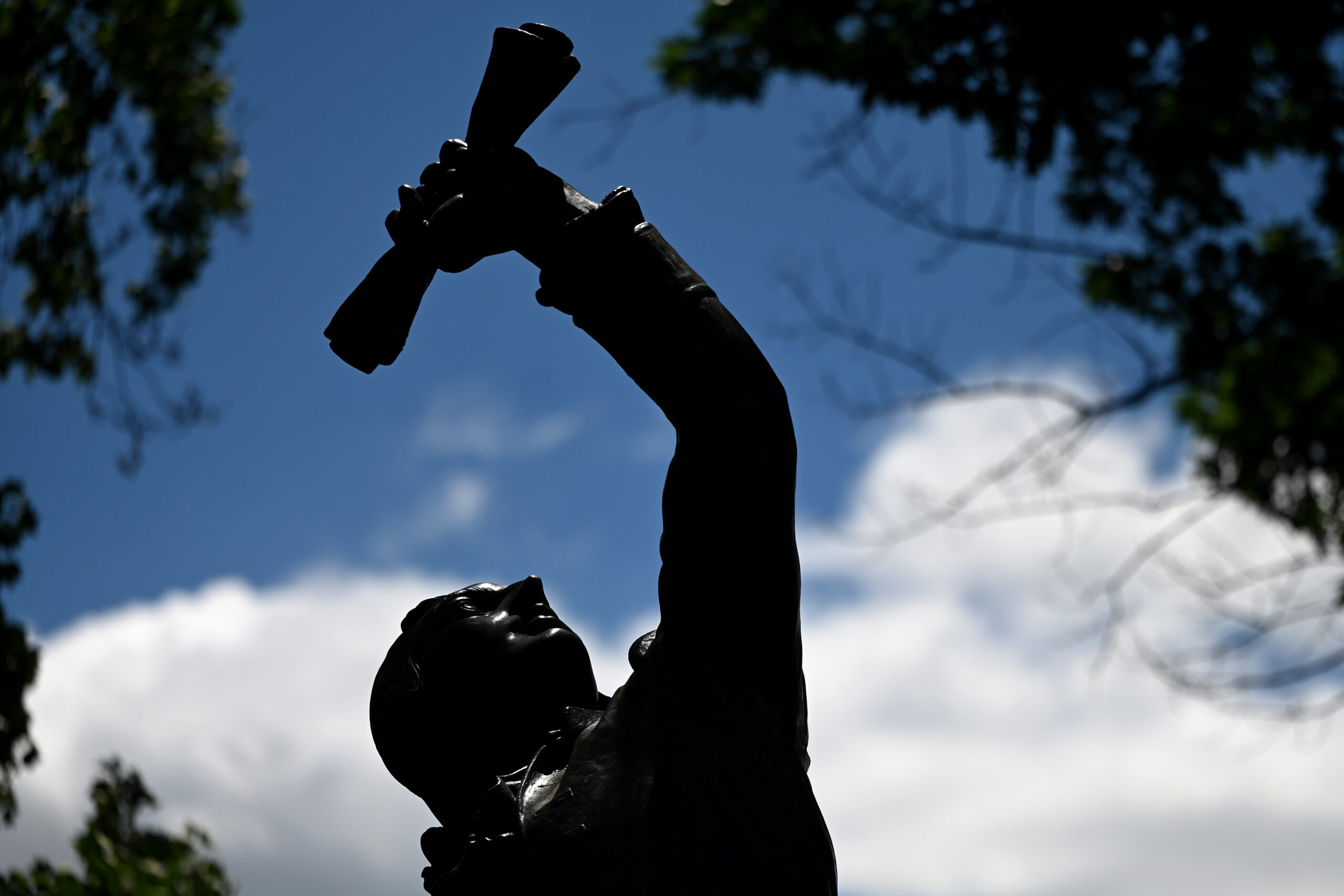
I had intended to go there anyway to photograph the statue — “The Signer” — as I am working with present-day descendants of the signers of the Declaration of Independence on a photo essay that will be posted online this Fourth of July weekend.
The statue was inspired by George Clymer, a Philadelphia merchant, statesman, and signer of both the Declaration of Independence and the U.S. Constitution. A National Park Service plaque at the entrance reads “it commemorates the courage of those who altered their lives, and ours, by affixing their names to these documents.”
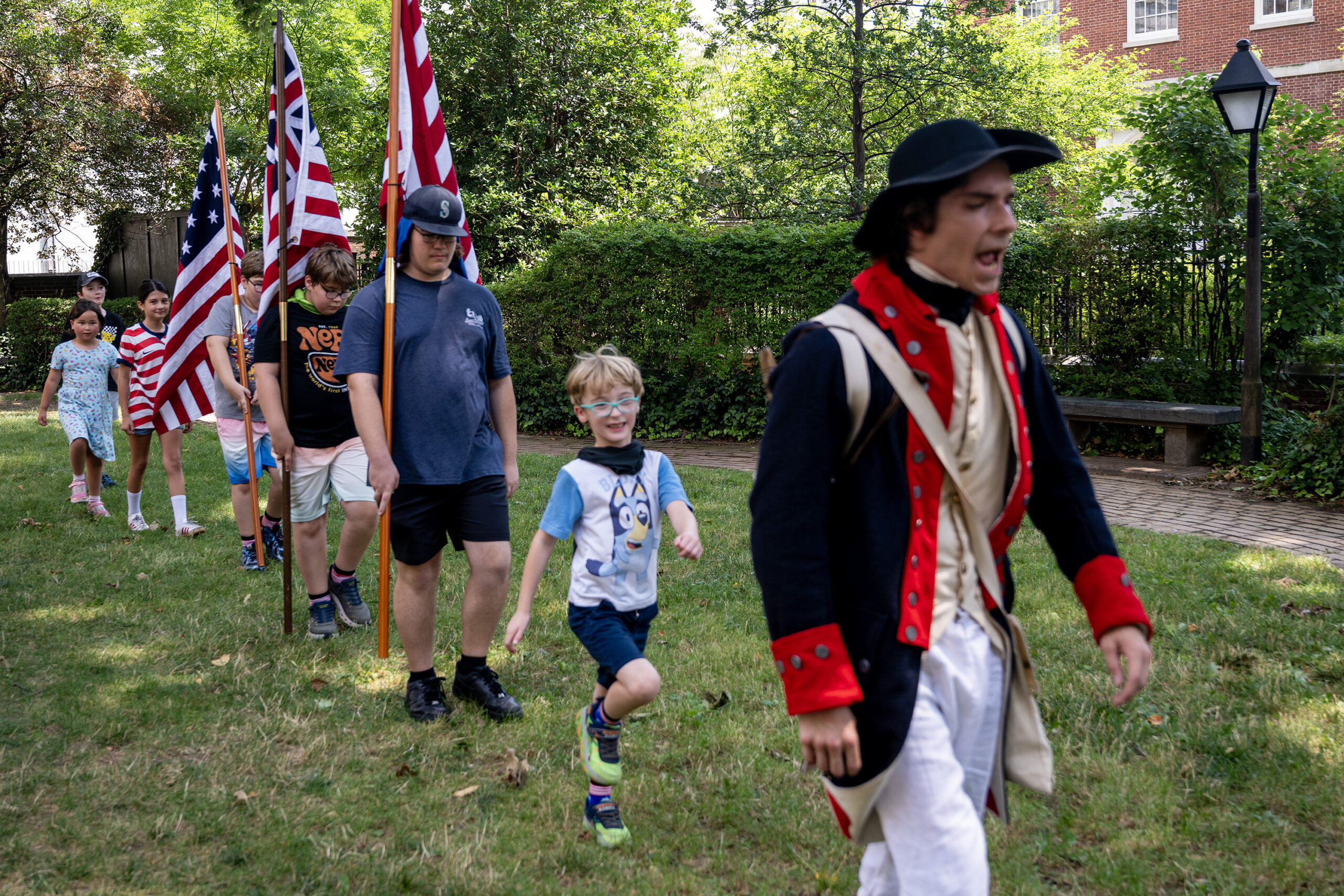
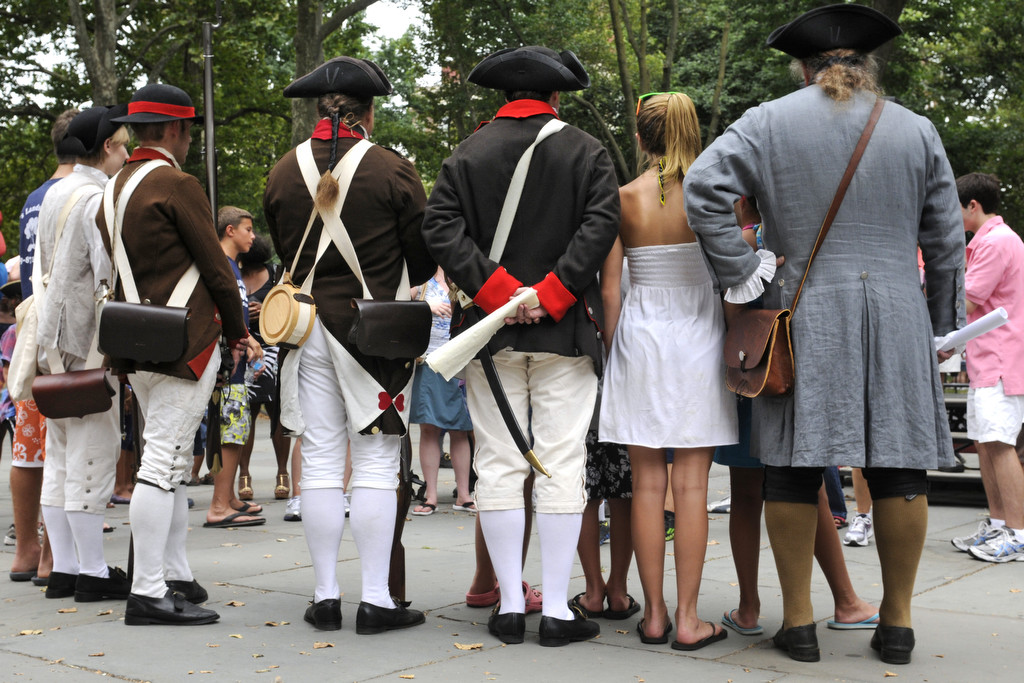
The drum was mustering holiday week visitors for a presentation by two costumed actors from Historic Philadelphia portraying continental soldiers. I watched as the tourists watched them “draft” youngsters into their performance and found myself smiling more than once at how they engaged the kids — and the rest of us in the crowd — with some of their one-liners.
Historic Philadelphia actor Lane Norris portraying Continental soldier Conrad Frye leads a contingent of young tourists in Independence National Historical Park Wednesday, July 1, 2026.
Did I say, smile? I might have had a slightly more sentimental reaction. I have written before that Independence Day has always been my favorite holiday. My dad, who passed away a few years ago, was born on the Fourth of July.
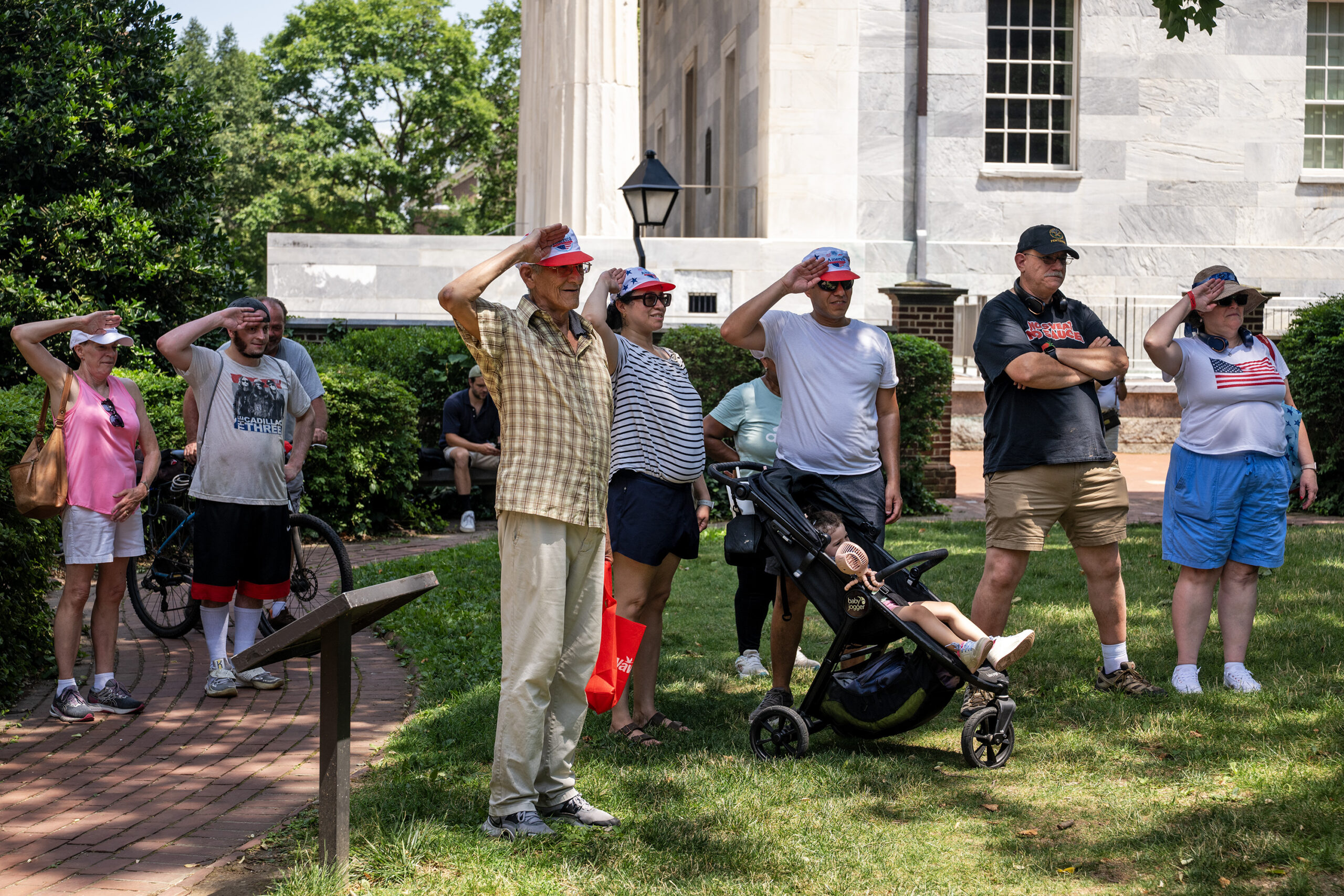
As I looked around at the crowd I could tell everyone else was also getting into the interactive and engaging program. I photographed saluting adults who I assumed were parents, mirroring the actions of their kids doing the marching drills.
Afterward, I learned they weren’t. They had a toddler still in a stroller. They were immigrants from Venezuela, and just happy to be here. Like me.
We’re still in the middle of Philly’s celebration of America’s 250th birthday (with canceled events in a declared heat emergency with 100-plus degree temperatures!). Here are more of my Fourth of July photos and those of my colleagues:
Since 1998 a black-and-white photo has appeared every Monday in staff photographer Tom Gralish’s “Scene Through the Lens” photo column in the print editions of The Inquirer’s local news section. Here are the most recent, in color:
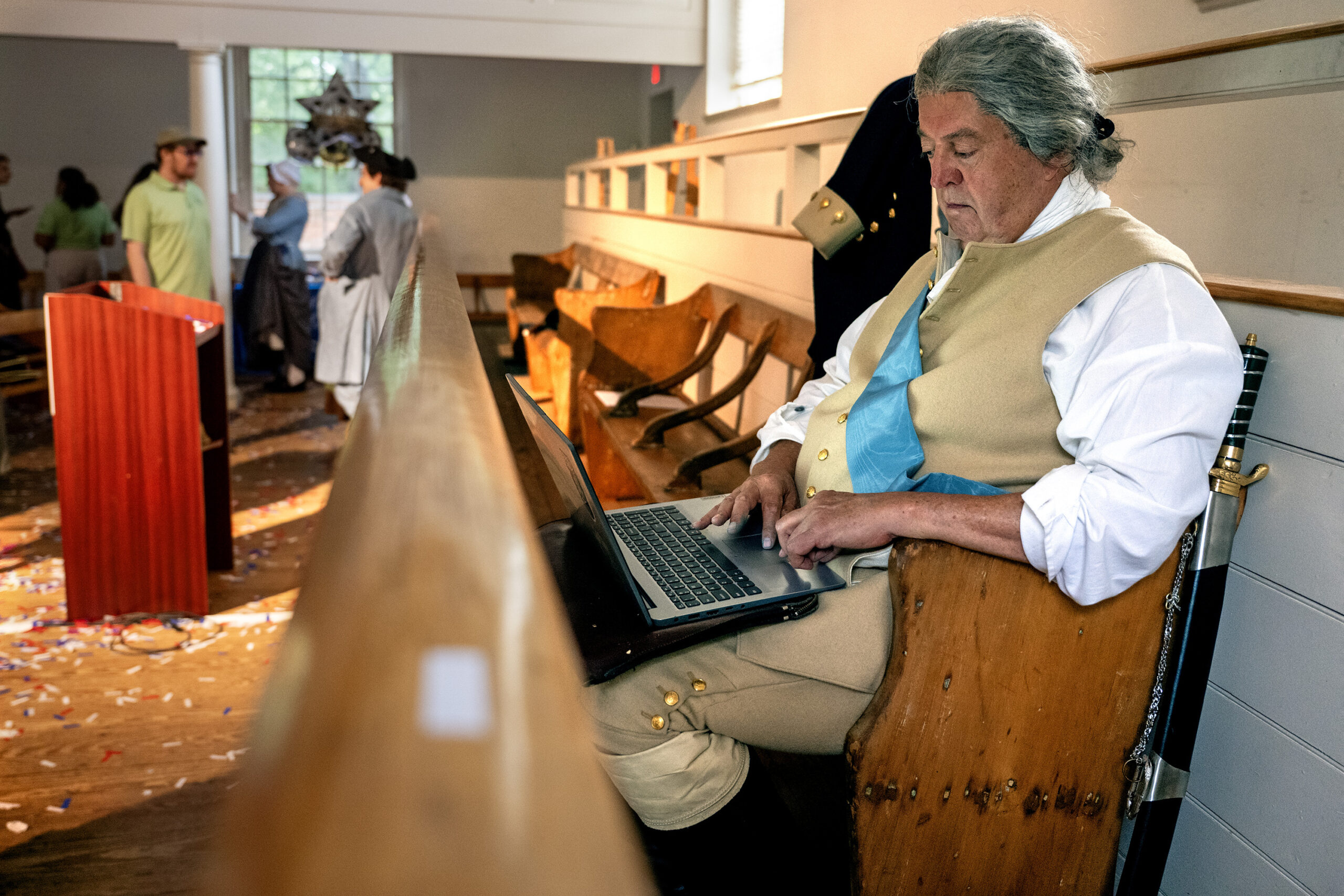
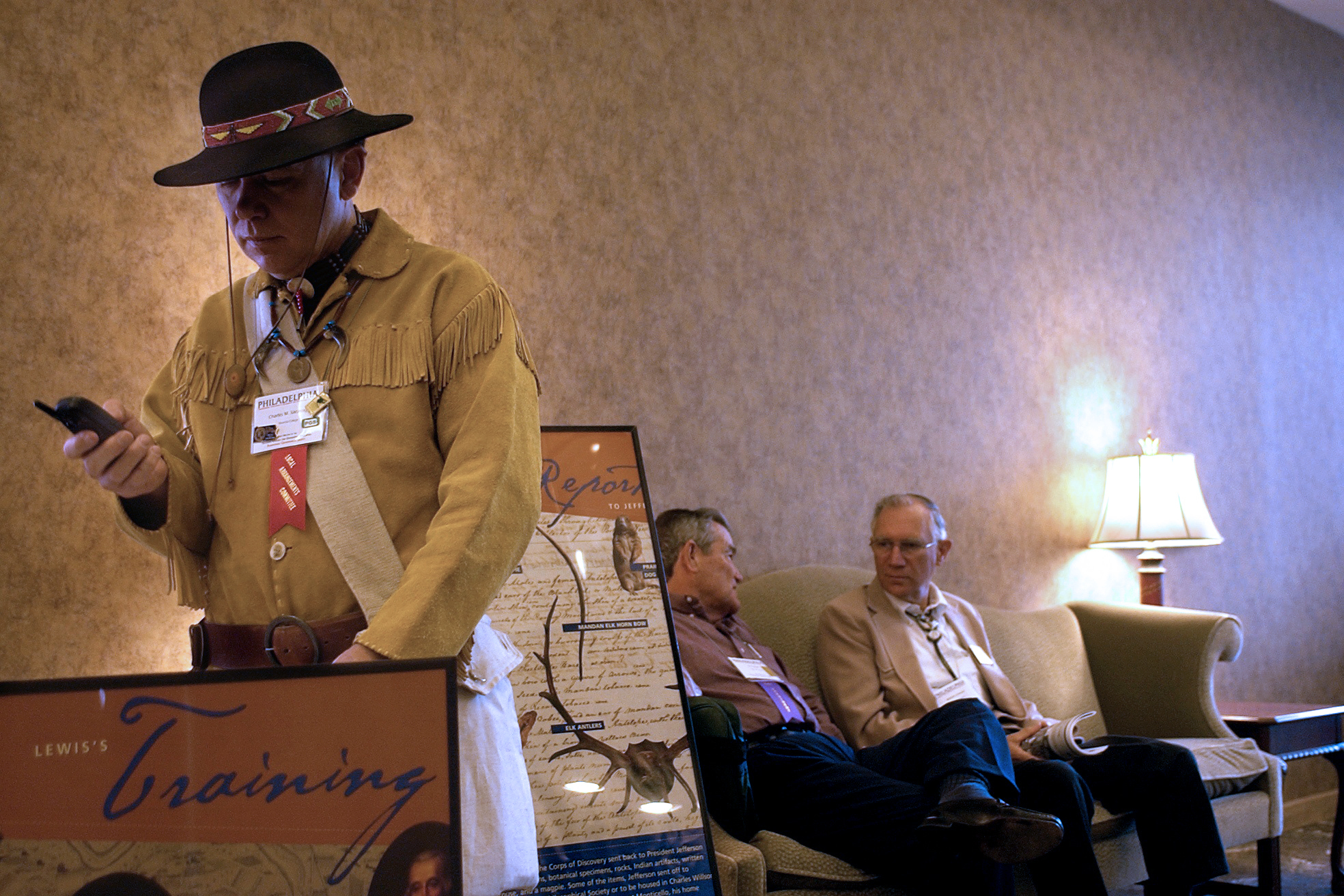
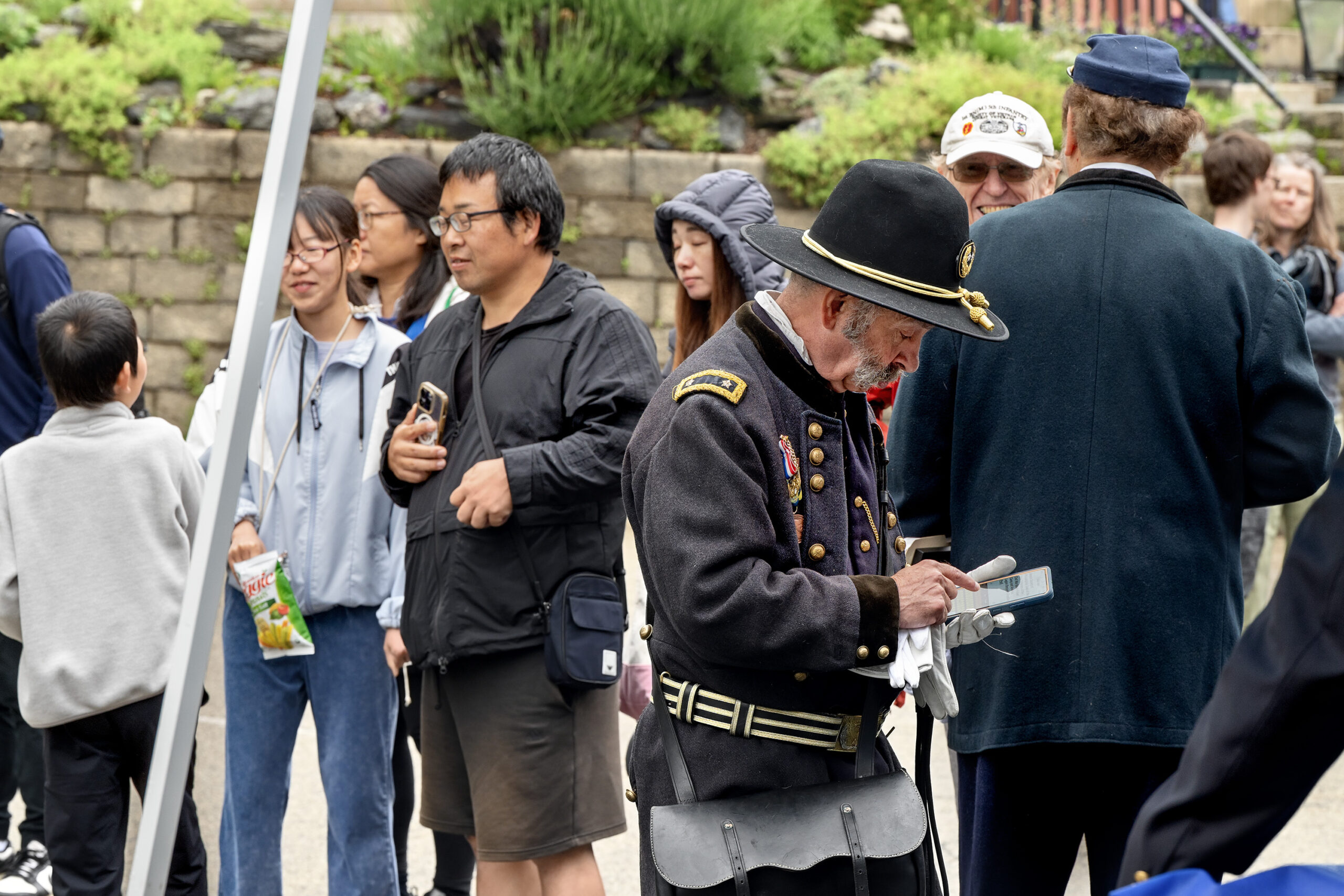
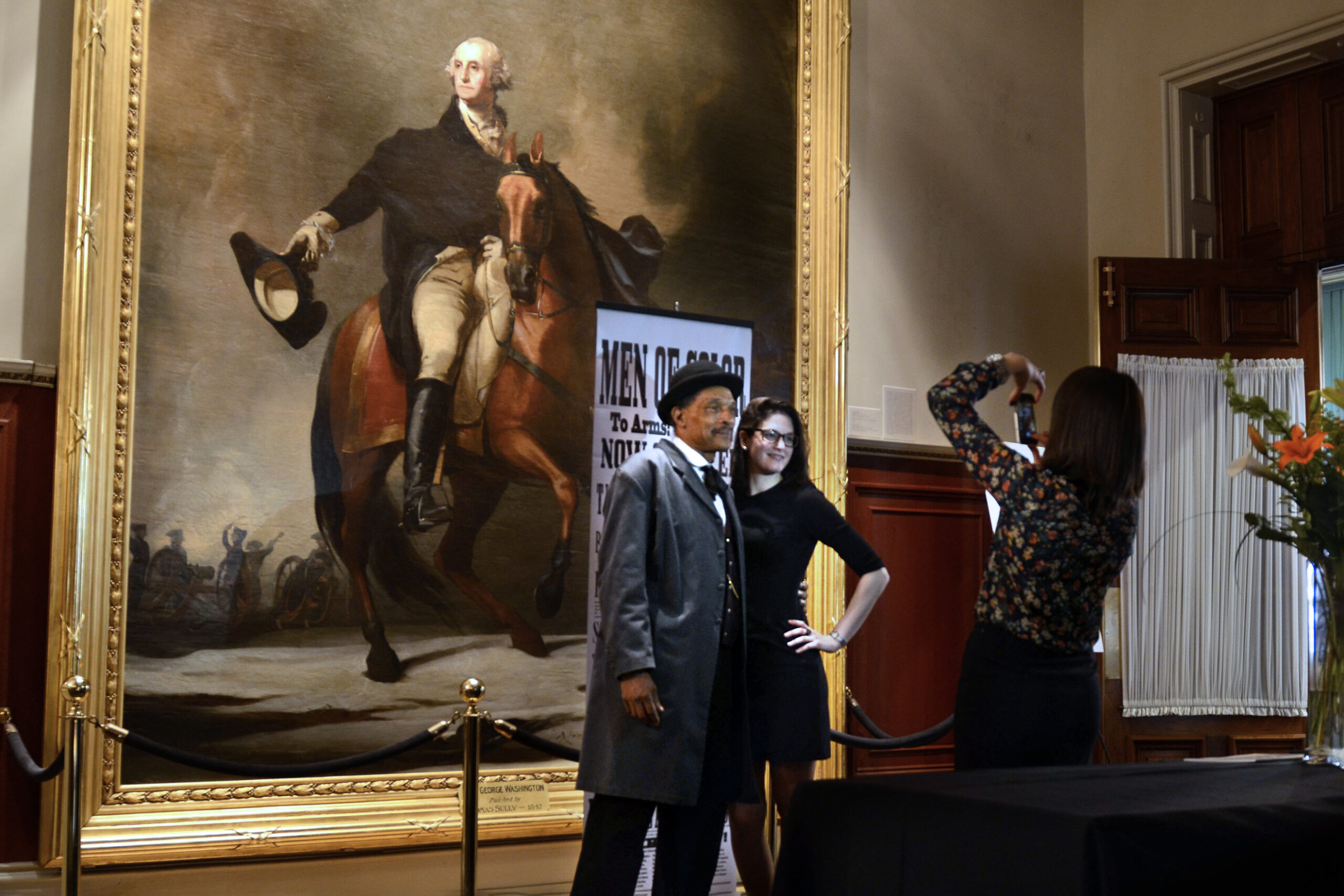
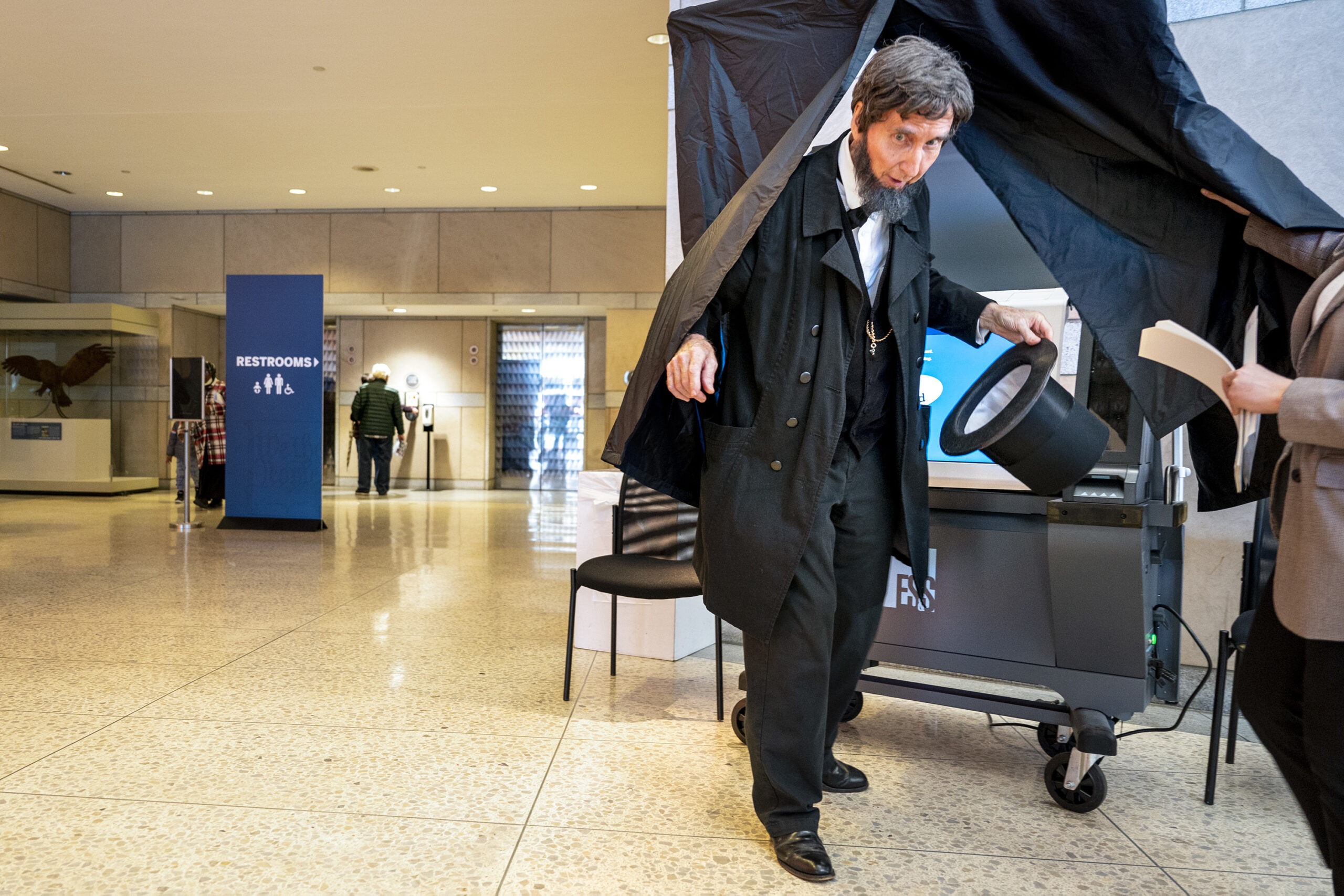
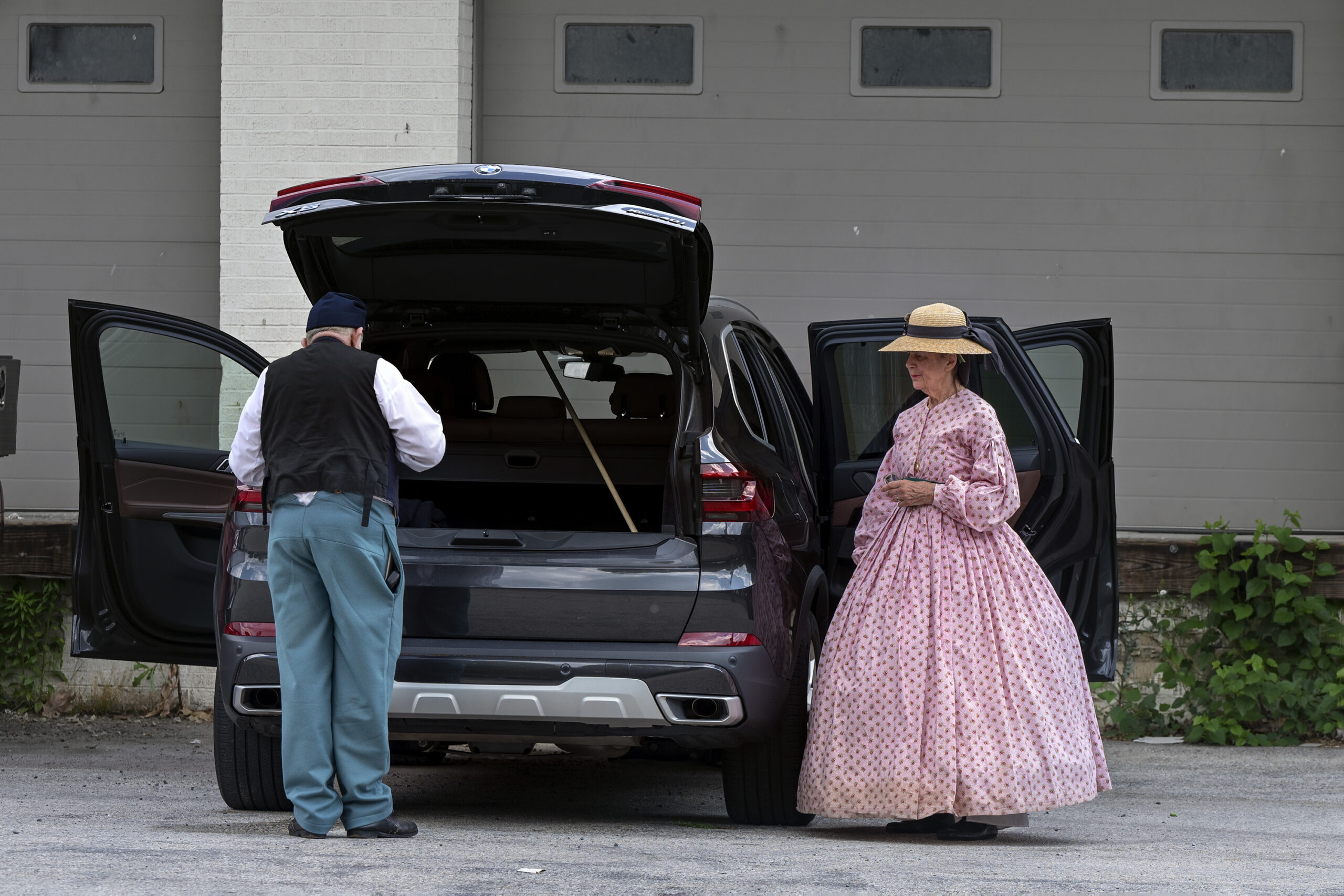
Besides shadows, reflections, silhouettes, pigeons, umbrellas, or hats one of my favorite photo gimmick-clichés is finding juxtapositions. Like catching historic reenactors in moments of chronological inconsistency.
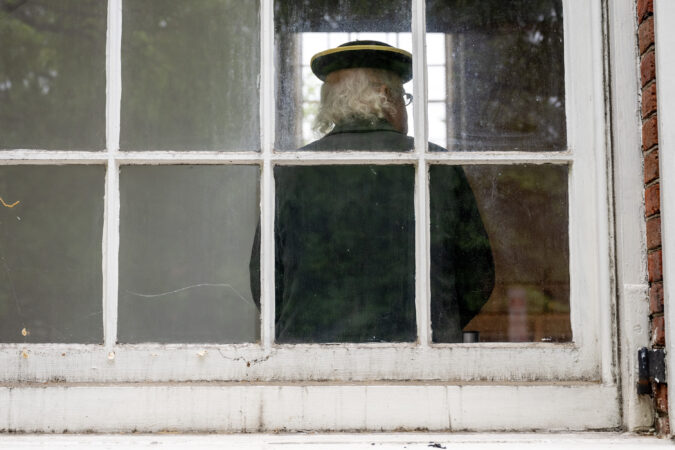
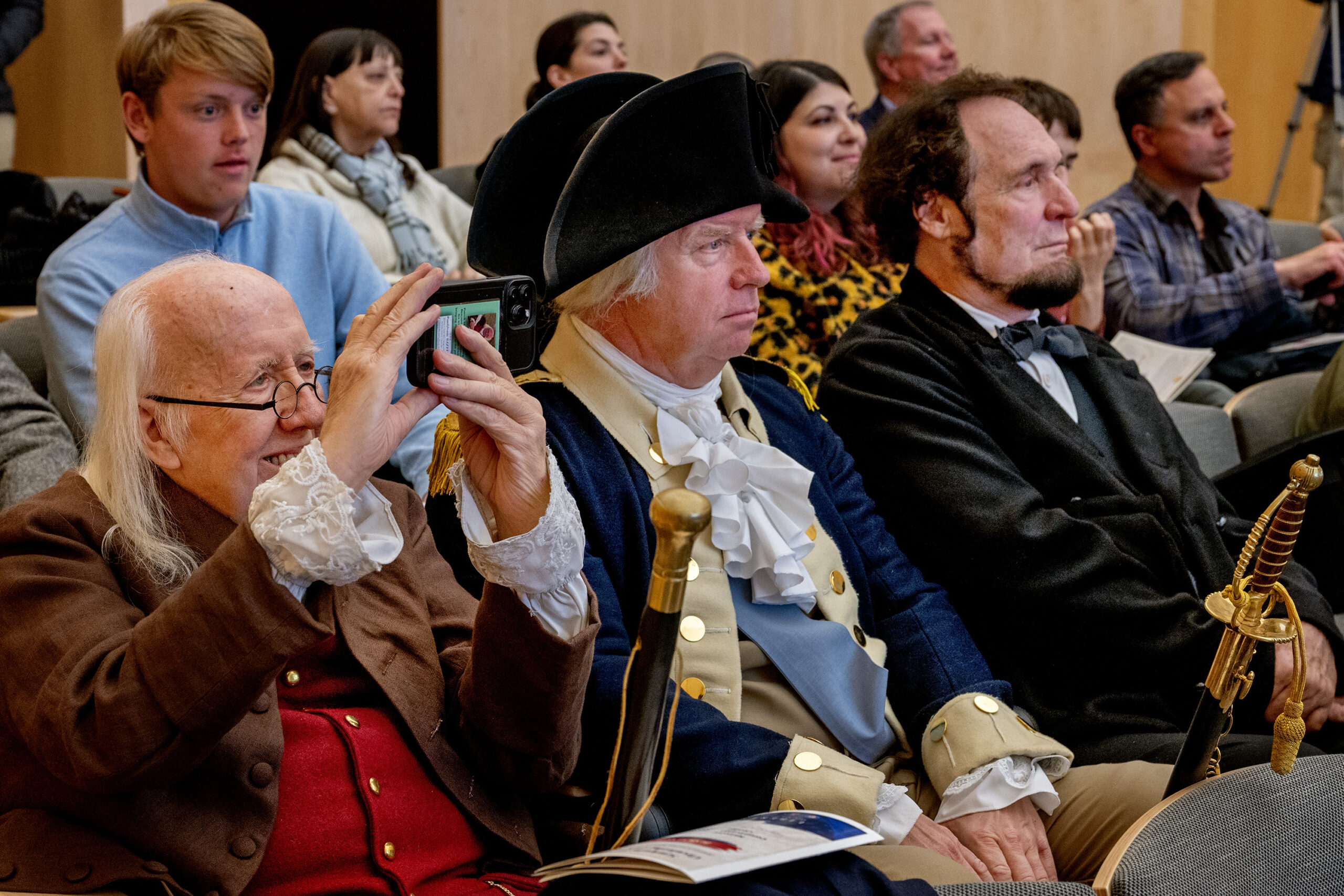
The image of Ben above and George below was made on assignment for an upcoming story on the 21st season of Historic Philadelphia’s Once Upon a Nation program — where costumed actors perform first-person interpretations of real 18th-century Philadelphians in the Historic District and at Valley Forge National Historical Park.
May 21, 2026: Jim Fryer as George Washington.
The photo of the actor portraying Franklin was made from outside the Free Quaker Meeting House at 5th and Arch Streets. It was established during the Revolution when a rift occurred among the Society of Friends. As pacifists they would not take up arms, pay war taxes, or take an oath of allegiance. A group calling themselves “Free” Quakers supported the American cause and were expelled or “read out of meeting” by the mainstream Friends.
Among those Free Quakers was Timothy Matlack, a clerk in the Pennsylvania Statehouse known for his excellent penmanship. He was chosen by the Continental Congress to produce the handwritten copy of the Declaration of Independence — the engrossed parchment version that we all recognize as the “original” — that was signed by the 56 delegates in August 1776. (Matlack, who was born in Haddonfield, N.J. was also one of the earliest opponents of slavery in America, and he felt that the Quakers were not moving quickly enough to abolish it.)
I only mention the Declaration as, along with many other stories, I have been photographing for in the Historic District and at the President’s House, I’ve been working on a photo essay on some of the direct descendants of the men who were in the room in Independence Hall (then the Pennsylvania State House) as America was born. Their photos, along with interesting and little known facts about the 17 local Signers from Pennsylvania, New Jersey, and Delaware will be published later this week as part of The Inquirer’s coverage of the 250th.
As promised in a previous column, I’ve collected a bunch of my Philly photo-anachronisms from over the years.
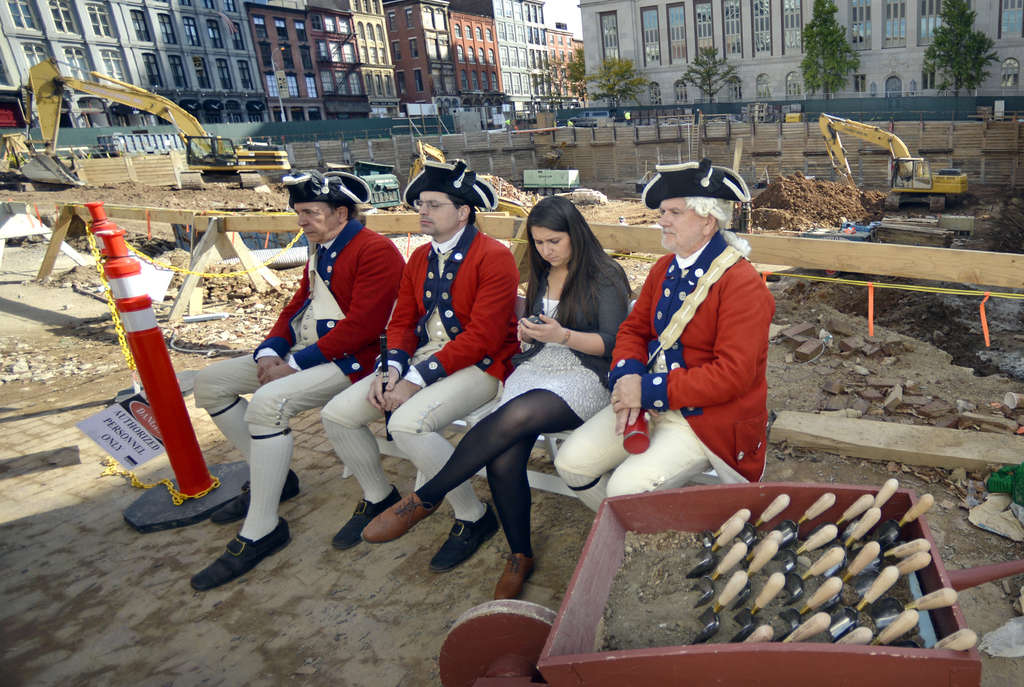
October 17, 2002: Charles Sacavage as Meriwether Lewis (of the Lewis & Clark Expedition).May 24, 2026: Mike Gabriele as Civil War General Ambrose E. Burnside.December 10, 2025: Benjamin Franklin (from left) Gen. George Washington and President Abraham Lincoln.January 15, 2014: Robert Branch (left) as 19th Century educator, intellectual, and civil rights activist Octavius V. Catto.February. 20, 2023: President Abraham Lincoln votes.May 26, 2024: Civil War reenactors Kathy and Ed Berna.July 8, 2012: After the annual reenactment of the first public reading of the Declaration of Independence.October 9, 2014: Ceremonial groundbreaking for the Museum of the American Revolution.December 10, 2025: George Washington.
Since 1998 a black-and-white photo has appeared every Monday in staff photographer Tom Gralish’s “Scene Through the Lens” photo column in the print editions of The Inquirer’s local news section. Here are the most recent, in color:
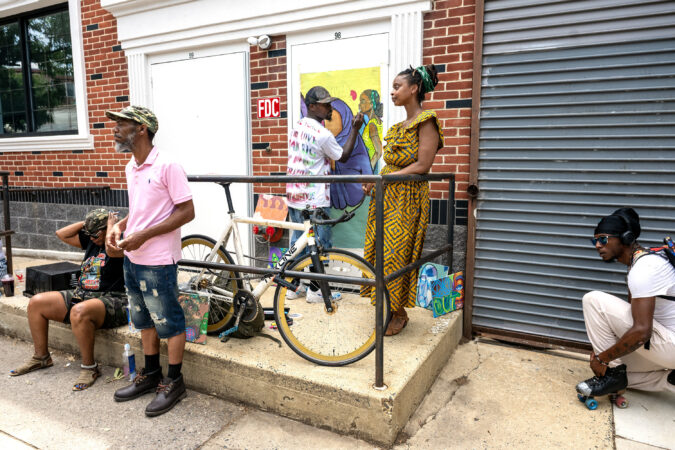
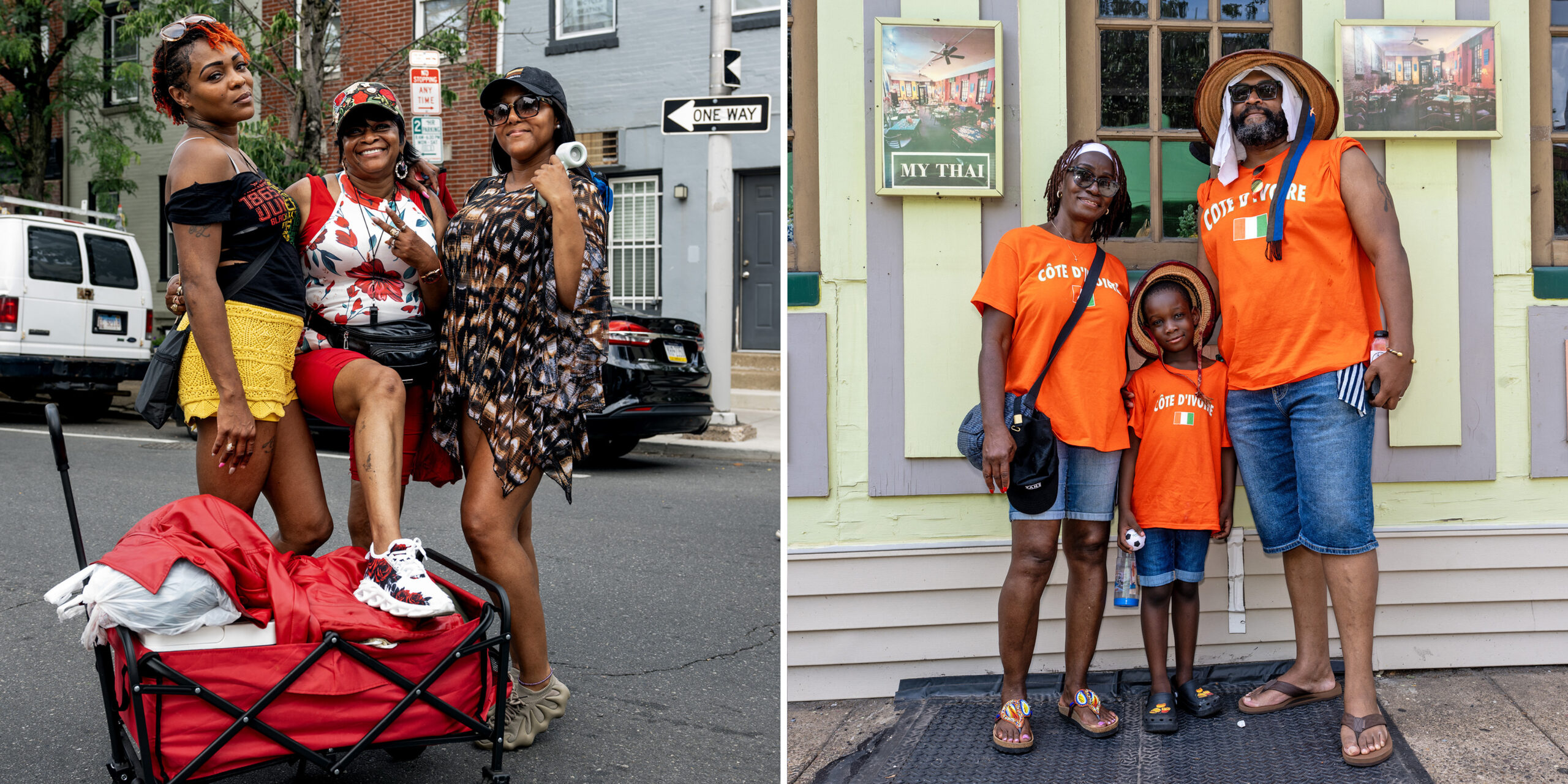
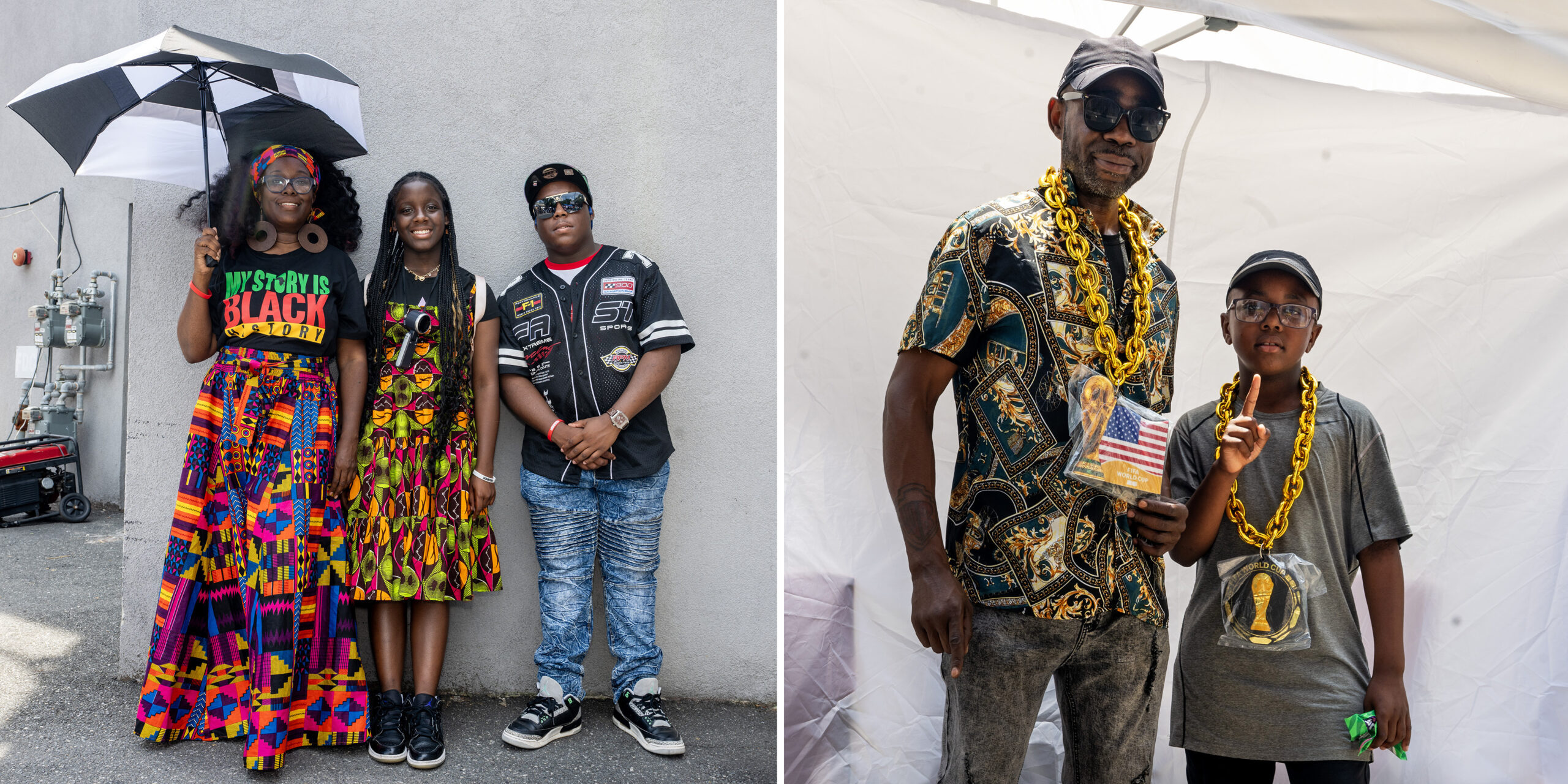
The Odunde Festival began in 1975 as a community event in South Philadelphia inspired by Yoruba traditions from Nigeria. It has since grown into one of the largest Black cultural festivals in North America.
“Odunde”is often translated as “the celebration has arrived.” The festival is rooted in the Yoruba New Year celebration and honors African heritage, history, and spirituality.
LEFT: Vonetta Jones, (from left), Cynthia Johnson and Alexis Murray. RIGHT: Lea and Damon Cunningham and their grandson, Noah, 6.
As a photographer working a Sunday-to-Thursday shift for decades, I’ve covered this and many other Sunday ethnic, religious, historic, and cultural festivals — always with a street-photographer vibe.
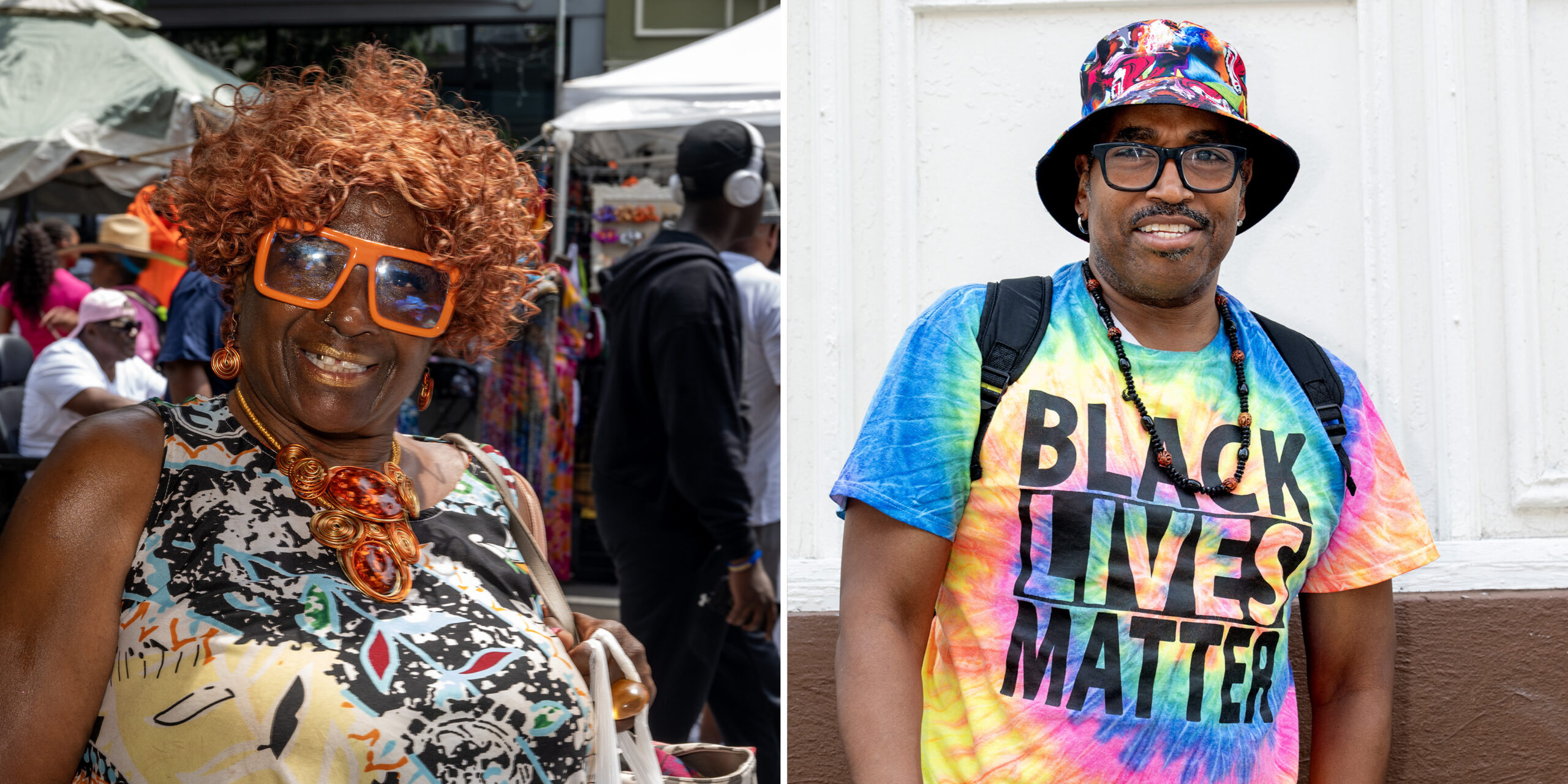
When I was assigned to photograph stylish clothing last Sunday — festivalgoers are known for expressing their cultural identity, heritage, and pride through fashion — I saw it as fun challenge to work outside my comfort zone and channel a bit of Philly influencer Big Rube or Humans of New York creator Brandon Stanton.
LEFT: Penny Thompson RIGHT: Kelvin Beck
Something I am always asked when speaking to camera clubs or groups of amateurs photographers is: “Do you have to ask people permission to take their picture?” Others ask, “Do you need to get their names?” The most consistent question, though, is: “How do you approach people you don’t even know?”
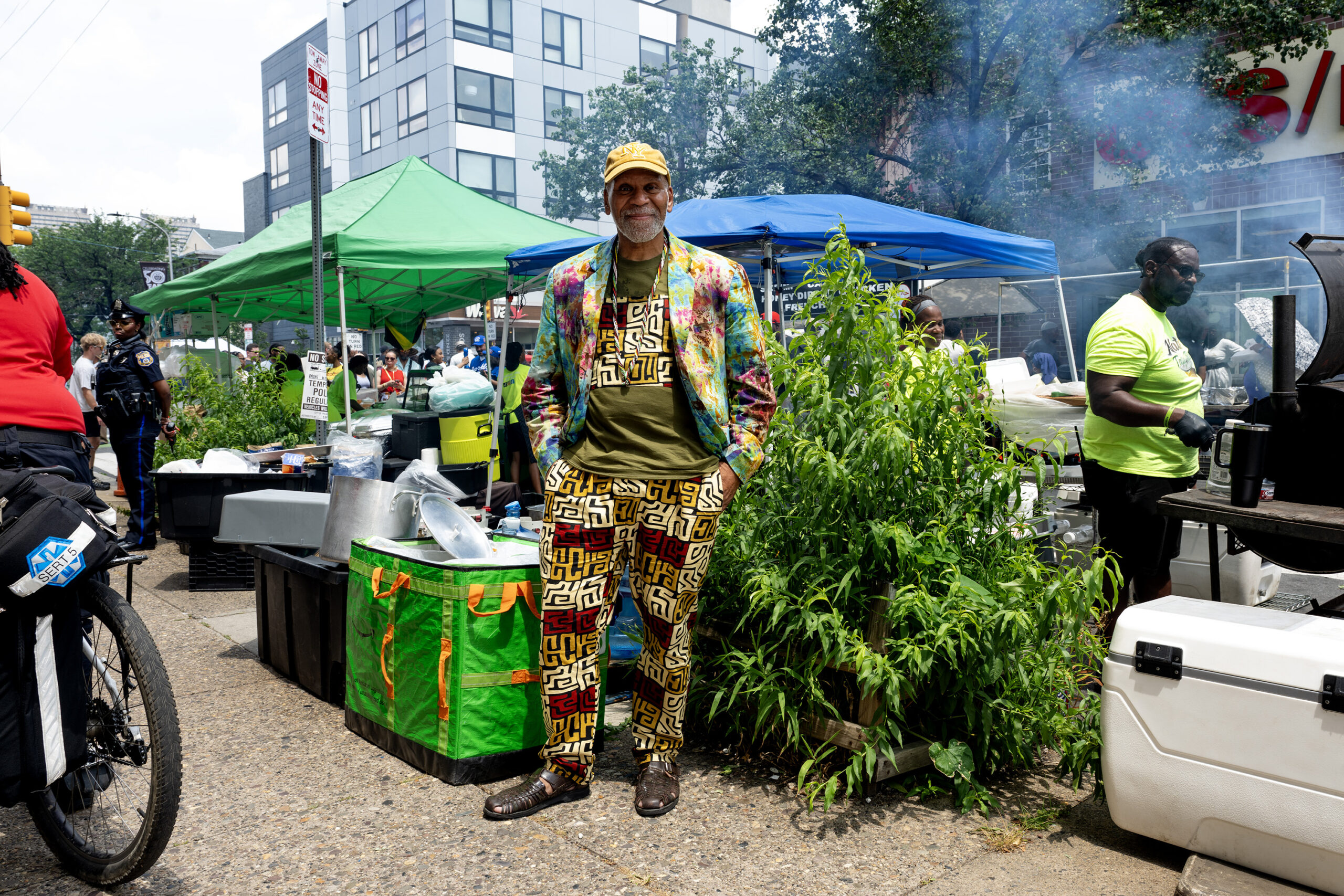
Joe Quinones.
I am not an extrovert, but early on I realized that “hiding” behind my camera gave me the confidence to meet and build rapport with strangers.
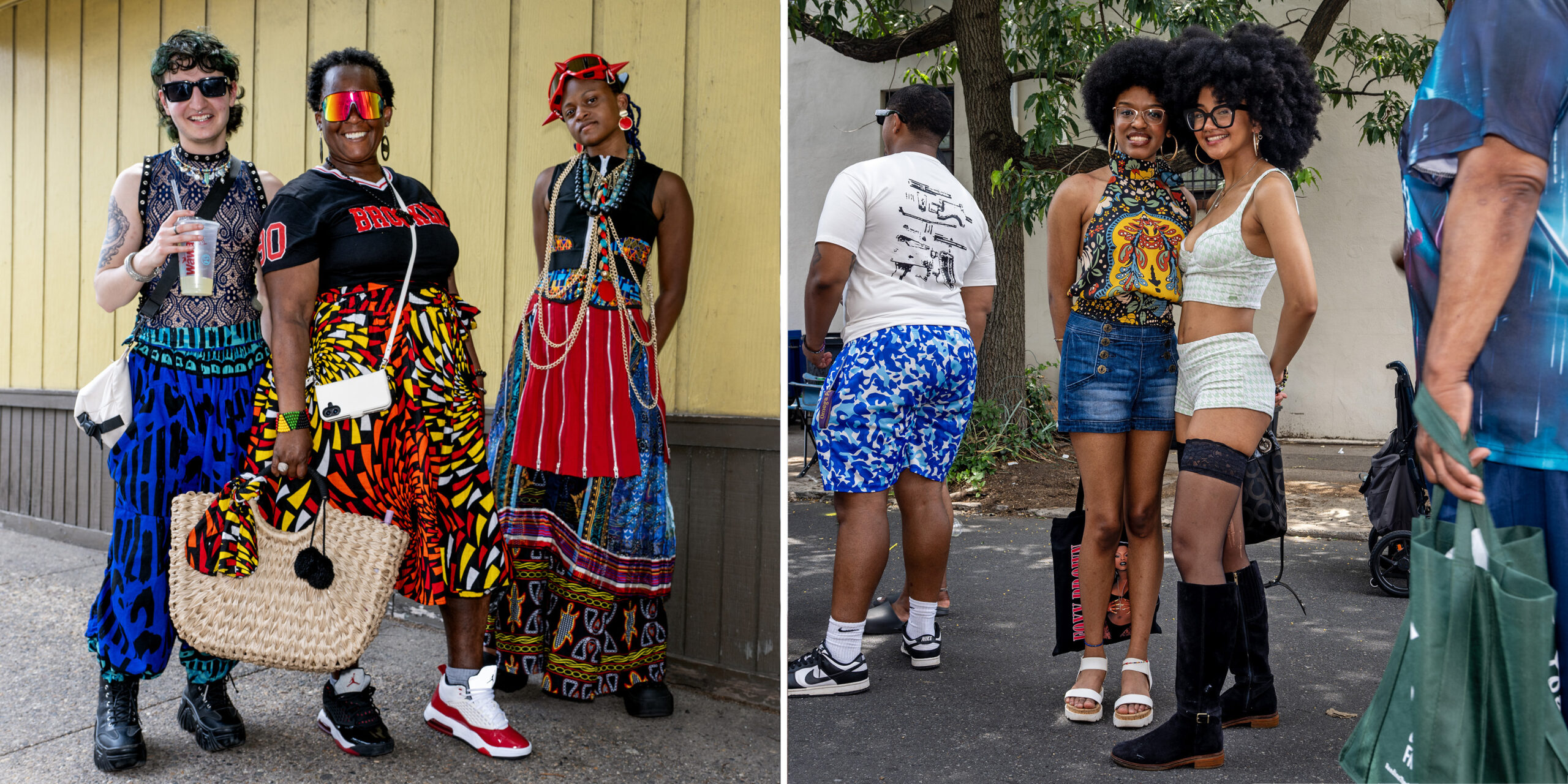
LEFT: Partners Julian Livingston (left) and Nyobi Nashedeem-Murphy (right) and Nyobi’s mother, Stacey Daniels. RIGHT: Tyanna Man and Bella Reina (right).
After years of doing it, talking to people has never been a concern. But using a flash outdoors to fill in shadows while also worrying about visual variety — different ages, genders, couples, individuals, and backgrounds — was not the way I usually work.
LEFT: Angelina Fletcher (left) and her niece and nephew, Leah Fletcher and TJ Fletcher. RIGHT: Jamar Williams and Jamar, Jr., 9.
I think it turned out OK, and I look forward to trying something similar with my visual coverage of the many events ahead this summer. Bring on the World Cup, America 250, the All-Star Game, and everything else.
Since 1998 a black-and-white photo has appeared every Monday in staff photographer Tom Gralish’s “Scene Through the Lens” photo column in the print editions of The Inquirer’s local news section. Here are the most recent, in color:
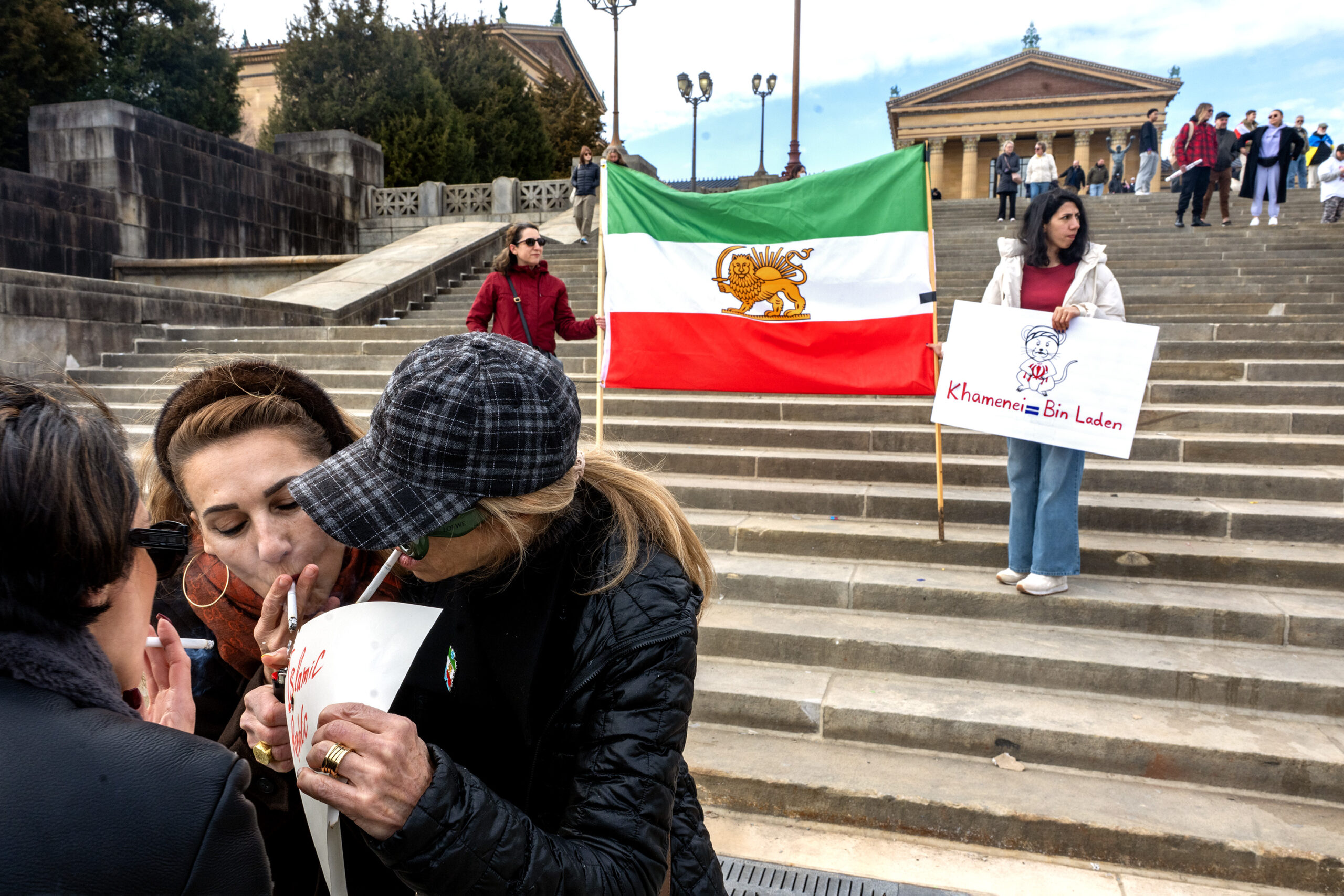
Last weekend I photographed members of the group Philly Iranians at the museum steps calling for a “free, secular, democratic Iran — united for human rights and against gender apartheid.” (They used cigarettes to burn a sheet of paper representing the Islamic Republic. The smoking symbolized and celebrated the “power of women” they told me, as under Iran’s Islamic penal code, women’s rights are severely restricted.)
The flag with the Lion and Sun emblem was the official flag of Iran since 1907. It was changed following the 1979 Islamic Revolution is strictly banned from public use in the Islamic Republic. Iranian opposition groups use the old flag in protests.
I even mentioned the art museum in this space in January.
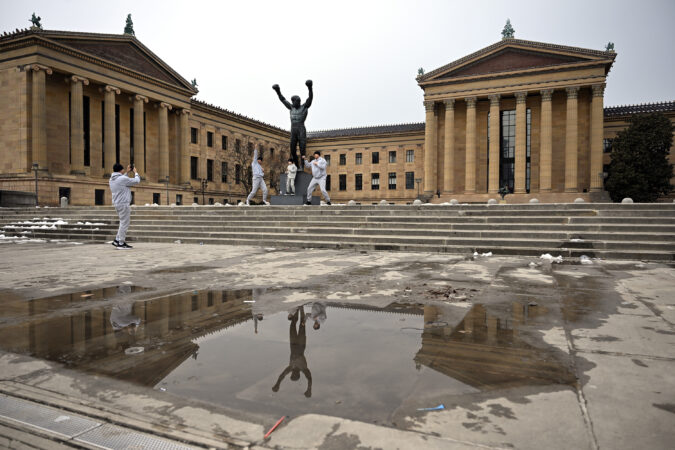
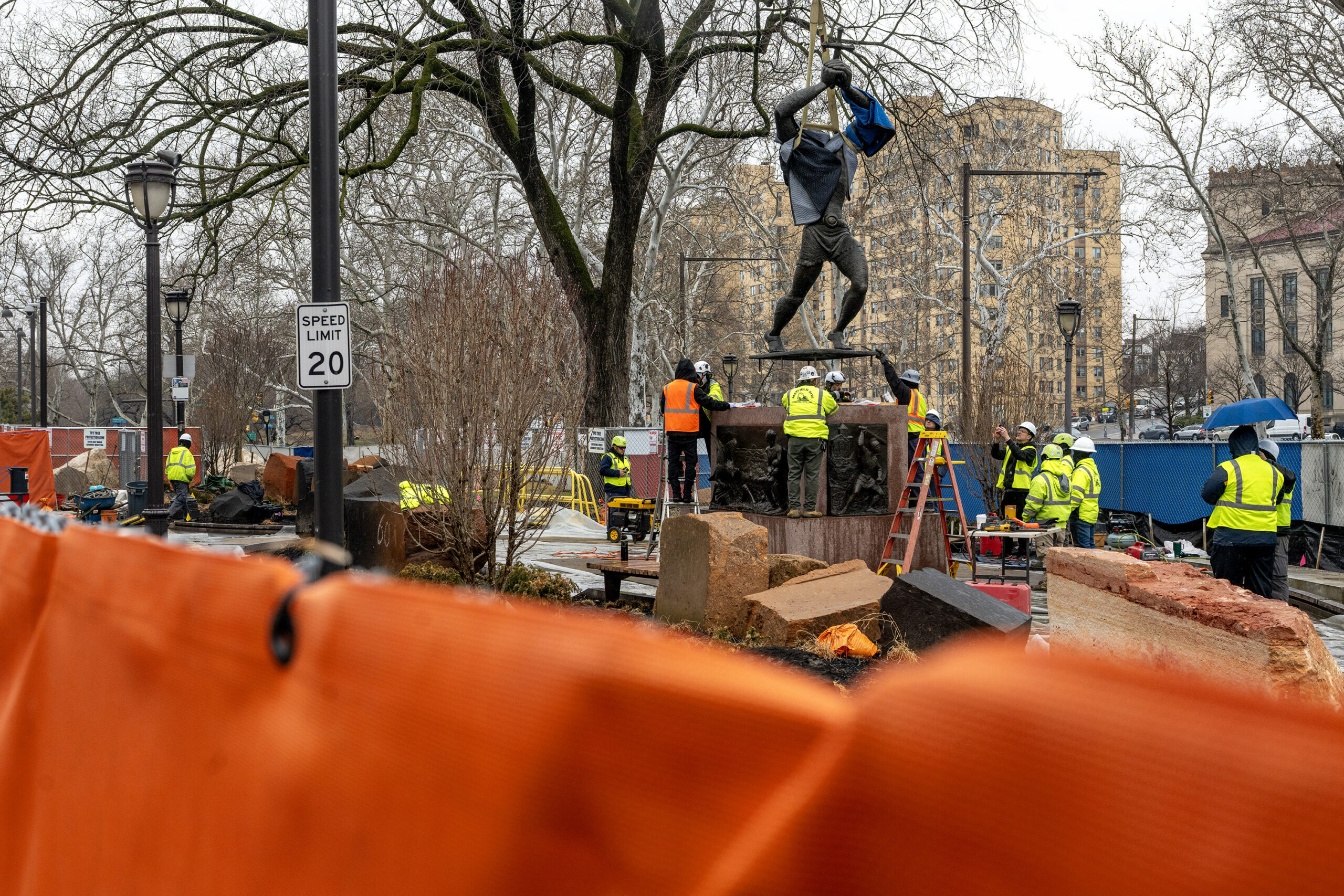
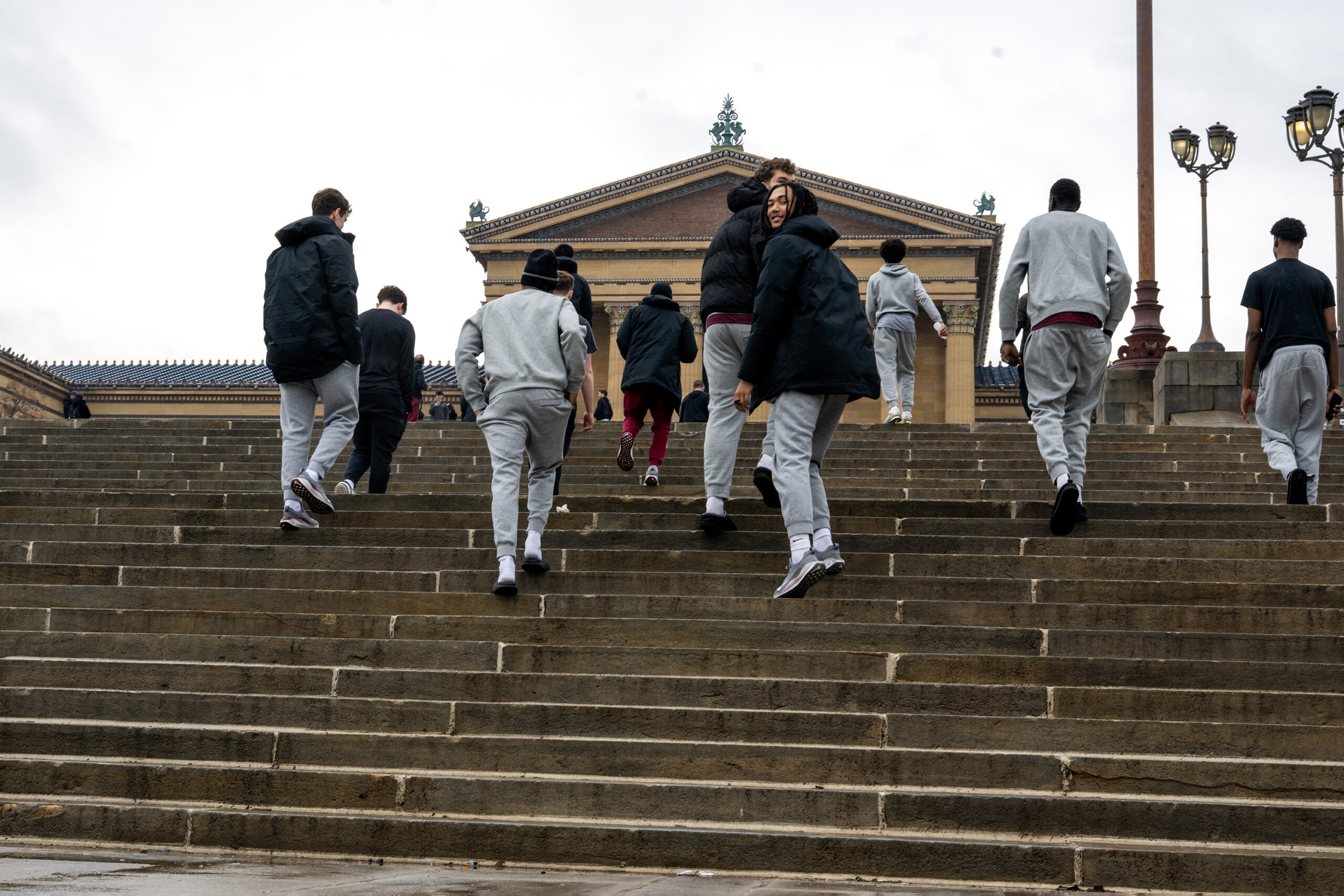
Workers reinstall the Young Meher statue behind construction fencing outside the museum along Kelly Drive. The work by Armenian artist Khoren Der Harootian was presented to the city in 1976 for the Bicentennial. It was reconditioned and will be the centerpiece of the Armenian Heritage Walk to be unveiled in April for American’s 250th anniversary. Student athletes from Fordham University in the Bronx visit the Philadelphia Museum of Art. The steps, anyway. The grey sweats are their “normal travel attire.”
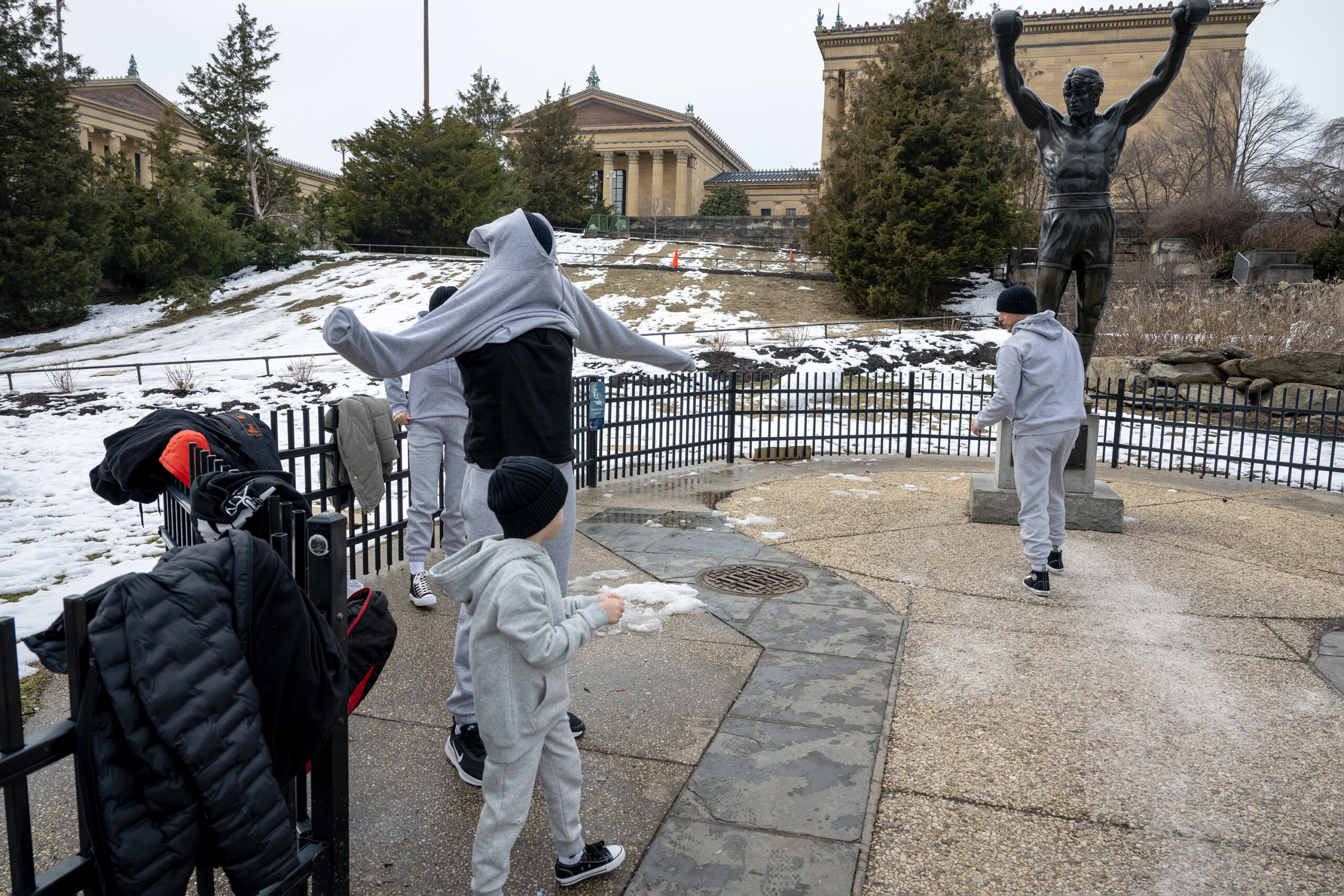
Being there so often, I knew exactly what was going on as I saw three adults and a kid changing clothes next to the Rocky statue. I didn’t have to ask, as I knew exactly what was coming next as they got decked out in gray cotton sweats, black stocking watch caps, and high-top black Converse All-Star Chuck Taylors.
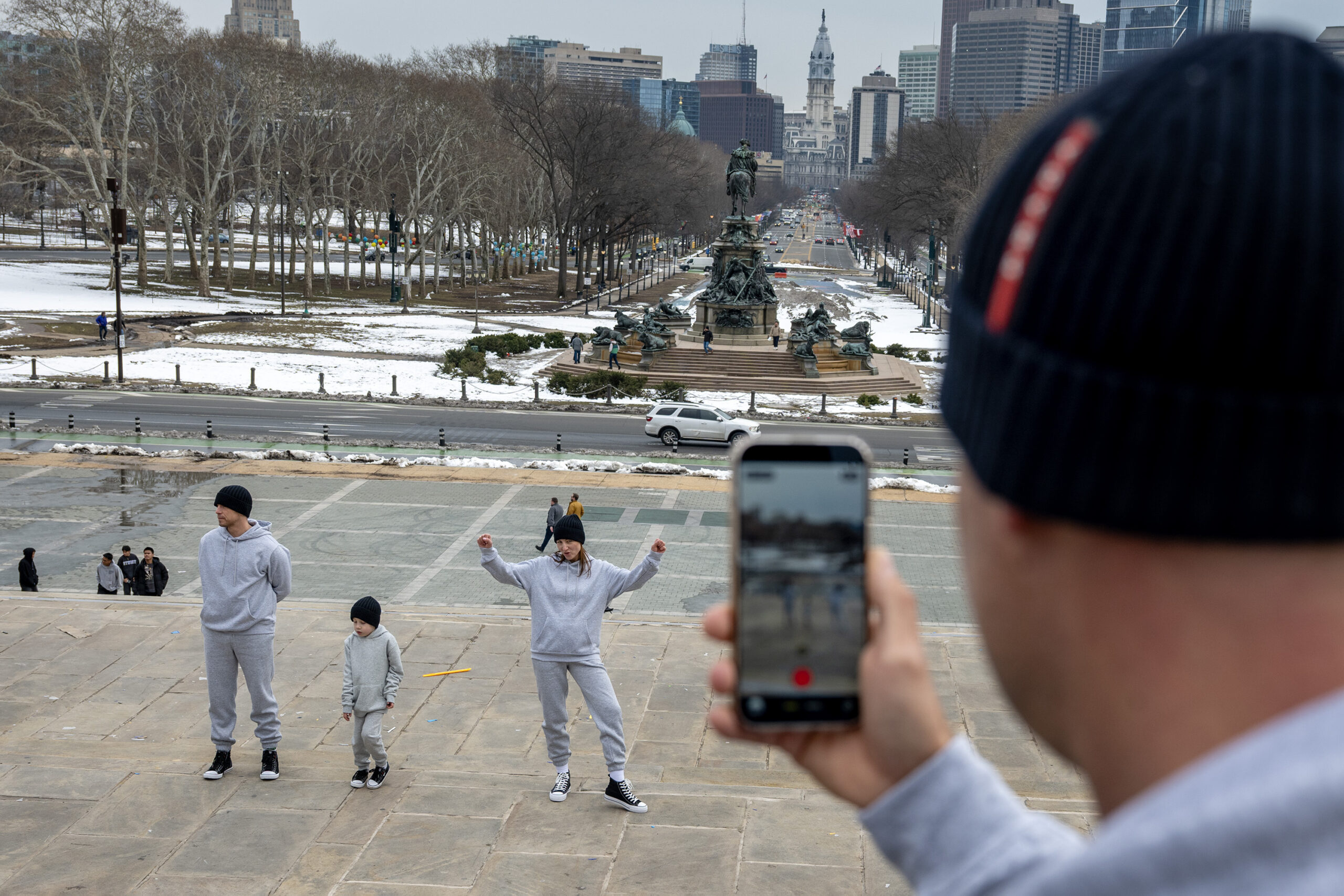
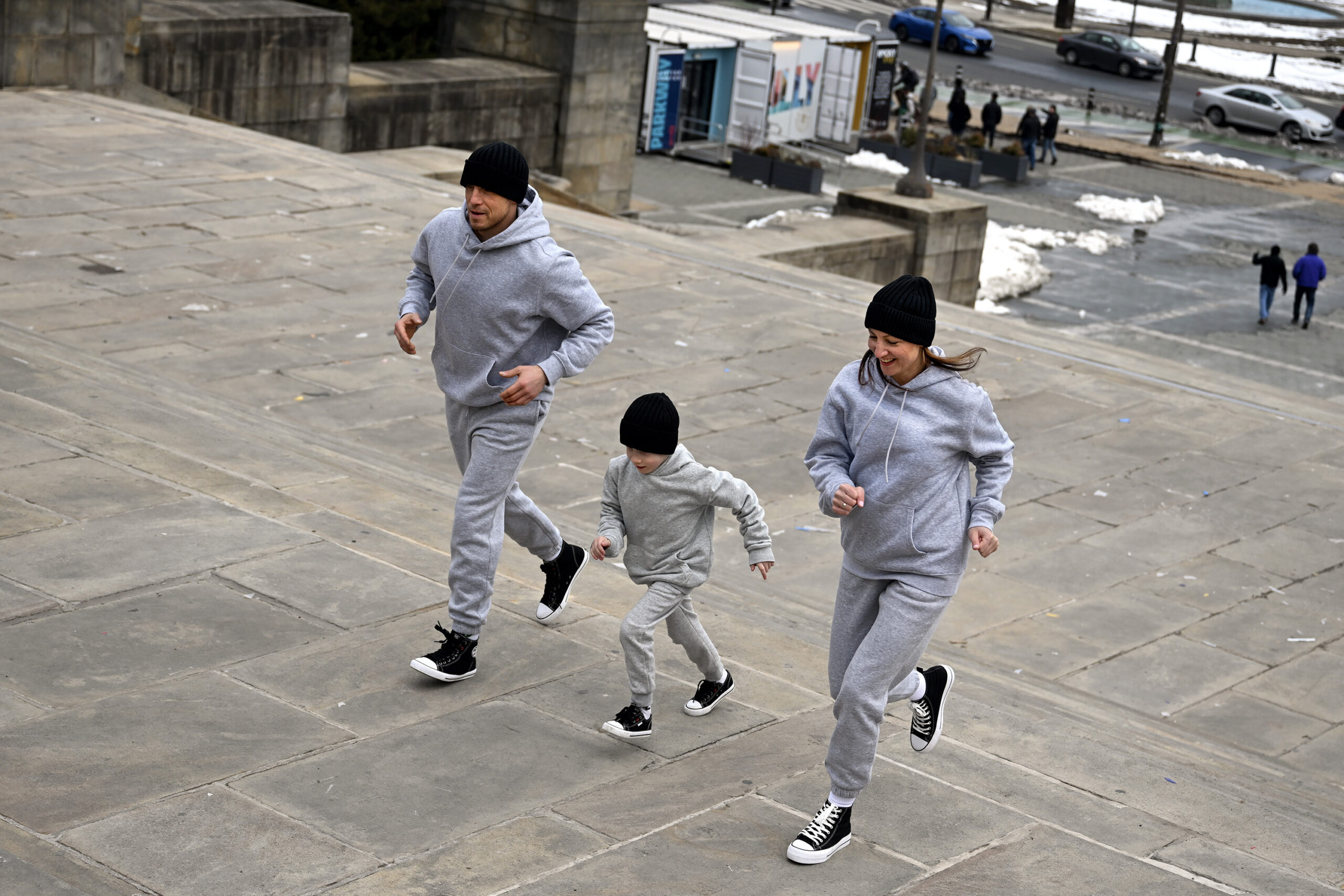
Mariusz Sliwa, his wife Magdalena, and their six year-old son Tymek came from Poznan, Poland. Marcin Danych, a friend now living in Chicago, joined them for what is now a classic pilgrimage.
When he was a boy, Mariusz’s father was “a typical factory worker … worked seven days a week,” he told me. But when he was with his father at night they would watch Rocky — “Playing it over and over, in the VHS.” It was just a part of Mariusz’s childhood, so he wanted his own son to experience it.
I see it every time I am at the steps, people of all ages, from all over sprinting up those 72 steps, “Gonna Fly Now” playing in their heads. It’s why writer Michael Vitez asked me to join him, to spend a year at the steps meeting people just like Mariusz, seeking a tangible way to inhabit a universal story of hope. As Michael often says, “It’s like the ocean; the waves keep crashing on the beach, they never stop.”
Mariusz wanted to bring his father with him from Poland, but he is unable to travel. With his friend Danych’s help, he recorded video — over and over — running up the steps with Magdalena and Tymek. And with just Tymek. And only Magdalena and Tymek together. Finally, Tymek alone. He was making his own Rocky movie. Recasting the scene, as it is etched in his mind.
I hope he sends me a copy. After he shares it back home with his dad.
Since 1998 a black-and-white photo has appeared every Monday in staff photographer Tom Gralish’s “Scene Through the Lens” photo column in the print editions of The Inquirer’s local news section. Here are the most recent, in color:
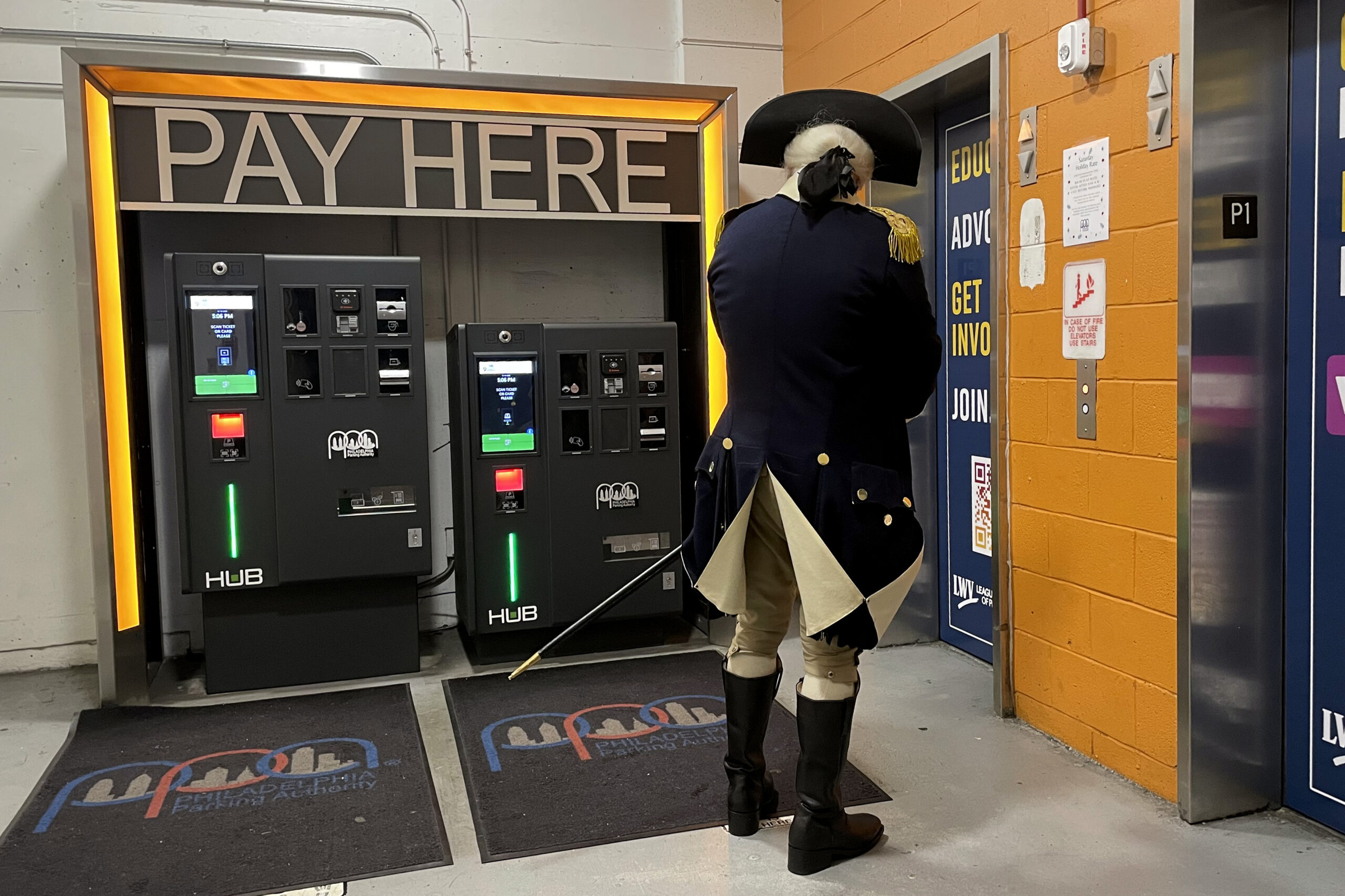
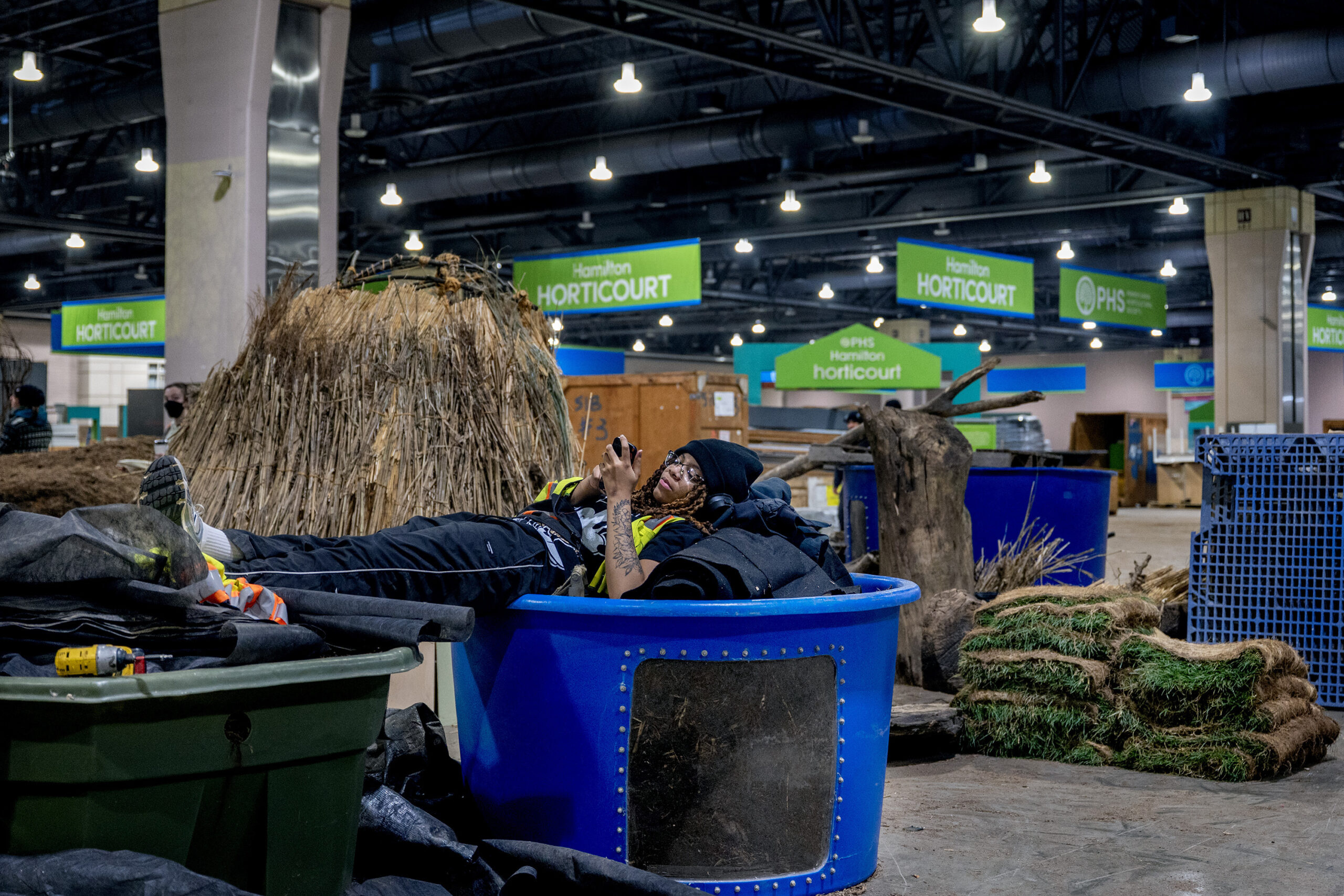
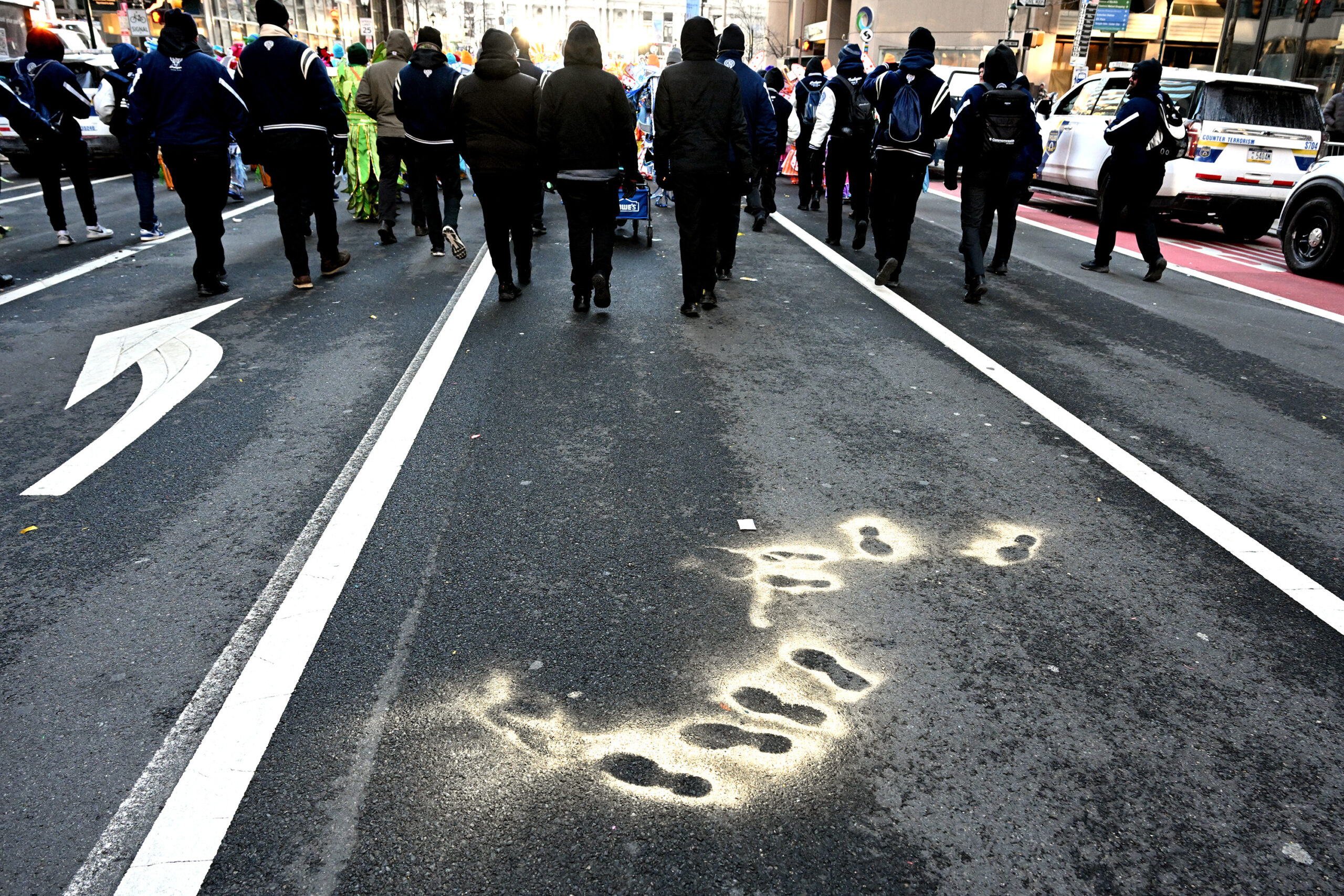
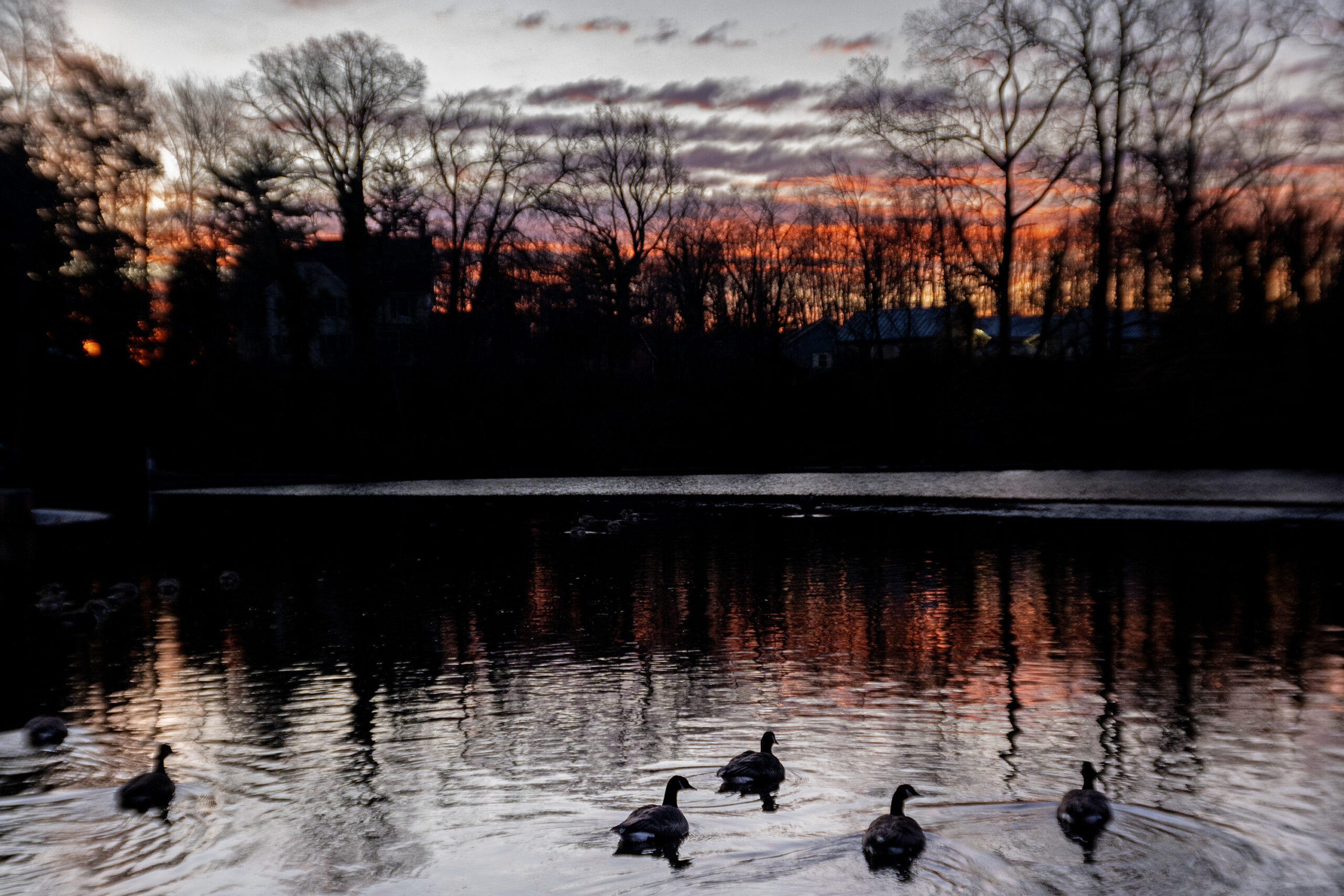
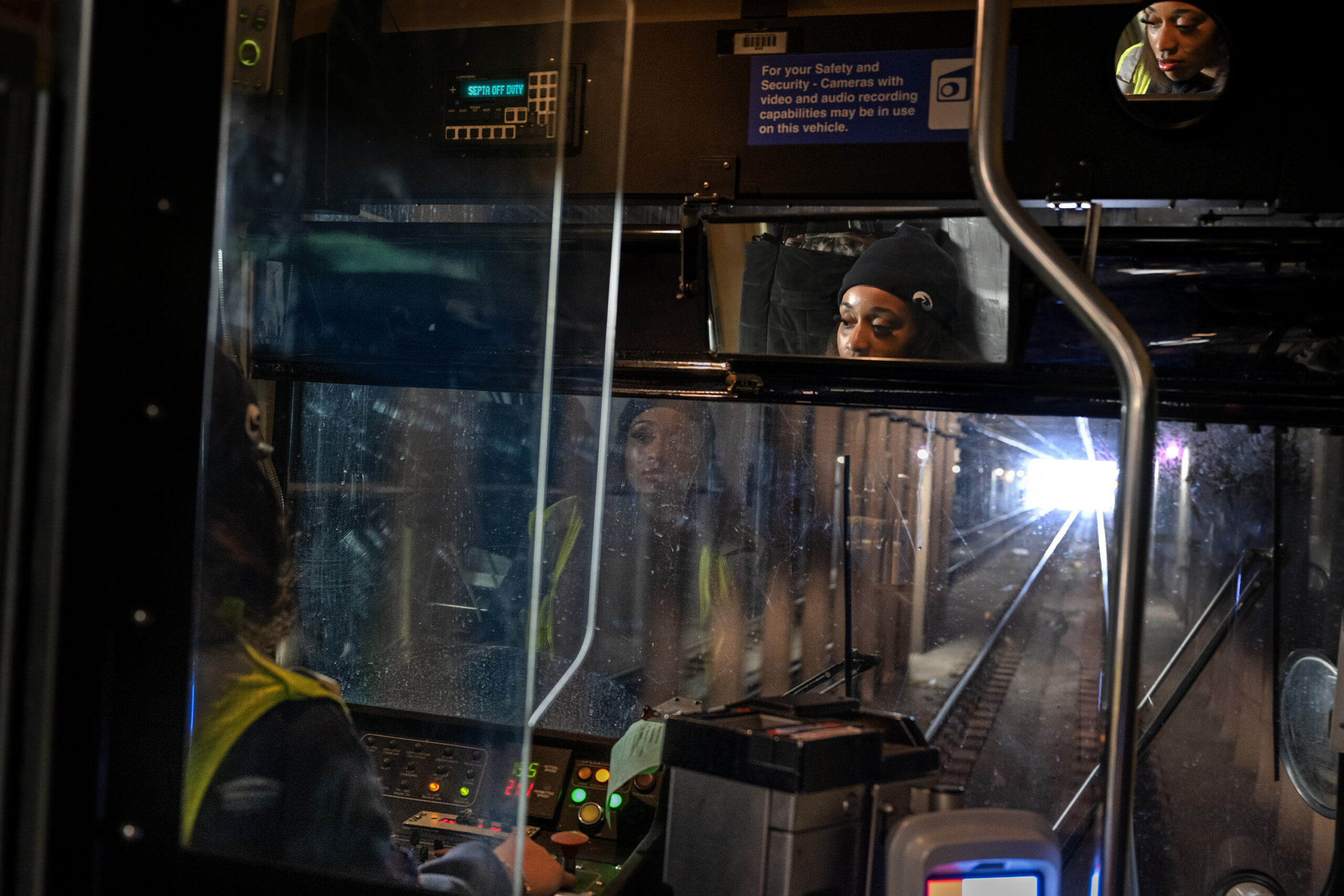
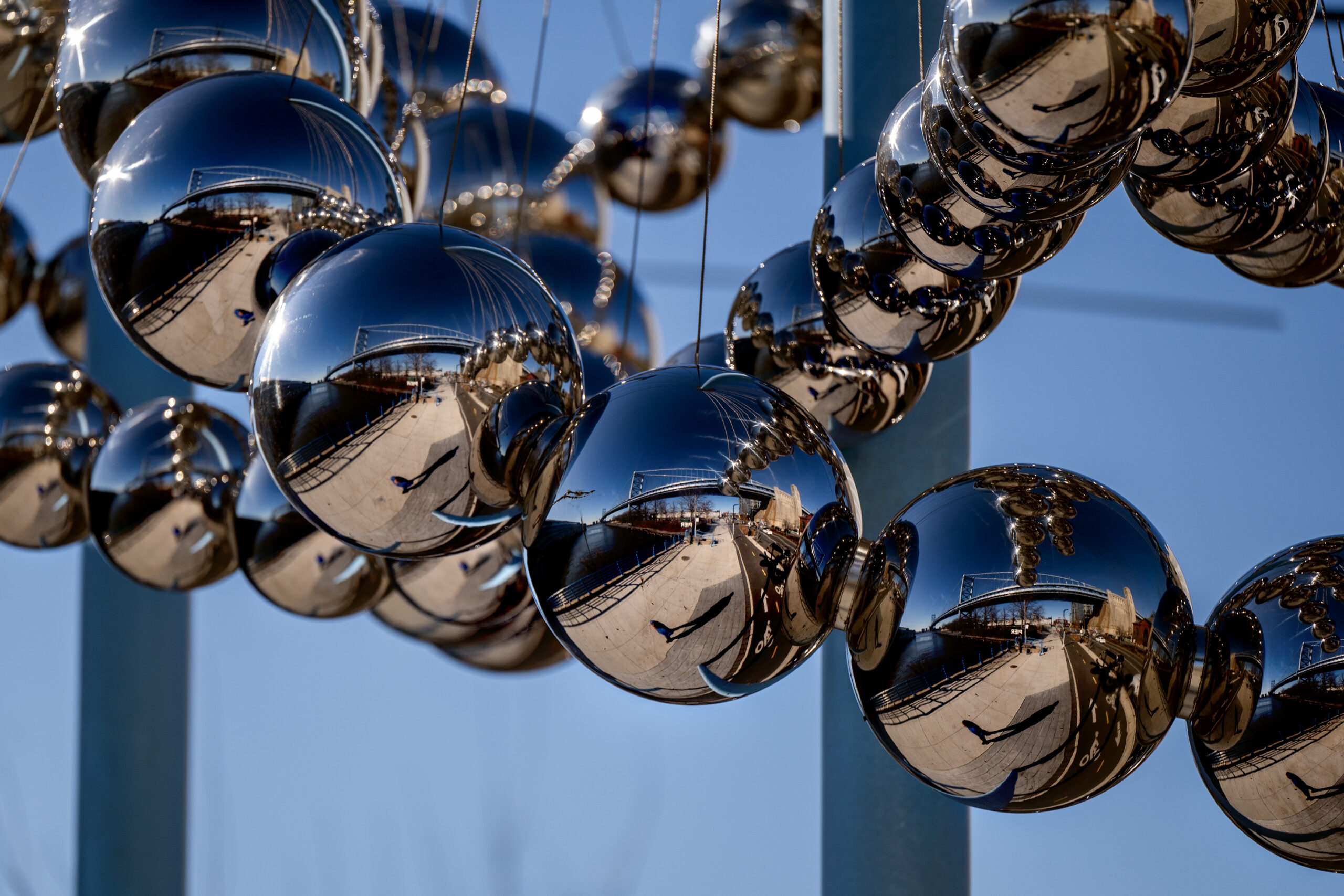
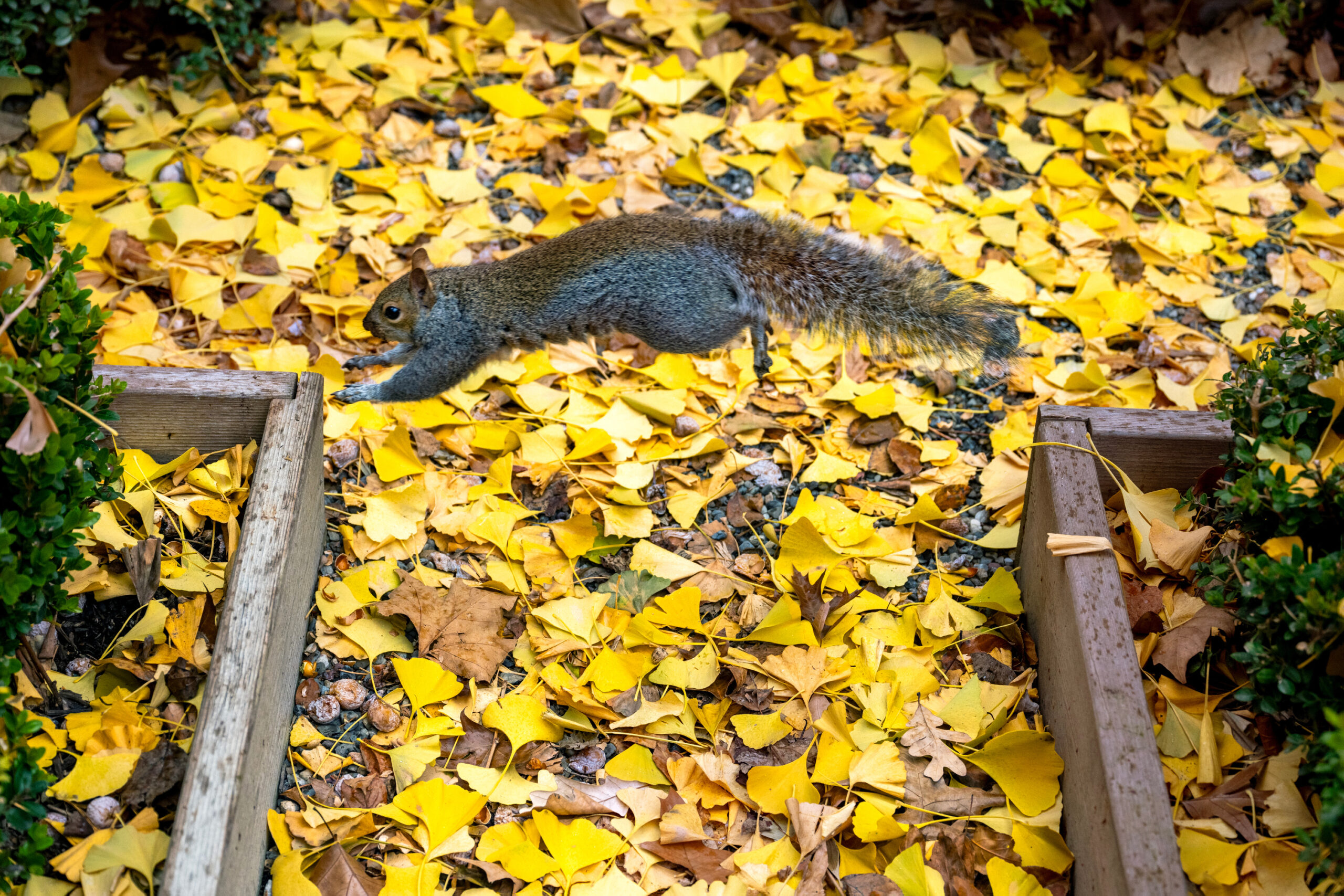
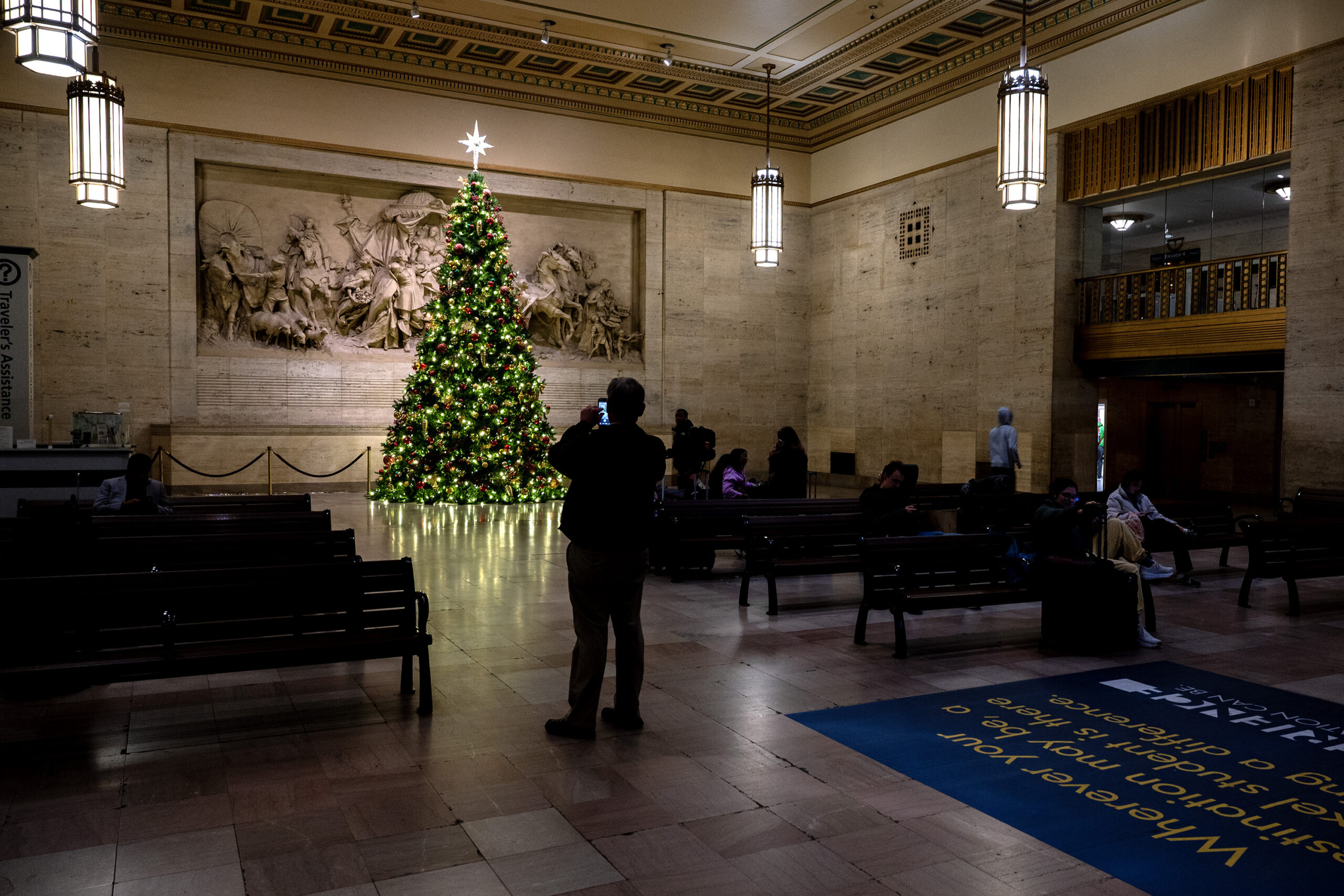
March 2, 2026: Lynasia Allen, a junior horticulture student at W.B. Saul High School is on lunch break at the Convention Center while setting up for the PHS Philadelphia Flower Show before it opened to the public. Her school’s exhibit is titled, “Up-Rooted, Re-Planted.” February 23, 2026: Bystanders at the President’s House try to prevent a “counter-protester” from ripping off notes posted by visitors where panels about slavery had been removed by President Donald Trump’s administration.February 16, 2026: What came first? The dirty snowpacked berm of frozen slush or the graffiti? February 9, 2026: Walking through a corrugated metal culvert called the “Duck Tunnel,” a pedestrian navigates the passageway under the SEPTA tracks on the Swarthmore College campus. February 2, 2026: A light-as-air Elmo balloon rolls along a sidewalk in Haddonfield, propelled by the wind as Sunday’s heavy snow starts to turn to ice and sleet. January 26, 2026: The President’s House in Independence National Historical Park hours Jan, 22, after all historical exhibits were removed following President Trump’s Executive Order last March that the content at national parks that “inappropriately disparage” the U.S. be reviewed. The site, a reconstructed “ghost” structure titled “Freedom and Slavery in the Making of a New Nation” (2010), serves as a memorial to the nine people George Washington enslaved there during the founding of America.January 19, 2026: A low-in-the-sky winter sun is behind the triangular pediment of the “front door” of the open-air President’s House installation in Independence National Historical Park. The reconstructed “ghost” structure with partial walls and windows of the Georgian home known in the 18th century as 190 High St. is officially titled, “Freedom and Slavery in the Making of a New Nation” (2010). It is designed to give visitors a sense of the house where the first two presidents of the United States, George Washington and John Adams, served their terms of office. The commemorative site designed by Emanuel Kelly, with Kelly/Maiello Architects, pays homage to nine enslaved people of African descent who were part of the Washington household with videos scripted by Lorene Cary and directed by Louis Massiah. Deepika Iyer holds her niece Ira Samudra aloft in a Rockyesque pose, while her parents photograph their 8 month-old daughter, in front of the famous movie prop at the top of the steps at the Philadelphia Art Museum. Iyer lives in Philadelphia and is hosting a visit by her mother Vijayalakshmi Ramachandran (partially hidden); brother Gautham Ramachandran; and her sister-in-law Janani Gautham who all live in Bangalore, India.January 5, 2026: Parade marshals trail behind the musicians of the Greater Kensington String Band heading to their #9 position start in the Mummers Parade. Spray paint by comic wenches earlier in the day left “Oh, Dem Golden Slippers” shadows on the pavement of Market Street. This year marked the 125th anniversary of Philly’s iconic New Year’s Day celebration.Dec. 29, 2025: Canada geese at sunrise in Evans Pond in Haddonfield, during the week of the Winter Solstice for the Northern Hemisphere. December 22, 2025: SEPTA trolley operator Victoria Daniels approaches the end of the Center City Tunnel, heading toward the 40th Street trolley portal after a tour to update the news media on overhead wire repairs in the closed tunnel due to unexpected issues from new slider parts.December 15, 2025: A historical interpreter waits at the parking garage elevators headed not to a December crossing of the Delaware River, but an event at the National Constitution Center. General George Washington was on his way to an unveiling of the U.S. Mint’s new 2026 coins for the Semiquincentennial, December 8, 2025: The Benjamin Franklin Bridge and pedestrians on the Delaware River Trail are reflected in mirrored spheres of the “Weaver’s Knot: Sheet Bend” public artwork on Columbus Boulevard. The site-specific stainless steel piece located between the Cherry Street and Race Street Piers was commissioned by the City’s Public Art Office and the Delaware River Waterfront Corporation and created and installed in 2022 by the design and fabrication group Ball-Nogues Studio. The name recalls a history that dominated the region for hundreds of years. “Weaver’s knot” derives from use in textile mills and the “Sheet bend” or “sheet knot” was used on sailing vessels for bending ropes to sails. November 29, 2025: t’s ginkgo time in our region again when the distinctive fan-shaped leaves turn yellow and then, on one day, lose all their leaves at the same time laying a carpet on city streets and sidewalks. A squirrel leaps over leaves in the 18th Century Garden in Independence National Historical Park Nov. 25, 2025. The ginkgo (Ginkgo biloba) is considered a living fossil as it’s the only surviving species of a group of trees that existed before dinosaurs. Genetically, it has remained unchanged over the past 200 million years. William Hamilton, owner the Woodlands in SW Phila (no relation to Alexander Hamilton) brought the first ginkgo trees to North America in 1785.November 24, 2025: The old waiting room at 30th Street Station that most people only pass through on their way to the restrooms has been spiffed up with benches – and a Christmas tree. It was placed there this year in front of the 30-foot frieze, “The Spirit of Transportation” while the lobby of Amtrak’s $550 million station restoration is underway. The 1895 relief sculpture by Karl Bitter was originally hung in the Broad Street Station by City Hall, but was moved in 1933. It depicts travel from ancient to modern and even futuristic times.
Newspapers do many service stories, letting readers know about upcoming events.
The “things to do” pieces are usually illustrated either with pictures provided by the organizations or their public relations partners or, in the case of annual events, our own staff’s file photos from previous years.
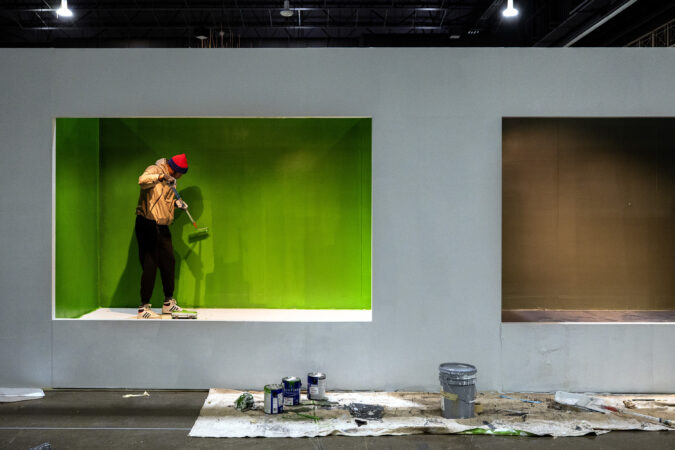
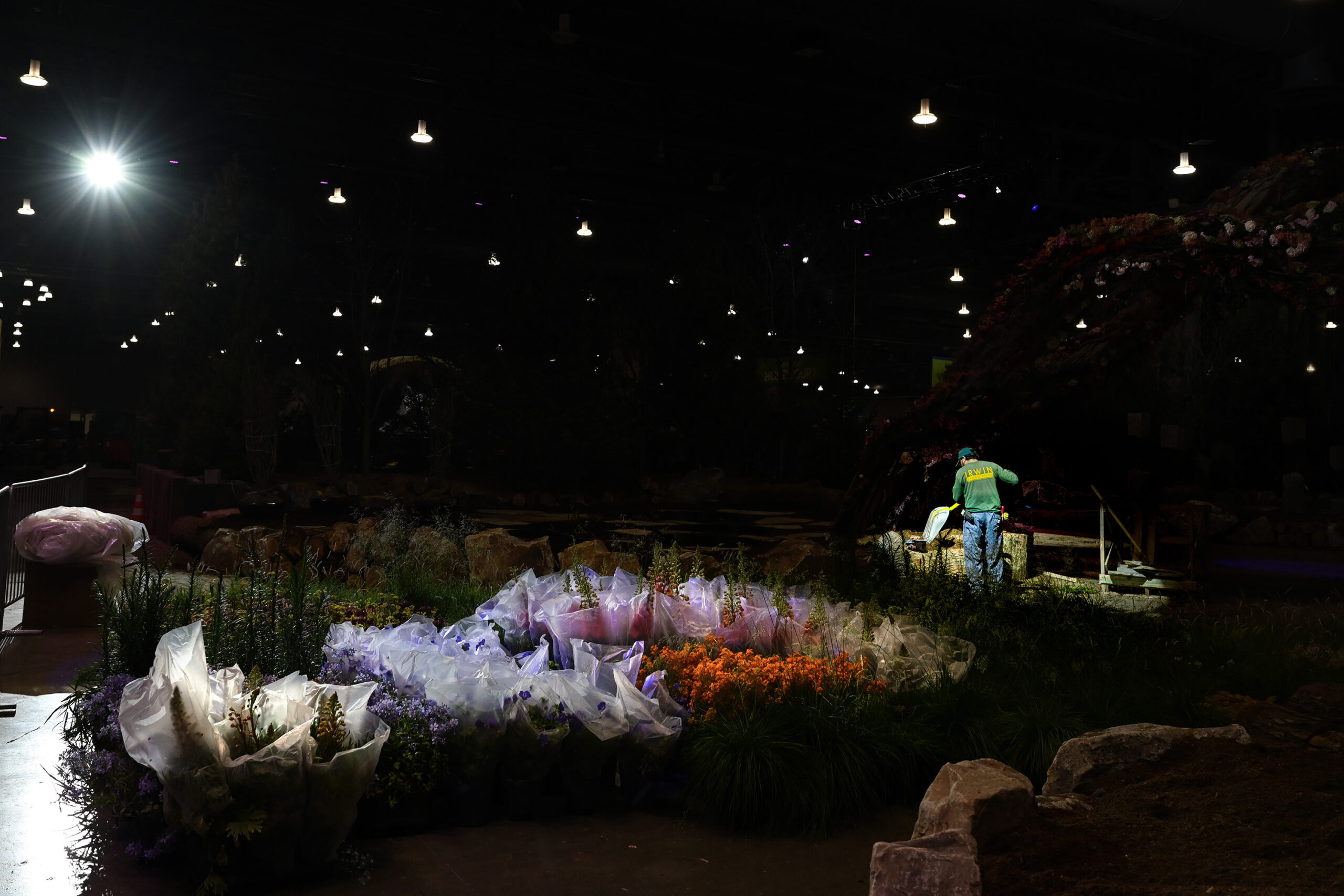
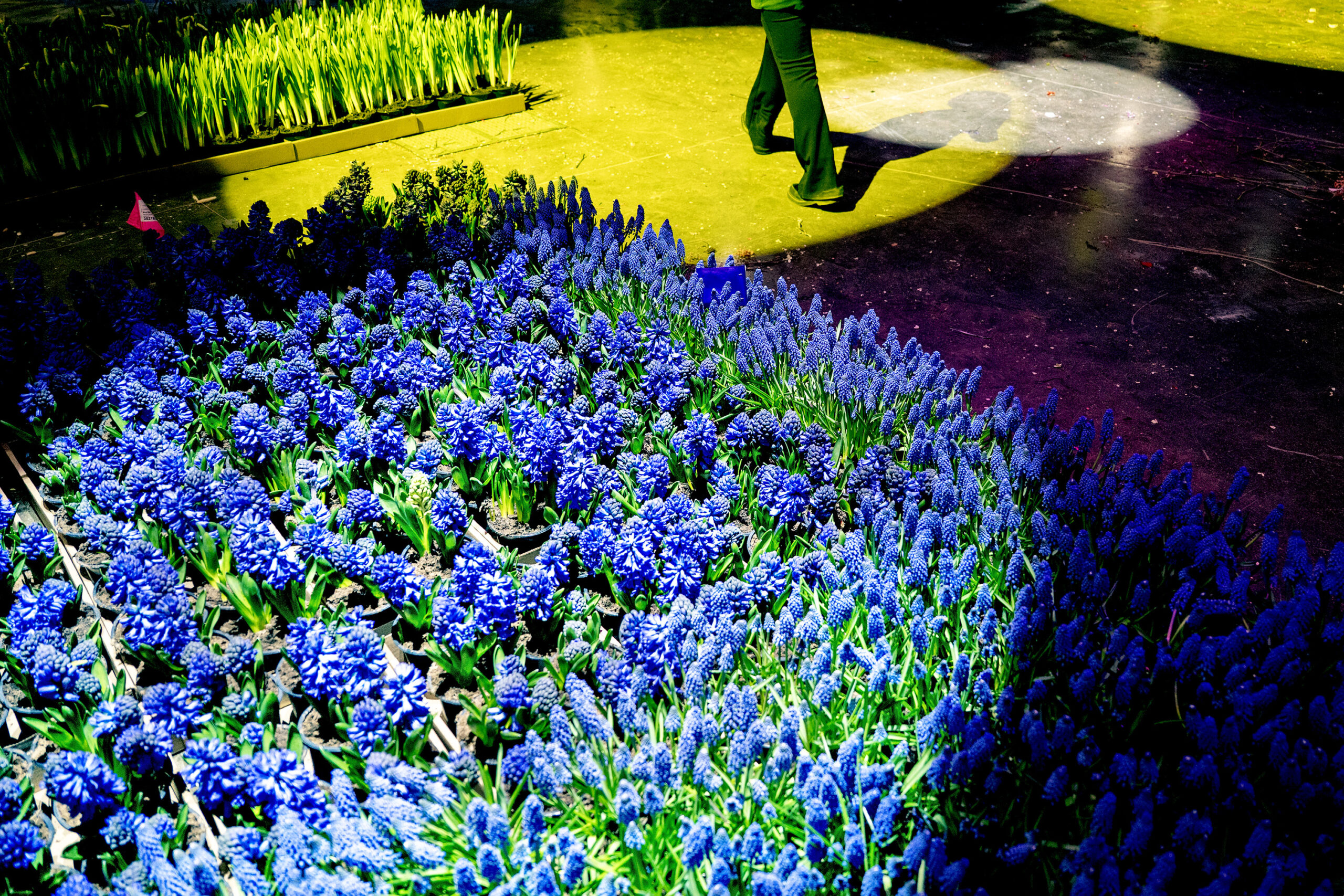
Technicians adjust the lighting as Andres Ceballos with Irwin Landscaping in Hockessin, Delaware is setting up for the PHS Philadelphia Flower Show Tuesday, Feb. 24, 2026.
I was at the Convention Center earlier this week to photograph preparations for the nation’s largest and longest-running horticultural event. As with similar preview assignments, the stars of the show — the flowers in this case — were not quite ready for prime time.
Most of the blooms are waiting to be unloaded from refrigerated trucks, and those inside the Convention Center are still wrapped in plastic. So I rely on close-ups, or take advantage of the play of color and light.
Awaiting placement in the entrance garden, hyacinths are in the spotlight during light testing.
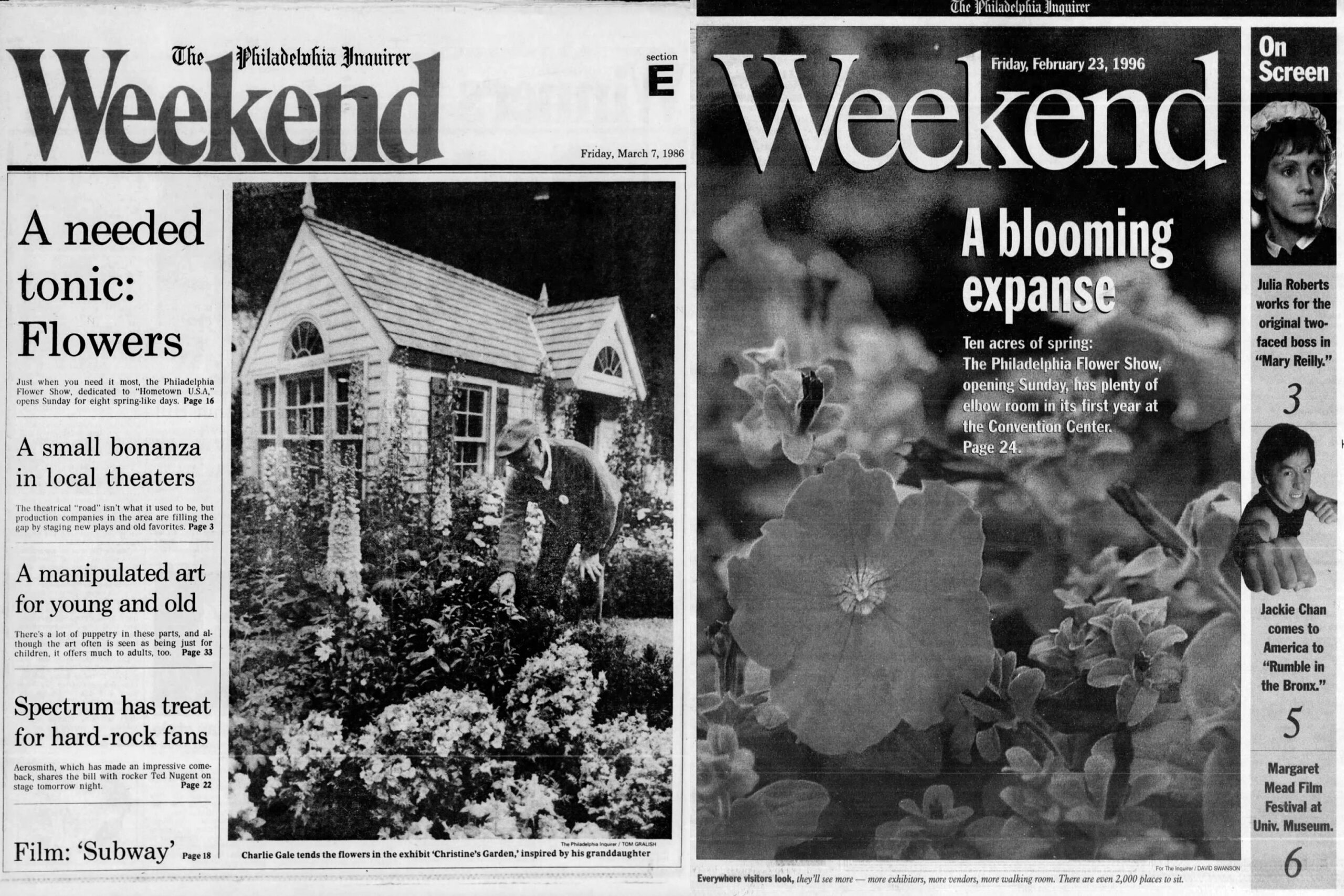
It is hard enough to convey the perfumes of thousands of blooms in the air with mere photos — or the vibrant color of the petals in the meticulously designed displays. Imagine trying to showcase it all in black-and-white.
LEFT: March 7, 1986. RIGHT: February 23, 1996.
That’s my photo on the cover of The Inquirer Weekend section on the left, from 40 years ago when the Flower Show was at the Philadelphia Civic Center in University City. David Swanson made the close up on tje right 30 years ago, the year the show moved to the new Pennsylvania Convention Center.
When The Inquirer and Daily News knew we were switching from black-and-white to color presses a forward-thinking photo editor had us pop in a roll of color negative film while covering some events so we’d have some color photographs in the files when the time came. (That finally happened in March of 1993. In a focus group a few years earlier, loyal readers “were horrified” when they were shown a prototype of a possible color Inquirer.)
I don’t know yet if I’ll be back at the Flower Show this week, or if another photographer will be assigned, but you can count not only on seeing live coverage, but some of the photos again before the 2027 show.
Favorite assignment anniversary
Speaking of anniversaries and black-and-white photography, I am often asked if I have a favorite assignment.
It was 40 years ago this week that I made the Weekend Flower Show cover photo above — days after returning from six weeks in the Philippines. I was there as millions of Filipinos took to the streets in a “People Power” revolution (also known as the EDSA Revolution).
The nonviolent revolution led to the ouster of President Ferdinand Marcos as Corazon “Cory” Aquino became the country’s 11th president. It was seen as a model for similar uprisings that occurred around the world in the following years, from the occupation of Tiananmen Square to the Fall of Communism and the Arab Spring.
These images are the original prints — developed in a hotel bathroom I converted into a darkroom — transmitted back to The Inquirer in January and February of 1986.
Since 1998 a black-and-white photo has appeared every Monday in staff photographer Tom Gralish’s “Scene Through the Lens” photo column in the print editions of The Inquirer’s local news section. Here are the most recent, in color:
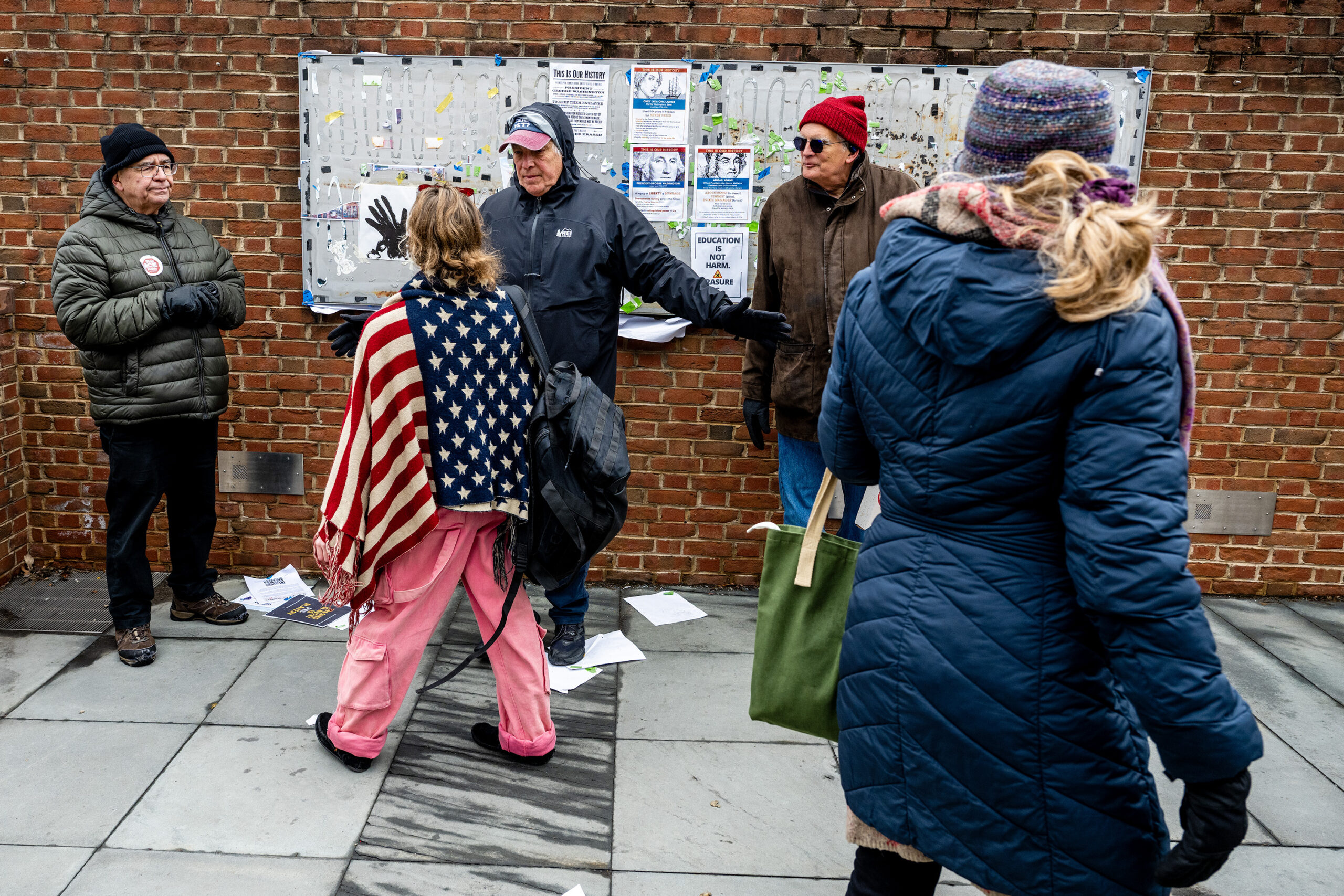
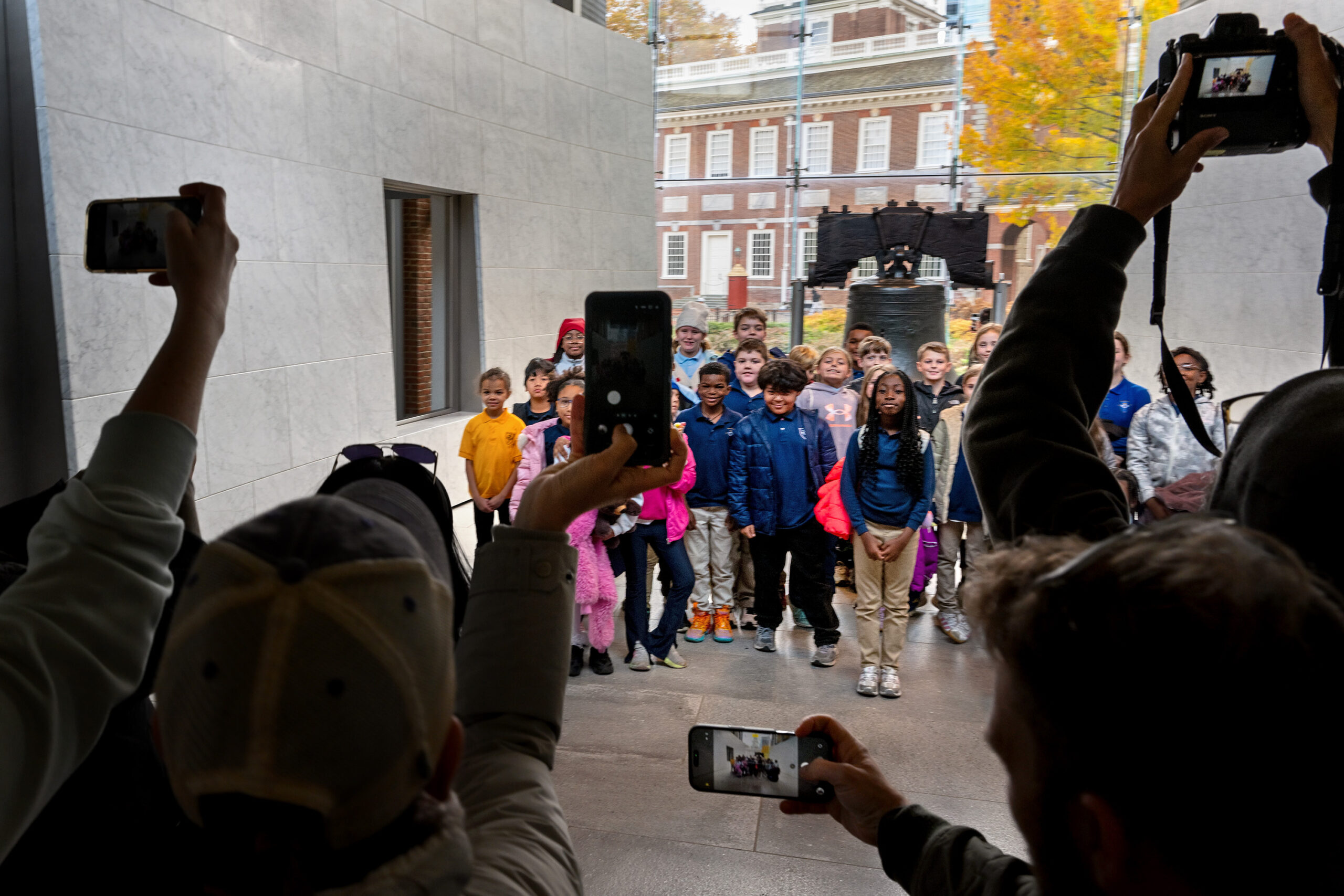
February 23, 2026: Bystanders at the President’s House try to prevent a “counter-protester” from ripping off notes posted by visitors where panels about slavery had been removed by President Donald Trump’s administration.February 16, 2026: What came first? The dirty snowpacked berm of frozen slush or the graffiti? February 9, 2026: Walking through a corrugated metal culvert called the “Duck Tunnel,” a pedestrian navigates the passageway under the SEPTA tracks on the Swarthmore College campus. February 2, 2026: A light-as-air Elmo balloon rolls along a sidewalk in Haddonfield, propelled by the wind as Sunday’s heavy snow starts to turn to ice and sleet. January 26, 2026: The President’s House in Independence National Historical Park hours Jan, 22, after all historical exhibits were removed following President Trump’s Executive Order last March that the content at national parks that “inappropriately disparage” the U.S. be reviewed. The site, a reconstructed “ghost” structure titled “Freedom and Slavery in the Making of a New Nation” (2010), serves as a memorial to the nine people George Washington enslaved there during the founding of America.January 19, 2026: A low-in-the-sky winter sun is behind the triangular pediment of the “front door” of the open-air President’s House installation in Independence National Historical Park. The reconstructed “ghost” structure with partial walls and windows of the Georgian home known in the 18th century as 190 High St. is officially titled, “Freedom and Slavery in the Making of a New Nation” (2010). It is designed to give visitors a sense of the house where the first two presidents of the United States, George Washington and John Adams, served their terms of office. The commemorative site designed by Emanuel Kelly, with Kelly/Maiello Architects, pays homage to nine enslaved people of African descent who were part of the Washington household with videos scripted by Lorene Cary and directed by Louis Massiah. Deepika Iyer holds her niece Ira Samudra aloft in a Rockyesque pose, while her parents photograph their 8 month-old daughter, in front of the famous movie prop at the top of the steps at the Philadelphia Art Museum. Iyer lives in Philadelphia and is hosting a visit by her mother Vijayalakshmi Ramachandran (partially hidden); brother Gautham Ramachandran; and her sister-in-law Janani Gautham who all live in Bangalore, India.January 5, 2026: Parade marshals trail behind the musicians of the Greater Kensington String Band heading to their #9 position start in the Mummers Parade. Spray paint by comic wenches earlier in the day left “Oh, Dem Golden Slippers” shadows on the pavement of Market Street. This year marked the 125th anniversary of Philly’s iconic New Year’s Day celebration.Dec. 29, 2025: Canada geese at sunrise in Evans Pond in Haddonfield, during the week of the Winter Solstice for the Northern Hemisphere. December 22, 2025: SEPTA trolley operator Victoria Daniels approaches the end of the Center City Tunnel, heading toward the 40th Street trolley portal after a tour to update the news media on overhead wire repairs in the closed tunnel due to unexpected issues from new slider parts.December 15, 2025: A historical interpreter waits at the parking garage elevators headed not to a December crossing of the Delaware River, but an event at the National Constitution Center. General George Washington was on his way to an unveiling of the U.S. Mint’s new 2026 coins for the Semiquincentennial, December 8, 2025: The Benjamin Franklin Bridge and pedestrians on the Delaware River Trail are reflected in mirrored spheres of the “Weaver’s Knot: Sheet Bend” public artwork on Columbus Boulevard. The site-specific stainless steel piece located between the Cherry Street and Race Street Piers was commissioned by the City’s Public Art Office and the Delaware River Waterfront Corporation and created and installed in 2022 by the design and fabrication group Ball-Nogues Studio. The name recalls a history that dominated the region for hundreds of years. “Weaver’s knot” derives from use in textile mills and the “Sheet bend” or “sheet knot” was used on sailing vessels for bending ropes to sails. November 29, 2025: t’s ginkgo time in our region again when the distinctive fan-shaped leaves turn yellow and then, on one day, lose all their leaves at the same time laying a carpet on city streets and sidewalks. A squirrel leaps over leaves in the 18th Century Garden in Independence National Historical Park Nov. 25, 2025. The ginkgo (Ginkgo biloba) is considered a living fossil as it’s the only surviving species of a group of trees that existed before dinosaurs. Genetically, it has remained unchanged over the past 200 million years. William Hamilton, owner the Woodlands in SW Phila (no relation to Alexander Hamilton) brought the first ginkgo trees to North America in 1785.November 24, 2025: The old waiting room at 30th Street Station that most people only pass through on their way to the restrooms has been spiffed up with benches – and a Christmas tree. It was placed there this year in front of the 30-foot frieze, “The Spirit of Transportation” while the lobby of Amtrak’s $550 million station restoration is underway. The 1895 relief sculpture by Karl Bitter was originally hung in the Broad Street Station by City Hall, but was moved in 1933. It depicts travel from ancient to modern and even futuristic times. November 17, 2025: Students on a field trip from the Christian Academy in Brookhaven, Delaware County, pose for a group photo in front of the Liberty Bell in Independence National Historical Park on Thursday. The trip was planned weeks earlier, before they knew it would be on the day park buildings were reopening after the government shutdown ended. “We got so lucky,” a teacher said. Then corrected herself. “It’s because we prayed for it.”
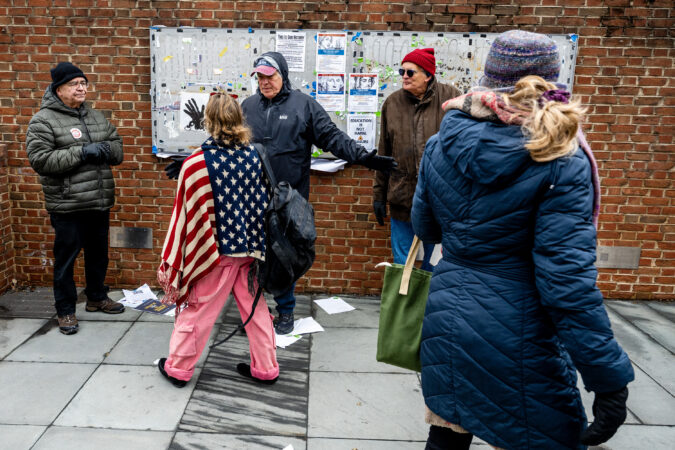
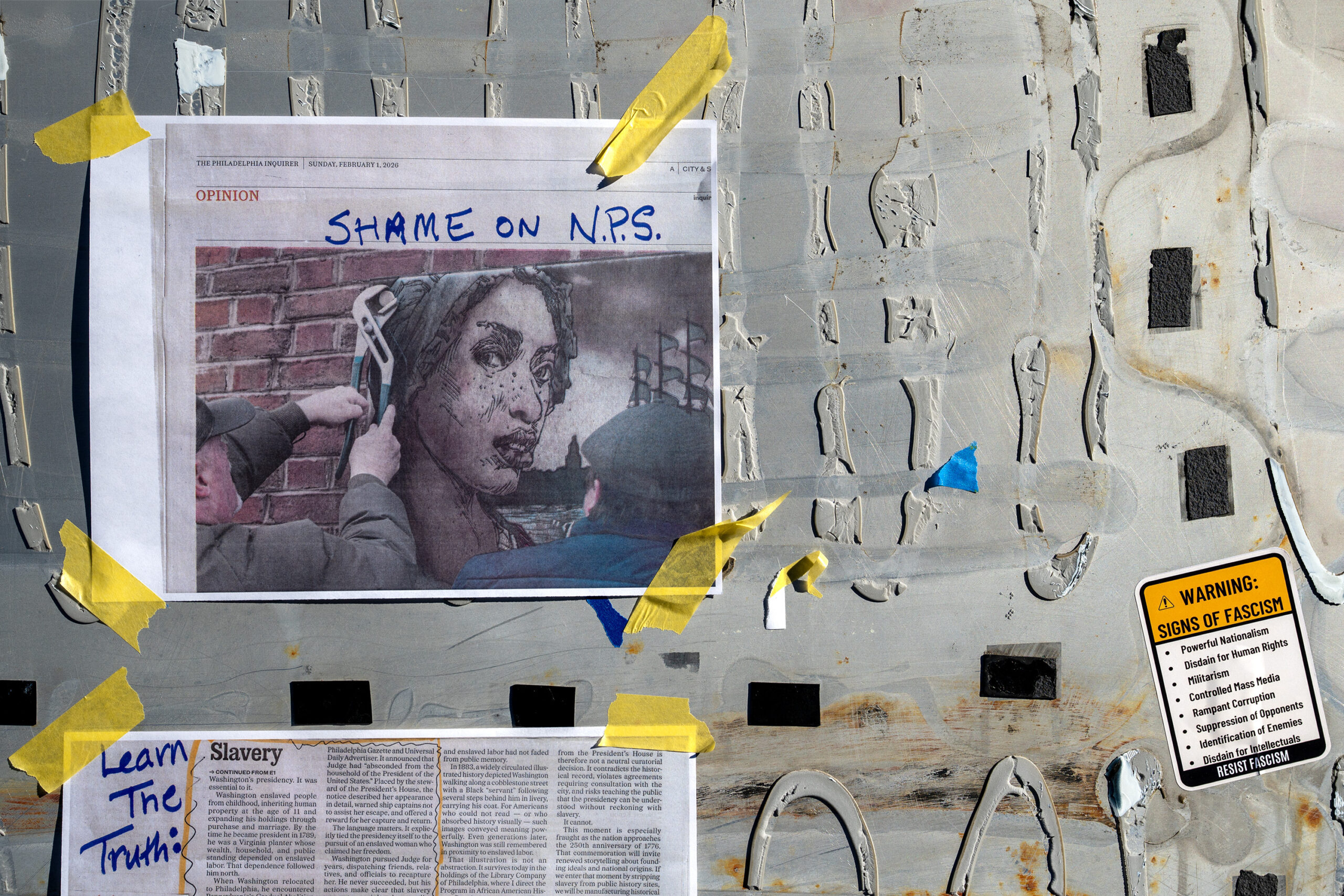
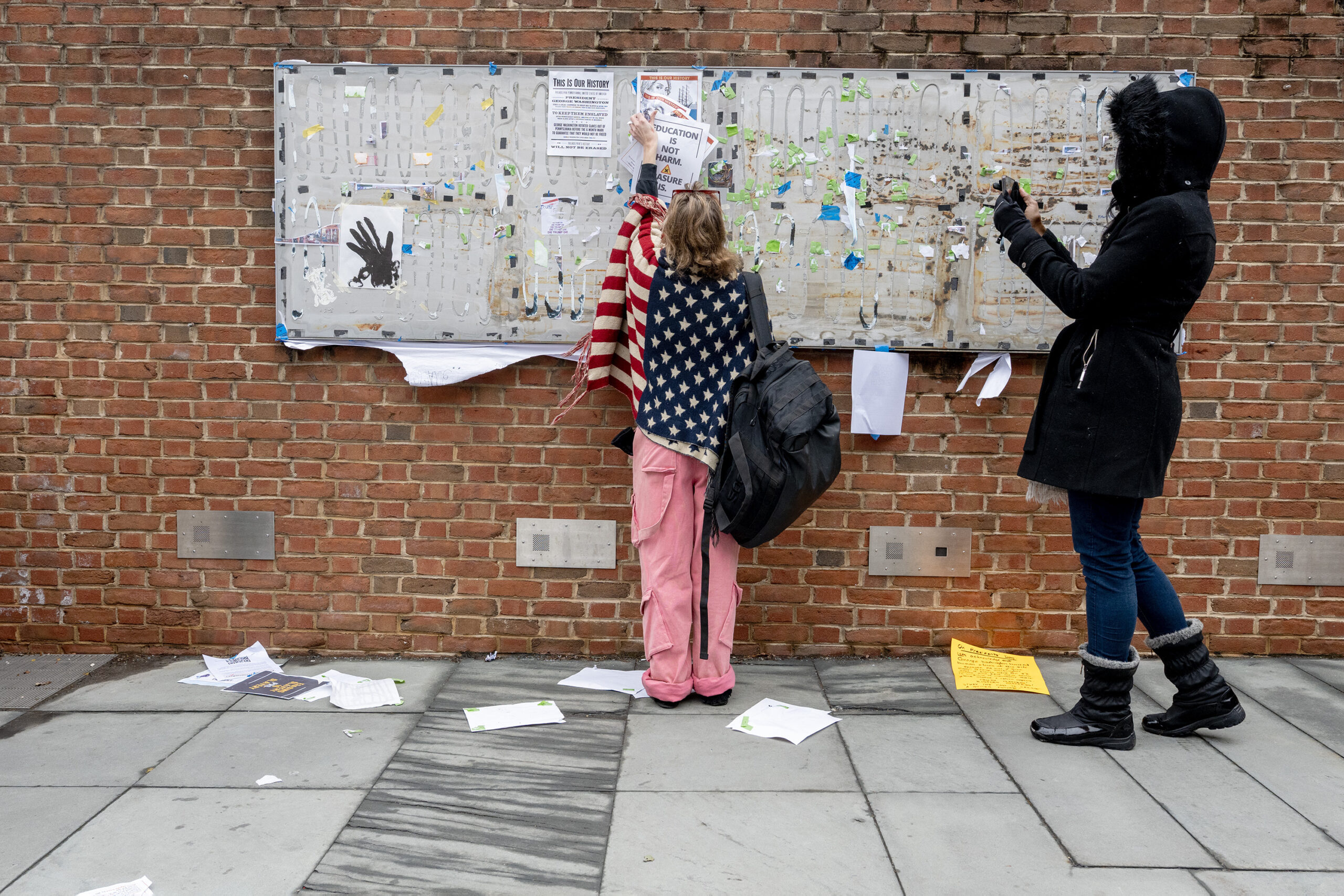
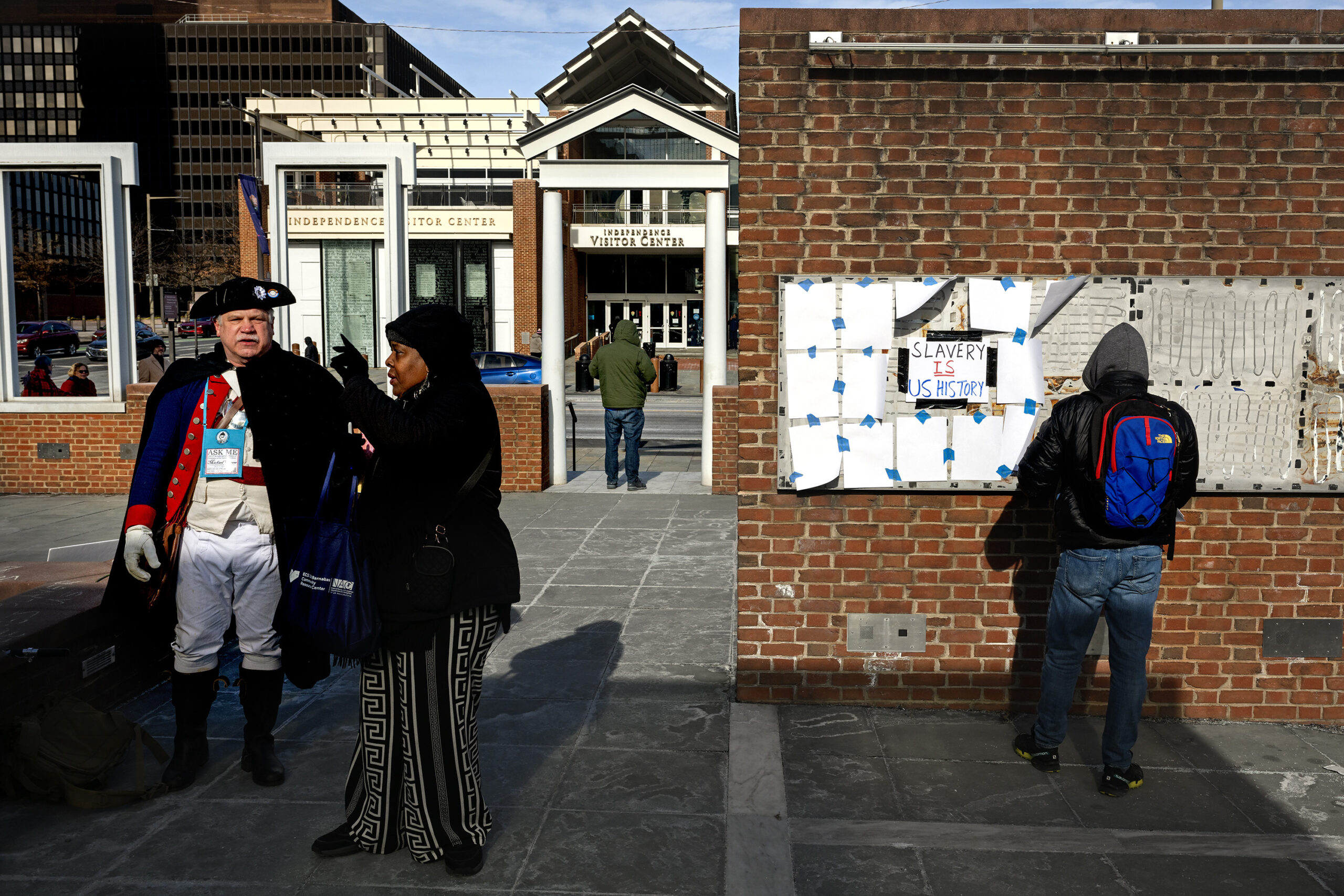
The brief confrontation came this week in front of the empty frames where visitors had been taping informal signs to fill the void where the original panels hung at the President’s House, after President Donald Trump’s administration removed the slavery exhibits last month.
Signs and notes placed by visitors at the President’s House in Independence National Historical Park.
Glenn Bergman and his wife Dianne Manning were just arriving at the Avenging the Ancestors Coalition’s annual Presidents’ Day observance. They had earlier attended the weekly ICE vigil a few blocks away. Bystanders yelled at the woman to stop as she declared it was her “First Amendment right” while tearing off the notes.
Bergman stepped in to block her, saying later, he “had to do something.” After a few seconds everyone stepped away, accusing her of “littering.”
She grabbed the papers off the ground and left abruptly, shouting “George Washington made this country great… for white people.”
The entire interaction lasted less than three minutes — and unfolded right on the other side of the wall from where the main advocacy organization leading the fight to protect the President’s House was gathered.
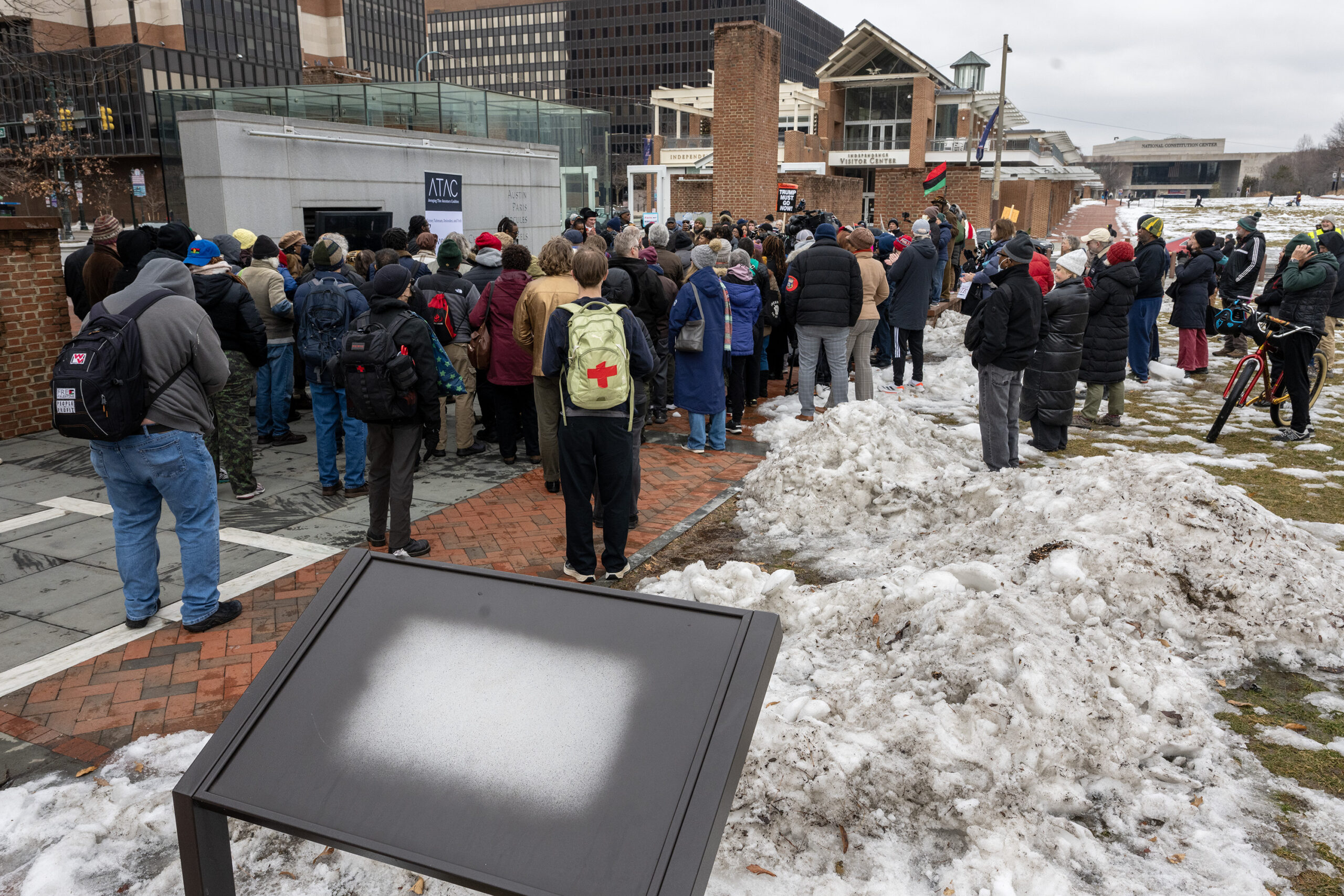
The Avenging the Ancestors Coalition holds their annual Presidents’ Day observance at the President’s House Monday, Feb. 16, 2026. The empty frame in the foreground held a panel about slavery that was removed.
As the week of Presidents’ Day ends, I’m moving that presidential apostrophe back a letter and remembering my time photographing at the President’s House.
It is almost a year since our current President signed Executive Order #14253, titled “Restoring Truth and Sanity to American History,” on Mar. 27, 2025.
In addition to requiring the Secretary of the Interior to develop a plan to improve Independence National Historical Park in preparation for our 250th birthday, he directed National Park Service staff to identify language and historical depictions that “inappropriately disparage Americans past or living.”
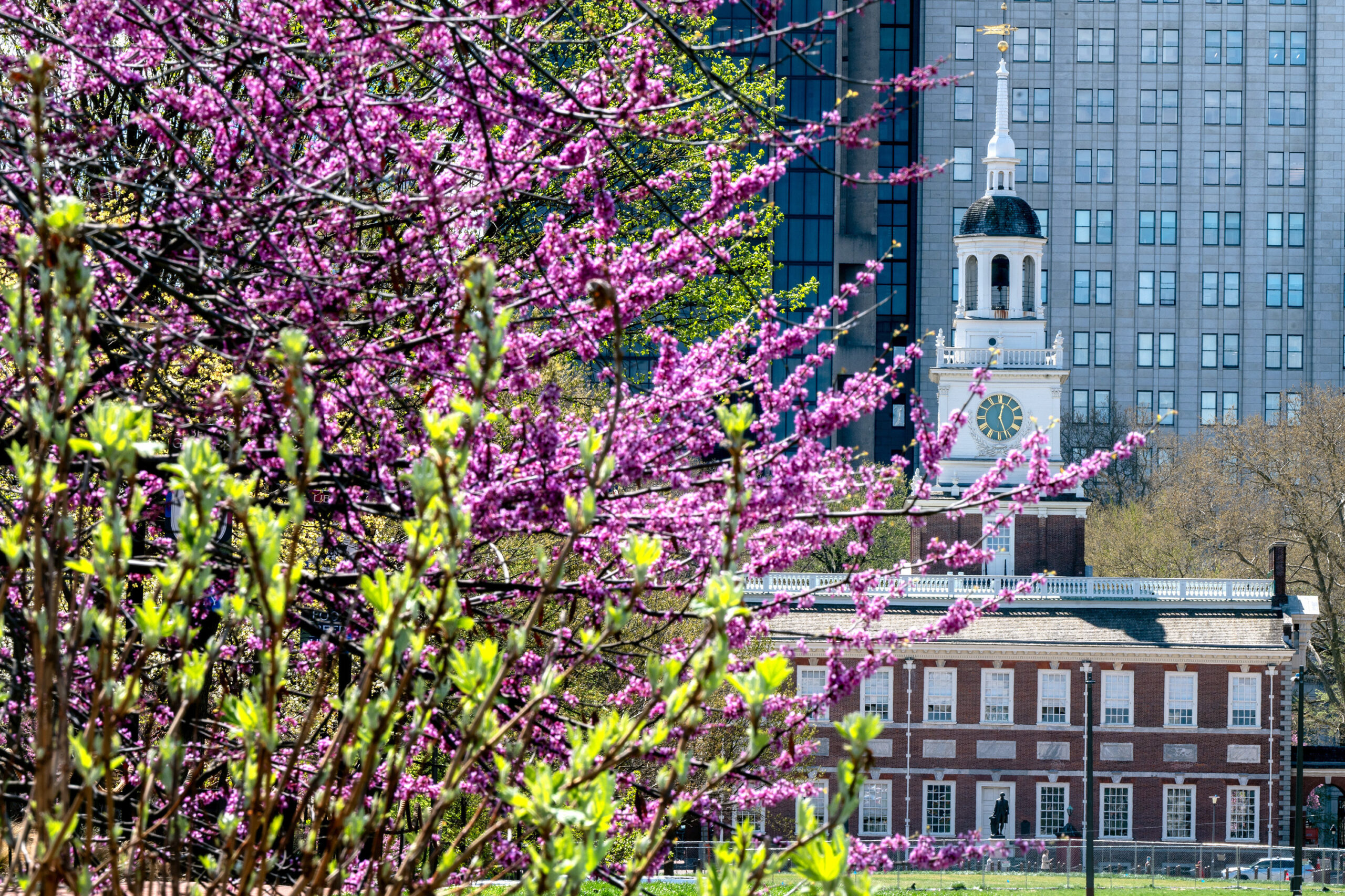
Flowering trees by Independence Hall in spring, 2025.
In May, Interior Secretary Doug Burgum issued an order that signs be posted in all National Park asking employees and visitors to report any negative information.
A sign and QR code located in Independence National Historical Park inviting the public to submit feedback on repairs, improvements, and content that is “negative about either past or living Americans.”
In July, President Donald Trump’s administration started taking steps to review or remove materials key to understanding the history of race in America.
But it didn’t happen until last month.
I was on another assignment nearby when the newspaper received a tip workers were on the site “with tape measures.”
They weren’t talking to our reporter, already on the site, when I arrived to find park service workers indeed examining the panels. So I just assumed if they would be dismantling the exhibits it would happen in the middle of the night — like when the statue of former Mayor Frank Rizzo was “disappeared” and his Italian Market mural was erased under cover of darkness in 2020.
I made a few photos then left to edit and upload, only to get a text, “it’s happening now.”
It was awkward as the workers asked me to “give us a break,” while I hovered around — not right on top of them — watching every move. I replied we were both doing our jobs.
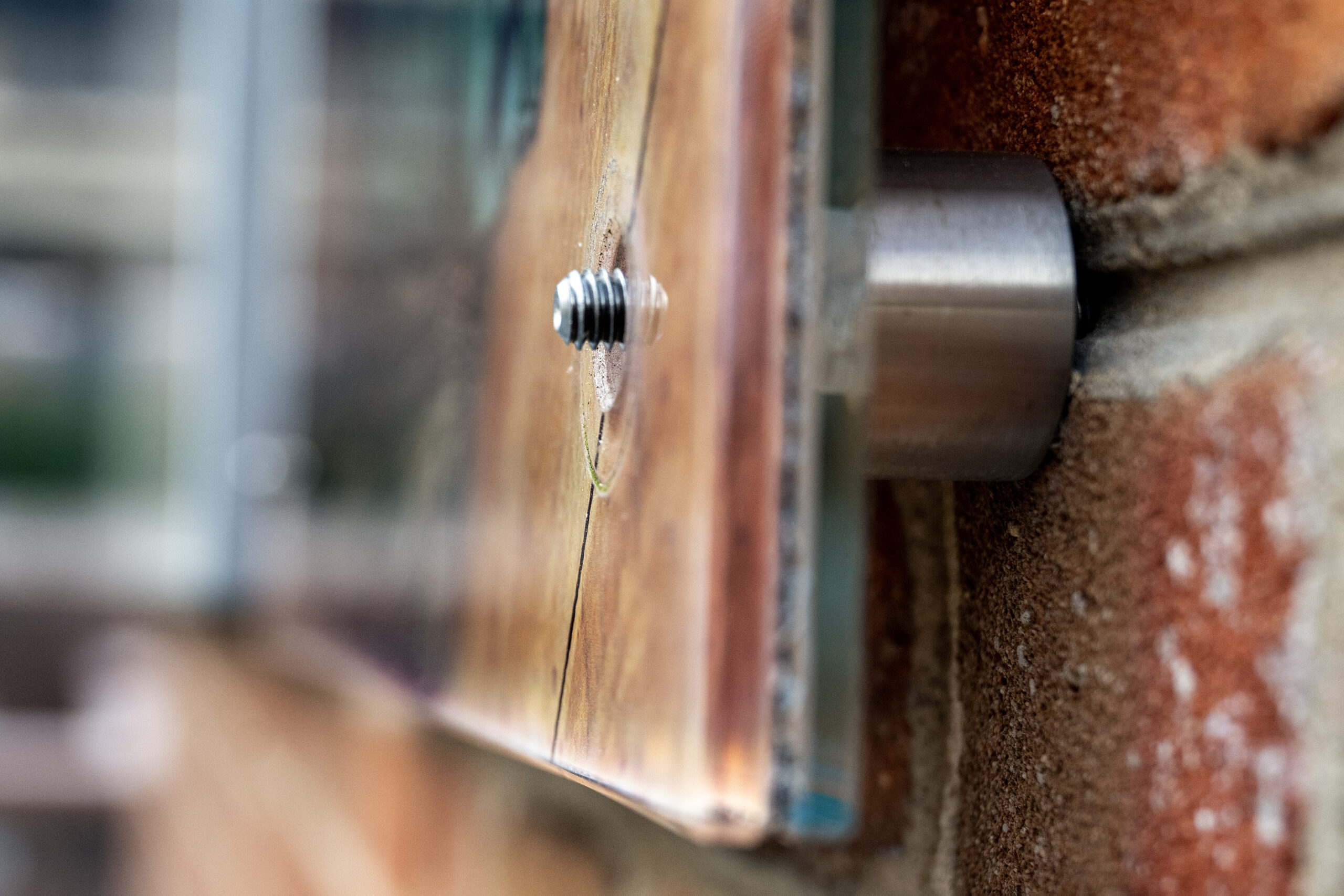
Bolts are removed from Interpretive panels as the exhibits are taken off the walls in Independence National Historical Park Thursday, Jan. 22, 2026.
It wasn’t long before other news media arrived, and I continued to document the entire removal. I was joined by photographer Elizabeth Robertson who made a photo from our newsroom overlooking the site. Later that evening, I returned to a much quieter scene.
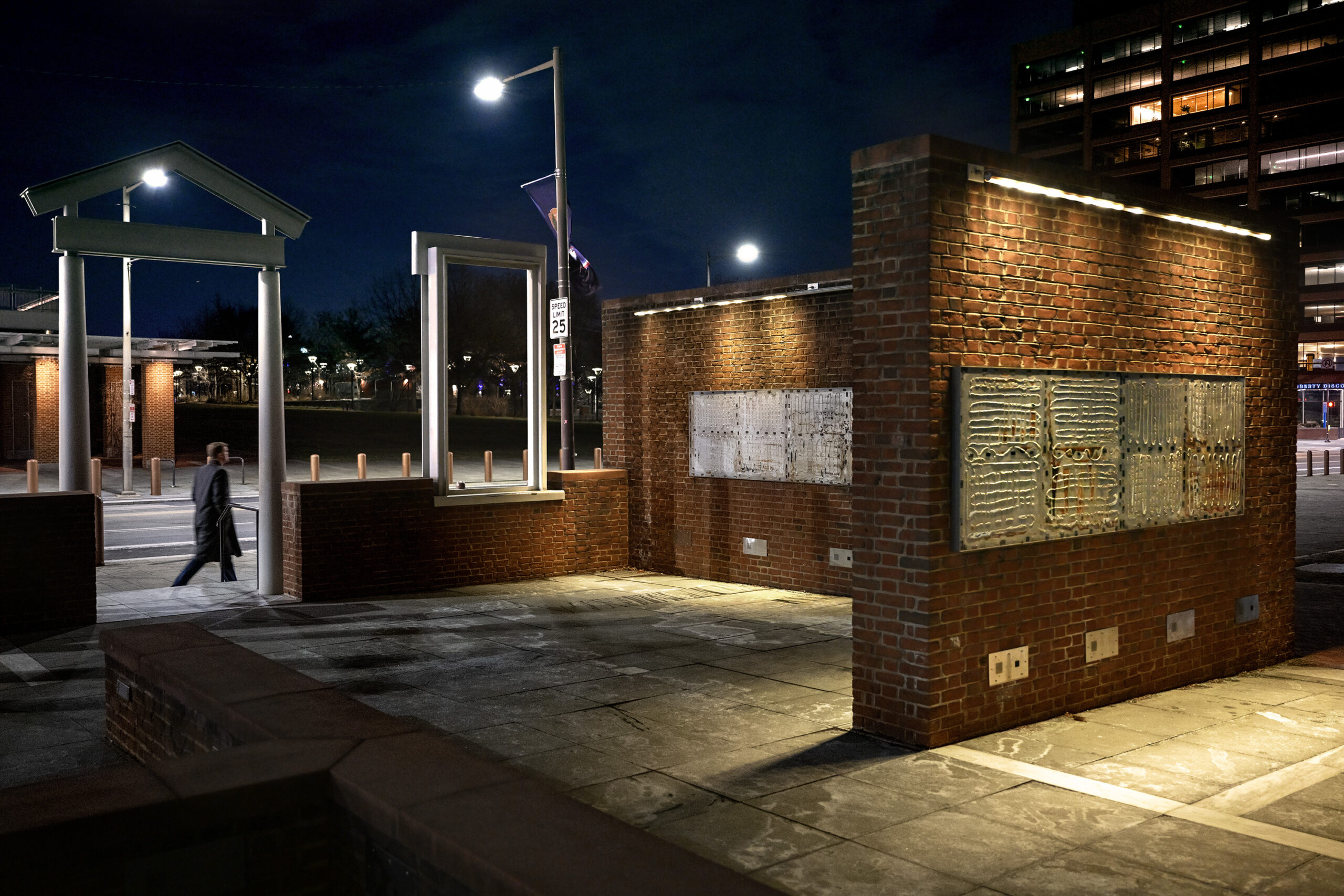
The President’s House Historical Park Jan. 22, 2026, after all historical exhibits were removed. The site, a reconstructed “ghost” structure titled “Freedom and Slavery in the Making of a New Nation” (2010), serves as a memorial to the nine people George Washington enslaved there during the founding of America.
That wasn’t the end of it. Protests continued…
Historical interpreter Michael Carver talks with visitors while he and other members of the Association of Philadelphia Tour Guides host “History Matters” offering “Free Talks with Tour Guides” Jan. 24, 2026 at the President’s House site two days after more than a dozen educational displays about slavery were removed from the site.
… and the City of Philadelphia sued the National Park Service and Department of Interior. District Judge Cynthia M. Rufe inspected the removed panels in storage for herself, visited the President’s House site, then ordered the federal government “restore the President’s House Site to its physical status as of January 21, 2026,” which is the day before the exhibits were removed.
Trump administration officials appealed her ruling calling it “unnecessary judicial intervention” and on Presidents’ Day, when Glenn Bergman and Dianne Manning of Mt. Airy were attending the Avenging the Ancestors Coalition rally, Judge Rufe issued an injunction that required the federal agencies to restore the interpretive panels.
So we all waited to see what happened next. The “what’s next?” was two days later the federal judge, citing the agencies’ “failure to comply” set a deadline of 5 p.m. Friday.
A spokesperson for the White House defended their inaction saying removal of the exhibits is not final because the Department of the Interior is “engaged in an ongoing review of our nation’s American history exhibits in accordance with the President’s executive order to eliminate corrosive ideology, restore sanity, and reinstate the truth.”
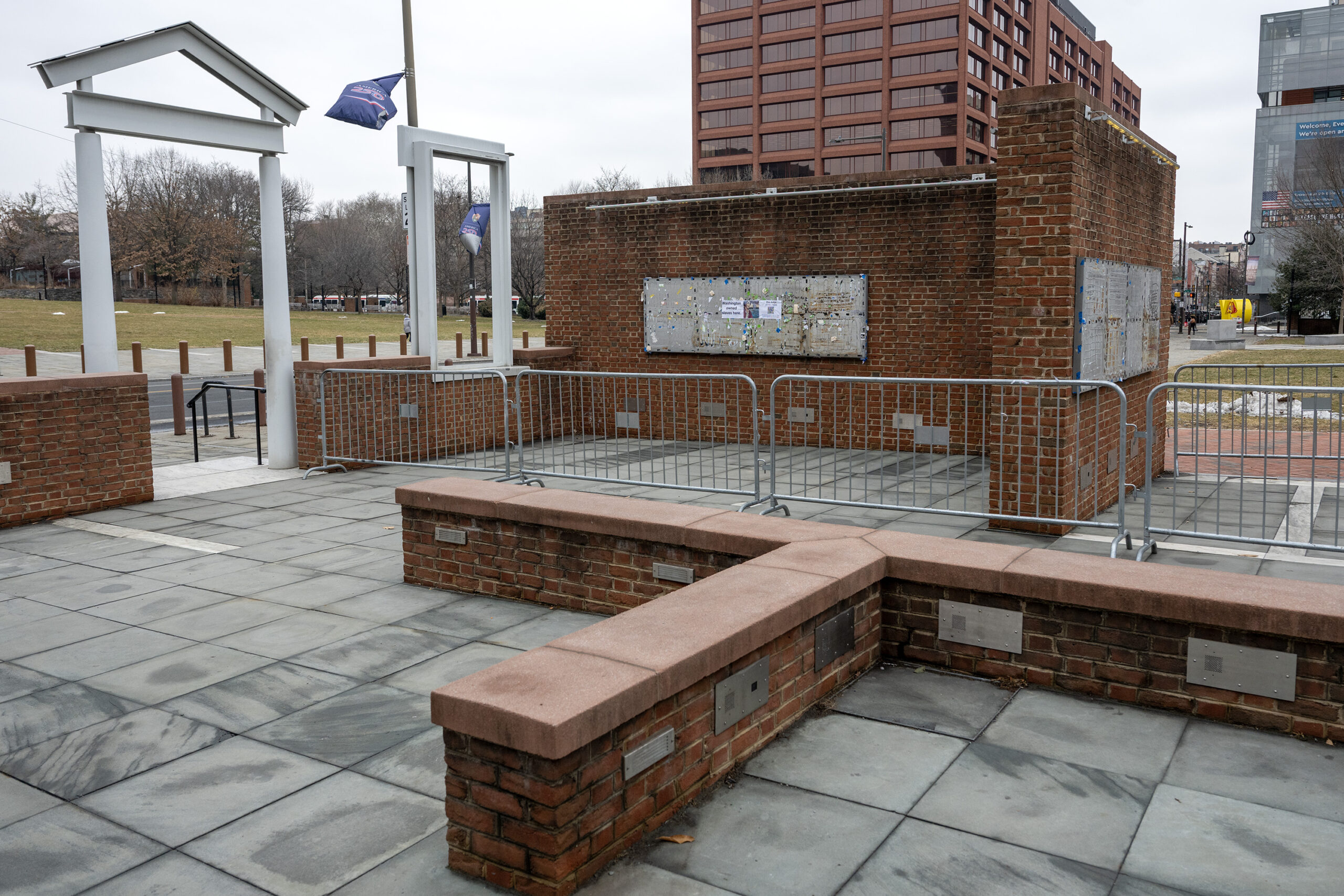
A cleaded up and power-washed President’s House site the day after a federal judge ordered the Trump administration to restore the slavery exhibits that the National Park Service removed from the President’s House in January.
Upon hearing the news I thought, “Friday is my day off. I will just have to read what my excellent reporting colleagues Fallon Roth, Maggie Prosser, and Abraham Gutman write about it. And live vicariously through the photos by whichever of my photo co-workers gets the assignment.“
I just couldn’t stay away, so I returned to the site early Thursday morning, just to “babysit.”
After about 30 minutes and only seeing two visitors, a park service worker arrived with a 5-gallon Lowe’s plastic blue bucket ($4.95, lid sold separately) and another, plain white plastic pail full of rags. More prep work for Friday, my day off, I figured.
When he returned with a six-foot Little Giant ladder ($255.99, King Kombo), I asked “so you’re not just doing more cleaning, right?”
I alerted my newsdesk, and spent the next six hours there.
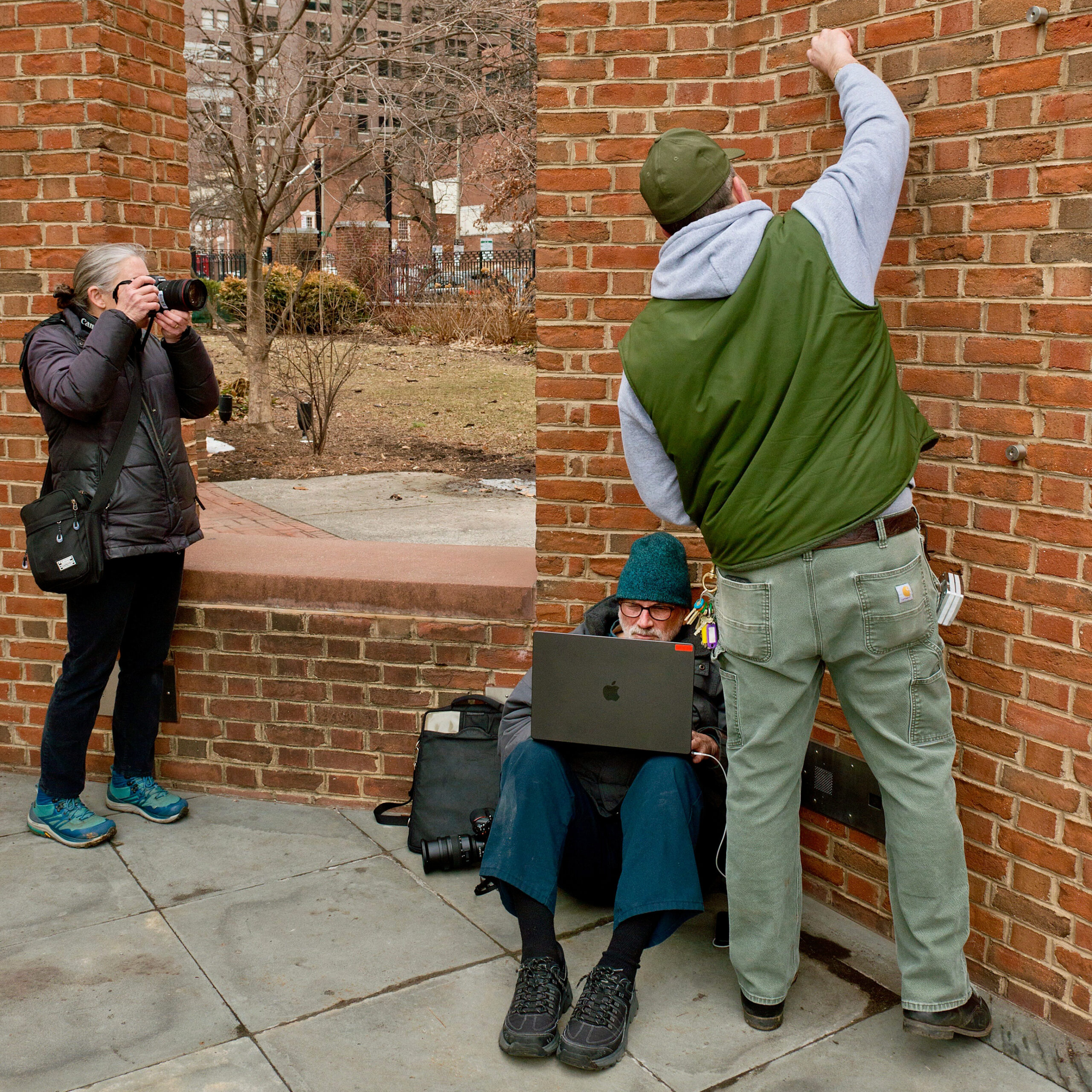
Philadelphia Inquirer staff photographer Tom Gralish edits his news photos at the President’s House site in Independence National Historical Park Thursday, Feb, 19, 2026 as park service workers restore the slavery exhibits that were removed in January. Gralish had met and talked with the NPS employee earlier in the morning before other news media arrived at the site, and hadn’t noticed a panel would be going back up later where he was sitting. “You’re okay,” the worker said, “you were here first.”
Since 1998 a black-and-white photo has appeared every Monday in staff photographer Tom Gralish’s “Scene Through the Lens” photo column in the print editions of The Inquirer’s local news section. Here are the most recent, in color:
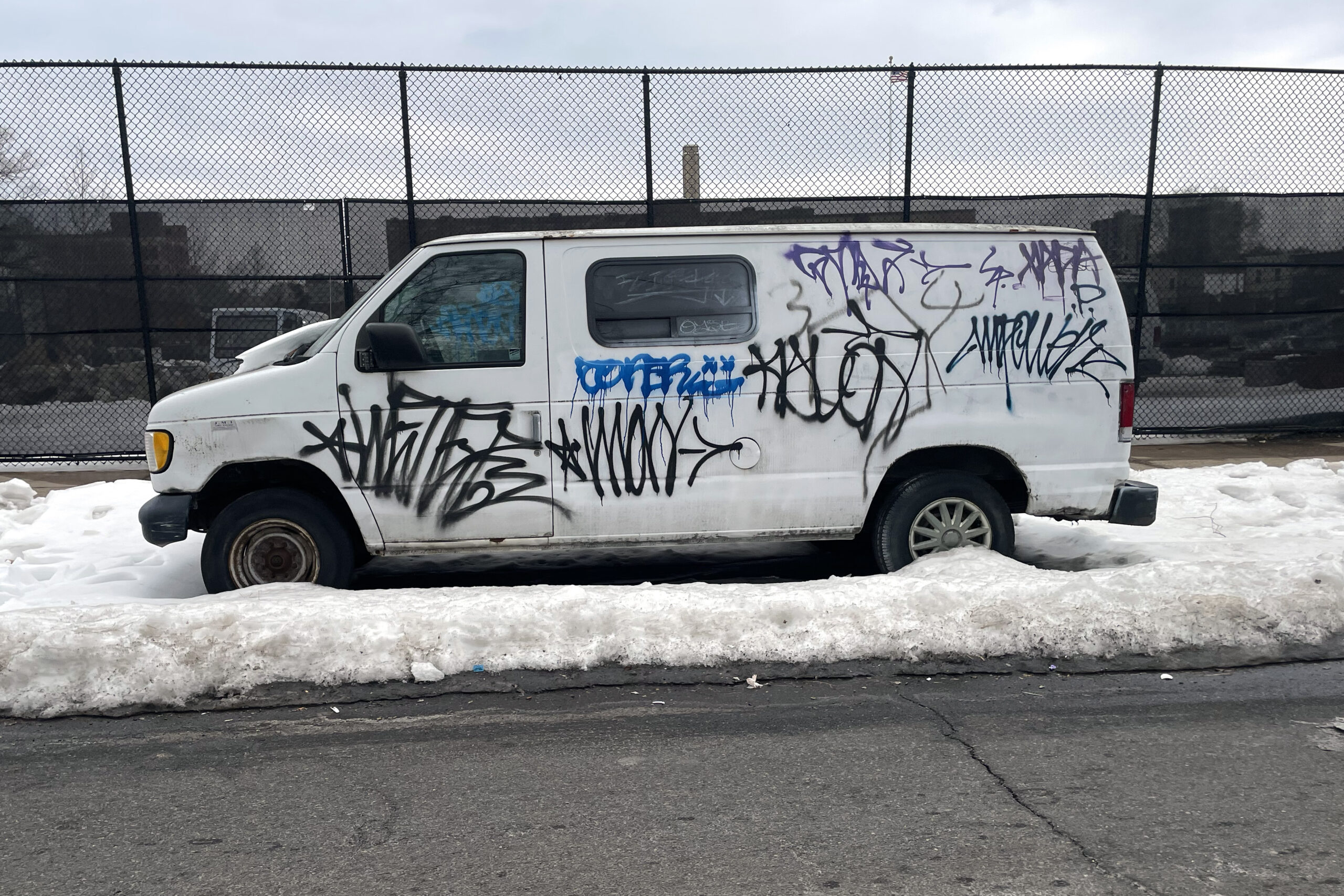
February 16, 2026: What came first? The dirty snowpacked berm of frozen slush or the graffiti? February 9, 2026: Walking through a corrugated metal culvert called the “Duck Tunnel,” a pedestrian navigates the passageway under the SEPTA tracks on the Swarthmore College campus. February 2, 2026: A light-as-air Elmo balloon rolls along a sidewalk in Haddonfield, propelled by the wind as Sunday’s heavy snow starts to turn to ice and sleet. January 26, 2026: The President’s House in Independence National Historical Park hours Jan, 22, after all historical exhibits were removed following President Trump’s Executive Order last March that the content at national parks that “inappropriately disparage” the U.S. be reviewed. The site, a reconstructed “ghost” structure titled “Freedom and Slavery in the Making of a New Nation” (2010), serves as a memorial to the nine people George Washington enslaved there during the founding of America.January 19, 2026: A low-in-the-sky winter sun is behind the triangular pediment of the “front door” of the open-air President’s House installation in Independence National Historical Park. The reconstructed “ghost” structure with partial walls and windows of the Georgian home known in the 18th century as 190 High St. is officially titled, “Freedom and Slavery in the Making of a New Nation” (2010). It is designed to give visitors a sense of the house where the first two presidents of the United States, George Washington and John Adams, served their terms of office. The commemorative site designed by Emanuel Kelly, with Kelly/Maiello Architects, pays homage to nine enslaved people of African descent who were part of the Washington household with videos scripted by Lorene Cary and directed by Louis Massiah. Deepika Iyer holds her niece Ira Samudra aloft in a Rockyesque pose, while her parents photograph their 8 month-old daughter, in front of the famous movie prop at the top of the steps at the Philadelphia Art Museum. Iyer lives in Philadelphia and is hosting a visit by her mother Vijayalakshmi Ramachandran (partially hidden); brother Gautham Ramachandran; and her sister-in-law Janani Gautham who all live in Bangalore, India.January 5, 2026: Parade marshals trail behind the musicians of the Greater Kensington String Band heading to their #9 position start in the Mummers Parade. Spray paint by comic wenches earlier in the day left “Oh, Dem Golden Slippers” shadows on the pavement of Market Street. This year marked the 125th anniversary of Philly’s iconic New Year’s Day celebration.Dec. 29, 2025: Canada geese at sunrise in Evans Pond in Haddonfield, during the week of the Winter Solstice for the Northern Hemisphere. December 22, 2025: SEPTA trolley operator Victoria Daniels approaches the end of the Center City Tunnel, heading toward the 40th Street trolley portal after a tour to update the news media on overhead wire repairs in the closed tunnel due to unexpected issues from new slider parts.December 15, 2025: A historical interpreter waits at the parking garage elevators headed not to a December crossing of the Delaware River, but an event at the National Constitution Center. General George Washington was on his way to an unveiling of the U.S. Mint’s new 2026 coins for the Semiquincentennial, December 8, 2025: The Benjamin Franklin Bridge and pedestrians on the Delaware River Trail are reflected in mirrored spheres of the “Weaver’s Knot: Sheet Bend” public artwork on Columbus Boulevard. The site-specific stainless steel piece located between the Cherry Street and Race Street Piers was commissioned by the City’s Public Art Office and the Delaware River Waterfront Corporation and created and installed in 2022 by the design and fabrication group Ball-Nogues Studio. The name recalls a history that dominated the region for hundreds of years. “Weaver’s knot” derives from use in textile mills and the “Sheet bend” or “sheet knot” was used on sailing vessels for bending ropes to sails. November 29, 2025: t’s ginkgo time in our region again when the distinctive fan-shaped leaves turn yellow and then, on one day, lose all their leaves at the same time laying a carpet on city streets and sidewalks. A squirrel leaps over leaves in the 18th Century Garden in Independence National Historical Park Nov. 25, 2025. The ginkgo (Ginkgo biloba) is considered a living fossil as it’s the only surviving species of a group of trees that existed before dinosaurs. Genetically, it has remained unchanged over the past 200 million years. William Hamilton, owner the Woodlands in SW Phila (no relation to Alexander Hamilton) brought the first ginkgo trees to North America in 1785.November 24, 2025: The old waiting room at 30th Street Station that most people only pass through on their way to the restrooms has been spiffed up with benches – and a Christmas tree. It was placed there this year in front of the 30-foot frieze, “The Spirit of Transportation” while the lobby of Amtrak’s $550 million station restoration is underway. The 1895 relief sculpture by Karl Bitter was originally hung in the Broad Street Station by City Hall, but was moved in 1933. It depicts travel from ancient to modern and even futuristic times. November 17, 2025: Students on a field trip from the Christian Academy in Brookhaven, Delaware County, pose for a group photo in front of the Liberty Bell in Independence National Historical Park on Thursday. The trip was planned weeks earlier, before they knew it would be on the day park buildings were reopening after the government shutdown ended. “We got so lucky,” a teacher said. Then corrected herself. “It’s because we prayed for it.”
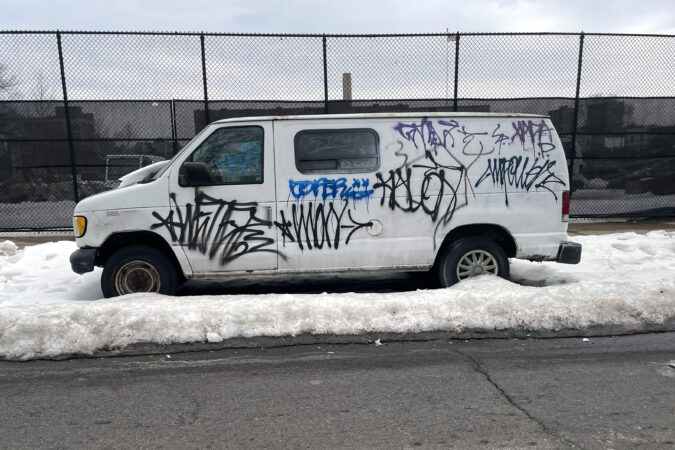
I don’t know why this scene caught my eye. I have seen graffiti-tagged walls on roll-down metal storefronts and yes, even panel trucks and vans before.
And in the past few weeks since our biggest snowfall in a decade — followed by a brutal freeze that locked in all the plowed piles — I have certainly seen enough streets lined with snowed-in vehicles. Maybe it was the combination of the two.
I was stopped because the dirty snowpack on street shoulders reduced traffic lanes and created gridlock. But while I waited through not one or two, but three traffic light cycles, I had the time to look, pick up my phone, roll down my window and take a picture.
Not the kind of image I usually look for.
Then that got me thinking, “What kinds of pictures do I like? What came first, the snow or the graffiti?” (I was at that light a long time.)
I clearly like photographing people. That’s why I got into journalism.
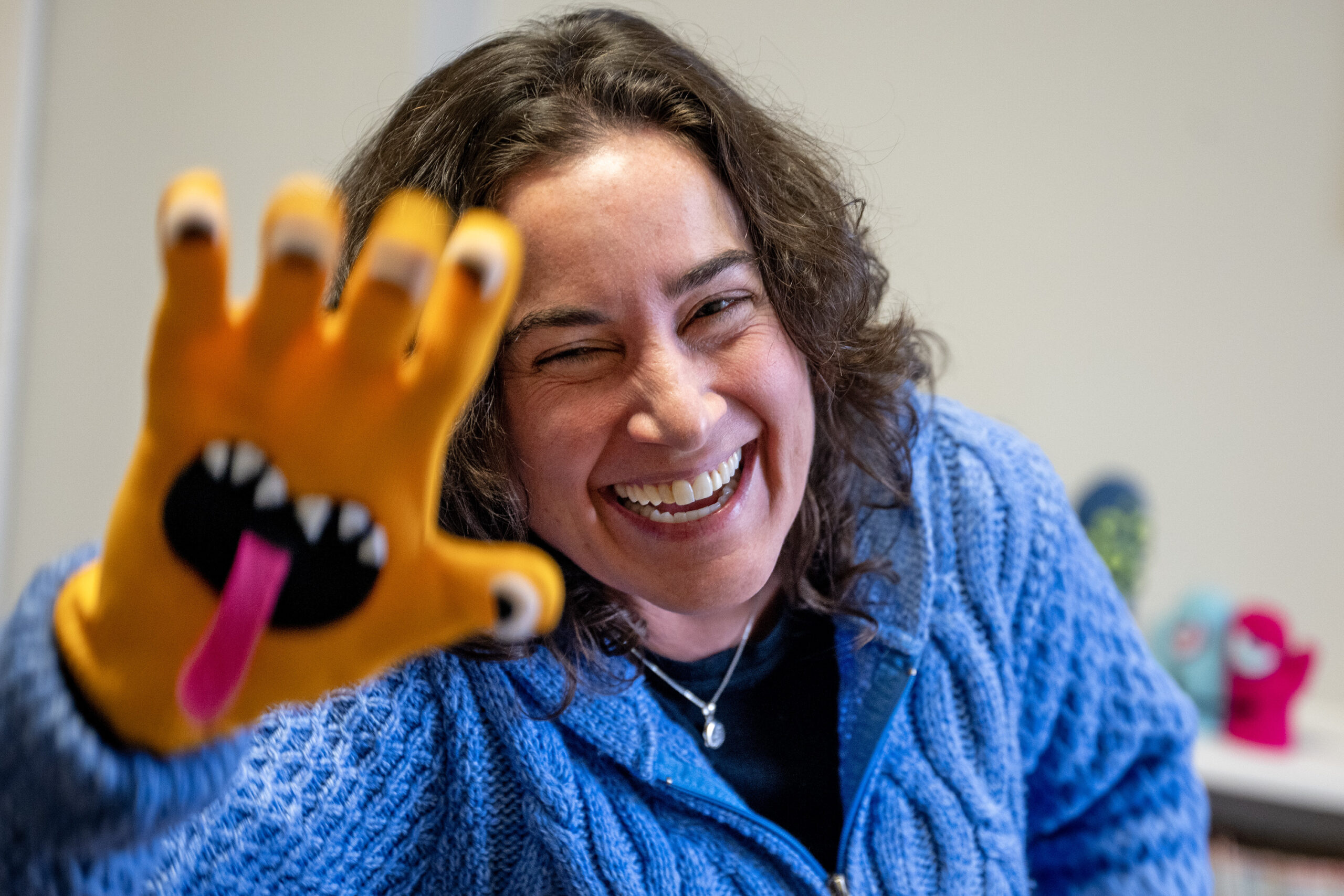
Highlights editor Judy Burke, last month at the editorial offices of America’s most beloved and respected educational magazines for kids.
When doing portraits on assignments I have always tried to get people comfortable with being themselves. I have always had a hard time “directing” them. It is especially difficult when the story I’m trying to illustrate is not about them, but about where they work, or what they are doing.
Trying avoid posing subjects by saying “just do whatever you’d be doing if I — and a reporter, and the public relations person(s) — wasn’t here,” doesn’t help. And just makes it awkward for all of us.
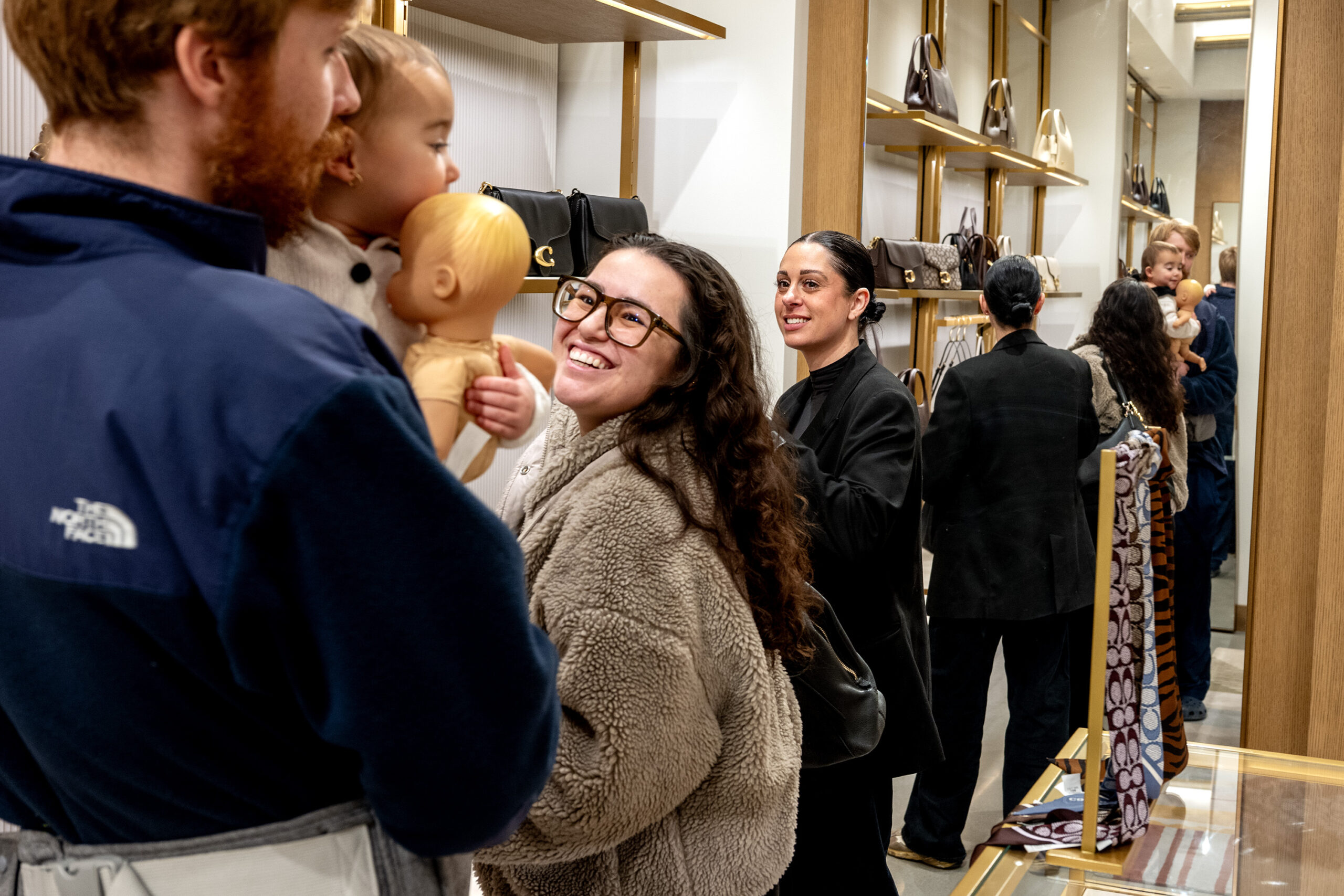
Employee Alex Costa (right) assists Alessandra Bruno as she tries out purses with husband Luke Baur and their 20 month-old daughter Rosalina at the Coach store at the Cherry Hill Mall on Monday.
Walking into a room where everyone is ready and waiting to be photographed — but unsure of what the photographer will do — is also hard for them. If possible I get them to interact with each other, even if it’s just sharing what they had for breakfast. In public spaces I will often enlist customers or passersby, asking if I can photographed over their shoulders. Then wait — and hope — for a genuine moment. Like in the mall retail shop, a customer interaction is much better than five salespeople standing among the merchandise looking at the camera.
That is also why I most enjoy assignments where I am just there, observing an event trying to capture something that will make readers click on a link or pause to read a story. And I keep myself enthused while doing it. Like the many public appearances of our mayor.
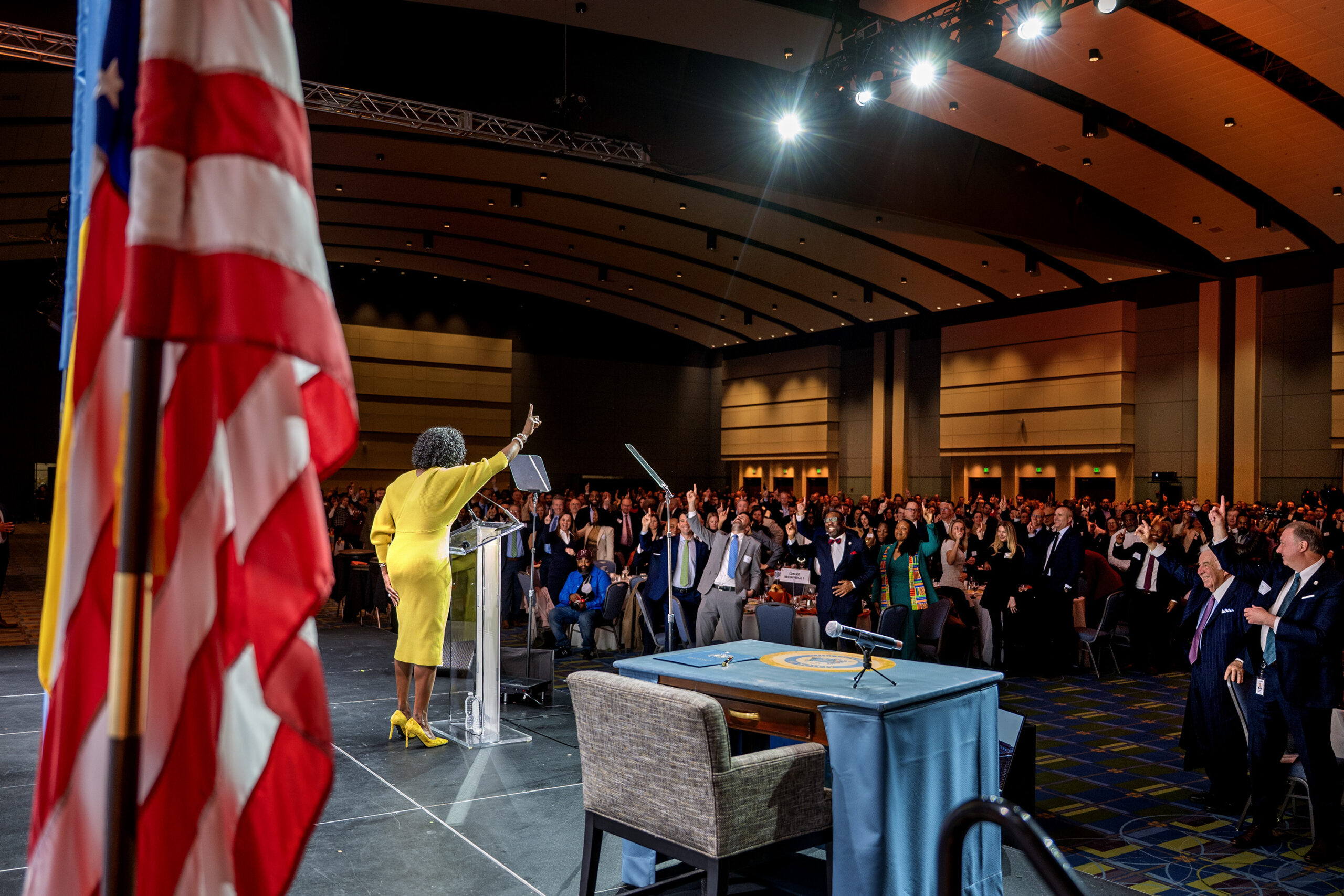
Mayor Cherelle L. Parker has the whole room of business leaders standing with her and her “One Philly” chant as she finishers her keynote address at the Chamber of Commerce for Greater Philadelphia’s Annual Mayoral Luncheon Wednesday.
That goes for ordinary people too, not just politicians or executives or sports or entertainment celebrities. And what is more normal and everyday than stopping at your regular convenience store?
I also photographed Wawa’s excursion into Sheetz land in 2024. For decades, it was assumed there were unspoken boundaries in Pennsylvania between Wawa in the East and Sheetz in the West. But representatives of both chains deny they are rivals and as my colleague Stephanie Farr points out, they have worked together to support various nonprofits.
Next stop for me (soon, I hope) a photographic road trip to the nearest Buc-ees.
Since 1998 a black-and-white photo has appeared every Monday in staff photographer Tom Gralish’s “Scene Through the Lens” photo column in the print editions of The Inquirer’s local news section. Here are the most recent, in color:
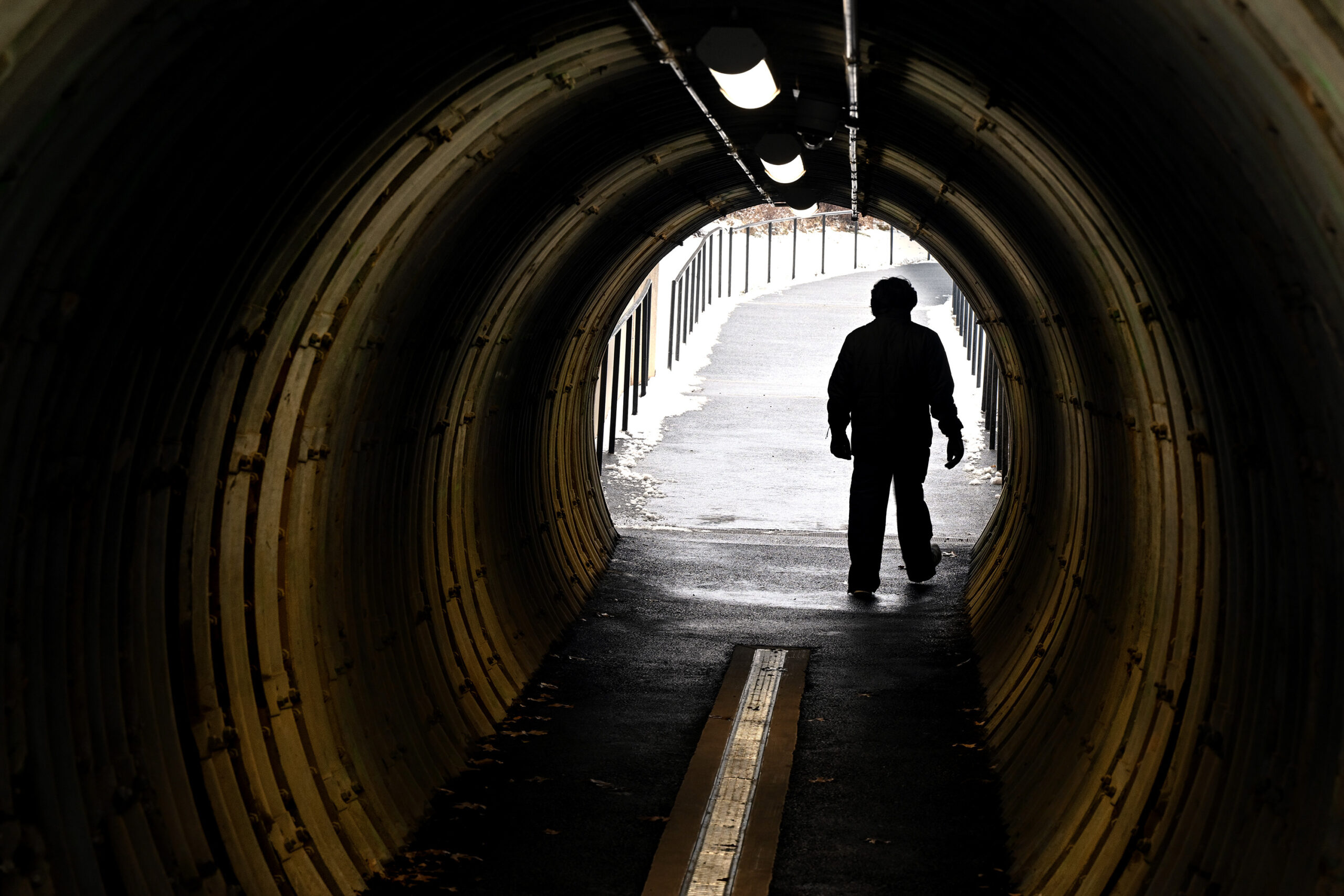
February 9, 2026: Walking through a corrugated metal culvert called the “Duck Tunnel,” a pedestrian navigates the passageway under the SEPTA tracks on the Swarthmore College campus. February 2, 2026: A light-as-air Elmo balloon rolls along a sidewalk in Haddonfield, propelled by the wind as Sunday’s heavy snow starts to turn to ice and sleet. January 26, 2026: The President’s House in Independence National Historical Park hours Jan, 22, after all historical exhibits were removed following President Trump’s Executive Order last March that the content at national parks that “inappropriately disparage” the U.S. be reviewed. The site, a reconstructed “ghost” structure titled “Freedom and Slavery in the Making of a New Nation” (2010), serves as a memorial to the nine people George Washington enslaved there during the founding of America.January 19, 2026: A low-in-the-sky winter sun is behind the triangular pediment of the “front door” of the open-air President’s House installation in Independence National Historical Park. The reconstructed “ghost” structure with partial walls and windows of the Georgian home known in the 18th century as 190 High St. is officially titled, “Freedom and Slavery in the Making of a New Nation” (2010). It is designed to give visitors a sense of the house where the first two presidents of the United States, George Washington and John Adams, served their terms of office. The commemorative site designed by Emanuel Kelly, with Kelly/Maiello Architects, pays homage to nine enslaved people of African descent who were part of the Washington household with videos scripted by Lorene Cary and directed by Louis Massiah. Deepika Iyer holds her niece Ira Samudra aloft in a Rockyesque pose, while her parents photograph their 8 month-old daughter, in front of the famous movie prop at the top of the steps at the Philadelphia Art Museum. Iyer lives in Philadelphia and is hosting a visit by her mother Vijayalakshmi Ramachandran (partially hidden); brother Gautham Ramachandran; and her sister-in-law Janani Gautham who all live in Bangalore, India.January 5, 2026: Parade marshals trail behind the musicians of the Greater Kensington String Band heading to their #9 position start in the Mummers Parade. Spray paint by comic wenches earlier in the day left “Oh, Dem Golden Slippers” shadows on the pavement of Market Street. This year marked the 125th anniversary of Philly’s iconic New Year’s Day celebration.Dec. 29, 2025: Canada geese at sunrise in Evans Pond in Haddonfield, during the week of the Winter Solstice for the Northern Hemisphere. December 22, 2025: SEPTA trolley operator Victoria Daniels approaches the end of the Center City Tunnel, heading toward the 40th Street trolley portal after a tour to update the news media on overhead wire repairs in the closed tunnel due to unexpected issues from new slider parts.December 15, 2025: A historical interpreter waits at the parking garage elevators headed not to a December crossing of the Delaware River, but an event at the National Constitution Center. General George Washington was on his way to an unveiling of the U.S. Mint’s new 2026 coins for the Semiquincentennial, December 8, 2025: The Benjamin Franklin Bridge and pedestrians on the Delaware River Trail are reflected in mirrored spheres of the “Weaver’s Knot: Sheet Bend” public artwork on Columbus Boulevard. The site-specific stainless steel piece located between the Cherry Street and Race Street Piers was commissioned by the City’s Public Art Office and the Delaware River Waterfront Corporation and created and installed in 2022 by the design and fabrication group Ball-Nogues Studio. The name recalls a history that dominated the region for hundreds of years. “Weaver’s knot” derives from use in textile mills and the “Sheet bend” or “sheet knot” was used on sailing vessels for bending ropes to sails. November 29, 2025: t’s ginkgo time in our region again when the distinctive fan-shaped leaves turn yellow and then, on one day, lose all their leaves at the same time laying a carpet on city streets and sidewalks. A squirrel leaps over leaves in the 18th Century Garden in Independence National Historical Park Nov. 25, 2025. The ginkgo (Ginkgo biloba) is considered a living fossil as it’s the only surviving species of a group of trees that existed before dinosaurs. Genetically, it has remained unchanged over the past 200 million years. William Hamilton, owner the Woodlands in SW Phila (no relation to Alexander Hamilton) brought the first ginkgo trees to North America in 1785.November 24, 2025: The old waiting room at 30th Street Station that most people only pass through on their way to the restrooms has been spiffed up with benches – and a Christmas tree. It was placed there this year in front of the 30-foot frieze, “The Spirit of Transportation” while the lobby of Amtrak’s $550 million station restoration is underway. The 1895 relief sculpture by Karl Bitter was originally hung in the Broad Street Station by City Hall, but was moved in 1933. It depicts travel from ancient to modern and even futuristic times. November 17, 2025: Students on a field trip from the Christian Academy in Brookhaven, Delaware County, pose for a group photo in front of the Liberty Bell in Independence National Historical Park on Thursday. The trip was planned weeks earlier, before they knew it would be on the day park buildings were reopening after the government shutdown ended. “We got so lucky,” a teacher said. Then corrected herself. “It’s because we prayed for it.”
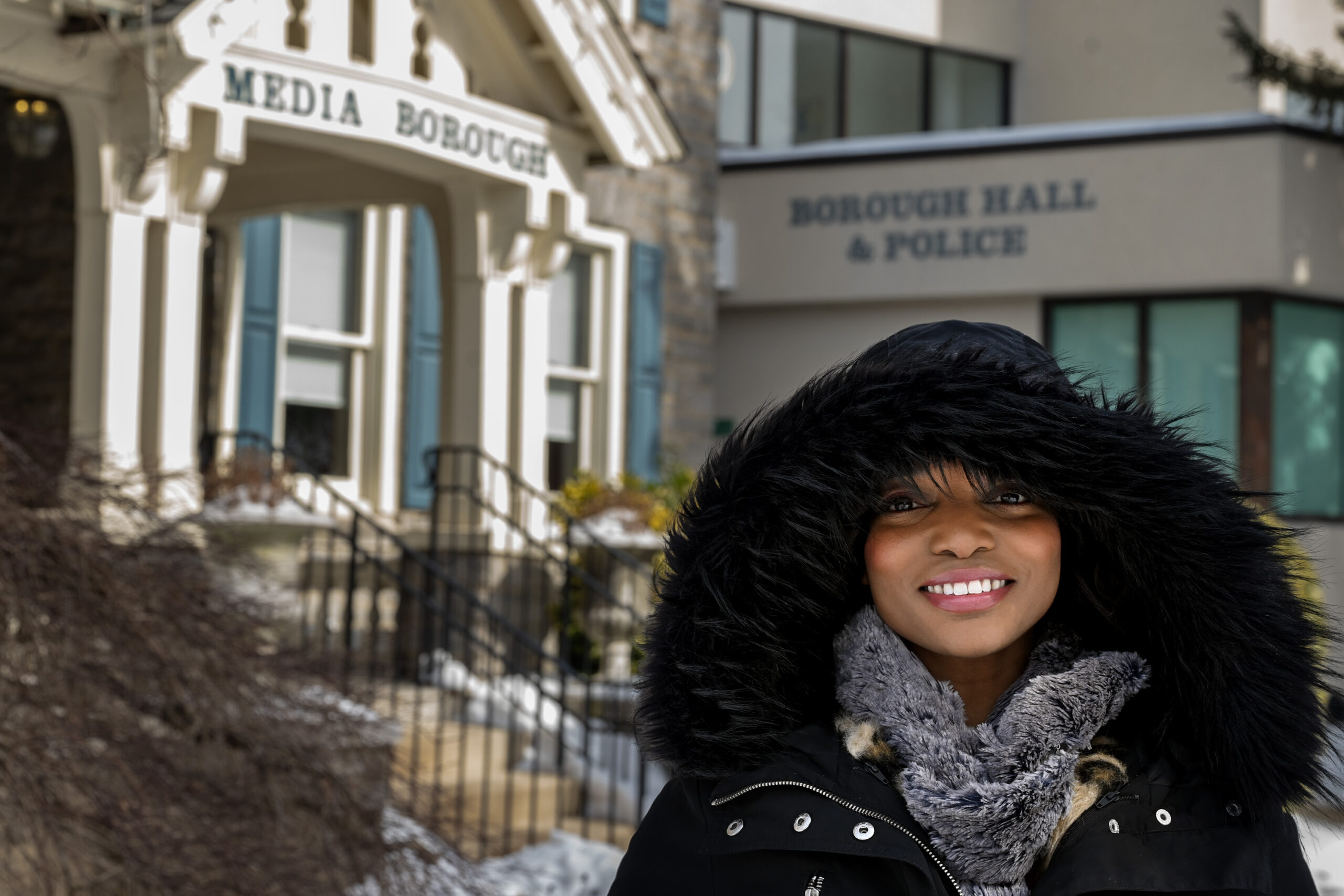
My assignment that day was pretty typical for a newspaper photographer: show the reader what the person a reporter is profiling looks like. And maybe what they do and where they do it.
Newly-inaugurated Mayor Joi Washington at Media Borough Hall.
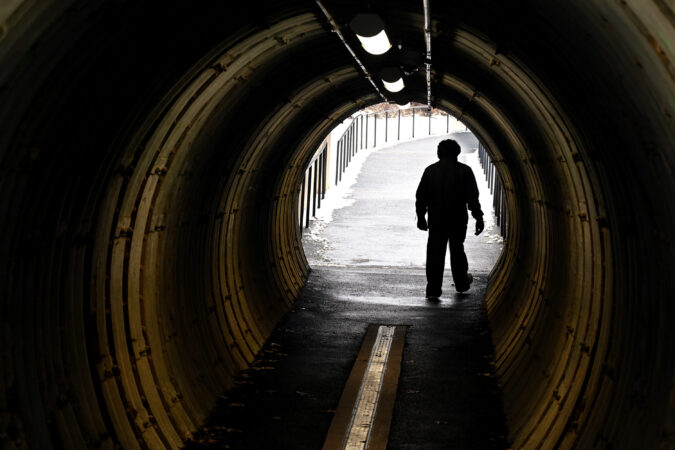
Having accomplished that task, I headed out looking for something else to photograph in the snow, and ended up at a pedestrian passage way.
As I made a picture of a person silhouetted in the corrugated metal culvert, the first thing I thought of was an old friend and photo editor Joe Elbert who famously said there are four categories in the “hierarchy” of newspaper photographs, lowest to highest: informational, graphic, emotional, and intimate.
In just a few hours I had knocked out his “lower” two types.
I made a few pictures that report “just the facts” without much flavor or fanfare. Then I found a visually appealing scene and waited until I could turn it into a well composed, interesting image. Graphic, even.
Joe was the photo editor at the Post from 1988 through 2007. Under his direction the paper won four Pulitzer Prizes, and many other awards, all for work that epitomizes that highest category of intimate photographs.
It’s easy to feel nostalgic for those “glory days,” but I mourn that almost an entire section of the newspaper is now gone.
Post photographers were still creating those most intimate images of Joe’s hierarchy. They were still making the reader feel something that allows us to connect with lives beyond our own, to empathize, and to care.
Since 1998 a black-and-white photo has appeared every Monday in staff photographer Tom Gralish’s “Scene Through the Lens” photo column in the print editions of The Inquirer’s local news section. Here are the most recent, in color:
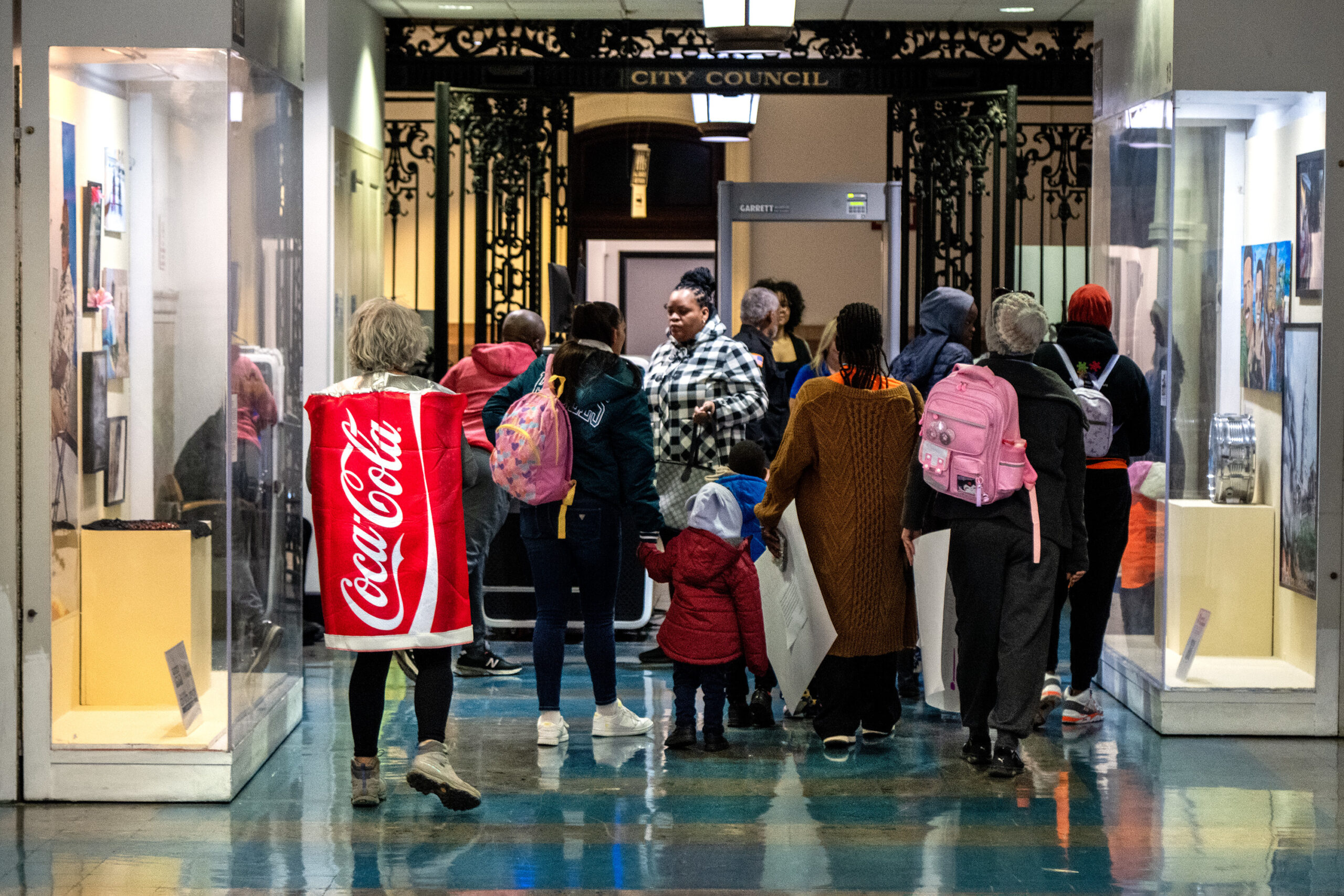
February 2, 2026: A light-as-air Elmo balloon rolls along a sidewalk in Haddonfield, propelled by the wind as Sunday’s heavy snow starts to turn to ice and sleet. January 26, 2026: The President’s House in Independence National Historical Park hours Jan, 22, after all historical exhibits were removed following President Trump’s Executive Order last March that the content at national parks that “inappropriately disparage” the U.S. be reviewed. The site, a reconstructed “ghost” structure titled “Freedom and Slavery in the Making of a New Nation” (2010), serves as a memorial to the nine people George Washington enslaved there during the founding of America.January 19, 2026: A low-in-the-sky winter sun is behind the triangular pediment of the “front door” of the open-air President’s House installation in Independence National Historical Park. The reconstructed “ghost” structure with partial walls and windows of the Georgian home known in the 18th century as 190 High St. is officially titled, “Freedom and Slavery in the Making of a New Nation” (2010). It is designed to give visitors a sense of the house where the first two presidents of the United States, George Washington and John Adams, served their terms of office. The commemorative site designed by Emanuel Kelly, with Kelly/Maiello Architects, pays homage to nine enslaved people of African descent who were part of the Washington household with videos scripted by Lorene Cary and directed by Louis Massiah. Deepika Iyer holds her niece Ira Samudra aloft in a Rockyesque pose, while her parents photograph their 8 month-old daughter, in front of the famous movie prop at the top of the steps at the Philadelphia Art Museum. Iyer lives in Philadelphia and is hosting a visit by her mother Vijayalakshmi Ramachandran (partially hidden); brother Gautham Ramachandran; and her sister-in-law Janani Gautham who all live in Bangalore, India.January 5, 2026: Parade marshals trail behind the musicians of the Greater Kensington String Band heading to their #9 position start in the Mummers Parade. Spray paint by comic wenches earlier in the day left “Oh, Dem Golden Slippers” shadows on the pavement of Market Street. This year marked the 125th anniversary of Philly’s iconic New Year’s Day celebration.Dec. 29, 2025: Canada geese at sunrise in Evans Pond in Haddonfield, during the week of the Winter Solstice for the Northern Hemisphere. December 22, 2025: SEPTA trolley operator Victoria Daniels approaches the end of the Center City Tunnel, heading toward the 40th Street trolley portal after a tour to update the news media on overhead wire repairs in the closed tunnel due to unexpected issues from new slider parts.December 15, 2025: A historical interpreter waits at the parking garage elevators headed not to a December crossing of the Delaware River, but an event at the National Constitution Center. General George Washington was on his way to an unveiling of the U.S. Mint’s new 2026 coins for the Semiquincentennial, December 8, 2025: The Benjamin Franklin Bridge and pedestrians on the Delaware River Trail are reflected in mirrored spheres of the “Weaver’s Knot: Sheet Bend” public artwork on Columbus Boulevard. The site-specific stainless steel piece located between the Cherry Street and Race Street Piers was commissioned by the City’s Public Art Office and the Delaware River Waterfront Corporation and created and installed in 2022 by the design and fabrication group Ball-Nogues Studio. The name recalls a history that dominated the region for hundreds of years. “Weaver’s knot” derives from use in textile mills and the “Sheet bend” or “sheet knot” was used on sailing vessels for bending ropes to sails. November 29, 2025: t’s ginkgo time in our region again when the distinctive fan-shaped leaves turn yellow and then, on one day, lose all their leaves at the same time laying a carpet on city streets and sidewalks. A squirrel leaps over leaves in the 18th Century Garden in Independence National Historical Park Nov. 25, 2025. The ginkgo (Ginkgo biloba) is considered a living fossil as it’s the only surviving species of a group of trees that existed before dinosaurs. Genetically, it has remained unchanged over the past 200 million years. William Hamilton, owner the Woodlands in SW Phila (no relation to Alexander Hamilton) brought the first ginkgo trees to North America in 1785.November 24, 2025: The old waiting room at 30th Street Station that most people only pass through on their way to the restrooms has been spiffed up with benches – and a Christmas tree. It was placed there this year in front of the 30-foot frieze, “The Spirit of Transportation” while the lobby of Amtrak’s $550 million station restoration is underway. The 1895 relief sculpture by Karl Bitter was originally hung in the Broad Street Station by City Hall, but was moved in 1933. It depicts travel from ancient to modern and even futuristic times. November 17, 2025: Students on a field trip from the Christian Academy in Brookhaven, Delaware County, pose for a group photo in front of the Liberty Bell in Independence National Historical Park on Thursday. The trip was planned weeks earlier, before they knew it would be on the day park buildings were reopening after the government shutdown ended. “We got so lucky,” a teacher said. Then corrected herself. “It’s because we prayed for it.” November 8, 2025: Multitasking during the Festival de Día de Muertos – Day of the Dead – in South Philadelphia.November 1, 2025: Marcy Boroff is at City Hall dressed as a Coke can, along with preschoolers and their caregivers, in support of former Mayor Jim Kenney’s 2017 tax on sweetened beverages. City Council is considering repealing the tax, which funds the city’s pre-K programs.
I spoke with a Friends School class this week, primarily about my photos decades ago of unhoused men in Center City. It was part of their week working with PhotoVoice, a research method where participants photograph their own lives to highlight community strengths and challenges, and advocate for social change.
After the class, and following many thoughtful questions from the middle schoolers about how in general I approach people before I photograph them, and specifically people in vulnerable situations, a student came up to ask me a more practical question: “How do you take pictures in bad weather?”
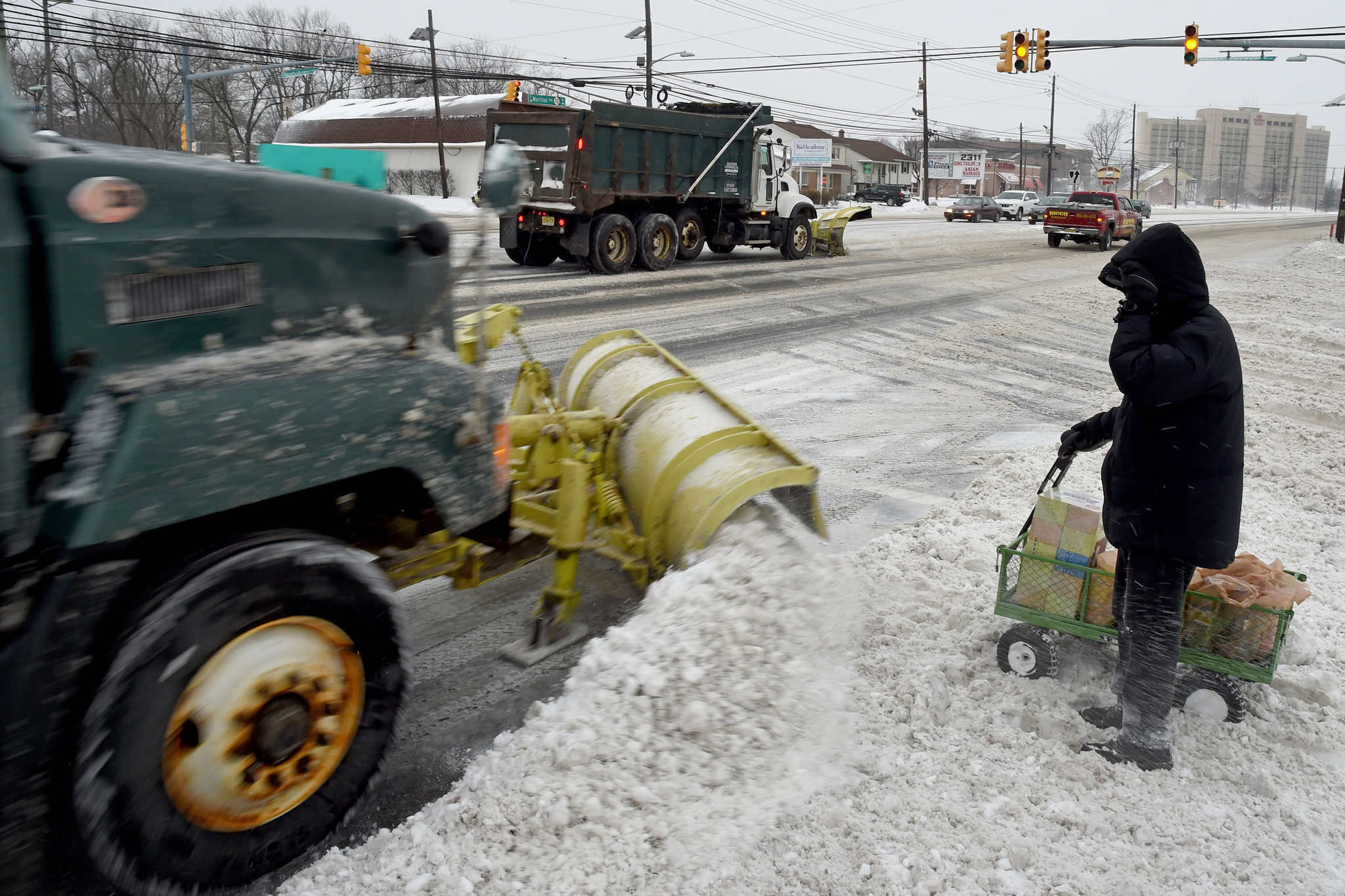
Pedestrians and plows on Rt. 70 in Cherry Hill in Januiary, 2018.
I don’t have an all-weather, sealed camera, so besides dressing as best I can for the conditions (and always having a spare pair of thick, dry wool socks in my car) keeping my camera protected is the biggest priority. I not only need to stave off mechanical/electronic breakdown, but have to keep my lens clear of the elements.
I told him I do have a dedicated rain sleeve but I’ve only used it once or twice at rainy sporting events (they’re priced from $2 each up to $200).
Mostly I use plastic bags or a large umbrellas (watching that I not catch the edges in my frame). I also try to find dry areas to stand in — while watching and photographing others out in the elements. I seek cover under a roof, awning, or doorway. I go into parking garages or subway entrances.
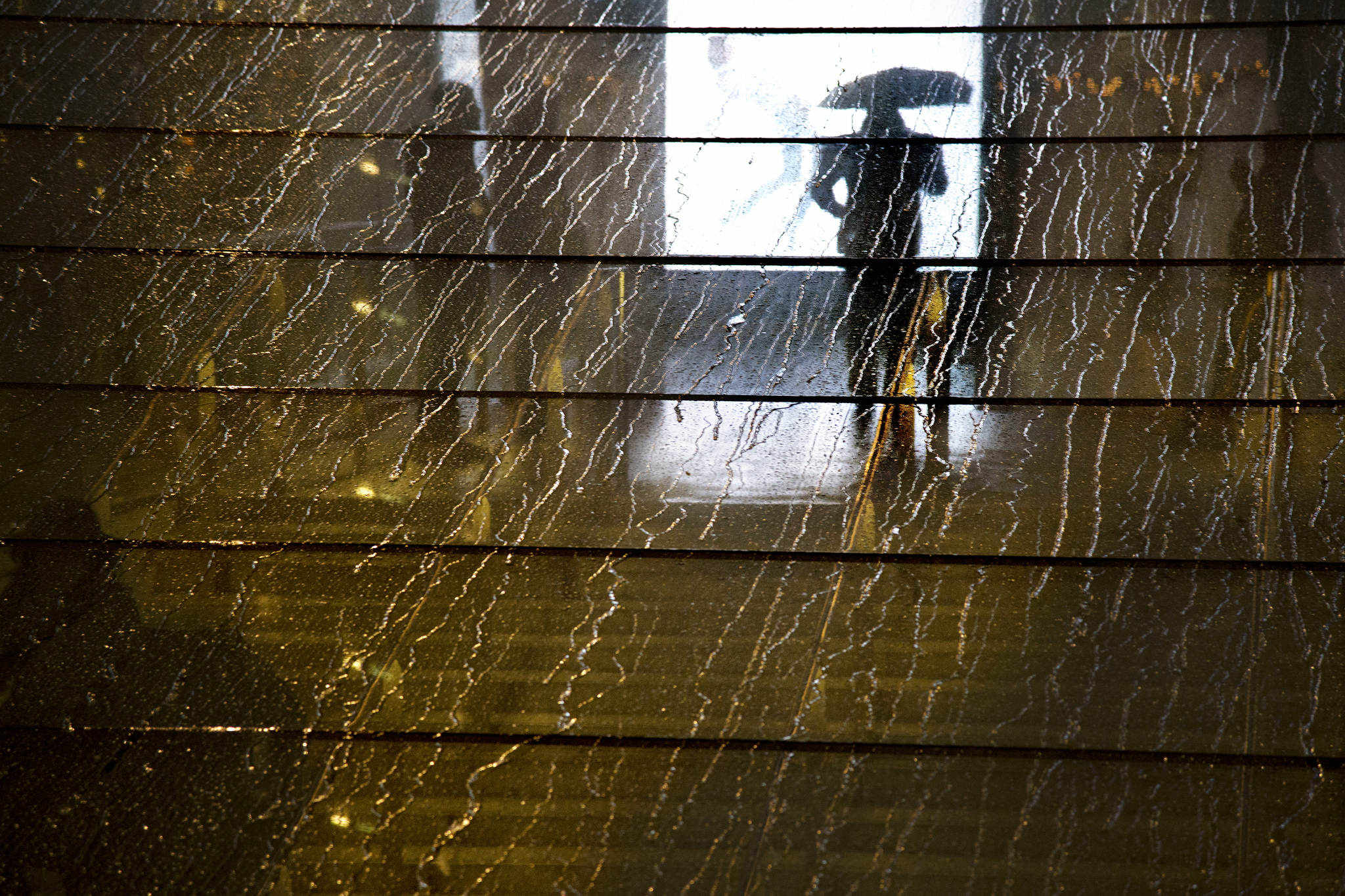
The glass entrance to SEPTA’s underground concourse at Dilworth Park by City Hall.
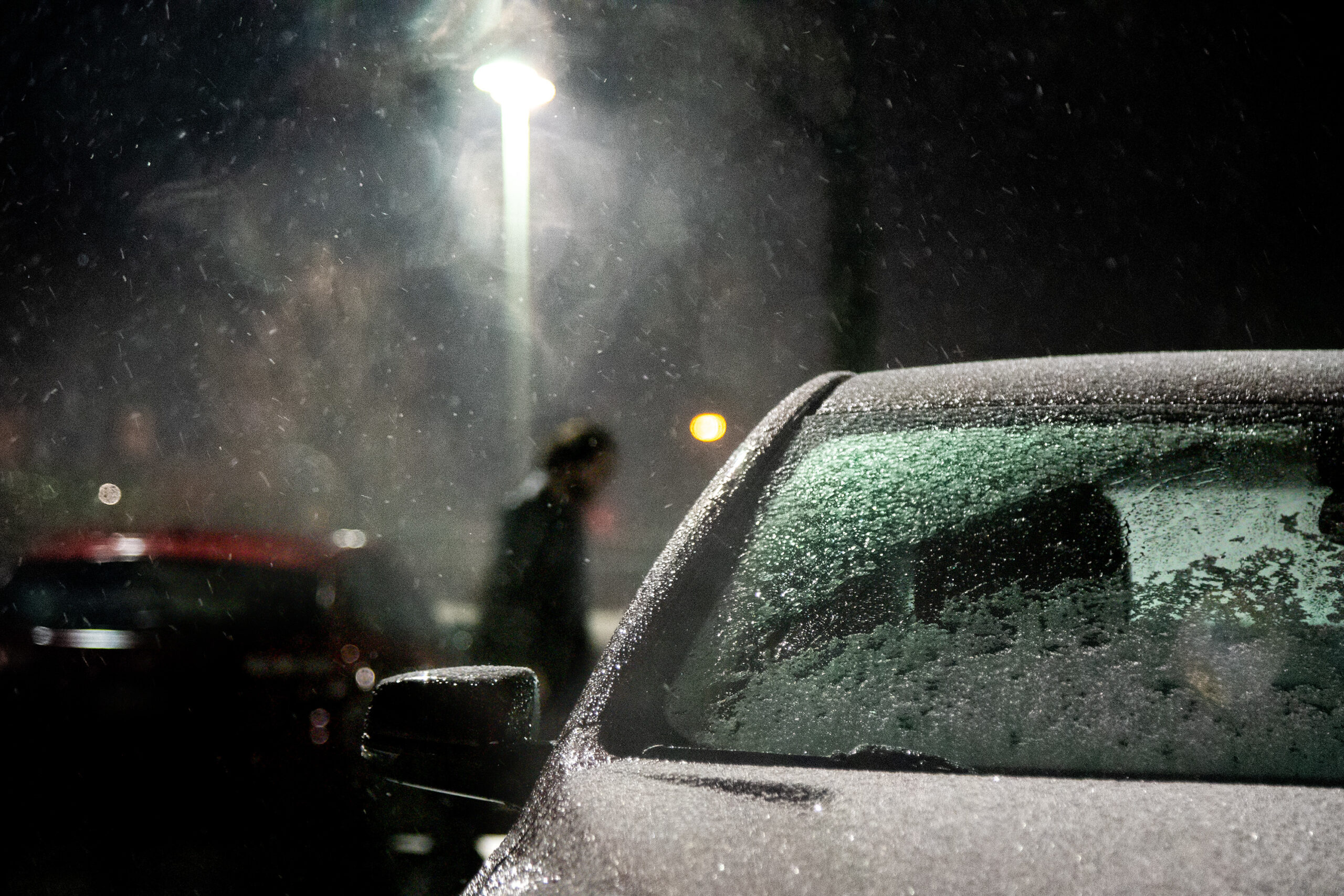
Sometimes I safely park my car where I can briefly open my leeward (downwind!) window. Other times the rain or snow on glass can even be an effective way to portray the “dab” weather. It can be in or out of focus to create a bokeh-like effect or blurred to convey mood. Your choice of a fast shutter or slow shutter can either stop the drops or show their movement.
Precipitation — some snow and some rain — falls on cars in a parking lot on City Avenue.
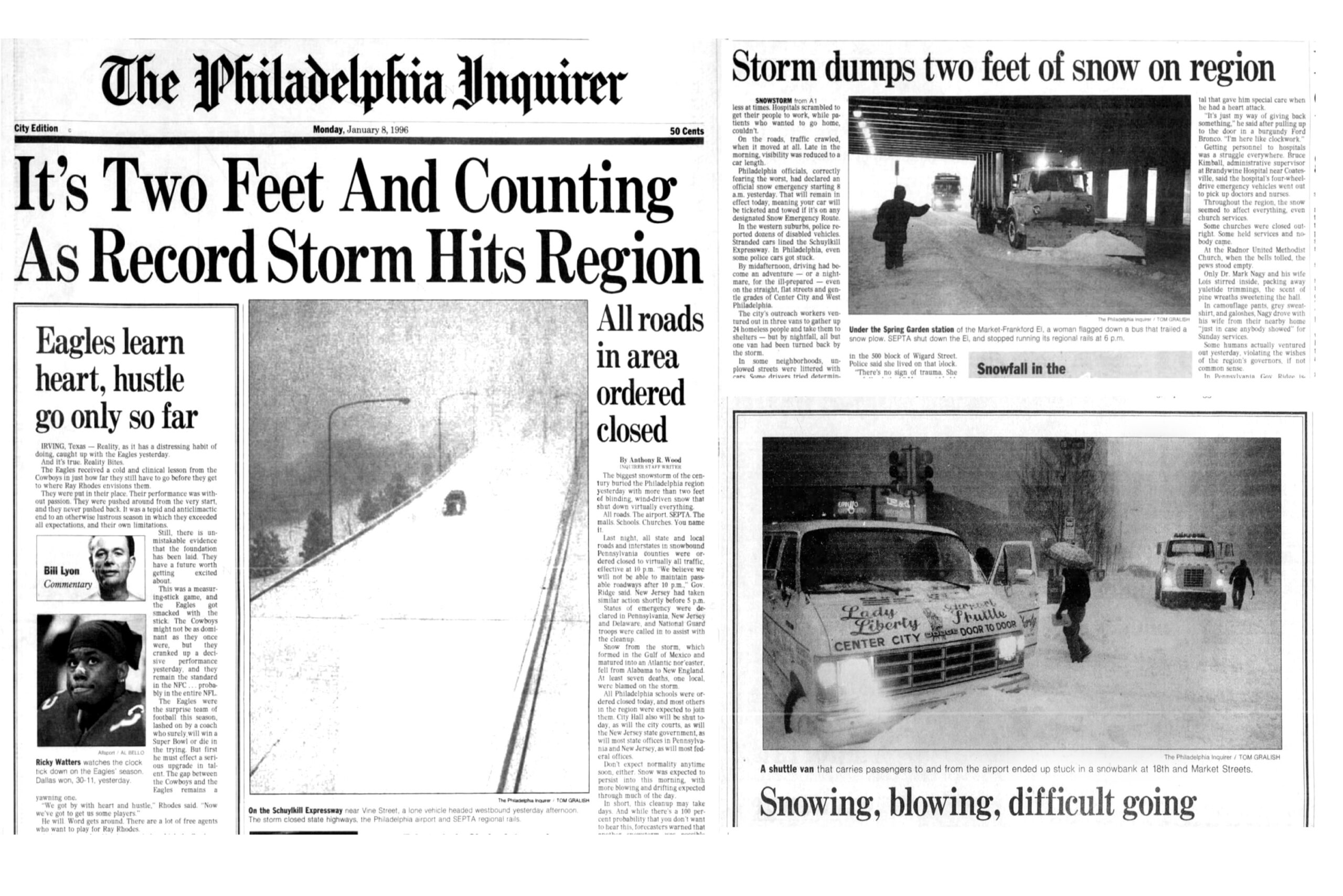
I’ve covered all of the biggest storms of the past few decades, including the historic “Blizzard of the Century” thirty years ago this month.
Front page and inside photos from The Philadelphia Inquirer. January 8, 1996.
So, I took my own advice while preparing to go out last Sunday. Knowing the roads would get worse as the day went on, I drove out of my South Jersey neighborhood while an early pass of the plows left main arteries somewhat passable, and headed straight to the nearest Wawa that I knew would have a clear-ish parking lot.
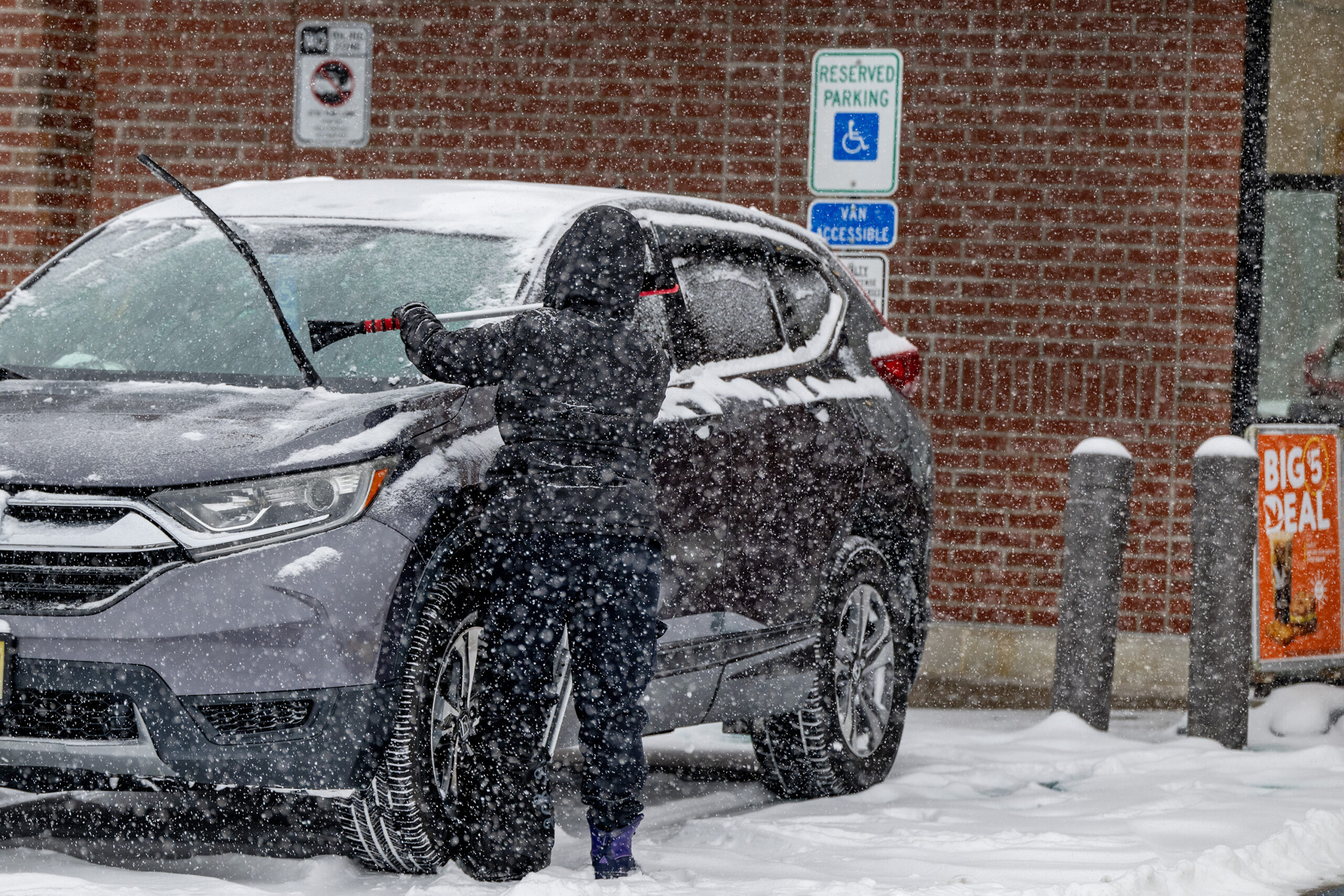
Stepping out from under the overhang — I made a few photos before walking out into on the wide street to get the few passing cars and plowing crews in a nearby shopping center.
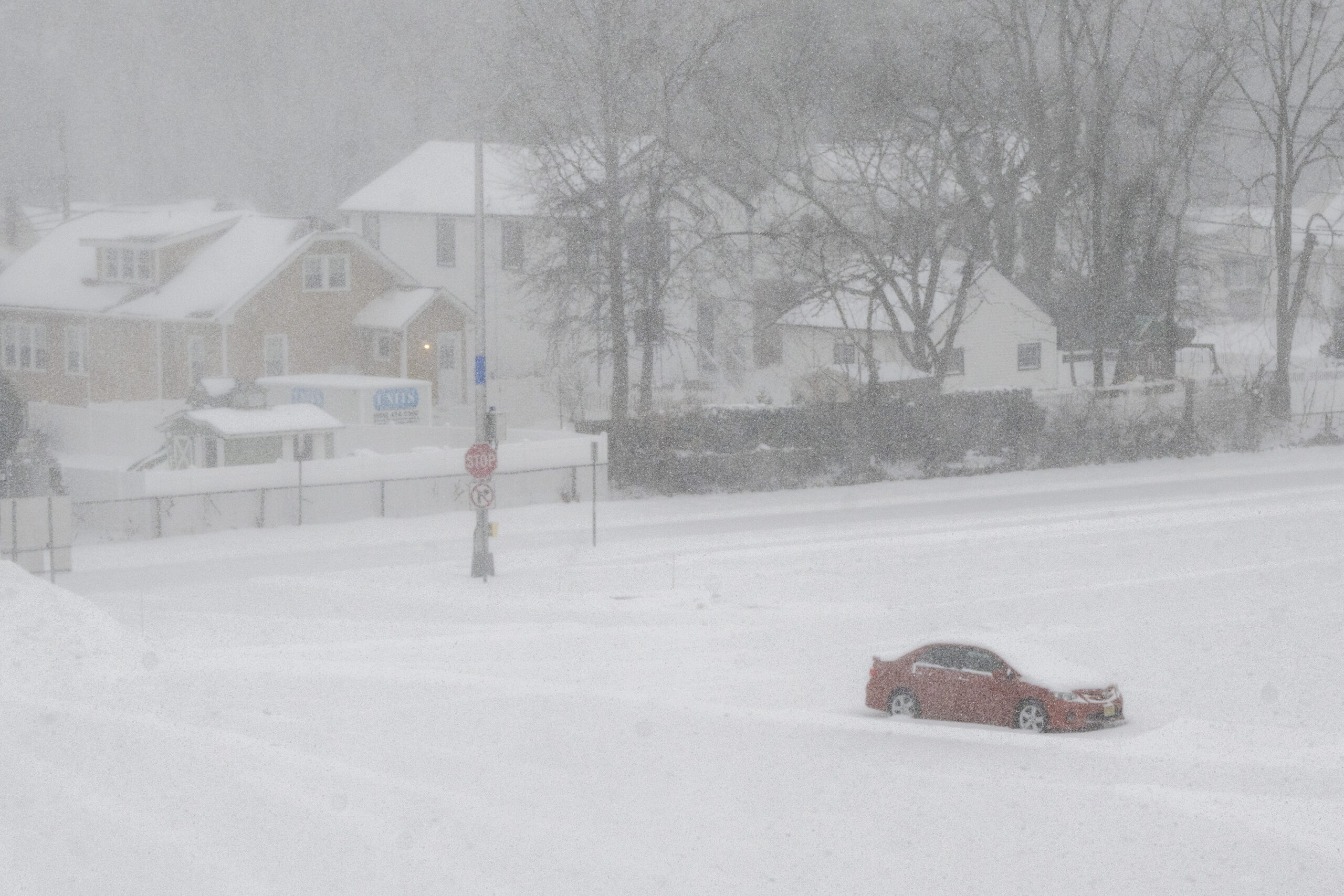
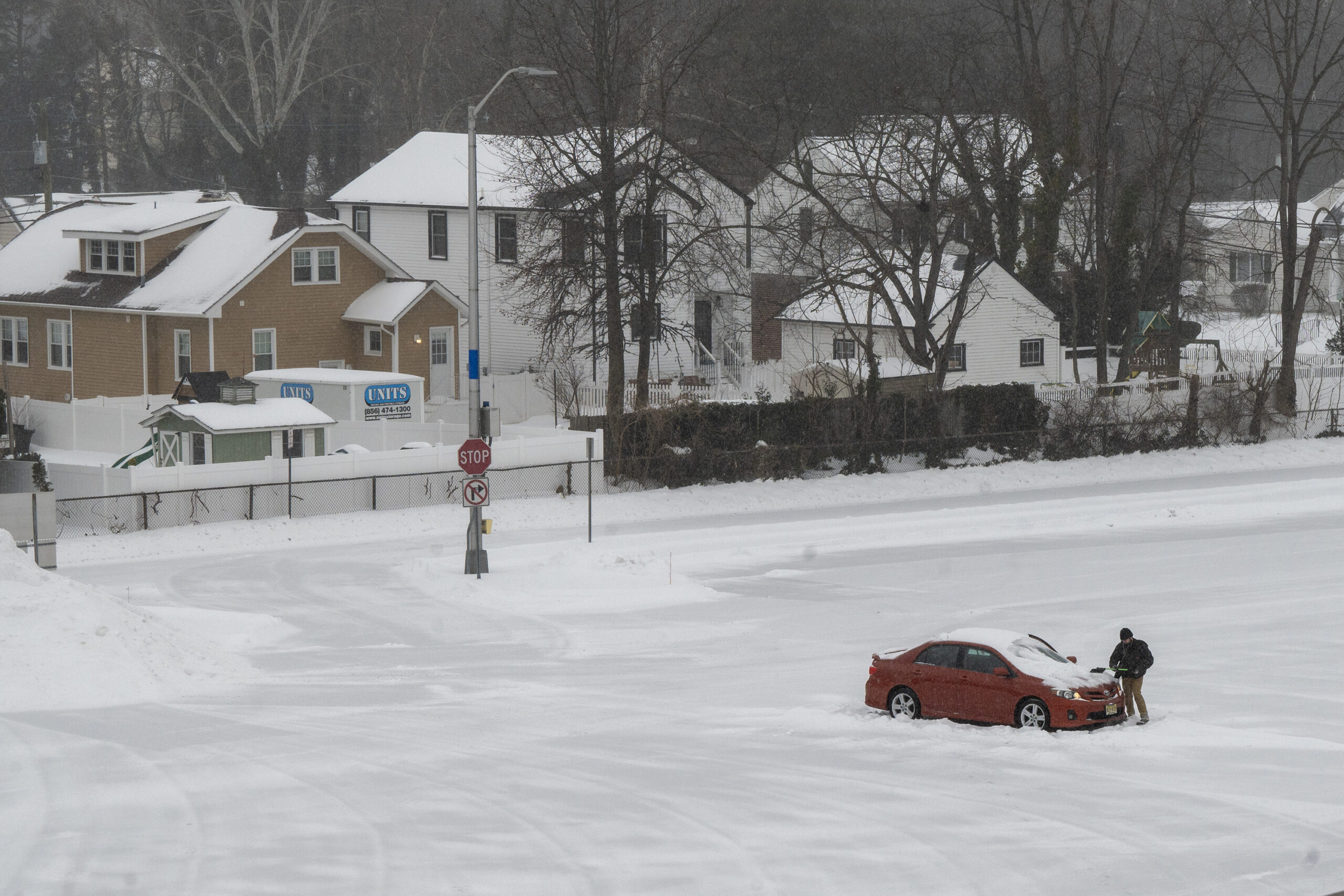
Carmen Roman clears snow off her car at a Cherry Hill Wawa early Sunday morning, Jan. 25, 2026, as heavy snow bands move through the region generating snowfall rates of 1 to 2 inches an hour.
From there, confirming my fears the roads would be more difficult to drive on, I headed the Westmont PATCO station, finding a safe place to park even as workers were hard at it, clearing the lot.
I made photos from the elevated platform before taking a train to Collingswood, where — standing on the leeward side of the stairwell shelter — I took more pictures then walked into downtown.
Haddon Avenue was plowed and relatively empty of cars, but the sidewalks were impassible. I sent in my best photo of people walking along the middle of the downtown street.
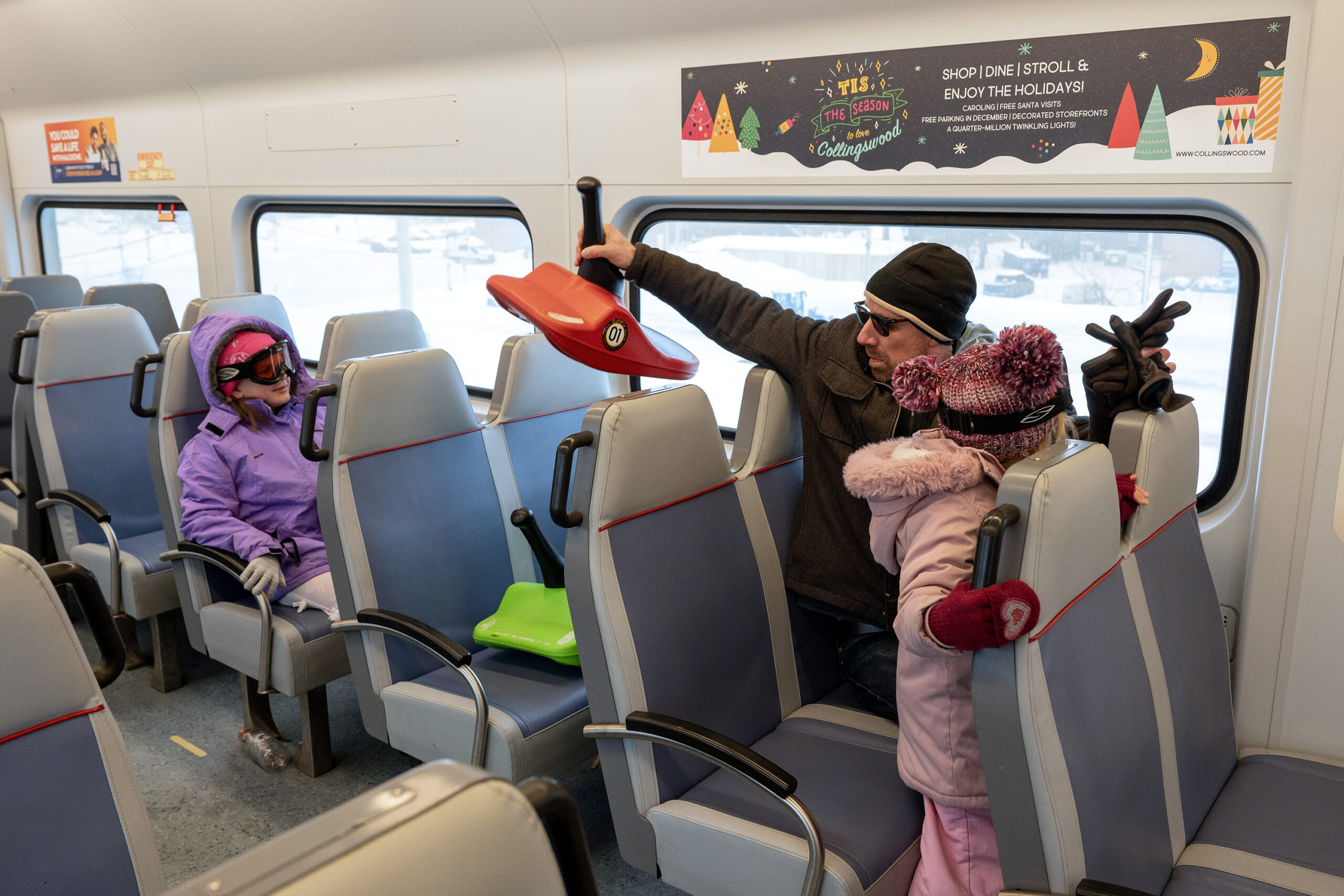
It was then I saw Mike Doveton and his daughters. Not wanting to repeat my earlier image, I asked if they were headed to or from sledding.
They were walking to the PATCO station to sled in Haddonfield, so I tagged along.
On the train headed to sled.
I went with them to their destination, but didn’t want another kids-on-a-hill photo, so I got back on the train returning to the Westmont station, and my car, calling it a day. Until I saw someone digging out their car — the same one I had photographed hours earlier. I got as close as I could to the spot on the platform and made an “after” photo.
Before and after in the Westmont PATCO station parking lot.
Luis Nova had left his car there on Friday, and was in Philadelphia all weekend helping friends move and going to a goodbye party. He spent the morning sledding with friends in Clark Park in West Philadelphia. Like me, he had experience with storms. “I spent four years in Rochester [NY],” he told me. “So I knew what I was signing up for and was ready. I left all my equipment to get myself out.”
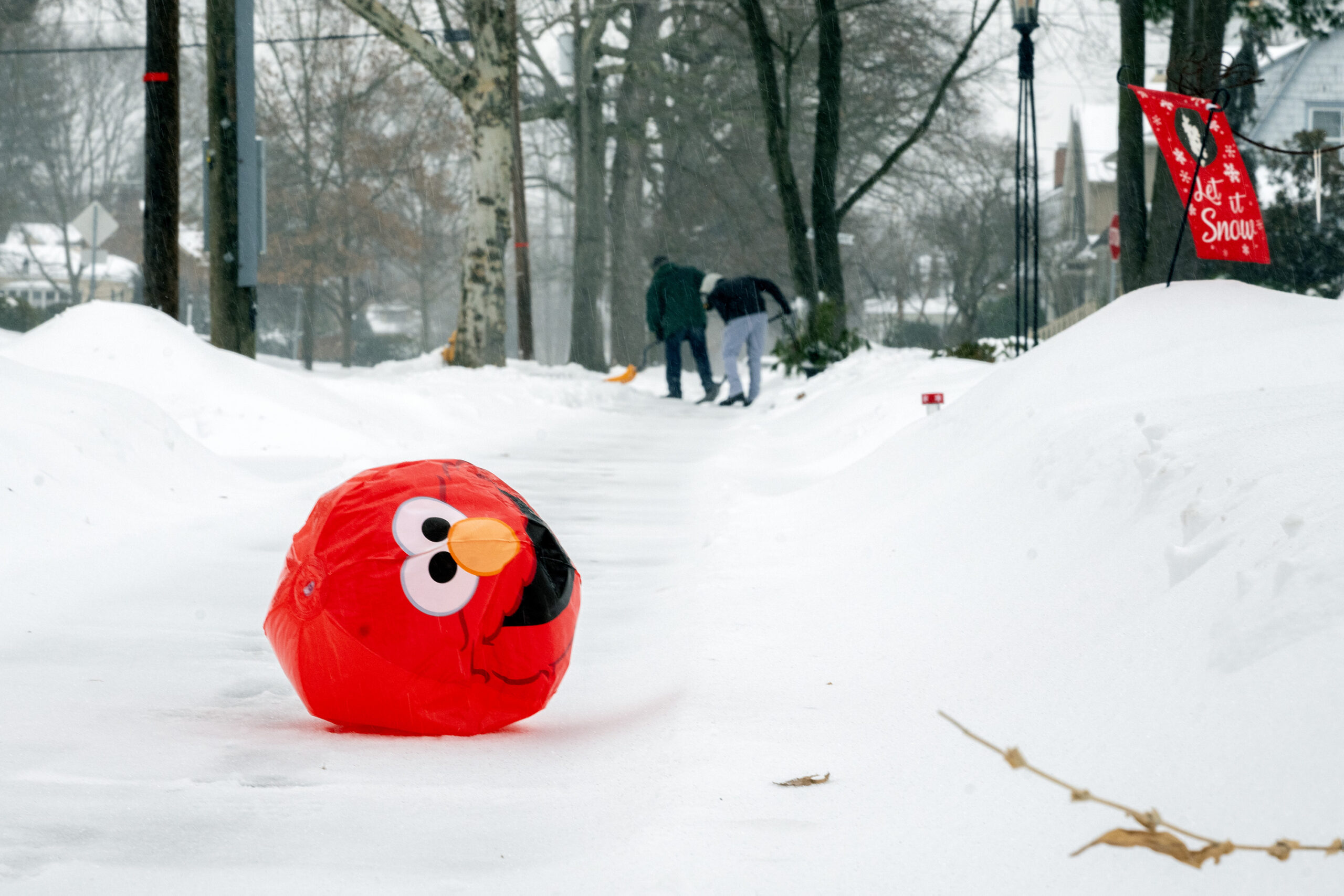
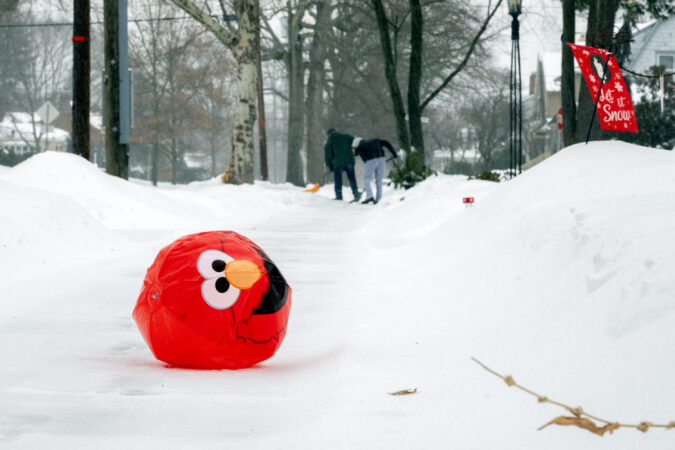
But the highlight of the day was at the very end, as I headed for home as the snow was turning to sleet. Two hours earlier, in the middle of the storm my grandson snapped a photo out our front window of an Elmo head in the middle of the street before the wind blew it away, and shared the picture with our family. As I approached my house, I see a red ball rolling fast down the street toward me. I almost drove into a snow bank laughing.
Not really, but I did pull into the driveway, grab a camera, jump out of my car and go chasing after it. The wind was really moving it, and I couldn’t see where it was, which was hard to imagine, being as the road and everything else was all white. I came up to a couple of guys shoveling and asked, “Did you see an Elmo head come this way?” They had, and said it went up a driveway and jumped onto the sidewalk. I found it and just as I was lining up my photo the wind took it again and it started spinning.
Since 1998 a black-and-white photo has appeared every Monday in staff photographer Tom Gralish’s “Scene Through the Lens” photo column in the print editions of The Inquirer’s local news section. Here are the most recent, in color:
January 26, 2026: The President’s House in Independence National Historical Park hours Jan, 22, after all historical exhibits were removed following President Trump’s Executive Order last March that the content at national parks that “inappropriately disparage” the U.S. be reviewed. The site, a reconstructed “ghost” structure titled “Freedom and Slavery in the Making of a New Nation” (2010), serves as a memorial to the nine people George Washington enslaved there during the founding of America.January 19, 2026: A low-in-the-sky winter sun is behind the triangular pediment of the “front door” of the open-air President’s House installation in Independence National Historical Park. The reconstructed “ghost” structure with partial walls and windows of the Georgian home known in the 18th century as 190 High St. is officially titled, “Freedom and Slavery in the Making of a New Nation” (2010). It is designed to give visitors a sense of the house where the first two presidents of the United States, George Washington and John Adams, served their terms of office. The commemorative site designed by Emanuel Kelly, with Kelly/Maiello Architects, pays homage to nine enslaved people of African descent who were part of the Washington household with videos scripted by Lorene Cary and directed by Louis Massiah. Deepika Iyer holds her niece Ira Samudra aloft in a Rockyesque pose, while her parents photograph their 8 month-old daughter, in front of the famous movie prop at the top of the steps at the Philadelphia Art Museum. Iyer lives in Philadelphia and is hosting a visit by her mother Vijayalakshmi Ramachandran (partially hidden); brother Gautham Ramachandran; and her sister-in-law Janani Gautham who all live in Bangalore, India.January 5, 2026: Parade marshals trail behind the musicians of the Greater Kensington String Band heading to their #9 position start in the Mummers Parade. Spray paint by comic wenches earlier in the day left “Oh, Dem Golden Slippers” shadows on the pavement of Market Street. This year marked the 125th anniversary of Philly’s iconic New Year’s Day celebration.Dec. 29, 2025: Canada geese at sunrise in Evans Pond in Haddonfield, during the week of the Winter Solstice for the Northern Hemisphere. December 22, 2025: SEPTA trolley operator Victoria Daniels approaches the end of the Center City Tunnel, heading toward the 40th Street trolley portal after a tour to update the news media on overhead wire repairs in the closed tunnel due to unexpected issues from new slider parts.December 15, 2025: A historical interpreter waits at the parking garage elevators headed not to a December crossing of the Delaware River, but an event at the National Constitution Center. General George Washington was on his way to an unveiling of the U.S. Mint’s new 2026 coins for the Semiquincentennial, December 8, 2025: The Benjamin Franklin Bridge and pedestrians on the Delaware River Trail are reflected in mirrored spheres of the “Weaver’s Knot: Sheet Bend” public artwork on Columbus Boulevard. The site-specific stainless steel piece located between the Cherry Street and Race Street Piers was commissioned by the City’s Public Art Office and the Delaware River Waterfront Corporation and created and installed in 2022 by the design and fabrication group Ball-Nogues Studio. The name recalls a history that dominated the region for hundreds of years. “Weaver’s knot” derives from use in textile mills and the “Sheet bend” or “sheet knot” was used on sailing vessels for bending ropes to sails. November 29, 2025: t’s ginkgo time in our region again when the distinctive fan-shaped leaves turn yellow and then, on one day, lose all their leaves at the same time laying a carpet on city streets and sidewalks. A squirrel leaps over leaves in the 18th Century Garden in Independence National Historical Park Nov. 25, 2025. The ginkgo (Ginkgo biloba) is considered a living fossil as it’s the only surviving species of a group of trees that existed before dinosaurs. Genetically, it has remained unchanged over the past 200 million years. William Hamilton, owner the Woodlands in SW Phila (no relation to Alexander Hamilton) brought the first ginkgo trees to North America in 1785.November 24, 2025: The old waiting room at 30th Street Station that most people only pass through on their way to the restrooms has been spiffed up with benches – and a Christmas tree. It was placed there this year in front of the 30-foot frieze, “The Spirit of Transportation” while the lobby of Amtrak’s $550 million station restoration is underway. The 1895 relief sculpture by Karl Bitter was originally hung in the Broad Street Station by City Hall, but was moved in 1933. It depicts travel from ancient to modern and even futuristic times. November 17, 2025: Students on a field trip from the Christian Academy in Brookhaven, Delaware County, pose for a group photo in front of the Liberty Bell in Independence National Historical Park on Thursday. The trip was planned weeks earlier, before they knew it would be on the day park buildings were reopening after the government shutdown ended. “We got so lucky,” a teacher said. Then corrected herself. “It’s because we prayed for it.” November 8, 2025: Multitasking during the Festival de Día de Muertos – Day of the Dead – in South Philadelphia.November 1, 2025: Marcy Boroff is at City Hall dressed as a Coke can, along with preschoolers and their caregivers, in support of former Mayor Jim Kenney’s 2017 tax on sweetened beverages. City Council is considering repealing the tax, which funds the city’s pre-K programs. October 25, 2025: Austin Gabauer, paint and production assistant at the Johnson Atelier, in Hamilton Twp, N.J. as the finished “O” letter awaits the return to Philadelphia. The “Y” part of the OY/YO sculpture is inside the painting booth. The well-known sculpture outside the Weitzman National Museum of American Jewish History was removed in May while construction continues on Market Street and has been undergoing refurbishment at the Atelier at the Grounds for Sculpture outside of Trenton.
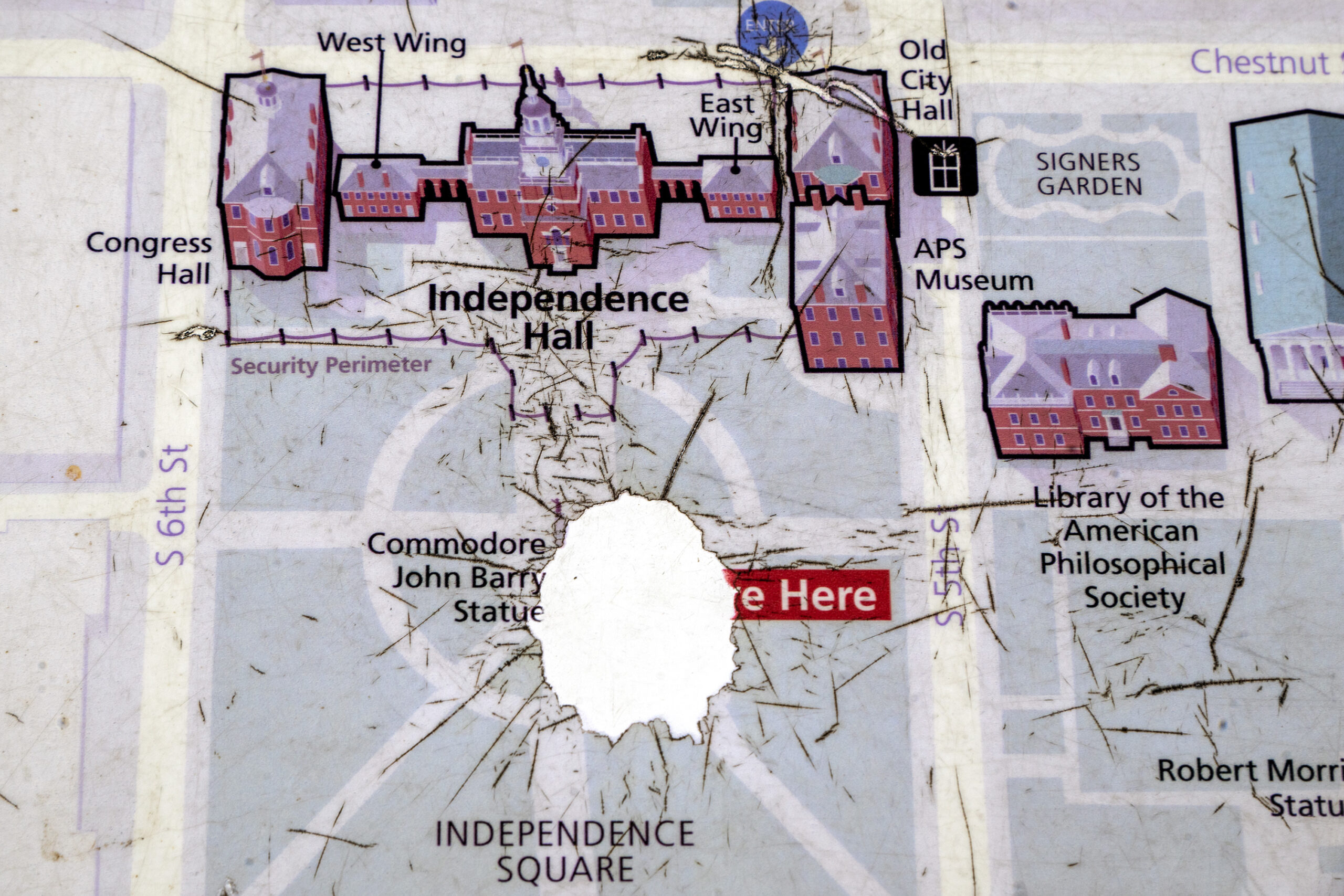
I have walked through Independence National Historical Park many times looking at the many interpretive panels, exhibits and historical materials after President Donald Trump’s March 27, 2025 Executive Order 14253.
“You Are Here” sign in the square behind Independence Hall July 23, 2025.
Titled “Restoring Truth and Sanity to American History,” the order directed the Department of the Interior, which oversees the National Park Service, to review over 400 national sites to remove or modify interpretive materials that it deems “inappropriately disparage Americans past or living (including persons living in colonial times).” The order aimed to focus on the “greatness of the achievements and progress of the American people.”
At first I looked at the many interpretive panels, videos, exhibits and historical materials in Independence Hall, Liberty Bell Center, President’s House and Ben Franklin Museum, wondering which ones the Interior Secretary might identify that “perpetuate a false reconstruction of American history, inappropriately minimize the value of certain historical events or figures, or include any other improper partisan ideology.”
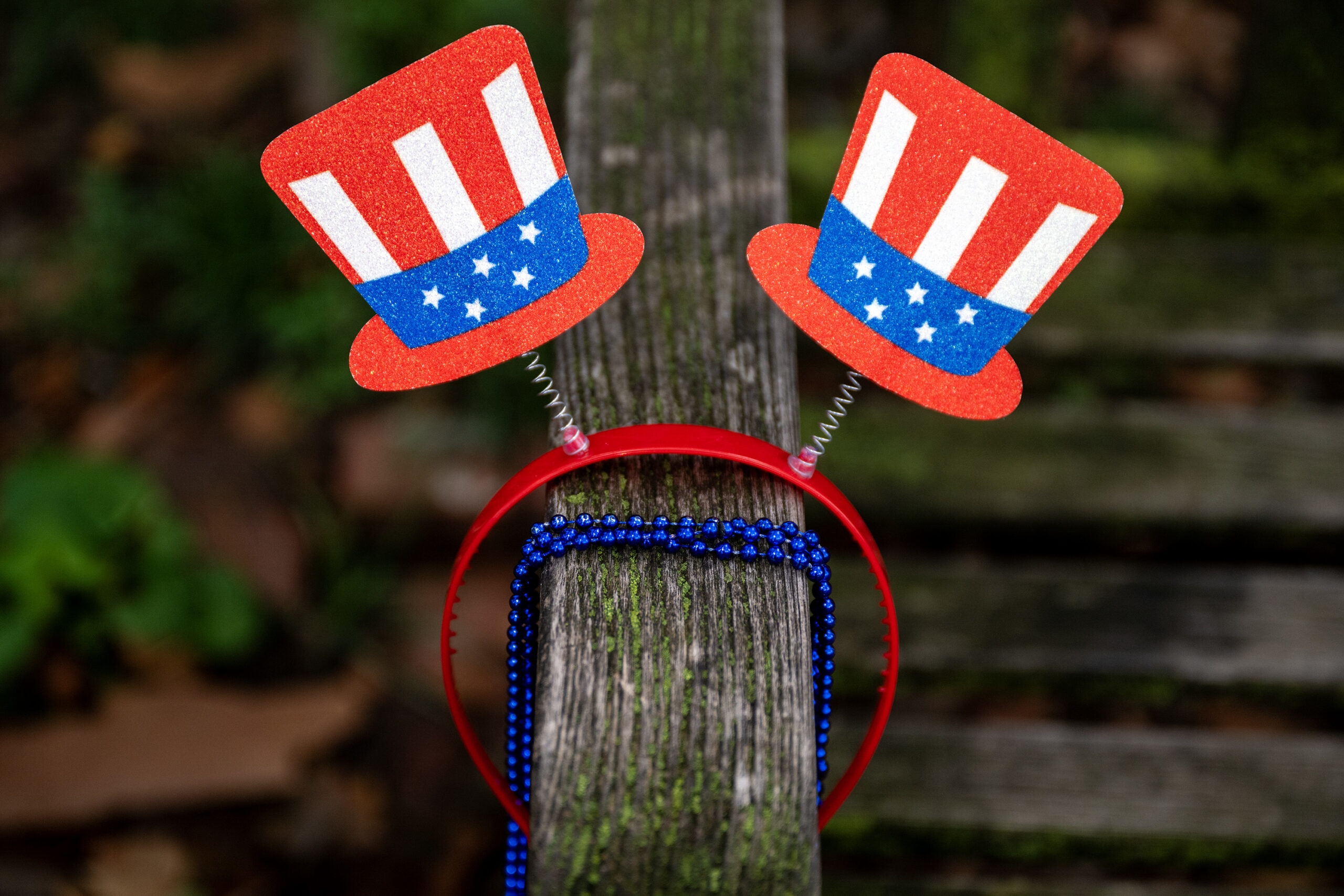
An Uncle Same hatted headband is left on a park bench Philadelphia’s Historic District during the Independence Day weekend celebrations Jul. 2, 2025.
I took a lot of photos, but realized there wasn’t a way I could write a caption reading, “the administration doesn’t like what this panel says about slavery.” So I put any photos I made in a file for later use.
In July, the New York Times broke the story that employees of the National Park Service had been flagging descriptions and displays at scores of parks and historic sites around the country for review — and they had examples of a few here in Philadelphia.
The next day, armed with the specific panels at the Liberty Bell and the President’s House they reported, I went back and re-photographed them all for our own story.
My colleague Fallon Roth obtained and reviewed the internal comments submitted by NPS employees here with many more details so in the following days I made many more photos.
I was even told to re-photograph some panels for a third time, grumbling (to myself) when told “we need higher resolution versions, shot head on, without any distortion,” for an interactive project. Which, I had to admit later (again, to myself) turned out great!
The President’s House came under particular scrutiny, and the removal of noncompliant displays was initially slated to come on Sept. 17.
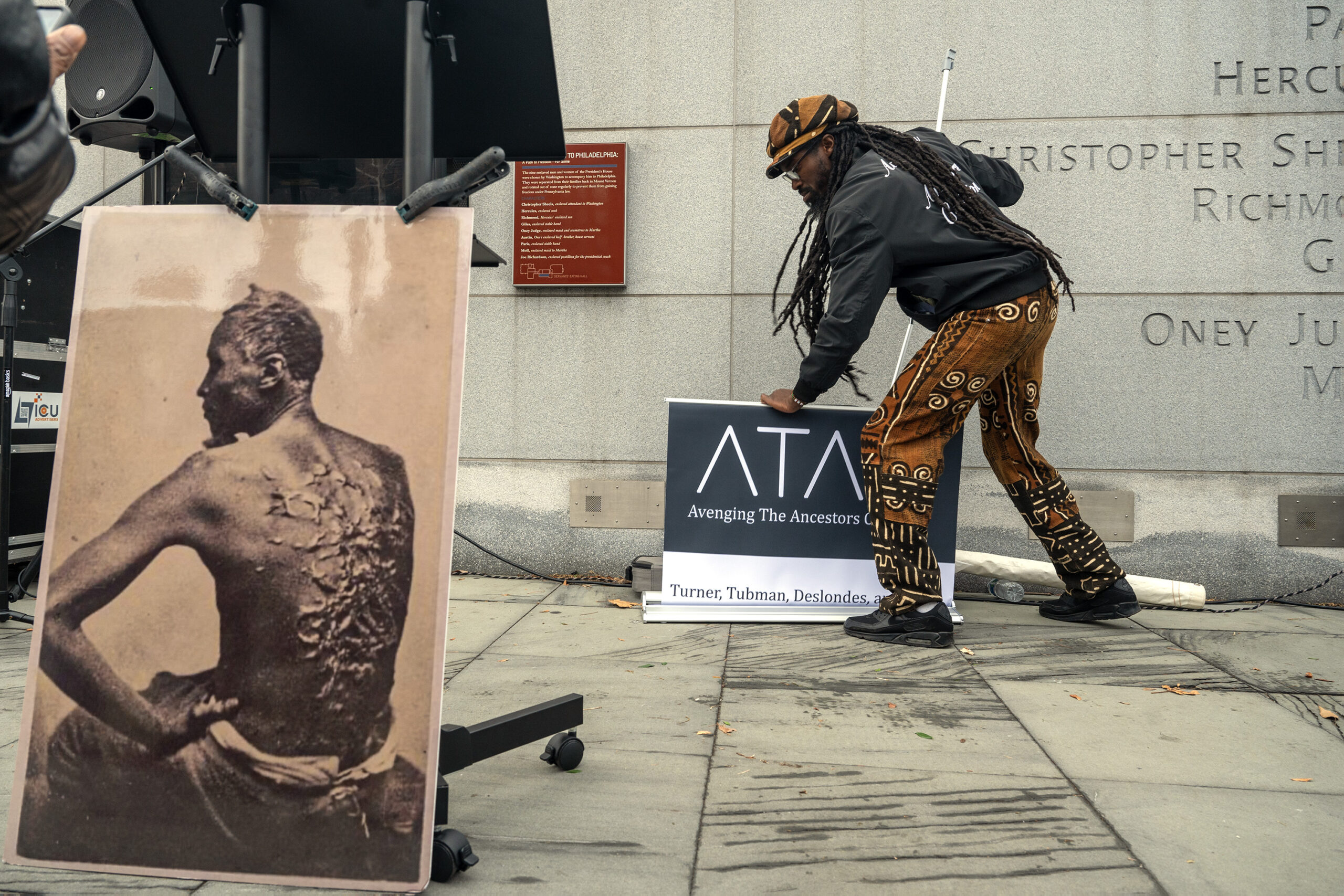
Farugh Maat, with Avenging the Ancestors, Coalition, takes down signs at the President’s House exhibit following a ceremony on the site Dec. 21, 2025 marking the 15th anniversary of its opening. The photo at left, known as “The Scourged Back” is copy of one that was removed from display at Fort Pulaski National Monument in Georgia following an order from President Trump’s “disparaging” executive order.
The administration’s deadline came and went. We got tips that signs had been altered, but I checked, and nothing actually happened. Until Thursday.
I was on assignment near Independence Hall, and as always, walked through the President’s House. It was quiet except for a local TV news crew using Independence Mall as a location for their report on this weekend’s coming winter storm.
Later while editing that assignment, we got a tip that workers with tape measures where looking and poking around “behind the panels” there. I rushed down where my colleague Maggie Prosser was already asking them what they were up to.
I photographed the entire removal, and was joined by photographer Elizabeth Robertson who even made an overall photo from our newsroom overlooking the site.
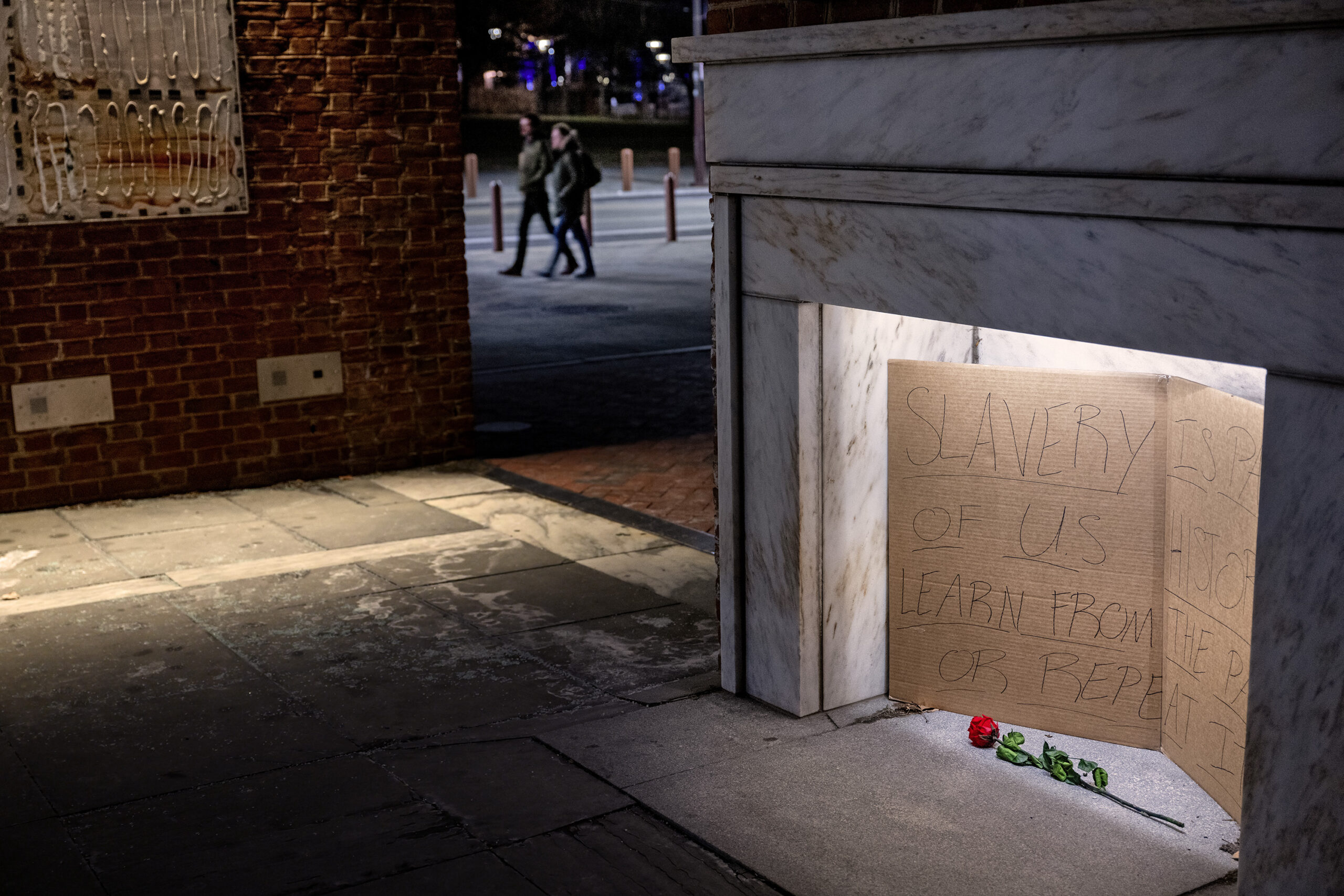
Finally, I ended up returning after dark, just because.
A single rose and a handwritten cardboard sign – “Slavery is part of U.S. history learn from the past of repeat it”- are inside an empty hearth at the President’s House site Thursday night, Jan. 22, 2026 after workers removed display panels.
Since 1998 a black-and-white photo has appeared every Monday in staff photographer Tom Gralish’s “Scene Through the Lens” photo column in the print editions of The Inquirer’s local news section. Here are the most recent, in color:
January 19, 2026: A low-in-the-sky winter sun is behind the triangular pediment of the “front door” of the open-air President’s House installation in Independence National Historical Park. The reconstructed “ghost” structure with partial walls and windows of the Georgian home known in the 18th century as 190 High St. is officially titled, “Freedom and Slavery in the Making of a New Nation” (2010). It is designed to give visitors a sense of the house where the first two presidents of the United States, George Washington and John Adams, served their terms of office. The commemorative site designed by Emanuel Kelly, with Kelly/Maiello Architects, pays homage to nine enslaved people of African descent who were part of the Washington household with videos scripted by Lorene Cary and directed by Louis Massiah. Deepika Iyer holds her niece Ira Samudra aloft in a Rockyesque pose, while her parents photograph their 8 month-old daughter, in front of the famous movie prop at the top of the steps at the Philadelphia Art Museum. Iyer lives in Philadelphia and is hosting a visit by her mother Vijayalakshmi Ramachandran (partially hidden); brother Gautham Ramachandran; and her sister-in-law Janani Gautham who all live in Bangalore, India.January 5, 2026: Parade marshals trail behind the musicians of the Greater Kensington String Band heading to their #9 position start in the Mummers Parade. Spray paint by comic wenches earlier in the day left “Oh, Dem Golden Slippers” shadows on the pavement of Market Street. This year marked the 125th anniversary of Philly’s iconic New Year’s Day celebration.Dec. 29, 2025: Canada geese at sunrise in Evans Pond in Haddonfield, during the week of the Winter Solstice for the Northern Hemisphere. December 22, 2025: SEPTA trolley operator Victoria Daniels approaches the end of the Center City Tunnel, heading toward the 40th Street trolley portal after a tour to update the news media on overhead wire repairs in the closed tunnel due to unexpected issues from new slider parts.December 15, 2025: A historical interpreter waits at the parking garage elevators headed not to a December crossing of the Delaware River, but an event at the National Constitution Center. General George Washington was on his way to an unveiling of the U.S. Mint’s new 2026 coins for the Semiquincentennial, December 8, 2025: The Benjamin Franklin Bridge and pedestrians on the Delaware River Trail are reflected in mirrored spheres of the “Weaver’s Knot: Sheet Bend” public artwork on Columbus Boulevard. The site-specific stainless steel piece located between the Cherry Street and Race Street Piers was commissioned by the City’s Public Art Office and the Delaware River Waterfront Corporation and created and installed in 2022 by the design and fabrication group Ball-Nogues Studio. The name recalls a history that dominated the region for hundreds of years. “Weaver’s knot” derives from use in textile mills and the “Sheet bend” or “sheet knot” was used on sailing vessels for bending ropes to sails. November 29, 2025: t’s ginkgo time in our region again when the distinctive fan-shaped leaves turn yellow and then, on one day, lose all their leaves at the same time laying a carpet on city streets and sidewalks. A squirrel leaps over leaves in the 18th Century Garden in Independence National Historical Park Nov. 25, 2025. The ginkgo (Ginkgo biloba) is considered a living fossil as it’s the only surviving species of a group of trees that existed before dinosaurs. Genetically, it has remained unchanged over the past 200 million years. William Hamilton, owner the Woodlands in SW Phila (no relation to Alexander Hamilton) brought the first ginkgo trees to North America in 1785.November 24, 2025: The old waiting room at 30th Street Station that most people only pass through on their way to the restrooms has been spiffed up with benches – and a Christmas tree. It was placed there this year in front of the 30-foot frieze, “The Spirit of Transportation” while the lobby of Amtrak’s $550 million station restoration is underway. The 1895 relief sculpture by Karl Bitter was originally hung in the Broad Street Station by City Hall, but was moved in 1933. It depicts travel from ancient to modern and even futuristic times. November 17, 2025: Students on a field trip from the Christian Academy in Brookhaven, Delaware County, pose for a group photo in front of the Liberty Bell in Independence National Historical Park on Thursday. The trip was planned weeks earlier, before they knew it would be on the day park buildings were reopening after the government shutdown ended. “We got so lucky,” a teacher said. Then corrected herself. “It’s because we prayed for it.” November 8, 2025: Multitasking during the Festival de Día de Muertos – Day of the Dead – in South Philadelphia.November 1, 2025: Marcy Boroff is at City Hall dressed as a Coke can, along with preschoolers and their caregivers, in support of former Mayor Jim Kenney’s 2017 tax on sweetened beverages. City Council is considering repealing the tax, which funds the city’s pre-K programs. October 25, 2025: Austin Gabauer, paint and production assistant at the Johnson Atelier, in Hamilton Twp, N.J. as the finished “O” letter awaits the return to Philadelphia. The “Y” part of the OY/YO sculpture is inside the painting booth. The well-known sculpture outside the Weitzman National Museum of American Jewish History was removed in May while construction continues on Market Street and has been undergoing refurbishment at the Atelier at the Grounds for Sculpture outside of Trenton.October 20, 2025:The yellow shipping container next to City Hall attracted a line of over 300 people that stretched around a corner of Dilworth Park. Bystanders wondered as they watched devotees reaching the front take their selfies inside a retro Philly diner-esque booth tableau. Followers on social media had been invited to “Climb on to immerse yourself in the worlds of Pleasing Fragrance, Big Lip, and exclusive treasures,” including a spin of the “Freebie Wheel,” for products of the unisex lifestyle brand Pleasing, created by former One Direction singer Harry Styles.