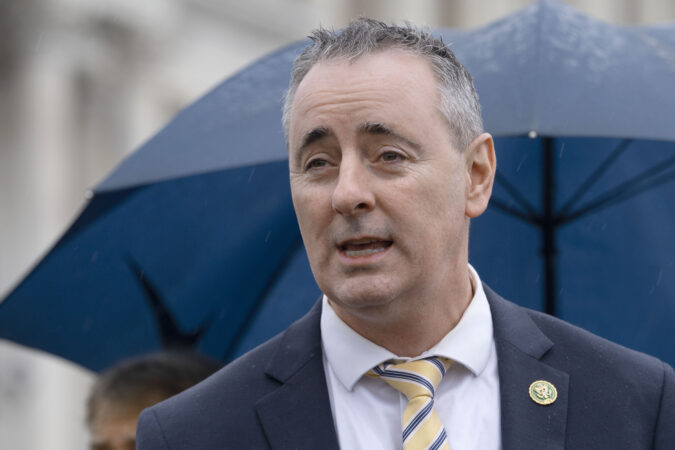
Tag: Scott Perry

  • Karen Dalton, who plans to challenge Scott Perry in the GOP primary, has her own definition of RINO

    Karen Dalton, who plans to challenge Scott Perry in the GOP primary, has her own definition of RINO

    If she makes it on the ballot, Karen Dalton will be U.S. Rep. Scott Perry’s first primary opponent since 2012 – the year he first won the seat.

    Dalton, a retired staff attorney for the Pennsylvania House Republicans, knows the odds are against her as she runs a solo campaign operation out of her living room. But she thinks she has a shot.

    The 65-year-old Carlisle resident is irked by President Donald Trump’s policies both from a faith-based standpoint and a legal one.

    She holds many views that align with Democrats, which may draw accusations that she’s a “RINO,” or Republican in name only. But she argues she’s a Republican at heart.

    “I was talking to a senior citizen the other day, and the first thing he said to me was, ‘So you’re a RINO,” said Dalton, 65. “And my response to that was, well, if you mean ‘Respect for Individuals and Not Oligarchs,’ I’ll go along with that. He goes, ‘No, no, no, I’m a RINO too. I’m that old school Republican that believes in helping people.’ I’m like, ‘Yes, thank you. That’s what I’m talking about getting back to.’”

    Perry, a longtime ally of President Donald Trump who supported his unsuccessful attempts to overturn the 2020 election, represents Dauphin County and parts of Cumberland and York Counties in Central Pennsylvania. He appears to be particularly vulnerable this year as the district has shifted toward Democrats and Republican-turned-Democrat Janelle Stelson, a former local news anchor, had a razor-thin loss against him in the general election last year. She plans to run again in the Democratic primary.

    Dalton, in a long-ranging interview with The Inquirer in her living room, called Donald Trump’s One Big Beautiful Bill Act the “Big, Brutal Betrayal of the American Dream Act,” because of its cuts to Medicaid and SNAP.

    She believes former Vice President Kamala Harris should have pushed back more on Trump’s claims about transgender people in the 2024 election, argued that the term “illegal alien” is factually incorrect, and says on her website that climate change is a real threat.
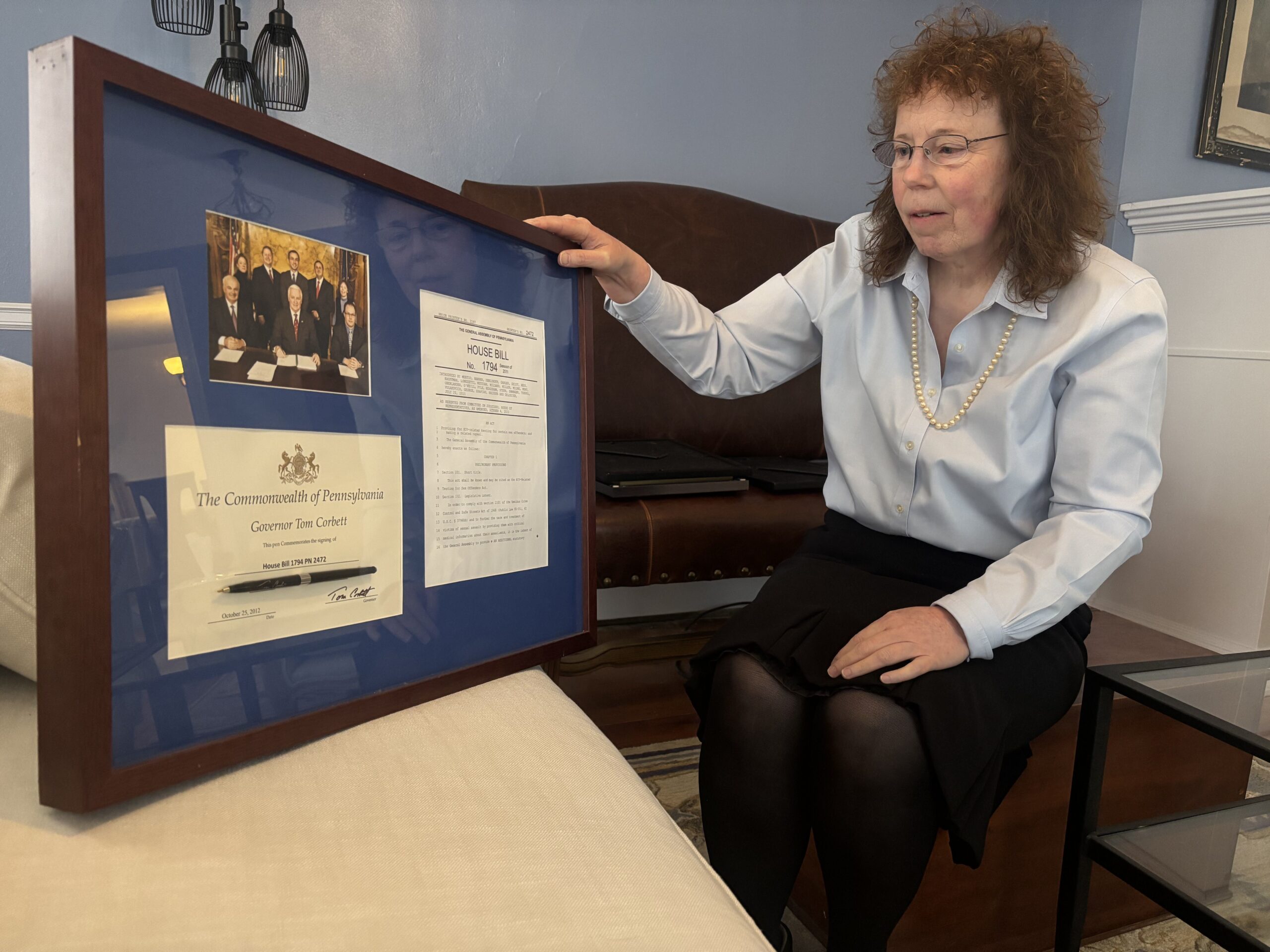
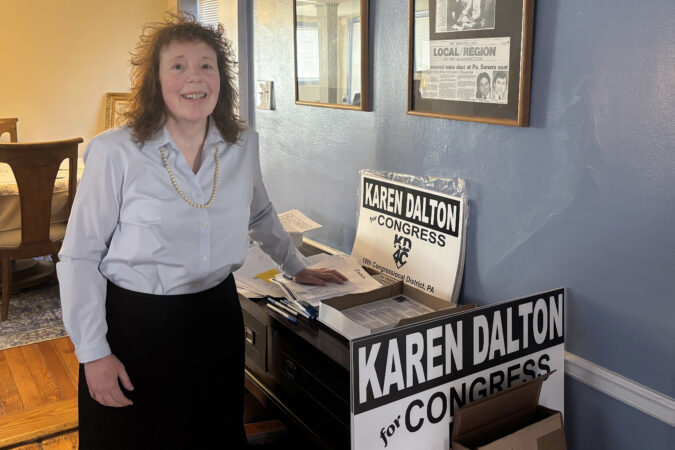
    Karen Dalton, who plans to challenge Scott Perry in the Republican primary, holds materials from a bill she worked on in Harrisburg in her Carlisle home on Monday.

    She supports a $15 federal minimum wage and a millionaire’s tax, and wants to raise the corporate tax rate. She supports abortion rights and believes health care is a human right, though she’s fearful of what she views as over-regulation from Democrats.

    Her walls are covered with Republican political memorabilia and a poster of the late Sen. Robert F. Kennedy, a Democrat who was assassinated during his 1968 presidential campaign.

    She noted that she was a Republican when Donald Trump was a Democrat.

    Her path to victory, she believes, is convincing enough independents and Democrats – particularly former Republicans – to change their registration to support her in the May GOP primary.

    “You know, independents have been upset many years because Pennsylvania has a closed primary system … if they register as Republicans, they get to vote in a primary against Scott Perry and not wait until November,” she said.

    Primary challengers are rarely successful. Dalton reported under $3,000 in contributions – and an approximately $6,000 loan from herself — through September, which is pennies compared to the more than $1 million Perry reported.

    But she only needs to gather 1,000 signatures and pay a $150 filing fee to appear alongside him on the primary ballot.

    Perry’s campaign did not respond to a request for comment about Dalton as of Wednesday.
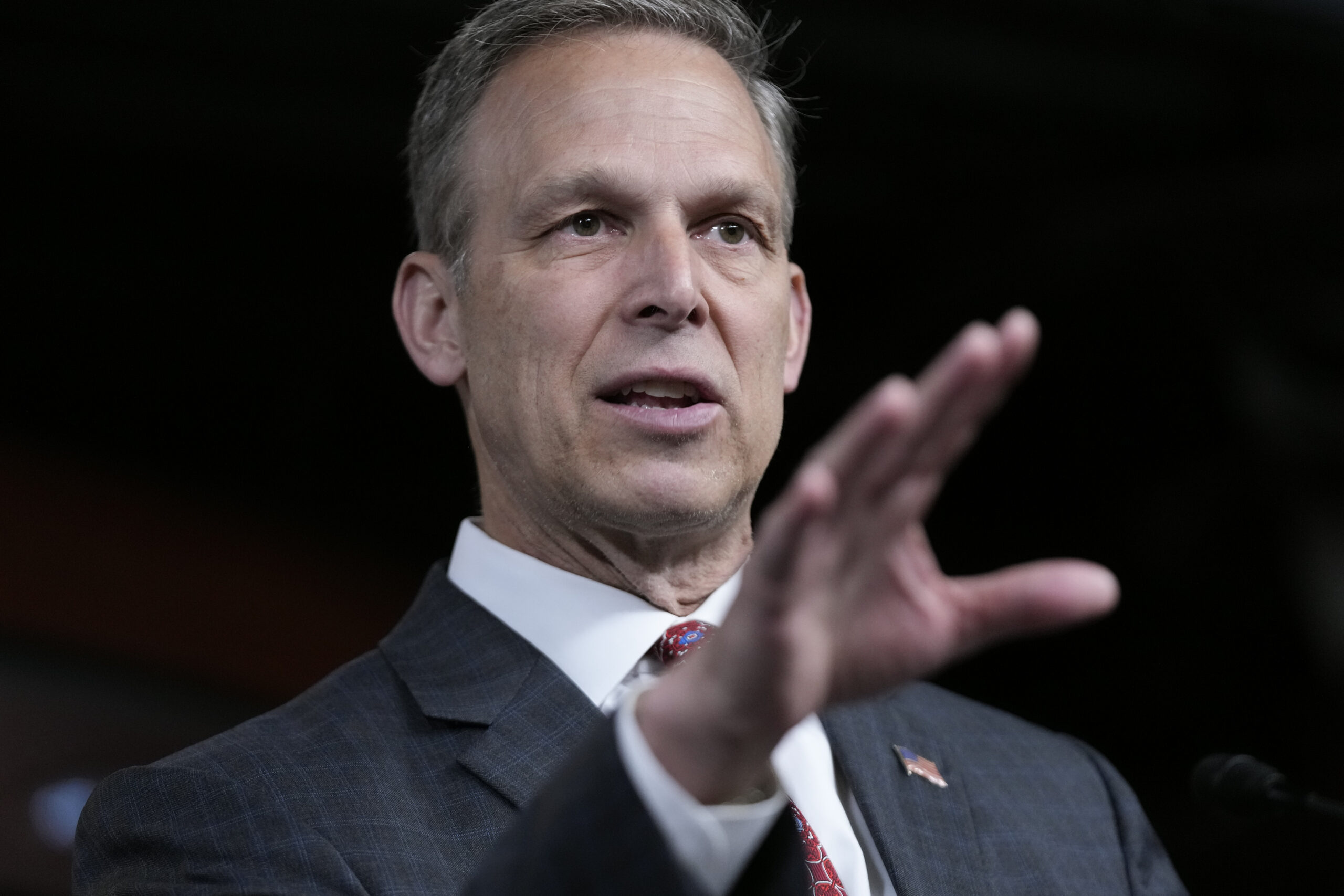
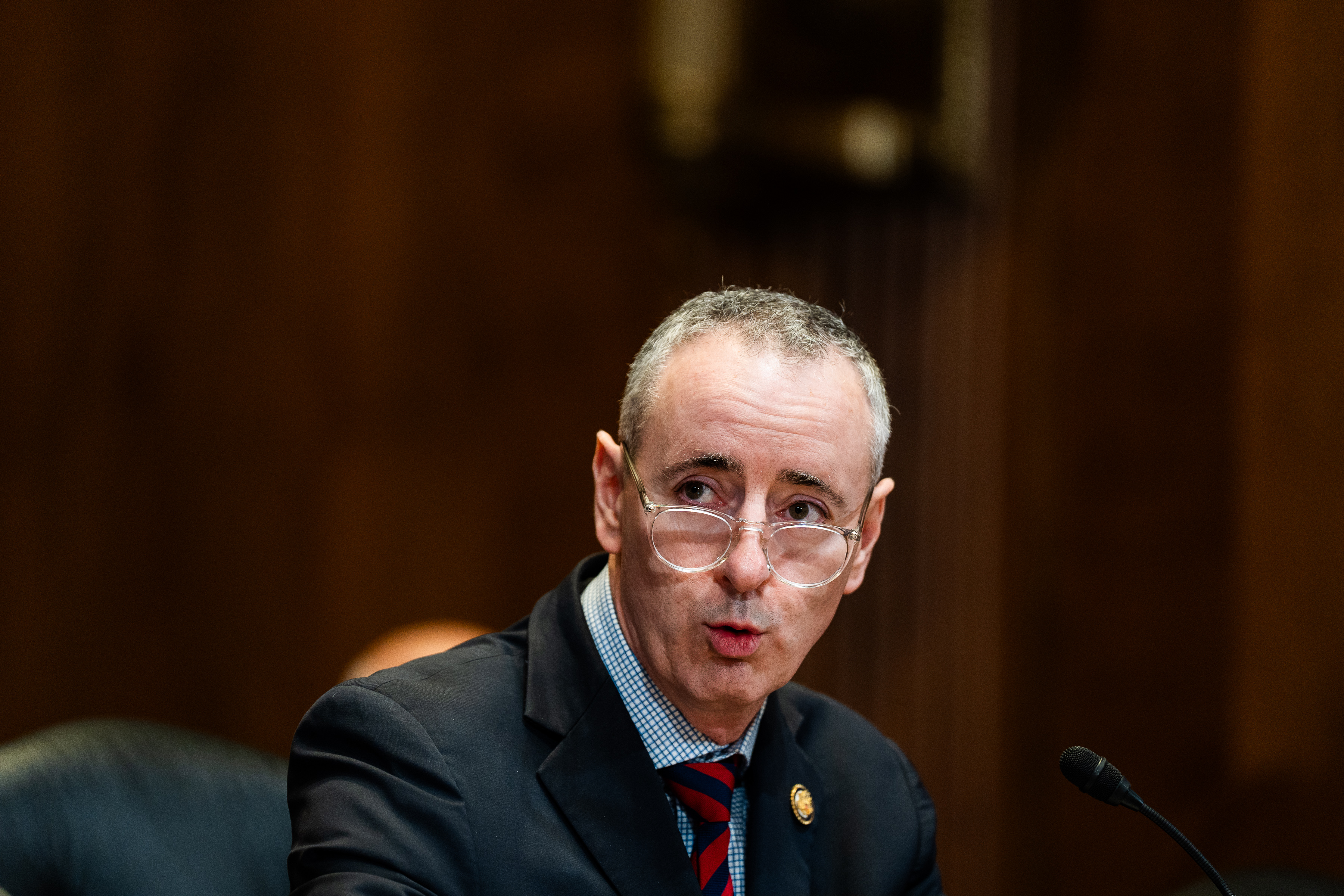
    U.S. Scott Perry speaks during a news conference on Capitol Hill in Washington in July 2023.

    Rosy eyed about the old Republicans

    Dalton grew up in New Jersey and was the first in her immediate family to go to college, attending Montclair State University before getting her politics graduate degree at New York University and later attending law school.

    She lives in Carlisle near Dickinson Law — her “beloved alma mater” — in a home she bought just four years ago at age 61. With student loans hanging over her head for the vast majority of her career, she couldn’t afford a down payment until her state retirement payday.

    She has no kids and she’s never been married — “I spent a lot of time reading and studying and going to school,” she said. These days, she takes piano lessons and plays pickleball, and does pro bono legal work when she’s not knocking on doors for her one-woman campaign.

    Dalton is rosy-eyed about moderates of the Republican Party’s past. She managed former U.S. Rep. Jim Greenwood’s (R., Bucks) successful state Senate campaign in 1986 and worked for New Jersey Republican Gov. Tom Kean, who wrote The Politics of Inclusion. She later worked as a staff attorney for Pennsylvania House Republicans for 25 years, where she focused on domestic violence and child sexual abuse legislation.

    “I’m convinced that if the Republican Party wants to survive and thrive, we need to give up what Donald Trump believes in, and return to our roots,” she said.

    Dalton, whose parents were both Democrats, changed her registration from independent to Republican in 1984 at the age of 24 after her first job working for Ralph J. Salerno’s unsuccessful state Senate campaign in New Jersey. When he lost, “amazingly, nobody took up arms,” she said.

    “I mean, I cried in his lapel, but you know, it’s just like he conceded, and everybody moved on,” she said. “There was no insurrection, there was no battle, there was no violence, there was no ‘Oh, there was voter fraud.’ None of that stuff happened, because that’s the way things used to be before Donald Trump was president.”
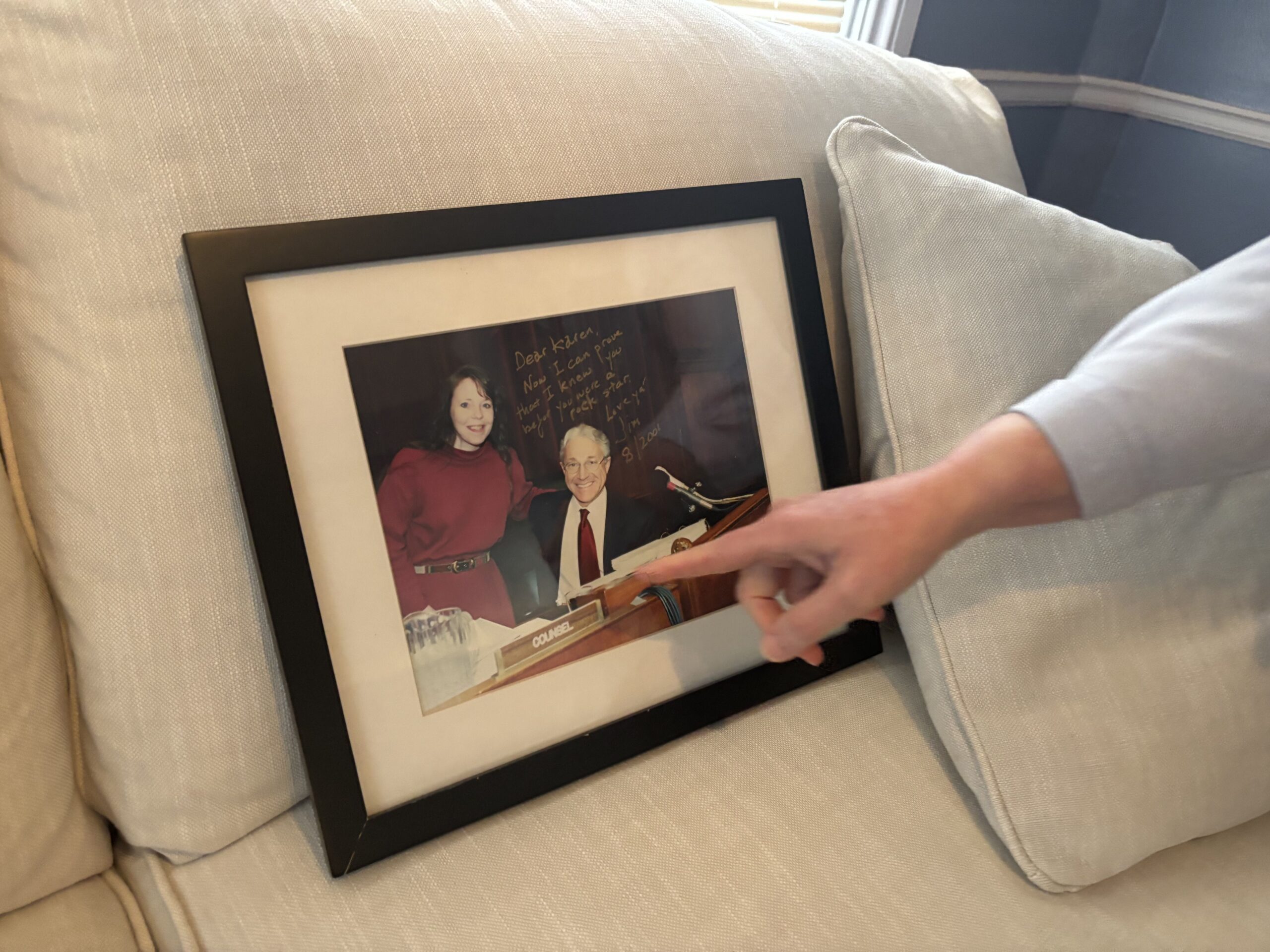
    Karen Dalton points to a photo of herself and her old boss Jim Greenwood in her Carlisle home on Monday. A message from Greenwood says: “Now I can prove that I knew you before you were a rock star.”

    Tired of yelling at the television

    Dalton said she didn’t think she’d become a candidate herself during her years working for politicians. But she said “steam started to come out of my ears” when Trump tried to end birthright citizenship, and again when House Speaker Mike Johnson mused about defunding the federal judiciary.

    “I just couldn’t sit back anymore … I got tired of yelling at the television,” she said.

    While Dalton argued that Trump’s rise in 2015 has soured the Republican Party, much of her criticism concentrated on the Jan. 6, 2021 riot and what followed.

    Dalton worked with Perry in Harrisburg when he was a state representative, and she described him as “an incredibly nice man” despite her misgivings about his efforts to overturn the 2020 election and continued alignment with Trump. (She calls him “morally blind” on her website.)

    When asked if she ever supported Perry, Dalton said she wasn’t comfortable talking about who she voted for in the past because “ballots are private.” She did say that she didn’t vote for Trump in 2024, and she voted for Stelson, Perry’s Democratic challenger.

    “I can tell you that I don’t vote for insurrectionists,” she said.
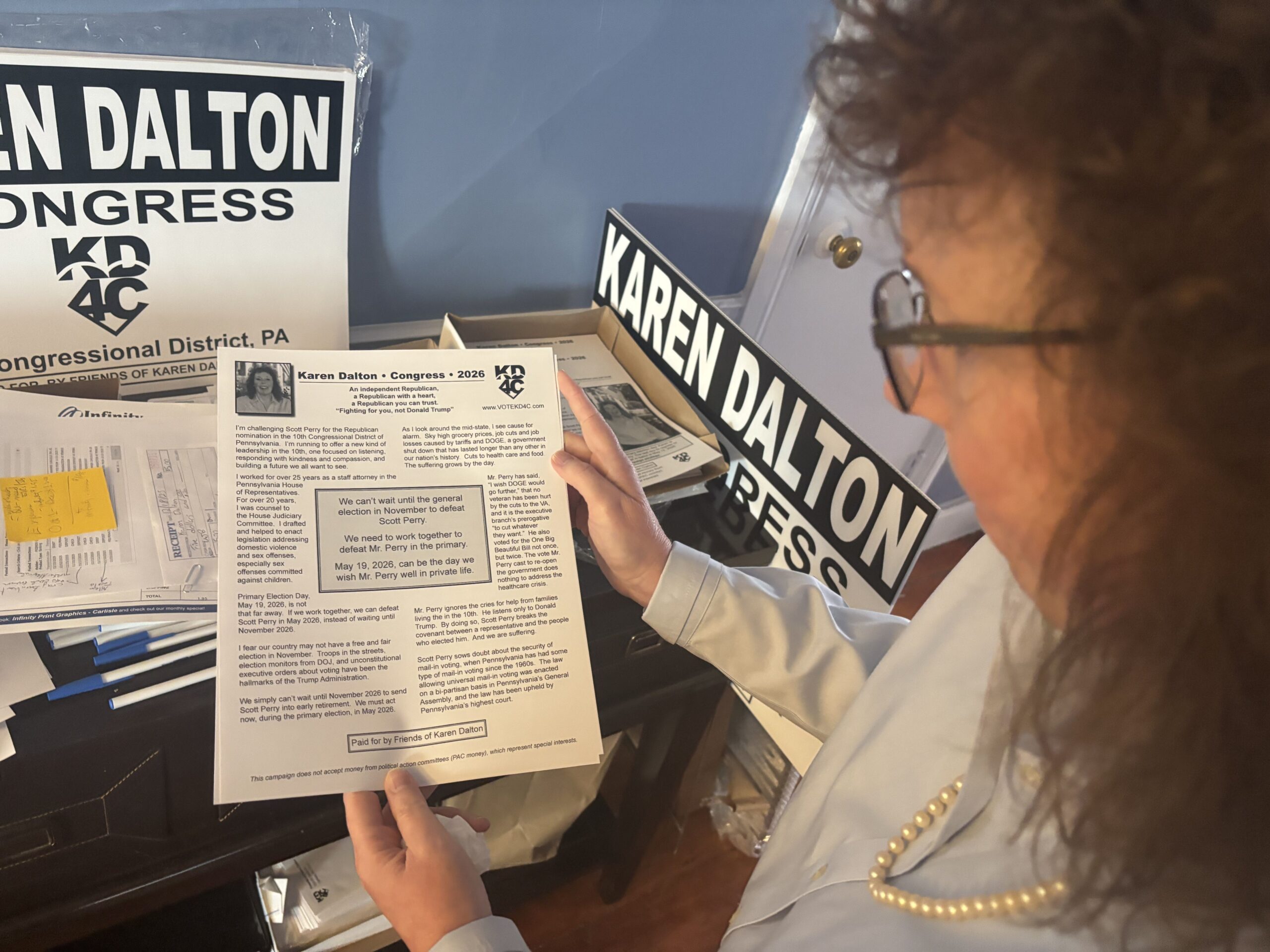
    Karen Dalton, who plans to challenge Scott Perry in the Republican primary, calls a table in her living room her “campaign headquarters.”

    Policy informed by faith

    Dalton was raised Catholic, confirmed Episcopalian, and has attended the Unitarian Universalist Church. Though she hasn’t converted, she now identifies as Jewish, and was moved to tears while talking about a late mentor who introduced her to the religion – noting that speaking about the subject made her “verklempt,” a Yiddish term for emotional.

    “One of the things I love so much about Judaism, in addition to its focus on social justice, is the idea that you get to disagree,” she said, a handful of crumpled tissues in her lap.

    Her faith informs her approach to public policy, from opposing cuts to healthcare subsidies to appreciating ideas across the political spectrum.

    One of her flagship policy proposals is creating a way for people to borrow up to two years worth of their own Social Security benefits before they reach retirement age to help with things like a down payment, tuition, or medical expenses – one that would have helped her buy a home earlier.

    Another is a scholarship program that would allow students in any field to borrow the full amount of their education from the federal government through loans that would be forgiven if they serve “the public good,” a rebuke of Trump’s One Big Beautiful Bill’s borrowing limit on federal student loans.

    She also wants to create a program to pay for the education of students who want to pursue careers in science and guarantee employment at national health or science institutions, including a new foundation for scientific discovery.

    Dalton has brought her neighbors into her home to discuss her ideas, and plans to do it again.

    She also held a town hall at Central Penn College in Enola that she said drew 15 people.

    “That’s 15 more people than Scott Perry looked in the eye and talked to over the past five years at his town halls that didn’t exist,” she said.
  • Three Pa. Republicans are siding with Democrats in a last-ditch effort to save healthcare tax credits

    Three Pa. Republicans are siding with Democrats in a last-ditch effort to save healthcare tax credits

    Four moderate Republicans — including three who are in the hot seat for reelection in swing districts in Pennsylvania — joined Democrats to sign a discharge petition Wednesday to force a vote on a proposal to extend pandemic-era expanded Obamacare subsidies.

    While the move may not save the subsidies from expiring, given that Republican-controlled Senate has indicated resistance to the plan, the votes mark the sharpest rebuke of party leadership from within the GOP since President Donald Trump started his second term.

    U.S. Rep. Brian Fitzpatrick, who has represented Bucks County since 2017, and two GOP freshmen from elsewhere in the state, U.S. Reps. Rob Bresnahan and Ryan Mackenzie, joined New York moderate Mike Lawler to give Democrats the votes they needed to push a vote on a clean extension of the subsidies to the floor.

    The move comes on the heels of other high-profile examples of rank-and-file Republicans bucking Trump and House Speaker Mike Johnson, including last month’s bipartisan vote to release the Jeffrey Epstein files, following a discharge petition after Johnson had slow-walked the legislation.

    The “dam is breaking,” U.S. Rep. Marjorie Taylor Greene (R., Ga.) told CNN on Tuesday in reference to the string of incidents in which members of the party had defied the president and speaker ahead of next year’s midterms.

    The Republicans who defected on the healthcare bill had favored a compromise that they hoped might have a chance of passing Congress, but that was rejected by Johnson (R., La.), who sided with conservatives against expanding the subsidies, on Tuesday night.

    That left them supporting a vote on a bill that extends the program as is, with far fewer restrictions and concessions than the compromise bills included.

    “Despite our months-long call for action, leadership on both sides of the aisle failed to work together to advance any bipartisan compromise, leaving this as the only way to protect the 28,000 people in my district from higher costs,” Bresnahan said in a statement posted on X.

    “Families in NEPA cannot afford to have the rug pulled out from under them. Doing nothing was not an option, and although this is not a bill I ever intended to support, it is the only option remaining. I urge my colleagues to set politics aside, put people first, and come together around a bipartisan deal.”

    Later Wednesday, House Republican leaders pushed to passage a healthcare bill that does not address the soaring monthly premiums that millions of people will soon endure. The bill passed on a mostly party-line vote of 216-211. U.S. Rep. Thomas Massie (R., Ky.) joined with Democrats in voting against the measure.

    Fitzpatrick and Lawler tried to add a temporary extension of the subsidies to the bill, but were denied.

    “Our only request was a floor vote on this compromise, so that the American People’s voice could be heard on this issue. That request was rejected. Then, at the request of House leadership I, along with my colleagues, filed multiple amendments, and testified at length to those amendments,” Fitzpatrick said in a statement. “House leadership then decided to reject every single one of these amendments.

    “As I’ve stated many times before, the only policy that is worse than a clean three-year extension without any reforms, is a policy of complete expiration without any bridge,” Fitzpatrick said.

    Bresnahan’s vote for the discharge petition came a little more than a week after he welcomed Trump to his Northeast Pennsylvania district for a rally, which was meant to address voter concerns about affordability ahead of next year’s midterms.

    The coming spike in healthcare premiums will be a central part of Democrats’ messaging in swing districts like Bresnahan’s.

    Bresnahan won his election last year by about 1 percentage point. He was also one of just 20 House Republicans to sign a successful discharge petition earlier this month to force a vote for collective bargaining to be restored for federal workers.

    “At the end of the day that might have been going against party leadership, but it was what’s right for northeastern Pennsylvania,” he told The Inquirer of the vote at the Pennsylvania Society last weekend.

    Rep. Brian Fitzpatrick (R-Pennsylvania) speaks at a hearing on Capitol Hill on Dec. 3.

    Mackenzie, in an interview with The Inquirer, blamed Democrats for not signing on to one of the compromise proposals, leaving him and the other three Republicans with no alternative but to sign onto a discharge for a plan he doubts will pass.

    “But if you send the Senate anything at this point, I’m of the opinion it will continue the conversation and they’ll consider what their options are,” Mackenzie said. “If they would like to do additional reforms, I welcome those.”

    While Republicans who have opposed the extension argue the subsidies were meant to be temporary and affect only about 7% of Americans, Mackenzie said he has been hearing from constituents constantly.

    “Healthcare and the current system is unaffordable for many people,” he said. “We recognize the current system is broken for millions of Americans, so to actually get to some kind of better position, you need both short-term and long-term solutions.”

    He called the Affordable Care Act subsidy extension a needed short-term solution “to do something for people struggling right now.”

    Like Bresnahan, Mackenzie won his Lehigh Valley seat by 1 percentage point last year. And the district will be a top priority for both parties in next year’s election — as shown by Vice President JD Vance’s visit there Tuesday.

    U.S. Rep. Scott Perry, a staunch Trump ally, represents a swing district in Central Pennsylvania but voted against the discharge petition. Janelle Stelson, a Democrat seeking Perry’s seat, called him “extreme” for voting against the measure.

    “While other Republicans are working across party lines to lower costs, Perry is yet again refusing to do anything to make life more affordable,” said Stelson, who narrowly lost to Perry last year.

    Fitzpatrick had been leading the moderate push for a solution on the ACA tax credits with his own compromise bill in the House. His bill would extend the subsidies by two years and implement a series of changes, including new income eligibility caps and a minimum monthly premium payment. Fitzpatrick has bucked his party and Trump several times, voting against final passage of Trump’s One Big Beautiful Bill, though he voted for an earlier version that passed the House by only one vote.

    Some Republicans do not want to extend the credits at all, while others want abortion restrictions included.

    Democrats hoping to unseat Fitzpatrick argue he has a record of pushing back on Trump and GOP leaders only in ways that do not actually damage the party or its priorities. In this case, though, the three Pennsylvanians were critical in getting the petition through, even if the future of ACA tax credits remains uncertain.

    “The only thing Brian Fitzpatrick has perfected in his 9 years in Congress is the art of completely meaningless gesture, designed to protect his political future not the people he serves,” his Democratic challenger, Bucks County Commissioner Bob Harvie, wrote on X.

    Harvie had previously called on Fitzpatrick to sign the Democrats’ discharge petition.

    Not all ACA tax credits are under threat. Under the ACA, people who earn less than 400% of the federal poverty level — about $60,000 — are eligible for tax credits on a sliding scale, based on their income, to help offset the monthly cost of an insurance premium.

    That tax credit is part of the law, and therefore not expiring. But what will expire is an expansion passed in 2021 when Congress increased financial assistance so that those buying coverage through an Obamacare marketplace do not pay more than 8.5% of their income.

    This article includes information from the Associated Press.

  • Top Pennsylvania Republicans are projecting relative calm amid 2026 national party panic

    Top Pennsylvania Republicans are projecting relative calm amid 2026 national party panic

    The same week Republican National Committee chair Joe Gruters said history predicted “almost certain defeat” for his party in the 2026 midterms, Pennsylvania Republicans partying in Midtown Manhattan projected relative calm about the election cycle.

    Gruters, President Donald Trump’s handpicked chair to run the party, said on a conservative radio station last week: “It’s not a secret. There’s no sugarcoating it. It’s a pending, looming disaster heading our way. We are facing almost certain defeat.”

    He added that the goal is to win and he “liked our chances in the midterms,” but noted “only three times in the last hundred years has the incumbent party been successful winning a midterm.”

    Pennsylvania could decide which party controls the U.S. House next year, as Democrats eye four congressional districts that Republicans recently flipped while the GOP fights to maintain its majority.

    But Pennsylvania Republicans in New York City for the annual Pennsylvania Society glitzy gathering of politicos last weekend had a less hair-on-fire view.

    “At this point when I was running [for Senate in 2024], the betting market said there was a 3% chance I was going to win,” Sen. Dave McCormick (R., Pa.) said after addressing a bipartisan audience at the Pennsylvania Manufacturer’s Association luncheon on Saturday.

    “We’re a million miles from Election Day, and we’ve got a great track record of things to talk about and a great vision for how the president’s policies are going to make life better for working families,” McCormick said. “We just got to go out and make that message happen, but also continue to make the policies that are going to make that a reality happen.”

    The political environment was, of course, far more favorable to Republicans in 2024, when Trump won Pennsylvania by a larger margin than he did in 2016. But with Republicans in power and popular Democratic Gov. Josh Shapiro on the ballot for reelection, the headwinds in 2026 in the Keystone State are different.

    Pennsylvania GOP chair Greg Rothman, in an interview outside the PMA event on Saturday, called Shapiro “one of the greatest politicians of my generation” but noted that upsets have happened across various political environments in state history.

    “Anything can happen and the voters are smart, and all I can do is prepare the party to ride the waves and ignore the crashes, but I’m optimistic,” he added.

    Shapiro will likely face a GOP challenge from State Treasurer Stacy Garrity, who is a popular politician in her own right and holds the record for receiving the most votes of any candidate for statewide office in Pennsylvania.

    Meanwhile, Rothman predicted that the four Pennsylvania congressional incumbents running for reelection in swing districts will sink or swim based on how Trump and his policies land with voters come November.

    “They will be judged by the national economy and by immigration,” he said, and by Trump’s ability to end some international conflicts.

    But U.S. Rep. Rob Bresnahan, a GOP incumbent running for reelection in Pennsylvania’s Eighth Congressional District, which includes Scranton, had a more local view of how to win in 2026.

    “Everything about our job as a member of Congress is about northeastern Pa.,” Bresnahan said.

    “Northeastern Pennsylvania has always been our North Star. We know our district. We are out in our district. We’ve done over 250 public events. Our constituency case work is, in my opinion, one of the best offices in the country.”

    Bresnahan appeared at a rally with Trump in Mount Pocono last week. He was also one of just 20 House Republicans to sign a successful discharge petition to force a vote for collective bargaining to be restored for federal workers.

    “At the end of the day that might have been going against party leadership, but it was what’s right for northeastern Pennsylvania,” he said.

    Democrats have begun a full court press. That was evident at the Pennsylvania Society, where attendees seen mingling with other politicians included: Janelle Stelson, who is running for a second time against U.S. Rep. Scott Perry in the 10th Congressional District, as well as firefighter Bob Brooks and former federal prosecutor Ryan Croswell, both of whom are running for the Democratic nomination to take on U.S. Rep. Ryan Mackenzie in the Seventh.

    Bresnahan’s challenger, Scranton Mayor Paige Cognetti, also attended the soiree and walked through the Rainbow Room atop Rockefeller Center with U.S. Sen. Chris Coons (D., Del.) on Friday night. Coons said the time is now for Democrats to get involved in these races.

    “Given the margin, if there were to be four new Democrats in the House this cycle, as there were in 2018, that’d be the difference maker for the country,” Coons added.

    Staff writer Gillian McGoldrick contributed to this article.

  • Donald Trump will visit Northeast Pa. on Tuesday to promote his economic agenda ahead of 2026 midterms

    Donald Trump will visit Northeast Pa. on Tuesday to promote his economic agenda ahead of 2026 midterms

    President Donald Trump will visit Northeast Pennsylvania on Tuesday to promote his economic agenda, including efforts to lower inflation, the White House confirmed to The Inquirer on Thursday.

    The trip will kick off what is expected to be a national tour of Trump touting his economic policies ahead of the 2026 midterms, when Democrats and Republicans will battle for control of Congress.

    The specific location for Trump’s visit has not yet been made public, but Northeast Pennsylvania will be a major battleground in next year’s midterms.

    Democrats believe that they can oust freshman Republican U.S. Rep. Rob Bresnahan, of Lackawanna County, threatening the GOP’s slim House majority. Democrats are also specifically targeting the districts of U.S. Reps. Brian Fitzpatrick, of Bucks County; Ryan Mackenzie, of Lehigh County; and Scott Perry, of York County.

    Trump endorsed Bresnahan and most of Pennsylvania’s GOP delegation on his social media platform, Truth Social, last month. Scranton Mayor Paige Cognetti, a Democrat, is mounting a campaign to unseat Bresnahan, who won by roughly a percentage point last election.

    Affordability — which Trump called a “fake narrative” used by Democrats — has been a top issue for voters, including during November’s blue wave when Democrats won local contests throughout Pennsylvania, in addition to the gubernatorial races in Virginia and New Jersey.

    The president has repeatedly claimed that prices have fallen since he took office in January, but a CNN fact-checking report from November said prices and inflation have increased. Many experts have pointed to Trump’s tariff policies as contributing to increased prices.

    Tuesday’s visit appears to be the president’s first to the Keystone State since attending an energy summit in Pittsburgh in July. In November 2024, Trump defeated former Vice President Kamala Harris and won the presidency with the help of battleground Pennsylvania, garnering more votes than any statewide Republican candidate in history.

    The president had a particularly strong performance in Northeast Pennsylvania. last year, making some of his top gains compared with his 2020 performance in Lackawanna and Luzerne Counties.

  • Republicans won in Trump-friendly Tennessee, despite swing toward Democrats. Here’s what it means for Pennsylvania and 2026.

    Republicans won in Trump-friendly Tennessee, despite swing toward Democrats. Here’s what it means for Pennsylvania and 2026.

    A special election in a safely Republican district in Tennessee became must-watch TV for political observers Tuesday night, the latest sign of anti-Trump sentiment ahead of the 2026 midterms.

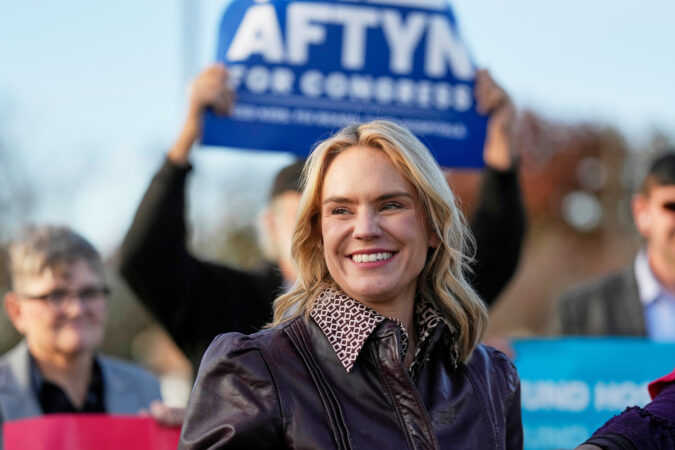
    The Associated Press called the race in Tennessee’s 7th Congressional District for Republican Matt Van Epps, who was leading Democrat Aftyn Behn by about 9 percentage points with about 99% of the vote in. That was a steep decline from the 22-point win President Donald Trump recorded in the same district just last year, and from his 39-point victory in 2016.

    It was the latest sign of a Democratic blue wave forming, following Election Day sweeps in Virginia, New Jersey, and Virginia last month. It also was the third straight special election in a deeply Republican district where voters swung toward the Democratic candidate by double-digit margins.

    “Sometimes in politics, what is happening is clear and in front of you,” David Chalian, CNN’s Washington bureau chief and political director, said Tuesday night. “Democrats are significantly, significantly over-performing what Kamala Harris did last year vs. Donald Trump in all of these places.”

    While Democrats were not successful in stealing a Republican seat Tuesday night, there are about 100 districts Trump won by a slimmer margin that Republicans will now need to defend during the 2026 midterms, according to the New York Times. Democrats need to flip just a couple to take back the majority in the House for the remainder of Trump’s term.

    While Trump celebrated Van Epps’ victory on social media, Democratic National Committee chairman Ken Martin called the results “a flashing warning sign for Republicans heading into the midterms.”

    “What happened tonight in Tennessee makes it clear: Democrats are on offense and Republicans are on the ropes,” Martin said in a statement.

    What is the Republican majority in the House?

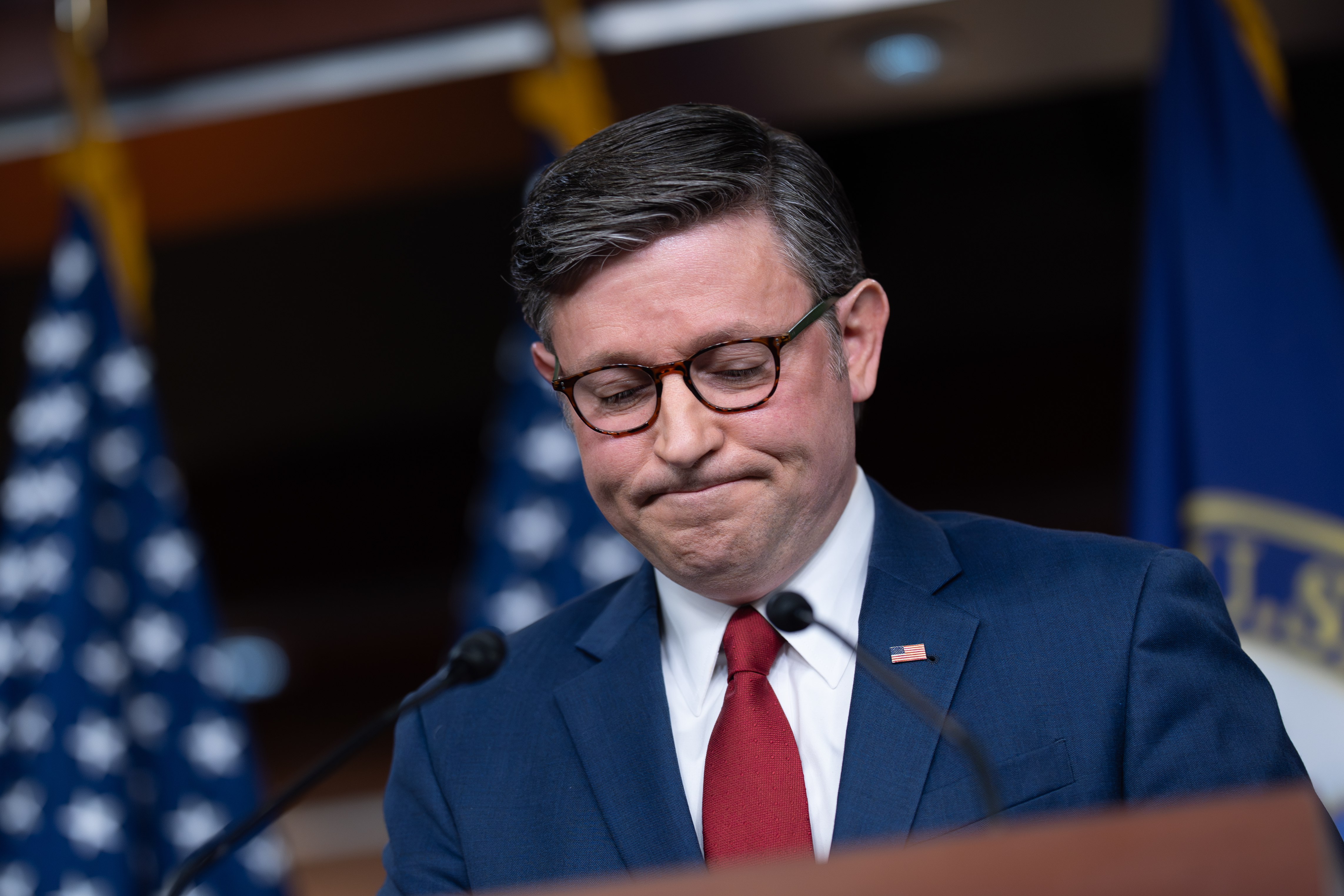
    Speaker of the House Mike Johnson (R., La.) is dealing with a shrinking majority.

    Van Epps’ victory means Republicans will hold 220 seats, while Democrats have 214 seats; 218 are needed to control the majority.

    Two seats remain vacant, and both are expected to go to Democrats, further reducing the already slim majority of House Speaker Mike Johnson (R., La.).

    The first is in Texas, where a runoff will be held Jan. 31 to fill the seat vacated by the death of Democratic Rep. Sylvester Turner. The race is down to two Democrats — Christian Menefee and Amanda Edwards.

    The second open seat is in New Jersey’s 11th Congressional District, which will hold a special election April 16 to fill the spot vacated by New Jersey Gov.-elect Mikie Sherrill. While the district was represented by a Republican as recently as 2018, it has been safely blue since maps were redrawn following the 2020 Census and is expected to remain in Democratic control.

    Not surprisingly, there are a lot of Democrats vying to replace Sherrill. At least 13 have entered the race or are about to do so, a lengthy list that includes former Rep. Tom Malinowski, progressive activist Analilia Mejia, Obama White House alum Cammie Croft, Essex County Commissioner Brendan Gill, and current Lt. Gov. Tahesha Way.

    Just one Republican has announced a bid to replace Sherrill — Randolph Mayor Joe Hathaway.

    Then there is the Georgia seat of GOP Rep. Marjorie Taylor Greene, which is set to become vacant following her resignation on Jan. 5. It is unclear when Georgia will hold a special election to replace Greene, but Gov. Brian Kemp is required to set a date within 10 days of her departure.

    The seat is considered safely Republican, but that is hardly definitive after what happened in Tennessee on Tuesday night.

    Why was there a special election in Tennessee?

    Former Rep. Mark Green (R., Tenn.) left Congress suddenly to launch his own business.

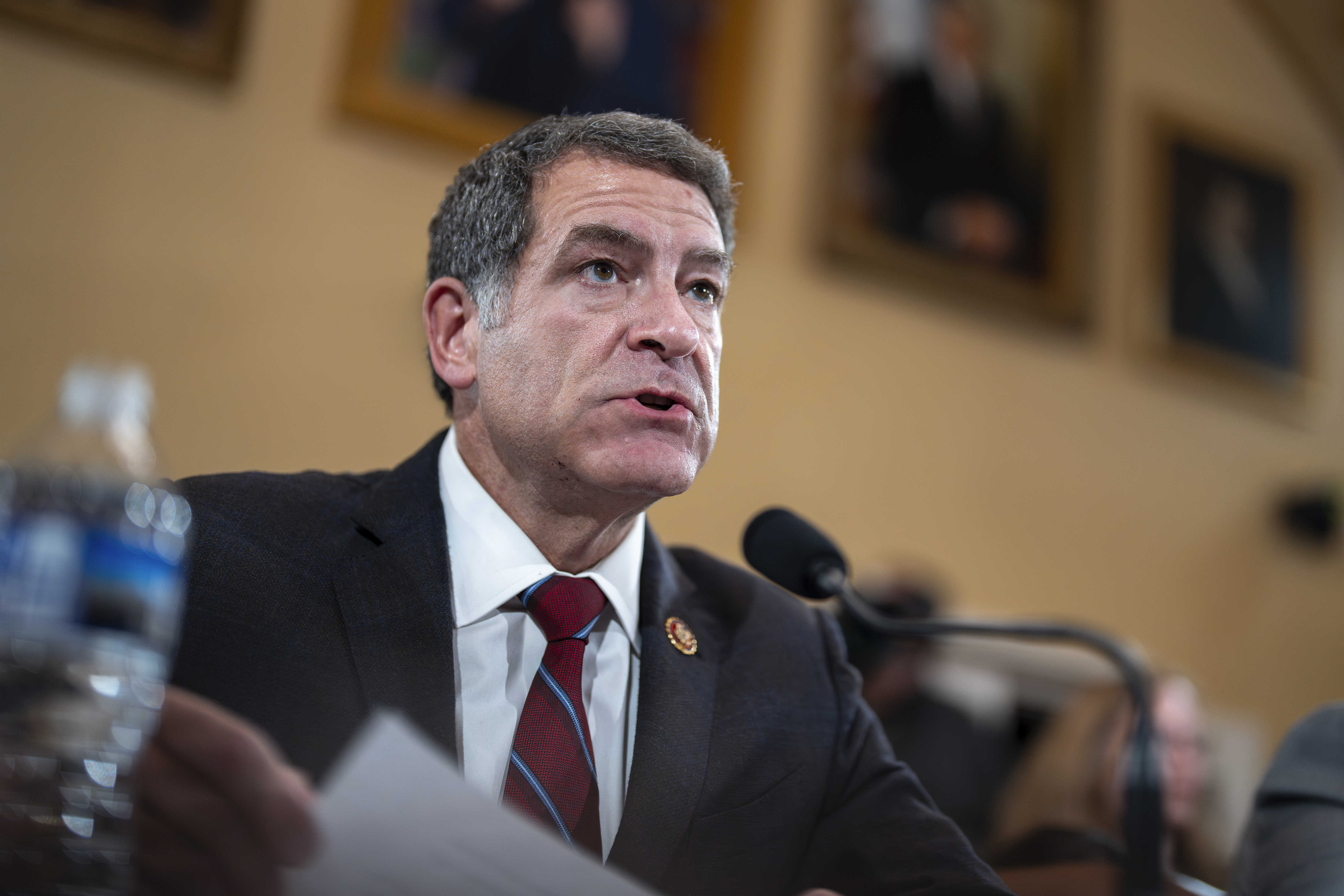
    Tuesday’s special election was held to replace the seat vacated by Republican Mark Green, who resigned in July to launch a new business called Prosimos.

    Green’s decision to leave Congress, and his role as the chair of the Homeland Security Committee, came in the middle of his fourth term.

    So what is Prosimos? According to Green, it’s a development and strategy firm designed to help U.S. businesses better compete against the influence of China. The company’s website says it provides “tailored strategies and expert guidance to navigate the complexities of global business development.”

    What does this mean for Republicans in Pennsylvania and New Jersey?

    Rep. Ryan Mackenzie (R., Pa.) is one of four Pa. Republicans facing a tough reelection battle.

    If there has been a trend since Trump’s inauguration, it’s that voters are keen on punishing Republicans at the ballot box.

    In four previous special elections for House seats held in 2025, Democrats significantly outperformed Harris’ margins in 2024. That was also true of Election Day victories in Pennsylvania, New Jersey, Virginia, and Georgia, where two Republicans were booted off the state’s Public Service Commission.

    Closer to home, there are five House seats — four in Pennsylvania, one in New Jersey — that Democrats hope to flip during the 2026 midterms, potentially deciding the balance of power during the final two years of Trump’s presidency.

    • PA-01: In Bucks County, Republican Rep. Brian Fitzpatrick is used to close races, but next year could be particularly challenging for the five-term moderate. In addition to nationwide trends, Democrats won each countywide office by around 10 percentage points last month, and Bucks County District Attorney Joe Khan is the first member of their party ever elected to the office.
    • PA-07: In the Lehigh Valley, Republican Rep. Ryan Mackenzie is the biggest target for Democrats after ousting Susan Wild by just 1 percentage point in 2024. Cook Political Report lists the district as a true “toss up” and five Democrats have already entered the race.
    • PA-08: Farther north, in Scranton and Wilkes-Barre, Republican Rep. Rob Bresnahan is also looking to win reelection to a seat he flipped by just 1 percentage point in 2024. The district leans Republican — Trump won it by nearly 9 percentage points — and so far Bresnahan’s only challenger is Scranton Mayor Paige Cognetti.
    • PA-10: Another of Cook’s “toss up” districts. Republican Rep. Scott Perry, an outspoken Trump supporter who supported the president’s efforts to overturn the 2020 election, is seeking his eighth term. Perry narrowly won reelection in 2024, defeating former news anchor Janelle Stelson by less than 1 percentage point. She is running against Perry again in 2026 and has already received an endorsement from Gov. Josh Shapiro.
    • NJ-07: The northwestern New Jersey district is currently represented by Republican Tom Kean Jr., a moderate who won reelection by about 5 percentage points in 2024. Cook lists Kean’s district as a “toss up,” and he faces a crowded field of Democrats in what would otherwise be a safely Republican seat.
  • After big wins Tuesday, Democrats think they can oust Brian Fitzpatrick. But the Bucks Republican is resilient.

    After big wins Tuesday, Democrats think they can oust Brian Fitzpatrick. But the Bucks Republican is resilient.

    Should last week’s election results make Brian Fitzpatrick nervous?

    Bucks County Democrats think so.

    The Republican lawmaker has been like Teflon in the 1st Congressional District, which includes all of Bucks County and a sliver of Montgomery County. He persistently outperforms the rest of his party and has survived blue wave after blue wave. First elected in 2016, he has remained the last Republican representing the Philadelphia suburbs in the U.S. House.

    But Democrats pulled something off this year that they hadn’t done in recent memory. They won each countywide office by around 10 percentage points — the largest win margin in a decade — and for the first time installed a Democrat, Joe Khan, as the county’s next top prosecutor.

    Now they are looking to next year, hopeful that County Commissioner Bob Harvie, the likely Democratic nominee, succeeds where Fitzpatrick’s past challengers have failed.

    “This year was unprecedented, and sitting here a year before the midterm, you have to believe that next year is going to be unprecedented as well,” State Sen. Steve Santarsiero, who is also the county party’s chair, said Wednesday.

    Eli Cousin, a spokesperson for the Democratic Congressional Campaign Committee, predicted a “perfect storm brewing for Democrats” to beat Fitzpatrick. “He and Trump’s Republican Party are deeply underwater with Bucks County voters; he has failed to do anything to address rising costs, and we will have a political juggernaut in Gov. Josh Shapiro at the top of the ticket,” Cousin said.

    There are several reasons Democrats may be exhibiting some premature confidence: Despite a spike in turnout for an off-year election, far fewer voters turn out in such elections than do in midterms. Fitzpatrick is extremely well-known in Bucks, where his late brother served before he was elected to the seat. He has won each of his last three elections by double digits.

    Just last year, President Donald Trump narrowly won Bucks County, becoming the first Republican presidential candidate to do so since the 1980s, and Republicans overtook Democrats in voter registrations last year.

    But Tuesday was a sizable pendulum swing in the bellwether. Some of the communities, like Bensalem, that drove Trump’s victory flipped back to blue.

    The last time Democrats had won a sheriff’s race in the county was 2017, a year after Trump was elected the first time. That year, Democrats won by smaller margins, and a Republican incumbent easily won reelection as district attorney. The following year, Fitzpatrick came the closest he has yet to losing a race, but still won his seat by 3 percentage points.

    This year’s landslide, Democrats say, is a warning sign.

    “There were Democratic surges in every place that there’s a competitive congressional seat, and that should be scaring the s— out of national Republicans,” said Democratic strategist Brendan McPhilips, who managed Democratic Sen. John Fetterman’s campaign in the state and worked on both of the last Democratic presidential campaigns here.

    “The Bucks County seat has always been the toughest, but it’s certainly on the table, and there’s a lot there for Bob Harvie to harness and take advantage of.”

    Bucks County Democratic Commissioner Bob Harvie speaks during an Oct. 5 rally outside the Middletown Township Police Department and Administrative Offices in Langhorne.

    Harvie, a high school teacher-turned-politician, leapt on the results of the election hours after races were called, putting out a statement saying, “There is undeniable hunger for change in Bucks County.”

    “The mood of the country certainly is different,” Harvie said in an interview with The Inquirer on Thursday. “What you’re seeing is definitely a referendum.”

    Lack of GOP concern

    But Republicans don’t appear worried.

    Jim Worthington, a Trump megadonor who is deeply involved in Bucks County politics, attributes GOP losses this year to a failure in mail and in-person turnout. Fitzpatrick, he said, has a track record of running robust mail voting campaigns and separating himself from the county party apparatus.

    “He’s not vulnerable,” Worthington said. “No matter who they run against him, they’re going to have their hands full.”

    Heather Roberts, a spokesperson for Fitzpatrick’s campaign, noted that the lawmaker won his last election by 13 points with strong support from independent voters in 2024 — a year after Democrats performed well in the county in another off-year election. She dismissed the notion that Harvie would present a serious challenge, contending the commissioner “has no money and no message” for his campaign.

    Fitzpatrick is also a prolific fundraiser. He brought in $886,049 last quarter, a large amount even for an incumbent, leading Harvie, who raised $217,745.

    “Bob Harvie’s not going to win this race,” said Chris Pack, spokesperson for the Defending America PAC, which is supporting Fitzpatrick. “He has no money. He’s had two dismal fundraising quarters in a row. That’s problematic.”

    Pack noted Harvie’s own internal poll, reviewed by The Inquirer, showed 57% of voters were unsure how they felt about him.

    “An off-off-year election is not the same as a midterm election,” Pack said, adding he thinks Fitzpatrick’s ranking as the most bipartisan member of Congress will continue to serve him well in Bucks County.

    “He’s obviously had well-documented breaks on policy with the Republican caucus in D.C., so for Bob Harvie to try to say Brian Fitzpatrick is super far right, no one’s gonna buy it,” Pack said. “They haven’t bought it every single election.”

    On fundraising, Harvie said he had brought in big fundraising hauls for both of his commissioner races, and said he would have the money he needed to compete.

    Of the four GOP-held House districts Democrats are targeting next year in the state, Fitzpatrick’s seat is by far the safest. That raises the question: How much money and attention are Democrats willing to invest in Pennsylvania?

    “Who’s the most vulnerable?” asked Chris Nicholas, a GOP consultant who grew up in Bucks County. The other three — U.S. Rep. Scott Perry and freshman U.S. Reps. Rob Bresnahan, in the Northeast, and Ryan Mackenzie, in the Lehigh Valley — won by extremely narrow margins last year. “If you’re ranking the four races, you have Rob Bresnahan at the top and Fitzpatrick at the bottom,” Nicholas said.

    National Democrats seldom invest as much to try to beat Fitzpatrick as they say they will, Nicholas said. And he pointed to 2018, a huge year for Democrats, when they had a candidate in Scott Wallace who was very well-funded, albeit far less known than Harvie, and still came up short.

    Democrats see Harvie as the best shot they have had — a twice-elected commissioner, with name ID from Lower Bucks County, home to many of the district’s swing voters. And the 1st District is one of just three in the country that is held by a Republican member of Congress where Vice President Kamala Harris won last year.

    And then there’s Shapiro, who Democrats think will give a boost to candidates like Harvie as he runs for reelection next year. Shapiro won the district by 20 points in 2022.

    Following the playbook used by successful candidates this year, Democrats are likely to argue to voters that Fitzpatrick has done little to push back on Trump — while placing cost-of-living concerns at the feet of the Republican Party.

    “A lot of people are, you know, upset with where we are as a nation,” Harvie said. “They grew up expecting that if you worked hard and played by the rules, you’d be able to have all the things you needed and have a good life. And that’s not happening for them.”

    The Trump effect

    Democrats won races in Bucks County, and across the country, this year by tying their opponents to Trump — a tactic that was especially effective in ousting Republican Sheriff Fred Harran, who partnered his office with U.S. Immigration and Customs Enforcement. In recent cycles, that strategy has not worked against Fitzpatrick.

    “The big thing Democrats throw against Republicans is you’re part and parcel of Trump and MAGA, and Fitzpatrick voted against Trump,” Nicholas said.

    Over nearly 10 years in Congress, Fitzpatrick has been a rare Republican who pushes back on Trump, though often subtly. Fitzpatrick, who cochairs the bipartisan Problem Solvers Caucus, was the lone Pennsylvania Republican to confirm former President Joe Biden’s electoral victory in 2020. A former FBI agent who spent a stint stationed in Ukraine, he is among the strongest voices of support for Ukraine in Congress, consistently pushing the administration to do more to aid the country as it resists a yearslong Russian invasion.

    Fitzpatrick was also one of just two House Republicans to vote against Trump’s signature domestic policy package, which passed in July. He voted for an earlier version that passed the House by just one vote, which Democrats often bring up to claim Fitzpatrick defies his party only when it has no detrimental impact.

    “He’s good at principled stances that ultimately do nothing,” said Tim Persico, an adviser with the Harvie campaign. “That is what has allowed him to defy gravity in the previous cycles. … Now the economy is doing badly. … People feel worse about everything, and Fitzpatrick isn’t doing anything to help with that. I think it makes it harder to defy gravity.”

    Trump has endorsed every Republican running for reelection in Pennsylvania next year except Fitzpatrick. While the Bucks County lawmaker has avoided direct criticism of the president, in an appearance in Pittsburgh over the summer, Trump characterized the “no” vote on the domestic bill as a betrayal.

    Fitzpatrick has faced more conservative primary challengers in the past, but no names have surfaced so far this cycle, a sign that even the more MAGA-aligned may see him as their best chance to hold onto the purple district.

    Keeping his distance from Trump, and limiting Democrats’ opportunities to tie the two together, may remain Fitzpatrick’s best path forward.

    “Anybody who wants to align themselves with an agenda of chaos and corruption and cruelty ought to be worried,” said Khan, Bucks County’s new district attorney-elect.

    This suburban content is produced with support from the Leslie Miller and Richard Worley Foundation and The Lenfest Institute for Journalism. Editorial content is created independently of the project donors. Gifts to support The Inquirer’s high-impact journalism can be made at inquirer.com/donate. A list of Lenfest Institute donors can be found at lenfestinstitute.org/supporters.

  • Democratic vets in Congress blast Scott Perry’s comment that Democrats ‘hate the military’

    Democratic vets in Congress blast Scott Perry’s comment that Democrats ‘hate the military’

    Democratic veterans in Congress, including two from Pennsylvania, are taking personally comments U.S. Rep. Scott Perry made to a conservative radio station asserting that Democrats in Congress “hate the military” — and the lawmakers are hitting back.

    “That’s only a credential that they get when they want to run for office,” Perry said, of Democrats, during an interview last week on The Chris Stigall Show.

    ”They join the military, they serve a little bit, they get the credential and then they run for office and wear the uniform and say, ‘Look at me — I support America.’ But let’s face it, all their votes say they don’t support America.”

    Perry made the comments last week, but a report this week from the New York Times prompted backlash from Perry’s colleagues on the other side of the aisle, including U.S. Rep. Chris Deluzio, a Democrat who represents the Pittsburgh suburbs and served six years in the Navy.

    On Wednesday, members of the Democratic Veterans Caucus, cochaired by Deluzio and U.S. Rep. Pat Ryan (D., N.Y.) called the remarks “insulting to their service,” in a statement shared with The Inquirer.

    “It’s disgusting to see a sitting member of Congress attack the integrity and honor of veterans and servicemembers due to their political party,” the veterans wrote. “He should immediately apologize to his constituents for insulting their service and questioning their patriotism.”

    The statement blasted Perry as an “oathbreaker,” noting he was part of an effort to throw out Pennsylvania’s electoral votes after President Donald Trump’s loss in the 2020 election. The lawmakers also criticized Perry’s unwillingness to hold in-person town halls, something very few Republican lawmakers have been doing since Trump’s first administration.

    “If he had a spine he’d stand in front of the Democratic veterans he represents and say this garbage to their faces, but Scott Perry doesn’t have the guts,” his House colleagues wrote.

    The statement from the caucus was co-signed by 13 other Democratic veterans in the House, including U.S. Rep. Chrissy Houlahan, a Democrat who represents Chester County. The Air Force Veteran has challenged the Trump administration’s rhetoric and policies regarding female service members.

    Perry, in a statement, pushed back clarifying his remarks were not about “all Democrats,” but “Leftists in Congress who served in the military and use that as a shield to insulate themselves from accountability for their radial and corrosive ideologies.”

    He said the Times story “cherry-picked” one line in a broader six-minute interview with Stigall about the government shutdown and funding the Pentagon.

    “The leftists now stomping their feet about my response are the same leftists who caused our government to shut down,” Perry said in his response.

    Still, the comments from Perry about his colleagues and their jilted response illustrate the ways in which political insults have accelerated. Lawmakers who have served in the military had long been one of the few bipartisan groups bonded through service. A group of Democratic and Republican former service members serving in Congress called For Country Caucus still meets for early morning breakfasts on the Hill.

    Perry, a House member since 2013, served in the U.S. Army and has been a staunch conservative voice, unabashed with his criticism of Democrats. Perry retired from the Army National Guard in 2019 with the rank of brigadier general after 39 years of service.

    He could face a tight reelection contest next year after narrowly winning his Central Pennsylvania district by just one point in 2024. Democrat Janelle Stelson, a former local news anchor who narrowly lost to Perry that year, is running again. She is currently the top-funded House challenger in the country.