Tag: Spring Garden

  • ‘Courage is contagious.’ How Philadelphia churches and neighborhood groups are preparing to confront ICE.

    ‘Courage is contagious.’ How Philadelphia churches and neighborhood groups are preparing to confront ICE.

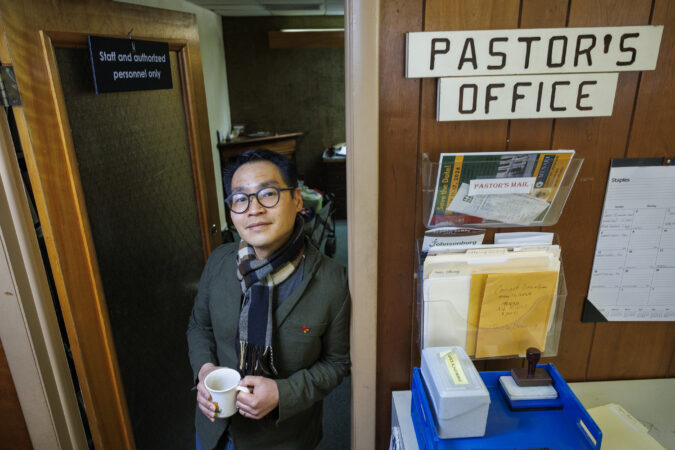
    Within the serpentine halls and stairways of Olivet Covenant Presbyterian Church, congregants have established several private, off-limits rooms ― each a potential last-stand space where members would try to shield immigrants from ICE, should agents breach the sanctuary.

    Church leaders call them Fourth Amendment areas, named for the constitutional protection against unreasonable search and seizure. The plan would be to stop ICE officers at the thresholds and demand proof that they carry legal authority to make an arrest, such as a signed judicial warrant.

    “It’s a protective space,” said the Rev. Peter Ahn, pastor of the Spring Garden church. “While you’re here, you’re safe, is what we want to assert.”

    Could it come to that? A pastor confronting armed Immigration and Customs Enforcement agents in the hallway of a church?

    It’s impossible to know. But across Philadelphia, churches, community groups, immigration advocates, and block leaders are actively preparing for the time ― maybe soon, maybe later, maybe never ― that the Trump administration deploys thousands of federal agents. People say they must be ready if the president tries to turn Philadelphia into Minneapolis ― or Los Angeles, Chicago, or Washington, D.C.
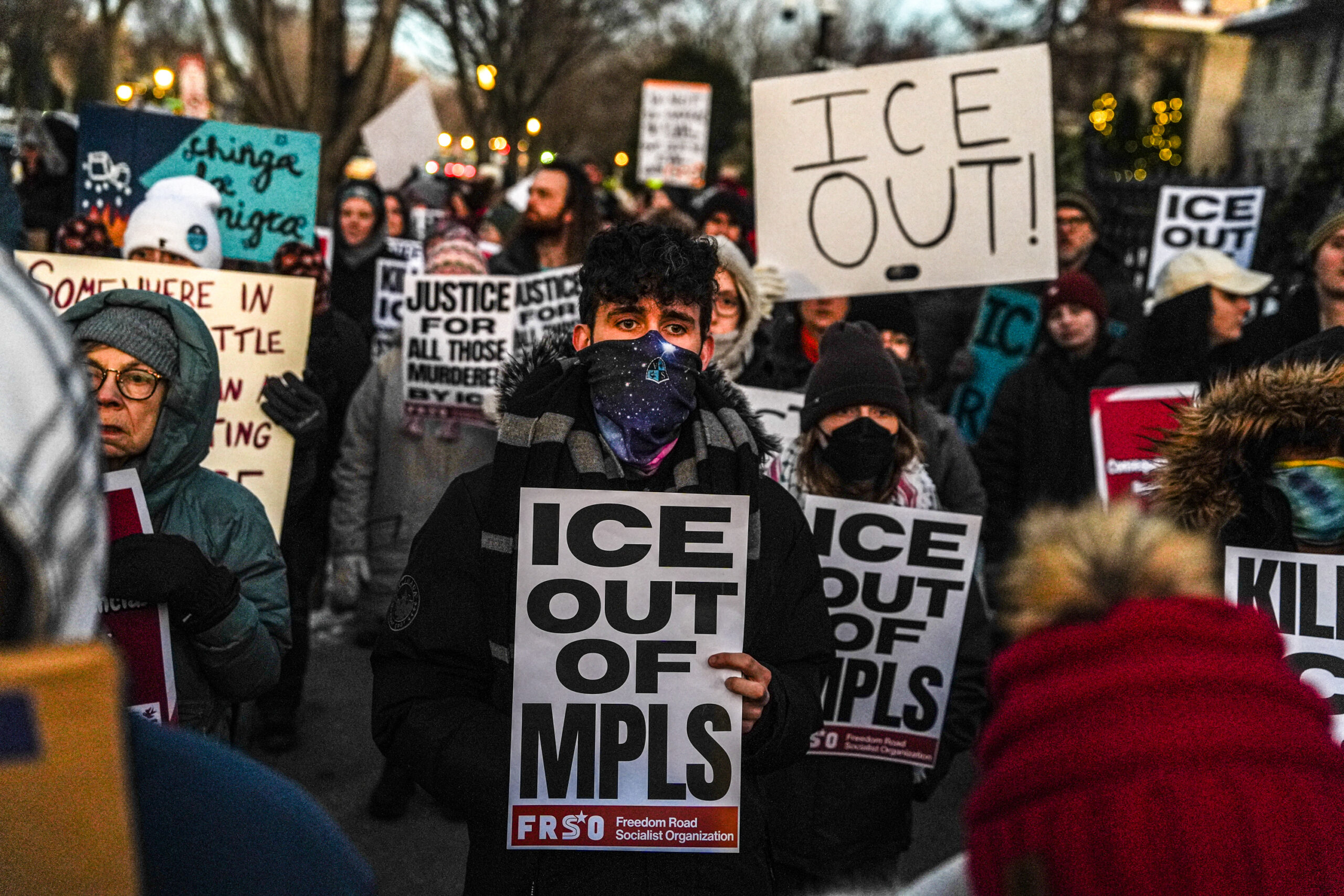
    People participate in an anti-ICE protest outside of the Governors Residence on Feb. 6, in St. Paul, Minn.

    Know-your-rights trainings are popping up everywhere, often to standing-room-only attendance, and ICE-watch groups are abuzz on social media.

    The First United Methodist Church of Germantown held a seminar last week to learn about nonviolent resistance, “so that we will be ready for whatever comes,” said senior pastor Alisa Lasater Wailoo.

    “That may mean putting our bodies in the path to protect other vulnerable bodies,” she said. “We’re seeing that in Minnesota.”

    In Center City, Temple Beth Zion-Beth Israel has ordered 300 whistles ― portable and efficient tools to immediately alert neighbors to ICE presence and warn immigrants to seek safety.

    “There was a sense of needing to support our neighbors if it comes down to it,” said Rabbi Abi Weber. “God forbid, should there start to be ICE raids in our neighborhood, people will be prepared.”

    In other places around the country, immigrant allies have similarly readied themselves for ICE’s arrival, and organized to react in concert when agents show up.

    In Washington state, the group WA Whistles has distributed more than 100,000 free whistles to create what it calls “an immediate first line of community defense.” Chicago residents set up volunteer street patrols to warn immigrants of ICE and to contact family members of those detained. In Los Angeles, people raised money to support food-cart vendors, and organized an “adopt a corner” program to protect day laborers who seek work outside Home Depot stores.
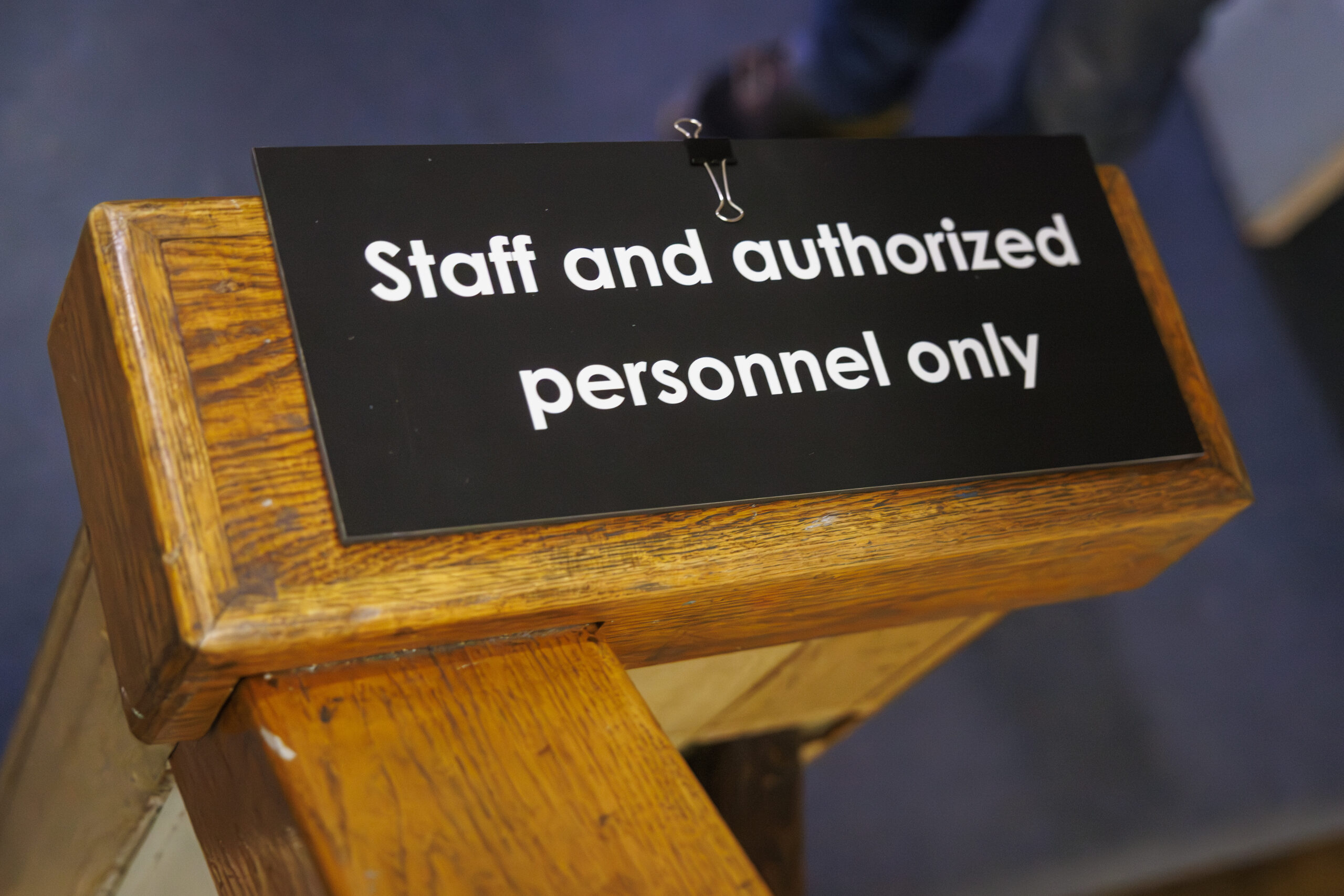
    A small sign at the Olivet Covenant Presbyterian Church, where the Rev. Peter Ahn is creating space to shield immigrants if necessary.

    Ask Philadelphia groups that advocate for immigrants — 15% of the population, including about 76,000 who are undocumented — and they say ICE isn’t about to land in the city. It’s been here.

    The agency’s Philadelphia office serves as headquarters not just for the city but for all of Pennsylvania and for Delaware and West Virginia as well. Arrests take place every day in the Philadelphia region.

    “You all seem to be ‘preparing’ for something that’s already happened,” veteran activist Miguel Andrade wrote on Facebook.

    What has changed, however, is the dramatic escalation in ICE enforcement, particularly visible in Democratic-run cities like Minneapolis, where agents fatally shot two U.S. citizens in January.

    ICE detained 307,713 people across the country in 2025, a 230% increase over the 93,342 in 2024. What federal immigration agencies record as detentions closely mirror arrests.

    Today residents in communities like Norristown and Upper Darby see ICE agents on the streets all the time. Cell phone videos have captured violent footage, including the smashed front door of a Lower Providence home after agents made an arrest on Feb. 9, and two people roughly pulled from a car in Phoenixville earlier this month.

    For immigrants who have no legal permission to be in the U.S. ― an estimated 14 million people ― the rising ICE presence steals sleep and peace of mind. They know not just that they could be arrested and deported at any moment, which has always been true, but also that the U.S. government is expending vast resources to try to make that happen.

    A woman who came to Philadelphia from Jamaica last year, and who asked not to be identified because she is undocumented, said she rarely leaves her home. She said she steps outside only to go to the grocery store, a doctor, or an attorney.

    She recently asked her daughter to check something on the computer, and the girl balked ― afraid to even touch the machine, worried that ICE could track her keystrokes and identify their location, the woman said.

    “How can I tell her it’s going to be OK when I don’t know it’s going to be OK?” asked the woman, who came to the U.S. to escape potential violence in Jamaica. “You come here expecting freedom, but here it’s like you’re in jail except for the [physical] barriers of the four walls.”

    Even as arrests have soared, Philadelphia has been spared the federal intrusions visited on other American cities.

    Why?

    Some say President Donald Trump doesn’t want to ruin the summer celebration of the nation’s 250th birthday, or spoil the grandeur of the World Cup or Major League Baseball’s All-Star Game. Others suggest that he might be timing an ICE deployment to do exactly that.
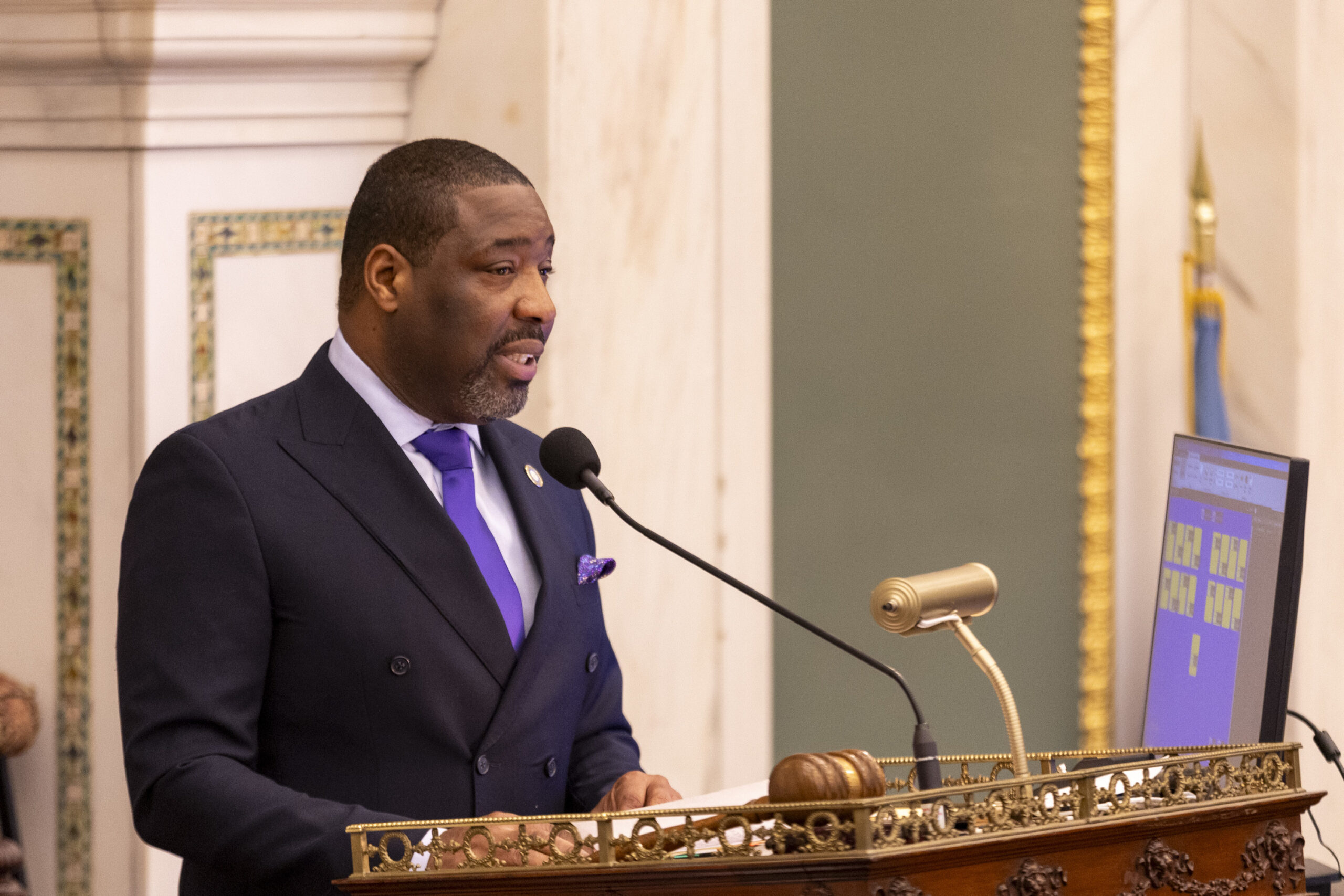
    City Council President Kenyatta Johnson speaking at the City Council’s first session of the year Jan. 22. He said this month that it’s time to stand up for immigrants in Philadelphia. “It’s my responsibility to step up in this space and be more vocal,” he said.

    That as Philadelphia City Council prepares to consider “ICE Out” legislation that would make it more difficult and complicated for the agency to operate in the city.

    Trump told NBC News this month that he is “very strongly” looking at five new cities.

    Some people are not waiting to see if Philadelphia is on the list.

    The monthly Zoom meeting of the Cresheim Village Neighbors usually draws about 20 people. But a hundred logged on in January to hear a presentation: What to do if/when ICE comes to our neighborhood.

    The short advice: If it happens, get out your phone and hit “record.”

    “If I see ICE agents, I will film,” said neighbors group coordinator Steve Stroiman, a retired teacher and rabbi. “I have a constitutional right to do that.”
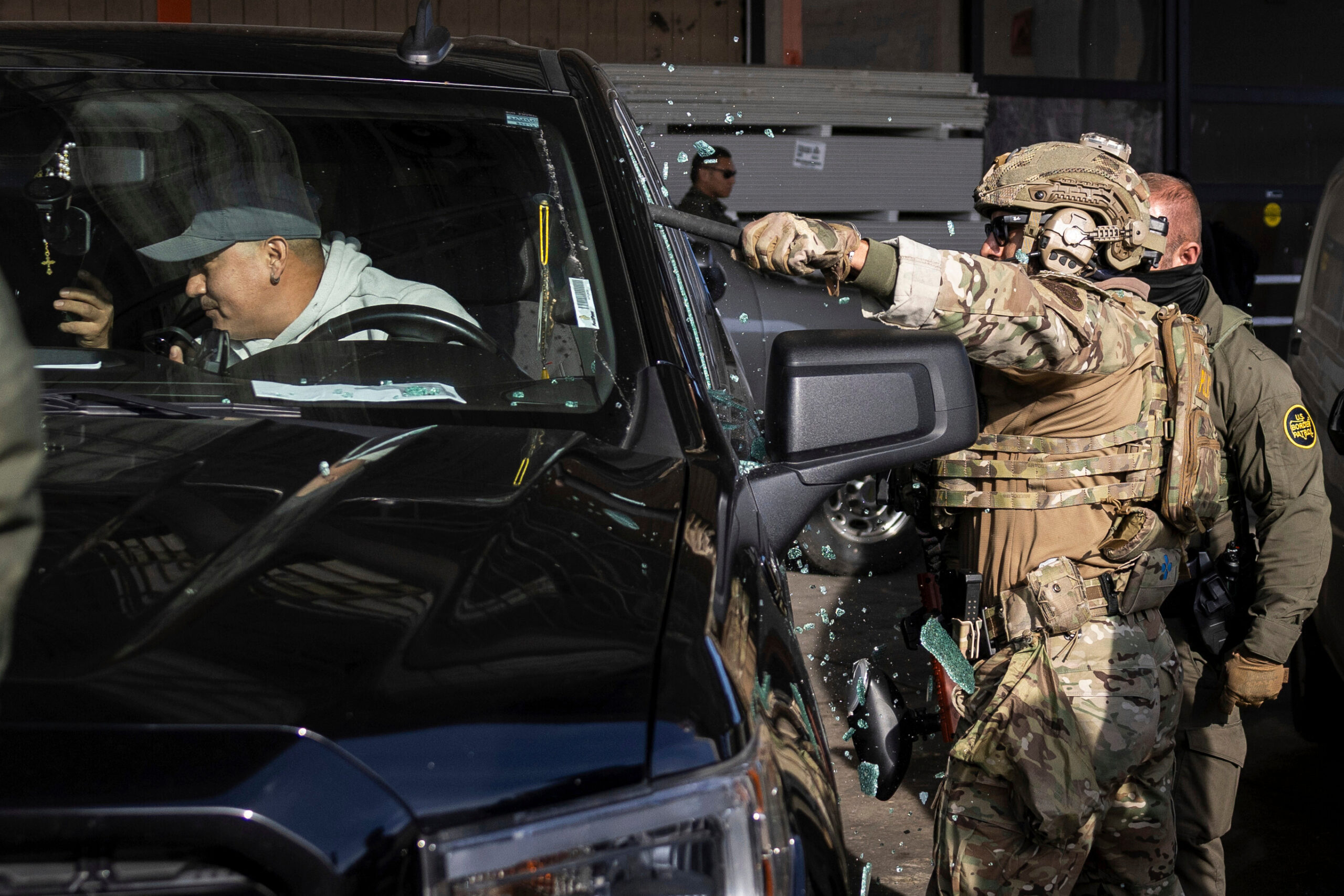
    Federal immigration enforcement agents shatter a truck window and detain two men outside a Home Depot in Evanston, Ill., on Dec. 17, 2025.

    In a sliver of University City, Miriam Oppenheimer has helped lead three block meetings where neighbors gathered to discuss how they would respond.

    They set up a Signal channel so people can communicate. And they formulated a loose plan of action: People will come outside their homes and take video recordings ― and try to get the names and birth dates of anyone taken into custody, so they can be located later.

    “Courage is contagious,” Oppenheimer said. “Everybody is waiting for somebody else to do something, but we have to be the ones.”

    Inside Olivet Covenant Presbyterian Church, doorways to some rooms now bear black-and-white signs that say, “Staff and authorized personnel only.”

    Issues around ICE access to churches have become more urgent since Trump rescinded the agency policy on “sensitive locations,” which had generally barred enforcement at schools, hospitals, and houses of worship.

    Legal advocates such as the ACLU say ICE agents can lawfully enter the public areas of churches, including the sanctuaries where people gather to worship. But to go into private spaces they must present a warrant signed by a judge.

    “There are many front lines right now,” said Ahn, the Olivet pastor. “We’re not trying to be simply anti-ICE, or anti-anybody. We’re just trying to be for the rights of the Fourth Amendment.”

    Staff writer Joe Yerardi contributed to this article.
  • What makes someone love their grocery store? Ask the Philadelphians who are already missing their Amazon Fresh.

    What makes someone love their grocery store? Ask the Philadelphians who are already missing their Amazon Fresh.

    When Justin Burkhardt heard that his neighborhood grocery store was closing, just months after it had opened, he felt a pang of sadness.

    The emotion surprised him, he said, because that store was the Northern Liberties Amazon Fresh.

    “Amazon is a big corporation, but [with] the people that worked there [in Northern Liberties] and the fact that it was so affordable, it actually started to feel like a neighborhood grocery store,” said Burkhardt, 40, a public relations professional, who added that he is not a fan of Jeff Bezos, Amazon’s billionaire owner.

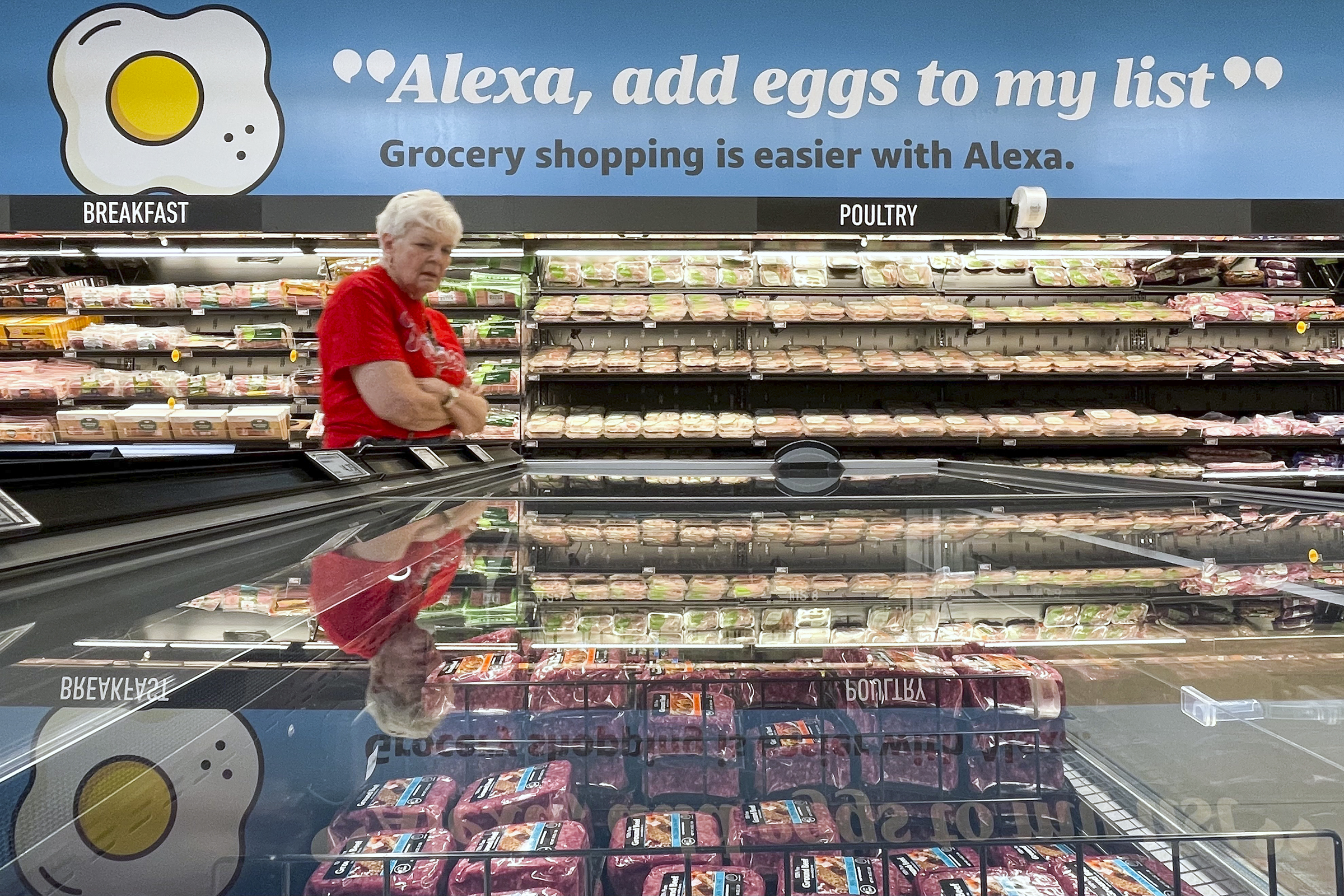
    The e-commerce giant announced last month that it was closing all physical Amazon Fresh stores as it expands its Whole Foods footprint. In the Philadelphia area, the shuttering of six Amazon Fresh locations resulted in nearly 1,000 workers being laid off. Local customers said their stores closed days after the company’s announcement.

    “I don’t feel bad for Amazon,” said Burkhardt, who spent about $200 a week at Amazon Fresh. “I feel bad for the workers. … I feel bad for the community members.”

    Burkhardt said he and his wife have been forced to return to their old grocery routine: Driving 20 minutes to the Cherry Hill Wegmans, where they feel the prices are cheaper than their nearby options in the city.

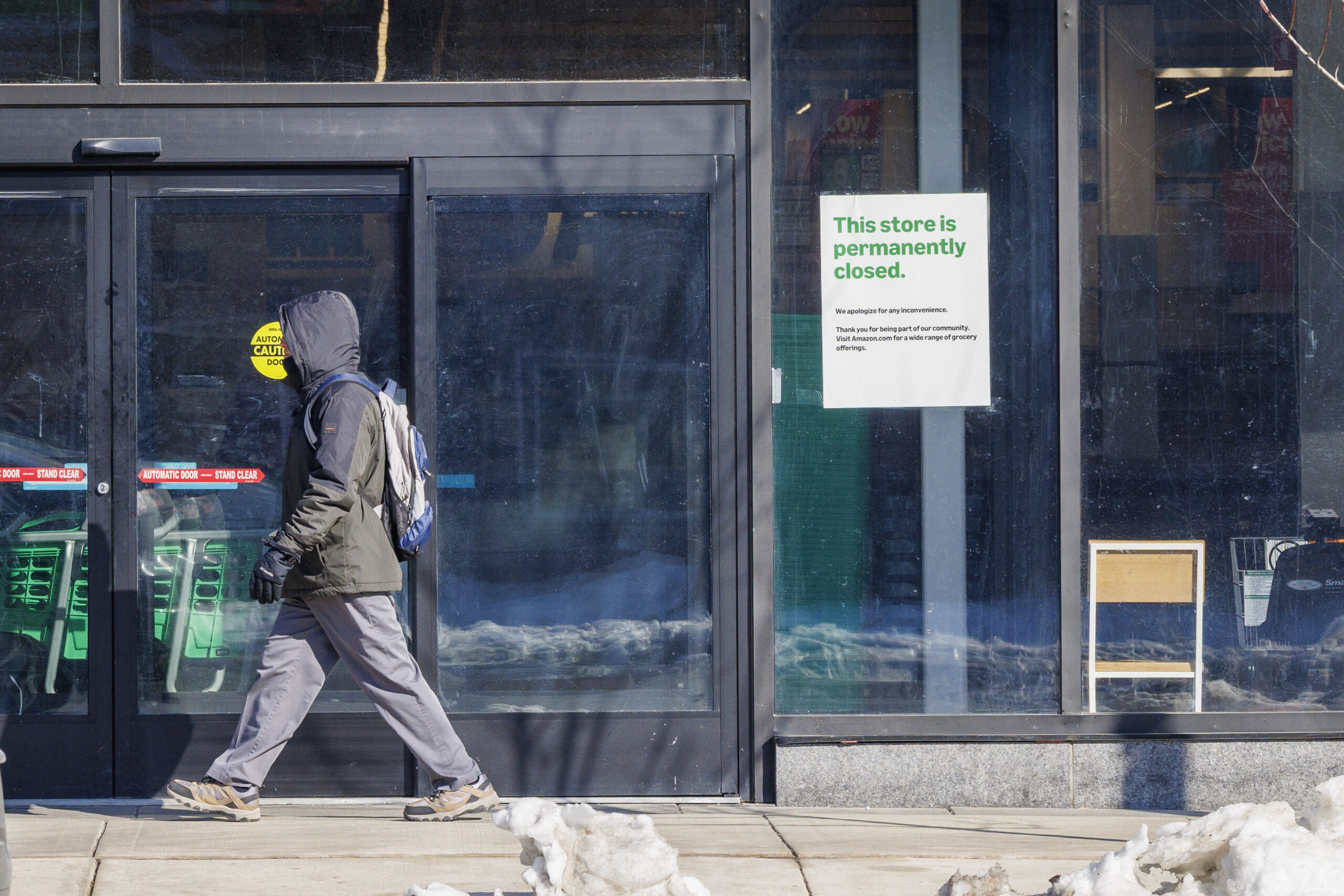
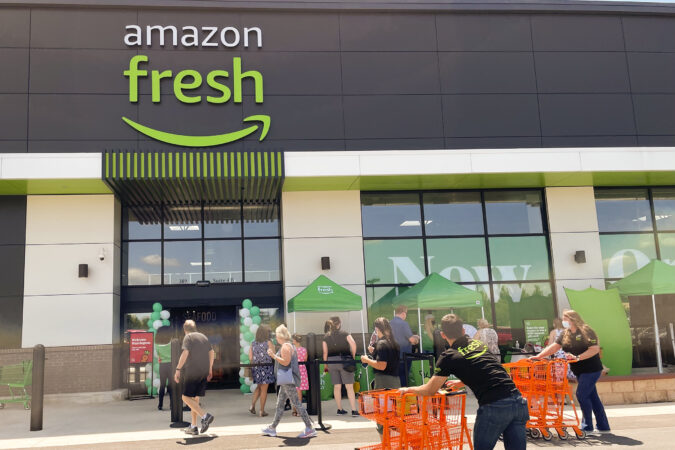
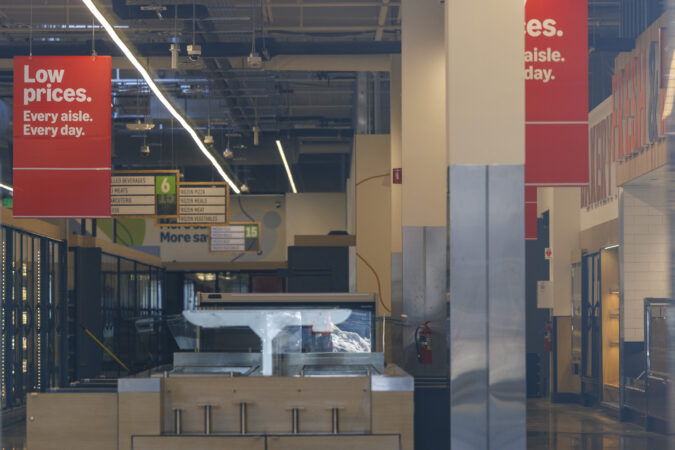
    Last week, signs informed customers that the Northern Liberties Amazon Fresh was permanently closed.

    In Philadelphia and its suburbs, many former Amazon Fresh customers are similarly saddened by the closure of neighborhood stores where they had developed connections with helpful workers. Several said they are most upset about the effects on their budgets amid recent years’ rise in grocery prices.

    “I wasn’t happy about it closing for the simple fact that it was much cheaper to shop there,” said Brandon Girardi, a 30-year-old truck driver from Levittown (who quit a job delivering packages for Amazon a few years ago). Girardi said his family’s weekly $138 grocery haul from the Langhorne Amazon Fresh would have cost at least $200 at other local stores.

    At the Amazon Fresh in Broomall, “they had a lot of organic stuff for a quarter of the price of what Giant or Acme has,” said Nicoletta O’Rangers, a 58-year-old hairstylist who shopped there for the past couple years. “They were like the same things that were in Whole Foods but cheaper than Whole Foods.”

    She paused, then added: “Maybe that’s why they didn’t last.”

    In response to questions from The Inquirer, an Amazon spokesperson referred to the company’s original announcement. In that statement, executives wrote: “While we’ve seen encouraging signals in our Amazon-branded physical grocery stores, we haven’t yet created a truly distinctive customer experience with the right economic model needed for large-scale expansion.”

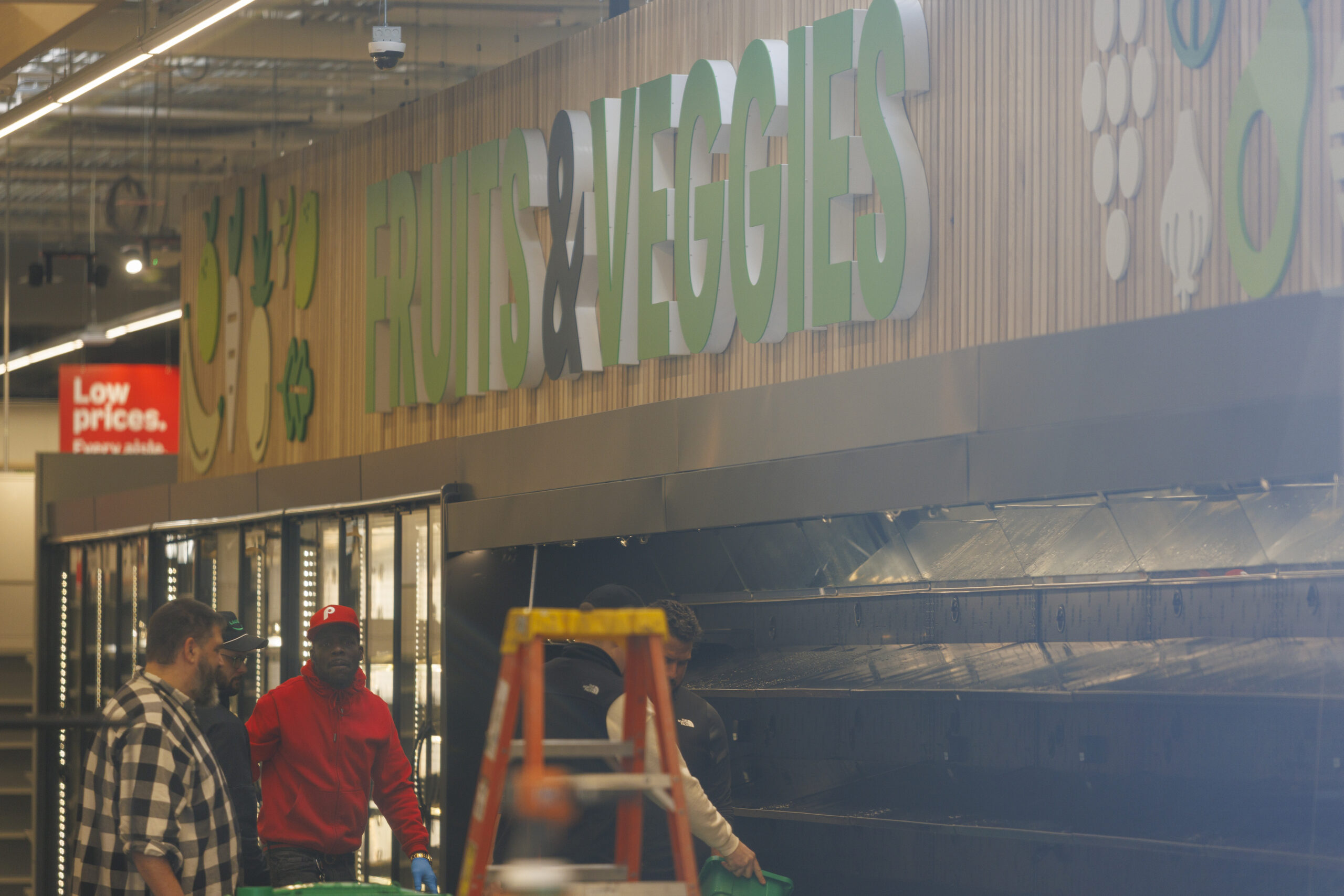
    Workers could be seen inside the closed Amazon Fresh in Northern Liberties last week.

    What makes a Philly shopper loyal to a grocery store?

    Former Amazon Fresh customers say they’re now shopping around for a new grocery store and assessing what makes them loyal to one supermarket over another.

    Last week, one of those customers, Andrea “Andy” Furlani, drove from her Newtown Square home to Aldi in King of Prussia. The drive is about an hour round trip, she said, but the prices are lower than at some other stores. Her five-person, three-dog household tries to stick to a $1,200 monthly grocery budget.

    As she drove to Aldi, she said, she’d already been alerted that the store was out of several items she had ordered for pickup. That’s an issue Furlani said she seldom encountered at the Amazon Fresh in Broomall, to which she had become “very loyal” in recent years.

    “It was small, well-stocked,” said Furlani, 43, who works in legal compliance. “I don’t like to go into like a Giant and have a billion options. Sometimes less is more. And the staff was awesome,” often actively stocking shelves and unafraid to make eye contact with customers.

    “Time is valuable to me,” Furlani said. At Amazon Fresh, “you could get in and out of there quickly.”

    Shoppers learned how to use the Amazon Dash Cart at an Amazon Fresh in Warrington in 2021.

    Girardi, in Levittown, said he is deciding between Giant and Redner’s now that Amazon Fresh is gone. The most cost-effective store would likely win out, he said, but product quality and convenience are important considerations, too.

    “We used to do Aldi, but Amazon Fresh had fresher produce,” Girardi said. “I used to have a real good connection with Walmart because my mom used to work there. But I don’t see myself going all the way to Tullytown just to go grocery shopping.”

    Susan and Michael Kitt, of Newtown Square, shopped at the Broomall Amazon Fresh for certain items, such as $1.19 gallons of distilled water for their humidifiers and Amy’s frozen dinners that were dollars cheaper than at other stores.

    But Giant is the couple’s mainstay. They said they like its wide selection, as well as its coupons and specials that save them money.

    “I got suckered by Giant on their marketing with the Giant-points-for-gas discounts. I figured if I’m going to a store I may as well get something out of it,” said Michael Kitt, a 70-year-old business owner who has saved as much as $2-per-gallon with his Giant rewards. “I really at the time didn’t see that much of a difference between the stores.”

    How Whole Foods might fare in Amazon Fresh shells

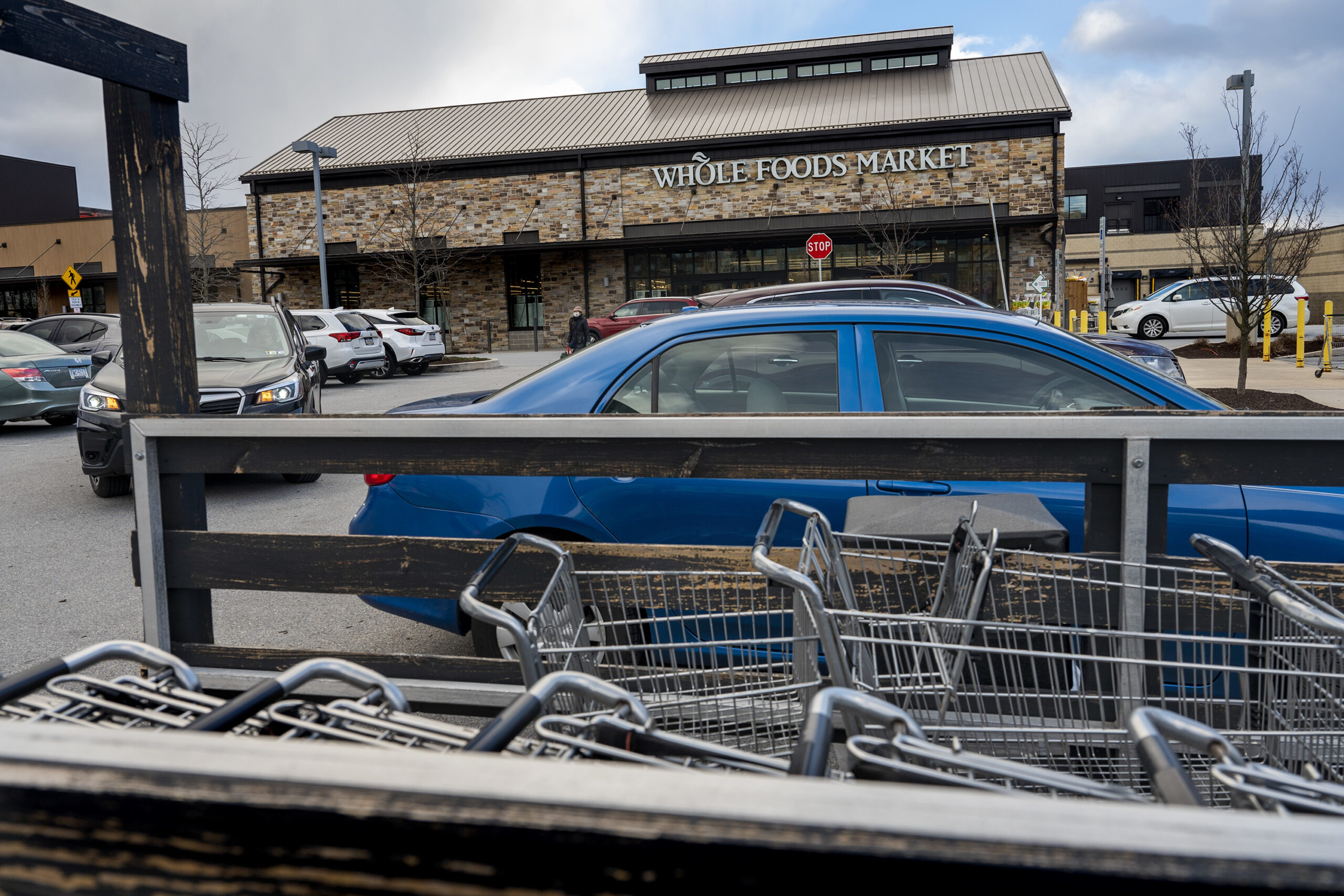
    The Whole Foods store on the Exton Square Mall property is shown in 2022.

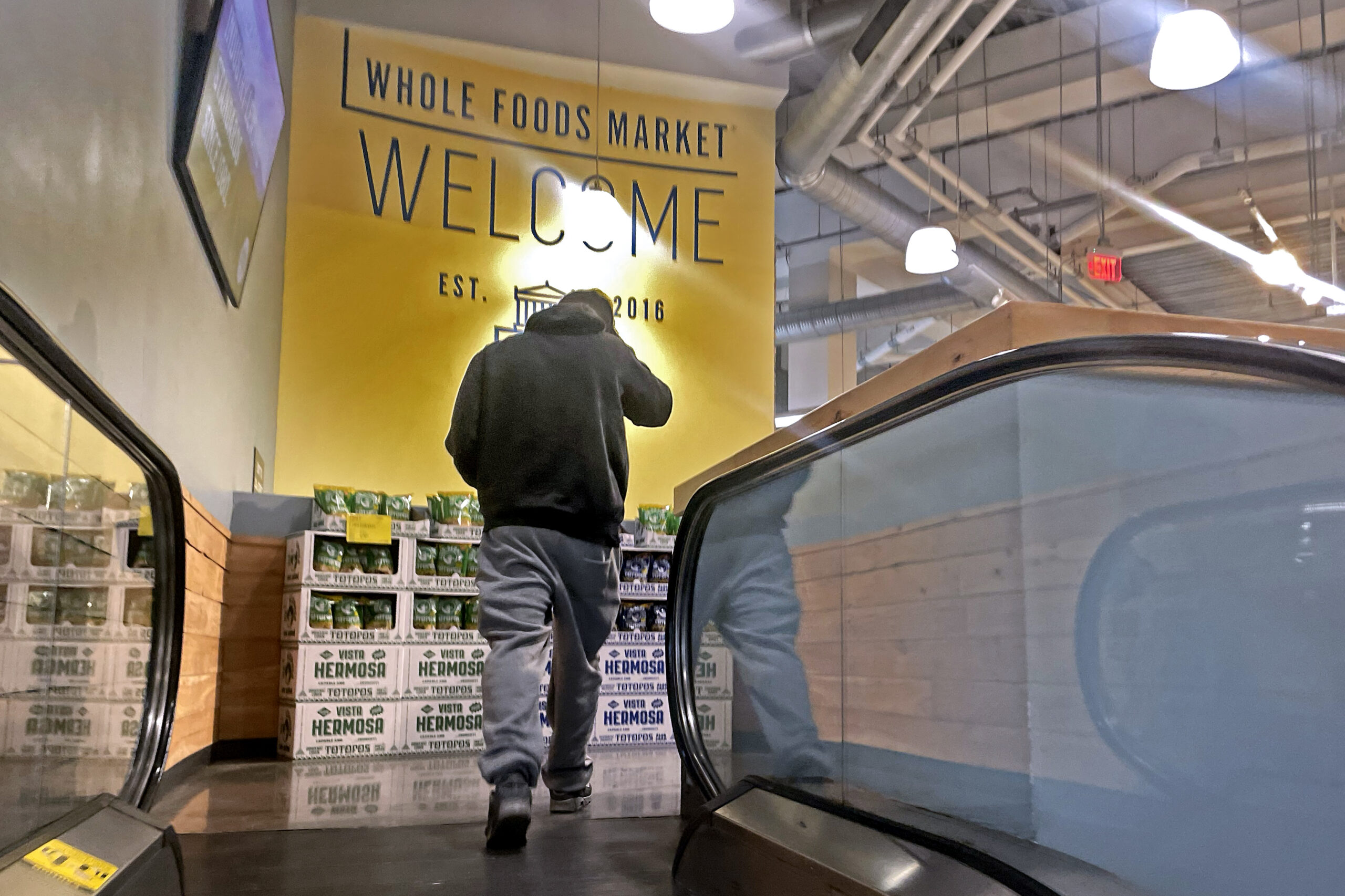
    If any of these local Amazon Fresh stores were to become a Whole Foods, several customers said they’d be unlikely to return, at least not on a regular basis.

    Amazon said last month that it plans to turn some Amazon Fresh stores into Whole Foods Markets, but did not specify which locations might be converted.

    Amazon bought Whole Foods in 2017. The organic grocer is sometimes referred to as “Whole Paycheck,” but the company has been working to shed that reputation for more than a decade.

    Some Philly-area consumers, however, said Whole Foods prices would likely be a deterrent.

    Natoya Brown-Baker, 42, of Overbrook, said she found the Northern Liberties Amazon Fresh “soulless,” and she didn’t “want to give Jeff Bezos any more money.” But the prices at Amazon Fresh were so low, she said, that she couldn’t resist shopping there sometimes.

    Brown-Baker, who works in health equity, said she came to appreciate that it represented an affordable, walkable option for many in the neighborhood, including her parents, who are on a fixed income.

    If a Whole Foods replaces the store at Sixth and Spring Garden Streets, which was under construction for years, Brown-Baker said the area would be “back at square one.”

    Burkhardt, who also lives in the neighborhood, noted that Northern Liberties has a mix of fancy new apartment complexes and low-income housing.

    “The grocery store should be for everyone,” he said. Whole Foods “doesn’t feel like it’s for the neighborhood. It feels like it’s for a certain class of people.”

  • For Gopuff, Super Monday is the national holiday

    For Gopuff, Super Monday is the national holiday

    Sunday’s Super Bowl LX, featuring some 66 ads costing corporate brands an average $8 million for half a minute, shone a light on America’s snacking trends, tracked closely by Gopuff, the Philadelphia-based national delivery service.

    The game between the Seattle Seahawks and the New England Patriots, also featuring Bad Bunny’s Spanish-language halftime spectacular, was watched by nearly 40% of Americans. Their delivery orders gave marketers a broad, almost instant view of what Americans were consuming and how their ads were working — or not, said Michael Peroutka, GoPuff’s head of ads, in his Super Bowl postmortem report Monday.

    The product with the most spectacular Super Bowl increase didn’t advertise.

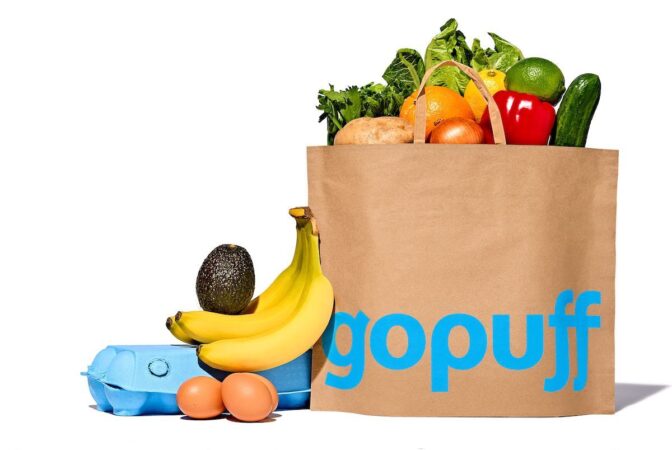
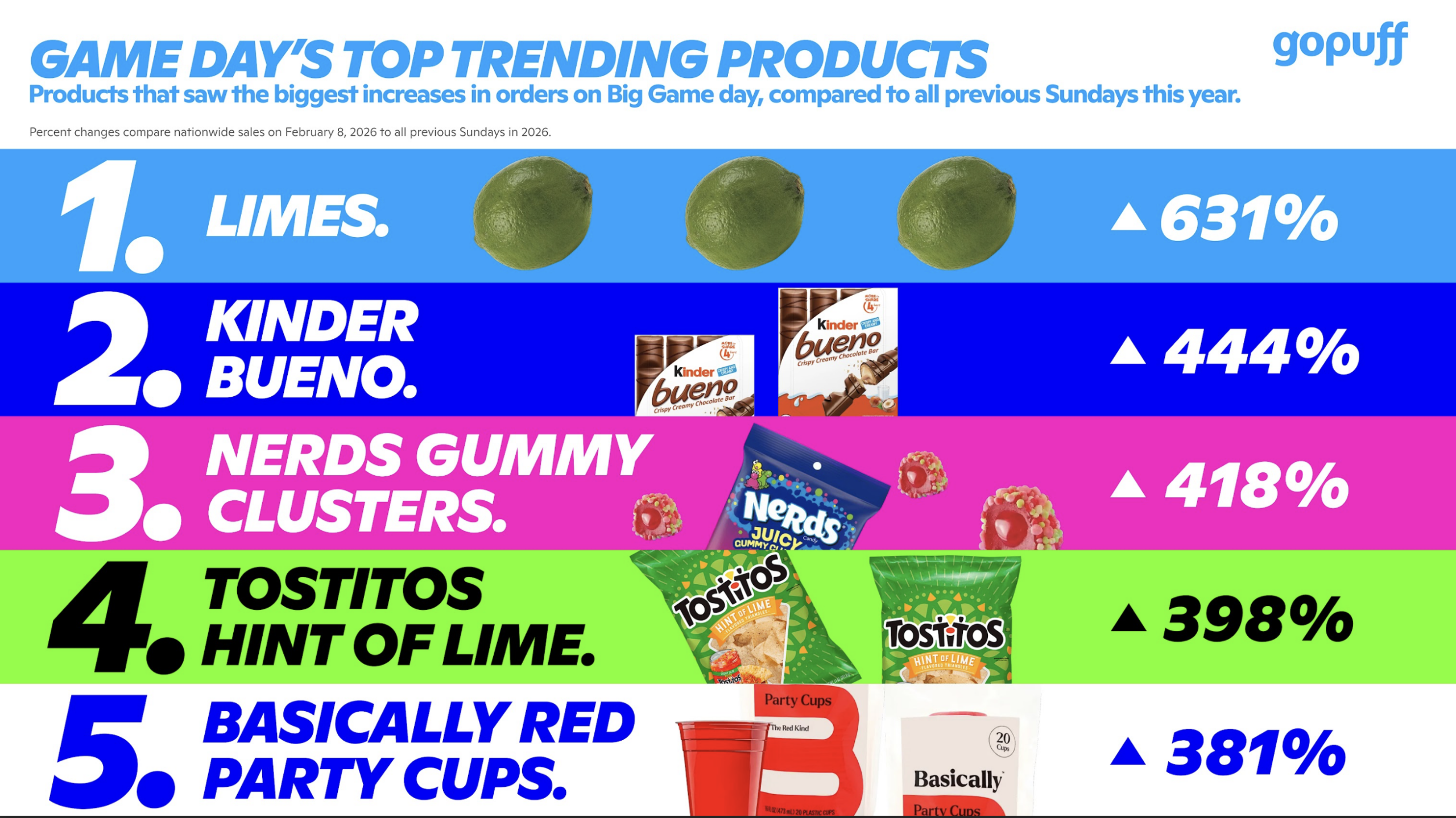
    Philadelphia-based Gopuff reported sharp increases in advertised snacks, but also in basic party ingredients such as limes and red party cups, during Super Bowl LX.

    Orders for limes during the game jumped over 600% over previous Sundays in 2026. Limes are, after all, a key ingredient in popular plates like guacamole and pico de gallo, served with Mexican beers and margaritas, and “easily forgotten at the store,” making them a natural for last-minute delivery, said Gopuff spokeswoman Brigid Gorham.

    Though lime consumption has been growing rapidly, the increase was more than four times last year’s Game Day spike, and no one could say exactly why.

    Lime sales exploded even more than Gopuff’s Basically-brand red party cups, a three-year-old in-house brand, which was up 381% on Super Bowl Sunday above recent Sunday sales.

    Overall, alcohol sales nearly doubled from recent Sundays. Soda sales were up more than one-third and salty snacks by about one-quarter. Compared to last year, when the Eagles were in the Super Bowl, the number of Philadelphia orders were up 7%.

    Other Super Bowl Sunday growth-leaders included PepsiCo’s Tostitos Hint of Lime chips, which were up 398%.

    But the top gains were two candies made by Italy-based candy maker Ferrero. Gopuff orders for Kinder Bueno, chocolates marketed heavily in Latin America and U.S. Hispanic neighborhoods, were up 444% vs. recent Sundays, and Ferrero’s Nerd Gummy Clusters, were up 418%.

    Kinder Bueno and Nerd Gummy Clusters saw sales roughly double in the hour after their Super Bowl ads ran. Liquid Death and Dunkin also saw orders rise at least 50% after ads.

    Day off?

    Gopuff also noticed well before the game that a record 13 million American workers planned to schedule Monday off; 10 million planned to call out sick, go in late, or not show up, and millions more were thinking about it, according to a Harris Poll survey funded by work software maker UKG.

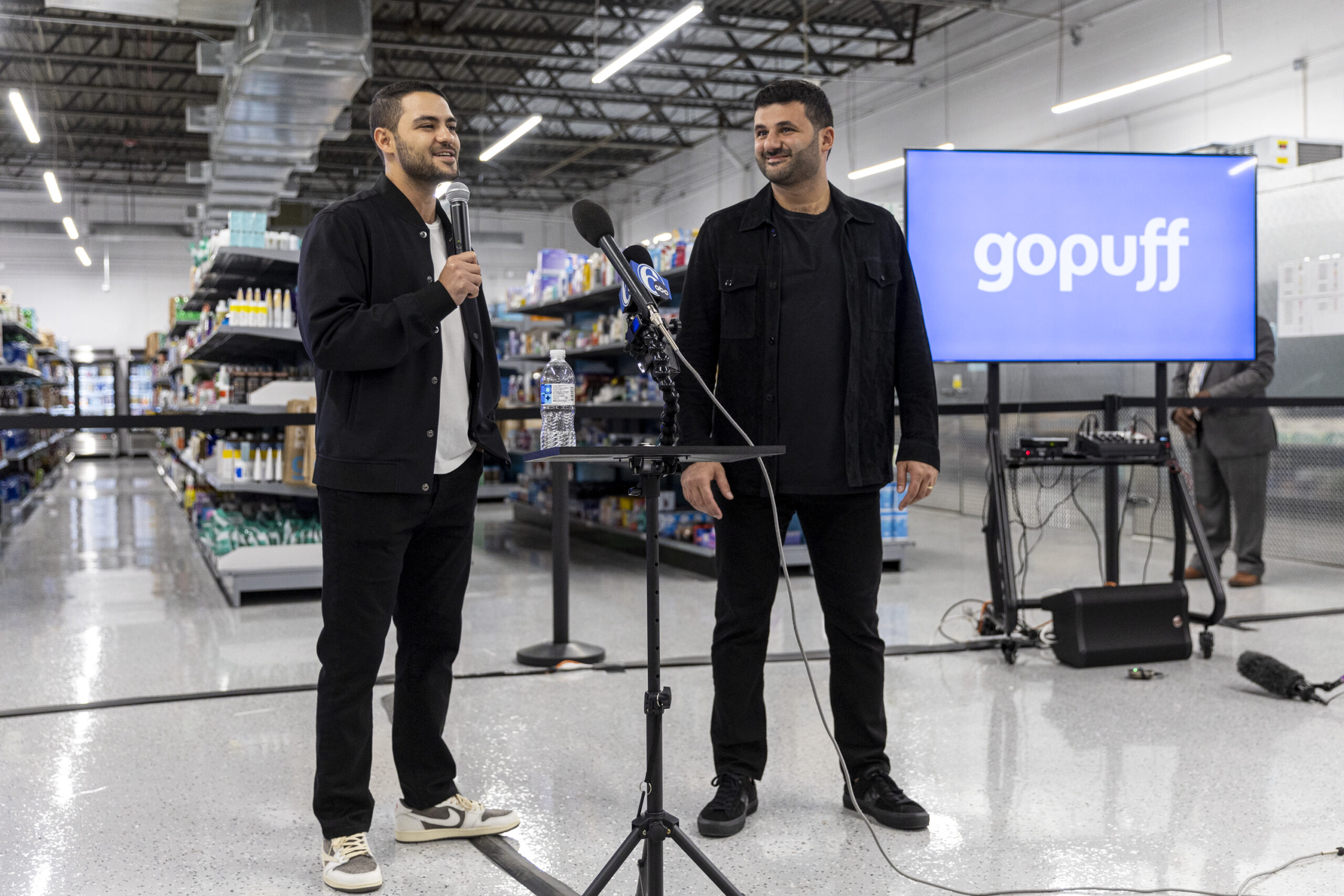
    Founders and CEO of Gopuff Yakir Gola (left) and Rafael Ilishayev speak to a room full of staff and team members of Gopuff at a recently opened center in Philadelphia in 2022.

    Cofounder Yair Gola and his colleagues saw those numbers and thought, “This ought to be a holiday.” Last fall, it set up a 501(c)4 lobbying group, the Super Monday Off Coalition, pledging at least $250,000 to get the effort rolling.

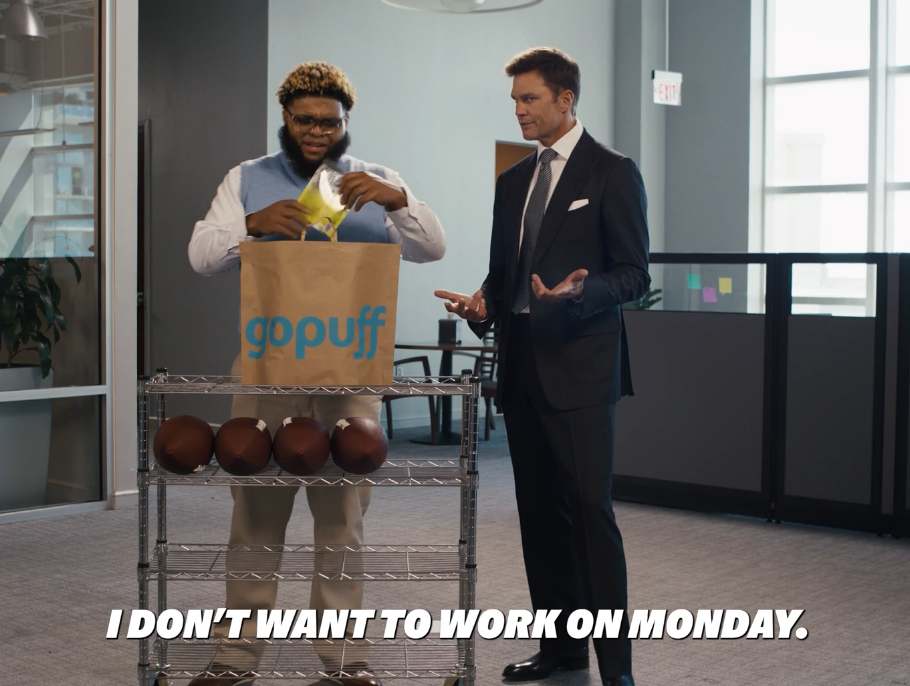
    They hired retired Patriots quarterback Tom Brady and comedian Druski to promote the cause.

    Druski (left) and former NFL quarterback Tom Brady in an ad for Philadelphia-based Gopuff promoting its campaign to designate “Super Monday” as a national holiday, since millions already take the day off.

    The company’s contribution to the lobbying would be funded by 1% of Gopuff’s profits from sales of certain boxes of beer, sugary drinks, hot dogs, and other products from Thanksgiving to game day.

    Heavy users who placed at least four $30 orders in that period would also get $20 “Gocash” discounts and receive a chance at a Birkin handbag, a Rolex watch, and other prizes.

    By Monday, Gopuff hadn’t announced its planned donation, but the campaign was declared “a winner” by Charles R. Taylor, a Villanova University marketing professor who tracks Super Bowl ads. He spotlights not just successful marketing but also ineffective efforts like Nationwide’s painful 2015 “Boy” campaign and GM’s 2021 “No Way Norway” misfire.

    Partnering with high-profile Brady and Druski gives “instant visibility and credibility” with fans and wider audiences, Taylor said. Even if the campaign costs more than Gopuff actually donates to the cause, a national holiday is “a clever hook” watchers will remember, Taylor said.

    Going public?

    Gopuff raised over $5 billion from Saudi, Japanese, and U.S. private investors during the digital-delivery investment boom that lasted into the COVID years. These big investors hoped Gopuff (officially Gobrands) founders and early investors would win them big profits by selling shares in a high-priced stock market initial public offering or selling to DoorDash, Uber, or other delivery giants.

    But app use and delivery growth slowed in the COVID recovery. Gopuff’s perceived valuation tumbled as its publicly traded rivals’ share prices fell. The company, which had expanded to hundreds of city neighborhoods and college towns, shut marginal centers and laid off staff at its Spring Garden Street headquarters to reduce losses and save investors’ capital for better times.

    Now Gopuff is showcasing efforts to win new investor attention.

    In the past year the company announced an on-screen snacks-order app targeting Disney+, ESPN, and Hulu views; a cash-with-your-order partnership with online-broker Robinhood; hot warehouse-brewed Starbucks coffees from stores in Philadelphia and some other areas; and a partnership with Amazon to speed grocery delivery in Britain, where Gopuff remained after ending its European programs.

    Gopuff has added a warehouse camera feed and local product-sales stats for fans who want to know what neighbors are buying, app-based order updates, and user product recommendations. It added over-the-counter pharmacy items and new lines of vegan organic GOAT Gummies (which Brady is also promoting).

    The company also began accepting SNAP EBT electronic food-stamp accounts and donated $5 million for SNAP when the federal shutdown threatened low-income families dependent on the program.

    New hires include economist Matt McBrady — a veteran private-equity investor, former adviser to President Bill Clinton, and sometimes Wharton instructor — as Gopuff’s new chief financial officer, noting his experience taking companies through public stock offerings.

    Last fall Gopuff raised $250 million, its first investment since a 2021 convertible-bond financing that had valued the company at a stock-market-bubble-inflated $40 billion.

    This time, the largest investors included previous Gopuff backers Eldridge Industries and Valor Equity Partners, along with Robinhood, Israeli billionaire Yakir Gabay, the cofounders, and other earlier investors. Eldridge chairman Todd L. Boehly in a statement called Gopuff “resilient.”

    Valor partner Jon Shulkin cited the company’s “focus, innovation, and substantial gains in profitability.”

    This latest capital-raise implied a valuation of $8.5 billion — a fraction of what Gopuff was worth on paper during the digital-delivery bubble, but enough for the venture capitalists to hope they may yet get their money back with at least a modest profit.

  • A Main Line town leads the charge of new Philly-area restaurants for February

    A Main Line town leads the charge of new Philly-area restaurants for February

    February’s crop of restaurant openings includes two restaurants’ expansions to Narberth, a reopened brewery in South Jersey, a chic restaurant/lounge in Center City, an intriguing wine bar/bottle shop in Chestnut Hill, and two French newcomers.

    Restaurants can take awhile and owners are often hesitant to pinpoint an opening date. I’ve listed the targeted day where possible; for the rest, check social media.

    Duo Restaurant & Bar (90 Haddon Ave., Westmont): Brothers Artan and Arber Murtaj and Andi and Tony Lelaj, who own the Old World-style Italian Il Villaggio in Cherry Hill, are taking over Haddon Avenue’s former Keg & Kitchen with a pub serving a bar menu supplemented with seafood.

    Eclipse Brewing (25 E. Park Ave., Merchantville): Last August, food trucker Megan Hilbert of Red’s Rolling Restaurant became one of the youngest brewery owners in New Jersey when she bought this 9-year-old Camden County brewery, open as of Friday.

    Lassan Indian Traditional (232 Woodbine Ave., Narberth): The second location of the well-regarded Lafayette Hill Indian BYOB takes over the long-ago Margot space in Narberth.

    LeoFigs, 2201 Frankford Ave., as seen in January 2026.

    LeoFigs (2201 Frankford Ave.): Justice and Shannon Figueras promise the delivery of their long-awaited bar/restaurant, with an urban winery in the basement, at Frankford and Susquehanna in Fishtown. The food menu will be built around comfort-leaning small plates.

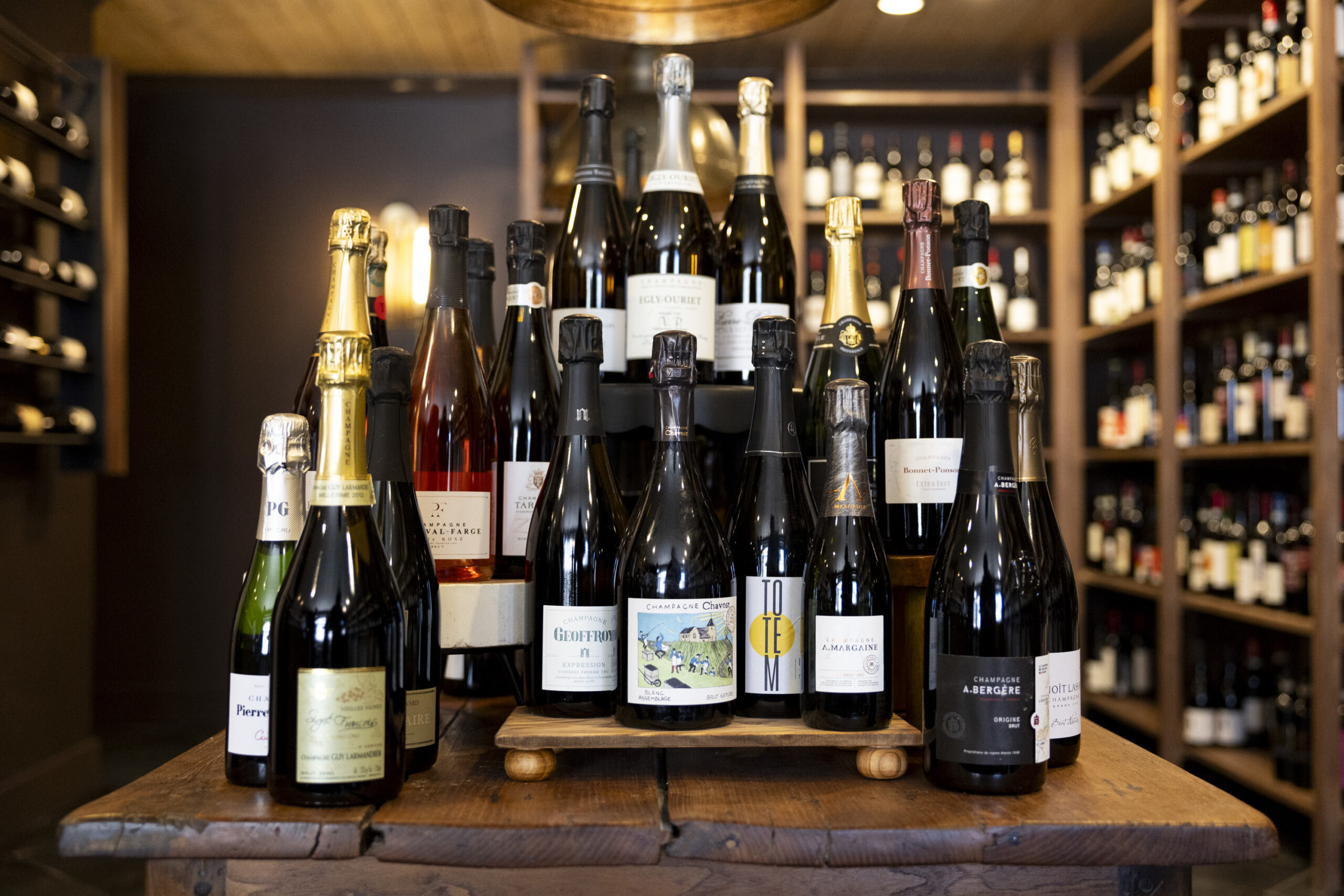
    The bubbly selection at Lovat Square in Chestnut Hill.

    Lovat Square (184 E. Evergreen Ave.): Damien Graef and Robyn Semien (also owners of Brooklyn wine shop Bibber & Bell) are taking over Chestnut Hill’s former Top of the Hill Market/Mimi’s Café property for a multiphased project: first a wine shop with indoor seating, then a courtyard with a full dinner menu, followed later by a cocktail bar/restaurant component. Opens Feb. 12

    Malooga (203 Haverford Ave., Narberth): The Old City Yemeni restaurant is expanding to Narberth with lunch and dinner service plus a bakery, with expanded indoor/outdoor seating and space for groups.

    Mi Vida (34 S. 11th St.): Washington, D.C.-based restaurant group Knead Hospitality + Design is bringing its upscale Mexican concept to East Market, next to MOM’s Organic Market. Target opening is Feb. 18.

    MOTW Coffee & Pastries (2101 Market St): Mahmood Islam and Samina Akbar are behind this franchise of Muslims of the World Coffee, offering a third-space experience at the Murano.

    Napa Kitchen & Wine (3747 Equus Blvd., Newtown Square): A California-inspired restaurant rooted in Midlothian, Va., opens in Ellis Preserve with an extensive domestic and international wine list in a polished setting. Opens Feb. 9.

    Ocho Supper Club (210 W. Rittenhouse Square): Chef RJ Smith’s Afro-Caribbean fine-dining supper club starts a six-month residency at the Rittenhouse Hotel, tied to the Scarpetta-to-Ruxton transition, serving tasting menus through July. Now open.

    Piccolina (301 Chestnut St.): A low-lit Italian restaurant and cocktail bar at the Society Hill Hotel from Michael Pasquarello (Cafe Lift, La Chinesca, Prohibition Taproom). Targeting next week

    Pretzel Day Pretzels (1501 S. Fifth St.): James and Annie Mueller’s pretzel-delivery operation is becoming a takeout shop in the former Milk + Sugar space in Southwark. Expect classic soft pretzels plus German-style variations (including Swabian-style) and stuffed options.

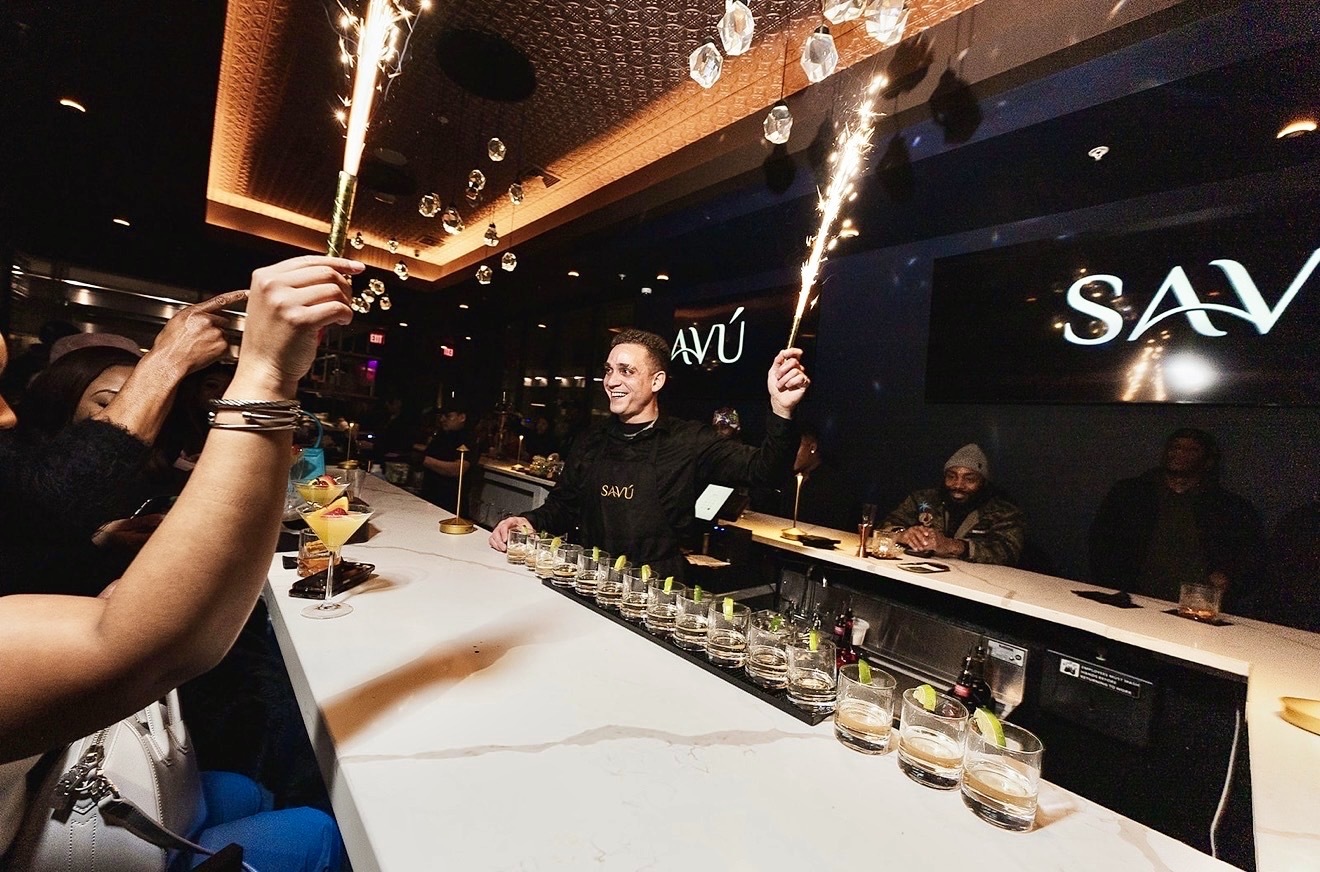
    Merriment at the bar at Savu, 208 S. 13th St.

    Savú (208 S. 13th St.): Kevin Dolce’s Hi-Def Hospitality has converted the former Cockatoo into a modern, bi-level dining and late-night lounge with a New American menu from chef Maulana Muhammad; it just soft-opened for dinner Thursday through Sunday and weekend brunch.

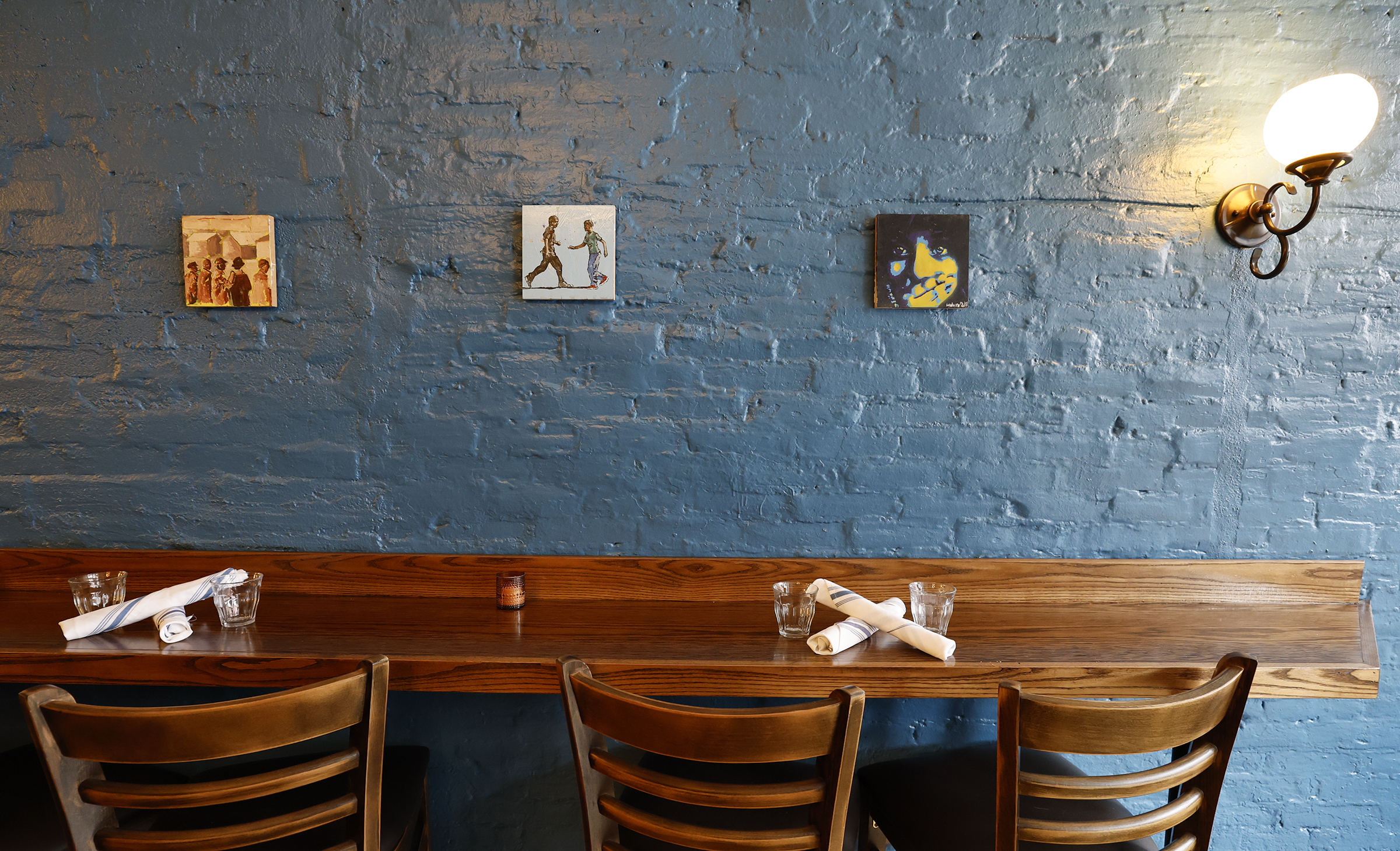
    Bar-adjacent seating at Side Eye.

    Side Eye (623 S. Sixth St.): Hank Allingham’s all-day neighborhood bar takes over for Bistrot La Minette with “French-ish” food from chef Finn Connors, plus cocktails, European-leaning wines, beer, and a late-night menu. Opens 5 p.m. Feb. 7 with 50% of the night’s proceeds going to the People’s Kitchen.

    Soufiane at the Morris (225 S. Eighth St): Soufiane Boutiliss and Christophe Mathon (Sofi Corner Café) say there’s a 90% chance of a February opening for their new spot at the Morris House Hotel off Washington Square. It’s billed as an elegant-but-approachable restaurant inspired by classic French bouillons/brasseries, with a menu spanning small plates and full entrées alongside Moroccan-influenced tagines. Expect evening service indoors, daytime service outdoors.

    South Sichuan II (1537 Spring Garden St.): A second location for the popular Point Breeze Sichuan takeout/delivery specialist, near Community College of Philadelphia; this one will offer more seating.

    Zsa’s Ice Cream (6616 Germantown Ave.): The Mount Airy shop’s end-of-2025 “grand closing” proved short-lived after a sale to local pastry chef Liz Yee. Reopened Feb. 7.

    Looking ahead

    March openings are in the offing for the much-hyped PopUp Bagels in Ardmore, as well as the long-delayed Terra Grill (a stylish room in Northern Liberties’ Piazza Alta) and ILU (the low-lit Spanish tapas bar) in Kensington.

  • All Amazon Fresh stores, including six in the Philly area, are closing

    All Amazon Fresh stores, including six in the Philly area, are closing

    Amazon will be closing all its physical Amazon Fresh stores, including six in the Philadelphia region, as it expands its Whole Foods footprint and grocery delivery services.

    The e-commerce giant made the announcement in a statement Tuesday, noting that it would convert some Amazon stores into Whole Foods Markets.

    “While we’ve seen encouraging signals in our Amazon-branded physical grocery stores, we haven’t yet created a truly distinctive customer experience with the right economic model needed for large-scale expansion,” the company said.

    People shop inside the Amazon Fresh in Warrington in August 2021. The store and all other Amazon-branded grocers are closing.

    The statement did not specify which Amazon Fresh stores would become Whole Foods, and company spokespeople did not answer questions about whether any Philadelphia-area locations would be converted.

    Amazon Fresh has stores in Broomall, Bensalem, Langhorne, Northern Liberties, Warrington, and Willow Grove. The Northern Liberties location on Sixth and Spring Garden Streets opened this summer after years of construction.

    Two more potential Amazon Fresh stores seemed to be in the works in Havertown and Northeast Philadelphia as of the summer, according to PhillyVoice.

    Customers use the Amazon Dash Cart at the Amazon Fresh grocery store in Warrington in 2021.

    Smaller-format Amazon Go stores, the closest of which are in New York, will also be shuttered or converted.

    As the company winds down its Amazon-branded physical stores, it says it will “double down” on online grocery delivery, including by expanding its same-day services to more communities.

    Amazon’s same-day delivery has been available in the Philadelphia market since 2009. Since December, Amazon has been testing “Amazon Now” delivery — which aims to get groceries to customers in 30 minutes or less — in parts of Philadelphia and Seattle.

    Amazon also said it plans to invest more in physical Whole Foods stores, adding more than 100 stores nationwide in the coming years.

    The Whole Foods store in Exton, as pictured in 2022.

    Amazon said Tuesday that Whole Foods has seen a 40% growth in sales since Amazon purchased the organic-grocery chain in 2017.

    Whole Foods has 550 locations nationwide, including more than a dozen in the Philadelphia area. Amazon spokespeople did not answer questions about whether more Whole Foods stores were in the works in the Philly region.

    Amazon also expects to open at least five more smaller-format Whole Foods Market Daily Shop stores by the end of the year. The company said that decision was based on “strong performance” at the five existing shops in the New York City area and Arlington, Va.

    The Center City Whole Foods Market as pictured in February 2025.

    The online retailer said it plans to continue to experiment with new ways of shopping at its physical stores.

    In its statement, Amazon gave a shout-out to one such test in the Philadelphia area: “The store within a store” experience at the Whole Foods in Plymouth Meeting.

    Since November, customers at that store have been able to browse the physical aisles of Whole Foods, while digitally ordering unique products from Amazon and Whole Foods. The orders are then packaged in minutes in an automated micro-fulfillment center within the grocer’s back-of-house area.

  • Philly could close 20 schools, colocate 6, and modernize 159: Superintendent Watlington shares his facilities plan

    Philly could close 20 schools, colocate 6, and modernize 159: Superintendent Watlington shares his facilities plan

    Wholesale changes are coming to the Philadelphia School District, with Superintendent Tony B. Watlington Sr. poised to propose a massive reshaping of the system, including closing 20 schools.

    The plan, years in the making, would touch the majority of the district’s buildings and bring change to every part of the city: over a decade, 159 would be modernized, six colocated inside existing school buildings, 12 closed for district use, and eight closed and given to the city.

    At least one new building would be constructed.

    The 20 closures, which would not begin to take effect until the 2027-28 school year, would be scattered through most of Philadelphia, with North and West Philadelphia hardest hit.

    Watlington released some details of the blueprint Thursday — including the list of proposed school closures and acknowledged that the changes will roil some communities.

    Watlington is scheduled to present his proposal to the school board next month, with a board vote on the plan expected this winter.

    (function() {
    var l2 = function() {
    new pym.Parent(‘school_closing1’,
    ‘https://media.inquirer.com/storage/inquirer/projects/innovation/arcgis_iframe/school_closing1.html’);
    };
    if (typeof(pym) === ‘undefined’) {
    var h = document.getElementsByTagName(‘head’)[0],
    s = document.createElement(‘script’);
    s.type = ‘text/javascript’;
    s.src = ‘https://pym.nprapps.org/pym.v1.min.js’;
    s.onload = l2;
    h.appendChild(s);
    } else {
    l2();
    }
    })();

    Philadelphia, the nation’s eighth-largest school system, now has 216 schools in 307 buildings, the oldest of which was constructed in 1889. It has 70,000 empty seats citywide, though some of its schools, especially those in the Northeast, are overcrowded.

    But, Watlington said, “this is not just about old buildings.” Philadelphia’s academics are improving, and faster than most big-city districts, but most of its students still fail to meet state standards — just 21% hit state goals for math, and 35% for English.

    “We must find ways to more efficiently use all of our resources so that we can push higher-quality academic and extracurricular programming and activities into all of our schools across all the neighborhoods of Philadelphia, while at the same time addressing under- and overenrolled schools,” the superintendent said.

    If the school board adopts Watlington’s plan as proposed, the number of empty space in school buildings would decrease, with district schools going from a 66% utilization rate to 75%. The changes would also allow for the district to offer more students prekindergarten, algebra in eighth grade, and career and technical education and Advanced Placement courses, officials said.

    “Part of the problem here is there’s so much disparity in the School District of Philadelphia,” said Watlington, who suggested the plan will improve equity.

    Every building judged in “poor” or “unsatisfactory” condition — there are now 85 citywide — would either close or be upgraded within a decade, though the information released Thursday did not include details on upgrade plans.

    There are no guarantees, however. The plan comes with a $2.8 billion price tag — only $1 billion of which the district will cover with its capital funds. The rest of the money is dependent on state and philanthropic support, neither of which is a given.

    If the extra funding does not come through, Watlington said, fewer schools in disrepair could be modernized, or the district would have to make other revisions to the plan.

    Officials said a backup plan would take longer to complete — 16 years, instead of a decade. The $1 billion version would not allow the school system to upgrade all schools currently rated unsatisfactory or poor. Instead, it would have 45 buildings in the those categories in 2041.

    A possible closure list

    Watlington indicated he wants to close these schools: Blankenburg, Fitler, Ludlow, Robert Morris, Overbrook Elementary, Pennypacker, Waring, and Welsh elementary schools; Conwell, AMY Northwest, Harding, Stetson, Tilden, and Wagner middle schools; and Lankenau Motivation, Parkway Northwest, Parkway West, Penn Treaty, and Robeson high schools. (Some of those schools, like Lankenau and Robeson, would become programs inside other schools — Roxborough High would use Lankenau, and Sayre would use Robeson. Others would close outright, with students assigned elsewhere.)

    And he named six schools that would move into other school buildings while maintaining their individual structure and identity: Martha Washington, Building 21, the Workshop School, the U School, a new Academy at Palumbo Middle School, and a new K-8 year-round school.

    Students at the affected schools will all move into schools with similar or better academic outcomes or building conditions, or schools that are better by both measures, Watlington said. Transition resources will be available for schools, students, and families from closing schools and for schools that take in new students.

    The changes will also affect far more students than those in the 20 schools being shut down or in those sharing locations; closures mean the district would eventually need to redraw at least some school catchment boundaries, which dictate the neighborhood school each child attends.

    Watlington said he did not anticipate job losses as a result of the closures.

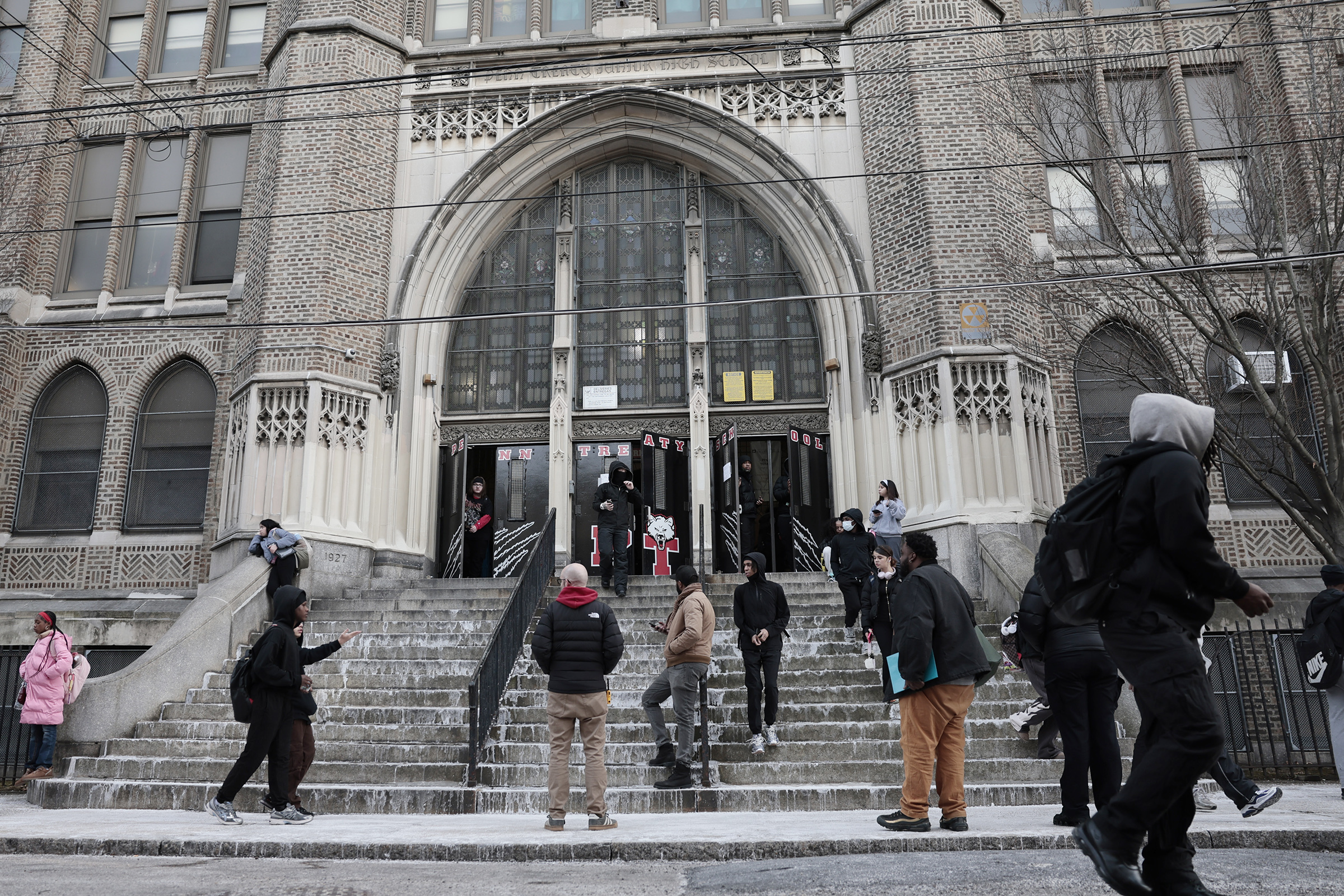
    School officials stand by outside for afternoon dismissal at Penn Treaty Middle School, 600 East Thompson Street, in Philadelphia on Thursday, Jan. 22, 2026.

    Fewer transitions, more standard grade configurations

    Officials said they arrived at the blueprint after analyzing data and gathering feedback across the city — in meetings and surveys, and based on wisdom from advisory panels and a planning team. (Some advisory panel members said they had real concerns about the process, felt they got too little information, and said their input was not seriously considered. Some had called for a pause in the process and a plan with no closings.)

    Parents, staff, and community members identified four main themes that informed the recommendations, Watlington said: strengthening K-8 schools, reinvesting in neighborhood high schools, reducing school transitions for students, and expanding access to grades 5-12 criteria-based high schools.

    The plan dramatically shrinks the number of grade spans in the district.

    Currently, there are 13 different kinds of school configurations. Going forward, there be just six grade bands: K-4, K-8, K-12, 5-8, 5-12, and 9-12. (Six schools will be exceptions, however.)

    Philadelphia is leaning into a “strong K-8 model,” Watlington said. He recommended closing six middle schools, with some elementary schools adding grades to accommodate.

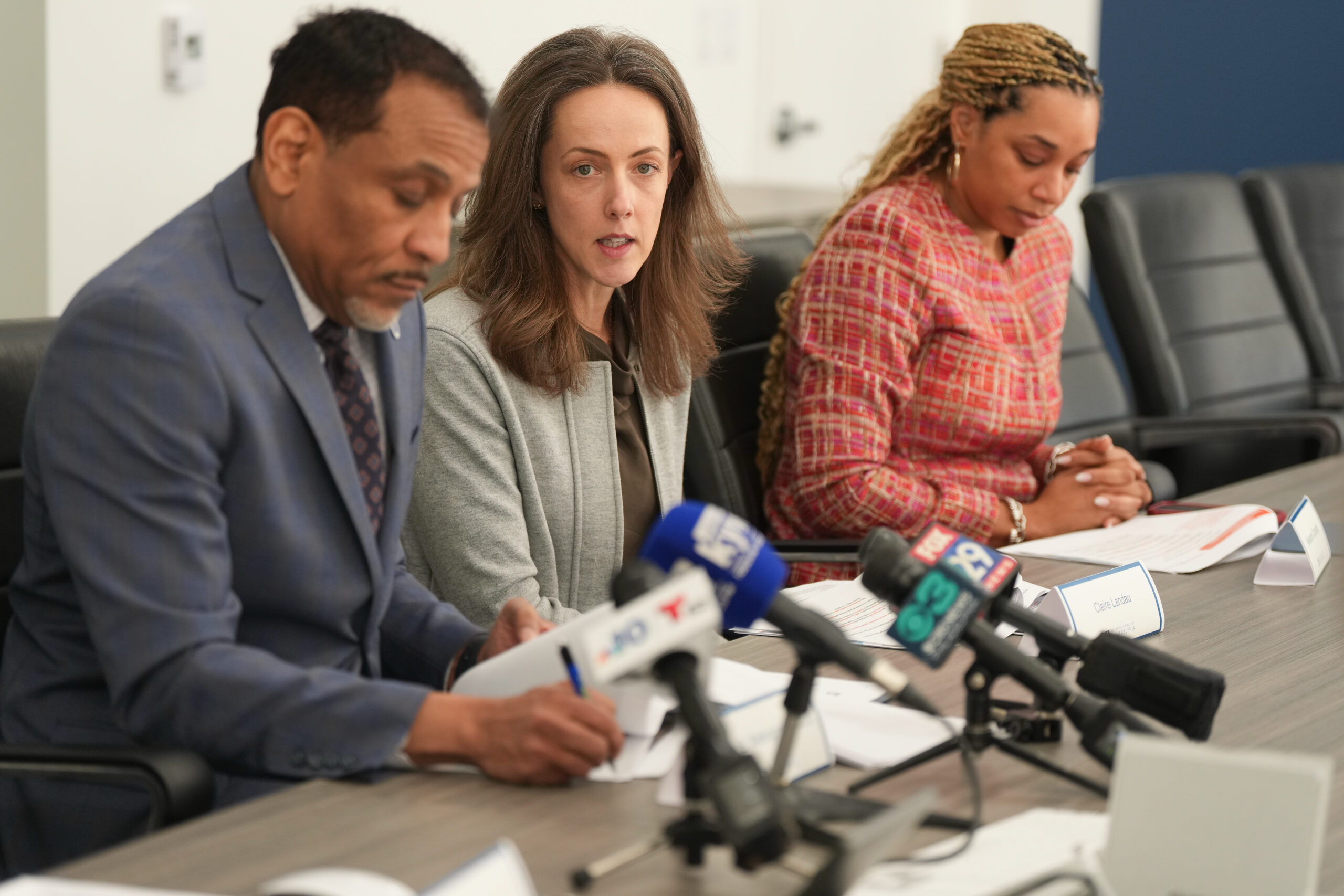
    From left to right, Superintendent Tony B. Watlington, senior adviser Claire Landau, and chief of communications and customer service Alexandra Coppadge speak to reporters on Tuesday about their proposed master plan for Philadelphia schools.

    It is also turning some high schools that now house four grades into middle-high schools, with 5-12 spans. South Philadelphia High will get investments to its career and technical education space and add fifth through eighth grades, for instance. A new Palumbo Middle School will open, colocated with Childs Elementary in Point Breeze; its students will get preference for admission to the Academy at Palumbo, a South Philly magnet.

    Investments in the Northeast, and elsewhere

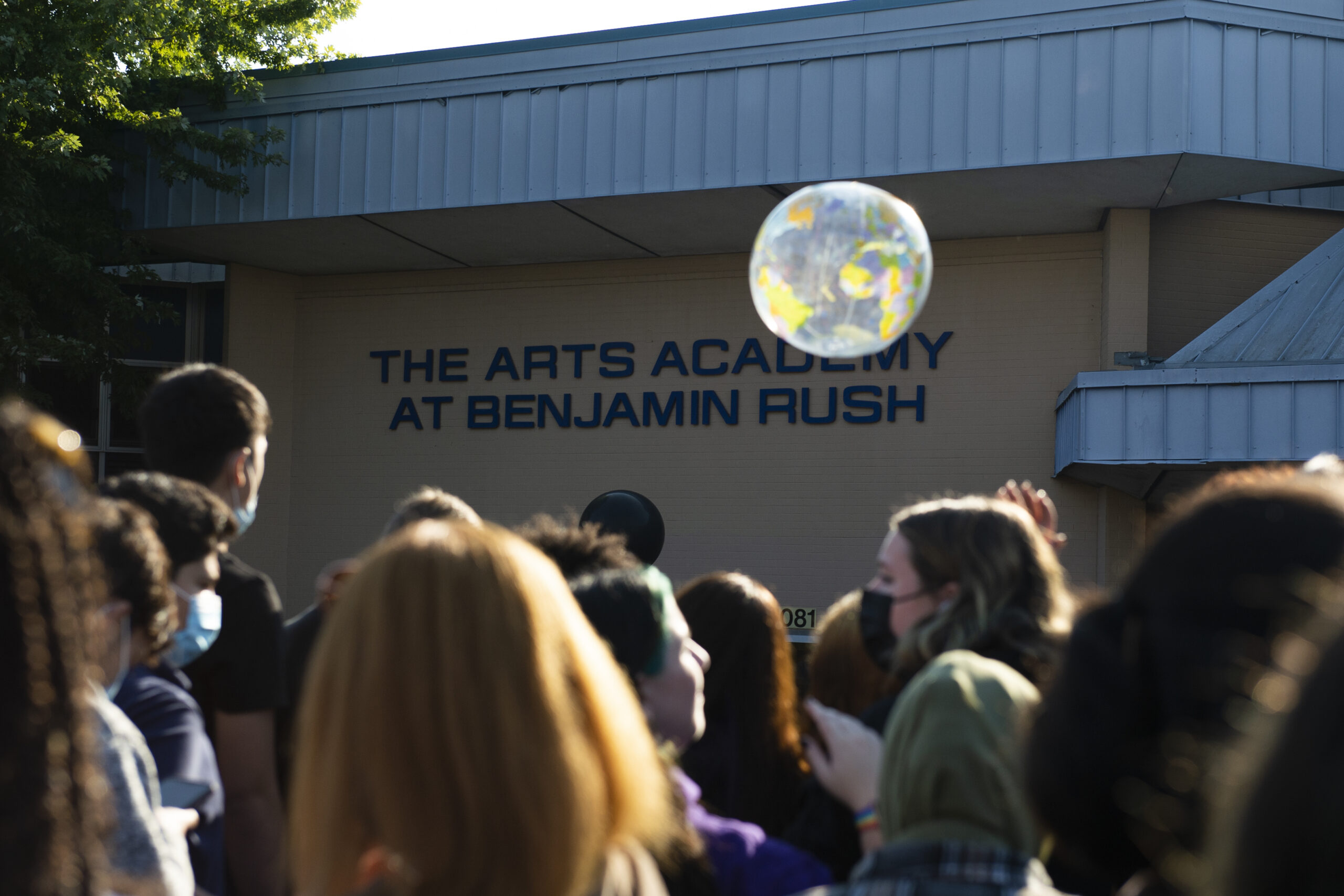
    The single from-scratch construction announced will be in the Lower Northeast — a new Arts Academy at Benjamin Rush, a popular magnet now in the Far Northeast. That new building, which will house students in fifth through 12th grades, would rise on the site of the old Fels High School in Oxford Circle.

    A new neighborhood high school will open in the current Rush Arts building, if the plan is approved.

    The Arts Academy at Benjamin Rush, shown in this 2022 file photo, will move to a new building constructed in the lower Northeast under the facilities master plan now under consideration. A new catchment high school would open in the Rush Arts building.

    Comly, Forrest, and Carnell — all Northeast schools — would be modernized and get additional grades to relieve overcrowding.

    No Northeast schools were tagged for closing because all are near or at capacity or overcrowded, officials said, unlike in other neighborhoods.

    But the superintendent underscored that investments would be made throughout the city.

    E.W. Rhodes in North Philadelphia would get a renovated pool.

    A year-round K-8 — which Watlington teased at during his state of the schools speech in early January — would colocate at Mary McLeod Bethune Elementary in North Philadelphia.

    Masterman, one of the city’s top magnets, has long been overcrowded — its middle school would move to Waring, in Spring Garden, one of the closing schools.

    And Central High is getting a performing arts center and expanding, as previously announced.

    “It’s really important to note this is not a plan to just funnel resources into the Northeast part of Philadelphia, where the population is increasing faster or in a different way than other parts of the city,” Watlington said. “This is not just build out, invest in some areas, divest in others.”

    Learning from past mistakes

    Watlington said he knows the plan will be difficult for some to swallow, and does not achieve every aim.

    But, he said, “we are not going to make good the enemy of perfect.”

    Still, Watlington and others vowed this closure process — the first large-scale closures in more than a decade — would not repeat the mistakes of 2012 and 2013, when 30 schools were shut to save money.

    A new transition team will focus on what students and schools need, from social and emotional supports to safety and academic help.

    School board president Reginald Streater and Superintendent Tony B. Watlington Sr. are shown in this 2025 file photo.

    “These families will get gold-standard, red-carpet treatment directly from the superintendent’s office,” Watlington said.

    The superintendent said he will urge the board to “strongly consider” his recommendations.

    “We have one shot to get this right,” Watlington said. “We believe this is as good a plan as we can bring to the board, and so we’re going to recommend strongly that the board adopt these recommendations.”

    School board president Reginald Streater said the facilities planning process was “critical” to bettering student outcomes.

    Watlington, Streater said in a release, has led “meaningful community engagement with families, educators, and community members across our city. The board looks forward to receiving the full set of recommendations and carefully considering them as we work together to ensure all of our school facilities and student rostering practices best support access to high-quality educational experiences and opportunities for all students.”

    Mayor Cherelle L. Parker gave good marks to the plan.

    “It is ambitious, it’s thorough, and it’s grounded in what I believe matters most, and that’s achieving the best outcomes for our students,” Parker told reporters. “I’m proud that the district has taken what I would describe as a clear-eyed look at really what matters for our children.”

    ‘It feels like a family member is dying’

    Outrage mounted for some Thursday as district officials began notifying affected communities and groups.

    “It’s heartbreaking,” said Sharee S. Himmons, a veteran paraprofessional at Fitler Academics Plus, a K-8 in Germantown. “It feels like a family member is dying.”

    Himmons is enrolled in the district’s Pathways to Teaching program, taking college courses to earn her degree and teacher certification. She was sitting in her math class at La Salle University when she found out Fitler was slated for closure. She began crying. She failed a test she was taking because her concentration was shot, she said.

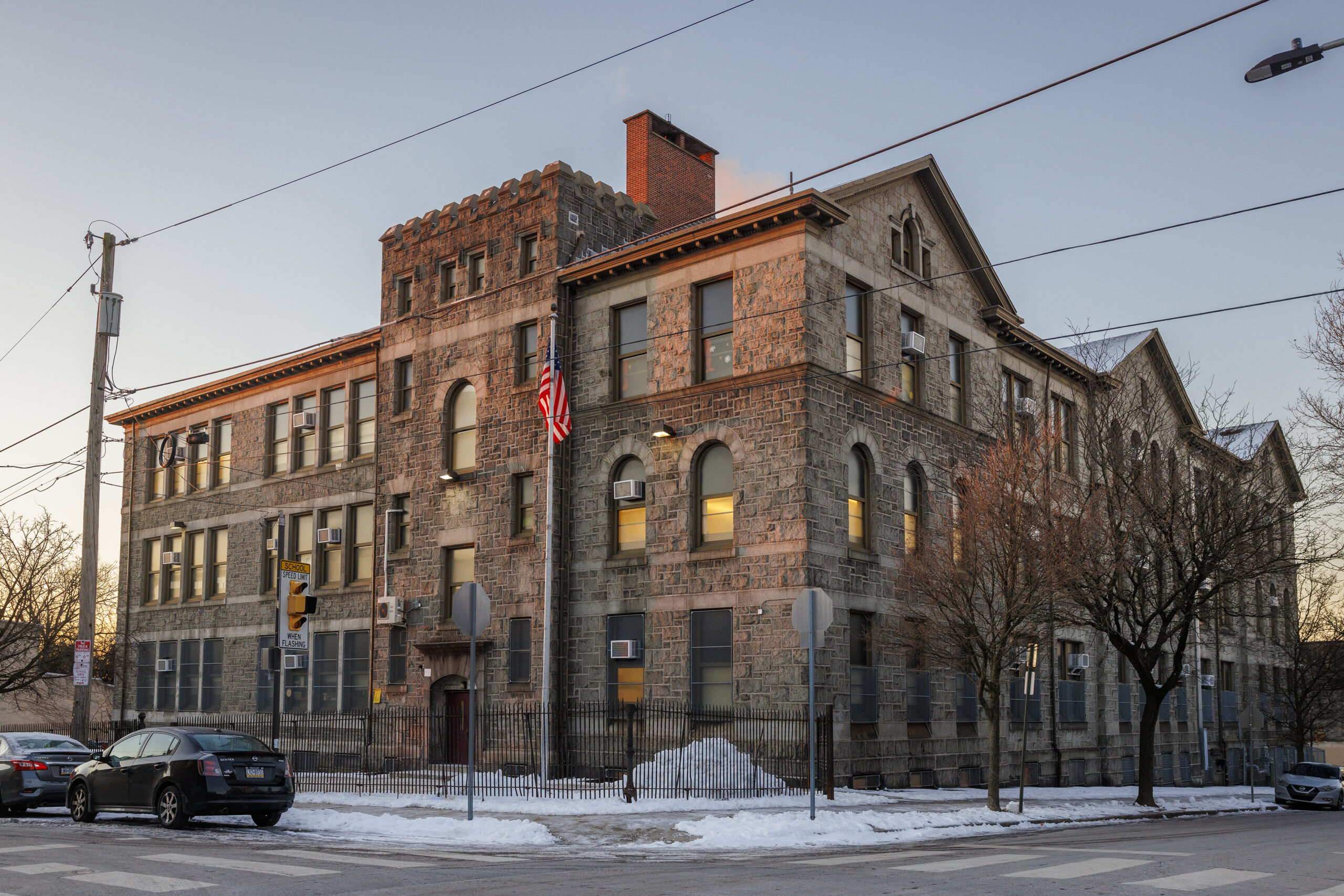
    Fitler Academics Plus Elementary School in Germantown is among the 20 schools that would close under the proposed plan.

    “This school is such a staple in the neighborhood,” she said. Fitler is a citywide admissions school, but draws many students from the area. Himmons’ own sons attended Fitler, and she wanted to teach there after her college graduation.

    “This isn’t over,” she said. “We’re going to fight — hard.”

    Arthur Steinberg, president of the Philadelphia Federation of Teachers, said he is waiting to see more granular details of the plan, including the list of schools that will be upgraded and what fixes are promised, and hopes for information about how much weight was given to every factor that went into the decisions.

    But, Steinberg said, “it is devastating for any community to lose their school — the parents, the kids, and the staff.”

    As for the process that led the district to this moment, Steinberg said it was abundantly clear even to advisory panel members that their viewpoints were just points of information for Watlington’s administration, that no promises about heeding any advice were made.

    Either way, the closure of 20 schools and more changes that will have ripples across the city for years to come all lead back to one factor, he said.

    “Without the chronic underfunding of the district,” Steinberg said, “we wouldn’t have gotten to this point.”

    Robin Cooper, president of the union that represents district principals, said the announcement was destabilizing, even though officials had warned closings were coming.

    “It’s a loss of history, a loss for Philadelphia,” Cooper said. “Schools are a family, and some families are breaking up.”

    Staff writer Sean Collins Walsh contributed to this article.

  • Clap Your Hands Say Yeah, Sharp Pins, and Sudan Archives play music in Philly this week

    Clap Your Hands Say Yeah, Sharp Pins, and Sudan Archives play music in Philly this week

    This week in Philly music features a tribute to the late songwriter Jill Sobule, a 20th-celebration anniversary of Clap Your Hands Say Yeah’s debut, a two-night stand by funkateers Lettuce, a golden age of hip-hop rapper, and a host of rising stars. That includes power pop band the Sharp Pins, jazz musicians Kenyon Harrold and Isaiah Collier, and genre-blending maverick Sudan Archives.

    Thursday, Jan. 22

    Rakim

    No list of the most influential rappers of all time is complete without Rakim. He is the golden age of hip-hop MC who set new standards for lyricism and internal rhyme schemes with deejay Eric B. on late 1980s albums like Paid in Full and Follow the Leader. His latest is last year’s The Re-Up. 8 p.m., City Winery, 900 Filbert St., citywinery.com/philadelphia

    Gregory Alan Isakov

    South Africa-born, Philadelphia-raised, and Boulder, Colo.-based indie folk singer Gregory Alan Isakov’s most recent album is 2023’s Appaloosa Bones. It is a moody evocative set of allusive songs on the Iron & Wine and Fleet Foxes continuum. His North Broad Street show is “an intimate acoustic evening.” 8 p.m., Met Philly, 858 N. Broad St., themetphilly.com

    Lamp

    In the Grateful Dead- and Phish-adjacent universe, Lamp has legitimate bona fides. Russ Lawton and Ray Paczkowski are the rhythm section in the Trey Anastasio Band and Scott Metzger plays in Joe Russo’s Almost Dead. 8 p.m., Ardmore Music Hall, 23 E. Lancaster Ave., Ardmore, ardmoremusichall.com

    Friday, Jan. 23

    Sharp Pins

    Twenty-one-year-old power-pop wunderkind Kai Slater’s Sharp Pins is all the indie rage, with the kinetic Balloon Balloon Balloon drawing from Guided By Voices and the Byrds and sounding downright Beatles-like at times. The band plays two shows at Jerry’s on Front with Atlantic City’s Te Vista opening. 6:30 p.m. and 8:30 p.m., Jerry’s on Front, 2341 N. Front St., r5productions.com

    Clap Your Hands Say Yeah

    In 2006, Clap Your Hands Say Yeah’s self-titled debut’s music blog-fueled buzz helped reshape the indie music business. Singer Alec Ounsworth is marking the milestone with a “Piano & Voice” solo tour that kicks off with hometown Philly shows on Friday and Saturday. Noon, Free at Noon, World Cafe Live, 3025 Walnut St., xpn.org and 7 p.m., Philadelphia Ethical Society, 1906 Rittenhouse Square, r5productions.com

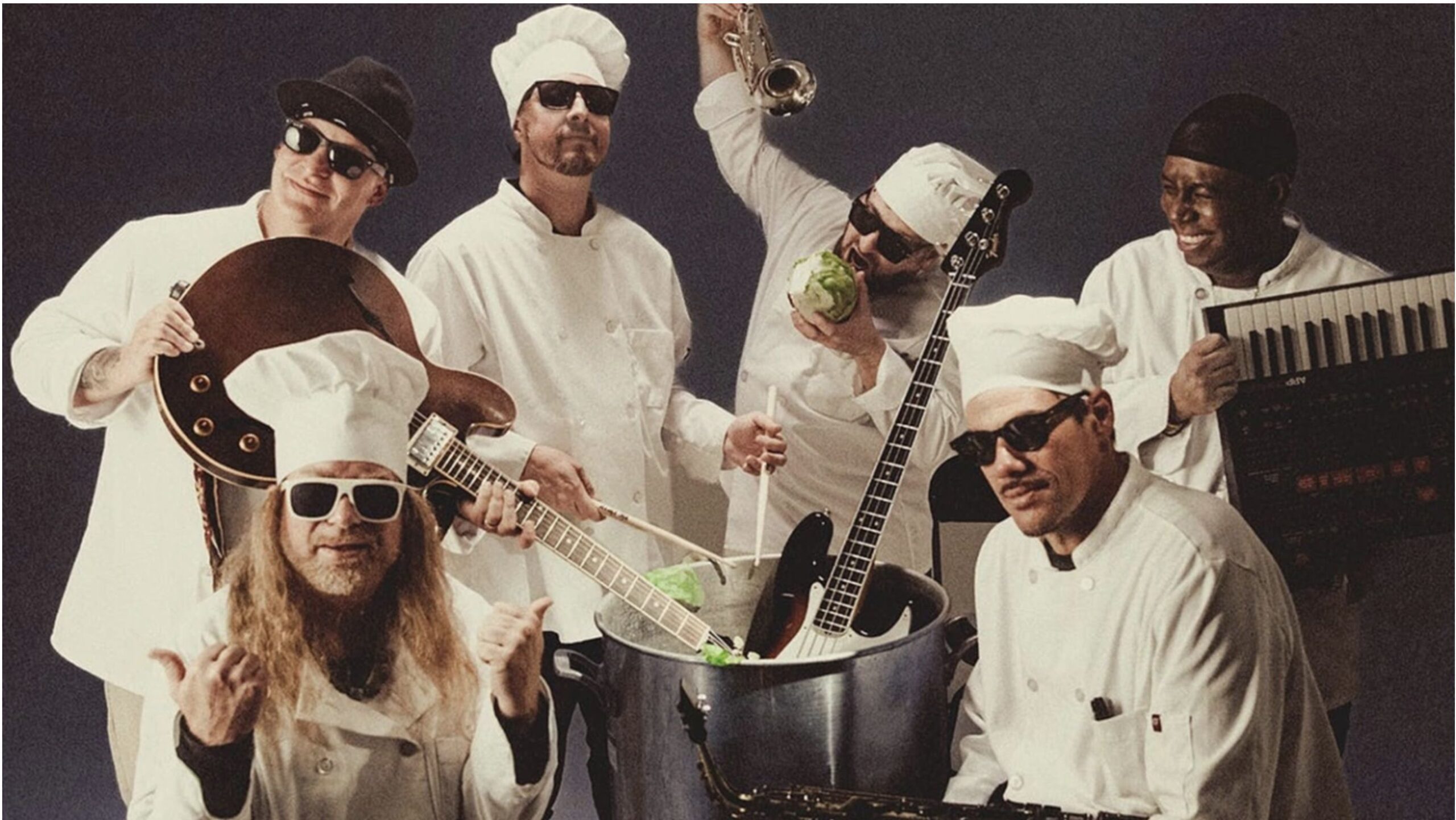
    Lettuce, as pictured on their new album “Cook.” The Boston funk band plays two nights at Ardmore Music Hall, on Friday and Saturday.

    Lettuce

    The Boston funk sextet Lettuce has named its new album Cook, and the members all sport chef’s toques on the album cover. The band, whose musical stew pulls from horn-heavy influences like Tower of Power and James Brown, plays two shows this weekend. 8 p.m. Friday and Saturday, Ardmore Music Hall, 23 E. Lancaster Ave. Ardmore, ardmoremusichall.com

    Saturday, Jan. 24

    Isaiah Collier and Keyon Harrold

    This Penn Live Arts show pairs two rising stars in the jazz world. They’re both Midwesterners. Ferguson, Mo., trumpeter Keyon Harrold has played with Jay-Z and Common, who guests on the opening track of his album. He has also played the trumpet parts in the Don Cheadle-starring Miles Davis biopic Miles Ahead. Isaiah Collier is a Chicago saxophonist whose The Story of 400 Years traces four centuries of Black American history. 7:30 p.m., Zellerbach Theatre, 3680 Walnut St., pennlivearts.org

    Keyon Harrold plays the Zellerbach Theatre at the Annenberg Center on Saturday with Isaiah Collier.

    Jillith Fair: Loving Jill Sobule

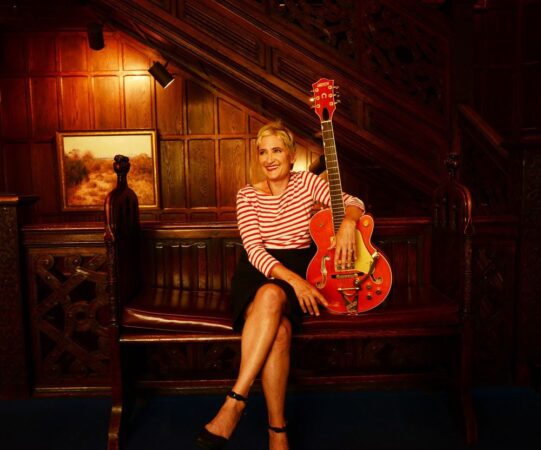
    In May, singer-songwriter Jill Sobule tragically died in a house fire in Minnesota. A tribute show at the Fallser Club in East Falls will be co-hosted by Sobule’s friends Jim Boggia and Martykate O’Neill. The evening will feature Tracy Bonham, Jonathan Coulton, James Mastro, and author Tara Murtha. Expect an emotional evening. 8 p.m., the Fallser Club, 3721 Midvale Ave., thefallserclub.com

    Daffo

    Daffo, the indie pop singer born Gabi Greenberg, went viral with the 2024 single “P:or Madeline.” Their debut, Where the Earth Bends, was recorded with Elliott Smith producer Rob Schnapf. 8 p.m., PhilaMoca, 531 N. 12th St., philamoca.org

    Winter Carnival

    This package tour brings together several veteran alt-hip-hop luminaries, headlined by Twin Cities rap duo Atmosphere. It also includes Sage Francis and R.A. the Rugged Man and former Ultramagnetic MCs leader Kool Keith. 8 p.m., Brooklyn Bowl, 1009 Canal St. brooklynbowl.com/philadelphia.

    Sunday, Jan. 25

    On a Winter’s Night

    In 1994, Christine Lavin produced a folk compilation called On a Winter’s Night, featuring John Gorka, Patty Larkin, Lucy Kaplansky, Bill Morrissey, and others. That album prompted many concert tours with folkies of various stripes, and this reunion features Gorka, Larkin, Kaplansky, and Cliff Eberhardt. 8 p.m., Sellersville Theater, 24 W. Temple Ave., Sellersville, st94.com

    Josh Ritter

    Josh Ritter is never short on new songs or stories to tell. Having completed a full band tour for his new album, I Believe in You, My Honeydew, he’s now out on a solo tour. On Sunday, it will take him to West Art, the new venue in an old church in Lancaster. 8 p.m., West Art, 816 Buchanon Ave., Lancaster, westartlanc.com.

    Brittney Denise Parks, also known as Sudan Archives, plays Union Transfer on Tuesday.

    Tuesday, Jan. 27

    Sudan Archives

    Brittney Denise Parks, who performs as Sudan Archives, is a singer, violinist, and electronic musician. She is at her most dance-floor directed on the excellent and creatively restless The BPM, the follow-up to 2022’s acclaimed Natural Brown Prom Queen. 8 p.m., Union Transfer, 1026 Spring Garden St., utphilly.com.

    Greg Freeman

    Put Greg Freeman in the category of RIYL MJ Lenderman, Ryan Davis, and Bob Dylan. The latter’s 1978 album Street Legal is the inspiration behind “Curtain” from Freeman’s 2025 album Burnover, which confirmed the buzz generated by the Vermont songwriter’s 2022 debut Looked Out. 8 p.m. Ukie Club, 847 N. Franklin St., 4333collective.net.

    Concert announcements

    It’s a busy week for tour announcements.

    A$AP Rocky was musical guest on Saturday Night Live last weekend. The rapper, who also happens to be Rihanna’s boyfriend, used that appearance to announce a “Don’t Be Dumb” tour that comes to Xfinity Mobile Arena on June 4.

    The Human League plays the Met Philly on June 28, joined by fellow 1980s British acts Soft Cell and Alison Moyet. And Tori Amos’ new album, In Time of Dragons, due May 1, will bring her to the Met on Aug. 1.

    Snail Mail, the Baltimore indie rocker born Lindsey Jordan, has announced her new album, Ricochet, due in March, and a date at the Fillmore on April 16 with Swirlies and Hall Gallo. Ticket details at r5productions.com.

  • Once a precocious theater kid from West Philly, Hollywood production designer Wynn Thomas has won an overdue Oscar at 72

    Once a precocious theater kid from West Philly, Hollywood production designer Wynn Thomas has won an overdue Oscar at 72

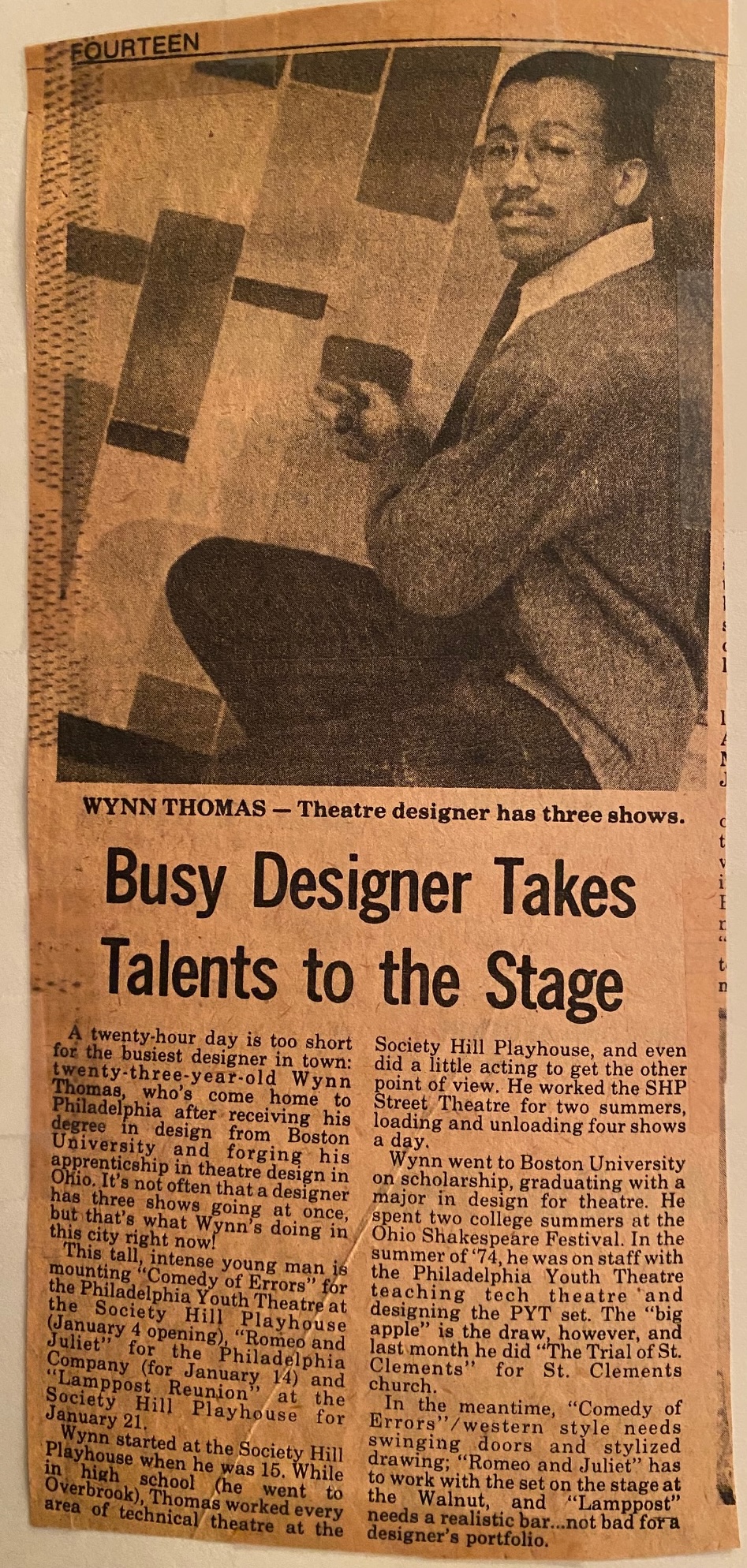
    When famed production designer Wynn Thomas prepared an acceptance speech for his long-awaited Oscar at the age of 72, he wanted to highlight his own Philadelphia story.

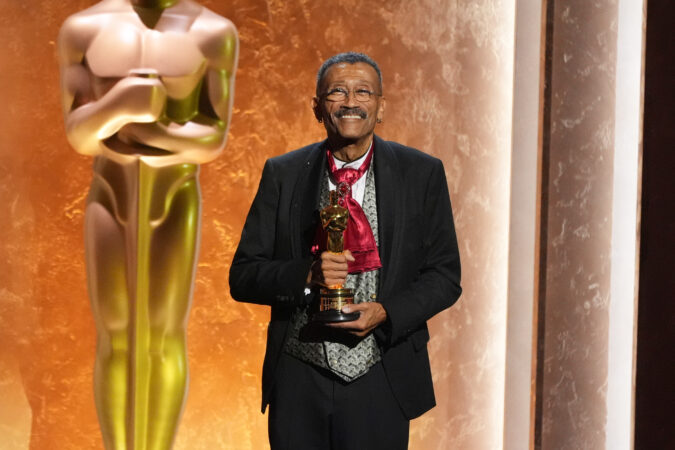
    “My journey to storytelling began as a poor Black kid in one of the worst slums in Philadelphia. There were street gangs and poverty everywhere. And to escape that world, I immersed myself in books,” Thomas told the Hollywood audience at the Governor’s Awards ceremony in November. “I would sit on my front stoop and I would travel around the world. Now, the local gangs looked down on me and called me ‘sissy.’ But that sissy grew up to work with some great filmmakers and great storytellers.”

    It was a significant moment for an artist who has spent nearly 50 years behind the camera to finally step into the spotlight himself. The honorary Oscar — which also went to Tom Cruise and Debbie Allen — recognizes “legendary individuals whose extraordinary careers and commitment to our filmmaking community continue to leave a lasting impact.”

    During his extensive film career, Thomas has designed epic, comedic, and dramatic worlds for filmmakers like Spike Lee (Do The Right Thing, Malcolm X), Ron Howard (A Beautiful Mind, Cinderella Man), Robert DeNiro (A Bronx Tale), Tim Burton (Mars Attacks), and Peter Segal (Get Smart).

    And while at it, he broke several barriers along the way: Thomas is considered the first Black production designer in Hollywood history.

    No matter how far his work took him, though, he was always proud to discuss his Philadelphia roots.

    The theater kid from West Philly

    Long before he worked on major feature films, Thomas grew up as one of six kids in West Philadelphia, living primarily near 35th and Spring Garden Streets. Avid reading kept him out of trouble. His mother, Ethel Thomas, wrote a permission letter to the local library so he could access the adult section, and he immersed himself in the worlds of Harper Lee, James Baldwin, William Shakespeare, and Lillian Hellman.
    The young Thomas always looked forward to Saturdays, when he could spend nearly all day at a movie theater on Haverford Avenue. Occasionally, he took classes at Fleisher Art Memorial, too.
    The 1961 movie Summer and Smoke, written by Tennessee Williams, he said, inspired him to pursue theater.

    “I absolutely said, ‘My God, what is this?’ I think it was just the nature of the story that really affected me,” Thomas, who now lives in New York, said in a recent interview. “I couldn’t believe what I had just seen, what I had just experienced. So I went to my library and got as many Tennessee Williams plays as I could.”

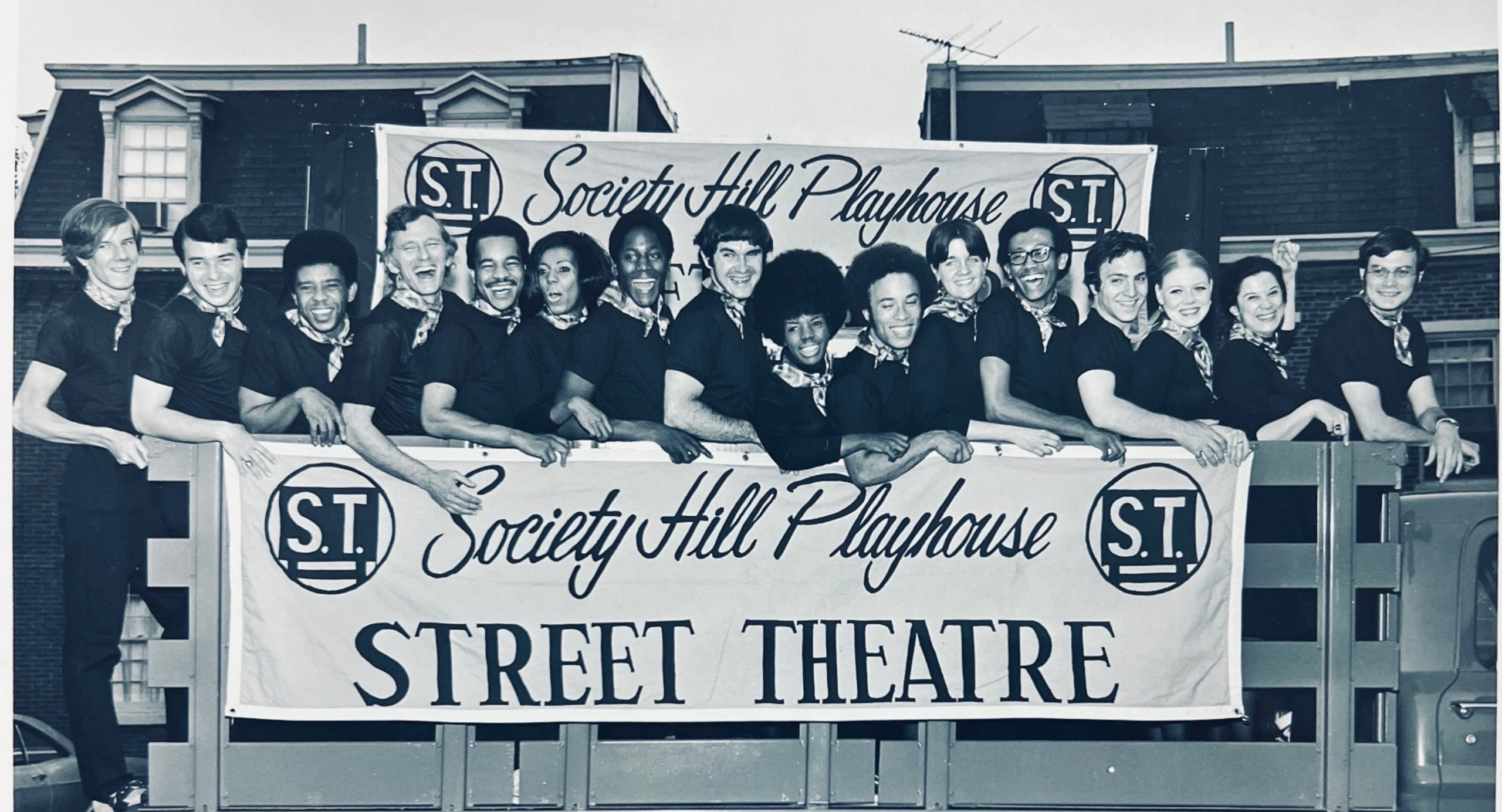
    Wynn Thomas (fifth from right) at the Society Hill Playhouse as a teen in the late 1960s.

    A couple of years later, Thomas heard that Society Hill Playhouse was holding open auditions. He was too young to audition himself, so he persuaded his older sister Monica to try out.

    “I remember saying to her, ‘You need to do a scene from Who’s Afraid of Virginia Woolf,’” he recalled, chuckling. “Now, can you imagine being a 14-year-old kid who knows Who’s Afraid of Virginia Woolf? That’s a geek!”

    She earned a spot in the company for a season and Thomas frequently tagged along, volunteering as an usher and eventually forming a close relationship with the owners, legendary Philadelphia theater couple Jay and Deen Kogan.

    Throughout high school, the Overbrook High art student spent most of his after-school time across town at the playhouse. He acted, painted scenery, and served as a stage manager.

    One of the final productions he stage-managed was The Great White Hope, loosely based on boxing champion Jack Johnson, who was played by Richard Roundtree — the soon-to-be Hollywood star who went on to lead the 1971 classic Shaft. While he was performing at Society Hill Playhouse, Roundtree was auditioning for the life-changing role.

    Shaft was a very important and very pivotal film for that time period,” said Thomas. “It was about a strong Black male who lived in the world under his own terms. That was not a character that was portrayed often in films.”

    It was a glimpse into the worlds Thomas would help create in the future — with Black characters who had agency at the center.

    Some four decades later, he worked with Roundtree once more for the 2019 remake of Shaft and they had an “incredible reunion.”

    From Philly to Boston to New York

    Thomas received his bachelor of fine arts in theater design from Boston University. After graduating in 1975, he returned to Philadelphia and worked as a window dresser at the Strawbridge & Clothier department store on Market Street for a few months before landing his next theater job.

    For about four years, Thomas was a painter for the Philadelphia Drama Guild, operating out of the Walnut Street Theatre. He also returned to Society Hill Playhouse as a production designer.

    An article about Wynn Thomas when he was 23 years old and working as a theater designer in Philadelphia in the mid 1970s.

    “It was a huge learning phase for my career, because I was painting all these different kinds of shows,” Thomas said.

    By his mid-20s, Thomas had moved to New York and soon became the resident set designer for the legendary Negro Ensemble Company, where he worked with not-yet-famous actors from Denzel Washington to Phylicia Rashad.

    “There was an actor who had auditioned for the company but did not get in. He was looking for a job and it turns out that he had carpentry skills, so I ended up hiring this actor who built my sets for my very first season at NEC,” Thomas recalled.

    “That actor was Samuel L. Jackson.”

    Breaking into film

    Thomas loved theater but sought higher-paying work in film. After multiple job rejections, he joined the United Scenic Artists Local 829.

    In an event the union organized with renowned production designer Richard Sylbert, who was working on Francis Ford Coppola’s The Cotton Club, Thomas was the sole Black person in attendance.

    The next day, he called Sylbert and introduced himself: “I’m the Black guy that was in the room last night. Do you remember seeing me?”

    He convinced Sylbert to hire him to build model sets, and Sylbert became a crucial reference that helped Thomas secure art director jobs, like on 1984’s Beat Street (directed by fellow Philly native Stan Lathan). That’s where he met Spike Lee, who interviewed “for the coffee-fetching position of assistant to the director,” Thomas recalled. When Lee stopped by the art department to greet a friend, the aspiring filmmaker was surprised to see Thomas.

    “He said he didn’t know there were any Black people doing this [work],” Thomas said.

    Filmmaker Spike Lee, center right, appears with his brother David Lee, center left, with castmembers, including Halle Berry, left, and Wesley Snipes, right, on the set of the 1991 film, “Jungle Fever.” Wynn Thomas served as production designer.

    A storied career of firsts

    That Beat Street encounter led to one of the most fruitful collaborative relationships of Thomas’ career: He went on to make 11 films with Lee, from She’s Gotta Have It to School Daze to Jungle Fever. Lee regularly worked with the same collaborators (“the family”) including Thomas, costume designer Ruth Carter, and cinematographer Ernest Dickerson.

    “We wanted to present images of Black and brown folks that had not been seen before on the screen. We did not want to present any negative images. If you look at those films, there’s no drugs, there’s no alcohol, there’s no domestic abuse — none of that trauma that people used to associate with our communities,” said Thomas. “That was the artistic link, the journey for all of us …[and] that has been a criteria for me.”

    Meanwhile, he continued to find mainstream success on commercial films, fueled by a relentless work ethic and a commitment to hiring a diverse crew of artists on his team. Later in his career, he was elected to the Academy’s Board of Governors where he pushed for expanding educational programs nationwide.

    Thomas’ films showcase a breadth of world-building talent across genres like comedy (To Wong Foo, Thanks for Everything! Julie Newmar, Get Smart), romance (The Sun Is Also a Star), and dramas about other Black barrier-breakers, like King Richard (starring fellow Overbrook alum Will Smith), Hidden Figures, and the miniseries Lawmen: Bass Reeves.

    It’s rare that he returns to his hometown for a job, but in 2014, he was thrilled to work on the pilot of the Philadelphia-set show How to Get Away with Murder.

    Thomas believes the city holds countless rich, untold stories that he hopes will one day receive a bigger spotlight.

    For now, he’s enjoying seeing the Oscar statue grace his living room.

    “It really means a great deal to me, after 40-plus years of working in the business, to have my work recognized by this organization,” said Thomas. “I’ve worked on a lot of films that should have been recognized by the Academy, [for which] I should have been nominated, and it never happened. So I think this was a way for the Academy to correct that oversight.”

  • Philly roads will be closed for Highway Patrol Officer Andy Chan’s funeral

    Philly roads will be closed for Highway Patrol Officer Andy Chan’s funeral

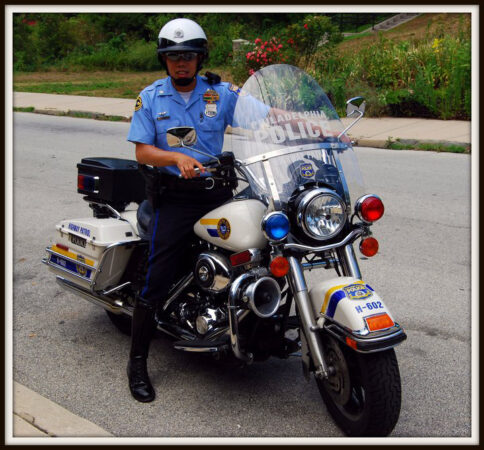
    Philadelphia roads will be closed Monday and Tuesday for the funeral services of Highway Patrol Officer Andy Chan.

    Several streets in the Callowhill, Chinatown, and Center City neighborhoods will begin closing Monday evening for a first viewing, with additional roads closing Tuesday for the second viewing and funeral.

    Chan, 55, who suffered a critical brain injury six years ago in a motorcycle crash on his way to work, died Dec. 2. Since the crash, the 24-year police veteran had required around-the-clock care. His fellow officers fundraised for his medical expenses.

    A viewing will be held Monday at Holy Redeemer Chinese Catholic Church, 915 Vine St., from 6 p.m. to 9 p.m. The second viewing will be held Tuesday at the Cathedral Basilica of SS. Peter and Paul, 1723 Race St., from 8:15 a.m. to 10:40 a.m., with the funeral following directly after.

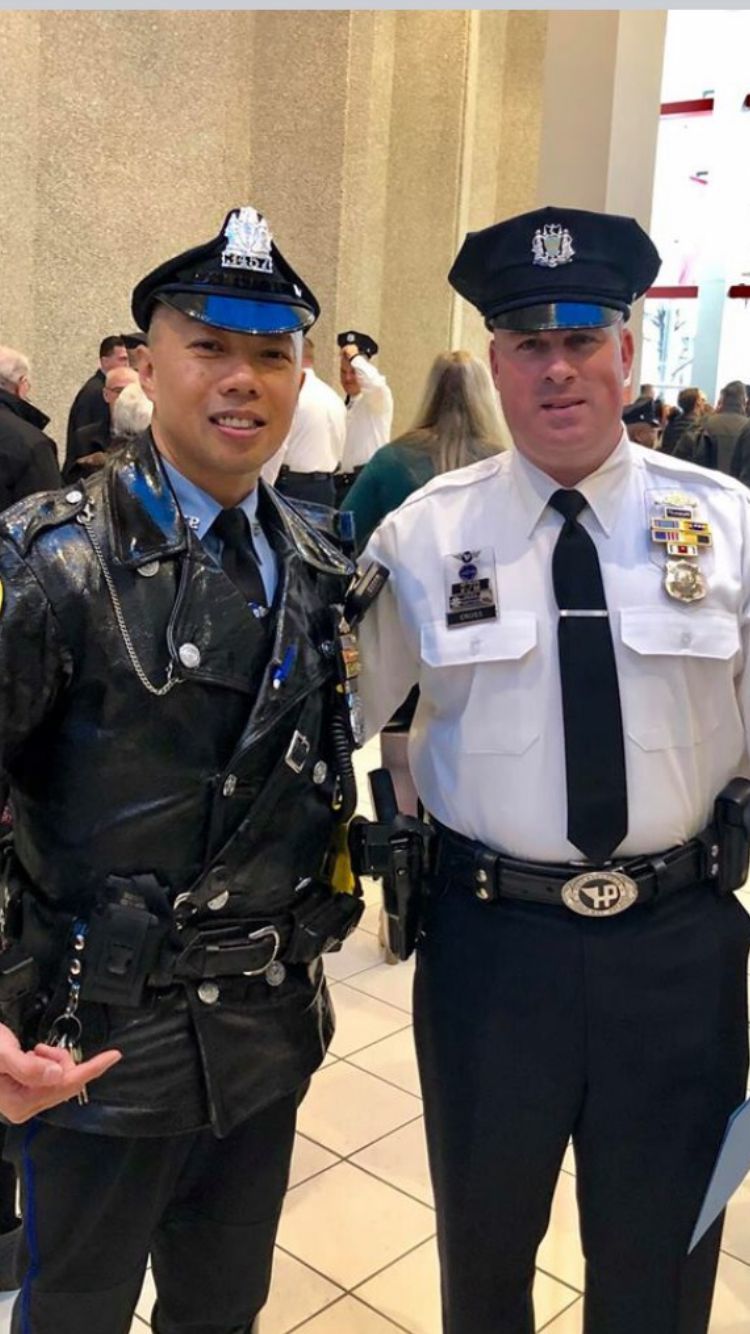
    Highway Patrolman Andy Chan (l) at the promotional ceremony of his old partner Sgt. Kyle Cross.

    Road closures

    Drivers should avoid the areas listed, use alternate routes, and expect delays.

    These streets will be closed at 4 p.m. Monday and will reopen at the conclusion of the viewing procession:

    • Ridge Avenue between Wood Street and Hamilton Street 
    • Vine Street (westbound) between Eighth and 10th Streets
    • 10th Street between Hamilton and Vine Streets
    • Ninth Street between Callowhill and Wood Streets
    • Callowhill Street between Eighth and 11th Streets
    • Wood Street between Ninth and 10th Streets

    These streets will close at 5 a.m. Tuesday and will reopen at the conclusion of the service:

    • 18th Street between the Benjamin Franklin Parkway and Vine Street

    These streets will close at 5:30 a.m. Tuesday and will reopen at the conclusion of the procession:

    • 15th Street between Spring Garden and Callowhill Streets
    • Broad Street between Spring Garden and Callowhill Streets
    • Callowhill Street between Broad and 17th Streets
    • 17th Street between Callowhill and Benjamin Franklin Parkway

    These streets will close at 6 a.m. Tuesday and will reopen at the conclusion of the service:

    • Benjamin Franklin Parkway between 16th and 22nd Streets
    • Vine Street between Logan Circle and 16th Street
    • Race Street between 16th and 18th Streets
    • 17th Street between Vine Street and Benjamin Franklin Parkway
    • 19th Street between Benjamin Franklin Parkway and Cherry Street

    Additional streets near the Benjamin Franklin Parkway and Eakins Oval may be closed or detoured.

    Parking restrictions

    Parking is not allowed on the streets listed above during the designated times. “Temporary No Parking” signs are displayed along the streets.

    Vehicles parked in these zones during the posted hours will be relocated. The Inquirer has a guide on what to do if your vehicle is “courtesy towed.”

    Public transportation

    SEPTA Bus detours will be in place, according to the city, but SEPTA has not shared these details yet. Get live service updates at septa.org.

  • Aaron Goldblatt, award-winning museum planner, exhibit designer, and sculptor, has died at 70

    Aaron Goldblatt, award-winning museum planner, exhibit designer, and sculptor, has died at 70

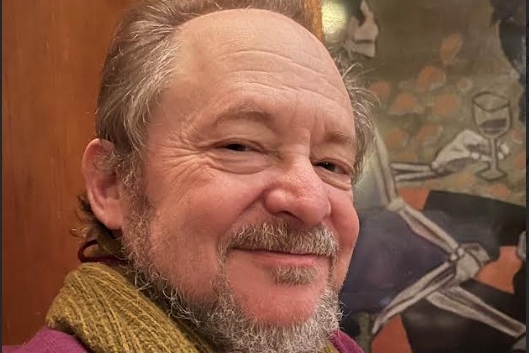
    Aaron Goldblatt, 70, of Philadelphia, award-winning museum services partner emeritus at Metcalfe Architecture & Design, former vice president for exhibits at the Please Touch Museum, exhibit designer, sculptor, adventurer, and mentor, died Sunday, Dec. 7, of lung cancer at his home.

    Mr. Goldblatt was an expert in conceiving and constructing environments of all kinds that encouraged play and what he called “informal learning.” He said in a 2019 article on the Metcalfe website that “novelty and a sense of risk” were the “social lubricator” in public spaces that “invokes a little nervousness and inspires social interaction.”

    He joined business partner Alan Metcalfe in 2002 and specialized in constructing canopy walks, glass floors, elevated walkways, net bridges, abstract playgrounds, multimedia exhibits, and other unique designs in prominent locations. Visitors encounter their creations at the Museum of the American Revolution, the Independence Seaport Museum, Children’s Hospital of Philadelphia, the National Museum of Industrial History in Bethlehem, Pa., and the Whiting Forest at Dow Gardens in Michigan.

    He and colleagues built the Lorax Loft on the Trail of the Lorax at the Philadelphia Zoo, the innovative garden and playground at Abington Friends School, and the lobby at Wissahickon Charter School. At Morris Arboretum, they built the celebrated Out on a Limb and Squirrel Scrambletreetop experiences” that Inquirer architecture critic Inga Saffron called “an irresistible allure, to young and old alike.”

    He earned bachelor’s and master’s degrees in sculpture, hitchhiked from adventure to adventure around the country and South America after high school, and said in 2019 that “learning, laughter, and creating genuine connections between people, nature, and history … really inspire my design.”

    Play, he said, is one of those genuine connections. “Wherever people are, as long as they are there long enough, play will happen,” he said in 2019. “It happens in schools, museums, and even prisons. Play is fundamental to being human.”

    Together, Mr. Goldblatt, Metcalfe, and their colleagues earned design awards from the local chapter of the American Institute of Architects, the American Association of Museums, and other groups. In 2022, they earned the Wyck-Strickland Award from the historic Wyck house, garden, and farm for outstanding contributions to the cultural life of Philadelphia.

    In a tribute, colleagues at Metcalfe said Mr. Goldblatt “transformed our studio into the place we are today.” They said: “His generosity, wisdom, and passion for play emanated throughout every conversation, punctuated only by his wit and sense of humor.”

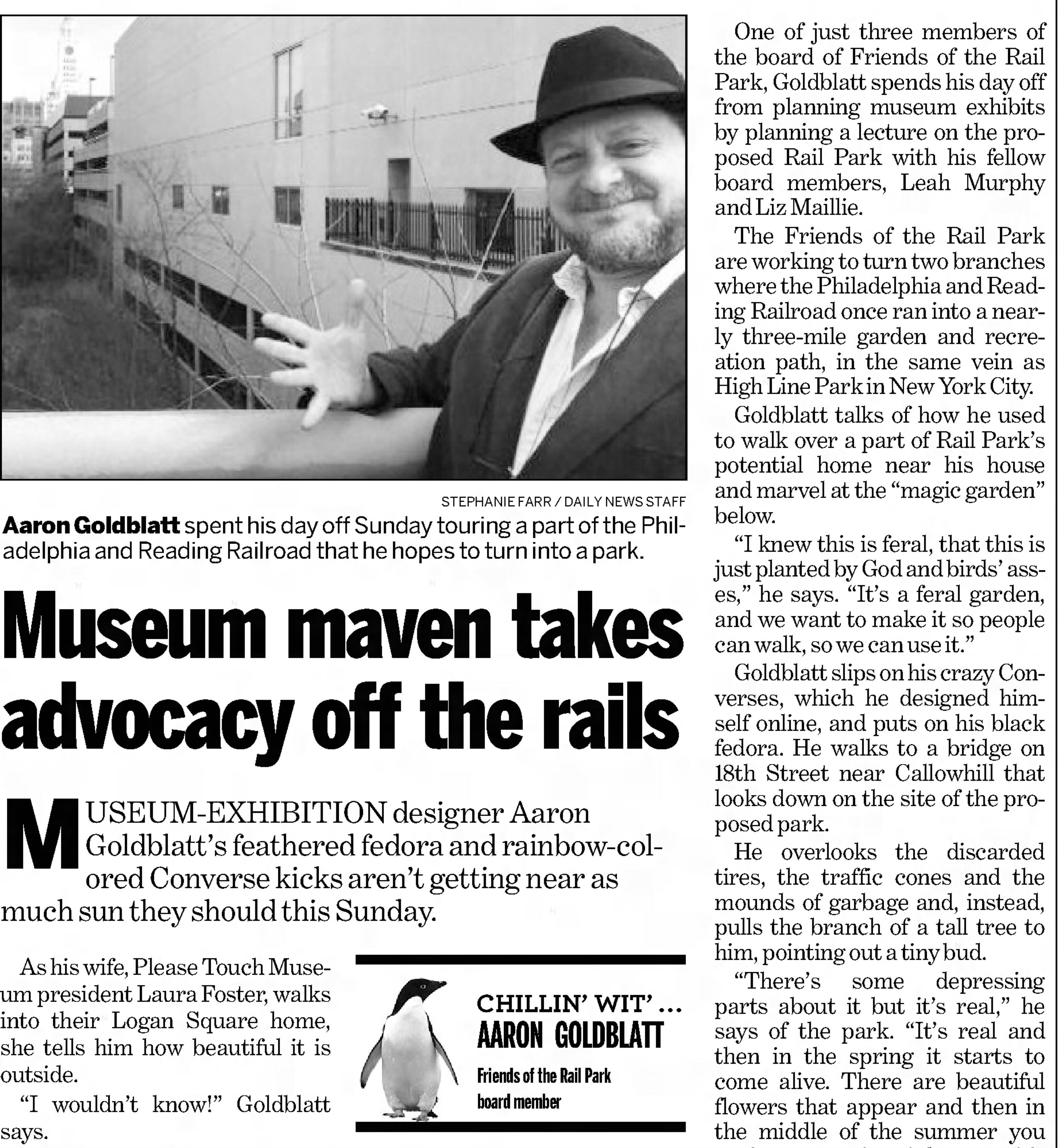
    This photo and story about Mr. Goldblatt appeared in the Daily News in 2013.

    From 1990 to 2002, he designed and developed exhibits at the Please Touch Museum. Earlier, he was director of exhibits for the Academy of Natural Sciences, assistant director at the Wagner Free Institute of Science, and studio assistant to sculptor Alice Aycock and other artists.

    He helped design the Rail Park and was a cofounder and longtime board member of Friends of the Rail Park. He served on boards at the Print Center, the Wagner Free Institute of Science, and other groups, and taught postgraduate museum studies at the University of the Arts for 20 years.

    “He developed a love of the process and philosophy of building,” said his daughter, Lillian. His wife, Susan Hagen, said: “He was always engaged, always asking questions. He was curious, funny, and extremely smart.”

    Friends called him “lovely, smart, and witty” and “warm, wise, and creative” in Facebook tributes. One friend said: “He always had a spark.”

    Aaron Shlomo Goldblatt was born March 22, 1955, in Cleveland. His father was in the Army, and Mr. Goldblatt grew up on military bases across the country and in Germany.

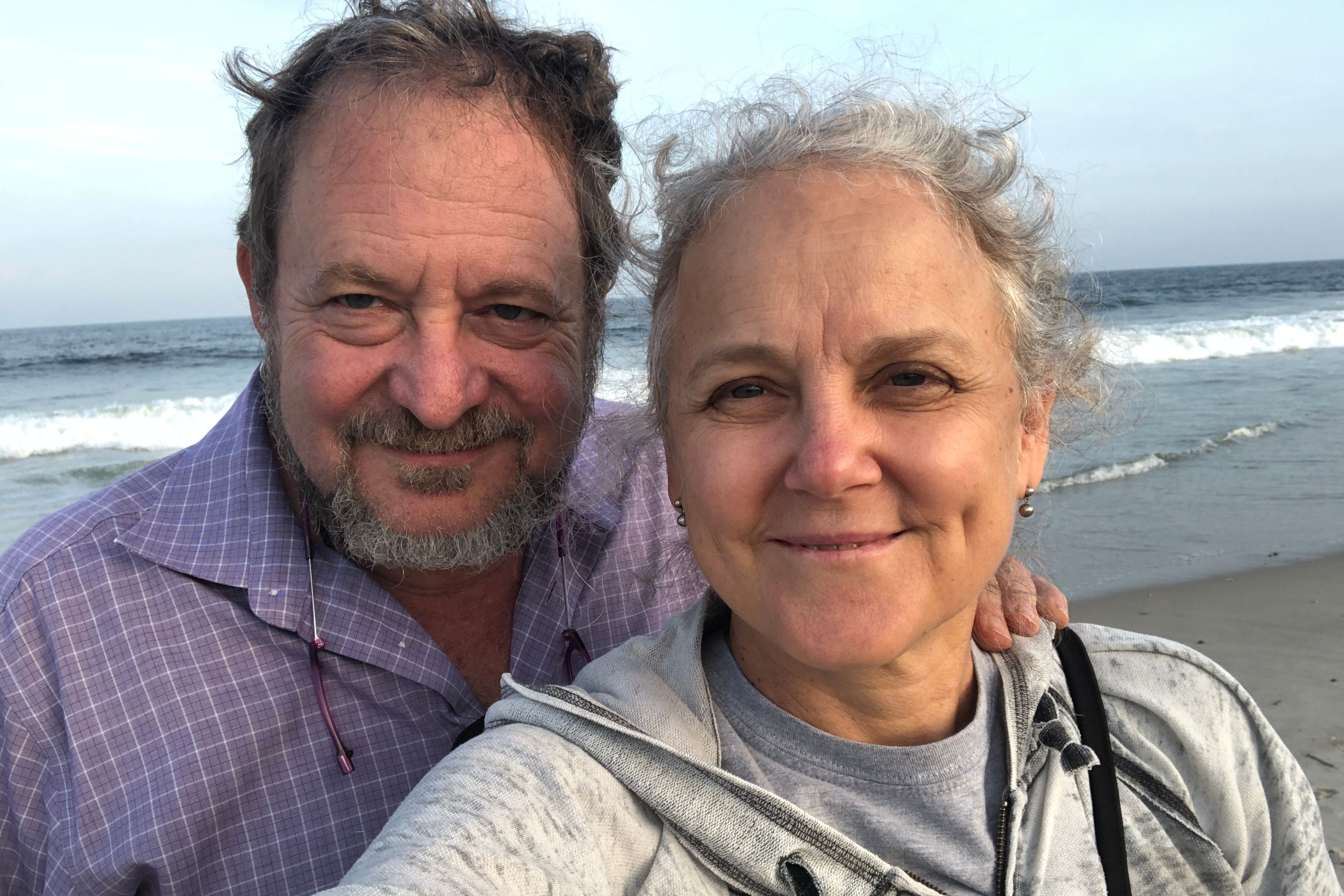
    Mr. Goldblatt and his wife, Susan Hagen, married in 2023.

    He graduated from high school in Maryland and earned his bachelor’s degree at Philadelphia College of Art in 1982 and master’s degree at Rutgers University in 1990. Before settling in Philadelphia, he worked on farms, painted houses, and spent time as a carpenter, a welder, and a potter.

    He married Diane Pontius, and they had a daughter, Lilly. After a divorce, he married Laura Foster. She died in 2019. He married fellow artist Susan Hagen in 2023, and they lived in Spring Garden.

    An engaging storyteller and talented cook, Mr. Goldblatt enjoyed all kinds of art, music, and books. He watched foreign films, wrote letters to politicians and the editor of The Inquirer, and visited the Reading Terminal Market as often as possible. He and his wife started birding during the pandemic.

    “Aaron led with his heart, engaging deeply with the people and ideas around him,” his daughter said. “He could burst into song at any moment.”

    Mr. Goldblatt smiles with his daughter, Lilly.

    His wife said: “He was a family person, and everyone talks about his love and kindness.”

    In addition to his wife and daughter, Mr. Goldblatt is survived by a grandson, a sister, a brother, his former wife, and other relatives.

    A celebration of his life is to be held later.

    Donations in his name may be made to the Aaron Goldblatt Fund at Tree House Books, 1430 W. Susquehanna Ave., Philadelphia, Pa. 19121; the Wagner Free Institute of Science, 1700 W. Montgomery Ave., Philadelphia, Pa. 19121; and the Print Center, 1614 Latimer St., Philadelphia, Pa. 19103.

    Mr. Goldblatt (center) enjoyed time with his brother, Eli (right), and friend John Landreau.