Tag: Spring Garden

  • Everything you need to know about Philadelphia’s July Fourth concert and fireworks

    Philadelphia’s celebration of America’s 250th birthday culminates July 4 with a free concert and fireworks on the Benjamin Franklin Parkway.

    The One Philly: Unity Concert for America begins at 5 p.m. in front of the Philadelphia Museum of Art, featuring Christina Aguilera, Jill Scott, Meek Mill, Will Smith, The Roots, DJ Jazzy Jeff, Jordan Davis, Seal, State Property, Kathy Sledge, and more.

    This year’s event is no longer part of the longtime Wawa Welcome America festival. Mayor Cherelle L. Parker’s administration took over production of the annual July Fourth concert, renamed it the One Philly: Unity Concert for America, and hired ESM Productions to produce the show.

    Wanda Sykes will emcee the concert, which concludes with the city’s official fireworks display over the Parkway.

    Here’s everything you need to know before you go.

    Fans react to the music as the Wawa Welcome America Festival concluded on July 4, 2023, with a free concert featuring Ludacris on the Benjamin Franklin Parkway.

    Schedule and entry

    Guests must enter through a secure checkpoint at 20th Street and Logan Circle, where security may search attendees and their bags. Gates open at 3 p.m.

    The concert will start around 5 p.m., followed by the fireworks around 11:30 p.m., according to city officials.

    Who is performing at Philadelphia’s Fourth of July Concert?

    Headliners include Christina Aguilera, Jill Scott, Meek Mill, Will Smith, The Roots, and DJ Jazzy Jeff.

    Other performers include Jordan Davis, Kathy Sledge, State Property, Seal, and several others.

    Fireworks over the Philadelphia Museum of Art along the Benjamin Franklin Parkway on Friday, July 4, 2025.

    Fireworks

    Following the concert, the city’s official July Fourth fireworks display will begin at about 11:30 p.m. The show will be visible from throughout the Parkway and surrounding neighborhoods.

    Looking for more fireworks? Here’s a full list of fireworks shows happening throughout the Philadelphia region.

    The concert and fireworks will also air live on NBC10 and Telemundo62.

    Road closures

    Unless otherwise noted, the following closures will be in effect from approximately 6 a.m. Friday through 6 a.m. Monday:

    • 1900 Race Street
    • 1800-1900 Vine Street
    • I-676 off-ramp at 22nd Street
    • I-676 on-ramp at 22nd Street
    • I-76 eastbound off-ramp at Spring Garden Street
    • Spring Garden Tunnel
    • Park Towne Place between 22nd and 24th Streets
    • 20th Street between Arch Street and Pennsylvania Avenue
    • 19th Street between Callowhill and Cherry Streets
    • Benjamin Franklin Parkway from 17th Street to Eakins Oval
    • Eakins Oval
    • Kelly Drive between Eakins Oval and Fairmount Avenue (inbound traffic closes at Fountain Green Drive beginning about 5 p.m.)
    • 2000-2100 Winter Street
    • Spring Garden Street between Pennsylvania Avenue and 31st Street
    • 23rd Street between Pennsylvania Avenue and Eakins Oval
    • 22nd Street between Winter Street and Pennsylvania Avenue
    • 21st Street between Winter Street and Pennsylvania Avenue
    • All roads from Arch Street to Spring Garden Street between 18th and 22nd Streets (local access maintained for residents)
    • All roads from Arch Street to Fairmount Avenue between 22nd and Corinthian Streets (local access maintained for residents)
    • 16th and 17th Streets between Arch Street and Spring Garden Street will close only if conditions warrant.
    • 1600-1700 Benjamin Franklin Parkway will close only if conditions warrant.

    Beginning at 4 a.m. Saturday, the following roads also will close:

    • Anne d’Harnoncourt Drive behind the Philadelphia Museum of Art
    • Martin Luther King Jr. Drive from Falls Bridge to Eakins Oval

    From 8 p.m. Saturday until approximately 1 a.m. Sunday, Kelly Drive between Fairmount Avenue and Fountain Green Drive and Waterworks Drive also will be closed because of the fireworks display.

    Parking

    Temporary no-parking signs will be posted along streets affected by closures. Vehicles left in those areas will be courtesy towed to another nearby location.

    Public Transportation

    SEPTA

    On July 4, SEPTA Metro, buses and Regional Rail will operate on special schedules with enhanced service.

    Additional trips will run on the L and B lines.

    Most Regional Rail lines will offer additional inbound and outbound service before the fireworks. All Regional Rail lines except the Airport and Cynwyd lines will provide late-night outbound service from Jefferson Station, Suburban Station, and William H. Gray III 30th Street Station after the fireworks.

    Other SEPTA service will operate on a Sunday schedule. Routes without Sunday service will not operate.

    Routes 7, 32, 33, 38, 43, 48, and 49 will be detoured beginning at 5 a.m. Thursday through 5 p.m. Sunday because of road closures.

    SEPTA ambassadors will be stationed at major transit hubs to help direct passengers after the July 4 FIFA World Cup match and the One Philly concert and fireworks.

    Additional information is available on SEPTA’s July 4 service webpage. Riders can also check alerts on the SEPTA mobile app, at septa.org/alerts or by calling 215-580-7800.

    PATCO

    PATCO will operate on a holiday schedule July 4, with trains running every 10 minutes throughout the day. More information is available at ridepatco.org.
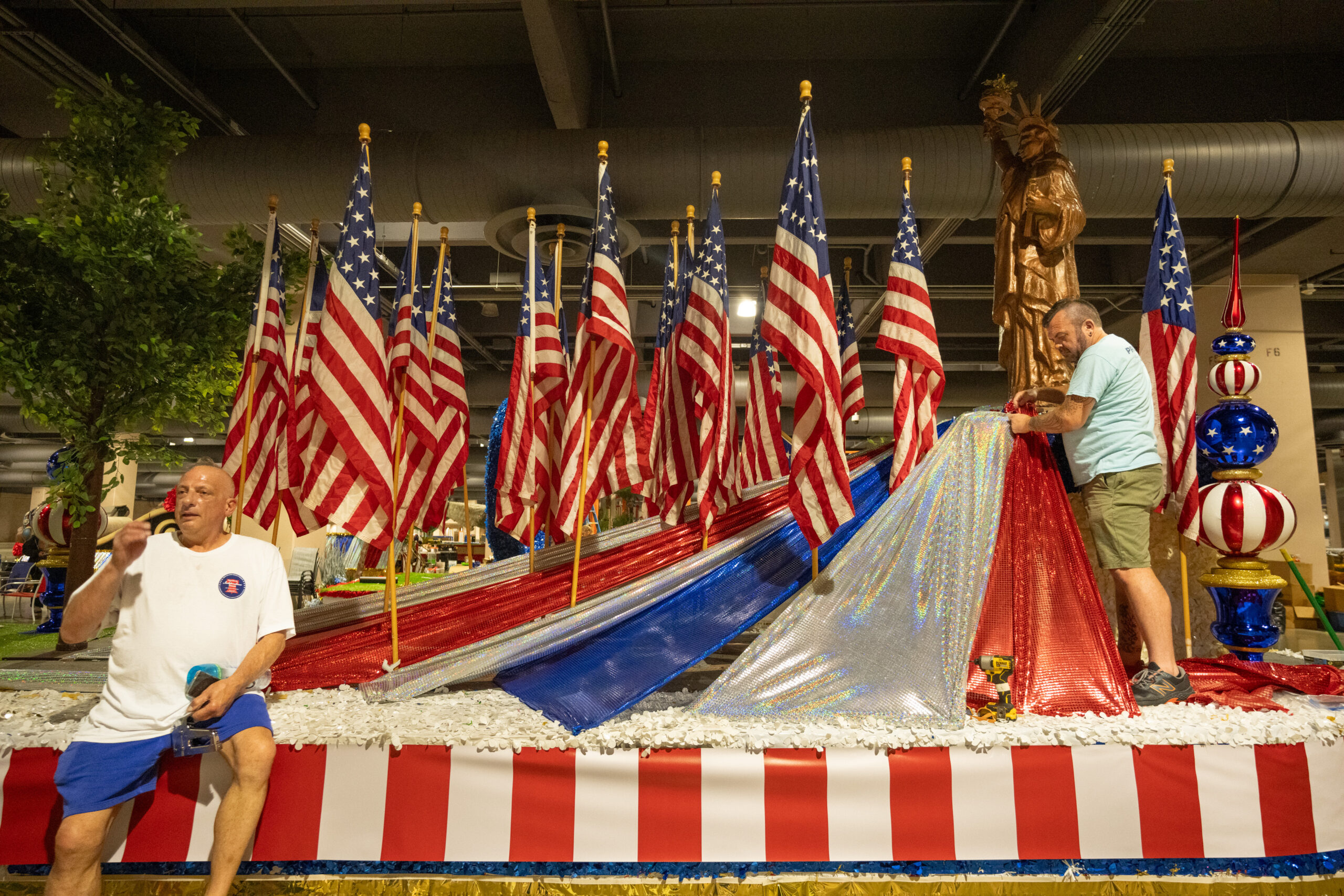
    Todd Marcocci (left) and Jeremy Williams work on a float on Monday for this year’s big Fourth of July parade, in Philadelphia.

    Fourth of July celebrations happening elsewhere in the area

    Fourth of July Freedom Festival at Pleasant Hill Park: 💵 Free, 🕒 July4, 5 to 9:30 p.m., 📍Linden Ave., Philadelphia, Pa 19136

    Philadelphia 4th of July Signature Dinner Cruise: 🕙 July 4, 7:30 p.m., 📍401 S. Christopher Columbus Blvd., Philadelphia, Pa. 19106, 🌐 cityexperiences.com

    2026 Freedom Festival at Wiggins Park 💵 Free, 🕒 6 to 11 p.m., 📍2 Riverside Dr., Camden, NJ 08103

  • Philly area set to receive record-breaking $322M in state and federal money for trails

    Philly area set to receive record-breaking $322M in state and federal money for trails

    Philadelphia and its surrounding counties are set for what could be a record-breaking $322 million in federal and state funding to go toward building new trails segments, say trail advocates.

    Projects in line for funding include the much-anticipated Spring Garden Connector in Philly. And it would include the Newtown Rail, Chester Creek, and Parkside-Wynnefield-Cynwyd trails in the suburban counties.

    The money is part of a larger $8.2 billion pool of transportation funding updated through the federal Transportation Improvement Program (TIP) for 2027 and spread over four years.

    “We consider this to be potentially record breaking,” said Patrick Monahan, vice chair of the Circuit Trails Coalition in Pennsylvania. “It’s proof that the trails are being treated as essential infrastructure, making it safer and easier to walk and bike in the region.”

    In 2024, Pennsylvania received $200 million for trails under TIP.

    Pennsylvania gets its TIP plan updated every two years and the majority of money goes to highways, bus and rail systems, trolleys, and ferries. It is part of an agreed-upon list of priority transportation projects. That list includes 344 projects.

    In all, this year’s proposed $322 million in funding for trails would advance 27 bike and pedestrian projects across Philadelphia, Bucks, Chester, Delaware, and Montgomery Counties.

    The Delaware Valley Regional Planning Commission (DVRPC) is set to vote on approving the allocations in July.

    The trails, either begun or being planned, are part of the Circuit Trails, a network of hundreds of miles of multiuse trails throughout the Philadelphia region including southern New Jersey, which updates its TIP funding in alternate years.

    A sample of the trail projects in line for funding include:

    • $11 million for the second phase to extend the Schuylkill Banks trail in Philadelphia south from near 61st Street to Passyunk Avenue that would include a new park at the base of the Passyunk Avenue Bridge.
    • $58.5 million for Philadelphia’s Spring Garden Connector project that would link trail systems along the Delaware and Schuylkill rivers and make Spring Garden Street safer for cyclists and pedestrians.
    • $50 million to improve safety for roadway users, including pedestrians and cyclists, on PA 291 from Irving Street to Ridley Creek. The project includes building a multiuse side path that will be designated as part of the East Coast Greenway, a trail system linking Maine to Florida.
    • $8.5 million for the Chester Valley Trail, a multiuse trail along the alignment of the former Philadelphia and Thorndale Branch, a former freight train route, including renovation of the Whitford Bridge and Downingtown Trestle Bridge for bicycle and pedestrian use.
    • $10 million to develop a segment in Whitemarsh Township, Montgomery County, that would run from the existing Wissahickon Trail in Fort Washington State Park to the existing Cross County Trail near SEPTA’s Fort Washington Station.
  • South Philly Barbacoa is moving in to Triple Bottom Brewing

    South Philly Barbacoa is moving in to Triple Bottom Brewing

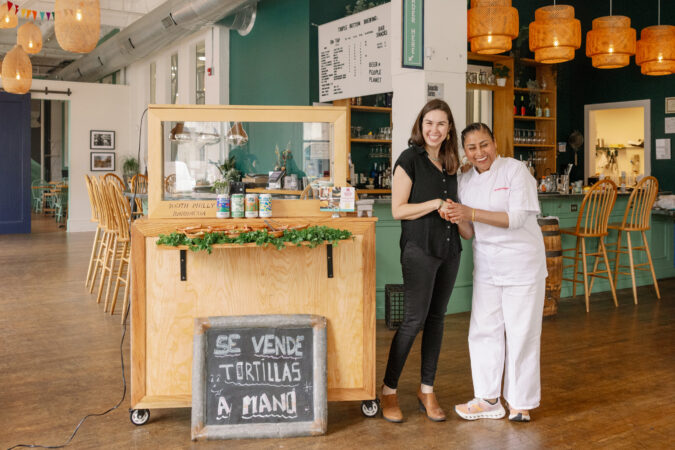
    On a recent Saturday inside Triple Bottom Brewing, award-winning chef Cristina Martinez stood behind a wooden taco cart next to the bar making barbacoa tacos for an eager crowd.

    At the June 14 event, Triple Bottom owners Tess Hart and her husband, Bill Popwell, announced South Philly Barbacoa as their new permanent food vendor for the Spring Garden brewery.

    The brewery was ready to have a permanent food vendor after two years of hosting chef residencies, including La Llamita Vegana and Angie’s Vietnam. In early spring, the CEO of Triple Bottom decided to email the restaurant she felt would be the best fit: South Philly Barbacoa.

    “Their team has been in our space a lot, and I’ve been down there,” Hart said. “We introduced the conversation at a moment where they were also thinking about their next steps and what growth could look like for them. It felt very natural, because I think — even though we do such different things in the food and beverage space — both of us are really led by values,” including caring about the supply chain for their respective businesses and supporting the immigrant community of Philadelphia.

    The South Philly Barbacoa menu, attached to Triple Bottom drinks menu, features most of the same items found at its South Philly location inside Casa Mexico, where South Philly Barbacoa still operates.

    Find South Philly Barbacoa at Triple Bottom Brewing, 915 Spring Garden St.

    “The only thing that is not here is the consommé, which hopefully we’ll have in the wintertime,” Hart said. “But for now,” there are tacos — slow-cooked lamb barbacoa, shredded chicken covered in smoky tomato chipotle sauce, slow-braised pork, spicy lamb offal sausage pancita, and a vegan option with seasonal vegetables — $7 for one or $21 for three, chips and guacamole with crispy corn tortillas for $10, esquites for $10, and handmade sweet tamales made with corn masa for $7.

    “Having a very amazing food program that’s reliable is a way to make sure that you can come here even if you don’t want a beer or any kind of drink — this is still a place for you,” Hart said.

    “Triple Bottom Brewing is this little oasis on Spring Garden Street with these bright, airy windows,” Hart continued. “And now, barbacoa tacos.”

  • Closing this North Philly school would be ‘severing a lifeline’ for special-education students, supporters say

    Closing this North Philly school would be ‘severing a lifeline’ for special-education students, supporters say

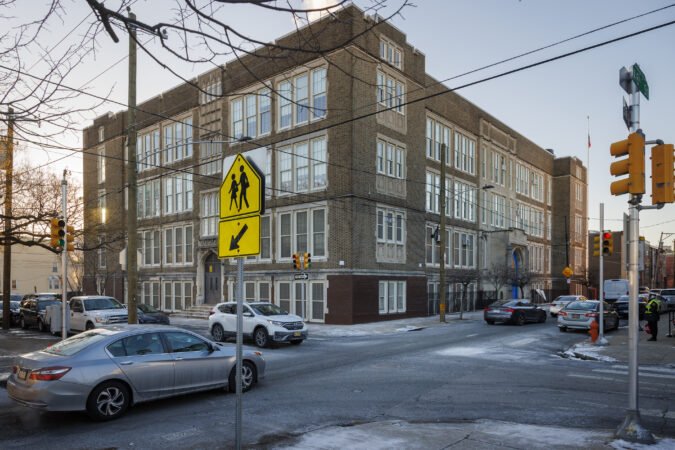
    James R. Ludlow Elementary School in North Philadelphia educates a substantial population of special-education students.

    And the learning environment for those students would be upturned by the school district’s recommendation to close Ludlow after next school year, teachers say.

    “For our children in special education, that consistency isn’t a luxury, but a requirement for them to learn. If we relocate our students, we aren’t just changing their school address; we’re breaking their routines and undoing their progress,” Vanessa Martin, an autistic support teacher in kindergarten through second grade at Ludlow, said at a community meeting last month with school district officials.

    “This building isn’t just a facility. It’s the one predictable place where our students feel safe and supported every single day,” she said.

    The district says Ludlow was slated for closure because of an “unsatisfactory” building quality score, a lack of appropriate space for programming, and only utilizing 47% of its capacity. Ludlow has 237 students enrolled across general and special education, of whom 75% are Black and 20% are Hispanic.

    The K-8 school will celebrate its 100th anniversary in what could be its final school year of operation. The district, which has proposed closing 18 schools, plans to convey the building at 550 Master St. to the city so it could be converted into affordable housing or used for job creation. Ludlow students would be reassigned to one of three schools: Paul L. Dunbar School, Spring Garden School, and Gen. Philip Kearny School.

    ‘Severing a lifeline’

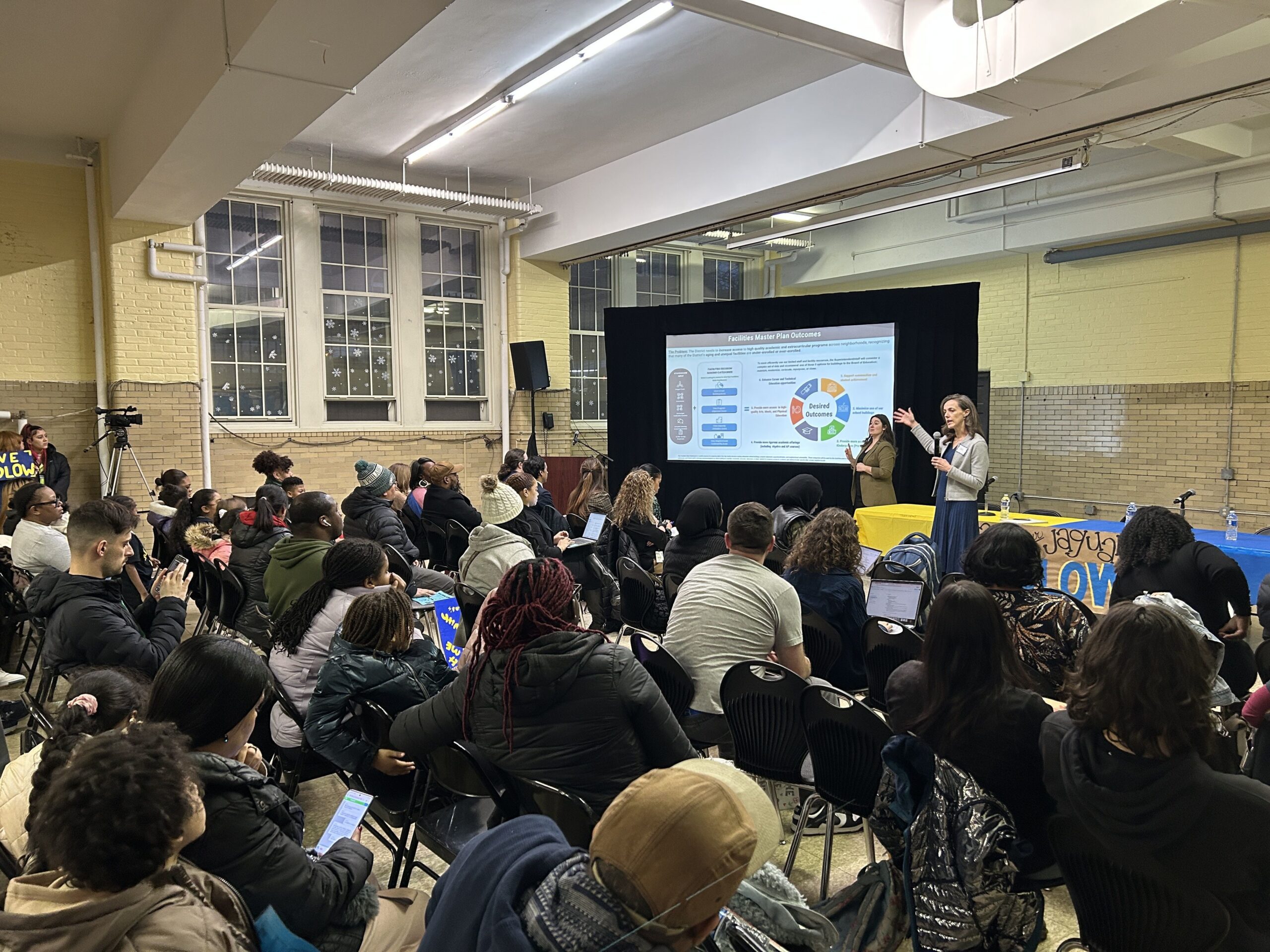
    The Ludlow community is strong and connected, and about a hundred people packed the school’s cafeteria for the community meeting on a recent Thursday evening to show their support for the school and fight against the district’s plan.

    District officials present their plan for closing Ludlow at the February community meeting.

    “I felt very angry. I felt upset. I felt like they were taking something away that was a part of me,” said Deilyhanix Vazquez, a Ludlow eighth-grade student who has attended the school since kindergarten. She said her teachers “feel like home,” and she had been planning to continue visiting the school even after she graduates.

    “I’m worried that the students will have to travel far just to get an education. Something they have to do on the daily starts to feel like a burden,” said Savannah Lindsay, another Ludlow eighth grader.

    Another young student broke down into tears as she spoke into the microphone, saying she had planned to attend Ludlow for “my whole life.”

    If the plan goes forward, she said, she may have to split up from her friends as they get assigned to one of three different schools.

    “I don’t want to leave them,” she said, as others in the room clapped and cheered her on.

    Should Ludlow close, the neighborhood and the wider school district would lose a valuable special-education resource and hub. Its offerings include autistic and other learning support for all grades, and emotional support for grades three through eight.

    Ludlow often receives student referrals from other schools and catchments across the district, staff members said, including from the schools that would take in Ludlow students in the closure plan. It can feel like the district dumps its most difficult students on Ludlow, Martin said, but those children are accepted and become like family.

    District officials have said that in addition to closing buildings that are not operating at full capacity, another goal is focusing on K-8 schools over middle schools to reduce transitions. That goal especially doesn’t square with the plan to close Ludlow, critics said.

    “Ludlow is an exceptional school that works. By moving forward with this proposal, the district would be doing more than just closing Ludlow’s doors — it would be severing a lifeline and dismantling a support system that children and families depend on for their stability,” Martin said.

    Affordable for whom?

    Community members questioned the plan to turn Ludlow into affordable housing. They doubted whether those units would actually be affordable for the people living in the neighborhood, where the annual median household income is about $58,000.

    The area sits next to Fishtown and Olde Kensington, where gentrification has made living more expensive for longtime residents.

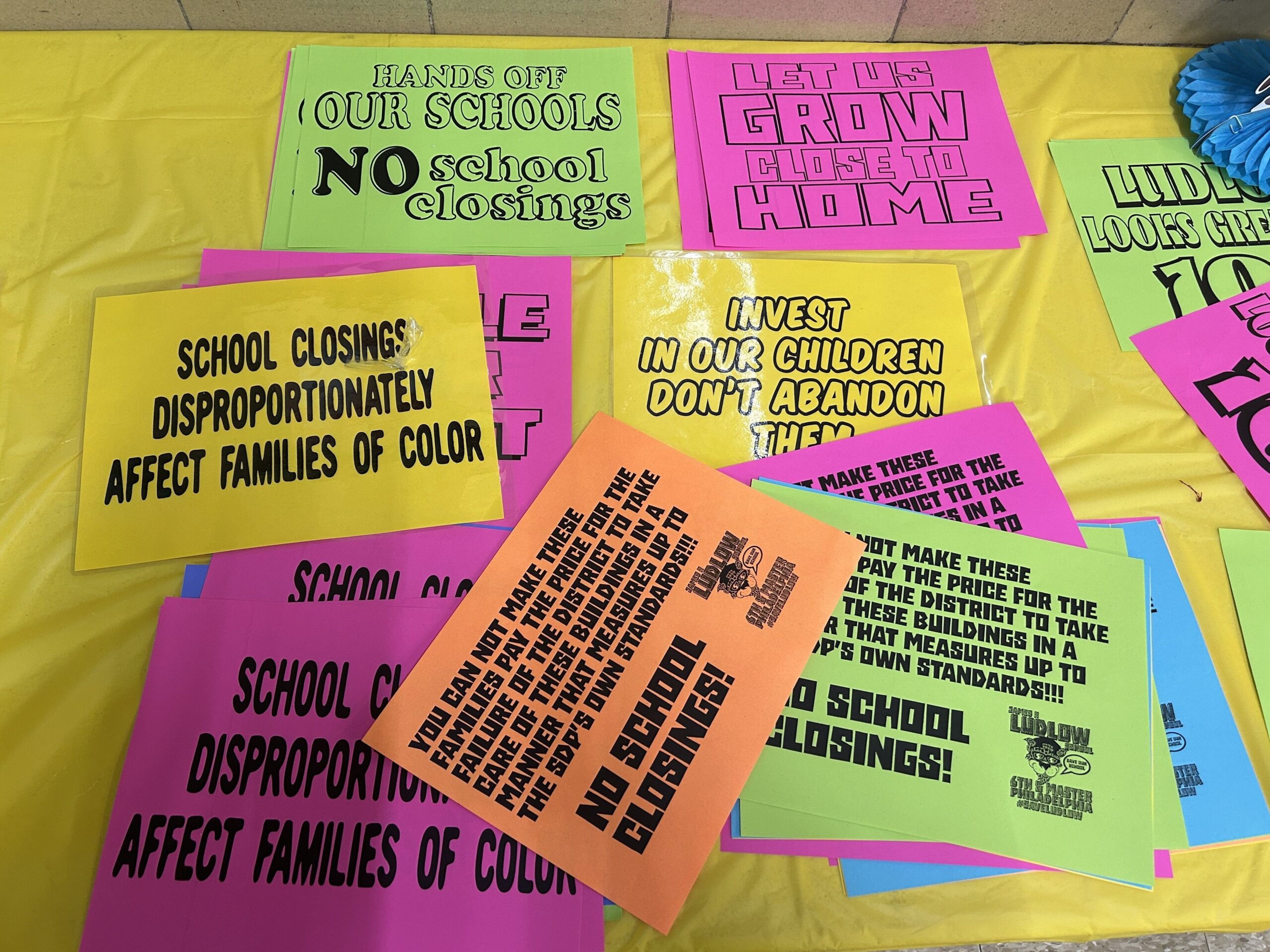
    Various signs protesting the closure of James R. Ludlow School, available at a community meeting with district officials in February.

    Ludlow community members said they did not want or need more housing. They wished the district would instead invest in the building for learning purposes, and said the district had let it fall into its poor condition.

    “It’s money before our kids,” said Valerie Johnson, known better as Valerie Brown, a beloved former Ludlow staff member who worked at the school for more than 30 years.

    While housing may bring new residents and investment to the neighborhood, the loss of Ludlow could drive some to leave, one mother said.

    “I stay in this neighborhood because of Ludlow,” said Darlene Abner, a mother of six whose children have attended the school, including a kindergartner enrolled this school year.

    Abner herself was born in the neighborhood, and she said she does not want her children to attend any school but Ludlow.

    She wears a nearly full face-covering niqab, and credited the school and its teachers for never letting that be a barrier to building a relationship with her and caring for her children.

    “They know me. They see me,” she said.

  • Philly Music this week, with Subtronics, Jimmy Webb, Cat Power, Maná, Moe., and more

    Philly Music this week, with Subtronics, Jimmy Webb, Cat Power, Maná, Moe., and more

    This week in Philly music features two nights at the Met with electronic music artist Subtronics, Mexican pop rock band Maná in South Philly, four nights with Moe. on the Main Line, Jimmy Webb in Wilmington, and Cat Power celebrating the 20th anniversary of her The Greatest album.

    Wednesday, March 4

    Michael Shannon & Jason Narducy play R.E.M.

    Actor Michael Shannon has played James Garfield (in Death by Lightning) and George Jones (alongside Jessica Chastain in George and Tammy) and now he’s playing Michael Stipe. Or at least singing his songs. Along with guitarist Jason Narducy, Shannon has been moonlighting in recent years in this R.E.M. tribute band. This time, the band is playing 1986’s Life’s Rich Pageant, and more. 8 p.m., Union Transfer, 1026 Spring Garden, utphilly.com

    Jesse Welles

    Before Bruce Springsteen’s “Streets of Minneapolis” or Billy Bragg’s “City of Heroes,” there was Jesse Welles’ “Join ICE.” The best of Welles’ many protest songs is an Immigration and Customs Enforcement recruitment satire that stings with humor. “There’s a hole in my soul that just rages,” Welles sings, “but look at me now, I’m putting folks in cages.” 8 p.m., Fillmore Philly, 29 E. Allen St., thefillmorephilly.com

    Sonny Landreth & the Iguanas

    It’s the in-between time between Mardi Gras and New Orleans Jazz Fest, which makes it Louisiana music season. Two top-shelf ambassadors share a bill in Bucks County, in Breaux Bridge-based slide guitar great Sonny Landreth and NOLA roots-rock band the Iguanas. 8 p.m., Wednesday, Sellersville Theater, 84 W. Temple Ave., st94.com and 8 p.m., Thursday, Elkton Music Hall, 107 North St., ElktonMusicHall.com

    Thursday, March 5

    Moe.

    They named themselves after “Five Guys Named Moe,” the 1942 hit by swing blues greats Louis Jordan and his Tympany Five, though none of their name is actually Moe. The longstanding six-member Buffalo, N.Y., jam band is settling in for four shows, starting Thursday. 8 p.m., Ardmore Music Hall, ardmoremusichall.com

    Mx Lonely play Nikki Lopez on South Street on Thursday.

    Mx Lonely & Wax Jaw

    Top-notch shoegaze-slash-punk rock double bill. Mx Lonely is a Brooklyn band, fronted by singer Rae Haas, who just released their musically and thematically layered debut, All Monsters on Julia’s War, the West Philly label helmed by They Are Gutting a Body of Water’s Doug Dulgarian. Openers are terrific Philly punk quartet Wax Jaw, whose 2025 album It Takes Guts! was one of the strongest local releases of the year. 8 p.m., Nikki Lopez, 304 South St., @nikkilopezphilly

    Lindsey Webster

    Woodstock, N.Y., vocalist Lindsey Webster, who topped the contemporary jazz charts with her 2016 hit “Fool Me Once,” has just released her seventh album, Music in Me, on New Jersey’s Shanachie label. She’s playing two nights as part of Gerald Veasley’s Unscripted Jazz series. 6:30 and 9 p.m. Thursday and 7 and 9 p.m. Friday, South Jazz Kitchen, 600 N. Broad St., southjazzkitchen.com

    Philly Pogues tribute band Bar Dust play Free at Noon at World Cafe Live on Friday and Anchor Rock Club in Atlantic City on Saturday.

    Friday, March 6

    Bar Dust

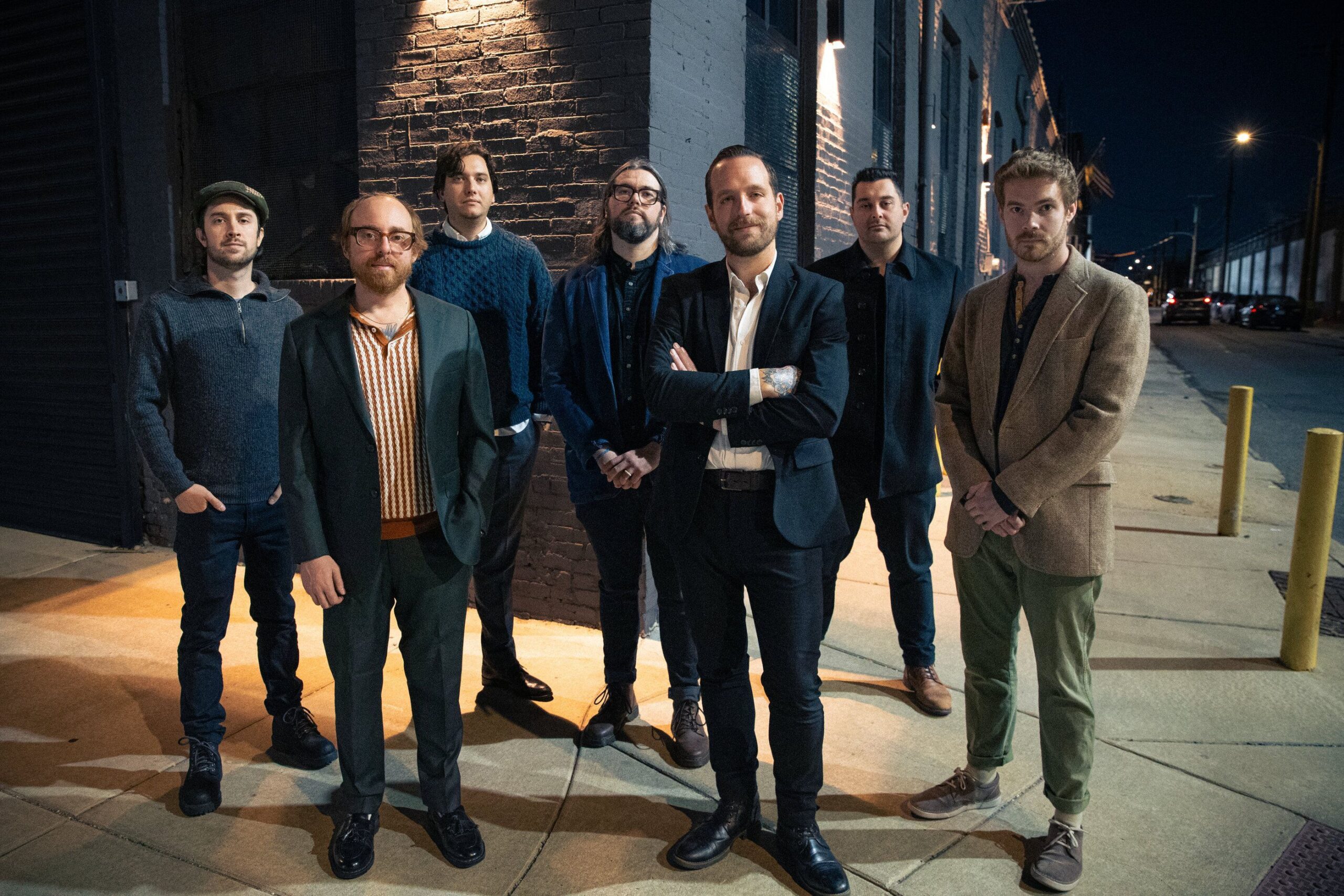
    Shane MacGowan’s spirit lives on with Bar Dust, Philadelphia’s premier Pogues tribute band, the collective featuring members of Modern Baseball, Foxtrot & the Get Down, and the Menzingers. With St. Patrick’s Day around the corner, the punk folk septet is having a busy month, starting with a Free at Noon on Friday, followed by Saturday night at Anchor Rock Club in Atlantic City, and dates at Johnny Brenda’s on March 14 and John & Peter’s in New Hope on March 17. The band has recorded two Pogues-style original songs, including the single “Three Castles Burning,” on its new Bar Dust From the Studio EP. Noon, World Cafe Live, 3025 Walnut St., xpn.org and 8 p.m., Anchor Rock Club, 247 S. New York Ave., anchorrockclub.com

    No More Dysphoria VII

    This benefit for the self-described “queer-run nonprofit with the goal of helping trans + nonbinary individuals financially through major aspects of their transitions” has a loaded lineup. Headliners are Oceanator, the Elise Okusami-led band whose new Things I Never Said was made with Grammy-winning Philly producer Will Yip. Also on the bill are Frances Quinlan of Hop Along, Hit Like a Girl, and Universal Girlfriend, which features guitar hero Marissa Paternoster and Augusta Koch of Gladie. 8 p.m., First Unitarian Church, 2125 Walnut St., r5productions.com

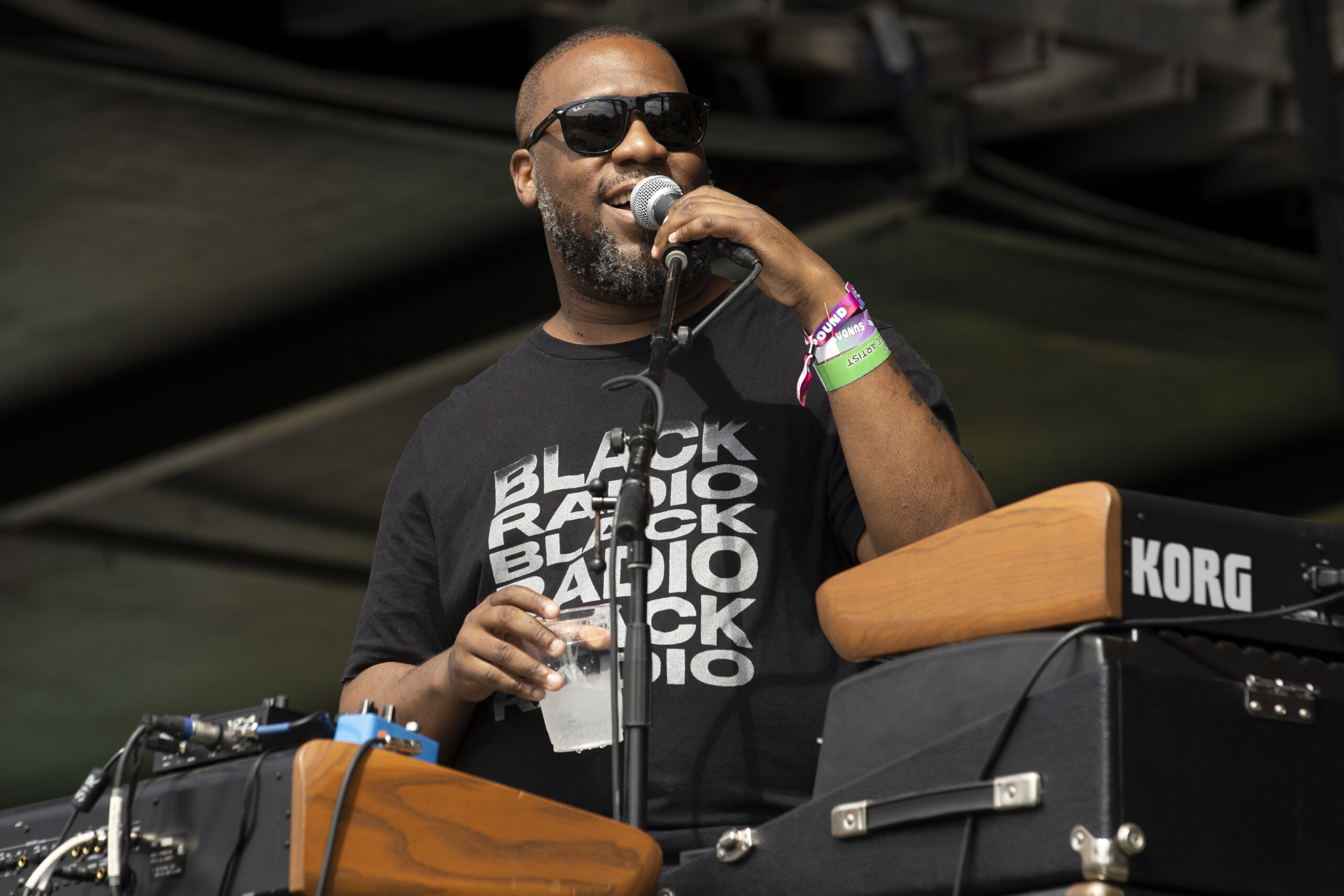
    Robert Glasper performs on the Fairmount Park Stage during The Roots Picnic at the Mann Center in Philadelphia on Sunday, June 2, 2024. He plays Union Transfer on Friday.

    Robert Glasper

    Pianist, producer, and bandleader Robert Glasper’s music spans R&B, hip-hop, jazz, and beyond. He’s won five Grammys and released two albums in 2025. Code Derivation featured jazz instrumentalist like Keyon Harrold and Walter Smith III, and Keys to the City, Vol. 1, showcased guests Black Thought, Norah Jones, Bilal, Yebba, and MeShell Ndegeocello. You never know who might turn up at a Glasper concert. 8 p.m., Union Transfer, 1026 Spring Garden St., utphilly.com

    Lindsey Webster plays two shows each night at South Jazz Kitchen on Thursday and Friday.

    Baroness

    Savannah, Ga.-born and Philly-based heavy rock band Baroness plays a hometown show in support of its sixth album Stone, a muscular, melodic effort that as always features bandleader John Baizley’s distinctively trippy album cover art work. Commitment and Blood Vulture open. 8 p.m. Friday, Underground Arts, 1200 Callowhill St., undergroundarts.org

    Subtronics, the electronic dance music project of Philadelphia DJ-producer Jesse Kardon, plays two nights at the Met Philly this weekend.

    Subtronics

    Jesse Kardon doesn’t normally land on the list of the biggest music artists in Philadelphia, but he should. Kardon, who records and performs as Subtronics, is an electronic dance music phenom on an ascending career arc. The son of longtime Philly music business fixture (and former Hooters road manager) Rich Kardon, Jesse grew up in Lower Merion, lives in Chestnut Hill, and has become a major player in dubstep and EDM in general over the past decade. He’s headlined the Sphere in Las Vegas and Red Rocks in Colorado, and his two shows at the Met Philly this weekend are timed to the release of his new 10-song EP, Fibonacci Pt 2: Infinity. 8 p.m. Friday and Saturday, Met Philly, 858 N. Broad St., themetphilly.com

    Jimmy Webb plays the Baby Grand in Wilmington on Saturday.

    Saturday, March 7

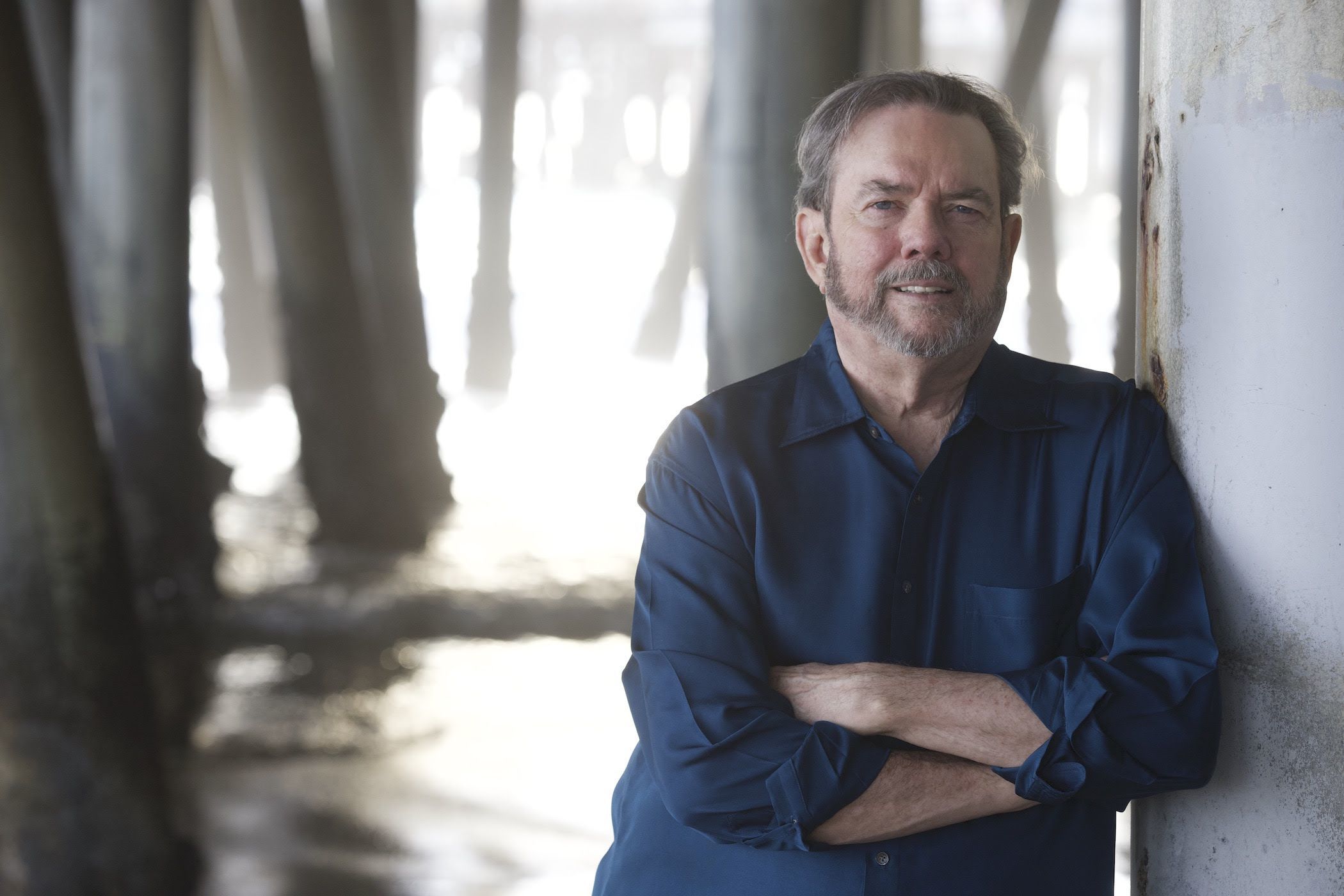
    Jimmy Webb

    The songwriting legend who penned “Wichita Lineman” and “By the Time I Get to Phoenix” will be singing songs and telling stories at the Baby Grand in Wilmington. And now he has a new one to tell. Alysa Liu skated to Donna Summer’s recording of Webb’s “MacArthur Park” during her gold medal-winning figure skating program at the Olympics in Italy last month, and bringing what Webb has called his “old, beat-up song,” originally recorded by Richard Harris, an audience with a new generation. 8 p.m., The Grand, 818 N. Market St., Wilmington, thegrandwilmington.org

    Maná

    In 2025, Maná became the first Spanish-language band nominated for the Rock and Roll Hall of Fame. The pop-rock band from Guadalajara, which has sold over 40 million records, is on the road with its “Vivir Sin Aire” tour, named for its 1992 power ballad. 8 p.m., Xfinity Mobile Arena, 3601 S. Broad St., xfinitymobilearena.com

    Cat Power plays Union Transfer on Sunday.

    Sunday, March 8

    Cat Power

    It’s been 20 years since Cat Power — the remarkable song interpreter Chan Marshall — released her greatest album, appropriately titled The Greatest. Marshall will lead a six-piece band featuring Philly guitarist, music director, and former Delta 72 leader Gregg Foreman. She’ll play the Memphis soul album in its entirety and also reach into her catalog and hopefully include her version of Prince’s “Nothing Compares 2 U” from her new EP, Redux. 8 p.m., Union Transfer, 1026 Spring Garden St., utphilly.com

  • Historic preservation isn’t the villain in the debate over housing affordability

    Historic preservation isn’t the villain in the debate over housing affordability

    No matter what folks in Boston tell you, Philadelphia is America’s most historic big city. So why is architectural preservation increasingly under attack here, especially as Philadelphia gets ready for its star turn in the nation’s 250th birthday celebrations?

    The movement to protect Philadelphia’s rich and varied architectural heritage was thrown into disarray Feb. 26 when a Court of Common Pleas judge invalidated the historic district created in 2024 to protect Washington Square West, a neighborhood that includes both Colonial-era masterpieces and nationally important infill buildings from the 1960s urban renewal period.

    Judge Christopher R. Hall’s decision primarily focused on procedural issues and could be reversed if it’s appealed. Yet it is just one of several existential threats facing the preservation regimen that has guided the city for the last 40 years.

    His decision is likely to encourage a group of developers who are challenging the Spruce Hill historic district, which also was created in 2024. It could similarly embolden Councilmember Mark Squilla, a former preservation champion who once created a controversial zoning carve-out to protect a one-story supermarket in Society Hill. Having jumped on the anti-preservation bandwagon, he’s now pushing legislation that many believe would gut the powers of the Historical Commission.

    While the issues driving each of these challenges vary, it’s no accident that they’re happening at a time when people are increasingly concerned about rising housing costs. For years, pro-development activists have argued that there is a link between the city’s historic preservation laws and the scarcity of affordable housing. By adding an extra layer of regulation, they contend, those laws restrict where people can build, limit new construction, and raise maintenance costs for homeowners.

    There’s no doubt that the city’s preservation laws require owners of historic properties to go through an extra step in the approval process. That takes time and can sometimes add to the cost of a project.

    Yet it seems odd that pro-development activists have cast historic preservation as the main villain when so many factors influence the city’s housing supply: zoning regulations, interest rates, availability of labor, cost of construction materials. President Donald Trump’s tariffs alone sent the price of lumber soaring in the last year.

    In an effort to put things in perspective, the nonprofit Preservation Alliance recently commissioned an economic analysis to explore its impact on housing prices. The report made two interesting observations: Apartments in older buildings rent for less than those in new ones. And protecting those older buildings actually helps maintain a supply of “naturally occurring affordable housing.”

    The study, prepared by the Washington-based Place Economics, also examined claims that historic districts are enclaves for the wealthy and exclude renters. Data show the opposite: Historic districts continue to gain new residents long after they been designated. In fact, between 2010 and 2020, the population of Philadelphia’s historic districts grew almost five times as fast as the city as a whole, which suggests new housing is being built despite the additional oversight.

    Not all that construction takes the form of new buildings, however. Even in the best of economic times, erecting a new apartment building in Philadelphia is far more expensive than fixing up an old one. As a result, the city has come to rely on older buildings to provide new housing. Without them, Philadelphia would be a much less affordable place.

    In the past, the city’s obsolete offices and factories were the main targets for housing conversion. Those buildings are relatively easy to adapt because they have large, rectangular footprints.

    But what about smaller, more irregularly shaped historic buildings? Are the city’s preservation and zoning laws flexible enough to allow more density in old townhouses, which, after all, constitute the bulk of Philadelphia building stock?

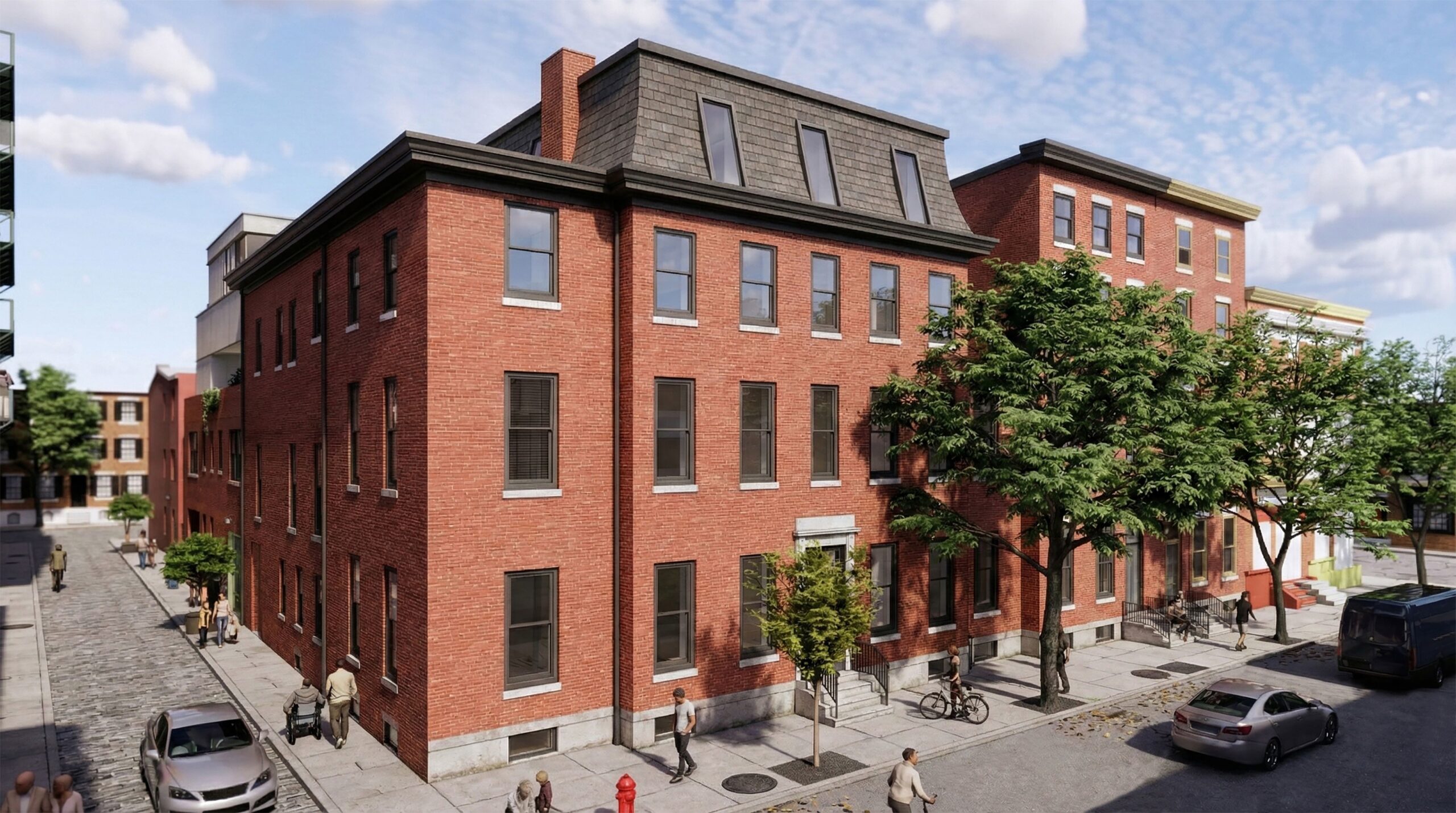
    This sprawling complex of 19th-century buildings at 15th and Waverly Streets is being converted to a 32-unit apartment building by Lo Design for developer Keith Alliotts. By installing a penthouse level over the former stable (rear left), the architects will be able to improve the interior circulation and increase the density.

    Converting townhouses into apartments

    To understand the role those buildings can play in the great Yimby-Nimby debates, I reached out to Lea and Evan Litvin, who run Lo Design, an award-winning firm that has its offices in the Rittenhouse-Fitler historic district. Lo Design started out doing single-family homes for developers, but lately they’ve taken on commissions to turn large townhouses into apartments.

    Small conversions are more labor-intensive than erecting a new townhouse on an empty site, but they allow the Litvins to do work that aligns with their architectural ideals. The conversions create more housing for less money, using fewer natural resources. “Saving an old building is the most sustainable form of construction,” Evan explained.

    Since Philadelphia’s historic townhouses were never meant for multiple tenants, and often have awkward layouts, the Litvins have developed architectural tricks to make them function as apartment buildings. Sometimes that means attaching a new wing on the back. In other cases, they’ve built freestanding structures in backyards.

    Their current project at 15th and Waverly Streets used a little of everything to transform a historic Greek Revival mansion into a 32-unit building.

    The brick building began its life in 1860 as a private home, complete with a stable. At some point, someone popped on a mansard roof to create a fourth story and added wings on the sides. Then, in the early 20th century, the mansion, stable, and a neighboring townhouse were fused into a single building that served as offices for what was then known as the Society to Protect Children from Cruelty.

    For the project’s developer, Keith Alliotts, the building’s main attraction was its size — 26,000 square feet, significantly larger than a typical townhouse, which might be 6,000 square feet. He also liked that the location, a few steps from the former University of the Arts’ Hamilton Hall, felt like part of the Rittenhouse Square neighborhood.

    Yet the challenges of transforming the awkward amalgamation into a coherent, multifamily residence soon became clear. None of the floors in the different buildings lined up. The U-shaped footprint complicated the flow through the building. The interior was a mashup of Victorian and post-modern details. On top of everything else, the project would need a zoning variance and approval from the Historical Commission.

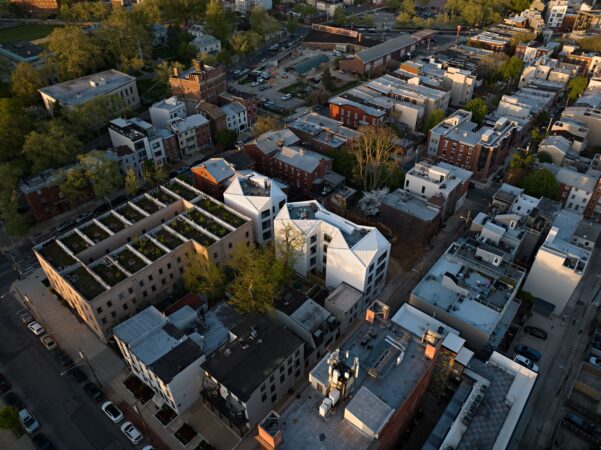
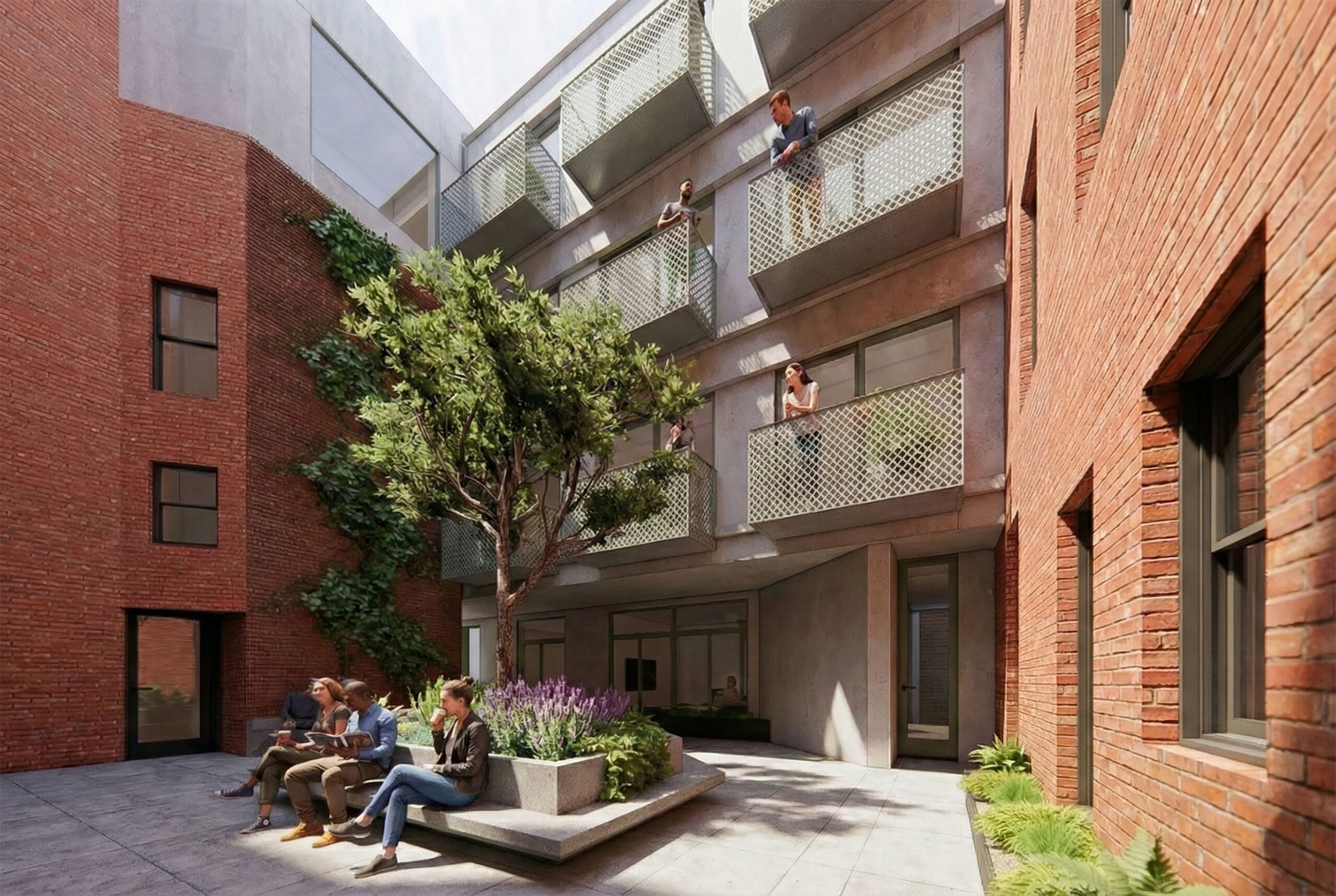
    Lo Design plans to create an internal courtyard at the center of a new residential building at 15th and Waverly. The project will turn a group of historic 19th-century buildings into a 32-unit apartment building.

    Getting those permits turned out to be the easy part, the Litvins said. Because the complex had been empty for years and was starting to deteriorate, the neighborhood enthusiastically embraced the idea of using it for apartments.

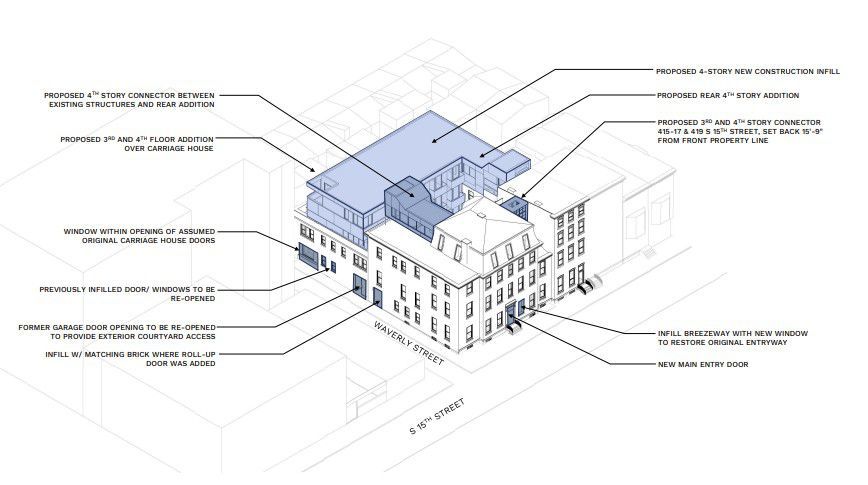
    From the start, the Litvins knew they would have to expand the already sprawling complex to ensure the apartment layouts weren’t too eccentric. Fortunately, there was a large yard behind the house where they could add a new wing to turn the U into an O. They decided to install a large penthouse on top of the stable and insert several connecting passages to improve the interior circulation.

    This diagram shows how LoDesign plans to turn an awkward amalgamation of 19th century buildings at 15th and Waverly Streets into a coherent, multifamily building with 32 apartments. The portions in blue will be added during construction.

    While reusing these buildings was no easy feat, the project is a good example of “gentle density.” The neighborhood gets more rental housing, yet the look of the 19th-century mansion remains substantially the same.

    By comparison, the first collaboration between the Litvins and Alliotts was a breeze. Alliotts had spent most of his career developing single-family housing in North Jersey before “discovering” Philadelphia during the pandemic. Coming from such a pricey environment, he said, “I was really taken aback by the city’s affordability.” After studying the market here, he fell for an early 20th-century brownstone on the 2000 block of West Girard Avenue in Francisville.

    The townhouse could have been torn down

    Despite the house’s impressive architecture, it wasn’t listed on the city’s historic register. That meant Alliotts could have demolished the building for something new, an approach taken by several other developers on that once-elegant stretch of Girard Avenue.

    Alliotts liked the house too much to destroy it. And since the site was unusually deep, he knew he could fit the equivalent of a second house in the yard. But rather than build another stand-alone house, he asked the Litvins to fit a 12-unit condo building in the same space. Alliotts envisioned the condos — now called The Francis — as starter homes, so he wanted to keep the prices below $300,000 for a two-bedroom unit.

    Still, 12 units is a lot of density, even for a generous townhouse yard that was 200 by 31 feet. By making a donation to the city’s Housing Trust Fund, Alliotts was able to get a zoning bonus that allowed him to raise the structure’s height to 45 feet, enough for a fourth story.

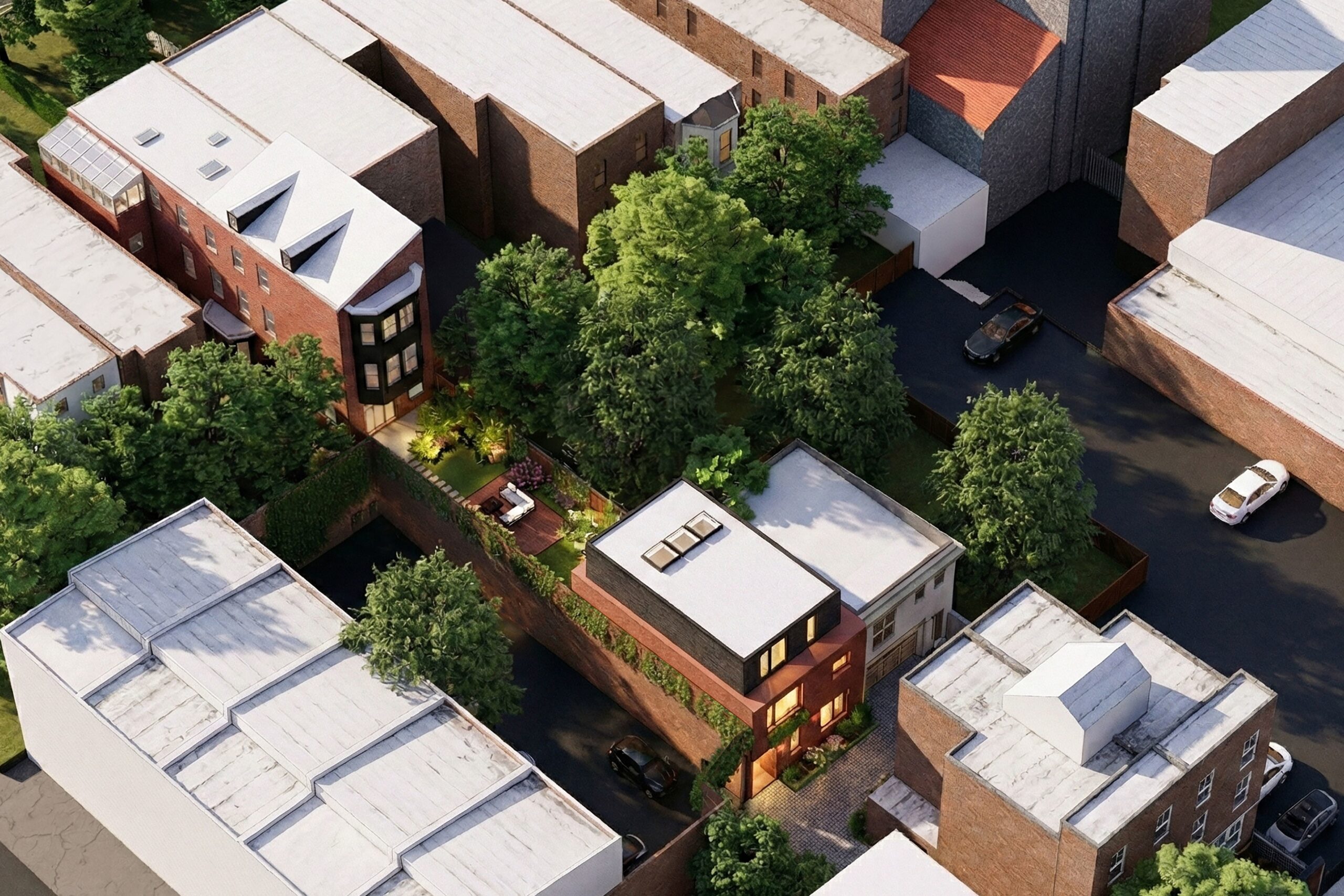
    To avoid jamming the new, metal-clad building against the old brownstone, the Litvins decided to push the condos toward Cambridge Street, which was once a service street lined with carriage houses. That gave the architects space to create a landscaped courtyard between the two buildings.

    Lo Design was able to create nine apartments in the Spring Garden neighborhood by replacing a small garage with a three-unit apartment building in the garden of an early 20th-century townhouse at 2313 Green St. The project’s density was the result of a compromise with neighbors and the Philadelphia Historical Commission.

    After the success of the Francis, the Litvins had hoped to replicate the model for a new project at 2313 Green St. in the Spring Garden neighborhood. The main house there had already been divided into five apartments, but the site at 238 feet was even deeper than the Girard Avenue property. They proposed a five-unit stand-alone building in the garden, accessed from alley off Wallace Street.

    But this time the Historical Commission and neighbors rejected the proposal.

    So, the Litvins reduced the size of the building and turned it into a carriage-house-sized structure with three units. They offset the loss of units by adding a sixth apartment to the main house for a total of nine units.

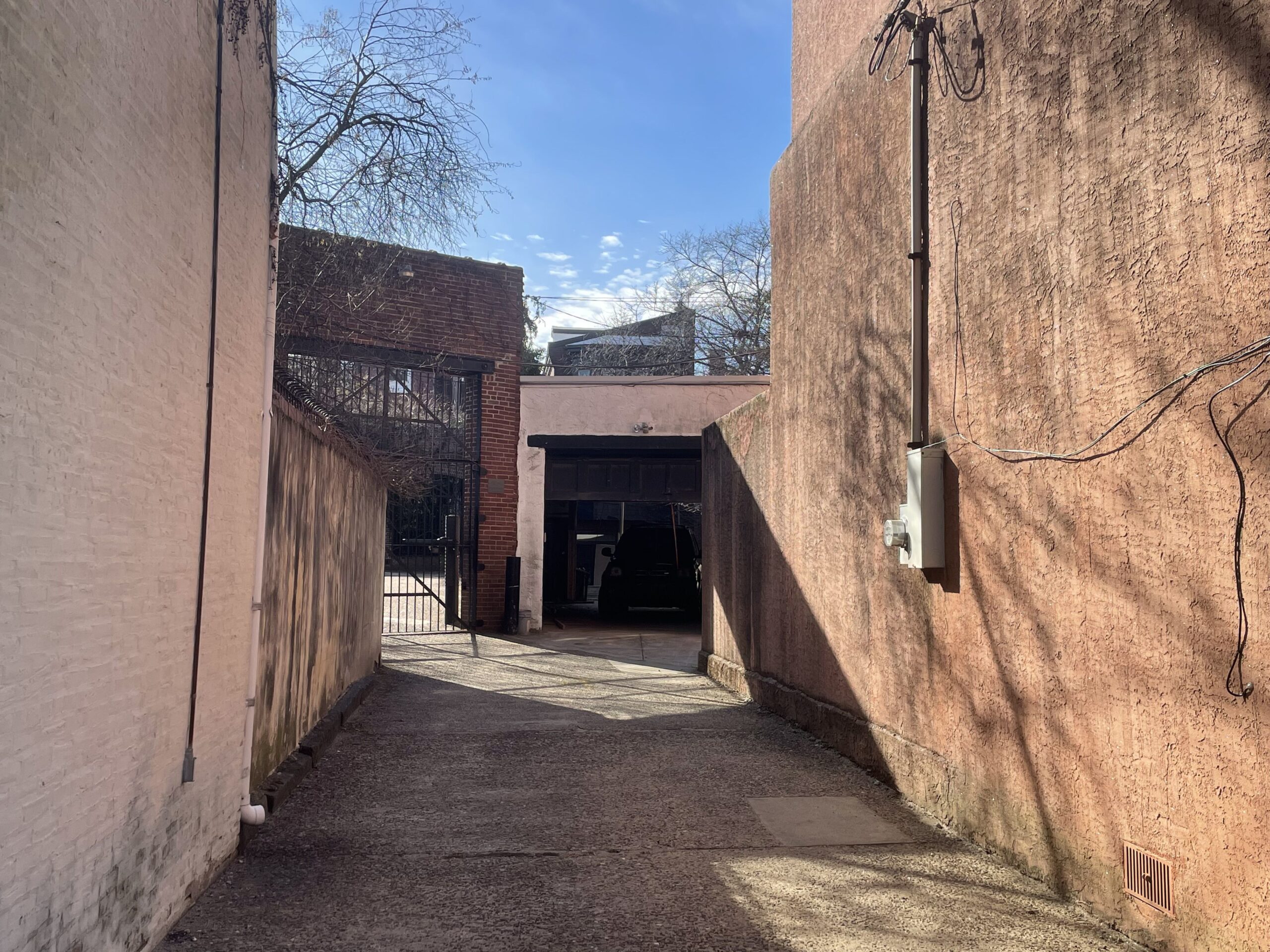
    The garage on the right will be replaced by a three-unit building that is part of the redevelopment of 2313 Green St. It will be accessed through an alley off Wallace Street in the Spring Garden neighborhood.

    Some preservation opponents may see the outcome as an example of the nickel-and-diming that occurs when developers attempt to add density to historic properties.

    But the fact that a former single-family house will soon accommodate nine apartments reveals the untapped density in Philadelphia’s historic buildings. These conversions prove more housing can be created without sacrificing the city’s heritage.

  • Mavis Staples is playing Phoenixville, plus Florry, Ratboys, Sheer Mag, and more in Philly music this week

    Mavis Staples is playing Phoenixville, plus Florry, Ratboys, Sheer Mag, and more in Philly music this week

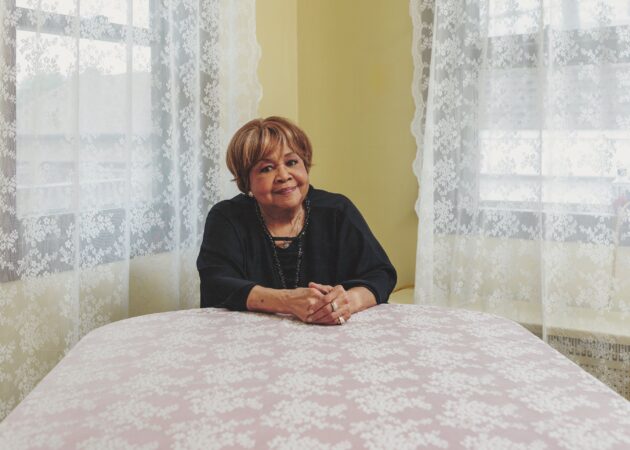
    This week in Philly music features gospel-soul great Mavis Staples in Phoenixville, Philly favorites Florry and Sheer Mag returning to town, Culture Club in Atlantic City, and the Everyone Orchestra and zydeco scion C.J. Chenier on the Main Line.

    Wednesday, Feb. 25

    Homegrown Live

    This is the South Jersey edition of the free Homegrown Live concert series presented by WXPN-FM (88.5). The three-act bill is topped by Linwood quartet Fat Mezz, who blends classic rock influences with a touch of jazz. The band’s name was inspired by late clarinet player and civil rights advocate Milton Mezzrow. Nicoletta Giuliani fronts Ocean City’s Polaroid Fade, whose beguiling full-length debut, Chaos Into Poetry, displays an affection for jangly 1990s bands like the Smiths and Sundays. The band’s sound meshes nicely with Atlantic County quartet Te Vista, whose dreamy power pop recalls melodic guitar bands Nada Surf and Gin Blossoms. 7:30 p.m., The Lounge at World Cafe Live, 3025 Walnut St., xpn.org

    Thursday, Feb. 26

    Mavis Staples

    Mavis Staples’ place in music history has long been secure. Her family band, the Staple Singers, marched with the Rev. Dr. Martin Luther Ling Jr. during the Civil Rights Movement in the 1950s and 1960s, and her powerful vocals anchored counterculture-era hits like “Respect Yourself” and “I’ll Take You There.”

    But the 86-year-old national treasure’s creative output has continued and even increased in recent years with the Chicagoan recording a series of albums with Jeff Tweedy and Ben Harper. Her newest is the soulful and deeply moving collection Sad and Beautiful World, which was produced by Brad Cook and includes covers of Frank Ocean, Tom Waits, Leonard Cohen, and Curtis Mayfield.

    The title cut is by Mark Linkous of Sparklehorse. Another new song, “Human Mind,” is written by Allison Russell and Hozier. Massachusetts singer-guitarist Kimaya Diggs opens. 8 p.m., Colonial Theatre, 227 Bridge St., Phoenixville, ColonialTheatre.com

    Blackwater Holylight play Johnny Brenda’s on Thursday. The California band’s new album is “Not Here Not Gone.”

    Blackwater Holylight

    Portland, Ore.-born and now Los Angeles-based doom metal-meets-shoegaze heavy rock band Blackwater Holylight is touring behind its bruising fourth album Not Here Not Gone. The Sunny Faris-fronted band will be joined by like-minded Austin, Texas, trio Glassing and Philly’s Cigarettes for Breakfast. 8 p.m., Johnny Brenda’s, 1201 N. Frankford Ave., johnnybrendas.com

    Friday, Feb. 27

    The Record Company & Jontavious Willis

    Los Angeles blues rock trio the Record Company is celebrating the 10th anniversary of its 2016 breakthrough album, Give It Back to You. Make sure to arrive on time for Jontavious Willis, the country blues singer and guitarist whose sound is shaped by regional predecessors like Blind Willie McTell. 8 p.m., Union Transfer, 1016 Spring Garden St., utphilly.com

    Marshall Allen + John Morgan Kimock

    The hardest-working centenarian in showbiz, Sun Ra Arkestra leader Marshall Allen, makes his way to Bucks County for this noteworthy show in Henry Chapman Mercer’s Moravian Pottery and TileWorks building in Doylestown. Drummer John Morgan Kimock will also perform. The show is part of the Tileworks’ monthly “A Night of Song” series. 6:30 p.m., Tileworks of Bucks County, 130 E. Swamp Road, Doylestown, thetileworks.org

    Everyone Orchestra

    Matt Butler conducts two nights of improvised music from a cast of leading musicians from the jam band world, including Dave Matthews’ associate Tim Reynolds, Aron Magner of Disco Biscuits, Rob Mercurio of Galactic, and Camden trumpeter Arnetta Johnson, who has toured with Beyoncé. 8 p.m. Friday and Saturday, Ardmore Music Hall, 23 E. Ardmore Ave., ardmoremusichall.com

    Boy George and Culture Club

    Boy George and original Culture Club members Roy Hay and Mikey Craig are back together for a 2026 tour. The British New Wave-era band, which scored hits with “Karma Chameleon” and “I’ll Tumble 4 Ya,” is playing two nights in the region. 8 p.m. Friday, Borgata Event Center, One Borgata Way, Atlantic City, borgata.mgmresorts.com, and 8 p.m. Saturday, Wind Creek Event Center, 77 Wind Creek Blvd., Bethlehem, windcreekeventcenter.com

    Philadelphia band Sheer Mag plays Johnny Brenda’s on Sunday. Left to right: Tina Halladay, Kyle Seely, Matt Palmer, and Hart Seely.

    Sunday, March 1

    Sheer Mag

    Mighty Philly foursome Sheer Mag — most recently heard from on its 2024 album Playing Favorites, released on Jack White’s Third Man Records label — tops a four-band bill. The similarly hard-hitting acts opening are Dirty Fences, Nancy, and the Smarthearts. 8 p.m., Johnny Brenda’s, 1201 N. Frankford Ave., johnnybrendas.com.

    C.J. Chenier & the Red Hot Louisiana Band

    Zydeco accordionist C.J. Chenier has spent his life carrying on the legacy of his father, Creole musician Clifton Chenier. That legacy got a welcome boost with 2025’s A Tribute to the King of Zydeco, featuring Chenier, Geno Delafose, the Rolling Stones, and Taj Mahal, winning a Grammy earlier this month. Rev Chris and Les Garçons Crasseux open. 7 p.m., 118 North, 118 N. Wayne Ave., Wayne, 118NorthWayne.com.

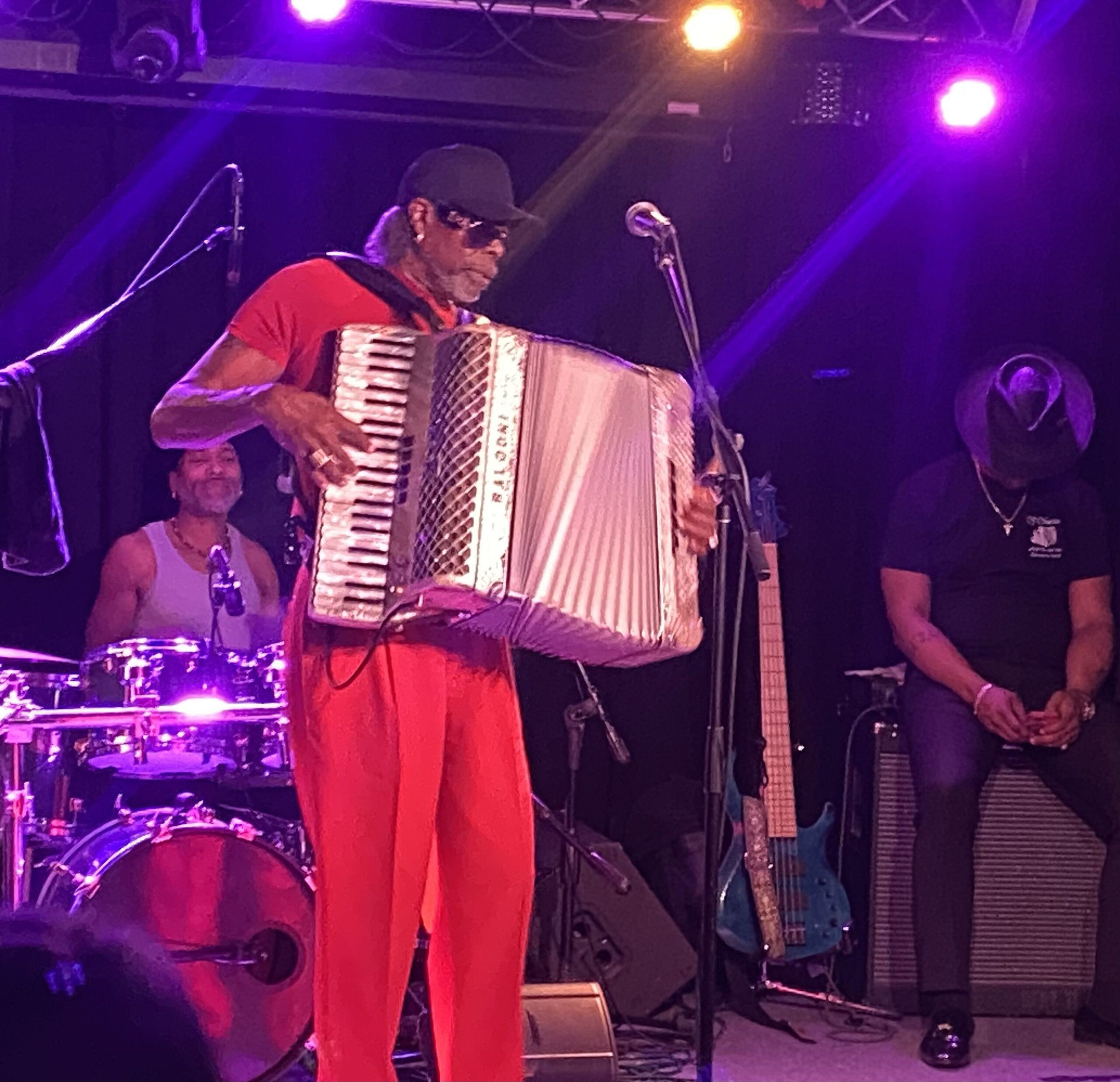
    C.J. Chenier & the Red Hot Louisiana Band at 118 North in 2024. The zydeco accordion player and band leader returns to the Wayne venue on Sunday.

    Monday, March 2

    The Ike Reilly Assassination

    Pugnacious rock and roll troubadour and Sirius/XM satellite radio host Ike Reilly has released 12 albums since his 2001 debut, Salesmen and Racists. He’s also the star of the documentary Don’t Turn Your Back on Friday Night, which was produced by Tom Morello, whom he shared a bill with last month at the anti-ICE benefit show in Minneapolis. It’s the same where Morello brought onstage Bruce Springsteen, who has added Morello to the E Street Band for his upcoming tour. Another cool booking at Nikki Lopez. 7 p.m., Nikki Lopez, 304 South St., @nikkilopezphilly on Instagram.

    Chicago indie band Ratboys play the First Unitarian Church on Tuesday with Florry.

    Tuesday, March 3

    Ratboys & Florry

    A double bill headlined by Ratboys, the Chicago quartet fronted by Julia Steiner and founded in 2010. The band hit its stride with 2023’s The Window. It keeps up its winning streak on the new twangy, Neil Young-ish Singin’ to an Empty Chair, produced by Death Cab for Cutie’s Chris Walla. It is well-matched with Florry, the Philly-bred loose-limbed collective led by Francie Medosch, whose 2025 Sounds Like… landed on this publication’s best albums of the year list. 8 p.m., First Unitarian Church, 2125 Chestnut St., r5productions.com.

  • Philly’s Greyhound station is one step closer to finding a permanent home

    Philly’s Greyhound station is one step closer to finding a permanent home

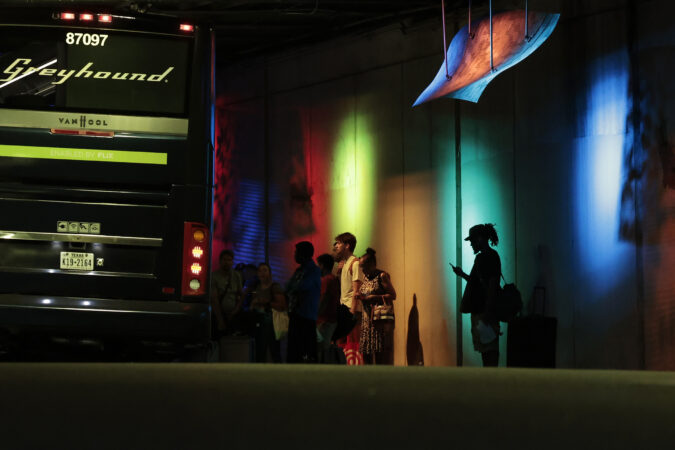
    Lights shine from a window of the abandoned Greyhound intercity bus terminal on Filbert Street as construction crews demolish fixtures and begin renovations ahead of a May reopening.

    While the old depot is ready for crowds of travelers attending high-profile special events this year, the city Department of Planning and Development has identified three possible locations for a permanent intercity bus station.

    Officials sifted through 208 possible locations over the past two years before zeroing in on the three sites:

    • Eighth and Arch Streets: A pair of parking lots on Arch Street near Eighth Street next to the African American Museum. The lots, at 701-709 and 721-737 Arch St., are owned by the city and Parkway Corp.
    • 15th and Vine Streets: The Philadelphia Gateway Garage at 1540 Vine St. along with an adjoining parking lot. They are owned by the Pennsylvania Department of Transportation and the Philadelphia Parking Authority.
    • Near 30th Street Station: A parking lot just north of 30th Street Station, at 2931 Arch St., near the Cira Centre office tower.

    On Wednesday, the city Planning Commission is holding a public open house at Independence Visitors Center from 6 to 8 p.m. People can learn about the sites, share their ideas, and ask questions about the future home of an intercity bus facility.

    There’s also an online survey collecting opinions about what the intercity bus station needs and where it should go, due March 13.

    The former Greyhound terminal at 1001 Filbert St. “is not a long-term solution for the city’s intercity bus needs,” city officials say, though it will provide a safe and comfortable indoor station for travelers, as opposed to the current, haphazard outdoor curbside loading zones along Spring Garden Street near Columbus Boulevard.

    It is scheduled to reopen in plenty of time for events celebrating America’s 250th birthday and World Cup soccer tournament matches in the summer.

    That’s why the city turned to the old station as a stopgap solution. The Philadelphia Parking Authority will operate the facility under a 10-year renewable lease with the private group of New York investors that owns it.

    The city says its goal is a modern “transportation hub” with amenities for travelers and bus operators and, ideally, some development built around the facility. It would be owned by the city.

    “Public ownership means it won’t be closed down by a landlord or private bus company,” the planning department said in a statement. In addition, the forever depot “could be designed to have housing in the floors above the station or retail spaces within the station. These uses could help support … construction and operation.”

    Why was Philly’s Greyhound terminal moved?

    Greyhound ran the terminal at 10th and Filbert for more than three decades but pulled out in June 2023, ending its lease with the owners amid the bus company’s push to cut costs by shedding real estate it owned or rented nationwide.

    Other intercity bus carriers have done the same, operating from curbsides in a number of cities.

    Greyhound may have had to leave the property anyway because the Philadelphia 76ers in 2022 proposed building a new arena on top of it and Filbert Street.

    When those plans fell through, the building was empty again, while Greyhound, its parent company FlixBus, and family-owned Peter Pan Bus Lines were operating at curbside on the 600 block of Market Street. That site, chosen by city officials, lacked benches, bathrooms, or shelter for customers.

    Traffic was a mess, and SEPTA had to reroute some of its metro bus routes for a time.

    In November 2023, Greyhound and the other carriers moved operations to a corner in Northern Liberties along Spring Garden Street with more space than the Market Street block. City officials promised it was temporary, but the “station” is still there, with attendant trash and disruptions to local business.

    Plans to move intercity bus operations elsewhere collapsed amid community opposition, notably to a proposal to use the first level of an Old City parking garage at Second and Walnut Streets as a temporary terminal.

    Consultants and city planners picked 35 potential sites for closer analysis. They were looking for places that could accommodate a multistory, mixed-used development in addition to a station and that were close to Center City or University City, transit, and highway ramps.

    They also preferred a publicly owned space not already marked for development, according to a document prepared for the public meeting.

    In the end, three places checked most boxes.

    (function() {
    var l2 = function() {
    new pym.Parent(‘GREYHOUNDMAP.html’,
    ‘https://media.inquirer.com/storage/inquirer/projects/innovation/arcgis_iframe/GREYHOUNDMAP.html’);
    };
    if (typeof(pym) === ‘undefined’) {
    var h = document.getElementsByTagName(‘head’)[0],
    s = document.createElement(‘script’);
    s.type = ‘text/javascript’;
    s.src = ‘https://pym.nprapps.org/pym.v1.min.js’;
    s.onload = l2;
    h.appendChild(s);
    } else {
    l2();
    }
    })();

    Site pros and cons

    Eighth and Arch Streets

    The Eighth and Arch site has room for 18 bus parking spots, the planning department said. It could fit a 113,000-square-foot station and an overall 640,000-square-foot development.

    Strengths: Proximity to several transit stops and to I-676 and I-95, as well as the potential to build public parking above the station and to use the African American Museum building when that entity moves to the Parkway.

    Challenges: The ownership, split between the city and a private corporation, could require coordinating with the Federal Detention Center there on the southwest corner, and buses may need to be routed through Chinatown.

    15th and Vine

    At 15th and Vine Streets, the Gateway garage could fit 16 bus slips, a 112,000-square-foot station, and a 1.37 million-square-foot development, planners say.

    Strengths: It’s next to I-676 and close to transit. Plus, it is owned by PennDot and operated by PPA.

    Challenges: The parcel is split in ways that could hinder bus circulation, and Spring Street nearby would need to be converted to one-way.

    Near 30th Street Station

    The site at 30th and Arch Streets could fit 12 bus slips as is, or the deck on which the lot sits could be expanded to fit 24 spaces.

    Strengths: The site has quick access to SEPTA and NJ Transit stops, Amtrak, and I-76. There are dining options in the area.

    Challenges: Amtrak owns the property, however, and the city would have to coordinate with the company to develop over the railroad tracks and the structural work needed to strengthen the lot and ramps for heavy bus traffic. PennDot also has said there would have to be substantial work to the entrance and exit ramps to the Schuylkill Expressway.

    What’s next?

    The city plans to consider the feedback it gets Wednesday, update the schematics, and then hold another public event later in the year. It hopes to have a final report by the end of 2026 that names the site.

    And then begins the long process of acquiring the site, designing the project, and figuring out how to pay for it.

  • Philly’s school closure plan targets middle schools. Here’s why the district is moving away from them.

    Philly’s school closure plan targets middle schools. Here’s why the district is moving away from them.

    The Philadelphia School District is walking away from middle schools — mostly.

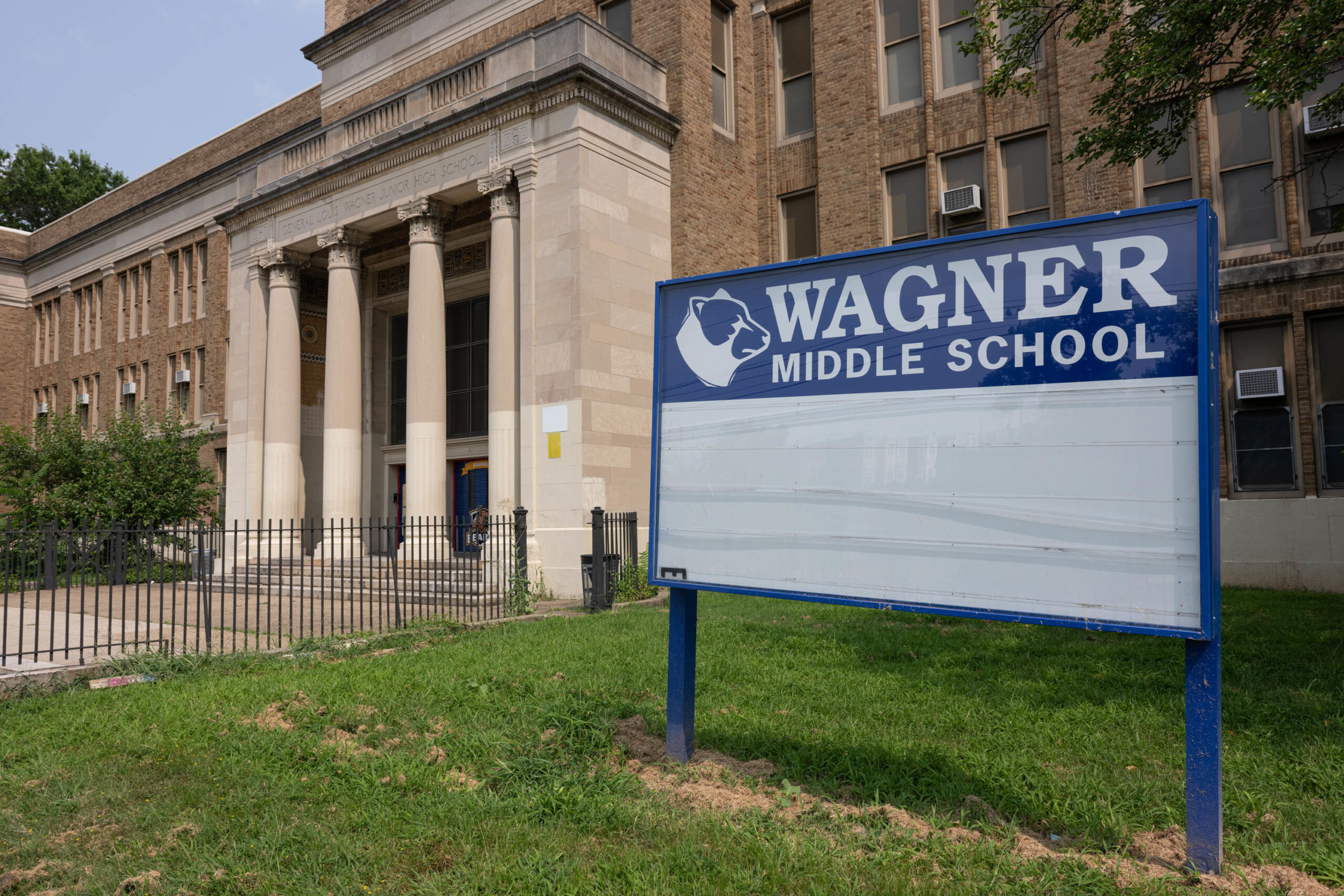
    Of the 20 schools Superintendent Tony B. Watlington Sr. has recommended to close, six are middle schools — AMY Northwest, Conwell, and Stetson in Kensington; Harding in Frankford; Tilden in Southwest Philadelphia; and Wagner in West Oak Lane.

    The district plans to expand elementary schools to take in those students in most cases, and Conwell, a magnet middle school, would send students to AMY at James Martin.

    “Our research does not say that traditional middle school children in Philadelphia perform better academically than K-8 students,” Watlington said when he rolled out his tentative plan in January. “Nationally, and in Philadelphia, there’s a mixed bag.”

    While the school district says the K-8 model reduces transitions for students and helps maximize resources, critics of the district’s plan say closing middle schools will uproot their children and abandon successful schools.

    Education experts, meanwhile, say instructing middle school-age students has long been a complex and controversial issue — and it’s a debate that Philadelphia district officials are reigniting with their sweeping facilities proposal.

    Among the top complaints from critics of the plan: The pivot isn’t absolute. Though many middle schools are disappearing, Philadelphia will still have 13 standalone middle schools and secondary-middle schools if those six close. And some will even grow.

    Middle-grades students from Masterman, the popular and elite city magnet, would take over the closing Laura Wheeler Waring school building in Spring Garden “to expand access” to Masterman, officials said.

    The district is also adding a new Academy at Palumbo Middle School to give students a feeder pattern into the South Philadelphia high school magnet. The new middle school will co-locate with Childs Elementary in Point Breeze.

    And in the Northeast, where schools are bursting at the seams, two standalone middle schools — Castor Gardens and Baldi — will be untouched. So will a handful of others, including Roberto Clemente in North Philadelphia, Feltonville School of Arts and Sciences, Grover Washington in Olney, AMY at James Martin in Fishtown, and MYA and Science Leadership Academy Middle School in West Philadelphia.

    Why is the district targeting middle schools?

    Though officials said the facilities plan is not driven by finances, it’s clear that the underfunded school system needs to shrink its footprint.

    With 70,000 empty seats citywide and an inequitable distribution of programs and opportunities, system officials say they need to make changes to do better for all kids.

    “We can more efficiently distribute our limited resources in a K-8 model by operating 13 grade spans as opposed to six,” Watlington told City Council at a hearing on March 17. “This is an efficiency issue.”

    At present, the district has 13 different grade spans throughout its schools — from a single K-2 to K-4s, K-5s, K-8s, 5-8s, 6-8s, and others. It is proposing shrinking, mostly, to six different grade bands, and emphasizing K-8 or 5-12 as preferred models.

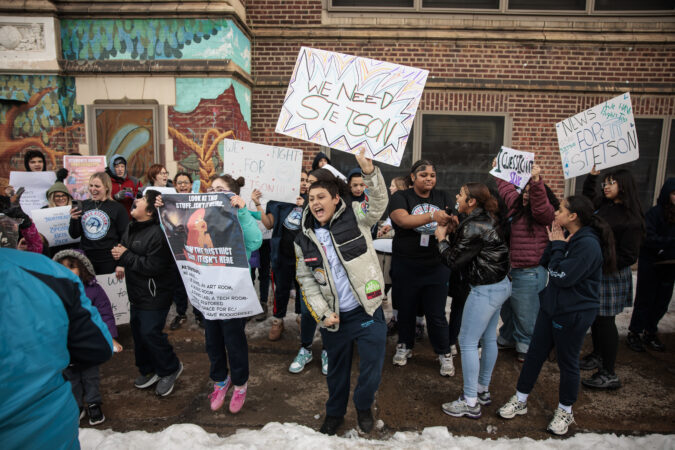
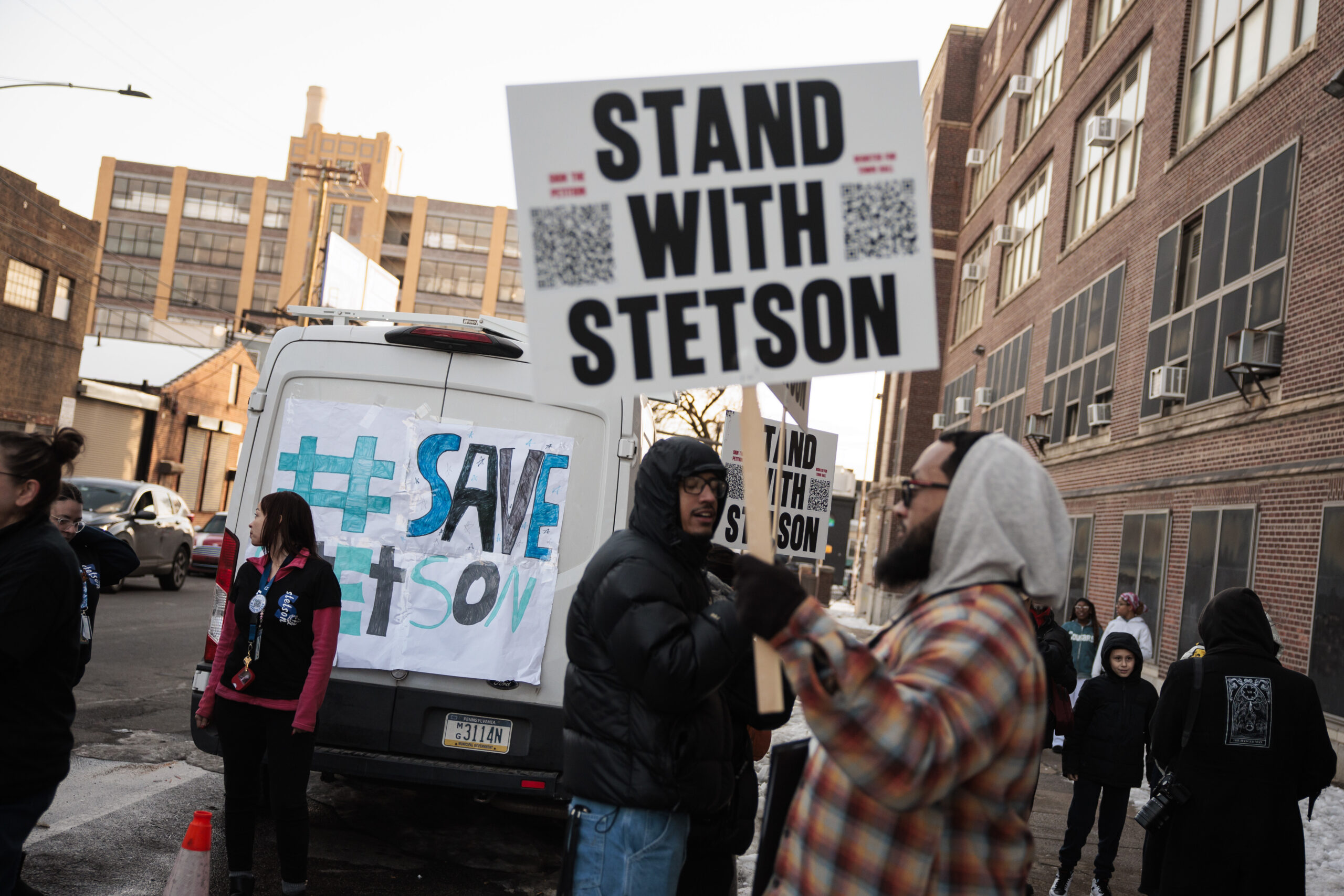
    Students, teachers, and supporters rally before a community meeting at John B. Stetson Middle School this month. It’s one of six middle schools that is slated for closure.

    Officials say they’re also relying on feedback received in surveys taken and meetings held prior to the plan’s release, despite critics’ worry that the feedback was crafted to give the district the answers it wanted.

    Hilderbrand Pelzer III, an associate superintendent, told a crowd of more than 100 people gathered at a Stetson Middle School meeting this month that in the surveys, families told the district they wanted to minimize transitions.

    “Think of safety in the sense that young people should remain in one place longer, pre-K to 8,” Pelzer said. “Hence why we want to recommend some of our K-4s, K-5 schools grow to K-8. Now that may not be the answer you want to hear, but the voices that have informed that have allowed us to make that a recommendation.”

    But critics of the district’s plan say they worry that the feedback was crafted to give the district the answers they wanted. And the audience at Stetson that day pushed back: Minimizing transitions is not what they want. They want their middle school to stay at their current school.

    “Why can’t you inform recommendations from people at Stetson?” one person shouted.

    The long and thorny history of middle schools

    Wrestling with where middle-grades learners should attend school is nothing new, said Penny Bishop, dean of Boston University’s Wheelock College of Education and Human Development.

    “We have been struggling to figure out how to provide appropriate schooling for this age group for well over a century,” Bishop said. “It’s a question with a long and thorny history” dating to the 1800s, she said, with much back and forth.

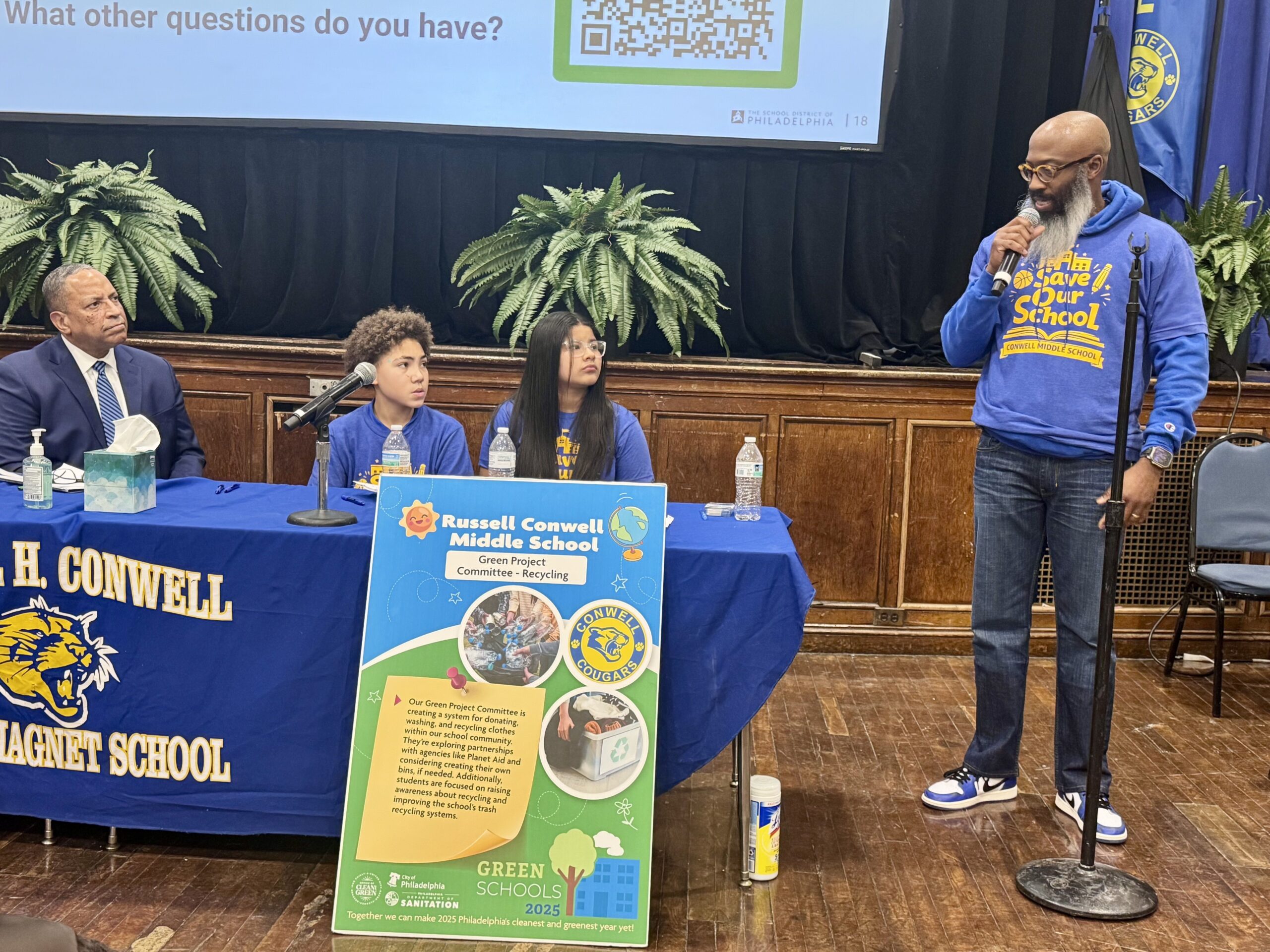
    Philadelphia School District Deputy Superintendent Oz Hill (left) and student moderators listen to Andre Sanford-Adams, Conwell Middle School’s health and physical education teacher, speak during a recent community meeting about why he thinks it’s a mistake to close Conwell.

    Many of Philadelphia’s middle schools began as junior highs. Middle schools as a concept first surfaced in the United States in the 1960s and took off in the 1980s as part of an explicit attempt to create schools “designed based on the developmental needs of this particular age group, as opposed to saying, they’re short high schoolers or they’re tall elementary students,” Bishop said.

    But tweens and early adolescents can be a tough age group to educate well, and middle schools got a bad rap among some, said Bishop. As school choice and shifting birth rates caused belt-tightening in some places, some districts began to shift grade configurations.

    Boston recently shut its last standalone middle school as that district contracted amid enrollment losses, for instance.

    Both Bishop and Katie Powell, director for middle level programs at the Association for Middle Level Education, said that research doesn’t support one kind of grade configuration or another.

    “What matters most for middle school-age students is that we understand that they are going to need a different experience than their elementary counterparts in a K-8 building, and having a defined middle school, even within that K-8 school — that’s what tends to be most successful,” Powell said.

    And, Bishop said, “a lot of this is tied up in the degree to which the leadership understands the developmental needs of the students.”

    At a recent meeting at slated-to-close Wagner Middle School, Kim Newman, another Philadelphia associate superintendent, vowed that the district will spend time and resources planning thoughtful transitions as grade configurations change.

    Adding middle grades to elementary schools hasn’t always been done well in the district, Newman said.

    “In the past, what we’ve done is said, ‘Let’s just add some furniture and books, great,’ grow a grade each year, and that’s really not what children need,” said Newman.

    She said she hopes receiving schools and closing middle schools will work together on what middle-grades learners need in the newly expanded elementary schools.

    Philly skepticism

    Claire Andrews has taught at Wagner Middle School for 40 years — years ago, it had 1,000 students, but today, fewer than 300 are enrolled.

    In the past, “we had opportunities for students, and as the years have gone on, they have just disappeared,” Andrews said. “Over the years, everything has just been pulled away.”

    Wagner Middle School is one of six middle schools that is facing potential closure in Philadelphia.

    Andrews, like others in the city, raised questions of equity.

    “Are they closing schools in the Northeast?” Andrews said.

    Councilmember Isaiah Thomas, chair of City Council’s education committee, highlighted Philadelphia’s complicated middle school position at a Council hearing last week.

    The district’s talking points around middle school sound good, he said. But he questioned decisions to expand middle grades at magnet schools, like Masterman and Carver High School of Engineering and Science, while closing a number of neighborhood middle schools.

    “I want us to have nuanced dialogue around where we are and what we need to do,” said Thomas, who has spoken out against closing Conwell, of which he’s an alumnus. “And I also recognize that there’s pushback on every decision you made. I understand that we have to make tough decisions somewhere else, there is no real facilities plan, and we do need a plan.

    But the reality is that we’re still not sending the right message to people, and I think our position around middle school is problematic.”

    Watlington stressed the research around middle schools and the surveys.

    The superintendent said the district is committed to modernizing and expanding receiving schools, where needed, and was not just focused on the Northeast.

    “We absolutely will not present a plan that just pushes resources in parts of the cities that’s growing fastest,” Watlington said. “I think this is as strategic a plan as we could create.”

  • Union membership dipped in Pa. and N.J. amid Trump’s anti-labor push, data suggests

    Union membership dipped in Pa. and N.J. amid Trump’s anti-labor push, data suggests

    Following several years of major worker organizing efforts and high-profile strikes, 2025 brought a change in momentum for the labor movement. President Donald Trump’s administration sought to end federal workers’ union contracts and, through a firing, left the National Labor Relations Board without a quorum and unable to make decisions.

    But the percentage of workers who are union members nationwide has stayed pretty steady in the last year, new data shows. And in Pennsylvania and New Jersey, union membership rates fell.

    In 2025, 10% of the country’s total workforce was part of a union, compared to 9.9% in 2024, according to new data from the U.S. Bureau of Labor Statistics. It’s the first time since 2020 that the rate has inched up — albeit slightly — instead of down.

    However, BLS noted, this year’s estimates are not fully comparable to past years because they are based on a BLS survey that is missing October figures due to the government being shut down in October and part of November.

    In the past year, there have been “a lot of kind of anti-labor efforts coming out of the White House,” said Todd Vachon, assistant professor of labor studies and employment relations at Rutgers University.

    Despite those efforts Vachon said, “labor has pretty much maintained the same at the national level. … The Trump attacks haven’t really had any effect yet, at least in the first year.”

    window.addEventListener(“message”,function(a){if(void 0!==a.data[“datawrapper-height”]){var e=document.querySelectorAll(“iframe”);for(var t in a.data[“datawrapper-height”])for(var r,i=0;r=e[i];i++)if(r.contentWindow===a.source){var d=a.data[“datawrapper-height”][t]+”px”;r.style.height=d}}});

    Union membership rates dropped to an all-time low nationwide in 2023 and remained pretty similar in 2024. During those years, roughly one in 10 U.S. workers was part of a union.

    When BLS first started recording this data in 1983, about two in 10 U.S. workers were unionized. There were 17.7 million unionized workers in 1983 and 14.7 million last year.

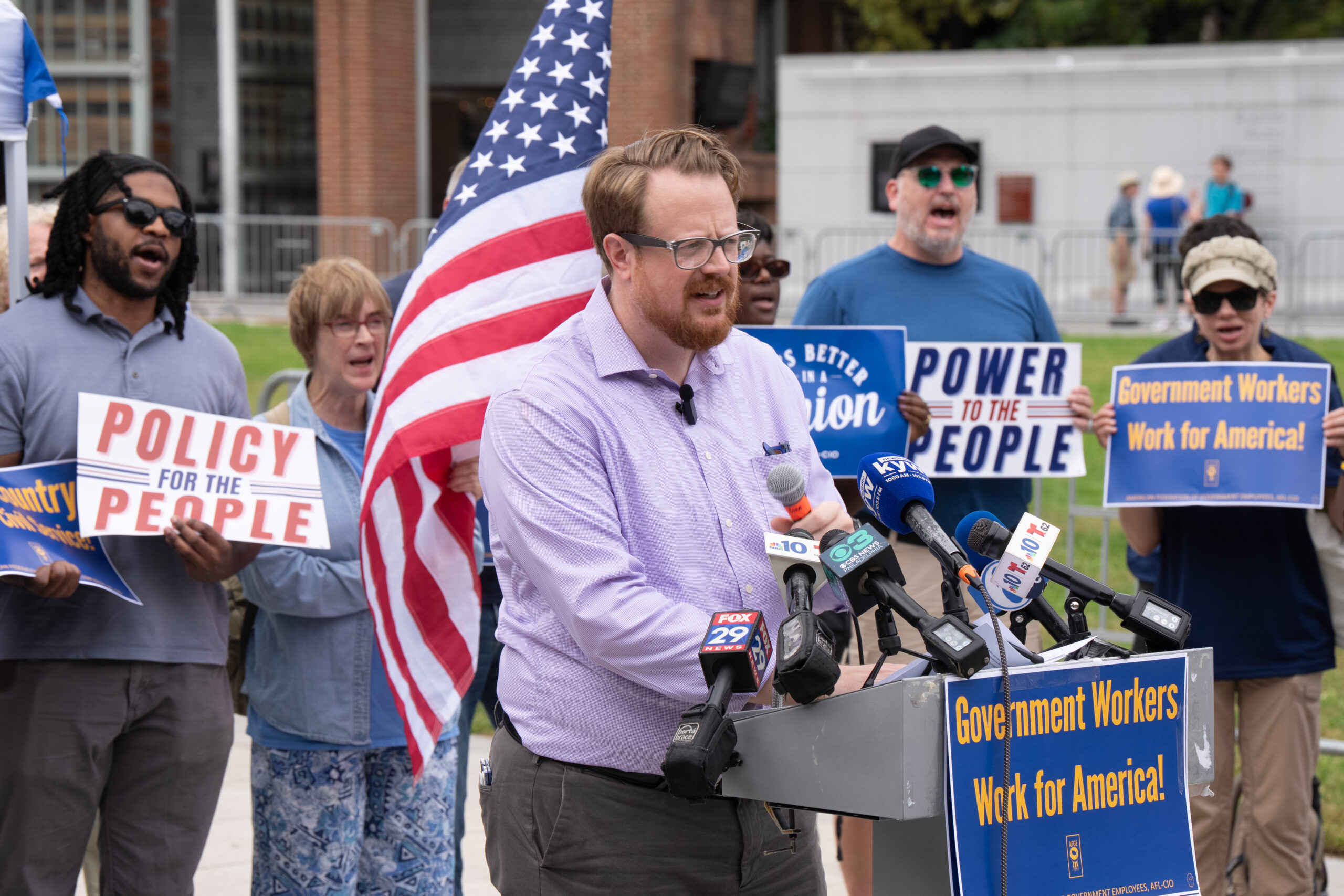
    Danny Bauder, president of the Philadelphia Council AFL-CIO, speaks at an event supporting federal workers in October.

    Unionizing in N.J. and Pa.

    In New Jersey, 14.7% of workers were unionized last year, and in Pennsylvania, it was 10.9%.

    In both states, that was a decline of around one percentage point from 2024, but BLS noted that state-level data “should be interpreted with caution,” due to the shutdown-related incomplete data.

    window.addEventListener(“message”,function(a){if(void 0!==a.data[“datawrapper-height”]){var e=document.querySelectorAll(“iframe”);for(var t in a.data[“datawrapper-height”])for(var r,i=0;r=e[i];i++)if(r.contentWindow===a.source){var d=a.data[“datawrapper-height”][t]+”px”;r.style.height=d}}});

    Some local labor action highlights from this past year include:

    What happened in labor organizing last year?

    The Trump administration moved to end union contracts for government workers, amid a push to reshape the federal government.

    Some 271,000 federal jobs were cut between January and November. Meanwhile, the union membership rate in the public sector increased by 0.7% nationally in the last year according to the new BLS data.

    Vachon notes that the vast majority of public sector workers are at the municipal level, not federal.

    “The hiring of police, and teachers, and sanitation workers across the thousands of cities around the U.S. more than compensated for [cuts at the federal level], because we see an increase in the public sector,” he said.

    Trump also fired a member of the National Labor Relations Board (NLRB) early last year, which left it without a quorum to issue rulings. In some cases that can slow down the formation of a new union — at the Amazon-owned Whole Foods in Philadelphia, for example.

    The number of union elections overseen by the NLRB declined last year and the overall number of workers involved in those elections dropped too, according to the nonpartisan Center for American Progress.

    “A huge percentage of new union organizing is required every year just to maintain the same level of unionization, because of the churning and the growth of the overall labor force,” said Vachon. “If the labor force is not growing, then you can actually see increases in union density.”

    And unions are being cautious of reaching out to the NLRB under the Trump administration, he notes.

    “There’s a fear [that] if something gets sent up to the NLRB that the ruling is going to set a precedent that makes it even more difficult to organize,” said Vachon. “It’s kind of had a dampening effect in that way.”