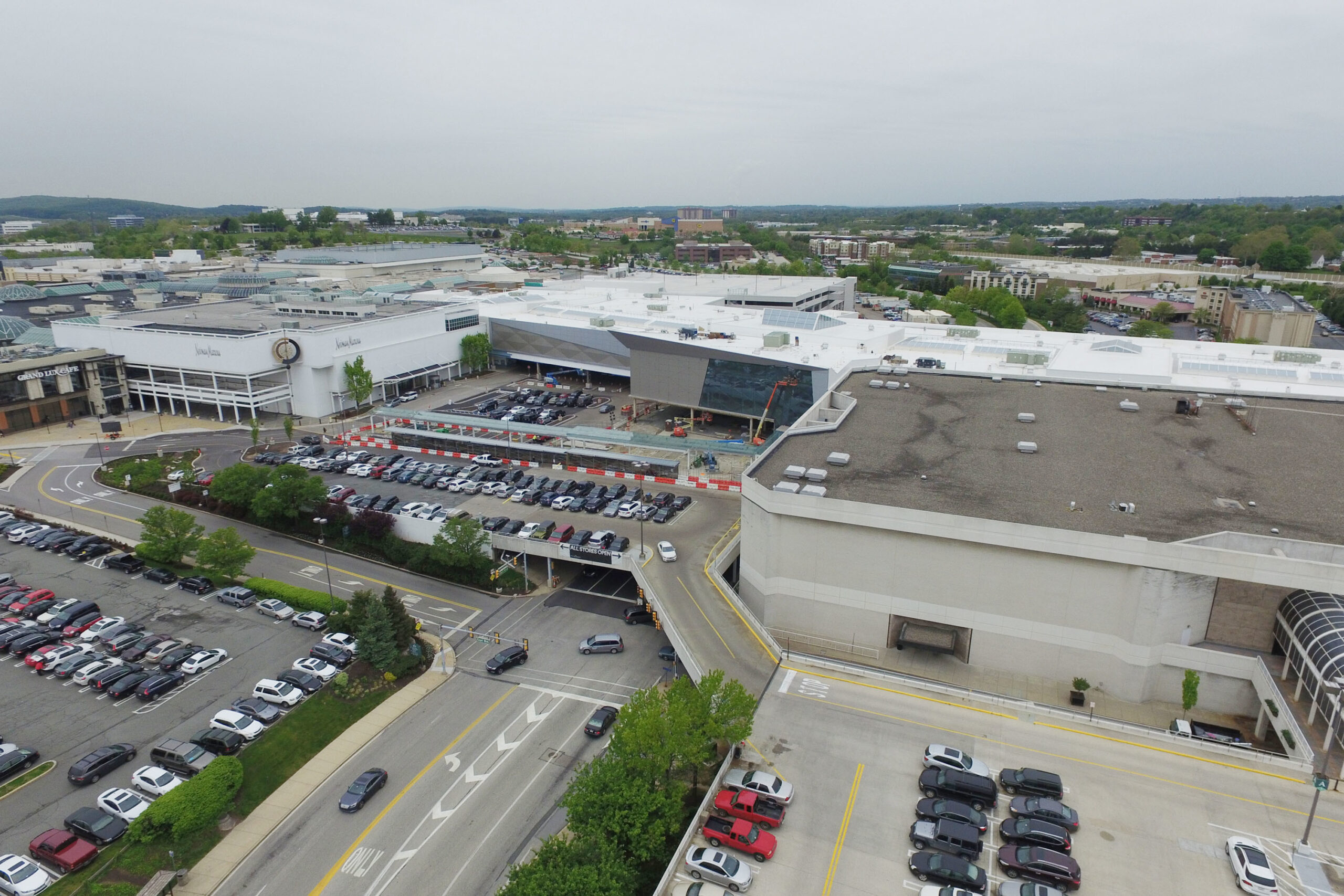
The King of Prussia Mall is set to get several new shops and restaurants in the coming months.
As some other retail centers struggle, die, and transform, the massive Montgomery County complex has remained a thriving shopping destination, with a wide array of retailers, dining options, and experiential concepts.
Candyland Adventure: The indoor playground and kids entertainment center, which already has a Springfield location, plans to open another location near Primark this winter, according to Candyland’s Facebook page.
Los Chicos Mexican Grill: The restaurant is set to open at a yet-to-be-released location.
The Pandora store will also move from the Court to the Plaza, and the David Yurman store will undergo a facelift. David Yurman will open a temporary boutique near Neiman Marcus while its permanent location is renovated.
Adidas: The sportswear company’s new location, near Eataly, includes a customization lab, where customers can personalize jerseys or put custom designs on sneakers.
Nespresso: The boutique sells coffee makers and espresso machines, fancy milk frothers, and more from its new outpost near the Apple store.
Faherty: The casual, coastal-style clothing brand has a new store near Nordstrom.
🍦 Stella’s Ice Cream out of Idaho (yes, Idaho) just opened on Front Street in Fishtown/Kensington, and Bea has the early scoop.
🍦 Winners, rocking a feel-good message, is new on South Street in Graduate Hospital. As Kiki Aranita says, Winners’ appeal is more than just the flavors, like Sweet Success S’mores.
🍦Our guide to our favorite ice cream is right here.
Critic Craig LaBan is back from his annual Jersey Shore exploration, and he’s shaking the sand out of his notebook. In Part One of his roundup, he heads to the mainland to find some gems. Read that here.
Looking ahead: Part Two, Craig’s reviews from Long Beach Island and thereabouts, will be online this weekend. On July 11, he’ll share his discoveries from points farther south in Part Three.
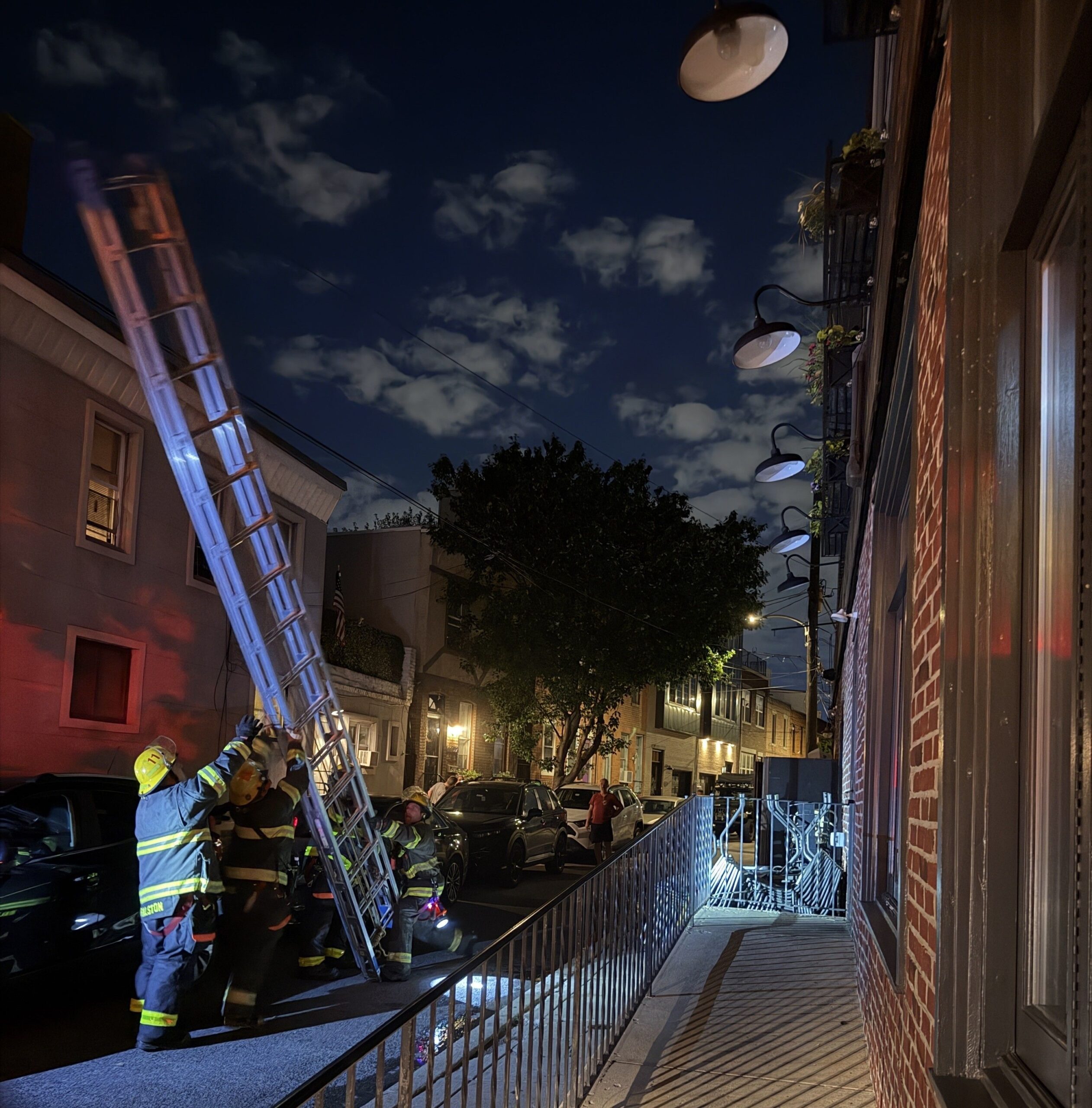
Ember & Ash on East Passyunk Avenue will be closed for an undetermined period after smoke and flames shot up through the ventilation last week just after closing time. No injuries were reported.
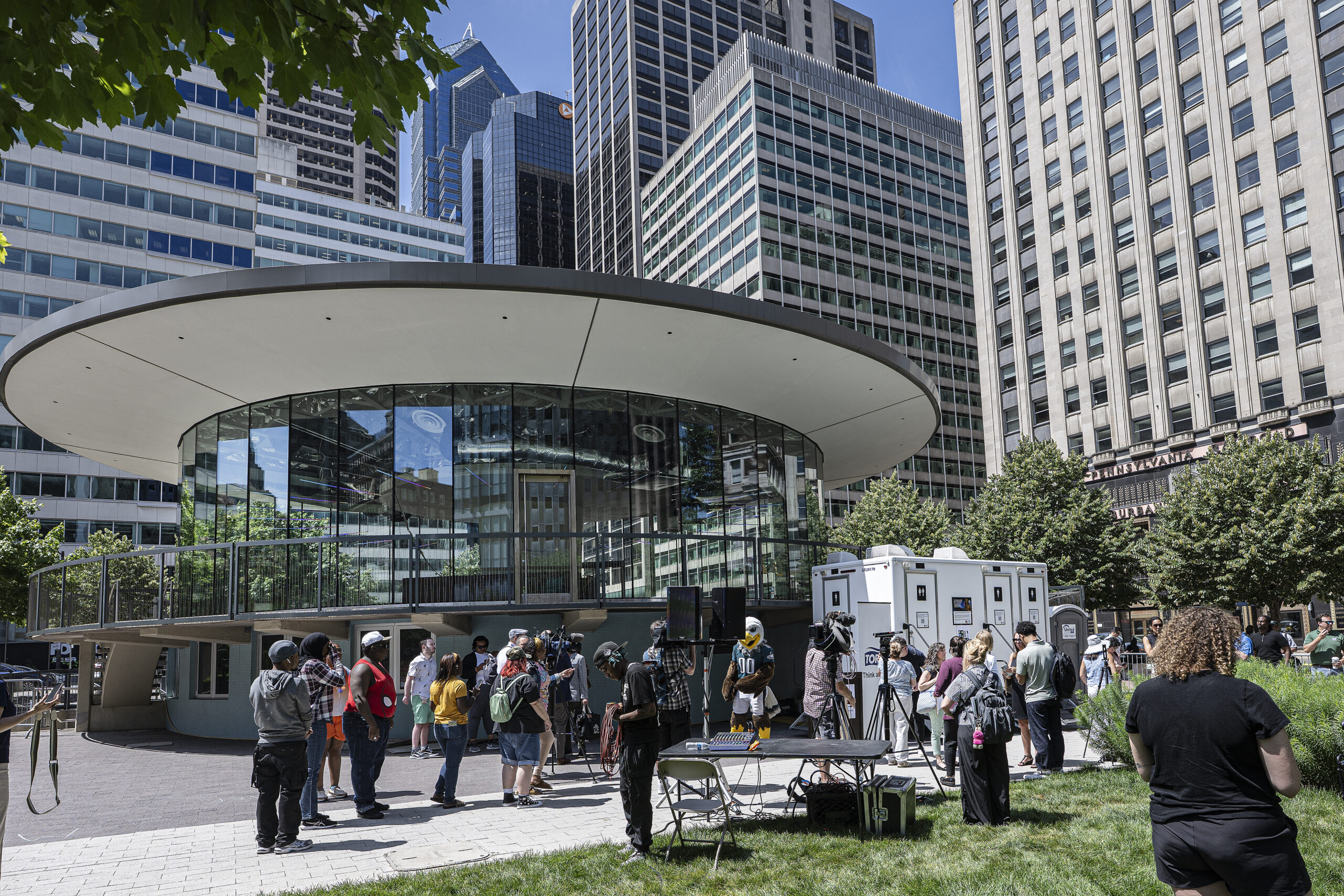
This weekend will see the debut of Broad Street Beer Garden at LOVE Park, the first phase of a planning reuse of the so-called flying saucer building at 16th and JFK. Here’s the long history of the city landmark.
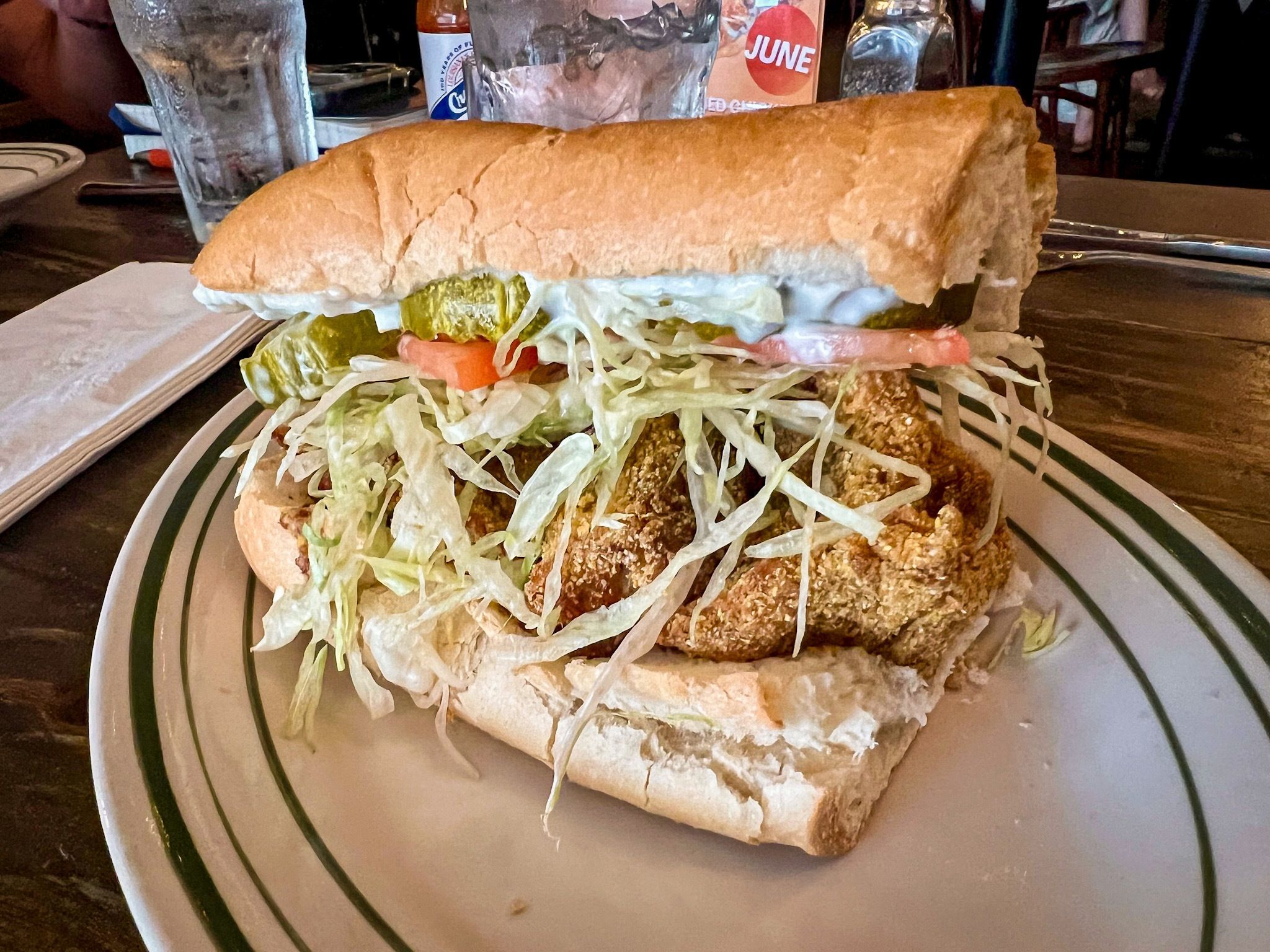
We munched on fried silverfish that reminded us of French fries in Little Saigon, Argentine empanadas in West Philly, and a vegan po’ boy in Old City that tasted like the original.
Scoops
Intrigue! Albert Zheng, whose holdings include Javelin in Fairmount, is backing a yet-to be-named dual concept on the way to 808 Chestnut St., formerly a Dunkin’ Donuts. In front, the feature will be wagyu omakase, while the rear will be what he calls a Cambodian speakeasy. He says it’s six or seven months out.
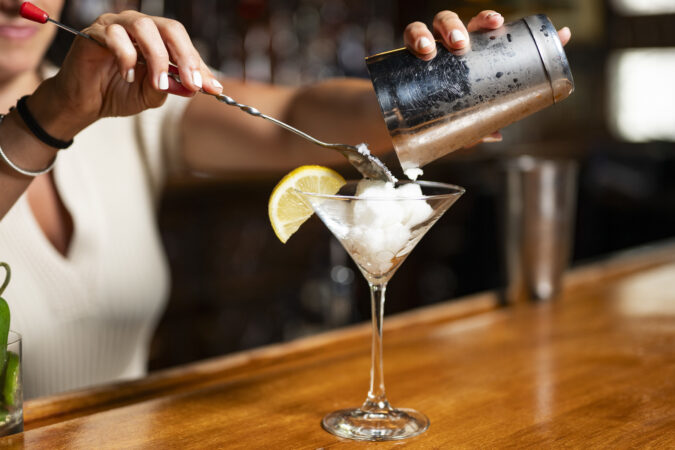
Mylar Bar, a cocktail bar inspired by the spirit of South Philly’s Dino’s Party Center, is expected to open later this summer from hospitality veterans Liv Arterbridge and Gina Piccari. They bought the former building at Ninth and Morris Streets where Dino’s sold balloons, decorations, and party supplies for decades before it moved across the street. “We want the whole thing to feel like a party,” Arterbridge said. “Nostalgic, fun, a little silly, intentionally unserious — but not a theme bar,” Piccari said. Cocktails will include martinis, punches, and classic drinks, alongside draft beer and familiar favorites. A full kitchen, led by chef Colin White, formerly of Sally and Emmett, will serve shareable “party snacks” and larger plates. They plan to offer late-night desserts, so food will be available until 1 a.m. with the bar wrapping at 2. Arterbridge, whose resume includes Cry Baby, Poison Heart, and a.bar, met Piccari while working at Boot & Saddle, where Piccari was manager. Piccari is now behind the bar at Le Virtù.
Restaurant report
Sixteen restaurants, bakeries, cafes, and bars — including Lillian’s, shown above — are opening in July. Read on for the rundown.
Penny’s Bagels, on its way (for the last two years) to 212 Kings Highway East in Haddonfield, will hand out 250 red, white, and blue bagels on July 3 at the borough’s parade. The shop is eyeing an August opening, says owner Chris Fetfatzes.
Maru, a fast-casual Korean-inspired restaurant from David Backhus and the team behind the now-closed Oori, is expected to open in August in what is now Collective Coffee & Bakery, which Backhus also owns, at 2922 Conestoga Rd. in Glenmoore. Maru’s menu will feature Korean fried chicken sandwiches, wings, tenders, house-made mochi doughnuts, and specialty coffee, while continuing to serve Collective Coffee and honor existing coffee subscriptions.
Briefly noted
Ota-Ya in Newtown has announced that Friday will be its last day after 30 years with the retirement of owners Jeff Wong and Cindy Tam.
PETA is launching its “Nice Cream Trail,” highlighting 10 shops across the state serving vegan ice cream, and there are five local spots on the list: Dreams Ice Cream Factory in Glenside, Lu & Aug’s in Ardmore, the Main Freeze in Lansdale, Milk Jawn in South Philadelphia and Northern Liberties, and Scoop DeVille in Center City and Queen Village. The first Pennsylvania resident to complete the trail by visiting all 10 participating shops through August will win a vegan ice cream party with PETA’s “iScream” truck for themselves and up to 50 guests. Details are here.
Two local BBQ chefs, Matt Groark (Medford Lakes, N.J.) and Maxwell McGibbon (Newark, Del.), are competing on Food Networks’ Pitmasters, premiering July 13 at 9 p.m.
Diner en Blanc registration is still open. This year’s version of the pop-up picnic is Aug. 20.
Miller’s Ale House, in the shopping center next to the Home Depot in Springfield, Delaware County, closed this week after 13 years, while Fishtown is abuzz with speculation that Bottle Bar East, which opened at 1308 Frankford Ave. around the same time in late 2012, has closed. The phone is down, and owners could not be reached for comment
When is Adda ever going to open in Fishtown? — Rich C.
True, Adda has been a long time coming, since I initially wrote about it in June 2025 with an end-of-2025 target. Adda — from New York City’s Unapologetic Foods, whose establishments are acclaimed for their bold, no-holds-barred approach to Indian cooking — is now looking at a late-fall opening at 1700 Frankford Ave., the new building across from the Fishtown post office.
Corrigendum: Reader Stephanie points out that Kalaya is the third Philadelphia restaurant, not the second, to win the James Beard Award for outstanding restaurant, as I wrote two weeks ago. Zahav was the first in 2019, while Friday Saturday Sunday won in 2023.
📮 Have a question about food in Philly? Email your questions to me at mklein@inquirer.com for a chance to be featured in my newsletter.
By submitting your written, visual, and/or audio contributions, you agree to The Inquirer’s Terms of Use, including the grant of rights in Section 10.
Making his pitch to the Great Valley school board, Jed Lu said he and fellow students seeking to bring slain conservative activist Charlie Kirk’s Turning Point USA organization into their high school weren’t racists or extremists.
“We simply have a different perspective,” Lu told the board at a late February meeting.
The Chester County district is one of the latest in the Philadelphia area to approve a Club America chapter — the high school offshoot of Kirk’s group. The organization seeks to mobilize “anti-woke warriors” and has rapidly been adding new local chapterssince his assassination in September, provoking debate around right-wing influence in public schools.
Nationally, chapters have nearly tripled — from 1,200 prior to Kirk’s death, to more than 3,300, according to Turning Point officials. Governors in Republican-led states like Arkansas and Nebraska are partnering with Turning Point to expand clubs throughout their states.
In eastern Pennsylvania, there were 11 Club America chapters at the end of last school year. Now, “we’re currently approaching 40,” said Nick Cocca, Turning Point’s enterprise director.
The group’s expansion might be overstated in the Philadelphia region. Seven area high schools listed by Turning Point on its website or Instagram graphics as having Club America chapters said they didn’t have clubs.
Souderton Area High School, for instance, appears on Turning Point’s map, but doesn’t have a club. The school’s assistant principal, Matthew Haines, said “a student made an inquiry” in September about starting a chapter, but never applied to do so.
In some schools, like Springfield High School in Delaware County, “we have a few students who started running an after-school student pilot a few months back,” said principal Monica Conlin, but the district doesn’t officially recognize the club. Conlin said new clubs must complete a three-year pilot before gaining district approval.
Still, the organization has gained traction. In addition to Great Valley, Penncrest High School in Rose Tree Media School Districtlists Club America among its student clubs; district officials and staff didn’t respond to requests for comment.
Turning Point says it also has a Club America chapter at Pennsbury High School, and an Instagram account for “Club America at Pennsbury” invited students to a Feb. 25 meeting to discuss the State of the Union and “participate in prayer for law enforcement and our nation.” District officials didn’t respond to requests for comment.
‘An outpouring of support’ after Kirk’s death
A spokesperson for Turning Point couldn’t explain the discrepancy between its list and schools that say they don’t have any Club America chapters.
The organization was also unable to provide a local student willing to be interviewed.
Cocca said Turning Point “saw an outpouring of support and outreach from young people across the country” in the wake of Kirk’s Sept. 10 assassination. To support its growth, the organization is hiring more field representatives to work with high school students, Cocca said.
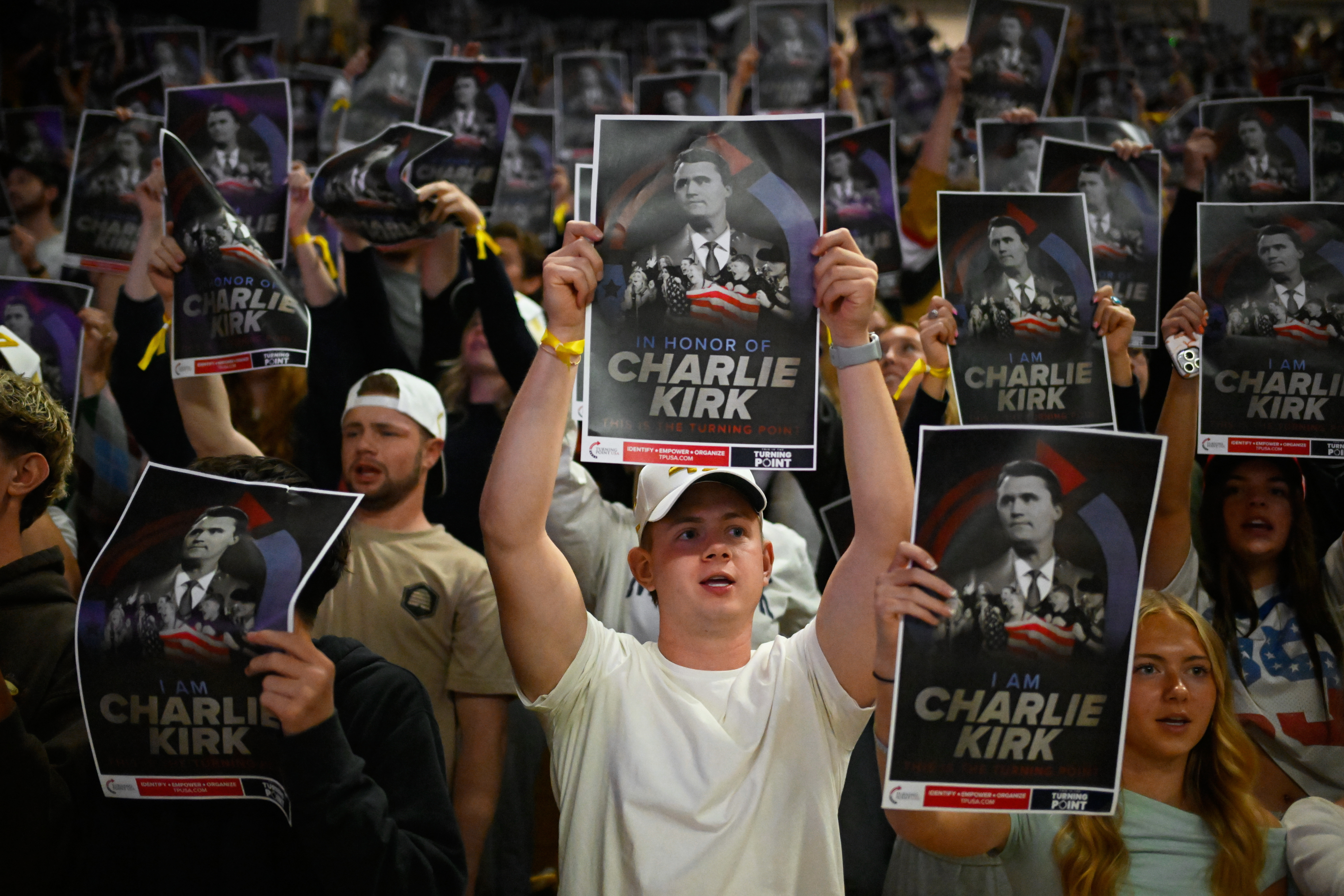
People hold posters of Charlie Kirk during a Turning Point USA rally at Utah State University, as a part of the organization’s push to memorialize Kirk in Logan, Utah, in September.
Turning Point, which began as an organization advocating for conservative views on college campuses, had previously been expanding its presence in high schools. (A Turning Point chapter launched years ago at Pennridge High School in Upper Bucks County, for example.)
Turning Point last July renamed its high school operation Club America. “We wanted a brand that spoke specifically to them,” Cocca said. He said that “when Charlie was alive, he used to say ‘I want a Club America chapter in every high school in America.’”
The expansion has spurred conflict. Critics have highlighted Kirk’s controversial statements, including referring to the Rev. Dr. Martin Luther King, Jr. as “an awful person” and calling the passage of the 1964 Civil Rights Act a “mistake.”
Kirk also promoted the so-called “great replacement theory,” framing non-white immigration as a plot to replace white populations.
“This club is an easy way to incorporate hate and discrimination within our high school. This should not be normalized,” a Change.org petition launched in January against a proposed Club America chapter at West Chester East High School read. An update to the petition later declared that Turning Point “was shut down at West Chester East.”
Molly Schwemler, a district spokesperson, said that earlier this year, some students expressed interest in starting a Club America chapter.
But “after discussing the process and need for sponsorship from a teacher with school administration,” students “instead decided to organize independently outside of the school,” Schwemler said. (On its website, Turning Point lists West Chester East as having a chapter.)
In an Instagram post, the club said it decided to operate independently “because people can’t be mature, open minded or respectful at our school.”
Activism hubs and kits
In addition to identifying a teacher adviser, students looking to form clubs often have to supply information to administrators like their purpose, planned activities, and funding needs.
Schools have little discretion to reject a new club, based on the federal Equal Access Act and First Amendment, said Jeffrey Sultanik, a solicitor for numerous Philadelphia-area districts.
Districts need “to be viewpoint-neutral,” Sultanik said, noting that “once you open up the door to clubs coming in,” administrators can’t pick and choose which to permit.
In its handbook for Club America chapters, Turning Point calls it “imperative that every chapter works to become officially recognized by the school,” offering students help if schools deny them.
Students can form an “activism hub” outside of school for a specific geographic area “as a last resort,” the handbook says.
In Downingtown — where Turning Point says there is an activism hub — a school district spokesperson said the district has not sponsored any clubs “related to religious or political groups in recent history.” (Some other area schools have official political clubs: Penncrest High School, for instance, lists Penncrest Democrats of America.)
Turning Point says its Club America chapters are nonpartisan and don’t support specific candidates.
But the group’s ideology is clear from materials it supplies to student members. Presentations available in Turning Point’s “Activism Library” for students to use have titles including “Taxes Are Shady,” “Socialism Kinda Sus,” and “Big Gov Scares.”
“Why are those on the left not proud to be Americans?” a presentation titled “Always Love America” asks.
Kids can order “Activism Kits” from Turning Point with posters and stickers. A “2A” kit features slogans like “Gun rights are women’s rights” and “Guns are the greatest equalizer.”
Cocca said Turning Point provides students “anything they may need, to promote what they want to promote, and what they want to make their club about” — whether that’s registering students to vote, or learning about the Constitution, he said.
“Ultimately, it’s up to the students to use those resources the way they want to use them,” he said.
Opposition to Club America groups
Critics accuse Turning Point of trying to indoctrinate high schoolers.
“They are grooming at the high school level, and college level, for a generational change,” said Sherry Lawrence, a parent in Great Valley whoopposed the district’s new Club America chapter. “All the red flags are there for people who don’t subscribe to this brand of conservatism, or this brand of Christianity.”
Lawrence questioned whether adults were driving some efforts to organize Club America chapters.
In an October Facebook post in a Turning Point Pennsylvania Action group, George Sabo, then a GOP candidate for township supervisor in East Whiteland, said his daughter was starting a chapter at Great Valley High School. “We had discussed it over the summer but pulled the trigger after Charlie’s assassination,” Sabo wrote.
In a brief phone interview, Sabo said it was his daughter’s idea to start the chapter.
“My daughter and family, who believe in the Bible, and believe God is king, value those properties and want to see that brought more into the school district,” Sabo said.
He said that while there had been pushback from other kids, “there’s some support from other kids, too.”
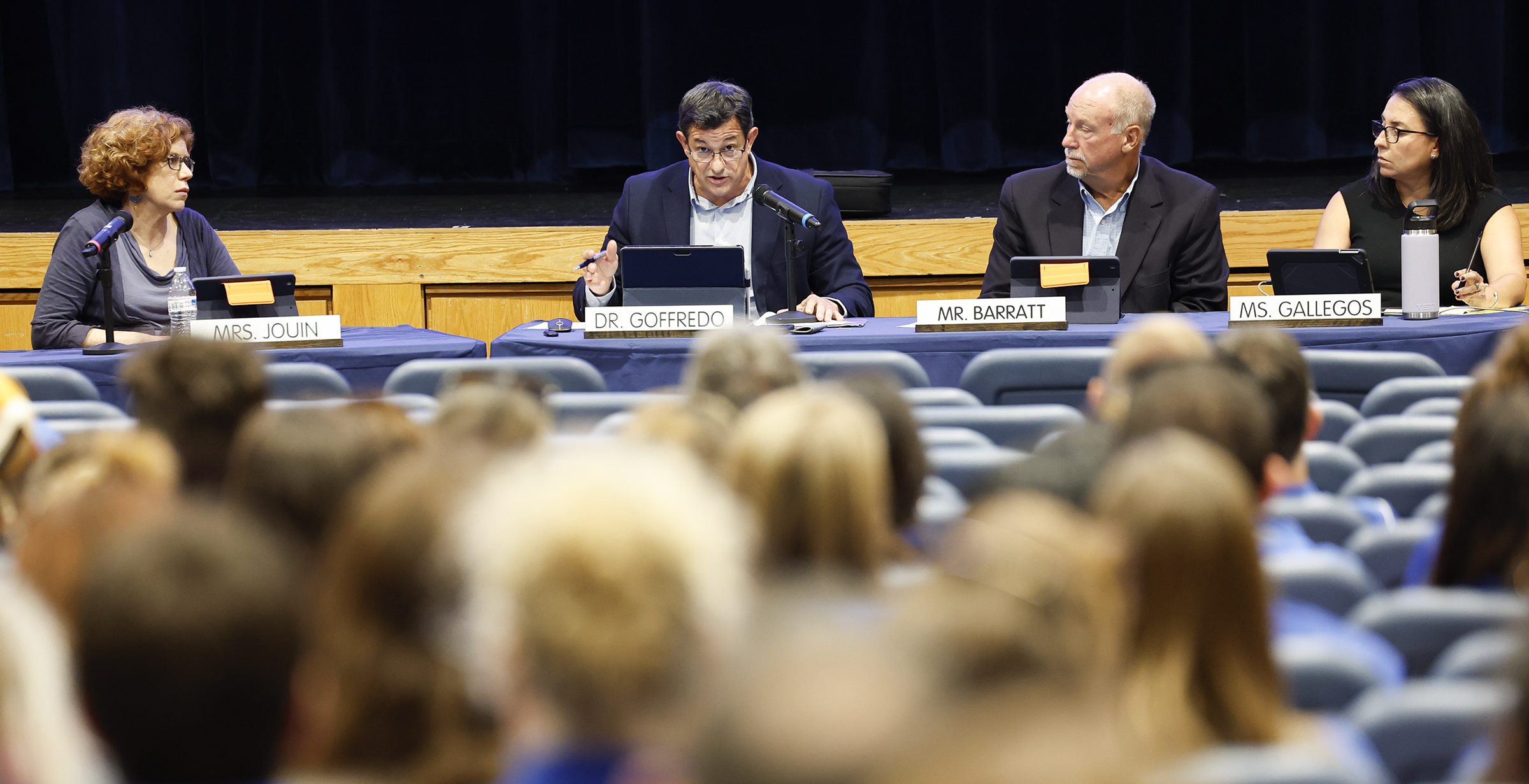
Great Valley school board members during a meeting at Great Valley High School in Malvern in 2024.
The Great Valley board approved the club 7-0 at its February meeting.
At the board meeting, Lu, the club president, said he and the three other club officers had initiated its formation.
While the club has a “conservative viewpoint,” Lu said, “our purpose is civic debate and civil discussion.” He added that the club is motivated by “the Christian value of love and compassion.”
The club hopes to be an “impactful addition to Great Valley High School,” Lu said.
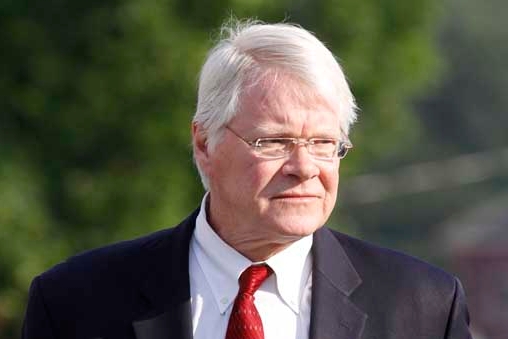
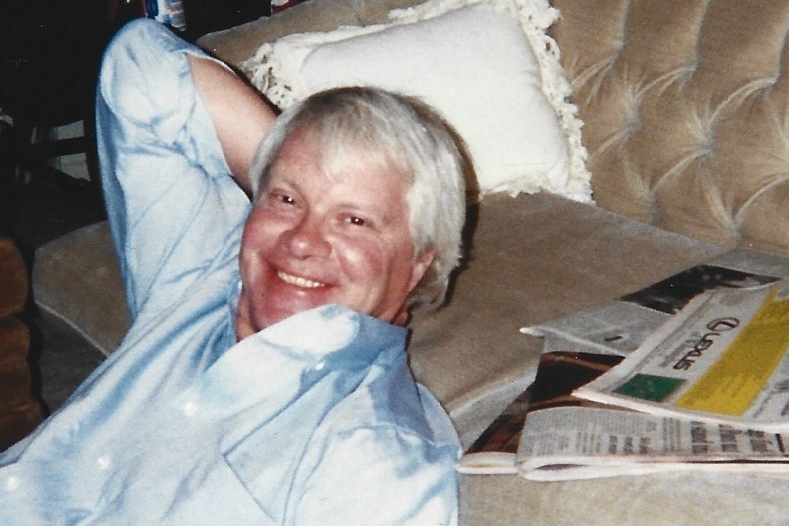
Joseph E. McGettigan III, 76, of Media, longtime trial lawyer and legal consultant, former Philadelphia assistant district attorney, former Pennsylvania chief deputy attorney general, former Delaware County first assistant district attorney, former assistant U.S. attorney in Philadelphia, former Philadelphia first assistant district attorney, and former Pennsylvania senior deputy attorney general, died Thursday, Dec. 31, of lung inflammation at Lankenau Medical Center.
Born in West Philadelphia and a graduate of Temple University, Mr. McGettigan was a legal expert in sexual assault and murder cases. He litigated in hundreds of trials over more than three decades as a prosecutor for city, county, state, and federal governments, and won notable convictions in the murder case against multimillionaire philanthropist John E. du Pont in 1997 and the child sexual abuse case against then-Pennsylvania State University assistant football coach Jerry Sandusky in 2012.
He was, then-Delaware County District Attorney Patrick L. Meehan said in 1998, like “a fascinating character in a crime novel.”
He worked for four Philadelphia district attorneys over two stints in City Hall and spent a year in Iraq in 2008 and 2009 as a U.S. government resident legal adviser working to reestablish a criminal justice system after the fall of Saddam Hussein. For most of the last decade, he worked for the Philadelphia law firm of McAndrews Mehalick Connolly Hulse & Ryan P. C. “He was a wonderful guy, a faithful citizen, and an incredible lawyer,” Dennis McAndrews, founder of the firm, said in an online tribute.
The grandson of a Philadelphia police officer and son of a lawyer, Mr. McGettigan prosecuted one of the first sex-abuse cases involving a priest from the Archdiocese of Philadelphia in 1985 and oversaw a state Senate absentee-ballot scam case in 1993. “I’m not shocked by much of human depravity,” he said in a 2018 video interview with lifelong friend Dom Irrera. “I’ve seen a fair amount of it.”
In an online tribute, Judge Jack Stollsteimer of Delaware County Court called Mr. McGettigan a “legendary prosecutor, a larger-than-life personality, and an avenging hero to crime victims across our Commonwealth.” He was a favorite of the City Hall crowd, and colleagues called him “a true public servant,” “a great guy with a wonderful heart,” and “an extraordinary presence in the courtroom.”
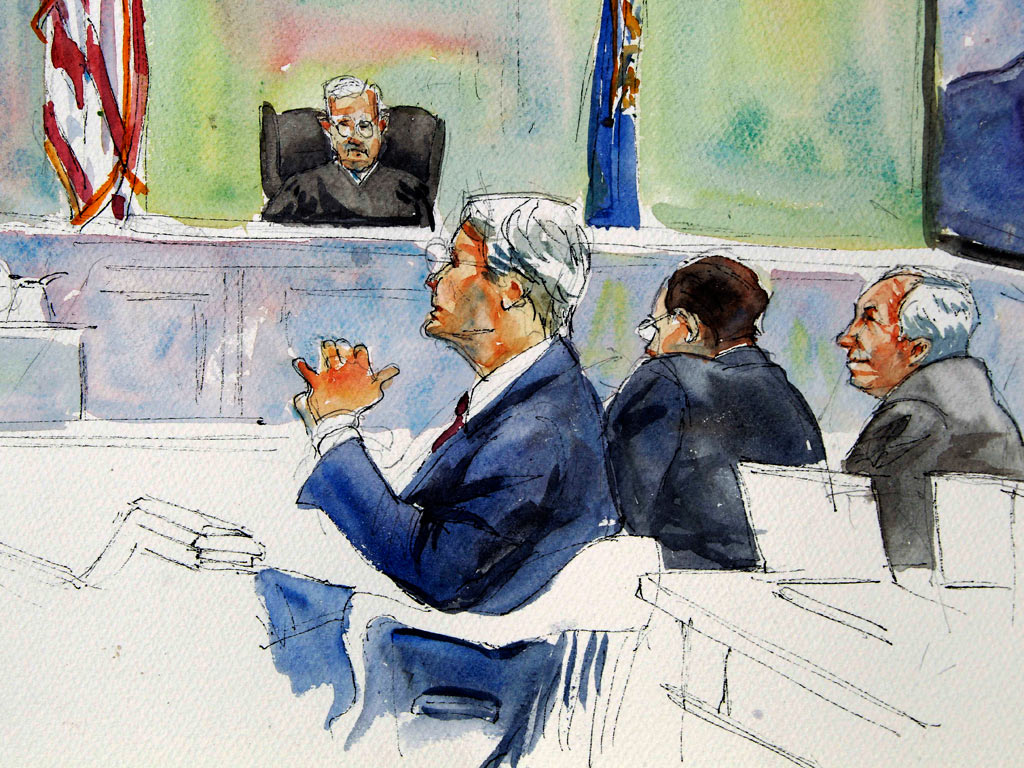
Mr. McGettigan (foreground) is shown in this courtroom sketch during the Jerry Sandusky trial in 2012.
Even those with whom he clashed praised Mr. McGettigan. Thomas A. Bergstrom, the Philadelphia lawyer who represented du Pont, said in 2011: “He’s a formidable adversary … very principled. If Joe doesn’t agree with you, he’ll let you know. If he’s going to hit you, it will be a punch in the nose, not a stab in the back.”
Witty and naturally engaging, Mr. McGettigan interrupted his legal career after the du Pont case to work briefly in Hollywood as a legal content adviser for the short-lived TV series Philly.The show starredKim Delaney as a tough defense attorney in Philadelphia, and Mr. McGettigan played a police detective, not a prosecutor, in a courtroom scene in one episode in 2002.
He also worked briefly as a consultant and manager for a private security company in Virginia, was a legal analyst for TV talk shows, and mentored other lawyers. He graduated summa cum laude with a bachelor’s degree in English literature from Temple and earned his law degree at the University of San Diego School of Law in 1982.
Mr. McGettigan played basketball in high school, on Philly playgrounds, and later whenever he could. Longtime college basketball coach and lifelong friend Fran O’Hanlon called him “a great friend who would do anything for you.”
His sister Mary said: “He was complex. He appeared often to be a hard-nose tough guy. But there was a soft side to him. He wanted to help people who were vulnerable.” His sister Patty said: “He left the world a better place.”
Joseph Edward McGettigan III was born March 5, 1949. An altar boy at church, he grew up with six sisters and a brother, and he instigated many dinner-table debates with his siblings and parents about all kinds of subjects.
“He kept us on our toes,” his sister Mary said. “He had a strong sense of justice, of doing the right thing.”
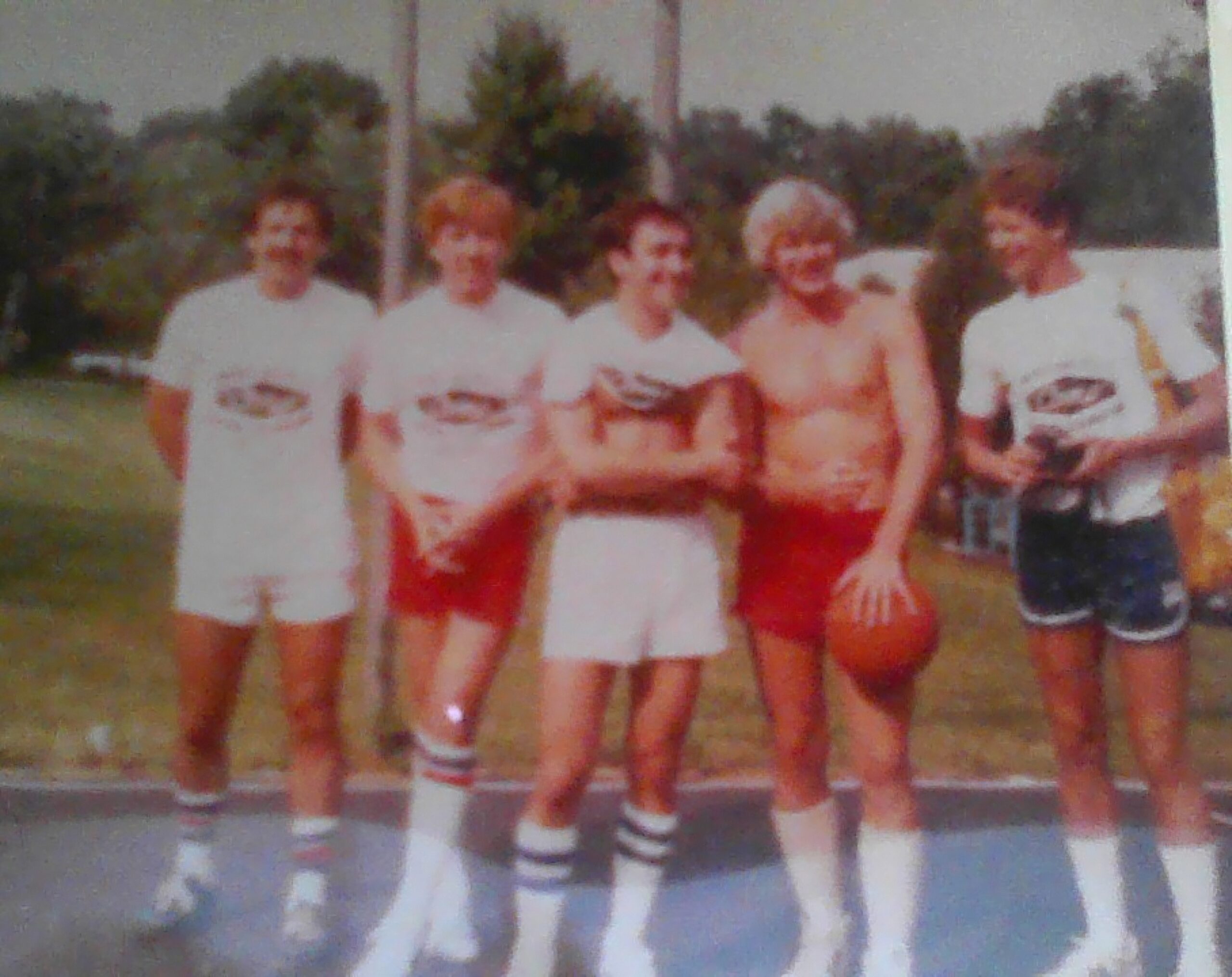
Mr. McGettigan (second from right) liked nothing better than playing hoops with friends.
He married Gay Warren, and they lived in Media and Naples, Fla. “Gay was Joe’s rock,” his sister Mary said. “He was devoted to her, and she to him.”
Mr. McGettigan loved music, reading, and writing, and told Irrera in 2018 that his favorite authors were William Shakespeare and Joseph Conrad. He was fun and funny, his siblings said, a raconteur with a large personality.
“Joe was an outlier in a family of bookish nerds,” his sister Jeanne said. “We followed his youthful adventures with great amusement and his later accomplishments with pride and respect. His generosity changed lives for the better.”
Mr. McGettigan spent a year in Iraq helping local officials revive their justice system.
One time, when they were young, his brother Michael tried to lie about losing Mr. McGettigan’s football. So Mr. McGettigan grilled him about the details and eventually extracted a confession.
“I gave it all up,” Michael McGettigan said, “the first of many malefactors to find relief in telling the whole truth and nothing but to Joseph E. McGettigan III.”
In addition to his wife and siblings, Mr. McGettigan is survived by his mother, Ruth, and other relatives. A sister died earlier.
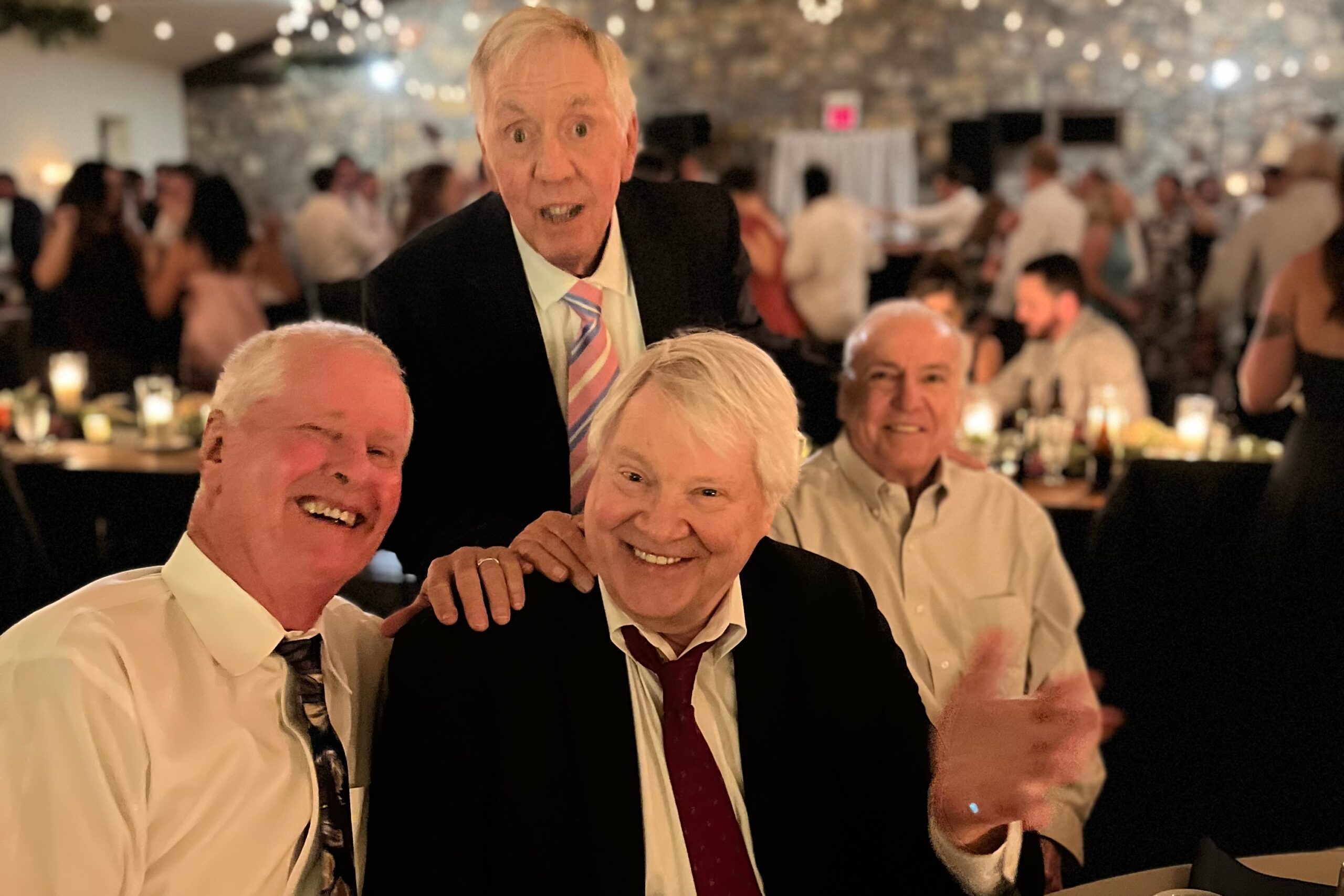
Mr. McGettigan (front right) always seemed to be surrounded by friends.
Visitation with the family is to be from 10 to 10:45 a.m. Saturday, March 7, at St. Francis de Sales Church, 4625 Springfield Ave., Philadelphia, Pa. 19143. A Funeral Mass is to follow at 11 a.m.
Donations in his name may be made to the Tunnel to Towers Foundation, 2361 Hylan Blvd., Staten Island, N.Y. 10306.
“Everyone wanted to be Joe’s friend,” a colleague said in a tribute.
Lou Capozzoli, 86, of Southwest Philly, a dive bar owner and band front man with a penchant for telling jokes, died Sunday, Feb. 1, after battling a brief illness at Mercy Fitzgerald Hospital while surrounded by family.
Mr. Capozzoli, born April, 4, 1939, was just one year younger than the bar he would eventually take over at the intersection of East Passyunk Avenue and Federal Street, then called Ray’s after the nickname bestowed on his father, Anthony.
Almost immediately, the bar became the center of Mr. Capozzoli’s life. He grew up in the apartment upstairs and as a toddler would sit quietly on the bar downstairs, eating cornflakes, while his mom poured beers. His dad, meanwhile, would wish every customer a happy birthday, even if it wasn’t theirs to celebrate.
It was a gesture that stuck with Mr. Capozzoli, who would go on to spend the rest of his life doing whatever he could to earn smiles from strangers, whether it meant serving birthday shots of cake-flavored vodka with a candle or performing to crowds as a singer and saxophonist across Las Vegas, the Jersey Shore, and South Philly.
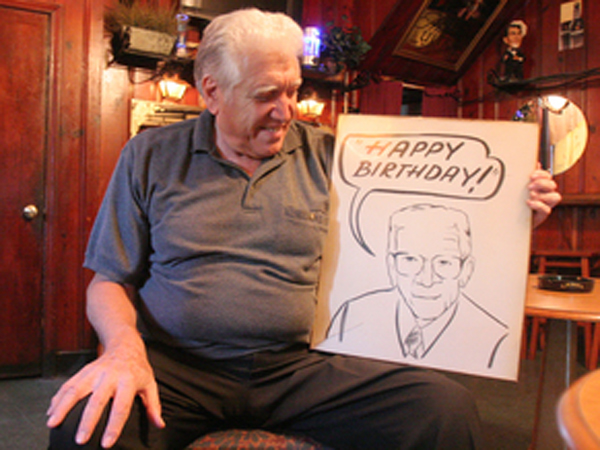
Mr. Capozzoli with a drawing of his father, Anthony “Ray” Capozzoli, who opened Ray’s Happy Birthday Bar in South Philadelphia in 1938. Mr. Capozzoli took over the bar when his father died in 1997.
“That’s all he wanted, for his father to be proud of him,” said Rose Capozzoli,Mr. Capozzoli’s wife.
As a boss, Mr. Capozzoli was “pretty silly,” said bartender T.C. Cole, who also played guitar in Mr. Capozzoli’s band. “He would call you at 1:45 in the morning when you’re trying to close just to tell you a joke.”
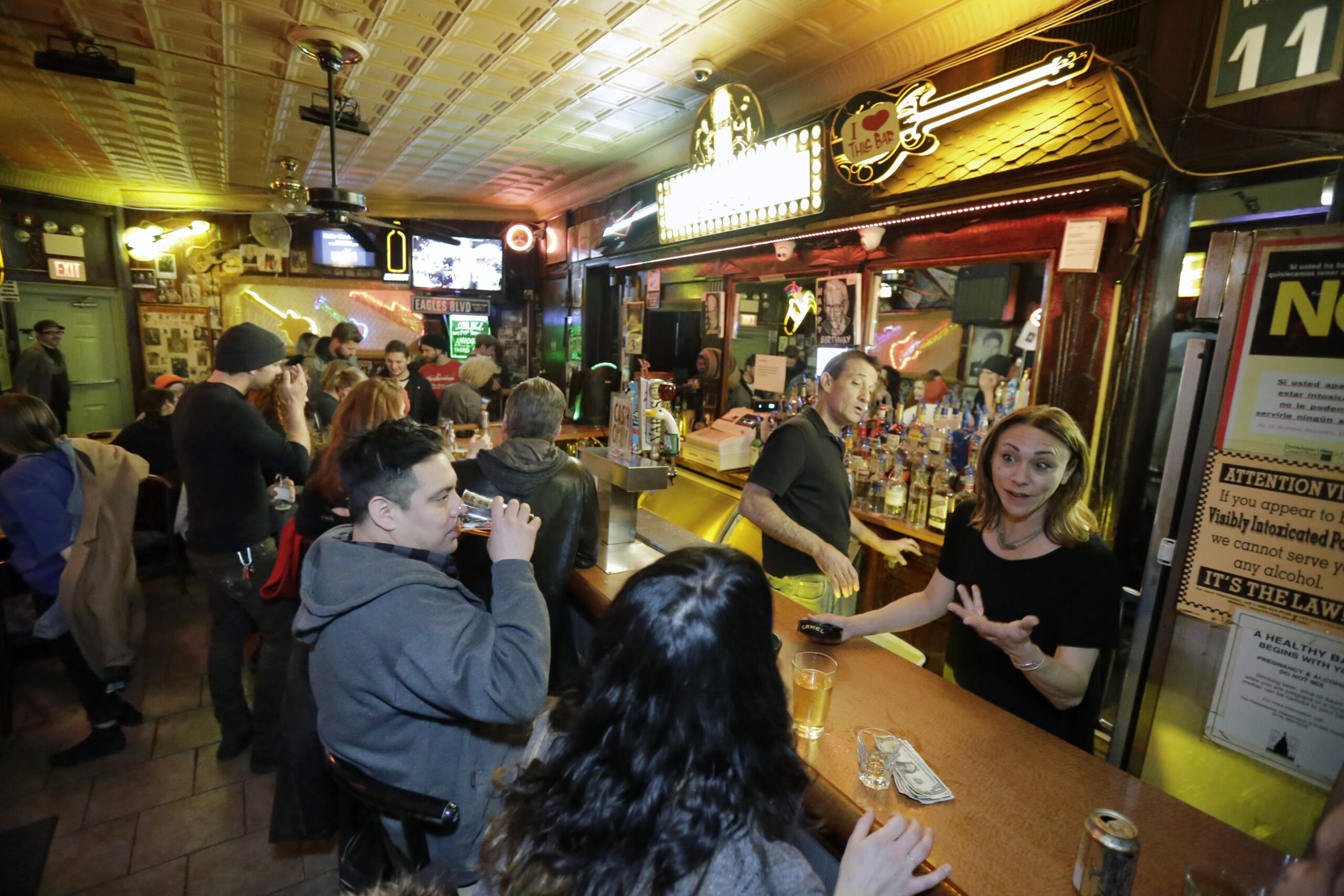
The inside of Ray’s Happy Birthday Bar. Mr. Capozzoli was known for calling regulars on the mornings of their birthdays.
If jokes were a currency, Mr. Capozzoli was a billionaire, friends and family said. He’d fire them off incessantly — during closing shifts, band performances, family dinners — and had enough discretion to whisper the most risqué in your ear. Mr. Capozzoli’s style was modeled after that of Buddy Hackett and Rodney Dangerfield, his favorite comedians, but the punch lines didn’t matter as much his delivery.
Mr. Capozzoli “would laugh with the person he was telling the joke to,” his son Anthony Capozzoli, 55, said. “If you weren’t laughing with the punch line, you were laughing at how much he enjoyed getting to it.”
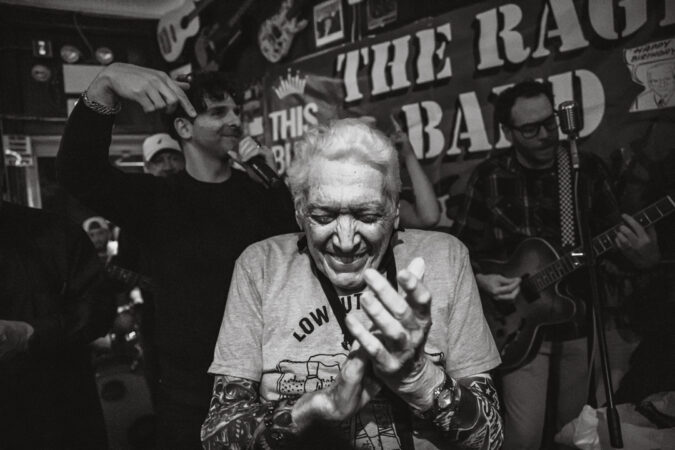
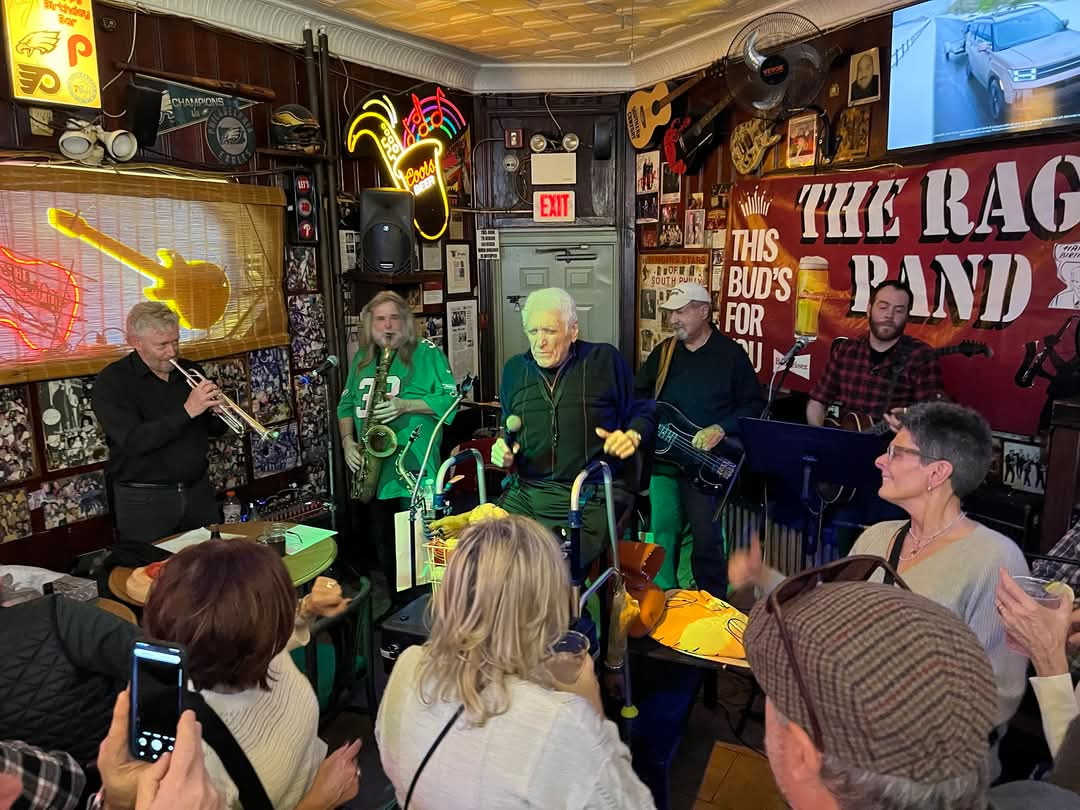
More recently, Anthony said, his father would call him just to workshop material, most of which isn’t fit to print. Mr. Capozzoli’s favorite jokes were set to music in 2023 for a five minute-long comedy track as part of a studio EP for the Rage Band, the seven-piece group that Mr. Cappozoli sang with for 41 years alongside a rotating cast of characters.
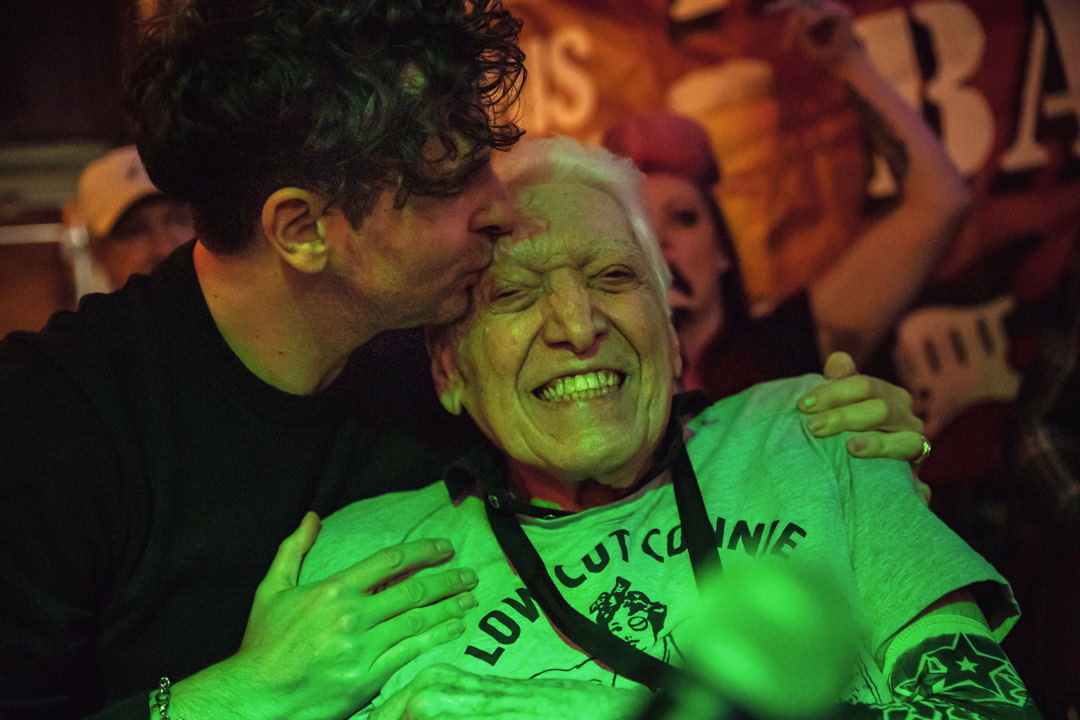
Low Cut Connie front man Adam Weiner recorded the EP. He and Mr. Capozzoli grew close after Weiner played a gig at Ray’s in 2012, bonding over their shared love of captivating a crowd.
“Not everyone is about joy when they perform … People care about their ego, people care about fashion,” Weiner said. “But Lou was always about fun, just radiating 100% joy.”
Mr. Capozzoli started performing professionally when he was 14, sneaking into clubs to accompany bands on the alto sax. The stage was a calling that helped him fall in love. It also took him to the edge of celebrity.
After serving in the military in the early 1960s and playing for Sophia Loren as part of an army band, Mr. Capozzoli told jokes and sang standards at the Stardust and Flamingo casinos in Las Vegas. At the peak of his fame, he opened for Diana Ross at the Riptide Club in Wildwood in 1965. That same year Mr. Capozzoli met his wife, Rose, who was charmed by his talents at another Wildwood concert. They wed three years later.
Mr. Capozzoli bonded with Low Cut Connie’s Adam Weiner over their shared love of performing.
Mr. Capozzoli’s steadiest gig began in 1984 with the Rage Band, once the house act for Sea Isle City’s now-shuttered Springfield Inn. There, Mr. Capozzoli settled into his larger-than-life style, commanding a crowd of roughly 1,000 people a night on summer weekends. He’d serenade Burt and Ernie puppets for a medley of Sesame Street songs and show tunes, or don outlandish masks for a Mummers tribute.Both brought down the house, but never as much as when Mr. Capozzoli would cover “Those Were The Days” or ”Sweet Caroline,” which were always punctuated with jokes.
“I call him the showman’s showman,” said Brian Saunders, one of band’s saxophonists. Tony DiMattia, a bassist for the band, concurred: “He didn’t just entertain the crowd. He entertained us as musicians.”
The Rage Band stopped their Sea Isle residency in 1999, only to pick up at new one at Ray’s in 2003, where they have performed on the first Saturday of every month from October through April ever since. The band never rehearsed, DiMattia said. Mr. Capozzoli’s stage presence could smooth over just about any kink.
Mr. Capozzoli played in The Rage Band for 42 years, performing for packed houses at the Springfield Inn in Sea Isle City and Ray’s Happy Birthday Bar.
“There is no Rage Band without Lou,” Saunders said. “He was the glue that kept us together.”
Outside of music, Mr. Capozzoli’s greatest loves were his wife and children. He was a dedicated father who enjoyed cooking large French toast breakfasts, organizing tee ball games, and ensuring the family always had a rescue dog to snuggle. Laughter — and his wife’s minding — kept Mr. Capozzoli going, even as the decades of working in a smoking bar wore on him.
“I don’t think I’ve ever seen Lou angry,” said Saunders. “I don’t think he’d ever not had a smile on his face.”
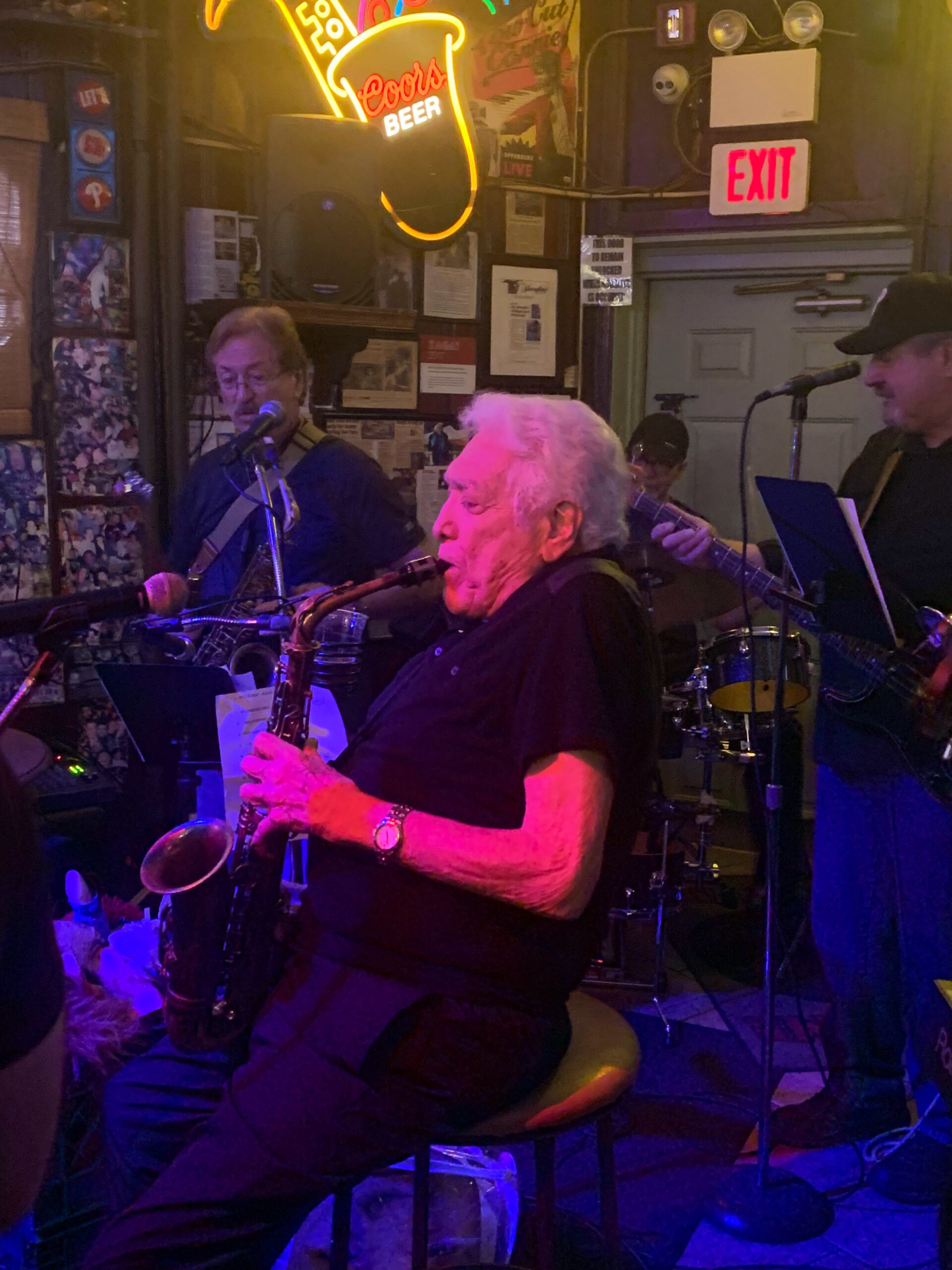
Mr. Capozzoli was an accomplished saxophonist who started playing professionally when he was 14 years old.
In addition to his wife, Rose, and son, Anthony, Mr. Capozzoli is survived by his daughters, Dyan Wixted and Luann Capozzoli, and three grandchildren: Louis, Daniel, and Delaney.
Visitation with the family will be held from 6 to 9 p.m. Feb. 6, and from 9:30 to 11 a.m. Feb. 7 at Pennsylvania Burial Company, 1327-31 S. Broad St., Philadelphia, Pa., 19147. Services will follow Saturday at 11 a.m.
On Dec. 1, 1898, about 1,000 people gathered at a court in Textile Hall — today’s Kensington neighborhood. They were there to watch the Philadelphia Hancock Athletic Association play the New Jersey Trenton Nationals in America’s first professional basketball game.
According to an article in the following day’s Philadelphia Times, the game got a late start because referees were still ironing out the rules of the world’s newest professional sport.
But once the game got underway, it was fast and furious.
Hancock “started with a rush, scoring two field goals before the players had become warmed up to their work,” the story reads.
“Throughout the entire first half, the home team had the better of the argument, taking advantage of every opportunity finishing the half in the lead by a score of 11 to [0].”
In the end, Philadelphia lost by two points, a disappointment Philly sports fans know all too well, even in these modern times.
The final score: 21 to 19.
Daniel Lipschutz blended history into his love of the modern day sport for this sculpture.
That first game of the National Basketball League will be feted this Saturday at a Firstival at Xfinity Mobile Arena. Firstivals are the Philadelphia Historic District’s weekly day parties celebrating events that happened in Philadelphia before anywhere else in America, and often the world. They are part of a yearlong celebration of America’s 250th birthday.
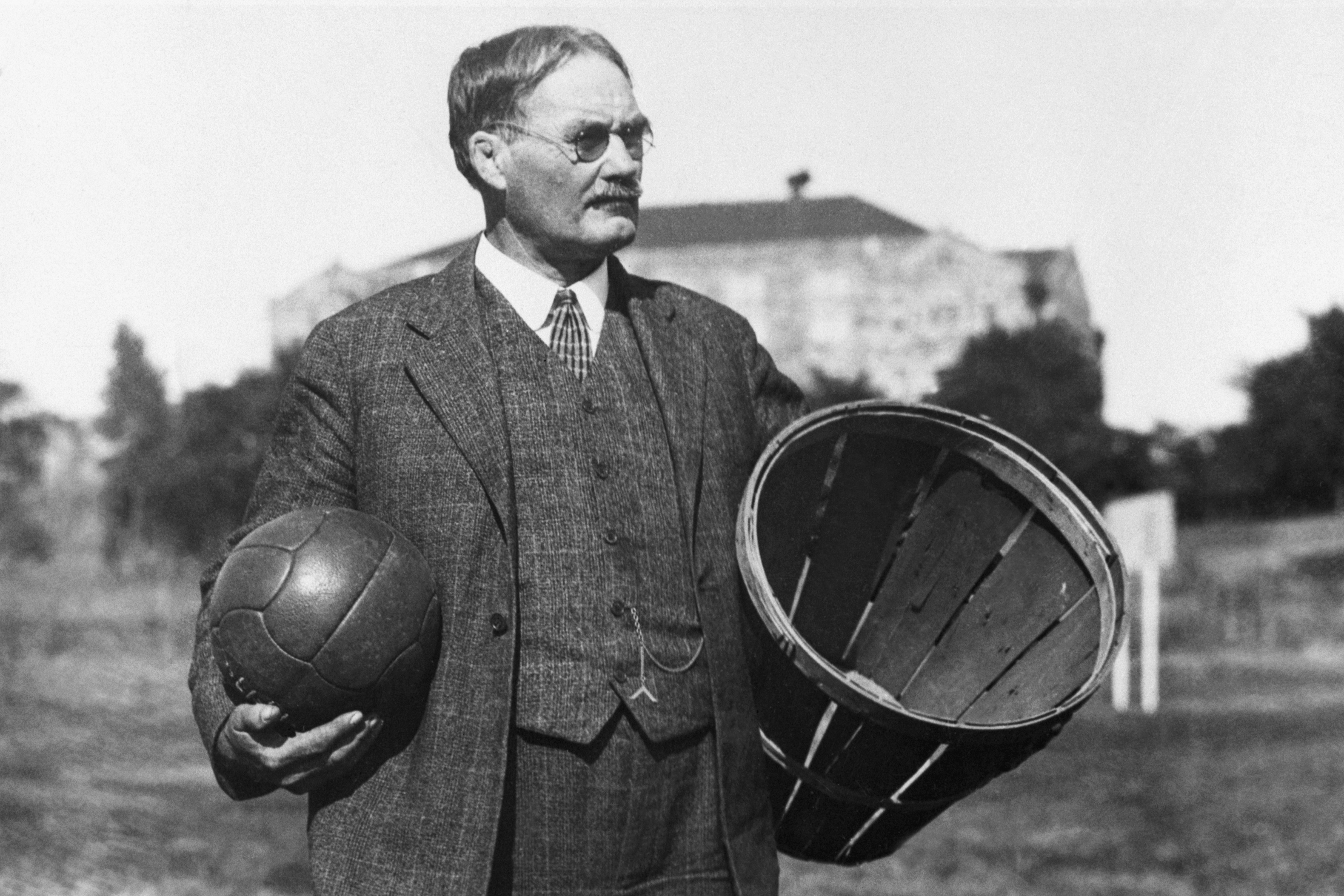
James Naismith, a YMCA coach in Springfield, Mass., invented basketball in 1891 to keep kids active during winter months. The sport incorporated elements of rugby, lacrosse, and soccer. Instead of throwing balls into a bottomless net to score, players threw balls into peach baskets.
(In other words, there was no such thing as a rebound.)
James Naismith, inventor of basketball, with a ball and a basket.
Basketball quickly became popular with college students and in 1898, Naismith was recruited to coach the University of Kansas basketball team.
That same year, Horace Fogel, sports editor of the Philadelphia Public Ledger, organized the first professional basketball league with three teams from Philadelphia and three from South Jersey.
A 12-foot chain-link cage separated players from the fans. Ropes replaced these iron cages in the 1920s.
Fogel’s National Basketball League lasted just five years, folding in 1904 because of quick player turnover eating into profits. A second league was formed in 1937 and was sponsored by Goodyear. In 1946, the Basketball Association of America was established.
And in 1949, the BAA and NBL merged to create today’s NBA.
“This really goes to show that Philadelphia is a sports city,” said Shavonnia Corbin Johnson, vice president of civic affairs for the 76ers. “When people talk about Philadelphia sports rooted in history, tradition, and passion, it’s true, but now we know that America’s true love of sports can trace its roots right back here.”
This week’s Firstival is Saturday, Jan. 24, 11 a.m. — 1 p.m., at Xfinity Mobile Arena, 3601 S. Broad St., Philadelphia, Pa. Premium Access Entrance on the Broad Street side, near Lot C. The Inquirer will highlight a “first” from Philadelphia Historic District’s 52 Weeks of Firsts program every week.
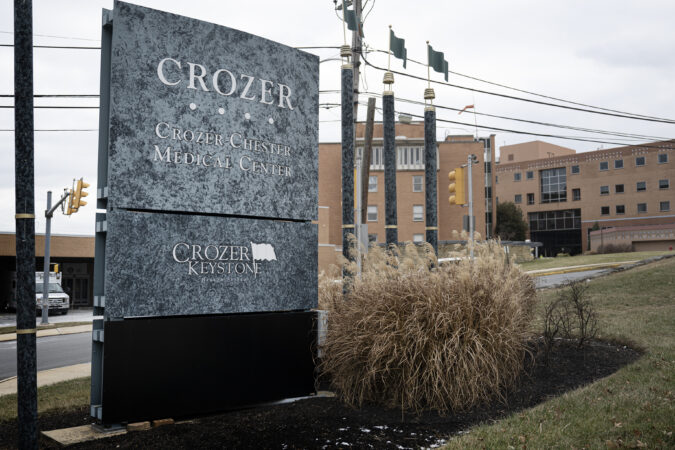
The new owner of the defunct Crozer-Chester Medical Center wants to restore hospital and emergency services to the 64-acre campus that straddles Chester and Upland Township in Delaware County.
Newly formed Chariot Equities completed the $10 million purchase Wednesday. The for-profit entity said it expected within six months to have an agreement with a health system that would operate a “right-sized” hospital and emergency department at the facility that had been the county’s largest provider of those services before closing last year.
The idea is then to open the first phase within two years, Chariot said in a statement.
Chariot did not say how much it would spend on refurbishing Crozer-Chester, which had suffered from years of neglect under its two previous owners.
Chariot’s partner at Crozer-Chester is Allaire Health Services, a Jackson, N.J.-based for-profit operator of nursing homes.
The partners said they are in talks with regional and national nonprofit health systems regarding an operating partnership, but provided no details. The amount of money needed for the project would likely depend on what prospective tenants would want to do at the property.
“Our belief in Delaware County’s future, and the community’s need for sustainable healthcare access, made this an effort worth committing to well before the finish line,” said Yoel Polack, Chariot’s founder and principal.
Little is known about the new owners. Polack worked in healthcare real estate in the New York City area before setting his sights on redeveloping Crozer-Chester.
Federal records list Allaire’s CEO Benjamin Kurland as an owner of 20 nursing homes, including three in the Philadelphia area. Chariot’s statement said Allaire owns a total of 29 facilities in five states.
Main Line Health has been involved in discussions about reopening emergency services at three former Crozer hospitals — Crozer-Chester Medical Center, Springfield Hospital, and Taylor Hospital — at the request of state lawmakers and the property owners, Ed Jimenez, CEO of Main Line Health, said Wednesday at a Riddle Hospital event.
Jimenez said he would “entertain the concept” of restoring emergency services at one of the hospitals as part of a partnership with other health systems, but only if it can be done on a break-even basis.
All three of the former hospital buildings visited by Main Line officials are in poor condition and were stripped of medical equipment after the closures. Main Line’s experts estimated it would cost between $15 million and $20 million just to make the emergency department at Taylor functional, Jimenez said.
ChristianaCare, Delaware’s largest health system, considered acquiring Crozer in 2022. Instead, it took a different path to expansion in Southeastern Pennsylvania. It is planning to open two micro-hospitals in Delaware County. The nonprofit system also took over five former Crozer outpatient locations. Its credit rating was recently downgraded by one notch because of lower profitability.
The importance of Crozer-Chester
Crozer-Chester closed in early May during the bankruptcy of owner Prospect Medical Holdings Inc., a for-profit company based in California, and after the failure of government-supported efforts to form a new nonprofit owner for Crozer-Chester and other Crozer Health facilities.
Crozer-Chester was particularly important as a safety-net provider for a low-income area of Delaware County that has few other nearby options. The Crozer system, which had four hospitals, was the county’s largest health system and largest employer for many years.
Two local Democratic officials, State Rep. Leanne Krueger and Delaware County Council member Monica Taylor, said they were encouraged by the approach being taken by Chariot and Allaire.
At Taylor Hospital, the other Crozer hospital that closed last year, new owners are also looking for healthcare tenants. Local investors bought the Ridley Park facility for $1 million. It is less than four miles from Crozer-Chester.
The same group agreed last week to pay $1 million for Springfield Hospital, another facility that had previously shut down under Prospect ownership.
The days when Black people couldn’t vote, ride on the front of public buses, be served at lunch counters, attend many schools, or sleep in hotels weren’t all that long ago. Thanks to the advocacy of the late Rev. Dr. Martin Luther King Jr. and the passage of the Civil Rights Act of 1964, discrimination based on race is now illegal.
But President Donald Trump would try to have us believe that the implementation of civil rights policies has hurt white people, when, in actuality, they make life better for everyone because they protect women, religious groups, immigrants, the LGBTQ+ community, and people of different ethnicities and races from discrimination.
In Trump World, though, up is down and down is up.
News reports today often read more like satire from the Onion than real life. But journalists still have a responsibility to report on what comes out of the Oval Office, no matter how ludicrous.
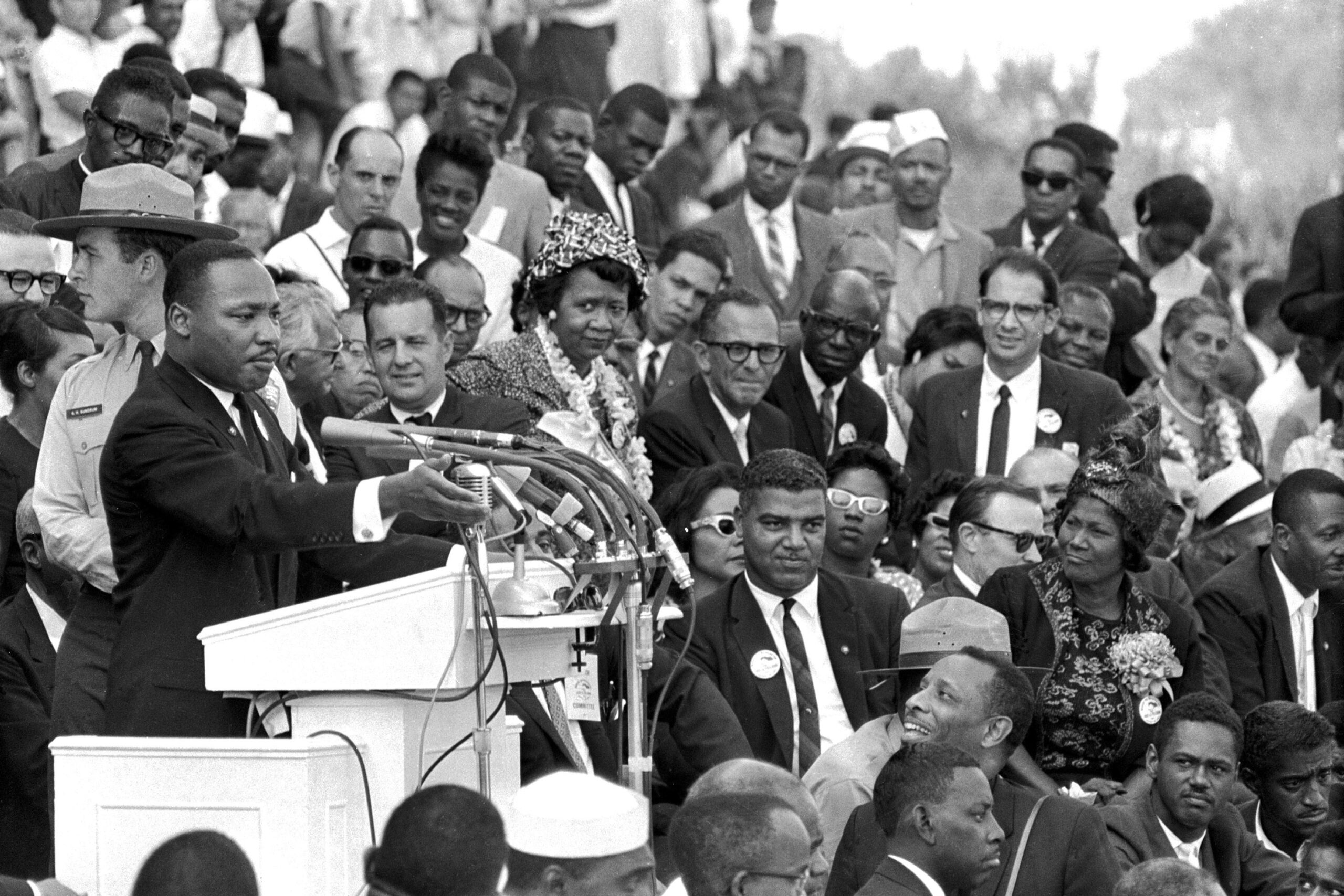
The Rev. Dr. Martin Luther King Jr. speaks to thousands during his “I Have a Dream” speech at the Lincoln Memorial during the March on Washington for Jobs and Freedom, Aug. 28, 1963, in Washington.
So when I read that Trump had met with a small group of New York Times journalists at the White House and told them that civil rights led to white people being “very badly treated,” my jaw dropped. I read and reread what his actual words were, which included his saying, “White people were very badly treated, where they did extremely well, and they were not invited to go into a university to college.”
Trump reportedly added, “So I would say in that way, I think it was unfair in certain cases.”
That’s like saying the rise of feminism and women’s rights hurt men. But wait, there’s more. Trump also is reported as having said: “I think it was also, at the same time, it accomplished some very wonderful things, but it also hurt a lot of people — people that deserve to go to a college or deserve to get a job were unable to get a job. So it was, it was a reverse discrimination.”
He apparently was referring to affirmative action, which is rich considering white women are the largest beneficiaries of it. Same thing with diversity, equity, and inclusion initiatives, which were created to give historically marginalized workers, such as women, people with disabilities, African Americans, and veterans, better opportunities in the workplace.
This attempt by Trump at grievance politics to rev up his base rings hollow to sensible people who recognize that white men have always held the vast majority of upper-level positions in both the private and public sectors.
MAGA is big on accusing former President Barack Obama of supposedly dividing the country, while it is Trump who continually stokes racial division.
He kicked off his presidential campaign in 2015 by maligning Mexicans, saying: “They’re bringing drugs. They’re bringing crime. They’re rapists.” He has referred to Haiti, African nations, and El Salvador as “shithole countries,” accused Haitians in Springfield, Ohio, of eating their neighbors’ dogs and cats, and insulted Somali Americans by calling them “garbage.”
One of the first things Trump did after being sworn into office in 2025 was to sign executive orders aimed at eliminating DEI. His remarks about civil rights supposedly hurting white people are merely his latest salvo, along with his administration’s calls for white men to file complaints with the Equal Employment Opportunity Commission.
“There is zero evidence — none — that the civil rights movement harmed white men in any way,“ said NAACP president Derrick Johnson in a statement to the Grio. “[Trump] is hoping we swallow his lie again, so that he can continue to privatize education, cut social services, and repeal civil rights laws and enforcement mechanisms. It’s all about making more money — even if we all suffer as a result.”
It’s sad — but not surprising — that in 2026 the president would reach for a play out of the tattered segregationist handbook to try and make white people the victims of civil rights.
Had he lived, King would have been thoroughly disgusted — but would have countered the president’s gutter-level deception with an elevated truth: “If the inexpressible cruelties of slavery could not stop us, the opposition that we now face surely will fail.”
Safety violations at Philadelphia-area nursing homes have led to nearly $5.3 million in fines since 2023, an Inquirer review of federal data shows, with almost half of the region’s 182 facilities facing financial penalties.
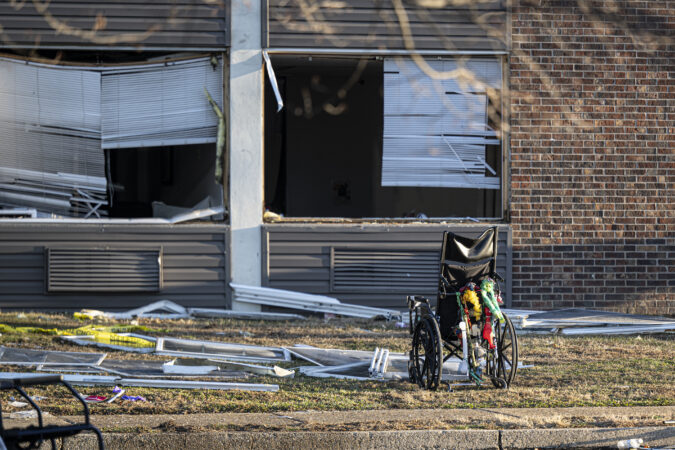
The Bristol Township nursing home,where an explosion last monthkilled three people, topped a list of nursing homes fined in Philadelphia, Chester, Delaware, Montgomery and Bucks County, according to Centers for Medicare & Medicaid Services (CMS) data.
The facility was fined a totalof $418,000 for two sets of violations in 2024 when it was known as Silver Lake Healthcare Center. The nursing home was renamed Bristol Health & Rehab Center last month, following an ownership change shortly before the explosion.
Six-figure penalties are not uncommon in the region. More than 22% of the 85 facilities fined had penalties greater than $100,000. The violations cited concerns ranging from noncompliant fire extinguishers to life-threatening hazards, such as allowing a resident to overdose on illegal narcotics.
Accela Rehab And Care Center at Springfield in Montgomery County had the most citations for health deficiencies in the Philly-area — 122 total.
Edenbrook of Yeadon in Delaware County had the most fire safety violations with 60.
Pennsylvania regulators inspectnursing homes annually to ensure compliance with state requirements and once every 15 months for compliance with federal regulations, said Neil Ruhland, a spokespersonfor the Pennsylvania Department of Health.
The amount of a fine depends on the severity of a violation, with bigger fines when people are harmed; the number of residents impacted by the violation; and how long the facility was out of compliance.
Nursing homes cited fordeficiencies are required to develop a plan of correction, which is reviewed and monitored by the state. If the facility continues to be out of compliance, it may face penalties, including fines and ultimately could be terminatedfrom Medicare and Medicaid, though that’s rare.
Here’s a look at federal fines and citations at nursing homes across Southeastern Pennsylvania since 2023, according to CMS.
window.addEventListener(“message”,function(a){if(void 0!==a.data[“datawrapper-height”]){var e=document.querySelectorAll(“iframe”);for(var t in a.data[“datawrapper-height”])for(var r,i=0;r=e[i];i++)if(r.contentWindow===a.source){var d=a.data[“datawrapper-height”][t]+”px”;r.style.height=d}}});
ChristianaCare, Delaware’s largest health system, received a one-notch credit-rating downgrade from Standard & Poor’s, to “AA” from “AA+’.
S&P attributed the downgrade of the nonprofit health system’s rating to inconsistent operating performance in recent years and the planned addition of $350 million in debt early this year through a bond offering, according to a report Tuesday.
In the year ended June 30, 2025, ChristianaCare’s financial results were weaker than expected because of low surgical volume related to physician turnover, S&P said. Another factor was higher-than-anticipated medical malpractice reserves, S&P said.
One of ChrisitianaCare’s financial strengths is that it typically gets half of its revenue from private insurers, which pay higher rates and are more profitable than Medicare and Medicaid, S&P noted.
Despite its strong financial condition, ChristianaCare has a relatively small service area, given its concentration in northern Delaware, compared to other health systems with “AA” ratings, S&P said. If ChristianaCare’s expansion into Southeastern Pennsylvania is successful, it would help alleviate that problem, the agency said.
ChristianaCare opened a micro-hospital in western Chester County last summer and is building a second one in Aston, Delaware County. It also has plans to put one in Springfield Township. In addition, ChristianaCare spent $50 million to step into the leases that the bankrupt Crozer Health had at five outpatient facilities in Broomall, Glen Mills, Media, and Havertown.
S&P said ChristianaCare has no plans for significant acute-care hospital expansion.
Last month, ChristianaCare and Virtua Health, South Jersey’s largest health system, ended negotiations on a possible merger.