Tag: Starbucks

  • For Gopuff, Super Monday is the national holiday

    For Gopuff, Super Monday is the national holiday

    Sunday’s Super Bowl LX, featuring some 66 ads costing corporate brands an average $8 million for half a minute, shone a light on America’s snacking trends, tracked closely by Gopuff, the Philadelphia-based national delivery service.

    The game between the Seattle Seahawks and the New England Patriots, also featuring Bad Bunny’s Spanish-language halftime spectacular, was watched by nearly 40% of Americans. Their delivery orders gave marketers a broad, almost instant view of what Americans were consuming and how their ads were working — or not, said Michael Peroutka, GoPuff’s head of ads, in his Super Bowl postmortem report Monday.

    The product with the most spectacular Super Bowl increase didn’t advertise.
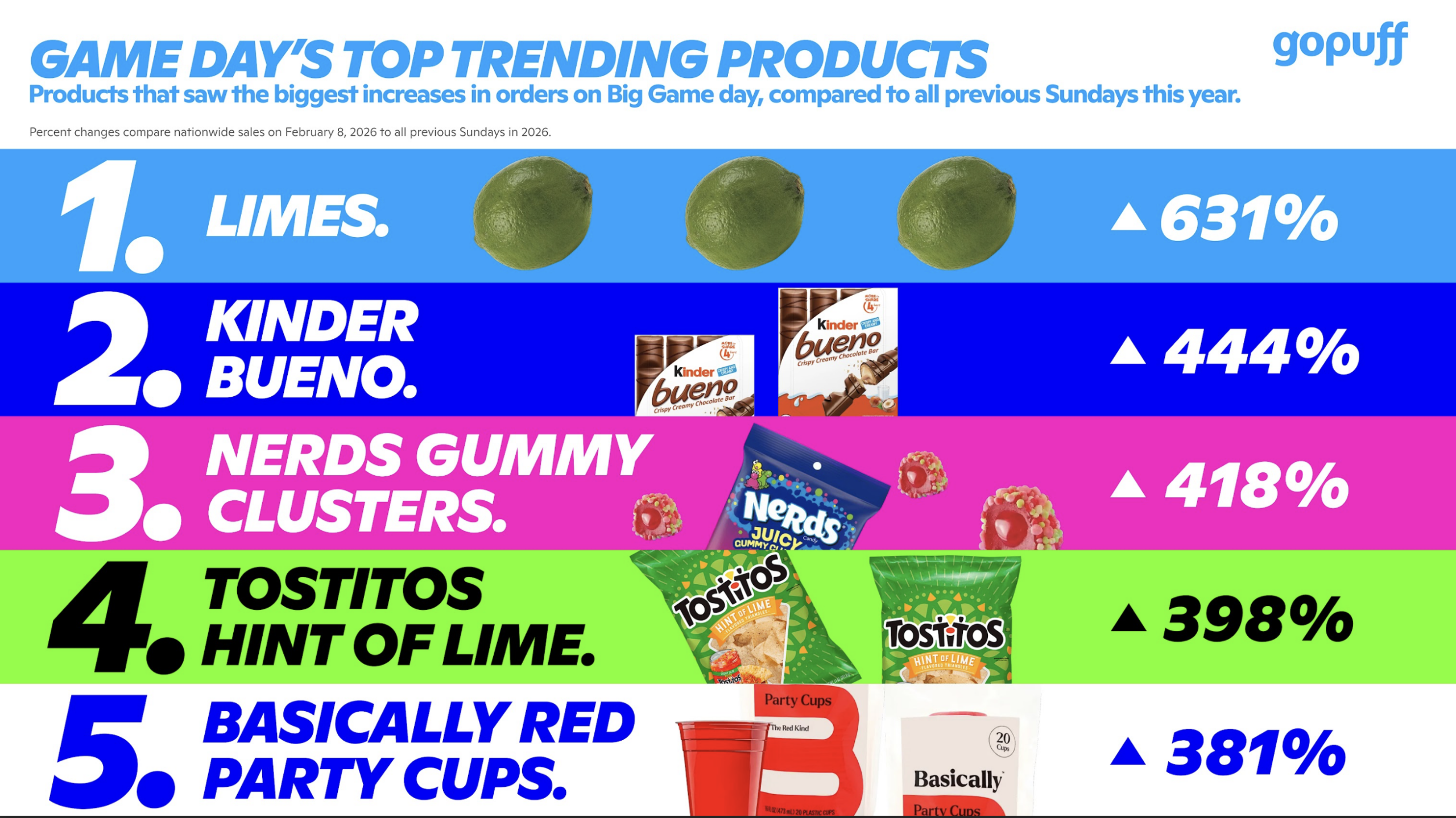
    Philadelphia-based Gopuff reported sharp increases in advertised snacks, but also in basic party ingredients such as limes and red party cups, during Super Bowl LX.

    Orders for limes during the game jumped over 600% over previous Sundays in 2026. Limes are, after all, a key ingredient in popular plates like guacamole and pico de gallo, served with Mexican beers and margaritas, and “easily forgotten at the store,” making them a natural for last-minute delivery, said Gopuff spokeswoman Brigid Gorham.

    Though lime consumption has been growing rapidly, the increase was more than four times last year’s Game Day spike, and no one could say exactly why.

    Lime sales exploded even more than Gopuff’s Basically-brand red party cups, a three-year-old in-house brand, which was up 381% on Super Bowl Sunday above recent Sunday sales.

    Overall, alcohol sales nearly doubled from recent Sundays. Soda sales were up more than one-third and salty snacks by about one-quarter. Compared to last year, when the Eagles were in the Super Bowl, the number of Philadelphia orders were up 7%.

    Other Super Bowl Sunday growth-leaders included PepsiCo’s Tostitos Hint of Lime chips, which were up 398%.

    But the top gains were two candies made by Italy-based candy maker Ferrero. Gopuff orders for Kinder Bueno, chocolates marketed heavily in Latin America and U.S. Hispanic neighborhoods, were up 444% vs. recent Sundays, and Ferrero’s Nerd Gummy Clusters, were up 418%.

    Kinder Bueno and Nerd Gummy Clusters saw sales roughly double in the hour after their Super Bowl ads ran. Liquid Death and Dunkin also saw orders rise at least 50% after ads.

    Day off?

    Gopuff also noticed well before the game that a record 13 million American workers planned to schedule Monday off; 10 million planned to call out sick, go in late, or not show up, and millions more were thinking about it, according to a Harris Poll survey funded by work software maker UKG.
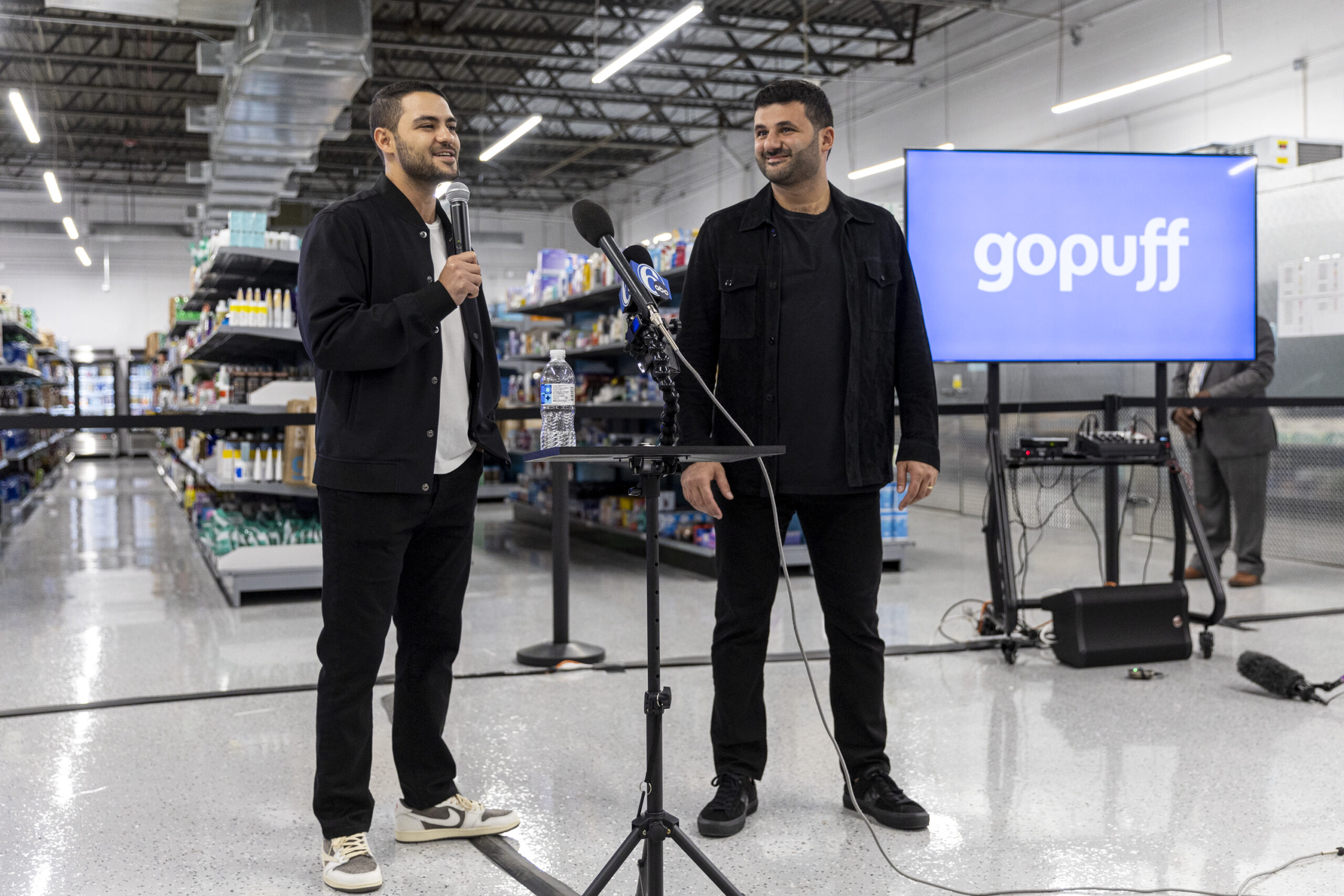
    Founders and CEO of Gopuff Yakir Gola (left) and Rafael Ilishayev speak to a room full of staff and team members of Gopuff at a recently opened center in Philadelphia in 2022.

    Cofounder Yair Gola and his colleagues saw those numbers and thought, “This ought to be a holiday.” Last fall, it set up a 501(c)4 lobbying group, the Super Monday Off Coalition, pledging at least $250,000 to get the effort rolling.

    They hired retired Patriots quarterback Tom Brady and comedian Druski to promote the cause.
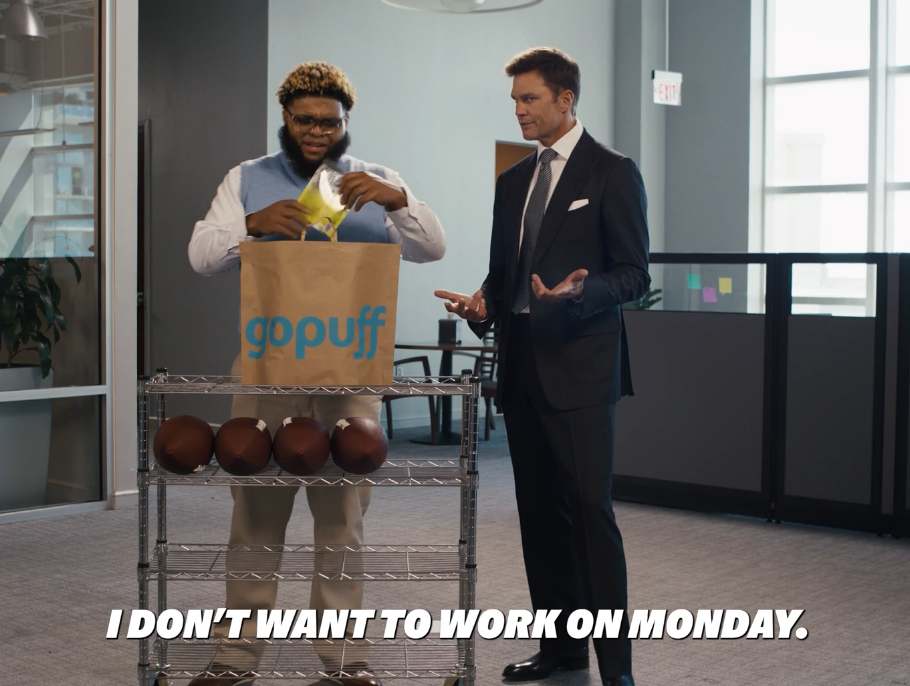
    Druski (left) and former NFL quarterback Tom Brady in an ad for Philadelphia-based Gopuff promoting its campaign to designate “Super Monday” as a national holiday, since millions already take the day off.

    The company’s contribution to the lobbying would be funded by 1% of Gopuff’s profits from sales of certain boxes of beer, sugary drinks, hot dogs, and other products from Thanksgiving to game day.

    Heavy users who placed at least four $30 orders in that period would also get $20 “Gocash” discounts and receive a chance at a Birkin handbag, a Rolex watch, and other prizes.

    By Monday, Gopuff hadn’t announced its planned donation, but the campaign was declared “a winner” by Charles R. Taylor, a Villanova University marketing professor who tracks Super Bowl ads. He spotlights not just successful marketing but also ineffective efforts like Nationwide’s painful 2015 “Boy” campaign and GM’s 2021 “No Way Norway” misfire.

    Partnering with high-profile Brady and Druski gives “instant visibility and credibility” with fans and wider audiences, Taylor said. Even if the campaign costs more than Gopuff actually donates to the cause, a national holiday is “a clever hook” watchers will remember, Taylor said.

    Going public?

    Gopuff raised over $5 billion from Saudi, Japanese, and U.S. private investors during the digital-delivery investment boom that lasted into the COVID years. These big investors hoped Gopuff (officially Gobrands) founders and early investors would win them big profits by selling shares in a high-priced stock market initial public offering or selling to DoorDash, Uber, or other delivery giants.

    But app use and delivery growth slowed in the COVID recovery. Gopuff’s perceived valuation tumbled as its publicly traded rivals’ share prices fell. The company, which had expanded to hundreds of city neighborhoods and college towns, shut marginal centers and laid off staff at its Spring Garden Street headquarters to reduce losses and save investors’ capital for better times.

    Now Gopuff is showcasing efforts to win new investor attention.

    In the past year the company announced an on-screen snacks-order app targeting Disney+, ESPN, and Hulu views; a cash-with-your-order partnership with online-broker Robinhood; hot warehouse-brewed Starbucks coffees from stores in Philadelphia and some other areas; and a partnership with Amazon to speed grocery delivery in Britain, where Gopuff remained after ending its European programs.

    Gopuff has added a warehouse camera feed and local product-sales stats for fans who want to know what neighbors are buying, app-based order updates, and user product recommendations. It added over-the-counter pharmacy items and new lines of vegan organic GOAT Gummies (which Brady is also promoting).

    The company also began accepting SNAP EBT electronic food-stamp accounts and donated $5 million for SNAP when the federal shutdown threatened low-income families dependent on the program.

    New hires include economist Matt McBrady — a veteran private-equity investor, former adviser to President Bill Clinton, and sometimes Wharton instructor — as Gopuff’s new chief financial officer, noting his experience taking companies through public stock offerings.

    Last fall Gopuff raised $250 million, its first investment since a 2021 convertible-bond financing that had valued the company at a stock-market-bubble-inflated $40 billion.

    This time, the largest investors included previous Gopuff backers Eldridge Industries and Valor Equity Partners, along with Robinhood, Israeli billionaire Yakir Gabay, the cofounders, and other earlier investors. Eldridge chairman Todd L. Boehly in a statement called Gopuff “resilient.”

    Valor partner Jon Shulkin cited the company’s “focus, innovation, and substantial gains in profitability.”

    This latest capital-raise implied a valuation of $8.5 billion — a fraction of what Gopuff was worth on paper during the digital-delivery bubble, but enough for the venture capitalists to hope they may yet get their money back with at least a modest profit.
  • Schuylkill Yards Starbucks is the latest to unionize in Philadelphia

    Schuylkill Yards Starbucks is the latest to unionize in Philadelphia

    Another Starbucks has unionized in Philadelphia, after a vote at the Schuylkill Yards location last week.

    “I see a need for improvements and am optimistic that this win will make great change,” shift supervisor Asia Wright-Wilson said in a union statement. “When problems are not well addressed through the traditional Starbucks channels the greatest strength lies in the collective action of our coworkers.”

    The Schuylkill Yards location has 18 union-eligible workers. All participated in the election, with 10 voting to join, according to the union.

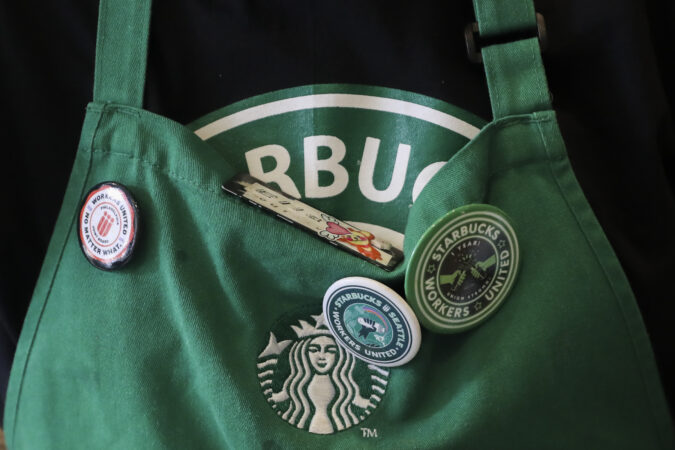
    The first group of Starbucks workers to unionize did so in 2021 at a Buffalo, N.Y., store. Workers across the country have since joined the Starbucks Workers United union, which has been negotiating a first contract.

    “We respect our partners’ right to choose, through a fair and democratic process, to be represented by a union or not to be represented by a union,” said Starbucks spokesperson, Jaci Anderson, via email on Monday. “Any agreement needs to reflect the reality that Starbucks already offers the best job in retail.”

    Anderson said Starbucks’ hourly employees’ pay and benefits equate to over $30 an hour on average.

    Starbucks has several dozen stores in Philadelphia and more in the surrounding counties. Several city and suburb locations are unionized, including nearby West Philadelphia locations at Penn Medicine, 39th and Walnut Streets, and 34th and Walnut Streets.

    The union has reached multiple tentative agreements as they negotiate a contract, but pay has been a sticking point. Workers also want more staffing, and resolution to hundreds of unfair labor practice charges against Starbucks.

    Workers launched an open-ended nationwide strike on Nov. 13, including stores in Philadelphia. Not long before that, Starbucks announced it would close hundreds of underperforming stores, including six in Philadelphia.

    Sara Kelly, Starbucks’ chief partner officer, said in December, citing information from the union, that employees from 166 of the 215 strike locations wanted to return to work.

    A union spokesperson acknowledged on Tuesday that while some striking workers have returned to their jobs, more than 1,000 remain on strike.

    “The nationwide unfair labor practice strike that began in November is still ongoing and has become the longest in company history,” said Michelle Eisen, a Workers United spokesperson and 15-year Starbucks barista.

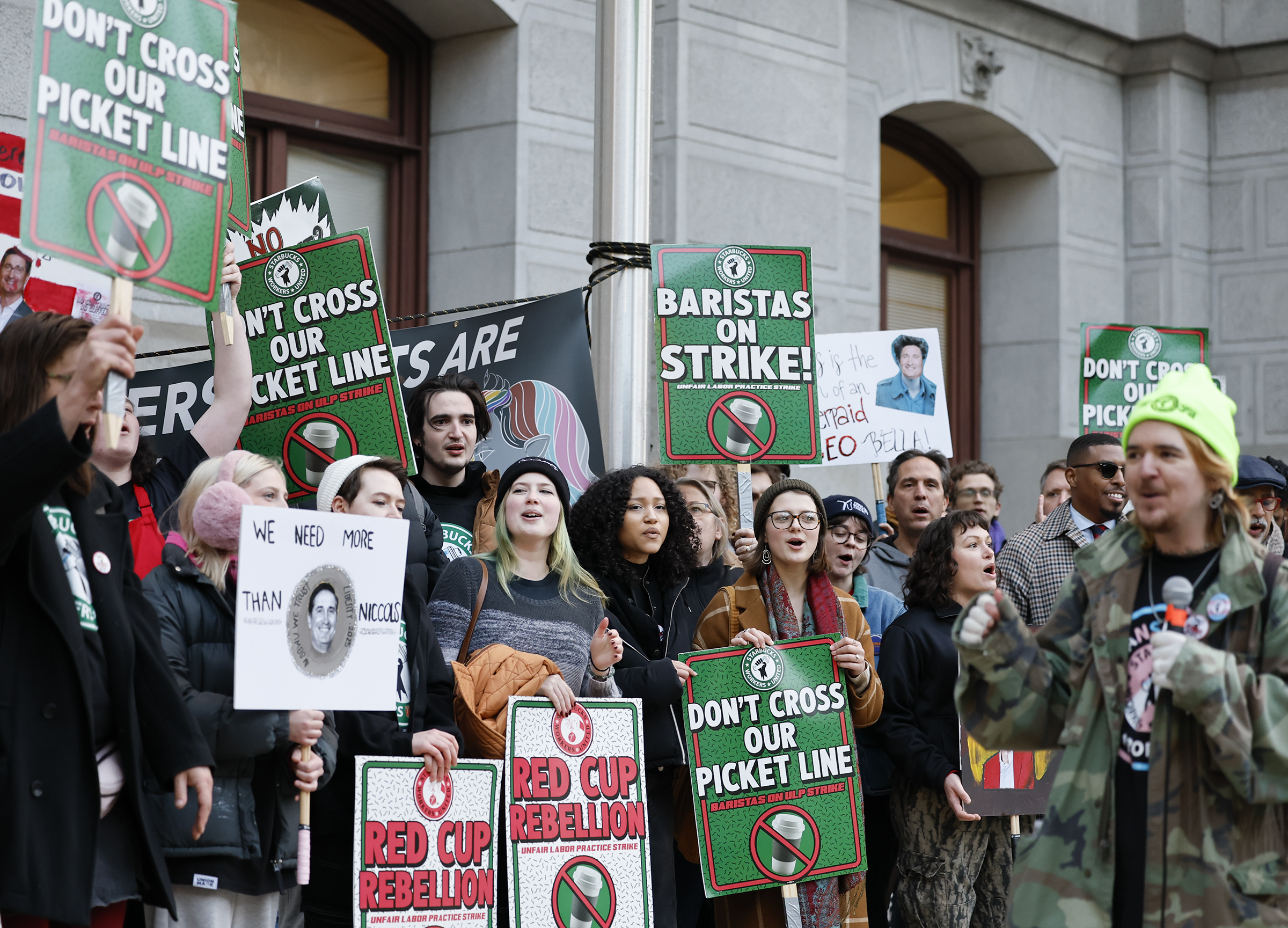
    Starbucks Workers United members cheer during a rally at City Hall on Thursday, Nov. 13, 2025.
  • How to have a Perfect Philly Day, according to 92.5 XTU’s Nicole Michalik

    How to have a Perfect Philly Day, according to 92.5 XTU’s Nicole Michalik

    Nicole Michalik spends her afternoons talking directly to Philadelphians as they make their way home. As a host on 92.5 XTU, the city’s country music station, she’s on air from 2 to 7 p.m., juggling live breaks, listener calls, and interviews with artists like Luke Combs and Parker McCollum. Radio, she insists, is still relevant, “sexy” even. “I’m live, I’m local, I’m talking about stuff that’s going on in Philly,” Michalik said. What more could you want?

    Michalik lives in Midtown Village, but her days stretch across the city, including a trek to Bala Cynwyd, where the radio station is located. She loves her job. In fact, she loves it so much that her perfect Philly day includes a trip to the office. Here’s what else it includes.

    This interview has been lightly edited for clarity.

    7:30 a.m.

    I usually wake up somewhere between 7 and 7:30. First thing I do is check socials and email, then I make coffee at home. I need it piping hot. I use a Keurig — no judgment — with organic half-and-half.

    I take it back to bed and do my Instagram bit, “Coffee Under the Covers.” I started it during COVID and it just became a thing. I’ll take a sip and talk about whatever’s on my mind. People have sent me mugs. It’s wild.

    After that, I record my Boston radio show from home. I’m on Country 102.5 up there, so I have a whole setup — computer, mic, everything. I want it to feel as local as possible, even though I’m not physically there.

    10 a.m.

    I force myself to work out. I walk to XForce to train with James, who keeps me accountable. I hate working out, but I don’t hate it there, so that’s a win for me.

    When I cross Broad Street, I always take a photo of City Hall and post the temperature. It’s become a thing. One of my friends who lives in Portugal checks it every day. He calls me his Cecily Tynan.

    11:30 a.m.

    After the gym, I get my hair blown out at Dina Does Glam inside Sola Salons at 15th and Walnut. I go at least once a week. I love that Sola lets people in the beauty industry run their own little studios.

    From there, I walk to Gran Caffè L’Aquila for an iced coffee. It’s the best iced coffee in the city. That’s nonnegotiable.

    I try to head home after that, because if I don’t, I’ll get sucked into Sephora buying makeup I absolutely do not need.

    1 p.m.

    I get ready for work and drive to Bala Cynwyd. On the way, I stop at the Starbucks on City Avenue. I order an iced Americano with almond milk and a drizzle of caramel. They know me there.

    I don’t even know if caffeine really affects me that much. I just love the ritual. I like sipping it throughout the show.

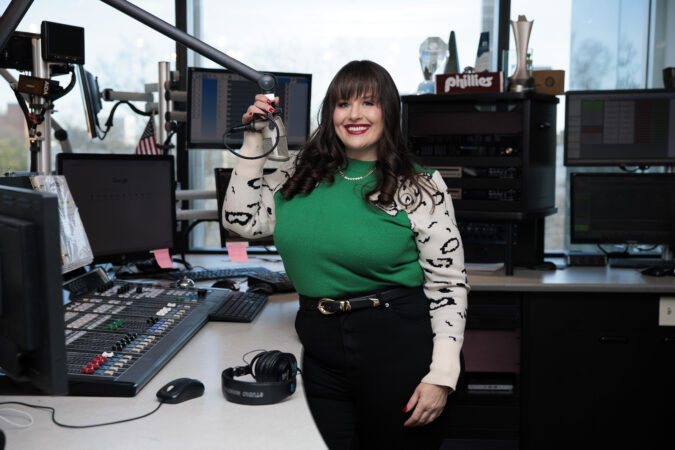
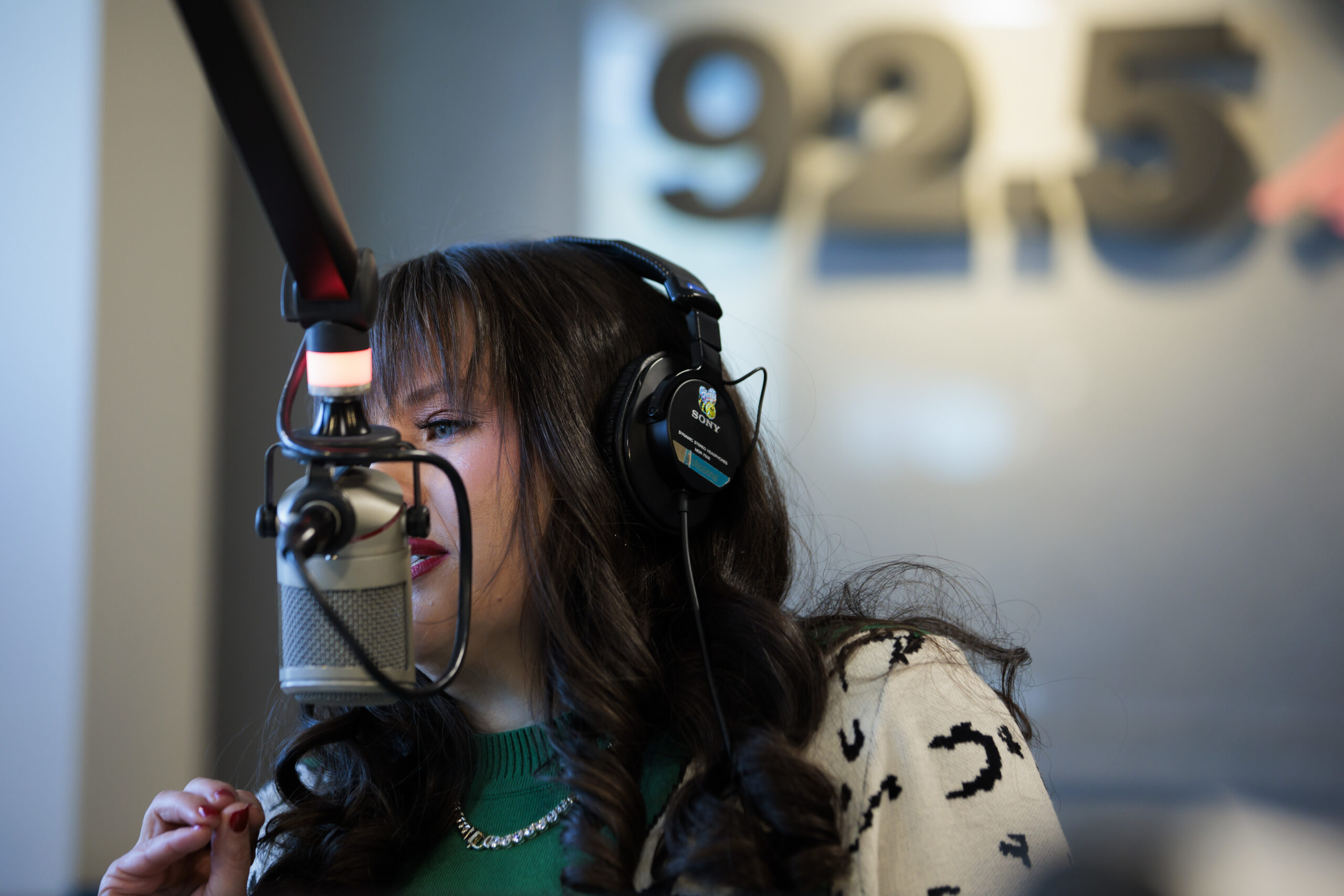
    Nicole Michalik works at 925XTU on Monday, Dec. 1, 2025 in Philadelphia.

    2 to 7 p.m.

    I’m live on the air. On my perfect day, I’m doing a Zoom interview with Luke Combs, and he finally announces he’s coming back to Philly. We’ve been mad at him for skipping us for a few years, so this would be huge.

    7:30 p.m.

    After work, I meet friends at Lark in Bala Cynwyd. It’s right across from the station, and it’s one of my favorite places. I’m ordering the gnocco fritto — they’re like little puffy clouds with lemon ricotta — and the striped bass. Nick Elmi just knows what he’s doing.

    9 p.m.

    I’m heading to a Sixers game. In my perfect world, it’s the Eastern Conference finals, Joel Embiid has great knees, and we’re winning. I live in the city and love walking everywhere, but I also love that Philly is easy to drive around — as long as the PPA doesn’t get you.

    11 p.m.

    Once 11 p.m. hits — I’m like Cinderella — I’m ready for bed. I love going home to put my pajamas on.

  • Honeygrow aims to be a national brand. Here’s where the Philly company is planning new locations.

    Honeygrow aims to be a national brand. Here’s where the Philly company is planning new locations.

    Honeygrow keeps growing.

    The fast-casual eatery, based in Center City, plans to open up to 18 new locations next year, following 17 new outposts in 2025, founder and CEO Justin Rosenberg told The Inquirer on Monday.

    “It was definitely a good year,” said Rosenberg, adding that the company is “just continuing to build the pipeline for 2026 and beyond.”

    Honeygrow sells made-to-order stir-fries as well as salads and desserts. Since launching in 2012, the company has grown to 71 locations across several states, including Ohio, Massachusetts, Virginia, Maryland, Delaware, and New York.

    Philadelphia-area stores include Center City, Kensington, University City, North Philadelphia, Bala Cynwyd, and Cherry Hill.

    The company’s expansion plans include adding locations in Ohio and New Jersey, as well as in Boston. The eatery is also currently in negotiations to bring Honeygrow to the Detroit metropolitan area, a new market, said Rosenberg.

    Honeygrow also aims to open a location in Middletown, Del.

    As of February 2024, Boston was the company’s most-profitable market, but since then, Philadelphia has caught up, he says.

    “Saleswise, it’s kind of neck and neck between certain Philly stores and our two Boston stores,” Rosenberg said.

    Further expansion in Philadelphia is also possible.

    “We are always looking at Philly,” Rosenberg said. “We’ve been poking around South Philly for a while. We just haven’t found the right opportunity.”

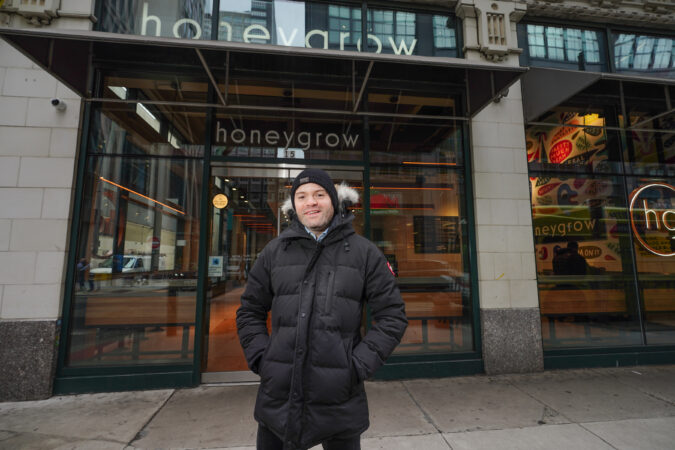
    Honeygrow, at 11th Street in Center City, in 2024.

    The company typically seeks 2,500-square-foot locations for new stores, but Rosenberg says it’s a competitive market for that kind of real estate.

    “One of the things that has made us successful — and I give credit to my team for this — is that we’ve been very disciplined on growth, just saying, look, if we can’t get the deal we need in terms of underwriting, let someone else take it,” he said.

    The company employs roughly 2,000 people, and each new store adds some 30 new hires, Rosenberg said.

    Some of the considerations when looking at new markets include what other fast-casual concepts are in the area, and how they’re doing, Rosenberg said.

    “If a Starbucks is underperforming in that market, that’s certainly going to spook us. Or a Chick-fil-A, if it’s below average unit volume, it’s probably not the right market for us,” he said.

    On the flip side, if a Chipotle, Chick-fil-A, Starbucks, Raising Cane’s, or another brand is doing well in an area, Rosenberg said, “We feel that those would be very similar customers to ours. We’re willing to put a restaurant in there and see what happens.”

    The plans for new locations come as the company shuttered some stores in Chicago, Washington, and New York in 2018 after rapid expansion plans. Some stores were “dragging down profitability,” Rosenberg has said, and he has attributed closures to growth that happened too quickly as well as poor real estate.

    Since then, the company has roughly tripled in size, said Rosenberg, adding “you just keep learning with every opening that you have.”

    “My mission remains the same,” he said. “I want to build something that’s from Philadelphia — make this a national, if not international, brand that we can be proud of.”

    Chicken Parm Stir-fry at Honeygrow at the 11th Street location in Philadelphia in 2024.
  • South Philly’s latest coffee shop has luxury Vietnamese coffee and a year-round roof deck

    South Philly’s latest coffee shop has luxury Vietnamese coffee and a year-round roof deck

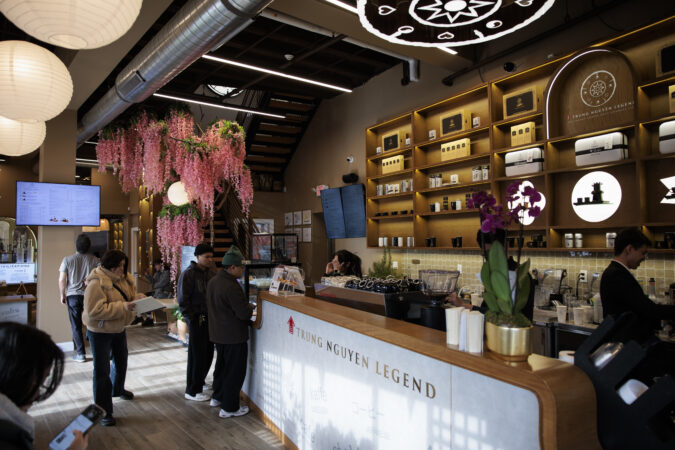
    The largest U.S. outpost of the popular Vietnamese coffee brand Trung Nguyên Legend is open in South Philly.

    Packer Park residents Estelle Nguyen and husband Vandy Doopened their Trung Nguyên Legend franchise at 113-117 Washington Ave. late last month. The couple transformed a one-story cabinetry showroom into a 5,000-square-foot cafe with two floors and a year-round roof deck, where customers can sip on citrusy espresso tonics, frothy Vietnamese egg coffees, or strong phin pour-overs, paired with a small array of European pastries (macarons, eclairs, mille-feuille) delivered daily from an off-site bakery.

    Founded in 1996, Trung Nguyên is one of Vietnam’s largest coffee brands, known for turning robusta beans from the country’s Central Highlands region into a well-regarded line of ground and instant coffees sold internationally.

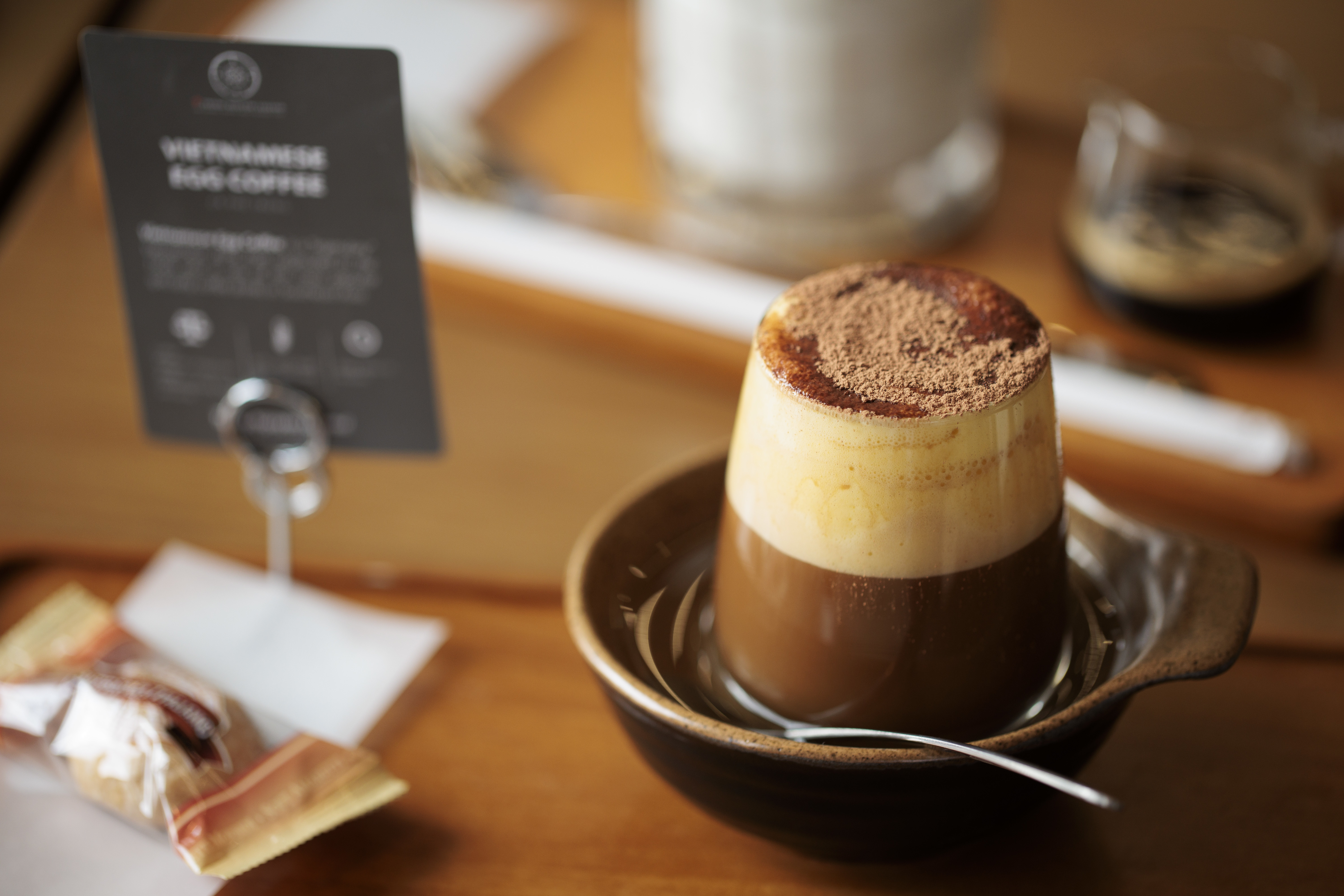
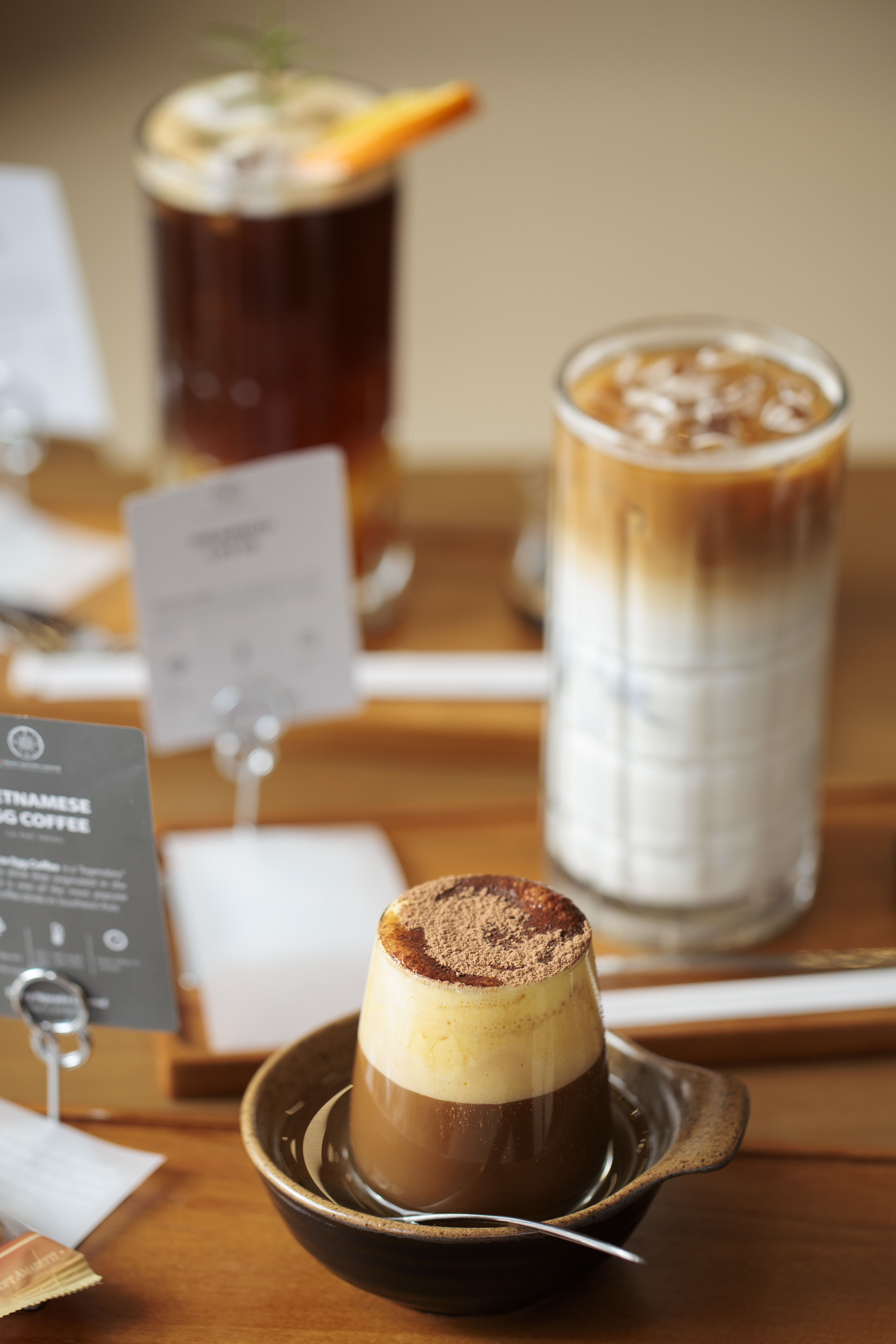
    Hot Vietnamese Egg Coffee served over a pool of warm water at Trung Nguyên Legend’s Philly location at 113-117 Washington Ave.

    Not every Trung Nguyên coffee shop is as massive —or luxurious — as the new Washington Avenue outpost. The chain operates 1,000 locations across Vietnam, China, and Europe, the majority of which are grab-and-go stores. Legend stores, however, are the brand’s version of a Starbucks Reserve, with more seating and higher-end touches like interactive coffee services.

    Most of Trung Nguyên’s U.S locations are Legends. The first franchise opened in Southern California in 2023, with six outposts across Portland and Texas following soon after. Nguyen and Do’s location is the only one on the East Coast, a fact Nguyen brags about.

    “I wanted to do something gorgeous,” said Nguyên, 52.

    Under her careful supervision, baristas at the first-floor counter crouch down to ensure that the amount of cold foam is level across matcha, sesame, and tiramisu lattes. Nguyen folds napkins printed with the Trung Nguyên logo into perfect equilateral triangles. As she greets customers, Nguyen promises tours of the rooftop lounge to people she hopes will become regulars.

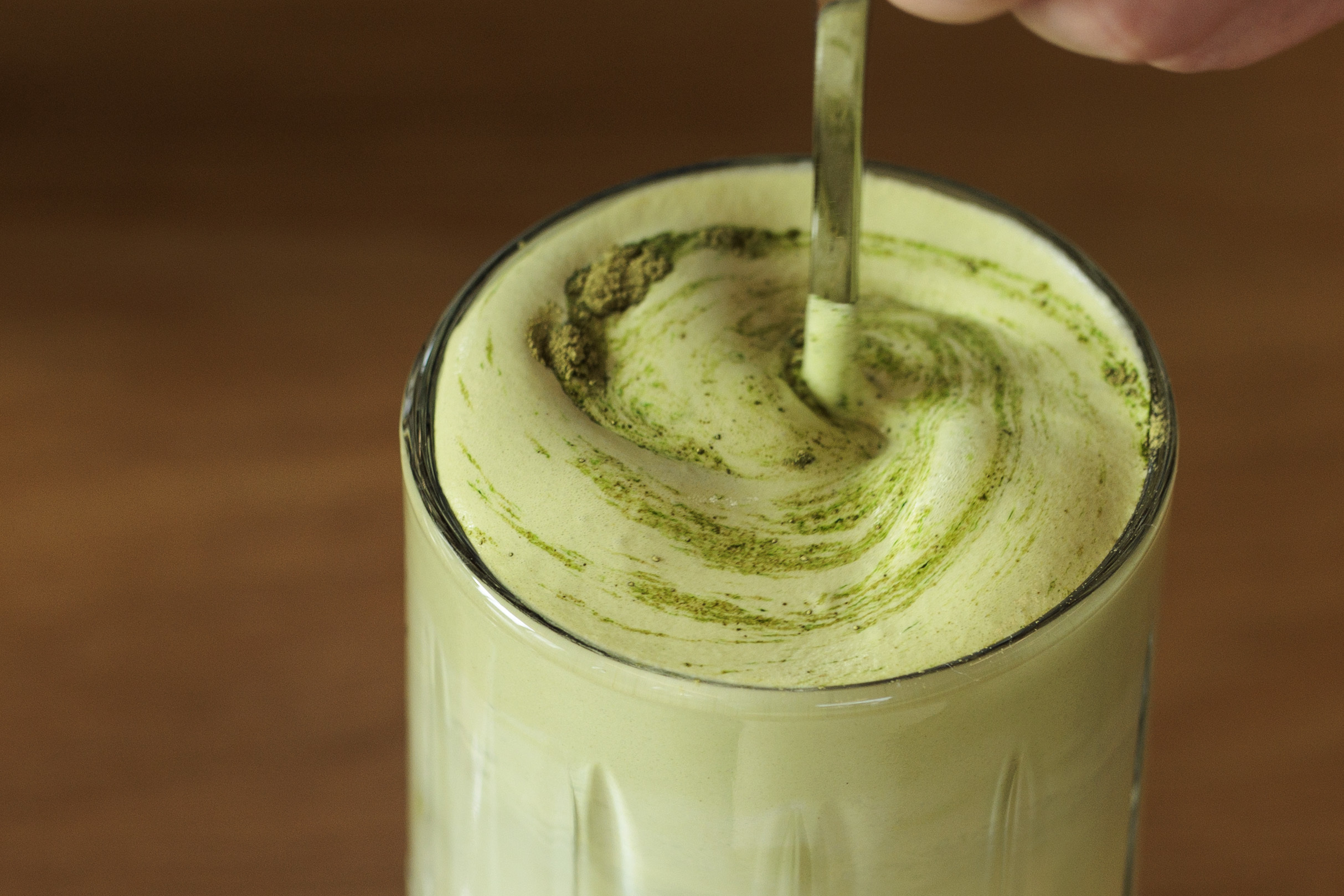
    The coconut matcha at Trung Nguyên Legend on Washington Avenue in South Philly.

    Nguyen and Do, both Vietnamese, moved to Philadelphia in 2005 to become big-time entrepreneurs: Together, they own a South Philly daycare, a wedding planning business, and Asian Palace, a Chinese restaurant at 2001 Oregon Ave. that doubles as a banquet hall.

    The Trung Nguyên franchise, Do said, is the couple’s first venture that pulls directly from their culture. Vietnam is the world’s second-largest coffee exporter, known for strong coffees brewed through phins, slow-drip coffee filters that help retain the heat and intensity of coffee grounds. The country’s coffee shop scene is also somewhat different; shops generally stay open past 10 p.m and gladly let customers linger.

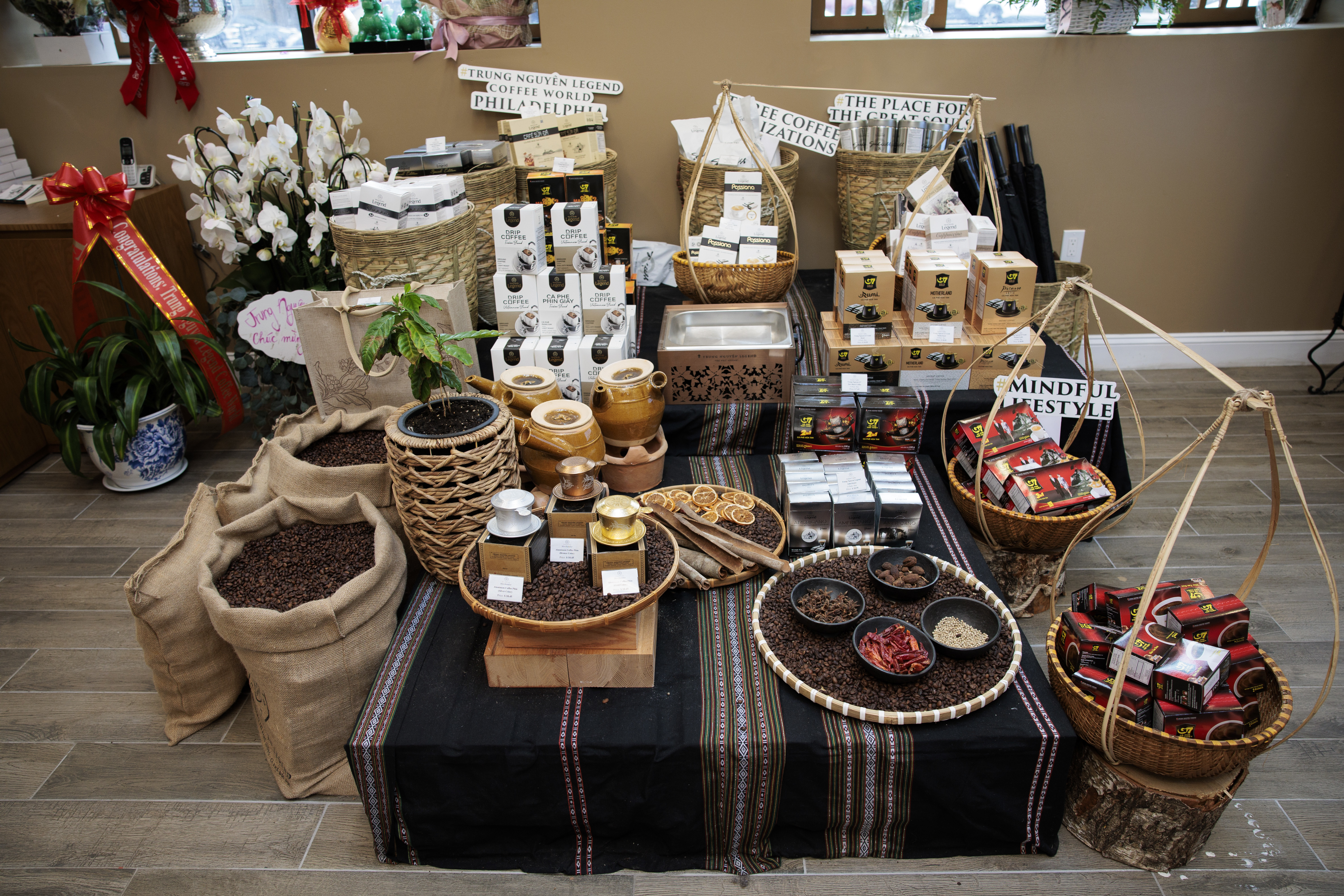
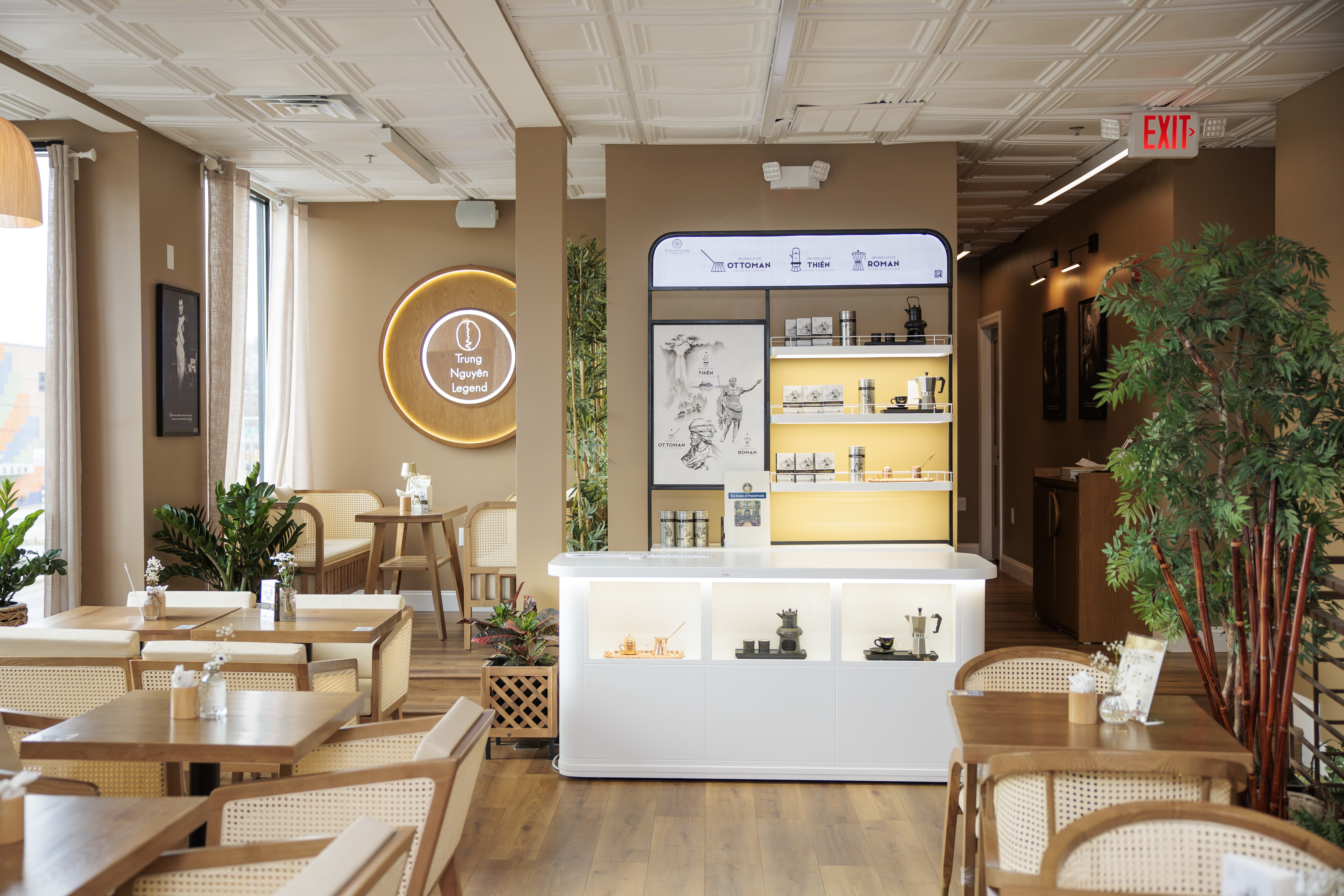
    Trung Nguyên instant coffees, phin filters, and other merchandise available for purchase at the Vietnamese coffee chain’s South Philly Legend store.

    “We’ve lived in Philly for over 20 years,” said Nguyên. “We didn’t see any spot like this where you could hang out with coffee and dessert.”

    The final result is a Trung Nguyên unlike any other in the U.S. The couple paid a sum “in the low six-figures” to sign a franchise agreement in February 2024, Nguyên said, and invested “significantly more” to add a second-floor dining space to the former showroom.

    The size was Nguyen’s idea, like most everything else in this Trung Nguyên. (Do, her husband, mostly nods in agreement while snapping photos of his wife at work.)

    “This is all me, honey,” Nguyen said. “I wanted a pop.”

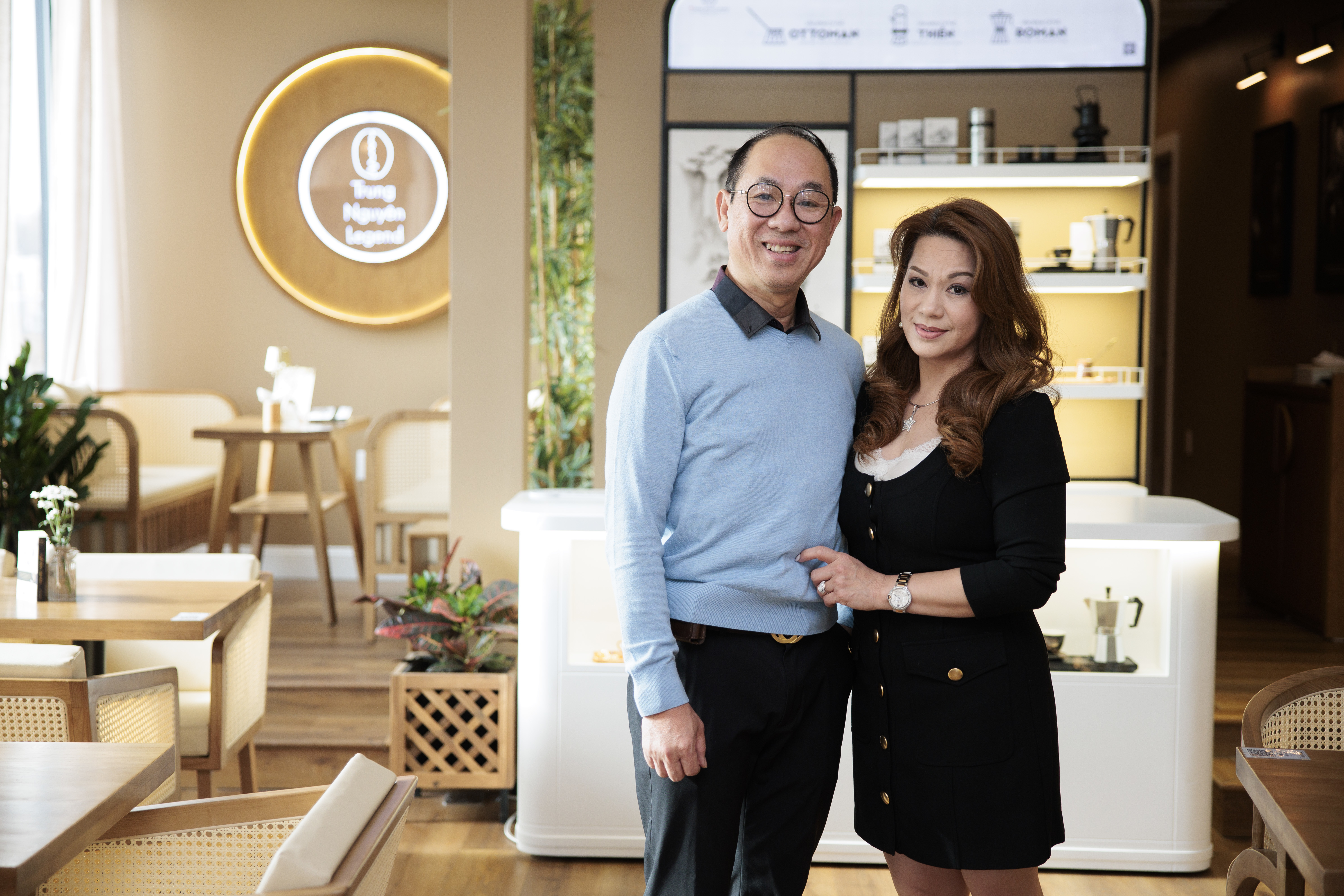
    Vandy Do and Estelle Nguyen posed for a portrait at Trung Nguyên Legend Coffee World Philly on Thursday, Dec. 4, 2025 in Philadelphia.

    The space is decorated in tones of black, beige, and brown — Trung Nguyên’s signature colors — with grand couches and plush fabric chairs that Nguyen said she lobbied the company to include, breaking with their standard look.

    A 17-foot tree covered in fake fuschia flowers looms over the main staircase. It was another of Nguyen’s visions: After spotting a barren tree on the side of a South Philly road, Nguyen had Do cut it down, the branches hanging out of his trunk on the drive home. She spent roughly a week gluing strands of flowers onto the salvaged tree. Its stump sits on the cafe’s patio, surrounded by a plant wall and a water fountain.

    That, Nguyen said graciously, was her husband’s idea.

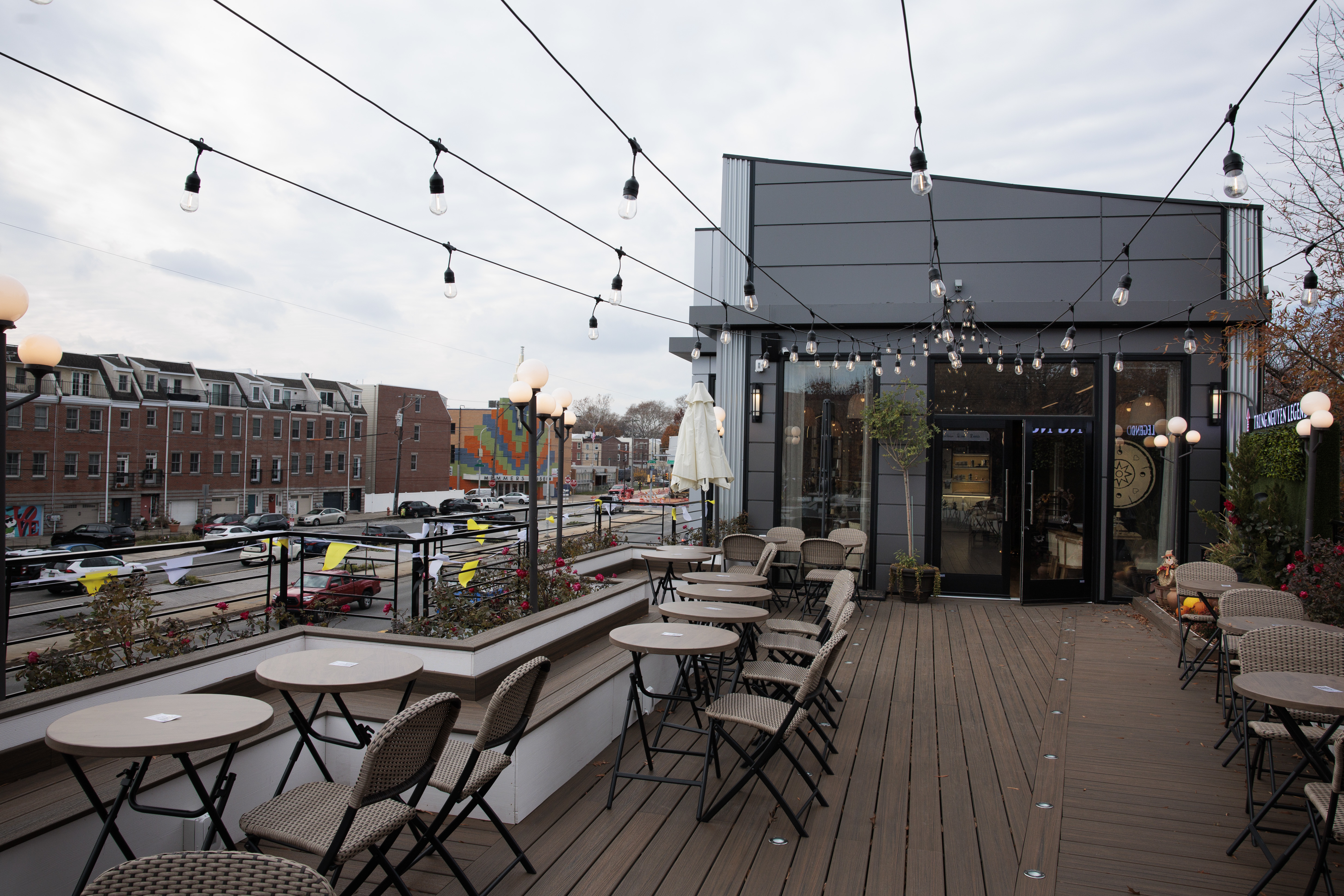
    The roof deck at Trung Nguyên Legend Coffee World Philly on Thursday, Dec. 4, 2025 in Philadelphia.

    Different coffees for different floors

    South Philly’s sprawling Trung Nguyên also offers a choose-your-own adventure element: Depending on which floor one visits, customers have the option to order coffee brewing experiments reminiscent of a high school chemistry class.

    “It’s like playing” with your coffee, Nguyen said.

    All of the store’s coffee beverages are made with Trung Nguyên-brand arabica and robusta beans — the latter of which is stronger with double the caffeine content. Baristas use both phins and a traditional espresso machine, depending on the order.

    Though there’s plenty of seating throughout, downstairs is mainly intended for to-go coffees. Customers can watch baristas prepare drinks with military precision. Nguyên said the most common orders thus far have been yuzu coffee — an espresso tonic spiked with fresh-pressed yuzu juice — and a “matcha cloud” with matcha-oat milk cold foam floated atop iced coconut water.

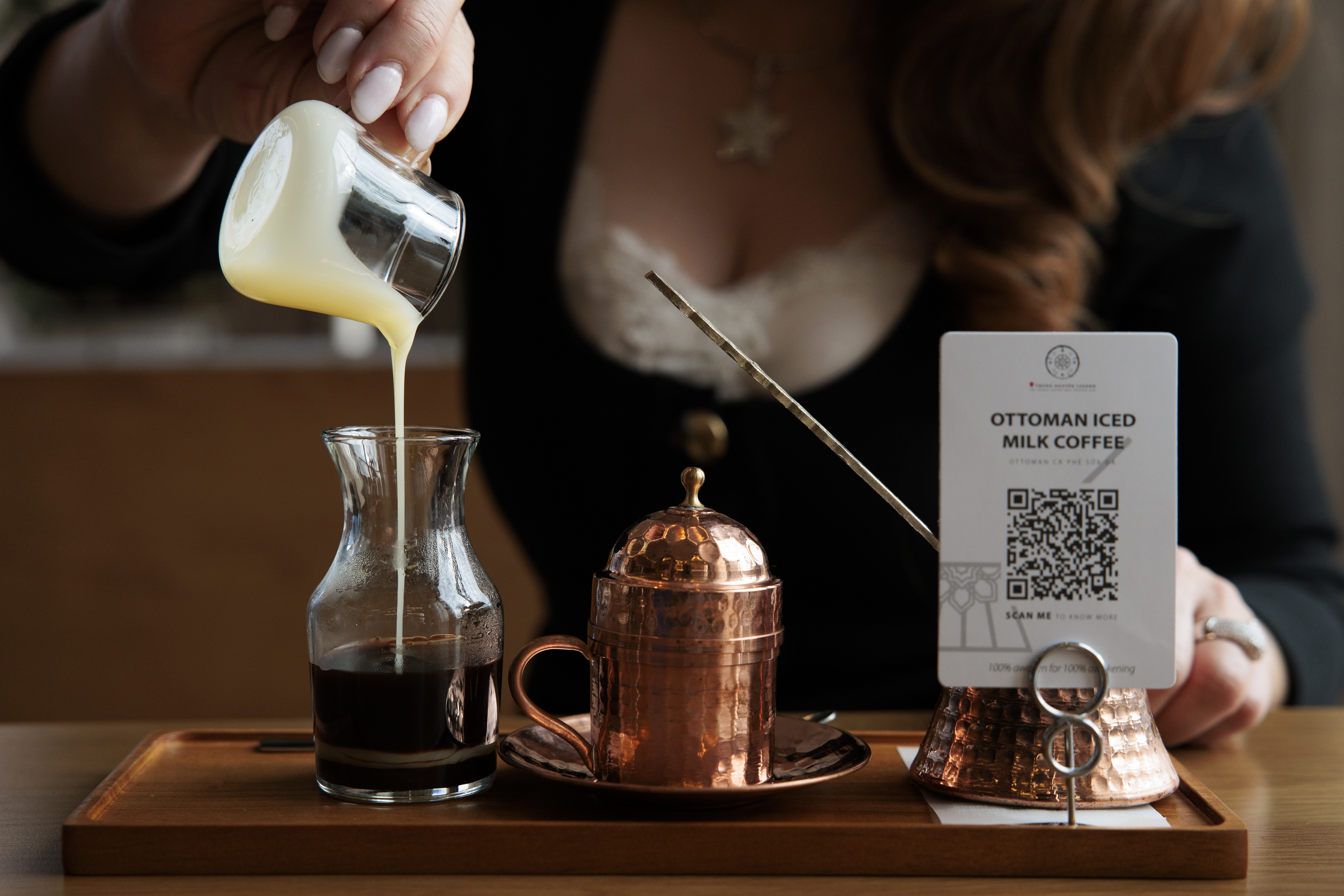
    Co-owner Estelle Nguyen pours condensed milk as part of the Ottoman Iced Milk Coffee service at Trung Nguyên Legend.

    Open from 3 to 9 p.m. daily (hours are subject to change as Nguyen hires more staff), the upstairs is the only level where customers can order Trung Nguyên’s signature Zen, Ottoman, and Legend coffee services, all of which include a 20% gratuity.

    Each service comes with percolating coffee that’s been arranged on a tray with the appropriate phins or kettles for the customer to finish the process, along with finishing accoutrements like milk and sugar, and an amaretti cookie — Nguyen’s personal touch. QR codes display instructions on how to create the perfect pour.

    Nguyen’s favorite service is the Legend. To get the perfect sip, customers must wait for grounds to finish passing through a phin before adding a thimble-sized serving of condensed milk to the brew and pouring the mixture over a glass of ice. Another option is the elaborate Ottoman service, a five-step process that involves transferring the coffee from a jug to a traditional Turkish ibrik to a petite teacup. The end result of this coffee theater tastes like a smoother, slightly bitter version of cafe con leche.

    The second-floor interior of Trung Nguyên Legend Coffee, where a 20% auto-gratuity is applied.

    Also available on both floors: creamy Vietnamese egg coffee, which became Vietnam’s signature drink in the 1940s after bartenders in Hanoi started subbing milk for whipped eggs to cope with a dairy shortage. Trung Nguyên’s version comes blended with ginger to neutralize the smell of the egg; it goes down easy, in layers of frothy foam and slightly sweet coffee. Do recommends trying it upstairs, where the drink is served hot over a bowl of warm water in order to retain its temperature.

    The concoction will run dine-in customers $8.34 for an 8-ounce cup. If they want to recreate the experience at home, they can purchase Trung Nguyên-branded products.

    “A lot of people told me I was crazy to sell $10 coffees and invest so much,” said Nguyen. “This is my big challenge.”

    Trung Nguyên Legend, 113-117 Washington Ave., 215-755-1953, trungnguyenlegendphilly.com. Hours: 7:30 a.m. to 8:30 p.m. daily

    (left to right) The Yuzu Coffee, Vietnamese Egg Coffee and Tiramisu Latte at Trung Nguyên Legend in Philadelphia.