Tag: Tacony

  • This is one of Philly’s biggest illegal dumps. Cleaning it up is a logistical nightmare.

    This is one of Philly’s biggest illegal dumps. Cleaning it up is a logistical nightmare.

    Viewed from below, the scale of the illegal dump is daunting, spanning the length and depth of a steep ravine for at least one block, spilling along before coming to a dirty halt near a clear stream.

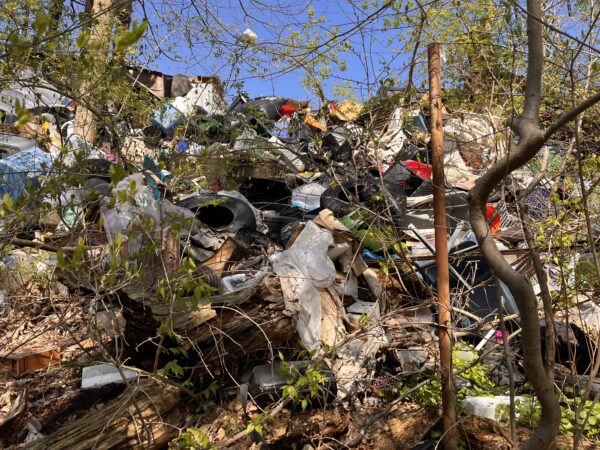
    Viewed from above, it’s a vertiginous array of broken appliances, ratty furniture, dirty toys, old tires, used mattresses, and other detritus. The rear hatch of a white Toyota RAV4 pokes through weeds. A boat is still hitched to a trailer loaded with rusting liquid propane tanks.

    City officials don’t know how long the slope off Pennway Street in Northeast Philadelphia has been the site of illegal dumping. But they know it presents a big logistical task to clean it out.

    “It’s certainly one of the larger dumps we’ve had to deal with,” said Carlton Williams, director of the city’s Clean and Green Initiatives Office.

    Williams expects that it will be far more difficult to clean than the 4,000 tires found in last April in Tacony Creek Park. Those were hauled out by city workers and 200 volunteers.

    “We’ll probably have to get cranes. And it’s going to be challenging to get equipment back there,” Williams noted. “This has been a hidden place for people to illegally dump for some time.”

    window.addEventListener(“message”,function(a){if(void 0!==a.data[“datawrapper-height”]){var e=document.querySelectorAll(“iframe”);for(var t in a.data[“datawrapper-height”])for(var r,i=0;r=e[i];i++)if(r.contentWindow===a.source){var d=a.data[“datawrapper-height”][t]+”px”;r.style.height=d}}});

    A treacherous location

    The first obstacle to cleaning out the dump is its location. It begins at the edge of an alley under high-voltage wires. Area residents park their cars in the alley and some have erected sheds.

    The top of the slope is treacherous, filled with trash, chunks of concrete, and thickets of bramble that are easy to snag or trip on.
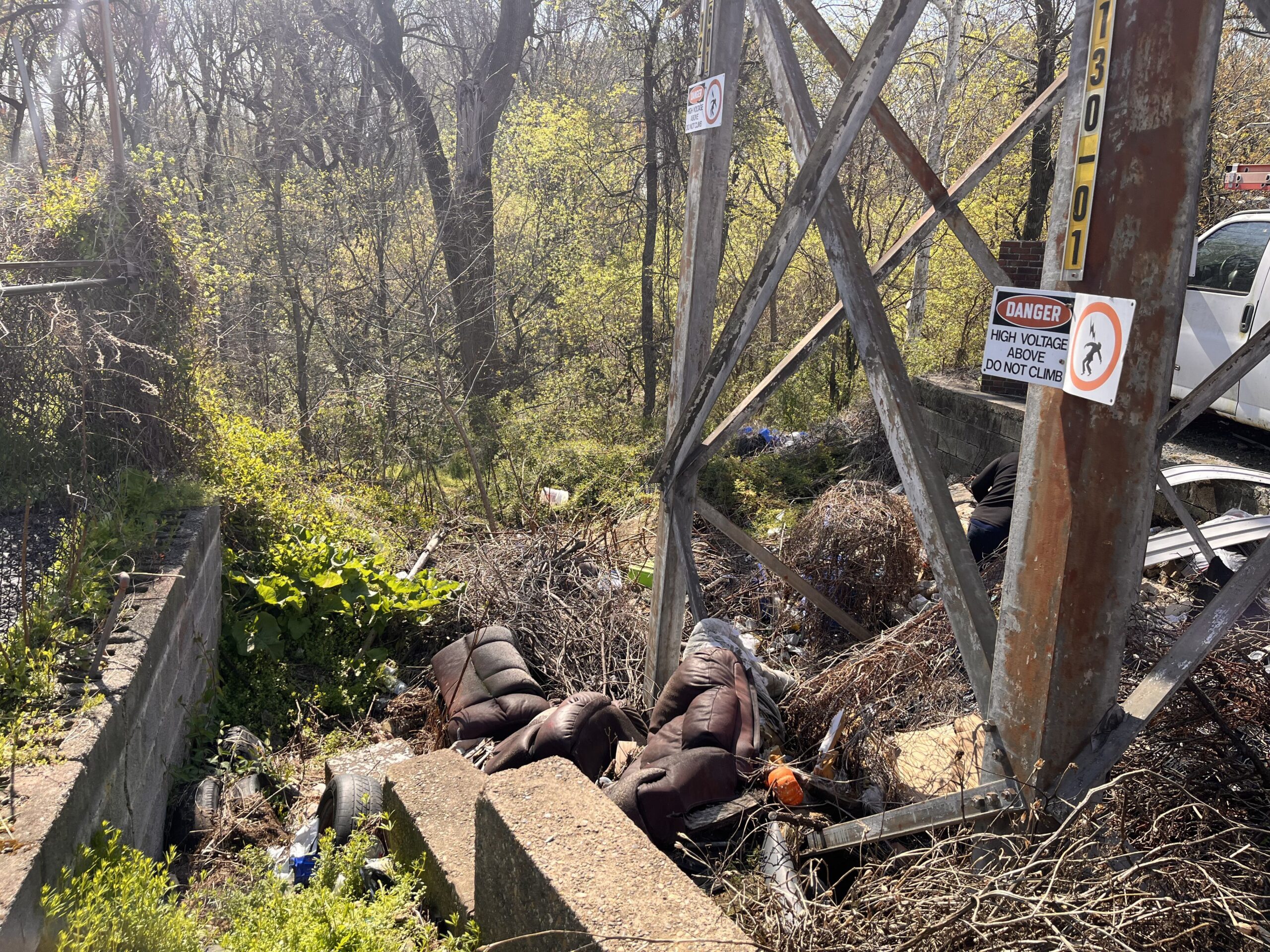
    A view of the top of the illegal dump under power lines off Pennway Street in Philadelphia.

    Using volunteers to haul things out is probably not practical given the potential danger, Williams said.

    From below, the dump is hidden by woods that adjoin the grounds of Friends Hospital. To view it, you have to leave a small trail, walk down a vegetation-choked embankment, ford a spring-fed tributary of Tacony Creek, and trudge through wetlands.

    There is no direct access road from the bottom.

    On a recent day, a man was picking through the rubble.

    “Looking for metal,” he mumbled.
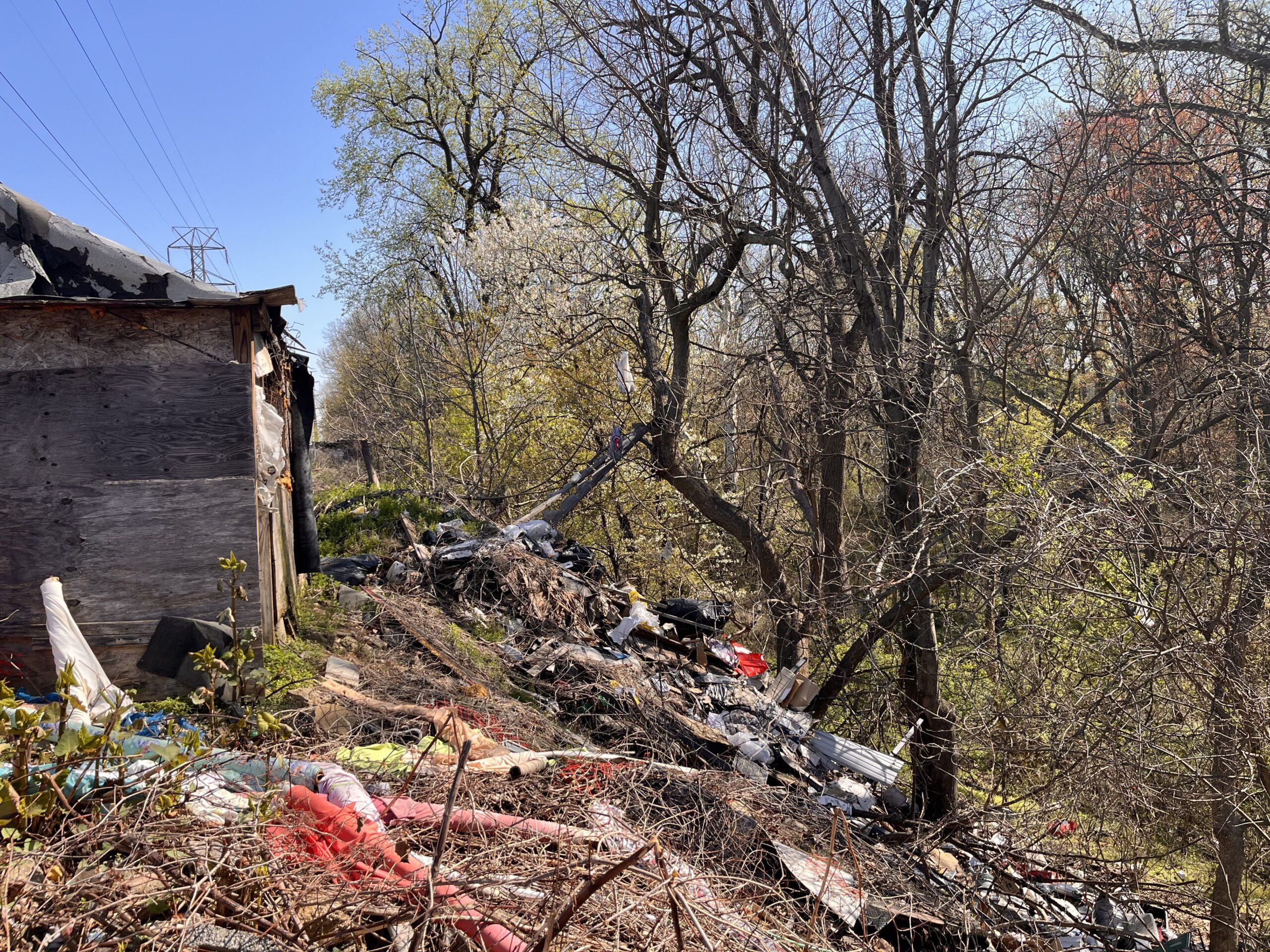
    The top of a ravine that serves as an illegal dump off Pennway Street in Northeast Philadelphia as viewed April 10, 2026.

    Who owns the land?

    The second major obstacle will be untangling ownership of the property, sorting out responsibility, and paying for it.

    Williams said the city is currently tracking down ownership of whatever parcels might be involved.

    Peco did not respond to an Inquirer email by deadline about whether any of the dump falls on its property or easements.

    It’s not clear who is doing the dumping — construction crews, residents, or both.

    “We’re still trying to figure out a plan,” Williams said. “We need to identify the property owner. Then we have to gain access.”

    Williams also said it will be a challenge to prevent dumping in the future.

    Philadelphia already has 400 surveillance cameras used to monitor known dump sites and can tap a broader network operated by the police department and other agencies. It anticipates purchasing an additional 100 cameras.

    It has also installed bollards and gates that prevent vehicles from entering dump locations and is more aggressively pursuing and fining violators.
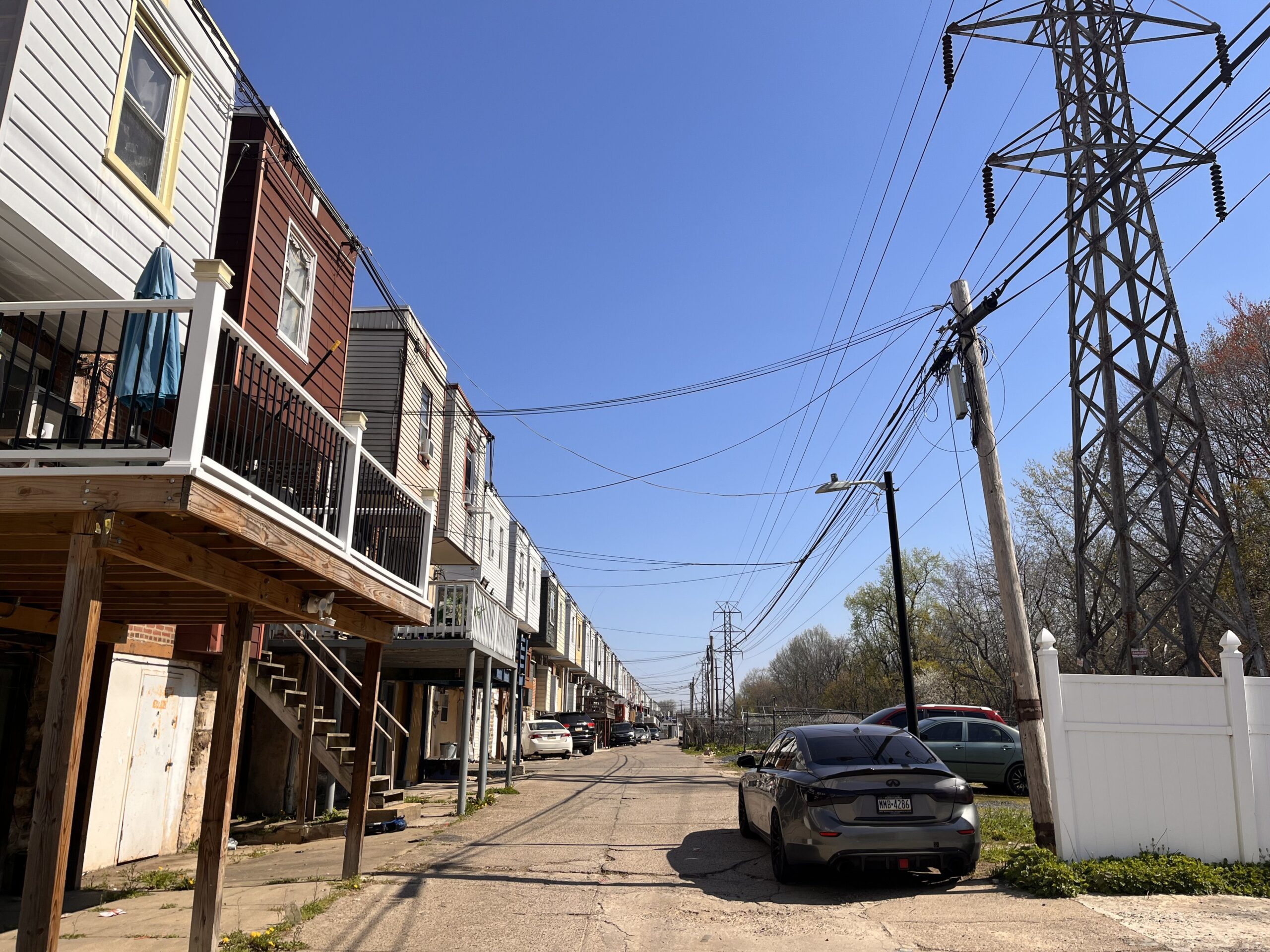
    The rear of Pennway Street in Northeast Philadelphia as viewed April 10, 2026.

    ‘A huge psychological impact’

    The dump was first reported to the city by the nonprofit Tookany/Tacony Frankford Watershed Partnership (TTF), which helps manage the city-owned Tacony Creek Park.

    TTF has an office at the Friends Hospital complex off Roosevelt Boulevard. The nonprofit is helping with a yet unnamed 50-acre preserve on the hospital grounds that connects to Tacony Creek Park.

    A portion of the dump is behind a broken fence at the edge of the grounds.
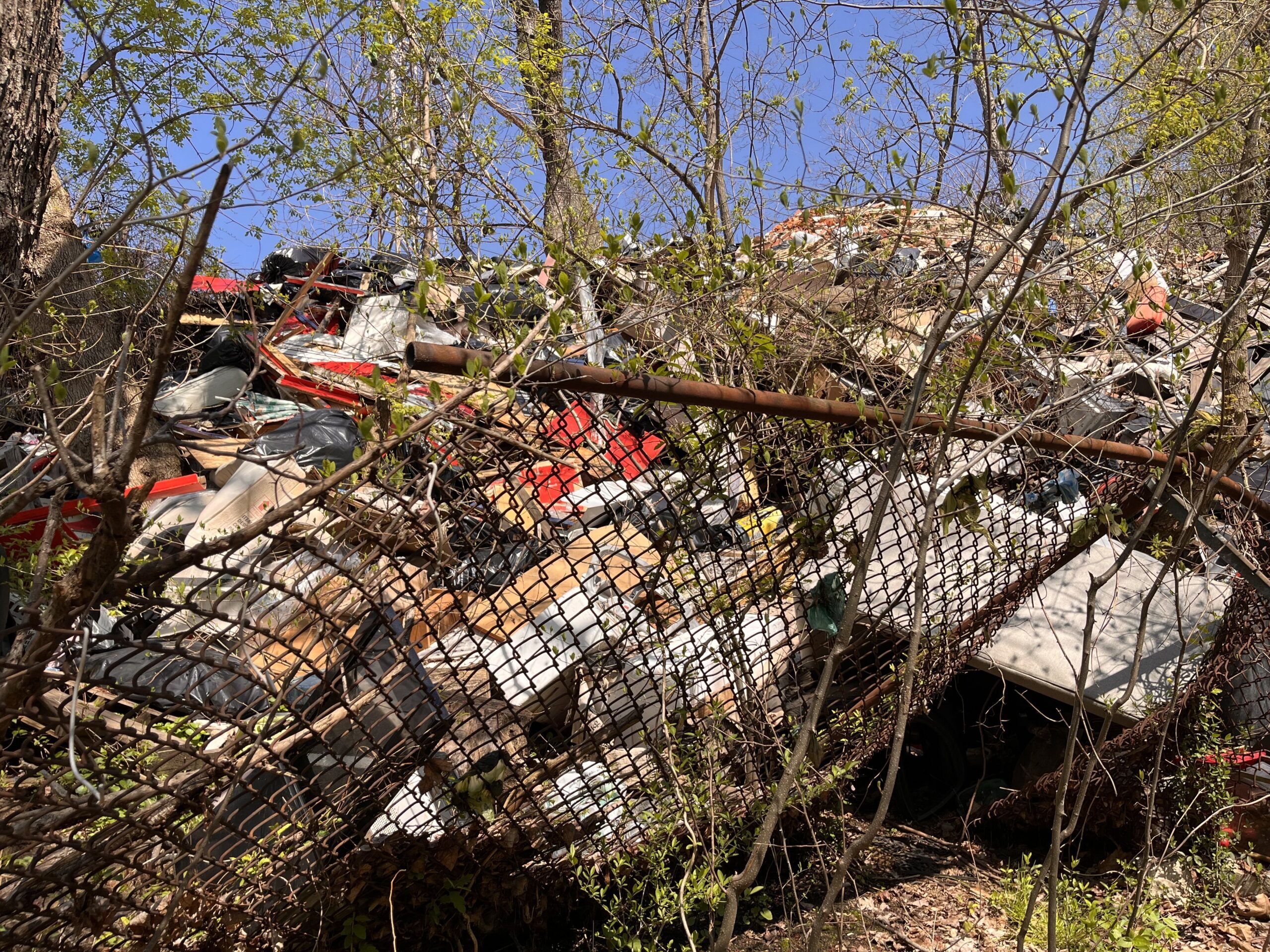
    The dump off Pennway Street spills to the edge of a broken fence.

    “This is one of the harder ones to tackle,” said Justin DiBerardinis, executive director of TTF. “We’re at the beginning of a journey to take care of one of the biggest dumps that a lot of us have seen.”

    DiBerardinis suspects contractors are dumping there, but also residents.

    Cleaning it up, he says, will be “extremely complex.”

    He’s also heartened by what he sees as the city’s willingness to address the logistical challenges presented by illegal landfills.

    DiBerardinis said the dump mars the landscape, and rests only yards from a tributary of Tacony Creek that serves as the edge of the 50-acre preserve.
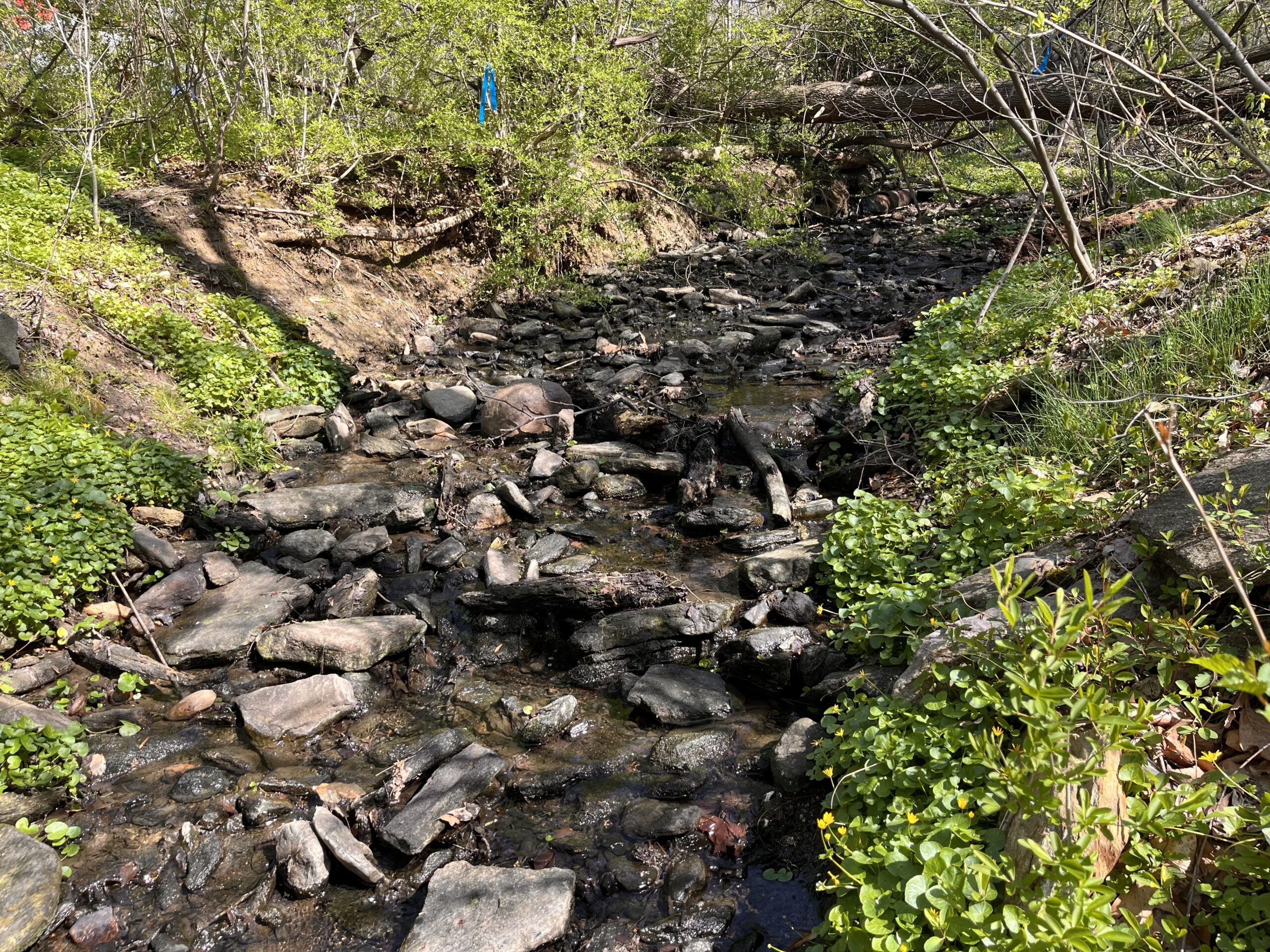
    A spring-fed tributary of Tacony Creek flows between the illegal dump off Pennway Street in Northeast Philadelphia and the grounds of Friends Hospital as viewed April 10, 2026.

    “That stream is really clear, like spring-fed water coming from the earth,“ DiBerardinis said. ”To have that in our city is such a rare and special thing.“

    He senses growing community support for tackling litter and a backlash against dumping. Last Saturday, about 100 volunteers came to the preserve to help clean it, though the dump remained inaccessible.

    He thinks the community can play a role in the cleanup, if even for moral support and watchful eyes in the future.

    “I’m seeing people getting inspired at the possibility of the restoration and the protection of those places, and to have access for them and their children,” DiBerardinis said. “Dumping like that has a huge psychological impact on a community.”

  • Philly has lots of trails. For the first time, it is hiring a full-time crew to maintain them.

    Philly has lots of trails. For the first time, it is hiring a full-time crew to maintain them.

    Philadelphia’s miles of trails draw a constant stream of runners, walkers, hikers, cyclists, and commuters.

    Yet for years, city officials have depended on residents calling in or logging in to the 311 system to report trail issues before a crew was sent out.

    Now, Philadelphia Parks and Recreation (PPR) is set to roll out the city’s first dedicated trail-maintenance crew, a pilot program funded by a $600,000 grant from the William Penn Foundation.

    The money will fund a six-person team tasked exclusively with monitoring and maintaining multiuse trails that thread through 10 watershed-protecting parks.

    Susan Buck, PPR’s deputy commissioner of operations, said the crew would launch this summer and resolve a long-standing logistical problem.

    “The focus has always been on building the trails,“ Buck said. ”However, in recent years we would go to community meetings and hear more about trail maintenance.”

    Right now, addressing a downed tree or a washed-out path means pulling staff away from recreation centers and neighborhood parks. A dedicated trail crew will ease that strain, she said, and position the city to address issues before they snowball into bigger problems.

    Now, PPR can be proactive, she said.

    Parks are priorities

    The crew’s immediate priority will be to rotate through 10 watershed parks, such as Wissahickon Valley, Pennypack, Tacony Creek, and Cobbs Creek. Crews will also monitor the Schuylkill River Trail, which recently saw major repairs to sinkholes and storm damage.

    Buck said the crew will initially be responsible for about 80 miles of trails.

    The city has 166 miles of trails or more depending on what’s being counted. Overall, PPR manages asphalt, gravel, and dirt trails that residents use not only for recreation but for commuting and walking neighborhood to neighborhood.

    The new crew will have skid-steer loaders, which are small versatile vehicles with mechanized arms and buckets used to clear, dig, grade, and lift. And they’ll have other equipment such as wood chippers and chainsaws.

    For the average park-goer, it should translate to a smoother weekend run, daily commute, or less frustrating bike ride, Buck said.

    “Overall, people will see safer trails and more enjoyable trails,” Buck added. “If you’re a runner or cyclist getting hit by overgrown brush, maybe we’ll be able to get to that faster. Ruts and divots should get filled in faster.”

    By having a mobile team that can move from the Wissahickon to East Fairmount Park, the city aims to create a uniform experience for all users.

    Buck has been working alongside Sarah Clark Stuart, the trails manager for the Streets Department.

    The two are working toward a cost-sharing agreement between the two departments to turn the pilot program into an annual part of the city budget.

    That way the crew can continue to clear overgrown brush, haul away downed trees, fix washouts, tackle soil erosion, eliminate tripping hazards, and clean graffiti off signs.

    The pilot program could use existing employees or result in new hires, she said.

    ‘Great cities have great parks’

    Sara Stevenson, executive director of Friends of the Wissahickon (FOW), said the dedicated crew represents a shift in the way the city has viewed its natural assets. The nonprofit FOW helps manage the city-owned Wissahickon Valley Park.

    The 2,000-acre park has more than 50 miles of paved and dirt trails. The new trail crew will be assigned to help with paved paths and major arteries like Forbidden Drive.

    “It’s a great program,” Stevenson said. “The more we can invest in Parks and Rec, the better our city will be. This is a good step forward and a recognition of how important the trail system is.”

    The Wissahickon relies on thousands of volunteers annually to pull invasive species, clear debris, and help with other maintenance. Stevenson said that the demands of maintaining sustainable trails requires a professional, daily presence.

    “Great cities have great parks,” Stevenson said. “I think what we’ll see is a new standard of care … It’s an illustration that the city understands the value of the trail across the entire city.”

  • Philly’s chefs celebrate Chinese New Year with a bonanza of collaboration dinners and special menus

    Philly’s chefs celebrate Chinese New Year with a bonanza of collaboration dinners and special menus

    In many cultures, Chinese New Year, which falls on Feb. 17 this year, is a holiday spent at home. It’s a time to get together with one’s family, preparing auspicious dishes that represent wealth, like spring rolls that mimic the appearance of gold bars and dumplings that are shaped like ancient gold ingots.

    Here in Philadelphia, it is the perfect opportunity to get out and about within the wider Pan-Asian community. Several restaurants are joining forces to celebrate the Year of the Horse, collaborating on menus that combine different New Year’s traditions, while others have special one-offs and time-limited offerings to mark the event.

    Philly observes a truly global version of Chinese New Year, which is sometimes called the Spring Festival, celebrating the end of winter and onset of spring. Chinese New Year is also known more inclusively in the U.S. as Lunar New Year, though not every East Asian or Southeast Asian community celebrates the New Year at the same time (or for the same length of time). For instance, Khmer New Year occurs between April 14 and 16 this year, and Tibetan New Year, or Losar, is Feb. 18. In Vietnam, Tết is celebrated for several weeks (longer than in most Chinese cultures).

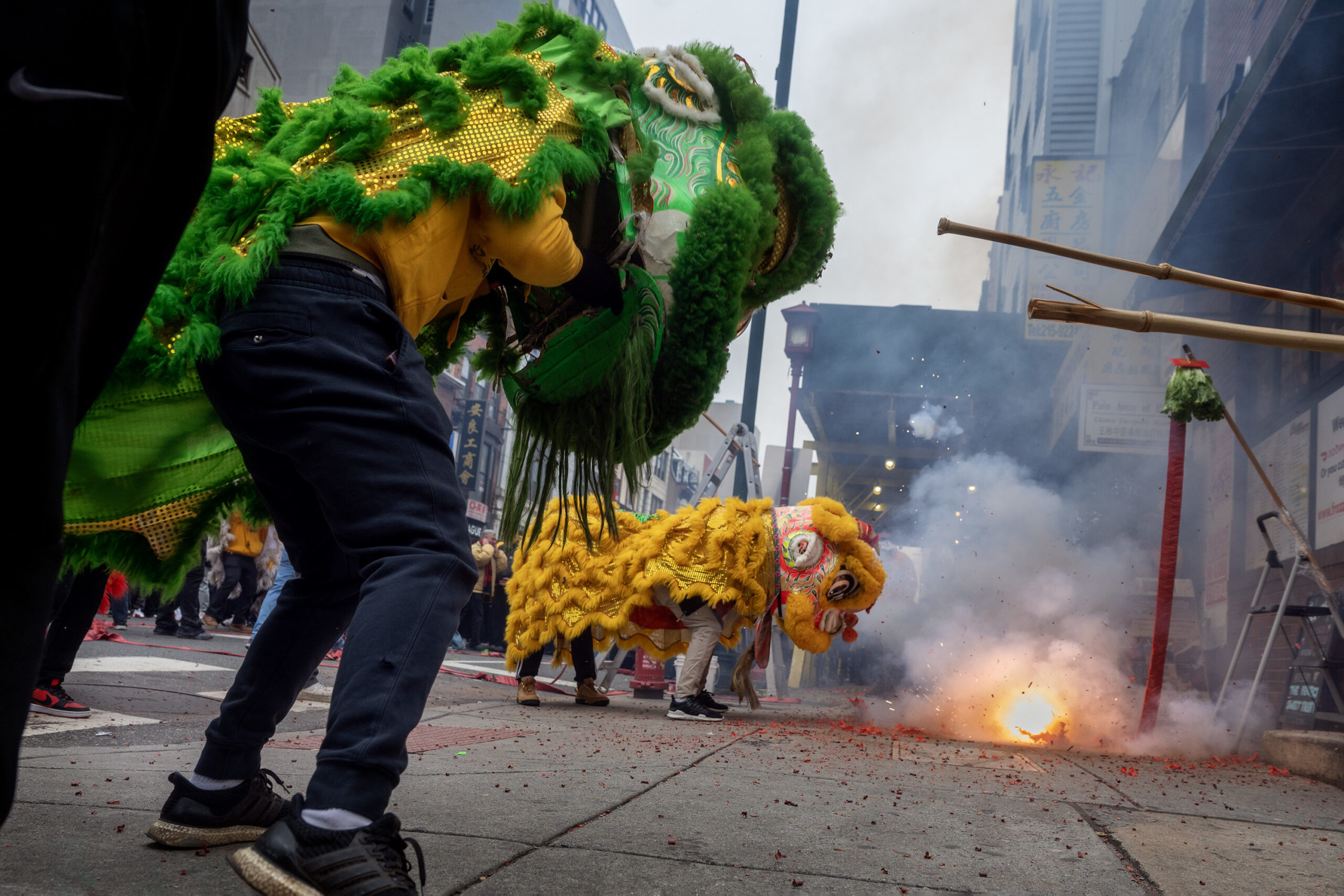
    The Year of the Snake is celebrated in Chinatown Sunday, Feb. 2, 2025, bringing in the Lunar New Year with a parade, lion dancers and fireworks.

    If you’re celebrating at home, Chinatown’s grocery store shelves are well-stocked with essential New Year foods like seeds and nuts for good beginnings and plants that are considered lucky, like mandarin trees and bundles of willow branches. Vendors are now selling red envelopes for lai see, or lucky money, and red scrolls denoting traditional well wishes on most Chinatown street corners. Expect some restaurants to be closed for the holiday.

    Here are some noteworthy opportunities to celebrate.

    This list may be updated as new information becomes available.

    Dinner series and collaborations

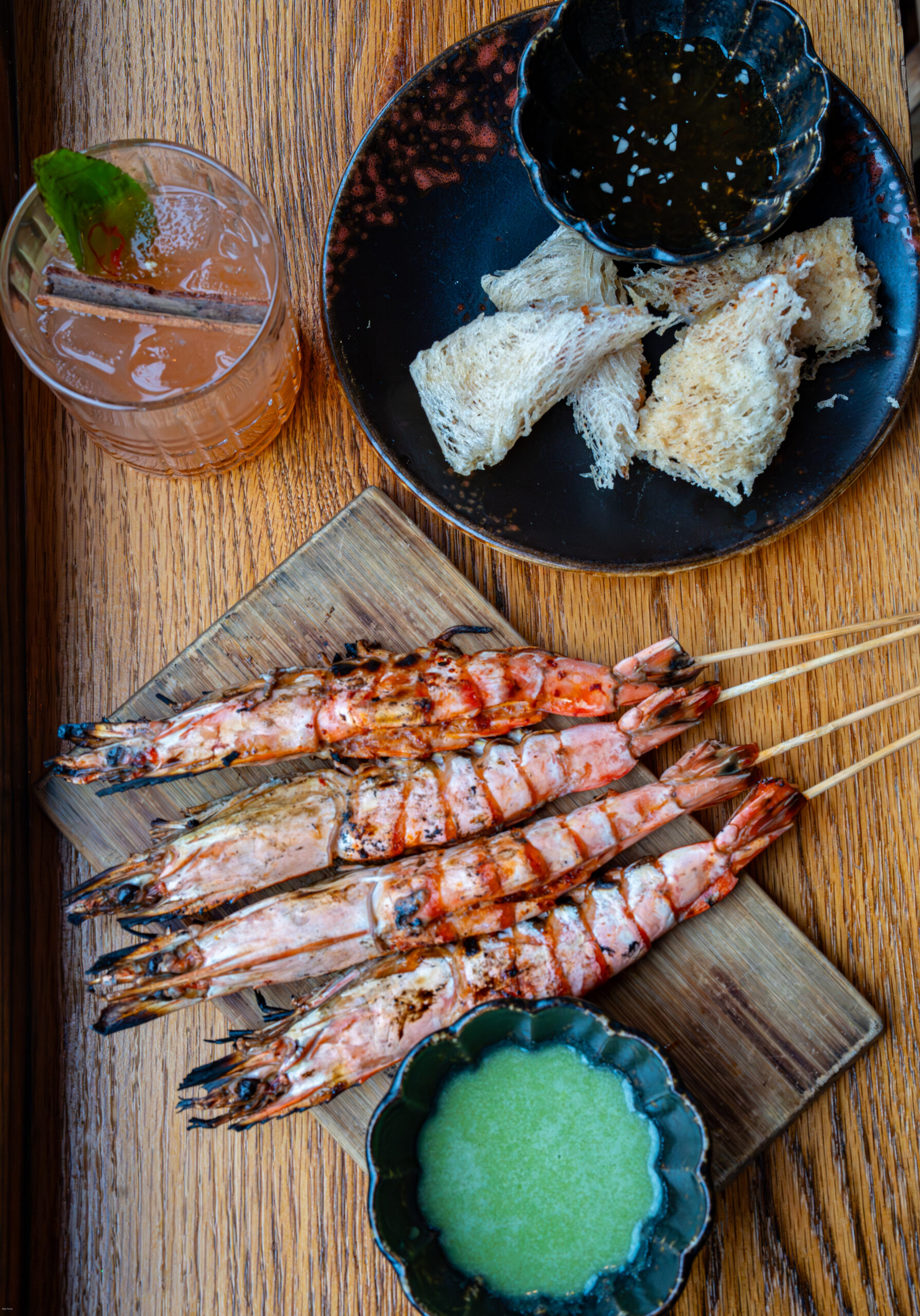
    Lunar New Year dishes for a special collaboration dinner between Gabriella’s Vietnam and Ember and Ash.

    Ember & Ash and Gabriella’s Vietnam’s “Smoke meets Saigon”

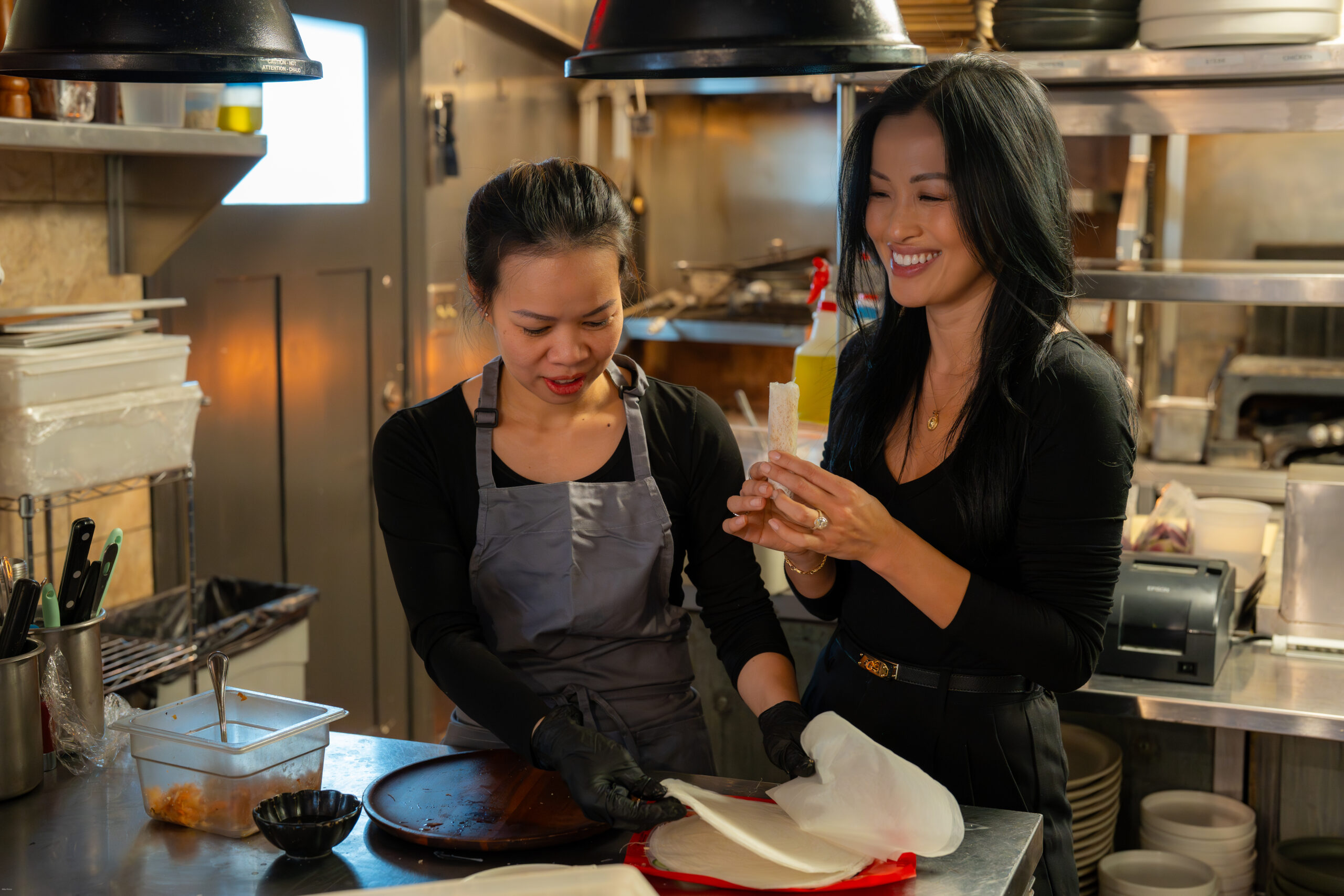
    Scott and Lulu Calhoun, the owners of Passyunk’s Ember & Ash, are hosting their fifth annual Lunar New Year celebration, this time welcoming Gabriella’s Vietnam chef Thanh Nguyen. There will be Vietnamese street food-inspired bites to start, then meat and fish cooked over live fire, along with noodle dishes (denoting long life) and rice and vegetable sides.

    Dinner is $75 per person (not inclusive of tax and a 20% auto-gratuity) and will be served family-style starting at 5 p.m. in staggered seatings throughout the evening. Reservations, available on Resy, are strongly encouraged.

    Feb. 17, Ember & Ash, 1520 Passyunk Ave., 267-606-6775, emberandashphilly.com

    Thanh Nguyen of Gabriella’s Vietnam and Lulu Calhoun of Ember and Ash test Lunar New Year recipes.

    The Muhibbah dinner at BLDG39 at the Arsenal

    The Muhibbah Dinner series was started by chef Ange Branca of Kampar in 2017 to celebrate diversity and raise money for immigrant and refugee nonprofits in Philadelphia. Its next iteration is on Feb. 16. While it isn’t strictly a New Year’s celebration, dinner will commence with a prosperity yee sang salad, which diners traditionally toss in the air with chopsticks.

    Participating chefs and restaurant owners include Yun Fuentes of Bolo, Natalia Lepore Hagan of Midnight Pasta, Brizna Rojas and Aldo Obando of Mucho Peru, Enaas Sultan of Haraz Coffee House Fishtown, and David Suro of Tequilas and La Jefa.

    Dinner is BYOB and tickets are $170 per person. Sales will benefit Puentes de Salud, a nonprofit that promotes the health and wellness of Philadelphia’s Latinx immigrant population. Tickets are available at muhibbahdinners.org/tickets.

    Feb. 16, BLDG39 at the Arsenal, 5401 Tacony St., 215-770-6698, bldg39arsenal.com

    Com.unity’s Tết collaboration dinner at Yakitori Boy

    Ba Le Bakery, Cafe Nhan, Le Viet, Miss Saigon, and more are teaming up for Com.unity’s third annual Tết dinner, hosted this year at Yakitori Boy in Chinatown. After dinner, guests can walk over to the Lunar New Year Parade presented by the Chinatown PCDC and the Philadelphia Suns. Áo dài, or traditional Vietnamese outfits, and other formal garment are strongly encouraged.

    There will be one 60-seat seating, with doors opening at 6:30 p.m. A cash bar will be available for the LNY cocktail menu from the Yakitori Boy team. Dietary restrictions cannot be accommodated. Dinner tickets are $108 per person and can be booked via a link accessed through Com.unity’s Instagram profile.

    Feb. 16, Yakitori Boy, 211 N. 11th St., 215-923-8088, yakitoriboy.com

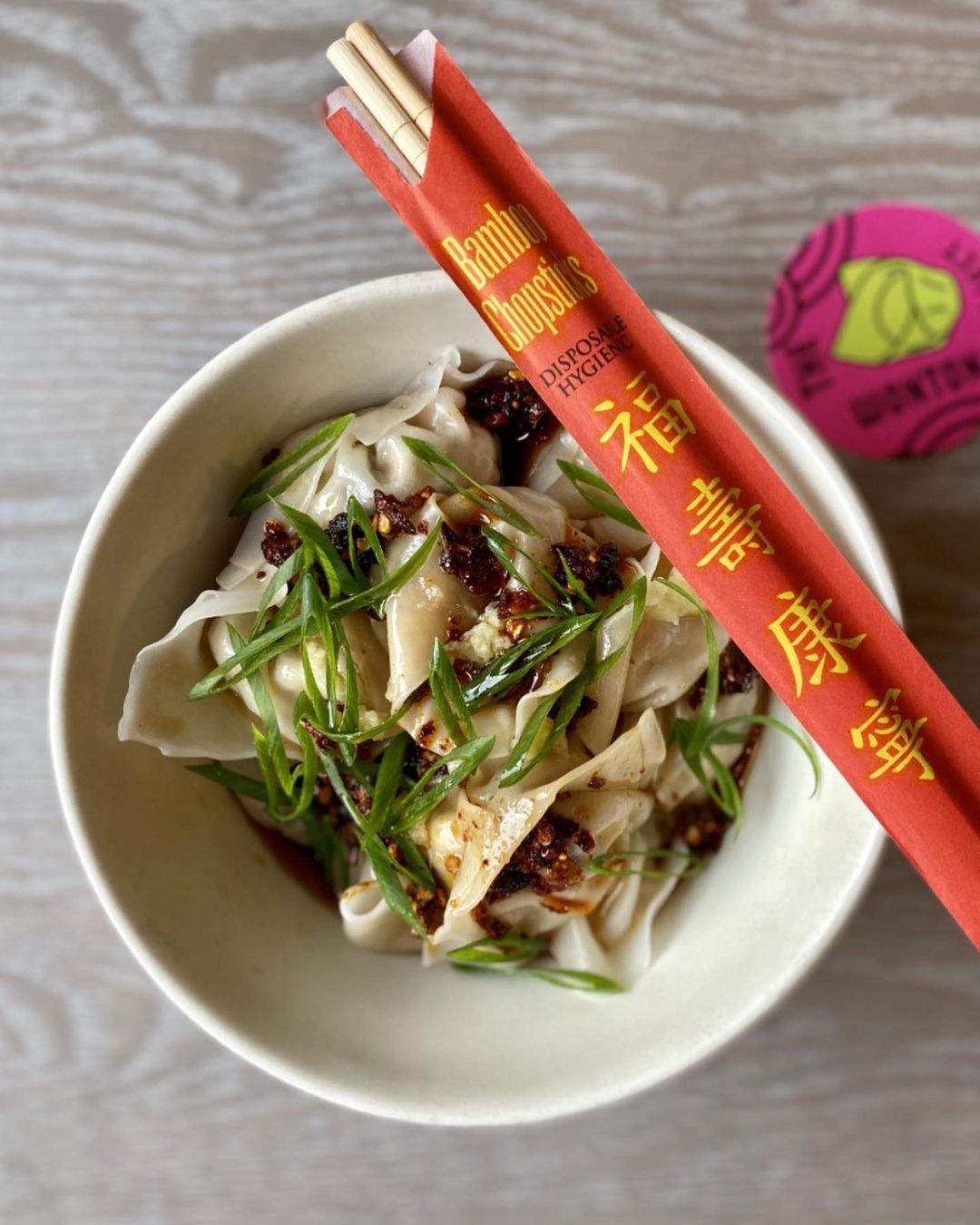
    Chicken and ginger wontons from The Wonton Project by Ellen Yin.

    Hot Pot at the Bread Room

    Ellen Yin’s the Wonton Project will host Lunar New Year Hot Pot parties at the Bread Room for groups of six to eight ($125 per person, excluding tax and gratuity). The parties are inspired by an event the Bread Room hosted with Natasha Pickowicz, the author of the cookbook Everybody Hot Pot.

    Diners will cook Lunar New Year menu staples together, such as noodles for longevity, Shanghai rice cakes, and dumplings for prosperity. There will also be whole fish on the menu and spring rolls. It will be available to book on OpenTable.

    Feb. 17-21, the Bread Room, 834 Chestnut St., Suite 103, 215-419-5820, thebreadroomphl.com

    Buddakan’s Lunar New Year brunch

    Stephen Starr’s Buddakan will be serving a tasting menu of modern interpretations of traditional Chinese New Year dishes like trotter-stuffed spring rolls, Dungeness crab longevity noodles, whole fish with black bean sauce, as well as a horse-themed dessert (for the Year of the Horse). Brunch runs from 11 a.m. to 2 p.m. Seats are $75 per person (excluding tax or gratuity), with a four-person minimum for reservations. Reservations can be made on OpenTable. The Lunar New Year menu will also be available a la carte for parties of any size.

    Feb. 22, Buddakan, 325 Chestnut St., 215-574-9440, buddakan.com

    A la carte menu specials

    Càphê Roasters

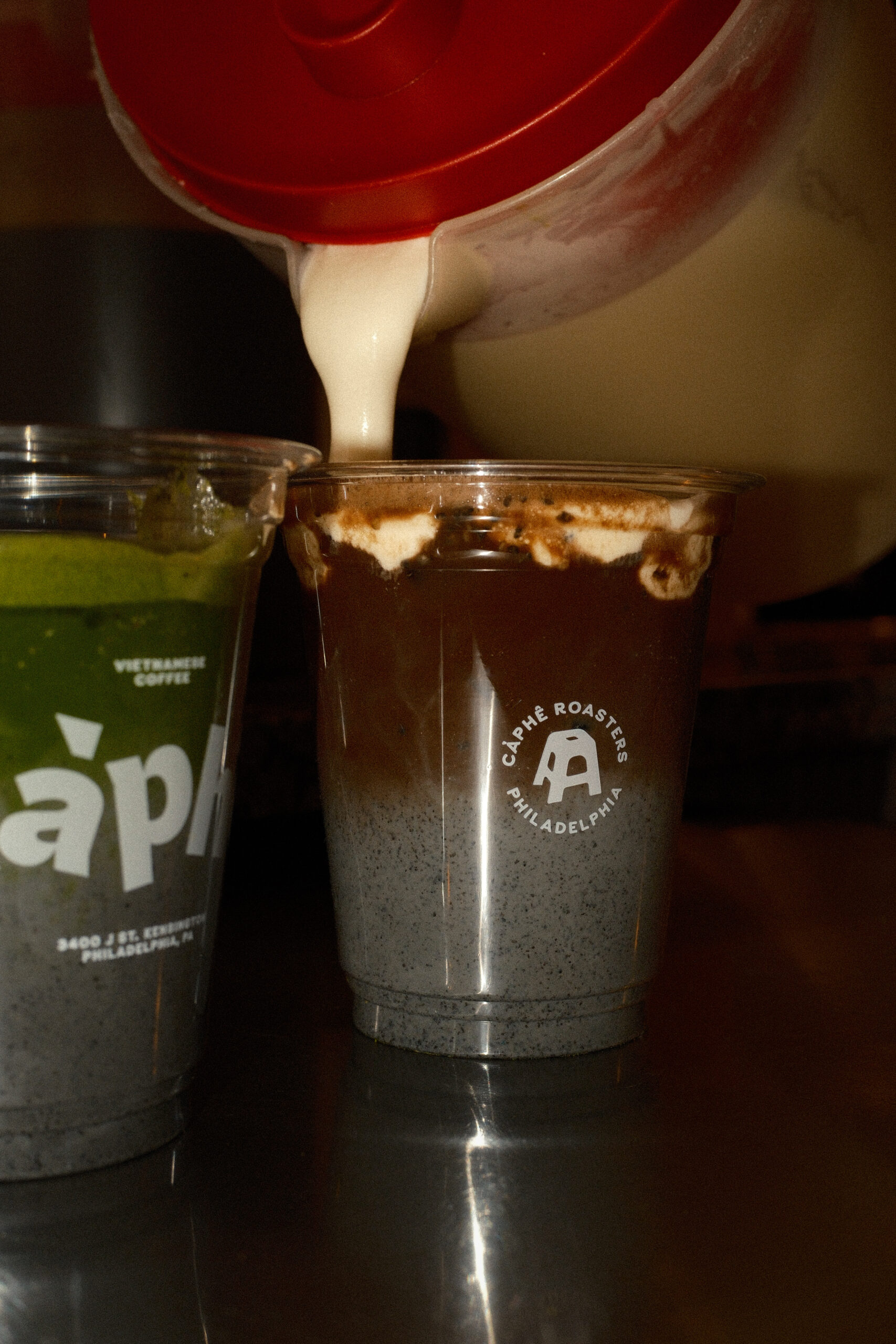
    The Kensington-based Vietnamese coffee roaster and cafe will serve two specialty drinks based on Tết treats: a black sesame hojicha, consisting of black sesame paste, hojicha (roasted green tea), milk of choice, condensed milk, and topped with salted foam. “This drink reminds us of kẹo mè đen, which is a black sesame taffy usually found in the traditional Vietnamese Mứt Tết tray (the tray of dried fruits and candies),” said owner Thu Pham. They’re also making a black sesame banana matcha (black sesame paste, matcha, milk of choice, condensed milk, and topped with banana foam), reminiscent of kẹo chuối, a banana taffy also found in the traditional Vietnamese Mứt Tết candy tray.

    Feb. 13-20, Càphê Roasters, 3400 J St., 215-690-1268, capheroasters.com

    Black sesame banana matcha and black sesame hojicha from Càphê Roasters for Lunar New Year 2026.

    Luk Fu at Live! Casino

    Luk Fu is serving an a la carte menu of very traditional Chinese New Year dishes such as braised pork trotters ($38), whole pompano ($48), and a New Year’s stir fry with spring vegetables and auspicious ingredients like snow peas, wood ear mushrooms, and sweet lapchong, or Chinese sausage ($28). Reservations are available on OpenTable.

    Feb. 1-28, Live! Casino, 900 Packer Ave., 267-682-7670, livech.com/Philadelphia/Dine-and-Drink/Luk-Fu

    Ba Le Bakery

    At this Washington Avenue institution, you can pick up Tết essentials like the cylindrical bánh tét ($20) and square-shaped bánh chưng ($25), savory rice cakes made with mung beans and pork belly and wrapped in banana leaves. Takeout only. Order online.

    Available now until Feb. 18 (or until sell-out), Ba Le Bakery, 606 Washington Ave., 215-389-4350, balebakery.com

  • Billions of gallons of raw sewage from Philly are released into the Delaware annually

    Billions of gallons of raw sewage from Philly are released into the Delaware annually

    Philadelphia discharges 12.7 billion gallons of raw, diluted sewage into the Delaware River’s watershed each year, with Camden County adding to the mix, according to a new report.

    That’s a problem, say the report’s authors at the nonprofit advocacy group PennEnvironment. Philadelphia and Camden border the river, and significant recreational potential is blocked for part of the year because of pollution from both, the authors say.

    A waterway can remain unsafe for recreation for up to 72 hours after an overflow. That suggests local waterways could be unsafe for recreation up to 195 days per year, or more than half the year.

    Five decades after the Clean Water Act mandated that waterways be made safe for swimming and fishing, combined sewer overflows (CSOs) continue to pollute during wet weather when untreated sewage and runoff surge into nearby creeks and rivers, creating the potential to sicken recreational users.

    David Masur, executive director of PennEnvironment, said the group included Camden County in its most recent report “to get a more holistic view.” PennEnvironment’s first report on CSOs in 2023 focused only on Philly.

    The pollution “affects the waterway, the environment, and public health,” Masur said. “The river is the border between the two states, and people on both sides use it a lot.”

    PennEnvironment acknowledges that both Philly and Camden County have programs to reduce overflows and is calling on federal officials for increased funding to put proper infrastructure into place.

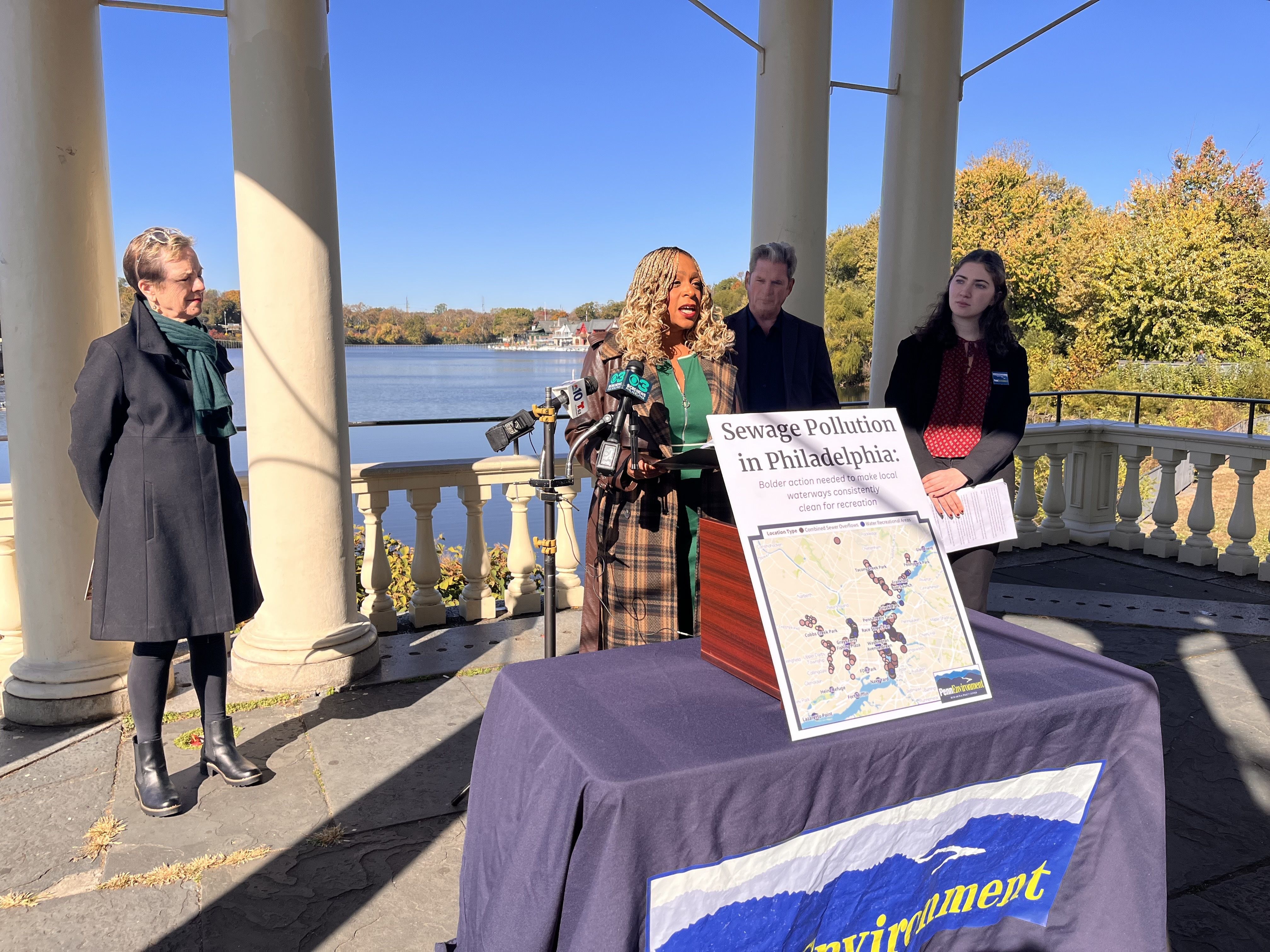
    Philadelphia Council member Jamie Gauthier (center) spoke Monday about PennEnvironment’s report on pollution from combined sewer overflows. To her left is Margaret Meigs, president, Friends of the Schuylkill Navy. And to her right is Tim Dillingham, senior adviser, American Littoral Society, and Hanna Felber, clean water associate at PennEnvironment Research & Policy Center.

    Frequent overflows, high volume in Philly

    Roughly 60% of Philadelphia is served by a combined sewer system, which has 164 outfalls — really large metal or concrete openings — that discharge pollution into waterways. A CSO system uses a single pipe to collect and transport sewage from homes and businesses as well as stormwater runoff from streets and sidewalks.

    During dry weather, the system can handle the volume before safely releasing it back into the rivers. But during heavy rainfall, the system discharges untreated, though highly diluted, sewage mixed with stormwater directly into waterways.

    Despite the Philadelphia Water Department’s ongoing Green City, Clean Waters project — a 25-year plan focusing on green infrastructure to reduce overflows — the frequency and volume remain alarmingly high, the report states.

    Overall, CSOs dumped an average of 12.7 billion gallons of raw sewage mixed with polluted stormwater per year into local waterways from 2016 to 2024, the authors of the report stated. They included an online map to show the location of the outfalls and annual overflow.

    Half the sewage came from just 10 CSOs.

    window.addEventListener(“message”,function(a){if(void 0!==a.data[“datawrapper-height”]){var e=document.querySelectorAll(“iframe”);for(var t in a.data[“datawrapper-height”])for(var r,i=0;r=e[i];i++)if(r.contentWindow===a.source){var d=a.data[“datawrapper-height”][t]+”px”;r.style.height=d}}});

    Still, the numbers are a slight improvement over the 15 billion gallons a year released into local rivers, as PennEnvironment reported in 2023.

    Philadelphia gets its drinking water from the rivers, but the CSOs are downstream of the city’s treatment plants on the Delaware and the Schuylkill.

    The report used publicly available data to show that five of six waterways in Philly produced at least one overflow 65 times or more per year on average between 2016 and 2024. Those were the Delaware River, the Schuylkill, and Cobbs, Frankford and Tacony Creeks.

    In better news: The average volume of overflow per inch of precipitation declined by about 16% from previous periods, but progress is slow and threatened by increased rainfall and rising sea levels due to climate change, the authors say.

    PWD could not be reached for comment.

    window.addEventListener(“message”,function(a){if(void 0!==a.data[“datawrapper-height”]){var e=document.querySelectorAll(“iframe”);for(var t in a.data[“datawrapper-height”])for(var r,i=0;r=e[i];i++)if(r.contentWindow===a.source){var d=a.data[“datawrapper-height”][t]+”px”;r.style.height=d}}});

    Camden County

    The report also found persistent overflows in Camden County. The cities of Camden and Gloucester, along with the Camden County Municipal Utilities Authority (CCMUA), operate combined sewer systems that frequently overflow into the Delaware River and its tributaries, including the Cooper River and Newton Creek.

    The report found that systems on the Camden County side of the river overflowed into local waterways an average of 76 days per year from 2016 to 2024.

    window.addEventListener(“message”,function(a){if(void 0!==a.data[“datawrapper-height”]){var e=document.querySelectorAll(“iframe”);for(var t in a.data[“datawrapper-height”])for(var r,i=0;r=e[i];i++)if(r.contentWindow===a.source){var d=a.data[“datawrapper-height”][t]+”px”;r.style.height=d}}});

    The highest-frequency outfall for the Cooper River released sewage for an average of 118 days annually during that period.

    The Delaware River received sewage overflows for an average of 94 days annually from its highest-frequency outfall.

    The authors said gaps in data leave them unable to show the total volume of diluted sewage released from Camden. But they said that the amount of “solids/floatables” collected at each outfall is an indicator a waterway is polluted.

    Dan Keashen, a spokesperson for Camden County, said officials have been making strides.

    He said that crews recently cleaned 30 miles of pipe and that a $26 million project is underway to physically separate the combined sewer service area of Pennsauken that flows into Camden. Officials are also studying how to better achieve compliance for the largest outfall in the system, a project estimated to cost $40 million to $150 million when complete.

    What can be done?

    The report concludes that current plans by Philadelphia and Camden County are insufficient to achieve the goal of a clean Delaware River watershed.

    The report was written by John Rumpler, clean water director for Environment America, PennEnvironment’s parent organization, and Elizabeth Ridlington, associate director of the Frontier Group, a nonprofit research group that is part of the Public Interest Network, an environmental advocacy organization.

    The authors call for officials to accelerate action to end all sewer overflows, set a hard deadline, and find new ways to pay for necessary infrastructure upgrades.

    Philadelphia Councilmember Jamie Gauthier, chair of the committee on the environment, called overflows “a public health crisis” and urged PWD’s new commissioner, Benjamin Jewell, to act. She said elected officials in Harrisburg and Washington also need to step up.

    PWD is separately under pressure by a new Environmental Protection Agency regulation that seeks to improve the amount of dissolved oxygen in the Delaware by ordering a large-scale reduction of ammonia at the city’s three water pollution control plants. PWD estimates that the price for compliance is $3.6 billion and would cost households an additional $265 annually on their water bills.

    The authors of the PennEnvironment report concede the CSO task is daunting. But they say Portland and Boston faced similar situations, invested in infrastructure, and managed to make CSO overflows infrequent. Washington, D.C., they said, is on track to reduce sewage overflows by 96% in 2030.

    Hanna Felber, a PennEnvironment advocate, said that PWD needs to use creative funding, such as floating longer-term bonds to finance projects, and that its engineers need to find more creative solutions, such as installing larger stormwater tunnels that flow separately from sewage.

    “Unfortunately, our new report on sewage pollution in Philadelphia shows that on far too many days each year, the Philadelphia Water Department’s pipes and sewer systems dump huge volumes of raw sewage into our beautiful waters, harming our environment and depriving the public of a safe place to fish, boat, and float,” Felber said.