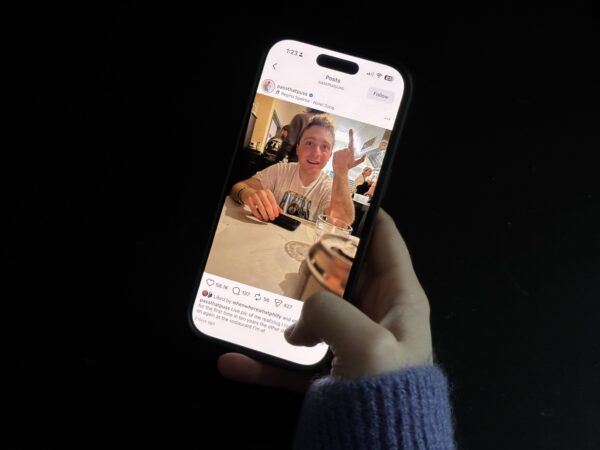
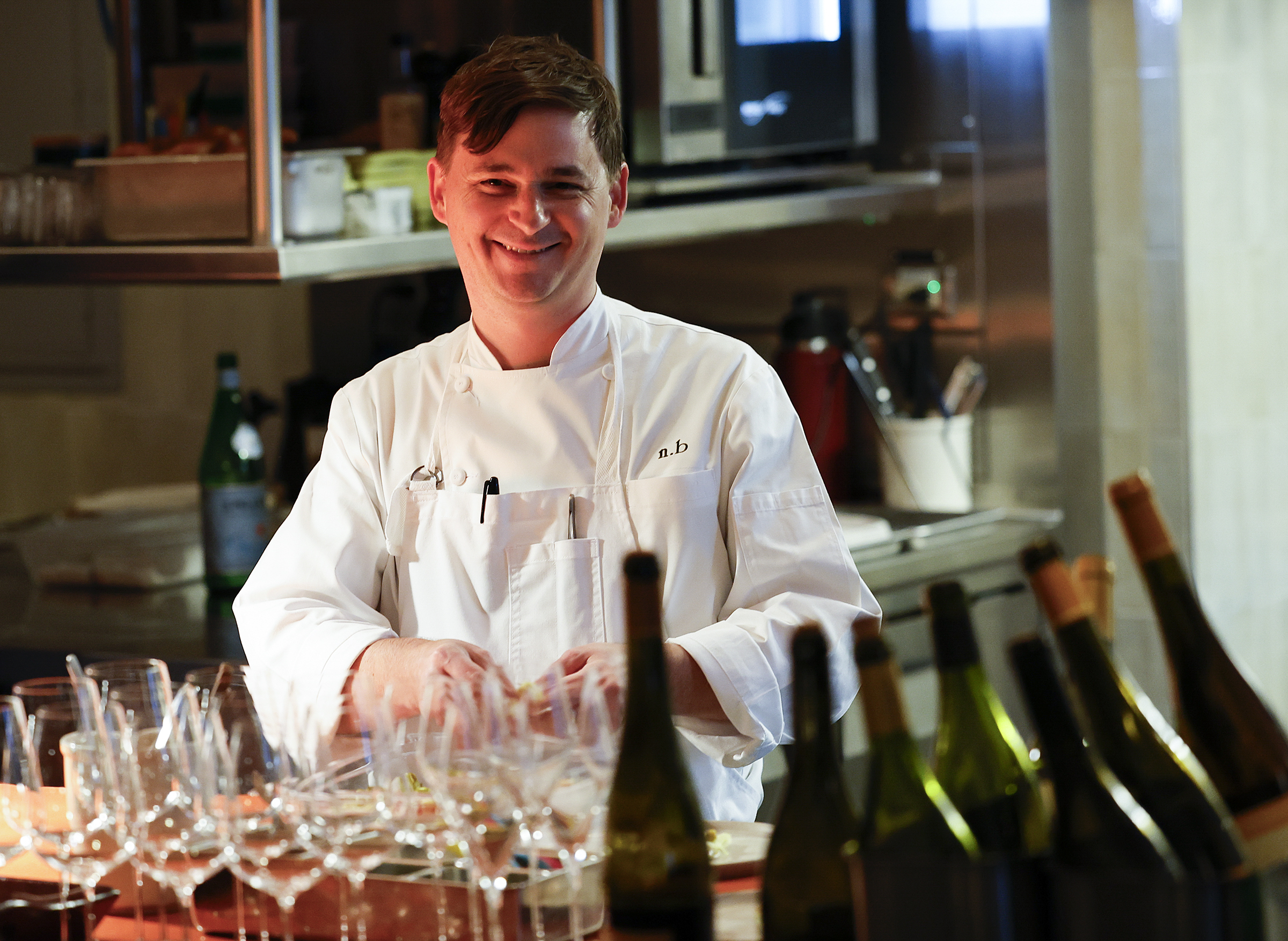
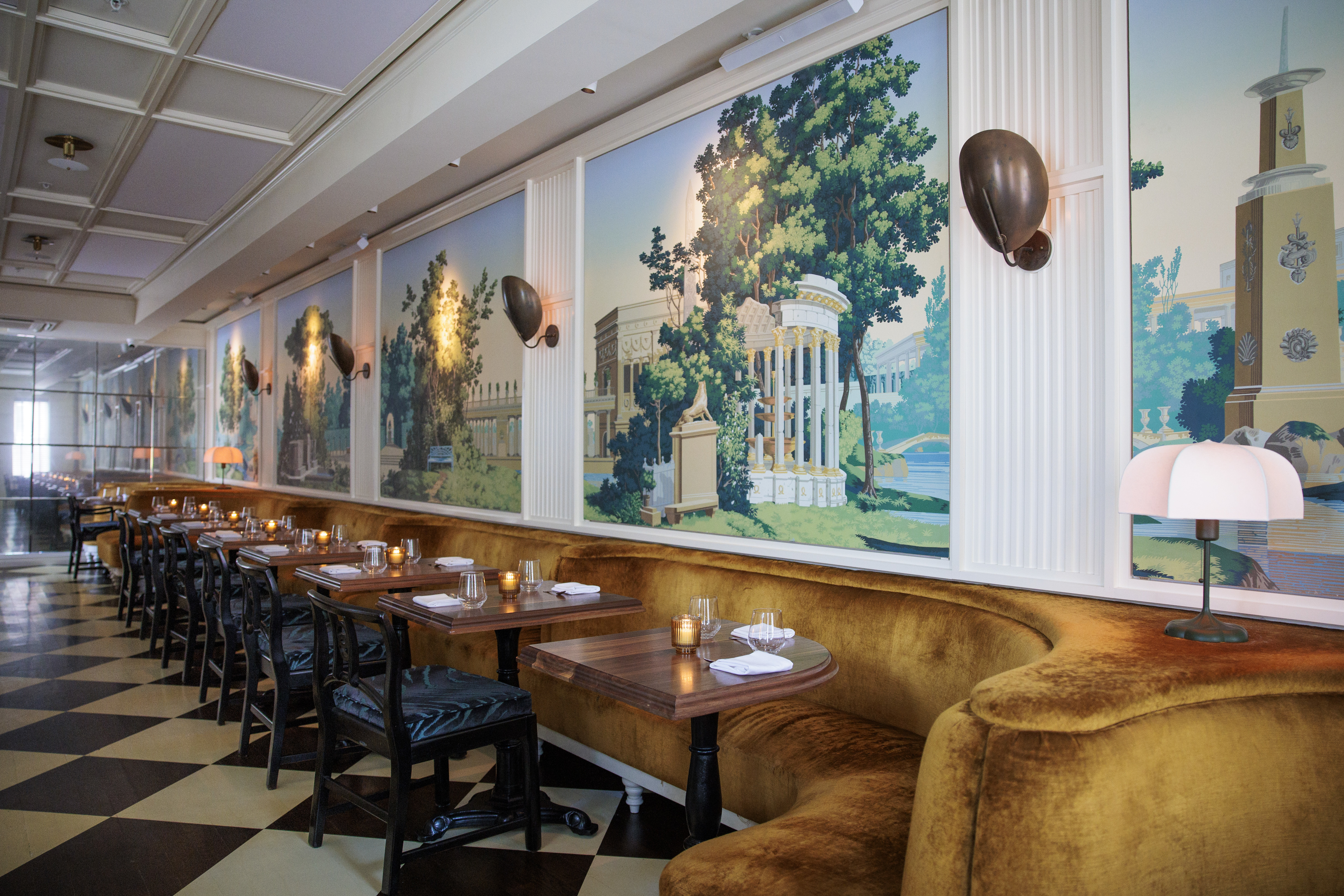
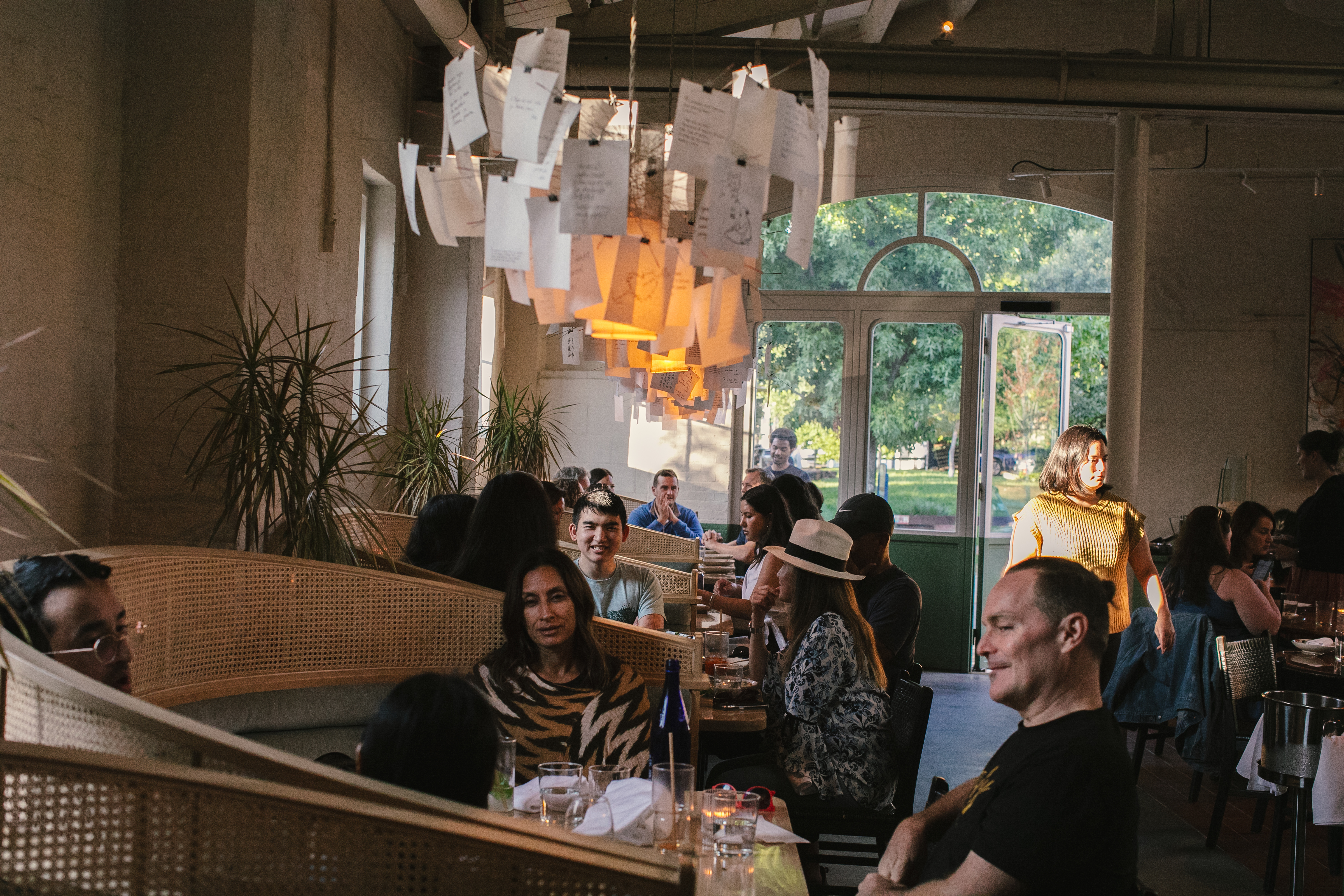
Before making an appearance at the UberEats “Unwrap the Holidays” pop-up at Dilworth Park, the “Therapuss” podcast host and comedian popped by Amanda Shulman’s Her Place Supper Club for lobster and celery remoulade zeppole, tete de moines citrus salad, black trumpet boudin blanc, and more.
And Philadelphians couldn’t get enough of Shane’s Philly content.
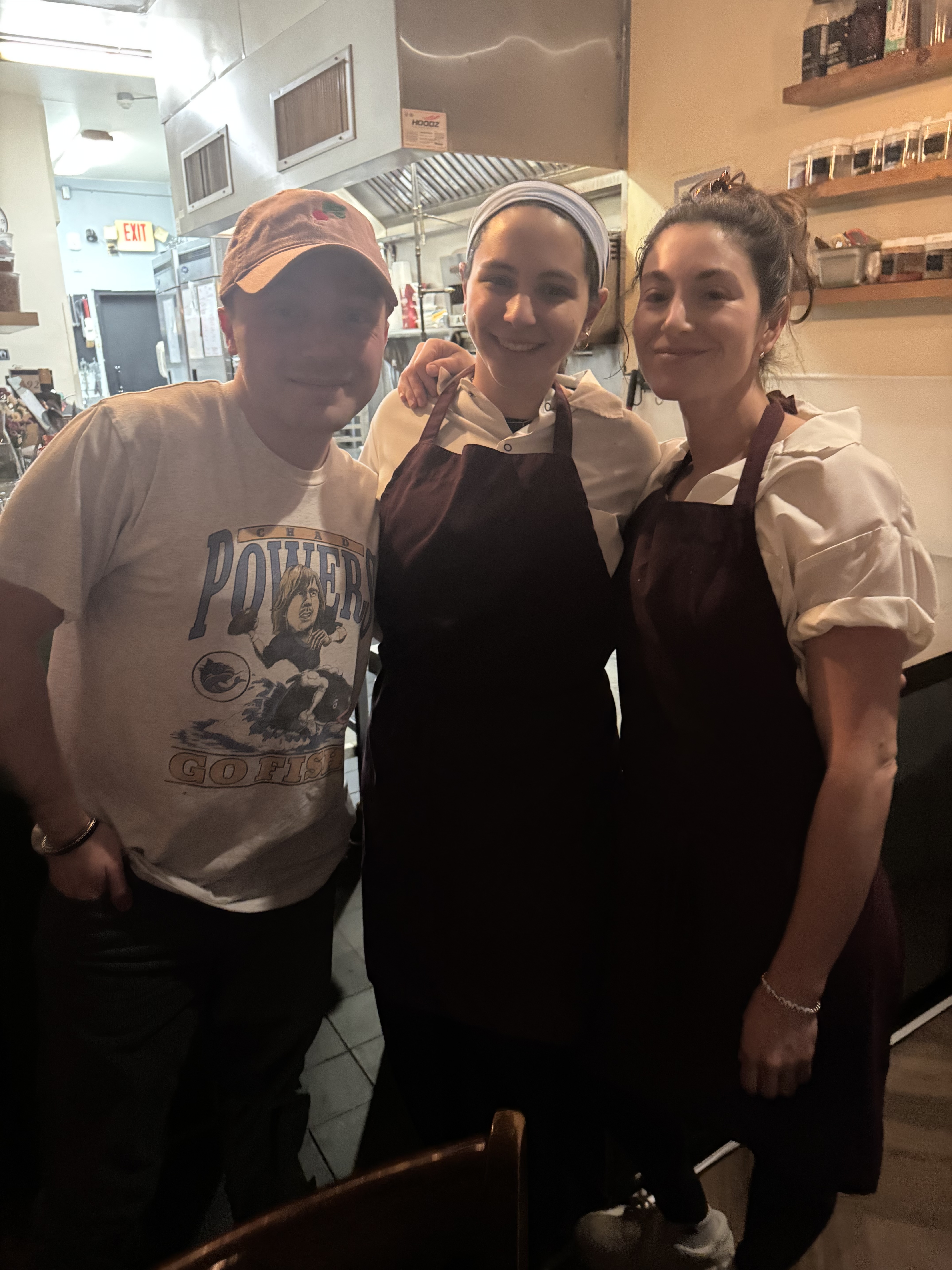
Jake Shane with Danielle Sikaffy and Amanda Shulman at Her Place.
“jake shane was in philly when i was in philly today im dead,” one person commented.
“I actually cannot believe you were at my favorite restaurant,” another commented.
“Yay! People are starting to recognize the absolutely goated Philly food scene,” another person said.
Shulman’s Rittenhouse restaurant received a Michelin star back in November for its “warm and welcoming supper club vibe” with “a real communal feel at play.”
Her Place Supper Club, one of 76 best restaurants in Philadelphia, began with Shulman cooking for friends in her Penn campus apartment. Now, it’s the hotspot on Sansom Street with ever-changing menus showcasing “a pitch-perfect collaboration of an all-female kitchen locked in sync,” as Inquirer’s Craig LaBan put it.
And that’s just the beginning of Shulman’s footprint. She and partner Alex Kemp, My Loup, opened their new Pine Street Grill in Fitler Square this week. (Perhaps it can coax Shane back for a repeat visit.)
Along with a post of him seated at Her Place, Shane also took photos with Shulman and chef Danielle Sikaffy that the team posted on the restaurant’s Instagram.
“Live pic of me realizing I listened to a song for the first time in ten years the other day and it just came on again at the restaurant I’m at,” Shane wrote on Instagram.
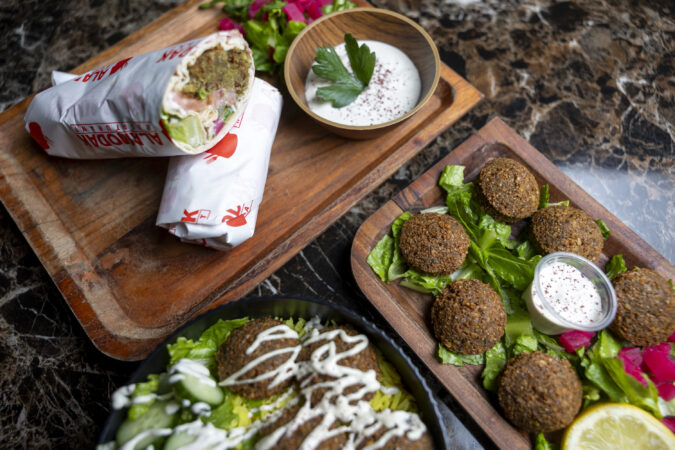
Eating at over 20 Middle Eastern restaurants as a scout for The Inquirer’s 76 list may seem like a daunting task (and in some ways it was). But when your search includes eating falafel over six weeks, the quest becomes a delightful lesson in texture and taste.
My beat included Lebanese, Yemeni, Afghan, Palestinian, Jordanian, Turkish, Egyptian, Syrian, and Moroccan restaurants, which meant I became a falafel obsessive, tasting over two dozen falafels. At every restaurant I went to I would ask my dining companions to evaluate the dish. And I would ask:
Could I feel the crispiness of the exterior by tapping on it? Was there a soft, herb-hued mush inside when I tore it in half? Did the earthy, nutty flavors of warming spices like cumin, coriander come through with each bite?
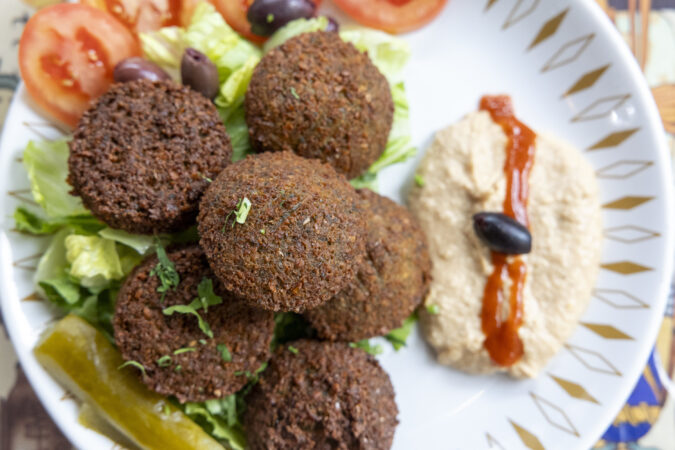
No matter how it’s made — legumes soaked overnight, blended (with spices, herbs, and sometimes flour), and fried — falafel is about the herbs, spices, and legumes that come together to make the palm-sized rounds that are perfect on platters, in a sandwich, or as a snack by themselves.
While falafel originates from Egypt, there are various techniques used throughout the Middle East to create this popular dish. Growing up with many Arab friends, I knew falafel looked and tasted a bit different depending on the chef’s country of origin — after all, Middle Eastern cuisine is not a monolith.
What was fascinating to learn were the specific differences in technique and ingredients within Philly restaurants. Palestinian falafel, like those served at Al-Baik Shawarma, tend to have bronze exteriors with slightly spicy, earthy, light-green interiors. Egyptian falafels use fava bean and chickpea mixes fried to perfection for the most satisfying crunch at Cilantro near South Street. Fluffy Lebanese falafels are made gluten-free and with baking soda in Collingswood at Li Beirut.
My journey revealed the rich tapestry of falafels that make up this city. After a summer of munching, Cilantro, Al-Baik, and Apricot Stone falafels live rent-free in my head.
But most importantly, these palm-sized legume balls were a clear reflection of just how expansive and diverse the Middle Eastern dining landscape is in Philadelphia. One that only takes sinking your teeth into super-satisfying falafels to experience.
Philadelphians can’t get enough of Rachel and Phila Lorn. At Sao, their sultry new oyster bar on East Passyunk Avenue, diners pull up at the counter for warm corn cakes soaked in honey and bejeweled with roe, oysters splashed with Cambodian peppercorn fish sauce mignonette, and barrel-aged “Jabroni Negroni” cocktails tinged with Islay whiskey smoke to wash them down.
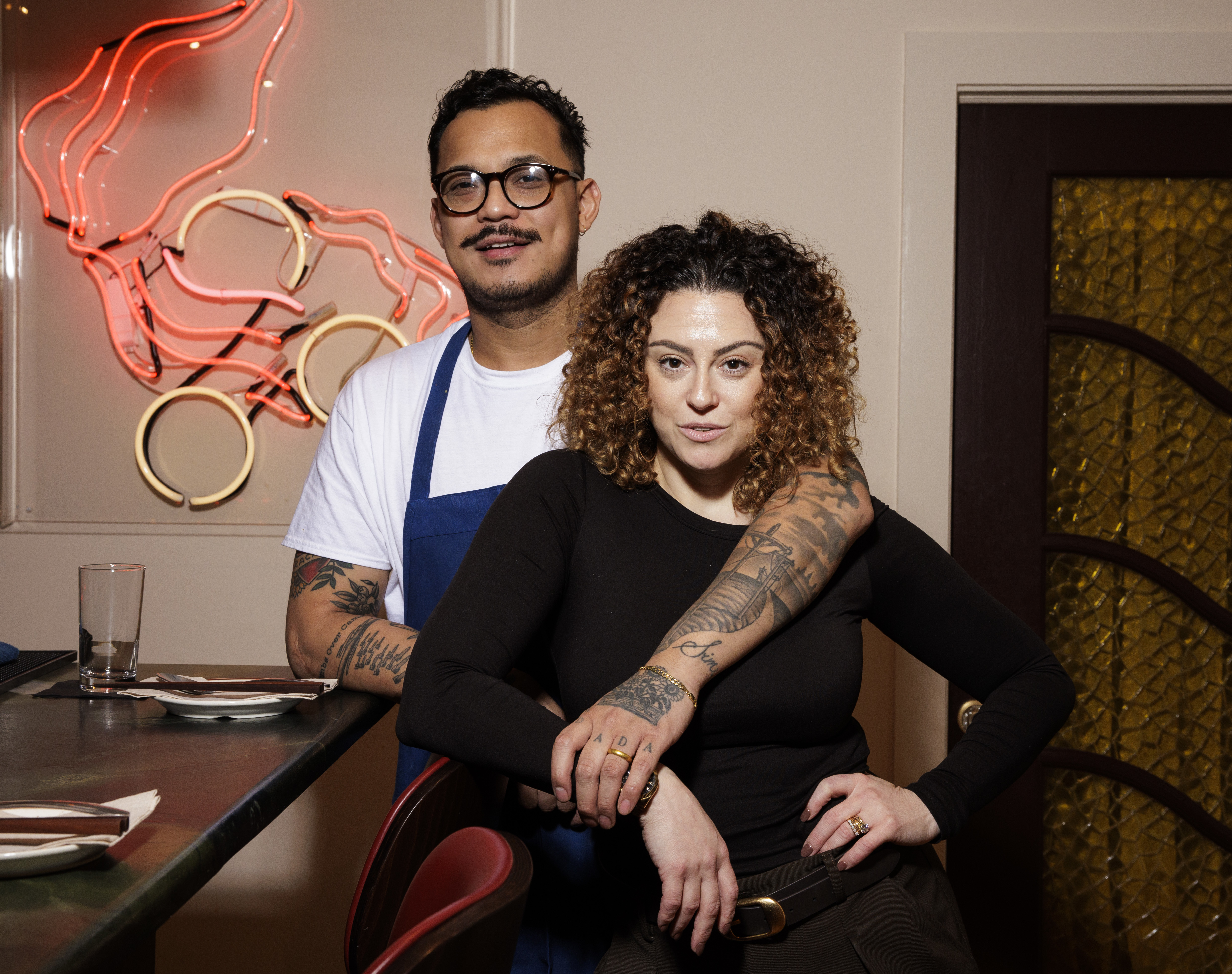
Owners Phila and Rachel Lorn at Sao in Philadelphia.
You’ll find the same high-voltage “no rules” pan-Asian cooking here that propelled this married couple’s first restaurant, Mawn, to an incredible string of local and national accolades (including a spot on The Inquirer’s Top 10 list, a new edition of The 76, a “Best New Chefs” award for Phila from Food & Wine, and a similar nod from the James Beard Foundation). Considering the constant reservation traffic jam of wannabe diners angling to nab one of Mawn’s 28 seats, why open a second restaurant with room for just 33? Surely, this couple could fill a much larger space.
“Rachel and I have enough, we don’t need more,” says Phila, 39. “I still have that old-school mentality that we protect our family and we funnel our lives through this [little] store of ours. I never wanted to be a rock star or be recognized at Target. We just opened restaurants because that’s what we know how to do.”
The fact they do it so well is a blessing and a curse. At Sao, the monthly scrum for tables offers the same exercise in reservation-app frustration as Mawn, and the long line for the 30-or-so walk-ins that find their way into Sao over the course of an evening understandably vexes the gift shop next door, whose manager emerged to politely redirect us from blocking her storefront on this lively stretch of Passyunk Avenue.
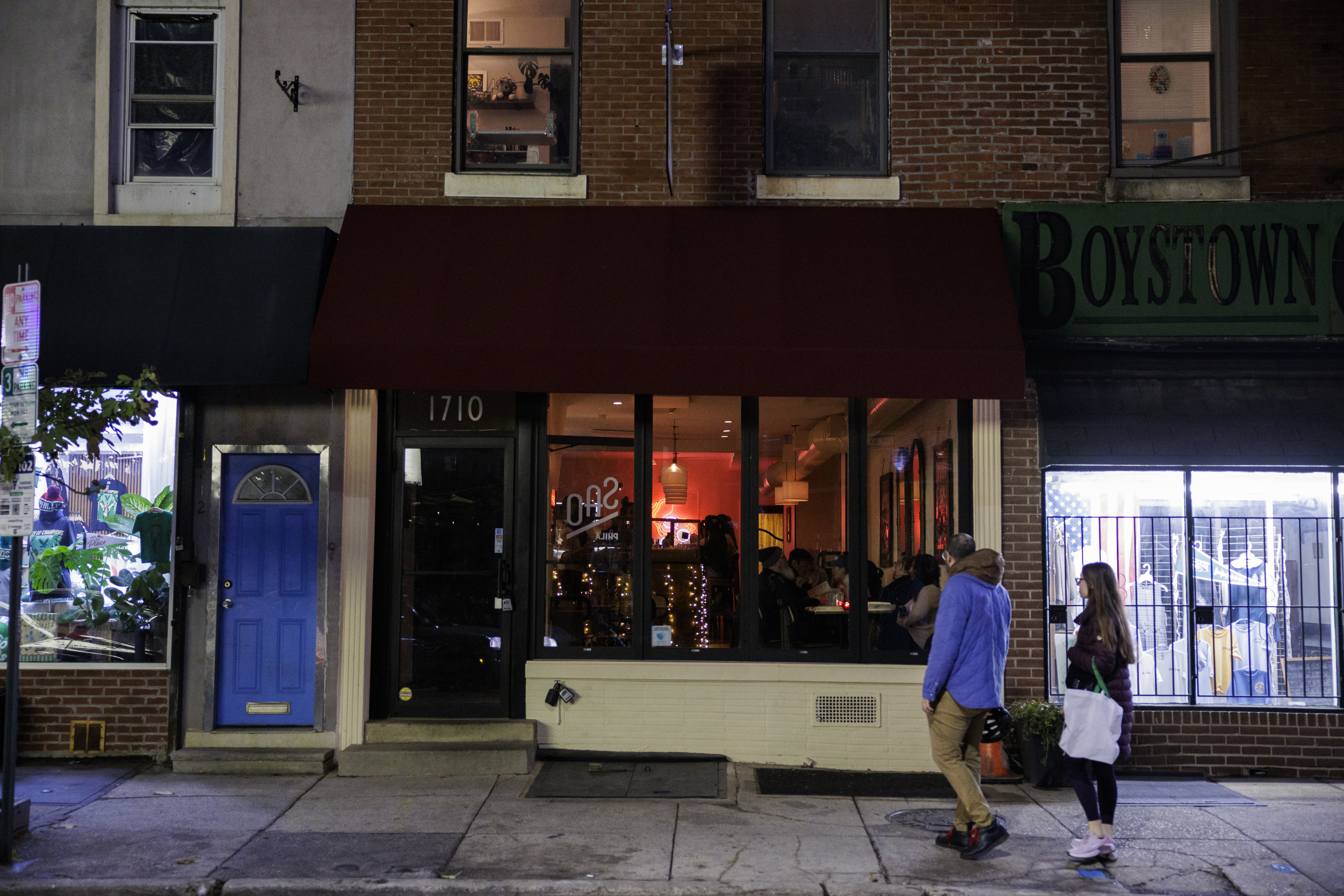
The exterior of Sao on Wednesday, Nov. 26, 2025 in Philadelphia.Owner Rachel Lorn speaks with diners at Sao.
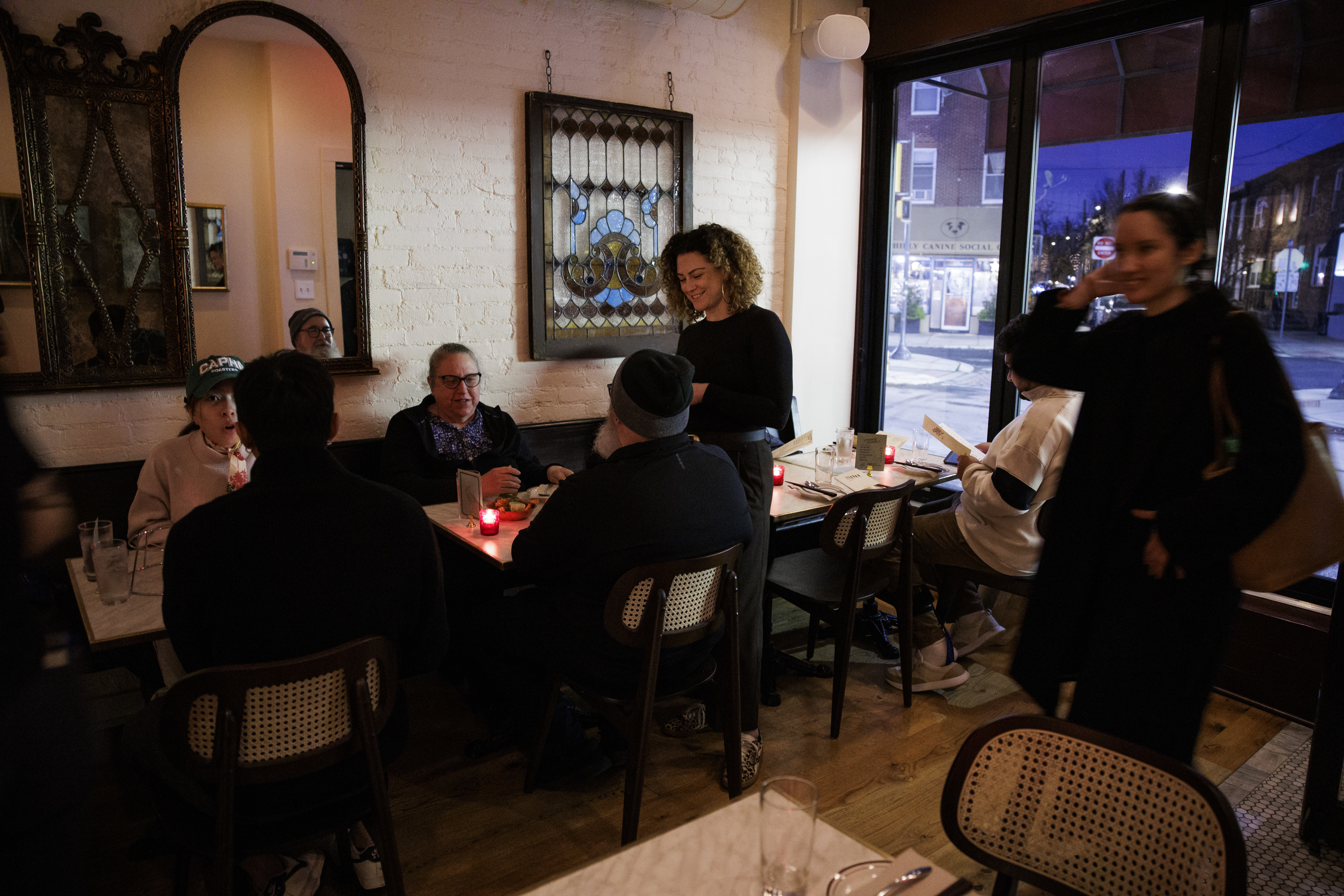
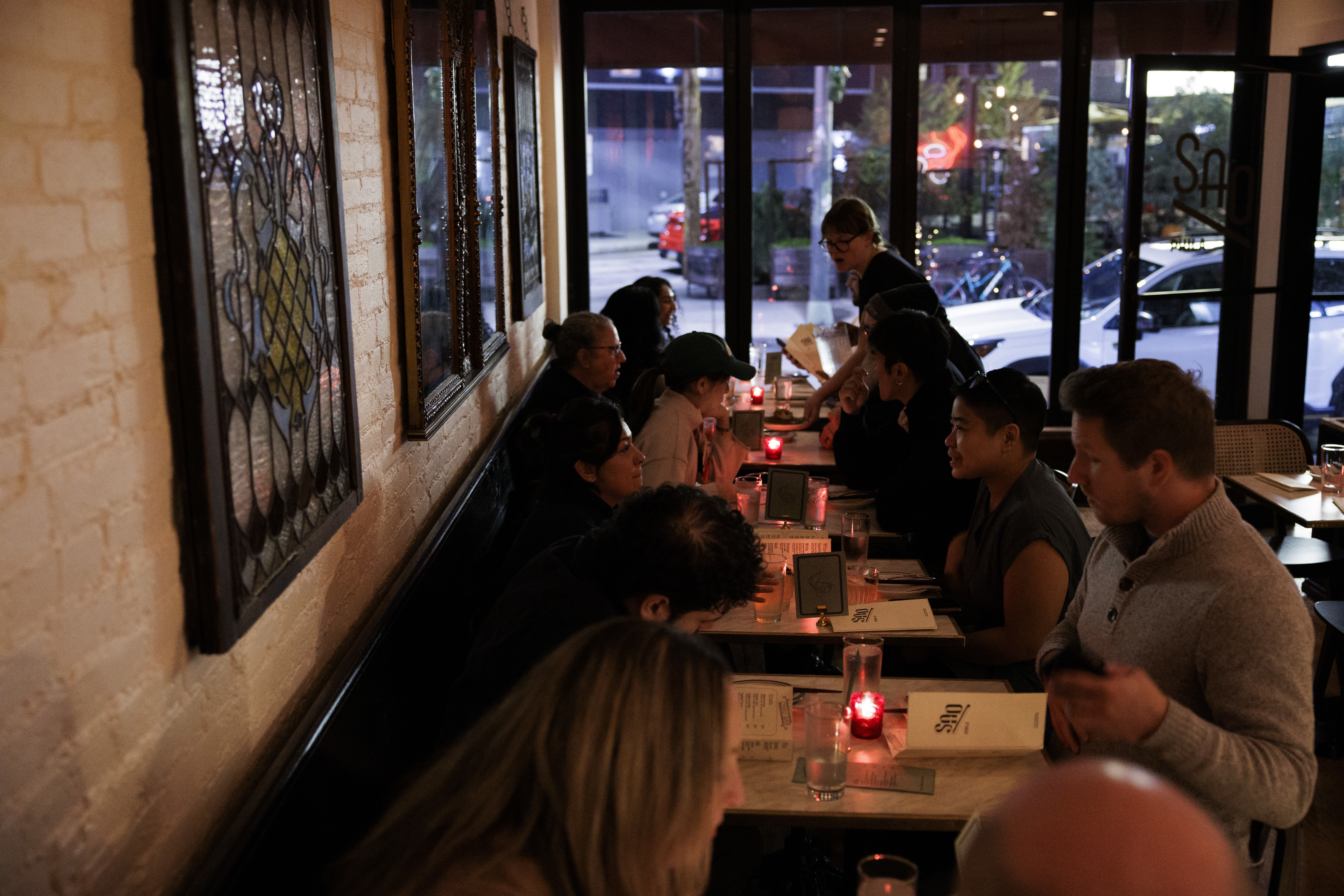
Once inside, however, the virtues of Sao’s intimate setting are clear, as diners lean into their crudos and cocktails at candlelit banquette tables along a whitewashed brick wall hung with mirrors and stained-glass panes. Another 10 guests — in my opinion, the lucky ones — perch in the red neon glow of the bar counter, where the action unfolds on multiple stages.
To my right, bartender Steph Liebetreu manages to simultaneously rattle a cocktail shaker in her left hand and stir a crystal decanter of martinis with her right, all while dancing in perfect syncopation to Sao’s soulful soundtrack mix of vintage R&B, Cambodian rap, and Frank Sinatra. To my left, shucker Davina Soondrum (also a talented pastry chef) festoons our icy oyster plateau clockwise from “lemon wedge o’clock” with plump Japanese Kumamotos, tiny-briny BeauSoleils from Canada, and Jersey’s finest, Sweet Amalias. Each one is oceanic perfection on their own, but they become electric when splashed with that Cambodian mignonette, or a spicy-tart jolt of Lao sauce sparked with lime and crushed cilantro stems. Amid Philly’s current boom in new oyster bars, those vivid sauces are part of what make Sao unique.
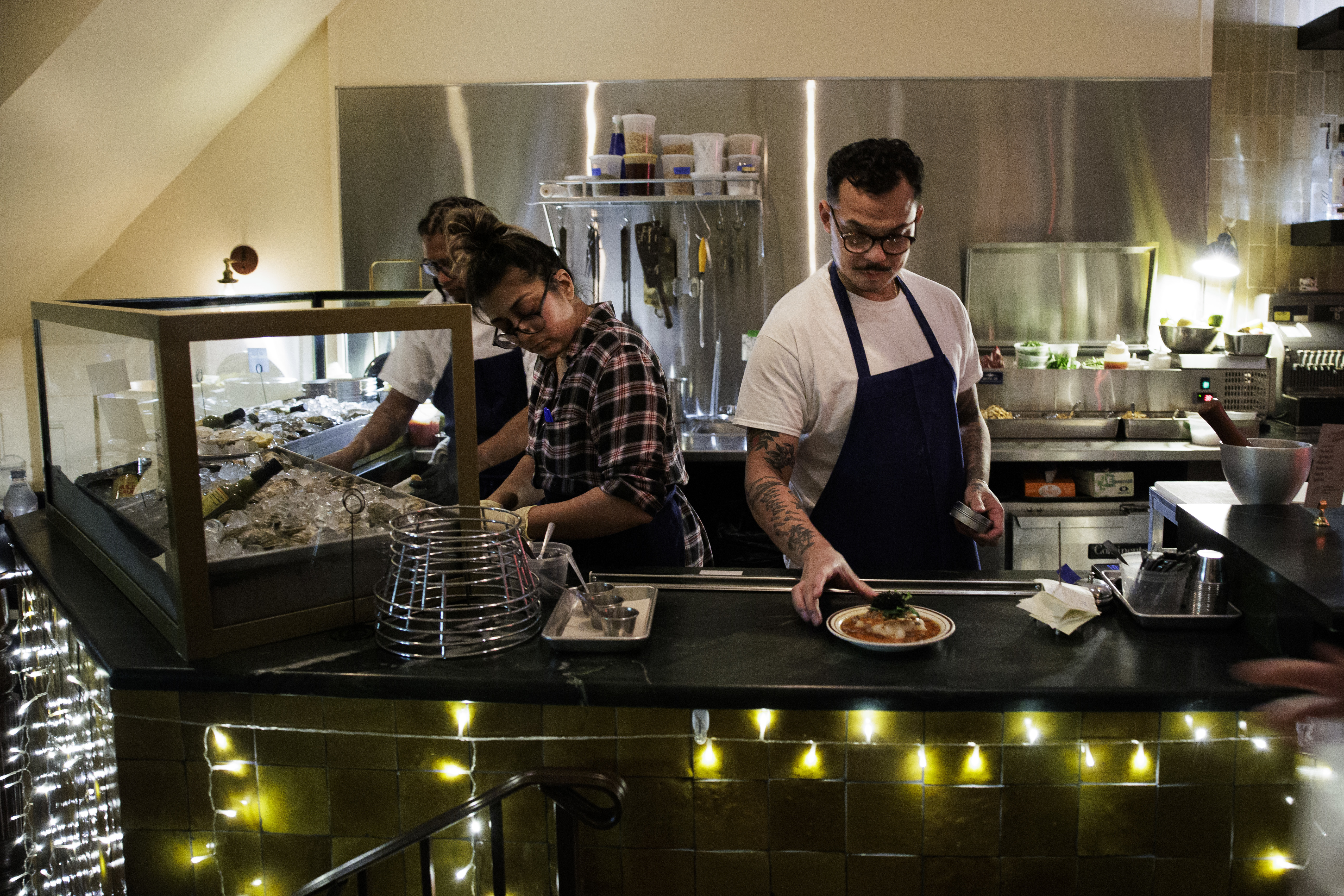
Chef Phila Lorn places a crudo at the pass at Sao on Wednesday, Nov. 26, 2025 in Philadelphia.The dry-aged hamachi crudo at Sao.
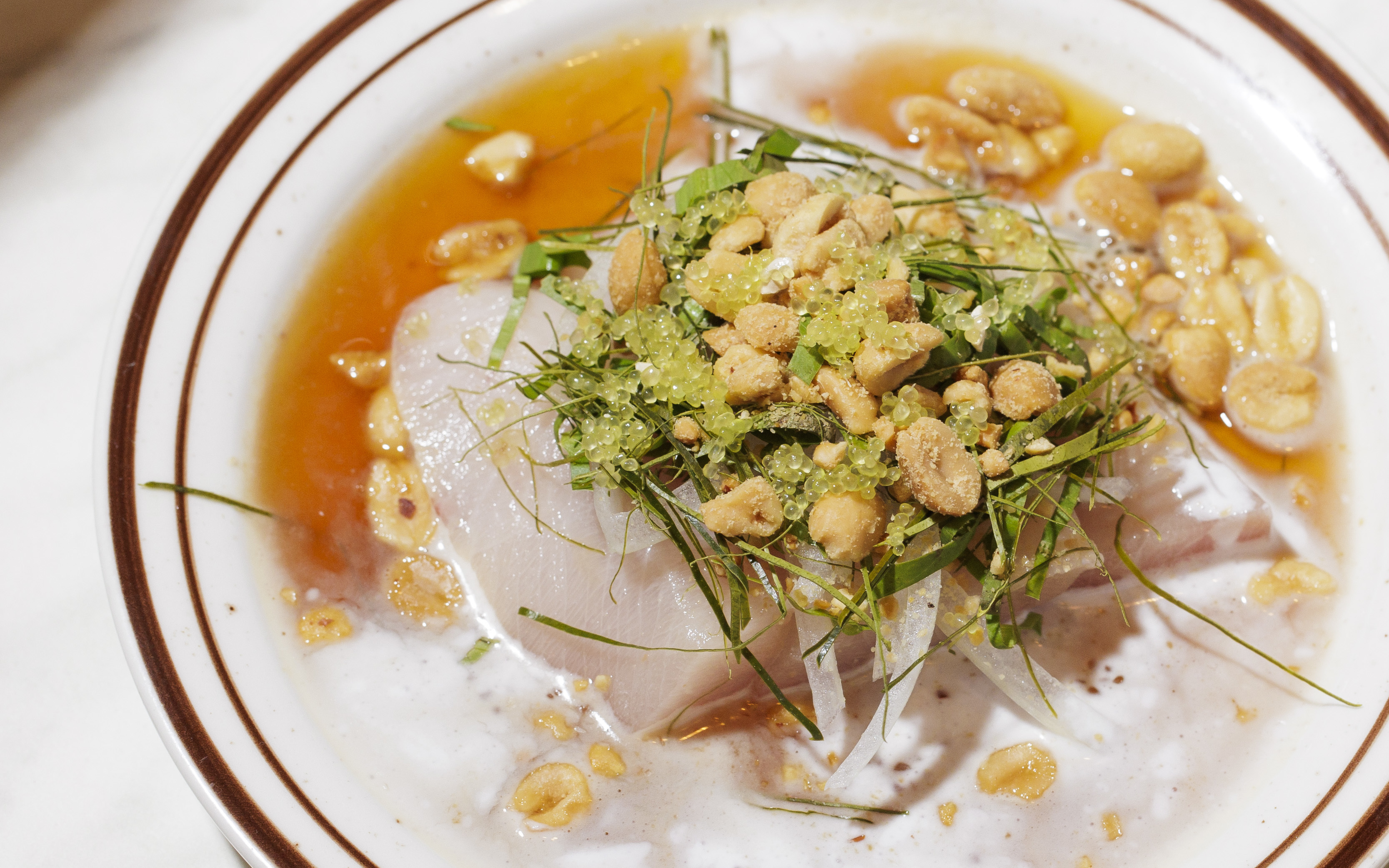
Front and center, meanwhile, there’s chef Phila himself butchering a whole dry-aged hamachi mid-service to serve raw with fish sauce, coconut milk, and vinegared onions — a salute to the beloved nearby soup hall, Pho 75. He’s slicing thick pink tiles of bluefin tuna and stacking them like a deck of sashimi cards doused with soy sauce and lime beneath fistfuls of roasted green chilies and crushed marcona almonds.
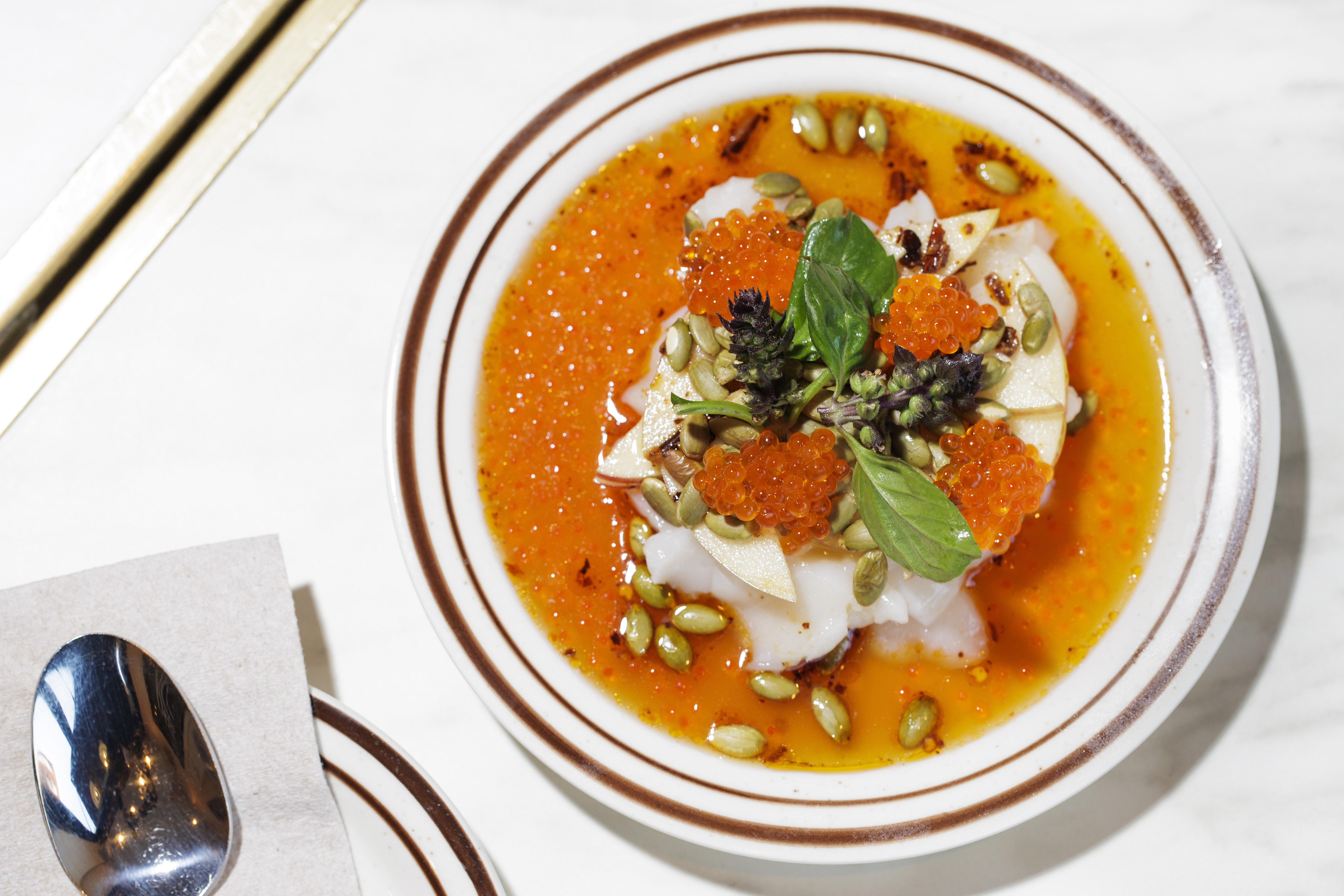
As I waver on which crudo to order next (perhaps the spot prawns with brown butter and prawn-head oil?), he pours sweet and spicy orange chili jam over an ivory mound of raw scallops, apples, and pepita seeds and I have my answer: “That’s Phila’s favorite,” confides Rachel as she patrols the narrow dining room, ever-playing Tetris with seats to accommodate more walk-ins.
The Dayboat Scallop Crudo at Sao on Wednesday, Nov. 26, 2025 in Philadelphia.
That scallop-and-chili jam combo will be familiar to anyone who’s dined at Mawn, where Lorn workshopped many of these dishes for months. There are other overlaps here of Mawn’s greatest hits, like the crispy soft-shell shrimp in fish sauce caramel, or the awesome 20-ounce rib eye piled high with “Cambodian chimichurri,” boosted with lime juice and fermented prahok fish paste.
One standard you must order, though, is the intricate papaya salad, a colorful crunch-fest of long beans, peanuts, candied shrimp, and shredded green papaya lashed with blasts of sour tamarind, chile, and shrimp paste. It dials your taste buds up to a certain base level of funk and sour heat before moving the conversation to more contemporary flights of fusion fancy.
The Honey Butter Hoe Cake at Sao on Wednesday, Nov. 26, 2025 in Philadelphia.
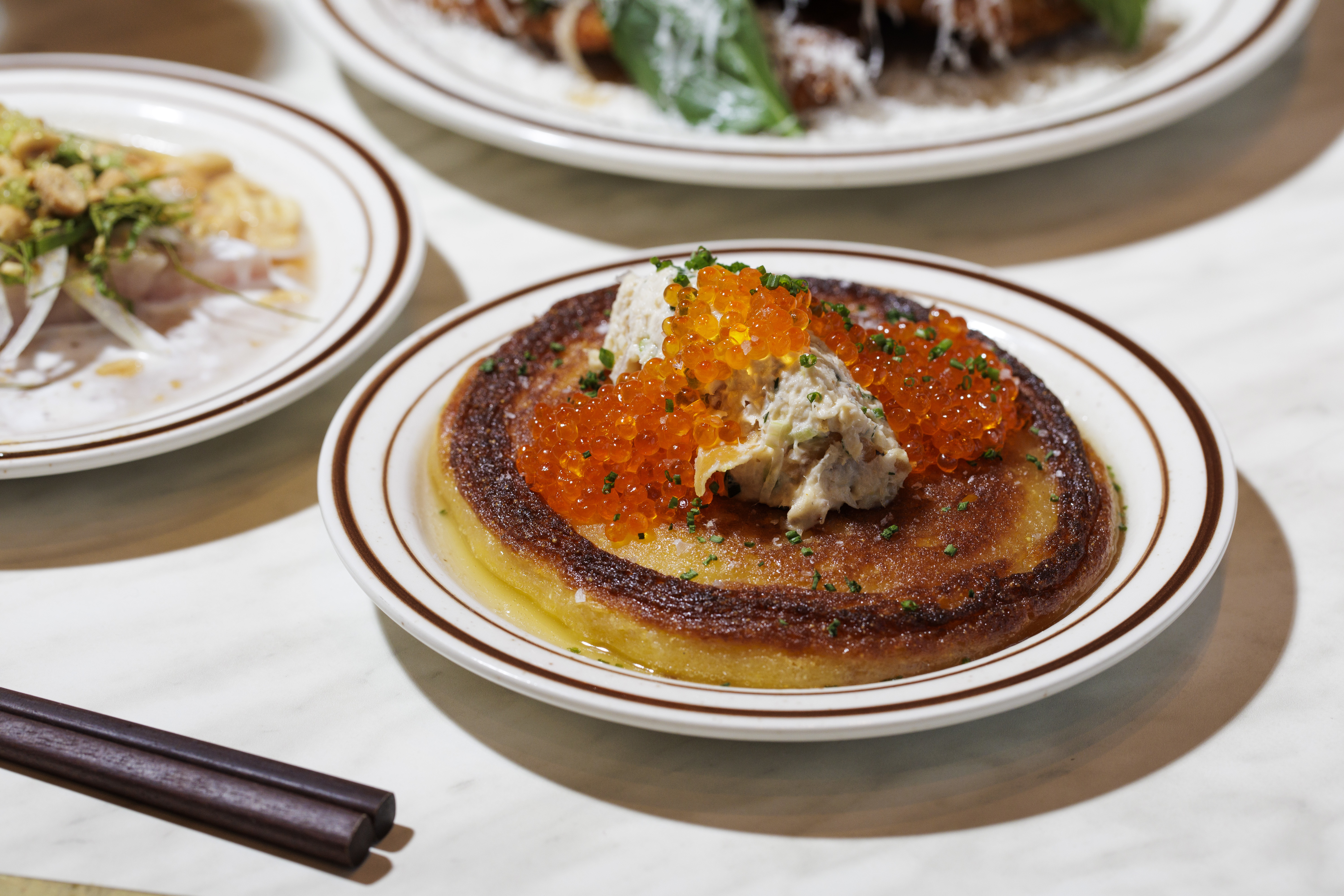
Sao’s menu is more an extension of Mawn’s repertoire, rather than something entirely new, with a greater emphasis on raw seafood and an even more playful approach to cooked dishes rooted in tributes to favorite restaurants. Perhaps the most memorable dish at Sao, in fact, is a direct corn cake homage to Boston’s Neptune Oyster bar, whose signature johnnycake is remade here as a warm, honey butter-soaked hoe cake enriched with dashi then topped with cool smoked trout salad and beads of roe, which Phila tends to piles onto Sao’s plates by the spoonful. The lacy crunch of that warm sweet cake against the savory pop of roe, amped by the saline burst of a supplemental scoop of caviar, was one of my favorite bites of the year.
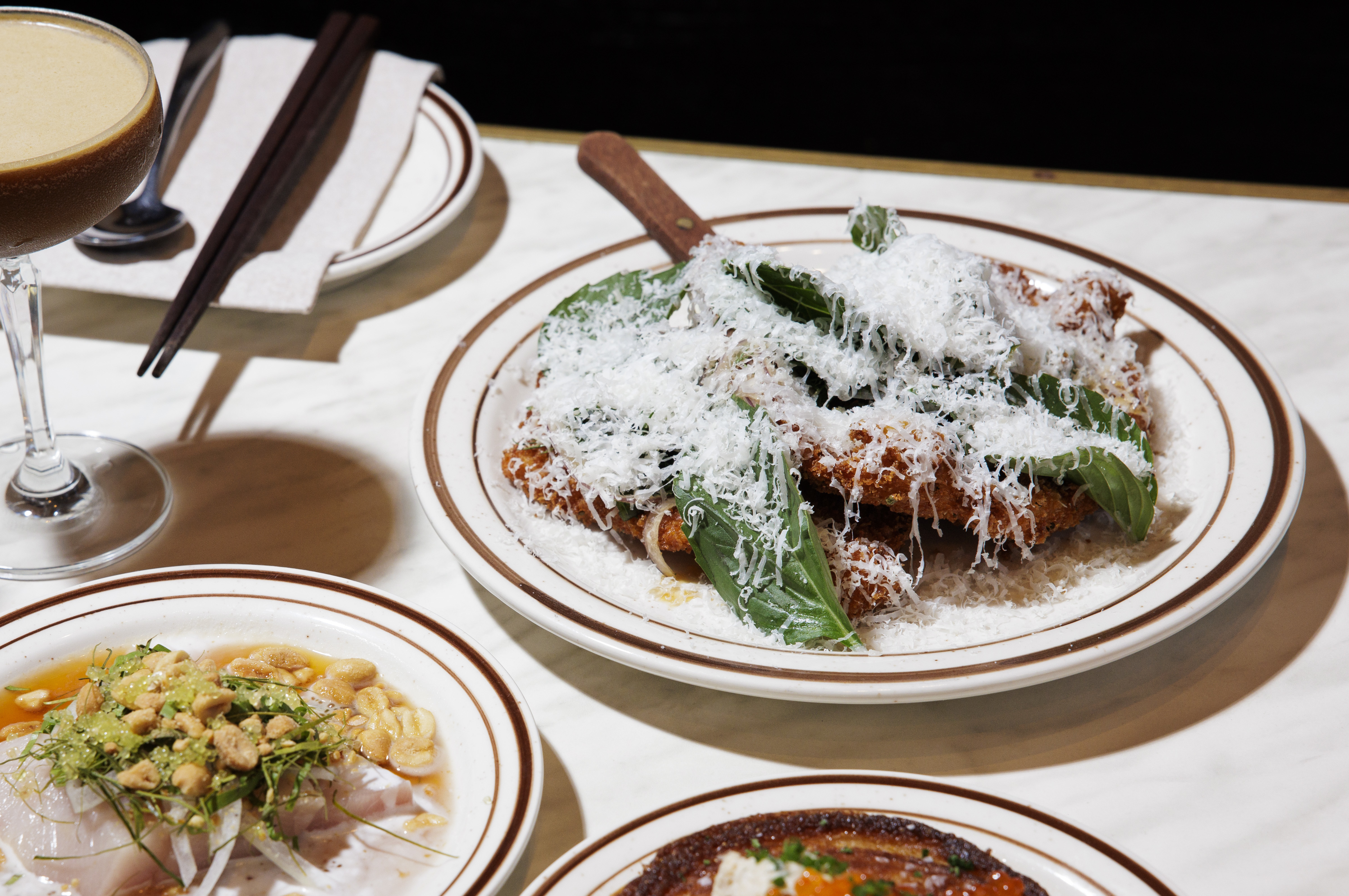
Sao’s menu is full of Easter eggs for the keen-eyed diner, including an irresistible tuna carpaccio topped with fried shallots, cured chile rings, and a sizzling finish of sesame oil that’s an ode to the “bronzizzle” roll at Zama, where Phila spent some formative years. There’s also a nod to the beloved late-night cutlet from Palizzi Social Club that’s transformed with Southeast Asian pickled cucumbers, Thai basil, and fish sauce caramel. The chef, who grew up just a few blocks from East Passyunk, also pays tribute to South Philly’s Italian “crab gravy” tradition with his own take, a blend of red and green coconut milk curries steeped with crab shells that comes topped with crisply fried scallops.
The Mawn Cutlet at Sao on Wednesday, Nov. 26, 2025 in Philadelphia.
A frequent chicken skewer special, whose meat is marinated in kreung spice paste, is grilled over binchotan coals as Phila’s nod to the weekend Khmer barbecues at the Southeast Asian Market. The mee caton is a straightforward stir-fry of velvety soft beef, Chinese broccoli, and fat rice noodles kissed with sesame oil that’s a throwback to one of the best home dishes made by his mother, Sim Khim. (I also loved the seafood rendition.)
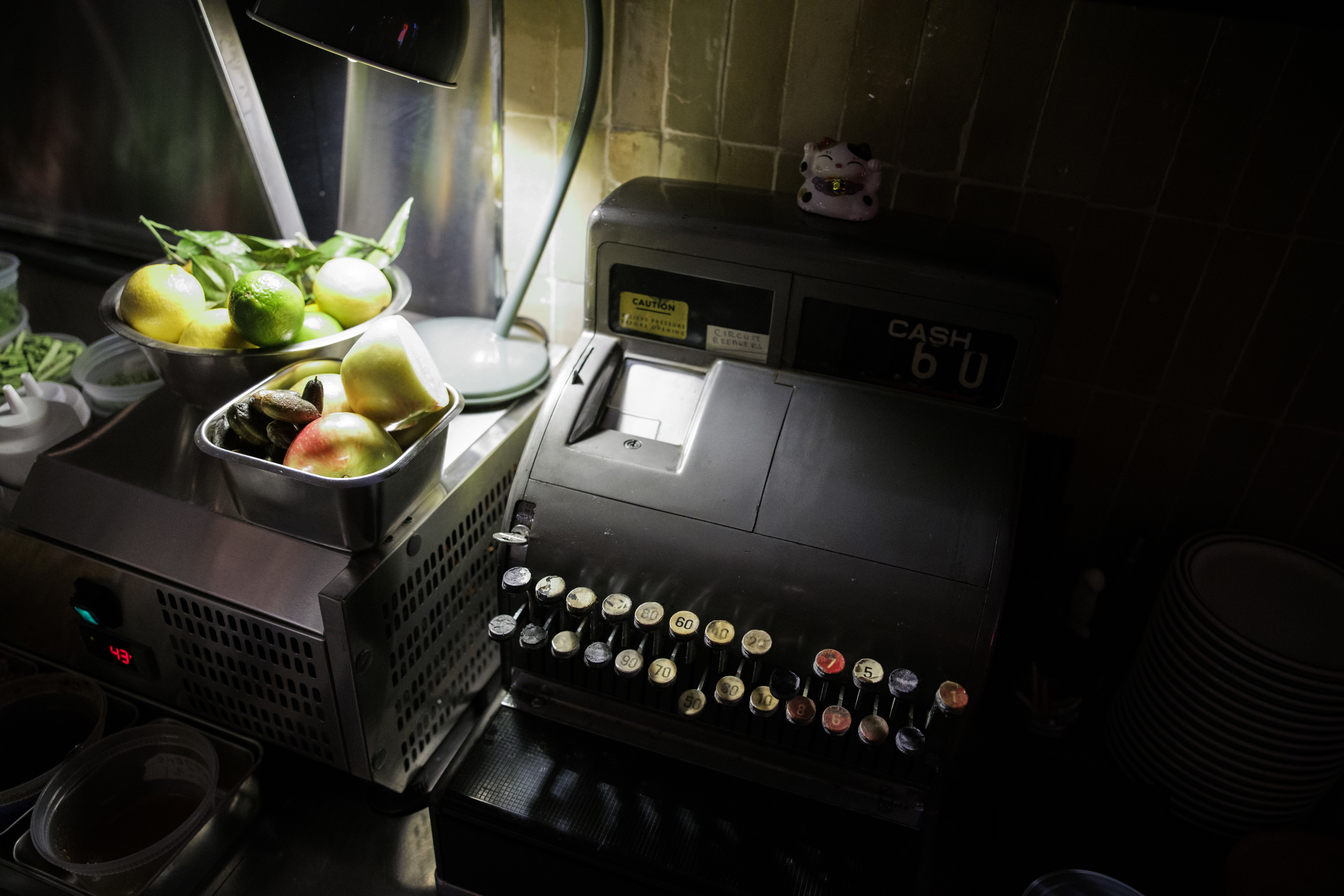
Nostalgia for family and neighborhood pervades every corner of Sao, from the vintage bathroom door with textured glass and wavy panes that replicates the vestibules of many South Philly rowhouses (including the Lorns’ house), family pictures, and an antique cash register from the Atlantic City Boardwalk hotel once owned by Rachel’s grandparents.
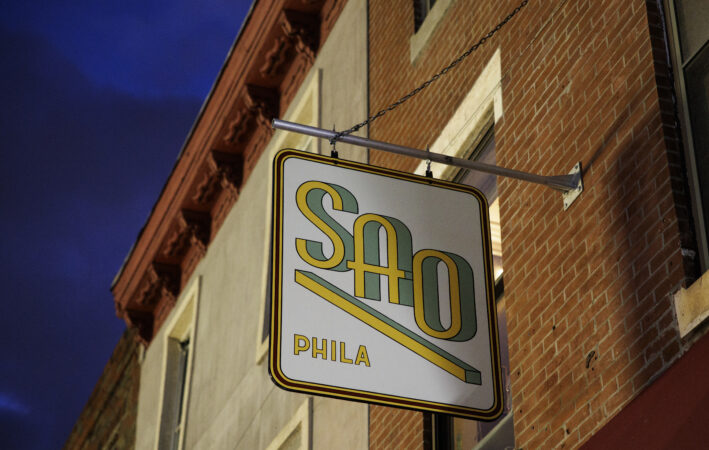
Even the restaurant’s name channels a sense of place: It’s a phonetic representation of how Phila’s mother, a Cambodian refugee, pronounces the “South” in South Philly. Her son, famously, is also named for the family’s adopted city, although Khim and everyone else pronounce it “Pee-la.” The sign hanging out front — Sao Phila — has multiple meanings.
An old school cash register from Rachel Lorn’s family at Sao on Wednesday, Nov. 26, 2025 in Philadelphia.
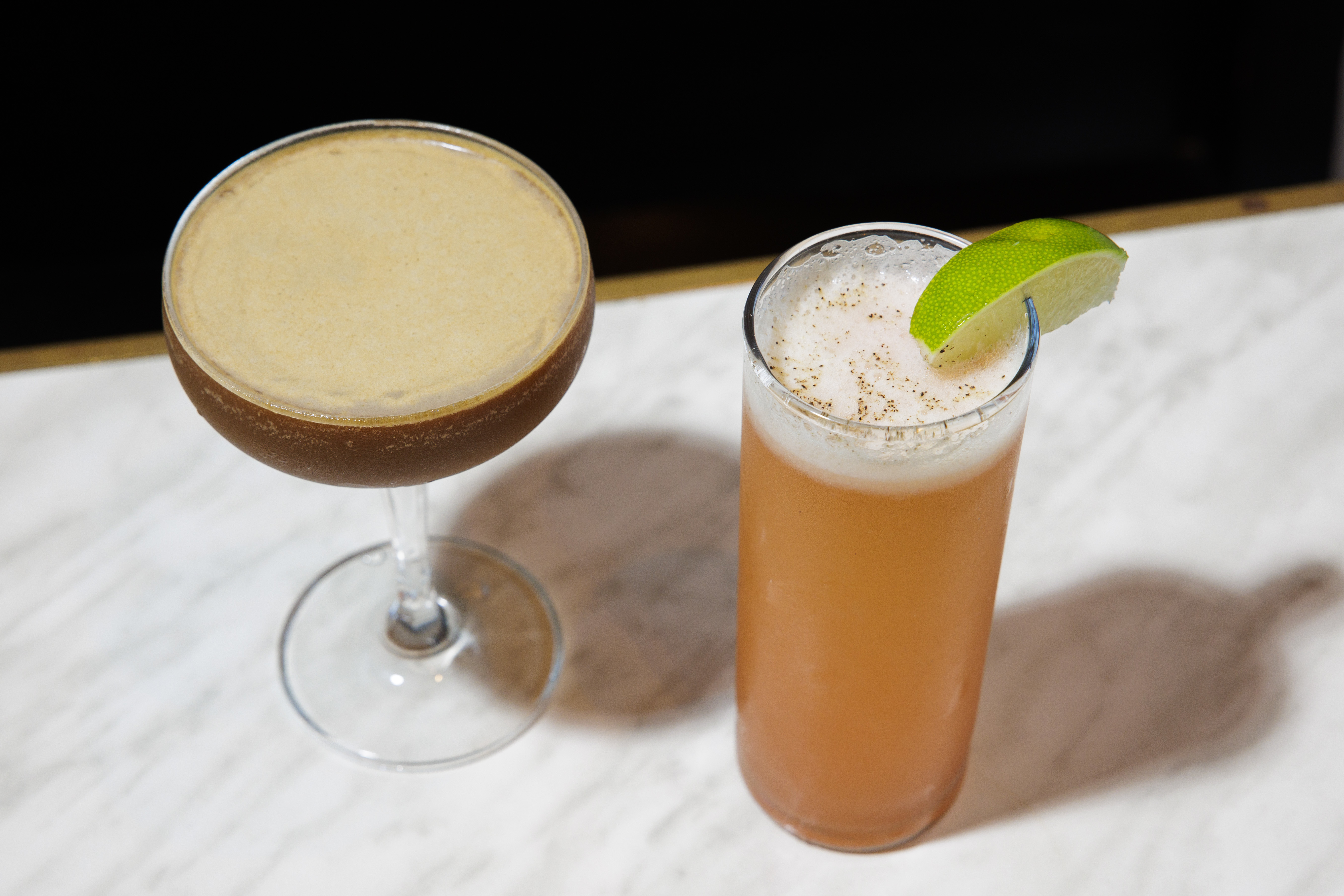
With the added element of a liquor license at Sao, the Lorns’ business partner and close family friend, Jesse Levinson, designed an opening drink list that follows on theme. The chicory-scented, coconut-creamed Vietnamese coffee martini, Wing Phat Plaza, is named for the bustling Asian strip mall on Washington Avenue nearby. The Angkor Baby borrows a michelada from South Philly’s lively Mexican scene, then adds the Asian touches of ground Kampot peppercorns and a rice vinegar tang.
The Wing Phat Plaza and Angkor Baby cocktails at Sao.
Levinson says the drink menu will keep evolving as Liebetreu and her fellow bartender, Lillian Chang, begin to take creative control, supplementing the small but trendy selection of natural wines. I also expect Sao’s sake selection to take a big leap once general manager Kelly Brophy, formerly the lead omakase server at Royal Sushi, begins to share her expertise.
Indeed, so much is still evolving here, including the tasty but limited dessert selection of crème brûlée and whoopie pies from Soondrum (when she’s not shucking shellfish), that I’m certain we’ve only seen the beginning of what Sao can truly become.
“We’re locked and loaded for more because we have room to grow,” says Phila, referring mostly to desserts. If only they also had room to grow more seats! Philadelphia’s diners, no doubt, would quickly snap those up, too.
Diners fill the space at Sao on Wednesday, Nov. 26, 2025 in Philadelphia.
Reservations are highly suggested, but a handful of walk-in seats are available.
Not wheelchair-accessible. There is a step up into the restaurant, as well as at the bathroom.
About 90% of the menu is naturally gluten-free, while certain dishes that typically use the fryer (like the scallops in crab gravy) can be modified to avoid cross contamination.
Menu highlights: Crudos (aged hamachi; scallops with chili jam); bluefin tuna carpaccio; Cambodian papaya salad; honey butter hoe cake; Mawn cutlet; scallops in crab gravy; mee caton; grilled chicken skewers; crème brûlée.
Drinks: Cocktails are well-made with a South Philly twist (like the barrel-aged mellow Jabroni Negroni) and on-theme Asian accents, such as Cambodian Kampot peppercorns for the Angkor Baby riff on a michelada, or the chicory-flavored Viet coffee martini named after Washington Avenue’s Wing Phat Plaza.
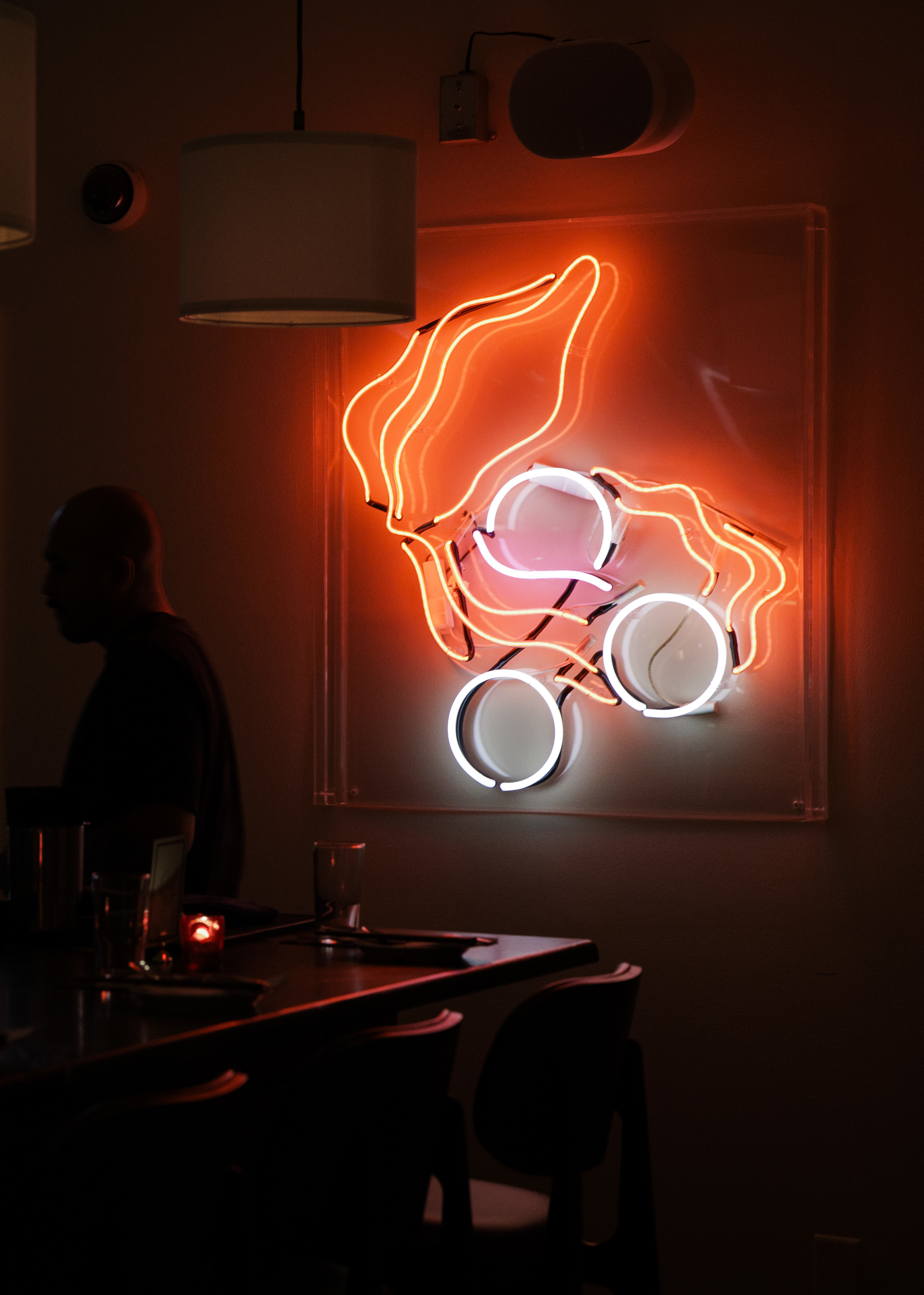
A neon oyster sign at Sao on Wednesday, Nov. 26, 2025 in Philadelphia.
What makes a good falafel? Ask Marwan Alazzazy of Cilantro Mediterranean Restaurant and he’ll tell you it’s all about the perfectly browned, crispy exterior that easily tears in half to reveal a tender, herb-flecked interior.
“Besides the recipe? It’s the hand who makes it,” Alazzazy said. “We have this saying in Egypt about any type of food that’s good, that the person making it did it with his soul — when he’s enjoying making it, it tastes different.”
As an Egyptian, Alazzazy and his family know a thing or two about falafel; the legume-based balls originate from their motherland. But there are various techniques used throughout the Middle East to create this popular dish. In Palestine, it’s common to add veggies like onions and peppers to the chickpea batter, according to Bishara Kuttab of Bishos in Fox Chase. In Lebanon and Egypt, you’ll often find falafel that combines fava beans and chickpeas — sometimes with a little bit of baking soda, as Patricia Massoud does at Li Beirut in Collingswood.
No matter how it’s made, falafel is about the herbs, spices, and legumes that come together to make the palm-sized rounds that are perfect on platters, in a sandwich, or as a snack by themselves.
I ate falafel at over 20 restaurants to find some ofthe best Middle Eastern cuisinein Philly for The Inquirer’s 76. Turns out, the legume balls were a key factor in determining what restaurants made the cut: I found my favorites served exceptional falafel.
While each place offers slightly different variations, what set them apart was the harmony of texture and flavor — an exterior firm enough to tap on and an herby-nutty inner mush that’s super-satisfying to sink your teeth into.
Al-Baik Shawarma
Dining at Sohaib Al-Haj’s Northeast Philly family restaurant, featured on The 76, means devouring a generous spread of the best Palestinian dishes in Philadelphia — especially the falafel. It’s made with chickpeas that have been soaked in water for 20 hours and mixed with spices (think cumin, coriander, salt), parsley, onions, jalapeños, and green peppers. Blended together, the mixture is rounded with a scooper then deep-fried. The crispy falafel reaches the table with a bronze exterior, and the slightly spicy, earthy light green interior dances on your tongue. Get it as an appetizer, in a sandwich, or a platter with hummus, rice, and salad.
Over in Collingswood, Li Beirut chef-owner Patricia Massoud soaks her chickpeas for 12 to 18 hours — the minimum time to let the legumes hydrate and soften for grinding. She makes falafel according to her Lebanese father’s recipe. The cooked chickpeas get tossed in a food processor with onion, garlic, warming spices, fresh parsley, and cilantro. The key to her fluffy falafels, she said, is baking soda — it’s also how she keeps them gluten-free. Deep fried after resting in the fridge for 30 to 40 minutes, the cylinder-shaped falafel are served as an entree or a hot mezza for sharing.
You can smoke hookah while munching on crispy falafels in this Kensington-area restaurant. Alamodak offers a Jordanian rendition of the dish in their traditional dining room as well as their upstairs hookah lounge. Owner Francisco Ayoub’s falafels are made fresh daily using a spice mix imported from Jordan, and fried to order for a crispy outside and soft, flavorful inside that packs herby nuttiness with each bite. Order them as an appetizer, in a sandwich, or in a platter with rice and salad. Either way, there will be tahini sauce for dipping.
Just off South Street, chef Dalia Soliman and her husband, Mohamed Alazzazy, serve solid falafel along with other Egyptian classics that have made the restaurant a neighborhood favorite. The falafel are made with a mix of chickpeas and fava beans and seasoned with spices imported from Egypt. The family hand-rolls, freezes, and then fries them — a method that ensures the balls don’t crumble while cooking. Get five as an appetizer or opt for the platter, which includes a choice of rice or french fries, salad, hummus, and pita bread.
Head to Fox Chase for Palestinian falafels — warm, earthy chickpea fluff in a crisp, savory cast. Owner Bishara Kuttab said making falafels is all about the technique, ensuring the balled-up mix of chickpeas, parsley, onions, garlic, and spices are fried at the right temperature. Made to order, there are five ways to order falafel: in a hoagie, on a rice bowl, with loaded fries, in a salad bowl, or wrapped in their house-made saj bread. I recommend the last option, pairing the falafel’s nutty, earthy undertones with the soft, chewy bread.
Vartuhi Bederian, one of the matriarchs of this Northern Liberties BYOB, is Armenian but serves crisp-tender falafels with the Syrian influences she grew up with. Chickpeas are soaked for at least 24 hours before being mixed with fava beans, cilantro, sesame seeds, and spices in a food processor. The falafels are pan-fried in a wok-style vessel and offered on the fattoush salad, as a mezze dish, and on a platter. Order takeout and get it in an exclusive sandwich with house-made tahini sauce that “just elevates the falafel itself,” said owner Ara Ishkhanian — I agree.
In Bensalem, Flame Kabob’s falafels begin with chickpeas soaked for 15 hours. The next day they are ground with onions and spices. Owner Esmatullah Amiri adds chickpea flour to his falafel, which is how the dish is made in his native Afghanistan — it helps prevent crumbling, he said. The mix is rolled into balls using molds, frozen, and then fried. Falafel comes in a wrap, as an appetizer with hummus, and over rice.
Emmett, the Kensington restaurant serving modern Levantine cuisine, has found itself on a coveted list: Esquire’s Best New Restaurants. It is the only Philadelphia establishment recognized on the list. The 30-seat restaurant is already perpetually busy, but since the list was announced Dec. 1, chef-owner Evan Snyder, 33, has seen an uptick in reservations on OpenTable.
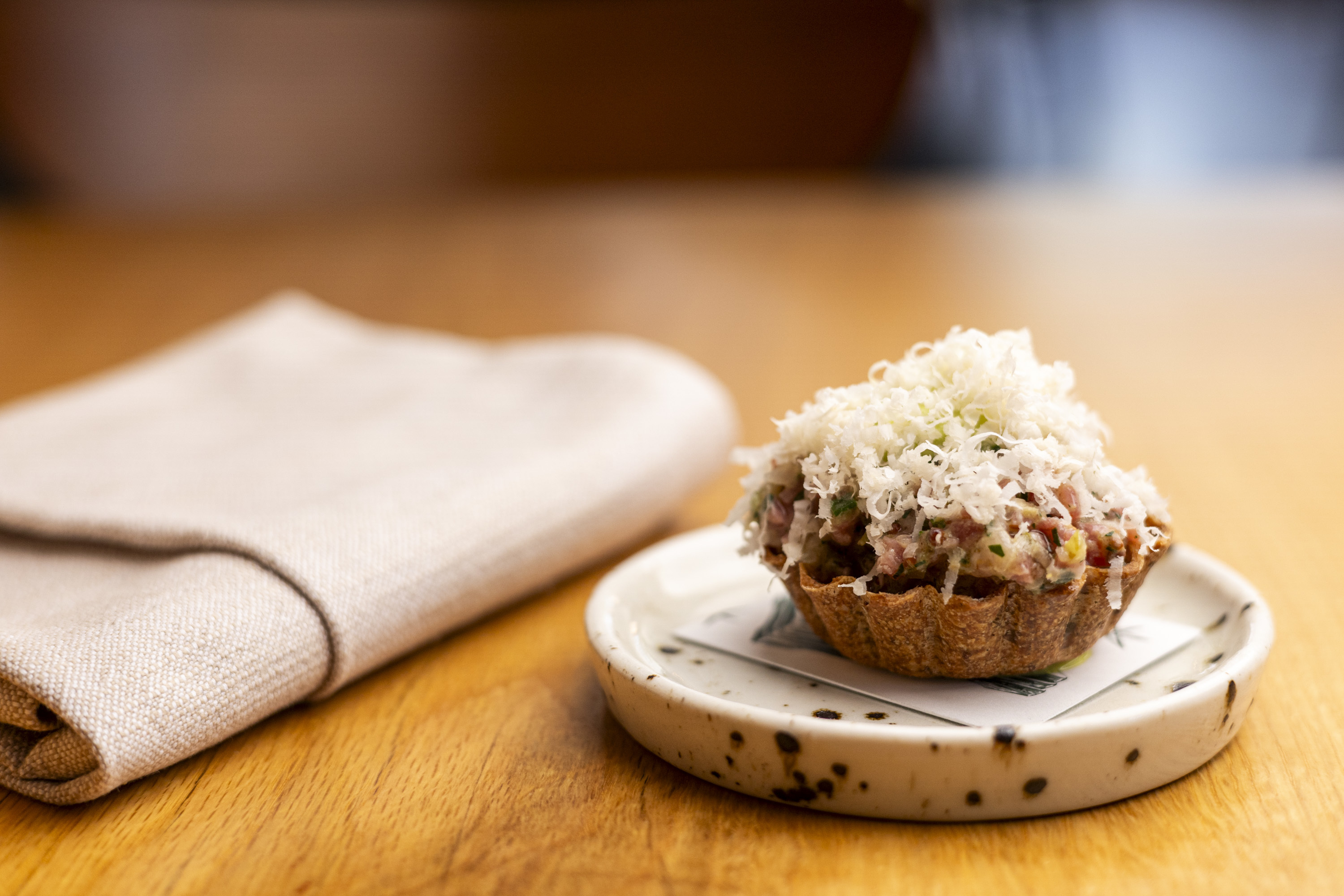
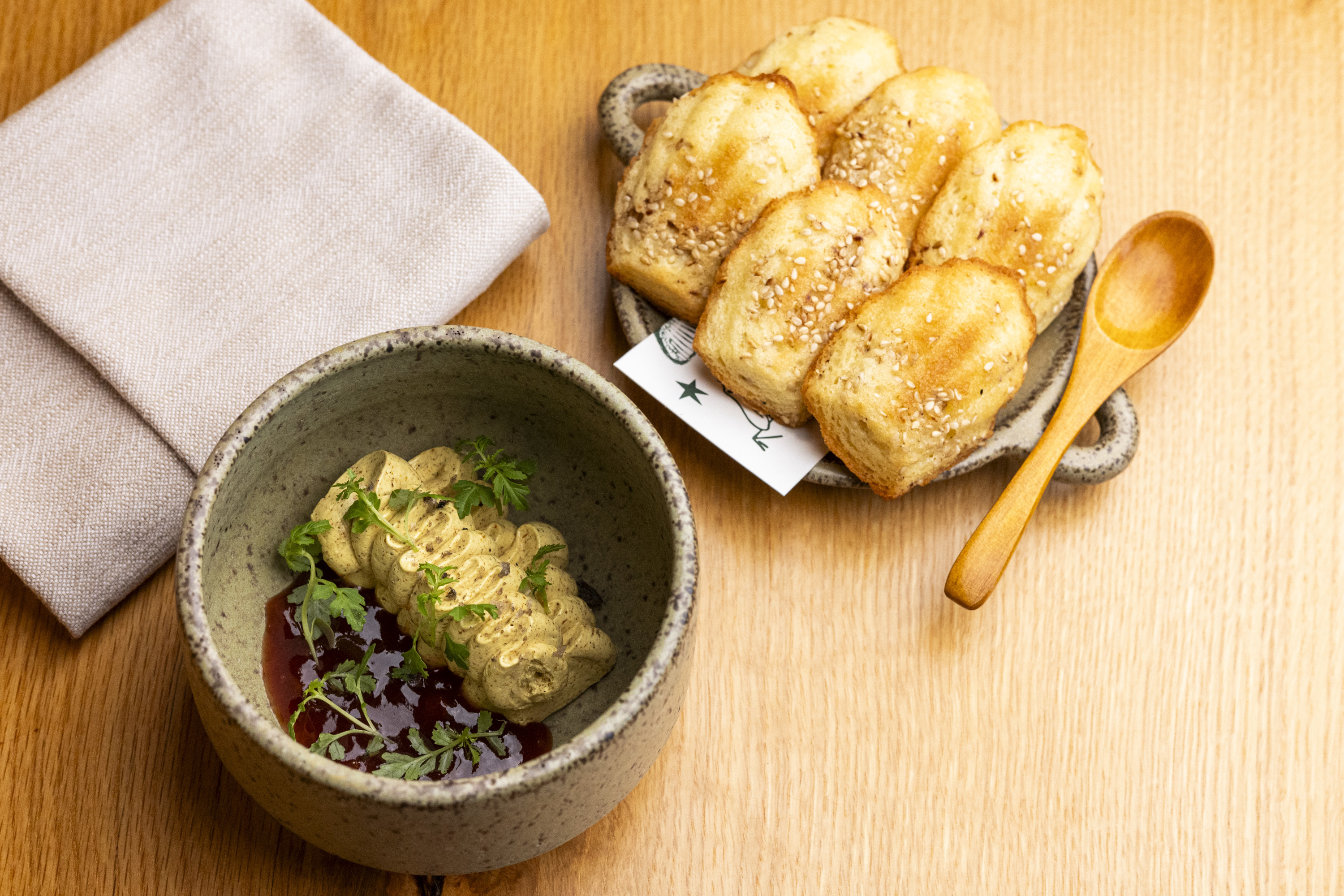
He had been sitting on the news — or at least, some suspicion of it — for the last two weeks, since he received an invitation from Esquire for the list’s unveiling party in New York. The list was compiled by editor Jeff Gordinier and writers Joshua David Stein and Amethyst Ganaway; Stein was responsible for Emmett’s inclusion. He visited twice this past year and in Emmett’s segment of the article praised its rye tartlet filled with American wagyu tartare, sesame madeleine with baharat butter, corn agnolotti with tahina, and duck breast.
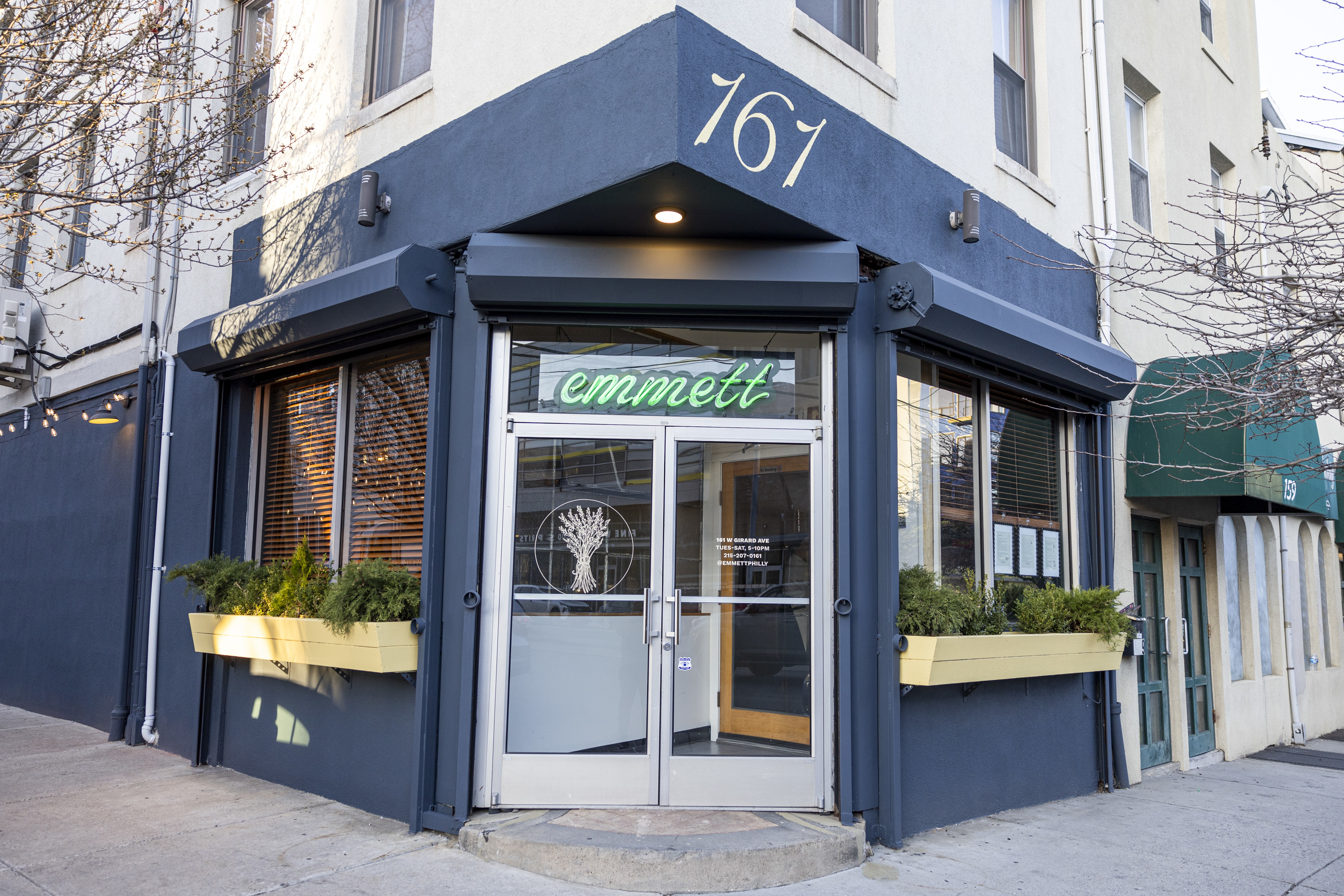
The rye-wagyu tartlet at Emmett, 161 W. Girard Ave., in Philadelphia, Pa., on Thursday, March 27, 2025.
Snyder was particularly delighted by Stein’s focus on these menu stalwarts. “The tartlet and madeleine are staples that will probably never come off the menu, as well as the dry-aged duck, which we age for 21 days, quite a bit longer than most people age ducks. The agnolotti with tahina is a set that changes micro-seasonally. These are all the things he enjoyed,” said Snyder.
Sesame Madeleines with Ras al Hanout butter at Emmett, 161 W. Girard Ave., in Philadelphia, Pa., on Thursday, March 27, 2025.
Emmett, named after Snyder’s 2-year-old son, opened Jan. 28, after he had run the concept as a pop-up for two years prior.
The outside of Emmett, 161 W. Girard Ave., in Philadelphia, Pa., on Thursday, March 27, 2025.
Snyder is most thrilled that the recognition gives his team “a shine.”
“It’s the most important thing to me that [my team] is proud of what they’re doing and where they work.”
Come Dec. 6, Amanda Shulman, chef and creator of the now Michelin-starred Rittenhouse restaurant Her Place Supper Club, knows exactly what she’ll be doing: boxing up hundreds of cookies.
More than three dozen cookie varieties — snickerdoodles, chocolate chips, shortbread, thumbprints, meringues, macaroons, and many more, in 100-cookie batches — will be ferried to Center City that morning. They’ll be brought by bakers and pastry chefs from around the region, all of whom have enlisted to help Shulman pull off what has become an epic holiday fundraiser, Cookies 4 Coats, now in its fourth year.
Shulman and her crack team take over once the cookies have converged. They’ll crank for two hours, putting together a cookie box so big, it will fill the front seat of your car.
“It’s so many cookies,” Shulman said in a recent interview. “It is an irresponsible amount of cookies, and it’s awesome.”
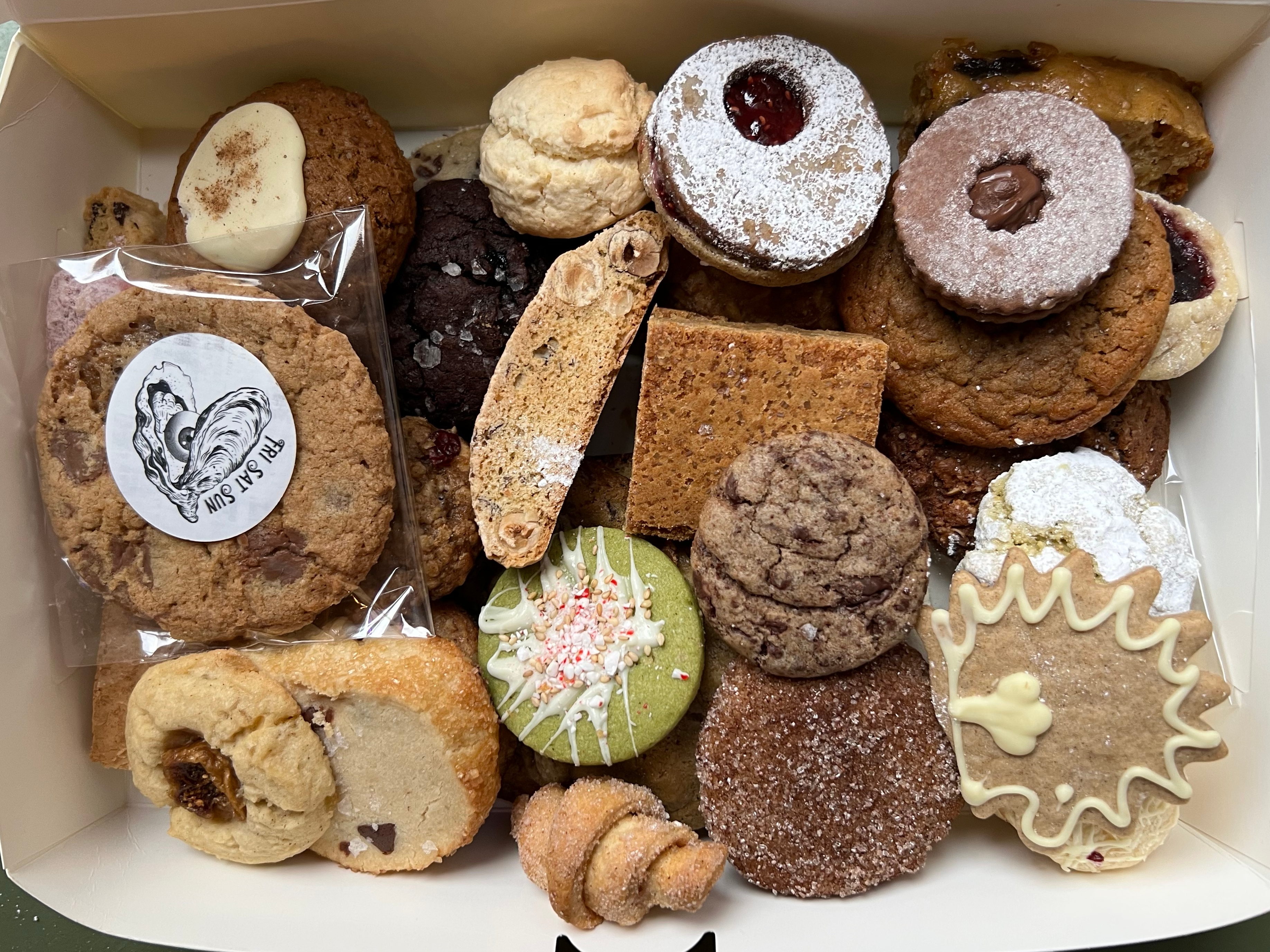
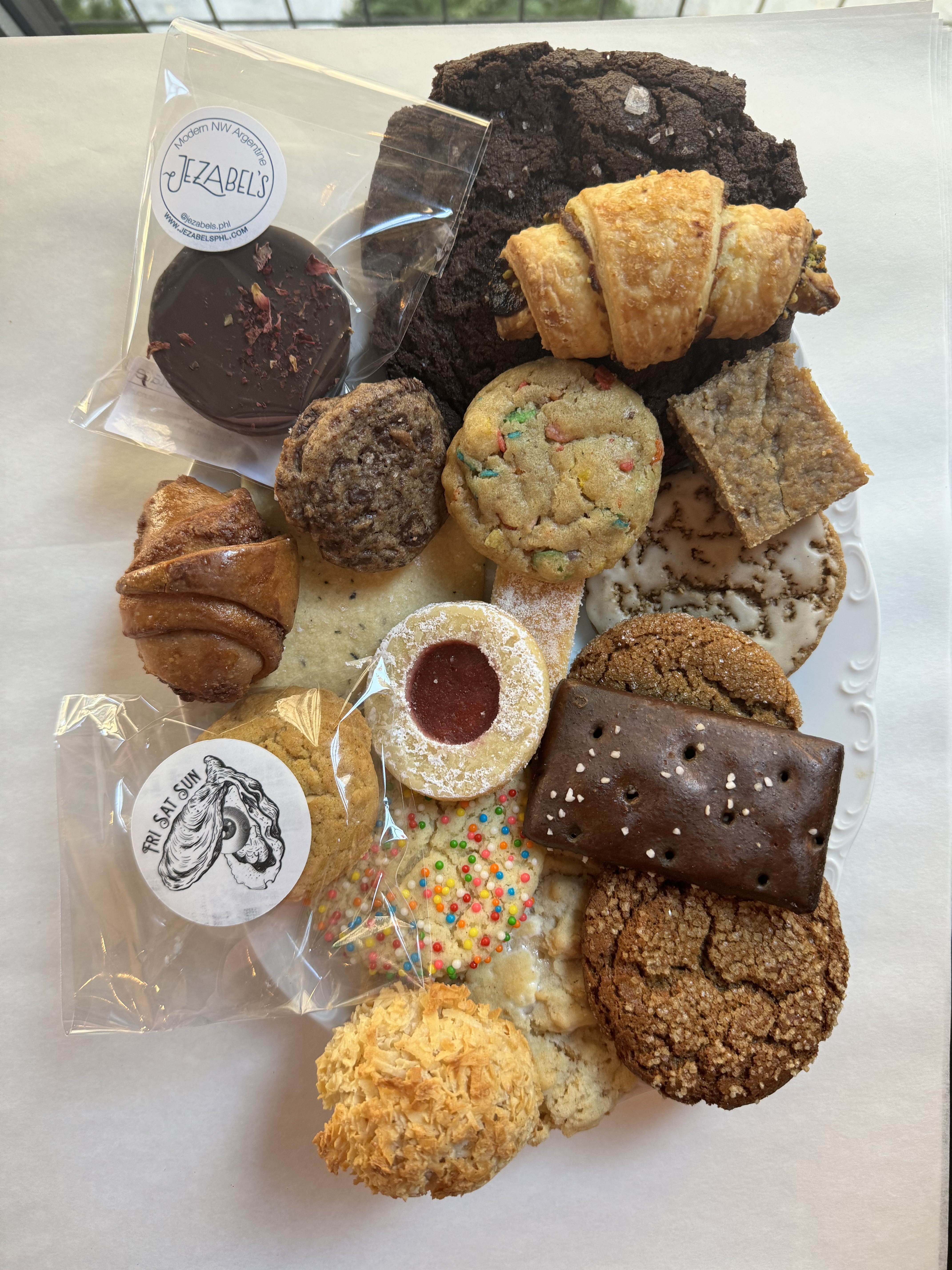
The first edition of Cookies 4 Coats’ annual cookie boxes, which assemble treats from well over two dozen bakers and chefs from around Philly. The fundraiser has only grown since it started in 2022.
If you’ve scored a box in previous years — the reservations for them were snapped up in a matter of hours last December — you know the treasure trove of sweets that lies within.
Last year’s 41-cookie box was full of recipesfrom pop-up bakers and pastry chefs, including several folks behind some of Philly’s most vaunted restaurants, bars, and bakeries: brown butter chocolate chip cookies from Provenance pastry chef Abby Dahan, white chocolate and cranberry oatmeal cookies from Friday Saturday Sunday’s Amanda Rafalski, hazelnut shortbread from Vetri’s Michal Shelkowitz, Italian anise wedding cookies from Laurel chef Nick Elmi, Krispie cornflake marshmallow cookies from New June’s Noelle Blizzard, and Irish shortbread from Meetinghouse chef Drew DiTomo, not to mention Shulman’s own sourdough chocolate chips.
All the proceeds from these coveted cookie boxes are split between Broad Street Love, the radical hospitality-rooted Center City nonprofit, and Sunday Love Project, a Kensington nonprofit that runs a free community grocery store in the Riverwards neighborhood. Last year’s sell-out bake sale generated a $15,000 donation to Sunday Love that funded the purchase of hundreds of coats for local kids, as well as programming (music, art, cooking classes, etc.) for children and families, according to Sunday Love founder Margaux Murphy.
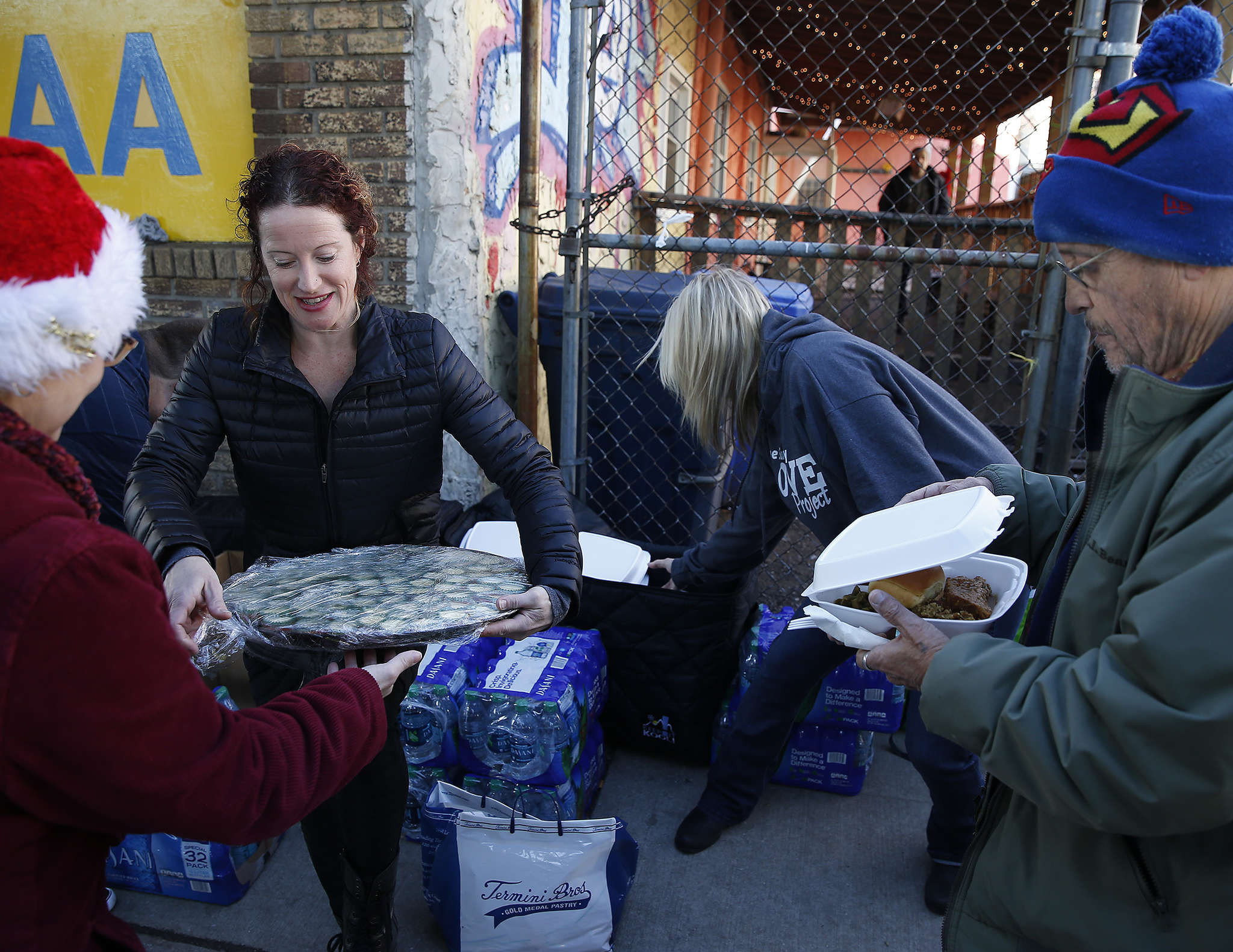
Margaux Murphy, founder of the Sunday Love Project, serves Carlos Gonzalez.
Shulman and Murphy first met in 2021, while Murphy was still running Sunday Love out of the Church of the Holy Trinity at 19th and Walnut, serving 2,000 meals a week to anyone in need. Shulman and the Her Place crew — then in their first year of business — got involved, cooking lunches for kids going to summer camp and dropping off meals to the church.
Her Place was the stage for various pop-up bake sales and charity events in those pandemic-era years. In 2022, the idea came to Shulman for an extra-special one: “Everybody loves a holiday cookie box.” Why not assemble a citywide assortment and donate to Philly charities?
She put out an open call to bakers to pitch in and got tremendous response. She shared an online spreadsheet for the participants to see who planned to bake what, so that there wouldn’t be too many repeats. To add to the box’s value, they included a recipe book so that buyers could recreate their favorites at home.
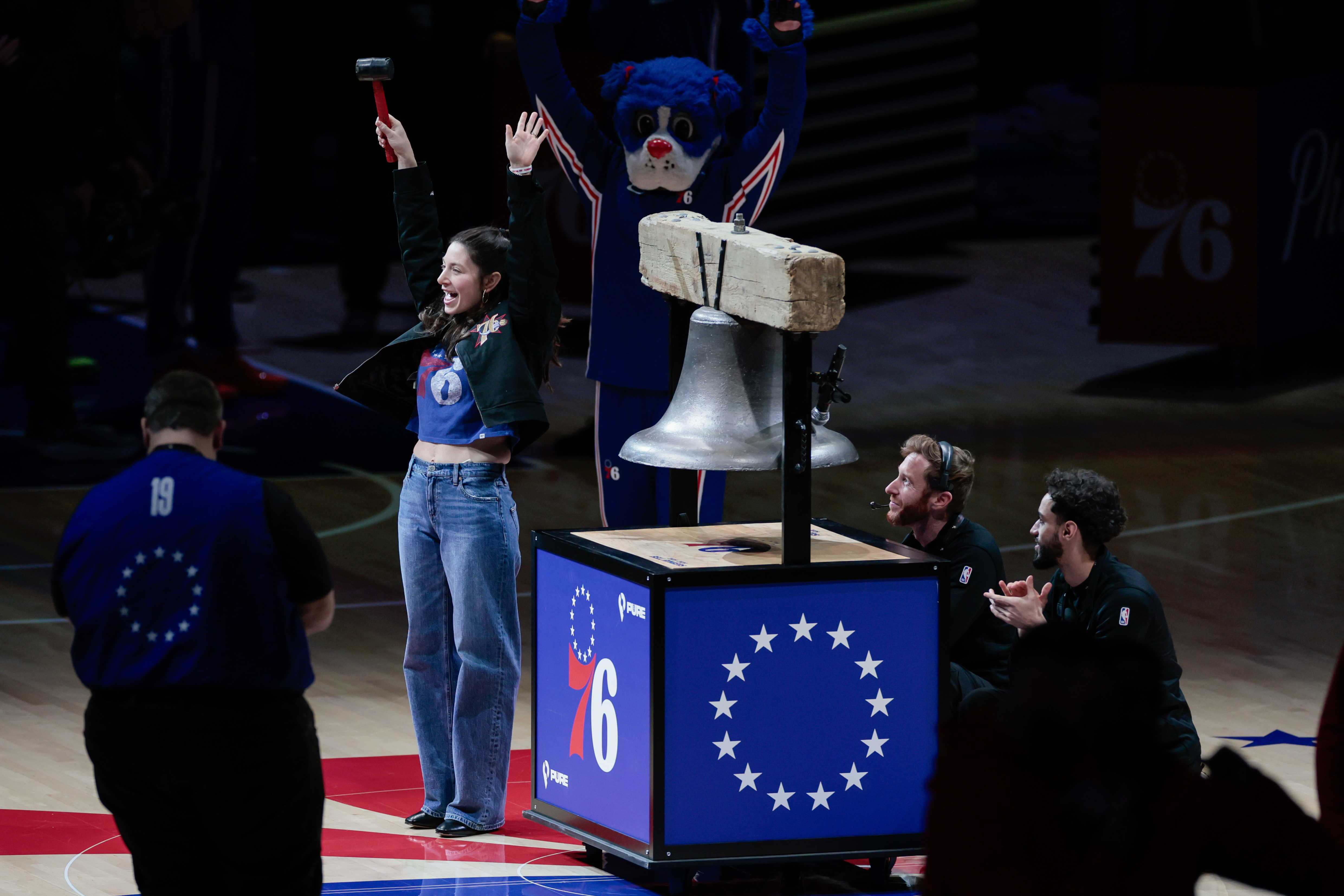
Her Place Supper Club chef Amanda Shulman rings the bell at the Sixers game Wednesday, Nov. 19, 2025, in Philadelphia
Shulman estimates 32 bakers contributed to the first Cookies 4 Coats box, raising thousands of dollars.Ever the one to see things through, Shulman didn’t leave much work for Murphy to do after collecting the cash.
“The first year, I [sold the boxes] a little earlier and I bought [the coats] all myself on Black Friday and had them all shipped to my house, so I had hundreds of coats in my apartment,” Shulman laughs, recalling the charity-induced splurge. “I needed to get different designs. I had to be sure there was something for everybody, so I went a little crazy. I had never racked up a credit card like that, and it was so exhilarating.”
Things are different these days, and Shulman says that’s for the best. “Now we just write checks, because they need other things besides coats — and [Murphy] gets to pick out what she needs as opposed to me just going on a shopping spree.”
One of Cookies 4 Coats’ annual cookie boxes, which assemble treats from well over a dozen bakers and chefs from around Philly.
Reservations for this year’s cookie box went live earlier this month and sold out in a matter of days. Shulman lowered the total number of boxes sold from 120 to 100, but the fundraiser is set to generate even more this year, because the price — $135 per box — increased to cover the cost of improved packaging: Each cookie will be individually wrapped this year, so buyers know which cookie is which rather than guessing based on flavor profiles and recipe cards (a fun game in itself).
Thirty-three bakers and chefs are signed up to contribute thus far, including Scampi’s Liz Grothe (cappuccino Rice Krispies treat), New June’s Blizzard (salted double chocolate chip shortbread), Amy’s Pastelillos’ Amaryllis Rivera-Nassar (besitos de coco), and Lost Bread’s Dallas King (honey butter corn cookies). (For those who don’t have a Cookies 4 Coats reservation, we offer eight of Shulman’s favorite recipes from last year’s box as a consolation.)
Murphy is perpetually floored by the size of the donation, and by Shulman’s seemingly bottomless reservoir of generosity. Murphy’s had strangers give thousands of dollars to Sunday Love, only to discover it was because Shulman recommended the nonprofit to a customer or acquaintance. Shulman recently collaborated with the Philly-area meal-delivery service Home Appetit, sending a portion of the sales to Sunday Love; it resulted in an $8,000 donation.
“I always tell her, she waves a magic wand and she’s just like, ‘Here’s $10,000, feed all the children,’” Murphy said. She remembers a very pregnant Shulman coming to last year’s annual coat giveaway (which will take place this year on Dec. 13 at 3206 Kensington Ave.). “She was in my store because she wanted to see the kids getting coats — I was like, ‘I swear to God, if you have this baby right here on my floor’ — that’s how hard she was working just to make sure that we had everything.”
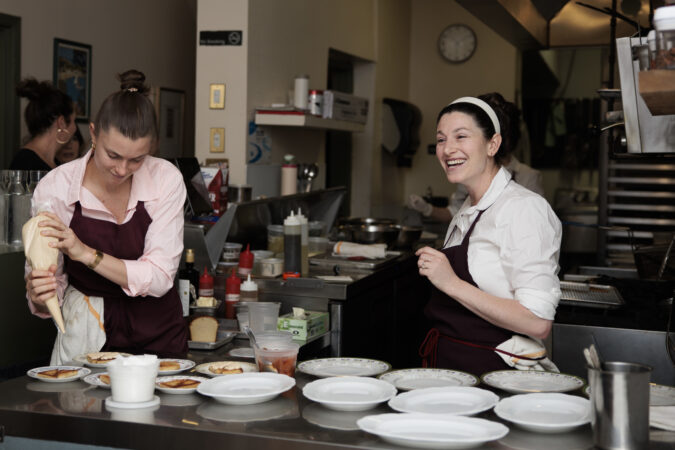
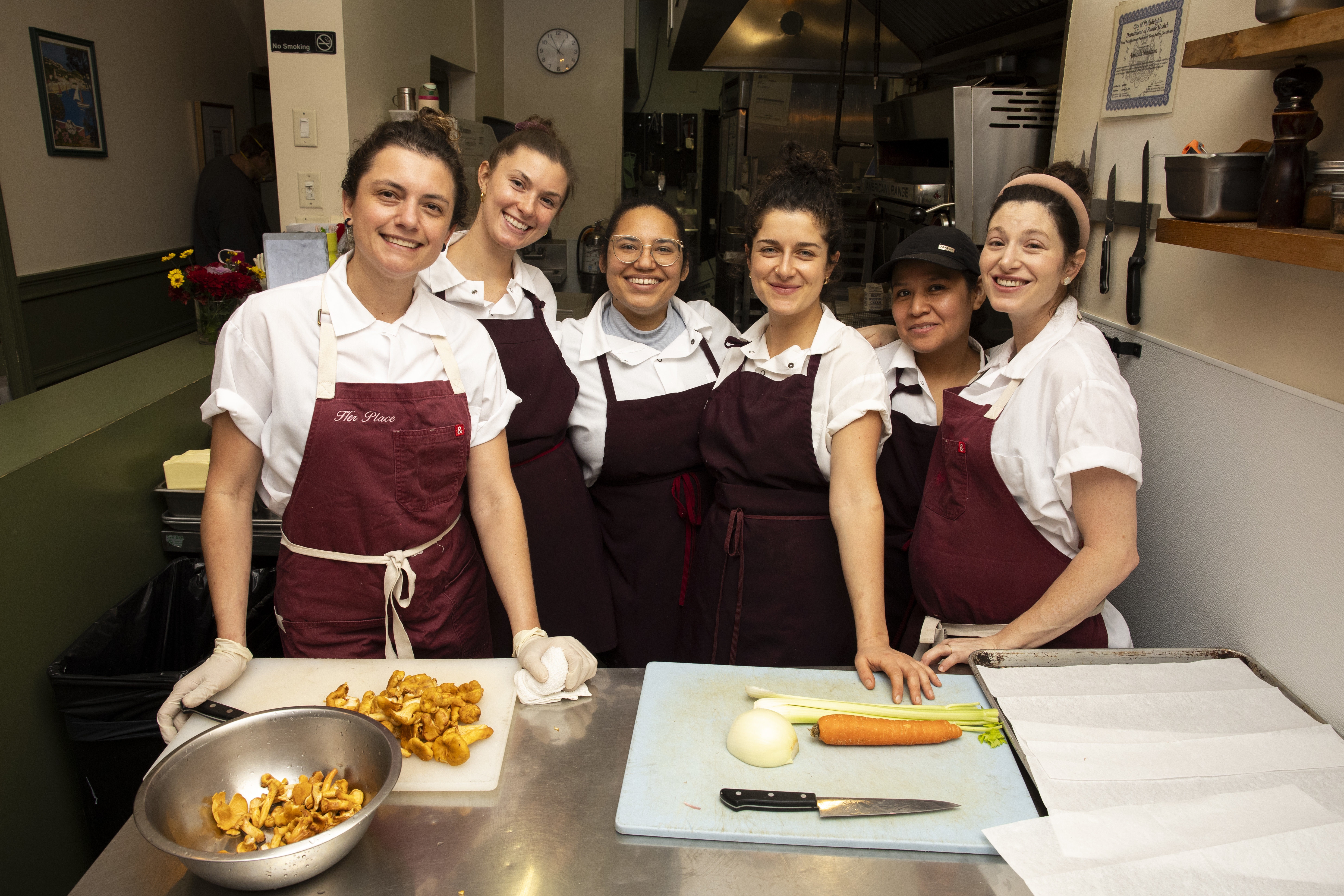
The Her Place team from left to right: Chef de Cuisine Ana Caballero, Line Cook Lauren Fiorini, Pastry Chef Jazzmen Underwood, Sous Chef Santina Renzi, Prep Cook Denia Victoriano, and Chef/Owner Amanda Shulman posed for a group photo at Her Place Supper Club on Tuesday, Nov. 26, 2024 in Philadelphia. Her Place is located at 1740 Sansom Street in Center City.
Shulman remembers that day a little differently, singling out a moment where she watched a little girl pick out a coat — “this brand-new, shiny pink coat that she got to pick out,” she said. “It’s full circle when you get to do every single part of the process, from the physical picking of the cookies to packing them to printing the things. I’m very grateful to everybody who helps out, and especially to my own team, because it’s a lot of work to make it this seamless.”
That’s what Shulman comes away with when reflecting on what goes into this crumb-flecked effort: gratitude.
“If I can say thanks to my team … and to the community, that would be awesome. Thank you to all the bakers and restaurant people who give so much in the busiest time,” she said. “These bakers take time to not only make [the cookies], but then get it to us. It sounds like an easy lift — it’s not, especially if you’re going to work that day. I don’t take it for granted at all.”
Editor’s note: An earlier version of this story stated that 100% of the Cookies 4 Coats proceeds go to Sunday Love Project. It is split 50/50 between Sunday Love and Broad Street Love.
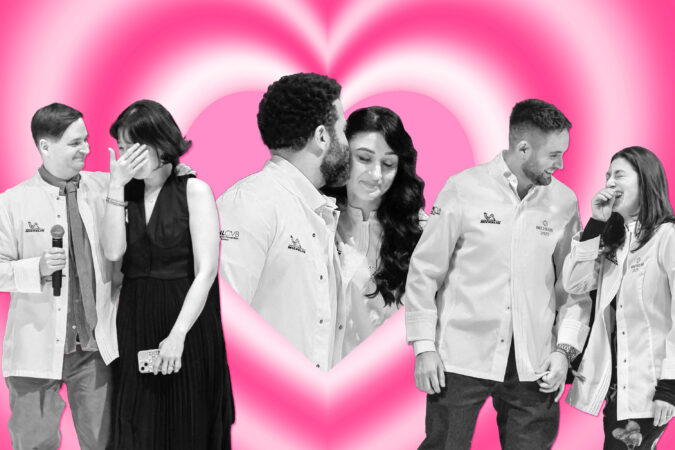
Representatives behind Philly’s three Michelin starred restaurants are lauded for their culinary skills, hospitality, and showmanship. But the men involved with each of them also have this shared trait: They’re all certified Wife Guys.
For those uninitiated, a wife guy is a colloquial way to refer to someone who is all about their marriage and finds ways to talk about their devotion whenever possible. (There are some instances where this phrase is used snarkily, but in this case, we mean it genuinely as a compliment and in earnest.)
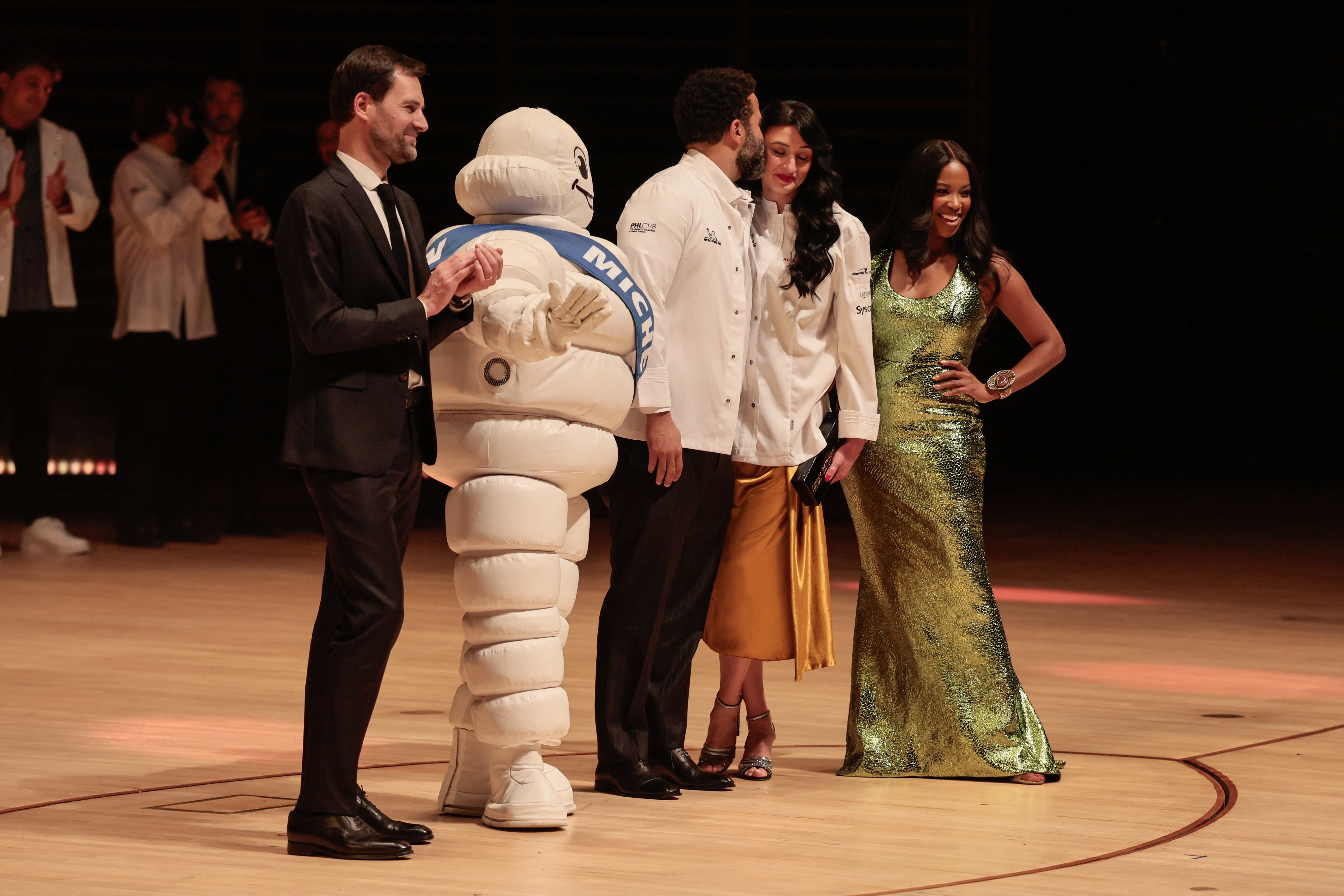
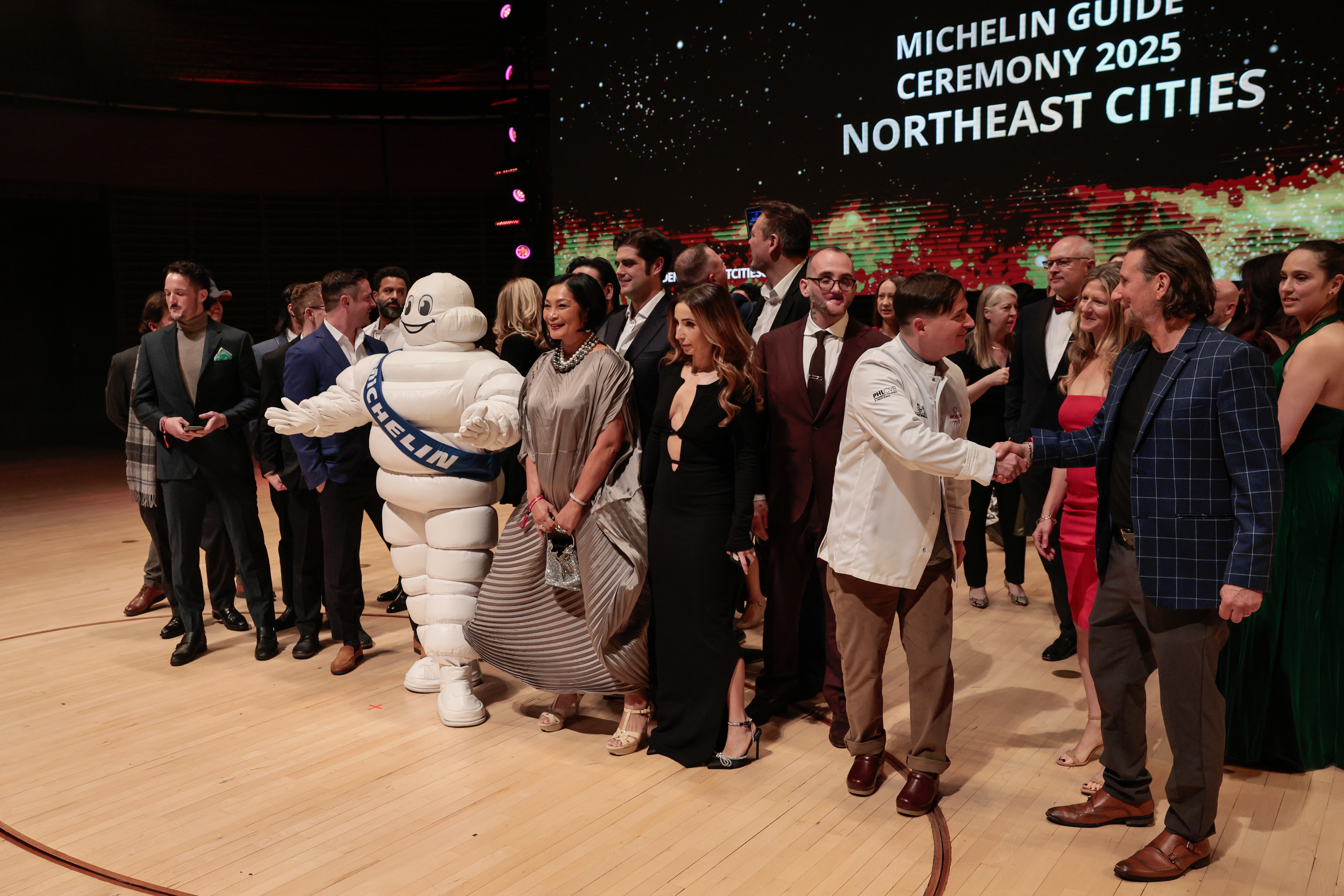
When chefs Amanda Shulman and Alex Kemp stepped on stage to receive Her Place Supper Club’s one-star honor, Kemp stepped to the side, opting not to be photographed alongside the Michelin Man.
“Amanda is the hardest working woman in show business,” Kemp told The Inquirer on Wednesday. “She deserves this. I felt super proud of her, but I didn’t want to take her thunder.”
While Kemp is part-owner of Her Place, Shulman founded the restaurant and is the face (and chef) of the project.
Emcee for the night, Java Ingram, remarked on stage how Kemp’s gesture to step aside was “classy.”
He wasn’t the only one paying tribute to his wife that night.
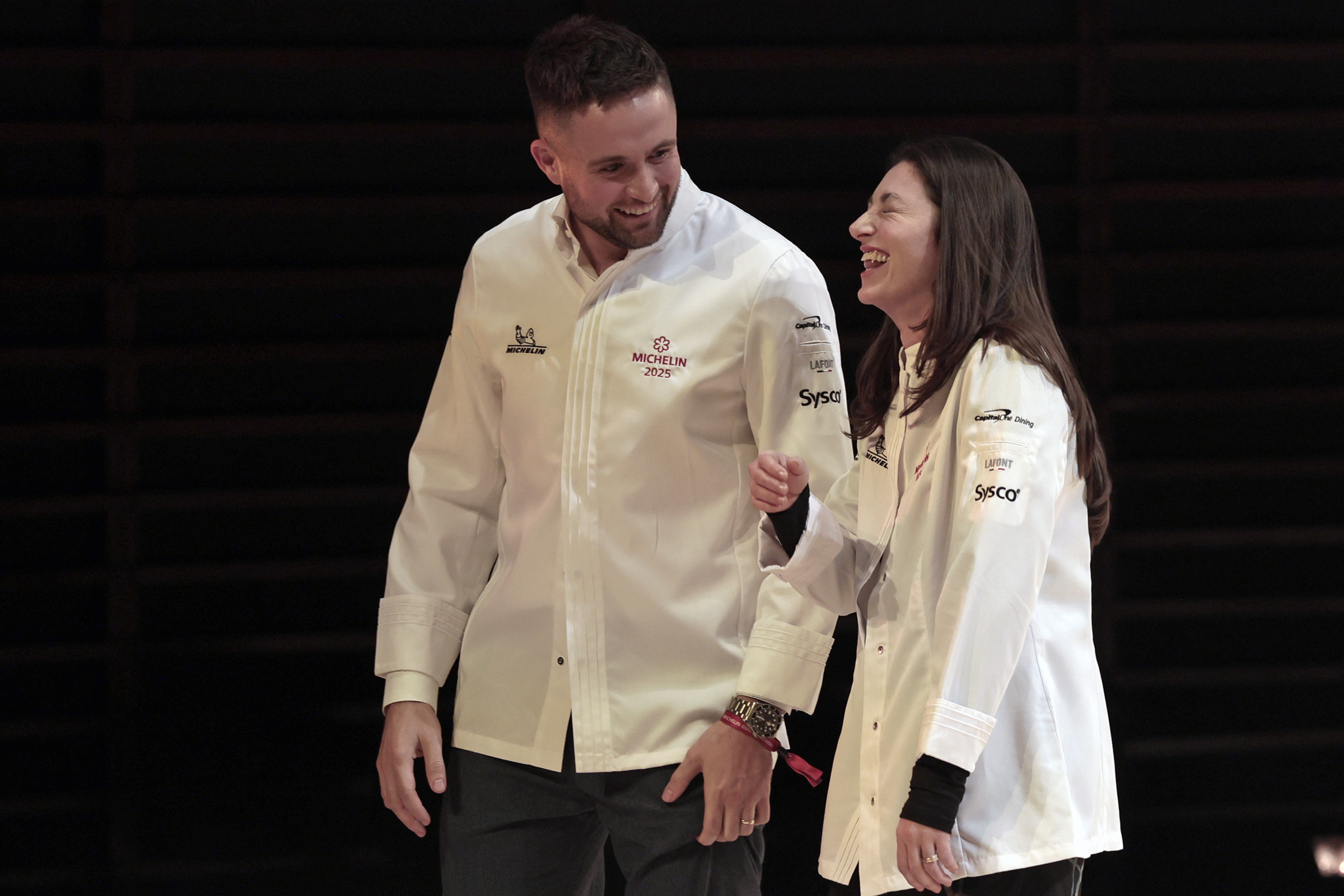
Power couple Chad and Hanna Williams, who are behind star-winning restaurant Friday Saturday Sunday, also displayed their love for each other. Chad Williams could be seen on stage holding his wife and kissing her cheek after they received their award and Michelin jackets.
“Love and partnership is the foundation of this restaurant,” Williams later told The Inquirer of his display. “We got married in the kitchen for God’s sake. To have earned a Michelin star is my greatest accomplishment but to have done it with my wife is a dream come true.”
Finally, there was Provenance, the surprise of the night, pulling off a star within the atelier’s first year of opening.
Michelin international director Gwendal Poullennec asked Nicholas Bazik on stage what his inspiration was. While holding the mic, he pointed to his wife, Eunbin Whang. “She’s right over there,” Bazik said as the crowd erupted in “aws.” Whang demurely approached Bazik on stage, covering her face, tearful and proud as Bazik draped his arm around her.
“There would be no Provenance without my wife,” Bazik told The Inquirer, citing her influence on his “culinary identity,” blending French and Korean culture and cuisine.
So is love a prerequisite to getting a star?
Bazik seems to think so.
“Everybody needs a constant, something that can help center them. This is a hard job that oscillates between insanity and reality checks. Love is that thread.”
Kemp concurs.
“Or maybe it’s being a ‘family guy,’” he quipped when asked by The Inquirer for his take. “Amanda is a very easy person to love. She’s my best friend. We do everything together. We spend every moment of the day talking or working together.”
He added, “I love being a wife guy. It’s cool being a wife guy.”
The ceremony also honored restaurants from New York City, Chicago, Washington, D.C., and Boston, which also made its Michelin debut as the gastronomic guide has expanded rapidly around the United States in recent years. Anonymous Michelin inspectors were dispatched to Philly months ago to scout, dining in secret and often visiting the same places repeatedly to ensure consistency.
And while Michelin tends to be synonymous with stars (and, yeah, tires), there are other ways to earn recognition. Thirty-one other Philly restaurants — including three cheesesteak shops — earned Michelin honors below the star level. These included 10 Bib Gourmands and 21 recommendations.
What’s the difference between a Michelin star, a Bib, and a recommendation? And who won top honors? We explain.
What is a Michelin star?
A Michelin star is the most prestigious honor a restaurant can earn from the Michelin Guide and typically recognizes fine dining restaurants.
Restaurants do not apply to be inspected, nor can they be nominated. Anonymous inspectors visit restaurants repeatedly throughout the year — often on different days and at different times — and rate them on the following criteria, according to the guide’s website:
Quality of ingredients
Harmony of flavors
Mastery of culinary techniques
Consistency across menu and time
How a chef’s personality is reflected in the food
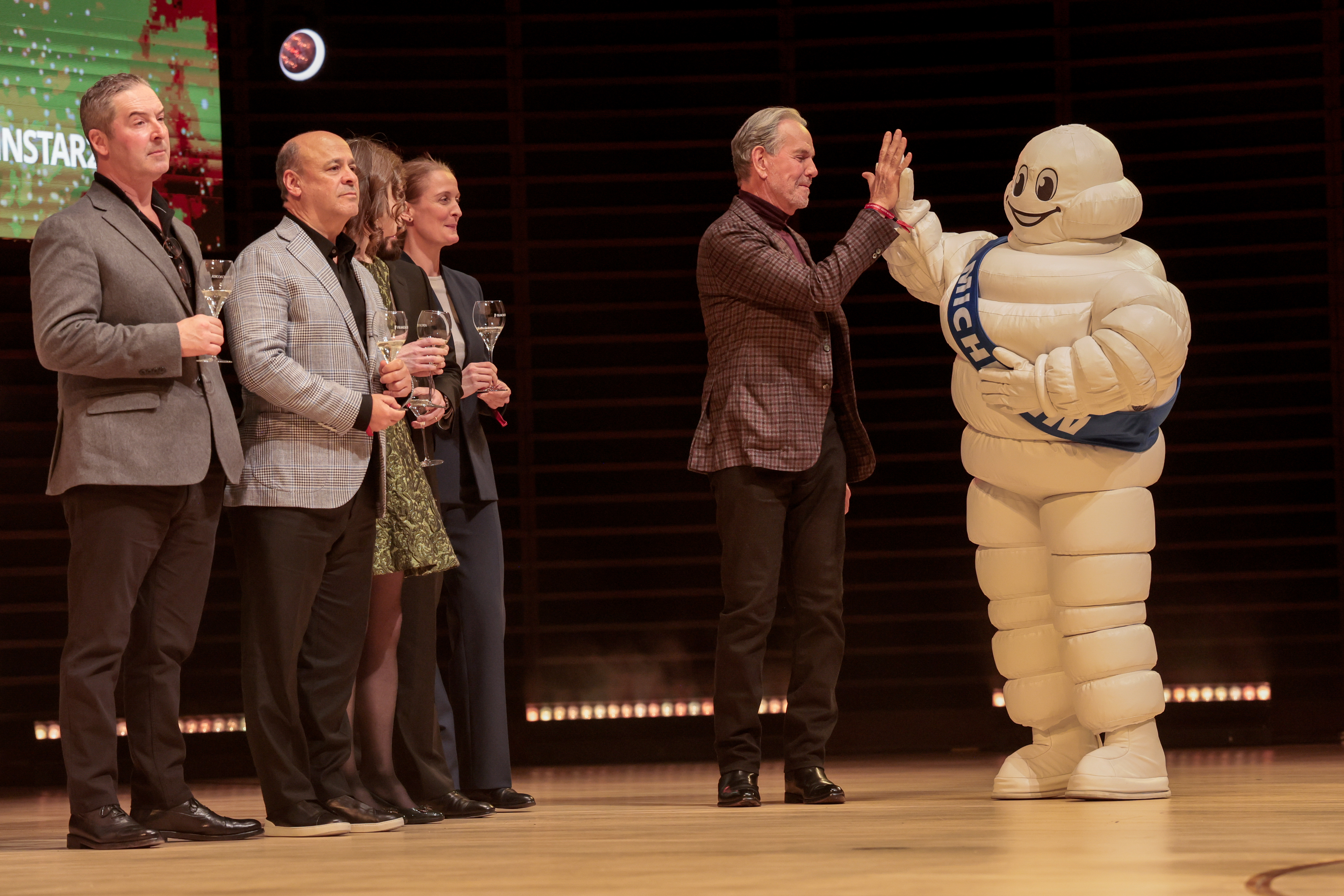
Thomas Keller high-fives the the Michelin Man during the announcements Tuesday at the Kimmel Center.
Restaurants can earn up to three Michelin stars. One star is a restaurant that is “worth a stop,” according to the guide, for top-quality ingredients. Two stars is a “worth a detour,” while a three-star restaurant is “worth a journey” for cooking that feels like art. Three-star ratings are rare. Only New York City’s Sushi Sho hit the star maximum on Tuesday.
Stars are awarded annually, and restaurants can gain or lose Michelin stars over time, kind of like experience points in a video game. They can also be a big boost for business: Chefs told Eater that one Michelin Star is worth a 20% jump in sales, while other chefs have reported three stars can increase them up to 100%.
Which Philly restaurants earned Michelin stars?
Provenance, Her Place Supper Club, and Friday Saturday Sunday all earned one Michelin star at Tuesday night’s ceremony.
Chefs Chad and Hanna Williams took over Friday Saturday Sunday in 2016, transforming the old Rittenhouse Square restaurant into a James-Beard Award winning tasting experience that mixes Caribbean, Asian, and soul food references. “The long, narrow, lively, and warmly run restaurant is up a steep flight of stairs — and those stairs will seem even steeper when it’s time to leave,” Michelin said of the restaurant, which plans to expand. “Expect an atmosphere as spirited and enjoyable as the food.”
Friday Saturday Sunday, run by chef Chad Williams and his wife, Hanna, earns a star at the Kimmel Center on Tuesday.
Chef Nich Bazik’s Provenance is the youngest Philly restaurant to receive top honors, open for a year in August. Bazik oversees an elaborate, seasonal 20- to 25-dish tasting menu that combines French and Korean flavors often inspired by his wife, Bazik said at Tuesday’s ceremony. Provenance is a “high-wire, high-stakes performance defined by precision,” Michelin wrote.
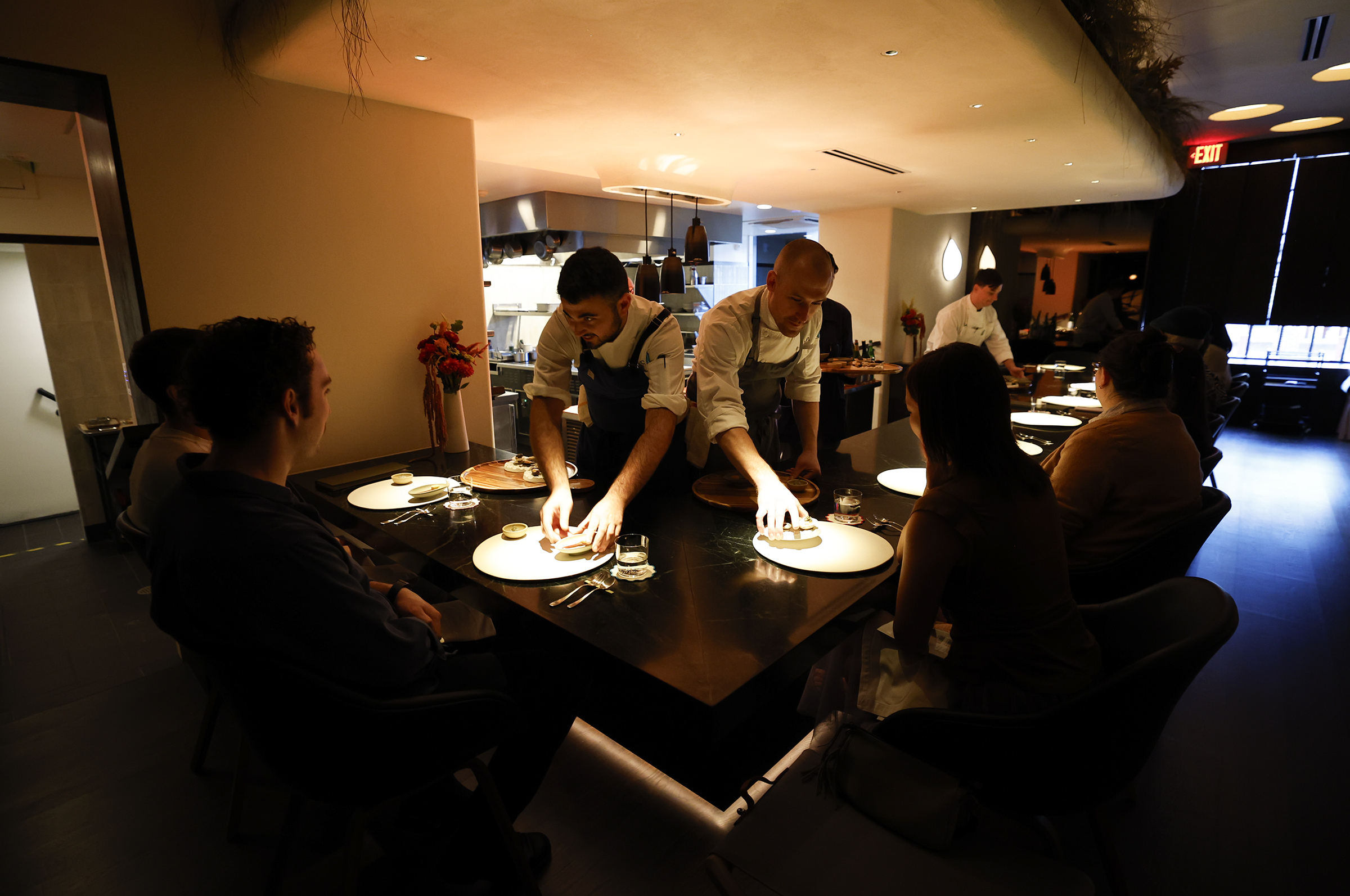
Provenance sous chefs Zac Cohen (left) and Nicholas Piwinski present a collection of canapés to guest at the Headhouse Square restaurant on Oct. 17, 2024.
What is a Bib Gourmand?
The Bib Gourmand celebrates restaurants “that serve exceptional food at great value,” according to the Michelin Guide’s website. It was first announced in 1997 as a more budget-friendly companion to the stars.
Previous honorees range from Katz’s — the iconic no-frills Jewish deli on Manhattan’s Lower East Side — and a counter-service-only sandwich stand in Atlanta, to small taquerias, dim sum restaurants, and the occasional hole-in-the-wall.
Like Michelin-starred restaurants, Bib Gourmand awardees can use the designation in their marketing. In some cases, the honor has saved restaurants from closing.
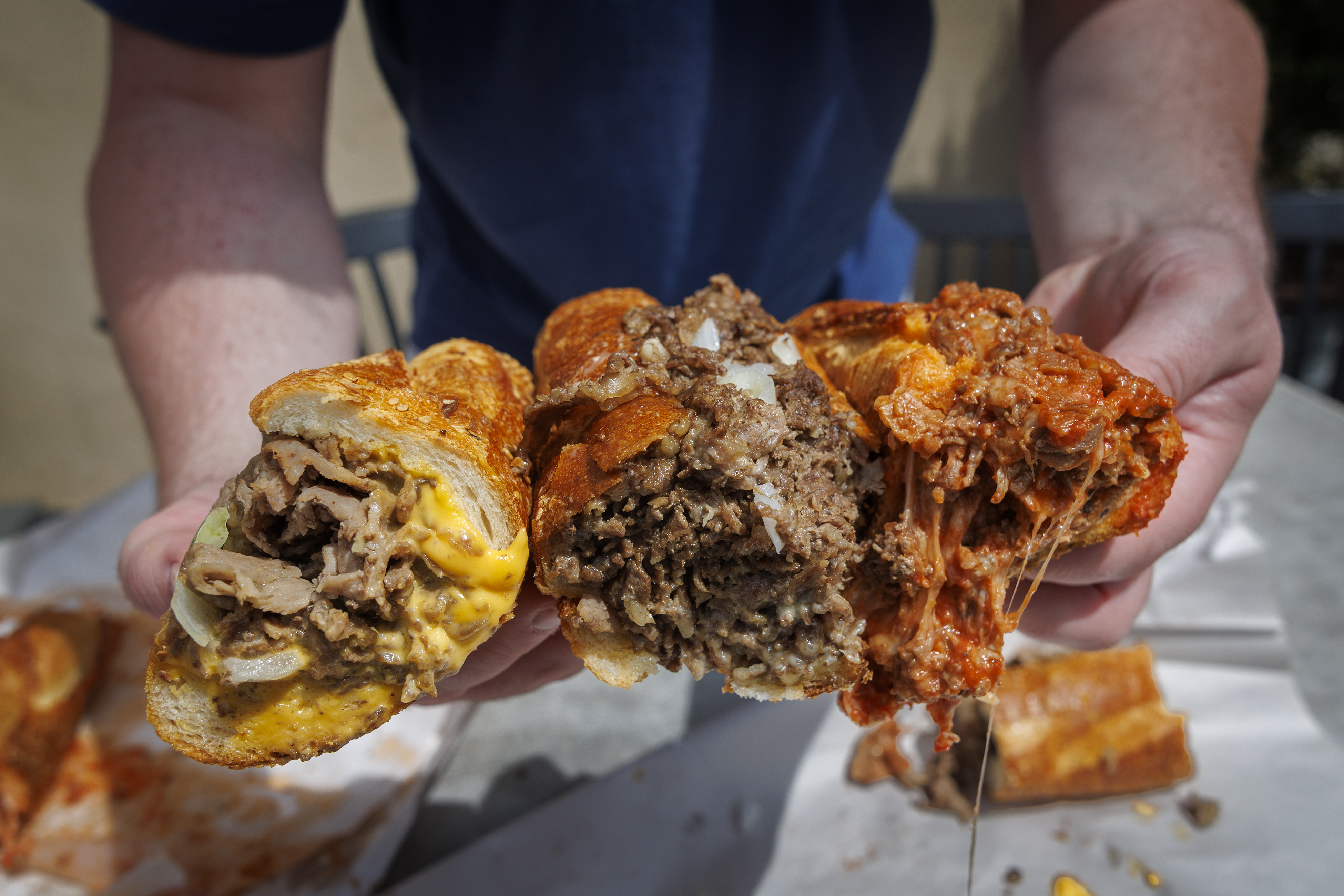
A trio of cheesesteaks from Angelo’s Pizzeria, which earned a Michelin Bib Gourmand on Tuesday.
Which Philly restaurants earned a Bib Gourmand?
Ten Philly restaurants took home a Bib Gourmand on Tuesday night. Naturally, three of them were cheesesteak shops. Here’s the full list:
Angelo’s Pizzeria
Dalessandro’s Steaks
Del Rossi’s
Dizengoff
El Chingón
Famous 4th Street Deli
Fiorella
Pizzeria Beddia
Sally
Royal Sushi & Izakaya
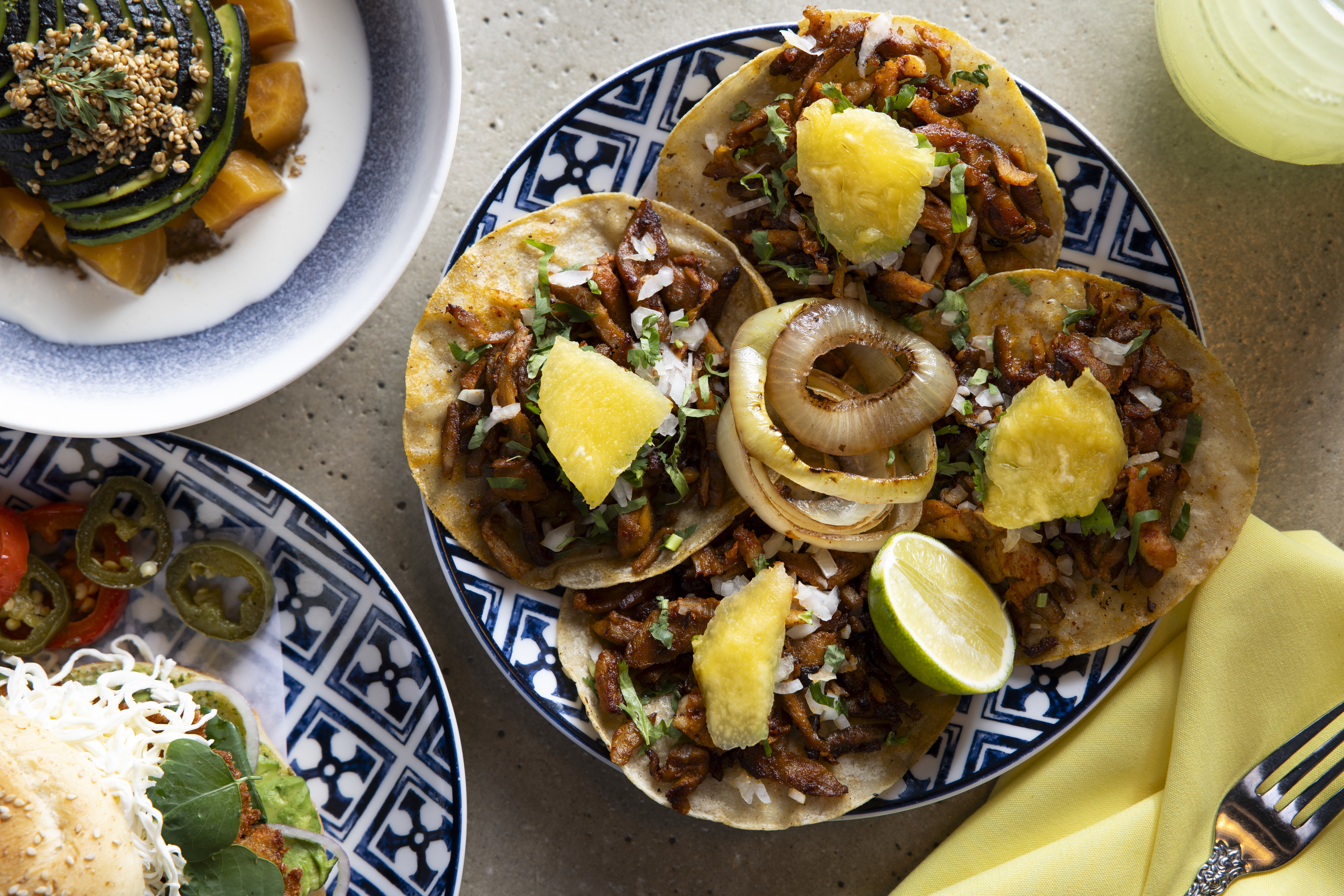
Cemita clasica, remolacha, and al pastor tacos at El Chingón, which earned a coveted Michelin Bib Gourmand on Tuesday.
What is a Michelin-recommended restaurant?
Michelin-recommended restaurants are simply “establishments serving good food,” according to the guide’s website. They are judged on the same five signature criteria as starred restaurants.
“A restaurant in the Recommended selection is the sign of a chef using quality ingredients that are well cooked; simply a good meal,” said Michael Ellis, the former international director of Michelin Guide books, in the post. “It means that the inspectors have found the food to be above average, but not quite at star or Bib level.”
In other words, shoot for the stars and hopefully fall among the recs.
The Philadelphia chefs acknowledged at the Michelin Guide announcements Tuesday at the Kimmel Center.
Like restaurants with a Bib Gourmand, those that earned recommendations can also use the notation as a marketing tool. Admittedly, the designation used to be a bigger deal before 2020, when Michelin digitized the guide. Before, recommendations were listed in bound red travel guides that the tire company first used as a sneaky promotion to nudge people to take more road trips (and thus, buy more tires).
Recommended restaurants are not precluded from earning stars later on. In fact, insiders think of it as a watchlist for establishments that might get a star in the future.
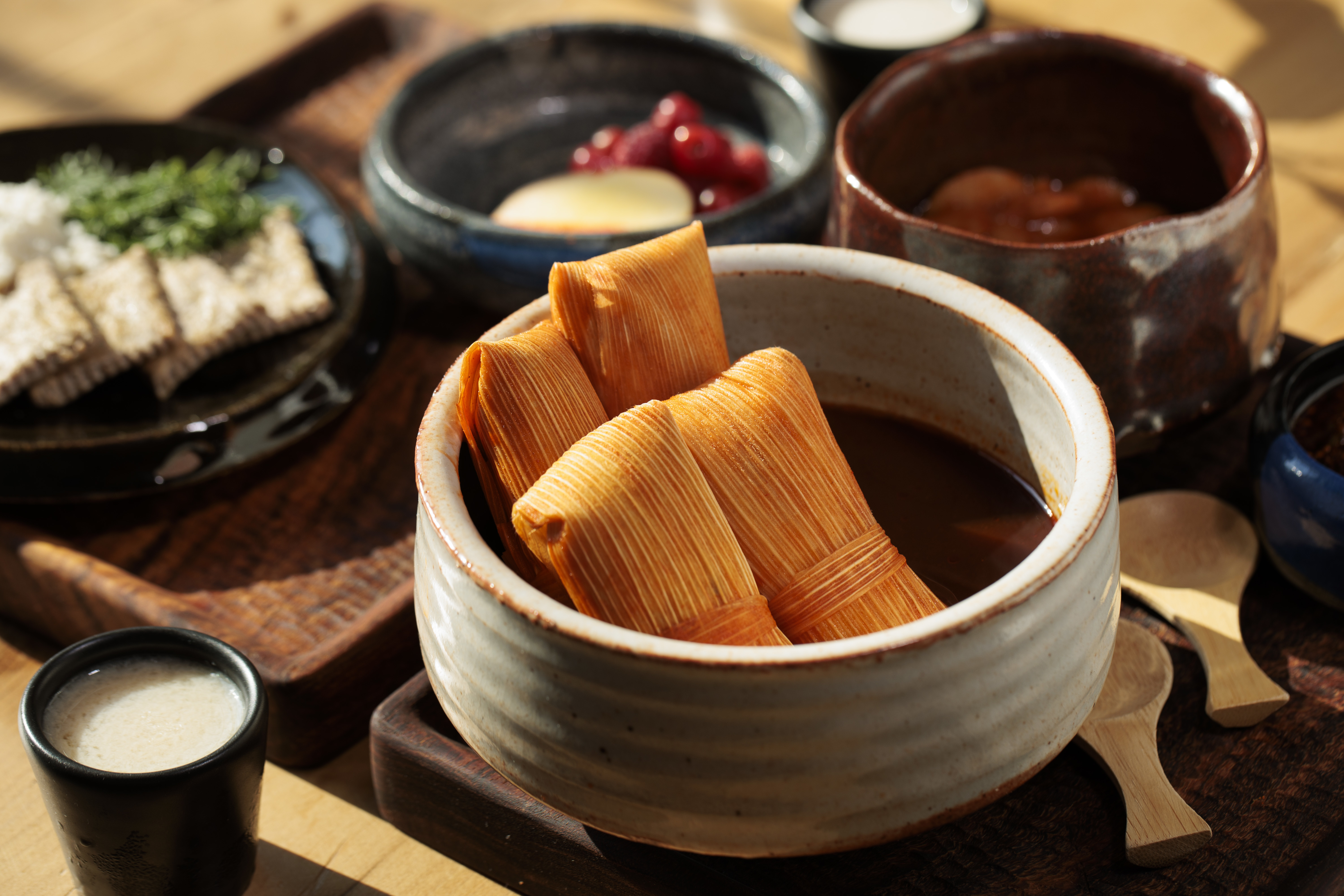
The hot tamales from Honeysuckle at 631 N. Broad St., which is now a Michelin Guide recommended restaurant.
Which restaurants did Michelin recommend in Philly?
Michelin recommended 21 restaurants in Philly. They are:
Ambra
Forsythia
High Street
Hiroki
Honeysuckle
Illata
Kalaya
Laser Wolf
Laurel
Little Water
Mish Mish
My Loup
Pietramala
River Twice
Roxanne
Southwark
Suraya
Vedge
Vernick Food & Drink
Vetri Cucina
Zahav
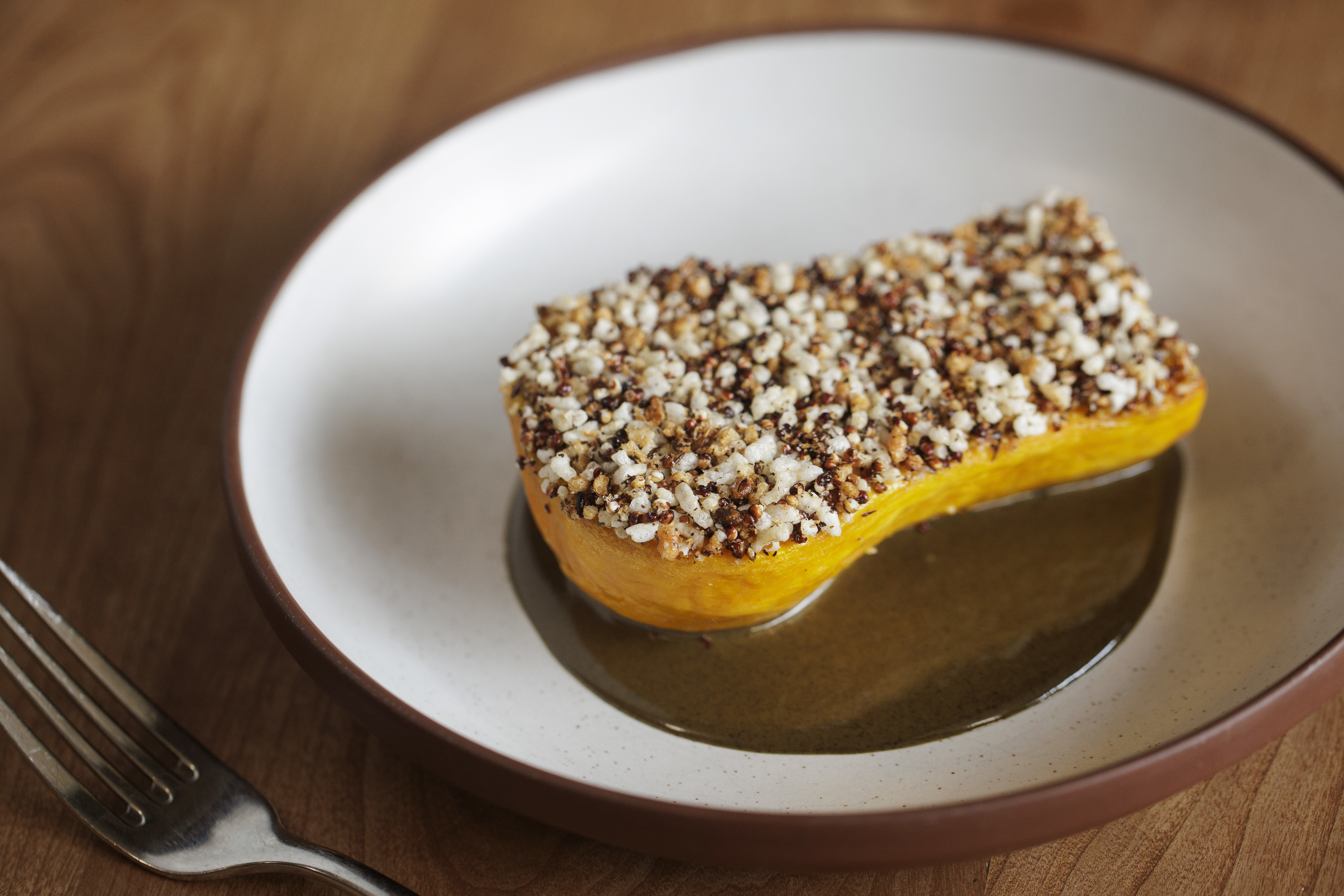
Honeynut squash with husk cherry, habanero, and pumpkin seed tahini at Pietramala. The vegan Philadelphia restaurant earned a Michelin Green Star for sustainability, as a well as a recommendation.
Were there any other awards to take home?
Yes. Aside from earning a recommendation, chef Ian Graye’s vegan Northern Liberties BYOB Pietramala also earned a Green Star for demonstrating a commitment to sustainability.
There is no specific formula for awarding a Green Star, according to the Michelin Guide website, though criteria such as environmental footprint, the use of seasonal produce, resource management, and how food waste is treated are considered.
Ian Graye, of Pietramala earned a Green Star award at the Michelin Guide announcement event at the Kimmel Center.
“Chef Ian Graye seeks out foragers and small local suppliers for plants, herbs and fruits and also does his own fermenting and preserving,“ read the blurb included in the Michelin Guide for Pietramala. “His menu offers a selection of around 10 dishes designed for sharing — around three per person should more than suffice when ordering — and his cooking comes with a slight Italian accent.”
(function() {
var l2 = function() {
new pym.Parent(‘michelin_philly’,
‘https://media.inquirer.com/storage/inquirer/projects/innovation/arcgis_iframe/michelin_philly.html’);
};
if (typeof(pym) === ‘undefined’) {
var h = document.getElementsByTagName(‘head’)[0],
s = document.createElement(‘script’);
s.type = ‘text/javascript’;
s.src = ‘https://pym.nprapps.org/pym.v1.min.js’;
s.onload = l2;
h.appendChild(s);
} else {
l2();
}
})();
For the first time ever, Philadelphia has a Michelin star. Three, in fact.
Friday Saturday Sunday, Her Place Supper Club, and Provenance were each awarded a star, capping a brilliant showing as 31 other Philadelphia restaurants — including three cheesesteak shops — received honors in the city’s debut in Michelin, arguably the world’s most prestigious restaurant awards.
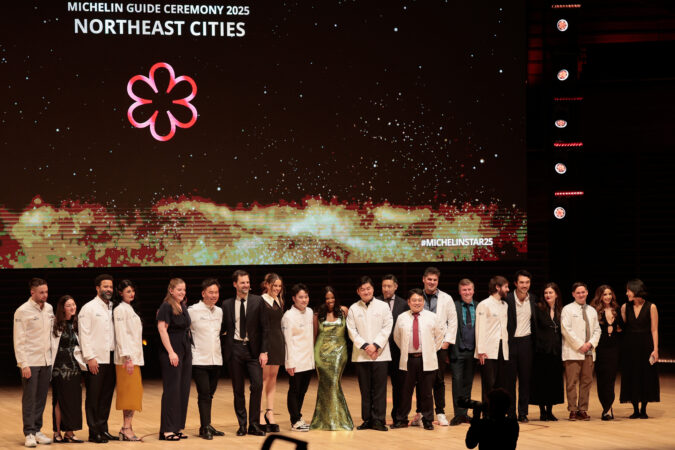
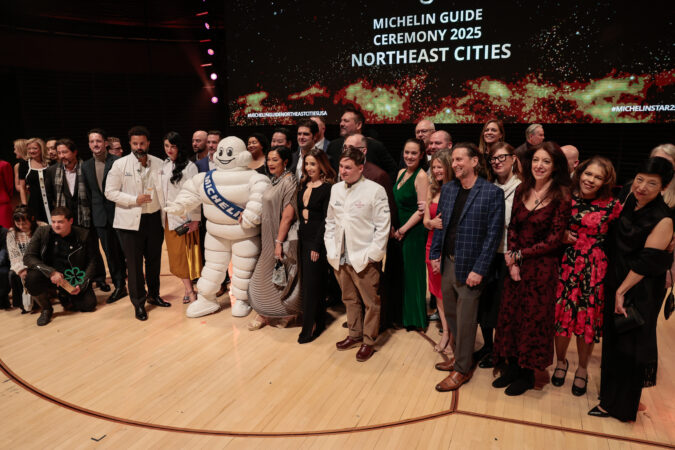
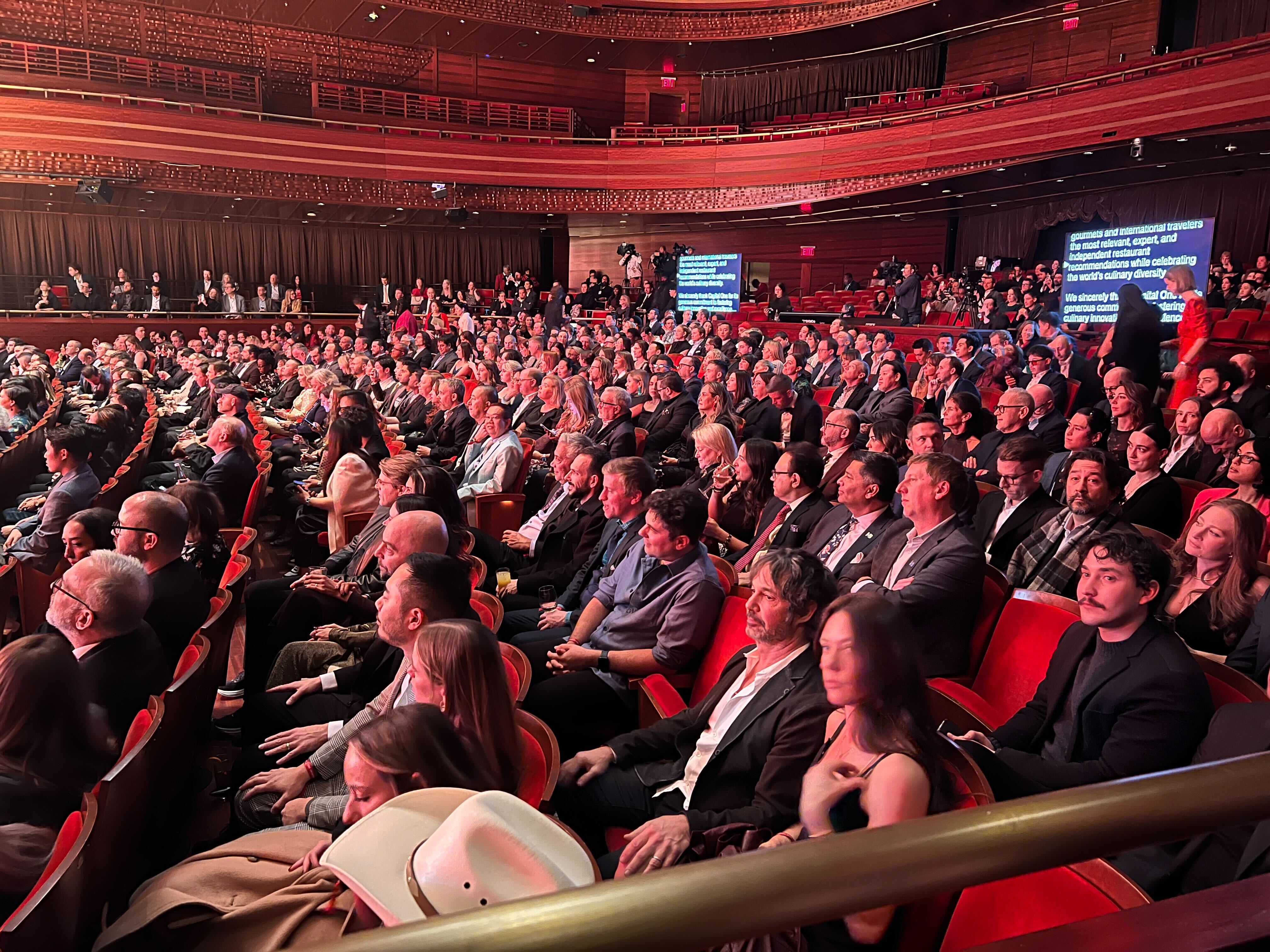
Tuesday night’s Northeast Cities ceremony — which included restaurants from Chicago, Washington, D.C., New York, and Boston (also in its Michelin debut) — drew hundreds of culinary professionals from around the world to the Kimmel Center, whose facade was lit up in Michelin’s signature red. The attendees were a who’s who of the culinary world, including chefs Thomas Keller and Jean-Georges Vongerichten, and drew dozens of the city’s best-known chefs and restaurateurs, such as Greg Vernick, Marc Vetri, Omar Tate, and Chutatip “Nok” Suntaranon, Jesse Ito, and Ellen Yin.
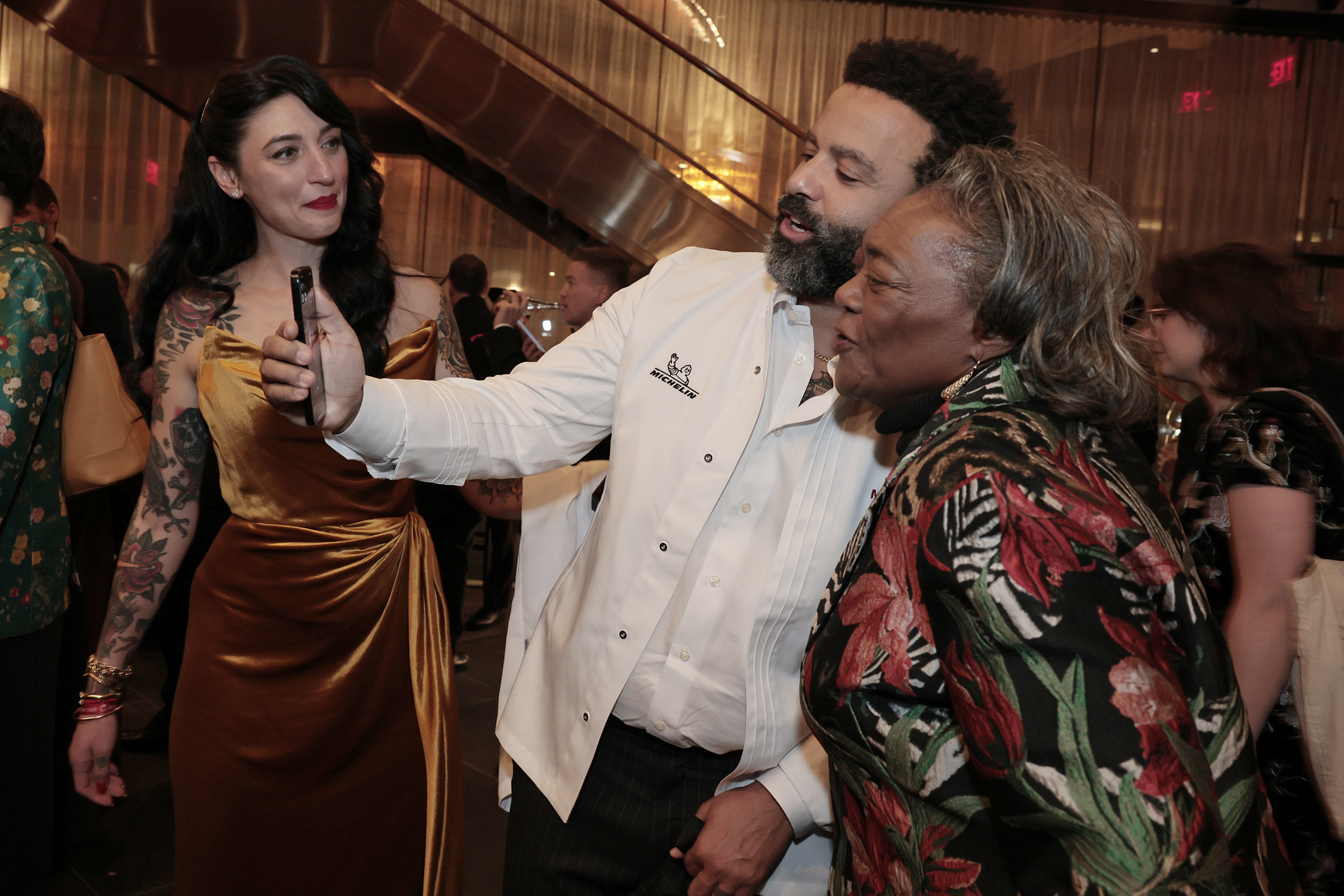
Hanna Williams looks on as her husband, chef Chad Williams, and Lynette Brown-Sow do a FaceTime after the Michelin awards at the Kimmel Center. Brown-Sow has known Chad Williams since he was a baby.
Ten Philadelphia restaurants received a Bib Gourmand — recognized as great food at a great value, though not star-worthy. They represent a mixed bag of cuisines and price points: cheesesteaks (Angelo’s, Dalessandro’s, Del Rossi’s), Israeli cuisine (Dizengoff), Mexican (El Chingón), pizza (Pizzeria Beddia, Sally), casual pasta (Fiorella), Japanese (Royal Sushi & Izakaya), and classic Jewish deli (Famous 4th Street Deli).
Michelin deemed 21 other Philadelphia restaurants as Recommended: Ambra, Forsythia, High Street, Hiroki, Honeysuckle, Illata, Kalaya, Laser Wolf, Laurel (whose final night will be Nov. 21), Little Water, Mish Mish, My Loup, Pietramala, River Twice, Roxanne, Southwark, Suraya, Vedge, Vernick Food & Drink, Vetri Cucina, and Zahav. Michelin says these restaurants serve high-quality food and use good ingredients.
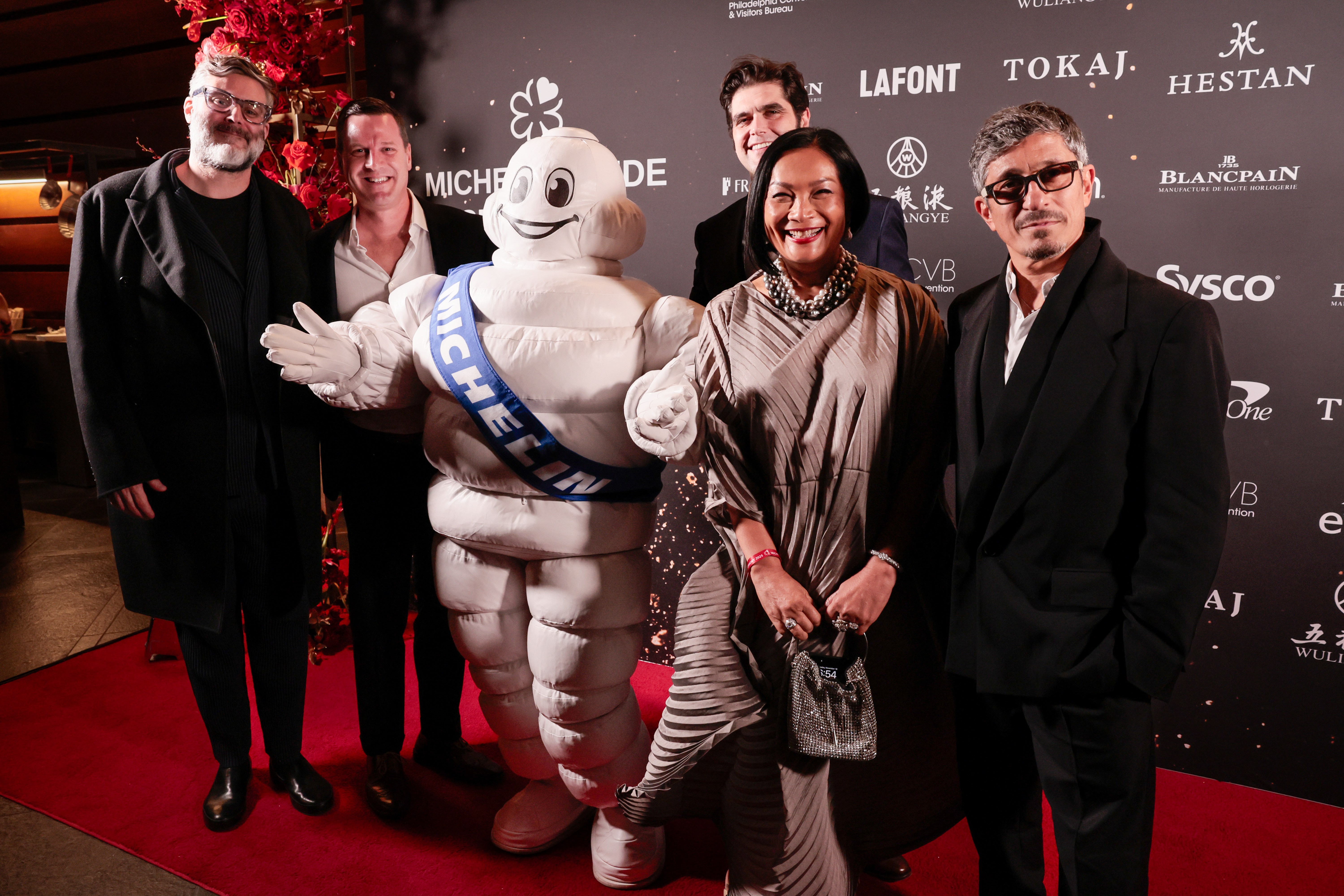
Joe Beddia (from left), Greg Root, Nick Kennedy (rear), Chutatip “Nok” Suntaranon, and Roland Kassis with the Michelin Man at the Michelin Guide announcements Tuesday at the. Kimmel Center.
Besides the Recommended honor, Pietramala — chef Ian Graye’s vegan restaurant in Northern Liberties — was awarded a Green Star for demonstrating commitment to sustainability.
All can use the name “Michelin” in their marketing, a powerful tool that potentially boosts business.
Michelin, which operates in secrecy, bases the selections on its anonymous inspectors. Stars denote excellence: one star signals very good cuisine that’s “worth a stop,” two stars indicate excellence “worth a detour,” and three stars represent exceptional dining “worth a special journey.”
Chef Jesse Ito and Mia Colona at the Michelin Guide announcements Tuesdy at the Kimmel Center.
The ceremony, a milestone for Philadelphia’s profile as a dining destination, was the city’s highest-profile appearance since 2018, when the James Beard Foundation announced that year’s finalists for its annual chef, restaurant, and media awards in a ceremony at Parc.
It was a night of camaraderie, pride, and emotion. After heading to the stage to acknowledge Angelo’s Pizzeria’s Bib Gourmand, owner Danny DiGiampietro disappeared for a bit. “I had a walk outside,” he explained later. “I can’t stop crying.”
Philadelphia’s one-stars
Friday Saturday Sunday chef Chad Williams and his wife, Hanna, took over this storied Rittenhouse restaurant in 2016 and pivoted to a set multicourse menu. “Thanks to skilled technique, just the right amount of innovation and an innate understanding of the luxury ingredients he uses, his dishes fill the mouth with flavor and succulence,” the Michelin blurb reads. “His delicious crispy sweetbreads will convert any skeptic; quail with pâte plays with texture, and the New York strip is a lesson in expert seasoning. There’s a great cocktail bar on the first floor; the long, narrow, lively and warmly run restaurant is up a steep flight of stairs — and those stairs will seem even steeper when it’s time to leave. Expect an atmosphere as spirited and enjoyable as the food.”
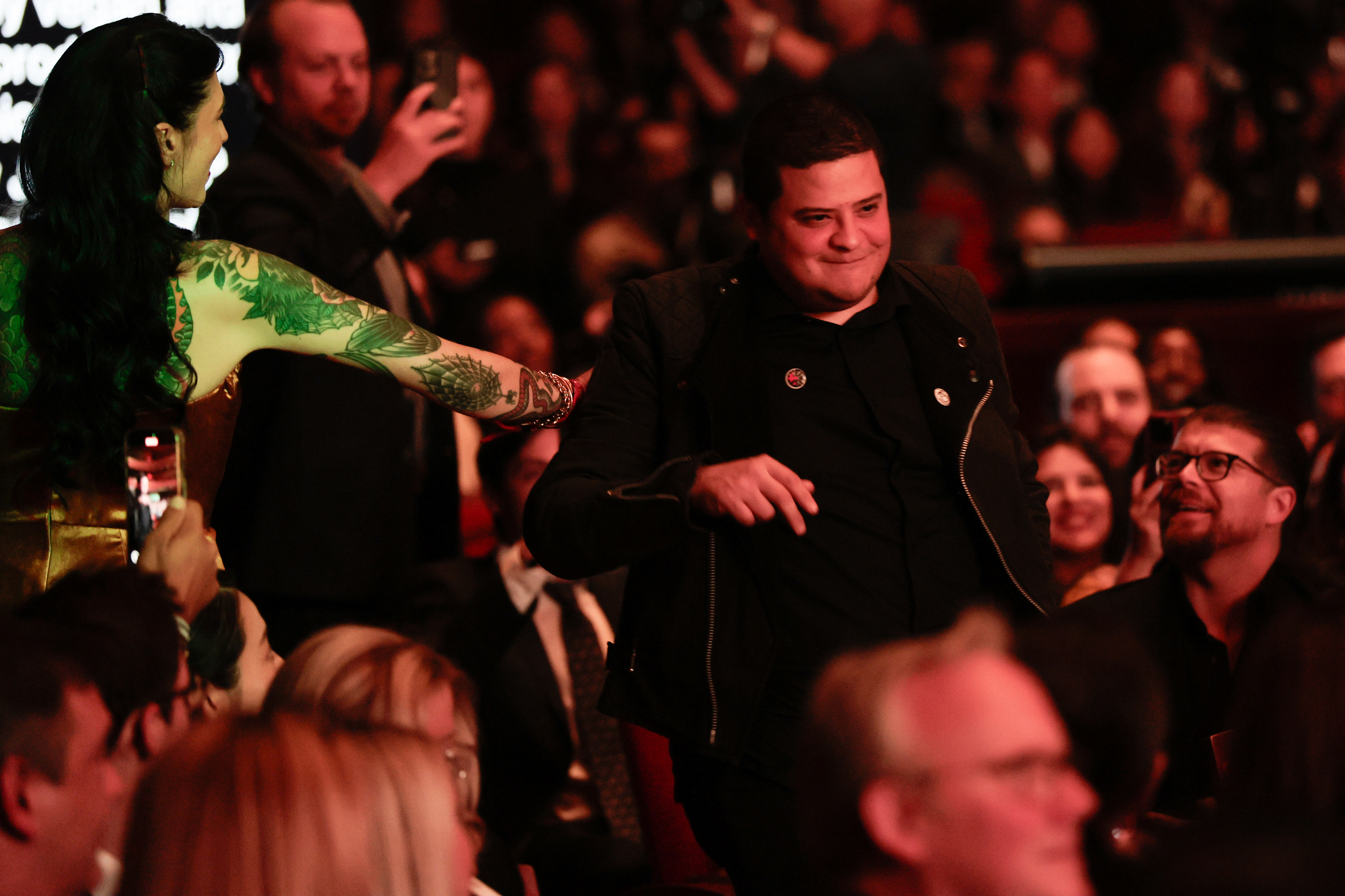
Amanda Shulman (right) and her husband and business partner, Alex Kemp, giggle after winning a Michelin star for Her Place Supper Club at the Michelin ceremony at the Kimmel Center on Tuesday.
Her Place Supper Club, also in Rittenhouse, was born out of chef Amanda Shulman’s cooking for friends in her Penn campus apartment. Michelin praised its “warm and welcoming supper club vibe.” While diners may get their own table, “there’s a real communal feel at play here; everyone is served at the same time after Amanda has explained to the room the makeup of each dish and perhaps the influence behind it.”
Provenance, chef Nicholas Bazik’s sumptuous atelier across from Headhouse Square, delivers what Michelin calls “a high-wire, high-stakes performance defined by precision, harmony, and, of course, taste. Korean and French influences come and go with this elaborate tasting menu where special soys, vibrant oils and glossy sauces give wonderful dimension to pristine seafood and dry-aged proteins. Think Japanese tuna with whipped tofu, puffed sorghum and chili oil or brown butter hollandaise with country ham, caviar and cauliflower. The ideas are original, the flavors bold.”
The Michelin effect
All this boils down to commerce. City and state tourism boards have increasingly turned to Michelin — the French-based tire company that has been publishing the influential dining guides for decades — as food tourism plays a growing role in travel planning.
Ian Graye of Pietramala accepts a Green Star award at Tuesday’s Michelin Guide announcement event at the Kimmel Center.
Michelin has expanded rapidly in the United States over the last several years. Besides the American South region — covering Alabama, Louisiana, Mississippi, North Carolina, South Carolina, and Tennessee — there are guides for Texas and Colorado. Atlanta’s 2023 guide has since been rolled into the South. The Florida guide, launched in 2022, now includes Miami, Orlando, and Tampa. Internationally, it recently arrived in Qatar, New Zealand, and the Philippines.
(function() {
var l2 = function() {
new pym.Parent(‘michelin_philly’,
‘https://media.inquirer.com/storage/inquirer/projects/innovation/arcgis_iframe/michelin_philly.html’);
};
if (typeof(pym) === ‘undefined’) {
var h = document.getElementsByTagName(‘head’)[0],
s = document.createElement(‘script’);
s.type = ‘text/javascript’;
s.src = ‘https://pym.nprapps.org/pym.v1.min.js’;
s.onload = l2;
h.appendChild(s);
} else {
l2();
}
})();
The Philadelphia Convention and Visitors Bureau cites an Ernst & Young study, commissioned by Michelin, showing the guide’s influence: 74% of travelers consider Michelin’s presence a decisive factor when choosing a destination; 76% say they would extend a trip to dine at a recommended restaurant; and 80% report being willing to pay more for what they view as a Michelin-level dining experience.
For restaurants that receive distinctions, the impact is immediate as restaurants append “Michelin” to their social-media profiles.
The energetic and anxious crowd of chefs and restauranteurs during the Michelin ceremony at the Kimmel Center Tuesday, Nov. 18, 2025.
The reservations boost can be dramatic. In Charlotte, the 18-seat Counter sold about 900 reservations in the days after earning a star at the 2025 American South ceremony on Nov. 3, booking out through mid-February, chef-owner Sam Hart told Axios. About half the reservations came from out-of-town guests, including some international travelers.
In many U.S. markets, the guide is explicitly part of tourism strategies: Axios has reported that the states included in the South edition are collectively paying Michelin $5 million over three years. PHLCVB has not disclosed how much it paid for Michelin’s partnership, which was announced in May.
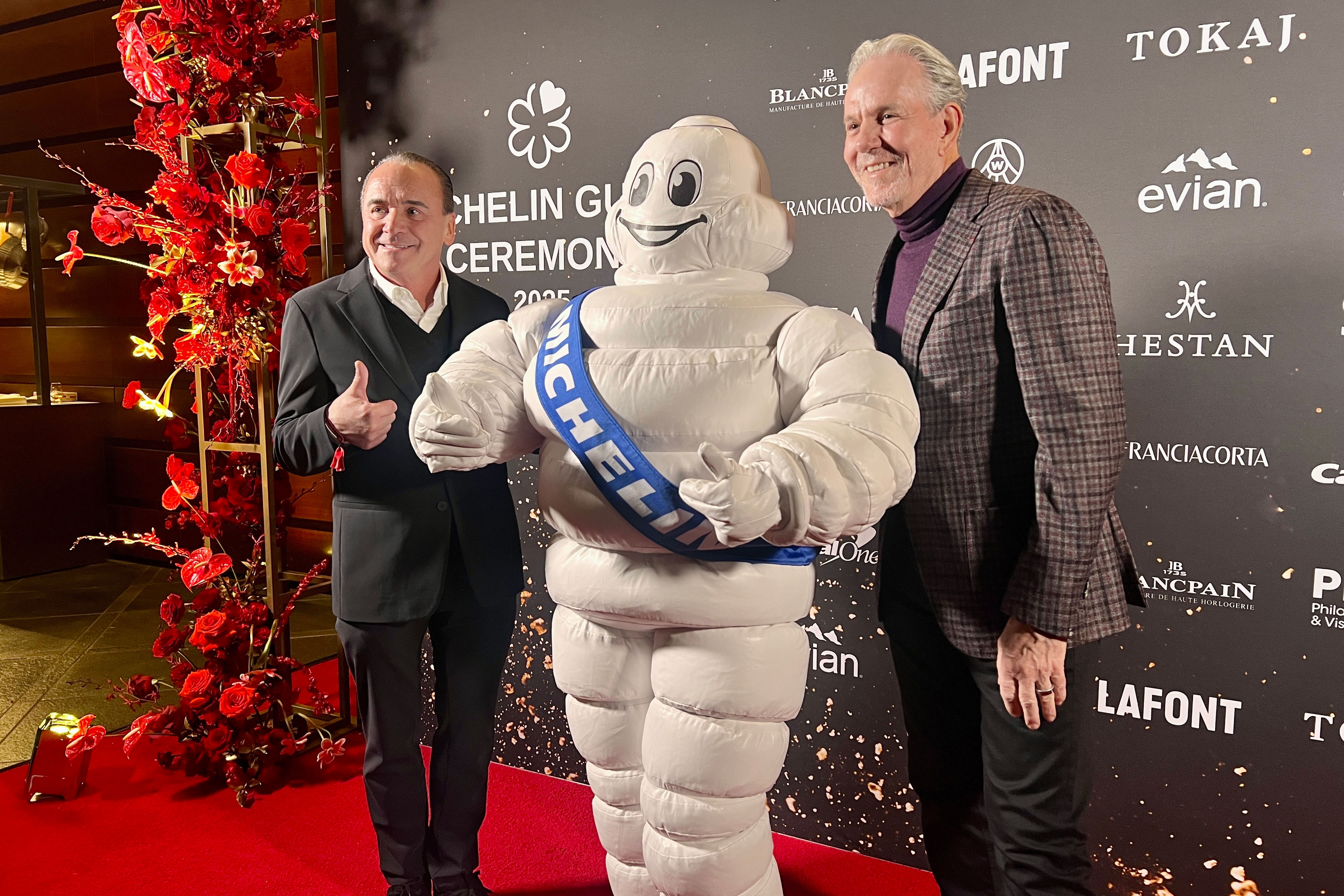
Chefs Jean Georges Vongerichten (left) and Thomas Keller posed with the Michelin Man ahead of Tuesday night’s ceremony at the Kimmel Center.
Not only can reservations rise, so can menu prices at the winning restaurants. A widely cited 2018 analysis by Carly Shin of George Washington University found that a one-star rating increases menu prices by about 15%, two stars by 55%, and three stars by roughly 80%.
Michelin says that 82% of chefs report increased revenue after receiving a distinction, 60% add new staff, and 58% say a nod boosts team motivation and morale — though anecdotally, some chefs acknowledge enormous pressure to maintain such a high level.
Michelin’s arrival has inspired the PHLCVB Foundation to sponsor the Philabundance Community Kitchen program, a 16-week culinary vocational training and life-skills program for adults with low or no income, offering hands-on kitchen experience, ServSafe certification, and post-graduation employment support in the food service and restaurant industry. The foundation will connect the recognized chefs and restaurateurs to the PCK program.
Dining rooms in Philly are abuzz with talk of Michelin’s impending arrival in Philadelphia —whose stars (or lack thereof) are set to be announced on Tuesday.
On a recent night, while celebrating my wedding anniversary at the elegant Friday Saturday Sunday, diners at tables on either side of mine discussed the potential of the restaurant winning a star. That same week, at the hushed, luxe soapstone counter at Provenance, where spotlights shine precisely upon the parade of twenty-some courses (which costs $300 inclusive of tax and service charge, but not beverages) placed in front of diners, Michelin was brought up by every single guest to chef Nich Bazik as he made his rounds. “I’ve been to a lot of Michelin-starred places and they’ve been mediocre. But I think you’re going to get one,” I overheard one diner telling Bazik.
Anticipation is high. But what would getting Michelin recognition actually mean to Philadelphia restaurants? In at least one case, it might translate to survival. For the rest of the city, the guide’s arrival is both foreboding and exciting.
The experience that Bazik concocts at Provenance is Michelin bait: As I was being seated, my purse is given its own stool. Each time I get up to go to the restroom, my napkin has been replaced with a fresh, clean, starched, and folded one on a wooden tray. I count as many staff members as diners seated around the counter. My grenache noir is served in an impossibly delicate German Spiegelau glass. A single glass can cost $40, far more than the $15 wine it contains. These are the touches Michelin inspectors — or at least, diners who dine frequently at Michelin-starred restaurants — pay attention to.
“A lot of folks dining here liken us to Michelin-starred restaurants in New York and around the world,” said Bazik in a phone conversation after my meal.
“There’s a lot of weight for me in that outcome. We’re confident in the products that we bring in and our execution, but my anxiety lies with people’s expectations,” he said.
For Bazik, the expectation that his restaurant will attain a star is high, and more than any of the other Philly restaurants speculated about in recent Michelin banter, Provenance needs a star to keep operating. Unlike its fellow contenders — Royal Sushi & Izakaya, Friday Saturday Sunday, Kalaya, and Vetri Cucina, to name some likely star recipients — the year-old restaurant hasn’t received international attention nor garnered any major awards.
Royal, Kalaya, and Friday Saturday Sunday made appearances on the inaugural North America 50 Best list, an institution often considered a bellwether of future Michelin recognition, much the way Hollywood insiders consider the Screen Actors Guild Awards a tip as to who might ultimately take home an Oscar. Provenance’s recent appearance on Bon Appétit’s 20 best restaurants of 2025 list was exciting for Bazik, but didn’t contribute to any discernible increase in reservations.
Provenance chef-owner Nicholas Bazik greets guest in the Headhouse Square restaurant on Oct. 17, 2024.
On Nov. 18, Michelin will release its 2025 Northeast Cities edition, covering dining in Chicago, New York City, Washington, D.C., and for the first time, Boston and Philadelphia. Over the last two years, the Michelin Guide has expanded rapidly in the United States, growing to include a new region of the South (Alabama, Louisiana, Mississippi, North Carolina, South Carolina, and Tennessee) and the states of Texas and Colorado. Atlanta’s guide was introduced in 2023, but has since been rolled into the South’s edition. The Florida guide, introduced in 2022, has expanded to include a greater Miami area, Orlando, and Tampa. Internationally, the guide arrived in Qatar, New Zealand, and the Philippines in the last year.
Anonymous inspectors were dispatched to Philly’s restaurants many months ago. About a month ago, those selected for either stars, a Bib Gourmand designation (for restaurants that have a “simpler style of cooking” and “leave you with a sense of satisfaction, at having eaten so well as such a reasonable price”), or to be listed in the guide without either recognitionreceived a short survey from Michelin via email to confirm details like how they take reservations and their address.
Invites to the ceremony went out last week to chefs and restaurateurs, some who will appear in this new guide and some who won’t. Intentionally or not, Michelin seems to toy with the hopes and expectations of chefs, inviting a number of attendees who will walk away empty-handed or, in some cases, having lost a star.
The communication between Michelin and restaurants is famously terse and, for some included the guide’s newer editions, highly unexpected. When the Philippines’ first-ever Michelin stars were announced on Oct. 30, one restaurateur did not appear to receive his plaque because he had believed the emails to be spam.
The Michelin Guide’s arrival has also been rejected, as is case in Australia, where Michelin reportedly asked for $17.33 million over five years from Tourism Australia. The bid was rejected and Australia’s restaurants were passed over while the guide landed in New Zealand, to varying fanfare.
The interior of Friday Saturday Sunday.
Michelin math
As deserving as the Philly food scene is on the international stage, the reality is that Michelin attention is coming because the Philadelphia Convention & Visitors Bureau invested inexpanding the guide’s coverage here.If Provenance were located in Pittsburgh, Bazik would have to wait until the city’s tourism board was willing to pay for its restaurants to be considered by inspectors.
Restaurants may stand to benefit financially from Michelin recognition. In the documentary Knife Edge: Chasing Michelin Stars, produced by Gordon Ramsay and heavily promoted by Michelin itself, host Jesse Burgess says, “They say with one Michelin star you get 20% more business. With two Michelin stars, you’re going to see about 40% more, three Michelin stars, double — 100% more business.” These numbers were corroborated by Eater in 2010.
But some restaurants have also reported having a Michelin star can cost them money. An initial bump can be followed by a slump, according to a study in the Strategic Management Journal: “Consequences of Michelin stars were not all necessarily favorable. Restaurateurs also emphasized how relationships with employees, landlords, and suppliers became more strained as these exchange partners sought to bargain for more value.”
The downsides
Michelin-starred restaurants may struggle to maintain diners’ expectations, which have been compounded by shows like The Bear and examples set forth by empire-building restaurateurs like Will Guidara, also the author of Unreasonable Hospitality.
“Traditional gestures of hospitality will not cut it. Sending an extra appetizer to a table seems quaint, and just forget about the ubiquitous candle in the dessert,” wrote restaurateur John Winterman, the owner of one-starred Francie in Brooklyn, in a recent article in Food & Wine. Michelin-caliber restaurants, in addition to everything else they’re trying to keep up with, are now dealing with diners used to extraordinary gestures.
Guests fill the dining room at Kalaya in Fishtown as restaurant staff weave through service on Aug. 22, 2024.
“Someone complained once because we didn’t have purse stools. And why not? We have a Michelin star, so we should have purse stools,” Winterman told me in a phone conversation.
Michelin expectations can also have a downside for diners: Who wants to travel thousands of miles to eat the same food?
More and more has been written about the creeping sameness that haunts Michelin-caliber restaurants around the globe. As they strive for stars, restaurants start to resemble one another in both hospitality and food. In his 2024 review of New York City’s one-starred Noksu, the New York Times’ former critic Pete Wells pondered, “There are restaurants like this in almost every major city now, imitation pearls on a string that circles the world. Once the door closes, you could be anywhere, or nowhere. How did chefs who prize both originality and a sense of place decide that the most appropriate backdrop for their food would be copycat rooms done in a blank-faced global style?”
Even as Philly gears up for more international visitors and attention for the World Cup and America’s 250th anniversary, it’s likely that a (much-desired) influx of food tourists will all try to go to the same places thanks to Michelin. Many already are.
“We’ve booked Friday Saturday Sunday and Kalaya, where else should we go?” a Canadian friend texted me last week. He was looking for the usual suspects, the must-eats, notches on his belt. A rising tide may not lift all ships, but rather concentrate the money and attention on a select few.
Morale boost
“Awards are always superspecial. Obviously we love getting recognized,” said Marc Vetri in a phone interview. “But in the end, we are not here to win awards. We’re here to do what we love. Awards are never the end goal.”
Open for over a quarter of a century, Vetri doesn’t need a Michelin star the way Provenance does. Vetri Cucina already attracts well-heeled international visitors, happy to open their wallets for the extraordinary pastas and meats that the kitchen turns out. “If you’re around that long, folks are going to hear about you. Everyone knows about us. Our dining room every night has a variety of area codes from local to the West Coast, to European numbers, phone numbers from all over the world,” said Vetri.
Getting a Michelin star won’t change how he operates either. “This is my life, maybe a lot of chefs are thinking about this differently — sticking things on their menu specifically for Michelin. But once you stray from who you are, you’ve lost who you are. We’re always evolving. We’re a new restaurant every year. We evolve with my life experiences,” he said. “And we won’t raise our prices, like in a war.”
Marc Vetri makes pasta at Vetri Cucina.
Vetri is excited for Philly to have more recognition on the world culinary stage. “It’ll bring more Europeans and worldly folks to Philly,” he said.
Nich Bazik has wanted his own restaurant since the age of 20 and has never worked in a Michelin-starred restaurant. If Provenance attains a star, his own will be the first that he has cooked in. This is a rarity. Chefs at his level typically train at Michelin-starred restaurants in many cities, gaining experience from global kitchens and hobnobbing with other chefs with Michelin stars in their eyes. Bazik’s cooking is entirely homegrown, nurtured by experiences working at James with Jim Burke and at Russett with Andrew Wood.
“I am from Philadelphia. This is my home,” Bazik said. “My entire paid tenure of being a cook has been in Philadelphia and by design. I didn’t see the benefit of going elsewhere.”
Despite Bazik’s anxiety, “Michelin isn’t going to change how we operate. I work from 9:30 a.m. to midnight every day. I’d be doing that whether Michelin was coming or not.”
More business?
The reservation system OpenTable regularly posts its top 10 most-booked restaurants in cities. In their latest Philadelphia update, on Nov. 5, that list included Borromini, Parc, the Love, Talula’s Garden, the Dandelion, and El Vez, and none of the other restaurants mentioned in this article. (Resy, which Kalaya and Royal Sushi use, does not put out a comparable, data-driven list).
This is a reminder that the restaurants contending for a Michelin star exist in a rarefied space. As much as the guide’s representatives try to downplay their focus on fine dining, the vast majority of Michelin hopefuls do charge a lot of money. On a purely economic basis, they aren’t for everyone.
Conversely, OpenTable’s top 10 is a reflection of where people are really going out to eat in Philadelphia and, of course, the restaurants large enough to accommodate them — six of 10 of those places are owned by Stephen Starr (an altogether different star than what we’re talking about). At the end of the day, actual diners mean more to the bottom line and longevity of a restaurant than stars. But they probably can’t hurt.