Tag: topic-link-auto

  • 🐉 Celebrate the Year of the Horse | Things to do

    🐉 Celebrate the Year of the Horse | Things to do

    Last week was for the lovers. This week, well, it’s for the culture. The region will be booming with celebrations all weekend.

    Fashion lovers can catch the latest from local and international designers at Philly Fashion Week runways. Home improvement-obsessives and amateur DIYers can stop by the annual Philly Home + Garden Show for gardening and landscaping tips.

    Then there’s Lunar New Year, which marks the arrival of spring, and another year of good fortune. Dozens of parades, tai chi demonstrations, dance performances, and other celebrations will continue throughout the region.

    And I can’t forget about the Barnes Foundation’s new exhibition, celebrating the work of famed post-Impressionist painter Henri Rousseau, running through Sunday.

    Read on to find more exciting celebrations happening this weekend.

    — Earl Hopkins (@earlhopkins_ Email me at thingstodo@inquirer.com)

    If someone forwarded you this email, sign up for free here.

    An overhead shot of the beach in Atlantic City during Phish’s three night concert run in August 2021.

    Beach concerts are finally coming back to Atlantic City

    Once again, there will be music on the beach in Atlantic City this summer, thanks to a new collaboration between Visit Atlantic City and Live Nation.

    Electronic dance music trio Rüfüs Du Sol will kick-off a wave of ocean-side shows after their Aug. 29 concert at the A.C. boardwalk this summer.

    Their performance will mark a return to the tradition of A.C. beach shows, which have included ocean-side concerts that have included Pink in 2017, the Vans Warped Tour in 2019, the pop-punk Adjacent Music Festival in 2023, and others.

    For the last two years, there’s been an absence of large-scale A.C. beach shows, though Philly impresario Dave P.’s Making Waves festival drew a crowd last year.

    The collaboration between Visit Atlantic City and Live Natioon means more shows at the shore, and not just in the summer.

    Read more of my colleague Dan Deluca’s story here. And don’t miss out on some of his concert picks for this weekend below.

    The best things to do this week

    🖼️ Make-it-POP!: Join InLiquid from Thursday to Saturday at Crane Arts for an inside look at Make-it-POP!, a vibrant group exhibition showcasing InLiquid members’ bold portfolios, cultural commentary, and playful imagery.

    🎨 Meet me at the Barnes: Explore the work of artist Henri Rousseau, which will fill the Barnes Foundation as part of a collaboration between the Benjamin Franklin Parkway museum and the Musée de l’Orangerie in Paris.

    🎶 Musical down the Shore: Compassion Cafe in Beach haven is a nonprofit that employs neurodivergent adults. It is launching its sixth season with Be Our Guest, performed by its employees and inspired by the evergreen Disney classic, Beauty and the Beast.

    🧵 Step into your best: Join thousands of fashion lovers for Philly Fashion Week, now in its 20th year. From now through Saturday, there will be runway shows, design competitions, pop-up shops and more throughout the city.

    📅 My calendar picks this week: Black History Month Family Fun Night at the Constitution Center and Punk Rock Flea Market at 23rd Street Armory.
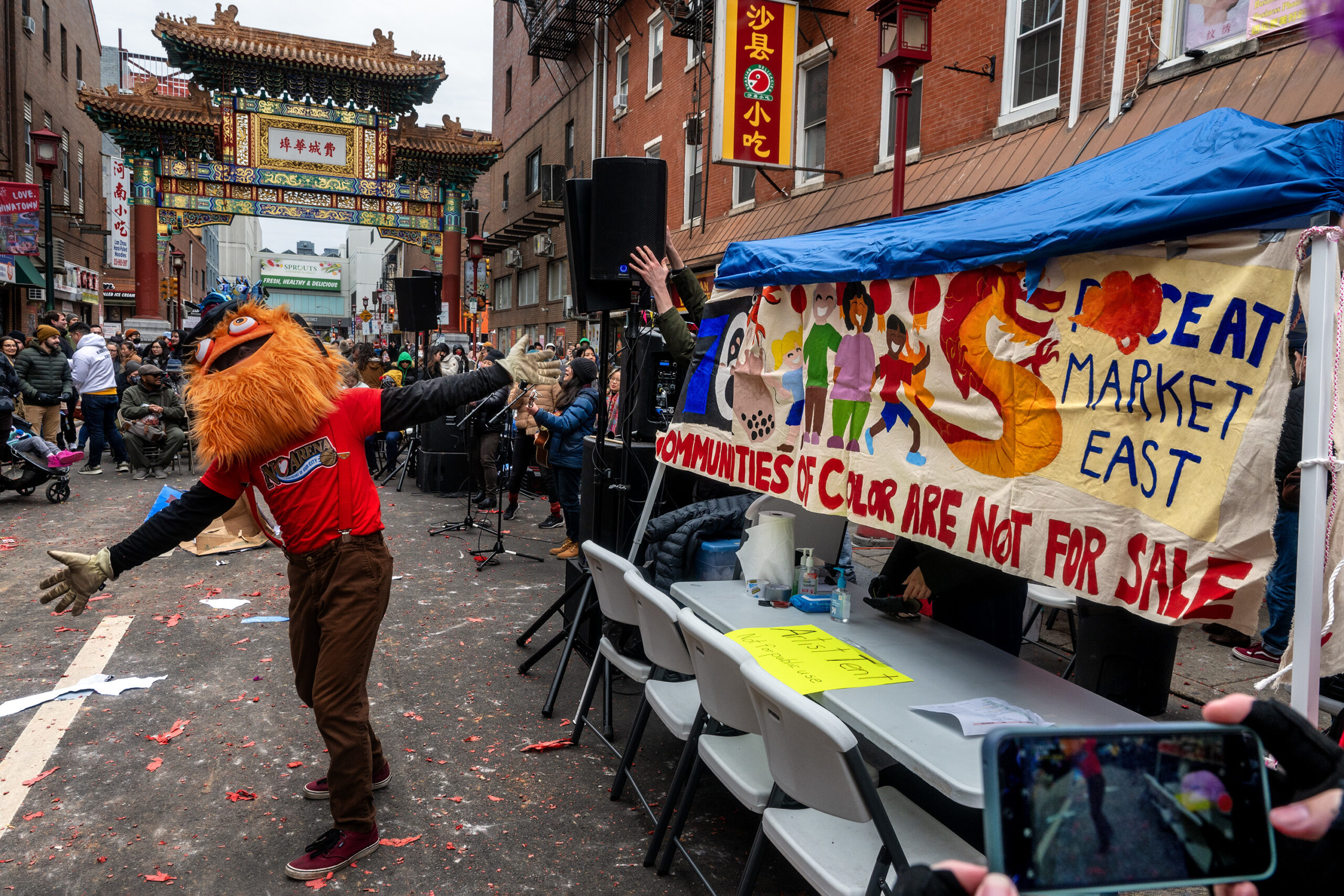
    Community organizers hold a “No Arena” block party near the Friendship Gate in Chinatown Sunday, Feb. 2, 2025, as the neighborhood celebrates the Lunar New Year nearby with a parade, lion dancers and fireworks.

    Lunar New Year at Dilworth Park

    The Year of the Horse is charging its way into Center City this weekend.

    Head to Dilworth Park to celebrate the first new moon of the lunisolar calendar, signifying the start of spring and the ushering of good fortune.

    The celebration includes a red envelope giveaway to the first 100 guests, a Kun-Yang Lin/Dancer performance, Chinese opera by Jiaye Xu of Temple University’s Boyer College of Music and Dance.

    The celebration closes out with the Philadelphia Suns performance at 6:30 p.m.

    Check out some more Lunar Year celebrations happening this weekend.

    Winter fun this week and beyond

    🏡 A little home improvement: Nearly 300 exhibitors will be at Montgomery County’s Greater Philadelphia Expo Center for the annual Philly Home + Garden Show. Specialists will offer tips on everything from gardening to landscaping, architecture, construction, electronics, interior design, and more.

    ⛸️ The Winter at Dilworth wrap-up: The Winter at Dilworth Park will wrap up select attractions starting this Sunday. The Rothman Orthopedics ice Rink and Cabin will pack things up this week, so bundle up and put on your best ice skates for a final lap this weekend.

    🐉 Lunar New Year festivities: Among the most popular Lunar Year celebrations is at Rail Park. Head there to see live lion dances, tai chi performances, K-pop workshop, and an appearance from the Fletcher Urban Riding Club on Saturday from 1-4 p.m.

    🎡 A festival of multiple traditions: Stop by the Mummers Museum for the Festival of Many Colors. The new multiweek event series highlights the Mummers Parade, Philly Caribbean Carnival and Carnaval de Puebla. There will be hands-on workshops to design garments, forge tools, and learn traditional dance that run through May 17.

    Staffer picks

    Pop music critic Dan DeLuca lists the top concerts this weekend and a few holiday pop-up jams happening this month.

    🎸 Thursday: After playing in Philly for his solo tour last year, songwriter Alejandro Escovedo is back, plugged in, and ready to rock with his band Electric Saints at Sellersville Theater on Thursday.

    🎸 Friday: Philly songwriter Ben Arnold is home to promote his new solo album, XL. He will perform at WXPN’s Free At Noon with the 48 Hour Orchestra on Friday.

    🎤 Saturday: R&B superstar Miguel, who’s played multiple times at the Made in America festival, returns to Philly for a headlining show at the Met Philly for his 2025 album, CAOS.

    🎤 Tuesday: Mariah the Scientist, who’s enraptured fans with her sultry vocals and chilling love songs since her major label debut Master in 2019, will headline the Met Philly on Tuesday.

    — Earl Hopkins

    Enjoy everything the region has to offer this weekend. And per Lunar New Year tradition, avoid wearing black and white if you can. Trust me, nobody likes a killjoy.

    Courtesy of Giphy.com
  • David J. Farber, celebrated Penn professor emeritus and pioneering ‘uncle’ of the internet, has died at 91

    David J. Farber, celebrated Penn professor emeritus and pioneering ‘uncle’ of the internet, has died at 91

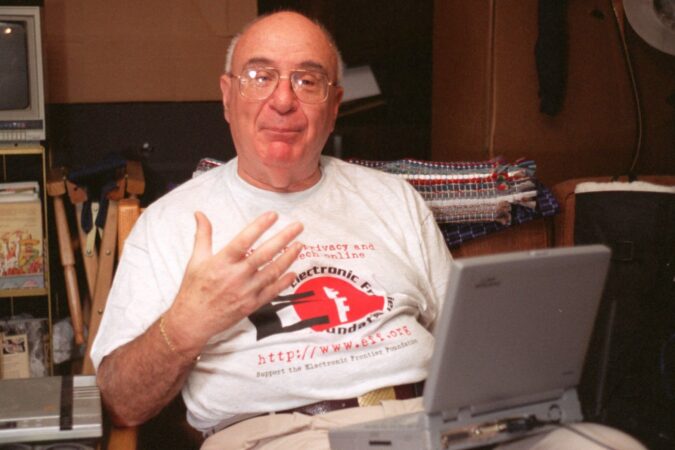
    David J. Farber, 91, formerly of Landenberg, Chester County, celebrated professor emeritus of telecommunication systems at the University of Pennsylvania, former professor of computer science at Carnegie Mellon University and the University of Delaware, professor at Keio University in Japan, award-winning pioneer in pre-internet computing systems, entrepreneur, and known by colleagues as the “uncle” and “grandfather” of the internet, died Saturday, Feb. 7, of probable heart failure at his home in Tokyo.

    A longtime innovator in programming languages and computer networking, Professor Farber taught and collaborated with other internet pioneers in the 1970s, ’80s, and ’90s. He helped design the world’s first electronic switching system in the 1950s and ’60s, and the first operational distributed computer system in the 1970s.

    His work on the early Computer Science Network and other distributive systems led directly to the modern internet, and he taught many influential graduate students whom he called the “fathers of the internet.” He was thinking about a World Wide Web, he said in a 2013 video interview, “actually before the internet started.”

    “Farber may not be the father of the internet. But he is, at least, its uncle,” Penn English professor Al Filreis told the Daily News in 1998. “Few have paid such close attention for so long to new trends in the information age.”

    Colleagues called him “part of the bedrock of the internet” and a “role model for life” in online tributes. Nariman Farvardin, president of the Stevens Institute of Technology in Hoboken, N.J., said: “Professor Farber did not just witness the future, he helped create it.”

    In 1996, Wired magazine said Professor Farber had “the technical chops and the public spirit to be the Paul Revere of the Digital Revolution.”

    He joined Penn as a professor of computer science and electrical engineering in 1988 and was named the endowed Alfred Fitler Moore professor of telecommunication systems in 1994. He left Penn for Carnegie Mellon in 2003 and joined Keio in 2018.

    Gregory Farrington, then dean of Penn’s School of Engineering and Applied Science, told The Inquirer in 1996: “He’s one of the most engaging, imaginative guys who sometimes alternates between great ideas and things that sound nuts. And I love them both. His life is an elaboration on both.”

    He was a professor at Delaware from 1977 to 1988 and at the University of California Irvine from 1970 to 1977. Among other things, he created innovative computer software concepts at UC Irvine, studied the early stages of internet commercialization at Delaware, and focused on advanced high-speed networking at Penn. He also directed cyber research laboratories at every school at which he worked.

    He earned lifetime achievement awards from the Association for Computing Machinery, the Board of Directors of City Trusts of Philadelphia, and other groups, and was inducted into the Internet Society’s Hall of Fame in 2013 and the Stevens Institute of Technology Hall of Achievement in 2016.

    Stevens Institute also created a “societal impact award” in 2003 to honor Professor Farber and his wife, Gloria. “I think the internet has just started,” he said in 2013. “I don’t think we’re anywhere near where it will be in the future. … I look forward to the future.”

    Professor Farber earned grants from the National Science Foundation and other organizations. He received patents for two computer innovations in 1994 and earned a dozen appointments to boards and professional groups, and an honorary master’s degree from Penn in 1988.

    He advised former President Bill Clinton on science and engineering issues in the 1990s and served a stint in Washington as chief technologist for the Federal Communications Commission. Clinton called him a “pioneer of the internet” in a 1996 shoutout, and Professor Farber testified for the government in a landmark technology monopoly court case against Microsoft Corp.

    Professor Farber (left) worked with Professor Jiro Kokuryo at the Keio University Global Research Institute in Tokyo.

    He championed free speech on the internet, served on technical advisory boards for several companies, and wrote or cowrote hundreds of articles, papers, and reports about computer science.

    He was featured and quoted often in The Inquirer and Daily News, and lectured frequently at seminars and conferences in Japan, Europe, Australia, and elsewhere around the world. He wrote an email newsletter about cutting-edge technology that reached 25,000 subscribers in the 1990s, and he liked to show off his belt that held his cell phone, pager, and minicomputer.

    He cofounded Caine, Farber, & Gordon Inc. in 1970 to produce software design tools and worked earlier, from 1957 to 1970, on technical staffs for Xerox, the Rand Corp., and Bell Laboratories. In a recent video interview, he gave this advice: “Learn enough about technology so that you know how to deal with the world where it is a technology-driven world. And it’s going to go faster than you ever imagined.”

    David Jack Farber was born April 17, 1934, in Jersey City, N.J. Fascinated by gadgets and early computers in the 1940s, he built radios from wartime surplus components as a boy and helped make a unique relay device with a punch card in college. “The card reader was three feet big, but it worked,” he told the Daily News in 1998.

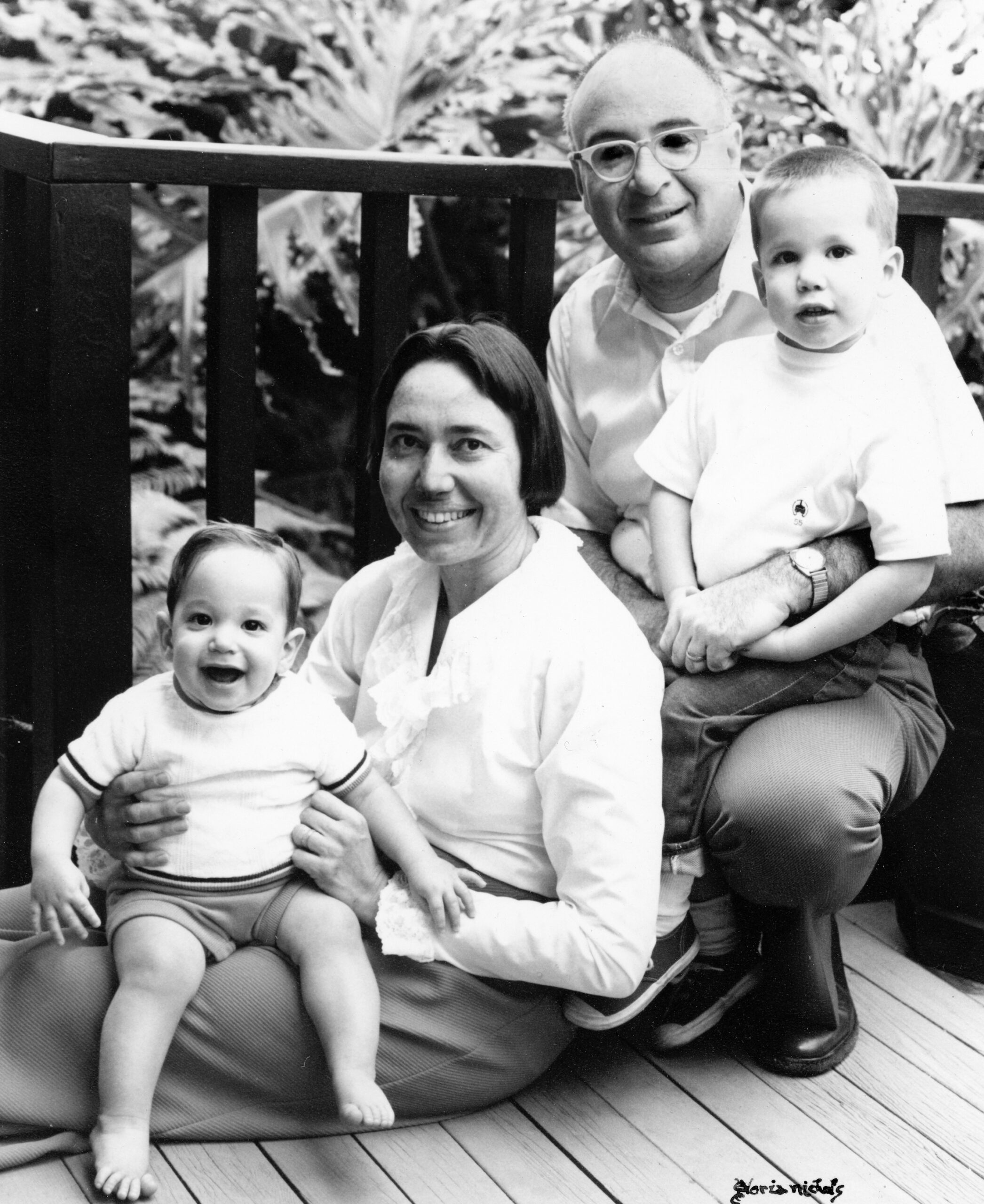
    Professor Farber enjoyed time with his family

    He considered being a cosmologist at first but instead earned a bachelor’s degree in electrical engineering and a master’s degree in math at Stevens.

    He met Gloria Gioumousis at Bell Labs, and they married in 1965. They had sons Manny and Joe, and lived in Landenberg from 1977 to 2003. His son Joe died in 2006. His wife died in 2010.

    Professor Farber enjoyed iced coffee and loved gadgets. He was positive and outgoing, and he mixed well-known adages into humorous word combinations he called “Farberisms.”

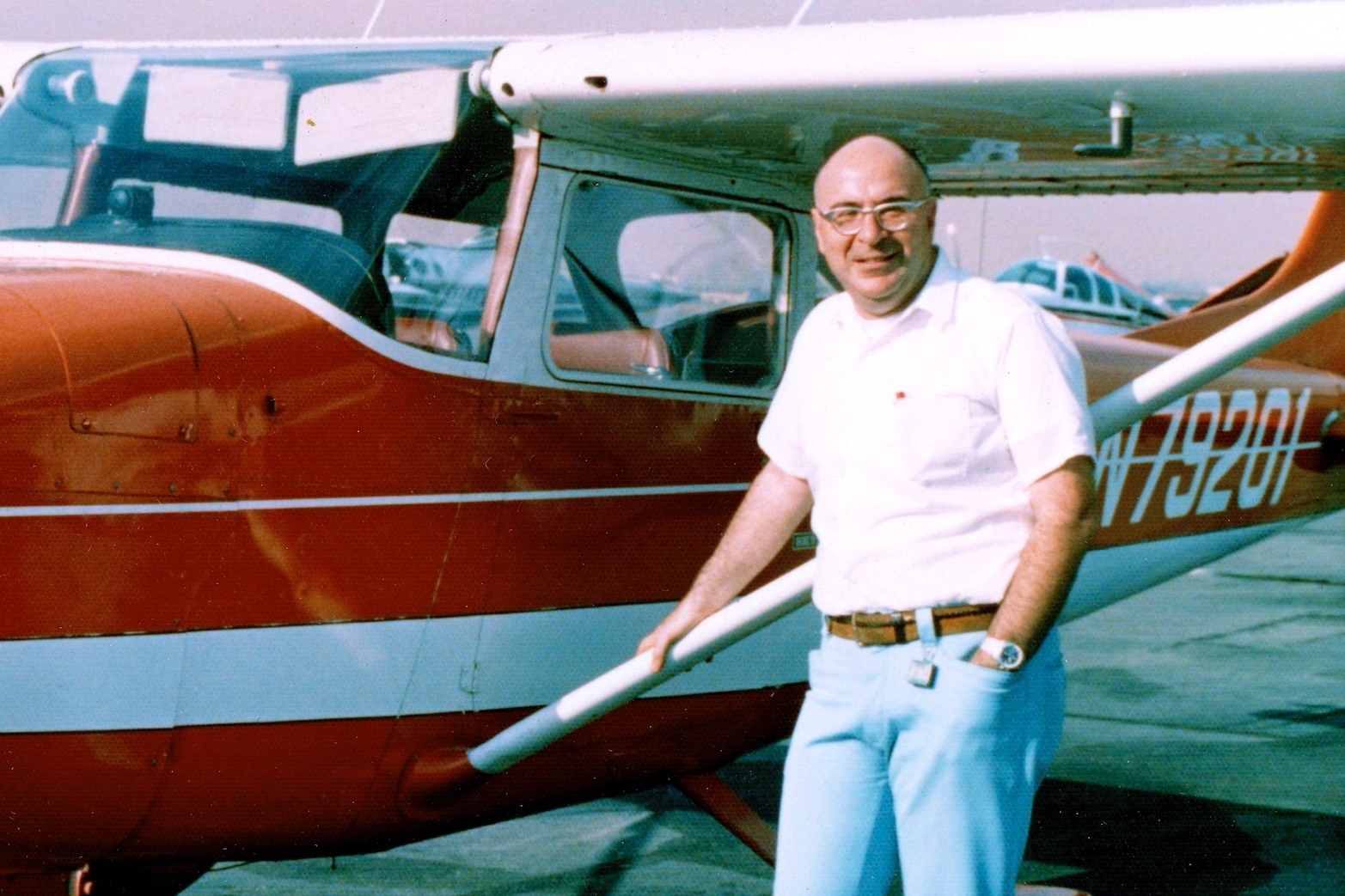
    He was an experienced pilot and an avid photographer. In 2012, to honor his son, he established the Joseph M. Farber prize at the Stevens Institute for a graduating senior.

    Mr. Farber was an experienced pilot who could fly solely on cockpit instruments.

    “He was bold,” his son Manny said. “He connected to a lot of people and was close to his friends. He worked on big projects, and it wasn’t just theoretical. He built things that work.”

    In addition to his son, Professor Farber is survived by his daughters-in-law, Mei Xu and Carol Hagan, two grandsons, and other relatives.

    A memorial service is to be held later.

  • Two rival sex traffickers arrested in Norristown following shooting, police say

    Two rival sex traffickers arrested in Norristown following shooting, police say

    A street shooting in Norristown last week led investigators to discover two sex-trafficking operations that transported women from New York to Montgomery County to engage in prostitution, prosecutors said Thursday.

    A dispute between two men who ran rival enterprises erupted in gunfire on Feb. 13, police said, when one shot the other in the thigh during a confrontation on the 400 block of Sandy Street.

    On Tuesday, authorities arrested both men.

    Efran Flores-Rodriguez, 24, of Norristown, and Fernando Meza-Ramirez, 42, of Corona, Queens, are each charged with trafficking individuals and involuntary servitude. Flores-Rodriguez faces additional charges, including attempted murder, in connection with the shooting.

    Officers responding to reports of gunfire found Meza-Ramirez inside a bullet-riddled Toyota RAV4, police said. He had been shot in the thigh.

    Meza-Ramirez told police that a stolen white Acura TLX had followed him from Lafayette Street to Sandy Street. When he pulled over, he said, the sedan pulled up beside him and someone opened fire. A witness identified Flores-Rodriguez as the shooter, according to the affidavit of probable cause for his arrest.

    But investigators say the shooting exposed more than a personal feud.

    At the hospital where Meza-Ramirez was treated, officers found business cards in his wallet bearing photographs of scantily clad women posing on beds, according to the affidavit.

    Days later, on Feb. 17, police searched Flores-Rodriguez’s home and encountered a woman from Flushing, Queens, who told them she had worked as a prostitute under his direction last summer.

    She said Flores-Rodriguez, whom she knew as “Guerro,” drove her to Norristown six days a week, provided her a room and charged clients $60 for 10-minute sexual encounters. She told police she sometimes had as many as 15 encounters a day and kept half the money he collected.

    The woman said she also worked this year for Meza-Ramirez, whom she knew as “Leo,” under the same arrangement, according to the affidavit.

    Both men were denied bail at arraignment and are being held at the Montgomery County Correctional Facility.

  • Some Delco SEPTA riders will have 15 minutes added to their commutes, beginning Monday

    Some Delco SEPTA riders will have 15 minutes added to their commutes, beginning Monday

    Rides on the two trolley lines serving Delaware County promise to be safer but longer with a modern signal system scheduled to go live on Monday, SEPTA said.

    The upgraded signals on the D1 and D2 trolley lines will require operators to make more gradual accelerations and decelerations. They will also enforce speed limits and stop signals with automatic braking if needed.

    “It will reduce the possibility of operator error,” SEPTA general manager Scott A. Sauer said. “They won’t be able to speed and risk derailment. They won’t be able to violate stop signals or misaligned switches.”

    But the computer won’t replace the judgment of the people operating a trolley, Sauer said. Operators will get an alert, and the system provides backup if they cannot correct it in time, he said.

    Trips will be up to 15 minutes longer on the D1 route and 10 minutes on the D2 route, depending on where a passenger boards and gets off the trolley.

    The trolleys operate between Media and the 69th Street Transportation Center in Upper Darby, and between Sharon Hill and the transit hub. They were formerly called Routes 101 and 102.

    The transit agency also is releasing new spring schedules for all elevated-subway and bus transit, using the new “Metro” way-finding nomenclature, which uses letters for the various services.

    SEPTA accounted for the increased Delaware County trolley travel times in the new schedules, which begin Monday.

    It took about a decade and $75 million to install the system, called Communications-Based Train Control, on the Delco trolleys, said John Frisoli, SEPTA’s top rail signals engineer. Radios communicate between the control system and the trolleys.

    A similar system has operated in the Center City trolley tunnel since 2005. SEPTA has been adding safety features to its rail-signal systems for about 20 years, including the installation of Positive Train Control on Regional Rail, which controls train speed and applies automatic brakes to prevent crashes caused by human error.

  • Upper Darby Council passes resolution to restrict cooperation with ICE following resident’s death in the agency’s custody

    Upper Darby Council passes resolution to restrict cooperation with ICE following resident’s death in the agency’s custody

    The Upper Darby Township Council passed a resolution Wednesday to restrict cooperation with U.S. Immigration and Customs Enforcement in response to growing concerns about the agency’s activities in the diverse township.

    The 11-member council, made up entirely of Democrats, voted unanimously to pass a resolution saying the town will not use its resources to assist ICE with non-criminal immigration enforcement. But the largely symbolic resolution nearly mirrors the municipality’s existing guidelines, leading to criticism that it does not go far enough.

    The resolution’s passage comes after Parady La, an Upper Darby resident struggling with addiction, died last month in a hospital while in ICE’s custody. It also follows the chaotic scenes in Minneapolis, where federal agents fatally shot Renee Good and Alex Pretti last month as President Donald Trump’s administration targeted the city with a massive immigration enforcement operation.

    Those events have fueled anxiety in Upper Darby, where nearly a quarter of the population is foreign-born, compared with 15% in Philadelphia. Armed ICE agents wearing masks have become a familiar sight in the township, prompting residents to question why their community is suddenly under pressure, including high school students who held a walkout earlier this month.

    Council President Marion Minick called the resolution a chance to show immigrants in the community “they are not alone.”

    “We can demonstrate through our votes and through our voices that Upper Darby Council will do everything within our legislative power to shield our residents and their families from this climate of intimidation,” he said.

    The council’s resolution comes as local governments across the country and in the Philadelphia area try to curb ICE’s impact on their residents. Last month, Haverford passed a similar measure and Bucks County ended its agreement with the agency that allowed sheriff’s deputies to act as immigration enforcement.

    Council member Kyle McIntyre, a progressive community organizer who began his term last month, emphasized that the resolution is “just the start.”

    “There is so much more than we can do, and we will be doing, and I make that solemn promise to the community right now,” he said before the vote.

    “If we don’t do more, hold us accountable,” he added.

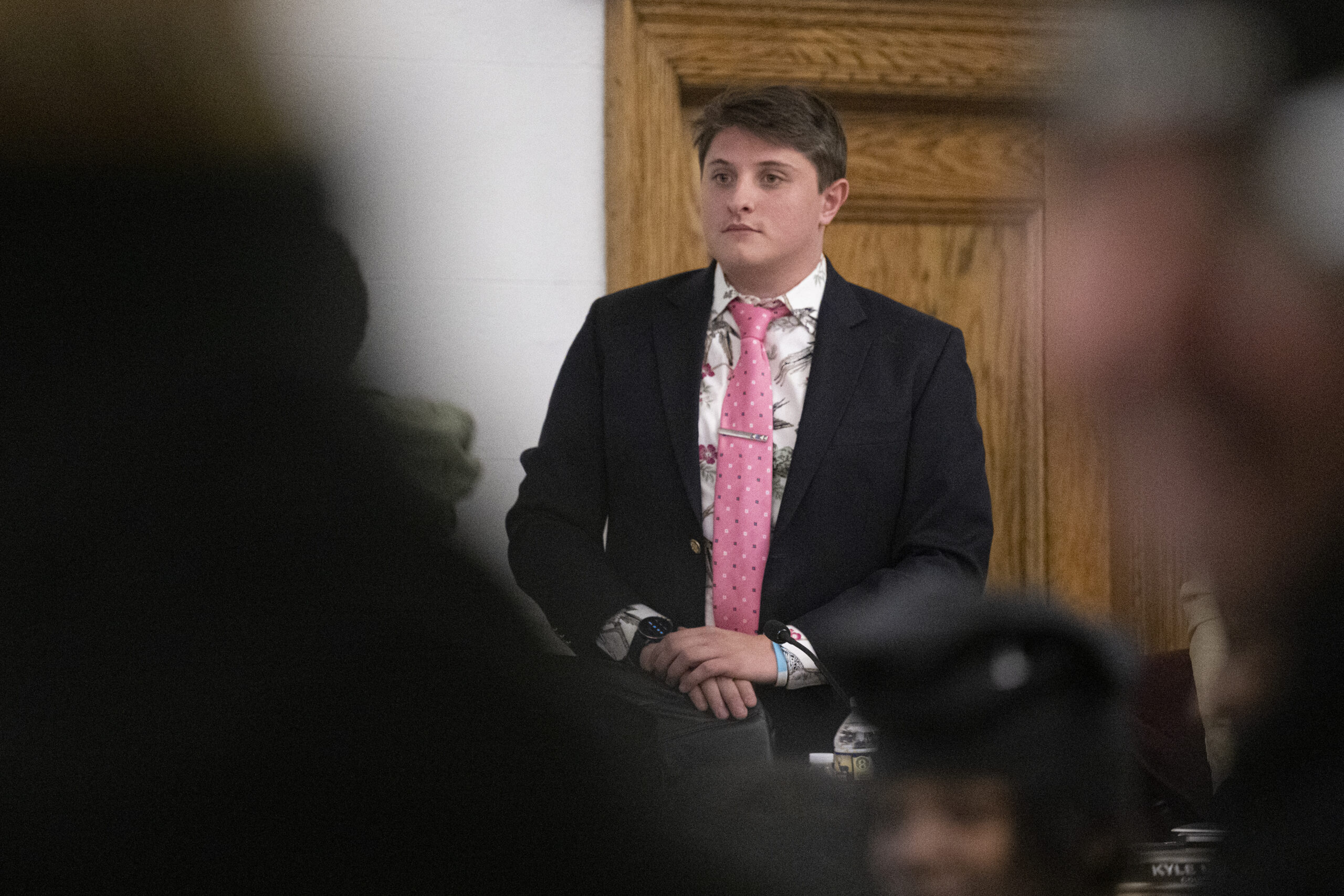
    Kyle McIntyre, an Upper Darby Township council member, listens to residents’ comments during a township meeting on Wednesday, Jan. 21, at the Upper Darby Municipal Building in Upper Darby, Pa.

    Township solicitor Mike Clarke said that police will cooperate with ICE if the agency has a criminal warrant signed by a judge.

    “Local law enforcement is not supposed to be in the immigration enforcement business, and essentially that’s what this resolution is saying … but if it’s a criminal warrant, they will be involved,” Clarke said.

    A list of frequently asked questions about ICE on the township’s website already stated that Upper Darby does not participate in civil immigration enforcement or ask residents their immigration status, though it does cooperate with lawfully issued criminal warrants and court orders. Township spokesperson Rob Ellis confirmed that the resolution reaffirms the town’s existing internal policy.

    The lack of cooperation seems to be going both ways.

    Upper Darby Mayor Ed Brown said earlier this month that ICE would no longer communicate with local police to tell them when agents are operating in the township, calling the change “scary.” ICE did not immediately respond to a request for clarity on Thursday.

    Some residents at the meeting expressed concern about the reaffirmed policy getting in the way of public safety, and McIntyre later said the policy ensures anyone in Upper Darby can feel comfortable reporting crimes to the police. He said “anybody that commits a crime in Upper Darby Township will be held accountable,” regardless of immigration status.

    Jennifer Hallam, who said she has worked with immigrants in Upper Darby for almost a decade, urged the council to postpone its vote and instead pursue legislation that has more teeth.

    “The current resolution really just preserves the status quo,” she said.

    She called for a resolution that would restrict ICE from municipal property without judicial warrants, prohibit the collection and sharing of immigration status among municipal employees, and prohibit ICE from wearing masks. Philadelphia lawmakers are attempting to ban ICE from wearing masks, though experts are split on whether the measure would be legally sound.

    McIntyre said in an interview that Wednesday’s resolution puts the council’s values down on paper and provides clarity to the community, but he acknowledged that a resolution is not enforceable.

    A death in ICE custody close to home

    The community has been grappling with the death of La, a 46-year-old Cambodian immigrant and Upper Darby resident who, according to his widow, Meghan Morgan, struggled with addiction. La came the United States in 1981 as a refugee around the age of 2. He became a lawful permanent resident a year later but lost his legal status after committing a series of crimes over two decades, ICE said.

    ICE said agents arrested La outside his home last month before he received treatment for severe withdrawal in a Philadelphia detention center. He was admitted to the hospital in critical condition, where his condition worsened and he died, the agency said.

    Morgan and La’s daughter Jazmine La said they believe he was not given proper medical treatment and the Pennsylvania ACLU filed a Freedom of Information Act request surrounding his detention and death.

    McIntyre last month called on Delaware County District Attorney Tanner Rouse and Philadelphia District Attorney Larry Krasner to investigate La’s death.

    Rouse said at the time that Delaware County law enforcement was not involved or aware of La’s detainment when it happened, and that his office would investigate it. He said Thursday that surveillance footage showed La was detained “without violence” but that his death in Philadelphia should be addressed by “investigating authorities” in the city.

    Krasner’s office declined to comment, saying it was a federal matter.

    Staff writer Jeff Gammage contributed to this article.

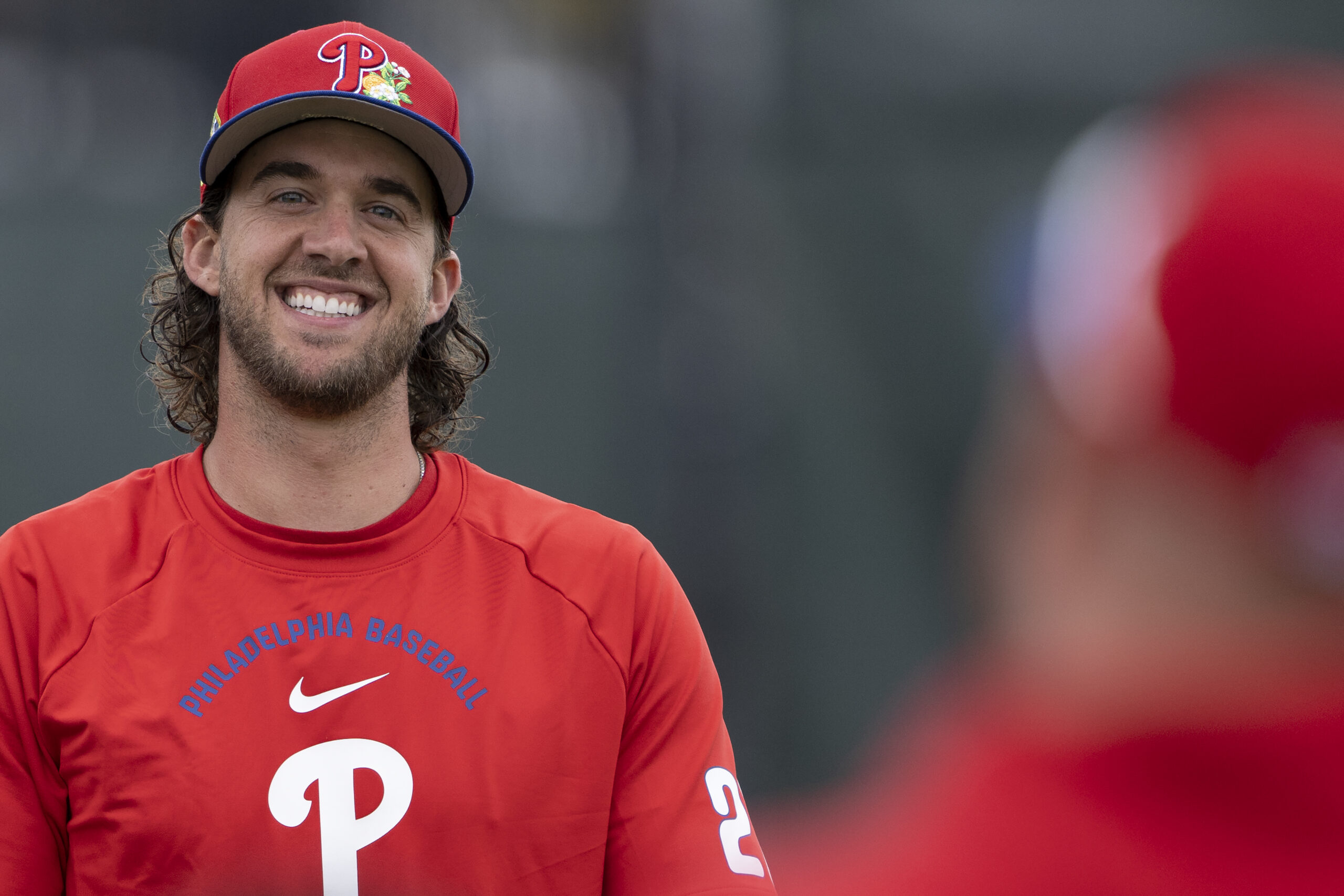
  • Phillies pitcher Aaron Nola chooses Philabundance as the recipient of a $25,000 grant

    Phillies pitcher Aaron Nola chooses Philabundance as the recipient of a $25,000 grant

    After being named the 2025 Philanthropist of the Year by the Major League Baseball Players Trust, Phillies pitcher Aaron Nola earned a $25,000 grant to donate to a charity of his choice. On Wednesday, he selected Philabundance, the largest food bank in the Greater Philadelphia region, as the recipient.

    “Aaron Nola has been helping Philabundance strike out hunger for five years,” said Loree D. Jones Brown, the chief executive officer of Philabundance. “We are deeply grateful for his generosity and partnership. Delivering food, hope, and stability to those of our neighbors who need it most is a collective effort, and we could not fulfill our mission without the crucial, consistent support of donors — and friends — like Aaron.”

    Nola has been working with Philabundance since 2019, joining its efforts to battle food insecurity across two states in nine counties. Their partnership will continue into 2026 with Philabundance as one of the beneficiaries for Nola’s charity poker tournament on April 16 at Citizens Bank Park.

    “Aaron embodies the Players Trust’s goal of making a positive impact in the world and has demonstrated an extraordinary personal commitment to philanthropic endeavors,” said Amy Hever the executive director of the Players Trust. “Our goal is to amplify the good the Players do in their community, and we hope this grant will help Philabundance reach even more people and families experiencing food insecurity.”

    Phillies pitcher Aaron Nola was named the 2025 Philanthropist of the Year by the MLBPA.

    Nola was named the Philanthropist of the Year for all his work giving back to the community, working with Philabundance, Team Red, White and Blue — an organization for veterans and service members seeking improved physical or mental health — and ALS research.

    Although Nola was unable to attend Wednesday’s Playmakers Classic, the Players Trust’s annual fundraising and awareness event, the 11-year veteran left an important message.

    “This award means a lot to me, because giving back has always been a core part of who I am and what I believe in,” said Nola in a video message.

    “Baseball has given me so many opportunities, mentors, and teammates who feel like family, and I’ve always felt a responsibility to use that platform to make a positive impact — whether it’s supporting ALS, veterans, kids and families, or doing whatever I can to strengthen communities and help make the world a little bit better. … This is truly an honor, and it motivates me to keep doing more, both on and off the field.”

  • Colman Domingo is up for three NAACP Image Awards including the President’s Award

    Colman Domingo is up for three NAACP Image Awards including the President’s Award

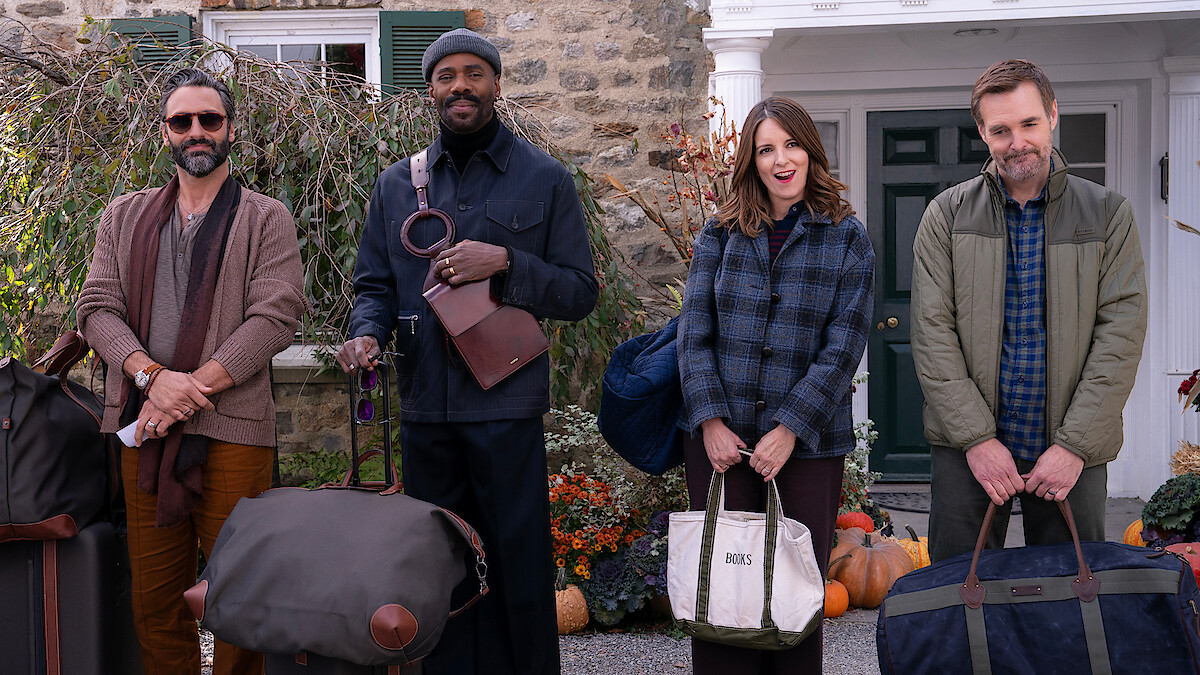
    Colman Domingo will be presented with the President’s Award at the 57th NAACP Image Awards, Saturday, Feb. 28.

    The West Philly native and Temple alum is also nominated for the NAACP Image award for outstanding supporting actor in a comedy series and outstanding director in a comedy series for his work on Netflix’ comedy series The Four Seasons.

    “Colman Domingo represents the power of creativity to bring people together and move culture forward,” BET president Louis Carr said in a statement earlier this week. “At BET our commitment has always been to community, culture, and connection. Colman’s impact reflects those values in action.”

    Marco Calvani, Colman Domingo, Tina Fey, and Will Forte in the new comedy series ‘The Four Seasons,’ premiering in 2025.

    The NAACP President’s Award is presented for public service. Previous awardees include Dave Chappelle, Usher, Gabrielle Union-Wade, and LeBron James.

    Domingo took home the NAACP Image Award for outstanding actor in 2024 for his work in Netflix’ Rustin and the trophy for outstanding supporting actor for The Color Purple.

    In early February, Deadline reported the biopic Domingo is working on about legendary singer Nat King Cole will be called Unforgettable. Domingo cowrote the script and will direct, produce, and star in the movie. The film will follow Cole’s success as a musician and quiet revolutionary navigating racial justice. It is set to begin filming at the end of the year.

    Domingo will deliver the commencement address at Temple University this spring and will receive an honorary degree. The ceremony will be held at the school’s Liacouras Center on May 6, 2026.

    The NAACP Image Awards will air live from the Pasadena Civic Auditorium on Saturday, Feb. 28, at 8 p.m. Eastern on BET and CBS.

  • ‘Phillies Extra’ Q&A: J.T. Realmuto on thinking he might leave, Nick Castellanos’ exit, and more

    ‘Phillies Extra’ Q&A: J.T. Realmuto on thinking he might leave, Nick Castellanos’ exit, and more

    CLEARWATER, Fla. — J.T. Realmuto is in spring training with the Phillies for the eighth consecutive year.

    But for a week in January, he wasn’t sure he’d be back.

    Realmuto sat down last week with Phillies Extra, The Inquirer’s baseball podcast, to talk about his start-and-stop contract talks, which included a call in which president of baseball operations Dave Dombrowski told the star catcher’s agent that the team was heading in a different direction.

    In addition, Realmuto discussed the Phillies’ decision to release Nick Castellanos, offered his outlook for the starting rotation in 2026, and more.

    Watch the full interview below and subscribe to the Phillies Extra podcast on Spotify or Apple Podcasts.

    Q: Take me back to that week in January and how seriously you began thinking that you might be somewhere else this year.

    A: It was definitely a pretty hectic maybe 48 hours for us. Obviously there were the rumblings about the [Bo] Bichette stuff going on, and then, we were kind of at a standstill with the Phillies for quite a while. It had been all the way dating back to December at that point where there was no momentum. We had many conversations. There was just no momentum on the deal moving anywhere. So, yeah, I got a little stressful there for a couple days where we weren’t sure what was going to happen. Started kind of thinking about our other options and putting the logistics together of what it might be like to go somewhere else. And thankfully it didn’t come to that, because as we’ve stated all along, this is where we wanted to be. So, we’re happy we didn’t have to up and move and go somewhere else.

    Q: How much confidence do you have in this starting rotation, and how do you feel about how that group shapes up again going into 2026?

    A: I love it. I don’t think there’s any secret that this starting pitching is one of the main strengths of our team. And it’s going to be what gets us to where we want to go. Similar to last year, we were so good in the regular season because of our starting pitching, and they’re going to be the horses we ride again all year long.

    It’s obviously not ideal. Losing Ranger [Suárez to the Red Sox] is going to be tough. But also [Zack] Wheeler starting on the IL most likely, it’s tough to replace those type of innings. But we have the depth, and we have the guys back there to do it. You got [Andrew] Painter coming back after being healthy for a full season, coming off that injury. I think he’s going to be big for us this year. [Jesús] Luzardo, [Cristopher] Sánchez, [Aaron] Nola, those guys, Taijuan [Walker] is throwing the ball great for us. So we just have to lean on those guys. And the Phillies are going to go how those guys go. And it’s a really good group to ride with.

    Q: There are people back in Philly who are saying the Phillies are running it back, and it’s been the same core for the last four or five years. How do you avoid it becoming kind of a stale feeling in the clubhouse?

    A: I understand the narrative that comes from the fans, the media, just the fact that it’s largely the same team. But as far as staleness goes, inside the clubhouse, we don’t feel any. We’re still as hungry as we’ve ever been, because we haven’t been able to finish the job. Obviously, we’ve been a very good regular season team the last few years, had a couple pretty good postseason runs, but we just haven’t been able to get over that hump and win the World Series. We’re still very hungry for that. So, there’s definitely no sense of staleness in the clubhouse. We still really enjoy each other. We love to hang out. We get along together well.

    So, the recipe is there. We have the pieces to win a championship. We all know that. I think the fans and the media know that as well. It’s just a matter of putting it together and playing our best baseball at the right time. Last year … I know we lost [in the NLDS to the Dodgers], 3-1, but the series was very close. Every game was very close, one play here and there changes that whole series, so we didn’t feel overmatched. If we play our best brand of baseball, we feel like we can beat anybody. And obviously the Dodgers are the team to chase down right now because they won two in a row, and they even got better this offseason. So, I feel like we have as good a chance as anybody to take them down. They’re going to be the favorites. But in my opinion, the Phillies are right up there with them, and we have as good a chance as anybody to beat them.

    J.T. Realmuto said Nick Castellanos (right) “was always a great teammate to me.”
    Q: How difficult was last year for Nick Castellanos, and what were you guys trying to do to make sure that you could try to keep Nick in the right frame of mind?

    A: Yeah, I’m sure it was tough on him, just coming from the career he’s had, and just being an everyday player, getting everyday at-bats his whole career, being able to have the transition into that role of playing less. That can’t be easy for anybody. And everybody knows Nick. Sometimes he’s going to say what’s on his mind, and that rubs some people wrong, and others love him for it. So, that’s just who he is, and he’s always going to be that way.

    So, I’m sure it’s not easy going through what he went through. But to be honest, now that he’s going to be moving on [to the Padres] and hopefully get another good opportunity for himself, I think he would say the same — that it’s best for both parties, just based off of everything that went on last year. And we obviously wish him the best. Our clubhouse loves Nick. I know that some people have feelings about him, but Nick was always a great teammate to me. I love that guy, and I wish him the best moving forward.

    Q: What does it do for a team when you can inject some youth like Justin Crawford, Andrew Painter and Aidan Miller into a roster?

    A: It’s awesome. I think it’s just a spark for our team, especially our team where everybody talks about how old we are. So, it’s nice that [we’re] finally getting some young pups in the mix. What was our last youth wave — [Bryson] Stott, [Alec] Bohm, those guys. Bringing those guys up and being able to kind of take them under our wings and show them how to be big leaguers, that stuff is fun for us, for the older guys, and really being able to teach them how to win and show them what matters in this game. Our minor league system does a good job of having guys prepared when they come up, how to act like professionals, and how to play winning baseball. So, it’s always fun for us to get them in the clubhouse and make them feel like part of the team.

  • A three-year ban on puppy breeding in Philly is likely to become law | City Council roundup

    A three-year ban on puppy breeding in Philly is likely to become law | City Council roundup

    A three-year ban on puppy breeding in Philadelphia is likely to become law after City Council members on Thursday passed a bill to relieve overcrowded animal shelters.

    Lawmakers unanimously approved legislation to institute a three-year moratorium on puppy breeding in the city, a ban that applies to all breeders except those that have a state kennel license or are breeding service dogs.

    The bill now heads to Mayor Cherelle L. Parker’s desk. If she signs the bill and it becomes law, the moratorium will take effect 90 days later.

    Also on Thursday, a Council member amended his legislation that would allow lawmakers to keep their jobs while running for another office — but there are exceptions.

    Here’s what happened during Thursday’s meeting.

    What was today’s highlight?

    Tightening the leash on backyard breeders: The bill was authored by Councilmember Cindy Bass, a Democrat who represents parts of North and Northwest Philadelphia.

    Bass was sick and absent from Council on Thursday, but she has previously said that her bill is aimed at limiting people from breeding more puppies than they can sell.

    “Every litter means more dogs in our shelter, more cost for taxpayers, and more suffering that we can prevent,” Bass said last year. “This isn’t about punishment; it’s about compassion and responsibility.”

    Under the bill, it would be illegal to sell puppies or post ads to sell them within city limits. Breeders who violate the moratorium could face a $1,000 fine, with the proceeds going to the city’s Animal Care and Control Team, also known as ACCT Philly. The animal control agency would also enforce the ban.

    Sammi Craven, a local animal welfare advocate, testified Thursday about overcrowding at ACCT Philly’s North Philadelphia shelter. She named the dogs that were recently euthanized or are scheduled to be put down: Stella, Cheese Burrito, Luna, and Muffin, among others.

    “Philadelphia’s current animal welfare policy is ineffective,” Craven said, “and infrastructure and prevention have not kept pace with intake.”

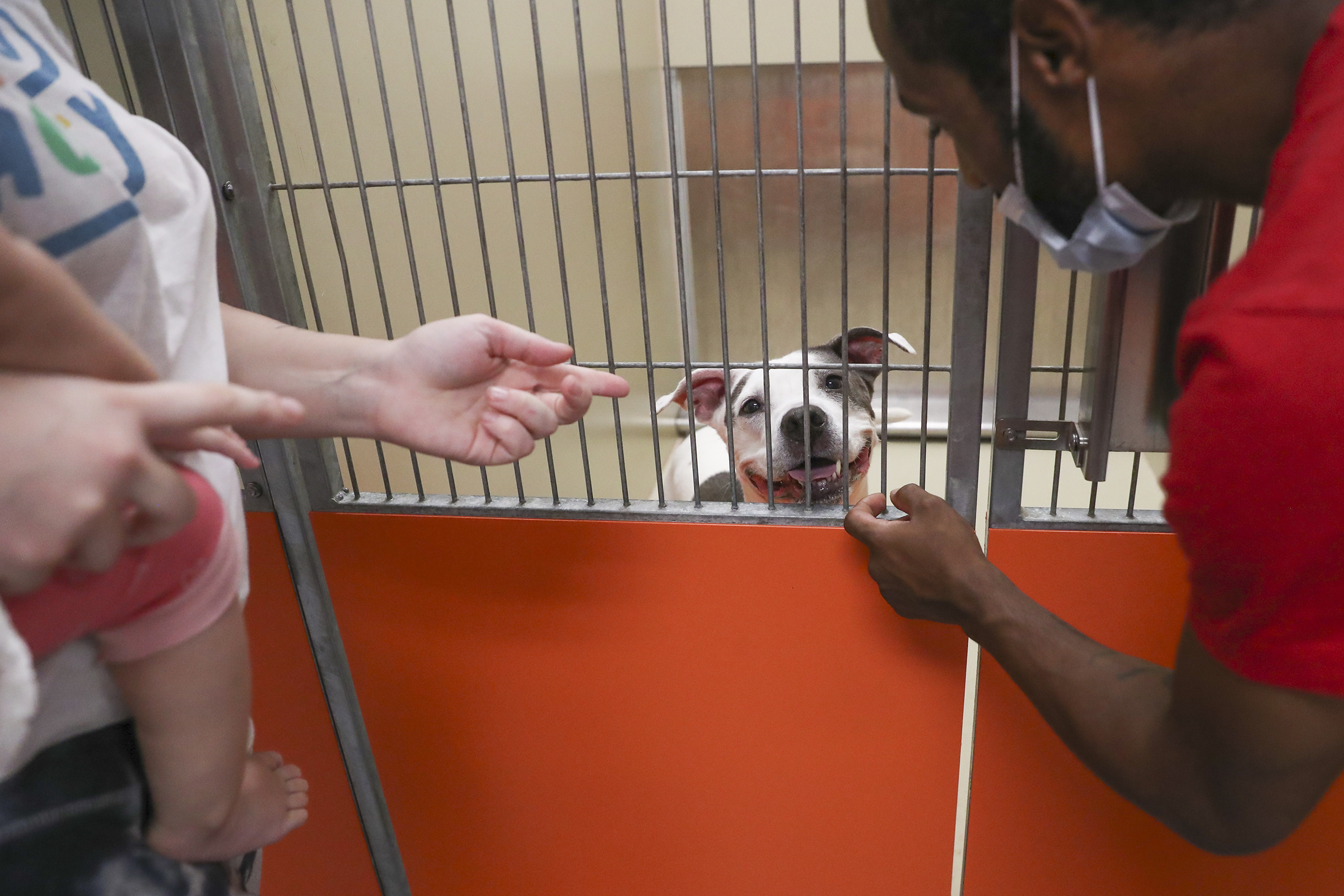
    In this 2022 file photo, Brian Martin, 31, and Vanessa Green, 29, look at their new dog they plan to adopt while Green holds Autumn, 1, at ACCT Philly, which was hosting a pet adoption event.

    Critics of the moratorium say it will be challenging to enforce and could harm smaller, responsible breeders as opposed to those already operating illegally.

    Charley Hall, a government relations official with the American Kennel Club, called on Council to hold the bill and establish a working group to draft new regulations.

    “Working together, we can stop the flow of irresponsible breeders and improve animal welfare and fewer dogs ending up in Philadelphia’s shelters,” Hall said. “The question is how to achieve that goal in a way that is effective, fair, and legally sound.”

    What else happened today?

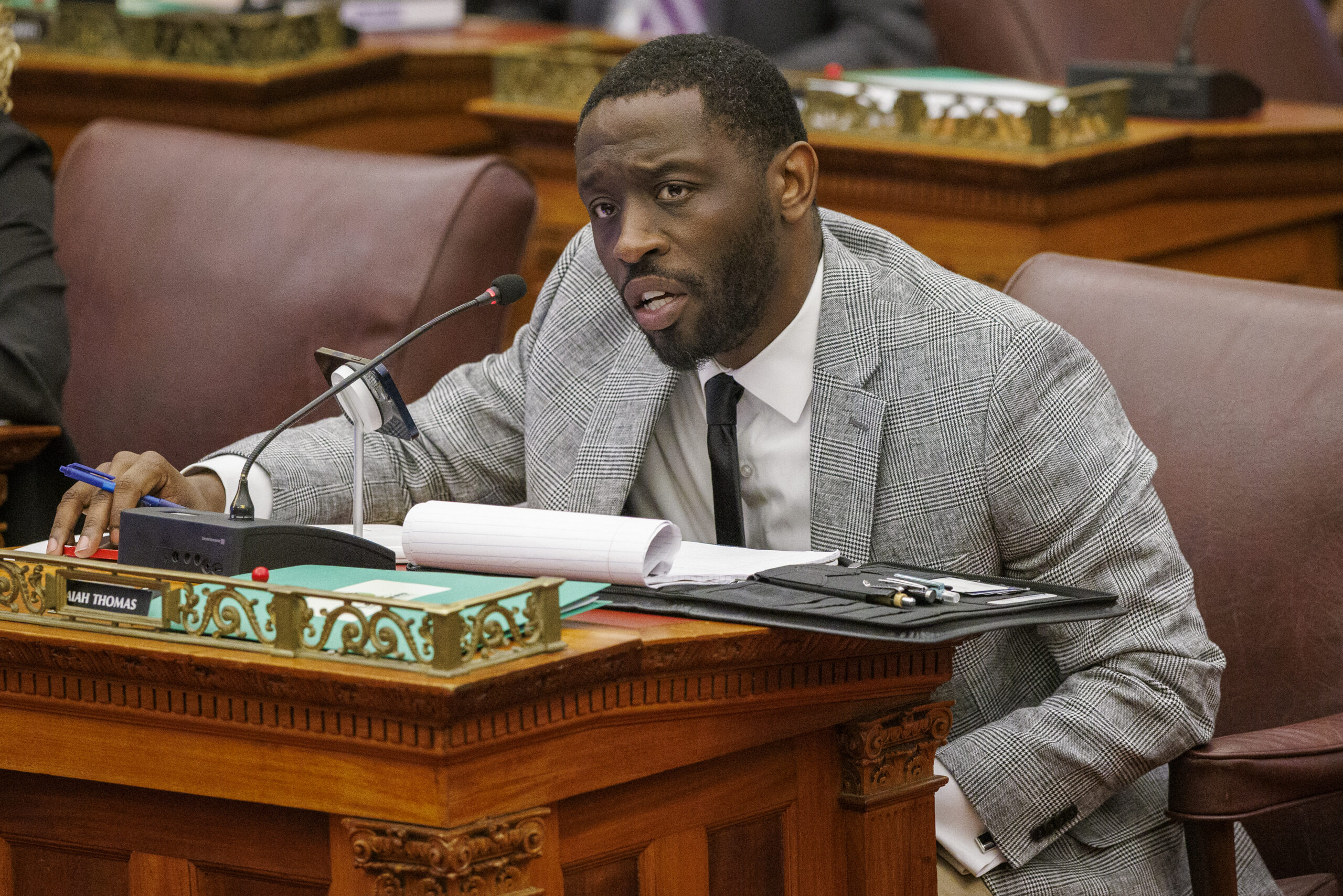
    Resign to run gets amended: City Councilmember Isaiah Thomas has been trying for more than a year to pass legislation amending a rule that requires city employees quit their jobs to run for higher office.

    He’s attempting to amend the rule so that city officeholders can keep their jobs only if they are running for a state or federal office. That means Council members running for mayor would still have to give up their seats.

    Councilmember Isaiah Thomas makes a statement at the start of a hearing last week.

    But Thomas has run into roadblocks, including opposition from the city’s Board of Ethics, which asked him to make changes to the legislation in December, just before it appeared poised to pass.

    On Thursday, he introduced an amendment that made a series of tweaks, including clarifying that sitting city officeholders may only run for one public office in any election.

    Jordana Greenwald, general counsel for the city’s Board of Ethics, testified that the board still has concerns and requested more amendments, including prohibiting certain forms of politicking in the workplace.

    She also said the legislation should clarify that the mayor can’t run for another office while serving as the city’s chief executive, a rule that is already enumerated elsewhere in the city charter.

    However, making additional amendments could require Thomas re the legislation entirely. He said he would prefer for the bill to be called up for a final vote next week.

    Amending the resign-to-run rule requires changing the city’s Home Rule Charter, meaning voters would have to approve it through a ballot question. Voters have rejected earlier attempts to repeal resign-to-run.

    Codifying the youth watchdog: Council members also approved legislation to make the city’s Office of the Youth Ombudsperson permanent.

    The office was created through an executive order signed by former Mayor Jim Kenney and is responsible for monitoring child welfare, juvenile justice, and behavioral health residential placement facilities in the city.

    Making the office permanent also requires an amending the charter. A ballot question is likely to appear in the May primary election.

    Quote of the week

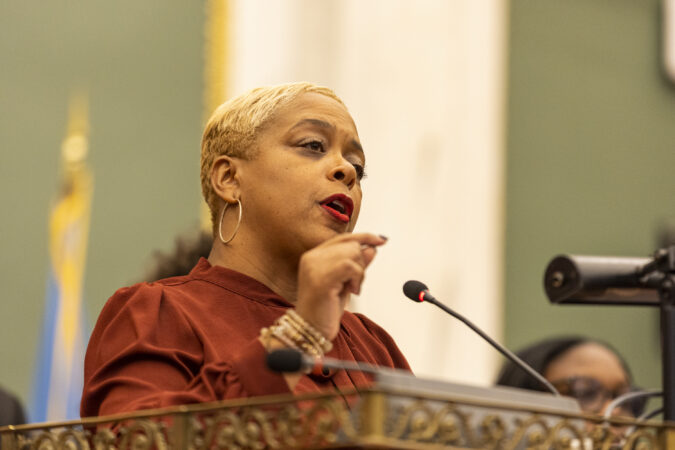
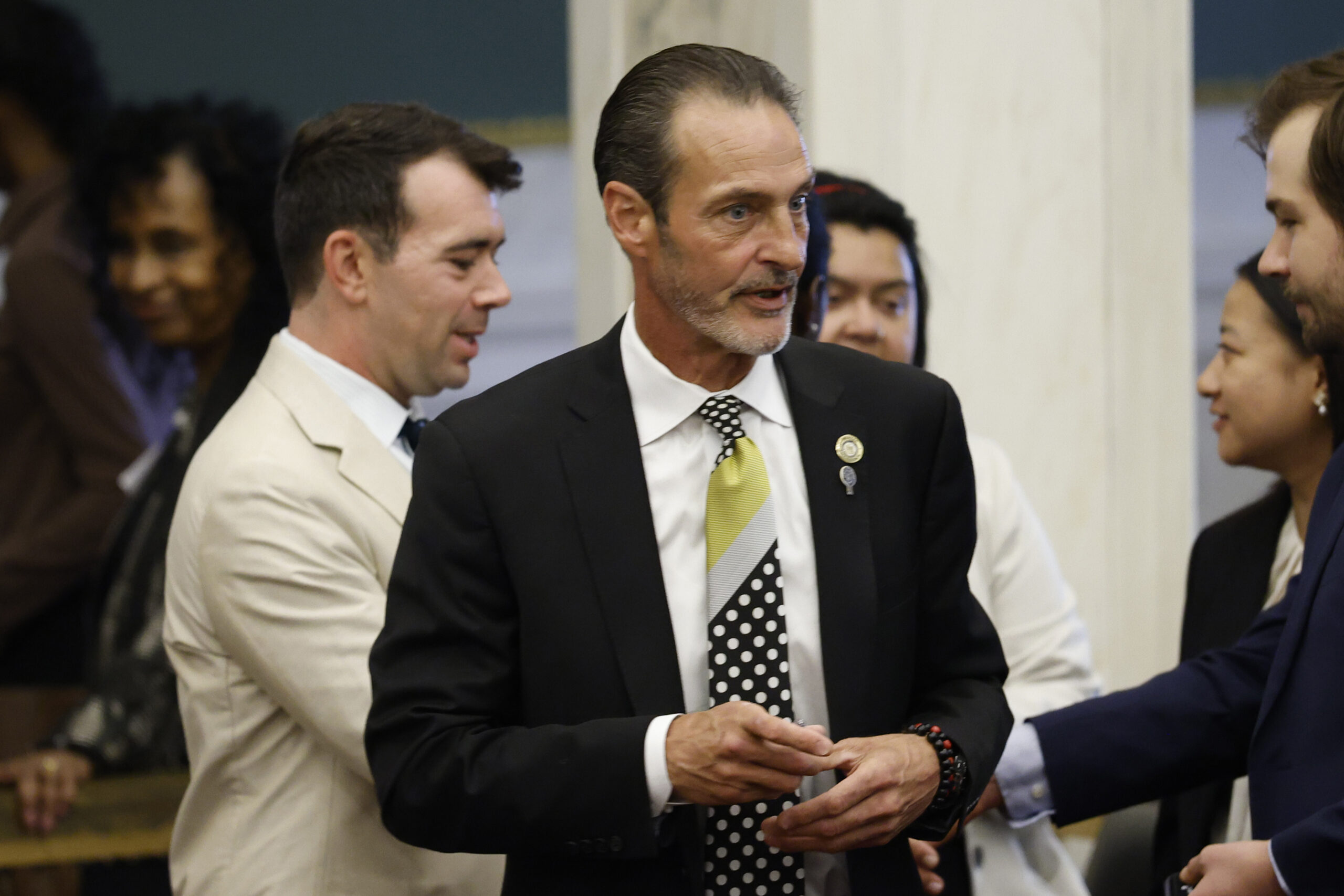
    Councilmember Jim Harrity in Council Chambers in September 2025.

    That was Councilmember Jim Harrity, an Irish Catholic who in a speech Thursday honored the sacrifices made during the Muslim holy month of Ramadan.

  • Is AI’s authoritarianism a bigger threat than Trump’s?

    Is AI’s authoritarianism a bigger threat than Trump’s?

    Like every other beleaguered top editor in a big-city newsroom these days, Chris Quinn — who leads Cleveland.com and the print Plain Dealer — has to deal with assaults from all sides.

    In March 2024, Quinn briefly became a darling of the online left (not easy for a journalist to pull off these days) with a bold manifesto for how Cleveland.com would deal with one of those many threats: An authoritarian president who despises a free press.

    “We tell the truth, even when it offends some of the people who pay us for information,” Quinn wrote that fateful spring in his “Letter From the Editor” column. “The truth is that Donald Trump undermined faith in our elections in his false bid to retain the presidency. He sparked an insurrection intended to overthrow our government and keep himself in power. No president in our history has done worse.”

    Less than two years later, Quinn has gone viral again. But this time, instead of resisting a powerful force aiming to upend American life as we’ve known it, he’s embracing one: The power of artificial intelligence to transform the workplace … and just about everything else.

    Quinn has said that steep job cuts (more on those later) have left just a skeleton crew covering Cleveland’s far-flung exurban counties, and using an AI tool to write stories based on the downsized staff’s reporting will result in more articles about these potential news deserts. When an anonymous college journalism student withdrew her application to Cleveland.com because she said she couldn’t work in a newsroom using AI to perform what was once a human task, the editor went off in his column.

    “Journalism programs are decades behind,” wrote Quinn in arguing that technology is rendering such degrees as worthless. “Many graduating students have unrealistic expectations. They imagine themselves as long-form magazine storytellers, chasing a romanticized version of journalism that largely never existed.”

    Seriously, how dare those young whippersnappers dream of creating beauty in their lives, instead of welcoming their new robot overlords and embracing their future as a cog in a faceless news machine?

    But the dilemma facing Cleveland, Quinn, and the Unknown Job Applicant is the crisis that’s been thrust in the face of all Americans as the brutal winter of 2026 slowly melts into spring, and, it seems, a reality we’re truly not ready to confront — not practically, nor politically, nor morally.

    People forget, but there was a brief moment in the mid-to-late 1990s when the internet was dismissed as a fad — clunky to use (remember dial-up?) and its abilities overhyped by Silicon Valley. But the internet radically changed how we live, as did the arrival of smartphones in the 2000s — not always for good. Yet, these seem like the warm-up acts for the life-altering conniptions caused by omnipresent AI.

    Suddenly, there’s been a flood of essays trying to warn us that whatever one initially thought about programs like ChatGPT — and, yes, AI is still prone to “hallucinations” and other embarrassing errors — we need to adjust to the news that a new generation of AI tools is much more powerful, and better poised to replace many jobs.

    “I am no longer needed for the actual technical work of my job,” an AI executive named Matt Shumer wrote in the most viral of these hot takes, titled “Something Big Is Happening.”

    In describing how new AI programs rolled out by Anthropic, maker of Claude, and ChatGPT’s parent OpenAI can now perform complex coding tasks from the most simple instructions, Shumer warned the earthquake is coming to “[l]aw, finance, medicine, accounting, consulting, writing, design, analysis, customer service. Not in ten years. The people building these systems say one to five years. Some say less.”

    This jibes with dire predictions from Anthropic’s CEO Dario Amodei, who has warned repeatedly of “painful” white-collar job losses caused by AI, and said in his most recent long-form essay that the new technologies are “acting as a ‘general labor substitute for humans.’”

    Is that bad? It sounds bad.

    The sweeping changes in the labor market are already starting, including a sharp drop in entry-level hiring for coders, who seem to be the canaries in this coal mine. January was the worst month for layoffs since the Great Recession of 2009, and analysts say job losses directly attributable to replacement by AI were a significant slice of that. The idea that wiping out millions of jobs might be bad for the overall economy even caught the ADD-addled attention of Wall Street for a day or two.

    I don’t have space here to go deep on the technology, but everyone should take a moment to learn what “vibe coding” and “agentic AI” are, and read the New Yorker on the rise of Anthropic’s Claude, or listen to a really good podcast explanation of AI and the labor market from the New York Times’ Kevin Roose. But we’re already overdue in addressing what this all means for everyday human existence.

    The idea that eventually “everything you think, do, and say is in the pill you took today” — as Zager and Evans sang so presciently in their 1969 No. 1 smash, “In the Year 2525” — has been with us for decades. But there was also a sense that robots performing the worst drudgery of the workplace might be liberating, creating more leisure time and space for human creativity.

    So far, that’s not what’s happening. Avoiding the poverty and deprivation that would be caused by massive job losses would require a government willing to pay people a universal basic income (UBI), but the current government has instead been dismantling the existing welfare state. And the workers creating AI are sleeping in their cubicles.

    And creativity may become a fever dream, not just for that naive journalism student with her “romanticized” visions of telling stories. Did you read the Times profile of the romance novelist who’s relying on Claude to crank out new tomes in as little as 45 minutes? Did you watch the lifelike short movie of an AI-generated “Brad Pitt” fighting “Tom Cruise”?

    Let me get this straight. AI is taking our jobs and ending artistic struggle to liberate us … for what, exactly?

    I haven’t even discussed the other really bad things about AI, including the drain on electricity from massive data centers likely to unleash yet another form of tyranny, unbridled climate change, and the death of critical thinking as reliance on AI decimates the classroom. At a moment when we’re just coming to terms with the downside of smartphones — such as higher rates of anxiety and depression among teenagers — could we learn to avoid similar mistakes with AI before they start?

    And did I mention the whole “robots take over the world” scenario?

    Dealing with all this would take political will. Yet, leaders in both parties — Trump, for sure, but also top Democrats like Josh Shapiro and Gavin Newsom — have embraced the data center and AI ambitions of their donor class, even though the majority of their voters want strict regulation. A pro-AI super-PAC raised $125 million last year to buy the midterm elections. Who is fighting for the about-to-be-starving artists?

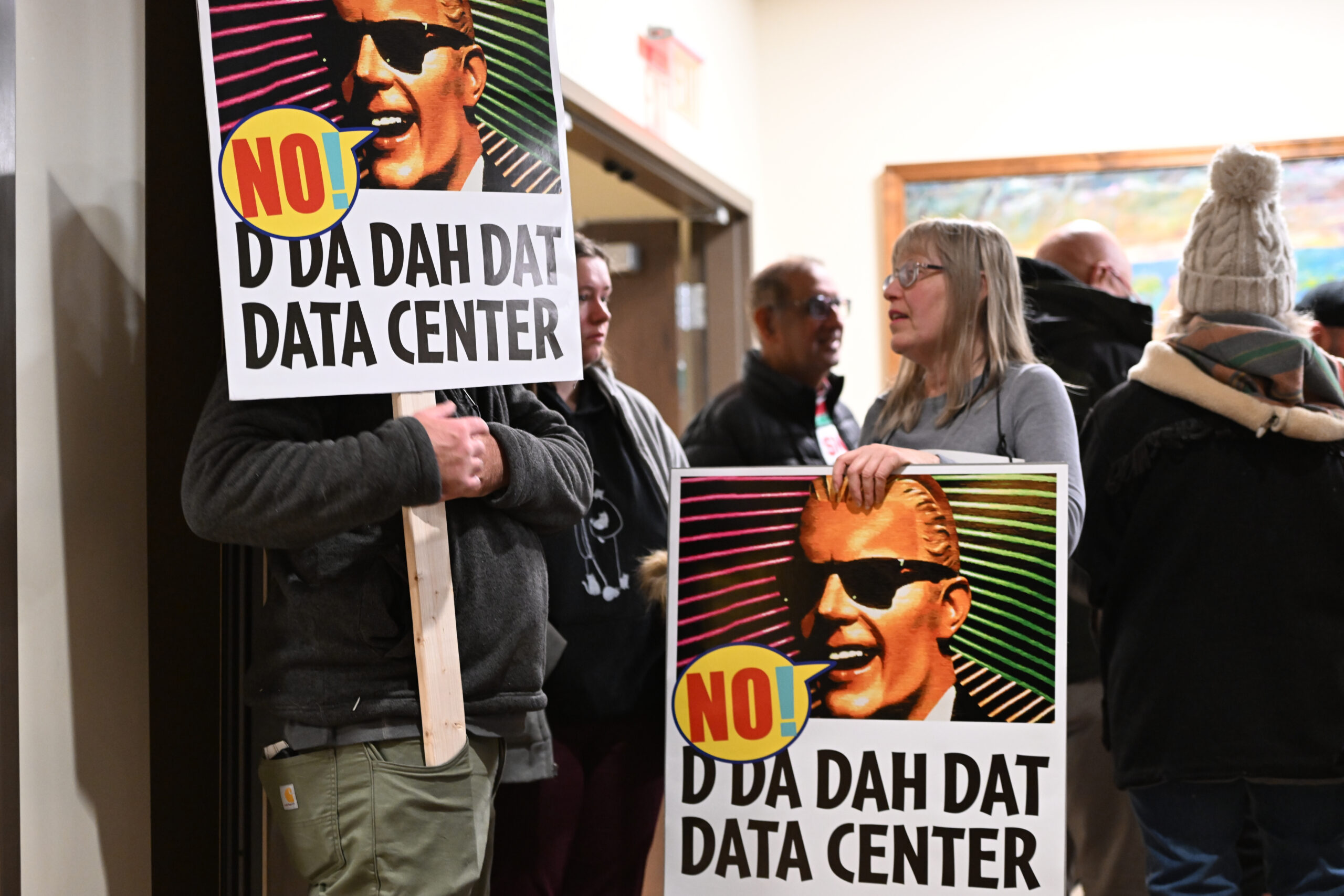
    People opposed to a data center proposal at the former Pennhurst state hospital grounds talk during a break in an East Vincent Township supervisors meeting in December in Spring City, Pa.

    It doesn’t have to be like this. The same better-late-than-never push to remove smartphones from classrooms can be used as a model for eradicating AI in K-12 schools as well as college, to give the next generation at least a fighting chance to learn to think for itself. The politicians don’t have to allow data centers that burn fossil fuels instead of clean energy and consume the lion’s share of water available to the communities where they’re located.

    Nor do we need to embrace the late-stage capitalist ethos that if shareholders make more money employing robots than human beings, some invisible law forces us to do this. Remember Chris Quinn back in Cleveland? The reason he feels he needs AI to write up the news is because, back in 2019, he oversaw the layoff of one-third of his unionized newsroom, at the behest of the paper’s corporate parent.

    Maybe robots are now “agentic,” but humans have always had agency. Here’s the perfect chance to use it: by encouraging the uses of AI that will be good for society — diagnosing sick patients and inventing medicines to cure them, for example — but regulating or banning the aspects of AI that will make life worse.

    That’s partly up to the politicians, but it’s also up to us. Societal trends like the outbreak of “neighborism” — strangers forming new community bonds to beat back the fascism of immigration raids — or a rise in union membership are healthy signs that Americans are finally getting tired of technology driving us apart.

    The fight against the authoritarianism of unchecked and often unwanted AI is the battle of the 21st century that will be waged long after the fight against political authoritarianism in Trump’s United States and elsewhere has been won.