Tag: topic-link-auto

  • La Salle eliminated from A-10 quarterfinals with 70-51 loss to Richmond

    La Salle eliminated from A-10 quarterfinals with 70-51 loss to Richmond

    La Salle limited Maggie Doogan to 13 points, but Richmond still routed the Explorers, 70-51, in the quarterfinals of the Atlantic 10 tournament at the Henrico Sports & Events center in Glen Allen, Va. on Friday.

    Doogan, the back-to-back A-10 Player of the Year and former Cardinal O’Hara graduate, rested during the fourth quarter. The third-seeded Spiders (26-6, 15-3 A-10) will face second-seeded George Mason in the tournament semifinal on Saturday.

    Ashleigh Connor led La Salle (18-13, 10-8) with 18 points and five rebounds on 6-of-14 shooting. Aryss Macktoon added 13 points and 13 rebounds, while Joan Quinn scored 12.

    Doogan led the Spiders with 13 points and eight rebounds and five assists in 28 minutes.

    Cardinal O’Hara graduate Maggie Doogan scored 13 points to help Richmond oust La Salle out of the A-10 conference tournament.

    Barring an invitation to a secondary postseason tournament, La Salle’s season ended with its loss on Friday.

    The Explorers won 18 games in 2025-26, the most in head coach Mountain MacGillivray‘s eight seasons as head coach. It is the most wins for the Explorers since a 19-win campaign in 2006-07.

  • Maxx Crosby heading to Ravens, who send two first-round draft picks to Raiders, AP sources say

    Maxx Crosby heading to Ravens, who send two first-round draft picks to Raiders, AP sources say

    Five-time Pro Bowl edge rusher Maxx Crosby is heading to the Baltimore Ravens, two people with knowledge of the trade told The Associated Press on Friday night.

    Both people spoke on condition of anonymity because the deal can’t be announced until the NFL’s new year starts next week.

    The Las Vegas Raiders will receive two first-round picks from the Ravens, including the No. 14 overall pick in next month’s NFL draft, one of the people said.

    The 28-year-old Crosby had 10 sacks last season and has reached double digits four times in his seven seasons.

  • A lot of orchestras play a lot of Mahler but the Philadelphians do it with a high-energy symphonic precision

    A lot of orchestras play a lot of Mahler but the Philadelphians do it with a high-energy symphonic precision

    Symphonic circles look like ongoing constant Mahler festivals these days, but Philadelphia Orchestra’s music-artistic director Yannick Nézet-Séguin somehow leaves you wanting more.

    This weekend’s performances of Mahler’s Symphony No. 2 (“Resurrection”) opened on Friday at Marian Anderson Hall with a well-deserved vociferous audience response to what felt like a very special occasion, whether or not it actually was.

    A member of the Philadelphia Orchestra plays the harp during the performance of Mahler’s Symphony No. 2 at The Kimmel Center on Friday, March 6, 2026, in Philadelphia.

    The Philadelphia Orchestra’s standing is such that Tuesday’s repeat performance at the Mahler-glutted Carnegie Hall had all of six unsold seats as of Friday.

    The laborious Mahler performances of decades past have given way to ones that discover hidden worlds that can be investigated without the symphonic whole lapsing into grandiose incoherence. Not so on Friday.

    The incisive, explosive five-movement 80-minute “Resurrection” symphony—a large orchestra, a competing offstage band, two vocal soloists pondering our existence plus the Philadelphia Symphonic Choir supplying grandeur—had a vast but particularly specific range of expression on Friday.

    Yannick Nézet-Séguin conducts the Philadelphia Orchestra’s performance of Mahler’s Symphony No. 2 at The Kimmel Center on Friday, March 6, 2026, in Philadelphia.

    While some conductors slow down to spotlight specific points, Nézet-Séguin was inclined to accelerate; not to be a speed demon but to suggest that this was Mahler “off his meds.” Nothing conveys emotional extremes like high-energy symphonic precision.

    Apocalyptic moments are expected in the violently contrasting sonorities and gestures of the first movement. However, the dance-based second and third movements had their landmine that, in this performance, never allowed moments of gentility and repose to rest easy.

    Mezzo-Soprano Joyce Didonato performs a solo during the Philadelphia Orchestra’s performance of Mahler’s Symphony No. 2 at The Kimmel Center on Friday, March 6, 2026, in Philadelphia.

    In the spare depths of the fourth “Primal Light” movement, mezzo-soprano Joyce DiDonato didn’t just convey profundity, but lived it.

    Though the multisection fifth movement is sometimes framed by soaring solo soprano writing (so well sung by Ying Fang), the words included by Mahler can put the symphony’s many moving parts in perspective.

    For me, in this performance, it was “You were not born for nothing!” This has special poignancy for a composer who had boyhood aspirations to become a martyr. Not a sign of great self value. Is this a to-be-or-not-to-be symphony? With all questions answered with affirmation in fortissimo?

    Soprano Ying Fang performs a solo during the Philadelphia Orchestra’s performance of Mahler’s Symphony No. 2 at The Kimmel Center on Friday, March 6, 2026, in Philadelphia.

    The four previous movements teetering on so many different edges, the symphony was a litany of the joys and horrors of existence; which one can’t help contemplating amid current global power struggles.

    Just for fun: One point of reference was the Mahler 2nd finale that Nézet-Séguin recorded for the Leonard Bernstein biopic Maestro: It’s more imposing but with no sense of triumph over anguish. It was Mahler “on his meds.”

    Good for the film. Not for me. I’m a no-meds Mahlerite.

    “The Mahler Symphony No. 2″ will be repeated 8 p.m. Saturday and 2 p.m. Sunday at the Kimmel Center. $77-$252. philorch.ensembleartsphilly.org

  • Blizzard conditions were confirmed at the Jersey Shore and southern Delaware

    Blizzard conditions were confirmed at the Jersey Shore and southern Delaware

    Philadelphia and environs didn’t quite make the grade, but areas along the Jersey Shore and in southern Delaware did experience blizzard conditions early on the morning of Feb. 23, the National Weather Service reported Friday.

    Blizzard criteria — sustained winds or frequent gusts to 35 mph, with falling and/or blowing snow reducing visibility to less than a quarter mile for three or more continuous hours — were met along about a 20- to 25-mile-wide corridor in New Jersey from Monmouth to Cape May, said Alex Staarmann, a meteorologist in the Mount Holly office who was part of the investigative team.

    Those conditions also were observed in Sussex County, Del.

    In addition to direct instrument observations, Staarmann said, the weather service relied on available visual evidence from photographs and videos. “They’re an element of analysis as well,” he said.

    As for why Philadelphia came up short, Staarmann said “the visibility certainly was low enough at times, but the winds weren’t quite as strong as we were forecasting farther inland.”

    Among the locations where blizzard conditions were preliminarily confirmed were the extreme eastern portion of Burlington County, Atlantic City, Long Beach Island, and all the resort towns in Cape May County.

    The weather service had posted a blizzard warning for the entire state of New Jersey, all of Delaware, and for Philly, Delaware County, and nearby portions of Bucks, Chester, and Montgomery Counties.

    However, conditions were not quite so extreme to the north and west of the city, nor were the snow totals quite so robust.

    Blizzard or not, by any other name it was a disruptive storm that generated 20 inches of snow in parts of the region, and 14 inches at Philadelphia International Airport, No. 16 on the all-time snow list that dates to the winter of 1884-85.

  • Ingredients in a product that leaked into a Chester County stream are toxic to aquatic life, officials say

    Ingredients in a product that leaked into a Chester County stream are toxic to aquatic life, officials say

    The individual ingredients that make up the final product of a “milky white” substance that leaked into a Chester County creek last week are toxic to aquatic life, killing fish, eels, and worms, the Pennsylvania Department of Environmental Protection said.

    But county health officials said the materials released into the creek are not known to have acute or chronic human health risks. The department still advised people and pets to avoid “affected areas of Goose Creek to reduce impacts on the ongoing cleanup efforts.”

    The leak, which was discovered after several people called West Chester officials about “noticeable pollution” in Goose Creek, was plugged last Saturday. It stemmed from Atmos Technologies, at 216 Garfield Ave. in West Goshen Township, near Henderson High School. It is unclear how long the outfall pipe had been leaking before people reported it.

    Atmos Technologies told the state agency chlorinated water was released to a containment area, mixing with a manufactured product known as “Long Duration Foam AC-645,” forming a foaming agent, DEP officials said last week. The county’s health department said 4,000 gallons of the mixture was released.

    Since its discovery, DEP staff have visited Goose Creek, most recently on Wednesday, and observed cleanup efforts at Atmos and along Goose Creek. The creek was clear Wednesday, with some foam accumulation present on debris, said Robyn Briggs, a spokesperson for DEP. The outfall pipe remained plugged, she said.

    People had reported a fish kill — the mass death of fish due to pollution or environmental stress — but as of Thursday, no dead fish had been seen at the end of DEP’s tracing area.

    West Goshen and West Chester officials said last week that Atmos Technologies could face fines for the leak. The company said in a statement last week that the chemical is nontoxic and used in environmental cleanups.

    “The material breaks down naturally and is not expected to have any long-term impact on local wildlife or the ecosystem,” the company wrote.

    This suburban content is produced with support from the Leslie Miller and Richard Worley Foundation and The Lenfest Institute for Journalism. Editorial content is created independently of the project donors. Gifts to support The Inquirer’s high-impact journalism can be made at inquirer.com/donate. A list of Lenfest Institute donors can be found at lenfestinstitute.org/supporters.

  • Clocks spring forward Sunday, but the sun may be setting on year-round daylight saving time

    Clocks spring forward Sunday, but the sun may be setting on year-round daylight saving time

    Coinciding with the expected behavior of the atmosphere over Philly, the clocks are taking a major leap into spring this weekend, this time around as early as it ever happens.

    On Sunday the clocks will skip right over 2 a.m. and proceed to 3 a.m. as daylight saving time begins and will continue through Nov. 1.

    The sun won’t set before 7 p.m. until Sept. 22.

    Congratulations to those who prefer eating dinner before dark or savoring an extra dose of daylight after work. If you dread being shorted an hour on a precious weekend and hold that DST actually stands for “delayed sunrise time,” we offer a modest consolation prize.

    The sun appears to be setting on the all-DST-all-the-time movement.

    Recall that the U.S. Senate unanimously (at least technically) passed the 2022 iteration of the Sunshine Protection Act that would have ditched the switch and installed daylight saving time as the year-round system. U.S. Rep. Brendan Boyle (D., Pa.) said at the time “the idea definitely has legs,” and isn’t that what they said about the Eagles’ offense?

    It’s as if the campaign has gone back to bed.

    The 2022 bill’s sponsor, Marco Rubio, at the time a senator representing the Sunshine State, is now the secretary of state and appears to have bigger fish to fry. His immediate supervisor, President Donald Trump, who at different times advocated for year-round standard and year-round DST, has lost interest.

    So, evidently, have legions of state lawmakers around the country.

    The number of bills calling for year-round daylight saving time has dropped dramatically, and this year they are far outnumbered by bills advocating year-round standard time, based on a survey of data compiled by the National Conference of State Legislatures.

    That said, the discussion may never die. The Sunshine Protection Act was reintroduced in the Senate last year. Sen. Rick Scott (R., Fla.) says he’s giving it another shot. But expect 100% chance that clocks go back in the fall; the bill remains in committee.

    Daylight saving time advocates have pointed to the recreational and other benefits of later sunsets, and those will become ever more evident during the next several weeks. Conversely, any number of health organizations warn of the dangers caused by sleep disruption, exacerbated by a certain longitudinal inequity.

    To honor a day that so many look forward to, and so many others dread, we offer a few numbers for consideration, starting with a visit to Marquette, Mich.

    79: Minutes of difference in sunrise times

    Sunrise Monday in Marquette doesn’t occur until 8:11 a.m., compared with 6:52 a.m. in Lubec, Maine. That is a 79-minute difference — in the same time zone. Lubec is on the shores of the Atlantic. Marquette is on the shores of Lake Superior in Michigan’s Upper Peninsula.

    In Marquette, the sun’s reluctance to get out of bed may be understandable. The city already has had close to 210 inches of snow (about 10 Philly winters’ worth) this season. “Even by our standards, this has been a pretty remarkable winter,” said Chris Burling, a meteorologist with the National Weather Service in Marquette.

    As with the snow, the locals appear to accept the late sunrises with a measure of equanimity. “I think there’s some grumbling for a couple days,” said Burling, “but otherwise, it’s just …that’s how it is.”

    Sleep experts advise that people in the westerly longitudes of time zones stand to suffer more than their counterparts to the east. In Marquette, twilight won’t end until close to 10:30 p.m. around the summer solstice. That can be disruptive to bodily sleep rhythms, experts say, by depriving bodies of melatonin, the sleep hormone that the body produces in the dark.

    The Michigan legislature is among those that have considered a bill for year-round standard time. Federal law permits states to go all-standard, but all-daylight saving time would require Congress to pass a law to allow it.

    800: Pro-daylight saving time bills

    Eight hundred bills have been introduced in state legislatures since 2005 to enact year-round daylight saving time, according to Tom Klein, policy associate with the legislatures conference.

    93: Time-change bills in 2025

    There were 93 bills introduced in 2025 in favor of either year-round Daylight Saving Time or standard time.

    35: States

    Thirty-five states considered such bills in 2025, about evenly split between all-DST and all-standard, by the conference’s count.

    21: Bills this year

    In 2026, 21 bills are under consideration, with 16 calling for year-round standard time and five favoring all-Daylight Saving Time.

    1,454: Days

    It’s been 1,454 days since the U.S. Senate approved the Sunshine Protection Act.

    294: Days

    The nation’s last experiment with year-round daylight saving time, in 1974, survived only 294 days,

    238: Days

    Just 238 days until we fall backward again. Incidentally, since Daylight Saving Time begins on the second Sunday in March, this is the earliest it could happen. Nov. 1 is the earliest possible starting date for standard time.

    Innumerable

    Projected number of days before the clock-switch debate ends.

  • Veterans advise Jean Cabrera to bulk up; could Garrett Stubbs be the Phillies’ 26th man?

    Veterans advise Jean Cabrera to bulk up; could Garrett Stubbs be the Phillies’ 26th man?

    BRADENTON, Fla. — Friday’s game was more about depth within the Phillies’ system than anything else. It mostly was minor leaguers who made the trip for a 14-10 win over the Pittsburgh Pirates.

    Prospect Jean Cabrera made the start and pitched 2⅓ innings. He allowed one run on two hits with one walk and three strikeouts.

    He said afterward that he’d benefited from being around veterans in big league camp like José Alvarado, Cristopher Sánchez and Jesús Luzardo.

    When asked what he’s learned from them, Cabrera said they gave him some advice.

    “First and foremost, they tell me to add some weight,” the 6-foot, 145-pound Cabrera said with a laugh. “They think that I would benefit from that, to be ready and be healthy for 30 starts in the big leagues. Two hundred-plus innings, who doesn’t want that?”

    A few relievers who are competing for bullpen spots, like Seth Johnson, Nolan Hoffman, and Lou Trivino, also made appearances on Friday.

    Otto Kemp had another strong day offensively, going 1-for-3 with a double and a bases-loaded walk. Catcher Rafael Marchán also had a good day at the plate, going 2-for-3 with four RBIs and a walk.

    Phillies catcher Rafael Marchán watches his three-run double against the Pirates on Friday in Bradenton, Fla.

    Catcher competition

    Marchán, who started behind the plate against the Pirates on Friday, is competing with Garrett Stubbs for a backup catcher spot.

    Manager Rob Thomson said he was looking for who performs the best at the position.

    “Marchán is a little bit younger,” he said. “He’s a switch-hitter. They both understand the role and play the role extremely well. And they both can catch and throw.

    “Marchán has swung the bat very well, as has Stubby during this spring. So it’s going to be a tough call when we come down to the end.

    “But we are getting Stubby some infield work, some outfield work. There’s nothing that says he couldn’t be the 26th man and we carry three catchers.”

    On deck

    The Phillies play the Toronto Blue Jays at 1:05 p.m. Saturday at BayCare Ballpark. The game will be livestreamed on MLB.com and broadcast on 94.1 WIP.

  • Advocates call on Gov. Josh Shapiro to close a Berks County youth center that holds immigrant children

    Advocates call on Gov. Josh Shapiro to close a Berks County youth center that holds immigrant children

    Youth- and immigrant-rights allies called on Gov. Josh Shapiro Wednesday to immediately remove children from a Berks County center that they said harms those held there, including migrant kids who arrived at the U.S. border unaccompanied by parents.

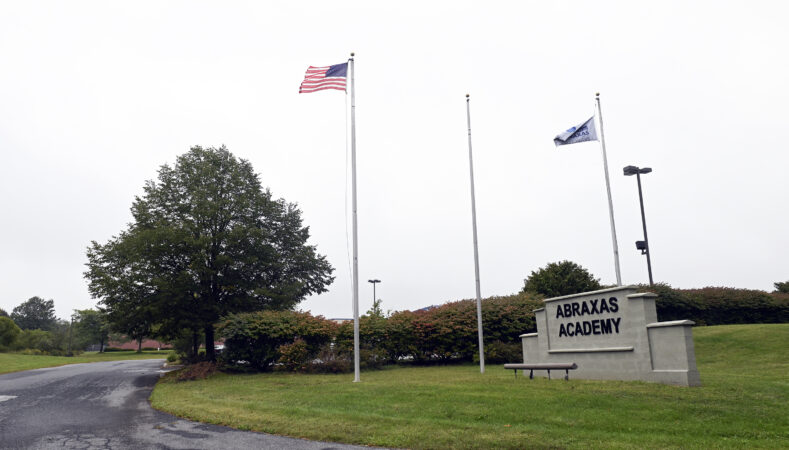
    Speakers at an afternoon news conference held near the Abraxas Academy in Morgantown, Pa., asked the governor to issue an emergency removal order ― typically enforced to protect children in imminent danger of physical or emotional abuse.

    “Pennsylvania cannot continue to expose these kids to Abraxas’s abuse,” said Evan Feldberg-Bannatyne, an organizer with the youth-advocacy group Care, Not Control. “We need an ERO now.”

    The Shapiro administration said Wednesday that the Department of Human Services will continue to closely monitor the situation to determine next steps and ensure the safety of those living there.

    If DHS were to issue an ERO, it would not take custody of the young people or direct their placement. Instead, Abraxas would need to notify the federal government for immigrant youths, or the state court for Pennsylvania residents, to find other placements. DHS would monitor the wind-down of operations, which can take time, the administration said.

    “The department’s top priority is ensuring the safety of youth in the facilities we license, and it is concerning whenever we receive a report or allegation that a young person was put at risk,” said DHS spokesperson Brandon Cwalina. “When that happens, the Shapiro administration works urgently to ensure that any allegations and potential violations are investigated and handled.”

    Pittsburgh-based Abraxas Youth and Family Services said in a statement Friday that it was “aware of the concerns raised regarding Abraxas Academy in Morgantown,” and that “the safety and well-being of those in our care is our highest priority, and we take any allegation or concern seriously.”

    “Programs like Abraxas Academy operate within a regulated system with established standards for care and accountability that are in alignment with our state and federal partners and their regulations,” the statement said. “We are committed to meeting those expectations and upholding the responsibilities entrusted to us by families and government.”

    The agency website describes the Abraxas Academy as providing secure residential treatment and detention for male young people, ages 14 to 19, who face serious charges or have demonstrated delinquent patterns through multiple placements.

    Since October, the federal Office of Refugee Resettlement, which is responsible for “unaccompanied minors,” the migrant children who arrive at the border without parents, has held some teenage boys at the center, which has a documented history of staff physically and sexually abusing juvenile offenders, a Washington Post investigation found.

    ORR awarded $9 million to Abraxas Alliance in August to hold up to 30 young immigrants who had been deemed a danger to themselves or others. At times, The Post reported, between five and eight teenage boys have been held inside a dedicated wing of the center, sleeping inside locked rooms the size of walk-in closets.

    State inspectors documented at least 15 incidents since 2013 in which they said staff physically mistreated minors at the facility, which mainly holds juveniles facing or convicted of criminal offenses, The Post reported. In at least two incidents, officials documented allegations of staff sexually harassing or sexually abusing young residents, the newspaper reported.

    After some incidents, Abraxas suspended or fired staff members and submitted correction plans to state regulators, The Post said.

    DHS’s Cwalina noted that in November, the department revoked the license for Abraxas Academy’s Secure Detention Unit. Immigrant youths are not held there. Abraxas appealed and continues to operate the unit while the appeal goes forward.

    Abraxas has two other licenses that remain in place, subject to periodic, unannounced inspections. The DHS Office of Children, Youth, and Families is on site weekly — including today — to monitor the center’s operations, he said.

    “We do not want detention centers in our state,” said Jasmine Rivera, executive director of the Philadelphia-based Pennsylvania Immigration Coalition. “We fight for the closure of immigrant detention. Our communities do not need more cages.”

    Detention is particularly disturbing, she said, when it extends to children who have come to this country seeking shelter and safety.

    By law, ORR must provide care for unaccompanied children, defined as those who have no legal immigration status, have not yet turned 18, and have no parent or guardian in the United States. ORR says it tries to find sponsors, most often a close relative in this country, and in the meantime provides care at one of nearly 200 facilities.

    However, a 2025 rule change now allows ORR to consider a potential sponsor’s immigration status, and to share that information with enforcement agencies. The Immigrant Legal Resource Center in San Francisco says that discourages undocumented family members from becoming sponsors, leaving children in government custody longer and hurting their well-being.

    “It is immoral and unimaginable that in our backyard, children are being held in such violence and unsafe conditions,” said Gaby Lopez, lead organizer in Reading for Make The Road, which works to help immigrants. “Children need to be with their loved ones.”

    The United States needs an immigration system that welcomes those who come here to share their talents and be part of the American story, she said, not one that replicates the violence they experienced in their homelands.

    “Gov. Shapiro,” she said, “Issue an emergency removal order now, and protect families across Pennsylvania now.”

  • Davidson ousts St. Joe’s from the A-10 Tournament with 64-59 victory

    Davidson ousts St. Joe’s from the A-10 Tournament with 64-59 victory

    Davidson held off St. Joseph’s for a 64-59 victory in an Atlantic 10 Conference quarterfinal on Friday in Henrico, Va.

    St. Joe’s leading scorer, guard Gabby Casey, was limited to five points on 2-of-12 shooting. Aleah Snead led the Hawks with 23 points on 9-of-11 shooting. Forward Faith Stinson added 14 points and eight rebounds. Davidson forced 19 St. Joe’s turnovers and limited the Hawks (20-11, 11-5) to just two made threes.

    Two free throws by Snead cut Davidson’s lead to 60-59 with 27 seconds left. The Hawks forced a turnover on the next possession, giving them a chance to take the lead. St. Joe’s turned to Snead, who took the ball off a screen and drove to the basket, but she collided with a Davidson defender and was called for a charge. The Wildcats made both free throws to help stave off the Hawks.

    St. Joe’s will now wait and see if it earns an invitation to the Women’s National Invitation Tournament or Women’s Basketball Invitation Tournament.

  • Acquiring David Jiříček is the latest example of the Flyers’ unorthodox approach to rebuilding. It’s worth the risk.

    Acquiring David Jiříček is the latest example of the Flyers’ unorthodox approach to rebuilding. It’s worth the risk.

    With one trade Friday morning, the Flyers got more interesting. Not immediately. They’re still likely to miss the playoffs this season, which would be the sixth in a row that they’ve failed to qualify for the postseason. For all that time and longer, they’ve been the NHL’s version of late-career Martin Scorsese: Back in the day, they were great and fascinating, and now they’re one suspenseless snoozefest after another. (Seriously, has Killers of the Flower Moon ended yet?)

    Their decision to send winger Bobby Brink to the Minnesota Wild for defenseman David Jiříček was an eyebrow-raiser, though. The move in and of itself wasn’t all that surprising, in that the Flyers have a surplus of wingers both on their roster and in their farm system. They were bound to say goodbye to one of them at this trade deadline, and Brink was a prime candidate: At 24, he’s a relatively promising player on a cap-friendly contract.

    No, the intrigue of the Brink trade comes from its context. It’s the latest thread in a larger pattern that general manager Danny Brière and team president Keith Jones have been weaving since they took control of the Flyers’ player-personnel department in 2023. Rather than having the team bottom out over a full season or two and ending up with a pick or picks that are at worst among the top five in their drafts, the Flyers are taking risks, some more calculated than others, by acquiring young players who were high draft picks for other clubs.

    They did it with Jamie Drysdale, whom the Anaheim Ducks had picked sixth in 2020 before trading him to the Flyers for Cutter Gauthier in January of 2024. They did it with Trevor Zegras — another Ducks draftee, ninth overall in 2019 — when they got him last offseason for Ryan Poehling and two draft picks. They did something similar in 2023 when they drafted Matvei Michkov, who fell to them at No. 7 in part because of worries among NHL clubs that he wouldn’t be leaving Russia for three years, if he was able to leave at all.

    Now they’ve done it with Jiříček. Drafted sixth overall in 2022 by the Columbus Blue Jackets, he reportedly was unhappy that the Blue Jackets thought he needed to spend time in the minors. They shipped him to Minnesota in November 2024; there, he bounced between the Wild and its farm team until Friday.

    Flyers forward Trevor Zegras has been a shrewd addition after struggling the past two seasons in Anaheim.

    At first glance, that’s not an especially appealing player profile: a high draft pick who has been traded twice before his 23rd birthday, once because he was malcontented, once because he couldn’t stick on an NHL roster. And it’s generally acknowledged that Jiříček’s skating has to improve substantially. Still, he is just 22, and he is 6-foot-4 and rugged, and he has a booming slap shot. There are tools there, and there is still time for him to mature into the player he was projected to be.

    The Flyers are attempting a daring bit of raindrop-dodging here. They haven’t tanked. They don’t want to tank. They believe it would be corrosive to the franchise as a whole and to the locker room in particular (and it certainly would be to their ticket-sales department). So they are banking — and a team source confirmed Friday that this element was part of their approach — that head coach Rick Tocchet, his staff, and the other power people in the organization can cultivate a strong enough culture that Drysdale, Zegras, Jiříček, and players like them can develop and thrive here even though they didn’t elsewhere.

    Michkov is again an instructive example in this regard. After entering the season out of shape and seeing Tocchet limit his ice time, he has been a better player since the Olympic break. The fears within the fan base that Tocchet was angering or alienating him have quelled, and Tocchet’s strategy for handling the most important player on the roster seems to be working, for the time being anyway.

    Drysdale hasn’t been the same caliber of player that Gauthier has been — someday, someone will get the full story on why the relationship between the Flyers and Gauthier deteriorated to the point that they felt they had to trade him — but he has come a long way and is just 23. Zegras, 24, has been an excellent addition so far. The Flyers are in need of two major components of a Stanley Cup-contending team — a No. 1 center and a No. 1 defenseman — and Jiříček’s pedigree suggests that he can one day be a top-tier defenseman, assuming a team can figure out how to get the best out of him.

    He may or may not become that kind of player. Whether he does or doesn’t isn’t really the point. The point is that the only way the Flyers are going to return to respectability again is by taking some chances and having those gambles pay off. They’re past playing it safe. They might end up exactly where they are now or in even worse shape, but at least they’ve stepped into the casino.

    Danny Brière has taken an unconventional and risky path to rebuilding. Time will tell if it pays off.