Tag: topic-link-auto

  • Q&A: Flyers prospect Oliver Bonk discusses his injury, introduction to pro hockey, and more

    Q&A: Flyers prospect Oliver Bonk discusses his injury, introduction to pro hockey, and more

    Summary


    During the recent Olympic break, the Flyers called up a few youngsters to fill out their roster for a series of practices.

    One of those players was top defensive prospect Oliver Bonk, who is finally settling in with Lehigh Valley after an upper-body injury cost him all of training camp and delayed the start of his pro career until mid-December. The Inquirer caught up with Bonk last Thursday for an interview to discuss his frustrating start to the season, his adaptation to the pro game in the minors, and much more.

    • While Bonk said he was frustrated that his injury prevented him from competing to make the NHL roster, he said, “you can’t dwell on bad stuff” and that he is “just trying to get back up [to the NHL] for me has been the only objective.”
    • Bonk said he takes notes of things that he wants to work on in a journal and then targets two or three things to focus on before and after practices that week until he improves at them.
    • The Flyers defenseman called watching former London teammate and close friend Denver Barkey “awesome,” adding that he’s been “playing unreal” since his call-up to the Flyers.

    More Details


    During the recent Olympic break, the Flyers called up a few youngsters to fill out their roster for a series of practices.

    One of those players was top defensive prospect Oliver Bonk, who is finally settling in with Lehigh Valley after an upper-body injury cost him all of training camp and delayed the start of his pro career until mid-December. The Inquirer caught up with Bonk last Thursday for an interview to discuss his frustrating summer, his adaptation to the pro game in the minors, and much more.

    Q: To start, what has this year been like for you?

    A: Yeah, I mean, it’s been a learning year. Trying to, even after the rehab, trying to learn how to take care of my body better, and learning how to play pro hockey. Learning how to be a good player up there and not just being an average player up there. You want to be the best so you can make it back up [to the NHL]. So I think just learning all about that, how to be a pro, and kind of just learning as I go along.

    Q:Are you someone who prefers to watch tape?

    A: I like watching, especially after games. I like watching the clips. Some guys get focused on what they messed up and keep looking at that, but I just kind of let that go. Everyone’s going to make mistakes. It’s hockey, it’s not a perfect game. It’s never going to be. I’m not striving to be perfect every time I’m out there; just improving every time and making sure I’m making the right [reads] and then not making the same mistakes over again.

    Q: What’s the transition been like for you to the pro game, especially after not playing until early December?

    A: Yeah, it was a tough first 10 games, until I started kind of feeling like fully myself again. So it was definitely a learning curve there. But I think now, I’m kind of back to the way I want to play, and just improving my game every day and feeling good about myself. So it was tough at the start, but I think I’m on a good path right now.

    Oliver Bonk (orange jersey) spent a few days last week practicing with the Flyers during the Olympic break.
    Q: Is there anything you are particularly focused on improving?

    A: There’s a lot. Every week, I kind of try to work on different things, whether it’s closing guys off with speed one week, or it’s hard passes, or it’s hand-eye coordination. Every week’s got something different, which is kind of different than in Junior. You mess around in practice and whatever; you shoot a couple of pucks, and you’re like, ‘Yeah, great.’ So I think it’s a lot different. It makes me excited to come to the rink every day, knowing that every week I’ve got something different planned, and something else to work on. So it’s good.

    Q: You mentioned at development camp in July that you wanted to make the NHL team. How hard was it when the injury happened to reset how the year was going to go?

    A: It’s tough. I thought I had a chance to make the team, and I believed that I could do it. But a setback, and now you’re starting the season off in the AHL — and still a very good league with very good players. So I think it’s just, it happened, and there’s really nothing you can do about it. But just like I said before, you can’t dwell on bad stuff that happens. It’s never going to help you. So I think just trying to get back up here, for me, has been the only objective, and just keep working at that every day.

    Q: Two years ago, you had 67 points in 60 games. Last season, it was 40 in 52. Do you feel like your game has a good balance now?

    A: I still try to work on both [sides of the puck] the most you can. After my draft year, I scored the 24 goals, and then the year after, it kind of slowed down. Our power play didn’t do as well, but we won the [Memorial] Cup, so I must have been doing something well. … People will say whatever they want, and, ‘Oh, you can’t put up points,’ and whatever. But we won and that was the biggest thing for me that year. I didn’t score 20-whatever goals, but we ended up winning the Memorial Cup and the OHL, so I think obviously we must have been doing something right there.

    Q: You have just over 20 games left this season, so what will be your focus?

    A: I think it’s just playing the best I can for the team. Doing the most I can, give them the best effort every night to help us win. And play how I want to play, not just one side of the puck, but be a real 200-foot player that can be versatile and in any situation and stuff like that. So I think that’s the focus for me.

    Everything


    During the recent Olympic break, the Flyers called up a few youngsters to fill out their roster for a series of practices.

    One of those players was top defensive prospect Oliver Bonk, who is finally settling in with Lehigh Valley after an upper-body injury cost him all of training camp and delayed the start of his pro career until mid-December. The Inquirer caught up with Bonk last Thursday for an interview to discuss his frustrating summer, his adaptation to the pro game in the minors, and much more.

    Q: To start, what has this year been like for you?

    A: Yeah, I mean, it’s been a learning year. Trying to, even after the rehab, trying to learn how to take care of my body better, and learning how to play pro hockey. Learning how to be a good player up there and not just being an average player up there. You want to be the best so you can make it back up [to the NHL]. So I think just learning all about that, how to be a pro, and kind of just learning as I go along.

    Oliver Bonk (orange jersey) spent a few days last week practicing with the Flyers during the Olympic break.
    Q: Are you someone who prefers to watch tape?

    A: I like watching, especially after games. I like watching the clips. Some guys get focused on what they messed up and keep looking at that, but I just kind of let that go. Everyone’s going to make mistakes. It’s hockey, it’s not a perfect game. It’s never going to be. I’m not striving to be perfect every time I’m out there; just improving every time and making sure I’m making the right [reads] and then not making the same mistakes over again.

    Q: What’s the transition been like for you to the pro game, especially after not playing until December?

    A: Yeah, it was a tough first 10 games, until I started kind of feeling like fully myself again. So it was definitely a learning curve there. But I think now, I’m kind of back to the way I want to play, and just improving my game every day and feeling good about myself. So it was tough at the start, but I think I’m on a good path right now.

    Q: Is there anything you are particularly focused on improving?

    A: There’s a lot. Every week, I kind of try to work on different things, whether it’s closing guys off with speed one week, or it’s hard passes, or it’s hand-eye coordination. Every week’s got something different, which is kind of different than in Junior. You mess around in practice; you shoot a couple of pucks, and you’re like, ‘Yeah, great.’ So I think it’s a lot different. It makes me excited to come to the rink every day, knowing that every week I’ve got something different planned, and something else to work on. So it’s good.

    Q: Do you plan that out, or is it in consultation with someone like defense coach Nick Schultz?

    A: No, it’s just kind of whatever I make up. I have a notebook of things that you do and things that need improving and you just go every week. You don’t want to change it every day, because you want to kind of have a steady look of how you’re improving. So last week, maybe hand-eye coordination, trying to bat down two-on-ones, and stuff like that. So you just focus on that for a week, and you kind of see how, by the end of the week, you’re more comfortable, you’re better doing it.

    Q: You mentioned you keep a journal. After games, do you jot things down to track your development?

    A: It’s more like, this week you work on this, this, this; three things you want to work on after practice, a couple of things before practice. You just bang that out during the week, and then next week, you can reset and see what you didn’t do well that week, and maybe improve on that.

    Q: Do you talk to your father, former NHLer Radek Bonk, about what to work on to get ideas?

    A: We talk about it, and we always talk pretty much every day. Like about practice and what he thought about the game and stuff like that. But I think most of it’s got to come from me. I definitely lean on him heavily … he’s my dad, and he’s here to support me, but I got to kind of figure it out because he’s not coaching me anymore, and he’s not always here with me, so I kind of got to figure it out on my own what I got to improve on.

    Q: You mentioned at development camp in July that your focus was on making the NHL team. How hard was it when the injury happened to reset how the year was going to go?

    A: It’s tough. I thought I had a chance to make the team, and I believed that I could do it. But a setback, and now you’re starting the season off in the AHL — and still a very good league with very good players. So I think it’s just, it happened, and there’s really nothing you can do about it. But just like I said before, you can’t dwell on bad stuff that happens. It’s never going to help you. So I think just trying to get back up here, for me, has been the only objective, and just keep working at that every day.

    Q: You said in September you gained 15 pounds of muscle, and then the other day you mentioned that you gained a little bit of weight when out with the injury. How hard was it to get back into game shape when you hadn’t played a game since June 1?

    A: I mean, there’s shape, but then there’s game shape. Every hockey player knows that once you get on the ice, it’s so much harder. It’s so much different when you get on the ice. And even just, from being on the ice and practicing, doing your rehab skate is tough, but then playing is a whole different thing. I did a lot of conditioning when I was here, but I still had a bit of weight. And then once you start playing, the five pounds that I lost, and I started to just feel a bit quicker and a bit more explosive and a bit better. So it’s not like I’m losing, like 15, 10 pounds, it’s not like going like that; it’s just little increments. But I feel like I lost five pounds, and it really helps.
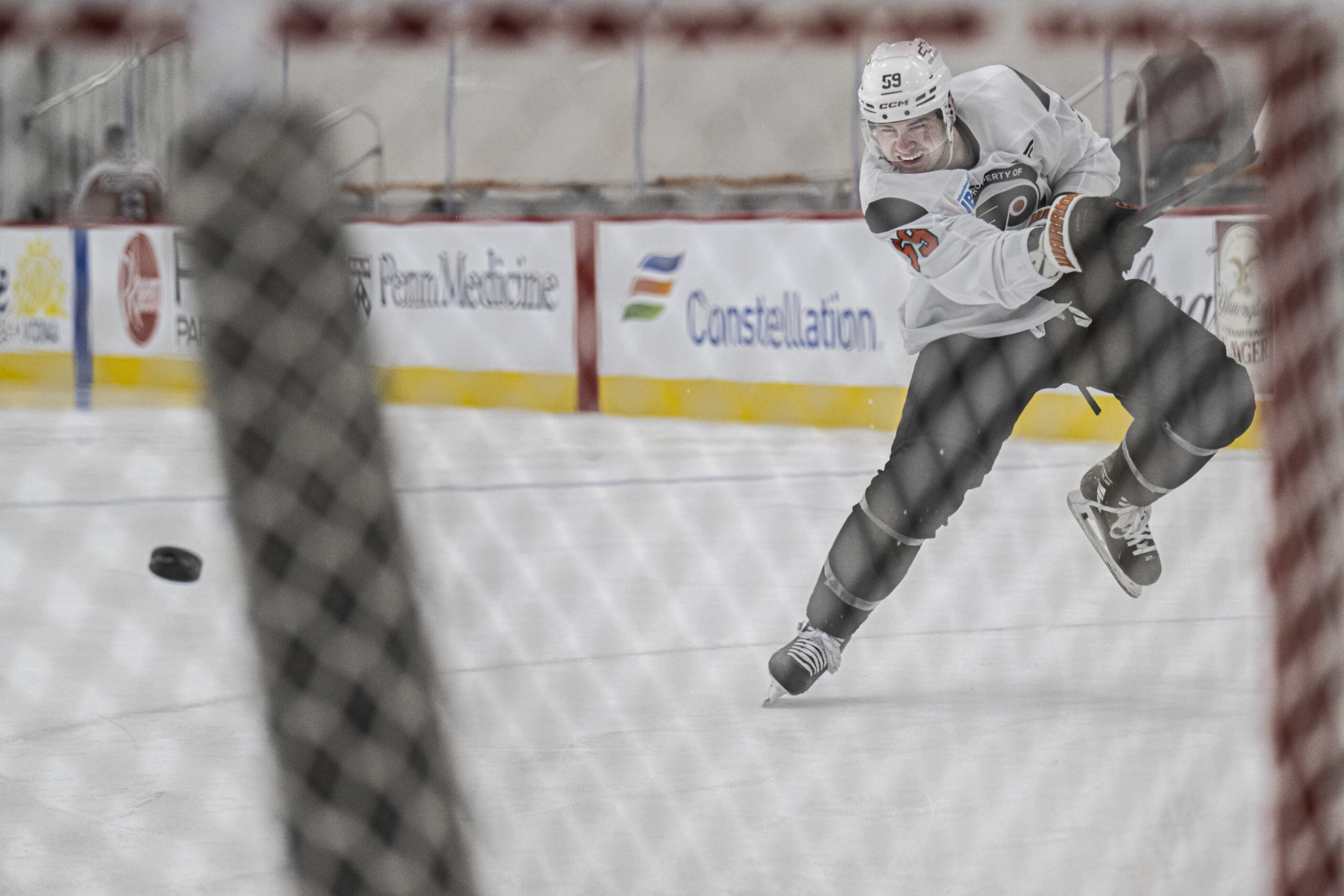
    A first-round pick in 2023, Oliver Bonk missed most of the offseason with an upper-body injury. He made his professional debut in December.

    Q: When John Tortorella was here, he mentioned your pace of play as an issue. Do you feel like you’re learning to play with better pace in the AHL and getting reps at that speed?

    A: Yeah. Our team, we try to play the same way as Philly and do the same stuff. We’re not as skilled, obviously, because we’re in the AHL, but I mean, we try to do the same stuff and play the same way and play a pace game, trying to score off the rush and do all that stuff. So I think it’s a big thing that [Phantoms coach John Snowden] has been on us too, like, move the puck up and try to just get up, get in the rush. Don’t just hold it, because then the forwards are crossing and it’s annoying for them. So yeah, it’s definitely been a big thing of focus for all the [defensemen] this year in Lehigh.

    Q: Two years ago, you had 67 points in 60 games. Last season, it was 40 in 52. Do you feel like your game has a good balance now?

    A: I still try to work on both [sides of the puck] the most you can. After my draft year, I scored the 24 goals, and then the year after, it kind of slowed down. Our power play didn’t do as well, but we won the [Memorial] Cup, so I must have been doing something well. … People will say whatever they want, and, ‘Oh, you can’t put up points,’ and whatever. But we won and that was the biggest thing for me that year. I didn’t score 20-whatever goals, but we ended up winning the Memorial Cup and the OHL, so I think obviously we must have been doing something right there.

    Q: You and Denver Barky know each other well from London. What’s it like watching him in the NHL now?

    A: Well, it was great to see him in Lehigh, and I was excited to spend the season with him, and then he gets called up right away. So, there’s still guys at Lehigh, but [Ty] Murchison got hurt, and then [Hunter] McDonald got called up, so I’m like there’s no more young guys to hang out with. But, yeah, it’s great. It’s awesome seeing him here, and he’s playing unreal, and he’s a great player. But we miss him, definitely, in Lehigh, but it was great to see him here, and great to see how he’s learning and blossoming. It’s awesome.

    Q: You have just over 20 games left this season, so what will be your focus?

    A: I think it’s just playing the best I can for the team. Doing the most I can, give them the best effort every night to help us win. And play how I want to play, not just one side of the puck, but be a real 200-foot player that can be versatile and in any situation and stuff like that. So I think that’s the focus for me.

    Q: Flyers assistant coach Todd Reirden was saying he had some drills last week that were specifically designed to see where you and McDonald were at. How did those go?

    A: Yeah, we went through it [last Thursday], and he had video clips of the practice yesterday. But he had a couple of ones testing how well we’re going to react to the speed here. He was giving the forwards all the speed that they wanted, and then coming down on us. So it was a test for us, but I think we both did pretty well. And yeah, it’s just another thing to learn. And stuff is so much quicker, even from here to the AHL. It’s more on the tape, quicker, better players. So I think it’s another thing to get used to and another thing to learn.

  • Quakertown police mimic ICE brutality | Editorial

    Quakertown police mimic ICE brutality | Editorial

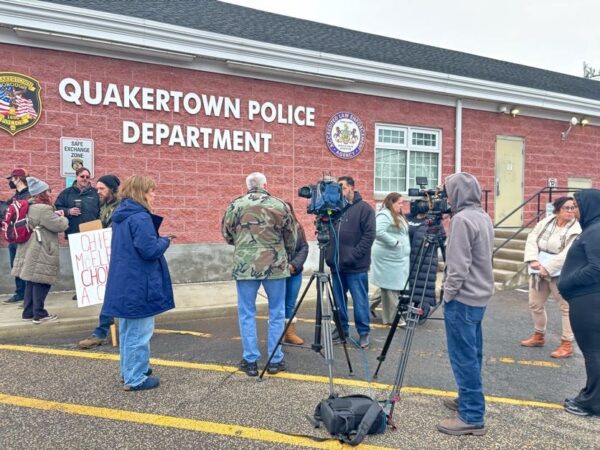
    Students speaking out against abuses by federal immigration agents and the kind of heavy-handed tactics that have led to clashes between protesters and law enforcement across the country were met with excessive force by Quakertown police, who slammed children to the ground and put one in a choke hold.

    The irony is not lost. Neither should the outrage.

    While some of the facts are in dispute, the picture that emerges from several bystander videos is that it was police — primarily Quakertown Police Chief Scott McElree — who seemingly escalated the confrontation.

    Five teenagers arrested during the protest have reportedly been charged with aggravated assault. Those are serious felony charges. Bucks County District Attorney Joe Khan must also bring that level of accountability to McElree and his officers.

    It all began on Friday, when students planned a walkout to protest the actions of U.S. Immigration and Customs Enforcement. According to Inquirer reporting, initial approval from Quakertown Community High School officials changed to opposition over safety concerns. At least 35 students walked out anyway.

    The diverse group headed downtown, holding signs and flags and chanting. Some passing drivers honked and shouted approval, or disapproval, from behind the wheel. A letter to parents by Lisa Hoffman, the acting superintendent of the Quakertown Community School District, said they received reports that students were “engaging in unsafe and disruptive behavior.”

    A police statement said students entered traffic, threw snowballs, and damaged property, including a car’s side-view mirror. Available video footage shows students arguing with police about being off the sidewalk to shouts of “this is a peaceful protest,” shortly before McElree — out of uniform and not wearing any clearly visible identification — barrels into the crowd.

    McElree engages physically with the students, placing a teenage girl in a choke hold as punches from other protesters rain down. According to students, many believed McElree to be an aggressive counterprotester. A reasonable assumption considering the police chief’s wardrobe and other similar incidents, including one in Texas where a 45-year-old man ended up in a melee with student protesters.

    “It’s a grown man. It’s a grown man and a kid! He’s on a child! Why is no one stopping this?” distressed onlookers are heard saying in one of the videos. McElree then throws a teenage girl to the ground, while another Quakertown officer tosses a student onto a planter.

    Further compounding the shameful behavior by the authorities, the teens arrested were held in jail until a detention hearing on Tuesday. That’s over 72 hours. This would be unfair for adults; to treat children this way is unconscionable.

    The Quakertown community has been justifiably incensed over what happened.

    At a borough council meeting on Monday, borough officials said they were “disturbed” by the incident, but declined additional comment. Residents wanted their elected leaders to go much further, demanding McElree’s resignation or termination.

    Evan Smith, from nearby Richlandtown, reminded officials that “Jesus told us to suffer the little children, not to make them suffer.” Colin Hancock, a student who attended the protest, described being afraid to go back to his own home due to the actions of the police. Many seemed shocked that something like this could happen in their small suburban town.

    The American Civil Liberties Union of Pennsylvania accused McElree of acting as a counterprotester, rather than as law enforcement. In a statement, the group said the chief “abandoned his job and his mission” and said he must be held accountable.

    Khan said his office is investigating. Hopefully, the results of the district attorney’s inquiry will give the community a thorough understanding of the incident and whether McElree or any of his officers merit dismissal. At the very least, changes to the Quakertown Borough Police Department must be implemented so this never happens again.

    Students exercising their First Amendment rights and engaging in civil disobedience may yet face disciplinary action from their school, but they should not have to deal with brutal treatment by law enforcement, who ought to know better.

  • Don Mattingly could give Bryce Harper’s career a boost with the Phillies. Maybe Harper can reciprocate.

    Don Mattingly could give Bryce Harper’s career a boost with the Phillies. Maybe Harper can reciprocate.

    CLEARWATER, Fla. — For 30 minutes Wednesday, on the half-field adjacent to the Phillies’ clubhouse, Larry Bowa flipped baseballs to Bobby Dickerson, who hit one-hoppers and choppers and line drives at Bryce Harper.

    Over and over. Again and again.

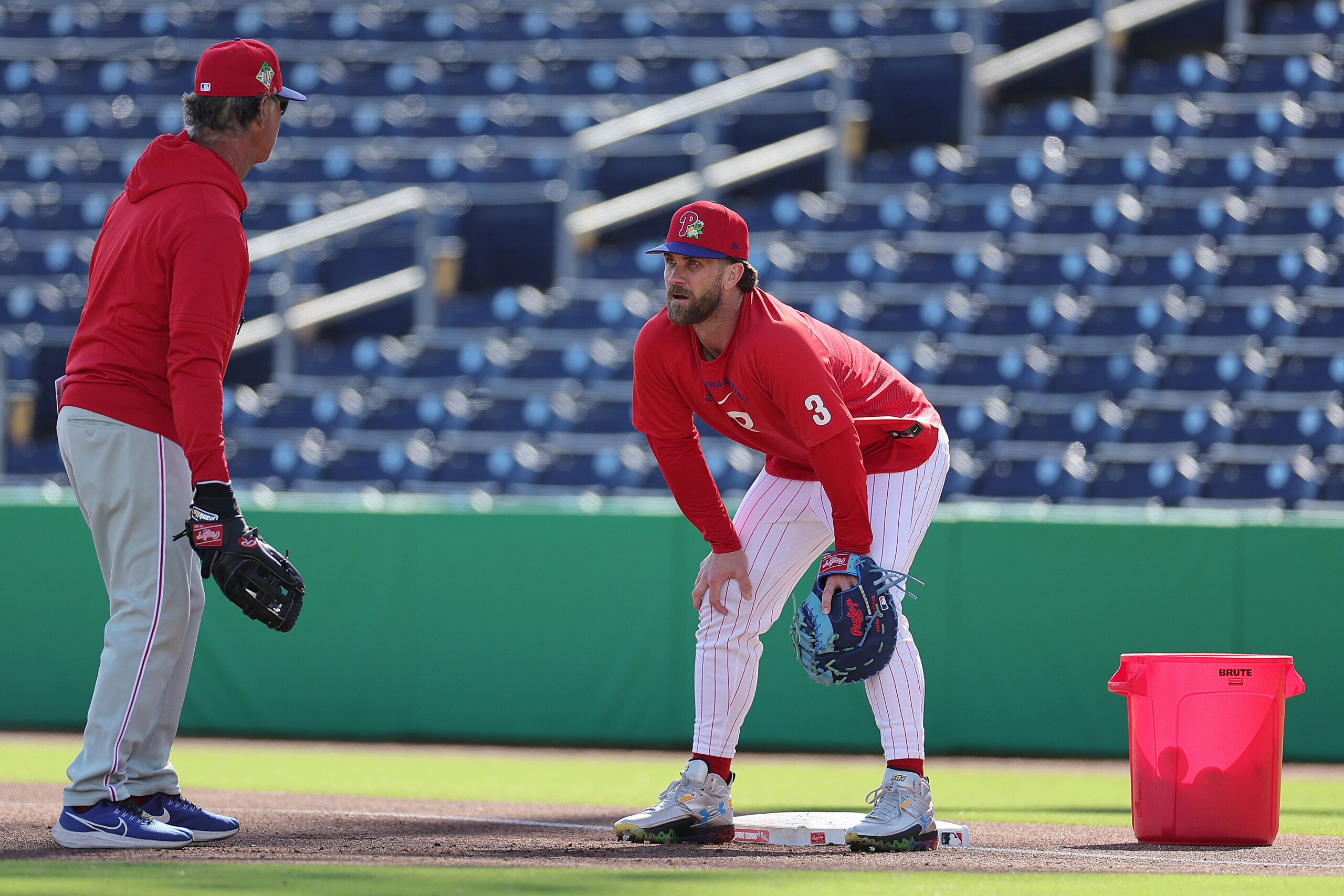
    Ninety feet from Harper, a nine-time Gold Glove-winning first baseman and former captain of the Yankees stood with a glove on his right hand and a paper folded lengthwise in his back pocket. He didn’t say much. Mostly, he observed.

    Then, after the drill, Don Mattingly conferred with Harper.

    The Hitman and the Showman.

    Imagine being a fly on the wall for that.

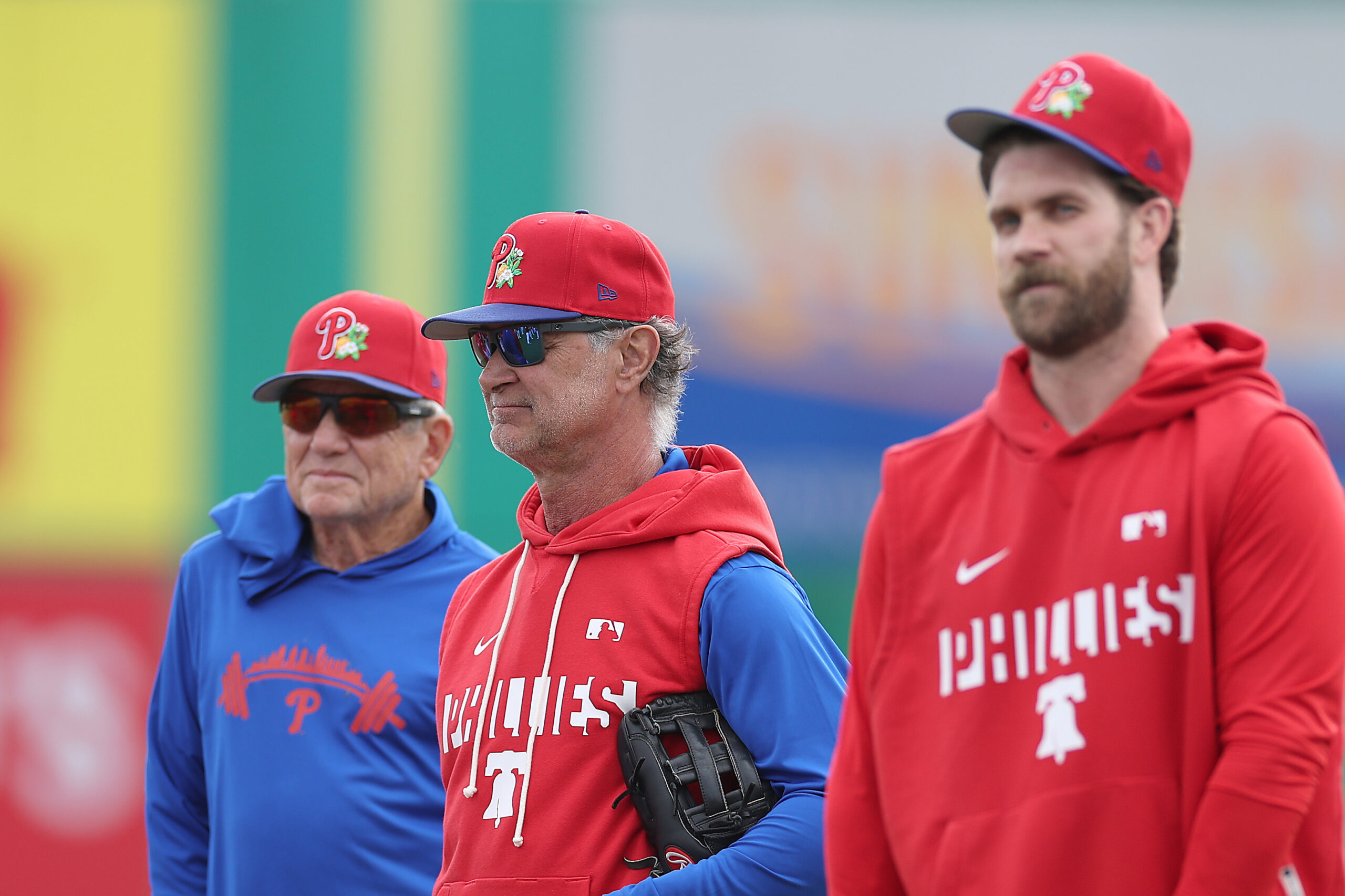
    “I mean, it’s Donnie Baseball,” Harper said, smiling. “I grew up a Yankee fan, so knowing he played first base in the Bronx and had a great, storied career in the Bronx and was one of the best first basemen to ever do it, I have such a respect for him and the way he went about it.”

    The admiration is mutual.

    “He’s going on his 15th year, and I’m like, ‘Wow,’” Mattingly said. “I had a decent career, but I don’t know if I really can talk about some of the things that he can do. Because he can do things that, I think he’s kind of that Barry Bonds-type guy. It’s different.”

    Phillies first baseman Bryce Harper (right) has an appreciation for the career of new bench coach Don Mattingly (center).

    OK, let’s move beyond the pleasantries — and Mattingly’s modesty about a Hall of Fame-worthy playing career in New York — and get to what Mattingly and Harper can do for each other, notably winning the World Series championship that has eluded both.

    The Phillies didn’t hire Mattingly to be their bench coach because of the effect he could have on any one player. But they do believe he will bring a different form of credibility to a coaching staff that is well-regarded within the sport but light on major league playing experience.

    Harper has solid relationships with manager Rob Thomson and especially hitting coach Kevin Long and Dickerson, the infield coach who slings grounders with a fungo bat and a roux of encouragement and trash talk through a Mississippi drawl. All are good at their jobs. None played a day in the majors.

    But Mattingly was the face of baseball back when baseball could still call itself the national pastime. A word from him surely resonates differently with Harper, among the biggest stars in the sport for a decade and a half.

    “We have such a good staff, and to be able to bring him in and be part of that, he’s just going to make us that much better,” Harper said. “Being able to have a guy on the staff — and no disrespect to anybody — that has done it at the highest of levels, it’s so good to be able to bounce stuff off of him.”

    Two weeks into camp, Mattingly said he’s still getting a feel for everyone, including Harper. He isn’t the hitting coach or the infield instructor. Long and Dickerson have those areas covered. But he’s a fresh set of eyes on a staff that has been together since Thomson took over as manager in 2022.

    And after two weeks of watching pitcher fielding practice, live batting practice, and baserunning drills, peeking on hitters in the cage, and offering feedback to Thomson and the coaches, Mattingly has a few observations.

    “I like the way guys work here,” he said. “It’s concentrated when they’re in the cage, and the work’s been good on the field for pitchers. It’s not like you’re coming in here to a 96-win team and try to say, ‘You guys should be doing this, this, or this.’ It’s a really good club.

    “You’re just trying to find the details of how do you get a little bit better?”

    Marginal improvements could make the difference between the Phillies losing three games by a total of four runs to the Dodgers in the divisional round and advancing to the NL Championship Series.

    Phillies bench coach Don Mattingly (left) talks with first baseman Bryce Harper in Clearwater, Fla., on Monday.

    In the case of Harper, who will play this season at age 33, Mattingly’s influence could help extend his peak.

    Harper was still in diapers when Mattingly retired in 1995. But as a baseball obsessive with an appreciation for the sport’s past, Harper has studied highlights — “ESPN Century, all that kind of stuff,” he said — from Mattingly’s career.

    “The little crouched-down stance,” Harper said. “Bat-to-ball skills were unbelievable. The short porch [in right field at Yankee Stadium] was really good for him. But just a doubles machine that knew how to hit.“

    Mattingly hit it off with star infielder Bo Bichette in his last job as bench coach of the Blue Jays. Last season, Bichette batted .311 with 44 doubles, 18 homers, and a 129 OPS-plus.

    “I think they really came together, and you saw Bo have the great year that he had,” Harper said. “Probably learned a lot of stuff from Donnie and what he does. It’s no coincidence.

    “And I love being coached. I don’t care where I’m at or how old I am. I love being coached at the highest level by guys like him because just an ounce of information from him could change the dynamic of somebody’s career. I think everybody should have an open mind and open ears to him.”

    Harper is 3-10 in 13 career postseason series. The Nationals famously won the World Series one year after Harper joined the Phillies.

    Mattingly is chasing something similar. A year after he retired from playing, the Yankees began their run of four World Series championships in five years. He managed the Dodgers before they became a dynasty. The Blue Jays just lost in Game 7 of the World Series.

    After 14 seasons as a player, 12 as a manager, and 10 as a coach, Mattingly is still aiming to win a World Series.

    With a talented Phillies lineup, Don Mattingly says, “You’re just trying to find the details of how do you get a little bit better.”

    Maybe Harper can help with that.

    They’re still getting to know each other. Mattingly’s early observations include Harper’s attention to detail in the batting cage and solid footwork around first base. Harper will leave camp Saturday to join Team USA for the World Baseball Classic. Upon his return, the work with Mattingly will continue.

    “He’s a different animal than almost anybody else as far as, he’s been here for a long time, still in great shape, still big-time bat speed,” Mattingly said. “He’s a guy that has a chance to win a Gold Glove, in my mind. I’ve had different first basemen, and he’s as good as any.

    “Sometimes I think guys like that, you start to take for granted how good they are. And that’s what I think about with him. That doesn’t mean you don’t try to get better in different areas. But he’s going to have a pile of numbers there that, as he gets toward the end of his career, people are going to be going, ‘Holy [bleep], this guy’s been incredible.’”

    A mid-career boost from Donnie Baseball can’t hurt.

  • A suburban office park in Chester County is getting converted to apartments. Is it a sign of things to come?

    A suburban office park in Chester County is getting converted to apartments. Is it a sign of things to come?

    When COVID-19 pushed many professionals to work from home, empty buildings across the country showed that the United States had too much office space.

    At the same time, the nation also had too few homes. Some real estate experts saw an opportunity to take advantage of the crisis in commercial real estate to produce more housing. Vacant office buildings could be transformed into apartments or, in some cases, razed to make way for new development — especially in high-demand suburban areas.

    But six years later, some sprawling campuses in suburbs like Horsham, Plymouth Meeting, and Wayne have soaring vacancies — and there are only a couple suburban conversions underway.

    Developers agree that the primary challenge is the buildings themselves, which have more difficult floor plans for residential development than their urban counterparts, making demolition easier than conversion in many cases.

    “Transforming an office building tucked inside a suburban office park is a completely different equation than converting a building on Walnut Street steps from Rittenhouse Square,” said Sarah Maginnis, executive director of the Philadelphia chapter of the Commercial Real Estate Development Association. “Location, context, and building design all matter a lot.”

    The lack of suburban office redevelopment is partly due to the fact that many of the highest-vacancy buildings are in remote, less desirable corners of the region. The patchwork quilt of hyperlocal zoning regulations across dozens of municipalities is a challenge, too, as builders have to negotiate with officials on almost every project.

    “A lot of townships are fighting residential development because it comes with burdens on the school systems. Office buildings don’t do that,” said Glenn Blumenfeld, principal with Tactix Real Estate Advisors. “Zoning is more liberal in the cities [which is why residential conversion] has not come to the suburbs.”

    Architectural challenges of conversion

    Most suburban office buildings date to an era when office and residential structures began to look very different from each other.

    When office work began to move into undeveloped land surrounding cities in the mid-20th century, developers generally built out instead of up, taking advantage of the abundant space. Almost everyone commuted by car, so vast parking lots were required.

    Suburban office buildings often have a lot of dark interior space. The windows that do exist mostly cannot be opened because of ubiquitous air-conditioning. The parking lots that wreath the buildings make for unsightly and dull vistas.

    In large rectangular glass buildings, residential conversion would entail what longtime suburban developer Eli Kahn calls “bowling-alley-shaped apartments … that just don’t work.”

    “In the city, a 30-story office tower doesn’t look a whole lot different from an apartment building,” said Kahn, president of E. Kahn Development Corp.

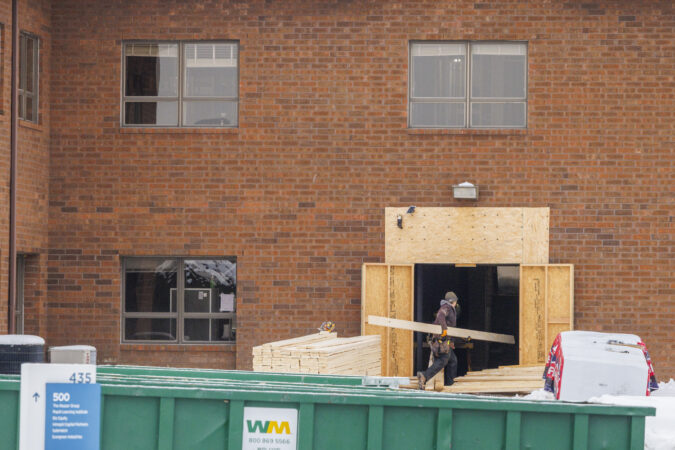
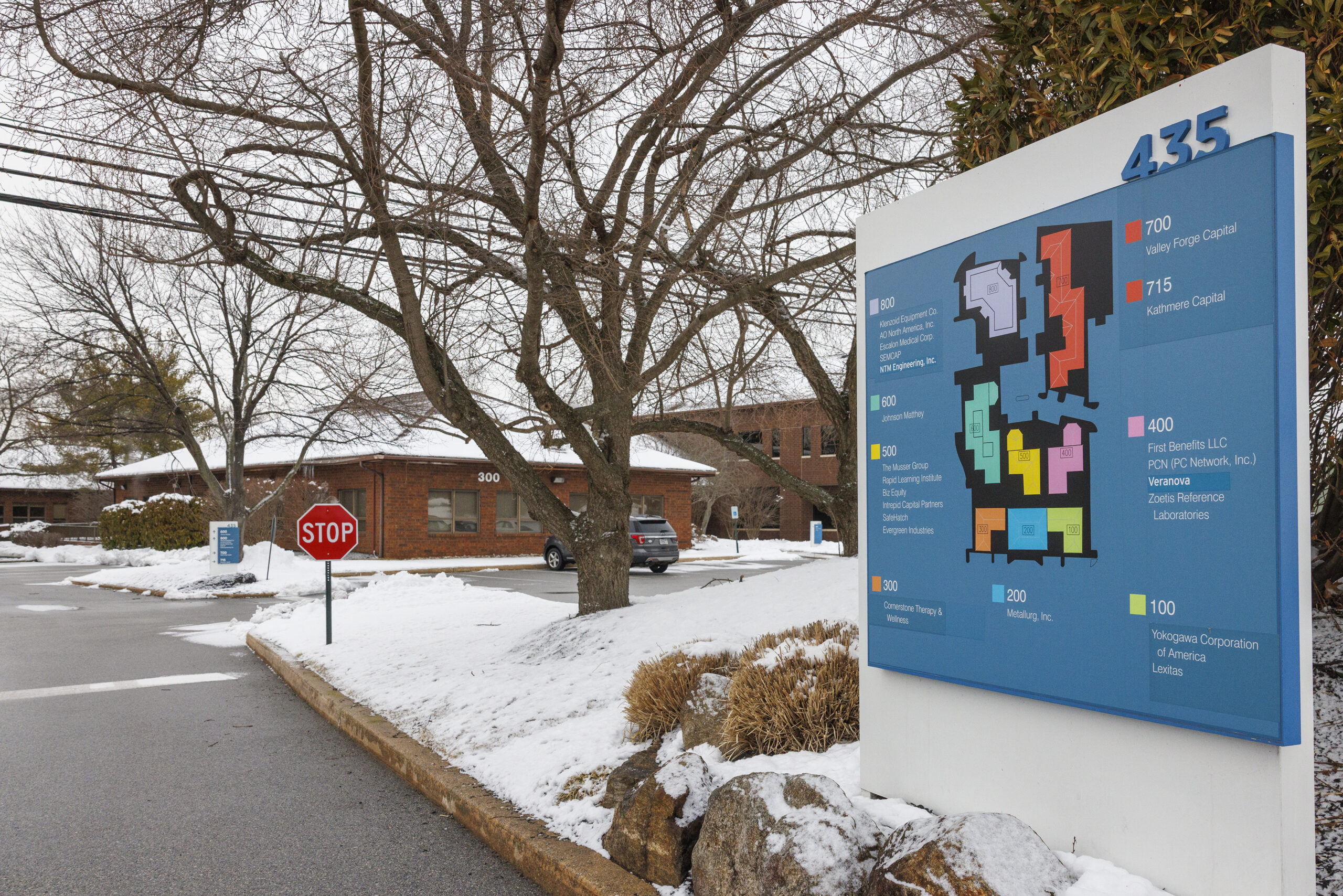
    One of the eight two-story buildings at 435 Devon Park Dr. that have been used as offices and are being turned into apartments.

    An exceptional suburban conversion

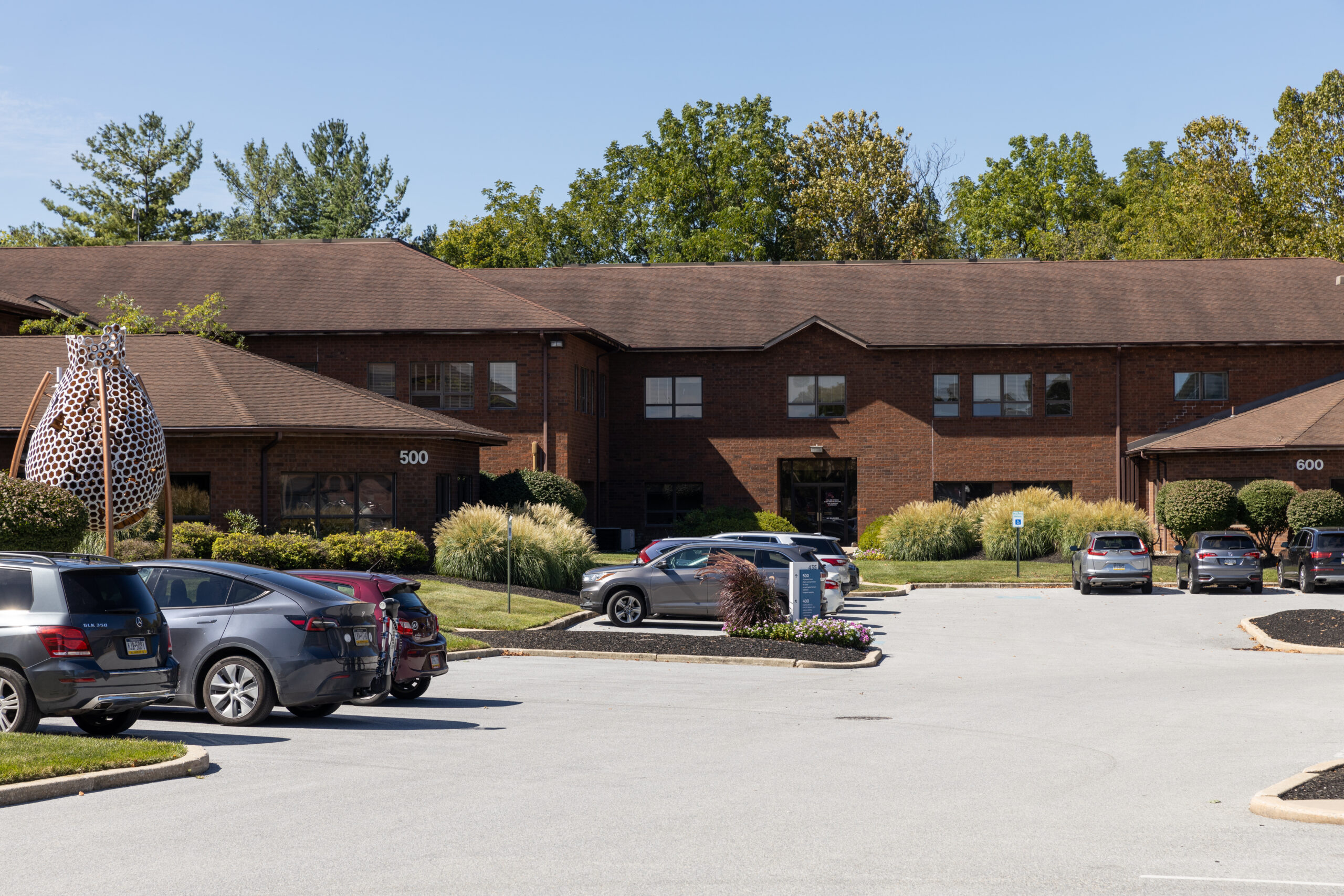
    The redevelopment of an eight-building office complex at 435 Devon Park Dr. in Chester County’s Tredyffrin Township is one of the only suburban office-to-residential conversions underway right now.

    Notably, none of its former office structures are big glass rectangles.

    “This just happened to be perfect for conversion,” said Mark Thomson, founder of Love Communities, which is developing the project in partnership with E. Kahn Development Corp. and Triple Crown Corp.

    “It’s going to be the largest garden-style suburban conversion in the whole Northeast, maybe even a bigger area than that,” Thomson said.

    Kahn also is part of the team behind the conversion of 435 Devon Dr., and he developed the complex when it was built in the 1980s.

    This office park broke from the standard big glass box model of suburban offices and instead offered two-story, L-shaped buildings with brick facades and windows that open.

    That makes conversion cheaper, too. To make those big box buildings livable, the glass facade would need to be torn off and windows installed that actually open.

    “The most expensive part of construction is the windows,” Thomson said. “If we had to do that, it would probably make this not economically feasible.”

    The project is also able to move forward because it accords with the goals of local political leadership, who are wary of family-size apartments.

    The 162-unit office-to-residential project will be largely composed of studio and one-bedroom apartments in an attempt to appease concerns about strains on the school district and to produce unsubsidized affordable housing in this wealthy township.

    Zoning rules everything

    In many suburbs, building apartments, townhouses, and other more modestly scaled housing is often not allowed by zoning laws. Office parks are usually zoned to exclude residential development.

    That’s a sharp contrast with Philadelphia, which has few barriers to office-to-residential conversion in Center City, and a citywide 10-year property tax abatement is available for building renovations. Wilmington also offers a variety of incentives.

    In Tredyffrin, officials were opposed to the idea of either very high density apartments — at almost 10 acres, the site could support hundreds of units — or new single-family homes.

    So to make 435 Devon Park Dr. work, the developers knew they couldn’t demolish the buildings and construct new homes.

    The entrance to 435 Devon Park Dr. with the brick office buildings, which are planned to be converted to residential in the background.

    Instead, the developers pitched the conversion not as luxury apartments, but as affordable homes for nurses, teachers, and other middle-income workers in Tredyffrin. They also plan to convert some parking lots into green space for residents.

    The units can be priced more affordably because of the relatively small scope of the conversion and because the developers essentially purchased the campus for its land value.

    Working in partnership with Triple Crown Corp. also helps because the company has in-house contractors and architects.

    The paucity of multi-bedroom units lowers rental costs, too, and assuages fears about overburdening schools.

    “None of these communities have made it easy like Philadelphia, because they’re all their own fiefdoms,” Kahn said. “But if you make the right argument and you show them how it’ll benefit them financially, they generally come around.”

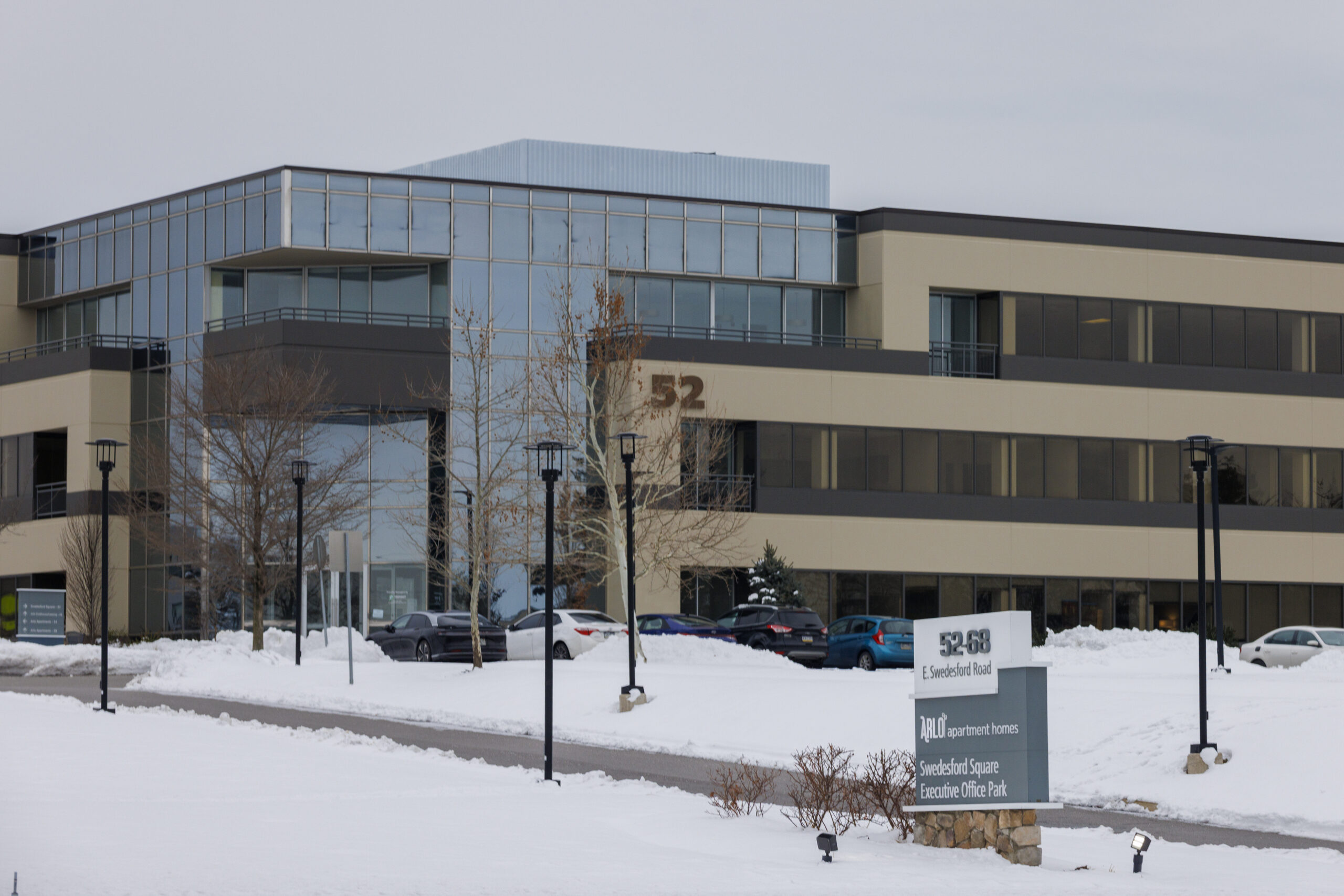
    The East Whiteland office building at 52 Swedesford Rd., which is slated by TriPoint Properties for demolition and replacement with apartments.

    The future of (some) suburban offices

    There are few other conversion projects underway in Philadelphia’s suburbs.

    Keystone Property Group has a more traditional office-to-apartment tower in the works at the Plymouth Meeting Mall. The Parkview Tower next to the Valley Forge casino was considered for conversion last year. The Buccini Pollin Group is weighing a conversion project at BNY Mellon’s old headquarters in Bellevue State Park, north of Wilmington, and is looking at opportunities in the Pennsylvania suburbs.

    But it is more common for developers to consider demolishing old office buildings to make way for something new.

    In Chester County’s East Whiteland Township, which contains the Great Valley Corporate Center, office-to-residential conversion proposals have met a chilly reception.

    “The proposals to rezone large vacant office buildings for direct conversion to apartments were really viewed negatively,” said Scott Lambert, chairman of the East Whiteland Township Board of Supervisors. The plans were seen as “short-term fixes that created long-term challenges.”

    An overhead rendering of the 250-unit apartment project that will replace an old office building at 52 Swedesford Rd.

    East Whiteland’s government looked more kindly on Tripoint Properties’ proposal to demolish a standalone office building at 52 Swedesford Rd. — outside the corporate center — and replace it with 250 apartments.

    The vacant office building is surrounded by four-lane roadways, which eased congestion concern. Developers also proposed mostly small apartments, with 30 rented for below market rate, which helped earn support from the township.

    “On the school side, they were OK with limiting the units to either one- or two-bedroom apartments,” Lambert said. “We would like to be in a position to limit the number of three-bedroom apartments in the township because of the impact it has on schools.”

    But some real estate experts say eventually, municipalities will need to replace the tax revenue lost from dead office buildings.

    “The centerpiece of tax bases in commercial areas has been office space,” Kahn said. “If the tax base goes down, and they can’t pay for the schools, who gets the burden? A couple years of 30% property tax increases on your constituents, you’re going to get voted out of office real quick.”

  • Delco, apparently, is the place where the country’s best Scrabble players meet and compete

    Delco, apparently, is the place where the country’s best Scrabble players meet and compete

    South Philly’s Mark Abadi has had a way with word games since he was old enough to pick up a Scrabble board.

    By 10, he would complete large-print mini games and crossword puzzles, and started playing Scrabble against his parents.

    He became what he calls a “word nerd,” obsessing over newly-learned words and trying out new strategies in hotly-contested Scrabble battles at home.

    “I could never compete with my parents,” he joked. His parents always matched his competitive spirit.

    Eventually, he lost interest in the game until, at 15, he found his childhood Scrabble board and began playing again. Only this time, he had spent days studying the Scrabble dictionary, which made him better equipped to out-point his parents.

    “I looked through the [dictionary] pages, and was like, ‘Oh my God, that’s a word? You can play ‘A‘ā’ because it’s a kind of lava? What?’”

    Mark Abadi is one of several nationally-ranked Scrabble players in the country. He recently struck gold on the CW game show based on the iconic board game.

    Abadi, a copy editor at Business Insider, found immediate inspiration reading the 2001 Word Freak by Stefan Fatsis, a journalist who explored the underground Scrabble community and became an expert-level player. Soon, he’d follow Fatsis’ footsteps and become a nationally-ranked Scrabble player.

    For nearly two decades, Abadi, 35, has competed in tournaments throughout the country. He’s won regional matches and scored top five finishes in world-class competitions, including the North American Scrabble Championship.

    The Montgomery County native has continued to sharpen his skills by rubbing shoulders with other world-class players, many of who (like Abadi) are members of the Delco Scrabble Club.

    “I casually hop on SEPTA and then I’m face-to-face with the best Scrabble players in the country. It’s kind of intimidating,” he said.

    ‘We’re waiting for you’

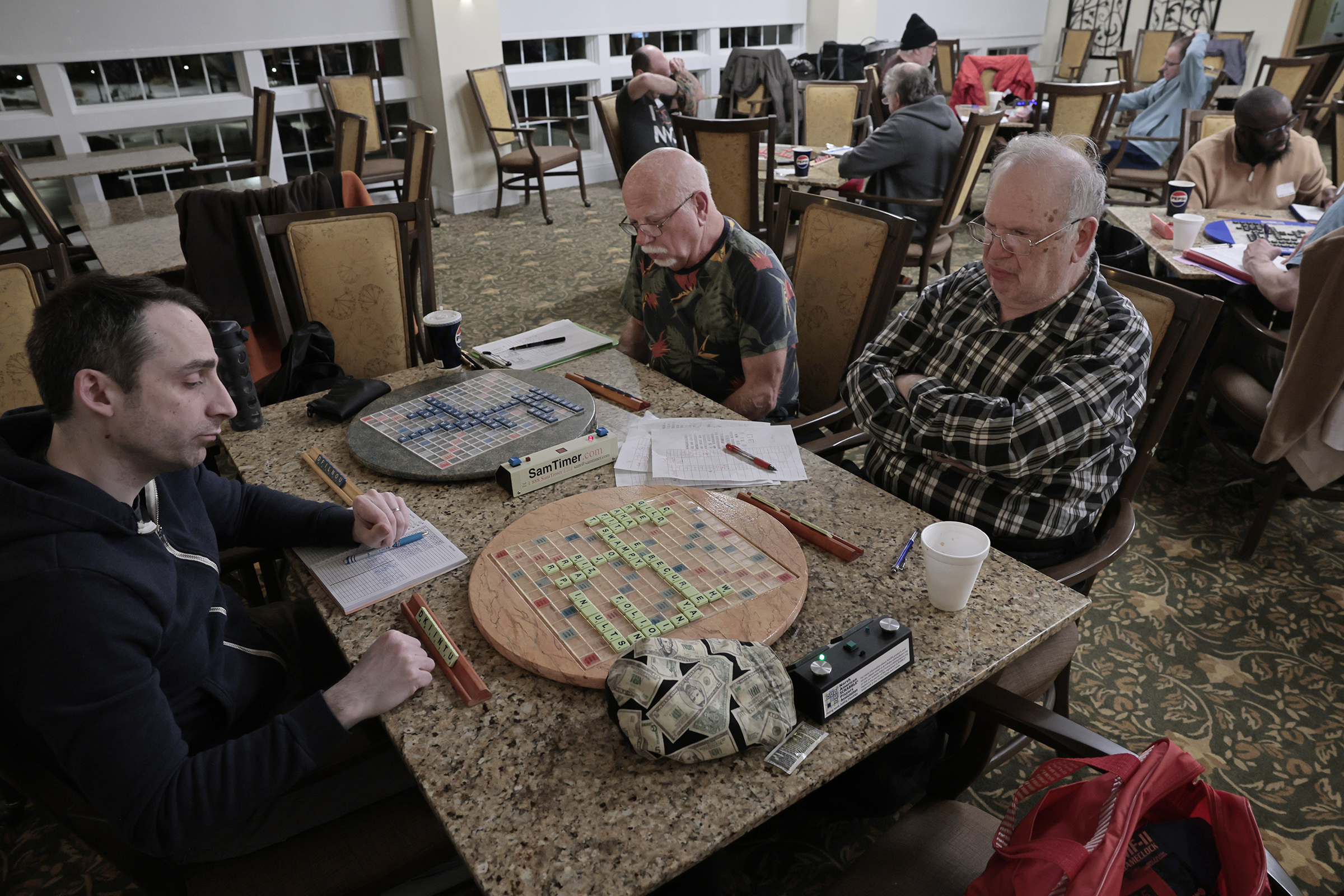
    The Riddle Village dining room was pin-drop quiet on a recent evening, save for the occasional shaking of Scrabble tiles. The Delco Scrabble Club had gathered at the assisted living facility, where one of their oldest members lives, for their weekly meeting.

    When The Inquirer got there, the members were halfway through their first of five 50-minute games.

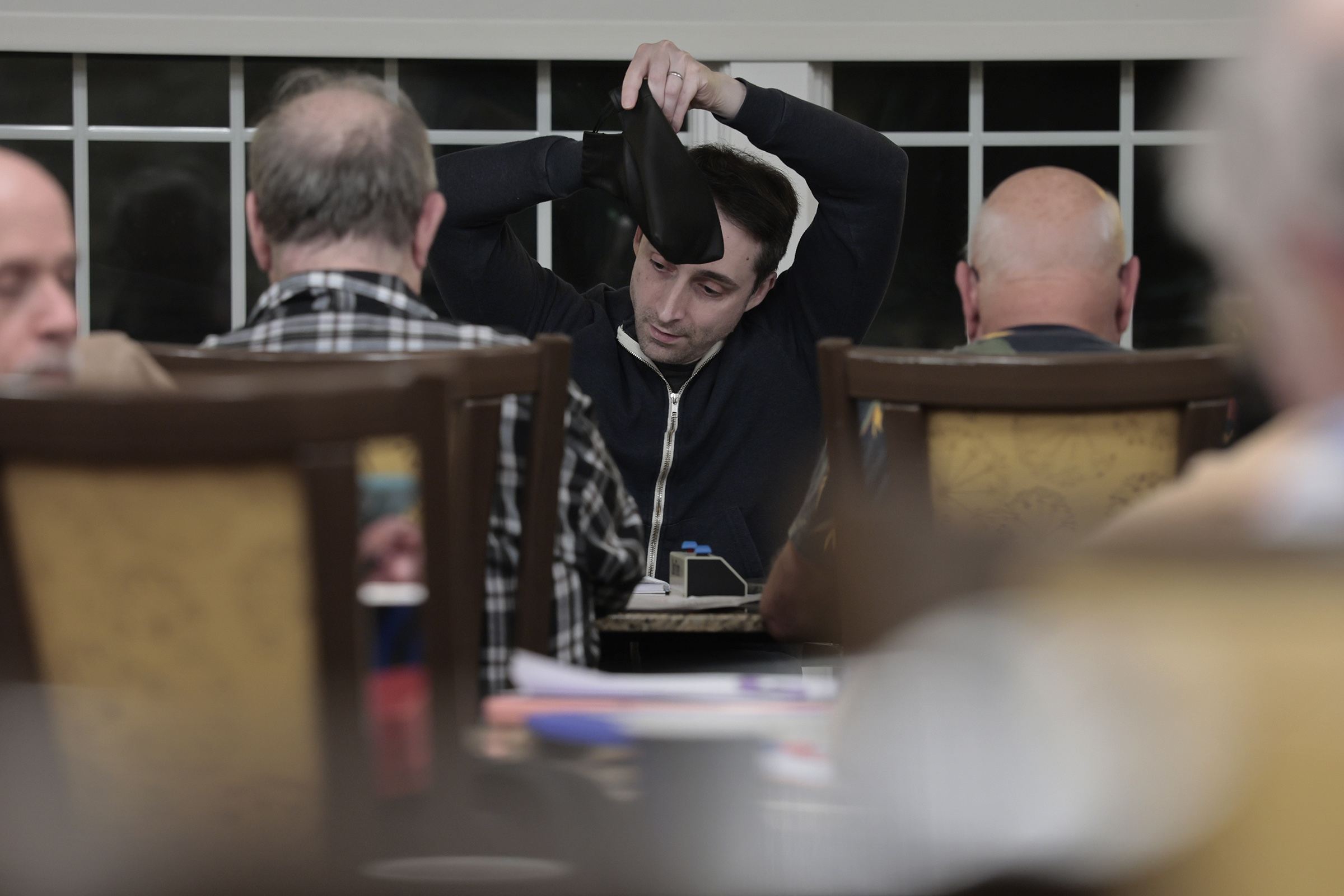
    Will Anderson, a 41-year-old national Scrabble champion, reached into the black drawstring bag suspended above his head and plucked a plastic tile. “We do this as a courtesy to our opponents,” he said, glancing at the bag. “So you aren’t doing any shenanigans when you’re drawing.”

    Will Anderson picks his tiles from the bag while playing Scrabble during a Scrabble group meetup at Riddle Village in Media on Thursday, Feb. 12, 2026.

    Unlike Abadi, Anderson did not grow up playing Scrabble. He started as an adult, partly to break a World of Warcraft addiction. That was in 2009.

    Since then, he’s won multiple tournaments and become an online Scrabble celebrity of sorts. After building an audience on Twitch, he turned to YouTube, where he currently has 70,000 subscribers and regularly posts “Scrabble History” videos detailing legendary games and players.

    “It’s more growth than I ever could have imagined,” Anderson said. His online following even led to his day job as a content producer at Scopely, the mobile gaming company behind the Scrabble app.

    In Riddle Village, Anderson was playing two games at once because the group had an odd number of players. “We call it good Will and evil Will,” said Samuel Moch, a top-10 player in Pennsylvania, also a club member. “And that’s appropriate because I’m playing good Will and I’m beating him.”

    Meanwhile, “Evil Will” was facing Jeff Jacobson, a retired tuxedo salesman and another top player in the state, and winning.

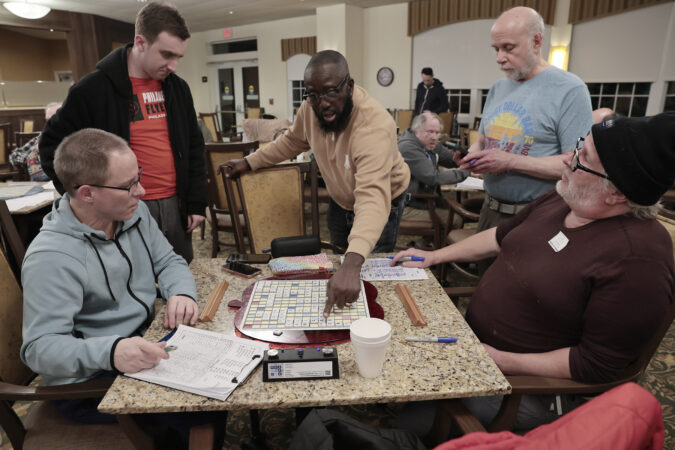
    Jeff Jacobson of Philadelphia (left) ponders his next move while playing Scrabble with Samuel Moch of Philadelphia (right) during a Scrabble group meetup at Riddle Village in Media on Thursday, Feb. 12, 2026.

    Anderson, who lives in Aston, said part of the reason Philadelphia is home to so many strong Scrabble players may simply be its size.

    “You have a higher chance of these unusual hobbies in urban areas,” he said. Or perhaps, he added, the city’s competitive sports culture spills over into word games. “There could be something to that.”

    The competitive scene also benefits from the fact that Scrabble is a universally known game. Almost everyone learns it at home, as did several members of the Delco Scrabble Club.

    They grew up playing with friends and relatives, got so good that nobody around them could beat them, and began looking for tougher opponents.

    “If you’re that person in your family,” Anderson said, “we’re waiting for you with open arms.”

    Will Anderson (left) plays Joe Petree (middle) and Marty Fialkow (right) during a Scrabble group meetup at Riddle Village in Media on Thursday, Feb. 12, 2026.

    At the Delco Scrabble Club, it quickly becomes clear that Scrabble has more in common with chess than it does with word games.

    “As a tournament player, you realize how deep and how beautiful the strategy of Scrabble is,” Anderson explained. “And in your pursuit of playing better and better, you leave the word game part of it behind and embrace it as a strategy game.”

    Often, players don’t even know the definitions of the words they play.

    Evan Chester, the fifth-best player in Pennsylvania and one of the top 50 players in the country, doesn’t know the definition of unaus, the word he had put down in the Riddle Village game. He knows it because he memorized the dictionary.

    “But it’s a very useful and playable word,” said the 22-year-old.

    “It’s a two-toed sloth,” said fellow club member Brendan McClanahan. Other club members, like de facto leader Ed Roth, who has been hosting the club at his house regularly for six years, nodded in agreement.

    “Yup, two-toed sloth,” he said, as he laid down the word decrial.

    A completed Scrabble game board during a Scrabble group meetup at Riddle Village in Media on Thursday, Feb. 12, 2026.

    Delco to TV

    The Delco Scrabble Club is drawing the attention of national TV audiences. Abadi and Anderson are competing on CW’s Scrabble game show, hosted by comedian and former late-night show host Craig Ferguson.

    Last summer, Abadi submitted an application to audition for the game show. And after meeting with the casting director, he was invited to compete in London for the show’s $10,000 prize.

    Abadi scored a win last week and will advance to future episodes of the show.

    “I put my fist up and clapped and everything,” he said. “I was way more peppy than I am in real life, to be honest.”

    Anderson, who applied to audition after a show producer reached out to him on YouTube, won’t appear until the tail-end of the season in August. He was equally enthusiastic during his run.

    “I kicked up the hooting and hollering far beyond my norm,” he said. And while he was nervous in the lead-up to the game, “when it came to actually playing Scrabble,” he said, “the muscle memory kicked in, and it just became fun again.”

    A group of Mark Abadi’s friends, family, and Scrabble club members celebrate his win on the CW game show, “Scrabble.”

    Anderson and Abadi signed NDAs preventing them from discussing their performance, but both said winning wasn’t their main goal. Abadi wanted to “have fun” and represent the Philly and Scrabble communities well, which he thinks he did. Anderson just hopes his appearance on the show is entertaining for viewers.

    Through the show, Abadi is hopeful more people are drawn to the iconic board game. It’s not just a “vocabulary contest,” or a “game made for grandparents,” he said, adding there’s “something for everyone to appreciate about it.”

  • Brandon Graham, Jaelan Phillips among athletes working with organization to prepare for post-playing career

    Brandon Graham, Jaelan Phillips among athletes working with organization to prepare for post-playing career

    It’s common advice, Brandon Graham said, to plan out what you’re going to do after you retire while you’re still playing pro sports.

    You never know when your career will be over, the Eagles defensive end said. Just take it from him — Graham retired at the end of the 2024 season, then decided to come back midway through the 2025 campaign.

    But it’s easier said than done to plan for later while you’re still in the game. Being a professional athlete takes up a massive amount of time and mental energy, and their bubble is often made up primarily of people who play their sport.

    Enter Pro Athlete Community, an organization dedicated to supporting professional athletes across all sports as they transition into post-playing careers. Graham, 37, got involved with the organization in its early stages in 2018, just after the Eagles’ Super Bowl LII win.

    “When we won, when I finally got out of that label, I started to really take it seriously and try to make sure that I have something to look forward to when I’m done, so that I won’t be behind the eight ball on that,” Graham said.

    PAC claims to be like “the locker room outside the locker room.” Through group conferences and networking events, it connects active and retired pro athletes with business leaders and career fields that are interested in bringing pro athletes into the fold.

    One of the discussions that resonated most with Graham was on real estate investing, and finding a way to continue to generate income without working a 9-to-5 job. Through PAC, he has started making connections with people who make their money through investments, and learning about how to manage those opportunities.

    “For me, I don’t want to be locked up in a job,” Graham said. “I’ve been locked up in the job for a long time. It’s been a good job, don’t get me wrong, playing, but it’s stressful, too, and then on top of that, I’ve got kids, so I want to be available to them.”

    Eagles pass rusher Jaelan Phillips has been involved with PAC since his rookie season. He played for the Miami Dolphins when the Dolphins Business Combine expanded beyond the organization to become what is now PAC in 2022.

    Getting involved with the organization so early was key for Phillips, 26, because PAC was not only useful for him to learn about what comes after football but for what he does off the field during his NFL career.

    When Phillips suffered a torn ACL in 2024, he spent the recovery period doing a business fellowship with PAC, working to organize events and engage more athletes.

    “It’s really cool to be able to go to these combines and see and hear athletes that you’ve heard of,” Phillips said. “Maybe you know them personally, maybe you don’t, but you might, after 20 minutes, [you] figure out that, ‘Man, I have a lot in common with this guy.’”

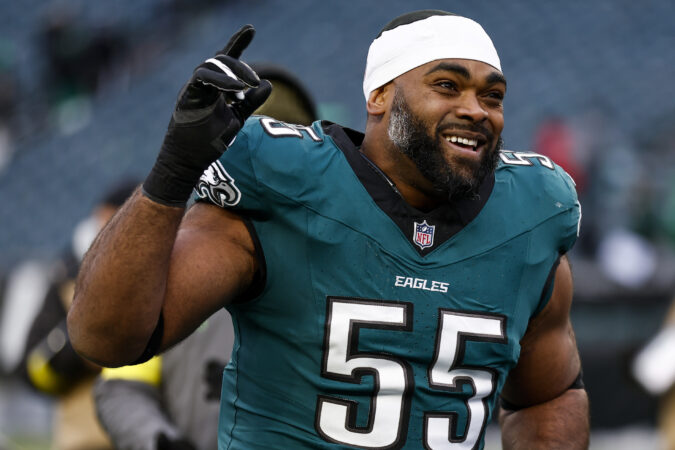
    Jaelan Phillips came to the Eagles from the Dolphins in a deal at the trade deadline in November.

    From there, Phillips said, he has made new friends and business connections. Retired athletes, like former NFL players and twins Devin and Jason McCourty, who are on the board of the organization, regularly share their paths and provide support for PAC members.

    And because of the unique skill set of pro athletes, business leaders are especially excited about the prospect of bringing them in.

    “It’s not just like this conceptual idea of, ‘Oh, go to PAC and learn a bunch of things,” Phillips said. “I’ve actually seen it firsthand, where people start to take action and start to do some really cool things based on the information and the people they’ve met at PAC.”

  • Don’t make Parkway Northwest a ‘sacrificial lamb’, those fighting its closure say

    Don’t make Parkway Northwest a ‘sacrificial lamb’, those fighting its closure say

    Lyric Jenkins is a strong student, with a report card full of As and Bs.

    She approached her high school selection process seriously, finally zeroing in on a school that checked all her boxes. Jenkins chose Parkway Northwest High School for Peace and Social Justice, she said, because it was an academically rigorous magnet school, safe — and not huge.

    “I wanted a small community where I could be seen,” said Jenkins, now a 10th grader at Parkway Northwest in East Germantown.

    Last month, Jenkins was “shocked” to find her school was being targeted for closure, in part because of the very size that drew her to choose it.

    Philadelphia School District officials have proposed closing Parkway Northwest and 19 other schools, colocating six more and modernizing 159 under a sweeping facilities plan. The proposal calls for closing Parkway Northwest in 2027 and making it an honors program inside Martin Luther King, a large comprehensive high school about half a mile away.

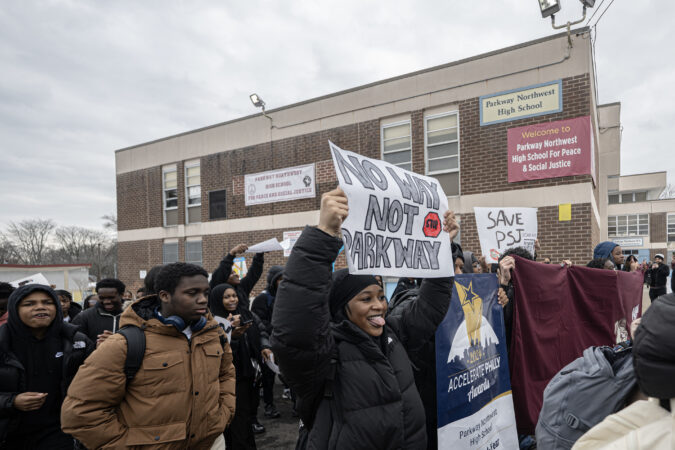
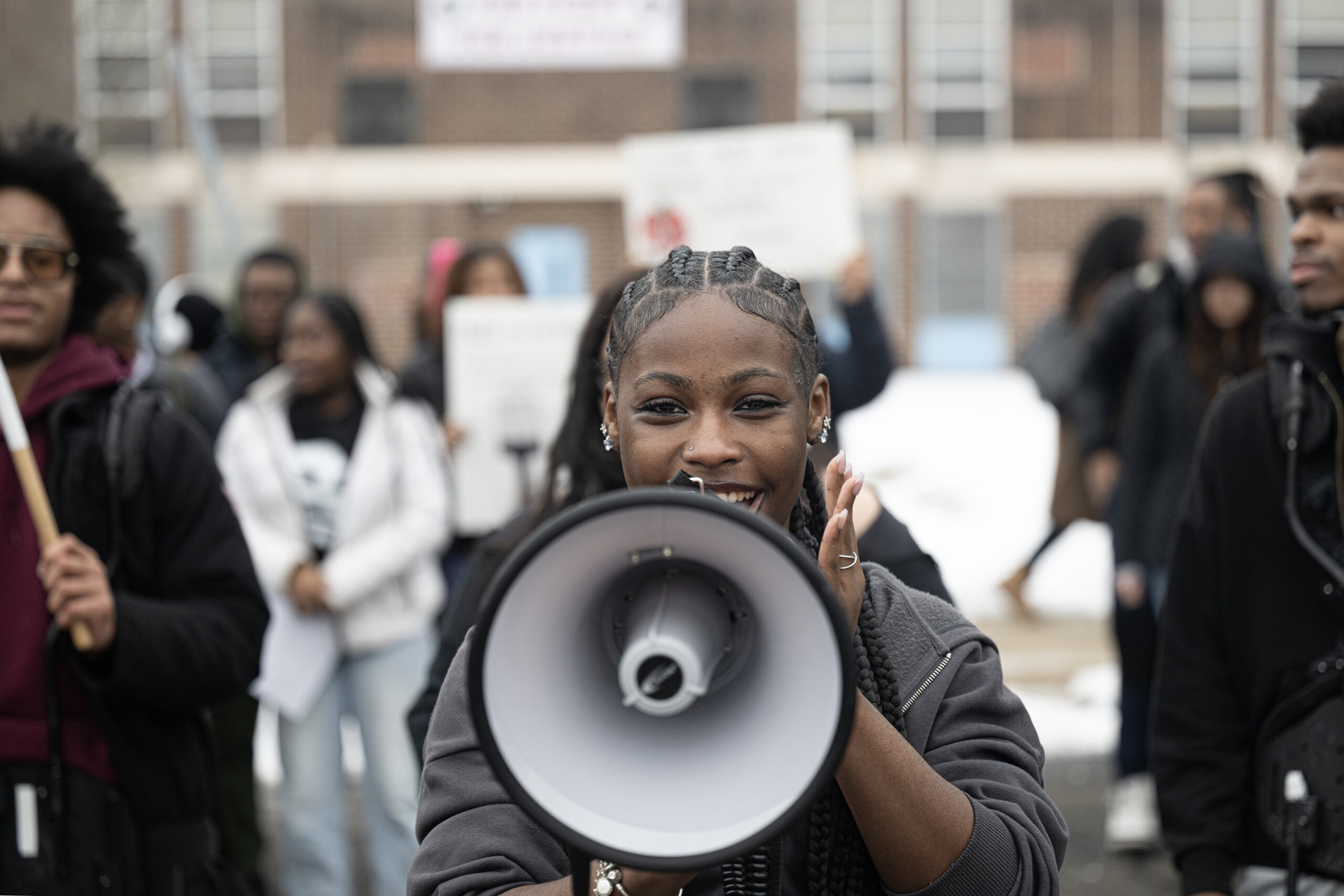
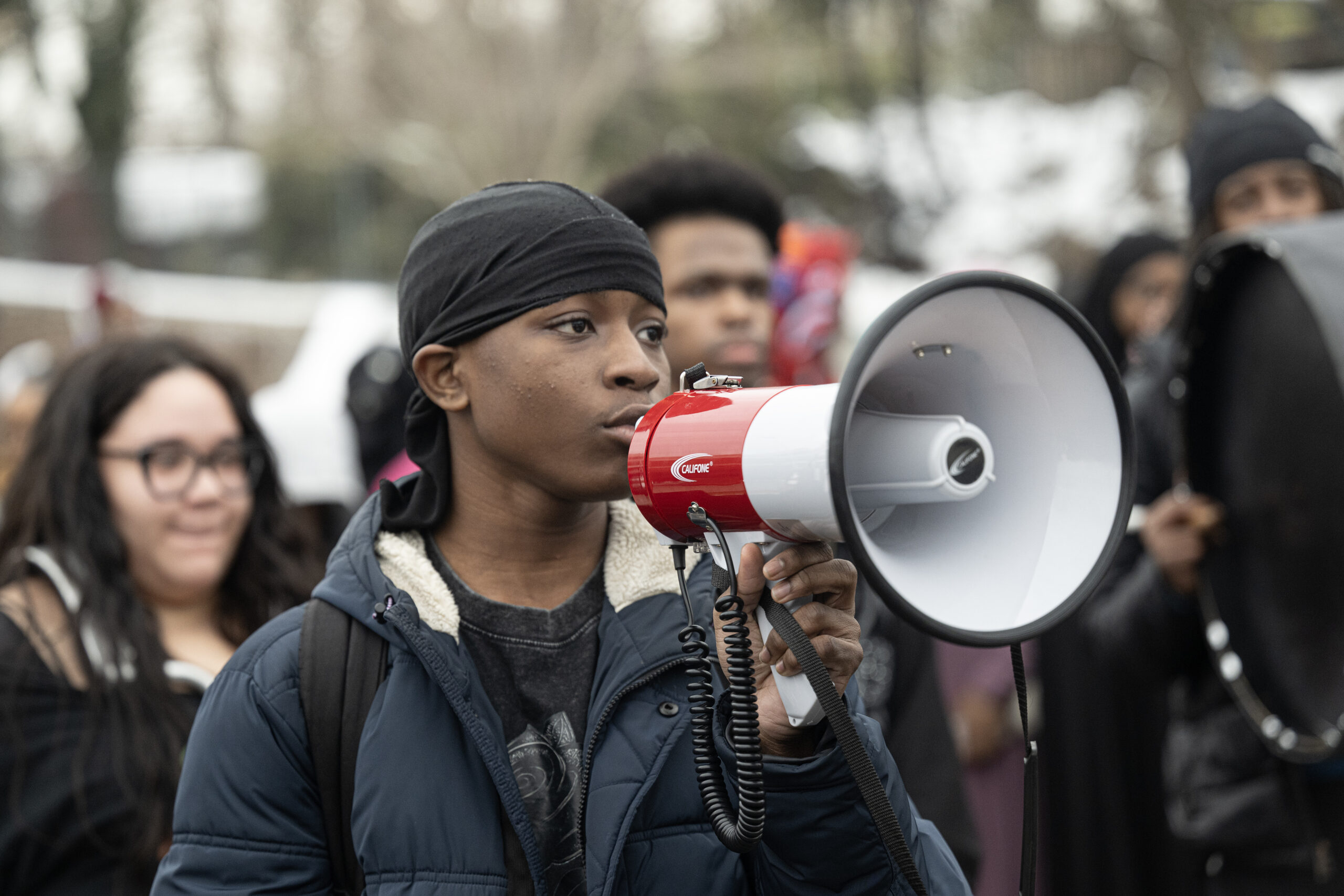
    Student Alasia Payne speaks during a rally for peace and social justice on Wednesday outside Parkway Northwest in protest of its potential closure.

    That plan has drawn fire from many, including more than 100 Parkway Northwest students, who walked out of school en masse Wednesday to protest — waving signs, singing, and banging drums.

    Those fighting to save the school argue that its small size is an asset, and enrollment has been growing, and they have expressed safety concerns about sending children to Martin Luther King.

    More students choosing Parkway NW

    District leaders have said their plan is not motivated by finances, though there is clearly a desire to shrink the school system’s footprint, with 70,000 empty seats citywide. Some schools are less than a quarter full, and others, mostly in the Northeast, don’t have enough room to accommodate all the students enrolled.

    Superintendent Tony B. Watlington Sr. said the plan will provide a stronger and more equitable education for students citywide.

    Closing Parkway Northwest is part of a strategy to shut a handful of small district magnet or citywide schools, moving them into reinvigorate neighborhood high schools.

    That strategy has been uniformly denounced by staff, students, and parents at Parkway Northwest and the other schools that would be forced to surrender their independence — Parkway West, Motivation, Lankenau, and Robeson. All have been affected by changes to the district’s special admission process, which shifted the district to a strict centralized lottery, stripping away from schools the ability to have any discretion over their incoming classes.

    Parkway Northwest and the other magnets all saw enrollment tumble after the forced move to the lottery — a factor that’s now being used against them.

    Student Dane McFarland speaks during a rally outside Parkway Northwest High School on Wednesday.

    The school has worked diligently to build enrollment back up, said Beth Ziegenfus, Parkway Northwest’s school-based teacher leader and the coordinator of its robust dual enrollment program.

    “More students have been choosing Parkway,” Ziegenfus said. “If you think about what our projected enrollment is for next year, we’re looking at an extra 150 kids that we could have here.”

    The closure recommendation discounts that growth, Ziegenfus said, and it also threatens students like Jenkins.

    “These small schools offer something to students who don’t thrive in large environments,” said Ziegenfus. “There is something to be said about kids knowing every single adult in the school — it contributes to the safety. When every child knows you and you know every child, you’re able to offer support, or redirect behaviors, or offer assistance.”

    Ziegenfus spent years teaching at Frankford, another large neighborhood school. She said she cares about comprehensive high schools, sees their value, and believes they need more resources. But those resources shouldn’t come at the expense of Parkway and other small schools.

    “We should invest in King, but two things can be true at the same time. We need Parkway,” said Ziegenfus. “They’re really disrupting the children here, and the children at King, and the incoming kids who are going through the school selection process.”

    ‘They’re going to flee somewhere else’

    At recent district meetings about the proposed Parkway Northwest closure, anger bubbled over.

    Students, teachers, and community members disputed the district’s statistics around the school in a meeting with district officials, saying its 60% building capacity score was off.

    But mostly, they raised alarms about safety.

    “My question is, how will I be able to grow my education at a bigger school if I don’t even feel safe there?” said Sanai Williams, a Parkway Northwest 10th grader. “I don’t feel like I’m going to be able to grow my education if I’m watching my back, thinking I’m going to get attacked every which way at King.”

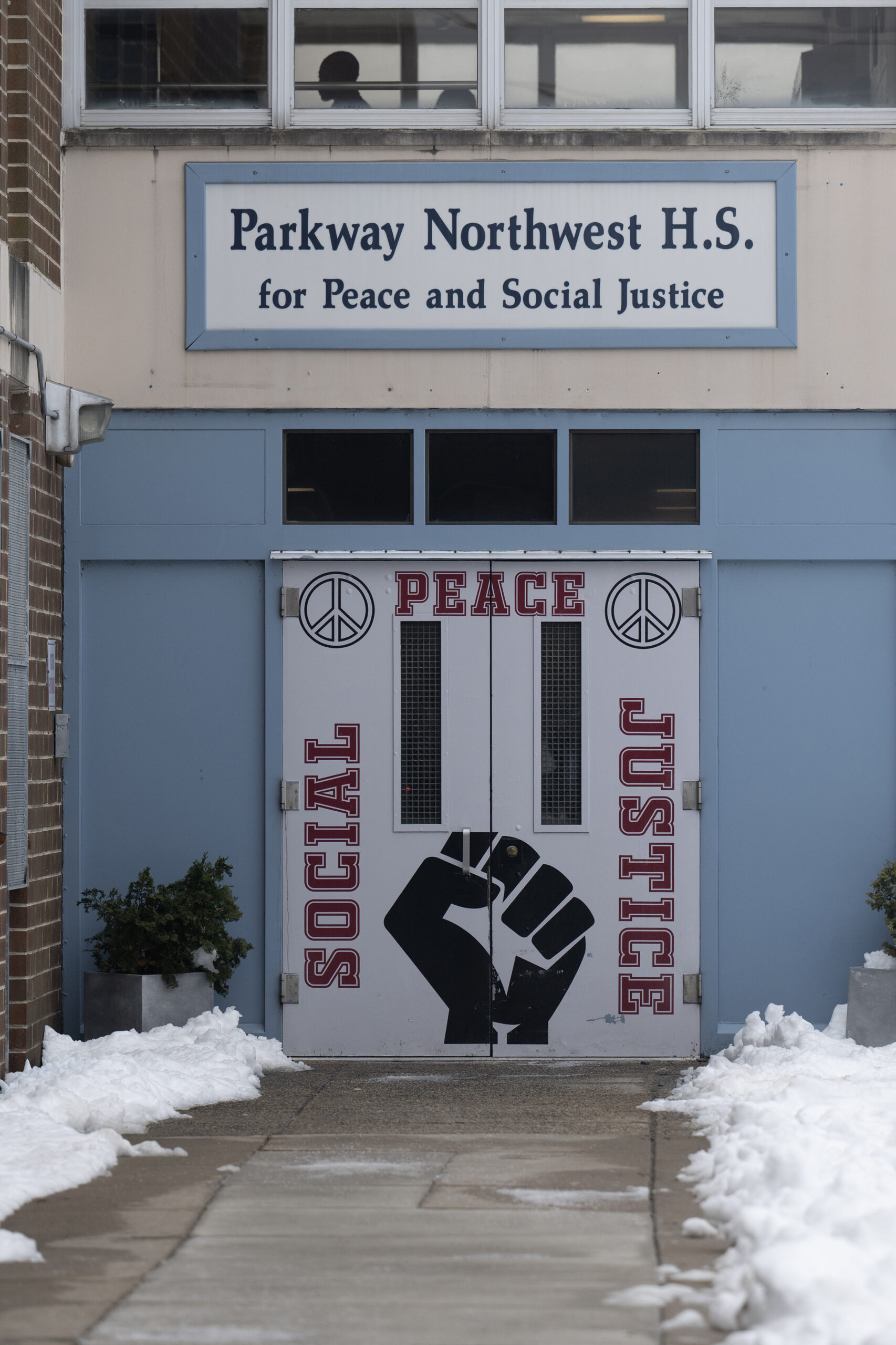
    Parkway Northwest High School in Philadelphia.

    Rodrigo Fernández, the Parkway Northwest Spanish teacher, said he was frustrated by a perceived lack of real opportunity to shape the plan.

    “You are not listening to us,” Fernández said. “You haven’t heard one single person saying, ‘I am excited about this plan.’ If you want to retain our students, you won’t retain them by doing this. They’re going to flee somewhere else. They didn’t choose that setting.”

    Over 1,500 community members have signed a Change.org petition calling for the district to reverse the closure recommendation.

    A peace and social justice mission

    Parkway Northwest, said Elliott Seif — a retired educator and author who’s volunteered at Parkway Northwest for 15 years — is being offered up as “sacrificial lamb to do something at Martin Luther King, which it may not be able to do.”

    And Paula Paul, another longtime Parkway Northwest volunteer, said the very nature of the school makes it essential in the city.

    Students walked out of Parkway Northwest on Wednesday to protest its closure.

    “Does not our city need a school devoted to peace, social justice, and violence prevention, and one where people have formed a community that is functional, a school that works, a school where kids want to be?” Paul asked district officials. “We’ve been struggling to get schools that are functioning, not to lose students, for students to feel safe, to feel connected. Why would we close this school?”

    Watlington is expected to present his plan to the school board Thursday, but the board will not vote then. A date for the final decision on closures and other changes has not yet been set.

  • 2026 Honda CR-V Hybrid: Still the top of the hybrid heap?

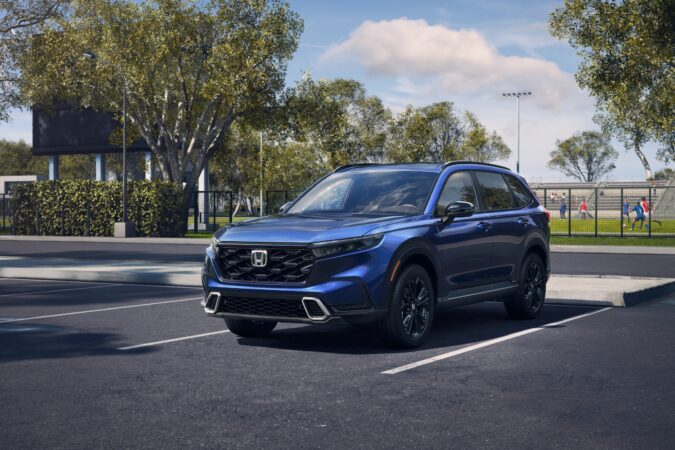
    2026 Honda CR-V Hybrid: Still the top of the hybrid heap?

    2026 Honda CR-V Hybrid AWD Sport Touring vs. Kia Sportage Hybrid: A challenger for the hybrid crown?

    This week: Honda CR-V Hybrid

    Price: $42,550 for the trim level (which is top of the line)

    What others are saying: “Highs: Civilized and efficient hybrid powertrain, roomy interior, new larger standard infotainment touchscreen. Lows: Price premium over nonhybrid CR-V, could use a few more ponies,” says Car and Driver.

    What Honda is saying: “The hybrid that gives you more.”

    Reality: The Honda is still in the running.

    What’s new: When you have a vehicle Mr. Driver’s Seat rated as “so nice,” you’re wary of updates. Are they going to make this better?

    They haven’t changed too much about the underpinnings of this model — same powertrain, but with a new look. A TrailSport model gives it more Passport-type off-roady features.

    It really looked like a Passport parked in the driveway.

    Competition: In addition to the Sportage Hybrid, competitors include the Hyundai Tucson Hybrid, Mazda CX-50 Hybrid, Mitsubishi Outlander Hybrid, Subaru Forester Hybrid, and Toyota RAV4 Hybrid.

    Up to speed: The CR-V Hybrid feels like a surprisingly quick little SUV. The two-motor hybrid system creates 204 horsepower and is coupled to a 2-liter four-cylinder engine that gets updates for 2026.

    It got to 60 mph in 7.1 seconds, according to Car and Driver, about average for the vehicle type, and surprisingly almost a second quicker than the 2023 model with the same powertrain.

    In any case, the CR-V has a nice feel of momentum as it goes about daily driving, even if the hard numbers are actually kind of soft.

    Shiftless: A Honda with a shift lever continues to excite me far more than it really should. But that’s how disappointed I was with the old buttons. I just found them unattractive and cumbersome.

    The power band is fairly even in this hybrid version of the CR-V; gasoline-powered Hondas with CVTs can be a little uneven.

    On the road: The CR-V appeared quite mannerly and easy to drive.

    And then I found Sport mode. This really turns the small SUV into a Volkswagen or Mazda competitor. It doesn’t quite have the fun factor but it really wiggles through the curves nicely. Cornering is a real bright spot, as I made some left turns at stoplights far more enthusiastically than I’d have thought possible, and the tall SUV never even flinched.

    The CR-V also rates highly for maneuverability. With a backward-garage at Chez Sturgis, a lot of three-point runs happen, and the CR-V let me go from one corner to another in one swoop, much like the smallest vehicles out there.

    Honda favors basic black in its interiors and it gives the CR-V Hybrid a classic look.

    Driver’s Seat: The seat seemed a little stiff at first, and my time in the Civic Hybrid made me paranoid — Civic seats tend to jab me just the wrong way. But no Mr. Driver’s Seats were harmed in the making of this review, and a comfortable time was had by almost all.

    The gauges are clear and the default offers pretty much all the info you’ll need, which is how it should be.

    A heated steering wheel comes courtesy of the Sport Touring trim.

    Friends and stuff: The rear seat is where happy Honda seat dreams go to, well, not exactly die, but suffer a little bit. The seat back is flat except for an annoying lumbar bump near the bottom. At least there are several recline choices.

    Legroom is fantastic, as is foot room, while headroom is snug, about an inch from Mr. Driver’s Seat’s head.

    Cargo space is a whopping 36.3 cubic feet behind the rear seat and 76.5 with the seat folded; the seat bottom folds down with the back rest to maximize cargo space.

    In and out: It’s a slight step up into the CR-V. Not too much of a climb.

    Play some tunes: After experiencing true audio joy from the Honda Odyssey stereo once upon a time, I keep expecting dynamite sound from Hondas, but often I’m disappointed. The Bose premium system in the CR-V Hybrid Sport Touring performs OK, an A- or a B+. Sigh.

    Operation of the system is not bad, with dials for volume and tuning. Sound adjustments are in the larger 9-inch touchscreen but are unavailable when the vehicle is moving. This is a precaution I like for you and all the other drivers out there, but I’m special and don’t need it.

    Keeping warm and cool: Dials control temperature and fan speed while buttons handle the rest. It’s a pretty easy setup.

    Fuel economy: The CR-V hybrid averaged 35.2 mpg for almost the entire visit, a nice reward for the hybrid premium, and just the overall chance to feel smug.

    Where it’s built: Greensburg, Ind.; East Liberty, Ohio; and Alliston, Ontario.

    How it’s built: Consumer Reports predicts the CR-V Hybrid reliability to be a 4 out of 5.

    Next week: How does the Kia Sportage Hybrid compare?

  • Villanova’s Bryce Lindsay is breaking out of his slump at the right time for the Wildcats

    Villanova’s Bryce Lindsay is breaking out of his slump at the right time for the Wildcats

    Bryce Lindsay isn’t very superstitious, so he didn’t take Kevin Willard up a few weeks ago when the Villanova coach suggested maybe he should reorient himself in bed and sleep a different way.

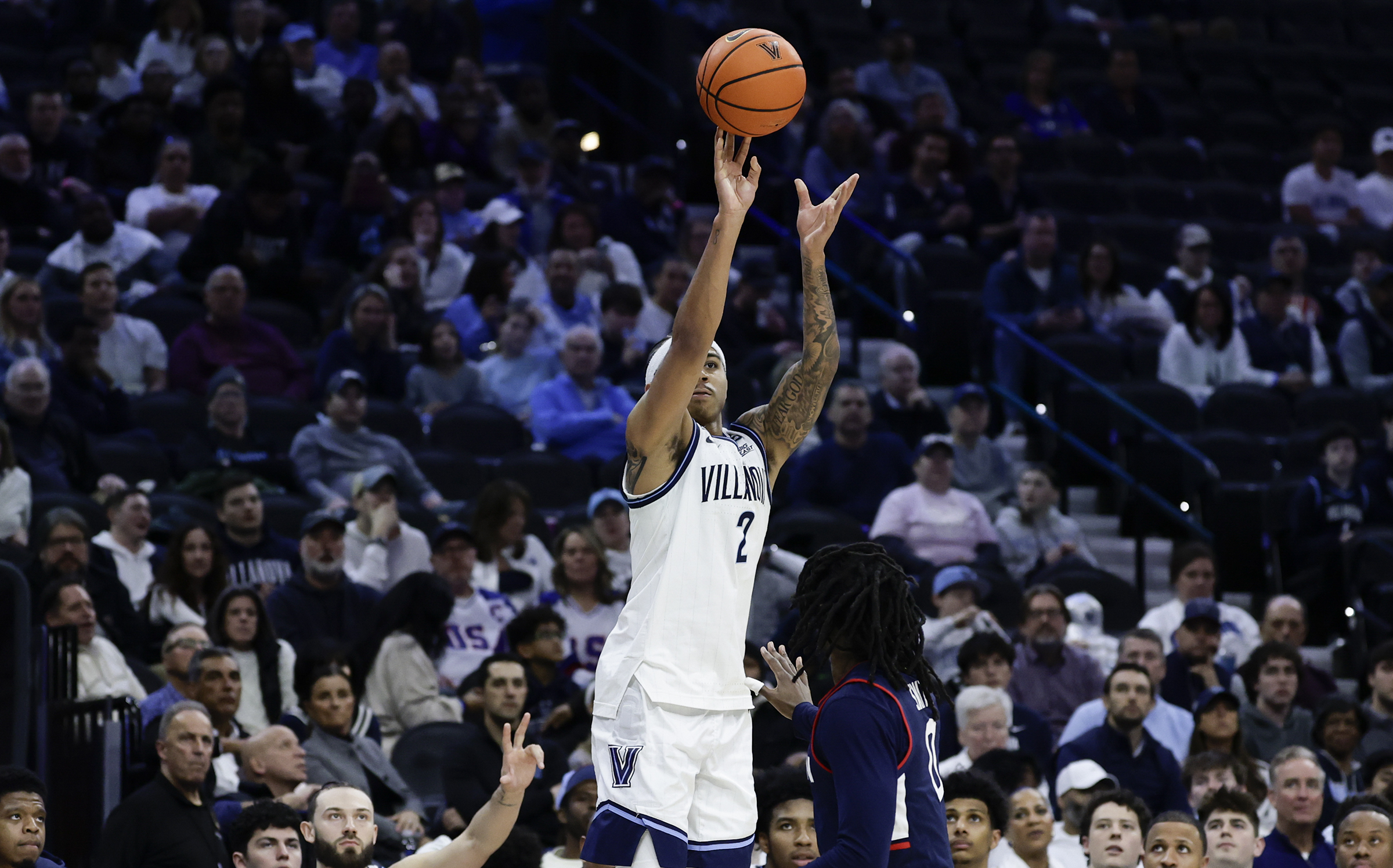
    Lindsay did, however, take Willard and his family and support staff up on their advice in recent days. Lindsay was 13-for-65 from three-point range in the 11 games that preceded his 15-point effort, behind four triples, last week in an overtime road win over Xavier. The redshirt sophomore guard carried Villanova at times through its nonconference schedule, but being the focus of the opposing team’s scouting report was taking its toll.

    “They’re telling me, ‘Go out there and be you,’” Lindsay said Wednesday night after Villanova’s 82-73 win over Butler. “‘Don’t think too much. Focus on defense, focus on the other things, and your shot will come.’”

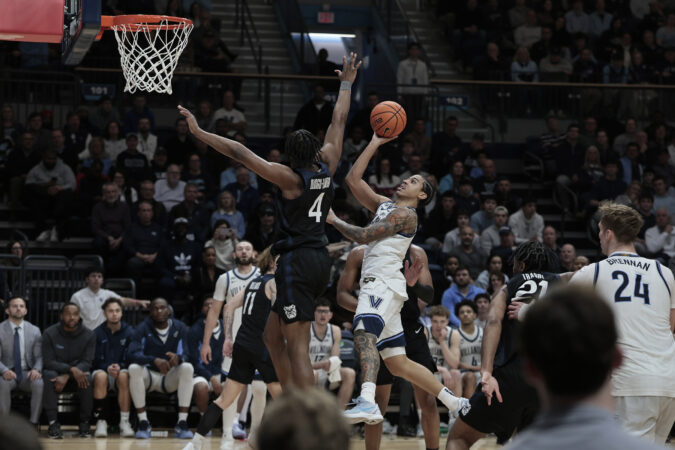
    Lindsay scored 19 points Wednesday and helped Villanova get to 22-6 on the season and 13-4 in Big East play. He went 2-for-6 from three-point range and was 6-for-14 from the field overall and 5-for-5 from the free-throw line. It was Lindsay’s first time making six shots in a game since a Jan. 3 road win at Butler. He made six or more in eight of Villanova’s first 14 games before a 13-game drought.

    Villanova has fared just fine despite Lindsay’s prolonged slump. But there’s no denying how much easier the offense comes when Lindsay — who shot 40.8% from deep at James Madison last season — is filling it up.

    Bryce Lindsay and Villanova are third in the Big East behind St. John’s and UConn.

    It did take a bit for Lindsay to understand that there was more to impacting a game than just making shots. This was the first real slump he remembers going through. He had some off shooting nights at JMU last season, but things never snowballed the way they did in recent weeks.

    “That was probably one of the hardest things I have ever went through in my life,” Lindsay said. “I’ve never, ever played that bad until now. It comes with the game. When you’re the No. 1 player on the scout, they’re going to try to take you away and that’s what they did. I’m just figuring out ways to maneuver through that.”

    Willard would certainly disagree with Lindsay’s assessment of his play, and he spent recent weeks trying to build him up and remind him of that when he noticed Lindsay’s frustration showing up in his body language.

    “Sometimes when you’re a shooter and you’re not shooting good and you’re standing on the court and you’re thinking about it, it’s like the worst thing you can do,” Willard said. “Just trying to get them to focus on all of the positive stuff.

    “There are times on the floor where he’s plus-8, plus-9, but he’s 0-for-4. You can see his body language. You can see everything going down. But your team is playing well when you’re out there.”

    Lindsay, who is averaging 14.3 points over the last three games, was plus-12 in 31 minutes Wednesday night. The advanced stats show a team that has a much better net rating in conference play with Lindsay on the floor.

    “In my head I feel like I was playing bad, but in their head I’m not playing bad because [of] the stats, my plus-minus is good,” Lindsay said. “I was always able to make shots, but when I don’t see the ball go in it’s hard.

    “These past few games I tried not to focus on it as much.”

    His effort Wednesday helped Villanova bounce back from Saturday’s deflating loss to No. 6 UConn in front of a sold-out Xfinity Mobile Arena. The Wildcats built a 14-point halftime lead but started sloppily in the second half and allowed Butler to climb back into the game. The lead was one before Lindsay extended it back to three with a layup with more than eight minutes to play. He again scored inside to bump an eight-point lead back to double digits with four minutes to go, then helped seal the game with four free throws inside the final two minutes.

    The fact that Lindsay scored all 10 of his second-half points inside the arc is a positive sign, too. It seemed at times that he was becoming too reliant on shooting threes in trying to break out of his slump.

    “Just focusing on other things,” Lindsay said when asked how he navigated it all. “My defense, my rebounding …”

    Willard, who was seated at the postgame podium between Lindsay and Devin Askew — who scored 16 points Wednesday — leaned over as Lindsay went on with his answer and circled a stat on the sheet in front of Lindsay.

    Focused on rebounding? Lindsay had zero rebounds Wednesday.

    The player and coach shared a laugh. After six weeks of slumping, Bryce Lindsay can finally smile.

  • ‘MAGA, ICE Is’ | The Drawing Board

    ‘MAGA, ICE Is’ | The Drawing Board

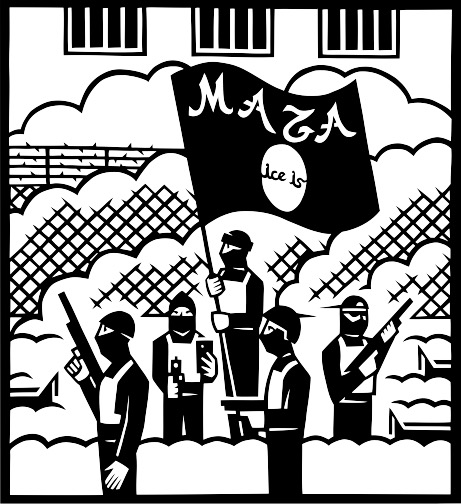
    When I put pencil to paper and let my imagination run, I’m often surprised by certain discoveries and associations that emerge. While sketching in the aftermath of Renee Good’s and Alex Pretti’s recent killings, I began to conjure images of ISIS rolling out over the Levant in 2013.

    Not wanting to commit to a ham-fisted metaphor, I put my sketchbook away, only to find the idea too sticky to relinquish. As I embarked on the labor-intensive process of making the paper cutout you see printed here, the parallels became all too clear: the uniforms, the masks, the military armaments, the extremism, the rigid ideology. This is what ICE is.

    This MAGA army, paid for by 2025’s “Big Beautiful Bill,” is the highest-funded law enforcement agency in the nation. It is only partly intended to expel and terrify what the regime perceives as undesirable immigrants. It is becoming apparent that it was also created to impose the movement’s fundamentalist values on American society writ large.

    That is why Good and Pretti were perceived as such a threat. Good was a liberal woman in a same-sex marriage who wouldn’t bow to ICE tyranny. Pretti was a legally armed citizen determined to protect his neighbors from agents’ overreach and abuse.

    Both represent a challenge to the MAGA movement’s extremist interpretation of religious law, embodied by JD Vance’s Catholic integralism and Mike Johnson’s radical evangelicalism.

    As the flow of immigrants over the nation’s southern border has abated, Republicans have resurrected their panic over Sharia Law. Sen. John Cornyn of Texas has been campaigning on his fight against “radical Islam,” while his colleagues at the state level have created a “Sharia-Free America Caucus.” This is pure projection. Similar to Islamic extremists, conservative Republicans strive to impose their retrograde worldview on the rest of us.

    The artist Joe Boruchow.

    They have fought to prevent child marriage bans, and in the Heritage Foundation’s newest banger, “Saving America by Saving the Family: A Foundation for the Next 250 Years,” it implores the government to subsidize religious institutions “to preach and affirm God’s design for the human body, sex, marriage and the family.”

    It continues: “This includes pastors publicly reinforcing the truth that there are only two sexes — male and female — and that reason and revelation agree that marriage … consists of the exclusive union of one man and one woman and is ordered toward the spouses and the children that can and, if so blessed, should come from that union.”

    Although they don’t explicitly say it, I believe Kristi Noem’s Department of Homeland Security, with U.S. Immigration and Customs Enforcement and U.S. Customs and Border Protection under her command, is positioned to be the enforcers of this ideology, using the state’s monopoly of violence against transgressors.

    “MAGA, ICE Is” — a paper-cut illustration by the artist Joe Boruchow.

    As ICE and CBP expand their operations to other cities and the government builds out its archipelago of concentration camps, I expect we will see more scenes that evoke the violent tactics and aesthetics of fundamentalist extremist groups of the past.

    If we are unable to stop this project at the ballot box, and America’s elites continue to roll over to this administration, these antidemocratic forces will continue their race to entrench their power and strip us of the freedoms we take for granted.

    MAGA continues to show us what they are: MAGA, ICE is.

    If you have an idea for a drawing, editorial cartoon, multipanel comic strip, or other illustration that might serve as a visual op-ed, please email oped@inquirer.com.