Tag: topic-link-auto

  • Bradley Carnell orchestrated the Union’s success in 2025. His second season in charge matters more.

    Bradley Carnell orchestrated the Union’s success in 2025. His second season in charge matters more.

    Nestled under all the success of last season for the Union is that their manager, Bradley Carnell, proved yet again that he’s one of Major League Soccer’s bona fide tacticians.

    In his first season at the helm, he came within one point of the club’s record, a statistic that originally took more than a decade to amass. He guided the Union to their second Supporters’ Shield, which is given to the club with MLS’s best regular-season record.

    With 30 teams vying for the shield, that’s no small thing.

    While aspirations of their second MLS Cup final appearance were dashed in the Eastern Conference quarterfinals, success was already apparent, and Carnell, 48, was orchestrator, the proof in the form of the 2025 MLS Coach of the Year award.

    However, in the afterglow of a banner year for the Union, Carnell knows the limelight, particularly for him, is fleeting. He’ll never admit it, but his vision board, whether real or imaginary, surely includes the notion that success this season would right a lot of wrongs along his coaching path.

    He knows it. It’s why in a conversation with Union sideline reporter Sage Hurley, he said: “I take personal accolades and forget about them very quickly. In our business, it’s very fluid, very daily, and we focus on the present.”

    Bottom line: Judge this manager not by what he has done, but by what he does in 2026.

    Here’s why:

    Been here before

    It’s important to remind folks that what Carnell accomplished with the Union last season wasn’t new for him over his nine seasons in MLS. Replicating it or even eclipsing it in Year 2 would be.

    Why? Because he’s well aware of just how quickly a sophomore slump can turn into a crash-and-burn.

    In his previous stint as a manager, Carnell’s St. Louis City SC became the first expansion team to win its conference in its inaugural season. St. Louis topped the Western Conference with a 17-12-5 record and reached the 2023 MLS playoffs.

    Like the Union this year, St. Louis crashed out of the playoffs early. It was swept in a best-of-three first-round series against Sporting Kansas City after entering the tournament with the fourth-highest point total (56) that season.

    Copy and paste.

    As coach of expansion team St. Louis City SC, Carnell led the team to the best regular-season record in MLS’s Western Conference.

    Carnell didn’t even finish the following season. He was replaced in July following a dismal start in which St. Louis was at the bottom of the Western Conference standings with just three wins.

    But in his final regular-season news conference of 2025, while answering questions about who will orchestrate player moves with sporting director Ernst Tanner on leave amid an investigation into his alleged misconduct, Carnell was asked what he learned from the season to ensure he doesn’t find himself in the same boat.

    He seemed like he couldn’t wait for someone to bring it up.

    “This has been an amazing journey for me as a coach,” Carnell said. “I’ve grown up, and I’ve learned a lot more through the players and the engagement and just the people here at the front office. [I’ve learned that] when there’s support, alignment, [and] collaboration, a lot can be achieved. I think we’ve shown that over the course of the year that we are all pulling in the same direction.”

    One final question

    A big takeaway, Carnell said, too, is just how easily he assimilated into the culture of the club, its fans, and the city. Philly feels like home for the South Africa native, as he noted that the team and front office have made it easy for him and others who felt like outsiders to want to be here.

    “I think about [former Union defender] Kai Wagner, who has been here multiple years now. You would assume he’s from Philadelphia,” Carnell said. “There’s a certain edge and a drive and a determination and a quality about this group. That speaks volumes for the development of the club and the development of people, staff, and players.”

    It’s safe to say the pressure Carnell will feel entering Year 2 will eclipse his second year with St. Louis. The Union made massive changes in the offseason, as proven players (like Wagner) were brokered for top dollar and replaced by some complete unknowns.

    Bradley Carnell (right) was all smiles last season, celebrating the Union’s Supporters’ Shield title with midfielder Danley Jean Jaques.

    Also, Carnell wasn’t operating St. Louis City during a FIFA World Cup year in a city that will host six matches. Soccer eyes will be on MLS — and just how good the local MLS club is. Especially one that was the league’s best under his guidance a year before.

    Another thing he won’t admit: There is newfound pressure for the Union to come out strong — not just to further erase the pain of coming up short last season, but also because events like a World Cup tend to bring transformative change within an organization.

    The club won’t admit it, but there are questions in the background that perhaps only top Union management and ownership can answer. But no one expects those questions to arise until the afterglow of the World Cup.

    Union majority owner Jay Sugarman has figured out how to remain one of the league’s best clubs on a shoestring budget. Carnell is a big reason.

    There also are other reasons. The obvious is that, entering a seven-week World Cup break beginning in May, sitting near the top of the Eastern Conference standings bodes well once MLS play resumes.

    And while he’ll naturally mask that last factor by suggesting that the focus is “on the collective,” a familiar phrase from his first season in Philly, nothing would make people forget his sophomore slump in St. Louis more than not replicating something similar in 2026 with the Union.

    “Around 11 months ago, we stepped in here in a world of our own,” Carnell said. “I hope 11 months later, through the team’s performance and collective effort, some of those questions have been answered.”

    Some have, sure. But on a personal level for this manager, heading into 2026, just one more needs closure.

    Players showered manager Bradley Carnell with a lot more than just praise after the team’s massive 2025 season.
  • Pa. public universities didn’t get a state funding increase this year, and they’re preparing for a tough enrollment outlook

    Pa. public universities didn’t get a state funding increase this year, and they’re preparing for a tough enrollment outlook

    The universities in the Pennsylvania State System of Higher Education were flat-funded this year for the first time since 2021-22.

    That funding, approved in the state budget deal lawmakers reached in November after a monthslong standoff, follows three years of state funding increases. In 2022-23, the system got a historic 15.7% increase.

    PASSHE includes the 10 state-owned public universities. (State-related universities, including Pennsylvania State and Temple, are funded separately.)

    Cheyney University, which is part of the system, got a special $5 million earmark “to develop and implement an enhanced transfer and workforce development initiative in partnership with a community college.” Cheyney, a historically Black college in Delaware and Chester Counties, and Community College of Philadelphia recently announced a partnership that will allow students to transfer seamlessly from CCP to Cheyney and earn bachelor’s degrees while remaining on CCP’s Philadelphia campus.

    The state system had asked the state for a 6.5% increase in its general appropriation, which currently stands at $625 million. That would have brought in an additional $40 million for the 10-university system, said Christopher Fiorentino, chancellor of the system.

    But he said the system has been preparing for the possibility of a funding freeze and had increased tuition this year for the first time in seven years, raising an additional $25 million.

    “We knew it was going to be difficult, given the revenue situation in the commonwealth,” he said. “We weren’t blindsided by this.”

    He said he was grateful for the system’s appropriation.

    “That’s a huge amount of money,” he said. “… It is a significant commitment to public higher education, and we really appreciate that support.”

    The system has requested a 5% state funding increase for 2026-27, which would allow universities to freeze tuition again, Fiorentino said.

    But Kenneth M. Mash, president of the Association of Pennsylvania State College and University Faculties, the faculty union, said that would not be enough if tuition is to be frozen. And he has concerns about the freeze in state funding this year.

    “Too often, we go in there and act as if this is what we need to maintain the status quo, but the status quo is not good,” he said, citing technology and program needs. “We don’t have the support for students that we should have. We need to start paying attention to the quality of education and make sure it doesn’t suffer.”

    The system has been in a state of readjustment as it has lost about a third of its enrollment since 2010, including merging six of its universities into two entities. The system’s universities are: Cheyney, Commonwealth, East Stroudsburg, Indiana, Kutztown, Millersville, Penn West, Shippensburg, Slippery Rock, and West Chester.

    Planning for a drop in enrollment

    Another enrollment cliff is expected to begin this year as the population of high school graduates begins to drop.

    “The demographics right now going forward are unfavorable, so we have to continue to be prepared for the fact that even if we maintain our market share, we’re going to see declines in enrollment,” Fiorentino said.

    The system is attempting to recruit in new markets and bring back to college those who have some credits but no degree, he said. Older students may want more weekend, night, and online courses, and that is something the system is reviewing, too, he said.

    The system also is contemplating partnering with area doctoral institutions, such as Temple, to bring in doctoral students to teach at the system’s universities. That would save money on faculty hiring, while cultivating new potential talent for the system, he said.

    And the system is reevaluating its programs, he said. Ninety-five percent of students are graduating from half the programs the system offers, he said. Some of the larger enrollments are in business, education, health, and engineering, he said.

    But only 5% of students are enrolled in the other half of the system’s programs.

    “We have to take a look at that,” he said. “How do we redeploy the money that we currently are receiving to make sure that we’re supporting the programs that are critical to the success of the commonwealth?”

    Mash, the union president, said that bringing in doctoral students would create a viable stream of quality candidates, and that, under the contract, the system is permitted to employ a certain number of adjuncts. But he is concerned about eliminating programs with lower enrollments.

    “We should be providing as broad of a spectrum of opportunity for students as we can,” he said.

    Fiorentino said he was pleased to see Cheyney get the additional funding. The school, which has struggled with enrollment, saw an increase of 234 students — nearly 38% this year, the highest percentage increase of any school in the system. Cheyney enrolls 851 students this year, its highest enrollment since 2014.

    The new effort will allow Philadelphia students to get a Cheyney degree without having to travel to the rural campus, he said.

    “A lot of their market is Philadelphia,” Fiorentino said of Cheyney, “and for a lot of the Philadelphia students, transportation has become more and more difficult.”

    Temple and Penn State were flat-funded again this year. Temple said in a statement that it was grateful to see the budget pass.

    “We also continue to be deeply grateful for the ongoing financial support that the university receives to reduce tuition costs for Pennsylvania residents,” the school said.

  • Philadelphia-area nursing homes have amassed $5.3 million in fines since 2023 for safety violations

    Philadelphia-area nursing homes have amassed $5.3 million in fines since 2023 for safety violations

    Safety violations at Philadelphia-area nursing homes have led to nearly $5.3 million in fines since 2023, an Inquirer review of federal data shows, with almost half of the region’s 182 facilities facing financial penalties.

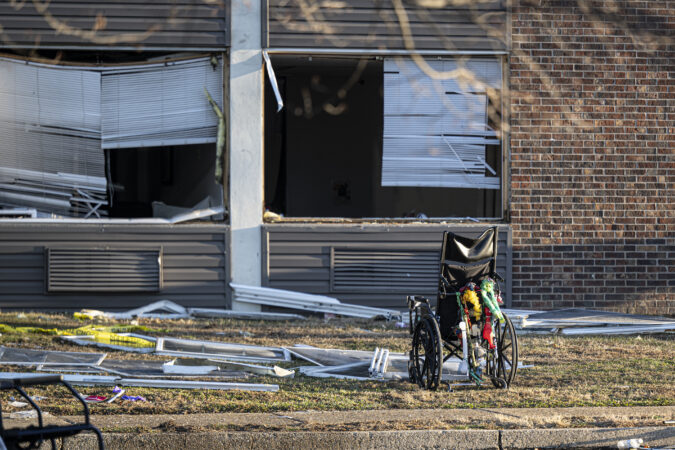
    The Bristol Township nursing home, where an explosion last month killed three people, topped a list of nursing homes fined in Philadelphia, Chester, Delaware, Montgomery and Bucks County, according to Centers for Medicare & Medicaid Services (CMS) data.

    The facility was fined a total of $418,000 for two sets of violations in 2024 when it was known as Silver Lake Healthcare Center. The nursing home was renamed Bristol Health & Rehab Center last month, following an ownership change shortly before the explosion.

    Six-figure penalties are not uncommon in the region. More than 22% of the 85 facilities fined had penalties greater than $100,000. The violations cited concerns ranging from noncompliant fire extinguishers to life-threatening hazards, such as allowing a resident to overdose on illegal narcotics.

    Accela Rehab And Care Center at Springfield in Montgomery County had the most citations for health deficiencies in the Philly-area — 122 total.

    Edenbrook of Yeadon in Delaware County had the most fire safety violations with 60.

    Pennsylvania regulators inspect nursing homes annually to ensure compliance with state requirements and once every 15 months for compliance with federal regulations, said Neil Ruhland, a spokesperson for the Pennsylvania Department of Health.

    The amount of a fine depends on the severity of a violation, with bigger fines when people are harmed; the number of residents impacted by the violation; and how long the facility was out of compliance.

    Nursing homes cited for deficiencies are required to develop a plan of correction, which is reviewed and monitored by the state. If the facility continues to be out of compliance, it may face penalties, including fines and ultimately could be terminated from Medicare and Medicaid, though that’s rare.

    Here’s a look at federal fines and citations at nursing homes across Southeastern Pennsylvania since 2023, according to CMS.

    window.addEventListener(“message”,function(a){if(void 0!==a.data[“datawrapper-height”]){var e=document.querySelectorAll(“iframe”);for(var t in a.data[“datawrapper-height”])for(var r,i=0;r=e[i];i++)if(r.contentWindow===a.source){var d=a.data[“datawrapper-height”][t]+”px”;r.style.height=d}}});

  • Trump’s message to politically active mothers: Stay home, or your children will suffer the consequences

    Trump’s message to politically active mothers: Stay home, or your children will suffer the consequences

    The first time the police arrested me, in 2011, I expected it. We were Occupy Philadelphia, we were doing a sit-in at the Comcast lobby. Of course, they led us out in cuffs.

    The second time, I didn’t see it coming. Cops stormed the Occupy encampment, driving us into the street. They trapped us with barricades, making their subsequent dispersal orders a physical impossibility.

    Then, they arrested us illegally for our supposed failure to comply, hauling us all to jail. The experience was shocking. Naively, I had thought that attempted compliance would spare us arrest that day.

    My shock at the time seems quaint now. In the decade that followed, Philadelphia police at mass protests showed an increasing disregard for their supposed rules, the law, and our bodies.

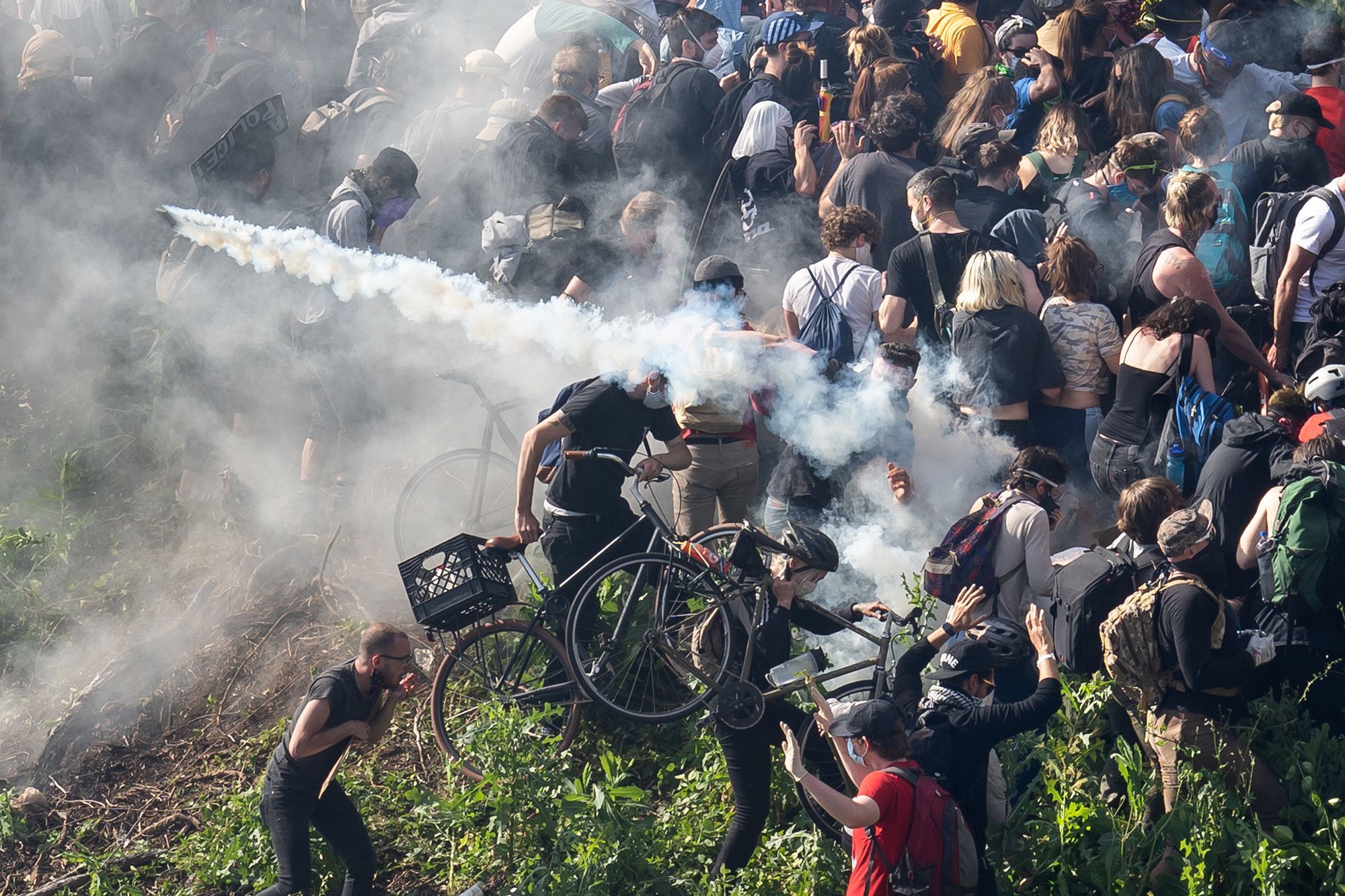
    Tear gas is fired at protesters on I-676 on the third day of Philadelphia protests in response to the police-involved death of George Floyd in Minneapolis, in June 2020.

    During the 2018 Abolish ICE protests, they bruised us and destroyed our belongings. In 2020 — as we protested George Floyd’s murder — they tear-gassed nonviolent crowds, often also shooting at us with potentially lethal baton rounds.

    Those 2020 marches were the last mass protest I felt able to take part in, not out of a sense of self-preservation, but because we had begun to try and start a family. There is no proving that the sudden, heavy bleeding I experienced immediately after the gassings was a miscarriage. No proving that my inability to conceive in the following seven months had any relation to the gas. I’ll never know. What I do know: There is ample evidence demonstrating these chemical weapons to be abortifacients and hormonal disruptors.

    When we did finally manage conception, I feared too much for my pregnancy to attend mass protests and risk that gas again. I’d spent my entire adult life organizing and attending political demonstrations; it felt like a major part of my vocational identity had been stolen from me.

    After giving birth in 2021, I knew from my Occupy years that even perfect compliance could not protect me from arrest and detention. I was breastfeeding, and my underweight infant routinely rejected offers of formula. I couldn’t risk the possibility of separation or a tainted milk supply.

    Then another pregnancy, another birth, another child dependent on breast milk. Mass protest faded even farther into the rearview mirror.

    As the second Trump administration implemented textbook fascist practices and dissenting protests became increasingly vital, I agonized about my political responsibilities, but once again stayed home. My children are so young, the youngest still nutritionally breastfeeding. I still don’t feel comfortable risking even a few days’ disappearance in jail, or tear gas-tainted milk supply.

    As the previous week’s events made clear, birthing parents and primary caretakers — a population consisting mostly of women — are increasingly in a position in which we must make impossible decisions about exercising our right to protest.

    Last Wednesday, in Minnesota, U.S. Immigration and Customs Enforcement agents shot Renee Good in the face. Eyewitnesses report that Good — a mother who had just dropped her 6-year-old off at school — received conflicting orders from ICE agents. “Get out of here,” one agent reportedly told Good. When she attempted to comply, another agent fired three shots into her car, ending her life.

    Demonstrators protest outside the White House in Washington, Saturday, Jan. 10, 2026, against the U.S. Immigration and Customs Enforcement agent who fatally shot Renee Good in Minneapolis.

    Let’s be clear: Even if Good had violated officer orders, there would be no excuse for this summary execution. Video clearly shows she posed no physical threat to any of the agents; there can be no justification for this apparent murder by agents of the state.

    I highlight her compliance not to suggest that her life should have depended on it, but to emphasize the reality that neither whiteness nor obedience protects against violent state repression. This has always been true, but we have entered an era where agents of the U.S. Department of Homeland Security and ICE act with a brazen disregard for human life, most especially the lives of not only targeted immigrant minorities but also protesters decrying this Trumpian ethnic cleansing campaign.

    These rogue agencies now treat constitutionally protected, nonviolent political speech as immediately punishable by violence, by chemical weapon, and even by death.

    The risks of protest for birthing parents and primary caretakers of young children are disproportionately high. We must fear not just for our bodies, but for our pregnancies, and the continued physical and emotional safety of our kids.

    Many of us who are politically active are increasingly forced to make impossible choices between the civic action this moment demands and our sense of responsibility to the vulnerable children who depend on us.

    The image of Good’s blood on an airbag next to a glove compartment bursting with children’s stuffed animals is a stark reminder of the reverberating familial impact of a caretaking mother’s death, and the horrors this rogue presidential regime is only too happy to inflict on dissenters — especially dissenting women.

    “Fucking bitch,” mutters one of the agents — very possibly the shooter — as he surveys the deadly wreckage. In their eyes, it seems, unruly women earn themselves an instant death sentence.

    Whatever the Trump regime’s excuses, however, Renee Good acted legally and on principle. She chose to stand up to the fascists, to stand up for her neighbors. Her civic virtue cost her her life, and cost her child a mother.

    Many gather along Market Street to show their support for Renee Good and to protest against ICE in Philadelphia, Pa., on Saturday, Jan. 10, 2026.

    Illegal, violent repression of political opposition chills all political opposition speech, of course. When we are responsible for the care of the very young or other extremely vulnerable people, however, the effect compounds. Caretakers fear not just for our lives and freedom, but for how deeply and immediately our children might suffer in our absence. We stay home from the protests we might otherwise attend (and are blamed for our “irresponsibility” when we don’t).

    As a result, more and more childbearing-age women find ourselves having to weigh especially horrific possibilities when considering participation in the critically important speech that is a public political demonstration. And as the tragic killing of Good shows, these fears are not unfounded.

    The Trump regime, meanwhile, has repeatedly affirmed this killing as justified. Their message to politically active mothers like me is clear: Stay home, or your children will suffer the consequences. It is a gendered threat, and they know it.

    At the same time, Trump and Homeland Security Secretary Kristi Noem overplayed their hand. Their draconian approach has backfired, emboldening a wide swath of vulnerable people to take to the streets and militantly resist ICE occupation.

    Fox News now complains of “wine moms” using “antifa tactics.” A Native American mother at home with her baby shelters an immigrant DoorDasher from kidnappers. Somali aunties take to the streets of Minneapolis to hand out sambusas to protesters. DHS weakly complains about parents taking their children along to marches. Moms in Minnesota are guarding their kids’ schools from ICE and organizing mutual aid efforts, like grocery delivery to immigrant families.

    Where the Trump regime sought to frighten a populace into cowering submission, they have succeeded in radicalizing whole communities — even and especially the vulnerable — into militant action. They sought to instill fear; they have instead inspired righteous fury.

    A sign for Renee Good, who was fatally shot by an ICE officer in Minneapolis earlier in the week, is seen on the ground alongside candles as people gather outside the U.S. Immigration and Customs Enforcement facility Friday, Jan. 9, 2026, in Portland, Ore.

    The women they tried to banish to the kitchen have taken to the streets and to other acts of resistance, joining a host of vulnerable people with every reasonable excuse to avoid the fray.

    “Hope has two daughters,” wrote St. Augustine of Hippo. “Their names are Anger and Courage.”

    Hope is a mother, it seems. And she is introducing DHS to her kids.

    Gwen Snyder is a professional organizer and longtime Philadelphia activist.

  • We’d be so much better off if Kamala Harris had been elected president

    We’d be so much better off if Kamala Harris had been elected president

    My late father was a high school teacher and basketball coach who learned a lot about the world around him during his 81 years. I’ll never forget how, when he’d hear me grousing about what could have been, he would always give me a look and sternly warn, “Don’t look back.”

    I’ve come to appreciate how wise his words were, but let’s face it, sometimes we don’t need wisdom — we need relief.

    Barely a few weeks into Year Two of Donald Trump’s second term, I can’t help but shake my head when I think about how much better off America (and the world) would be if Kamala Harris had won the presidency.

    She wasn’t a perfect candidate. Far from it. But once in the White House, I have no doubt she would have led the country with dignity and integrity, values currently in short supply inside the Oval Office.

    Under President Harris, the U.S. would not have invaded Venezuela and kidnapped its president, threatened to annex Greenland “the hard way,” or alienated our Canadian neighbors into boycotting American products and selling their Florida vacation homes. Rather than flirting with blowing up NATO, we would be working with our European allies to pressure Russia into ending its war with Ukraine.

    Instead of bringing back American imperialism — something nobody voted for — Harris would be focused on improving the lives of everyday Americans.

    She would be implementing policies such as allowing Medicare to better cover the cost of home care, and working with Congress to extend insurance subsidies to help keep healthcare affordable for millions of people. Meanwhile, the inflation that bedeviled her predecessor would continue to ease, untroubled by haphazard tariffs that are no less than a tax on every U.S. family.

    Elon Musk’s Department of Government Efficiency would be a ketamine-fueled figment of the tech billionaire’s imagination instead of the cause of almost 750,000 deaths — most of them children — due to the dismantling of the U.S. Agency for International Development. At home, the roughly 300,000 federal workers who left or lost their jobs because of DOGE would be serving the public, instead of leaving gaps in crucial agencies such as Social Security, the U.S. Department of Veterans Affairs, and the Federal Aviation Administration.

    You know who wouldn’t have a job under a Harris administration? The thousands of U.S. Immigration and Customs Enforcement agents who will be hired, to the tune of $30 billion, over the next few years. ICE would be targeting criminals in the country illegally, not inflicting a reign of terror on the American people. Renee Nicole Good, a 37-year-old mother of three and U.S. citizen, would still be alive instead of gunned down by an ICE agent in Minneapolis.

    FBI agents across the country would be focused on solving and preventing crimes, instead of thousands being reassigned to immigration enforcement. National Guard members would be with their families, not picking up trash in Washington, D.C., or standing around Portland, Ore., waiting for something to happen.

    Kamala Harris during an interview while shopping at Penzeys Spices on Market Street in September.

    Harris, a former California attorney general, would have kept the long-standing tradition of an independent U.S. Department of Justice, instead of turning it into the president’s law firm and using it to go after political enemies. She would have assembled a cabinet stocked with competent and experienced members, one likely as diverse as America. People like Kash Patel and Pete Hegseth would be far away from power, hawking “vaccine reversal” pills and defending war criminals on Fox News, respectively.

    Where would Trump himself be under a Harris presidency? In the same mess of trouble he had gotten himself into.

    Special counsel Jack Smith would be zealously pursuing the case against Trump for illegally retaining classified documents and plotting to overturn the 2020 election. Charges that Smith has said he could prove beyond a reasonable doubt.

    The once and forever former president would not be $3 billion richer thanks to shady crypto deals and other business ventures he has undertaken since returning to Washington. Neither would he be absentmindedly staring out where the East Wing of the White House once stood and imagining his sprawling ballroom, plastering his name on the Kennedy Center, nor costing taxpayers millions to outfit the $400 million luxury jetliner Qatar gave him.

    If anything, he might have found himself with new indictments if he had tried to steal the 2024 election, and the MAGA crowd staged another Jan. 6, 2021-style revolt in protest of a Harris victory. No doubt Harris’ attorney general would have learned a lesson from the previous administration and would not drag his feet, as former Attorney General Merrick Garland did in holding Trump accountable.

    Eventually, though, I’m convinced things would have settled down, and American politics would have gone back to being boring again — like they used to be. Fox News commentators would shift back to their old ways of complaining about Harris’ laugh and occasional lapses into word salad.

    As things calmed down, so, too, would the excitement surrounding her historic win as the realities of governance asserted themselves.

    Signing a bill to restore abortion rights nationwide would have been high on Harris’ agenda, reviving the issue that long fueled a part of the electorate. The culture war over GOP-manufactured concerns about men taking over women’s sports would rage on, never mind that trans people make up only about 1% of the population. So would the debate over the merits of diversity, equity, and inclusion efforts.

    On immigration, Harris would be caught between her party’s activist base and trying to limit people from seeking asylum at the southern border. It’s one thing for Harris to have issued her famous edict telling immigrants, “Don’t come,” and a whole other thing to take substantive steps to stem the flow of people desperate to enter the U.S.

    With Trump out of office, America would continue to be a bulwark for democracy, but the threats of authoritarianism, antisemitism, and racism would not go away. Neither would the voter malaise and congressional dysfunction that have given rise to people like Trump and his supporters. But Harris would fight the good fight for everyday Americans.

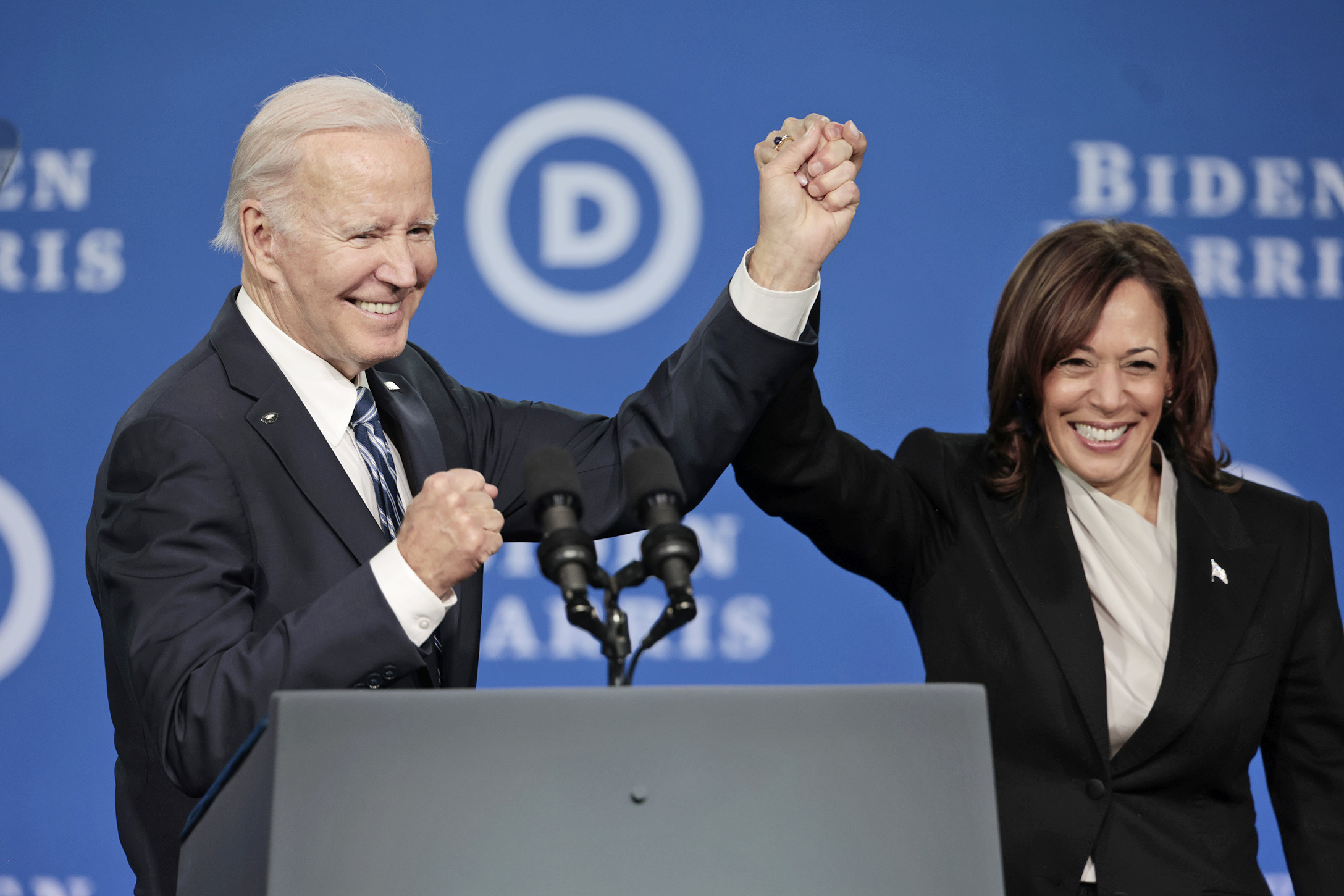
    President Joe Biden and Vice President Kamala Harris wave to the audience after addressing the DNC Winter Meeting at the Sheraton Downtown in Philadelphia in 2023.

    For a few days last month, I’d allowed myself to feel a tad bit optimistic, sensing that America had turned a corner. Maybe it was the eggnog, but the upcoming midterm elections had me feeling a little hopeful. So did the public opinion and court decisions pushing back against Trump’s excess and overreach. And Congress showing a spine and demanding accountability in releasing the Jeffrey Epstein files. If ever there were a year Rep. Jasmine Crockett could win a U.S. Senate race in Texas, 2026 felt like it could be it.

    But then, Trump dropped bombs on an Islamic group in Nigeria on Christmas Day and followed that up by sending troops into Venezuela. Now, he’s staking claims to that country’s oil reserves while looking around to see which nation he can storm next. Will it be Mexico? Colombia? Iran? Greenland? I don’t think even he knows.

    Trump isn’t bound by conventional mores or the Constitution. He’s not restrained by Congress or the U.S. Supreme Court. As he told the New York Times recently, the only thing that can stop him is his own mind. His “own morality,” which is downright scary considering his track record.

    And yet, even as I am knocked down by the reality we’re facing. I can’t help but stand up. My dad was right to warn about not looking back, but in imagining the leadership of someone who is more than worthy of the office of the presidency, I like to think I’m looking forward.

    And maybe I am.

  • Mohamed Toure once transformed Pleasantville’s football team. Now, he’ll play for a national title.

    Mohamed Toure once transformed Pleasantville’s football team. Now, he’ll play for a national title.

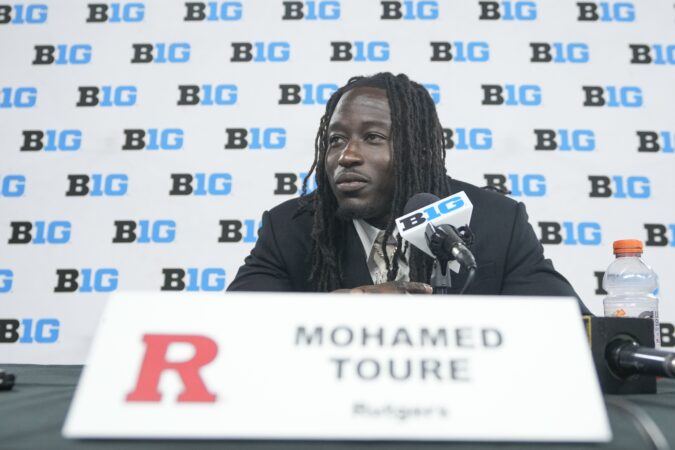
    Mohamed Toure may have the chance to lift a trophy in the final game of his seven-year college football career.

    Toure, a native of Pleasantville, Atlantic County, will take the field alongside his Miami teammates as the 10th-seeded Hurricanes seek their first national championship since 2001 against top-seeded Indiana on Monday in Miami (7:30 p.m., ESPN).

    In his first year at Miami, Toure has been the anchor of a defensive unit that has allowed 14 points per game, ranking fifth in the Football Bowl Subdivision.

    Toure transferred to Miami in May to use his final year of graduate eligibility after playing three seasons in six years at Rutgers. He redshirted, played through the pandemic-shortened 2020 season, and suffered two ACL tears while with the Scarlet Knights, which makes Toure a seventh-year player.

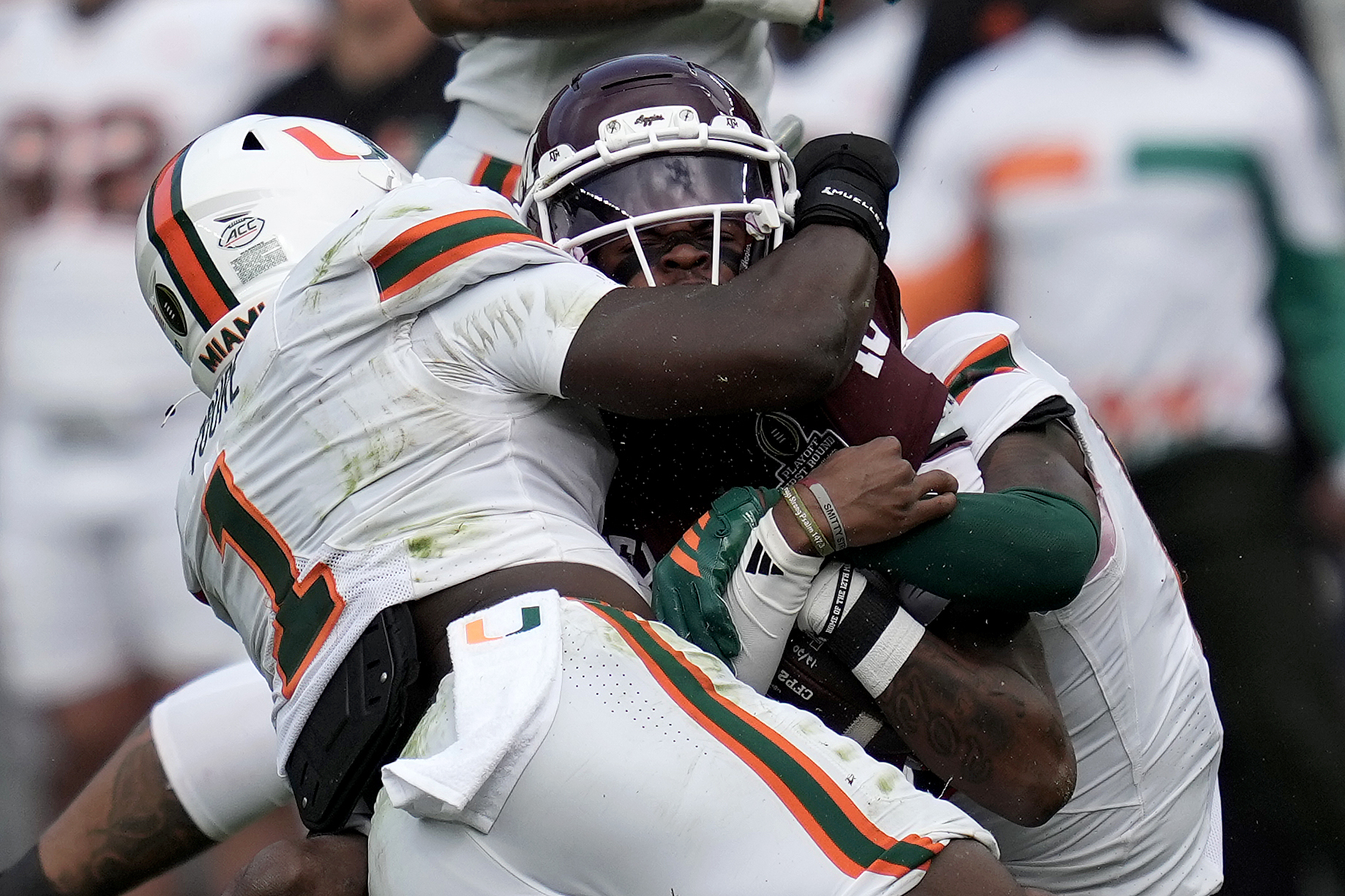
    Texas A&M quarterback Marcel Reed is tackled by Miami linebacker Mohamed Toure on Dec. 20.

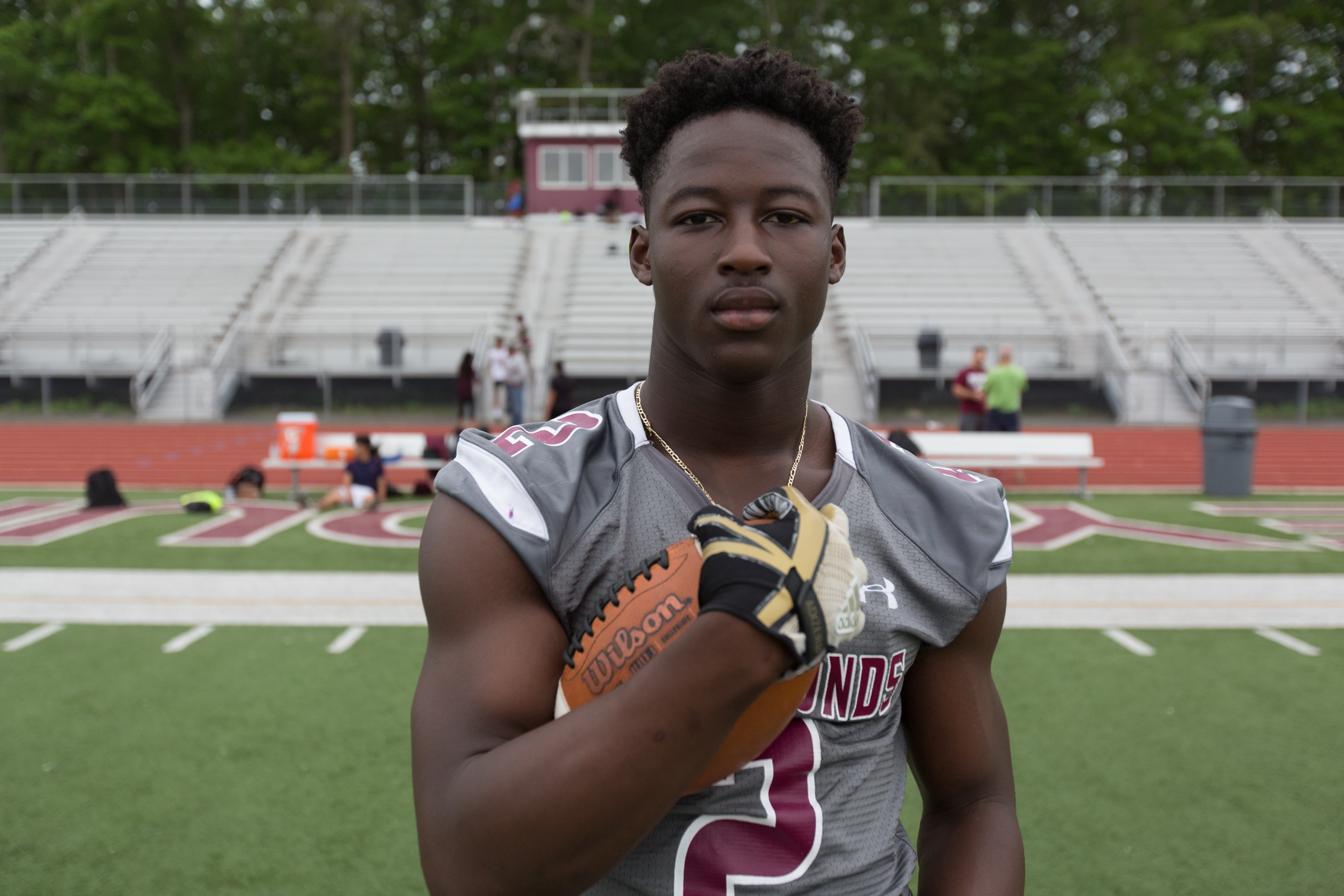
    But before Rutgers and Miami, Toure was a star running back and linebacker at Pleasantville High School.

    “To see him play at a high level, and for them to be playing where they’re at right now, it’s just surreal to watch,” said former Pleasantville teammate Elijah Glover, now the school’s head coach. “It’s something I couldn’t imagine when we were 10th graders.”

    Jersey journey

    Toure and Glover, who played college football at Villanova, were freshmen when Chris Sacco took over as head coach for the Greyhounds in 2015. Pleasantville had won just three games over the previous five seasons before Sacco took over, including winless campaigns in 2010, 2011, 2012, and 2014.

    The Greyhounds went winless again in Sacco’s first season but improved the following season to 4-6. In 2017, the program posted a 7-3 record behind a breakout season from Toure, playing both running back and linebacker. Glover recalls Toure’s 95-yard game-winning fumble return in overtime against Buena Regional High as one of the many moments when he realized his teammate had a future in football.

    “It didn’t happen by accident,” Glover said. “That was the first game of the season. Junior year, he went crazy. It was just like, ‘He’s for real.’”

    Mohamed Toure played running back and linebacker at Pleasantville High School.

    In his senior season, Toure led the Greyhounds to an 8-3 record, rushing for 981 yards and 11 touchdowns, while adding 69 tackles and five sacks on defense. He was named to the all-South Jersey first-team by The Inquirer in 2018.

    The personal accolades for Toure reflected an improbable turnaround for Pleasantville’s football program. Sacco, who is now the athletic director at Hammonton High School, said Toure’s leadership and commitment to Pleasantville was a crucial part of the program’s transformation.

    “It would have been easy for him, as the type of player that he was, and is, to leave and go to an established program,” Sacco said. “To stay and build something, I always said, ‘it’ll mean more to you, especially down the road. It’ll mean more to your friends and your community. It’ll mean more to the school and this program.’ And I think when you see what he did by staying and essentially helping transform a program, you don’t get much better leadership than that.”

    Road to Rutgers

    Toure’s teammates and coaches at Pleasantville knew that the linebacker would end up playing college football at a power conference school. Toure made explosive plays on the field, but he was also a force off it.

    “You definitely could see it, just in the weight room,” Glover said. “He was doing stuff that none of us could do.”

    Sacco said the recruitment process for Toure started slowly, something the former head coach attributed to the program’s losing reputation. But it picked up during Toure’s junior year, as he led the Greyhounds to a winning season for the first time in a decade.

    Toure was ranked as a three-star recruit and had 17 scholarship offers before he decided on Rutgers. He took a redshirt year in 2019, but in the pandemic-shortened 2020 season, Toure led the Scarlet Knights with 4½ sacks in their nine-game campaign.

    He built on that performance with another 4½-sack season in 2021.

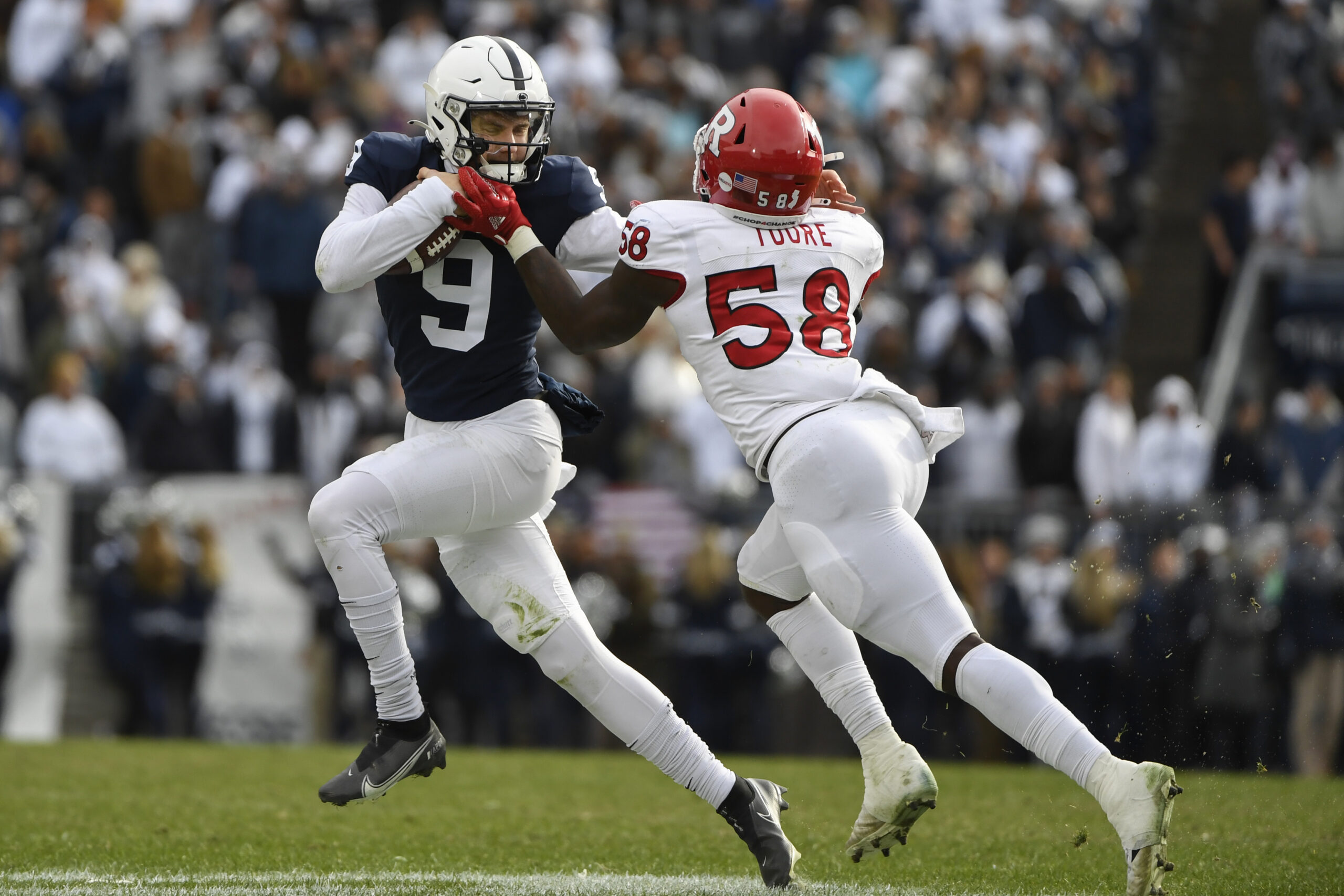
    Mohamed Toure, a former Rutgers linebacker, recorded 93 tackles and 4 1/2 sacks in 13 games in 2023.

    Toure was set to be a key piece for new Rutgers linebackers coach Corey Hetherman in 2022, but his season was derailed by an ACL tear in the spring. He returned for the 2023 campaign, serving as a team captain. Toure recorded 93 tackles and 4½ sacks in 13 games that season.

    Toure planned to finish out his college career at Rutgers in 2024 while playing alongside his younger brother Famah, a junior wide receiver. But another preseason ACL tear led Toure to change his plans. He entered the transfer portal after the 2024 season, looking to use his final year of eligibility elsewhere.

    “Both the situations were very unfortunate, but I also think that he utilized that,” Sacco said. “Instead of feeling sorry for himself, he just refocused that energy into, ‘This is what I need to do to get back and better.’”

    Toure reunited with Hetherman, his former coach at Rutgers, in Miami. Hetherman spent the 2024 season as the defensive coordinator in Minnesota before joining Mario Cristobal’s staff in the same role ahead of the 2025 season.

    Toure, who leads the Hurricanes with 73 tackles, has been a key piece of Hetherman’s defense.

    Pleasantville power

    Toure stepped into a bigger spotlight as Miami made its improbable run to the national championship game.

    The 10th-seeded Hurricanes became the first double-digit seed to win a game in the playoff with a 10-3 road defeat of No. 7 seed Texas A&M. Without Toure, it could have been the Aggies moving on.

    Toure recorded eight tackles and kept Texas A&M’s Rueben Owens from catching a potentially game-tying touchdown pass with 28 seconds remaining. Toure delivered a vicious hit on the goal line to break up the pass, and the Hurricanes secured the win two plays later.

    Miami then pulled off a 24-14 upset against No. 2 seed and defending national champion Ohio State in the Cotton Bowl quarterfinal. The Hurricanes beat No. 6 seed Ole Miss, 31-27, in the Fiesta Bowl semifinal, with Toure recording four tackles and a sack.

    Their path through the bracket has led the Hurricanes back to Miami, where they will have an opportunity to compete for a title on their home field. While the Hurricanes will likely have the advantage of a home crowd on Monday, Toure will also have a number of fans cheering for him in Atlantic County.

    “It means a lot to the community,” Sacco said. “I know it means a lot to the younger kids to be able to, look at the school and say there’s somebody playing on Monday night for the national championship that went here, and recently.”

    For Glover, Toure’s steps to the national spotlight are a chance to show the high schoolers on his team, including Toure’s youngest brother Sekou, that effort and dedication can take them anywhere, whether in football or in life.

    “It’s definitely something I’m using just to let them know, like, ‘Yo, it’s possible if you just put the work in and stay down and let things end up how they’re going to be for you,’” Glover said. “Everybody won’t be a Division I recruit, that’s just impossible. But they can end up anywhere they want to be.

    “That’s really the message, besides it being Miami or football. It’s really like, ‘You could go on a big stage of anything you want in this life if you just follow these steps.’”

  • A teen couldn’t find her mom’s 30-year-old demo tape. The internet stepped in.

    A teen couldn’t find her mom’s 30-year-old demo tape. The internet stepped in.

    The long-lost demo tape had always held a certain mythos in Charlotte Astor’s imagination.

    For years, the Cherry Hill teen had heard stories about it, recorded about 30 years ago by her mother’s very loud, very short-lived, teenage hardcore band, Seed.

    Shannon Astor, now 47, had been a vocalist for the group, just 14 or 15 years old, at a time when female representation within the genre was rare. Within a year or so, the group had disbanded — but before it did, the group, which typically practiced in a member’s parents’ basement, recorded a single demo. There had been only a few dozen copies produced back then, and they had all sold, scattering out around the South Jersey area.

    For Charlotte, the tape became a kind of white whale — a relic of her mother’s hard-charging past, something the teen occasionally scoured the web for, to no avail.

    She’d never heard her mother’s band. And she wanted to. Badly.

    “Ninety-five percent of what I have about my mother is in the stories she tells me,” says Charlotte, 16, a junior at Cherry Hill High School East.

    But a demo was something tangible. Something concrete.

    “A demo,” she decided, “I can find.”

    And so one night last spring, that’s what she set out to do.

    She had little to go on: A rough estimate of when the demo would have been released (1993-94), a general geographic location (South Jersey), and a single lyric (“In the wind of the AM shadows cling to nearby trees as season shifts to satisfy the light from above”).

    “I have been looking for this tape for 4 years,” she wrote in an appeal to her 1,000 or so Instagram followers, “… and it would mean the absolute world to me to find this tape.”

    But something about her search — this desire to connect with a parent, to bridge a gap three decades wide — resonated. It became, within the tight-knit confines of the hardcore music scene, a united pursuit.

    At an age when most teenagers couldn’t get far enough away from their parents, here was one launching a quixotic quest to better understand hers.

    A senior class photo of Shannon Astor in the 1996 Cherry Hill High School East yearbook. Now 47, Shannon was previously in a hardcore band called Seed.

    Soon, strangers from across the country were digging through old boxes in basements, or tagging old running buddies from Jersey’s 1990s hardcore scene in social media posts. Some reached out to old producers from the area, wondering whether the demo might have made its way into some dusty studio corner.

    Messages poured in, too — hundreds of them — with suggestions ranging from the plausible to the outlandish. Had she tried getting in touch with Bruce Springsteen’s people? You never know what the Boss might have stowed away in some mansion closet.

    “I suddenly had communication with so many people who I thought I would never in my life have any connection with,” Charlotte said. “California to Jersey, and everything in between.”

    The lead singer of a well-known Jersey straight-edge band of the era, Mouthpiece, joined the search, messaging Charlotte after others reached out to him about the tape. (He vaguely remembered her mother, Shannon, but not the band.)

    Much of the outside help, Charlotte notes, has come from the hardcore community.

    Indeed, much of Charlotte’s young life is rooted in the same hardcore music scene that her mother’s once was. Like Shannon before her, Charlotte spends many nights at hardcore shows around the area, photographing the scene for the magazine she self-publishes, “Through Our Eyes.” And like her mother previously, she’s a member of the “straight-edge” hardcore community, a group with a shared collection of ideals that includes abstaining from drinking or drugs. (Her first flirtation with teenage rebellion came when she snuck out of the house one night to go to her favorite record store.)

    And though her mother does not necessarily share Charlotte’s zeal for locating the old tape — “I’m not waiting for some garage band demo to be unearthed,” Shannon joked — she understands what it would mean to her daughter to have it.

    “It’s special to me only because of how much she needed to hear it,” said Shannon. “I’m just so pro-Charli and everything that she does … But this is her journey, and something that was intrinsically important to her.”

    To those in the scene, meanwhile, the response has been very hardcore.

    “A bunch of people banding together to help this random girl find her mom’s thing,” said Quinn Brady, 19, of New York, and a friend of Charlotte’s. “Most people assume that hardcore people are not very nice or friendly. [But] there’s this inherent kinship. It connects people across the nation in a way that not a lot of other genres of music do.”

    A recent selfie by Charlotte Astor (right) and her mother, Shannon Astor, taken at Reading Terminal Market.

    Those outside the hardcore scene have been no less enthralled, however.

    In December, after NJ.com picked up the story, further extending its reach, a documentary filmmaker reached out about the possibility of doing a film on her quest.

    Last year, after posting in some “old-head” hardcore Facebook groups about the tape, Shane Reynolds — a member of the Philly-based hardcore band God Instinct — stumbled upon what appeared to be the most promising lead yet.

    “I found the guy who allegedly made the demo,” Reynolds said.

    But when she got the man on the phone, Reynolds says, it proved to be a dead end.

    The closest Charlotte came was last year, not long after she first posted about the demo on Instagram. Her mom’s former bandmate in Seed, convinced he must have kept something from that period, recovered from storage an old cassette that featured a recording of a single Seed practice session.

    Charlotte took it home, pushed it into the stereo in her bedroom. She stared at the ceiling as the tape began to play and 30 years fell away.

    For the first time, she could put a sound to the stories she grew up hearing.

    “The first thing I heard was a few seconds of my mom talking,” Charlotte said. “That’s my mom, when she was 16. I’m listening to a clip of my mother, listening to her at the same age I am.”

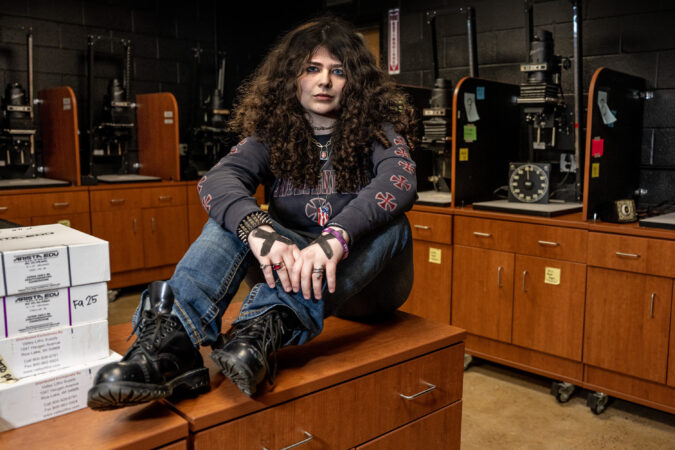
    Charlotte Astor, a junior at Cherry Hill High School East, and her vintage 35mm film Nikon camera in the school’s photography classroom.

    Still, that small taste has only reinforced her devotion to unearthing the actual demo.

    Charlotte remains realistic about her odds of finding it. No, it’s not likely to be found in some radio station’s studio. And no, Bruce Springsteen is almost certainly not in possession of a three-decades old demo tape from her mother’s teenage years.

    But some graying hardcore fan from the ’90s, with a penchant for hoarding and a cluttered garage?

    Stranger things have happened.

    “I have confidence — unwavering confidence — that someone has it,” Charlotte says. “And that I will get my hands on it.”

  • Villanova hits a ‘bump in the road’ after struggling with the physicality and experience of St. John’s

    Villanova hits a ‘bump in the road’ after struggling with the physicality and experience of St. John’s

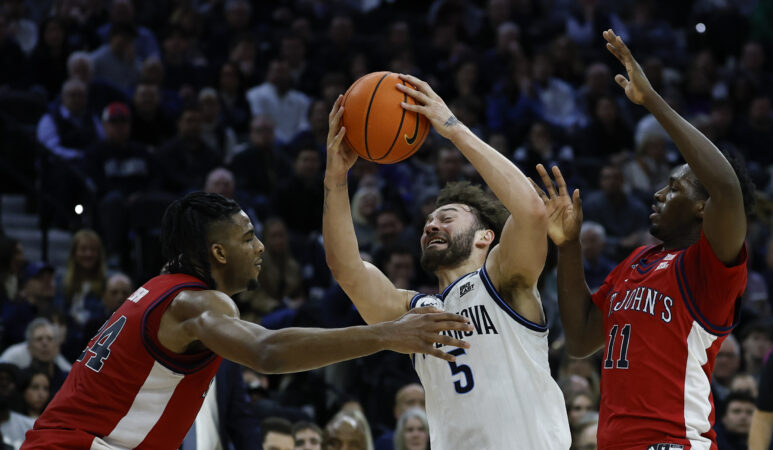
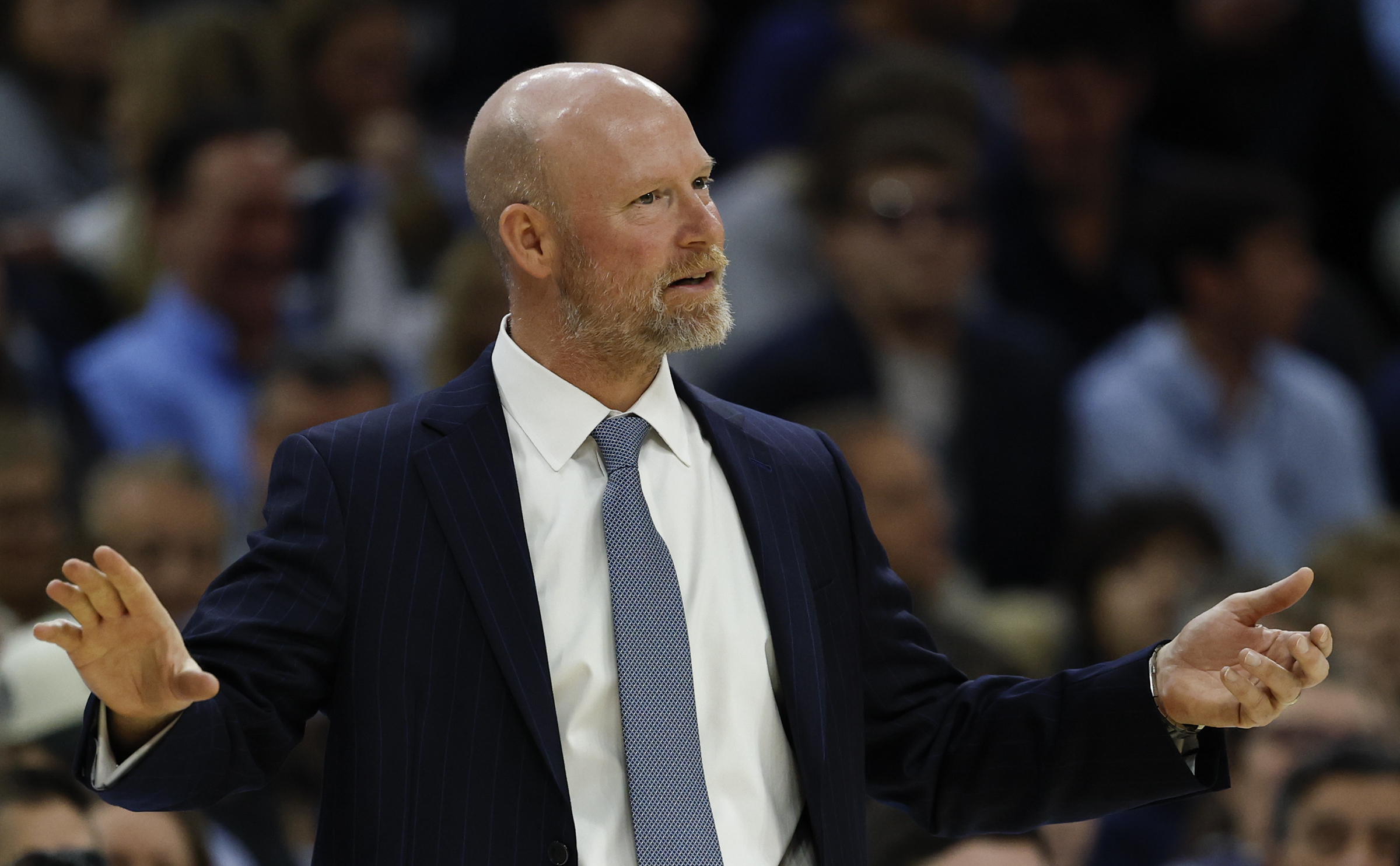
    Six minutes was all it took for the things that had to have worried Kevin Willard ahead of Villanova’s Saturday night showdown with St. John’s to make the difference.

    Villanova’s deficit at halftime was just one point, but by the time St. John’s converted the fifth Villanova turnover of the second half into a layup, the deficit was 56-39 with 14 minutes to go in an eventual 86-79 St. John’s victory.

    Some inherent disadvantages were working against Villanova at Xfinity Mobile Arena. Chief among them were the size, strength, and experience that St. John’s possesses, and the way its defensive pressure can be unrelenting. Three of Villanova’s top five scorers — Acaden Lewis, Bryce Lindsay, and Matt Hodge — are in their first or second season playing college basketball. The Red Storm, meanwhile, starts four seniors to Villanova’s one. All of that showed during a 20-4 run.

    St. John’s had 12 offensive rebounds to Villanova’s seven. Four of the 12 came during that fateful six-minute stretch. Each team had eight turnovers by halftime, but Villanova finished with 14, five during the opening six minutes of the second half, and St. John’s had just one over the final 20 minutes. The Red Storm converted those Villanova turnovers into 17 points. St. John’s had 42 paint points to Villanova’s 22.

    The youthful Wildcats eventually got back in the game and trailed by five with 6 minutes, 36 seconds left and again inside of a minute to play. But St. John’s was too big, too strong, and too experienced for Villanova to get over the hump, no matter how hard junior Tyler Perkins and senior Devin Askew — who scored 23 and 21 points, respectively — tried.

    Villanova’s lone senior starter, center Duke Brennan, a transfer from Grand Canyon, was no match for his experienced Big East counterparts. Zuby Ejiofor had 17 points and seven rebounds. Bryce Hopkins had 20 and six. Brennan was minus-14 on the night. Lewis finished with a season-low three points and a season-high six turnovers and was on the bench for the final 11 minutes.

    Lewis, who was also minus-14, looked like a freshman, which has only happened a few times this season. Hodge normally scores 10.6 points per game but was held to four. Lindsay entered Saturday scoring 15.2 points per game and scored 11, all in the second half.

    “Acaden, Bryce, Matt — freshman, freshman, sophomore — against grown men,” Willard said. “That’s why Devin and Tyler played well, because they’re grown men. They’re physical, able to play against a St. John’s where I think Acaden, Bryce, and Matt are all trying to figure out, ‘How do I play when I play against a physically dominant team?’ We’ve struggled against physically dominant teams for that reason.”

    Saturday night offered Villanova (14-4, 5-2 Big East) a chance for its first real signature win. Instead, it showed, for now, where the Wildcats are. They have beaten teams projected to make the NCAA Tournament like Wisconsin and Seton Hall, but they have been knocked off by the three big dogs on the schedule so far: BYU, Michigan, and now St. John’s. Villanova is where it is — ranked 25th in the NCAA’s NET rankings and 27th at KenPom as of Saturday — in large part because it has beaten the teams it’s supposed to beat.

    Villanova entered Saturday as the 21st team in ESPN bracket guru Joe Lunardi’s projected NCAA Tournament field. The best of all the No. 6 seeds. St. John’s, meanwhile, was 26th. Saturday should at least cause a flip-flop.

    “You’ve got to sit back as a coach every once in a while and realize there is a process to this,” Willard said. “Sometimes you’ve got to play bad and go back and watch film and kind of … we did some things in the second half late, defensively, that made no sense.”

    It is not a talent thing, Askew said. Villanova has the players, but it needs to play in games like Saturday’s to get better.

    “It’s an experience thing,” said Askew, a sixth-year senior who is averaging 18 points off the bench in his last three. “As they play more games in atmospheres like that, they’ll get better. … They just have to get used to it and they will.”

    Villanova coach Kevin Willard believes his team is still learning to deal with physical opponents.

    The good part for Villanova is that very few teams in the Big East are built to hurt Villanova the way St. John’s can.

    The Wildcats are back at the Finneran Pavilion on Wednesday night against Georgetown, which is 1-6 in the Big East. After that is another big test — a road game at No. 3 UConn next Saturday afternoon that will give Villanova a chance to quickly show what it learned from its step up in competition.

    “It’s a little bit of a learning process,” Willard said. “This group, they have a great attitude, they work hard. We’re going to have some bumps in the road. It’s a part of conference play.

    “We’re not at the level where we’re going to pitch a shutout. We can’t give up 50 points in the second half. We can’t give up nine offensive rebounds in the second half. We can’t come out and turn the ball over three times. That’s all part of the learning curve a little bit.”

  • Martin Luther King Jr. spoke to Philly students in 1967. These men say it influenced the rest of their lives.

    Martin Luther King Jr. spoke to Philly students in 1967. These men say it influenced the rest of their lives.

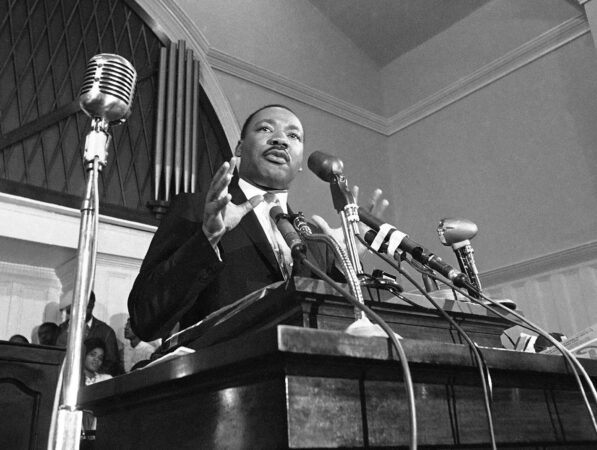
    The limousine door burst open, and the Rev. Dr. Martin Luther King Jr. stepped out onto the sidewalk in front of Dennis Kemp’s South Philadelphia school.

    Kemp was 13 that day in October 1967, a member of the stage crew and the basketball team asked by the principal of Barratt Junior High to greet the school’s surprise special guest.

    “In just about every Black household that I went into those days, there were three pictures hanging: Jesus, John Kennedy, and Dr. King,” said Kemp, now 72. “To actually meet this guy, it just blew me away.”

    King’s historic speech, made six months before he was assassinated, had a profound effect on Kemp and many of the 800 students crowded into the school auditorium.

    “What is your life’s blueprint?” King asked the students. “This is a most important and crucial period of your lives, for what you do now and what you decide now at this age may well determine which way your life shall go.”

    The community will mark the historic moment Monday, on Martin Luther King Jr. Day, with a showing of the speech in the auditorium of the school now known as Childs Elementary, then a day of service projects inside the building. One group hopes to apply to have a historical marker commemorating the visit placed outside the school.

    Kemp is glad that people still view and discuss King’s speech. Although he was a child, he sensed that he was part of something significant.

    Though nearly 1,000 students had packed into the Barratt auditorium, crowding into aisles and leaning over balconies, the room was silent save for King’s voice, Ben Farnese, then the school’s principal, told The Inquirer in 2006. In a nearby overflow room, 450 more students watched King on closed-circuit TV.

    “I took it in,” said Kemp, who was in the auditorium. “I said, ‘I’m going to keep this with me as long as I live.’”

    Charles Carter, a ninth grader who was in the auditorium, remembers the quiet.

    “Just figure — kids can be a little rowdy,” Carter said. “But we were transfixed, we were glued. We weren’t rowdy that day.”

    Jeffrey Miles, another Barratt student, had a good seat that day. He had heard a speaker was coming to school, and he was excited — he thought it might be Georgie Woods, the prominent DJ.

    After he heard King speak, he couldn’t help himself.

    “I had the end seat, and I jumped up out of my seat,” said Miles, who had turned 14 a few weeks before King spoke. “The speech was so exhilarating and so electrifying, I couldn’t control myself. He was walking down the aisle with [DJ] Georgie Woods, and I said, ‘Dr. King, can I shake your hand?’”

    King said yes. Miles grabbed his hand, which was sweaty — a detail that sticks in his mind, along with the sound of the Barratt students clapping thunderously for King.

    A belief in ‘somebodiness’

    King was in town for a “Stars for Freedom” show at the new Spectrum, opened the prior month in South Philadelphia.

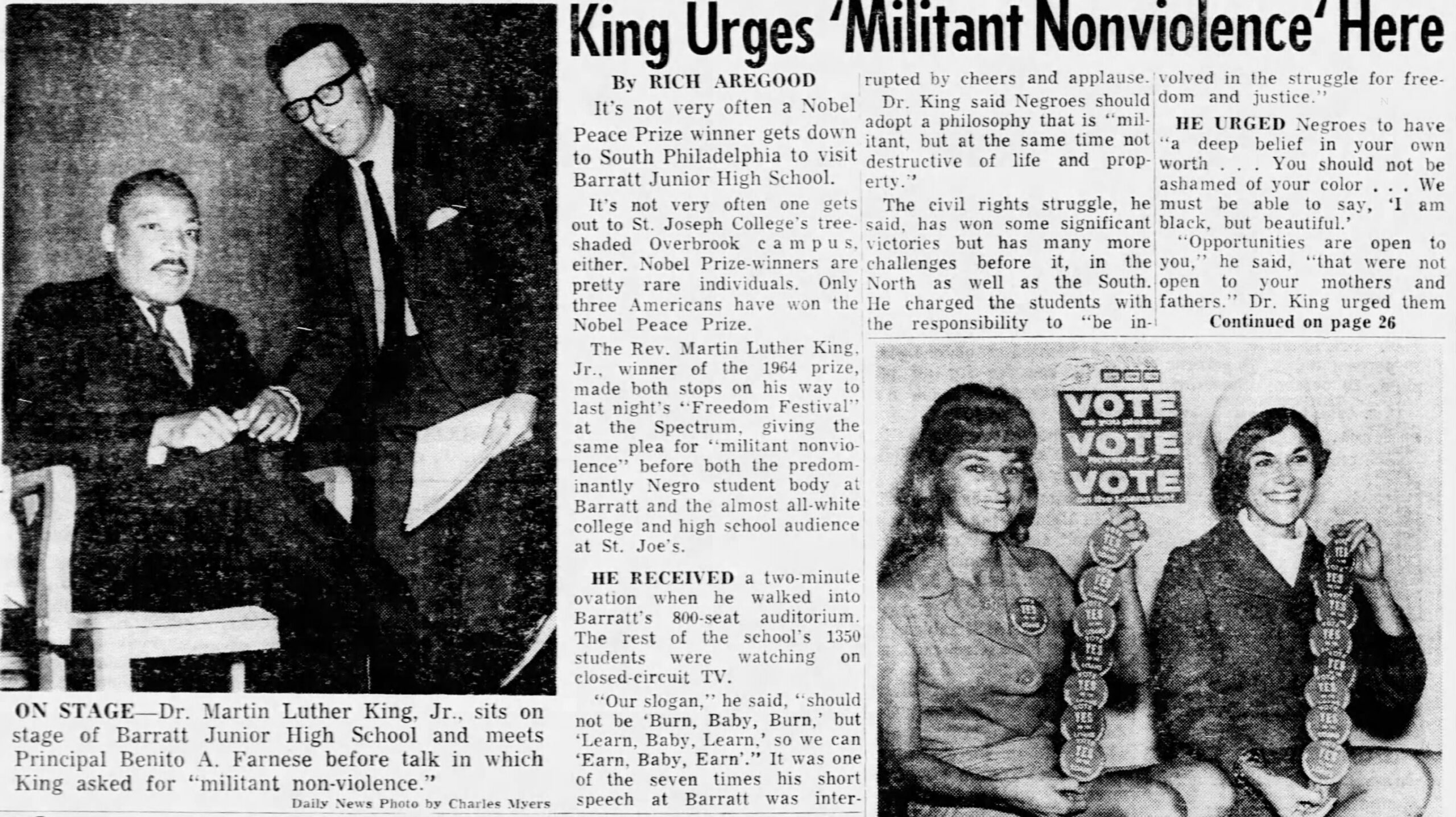
    The Philadelphia Daily News recounted Martin Luther King Jr.’s visit to Barratt Junior High in October, 1967.

    “I know you’ve heard of that new impressive structure called the Spectrum, and I know you’ve heard of Harry Belafonte and Aretha Franklin and Nipsey Russell and Sidney Poitier and all of these other great and outstanding artists,” King said. He told the students to urge their parents to attend. “And I hope you will come also, for it will be a great experience and, by coming, you will be supporting the work of the Civil Rights Movement.”

    King did not use notes, Farnese said. He spoke for 20 minutes, an address that would eventually be known as his “What is Your Life’s Blueprint?” speech.

    The Barratt students, seventh, eighth, and ninth graders, were poised to move into a time that would determine the course of the rest of their lives.

    The great civil rights figure, who had by that time already won the Nobel Peace Prize, told the young people to have “a deep belief in your own dignity, your own worth, and your own somebodiness. Don’t allow anybody to make you feel that you are nobody.”

    Take pride in your color, your natural hair, King told the students, most of whom were Black.

    “You need not be lured into purchasing cosmetics advertised to make you lighter, neither do you need to process your hair to make it appear straight,” King said. “I have good hair and it is as good as anybody else’s in the world. And we’ve got to believe that.”

    ‘Learn, baby, learn’

    King urged the crowd to set upon a path to excellence, whatever that looks like.

    “I say to you, my young friends, that doors are opening to each of you — doors of opportunity are opening to each of you that were not open to your mothers and your fathers,” King said. “And the great challenge facing you is to be ready to enter these doors as they open.”

    Kemp remembers being surprised that King came to South Philadelphia.

    “Our neighborhood was pretty poor,” said Kemp, who grew up as one of nine children in a family that struggled. “There really wasn’t too much to look forward to in our neighborhood.”

    King acknowledged the “intolerable conditions” faced by many of the children he addressed. But, he said, it was incumbent on them to stay in school, to build a good life.

    “Set out to do a good job and do that job so well that the living, the dead, and the unborn couldn’t do it any better,” King said. “If it falls to your lot to be a street sweeper, sweep streets like Michelangelo painted pictures.”

    The civil rights hero told students to commit to “the eternal principles of beauty, love, and justice. Don’t allow anybody to pull you so low as to make you hate them.”

    King, who encouraged peaceful resistance, urged “a method that can be militant, but at the same time does not destroy life or property.”

    “And so our slogan must not be ‘Burn, baby, burn,’” King said, referring to a chant that had become associated with the 1965 Watts riots in Los Angeles. “It must be ‘Build, baby, build. Organize, baby, organize.’ Yes, our slogan must be ‘Learn, baby, learn’ so that we can earn, baby, earn.

    “And with a powerful commitment, I believe that we can transform dark yesterdays of injustice into bright tomorrows of justice and humanity.”

    ‘I’ll never forget it’

    Some of the members of the Barratt class in the room that day soared: Kevin Washington, who was on the basketball team with Kemp, went on to become the first Black president of the national YMCA.

    Kemp was bright, but his family’s economic struggles weighed on him, he said. He dreamed of college, but it wasn’t in reach. He ended up leaving South Philadelphia High without a diploma, eventually earning a GED.

    He raised children, built a life working — often in maintenance. He spent time as a school basketball coach.

    After suffering medical and marital issues, Kemp fell on hard times. He spent four months without a home, sleeping in parks and at 30th Street Station.

    “Dr. King’s speech really helped,” he said. “That used to come to mind when I was on the street. I’ll never forget it.”

    Kemp rallied; he now lives in an apartment in South Philadelphia.

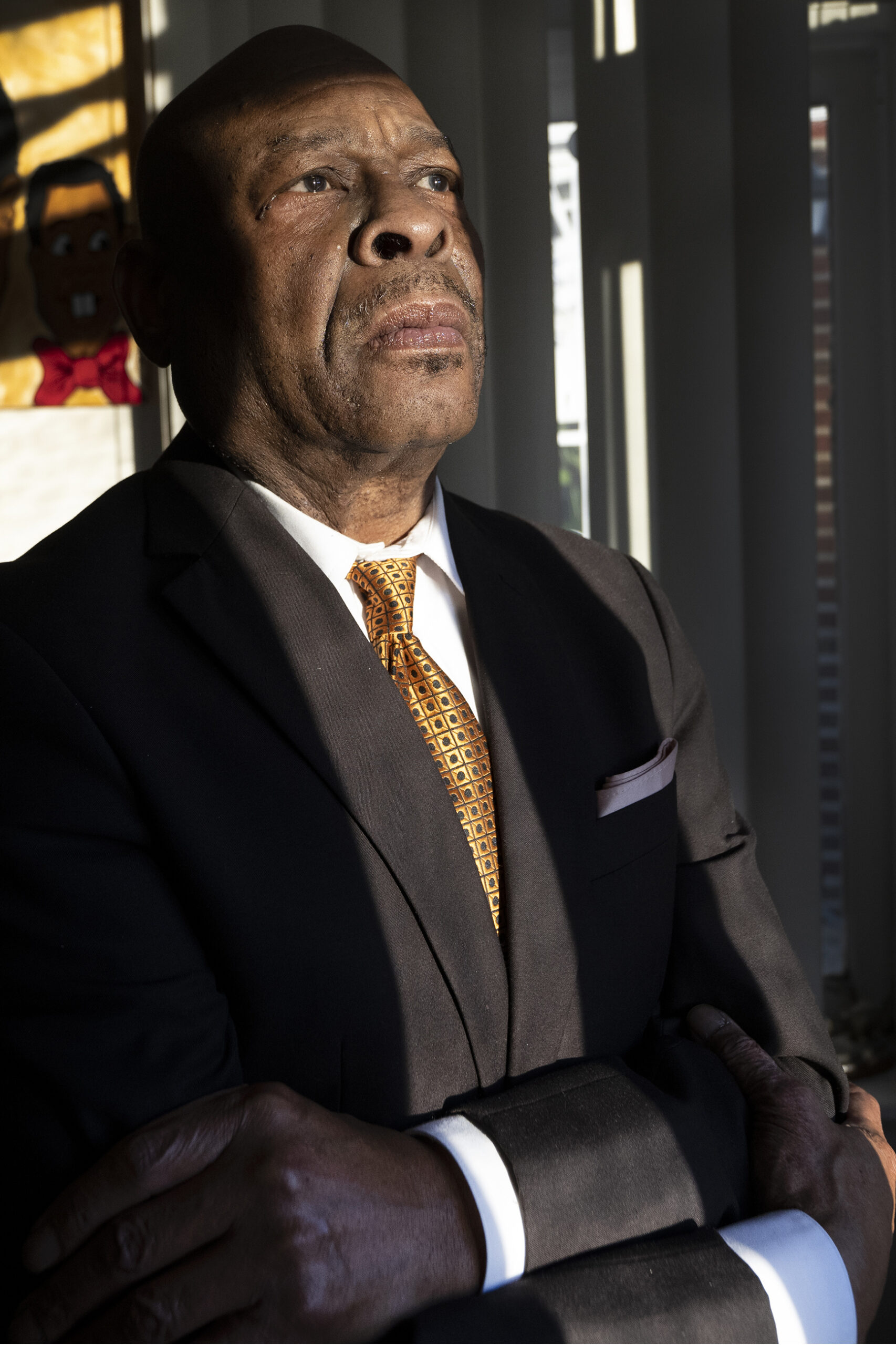
    Jeffrey Miles is photographed at his home in Philadelphia on Friday, Jan. 16, 2026. Miles was 13 in October 1967 when he shook the hand of the Rev. Dr. Martin Luther King Jr. and witnessed a speech that altered the course of his life.

    The speech also altered the course of Miles’ life.

    “I was a member of a gang in South Philly,” said Miles, now 72. “I never paid attention to adults and teachers. But that day I paid attention to Dr. King.”

    King’s words — reach for more, do your best, no matter your struggles — resonated. He buckled down at school, graduated from high school, from college. He became an optician and even taught students at Salus University.

    “When Dr. King said, ‘instead of burn, baby, burn, learn, baby learn,’ that gave me a window,” said Miles, who lives in West Oak Lane. “It gave me hope.”

  • The view from Greenland: Trump’s yen to take over makes no economic or security sense

    The view from Greenland: Trump’s yen to take over makes no economic or security sense

    Here’s the glaring sign of how drunk President Donald Trump has become on his own power: his ongoing threat to seize Greenland for security reasons, “whether they like it or not.” Anything else is “unacceptable,” Trump ranted last week.

    Never mind that this icebound island is an autonomous territory of Denmark, one of our longest-standing and closest NATO allies. POTUS is trying to bludgeon Copenhagen, along with seven other European allies who back the Danes, by imposing new 10 per cent tariffs on them all unless they bow to his outrageous demands.

    Never mind that seizing Greenland via economic coercion or force would destroy the NATO alliance, handing Russia and China a major victory at zero cost. Never mind that polls show that only one in four Americans want Trump to take control of Greenland, and only 6% of Greenlanders want to become part of the United States.

    The most absurd part of Trump’s crusade is that there is no need to seize or buy Greenland for U.S. security or rare earths as we already have full access to both.

    Yet, Trump is not only treating Denmark like an enemy but openly rebuffing the rights of Greenland’s government and people, who, according to Danish law have the final say about their future.

    To learn more about what Greenlanders want and why Trump’s approach draws outrage, I turned to Galya Morrell, a Greenlander of Komi ethnic origins, who was raised in the Soviet Arctic. She has led an amazing life in journalism, the arts, and Arctic adventures, alongside her late husband, the renowned Greenlandic explorer Ole Jørgen Hammeken.

    Our conversation has been edited for length and clarity.

    Galya Morrell stands by her husband’s box sled, which was used to transport killed game, atop the frozen sea ice of Uummannaq Fjord in Northern Greenland.
    ⁠What was the first reaction of most Greenlanders to Trump’s proposal to take control of Greenland?

    When we heard about Trump’s proposal during his first term, everyone took it as a joke. Back then, we still lived in a world where logic mattered. How can you buy a country? What about people living there? Many people saw The Apprentice, that’s how they knew Trump, so they thought that maybe he was going to make a new season about Greenland after he retires from his presidency, and some young aspiring actors were asking if they can join the show.

    ⁠Do they take Trump seriously now, especially after Venezuela?

    Now it’s different. I don’t think that Venezuela played a big role in their perception, because already, people knew that Trump became obsessed with Greenland. At first, people thought that maybe it was even good for Greenland, because finally — finally — Denmark started taking Greenland seriously. Before, many Danes saw Greenlanders as a bunch of drunks and useless folks, which they aren’t, and a burden for Denmark. After Trump said he wanted it, many Danes changed their mind.

    Trump also accidentally woke up Greenlandic nationalism because the Greenlandic independence movement was sleepy and divided. Now there was a foreign bully. Nothing unites people faster than someone who treats them like furniture in the new condo purchase. Suddenly even Denmark looked like a shield [against Trump] instead of a cage.

    A 1951 pact with Denmark offers the U.S. almost unlimited military access on land, air, and sea. As for mining hard-to-access critical minerals, Greenland’s government would eagerly welcome U.S. investment. So what is your take on what Trump really wants?

    About 20,000 U.S. soldiers and technicians were based in Greenland [after World War II] and then suddenly they were all gone. Today only Pituffik Space Base [the former Thule Air Base] is still around with some 150 personnel. So why did the US not bring them back when it was clear that Russia rebuilt and upgraded all the former Soviet bases in the Arctic and became a threat in the region?

    The United States already had Greenland, quietly, through contracts, bases, and the gravitational pull of English. But none of that had Trump’s name on it. And if your name is not on something, do you even own it?

    It appears that [Trump’s need for ownership] is not logical but psychological. I think that his understanding of success or power is only when “there is a deal,” and when someone loses face — very important! And when he gets credit — even more important. Soft power, which America had in Greenland until recently, looks like nothing to him. Because none of what existed had Trump’s name on it.

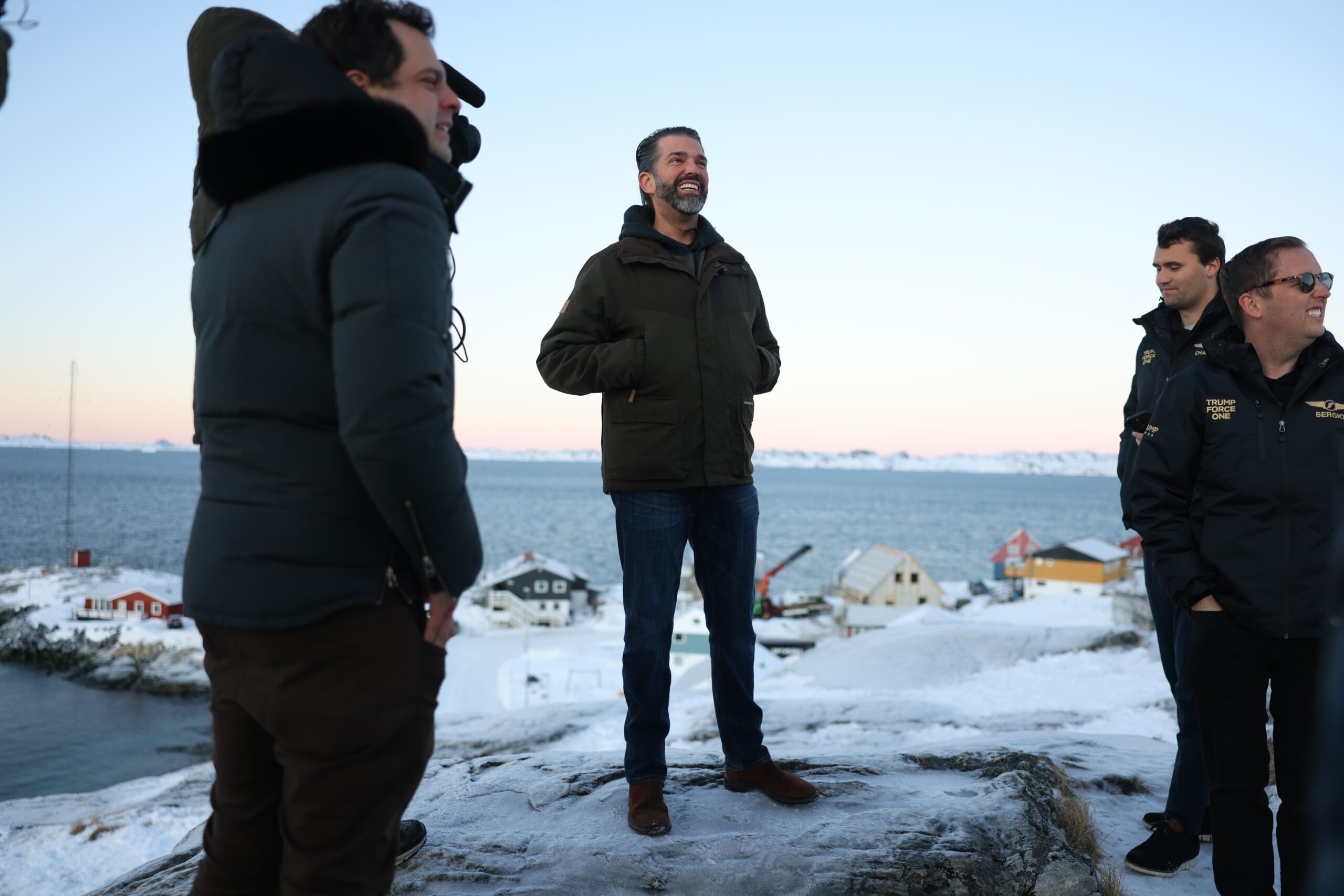
    Donald Trump Jr. (center) smiles after arriving in Nuuk, Greenland, in 2025.
    Are there Trump influencers (or suspected intelligence agents) roaming around, trying to find or buy supporters?

    As a family, we have not seen or met the “agents,” but we certainly saw some people in Nuuk, following Donald Trump Jr.’s visit a year ago, giving money and red MAGA hats to the youngsters, schoolkids, and making them say things on camera. Parents were outraged when they saw their own kids on TV, but it was too late.

    ⁠What really happened when Trump Jr. visited? Why was he so eager to talk about Greenland?

    My late husband, an Inuit elder and explorer, was asked to meet Trump Jr. back in 2015. He wanted to hunt musk ox in Greenland, but not where average tourists hunt. So my husband said that there are a lot of musk oxen around Hammeken Point [a mountain named after him], and he could take him there and be his guide.

    They were planning the expedition for a while, until one day Junior said that he can’t go because his dad decided to run for the presidency. Later, my husband thought that maybe it was all his fault for telling Junior exciting stories about Greenland and about what was hidden there under “all this ice,” and maybe that somehow affected Trump’s father’s interest.

    ⁠Some Trumpers think Greenlanders can be bought. Are some interested?

    We hear rumors that he is thinking of paying $100,000 to each Greenlander. Well, it’s not a lot of money, a boat costs around that, and who will sell the country for the price of a boat? But seriously speaking, today, everyone whom I know says firmly no. There is no price tag, no matter how much. The country is not for sale.

    But we live in a strange world, so I don’t know what will happen for sure. [Opposition leader] Pele Broberg is saying out loud what many politicians think quietly: that Greenland is already being pulled into the American orbit, and that it might as well try to get paid for it.

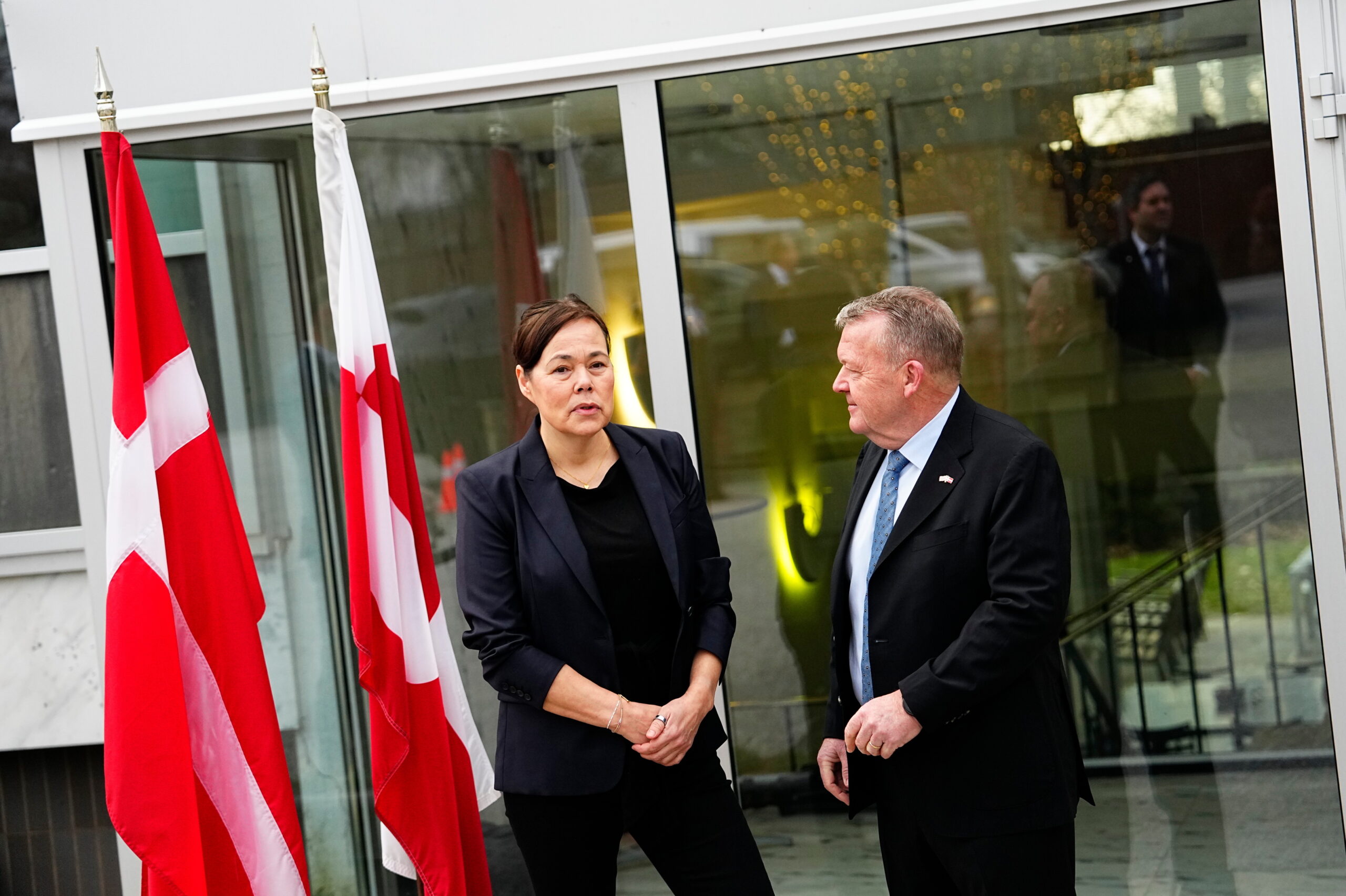
    Denmark’s Foreign Minister Lars Løkke Rasmussen (right) and Greenland’s Minister for Foreign Affairs Vivian Motzfeldt (left) prepare at the Danish Embassy for a meeting with Vice President JD Vance and Secretary of State Marco Rubio in Washington on Wednesday.
    Do some Greenlanders feel that way?

    Yes. Especially younger people, miners, business owners, and those who feel Denmark never gave Greenland a real economy, only a welfare system. For them, a deal with America sounds like a shortcut to dignity, jobs, and finally being taken seriously.

    But there is no such thing as “a deal” between a superpower and a small Arctic society. There is only dependence, dressed up as partnership.

    The United States already has what it needs in Greenland: military access, strategic geography, and preferential access to resources [such as rare earths]. What it doesn’t have is legal ownership or political control. A so-called “deal” would simply move Greenland’s dependency from Copenhagen to Washington. The question is whether Greenland would still be free after it is made.

    Can you imagine a U.S. military takeover attempt? What would be the consequences? Denmark and many other NATO allies are already moving small numbers of troops to Greenland as a tripwire.

    My husband and I had hoped to live the rest of our years in a small village, Siorapaluk. It is such a beautiful and peaceful place. Ironically, it is 92 miles from Pituffik Space Base. We honestly thought it was the most peaceful place on Earth.

    At this moment, we all — I can only talk about our family and friends — hope for a peaceful solution. Any negotiations are better than the war in the Arctic. Real war in the Arctic will be the end to everything.

    If the U.S. really wanted to secure its interests in Greenland what could Trump do legitimately?

    Trump still can return to U.S. bases, build new ones, invest in the population, in their education and knowledge. I see how scientists, glaciologists, marine biologists — 15 different specialties — from Japan’s Hokkaido University work together side by side with the local Inuit hunters, elders, and children in Qaanaaq, very close to Pituffik Space Base. It is an ideal collaboration; they love each other and benefit from each other. But they have a very smart leader, Shin Sugiyama. I think that President Trump could learn from him.

    People take part in a march ending in front of the U.S. consulate, under the slogan, Greenland belongs to the Greenlandic people, in Nuuk, Greenland, in March.
    Trump claims that if the U.S. doesn’t take Greenland, China or Russia will. What is he talking about?

    Russia is expanding its military presence in the greater Arctic region. This is their priority. I was once arrested by Chechen commandoes [on a floating Russian ice base, not part of Greenland but above the disputed underwater location of the North Pole]. So, yes, activity in Arctic waters is very real, and it is increasing. China has a major interest in Greenland. [But Greenlanders and Arctic experts see no signs of the Chinese and Russian ships Trump says are lurking around Greenland.]

    Greenlanders have said no to Russia and China because we don’t want them. A year ago, the Chinese bought some mining rights, but said they would bring their own workers, like what they have done in Yakutia [a northern region of Russia]. Chinese men married Russian women in Yakutia. There is a growing Chinese presence in Siberia. Soon, a majority will be Chinese, but no one sees it. [Fearing a similar outcome, the Greenland government ultimately rejected the Chinese investment.]

    [Russia’s invasion of Ukraine has also increased Greenlanders’ hostility to Moscow. They are painfully aware of “how poorly Russians treat their Arctic minorities” and how “Putin took the poorest people from Arctic villages” to fight and die in Ukraine].

    Should NATO troops be stationed in Greenland alongside more U.S. troops?

    Today the Arctic is becoming a place where three things overlap: military early warning systems, resource competition, and new shipping routes [due to melting ice]. That combination creates the possibility of accidents and miscalculations long before it creates a planned Russian or Chinese invasion.

    The biggest risk is not that someone like Russia or China suddenly wakes up and “takes Greenland.” The risk is escalation. I think that Greenland’s best protection is not a sudden flood of troops. It is a predictable security architecture that everyone understands.

    Greenland needs protection. But we are old enough to remember how conflicts were avoided during the Cold War: There were rules and restraint. There was clarity. Not theater.

    What do you hope for (or dread) after the failure of last week’s meeting at the White House between Vice President JD Vance and Secretary of State Marco Rubio and the foreign ministers of Denmark and Greenland?

    What I hope for is very simple: that adults will run the room. Secretary of State Marco Rubio is not a performer. So I really hope meetings will not be about headlines or symbolic victories. They should be a security conversation and not a dominance ritual.

    As I said before, the U.S. already has what it needs in Greenland in terms of security. My husband said not long before he departed: “Greenland does not need to be rescued. It needs to be respected.”