Tag: topic-link-auto

  • How to have a Perfect Philly Day, according to ‘RuPaul’s Drag Race’ star Mandy Mango

    How to have a Perfect Philly Day, according to ‘RuPaul’s Drag Race’ star Mandy Mango

    Local fans of RuPaul’s Drag Race are bummed this morning after seeing Philadelphia drag queen Mandy Mango — just the second contestant to represent the city in the show’s history — get eliminated last night.

    For the third week in a row, Mango landed in the bottom. She failed to impress the judges with her sketch comedy act playing an Amish woman competing in a butter churning competition; her overly sexual take wound up being a bit too outlandish, and her runway look as a dashing deer couldn’t save her.

    “I can’t say I’m too surprised, I’m not delusional,” Mango said on Untucked: RuPaul’s Drag Race following the episode. “I accept this with grace but I’m extremely sad.”

    Despite the loss, of course, Mango remains a star at home in Philadelphia.

    An HIV nurse by day, Mango (aka Sigfried Aragona) grew up in Lansdale and attended West Chester University before moving to Center City, where she lives with a roommate and their four cats named Wasabi, Miso, Soy, and Sriracha. The 29-year-old performer frequently appears at Frankie Bradley’s, her home bar.

    Competing on Drag Race was an exciting challenge for Mango, who says she’s received an outpouring of support from fans in Philly and as far as the Philippines, where her family is from. She’s thrilled to spotlight Philly’s drag scene for a national audience, following Season 16 runner-up and Miss Congeniality winner Sapphira Cristál. (Cristál helped Mango prepare her audition tapes.)

    “Especially in the context of Drag Race, Philly hasn’t been [seen much]. I feel like we’re kind of on the up-and-up of people really recognizing our drag and seeing what we’re about,” said Mango. “Hopefully I got to show off that Philly is full of fighters. We’re full of performers, and we all have a little bit of quirkiness and silliness to us.”

    We asked Mango about her perfect Philly day.

    9 a.m.

    I’d probably start off by going to Planet Fitness, ideally, to get my little morning workout in. That’s all I need. And then I will get breakfast, probably over at the Reading Terminal. I love Beiler’s Doughnuts, a great post-workout meal [laughs], or honestly, Miller’s Twist with the pretzels.

    Mandy Mango and DD Fuego face off in a lip synch battle on episode two of ‘RuPaul’s Drag Race’ Season 18. Mango stunned the judges with her energetic dance skills.

    Noon

    Come home and watch TV, catch up on my day, take a nap. Love a nap. But a lot of my friends are foodies, so on a nice day we like to be out and about.

    1 p.m.

    Just walk around Chinatown and get bubble tea. Tea Do is my usual spot. I like to get a little taro bubble tea, but if I need a pick-me-up, I’ll get the Zen’s Awakening. It’s a little chocolatey, really sweet, with coffee in it.

    We like to explore the little cute shops in Chinatown, like Ebisu and Little Seven House. Check out the little toys, see if my friend needs another Labubu.

    Ebisu Life Store in Chinatown.

    Then we’ll probably eat somewhere in Chinatown. We’re always checking out different spots, but a go-to for us is definitely Ocean Harbor for dim sum and Pho 20. There’s something about pho restaurants, when it’s just “pho” and the number after it, you know it’s legit. Also Pho 75 in South Philly is one of our faves. Philly has some of the best Vietnamese food.

    3 p.m.

    I probably will go ahead and get back home, go over the little pictures that I took with my friends around the city and make sure we post those, and then take a nap.
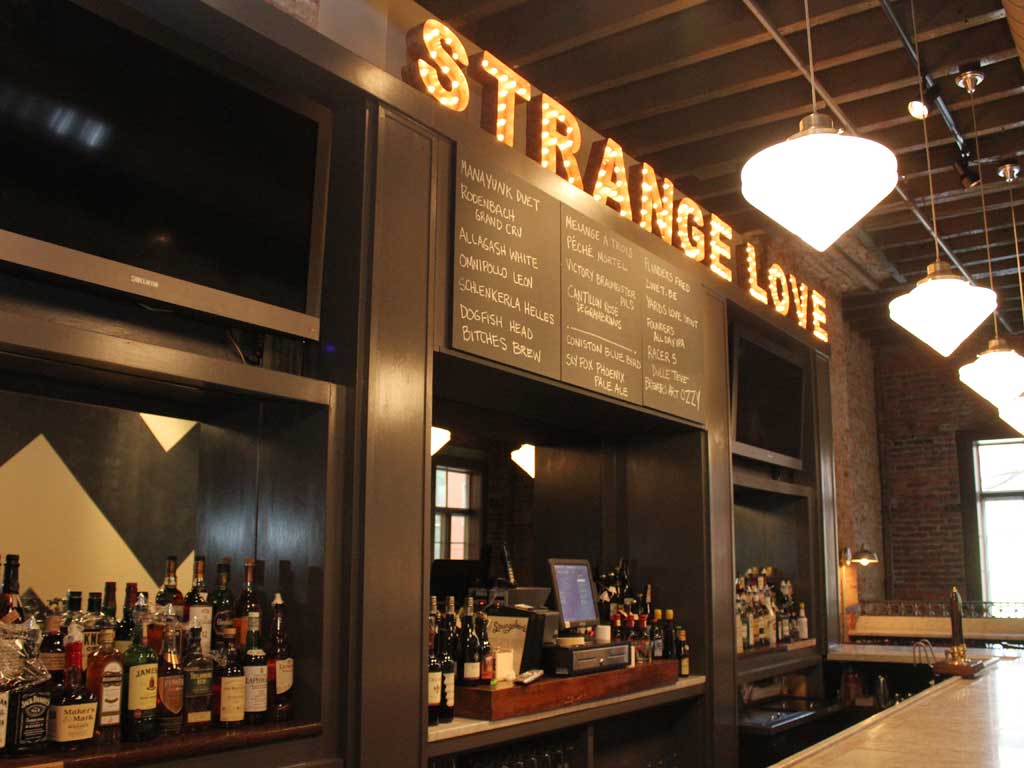
    Upstairs bar at Strangelove’s, 216 S. 11th St.

    6 p.m. to midnight

    I like to go out in drag sometimes, if I have the time. So I probably get mug and get ready to go out. I really love Strangelove’s, that’s probably where I start and get a drink and some food. They have arcade games in the back, which I recently played — I got into a really heated Mortal Kombat tournament. I made it past the first round then one of my designer friends [who helped with my Drag Race submission] Elias [Gurrola] surprisingly hustled me! I will come back and avenge myself.

    Mandy Mango on the runway on ‘RuPaul’s Drag Race’ Season 18, episode two.

    I’ll eat dinner at Strangelove’s, get some of the flatbread. I love a finger food when I’m in drag, so pizzas or chicken tenders are great. It’s gonna sound basic but their fries are actually so good.

    Then I’ll bop around to U Bar, it’s a nice place to get another little drink. Then we’ll make our way down the alley to Tavern [on Camac] to really get dancing and start the night. You can usually catch me on the upper floor. I love it especially if Carl Michaels or Chris Urban are DJing.

    Midnight

    Around midnight, we move to Frankie Bradley’s, and check out the disco side and the upstairs club side. Catch [DJs] Drootrax or Gina. I usually end up dancing a little too hard because they’re always killing it.
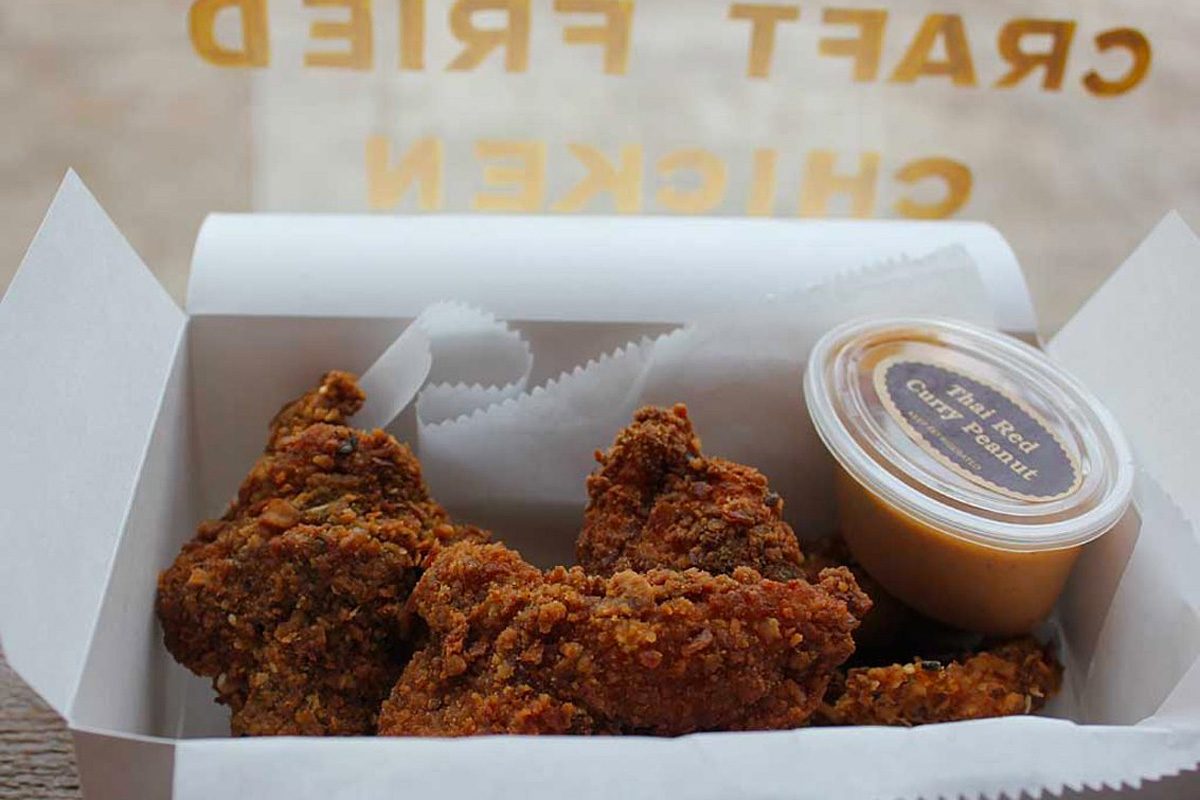
    Boneless, skinless, pretzel-encrusted chicken from Wishbone.

    2 a.m.

    I get my little post, post-club meal at Wishbone. They’re open till 4 a.m. They have pretzel-breaded chicken and baked mac and cheese. I get one white, one dark, half a pound of mac, and a biscuit.

    My schedule sounds chaotic, but it’s sort of ideal for me.


    “RuPaul’s Drag Race” airs every Friday on MTV.
  • ‘Sex to me is like having anchovies — yeah, I suppose I could, but I’d really rather not.’

    ‘Sex to me is like having anchovies — yeah, I suppose I could, but I’d really rather not.’

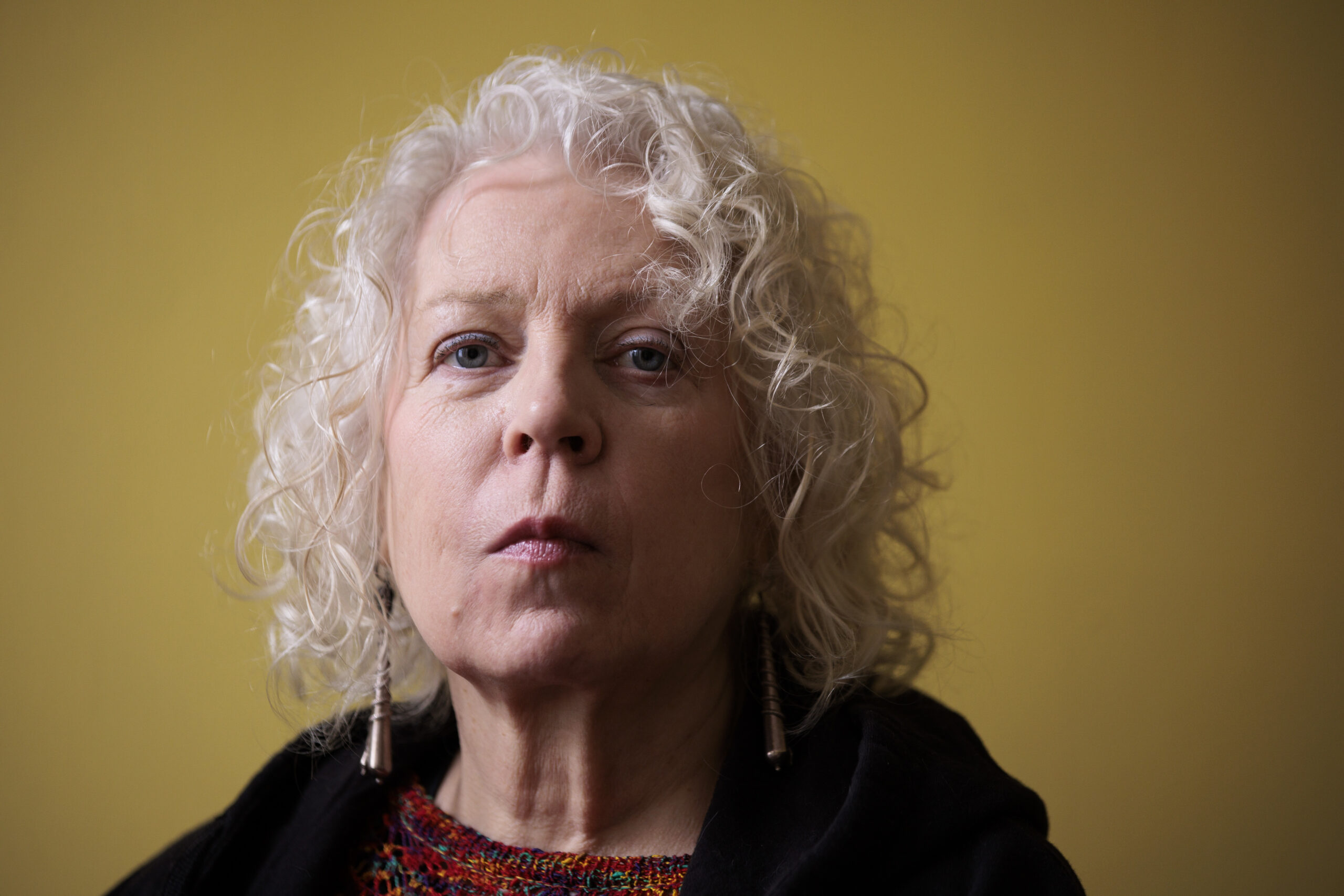
    Chris Summers was born in South Philly and raised by her grandmother and her mother. She knew she was supposed to get married, but she never felt exactly like the people around her.

    The main sticking point was sex: She didn’t want to have it, yet she still longed for romantic companionship.

    “I really crave connection and spending time with somebody. I would be happy to spend a romantic weekend where we didn’t have to sleep together,” said Summers, 73. ”We would stay up talking and drinking tea and drawing and reading to each other.”

    Summers married Fred, whom The Inquirer is referring to by his first name to protect his privacy, in 1975. The two had sex throughout their marriage, because Summers figured that was what a wife was supposed to do, but she never cared about it. They divorced in 1980 after Fred had a series of affairs, she said.

    She continued to date men, all the while wondering if she might be a lesbian. Above all, she was attracted to people’s minds; she wanted a connection that had nothing to do with the “groping, kissing, fumbling, and activity that led to orgasms,” as she described it.

    “At that time, there was no vocabulary for that. There was no saying: Sex does not interest me at all. Sex is not part of my reality,” she said. It wasn’t until the 2010s that she began reading about asexuality — the term for people who do not experience sexual attraction.

    About 1.7% of lesbian, gay, or bisexual adults identify as asexual, according to the Williams Institute, a research center focused on sexual orientation and gender identity at UCLA. The vast majority are young, under 27; a Williams Institute scholar noted that asexuality is an “emerging identity,” and probably likely to become more widespread in the future.

    Summers, who describes herself as neuroatypical, now lives with her two cats in Wissahickon. She has posted personal ads on Craigslist and forums for asexual people, but at this point has mostly resigned herself to being alone.

    The following, as told to Zoe Greenberg, has been edited for length and clarity.

    On meeting her husband

    I put an ad in the personals in 1972. I was definitely hoping for romance, but also I was just looking for somebody to hang out and smoke dope with. Fred answered the ad, and he showed up at my house on his Honda 350 motorcycle. He was kind of like my knight in shining armor. We dated for a few months, and then I moved in with him.

    On a less-than-romantic proposal

    There was no real romance involved in getting married. We were living in West Philly, and I was setting the table for dinner. He came into the kitchen and said, “What do you think about getting married?” I hadn’t really thought about it at the time, and I just said, “Yeah, OK, that’s a cool idea.” I didn’t realize that was a proposal. He said, “I’ll call my parents and let them know we’re going to get married.” I thought, This is what it’s like?

    Fred’s a Libra, and he likes to be doing what other people are doing. Friends and people in our age group were getting married. I guess he thought, Everybody else is doing this. So this should be something that we’re doing.

    On her mother offering her husband-to-be cash to marry her

    Fred and I had been married for several months, and we were having dinner one night. I was complaining about my mother; I always had a troubled relationship with her.

    He said, “Did you know that your mother offered me money to marry you?” I thought he was kidding. I said, “What did she offer?” He said, “$1,000.” I said, “Did you take it?” And he said, “Of course not.”

    I was horrified. I was raised by my mother to think I better get married, because that way I would have somebody to take care of me. She didn’t believe I could navigate life on my own. I think that on some level, my mother meant well. She thought, I’m going to offer a guy money to marry my daughter, and that way I’ll feel that I’ve done my part.

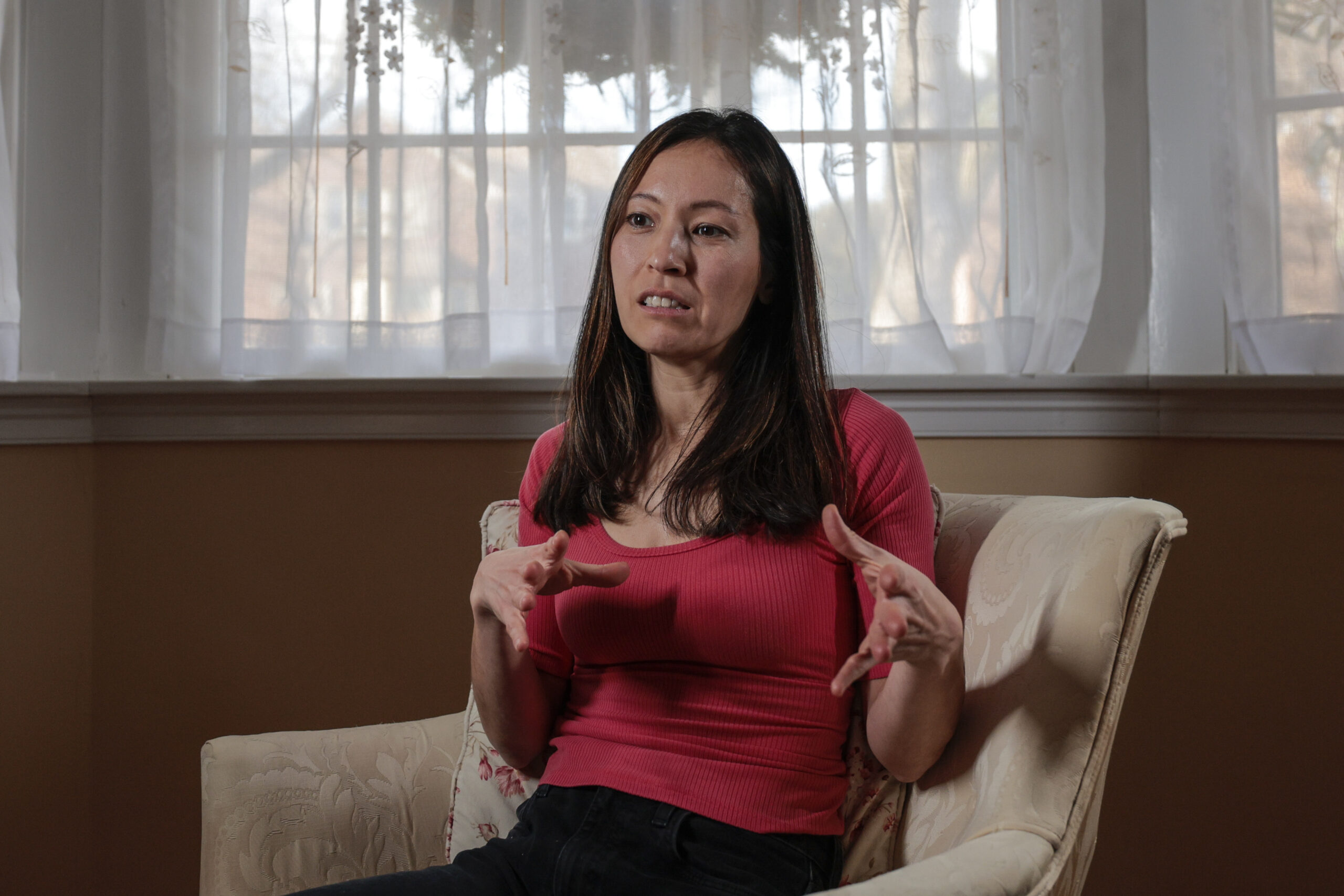
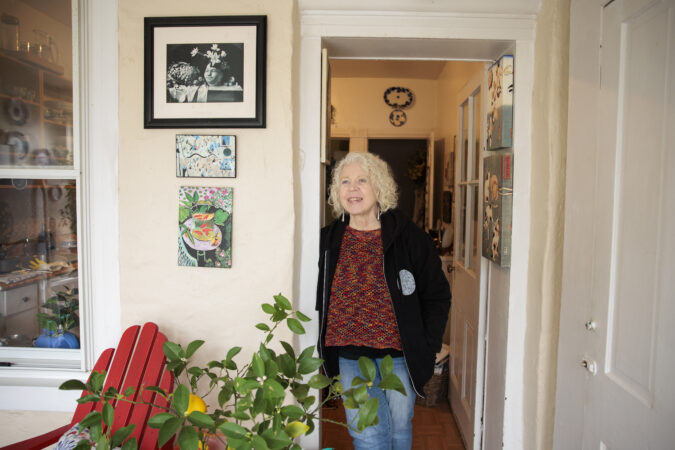
    Summers at home in Philadelphia this month.

    On her husband’s (“pedestrian”) fantasies and her evolving sexuality

    Fred was into fantasizing. One of his favorites was: you work in a massage parlor, and you’re really a hooker. I like playing, and I like fantasy and dressing up, and I just thought that was so pedestrian. I mean, if he had said, “Let’s dress up like aliens,” I would have thought, This could be fun.

    I still thought that it was quite possible that I was a lesbian. I liked looking at women, I found women attractive. When I was in 8th grade, I had a serious crush on my best friend. But in a working-class, blue-collar family, it was not something that you talked about.

    On her husband’s infidelities

    I thought we were happy. But Fred was a philanderer. He always had a little something on the side, and one of his big things that he really enjoyed doing was confessing his sins later.

    For our first wedding anniversary, we saved money so we could take our honeymoon, and we went all the way up through the Eastern Seaboard.

    We were at a lovely restaurant having a nice meal. Fred leaned over and said, “Um, there’s something I have to tell you.” I thought, Oh, God, no.

    I knew he was going to confess something, and he told me that he had been having an affair with the woman who was our matron of honor. I said, “Why did you have to tell me this on our wedding anniversary?”

    On life after divorce and discovering asexuality

    I initiated the divorce in 1980 because I was tired of Fred not being faithful. I made sure that he was served at work with the divorce papers, to embarrass him.

    After that, I was in California and I was looking for a partner. But I was not looking for somebody to sleep with. Sex to me is like having anchovies — yeah, I suppose I could, but I’d really rather not.

    I was always attracted to people who were very intelligent and on the quirky side. For me, it was never about: I want to get in their pants. It was more like, I want to get in their brain.

    In the last 10 years, I was trying to figure out, what is different about me? I started seeing things about asexuality. It made me feel like less of a freak, realizing: OK, this me. This is where I fit.

    On searching for love but not sex

    I’d always been homesick for Philadelphia, and returned in 2015.

    At one point I was part of a now-defunct Meetup group for alternative sexualities. I was an old lady in the midst of these 20- and 30-year-olds. They were very dear, they were very accepting. But I was not really considered dating material due to my age.

    Since I’ve been back, I have not really had much of a romantic life. I dated a few guys, a few women. But when you say “I really don’t want to have sex with you” — there’s no nice way to say that.


    This story is part of a series about life partners across the Philadelphia area. See other stories in the series here and here.

    If you want to share your story about who you’re navigating life with romantically or otherwise, write to lifepartners@inquirer.com. We won’t publish anything without speaking to you first.

  • Adam Fisher is fulfilling a dream as Temple’s coach. He hopes to be ‘here for a long time.’

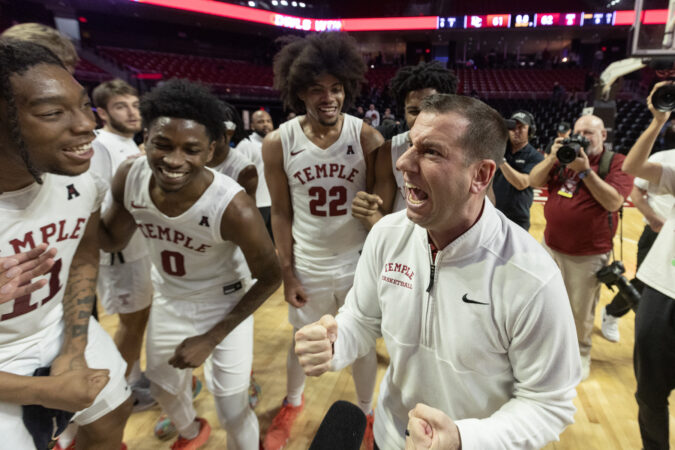
    Adam Fisher is fulfilling a dream as Temple’s coach. He hopes to be ‘here for a long time.’

    When Adam Fisher was in the second grade, he was asked to write down things about himself.

    Most of the questions were simple, like his favorite food. Then there was the question, “What do you want to be when you grow up?”

    While most kids jotted down doctor or chef, he said, Fisher proudly wrote that he wanted to be a college basketball coach.

    “Why? I have no idea,” Fisher said. “I love college basketball. I love the students when you pack an arena, I love the band, and the comradery of bringing people together that are at the university currently and then you want to go back as an alumni.”

    Nearly three decades later, the Bucks County native, who graduated from Penn State in 2006 and immediately dove in the coaching world, has been living out his dream. Fisher worked under former Penn State and current Florida Gulf Coast coach Pat Chambers and Hall of Famers Jay Wright and Jim Larrañaga at Villanova and Miami, respectively.

    At each stop, he grew and learned from other coaches, as he waited for the chance to lead his own team. That finally came in 2023, when he became Temple’s head coach.

    Now, Fisher is in his third year, and has Temple (11-6, 3-1 American) trending in the right direction. In November, he received a two-year extension through 2030. While the program has expressed its faith in Fisher, he hopes to build the team back into an NCAA tournament contender.

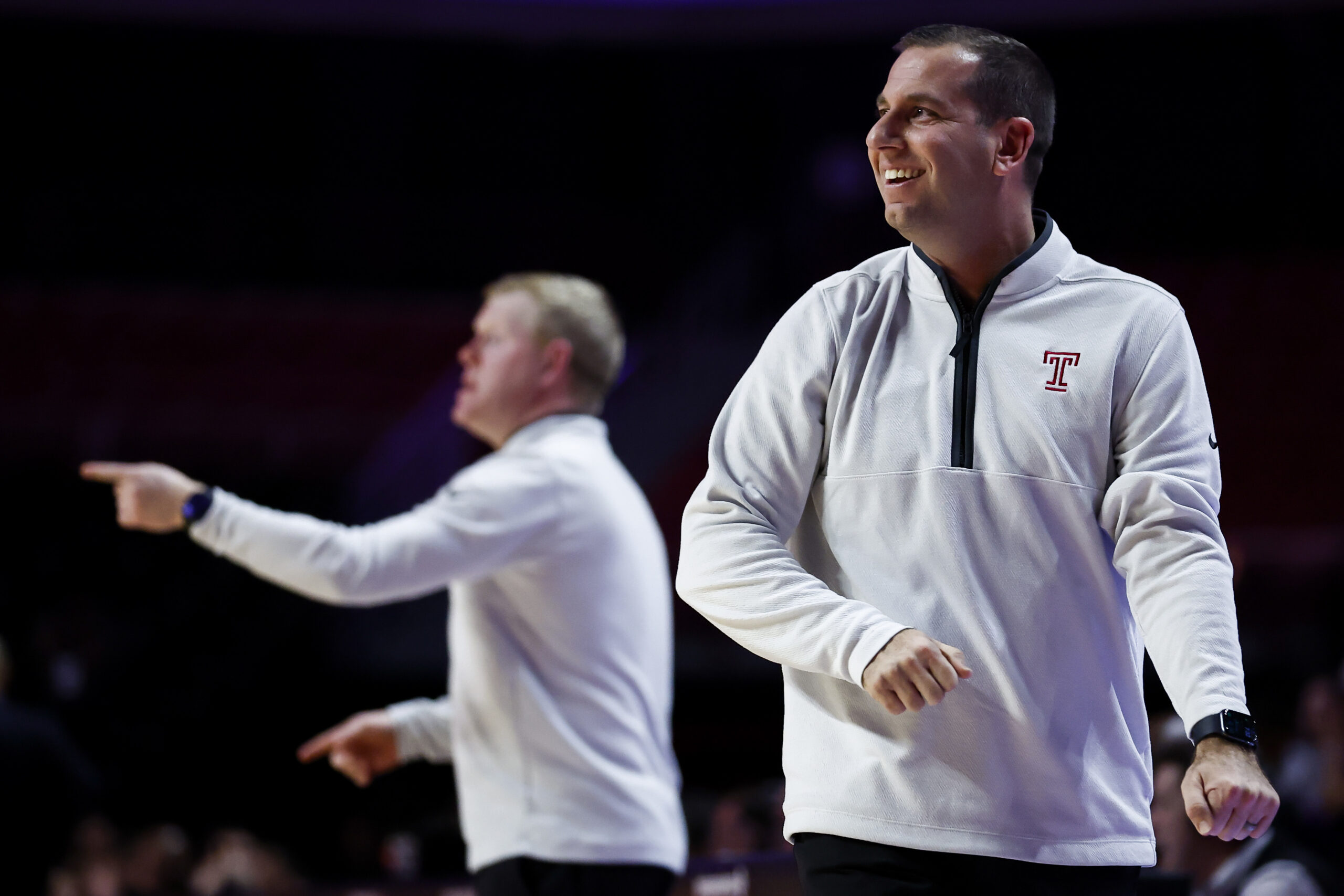
    Adam Fisher during a game against East Carolina at the Liacouras Center on Jan. 7.

    “Every job has pressure no matter what your profession is,” Fisher said. “With this job, the pressure is the great history, the rich tradition that comes with taking over a program like Temple. For me, you got to fuel yourself on the pressure and it’s something that is there and it kind of helps motivate, to get back to where Temple basketball was … it helps fuel you to not ever be outworked, to make sure you’re doing everything you possibly can for the program and put yourself in the best situation possible.”

    ‘You can win and have fun’

    Fisher credits his father Neil for giving him the itch to coach. Neil was he and his brother’s first coach while they played basketball, among other sports, in the Warrington Athletic Association.

    Fisher’s friends still bring up the times they had Fisher’s father as a coach. Neil’s impact went beyond sports as well, as Fisher’s family owned a restaurant. He watched his father run it on his own.

    “All our friends still to this day will talk about playing for my dad, and that’s really cool when you know that somebody makes that impact,” Fisher said. “I think that was when I learned I want to coach, I want to impact lives the way he did in the way he helped change people for the better. And bring people together and show that you can win and have fun and all those things.”

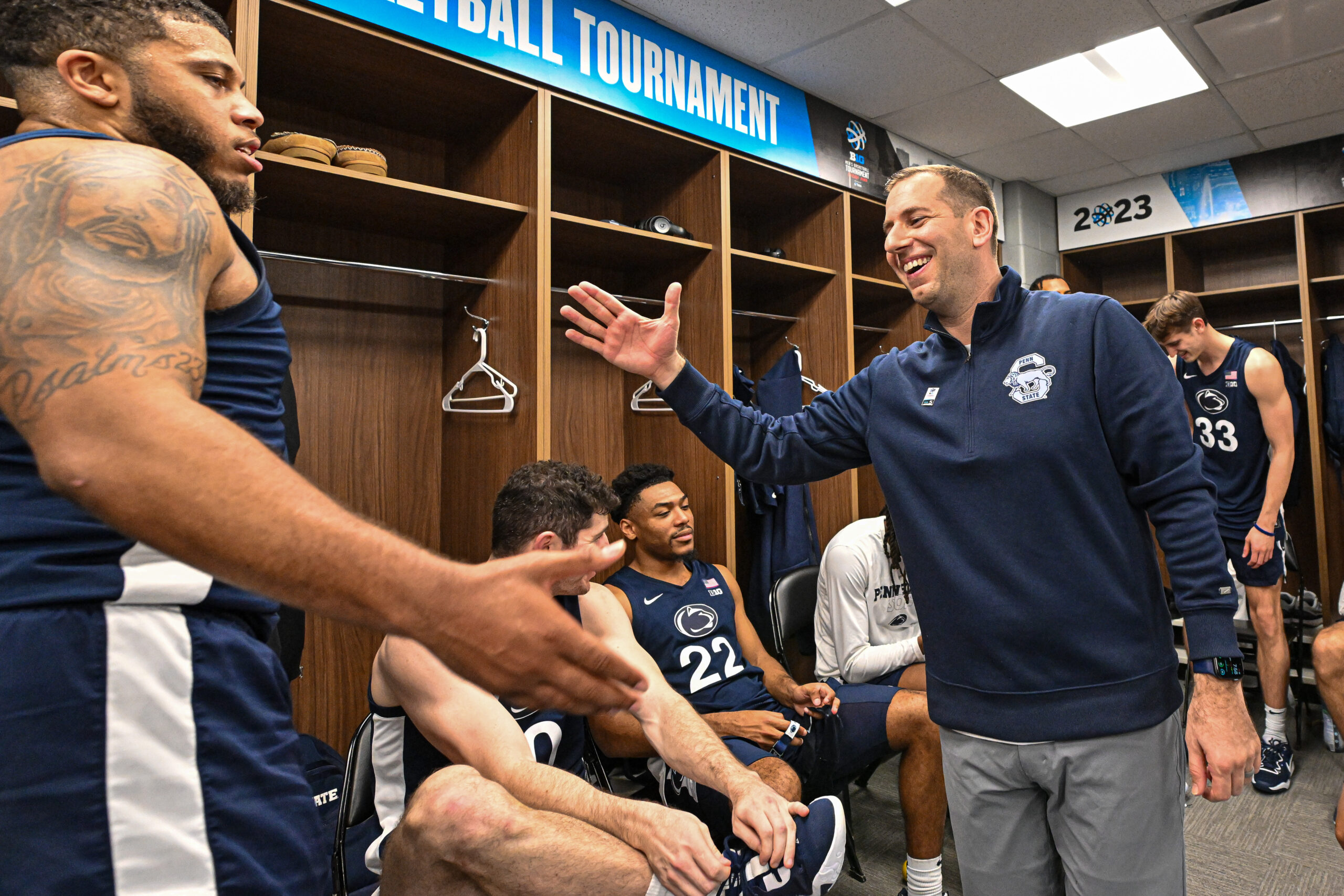
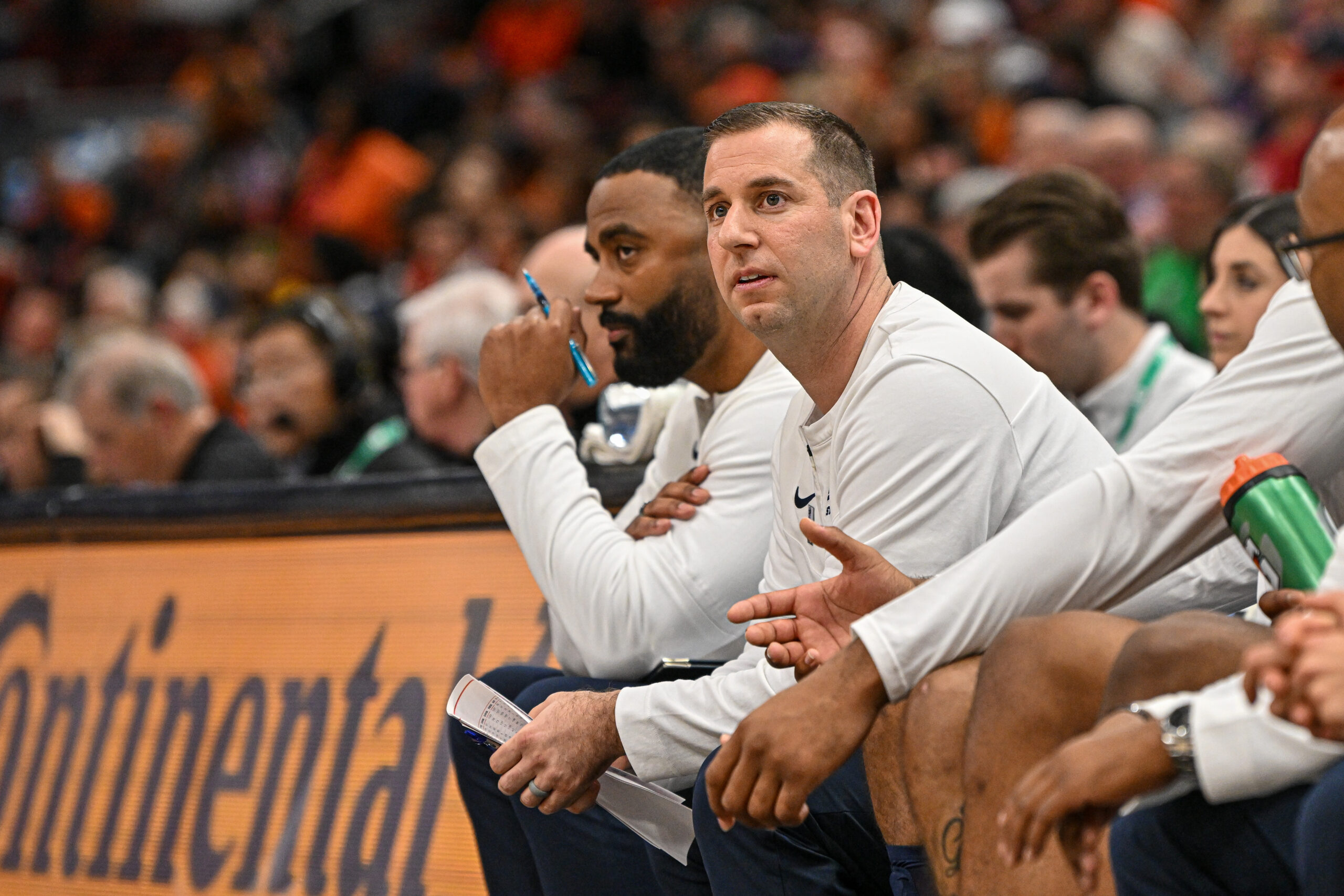
    Adam Fisher was an associate head coach at Penn State prior to being hired as Temple’s next head coach.

    Fisher bounced between schools after graduating with a kinesiology degree from Penn State. He served as a graduate assistant at Villanova under Wright, where he eventually followed then assistant coach Chambers to Boston University and Penn State, when Chambers took over those programs.

    He held various roles; director of operations, video coordinator, and director of player personnel. But in 2013, he got his break.

    A father figure

    Former Miami assistant coach Michael Huger got in Larrañaga’s ear about a coach at Boston University. The Hurricanes had an open spot for a director of player operations and hired Fisher, who learned under Huger and Larrañaga’s tutelage.

    Huger let Fisher join his recruiting visits and even let him crash in his office while he worked. Larrañaga became a father figure for the budding coach, whom he called the best director of player operations he’s ever had.

    He wasn’t a bench coach yet, but he coached 35-year-olds during the summer in a fantasy camp, where he impressed with his ability to build relationships, something that would come in handy down the line.

    But Fisher wasn’t someone Larrañaga could let go.

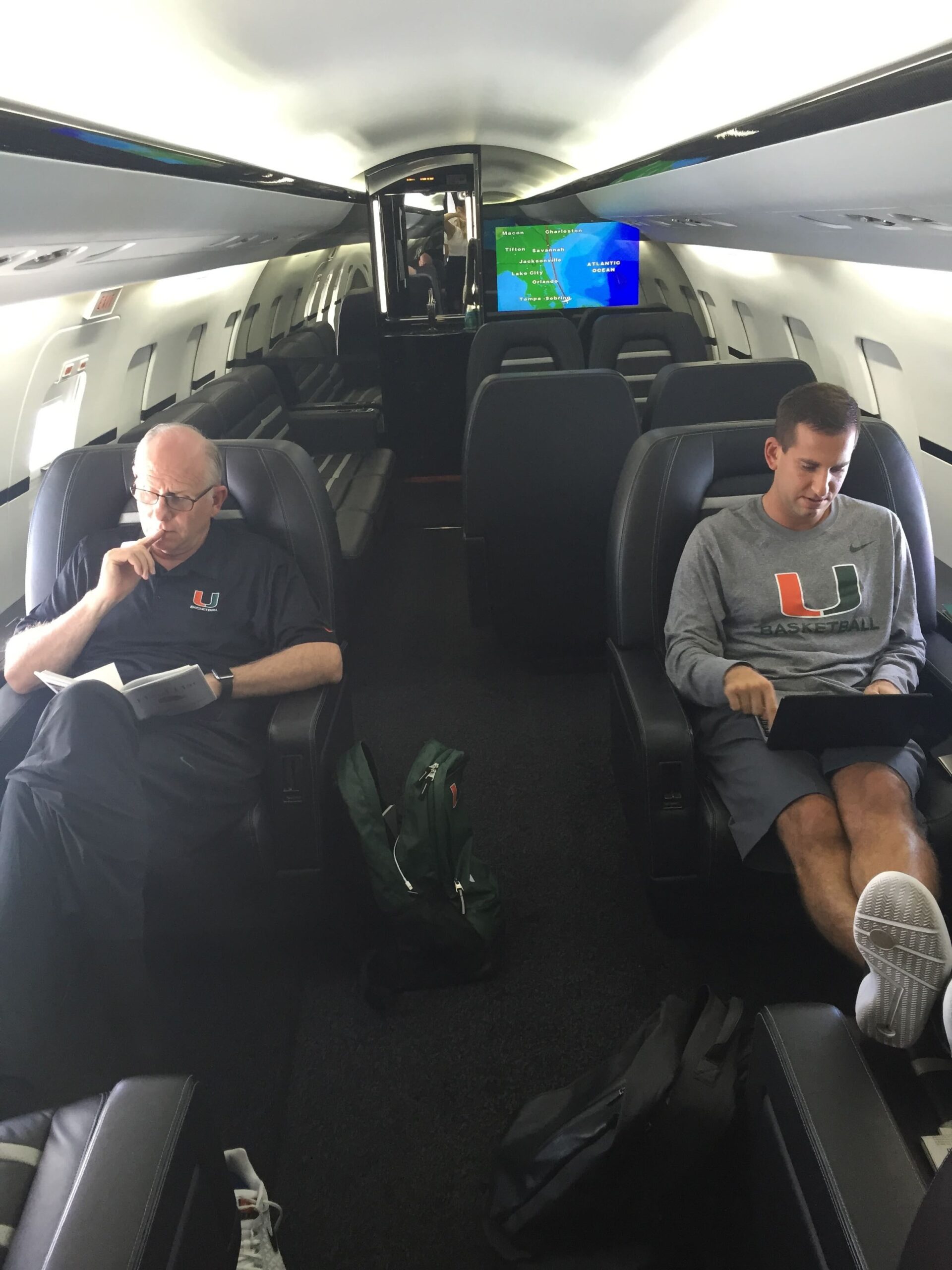
    Former Miami coach Jim Larrañaga and Adam Fisher on a plane together.

    “He was going to go to Bowling Green State University with Michael Huger. My wife said to me, ‘You can’t lose Adam. You speak so highly of him and you need to figure out a way to keep him,’” Larrañaga said. “So I called Adam back and said, ‘Instead of going to Bowling Green, I’d like you to stay here as the ops, but I’ll promise you, the first time one of my assistants leaves, I’ll elevate you.’”

    His tenure as director of player operations didn’t last long. Assistant coach Eric Konkol was hired as the head coach of Louisiana Tech. Larrañaga stuck to his word and promoted Fisher to a bench coach, where he stayed for seven seasons.

    Fisher began looking at Larrañaga as a father figure as their families became friends. When he married his wife Rebecca, Larrañaga was at the wedding. He even showed up a few days early to avoid a hurricane in Miami, while other staff members had to miss it because of the storm.

    “That just shows you who he is,” Fisher said. “That’s the guy he is. I’m interviewing for the Temple job and he’s getting ready to play in the Elite Eight and he has time out of his day to call Arthur Johnson the day of an elite eight game. That’s why I think he’s the greatest. He’s a Hall of Fame coach and Hall of Fame person.”

    Even after he left for Penn State in 2021 to work under Micah Shrewsberry, the two stayed in contact.

    Continue to build

    While at Happy Valley, it was Fisher’s job to handle recruiting in the Philadelphia area. He added players such as Jameel Brown, Demetrius Lilley, Cam Wynter, and Andrew Funk to the team, and helped the Nittany Lions reach the NCAA Tournament in 2023.

    Fisher later took the head coaching job at Temple. While he began building a foundation with the Owls, he tapped back into the relationships that he made during his career.

    Huger had been fired by Bowling Green that offseason, and his protégé hired him as the Owls’ associate head coach. Jimmy Polisi, who had spent a season with Fisher in Miami, was hired as the director of player operations, the same role that gave Fisher his start.

    Adam Fisher, while serving as Penn State’s associate head coach, helped the team reach the NCAA tournament in 2023.

    When guard Jamal Mashburn Jr. was heading into his junior season of high school, Fisher and Larrañaga camped out in a movie theater parking lot to wait for July 1 to offer Mashburn Jr. a scholarship.

    Mashburn Jr. never committed to Miami, instead he went to the University of Minnesota and then New Mexico, but when he entered the transfer portal in 2024, he had a familiar face reach out — Fisher. He only spent a year with the team, but the two still talk.

    “I was reaching out to him about a lot of stuff, just keeping my mind right. And, you know, he’s a positive person,” said Mashburn Jr., who competes on the Grand Rapids Gold of the NBA G League. “He’s someone who believes in me.”

    Fisher still has players reach out that are no longer in the program, like Mashburn Jr. and forward Steve Settle III. Settle tries to watch every Temple game when he can.

    Fisher’s first year at the helm saw Temple make a Cinderella run to the American championship game. While Temple got blown out of the tournament in the first round of the 2024-25 season, the Owls are making strides this season.

    The roster looks well connected compared to the last two season. A defense that needed fixing has improved and the offense has been multidimensional.

    The Owls have more than a month until the American tournament in March, and were riding a seven-game winning streak before falling to Memphis on Wednesday.

    Fisher is hopeful that his team will continue to have success, and he’s committed to get there.

    “This is where my family and I want to be,” Fisher said. “We’re excited to be here and continue to build this thing. We knew it was going to take time, taking over the job and where we were in the state of college athletics, we knew this was going to be a challenge early on.

    “We’re excited to be here for a long time.”

  • Smaller portions, fewer second drinks: How restaurateurs are adapting to changing consumer trends

    Smaller portions, fewer second drinks: How restaurateurs are adapting to changing consumer trends

    In October, Cuba Libre became one of the country’s first full-service restaurants to unveil a GLP-1 menu, available at the request of diners on the increasingly popular weight-loss medications.

    Next month, the Old City establishment will also roll out a “lighter portions, lighter prices” section of its regular menu.

    This is all to keep up with the evolving preferences of Philly-area diners, said Barry Gutin, cofounder of Cuba Libre.

    “We said, ‘We should put something on the menu for all sorts of people watching their diet and their money,’” said Gutin, whose staff has noticed GLP-1 users and nonusers alike requesting these options more over the past year. This trend has also been seen at Cuba Libre restaurants in Atlantic City, Washington, and Orlando, as well as at its Paladar Latin Kitchen and Bomba Tacos locations in the Philadelphia suburbs.

    For customers, an added perk is that they pay less for these smaller-portioned menu items, Gutin added. He said diners have become more focused on value amid broader financial uncertainty.

    “The economy dictates that we have a diversity in pricing that meets more people’s needs,” Gutin said. “You think about the way people look at menus online. They’re scanning through prices as well.”

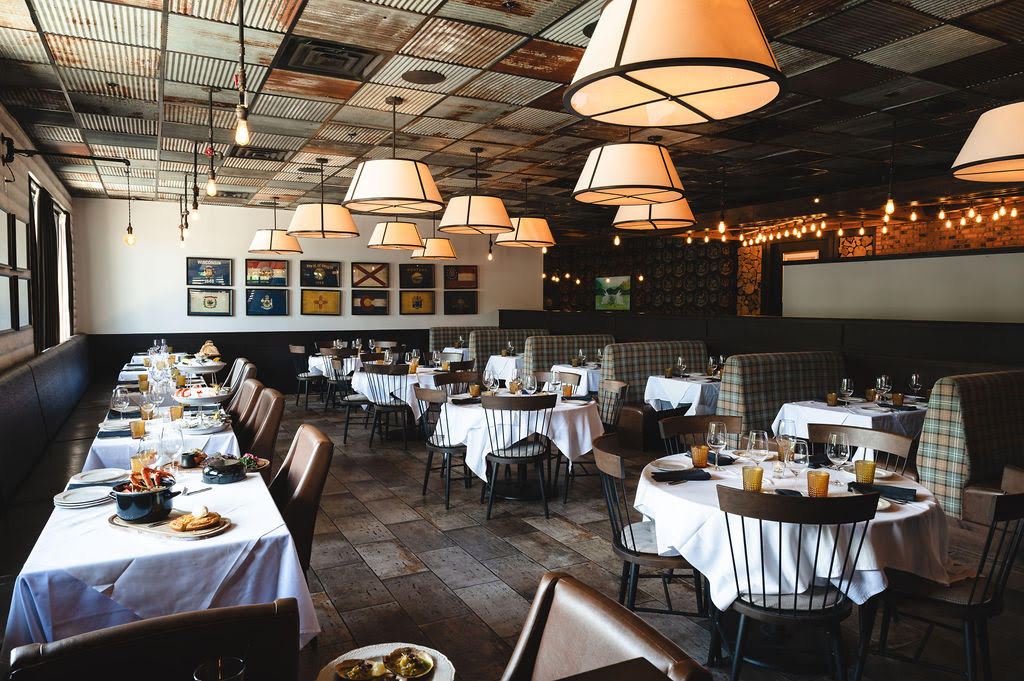
    The dining room at Cuba Libre in Philadelphia. A cofounder says staff has noticed GLP-1 users and nonusers alike requesting smaller-portioned, less expensive options more over the past year.

    In August, more than a third of U.S. diners said they were dining out less frequently than they did a year ago, according to a survey from YouGov. Of the less-frequent diners, 69% said they were eating out less in part because of the perceived cost of restaurant meals, the survey found.

    Lower-income consumers were most likely to have cut back on dining out, according to the survey, while middle- and higher-income folks hadn’t changed their habits substantially.

    This jibes with what executives at the Federal Reserve Bank of Philadelphia are hearing, too.

    “Even individuals with discretionary income to spend are being careful,” Anna Paulson, president of the Federal Reserve Bank of Philadelphia, said Wednesday. “For example, although people are still eating out in Philadelphia, contacts tell us that less expensive options on the menu are becoming more popular.”

    “The only exception to this trend is at more upscale restaurants,” Paulson added. “High-income households, bolstered by a strong stock market, appear to be driving elevated consumption growth.”

    The Ropa Vieja meal from the GLP-Wonderful menu at Cuba Libre as shown on Jan. 14.

    At the same time, restaurants nationwide are rethinking their menus amid a rise in the use of GLP-1 medications like Ozempic and Wegovy, which suppress appetite. In recent weeks, Olive Garden, Shake Shack, and Chipotle are among chains that have rolled out special menus with higher-protein, smaller-portioned meals. Smoothie King launched a GLP-1 Support Menu in October 2024.

    As of November, about 1 in 8 U.S. adults were taking a GLP-1, according to a survey from the nonprofit Kaiser Family Foundation. GLP-1s can be used for weight loss and to treat chronic conditions such as diabetes.

    At the bar, consumer habits have also changed.

    Alcohol use among adults has plummeted, with just 54% of respondents saying they drink in a July Gallup survey. That’s the lowest percentage in at least 90 years. It likely drops even lower this month as some people abstain from alcohol as part of the Dry January trend.

    Philly-area diners are spending ‘differently’

    All of these trends are on display at Philly-area bars and restaurants. And owners are trying to keep up.

    “We’re definitely at a time of dramatic shift in people’s preferences and tastes,” said Avram Hornik, owner of FCM Hospitality, which runs about a dozen venues in the region. They include Morgan’s Pier, Harper’s Garden, Craft Hall, and Concourse Dance Bar, as well as seasonal cocktail and beer gardens such as the traveling Parks on Tap.

    “I don’t think people are spending less or going out less,” Hornik said, “but I just think they are doing it differently.”

    Customers dine at Liberty Point, one of Avram Hornik’s restaurants, in 2023.

    At Hornik’s restaurants, overall sales have been consistent year over year, he said. Some customers are looking for smaller portions, he said, and late-night business has dropped precipitously. But group dining and special events have made up for losses in other areas, he said.

    When customers decide an outing is worthwhile, Hornik said, they generally aren’t sparing expenses.

    People are “looking for more of an experience when they go out to eat,” Hornik said. “It’s really about value: Am I getting a good value for the money that I’m spending?”

    To retain customers, Hornik said his restaurants are leaning into weekly specials, such as $1 tacos at Rosy’s, and happy-hour deals.

    At Cuba Libre, Gutin said he sees the GLP-1 menu, as well as the forthcoming lighter-portions menu, as a way to make his restaurants as appealing as possible for all diners.

    At each location, only about a dozen people request the GLP-1 menu each week, he said. But if a group is considering dining at Cuba Libre and one person is on a GLP-1, the special menu could make or break their decision. He said it could keep the GLP-1 user from exercising their “veto vote,” sending the entire group to dine elsewhere.

    Dining trends differ by location

    In the Philadelphia suburbs, restaurateurs said dining trends vary depending on location and type of restaurant.

    The dining room at Joey Chops, the Malvern steakhouse that Stove & Co. restaurants co-owner Joe Monnich said has been least impacted financially by changing consumer habits.

    Joe Monnich, co-owner of Stove & Co. restaurant group, said food sales are up at his higher-end restaurants, including Joey Chops steakhouse in Malvern. But farther from the Main Line, in more “blue-collar” Lansdale, he said, Stove & Tap’s business is less steady of late.

    There, “I feel more economic up and downs,” Monnich said. He felt similarly about his Al Pastor restaurant in Havertown, which is now closed after a local buyer came in last month and offered Monnich cash on the spot for the building.

    At his more casual concepts all over the region, people are spending less on average, he said, and about the same at the higher-end spots. Recently, he added, staff have noticed diners being more mindful of how much they’re consuming.

    “People aren’t getting that second drink,” Monnich said. “People aren’t getting dessert. People aren’t getting that appetizer.”

    Changing drinking habits have hurt alcohol sales, too, Monnich said. In recent years, many customers have turned away from local microbrews and gravitated toward canned cocktails and “macro beers” like Michelob Ultra and Miller Lite.

    “Three years ago I barely sold Michelob Ultra and right now it’s one of my top sellers,” Monnich said. As are canned cocktails. “Surfsides are expensive, and I don’t make a lot of money off them.”

    Stove & Co. executives have talked about creating special menus catering to these evolving consumer preferences, Monnich said, but he gets anxious about making portions smaller. So for now, he too is leaning into happy-hour deals and other value-focused items.

    “I try not to be too focused on trends because trends come and go,” Monnich said. “I do see the current trend, these weight-loss drugs, I don’t see that going anywhere … [and] people are going to be drinking less-octane alcohol.”

    Staff writer Ariana Perez-Castells contributed to this article.

  • An 11-year-old said the Eagles should fire Kevin Patullo. Then they did. Coincidence? | Weekly Report

    An 11-year-old said the Eagles should fire Kevin Patullo. Then they did. Coincidence? | Weekly Report

    An 11-year-old Eagles fan accidentally runs the coaching search: A+

    Philadelphia spent months debating offensive schemes, internal hires, and whether continuity was actually just stubbornness. Then an 11-year-old was handed a microphone and solved it in one sentence.

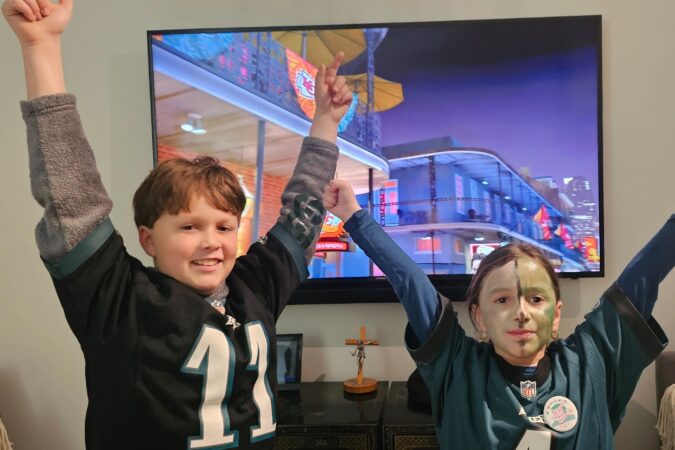
    Sam Salvo didn’t deliver a nuanced breakdown of route trees or personnel groupings. He didn’t cite EPA or All-22 tape. He simply announced — with the confidence of someone who has never had to answer a follow-up question — that Kevin Patullo should be flipping burgers at McDonald’s. Philly nodded in unison.

    The funniest part isn’t that it went viral. It’s that a day later, Patullo was gone, and the city collectively decided the kid deserved at least partial credit. In a town where people once egged an offensive coordinator’s house (too far), this somehow felt like the healthier outlet.

    Sam’s rant worked because it was pure, unscripted Philly logic: blunt, emotional, metaphor-heavy, and somehow accurate. “One-half cooked, one-half raw” is not just a roast, it’s a season recap. And when he popped back up afterward saying, “I just wanted to say anything that could get him fired. And it worked,” it sounded less like a joke and more like a performance review.

    The follow-up reactions only added to the lore. Fans celebrated. Former players debated scapegoating. Someone somewhere probably floated Big Dom calling plays. And the Eagles, intentionally or not, let the internet believe that an 11-year-old helped nudge a major coaching decision.

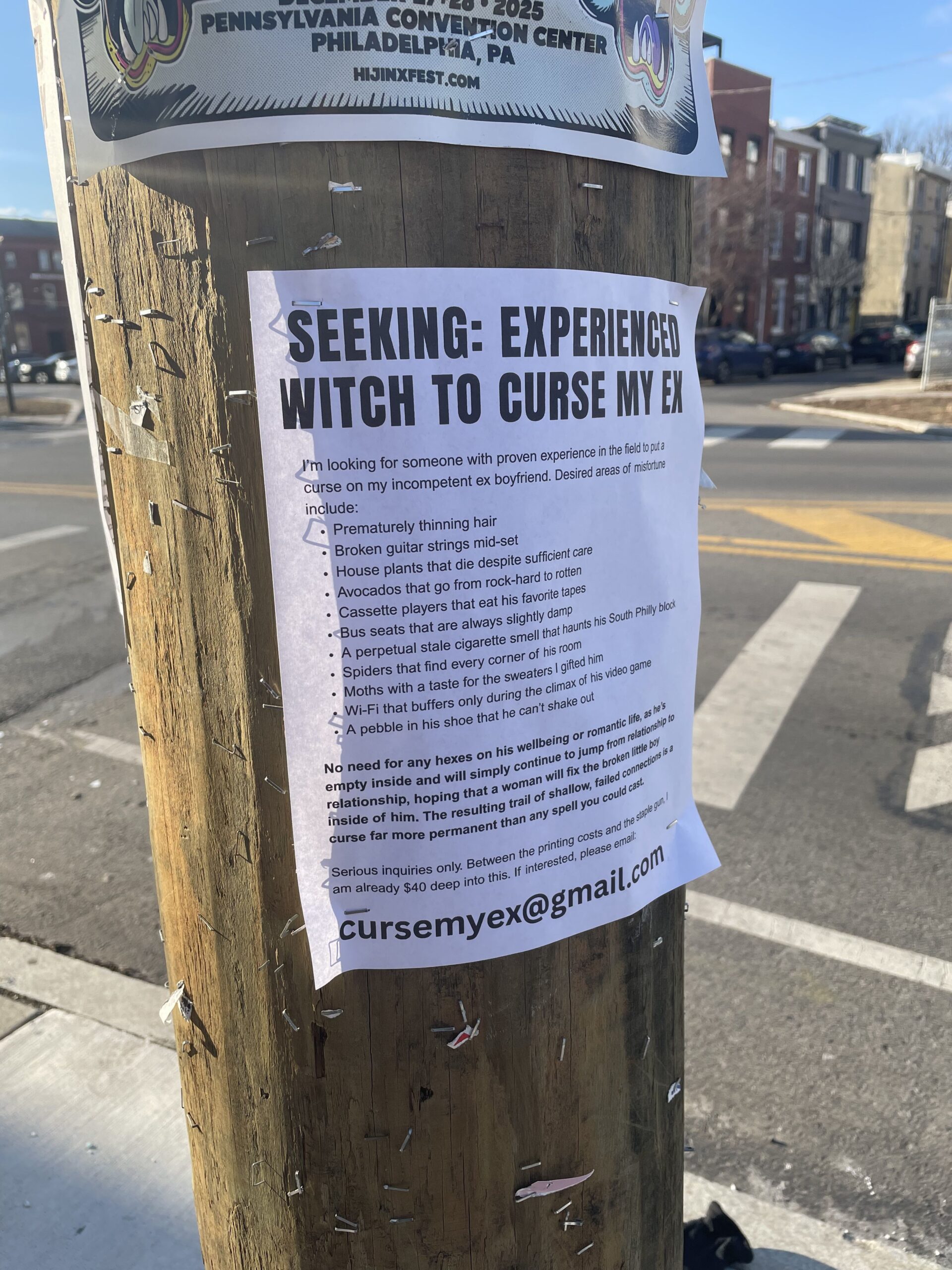
    One of the witch-seeker’s fliers hangs in Fishtown on Sunday, Jan. 4. After ending a two-year relationship, a Philadelphia woman posted the fliers around the city and in Phoenixville as a way to channel her emotions over the breakup.

    Philly collectively supports hexing an ex (with rules): A

    At some point this winter, Philadelphia decided that asking a witch to curse your ex (politely, creatively, and without touching his health or love life) was not only acceptable, but deeply relatable.

    The flier itself did most of the heavy lifting. “Seeking: Experienced Witch to Curse My Ex,” stapled to poles from Phoenixville to Fishtown, with a list of curses so specific and mild they felt less like dark magic and more like emotional Yelp reviews: thinning hair, damp bus seats, buffering Wi-Fi, eternally pebbled shoes. Nothing fatal. Nothing irreversible. Just inconvenience with intention.

    Instead of pearl-clutching, the city leaned in. The flier spread through neighborhood Facebook groups and socials, where strangers did what they do best: offered commentary, solidarity, jokes, and unsolicited advice. Some people cheered her on. Some defended the ex. Others asked how it ended. And plenty of women recognized the feeling immediately: that moment after you’ve done the therapy, the journaling, the “being mature,” and still need somewhere for the anger to go. This wasn’t about actually ruining someone’s life. It was about yelling into the city and having the city yell back, “Yeah, that sucks.”

    The rules mattered, too. No curses on his health. No messing with his love life. Philly rage has boundaries. Even our hexes come with ethics.

    Wawa learns Philly does not want a vibes-only convenience store: C-

    Philadelphia has many hard rules, but one of the hardest is this: If you remove the shelves from a Wawa, you are no longer operating a Wawa.

    The 34th and Market Street location near Drexel didn’t close because people stopped loving hoagies. It closed because Wawa tried to outthink the entire point of its existence. The fully digital, order-only format asked customers to interact with a screen for everything. No wandering, no impulse grabs, no staring at the Tastykake rack while deciding whether you’re hungry or just bored.

    And in Philly, that’s not innovation. That’s friction.

    This was once one of the company’s highest food-service locations before the pandemic, which makes the experiment feel even more puzzling in hindsight. People weren’t avoiding this store because they didn’t want Wawa. They were avoiding it because it stopped functioning like one. A convenience store that requires commitment, planning, and patience defeats the entire concept.

    The grade isn’t lower because this wasn’t malicious or careless. It was a genuine attempt to test something new. But Philly answered clearly, quickly, and repeatedly: We don’t want a Wawa that feels like an airport kiosk. That’s what will get your store closed.

    Phillies pitcher Ranger Suárez throws against the Cincinnati Reds on Saturday, July 5, 2025, in Philadelphia.

    Saying goodbye to Ranger Suárez hurts, even if it makes sense: B+

    This one lands softly and hard at the same time.

    Ranger Suárez leaving Philadelphia was never shocking, just quietly devastating. Signed by the Phillies as a teenager, developed patiently, trusted in big moments, and forever tied to the pitch that sent the city to the World Series in 2022, Suárez felt less like a roster spot and more like a constant. You looked up in October and there he was, calm as ever, getting outs without drama.

    Now he’s on the Red Sox.

    The Phillies weren’t wrong to hesitate on a five-year, $130-million deal for a pitcher with mileage, injury history, and a fastball that succeeds more on craft than velocity. Andrew Painter is coming. The rotation math is real. This is how smart teams stay competitive.

    But Philly doesn’t grade purely on spreadsheets.

    Suárez embodied a certain Phillies ideal: unflashy, durable when it mattered, unfazed by the moment, and always a little underestimated. He wasn’t the loud ace. He was the steady one. The guy you trusted to calm everything down when the season felt like it might tip.

    That’s why this stings. Not because it was reckless to let him go, but because losing someone who felt like a Phillie is different than losing someone who just wore the uniform. Watching him head to Boston is one of those reminders that the version of the team you emotionally commit to is always a few contracts behind the one that actually exists.

    OpenTable adds a 2% fee, and Philly sighs deeply: C

    Philadelphia understands restaurant math. We’ve lived through inflation menus, pandemic pivots, staffing shortages, reservation deposits, and the great “please cancel if you’re not coming” era. What we don’t love is when the bill quietly grows another line item after we thought we were done reading it.

    That’s why OpenTable adding a 2% service fee to certain transactions (no-show penalties, deposits, prepaid dining experiences) landed with more fatigue than outrage. Not rage. Just tired acceptance.

    The logic isn’t wrong. No-shows are brutal for small dining rooms, especially in places like South Philly where a missed table can knock a whole service sideways. Restaurants can absorb the fee or pass it on, and in many cases, the platform is genuinely helping places protect their bottom line.

    But from a diner’s perspective, this is yet another reminder that convenience now comes with micro-costs layered so thin you barely notice them, until you do. The reservation is free … unless you’re late. Or cancel. Or book a special dinner. Or blink wrong. It’s another reminder that each new surcharge chips away at the simple joy of making dinner plans without feeling like you’re navigating airline baggage rules.

    Philly draws the line at selling dinner reservations: A-

    Philadelphia has tolerated a lot in recent years: prix-fixe creep, credit card holds, cancellation windows measured in hours, and now, yes, platform fees (see above). But selling a free dinner reservation for profit? That’s where the city finally says no.

    The attempted resale of coveted tables at Mawn didn’t just irritate the restaurant’s owners, it offended a basic Philly value system. You can love a place. You can hustle for a table. You can brag that you got one. What you can’t do is turn access into a side hustle and expect people to shrug.

    The reaction was swift and very local: public call-out, canceled reservations, and a clear message that this isn’t New York, Miami, or a StubHub-for-dinner experiment. Yes, reservation scalping exists elsewhere, powered by bots and platforms like Appointment Trader. And yes, Philly has passed laws trying to shut that down. But what made this moment resonate wasn’t legislation. It was cultural enforcement. A collective agreement that making money off a free reservation crosses from clever into gross.

    Put simply: Waiting your turn is still the rule here. And if you try to flip your way around it, don’t be surprised when the city flips right back.

    Amanda Seyfried gives Colbert a very real Allentown community calendar: A

    Stephen Colbert has a recurring bit where he asks celebrity guests to promote actual events from their hometowns. When Amanda Seyfried, who grew up in Allentown, took her turn this week, she didn’t try to punch up the material.

    She didn’t have to.

    Seyfried read through a lineup of events that sounded exactly like a Lehigh Valley bulletin board: all-you-can-eat pasta night, speed dating for seniors, board games at a funeral home, a pirate-themed murder mystery, and Fastnacht Day donuts heavy on lard and tradition. No setup. No apology. Just listings.

    That restraint is what made it land. Seyfried treated the segment like she was helping out a neighbor, not auditioning for a tourism campaign.

    For viewers around Philly and the surrounding counties, it was immediately recognizable. This is the kind of stuff you scroll past in a local Facebook group or see taped to a coffee shop door without a second thought. Put it on national TV, though, and suddenly it becomes comedy.

  • Waterfalls, cabins, art, and eats in Milford, Pa. | Field Trip

    Waterfalls, cabins, art, and eats in Milford, Pa. | Field Trip

    Milford is an outdoorsy town — and then some.

    It sits along the scenic banks of the Upper Delaware River in Pike County, surrounded by mountains, with access to major trails, canoeing, kayaking, and biking, and the tallest waterfall in Pennsylvania. It’s an adventure hub among the best in the tristate region.

    But Milford isn’t just for people in hiking boots. It’s also an artsy town, with galleries, a theater, and dedicated film, music, and writers’ festivals. It’s a shopping destination too, with a slew of antique and gift shops, and a healthy-living store that rivals anything in Philadelphia or New York.

    “Geographically, I believe Milford has the edge over most small towns around,” said local entrepreneur Bill Rosado, who owns some popular businesses in town. “It is centered so well. Just looking at the town is a treat to me.”

    There’s plenty of history in Milford, too, which calls itself the “birthplace of the conservation movement” as it was home to Gifford Pinchot, founder and first chief of the U.S. Forest Service. It also has a historical museum that’s home to a unique and morbid artifact from the Civil War era.

    And, finally, you have to eat. Milford is home to fine dining at historic hotels, both fancy and cozy bars, along with breweries, classic diners, organic coffee, and, thanks to Rosado, authentic food from Mexico’s Yucatan peninsula. (He was born there.)

    Milford’s about 75 miles northwest of Manhattan and just across the river from North Jersey, so yes, you’ll see Yankees and Giants gear, but it’s just 135 miles from Philly, so get up there.

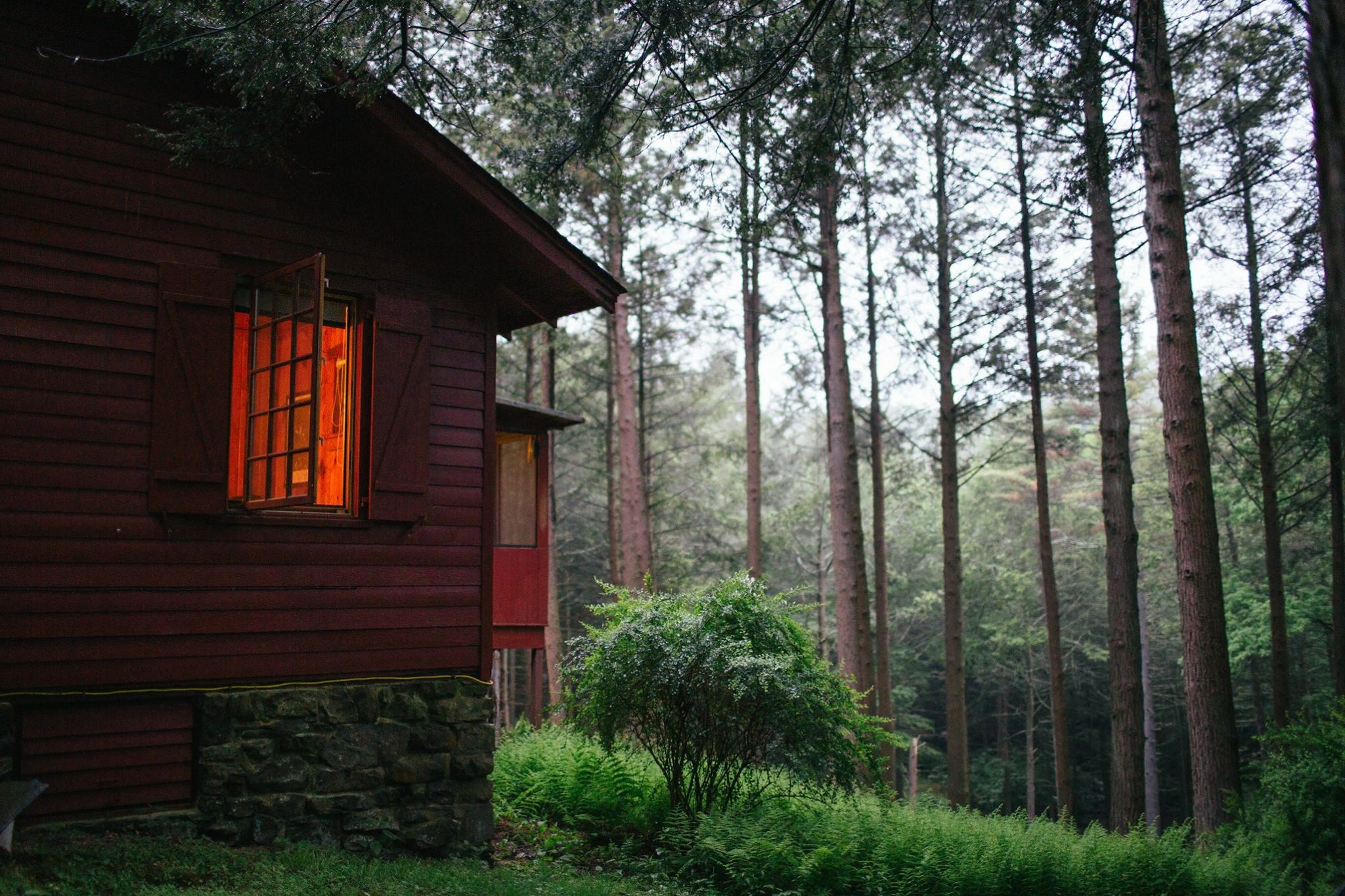
    One of the cabins available for rent at Sean Strub’s Dwarfskill Preserve in Milford, Pa.

    Stay: Dwarfskill Preserve

    There are plenty of hotels in downtown Milford that are in the midst of everything the town has to offer, including the historic and ornate Hotel Fauchère and the Tom Quick Inn, which would be at home in Cape May. Rosado owns both of them.

    I’ve been eyeing up the tiny cabin at the 575-acre Dwarfskill Preserve, up in the hills above town, for years now, as a former colleague had spent extended time there over the years and shared lovely pictures. It’s owned by former Milford mayor Sean Strub and consists of three separate properties: the one-room cabin I rented for a few nights with my girlfriend, Jen, and my dog, Wanda, and two larger cabins that can fit more people.

    We stayed there over the New Year’s holiday, cooking brisket in the microwave and making coffee on the hot plate. While Milford and the Dwarfskill are undoubtedly at their best in the summer and fall, when you can take full advantage of the outdoor opportunities, including the swimming hole at the cabin, we watched both the wood fireplace and the ample snowfall outside for hours. It was hard to leave, a full hygge experience, in Northeastern Pennsylvania.

    📍 Dwarfskill Falls Lane, Milford, Pa. 18337

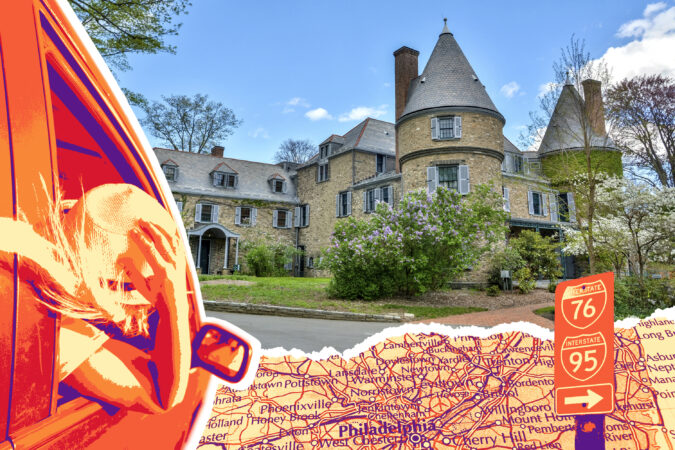
    Grey Towers, the Pinchot family residence, outside Milford, and the family’s haven from 1886 to 1963. The family made its fortune in lumber.

    Explore: Grey Towers National Historic Site

    If you drive around Pennsylvania as much as I do, you’ll see the name Gifford Pinchot quite a bit. Pinchot was a two-term governor of the Commonwealth and has a 54,000-acre state forest named after him.

    He went on to found and run the U.S. Forest Service and is generally considered a pioneer in the U.S. conservation movement. Pinchot was born in Milford and his home, Grey Towers, is a national historic landmark run by the U.S. Forest Service. Its curated gardens, French chateau-style stone architecture, and expansive library can all be seen on tours, both in-person during spring, summer, and fall, and online all year round.

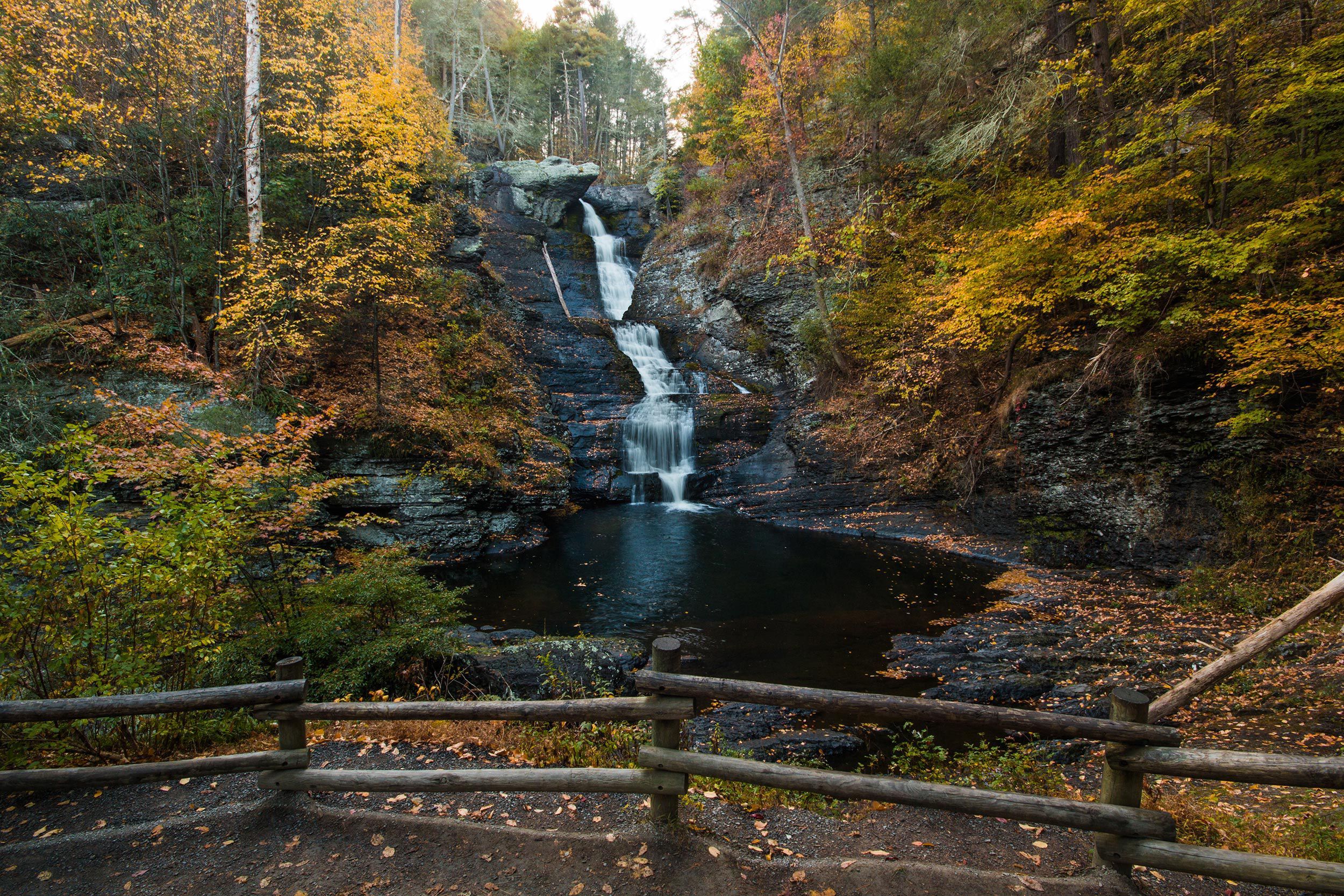
    At 150-feet tall, Raymondskill Falls is the tallest waterfall in Pennsylvania.

    If you’re interested in something a little more outdoorsy, visit Raymondskill Falls, which, at 150 feet, is the tallest in Pennsylvania. You can, technically, visit in winter, but the ice and snow could be treacherous. In summer, you might have to brave some crowds and jammed parking lots, but the views are worth it.

    📍 Grey Towers: 122 Old Owego Turnpike, Milford, Pa. 18337

    📍 Raymondskill Falls: Raymondskill Road, Milford, Pa. 18337

    Learn: The Pike County Historical Society at the Columns

    It’s not every day that a county historical society can really wow you with an artifact, but Pike County punches up with a Civil War relic you won’t find anywhere else in the world: the bloody U.S. flag used to cradle Abraham Lincoln’s head after he was shot at Ford’s Theatre in 1865.

    The flag and other exhibits are housed in “the Columns,” a 1904 neoclassical-style mansion. Want to learn how they obtained the flag? Visit on Wednesdays, Saturdays, and Sundays.

    📍 608 Broad St., Milford, Pa. 18337

    Shop: Better World Store and Cafe

    It’s hard to pin down Better World Store and Cafe in one category.

    It’s a place to get coffee or tea and healthy pastries. It’s a community hub, where people gather to meet or work remotely.

    It’s also a place to look good, with woolens and other “natural” clothes, and smell good, or simply be good, with homesteading supplies and books.

    📍 Broad Street, Milford, Pa. 18337

    Eat: Felix’s Cantina at La Posada

    Jen spends weeks in the Yucatan every winter, so she was surprised to see a restaurant in Northeastern Pennsylvania promising a “taste of the Yucatan Peninsula and other regional dishes from southern Mexico.”

    Rosado, who also owns a historic theater in town, owns the Cantina at La Posada, yet another one of his hotels. He was born in Merida, the capital of Yucatan.

    He knows the dishes well, and she approved, describing our pork and birria tacos as “fattening and delicious.”

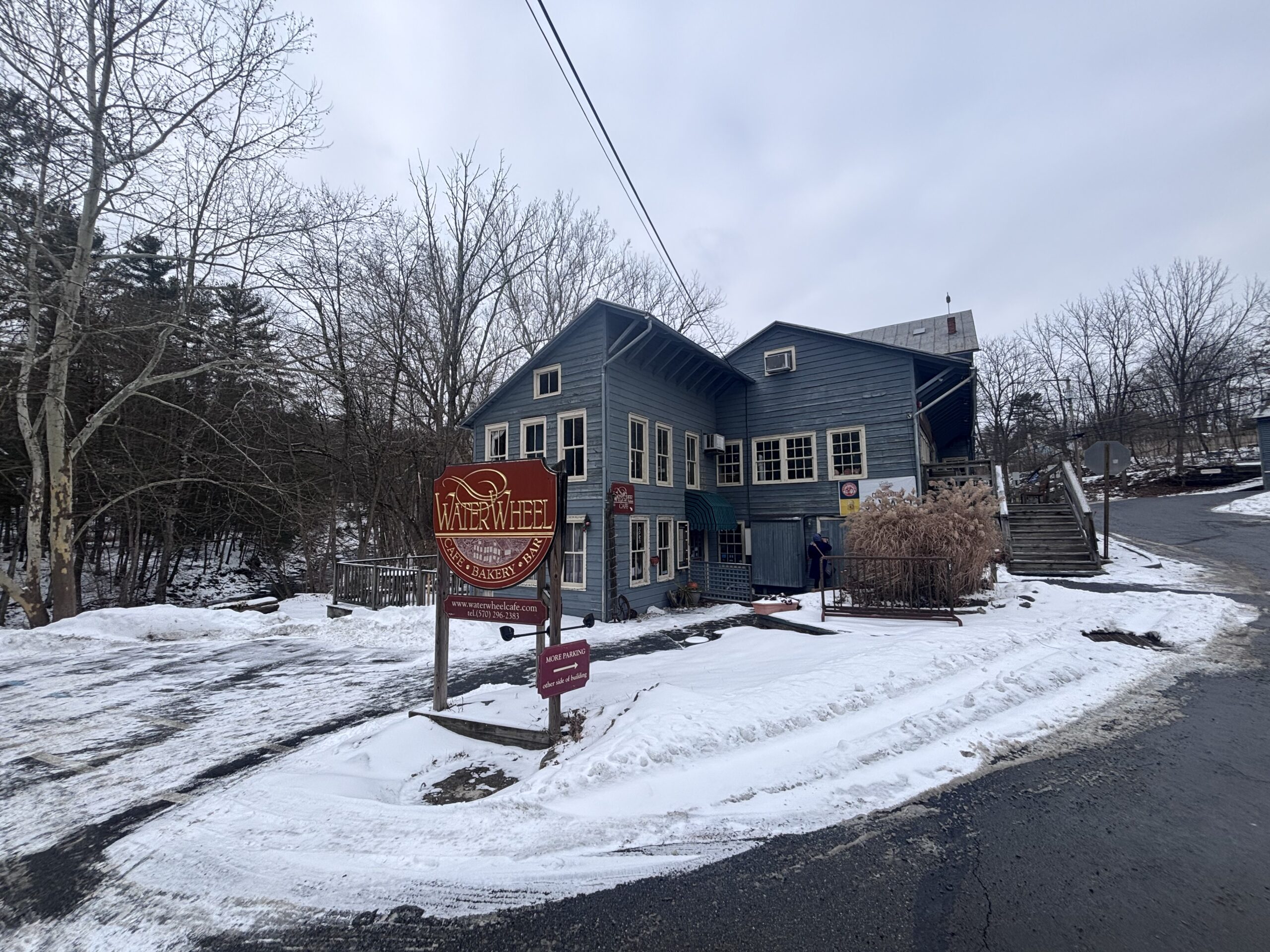
    For breakfast, the Waterwheel Café Bakery Bar, an old grist mill along Sawkill Creek, serves up a killer thick-cut challah French toast. We basically licked the plate clean.

    The Waterwheel Café Bakery Bar

    📍 Felix’s: 210 Second St., Milford, Pa. 18337

    📍 Waterwheel: 150 Water St., Milford, Pa. 18337

  • Trump’s assault on free and fair elections continues | Editorial

    Trump’s assault on free and fair elections continues | Editorial

    There are many things Donald Trump could regret about the aftermath of the 2020 election.

    Perhaps it could be his nonstop lying about voter fraud, or how he was recorded asking Georgia election officials to “find” him the votes he needed. Maybe he has remorse about inciting the mob that attacked the U.S. Capitol, violence that led to seven deaths and more than 100 injured law enforcement officers.

    But no. What the president “regrets,” as he told the New York Times recently, is not ordering the National Guard to confiscate voting machines in swing states he lost.

    If the idea of military reservists marching into Philadelphia polling places and walking out with the pesky will of the people seems far-fetched — just another of Trump’s rambling musings — then consider that he and his enablers are already laying the groundwork to undermine future elections.

    With the midterms less than a year away, local and state officials must remain steadfast in their defense of free and fair elections, and voters must demand that their rights are protected.

    The administration’s assault on the franchise began in March, when Trump issued an executive order seeking to exert control over election law that the Constitution does not grant the president, including demanding states avoid counting mail ballots postmarked by Election Day but received after.

    The courts have so far stopped the order from taking effect, but it is worth noting that a new U.S. Postal Service rule changes when a piece of mail is postmarked — no longer when it is dropped off, but when it is processed. That means procrastinating voters in states where a ballot counts if mailed by Election Day can no longer take for granted their vote will be tallied.

    Rioters try to break through a police barrier at the U.S. Capitol on Jan. 6, 2021.

    Trump has claimed he will target mail-in ballots and voting machines as part of his effort to “help bring HONESTY to the 2026 Midterm Elections.” He has also threatened election officials who oversaw the 2020 election with prosecution while pardoning the Jan. 6, 2021, rioters who sought to interfere with the certification of Joe Biden’s electoral victory.

    Meanwhile, starting in May, the U.S. Department of Justice demanded that states turn over their complete voter registration lists. Many states have declined to comply, including Pennsylvania, and are being sued by the government. This is sensitive data that includes Social Security numbers, dates of birth, and home addresses.

    Along with privacy concerns, there are fears that the Trump administration may seek to cast doubt on voter eligibility and pressure states to purge people from voting rolls. Already, there are examples of people being falsely identified as noncitizens by federal databases.

    It is sadly not much of a leap to imagine Trump claiming widespread voting by noncitizens requires U.S. Immigration and Customs Enforcement agents be stationed at polling places. Of course, noncitizens can’t vote, but one does not need to be an immigrant to be intimidated by gun-toting masked forces who have shown they will fire first and expect no questions later.

    The president has also successfully lobbied some Republican-controlled states to remake congressional maps to favor the GOP, regardless of their potential illegality. In Texas, the U.S. Supreme Court allowed 2025 redistricting maps to be used for the upcoming election, even as a legal challenge moves forward over racial gerrymandering. The high court’s conservative members are also likely to strike a blow against the Voting Rights Act this term, further emboldening voter suppression efforts.

    The administration’s unprecedented machinations have fortunately run into the wisdom of the founders, who charged the states with running elections, not the federal government. The same decentralization that sometimes frustrates widespread election reform and the implementation of best practices also limits a wholesale takeover.

    State election officials — Republicans and Democrats — have shown they take their charge seriously and are honor-bound to do their duty. Still, as Trump continues to consolidate power in the executive and stoke fears of widespread fraud, ensuring free and fair elections will require keeping the federal government from overstepping its authority.

  • 70,000 Pennie customers have dropped their plans as price hikes loom for health insurance

    70,000 Pennie customers have dropped their plans as price hikes loom for health insurance

    Sasha Kinney fears she cannot afford the $750 a month it will cost to keep her Affordable Care Act health plan in 2026. But she will put the insurance bill on a credit card before risking a medical emergency without access to the doctors she sees regularly.

    The 42-year-old Drexel Hill resident’s insurance costs soared this year, after Congress did not extend a federal incentive program that ensured that no one paid more than 8.5% of income on health coverage.

    She earns enough doing freelance work for nonprofits, while serving as her mother’s primary caregiver, that she is not eligible for Medicaid, the publicly funded health program for low-income people.

    A private health plan through Pennsylvania’s Obamacare marketplace, Pennie, was a major expense, but one she prioritized to help manage her chronic headaches and stress-related pain. But the incentive program expired at the end of last year, leading to skyrocketing ACA insurance costs in Pennsylvania and across the country. Kinney will now pay an extra $250 without the added tax credit.

    “I will go into debt because of these increasing costs,” she said. “But it still seems better than not having coverage.”

    Congress has failed so far to strike a deal to bring back tax credits that have helped record numbers of Americans get health insurance. The U.S. House of Representatives approved legislation last week that would renew the program for three years, but it is unclear if the Senate will act.

    President Donald Trump on Thursday announced a healthcare plan that White House officials said would help address rising healthcare costs by creating new drug price controls and sending health subsidies directly to consumers. The sparsely detailed plan is intended to serve as a framework for Congress, though officials did not say which lawmakers are actively working on new healthcare legislation, the Associated Press reported.

    Meanwhile, people who are covered by Obamacare plans are running out of time to decide how to handle massive price hikes that doubled the average cost of the health plans in Pennsylvania.

    The deadline to enroll in a plan for 2026 in Pennsylvania and other states is Jan. 31. After that date, people can drop their coverage if they find it is too expensive, but they will not be able to select a new plan until the fall enrollment period.

    In Pennsylvania, about 70,000 people who bought Pennie plans in 2025 have decided they cannot afford the price increase and dropped their coverage. The dropout rate is unprecedented — about 1,000 people a day, said Devon Trolley, Pennie’s executive director.

    Nationally, about 800,000 fewer people have selected Obamacare plans compared with this time last year, a 3.5% drop in total enrollment so far, according to the AP.

    With just weeks to go in the enrollment period, marketplace leaders are urging people to think carefully about whether they can afford their plan for the full year and to look at other Pennie plan options. If Congress ultimately renews the enhanced tax credits, they have said, they would work quickly to adjust prices.

    “At this point, we are telling people they should make the best decision for their family based on the current cost,” Trolley said. “We want to make sure people who currently have coverage aren’t staying with a plan they can’t afford.”

    Trolley worries that people will stick with a plan they like, not realizing they can no longer afford it, only to be forced to drop the coverage and become uninsured partway through the year.

    window.addEventListener(“message”,function(a){if(void 0!==a.data[“datawrapper-height”]){var e=document.querySelectorAll(“iframe”);for(var t in a.data[“datawrapper-height”])for(var r,i=0;r=e[i];i++)if(r.contentWindow===a.source){var d=a.data[“datawrapper-height”][t]+”px”;r.style.height=d}}});

    Congress considering tax credit extension

    The add-on tax credits that expired at the end of 2025 were introduced in 2021 and have been renewed by Congress annually since then.

    In Pennsylvania, the federal incentive program ensured the vast majority of enrollees qualified for at least some amount of financial help, driving peak marketplace enrollment of 497,000 in 2025.

    The program became a major sticking point in federal budget discussions last fall, with Democrats forcing a government shutdown after Republicans refused to include the tax credits without significant restrictions.

    The budget ultimately passed without the tax credits after key Senate Democrats, including Pennsylvania’s John Fetterman, voted with Republicans to end the shutdown.

    Last week, 17 House Republicans — including Pennsylvania Reps. Brian Fitzpatrick, Robert Bresnahan, and Ryan MacKenzie — sided with Democrats to approve legislation that would reinstate the tax credits for three years. The measure must be approved by the Senate, and would need to return to the House to consider any changes.

    While the incentive program’s expiration is a major blow to the Obamacare marketplaces, Trolley, Pennie’s executive director, urged people not to rule out finding affordable coverage.

    President Barack Obama’s landmark health law also included income-based tax credits for people who earn less than 400% of the federal poverty level — about $60,000. These tax credits cannot expire because they are part of the law.

    “We have been encouraging people to not assume it’s too expensive,” Trolley said.

    Devon Trolley, executive director of Pennie, has been outspoken about how cuts to ACA tax credits are affecting people who buy Pennie health plans. Pictured during a 2025 roundtable with Pennsylvania lawmakers, stakeholders, health systems at the University City Science Center in Philadelphia.

    Health insurance decisions

    While some parts of Pennsylvania are seeing prices three to four times higher than in 2025, Philadelphia’s collar counties are seeing more moderate cost increases, ranging from an average 46% price hike in Chester County to a 70% average increase in Delaware County.

    Other factors that affect cost include household size, age, and income. People who are generally healthy and use insurance sparingly may be able to save money by opting for a plan that has a low monthly cost and a higher deductible (the amount of money spent out-of-pocket before the plan begins covering a greater share of costs).

    Sasha Kinney, 42, of Drexel Hill, considered switching to a high-deductible health plan to lower her monthly premium, but ultimately stuck with her old Pennie plan because it offered better coverage.

    In Drexel Hill, Kinney considered switching to a cheaper plan when she saw how much it would cost to keep her current coverage.

    Her current plan has a low deductible, and even so, Kinney said, she still spends hundreds on co-pays and other costs not covered.

    She worried that if she switched to a plan with even higher out-of-pocket costs, she would end up skipping appointments and avoiding needed care.

    She routinely sees doctors and physical therapists, and didn’t want to risk having to find new providers.

    “In the end I think it washes out — you can lower your monthly cost, but if the deductible and co-pays are higher, you’re paying the same,” she said. “There’s basically no way to save money.”

  • The best things we ate this week

    The best things we ate this week

    Friday Algerian couscous at Algerino’s

    South Philadelphia has acquired an intriguing handful of Algerian restaurants over the past couple years, including Numidia Algeria (at 2340 S. Hemberger St., near 23rd Street), where I recently devoured a platter of house-made beef merguez, Berber-style semolina flatbread, and pastries. My most memorable Algerian meal of late, however, was the special Friday couscous at Algerino’s, which replaced West Passyunk Avenue’s Little Morocco in July with a wood-fired oven that turns out pizzas topped with merguez, North African-spiced roast chickens, and flavorful kebabs. On Fridays, though, this kitchen is all about producing its weekly special couscous platters: fluffy mounds of fine semolina grains topped with huge hunks of slow-braised beef shank and a tall pan of sauce on the side filled with vegetables and broth to be spooned over top at your leisure.

    Couscous is a common Berber dish served across North Africa’s Maghreb region, but chef and partner Kaci Grabi — who previously ran a restaurant in the central Algerian city of Tizi Ouzou — says the Algerian style is to serve components separately, as opposed to the Moroccan manner, in which plates are more composed, with vegetables already arranged over top. Flavor-wise, he says, there are also fundamental differences, with Algerian couscous occupying a restrained middle place between the sweet aromatics typical of Morocco and the spicier harissa profile of Tunisia. Indeed, the clear broth at Algerino’s was simple, rustic, and straightforward in its beefy savor, but still so incredibly satisfying for a cold winter lunch, especially with wedges of fresh-baked Berber flatbread on the side to soak it up. Algerino’s, 1431 W. Passyunk Ave., 267-639-4504, instagram.com/algerinos_restaurant

    — Craig LaBan

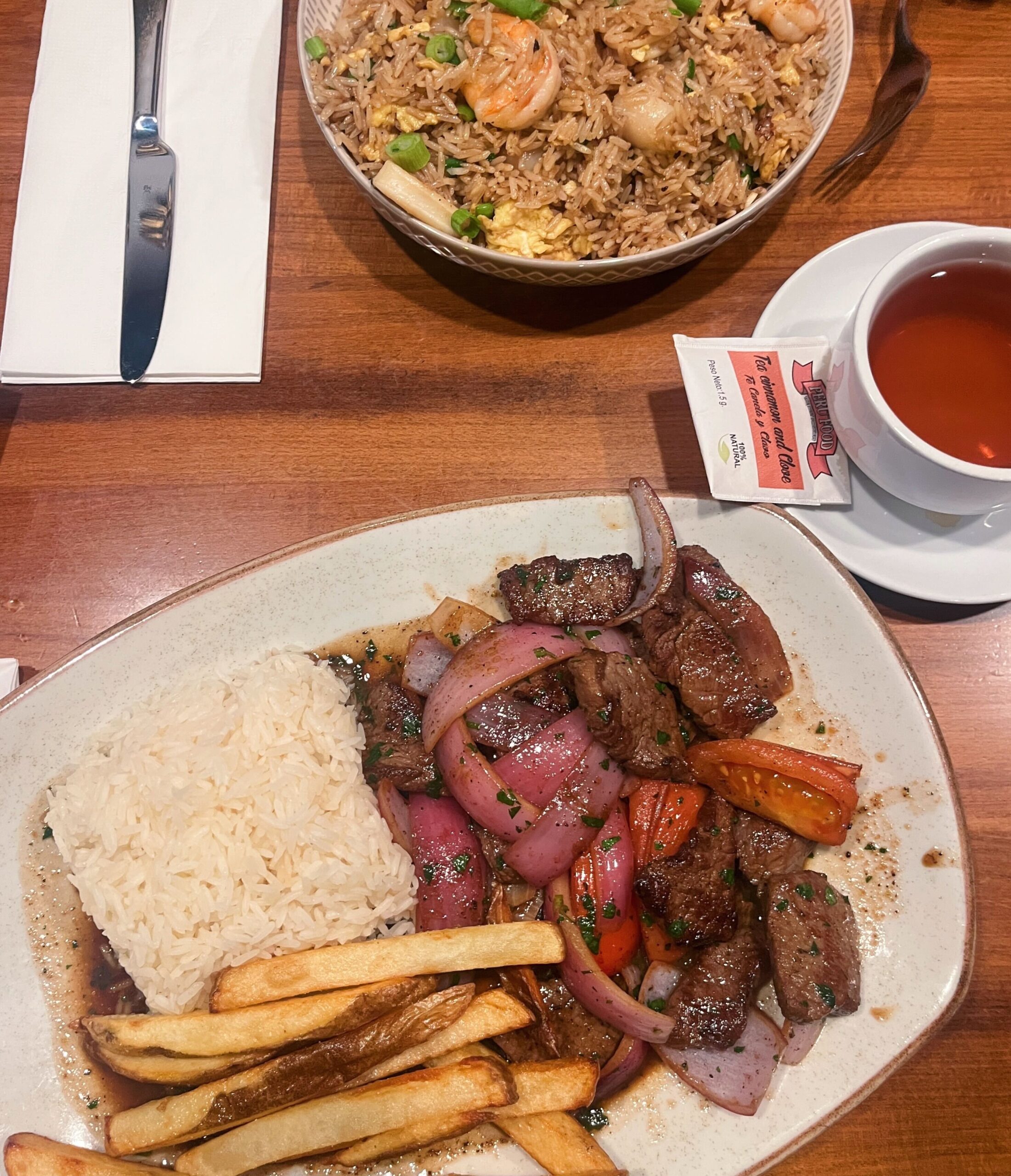
    Lomo saltado from Kiko’s Peruvian Kitchen in Collingswood, N.J.

    Lomo saltado from Kiko’s Peruvian Kitchen

    Lomo saltado — Peruvian-style steak stir-fry with onions, tomatoes, mild ají amarillo chilies, and French fries — has always been my favorite way to the test the quality of a Peruvian joint. Is the skirt steak tender? Are the fries soggy? Does the sauce capture the umami tang of an elevated soy sauce? If the answers are not yes, no, yes — well, thank goodness there’s always pollo al brasa.

    The lomo saltado is textbook at this Collingswood hole-in-the wall, with ultrathin cuts of juicy skirt steak and thick yucca fries only made better by sopping up the sauce. The stir-fry’s tomato slices are still just a bit firm and burst with juice, adding a slight sweetness to the otherwise umami soy sauce. I had no trouble tackling the restaurant’s heaping portions and was secretly disappointed with myself for not leaving more leftovers: Stir-fry always tastes better the next day. Kiko’s Peruvian Cuisine, 624 W. Collings Ave., Collingswood, 856-854-6888, kikosperuviankitchen.com

    — Beatrice Forman

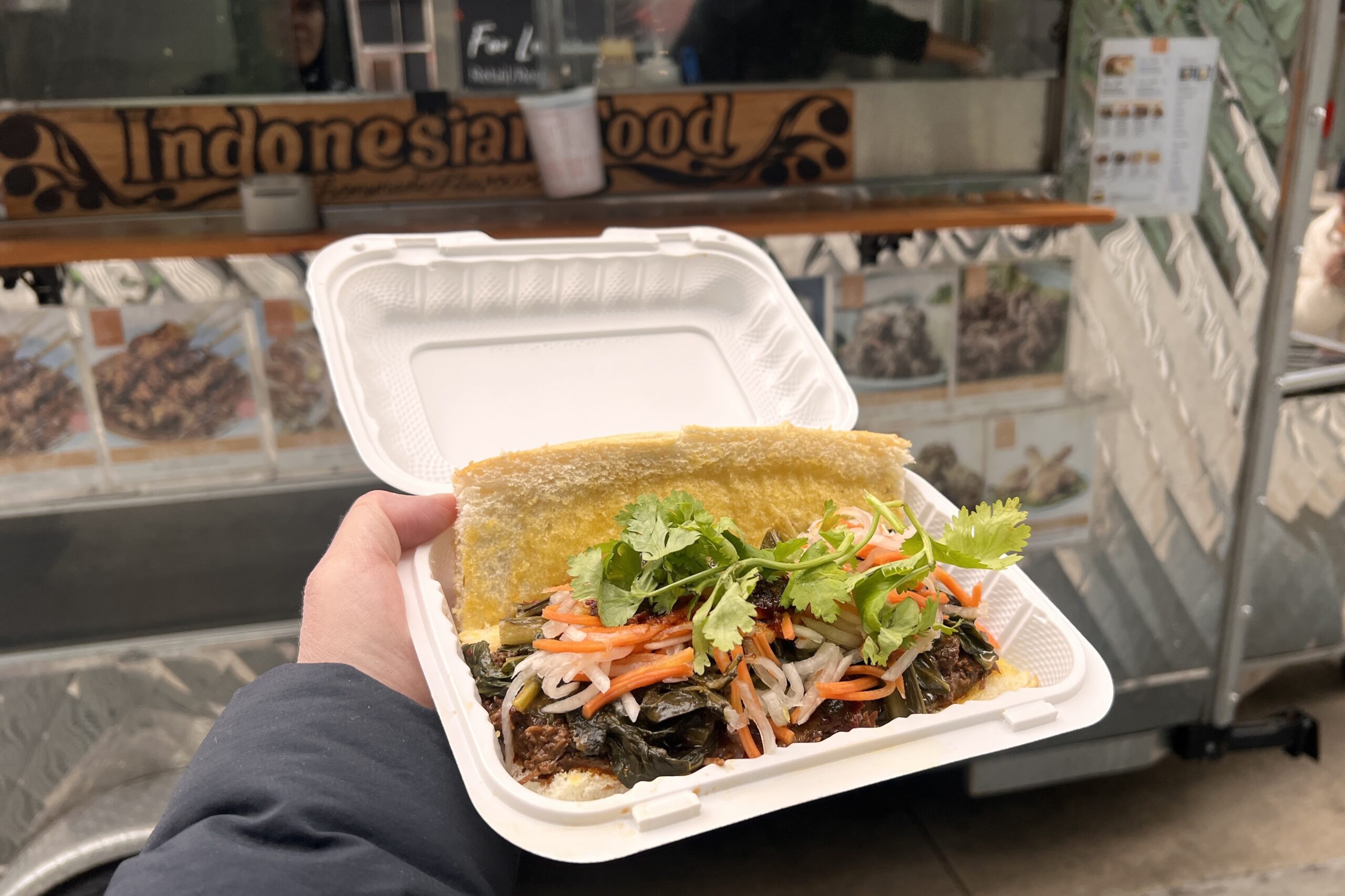
    Rendang hoagie from the Sego food cart, on 16th Street, west side, just north of Market Street, on Jan. 14, 2026.

    Rendang hoagie from Sego cart

    Split a long roll, fill it with just about whatever you wish, and — voila! — in Philadelphia, you’ve got yourself a hoagie. The iconic sandwich, initially made of Italian deli meats and cheeses, has been spun into a world of variety over the years: fish hoagies, eggplant cutlet hoagies, falafel hoagies. All this and banh mi, too. Why shouldn’t the city’s small Indonesian community get in on it, too?

    Last year, Aditya Setyawan and his wife, Irza, who own the Indonesian catering business Pecel Ndeso, opened a food cart called Sego on 16th Street in Penn Center. It caught our eye last fall for The 76, our rundown of essential Philadelphia food destinations. One menu star is beef rendang — a spicy-creamy stew served with jasmine rice, sambal, and collard greens. Or go the hoagie route: They ladle the rendang onto a long roll. Each hearty bite gives you a rich beefiness countered by a bright kick from daikon, cilantro, and pickled carrots scattered on top. Sego, 1600 Market St. (outside of NAYA restaurant on 16th Street just north of Market), hours: 11 a.m. to 4 p.m. Monday to Friday, 267-559-1656, instagram.com/pecelndeso.usa

    — Michael Klein

  • Dear Abby | Young girl’s presence at playground raises serious questions

    DEAR ABBY: To help out his parents, I pick up my grandson from daycare two days a week. I recently started taking him to a local park for about 45 minutes before I take him home. I’m physically active and climb the slides, chase him around and play with him. He loves our time together.

    Over the last two weeks, there has been a little 6-year-old girl at the park who seems to be on her own. Her parents, I assume, are in the parking lot. They are not in the park play area.

    The time we are there is the same time school gets out, so I’m sure she goes there every day after school. She has attached herself to us and wants me to go down the slide with her, push her on the swings and chase her constantly, and she asks me to watch her do this or that. Whatever we are doing, she is right there.

    She is cute and sweet, but she is taking my time away from my grandson. Also, my grandson is annoyed at someone else demanding my time which also distracts me from keeping a close eye on him. There isn’t another park we can go to that is nearby, and he loves this particular one. The girl is always there when we go. At first, I tried to include her in our play but that made it worse because she wanted more attention.

    I am a retired teacher, so I understand she is craving attention from an adult, but she’s really impeding on our play time together. How do I politely ask her to leave us alone?

    — DISTRACTED GRANDMA IN FLORIDA

    DEAR GRANDMA: You are assuming that the little girl HAS a parent in the parking lot. The next time you see her, ask her who is there with her — mom, dad, aunt, caregiver? If you do, you can either meet the person and explain the problem or realize that no responsible adult is looking after her. If this is the case, for heaven’s sake, report it to the school or CPS because leaving her all alone is child endangerment.

    ** ** **

    DEAR ABBY: I am a 66-year-old woman who has worked full time for 47 years, in addition to raising two children and maintaining a home. I will be retiring in three months because, honestly, I’m tired of the rat race.

    I’m single and don’t have a boyfriend. I have plenty of friends and family, but I’m increasingly nervous about what I’ll do with my spare time. I know I should feel happy and grateful that I’m able to retire, but at the same time, I’m having anxiety over this freedom. Have you any suggestions to offer?

    — STOPPING SOON IN TEXAS

    DEAR STOPPING: Start making a list of what your interests are. Your retirement years could offer you the chance to travel and see the wonders this country has to offer. You could take adult education classes at a nearby college or university. You might like to volunteer some time on projects or charities in your community. Or you could just hang out with friends. How you choose to spend your free time is entirely up to you and limited only by your imagination.