Tag: topic-link-auto

  • 2 more measles cases were confirmed in Chester County

    2 more measles cases were confirmed in Chester County

    Chester County health officials confirmed two measles cases in residents this week as the highly contagious disease continues to spread in Southeastern and Central Pennsylvania.

    The county has now seen four cases since late June, in addition to one case recorded this winter.

    The newly reported cases bring Pennsylvania’s tally to 101 measles cases this year, more than six times the cases confirmed in 2025.

    An ongoing outbreak centered in Lancaster County, where 52 residents have been sickened since April, is the state’s worst in three decades.

    It’s unclear whether the cases in Chester County are connected to the Lancaster outbreak, said Nancy Sullivan, the supervisor of the disease investigation and surveillance program at the county health department.

    The latest cases show the virus “is circulating in the community, particularly the western part of Chester County,” Sullivan said.

    How widely the virus could spread in the Philadelphia metro area remains unpredictable. A recent Inquirer analysis found under-vaccinated pockets pose a rising risk to a region with higher overall vaccination rates.

      (function() {
        var l2 = function() {
          new pym.Parent(‘HE_MEASLES7.html’,
                         ‘https://media.inquirer.com/storage/inquirer/projects/innovation/arcgis_iframe/HE_MEASLES7.html’);
        };
        if (typeof(pym) === ‘undefined’) {
          var h = document.getElementsByTagName(‘head’)[0],
            s = document.createElement(‘script’);
          s.type = ‘text/javascript’;
          s.src = ‘https://pym.nprapps.org/pym.v1.min.js’;
          s.onload = l2;
          h.appendChild(s);
        } else {
          l2();
        }
      })();

    Health department staff in Chester County, which borders Lancaster County, have sought to contain the outbreak by conducting contact tracing for months.

    But it can be tricky to link patients through their contacts to other confirmed cases.

    “It’s difficult for some individuals to establish who they’ve been in contact with. Sometimes they’re unsure,” Sullivan said.

    All of the patients infected in Chester County were either unvaccinated or could not prove that they were immune to the virus, which can infect up to 90% of unvaccinated people exposed to it.

    Chester County cases sought medical treatment

    Several patients this summer have been hospitalized for serious electrolyte abnormalities and liver and kidney dysfunction, physicians in Lancaster and Dauphin Counties have reported.

    Sullivan said that no Chester County residents have required hospitalization so far. All had tested positive for measles after they sought treatment at local healthcare facilities, she said.

    Symptoms of measles include a fever, a cough, and a runny nose — similar to other respiratory diseases — that often emerge before patients develop a telltale rash.

    But the disease has no specific treatments and can cause serious complications.

    County officials had begun preparing for a potential measles outbreak about two years ago, Sullivan said, developing a new software system that made it easier for health workers to track cases and analyze data on an outbreak.

    The county is also increasing outreach to residents about the importance of vaccination.

    “We’re continuing to push the message of vaccination, checking immunity, speaking to your provider about your potential risk to developing measles, making sure people know where they can get vaccinated,” Sullivan said.

    Countywide, 94.5% of kindergarteners were vaccinated against measles in the 2024-2025 school year, the last for which data is available. That’s just below the 95% threshold that scientists consider necessary to prevent the spread of the virus.

    The county and state health departments have started recommending that providers offer measles, mumps, and rubella vaccinations to infants at 6 months old.

    Typically, children receive an MMR dose at around 1 year old and before entering kindergarten. Under the new recommendation, a “dose zero” is given at 6 months and provides additional protection before children receive two more doses of the vaccine.

    Health officials in Philadelphia, to the east of Chester County, are also recommending the “dose zero” for infants whose parents plan travel to Chester County or any of the other seven counties with measles cases.


  • Sarcone’s Bakery and apparel brand ’47 team up for an All-Star Game collab that could only be dreamed up by a Philly native

    Sarcone’s Bakery and apparel brand ’47 team up for an All-Star Game collab that could only be dreamed up by a Philly native

    With the MLB All-Star Game around the corner, sports apparel company ’47 is teaming up with Sarcone’s Bakery for an exclusive pop-up inside the South Philadelphia staple.

    The event will run Monday and Tuesday from 11 a.m. to 5 p.m. The bakery will offer a special ’47 menu that boasts their famous bread and tomato pie. More importantly, guests who purchase food will receive an exclusive Sarcone’s T-shirt and hat, produced in partnership with ’47.

    “When you think of Philly, you think of the passionate sports fans, and you also think of the food scene,” bakery owner Louis Sarcone III said. “The main thing of the food scene in Philly is the Philly cheesesteaks, and our bread is a staple in the city of Philly cheesesteaks. And when you go into a stadium, you see the iconic ‘47 logo everywhere. I think we’re two similar companies that have been around for generations.”

    Patrick Cassidy, the vice president of marketing at ’47, helped launch the search for a Philadelphia-based business to partner with. Cassidy, who was born in the city and grew up in Delaware County, felt a bit of pressure to pick the right one.

    “We’re going into Philly, and I’m from Philly,” Cassidy recalled. “It’s important to me to get this right in a very real way. I’ve got plenty of cousins and aunts and uncles to answer to if I don’t do it right.”

    The front of the T-shirt (left) and a black snapback hat from Sarcone’s collab with ’47.

    Sarcone’s was eventually brought up as an option. To Cassidy, the partnership made perfect sense. Sarcone’s was opened in 1918 by Sarcone III’s great-great grandfather, an immigrant from Italy. Five generations later, the bakery is still family-owned. Similarly, Boston-based ‘47 was owned and operated by two families until it was sold to New Era in 2024.

    “Sarcone’s, much like us, started as a family business,” Cassidy said. “Heart, history, heritage, a crazy attention to detail. The same amount of detail with how they make their bread, we’ve barely touched the ingredients in our headwear for almost eighty years.”

    Sarcone III and the rest of his family are just as excited.

    “We get to give something back to our existing customers,” he said. “But also we get a reach that we normally wouldn’t get because of how big [‘47 is], get a bump. And for all the people that are coming in for the All-Star Game, we’re going to be able to reach out to new customers and show them what we’re about as well.”

    Guests who purchase an item from the ‘47 menu will not only receive a shirt and hat, but they’ll also be able to customize their new gear with a heat-press station on site. The MLB All-Star Game takes place Tuesday at Citizens Bank Park, with the Home Run Derby taking place one night earlier.

  • Peco buys property in Chester County, part of larger growth strategy

    Peco buys property in Chester County, part of larger growth strategy

    Peco is expanding its real estate footprint in the Philadelphia region.

    The gas and electric utility company purchased a property at 100 Chesterfield Parkway in Malvern for $5.95 million in January, according to Chester County property records. The Philadelphia Business Journal first reported the purchase.

    The building had previously been leased by Vanguard, which still has offices nearby and has been working toward moving more of its Malvern employees to the company’s main campus. The investment company most recently closed one of its Malvern offices spanning 137,000 square feet.

    Peco’s Malvern acquisition “is part of a comprehensive, multi-year strategy to support the recent expansion and future growth of our operations teams,” Peco spokesperson Matthew Rankin said Thursday.

    Administrative staff and “other support teams,” will work out of the new office, Rankin said, but did not say how many.

    The property is near Peco operations facilities, Rankin said.

    Peco’s expansion comes as the company brought in $814 million in net income in 2025, up 48% from the previous year. Exelon, the utility’s parent company, has said the increase was in part due to “favorable weather” and higher distribution rates.

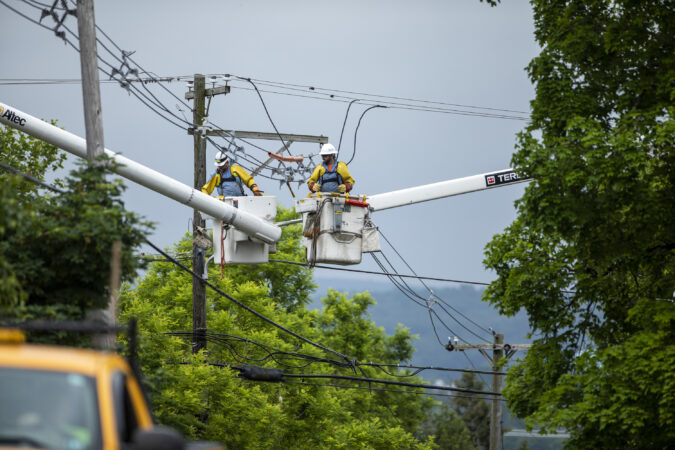
    The company proposed a rate hike again this year, but quickly withdrew the proposal after backlash. Peco had said it needed to increase prices for upgrades, to meet demand, including to prepare for data centers, and increase grid reliability. The company also cited extreme weather conditions, which can damage infrastructure.

    Peco and its worker union, IBEW local 614 reached a tentative agreement on a new union contract this week, ending the company’s first worker strike in its history, which lasted three days.

  • Pa.’s civil rights agency appoints interim leader amid spending audit and unstable leadership

    Pa.’s civil rights agency appoints interim leader amid spending audit and unstable leadership

    The Pennsylvania Human Relations Commission announced Wednesday the appointment of Amber J.E. Harris as its interim executive director, in what the agency cast as a stabilizing move amid a string of high-level departures and an ongoing probe into its spending.

    Leadership at the state’s civil rights agency was upended this year after Gov. Josh Shapiro’s administration requested the resignation of Chad Lassiter, the commission’s executive director since 2018. Four commissioners who oversee the agency also stepped down in recent months, creating eight vacancies on the 11-member oversight board.

    The three remaining commissioners voted on June 30 to install Harris, a relative newcomer to PHRC, as the temporary head of the agency. The agency announced her appointment on Wednesday.

    Debate flared in Harrisburg in February over concerns about the PHRC’s use of taxpayer dollars to attend and sponsor an awards banquet hosted by the Philadelphia NAACP, which honored Lassiter.

    Emails show Lassiter instructed his staff to bypass state spending rules to secure taxpayer-funded tables for himself and his team at the event.

    Lassiter said the payments were both proper and aligned with the agency’s mission. The NAACP ultimately provided the tables at no cost to taxpayers. The governor’s office has not announced findings from the audit.

    City Councilmember Curtis Jones Jr. — a longtime member of the commission who was named interim chair during the shake-up — said Harris will be instrumental in “easing tensions and stabilizing the agency following a period of uncertainty,” according to a statement posted on social media.

    Jones did not respond to a request for additional comment on Thursday. The commissioners will lead a search process to determine a permanent replacement, PHRC spokesperson Amanda Brothman Jumper said.

    Harris will be “focused on ensuring operational continuity, supporting staff, and maintaining the commission’s commitment to enforcing Pennsylvania’s civil rights laws,” Brothman Jumper said.

    Harris was hired in April 2025 as regional director of the commission’s Philadelphia office, overseeing civil rights complaints filed in eastern Pennsylvania. Before that, she spent a decade as a human relations specialist at the U.S. Social Security Administration, worked at American Airlines, and cofounded a nonprofit, according to her LinkedIn page.

    Harris said in a statement that she will focus on providing stability to PHRC’s staff of investigators and attorneys, who mediate potential civil rights violations in places of employment, housing, education, and accommodations.

    “I believe moments of transition can also be moments of opportunity,” Harris said.

    PHRC’s executive director is chosen by the commissioners, who are nominated by the governor and require approval from the state Senate.

    A spokesperson for Shapiro said the administration has submitted several nominations to fill the vacant commissioner seats.

  • SEPTA used DJ dance parties, megaphones and extra trains to move World Cup visitors around the city

    SEPTA used DJ dance parties, megaphones and extra trains to move World Cup visitors around the city

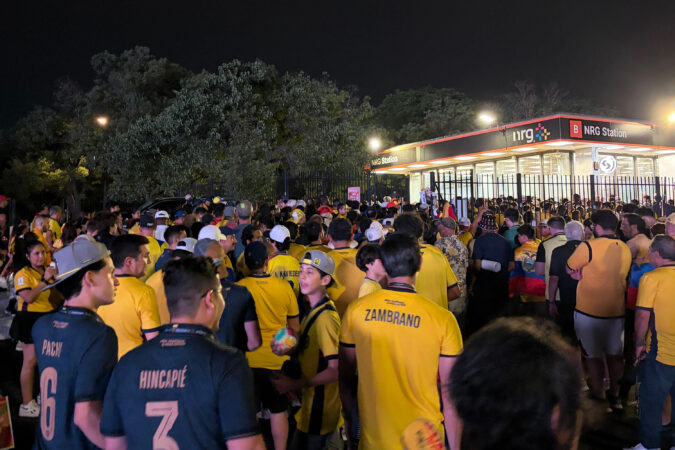
    After Brazil beat Haiti in a World Cup match last month, 29,162 fans swarmed NRG Station to catch the subway. It was SEPTA’s second-highest reported crowd for a single stadium-complex event.

    And the largest? The 31,087 people rode the B line after the Eagles won the NFC Championship in January 2025.

    For three summer weeks, Philadelphia visitors leaned on transit — 155,333 passengers rode the subway also known as the Broad Street Line alone, SEPTA said.

    From June 14 through July 4, the city hosted six World Cup matches, FIFA’s Fan Fest, and celebrations of the 250th anniversary of Independence Day.

    “This was a unique opportunity for SEPTA — possibly one we will not get again for many years,“ spokesperson Andrew Busch said. ”We think there is a lot we can learn that will help improve special event service and everyday operations.”

    Regional Rail also saw bumps in ridership, as did transit, primarily bus routes, serving the Fan Fest at Lemon Hill in Fairmount Park, SEPTA said. Bus routes 32 and 48 provided direct service, while Routes 7 and 49 had stops within walking distance of the festival entrance.

    It helped that Brazil and Haiti’s June 19 game fell on the federal holiday of Juneteenth … and that sponsor Airbnb paid SEPTA to provide free rides home for people using the Broad Street Line on match days between halftime and the final whistle.

    On July 4, when Paraguay and France met in an elimination round game and people were coming to Independence Day events, ridership on the overall system was up 15% compared to the previous year. Broad Street Line ridership was 62%; Regional Rail was up 48% and the lines serving FanFest were up 21%.

    Transit agency analysts focused on post-match boardings on northbound trains at NRG Station because it was the most straightforward way to identify fans who attended the game and traveled on SEPTA, officials said.

    Some riders headed to the stadium area were going to Stateside Live or checking out pregame festivities.

    Customer service lessons learned, according to SEPTA:

    • Using megaphones to communicate with riders in crowded stations broke through the noise, helping people unfamiliar with SEPTA navigate.
    • Bringing a DJ to NRG Station soothed post-match crowds waiting for outbound trains. “More than a couple of dance parties broke out, and we think it helped keep the atmosphere festive,” Busch said.
    • SEPTA moved its start and end point for the B Line for the Sports Express trips from Fern Rock to Girard, easing crowds in Center City and shortening turnaround time.
    • Well-positioned multilingual employees proved helpful for international visitors.

    Other SEPTA takeaways:

    • Ridership on the Airport Regional Rail line typically increased 20% or more on the day before and day after a match.
    • Regional Rail’s Trenton line on the Northeast Corridor also carried more passengers than usual, as people took NJ Transit from New York City and northern New Jersey and connected to SEPTA.

    While there were complaints about crowding, few major incidents were reported.

    SEPTA gets another test next week with the MLB All-Star Game July 14 and related events, though they are expected to have a smaller impact.

  • Who’s competing in the Home Run Derby? Here’s who is in already

    Who’s competing in the Home Run Derby? Here’s who is in already

    After a month of World Cup festivities, baseball is taking over Philadelphia for Major League Baseball All-Star Week. The biggest event — outside of the All-Star Game itself on Tuesday — will be Monday night’s Home Run Derby headlined by Phillies star Bryce Harper — and soon maybe Kyle Schwarber? — at Citizens Bank Park.

    The derby begins at 8 p.m. and streams for the first time on Netflix. This year, instead of each batter having an unlimited amount of swings in a designated time period, participants will be capped at 20 attempts in the first round and 15 in the semifinals and final.

    Eight hitters are slated to compete, but just six have signed on so far. Schwarber has not made his decision whether he will join his teammate Harper and participate. Schwarber’s 32 home runs lead the majors. Harper announced on Thursday that he will be competing.

    Here’s what you need to know about the six confirmed participants with two more to come:

    Bryce Harper, Phillies

    Home Run Derby appearances: Three

    2026 power numbers: 20 home runs, .509 slugging percentage

    What to know: In Harper’s second Home Run Derby in 2018, then wearing a Nationals uniform, he beat out future teammates Schwarber and Rhys Hoskins on his way to winning. He finished with 45 home runs. Harper has 12 seasons with at least 20 home runs, and is on pace to finish with the season with 397 for his career.

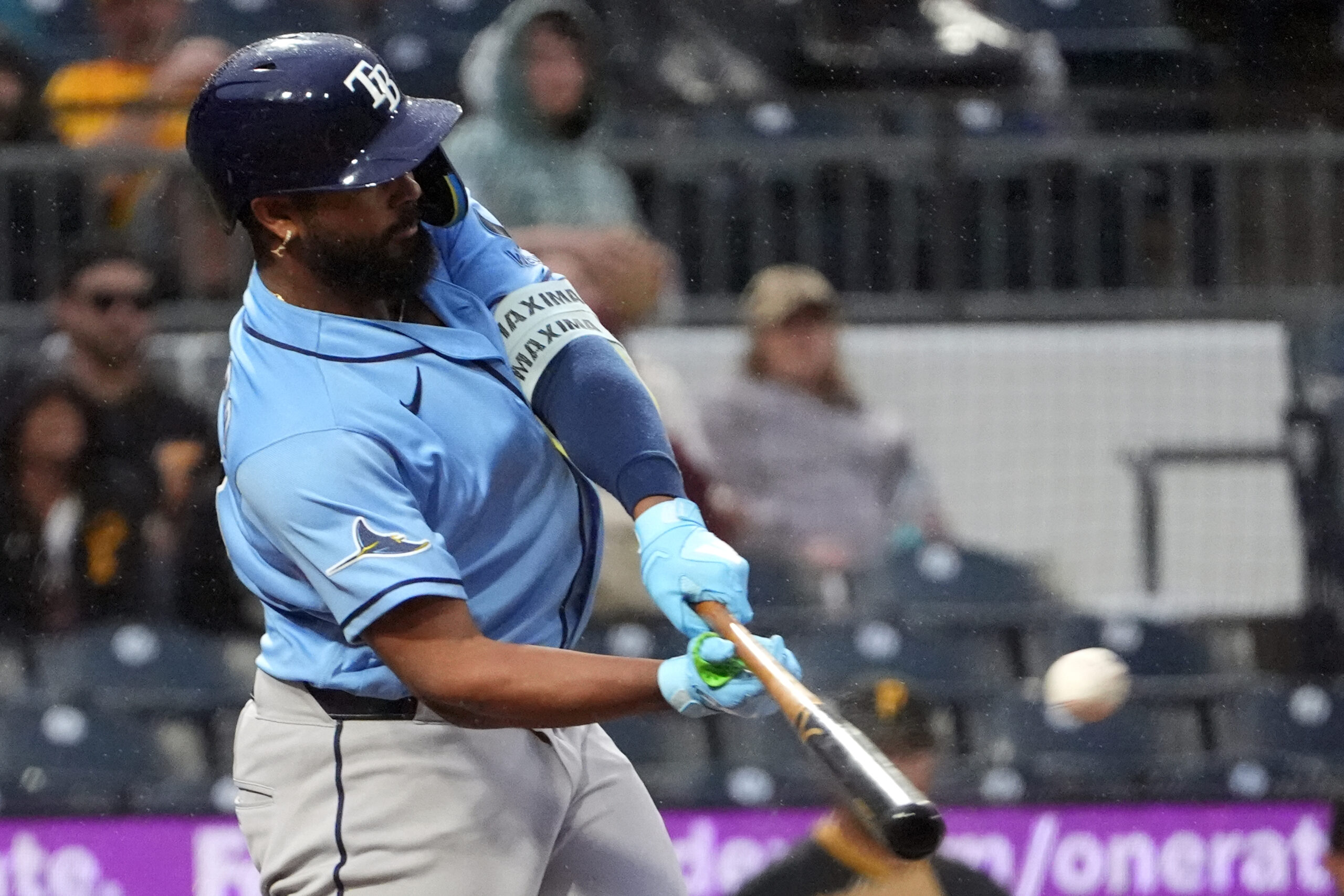
    Junior Caminero, Rays

    Home Run Derby appearances: Two

    2026 power numbers: 26 home runs, .541 slugging percentage

    What to know: At 22 years old, Caminero almost became the youngest player to win the Derby last year, losing out to Cal Raleigh in the finals. He hit 45 home runs last season and is tied for fourth in baseball with 26 in 2026.

    Ben Rice, Yankees

    Home Run Derby appearances: First

    2026 power numbers: 26 home runs, .573 slugging percentage

    What to know: The 27-year old Rice is leading the Yankees in home runs. He has 59 since being called up to the majors three seasons ago.

    Jac Caglianone, Royals

    Home Run Derby appearances: First

    2026 power numbers: 14 home runs, .455 slugging percentage

    What to know: Caglianone’s numbers may seem a bit underwhelming compared to his competition. However, the 23-year-old Royals right fielder is coming off a month in which he was one of the best power hitters in baseball. In June, Caglianone hit nine home runs, tied for the second most in the American League in the month.

    Willson Contreras, Red Sox

    Home Run Derby appearances: First

    2026 power numbers: 20 home runs, .541 slugging percentage

    What to know: Contreras, who is on pace for a career high in home runs this season, still has tremendous bat speed at age 34, ranking in the 96th percentile (77 mph). He will have his brother William, himself an All-Star as a catcher with the Brewers, there to support him.

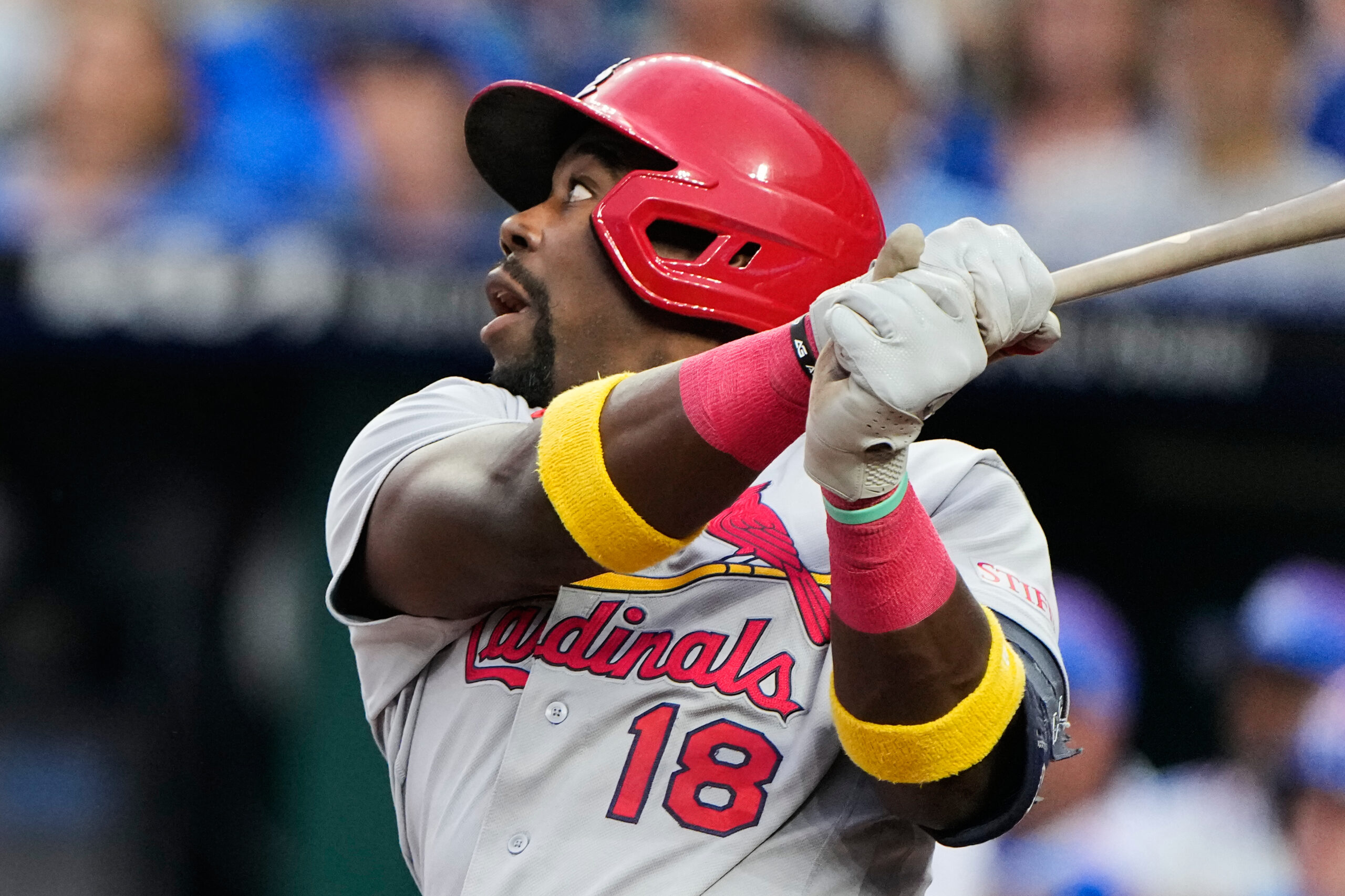
    Jordan Walker, Cardinals

    Home Run Derby appearances: First

    2026 power numbers: 21 home runs, .534 slugging percentage

    What to know: Walker, also a first-time All-Star, is looking to become the first Cardinal to win the derby. After being demoted to triple-A last year, the 24-year-old Walker is having a breakout season after retooling his swing in the offseason. His 92.4 mph exit velocity when he makes contact is fifth-highest in the league.

  • Do metals found in tampons pose a health risk? A new FDA study provides an answer.

    Do metals found in tampons pose a health risk? A new FDA study provides an answer.

    A new study from the U.S. Food and Drug Administration detected heavy metals, including lead and arsenic, in popular tampon brands, but not enough to raise health concerns.

    “While trace metals are present in tampons, the amount released during use is too small to cause harm,” the agency announced this week.

    The Inquirer spoke with Robyn Faye, an OB-GYN at Jefferson Abington Hospital, about what prompted the FDA study, what women should know about it, and the latest trends in menstrual products.

    Robyn Faye, a gynecologist at Jefferson Abington Hospital, specializes in menopause and sexual health.

    What triggered worry about metals in tampons?

    A 2024 study by UC Berkeley raised alarms after finding trace amounts of 16 metals — arsenic, cadmium, lead, mercury, nickel — in more than a dozen different tampon unnamed brands.

    The study found lead concentrations were higher in non-organic tampons, while arsenic was higher in organic tampons.

    Tampons are made with cotton, rayon, or both. Researchers believe cotton can absorb metals from water, soil, or industrial contaminants near fields. Some metal might get added to tampons during manufacturing.

    Metals have been linked to increased risk of dementia, cancer, kidney damage, and cardiovascular and neurological harm.

    The UC study had a major shortcoming, however. It showed that metals exist inside raw tampon materials, but it did not test whether they leach out or get absorbed into the body, and if so, how much.

    “Obviously, there was a concern about what the exposure would be to women using these tampons,” Faye said. “So they needed to look into the potential toxicological risk.”

    What did the new FDA study find?

    The FDA-led study, recently published in the journal Toxicological Sciences, tested 11 tampon products from six different brands sold in the United States. It did not name the brands, nor test any scented tampons.

    The agency regulates tampons as “medical devices.”

    While FDA scientists detected 19 metals at trace levels in tampons, they found “negligible toxicological concern.”

    “The levels of metals released from tampons are not expected to result in adverse health effects,” the study concluded.

    Scientists created a “worst-case” exposure, using a testing method that extracted as much metal out of the fibers as possible, under circumstances far more intensive than normal tampon use.

    “They exaggerated the risk,” said Faye, who did not work on the study. “So the real-world exposure is probably even lower.”

    The bottom line, she said, is tampons are safe to use.

    What concerns do your patients have about tampons?

    Faye said older women still worry about “toxic shock syndrome,” a rare bacterial infection caused from an open cut or vaginal wound. Many women still mistakenly believe it is a common risk from wearing a tampon too long.

    Most younger patients, however, don’t use tampons.

    They prefer reusable menstrual cups, special absorbent underwear, or insertable discs, because they are environmentally friendly.

    “The trend in the younger women population is actually throwing out their tampons,” Faye said. “It’s interesting that the FDA is now doing a study on tampons when fewer girls are using them.”

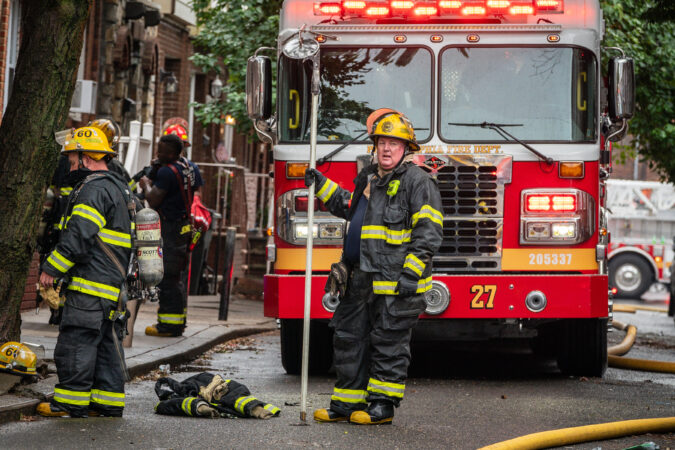
  • Philadelphia firefighters blast new contract with the city that leaves them behind police on pay

    Philadelphia firefighters blast new contract with the city that leaves them behind police on pay

    The union that represents more than 2,000 Philadelphia firefighters and paramedics says its members will, for the first time in two decades, receive a wage increase lower than police officers did — a contract provision they see as the end of years of pay parity among the city’s first responders.

    Mayor Cherelle L. Parker’s administration announced Wednesday that a panel of arbitrators had issued a two-year contract award for Local 22 of the International Association of Fire Fighters after its members had gone more than a year without a contract.

    Local 22 was the last of the city’s four major municipal unions to reach a multiyear agreement with the Parker administration. The other unions agreed to their contracts last year.

    Parker said in a statement that the contract award recognizes the contributions of the city’s firefighters and emergency medical personnel “while supporting the city’s efforts to remain fiscally responsible.”

    The contract award was issued by a three-member arbitration panel, a process governed by state law because emergency workers do not have the right to strike. The deal includes 3% raises annually for the next two years, plus a 1% wage increase in recognition of mandatory physical evaluations that members must receive biannually.

    Those raises total a 7% pay increase over two years for union firefighters, paramedics, and emergency medical personnel. In the city’s contract with police inked about a year ago, members of the Fraternal Order of Police Lodge 5 received a 9% wage increase in total over the same time period, plus a $3,000 signing bonus.

    Local 22 president Mike Bresnan said Parker’s administration did not adequately advocate for pay parity between police and firefighters. He said he is lobbying members of City Council to consider legislation that would require Council approval for the mayor to appeal firefighters’ contracts in the future.

    “Mayor Parker likes to run around putting her one index finger up as ‘we’re all one,’” Bresnan said. “Well, she just put her middle finger up to every firefighter and paramedic in the city.”

    He added: “If there’s somebody out there that’s thinking about running for mayor, we’d like to have a conversation with them.”

    The firefighters union has historically played a relatively minimal role in city elections compared with more politically active labor groups like those that represent construction workers. The union did not back a candidate in the 2023 mayor’s race, which Parker won.

    In this 2024 file photo, Fire Commissioner Jeffrey W. Thompson stands, at left, with Mayor Cherelle L. Parker with Managing Director Adam Thiel at the fire administration building in Spring Garden.

    The FOP contract, similar to the firefighters’, included 3% annual raises. The difference was that police received an additional 1.5% annual wage increase because their union agreed to a process called “civilianization,” meaning some roles held by uniformed officers would be transitioned to ones held by civilians.

    The raise, according to the contract, was in recognition of the “operational flexibility” that the civilianization process would achieve. It did not identify the number of positions that would be civilianized or if the effort would save the city money.

    The arbitration panel that drafted the firefighters’ contract is made up of one appointee each from the city and the union, plus a neutral arbitrator. The panel wrote that while there has, in general, been pay parity in raises for police and firefighters, that “has never meant identical awards.”

    In this case, the panel reasoned, the civilianization-related raise was unique to the police department and the city did not need to match it for the firefighters.

    In this 2022 file photo, Philadelphia firefighters examine the remains of a collapsed building along the 300 block of West Indiana Street in the Fairhill section of Philadelphia as Philadelphia police officers look on.

    Marc Gelman, the union’s appointed arbitrator, issued a scathing dissent, writing that the contract award was ultimately a “rubber-stamp to the city’s desired economic wishlist” and provided firefighters with “a dramatically lower wage increase than the police.”

    He argued that the city could afford a higher wage increase for firefighters because it is operating from a place of fiscal strength, citing its substantial surplus in this year’s budget.

    However, the city will have to tap into reserves or make adjustments to its existing five-year budget plan to cover the firefighters’ contract. That is because the administration already exhausted its $550 million labor reserve to cover contracts with the city’s other major municipal unions.

    The Parker administration did not estimate how much money the firefighters’ contract award will cost.

    Gelman wrote that the labor reserve was exhausted through the city’s “mismanagement and inability to plan.”

    “The city now cries poor,” he wrote, “and expects the members of Local 22 to suffer for its ineptitude.”

    Bresnan said pay parity is critical because the police and firefighters unions are unique in that “members can leave for work in the morning and not come home at night to their family.”

    “We’re out there shoulder-to-shoulder on these emergencies in the city,” he said. “Every mayor prior recognized this and kept the peace. Now they’ve created a fracture between the first responders in the city.”

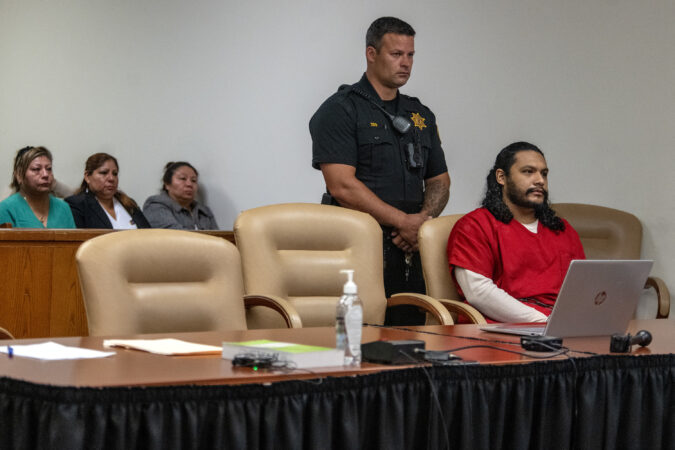
  • ‘Your life is officially over’: Oregon man who murdered Cherry Hill veterinarian sentenced to 30 years in prison

    ‘Your life is officially over’: Oregon man who murdered Cherry Hill veterinarian sentenced to 30 years in prison

    An Oregon man on Thursday was ordered to spend 30 years in prison for fatally stabbing a beloved South Jersey veterinarian at the vet’s Cherry Hill home.

    Cristian Custodio-Aquino, 28, of Portland, pleaded guilty to first-degree murder in June for the killing of 45-year-old Michael Anthony.

    The body of Anthony, a divorced father of two, was discovered on the front lawn of his home in Cherry Hill’s Barclay Farm section in December 2024.

    He had been stabbed in the body, neck, and head. Detectives used a variety of methods to link Custodio-Aquino to the crime, including the collection of DNA from a pair of prescription eyeglasses he had left at the crime scene.

    During Custodio-Aquino’s sentencing before Camden County Superior Court Judge Judith Charny, Anthony’s family members spoke tearfully of late veterinarian, who they described as kind, wickedly funny, and a devoted father to his sons.

    Above all, they grappled for answers as to why Custodio-Aquino murdered Anthony that morning on his front lawn.

    “You took all of the future moments that should have belong to him,” said Patricia Anthony Gershefski, one of Anthony’s sisters.

    Anthony Gershefski said her brother was warm and sensitive, even moving his veterinarian practice just to be closer to his children.

    The brutal nature of the crime confounds the family to this day.

    In her career as a professional psychologist, Anthony Gershefski said, she has found “no diagnostic category for the deliberate destruction of another person’s life in this savage and grotesque manner.”

    Kyle Bartsch, Anthony’s partner, said in a statement read by prosecutors that Anthony had filled their home on Sharrowvale Road with love and laughter.

    His death, Bartsch said, leaves “a permanent void in the lives of those who knew him.”

    While Custodio-Aquino’s attorneys had previously suggested that prosecutors did not have enough evidence to convict their client of murder, they were mum throughout the proceeding.

    In addition to the eyeglasses investigators linked to the Peru native, license plate readers captured Custodio-Aquino’s car entering and exiting Anthony’s neighborhood that morning, and forensic experts later recovered a sample of the veterinarian’s blood from the vehicle.

    Prosecutors believe Custodio-Aquino traversed the country in a fit of jealousy that fall before killing Anthony.

    He had previously dated Anthony’s partner, Bartsch, and once lived with the man in Haddon Township before the couple separated in 2021 after a domestic dispute, according to prosecutors.

    Custodio-Aquino, given the opportunity to address the court, spoke so softly that Charny asked that he repeat himself.

    Raising his voice, he said: “I do agree that the world is less than without Michael Anthony.”

    He was sentenced to 30 years in a state correctional facility without parole. Charny offered few words on the ruling beyond wishing Custodio-Aquino good luck.

    It was Henry Anthony, Anthony’s teenage son, who saved some of the most biting remarks for his father’s killer.

    “Your life is officially over,” Anthony said, turning to look at Custodio-Aquino. “I honestly wonder what your reason for living will be for the next 30 years.”

  • Without Leo Carlsson, the Flyers’ hunt for their pot of gold just got harder and longer

    Without Leo Carlsson, the Flyers’ hunt for their pot of gold just got harder and longer

    Think of the Flyers as an explorer who landed on a deserted island. On this island, deep within miles of thick jungle, is treasure. The explorer knows the treasure is there somewhere, and he aims to find it.

    Leo Carlsson would have been a new machete: sharp, strong, capable of cutting through all those vines and branches and trunks to make the Flyers’ journey to those riches easier and faster. Now the explorer won’t have that tool. Now that the Anaheim Ducks have matched the five-year, $90-million offer sheet that Carlsson signed with the Flyers last week, the Flyers won’t have the steel blade that Carlsson represented as a 6-foot-3, 21-year-old, clear-cut first-line center just entering his prime.

    So where does that leave them? It means that their trek to that treasure, to their first Stanley Cup since 1974-75, will likely be slower and less certain. They may get to it eventually, but it’s going to take more time and be more costly.

    Had the Ducks declined to match the Flyers’ audacious offer — and make no mistake, this gambit by Danny Brière was bold and creative, as close to a Now youse can’t leave move as an NHL general manager can make — Anaheim would have received four first-round picks from the Flyers. That price would have been steep. But the Flyers would have added Carlsson, who averaged nearly a point a game last season, is an excellent player now, and has shown every sign that he will get even better.

    They need a No. 1 center, not merely for the talent and scoring touch such a player would provide, but also so they can slot their other centers — Trevor Zegras, Christian Dvorak, and Sean Couturier — more appropriately. With Carlsson (or any center of similar caliber, for that matter), Zegras would have become the second-line guy. Dvorak would have become a terrific third-line guy. And Couturier would have remained in the role he played so well in last season’s playoffs, as an outstanding fourth-line checker, faceoff-taker, and leader.

    What’s more, the Flyers have a roster and a farm system with plenty of promising young players, and if this move had come to fruition, they wouldn’t have had to sacrifice any of them to fill one of their biggest holes. That’s perhaps the most disappointing aspect of this result for them: That luxury of gaining an emerging superstar without having to give up valuable players and/or prospects already within the organization likely is no longer available to them.

    With the Carlsson episode behind him, Flyers general manager Danny Brière must be practical about the team’s range of needs.

    They’re interested in the Detroit Red Wings’ Dylan Larkin, for instance; though Larkin is 7½ years older than Carlsson, he still would fit the Flyers like a well-tailored suit. But assuming Larkin, who has a full no-movement clause, is even willing to join the Flyers, the trade package necessary to acquire him would probably have to include a player or two on their current roster. Would Larkin be worth the departure of, say, Owen Tippett and/or Denver Barkey?

    Just because Brière made such a huge play for Carlsson doesn’t mean he has to answer that question, immediately or ever. The smartest thing he and the Flyers’ leadership team have done in the three years since he took over as GM has been to give themselves flexibility in improving the team. They didn’t have to shock the NHL by presenting that offer sheet to Carlsson — a proposal for a contract that has now made him the league’s highest-paid player. But they did. After years of running in place, after qualifying for the postseason for the first time since 2020, they declared that they were ready to spend again, but they made that declaration on their terms.

    They have several choices for how they can proceed. They need not just a No. 1 center, but a top-pair defenseman, or at least one capable of quarterbacking a power play. They can act quickly to acquire one or both of those players, to find short-term and/or long-term answers to those lingering questions, or they can wait.

    Remember: Even if they had won their duel with the Ducks for Carlsson, the Flyers wouldn’t have been considered a true contender this season for the Stanley Cup. Porter Martone, Matvei Michkov, Tyson Foerster, Jamie Drysdale, Alex Bump, Zegras: All of them have growth and development ahead of them. Yes, the Flyers’ hunt will take longer now that Leo Carlsson, that oh-so useful tool, will remain on the West Coast, but they can still find that chest of gold. They just have to take care not to get lost along the way.